


Highlights
What are the main findings?
- Saudi nursing interns demonstrated high levels of digital competence, cybersecurity literacy, and readiness for EMR adoption, with scores reflecting high percentages of the maximum possible scores.
- Cybersecurity literacy was positively associated with digital competence and EMR readiness, while digital competence was positively associated with EMR readiness and demonstrated a significant indirect association between cybersecurity literacy and EMR readiness, consistent with partial statistical mediation.
What are the implications of the main findings?
- Nursing education programs should integrate practical digital competence and cybersecurity training into clinical preparation, while complementing self-reported EMR readiness assessments with practical evaluations of digital and EMR-related skills.
- Collaboration between nursing education programs and clinical training sites should be strengthened to en-hance technology-supported clinical preparedness. Longitudinal and intervention studies are recommended to examine whether improvements in digital competence and cybersecurity literacy translate into better actual EMR performance and adoption.
Abstract
Background: The digital transformation of healthcare requires nursing interns to develop the competencies needed to use electronic medical records (EMRs) safely and effectively. Cybersecurity literacy may be associated with readiness for EMR adoption, while digital competence may account for part of this association. However, the relationships among these constructs and the potential indirect association through digital competence remain insufficiently explored among nursing interns. Aim: To examine the relationships among cybersecurity literacy, digital competence, and readiness for EMR adoption among nursing interns in Saudi Arabia and to assess the indirect association between cybersecurity literacy and readiness for EMR adoption through digital competence. Methods: A cross-sectional descriptive correlational study was conducted among 454 nursing interns in Saudi Arabia. Participants were recruited using convenience and snowball sampling through online professional and nursing networks between late January and late March 2026. Data were collected using questionnaires assessing nursing digital application skills, cybersecurity literacy, and readiness for EMR adoption. Data were analyzed using SPSS version 27 and AMOS version 24. Descriptive statistics, Pearson correlation coefficients, and structural equation modeling were used. The indirect association was examined using 5000 bootstrap resamples and 95% confidence intervals. Results: The mean digital competence score was 50.67 ± 6.24, corresponding to 84.5% of the maximum possible score. The mean cybersecurity literacy and readiness for EMR adoption scores were 106.58 ± 17.99 and 44.65 ± 8.07, respectively. Cybersecurity literacy was positively correlated with digital competence (r = 0.763, p < 0.001) and readiness for EMR adoption (r = 0.694, p < 0.001). Digital competence was also positively correlated with readiness for EMR adoption (r = 0.579, p < 0.001). Structural equation modeling revealed significant positive direct associations between cybersecurity literacy and digital competence (B = 0.763, 95% CI = 0.315–0.972, p < 0.01), digital competence and readiness for EMR adoption (B = 0.151, 95% CI = 0.047–0.254, p < 0.01), and cybersecurity literacy and readiness for EMR adoption (B = 0.225, 95% CI = 0.116–0.336, p < 0.01). The indirect association between cybersecurity literacy and readiness for EMR adoption through digital competence was also statistically significant (B = 0.1152, 95% CI = 0.052–0.130, p < 0.01), consistent with a partial statistical mediation pattern. Conclusions: Cybersecurity literacy and digital competence were positively associated with nursing interns’ readiness for EMR adoption. The significant indirect association through digital competence suggests that it may represent one statistical pathway linking cybersecurity literacy with EMR readiness. Nursing education programs should consider integrating practical digital skills and cybersecurity education into clinical training to support nursing interns’ digital preparedness. Given the cross-sectional design, these findings represent statistical associations and should not be interpreted as evidence of causal relationships.
1. Introduction
1.1. Digital Transformation and Nursing Education
Digital transformation has become a fundamental component of contemporary healthcare systems, changing how health information is collected, documented, stored, retrieved, and used to support clinical practice and decision-making. The World Health Organization (WHO) emphasizes that successful digital health transformation depends not only on technological infrastructure but also on organizational capacity and a digitally competent healthcare workforce capable of using digital technologies effectively and responsibly [1]. Within this context, electronic medical records (EMRs) are essential tools for documenting, retrieving, and exchanging patient information across healthcare settings. Their effective use requires healthcare professionals to possess the knowledge and practical skills needed to interact with digital systems safely and appropriately. Therefore, preparing future nurses to function competently in technology-supported clinical environments is an important priority for contemporary nursing education [1].
Saudi Arabia provides a particularly relevant context for examining digital transformation in healthcare, as national health-sector transformation initiatives have identified digital health as a key component of healthcare development. The Saudi Ministry of Health highlights the growing role of digital health services and the expansion of electronic health information systems as important elements of healthcare transformation [2]. These developments have important implications for nursing education, as nursing students and interns need to be prepared to engage with electronic documentation systems and other digital technologies in clinical settings. Accordingly, nursing education programs should equip future nurses with the digital competencies and cybersecurity awareness needed to use these technologies safely, effectively, and responsibly.
Recent Saudi evidence indicates that digital preparedness among nursing students is an important educational concern. Studies conducted in Saudi nursing education settings have examined students’ digital proficiency, digital health literacy, and technology-related competencies, highlighting the importance of strengthening their preparedness for digitally enabled clinical practice [3,4]. These findings underscore the need to examine not only nursing interns’ digital competence but also their cybersecurity literacy and readiness to adopt electronic medical records as they transition into clinical environments where digital documentation is an integral part of practice.
For nursing education, these developments highlight the need to equip nursing students and interns with the digital knowledge and practical skills required to access, evaluate, document, and communicate health information through electronic systems. Previous research has identified several dimensions of digital competence among nursing students, including information and communication technology proficiency, information literacy, digital communication, digital learning, and digital identity management, emphasizing the importance of integrating these capabilities into nursing curricula [5]. Furthermore, research on nurses’ digital application skills highlights the specific competencies required to use digital technologies effectively in clinical practice, supporting the need for structured development and assessment of digital competence throughout nursing education [6].
Clinical training represents a particularly important period for developing digital capabilities, as nursing interns transition from academic learning to direct patient care and increasingly encounter electronic documentation systems in clinical settings. Evidence from nursing education studies suggests that early and structured exposure to electronic health records may enhance students’ confidence and preparedness for clinical practice [7,8]. Similarly, integrating academic electronic health records into nursing curricula has been associated with improved perceived digital preparedness and greater confidence in navigating electronic systems and completing clinical documentation [7]. Therefore, preparing nursing interns for digitally enabled clinical environments requires attention not only to their general digital abilities but also to the specific competencies needed to use electronic medical records safely and effectively.
1.2. Conceptual Background of Digital Competence in Nursing
Digital competence refers to the knowledge, skills, and abilities required to use digital technologies effectively and appropriately in professional and educational contexts. In nursing, it extends beyond basic computer literacy to include accessing and managing digital information, communicating through digital technologies, using digital applications, and applying digital tools to support nursing practice [6]. Among nursing students, these competencies encompass several domains, including information management, communication, digital learning, research, innovation, and responsible digital engagement [5].
The development of digital competence is particularly important during clinical training, as nursing interns must translate academic knowledge into technology-supported clinical activities. Previous studies have identified variations in nursing students’ self-perceived digital competencies, indicating that students may enter clinical placements with different levels of preparedness for digitally enabled practice [5]. In addition, nursing-specific digital application skills are recognized as an important component of professional preparation and can be assessed as a distinct competency using validated measures [6].
Importantly, digital competence should be conceptually distinguished from readiness for EMR adoption. Digital competence refers to an individual’s ability to use digital technologies, whereas readiness reflects the individual’s preparedness to engage with and accept the use of a specific electronic system. Thus, possessing general digital skills does not necessarily mean that a nursing intern is ready to adopt an EMR in a clinical setting. Nevertheless, digital competence may provide an important foundation for engaging with electronic documentation and other digital clinical systems [7,9].
1.3. Cybersecurity Literacy in Nursing Practice
The increasing digitalization of healthcare has heightened the importance of cybersecurity literacy among healthcare professionals. Nurses routinely access and handle electronic patient information and therefore have responsibilities for protecting confidentiality, maintaining secure access, recognizing potential cyber threats, and using digital systems appropriately. Cybersecurity literacy encompasses the knowledge and practices required to protect information and digital resources, making it an increasingly important competency in technology-enabled healthcare environments [10].
Arpaci and Sevinc developed and psychometrically evaluated the Cybersecurity Scale to assess individuals’ cybersecurity practices and perceptions, highlighting the multidimensional nature of cybersecurity beyond purely technical capabilities [10]. In nursing education, evidence has also examined cybersecurity practices and perceptions among nursing students, with findings indicating the importance of cybersecurity awareness and identifying limited exposure to formal cybersecurity education among students [11]. These findings highlight the need to strengthen cybersecurity competencies within nursing curricula, particularly as nursing students increasingly use electronic systems during clinical training.
Cybersecurity literacy is conceptually distinct from digital competence. Digital competence broadly concerns the effective use of digital technologies, whereas cybersecurity literacy focuses more specifically on the secure and responsible use of these technologies. Although distinct, the two constructs may be related, as safe and effective engagement with electronic systems may involve both functional digital skills and awareness of cybersecurity practices [10,11]. Examining the relationship between these constructs may therefore provide useful insights into the factors associated with nursing interns’ readiness to adopt electronic medical records (EMRs).
1.4. Conceptual Background and Evidence on Readiness for Electronic Medical Record Adoption
Readiness for EMR adoption refers to the extent to which individuals are prepared and willing to engage with and use an electronic medical record system within a healthcare setting. Assessing readiness before or during implementation is important because inadequate preparation among healthcare professionals may hinder successful adoption. Previous research has identified core and engagement-related dimensions of readiness, including perceptions of the need for electronic records, the appropriateness of the technology, organizational preparedness, and willingness to participate in EMR implementation and use [9].
Previous research has examined information and communication technology (ICT) literacy, knowledge of electronic medical records, and readiness for EMR adoption among healthcare professionals. In a cross-sectional study conducted in Myanmar, Oo et al. reported moderate overall readiness for EMR adoption (54.2%) and identified knowledge of EMRs as a significant factor associated with readiness. The authors also emphasized the importance of ICT development and practical EMR training to strengthen healthcare professionals’ preparedness for adoption [12]. Similarly, in a pre-implementation study conducted in Ethiopia, Ngusie et al. found that 52.8% of healthcare providers demonstrated good readiness for EHR adoption. Computer literacy, access to computers, attitudes toward EHRs, awareness, perceived benefits, and technological self-efficacy were among the factors associated with readiness [9].
For nursing students and interns, readiness for EMR adoption is particularly important because clinical training provides opportunities to develop the competencies required for electronic documentation and technology-supported nursing practice. Evidence from nursing education research indicates that academic and simulated electronic medical record experiences can provide students with opportunities to practice electronic documentation in a safe environment and develop health informatics competencies [7,8]. The integration of these educational tools also requires adequate institutional resources and faculty capabilities to support effective learning [7]. Thus, readiness for EMR adoption may reflect not only an individual’s willingness to use an electronic system but also the knowledge, skills, and preparedness developed through academic education and clinical exposure.
1.5. Digital Competence as a Potential Mediator
The relationship between cybersecurity literacy and readiness for electronic medical record (EMR) adoption may be better understood by examining the potential role of digital competence [13]. Although cybersecurity literacy and digital competence represent distinct constructs, both are relevant to individuals’ engagement with digital technologies. Cybersecurity literacy concerns the knowledge and practices required to use digital resources securely, whereas digital competence reflects the broader capabilities needed to use digital technologies effectively. These complementary dimensions may be relevant to readiness for EMR adoption, as using electronic systems requires both functional digital capabilities and awareness of secure digital practices.
Cybersecurity literacy may be associated with digital competence, as evidence among nursing students has demonstrated a positive association between computer-use skills and cybersecurity scores [11]. This finding suggests that students’ ability to use digital technologies may be related to their awareness and practices concerning cybersecurity. Furthermore, digital competence may be relevant to readiness for EMR adoption. In a study of healthcare providers, computer literacy was independently associated with readiness for electronic health record adoption, indicating that individuals with stronger computer-related capabilities may be better prepared to engage with electronic health systems [9]. Although computer literacy and nursing digital application skills are not identical constructs, these findings provide supporting evidence for examining the relationship between digital competence and EMR adoption readiness.
Accordingly, digital competence may represent a potential mediating variable in the association between cybersecurity literacy and readiness for EMR adoption. From this perspective, cybersecurity literacy may be associated with digital competence, which may, in turn, be associated with readiness to adopt EMR systems. Examining this indirect association may help clarify the extent to which digital competence accounts for part of the relationship between cybersecurity literacy and EMR adoption readiness. However, given the cross-sectional design of the present study, the mediation analysis identifies a statistical indirect association and should not be interpreted as evidence of a temporal or causal mechanism.
1.6. Research Gap and Study Aim
Although digital competence, cybersecurity literacy, and readiness for electronic health record adoption have been examined in previous research, these constructs have largely been investigated separately or in different healthcare populations. Studies have explored digital proficiency among nursing students [5], cybersecurity practices and perceptions among nursing students [11], and the use of academic electronic medical records in nursing education [7]. Other research has examined readiness for electronic health record adoption among healthcare professionals and identified computer literacy and related technological factors as relevant considerations [9,12]. However, evidence remains limited regarding the relationships among these three constructs when examined together among nursing interns, particularly whether digital competence statistically mediates the association between cybersecurity literacy and readiness for EMR adoption.
This research gap is particularly relevant to nursing interns, who are transitioning from academic preparation to professional clinical practice in increasingly digital healthcare environments. Previous research on academic electronic medical records in nursing education highlights the value of incorporating electronic documentation experiences into nursing curricula to support students’ preparation for technology-enabled practice [7]. In this context, examining the relationships among cybersecurity literacy, digital competence, and readiness for EMR adoption may provide evidence to inform nursing education and clinical training strategies aimed at preparing future nurses for the safe and effective use of electronic health systems.
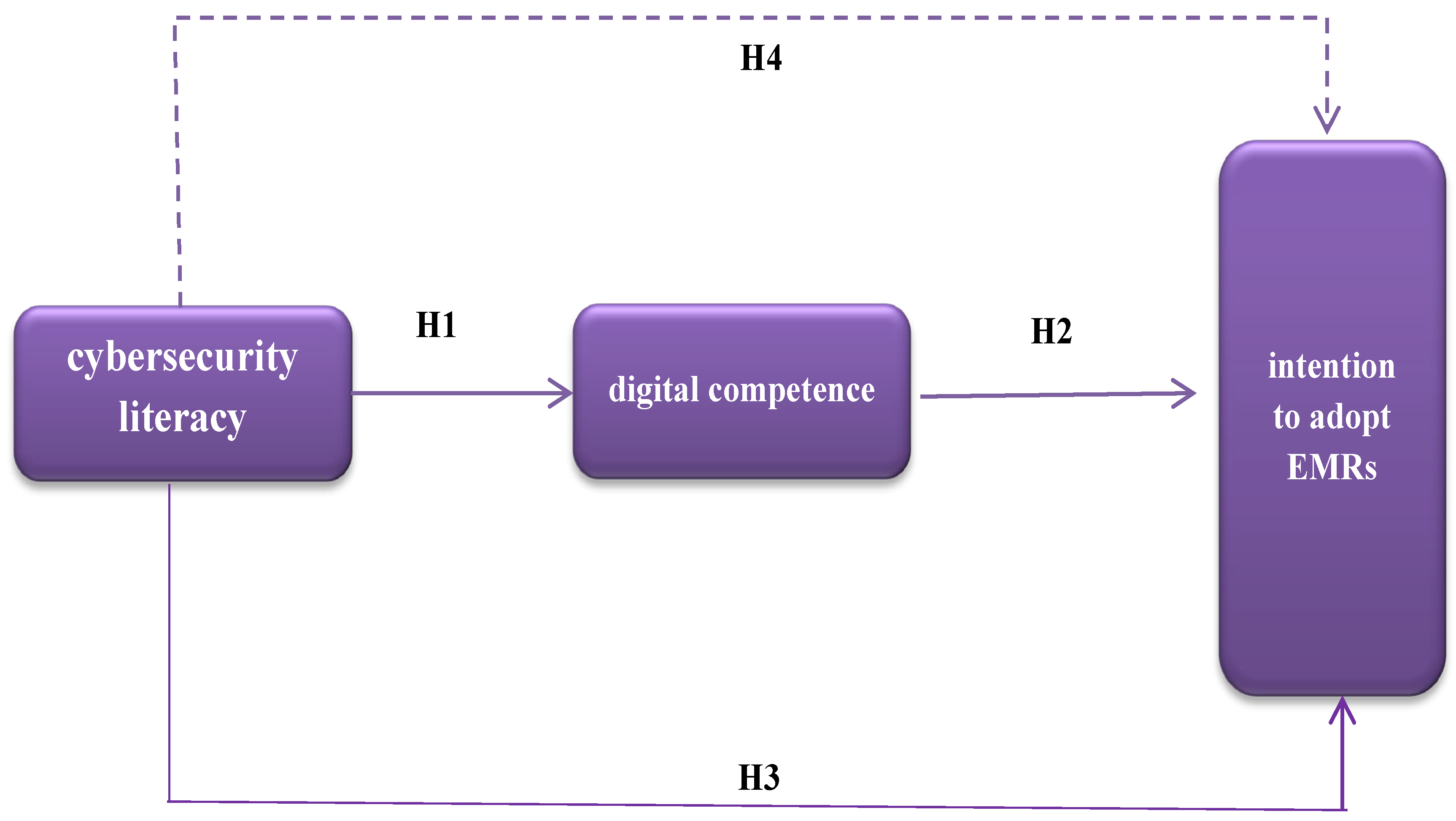
The present study aimed to examine the relationships among cybersecurity literacy, digital competence, and readiness for electronic medical record (EMR) adoption among Saudi nursing interns during clinical training. Specifically, it investigated the associations between cybersecurity literacy and EMR adoption readiness, cybersecurity literacy and digital competence, and digital competence and EMR adoption readiness. It also examined the potential mediating role of digital competence in the association between cybersecurity literacy and readiness for EMR adoption. The hypothesized relationships among the study variables are illustrated in Figure 1.
1.7. Research Hypotheses
Hypothesis H1.
Cybersecurity literacy is positively associated with readiness for electronic medical record adoption among Saudi nursing interns during clinical training.
Hypothesis H2.
Cybersecurity literacy is positively associated with digital competence among Saudi nursing interns during clinical training.
Hypothesis H3.
Digital competence is positively associated with readiness for electronic medical record adoption among Saudi nursing interns during clinical training.
Hypothesis H4.
Digital competence mediates the association between cybersecurity literacy and readiness for EMR adoption among Saudi nursing interns during clinical training.
Figure 1.
Conceptual model of the hypothesized relationships among study variables. This figure presents the conceptual model illustrating the hypothesized direct and indirect relationships among cybersecurity literacy, digital competence, and nursing interns’ readiness for electronic medical record (EMR) adoption. Solid arrows represent the direct hypothesized relationships (H1–H3), whereas the dashed arrow represents the indirect association through digital competence (H4).
2. Methods
2.1. Study Design
A cross-sectional descriptive correlational study was conducted to examine the associations among cybersecurity literacy, digital competence, and readiness for electronic medical record (EMR) adoption among nursing interns in Saudi Arabia. The study also examined the indirect association between cybersecurity literacy and readiness for EMR adoption through digital competence. Given the cross-sectional design, the findings were interpreted as statistical associations rather than evidence of causal relationships.
2.2. Study Participants and Recruitment
The required sample size was estimated using G*Power version 3.1.9.7 for linear multiple regression analysis. The power analysis indicated a minimum required sample of 312 participants, assuming a small effect size (f2 = 0.04), 85% statistical power, a significance level of 0.05, and three predictors. The final sample comprised 454 nursing interns, exceeding the estimated minimum sample size. Participants were recruited using non-probability convenience and snowball sampling techniques.
Recruitment was conducted electronically through WhatsApp, LinkedIn, and professional nursing networks. Because the total number of individuals who received or accessed the survey link could not be established, a response rate could not be accurately calculated. Eligible participants were nursing interns undertaking clinical training in Saudi Arabia who had completed at least six months of clinical training.
2.3. Study Instruments
Data were collected using a bilingual Arabic–English questionnaire comprising demographic and training-related questions and three instruments measuring nursing digital application skills, cybersecurity literacy, and readiness for EMR adoption. The instruments and their scoring procedures are described below.
2.3.1. Nursing Digital Application Skills Scale
Digital competence was assessed using the Nursing Digital Application Skills Scale (NDASS), originally developed by Qin et al. [6]. The scale is a 12-item self-report instrument with a unidimensional structure designed to evaluate nurses’ digital application skills in nursing practice. Participants rated each item on a 5-point Likert scale ranging from 1 (strongly disagree) to 5 (strongly agree). Item scores were summed to obtain a total score ranging from 12 to 60, with higher scores indicating greater digital application skills. The mean percentage score was calculated by dividing the mean total score by the maximum possible total score (60) and multiplying by 100. Based on the classification criteria reported in the original study [6], digital application skills were categorized as low (<60%), moderate (60–80%), or high (>80%).
In the original validation study, the scale demonstrated excellent content validity, with a scale-level content validity index (S-CVI) of 0.975 and item-level content validity indices (I-CVIs) exceeding 0.78. Convergent validity was supported by an average variance extracted (AVE) of 0.694 and composite reliability (CR) of 0.964, exceeding the recommended thresholds of 0.50 and 0.70, respectively [6]. In the present study, the scale demonstrated excellent internal consistency, with a Cronbach’s alpha coefficient of 0.90.
2.3.2. Cybersecurity Scale
Cybersecurity literacy was assessed using the Cybersecurity Scale (CS-S) developed by Arpaci and Sevinc [10]. The instrument comprises 25 items distributed across six dimensions: confidentiality, control or possession, integrity, authenticity, availability, and utility. Each item is rated on a 5-point Likert scale, yielding a total score ranging from 25 to 125. Higher total scores indicate higher levels of measured cybersecurity literacy. The original scale development study reported good internal consistency, with a Cronbach’s alpha coefficient of 0.88 [10]. In the present study, the scale also demonstrated good internal consistency, with a Cronbach’s alpha coefficient of 0.88.
2.3.3. Readiness for Electronic Medical Record Adoption
Readiness for EMR adoption was assessed using a 13-item questionnaire adapted from the instrument reported by Ngusie et al. [9]. The questionnaire comprises two dimensions: core readiness (eight items), reflecting the perceived need for electronic records and organizational and technological preparedness, and engagement readiness (five items), reflecting healthcare providers’ involvement and willingness to participate in electronic record implementation. In the present study, each item was rated on a 4-point Likert scale ranging from 1 (strongly disagree) to 4 (strongly agree), yielding a total score ranging from 13 to 52. Higher scores indicate greater readiness for EMR adoption. The total readiness score was calculated by summing responses across all 13 items. The original study reported good internal consistency for the 13-item measure (Cronbach’s α = 0.86) [9]. In the present study, the scale also demonstrated good internal consistency, with a Cronbach’s alpha coefficient of 0.85.
For all three instruments, we calculated total scores by summing item responses according to the specified Likert-scale coding. We calculated the percentage of the maximum possible score by dividing the observed mean total score by the maximum attainable total score and multiplying by 100. This percentage represents the proportion of the maximum possible score rather than a rescaled percentage of the available score range. We also confirm that none of the items in the three instruments required reverse scoring.
2.3.4. Demographic and Training-Related Information
The questionnaire collected participants’ demographic, educational, professional, and training-related information, including age, gender, marital status, and previous training in nursing digital applications, cybersecurity, and electronic medical records (EMRs).
2.4. Translation, Validity, and Pilot Testing
The original English-language instruments were translated into Arabic. The Arabic translations were reviewed by a panel of five bilingual university professors, and an independent panel of five bilingual professors subsequently performed the back-translation into English, following Brislin’s approach to cross-cultural research [14].
The Arabic questionnaire was subsequently reviewed by nine nursing administration professors to assess the clarity, relevance, and comprehensibility of the items and their suitability for the target population. This review addressed the face and content validity of the translated questionnaire.
A pilot study was conducted with 41 participants from the target population to assess the clarity and comprehensibility of the questionnaire, the feasibility of the data collection procedures, and the internal consistency of the measurement instruments. These participants were excluded from the main study sample. No modifications to the questionnaire were required following the pilot study.
2.5. Data Collection
Data were collected from late January to late March 2026 using an online questionnaire. Before accessing the questionnaire items, participants were provided with information about the study’s purpose, the voluntary nature of participation, and the confidentiality of their responses. Electronic informed consent was required before participants could proceed to complete the questionnaire. Participation was entirely voluntary, and no personally identifying information, such as names, email addresses, or telephone numbers, was collected.
2.6. Ethical Considerations
Ethical approval for the study was obtained from the Research Ethics Committee of the Faculty of Nursing, Zagazig University, Egypt (Approval No. 423, dated 1 December 2025). The study was conducted in accordance with the approved research protocol and applicable ethical principles for research involving human participants. Electronic informed consent was obtained from all participants before they accessed the questionnaire.
2.7. Statistical Analysis
Data were analyzed using IBM SPSS Statistics version 27 and AMOS version 24. Descriptive statistics, including frequencies, percentages, means, and standard deviations, were used to summarize participants’ sociodemographic and training characteristics and the scores of the study variables. Pearson correlation coefficients were calculated to examine the bivariate associations among cybersecurity literacy, digital competence, and readiness for EMR adoption.
Structural equation modeling (SEM) was conducted using AMOS to examine the hypothesized direct and indirect associations among cybersecurity literacy, digital competence, and readiness for EMR adoption. Model fit was evaluated using multiple complementary indices, including the chi-square-to-degrees-of-freedom ratio (χ2/df), the standardized root mean square residual (SRMR), the root mean square error of approximation (RMSEA), the Tucker–Lewis index (TLI), the comparative fit index (CFI), the adjusted goodness-of-fit index (AGFI), and the normed fit index (NFI). These indices were interpreted collectively, with reference to established methodological guidance on SEM model fit [15,16,17].
The indirect association between cybersecurity literacy and readiness for EMR adoption through digital competence was examined using 5000 bootstrap resamples and 95% confidence intervals. The indirect association was considered statistically significant when its 95% confidence interval did not include zero. Statistical significance was set at p < 0.05.
3. Results
3.1. Participants’ Sociodemographic and Training Characteristics
A total of 454 nursing interns participated in the study. More than half were aged 24 years or younger (55.95%), while 44.05% were older than 24 years. Females represented 59.91% of the sample, compared with 40.09% males. Most participants were single (82.16%), whereas 17.84% were married.
Regarding previous training, 73.57% of participants reported attending workshops or training programs related to nursing digital application skills, 66.08% reported receiving cybersecurity-related training, and 72.91% reported receiving training related to electronic health records (EHRs). The distribution of participants’ sociodemographic characteristics and previous training is presented in Table 1.
Table 1.
Sociodemographic Characteristics and Training Background of Nursing Interns (n = 454).
3.2. Descriptive Statistics of the Study Variables
Table 2 presents the descriptive statistics for digital competence, cybersecurity literacy, and readiness for EMR adoption among the 454 nursing interns.
Table 2.
Descriptive Statistics of Digital Competence, Cybersecurity Literacy, and Readiness for EMR Adoption (n = 454).
The total NDASS score had a mean of 50.67 ± 6.24 out of a possible 60, corresponding to 84.5% of the maximum possible score. Among the seven skill components of the NDASS, continuous digital learning had the highest percentage of the maximum possible score (92.2%), followed by digital content management and leadership (90.1%). The use of digital nursing equipment had the lowest percentage (78.2%). Digital problem-solving and data analysis, digital communication and collaboration, decision-making support, and digital innovation in nursing practice accounted for 81.3%, 83.6%, 79.8%, and 79.6% of their respective maximum possible scores, respectively.
The total cybersecurity literacy score was 106.58 ± 17.99 out of 125, corresponding to 85.3% of the maximum possible score. Among the six dimensions, utility had the highest percentage of the maximum possible score (91.5%), followed by availability (90.6%) and integrity (88.6%). Control or possession had the lowest percentage (79.7%), while confidentiality and authenticity accounted for 82.9% and 82.2%, respectively.
Regarding readiness for EMR adoption, the mean total score was 44.65 ± 8.07 out of 52, corresponding to 85.9% of the maximum possible score. The mean score for core readiness was 27.35 ± 5.34 out of 32 (85.5%), whereas engagement readiness had a mean score of 17.30 ± 2.85 out of 20 (86.5%).
3.3. The Pearson Correlation Coefficients Among Cybersecurity Literacy, Digital Competence, and Readiness for EMR Adoption
Pearson correlation analysis revealed statistically significant positive associations among all three study variables. Cybersecurity literacy was positively correlated with digital competence (r = 0.763, p < 0.001) and readiness for EMR adoption (r = 0.694, p < 0.001). Digital competence was also positively correlated with readiness for EMR adoption (r = 0.579, p < 0.001). The strongest association was observed between cybersecurity literacy and digital competence. This relatively strong correlation suggests a substantial relationship between the two constructs while also highlighting the need for caution when interpreting their conceptual distinction. Overall, these findings were consistent with the expected directions of the hypothesized relationships and provided preliminary support for examining the proposed structural model is presented in Table 3.
Table 3.
Pearson Correlations among Cybersecurity Literacy, Digital Competence, and Readiness for EMR Adoption (n = 454).
3.4. Structural Model and Direct Associations
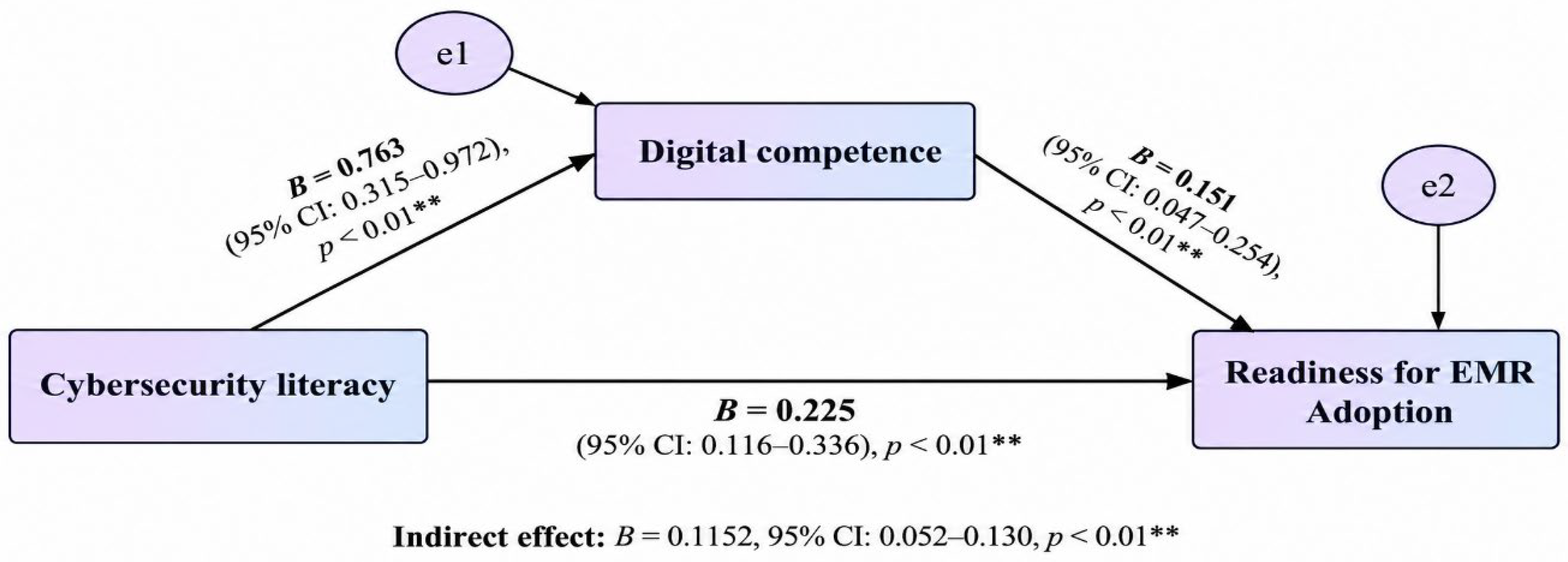
The structural model revealed statistically significant positive direct associations among the study variables. Cybersecurity literacy was positively associated with digital competence (B = 0.763, 95% CI = 0.315–0.972, p < 0.01). Digital competence was also positively associated with readiness for EMR adoption (B = 0.151, 95% CI = 0.047–0.254, p < 0.01). Furthermore, cybersecurity literacy demonstrated a significant positive direct association with readiness for EMR adoption after accounting for digital competence in the structural model (B = 0.225, 95% CI = 0.116–0.336, p < 0.01). These findings indicate that all three hypothesized direct pathways were statistically significant and positive. They are presented in Table 4.
Table 4.
Unstandardized Direct and Indirect Associations among Cybersecurity Literacy, Digital Competence, and Readiness for EMR Adoption.
3.5. Indirect Association Through Digital Competence
The analysis revealed a positive and statistically significant indirect association between cybersecurity literacy and readiness for EMR adoption through digital competence (indirect effect = 0.1152, 95% bootstrap CI = 0.052–0.130, p < 0.01). The confidence interval did not include zero, supporting the statistical significance of the indirect association. Because the direct association between cybersecurity literacy and readiness for EMR adoption also remained statistically significant after accounting for digital competence, the findings were consistent with a partial statistical mediation pattern. These results support the hypothesized indirect association (H4) within the proposed structural model. They are presented in Table 4.
3.6. Model Fit
The structural model demonstrated an acceptable overall fit to the observed data. The chi-square-to-degrees-of-freedom ratio (χ2/df) was 3.492, and the standardized root mean square residual (SRMR) was 0.060. The root mean square error of approximation (RMSEA) was approximately 0.074. The incremental fit indices indicated a good model fit, with a Tucker–Lewis index (TLI) of 0.960, a comparative fit index (CFI) of 0.960, an adjusted goodness-of-fit index (AGFI) of 0.920, and a normed fit index (NFI) of 0.980. Collectively, these indices suggest an acceptable overall fit between the hypothesized structural model and the observed data (Table 5).
Table 5.
Goodness-of-Fit Indices for the Structural Equation Model (n = 454).
3.7. Structural Model
Figure 2 presents the proposed structural model, illustrating the hypothesized direct associations among cybersecurity literacy, digital competence, and readiness for EMR adoption, as well as the indirect association between cybersecurity literacy and EMR readiness through digital competence. The model summarizes the pattern of relationships examined in this study and illustrates the statistically significant direct and indirect pathways identified in the analysis. The findings are consistent with a partial statistical mediation pattern, in which digital competence accounts for part of the observed association between cybersecurity literacy and readiness for EMR adoption.
Figure 2.
Structural model illustrating the direct and indirect associations among cybersecurity literacy, digital competence, and readiness for EMR adoption. ** (p) Significant level < 0.01.
4. Discussion
4.1. Overview of the Main Findings
This study examined the associations among cybersecurity literacy, digital competence, and readiness for electronic medical record (EMR) adoption among nursing interns in Saudi Arabia. The findings revealed statistically significant positive associations among all three study variables. Cybersecurity literacy showed the strongest association with digital competence, followed by its association with readiness for EMR adoption, while digital competence was also positively associated with EMR readiness. Furthermore, the structural model identified significant direct associations and a significant indirect association between cybersecurity literacy and EMR readiness through digital competence, consistent with a partial statistical mediation pattern.
These findings suggest that readiness for EMR adoption among nursing interns is associated with both their digital capabilities and their cybersecurity literacy. The observed indirect association indicates that digital competence may account for part of the statistical relationship between cybersecurity literacy and EMR readiness, highlighting the complementary relevance of these two competencies in the context of digital healthcare training. Nevertheless, given the cross-sectional design and the simultaneous measurement of all study variables, the findings do not establish causal relationships or temporal mediation. Accordingly, the proposed mediation should be interpreted as a statistical pattern of indirect association rather than evidence of a causal mechanism.
4.2. Digital Competence Among Nursing Interns
Participants reported a mean digital competence score of 50.67 out of 60 on the NDASS, corresponding to 84.5% of the maximum possible score. Among the seven assessed skill areas, continuous digital learning had the highest percentage of its maximum possible score (92.2%), followed by digital content management and leadership (90.1%). In contrast, the use of digital nursing equipment had the lowest percentage (78.2%). This pattern indicates variation in participants’ self-reported digital skills, with higher scores in continuous learning and digital content management and comparatively lower scores in the practical use of digital nursing equipment. These findings highlight the potential value of providing additional opportunities for hands-on technology training during nursing education and clinical practice.
The findings are broadly consistent with previous research among university nursing students in Saudi Arabia examining digital proficiency, including knowledge, attitudes, and skills related to digital transformation, digital health literacy, and artificial intelligence [5]. Related studies have also highlighted the relevance of digital health literacy and attitudes toward digital health technologies among Saudi nursing students [3,4]. Furthermore, the use of a nursing-specific measure in the present study is supported by the development and psychometric evaluation of the Nursing Digital Application Skills Scale (NDASS), which assesses digital application skills relevant to nursing practice [6]. More broadly, digital literacy and nursing informatics are important areas of preparation for nurses working in increasingly technology-supported healthcare environments [18].
From an educational perspective, the findings highlight the value of integrating practical digital activities into nursing education and clinical training. These activities may include electronic documentation, digital information management, the use of clinical decision-support applications, and hands-on experience with nursing-related digital equipment. Importantly, the overall self-reported digital competence score should not be interpreted as evidence of proficiency across all clinical technology tasks. Therefore, nursing education programs should complement self-reported assessments with practical evaluations, where feasible, such as simulated electronic documentation exercises and direct observation of nursing interns’ use of digital nursing applications and equipment.
4.3. Cybersecurity Literacy Among Nursing Interns
Participants reported a mean cybersecurity literacy score of 106.58 out of 125, corresponding to 85.3% of the maximum possible score. Among the six assessed dimensions, utility had the highest percentage of its maximum possible score (91.5%), followed by availability (90.6%), whereas control or possession had the lowest percentage (79.7%). This variation across dimensions suggests that participants’ self-reported cybersecurity literacy was not uniform across all assessed areas, highlighting specific aspects that may warrant additional educational attention.
These findings are relevant to previous research among nursing students, which identified cybersecurity practices, perceptions, and awareness of cybercrime as important areas for nursing education [11]. The six dimensions of the Cybersecurity Scale used in the present study provide a multidimensional assessment of cybersecurity literacy, covering confidentiality, control or possession, integrity, authenticity, availability, and utility [10]. Together, these findings underscore the relevance of addressing cybersecurity as part of nursing students’ preparation for technology-supported healthcare environments.
For nursing interns, cybersecurity education is particularly relevant during clinical training, where the use of electronic records involves secure access, authentication, confidentiality, and responsible handling of patient information. Educational activities could therefore incorporate realistic clinical scenarios addressing secure authentication, protection of confidential information, recognition of suspicious communications, and appropriate reporting of security incidents. Such activities are consistent with broader priorities for strengthening digital health capacity and the safe use of digital technologies in healthcare [1,19]. However, these recommendations represent educational implications drawn from the study findings and the clinical context; the present study did not directly evaluate the effectiveness of a cybersecurity training intervention.
4.4. Readiness for EMR Adoption
Participants had a mean readiness score of 44.65 ± 8.07 out of 52, corresponding to 85.9% of the maximum possible score. Core readiness had a mean score of 27.35 ± 5.34 out of 32 (85.5%), while engagement readiness had a mean score of 17.30 ± 2.85 out of 20 (86.5%). These findings describe participants’ self-reported preparedness and willingness to engage with EMR adoption, rather than objectively assessed competence.
The findings are consistent with the conceptualization of readiness as a multidimensional construct involving perceived preparedness and willingness to engage with electronic record implementation. Previous research among healthcare professionals has identified factors such as computer literacy, access to technology, awareness, perceived benefits, and self-efficacy as relevant to readiness for electronic health record adoption [9]. Research on healthcare professionals’ readiness has also highlighted the relevance of individual capabilities and organizational and technological conditions [20,21].
Nevertheless, self-reported readiness does not necessarily indicate that participants can independently use an EMR safely and effectively in all clinical situations. The present study assessed perceived readiness using a questionnaire rather than observed performance in an actual or simulated EMR environment. Accordingly, the reported scores should be interpreted as perceived preparedness for EMR adoption rather than a direct measure of clinical EMR competence.
4.5. Associations Among Cybersecurity Literacy, Digital Competence, and Readiness for EMR Adoption
Cybersecurity literacy was strongly and positively correlated with digital competence (r = 0.763, p < 0.001) and positively correlated with readiness for EMR adoption (r = 0.694, p < 0.001). Digital competence was also positively correlated with readiness for EMR adoption (r = 0.579, p < 0.001). The strongest correlation was observed between cybersecurity literacy and digital competence, followed by the correlation between cybersecurity literacy and EMR readiness. These findings demonstrate significant positive associations among the three study variables, consistent with the hypothesized directions of the relationships.
The association between cybersecurity literacy and digital competence is broadly consistent with previous findings among nursing students that highlighted relationships between computer-use skills and cybersecurity preparedness [11]. The positive association between digital competence and readiness for EMR adoption is also conceptually plausible, as engagement with electronic records requires the ability to use digital applications and manage electronic information effectively. These findings highlight the complementary relevance of digital competence and cybersecurity literacy in preparing nursing interns for technology-supported clinical environments.
The positive association between cybersecurity literacy and readiness for EMR adoption may reflect the relevance of secure information handling to the use of electronic records. Nursing interns who report greater familiarity with confidentiality, authentication, integrity, availability, and responsible information handling may also perceive themselves as better prepared to engage with electronic records. Nevertheless, cybersecurity literacy and digital competence represent conceptually distinct constructs: the former focuses on the secure and responsible use of digital information, whereas the latter concerns the application of digital skills in nursing practice. Although these constructs were strongly correlated in the present study, the observed association does not establish their equivalence or demonstrate that one causes changes in the other.
The degree of these correlations should also be interpreted cautiously. Given the cross-sectional design, the observed associations cannot establish temporal ordering or causal relationships. Furthermore, these relationships may partly reflect other influences that were not specifically examined in the present analysis, such as previous digital training, confidence in using technology, access to electronic systems, or general interest in digital health. Therefore, the findings should be interpreted as evidence of associations among the study variables rather than evidence of directional or causal relationships.
4.6. Digital Competence as an Indirect Pathway
The structural model revealed significant positive direct associations between cybersecurity literacy and digital competence, between digital competence and readiness for EMR adoption, and between cybersecurity literacy and readiness for EMR adoption. In addition, the indirect association between cybersecurity literacy and readiness for EMR adoption through digital competence was positive and statistically significant (B = 0.1152, 95% CI = 0.052–0.130, p < 0.01). Because the 95% bootstrap confidence interval did not include zero, the findings provide statistical evidence of a significant indirect association through digital competence.
The persistence of a statistically significant direct association between cybersecurity literacy and readiness for EMR adoption, alongside the significant indirect association through digital competence, is consistent with a partial statistical mediation pattern within the proposed model. This finding suggests that digital competence accounts for part of the observed statistical association between cybersecurity literacy and readiness for EMR adoption, while the remaining direct association indicates that other factors or pathways may also be relevant to this relationship.
This interpretation should remain cautious. Mediation analysis based on cross-sectional data cannot establish temporal ordering or demonstrate a causal mechanism. Therefore, the observed indirect association should be interpreted as a statistical pattern consistent with the proposed mediation model, rather than as evidence that cybersecurity literacy leads to greater digital competence and subsequently increases readiness for EMR adoption. Longitudinal studies or intervention-based research are needed to investigate the temporal relationships among these constructs and to determine whether changes in cybersecurity literacy and digital competence are associated with subsequent changes in EMR readiness [22,23].
4.7. Implications for Nursing Education and Clinical Training
The findings have several implications for nursing education and clinical training. First, digital competence should be strengthened through practical learning activities involving electronic documentation, digital information management, clinical decision-support tools, and technology-related problem-solving. Such activities may complement theoretical instruction by enabling nursing interns to apply digital skills in realistic clinical contexts. Integrating these activities into nursing curricula and clinical placements may help prepare interns for the increasing use of digital technologies in healthcare [1,2,7,18].
Second, cybersecurity education should be integrated into nursing informatics courses and clinical training rather than being addressed solely as a separate theoretical topic. Nursing interns should be provided with opportunities to apply principles of confidentiality, integrity, authentication, secure access, and responsible information handling through realistic clinical scenarios. This approach may help connect cybersecurity knowledge with the practical responsibilities involved in accessing and using electronic patient records.
Third, readiness for EMR adoption may be evaluated more comprehensively when self-reported readiness is complemented by practical assessments. Simulated electronic documentation, supervised EMR activities, and structured feedback could help educators identify potential differences between interns’ perceived readiness and their demonstrated ability to use electronic records in clinical situations.
Finally, educational institutions and clinical placement sites should coordinate their expectations and procedures regarding EMR access, electronic documentation, supervision, and cybersecurity practices. Such coordination may promote consistency between academic preparation and clinical training and support nursing interns’ transition into technology-supported clinical practice.
These implications are recommendations derived from the observed associations and descriptive findings of the present study. Their effectiveness should be examined in future educational intervention studies.
4.8. Contribution to the Existing Research
Previous studies conducted by the research team have examined information technology in relation to nursing work outcomes, nursing interns’ clinical rotation goals, and educational strategies associated with innovation and clinical performance [24,25,26]. Collectively, these studies provide a broader research context concerning the role of technology in nursing practice, professional preparation, and nursing education.
Building on this research, the present study extends the investigation to the interrelated roles of cybersecurity literacy and digital competence in nursing interns’ readiness for EMR adoption. By examining these three constructs within a single structural model, the study provides additional evidence concerning their direct and indirect statistical associations in the context of clinical training in Saudi Arabia. Importantly, the present study addresses a specific research question that differs from those investigated in the team’s previous work. Therefore, the earlier studies provide contextual background for the current investigation rather than direct empirical evidence for the relationships examined in the present model.
4.9. Strengths and Limitations
This study has several strengths. It simultaneously examined cybersecurity literacy, digital competence, and readiness for electronic medical record (EMR) adoption among nursing interns, providing an integrated perspective on digital preparedness during clinical training. The inclusion of 454 nursing interns and the use of structural equation modeling enabled the examination of both direct and indirect associations among the study variables. In addition, the questionnaire underwent translation and back-translation, expert review, and pilot testing before the main data collection.
The findings should be interpreted in light of certain methodological considerations. The cross-sectional design does not establish temporal or causal relationships, while the use of convenience and snowball sampling may limit generalizability. Moreover, reliance on self-reported measures and electronic data collection may have introduced reporting and selection biases. Finally, EMR readiness reflected participants’ perceived preparedness rather than objectively assessed performance. Future studies could address these considerations through longitudinal designs and practical assessments of EMR-related skills.
Despite these considerations, the study provides useful evidence concerning the associations among cybersecurity literacy, digital competence, and readiness for EMR adoption among nursing interns.
4.10. Recommendations for Future Research
Future research should employ longitudinal designs to examine the temporal relationships among cybersecurity literacy, digital competence, and readiness for EMR adoption, as well as their associations with actual EMR use. Intervention studies could evaluate whether integrated cybersecurity and digital competence training improves nursing interns’ performance in simulated or clinical electronic documentation.
Further studies should complement self-reported readiness with objective assessments of EMR-related performance, including electronic documentation accuracy, appropriate access to patient information, secure authentication, and adherence to cybersecurity procedures. Research involving multiple nursing schools, universities, and clinical placement sites would also help assess the generalizability of the findings across different educational and clinical settings.
Future research could additionally investigate other factors potentially associated with readiness for EMR adoption, such as self-efficacy, perceived usefulness, previous EMR exposure, organizational support, access to technology, and the quality of clinical informatics training. Examining these factors may provide a broader understanding of the individual and organizational conditions associated with nursing interns’ readiness for EMR adoption.
5. Conclusions
This study demonstrated significant positive associations among cybersecurity literacy, digital competence, and readiness for electronic medical record (EMR) adoption among nursing interns in Saudi Arabia. The structural model identified significant positive direct associations among the three study variables, as well as a statistically significant indirect association between cybersecurity literacy and EMR readiness through digital competence. This pattern was consistent with partial statistical mediation, indicating that digital competence accounted for part of the observed association between cybersecurity literacy and readiness for EMR adoption.
The findings highlight the complementary importance of cybersecurity literacy and digital competence in nursing interns’ preparedness for technology-supported clinical practice. Nursing education programs and clinical training sites should consider integrating practical digital skills, cybersecurity education, and structured opportunities for EMR-related practice into nursing curricula and clinical placements. Such educational approaches may support nursing interns’ preparedness for the effective and secure use of electronic health information systems. However, given the cross-sectional design, the findings represent statistical associations and should not be interpreted as evidence of causal relationships.
Author Contributions
Made substantial contributions to the conception, design and acquisition of data: M.S.M.S., R.H.F.; Analysis and interpretation of data: M.S.M.S., R.H.F.; Involved in drafting the manuscript or revising it critically for important intellectual content: M.S.M.S., R.H.F., E.A.G.A., M.A., M.S.M., M.A., H.B., E.M.L.; Gave final approval for the version to be published. Each author participated sufficiently in the work to take public responsibility for appropriate portions of the content: M.S.M.S., R.H.F., E.A.G.A., M.A., M.S.M., M.A., H.B.; Agreed to be accountable for all aspects of the work in ensuring that questions related to the accuracy or integrity of any part of the work are appropriately investigated and resolved: M.S.M.S., R.H.F., E.A.G.A., M.A., M.S.M., M.A., H.B., M.T.A.; All authors have read and agreed to the published version of the manuscript.
Funding
This research received no external funding.
Institutional Review Board Statement
Ethical approval was obtained from the Research Ethics Committee of the Faculty of Nursing, Zagazig University, Egypt (approval no. 423). Participation was voluntary, and the questionnaire was designed to protect participants’ anonymity.
Informed Consent Statement
Electronic informed consent was obtained from participants before they proceeded to complete the questionnaire.
Data Availability Statement
The datasets generated and/or analyzed during the current study are not publicly available due to the conditions of participant consent and institutional ethical requirements but may be available from the corresponding author on reasonable request, subject to applicable ethical and institutional restrictions.
Acknowledgments
The authors extend their gratitude to all participants for their cooperation. The authors extend their appreciation to the Deanship of Research and Entrepreneurship at Shaqra University for supporting this research work. We acknowledge the use of OpenAI’s ChatGPT-4 for language enhancement purposes. The content and ideas remain the authors’ sole responsibility, and ChatGPT-4 was used exclusively to refine the clarity and fluency of the language.
Conflicts of Interest
The authors declare no conflicts of interest.
References
- World Health Organization. Global Strategy on Digital Health 2020–2027; World Health Organization: Geneva, Switzerland, 2025; Available online: https://www.who.int/publications/i/item/9789240116870 (accessed on 10 June 2026).
- Saudi Ministry of Health. National E-Health Strategy: MOH Vision for E-Health; Ministry of Health: Riyadh, Saudi Arabia, 2024. Available online: https://www.moh.gov.sa/en/ministry/vro/ehealth/pages/default.aspx (accessed on 5 July 2026).
- Alnomasy, N.; Alrashedi, H.; Alsayed, S.; Pangket, P.; Alsayed, R. Informatics competency and technology self-efficacy levels among undergraduate nursing students: Cross-sectional study. JMIR Nurs. 2026, 9, e85283. [Google Scholar] [CrossRef] [Scilit] [PubMed]
- Alharbi, M.; Alharthi, A.S.; Azab, A.A.; Alharthi, R. Digital health literacy and attitudes toward telehealth use in practice among nursing students in Saudi Arabia: Cross-sectional study. JMIR Nurs. 2026, 9, e94722. [Google Scholar] [CrossRef] [Scilit] [PubMed]
- Abou Hashish, E.A.; Alnajjar, H. Digital proficiency: Assessing knowledge, attitudes, and skills in digital transformation, health literacy, and artificial intelligence among university nursing students. BMC Med. Educ. 2024, 24, 508. [Google Scholar] [CrossRef] [Scilit] [PubMed]
- Qin, S.; Zhang, J.; Sun, X.; Meng, G.; Zhuang, X.; Jia, Y.; Shi, W.-X.; Zhang, Y.-P. A scale for measuring nursing digital application skills: A development and psychometric testing study. BMC Nurs. 2024, 23, 366. [Google Scholar] [CrossRef] [Scilit] [PubMed]
- Raghunathan, K.; McKenna, L.; Peddle, M. Use of academic electronic medical records in nurse education: A scoping review. Nurse Educ. Today 2021, 101, 104889. [Google Scholar] [CrossRef] [Scilit] [PubMed]
- Martzoukou, K.; Kostagiolas, P.; Johnson, N.; Work, F.; Fulton, C. A cross-sectional study of discipline-based self-perceived digital literacy competencies of nursing students. J. Adv. Nurs. 2024, 80, 656–672. [Google Scholar] [CrossRef] [Scilit] [PubMed]
- Ngusie, H.S.; Kassie, S.Y.; Chereka, A.A.; Enyew, E.B. Healthcare providers’ readiness for electronic health record adoption: A cross-sectional study during pre-implementation phase. BMC Health Serv. Res. 2022, 22, 282. [Google Scholar] [CrossRef] [Scilit] [PubMed]
- Arpaci, I.; Sevinc, K. Development of the cybersecurity scale (CS-S): Evidence of validity and reliability. Inf. Dev. 2022, 38, 218–226. [Google Scholar] [CrossRef] [Scilit]
- Yalcinkaya, T.; Tuncer, M.; Tuncer, G.Z.; Erol, A.; Cinar Yucel, S. Nursing students’ cybersecurity practices and perceptions and cybersecurity crime awareness. Nurse Educ. Today 2025, 153, 106818. [Google Scholar] [CrossRef] [Scilit] [PubMed]
- Oo, H.M.; Htun, Y.M.; Win, T.T.; Han, Z.M.; Zaw, T.; Tun, K.M. Information and communication technology literacy, knowledge and readiness for electronic medical record system adoption among health professionals in a tertiary hospital, Myanmar: A cross-sectional study. PLoS ONE 2021, 16, e0253691. [Google Scholar] [CrossRef] [Scilit] [PubMed]
- Davis, F.D. Perceived usefulness, perceived ease of use, and user acceptance of information technology. MIS Q. 1989, 13, 319–340. [Google Scholar] [CrossRef] [Scilit] [PubMed]
- Brislin, R.W. Back-translation for cross-cultural research. J. Cross Cult. Psychol. 1970, 1, 185–216. [Google Scholar] [CrossRef] [Scilit]
- Hooper, D.; Coughlan, J.; Mullen, M.R. Structural equation modelling: Guidelines for determining model fit. Electron. J. Bus. Res. Methods 2008, 6, 53–60. [Google Scholar]
- Hu, L.T.; Bentler, P.M. Cutoff criteria for fit indexes in covariance structure analysis: Conventional criteria versus new alternatives. Struct. Equ. Model. 1999, 6, 1–55. [Google Scholar] [CrossRef] [Scilit]
- Schermelleh-Engel, K.; Moosbrugger, H.; Müller, H. Evaluating the fit of structural equation models: Tests of significance and descriptive goodness-of-fit measures. Methods Psychol. Res. Online 2003, 8, 23–74. [Google Scholar] [CrossRef]
- Conte, G.; Arrigoni, C.; Magon, A.; Stievano, A.; Caruso, R. Embracing digital and technological solutions in nursing: A scoping review and conceptual framework. Int. J. Med. Inform. 2023, 177, 105148. [Google Scholar] [CrossRef] [Scilit] [PubMed]
- World Health Organization Regional Office for the Eastern Mediterranean. Digital Health Action Plan for the Eastern Mediterranean Region, 2024–2028; WHO Regional Office for the Eastern Mediterranean: Cairo, Egypt, 2024. [Google Scholar]
- Biruk, S.; Yilma, T.; Andualem, M.; Tilahun, B. Health professionals’ readiness to implement electronic medical record system in Gondar University Hospital, Ethiopia. BMC Med. Inform. Decis. Mak. 2014, 14, 115. [Google Scholar] [CrossRef] [Scilit] [PubMed]
- Li, J.; Land, L.P.W.; Ray, P.; Chattopadhyaya, S. E-Health readiness framework from Electronic Health Records perspective. Int. J. Internet Enterp. Manag. 2010, 6, 326–348. [Google Scholar] [CrossRef] [Scilit]
- Hayes, A.F. Introduction to Mediation, Moderation, and Conditional Process Analysis: A Regression-Based Approach, 3rd ed.; Guilford Press: New York, NY, USA, 2022. [Google Scholar]
- VanderWeele, T.J. Mediation analysis: A practitioner’s guide. Annu. Rev. Public Health 2016, 37, 17–32. [Google Scholar] [CrossRef] [Scilit] [PubMed]
- Saleh, M.S.M.; Elsabahy, H.E.; Abdelhamid, Z.N. Information technology as an opportunity for improving nurses’ work outcomes in Egypt. Biosci. Res. 2021, 18, 345–358. [Google Scholar]
- Abdelaziz, M.M.A.; Saleh, M.S.M.; Aysha, Z.M.; Abou Shaheen, R.A.E. Role ambiguity and nursing interns’ achievement of clinical rotation goals: A correlational study. BMC Nurs. 2025, 24, 1168. [Google Scholar] [CrossRef] [Scilit] [PubMed]
- Saleh, M.S.M.; Ata, A.A.; Abd-Elhamid, Z.N.; Eltahan, A.A.; Dailah, H.G.; Elsabahy, H.E. Building nursing leaders: The influence of entrepreneurial leadership program on nurse interns’ innovation and clinical performance. BMC Nurs. 2025, 24, 501. [Google Scholar] [CrossRef] [Scilit] [PubMed]

Disclaimer/Publisher’s Note: The statements, opinions and data contained in all publications are solely those of the individual author(s) and contributor(s) and not of MDPI and/or the editor(s). MDPI and/or the editor(s) disclaim responsibility for any injury to people or property resulting from any ideas, methods, instructions or products referred to in the content. |
© 2026 by the authors. Licensee MDPI, Basel, Switzerland. This article is an open access article distributed under the terms and conditions of the Creative Commons Attribution (CC BY) license.