


Abstract
Background: High-risk pregnancies are associated with increased physical and psychological burdens that may adversely affect maternal well-being and prenatal attachment. Although perceived stress and mindfulness have been widely studied during pregnancy, their combined relationship with prenatal attachment in women with high-risk pregnancies remains unclear, particularly within the framework of the Neuman Systems Model. This study aimed to examine the relationships among perceived stress, mindfulness, and prenatal attachment in women with high-risk pregnancies. Methods: This descriptive cross-sectional study included 385 women with high-risk pregnancies attending a public maternity hospital between 15 August 2025 and 30 January 2026. Data were collected using the Personal Information Form, the Perceived Stress Scale for High-Risk Pregnancies Based on the Neuman Systems Model (PSS-HRPNSM), the Mindful Attention Awareness Scale (MAAS), and the Prenatal Attachment Inventory (PAI). Data were analyzed using independent-samples t-tests, ANOVA, Pearson’s correlation analysis, and multiple linear regression. Results: The mean total perceived stress score was 87.23 ± 17.97. The highest stress score was observed in the psychological domain (33.41 ± 8.45), followed by the composite socio-cultural/developmental/spiritual domain (28.41 ± 7.55) and the physiological domain (25.42 ± 6.37). Mean MAAS and PAI scores were 64.09 ± 12.93 and 40.17 ± 10.72, respectively. Perceived stress was negatively correlated with mindfulness (r = −0.576, p < 0.001) and prenatal attachment (r = −0.374, p < 0.001), whereas mindfulness was positively correlated with prenatal attachment (r = 0.368, p < 0.001). Mindfulness and perceived stress remained significant independent predictors of prenatal attachment after adjustment for demographic and obstetric variables (R2 = 0.386). Conclusions: Higher perceived stress was associated with lower prenatal attachment, whereas higher mindfulness was associated with stronger prenatal attachment among women with high-risk pregnancies. These findings support the integration of stress-management and mindfulness-based approaches into holistic nursing care for women with high-risk pregnancies. Longitudinal and intervention studies are warranted to clarify causal relationships and evaluate the effectiveness of mindfulness-based interventions.
1. Introduction
High-risk pregnancies are a significant obstetric and public health issue characterized by physiological, psychological, social, and economic dimensions that threaten maternal and fetal health and increase morbidity and mortality rates [1,2]. High-risk pregnancies affect approximately 15% of all pregnancies worldwide [3]. In our country, it is reported that one in every three pregnancies is classified as high-risk [4]. High-risk pregnancies arise as a result of chronic diseases present before pregnancy and obstetric and fetal complications that develop during pregnancy. Pre-existing cardiovascular and endocrine diseases, infections, and Rh incompatibility, along with complications such as gestational hypertension, preeclampsia, gestational diabetes, placental abnormalities, premature rupture of membranes, and intrauterine growth restriction, can put the continuation of pregnancy at risk [3,5].
Reducing maternal and neonatal mortality is among the priority global health goals established under the United Nations Sustainable Development Goals (SDGs). In this context, the target is to reduce the global maternal mortality ratio to below 70 per 100,000 live births by 2030 [6]. Early identification and effective management of high-risk pregnancies are crucial for achieving these goals [7,8]. Additionally, the American College of Obstetricians and Gynecologists (ACOG, 2023) emphasizes that psychosocial assessments are an integral component of prenatal care and play a fundamental role in protecting maternal and fetal health, identifying risks early, and improving birth outcomes [9].
High-risk pregnancies can significantly affect not only maternal and fetal physical health outcomes but also women’s psychological well-being and emotional adjustment. Increased uncertainty, concerns regarding fetal health, and the need for medical interventions may elevate perceived stress levels among pregnant women [10,11]. Elevated stress has been associated with adverse pregnancy outcomes, including prolonged labour, increased need for analgesia, preterm birth, spontaneous abortion, low birth weight, and poorer prenatal attachment [7,11,12]. Furthermore, increased perceived stress during pregnancy may negatively affect prenatal attachment [10,13,14]. Therefore, identifying factors that may reduce stress and promote maternal adaptation is an important component of prenatal care [15]. Mindfulness has emerged as a protective psychological resource that enhances present-moment awareness, emotional regulation, and adaptive coping. Higher levels of mindfulness during pregnancy may strengthen women’s ability to cope with stress and improve adaptation to pregnancy [16,17]. A study demonstrated that mindfulness-based approaches reduced fasting and postprandial blood glucose levels, as well as hemoglobin A1c levels, in pregnant women with gestational diabetes; they also reduced perceived stress levels and improved quality of life [18]. In this context, mindfulness is considered an important protective and supportive psychosocial factor during pregnancy. Reducing perceived stress and increasing mindfulness may contribute positively to maternal and infant health by lowering the risk of adverse pregnancy outcomes [17].
The literature indicates that prenatal attachment levels are generally lower among women experiencing high-risk pregnancies compared with those experiencing uncomplicated pregnancies [10,13,18,19]. In a study conducted by Pisoni et al. (2015) among women at risk of preterm birth, participants in the high-risk pregnancy group exhibited significantly lower prenatal attachment levels and higher anxiety and depression levels compared with women with uncomplicated pregnancies [20]. These findings suggest that emotional experiences during pregnancy play a critical role in the development of prenatal attachment. Therefore, examining perceived stress, mindfulness, and prenatal attachment together is important for a comprehensive understanding of psychosocial adaptation in high-risk pregnancies. The Neuman Systems Model (NSM) provides a comprehensive nursing framework for understanding how individuals respond to internal and external stressors [21,22]. According to the model, individuals are viewed as open systems that continuously interact with environmental stressors that may threaten system stability. Protective mechanisms and lines of resistance help maintain adaptation and well-being despite exposure to stressors [21,22]. Within the context of high-risk pregnancy, perceived stress may be conceptualized as a stressor affecting the maternal client system. In contrast, mindfulness may function as a protective psychological resource that strengthens coping capacity, resilience, and emotional regulation [23,24]. Prenatal attachment may be viewed as an adaptive psychosocial outcome reflecting maternal adjustment and system stability during pregnancy [20,25]. Therefore, the NSM provides a useful theoretical framework for examining the interrelationships among perceived stress, mindfulness, and prenatal attachment in women with high-risk pregnancies.
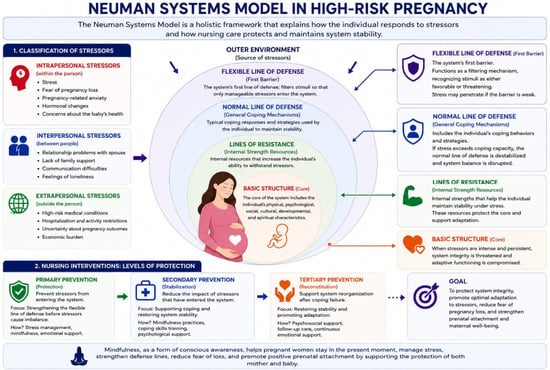
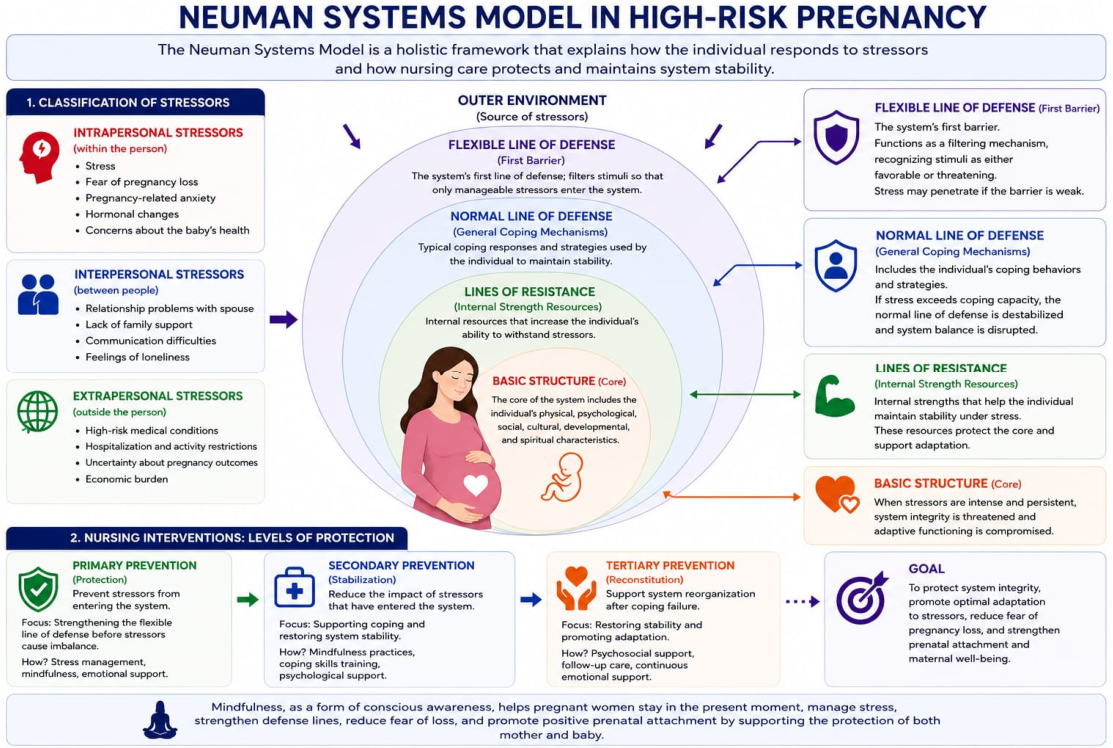
Figure 1 illustrates the application of the Neuman Systems Model to women experiencing high-risk pregnancies. According to the model, high-risk pregnancy exposes women to multiple intrapersonal, interpersonal, and extrapersonal stressors, including fear of pregnancy loss, concerns about fetal health, pregnancy-related anxiety, hospitalization, activity restrictions, lack of social support, and uncertainty regarding pregnancy outcomes [20,25]. These stressors may challenge the flexible line of defence and disrupt normal coping mechanisms, thereby threatening system stability [21]. Within this framework, perceived stress represents a major stressor that may negatively influence maternal adaptation and prenatal attachment [25]. Conversely, mindfulness may function as an internal protective resource that strengthens coping capacity, resilience, emotional regulation, and present-moment awareness [23,24]. The model further emphasizes the role of nursing interventions at different levels of prevention [21]. Mindfulness-based approaches may function as both primary and secondary prevention strategies by strengthening defence lines before stress reactions occur and reducing the impact of existing stress responses [23]. Consequently, mindfulness may contribute to lower perceived stress levels, improved maternal adaptation, and stronger prenatal attachment among women with high-risk pregnancies [25]. Previous studies have demonstrated associations between perceived stress and adverse pregnancy outcomes, as well as between mindfulness and psychological well-being during pregnancy [23,24]. Research has also shown that prenatal attachment may be influenced by maternal emotional experiences [20,25]. However, the potential interplay among perceived stress, mindfulness, and prenatal attachment has received limited attention, particularly among women experiencing high-risk pregnancies. Moreover, to our knowledge, no previous study has simultaneously examined these variables within the framework of the Neuman Systems Model. Understanding how stress-related experiences and protective psychological resources interact may contribute to the development of holistic nursing interventions aimed at supporting maternal adaptation and prenatal attachment in this vulnerable population. Therefore, this study aimed to determine the levels of perceived stress, mindfulness, and prenatal attachment among women with high-risk pregnancies and to examine the relationships among these variables.
Figure 1.
Neuman system model in high-risk pregnancy (developed by the authors based on [21]).
2. Research Questions
- What are the levels of perceived stress, mindfulness, and prenatal attachment in high-risk pregnant women?
- Is there a significant relationship among perceived stress, mindfulness, and prenatal attachment in high-risk pregnant women?
- Do perceived stress, mindfulness and socio-demographic variables explain the level of prenatal attachment?
3. Materials and Methods
3.1. Study Design and Sample
This study employed a descriptive cross-sectional design. The study was conducted at the obstetrics outpatient clinic of a public maternity hospital in a major metropolitan city in Türkiye between 15 August 2025 and 30 January 2026. The study population consisted of pregnant women diagnosed with high-risk pregnancies and followed at the hospital; the sample comprised 385 pregnant women who met the study inclusion criteria. The study included women aged 18 or older, in their second or third trimester of pregnancy, who could communicate in Turkish and were willing to participate. Women with a previously diagnosed psychiatric disorder, those experiencing communication difficulties, or those who failed to complete the data collection forms were excluded from the study. Information regarding psychiatric disorders was obtained through participant self-report and verified using hospital medical records. An a priori power analysis was performed using G*-Power version 3.1.9.4 (Heinrich Heine University Düsseldorf, Düsseldorf, Germany) for multiple linear regression (fixed model, R2 deviation from zero). Assuming a medium effect size (f2 = 0.15), an alpha level of 0.05, statistical power of 0.80, and 12 predictors, the minimum required sample size was calculated as 127 participants. In addition, a post hoc power analysis was performed using G*Power version 3.1.9.4 (Heinrich Heine University Düsseldorf, Düsseldorf, Germany)to evaluate the statistical power of the final multiple linear regression model. Based on an effect size of f2 = 0.627, an alpha level of 0.05, a sample size of 385 participants, and 12 predictors, the achieved statistical power was calculated as 1.00. These findings indicate that the study had sufficient statistical power to detect significant predictors in the regression model.
3.2. Data Collection
Data were collected from women with high-risk pregnancies attending the obstetrics outpatient clinic of the same public maternity hospital. Participants were informed about the study while waiting for their examination, and both written and verbal informed consent were obtained. Data collection instruments were subsequently administered, and participants completed the forms. Completed questionnaires were reviewed by the researchers at the time of collection. Three questionnaires with incomplete responses were excluded from the study; therefore, only fully completed questionnaires were included in the final analysis. As questionnaires with incomplete responses were excluded, no missing data were present in the final dataset. Data were collected by the Personal Information Form, the Neuman Systems Model-Based Perceived Stress Scale for High-Risk Pregnancies (PSS-HRPNSM), the Mindful Attention Awareness Scale (MAAS) and the Prenatal Attachment Inventory (PAI). The dependent variable in the study is prenatal attachment, while the independent variables are perceived stress and mindfulness.
Personal Information Form: Prepared by the researchers in accordance with the relevant literature [26,27,28,29,30]. The Demographic Form consists of 15 questions regarding the women’s age, diagnosis, marital status, educational status, employment status, social security, income level, family structure, and pregnancy-related characteristics (gestational week, number of pregnancies, whether the pregnancy was planned, anxiety regarding the pregnancy, and whether they received childbirth preparation training.
The Neuman Systems Model-Based Perceived Stress Scale for High-Risk Pregnancies (PSS-HRPNSM): Developed by Metin and Kulakaç (2023) [31].This scale consists of 34 items and three subscales. A high score on the scale generally indicates a higher perception of stress, either overall or in the specified life area. The lowest possible score on the scale is 34, and the highest is 170. The scale has no cutoff point. The Cronbach’s alpha for the scale was 0.87 [31]. In this study, Cronbach’s alpha was 0.935.
Mindful Attention Awareness Scale (MAAS): The Mindful Attention Awareness Scale (MAAS) was developed by Brown and Ryan (2003) to assess adults’ tendencies to be aware of and pay attention to their moment-to-moment experiences in daily life [32]. Its validity and reliability in Turkish were established by Özyeşil et al. (2011), and the Cronbach’s alpha was 0.80 [33]. The scale consists of 15 items, is a six-point Likert-type scale, and contains no reverse-scored items. Scores range from a minimum of 15 to a maximum of 90. The scale has no cutoff point. Higher scores on the scale indicate a higher level of the individual’s conscious awareness. The Cronbach’s Alpha value for the original version of the scale was reported as 0.82. In this study, Cronbach’s alpha was 0.953.
Prenatal Attachment Inventory (PAI): Developed by Müller (1993), the PAI assesses the pregnant woman’s attachment to her baby during the prenatal period [34]. The Turkish adaptation of the scale was conducted by Dereli Yılmaz and Bejı̇ Kızılkaya (2013) [35]. The inventory consists of 21 items and uses a four-point Likert scale, with each item scored from 1 to 4. Scores range from 21 to 84, with higher scores indicating greater prenatal attachment. The scale lacks a cutoff point. In the Turkish adaptation study, the scale’s Cronbach’s alpha was 0.84 [35]. In this study, the PAI Cronbach’s Alpha was found to be 0.935.
3.3. Data Analysis
The study data were analyzed using IBM SPSS Statistics for Windows, version 27.0 (IBM Corp., Armonk, NY, USA). Descriptive statistics were presented as frequencies, percentages, means, standard deviations, medians, and quartiles. The normality of continuous variables was assessed using skewness and kurtosis statistics. Skewness values within ±2 and kurtosis values within ±7 were considered indicative of acceptable normality. All study variables met these criteria and were therefore considered normally distributed. Accordingly, parametric tests were used for the analyses. Independent samples t-tests were used to compare two independent groups, while one-way analysis of variance (ANOVA) was used to compare more than two groups. When significant differences were identified in the ANOVA, Bonferroni post hoc tests were performed to determine the source of the differences. Relationships between continuous variables were evaluated using Pearson’s correlation analysis.
Before conducting the multiple linear regression analysis, multicollinearity assumptions were assessed using tolerance and variance inflation factor (VIF) values. Tolerance values greater than 0.10 and VIF values lower than 10 were considered indicative of the absence of multicollinearity. Multiple linear regression analysis was conducted to identify independent factors associated with prenatal attachment. Perceived stress, mindfulness, and demographic and obstetric variables that were significantly associated with prenatal attachment in the bivariate analyses were included in the regression model. Regression coefficients, standard errors, standardized beta coefficients, t values, and p values were reported. A p-value of <0.05 was considered statistically significant. The internal consistency of the scales was evaluated using Cronbach’s alpha coefficients.
4. Results
When the socio-demographic distribution of pregnant women was examined, the mean age was 31.92 ± 5.63 years. It was found that 49.4% of the women had a high school education, 96.6% lived in a nuclear family, 90.4% were not employed, and 96.9% had an income equal to their expenses (Table 1).
Table 1.
Sociodemographic characteristics of pregnant women (n = 385).
It was determined that 54.0% of the women had maternal conditions, 28.3% had fetal causes, and 17.7% had obstetric complications. Among maternal diseases, 19.0% of women had gestational diabetes; among obstetric complications, the most common was threatened preterm labour (6.5%); and among fetal risks, the most common was intrauterine growth restriction (11.4%). It was determined that the average gestational age was 26.80 ± 5.60 weeks, the average number of pregnancies was 2.98 ± 1.96, and the average number of miscarriages was 0.52 ± 1.05. It was found that 75.1% of the women had a planned pregnancy, and 81.0% experienced pregnancy-related anxiety. It was found that 43.8% of the women experiencing pregnancy-related anxiety were concerned about the baby’s health, and 33.0% were concerned about the labour process. It was determined that 93.5% of the women had not received childbirth preparation education, and none had received education on coping with stress during pregnancy (Table 2).
Table 2.
Obstetric and pregnancy-related characteristics of the women (n = 385).
The mean total score for the PSS-HRPNSM was 87.23 ± 17.97. When the subscales were examined, the mean scores were 25.42 ± 6.37 for the physiological domain, 33.41 ± 8.45 for the psychological domain, and 28.41 ± 7.55 for the sociocultural, developmental, and spiritual domain. The average MAAS score for women was 64.09 ± 12.93, and the average PAI score was 40.17 ± 10.72. The Cronbach’s alpha coefficients for the scales ranged from 0.889 to 0.953, indicating high reliability (Table 3).
Table 3.
Descriptive statistics of the PSS-HRPNSM, MAAS, and PAI scores.
When women’s sociodemographic characteristics were examined, scale scores showed statistically significant differences in the psychological, sociocultural/developmental/spiritual, MAAS, and PAI domains by educational level (p < 0.05). It was found that the average PAI score for women with a bachelor’s degree was higher than that of women with primary and high school education. It was observed that working women had lower scores on the sociocultural, developmental, and spiritual domain subscales compared to non-working women (t = −4.066; p < 0.001), whereas their PAI scores were higher (t = 2.846; p = 0.005). No statistically significant differences were found in scale scores across family type, social security status, and income level (p > 0.05) (Table 4).
Table 4.
Comparison of PSS-HRPNSM, MAAS, and PAI scores by sociodemographic characteristics.
A statistically significant difference was found between women’s obstetric characteristics and their scores in the physiological domain, sociocultural/developmental/spiritual domain, total PSS-HRPNSM, and MAAS (p < 0.05). It was found that women identified as having a high-risk pregnancy had higher PSS-HRPNSM total scores, whereas their MAAS and PAI scores were lower. It was found that women with planned pregnancies had higher psychological domain scores (t = 4.201; p < 0.001). In contrast, women with unplanned pregnancies had higher scores in the sociocultural/developmental/spiritual domain (t = −2.484; p = 0.013), while their MAAS (t = 2.288; p = 0.023) and PAI (t = 4.138; p < 0.001) scores were lower (p < 0.05). It was found that women with pregnancy-related anxiety had higher total and all subscale scores on the PSS-HRPNSM, whereas their MAAS and PAI scores were lower (p < 0.05). Significant differences were found in scores for the physiological domain, sociocultural/developmental/spiritual domain, MAAS, and PAI according to the type of pregnancy-related anxiety (p < 0.05). In particular, women with economic concerns were found to have lower MAAS and PAI scores. It was determined that women who did not receive childbirth preparation education had higher total scores in the physiological, sociocultural/developmental/spiritual, and PSS-HRPNSM domains. In comparison, their PAI scores were lower (p < 0.05) (Table 5).
Table 5.
Comparison of PSS-HRPNSM, MAAS, and PAI scores by obstetric characteristics.
When examining the relationships between women’s ages, gestational weeks, number of pregnancies, and number of miscarriages and the scale scores, positive significant relationships were found between age and the physiological domain, sociocultural/developmental/spiritual domain, and PSS-HRPNSM total scores, while negative significant relationships were found with the MAAS and PAI scores (p < 0.05). A positive significant relationship was found only between gestational week and PAI scores (r = 0.305; p < 0.001). Significant negative correlations were found between the number of pregnancies and the psychological domain score, significant positive correlations with the sociocultural/developmental/spiritual domain score, and significant negative correlations with the PAI score (p < 0.05). A significant negative correlation was found only between the number of miscarriages and PAI scores (r = −0.161; p = 0.001) (Table 6).
Table 6.
Correlations between PSS-HRPNSM, MAAS, and PAI scores and obstetric characteristics.
A strong negative correlation was found between women’s MAAS scores and the Sociocultural, Developmental, and Spiritual Domain subscale scores (r = −0.639; p < 0.001). Negative moderate-level correlations were found between MAAS scores and the Physiological Domain subscale (r = −0.511) and the PSS-HRPNSM total score (r = −0.576); negative weak-level correlations were found with the Psychological Domain (r = −0.268; p < 0.001) (p < 0.001). A moderate negative correlation was found between women’s PAI scores and the scores of the Sociocultural, Developmental, and Spiritual Domain subscales (r = −0.423; p < 0.001). Weak negative correlations were found between participants’ PAI scores and the scores of the Physiological Domain subscale (r = −0.371; p < 0.001), the Psychological Domain subscale (r = −0.137; p = 0.007), and the PSS-HRPNSM total (r = −0.374; p < 0.001) (p < 0.001). A weak positive correlation was found between women’s PAI scores and MAAS scores (r = 0.368; p < 0.001). These findings indicate that as perceived stress levels increase, prenatal attachment levels tend to decrease, while as mindfulness levels increase, prenatal attachment levels tend to increase (Table 7).
Table 7.
Correlations between PSS-HRPNSM, MAAS, and PAI scores.
Multiple linear regression analysis demonstrated that the overall model was statistically significant (F = 16.581, p < 0.001) and explained 38.6% of the variance in prenatal attachment (R2 = 0.386). Gestational week (β = 0.246, p < 0.001), MAAS score (β = 0.234, p < 0.001), and participation in childbirth preparation classes (β = 0.094, p = 0.029) were identified as significant positive predictors of prenatal attachment. In contrast, the number of pregnancies (β = −0.266, p < 0.001) and perceived stress (PSS-HRPNSM total score) (β = −0.194, p = 0.001) were identified as significant negative predictors of prenatal attachment. Among the significant predictors, gestational week showed the strongest positive association, whereas the number of pregnancies showed the strongest negative association with prenatal attachment.
Before the regression analysis, multicollinearity was assessed using tolerance and variance inflation factor (VIF) values. Tolerance values ranged from 0.379 to 0.895, and VIF values ranged from 1.117 to 2.640. These findings indicated no evidence of multicollinearity among the independent variables (Table 8).
Table 8.
Factors associated with prenatal attachment: results of multiple linear regression analysis.
5. Discussion
This study assessed levels of perceived stress, mindfulness, and prenatal attachment in high-risk pregnant women and examined the relationships among these variables. The mean PSS-HRPNSM score among participants was 87.23 ± 17.97, which, while close to the midpoint, tended to fall below it. When the subscales were examined, the highest mean score was in the psychological domain, followed by the sociocultural, developmental, and spiritual domains, and finally the physiological domain. A review of the literature indicates that the total stress score in our study is similar to those reported in other studies. In the study by Öztaş and Taş (2025), the mean total perceived stress score was reported as 83.55 ± 19.20 [15]. In contrast, lower total perceived stress scores were reported in studies by Avşar and Yılmaz Esencan (2025) and Baltacı and Metin (2024), with mean scores of 76.92 ± 21.72 and 62.57 ± 10.13, respectively [30,36]. When evaluated by sub-dimensions, the study by Avşar and Yılmaz Esencan (2025) reported the highest stress level in the psychological domain, a finding consistent with our study [36]. In contrast, studies conducted by Öztaş and Taş (2025) and Baltacı and Metin (2024) indicate that stress is most concentrated in the sociocultural, developmental, and spiritual domains [15,30]. This suggests that stress in high-risk pregnancies may concentrate in different domains depending on individual and environmental factors. This discrepancy among studies is thought to stem from variables such as the types of pregnancy-related risks, the presence of chronic diseases, and the level of social support in the sample, as observed in other studies.
In our study, the average mindfulness score (64.09 ± 12.93) for high-risk pregnancies was above the moderate level. However, no study in the literature has measured mindfulness levels in high-risk pregnancies; existing studies have only investigated the effects of mindfulness interventions. In a study by Yüksek et al. (2018) on healthy pregnant women, findings similar to ours were observed, with a mean mindfulness score of 64.40 ± 11.86 [16]. Mindfulness-based approaches and prenatal education programs delivered to healthy pregnant women may reduce stress and anxiety, improve adaptation to pregnancy, and enhance psychological well-being [37,38]. Additionally, a study conducted among women with high-risk pregnancies demonstrated that participation in a mindfulness-based stress reduction program led to decreased anxiety levels and increased prenatal attachment [39]. In this context, the relatively high level of mindfulness observed in our study may be considered a protective factor supporting pregnant women’s capacity to cope with stress.
In our study, although the mean prenatal attachment score (40.17 ± 10.72) is close to the moderate level, it is generally below it. When studies in the literature are examined, mean prenatal attachment scores are higher than in our study. In the study conducted by Demir and Özdilek (2025) [14], the average PAI score was 58.99 ± 6.42; in the study by Cirban-Ekrem and Kahveci (2025) [27], it was 62.18 ± 10.98. Demir Yıldırım and Hotun Şahin (2020) [26] reported 61.52 ± 15.44, and Erkal Aksoy et al. (2016) reported 56.76 ± 9.23 [18]. The lower prenatal attachment level observed in our study may be due to specific sociodemographic and obstetric characteristics of the sample, as seen in other studies. These characteristics are thought to include the women’s employment status, the presence of economic and pregnancy- related anxieties, unplanned pregnancy, an increase in the number of pregnancies and miscarriages, lack of prenatal education, and the presence of a diagnosis during pregnancy. It is believed that these factors may hinder the mother’s ability to form an emotional bond with the fetus by affecting her adaptation to pregnancy and her emotional resources. Additionally, it is thought that this situation may lead pregnant women to adopt a more cautious approach toward the fetus, and that information gaps and the uncertainty of the process may limit prenatal attachment.
A weak negative correlation was identified between the total PSS-HRPNSM score and its subscales and the prenatal attachment score among the women in the sample. This suggests that as perceived stress decreases, prenatal attachment increases. No studies utilizing the same perceived stress scale have been identified in the literature. However, in a study by Demir and Özdilek (2025) conducted with high-risk pregnant women using the Pregnancy Stress Assessment Scale, a significant relationship similar to ours was found between pregnancy stress and prenatal attachment, indicating that as stress decreases, attachment increases [14].
A strong negative correlation was found between women’s scores on the sociocultural, developmental, and spiritual subdimensions of the PSS-HRPNSM and their mindfulness levels. This finding suggests that an increase in stressors related to an individual’s social environment, cultural expectations, personal goals, and spiritual life during a high-risk pregnancy may be associated with a decrease in the level of mindfulness. Mindfulness plays a significant role in stress management by enabling individuals to focus on the present moment and accept their experiences without judgement. In this context, it is believed that individuals with high levels of mindfulness can assess stressful situations more realistically and regulate their emotional responses more effectively. This finding indicates that as the sociocultural, developmental, and spiritual stress levels of high-risk pregnant women increase, it becomes more difficult for them to remain in the present moment and accept the process, thereby hindering their ability to cope with stress. No studies in the literature were found that could be compared to this finding.
In this study, a weak positive correlation was identified between PAI scores and MAAS scores among participants. This finding suggests that higher levels of mindfulness may be associated with stronger prenatal attachment, potentially because women with greater mindfulness are better able to cope with the challenges of high-risk pregnancy and possible maternal–fetal complications, and may adopt a more positive perspective toward the pregnancy process. Furthermore, the results indicated that women with planned pregnancies, higher educational attainment, lower economic and pregnancy-related anxiety, and younger age exhibited significantly higher levels of both prenatal attachment and mindfulness. These findings imply that more favourable sociodemographic characteristics may be associated with reduced pregnancy-related anxiety and fear of fetal loss, which in turn may contribute to stronger prenatal attachment. Although no studies were identified in the literature that simultaneously examine perceived stress, mindfulness, and prenatal attachment, findings from studies of prenatal attachment in high-risk pregnancies are consistent with those of the present study [14,26,27].
An important contribution of the present study is the identification of independent factors associated with prenatal attachment using multiple linear regression. The regression model explained 38.6% of the variance in prenatal attachment, indicating that both psychological and obstetric factors play important roles in maternal–fetal attachment among women with high-risk pregnancies. Gestational week emerged as the strongest positive predictor of prenatal attachment. This finding is consistent with previous studies reporting that prenatal attachment tends to increase as pregnancy progresses and fetal movements become more apparent, enabling women to perceive the fetus as a distinct individual and strengthening maternal–fetal interaction [26,40].
Mindfulness was also identified as a significant positive predictor of prenatal attachment. This finding is consistent with previous evidence demonstrating that mindfulness-based interventions may improve emotional regulation, reduce stress and anxiety, and enhance maternal adaptation during pregnancy [23,24]. Furthermore, a randomized controlled trial conducted among women with high-risk pregnancies reported that participation in a mindfulness-based stress reduction program significantly increased prenatal attachment while reducing anxiety levels [26,39,40]. From the perspective of the Neuman Systems Model, mindfulness may be interpreted as a protective psychological resource that strengthens the lines of resistance and supports system stability in the presence of pregnancy-related stressors [21]. Women with higher mindfulness levels may therefore be better equipped to cope with uncertainty, fear of pregnancy loss, and pregnancy-related complications, thereby facilitating stronger prenatal attachment. An additional noteworthy finding was that none of the participants had received education on coping with stress during pregnancy. This finding may indicate an important gap in routine prenatal care for women with high-risk pregnancies. Given the observed associations between perceived stress, mindfulness, and prenatal attachment, integrating stress-management and mindfulness-based educational interventions into antenatal care may help strengthen women’s coping resources, promote psychological well-being, and support maternal–fetal attachment. Future studies should evaluate the effectiveness of structured stress-management education as part of routine nursing care for women with high-risk pregnancies.
Conversely, perceived stress was a significant negative predictor of prenatal attachment. This finding is consistent with previous studies indicating that higher stress levels during pregnancy are associated with weaker maternal–fetal attachment and poorer psychological adaptation [14,25]. According to the Neuman Systems Model, perceived stress may be viewed as an intrapersonal stressor that threatens system stability. When stressors exceed available coping resources, the flexible line of defence may be penetrated, thereby disrupting psychological adaptation and reducing prenatal attachment [21]. In the context of high-risk pregnancy, elevated stress may increase fear, uncertainty, and emotional distress, thereby hindering the development of a positive emotional bond with the fetus. Therefore, interventions aimed at reducing perceived stress may contribute to stronger prenatal attachment and improved maternal well-being.
The number of pregnancies was also negatively associated with prenatal attachment. Similar findings have been reported in previous studies, which demonstrated lower attachment levels among women with higher parity and multiple previous pregnancies [26,27]. This finding may be explained by increased caregiving responsibilities, competing family demands, and reduced opportunity to focus on the current pregnancy. In contrast, participation in childbirth preparation classes was positively associated with prenatal attachment. Previous evidence suggests that prenatal education programs improve maternal knowledge, self-efficacy, psychological preparedness for childbirth, and maternal–fetal interaction [27,41]. Within the framework of the Neuman Systems Model, such educational interventions may be considered primary prevention strategies that strengthen the flexible line of defence before stress reactions occur.
Overall, these findings support the theoretical assumptions of the Neuman Systems Model by demonstrating that stress-related experiences and protective psychological resources jointly influence maternal adaptation during high-risk pregnancy. Perceived stress may be conceptualized as a major intrapersonal stressor that threatens system stability. In contrast, mindfulness may function as a protective psychological resource that strengthens the lines of resistance by enhancing emotional regulation, resilience, and adaptive coping. Furthermore, participation in prenatal education may be viewed as a primary prevention strategy that strengthens the flexible line of defence through increased knowledge, preparedness, and self-confidence. Therefore, interventions targeting stress reduction and mindfulness enhancement may serve as both primary and secondary prevention strategies within the Neuman Systems Model, helping women maintain system stability, facilitate maternal adaptation, and strengthen prenatal attachment during high-risk pregnancies.
Limitations of the Study
This study has several limitations. First, its cross-sectional design precludes the inference of causal relationships among perceived stress, mindfulness, and prenatal attachment. Second, the study was conducted in a single state hospital, which may limit the generalizability of the findings. Third, the data were collected using self-report instruments, which may be subject to recall and social desirability bias. Additionally, maternal, fetal, and obstetric high-risk pregnancy conditions were evaluated as a single group. Because some diagnostic subgroups included relatively small numbers of participants, meaningful subgroup analyses could not be performed. Different high-risk pregnancy conditions may involve distinct clinical characteristics and psychosocial stressors, which may differentially influence perceived stress, mindfulness, and prenatal attachment. Therefore, future studies should examine specific high-risk pregnancy groups separately to better understand these relationships. Furthermore, formal screening for depression and anxiety was not performed. These psychological conditions may influence perceived stress, mindfulness, and prenatal attachment and could therefore have acted as potential confounding factors. In addition, information regarding partner support and broader social support was not collected, although these factors may substantially influence maternal psychological well-being and prenatal attachment. Future studies should incorporate validated measures of psychological distress and social support to better understand their contribution to maternal adaptation during high-risk pregnancy. Finally, the absence of a comparison group of women with low-risk pregnancies limits the generalizability of the findings across different pregnancy risk levels.
6. Conclusions
This study demonstrated that perceived stress, mindfulness, and prenatal attachment are closely interrelated among women with high-risk pregnancies. Higher perceived stress was independently associated with lower prenatal attachment, whereas higher mindfulness was independently associated with stronger prenatal attachment, even after adjustment for relevant demographic and obstetric characteristics. Furthermore, gestational week and participation in childbirth preparation classes were identified as positive predictors of prenatal attachment, whereas a higher number of pregnancies was negatively associated with prenatal attachment.
These findings support the theoretical assumptions of the Neuman Systems Model by highlighting perceived stress as a major stressor and mindfulness as an important protective psychological resource that promotes maternal adaptation during high-risk pregnancy. From a nursing perspective, interventions aimed at reducing stress and enhancing mindfulness may function as primary and secondary prevention strategies, potentially contributing to improved maternal adaptation and stronger prenatal attachment.
Although the regression model explained 38.6% of the variance in prenatal attachment, additional psychosocial, obstetric, and contextual factors are likely to contribute to maternal–fetal attachment. Future longitudinal, randomized controlled, and qualitative studies are recommended to further clarify the causal relationships among perceived stress, mindfulness, and prenatal attachment, and to evaluate the effectiveness of mindfulness-based nursing interventions in women with different types of high-risk pregnancies.
Author Contributions
M.A., H.Y. and S.Y. conceptualized and designed the study, supervised the data collection, collected data, conducted the data analysis, wrote the first draft of the article, revised subsequent drafts in response to coauthor input, performed the statistical analyses, wrote the manuscript and performed the critical review of the first draft. All authors have read and agreed to the published version of the manuscript.
Funding
This research received no external funding.
Institutional Review Board Statement
The study was conducted in accordance with the Declaration of Helsinki and approved by the Dokuz Eylul University Ethics Committee for Non-Interventional Research (Date: 13 August 2025; Decision No. 2025/27-10). Permission was also obtained from the institution where the study was conducted and from the authors of the scales used.
Informed Consent Statement
Participation in the study was voluntary, and written informed consent was obtained from all participants before inclusion. Participants were informed about the purpose and procedures of the study, and were assured of the confidentiality and anonymity of their data. They were also informed of their right to withdraw from the study at any time without any consequences.
Data Availability Statement
The datasets generated and/or analyzed during the current study are not publicly available due to ethical and privacy restrictions, but are available from the corresponding author. The corresponding author will respond to reasonable requests.
Acknowledgments
To the pregnant women who participated in the study, thank you.
Conflicts of Interest
The authors declare no conflicts of interest.
Abbreviations
| SDGs | United Nations Sustainable Development Goals |
| ACOG | American College of Obstetricians and Gynaecologists |
| PSS-HRPNSM | Perceived Stress Scale for High-Risk Pregnancies Based on the Neuman Systems Model |
| MAAS | Mindful Attention Awareness Scale |
| PAI | Prenatal Attachment Inventory |
References
- Holness, N. High-risk pregnancy. Nurs. Clin. N. Am. 2018, 53, 241–251. [Google Scholar] [CrossRef] [Scilit] [PubMed]
- Jackson, K.; Erasmus, E.; Mabanga, N. Fatherhood and high-risk pregnancy: A scoping review. BMC Pregnancy Childbirth 2023, 23, 168. [Google Scholar] [CrossRef] [Scilit] [PubMed]
- Williamson, S.P.; Moffitt, R.L.; Broadbent, J.; Neumann, D.L.; Hamblin, P.S. Coping, well-being, and psychopathology during high-risk pregnancy: A systematic review. Midwifery 2023, 116, 103556. [Google Scholar] [CrossRef] [Scilit] [PubMed]
- Hacettepe University Institute of Population Studies. 2018 Turkey Demographic and Health Survey; Hacettepe University Institute of Population Studies: Ankara, Türkiye; Presidency of the Republic of Türkiye Directorate of Strategy and Budget: Ankara, Türkiye; TÜBİTAK: Ankara, Türkiye, 2019. [Google Scholar]
- Mirzakhani, K.; Ebadi, A.; Faridhosseini, F.; Khadivzadeh, T. Pregnant women’s experiences of well-being in high-risk pregnancy: A qualitative study. J. Educ. Health Promot. 2023, 12, 6. [Google Scholar] [CrossRef] [Scilit] [PubMed]
- United Nations. The Sustainable Development Goals Report. Available online: https://unstats.un.org/sdgs/report/2025/ (accessed on 14 July 2025).
- Blount, A.J.; Adams, C.R.; Anderson-Berry, A.L.; Hanson, C.; Schneider, K.; Pendyala, G. Biopsychosocial factors during the perinatal period: Risks, preventative factors, and implications for healthcare professionals. Int. J. Environ. Res. Public Health 2021, 18, 8206. [Google Scholar] [CrossRef] [Scilit] [PubMed]
- Doherty, E.; Kingsland, M.; Wiggers, J.; Wolfenden, L.; Hall, A.; McCrabb, S.; Tremain, D.; Hollis, J.; Licata, M.; Wynne, O.; et al. The effectiveness of implementation strategies in improving preconception and antenatal preventive care: A systematic review. Implement. Sci. Commun. 2022, 3, 121. [Google Scholar] [CrossRef] [Scilit] [PubMed]
- American College of Obstetricians and Gynecologists. Screening and diagnosis of mental health conditions during pregnancy and postpartum. ACOG Clinical Practice Guideline No. 4. Obstet. Gynecol. 2023, 141, 1232–1261. [Google Scholar] [CrossRef] [Scilit] [PubMed]
- Baltacı, N.; Başer, M. Anxiety, prenatal attachment and nurses’ role in risky pregnancies. Dokuz Eylul Univ. Fac. Nurs. Electron. J. 2020, 13, 206–212. [Google Scholar] [CrossRef] [Scilit]
- Ding, X.; Liang, M.; Wu, Y.; Zhao, T.; Qu, G.; Zhang, J.; Zhang, H.; Han, T.; Ma, S.; Sun, Y. The impact of prenatal stressful life events on adverse birth outcomes: A systematic review and meta-analysis. J. Affect. Disord. 2021, 287, 406–416. [Google Scholar] [CrossRef] [Scilit] [PubMed]
- Fairbrother, N.; Young, A.H.; Zhang, A.; Janssen, P.; Antony, M.M. The prevalence and incidence of perinatal anxiety disorders among women experiencing a medically complicated pregnancy. Arch. Women’s Ment. Health 2017, 20, 311–319. [Google Scholar] [CrossRef] [Scilit] [PubMed]
- Yeşilçınar, İ.; Kıncı, M.F.; Ünver, H.C.; Sivaslıoğlu, A.A. Pregnancy-related anxiety and prenatal attachment in pregnant women with preeclampsia and/or gestational diabetes mellitus: A cross-sectional study. J. Clin. Obstet. Gynecol. 2023, 33, 27–35. [Google Scholar]
- Demir, G.; Özdilek, R. Riskli gebelerde gebelik stresi ile prenatal bağlanma arasındaki ilişki ve etkileyen faktörlerin belirlenmesi. Value Health Sci. 2025, 15, 385–392. [Google Scholar] [CrossRef] [Scilit]
- Öztaş, H.G.; Taş, F. Stress and healthy lifestyle behaviours in high-risk pregnancies: A correlational study. BMC Pregnancy Childbirth 2025, 25, 905. [Google Scholar] [CrossRef] [Scilit] [PubMed]
- Yüksel, A.; Dabanlı, Z.; Bahadır Yılmaz, E. Determining the relationship between conscious awareness, depression, anxiety and stress in pregnancy. J. Acad. Res. Nurs. 2020, 6, 195–202. [Google Scholar]
- Abatemarco, D.J.; Gannon, M.; Short, V.L.; Baxter, J.; Metzker, K.M.; Reid, L.; Catov, J.M. Mindfulness in pregnancy: A brief intervention for women at risk. Matern. Child. Health J. 2021, 25, 1875–1883. [Google Scholar] [CrossRef] [Scilit] [PubMed]
- Erkal Aksoy, Y.; Dereli Yılmaz, S.; Aslantekin, F. Prenatal attachment and social support in risk pregnancies. Turk. Klin. J. Health Sci. 2016, 1, 163–169. [Google Scholar] [CrossRef] [Scilit]
- Eswi, A.S.; Khalil, A.I. Prenatal attachment and fetal health locus of control among low-risk and high-risk pregnant women. World Appl. Sci. J. 2012, 18, 462–471. [Google Scholar] [CrossRef]
- Pisoni, C.; Garofoli, F.; Tzialla, C.; Orcesi, S.; Spinillo, A.; Politi, P.; Balottin, U.; Tinelli, C.; Stronati, M. The complexity of parental prenatal attachment during pregnancy is at risk for preterm delivery. J. Matern. Fetal Neonatal Med. 2016, 29, 771–776. [Google Scholar] [CrossRef] [Scilit] [PubMed]
- Neuman, B.; Fawcett, J. The Neuman Systems Model, 5th ed.; Pearson: Upper Saddle River, NJ, USA, 2011. [Google Scholar]
- Alligood, M.R. Nursing Theorists and Their Work, 10th ed.; Elsevier: St. Louis, MO, USA, 2022. [Google Scholar]
- Vázquez-Lara, M.D.; Ruger-Navarrete, A.; Mohamed-Abdel-Lah, S.; Gómez-Urquiza, J.L.; Fernández-Carrasco, F.J.; Rodríguez-Díaz, L.; Caparros-Gonzalez, R.A.; Palomo-Gómez, R.; Riesco-González, F.J.; Vázquez-Lara, J.M. The impact of mindfulness programmes on anxiety, depression, and stress during pregnancy: A systematic review and meta-analysis. Healthcare 2025, 13, 1378. [Google Scholar] [CrossRef] [Scilit] [PubMed]
- Trapani, S.; Caglioni, M.; Villa, G.; Manara, D.F.; Caruso, R. Mindfulness-based ınterventions during pregnancy and long-term effects on postpartum depression and maternal mental health: A systematic review and meta-analysis of randomised controlled trials. J. Integr. Complement. Med. 2024, 30, 107–120. [Google Scholar] [CrossRef] [Scilit] [PubMed]
- Burgio, S.; Grasso, R.; Bonfanti, R.C.; Schimmenti, A.; Tribulato, A. Prenatal attachment, personality, and depression in high-risk pregnancies. Healthcare 2024, 12, 2359. [Google Scholar] [CrossRef] [Scilit] [PubMed]
- Demir Yıldırım, A.; Hotun Şahin, N. Prenatal attachment in risky pregnant women and evaluation of risks. Online Turk. J. Health Sci. 2020, 5, 661–672. [Google Scholar] [CrossRef] [Scilit]
- Cirban Ekrem, E.; Kahveci, M. Investigation of prenatal attachment levels, fear of childbirth, and readiness for childbirth in high-risk pregnant women and the influencing factors. Baskent Univ. J. Health Sci. 2025, 10, 191–208. [Google Scholar] [CrossRef] [Scilit]
- Badem, A.; Zeyneloğlu, S. Determination of prenatal attachment levels of pregnant women and the influencing factors. Kırsehir Ahi Evran Univ. J. Health Sci. 2021, 1, 37–47. [Google Scholar]
- Ataman, H.; Akarsu, Ö.; İnan Budak, M. Determining the relationship between marital adjustment and prenatal attachment in high-risk pregnant women in the third trimester. Turk. J. Fam. Med. Prim. Care 2022, 16, 670–678. [Google Scholar] [CrossRef] [Scilit]
- Baltacı, N.; Metin, A. Investigation of the relationship between perceived stress and spousal support in women with high-risk pregnancy. Gumushane Univ. J. Health Sci. 2024, 13, 1212–1222. [Google Scholar] [CrossRef] [Scilit]
- Metin, A.; Kulakaç, Ö. Perceived stress in high-risk pregnancy: A scale development study. J. Nursol 2023, 26, 67–75. [Google Scholar] [CrossRef] [Scilit]
- Brown, K.W.; Ryan, R.M. The benefits of being present: Mindfulness and its role in psychological well-being. J. Pers. Soc. Psychol. 2003, 84, 822–848. [Google Scholar] [CrossRef] [Scilit] [PubMed]
- Özyeşil, Z.; Arslan, C.; Kesici, Ş.; Deniz, M.E. Adaptation of the Mindful Attention Awareness Scale (MAAS) into Turkish. Educ. Sci. 2011, 36, 224–235. [Google Scholar] [CrossRef] [Scilit]
- Müller, M.E.; Ferketich, S. Factor analysis of the maternal-fetal attachment scale. Nurs. Res. 1993, 42, 144–147. [Google Scholar] [CrossRef] [Scilit]
- Yılmaz, S.D.; Beji, N.K. Adaptation of the prenatal attachment inventory into Turkish: A validity and reliability study. J. Anatolia Nurs. Health Sci. 2013, 16, 103–109. [Google Scholar] [CrossRef] [Scilit]
- Avşar, R.M. The Effect of a Holistic Care Program for High-Risk Pregnancies on Stress and Mental Health. Master’s Thesis, Üsküdar University, Istanbul, Turkey, 2025. [Google Scholar]
- Beauvois, C.; Soubelet, A. Mindfulness-based intervention for pregnant women and effects on bonding: A systematic review. Mindfulness 2026, 17, 392–414. [Google Scholar] [CrossRef] [Scilit]
- Sansone, A.; Stapleton, P.; Patching, A. A qualitative investigation of a prenatal mindfulness relationship-based (PMRB) program to support maternal mental health and mother–baby relationship during pregnancy and post-partum. Mindfulness 2024, 15, 1759–1777. [Google Scholar] [CrossRef] [Scilit]
- Ibıcı Akca, E.; Cengızhan, S.O.; Gokbulut, N. Effectiveness of a mindfulness-based stress reduction (MBSR) program on stress, anxiety, and prenatal attachment for high-risk pregnant women: A randomised controlled trial. Mindfulness 2023, 14, 2963–2974. [Google Scholar] [CrossRef] [Scilit]
- Branjerdporn, G.; Meredith, P.; Strong, J.; Garcia, J.A. Associations between maternal-foetal attachment and infant developmental outcomes: A systematic review. Matern. Child Health J. 2017, 21, 540–553. [Google Scholar] [CrossRef] [Scilit] [PubMed]
- Bilgin, N.Ç.; Ak, B.; Ayhan, F.; Öztürk Koçyiğit, F.; Yorgun, S.; Topçuoğlu, M.A. Effects of childbirth education on prenatal adaptation, prenatal and maternal attachment. Anatol. J. Fam. Med. 2020, 3, 128–135. [Google Scholar] [CrossRef] [Scilit]

Disclaimer/Publisher’s Note: The statements, opinions and data contained in all publications are solely those of the individual author(s) and contributor(s) and not of MDPI and/or the editor(s). MDPI and/or the editor(s) disclaim responsibility for any injury to people or property resulting from any ideas, methods, instructions or products referred to in the content. |
© 2026 by the authors. Licensee MDPI, Basel, Switzerland. This article is an open access article distributed under the terms and conditions of the Creative Commons Attribution (CC BY) license.