


Highlights
What are the main findings?
- Among 996 adults in Saudi Arabia, 94.2% demonstrated moderate-to-high digital health literacy (Ar-eHEALS), and 63.3% of active users (n = 975) reported high satisfaction with national e-health services, including Sehhaty.
- Digital health literacy was the sole independent predictor of user satisfaction (B = 0.312 per point, p < 0.001), whereas service utilization frequency was primarily associated with chronic disease status (p < 0.001) rather than literacy level.
What is the implication of the main finding?
- Advancing Saudi Arabia’s Vision 2030 digital health goals requires pairing intuitive platform navigation and transparent data-privacy communication with targeted digital health literacy education, particularly in evaluating online health information.
- National e-health platforms should be tailored to support ongoing clinical management for patients with chronic diseases, while future longitudinal research should incorporate older and less digitally connected populations.
Abstract
Background: Digital health services have become an important component of healthcare delivery in Saudi Arabia, especially with the rapid expansion of national digital platforms such as Sehhaty. However, individuals’ ability to access, understand, and use these services effectively can be related to their digital health literacy (DHL), which may influence their experience and satisfaction. Objectives: This study aimed to investigate the utilization of digital health services among a sample of digital health services users in Saudi Arabia and assess the association between digital health literacy (DHL) and satisfaction with e-health services. Methods: An observational cross-sectional online survey was conducted among a convenience sample of adults across regions of Saudi Arabia. After formal Institutional Review Board (IRB) approval, we began active online recruitment and data collection. The study included adults aged 18 years and older. Digital health literacy was measured with the Arabic eHealth Literacy Scale (Ar-eHEALS) and satisfaction with a five-item scale. Chi-square tests assessed bivariate associations, and multivariable linear regression with robust standard errors identified factors associated with satisfaction among users (n = 975). A p-value < 0.05 was considered statistically significant. Results: A total of 996 participants were included, of whom 975 had used digital health services. Most participants were female (75.0%), Saudi nationals (88.9%), and aged 18–28 years (50.3%). Sehhaty was the most commonly used application (82.2%). Most participants had high (54.6%) or moderate (39.6%) DHL, and 63.3% of users reported high satisfaction. Satisfaction differed significantly by DHL level (p < 0.001). In multivariable linear regression, the eHEALS score was the only variable with statistically significant evidence of an independent association with satisfaction (B = 0.31 per point, 95% CI: 0.26–0.36, p < 0.001; R2 = 0.24). Frequency of use showed at most a very weak association with DHL but was higher among participants with a chronic disease (p < 0.001) and among men (p = 0.008). Conclusions: Digital health services were widely used in this convenience sample. Higher self-perceived DHL was independently associated with greater satisfaction, whereas frequency of use was related to chronic disease and showed at most a very weak association with literacy. Longitudinal studies in more representative populations, including objective measures of digital skills, are needed to confirm these associations.
1. Introduction
Digital health literacy (DHL) has become a fundamental component of modern healthcare systems by transforming how individuals access and interact with health services. The World Health Organization (WHO) defines digital health as “the field of knowledge and practice associated with the development and use of digital technologies to improve health,” expanding the concept of eHealth to include a wider range of technologies. The expansive field of digital health comprises various services and technologies such as smartphone health applications, telemedicine, wearables, artificial intelligence (AI), and electronic health records (EHRs), which provide access to patients’ information, thereby improving healthcare accessibility [1,2].
Over the past two decades, digital health has transformed globally, driven by advances in digital services. Saudi Arabia’s Vision 2030 Healthcare Transformation Program (HSTP) exemplifies this shift, integrating AI, telemedicine, and EHRs into existing healthcare. The program prioritizes public health and disease prevention through digital technologies that enable telemedicine and health monitoring [3].
Saudi Arabia has made substantial progress in digital healthcare transformation, led primarily by the Ministry of Health (MOH). During the COVID-19 pandemic, the MOH launched applications that addressed the need for telemedicine and appointment scheduling. Sehhaty significantly accelerated the adoption of telemedicine by facilitating millions of virtual consultations. Meanwhile, the appointment-scheduling platform Mawid witnessed a major surge in users from 4 million to 25 million and an increase in booked appointments from 8 million to 100 million compared with the pre-COVID period [4,5].
Digital health platforms have revolutionized modern medicine, serving as primary vectors for public health management, appointment scheduling, and remote patient monitoring. Under Saudi Arabia’s Vision 2030 Healthcare Transformation Program (HSTP), digital applications such as Sehhaty and Tawakkalna have scaled rapidly. While these platforms are widely deployed, the quality of user interaction depends heavily on individual Digital Health Literacy (DHL)—defined as the ability to find, comprehend, evaluate, and apply electronic health information to clinical decisions. Previous research has extensively documented raw application adoption and download frequencies [3].
A study surveyed 2184 Saudi adults to measure their digital competency in using health information platforms and their online health information-seeking behaviors. The study found that 63% of users believed they were skilled enough to use search engines for health-related questions. Moreover, the results showed significant gender and age differences in DHL in Saudi Arabia, with younger participants demonstrating higher DHL [6].
Current research on digital health services has focused primarily on service use, such as the high adoption rates of e-health platforms like Sehhaty in Saudi Arabia, especially during the pandemic [7]. This study addressed a significant gap in the literature by shifting the focus from adoption rates to the role of DHL in the quality of user interaction, a critical next step in evaluating the success of digital health initiatives.
Understanding digital health service utilization among the general population by examining their experience, satisfaction, and frequency of use, with DHL as a central explanatory factor, provides a broader, population-level view of this dynamic. Moreover, the literature calls for targeted interventions to enhance DHL among vulnerable groups, such as older adults and women, who have been shown to have lower DHL [8].
However, a significant gap remains in exploring the specific association between a user’s self-perceived digital health literacy and their overall experience and satisfaction with these services. Furthermore, given the cross-sectional design of population-level surveys, self-perceived digital competence and user experience may be related in either direction, and the direction of any association cannot be established in a cross-sectional design. This study evaluates digital platform utilization trends and measures perceived DHL using the validated Arabic eHealth Literacy Scale (Ar-eHEALS) [9,10]. It uses multivariable modeling to identify factors independently associated with user satisfaction among a convenience sample of digital service users in Saudi Arabia.
2. Materials and Methods
2.1. Study Setting and Timeline
This observational cross-sectional study was deployed across the regions of Saudi Arabia utilizing the online Google Forms platform. Following formal Institutional Review Board (IRB) ethical exemption by the Princess Nourah bint Abdulrahman University IRB on 7 January 2026 (IRB #: 25-0797), active online participant recruitment and data collection officially began on 8 January 2026 and ended on 25 March 2026. The first valid database response included in this analysis was recorded on 8 January 2026. The preceding period from 1 December 2025 through 6 January 2026 was dedicated exclusively to internal protocol design, questionnaire construction, cross-comprehension checks of the Arabic tool, skip-logic testing, and pre-testing/piloting among a small sample (n = 20) whose data were completely excluded from the final analytical dataset.
2.2. Study Subjects, Sample Size
Adults aged 18 years and older currently residing within Saudi Arabia as citizens or residents were recruited using a non-probability convenience sampling method. A target minimum sample size of 385 was initially calculated using G*Power software (version 3.1.9.7) based on a standard one-proportion Z-test with a 95% confidence interval (α = 0.05) and a ±5% margin of error and an expected prevalence range of 45–55%. To protect the subgroup analysis against missing data variables or item-level non-responses, the target recruitment index was expanded to 1000, yielding a final analysed sample size of 996 participants.
Inclusion Criteria: Included individuals were citizens or residents currently living in Saudi Arabia. Participants were aged 18 or older, able to access and complete the online questionnaire, and provided informed consent. We did not restrict gender or geographic distribution.
- Data Collection Methods, Instruments Used, and Measurements:
Data were collected using a structured, self-administered online questionnaire distributed via Google Forms. Developed in Arabic, the questionnaire comprised six sections assessing participants’ sociodemographic characteristics, use of digital health services, digital health literacy, user experiences, and perceived challenges associated with digital health applications. Skip logic was applied where appropriate to exclude ineligible participants and enhance the questionnaire’s flow.
Section 1 included informed consent and the data collector’s identification.
Section 2 collected sociodemographic information, including age, gender, nationality, education level, perceived economic status, region of residence, employment status, internet access, chronic disease status, and whether participants cared for a family member with a chronic disease. Perceived economic status was assessed with a single question asking participants to rate their monthly income as poor, average, good, very good, or excellent; no monetary amounts were collected, so this variable reflects self-rated economic status rather than measured income. These characteristics were used to describe the sample and as covariates in the multivariable analysis; chronic disease status was also examined in relation to frequency of use. Chronic disease status and caregiving for a family member with a chronic disease were collected because both may increase the need to use digital health services; both were recorded anonymously.
Section 3 assessed digital health utilization patterns, including the types of platforms used (e.g., Sehhaty, Mawid, Tawakkalna, private health portals), frequency and purpose of use, device type, internet access method, and whether assistance is required.
Section 4 measured digital health literacy (DHL) using the validated Arabic version of the eHealth Literacy Scale (Ar-eHEALS) [10]. The eHEALS, developed by Norman and Skinner [9], assesses an individual’s combined knowledge, comfort, and perceived skills in finding, evaluating, and applying electronic health information to health problems, and has been widely validated. It was selected because it is the most widely used brief measure of self-perceived eHealth literacy, a validated Arabic version is available, and its focus on finding, evaluating, and applying online health information corresponds to how national digital health platforms are used. The instrument consists of eight items rated on a 5-point Likert scale ranging from 1 (strongly disagree) to 5 (strongly agree); the Arabic version has shown a unidimensional structure and high internal consistency [10]. Two supplementary questions on the perceived helpfulness and importance of the internet for health decision-making were also presented; these were used for descriptive purposes only and were not included in the total score. The eHEALS score was calculated by summing the eight items, giving a total score ranging from 8 to 40, with higher scores indicating higher self-perceived eHealth literacy. The continuous eHEALS score was used as the primary measure of DHL. For descriptive and bivariate analyses, scores were also classified into three levels defined before data collection. The low level (8–20) corresponds to the “inadequate” level proposed for the eHEALS [10,11]; the moderate (21–30) and high (31–40) levels are operational categories defined by the investigators rather than validated levels, corresponding to a mean item response of ≤2.5, 2.6–3.75 and ≥3.9, respectively. Because the validation study of the Arabic version recommended a dichotomous classification (limited, 8–26; sufficient, 27–40) [10], categorical analyses were repeated using this dichotomy and the three threshold levels of Wångdahl et al. (inadequate, 8–20; problematic, 21–26; sufficient, 27–40) [11] as sensitivity analyses. Before data collection, the cultural and semantic suitability of the Ar-eHEALS for the Saudi population was checked in a comprehension pilot with 20 adults; the items of the Arabic version were used without any modification of wording. Internal consistency in the study sample was excellent (Cronbach’s α = 0.92).
Section 5 assessed user satisfaction using a five-item scale, developed by the research team for this study, covering five dimensions of the user experience: perceived usefulness (“Digital Health apps are very useful in managing my health status”), ease of navigation (“Digital Health apps are easy to navigate”), clarity (“Digital Health apps use is clear and user-friendly”), technical stability (“Digital Health apps are technically stable”), and willingness to recommend (“I definitely recommend using Digital Health apps”). Each item was rated on a 5-point Likert scale ranging from 1 (strongly disagree) to 5 (strongly agree). Item scores were summed to produce a total satisfaction score ranging from 5 to 25, with higher scores indicating greater satisfaction. All items were positively worded; therefore, reverse scoring was not required. Internal consistency was high (Cronbach’s α = 0.89). User experience was not measured with a separate instrument; in this study, the term refers to these five satisfaction dimensions together with the difficulties encountered when using digital health applications and the challenges assessed in Section 6. To facilitate interpretation, we classified total scores into three categories using cut-off points defined before data collection: low (5–12), moderate (13–19), and high (20–25) satisfaction. These cut-offs were anchored to the response scale: a total of 20–25 corresponds to a mean item response of at least 4 (“agree”), and a total of 5–12 to a mean item response below 2.5 (predominant disagreement); however, in the regression analysis, we used the continuous version of the satisfaction score. The satisfaction items were completed only by participants who reported using digital health services (n = 975).
Section 6 examined challenges and concerns related to digital health, including privacy, trust, and information-related anxiety. The questionnaire was provided in Arabic, and skip logic prevented ineligible participants, such as those under 18 or those who declined consent, from proceeding with the survey.
2.3. Ethical Considerations
This study was conducted in strict accordance with the Declaration of Helsinki and with local regulatory frameworks governing research involving human subjects. The study protocol was reviewed by the Institutional Review Board (IRB) at Princess Nourah bint Abdulrahman University and determined to be exempt (No. 25-0797, 7 January 2026).
An electronic informed consent form was embedded on the opening page of the online questionnaire. Participants were explicitly informed of the study’s objectives, the voluntary nature of participation, their right to withdraw at any time without penalty, and the strict confidentiality measures applied to their data. No personally identifiable information was collected, and all data were anonymized and stored securely on password-protected cloud servers accessible only to the primary research team.
2.4. Statistical Analysis
Data were exported from Google Forms, screened for coding errors, and analyzed using SPSS Statistics (version 28.0; IBM Corp., Armonk, NY, USA). Categorical variables are presented as frequencies and percentages, and eHEALS and satisfaction scores as means with standard deviations. Internal consistency of both scales was evaluated using Cronbach’s alpha.
Pearson’s chi-square test of independence was used to examine the association between DHL level and satisfaction level, and between frequency of use and DHL level, gender, age group, education level, chronic disease status, and satisfaction level. The expected-frequency assumption, that no more than 20% of cells have an expected count below 5, was met for each test, and effect sizes are reported as Cramér’s V. No data were imputed; each analysis used all available responses, and the denominator is reported in each table. To aid interpretation of non-significant comparisons, the proportion of participants using digital health services at least monthly was estimated for each DHL level with Wilson 95% confidence intervals, and differences between levels were reported with Wald 95% confidence intervals. The relationship between the continuous eHEALS score and frequency of use was examined with Spearman’s rank correlation, with a bootstrap 95% confidence interval (5000 resamples). To assess potential content overlap between the eHEALS and the satisfaction scale, an exploratory factor analysis (principal components extraction with varimax rotation) was performed on all 13 items, and the regression model was repeated using a satisfaction score that excluded the navigation and clarity items. Common-method variance was assessed with Harman’s single-factor test. The regression of satisfaction on the eHEALS score was the primary, pre-planned analysis; analyses of frequency of use were secondary and descriptive; and the sensitivity, item-level, and factor analyses were added post hoc during revision and are exploratory.
Factors independently associated with satisfaction were identified using multivariable linear regression, with the total satisfaction score as the dependent variable and the eHEALS score as the primary independent variable. The satisfaction score was treated as a continuous outcome because it is a summed score with 21 possible values; because its distribution was moderately left-skewed with a ceiling effect (27.6% of users had the maximum score), model assumptions were examined, and robust standard errors were used, as described below. The model was adjusted for age group, gender, education level, perceived economic status, and frequency of use, entered as dummy-coded variables. The reference categories were 18–28 years, female, high school or less, poor economic status, and rare use. To avoid unstable estimates from sparse cells, the age categories 62–72 and ≥73 years were combined, as were the “less than high school” and “high school” education categories. Because participants who reported never using digital health services (n = 21) were not presented with the satisfaction items, the analysis included all 975 users, and no imputation was performed. The overall contribution of each categorical covariate was evaluated using a joint Wald F-test. Model assumptions were assessed using residual plots, normal Q–Q plots, the Shapiro–Wilk, Ramsey RESET, and Breusch–Pagan tests, the Durbin–Watson statistic, the generalized variance inflation factor, and Cook’s distance. Because the Breusch–Pagan test indicated heteroscedasticity, statistical inference was based on heteroscedasticity-consistent (HC3) robust standard errors. The robustness of the findings was assessed in a sensitivity analysis that excluded observations with Cook’s distance greater than 4. Regression results are reported as unstandardized coefficients (B) with 95% confidence intervals, and the standardized coefficient (β) is also reported for the eHEALS score. Statistical significance was set at a two-tailed p-value of < 0.05.
3. Results
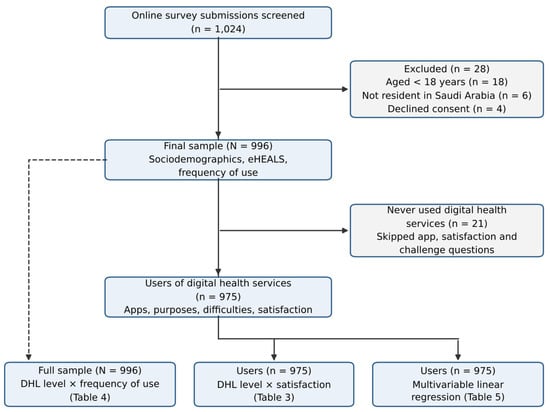
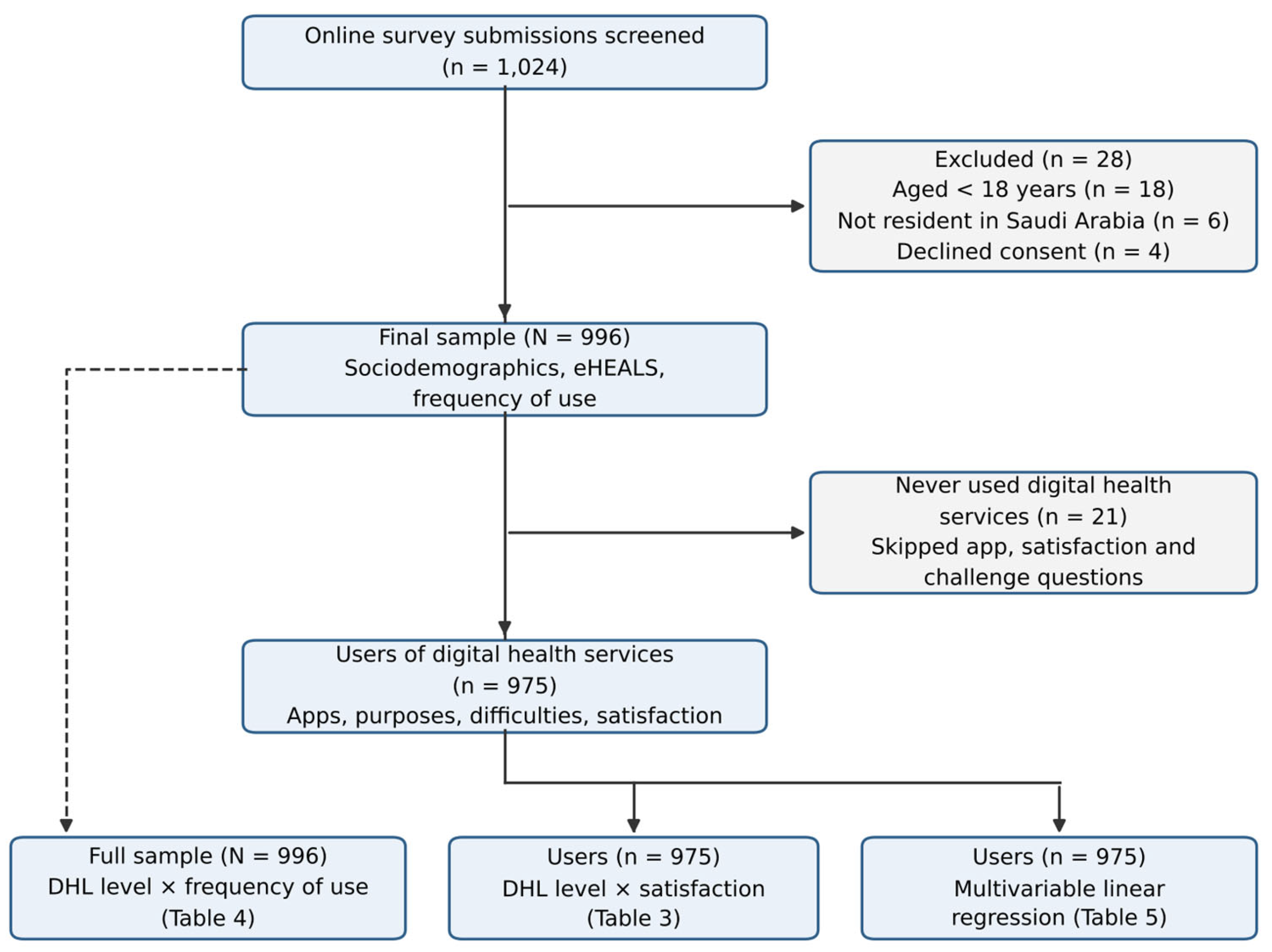
The flow of participants is shown in Figure 1. Of 1024 screened submissions, 28 were excluded: 18 were under 18 years of age, 6 were not residents of Saudi Arabia, and 4 declined consent. The final sample comprised 996 participants. Of these, 21 (2.1%) reported never using digital health services and therefore did not answer the questions on applications, satisfaction, and challenges, leaving 975 users for those analyses.
Figure 1.
Flow chart of participant selection and the samples used in each analysis.
Table 1 summarizes participants’ sociodemographic and health characteristics. Most were female (n = 747, 75.0%), Saudi (n = 885, 88.9%), and aged 18–28 (n = 501, 50.3%). Most lived in Riyadh (n = 754, 75.7%), followed by Makkah (n = 72, 7.2%) and Al-Jouf (n = 51, 5.1%). Over half held bachelor’s degrees (n = 580, 58.2%); 20.8% had high school education (n = 207). Economic status was most often “very good” (n = 320, 32.1%) or “excellent” (n = 301, 30.2%). Students (n = 432, 43.4%) and employed participants (n = 362, 36.3%) were the largest employment groups. Nearly all reported good internet access (n = 939, 94.3%). Regarding health status, 173 participants (17.4%) reported having a chronic disease: 112 (11.2%) reported one chronic disease, 39 (3.9%) reported two or more, and 22 (2.2%) did not specify the number. In addition, 231 participants (23.2%) reported caring for a family member with a chronic disease.
Table 1.
Sociodemographic and health characteristics of participants (N = 996).
Table 2 shows generally positive attitudes toward digital health services. Most participants said the internet helps with health decisions (768, 77.1%) and that online health information is important (813, 81.6%). Among 975 users answering challenge items, privacy concerns were mixed: 253 (25.9%) agreed they were concerned, while 463 (47.5%) disagreed. Nearly half felt overwhelmed by online health information (455, 46.7%), compared with 252 (25.8%) who disagreed. Most did not find digital health applications confusing or difficult (596, 61.1%); 155 (15.9%) did. Overall, services were widely valued, though information overload and privacy remained concerns.
Table 2.
Awareness, attitudes and perceptions toward digital health services.
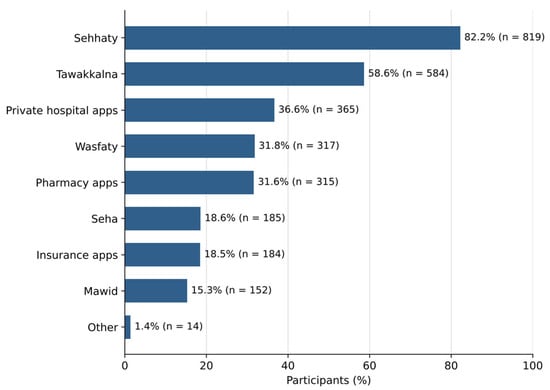
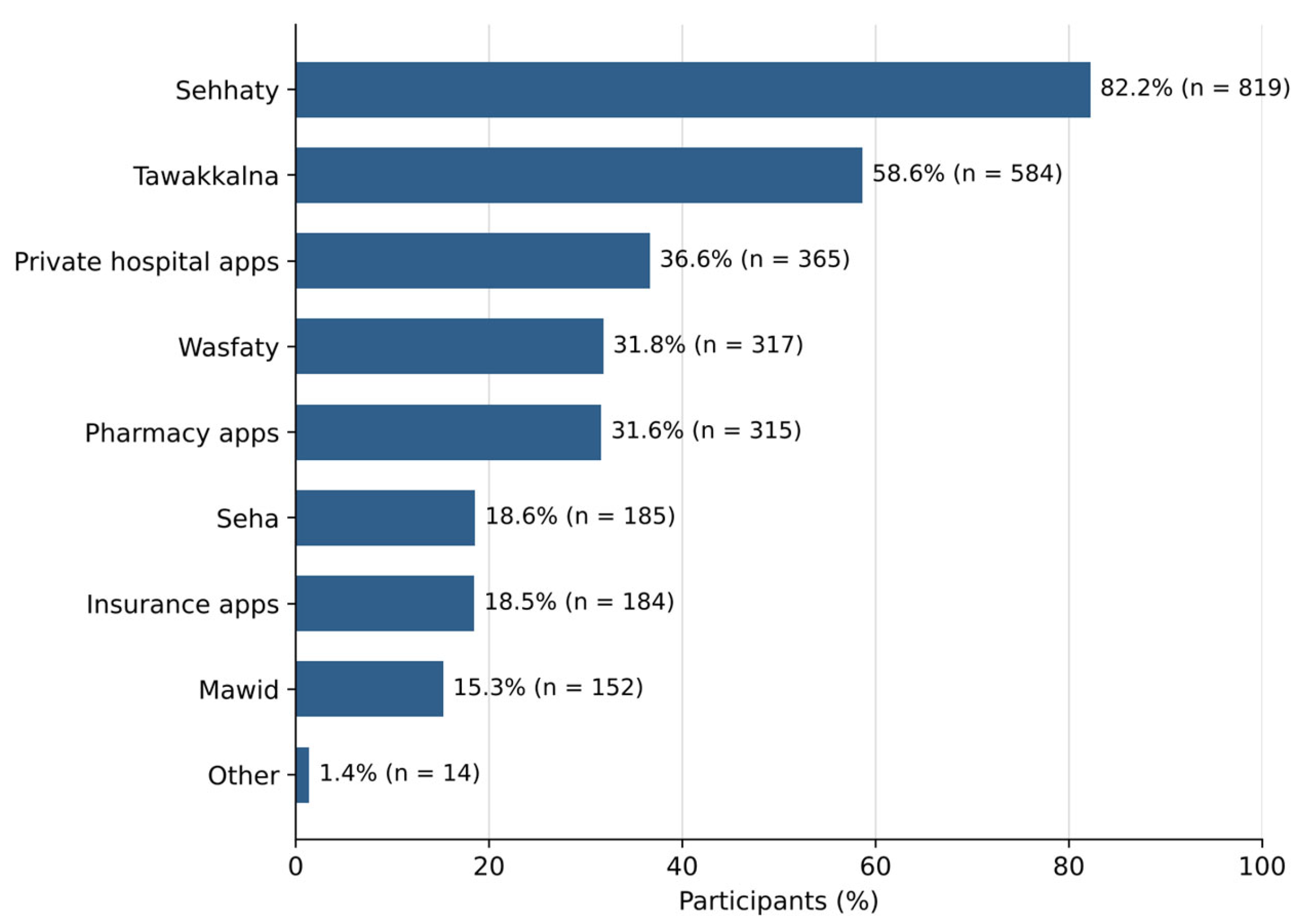
Figure 2 shows participants’ digital health app use. Sehhaty was most common (n = 819, 82.2%), followed by Tawakkalna (n = 584, 58.6%), private hospital apps (n = 365, 36.6%), Wasfaty (n = 317, 31.8%), and pharmacy apps (n = 315, 31.6%). Seha (n = 185, 18.6%), insurance apps (n = 184, 18.5%), and Mawid (n = 152, 15.3%) were less common; 14 participants (1.4%) reported other apps.
Figure 2.
Digital health applications used by participants (N = 996; more than one could be selected). The most used were Sehhaty (82.2%), Tawakkalna (58.6%), Private hospital apps (36.6%), Wasfaty (31.8%), Pharmacy apps (31.6%), Seha (18.6%), Insurance apps (18.5%), and Mawid (15.3%). Percentages use N = 996.
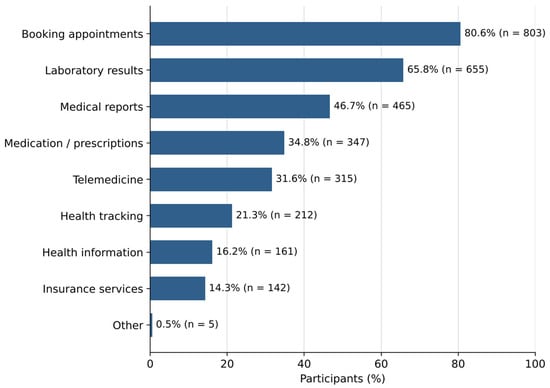
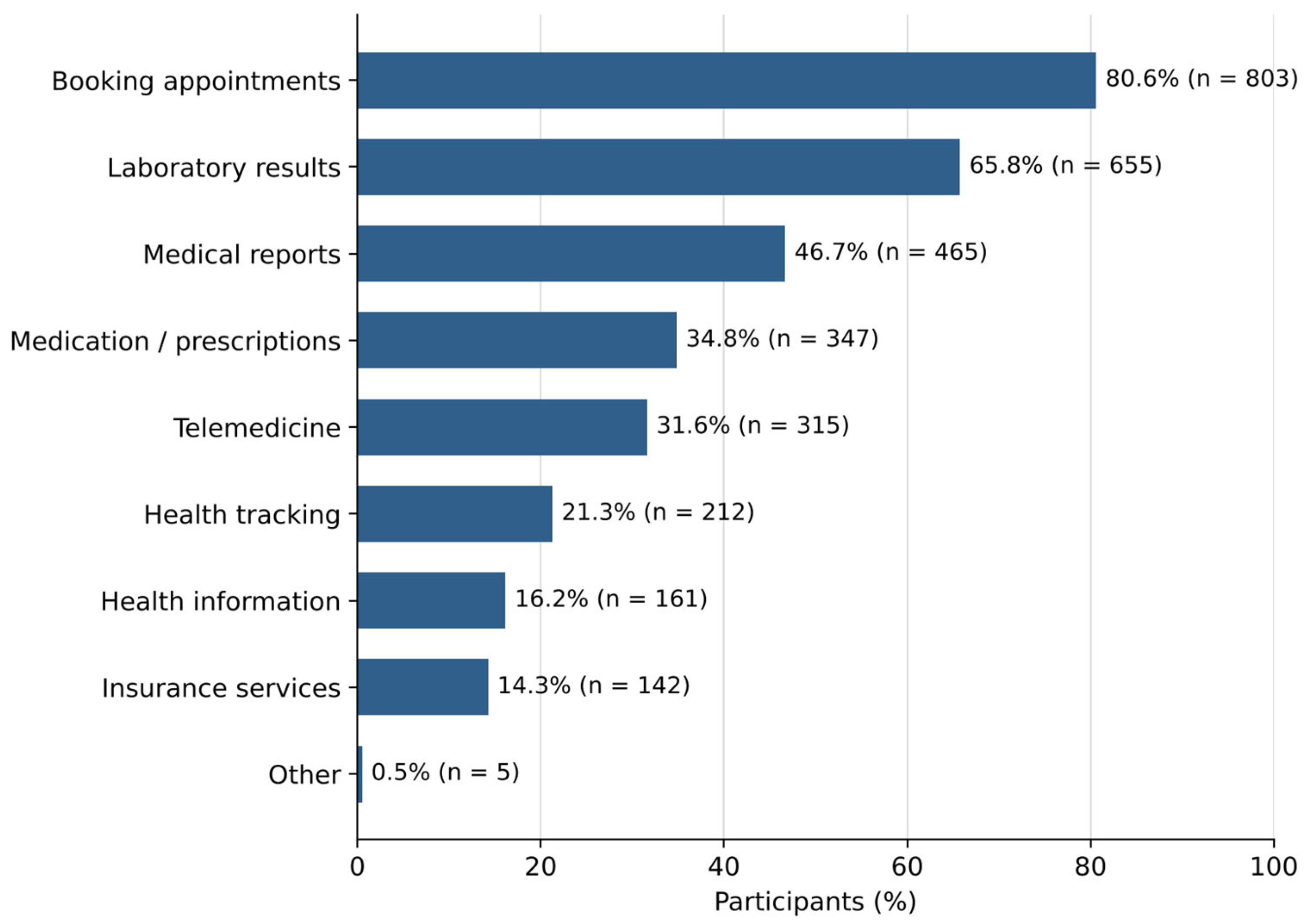
Figure 3 shows digital health application use: booking appointments (n = 803, 80.6%), viewing laboratory results (n = 655, 65.8%), accessing medical reports (n = 465, 46.7%), medication services (n = 347, 34.8%), telemedicine (n = 315, 31.6%), tracking health (n = 212, 21.3%), accessing health information (n = 161, 16.2%), insurance services (n = 142, 14.3%), and other purposes (n = 5, 0.5%).
Figure 3.
Purposes for using digital health applications (N = 996; more than one could be selected). The most common were booking appointments (80.6%), laboratory results (65.8%), medical reports (46.7%), and medication/prescriptions (34.8%).
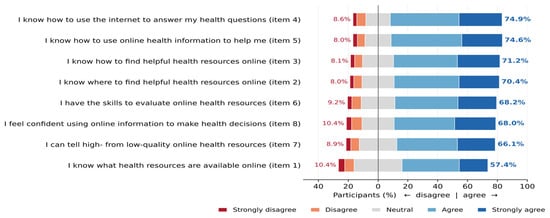
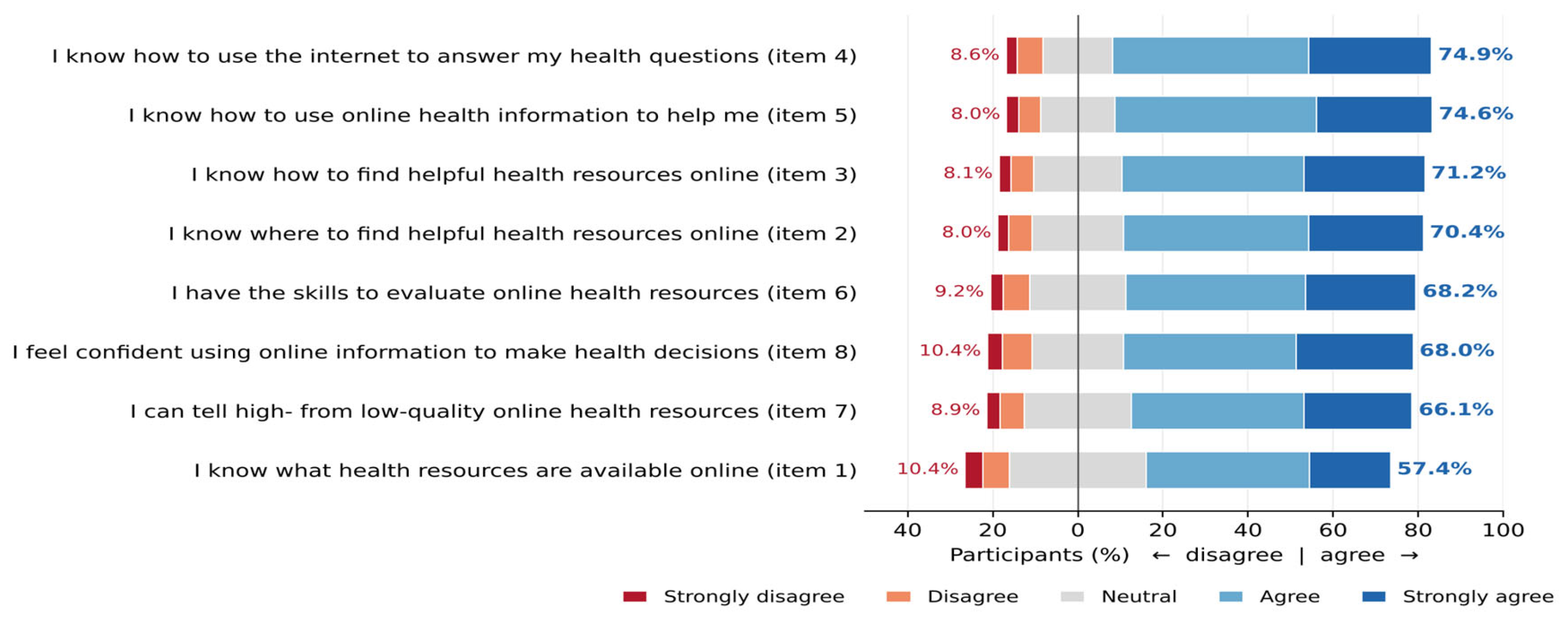
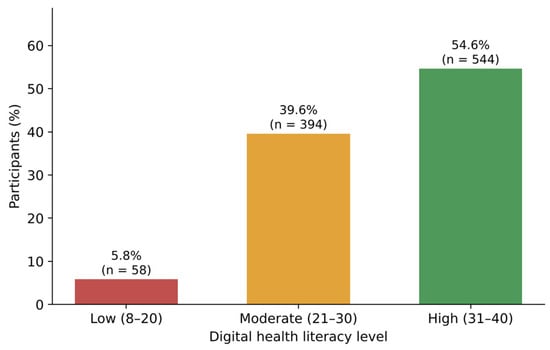
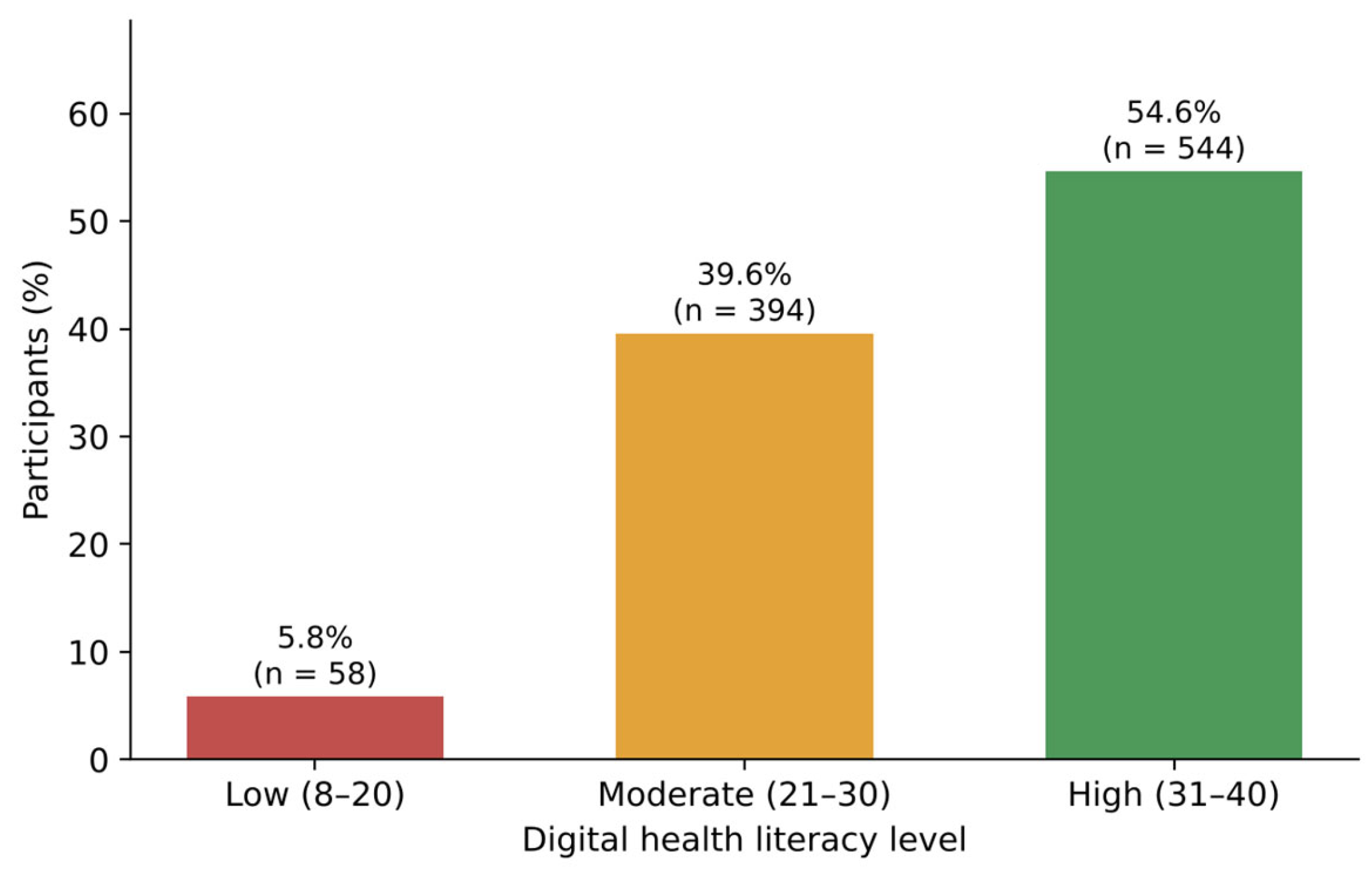
Figure 4 shows responses to the eight eHEALS items. Most participants agreed that they knew how to use the internet to answer health questions (74.9%) and how to use online health information to help themselves (74.6%), and 70.4% and 71.2% agreed that they knew where and how, respectively, to find helpful health resources online. Fewer agreed that they had the skills to evaluate online health resources (68.2%), felt confident using online information to make health decisions (68.0%), or could tell high- from low-quality resources (66.1%), and awareness of what health resources were available online was lowest (57.4%). The total eHEALS score had a mean of 30.6 out of 40 (SD 6.3; median 31, IQR 27–35). Figure 5 shows that 544 participants (54.6%) had high digital health literacy, 394 (39.6%) moderate, and 58 (5.8%) low.
Figure 4.
Self-reported digital health literacy skills: responses to the eight eHEALS items (N = 996). Bars show the percentage of participants in each response category, centred on the neutral response; figures on the right give the percentage who agreed or strongly agreed, and those on the left the percentage who disagreed or strongly disagreed. Items are ordered from highest to lowest agreement.
Figure 5.
Distribution of digital health literacy levels (N = 996): low 58 (5.8%), moderate 394 (39.6%) and high 544 (54.6%).
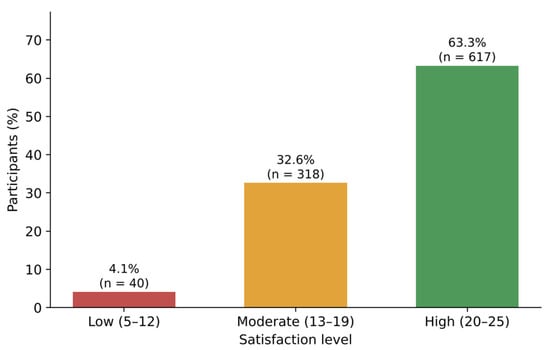
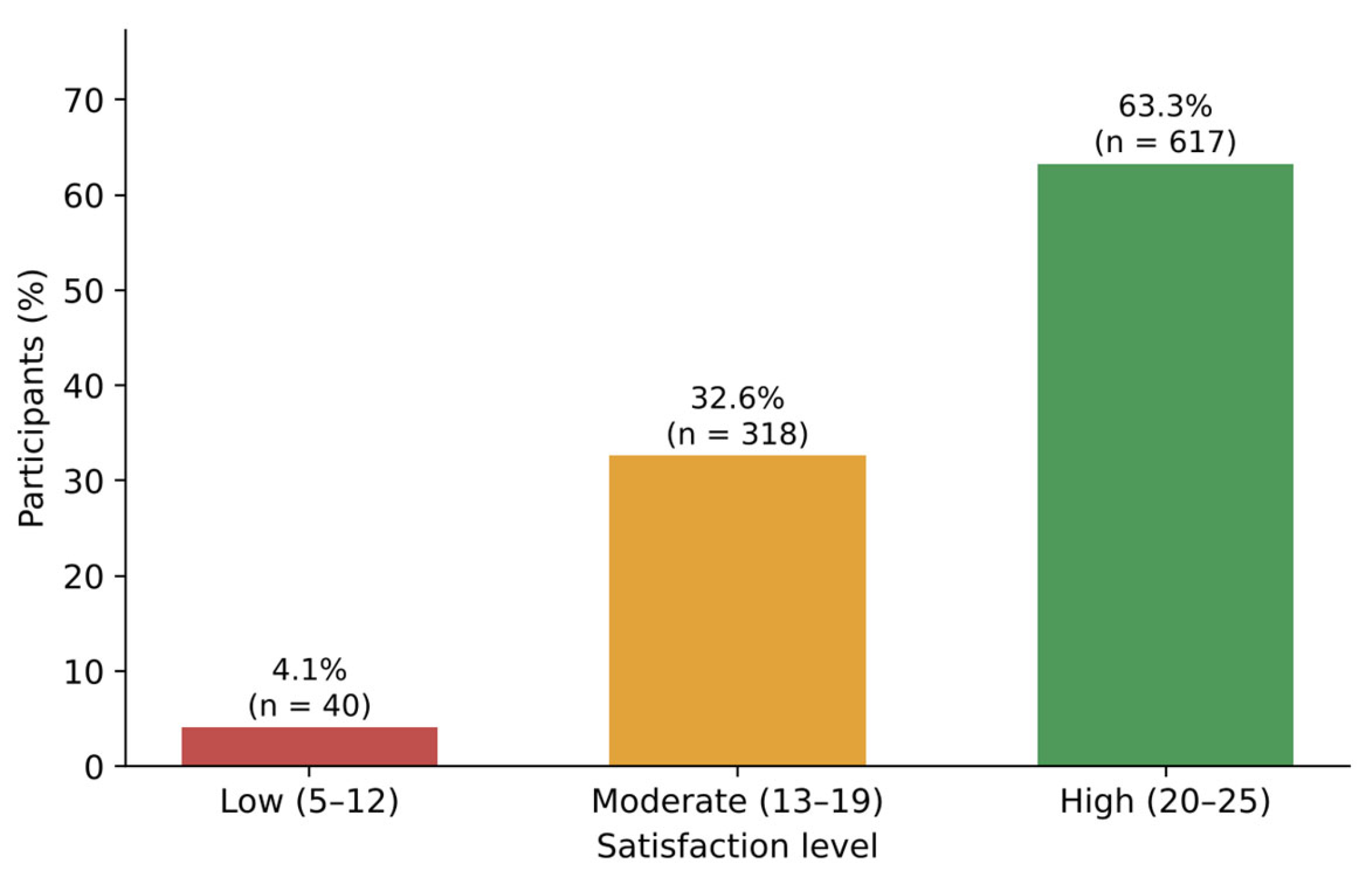
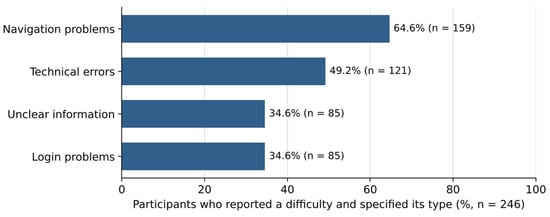
Among 975 users, satisfaction with digital health services was high (Figure 6; mean 20.5/25, SD 4.2): 617 (63.3%) reported high, 318 (32.6%) moderate, and 40 (4.1%) low satisfaction. A total of 252 (25.8%) reported difficulties using applications; 246 specified the type (Figure 7). Navigation problems were most common (159, 64.6%), followed by technical errors (121, 49.2%), login problems (85, 34.6%), and unclear information (85, 34.6%).
Figure 6.
Satisfaction with digital health services among users (n = 975): high 617 (63.3%), moderate 318 (32.6%), and low 40 (4.1%).
Figure 7.
Types of difficulty encountered while using digital health applications. Of the 975 users, 252 (25.8%) reported a difficulty, and 246 specified its type; percentages are of these 246 participants, who could select more than one type.
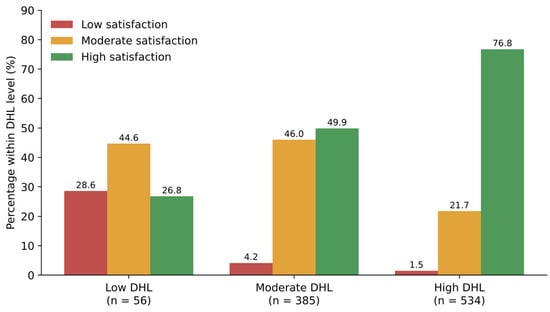
Table 3 and Figure 8 show that satisfaction varied significantly by digital health literacy (χ2 = 171.64, df = 4, p < 0.001; Cramér’s V = 0.30) and was higher at higher literacy levels. High satisfaction was reported by 76.8% of high-literacy users (410/534), 49.9% of moderate-literacy users (192/385), and 26.8% of low-literacy users (15/56). Low satisfaction was reported by 28.6% of low-literacy users (16/56), 4.2% of moderate-literacy users (16/385), and 1.5% of high-literacy users (8/534).
Table 3.
Association between digital health literacy level and satisfaction with digital health services (n = 975).
Figure 8.
Satisfaction level within each digital health literacy level among users (n = 975); data as in Table 3 (χ2 = 171.64, df = 4, p < 0.001).
Table 4 presents the frequency of digital health service use by participant characteristics. Sufficient evidence of an association between DHL level and frequency of use was not detected (χ2 = 13.31, df = 8, p = 0.102; Cramér’s V = 0.08). The proportion using services at least monthly was similar across DHL levels (low 62.1%, 95% CI 49.2–73.4; moderate 64.5%, 59.6–69.0; high 64.7%, 60.6–68.6); the difference between high and moderate DHL was 0.2 percentage points (95% CI −6.0 to 6.4), whereas the estimate for the low-DHL group was imprecise; at every DHL level, most participants used digital health services monthly or rarely. Frequency of use differed significantly by gender (χ2 = 13.86, df = 4, p = 0.008; Cramér’s V = 0.12), with weekly or daily use more common among men than women (31.7% vs. 21.6%), and by chronic disease status (χ2 = 33.36, df = 4, p < 0.001; Cramér’s V = 0.18): 82.1% of participants with a chronic disease used digital health services at least monthly, compared with 60.8% of those without. No statistically significant associations with frequency of use were detected for age group (p = 0.372; Cramér’s V = 0.07), education level (p = 0.898; V = 0.05) or satisfaction level (p = 0.128; V = 0.07).
Table 4.
Frequency of use of digital health services by digital health literacy level and participant characteristics (N = 996).
Table 5 presents the multivariable regression of factors associated with satisfaction (n = 975). The model explained 24.3% of variance (R2 = 0.243; adjusted R2 = 0.230; F(16, 958) = 19.18, p < 0.001). Digital health literacy was the only variable significantly associated with satisfaction: each one-point higher eHEALS score was associated with a 0.31-point higher satisfaction score (B = 0.312, 95% CI 0.263–0.361, p < 0.001; β = 0.47). Age (p = 0.281), gender (p = 0.663), education (p = 0.060), economic status (p = 0.661), and use frequency (p = 0.551) were not significant. Assumptions were checked, and robust standard errors were used to address nonconstant residual variance (Table 5, footnote). In this model, digital health literacy was the only variable with statistically significant evidence of an association with satisfaction; the confidence intervals for several other variables were wide, so modest associations cannot be excluded.
Table 5.
Multivariable linear regression of factors associated with satisfaction with digital health services (n = 975).
Sensitivity analyses are presented in Supplementary Tables S1–S5. The association between DHL and satisfaction was consistent when DHL was classified using the thresholds of Wångdahl et al. (χ2 = 187.10, df = 4, p < 0.001) or the dichotomy recommended for the Arabic eHEALS (χ2 = 133.94, df = 2, p < 0.001) (Tables S1 and S2). For frequency of use, the association with DHL was weak, and its statistical significance depended on the classification used (p = 0.102, 0.044 and 0.036 for the study categories, the Wångdahl et al. thresholds and the dichotomy, respectively; Table S3); with the continuous eHEALS score, there was a very weak positive correlation (Spearman’s ρ = 0.065, 95% CI −0.003 to 0.131, p = 0.041). In the factor analysis, the eHEALS and satisfaction items loaded on separate factors (loadings 0.65–0.82 and 0.78–0.85, respectively; all cross-loadings ≤ 0.25), whereas the first unrotated factor explained 50.5% of the total variance (Table S4). The association between the eHEALS score and satisfaction was essentially unchanged when the navigation and clarity items were excluded from the satisfaction score (standardized β = 0.48 vs. 0.47; Table S5).
4. Discussion
Participants used national platforms, particularly Sehhaty, for practical tasks such as booking appointments and viewing laboratory results. Most participants reported moderate (39.6%) or high (54.6%) DHL, and 63.3% of users reported high satisfaction. In practical terms, most felt confident finding online health information and using it to answer their health questions, but fewer felt able to judge its quality. In the multivariable model, DHL was the only variable with statistically significant evidence of an independent association with satisfaction with digital health services: each 1-point higher eHEALS score was associated with a 0.31-point higher satisfaction score after adjusting for sociodemographic characteristics and frequency of use. By contrast, frequency of use showed at most a very weak association with DHL, whereas it differed by chronic disease status and gender. Because the study was cross-sectional, these findings describe associations at a single point in time and do not establish that DHL influences satisfaction or that health status influences use.
The item-level results give a more detailed picture of what moderate to high DHL meant in this sample. Participants were most confident in finding online health information and using it to answer their health questions (about 75% agreed), but less confident in evaluating it: about one-third did not agree that they could tell high-quality from low-quality resources (66.1% agreed), and awareness of the range of online resources available was the weakest skill (57.4% agreed). A similar profile, with greater confidence in locating information than in judging its quality, has been reported among patients with chronic obstructive pulmonary disease [12] and nursing students in Jordan [13], and gaps in evaluating online resources were also prominent among patients with type 2 diabetes in Saudi Arabia [8]. Among Arabic-speaking patients in Lebanon, qualitative work has likewise described limited confidence in assessing the credibility of online content and heavy reliance on search engines and social media [14]. This gap matters because the ability to evaluate online health information is closely related to health literacy [15], and misinformation is common on the platforms where much health information is now encountered, reaching up to 87% of posts on some topics [16]. The relatively low awareness of available resources also suggests that some users may rely on a few familiar platforms, such as Sehhaty, without knowing about other trusted services. Evidence on interventions remains limited [17], but a randomized trial found that a brief e-learning program improved both eHEALS scores and the ability to evaluate search results [18], suggesting that appraisal skills can be taught. Because these findings are self-reported, however, they reflect participants’ confidence rather than demonstrated ability and may overestimate actual appraisal skills [19].
The proportion of participants reporting high satisfaction increased with each successive DHL level: 26.8% among those with low DHL compared with 76.8% among those with high DHL. DHL was the only variable in the regression model significantly associated with satisfaction. This aligns with a study of transplant recipients in which lower eHealth literacy was independently associated with lower satisfaction with telehealth [20]. It also aligns with a meta-analysis showing that higher eHealth literacy is associated with more positive attitudes toward health technology [21], and with Saudi studies linking DHL to web-based health information-seeking [6] and reporting high satisfaction with Sehhaty [22]. Several explanations for this association are possible, and our data cannot distinguish among them. Users with higher literacy may navigate platforms and interpret health information more easily and therefore encounter fewer frustrations; lower confidence in using telehealth has similarly been associated with lower satisfaction [20]. The relationship may also run in the opposite direction, with positive experiences of digital services increasing users’ confidence in their own skills; self-rated eHealth literacy has been shown to correlate with internet use but only weakly with performance on actual tasks [19]. Unmeasured characteristics, such as previous experience with technology, may also be related to both.
The association between DHL and satisfaction should also be interpreted in light of the way both constructs were measured. Both scales were self-reported in the same questionnaire, and some of their content is conceptually related: two satisfaction items address ease of navigation and clarity, which may partly reflect users’ confidence and skills—the construct that the eHEALS is designed to capture. Our analyses suggest that this overlap does not account for the association, as the two scales loaded on separate factors and the association remained essentially unchanged when these two items were excluded. However, a single factor accounted for half of the total variance in Harman’s test; therefore, shared method variance arising from simultaneous self-reporting may still have inflated the strength of the association [23]. Studies combining self-reported satisfaction with objective measures of digital skills or platform use would help clarify this relationship.
In the study categories, we found no statistically significant evidence that frequency of use differed by DHL, satisfaction, age, or education. With the continuous eHEALS score and the alternative DHL thresholds, however, a very weak positive association with DHL was observed, and the proportions using services at least monthly were almost identical in the moderate and high DHL groups. Any association between DHL and frequency of use therefore appears to be weak, and frequency of use is, at most, a weak indicator of literacy or satisfaction in this population. By contrast, it was associated with chronic disease: 82.1% of participants with a chronic condition used digital health services at least monthly, versus 60.8% without one. This aligns with reports that people with chronic conditions use patient portals more frequently [24] and suggests use reflects health care needs more than ability. Since most participants had no chronic disease, the largely episodic use may also reflect lower needs in this relatively young sample. Men reported weekly or daily use more frequently than women (31.7% vs. 21.6%). Interpret this finding with caution, as men constituted only one-quarter of the sample and the comparison was unadjusted. Further examination in more balanced samples is warranted. In clinical populations, such as patients with type 2 diabetes, higher DHL has been associated with improved self-care and glycaemic control [8]. Taken together, these findings suggest that DHL may be more closely associated with the quality of users’ experiences than with the frequency of use.
The high utilization of digital health services observed in this study may reflect the rapid digital transformation of the healthcare system in Saudi Arabia, particularly under Vision 2030 initiatives. The widespread use of Sehhaty and Tawakkalna is consistent with previous reports of growing reliance on government-supported digital health platforms in Saudi Arabia [4,5]. This likely reflects their central role in the national health system: Sehhaty became the main channel for Ministry of Health digital services during the COVID-19 pandemic [4]. In a national survey, Tawakkalna was likewise the most used Ministry of Health application, whereas uptake of Seha was limited mainly by lack of awareness [25]. The predominance of transactional tasks over functions such as telemedicine or health tracking suggests that, for most users, these platforms currently complement rather than replace in-person care. A usability study of Sehhaty reported a similar pattern, with many users still preferring face-to-face visits [22].
Because DHL was associated with satisfaction independently of age, education, economic status, and frequency of use, it is a reasonable target for initiatives aimed at improving the user experience. However, our data cannot establish that increasing DHL would improve satisfaction; prospective or intervention studies would be needed to test this. Navigation was the most frequently reported difficulty, and information overload was also common, indicating a need for simpler interfaces, clearer language, and more effective signposting to reliable information. One in four users expressed concern about the privacy of their health information, underscoring the importance of clearer communication about data protection [26]. People with chronic diseases were the most frequent users in our sample and may benefit most from platforms designed to support ongoing care.
Recommendations to support older adults, people with lower educational attainment, and rural populations with limited connectivity are based on evidence from other studies, rather than on the present data, which included few older or less-educated participants. That evidence includes Saudi data showing lower eHealth literacy among older and less-educated adults [8,27,28] and wider evidence on the digital divide among older people [29]. Similarly, the lack of a significant association between age or education and satisfaction or frequency of use in this study does not show that these characteristics are unrelated to DHL or to access to digital services. Our analyses examined use and satisfaction among a largely young, educated, and connected sample, not the determinants of literacy or access in the wider population.
- Strengths and limitations
This study used a validated Arabic instrument with high internal consistency, assessed satisfaction and the difficulties users encountered, tested regression assumptions, and included a large sample of Saudi adults. However, several limitations apply.
First, the cross-sectional design measured DHL, use, and satisfaction simultaneously, preventing conclusions about temporal order or causality. Associations may reflect reverse causation or confounding. Second, online convenience sampling limited the generalizability. A large sample improves precision but does not eliminate selection bias or ensure representativeness. Thus, observed DHL and satisfaction may overestimate population levels, particularly for older adults and people without regular internet access. Third, all measures were self-reported. The eHEALS measures perceived, not demonstrated, skills; social desirability and recall may bias responses. Measuring DHL and satisfaction in the same questionnaire may also have inflated their association [23]. In addition, the moderate and high DHL categories were operational thresholds defined by the investigators rather than validated levels, although the association between DHL and satisfaction was consistent across alternative classifications and the continuous score. Finally, the satisfaction scale was developed by the research team for this study and has not been formally validated against other measures, although it showed high internal consistency and its items loaded on a single factor.
5. Conclusions
In this cross-sectional study of adults in Saudi Arabia, most participants reported moderate-to-high levels of digital health literacy, indicating that they felt capable of locating and using online health information. However, fewer participants felt confident in assessing the quality of that information, while most reported high satisfaction with digital health services. Digital health literacy was the only variable with statistically significant evidence of an independent association with satisfaction, whereas frequency of use was associated with chronic disease status and showed at most a very weak association with literacy.
6. Implications
Digital health platforms in Saudi Arabia should prioritize intuitive navigation, clear and reliable health information, and transparent communication regarding data privacy, as these were the primary difficulties and concerns reported by users. National platforms could incorporate digital health literacy support, such as concise in-app guidance and tutorials, and evaluate its effects on users’ satisfaction. Such support should place particular emphasis on evaluating the quality of online health information—for example, by clearly labeling verified content and directing users to trusted Ministry of Health sources—and should increase awareness of the full range of available services, as users reported the lowest proficiency in identifying available resources. Services for people with chronic diseases, who constituted the most frequent users, should be designed to address their ongoing care needs. Finally, future research should employ longitudinal designs and include older adults, rural residents, and people with limited digital access—groups under-represented in this study who are likely to face the most significant barriers.
Supplementary Materials
The following supporting information can be downloaded at: https://www.mdpi.com/article/10.3390/healthcare14234039/s1, Table S1. Distribution of digital health literacy (DHL) under three classification schemes. Table S2. Association between DHL and satisfaction level under alternative DHL classifications. Table S3. Association between DHL and frequency of use under alternative DHL classifications. Table S4. Exploratory factor analysis of the eHEALS and satisfaction items. Table S5. Sensitivity of the eHEALS–satisfaction association to the content of the satisfaction score.
Author Contributions
Conceptualization, S.S.E., M.F.A., S.A.A. (Sara A. Almaghamis), S.A.A. (Shahad A. Alsalloum), N.T.A., A.F.A., J.M.A., J.F.A.Z. and A.F.; Methodology, S.S.E., M.F.A., S.A.A. (Sara A. Almaghamis) and A.F.; Formal Analysis, M.F.A., S.A.A. (Sara A. Almaghamis), S.A.A. (Shahad A. Alsalloum) and A.F.; Investigation, M.F.A., S.A.A. (Sara A. Almaghamis), S.A.A. (Shahad A. Alsalloum), N.T.A., A.F.A. and J.M.A.; Writing—Original Draft Preparation, S.S.E., M.F.A., S.A.A. (Sara A. Almaghamis) and S.A.A. (Shahad A. Alsalloum); Writing—Review and Editing, S.S.E. and A.F.; Supervision, S.S.E. and A.F. All authors have read and agreed to the published version of the manuscript.
Funding
This research was supported by the Princess Nourah bint Abdulrahman University Researchers Supporting Project number (PNURSP2026R944), Princess Nourah bint Abdulrahman University, Riyadh, Saudi Arabia.
Institutional Review Board Statement
The study protocol was reviewed and determined to be exempt by the Princess Nourah bint Abdulrahman University Institutional Review Board (IRB Exempt ID #: 25-0797; determined on 7 January 2026).
Informed Consent Statement
Informed electronic consent was obtained from all adult subjects involved in this study prior to accessing the questionnaire items.
Data Availability Statement
The raw datasets supporting the conclusions of this study will be made available from the corresponding author upon reasonable academic request.
Acknowledgments
We thank all participants who contributed their time and responses to this study.
Conflicts of Interest
The authors declare no conflicts of interest.
References
- World Health Organization. Global Diffusion of eHealth: Making Universal Health Coverage Achievable: Report of the Third Global Survey on eHealth; World Health Organization: Geneva, Switzerland, 2016; ISBN 978-92-4-151178-0. [Google Scholar]
- Muhammad Saif ud Din, S. Global digital transformation in healthcare: Impact of connected healthcare systems on patient safety. Glob. J. Qual. Saf. Healthc. 2025, 8, 45–52. [Google Scholar] [CrossRef] [Scilit]
- Mani, Z.A.; Goniewicz, K. Transforming healthcare in Saudi Arabia: A comprehensive evaluation of Vision 2030’s impact. Sustainability 2024, 16, 3277. [Google Scholar] [CrossRef] [Scilit]
- Alkhalifah, J.M.; Seddiq, W.; Alshehri, B.F.; Alhaluli, A.H.; Alessa, M.M.; Alsulais, N.M. The role of the COVID-19 pandemic in expediting digital health-care transformation: Saudi Arabia’s experience. Inform. Med. Unlocked 2022, 33, 101097. [Google Scholar] [CrossRef] [Scilit]
- Binkheder, S.; Aldekhyyel, R.N.; AlMogbel, A.; Al-Twairesh, N.; Alhumaid, N.; Aldekhyyel, S.N.; Jamal, A.A. Public perceptions around mHealth applications during COVID-19 pandemic: A network and sentiment analysis of tweets in Saudi Arabia. Int. J. Environ. Res. Public Health 2021, 18, 13388. [Google Scholar] [CrossRef] [Scilit]
- Alhur, A.; Alhur, A.; Alshammari, M.; Alhur, A.; Bin Shamlan, W.; Alqahtani, M.; Alhabsi, S.; Hassan, R.; Baawadh, E.; Alahmari, S. Digital health literacy and web-based health information-seeking behaviors in the Saudi Arabian population. Cureus 2023, 15, e51125. [Google Scholar] [CrossRef] [Scilit]
- Alamri, H.M.; Alshagrawi, S. Factors influencing telehealth adoption in managing healthcare in Saudi Arabia: A systematic review. J. Multidiscip. Healthc. 2024, 17, 5225–5235. [Google Scholar] [CrossRef] [Scilit]
- AlShehri, W.S.; Khojah, Y.Y. Impact of e-health literacy on diabetes self-care activities among people with type 2 diabetes attending primary healthcare centers in Makkah City, Saudi Arabia: A cross-sectional study. Cureus 2025, 17, e87968. [Google Scholar] [CrossRef] [Scilit]
- Norman, C.D.; Skinner, H.A. eHEALS: The eHealth Literacy Scale. J. Med. Internet Res. 2006, 8, e27. [Google Scholar] [CrossRef] [Scilit]
- Wångdahl, J.; Dahlberg, K.; Jaensson, M.; Nilsson, U. Arabic version of the Electronic Health Literacy Scale in Arabic-speaking individuals in Sweden: Prospective psychometric evaluation study. J. Med. Internet Res. 2021, 23, e24466. [Google Scholar] [CrossRef] [Scilit]
- Wångdahl, J.; Jaensson, M.; Dahlberg, K.; Nilsson, U. The Swedish version of the Electronic Health Literacy Scale: Prospective psychometric evaluation study including threshold levels. JMIR mHealth uHealth 2020, 8, e16316. [Google Scholar] [CrossRef] [Scilit]
- Stellefson, M.L.; Shuster, J.J.; Chaney, B.H.; Paige, S.R.; Alber, J.M.; Chaney, J.D.; Sriram, P.S. Web-based health information seeking and eHealth literacy among patients living with chronic obstructive pulmonary disease (COPD). Health Commun. 2018, 33, 1410–1424. [Google Scholar] [CrossRef] [Scilit]
- Tubaishat, A.; Habiballah, L. eHealth literacy among undergraduate nursing students. Nurse Educ. Today 2016, 42, 47–52. [Google Scholar] [CrossRef] [Scilit]
- Lteif, M.R.; Kalot, J.; Jaouni, M.E.; Khoury, S.J. E-health literacy levels of multiple sclerosis patients in Lebanon. PLoS ONE 2025, 20, e0335084. [Google Scholar] [CrossRef] [Scilit]
- Diviani, N.; van den Putte, B.; Giani, S.; van Weert, J.C. Low health literacy and evaluation of online health information: A systematic review of the literature. J. Med. Internet Res. 2015, 17, e112. [Google Scholar] [CrossRef] [Scilit]
- Suarez-Lledo, V.; Alvarez-Galvez, J. Prevalence of health misinformation on social media: Systematic review. J. Med. Internet Res. 2021, 23, e17187. [Google Scholar] [CrossRef] [Scilit]
- Car, J.; Lang, B.; Colledge, A.; Ung, C.; Majeed, A. Interventions for enhancing consumers’ online health literacy. Cochrane Database Syst. Rev. 2011, 6, CD007092. [Google Scholar] [CrossRef] [Scilit]
- Mitsuhashi, T. Effects of two-week e-learning on eHealth literacy: A randomized controlled trial of Japanese Internet users. PeerJ 2018, 6, e5251. [Google Scholar] [CrossRef] [Scilit]
- van der Vaart, R.; van Deursen, A.J.; Drossaert, C.H.; Taal, E.; van Dijk, J.A.; van de Laar, M.A. Does the eHealth Literacy Scale (eHEALS) measure what it intends to measure? Validation of a Dutch version of the eHEALS in two adult populations. J. Med. Internet Res. 2011, 13, e86. [Google Scholar] [CrossRef] [Scilit]
- Ko, D.; Singh, N.; Saczynski, J. Factors influencing telehealth satisfaction among liver and kidney transplant recipients. Clin. Nurs. Res. 2025, 34, 79–85. [Google Scholar] [CrossRef] [Scilit]
- Elgamal, R. Meta-analysis: eHealth literacy and attitudes towards internet/computer technology. Patient Educ. Couns. 2024, 123, 108196. [Google Scholar] [CrossRef] [Scilit]
- Dawood, A.M.; Alkadi, K.S. Evaluating usability of telehealth Sehhaty application used in Saudi Arabia during COVID-19. Stud. Health Technol. Inform. 2022, 295, 285–288. [Google Scholar] [CrossRef] [Scilit]
- Podsakoff, P.M.; MacKenzie, S.B.; Lee, J.Y.; Podsakoff, N.P. Common method biases in behavioral research: A critical review of the literature and recommended remedies. J. Appl. Psychol. 2003, 88, 879–903. [Google Scholar] [CrossRef] [Scilit]
- Hoogenbosch, B.; Postma, J.; de Man-van Ginkel, J.M.; Tiemessen, N.A.; van Delden, J.J.; van Os-Medendorp, H. Use and the users of a patient portal: Cross-sectional study. J. Med. Internet Res. 2018, 20, e262. [Google Scholar] [CrossRef] [Scilit]
- Aldhahir, A.M.; Alqahtani, J.S.; Althobiani, M.A.; Alghamdi, S.M.; Alanazi, A.F.; Alnaim, N.; Alqarni, A.A.; Alwafi, H. Current knowledge, satisfaction, and use of e-health mobile application (Seha) among the general population of Saudi Arabia: A cross-sectional study. J. Multidiscip. Healthc. 2022, 15, 667–678. [Google Scholar] [CrossRef] [Scilit]
- Alhammad, N.; Alajlani, M.; Abd-Alrazaq, A.; Epiphaniou, G.; Arvanitis, T. Patients’ perspectives on the data confidentiality, privacy, and security of mHealth apps: Systematic review. J. Med. Internet Res. 2024, 26, e50715. [Google Scholar] [CrossRef] [Scilit]
- Alhewiti, A. eHealth literacy and trust in health information sources. Healthcare 2025, 13, 616. [Google Scholar] [CrossRef] [Scilit]
- Hussein, E.S.E.; Al-Shenqiti, A.M.; Ramadan, R.M.E. Applications of medical digital technologies for noncommunicable diseases for follow-up during the COVID-19 pandemic. Int. J. Environ. Res. Public Health 2022, 19, 12682. [Google Scholar] [CrossRef] [Scilit]
- Fang, M.L.; Canham, S.L.; Battersby, L.; Sixsmith, J.; Wada, M.; Sixsmith, A. Exploring privilege in the digital divide: Implications for theory, policy, and practice. Gerontologist 2019, 59, e1–e15. [Google Scholar] [CrossRef] [Scilit]

Disclaimer/Publisher’s Note: The statements, opinions and data contained in all publications are solely those of the individual author(s) and contributor(s) and not of MDPI and/or the editor(s). MDPI and/or the editor(s) disclaim responsibility for any injury to people or property resulting from any ideas, methods, instructions or products referred to in the content. |
© 2026 by the authors. Licensee MDPI, Basel, Switzerland. This article is an open access article distributed under the terms and conditions of the Creative Commons Attribution (CC BY) license.