


Highlights
What are the main findings?
- •
- Stress, perceived social isolation, and loneliness were highly interconnected constructs.
- •
- Victimization was conditionally associated with both general stress and greater outness.
What are the implications of the main findings?
- •
- Supportive responses to disclosure were linked with less isolation and loneliness.
- •
- Targeted nursing interventions addressing individual resilience alongside interper-sonal and systemic support are critical for suicide prevention among SGM individuals.
Abstract
Background/Objectives: Sexual and gender minorities (SGMs) face elevated suicidality risk, yet underlying network structures remain unexamined. This study’s purpose was to examine interrelationships among suicidality and other factors, integrating key constructs from Minority Stress Theory and the Interpersonal Theory of Suicide. Methods: This cross-sectional study analyzed survey data from 411 Thai SGM adults assessing minority stress, interpersonal factors, and suicidality. A mixed graphical model was used to examine conditional associations among variables and estimated centrality indices to identify highly interconnected constructs within the network. Results: Participants reported a 19.0% prevalence of past-year suicidal ideation and a 13.1% prevalence of lifetime suicide attempts. Network analysis identified stress, social isolation, hopelessness, and loneliness as core correlates of suicidality, with stress being the most central. Victimization emerged as an important connection, connecting minority stressors with general stress and suicidality-related constructs. Outness was associated with lower loneliness and social isolation but also with greater victimization. Centrality analyses were stable, supporting the importance of stress, social isolation, and loneliness within the network. Conclusions: Among SGM adults, minority-specific and general stressors, interpersonal disconnection, and suicidality formed an interconnected psychosocial network, with stress, social isolation, and loneliness showing the highest interconnectivity. Integrating both frameworks reveals how SGM minority stressors directly fuel core interpersonal suicide pathways, providing a theoretical bridge between identity-based stress and suicidal ideation. Targeting stress and isolation through interventions is critical to reducing suicidality.
1. Introduction
Accumulating evidence highlights pronounced global disparities in suicidality—encompassing both suicidal ideation and suicide attempts—particularly among populations facing elevated risk [1]. Sexual and gender minority (SGM) populations experience substantially higher rates of suicidal ideation and suicide attempts than their heterosexual and cisgender peers [2,3]. For instance, a global meta-analysis across 52 countries reported 12-month prevalence rates of 43.1% for suicidal ideation and 9.3% for suicide attempts among gender-diverse adults [4]. Overall, SGM individuals face approximately four times the odds of suicide attempts compared to their cisgender, heterosexual counterparts [5].
These disparities are also evident in Thailand. A national survey of 1290 Thai SGM adults reported lifetime suicidal ideation among 50.7% of participants and lifetime suicide attempts among 16.8% [6]. In the sample analyzed in the present study, previous research documented 39% lifetime suicidal ideation, 19% past-year suicidal ideation, and 13.1% lifetime suicide attempts and identified discrimination, stigma, and victimization as important correlates of suicidality [7]. However, considerably less is known about how minority-specific stressors, general psychological stress, interpersonal experiences, and suicidality are interconnected within this population.
Minority Stress Theory (MST) provides a framework for understanding mental health disparities among SGM populations by describing how minority-specific stressors contribute to adverse mental health outcomes [8]. MST distinguishes distal stressors, such as discrimination and victimization, from proximal stressors, including internalized stigma, identity concealment, and expectations of rejection. These stressors occur in addition to general life stressors and may contribute to psychological distress and suicidality. The present data were collected in Thailand in 2018, before subsequent advances in SGM legal rights, including legalization of same-sex marriage. Findings should therefore be interpreted within the sociocultural and legal context at data collection, while recognizing that legal advances do not necessarily eliminate interpersonal discrimination, victimization, or other minority-stress experiences [9,10].
Minority stressors also operate within a broader system of psychological and interpersonal experiences associated with suicidality. The Interpersonal Theory of Suicide (ITS) highlights interpersonal disconnection, particularly thwarted belongingness and perceived burdensomeness, in the development of suicidal desire [11,12]. Prior studies informed by MST and ITS suggest that minority stress experiences are associated with interpersonal risk factors and suicidality among SGM populations [13,14,15]. However, these studies have generally examined prespecified individual pathways or mediation models rather than the simultaneous interrelationships among these constructs, particularly in Asian settings.
In Thailand, multiple interrelated factors are associated with suicidality among SGM individuals. Chief among them are established minority stressors, including stigma, discrimination, victimization, and internalized sexual stigma [6,7]. Beyond minority-identity-specific stress, broader sociodemographic and psychosocial factors—such as socioeconomic deprivation, chronic health conditions, substance use, and low social support—are also significantly associated with suicidal ideation and suicide attempts in this population [7,16]. Conversely, greater perceived social support has been associated with lower odds of suicidality, while depressive symptoms combined with lower social support have been associated with suicidal ideation among Thai transgender women [6,16].
Network analysis provides an approach for examining how multiple minority-specific, psychological, interpersonal, and suicidality-related factors are conditionally associated when considered simultaneously, rather than evaluating each factor in isolation or imposing a prespecified directional pathway [17]. This approach can clarify how minority-specific stressors are situated relative to broader psychological and interpersonal experiences and identify constructs that are highly interconnected across these domains. Importantly, centrality within a cross-sectional network reflects interconnectedness rather than causal influence and does not establish that highly central constructs are mechanisms or intervention targets.
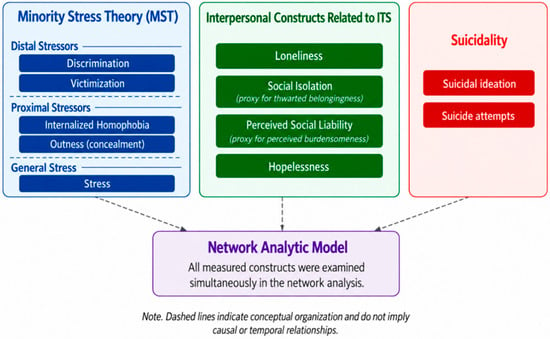
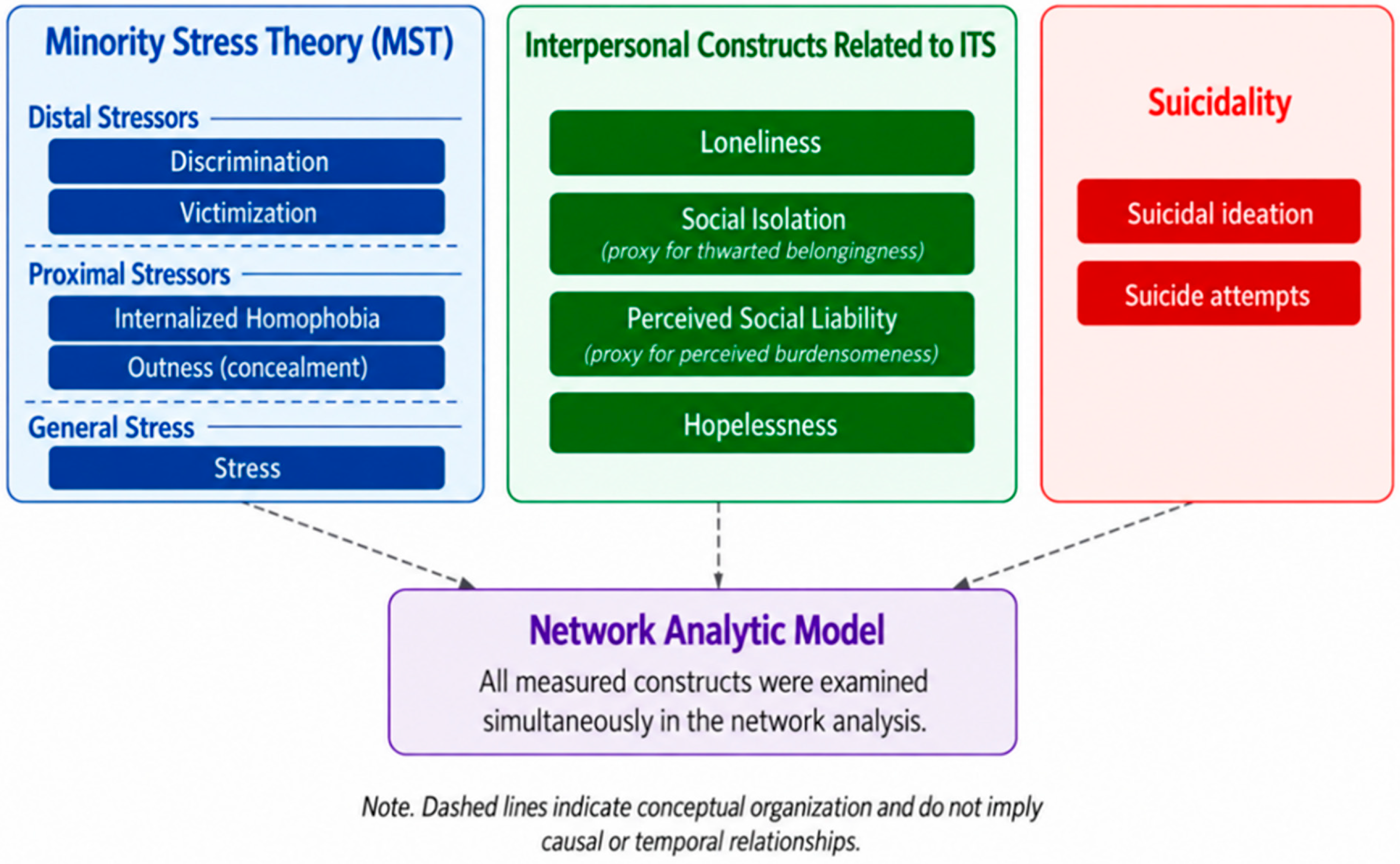
The present study extends previous research from this Thai SGM sample, which identified minority-stress experiences associated with suicidality, by examining these experiences simultaneously within a broader network that includes general stress, interpersonal factors, and suicidality. This approach addresses a distinct question: how minority-specific stressors are situated relative to broader psychological and interpersonal experiences when their conditional associations are considered together. MST and selected interpersonal constructs conceptually related to ITS were used to organize the variables; the study was not designed as a comprehensive test of either theory. We sought to characterize patterns of association within and across these domains and identify highly interconnected constructs within the network. Figure 1 depicts the conceptual organization of the constructs examined; connections represent theoretically informed domains of association rather than hypothesized causal pathways.
Figure 1.
Theoretical Organization of Constructs Included in the Network Analysis.
2. Materials and Methods
2.1. Study Design and Participants
This secondary analysis used data from a 2018 cross-sectional survey of Thai sexual and gender minority (SGM) adults recruited through all seven clinics of the Rainbow Sky Association of Thailand (RSAT). Eligible participants were identified as gay, lesbian, bisexual, transgender/non-binary, or queer; were Thai nationals aged 18–60 years; could read and write Thai; and provided informed consent. Of 458 individuals who participated, 411 (89.7%) consented and completed the survey. The sample was community-recruited and should not be considered representative of the broader Thai SGM population. The Institutional Review Boards of the University of Illinois at Chicago (No. 2017-1182) and RSAT (No. 153/2560-2017) approved the study. Additional parent-study methods are reported elsewhere [7,18].
2.2. Measures
The parent survey assessed sociodemographic characteristics, minority stress, general stress, interpersonal experiences, hopelessness, and suicidality (Table 1). Measures were translated using forward-backward translation procedures [19]. Minority Stress Theory (MST) and selected interpersonal constructs conceptually related to the Interpersonal Theory of Suicide (ITS) organized variables for the present analysis. Because the parent study did not assess all ITS components, conceptually related measures are identified as proxy indicators where appropriate; the analysis was not intended as a comprehensive test of ITS.
Table 1.
Operationalization of Theoretical Constructs Included in the Network Analysis.
2.3. Sociodemographic
Sociodemographic characteristics included age, education, income, province-level poverty, sexual orientation, and gender identity. Gender identity was categorized as cisgender or transgender/gender minority for analysis.
2.4. Minority Stress Constructs
Discrimination. The Situation Version of the Experiences of Discrimination Scale (EOD) [20], supplemented with three Thai-context items, assessed identity-based discrimination across 12 situations (range = 0–12; α = 0.86). Participants reporting discrimination also indicated whether experiences were attributable to sexual orientation, gender identity, or gender expression (range = 0–3; α = 0.86) [21]. For network modeling, SGM-attributed discrimination was dichotomized as none versus any to avoid sparsely populated ordinal categories.
Victimization. Adapted items assessed SGM-related victimization or harassment before and after age 18 [22,23,24]. Responses were coded as never/ever within each developmental period and summed (range = 0–2) [7]. Worry about victimization was assessed with three items measuring concern about physical attack because of sexual orientation, gender identity, or gender expression (range = 1–4; α = 0.83).
Outness and response to outness. The 10-item Outness Inventory [25] assessed disclosure of SGM identity across social contexts (range = 1–7; α = 0.91). Participants also rated others’ responses to disclosure from completely unaccepting/very negative to completely accepting/very positive (range = 1–5; α = 0.91), with higher scores indicating more accepting responses.
Internalized homophobia. The six-item Revised Internalized Homophobia Scale [26], adapted to include gender identity-related self-stigma, was rated from 1 (strongly disagree) to 5 (strongly agree), with higher mean scores indicating greater internalized homophobia/self-stigma (α = 0.87) [27].
2.5. General Stress and Interpersonal Constructs
Stress. The five-item Srithanya Stress Test (ST-5) assesses stress during the previous four weeks [28]. For this analysis, its social-isolation item was analyzed separately as an interpersonal proxy; the remaining four items were averaged as an indicator of general psychological stress (α = 0.86), avoiding inclusion of social isolation in both network variables.
Loneliness. The 20-item University of California, Los Angeles (UCLA) Loneliness Scale [29] assessed loneliness on a 1–4 scale, with higher scores indicating greater loneliness (α = 0.84).
Social isolation. The ST-5 social-isolation item was coded as rarely versus sometimes/frequently/usually and treated as a proxy indicator of perceived social isolation because it was assessed with a single item rather than a dedicated scale.
Perceived social liability. Five items assessed perceived social exclusion and reduced community support (α = 0.87) [30]. Because the parent dataset lacked a direct measure of perceived burdensomeness, social liability was included as a conceptually related proxy but should not be considered equivalent to the ITS construct.
Hopelessness. The hopelessness item from the Beck Depression Inventory [31] was coded as no versus any hopelessness and treated as an indicator rather than a comprehensive measure of the construct.
2.6. Suicidality
Suicidality was assessed using two established indicators associated with elevated risk for subsequent suicidal behavior: lifetime suicide attempt (“Have you ever tried to take your own life [attempted suicide]?”) and past-year suicidal ideation (“In the past 12 months, have you felt so low you have thought of killing yourself?”). Because both are associated with subsequent suicidal thoughts and behaviors [32], participants endorsing either indicator were classified as having a history of suicidality associated with elevated future suicide risk. This composite was used as the network indicator and should not be interpreted as a validated prospective suicide-risk measure. Past-year ideation and lifetime attempt were also reported separately in descriptive analyses.
2.7. Statistical Analysis
Descriptive analyses characterized the sample and study variables. Variables with sparse ordinal categories were collapsed before network estimation when the resulting binary distinction was conceptually interpretable (e.g., any vs. no SGM-attributed discrimination or perceived social isolation); continuous multi-item scale scores were retained where appropriate.
Network analyses were conducted in R 4.4.3 using mgm (v1.2.15) [33], bootnet (v1.6) [17], and qgraph (v1.9.8). A pairwise mixed graphical model (k = 2) included nine Gaussian and four binary variables. Nodewise regressions were LASSO-regularized, with model selection based on the Extended Bayesian Information Criterion (EBIC; γ = 0.25). Edges were retained using the conservative AND rule, requiring both directional regression coefficients to be nonzero; no additional post hoc threshold was applied. Edges therefore represent conditional associations between pairs of variables after accounting for the remaining network variables.
Strength and expected influence were estimated to characterize relative node interconnectedness. Closeness and betweenness were also estimated but substantively interpreted only if sufficiently stable. Network accuracy was evaluated using nonparametric bootstrapping (1000 samples) of edge-weight confidence intervals, and centrality stability using case-dropping bootstrapping (1000 samples) and correlation-stability (CS) coefficients. Cross-sectional network relationships were interpreted as conditional associations rather than directional or causal effects. Cases missing any of the 13 network variables were excluded by listwise deletion (analytic N = 380 of 411). Missing data for the outness items were structural due to conditional skip logic. Specifically, these items were displayed only to participants who reported disclosing their identity to a given target, while non-disclosing participants were coded as ‘not applicable’ (treated as missing).
3. Results
3.1. Participant Characteristics
Participants (N = 411) had a mean age of 29.5 years (SD = 7.4; range = 18–53) (Table 2). More than 75% had a bachelor’s degree or higher, 90.5% were assigned male at birth, 79.3% identified as homosexual, and 76.6% were cisgender. Past-year suicidal ideation was reported by 19.0%, and lifetime suicide attempt by 13.1%; 25.1% reported either indicator, and 7.0% reported both. Neither indicator was associated with age, gender, sexual orientation, or gender identity (all p > 0.21).
Table 2.
Demographic Characteristics of Study Participants (N = 411).
3.2. General and Minority-Specific Stressors
Mean stress was 2.16 (SD = 0.70), and 42.3% reported moderate-to-severe loneliness (Table 3). Identity-related discrimination was reported by 53.7% and victimization by 76.2%, most commonly before age 18 (71.5%). Mean outness was 4.67 (SD = 1.72), and mean internalized homophobia was 2.40 (SD = 1.06).
Table 3.
The descriptive statistics for the 13 variables used for the network analysis.
3.3. Network Structure
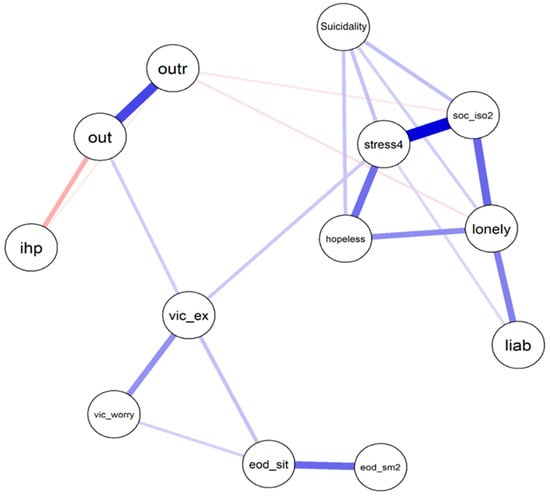
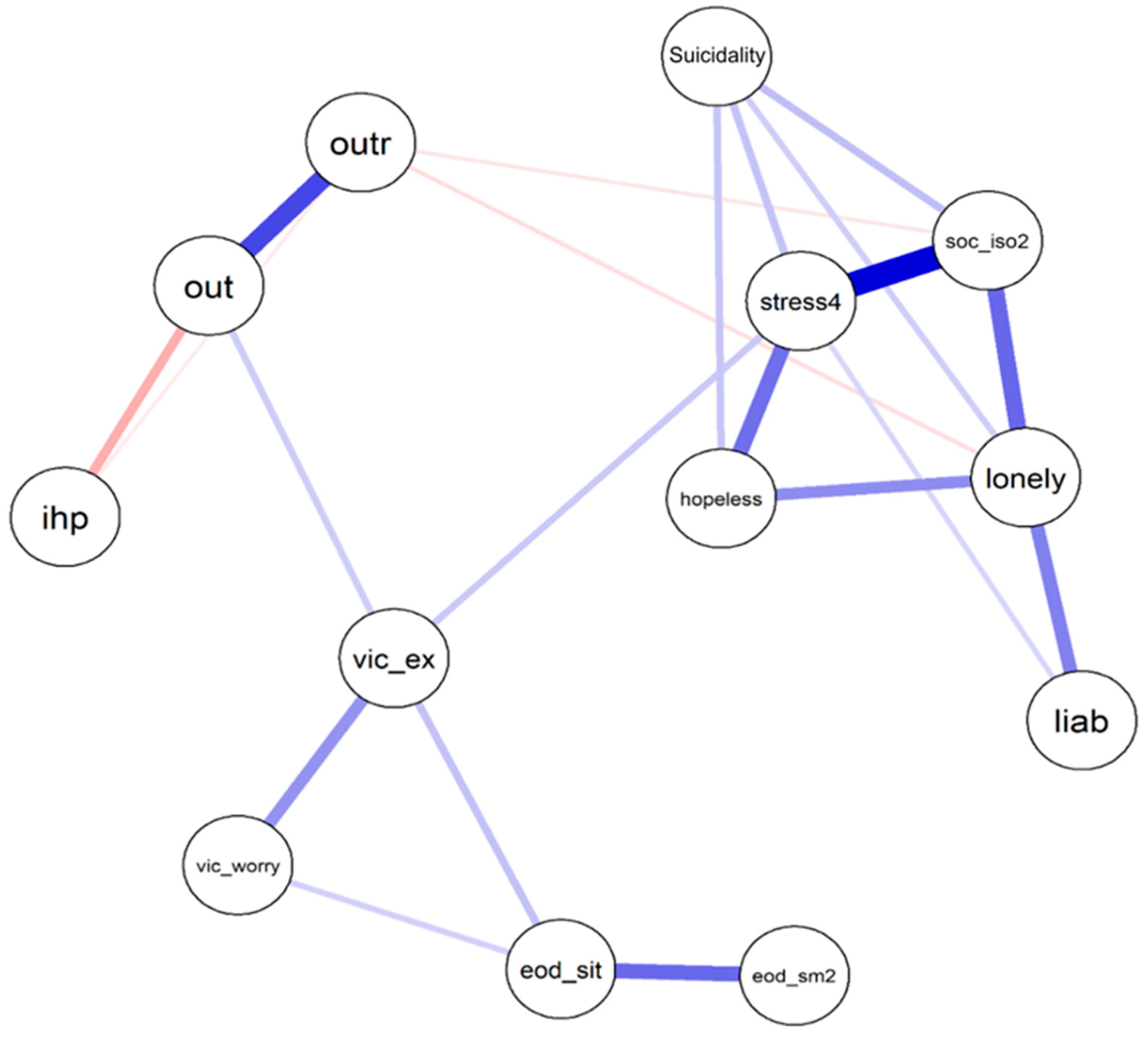
Figure 2 depicts the estimated conditional association network among minority stress, general stress, interpersonal factors, and suicidality. Stress had several of the largest direct connections, including positive associations with perceived social isolation (weight = 0.60), hopelessness (0.34), suicidality (0.14), victimization (0.13), and perceived social liability (0.10). Stress, social isolation, loneliness, hopelessness, and suicidality formed a relatively interconnected region of the network.
Figure 2.
Network Structure and Relationships Between Study Variables. Note: Variables (nodes) are shown in labeled circles, and non-directional relationships (edges) are shown with lines. Edges represent regularized conditional associations between nodes after accounting for the remaining variables in the network. Edge thickness indicates association magnitude; blue edges indicate positive associations and red edges negative associations. Eod_sit = Experiences of Discrimination Situations Version. Eod_sm2 = Experiences of discrimination perceived to be linked to sexual or gender identity. Hopelessness = Feelings of hopelessness. IHP = Internalized homophobia. Liab = Perceived liability. Lonely = Feelings of loneliness. Out = Disclosure of sexual or gender identity. Outr = Responses to disclosure of sexual or gender identity. Soc_iso2 = Social isolation. Stress4 = Level of stress. Suicidality = A composite indicator of past-year suicidal ideation and/or lifetime suicide attempt.
Among minority-stress constructs, victimization was positively associated with stress (0.13) and outness (0.12). Greater outness was also associated with lower internalized homophobia (−0.19) and more accepting responses to disclosure (0.43), illustrating associations with both supportive and adverse social experiences. More supportive responses to outness were associated with lower social isolation (−0.06) and loneliness (−0.08).
Overall, the network demonstrated connections among minority-specific stress experiences, general stress, interpersonal disconnection, and suicidality. These conditional associations should not be interpreted as temporal or causal relationships.
3.4. Centrality and Stability
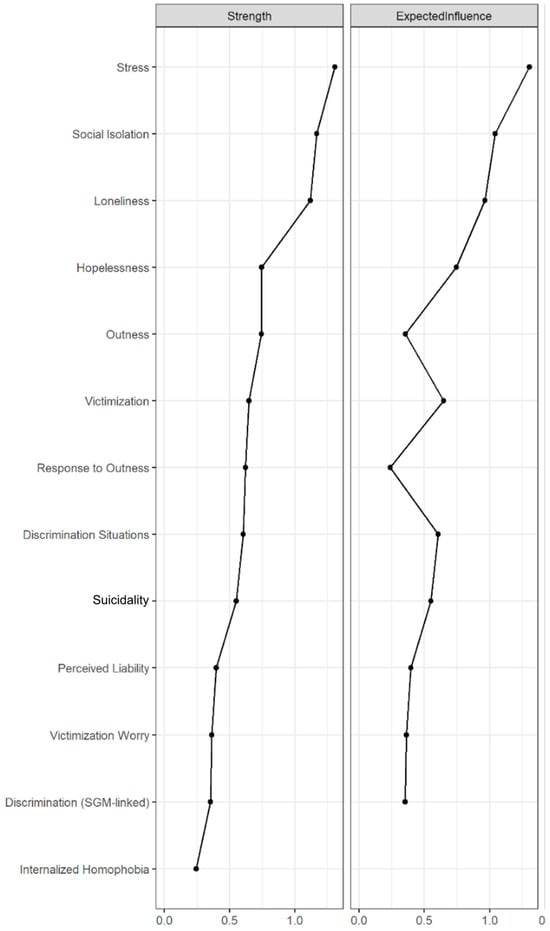
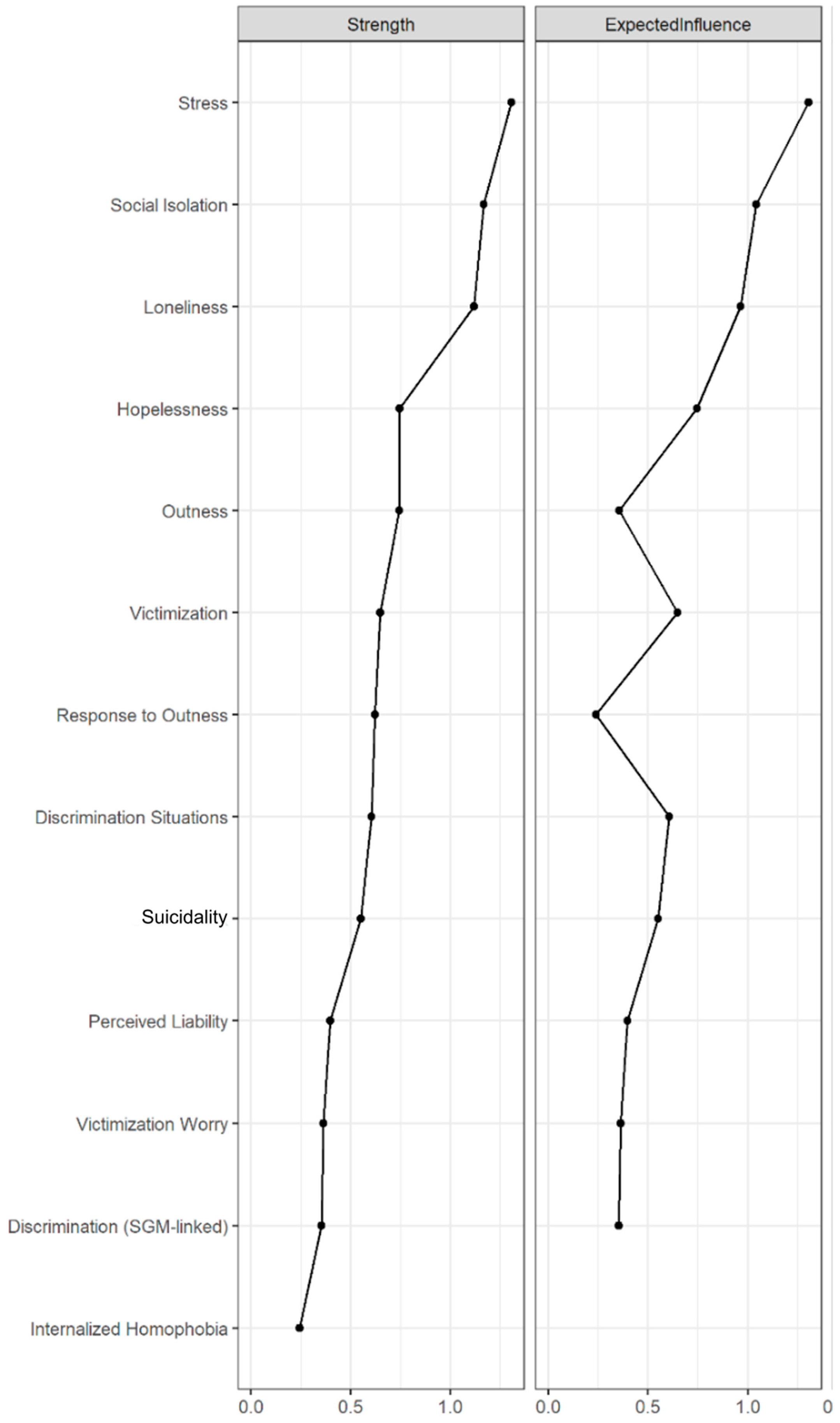
Stress, perceived social isolation, and loneliness showed the strongest centrality (Figure 3), indicating strong direct connections with other network variables. The pattern of expected influence was generally similar, although differences for outness and response to outness reflected their negative associations with internalized homophobia, social isolation, and/or loneliness.
Figure 3.
Centrality Indices of Constructs in the Estimated Network. Legend: Strength is the sum of the absolute value of all direct associations with the node. Expected influence measures the strength of a node’s connections, accounting for the positive and negative associations.
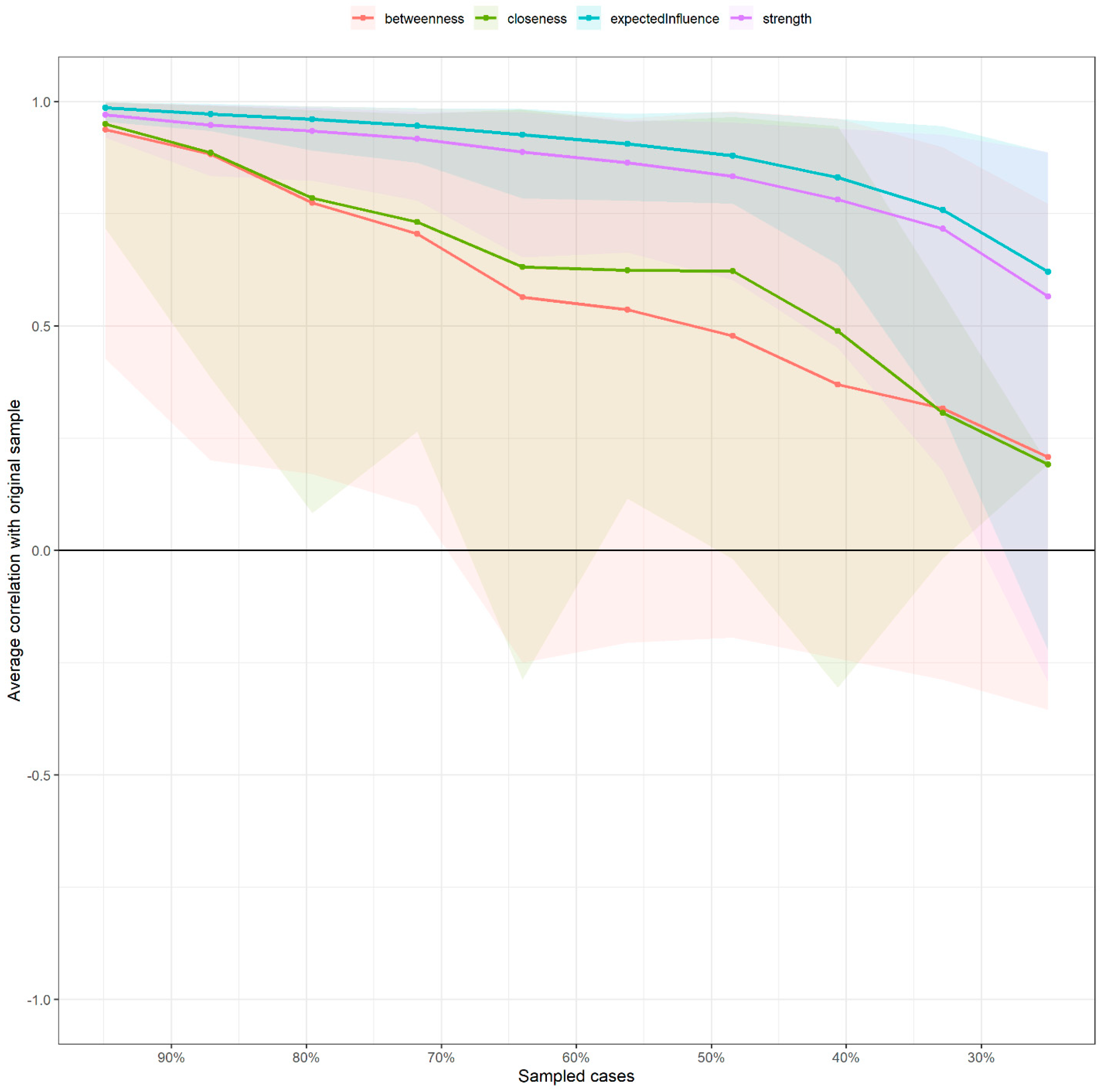
Case-dropping bootstrap analyses supported the interpretation of expected influence (CS = 0.516) and strength (CS = 0.438). Closeness and betweenness were unstable (CS = 0.05 for both) and were therefore not substantively interpreted (Appendix A Figure A1).
4. Discussion
Reducing suicidality among SGM populations remains an important global public health priority [34]. In this community-recruited sample of Thai SGM adults, 19.0% reported past-year suicidal ideation and 13.1% a lifetime suicide attempt, consistent with the substantial burden documented among SGM populations in Thailand and elsewhere [2,3]. Guided primarily by Minority Stress Theory (MST) [8], with selected interpersonal constructs conceptually related to the Interpersonal Theory of Suicide (ITS) [12], we used network analysis to examine how minority-specific stressors, general stress, interpersonal factors, and suicidality were interconnected.
4.1. Key Findings
Stress was among the most highly interconnected constructs and was directly associated with perceived social isolation, hopelessness, suicidality, victimization, and perceived social liability. Perceived social isolation and loneliness also demonstrated high strength centrality. Together, these findings indicate that general psychological stress and interpersonal disconnection occupy prominent positions within the psychosocial network surrounding suicidality among Thai SGM adults, consistent with previous research linking these factors with poorer mental health and suicidality [35,36,37].
Minority-specific stress experiences were also connected with the broader network. Victimization was positively associated with stress and outness, consistent with minority-specific adverse experiences co-occurring with broader psychological difficulties among SGM individuals.
Identity disclosure showed a particularly complex pattern. Greater outness was associated with lower internalized homophobia and more accepting responses from others, while supportive responses to disclosure were associated with lower social isolation and loneliness. Conversely, greater outness was associated with greater victimization. Thus, disclosure may coexist with both supportive and adverse social experiences, consistent with previous research [38].
Although the integration of Minority Stress Theory and the Interpersonal Theory of Suicide may provide a useful conceptual framework for understanding suicidality among sexual and gender minority populations across cultural settings, the specific network structures observed in this study may not generalize to other populations. Cultural differences in attitudes toward sexual and gender diversity, experiences of stigma and discrimination, identity disclosure, and social connectedness may influence the strength and configuration of associations among these constructs. Future cross-cultural research should examine the replicability of these network structures and identify culturally specific and potentially shared patterns of association with suicidality.
4.2. Theoretical Implications
The findings support examining minority stress within a broader psychosocial context. MST conceptualizes discrimination, victimization, internalized stigma, and related experiences as minority-specific stress processes occurring in addition to general life stressors [8]. General stress was highly interconnected with constructs spanning minority-specific, interpersonal, and suicidality-related domains, suggesting that it co-occurs with multiple forms of psychosocial burden experienced by Thai SGM adults.
Interpersonal disconnection was similarly prominent. Social isolation and loneliness were among the most highly interconnected constructs, consistent with literature linking social disconnection with suicidal thoughts and behaviors [12,39]. These findings align conceptually with the emphasis on belongingness within ITS; however, social isolation and social liability were proxy indicators rather than validated measures of thwarted belongingness and perceived burdensomeness. Thus, the findings should not be interpreted as a formal test of ITS.
More broadly, network analysis complements studies examining prespecified pathways between minority stress and suicidality [14,15] by depicting interconnected minority-specific, psychological, and interpersonal experiences. Because centrality reflects interconnectedness rather than causal influence, highly connected constructs warrant further investigation rather than interpretation as mechanisms or intervention targets.
4.3. Implications for Healthcare Providers in Mental Health and Suicide Prevention
Assessment of suicidal thoughts and behaviors among SGM adults may benefit from attention to general psychological distress, social isolation, loneliness, victimization, discrimination, and experiences surrounding identity disclosure. The high connectivity of stress, social isolation, and loneliness suggests that these constructs may be useful markers of broader psychosocial burden. These findings have significant implications for advancing SGM-affirming care and designing culturally tailored suicide prevention interventions. Screening protocols should extend beyond traditional suicide risk assessments to evaluate a broader constellation of psychosocial drivers. Routine identification of severe loneliness, social isolation, and minority stress experiences can serve as critical early warning signals to identify elevated suicide risk before a crisis point. Moreover, approaches promoting social connectedness, including peer support, affirming spaces, and culturally competent services, may be particularly relevant [40]. Community and structural approaches, including anti-bullying initiatives, partnerships with SGM organizations, and family-centered approaches that strengthen supportive responses to SGM identities, may also help address the social environments in which minority stress occurs [41,42,43,44].
Although Thailand has experienced important advances in legal recognition since these data were collected, legal progress does not necessarily eliminate interpersonal stigma, discrimination, or victimization. Future longitudinal research should examine temporal relationships among minority stress, general stress, interpersonal disconnection, and suicidality; directly assess core ITS constructs and protective factors; and include greater representation of lesbian, bisexual, transgender, non-binary, and other gender-diverse populations.
4.4. Limitations
Several limitations should be considered. First, the cross-sectional design precludes conclusions about temporal ordering or causality; network edges represent conditional associations, and centrality reflects interconnectedness rather than causal influence. Second, self-report data are subject to recall and reporting bias. The suicidality indicator combined past-year ideation with lifetime attempt and should not be interpreted as a validated measure of current or prospective suicide risk. Third, the secondary dataset was not designed to comprehensively test MST or ITS; direct measures of all core ITS constructs were unavailable, and social isolation and hopelessness were represented by single items. Fourth, collapsing several variables because of sparse response categories may have reduced information. Fifth, data were collected in 2018, before substantial changes in legal recognition of SGM people in Thailand, including legalization of same-sex marriage. Findings therefore reflect the sociocultural and legal context at data collection, although stigma, discrimination, and minority stress persist despite advances in legal rights [6,45,46]. Sixth, recruitment through RSAT and the predominance of cisgender gay men and participants with relatively high educational attainment limit generalizability. Finally, expected influence and strength demonstrated sufficient stability for interpretation, whereas closeness and betweenness did not.
5. Conclusions
Suicidality remains an important mental health concern among SGM populations in Thailand. Minority-specific stress experiences, general psychological stress, interpersonal disconnection, and suicidality exhibited an interconnected pattern of associations, with stress, social isolation, and loneliness among the most highly interconnected constructs. These findings underscore the importance of considering minority-specific and broader psychosocial experiences together when examining suicidality among SGM populations. Longitudinal research is needed to clarify the temporal relationships among these constructs and assess their potential relevance for culturally responsive suicide-prevention strategies in Thailand and other Asian settings.
Author Contributions
A.K.M.: Conceptualization, Data curation, Investigation, Methodology, Project administration, Supervision, Validation, Writing—original draft, Writing—review and editing; A.D.S.: Conceptualization, Data curation, Formal analysis, Resources, Software, Validation, Writing—review and editing; P.K.: Data curation, Funding acquisition, Investigation, Methodology, Validation, Writing—review and editing; S.E.: Methodology, Resources, Software, Validation, Visualization, Writing—review and editing; C.G.: Methodology, Validation, Visualization, Writing—review and editing; E.R.-M.: Visualization, Writing—review and editing; C.L.-W.: Validation, Writing—review and editing. All authors have read and agreed to the published version of the manuscript.
Funding
The authors disclosed receipt of the following financial support for the research, authorship, and/or publication of this article: the 2019–2020 Seth and Denise Rosen Memorial Research Award, University of Illinois at Chicago. The Thammasat University Research Unit in Health, Educational, and Social Equity in Sexual and Gender Diversity also supported this work. The authors are solely responsible for the content.
Institutional Review Board Statement
All procedures performed in this study were in accordance with the ethical standards of the institutional research committees and internationally accepted standards, including the Declaration of Helsinki and the Belmont Report. The study protocol was approved by the Institutional Review Boards of the University of Illinois at Chicago (No. 2017-1182, approval date: 14/02/2018) and the Rainbow Sky Association of Thailand (No. 153/2560-2017, approval date: 27/09/2017).
Informed Consent Statement
Informed consent was obtained from all subjects involved in the study.
Data Availability Statement
Given the sensitive nature of SGM research in Thailand, the study data are not available due to privacy/ethical restrictions.
Acknowledgments
The authors thank the Rainbow Sky Association of Thailand and SGM health experts for their consultation, as well as all study participants who shared their experiences. The Thammasat University Research Unit in Health, Educational, and Social Equity in Sexual and Gender Diversity supported this work. The content is the sole responsibility of the authors.
Conflicts of Interest
The authors declared no potential conflicts of interest concerning this article’s research, authorship, and/or publication.
Appendix A
Figure A1.
Stability of Centrality Indices. The x-axis shows the decreasing percentage of cases in bootstrapped samples, and the y-axis shows the average correlation with the original full sample. Expected influence and strength show higher correlations with the full sample indices as the sample size decreases, indicating stability. Betweenness and closeness have declining correlations with the full sample with smaller bootstrapped samples.
References
- World Health Organization. Suicide; World Health Organization: Geneva, Switzerland, 2021; Available online: https://www.who.int (accessed on 15 January 2026).
- Horwitz, A.G.; Berona, J.; Busby, D.R.; Eisenberg, D.; Zheng, K.; Pistorello, J.; Albucher, R.; Coryell, W.; Favorite, T.; Walloch, J.C.; et al. Variation in suicide risk among subgroups of sexual and gender minority college students. Suicide Life-Threat. Behav. 2020, 50, 1041–1053. [Google Scholar] [CrossRef] [Scilit]
- Raifman, J.; Charlton, B.M.; Arrington-Sanders, R.; Chan, P.A.; Rusley, J.; Mayer, K.H.; Stein, M.D.; Austin, S.B.; McConnell, M. Sexual orientation and suicide attempt disparities among US adolescents: 2009–2017. Pediatrics 2020, 145, e20191658. [Google Scholar] [CrossRef] [Scilit]
- Symes, E.R.; Santo, T., Jr.; Sutherland, R.; Lynch, M.; Taylor, S.; Lewis, P.; Degenhardt, L. Prevalence of mental health outcomes among trans and gender diverse adults: A global systematic review and meta-analysis. Psychol. Med. 2026, 56, e324. [Google Scholar] [CrossRef] [Scilit]
- Marchi, M.; Ferrazzi, G.; Pollice, G.; Pingani, L.; Ferrari, S.; Ventriglio, A.; Galeazzi, G.M. Mental health in sexual and gender minority populations: A systematic review of systematic reviews with narrative synthesis and a network meta-analysis of suicide attempts. Int. J. Soc. Psychiatry 2026, 72, 205–218. [Google Scholar] [CrossRef] [Scilit]
- Moallef, S.; Salway, T.; Phanuphak, N.; Kivioja, K.; Pongruengphant, S.; Hayashi, K. The relationship between sexual and gender stigma and suicide attempt and ideation among LGBTQI+ populations in Thailand: Findings from a national survey. Soc. Psychiatry Psychiatr. Epidemiol. 2022, 57, 1987–1997. [Google Scholar] [CrossRef] [Scilit]
- Kittiteerasack, P.; Matthews, A.K.; Steffen, A.; Corte, C.; McCreary, L.L.; Bostwick, W.; Park, C.; Johnson, T.P. The influence of minority stress on indicators of suicidality among lesbian, gay, bisexual, and transgender adults in Thailand. J. Psychiatr. Ment. Health Nurs. 2021, 28, 656–669. [Google Scholar] [CrossRef] [Scilit]
- Meyer, I.H. Prejudice, social stress, and mental health in lesbian, gay, and bisexual populations: Conceptual issues and research evidence. Psychol. Bull. 2003, 129, 674–697. [Google Scholar] [CrossRef] [Scilit]
- Matthews, A.K.; Kittiteerasack, P.; Inwanna, S.; Ogata, A.; Tran-Chi, V.-L.; Loa, R.; Waluyo, A. A description of the social, cultural, and historical context for sexual and gender minority individuals living in a selection of high, low, and middle-income ASEAN countries. Sex. Cult. 2025, 29, 2547–2575. [Google Scholar] [CrossRef] [Scilit]
- Reid, L.; Newman, P.A.; Lau, H.; Tepjan, S.; Akkakanjanasupar, P. A scoping review of LGBT+ inclusion in Thailand: Policy proposals and recommendations. Sex. Res. Soc. Policy 2022, 19, 1731–1746. [Google Scholar] [CrossRef] [Scilit]
- Van Orden, K.A.; Merrill, K.A.; Joiner, T.E., Jr. Interpersonal-psychological precursors to suicidal behavior: A theory of attempted and completed suicide. Curr. Psychiatry Rev. 2005, 1, 187–196. [Google Scholar] [CrossRef] [Scilit]
- Van Orden, K.A.; Witte, T.K.; Cukrowicz, K.C.; Braithwaite, S.R.; Selby, E.A.; Joiner, T.E., Jr. The interpersonal theory of suicide. Psychol. Rev. 2010, 117, 575–600. [Google Scholar] [CrossRef] [Scilit]
- Baams, L.; Grossman, A.H.; Russell, S.T. Minority stress and mechanisms of risk for depression and suicidal ideation among lesbian, gay, and bisexual youth. Dev. Psychol. 2015, 51, 688–696. [Google Scholar] [CrossRef] [Scilit]
- Chang, C.J.; Fehling, K.B.; Selby, E.A. Sexual minority status and psychological risk for suicide attempt: A serial multiple mediation model of social support and emotion regulation. Front. Psychiatry 2020, 11, 385. [Google Scholar] [CrossRef] [Scilit]
- Fulginiti, A.; Goldbach, J.T.; Mamey, M.R.; Rusow, J.; Srivastava, A.; Rhoades, H.; Schrager, S.M.; Bond, D.W.; Marshal, M.P. Integrating Minority Stress Theory and the Interpersonal Theory of suicide among sexual minority youth who engage crisis services. Suicide Life-Threat. Behav. 2020, 50, 601–616. [Google Scholar] [CrossRef] [Scilit]
- Tantirattanakulchai, P.; Hounnaklang, N. Associations between clusters of perceived social support level, depression, and suicidal ideation among transgender women: A latent class analysis. J. Public Health Res. 2022, 11, 2090. [Google Scholar] [CrossRef] [Scilit]
- Epskamp, S.; Borsboom, D.; Fried, E.I. Estimating psychological networks and their accuracy: A tutorial paper. Behav. Res. Methods 2018, 50, 195–212. [Google Scholar] [CrossRef] [Scilit]
- Kittiteerasack, P.; Steffen, A.; Matthews, A.K. The influence of minority stress on depression among Thai LGBT adults. J. Keperawatan Indones. 2020, 23, 74–84. [Google Scholar] [CrossRef] [Scilit]
- Brislin, R.W. Back-translation for cross-cultural research. J. Cross-Cult. Psychol. 1970, 1, 185–216. [Google Scholar] [CrossRef] [Scilit]
- Krieger, N.; Smith, K.; Naishadham, D.; Hartman, C.; Barbeau, E.M. Experiences of discrimination: Validity and reliability of a self-report measure for population health research on racism and health. Soc. Sci. Med. 2005, 61, 1576–1596. [Google Scholar] [CrossRef] [Scilit]
- Kittiteerasack, P.; Matthews, A.K.; Park, C. Psychometric properties of the Thai version of the Experience of Discrimination (EOD) measure for lesbian, gay, bisexual, and transgender (LGBT) populations. J. Psychiatr. Nurs. Ment. Health 2020, 34, 43–60. Available online: https://he02.tci-thaijo.org/index.php/JPNMH/article/view/203311 (accessed on 29 September 2026).
- LoSchiavo, C.; Halkitis, P.N.; Kapadia, F. Sexual orientation and gender identity victimization among young adults in the New York City metropolitan area: The P18 cohort study. J. Interpers. Violence 2020, 35, 5737–5760. [Google Scholar] [CrossRef] [Scilit]
- Norris, A.L.; Orchowski, L.M. Peer victimization of sexual minority and transgender youth: A cross-sectional study of high school students. Psychol. Violence 2020, 10, 201–211. [Google Scholar] [CrossRef] [Scilit]
- Russell, S.T.; Ryan, C.; Toomey, R.B.; Diaz, R.M.; Sanchez, J. Lesbian, gay, bisexual, and transgender adolescent school victimization: Implications for young adult health and adjustment. J. Sch. Health 2011, 81, 223–230. [Google Scholar] [CrossRef] [Scilit]
- Mohr, J.; Fassinger, R. Measuring dimensions of lesbian and gay male experience. Meas. Eval. Couns. Dev. 2000, 33, 66–90. [Google Scholar] [CrossRef] [Scilit]
- Herek, G.M.; Gillis, J.R.; Cogan, J.C. Internalized stigma among sexual minority adults: Insights from a social psychological perspective. J. Couns. Psychol. 2009, 56, 32–43. [Google Scholar] [CrossRef] [Scilit]
- Kittiteerasack, P.; Matthews, A.K.; Park, C. Psychometric properties of the Thai version of the Internalized Sexual Stigma Scale for research on lesbian, gay, bisexual, and transgender (LGBT) populations. Psychol. Sex. 2024, 15, 305–317. [Google Scholar] [CrossRef] [Scilit]
- Silpakit, O. Srithanya stress scale. J. Ment. Health Thail. 2012, 16, 177–185. Available online: https://he01.tci-thaijo.org/index.php/jmht/article/view/1296?utm_source=chatgpt.com (accessed on 29 September 2026).
- Russell, D.W. UCLA Loneliness Scale (Version 3): Reliability, validity, and factor structure. J. Personal. Assess. 1996, 66, 20–40. [Google Scholar] [CrossRef] [Scilit]
- Kittiteerasack, P.; Uthis, P. Relationships Between Selected Factors and Suicidal Ideation of Persons with HIV/AIDS. Master’s Thesis, Chulalongkorn University, Bangkok, Thailand, 2004. [Google Scholar]
- Beck, A.T.; Ward, C.H.; Mendelson, M.; Mock, J.; Erbaugh, J. An inventory for measuring depression. Arch. General. Psychiatry 1961, 4, 561–571. [Google Scholar] [CrossRef] [Scilit]
- Ribeiro, J.D.; Franklin, J.C.; Fox, K.R.; Bentley, K.H.; Kleiman, E.M.; Chang, B.P.; Nock, M.K. Self-injurious thoughts and behaviors as risk factors for future suicide ideation, attempts, and death: A meta-analysis of longitudinal studies. Psychol. Med. 2016, 46, 225–236. [Google Scholar] [CrossRef] [Scilit]
- Haslbeck, J.M.B.; Waldorp, L.J. mgm: Estimating Time-Varying Mixed Graphical Models in High-Dimensional Data. J. Stat. Softw. 2020, 93, 1–46. [Google Scholar] [CrossRef] [Scilit]
- World Health Organization. Suicide Worldwide in 2021: Global Health Estimates; World Health Organization: Geneva, Switzerland, 2025. [Google Scholar]
- Mezzina, R.; Gopikumar, V.; Jenkins, J.; Saraceno, B.; Sashidharan, S.P. Social vulnerability and mental health inequalities in the “Syndemic”: Call for action. Front. Psychiatry 2022, 13, 894370. [Google Scholar] [CrossRef] [Scilit]
- Seng, J.S.; Lopez, W.D.; Sperlich, M.; Hamama, L.; Reed Meldrum, C.D. Marginalized identities, discrimination burden, and mental health: Empirical exploration of an interpersonal-level approach to modeling intersectionality. Soc. Sci. Med. 2012, 75, 2437–2445. [Google Scholar] [CrossRef] [Scilit]
- Coleman, T.A.; Chee, K.; Chin-see, R.; Salama, R.; Sajan, M.; Narbonne, M.; Travers, R.; Coulombe, S. Minority stressors, social provisions, and past-year suicidal ideation and suicide attempts in a sample of sexual orientation and gender identity/expression minority people in Canada. LGBT Health 2024, 11, 539–551. [Google Scholar] [CrossRef] [Scilit]
- D’Augelli, A.R.; Grossman, A.H. Disclosure of sexual orientation, victimization, and mental health among lesbian, gay, and bisexual older adults. J. Interpers. Violence 2001, 16, 1008–1027. [Google Scholar] [CrossRef] [Scilit]
- Motillon-Toudic, C.; Walter, M.; Séguin, M.; Carrier, J.D.; Berrouiguet, S.; Lemey, C. Social isolation and suicide risk: Literature review and perspectives. Eur. Psychiatry 2022, 65, e65. [Google Scholar] [CrossRef] [Scilit]
- Mann, F.; Bone, J.K.; Lloyd-Evans, B.; Frerichs, J.; Pinfold, V.; Ma, R.; Wang, J.; Johnson, S. A life less lonely: The state of the art in interventions to reduce loneliness in people with mental health problems. Soc. Psychiatry Psychiatr. Epidemiol. 2017, 52, 627–638. [Google Scholar] [CrossRef] [Scilit]
- Gaffney, H.; Ttofi, M.M.; Farrington, D.P. Effectiveness of school-based programs to reduce bullying perpetration and victimization: An updated systematic review and meta-analysis. Campbell Syst. Rev. 2021, 17, e1143. [Google Scholar] [CrossRef] [Scilit]
- Rayner, C.; Lewis, D. Managing workplace bullying: The role of policies. In Bullying and Harassment in the Workplace; CRC Press: Boca Raton, FL, USA, 2020; pp. 497–519. [Google Scholar]
- Malpas, J.; Pellicane, M.J.; Glaeser, E. Family-based interventions with transgender and gender expansive youth: Systematic review and best practice recommendations. Transgender Health 2022, 7, 7–29. [Google Scholar] [CrossRef] [Scilit]
- Seager van Dyk, I.; Clark, K.A.; Dougherty, L.R.; Pachankis, J.E. Parent responses to their sexual and gender minority children: Implications for parent-focused supportive interventions. Psychol. Sex. Orientat. Gend. Divers. 2024, 11, 1–16. [Google Scholar] [CrossRef] [Scilit]
- Suksakulwat, T.; Kittiteerasack, P.; Jirarode, A. The factors related to psychological well-being among lesbian, gay, bisexual, transgender, and queer (LGBTQ+) populations in Thailand. Issues Ment. Health Nurs. 2025, 46, 685–692. [Google Scholar] [CrossRef] [Scilit]
- Srimuang, K.; Pholphirul, P. Measuring LGBT discrimination in a Buddhist country. J. Homosex. 2023, 70, 1162–1186. [Google Scholar] [CrossRef] [Scilit]

Disclaimer/Publisher’s Note: The statements, opinions and data contained in all publications are solely those of the individual author(s) and contributor(s) and not of MDPI and/or the editor(s). MDPI and/or the editor(s) disclaim responsibility for any injury to people or property resulting from any ideas, methods, instructions or products referred to in the content. |
© 2026 by the authors. Licensee MDPI, Basel, Switzerland. This article is an open access article distributed under the terms and conditions of the Creative Commons Attribution (CC BY) license.