




Healthcare, Volume 13, Issue 23 (December-1 2025) – 187 articles
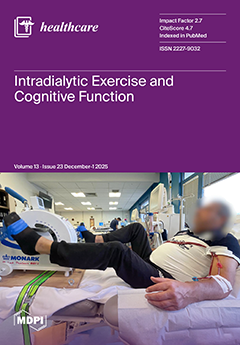
Cover Story (view full-size image):
Cognitive impairment is very common in patients receiving hemodialysis, affecting multiple health parameters and quality of life. The aim of this systematic review was to investigate and evaluate the impact of intradialytic exercise on global cognition and specific cognitive domains in hemodialysis patients. The findings indicate that intradialytic exercise—particularly moderate- to high-intensity aerobic training for 30–45 minutes, three times weekly, for at least 12 weeks—is associated with improvements in global cognition, attention, and executive function. However, larger, longer, and more standardized studies are needed to guide clinical practice. View this paper
- Issues are regarded as officially published after their release is announced to the table of contents alert mailing list.
- You may sign up for e-mail alerts to receive table of contents of newly released issues.
- PDF is the official format for papers published in both, html and pdf forms. To view the papers in pdf format, click on the "PDF Full-text" link, and use the free Adobe Reader to open them.
Previous Issue
Next Issue
