


Abstract
Background. Caregiver affiliate stigma concerning neurodegenerative disorders (NDDs) profoundly affects caregivers’ well-being, though its full impact remains to be fully elucidated. Objectives. This scoping review aims to consolidate the current knowledge on caregiver affiliate stigma related to NDDs, explore its connection to caregiver psychosocial well-being, and pinpoint the gaps in the existing research. Methods. Adhering to the PRISMA-ScR guidelines, a comprehensive search of five databases was conducted for peer-reviewed, English language studies focusing on caregiver-affiliated stigma in relation to NDDs. Results. The initial search yielded 9033 articles, with 19 meeting the inclusion criteria after rigorous screening. Bronfenbrenner’s ecological systems theory was employed to analyze various stigma conceptualizations, including public, courtesy, affiliate, and family stigma. Analysis revealed a correlation between elevated levels of affiliate stigma and increased caregiver burden, deteriorated mental health outcomes, and diminished quality of life. The internalization of stigma was found to vary across demographic groups, influenced by factors such as education level and social support. The review also highlighted the mediating role of coping strategies and the protective function of social support against stigma internalization. Conclusions, These findings underscore the necessity for targeted, culturally sensitive interventions that address caregiver affiliate stigma across multiple ecological levels. This review contributes to a more nuanced understanding of caregiver affiliate stigma in relation to NDDs, laying the groundwork for future research and intervention development aimed at enhancing caregiver well-being in diverse cultural contexts.
1. Introduction
Global population demographics are shifting toward an aging population. Projections indicate that, by 2050, individuals over 65 years old will comprise 16% of the global population, doubling the number of children under the age of five years. This translates to an estimated increase from 771 million people over 65 years old in 2022 to 1.6 billion by 2050 [1]. Accompanying this demographic shift is a rise in the prevalence of neurodegenerative disorders (NDDs), such as Alzheimer’s disease (AD), Parkinson’s disease (PD), and motor neuron diseases, which are among the most common [2,3]. These diseases are characterized by the progressive loss of neuronal functions and are becoming more prevalent with time [3].
NDDs impact multiple aspects of human functioning, often limiting individuals’ ability to perform basic tasks. These disorders are chronic and typically incurable, leading to a long-term dependence on caregivers [4]. Currently, over 55 million people worldwide live with dementia, and approximately 10 million new cases are reported annually, positioning NDDs as a significant public health concern [5]. The most common form of dementia is AD, which is characterized by the progressive accumulation of β-amyloid plaques and tau tangles, leading to a cognitive decline in and impairment of memory, reasoning, and language skills [6,7]. PD, the second most common NDD [8], is marked by tremors, muscle stiffness, and movement difficulties, resulting from the degeneration of dopaminergic neurons in the substantia nigra [9]. Recent research suggests a more complex progression of the disease, potentially starting years before the motor symptoms appear [10]. Similarly, Amyotrophic Lateral Sclerosis (ALS), a progressive motor neuron disease, affects motor neurons in the brain and spinal cord, leading to muscle degeneration and paralysis [11]. While most cases of ALS are sporadic, around 5–10% are inherited [12]
The impact of these disorders extends beyond individuals, heavily burdening caregivers who play a crucial role in managing the daily lives of those with NDDs [13,14]. The complexity of NDDs comes from the complex interaction of genetic, epigenetic, and environmental factors [15]. Caregiving for individuals with NDDs is associated with substantial psychological stress, often exceeding physical strain [16]. Caregivers’ mental and physical health, personal resources, and available social support critically influence their ability to cope with the demands of caregiving [16,17,18]. The nature and intensity of challenges experienced by caregivers vary based on the disease, but high levels of depression and burden are common, with the research showing depression rates exceeding 30% among caregivers of AD patients [19,20,21]. Key predictors for depressive symptoms include caregivers’ health, personal resources, and perceived adequacy in their caregiving roles [22].
Furthermore, the severity of problematic behaviors exhibited by individuals with dementia, especially in long-term care settings, is strongly correlated with poorer mental and physical health outcomes for caregivers [23]. Despite these challenges, caregiving can also be a source of personal growth and fulfilment. Many caregivers report experiencing a sense of purpose, increased self-worth, and strengthened relationships through their caregiving role [24,25,26]. This complex interplay between the challenges and rewards of caregiving emphasizes the need to consider caregivers’ quality of life (QoL) as a critical outcome.
QoL, as described by Felce and Perry [27], encompasses both objective conditions and subjective evaluations of well-being across physical, social, emotional, and material domains. For caregivers of individuals with NDDs, QoL can be significantly affected by the progression of the disorder. The research suggests a link between declining QoL in caregivers and increasing disease severity in care recipients, highlighting the dynamic interaction between caregiver well-being and patient health [28].
A particularly challenging aspect of caregiving for individuals with NDDs is the phenomenon of stigma. Stigma, defined by Andersen et al. [29], refers to societal labeling, stereotyping, and negative judgments. Caregiver affiliate stigma, the focus of this review, refers to the internalization of these societal biases by caregivers, leading to negative self-perceptions and social withdrawal [30,31]. Various types of stigma, such as public stigma, courtesy stigma (stigma by association), and family stigma, all contribute to caregivers’ psychological burden. Public stigma involves negative societal reactions toward individuals with NDDs, while courtesy stigma extends this discrimination to caregivers due to their association with stigmatized individuals [32,33]. Family stigma specifically addresses the negative experiences of family members linked to a relative with a stigmatized condition [34].
The measurement of caregiver affiliate stigma has employed tools such as the Affiliate Stigma Scale (ASS) [30], alongside broader burden measures, like the Caregiver Burden Inventory (CBI) [35] and Zarit Burden Interview (ZBI) [36]. Instruments designed to assess depression and anxiety are also commonly used to understand the psychological impact of stigma on caregivers [37,38]. While the research on caregiver affiliate stigma is growing, it remains fragmented. Although scales like the ASS and the Family Stigma in Alzheimer’s Disease Scale (FS-ADS) [39] provide some standardization, further work is needed to refine definitions and enhance the validity of these measures across different contexts.
Despite an increased awareness of caregiver affiliate stigma, the research findings have yet to be fully translated into effective policies and interventions. While some countries have incorporated caregiver support into their dementia strategies, as seen in the World Health Organization’s Global Action Plan on the Public Response to Dementia (2017–2025) [40], stigma-related interventions remain limited. Current interventions primarily focus on general stigma reduction, such as psychoeducational programs and support groups, rather than addressing the unique needs of caregivers [41]. Without a comprehensive understanding of how caregiver affiliate stigma affects well-being, it is difficult to develop targeted strategies to support caregivers.
Therefore, this review aims to systematically map the definitions, measures, and interventions related to caregiver affiliate stigma to better understand its impact on caregiver well-being and identify pathways for effective intervention.
Aims and Objectives
This scoping review aims to comprehensively map the existing literature on the impact of caregiver affiliate stigma of caregivers for individuals with NDDs, on their psychosocial well-being. More specifically this review aimed to: (1) Examine the relationship between affiliate stigma and caregiver psychosocial well-being; (2) Identify and synthesize existing definitions and conceptualizations of caregiver affiliate stigma and related concepts within the context of NDDs through the lenses of Bronfenbrenner’s ecological systems theory; and (3) Identify the knowledge gaps in the existing literature, highlighting areas where further investigation is needed. Finally, using the Bronfenbrenner’s ecological system theory, we discuss the review results to identify possible lines of interventions to prevent caregiver affiliate stigma phenomena.
2. Materials and Methods
2.1. Study Design
A scoping review methodology was adopted, guided by the methodological framework outlined by Arksey and O’Malley [42], and further developed by Peters et al. [43] in nine key stages: (1) Defining and aligning the objective/s and question/s; (2) Developing and aligning the inclusion criteria with the objective/s and question/s; (3) Describing the planned approach; (4) Searching for evidence; (5) Selecting the evidence; (6) Extracting the evidence; (7) Analysis of the evidence; (8) Presentation of the results; and (9) Summarizing the evidence. Moreover, this scoping review adhered to the PRISMA-ScR guidelines [44] to ensure a systematic and comprehensive approach.
2.2. Eligibility Criteria
The review included peer-reviewed studies published in English, with no time limitations, which focused on primary caregivers of individuals diagnosed with any NDDs. Studies were required to be quantitative and to address caregiver-affiliate stigma in the context of NDDs and its impact on psychological well-being, including, but not limited to, the concepts of affiliate stigma, courtesy stigma, or stigma by association, family stigma, and caregiver stigma. The inclusion criteria specified the use of validated measures of stigma and psychosocial well-being, as well as the reported quantitative outcomes related to the impact of stigma on caregiver well-being.
Studies were excluded if they did not specifically address caregiver-affiliate stigma or the related concepts mentioned in the inclusion criteria above, focused solely on the stigma experienced by individuals with NDDs, or lacked outcomes related to psychosocial well-being.
2.3. Types of Sources
The search strategy included electronic databases (PubMed/MEDLINE, PsycINFO, Embase, CINAHL, and Scopus), gray literature sources (Google Scholar, ProQuest Dissertations and Theses, and relevant organizational websites), and reference lists of included studies and relevant reviews.
2.4. Search Strategy
A comprehensive search was performed across five electronic databases: Pubmed, Embase, CINAHL, PsycInfo, and Scopus. The search strategy incorporated keywords and MeSH terms related to caregiver affiliate stigma, neurodegenerative disorders, and psychosocial well-being. Boolean operators were utilized to link search terms within and between concepts. Supplementary file S1 (Table S1) illustrates the search string applied in the used databases. Comparable strategies, tailored to the specific syntax and requirements of each platform, were employed for the remaining databases.
2.5. Source of Evidence Selection
Two independent reviewers (NBC and SB) screened titles and abstracts for relevance using Rayyan.ai, a web and mobile app for systematic reviews. The platform’s collaborative features allowed for efficient conflict resolution and progress tracking. Full-text articles were assessed against the eligibility criteria. Any discrepancies were resolved through discussions between the two reviewers or, when necessary, through a consultation with a third reviewer (MG).
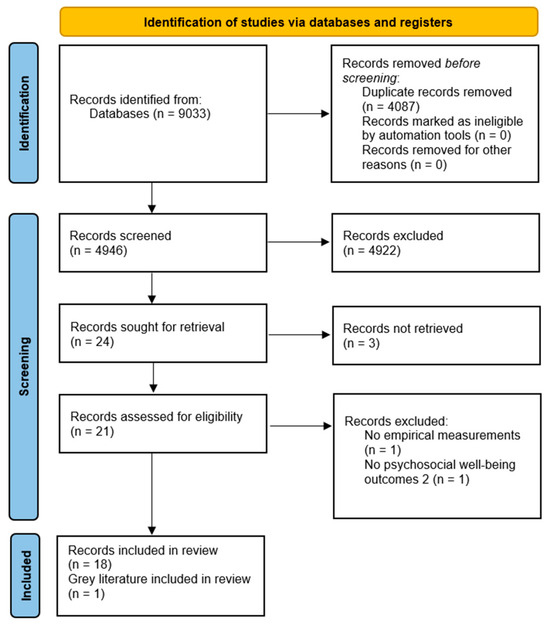
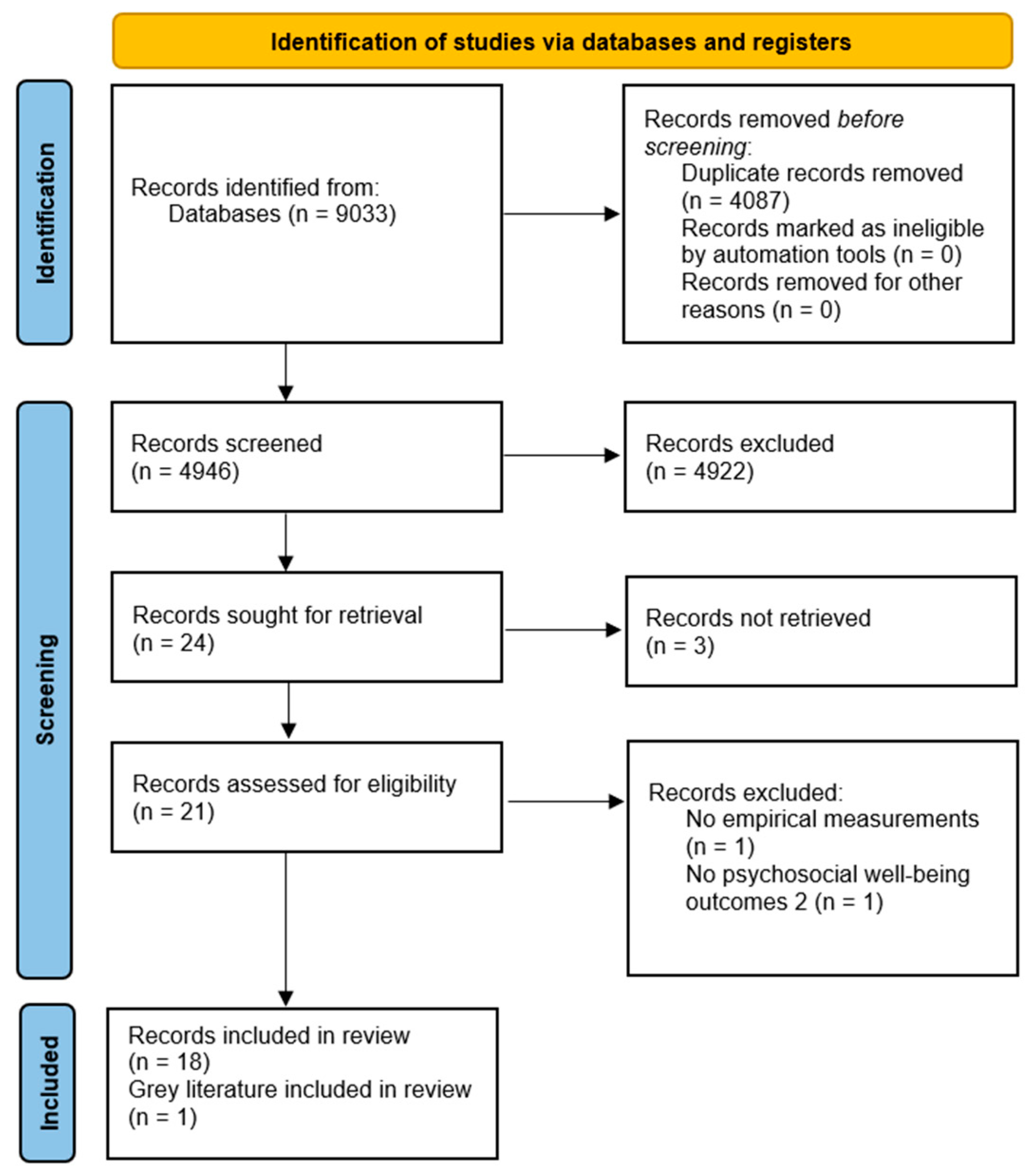
The study selection process, including the number of studies identified, screened, assessed for eligibility, and included in the final analysis, is illustrated in the PRISMA flow diagram (Figure 1).
Figure 1.
PRISMA flow diagram for identification, screening, eligibility, and inclusion.
2.6. Data Extraction
Data were extracted using a standardized form, including study characteristics (e.g., author, year, and study design), participant characteristics, stigma measurement tools and definitions, outcomes related to caregiver psychosocial well-being, and key findings (Table 1).
2.7. Data Synthesis and Analysis
The findings were synthesized with a narrative approach, guided by Bronfenbrenner’s ecological system theory. Bronfenbrenner’s model proposes four interconnected systems influencing human development and behavior: microsystem, mesosystem, exosystem, and macrosystem [45]. This framework was applied to classify and analyze different types of stigma identified in the literature.
The synthesis focused on mapping the conceptualizations of stigma on these ecological levels, providing a structured understanding of caregiver affiliate stigma in relation to NDDs. This theoretical framework was chosen due to its capacity to elucidate the multiple levels at which stigma operated, ranging from individual experiences to broader societal attitudes. This approach allowed for a more nuanced understanding of how different forms of stigma interact and influence caregiver well-being, potentially informing more comprehensive and effective interventions.
This scoping review was registered to the Open Science Framework (OSF) on 27 August 2024, with the following DOI: https://doi.org/10.17605/OSF.IO/MD5JE.
Table 1.
Characteristics of included studies on caregiver affiliate stigma in relation to neurodegenerative disorders.
3. Results
As illustrated in the PRISMA flow diagram (Figure 1), the initial database search resulted in 9033 articles across the five databases (Scopus: 3490; PubMed: 3098; Embase: 1182; CINAHL: 643; PsycInfo: 620). After removing duplicated and screening titles and abstracts, 24 full-text articles were assessed for eligibility. Of these, 19 met the inclusion criteria and were included in the final analysis.
3.1. Study Characteristics
The included 19 studies represented a diverse geographical distribution, encompassing multiple countries (Taiwan (n = 4), Israel (n = 3), United States (n = 3), and Iran (n = 2)) and one study each from Malaysia, South Korea, Colombia, the Netherlands, Belgium, Romania, and the United Kingdom. This geographical diversity provides a broad perspective on caregiver-affiliate stigma across different cultural contexts.
Study designs were predominantly cross-sectional (n = 17), with a minority of longitudinal studies (n = 2). Sample sizes varied considerably, ranging from 51 to 664 participants, with a median sample size of 185.
The majority of articles (n = 16) focused on caregivers of people with various types of dementia. A smaller number of studies specifically examined caregivers of those with AD only (n = 2) and one study included caregivers of patients with ALS or PMA. Notably, despite Parkinson’s disease being the second most common NDD [8], none of the 19 studies included in this review specifically focused on caregivers of individuals with Parkinson’s disease. This represents a significant gap in the current literature on caregiver affiliate stigma in relation to NDDs.
3.2. Impacts of Caregiver Affiliate Stigma on Well-Being and Determinants
Table 2 presents a summary of the key findings from the included research, demonstrating the varied effects of stigma on the caregiver’s well-being. Consistently across the studies, higher levels of caregiver-affiliate stigma were associated with poorer outcomes for caregivers, specifically:
Table 2.
Key findings from studies on caregiver affiliate stigma in relation to neurodegenerative disorders.
- Mental health: multiple studies reported significant correlations between affiliate stigma and increased symptoms of depression and anxiety in caregivers [48,49].
- Quality of life: higher levels of stigma were linked to lower QoL scores [51].
- Caregiver burden: studies consistently found a positive association between affiliate stigma and caregiver burden [34,56].
3.3. Factors Influencing Stigma Internalization
The internalization of stigma varied among demographic groups and was influenced by several factors:
- Educational level: Werner and Abojabel [61] found that lower education was associated with higher levels of affiliate stigma.
- Social support: social support emerged as an important protective factor against stigma internalization [61].
- Gender: Van den Bossche and Schoenmakers [58] reported that women experienced greater impacts of affiliate stigma on their mental well-being. However, Su and Chang [56] found that male caregivers experienced higher levels of anxiety and care burden related to affiliate stigma compared to females.
- Relationship to care recipient: Werner et al. [34] reported that adult children experienced lower levels of stigma compared to other caregivers.
- Age and duration of caregiving: Van den Bossche and Schoenmakers [58] found that a longer duration of dementia diagnosis and older caregiver age were associated with higher affiliate stigma.
3.4. Conceptualization and Measurement of Stigma
The analysis revealed varied conceptualizations of stigma related to NDD caregivers. Eleven distinct constructs were identified across the studies: courtesy stigma or stigma by association (n = 15), affiliate stigma (n = 12), family stigma (n = 4), public stigma (n = 4), self-stigma (n = 4), structural stigma (n = 3), perceived stigma (n = 2), caregiver stigma (n = 2), social stigma (n = 1), enacted stigma (n = 1), and felt stigma (n = 1).
Several validated instruments were used to measure these constructs; the ASS (n = 11) was most frequently employed, demonstrating good psychometric properties across different cultural contexts [38,48]. Other commonly used instruments included the BAI (n = 4), CBI, (n = 4), TDW (n = 4), CES-D (n = 3), FS-ADS (n = 3), MMSE (n = 3), ZBI (n = 3), and various versions of the ZBI (n = 6).
3.5. Terminological Inconsistencies in Relation to Stigma Conceptualization
Analysis of the included studies revealed a notable lack of consensus in the terminology used to describe internalized stigma among caregivers of individuals with NDDs. The inconsistency highlights the complex nature of stigma in the caregiving context.
Affiliate stigma, employed by Chang et al. [48], Su and Chang [56], and Hu et al. [51] was frequently used to describe the internalization of public stigma by caregivers. Chen et al. [49] utilized the phrase self-stigma to refer to a similar process of internalizing negative stereotypes, while Sommers Spijkerman et al. [55] used the phrase felt stigma. These concepts appear to overlap with affiliate stigma, though the authors used distinct terminology.
Werner et al. [39] introduced the concept of family stigma, specifically addressing the stigma experienced by family caregivers of individuals with Alzheimer’s disease. This phrase aims to capture the unique dynamics of stigma within the family context of NDD caregiving. Similarly, the phrase caregiver stigma used by Ellin et al. [50], which includes both internalized and perceived stigma experienced by caregivers.
Courtesy stigma and stigma by association are used interchangeably across the included literature. For instance, Bhatt et al. [46] and Brundige [47] both used these phrases to describe stigma directed toward individuals due to their association with a stigmatized person.
Other phrases were used, like public stigma and structural stigma, across studies to describe different aspects of the stigma experience [57,61].
This variability in terminology underscores the need for a more standardized approach to the conceptualization and measuring of caregiver-affiliate stigma in relation to NDDs.
For a comprehensive overview of the terminology variations and conceptualizations of stigma across the reviewed studies, please refer to Table 1.
3.6. Ecological Systems’ Analysis of Stigma
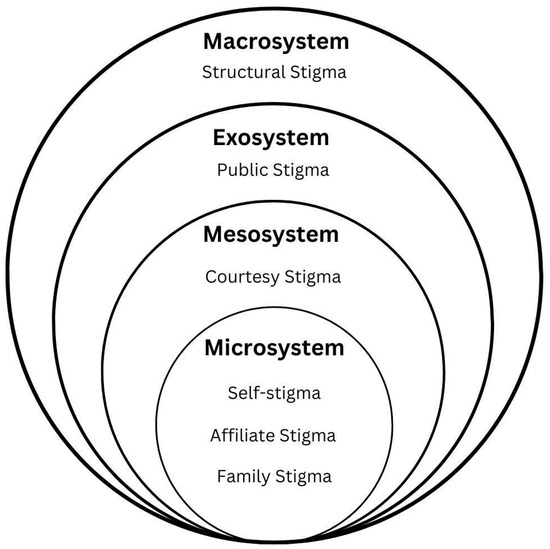
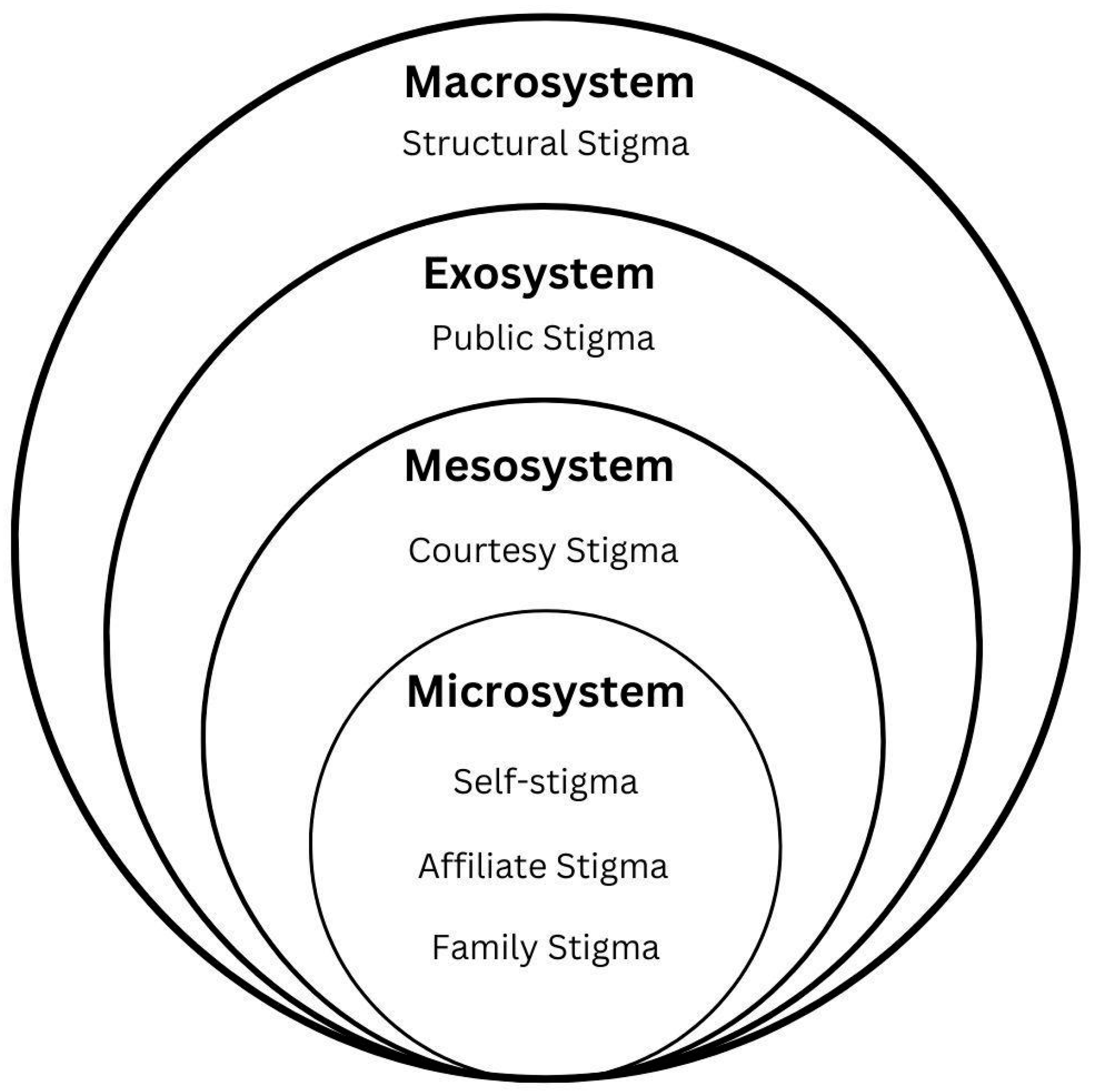
The use of Bronfenbrenner’s ecological system theory [45] for the findings, as shown in Figure 2, reveals how caregiver affiliate stigma operates across multiple social levels.
Figure 2.
Ecological system classification of stigma in relation to neurodegenerative disorders caregiving.
3.6.1. Microsystem
At the innermost level, there are factors that directly impact the self-perception and daily experiences of caregivers. When talking about the internalization of stigma, four types of stigma were identified: self-stigma, affiliate stigma, family stigma, and caregiver stigma. Affiliate stigma, self-stigma, and family stigma were the most prominent concepts in the literature, warranting their inclusion at this level. While initially considered, the phrase caregiver stigma was ultimately excluded due to its ambiguous nature, potentially referring to both the stigma directed toward caregivers and the internalization of such a stigma [50]. This overgeneralization could perpetuate conceptual confusion and hinder a precise analysis.
3.6.2. Mesosystem
The mesosystem refers to the interactions between different microsystems. The impact of the person being stigmatized due to their association with an NDD is reflected in the isolation of other groups by other individuals and/or themselves. This comes from their association with a stigmatized person, thus resulting in the position of courtesy stigma in this section. Werner and Abojabel [61] identified how factors such as family dynamics and social support network influence the internalization of stigma. Having a strong social support network acts as a buffer against the negative effects of stigma.
3.6.3. Exosystem
At this broader level, it is crucial to explore public stigma. Van den Bossche and Schoenmakers [58] revealed that the impact of affiliate stigma varies among demographic groups, with women and the partners of those with dementia feeling more affected. These findings highlight how broader societal attitudes indirectly influence individual experiences of stigma.
3.6.4. Macrosystem
The macrosystem represents cultural attitudes and policies, and therefore the classification of structural stigma at this level. Tudose et al. [57] talked about how societal-level factors contribute to caregiver burden and affect their QoL. Their results showed how cultural norms and healthcare policies shape the overall context in which caregivers experience and cope with stigma.
3.6.5. Interaction across Systems
The classification of stigma types using Bronfenbrenner’s framework becomes useful to understand how stigma permeates broad cultural norms and personal beliefs.
Starting at the macrosystem level, cultural values and societal beliefs about NDDs shape institutional practices and policies, influencing how healthcare systems and social services address the needs of individuals with NDDs and their caregivers. The exosystem serves as a conduit of these broad cultural attitudes into a more localized context. Here, public stigma is observed in community settings, workplaces, and healthcare systems, indirectly affecting caregivers even when they are not directly involved.
The mesosystem acts as a critical intermediary, where family dynamics, social networks, and immediate community interactions amplify the effects of broader stigma. The attitudes previously directed toward an individual with NDDs start to affect the caregivers. Finally, the microsystem level presents the culmination of these influences in the form of the internalization of the stigmatizing attitudes encountered by caregivers at the other levels.
The permeability between these systems is the key to understanding the complex nature of stigma. Attitudes and beliefs do not simply flow from top–down. There is a constant feedback loop, where individuals’ experiences can, over time, influence broader societal views.
3.7. Cultural Variations in Stigma Experiences
Studies conducted in diverse cultural settings revealed both similarities and differences in stigma experiences. For example, Saffari et al. [54] found that spiritual coping strategies played a significant role in mediating the relationship between stigma and caregiver outcomes in an Iranian context, highlighting the importance of culturally sensitive approaches to understanding caregiver affiliate stigma. In contrast, Jeong et al. [52] focused on information seeking and efficacy as coping mechanisms when talking about the outcomes for caregivers with low affiliate stigma. Taiwan presented a unique gender dynamic [56], reporting higher levels of anxiety and care burden related to affiliate stigma among male caregivers, differing from Malaysia where Ellin et al. [50] associated the female gender with higher affiliate stigma. The Netherlands offered a broader perspective, with Sommers-Spijkerman et al. [55] reporting on both the enacted and felt stigma experienced by patients and caregivers alike, a distinction not prominently featured in studies from other countries. These findings illustrate the importance of considering the cultural context when understanding and addressing caregiver affiliate stigma in relation to NDDs.
4. Discussion
This scoping review synthesized the current knowledge on caregiver affiliate stigma in the context of neurodevelopmental disorders (NDDs), providing valuable insights into its conceptualization, measurement, and impact on caregiver well-being. The analysis of 19 studies revealed significant variability in the terminology and measurement of stigma, underscoring the complex and multifaceted nature of this phenomenon.
Higher levels of caregiver affiliate stigma were consistently associated with poorer outcomes for caregivers, including increased depression, anxiety, lower quality of life, and higher caregiver burden. These findings align with the broader literature on stigma in healthcare, such as mental health caregiving [62], while also revealing the unique challenges faced by NDD caregivers. For instance, the work of Werner and AboJabel [61] on Israeli Arab caregivers highlights the importance of considering cultural nuances when addressing stigma. This underscores the need for culturally sensitive and context-specific interventions, rather than a one-size-fits-all approach.
This review identified inconsistencies in the terminology used to describe stigma, with terms like “affiliate stigma,” “self-stigma,” and “family stigma” being used interchangeably. While this reflects the complexity of stigma, it complicates cross-study comparisons and meta-analyses. To address this issue, we recommend adopting “caregiver affiliate stigma” as a standardized phrase in future research. This would enhance conceptual clarity, improve comparisons across studies, and provide a more unified approach to understanding and addressing the stigma experienced by caregivers.
The application of Bronfenbrenner’s ecological systems theory provides a useful framework for understanding how stigma operates at different societal levels, offering a pathway for targeted interventions:
- Macrosystem (Cultural Attitudes and Policies): At this level, broader cultural beliefs and systemic policies shape the societal context in which caregivers experience stigma. Interventions at this level might focus on national or regional public awareness campaigns aimed at reducing the stigma associated with caregiving. Policy reforms could include advocacy for caregivers’ mental health services and legal protection that recognizes and mitigate the effects of stigma. Public health campaigns should aim to shift negative perceptions of caregivers and challenge the societal norms that reinforce stigma.
- Exosystem (Community and Healthcare Settings): The exosystem level involves the indirect impacts of stigma within community and healthcare environments. Interventions at this level could focus on creating stigma-reduction programs within healthcare settings, such as training for healthcare professionals to recognize and address stigma-related issues in relation to caregiving. Community-level interventions, including peer support groups and caregiver-focused outreach programs, could help build supportive networks, reducing the isolation that often exacerbates stigma.
- Mesosystem (Family Dynamics and Social Networks): The mesosystem represents the intersection of family and social networks, where family dynamics and social relationships may either buffer or exacerbate the effects of stigma. Interventions here could focus on family-based therapies and support groups that help caregivers and family members navigate stigmas together. Strengthening social networks through community engagement, providing respite, and encouraging open communication within families could alleviate caregiver burden and reduce stigma.
- Microsystem (Individual Experiences and Internalized Stigma): At the microsystem level, the focus is on the individual caregiver’s internalized stigma and daily experiences. Interventions might include individual coping strategies, psychological counseling, and self-empowerment programs. Cognitive behavioral therapy (CBT) and mindfulness training could help caregivers challenge negative self-perceptions and develop resilience against internalized stigma. Self-advocacy training could also empower caregivers to assert their needs in both family and community contexts.
This multilevel approach not only provides a comprehensive framework for understanding how stigma impacts caregivers, but also informs targeted interventions that address stigma in every level of society.
While this review touched on cultural variations in stigma experiences, future research should deepen the exploration of how these differences shape caregivers’ perceptions and coping strategies. Different cultural contexts may require distinct approaches to interventions. For instance, in collectivist cultures, where family reputation is central, family stigma may be more pronounced, necessitating interventions that focus on family dynamics. In contrast, individualistic societies may require interventions targeting self-stigma and personal coping mechanisms. Developing culturally sensitive tools and interventions are critical to effectively support caregivers from diverse backgrounds.
Several limitations of this review should be noted. First, the predominance of cross-sectional studies limits our ability to understand the causal relationships and long-term dynamics of stigma experiences. Longitudinal studies are crucial for capturing how stigma evolves over time and its ongoing impact on caregiver well-being. The focus on English language publications may also have excluded valuable insights from studies published in other languages, limiting the cultural diversity of the findings. Future research should include a broader range of languages to enhance cultural inclusivity.
Additionally, despite Parkinson’s disease being the second most common NDD [8], none of the reviewed studies specifically addressed caregivers of individuals with Parkinson’s disease. This represents a significant gap in the literature, given the unique challenges faced by these caregivers. Future research should focus on this population to provide a more complete understanding of caregiver affiliate stigma in relation to NDDs.
Furthermore, while the application of Bronfenbrenner’s framework offers a robust conceptual structure, future studies should expand on this by investigating how stigma intersects with other social determinants of health, such as socioeconomic status, race, and gender. Research into intersectionality could provide a more nuanced understanding of how different forms of disadvantages compound the effects of caregiver affiliate stigma.
The findings of this review have important implications for both practice and policy. Healthcare providers working with NDD patients and their caregivers should receive training to identify and address the stigma caregivers face. This could involve creating educational modules within healthcare training programs focused on recognizing stigma and developing supportive interventions for caregivers. Providers should also be equipped with resources to guide caregivers toward mental health support services.
From a policy perspective, the review highlights the need for comprehensive strategies that extend beyond the medical management of NDDs to include the social and psychological challenges caregivers face. Policies should address caregiver well-being by funding mental health support, caregiver training, and community outreach programs. Legislative initiatives that offer financial assistance, legal protections, and healthcare benefits to caregivers would also help reduce the stigma by validating their roles and experiences.
5. Conclusions
In summary, this scoping review underscores the significant impact of caregiver affiliate stigma on well-being and highlights the need for standardized terminology, culturally sensitive approaches, and multilevel interventions. By addressing stigma across Bronfenbrenner’s ecological model, researchers, policymakers, and practitioners can work together to improve caregiver support systems. These efforts will not only enhance caregiver well-being, but also improve the quality of care for individuals with NDDs, ultimately contributing to better health outcomes for both caregivers and care recipients.
Supplementary Materials
The following supporting information can be downloaded at: https://www.mdpi.com/article/10.3390/healthcare12191957/s1, Table S1: search strings.
Author Contributions
Conceptualization, N.B.C. and S.B.; methodology, N.B.C., M.G. and S.B.; software, N.B.C.; validation, M.G.; formal analysis, N.B.C. and S.B.; investigation, N.B.C.; resources, M.G.; data curation, N.B.C.; writing—original draft preparation, N.B.C.; writing—review and editing, M.G. and S.B.; visualization, N.B.C.; supervision, S.B.; project administration, S.B. All authors have read and agreed to the published version of the manuscript.
Funding
This research received no external funding.
Institutional Review Board Statement
Not applicable for a scoping review.
Informed Consent Statement
Not applicable.
Data Availability Statement
Data sharing is not applicable to this article.
Conflicts of Interest
The authors declare no conflicts of interest.
References
- World Population Prospects 2022: Summary of Results | Population Division. Available online: https://www.un.org/development/desa/pd/content/World-Population-Prospects-2022 (accessed on 21 February 2024).
- Sotoudeh, H.; Sarrami, A.H.; Wang, J.X.; Saadatpour, Z.; Razaei, A.; Gaddamanugu, S.; Choudhary, G.; Shafaat, O.; Singhal, A. Susceptibility-Weighted Imaging in Neurodegenerative Disorders: A Review. J. Neuroimaging 2021, 31, 459–470. [Google Scholar] [CrossRef] [Scilit] [PubMed]
- Zaib, S.; Javed, H.; Khan, I.; Jaber, F.; Sohail, A.; Zaib, Z.; Mehboob, T.; Tabassam, N.; Ogaly, H.A. Neurodegenerative Diseases: Their onset, Epidemiology, causes and treatment. ChemistrySelect 2023, 8, e202300225. [Google Scholar] [CrossRef] [Scilit]
- Lamptey, R.N.L.; Chaulagain, B.; Trivedi, R.; Gothwal, A.; Layek, B.; Singh, J. A Review of the Common Neurodegenerative Disorders: Current Therapeutic Approaches and the Potential Role of Nanotherapeutics. Int. J. Mol. Sci. 2022, 23, 1851. [Google Scholar] [CrossRef] [Scilit]
- World Health Organization: WHO and World Health Organization: WHO, “Dementia”. Available online: https://www.who.int/news-room/fact-sheets/detail/dementia (accessed on 15 March 2023).
- Selkoe, D.J. Alzheimer’s disease: Genes, proteins, and therapy. Physiol. Rev. 2001, 81, 741–766. [Google Scholar] [CrossRef] [Scilit] [PubMed]
- Hardy, J.; Selkoe, D.J. The amyloid hypothesis of Alzheimer’s disease: Progress and problems on the road to therapeutics. Science 2002, 297, 353–356. [Google Scholar] [CrossRef] [Scilit]
- Wirdefeldt, K.; Adami, H.-O.; Cole, P.; Trichopoulos, D.; Mandel, J. Epidemiology and etiology of Parkinson’s disease: A review of the evidence. Eur. J. Epidemiol. 2011, 26, 1. [Google Scholar] [CrossRef] [Scilit]
- Elbaz, A.; Carcaillon, L.; Kab, S.; Moisan, F. Epidemiology of Parkinson’s disease. Rev. Neurol. 2016, 172, 14–26. [Google Scholar] [CrossRef] [Scilit] [PubMed]
- Logroscino, G.; Urso, D.; Savica, R. Descriptive Epidemiology of neurodegenerative Diseases: What are the critical questions? Neuroepidemiology 2022, 56, 309–318. [Google Scholar] [CrossRef] [Scilit] [PubMed]
- Morris, J. Amyotrophic Lateral Sclerosis (ALS) and Related Motor Neuron Diseases: An Overview. Neurodiagnostic J. 2015, 55, 180–194. [Google Scholar] [CrossRef] [Scilit]
- Giri, P.M.; Banerjee, A.; Ghosal, A.; Layek, B. Neuroinflammation in Neurodegenerative Disorders: Current knowledge and therapeutic implications. Int. J. Mol. Sci. 2024, 25, 3995. [Google Scholar] [CrossRef] [Scilit]
- Morelli, N.; Barello, S.; Mayan, M.; Graffigna, G. Supporting family caregiver engagement in the care of old persons living in hard to reach communities: A scoping review. Health Soc. Care Community 2019, 27, 1363–1374. [Google Scholar] [CrossRef] [Scilit] [PubMed]
- Barello, S.; Castiglioni, C.; Bonanomi, A.; Graffigna, G. The Caregiving Health Engagement Scale (CHE-s): Development and initial validation of a new questionnaire for measuring family caregiver engagement in healthcare. BMC Public Health 2019, 19, 1562. [Google Scholar] [CrossRef] [Scilit] [PubMed]
- Agnello, L.; Ciaccio, M. Neurodegenerative diseases: From molecular basis to therapy. Int. J. Mol. Sci. 2022, 23, 12854. [Google Scholar] [CrossRef] [Scilit] [PubMed]
- Schulz, R.; Sherwood, P.R. Physical and Mental Health Effects of Family Caregiving. Am. J. Nurs. 2008, 108, 23–27. [Google Scholar] [CrossRef] [Scilit]
- Aschieri, F.; Barello, S.; Durosini, I. ‘Invisible Voices’: A Critical Incident Study of Family Caregivers’ Experience of Nursing Homes After Their Elder Relative’s Death. J. Nurs. Scholarsh. Off. Publ. Sigma Theta Tau Int. Honor Soc. Nurs. 2021, 53, 65–74. [Google Scholar] [CrossRef] [Scilit]
- Huang, H.-L.; Liao, Y.-T.; Kung, P.-C.; Shyu, Y.-I.L.; Hsu, W.-C.; Hsu, J.-L. Caregiving management needs and predictors for family caregivers of persons with dementia: A cross-sectional study. BMC Geriatr. 2024, 24, 724. [Google Scholar] [CrossRef] [Scilit]
- Roland, K.P.; Chappell, N.L. Caregiver Experiences Across Three Neurodegenerative Diseases: Alzheimer’s, Parkinson’s, and Parkinson’s with Dementia. J. Aging Health 2019, 31, 256–279. [Google Scholar] [CrossRef] [Scilit]
- Kim, D. Relationships between Caregiving Stress, Depression, and Self-Esteem in Family Caregivers of Adults with a Disability. Occup. Ther. Int. 2017, 2017, e1686143. [Google Scholar] [CrossRef] [Scilit]
- Lee, Y.; Chiou, Y.J.; Hung, C.F.; Chang, Y.Y.; Chen, Y.F.; Lin, T.K.; Wang, L.J. Prevalence and Associated Factors of Depressive Disorder in Caregivers of Individuals with Parkinson Disease. J. Geriatr. Psychiatry Neurol. 2021, 34, 418–425. [Google Scholar] [CrossRef] [Scilit]
- Zanetti, O.; Frisoni, G.B.; Bianchetti, A.; Tamanza, G.; Cigoli, V.; Trabucchi, M. Depressive symptoms of Alzheimer caregivers are mainly due to personal rather than patient factors. Int. J. Geriatr. Psychiatry 1998, 13, 358–367. [Google Scholar] [CrossRef] [Scilit]
- Hooker, K.; Bowman, S.R.; Coehlo, D.P.; Lim, S.R.; Kaye, J.; Guariglia, R.; Li, F. Behavioral Change in Persons with Dementia: Relationships with Mental and Physical Health of Caregivers. J. Gerontol. Ser. B 2002, 57, P453–P460. [Google Scholar] [CrossRef] [Scilit] [PubMed]
- Tarlow, B.J.; Wisniewski, S.R.; Belle, S.H.; Rubert, M.; Ory, M.G.; Gallagher-Thompson, D. Positive Aspects of Caregiving: Contributions of the REACH Project to the Development of New Measures for Alzheimer’s Caregiving. Res. Aging 2004, 26, 429–453. [Google Scholar] [CrossRef] [Scilit]
- Guida, E.; Barello, S.; Corsaro, A.; Galizi, M.C.; Giuffrida, F.; Graffigna, G.; Damiani, G. An Italian pilot study of a psycho-social intervention to support family caregivers’ engagement in taking care of patients with complex care needs: The Engage-in-Caring project. BMC Health Serv. Res. 2019, 19, 541. [Google Scholar] [CrossRef] [Scilit]
- Graffigna, G.; Gheduzzi, E.; Morelli, N.; Barello, S.; Corbo, M.; Ginex, V.; Ferrari, R.; Lascioli, A.; Feriti, C.; Masella, C. Place4Carers: A multi-method participatory study to co-design, piloting, and transferring a novel psycho-social service for engaging family caregivers in remote rural settings. BMC Health Serv. Res. 2021, 21, 591. [Google Scholar] [CrossRef] [Scilit]
- Felce, D.; Perry, J. Quality of life: Its definition and measurement. Res. Dev. Disabil. 1995, 16, 51–74. [Google Scholar] [CrossRef] [Scilit]
- Martinez-Martin, P.; Benito-Leon, J.; Alonso, F.; Catalan, M.J.; Pondal, M.; Zamarbide, I.; Tobias, A.; De Pedro, J. Quality of life of caregivers in Parkinson’s disease. Qual. Life Res. Int. J. Qual. Life Asp. Treat. Care Rehabil. 2005, 14, 463–472. [Google Scholar] [CrossRef] [Scilit]
- Andersen, M.M.; Varga, S.; Folker, A.P. On the definition of stigma. J. Eval. Clin. Pract. 2022, 28, 847–853. [Google Scholar] [CrossRef] [Scilit]
- Mak, W.W.S.; Cheung, R.Y.M. Affiliate Stigma Among Caregivers of People with Intellectual Disability or Mental Illness. J. Appl. Res. Intellect. Disabil. 2008, 21, 532–545. [Google Scholar] [CrossRef] [Scilit]
- Zhang, Y.; Subramaniam, M.; Lee, S.P.; Abdin, E.; Sagayadevan, V.; Jeyagurunathan, A.; Chang, S.; Shafie, S.B.; Rahman, R.F.; Vaingankar, J.A.; et al. Affiliate stigma and its association with quality of life among caregivers of relatives with mental illness in Singapore. Psychiatry Res. 2018, 265, 55–61. [Google Scholar] [CrossRef] [Scilit]
- Corrigan, P.W.; Watson, A.C. Understanding the impact of stigma on people with mental illness. World Psychiatry 2002, 1, 16–20. [Google Scholar]
- Goffman, E. Stigma: Notes on the Management of Spoiled Identity; Simon and Schuster: New York, NY, USA, 2009. [Google Scholar]
- Werner, P.; Mittelman, M.S.; Goldstein, D.; Heinik, J. Family stigma and caregiver burden in Alzheimer’s disease. Gerontologist 2012, 52, 89–97. [Google Scholar] [CrossRef] [Scilit] [PubMed]
- Novak, M.; Guest, C. Caregiver Burden Inventory. 11 May 2015. Available online: https://psycnet.apa.org/doiLanding?doi=10.1037%2Ft38871-000 (accessed on 6 June 2024).
- Zarit, S.H.; Reever, K.E.; Bach-Peterson, J. Relatives of the impaired elderly: Correlates of feelings of burden. Gerontologist 1980, 20, 649–655. [Google Scholar] [CrossRef] [Scilit] [PubMed]
- Chang, C.-C.; Su, J.-A.; Tsai, C.-S.; Yen, C.-F.; Liu, J.-H.; Lin, C.-Y. Rasch analysis suggested three unidimensional domains for Affiliate Stigma Scale: Additional psychometric evaluation. J. Clin. Epidemiol. 2015, 68, 674–683. [Google Scholar] [CrossRef] [Scilit]
- Saffari, M.; Lin, C.-Y.; Koenig, H.G.; O’Garo, K.-G.N.; Broström, A.; Pakpour, A.H. A Persian version of the Affiliate Stigma Scale in caregivers of people with dementia. Health Promot. Perspect. 2019, 9, 31–39. [Google Scholar] [CrossRef] [Scilit]
- Werner, P.; Goldstein, D.; Heinik, J. Development and validity of the Family Stigma in Alzheimer’s disease Scale (FS-ADS). Alzheimer Dis. Assoc. Disord. 2011, 25, 42–48. [Google Scholar] [CrossRef] [Scilit]
- Dua, T.; Seeher, K.M.; Sivananthan, S.; Chowdhary, N.; Pot, A.M.; Saxena, S. [FTS5–03–01]: World Health Organization’s Global Action Plan on the Public Health Response to Dementia 2017–2025. Alzheimer’s Dement. 2017, 13, P1450–P1451. [Google Scholar] [CrossRef] [Scilit]
- Milne, A.; Guss, R.; Russ, A. Psycho-educational support for relatives of people with a recent diagnosis of mild to moderate dementia: An evaluation of a ‘Course for Carers’. Dementia 2014, 13, 768–787. [Google Scholar] [CrossRef] [Scilit] [PubMed]
- Arksey, H.; O’Malley, L. Scoping studies: Towards a methodological framework. Int. J. Soc. Res. Methodol. 2005, 8, 19–32. [Google Scholar] [CrossRef] [Scilit]
- Peters, M.D.J.; Godfrey, C.; McInerney, P.; Khalil, H.; Larsen, P.; Marnie, C.; Pollock, D.; Tricco, A.C.; Munn, Z. Best practice guidance and reporting items for the development of scoping review protocols. JBI Evid. Synth. 2022, 20, 953–968. [Google Scholar] [CrossRef] [Scilit]
- Tricco, A.C.; Lillie, E.; Zarin, W.; O’Brien, K.K.; Colquhoun, H.; Levac, D.; Moher, D.; Peters, M.D.; Horsley, T.; Weeks, L.; et al. PRISMA Extension for Scoping Reviews (PRISMA-ScR): Checklist and Explanation. Ann. Intern. Med. 2018, 169, 467–473. [Google Scholar] [CrossRef] [Scilit]
- Bronfenbrenner, U. The Ecology of Human Development: Experiments by Nature and Design; Harvard University Press: Cambridge, MA, USA, 1979. [Google Scholar] [CrossRef] [Scilit]
- Bhatt, J.; Scior, K.; Stoner, C.R.; Moniz-Cook, E.; Charlesworth, G. Stigma among UK family carers of people living with dementia. BJPsych Open 2022, 8, e179. [Google Scholar] [CrossRef] [Scilit] [PubMed]
- High Gender Role Conflict and Stigma by Association in Husband/Male Life Partner Caregivers of Women with Alzheimer’s Disease: Effects on Vulnerability to Self-Isolation—ProQuest. Available online: https://www.proquest.com/openview/e7becd88f8076e6aef26863ed60baa7f/1?pq-origsite=gscholar&cbl=18750&diss=y (accessed on 8 August 2024).
- Chang, C.-C.; Su, J.-A.; Lin, C.-Y. Using the Affiliate Stigma Scale with caregivers of people with dementia: Psychometric evaluation. Alzheimers Res. Ther. 2016, 8, 45. [Google Scholar] [CrossRef] [Scilit] [PubMed]
- Chen, Y.-J.; Su, J.-A.; Chen, J.-S.; Liu, C.-H.; Griffiths, M.D.; Tsai, H.C.; Chang, C.-C.; Lin, C.-Y. Examining the association between neuropsychiatric symptoms among people with dementia and caregiver mental health: Are caregiver burden and affiliate stigma mediators? BMC Geriatr. 2023, 23, 27. [Google Scholar] [CrossRef] [Scilit]
- Ellin, M.R.; Ramoo, V.; Yahaya, N.A.; Pin, T.M. Association between Affiliate Stigma and Psychological Well-being among Caregivers of Patients with Dementia: A Quantitative Report. Malays. J. Nurs. MJN 2023, 14, 132–141. [Google Scholar] [CrossRef] [Scilit]
- Hu, Y.-L.; Chang, C.-C.; Lee, C.-H.; Liu, C.-H.; Chen, Y.-J.; Su, J.-A.; Lin, C.-Y.; Griffiths, M.D. Associations between Affiliate Stigma and Quality of Life among Caregivers of Individuals with Dementia: Mediated Roles of Caregiving Burden and Psychological Distress. Asian J. Soc. Health Behav. 2023, 6, 64. [Google Scholar] [CrossRef] [Scilit]
- Jeong, J.-S.; Kim, S.Y.; Kim, J.-N. Ashamed Caregivers: Self-Stigma, Information, and Coping among Dementia Patient Families. J. Health Commun. 2020, 25, 870–878. [Google Scholar] [CrossRef] [Scilit]
- Liu, M.F.; Buckwalter, K.; Burgener, Y. Perceived Stigma in Caregivers of Persons with Dementia and its Impact on Depressive Symptoms. J. Depress. Anxiety 2014, 3, 1–7. [Google Scholar] [CrossRef]
- Saffari, M.; Koenig, H.G.; O’Garo, K.N.; Pakpour, A.H. Mediating effect of spiritual coping strategies and family stigma stress on caregiving burden and mental health in caregivers of persons with dementia. Dementia 2018, 1471301218798082. [Google Scholar] [CrossRef] [Scilit]
- Sommers-Spijkerman, M.; Kavanaugh, M.S.; Reenen, E.K.-V.; Zwarts-Engelbert, A.; Visser-Meily, J.M.A.; Beelen, A. Stigma experienced by ALS/PMA patients and their caregivers: A mixed-methods study. Amyotroph. Lateral Scler. Front. Degener. 2023, 24, 327–338. [Google Scholar] [CrossRef] [Scilit]
- Su, J.-A.; Chang, C.-C. Association Between Family Caregiver Burden and Affiliate Stigma in the Families of People with Dementia. Int. J. Environ. Res. Public Health 2020, 17, 2772. [Google Scholar] [CrossRef] [Scilit]
- Tudose, C.; Sfetcu, R.; Dobre, C.; Moglan, M. Structural Stigma, Affiliated Stigma and Consequences of Caregiving for the Family Members of Inpatients with Dementia: A Comparative Approach. Rev. Cercet. Interv. Soc. 2017, 57, 148–158. [Google Scholar]
- Van den Bossche, P.; Schoenmakers, B. The Impact of Dementia’s Affiliate Stigma on the Mental Health of Relatives: A Cross Section Survey. Front. Psychol. 2022, 12, 789105. [Google Scholar] [CrossRef] [Scilit]
- Velilla, L.; Acosta-Baena, N.; Allen, I.; Lopera, F.; Kramer, J. Analysis of family stigma and socioeconomic factors impact among caregivers of patients with early- and late-onset Alzheimer’s disease and frontotemporal dementia. Sci. Rep. 2022, 12, 12663. [Google Scholar] [CrossRef] [Scilit] [PubMed]
- de Mamani, A.W.; Weintraub, M.J.; Maura, J.; de Andino, A.M.; Brown, C.A. Stigma, Expressed Emotion, and Quality of Life in Caregivers of Individuals with Dementia. Fam. Process 2018, 57, 694–706. [Google Scholar] [CrossRef] [Scilit] [PubMed]
- Werner, P.; AboJabel, H. Who internalizes courtesy stigma and how? A study among Israeli Arab family caregivers of persons with dementia. Aging Ment. Health 2020, 24, 1153–1160. [Google Scholar] [CrossRef] [Scilit]
- Corrigan, P.W.; Watson, A.C.; Barr, L. The Self–Stigma of Mental Illness: Implications for Self–Esteem and Self–Efficacy. J. Soc. Clin. Psychol. 2006, 25, 875–884. [Google Scholar] [CrossRef] [Scilit]

Disclaimer/Publisher’s Note: The statements, opinions and data contained in all publications are solely those of the individual author(s) and contributor(s) and not of MDPI and/or the editor(s). MDPI and/or the editor(s) disclaim responsibility for any injury to people or property resulting from any ideas, methods, instructions or products referred to in the content. |
© 2024 by the authors. Licensee MDPI, Basel, Switzerland. This article is an open access article distributed under the terms and conditions of the Creative Commons Attribution (CC BY) license (https://creativecommons.org/licenses/by/4.0/).