


Highlights
What are the main findings?
- Airports are formalized as cognitive digital twins with explicit perception, reasoning, and governance layers.
- A mathematical framework is introduced to model cognitive states, transitions, and governance constraints.
- Quantitative indices for cognitive readiness, governance integrity, and ethical alignment are defined.
- Enables analytical assessment of airport cognitive maturity beyond traditional digitalization metrics.
- Supports transparent and ethically governed AI-driven decision-making in aviation ecosystems.
- Provides a transferable cognitive modeling approach for other complex socio-technical systems.
Abstract
Airport digital transformation is commonly approached through technological integration and data-driven optimization, yet such perspectives provide limited insight into system-level reasoning and governance. This paper introduces the cognitive airport paradigm (CAP) as a mathematically grounded framework that models the airport as a domain-specific cognitive digital twin within a complex aviation ecosystem. Methodologically, the study follows a conceptual–analytical and design-science research approach, combining system analysis, conceptual modeling, ontology engineering, and formal mathematical representation of cognitive transitions and governance constraints. CAP represents airport cognition as an explicit state space characterized by cognitive maturity, governance integrity, and semantic stability. Analytical reasoning, adaptive learning, and orchestration mechanisms are formalized through instrument dominance profiles and cognitive performance functionals, enabling analytical comparison of airport configurations and identification of cognitive regimes. The results include (i) a formalization of airports as cognitive digital twins with measurable cognitive and governance properties; (ii) quantitative indices such as the cognitive readiness index, governance integrity index, and ethical alignment coefficient supporting structured evaluation of airport cognitive maturity; and (iii) illustrative expert-based parameterizations and a geometric interpretation in a cognitive simplex demonstrating that governance-oriented orchestration stabilizes airport cognition under increasing system complexity. Airport development is interpreted as continuous cognitive evolution rather than discrete stages of digitalization. The paper further proposes a cognitive roadmap for guiding airport evolution through structured cognitive rebalancing. The framework contributes to the theoretical foundations of cognitive digital twins and is transferable to other safety-critical and institutionally governed socio-technical systems.
Keywords:
cognitive digital twin; smart airport; cognitive airport; cognitive governance; digital transformation; ontology; intelligent infrastructure; aviation ecosystem; digital twin MSC:
93A15
1. Introduction
1.1. Background and Motivation
The increasing complexity of modern aviation ecosystems has fundamentally transformed the role of airports from isolated infrastructure facilities into highly interconnected socio-technical systems. Contemporary airports operate at the intersection of air traffic management, ground handling, security, energy systems, logistics, regulatory compliance, and human–machine interaction. This growing interdependence exposes fundamental limitations of traditional airport management approaches that rely primarily on procedural control, static rules, and localized optimization.
Over the past decade, airport transformation initiatives have been predominantly framed through the lens of digitalization. Digital platforms, sensor networks, automation systems, and data-driven decision support tools have significantly improved operational efficiency, situational awareness, and predictive capabilities. However, despite their technological sophistication, most digital airport implementations remain control-oriented and reactive, focusing on data acquisition and optimization rather than on explicit modeling of reasoning, learning, and governance processes.
As a result, cognition in airport systems is typically implicit: decision-making logic is embedded in software modules, human expertise, or machine learning components without a unified formal representation. This implicit treatment of cognition limits transparency, explainability, and systematic assessment of decision quality, particularly in safety-critical and ethically constrained environments. Moreover, purely digital approaches struggle to support adaptive governance, cross-domain coordination, and long-term strategic reasoning under uncertainty.
These limitations motivate a paradigm shift from digitalization-centric interpretations toward cognition-centered system modeling. In this context, in the paper, the cognitive airport paradigm (CAP) is introduced to conceptualize the airport as a cognitive system, in which perception, reasoning, learning, and governance are treated as explicit, analyzable, and evolvable system properties.
Within the CAP, the airport is interpreted as a domain-specific cognitive digital twin embedded in a broader aviation ecosystem. This interpretation enables the integration of structural, functional, and semantic representations into a unified cognitive model, where data are transformed into situational awareness, reasoning outcomes, and governed actions through well-defined cognitive operators. Such a representation supports not only operational decision-making but also reflective assessment of cognitive maturity, governance integrity, and ethical alignment.
The need for a mathematically grounded cognitive framework is particularly acute in aviation, where safety, resilience, and accountability impose strict constraints on autonomous and semi-autonomous decision-making. As airports increasingly rely on AI-driven analytics, distributed control systems, and human–machine collaboration, the absence of formal cognitive models becomes a critical barrier to scalable and trustworthy deployment. CAP addresses this gap by providing a foundation for modeling cognitive processes in a structured and verifiable manner, enabling stability analysis, convergence assessment, and governance validation.
In this study, the cognitive airport paradigm serves as the conceptual basis for developing a mathematical framework that formalizes airports as cognitive digital twins. By shifting the analytical focus from digital infrastructure to cognitive system behavior, the proposed approach aims to support the evolution of airports toward cognitively governed aviation ecosystems, capable of adaptive decision-making while preserving transparency, consistency, and ethical control.
The digital airport philosophy is used in this study as a broad strategic worldview that frames airport digital transformation as a long-term shift in governance, ecosystem coordination, and data-centric operational culture. In contrast, the cognitive airport paradigm is introduced as the cognitive formalization of this philosophy, providing a structured conceptual–analytical framework that models the airport as a measurable cognitive system. While DAP primarily describes the direction and principles of transformation (what digital transformation should achieve at the ecosystem level), CAP specifies how this transformation can be represented and evaluated by introducing explicit cognitive constructs such as perception, reasoning, learning, orchestration, and governance integrity as formal system properties. Thus, CAP does not replace DAP; rather, it operationalizes and extends it by enabling systematic assessment of cognitive maturity, semantic stability, and governed decision intelligence in airport ecosystems.
1.2. Related Works and State of the Art
The related work was identified through a structured search in Scopus, Web of Science, IEEE Xplore, ACM Digital Library, ScienceDirect, SpringerLink, MDPI, and Google Scholar. Search queries combined keywords on airport digital transformation and governance, airport operations, and digital twin. The final set informed the synthesis in Section 1.2 and the research gaps in Section 1.3.
The evolution of conventional airports into smart airports is driven primarily by the Fourth industrial revolution [1], focusing on integrating modern technologies to enhance efficiency, reduce costs, accommodate increasing demands, and improve passenger experience and security [2]. Innovation is crucial for continuous advancement in the aviation sector [2]. The smart airport is conceptually identified as a subsystem of the smart city, characterized by interconnected aviation and urban systems that share information to optimize operations and improve customer satisfaction [3].
A systematic review covering airport innovation research from 2000 to 2019 found that scholarly attention primarily centered on products/services (object innovation) and using information communication technology (ICT) [4]. Innovation types include incremental (continuous improvement) [5], radical (crucial changes in input-to-output processes) [5,6], and disruptive (game-changing with a new value proposition) [5,7]. There remains a lack of published research focusing on innovations in airport infrastructure, such as runway pavements and the optimization of airport sites [8,9].
Digital maturity relies on the adoption of advanced technologies such as artificial intelligence, big data, internet of things (IoT) sensors, and biometrics [10].
AI applications are recognized for enhancing operational efficiency and the overall passenger experience [11]. AI systems enable predictive maintenance (PM) by analyzing historical data to anticipate equipment wear and minimize unexpected downtime, covering essential systems like conveyor belts or aircraft [12,13]. AI can proactively adjust operations and provide personalized recommendations, such as real-time updates on flight status or gate changes [12]. AI-based security measures also contribute to minimizing human error and preventing fraud [14].
Big data analytics (BDA) is considered fundamental for managing core business processes and ensuring effectiveness and growth [15]. Intelligent technologies, including machine learning and BDA, must be gradually integrated to manage the complexity inherent in airport operations [16,17]. BDA is utilized in tools like the BigARM (Big-Data-Driven Airport Resource Management Engine) for resource allocation and predicting flight arrival times [18,19].
IoT technology plays a critical role in facilitating seamless operations and connecting various airport systems [20]. Applications utilizing IoT sensors support smart security operations and flight security [21]. Furthermore, analyses of online reviews indicate that integrated technologies like robots, automated systems, and interactive tools are increasingly being noticed and mentioned by passengers [22,23].
The primary goals of digital transformation are maximizing efficiency, reducing waiting times, and improving the overall passenger experience [24].
Successful implementation strategies focus on self-service and seamless passenger flow [25]. Key innovations include the adoption of self-service technologies like automated check-in kiosks, which influence customer satisfaction [26,27,28]. Singapore’s Changi Airport is frequently cited for its FAST (Fast and Seamless Travel) system, which uses comprehensive automation and biometric authentication across the departure process [10,25].
Biometric recognition systems (e.g., facial recognition) are crucial components of the digital security ecosystem, enabling automated identification at various control points like security access and border control e-gates [29,30]. To improve security and streamline flow, technology upgrades include computed tomography, 3D scanners for carry-on luggage [31]. These scanners enhance security by reducing the need for manual bag searches and, potentially, eliminating the requirement for passengers to remove electronic devices and liquids [32,33].
Smart systems, sometimes incorporating RFID technology, are implemented to minimize the risk of mishandled luggage [34,35].
The integration of extensive interconnected systems creates substantial challenges, particularly concerning data privacy and cybersecurity [36]. Digital ecosystems rely on complex IT solutions, and relying on open data and specialized APIs inherently creates an unwelcome risk of cyber-attacks [29]. Robust cybersecurity measures are essential for airport security [37,38].
The handling of sensitive passenger information, including biometric data (fingerprints, facial, and iris data) and personally identifiable information, is critical [39,40]. Privacy concerns are often categorized, with most identified threats related to unauthorized use (e.g., secondary usage of stored data, information leakage, and identity theft) [41,42].
To address these complex risks, novel frameworks are proposed. The IJAPRA (Interaction Journey Architecture and Privacy Risk Assessment) framework focuses on assessing privacy risks associated with passenger information throughout the smart airport journey [43,44]. The IJAPRA development used the Design Science Research methodology [45,46]. It is conceptually structured using theoretical lenses such as the customer journey map, the adaptive enterprise architecture, and the concerns for information privacy framework [42,47,48,49]. The utility of the IJAPRA framework was assessed through illustrative scenarios and an expert evaluation field survey involving 35 experts in privacy/security [50,51,52].
The reviewed literature demonstrates substantial progress in smart airport research; however, several methodological and systemic gaps remain, forming the basis for the research directions outlined in the following subsection.
1.3. Research Gap, Contributions and Paper Structure
Recent studies on airport digitalization, smart airports, and digital twins have made significant progress in integrating data-driven technologies, automation, and platform-based architectures into airport operations. These approaches have successfully addressed challenges related to efficiency, interoperability, and situational awareness. However, a critical gap remains in the explicit modeling of cognition and governance within airport systems.
Most existing digital airport frameworks treat intelligence as an implicit consequence of analytics, machine learning, or system integration. Cognitive behavior—such as reasoning under uncertainty, adaptive decision-making, semantic consistency, and governance enforcement—is typically embedded in isolated subsystems rather than modeled as a system-level property. As a result, current approaches lack formal mechanisms for analyzing how cognitive behavior emerges, stabilizes, and evolves across the airport ecosystem.
Furthermore, prevailing digital twin implementations focus primarily on physical assets, operational processes, or performance monitoring. While these twins provide valuable insights, they rarely incorporate cognitive state representations, ethical and governance constraints, or formal evaluation criteria for cognitive maturity. This limits their applicability in safety-critical and highly regulated environments, where explainability, accountability, and coordinated decision-making are essential.
Another unresolved issue concerns the absence of a mathematically grounded framework for comparing different airport configurations beyond descriptive maturity models. Existing roadmaps for digital transformation often rely on qualitative stages or technology checklists, which do not capture the continuous and multidimensional nature of cognitive development in complex socio-technical systems.
These gaps indicate the need for a unified framework that formally represents airport cognition, integrates governance and ethical considerations, and enables analytical comparison and guided evolution of airport systems.
To address the identified gaps, this paper makes the following key contributions:
- The paper proposes CAP as a domain-specific paradigm that models the airport as a cognitive system rather than merely a digital or automated infrastructure. CAP formalizes cognition as an explicit system property encompassing perception, reasoning, learning, and governed action.
- A formal mathematical framework is developed to represent cognitive states, cognitive instruments, and performance functionals. The framework enables analytical reasoning about cognitive maturity, governance integrity, and semantic stability, providing a rigorous basis for evaluation and comparison.
- Airport cognition is modeled within a continuous state space defined by instrument dominance profiles. This representation reveals cognitive regimes and trajectories, demonstrating that airport development follows continuous cognitive evolution rather than discrete digitalization stages.
- The study explicitly incorporates governance-oriented cognition, showing how coordination, rule enforcement, and ethical alignment stabilize collective decision-making in complex airport ecosystems.
- A cognitive roadmap is proposed to guide airport development as a process of structured cognitive rebalancing, offering an alternative to traditional technology-driven transformation roadmaps.
- Although focused on aviation, the proposed framework is generalizable to other safety-critical and institutionally governed systems, such as smart cities and transportation networks.
The remainder of the paper is organized as follows. Section 2 introduces the conceptual and mathematical foundations of the CAP including cognitive state representation, instrument dominance, and performance evaluation. Section 3 presents analytical results and illustrative case studies that demonstrate cognitive regimes, airport typologies, and structural behavior within the proposed framework. Section 4 discusses the implications of the findings, reinterpreting airport ecosystems, governance mechanisms, and development dynamics through a cognitive lens and outlining a cognitive roadmap for airport evolution. Section 5 concludes the paper by summarizing the main contributions and outlining directions for future research on cognitive governance and digital twins in complex socio-technical systems.
2. Materials and Methods
2.1. Research Design and Methodological Framework
This study adopts a conceptual-analytical and design-science methodology aimed at constructing a coherent theoretical foundation for the digital airport philosophy. Rather than focusing on empirical measurement or system-specific performance data, the research develops a structured conceptual model that integrates systems theory, cognitive science, ontology engineering, and mathematical formalization. The goal is to establish a logically consistent framework that explains how an airport can function as a cognitive and ethically governed socio-technical ecosystem.
The methodological approach follows the logic of design science research (DSR) [53], in which the DAP conceptual model as the primary outcome serves both as a theoretical contribution and a basis for future practical instantiation. The research design progresses through iterative abstraction and synthesis, ensuring that conceptual constructs maintain coherence with established aviation frameworks and expert understanding.
Consistent with DSR, the proposed CAP artifact was evaluated through a structured expert-based validation aimed at assessing its conceptual soundness, methodological clarity, and practical relevance for airport digital transformation. The evaluation involved domain experts representing key stakeholder perspectives in airport ecosystems (e.g., airport operations management, aviation safety and compliance, digital transformation/IT architecture, and data-driven decision support). Experts were selected based on demonstrated professional experience in airport operations or aviation digitalization and familiarity with multi-stakeholder operational coordination.
The validation followed a qualitative protocol with predefined criteria: (i) conceptual clarity (unambiguous distinction between DAP and CAP and correct use of cognitive constructs), (ii) completeness and modularity (coverage of key ecosystem layers and feasibility of decomposition into sub-twins), (iii) internal consistency (coherence between definitions, indices, and cognitive roadmap), (iv) plausibility and face validity (reasonableness of the proposed maturity and governance indicators for real airport settings), and (v) applicability (usefulness for guiding transformation planning and decision-making). Feedback was collected iteratively and used to refine terminology, strengthen definitions, and improve the alignment between the conceptual narrative and the formalized CAP constructs. While this evaluation does not constitute large-scale empirical benchmarking, it provides an initial credibility check and confirms the feasibility of CAP as a structured framework for cognition-centered airport transformation.
The methodological framework comprises five interlinked layers (Figure 1).
Figure 1.
Research design and methodological framework of DAP.
System analysis defines the airport as a multi-level socio-technical ecosystem composed of operational, informational, and cognitive subsystems. This stage identifies the system boundaries, stakeholders, and dynamic interactions that shape airport intelligence and governance.
Conceptual modeling abstracts the transformation process from hierarchical control to cognitive governance, identifying the principal components and relationships that later form the digital airport philosophy.
Ontology construction formalizes relationships among entities, agents, and processes within a structured semantic model, providing a logical bridge between conceptual reasoning and mathematical representation.
Mathematical formalization expresses cognitive transitions and governance relationships through sets, mappings, and functional metrics. This layer transforms qualitative reasoning into a quantitative framework capable of stability analysis and metric evaluation.
Expert synthesis and Validation ensure conceptual rigor and operational interpretability. Domain experts in airport operations, AI systems, and governance review the resulting model for logical consistency, semantic completeness, and institutional relevance.
Together, these five layers form a methodological meta-model that ensures internal consistency across structural, conceptual, semantic, analytical, and interpretive dimensions. The integrative design aligns abstract philosophical principles with system-level reasoning and prepares the DAP framework for operationalization in future empirical studies, simulations, and digital twin environments.
From a systems-theoretic standpoint, the research follows the logic of functional decomposition and integrative synthesis [54]. This approach enables mapping how information (data), intelligence (AI), and intention (governance) interact within an airport’s operational continuum.
Methodologically, the study adopts a constructivist epistemology [55]. It assumes that the understanding of a digital airport is constructed through conceptual and cognitive frameworks rather than discovered empirically. However, the framework remains empirically testable through subsequent validation in simulation or pilot deployments.
The formal description of methodological framework parameters defines the methodological meta-model of the study and can be defined by expression
where is methodological function which represents the emergent methodological integrity as the degree to which the research approach maintains coherence between abstraction, formalization, and validation. Λ is the integration operator that synthesizes the outputs of all layers into a coherent methodological construct. Each parameter contributes a distinct form of knowledge: structural , conceptual , semantic , analytical , and interpretive . Their integration through Λ ensures that the digital airport philosophy is not merely a set of isolated techniques but a self-consistent methodological ecology capable of evolving as new technologies, ethical norms, or operational paradigms emerge.
To ensure methodological transparency and structural coherence, the principal components of the research design are summarized in Table 1.
Table 1.
Parameter summary of the methodological framework.
2.2. The Multi-Level Airport Ecosystem
The digital airport philosophy conceptualizes the airport as a multi-level socio-technical ecosystem, in which physical infrastructures, digital systems, governance processes, and ethical values interact as parts of one adaptive cognitive whole.
Rather than functioning as an isolated infrastructure, the airport operates within a continuum of interdependent internal, local, and global environments connected by shared data flows, decision mechanisms, and sustainability commitments.
These relationships are maintained through a set of interoperability factors, which act as cross-level integration channels ensuring that the system’s structure, meaning, governance, and values remain coherent at all scales (Figure 2).
Figure 2.
Airport ecosystem.
There are three horizontal ecosystem levels:
- Internal Level is the operational and cognitive core. The internal level represents the core of airport cognition, where operational processes, maintenance activities, and safety controls are executed in real time. It integrates the physical infrastructure (runways, terminals, energy networks) with digital subsystems such as IoT sensors, robotics, digital twins, and predictive maintenance models. This level transforms sensory data into operational awareness and immediate decision-making, forming the airport’s most tangible cognitive layer.
- Local Level is the urban and regional interface. The local level connects the airport to its surrounding metropolitan and logistical ecosystem. It coordinates multimodal transport, passenger mobility, and regional energy and data infrastructures. Through constant data exchange and shared governance, this level enables cooperative management between the airport and the city, supporting sustainable mobility, traffic optimization, and environmental monitoring. The local level acts as a bidirectional interface, integrating aviation with broader urban and regional intelligence systems.
- Global Level is the network of inter-airport cognition. The global level situates the airport within the international aviation network, linking it with airlines, partner airports, regulators (ICAO, IATA, EASA), and sustainability frameworks such as CORSIA [56] and the UN sustainable development goals [57]. It ensures alignment of data, regulations, and governance models, allowing airports to function as nodes in a distributed global cognition system. Through this level, airports exchange insights, harmonize procedures, and collectively advance safety, ethics, and sustainability objectives.
The coherence between these three ecosystem levels is maintained by four interoperability factors that vertically connect all structural and cognitive components:
where —structural, —informational, —governance and —ethical–sustainability interoperabilities.
These factors serve as systemic bridges, transforming localized actions into globally consistent meaning and policy, while ensuring that global objectives are contextualized within local and operational realities.
- Structural interoperability
Ensures physical and organizational consistency across levels—linking infrastructures, resources, and logistical frameworks into a unified operational environment.
The structural interoperability factor maintains the coherence of the airport’s physical and organizational systems across all levels of interaction. It ensures that infrastructure capacity, spatial configuration, and asset management are aligned with regional and global frameworks for transport and logistics.
At the internal level, connects operational systems—runways, terminals, and energy networks; at the local level, it integrates multimodal mobility and logistics chains; and at the global level, it aligns physical and procedural standards among partner airports and international corridors.
Examples include:
- Digital synchronization of terminal and runway capacity planning with urban mobility and air traffic systems.
- Integration of local freight terminals into global cargo interoperability frameworks.
Through , the airport maintains physical scalability and operational resilience across the entire ecosystem.
- 2.
- Informational interoperability
Provides semantic alignment and data continuity across heterogeneous systems, enabling shared situational awareness and predictive reasoning between airports, cities, and global actors.
The informational interoperability factor ensures that heterogeneous data sources and knowledge representations remain semantically consistent and cognitively actionable across all levels. It forms the semantic backbone of the DAP, connecting raw sensor data with predictive analytics, knowledge graphs, and cognitive decision-support systems. Interoperability factor links airport-level systems (AODB, IoT networks, digital twins) with regional data environments and global aviation information infrastructures such as SWIM [58] or SESAR [59].
Examples include:
- Real-time exchange of passenger flow and traffic data between the airport and city-level transport systems.
- Federated learning models enabling inter-airport knowledge sharing for predictive safety analytics.
By sustaining semantic interoperability, enables collective perception and reasoning across distributed cognitive agents.
- 3.
- Governance interoperability
Harmonizes regulatory, procedural, and institutional frameworks to guarantee transparent decision-making and accountability throughout the ecosystem.
The governance interoperability factor defines how institutional procedures, regulatory frameworks, and decision-making logics are harmonized between the internal, local, and global layers. It translates policy objectives and regulatory directives into coherent operational mechanisms, ensuring accountability and transparency across jurisdictions.
Examples include:
- Alignment of airport operational procedures with international safety and data governance standards (ICAO, EASA).
- Coordination of local and national authorities through collaborative decision-making (A-CDM) and smart contract systems.
Through , governance becomes distributed yet unified, allowing shared authority and cross-border coordination without loss of ethical or operational control.
- 4.
- Ethical–sustainability interoperability
Embeds value-based reasoning, social responsibility, and environmental awareness into the airport’s cognitive architecture, ensuring that operational efficiency coexists with ethical and ecological integrity.
The ethical–sustainability interoperability factor ensures that all decisions and operations are evaluated through a shared ethical and environmental lens. It links internal sustainability initiatives and corporate responsibility policies with regional environmental goals and global commitments such as CORSIA and the UN sustainable development goals.
Examples include:
- Integrating ESG indicators and ethical audits into airport digital dashboards.
- Synchronizing local emission monitoring systems with global carbon accounting mechanisms.
This factor functions as the reflexive mechanism of the DAP framework, maintaining moral and ecological coherence across scales and actors.
Together, these interoperability factors form the vertical scaffolding that holds the three ecosystem levels in semantic and operational coherence. The four interoperability factors constitute the vertical semantic architecture of the CAP. They act as interconnecting threads that sustain feedback among the three ecosystem levels. Upward propagation transmits operational awareness and innovation, while downward diffusion conveys global governance and ethical alignment. By maintaining continuous inter-level communication, these factors enable the airport to operate not only as a physical infrastructure but as a cognitive and ethical organism.
The interaction between the horizontal levels and vertical interoperability factors forms a semantic matrix of systemic intelligence, within which information, knowledge, and governance continuously circulate.
Actions taken at the internal level, such as aircraft turnaround optimization or terminal energy management, propagate upward through the Structural and Informational channels, influencing regional strategies and global coordination mechanisms.
Conversely, global regulatory or ethical directives flow downward through governance and ethical–sustainability factors, shaping local policies and operational procedures. This bidirectional dynamic enables the airport to act both as a source of situational intelligence and as a recipient of shared global cognition.
Through these continuous exchanges, the airport evolves from a deterministic operational entity into a self-adaptive, ethically coherent cognitive organism, capable of balancing performance, sustainability, and institutional trust within a single systemic framework.
The integration of the three ecosystem levels with the four interoperability factors establishes the methodological foundation of the DAP. It ensures that physical infrastructures, informational processes, institutional governance, and ethical reasoning operate in a unified framework of adaptive cognition.
In this study, the CAP is treated not as a single monolithic model but as a federated ecosystem of interconnected sub-twins, each representing a relatively decoupled airport function, asset class, or operational process. This decomposition aligns with the real nature of airports as multi-stakeholder, multi-process systems and supports scalability, incremental deployment, and modular validation.
From an architectural viewpoint, the airport digital twin can be understood as a coordinated collection of smaller digital twins, for example, turnaround operations, airside processes, terminal and passenger flows, baggage handling, security screening, maintenance and asset condition monitoring, energy and environmental management, and surface/airfield infrastructure. Each sub-twin has a clearly defined boundary, a specific set of monitored variables, and its own operational objectives, while the overall airport-level twin emerges through integration and coordination across these components.
Operationally, each sub-twin follows a common closed-loop lifecycle: data acquisition from sensing and information systems; state estimation and semantic alignment through harmonization and contextualization of heterogeneous data; predictive and diagnostic reasoning via forecasting, anomaly detection, risk assessment, or scenario simulation; and decision-support and orchestration supporting stakeholders and automation layers. At the ecosystem level, the proposed cognitive airport paradigm introduces a cognitive coordination layer that aligns the sub-twins under governance constraints, ensuring that local optimizations remain consistent with global requirements such as safety, resilience, compliance, and ethical constraints.
2.3. System Analysis and Conceptual Modeling
The conceptualization of DAP is grounded in a comprehensive system analysis that interprets the airport not as a static infrastructure but as a living socio-technical ecosystem integrating technical subsystems, human agents, information flows, and governance mechanisms into a continuous cognitive loop. The purpose of this analysis is to reveal how information is transformed into awareness, awareness into decisions, and decisions into adaptive governance within the airport’s operational environment.
Following classical systems theory [60], the airport is treated as an open adaptive system that continuously exchanges information, energy, and intent with its environment. The external environment includes airlines, passengers, cargo operators, regulators, service providers, and multimodal urban networks, while the internal structure consists of interdependent layers that together sustain airport functionality and intelligence. Analytical decomposition identifies five core subsystems (Figure 3): the physical infrastructure layer, encompassing runways, terminals, and ground systems; the digital infrastructure layer, which integrates sensors, IoT devices, and communication networks; the information and analytics layer, where data are fused, visualized, and processed by digital twins and AI models; the decision and governance layer, where operational and regulatory decisions are formed in alignment with frameworks such as A-CDM and SESAR; and the cognitive and ethical layer, where reasoning, reflection, and value alignment occur. These layers together establish a vertical hierarchy of cognition in which control signals ascend from automation to interpretation and ultimately to ethical governance, while feedback mechanisms traverse these layers bidirectionally to sustain what can be described as the control–cognition continuum.
Figure 3.
System architecture of the digital airport philosophy.
Information originates in the physical–digital interface through sensors, surveillance systems, and passenger applications and flows upward through analytics and decision layers, where it gains semantic meaning. Each stage of this process enriches the informational content: raw data become structured information through integration and validation; information becomes knowledge through predictive analytics that infer possible future states; and knowledge becomes wisdom or governance when algorithmic insights are embedded into strategic reasoning and ethical oversight. This multistage flow constitutes a cognitive feedback loop where outputs at the governance layer influence operational control through adaptive learning. Formally, this transformation can be expressed as a mapping , where denotes the system’s operational state at time and its corresponding cognitive state comprising perception, reasoning, and intent.
Traditional airport management has long operated within a hierarchical control paradigm characterized by deterministic procedures and centralized authority. Although digitalization has introduced automation and optimization, the underlying logic often remains procedural rather than cognitive. Within the DAP framework, airport evolution is modeled as a progressive transformation from control to cognition through four developmental stages: (1) control to automation, representing mechanistic management of physical processes via sensing and actuation; (2) automation to awareness, denoting real-time insight produced by data analytics and predictive models; (3) awareness to cognition, reflecting the ability of systems to reason about alternatives and consequences; and (4) cognition to governance, where ethically aligned and context-aware decision-making is institutionalized with continuous human oversight. This transformation pathway highlights both vertical integration of information and lateral feedback between human and machine agents, forming the architectural backbone of cognitive governance.
The DAP also redefines the airport as an interactive ecosystem rather than a hierarchical organization. Airport performance emerges from the collaboration of diverse stakeholders, such as airlines, ground handlers, air traffic control, maintenance providers, regulators, urban mobility operators, passengers, and digital agents, whose interactions are mediated by data contracts and decision interfaces. These relationships are governed by ethical, regulatory, and procedural constraints. Consequently, the traditional airport collaborative decision making (A-CDM) paradigm expands into a cognitive collaborative governance (C-CG) model, where human and artificial agents co-create decisions dynamically through feedback and shared situational awareness.
The analytical workflow underpinning the conceptual modeling proceeded in sequential stages (Figure 4):
Figure 4.
Analytical workflow and conceptual synthesis of DAP.
- Key entities were identified, including agents, processes, events, resources, data, and contexts derived from aviation standards and literature.
- The relationships among these entities were classified according to interaction types—control, communication, perception, and governance.
- Abstraction and generalization grouped entities into ontological classes suitable for mathematical representation.
- The resulting conceptual schema was validated against airport operational logic and expert feedback to ensure practical coherence.
- The relationships were synthesized into a preliminary ontology that provides the semantic foundation for the mathematical framework.
This workflow ensures traceability from empirical practice to philosophical abstraction, enabling the DAP to maintain both conceptual rigor and operational relevance. The outcome of this system analysis is a meta-architecture of the digital airport that comprises nine interrelated components (perception, communication, coordination, prediction, adaptation, governance, learning, ethics, and sustainability), each representing a cognitive function within the ecosystem. Collectively, these elements form a multilayer cognitive model that links operational control with reflective governance and establishes the basis for formal mathematical mapping of cognition and decision alignment. Through this structure, the airport evolves from a controlled infrastructure into a self-aware, ethically responsive digital organism capable of adaptive, value-driven governance in real time.
2.4. Ontology Construction and Cognitive Layer Definition
The development of the digital airport philosophy required the establishment of a formal ontological structure capable of representing the airport as a cognitive socio-technical organism. Ontology construction in this study served two purposes: first, to provide a unified semantic framework that integrates operational, informational, and ethical dimensions of airport governance; and second, to define the entities, relationships, and hierarchies necessary for formal mathematical reasoning about cognition and decision alignment. The resulting ontology functions as the epistemic backbone of the DAP, connecting abstract philosophical principles with system-level implementation logic.
2.4.1. Conceptual Foundations of the Ontological Model
Ontology, in the sense used here, refers to a formally specified conceptualization of the airport ecosystem that captures the essential entities, their attributes, and the interactions among them. The construction approach follows the principles of upper-level ontology integration [61] which ensures interoperability between high-level conceptual domains (system, process, agent, event, goal) and domain-specific airport concepts (flight, passenger, service, data stream, decision). This hybrid structure enables alignment between theoretical reasoning and operational representation. The ontology therefore bridges three complementary layers:
- Structural ontology describing the physical and digital components of the airport (infrastructure, resources, networks, sensors, data repositories).
- Functional ontology representing processes, workflows, and service interactions (check-in, turnaround, safety control, multimodal transfer).
- Cognitive ontology encapsulating higher-order functions of perception, reasoning, prediction, learning, and governance that transform raw data into context-aware, ethically informed decisions.
Together, these layers form the Cognitive Layered Ontology (CLO) of the digital airport philosophy, designed to enable semantic continuity between operational control and cognitive governance.
2.4.2. Ontology Construction Methodology
The construction of the ontology proceeded through a multi-step process adapted from classical ontology engineering methodologies [62] but modified for aviation-specific cognitive systems. The process involved:
- Domain scoping and vocabulary extraction, using international standards such as ICAO GANP, EUROCONTROL A-CDM, and IATA ADRM to identify operational entities and relationships.
- Conceptual taxonomy formation, grouping extracted terms into abstract classes (Agent, Process, Event, Resource, Data, Environment, Context, Goal).
- Semantic relationship definition, establishing logical links between classes such as perceives, acts upon, communicates with, governs, and learns from.
- Cognitive role assignment, where entities assume dynamic functions—e.g., a Passenger acts as a data source, an AI system acts as a cognitive agent, and an Airport Operations Center acts as a governance node.
- Validation and refinement, ensuring logical consistency through iterative expert review and alignment with existing aviation ontologies (e.g., SWIM, AIRM, and SESAR information reference models).
The resulting ontology comprises a hierarchy of classes and relationships that can be represented formally as a graph structure
where denotes the set of concepts (classes) and the set of relations between them. Relations are categorized as structural (e.g., part-of, depends-on), functional (e.g., performs, uses, controls), and cognitive (e.g., perceives, reasons-about, governs). This structure provides the semantic foundation for representing cognitive transitions mathematically.
To improve readability a complete list of mathematical symbols and their meanings is additionally provided in Appendix A (Table A1).
To support interdisciplinary readability, Appendix B summarizes key CAP concepts in the form of a practitioner-friendly glossary.
2.5. Mathematical Framework of the Study
The mathematical framework of DAP formalizes the conceptual relationships and ontological components established in previous sections into a set of functional mappings and operators. These abstractions provide the theoretical means to represent how an airport, as a cognitive socio-technical system, transforms data into awareness, awareness into decisions, and decisions into adaptive governance while maintaining ethical and regulatory compliance. The proposed framework does not aim to predict operational parameters but to define the logical architecture of cognition and governance in mathematical form, enabling analytical verification, simulation, and future quantitative expansion.
2.5.1. System Representation and State Space
Let the airport ecosystem be defined as a composite system
where
- S represents the system state space, comprising physical and digital subsystems.
- D denotes the data domain, including real-time sensor data, passenger information, and operational inputs.
- P represents the perception operator acting on D.
- C denotes the cognitive layer, encapsulating reasoning, prediction, and learning processes.
- G represents the governance layer, incorporating ethical constraints, regulatory requirements, and decision oversight.
- E represents the environmental context, including external agents such as airlines, regulators, and urban networks.
The dynamic evolution of the airport system is governed by a state transition function
where denotes the action vector resulting from decision or governance outputs at time . The function describes the airport’s capacity to adapt its internal state based on cognitive reasoning and environmental interaction.
2.5.2. Cognitive Transformation Functions
Cognitive behavior in the airport ecosystem can be described as a sequence of transformations between informational states. Formally, a cognitive transformation chain (CTC) is defined as
where
- (perception) transforms raw data into structured information .
- (comprehension) converts information into knowledge by contextual integration.
- (prediction) maps knowledge into hypothetical or forecasted states .
- (decision/governance) produces actions evaluated through ethical and performance metrics.
The CAP dynamics are expressed in both discrete-time mappings and continuous-time evolution to reflect the dual temporal nature of airport decision processes. Discrete mappings are appropriate when cognition and governance updates occur as event-driven operational cycles, such as decision rounds, rolling-horizon re-planning, disruption management actions, or periodic system synchronization steps. In these cases, the cognitive state and decisions are updated at identifiable iteration indices, which naturally motivates difference-equation representations.
At the same time, airports operate under partially continuous processes (e.g., passenger flows, resource utilization, surveillance streams, environmental conditions) where cognitive readiness, semantic consistency, and governance integrity may evolve gradually under sustained information inflow. For this reason, CAP also introduces a continuous-time formulation as a macroscopic approximation of repeated discrete updates in the limit of small step size. This differential representation does not replace the discrete model but provides an analytically convenient form for studying stability, convergence, and sensitivity of the cognitive governance coupling under continuous perturbations.
Each function operates over both symbolic and sub-symbolic representations. Thus, the composite function constitutes the mathematical backbone of the DAP’s cognitive layer, embodying the progression from control to cognition. In continuous form, this process can be expressed as a differential equation describing the rate of cognitive evolution:
where the coefficients represent the relative contributions of perception, comprehension, prediction, and decision processes to overall cognitive performance.
2.5.3. Governance and Ethical Alignment Function
Governance is modeled as a higher-order operator that ensures compliance, transparency, and alignment between autonomous decisions and human intentions. Let denote the governance function:
where is the initial action vector, is the set of regulatory and ethical rules, and is a vector of human-defined thresholds or objectives. The resulting represents the action vector after ethical filtering and governance supervision.
For each action , compliance is evaluated through an ethical alignment coefficient (EAC):
where measures the ethical deviation of action in system state , and is the maximum permissible deviation. Values of approaching 1 indicate strong ethical conformity, while lower values signal potential misalignment requiring human intervention.
Aggregated over all decisions, the mean alignment of the system is expressed as:
which serves as a global governance integrity index (GGII)—a synthetic indicator for cognitive system accountability and trustworthiness.
2.5.4. Cognitive Readiness and Adaptation Metrics
To quantify the system’s ability to adapt and learn, the framework introduces a cognitive readiness index () defined as
where
- measures cognitive completeness—the degree to which perception, reasoning, and learning modules are active.
- measures learning responsiveness—the ratio of successful model updates to total decision cycles.
- measures adaptation stability—the system’s ability to maintain performance after perturbations.
Values of CRI approaching 1 denote a highly adaptive, self-regulating digital airport system capable of sustaining governance coherence under dynamic conditions.
2.5.5. Ontology-Mathematics Integration
The ontological entities defined in Section 2.4 can now be expressed mathematically as sets and relations. Let:
where is the set of classes, is the set of relationships, and is the set of properties or attributes. A mapping function
associates each ontological relation with a numerical vector describing its importance, confidence, or frequency in the system. For instance, the relation governs (agent, process) may have a weight proportional to its regulatory impact, while learns-from (agent, environment) may have a weight reflecting feedback strength.
Integrating these quantitative weights into the transformation chain allows continuous evaluation of cognitive influence across subsystems, supporting optimization or simulation of airport governance performance.
2.5.6. Stability and Reflexivity Conditions
The dynamic equilibrium of the cognitive system can be assessed using Lyapunov-like stability conditions. Let be a Lyapunov function representing system coherence, defined as
where and denote equilibrium values of the system and cognitive states, respectively, and are weighting factors. The system maintains cognitive stability if
implying that deviations in operational or cognitive states diminish over time through learning and governance correction.
The Lyapunov-based discussion is introduced to provide a stability interpretation of CAP as a coupled cognitive–governance dynamical system. Stability is considered in the sense of bounded deviation of the joint physical–cognitive state from a desired operating regime. The proposed Lyapunov functional is valid under standard assumptions commonly used in control-theoretic analyses of coupled systems: (i) the system transition dynamics and the cognitive update operator are locally Lipschitz-continuous in the neighborhood of an equilibrium point; (ii) the governance filtering operator is bounded and non-expansive (i.e., it does not amplify deviations beyond a specified range); and (iii) the coupling between cognition and system dynamics remains within an admissible range defined by the operational constraints and available observability. Under these conditions, a Lyapunov candidate that is positive definite with respect to the equilibrium deviation and admits a non-increasing evolution along trajectories provides sufficient conditions for local asymptotic stability.
From a practical perspective, the Lyapunov functional in this paper is intended both as a theoretical stability certificate and as a computationally tractable monitoring metric. It is computationally tractable because it is formulated as a weighted quadratic form of measurable (or estimable) deviations in physical-system variables and cognitive-state variables. In operational deployments, the required deviations can be approximated from synchronized digital-twin state estimates, governance indicators, and semantic consistency scores. Therefore, while the stability proof remains conceptual in this work, the functional itself can be evaluated numerically and used to track convergence, detect destabilizing drift, and trigger governance-driven corrective actions within the CAP orchestration loop.
A related property, reflexivity, measures the airport’s ability to self-evaluate and adjust governance strategies. It can be approximated by the derivative
indicating how sensitive governance outputs are to changes in cognitive awareness. Higher values correspond to systems with greater self-reflection capacity, characteristic of mature digital governance.
2.5.7. Synthesis and Implications
The mathematical model developed herein provides a formal scaffolding that connects perception, reasoning, governance, and ethics within the Digital Airport Philosophy. By treating cognition as a sequence of mappings and feedback loops, the framework translates abstract philosophical principles into quantifiable system properties. The introduced indices ethical alignment coefficient (), governance integrity index (), and cognitive readiness index () offer measurable criteria for evaluating cognitive maturity and ethical coherence in airport ecosystems.
This formalization enables the future development of simulation environments and digital twins capable of assessing the stability and resilience of airport decision-making structures under varying operational and ethical constraints. Ultimately, the mathematical framework ensures that the Digital Airport Philosophy is not only conceptually integrative but also analytically testable, providing a foundation for the transition from descriptive digitalization toward governance-driven cognition in next-generation airports.
2.5.8. Cognitive State Representation and Instrument Weighting
Within the cognitive airport paradigm, the airport is modeled as a cognitive system whose behavior is characterized by a finite-dimensional cognitive state. This state provides a compact and analytically tractable representation of how perception, reasoning, and governance manifest at the system level.
The cognitive state of the airport digital twin is defined as
where:
- denotes cognitive maturity, reflecting the system’s ability to reason, adapt, and support predictive decision-making;
- denotes governance integrity, capturing coordination consistency, rule compliance, and decision coherence across subsystems;
- denotes semantic stability, representing ontological consistency, interpretability, and resistance to cognitive divergence.
These quantities are interpreted as observable manifestations of underlying cognitive processes rather than isolated performance indicators.
Cognition within CAP is structured through the interaction of three cognitive instruments: the analyzer, emulator, and orchestrator. Each instrument induces a characteristic contribution to the cognitive state, represented by basis vectors
corresponding to analyzer-dominant, emulator-dominant, and orchestrator-dominant configurations, respectively.
These basis vectors describe limiting cognitive regimes in which one instrument dominates the transformation of information into decisions:
- The analyzer emphasizes semantic grounding and monitoring;
- The emulator emphasizes learning, prediction, and adaptive reasoning;
- The orchestrator emphasizes coordination, governance, and conflict resolution.
For a given airport configuration, the effective cognitive state is modeled as a convex combination of the instrument-induced basis vectors:
where the vector
represents the instrument dominance profile, quantifying the structural balance between analysis, adaptive reasoning, and governance.
This formulation embeds the influence of cognitive architecture directly into the mathematical model and enables systematic analysis of how shifts in instrument dominance affect observable system behavior.
Different airports prioritize cognitive outcomes differently depending on operational context, regulatory constraints, and strategic objectives. This preference structure is captured by the cognitive prioritization profile
where reflects priority assigned to semantic grounding and interpretability; reflects priority assigned to adaptive prediction and learning; reflects priority assigned to coordination and governance.
The cognitive state is mapped to a scalar performance measure
where the aggregation weights are derived from the prioritization profile via the mapping
This mapping links cognitive maturity to emulator-oriented priorities, governance integrity to orchestrator-oriented priorities, and semantic stability to analyzer-oriented priorities, providing an interpretable and mathematically consistent mechanism for airport-specific evaluation of cognitive performance.
3. Results
The results of this study consolidate the conceptual, ontological, and mathematical developments into a unified model representing the DAP as both a theoretical and operational construct. The outcomes are expressed through (1) a structural model of the digital airport as a cognitive ecosystem, (2) a transformation diagram illustrating the shift from control to governance, and (3) a set of evaluative metrics that quantify cognitive maturity, governance alignment, and ethical coherence. Together, these results reveal how an airport can evolve from a reactive infrastructure to an adaptive, learning, and ethically guided system.
3.1. Ontology Development for DAP
The development of ontologies within DAP provides the semantic and logical foundation for representing the airport as a cognitive socio-technical organism. Ontologies formalize how entities, processes, and reasoning functions interconnect across structural, functional, and cognitive dimensions, thereby enabling interoperability between conceptual reasoning, digital twins, and AI-driven governance.
The result is a multi-layer ontological system that bridges physical reality, operational logic, and ethical cognition.
3.1.1. Structural Ontology
The structural ontology represents the foundational semantic layer of the DAP, capturing all physical, digital, and informational entities that constitute the airport’s operational ecosystem. It formalizes how these entities interrelate through spatial, functional, and data-based connections, thus enabling a unified digital representation of airport reality.
Figure 5 illustrates the taxonomic hierarchy of the structural ontology. This hierarchy defines the ontological backbone that supports higher layers of functionality and cognition, ensuring that all processes and decisions within the DAP are anchored to a consistent and interoperable representation of the physical–digital environment.
Figure 5.
Taxonomic hierarchy of the structural ontology.
The structural ontology defines the static and relational architecture of the airport as a hybrid cyber–physical ecosystem, integrating tangible infrastructure with digital and informational entities. Its primary goal is to formalize the entities that constitute the airport’s operational backbone and describe how they interconnect through spatial, functional, and data relationships. In this sense, it acts as the semantic substrate upon which all functional and cognitive processes operate.
The structural ontology establishes the semantic skeleton of the DAP. It ensures that all higher-order reasoning operate upon a coherent, machine-readable description of reality. This ontology is both descriptive (capturing what exists) and prescriptive (defining how entities should relate), providing the ontological grounding necessary for building digital twins, federated data models, and AI reasoning layers within the Cognitive Airport framework.
3.1.2. Functional Ontology
The functional ontology defines the dynamic dimension of the DAP, describing how airport entities interact through processes, workflows, and decision chains that sustain operational performance and safety. It establishes the semantic structure of “what happens” within the airport—how data, resources, and agents cooperate to produce coordinated outcomes across technical and organizational domains.
Figure 6 presents the taxonomic hierarchy of the functional ontology. This hierarchy provides the functional backbone that connects the structural layer of assets and resources with the cognitive layer of reasoning and governance, enabling the airport to function as a coordinated, data-driven ecosystem.
Figure 6.
Taxonomic hierarchy of the functional ontology.
The functional ontology builds upon the structural layer, representing how the airport operates through processes, workflows, and service interactions. It corresponds to the ontology of activity—what the airport does. It models interdependent operational functions, information flows, and decision chains that sustain performance and safety across time and space.
Each function is modeled as an interaction graph , where denotes the set of agents (human or digital) and their communication or control relations.
This ontology allows dynamic reasoning about process optimization, service reliability, and performance prediction.
Each functional process includes attributes: time (start, duration, and frequency), context (environmental, operational, or social factors), and priority (relative importance or urgency). Formally, each process can be described as:
where —agents involved, —inputs, —outputs.
This definition allows integration with predictive models, digital twins and AI reasoning systems. The functional ontology captures the temporal and procedural dimension of the digital airport. It provides the semantic foundation for modeling workflows in digital twins, validating process efficiency, and linking cognitive reasoning to real-world outcomes. It transforms the airport into a living process graph, where every action is traceable, adaptive, and ethically observable.
By combining process semantics, inter-agent coordination, and regulatory context, the functional ontology ensures that the airport’s digital cognition is grounded in operational reality.
3.1.3. Cognitive Ontology
The cognitive ontology represents the highest semantic layer of the DAP, defining how the airport perceives, reasons, learns, and governs itself as a cognitive socio-technical organism. It provides the conceptual structure through which raw data are transformed into awareness, awareness into decision, and decision into ethically guided governance.
Figure 7 illustrates the taxonomic hierarchy of the cognitive ontology, encompassing nine interrelated components. Together, these components establish a recursive feedback loop that links operational cognition with ethical reflection and long-term sustainability, forming the intellectual and moral core of the cognitive airport architecture.
Figure 7.
Taxonomic hierarchy of the cognitive ontology.
The cognitive ontology represents the highest level of abstraction within the DAP. It describes the mental architecture of the airport—the mechanisms by which perception, reasoning, learning, and governance are enacted. It serves as the ontology of intelligence, what the airport knows and decides.
Formally, the cognitive layer operates through a mapping function:
where is the airport’s system state at time (aggregated from the functional layer), and the corresponding cognitive state encompassing awareness, reasoning, and intent.
This ontology is recursive: decisions generated at the cognitive layer feed back to the functional and structural layers, forming a semantic loop of perception, interpretation, and ethical adaptation.
The cognitive ontology completes the triadic model of DAP. It provides the meta-level of understanding, enabling the airport to reason about its own behavior, evaluate ethical implications, and sustain long-term value alignment. Through recursive feedback and learning, the airport transforms from a deterministic control system into a reflexive cognitive entity capable of moral and strategic awareness.
This ontology is both descriptive (defining cognitive functions) and normative (defining how these functions should interact to produce ethical governance).
Building on this ontological foundation, the conceptual model of the DAP identifies nine interrelated components (Figure 8) that together define the functional architecture of airport cognition:
Figure 8.
Conceptual model of the DAP.
- Perception (P1)—continuous acquisition of multimodal data from sensors, passengers, vehicles, and external systems.
- Communication (P2)—bidirectional data exchange and synchronization among airport subsystems (A-CDM, SWIM, IoT).
- Coordination (P3)—orchestration of processes such as resource allocation, flight sequencing, and service integration.
- Prediction (P4)—anticipation of operational and environmental dynamics through AI-based modeling.
- Adaptation (P5)—dynamic reconfiguration of workflows and priorities in response to evolving conditions.
- Governance (P6)—policy-driven supervision ensuring alignment with safety, efficiency, and sustainability objectives.
- Learning (P7)—continuous improvement of models, thresholds, and decision rules using feedback from operations.
- Ethics (P8)—embedding of human-centric and regulatory constraints into the reasoning process to ensure transparency and fairness.
- Sustainability (P9)—long-term optimization of environmental, social, and economic outcomes within the airport ecosystem.
These components operate as a cybernetic loop linking operational data to reflective governance. The process begins with perception and culminates in sustainability, completing a full cognitive–governance cycle. Each element contributes to system awareness and decision integrity, while feedback among components ensures adaptive coherence.
3.1.4. Ontological Integration and Semantic Interoperability
The three ontologies are interconnected through semantic bridges that ensure coherent interpretation across domains. Formally, they can be represented as a composite ontology
where —structural, functional and cognitive ontologies, and defines the mapping functions between ontologies (e.g., structural entities serving as substrates for functional processes, or functional outputs providing input to cognitive reasoning).
This multi-ontology system enables interoperability between digital twins, AI agents, and governance systems. It allows the airport ecosystem to reason about itself—to understand what exists, what happens, and why decisions are made. Such integration supports automated reasoning, knowledge graph construction, and explainable AI for safety-critical environments.
3.1.5. Resulting Semantic Architecture
The resulting ontological architecture of the cognitive airport (Figure 9) demonstrates how the airport evolves from a physical system into a semantically integrated, self-reflective digital organism.
Figure 9.
Semantic architecture of the cognitive airport.
Each ontology supports distinct yet interlinked research and operational domains:
- The structural ontology enables infrastructure digital twins and monitoring.
- The functional ontology enables workflow optimization and decision-support systems.
- The cognitive ontology enables ethical AI, adaptive governance, and continuous learning.
Together, these ontologies form the semantic backbone of the digital airport philosophy, transforming the airport into a knowledge-generating, self-governing system that integrates technology, cognition, and values in a unified ontological framework.
3.2. Emergent Architecture of the Cognitive Airport
The ontology and mathematical models developed in this study converge in the formulation of the digital airport as a cognitive organism (DACO), an integrated architecture that explains how cognitive behavior emerges from the interaction of physical operations, digital systems, cognitive functions, and governance mechanisms. DACO conceptualizes the airport as a multi-plane socio-technical system in which information, interpretation, and decision-making processes unfold through continuous feedback loops connecting the operational, cognitive, and governance dimensions of the ecosystem (Figure 10).
Figure 10.
Emergent architecture of DACO.
At the foundation of the architecture lies the operational plane, which consists of the airport’s physical and digital infrastructures—runways, terminals, aprons, sensors, IoT networks, digital twins, analytics systems, and all real-time operational processes. This plane executes activities such as aircraft turnaround, passenger handling, safety assurance, and resource management. It generates the raw data and system states that initiate the cognitive transformation chain defined earlier, serving as the perceptual substrate for higher-level reasoning.
Above this foundation operates the cognitive plane, which transforms operational signals into structured information, predictive insight, and adaptive reasoning. Here, perception, comprehension, prediction, coordination, and learning functions synthesize situational awareness and evaluate alternative actions. Through these mechanisms, the airport moves beyond rule-based automation toward interpretive understanding of its own processes and environment. The cognitive plane therefore serves as the interpretive layer of the architecture, enabling the system to convert operational complexity into context-aware knowledge.
At the highest level is the governance plane, which evaluates and filters cognitive outputs according to regulatory requirements, institutional policies, and ethical constraints. These governed actions represent not only operational decisions but decisions that are institutionally coherent, transparent, and ethically aligned. This ensures that cognitive processes do not merely optimize performance but remain accountable to safety, fairness, sustainability, and organizational values.
Cognition emerges from the dynamic interaction of ascending and descending flows between these planes. Ascending flows carry sensor data, performance indicators, and contextual information from operations into the cognitive plane, where they are interpreted and transformed into situational awareness. Descending flows transmit governed decisions and strategic directives from the governance plane back into the operational systems, altering resource allocations, schedules, and configurations. Through this bidirectional structure, the airport continuously interprets its environment and adjusts its behavior in a reflexive manner, allowing cognitive properties to emerge from the coherence of these interactions.
A key feature of DACO is the integration of the structural, functional, and cognitive ontologies. Structural entities such as infrastructure, sensors, and agents provide the physical and informational substrate. Functional processes express how these entities interact through workflows that define the airport’s operational behavior. Cognitive functions interpret these workflows, generate predictions, and evaluate possible decisions. Semantic mapping functions ensure consistency between layers, enabling AI systems, digital twins, and governance modules to operate within a unified representational framework rather than as isolated technological components.
Through the interaction of these architectural elements, the airport exhibits several emergent properties associated with cognitive systems, including situational awareness, predictive capability, adaptive decision-making, ethical alignment, and reflexivity. These properties enable the airport to function as a learning and self-regulating system capable of improving its performance and governance coherence over time.
The significance of DACO lies in demonstrating how an airport transitions from a conventional, control-oriented infrastructure into a cognitive governance ecosystem. By integrating physical assets, operational workflows, cognitive reasoning, and governance rules within a unified architecture, DACO supports transparent decision-making, scalable human-AI collaboration, and alignment with safety, ethical, and sustainability requirements. This emergent architecture provides the structural and conceptual foundation for implementing the digital airport philosophy in practice and for guiding the evolution of airport systems toward higher levels of cognitive maturity.
3.3. From Digitalization to Cognitive Governance: Systemic Transition
The evolution of airport management within DAP follows a systemic transformation continuum that reflects increasing degrees of autonomy, situational awareness, and moral accountability. This evolution is not purely technological; it represents a shift in the epistemology of governance from deterministic control toward cognitive reasoning and, ultimately, ethical self-regulation. The stages of this continuum define the maturity trajectory through which an airport becomes a cognitive institution rather than a set of automated subsystems (Figure 11).
Figure 11.
Transformation Continuum from Control to Cognitive Governance.
The continuum unfolds through four principal stages, each corresponding to a specific configuration of technical capability and governance logic:
- Control. The foundational stage characterized by deterministic process automation. Decision logic is predefined, feedback is limited, and autonomy is minimal. Systems operate in isolation, focusing on procedural compliance and predictable behavior.
- Digitalization. The introduction of information technologies creates isolated digital subsystems that automate selected processes (e.g., baggage handling, resource scheduling). At this stage, digital tools enhance efficiency but remain fragmented, with limited data interoperability.
- Integration and Cognition. Interconnection among digital subsystems enables continuous data flows and situational awareness. Artificial intelligence models and predictive analytics support reasoning and adaptive learning, marking the emergence of cognitive functionality. The airport begins to anticipate events rather than merely react to them.
- Cognitive Governance. The apex of the continuum, where intelligence becomes self-regulating and ethically aware. Governance mechanisms incorporate transparency, explainability, and sustainability as intrinsic constraints. Decision outputs are continuously evaluated against ethical and regulatory benchmarks, closing the feedback loop between cognition and governance.
This continuum can be interpreted as a monotonic function of system maturity:
where represents the degree of autonomy, situational awareness, and accountability over time . The gradient defines the cognitive governance acceleration (CGA) which is dynamic indicator of how rapidly an airport evolves toward reflexive and ethical decision-making.
The transition illustrated in Figure 11 is therefore dialectical rather than linear. Each successive level subsumes and transforms the preceding one: automation becomes interpretation; interpretation becomes ethical reflection. Technological capability and moral oversight co-evolve, ensuring that increases in autonomy are matched by proportional increases in responsibility. Within this paradigm, digital maturity is measured not only by connectivity or efficiency but by the degree to which the system exhibits awareness of consequence.
In practical terms, the continuum provides both a diagnostic and prescriptive tool. Diagnostically, it allows assessment of an airport’s current digital-governance maturity. Prescriptively, it guides strategic planning by identifying which cognitive and ethical capacities must be strengthened to advance toward self-regulating governance. The cognitive governance as the final stage represents the convergence point where technology, cognition, and ethics form a stable, self-referential ecosystem consistent with the DAP paradigm.
The conceptual continuum defines the qualitative evolution of the airport ecosystem, but to evaluate and compare real implementations, this evolution must be expressed quantitatively. While the transformation from control to cognition establishes what the system becomes, the measurement of its progress reveals how far it has advanced along this trajectory.
3.4. Governance Metrics and Cognitive Maturity Indicators
To operationalize the transformation continuum from control to cognitive governance, the DAP introduces a coherent set of governance and cognition metrics. These indices formalize the abstract concepts of awareness, autonomy, and accountability, enabling their evaluation in quantitative terms. They establish an analytical bridge between the philosophical foundations and the mathematical formalization, thereby transforming the DAP from a conceptual framework into a measurable governance model.
Each indicator corresponds to a specific cognitive dimension of airport evolution:
- Cognitive readiness index ()—measures awareness and adaptability, reflecting the transition from automation to cognition.
- Governance integrity index ()—measures alignment between cognitive behavior and institutional governance logic, representing the structural cohesion of decision-making.
- Ethical alignment coefficient ()—measures value congruence and moral responsibility, representing the system’s maturity in ethical self-regulation.
Together, these indicators define a multidimensional state vector
which evolves dynamically as the airport transitions through the stages of digitalization and cognition.
3.4.1. Cognitive Readiness Index
The cognitive readiness index quantifies the airport’s ability to perceive, reason, and adapt to changing operational and contextual conditions. Formally, it is defined as:
where
- represents cognitive completeness—the activation ratio of perception, reasoning, and prediction modules.
- denotes learning responsiveness—the speed and stability of model adaptation to new data.
- captures adaptive resilience—the ability to maintain stable performance under uncertainty.
In the transformation continuum, corresponds to the transition between digitalization and cognition. A low indicates a deterministic, data-driven environment with limited situational awareness. Intermediate values (0.5–0.7) reflect an emerging capacity for predictive reasoning. Values approaching 1.0 characterize cognitively active airports capable of continuous learning and real-time adaptation.
3.4.2. Governance Integrity Index
The governance integrity index measures the internal coherence between automated decision processes and the overarching governance framework of the airport. It reflects the consistency, transparency, and traceability of decisions within the system’s cognitive architecture:
where denotes the normalized decision output of subsystem i, and the corresponding governance expectation or policy constraint. The summation term captures deviations from institutional alignment.
Within the DAP continuum, GGII represents the phase were cognition transitions into governance. A high indicates that cognitive agents operate harmoniously with regulatory and ethical rules, maintaining procedural transparency. A low suggests fragmented or opaque decision-making—typical of transitional systems where automation exceeds governance maturity. Thus, GGII quantifies the ethical traceability and policy compliance of the digital airport.
To illustrate how the proposed indices can be instantiated, consider a hypothetical airport cognitive twin in which the cognitive readiness components are assessed as (cognitive completeness), (learning responsiveness) and (adaptation stability). Using the CRI definition, the resulting cognitive readiness score is:
Similarly, assume that governance integrity is evaluated for subsystems (e.g., turnaround, terminal flow, baggage, and maintenance), where the normalized subsystem outputs are and the governance-expected targets are . The absolute deviations are and the mean deviation equals . With the GGII definition used in this study, the corresponding governance integrity becomes:
This example is intentionally simplified and is provided to demonstrate the computational procedure; in operational settings, , as well as and , would be obtained from digital twin state estimation, governance policies, and monitoring indicators.
3.4.3. Ethical Alignment Coefficient
The ethical alignment coefficient provides a direct measure of how closely system actions align with human-defined ethical thresholds. It is computed as:
where is the ethical deviation of action in system state , and the maximum permissible deviation.
The mean coefficient
represents the global ethical conformity of the airport’s cognitive governance system.
The ethical alignment coefficient represents the highest level of the continuum—cognitive governance. At this stage, the airport exhibits moral reflexivity: it evaluates its own decisions not only for compliance and efficiency but for fairness, transparency, and sustainability. An value approaching 1 signifies a system that has achieved ethical equilibrium, where digital intelligence operates in consistent alignment with human oversight.
3.4.4. Multi-Dimensional Evaluation of Cognitive Maturity
The combined use of , , and enables a multi-dimensional evaluation of cognitive maturity, bridging the conceptual and mathematical domains of DAP.
The composite maturity function is defined as:
where are weighting coefficients representing the relative importance of cognitive, structural, and ethical dimensions ().
The resulting cognitive maturity index serves as a normalized indicator of overall transformation progress.
Low values correspond to control-oriented systems, midrange values correspond to cognitive systems in development, and values correspond to fully realized cognitive-governance environments. The model thus provides both diagnostic and benchmarking capabilities for assessing airport digital maturity in accordance with DAP principles.
3.4.5. Implications for Policy and Practice
The introduction of these metrics has both scientific and managerial implications:
- For research, they allow empirical validation of conceptual maturity stages through measurable indicators.
- For airport operators, they enable strategic planning, by linking technological innovation with governance accountability.
- For regulators, they provide an objective basis for assessing AI and digital system trustworthiness, consistent with ISO/IEC 42001:2023 [63] and the EU AI Act [64].
Through these metrics, the digital airport philosophy transitions from an abstract conceptual framework into an evaluative methodology capable of supporting policy design, certification, and performance monitoring across the entire aviation digital ecosystem.
3.5. Visualization of System-Level Cognition
The visualization of system-level cognition within the digital airport philosophy serves as the critical interface through which abstract analytical constructs are translated into interpretable and operationally meaningful representations. It embodies the principle that cognition, to be governed, must be made visible. The proposed instrument of visualization is the cognitive dashboard, it acts as both a diagnostic and reflexive medium, rendering the airport’s cognitive processes perceptible to human and institutional oversight (Figure 12). Through dynamic visual integration, the dashboard transforms the formal metrics introduced earlier, such as the cognitive readiness index, governance integrity index, and ethical alignment coefficient, into continuous, real-time portrayals of system awareness, integrity, and moral coherence.
Figure 12.
Cognitive Dashboard Concept.
The cognitive dashboard functions as both a diagnostic and reflective interface, revealing the state of system awareness, governance integrity, and ethical equilibrium.
It embodies the DAP principle that intelligence without transparency cannot be governance; thus, visualization becomes an essential cognitive act—transforming data into meaning, and meaning into accountability.
Conceptually, the cognitive dashboard aggregates multi-source data originating from IoT sensor networks, digital twins, decision-support systems, and governance databases into a unified cognitive surface. Within this environment, visualization functions not as passive monitoring but as an active cognitive process: it fuses perception, reasoning, and governance into a reflexive feedback loop. Each graphical element corresponds to a mathematical function or variable within the DAP framework, thereby converting the theoretical mappings of cognition into tangible operational signals. By representing data as evolving patterns through heatmaps, radar profiles, or semantic trajectories, the visualization reveals how perception transitions into comprehension, how governance aligns with ethical rules, and how deviations from equilibrium emerge within the system.
The architecture of the cognitive dashboard mirrors the tri-layered ontology of the DAP. The perceptual dimension reflects the airport’s situational awareness by displaying operational and environmental parameters such as traffic density, resource utilization, and weather impact. The cognitive dimension visualizes reasoning and learning processes, showing predictive outputs and adaptation dynamics derived from AI models and digital twins. The governance dimension represents the institutional alignment of decision logic, illustrating GGII and its sub-indicators for policy coherence, procedural transparency, and regulatory conformity. Finally, the ethical dimension visualizes the value-oriented stability of the system through η, highlighting areas of moral imbalance or sustainability deviation. Together, these layers construct an integrative cognitive maturity map, where the overall cognitive maturity index is presented as a composite, multidimensional visualization of the airport’s systemic intelligence.
In its conceptual form, the cognitive dashboard is composed of four interlinked panels, each corresponding to a dimension of digital cognition:
- Perception panel displays key operational and environmental parameters (traffic density, energy consumption, weather impact) as input variables. It reflects the state of situational awareness () in the transformation continuum.
- Cognition panel visualizes reasoning processes, predictive outputs, and learning status. AI-derived insights such as disruption forecasts or performance optimization scores are represented here.
- Governance panel presents the governance integrity index and sub-indicators for compliance, procedural consistency, and accountability. It serves as the control conscience of the digital ecosystem.
- Ethical reflexivity panel displays the ethical alignment coefficient and its distribution across subsystems, flagging deviations beyond permissible ethical thresholds.
This visualization framework operationalizes the epistemic loop of the DAP by ensuring that every cognitive action, such as perception, reasoning, and decision, is simultaneously an act of reflection. Visualization becomes cognition, transforming invisible algorithmic reasoning into human-understandable meaning. It thus establishes transparency not as an external auditing function but as an intrinsic cognitive behavior of the system. The dynamic updating of indicators and color-coded coherence zones allows decision-makers to perceive fluctuations in CRI, detect governance inconsistencies through GGII variations, or identify ethical drifts when η declines below defined thresholds. In this sense, visualization provides the phenomenological layer through which the airport’s digital consciousness becomes observable and governable.
Beyond its technical utility, the cognitive dashboard fulfills a philosophical role. It represents the manifestation of the DAP’s foundational principle that “cognition becomes governance only when it can explain itself.” The act of visualization closes the epistemic gap between machine intelligence and human accountability, allowing institutional actors to comprehend the rationale behind automated reasoning and to intervene when ethical or operational thresholds are breached. In doing so, it transforms the airport from a data-driven infrastructure into a self-aware cognitive entity capable of observing and regulating its own state of moral and operational equilibrium. Ultimately, the visualization of system-level cognition embodies the convergence of mathematics, ontology, and ethics—where formal models become transparent experience, and governance evolves into a living dialog between digital intelligence and human responsibility.
3.6. Illustrative Scenarios Demonstrating Cognitive Governance
To demonstrate how the proposed tri-layer ontology and DACO architecture operate in realistic airport contexts, this section presents two complementary scenarios. The first focuses on a safety-critical operational disruption, while the second addresses sustainability-driven energy management. Together, they illustrate how structural, functional, and cognitive layers interact in practice, how the cognitive transformation chain builds awareness, and how governance constraints shape ethically aligned decisions.
- Scenario 1: Cognitive Governance During Low-Visibility Runway Operations
A sudden degradation in visibility due to fog forces the airport to transition to low-visibility procedures (LVPs). Structural entities involved include the runway system, visibility sensors, surveillance systems, and operational agents such as air traffic control, apron control, airlines, and ground handlers. The functional ontology captures the activation of low-visibility workflows, adjustments in arrival and departure rates, revised taxi sequencing, and coordination across control centers (Figure 13).
Figure 13.
Scenario 1 cognitive governance flow.
Data from sensors are transformed into situational awareness through the cognitive transformation chain. Perception consolidates raw visibility values; comprehension identifies the impact on capacity and safety margins; prediction estimates queue buildup, taxi delays, and gate conflicts. The resulting awareness state represents a synthesized interpretation of the disruption.
Reasoning rules evaluate alternative actions such as adjusting runway configuration, modifying arrival rates, reprioritizing connecting passengers, or reallocating gates. The governance operator applies safety, fairness, and regulatory constraints, excluding actions that may improve throughput but violate low-visibility procedures standards or disadvantage specific carriers. Governed actions include equitable slot adjustments, safe arrival-rate reductions, and activation of passenger-care protocols. These actions propagate back to operational systems through descending feedback loops.
Suppose the cognitive airport evaluates three candidate actions under fog conditions (Table 2).
Table 2.
Candidate actions in scenario 1.
The system-wide ethical alignment coefficient is:
The governed action set satisfies 80% of the ethical alignment potential, indicating high compliance with safety and fairness constraints.
Assume governance expectations for three operational subsystems (scaled 0–1) are: required arrival reduction is 0.60, required taxi-flow stabilization is 0.80, required gate conflict minimization is 0.70.
Actual decisions (normalized outputs): the arrival reduction achieved is 0.55, taxi-flow stabilization is 0.78, gate conflict minimization is 0.65.
In this case,
Despite reduced visibility, decisions remain 96% aligned with institutional governance expectations.
Suppose cognitive component activations during the event are: cognitive completeness , learning responsiveness , stability under perturbation , weights .
In this case,
With CRI = 0.835, the airport exhibits strong cognitive readiness to manage the disruption.
- Scenario 2: Energy Load Balancing During Peak Demand
During a period of regional grid stress, the airport must reduce energy consumption while maintaining operational continuity and passenger comfort. Structural components include photovoltaic systems, energy meters, building-management systems, HVAC (heating, ventilation, and air conditioning) units, battery storage, and electric-vehicle charging stations. The functional ontology captures load-shedding workflows, adaptive HVAC scheduling, dynamic lighting control, and coordinated energy-resource allocation (Figure 14).
Figure 14.
Scenario 2 cognitive governance flow.
The cognitive transformation chain processes distributed energy data into awareness. Perception aggregates load readings; comprehension identifies impending threshold violations; prediction simulates alternative configurations such as delaying EV charging, dimming non-critical lighting, or using stored battery energy. The awareness state synthesizes comfort levels, safety constraints, carbon-intensity targets, and contractual load limits.
Reasoning rules evaluate energy-balancing strategies, while the governance operator enforces sustainability goals, passenger-comfort requirements, accessibility rules, and fairness constraints among stakeholders. Decisions such as controlled HVAC reduction in low-occupancy areas, delay of non-urgent charging cycles, or optimized deployment of battery reserves form the governed action set .
The system evaluates four potential energy-management actions (Table 3).
Table 3.
Candidate actions in scenario 2.
The system-wide ethical alignment coefficient is:
The selected energy-balancing measures achieve 85% ethical alignment, outperforming Scenario 1 because comfort and safety constraints are easier to manage than runway capacity constraints.
Expected governance targets: carbon reduction priority is 0.80, operational continuity is 0.90, passenger comfort is 0.85.
Actual outputs: achieved carbon reduction is 0.75, operational continuity is 0.88, passenger comfort is 0.83.
In this case,
GGII = 0.97 indicates excellent coherence between sustainability governance and actual decisions.
Suppose cognitive activation levels during the peak-load event were (high awareness due to dense sensor network), (system adapting charging patterns), (stable under fluctuating load), using the same weights as before .
CRI = 0.864 shows that energy load balancing is a domain where the airport demonstrates even stronger cognitive readiness than in safety-critical runway operations.
3.7. Instrument-Weighted Cognitive Regimes in Airport Systems
Within the cognitive airport paradigm, airport behavior is analyzed through the cognitive state vector
where cognitive maturity , governance integrity , and semantic stability are defined in Section 2.5. These quantities provide a compact representation of system-level cognitive behavior emerging from the interaction of perception, reasoning, and governance processes.
The cognitive state is formed through the interaction of three cognitive instruments: the analyzer, emulator, and orchestrator. Their limiting contributions are represented by basis vectors
For a given airport configuration, the effective cognitive state is expressed as the convex combination
where denotes the instrument dominance profile.
Overall cognitive performance is evaluated using the scalar functional
with aggregation weights derived from the cognitive prioritization profile , as defined in Section 2.5.
The numerical values used in the following case studies do not represent empirical measurements. They constitute an illustrative expert-based parameterization of the CAP model, intended to demonstrate how different cognitive priorities and structural configurations influence system behavior. All parameter values are normalized and reported in Table 4, ensuring consistency across regimes and enabling structural comparison between airport types. The analysis below focuses on qualitative and structural effects rather than numerical optimization.
Table 4.
Expert-based parameterization of cognitive profiles for three airport types.
Three reference cognitive regimes are considered as limiting configurations of the instrument dominance vector :
- Analyzer-dominant regime, emphasizing semantic grounding, monitoring, and interpretability;
- Emulator-dominant regime, emphasizing adaptive reasoning, prediction, and learning;
- Orchestrator-dominant regime, emphasizing coordination, governance, and conflict resolution.
These regimes represent analytically convenient reference points within the continuous space of admissible cognitive configurations.
- Airport Type 1: Hub and Compliance-Driven Airport
Hub and compliance-driven airports are characterized by strict regulatory oversight, safety-critical operations, and high coordination demands across multiple stakeholders. As reflected by the expert-based prioritization profile in Table 4, such airports assign higher importance to governance integrity and semantic stability than to rapid adaptive learning.
Under this configuration, orchestrator-dominant regimes consistently outperform analyzer- and emulator-dominant regimes in terms of overall cognitive performance. This result highlights the central role of coordination and rule-constrained decision-making in highly regulated environments, where maintaining consistency and compliance outweighs the benefits of aggressive adaptation.
- Airport Type 2: Adaptive and Disruption-Resilient Airport
Adaptive and disruption-resilient airports operate in environments characterized by high variability, frequent disturbances, and strong dependence on predictive and learning-based decision support. The expert-based parameterization reported in Table 4 reflects a prioritization of cognitive maturity over strict governance robustness.
In this context, emulator-dominant regimes achieve the highest cognitive performance, demonstrating the value of adaptive reasoning and prediction in volatile operational conditions. Orchestrator-dominant regimes provide a balanced alternative by preserving governance coherence, while analyzer-dominant regimes exhibit reduced effectiveness due to limited adaptive capability.
- Airport Type 3: Balanced Network-Integrated Airport
Balanced network-integrated airports represent intermediate cases, such as regional hubs or multimodal nodes, where neither extreme compliance nor extreme adaptivity dominates. The corresponding prioritization profile in Table 4 reflects a more even distribution of cognitive priorities across maturity, governance, and semantic stability.
For this airport type, no single cognitive regime exhibits overwhelming dominance. Nevertheless, orchestrator-dominant configurations yield the most stable and consistently high performance, indicating that governance-oriented cognition provides a robust baseline even when cognitive priorities are balanced. This case illustrates the internal structure of the CAP solution space beyond extreme operational profiles.
Across all three airport types, the results demonstrate that cognitive performance depends jointly on instrument dominance () and cognitive prioritization (). Analyzer-dominant regimes favor interpretability and semantic stability at the expense of adaptability; emulator-dominant regimes enhance learning and prediction but may reduce governance robustness; orchestrator-dominant regimes consistently support balanced cognitive behavior, particularly as system complexity increases.
The explicit separation between cognitive architecture and cognitive valuation enables systematic tuning of airport cognition in accordance with operational objectives and regulatory constraints. Importantly, the CAP framework reveals that increasing cognitive maturity alone does not guarantee improved system performance unless accompanied by appropriate governance mechanisms.
Although the analyzed configurations correspond to foundational cognitive digital twins, the observed regime-dependent behavior reveals a controlled evolutionary pathway. Increasing the relative influence of orchestration mechanisms supports transitions toward higher levels of cognitive autonomy and ecosystem-level coordination while preserving interpretability and governance. This confirms CAP as a mathematically grounded framework for guiding the cognitive evolution of airport systems.
Figure 15 provides a geometric interpretation of the cognitive airport paradigm by visualizing the admissible space of cognitive configurations defined by the instrument dominance vector
Figure 15.
Cognitive regime simplex with admissible classes and representative configurations.
This space corresponds to a two-dimensional simplex, whose vertices represent analyzer-dominant, emulator-dominant, and orchestrator-dominant cognitive regimes.
In contrast to point-based representations, airport types are depicted as shaded regions within the simplex rather than as isolated points. This choice reflects the fact that each airport type corresponds to a family of admissible cognitive configurations rather than to a uniquely fixed architecture. Variations in organizational structure, automation deployment, and governance mechanisms lead to a range of feasible instrument dominance profiles, all of which remain consistent with the defining characteristics of a given airport type.
Within each shaded region, a representative configuration is indicated by a marker. These points do not represent optimal solutions or empirically calibrated states; instead, they serve as nominal reference configurations used to illustrate how the mathematical model behaves under typical parameter choices reported in Table 4. The coexistence of regions and points emphasizes both the structural robustness of the proposed framework and the non-uniqueness of cognitive realizations within each airport class.
The relative positioning of the three regions highlights systematic differences between airport types. Hub and compliance-driven airports occupy regions closer to the orchestrator-dominant vertex, indicating a strong reliance on coordination and governance-oriented cognition. Adaptive and disruption-resilient airports are positioned closer to the emulator-dominant vertex, reflecting the prioritization of learning and predictive reasoning. Balanced network-integrated airports populate the central region of the simplex, corresponding to configurations where no single cognitive instrument dominates.
Importantly, the figure illustrates a structural tendency of cognitive configurations to shift toward the orchestrator-dominant region as system complexity, coordination requirements, and regulatory constraints increase. This tendency, indicated by directional annotations in the simplex, provides a geometric explanation for the consistently strong performance of orchestrator-dominant regimes observed across all airport types in the quantitative analysis.
Overall, the simplex representation complements the numerical results by revealing the underlying geometry of the cognitive regime space. It demonstrates that the cognitive airport paradigm supports not only the evaluation of specific configurations but also the classification and comparison of entire families of cognitively equivalent airport systems within a unified mathematical framework.
4. Discussion
4.1. From Digital Airport Philosophy to the Cognitive Airport Paradigm
The digital airport philosophy has served as a conceptual foundation for articulating the objectives and scope of airport digitalization, emphasizing technological integration, data-driven services, and ecosystem-level coordination. While this philosophy effectively frames the vision of a digital airport, it remains primarily descriptive and does not provide formal mechanisms for analyzing the emergence, structure, or evolution of cognitive behavior within complex airport systems.
The cognitive airport paradigm advances this conceptual foundation by introducing a formal cognitive interpretation of airport systems. Instead of focusing on digital assets or functional components, CAP models the airport as a cognitive system characterized by an explicit state space and governed by well-defined cognitive instruments. This shift enables the use of mathematical representations to study how reasoning, adaptation, and governance interact at the system level, transforming abstract digitalization goals into analyzable cognitive configurations.
A fundamental distinction between DAP and CAP lies in the transition from qualitative integration to quantitative cognition. Within CAP, cognitive behavior is represented through a structured state vector capturing maturity, governance integrity, and semantic stability as system-level properties. This representation allows cognitive characteristics to be evaluated, compared, and interpreted independently of specific technological implementations, thereby elevating the discussion from architectural design to cognitive structure.
Another key contribution of CAP is the explicit separation between cognitive structure and cognitive valuation. The structural balance between analytical, adaptive, and orchestration mechanisms determines how cognition is realized, while strategic and regulatory preferences determine how cognitive outcomes are valued. This separation provides a flexible analytical lens through which different airport configurations can be examined without conflating organizational design choices with evaluative criteria.
By embedding the principles of digital airport development into a formal cognitive framework, CAP enables the identification of continuous cognitive regimes rather than discrete maturity levels. Airport systems are no longer classified solely by stages of digitalization but by their position within a multidimensional cognitive configuration space. This perspective reveals systematic patterns and trade-offs that remain hidden in purely philosophical or architectural approaches.
The CAP extends the DAP by providing a mathematically grounded framework for interpreting, comparing, and evolving airport cognition. This transition marks a shift from descriptive digitalization toward a structured analysis of cognitive behavior in complex aviation ecosystems.
4.2. Reinterpreting the Airport Ecosystem Through a Cognitive Point of View
The airport ecosystem has traditionally been represented as a complex network of interacting stakeholders, infrastructures, services, and information flows. Within the Digital Airport Philosophy, this ecosystem view emphasizes integration, interoperability, and coordination across operational, technological, and organizational domains. Figure 16 illustrates this holistic perspective by highlighting the multiplicity of actors and processes that collectively define airport operations.
Figure 16.
The Airport Ecosystem within DAP.
Digitalization serves as the semantic and computational fabric of the entire ecosystem. It translates physical infrastructure, human activities, and governance frameworks into machine-interpretable representations that can be processed by intelligent systems.
Through this transformation, digitalization enables three key functions:
- Representation which transforms real-world entities and processes into digital twins, datasets, and models.
- Connectivity which links distributed systems and actors through interoperable platforms and data standards (e.g., SWIM, A-CDM, IoT).
- Cognition which empowers analytical, predictive, and ethical reasoning via AI, machine learning, and decision-support systems.
Thus, digitalization does not stand parallel to the four ontological dimensions but encompasses them, serving as their medium of interaction and evolution. It embodies the philosophical principle of the DAP: to know is to represent digitally.
The degree and scope of digitalization vary across the ecosystem’s levels, reflecting distinct technological, institutional, and ethical maturities. Three primary scales of digitalization can be identified as shown in Table 5.
Table 5.
Scales of digitalization within the digital airport philosophy framework.
From a cognitive standpoint, such an ecosystem representation captures what components exist and how they are connected, but it does not explicitly explain how cognitive behavior emerges from these interactions. The Cognitive Airport Paradigm provides an additional analytical layer by interpreting the airport ecosystem as a distributed cognitive system, in which perception, reasoning, adaptation, and governance are realized through coordinated interactions among heterogeneous agents.
In this interpretation, the elements shown in Figure 15 are no longer viewed merely as functional subsystems or stakeholders but as contributors to collective cognition. Information flows become cognitive signals, operational procedures act as reasoning constraints, and coordination mechanisms serve as instruments of cognitive orchestration. The ecosystem thus acquires an implicit cognitive structure, even though this structure is not explicitly represented in traditional ecosystem diagrams.
A key insight of the cognitive interpretation is that ecosystem complexity does not automatically imply cognitive maturity. An airport ecosystem may be highly interconnected yet cognitively fragile if analytical, adaptive, and governance mechanisms are not properly balanced. Conversely, a cognitively coherent ecosystem can emerge from fewer components if their interactions are structured to support consistent reasoning, learning, and decision coordination.
Figure 15 remains a valid and informative representation of the airport ecosystem at the conceptual level. However, when interpreted through the Cognitive Airport Paradigm, it should be understood as describing the substrate upon which cognitive processes operate, rather than the cognitive processes themselves. CAP complements this ecosystem view by providing a formal framework for evaluating how effectively the ecosystem supports cognitive functions such as adaptation, conflict resolution, and semantic consistency.
This reinterpretation shifts the analytical focus from ecosystem composition to ecosystem cognition. Rather than asking how many systems or stakeholders are integrated, the cognitive perspective emphasizes how information is transformed into decisions, how conflicting objectives are reconciled, and how governance constraints shape collective behavior. In this sense, the airport ecosystem is not only a network of services but also a cognitive entity whose properties can be analyzed, compared, and evolved.
4.3. Cognitive Regimes, Governance, and Structural Stability of Airport Systems
A central outcome of the CAP is the identification of cognitive regimes as structural properties of airport systems rather than as transient operational states. These regimes emerge from the balance between analytical reasoning, adaptive learning, and orchestration mechanisms and define how the airport system transforms information into coordinated decisions under uncertainty and constraint.
From a cognitive perspective, governance plays a dual role. On the one hand, it constrains decision-making through rules, procedures, and accountability mechanisms; on the other hand, it stabilizes collective cognition by preventing divergence between local optimizations and system-level objectives. The results indicate that governance-oriented cognition is not merely a regulatory overhead but a foundational component of cognitive stability in complex airport environments.
The interpretation of cognitive regimes reveals an inherent trade-off between adaptability and coherence. Regimes dominated by adaptive mechanisms exhibit high responsiveness to disturbances and operational variability but may suffer from reduced consistency and weakened coordination when decisions are distributed across multiple subsystems. Conversely, regimes dominated by analytical reasoning emphasize semantic clarity and interpretability but may lack the flexibility required to cope with rapidly changing conditions. Orchestration-oriented regimes occupy an intermediate position by integrating adaptation and analysis within a governance-aware decision framework.
An important insight of the cognitive regime analysis is that the dominance of orchestration mechanisms arises systematically as system complexity increases. As the number of interacting agents, objectives, and constraints grows, the cost of uncoordinated adaptation or isolated analysis increases disproportionately. Under such conditions, cognitive stability depends less on the sophistication of individual components and more on the ability of the system to reconcile competing objectives and enforce coherent decision policies.
This structural role of governance-oriented cognition explains why orchestrator-dominant configurations consistently exhibit robust performance across different airport types. Rather than optimizing a single cognitive dimension, orchestration ensures that learning, prediction, and interpretation remain aligned with shared goals and regulatory boundaries. In this sense, orchestration acts as a cognitive integrator, transforming a collection of intelligent subsystems into a coherent cognitive entity.
The cognitive regime perspective also suggests that transitions between regimes should be interpreted as evolutionary processes rather than abrupt redesigns. Airports rarely move directly from analytically dominated or adaptively dominated configurations to fully orchestrated cognition. Instead, governance mechanisms are gradually strengthened to manage increasing cognitive complexity, resulting in a progressive shift toward more balanced and stable regimes.
The analysis underscores that cognitive maturity in airport systems cannot be equated solely with the adoption of advanced analytics or learning algorithms. Sustainable cognitive performance requires governance-aware orchestration capable of integrating heterogeneous cognitive processes into a stable decision-making structure. This finding highlights the importance of viewing airport evolution not only as a technological transformation but as a structural reconfiguration of collective cognition.
4.4. Dynamics of Airport Development Under the Cognitive Airport Paradigm
Within the cognitive airport paradigm, airport development is interpreted as a dynamic reconfiguration of cognitive structure rather than as a linear process of technological modernization. Instead of progressing through predefined stages of digital transformation, an airport evolves by continuously adjusting the balance between analytical reasoning, adaptive learning, and orchestration mechanisms that collectively define its cognitive state.
From this perspective, development dynamics can be represented as trajectories in the cognitive configuration space defined by the instrument dominance vector. Changes in operational complexity, traffic variability, regulatory requirements, or ecosystem integration act as external drivers that reshape cognitive priorities and structural balance. As a result, airport evolution is characterized by gradual shifts between cognitive regimes rather than abrupt transitions between discrete development levels.
An important implication of this dynamic view is that cognitive evolution is path-dependent. Early design choices in governance structures, data semantics, and decision coordination influence the feasible directions of future development. Airports that initially emphasize isolated analytical or adaptive capabilities may experience increasing coordination costs as system complexity grows, prompting a progressive strengthening of orchestration mechanisms to restore cognitive coherence.
The analysis of cognitive regimes suggests that adaptive dominance often emerges during periods of rapid operational change or disruption, when learning and prediction are essential for maintaining performance. However, sustained reliance on adaptive mechanisms without corresponding governance reinforcement can lead to fragmentation of decision-making and semantic drift across subsystems. Over time, this instability drives a structural rebalancing toward governance-oriented cognition.
Similarly, analytically dominated configurations may provide stability and interpretability in relatively static environments but tend to lose effectiveness as uncertainty and variability increase. In such cases, the inability to adapt dynamically necessitates the introduction of learning and coordination mechanisms, again altering the cognitive balance of the system. These observations indicate that airport development under CAP is governed by feedback loops between environmental complexity and internal cognitive structure.
A key insight of the CAP framework is that orchestration-oriented cognition functions as a stabilizing mechanism in long-term development dynamics. As airports become more interconnected and embedded in broader transportation and digital ecosystems, the coordination of heterogeneous objectives and constraints becomes a dominant challenge. Strengthening orchestration capabilities enables the system to integrate analytical insights and adaptive behaviors into a coherent decision-making framework, reducing the risk of cognitive divergence.
Importantly, cognitive development does not imply convergence toward a single optimal configuration. Instead, airports evolve toward regions of cognitive stability that reflect their operational context, strategic priorities, and regulatory environment. These stable regions correspond to families of admissible cognitive configurations rather than fixed end states, underscoring the continuous and context-sensitive nature of airport evolution under CAP.
The cognitive airport paradigm reframes airport development as an evolutionary process driven by shifts in cognitive structure rather than by technology adoption alone. This perspective highlights that sustainable development depends on the ability to manage cognitive complexity through balanced orchestration, ensuring that learning, analysis, and governance co-evolve in response to changing environmental demands.
4.5. Cognitive Roadmap for the Evolution of Airport Systems
Within the Cognitive Airport Paradigm, a roadmap for airport evolution is not defined by the sequential deployment of digital technologies but by the guided reconfiguration of cognitive structure in response to increasing system complexity and uncertainty. The notion of a cognitive roadmap thus refers to a trajectory through the space of admissible cognitive configurations, rather than to a checklist of technological milestones.
A cognitive roadmap begins with the identification of the dominant cognitive regime that characterizes the current state of the airport system. This regime reflects the prevailing balance between analytical reasoning, adaptive learning, and orchestration mechanisms embedded in decision-making processes. Understanding this balance is essential, as attempts to introduce advanced capabilities without addressing underlying cognitive structure may lead to inefficiencies or instability.
The next stage in the cognitive roadmap involves strengthening underrepresented cognitive instruments to reduce structural imbalance. For analytically dominated configurations, this may require the introduction of adaptive mechanisms that enable learning under variability. For adaptively dominated configurations, the roadmap emphasizes the development of governance and coordination structures capable of aligning learning-driven decisions with system-wide objectives. These adjustments are incremental and context-dependent rather than universal prescriptions.
As airport systems become more interconnected and embedded within broader transportation and digital ecosystems, orchestration-oriented cognition assumes a central role. A key element of the cognitive roadmap is therefore the progressive integration of orchestration mechanisms that mediate between analytical insights, adaptive behaviors, and governance constraints. This integration supports coherent decision-making across heterogeneous subsystems and stakeholder interests.
Importantly, the cognitive roadmap does not converge toward a single end state. Instead, it delineates regions of cognitive stability that correspond to different operational contexts and strategic priorities. Airports may follow distinct evolutionary paths while remaining within cognitively admissible regions, reflecting the diversity of airport roles and environments. The roadmap thus supports pluralism in development strategies while maintaining structural coherence.
From a governance perspective, the cognitive roadmap provides a framework for anticipating and managing transitions between regimes. Rather than reacting to performance degradation or regulatory pressure, airport operators can proactively adjust cognitive balance to accommodate future complexity. This forward-looking capability distinguishes cognitive evolution from reactive digital transformation.
The cognitive roadmap articulated by CAP reframes airport evolution as a continuous, governance-aware process of cognitive rebalancing. By focusing on the alignment of analytical, adaptive, and orchestration mechanisms, the roadmap offers a principled approach to sustaining cognitive performance in complex and evolving airport ecosystems.
4.6. Practical Compatibility and Implementation Mapping
4.6.1. Integrating CAP into Existing Airport Architectures
Although CAP is presented as a cognition-centered conceptual and analytical framework, it is designed to be compatible with existing aviation operational standards and information-sharing infrastructures rather than replacing them. In particular, CAP can be interpreted as an ecosystem-level coordination layer that complements (i) standardized airport and air traffic management practices promoted by international bodies such as ICAO and IATA, and (ii) established digital information-exchange mechanisms used in modern airport operations.
From a practical implementation perspective, A-CDM provides a natural operational substrate for CAP, since its collaborative decision-making cycles already define structured event timelines, shared situational awareness, and multi-actor coordination workflows. Within CAP, A-CDM information exchanges can be treated as observable decision states and synchronization events enabling discrete cognitive updates and governance-controlled orchestration across stakeholders.
Similarly, the SWIM paradigm can be positioned as the backbone enabling CAP-level cognition by providing standardized service-oriented information sharing between airport, ATM, airline, and ground-handling systems. Under CAP, SWIM-enabled information services contribute to perception and semantic alignment by supporting consistent data availability, interoperability, and traceable decision context. Therefore, CAP does not introduce a competing standard; instead, it provides a cognitive–governance formalization that leverages A-CDM and SWIM as enabling operational infrastructures and aligns the orchestration logic with internationally recognized aviation practices.
4.6.2. Plan for Empirical Testing of the Model on Real Airport Data
To address the limitation of expert-based parameterization and to enable reproducible evaluation, this section proposes the following empirical validation plan, designed to be compatible with existing airport operational systems and digital infrastructures and suitable for integration into practical digital-twin environments.
Step 1. Select pilot operational scope and validation objectives. Define the airport boundary and select a bounded set of processes for initial testing (e.g., turnaround operations, passenger/terminal flows, baggage handling, airside surface management). Specify the validation goals for CAP indicators, such as stability of governance alignment, responsiveness to disruptions, and measurable improvement in coordination consistency.
Step 2. Map CAP variables and indices to operational datasets (A-CDM/SWIM compatible). Establish a data mapping from airport information systems to CAP constructs, including milestone/event streams, resource allocation logs, disruption reports, and compliance records. This mapping enables practical computation of CAP indicators (e.g., CRI, GGII, EAC) without introducing new data standards, by reusing existing operational exchanges and shared situational awareness mechanisms.
Step 3. Offline retrospective evaluation on historical airport data. Compute CAP indices on historical operations across representative periods (normal operations vs. disrupted conditions such as weather or resource shortages). The goal is to confirm that CAP metrics behave consistently, remain bounded, and correlate with observable operational outcomes (e.g., delay propagation, turnaround time variability, throughput degradation, compliance deviations).
Step 4. Scenario-based testing in a simulation/digital-twin environment. Implement CAP computations in a simulation setting (e.g., discrete-event simulation or airport digital twin) to generate controlled stress scenarios (demand peaks, flight schedule perturbations, ground handler constraints, runway capacity reductions). Use these experiments to evaluate convergence properties, robustness to information degradation, and sensitivity of governance-controlled orchestration to parameter changes.
Step 5. Sensitivity analysis and data-driven calibration. Perform systematic sensitivity analysis to identify which CAP parameters dominate CRI/GGII/EAC variability. Where sufficient data exist, replace expert priors with data-driven calibration (e.g., statistical estimation or optimization-based fitting) to improve reproducibility across airports and operating contexts.
Step 6. Shadow-mode operational deployment (non-intrusive monitoring). Deploy CAP in “shadow mode” where indicators are computed online in parallel with operational decision-making, without affecting procedures. This supports safe benchmarking of CAP-based assessments against live operational outcomes and provides evidence for practical feasibility, computational tractability, and real-time interpretability.
Step 7. Reporting protocol and reproducibility package. Define a standard reporting template for empirical CAP evaluation (dataset scope, time window, disruptions considered, index computation settings, stability observations, and performance outcomes). This step ensures that results can be compared across airports and simulation studies, strengthening methodological credibility beyond expert-based illustration.
This plan provides a structured pathway from expert-initialized parameterization toward data-driven validation and calibration of CAP, using real airport datasets and simulation-based stress testing, while maintaining compatibility with existing airport digital infrastructures and decision coordination mechanisms.
4.7. Challenges, Limitations, and Directions for Future Research
While the cognitive airport paradigm provides a mathematically grounded framework for interpreting airport systems as cognitive entities, several challenges and limitations must be acknowledged, which also delineate natural directions for future research.
A fundamental limitation of the present study lies in the use of expert-based parameterization for illustrative analysis. Cognitive prioritization profiles and instrument dominance configurations are not empirically calibrated but are constructed to reflect typical strategic and regulatory patterns observed across different airport contexts. This choice enables structural and geometric analysis of the model but precludes claims of quantitative optimality or statistical generalization. Future research should focus on data-driven estimation of cognitive parameters using operational, organizational, and governance-related datasets, thereby enabling empirical validation and calibration of the proposed framework.
Another important limitation concerns the static nature of the cognitive representation. The analysis is conducted using fixed cognitive configurations, which facilitates interpretability but does not explicitly capture temporal evolution, learning dynamics, or feedback effects. In practice, airport cognition evolves in response to traffic variability, regulatory changes, technological adoption, and external disruptions. Extending the framework to model dynamic trajectories of cognitive states, including time-dependent instrument dominance and prioritization profiles, represents a critical direction for future work.
The framework also operates at a deliberately high level of abstraction. By abstracting away from specific technologies, organizational arrangements, and operational procedures, the CAP achieves generality and analytical tractability. However, this abstraction limits direct applicability to concrete system design and investment decisions. Future studies may introduce intermediate modeling layers that map cognitive configurations to architectural patterns, governance mechanisms, or decision-support infrastructures, thereby bridging the gap between abstract cognition and implementation.
The cognitive roadmap presented in this study is intentionally illustrative rather than prescriptive. It outlines typical evolutionary patterns of cognitive rebalancing but does not define a universal or optimal development path. Future research may explore alternative cognitive trajectories, stability conditions, and transition thresholds, as well as the resilience of different cognitive regimes under extreme or unforeseen conditions.
The limitations identified in this study reflect deliberate modeling choices aimed at establishing a clear and interpretable foundational framework. The cognitive airport paradigm should therefore be viewed as a starting point for systematic investigation of airport cognition. Advancing empirical validation, dynamic modeling, stakeholder interaction, and operational integration represents a coherent and promising agenda for future research.
5. Conclusions
This study has introduced a mathematically grounded framework for interpreting airports as cognitive digital twins embedded within complex aviation ecosystems. By shifting the analytical focus from digital infrastructure and automation toward cognition, governance, and ethical alignment, the paper advances the understanding of airport digital transformation beyond traditional smart airport and digitalization paradigms.
The central contribution of the work lies in the formulation of the cognitive airport paradigm, which conceptualizes the airport as a domain-specific cognitive system capable of perception, reasoning, learning, and governed action. Within this paradigm, cognition is treated as an explicit, measurable, and evolvable system property rather than an implicit by-product of data analytics or automation. This reconceptualization enables airports to be analyzed not only in terms of operational efficiency but also in terms of cognitive maturity, governance integrity, and ethical coherence.
A key outcome of the study is the development of a formal mathematical framework that links ontological representations, cognitive transformation functions, and governance operators into a unified analytical structure. By modeling perception, comprehension, prediction, and decision-making as functional mappings and by introducing stability and convergence conditions, the framework provides a rigorous basis for evaluating the behavior of cognitively governed airport systems. The proposed system-level indices offer interpretable and transferable metrics for assessing cognitive maturity across different airport contexts.
The paper further demonstrates that airport cognition is not reducible to isolated technologies or algorithms but emerges from the structured interaction of analytical reasoning, adaptive learning, and orchestration mechanisms. Representing these interactions through a cognitive state space and instrument dominance profiles reveals that airport development follows continuous cognitive trajectories rather than discrete stages of digitalization. In this sense, the evolution of airports is better understood as a process of cognitive rebalancing under increasing complexity, regulatory constraints, and ethical expectations.
From an architectural perspective, the formulation of the digital airport as a cognitive organism illustrates how operational, cognitive, and governance planes interact through bidirectional feedback loops. This architecture explains how airports can transition from control-oriented systems toward reflexive, ethically governed infrastructures capable of sustaining transparency, accountability, and resilience in safety-critical environments.
Beyond aviation, the proposed framework has broader methodological implications. The cognitive airport paradigm provides a transferable modeling approach applicable to other complex socio-technical systems, such as smart cities, transportation hubs, energy infrastructures, and digitally governed public institutions. By integrating ontology engineering, cognitive system modeling, and mathematical formalization, the approach offers a general blueprint for cognitive governance in domains where autonomy, ethics, and institutional accountability must co-evolve.
This work establishes a foundational step toward cognition-centered infrastructure governance. By demonstrating how airports can be formally modeled as cognitive digital twins with governed and ethically aligned behavior, the study contributes to the theoretical foundations of intelligent infrastructure and opens new pathways for research on cognitive governance, digital twins, and trustworthy AI in large-scale socio-technical systems.
Author Contributions
Conceptualization, I.K. and A.S.; methodology, I.K.; software, I.K.; validation, I.K. and A.S.; formal analysis, I.K.; investigation, I.K.; resources, A.S.; data curation, A.S.; writing—original draft preparation, I.K.; writing—review and editing, I.K. and A.S.; visualization, I.K.; supervision, I.K.; project administration, I.K.; funding acquisition, A.S. All authors have read and agreed to the published version of the manuscript.
Funding
This research received no external funding.
Data Availability Statement
The original contributions presented in this study are included in this article. Further inquiries can be directed to the corresponding author.
Conflicts of Interest
The authors declare no conflicts of interest.
Appendix A
Table A1.
Notation used in the manuscript.
Appendix B
Table A2.
Glossary of key CAP concepts (practitioner-friendly definitions).
References
- Alansari, Z.; Soomro, S.; Belgaum, M.R. Smart Airports: Review and Open Research Issues. In Emerging Technologies in Computing (iCETiC 2019); Lecture Notes of the Institute for Computer Sciences, Social Informatics and Telecommunications Engineering; Springer: Cham, Switzerland, 2019; Volume 285, pp. 137–148. [Google Scholar] [CrossRef] [Scilit]
- Mahdi, M.I.; Gelli, A.G. A Review of Passenger Digital Information Security Concerns in Smart Airports. IEEE Access 2021, 9, 33769–33781. [Google Scholar] [CrossRef] [Scilit]
- AlMashari, R.; AlJurbua, L.; Alhoshan, N.S.; AlSaud, N.S.; BinSaeed, O.; Nasser, N. IoT-based Smart Airport Solution. In 2018 International Conference on Smart Communications and Networking (SmartNets), Yasmine Hammamet, Tunisia, 16–17 November 2018; IEEE: Piscataway, NJ, USA, 2018; pp. 1–6. [Google Scholar] [CrossRef] [Scilit]
- Álvarez-Albelú, C.D.; Hernández-Martín, R.; Padrón-Fumero, N. The effects on tourism of airfare subsidies for residents: The key role of packaging strategies. J. Air Transp. Manag. 2020, 84, 101772. [Google Scholar] [CrossRef] [Scilit]
- Angles, R.; Arenas, M.; Barceló, P.; Hogan, A.; Reuter, J.; Vrgoč, D. Foundations of modern query languages for graph databases. ACM Comput. Surv. (CSUR) 2017, 50, 1–40. [Google Scholar] [CrossRef] [Scilit]
- Aragštern, J.; Tapprasert, S.; Angstkun, T. Big data analytics on social networks for real-time depression detection. J. Big Data 2022, 9, 69. [Google Scholar] [CrossRef] [Scilit] [PubMed]
- Ardi, R.; Fikri, S.; Rahayu, P.D. Investigating Effectiveness Wayfinding on Terminal Navigation in Terminal 2 Soekarno-Hatta Airport: Bayesian Network Approach. In 5th International Conference on Industrial and Business Engineering (ICIBE ‘19), Hong Kong, China, 27–29 September 2019; ACM: New York, NY, USA, 2019; pp. 212–217. [Google Scholar] [CrossRef] [Scilit]
- Arif, M.; Gupta, A.; Williams, A. Customer service in the aviation industry—An exploratory analysis of UAE Airports. J. Air Transp. Manag. 2013, 32, 1–7. [Google Scholar] [CrossRef] [Scilit]
- Narongsa, D.; Sun, Z. Enhancing Airport Business Services Using Big Data Analytics. In Handbook of Research on Driving Socioeconomic Development with Big Data; Sun, Z., Ed.; IGI Global Scientific Publishing: Hershey, PA, USA, 2023; pp. 104–127. [Google Scholar] [CrossRef] [Scilit]
- Bahraini, L.; Safaie, N.; Hamidi, H. Effect of motivation, opportunity and ability on human resources information security management considering the roles of Attitudinal, behavioural and organizational factors. Int. J. Eng. 2021, 34, 2624–2635. [Google Scholar] [CrossRef] [Scilit]
- Bal, H.T.; Küçük Yılmaz, A. Values that form the business: Evidence from airport operations in Turkey. Aeronaut. J. 2019, 123, 507–522. [Google Scholar] [CrossRef] [Scilit]
- Baumgartner, C.; Kašer, J.; Tura, N. DORA—Integration of Air Transport in Overall Urban and Regional Mobility Information. Transp. Res. Procedia 2016, 14, 3238–3246. [Google Scholar] [CrossRef] [Scilit]
- Baxter, G.; Srisaeng, P.; Wild, G. Sustainable Airport Energy Management: The case of Kansai International Airport. Int. J. Traffic Transp. Eng. 2018, 8, 334–358. [Google Scholar] [CrossRef] [Scilit]
- Blayney, P.J.; Sun, Z. Using Excel and Excel VBA for Preliminary Analysis in Big Data Research. In Managerial Perspectives on Intelligent Big Data Analytics; Sun, Z., Ed.; IGI Global Scientific Publishing: Hershey, PA, USA, 2019; pp. 110–136. [Google Scholar] [CrossRef] [Scilit]
- Bouyakoub, S.; Belkhir, A.; Guebli, W.; Bouyakoub, F.M. Smart airport: An IoT-based Airport Management System. In Proceedings of the International Conference on Future Networks and Distributed Systems; Part F1305; ACM: New York, NY, USA, 2017. [Google Scholar] [CrossRef] [Scilit]
- Boussellia, K. The evolution of airport screening technology. Biom. Technol. Today 2009, 17, 7–8. [Google Scholar] [CrossRef] [Scilit]
- Bowyer, D.; Chapman, R.L. Does privatisation drive innovation? Business model innovation through stakeholder viewpoints: The case of Sydney Airport 10 years post-privatisation. J. Manag. Organ. 2014, 20, 365–386. [Google Scholar] [CrossRef] [Scilit]
- Brida, J.G.; Moreno-Izquierdo, L.; Zapata-Aguirre, S. Customer perception of service quality: The role of Information and Communication Technologies (ICTs) at airport functional areas. Tour. Manag. Perspect. 2016, 20, 209–216. [Google Scholar] [CrossRef] [Scilit]
- Caetano, M.; Alves, C.J.P. Innovation System in Air Transport Management. J. Inf. Syst. Technol. Manag. 2019, 16, 1. [Google Scholar] [CrossRef] [Scilit]
- Castillo-Manzano, J.I.; López-Valpuesta, L. Check-in services and passenger behaviour: Self service technologies in airport systems. Comput. Hum. Behav. 2013, 29, 2431–2437. [Google Scholar] [CrossRef] [Scilit]
- Chang, Y.-C.; Lee, W.-H.; Wu, C.-H. Potential opportunities for Asian airports to develop self-connecting passenger markets. J. Air Transp. Manag. 2019, 77, 7–16. [Google Scholar] [CrossRef] [Scilit]
- Chen, L.S.L.; Wu, K.I.F. Antecedents of intention to use CUSS system: Moderating effects of self-efficacy. Serv. Bus. 2014, 8, 615–634. [Google Scholar] [CrossRef] [Scilit]
- Cheng, S.W.; Zhang, Y.P.; Gao, Y.Y. Theory of Allocating and Scheduling Resources at Airport Passenger Terminals: A Review. Adv. Eng. Forum 2012, 5, 66–70. [Google Scholar] [CrossRef] [Scilit]
- Chua, H.N.; Ooi, J.S.; Herbland, A. The effects of different personal data categories on information privacy concern and disclosure. Comput. Secur. 2021, 110, 102453. [Google Scholar] [CrossRef] [Scilit]
- Curzon, J.; Almehmadi, A.; El-Khatib, K. A survey of privacy enhancing technologies for smart cities. Pervasive Mob. Comput. 2019, 55, 76–95. [Google Scholar] [CrossRef] [Scilit]
- Davis, F.D.; Bagozzi, R.; Bagozzi, R.P.; Warshaw, P.R. User Acceptance of Computer Technology: A Comparison of Two Theoretical Models. Manag. Sci. 1989, 35, 982–1003. [Google Scholar] [CrossRef] [Scilit]
- de Oliveira, D.S.; Caetano, M. Market strategy development and innovation to strengthen consumer-based equity: The case of Brazilian airlines. J. Air Transp. Manag. 2019, 75, 103–110. [Google Scholar] [CrossRef] [Scilit]
- Deng, M.; Wuyts, K.; Scandariato, R.; Preneel, B.; Joosen, W. A privacy threat analysis framework: Supporting the elicitation and fulfillment of privacy requirements. Requir. Eng. 2011, 16, 3–32. [Google Scholar] [CrossRef] [Scilit]
- Dewar, R.D.; Dutton, J.E. The adoption of radical and incremental innovations: An empirical analysis. Manag. Sci. 1986, 32, 1422. [Google Scholar] [CrossRef] [Scilit]
- Dollah, S.; Abduh, A.; Rosmaladewi, M. Benefits and drawbacks of NVivo QSR application. In Advances in Social Science, Education, Science, and Technology (ICEST 2017), Makassar, Indonesia, 9 September 2017; Atlantis Press: Dordrecht, The Netherlands, 2017; p. 149. [Google Scholar] [CrossRef] [Scilit]
- Eboli, L.; Mazzulla, G. An ordinal logistic regression model for analysing airport passenger satisfaction. EuroMed. J. Bus. 2009, 4, 40–57. [Google Scholar] [CrossRef] [Scilit]
- Ettlie, J.E.; Bridges, W.P.; O’Keefe, R.D. Organization strategy and structural differences for radical versus incremental innovation. Manag. Sci. 1984, 30, 682–695. [Google Scholar] [CrossRef] [Scilit]
- Farhadi, M.; Bypour, H.; Mortazavi, R. An Efficient Secret Sharing-Based Storage System for Cloud-Based IoTs. In 16th International ISC (Iranian Society of Cryptology) Conference on Information Security and Cryptology (ISCISC), Mashhad, Iran, 28–29 August 2019; IEEE: Piscataway, NJ, USA, 2019; pp. 122–127. [Google Scholar] [CrossRef] [Scilit]
- Fasone, V.; Zapata-Aguirre, S. Measuring business performance in the airport context: A critical review of literature. Int. J. Product. Perform. Manag. 2016, 65, 1. [Google Scholar] [CrossRef] [Scilit]
- Fernández, X.L.; Coto-Millán, P.; Díaz-Medina, B. The Impact of Tourism on Airport Efficiency: The Spanish Case. Util. Policy 2018, 55, 52–58. [Google Scholar] [CrossRef] [Scilit]
- Gardt, S.; Zuniga Alcaraz, C.; Satink, R. How Smart Airport is Paving the way for a Smart Access Concept: Technology’s Role in the Digital Ecosystem of the Access Control Process. J. Airline Oper. Aviat. Manag. 2024, 3, 28–45. [Google Scholar] [CrossRef] [Scilit]
- Garcia, R.; Calantone, R. A critical look at technological innovation typology and innovativeness terminology: A literature review. J. Prod. Innov. Manag. 2002, 19, 110–132. [Google Scholar] [CrossRef] [Scilit]
- Rajapaksha, A.; Jayasuriya, N. Smart Airport: A Review on Future of the Airport Operation. Glob. J. Manag. Bus. Res. 2020, 20, 25–34. [Google Scholar] [CrossRef] [Scilit]
- Lykou, G.; Anagnostopoulou, A.; Gritzalis, D. Smart Airport Cybersecurity: Threat Mitigation and Cyber Resilience Controls. Sensors 2019, 19, 19. [Google Scholar] [CrossRef] [Scilit] [PubMed]
- Gil, N.; Miozzo, M.; Massini, S. The innovation potential of new infrastructure development: An empirical study of Heathrow airport’s T5 project. Res. Policy 2012, 41, 452–466. [Google Scholar] [CrossRef] [Scilit]
- Gitto, S.; Mancuso, P. Improving Airport Services Using Sentiment Analysis of the Websites. Tour. Manag. Perspect. 2017, 22, 132–136. [Google Scholar] [CrossRef] [Scilit]
- Gonzales, R.; Wareham, J.; Serida, J. Measuring the Impact of Data Warehouse and Business Intelligence on Enterprise Performance in Peru: A Developing Country. J. Glob. Inf. Technol. Manag. 2015, 18, 162–187. [Google Scholar] [CrossRef] [Scilit]
- Gopalakrishnan, K.; Govindarasu, M.; Jacobson, D.W.; Phares, B.M. Cyber Security for Airports. Int. J. Traffic Transp. Eng. 2013, 3, 365–376. [Google Scholar] [CrossRef] [Scilit]
- Grant, K.; Alefantos, T.; Meyer, M.; Edgar, D. Capturing and measuring technology based service innovation—A case analysis within theory and practice. Int. J. Inf. Manag. 2013, 33, 899–905. [Google Scholar] [CrossRef] [Scilit]
- Gunnarsson, B.R.; vanden Broucke, S.K.; De Weerdt, J. Predictive Process Monitoring in Operational Logistics: A Case Study in Aviation. In International Conference on Business Process Management, Vienna, Austria, 1–6 September 2019; Springer International Publishing: Cham, Switzerland, 2019; pp. 250–262. [Google Scholar] [CrossRef] [Scilit]
- Handani, N.D.; Williady, A.; Kim, H.-S. An Analysis of Customer Textual Reviews and Satisfaction at Luxury Hotels in Singapore’s Marina Bay Area (SG-Clean-Certified Hotels). Sustainability 2022, 14, 9382. [Google Scholar] [CrossRef] [Scilit]
- Waris, M.; Rauf, S.; Adisasmita, S.A.; Ramli, M.I. The Development of Airport with the Concept of Smart Airport in Supporting Strategic Areas of National Tourism in South Sulawesi Province. Int. J. Eng. Trends Technol. (IJETT) 2024, 72, 229–242. [Google Scholar] [CrossRef] [Scilit]
- Hassan, M.; Awan, F.M.; Naz, A.; deAndrés-Galiana, E.J.; Alvarez, O.; Cernea, A.; Fernández-Brillet, L.; Fernández-Martínez, J.L.; Kloczkowski, A. Innovations in Genomics and Big Data Analytics for Personalized Medicine and Health Care: A Review. Int. J. Mol. Sci. 2022, 23, 4645. [Google Scholar] [CrossRef] [Scilit]
- Huang, H.; Zhu, J. A Short Review of the Application of Machine Learning Methods in Smart Airports. In Proceedings of the 5th International Conference on Computer Science and Information Engineering (ICCSIE 2020), Manchester, UK, 21–23 November 2020. [Google Scholar] [CrossRef] [Scilit]
- Jain, D.K.; Boyapati, P.; Venkatesh, J.; Prakash, M. An Intelligent Cognitive-Inspired Computing with Big Data Analytics Framework for Sentiment Analysis and Classification. Inf. Process. Manag. 2022, 59, 102758. [Google Scholar] [CrossRef] [Scilit]
- Jones, C.; Dunse, N. The valuation of an airport as a commercial enterprise. J. Prop. Invest. Financ. 2015, 33, 574–585. [Google Scholar] [CrossRef] [Scilit]
- Kılıç, S.; Üçler, Ç.; Martin-Domingo, L. Innovation at Airports: A Systematic Literature Review (2000–2019). Aviation 2021, 25, 220–231. [Google Scholar] [CrossRef] [Scilit]
- Hevner, A.R.; March, S.T.; Park, J.; Ram, S. Design Science in Information Systems Research. MIS Q. 2004, 28, 75–105. [Google Scholar] [CrossRef] [Scilit]
- Checkland, P. Systems Thinking, Systems Practice; Wiley: Chichester, UK, 1981. [Google Scholar]
- Slezak, P. Radical constructivism: Epistemology, education and dynamite. Constr. Found. 2010, 6, 102–111. [Google Scholar]
- Prussi, M. The Sustainability Dimension for Sustainable Aviation Fuels (SAF): Comparing Regional and International Approaches. Sustainability 2025, 17, 8401. [Google Scholar] [CrossRef] [Scilit]
- Persaud, N.; Dagher, R. The United Nations Sustainable Development Goals 2030 Vision: Backsliding, Illiberalism, and the Unlikelihood of the Agenda’s Success. Challenges 2025, 16, 51. [Google Scholar] [CrossRef] [Scilit]
- Wu, Z.; Zhou, S.; Liu, L.; Lei, J. Research on SWIM Services Dynamic Migration Method. Future Internet 2019, 11, 187. [Google Scholar] [CrossRef] [Scilit]
- Bolić, T.; Ravenhill, P. SESAR: The Past, Present, and Future of European Air Traffic Management Research. Engineering 2021, 7, 448–451. [Google Scholar] [CrossRef] [Scilit]
- Bourlès, H. System Theory—A Modern Approach; ISTE Ltd.: London, UK, 2024. [Google Scholar]
- Guarino, N.; Oberle, D.; Staab, S. What Is an Ontology? In Handbook on Ontologies; Springer: Berlin/Heidelberg, Germany, 2009; pp. 1–17. [Google Scholar] [CrossRef] [Scilit]
- Suárez-Figueroa, M.C.; Gómez-Pérez, A.; Villazón-Terrazas, B. How to Write and Use the Ontology Requirements Specification Document. In Ontology Engineering in a Networked World; Springer: Berlin/Heidelberg, Germany, 2012; pp. 9–34. [Google Scholar] [CrossRef] [Scilit]
- ISO/IEC 42001; Information Technology—Artificial Intelligence—Management System. International Organization for Standardization: Geneva, Switzerland, 2023.
- Stewart, L.S. The regulation of AI-based migration technologies under the EU AI Act. Eur. Law J. 2024, 30, 122–135. [Google Scholar] [CrossRef] [Scilit]
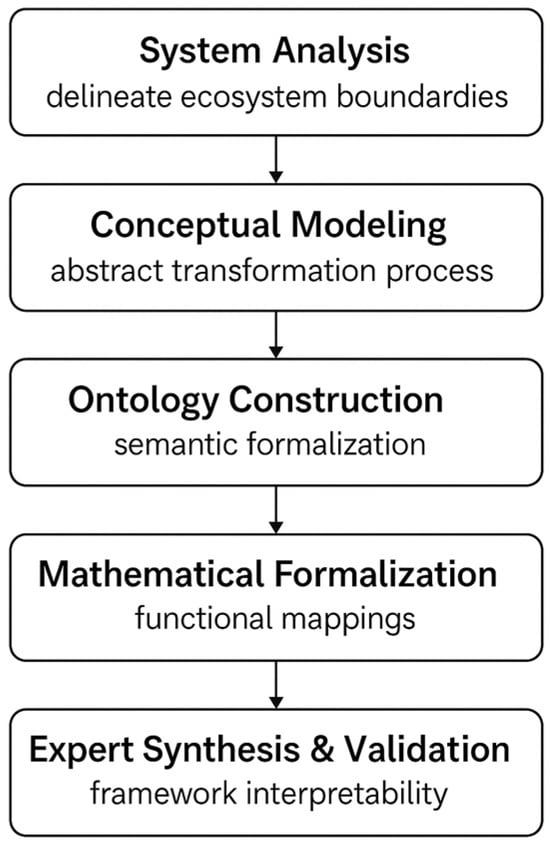
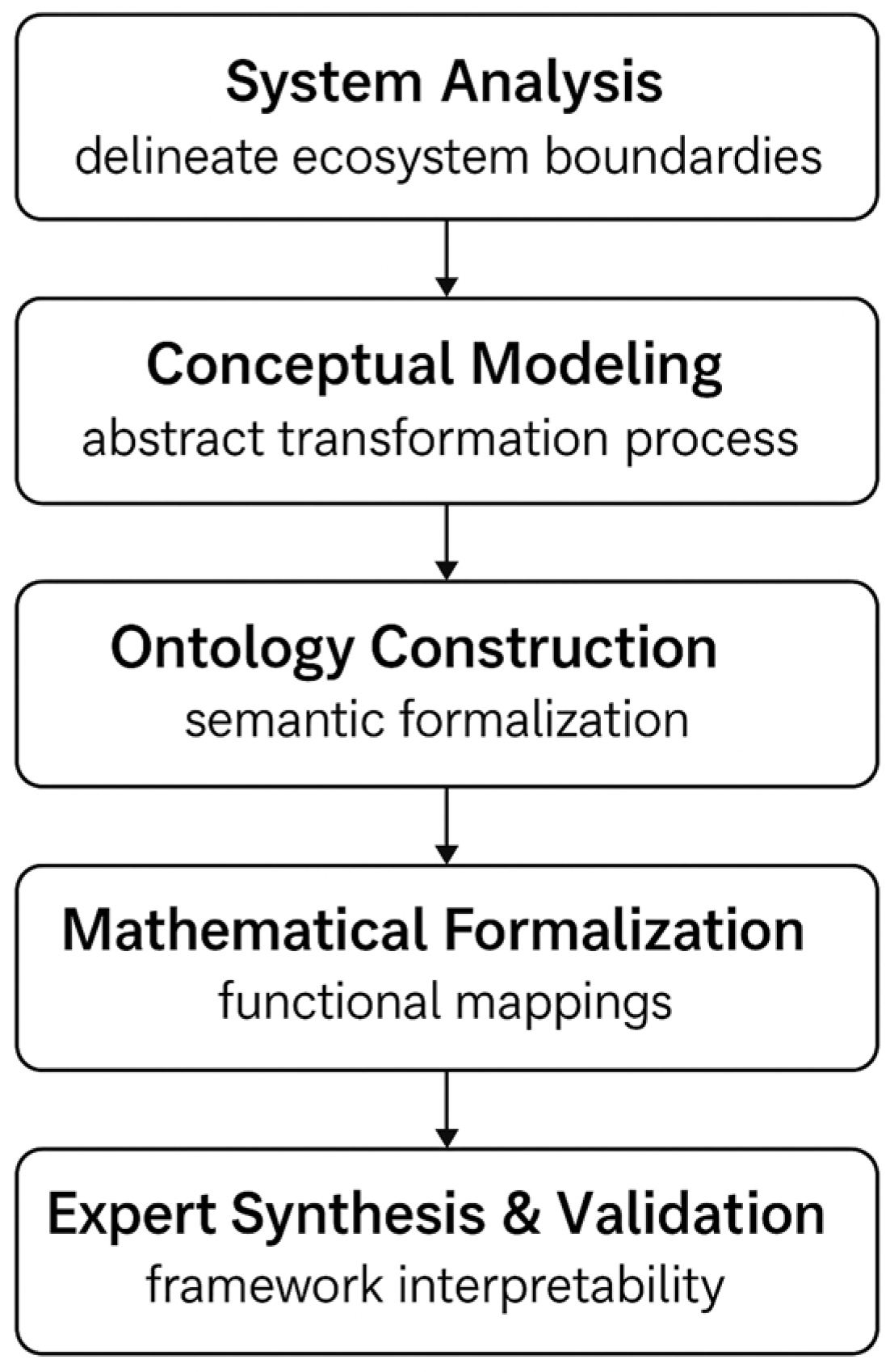
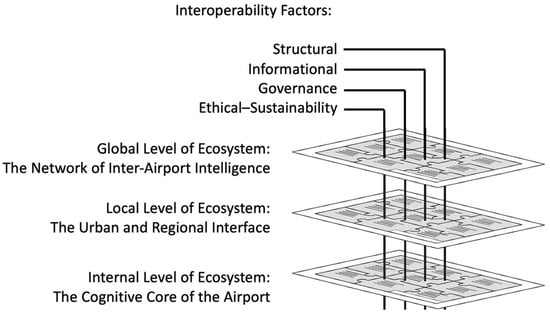
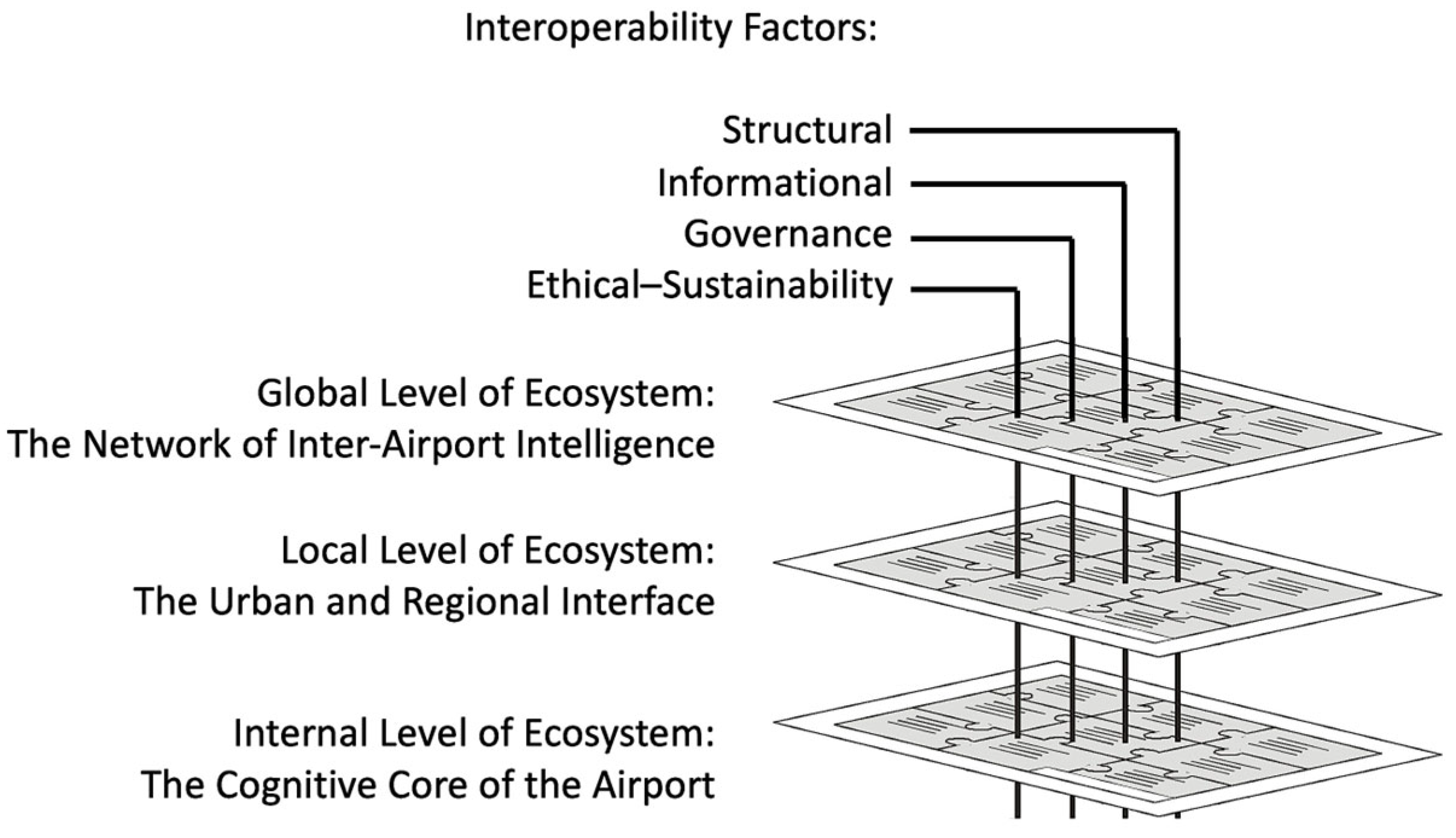
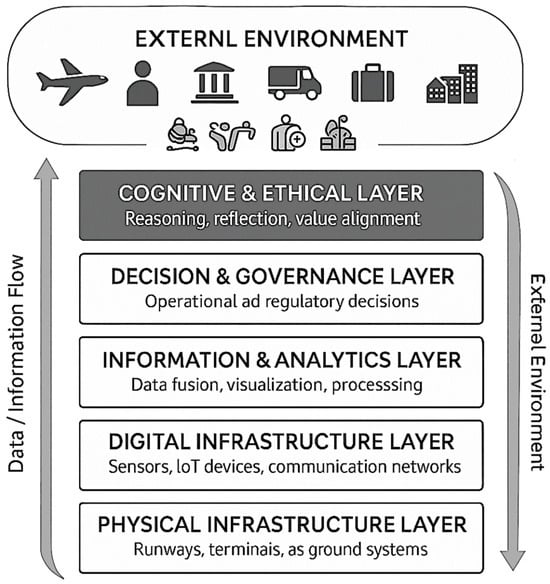
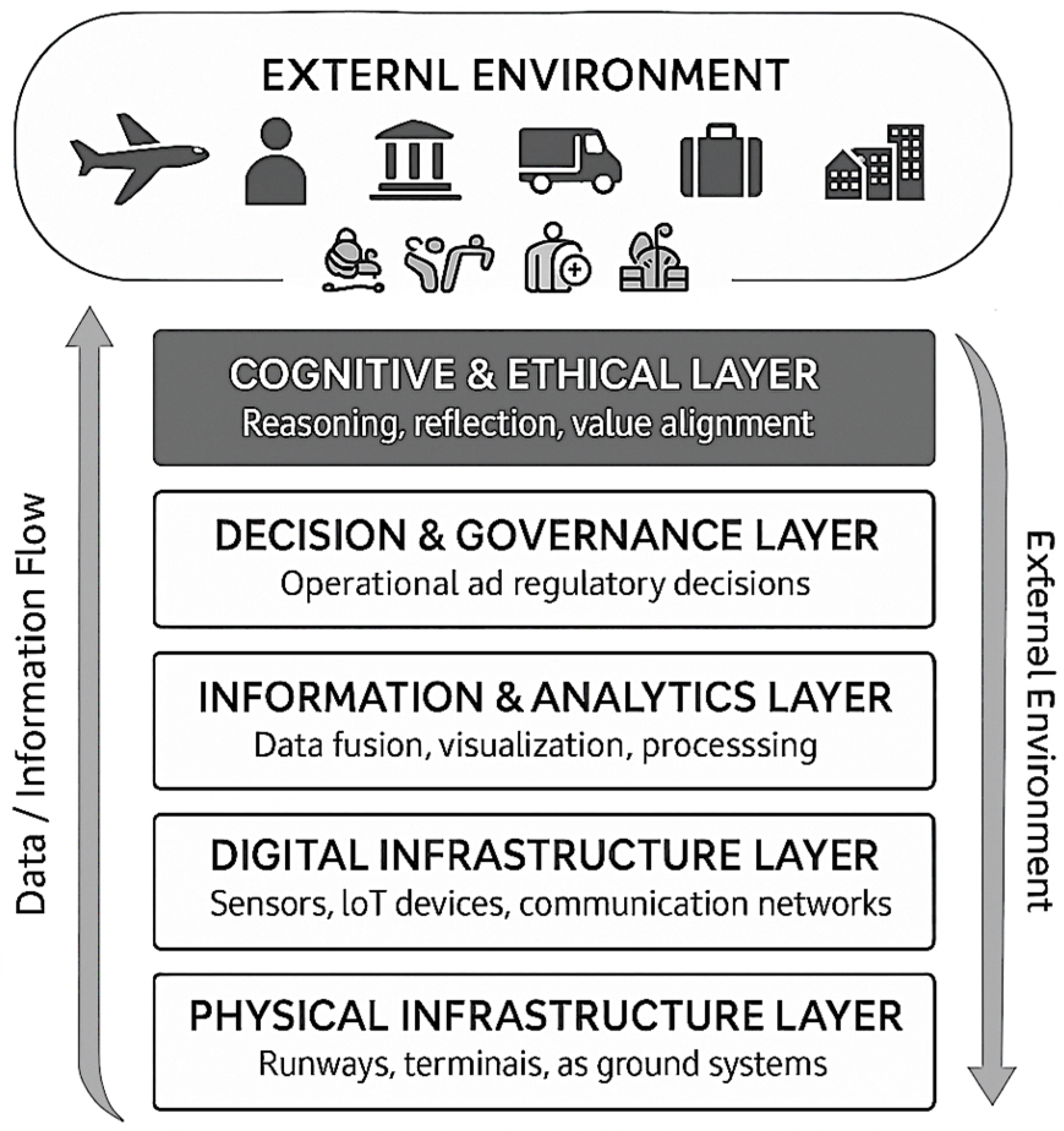
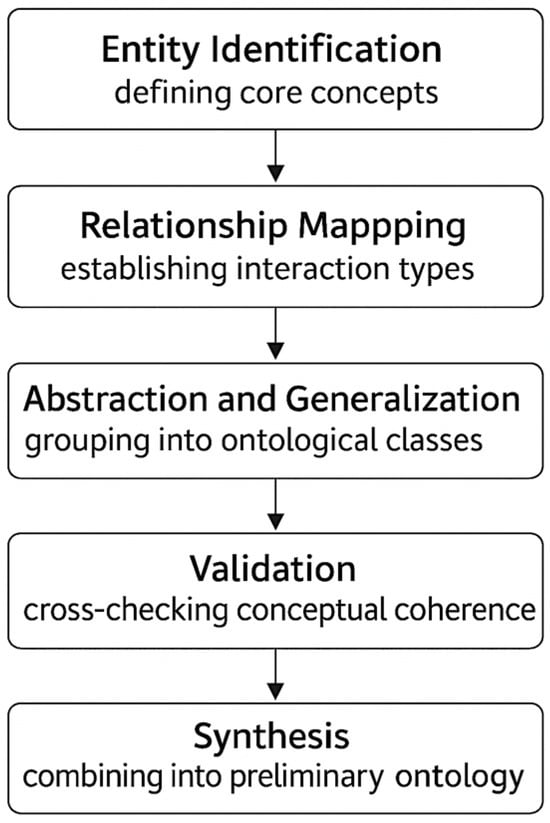
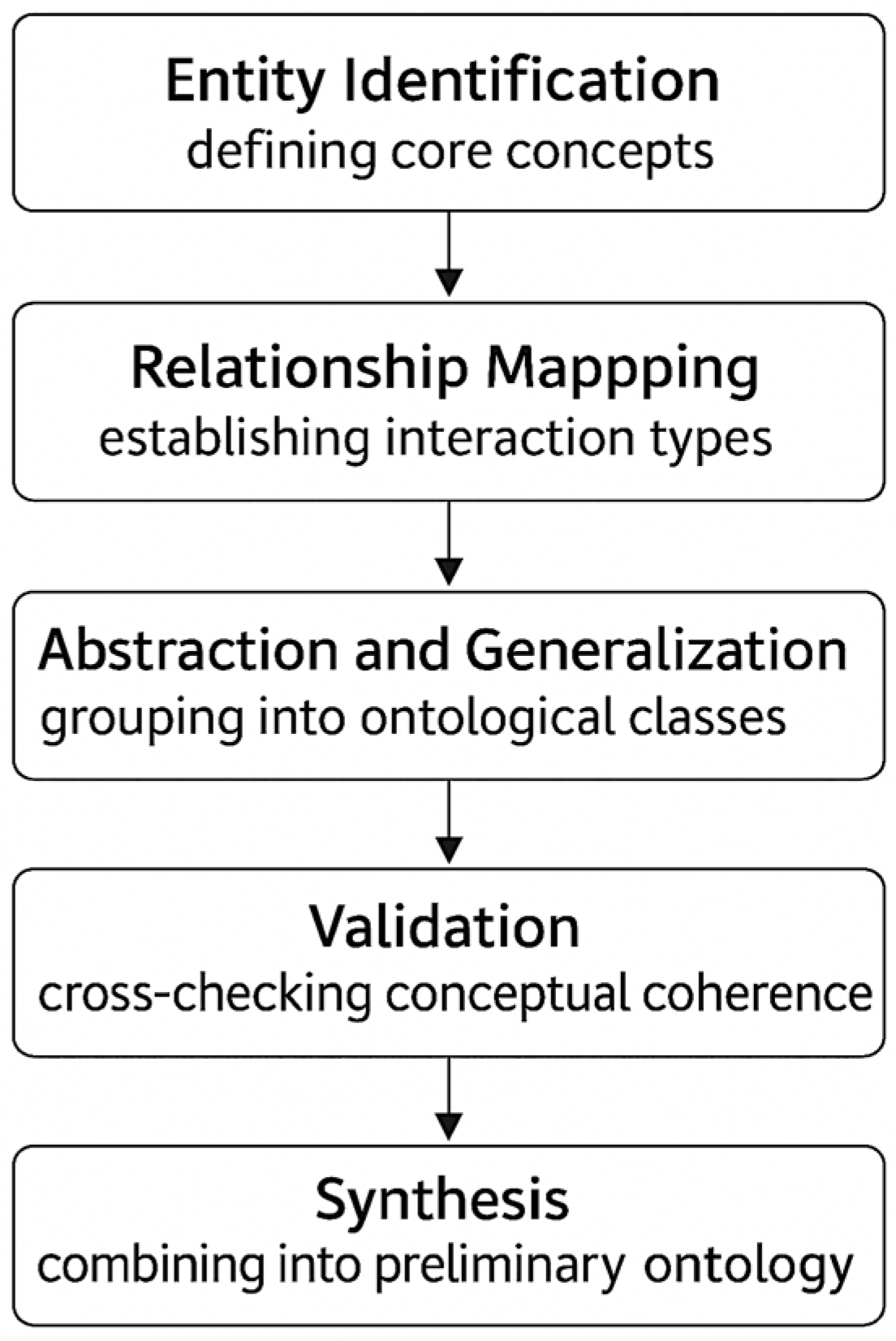
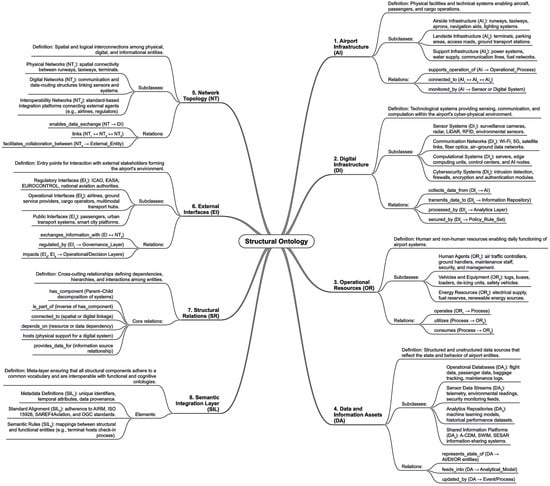
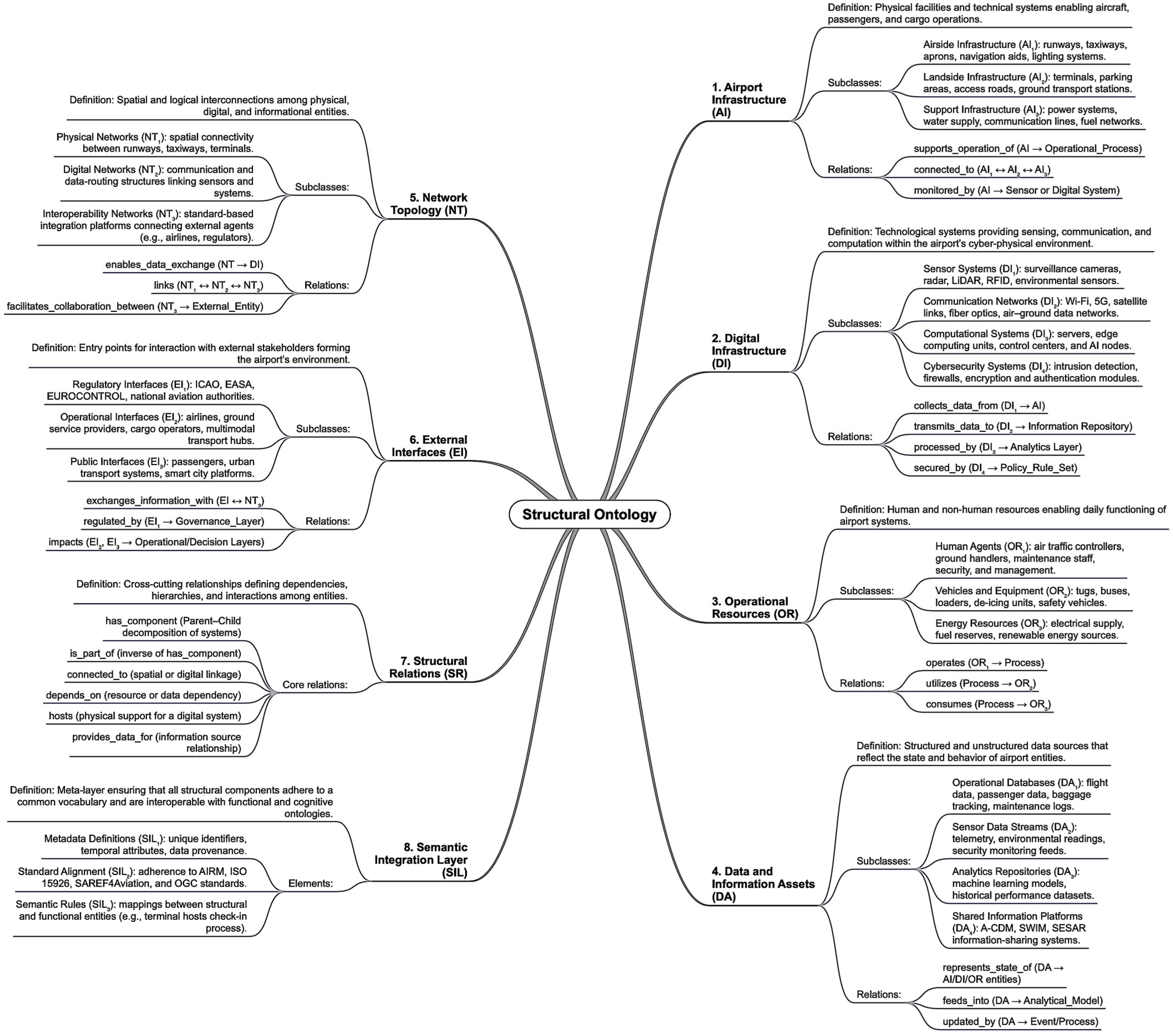
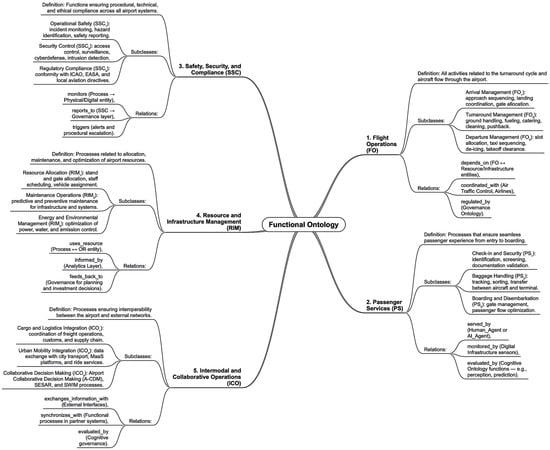
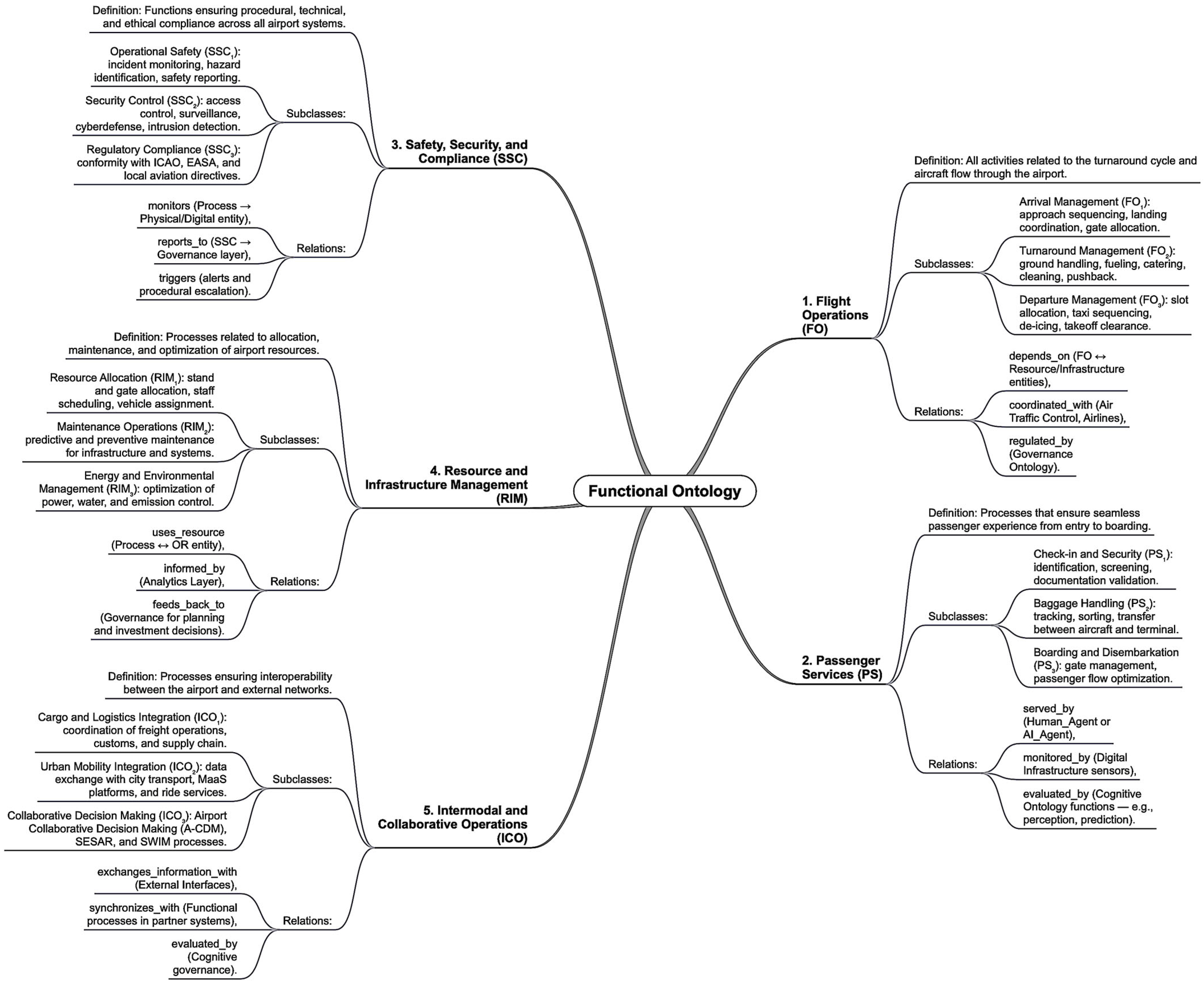
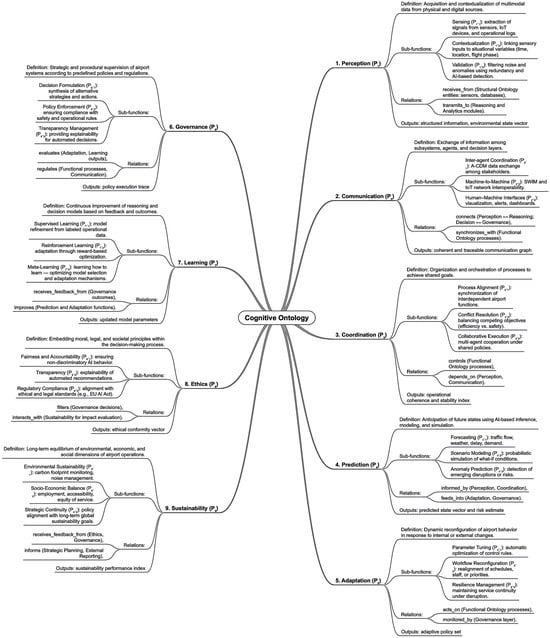
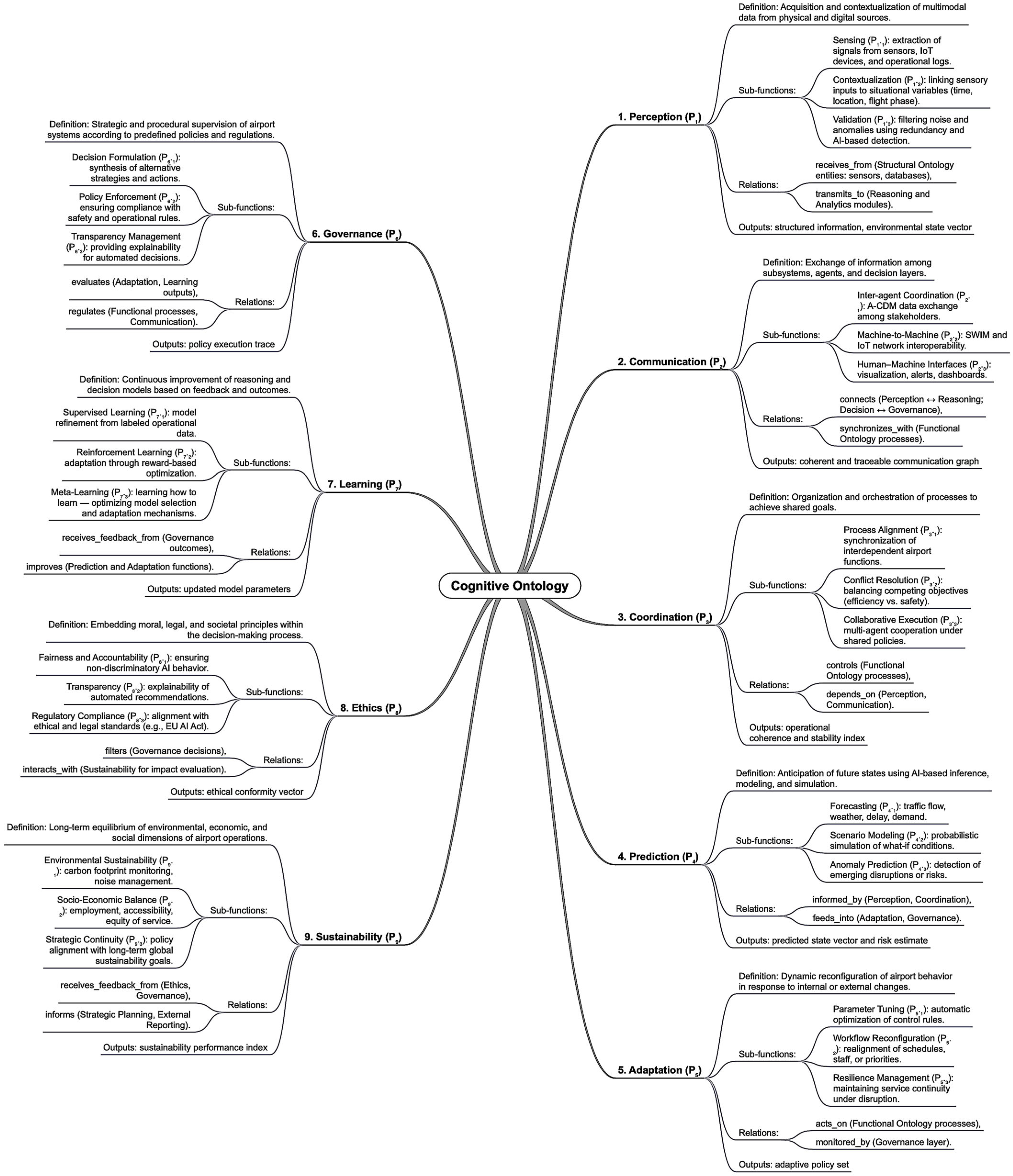
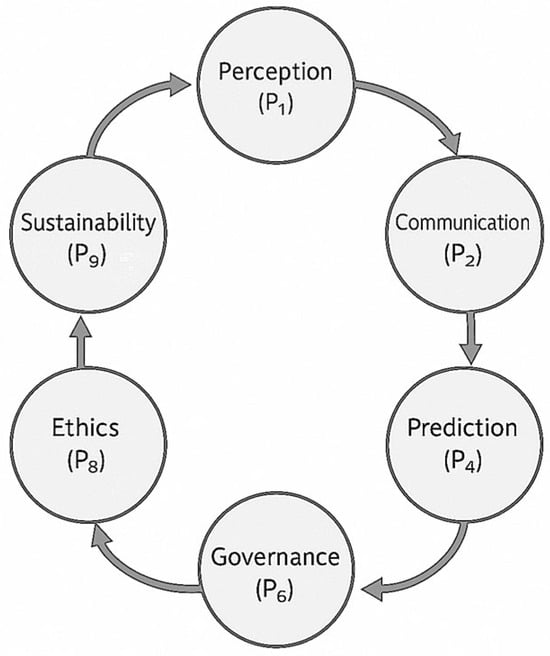
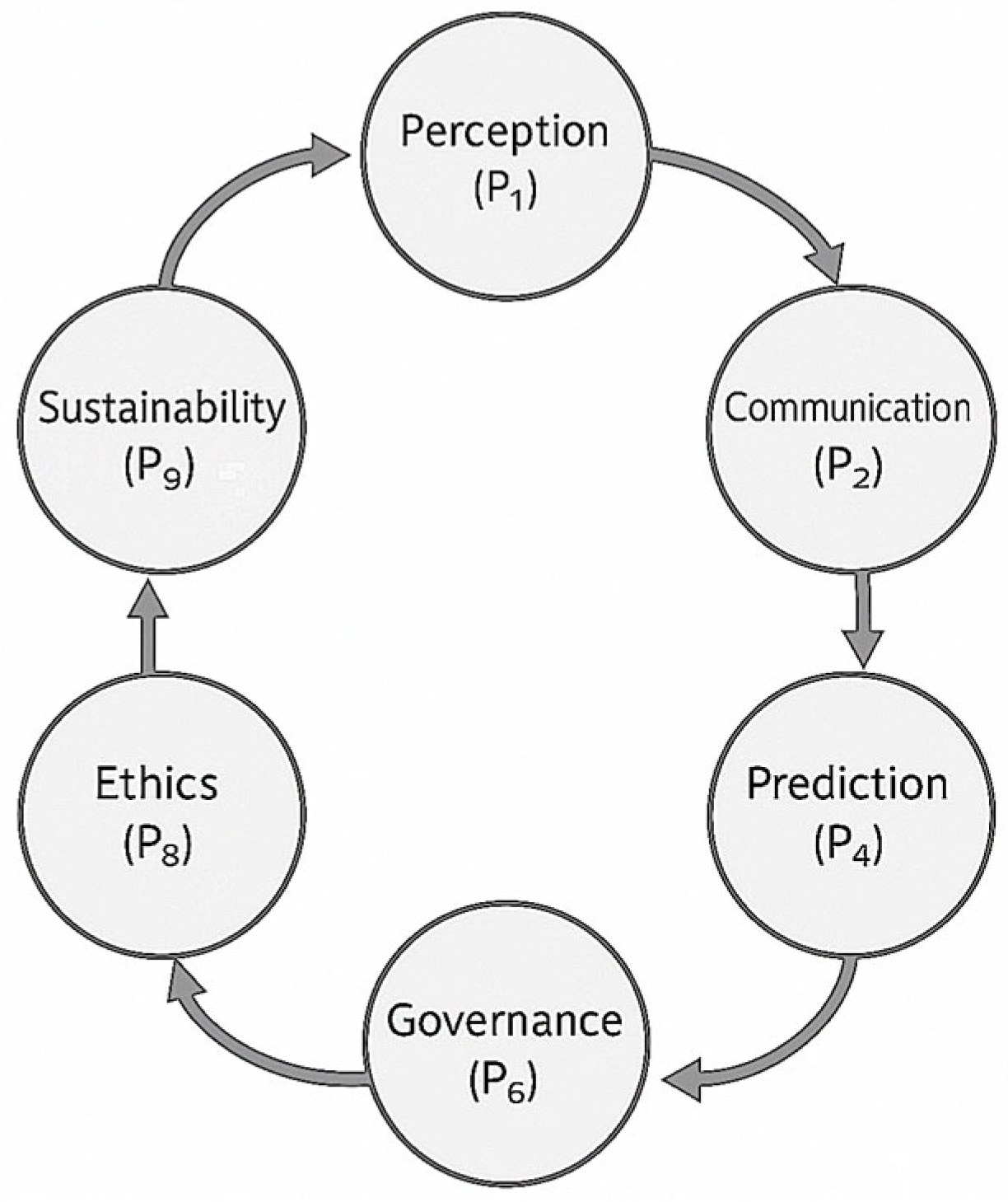
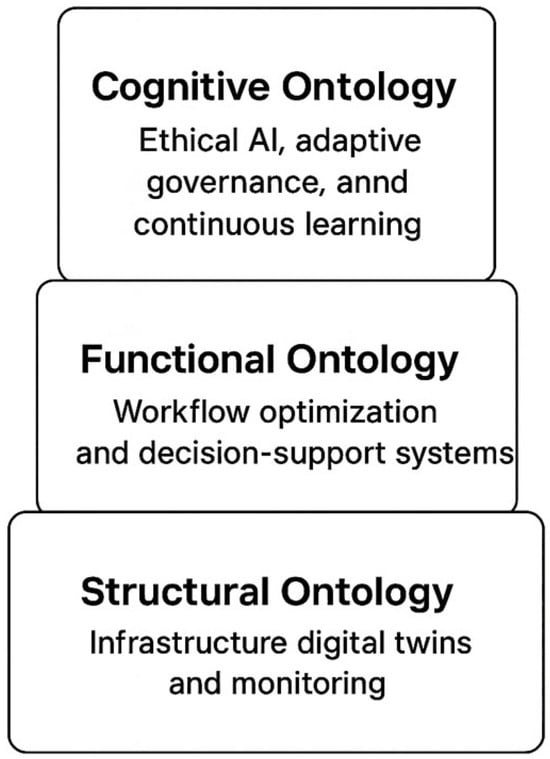
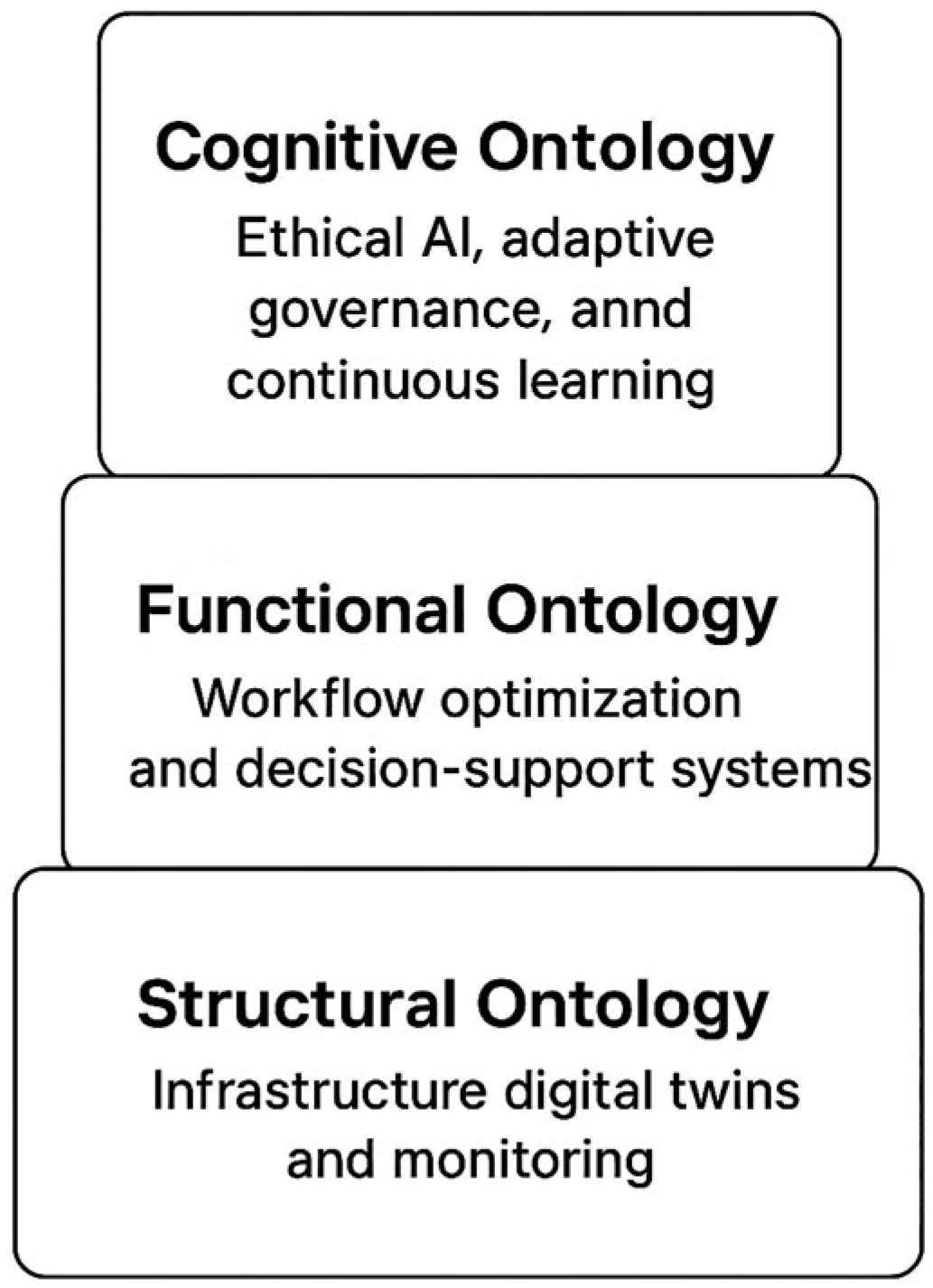
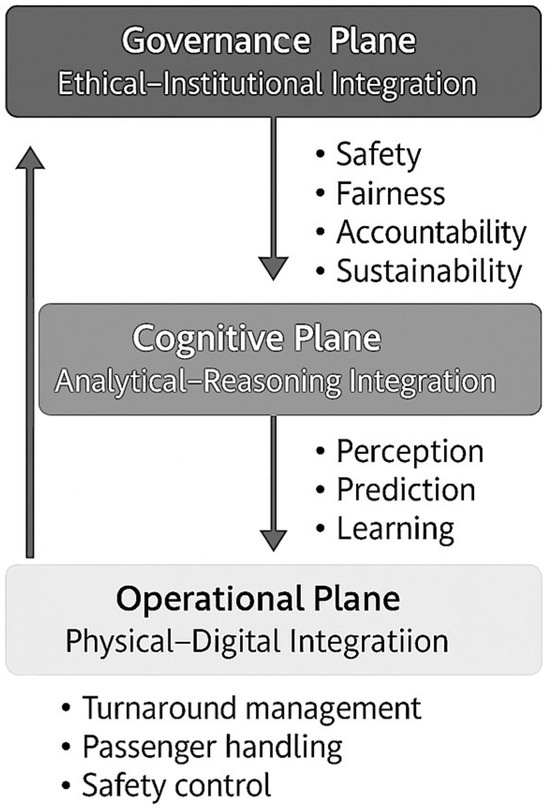
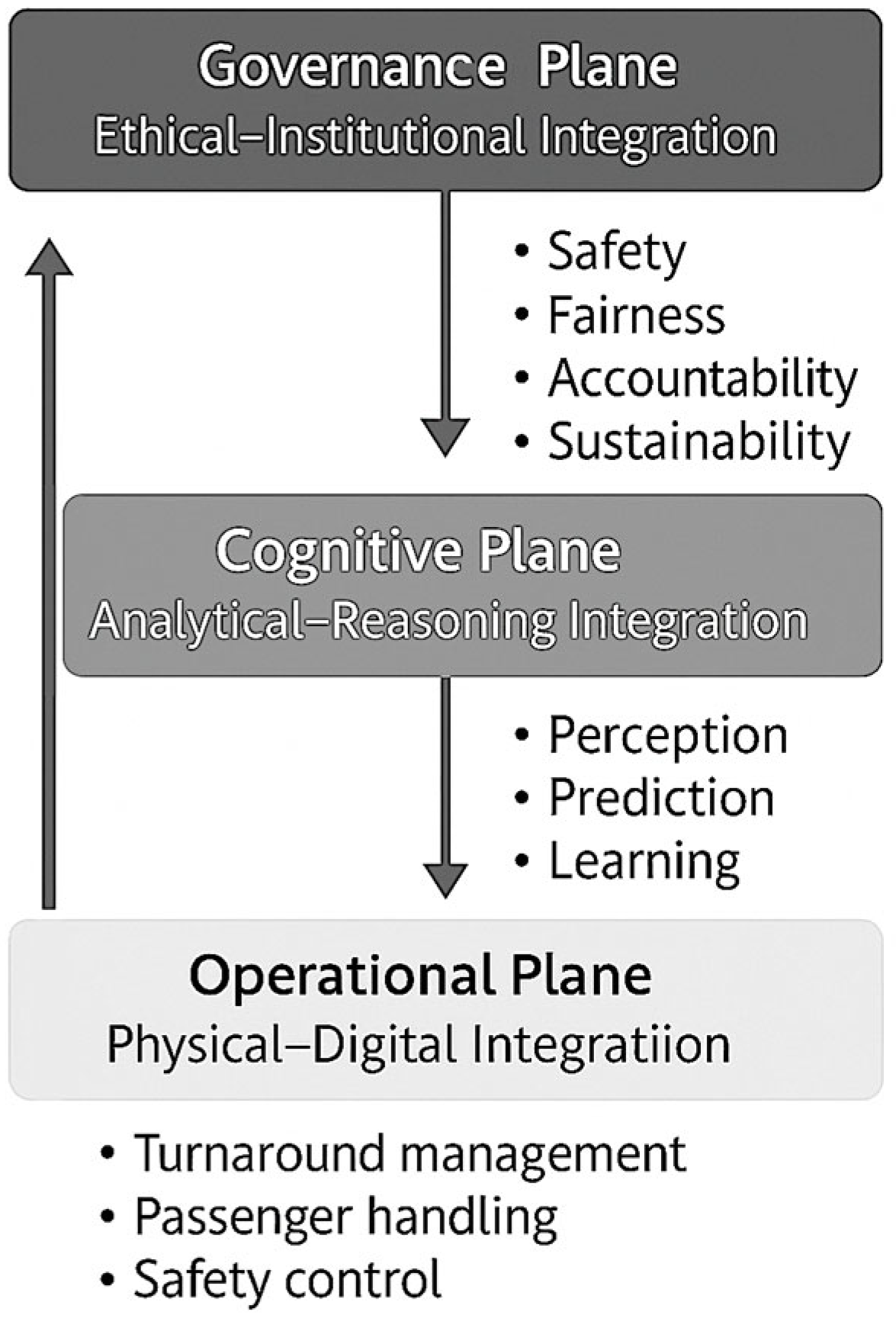
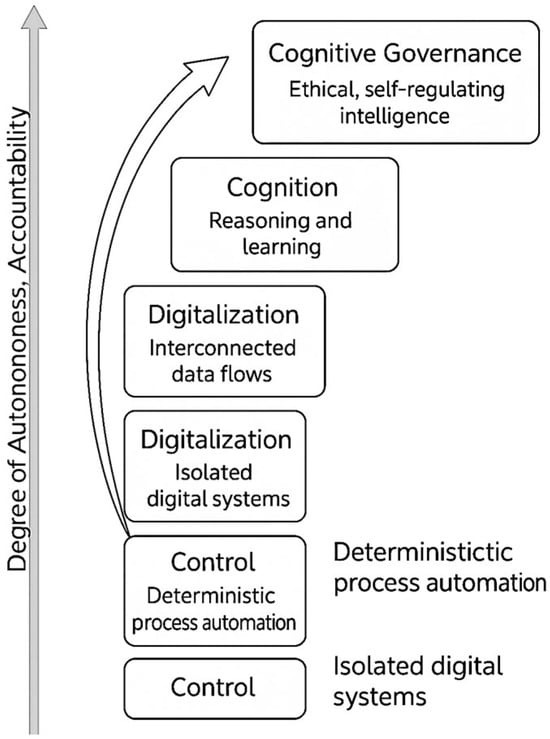
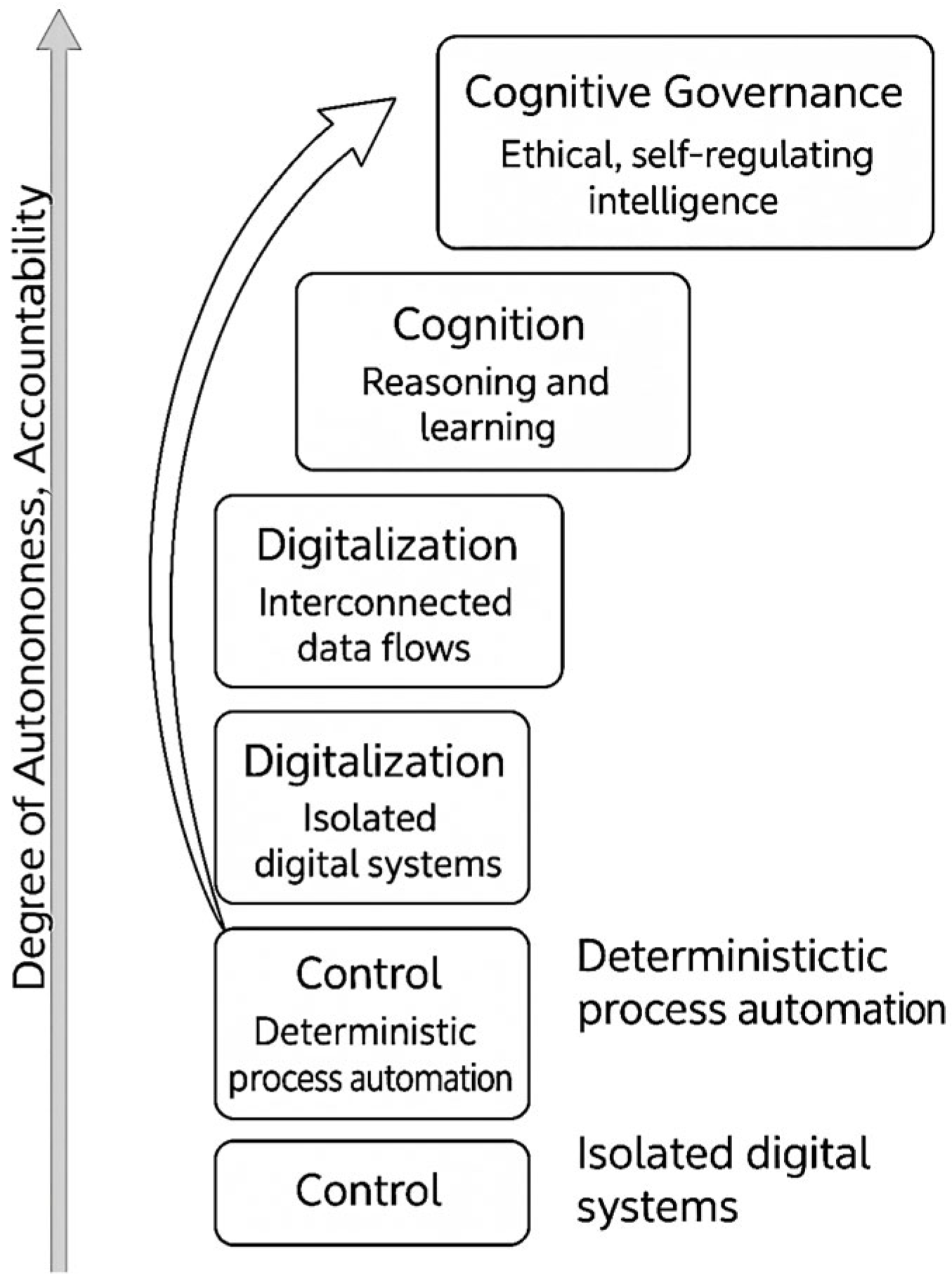
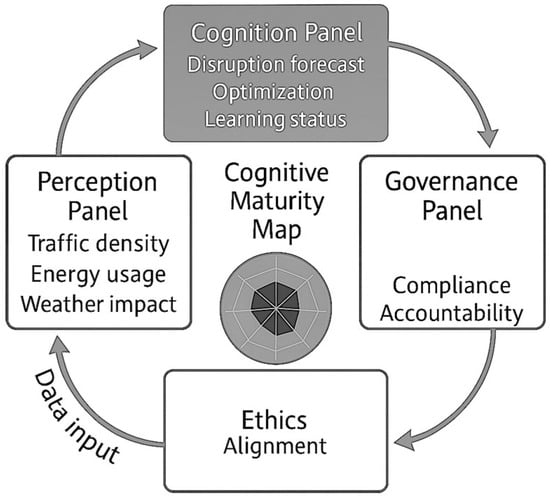
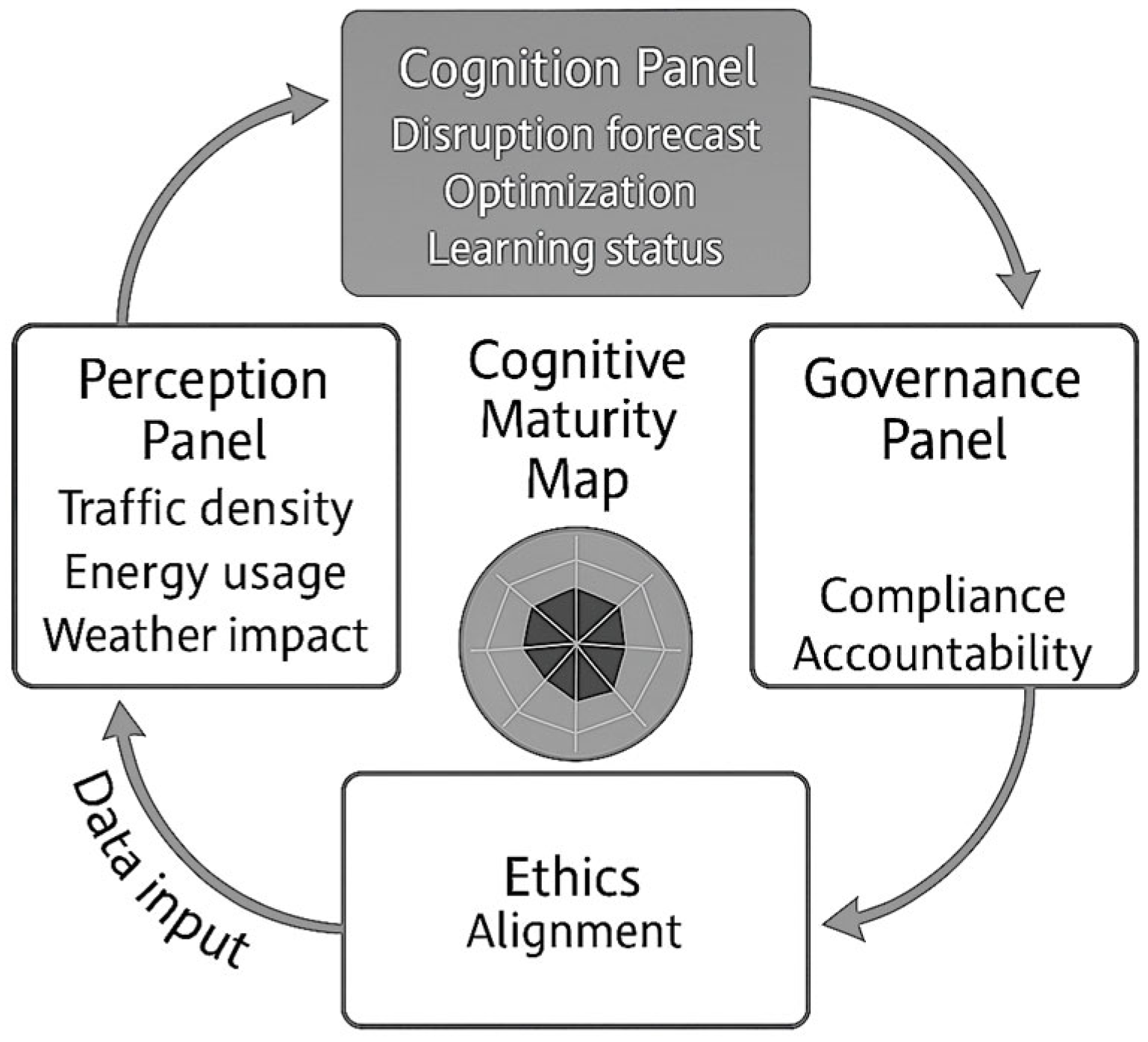
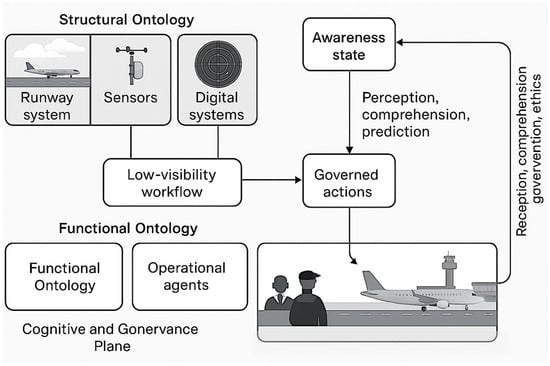
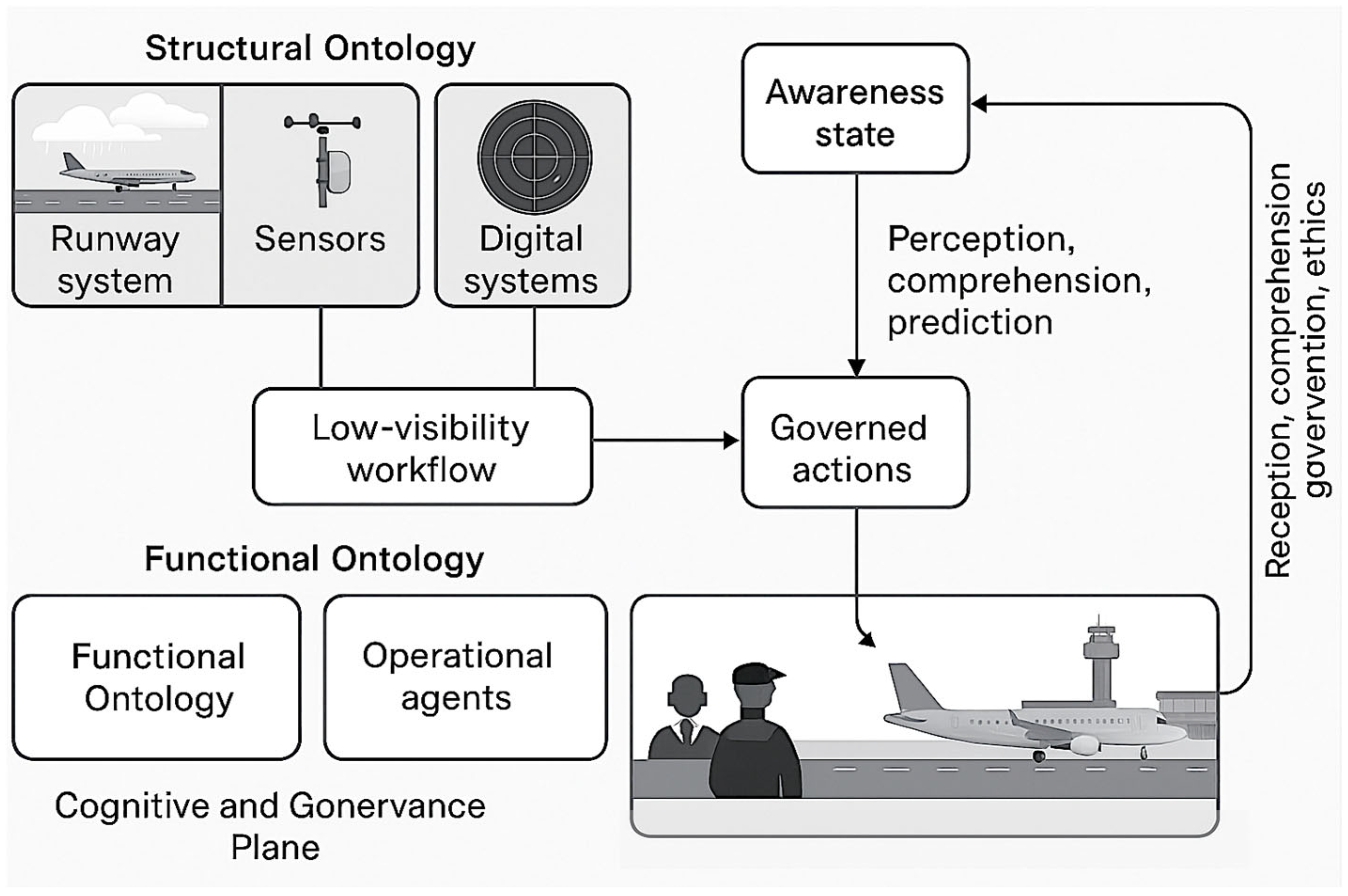
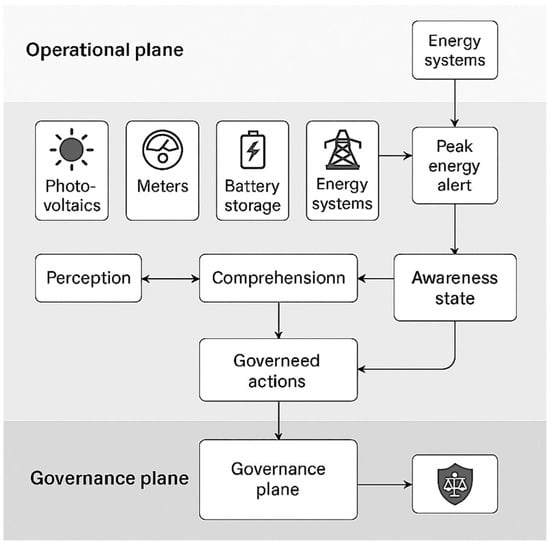
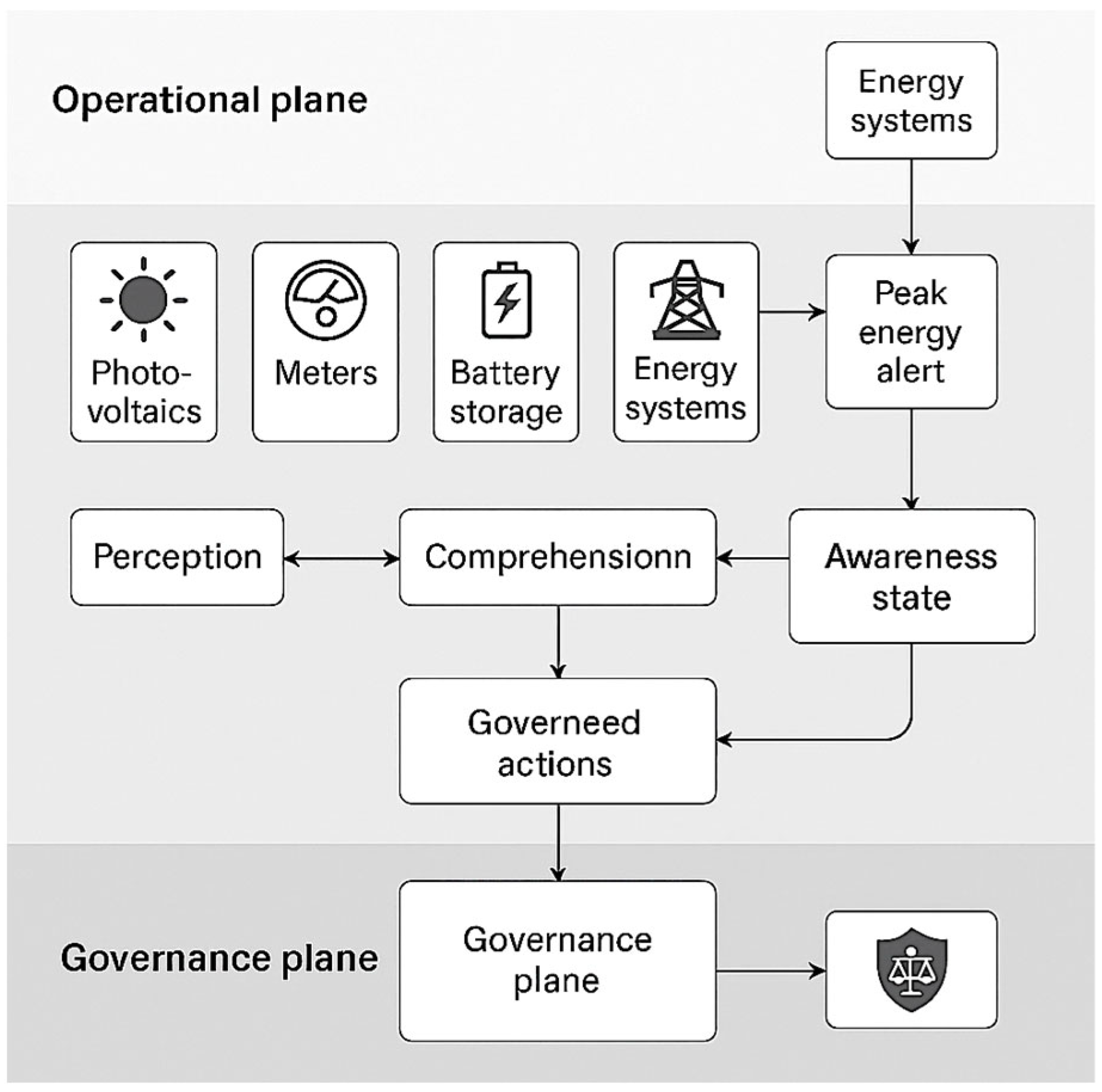
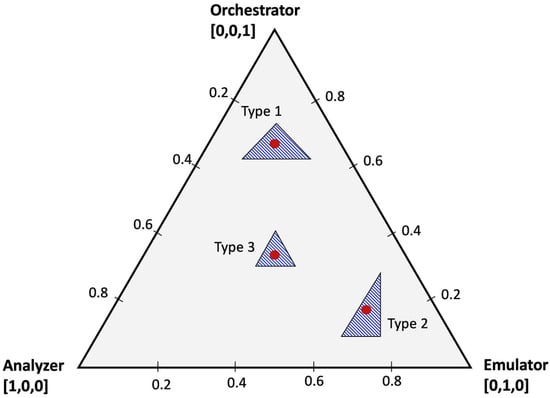
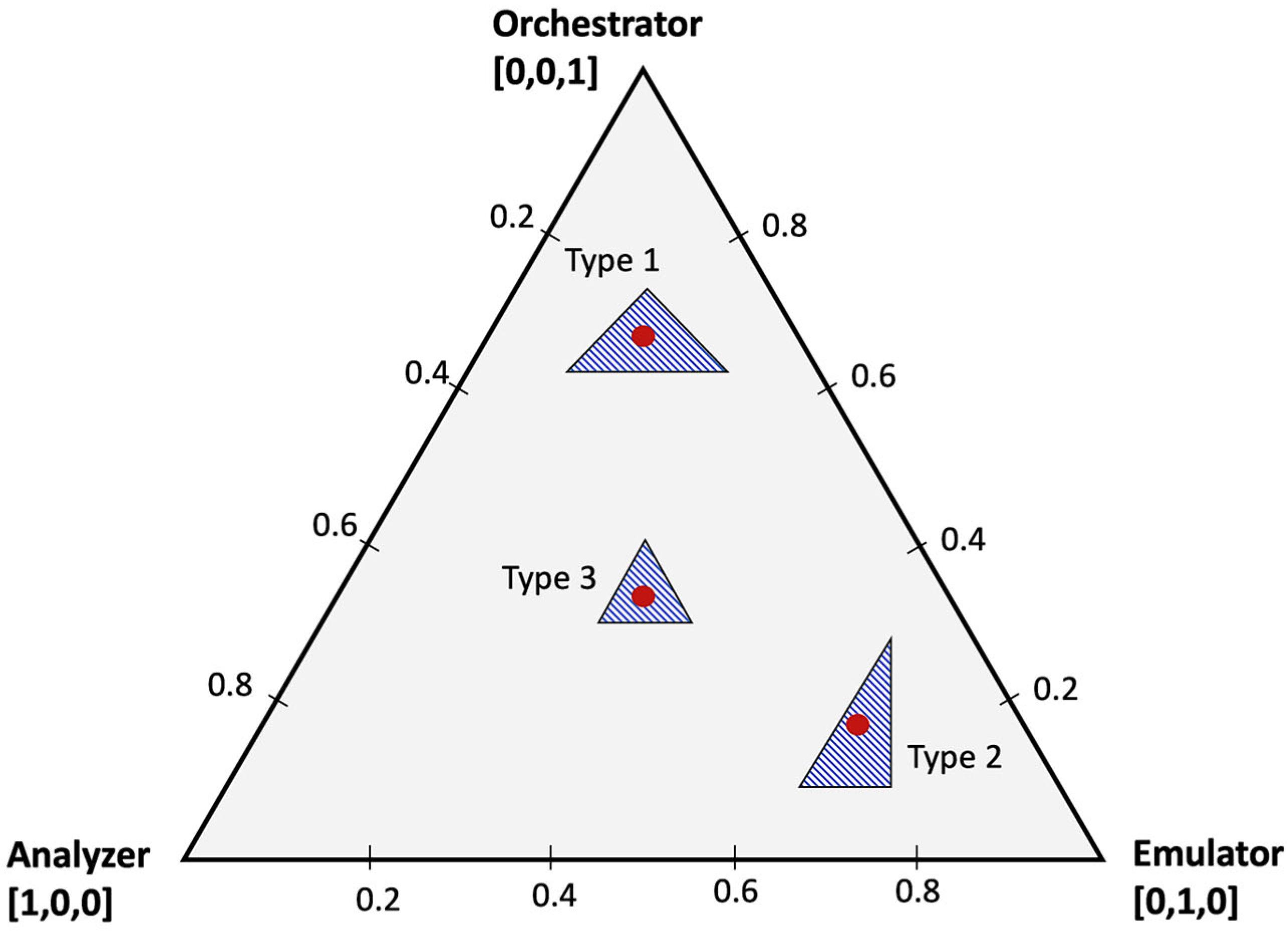
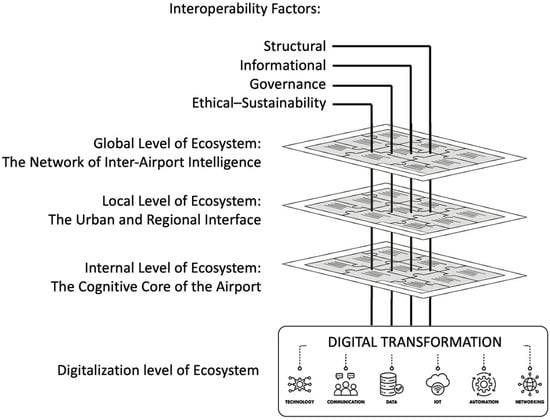
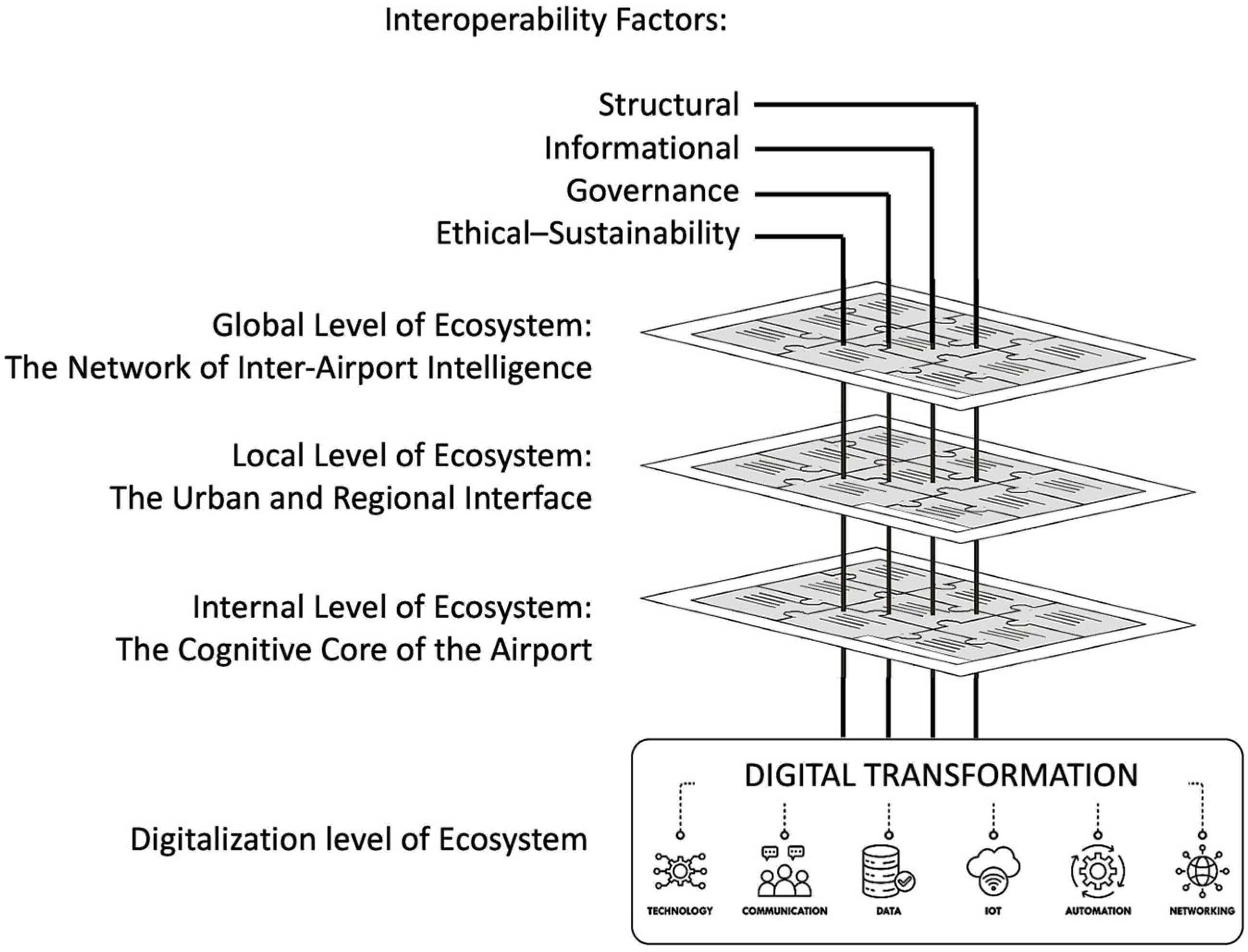

Disclaimer/Publisher’s Note: The statements, opinions and data contained in all publications are solely those of the individual author(s) and contributor(s) and not of MDPI and/or the editor(s). MDPI and/or the editor(s) disclaim responsibility for any injury to people or property resulting from any ideas, methods, instructions or products referred to in the content. |
© 2026 by the authors. Licensee MDPI, Basel, Switzerland. This article is an open access article distributed under the terms and conditions of the Creative Commons Attribution (CC BY) license.