Article

STAR-RIS-Assisted Millimeter-Wave Secure Communication with Multiple Eavesdroppers

1
School of Information Science and Engineering, Shandong Normal University, Jinan 250358, China
2
School of Software, Shandong University, Jinan 250100, China
*
Author to whom correspondence should be addressed.
Mathematics 2024, 12(14), 2259; https://doi.org/10.3390/math12142259
Submission received: 25 June 2024 / Revised: 15 July 2024 / Accepted: 17 July 2024 / Published: 19 July 2024
(This article belongs to the Special Issue Data-Driven Decentralized Learning for Future Communication Networks)

Abstract

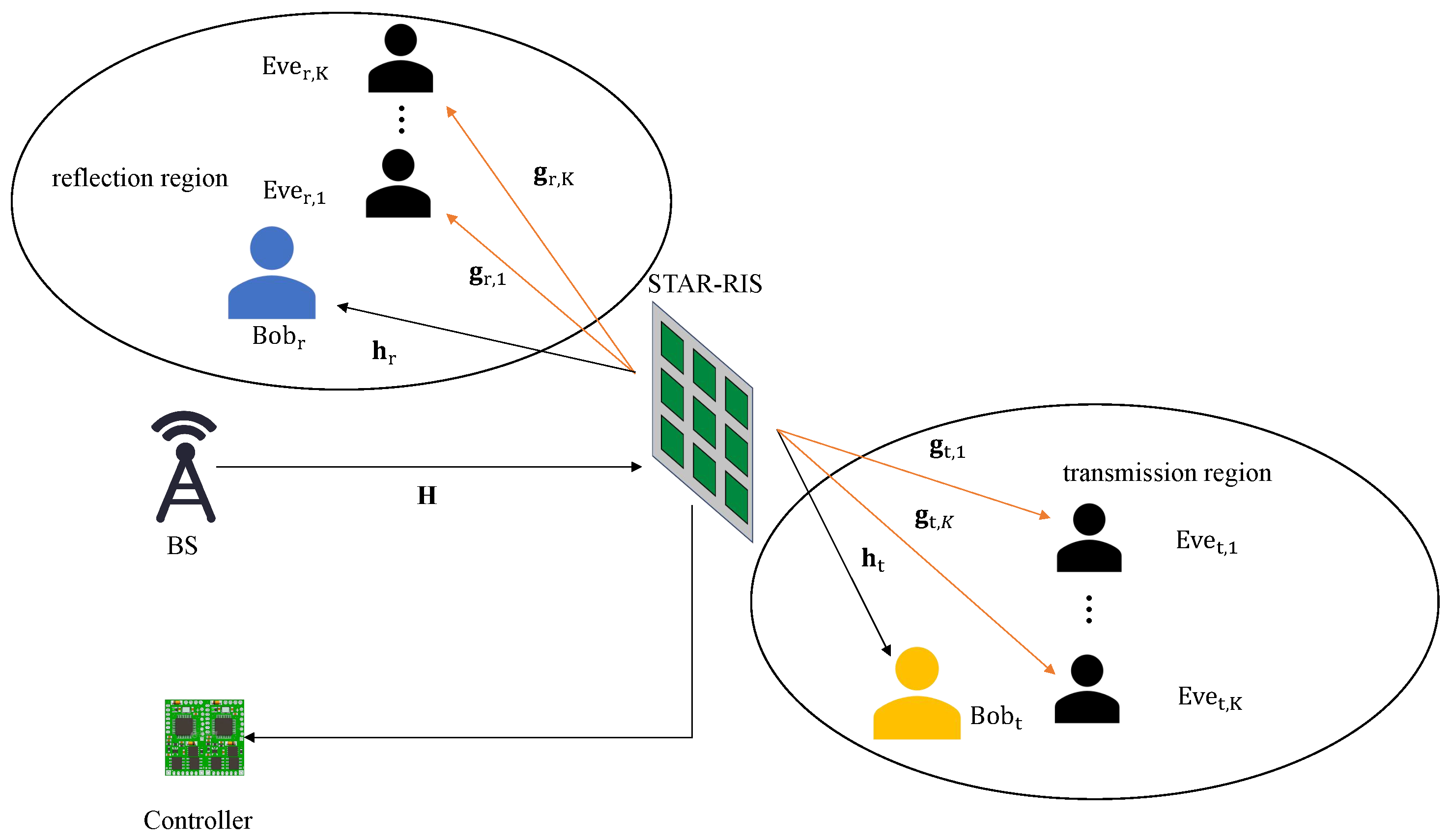
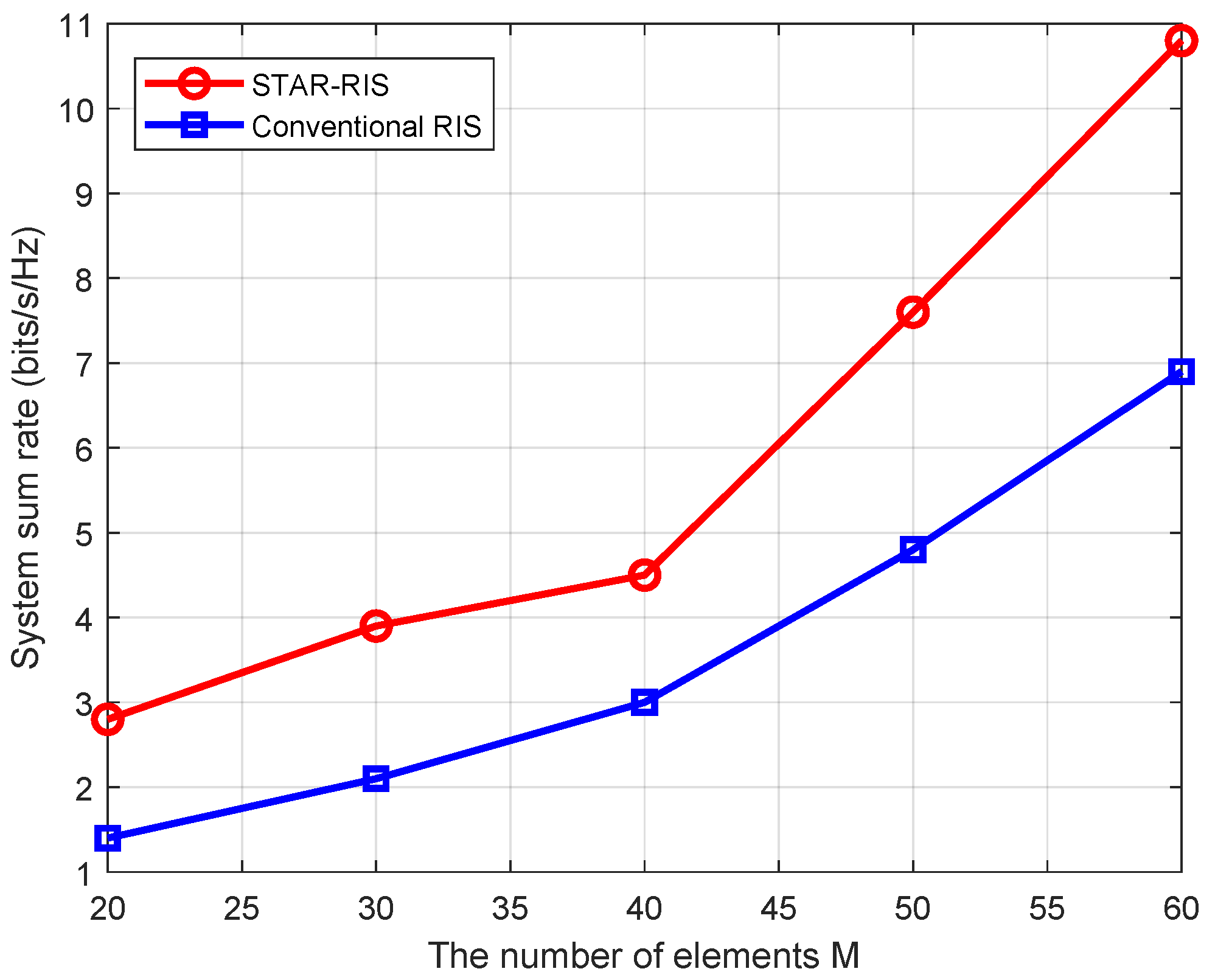
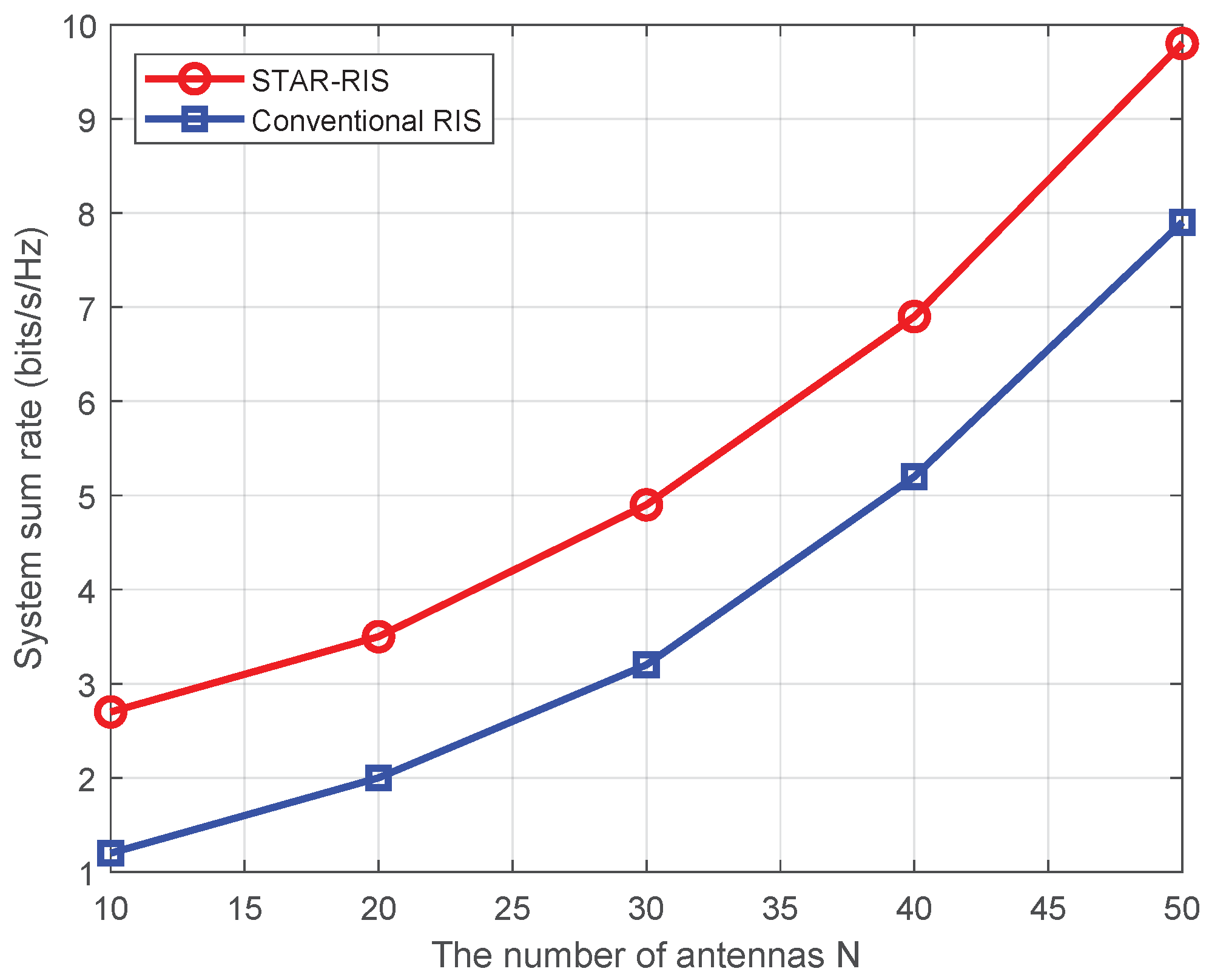
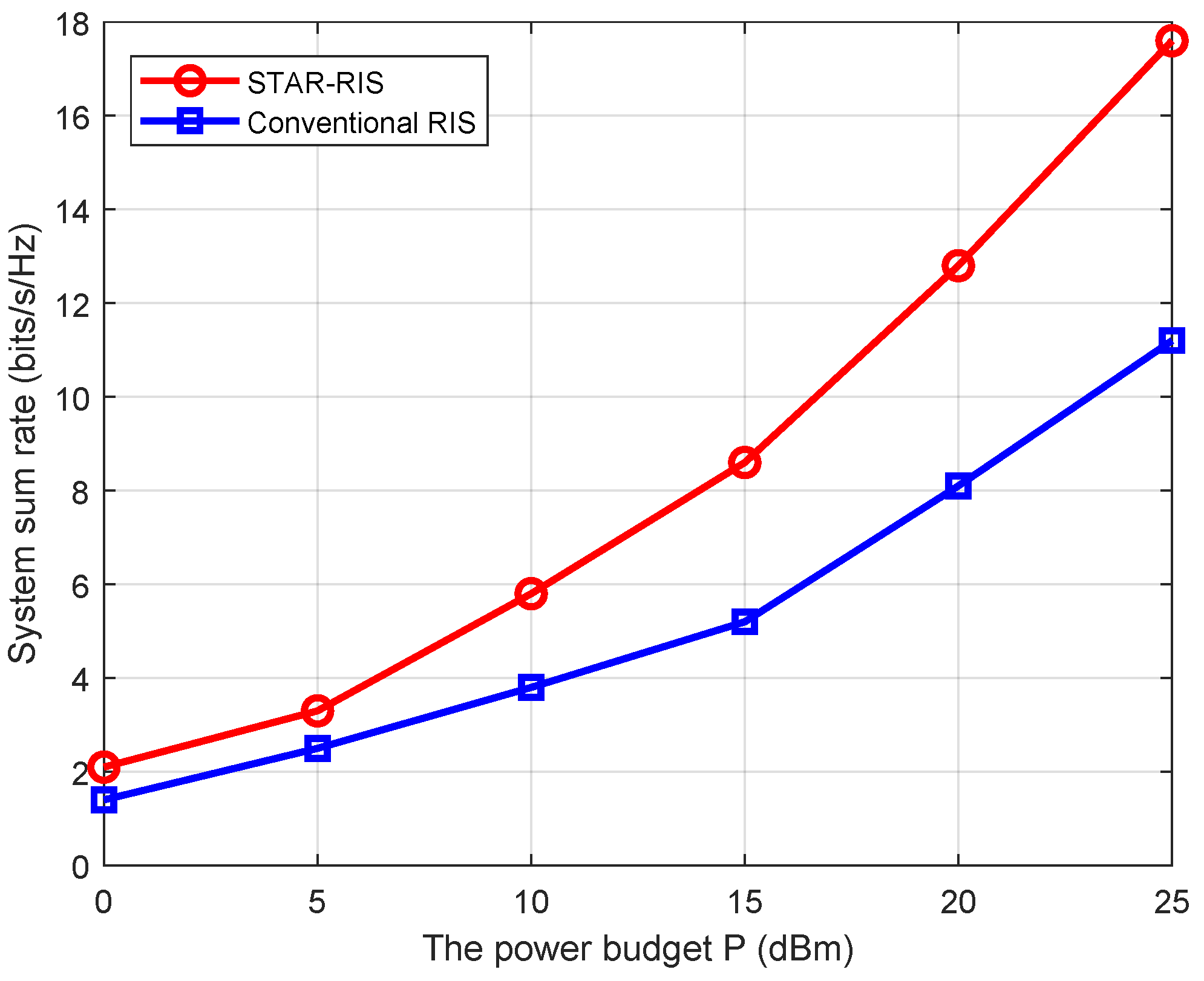
Aiming to address the limited coverage of conventional reconfigurable intelligent surfaces (RISs), this study proposes a millimeter-wave secure communication scheme based on the simultaneously transmitting and reflecting reconfigurable intelligent surface (STAR-RIS). It uses the transmission and reflection functions of the STAR-RIS to achieve multiple users’ full-area communication coverage and meet the security communication needs of different users. To maximize the system sum rate under the security communication requirements of users in the transmission and reflection regions, this study proposes a joint optimization design scheme consisting of transmit beamforming at the base station (BS) and transmitting and reflecting coefficients at the STAR-RIS based on the energy-splitting protocol, and it models the rate optimization problem with information leakage constraints under imperfect eavesdroppers’ channel state information (ECSI). First, a series of transformations is proposed to solve the coupling between the optimization variables, and then, an efficient iterative algorithm based on successive convex approximation (SCA) and semi-definite relaxation (SDR) is proposed. Aiming to address the amplitude and phase constraints of the STAR-RIS, an optimization method comprising a penalty concave–convex procedure is adopted. The simulation results show that, compared with the conventional RIS, the proposed STAR-RIS assistance scheme can achieve the full coverage of the communication system and effectively improve the system sum rate while ensuring the safe transmission of information. The combination of STAR-RIS and millimeter-wave can promote the efficient and safe transmission of information in dense cities.
Keywords: millimeter-wave; STAR-RIS; multiple users; multiple eavesdroppers; imperfect ECSI millimeter-wave; STAR-RIS; multiple users; multiple eavesdroppers; imperfect ECSI