Article

Discovering Crosscutting Concepts in Science Through Free Play: A 12-Week, Two-Cohort Study of Elementary Students

Instructional Leadership and Academic Curriculum, Jeannine Rainbolt College of Education, University of Oklahoma, Norman, OK 73019, USA
*
Author to whom correspondence should be addressed.
Educ. Sci. 2026, 16(9), 1514; https://doi.org/10.3390/educsci16091514
Submission received: 16 July 2026 / Revised: 2 September 2026 / Accepted: 5 September 2026 / Published: 15 September 2026

Abstract

Early exposure to scientific learning establishes a critical foundation for nurturing how natural phenomena are explored and our innate curiosities are pursued, as well as our potential to elevate the complexity of our understanding. Through the lens of Vygotsky’s social constructivist theory, this study investigates how 124 first- through fifth-grade students participated in an unstructured free play lab across two 12-week cohorts and how this influenced students’ exposure to the crosscutting concepts (CCCs) outlined in the Next Generation Science Standards (NGSS). An observational protocol was followed to gather images, which were subsequently analyzed to identify instances in which students interacted with the CCCs. The findings indicate that students engaged with all CCCs, most frequently through observations, modeling, and problem solving. The type of play influenced the extent to which students gained exposure to certain CCCs. Social interactions and moments when play caused cognitive disequilibrium further supported engagement. The results suggest that free play serves as a meaningful vehicle for increased exposure to scientific ideas in developmentally appropriate and socially mediated contexts. Leveraging play as a pedagogical tool offers opportunities to increase exposure to numerous foundational scientific skills and ideas in formal and informal settings.

1. Introduction

Play-based education provides significant cognitive and academic opportunities for students (Brown & Vaughn, 2009; Scarlett et al., 2005), providing a foundation for children’s development across social, emotional, and cognitive domains that carries forward from infancy through late childhood. Gray defines play as an “activity that (1) is self-chosen and self-directed, (2) is motivated by means more than ends, (3) is guided by mental rules, and (4) includes a strong element of imagination” (Gray, 2017, p. 217). Free play specifies that play must be player-initiated and -directed, voluntary, flexible, and internally motivated (Holt et al., 2015; Weisberg et al., 2013). Weisberg et al. (2013) argue that free play and structured instruction need not be understood as opposing approaches; rather, playful contexts serve as a bridge that carries children from spontaneous exploration toward more explicit conceptual understanding.
Within the context of science specifically, play can serve as an important motivator and model for scientific learning (Campbell & Howitt, 2024): play is in the mind of the playmaker as much as scientific curiosity, and how we explore it, are in the mind of the scientist, making the development of scientific thought an active, inquisitive, and imaginative process (Brown & Vaughn, 2009; Johnston et al., 2011). Neurophysiological evidence from a companion study using this study’s same free play lab context—a dedicated, child-directed play space established at the study site to support unstructured play across creative, imaginative, constructive, game, and big-body play areas—further supports this connection. The companion study found that free play was associated with increased mirror neuron system engagement during action observation, suggesting a neural basis for the modeling and imitation processes that may underlie children’s sense-making during play (Casey et al., 2026). Given this connection, we believe that play creates natural opportunities to engage specifically with the CCCs outlined in the Next Generation Science Standards (NGSS), a set of nationally adopted science standards in 44 states and the District of Columbia (NGSS Lead States, 2013). NGSS lines out three-dimensional performance expectations for each grade level, including disciplinary core ideas (DCIs), crosscutting concepts (CCCs), and science and engineering practices (SEPs). The CCCs (patterns; cause and effect; scale, proportion and quantity; systems and system models; energy and matter; structure and function; stability and change) provide clarity and structure, laying the foundation for students to form a clearer scientific understanding in contexts that they understand.
Implementing science in early childhood education increases the likelihood of students developing foundational scientific skills and knowledge. This capitalizes on an innate curiosity that children are born with. The earliest periods of development are based on observations and experiential learning. Early exposure to science opportunities helps guide children to utilize observation skills to develop insightful questions and investigations. One way to support this foundation is through engaging with the CCCs, which are recognized by the NGSS as seven themes that are common across scientific disciplines. These include patterns, cause and effect, scale, proportion, and quantity, systems and systems models, energy and matter, structure and function, and stability and change (NGSS Lead States, 2013).
Play-based learning provides a meaningful context for fostering a scientifically grounded understanding of the world. Within play contexts where students feel safe and engaged, neurological mechanisms support the conditions that are necessary for learning to occur. Casey’s (2026) Neuroception–Play–Integration (NPI) Cycle describes how, once an individual’s subconscious sense of security determines that the environment is safe for them, the brain’s play circuitry activates, and they engage in play, triggering the release of beneficial neurotransmitters such as dopamine, serotonin, and endorphins while reducing levels of cortisol. This process supports greater access to the prefrontal cortex, regulation of amygdala activity, and memory formation via the hippocampus, resulting in both personal and interpersonal regulation, and ultimately initiates long-term potentiation and neuroplasticity. As students engage with one another and the materials in these settings, there are more opportunities to resolve cognitive disequilibrium, naturally encouraging students to use their imagination and check their understanding of concepts they are processing (Çavas et al., 2020; Glauser-Abou Ismail et al., 2022). Acknowledging the significance of the sequential responses that innately happen when we encounter cognitive disequilibrium supports the incorporation of play experiences into the classroom and allows social environments to help develop higher-order thinking skills and bridge differences among students from varying backgrounds. They are required to question, revise, and extend their understanding of the observations made during play. Our findings from the free play lab experience across two 12-week cohorts with 124 children in 1st–5th grades serve as evidence that valuable scientific understandings can be explored through children’s spontaneous self-directed and self-initiated free play.

1.1. Literature Review

1.1.1. Play-Based Learning in Science Education

Despite the bountiful research on play, it remains relatively unexplored how we can incorporate it into elementary school settings and, even more so, how we can incorporate it into the science curriculum. Importantly, we want to acknowledge that there is valuable research being conducted at the intersection of play-based learning and science education. Nevertheless, significant research has been conducted primarily in elementary schools, showing how to integrate the two and how they interact (Fleer, 2019, 2024; Johnston et al., 2011; Glauser-Abou Ismail et al., 2022; Pratt, 2014; Broström & Frøkjaer, 2019; Worch & Haney, 2011). Given the minimal research at the secondary level, we felt it was important to look at how science and play work together at the elementary level, and then, to start considering adaptations that could be made.
Engaging with “…play is a cognitive task that engages both individual reflection and group interaction,” whereas science aims to provide explanations. However, through the lens of the CCCs, both can be described as inquisitive, active, and imaginative (Johnston et al., 2011, p. 313). Within the context of science, play can serve as an important motivator and as a model for scientific learning in a variety of contexts. Play is in the mind of the playmaker as much as scientific curiosities, and how we explore those, are in the mind of the scientist (Brown & Vaughn, 2009). Nevertheless, a key difference remains, namely that science does have preexisting themes and a prescribed structure for how it is conducted across the disciplines. Glauser-Abou Ismail et al. (2022) explained that in a play environment that aims at encouraging learning, the teacher should provide any structure before students begin. However, during play, students should experience agency and autonomy, while the teacher’s goals should simply be to open to students’ interests and needs and provide opportunities that encourage the child to think, reflect, and verbalize. The emotional connection that students develop with the environment will encourage them to further explore scientific concepts to which they are indirectly exposed through play. To be clear, students are not forced to interact with scientific concepts during play (Lanouette, 2022). The teacher curates a space where students can express their prior knowledge and subsequently expand that knowledge through play. In these spaces, students feel safe to take risks and set higher goals, which increases learning outcomes (Casey, 2026). The following section of the paper aims to highlight several examples of how this may be realized.

1.1.2. Early Science Experiences for STEM Engagement

Play-based science learning supports engagement and conceptual understanding in science learning; however, to understand the impact of play on science learning, it is important to critically evaluate the importance of general STEM engagement in early childhood. Children are born with an innate sense of curiosity. Through early exposure to science experiences and natural phenomena, children have opportunities to explore these phenomena naturally. As scientific language is acquired and grows in complexity, students become more capable of explaining and inquiring about those phenomena. Zimmerman (2000) discussed the importance of domain-specific knowledge and domain-general knowledge in scientific investigations. Domain-specific knowledge is knowledge built around specific scientific domains, whereas domain-general knowledge refers to the skillset necessary to do science. Domain-general knowledge encompasses skills that children innately possess. Examples include asking questions, hypothesizing, and making observations. However, exposure to early science experiences provides students with opportunities to strengthen these skills and begin to apply them to domain-specific knowledge.
The primary reasons for presenting children with science early in their development are twofold. As presented by Eshach and Fried (2005), science is concerned with phenomena that we experience in real life, and plays a key role in the development of reasoning skills. It helps us all to understand the micro- and macro-interactions of our world, and it is through building this understanding, particularly through observation, that we develop reasoning skills, which become applicable in all domains.

1.1.3. Defining the Crosscutting Concepts

The NGSS and the Framework for K-12 Science Education (the Framework) define CCCs as important themes that have remained valuable and enduring throughout science, mathematics, and technology (NGSS Lead States, 2013; NRC, 2012). CCCs work together to bridge knowledge from various scientific disciplines to encourage scientifically based views of the world. Although NGSS list specific CCCs for each performance expectation (PEs) they provide, none of the CCCs are mutually exclusive and encourage teacher discretion in this sense. The use of the CCCs should depend on students’ prior experiences and instruction. There are seven CCCs, as follows: patterns; cause and effect; scale, proportion, and quantity; systems and system models; energy and matter; structure and function; stability and change. Again, these are common themes across multiple scientific disciplines that also highlight the nature of science (NOS), or the common ways that science is conducted. In Using Crosscutting Concepts to Prompt Student Responses (Science SCASS States, 2018), contributors explained that CCCs provide clarity and structure as students begin to reason about and understand scientific phenomena by encouraging them to seek evidence of cause/change.
Research on CCCs has primarily focused on how they encourage learning in K-5 settings. Understandably, the most prominently reported CCC is patterns (Science SCASS States, 2018; Pratt, 2014; Worch & Haney, 2011). Elementary students can see patterns in all scientific disciplines, and learning is easily supported because patterns can be incorporated into a wide array of activities. They are “…sufficiently abstract that it will need to be clearly identified in each context and the linkages to the other situations in which students had previously encountered patterns explicitly highlighted” (Pratt, 2014, p. 10). It is imperative that students receive repeated exposure to this and the other CCCs.

1.1.4. Examples of the Intersection of Play and Science from Within the Classroom

Worch and Haney (2011) conducted a study within a children’s zoo to see how play-based learning and science learning intersect. They primarily observed three scientific behaviors: observation, exploration, and cause and effect. Cause and effect are one of the CCCs directly listed, but observation and exploration are science and engineering practices that are encouraged in the other six CCCs as well. Play was the medium through which the students constructed their realities and understood direct consequences of actions they took, for better or worse. As children had repeated experiences at the zoo, they learned a variety of science behaviors and formed developmentally appropriate scientific interpretations as they played. The findings showed that of the 1,107 science learning behaviors observed, students were playing 80% of the time. In some of the instances that were considered non-play, students made observations (95%) of animal exhibits and of other children playing. The zoo encouraged observation through a viewing scope in a treehouse and acrylic leaf-cutter ant tube. Exploration was encouraged through water-filled streams, a sandy beach, and a forest setting with trees with interactive activities. Cause and effect development was supported by providing opportunities for fort building, pebbles, sticks in the stream, centers, and more. Findings demonstrate how play and science learning can be facilitated when the appropriate materials are provided. However, it is imperative that the curator of spaces structure them in a way that prior knowledge can be highlighted and scientific themes, such as the CCCs, can be practiced, while children or students engaging with them are given the autonomy to engage in free play as they see fit (Glauser-Abou Ismail et al., 2022).
Another prominent example in the literature is teaching science using the play-based pedagogy of Scientific Playworlds. Playworlds were developed by Fleer (2019, 2024) with a focus on building play narratives over an extended period. The narrative presents the children with a problem scenario to build the narrative, thus including the teacher in role-playing, which is nontraditional in definitions of play. By giving the teacher an active and pedagogical role, they encourage the construction and use of imagination, which thereby encourages imaginative play. Imagination has provided the foundation for many prominent scientists (i.e., Hawking, Einstein, Faraday, etc.) to experience contradictions that led them to imagine, visualize, and subsequently model innovative and groundbreaking scientific discoveries. Three main tenets are necessary for the bridge between science and play to exist. First, a scientific narrative needs to be introduced that encourages role-playing and going on an adventure collectively. Second, the teacher scaffolds discourse that broadens the scope of the imaginary scenario they are developing. Lastly, the teacher introduces a “cultural device” that enriches the students’ experience. As students become emotionally engrossed in their scenario, they are more likely to focus their attention on the scientific concepts being taught. Fleer (2019) gave the example of using a story to encourage the children to imagine they are all hopping aboard the “Wishing Chair” and going on an adventure. The teacher then used a chair as a psychological tool for students to build their imagination around. In studying microbes, students were given access to microscopes and hand lenses as cultural devices that linked the science to what they were learning. Ultimately, Vygotsky’s work is strongly highlighted in the use of Playworlds. Vygotsky believed that it was through previous experiences that we were capable of creative imagination that can expand and produce fantasies (Broström & Frøkjaer, 2019; Fleer, 2019, 2024).
Lastly, a counterexample: LEGO MINDSTORMS. LEGO MINDSTORMS is marketed as an educational toy for secondary students and offers students the opportunity to build robots. The use of LEGO MINDSTORMS was shown to increase students’ motivation and interest in science and technology (Çavas et al., 2020). Although this is not an example of play-based learning, it is important to acknowledge that it may be perceived as play by some students and teachers. Much like when students participate in scientific labs in class, they may look forward to this because it has a more hands-on nature, but there is such a high degree of structure due to safety concerns and rule-following that students are not given the autonomy necessary to play.
The Framework and current literature emphasize the relevancy of early engagement with the three dimensions of learning early on in students’ learning to build scientific skills and learning (NRC, 2012). Play-based learning environments offer developmentally appropriate opportunities for students to engage with the CCCs. They can explore patterns, test cause-and-effect relationships, and construct foundational scientific understandings through interactions with materials and peers. Although theoretical connections between play and science exist, more detailed analyses are needed of how play can support each dimension outlined by the Framework and NGSS (NGSS Lead States, 2013; NRC, 2012). To address this gap, this study focuses on the CCCs by examining students’ interactions in a play-based lab environment and particularly examining how different forms of play elicit engagement with each CCC across multiple grade levels.

1.2. Theoretical Framework

One of the main theoretical connections supporting the importance of play is Vygotsky’s (1978) social constructivist theory, which acknowledges that learning happens through social interactions and engagement with tools. Play and science involve social interactions that facilitate constructivist learning. Children innately play at their developmentally appropriate level, but through social interactions that happen during play and with exposure to different experiences, their learning grows in complexity and evolves in other ways that allow opportunities to learn something different. Central to Vygotsky’s theory is the zone of proximal development (ZPD), which states that students work within the zone in which they can accomplish tasks independently, and only by working with more knowledgeable others are they able to move past that zone (Vygotsky, 1978). In this case, play serves as the context for development. Learning within the ZPD is a joint effort between all who are participating. Teachers and students alike play active roles in supporting one another’s development (Dimitriadis & Kamberelis, 2006). The social aspect and core processes, like imagination, modeling, and hypothesis-building, embody what learning science through play can look like. It provides children ample opportunities to engage with complex problem solving within socially mediated settings (Doolittle, 1995; Vygotsky, 1978).
In addition, this study is framed by the multidimensional themes presented through the CCCs. They serve to unify core ideas found across the fields of science and engineering (NGSS Lead States, 2013). The seven CCCs are meant to help students strengthen their understanding of the disciplinary core ideas and develop scientifically based perspectives, including patterns; cause and effect; scale, proportion, and quantity; systems and system models; energy and matter; structure and function; and stability and change. When integrated together, the three dimensions of the NGSS, disciplinary core ideas (DCIs), science and engineering practices (SEPs), and CCCs, were designed to be used together to maximize student learning. The CCCs are particularly useful for students as they advance through grade levels because they provide a common vocabulary for science and engineering and an understanding of the concepts that can and should grow in sophistication. The research presented in this study builds on this Framework by identifying how children engage with the CCCs and how these interactions can be leveraged through free play.

1.3. Research Question

The primary question we aim to answer is: How can free play provide opportunities for students to engage with the crosscutting concepts of science?

2. Materials and Methods

In this study, we sought to examine instances of children’s play among children in first through fifth grades within a free play environment to explore whether children’s emergent and freely chosen practices could suggest engagement with or support of science crosscutting concepts (CCCs). Driven by curiosity about whether free play can create conditions that connect to the development of foundational scientific thinking, we asked the question: How can free play provide opportunities for students to engage with the crosscutting concepts of science?

2.1. Study Setting and Design

This study took place at a public elementary school in a midwestern state in the United States, where we established our “Free Play Lab.” Children in first through fifth grade attended the play lab for 45 min each week across two 12-week cohorts (fall and spring), for a combined total of 24 weeks of programming. Students visited the lab alongside their classmates and teacher and were free to engage as they chose with the available materials across five distinct yet interconnected play areas designed around creative/sensory, imaginative/dramatic, constructive, game, and big-body play. High-quality, readily accessible play materials were provided for all children, including wooden blocks, a dollhouse, baby dolls, puppets, a pop-up tunnel, chess, a painting easel, Uno, Battleship, and a variety of other general-play items. Children were permitted to move materials freely to any space within the room. No materials explicitly designed to support specific learning objectives or requiring technology were included to preserve the child-directed nature of the play environment. A subset of this same sample also participated in a companion study examining neural (EEG) and behavioral outcomes of the free play intervention (Casey et al., 2026).

2.2. Participants

A total of 242 students in first through fifth grades (two classes per grade level), combined across both cohorts, attended the weekly free play lab sessions. Of these, 124 students provided both parental consent and child assent to participate in data collection, in accordance with IRB protocols. The consenting sample was nearly evenly split by gender, with 50.4% identifying as female and 49.6% as male. Students were distributed across all five grade levels, with the largest proportion in third grade (27.2%), followed by second grade (23.2%), fifth grade (20.0%), first grade (16.0%), and fourth grade (13.6%). Racially and ethnically, the sample was majority White, non-Latino (52.8%), followed by Latino students (17.6%), African American students (14.4%), students identifying as mixed race (7.2%), Indigenous American students (4.0%), and Asian or Asian American students (3.2%).
Recordings and photographs of moments of play were collected during ten of the twelve weeks in each cohort, yielding 20 total observed and photographed weeks across both cohorts combined. During each 45 min session, five groups of children rotated through the play lab; within each group, the lead researcher conducted a formal observation of four randomly selected consenting children using the Play Observation Scale (POS) (Rubin, 2001), documenting the activities each child engaged in, their location within the room, and with whom they played, along with relevant details about their actions and any observable dialogue. A photograph was taken to document each formal observation, with additional photographs captured during sessions as deemed relevant to the study.

2.3. Data Sources and Analysis

Data sources for this analysis consisted of the researcher notes and photographs collected during six weeks randomly selected from the 20 observed and photographed weeks across both cohorts (representing 30% of the observed weeks). Within these six analyzed weeks, 120 formal POS observations were recorded (20 per week, reflecting four children observed within each of five groups), alongside 374 photographs—including the photograph documenting each formal observation as well as additional photographs captured of other notable play moments throughout the sessions. Of these 374 photographs, 274 were coded for at least one CCC; the remaining 100 did not depict play behaviors that aligned with any of the seven crosscutting concepts and were therefore excluded from the frequency analysis. A systematic visual analysis process as described by Saldaña and Omasta (2018) was employed. Within this adapted process, we used the term ‘CCC indicators’ to describe observed conditions in a play scenario in which children demonstrated behaviors or interactions that aligned with one or more of the seven crosscutting concepts—patterns; cause and effect; scale, proportion, and quantity; systems and system models; energy and matter; structure and function; and stability and change—while acknowledging that without direct inquiry, we could not confirm whether children were consciously engaging with these concepts in every instance. Nevertheless, we believe the conditions captured in the photographs created meaningful opportunities for these scientific understandings to emerge.
Our deductive analysis, based on Saldaña and Omasta (2018), was structured around a priori codes derived directly from the seven NGSS crosscutting concepts. Drawing from the Framework for K-12 Science Education and NGSS grade-band expectations for grades 1–5, we developed a set of subcodes for each CCC to ensure alignment with the developmental levels of participating students. These a priori codes, grounded in the CCCs, served as the primary coding framework applied throughout the analysis. For example, within the CCC of patterns, subcodes included recognizing and describing repeating patterns, identifying similarities and differences, and noticing patterns in natural or constructed objects. A full set of subcodes was developed across all seven CCCs to guide systematic and consistent coding of each photograph. With these CCC-based a priori codes established, both researchers engaged in the three-step analysis process (Saldaña & Omasta, 2018). The primary researcher, who had been present in the research setting with children, first wrote a description for each photograph noting initial impressions of the children, their actions, and the materials involved, after reviewing the corresponding POS notes. The first step in applying the a priori codes involved two additional science education researchers who applied the codes independently to a subset of 22 images. After an independent coding cycle, the researchers engaged in discussion in instances of disagreement to ensure appropriate application of each CCC prior to finalizing the analysis of the remaining photographs. Calibration meetings (Saldaña, 2025) added clarity and validity to the analytical process as the research team refined the application of CCC codes. The second researcher then conducted a content analysis of each photograph, applying the a priori codes to identify potential CCC indicators. Finally, both researchers collaboratively performed a critical discourse analysis of the photographs, again referencing the a priori codes, to reach consensus regarding the play behaviors and scientific understandings suggested in each image. Table 1 provides an example of the codebook developed for this study, illustrating how photographs of specific play moments were connected to the CCC(s) they were coded for, using representative examples across grade levels and play types.

3. Results

The analysis of the images shows that play can support the development of a foundation for scientific knowledge. There were five main play sections. These included: (1) creative, (2) imaginative, (3) games, (4) construction, and (5) big body. Table 2 provides examples of what types of play were engaged with in each of these sections. Students engaged with all of the CCCs in the play lab. However, there were significant differences between which types of play elicited engagement with each CCCs. Students had the most opportunity to engage with patterns and the cause-and-effect CCCs. The type of play that encouraged this was “big body” play. Energy and matter and stability and change were the CCCs least engaged with. The type of play that encouraged this was creative play. The following sections elaborate on how play intersects with each CCC and the variation seen across grade levels.
Because these subcodes were finalized based solely on the Framework and NGSS language prior to any review of this study’s photographs, the coding scheme was not shaped by patterns already observed in the data. We note this specifically because one subcode, Systems and System Models (defined in part by pieces that “come together to form something new”), was coded almost exclusively within Construction play in our findings. While this subcode’s wording bears a resemblance to construction materials, its derivation preceded any photograph review, suggesting this near-exclusive association reflects a genuine empirical pattern, specifically that construction play may be uniquely well-suited to eliciting systems-level thinking, rather than a circular relationship between how the subcode was defined and the play type it was ultimately coded under.

Frequency and Distribution Analysis

Table 3 shows the quantity of codes for each type of CCC along with which form of play most and least frequently supported the development of that CCC. Patterns and cause-and-effect CCCs occurred most frequently when considering all forms of play. They also serve as the most pervasive CCCs because of their significant presence in all science domains, along with their support for the development of other CCCs and SEPs. In the image database, imaginative play was the only form of play that did not elicit coding of the cause-and-effect CCC. Creative, games, construction, and big-body forms of play were coded for cause and effect almost every time. Stability and change was the least frequently present. Creative and construction forms of play were the most prevalent of tandemly supporting the development of CCCs. Together, they were present in four of the seven CCCs. However, creative play was not coded to support energy and matter nor was construction play supportive of stability and change development. Notably, the only form of play that supported the development of systems and system models was construction.
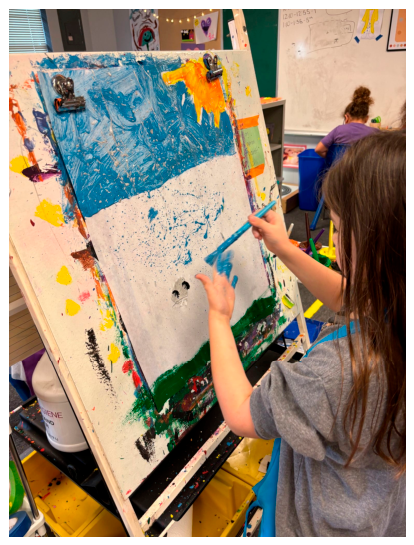
Table 4 analyzes the frequency of each CCC at each grade level. Across all grade levels, creative opportunities for play that allowed students to engage with the patterns CCC were painting and bracelet building. This was occasionally done individually but was usually done collaboratively with numerous students painting together on individual easels. There were cases where painting was not coded for patterns. In these images, students were not necessarily creating an image with a pattern. For example, Figure 1 offers a comparison to highlight a photo that was not coded for patterns and one that was. The second image shows a student sectioning off parts of the easel to create a pattern. Other creative play examples that did not elicit engagement with patterns include sculpting, using Kinetic Sand, coloring, using Floam, or using light table cubes.
The only type of play that generated opportunities for systems and system models CCC engagement was construction play involving LEGO bricks, Brain Flakes, and other types of blocks across all grade levels (Table 4). The descriptions we provided revolve around understanding how the individual pieces work to put them together to create something different. This aligns with the Framework’s definition of systems, which states that systems are a collection of interrelated parts that work together (NRC, 2012). Students demonstrate an intuitive understanding that different arrangements will cause the individual properties to interact differently and influence the larger system, which aligns with what NGSS states elementary students can accomplish (NGSS Lead States, 2013). However, students were seen solely focusing on the act of the construction rather than articulating the relationships between components or predicting how changes could impact the overall system.
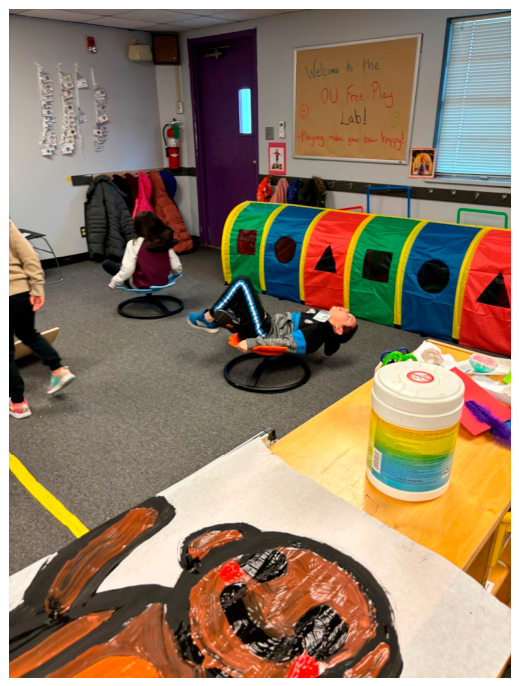
Energy and matter, structure and function, and stability and change are the three CCCs that were not completely present in most of the types of play. The following paragraph addresses which types of play supported the development of these three CCCs, and the following paragraph will explicitly link these to science instruction. Beginning with energy and matter, the type of play that most supported the development of this CCC was big body. Specifically, images that were coded for this CCC were of students on swivel chairs and wobble boards. Secondary to that was games as a type of play but only bean bag tossing. In these three examples, the informal descriptions that were given refer to changes the students had to make to have a change in how they played. For example, if the student swings their arm further back and faster, the bean bag will go farther. If the student leans at a certain angle on the swivel chair, the momentum will increase. These again offer opportunities to begin to comprehend how energy and matter can move through a system, but those relationships remain more implicit than explicit. There were a few opportunities where construction play offered an opportunity to engage with energy and matter through a light table that students could use specialized blocks to build on. In these informal descriptions, we talked about the opportunity to experiment refracting light, which is of course a form of energy. This CCC was not coded for creative or imaginative types of play.
For stability and change, sculpting clay as a creative form of play and gameplay, namely Jenga, offered opportunities for engagement with this CCC. In these instances, students manipulated the shape or functions of these components or structures. It was noted that students experimented with how changes to individual components influenced the overall structure and thus suggests that hands-on modification opportunities are important for eliciting interactions with stability and change. This CCC was absent from imaginative, construction, and big-body types of play.
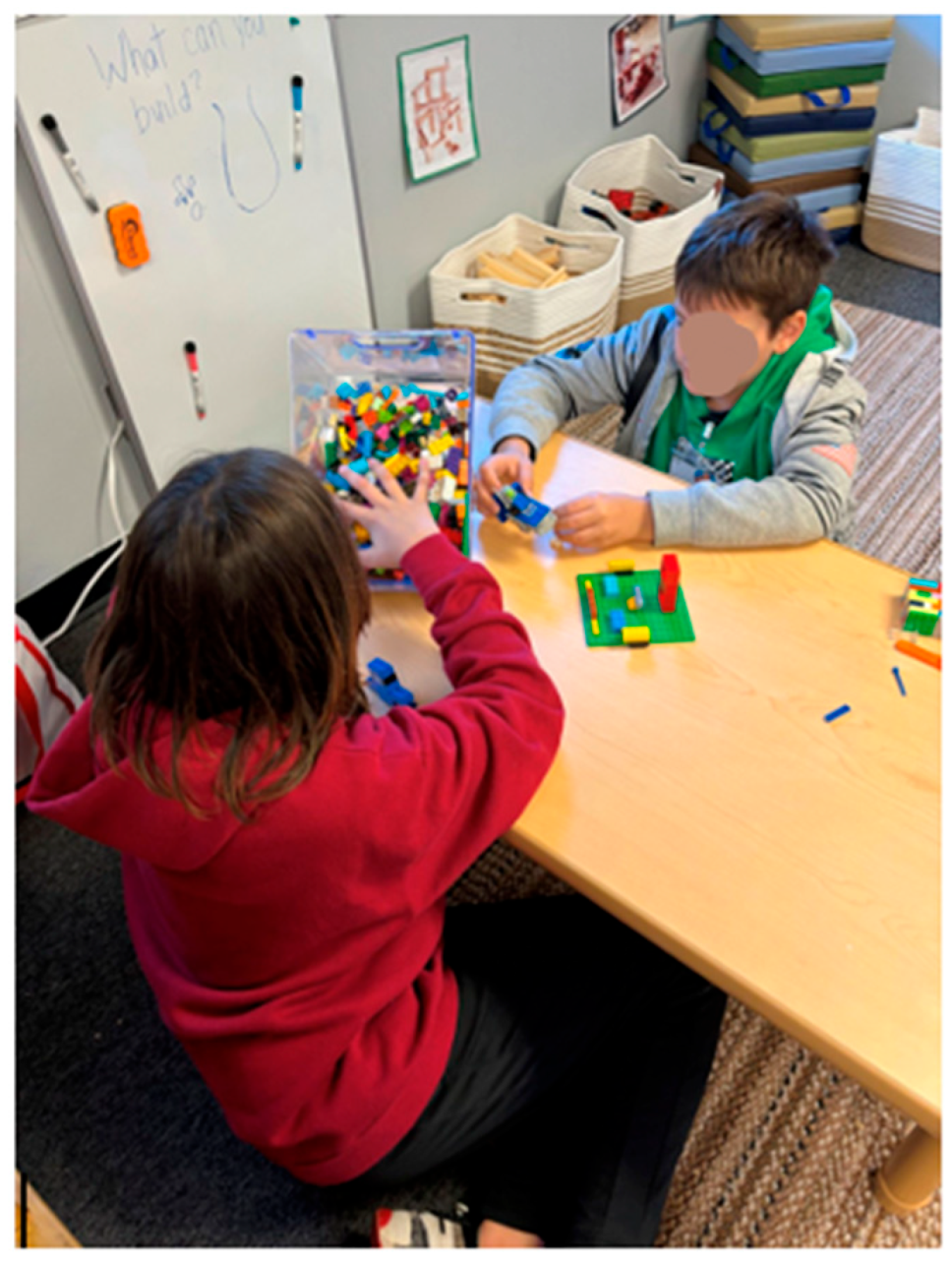
For structure and function, construction forms of play received the most coding and understandably so. These descriptions involved the use of Magnatiles, marble run, Brain Flakes, and Legos and involved students taking those individual pieces to create structures with specific functions. For example, Figure 2 shows students using Legos to build a house. By itself, that Lego piece is just a Lego, but as it comes together with other pieces, it can create entirely new structures with different functions. Creative forms of play that had this CCC present involved bead making, sculpting, and Floam, and, similar to construction play, these also involved taking smaller pieces and putting them together in a way the student wants to manipulate to create something entirely different. Jenga, like stability and change, offered some opportunity to engage with structure and function. However, there were no imaginative or big-body forms of play coded for.

4. Discussion

Attitudes toward science are established at a young age, making the establishment of a positive regard for science inquiry at an early age influential. Established research has documented that students’ perceptions of science become concrete by the time they are teenagers (Tai et al., 2006), underscoring the importance of frequent exposure to unique opportunities for science inquiry. When considered holistically, the findings exemplify how play contexts can be utilized to support foundational scientific thinking but also how different play contexts support each CCC differently. Play serves as an adaptable pedagogical tool through which the degree to which connections to scientific concepts are made can be kept implicit or made more explicit depending on the teacher’s instructional goals. These findings also align with a companion study of this same free play intervention, which found that free play sessions across two 12-week cohorts produced measurable improvements in children’s prosocial behavior and positive affect, alongside neural changes associated with heightened engagement during observed action. Taken together, this converging evidence suggests that free play supports children’s development across cognitive, social-emotional, and neural domains, reinforcing its value as a context for the kind of scientific engagement documented here.

4.1. Play as a Context for CCC Development

The findings below are best understood through the lens of Vygotsky’s (1978) zone of proximal development (ZPD). Free play frequently placed students within their zone of independent action, where they could engage with CCCs like patterns and cause and effect spontaneously and without adult support. However, CCCs that remained largely implicit in this study—energy and matter, structure and function, and stability and change—appear to sit further into students’ ZPD, requiring the presence of a ‘more knowledgeable other’ (Vygotsky, 1978) to scaffold students from intuitive action toward explicit conceptual understanding (Dimitriadis & Kamberelis, 2006).
Play naturally integrates various opportunities to engage with the patterns CCC. The Framework identifies the presence of patterns in most spaces as well (NRC, 2012). Once they are identified, they provide an opportunity to observe variation and elicit questions. It defines patterns for K-2 as just being observed in natural systems and being used as sources of evidence to describe observable phenomena. For grades 3–5, patterns increase in complexity as students identify them to sort and organize natural phenomena. These observations can also be made over time to make predictions.
Performance expectations (PEs) from the NGSS point to the use of patterns to increase students’ capability to make predictions and construct explanations (NRC, 2012; NGSS Lead States, 2013). This was used to inform whether pattern engagement was present or not. The significance of creating numerous opportunities for engagement is evident throughout the kindergarten-through-fifth-grade standards. For example, K-ESS2-1 asks students to use their observations of local weather conditions to describe patterns (NGSS Lead States, 2013). Performance Expectation 3-PS2-1 offers another example in which students are asked to conduct investigations to determine how forces impact motion. Without opportunities to understand the patterns of how objects move when they are pushed or pulled, students would not be able to accomplish this, hence the significance of establishing a foundation early and increasing its complexity over time.
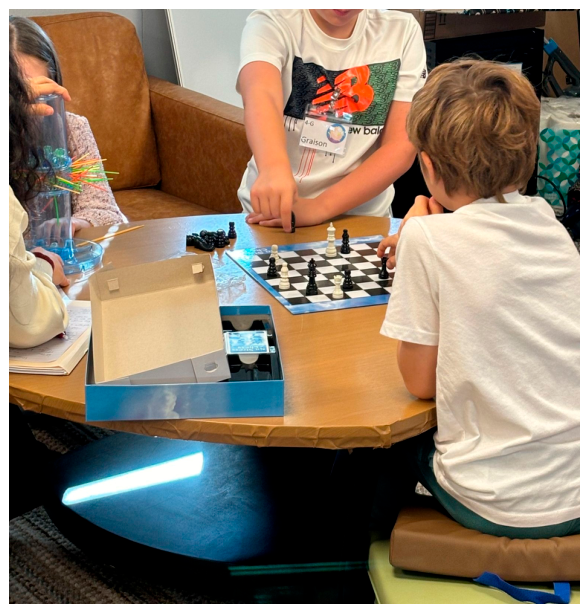
Cause and effect was the other CCC that was most prevalent. The Framework (NRC, 2012) describes cause and effect as the following step after the recognition of patterns. It is usually utilized in seeking out an explanation for why the pattern exists. This offers a subsequent explanation for the dual presence of both CCC where one or the other was coded for. For K-2, cause and effect was explained as the reason behind observable patterns, and at these grade bands, students can utilize it to generate simple tests that can refute or confirm their ideas. An example PE of this from NGSS is 1-PS4-3: “Plan and conduct an investigation to determine the effect of placing objects made with different materials in the path of a beam of light” (NRC, 2012). In grades 3–5, students are more routinely testing cause and effect relationships to explain changes they are observing. They have also developed an understanding that just because two things are related does not necessarily mean that a cause-and-effect relationship is present. The PE 4-ESS2-1 asks students to describe the causes behind the rate of erosion and the relationships between water, ice, wind, or vegetation offers an example of this. Succinctly put, these types of play offer opportunities for students to do (i.e., test) an action and see what the response will be. This offers a direct relationship to experimentation, which is directly referenced in the science and engineering practices (SEPs) of NGSS (NRC, 2012). Big-body and gameplay are examples that strongly support the development of an understanding of cause and effect, and they also serve as a testament to the relationship between cause-and-effect and pattern CCCs (Figure 3 and Figure 4). Playing on a swivel provides numerous opportunities to experiment with how changing body positioning can impact motion. In the case of chess, if the student makes a certain move, the other player responds depending on their initial move. In the case of KerPlunk, if the student pulls a stick, then things will shift a certain way, or the marbles will drop. Both represent forms of experimentation that primary students engage with but that also stimulate positive regard for the experimentation process. If this is combined with teachers who understand this impact of play, they can utilize such opportunities to encourage experimentation and questioning when engaging in science instruction, functioning as the more knowledgeable other who extends play-based experimentation into more explicit CCC understanding (Vygotsky, 1978). This aligns with Glauser-Abou Ismail et al.’s (2022) observation that teachers should establish structure before play begins, then step back during play itself to preserve students’ agency and autonomy—intervening as the more knowledgeable other only at the moments scaffolding is needed, rather than directing the play throughout.
Early exposure to opportunities to engage with the scale, proportion, and quantity (SPQ) CCC is important for setting a foundation for insightful observational skills. Observing SPQ is important in developing an understanding for what makes up more complex things. The significance of understanding SPQ is particularly felt through creative and construction play, with creative types of play having the greatest number of SPQ codes. Students cannot begin to conceptualize engineering practices without an understanding of scale and quantity and how things can come together or how that scale and quantity are relative to one another to form other things. SPQ also offers opportunities to challenge students’ understanding of mathematical concepts, which is supportive of the development of numerous SEPs, namely, using mathematics and computational thinking, analyzing and interpreting data., developing and using models (NRC, 2012). For grades K-2, students are building an understanding of SPQ by recognizing things relatively (e.g., Are they bigger or smaller in comparison to one another?). Typically, their references to SPQ are to compare and describe objects. Figure 5 serves as a good example of how SPQ can support model development. It is a creative play example with a first-grade student painting a sunset with a grass area. This is similar to what we would see with students who create poster models of the water cycle, and how the students position these things and depict their sizes relative to each other can offer insight into their understanding of key scientific concepts. In grades 3–5, the Framework describes SPQ as increasing in complexity as students understand that things can be incredibly small to very large, and they can use units to measure weight, time, volume, and length (NRC, 2012). Figure 5 shows a fifth-grade student engaging with construction play using Legos to build a car. Legos offer an opportunity to test and understand how differently sized and shaped blocks come together to create new structures. This reaffirms that the development of the SPQ CCCs can be supportive of developing engineering skills.
Systems and system models are the fourth CCC outlined in the Framework. Simply put, this CCC refers to how whole systems work as well as how the individual components work when they are isolated, and these mechanisms—individually or collectively—can appear differently (NRC, 2012). It is important to understand the interactions within whole systems as well as the mechanisms and transfers between the components. Developing thorough understandings of those relationships assists with the development of predictions about what can happen within those systems if components of the systems were to be manipulated as well. In the K-2 grade band, students understand that organisms and systems in both the natural and designed world are made up of parts (NRC, 2012). K-ESS3-1 defines the PE as follows: “Use a model to represent the relationship between the needs of different plants or animals (including humans) and the places they live” (NGSS Lead States, 2013). In grades 3–5, there is now an understanding that systems are groups of related parts that carry out a function when put together. The Framework gives 3-LS4-4 as an example. The PE states that students are now able to make claims about solutions to problems that cause environments to change and subsequently cause the plants and animals in those systems to change too (NRC, 2012; NGSS Lead States, 2013). As mentioned, construction play with describing individual pieces coming together to create something new, creating engagement with systems and system models, which aligns with the progression descriptions in the Framework and PEs for the standards given by (NRC, 2012; NGSS Lead States, 2013).
While play supported exposure to patterns, cause and effect, and systems, the limited presence of energy and matter, structure and function, and stability and change play suggests that engagement with these CCC is usually implicit. Teachers would need to scaffold or create more highly structured play opportunities consistent with a Vygotskian model of guided development. For energy and matter, big-body and gameplay provided such contexts. Although the observed interactions felt more implicit, students were seen experimenting with motion and force and adjusting their play in response to observed outcomes. However, they lacked the ability to interpret these interactions in terms of flow or cycles or to articulate energy transfer and system dynamics explicitly. Construction play contexts introduced through light tables allowed students to encounter energy through light refraction, but again, there remained a lack of explicit conceptual understanding.
A similar pattern was seen with stability and change. Play contexts that involved some degree of manipulation and testing physical tools, such as sculpting or Jenga, were more likely to inherently cause students to test the stability of the tools they were playing with. Students demonstrated through these interactions a foundational understanding that some things are more stable than others and that stability could depend on other variables, such as positioning, and that these modifications can have different outcomes. This also shows a direct connection with other CCCs, like cause and effect. However, again, we see the importance of the teacher as the facilitator, because these interactions are unlikely to be generalized into broader scientific concepts without further scaffolding (Vygotsky, 1978).
Interestingly, structure and function yielded different results despite still not being as prominent. It was accessible through creative and construction play contexts. The Framework highlights this CCC as the foundation for understanding how properties of parts relate to the performance of the system (NRC, 2012). Not coincidentally, in these contexts, students assemble materials and show an intuitive understanding that smaller parts can result in a different function. However, similarly to the previous two CCCs, interactions with structure and function remained implicit as well because students were able to perform the actions but not move towards explaining the interactions. It remains unknown whether, with the assistance of instructional prompts, students could articulate how or why certain designs have a particular outcome.
Taken together, these findings provide evidence that although some interactions with the CCCs are explicit, others remain more implicit. This pattern reflects the boundary of students’ zone of proximal development (ZPD) in a free play context: implicit engagement marks what students can access independently, while explicit conceptual understanding requires the socially mediated scaffolding Vygotsky (1978) describes. This aligns with Johnston et al.’s (2011) characterization of play as a cognitive task engaging both individual reflection and group interaction—the former supporting the implicit, independently accessed CCCs, and the latter creating the conditions through which teachers, as the more knowledgeable other, can scaffold students toward the more explicit ones. Play environments unequivocally provide a rich, authentic opportunity to interact with all the CCCs, but for some of the CCCs, those play contexts may need to be more structured than what is found in a free play environment. Nonetheless, a free play environment will still offer the opportunity for exposure to all kinds of exploration with all CCCs. NGSS supports this vision however as they encourage the CCCs to be explicitly integrated into instruction to support sensemaking (NGSS Lead States, 2013).

4.2. Grade Level Variations

The energy and matter CCC is essential for the ongoing development of students’ SEPs because they drive the cycles that give natural systems their functions. In grades K-2, students are simply understanding that things can come together or break apart, and in grades 3–5, students begin developing an understanding of particles and how matter and energy can be transferred between systems. In grades 3–5, students are introduced to the law of conservation of matter, and standards like 5-LS1-1 ask students to “support an argument that plants get the materials they need for growth chiefly from air and water” (NRC, 2012; NGSS Lead States, 2013). Without an understanding of how energy and matter move through systems, students would not be able to conceptualize and understand that air and water can cause plant growth.
Similarly, the stability and change CCC is also used to describe how systems function and is particularly used in understanding what changes in those systems and how they change over time. Within the context of science, stability is dynamic (NRC, 2012; NGSS Lead States, 2013). It refers to the fact that when a system does experience a change, it will work or adapt to return to a stable condition (e.g., what is also referred to as equilibrium). These changes and how systems respond to changes are an important component of understanding the natural world around us. In early grades, students just recognize that systems can change over time and that these changes can happen rapidly or slowly. Older students, in grades 3–5, correlate these changes with time and recognize that these changes can happen at different rates, and again, the idea that these systems will experience changes but respond to those changes and work toward stability is reaffirmed (NRC, 2012; NGSS Lead States, 2013).
The structure and function CCC is situated more independently, and the Framework describes it as being like the cause-and-effect CCC. This CCC supports students in understanding causal relationships, which becomes important for being able to make inferences, and the ability to develop inferences is important to be able to ask the kind of experimental questions that lead us to scientific investigations (NRC, 2012). The shape and stability of structures depend on the properties that make them up and how they come together. In grades K-2, students begin observing the shape and stability of structures that make up natural objects. In 2-LS2-2, students develop models that begin to explain how animals can disperse seeds or pollinate plants. In grades 3–5, students learn that substructures make up structures and are made with different materials to serve different functions (NRC, 2012). Although these three CCCs were not as prevalent as the other four, they were still present, and in more structured forms of play, their presence can be made more explicit and further supported.

5. Conclusions

The evidence presented in this study demonstrates that play is not simply a supplementary activity for classrooms. It is a meaningful context in which students can develop scientific thinking. Across the dataset, the frequency and manner of engagement varied, but ultimately, students gained exposure and did have an opportunity to interact with each CCC. The CCCs that naturally were embedded in most forms of play and had the greatest potential for early science exposure were patterns and cause and effect. In contrast, energy and matter, along with stability and change, was less prevalent. However, prevalence does not mean absence. The implication of these results simply means that teachers could provide more structured opportunities to more explicitly engage with these forms of play.
Additionally, a key conclusion of this study was also that different forms of play offer different learning opportunities. Big-body play and games offered opportunities for observable experimentation, whereas more creative forms of play fostered opportunities to test different scales and systems. This furthermore attests to the importance of a balanced play environment with various options for students to build the play experience that supports their version of what play is. Teachers who recognize play as an opportunity for authentic scientific inquiry can intentionally leverage this context to strengthen students’ skills in questioning and reflecting, which are cornerstones of a strong inquiry skillset across scientific skillsets.
It is also important to acknowledge a limitation of this study’s data collection approach. Beyond the four children formally observed per session, additional photographs were captured throughout sessions as deemed relevant by the researcher. While this allowed the photographic record to capture a broader range of play moments, it also means that a meaningful portion of the image bank reflects the researcher’s in-the-moment judgment about which play behaviors appeared scientifically relevant. This introduces the possibility of confirmation bias, in that moments already resembling CCC engagement may have had a greater likelihood of being photographed than moments that did not. As such, the apparent ubiquity of CCCs across the collected material should be interpreted with some caution, and future studies may benefit from a more systematic or randomized photographic sampling protocol to reduce this risk.
Integrating play and science allows for play to serve as a foundation for later and more complex scientific reasoning. Importantly, early and frequent exposure to the CCCs through play develops more positive regard for science while simultaneously building the foundation necessary for more complex scientific reasoning in later grades. This also suggests an opportunity for future research in which longitudinal studies could examine how attitudes, motivation, and intentions change over time for students when teachers intentionally integrate science and play. Furthermore, future studies could also look at the effect of intentionally structuring opportunities to have students engage with the less prevalent CCCs. Both lines of research could further help in examining how early integrated play and science experiences influence long-term learning outcomes.

Author Contributions

Conceptualization, E.C.; methodology, E.C., S.A.-B. and K.F.; validation, E.C.; formal analysis, E.C., S.A.-B. and K.F.; investigation, E.C.; resources, E.C.; data curation, E.C.; writing—original draft preparation, E.C. and S.A.-B.; writing—review and editing, E.C., S.A.-B. and K.F.; visualization, E.C.; supervision, E.C. and K.F.; project administration, E.C.; funding acquisition, E.C. All authors have read and agreed to the published version of the manuscript.

Funding

This research was funded by the University of Oklahoma Institute for Community and Society Transformation. Financial: support for publishing was provided by the University of Oklahoma Libraries’ Open Access Fund.

Institutional Review Board Statement

This study was conducted in accordance with the Declaration of Helsinki and approved by the Institutional Review Board of the University of Oklahoma (protocol code 16139, approved 30 September 2024).

Informed Consent Statement

Written informed consent was obtained from the parent/guardian of all child participants involved in this study, along with child assent.

Data Availability Statement

The data presented in this study are not publicly available due to privacy and ethical restrictions involving identifiable images of child participants.

Acknowledgments

The authors would like to thank the University of Oklahoma Institute for Community and Society Transformation for their support of this project and the University of Oklahoma Libraries’ Open Access Fund for publishing. During the preparation of this manuscript, the authors used Claude (Sonnet 5, Anthropic) to assist with reviewing the manuscript for grammatical and stylistic consistency. The authors have reviewed and edited the output and take full responsibility for the content of this publication.

Conflicts of Interest

The authors declare no conflicts of interest.

References

  1. Broström, S., & Frøkjaer, T. (2019). Developing a pedagogy of education for sustainable futures: Experiences and observations from Danish preschools. ECNU Review of Education, 2(4), 475–496. [Google Scholar] [CrossRef] [Scilit]
  2. Brown, S., & Vaughn, C. (2009). Play: How it shapes the brain, opens the imagination, and invigorates the soul. Penguin Group. [Google Scholar]
  3. Campbell, C., & Howitt, C. (Eds.). (2024). Science in early childhood (5th ed.). Cambridge University Press. [Google Scholar]
  4. Casey, E. M. (2026). Play across interpersonal neurobiological spaces: Integration and the Neuroception-Play-Integration Cycle. In E. M. Casey, & C. Dewhirst (Eds.), Play across all spaces: Why the brain needs play and how to foster play in any context (pp. 35–52). Kendall Hunt Innovative Ink. [Google Scholar]
  5. Casey, E. M., Arledge, B., Naghash, F., Spivey, E., Norris, J. N., Zhang, H., Mahmoud-Elhaj, D., Rajala, R., & Ethridge, L. E. (2026). Free play’s effect on elementary students’ neural activity, affect, and behavior: A randomized crossover study. Journal of Experimental Child Psychology, 269, 106542. [Google Scholar] [CrossRef] [Scilit] [PubMed]
  6. Çavas, B., Güney, L. Ö., Karagöz, E., & Çavas, P. (2020). More than playing a toy: The effects of Lego Mindstorms on the students’ perceptions about scientists. Science Education International, 31(1), 92–103. [Google Scholar] [CrossRef] [Scilit][Green Version]
  7. Dimitriadis, G., & Kamberelis, G. (2006). Theory for education. Routledge. [Google Scholar]
  8. Doolittle, P. E. (1995). Understanding cooperative learning through Vygotsky’s zone of proximal development. Educational Technology, 35(5), 60–63. [Google Scholar]
  9. Eshach, H., & Fried, M. N. (2005). Should science be taught in early childhood? Journal of Science Education and Technology, 14(3), 315–336. [Google Scholar] [CrossRef] [Scilit]
  10. Fleer, M. (2019). Scientific playworlds: A model of teaching science in play-based settings. Research in Science Education, 49(5), 1257–1278. [Google Scholar] [CrossRef] [Scilit]
  11. Fleer, M. (2024). Conceptual PlayWorld for infant-toddlers: The unique nature of becoming a Science learner in the early years of life. Research in Science Education, 54(2), 315–338. [Google Scholar] [CrossRef] [Scilit]
  12. Glauser-Abou Ismail, N., Pahl, A., & Tschiesner, R. (2022). Play-based Physics learning in kindergarten. Education Sciences, 12(5), 5. [Google Scholar] [CrossRef] [Scilit]
  13. Gray, P. (2017). What exactly is play, and why is it such a powerful vehicle for learning? Top Lang Disorders, 37(3), 217–228. [Google Scholar] [CrossRef] [Scilit]
  14. Holt, N. L., Lee, H., Millar, C. A., & Spence, J. C. (2015). Eyes on where children play: A retrospective study of active free play. Children’s Geographies, 13, 73–88. [Google Scholar] [CrossRef] [Scilit]
  15. Johnston, A., Butler, M. B., Mensah, F. M., & Williams, B. (2011). Playing with science: Models for engaging communities. Children, Youth and Environments, 21(2), 312–324. [Google Scholar] [CrossRef] [Scilit]
  16. Lanouette, K. (2022). Emotion, place, and practice: Exploring the interplay in children’s engagement in ecologists’ sampling practices. Science Education, 106, 610–644. [Google Scholar] [CrossRef] [Scilit]
  17. National Research Council. (2012). A framework for K-12 science education: Practices, crosscutting concepts, and core ideas. The National Academies Press. [Google Scholar] [CrossRef] [Scilit] [PubMed]
  18. NGSS Lead States. (2013). Next generation science standards: For states, by states. The National Academies Press. [Google Scholar]
  19. Pratt, H. (2014). Implementing NGSS crosscutting concepts: Opportunities for elementary teacher contributions. Science & Children, 52(2), 8–11. [Google Scholar] [CrossRef] [Scilit]
  20. Rubin, K. (2001). The play observation scale. Center for Children, Relationships, and Culture, University of Maryland. [Google Scholar]
  21. Saldaña, J. (2025). The coding manual for qualitative researchers. Sage. [Google Scholar]
  22. Saldaña, J., & Omasta, M. (2018). Qualitative research: Analyzing life. Sage. [Google Scholar]
  23. Scarlett, W. G., Naudeau, S., Salonius-Pasternak, D., & Ponte, I. (2005). Children’s play. SAGE Publications, Inc. [Google Scholar]
  24. Science SCASS States. (2018). Using crosscutting concepts to prompt student responses. Council of Chief State School Officers. Available online: https://files.eric.ed.gov/fulltext/ED586953.pdf (accessed on 4 September 2026).
  25. Tai, R. H., Liu, C. Q., Maltese, A. V., & Fan, X. (2006). Planning early for careers in science. Science, 312(5777), 1143–1144. [Google Scholar] [CrossRef] [Scilit] [PubMed]
  26. Vygotsky, L. S. (1978). Mind in society: The development of higher psychological processes. Harvard University Press. [Google Scholar]
  27. Weisberg, D. S., Hirsh-Pasek, K., & Golinkoff, R. M. (2013). Guided play: Where curricular goals meet a playful pedagogy. Mind Brain and Education, 7(2), 104–112. [Google Scholar] [CrossRef] [Scilit]
  28. Worch, E. A., & Haney, J. J. (2011). Assessing a children’s zoo designed to promote science learning behavior through active play: How does it measure up? Children Youth and Environments, 21(2), 383–407. [Google Scholar] [CrossRef] [Scilit]
  29. Zimmerman, C. (2000). The development of scientific reasoning skills. Developmental Review, 20(1), 99–149. [Google Scholar] [CrossRef] [Scilit]
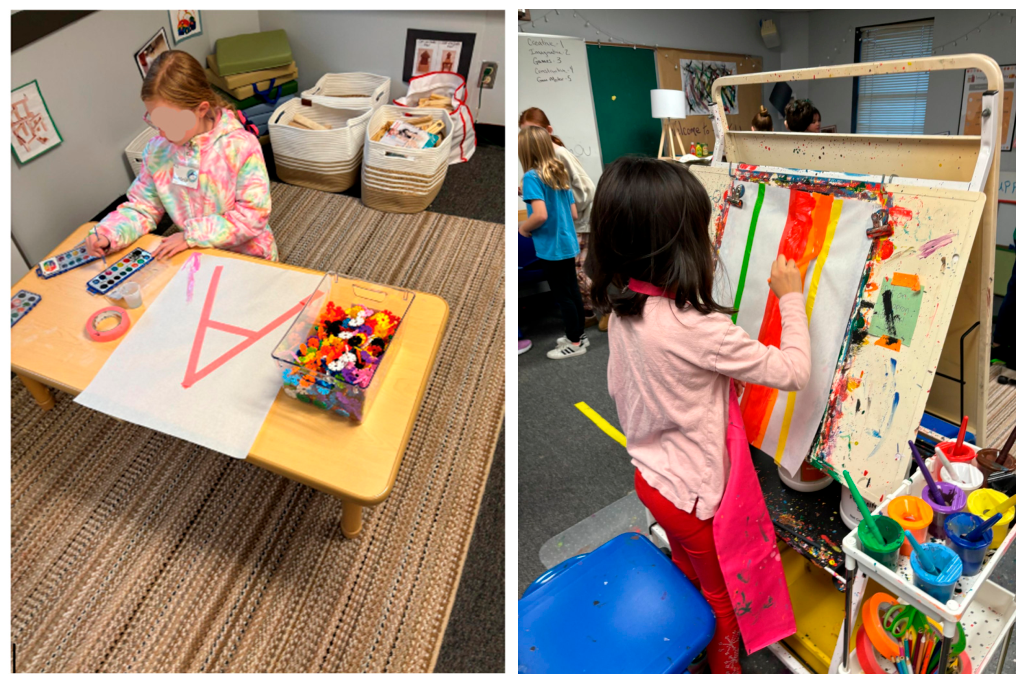
Figure 1. Comparing images coded for the patterns CCC. The left image shows a fifth-grade student (Image 1271). The right image shows a third-grade student (Image 1271).
Education 16 01514 g001
Figure 2. Fifth grader in construction play example. (Image 243).
Education 16 01514 g002
Figure 3. Big-body play on a swivel. (Image 1143).
Education 16 01514 g003
Figure 4. Gameplay with chess and KerPlunk. (Image 212).
Education 16 01514 g004
Figure 5. First grader in creative play example. (Image 831).
Education 16 01514 g005
Table 1. Example codebook.
Photo Title & Description of Connection to CCCPC&E SPQ S&SM E&M S&F S&C
1 girl on swivel board—If I push or position my body a certain way then this is how my rotation changesXX
Boy playing chess—Identifying similarities & differences and making decisions/interpretations based on the pattens they are observing; as they make those decisions, they learn the consequence or pattern further- these function as small tests for the patterns they observeXX
Girl manipulating clay—Depending on what I do, the clay will change or can create something new X XX
Girl painting—working within the space you want and processing how different mediums can change thatXXX
Boy building with Legos—putting smaller Legos together will create new thingsX XX X
Key P = patterns; C&E = cause and effect; SPQ = scale, proportion, and quantity; S&SM = systems and system model; E&M = energy and matter; S&F = structure and function; S&C = stability and change.
Table 2. Examples of types of play that were engaged with in each section.
Section of PlayCategorizedExamples of That Type of Play
Creative1Painting, sculpting, bracelet making, using Kinetic Sand, coloring, Floam, or light table cubes
Imaginative2Painting specific scenes (aliens, dogs, etc.), playing with kits (house, baby dolls, veterinary, grocery store, cooking), puppet shows or enactments,
Games3Mandala, Guess Who, chess, Battleship, Clack, Ticket to Ride, cards, Taco Cat Goat Cheese Pizza, KerPlunk, Perplexus, puzzles, Connect Four, Jenga, bean bag toss
Construction4LEGO bricks, bricks, pavers, Brain Flakes, MAGNA-TILES, marble run
Big Body5Trampoline, stepping stones, swivel wobble board and chair, tunnel, hopscotch; obstacle courses with mats and other materials included here were periodically set up
Table 3. Summary of frequencies for each form of play.
CCCQuantity of Codes (Out of 274 CCC-Coded Images; 374 Total Photographs Collected)Form of Play Most Supporting CCCForm of Play Least Supporting CCC
Pattern166Big Body: 47 (28.3%)Imaginative: 3 (1.8%)
Cause and Effect172Creative: 52 (30.2%)Imaginative: 2 (1.2%)
Scale, Proportion, and Quantity65Creative: 56 (86.2%)Big Body: 0
Systems and System Models33Construction: 31 (93.9%)All other CCCs: 0
Energy and Matter15Big Body: 9 (60.0%)Creative: 0
Structure and Function42Construction: 23 (54.8%)Imaginative & Big Body: 0
Stability and Change11Games: 9 (81.8%)Construction: 0
Note. The quantity of codes present for each CCC was used to calculate the percentage of instances in which that form of play supported that CCC.
Table 4. Frequency of CCC per grade level.
Grade LevelCCC
Patterns (166)Cause and Effect (172)Scale, Proportion, and Quantity (65)Systems and System Models (33)Energy and Matter (15)Structure and Function (42)Stability and Change (11)
125 (15.1%)26 (15.1%)13 (20.0%)6 (18.2%)06 (14.3%)0
237 (22.3%)44 (25.6%)16 (24.6%)4 (12.1%)7 (46.7%)5 (11.9%)1 (9.1%)
339 (23.5%)37 (21.5%)11 (16.9%)7 (21.2%)4 (26.7%)6 (14.3%)1 (9.1%)
419 (11.4%)22 (12.8%)7 (10.8%)4 (12.1%)06 (14.3%)1 (9.1%)
538 (22.9%)39 (22.7%)16 (24.6%)7 (21.2%)3 (20.0%)19 (45.2%)8 (72.7%)
Note. There were some photos in each category that had the grade level information missing. Due to this, the above percentages for each CCC will not sum up to 100%.
Disclaimer/Publisher’s Note: The statements, opinions and data contained in all publications are solely those of the individual author(s) and contributor(s) and not of MDPI and/or the editor(s). MDPI and/or the editor(s) disclaim responsibility for any injury to people or property resulting from any ideas, methods, instructions or products referred to in the content.