


Abstract
Implementing innovative digital teaching methods in higher education is a particularly complex endeavor that calls for adaptive and hybrid implementation strategies. This study describes the integration of digital simulations into a higher education nursing faculty. Kotter’s change model was used as an organizational framework to structure and report the process, while a design approach guided day-to-day practice. This combination was chosen to balance accountability with the flexibility required in a complex higher education context. This four-year single case study draws on annual project reports and descriptive student questionnaire data. The findings show that neither the problem definition nor the solution remained stable across project cycles: each cycle surfaced new challenges and revealed new contextual constraints. Tangible outcomes include a growing library of co-created simulation scenarios, a range of implementation tools, and the “simulatie wasstraat”, a curated arrangement of scenarios tailored to students’ placement contexts. Students reported positive experiences regarding perceived usefulness, motivation, and the perceived educational value of the simulations. Persistent challenges around organizational embedding remain. The findings nonetheless suggest that a hybrid implementation strategy was practically viable in this institutional context.
1. Introduction
Implementing innovative teaching methods in higher education is a particularly complex endeavor (Kezar, 2011). Many higher education settings are characterized by a complex organizational structure, layered with hierarchies, power dynamics, cultural dimensions, and an open vision with multiple and sometimes ambiguous goals (Kezar, 2011). In addition, departments, academies, or faculties within a higher education institution often operate with a high degree of autonomy and are frequently managed as relatively independent organizations. Because higher education settings typically employ large numbers of highly educated professionals, multiple change and innovation streams are often simultaneously at play, combining top-down initiatives with bottom-up efforts. This makes it necessary to attend to a wide range of factors during change processes: political, cultural, and sociocognitive factors all require consideration (Kezar, 2011). This complexity is further amplified by the pace of change, the novelty of innovations, and the increasing prominence of previously unidentified stakeholders. Greenhalgh and Papoutsi (2019) note that “such systems are characterised by uncertainty, unpredictability, and emergence.” (p. 2). Boonstra and Reezigt (2023) distinguish between structural and dynamic complexity and argue, from a contingency perspective, that the effectiveness of implementation strategies depends on the degree of complexity present in the system. As complexity increases, strategies rooted in traditional implementation and change science, predictable and linear in nature, become insufficient, and approaches that emphasize close collaboration with local stakeholders become increasingly necessary (Boonstra & Reezigt, 2023; Nilsen et al., 2020).
In practice, higher education change processes are rarely situated at a single point on the complexity spectrum. Multiple authors (Boonstra & Reezigt, 2023; Greenhalgh & Papoutsi, 2019) point out that hybrid implementation strategies are increasingly necessary when the context is complex. Such hybrid strategies combine a structured framework that provides general direction with room for improvisation, adaptation, fine-tuning, and experimentation within that structure (Brown & Eisenhardt, 1997; Greenhalgh et al., 2018), or what Brown and Eisenhardt (1997) refer to as semi-structures that “lie between the extremes of very rigid and highly chaotic organization” (p. 28). This creates a productive tension: power structures within higher education demand accountability, and progress reports and formal accountability documents tend to be framed within a teleological logic, while the reality of implementation calls for a more adaptive approach (Quan et al., 2019). Outside of higher education, Kotter’s (1996) change model is a widely applied process model for guiding change. Although this model implies linearity, it contains focus areas that are relevant both for accountability purposes and for the change process itself. In line with S. P. Kang et al. (2022), who applied Kotter’s model in an iterative approach in higher education, this study describes the application of Kotter’s change model from an iterative design perspective, where adaptivity, focus, and accountability converge.
1.1. Kotter’s Model of Change
Kotter’s (1996) change model describes eight steps that are considered essential for organizational change processes. Kotter recognized early on that successful change must revolve around a process in which people are actively involved, and that it cannot be reduced to a singular event. Although the model originates primarily from a corporate context, a growing number of studies demonstrate its applicability to change processes in higher education as well (Collyer & Campbell, 2015; Fernandes et al., 2021; S. P. Kang et al., 2022; Kuffuor et al., 2024; Petersen & Bartel, 2020; Shah et al., 2023). Part of the model’s enduring appeal lies in its accessibility: it is widely regarded as a clear and practical framework, which has contributed to its continued use among practitioners and researchers alike. The model consists of the following steps: (1) creating a sense of urgency, as major change requires considerably more effort than business as usual and people need to understand why change is necessary; (2) building a guiding coalition of individuals with the right knowledge, skills, and authority to drive the change forward; (3) forming a strategic vision that guides the process toward a shared and desirable new state, paired with feasible strategies for achieving it; (4) communicating the vision, since large-scale change succeeds only when people genuinely buy in and move in the same direction; (5) removing barriers that may prevent the change from taking effect; (6) generating short-term wins, as celebrating incremental successes creates momentum and serves as an emotional reward along the way; (7) consolidating improvements and sustaining urgency, since without continuous monitoring and refinement, people may lose engagement or revert to old routines; and (8) anchoring the changes in the organization, so that new ways of working become institutionalized and routine.
1.2. Design Approach
Design focuses on the systematic and thoughtful resolution of complex practical problems, where the outcome is often innovation. As Simon (1969) describes, design research is fundamentally concerned with how things ought to be. Rather than analyzing, explaining, or predicting the existing world, as is the aim of traditional research, design research seeks to influence practice by creating well-considered solutions to authentic practical problems, thereby concretely shaping a new reality. The two approaches are complementary: design research draws on existing knowledge generated through traditional research to justify and apply it in new contexts, while those new contexts in turn generate empirical insights that feed back into the knowledge base (Verkerke et al., 2013).
A central and challenging characteristic of design research is that it cannot be planned the way traditional research can. Innovation does not lend itself to prior investigation; rather, research is an integral part of an iterative and incremental development process, continuously informed by insights from the context. Continuous and integral reflection on both process and outcomes is essential to determine and justify the next steps (Schön, 1984). Crucially, Schön (1984) also recognizes that every intervention generates new problems; problems are never static but continuously evolve in response to the actions taken. This dynamic nature of both problem and solution reinforces the need for an iterative approach, in which each cycle of design and reflection informs the next. It is this combination of structure and adaptivity, which seeks a constructive balance between the rigor of the research and its relevance to the context (Hevner, 2007), that makes design research a fitting approach for complex, evolving implementation contexts.
1.3. Aim
This study describes the process of integrating digital simulations into a higher education nursing department. Drawing on Kotter’s change model as an organizational framework, this paper provides insight into how this process unfolded across its different cycles and what it yielded. In doing so, it responds to the call for hybrid implementation strategies in complex educational contexts, combining the structured focus areas of Kotter’s model with the adaptivity and iterative logic of a design research approach. The iterative nature of the process is woven throughout the findings, illuminating the complexity that characterizes the integration of educational innovations in higher education and illustrating how resolving one problem continuously gives rise to the emergence of new ones.
To guide this description, three research questions were formulated:
- RQ1. How did the problem definitions and implementation challenges evolve across the successive cycles of integrating digital simulations into a higher education nursing curriculum?
- RQ2. How did the combination of a structured change framework (Kotter’s change model) and an iterative design approach (the Design Research Framework) shape this process?
- RQ3. How did students experience and evaluate the digital simulations that were introduced?
Questionnaire data informing the third question were collected for two of the simulations that were introduced during the project.
2. Methods and Context
2.1. Methodology
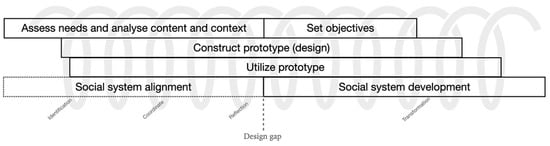
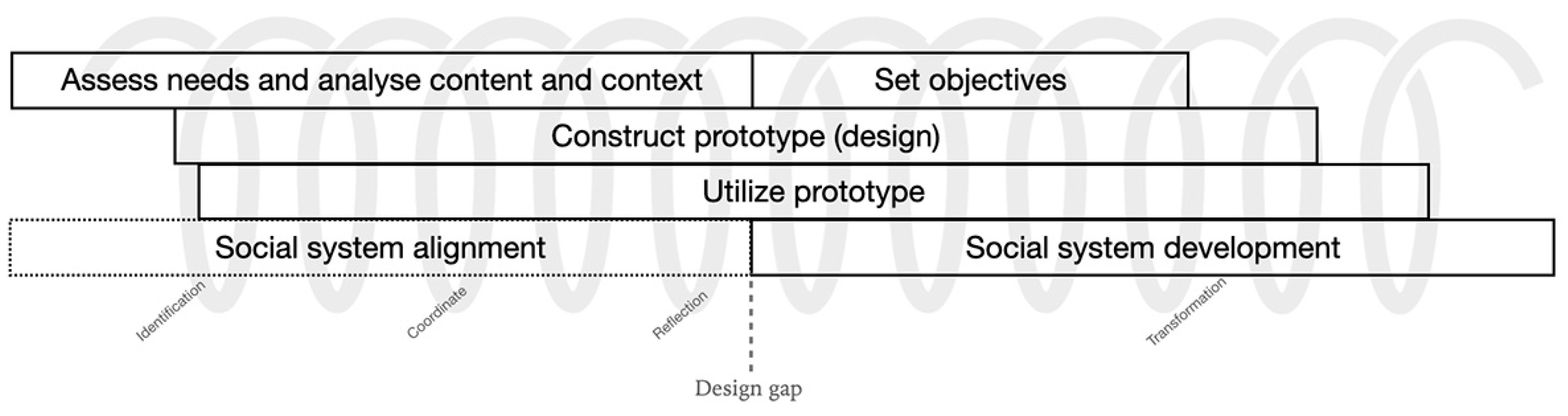
In this study, Kotter’s (1996) change model is used to organize and structure the information and data. In day-to-day practice, the Design Research Framework (DRF) (Terlouw, 2022) is used to guide the iterative design and implementation process (Figure 1). Although this framework has primarily been applied in the context of healthcare innovation (Terlouw et al., 2021, 2020; Veldmeijer et al., 2025), its foundation lies in the rapid prototyping model (Tripp & Bichelmeyer, 1990) from the field of instructional design. This model is characterized by an iterative way of working, borrowed from software engineering, and was developed to break away from rigid, linear design steps by building and testing preliminary design models at an early stage. User feedback allows requirements to be refined, designs to be improved, and the development process to be accelerated. This is consistent with how the present study unfolded, in which continuous testing served to uncover new insights and to iterate based on findings from test sessions. In its most recent version, the DRF also attends to the social context and its development, through the addition of social system alignment. Furthermore, the DRF shares considerable parallels with the design-based implementation research model (Fishman et al., 2013), which is frequently used to guide implementation processes from a more adaptive approach.
Figure 1.
Design Research Framework.
This paper reports a single case study, documenting an innovation and implementation process spanning four years. Case study research allows for in-depth examination of real-life processes and can be a valuable methodology to evaluate complex processes, such as planned organizational change (Yin, 2018).
2.2. Future Proof Nurses Project
The Future Proof Nurses project offers the context for the case study. This project emerged from a pressing challenge facing nursing education in the Netherlands. Increasing workload pressure in healthcare has led to high dropout rates among newly qualified nurses, resulting in a shortage of clinical placement supervisors and placement opportunities, which in turn hampers the preparation of new nursing graduates (project application). Conversations were initiated with nearly all healthcare institutions in the Frisian region to establish what students need in order to be adequately prepared for professional practice. These conversations revealed that students had insufficient understanding of the actual professional context and patient populations, struggled with communicative skills, and were insufficiently prepared for acute clinical situations. Based on these needs, from 2022, several digital simulations were acquired and piloted on a small scale with lecturers, students, and partner healthcare institutions. This initiative was awarded first prize in the Dutch National Education Award for Higher Education, accompanied by a grant of 1.2 million euros from the National Knowledge Institute for Education (NKO), recognizing its potential to contribute to sustainable educational innovation.
Three digital simulations form the core of the project. UbiSim is a virtual reality (VR) platform used to train clinical reasoning and decision-making, with scenarios developed in co-creation with healthcare practice around the ABCDE-methodology and SBAR-communication framework. Dialogue Trainer is a web-based simulation platform that enables students to practice context-specific professional conversations, such as delivering bad news, managing resistance, or responding to inappropriate behavior. Additionally, VR empathy training is deployed to help students develop a deeper understanding of and empathy for specific patient populations by allowing them to experience what it is like to live with certain conditions.
2.3. Setting and Participants
The study took place between 2022 and 2026. The pre-project phases took place between 2022 and 2023; the project phase started in 2023. The project runs until 2027. This paper describes the process up to and including the reporting year (2026), which constitutes the cut-off point for the present analysis. A final project cycle is currently ongoing and falls outside the scope of this study.
This study was conducted within the nursing department of NHL Stenden University of Applied Sciences, a state-funded university of applied sciences located in the north of the Netherlands in the Frisian region. The institution currently enrolls more than 22,000 students from over 100 nationalities. A distinctive feature of NHL Stenden’s educational philosophy is its design-based education concept, which emphasizes active, problem-oriented learning in close connection with professional practice.
The nursing program is a four-year bachelor’s degree with an annual intake of approximately 150 to 200 students. The program is part of the national Bachelor Nursing 2030 program, which provides the guiding principles for curriculum content across nursing programs in the Netherlands. A defining characteristic of the program is its strong integration of practice-based learning: over the course of the four years, students complete 2300 h of mandatory clinical placement. These hours are a formal requirement for registration in the BIG-register (“Beroepen in de Individuele Gezondheidszorg”, translation: Professions in Individual Healthcare Act), the statutory Dutch register for healthcare professionals. Only those listed in the BIG-register are authorized to use a protected professional title and to independently perform the reserved medical procedures associated with their profession.
The nursing department maintains an extensive network of healthcare practice partners across all domains of care, including hospitals, long-term care facilities, home care organizations, primary healthcare, and mental health services. These partners played an active role in the Future Proof Nurses project, both in the identification of learning needs and in the co-creation of simulation scenarios.
2.4. Project Cycles
The study is structured around five iterative cycles, divided into two pre-project cycles and three cycles during the project itself. During each cycle, design and research activities were conducted, findings were reflected upon, and insights informed the direction of the subsequent cycle.
In the first pre-project cycle, conversations were held with regional healthcare partners to identify student learning needs, and the digital simulations that emerged from these conversations were piloted on a small scale. The second pre-project cycle centered on the development of a grant application and co-creation activities with practice partners for scenario development.
The project has so far unfolded across three annual cycles. The first project cycle focused on further piloting the digital simulations and on engaging students in scenario development. The second project cycle was directed at further embedding the simulations in the curriculum, including the development of supporting materials and a toolbox for educational use.
The third project cycle concentrated on the evaluation of the tools, the further professionalization of teaching staff, the exploration of new simulation modalities, and the gradual transfer of ownership to the broader educational organization in anticipation of the project’s conclusion.
Findings are reported per cycle, structured around the focus areas of Kotter’s change model.
2.5. Data Sources
The analysis draws on four annual reports covering the project period (2023–2026). Reporting followed the format prescribed by the National Knowledge Institute for Education (NKO), which covers a fixed set of sections in every reporting year: a summary of the original plan; progress made; plans for the coming years; an assessment of whether the project remains on track with respect to its timeline, project design and spending plan, staff appointments, budget and consortium collaboration; identified risks and obstacles; the realization of the project’s end goals, distinguishing intended results, output already realized and output still expected; data management; and knowledge dissemination and utilization.
Two of these reports (2023 and 2025) were submitted to the funder as formal reports. For the intervening years (2024 and 2026), the project team compiled equivalent reports using the same format for internal project steering and administration. All four reports were included in the analysis; no selection was applied. Because the format remained unchanged across the project period, the reports provide a consistently structured account of each year, including risks and obstacles, which had to be documented alongside realized output.
2.6. Analysis of Reports
The reports were analyzed deductively, with the focus areas of Kotter’s change model serving as an a priori structure. The second author read all reports in full and assigned passages describing activities, decisions, obstacles and outcomes to these focus areas. The first author reviewed this assignment, and discrepancies were resolved through discussion. The resulting per-cycle accounts were checked against the design artifacts generated during the process, including the co-created scenarios, the workshop and implementation materials, the teacher cheat sheet and the “simulatie wasstraat”, to verify that described outputs corresponded to materials produced. The analysis was framework-driven rather than inductive, as the aim was to reconstruct and organize a documented process rather than to develop themes from open-ended qualitative data.
2.7. Analysis of Questionnaires
Two of the simulations were evaluated by means of a questionnaire: Into D’mentia and UbiSim. Both questionnaires were compiled by the project team for formative use within the design cycles, assessing students’ experiences with the digital simulations along several theoretically grounded dimensions, including perceived authenticity and realism (Kuipers et al., 2013, 2017), learning principles related to interaction, agency, and system thinking (Gee, 2005), perceived usefulness and effort expectancy (Venkatesh et al., 2003), motivation and engagement (Csikszentmihalyi, 1997; Clark & Mayer, 2011), and self-efficacy (Bandura, 1997; Y. N. Kang et al., 2019). Items on empathy and on briefing and debriefing were formulated within the project itself, as no suitable existing formulations were available for the specific way these aspects were addressed in the simulations. The two instruments overlap in their core constructs but differ where the simulations differ: the UbiSim questionnaire includes items on operating a VR application and on the learning principles underlying scenario-based play, whereas the Into D’mentia questionnaire includes items on empathy and perspective-taking. Table 1 reports the constructs, the number of items per construct, an example item, and the internal consistency observed in the present sample. All items are presented in Appendix A.
Table 1.
Constructs and internal consistency of the questionnaires.
Items were rated on a five-point Likert scale ranging from strongly disagree to strongly agree. Negatively worded items were recoded prior to analysis, and items were presented in mixed order across constructs. Both questionnaires additionally included items rated on a ten-point scale, reflecting the grading convention familiar to Dutch students, and open-ended questions. As the instruments were assembled for formative purposes rather than as validated measurement instruments, no prior validation study was conducted; internal consistency for the present sample is reported alongside each construct.
The questionnaires were administered in class, directly following the simulation session, as part of the scheduled educational activity. As a result, all students attending the session completed the questionnaire, corresponding to a response rate of 100% of those present. The data therefore reflect the students attending the respective sessions rather than the complete cohort. Responses were collected anonymously; individual responses can therefore not be linked across measurement occasions. Participation was voluntary and had no bearing on assessment; students gave consent by means of an opt-in item at the start of the questionnaire. Questionnaires were completed in full, and no missing values occurred on any of the constructs.
For UbiSim, 99 responses were collected across 17 sessions between October 2024 and March 2026. For Into D’mentia, a pre-session questionnaire (n = 58) and a post-session questionnaire (n = 41) were administered between September 2025 and May 2026. Because both were administered anonymously and the sessions covered overlap only partially, these cannot be treated as paired measurements. All questionnaire data are therefore reported using descriptive statistics only, in line with their formative purpose within the design cycles. The figures reported here reflect the complete dataset at the time of writing, including responses collected after the original submission of this manuscript; all descriptive results have been verified against the source data.
Both questionnaires also included open-ended questions on what students had learned and what they would still like to learn. These responses concern individual learning experiences rather than the implementation process that is the subject of this paper and are not reported here; they are analyzed as part of the follow-up study.
2.8. Positionality
The authors were closely involved in the process described here. The first author was project lead; the second author acted as lead researcher. The project team designed, implemented and evaluated the innovation from within the educational organization. This proximity is characteristic of design research and afforded access to decisions and obstacles not visible to an external observer, but it also carried risks: the account may be inclined towards a favorable reading of the process, and questionnaires were completed within lecturers’ own teaching sessions, which may have introduced social desirability effects despite anonymous administration.
Three features partly counteract this. The prescribed reporting format required risks and deviations to be documented in every reporting year alongside realized output; the assignment of report passages was reviewed by the first author; and the resulting accounts were checked against the design artefacts produced during the process. We nonetheless present this study as an account from within the process rather than an independent evaluation of it.
3. Results
The results are organized by cycle and, within each cycle, around the focus areas of Kotter’s change model. This structure follows the analysis and addresses the research questions as follows. The evolution of problem definitions and implementation challenges across cycles (RQ1) runs throughout the account and is summarized in the problem statements reported for each cycle. The way the structured change framework and the iterative design approach shaped the process (RQ2) is visible in how the focus areas were addressed in practice and is taken up in the discussion. Students’ experiences and appraisal of the simulations (RQ3) are reported in the final section.
3.1. Create a Sense of Urgency
A defining characteristic of the change process described in this study is that the sense of urgency was not static but evolved across cycles in response to shifting challenges and an expanding understanding of the problem. Each cycle brought a different problem definition to the surface, which in turn shaped the direction of the subsequent cycle.
In the first pre-project cycle, the urgency was rooted in a concrete and locally observed problem: students were insufficiently prepared for clinical placements. They lacked a realistic understanding of the professional context, struggled with communicative skills, and were inadequately equipped to respond to acute clinical situations. This observation, grounded in conversations with regional healthcare partners, provided the initial impetus for piloting digital simulations as a complementary preparation tool for Bachelor of Nursing students.
In the second pre-project cycle, the urgency was reinforced and broadened by a wider societal context. An advisory report (Zitter & Hoeve, 2012) recommended that higher education institutions should explore alternatives to bridge the gap between traditional clinical placement and traditional education with hybrid learning environments, including simulation-based learning. This external validation strengthened the case for the project and contributed to a successful grant application. It was also during this period that the project group began to take shape more naturally, as several lecturers and researchers became engaged with the initiative and gradually coalesced into an informal coalition around a shared ambition. To lower the threshold for involvement and to help colleagues develop a concrete sense of the simulations’ potential, the project group organized hands-on sessions in which lecturers and students could freely explore and experiment with the tools. These sessions were deliberately kept informal, inviting participants to tinker, test, and reflect on what the simulations might mean for their own teaching practice, rather than presenting a finished vision for adoption.
During the first project cycle, additional pilots indicated that the simulations had potential in terms of student engagement and the pursuit of learning outcomes. However, a new layer of urgency emerged around practical facilitation: the logistics of deploying VR headsets, including charging, transporting, and technically supporting the equipment, proved more demanding than anticipated and required structural solutions.
By the second project cycle, the logistical challenges had largely been addressed, and the urgency shifted toward curriculum integration. The most significant bottleneck became the limited confidence of teaching staff in incorporating the simulations into their own courses. Working with digital technology was experienced as unfamiliar and at times anxiety-inducing, and as the project increasingly called upon lecturers to take didactic ownership of the simulations, questions of role and task clarity arose. Drawing on Rogers’ (2003) diffusion of innovation framework, this dynamic can be understood as a natural phase transition: whereas the earlier cycles had benefited from the energy of innovators and early adopters, the second and third cycles required convincing the early and late majority, a group that needs evidence of proven value before committing.
In response, the “simulatie wasstraat” (simulation car wash) emerged as a central concept, first as an extracurricular activity. In the wasstraat, students complete a curated set of simulation scenarios tailored to their specific placement context. A student in a hospital setting, for instance, could choose scenarios focused on clinical reasoning in acute situations, SBAR communication, and delivering bad news, whereas a student in elderly care would be directed toward scenarios on dementia empathy, informal network involvement, and caregiver communication.
Alongside the wasstraat, students actively contributed to the scenario library by designing new scenarios during clinical placements and graduation research projects. These were validated by healthcare practice partners for content and by lecturers for didactic quality, before being added to the simulation suite. This kept the scenario library current and grounded in clinical practice, while deepening students’ own professional learning through the act of scenario design.
In the third project cycle, the “simulation wasstraat” proved to be a convincing concept and began to find its way into formal return-to-school teaching moments, representing a meaningful step toward structural curriculum embedding. In parallel, the project team made active contributions to the design of a new curriculum set to launch in September 2026, participating in team days and curriculum development sessions to ensure that simulation-based learning would be embedded as a structural component from the outset. This represents a deliberate effort to gradually transfer ownership from the project team to the broader organization. Nonetheless, a persistent challenge remains unresolved around organizational ownership: with project funding coming to an end, no stakeholder has yet taken clear responsibility for the structural continuation of the digital simulations. This sustainability question represents the most significant remaining barrier to full institutionalization of the innovation.
The shifting problem definition across cycles can be summarized as follows:
- Pre-project cycle 1: Students are insufficiently prepared for clinical placements in terms of professional context, specific target groups in healthcare, communicative skills, and acute clinical situations.
- Pre-project cycle 2: A national shortage of placement capacity reinforces the need for simulation-based alternatives, lending broader societal and policy legitimacy to the initiative.
- Project cycle 1: The simulations show learning potential, but practical facilitation presents a new and unforeseen challenge.
- Project cycle 2: Facilitation is resolved, but curriculum integration stalls due to limited lecturer buy-in and insufficient ownership within formal teaching.
- Project cycle 3: The “simulatie wasstraat” gains traction as an extracurricular bridge toward formal embedding, but structural organizational ownership after the project ends remains unresolved.
3.2. Build Guiding Team
The composition of the project team evolved in close connection with the shifting problem definitions described in the previous section. Each cycle brought new challenges to the foreground that required different expertise, and the team expanded and diversified accordingly.
In the first pre-project cycle, the team consisted of a project lead appointed within the nursing department, supported by two nursing lecturers, a social work lecturer, an enthusiastic student and a staff member from the DLWO (Digital Learning and Work Environment department). This small core team was sufficient for the initial exploratory phase, in which the primary activity was identifying needs and piloting simulations for the project.
In the second pre-project cycle, the team was expanded with an additional nursing lecturer and a researcher, alongside an additional group of enthusiastic students who became informally involved. This broadening of the team reflected the growing scope of the initiative and the recognition that the project would require both educational and research expertise to move forward.
During the first project cycle, the team was further professionalized and partly restructured. The work became organized into four work packages: Research, Education, Innovation, and Project Management. A notable development in this cycle was the formalization of student involvement: engaged students were appointed as paid student assistants, giving them a structural role in the project. One of the lecturers took on the role of project lead.
In the second project cycle, the team expanded further: one of the student assistants became a lecturer-researcher while simultaneously working as a nurse in an intensive care unit, bringing a direct and current clinical perspective into the project. An additional nursing lecturer was also added to the team.
By the third project cycle, the student assistants remained a valued and stable part of the team, now complemented by professional technical support from within the faculty. Toward the end of this cycle, three lecturers, a technical assistant, and a team leader are to be added during the ongoing final cycle with a specific focus on developing agency and ownership within the team and within the broader organization, in anticipation of the project’s transition toward structural embedding.
The student assistants deserve particular mention. Their involvement illustrates how the boundary between student and co-developer can be productively blurred in educational innovation projects. Starting as engaged learners, they grew into active contributors who brought both a student perspective and practical simulation expertise to the team, making them a unique and valuable asset across multiple cycles.
Table 2 provides a visual overview of how the team composition developed across the five cycles.
Table 2.
Development of guiding team.
3.3. Form Strategic Vision and Strategies
Throughout the project, annual plans were developed based on specific goals and deliverables, providing structure and direction for each cycle. Goals were formulated by the members of the work packages themselves, a deliberate choice to maintain a high degree of ownership and commitment within the team. The overarching strategic ambition, which remained consistent throughout, was to bridge the gap between formal education and clinical placement through the meaningful integration of digital simulations, a direction that remained consistent even as the specific goals shifted in response to the evolving problem definition.
Tracing the goals across cycles reveals a clear developmental arc. Early cycles were characterized by exploratory activities, including baseline assessments and curriculum mapping to identify opportunities for digital simulation integration. A middle period was marked by the development of a broad range of supporting materials, manuals, and tools to facilitate the practical use of simulations in teaching. In the later cycles, the emphasis shifted toward transfer and sustainability, with goals oriented toward embedding, ownership, and the conditions needed for the innovation to persist beyond the project itself.
3.4. Communicate Vision to Enlist Others
Communicating the vision took place at two levels: within the institution and within the broader academic and professional community. Both strands gained momentum as the project matured and the problem definition became more concrete and focused.
At the academic and professional community level, the project team contributed to an increasing number of conferences across the project cycles. From the first project cycle onward, contributions were made to national nursing and healthcare education conferences, including DSSH (Dutch Society for Simulation in Healthcare) and HGZO (Higher Health and Healthcare Education). In subsequent cycles, the reach expanded to include international platforms such as SESAM (Society for Simulation in Europe) and Supporting Health by Tech, and by the third project cycle, the NVMO (Dutch Association for Medical Education) congress was added. These contributions not only served to disseminate the project’s findings and approach but also generated collegial connections with other universities (of applied sciences), facilitating the exchange of experiences, the identification of shared barriers, and the alignment of visions around digital simulation in nursing education. This also led to active participation in committees within a national network organization focused on simulation learning.
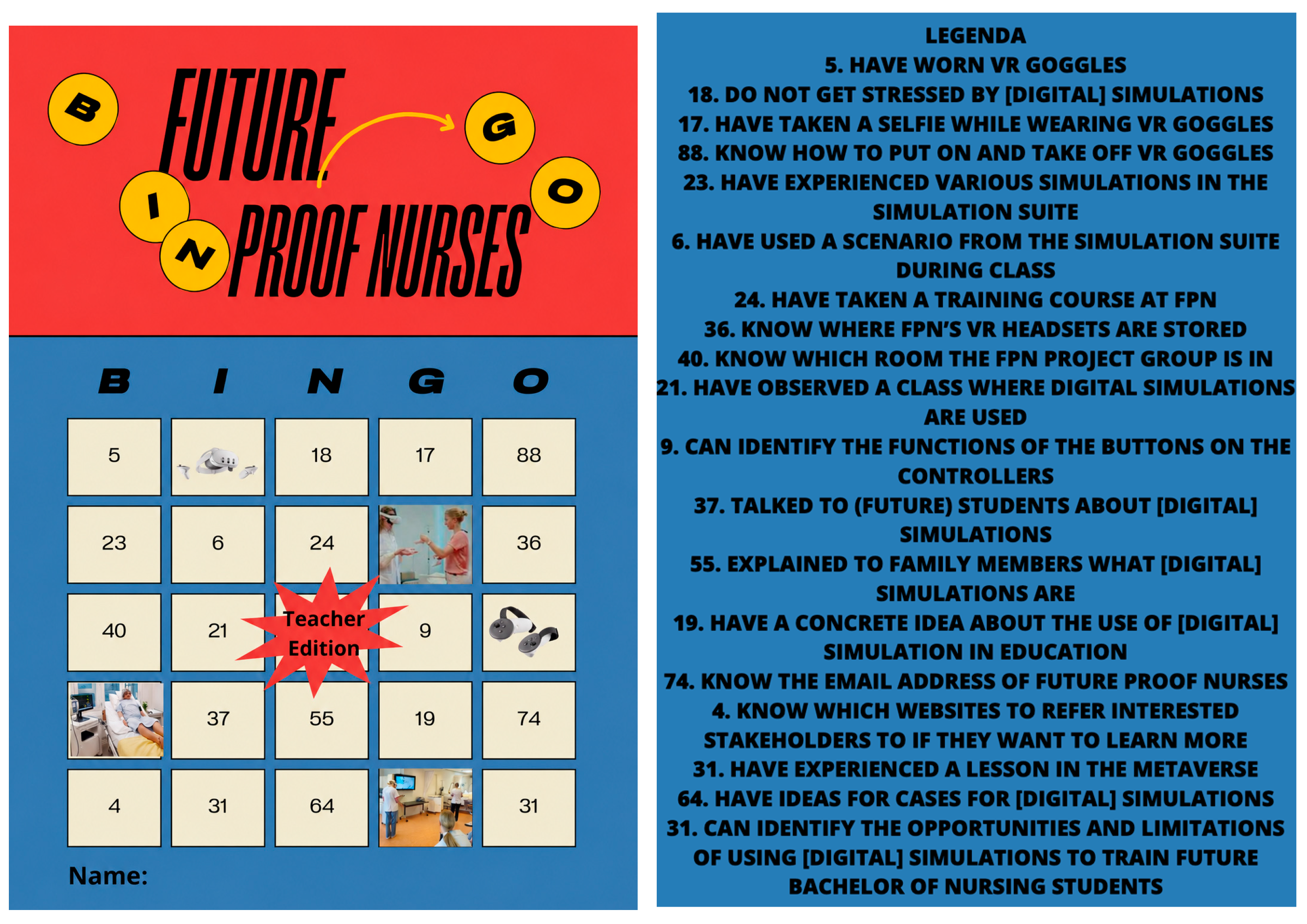
Within the faculty itself, the vision was communicated through a range of activities aimed at inspiring and involving colleagues. Lunch lectures, contributions to faculty days, team gatherings, and open days provided recurring opportunities to share progress and invite engagement. Alongside participation in meetings, workshops and workshop materials were developed to actively involve colleagues in the design and use of the simulations (e.g., Figure 2), lowering the threshold for participation and fostering a sense of co-ownership. These materials are discussed further in the section on barrier removal.
Figure 2.
Bingo chart Future Proof Nurses.
A notable pattern across cycles is that buy-in grew as the problem definition became more concrete. In the early cycles, the vision was necessarily broad and exploratory. As the project progressed and tangible results accumulated, it became increasingly possible to communicate not just what the project aimed to achieve, but also what it had already delivered, which proved considerably more persuasive, both for stakeholders within and outside the organization. Through involvement in the Association of Universities of Applied Sciences, the project gained broader visibility outside the own organization, and training sessions and workshops were subsequently organized externally at various vocational and higher education institutions.
3.5. Enable Action by Removing Barriers
Removing barriers proved to be an ongoing and layered challenge throughout the project, with various types of barriers coming to the foreground accross cycles. One of the most structural constraints was the rhythm of the academic year. Changes to the curriculum and to teaching practice require careful planning, and the lead time between a design decision and its actual implementation in higher education can easily span a year and a half. This meant that progress was necessarily incremental: each cycle delivered a step forward, but the pace of change was shaped as much by institutional planning cycles as by the project team’s ambitions.
In the early cycles, the primary focus was on removing technical and logistical barriers to make the digital simulations accessible in the first place. Initial efforts concentrated on generating enthusiasm among students and ensuring that the technology could be deployed reliably in educational settings. As the project progressed, student assistants were introduced as VR stewards to provide structural logistical support, managing the practical demands of deploying VR headsets and guiding peers through the simulations. This allowed teaching staff to focus on the didactic rather than the technical dimensions of the sessions.
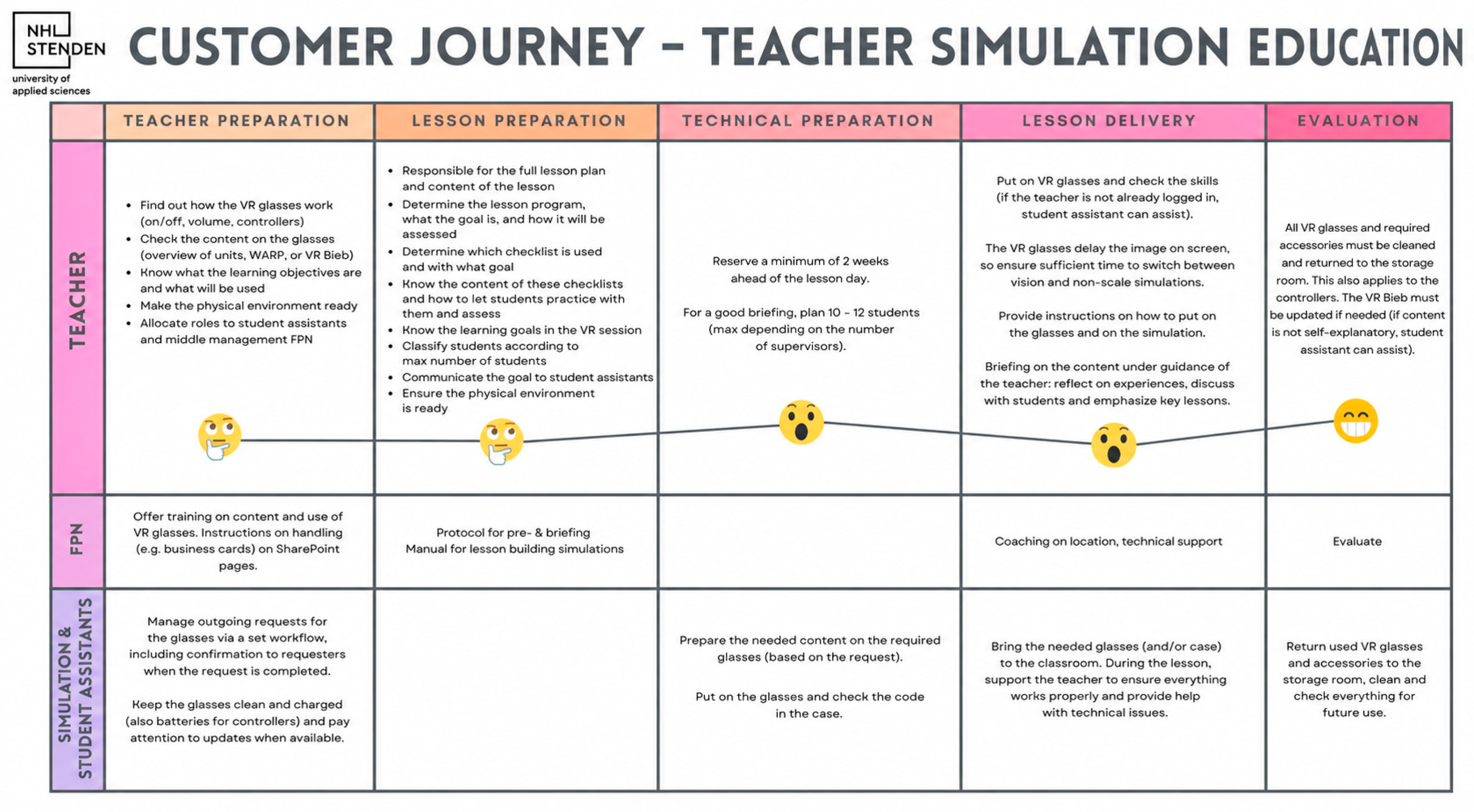
In the middle cycles, attention shifted toward involving lecturers more actively in the design and use of the simulations. Interactive and design-oriented workshops were organized to map different perspectives and identify barriers collaboratively. A range of canvases and working materials was developed for this purpose, partly adapted from existing templates, to structure these conversations and make the design process tangible and accessible. An overview of these materials is presented in Table 3.
Table 3.
Overview interactive workshop materials.
Figure 3.
Futures Wheel Simulation Based Learning.
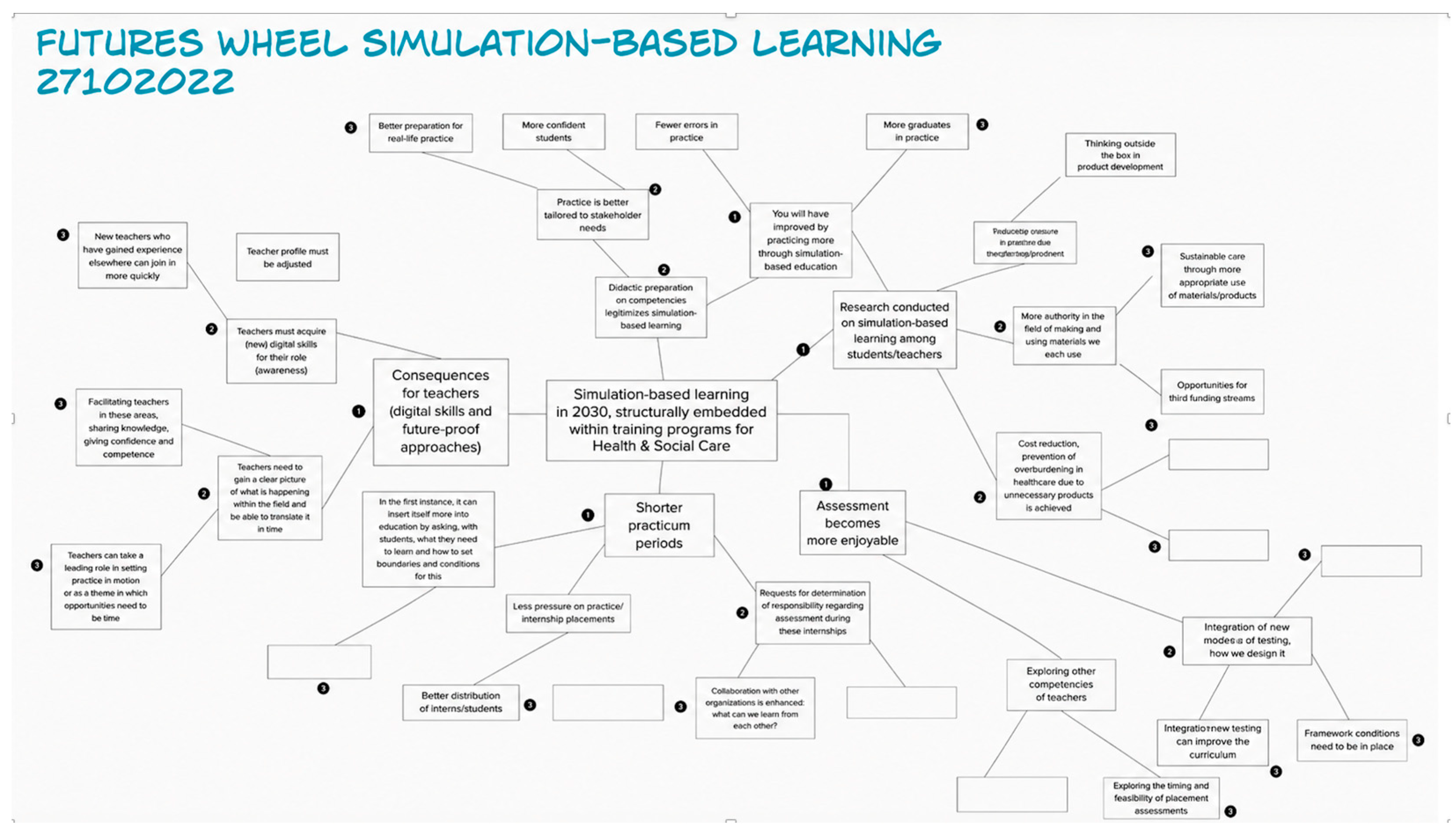
Figure 4.
Customer journey teachers.
In the later cycles, the focus shifted toward the structural professionalization of teaching staff. It became increasingly clear that sustainable embedding required lecturers to develop their digital competence across three dimensions: implementation skills, a developed didactic vision on the role of digital simulation in learning, and practical digital skills. Addressing these needs went beyond what the project team could deliver alone, and collaboration with other projects and initiatives was sought. Both national and international proposals were developed to take further steps in this area, reflecting a recognition that lecturer professionalization in digital education is a challenge that extends well beyond a single institution or project.
A final barrier concerns the organizational capacity of the institution itself. Embedding educational innovation structurally places demands not only on teaching staff, but also on supporting systems and structures across the organization, including finance, ICT, and HR. In each case, the department concerned weighs whether the required investment is justified, and this consideration does not always favor the project team’s goals. This points to a broader challenge: sustainable innovation requires buy-in not just from those who teach, but from the organizational structures that surround them.
3.6. Generate Short-Term Wins
Throughout the project, tangible outputs were generated across all four work packages, providing concrete evidence of progress and serving as visible markers of momentum. Halfway through the project, a “Future Proof Nurses Day” was organized to share results with a broader audience. A keynote presentation was given, and participants were able to attend workshops on digital simulation-based learning, bringing together colleagues, students, and practice partners around the project’s findings and tools.
Table 4 provides an overview of the most important deliverables produced across the project cycles, ranging from teaching materials and implementation tools to publications and conference contributions.
Table 4.
Global overview deliverables.
Figure 5.
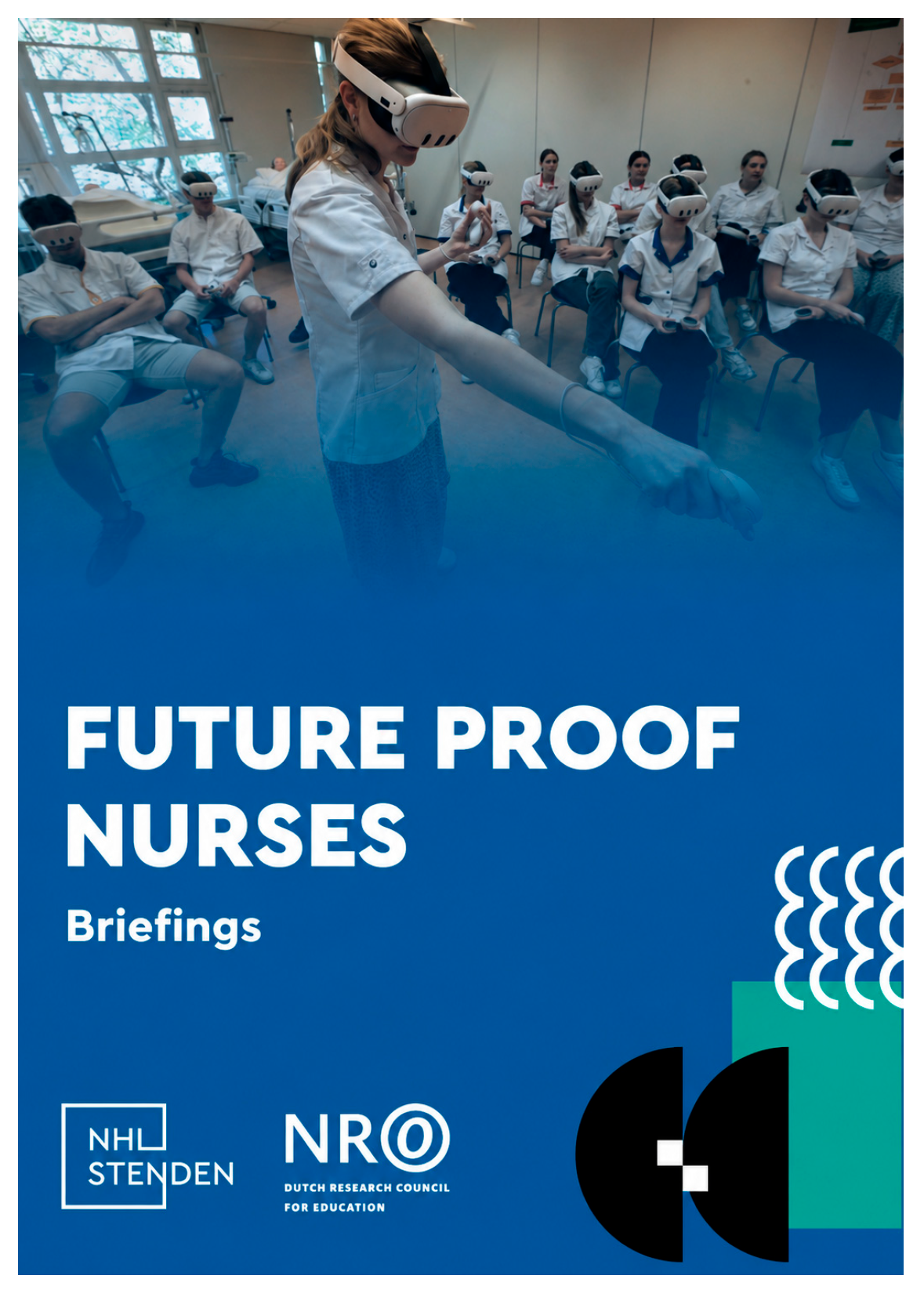
Cheat sheet for teachers for using digital simulations.
Beyond the tangible outputs listed above, the simulations themselves generated direct evidence of their value through student evaluations.
3.7. Evaluation on Simulations
To assess how students experienced the integration and use of the simulations, questionnaires were administered for two of the simulations. The primary aim was to gain insight into students’ initial experiences and to identify where adjustments were needed in the subsequent cycle. Results are reported descriptively; the questionnaires served a formative function within the design process rather than an evaluative one.
Participants’ appraisal of the Into D’mentia simulation is presented in Table 5. Scores were consistently above the midpoint of the scale. Perceived effort received the highest mean rating (M = 4.15), indicating that students experienced the VR application as easy to operate, followed by perceived usefulness (M = 4.07) and authenticity and realism (M = 3.93). Self-efficacy (M = 3.76) and empathy (M = 3.75) received comparable ratings. Briefing and debriefing received the lowest mean score (M = 3.37), suggesting room for improvement in how lecturers frame and debrief the simulation experience. Overall appraisal on the ten-point scale (Table 6) was positive, both for the simulation as a teaching format (M = 7.78) and as a tool contributing to professional development (M = 7.61). Internal consistency was below conventional thresholds for empathy (α = 0.53), authenticity and realism (α = 0.59) and self-efficacy (r = 0.44), and these means should accordingly be interpreted with caution; item-level descriptives are reported in Appendix A.
Table 5.
Into D’mentia: Participants’ appraisal of the simulation (5-point Likert scale).
Table 6.
Into D’mentia: Overall appraisal (10-point scale).
Students also rated their own competence in working with people with dementia before and after the session (Table 7). In February 2026, both questionnaires were administered to the same student group across two meetings, although attendance at each meeting was not recorded. The remaining measurements were collected during separate sessions in which the questionnaires were not consistently administered both before and after. Self-rated competence was higher afterward in both cases: from 5.22 to 6.32 within the February group, and from 5.47 to 6.49 across all responses. As responses were collected anonymously, these values cannot be interpreted as individual change scores. They are reported as indicative findings that informed subsequent design decisions, not as evidence of a learning effect.
Table 7.
Into D’mentia: Self-rated competence in working with people with dementia (10-point scale).
Participants’ appraisal of the UbiSim simulation is presented in Table 8 and Table 9. Across all constructs, scores were above the midpoint of the scale. Authenticity and realism received the highest mean rating (M = 4.11), closely followed by perceived usefulness (M = 4.10), indicating that students recognized both the fidelity of the scenarios and their educational value. Self-efficacy (M = 3.84), learning principles (M = 3.81), and motivation (M = 3.81) were rated comparably, and briefing and debriefing somewhat lower (M = 3.68), suggesting that the facilitating role of lecturers warrants attention. Perceived effort received the lowest mean rating (M = 3.38) and showed the widest dispersion (SD = 0.87), reflecting considerable variation in students’ familiarity with operating a VR application. Internal consistency varied across constructs (Table 1), and the means for motivation (α = 0.46) and self-efficacy (α = 0.58) should be interpreted with caution. For motivation this reflects that the construct combines items of differing emphasis, ranging from engagement with the scenario itself to a comparison with regular teaching; item-level descriptives are reported in Appendix A.
Table 8.
UbiSim: Participants’ appraisal of the simulation (5-point Likert scale).
Table 9.
UbiSim: Overall appraisal (10-point scale).
Overall experience ratings were markedly high across all items (Table 9). Participants indicated a strong willingness to recommend the simulation to peers (M = 8.39), rated it as a valuable learning experience (M = 8.38), and expressed considerable interest in practicing further scenarios (M = 8.21). Taken together, these findings indicate a high degree of participant satisfaction and perceived added value of the VR-based simulation, while the lower ratings for perceived effort and for briefing and debriefing point to the aspects that required attention in the subsequent cycle.
3.8. Consolidate Improvements, Sustain Acceleration, and Anchor Change
In the chosen approach, sustaining acceleration is a continuous concern and is closely bound up with creating urgency. Because the iterative, design-oriented approach keeps both the problem and the solution in motion, each iteration surfaces new problem statements, which in turn feed back into earlier steps. This raises the question of when integration can be said to have succeeded.
Within the Future Proof Nurses project, the project team are working toward the integration of digital simulations into the curriculum, while also ensuring ownership of the organizational and preconditional aspects once the funding period comes to an end. These issues are to be addressed in the final project cycle; only once they have been resolved can this technological innovation in higher education be considered complete. However, as outlined above, several questions remain that give rise to the emergence of subsequent projects.
4. Discussion
The findings of this study illustrate the value of an iterative design approach in a complex educational change process in higher education. With respect to the first research question, on how implementation challenges evolved across cycles, neither the problem definition nor the solution remained stable. Each intervention surfaced new challenges, shifted the locus of urgency, and revealed contextual constraints that could not have been anticipated in advance. This dynamic is precisely what Schön (1984) describes: “The situation talks back, the practitioner listens; and as he appreciates what he hears, he reframes the situation once again” (pp. 131–132). It is only by acting, testing, and reflecting that the contours of a complex problem become visible. This aligns with the argument set out in the introduction: in highly complex settings, strategies rooted in pre-planning and fixed sequencing are insufficient, and what is needed is a hybrid approach that also leaves room for improvisation, adaptation, and experimentation (Lennon et al., 2023; Greenhalgh et al., 2018). The iterative design approach adopted in this study provided precisely that: a way of moving forward purposefully without pretending that the destination was known from the outset. A designer’s mindset, comfortable with uncertainty and oriented toward learning from each cycle, proved useful in this context for navigating the shifting landscape of educational innovation in a higher education nursing faculty.
The second research question concerned how the combination of a structured change framework and an iterative design approach shaped the process. The application of Kotter’s change model in this study was not a one-to-one translation of the more linear logic of the original. The eight steps were not followed sequentially, nor did each cycle neatly correspond to a single focus area. What the model did provide was a productive analytical lens: a set of recurring themes that proved relevant across all cycles, regardless of their order or emphasis. The shifting composition of the guiding coalition, the evolving strategies for communicating the vision, and the persistent challenge of removing barriers all recurred in different forms throughout the project, reflecting the dynamic rather than linear nature of the change process. At the same time, Kotter’s framework offered a valuable structure for accountability, providing a shared vocabulary to report progress, articulate challenges, and make the trajectory of the project legible to stakeholders beyond the project team. In this sense, the model functioned less as a roadmap and more as a recurring checklist of points of interest in any serious change effort. This study thereby adds to a growing body of evidence suggesting that Kotter’s model can be applied productively beyond its original context and beyond its implied linearity (S. P. Kang et al., 2022; Fernandes et al., 2021). More broadly, the findings support the argument made in the introduction that change processes in complex higher education settings call for hybrid implementation strategies, ones that combine the structured focus of an established framework with the adaptivity and responsiveness of an iterative design approach (Grol & Wensing, 2020; Boonstra & Reezigt, 2023). This study shows that a hybrid approach of this kind is not merely theoretically defensible, but also practically viable.
The third research question concerned how students experienced the simulations. Across both instruments, students rated authenticity and perceived usefulness highest, suggesting that the scenarios were recognized as realistic and educationally relevant. Briefing and debriefing consistently received the lowest ratings, suggesting that the aspect most in need of attention is the facilitating role of teaching staff rather than the simulations themselves.
A particularly noteworthy finding of this study is the evolving role of student assistants throughout the project. What began as informal student involvement in the pre-project phase gradually developed into a structural and increasingly professional contribution to the project team. Students who were initially engaged as enthusiastic early adopters became paid assistants, and, in one case, a student assistant transitioned into a lecturer-researcher role while simultaneously working as a nurse in an intensive care unit. This trajectory illustrates how the boundary between learner and co-developer can be productively blurred in educational innovation projects. Student assistants brought a dual perspective that proved difficult to replicate through other means: they understood the student experience from the inside while simultaneously developing the expertise and ownership needed to contribute to the design and facilitation of the simulations. This resonates with participatory design principles, which emphasize the value of involving end users as active contributors rather than passive recipients of innovation (Sanders & Stappers, 2008; Terlouw & Veldmeijer, 2026). It also connects to the concept of boundary crossing, where individuals who operate across different roles and contexts can function as important bridges between stakeholder groups (Akkerman & Bakker, 2011). In the context of this project, student assistants fulfilled that function of bridging the worlds of students, lecturers, and healthcare practice in ways that enriched both the design process and its outcomes. Future educational innovation projects in higher education may benefit from deliberately creating and sustaining such roles, rather than treating student involvement as incidental.
Another outcome of the iterative design process is the “simulatie wasstraat” (simulation car wash), a curated arrangement of simulation scenarios tailored to students’ specific placement contexts and personal learning goals. Rather than offering a generic simulation experience, the wasstraat connects the choice of scenarios directly to the demands of a student’s placement setting and the competencies aimed to develop. What started as an extracurricular solution proved its value as a bridge toward formal integration in return-to-school teaching moments. The concept is notable not only as a practical innovation within this project, but as a potentially transferable model for other nursing programs or healthcare education contexts facing similar challenges around the meaningful integration of digital simulations in the curriculum.
Despite the progress made across five cycles, the question of structural sustainability and ownership remains unresolved at this stage of the project. The team has grown and professionalized, and the “simulatie wasstraat” has begun to find its way into formal teaching. Yet the transition from project-funded innovation to institutionalized practice has not been completed. Sustainability requires not only financial continuity, but also alignment across the organizational systems that surround teaching practice, including ICT infrastructure, HR arrangements, and institutional planning cycles. In projects of this kind, facilitation remains dependent on temporary project funding for extended periods. This finding is consistent with what the literature describes as one of the most persistent challenges in educational innovation: the gap between a locally successful initiative and its structural embedding in organizational routines (Lambriex-Schmitz, 2023; März et al., 2017). The addition of a team leader in the final project cycle, explicitly tasked with developing agency and ownership within the team, represents a deliberate attempt to address this challenge, but its effect remains to be seen. This underscores a broader lesson: sustaining educational innovation requires not only a guiding coalition capable of driving change, but also leadership structures and organizational arrangements that survive the project itself. In Kotter’s terms, the work of anchoring the change has only just begun.
Strengths and Limitations
A key strength of this study is its longitudinal nature. By documenting an innovation and implementation process spanning four years, the study provides a level of depth and contextual richness that cross-sectional studies cannot offer. The combination of project documentation, descriptive student data, and systematic reflection through the lens of Kotter’s change model allowed for a multifaceted account of both what was achieved and how the process unfolded. The active involvement of students, lecturers, healthcare practice partners, and institutional support staff throughout the project further strengthens the ecological validity of the findings.
At the same time, the study has limitations that warrant consideration. As a single case study conducted within one nursing department at one institution, the findings are inherently context-dependent. While the challenges and strategies described are likely to resonate with practitioners in comparable settings, caution is warranted in generalizing the findings to other institutional or national contexts.
The implementation was supported by dedicated project funding for staff, equipment and development time. The extent to which the process is attributable to the implementation strategy rather than to the resources available cannot be determined from this study, a question that bears directly on the transfer of ownership that was still ongoing at the time of writing.
Two of the four annual reports were written for accountability purposes toward the funder, which may introduce a reporting bias toward achievement. This is partly counteracted by the prescribed format, which required risks, obstacles, and deviations from the plan to be reported explicitly, and by the two internally compiled reports, which served project steering rather than external accountability. For the student evaluations, although the in-class administration yielded a complete response within each session, students who were absent are not represented in the questionnaire data. Rather than demonstrating improved clinical competence, the evaluations indicate that the simulations were well received and were perceived by students as authentic and educationally relevant—outcomes that speak to the acceptability and perceived value of the innovation within the curriculum rather than to measured learning gains. Internal consistency fell below conventional thresholds for several constructs, reflecting that the questionnaires were assembled for formative use rather than validated as measurement scales. Two features of the item sets are relevant here. The motivation construct in the UbiSim questionnaire combines items of differing emphasis, which limits its coherence as a scale. The perceived effort construct in the Into D’mentia questionnaire contains two items that differ only in the term used for the technology, which is likely to have inflated its internal consistency. Item-level means and standard deviations are reported in Appendix A so that readers can assess how items within each construct behaved.
Future research could strengthen the evidence base by comparing similar innovation processes across multiple institutions, and by incorporating more systematic qualitative data collection throughout the process rather than in retrospect.
5. Conclusions
This study combined Kotter’s change model as an organizational framework with the adaptivity of a design research approach. The findings suggest that a hybrid implementation strategy was practically viable in this institutional context. The five cycles described in this paper illustrate how problem definitions shift, how coalitions evolve, and how solutions emerge gradually through cycles of action and reflection. Tangible outcomes, including the “simulatie wasstraat” and a growing library of tools, show what the project yielded. At the same time, the persistent challenges around organizational embedding are a reminder that sustaining educational innovation requires more than delivering a project successfully.
Author Contributions
Conceptualization, G.T.; methodology, S.W. and G.T.; investigation, S.W. and G.T.; writing—original draft preparation, S.W. and G.T.; writing—review and editing, S.W. and G.T. All authors have read and agreed to the published version of the manuscript.
Funding
This research was funded by the National Knowledge Institute for Education (NKO) as the first prize winners in the educational awards category higher education 2023.
Institutional Review Board Statement
Ethical review and approval were waived for this study. The research does not fall within the scope of the Dutch Medical Research Involving Human Subjects Act (WMO), as participants were not subjected to any intervention or imposed mode of behavior for research purposes: the simulations formed part of the regular curriculum, and the questionnaires evaluated an educational activity in which students participated as part of their programme.
Informed Consent Statement
Informed consent was obtained from all participants. Students were informed about the purpose of the questionnaire and gave consent by means of an opt-in item at the start of the questionnaire. Participation was voluntary and had no bearing on assessment.
Data Availability Statement
The questionnaire data are available from the corresponding author upon reasonable request. Responses were collected anonymously; no directly or indirectly identifying information was recorded. Data were stored on institutional infrastructure in accordance with the university’s data management policy.
Acknowledgments
Thanks to the members of the project team and all the students who participated. You know who you are!
Conflicts of Interest
The authors declare no conflicts of interest.
Abbreviations
The following abbreviations are used in this manuscript:
| VR | Virtual Reality |
| ABCDE-method | Airway, Breathing, Circulation, Disability, and Exposure—method |
| SBAR | Situation, Background, Assessment, and Recommendation |
| BIG-register | Professions in Individual Healthcare Act register |
| DLWO | Digital Learning and Work Environment |
| DSSH | Dutch Society for Simulation in Healthcare |
| HGZO | Higher Health and Healthcare Education |
| SESAM | Society for Simulation in Europe |
| NVMO | Dutch Association for Medical Education |
| SWOT | Strengths, Weaknesses, Opportunities, and Threats |
Appendix A
Items Questionnaires
Both questionnaires were developed, administered and completed in Dutch. The items in Table A1 and Table A2 are English translations of the items that were rated on a five-point Likert scale, provided so that readers can assess the content and scope of the constructs reported in the main text. The items to rate the overall experience are presented in the results section. The translation was made for reporting purposes only; all analyses were conducted on the original Dutch responses, and the translated items were not administered to participants and have not been validated as an English-language instrument. Items marked (R) were negatively worded and recoded prior to analysis. The five-point Likert scale ranged from strongly disagree to strongly agree. Items were presented to participants in mixed order across constructs; they are grouped in the tables by construct for readability.
Table A1.
UbiSim questionnaire items, means and standard deviation.
Table A2.
Into D’mentia questionnaire items, means and standard deviation.
References
- Akkerman, S. F., & Bakker, A. (2011). Boundary crossing and boundary objects. Review of Educational Research, 81(2), 132–169. [Google Scholar] [CrossRef] [Scilit]
- Bandura, A. (1997). Self-efficacy: The exercise of control. W H Freeman/Times Books/Henry Holt & Co. [Google Scholar]
- Boonstra, A., & Reezigt, C. (2023). A complexity framework for project management strategies. Project Management Journal, 54(3), 875697282211422. [Google Scholar] [CrossRef] [Scilit]
- Brown, S. L., & Eisenhardt, K. M. (1997). The art of continuous change: Linking complexity theory and time-paced evolution in relentlessly shifting organizations. Administrative Science Quarterly, 42(1), 1. [Google Scholar] [CrossRef] [Scilit]
- Clark, R. C., & Mayer, R. E. (2011). E-learning and the science of instruction: Proven guidelines for consumers and designers of multimedia learning. Pfeiffer. [Google Scholar]
- Collyer, S., & Campbell, C. (2015). Enabling pervasive change: A higher education case study. In EdMedia (pp. 249–255). Association for the Advancement of Computing in Education (AACE). [Google Scholar]
- Csikszentmihalyi, M. (1997). Flow and the psychology of discovery and invention (Vol. 39, pp. 1–16). HarperPerennial. [Google Scholar]
- Fernandes, J., Machado, C., & Amaral, L. (2021). A roadmap for implementing the general data protection regulation in higher education institutions using Kotter’s organizational change model. In Advances in intelligent systems and computing (pp. 257–270). Springer International Publishing. [Google Scholar] [CrossRef] [Scilit]
- Fishman, B. J., Penuel, W. R., Allen, A.-R., Cheng, B. H., & Sabelli, N. (2013). Design-based implementation research: An emerging model for transforming the relationship of research and practice. Teachers College Record, 115(14), 136–156. [Google Scholar] [CrossRef]
- Gee, J. P. (2005). Learning by design: Good video games as learning machines. E-Learning and Digital Media, 2(1), 5–16. [Google Scholar] [CrossRef] [Scilit]
- Greenhalgh, T., & Papoutsi, C. (2019). Spreading and scaling up innovation and improvement. BMJ, 365, l2068. [Google Scholar] [CrossRef] [Scilit] [PubMed]
- Greenhalgh, T., Wherton, J., Papoutsi, C., Lynch, J., Hughes, G., A’Court, C., Hinder, S., Procter, R., & Shaw, S. (2018). Analysing the role of complexity in explaining the fortunes of technology programmes: Empirical application of the NASSS framework. BMC Medicine, 16(1), 66. [Google Scholar] [CrossRef] [Scilit] [PubMed]
- Grol, R., & Wensing, M. (2020). Implementation of change in healthcare: A complex problem. In Improving patient care: The implementation of change in health care (pp. 1–20). John Wiley & Sons, Ltd. [Google Scholar] [CrossRef] [Scilit]
- Hevner, A. R. (2007). A three cycle view of design science research. Scandinavian Journal of Information Systems, 19(2), 4. [Google Scholar]
- Kang, S. P., Chen, Y., Svihla, V., Gallup, A., Ferris, K., & Datye, A. K. (2022). Guiding change in higher education: An emergent, iterative application of Kotter’s change model. Studies in Higher Education, 47(2), 270–289. [Google Scholar] [CrossRef] [Scilit]
- Kang, Y. N., Chang, C. H., Kao, C. C., Chen, C. Y., & Wu, C. C. (2019). Development of a short and universal learning self-efficacy scale for clinical skills. PLoS ONE, 14(1), e0209155. [Google Scholar] [CrossRef] [Scilit] [PubMed]
- Kezar, A. (2011). What is the best way to achieve broader reach of improved practices in higher education? Innovative Higher Education, 36(4), 235–247. [Google Scholar] [CrossRef] [Scilit]
- Kotter, J. P. (1996). Leading change. Harvard Business School Press. [Google Scholar]
- Kuffuor, O., Aggrawal, S., Jaiswal, A., Smith, R. J., & Morris, P. V. (2024). Transformative pathways: Implementing intercultural competence development in higher education using Kotter’s change model. Education Sciences, 14(7), 686. [Google Scholar] [CrossRef] [Scilit]
- Kuipers, D. A., Terlouw, G., Wartena, B. O., van ’t Veer, J. T., Prins, J. T., & Pierie, J. P. E. (2017). The role of transfer in designing games and simulations for health: Systematic review. JMIR Serious Games, 5(4), e23. [Google Scholar] [CrossRef] [Scilit] [PubMed]
- Kuipers, D. A., Wartena, B. O., Dijkstra, A., Prins, J. T., & Pierie, J.-P. E. N. (2013). Design for transfer. In Serious games development and applications (pp. 239–246). Springer. [Google Scholar] [CrossRef] [Scilit]
- Lambriex-Schmitz, P. M. M. (2023). Towards sustainable innovations: Unravelling teachers’ innovative work behaviour [Doctoral thesis, University of Maastricht]. [Google Scholar] [CrossRef] [Scilit]
- Lennon, E., Hopkins, L., Einboden, R., McCloughen, A., Dawson, L., & Buus, N. (2023). Organizational change in complex systems: Organizational and leadership factors in the introduction of open dialogue to mental health care services. Community Mental Health Journal, 59(1), 95–104. [Google Scholar] [CrossRef] [Scilit] [PubMed]
- März, V., Kelchtermans, G., & Vermeir, K. (2017). Artifacts as authoritative actors in educational reform. Journal of Educational Change, 18(4), 439–464. [Google Scholar] [CrossRef] [Scilit]
- Nilsen, E. R., Stendal, K., & Gullslett, M. K. (2020). Implementation of eHealth Technology in Community Health Care: The complexity of stakeholder involvement. BMC Health Services Research, 20(1), 395. [Google Scholar] [CrossRef] [Scilit] [PubMed]
- Petersen, S., & Bartel, S. (2020). When culture and change collide in higher education: A case study at one university. Administrative Issues Journal Education Practice and Research, 10(2), 46–59. [Google Scholar] [CrossRef] [Scilit]
- Quan, G. M., Corbo, J. C., Finkelstein, N. D., Pawlak, A., Falkenberg, K., Geanious, C., Ngai, C., Smith, C., Wise, S., Pilgrim, M. E., & Reinholz, D. L. (2019). Designing for institutional transformation: Six principles for department-level interventions. Physical Review. Physics Education Research, 15(1), 010141. [Google Scholar] [CrossRef] [Scilit]
- Rogers, E. M. (2003). Diffusion of innovations (5th ed.). Free Press. [Google Scholar]
- Sanders, E. B.-N., & Stappers, P. J. (2008). Co-creation and the new landscapes of design. CoDesign, 4(1), 5–18. [Google Scholar] [CrossRef] [Scilit]
- Schön, D. A. (1984). The reflective practitioner: How professionals think in action. Basic Books. [Google Scholar]
- Shah, G. M., Memon, N. A., Tunio, G., & Joyo, A. S. (2023). Revamping higher education: Unleashing the power of John Kotter’s eight-step change model for enhanced performance. Russian Law Journal, 11(5), 613–623. [Google Scholar]
- Simon, H. A. (1969). The sciences of the artificial. The MIT Press. [Google Scholar]
- Terlouw, G. (2022). The role of boundary objects in health innovation [Ph.D. thesis, University of Groningen Press]. [Google Scholar] [CrossRef] [Scilit]
- Terlouw, G., Kuipers, D., van ’t Veer, J., Prins, J. T., & Pierie, J. P. E. N. (2021). The development of an escape room-based serious game to trigger social interaction and communication between high-functioning children with autism and their peers: Iterative design approach. JMIR Serious Games, 9(1), e19765. [Google Scholar] [CrossRef] [Scilit] [PubMed]
- Terlouw, G., van ’t Veer, J. T., Prins, J. T., Kuipers, D. A., & Pierie, J.-P. E. N. (2020). Design of a digital comic creator (It’s me) to facilitate social skills training for children with autism spectrum disorder: Design research approach. JMIR Mental Health, 7(7), e17260. [Google Scholar] [CrossRef] [Scilit] [PubMed]
- Terlouw, G., & Veldmeijer, L. (2026, June 8). Co-what? A new perspective on participation and collaboration with vulnerable populations in design studies: Methodological inquiry. Proceedings of DRS. DRS 2026, Edinburgh, UK. [Google Scholar] [CrossRef] [Scilit]
- Tripp, S. D., & Bichelmeyer, B. (1990). Rapid prototyping: An alternative instructional design strategy. Educational Technology Research and Development: ETR & D, 38(1), 31–44. [Google Scholar] [CrossRef] [Scilit]
- Veldmeijer, L., Terlouw, G., Van ’t Veer, J., Van Os, J., & Boonstra, N. (2025). The design rationale and preliminary evaluation of a prototype designed by people with lived experience of psychosis and professionals: Design research study. Journal of Participatory Medicine, 17, e80184. [Google Scholar] [CrossRef] [Scilit] [PubMed]
- Venkatesh, V., Morris, M. G., Davis, G. B., & Davis, F. D. (2003). User acceptance of information technology: Toward A unified View1. MIS Quarterly, 27(3), 425–478. [Google Scholar] [CrossRef] [Scilit]
- Verkerke, G. J., van der Houwen, E. B., Broekhuis, A. A., Bursa, J., Catapano, G., McCullagh, P., Mottaghy, K., Niederer, P., Reilly, R., Rogalewicz, V., Segers, P., & Verdonschot, N. (2013). Science versus design; comparable, contrastive or conducive? Journal of the Mechanical Behavior of Biomedical Materials, 21, 195–201. [Google Scholar] [CrossRef] [Scilit] [PubMed]
- Yin, R. K. (2018). Case study research and applications (6th ed.). SAGE Publications. [Google Scholar]
- Zitter, I., & Hoeve, A. (2012). Hybride leeromgevingen: Het verweven van leer- en werkprocessen. Expertisecentrum Beroepsonderwijs. Available online: https://ecbo.nl/wp-content/uploads/2013-02-Hybride-leeromgevingen-het-verweven-van-leer-en-werkprocessen-2.pdf (accessed on 19 August 2026).

Disclaimer/Publisher’s Note: The statements, opinions and data contained in all publications are solely those of the individual author(s) and contributor(s) and not of MDPI and/or the editor(s). MDPI and/or the editor(s) disclaim responsibility for any injury to people or property resulting from any ideas, methods, instructions or products referred to in the content. |
© 2026 by the authors. Licensee MDPI, Basel, Switzerland. This article is an open access article distributed under the terms and conditions of the Creative Commons Attribution (CC BY) license.