


Abstract
Decolonising assessment remains an underdeveloped yet essential component of higher education transformation. In research, much attention has been assigned to decolonising content knowledge and pedagogy, with limited attention to assessment. Hence, this systematic literature review examines empirical studies published between 2018 and 2025 to explore how decolonial assessment is enacted in higher education. Using the PRISMA 2020 framework, 17 studies were analysed to identify theoretical foundations, methodological trends, dominant themes, key findings, and literature gaps to make recommendations for future research. The findings reveal six interconnected practices characterising decolonial assessment: humanising learning, contextualising assessment within students’ cultural and community realities, disrupting power hierarchies through co-creation, collaborative and peer-based approaches, diversifying modes of expression, and enhancing transparency and cultural responsiveness. These practices validate students’ lived experiences, foreground multiple epistemologies, and challenge traditional assessment norms, thereby promoting deeper engagement, agency, and belonging. However, the scholarship is constrained by a reliance on small-scale qualitative designs, limited theoretical development, and regional concentration, particularly in South Africa and the United States. The review concludes that while decolonial assessment offers transformative potential, its broader institutional uptake requires methodological pluralism, stronger theoretical frameworks, and policy-level support. The paper recommends embedding decolonial principles in assessment design, expanding research across diverse contexts, and strengthening lecturer capacity to develop equitable, inclusive, and contextually grounded assessment practices that advance epistemic justice in higher education.
1. Introduction
“Decolonising of assessment is an unattended bone in the skeleton of decolonisation of education”(Godsell, 2021, p. 117)
In the above excerpt, Godsell (2021) highlights a critical gap in the broader discourse on educational transformation in higher education (HE), the persistent neglect of assessment within efforts to decolonise education. In response to this oversight, the present study undertakes a systematic review of existing scholarship on decolonial assessment practices in HE. It aims to critically analyse and synthesise emerging approaches, frameworks, and debates, identify gaps in the literature and thus make suggestions for future interventions. While there is no universally accepted definition of decolonisation, it is commonly understood as “the process that signifies the end of rule by a foreign power and the recuperation and/or formation of an ‘independent’ entity, usually a nation-state, through a process often referred to as a ‘transfer of power’” (Gopal, 2021, p. 881). Within the educational context, decolonisation seeks to interrogate and dismantle entrenched colonial structures, epistemologies, and pedagogical practices that have historically marginalised certain student populations (Lalujan & Pranjol, 2024). Among other things, the agenda is to advocate for a more expansive understanding of education, one that encompasses diverse learning processes across varied contexts and communities and recognises diverse cultural experiences and the use of multilingualism in learning environments (Lopes & Stará, 2023; Modiba & Emsley, 2024). In that pursuit, movements such as “Why is my curriculum so White”, “Rhodes Must Fall”, and “Black Lives Matter” have catalysed critical reflection within higher education institutions (HEIs), challenging the colonial legacy embedded in curricula, pedagogies, and knowledge production, to promote inclusive, equitable, and culturally responsive educational practices that foreground marginalised voices and non-Eurocentric knowledge systems (Lalujan & Pranjol, 2024; Tamimi et al., 2024, p. 217). However, despite such initiatives, decolonisation of education has not fully materialised, although notable strides have been made in curriculum reform. This is worse when it comes to decolonisation of assessment practices (Lalujan & Pranjol, 2024). Hence, there is a need to address colonial residues and create alternative assessment practices that promote epistemic access and justice. This is imperative as assessment is a crucial component of the educational process which involves teaching, learning and assessment (Levy-Feldman, 2025). The neglect of this may lead to some students not progressing in their studies considering that assessment shapes learning experiences, determining epistemic access, and student progress (Godsell et al., 2024). Decolonising assessment and feedback methods in HE involves critically examining the assumptions, values, and knowledge systems that underpin current methods, towards assessment practices that are more inclusive, diversified and representative (Godsell et al., 2024; Lalujan & Pranjol, 2024).
Despite growing interest in decolonising curricula and pedagogy, assessment remains largely absent from institutional conversations and remains understudied, as the number of articles identified in this paper seem to confirm. While some studies have explored the integration of indigenous knowledge (IK) into HE (Makokotlela & Gumbo, 2025), few have addressed the practical implications of decolonisation of assessment. Existing research offers preliminary insights into decolonial assessment practices. For instance, Lalujan and Pranjol (2024) examine project-based assessment in STEM education. Govender (2024) investigates assessment reform in business education. Godsell et al. (2024) explore decolonial assessment in a South African history course. These studies highlight alternative practices such as portfolios, reflective essays, and project-based assessments as potential vehicles for decolonisation. However, the scope and depth of such scholarship remain limited, signalling the need for a more comprehensive synthesis. Against this backdrop, the present systematic review seeks to address the scholarly gap by critically examining and synthesising the existing literature on decolonial assessment practices in HE. Specifically, it aims to broaden understanding of how assessment can be re-envisioned through decolonial frameworks and to provide practical recommendations for implementing inclusive, contextually relevant, and transformative assessment strategies. The focus is on studies published between 2018 and 2025. The decision to examine the literature published between 2018 and 2025 is informed by the intensified global and regional focus on decolonisation in HE during this period. It is also to focus on current trends, innovations, and gaps in the field. The main guiding research question for this review is the following:
What is the geographical distribution of studies, theoretical foundations, methodological trends, dominant research themes, and assessment practices from studies published between 2018, and October 2025 on decolonial assessment in higher education? To address this research question, the review was guided by the following sub-research questions:
- What is the global geographical distribution of research on decolonial assessment practices in higher education institutions (HEIs), and what does this distribution suggest about knowledge production and representation in the field?
- What theoretical and conceptual frameworks underpin recent studies on decolonial assessment practices in higher education institutions?
- What research methodologies are commonly employed to investigate decolonial assessment practices in higher education institutions?
- What are the dominant research themes in the literature on decolonial assessment practices in higher education institutions?
- How do decolonial assessment practices in higher education institutions enable student success?
- What gaps exist in the current literature on decolonial assessment practices in higher education institutions?
2. Materials and Methods
2.1. Design and Review Protocol
We applied the Preferred Reporting Items for Systematic Reviews and Meta-Analyses [PRISMA] framework (Page et al., 2021) in conducting the systematic literature review [SLR] in this paper. We followed this protocol to ensure methodological transparency, replicability, and rigorous synthesis (Page et al., 2021; Swartz, 2021) of empirical studies on decolonial assessment practices in HE. Although the review protocol was not formally registered (e.g., in PROSPERO), all review procedures, including search strategy, inclusion criteria, screening, and appraisal tools, were pre-defined and adhered to PRISMA standards.
2.2. Eligibility Criteria
During the planning stage, the two authors discussed and agreed on the databases to be searched, the type of articles to be extracted, the period, and the eligibility criteria, and they formulated the search strings. The eligibility criteria agreed upon and used were the Population, Intervention, Comparison, Outcome, and Study [PICOS] framework (Amir-Behghadami & Janati, 2020). We applied the PICOS as our guiding framework for the eligibility criteria as follows:
Population: Lecturers, academics, instructional practitioners, and assessors in HE.
Intervention: Decolonial assessment practices in the HE context.
Comparison: Studies with or without control groups qualified for inclusion.
Outcome: Studies that reported decolonial, inclusive, and traditional assessment practices in HE were included.
Study: Eligible studies included qualitative, quantitative, and mixed-methods empirical studies including articles and book chapters published between 2018 and 2025.
The focus was on currently published academic articles and book chapters on decolonial assessment in HE in major databases. Only articles and book chapters published in English were included.
2.3. Exclusion Criteria
Literature reviews, systematic review papers, unpublished research, comments, editorials, theses, and dissertations were excluded. Scholarship on decolonisation of assessment at the school level was also excluded. All articles and book chapters published before 2018 were excluded. Non-English publications were omitted due to translation limitations, which may have led to the exclusion of valuable perspectives from different contexts where publications are in other languages. Future reviews could include multilingual teams or translation tools to fill this gap. All studies that did not meet the PICOS eligibility criteria explained above were excluded.
2.4. Data Sources and Search Strategy
Systematic searches were conducted on four databases widely recognised for coverage in education and social sciences, namely, Scopus, Web of Science (WoS), Education Source, and ERIC. The search was limited to studies published between January 2018 and October 2025. The two authors conducted the search independently in all databases using the agreed-upon search strings. The following search string was adapted to the syntax of each database:
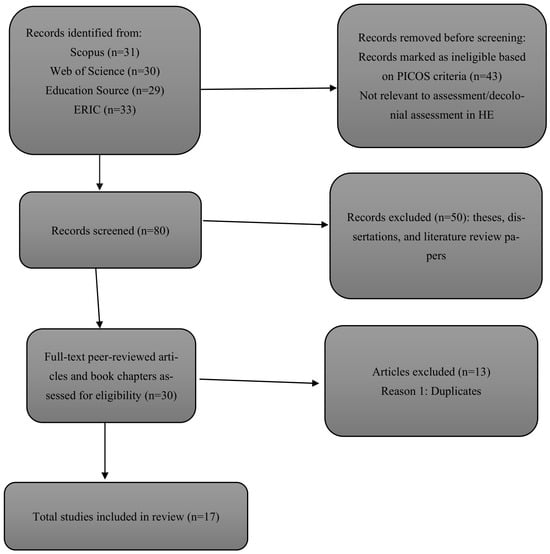
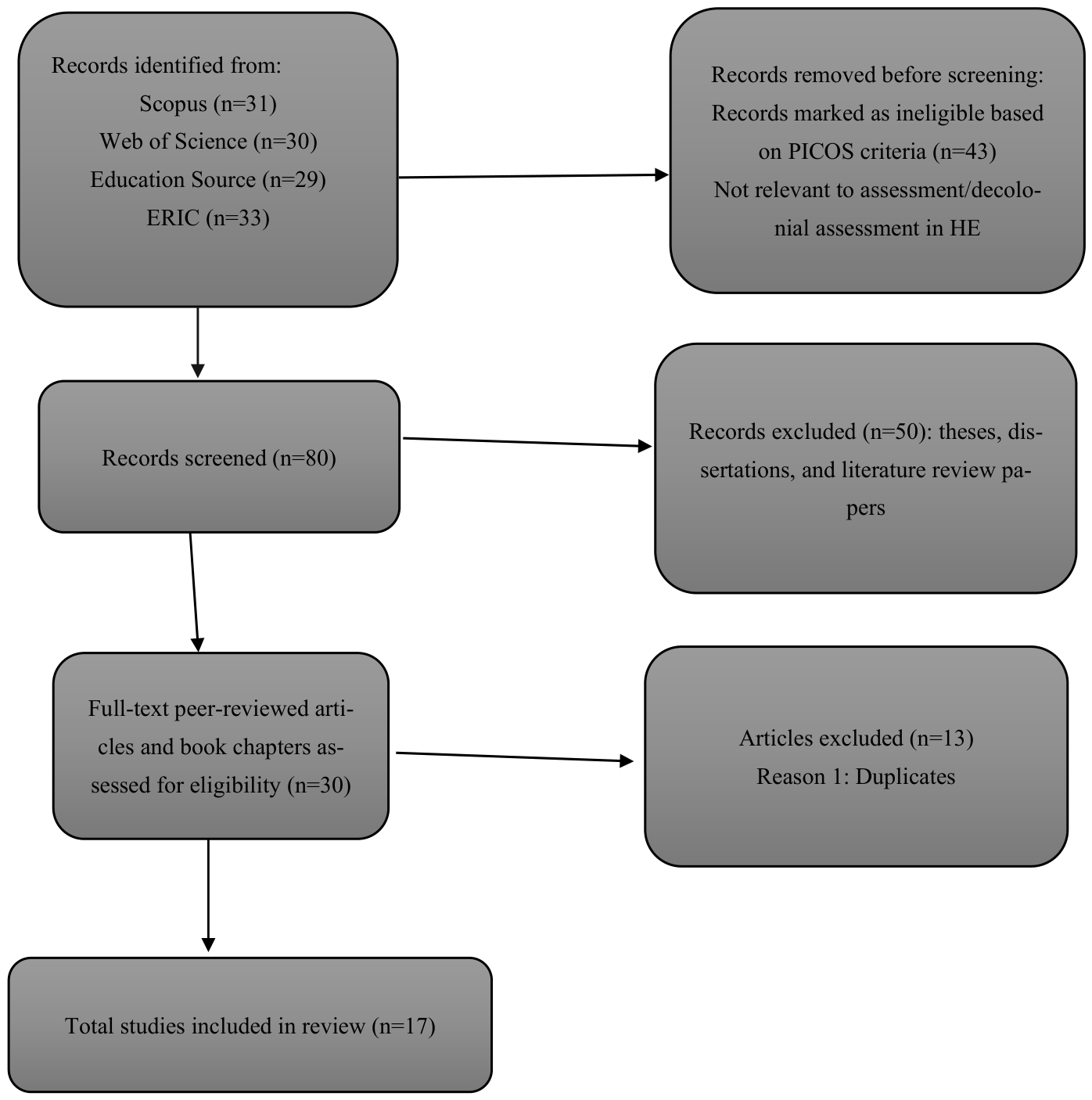
(“decolonisation”) AND (“assessment” OR “assessment practices”) AND (“higher education” OR “institution of higher learning” OR “post-secondary education” OR “university” OR “Technicon” OR “college” OR “TVET”). The initial search yielded 31 articles from Scopus, 30 from WoS, 29 from Education Source, and 33 from ERIC, totalling 123 articles. However, 43 articles were removed at the pre-screening stage as they had no relevance to decolonial assessment in HE. The remaining record of 80 articles downloaded from each database were saved on EndNote and thereafter exported to Rayyan for the screening stage.
2.5. Screening and Selection Process
A total of 80 articles from the four databases were screened. Rayyan was used to manage the screening process, where the reviewers (authors of the paper) could include and exclude sources, indicating reasons for inclusion or exclusion (Johnson & Phillips, 2017), based on the inclusion criteria loaded on Rayyan. The title and abstract of each source were used for screening to assess eligibility based on the PICOS framework. At this stage, 50 sources were excluded as these comprised literature review papers, theses, and dissertations. The two reviewers also had meetings to discuss and concur on the sources to be excluded. All discrepancies were resolved during these meetings. A total of 30 articles met the inclusion criteria; however, several duplicates among the four databases led to the exclusion of 13 articles, leaving 17 articles for the review. A PRISMA 2020 flow diagram (Figure 1) outlines the full selection process with explicit documentation of exclusion.
Figure 1.
PRISMA flow diagram of the study selection process (Page et al., 2021).
2.6. Data Extraction and Reliability
A data extraction table was developed, presenting details of the study authors, year of publication, title of the journal or book, location, theoretical/conceptual frameworks, methods, key themes, and findings. The two authors serving as reviewers independently verified 30% of the entries, achieving high inter-rater reliability (Cohen’s κ = 0.81).
2.7. Quality Appraisal
We used the Critical Appraisal Skills Programme (CASP) checklist in conducting the quality assessment for the qualitative studies. We applied the generic ten-question tool for appraising strengths and limitations of qualitative research methodology (Long et al., 2020). The mixed-methods studies were analysed using the Mixed-Methods Appraisal Tool (MMAT) (2018) for quantitative and mixed-methods studies (Hong et al., 2018). Studies scoring below 50% were excluded from thematic synthesis. Most studies (14 out of 17) achieved 70% or higher, indicating strong methodological rigour.
2.8. Data-Synthesis
We applied the Reflexive Thematic Analysis (RTA) as outlined by Braun and Clarke (2022) to synthesise and interpret the findings. The authors independently conducted full-text reviews of the included studies. The data extraction table was used to guide the development of initial codes and themes (Cooper et al., 2022). This involved deep immersion in the data, iterative discussions, and critical reflection to interpret meaning and ensure analytic depth (Braun & Clarke, 2022). The authors held multiple meetings to refine codes, resolve interpretive differences, and explore relationships among codes. These collaborative engagements led to the generation, revision, and consolidation of themes aligned with the study objectives. Ongoing reflexive meetings were conducted throughout the analysis to mitigate bias and enhance analytical transparency.
3. Results
3.1. Overview of Included Studies
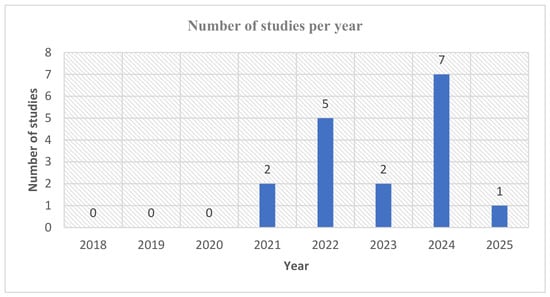
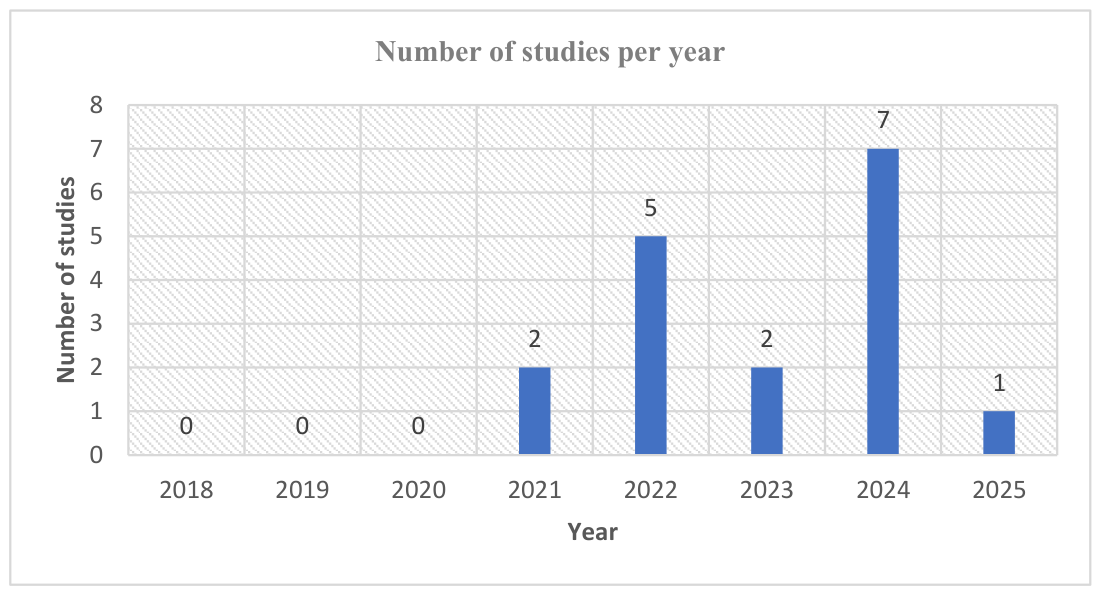
The review synthesised 17 empirical studies that met the inclusion criteria, published between 2018 and October 2025, focusing on decolonial assessment practices in HE. The studies comprised 11 articles and 6 book chapters. The total number of studies per year is shown in Figure 2 below.
Figure 2.
Number of studies per year.
3.2. Global Geographical Distribution (Objective 1)
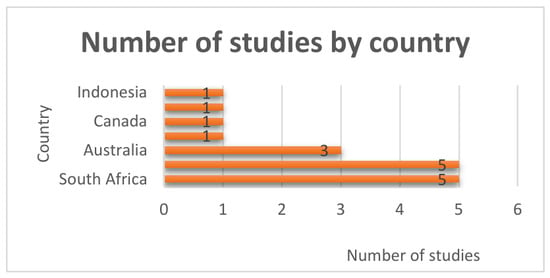
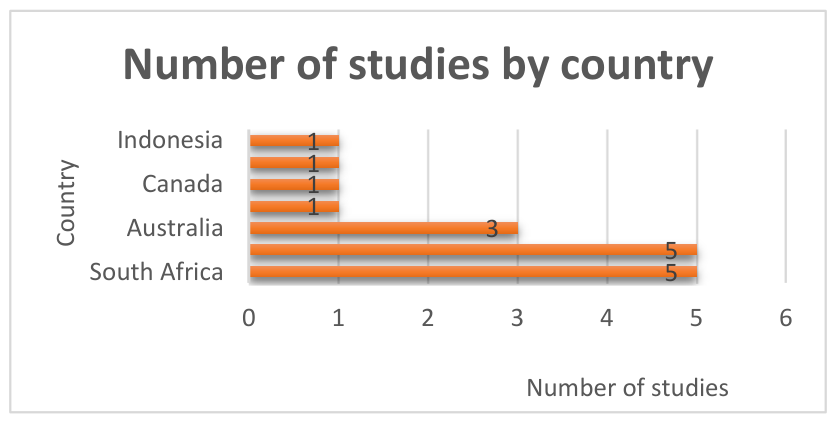
The global geographical distribution of the 17 studies reviewed reveals a significant concentration in South Africa and the United States, each contributing five studies, together accounting for nearly 59% of the reviewed literature. Australia contributes three studies, while England, Canada, Brazil, and Indonesia each contribute one. Figure 3 shows the geographical representation of studies reviewed on decolonial assessment practices in HE.
Figure 3.
Geographical distribution of studies.
The geographical distribution of the reviewed studies demonstrates that scholarship on decolonial assessment practices in higher education is concentrated within a small number of countries rather than being globally dispersed. When grouped geographically, the Global North accounts for 10 studies compared to 7 from the Global South. Although the Global North contributes a greater overall share of the literature, South Africa emerges as the leading contributor from the Global South, reflecting the country’s sustained engagement with decolonisation debates in higher education. The limited representation of other regions, particularly the rest of Africa, Latin America, and Asia, highlights important geographical gaps in the literature and suggests a need for broader international scholarship on decolonial assessment practices.
3.3. Theoretical/Conceptual Frameworks (Objective 2)
A few studies from the 17 reviewed studies had a theoretical or conceptual framework. Only three studies employed and specified a theoretical or conceptual framework framing the study. One of these studies made use of three theories. Godsell (2021), Godsell et al. (2024), and Maluleka and Ndumeya (2024) explicitly employed decolonisation theory as a guiding framework, foregrounding the dismantling of colonial epistemologies, the validation of indigenous knowledge systems, and the humanisation of assessment. Table 1 below summarises the theoretical/conceptual frameworks underpinning the reviewed studies decolonial assessment practices in HE. The details of the theory, the use frequency, and the scholars who used the theory are provided.
Table 1.
Theoretical/conceptual frameworks.
The review reveals a notable theoretical gap in the current scholarship on decolonial assessment practices in HE. Future research could expand on existing decolonial and critical pedagogical theories to construct context-specific frameworks that more explicitly link epistemic justice, assessment design, and institutional transformation in HE.
3.4. Research Methodologies (Objective 3)
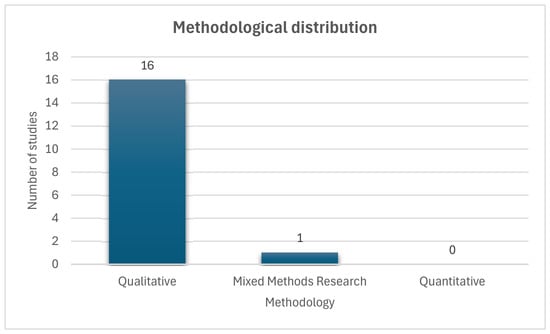
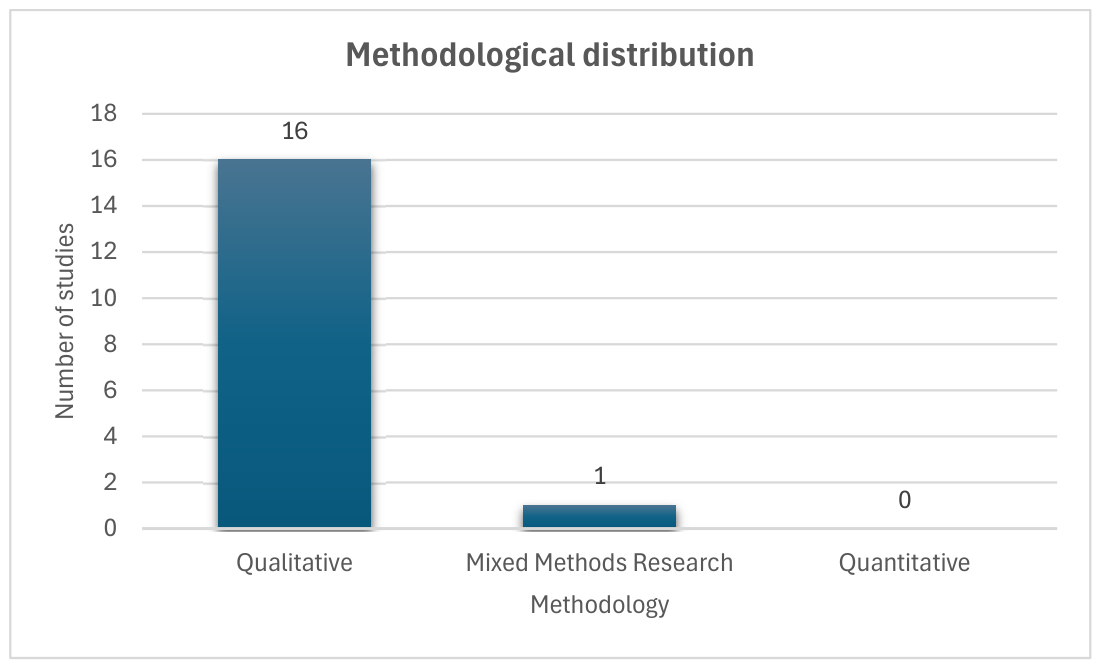
The methodological analysis of the 17 studies reveals a strong dominance of qualitative approaches, with 16 studies employing designs such as case studies, narrative inquiry, and autoethnography. Only one study adopted a mixed-methods design (Godsell, 2021), combining qualitative and quantitative elements to examine assessment reform in history education. None of the studies used a quantitative approach. Figure 4 represents the methodological distribution in the studies reviewed.
Figure 4.
Methodological distribution.
The qualitative emphasis reflects the field’s commitment to depth, contextualisation, and the privileging of lived experience. However, the near-absence of quantitative or mixed-methods designs (with only one mixed-methods study identified) exposes a methodological imbalance that limits the field’s capacity to generate generalisable evidence or systematically measure the impact of decolonial assessment practices on student outcomes. The scarcity of quantitative or longitudinal approaches also restricts insights into scalability, institutional integration, and comparative effectiveness across contexts. While the qualitative richness strengthens interpretive depth and aligns with humanising methodologies, the lack of methodological pluralism highlights an important gap. Advancing the field will require more mixed-methods and empirical studies capable of complementing qualitative insights with measurable, evidence-based analyses that can inform policy, institutional reform, and broader systemic transformation.
3.5. Dominant Research Themes (Objective 4)
The analysis of 17 articles related to decolonial assessment practices in HE revealed seven dominant themes discussed below.
3.5.1. Humanising Assessment (n = 11)
A major theme emerging from the reviewed studies is the shift towards humanising assessment, which positions students’ lived experiences, emotions, and identities as legitimate components of learning and evaluation. Studies show that reflective essays, portfolios, and narrative-based tasks create space for students to connect personal histories with disciplinary content, thereby deepening engagement and fostering epistemic justice. For example, Godsell et al. (2024) demonstrate how reflective and performative assessments in a South African history course supported students in reclaiming voice and presence within academic spaces. Similarly, Lopes and Stará (2023) illustrate how reflective portfolios promote self-awareness and relational learning, enabling students to engage critically with their educational trajectories. These humanising practices challenge decontextualised, standardised forms of assessment and advance a more inclusive and affective pedagogy.
3.5.2. Contextualising Assessment (n = 8)
A second dominant theme highlights a need for contextualisation of assessment within students’ cultural, linguistic, and community realities. For example, a study by Godsell (2021) conducted in South Africa shows how history plays and multilingual performances encouraged students to embody and reinterpret historical narratives through culturally situated lenses. In STEM education, Lalujan and Pranjol (2024) demonstrate how project-based assessment tasks allow students to draw on community knowledge and contextual problem-solving approaches. These practices disrupt Eurocentric universalism by situating knowledge within local contexts, thereby enhancing relevance, belonging, and cognitive accessibility.
3.5.3. Disrupting Power Hierarchies (n = 7)
A third theme focuses on the disruption of hierarchical power relations in assessment. Decolonial assessment seeks to reposition students as co-creators of knowledge rather than passive recipients of instructor-defined standards. Castillo-Montoya and Madriaga (2025) emphasise the importance of involving students in the development of assessment criteria, which shifts epistemic authority and fosters greater transparency and agency. Tack (2022) similarly documents how manifesto assignments empowered students to articulate critiques of dominant structures and envision alternative futures. These methods challenge the traditional asymmetry between lecturer and student, promoting shared ownership and democratic engagement within the learning process.
3.5.4. Collaborative and Peer-Based Assessment (n = 5)
Collaboration and peer-led assessment also emerged as key themes within decolonial assessment practices. Group portfolios, peer review exercises, and collaborative projects were shown to foster collective meaning-making, enhance metacognitive reflection, and reduce competitive individualism associated with colonial academic traditions. Fouche et al. (2021) demonstrate how group portfolio assessments in South African universities supported sustained dialogue, peer mentoring, and the co-construction of knowledge. Govender (2024) similarly highlights the role of collaborative business education assessments in cultivating community-based knowledge and inclusive learning environments. These approaches broaden the understanding of assessment as a social rather than solely individual endeavour.
3.5.5. Diversifying Assessment (n = 4)
Another key theme is the diversification of assessment modalities to accommodate multiple epistemologies and learning styles. Several studies argue that multimodal assessments such as visual artefacts, oral presentations, creative performances, and digital resources open up alternative routes for demonstrating understanding that extend beyond the dominance of written academic discourse. Godsell et al. (2024) show how performative and oral assessments legitimised embodied and creative forms of knowing. In STEM contexts, Lalujan and Pranjol (2024) illustrate how students’ self-designed revision resources enabled expression through modes that aligned with their cultural and cognitive preferences. This diversification expands epistemic access and recognises a plurality of ways of knowing.
3.5.6. Enhancing Transparency and Cultural Responsiveness (n = 3)
The final dominant theme centres on efforts to enhance transparency and cultural responsiveness within assessment design. Studies emphasise that making implicit academic norms explicit through templates, exemplars, detailed rubrics, and scaffolded guidance reduces cultural bias and supports epistemic access, particularly for marginalised students. Steele et al. (2024) demonstrate how culturally responsive assessment practices improved accessibility for First Nations students in Australian higher education. Similarly, Lambert et al. (2022) show that inclusive assessment design strengthens alignment between learning outcomes, student needs, and institutional expectations. These practices work to dismantle hidden curricula and create more equitable assessment environments.
3.6. Decolonial Assessment Practices in HE (Objective 5)
3.6.1. Humanising Assessment
Embodied, narrative, and reflective assessments emerged as central to humanising assessment. In South Africa, Godsell et al. (2024) demonstrate how historical plays, songs, and reflective essays enabled students to link personal histories, emotions, and cultural repertoires to academic content, thereby affirming their identities and experiences as legitimate forms of knowledge. Similar humanising assessment practices were evident in autoethnographic assessments in Canada, where Augustus (2022) found that indigenous and postcolonial autoethnography facilitated deep engagement, healing, and community-building. Additionally, reflective portfolios across Brazil and South Africa (Lopes & Stará, 2023; Fouche et al., 2021) further supported students’ metacognition, autonomy, and the integration of personal experience into academic meaning-making.
3.6.2. Contextualised and Culturally Relevant Assessment
A second key finding relates to contextualised and culturally relevant assessment, which anchors learning in students’ sociocultural and historical realities. Godsell (2021) and Godsell et al. (2024) illustrate how students drew on local languages, community knowledge, and lived contexts to reinterpret historical content through performance-based tasks. In STEM education, Lalujan and Pranjol (2024) show that project-based learning enabled students to contextualise abstract scientific concepts through personal and community experiences, thereby bridging disciplinary knowledge with real-world concerns.
3.6.3. Disrupt Power Hierarchies
A third finding highlights a deliberate effort to disrupt power hierarchies in assessment by redistributing authority in assessment design. Studies in the United States emphasised inviting students to decision-making about assessment criteria and formats (Castillo-Montoya & Madriaga, 2025), while South African work (Godsell, 2021) showed how collaborative assessment tasks disrupted lecturer dominance and enabled students to become co-constructors of knowledge. These practices foreground students as legitimate knowers and challenge the authority embedded in traditional summative assessment.
3.6.4. Collaborative and Peer-Based Assessment Practices
The fourth finding on decolonial assessment practices involves collaborative and peer-based assessment practices. For example, group portfolios in South African universities (Fouche et al., 2021) facilitated collective learning, shared reflection, and community building. In business education, Govender (2024) shows how peer learning, self-assessment, and connectivist approaches fostered pools of shared knowledge rooted in local contexts, thereby supporting decolonial aims of relationality and collective meaning-making.
3.6.5. Diversifying Modes of Expression
The fifth finding is diversifying modes of expression. Many studies rejected the dominance of written, text-based assessment in favour of multimodal outputs such as performances, portfolios, revision resources, oral presentations, and creative artefacts. Godsell et al. (2024) demonstrate how embodied tasks enabled students to use oral, musical, and performative forms of communication, while Lalujan and Pranjol (2024) allowed students to choose preferred formats for their revision resources. Such diversification broadens epistemic access and affirms varied cultural and cognitive ways of knowing.
3.6.6. Transparency and Cultural Responsiveness
The sixth finding is transparency and cultural responsiveness in assessment. This is an essential component of decolonial assessment. A study conducted in Australia (Steele et al., 2024) shows that making cultural expectations explicit through templates, exemplars, instructional videos, and relational pedagogies enhanced accessibility and supported First Nations students. Lambert et al. (2022) and others further argue that inclusive assessment requires more than altering assessment tasks; it necessitates institutional attention to justice-as-content, justice-as-process, and justice-as-pedagogy.
Taken together, the studies reveal that decolonial assessment is not a single method but a multifaceted set of practices that humanise learning, validate diverse epistemologies, redistribute power, and foster relational, culturally grounded educational experiences. These findings highlight both the transformative potential of decolonial assessment and its dependence on context-specific, participatory, and reflective pedagogical designs.
How Decolonial Assessment Practices Enable Student Success
First, decolonial assessments boost student engagement and deep learning through contextualised and embodied methods. When students are encouraged to connect their lived experiences, languages, and emotions to academic work, as shown by Godsell et al. (2024), they build stronger cognitive and emotional links with the course content. This engagement fosters deeper understanding, critical thinking, and long-term retention of knowledge. Students’ participation in creative, performative, and reflective assessments not only humanises learning but also increases emotional investment, leading to higher motivation and better performance.
Secondly, these practices promote student agency and empowerment. Co-creative assessment models that invite students to participate in designing evaluation criteria (Castillo-Montoya & Madriaga, 2025) reposition them as active participants in the learning process rather than passive recipients of knowledge. This shared authority enhances students’ confidence, ownership of learning, and metacognitive awareness. When students understand and influence how they are assessed, they develop a stronger sense of purpose and accountability, which correlates positively with persistence and success in higher education.
Thirdly, decolonial assessment fosters equity and inclusion by validating diverse epistemologies and cultural backgrounds. Steele et al. (2024) found that culturally responsive assessment where lecturers make implicit cultural expectations explicit and value students’ community-based knowledge reduces alienation and supports success among students from historically marginalised groups. By embedding relationality and care into assessment design, institutions can cultivate psychological safety and belonging, conditions essential for students to thrive academically and personally. In addition, collaborative and project-based assessments contribute to social and academic integration, which are significant predictors of student success. Group portfolios and project-based learning (Fouche et al., 2021; Lalujan & Pranjol, 2024) create environments in which peer learning, dialogue, and shared problem-solving strengthen cohort identity. This sense of community mitigates isolation, particularly for first-generation or underrepresented students, and encourages persistence through mutual support networks.
Finally, reflexive and narrative assessments, such as reflective portfolios and autoethnography (Augustus, 2022; Lopes & Stará, 2023), support holistic development and critical consciousness. These tasks encourage students to connect academic learning to their personal histories and social realities, promoting self-awareness, emotional growth, and social responsibility. This alignment between cognitive and affective learning contributes to well-rounded success, preparing students not only for academic achievement but also for civic and professional engagement.
In summary, decolonial assessment practices enable student success by creating inclusive, participatory, and transformative learning environments. They humanise education through relational and culturally responsive pedagogies, foster agency through co-creation and reflection, and build community through collaboration. In doing so, these practices reimagine assessment as an act of empowerment, one that supports students’ intellectual mastery, emotional well-being, and sense of belonging within higher education.
3.7. Literature Gaps (Objective 6)
Despite growing scholarly attention to decolonial assessment practices, several notable gaps remain within the existing literature. The current body of research is dominated by small-scale qualitative case studies conducted within limited disciplinary and geographic contexts (e.g., Godsell et al., 2024; Fouche et al., 2021; Lalujan & Pranjol, 2024), restricting the generalisability and scalability of findings. There is a lack of longitudinal and mixed-methods studies that systematically measure the long-term impact of decolonial assessment on student performance, retention, or equity outcomes. While existing studies (Augustus, 2022; Lopes & Stará, 2023) emphasise the humanising and inclusive nature of decolonial assessment, few critically examine issues of reliability, validity, or standardisation when implementing alternative forms of evaluation such as portfolios, performances, and autoethnographies. Similarly, limited attention has been given to the operationalisation of co-creation, specifically, how power dynamics between students and lecturers are negotiated in the design and enactment of participatory assessments (Castillo-Montoya & Madriaga, 2025). There is insufficient exploration of ethical challenges related to narrative or reflexive assessments, including potential emotional burdens on students and issues of consent. Intersectional and comparative studies are also scarce, with most research focusing on specific cultural or national contexts without examining how race, gender, class, or disability intersect to shape students’ experiences of decolonial assessment. Finally, given the growing influence of digital learning and artificial intelligence, the absence of studies investigating how technology mediates or complicates decolonial assessment practices represents an emerging gap. Addressing these limitations through robust, multi-method, and contextually diverse research designs will be crucial for advancing the theoretical, ethical, and practical development of decolonial assessment in HE.
There is a clear geographical imbalance in the existing body of research. The majority of studies originate from South Africa and the US and do not address HE in other parts of the world. This imbalance underscores the need for cross-regional and intercultural studies that explore how decolonial assessment can be contextualised across diverse educational systems and epistemic traditions. Finally, there exists a theoretical and conceptual gap. Although many studies draw on decolonial theory, critical pedagogy, or culturally responsive frameworks, few offer original theoretical models that explicitly link assessment, epistemic justice, and decolonial praxis. Future scholarship should aim to advance theory-building by articulating how decolonial epistemologies can reshape assessment paradigms in diverse academic disciplines.
Collectively, these gaps suggest that the field of decolonial assessment in HE is still in its formative stages. Future research should adopt interdisciplinary, comparative, and action-oriented approaches that move beyond conceptual discussions toward the systematic transformation of assessment practices, ensuring that decolonisation efforts extend beyond curriculum rhetoric into the lived realities of teaching, learning, and evaluation.
4. Discussion and Conclusions
This systematic review examined the literature on decolonial assessment in higher education published between 2018 and October 2025 to determine its geographical distribution, theoretical foundations, methodological trends, dominant research themes, and assessment practices.
Globally, research on higher education assessment is dominated by countries such as the United States, the United Kingdom, Australia, Canada, and China. The review demonstrates that scholarship in this field of decolonial assessment remains relatively limited and unevenly distributed. Research is concentrated primarily in South Africa and the United States, with comparatively few studies emerging from other regions. This geographical imbalance suggests that knowledge production on decolonial assessment continues to be shaped by specific socio-political and historical contexts, highlighting the need for broader international engagement and cross-cultural scholarship. The review further reveals that the theoretical development of the field remains in its formative stages. Although decolonisation theory and culturally responsive assessment frameworks provide valuable conceptual foundations, relatively few studies explicitly articulate or apply theoretical frameworks to guide empirical investigations. Consequently, there remains considerable scope for developing robust theoretical models that more explicitly connect decolonial assessment, epistemic justice, institutional transformation, and student success. Methodologically, the evidence demonstrates a strong reliance on qualitative approaches, with very limited use of mixed-methods designs and an absence of quantitative research. While qualitative methodologies have generated rich contextual insights into students’ lived experiences and institutional practices, the methodological imbalance limits opportunities to evaluate the effectiveness, scalability, and long-term impact of decolonial assessment practices across diverse higher education contexts. Future research would benefit from greater methodological pluralism, including longitudinal, comparative, and mixed-methods studies. Across the reviewed literature, several dominant themes consistently emerged. These include humanising assessment, contextualising assessment within students’ cultural realities, disrupting traditional power hierarchies, promoting collaborative and peer-based assessment, diversifying assessment modalities, and enhancing transparency and cultural responsiveness. Collectively, these themes reimagine assessment as a relational, participatory, and socially just practice that values multiple epistemologies and positions students as active contributors to knowledge construction.
The review also demonstrates that decolonial assessment practices have considerable potential to enhance student success. Humanising, contextualised, collaborative, and culturally responsive assessment approaches foster student engagement, agency, belonging, critical consciousness, and deeper learning by validating students’ identities, experiences, and diverse ways of knowing. However, the evidence also indicates that these practices are predominantly reported within small-scale, context-specific studies, with limited evidence regarding their implementation at institutional scale or their long-term impact on student outcomes. Overall, the findings indicate that decolonial assessment represents an emerging yet rapidly developing area of scholarship with significant potential to transform assessment in higher education. However, achieving this potential will require broader geographical representation, stronger theoretical development, greater methodological diversity, and more rigorous empirical investigation. Future research should move beyond isolated classroom innovations towards institution-wide and cross-contextual studies capable of informing policy, advancing theory, and supporting sustainable transformation of assessment practices. In doing so, decolonial assessment can move beyond challenging colonial assessment traditions to establishing equitable, inclusive, and epistemically just approaches that enhance student success across diverse higher education context.
This systematic review concludes that decolonial assessment in higher education is an emerging but rapidly evolving field that seeks to transform assessment into a more equitable, culturally responsive, and socially just practice. Although the literature demonstrates growing recognition of the importance of humanising assessment, valuing diverse epistemologies, and promoting student agency, the evidence base remains geographically concentrated, theoretically underdeveloped, and methodologically limited. Scholarship is dominated by studies from South Africa and a small number of Global North countries, while many regions remain underrepresented, limiting the global understanding of decolonial assessment practices. Furthermore, the limited and inconsistent application of theoretical frameworks constrains conceptual advancement, and the predominance of qualitative, context-specific studies restricts evidence regarding the effectiveness, scalability, and long-term impact of these practices.
Despite these limitations, the review provides compelling evidence that decolonial assessment has considerable potential to enhance student engagement, belonging, critical consciousness, and academic success by recognising students’ cultural identities and multiple ways of knowing. Realising this potential, however, requires future research that expands geographical representation, strengthens theoretical foundations, embraces methodological diversity, and examines decolonial assessment at institutional and cross-national levels. Advancing scholarship in these areas will contribute to the development of sustainable, evidence-informed assessment practices capable of supporting epistemic justice, institutional transformation, and improved student success in diverse higher education contexts.
5. Limitations of the Review
There are some limitations that were noted in conducting the review. There are still few studies that have focused on decolonial assessment practices in HE. As a result, the review only included 17 studies. The review only included studies written in English. All non-English studies were not considered. Future studies could get a translator to cater for the inclusion of non-English studies. Four databases were searched. Other databases that were not searched could have studies on decolonial assessment practices. Future studies could include more databases.
6. Recommendations
Based on the synthesis of the 17 reviewed studies, several recommendations emerge for advancing scholarship and practice in decolonial assessment within HE.
Future research should aim to extend beyond the Global South by including perspectives from underrepresented regions such as Asia, the Middle East, and continental Europe. Comparative and cross-cultural studies are needed to explore how decolonial assessment can be contextualised across diverse epistemic traditions and institutional systems. Collaborative, multi-institutional projects involving scholars from both the Global North and South can foster more balanced and globally relevant understandings of decolonial assessment. While qualitative research has provided rich contextual insights, there is a need for methodological pluralism. Future studies should employ mixed-methods, longitudinal, and participatory action research designs to examine the effectiveness, sustainability, and impact of decolonial assessment practices on student learning, engagement, and epistemic access. Quantitative and evaluative dimensions can complement qualitative findings and strengthen the evidence base for policy and practice.
Researchers should move beyond the application of existing decolonial and critical pedagogical theories to develop context-specific conceptual frameworks that explicitly link decoloniality, assessment design, and institutional transformation. There is a pressing need to theorise how decolonial principles such as relationality, inclusivity, and epistemic justice can be operationalised in assessment systems across different disciplines and cultural contexts. Given that decolonial assessment scholarship remains concentrated in education, humanities, and social sciences, future research should focus on STEM education, where colonial legacies often remain obscured by claims of neutrality and objectivity. Interdisciplinary projects could explore how decolonial assessment might integrate community knowledge, indigenous methodologies, and locally relevant applications in scientific and technical domains.
Universities and higher education institutions should embed decolonial principles into assessment policies, curriculum frameworks, and quality assurance mechanisms. This requires leadership commitment, professional development for educators, and the creation of spaces for reflective dialogue about assessment reform. Faculty training programmes should promote awareness of decolonial approaches and encourage the design of inclusive, culturally responsive, and humanising assessment practices.
Students should be recognised as active partners in the decolonisation of assessment. Future studies and institutional initiatives should involve students in the design, implementation, and evaluation of assessment methods to ensure that their voices, experiences, and knowledges inform assessment reform. Co-created assessment models align with decolonial principles of power redistribution and epistemic agency.
There is a need for policy-oriented research that examines how national and institutional assessment standards can be restructured to support decolonial aims. Such research should document best practices, evaluate pilot interventions, and provide evidence-based recommendations for integrating decolonial assessment frameworks into accreditation and quality assurance systems.
In summary, advancing the decolonial assessment agenda requires interdisciplinary collaboration, theoretical innovation, and institutional commitment. By expanding methodological diversity, fostering student agency, and embedding decolonial principles in policy and practice, higher education systems can move closer to achieving epistemic justice and transforming assessment into a truly inclusive and emancipatory practice.
Author Contributions
Conceptualization, N.F.M. and L.C.J.; methodology, N.F.M.; validation, N.F.M. and L.C.J.; formal analysis, N.F.M. and L.C.J.; resources, L.C.J.; data curation, N.F.M.; writing—original draft preparation, N.F.M.; writing—review and editing, N.F.M. and L.C.J.; visualization, N.F.M.; project administration, N.F.M.; funding acquisition, L.C.J. All authors have read and agreed to the published version of the manuscript.
Funding
This research received no external funding.
Institutional Review Board Statement
Not applicable.
Informed Consent Statement
Not applicable.
Data Availability Statement
The data reported in this study are available on request from the corresponding author.
Conflicts of Interest
The authors declare no conflicts of interest.
References
- Amir-Behghadami, M., & Janati, A. (2020). Population, intervention, comparison, outcomes and study design (PICOS) criteria to formulate research questions in evidence-based practice. Journal of Evidence-Based Medicine and Healthcare, 7(17), 750–752. [Google Scholar] [CrossRef] [Scilit] [PubMed]
- Augustus, C. (2022). Reconciliation through student narratives: Autoethnography, decolonization, and Indigenous methods-based assessment in post-secondary education. International Journal of Teaching and Learning in Higher Education, 34(1), 144–152. [Google Scholar]
- Braun, V., & Clarke, V. (2022). Thematic analysis, a practical guide. SAGE. [Google Scholar]
- Castillo-Montoya, M., & Madriaga, M. (2025). Decolonizing assessment of learning in higher education: The journey ahead. Teaching in Higher Education, 30(2), 555–564. [Google Scholar] [CrossRef] [Scilit]
- Cooper, N., Horne, T., Hayes, G. R., Heldreth, C., Lahav, M., Holbrook, J., & Wilcox, L. (2022). A systematic review and thematic analysis of community-collaborative approaches to computing research. In Proceedings of the 2022 CHI conference on human factors in computing systems (pp. 1–18). Association for Computing Machinery. [Google Scholar] [CrossRef] [Scilit]
- Fouche, I., Andrews, G., Dison, L., & Prozesky, M. (2021). Pedagogical and decolonial affordances of group portfolio assessments for learning in South African universities. Critical Studies in Teaching and Learning, 9(SI), 76–98. [Google Scholar] [CrossRef] [Scilit]
- Godsell, S. (2021). Decolonisation of history assessment: An exploration. South African Journal of Higher Education, 35(6), 101–120. [Google Scholar] [CrossRef] [Scilit]
- Godsell, S., Shabangu, B., & Primrose, G. (2024). Against colonial residues, towards decolonising assessment: A case study of a university history course. Cogent Education, 11(1), 2362552. [Google Scholar] [CrossRef] [Scilit]
- Gopal, P. (2021). On decolonisation and the university. Textual Practice, 35(6), 873–899. [Google Scholar] [CrossRef] [Scilit]
- Govender, T. (2024). Encouraging diversity and inclusion in South African higher education: Suggestions for decolonizing assessment in business education. Future X, 2(1), 1–10. [Google Scholar]
- Hong, Q. N., Pluye, P., Fàbregues, S., Bartlett, G., Boardman, F., Cargo, M., Dagenais, P., Gagnon, M. P., Griffiths, F., Nicolau, B., O’Cathai, A., Rousseau, M. C., & Vedel, I. (2018). Mixed Methods Appraisal Tool (MMAT), version 2018. Registration of copyright (#1148552), Canadian Intellectual Property Office, Industry Canada. Available online: http://mixedmethodsappraisaltoolpublic.pbworks.com/w/page/127425845/Download%20the%20MMAT (accessed on 1 February 2025).
- Johnson, N., & Phillips, M. (2017). Rayyan for systematic reviews. Journal of Electronic Resources Librarianship, 30(1), 46–48. [Google Scholar] [CrossRef] [Scilit]
- Lalujan, J. D., & Pranjol, M. Z. I. (2024). Project-based learning as a potential decolonised assessment method in STEM higher education. Trends in Higher Education, 3(1), 16–33. [Google Scholar] [CrossRef] [Scilit]
- Lambert, S., Funk, J., & Adam, T. (2022). What can decolonisation of curriculum tell us about inclusive assessment? In Assessment for inclusion in higher education (pp. 52–62). Routledge. [Google Scholar] [CrossRef] [Scilit]
- Levy-Feldman, I. (2025). The role of assessment in improving education and promoting educational equity. Education Sciences, 15(2), 224. [Google Scholar] [CrossRef] [Scilit]
- Long, H. A., French, D. P., & Brooks, J. M. (2020). Optimising the value of the critical appraisal skills programme (CASP) tool for quality appraisal in qualitative evidence synthesis. Research Methods in Medicine & Health Sciences, 1(1), 31–42. [Google Scholar] [CrossRef] [Scilit]
- Lopes, J. C., & Stará, J. (2023). Reflective Portfolios as decolonial pedagogical practices. Educar em Revista, 38, e85774. [Google Scholar] [CrossRef] [Scilit]
- Makokotlela, M. V., & Gumbo, M. T. (2025). Decolonisation of the curriculum through the integration of indigenous knowledge in higher education. South African Journal of Higher Education, 39(1), 237–254. [Google Scholar] [CrossRef] [Scilit]
- Maluleka, P., & Ndumeya, N. (2024). Towards a decolonized assessment for history teaching and learning in post-apartheid South Africa. In History education in Africa: Research, perspectives and practices (pp. 243–264). Springer. [Google Scholar]
- Maton, K. (2013). Knowledge and knowers: Towards a realist sociology of education. Routledge. [Google Scholar] [CrossRef] [Scilit]
- Modiba, M. A., & Emsley, M. R. (2024). Decolonising education in institutions of higher learning. African Perspectives of Research in Teaching and Learning, 8(3), 28–41. [Google Scholar] [CrossRef] [Scilit]
- Page, M. J., McKenzie, J. E., Bossuyt, P. M., Boutron, I., Hoffmann, T. C., Mulrow, C. D., Shamseer, L., Tetzlaff, J. M., Akl, E. A., Brennan, S. E., Chou, R., Glanville, J., Grimshaw, J. M., Hróbjartsson, A., Lalu, M. M., Li, T., Loder, E. W., Mayo-Wilson, E., McDonald, S., … Moher, D. (2021). The PRISMA 2020 statement: An updated guideline for reporting systematic reviews. BMJ, 372, n71. [Google Scholar] [CrossRef] [Scilit] [PubMed]
- Steele, C., Gower, G., & Bogachenko, T. (2024). Creating and enacting culturally responsive assessment for first nations students in higher education settings. Australian Journal of Education, 68(2), 84–102. [Google Scholar] [CrossRef] [Scilit]
- Swartz, M. K. (2021). PRISMA 2020: An update. Journal of Pediatric Health Care, 35(4), 351. [Google Scholar] [CrossRef] [Scilit] [PubMed]
- Tack, S. (2022). Teaching for liberation: The manifesto assignment as an example of bell hooks’ engaged pedagogy. Australian Feminist Studies, 37(113), 317–333. [Google Scholar] [CrossRef] [Scilit]
- Tamimi, N., Khalawi, H., Jallow, M. A., Valencia, O. G. T., & Jumbo, E. (2024). Towards decolonising higher education: A case study from a UK university. Higher Education, 88(3), 815–837. [Google Scholar] [CrossRef] [Scilit]

Disclaimer/Publisher’s Note: The statements, opinions and data contained in all publications are solely those of the individual author(s) and contributor(s) and not of MDPI and/or the editor(s). MDPI and/or the editor(s) disclaim responsibility for any injury to people or property resulting from any ideas, methods, instructions or products referred to in the content. |
© 2026 by the authors. Licensee MDPI, Basel, Switzerland. This article is an open access article distributed under the terms and conditions of the Creative Commons Attribution (CC BY) license.