


Abstract
This study develops a theory of parental engagement by exploring the perspectives of both parents and practitioners within a socio-economically disadvantaged area in Dublin, Ireland. Using Constructivist Grounded Theory, data were generated through focus groups with participants involved in the family literacy programme Breakfast Buddies. Analysis resulted in the development of a substantive theory, The Dance of Engagement, which conceptualises parental engagement as a relational, non-linear, and co-constructed process. The findings identify three foundational tenets—safety, equality and trust—as essential conditions underpinning effective parental engagement. Four interconnected categories describe how engagement unfolds in practice: choosing to engage, co-creating engagement, connecting to engage and sharing. These categories illustrate how engagement is initiated, sustained and extended beyond programme settings into home and community contexts. The study demonstrates that personalised practitioner approaches, relational environments and shared ownership of engagement processes support greater parental confidence, sustained participation and reciprocal learning between parents and practitioners. The resulting theory challenges deficit-oriented and participation-based models of parental engagement by focusing on collaboration and contextual responsiveness. The Dance of Engagement offers a theoretically grounded framework with clear implications for policy and practice, particularly for designing inclusive family literacy practices to improve outcomes for children and families in disadvantaged communities.
1. Introduction
This study is guided by a theoretical framework grounded in the community-based family literacy context and informed by Bronfenbrenner’s ecological systems theory, which conceptualises children’s learning as shaped through dynamic interactions between families, schools, and community settings (Bronfenbrenner, 1974, 1979, 2001). Drawing on a socio-cultural perspective, the framework recognises families’ ‘funds of knowledge’ and positions parents as key contributors to their children’s learning through a strength-based approach (González et al., 2005). In addition, the study is informed by Freirean critical pedagogy, which conceptualises literacy as a dialogic and transformative practice capable of challenging social inequalities.
Building on the theoretical foundations, this article provides a clear conceptual definition of family literacy and family literacy programmes and examines parental engagement within these contexts. Family literacy is conceptualised as a holistic and relational practice, embedded in everyday lived experiences and shaped across home, school and community settings. Parental engagement is understood as a foundational and enabling condition for the effectiveness of family literacy programmes, rather than a discrete or participation-based outcome.
In this study, socio-economic disadvantage is understood as a structural condition characterised by factors such as lower levels of educational attainment, higher rates of unemployment or economic inactivity, and reduced access to services and resources. The study setting was identified as socio-economically disadvantaged based on its alignment with these indicators, as reflected in local service provision, community profiles, and the characteristics of the population served by the family literacy programme. The term is used consistently throughout this article to refer to the structural and contextual conditions that shape families’ lived experiences, rather than to individual deficits or capacities (Kintrea & Muir, 2009; Montague, 2021; Quigley, 2002). Existing parental engagement frameworks frequently emphasise participation while offering limited theoretical explanation of how engagement is initiated, sustained or experienced within such contexts. This study addresses this gap by developing a grounded theory of effective parental engagement based on the perspectives of both parents1 and practitioners involved in family literacy programmes delivered in a socio-economically disadvantaged community in Dublin, Ireland.
Using Constructivist Grounded Theory (Charmaz, 2014), the research examines how parents and practitioners understand and experience engagement and how barriers to engagement are negotiated in practice. The study was funded by the Irish Research Council (Research Ireland) and was guided by the following research questions:
How can insights from parents and practitioners help identify ways to overcome barriers to parental engagement?
In what ways can the perspectives of parents and practitioners deepen our understanding of effective parental engagement practices?
2. Theoretical Framework
All research is informed by a theoretical framework that articulates the assumptions underpinning the study and situates it in relation to existing knowledge (McGhee et al., 2007). This study is grounded in a community-based family literacy context and draws on ecological, sociocultural, and critical pedagogical perspectives to examine how parental engagement is constructed and sustained in a socio-economically disadvantaged area.
The guiding framework is informed by Bronfenbrenner’s ecological systems theory, which conceptualises child development as occurring within nested systems of influence, including the family, school and broader community (Bronfenbrenner, 1974, 1979, 2001). The theoretical framework is situated within a community-based family literacy programme (Breakfast Buddies) which operates from the premise that parents play a central role in their children’s early language and literacy development.
Ecological systems theory has been widely applied in family literacy research to emphasise the interconnectedness of home, school and community environments. This study provides a structural lens for understanding where engagement occurs. However, existing ecological and family literacy frameworks often describe the contexts of engagement rather than explicating how engagement is enacted within relationships across those contexts.
Family literacy research further highlights the importance of early language development and parental interactions as foundations for children’s literacy learning (Snow, 2014). Traditional family literacy and parental engagement frameworks frequently emphasise parental involvement as participation in services or programmes. While these models underscore the value of engagement, they often equate engagement with attendance and under-theorise the relational process that sustains meaningful engagement over time.
The theoretical contribution of this study lies in its challenge to deficit-oriented models of parental engagement. Rather than positioning engagement as a fixed set of behaviours or parental responsibilities, The Dance of Engagement conceptualises engagement as a collaborative, relational and contextually responsive process co-constructed by parents and practitioners.
A socio-cultural perspective further informs this framework through the concept of “funds of knowledge”, which recognises the cultural, experiential and relational resources that families bring to literacy practices (González et al., 2005). This perspective positions parents as fundamental contributors to their children’s learning and aligns with strength-based approaches that challenge deficit narratives commonly associated with families from disadvantaged backgrounds (Gill & Jack, 2007). The dance of engagement extends this work by theorising the relational conditions, specifically safety, equality, and trust, under which parental knowledge is shared, valued and sustained.
Additionally, the study draws on critical pedagogy by Freire (1976), which views literacy as a transformative tool that enables individuals to understand and challenge societal structures. Freire’s conception of literacy is particularly relevant in disadvantaged communities as a means of reading the world, where systemic inequities limit opportunities (Gill & Jack, 2007). The emphasis on dialogue, shared power, and reciprocity within Freirean pedagogy is reflected in the co-construction nature of engagement articulated in The Dance of Engagement.
Family literacy is understood within this framework as a practice deeply embedded in everyday life, shaped by the lived experiences, relationships, and cultural practices shared between parents and their children (Lynch & Prins, 2022). This positioning promotes a holistic understanding of learning that incorporates the home, school, and community environments, recognising that all these spaces significantly influence children’s developmental trajectories.
In summary, The Dance of Engagement (McCarthy, 2025a) integrates ecological structure, socio-cultural knowledge, and critical pedagogy into a relational process-oriented theoretical framework. By explicitly addressing how engagement is initiated, negotiated and sustained, the theory extends existing parental engagement frameworks and offers a context-sensitive alternative to models that privilege participation over partnership.
2.1. What Is Family Literacy?
Before exploring family literacy, it is important to consider how the concept of literacy itself has evolved. Traditionally understood as the ability to read and write, literacy is now widely recognised as a socially situated practice that is shaped by cultural, economic and technological contexts (Barton & Hamilton, 1998; Street, 1995). Contemporary perspectives emphasise multiple literacies, including digital, linguistic, and cultural forms, that individuals and families use in their everyday lives. This broader understanding provides the foundation for examining literacy within family and community contexts.
UNESCO (2017) estimates there are over 750 million people worldwide, two-thirds of whom are women, with literacy difficulties. It is estimated that 73 million people in Europe lack qualifications beyond the secondary school level due to poor literacy skills. The recent PIAAC findings for Ireland indicate that one in five Irish adults has an unmet literacy need (CSO, 2023). If a parent has unmet literacy needs, their perceived control over their participation may be compromised (Ajzen, 1991). It is, therefore, reasonable to assume that parental engagement will be affected by participants’ unmet literacy needs.
The term “family literacy” was first used by Taylor (1983) to describe literacy practices she observed in middle-class families that supported children’s literacy development. Hannon (1999) argues that the concept of family literacy is broader than parental involvement, emphasising that families already have established literacy practices at home. Similarly, González et al. (2005) emphasise that working-class families engage in a wide range of family literacy practices at home, which they describe as funds of knowledge. Family literacy encompasses a range of practices that occur in the home, school, and community, focusing on how families use language and literacy to communicate, construct meaning, and support each other’s learning. In everyday contexts, family literacy occurs when parents read with their children, tell stories, play literacy-based games, or engage in conversations that promote language development. These interactions not only enhance children’s language and literacy abilities but also strengthen emotional bonds between parents and children (McCarthy, 2025b).
Family literacy programmes are typically offered in schools or community centres and aim to support parents in their role as primary educators. These programmes often provide practical resources and involve activities that foster parents’ confidence and capacity to support their children’s literacy development, for example, the Hug Your Book© programme. Practitioners play a central role by modelling literacy practices, coaching parents, and co-constructing learning experiences (McCarthy, 2025b). Such programmes are particularly valuable in disadvantaged areas where formal literacy support may be limited (Harris & Goodall, 2007). Practitioners work alongside parents, modelling and coaching a range of language and literacy strategies to build confidence and knowledge. Many programmes provide parents with free, practical resources to enrich learning experiences at home.
2.2. What Is Parental Engagement?
Parental engagement is an evolving, collaborative process in which parents and practitioners work together to support children’s educational and developmental outcomes (McKay et al., 2021). In the context of community-based family literacy programmes, engagement goes beyond mere attendance or involvement; it is underpinned by trust, mutual respect, shared goals, and culturally responsive practice (Harris & Goodall, 2007).
There are five key characteristics of effective parental engagement. First, it requires active collaboration between parents and practitioners, where both parties are recognised as equal contributors (Goodall & Montgomery, 2014). Second, engagement is shaped by the attitudes, behaviours, values, and motivations of all involved (Coatsworth et al., 2017). Practitioners must understand the diverse perspectives and needs of families and create safe spaces for engagement (McCarthy, 2025b). Third, practitioner actions play a crucial role in shaping engagement. Effective practitioners provide clarity about their role, offer support, and facilitate access to resources and learning opportunities (Chappel & Ratliffe, 2021). Fourth, engagement should reflect mutually agreed-upon goals tailored to each family’s unique needs—whether to enhance reading, writing, and numeracy, support vocabulary development, or build digital literacy (Lynch & Prins, 2022). Finally, engagement is an ongoing, dynamic process that unfolds across multiple settings, including home, school, and community (T. Williams & Sánchez, 2012). Broader socio-cultural contexts, including organisational structures, practitioner traits, and family dynamics, influence parental engagement (Gill & Jack, 2007). As a practitioner, it is important to understand what parental engagement is, the benefits and barriers to effective engagement, and how to enhance effective engagement practice. Family literacy programmes can significantly enhance the life chances of vulnerable children while also supporting parents. They help ease parental stress, build confidence in parenting abilities, strengthen parents’ social support networks, and promote improvements in children’s language development, literacy skills and behaviour, benefiting both parents and children (Hackworth et al., 2018; Sneddon & Owens, 2012).
2.3. The Benefits and Challenges of Parental Engagement
The benefits of parental engagement are well recognised for supporting children’s language and literacy development (Fan et al., 2011; Goodall et al., 2010; Lopez & Donovan, 2009). Research confirms that early parental engagement has long-term benefits for children’s learning and emphasises the importance of parents’ attitudes and behaviours towards learning (Harris & Goodall, 2007; Sacker et al., 2002). However, achieving meaningful engagement remains particularly challenging in socio-economically disadvantaged areas (Gov.ie, 2021; Rochford et al., 2014). Living in an area of disadvantage can restrict parents’ abilities to engage in educational opportunities for their children (Cortis et al., 2009). Research has drawn attention to some interventions designed to support families affected by poverty and disadvantage having the opposite effect by “apportioning blame and stereotyping” and ultimately negatively impacting parental engagement (Allen & Spencer, 2022, p. 9). Research indicates that poverty and deprivation are linked to a range of adverse outcomes for children, including poorer health, lower academic achievement, and hindered socio-emotional development, as well as a heightened risk of behavioural issues (J. Williams et al., 2009). Additionally, living in an area of socio-economic disadvantage has been associated with adverse psychological and health outcomes for parents (Kivimäki et al., 2018; Santiago et al., 2011). As such, developing a shared and comprehensive understanding of parental engagement—encompassing all its dimensions—is essential for overcoming barriers and strengthening engagement strategies for families (Chacko et al., 2016; Ingoldsby, 2010; Klatte et al., 2020). It was with this understanding that I began to search for a methodology that would support the aims of this research that aligned with my ontological (how I view reality) and epistemological (what I know about knowledge) perspectives Blaikie (2007).
3. Methodology
Qualitative research provides methodological rigour by enabling in-depth, context-rich exploration of experiences and social processes that cannot be fully captured through quantitative approaches alone (Bryman, 2016). Such methods are particularly suited to examining how and why individuals engage in specific practices and make meaning of their experiences (Crotty, 1998). The choice of a qualitative approach in this study aligns with an interpretivist epistemological stance, recognising knowledge as socially constructed and contextually situated (Patel, 2015).
Consistent with Constructivist Grounded Theory, researcher positionality and reflexivity were treated as methodological considerations rather than personal disclosures (Charmaz, 2014). The researchers’ prior familiarity with socio-economically disadvantaged contexts informed sensitivity to the structural and relational factors influencing parental engagement while also necessitating ongoing reflexive engagement to minimise the influence of pre-existing assumptions. Reflexive strategies, including memo writing, constant comparison and iterative interrogation of emerging categories, were employed throughout data collection and analysis to ensure that theoretical development remained grounded in participants’ accounts.
The study was further informed by Freire’s critical pedagogy, which emphasises dialogue, equity, and the transformative potential of learning through critical engagement with social conditions (Freire, 1976). This perspective supported an analytic focus on collaboration, shared agency, and social justice, aligning with the study’s aim of developing a theory of parental engagement that reflects the diverse realities and experiences of parents and practitioners. Reflexivity, therefore, served as a mechanism to enhance analytical rigour and transparency, ensuring that the resulting theory was co-constructed and responsive to participants lived contexts.
3.1. Constructivist Grounded Theory (CGT)
Constructivist Grounded Theory (CGT) was employed as the methodological approach for this research. CGT is an interpretive development of the original Grounded Theory (GT) developed by Glaser and Strauss (1967). Grounded theory is particularly suited to research seeking to explain social processes, as it enables theory development that is closely grounded in participants’ experiences and meanings (Birks & Mills, 2015). The term “grounded” refers to the dual focus of the methodology: research questions are rooted in participants’ real-life experiences, and the resulting theory is derived inductively from the data (Glaser, 2005; Lo, 2016).
Within CGT, data are analysed through a contextual and interpretive lens that emphasises the participants’ lived experiences while recognising the co-construction of meaning within the research process (Charmaz, 2021; Hudson, 2020; Karpouza & Emvalotis, 2019; Stokes & Ross, 2020). The methodology incorporates reflexivity as a core analytical principle, acknowledging the co-construction of meaning between participants and the researcher while aiming to minimise the imposition of preconceived assumptions on the data (Charmaz, 2014). Theory development occurs through iterative cycles of data collection, coding, and analysis, allowing conceptual categories to emerge inductively and evolve progressively throughout the research process, drawing on participants’ accounts (Charmaz, 2021).
3.2. Data Collection
Data collection was conducted between 2019 and 2022 through eight focus groups held both in person and online. The extended duration of data collection reflects the impact of COVID-19 restrictions and associated lockdowns and explains the transition from in-person focus groups to online focus groups (WHO, 2020). Furthermore, the duration of data collection reflected the iterative nature of CGT, in which data collection and analysis occur concurrently. Preliminary analysis informed subsequent focus groups, allowing emerging concepts to be explored in greater depth and supporting the refinement of developing categories over time. This approach also enabled sensitivity to change in contextual conditions and practice across the collection period, consistent with CGT’s emphasis on theoretical development through ongoing engagement with the data (Charmaz, 2014).
A total of thirty-four participants took part in the study, comprising parents and practitioners with direct experience of the phenomenon “Breakfast Buddies” under investigation. Parent participants were primary caregivers of young children enrolled in the programme and represented a range of family circumstances common in the community. Practitioner participants represented a range of professional roles within family literacy and early years services and brought varying levels of experience in working with families in disadvantaged communities. Demographic information was collected to provide contextual understanding of the sample while prioritising participant anonymity and confidentiality. Focus groups were selected to facilitate interaction and collective sense-making, enabling the exploration of shared and contrasting perspectives, which is consistent with the principles of Constructivist Grounded Theory (Charmaz, 2014).
Focus groups were selected to facilitate interaction and collective sense-making, enabling the exploration of shared and contrasting perspectives, which is consistent with the principles of CGT (Charmaz, 2014). While focus groups may limit disclosure of individual or sensitive perspectives, facilitatory strategies were employed to encourage balanced participation and ensure that different viewpoints could be expressed. During analysis, attention was paid to discrepancies, disagreements, contradictions, and alternative views. Examining these instances through constant comparative analysis to ensure individual voices were maintained within collective accounts.
An interview guide was developed in line with CGT principles and informed by the literature on parental engagement, family literacy, and partnership-based practice. Specifically, research highlighting relational approaches to parental engagement (Goodall & Montgomery, 2014), strengths-based and sociocultural perspectives on family literacy (González et al., 2005), and studies examining barriers to engagement in socio-economically disadvantaged contexts (Baquedano-López et al., 2013) informed the formulation of open-ended questions. This literature guided the inclusion of prompts exploring parents’ and practitioners’ experiences of engagement, perceptions of power and partnership, and the contextual factors shaping participation, while maintaining flexibility to allow unanticipated themes to emerge, in keeping with CGT methodology (Charmaz, 2014). All focus groups were audio recorded with informed consent and transcribed verbatim by the researcher to support systematic analysis. Ethical approval for this study was obtained from the Trinity College Dublin ethics committee prior to data collection. Due to the muti-site nature of the research, approvals were granted across multiple phases between 2019 and 2022. All procedures complied with institutional ethical standards, and informed consent was obtained from all participants. Procedures were implemented to ensure participant confidentiality and anonymity.
Although CGT ideally involves theoretical sampling guided by emerging analysis, recruitment in this study was shaped by the programme setting and participant availability. Analytic insights then informed the focus of subsequent data collection. Recruitment remained primarily purposive rather than theoretically driven. In CGT, the sample size is determined by theoretical sufficiency (Dey, 1999). The inclusion of thirty-four participants enabled the exploration of variation across experiences while supporting the development, refinement and integration of conceptual categories. Claims of theoretical saturation were based on the recurrence and stability of core categories across focus groups. Data collection continued until categories were sufficiently developed and no substantial new categories emerged, in accordance with the principle of theoretical saturation (Birks & Mills, 2015; Charmaz, 2014). Contextual changes between 2019 and 2022, including those associated with the COVID-19 pandemic, were treated analytically, with shifts examined as part of the engagement process rather than a limitation.
3.3. Data Analysis
Data analysis followed the systematic, iterative procedures outlined in Constructivist Grounded Theory (Charmaz, 2014). All focus group recordings were transcribed verbatim by the researcher, and data analysis was conducted manually without the use of qualitative data analysis software. Coding and category development were undertaken solely by the researcher, consistent with an interpretivist and constructivist approach that emphasises analytic reflexivity and sustained engagement with the data.
The first stage of analysis commenced with initial coding, involving line-by-line examination of the transcripts to remain closely grounded in the data. This analytical stage facilitated the identification of actions, processes and meanings embedded in participants’ accounts. In line with recommendations from Charmaz (2014), gerunds (action-oriented words ending in ‘ing’) and in vivo codes (participants’ own words or phrases) were used to preserve participants’ authentic meanings and actions.
Following initial coding, focused coding was undertaken to synthesise and prioritise the most analytically significant codes. This process involved constant comparison across data sets to refine and develop conceptual categories. Focus coding supported analytical analysis while maintaining grounding in the data.
The final stage of analysis involved theoretical integration, during which relationships between categories were examined to support the development of a coherent explanatory framework. Analytic memos were written throughout all stages to document emerging ideas, analytic decisions, and theoretical connections. Memo writing functioned as a reflexive tool, supporting transparency in theory construction and enabling ongoing interrogation of assumptions. Through iterative comparison, memoing, and category refinement, the analysis culminated in the development of a grounded theory explaining the process of parental engagement in the study context.
3.4. Development of a Theory of Parental Engagement
Categories were developed through iterative coding processes and were consistently grounded in the data (Charmaz, 2006, 2014; Hallberg, 2006). As stated above, analytical depth was achieved with ongoing engagement with the data through constant comparative analysis, memo writing, and systematic refinement of emerging categories, ensuring conceptual clarity (Charmaz et al., 2018). Categories represent higher-level analytical constructs derived from groups of related codes (Birks & Mills, 2015) and function as conceptual components that explain key processes within the emerging theory (Glaser & Strauss, 1967).
Category development followed a three-stage process: (1) generation of initial categories during early analysis; (2) refinement of tentative categories through comparison, sorting and elimination; and (3) integration and stabilisation of categories within a broader conceptual framework (Grodal et al., 2021). These processes culminated in the development of a theory of parental engagement: The Dance of Engagement.
In summary, the application of Constructivist Grounded Theory provided a rigorous and transparent analytical framework for examining parental engagement as a social process. The iterative process of CGT supported theory development grounded in participants’ experiences, while ensuring analytical coherence and methodological integrity through systemic and iterative analysis grounded in participant experiences (Charmaz & Belgrave, 2012).
4. Findings
A Theory of Parental Engagement: “The Dance of Engagement”
The findings presented in this section are drawn from focus groups conducted with participants in “Breakfast Buddies”, a community-based family literacy programme delivered in a socio-economically disadvantaged area of Dublin, Ireland. The sample comprised thirty-four participants, including parents of children attending the programmes and practitioners working within school and community services. Both parent and practitioner perspectives informed the analysis, supporting the development of a grounded theory of parental engagement based on experiences across home, school and community.
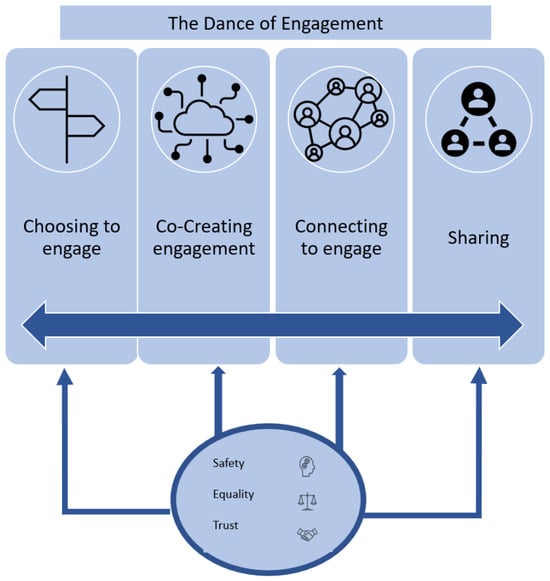
The findings of this study led to the development of a substantive theory of parental engagement, termed ‘The Dance of Engagement’ (McCarthy, 2025a). Figure 1 presents an original conceptual model developed by the researcher to illustrate the grounded theory of parental engagement generated through the iterative analysis of the study data.
Figure 1.
The Dance of Engagement: A grounded theory of parental engagement. Foundational tenets: Safety, Equality and Trust (SET).
This theory comprises three foundational tenets—safety, equality and trust (SET) and four interconnecting, non-linear categories that describe the process of parental engagement: choosing to engage, co-creating engagement, connecting to engage and sharing. This theory emerged inductively through Constructivist Grounded Theory analysis and reflects patterns consistently identified across participant accounts.
Across the data, parents and practitioners emphasised safety, equality and trust as essential conditions for meaningful parental engagement. These tenets represented shared expectations regarding how engagement should be experienced and sustained. Participants highlighted the importance of accessing welcoming, non-judgmental spaces where parents felt secure, respected, and able to participate as equal partners. Trust developed through consistent, respectful interactions and was understood as mutually reinforcing during the engagement process.
Rena, practitioner: Connection, respect, collaboration, equal. They’re the kind of things that pop up in my head when we talk about parental engagement.
Dervla, practitioner2: Without the parent, there won’t be any engagement at all, you know?… Equality and respect stand out for me.
Choosing to Engage represents the initial stage of the parental engagement process and involves a mutual decision by both parents and the practitioner to enter into relationship-building activities. Participants described engagement as beginning with small interactions that gradually developed into more sustained involvement. Initial contact, programme accessibility, and opportunities to establish informal connections were identified as factors influencing this decision-making process.
Cliona, practitioner: Starting at such a basic level that they come and say ‘hello’ you know with some parents that would be engagement for me.
Understanding the reasons why parents choose to engage was identified as critical for practitioners when designing services. Participants emphasised that engagement was more likely when parents perceived that programmes had been intentionally designed with their needs, agency and perspectives in mind.
Niamh, practitioner: The parent has been thought about in the design and the delivery of the service and the intervention and a sense of agency for the parent. That it’s their choice about the engaging and it’s a two-way process and that there’s equality in it or mutual respect in it.
Co-Creating Engagement refers to the development of collaborative relationships between parents and practitioners. Participants described this stage as shaped by prior experiences, levels of trust, and perceived judgment. Parents reported initial feelings of anxiety and hesitancy, often linked to fears of being evaluated or criticised.
Brigid, parent: At the start, I was really reluctant and really nervous, I was like people are going to be judgemental, people are going to be talking about me behind my back.
Personalised approaches, particularly direct and individualised invitations from practitioners, were identified as effective strategies for overcoming these barriers. Such invitations communicated recognition and value, increasing parents’ willingness to participate.
Rosemary, practitioner: Even knowing someone’s name and putting a name in a text, I find using their names really helps… I think being personal, on the ground, being seen.
Connecting to Engage focuses on the conditions that support sustained participation. Participants highlighted the importance of relaxed, informal, and enjoyable environments that facilitated peer connection and learning. Parents reported that feeling comfortable and supported enabled deeper engagement during the family literacy classes.
Catherine, parent: Just the atmosphere in the room, the laughs, the jokes… I always end up leaving in a good mood and a smile on my face.
These environments were also described as extending engagement beyond the programme setting, supporting parents’ confidence in applying what they learned at home, and strengthening parent–child interactions.
Trudi, practitioner: It’s fun, it’s made fun for the kids, the parents are more relaxed and it’s a bit of time out for them because they can mix with other parents and the kids can mix as well.
Sharing represents the outcome of effective parental engagement and occurred across programme, community and home. Participants described how accessible communication and practical strategies enabled parents to support their children’s learning with greater confidence.
Catherine, parent: I think it’s great to see how the books rhyme, every book we get the books seem to rhyme and for my daughter that’s great because it’s easier for her to remember. It’s good because it’s easier for you when you’re at home to read it as well.
Parents reported that sharing newly acquired knowledge enhances parent–child relationships and increases children’s enjoyment of learning.
Ciara, parent: … who would have thought that reading and teaching your child different words and all could be fun?
Practitioners also described reciprocal learning, reporting that collaboration with parents informed their own understanding and practice.
Rosemary, Practitioner: You empower each other, you are learning from each other…because they empower me too or people empower each other.
The findings demonstrate that parental engagement is a dynamic, relational process grounded in safety, equality and trust. Engagement develops through interconnected stages shaped by mutual decision-making, collaborative relationship-building, meaningful connections, and reciprocal sharing. The Dance of Engagement provides an explanatory framework for understanding how parents and practitioners experience and sustain engagement across programmes and home environments. The theory explains how effective parental engagement is achieved, as described by parents and practitioners in a socially disadvantaged area.
5. Discussion
Parent engagement is widely recognised as a critical component of children’s learning and development; however, there remains limited consensus regarding what constitutes effective engagement in practice (Timmons & Pelletier, 2015). Dominant engagement strategies are frequently shaped by middle-class norms and expectations, which can unintentionally marginalise families from socio-economically disadvantaged backgrounds. Existing models often privilege particular forms of participation and overlook the complex realities faced by families living in poverty (Baquedano-López et al., 2013). The theory of the ‘Dance of Engagement’ responds to these limitations by offering a context-sensitive framework that centres parental and practitioner perspectives and emphasises shared ownership of the engagement process.
The findings of this study conceptualise parental engagement as dynamic, relational and non-linear process rather than a series of discrete activities or outcomes. This reframing aligns with sociocultural perspectives that view engagement as embedded in relationships, social contexts, and power structures (Klatte et al., 2020). By foregrounding interaction, mutual influence, and adaptation, The Dance of Engagement challenges deficit-based assumptions that situate responsibility for engagement solely with parents and instead recognises engagement as co-constructed by parents and practitioners.
Existing engagement models often reflect middle-class values and expectations, thereby privileging parents who are already confident navigating educational and service systems (Lareau, 2011). Parents who do not conform to these norms may experience disengagement, marginalisation, and exclusion (Desforges & Abouchaar, 2003). The findings of this study support previous research suggesting that such dynamics can discourage participation and undermine relationships (Rochford et al., 2014). In contrast, The Dance of Engagement positions engagement as a shared process that adapts to families’ contexts, capacities, and lived experiences.
A central contribution of this study is the identification of safety, equality and trust (SET) as foundational tenets underpinning effective parental engagement. These conditions were consistently articulated by parents and practitioners and were evident across all stages of engagement. Safety referred not only to physical environments but also to emotional and relational security, particularly the absence of judgment and stigma. Equality was understood as mutual respect and shared agency rather than identical roles, whilst trust functioned as both a prerequisite for and an outcome of sustained engagement.
These findings resonate with rights-based and partnership-oriented approaches that emphasise respectful, reciprocal relationships between families and services (Davis & Day, 2010). By embedding SET at the core of the engagement process, The Dance of Engagement offers a conceptual framework that is particularly relevant in contexts of socio-economic disadvantage, where histories of mistrust and marginalisation may shape families’ relationships with services.
The non-linear categories of choosing to engage, co-creating engagement, connecting to engage, and sharing illustrate how engagement develops through ongoing negotiation, agency, and relational work. Engagement was shown to begin with small, informal interactions, reinforcing the importance of everyday relational practices. This supports research emphasising that engagement is most effective when parents perceive themselves as valued partners rather than targets of intervention (Hornby & Lafaele, 2011).
The emphasis on co-creation highlights the role of practitioners in actively shaping conditions that enable engagement. Parents’ accounts of anxiety and mistrust echo broader concerns regarding power imbalances between parents and professionals (Crozier & Davies, 2007). Personalised invitations, informal communication, and relationships emerged as effective strategies for mitigating these dynamics, reinforcing the importance of intentional relational practice.
While policy discourse frequently promotes parental involvement, it often lacks clarity regarding how engagement should be operationalised in practice (Share & Kerrins, 2013). This absence of practical guidance was also evident in policy initiatives, such as the Irish Literacy, Numeracy and Digital Literacy Strategy 2024–2033 (Gov.ie, 2024), which highlights the importance of parental support but provides limited direction on how such engagement can be meaningfully achieved, particularly in disadvantaged contexts.
Integrating the theoretical and practical elements of The Dance of Engagement into policy frameworks may address this gap. The framework offers explicit guidance on relational conditions, practitioner practices, and the co-construction of engagement, thereby translating abstract political commitments into actionable principles. Ongoing professional development and practitioner networks are essential in supporting this shift, particularly in high-need areas where practitioners may need additional support to sustain inclusive engagement practices (Share & Kerrins, 2013).
The findings also highlight the reciprocal nature of learning within effective engagement, in which parents contributed expertise grounded in lived experience, while practitioners reported that engagement deepened their understanding and their reflective practice. This challenges unidirectional notions of empowerment and aligns with strength-based learning models that recognise mutual influence and shared learning (Becker et al., 2018; Lindsey et al., 2014). Structured systems of support, including training and peer collaboration, are therefore crucial in equipping practitioners with the skills required to engage effectively (Chacko et al., 2016).
6. Limitations
Several limitations of this study should be acknowledged. First, the research was conducted within a specific socio-economically disadvantaged context, which may limit transferability. Second, the study relied on data generated through focus groups. Although the use of focus groups supported the co-construction of meaning and aligned with CGT principles, group dynamics may have influenced how experiences were expressed. Finally, as with all CGT studies, the analysis reflects an interpretive approach shaped by the interaction between the data and the researcher.
7. Conclusions
This study developed a grounded theory of parental engagement based on the lived experiences of parents and practitioners in a socially disadvantaged area. The ‘Dance of Engagement’ provides a theoretically grounded framework that explains parental engagement as a relational, co-constructed and contextually embedded process. By foregrounding safety, equality and trust as foundational conditions, the framework advances understanding beyond participation-based or deficit-oriented models of engagement and highlights the importance of mutual respect, shared ownership and responsiveness in supporting sustained involvement.
The findings suggest that The Dance of Engagement is highly relevant to both practice and policy. Its integration into national policies has the potential to support the development of more inclusive and effective family literacy initiatives by offering clear guidance on how to foster engagement through relational practices rather than prescriptive, manualised activities. By recognising parents as active contributors with valuable experiential knowledge, the framework aligns with strength-based and partnership-oriented approaches and offers an alternative to models that privilege middle-class norms of engagement.
An important implication for national policy concerning parental engagement is the need to actively involve parents from complex and disadvantaged backgrounds in consultations about their experiences with public services. Disadvantaged areas are often narrowly defined by issues such as high unemployment, low educational attainment, and underperforming services (Kintrea & Muir, 2009; Quigley, 2002). Such a limited view undermines community agency and silences the voices of those most affected by these challenges. Including parents’ perspectives from these communities in policymaking could help ensure that policies reflect practical approaches to engagement and recognise the value of parent input. This would promote a partnership-based model of service delivery, empower communities and improve outcomes. A government-led policy initiative aimed at enhancing practitioners’ skills, in line with this research, could strengthen engagement strategies and align with broader efforts to overcome socioeconomic and cultural barriers to education and employment.
In conclusion, this study contributes a context-sensitive and empirically grounded framework that enhances theoretical and practical understanding of parental engagement. By conceptualising engagement as a dynamic and relational process rooted in safety, equality and trust, The Dance of Engagement provides a meaningful foundation for future research, informs professional practice, and offers insights for policy development focused on improving outcomes for children, families and communities.
Author Contributions
Conceptualization, L.M.; methodology, L.M.; validation, L.M., M.S. and D.Q.; formal analysis, L.M.; investigation, L.M.; resources, L.M.; data curation, L.M.; writing—original draft preparation, L.M.; writing—review and editing, L.M.; visualisation, L.M.; supervision, M.S. and D.Q.; project administration, M.S.; funding acquisition, L.M. All authors have read and agreed to the published version of the manuscript.
Funding
This research was funded by the Irish Research Council (Dublin, IE) grant number: irc07f5673db997d2330636c362a6c8d7a6.
Institutional Review Board Statement
The study was conducted in accordance with the Declaration of Helsinki, and approved by the Institutional Review Board (or Ethics Committee) of Trinity College Dublin (protocol code MTO6 20.12.2018, &16.04.2019 & HT30 4/6/2020 & 7/12/2020 & MT5 9/11/2021).
Informed Consent Statement
Informed consent was obtained from all subjects involved in the study.
Data Availability Statement
The original contributions presented in this study are included in the thesis available at https://www.tara.tcd.ie/items/70234e44-3f16-456e-aa33-6aa1a0965b2f, accessed on 18 June 2026. Further inquiries can be directed to the corresponding author.
Acknowledgments
As a former employee, Lana McCarthy’s study was partly funded by Youngballymun.
Conflicts of Interest
The authors declare no conflicts of interest.
Notes
| 1 | The word parent is used to describe anyone who is in a caregiving role for children. |
| 2 | All participants’ names have been pseudonymised throughout this document. |
References
- Ajzen, I. (1991). The theory of planned behavior. Organizational Behavior and Human Decision Processes, 50(2), 179–211. [Google Scholar] [CrossRef] [Scilit]
- Allen, A., & Spencer, S. (2022). Regimes of motherhood: Social class, the word gap and the optimisation of mothers’ talk. The Sociological Review, 70(6), 1181–1198. [Google Scholar] [CrossRef] [Scilit]
- Baquedano-López, P., Alexander, R., & Hernandez, S. (2013). Equity issues in parental and community involvement in schools: What teacher educators need to know. Review of Research in Education, 37, 149. [Google Scholar] [CrossRef] [Scilit]
- Barton, D., & Hamilton, M. (1998). Local literacies: Reading and writing in one community (1st ed.). Routledge. [Google Scholar] [CrossRef] [Scilit]
- Becker, K., Boustani, M., Gellatly, R., & Chorpita, B. (2018). Forty years of engagement research in childrens’ mental health services: Multidimensional measurement and practice elements. Journal of Clinical Child & Adolescent Psychology, 47, 1–23. [Google Scholar] [CrossRef] [Scilit] [PubMed]
- Birks, M., & Mills, J. (2015). Grounded theory, a practical guide (2nd ed.). SAGE Publications Ltd. [Google Scholar]
- Blaikie, N. (2007). Approaches to social enquiry/advancing knowledge (2nd ed.). Polity Press. [Google Scholar]
- Bronfenbrenner, U. (1974). Developmental research, public policy, and the ecology of childhood. Child Development, 45(1), 1–5. [Google Scholar] [CrossRef] [PubMed]
- Bronfenbrenner, U. (1979). Ecology of human development. Harvard University Press. [Google Scholar] [CrossRef] [Scilit]
- Bronfenbrenner, U. (2001). The Bioecological theory of human development. In N. Smelser, & P. Baltes (Eds.), International encyclopedia of the social and behavioural sciences (pp. 6963–6970). Elsevier. [Google Scholar]
- Bryman, A. (2016). Social research methods (5th ed.). Oxford University Press. [Google Scholar]
- Chacko, A., Jensen, S., Lowry, L., Cornwell, M., Chimiklis, A., Chan, E., Lee, D., & Pulgarin, B. (2016). Engagement in behavioral parent training: Review of the literature and implications for practice. Clinical Child and Family Psychology Review, 19, 204–215. [Google Scholar] [CrossRef] [Scilit] [PubMed]
- Chappel, J., & Ratliffe, K. (2021). Factors impacting positive school–home communication: A multiple case study of family–school partnership practices in eight elementary schools in Hawaii. School Community Journal, 31(2), 9–30. [Google Scholar]
- Charmaz, K. (2006). Measuring pursuits, marking self: Meaning construction in chronic illness. International Journal of Qualitative Studies on Health and Well-Being, 1(1), 27–37. [Google Scholar] [CrossRef] [Scilit]
- Charmaz, K. (2014). Constructing grounded theory (2nd ed.). SAGE Publications Ltd. [Google Scholar]
- Charmaz, K. (2021). The genesis, grounds, and growth of constructivist grounded theory. In J. M. Morse, B. J. Bowers, K. Charmaz, A. E. Clarke, J. Corbin, C. J. Porr, & P. N. Stern (Eds.), Developing grounded theory: The second generation revisited (2nd ed., pp. 153–187). Taylor & Francis Group. [Google Scholar] [CrossRef] [Scilit]
- Charmaz, K., & Belgrave, L. (2012). Qualitative interviewing and grounded theory analysis. In J. Gubrium, A. Holstein, A. Marvasti, & D. McKinney (Eds.), The SAGE handbook of interview research. The complexity of craft. SAGE. [Google Scholar] [CrossRef] [Scilit]
- Charmaz, K., Thornberg, R., & Keane, E. (2018). Evolving grounded theory and social justice theory. In N. Denzin, & Y. Lincoln (Eds.), The SAGE handbook of qualitative research (5th ed., pp. 411–443). SAGE Publications. [Google Scholar]
- Coatsworth, J., Hemady, K., & George, M. (2017). Predictors of group leaders’ perceptions of parents’ initial and dynamic engagement in a family preventive intervention. Society For Prevention Research, 19, 609–619. [Google Scholar]
- Cortis, N., Katz, I., & Patulny, R. (2009). Engaging hard-to-reach families and children. Occasional paper no. 26. Available online: https://ssrn.com/abstract=1728576 (accessed on 18 June 2026).
- Crotty, M. (1998). The foundations of social research: Meaning and perspective in the research process. SAGE. [Google Scholar] [CrossRef] [Scilit]
- Crozier, G., & Davies, J. (2007). Hard to reach parents or hard to reach schools? A discussion of home-school relations, with particular reference to Bangladeshi and Pakistani parents. British Educational Research Journal, 33(3), 295–313. [Google Scholar] [CrossRef] [Scilit]
- CSO. (2023). Programme for the international assessment of adult competencies (PIAAC) 2023. CSO. Available online: https://www.cso.ie/en/releasesandpublications/ep/p-piaac/programmefortheinternationalassessmentofadultcompetenciespiaac2023/keyfindings/ (accessed on 18 June 2026).
- Davis, H., & Day, C. (2010). Working in partnership: The family partnership model. Pearson Education Ltd. ISBN 9780749121860. [Google Scholar]
- Desforges, C., & Abouchaar, A. (2003). The impact of parental involvement, parental support and family education on pupil achievement and adjustment: A literature review (DfES Research Report 433). Available online: https://www.nationalnumeracy.org.uk/sites/default/files/documents/impact_of_parental_involvement/the_impact_of_parental_involvement.pdf (accessed on 18 June 2026).
- Dey, I. (1999). Grounding grounded theory. Academic Press. [Google Scholar]
- Fan, W., Williams, C., & Wolters, C. (2011). Parental involvement in predicting school motivation: Similar and differential effects across ethnic groups. The Journal of Educational Research, 105, 21–35. [Google Scholar]
- Freire, P. (1976). Pedagogy of the oppressed. Penguin Books. [Google Scholar]
- Gill, O., & Jack, G. (2007). The child and family in context. Developing ecological practice in disadvantaged communities. Russell House Publishing. ISBN 978-1-905541-15-7. [Google Scholar]
- Glaser, B. (2005). The grounded theory perspective 111: Theoretical coding. Sociology Press. [Google Scholar]
- Glaser, B., & Strauss, A. (1967). The discovery of grounded theory. Aldine. [Google Scholar]
- González, N., Moll, L., & Amanti, C. (2005). Funds of knowledge, theorizing practices in households, communities and classrooms. Routledge. [Google Scholar]
- Goodall, J., & Montgomery, C. (2014). Parental involvement to parental engagement: A continuum. Educational Review, 66, 399–410. [Google Scholar] [CrossRef] [Scilit]
- Goodall, J., Vorhaus, J., Carpentieri, J., Brooks, G., Akerman, R., & Harris, A. (2010). Review of best practice in parental engagement. Research report DFE-RR156. Available online: https://assets.publishing.service.gov.uk/government/uploads/system/uploads/attachment_data/file/182508/DFE-RR156.pdf (accessed on 18 June 2026).
- Gov.ie. (2021). Adult literacy for life’—A 10-year adult literacy strategy. Gov.ie. Available online: https://www.gov.ie/en/organisation/department-of-higher-education-innovation-and-science/ (accessed on 18 June 2026).
- Gov.ie. (2024). Literacy, numeracy and digital literacy strategy 2024–2033: Every learner from birth to young adulthood. Gov.ie. Available online: https://www.gov.ie/en/publication/3f341-towards-a-new-literacy-numeracy-and-digital-literacy/ (accessed on 18 June 2026).
- Grodal, S., Anteby, M., & Holm, A. (2021). Achieving rigor in qualitative analysis: The role of active categorization in theory building. Academy of Management Review, 46(3), 591–612. [Google Scholar] [CrossRef] [Scilit]
- Hackworth, N., Matthews, J., Westrupp, E., Nguyen, C., Phan, T., Scicluna, A., Cann, W., Bethelson, D., Bennetts, S., & Nicholson, J. (2018). What influences parental engagement in early intervention? parent, program and community predictors of enrolement, retention and involvement. Prevention Science, 19, 880–893. [Google Scholar] [CrossRef] [Scilit] [PubMed]
- Hallberg, L. (2006). The “core category” of grounded theory: Making constant comparisons. International Journal of Qualitative Studies on Health and Well-Being, 1(3), 141–148. [Google Scholar] [CrossRef] [Scilit]
- Hannon, P. (1999). Rhetoric and research in family literacy. British Educational Research Journal, 26(1), 121–138. [Google Scholar] [CrossRef] [Scilit]
- Harris, A., & Goodall, J. (2007). Do parents know they matter: Engaging all parents in learning. Educational Research, 50(3), 277–289. [Google Scholar] [CrossRef] [Scilit]
- Hornby, G., & Lafaele, R. (2011). Barriers to parental involvement in education: An explanatory model. Educational Review, 63, 37–52. [Google Scholar] [CrossRef] [Scilit]
- Hudson, T. (2020). Interpersonalizing cultural difference: A grounded theory of the process of interracial friendship development and sustainment among college students. Journal of Diversity in Higher Education, 15, 267–287. [Google Scholar] [CrossRef] [Scilit]
- Ingoldsby, E. (2010). Review of interventions to improve family engagement and retention in parent and child mental health programmes. Child and Family Studies, 19, 629–645. [Google Scholar] [CrossRef] [Scilit] [PubMed]
- Karpouza, E., & Emvalotis, A. (2019). Exploring the teacher-student relationship in graduate education: A constructivist grounded theory. Teaching in Higher Education, 24(2), 121–140. [Google Scholar] [CrossRef] [Scilit]
- Kintrea, K., & Muir, J. (2009). Integrating Ballymun? Flawed progress in Ireland’s largest estate regeneration scheme. The Town Planning Review, 80(1), 83–108. [Google Scholar] [CrossRef] [Scilit]
- Kivimäki, M., Vahtera, J., Tabák, A., Halonen, J., Vineis, P., Pentti, J., Pahkala, K., Rovio, S., Viikari, J., Kähönen, M., Juonala, M., Ferrie, J., Stringhini, S., & Raitakari, O. (2018). Neighbourhood socioeconomic disadvantage, risk factors, and diabetes from childhood to middle age in the young finns study: A cohort study. The Lancet Public Health, 3(8), e365–e373. [Google Scholar] [CrossRef] [Scilit] [PubMed]
- Klatte, I., Lyons, R., Davies, K., Harding, S., Marshall, J., McKean, C., & Roulstone, S. (2020). Collaboration between parents and SLTs produces optimal outcomes for children attending speech and language therapy: Gathering the evidence. International Journal of Language & Communication Disorders, 55(4), 618–628. [Google Scholar] [CrossRef] [Scilit] [PubMed]
- Lareau, A. (2011). Unequal childhoods: Class, race, and family life (2nd ed.). University of California Press. [Google Scholar]
- Lindsey, M., Brandt, N., Becker, K., Lee, B., Barth, R., Daleiden, E., & Chorpita, B. (2014). Identifying the common elements of treatment engagement interventions in children’s mental health services. Clinical Child and Family Psychology Review, 17, 283–298. [Google Scholar] [CrossRef] [Scilit] [PubMed]
- Lo, O. (2016). Literature integration: An illustration of theoretical sensitivity in grounded theory studies. The Humanistic Psychologist, 44, 177–189. [Google Scholar] [CrossRef] [Scilit]
- Lopez, C., & Donovan, L. (2009). Involving Latino parents with mathemathics through family math nights: A review of the literature. Journal of Latinos and Education, 8, 219–230. [Google Scholar] [CrossRef] [Scilit]
- Lynch, J., & Prins, E. (2022). Teaching and learning about family literacy and family literacy programmes. Routledge. [Google Scholar] [CrossRef] [Scilit]
- McCarthy, L. (2025a). Hug your book. Research and Practice Adult Literacies (RAPAL), 111, 111–113. Available online: https://view.publitas.com/rapal/rapal-journal-111/page/1.
- McCarthy, L. (2025b). The dance of engagement: A constructivist grounded theory study of parental engagement. Available online: https://www.tara.tcd.ie/items/70234e44-3f16-456e-aa33-6aa1a0965b2f (accessed on 18 June 2026).
- McGhee, G., Marland, G., & Atkinson, J. (2007). Grounded theory research: Literature reviewing and reflexivity. Journal of Advanced Nursing, 60(3), 334–342. [Google Scholar] [CrossRef] [Scilit] [PubMed]
- McKay, K., Kennedy, E., Ranieri, V., & Young, B. (2021). “It shows we felt safe because a few of us had tears”: Exploring how perceptions of the group space can influence experiences of parenting programmes. Emotion, Space and Society, 41, 100837. [Google Scholar] [CrossRef] [Scilit]
- Montague, A. (2021). Ballymun—A brighter future. A plan to tackle the underlying causes of addiction and crime and to tackle open drug dealing. Available online: https://www.votemcauliffe.com/post/mcauliffe-welcomes-publication-of-ballymun-a-bright-future-report (accessed on 18 June 2026).
- Patel, S. (2015). The research paradigm—Methodology, epistemology and ontology—Explained in simple language. Available online: https://salmapatel.co.uk/academia/the-research-paradigm-methodology-epistemology-and-ontology-explained-in-simple-language/ (accessed on 21 January 2024).
- Quigley, P. (2002). Family and community burdens of addiction: Case-mix analysis at a new community-based methadone treatment service. Drugs: Education, Prevention and Policy, 9(3), 221–231. [Google Scholar] [CrossRef] [Scilit]
- Rochford, S., Doherty, N., & Owens, S. (2014). Prevention and early intervention in children and young people’s services: Ten years of Learning. Centre for Effective Services. Available online: http://hdl.handle.net/10147/579740 (accessed on 18 June 2026).
- Sacker, A., Schoon, I., & Bartley, M. (2002). Social inequality in educational achievement and psychological adjustment throughout childhood: Magnitude and mechanisms. Social Science and Medicine, 55, 862–880. [Google Scholar] [CrossRef] [Scilit] [PubMed]
- Santiago, C., Wadsworth, M., & Stump, J. (2011). Socioeconomic status, neighborhood disadvantage, and poverty-related stress: Prospective effects on psychological syndromes among diverse low-income families. Journal of Economic Psychology, 32(2), 218–230. [Google Scholar] [CrossRef] [Scilit]
- Share, M., & Kerrins, L. (2013). Supporting parental involvement in children’s early learning: Lessons from community childcare centres in Dublin’s docklands. Child Care In Practice, 19(4), 355–374. [Google Scholar] [CrossRef] [Scilit]
- Sneddon, H., & Owens, S. (2012). Prevention and early intervention in children and young people’s services—Parenting. Centre for Effective Services. [Google Scholar]
- Snow, C. (2014). Input to interaction to instruction: Three key shifts in the history of child language research. Journal of Child Language, 41, 117–123. [Google Scholar] [CrossRef] [Scilit] [PubMed]
- Stokes, F., & Ross, A. (2020). What do psychodynamic therapists make of their reveries in the therapeutic encounter? A constructivist grounded theory study. British Journal of Guidance & Counselling, 48(4), 500–510. [Google Scholar] [CrossRef] [Scilit]
- Street, B. (1995). Social literacies: Critical approaches to literacy in development, ethnography and education (1st ed.). Routledge. [Google Scholar] [CrossRef] [Scilit]
- Taylor, D. (1983). Family literacy young children learning to read and write. Heinemann. [Google Scholar]
- Timmons, K., & Pelletier, J. (2015). Understanding the importance of parent learning in a school-based family literacy programme. Journal of Early Childhood Literacy, 15(4), 510–532. [Google Scholar] [CrossRef] [Scilit]
- UNESCO. (2017). Literacy rates continue to rise from one generation to the next. Available online: https://www.uis.unesco.org/sites/default/files/medias/fichiers/2025/04/fs45-literacy-rates-continue-rise-generation-to-next-en-2017_0.pdf (accessed on 18 June 2026).
- WHO. (2020). Timeline: WHO’s COVID-19 response. Available online: https://www.who.int/emergencies/diseases/novel-coronavirus-2019/interactive-timeline (accessed on 18 June 2026).
- Williams, J., Greene, S., Doyle, E., Harris, E., Layte, R., McCoy, S., McCrory, C., Murray, A., Nixon, E., O’Dowd, T., O’Moore, M., Quail, A., Smyth, E., Swords, L., & Thornton, M. (2009). Growing up in Ireland: The lives of 9 year olds. The Stationery Office. [Google Scholar]
- Williams, T., & Sánchez, B. (2012). Parental involvement (and uninvolvement) at an inner-city high school. Urban Education, 47(3), 625–652. [Google Scholar] [CrossRef] [Scilit]
Disclaimer/Publisher’s Note: The statements, opinions and data contained in all publications are solely those of the individual author(s) and contributor(s) and not of MDPI and/or the editor(s). MDPI and/or the editor(s) disclaim responsibility for any injury to people or property resulting from any ideas, methods, instructions or products referred to in the content. |
© 2026 by the authors. Licensee MDPI, Basel, Switzerland. This article is an open access article distributed under the terms and conditions of the Creative Commons Attribution (CC BY) license.