


Abstract
The purpose of this article was to present a conceptual framework and research-based methods for recognizing and nurturing a wide range of talents in inclusive settings. These methods (a) honor diversity of abilities, culture, language, income status, disabilities, values, and other personal characteristics and (b) enable students with talents to thrive in the world of the 21st Century. Research has been conducted during many research and development projects in several countries over a 36-year period. The framework and methods evolved through a rigorous process of designing, field-testing, evaluating, revising, and implementing methods for assessing and developing talents in varied domains. The underlying thesis is that creative problem solving and the 21st Century Skills of creativity, critical thinking, collaboration, communication, while using the ten talents wisely, are more important than knowledge and the ability to get the “right answer” to a question presented by the teacher or on a test. Results and methods used in research on indicators of talent in ten domains and tasks to elicit them are presented. Methods for recognizing and developing the talents are the focus for the final section: materials and guidelines for talent exploration centers and talent development principles for use in all classrooms. To make needed changes, educators, policy-makers, parents, psychologists, and others who have an impact on young people need to re-think prevailing ideas about recognizing and developing talents.
“As we navigate the complex environmental, social and economic changes of the 21st century, it is crucial for students to be innovative, enterprising and to use critical and creative thinking purposefully.” (OECD, 2024, Foreword) |
As noted in the most recent report of the Organisation for Economic and Cooperative Development (OECD, 2024), educators and policymakers at the international level recognize that in the 21st Century, creativity and creative problem solving have become more important than intelligence, knowledge, and skills. In our increasingly complex and interconnected world, economies have experienced a global paradigm shift: from “knowledge-based” (Oke et al., 2009), “managed” (Audretsch & Thurik, 2000, 2001) economies to “creativity and innovation” (Oke et al.) and “entrepreneurial” economies (Audretsch & Thurik, 2000, 2001; Thurik et al., 2013). In the knowledge-based world of the past, having information distinguished the successful from the unsuccessful. Now, however, information is available easily, can be checked across many different agencies and Internet sites, and is available in formats most people can understand. The validity of information can be checked by evaluating the credibility of the source and comparing several sources. Companies now value “soft” skills such as the ability to guide, to communicate clearly and honestly, and “attitude toward and ability to deal with ambiguity and change, more than technical skills” (Stevenson & Starkweather, 2010, p. 159). Similarly, in a survey conducted by IBM in 60 countries involving 33 major industries, 1541 CEOs identified creativity as the most valued quality for future top managers (Berman & Korsten, 2010). Combined with creativity were the 21st Century Skills of critical thinking, collaboration, and communication (Lubart et al., 2013). All these results provide guidance related to the needs of citizens of the 21st Century, thus giving important advice for educators.
Researchers are calling for paradigm changes in our thinking that will enable students to thrive in this unknown and unpredictable future (Ambrose, 2017a; Olszewski-Kubilius, 2024; Reis & Renzulli, 2010; Sternberg, 2017, 2020; Subotnik et al., 2011). Sternberg (2017), for instance, argues: “The problems that society needs its gifted individuals to solve in the 21st century require much more than IQ—in addition to analytical, IQ-like skills, they also require creative, practical, wisdom-based, and ethical skills” (p. 152). Parents and teachers also have expressed their belief that new directions are essential in the educational system to respond to the needs of our changing world. For example, 2000 teachers (K-12) and 2000 parents in the United States, United Kingdom, Germany, and Australia cited creativity as a highly desired educational goal (ADOBE, 2013).
In recognition of the need to prepare students for an unpredictable world, for the first time, in 2022, the Programme for International Student Assessment (PISA; OECD, 2022, 2024) included assessments of creativity in the domains of visual and written expression along with solving social and scientific problems creatively. Unfortunately, in the USA, researchers have documented what they call “creaticide”, the killing of creativity. They have concluded this creaticide results from an excessive focus on high-stakes testing and emphasis on acquiring the knowledge and skills assessed (Ambrose, 2012; Berliner, 2012; Nichols & Berliner, 2007). Even in programs for gifted and talented students, creativity is not valued at the level needed for success in the 21st Century context. For example, in a recent study of changes in state policies and procedures for identifying gifted and talented students (Greene et al., 2025), researchers found some changes, but the emphasis continues to be on intelligence (34 states), high achievement or ability (17), and specific academic areas such as math (25). Creativity was included as a category for identification in only 24 state definitions, decreasing over the comparison years of 2000, 2010, and 2022. Interestingly, only 16 of the 24 states with creativity as a category allowed measures of creativity to be used for identification (Greene et al., 2025). At the international level, the USA participated only in the assessments of mathematics literacy, reading literacy, science literacy, and financial literacy, showing the emphasis on skill development rather than creativity (OECD, 2024).
In contrast, students in Australia have not experienced creaticide. Australia participated in the PISA assessments of creativity and creative problem solving, and was in the top five scoring countries (OECD, 2024). Clearly, Australian policymakers and educators recognize the need for students to gain the skills that will facilitate their success in a world in which innovation is essential. One example of this recognition is inclusion of standards and benchmarks for creativity and critical thinking in the national curriculum (ACARA, 2012). The standards include “inquiring; generating innovative ideas and possibilities; reflecting on thinking, actions, and processes; and analyzing, synthesizing, and evaluating information” (p. 58). Benchmarks are provided for grades 2, 6, and 10. In the category of generating innovative ideas and possibilities, for instance, some specific benchmarks are listed for seeking and creating innovative pathways and solutions: “– asking ‘What if …?’ to generate unusual responses to a problem” [Grade 2], “recognise there are multiple choices for solving a problem and imagine outcomes of these possibilities…” [Grade 6], and “predict possibilities and envisage consequences when seeking new meanings…” [Grade 10]. (ACARA, 2012, p. 59).
An examination of these lists shows they include competencies related to all the 21st Century Skills. For example, (a) a benchmark for Grade 2 is “explain or demonstrate ideas in a variety of ways to help others’ understanding”, (p. 59) a method for facilitating communication; (b) two standards, reflecting on thinking, actions, and processes and analyzing, synthesizing, and evaluating information, facilitate critical thinking; and (c) the benchmark for Grade 6, “set their judgments to one side to consider alternative ideas and actions” (p. 59),is an effective method for facilitating collaboration with others who have different perspectives. The Australian curriculum provides a model for educators and policy-makers from other countries wishing to recognize and develop creativity and the other 21st Century Skills needed by all students in the world of the future.
1. Purpose
The purpose of this article is to present (a) a synthesis of the results of research on characteristics of creative ability (processes and products) in ten different talent areas and (b) a talent development framework that has been found effective for recognizing and nurturing multiple abilities in all students, and (c) an approach to development of creativity, critical thinking, collaboration, communication, and creative problem solving that can facilitate a strength-based approach to education. When the 21st Century skills are recognized and cultivated in many different domains of ability, both parents and educators can employ strength-based approaches for nurturing young people (Maker & Pease, 2020; Pease et al., 2020), including those who are twice-exceptional (2e; Baum et al., 1999; Baum et al., 2021; Dowrick, 2025; Kuo et al., 2010, 2011; Ronksley-Pavia, 2015; Rooks & Maker, 2009), culturally and/or linguistically diverse (Ford, 2021; Frasier & Passow, 1994; Frasier et al., 1995; Goings & Ford, 2018; Pease et al., 2020), underachievers (Siegle et al., 2017) and from low-income groups (Frasier et al., 1995; Maker, 2005; Torrance, 1969). Using strength-based learning changes the way teachers and other educators interact with students and also changes the way students perceive themselves and their potential (Brownlee et al., 2012; Maker & Pease, 2020; Pease et al., 2020). In this article, two related approaches to talent development are presented: (a) Talent Development Principles that can be implemented in all classrooms and (b) programs and Centers for Talent Development and Exploration, accompanied by sample behaviors to observe that are indicators of talent in students at many developmental levels. The centers have been successful in different contexts and countries (Anuruthwong, 2002; Kuo et al., 2010, 2011; Maker et al., 2008). The goal of the second part of the article was to provide practical guidance in implementing centers and talent development principles, not to review other approaches to talent development that have been advocated and implemented. (c.f., Olszewski-Kubilius, 2024; Paynter, 2021; Reis & Renzulli, 2010; Renzulli, 2021).
2. A Conceptual Framework, Research Summary, and Practices to Develop Creativity and Creative Problem Solving
2.1. Conceptual Framework
For many years, intelligence and creativity were viewed as separate constructs, and in some literature, the controversy continues to exist. For example, in a meta-analysis (Kim, 2005) and a study of intellectual giftedness and creative giftedness (Guignard et al., 2016), researchers concluded there is no consensus about the relationships, and they differ depending on age of participants, instruments, and domains. However, Maker (1993) offered a different perspective: instruments used to measure intelligence contain only closed problems (questions), those that are well defined, have one or a few appropriate methods, and one right answer. Instruments to measure creativity are open-ended. They have “ill-defined” problems, many possible methods, and many appropriate solutions. In similar research and theories, these two constructs, intelligence and creativity, have been integrated (Silvia, 2015) and based on a problem-solving perspective. For instance, Torrance (1962) defined creativity as problem solving, emphasizing the processes involved. Renzulli (1978) proposed the “Three-Ring Conception of Giftedness” in which he depicted above average ability, creativity, and task commitment as interacting constructs in defining giftedness. Gardner (1983) defined intelligence as “… a set of skills of problem solving enabling the individual to resolve genuine problems or difficulties … and … the potential for finding or creating problems—thereby laying the ground work for the acquisition of new knowledge” (p. 60). Sternberg (1999) expressed a similar idea, noting that, across domains, forms, and disciplines, problem solving consists of the same components: recognizing the problem, defining it, creating strategies to solve the problem, then monitoring and evaluating the solution. Amabile (1996, 2013), in her theory and research, proposed that creativity consists of domain-related abilities, skills, and knowledge; creativity-relevant abilities, skills, and dispositions; and task motivation. Silvia (2015) writes, “The deep connections between these concepts offer opportunities for a more fertile conception of both intelligence and creativity, one that emphasizes similarities between solving problems with right answers and thinking flexibly, critically, and playfully” (p. 599). These conceptions and definitions are consistent with early research on problem solving in scientists (Getzels & Csikszentmihalyi, 1967; Maker, 1978) and artists (Getzels & Csikszentmihalyi, 1976). In these studies, artists (Getzels & Csikszentmihalyi, 1976) or scientists (Getzels & Csikszentmihalyi, 1967) considered the most creative and scientists with disabilities (Maker, 1978) were best at solving the open-ended problems in Getzels and Csikszentmihalyi’s problem continuum described in the following section. To achieve these interactions between intelligence and creativity, the DISCOVER assessments described in the following sections included both closed and open problems (tasks or questions) and a type between, called semi-open problems (Maker, 2005, 2021; Maker et al., 2023).
2.2. Definition of Exceptional Talent
These conceptions, definitions of problem solving, and research, plus the results of studies by the Discovering Intellectual Strengths and Capabilities while Observing Varied Ethnic Responses (DISCOVER) research teams led to the current definition: “Exceptional talent consists of three components (problem solving, 21st Century skills, and knowledge structure) that interact with each other and the environment throughout life” (Maker, 2026, p. 79). The term exceptional talent is used instead of giftedness to situate the conceptual framework in the talent development paradigm described by Dai and Chen (2013). In the definition, the problem-solving component includes ability and willingness to solve the most complex problems in effective, efficient, elegant, and ethical ways and the ability and willingness to solve simple problems in effective, efficient, elegant, and ethical ways. The 21st Century skills component includes ability and willingness to apply creativity, critical thinking, communication, and collaboration in one or more talent areas, thus igniting problem solving. The knowledge structure component is an individual’s way of organizing concepts and information. The knowledge structure characterizing experts in a domain is hierarchical, has many connections, and includes concepts and information from diverse disciplines (Bransford et al., 2000; Glaser & Chi, 1988). It is described by Loughran (2010) as “deep learning”, by Lubart (Lubart et al., 2013) as the rich, diverse associative network of knowledge that facilitates creativity, by Ambrose (2017b) as interdisciplinary thinking, and by Drake and Reid (2021) as transdisciplinary thinking (e.g., actively seeking connections across disciplines and areas of expertise). Assessment of knowledge structure (using concept maps; Maker & Zimmerman, 2020) is an effective alternative to multiple-choice tests of isolated knowledge and skills. Important to note is that all components of the definition include not only the ability but also the willingness, described by Amabile (1996, 2013) as task motivation, by Renzulli (1978) as task commitment, and by Drake and Reid as “active seeking.”
2.3. Research Methods for Developing the Ways to Recognize and Nurture Talents
Beginning in 1987 (DISCOVER I; Maker, 1993) and continuing through the most recent research (Maker et al., 2023), the Discovering Intellectual Strengths and Capabilities while Observing Varied Ethnic Responses (DISCOVER) projects were designed to assess the creative problem-solving abilities of students from varied economic, ethnic, cultural, and linguistic backgrounds in ways that would be fair across groups (Maker, 1994, 1996, 2005; Sarouphim, 1999, 2001, 2002, 2004). Rather than the usual “test” situations, children and youth have been placed in small groups with a trained and certified adult observer who gives instructions, asks questions, records responses and products, and documents students’ performance. Using the definition of problem solving as a guide, research teams created tasks (problems to solve) using Getzels and Csikszentmihalyi’s (1967, 1976) continuum of problems. In Getzels and Csikszentmihalyi’s initial research with scientists and artists, three problems were structured along a continuum from closed (two types) to open (one type) based on the requirements of the task. Researchers found that the most creative artists and scientists preferred and were best at solving the open-ended problems, leading to inclusion of solving complex problems as the first component in the definition of exceptional talent for the DISCOVER assessments.
To design the problem-solving tasks for the DISCOVER assessments, the continuum was modified to include a gradual progression from closed to open problems. In the initial DISCOVER research, the continuum consisted of five, and later, six, types (Maker, 2005, 2021), but in the most recent research, three types (e.g., closed, semi-open, and open) were designed so the assessments were practical, especially for young children, while still maintaining the progression from closed to open (Maker et al., 2023). Figure 1 shows how the problem types are related to the conceptual framework. After tasks were designed using definitions of the ability domains, extensive field-testing was accomplished using these steps: assessment of students, review of the process by observers and researchers, revision of the tasks and procedures, assessment of different groups of students, and review again, until the teams were satisfied with the processes and results. More information about the field-testing and revision processes can be found in other publications (c.f., Alfaiz et al., 2020; Maker & Bahar, 2025; Zimmerman et al., 2020). In the most recent project, because of its international nature, prior to the first field test, tasks were reviewed by international experts in the domains being assessed (Maker et al., 2023). Field testing also included translation and back-translation of the instructions, with reviews during the process.
Figure 1.
Integration of components and tasks for creative problem solving. Note: Reprinted from “Exceptional talent in the 21st century context: Conceptual framework, definition, assessment, and development,” by Maker (2021).
To develop indicators of exceptional talent that can be observed during problem solving, groups of students at each age/grade level solved the problems presented to them. Observers from different cultures, ethnic groups, and educational backgrounds (always including those from the culture of the children being assessed) watched and documented the students’ behaviors using cameras, recorders, and notes. After the assessments (Maker, 1996), observers were asked ‘Which of the students in your group were superior problem solvers in (c.f., linguistic, mathematical, other)?’ If an observer gave an inference, such as “well-motivated,” the observer was asked ‘What did he/she do or say that led you to believe he or she was well-motivated?’ Thus, the focus was on observable behaviors, not inferences made by an adult who was watching. After approximately 5,000 students had been assessed at various developmental levels (Maker, 1996), the behaviors were categorized and organized in checklists for each ability area to serve as guides for future observers (Rogers, 1998). The checklists had a space for write-in behaviors, and if, over time, the same behavior was listed many times by many observers, it was added to the checklist (Maker, 1996).
2.4. Summary of Results of Research on Indicators of Talents
The purpose of this section was to present a summary of the results of 30 years of research on problem solving using the DISCOVER assessment with students of different developmental levels, cultures, languages, and income groups. For additional details about the research, readers are provided with lists of references related to the results presented. Behaviors identified across many studies are presented in the final sections as guides for teachers, caregivers, and others who wish to recognize and nurture creative problem solving in diverse domains; thus providing information that can be used to incorporate methods for strength-based teaching and learning.
Research on the assessments showed the problem continuum and assessments are reliable and valid, including effectiveness in predicting student achievement and creative problem solving in the domains assessed (Alhusaini & Maker, 2018; Bahar et al., 2024; Sak & Maker, 2003, 2005; Sarouphim, 2000, 2009). The assessments also were not biased against any groups (Maker, 1996, 2005, 2020; Nielson, 1994; Reid et al., 1999; Romanoff et al., 2009; Sarouphim, 1999, 2001, 2002, 2004), but showed differences in the strengths and interactions of abilities in students from different international contexts (Lori, 1998; Sarouphim & Maker, 2010).
2.4.1. The Ten Diverse Talents in the Prism of Learning
Development of the Prism of Learning, consisting of ten talent domains, was accomplished through collaborative research with colleagues in the USA and other nations (c.f., Begay & Maker, 2007; Maker & Anuruthwong, 2003; Sisk, 2016; Wallace et al., 2004) who contributed to definitions of the abilities and methods for nurturing them. As noted previously, these ability domains are labeled as talents rather than intelligences or giftedness to situate the framework clearly in the talent development paradigm described by Dai and Chen (2013). In the first studies, the seven ability domains defined by Gardner (1983), based on symbol systems, were used to structure tasks for assessments. Regardless of the critiques of Gardner’s theory (c.f., Kincheloe, 2004; Plucker et al., 1996; White, 1998), his research and theory in which the domains of ability were expanded beyond the traditional verbal, quantitative, and spatial dimensions, provided an important beginning for the DISCOVER research. After the initial studies, some of the ability domains were re-defined (e.g., bodily-kinesthetic, logical-mathematical, musical, interpersonal, intrapersonal). For example, Goleman’s (1998) theory and research on emotional intelligence was incorporated into the definition of intrapersonal. Some were divided into two (e.g., spatial into visual/artistic and mechanical/technical). For instance, in the artistic form of visual/spatial ability, visual images, colors, and similar elements, are manipulated, while in the mechanical/technical form, machines, other mechanical devices, and technology are manipulated and understood. Moral/ethical/spiritual was added, mainly due to its prominence in Indigenous cultures (Begay & Maker, 2007; Maker, 2016) and its importance in developing wise solutions to problems (Sternberg, 2005). Research and practices leading to the new definitions of domains have been described in greater detail by Maker (2021) and will not be repeated here.
The ten talents resulting from research, including collaboration with international colleagues, are auditory, bodily/somatic, emotional/intrapersonal, linguistic, mathematical, mechanical/technical, moral/ethical/spiritual, scientific/naturalistic, social/interpersonal, and visual/spatial. They correspond to academic domains and career areas, and are similar to, but different from other theories and research on talent development (c.f., Olszewski-Kubilius, 2024; Paynter, 2021; Reis & Renzulli, 2010; Renzulli, 2021; Subotnik et al., 2011). The talent areas have separate aspects, but also interact in different ways in different people at various stages of development (Lubart et al., 2013; Maker et al., 2023; Sak, 2021). Domain-related abilities and skills, creativity-relevant skills, and motivation are important in creative problem solving in all domains (Amabile, 1996, 2013). Amabile’s theory and research formed the basis for understanding the contribution of knowledge, domain-related skills, the interaction of domain-related skills and creativity-relevant abilities, and motivation to the solving of varied types of problems (Figure 1). The ten talents are described in the subsequent section on developing talents.
2.4.2. Igniting Talents in the Prism of Learning
Interest and passion for solving a problem is the key to igniting talents (Figure 2). Imagine light coming into a prism, which then splits into many different colors, symbolizing the ten talents. As Sak (2021) notes, we must ask: How is this child (or student, or young adult) stimulated to engage in talent development? Interest and passion also stimulate individuals to activate the 21st Century skills, especially if the problem is either semi-open or open-ended. For example, using Getzels and Csikszentmihalyi’s (1967, 1976) problem continuum consisting of three types (two closed and one open) modified by Maker (1993), Maker and Bahar (2025) to include a semi-open type, when solving a closed problem that has a clearly defined problem, a right method for solving it, and a right answer (e.g., choose the best synonym for observe from the list provided), only memory and possibly critical thinking are needed. However, if the problem is semi-open, with a defined problem, many methods for solving it, and more than one solution (e.g., list some other appropriate synonyms for observe), creativity and critical thinking are necessary; and if the problem is being solved in a group, collaboration and communication are important. If the problem is open-ended, with a problem that must be defined by the solver, an unlimited number of methods are appropriate, and an unlimited number of solutions can be created (e.g., tell a story about an experience that is important to you), all four 21st Century skills are needed. Creativity is more important in this situation, as is critical thinking to make the best decisions about all aspects of the problem situation. The rationale for selecting a problem definition, the method used, and the solution must be communicated; and if in a group setting, collaboration is essential for all stages of the process. Figure 2 shows the talents, the 21st century skills, and the spark that ignites all of them.
Figure 2.
Prism of Learning Talent Framework, 21st Century Skills, and the Spark that Ignites Them. Note: From “Recognizing the Ten “Faces” of Giftedness: A Key to Success in the 21st Century Context,” by Maker (2025). Copyright Victorian Association for Gifted and Talented (VAGT).
In the following sections, practical guidelines and two evidence-based methods (centers for talent development and talent development principles) are provided for teachers and others interested in recognizing and developing a variety of talents and the 21st Century skills students will need for the future. In the section on centers, for instance, sample materials, tasks, behaviors, and characteristics of products are provided for each talent area. In the final section, readers are provided with ways to integrate talent development principles and centers for talent development. These guidelines and methods are based on the framework described and the research summarized in previous sections.
3. Methods for Igniting, Recognizing and Nurturing Diverse Talents in Inclusive Classrooms
Educators need not only to be interested in recognizing diverse talents, but also in igniting and nurturing all of them. A shift in thinking is needed in the 21st Century context: from (a) identification using imperfect or outdated instruments to select those who have high IQs or high achievement to label a student as gifted to (b) assessment for the purpose of describing the current state of an individual’s talent or talents at a particular stage and in a particular situation (Maker & Bahar, 2024; Reis & Renzulli, 2010; Renzulli, 2021). As support for this shift in thinking, Maker and Bahar analyzed the growth of students from pretest to post test in a school in Australia. In all classrooms in the school, talent development principles were being implemented and students were solving problems real to them in creative and innovative ways using the Real Engagement in Active Problem Solving (REAPS) model. All classrooms were inclusive (e.g., regular classrooms), although some pull-out programs were provided for students with special challenges. All students in the school (Years 1 to 6; ages 6 to 12), at all levels of performance, and in classrooms of teachers at varied levels of implementation of the REAPS model (Maker & Pease, 2021), made significant gains from pretest to post test in creative problem solving in science (p < 0.001 for all comparisons) and math (p < 0.001 for all three groups F(2, 402) = 31.74, p < 0.001), except those between the groups in the bottom third and the middle third (p = 0.265) as well as the knowledge structure described earlier in the definition of exceptional talent (p < 0.001 for four components scored and p < 0.05 for two components scored) (Maker & Bahar, 2024).
3.1. Centers for Exploration and Talent Development
In many of the Discovering Intellectual Strengths and Capabilities (DISCOVER) projects, centers for exploration and talent development were considered by teachers, researchers, parents, and students to be exciting and successful ways to ignite and nurture diverse talents using a strength-based approach (Maker, 2005; Maker & Pease, 2008; Kuo et al., 2010, 2011; Wallace et al., 2004). When students become engaged in an experience, either in a center or in a problem-solving experience such as Problem Based Learning (PBL; Gallagher & Gallagher, 2013; Gallagher, 2015), a component of REAPS, or all the models combined in REAPS (Riley et al., 2017; Webber et al., 2018), teachers can recognize previously unseen talent, enabling them to assess and nurture these talents. In talent exploration centers, students can discover their own talents and interests, and when parents are invited to visit the classroom during center time, they can observe their children, often seeing them in a more positive light. Previous studies also have shown that in classrooms in which talent exploration and development centers described in this article were implemented, students made significant gains in problem solving in spatial artistic talent (p = 0.009; Maker et al., 1996), mathematical knowledge and creativity (p = 0.001; Maker et al., 1996), general creativity (p < 0.000; Maker et al., 2008), and higher numbers of students were identified as gifted on post assessments (Maker et al., 1996). The study of general creativity included 108 teachers and 1955 students from 4 schools (Maker et al., 2008). In a preschool program for gifted students and gifted students with disabilities in Taiwan, two types of center-based programs were offered: one in which all students participated in centers in all ability areas and one in which students participated in centers and activities with others who had similar talents (Kuo et al., 2010, 2011). Scores and observations by teachers showed that in both types of programs, students performed well on both closed and open problems, and that they performed better on the open ended problems when they were working in the program with others who had similar talents. A follow-up study of the participants (now ages 23–27), showed that almost all attended top universities in Taiwan and abroad, showing their success (Yu & Kuo, 2026). Researchers concluded: “Talent development resulted from dynamic, multilevel interactions—social, personal, cultural, and task-related—rather than innate ability alone.” (p. 1), consistent with the conceptual framework presented in this article.
3.1.1. A Practical Guide for Implementing Centers for Talent Exploration and Development
Centers for Exploration and Talent Development can be set up in individual classrooms, schools, and communities (Anuruthwong, 2002; Kuo et al., 2010, 2011; Maker et al., 2015). Figure 3 shows centers in classrooms during a multi-age summer program, during an academic year in the USA, and in a preschool program in Taiwan (Kuo et al., 2010, 2011); Figure 4 shows a school-wide center in a primary school in the United Arab Emirates (UAE). Having at least one center for each talent area is ideal. If space is limited, alternating between five talents and five other talents can be helpful or combining materials and tasks for two centers, such as bodily and social in Figure 4 and mechanical/technical and social in Figure 3. Another idea for secondary schools and classrooms with limited space is to have exploration materials in boxes that can be stored in a place that is accessible in the classroom, to be brought out at center time. In a classroom in one of the DISCOVER projects, the teacher put all the materials in the center of the room and students either worked on the floor or found a space to work in the school courtyard (Figure 5). In many of the classrooms in the DISCOVER Projects, teachers allocated an hour each day for exploring. In others, three days a week. In another school, centers and various talent development experiences were provided one day a week, usually on Fridays, for a half or full day. In this talent development program, teachers, teaching assistants, administrators, and parents chose an area of interest; they observed and/or guided students in their exploration.
Figure 3.
Centers in classrooms in the USA and Taiwan.
Figure 4.
School-wide center in a primary school in the UAE.
Figure 5.
Talent exploration in a classroom with limited space.
3.1.1.1. General Guidelines for Centers
Following certain guidelines will enhance the potential of centers to be talent exploration and development methods (Maker et al., 2015).
- No worksheets are allowed!
- Materials must be engaging and developmentally appropriate for the students.
- Materials must be versatile and have the potential to be used in many different ways and to make a variety of constructions.
- If tasks are suggested, they must be open-ended, such as “make a model of an ecosystem” in the scientific/naturalistic center or “make a machine or vehicle that moves on its own power” in the mechanical/technical center.
- Make sure students know the task is suggested and not required unless it is part of an assessment.
- Have cameras and recorders in centers or generally available for use in documenting students’ activities and products.
- Have students keep journal and portfolio records of their participation in centers. These records are helpful for honoring, describing, and nurturing talents.
- In addition to reviewing journals and portfolios, be sure to observe students‘ motivation as they participate in various centers and presentations about their products.
3.1.1.2. Recommendations for Individual Centers: Auditory
Definition: Auditory ability consists mainly of talents in using sounds such as in creating and playing music and in poetry and healing (e.g., singing bowls).
Useful Materials: musical instruments such as xylophones, keyboards (with headphones), recorders, materials from nature that make sounds, poems for adding sound, and stuffed animals or birds.
Sample Open-Ended Tasks: (a) make up your own song or chant using the instruments in the center, (b) choose a poem or a picture and add sounds or music, (c) create songs or calls for the birds and animals, (d) work with a friend to create a musical piece about something that happened to you, and (e) create your own version of a popular song. Samples of behaviors to observe that indicate talent and creativity in auditory ability are listed in Table 1.
Table 1.
Sample Behaviors to Observe Indicating Talent and Creativity in Auditory/Sound Ability.
3.1.1.3. Recommendations for Individual Centers: Bodily/Somatic
Definition: Bodily/Somatic ability consists of the use of large and small muscles such as in dance, sports, and gymnastics; and includes the use of senses in areas such as taste, touch, and smell.
Useful Materials: balance board, pictures of people in various athletic, yoga, or Qigong poses, balls, music for dancing, and “sense boxes” with a hole to put in the hand and feel the item(s) inside.
Sample Open-Ended Tasks: (a) balance as long as you can on the balance board; (b) imitate the people in the pictures of athletic, yoga, or Qigong poses; (c) make up your own pose; (d) teach your pose to someone else or a group of people; (e) balance as long as you can on your right foot, your left foot, and when moving your hands around while balancing on one foot; (f) create a dance you can do alone or with others; (g) show how a person with a physical disability (choose one or more) can accomplish a task that is difficult for him or her; and (e) identify the items in the boxes by feeling them. Table 2 has sample behaviors to observe indicating talent and creativity in bodily/somatic ability.
Table 2.
Sample Behaviors to Observe Indicating Talent and Creativity in Bodily/Somatic Ability.
3.1.1.4. Recommendations for Individual Centers: Emotional/Intrapersonal
Definition: Emotional/Intrapersonal ability consists of noticing, interpreting, and managing one’s own emotions, motivations, actions, and responses.
Useful Materials: pictures of people with different emotional expressions on their bodies and/or faces; pictures of people in a variety of situations, including both positive and negative; mirrors; drawing paper; crayons or markers; pencils of different colors; and recordings of various situations, both positive and negative.
Sample Open-Ended Tasks: (a) tell what emotion(s) is/are being expressed by the person or people in the picture and describe a situation in which you felt that way, then tell what you did and why you did that; (b) make expressions showing disappointment, frustration, sadness, happiness, fear, and other emotions and look at yourself in the mirror; (c) make up a one-person comedy about a time when you were embarrassed about something you did; and (d) draw or write about the emotions and actions you identified in any of these activities. Table 3 includes sample behaviors to observe that indicate talent and creativity in emotional/intrapersonal ability.
Table 3.
Sample Behaviors to Observe Indicating Talent and Creativity in Emotional/Intrapersonal Ability.
3.1.1.5. Recommendations for Individual Centers: Linguistic
Definition: Linguistic ability consists of using words effectively and creatively for many purposes, including scientific reports, poetry, and public speaking; learning other languages quickly and effectively; melding concepts from other languages; and creating novel ways to express ideas and concepts.
Useful Materials: hands-on toys such as people, animals, and furniture (outdoor and indoor), especially for young children; voice recorders; paper; pencils; iPad or computer; word games such as Scrabble, but not those with right answers, such as Word Find; pictures with no words such as a forest fire, a flood, a city scene with pollution, a national park with beautiful scenery; wildlife; and bags with assorted items, both man-made and natural.
Sample Open-Ended Tasks: (a) make a story about some of the toys and either record it or write it; (b) play Scrabble with some of your classmates; (c) imagine you are in one of the pictures and write or tell about your experience; (d) imagine you found one of the bags and write or tell about the experience (e.g., where you found the items, what they mean, and anything else interesting you can say); (e) if you speak more than one language, write or tell your story or experience in both languages; (f) make up some new words that combine meanings from two or more languages; and (g) create an original poem or limerick. Table 4 has sample behaviors to observe that indicate talent and creativity in linguistic ability.
Table 4.
Behaviors to Observe Indicating Talent and Creativity in Linguistic Ability.
3.1.1.6. Recommendations for Individual Centers: Mathematical
Definition: Mathematical ability consists of using logical reasoning, symbols, numbers, models, mathematical patterns, and objects to symbolize abstract concepts.
Useful Materials: attribute blocks, pattern blocks, base 10 plastic learning sets, tangrams, unifix cubes, thermometer, graph paper, construction paper, origami paper and pictures of items that have been made from the paper (with no instructions) pencils of different colors, and camera.
Sample Open-Ended Tasks: (a) make groups of attribute blocks with one, two, or three similarities; (b) make a large square with the pattern blocks, draw an outline, and leave it for others to solve; (c) make a hexagon or a different polygon with as many tangram pieces as possible; (d) record the temperature outside for 5 days and make a graph of your results; (e) make some items of your own design with the origami paper, then draw the steps you took to make the item; and (f) create a flow chart showing the steps to take in some mathematical process. Table 5 has sample behaviors to observe that indicate talent and creativity in mathematical ability.
Table 5.
Sample Behaviors to Observe Indicating Talent and Creativity in Mathematical Ability.
3.1.1.7. Recommendations for Individual Centers: Mechanical/Technical
Definition: Mechanical/Technical ability consists of physical science talents such as creating machines and technical designs; and mastering many uses of technology such as creating well-functioning new or unique designs for computers and applications.
Useful Materials: materials for making marble runs; materials for making gears or gear trains; mechanical kits that can be used to make many different items, such as robots, vehicles, and machines; kits with batteries and other items needed for making mechanical items that run on battery power; materials for making safe electrical circuits (e.g., Snap Circuits); and Legos of all types, especially those with power sources.
Sample Open-Ended Tasks: (a) make a marble run so the marble goes as far as it can; (b) make gear trains that use all or most of the different types of gears and the remote; (c) make a long electrical circuit; (c) make a robot, a vehicle, or a machine that is your own design and moves on its own power using any of the materials; and (d) make a flow chart showing how the current from the battery powers the robot, vehicle, or machine. Table 6 has sample behaviors and qualities of constructions that are indicators of talent and creativity in mechanical/technical ability.
Table 6.
Sample Behaviors to Observe Indicating Talent and Creativity in Mechanical/Technical Ability.
3.1.1.8. Recommendations for Individual Centers: Moral/Ethical/Spiritual
Definition: Moral/ethical/spiritual ability consists of recognizing important moral and ethical principles, using these principles to guide one’s thoughts and actions; and being aware of aspects of the human soul or spirit.
Useful Materials: pictures and/or videos of people in conflict situations, pictures or videos of people in ambiguous situations, pictures or videos of people in leadership positions, voice recorder, camera, paper, pencils, and crayons or markers.
Sample Open-Ended Tasks: (a) draw a good person; write or tell why you think this is a good person; (b) choose a video or picture and describe (write or tell) whether the people are showing what you believe are ethical behaviors; tell why you think this; (c) draw, write, or tell about a situation in which you had to choose a solution that was different from the beliefs of your friends; (d) write, draw, or tell what was the best thing you did this week and explain why it was the best; and (e) write, draw, or tell what was the worst thing you did this week and explain why it was the worst. Table 7 has sample behaviors and qualities of products to observe indicating talent and creativity in moral/ethical/spiritual abilities.
Table 7.
Sample Behaviors to Observe Indicating Talent and Creativity in Moral/Ethical/Spiritual Ability.
3.1.1.9. Recommendations for Individual Centers: Scientific/Naturalistic
Definition: Scientific/Naturalistic ability consists of recognizing that everything is part of a system or systems of parts related in multiple ways, both within and across systems as exemplified in the life sciences; combined with skills in observation, enabling identification, classification, and creation of explanations for natural phenomena.
Useful Materials: toys such as animals, insects, plants, fish, birds, and other creatures from the natural world; real or toy plants, rocks, and other non-living things from the environment; clay or Play-Doh; paper; heavy posterboard or other materials for making ecosystems; voice recorder; camera; plastic or cardboard boxes to contain items that students believe go together; and materials for creating ecosystems (e.g., junk and recyclables).
Sample Open-Ended Tasks: (a) make a food chain and draw the connections between the living things and non-living things; (b) make groups of items that go together because their characteristics are alike; (c) put together toys that represent living and non-living things that live together and explain why they are in the same ecosystem; (d) create a garden or habitat for some animal or insect; (e) create your own ecosystem that includes living and non-living things using drawings and junk you find in the center; (f) create a model of a natural disaster; show the scene(s) before, during, and after the disaster; and (g) tell or write what you think could have prevented the disaster. Table 8 includes sample behaviors and characteristics of groupings made by students to observe that are indicators of talent and creativity in scientific/naturalistic ability.
Table 8.
Sample Behaviors to Observe Indicating Talent and Creativity in Scientific/Naturalistic Ability.
3.1.1.10. Recommendations for Individual Centers: Social/Interpersonal
Definition: Social/Interpersonal ability consists of skills and communication methods that enable one to work and play effectively with other people, such as understanding and valuing diverse perspectives and abilities, communicating effectively with others, and collaborating successfully in groups.
Useful Materials: construction materials from other centers that can be used to accomplish a group task, such as mathematical materials (pattern blocks and, tangrams) that can be used to make certain shapes with as many pieces as possible, visual/spatial materials (all of them) that can be used to make a variety of constructions, and mechanical/technical materials such as mechanical kits and marble runs that can be used to make complex machines, vehicles, and marble runs; voice recorders; and paper and pencils.
Sample Open-Ended Tasks: (a) make a hexagram (six-sided figure) using as many (tangrams, pattern blocks) as possible, all together; (b) make the longest and most complex marble run possible, all together; (c) make an original vehicle or machine that runs on battery power, all together; (d) create a model of a building in our city (or town), all together; (e) choose a problem you have seen on the playground and create as many solutions as possible, then decide which ones you think will be the most effective (all together); and (e) after you have finished a task, write what you did that helped the group and what you did that hindered the work of the group; include reasons and explanations for what you did and its impact on the work of the group. Table 9 has sample behaviors to observe and qualities of students’ descriptions of their participation in groups that indicate talent and creativity in social/interpersonal ability.
Table 9.
Sample Behaviors to Observe Indicating Talent and Creativity in Social/Interpersonal Ability.
3.1.1.11. Recommendations for Individual Centers: Visual/Spatial
Definition: Visual/Spatial ability consists of proficiency in visual arts such as sketching, illustrating, painting realistic and abstract products, and creating visually pleasing or interesting photographs; it also includes understanding and designing useful visual models (e.g., mathematical, and mechanical).
Useful Materials: magnetic tiles, blocks, and other similar transparent, multi-color, multi-shape blocks, including those with vehicles; paint of many colors; a variety of paint brushes; art paper of different types; crayons; easel; recycled art materials; scissors; origami paper; fabric of many textures and colors; stapler and staples; glue of many types; modeling clay or plasticine; buttons, beads, and other similar items; and aprons or similar items to protect students’ clothing.
Sample Open-Ended Tasks: (a) make, paint, or draw an imaginary or real insect; (b) make, paint, or draw an imaginary or real animal; (c) make a building of your own design; (d) make something out of the fabric, such as a new design for clothes; (e) make, paint, or draw a family of aliens; (d) make a piece of jewelry; (e) take pictures and then make them into a book; (f) make a mask; and (g) make anything you want to make using any of the materials. Table 10 has examples of behaviors and characteristics of products to observe that indicate talent and creativity in visual/spatial ability.
Table 10.
Sample Behaviors to Observe Indicating Talent and Creativity in Visual/Spatial Ability.
3.1.1.12. Motivation: The Spark That Ignites Talents and 21st Century Skills
In the research of the DISCOVER teams as well as the theories and results of researchers such as Amabile (1996, 2013), Lubart and colleagues (Barbot et al., 2016; Lubart et al., 2013), Gallagher (Gallagher & Gallagher, 2013; Gallagher, 2015), Riley and colleagues (Riley et al., 2017; Webber et al., 2018), Yu and Kuo (2026), and Sak (2021), motivation, also called task commitment and considered to be a component of giftedness by Renzulli (1978), is a key to igniting talents. Students are engaged when interested and motivated. Their talents can be recognized through their engagement and teachers can gain more ideas for capturing their interest. In the DISCOVER research, certain behaviors were noted in all countries across all talent areas, ages, and groups. Table 11 has behaviors to observe that indicate motivation for an activity or task.
Table 11.
Sample Behaviors to Observe Indicating Motivation for an Activity or Task.
3.2. Talent Development Principles
Maker (1982) introduced principles for designing curricula to serve gifted students in the content, processes, products, and learning environment components. Research on implementation of these principles demonstrated their stability and effectiveness, leading to the third edition of the book (Maker & Schiever, 2010). During that time, research conducted by the DISCOVER teams and others showed the practicality and effectiveness of these principles for igniting and developing the abilities of all students (Maker et al., 1996; Maker, 2005; Maker et al., 2008). These guidelines now are considered talent development principles and advocated for use in inclusive classrooms. They are essentially methods appropriate for developing the components of exceptional talent in multiple domains and preparing students for their roles in the 21st Century context. In several studies, student gains in mathematics (Bahar et al., 2021), scientific/naturalistic (Maker et al., 2022) and development of the rich, diverse associated knowledge structure that facilitates creativity (Maker et al., 2021) were greater in classrooms in which teachers implemented the talent development principles and the REAPS model at a high level of proficiency and validity (Maker & Pease, 2021; Wu et al., 2021). In addition, in a recent study, described earlier, students in all classrooms at three levels on pretests (low, middle, and high) made important gains on posttests of creative problem solving in scientific/naturalistic, mathematical, and the rich, diverse, associated knowledge structures that facilitate creativity (Maker & Bahar, 2024).
Space does not permit a listing of all the talent development guidelines; however, following are some examples of principles that are the easiest and most important to employ in an inclusive classroom; they will make the greatest potential impact on development of student talents.
- Content: Include a variety of content, especially that of interest to students with varied talents; when possible, connect this content to the required curriculum.
- Processes: Ask questions requiring higher levels of thinking; ask open-ended questions; ask students to give evidence of their reasoning; use varied processes; and encourage and facilitate group interaction.
- Products: Present real problems to solve (e.g., problems that are real and relevant to students’ lives); enable and facilitate methods for products to be presented to real audiences; expect products to be transformations, not copies, of existing products; and allow and encourage students to select the formats for their products.
- Learning Environments: Design classrooms with a complexity of materials and groupings, and allow high mobility inside and outside the classroom.
3.3. Combining Talent Development Centers and Principles for Talent Development
3.3.1. Content
Setting up centers for all talents is an important and effective way to implement the content principle of variety, and is especially effective when tasks are connected to required curriculum content. For example, if students are studying equations in math, they can make as many equations as possible with tangrams or other manipulatives in the math center; and if studying a particular time period of history, they can make models of an event, showing the factors leading up to and resulting from the event. Students could work together (social/interpersonal) to create these models.
3.3.2. Processes
Process principles can be combined with the tasks in the centers or incorporated into all learning experiences. In the revised Bloom’s Taxonomy (Krathwohl, 2002), creativity is the highest level of thinking. Because of the important element of creativity in engagement and exploration, higher levels of thinking are incorporated in all the sample tasks listed for the centers. Another component of all the sample tasks is open-endedness, which is necessary (and required) for creativity to be encouraged at all the centers. For example, in the mechanical/technical center, students are not given instructions for making machines or vehicles from the materials, nor are they given pictures of items to make. Another important way to implement open-endedness is to ask questions that cannot be answered with one word or phrase, especially yes or no, or a “right” answer. Here is a very important example: When students make constructions or models, do not ask, “What did you make?”. Instead, say, “Tell me about what you made.” This second “question” is an invitation to tell more about how they made it, how it works, and their thinking processes. Teachers can learn more about the students’ abilities using this question than by simply asking the students to name their constructions.
The process principle of evidence of reasoning has been combined with many of the sample tasks in the centers; and similar to open-endedness, can give insights into students’ talent development when teachers ask these questions of individual students or in a group situation. For example, in the emotional/intrapersonal center, students tell or write about the reasons for their emotions and tell what they have done or would do if they felt that way. Appropriate questions are “Why do you think you felt that way?” Be sure to get more than one reason. Then, “Why do you think you reacted in the way you described?” A great open-ended follow-up question encouraging creativity is “How else could you have reacted?” If students are sharing experiences from the centers, a great way to encourage group interaction is to ask, “Who else has felt that way?” and a follow-up, “How did you react?” After the individuals have described their actions, ask the whole group, “How else could people behave when they feel this way?” In the social/interpersonal center, group interaction is required. Teacher questions can include “How well do you think your group worked together?” “What do you think you could do next time so you can work together more effectively?” Variety of processes is a principle naturally incorporated by having centers for diverse talents, which by their nature require diverse processes: using and creating words and stories, using the body and senses, mathematical reasoning, understanding of energy transfer, building things, writing, making flow charts, collaborating in groups, and many others.
3.3.3. Products
The product principle of real problems can be incorporated into all centers by including tasks related to the students’ developmental level, school environment, and local community. For example, one of the tasks in the social/interpersonal center is to choose a problem on the playground and develop as many solutions as possible, then decide which has the greatest potential for solving the problem. In the scientific/naturalistic center, one task is to make a model of a natural disaster (before, during, and after) and tell or write what might have prevented the disaster. Many of the situations described in the tasks for emotional/intrapersonal are real to individuals and groups of their age. Enabling students to present to real audiences can be exciting and helpful for students. Appropriate audiences can be students in their own class, other classes at the school, parents, all students at the school during a school assembly, or to groups such as the city council. Several methods are appropriate. One is to have a special day in which students present their favorite products to the class (Figure 6); another is to create a “museum” and invite parents to come to school and participate in the museum (Figure 6). At one school, the principal showed a video about how to solve playground problems that was made by Year 1 students. In another project in a small town in Mexico, parents and other members of the community were invited to listen to students’ presentations about solutions to the problem of plastic pollution in their local community (Figure 6).
Figure 6.
Talent sharing and presentations to real audiences.
To ensure that students understand how to make products that are transformations rather than copies, when creating centers, make sure not to put pictures or instructions for making products in the center and select materials that can be used in multiple ways to create original products. In addition, teacher evaluations, self-evaluations, and evaluations by other students can include many of the sample behaviors indicating creativity and talent listed for each center (in Table 1, Table 2, Table 3, Table 4, Table 5, Table 6, Table 7, Table 8, Table 9 and Table 10) as criteria for evaluation. Here are some examples: (a) for auditory, creates original songs and/or chants; (b) for bodily/somatic, creates original yoga poses and/or original dance(s); (c) for linguistic, creates an original story with a plot and/or many different themes, includes dialogue or conversation, and changes voice to represent different characters; (d) for mathematical, makes original items with origami paper, makes a complex flow chart of the construction of the origami item or the mathematical operation; (e) for mechanical/technical, constructions are unique, constructions function in effective, multiple, and/or unique ways; (f) for scientific/naturalistic, creates a real or imagined ecosystem with many connected components; and (g) for visual/spatial, makes a construction that is unique. The principle of student self-selected formats is incorporated into the centers experience in two ways: choice of the center and materials within the center and choice of whether to tell, write, draw, make, or record a response or a construction.
3.3.4. Learning Environments
The learning environment principle of complexity is built into the centers and the materials/tasks included. Implementing the principle of high mobility is orchestrated by the teacher and dependent on the rules of the school. In the classroom, the teacher is the guide. Within reasonable boundaries, students need to be able to move from space to space, but not to the extent that they disturb others working at centers. Limiting the number of students at each center can be helpful if necessary. If possible, students need to be allowed to go to the library or media center for materials and to go outside to accomplish certain tasks. To make outdoors an option, a teaching assistant is important; but students can go outside when a playground assistant is available. Certainly, with whole-class activities, everyone can go outside together.
4. Summary and Conclusions
In Table 1, Table 2, Table 3, Table 4, Table 5, Table 6, Table 7, Table 8, Table 9, Table 10 and Table 11, samples of observable behaviors in all talent areas are included to assist in identifying strengths and talents in creativity and creative problem solving. Behaviors resulted from research with students of many different ages, languages, cultures, and economic levels; and in diverse countries. The behaviors and characteristics of products listed in the tables are those that have been observed at many different developmental levels across groups assessed. Readers interested in the research can find many references in the previous section on research results. Extensive lists of behaviors can be found in other publications (e.g., Maker, 2025; Maker & Bahar, 2025; Rogers, 1998). The behaviors were not generated by one or two researchers; they were gathered from individuals who watched small groups of students engage with tasks in each talent domain. Groups of observers always included those from the culture of the students being assessed and who spoke their native language. Observers also included people of different ages and from varied backgrounds, especially those related to the domain assessed. For example, ecologists for assessments of scientific/naturalistic talent, mathematicians for mathematics, musicians and/or music teachers for auditory, psychologists for emotional/intrapersonal talent and coaches, dancers, or athletes for bodily/somatic talent. Across all talent areas, the same behaviors were identified as indicators of motivation. If these lists of indicators can be helpful to teachers and parents in identifying and describing talents of all students, especially those often overlooked or seen as low performing, disabled, dysfunctional, or uninterested, the time invested in creating this synthesis will have been worth more than a fortune in gold!
Students in our schools will be living in a world very different from the world of the past and even the world of the present. One of the changes researchers and policy-makers have documented is from knowledge-based, managed economies to entrepreneurial economies based on creativity and innovation. In world-wide studies such as that conducted by IBM, creativity is the most important quality CEOs look for in their future top managers, accompanied by the other 21st Century skills of critical thinking, communication, and collaboration (Berman & Korsten, 2010). These qualities are viewed as being more important than technical skills or knowledge. In a field such as education of the gifted and talented, educators have both a special responsibility and the ability to prepare their students to use their unique and creative talents wisely in this exciting and unpredictable new world!
Funding
The writing of this article received no external funding.
Institutional Review Board Statement
Not applicable.
Informed Consent Statement
Not applicable.
Data Availability Statement
The original contributions presented in this study are included in the article. Further inquiries can be directed to the corresponding author.
Conflicts of Interest
The author declares no conflicts of interest.
References
- ACARA. (2012). Critical and creative thinking continuum across stages of schooling. In The Australian curriculum (Version 4.0). Australian Curriculum and Reporting Authority. Available online: https://www.acara.edu.au/curriculum (accessed on 30 March 2026).
- ADOBE. (2013). Barriers to creativity in education: Educators and parents grade the system. ADOBE Publications. Available online: https://danielschristian.com/learning-ecosystems/2013/08/21/barriers-to-creativity-in-education-educators-and-parents-grade-the-system-adobe/ (accessed on 30 March 2026).
- Alfaiz, F., Pease, R., & Maker, C. J. (2020). Culturally responsive assessment of physical science skills and abilities: Development, field testing, implementation, and results. Journal of Advanced Academics, 31(3), 298–328. [Google Scholar] [CrossRef] [Scilit]
- Alhusaini, A. A., & Maker, C. J. (2018). Who is gifted? The stability of scores on the DISCOVER assessment and the Raven’s progressive matrices in Diné gifted children. Turkish Journal of Giftedness and Education, 8(2), 114–142. Available online: https://theeducationjournals.com/index.php/talent/article/view/64 (accessed on 30 March 2026).
- Amabile, T. M. (1996). Creativity in context. Westview Press. [Google Scholar]
- Amabile, T. M. (2013). Componential theory of creativity. In E. H. Kessler (Ed.), Encyclopedia of management theory (pp. 134–139). Sage. [Google Scholar]
- Ambrose, D. (2012). Battling creaticide: An interview with David C. Berliner. Roeper Review, 34(2), 77–80. [Google Scholar] [CrossRef] [Scilit]
- Ambrose, D. (2017a). Interdisciplinary exploration supports Sternberg’s expansion of giftedness. Roeper Review, 39(3), 178–182. [Google Scholar] [CrossRef] [Scilit]
- Ambrose, D. (2017b). Interdisciplinary invigoration of creativity studies. The Journal of Creative Behavior, 51(4), 348–351. [Google Scholar] [CrossRef] [Scilit]
- Anuruthwong, U. (2002). Exploring center: Ignition key to children’s potential and thinking. In U. Anuruthwong, S. Hiranburana, & C. Piboonchoil (Eds.), Igniting children’s potentials and creativity: Proceedings of the 7th Asia-pacific conference on giftedness (pp. 92–93). Center for the Gifted and Talented, Srinakharinwirot University. [Google Scholar]
- Audretsch, D. B., & Thurik, A. R. (2000). Capitalism and democracy in the 21st century: From the managed to the entrepreneurial economy. Journal of Evolutionary Economics, 10(1), 17–34. [Google Scholar] [CrossRef] [Scilit]
- Audretsch, D. B., & Thurik, A. R. (2001). What is new about the new economy: Sources of growth in the managed and entrepreneurial economies. Industrial and Corporate Change, 10(1), 267–315. [Google Scholar] [CrossRef] [Scilit]
- Bahar, A. K., Can, I., & Maker, C. J. (2024). What does it take to be original? A domain-specific exploration of mathematical problem solving. Thinking Skills and Creativity, 53(2), 101592. [Google Scholar] [CrossRef] [Scilit]
- Bahar, A. K., Maker, C. J., & Scherbakova, A. (2021). The role of teachers’ implementation of the Real Engagement in Active Problem Solving (REAPS) model in developing creative problem solving in mathematics. Australasian Journal of Gifted Education, 30(2), 26–39. [Google Scholar] [CrossRef] [Scilit]
- Barbot, B., Besancon, M., & Lubart, T. (2016). The generality-specificity of creativity: Exploring the structure of creative potential with EPoC. Learning and Individual Differences, 52, 178–187. [Google Scholar] [CrossRef] [Scilit]
- Baum, S. M., Renzulli, J. S., & Hebert, T. P. (1999). Reversing underachievement: Creative productivity as a systematic intervention. Gifted Child Quarterly, 39(4), 224–235. [Google Scholar] [CrossRef] [Scilit]
- Baum, S. M., Schader, R. M., & Owen, S. V. (2021). To be gifted and learning disabled: Strength-based strategies for helping twice-exceptional students with LD, ADHD, ASD, and more. Routledge. [Google Scholar]
- Begay, H., & Maker, C. J. (2007). When geniuses fail…Na-Dine (Navajo) conception of giftedness. In S. N. Phillipson, & M. McCann (Eds.), Conceptions of giftedness: Socio-cultural perspectives (pp. 127–168). Lawrence Erlbaum Associates. [Google Scholar] [CrossRef] [Scilit]
- Berliner, D. (2012). Narrowing curriculum, assessments, and conceptions of what it means to be smart in the U.S. schools: Creaticide by design. In How dogmatic beliefs harm creativity and higher-level thinking. Routledge. [Google Scholar]
- Berman, S., & Korsten, P. (2010). Capitalizing on complexity: Insights from the global chief executive officer study. IBM. [Google Scholar]
- Bransford, J., Brown, A. L., & Cocking, R. R. (2000). How people learn: Brain, mind, experience, and school (expanded ed.). National Academy Press. [Google Scholar]
- Brownlee, K., Rawana, E. P., & MacArthur, J. (2012). Implementation of a strengths-based approach to teaching in an elementary school. Journal of Teaching and Learning, 8(1), 1–12. [Google Scholar] [CrossRef] [Scilit]
- Dai, D. Y., & Chen, F. (2013). Three paradigms of gifted education: In search of conceptual clarity in research and practice. Gifted Child Quarterly, 57(3), 151–168. [Google Scholar] [CrossRef] [Scilit]
- Dowrick, C. (2025). Artistic expression, self-worth, and mental health: Pathways to dignity. Academia Mental Health and Well-Being, 2(4), 1–7. [Google Scholar] [CrossRef] [Scilit]
- Drake, S., & Reid, J. (2021). Thinking now: Transdisciplinary thinking as a disposition. Academia Letters, 387. [Google Scholar] [CrossRef] [Scilit]
- Ford, D. Y. (2021). Multicultural gifted education. Routledge. [Google Scholar]
- Frasier, M. M., Hunsaker, S. L., Lee, J., Mitchell, S., Cramond, B., Krisel, S., Garcia, J. H., Martin, D., Frank, E., & Finley, V. S. (1995). Core attributes of giftedness: A foundation for recognizing the gifted potential of economically disadvantaged students (RM95210). University of Connecticut, The National Research Center on the Gifted and Talented. [Google Scholar]
- Frasier, M. M., & Passow, A. H. (1994). Toward a new paradigm for identifying talent potential (Research Monograph 94112). University of Connecticut, The National Research Center on the Gifted and Talented. [Google Scholar]
- Gallagher, S. A. (2015). The role of problem based learning in developing creative expertise. Asia-Pacific Educational Review, 16, 225–235. [Google Scholar] [CrossRef] [Scilit]
- Gallagher, S. A., & Gallagher, J. J. (2013). Using problem-based learning to explore unseen academic potential. Interdisciplinary Journal of Problem-Based Learning, 7(1), 111–131. [Google Scholar] [CrossRef] [Scilit]
- Gardner, H. (1983). Frames of mind: The theory of multiple intelligences. Basic Books. [Google Scholar]
- Getzels, J. W., & Csikszentmihalyi, M. (1967). Scientific creativity. Science Journal, 3(9), 80–84. Available online: http://psycnet.apa.org/record/1967-16699-001 (accessed on 30 March 2026).
- Getzels, J. W., & Csikszentmihalyi, M. (1976). The creative vision: A longitudinal study of problem finding in art. Wiley. [Google Scholar]
- Glaser, R., & Chi, M. T. H. (1988). Overview. In M. T. H. Chi, R. Glaser, & M. J. Farr (Eds.), The nature of expertise (pp. xv–xxviii). Lawrence Erlbaum. [Google Scholar]
- Goings, R. B., & Ford, D. Y. (2018). Investigating the intersection of poverty and race in gifted education journals: A 15-year analysis. Gifted Child Quarterly, 62(1), 25–36. [Google Scholar] [CrossRef] [Scilit]
- Goleman, D. (1998). Working with emotional intelligence. Bantam. [Google Scholar]
- Greene, A. K., Dougé, M. C., & Maki, K. E. (2025). State definitions, policies, and practices ofgGifted and talented identification: What difference does a decade make? Gifted Child Quarterly, 69(4), 333–350. [Google Scholar] [CrossRef] [Scilit]
- Guignard, J. H., Kermarrec, S., & Tordjman, S. (2016). Relationships between intelligence and creativity in gifted and non-gifted children. Learning and Individual Differences, 52, 209–215. [Google Scholar] [CrossRef] [Scilit]
- Kim, K. H. (2005). Can only intelligent people be creative? A meta-analysis. Journal of Secondary Gifted Education, 16(2–3), 57–66. [Google Scholar] [CrossRef] [Scilit]
- Kincheloe, J. L. (2004). Multiple intelligences reconsidered (Vol. 278). Peter Lang Publishing Inc. [Google Scholar]
- Krathwohl, D. R. (2002). A revision of Bloom’s Taxonomy. Theory into Practice, 41(4), 212–218. [Google Scholar] [CrossRef] [Scilit] [PubMed]
- Kuo, C. C., Maker, C. J., & Su, F.-L. (2011). Cultivating problem solving abilities in gifted preschoolers. Gifted Educational International, 27(3), 311–326. [Google Scholar] [CrossRef] [Scilit]
- Kuo, C. C., Maker, C. J., Su, F.-L., & Hu, C. (2010). Identifying young gifted children and cultivating problem solving abilities and multiple intelligences. Learning and Individual Differences, 20(4), 365–379. [Google Scholar] [CrossRef] [Scilit]
- Lori, A. A. (1998). Storytelling and personal traits: Investigating the relationship between children’s storytelling ability and their interpersonal and intrapersonal traits. Gifted Education International, 13, 175–184. [Google Scholar] [CrossRef] [Scilit]
- Loughran, J. (2010). What expert teachers do: Enhancing professional knowledge for classroom practice. Allen & Unwin. [Google Scholar]
- Lubart, T. I., Zenasni, F., & Barbot, B. (2013). Creative potential and its measurement. International Journal for Talent Development and Creativity, 1(2), 41–50. Available online: https://files.eric.ed.gov/fulltext/EJ1301375.pdf (accessed on 30 March 2026).
- Maker, C. J. (1978). Successful handicapped adults: Their perceptions of significant events, causes, and effects [Unpublished doctoral dissertation]. University of Virginia.
- Maker, C. J. (1982). Curriculum development for the gifted. Pro-Ed. [Google Scholar]
- Maker, C. J. (1993). Creativity, intelligence, and problem-solving: A definition and design for crosscultural research and measurement related to giftedness. Gifted Education International, 9(2), 68–77. [Google Scholar] [CrossRef] [Scilit]
- Maker, C. J. (1994). Authentic assessment of problem solving and giftedness in secondary school students. Journal of Secondary Gifted Education, 2(1), 19–29. Available online: https://eric.ed.gov/?q=learning+and+multiple+and+representations&pg=17914&id=EJ497602 (accessed on 30 March 2026).
- Maker, C. J. (1996). Identification of gifted minority students: A national problem, needed changes, and a promising solution. Gifted Child Quarterly, 40(1), 41–50. [Google Scholar] [CrossRef] [Scilit]
- Maker, C. J. (2005). The DISCOVER project: Improving assessment and curriculum for diverse gifted learners (Senior Scholars Series Monograph). National Research Center on the Gifted and Talented. Available online: https://eric.ed.gov/?id=ED505483 (accessed on 30 March 2026).
- Maker, C. J. (2016). Recognizing and developing spiritual abilities through real-life problem solving. Gifted Education International, 32(3), 271–306. [Google Scholar] [CrossRef] [Scilit]
- Maker, C. J. (2020). Identifying exceptional talent in science, technology, engineering, and mathematics: Increasing diversity and assessing creative problem-solving. Journal of Advanced Academics, 31(3), 161–210. [Google Scholar] [CrossRef] [Scilit]
- Maker, C. J. (2021). Exceptional talent in the 21st century context: Conceptual framework, definition, assessment, and development. Gifted Education International, 37(2), 158–198. [Google Scholar] [CrossRef] [Scilit]
- Maker, C. J. (2025). Recognizing the ten “faces” of giftedness: A key to success in the 21st century context. Vision, 36(1), 9–14. Available online: https://vagtc.org.au/product/vision-magazine-volume-36-no-1-2025-the-diverse-faces-of-giftedness-digital/ (accessed on 30 March 2026).
- Maker, C. J. (2026). Creative problem solving: Integrating intellectual giftedness and creative giftedness within and across diverse domains. Gifted Education International, 42(1), 79–101. [Google Scholar] [CrossRef] [Scilit]
- Maker, C. J., Alhusaini, A. A., Pease, R., Zimmerman, R., & Alamiri, F. Y. (2015). Developing creativity, talents, and interests across the lifespan: Centers for creativity and innovation. Turkish Journal of Giftedness and Education, 5(2), 83–109. Available online: https://theeducationjournals.com/index.php/talent/article/view/37 (accessed on 30 March 2026).
- Maker, C. J., & Anuruthwong, U. (2003). The miracle of learning: The prism model. In Proceedings of the 15th biennial world conference of the world council for gifted and talented students. World Council for Gifted and Talented Students. [Google Scholar]
- Maker, C. J., & Bahar, A. K. (2024). Talent development in inclusive classrooms: An analysis of student growth. The Australasian Journal of Gifted Education, 33(2), 28–56. [Google Scholar] [CrossRef] [Scilit]
- Maker, C. J., & Bahar, A. K. (2025). Observation: Unlocking, assessing, and nurturing creative problem solving. Frontiers in Psychology, 16, 1540501. [Google Scholar] [CrossRef] [Scilit] [PubMed]
- Maker, C. J., Bahar, A. K., Pease, R., & Alfaiz, F. A. (2023). DISCOVERing and nurturing creative problem solving in young children: An exploratory study. Journal of Creativity, 33, 100053. [Google Scholar] [CrossRef] [Scilit]
- Maker, C. J., Bahar, K., Alfaiz, F. S., & Pease, R. (2022). Developing and assessing creative scientific talent that is transformational through Real Engagement in Active Problem Solving (REAPS). Australasian Journal of Gifted Education, 31(1), 5–21. [Google Scholar] [CrossRef] [Scilit]
- Maker, C. J., Muammar, O., & Jo, S. M. (2008). Development of Creativity: The influence of traditional and non-traditional pedagogy. Learning and Individual Differences, 18(4), 402–417. [Google Scholar] [CrossRef] [Scilit]
- Maker, C. J., & Pease, R. (2008). DISCOVER and TASC in a summer program for gifted students. Gifted Education International, 24(2/3), 323–328. [Google Scholar] [CrossRef] [Scilit]
- Maker, C. J., & Pease, R. (2020). Developing literacy through strength-based education: The discovering intellectual strengths and capabilities while observing varied ethnic responses (DISCOVER) approach. In D. Knoell (Ed.), The question mark. The Newsletter of the International Literacy Association (ILA) Special Interest Group on Gifted and Talented. [Google Scholar]
- Maker, C. J., & Pease, R. (2021). Igniting, cultivating, extending, and strengthening exceptional talent through real engagement in active problem solving. Australasian Journal of Gifted Education, 30(2), 5–25. [Google Scholar] [CrossRef] [Scilit]
- Maker, C. J., Rogers, J. A., Nielson, A. B., & Bauerle, P. A. (1996). Multiple intelligences, problem solving, and diversity in the general classroom. Journal for the Education of the Gifted, 19(4), 437–460. [Google Scholar] [CrossRef] [Scilit]
- Maker, C. J., & Schiever, S. W. (2010). Curriculum development and teaching strategies for gifted learners (3rd ed.). Pro-Ed. [Google Scholar]
- Maker, C. J., Zimmerman, R., Bahar, A. K., & In-Albon, C. (2021). The influence of real engagement in active problem solving on deep learning: An important component of exceptional talent in the 21st century context. Australasian Journal of Gifted Education, 30(2), 40–63. [Google Scholar] [CrossRef] [Scilit]
- Maker, C. J., & Zimmerman, R. H. (2020). Concept maps as assessments of expertise: Understanding of the complexity and interrelationships of concepts in science. Journal of Advanced Academics, 31(3), 254–297. [Google Scholar] [CrossRef] [Scilit]
- Nichols, S., & Berliner, D. C. (2007). Collateral damage: How high-stakes testing corrupts America’s schools. Harvard Education Press. [Google Scholar]
- Nielson, A. B. (1994). Traditional identification: Elitist, racist, sexist? new evidence. CAG Communicator: The Journal of the California Association for the Gifted, 25(3), 18–19, 26–31. Available online: https://eric.ed.gov/?id=ED378782 (accessed on 30 March 2026).
- OECD. (2022). Thinking outside the box: The PISA 2022 creative thinking assessment. Available online: https://issuu.com/oecd.publishing/docs/thinking-outside-the-box (accessed on 30 March 2026).
- OECD. (2024). PISA 2022 results (volume III): Creative minds, creative schools (PISA). OECD Publishing. [Google Scholar] [CrossRef] [Scilit]
- Oke, A., Munshi, N., & Walumbwa, F. O. (2009). The influence of leadership on innovation processes and activities. Organizational Dynamics, 38(1), 50–64. [Google Scholar] [CrossRef] [Scilit]
- Olszewski-Kubilius, P. (2024). Where are we now with the implementation of the talent development framework for gifted students and where do we go in the future? Education Sciences, 14, 932. [Google Scholar] [CrossRef] [Scilit]
- Paynter, J. L. (2021). Teach to develop talent: How to motivate and engage tomorrow’s innovators today. Corwin. [Google Scholar]
- Pease, R., Vuke, M., Maker, C. J., & Muammar, O. M. (2020). A practical guide for implementing the STEM assessment results in classrooms: Using strength-based reports and real engagement in active problem solving. Journal of Advanced Academics, 31(3), 367–406. [Google Scholar] [CrossRef] [Scilit]
- Plucker, J. A., Callahan, C. M., & Tomchin, E. M. (1996). Wherefore art thou, multiple intelligences? Alternative assessments for identifying talent in ethnically diverse and low income students. Gifted Child Quarterly, 40(2), 81–91. [Google Scholar] [CrossRef] [Scilit]
- Reid, C., Udall, A., Romanoff, B., & Algozzine, B. (1999). Comparison of traditional and problem solving assessment criteria. Gifted child Quarterly, 43, 244–251. [Google Scholar] [CrossRef] [Scilit]
- Reis, S. M., & Renzulli, J. S. (2010). Is there still a need for gifted education? An examination of current research. Learning and Individual Differences, 20(4), 308–317. [Google Scholar] [CrossRef] [Scilit]
- Renzulli, J. S. (1978). What makes giftedness? Reexamining a definition. Phi Delta Kappan, 60, 180–184. [Google Scholar] [CrossRef] [Scilit]
- Renzulli, J. S. (2021). The major goals of gifted education and talent development programs. Academia Letters, 2585. [Google Scholar] [CrossRef] [Scilit]
- Riley, T., Webber, M., & Sylva, K. (2017). Real engagement in active problem solving for Māori boys: A case study in a New Zealand secondary school. Gifted and Talented International, 32(2), 75–86. [Google Scholar] [CrossRef] [Scilit]
- Rogers, J. A. (1998). Refocusing the lens: Using observation to assess and identify gifted learners. Gifted Education International, 12(3), 129–144. [Google Scholar] [CrossRef] [Scilit]
- Romanoff, B. S., Algozzine, B., & Nielson, A. B. (2009). Achievement of African American and Caucasian students referred and placed or not placed in gifted programs. Journal for the Education of the Gifted, 33(2), 156–175. [Google Scholar] [CrossRef] [Scilit]
- Ronksley-Pavia, M. (2015). A model of twice-exceptionality: Explaining and defining the apparent paradoxical combination of disability and giftedness in childhood. Journal for the Education of the Gifted, 38(3), 318–340. [Google Scholar] [CrossRef] [Scilit]
- Rooks, D. L., & Maker, C. J. (2009). Inquiry: A teaching approach for gifted visually impaired learners. Gifted Education International, 25, 172–187. [Google Scholar] [CrossRef] [Scilit]
- Sak, U. (2021). The Fuzzy Conception of Giftedness. In R. J. Sternberg, & D. Ambrose (Eds.), Conceptions of giftedness and talent (pp. 371–392). Palgrave Macmillan. [Google Scholar] [CrossRef] [Scilit]
- Sak, U., & Maker, C. J. (2003). The long-term predictive validity of a performance-based assessment used to identify gifted CLD students. In Proceedings of the 15th biennial world conference of the world council for gifted and talented students. World Council for Gifted and Talented Students. [Google Scholar]
- Sak, U., & Maker, C. J. (2005). Divergence and convergence of mental forces of children in open and closed mathematical problems. International Education Journal, 6(2), 252–260. Available online: https://files.eric.ed.gov/fulltext/EJ854978.pdf (accessed on 30 March 2026).
- Sarouphim, K. M. (1999). DISCOVER: A promising alternative assessment for the identification of gifted minorities. Gifted Child Quarterly, 43(4), 244–251. [Google Scholar] [CrossRef] [Scilit]
- Sarouphim, K. M. (2000). Internal structure of DISCOVER: A performance-based assessment. Journal for the Education of the Gifted, 23(3), 314–317. Available online: http://eric.ed.gov/?id=EJ609790 (accessed on 30 March 2026).
- Sarouphim, K. M. (2001). DISCOVER: Concurrent validity, gender differences, and identification of minority students. Gifted Child Quarterly, 45, 130–138. [Google Scholar] [CrossRef] [Scilit]
- Sarouphim, K. M. (2002). DISCOVER in high school: Identifying gifted Hispanic and Native American students. The Journal of Secondary Gifted Education, 14, 30–38. [Google Scholar] [CrossRef] [Scilit]
- Sarouphim, K. M. (2004). DISCOVER in middle school: Identifying gifted minority students. Prufrock Journal, 15(2), 61–69. [Google Scholar] [CrossRef] [Scilit]
- Sarouphim, K. M. (2009). The use of a performance assessment for identifying gifted Lebanese students: Is DISCOVER effective? Journal for the Education of the Gifted, 33(2), 275–295. [Google Scholar] [CrossRef] [Scilit]
- Sarouphim, K. M., & Maker, C. J. (2010). Ethnic and gender differences in identifying gifted students: A multicultural analysis. International Education, 39(2), 42–56. Available online: https://eric.ed.gov/?id=EJ930085 (accessed on 30 March 2026).
- Siegle, D., McCoach, B., & Roberts, A. (2017). Why I believe I achieve determines whether I achieve. High Ability Studies, 28(1), 59–72. [Google Scholar] [CrossRef] [Scilit]
- Silvia, P. J. (2015). Intelligence and creativity are pretty similar after all. Educational and Psychological Review, 27, 599–606. [Google Scholar] [CrossRef] [Scilit]
- Sisk, D. A. (2016). Spiritual intelligence: Developing higher consciousness revisited. Gifted Education International, 32(3), 194–208. [Google Scholar] [CrossRef] [Scilit]
- Sternberg, R. J. (1999). Intelligence as developing expertise. Contemporary Educational Psychology, 24, 359–375. [Google Scholar] [CrossRef] [Scilit] [PubMed]
- Sternberg, R. J. (2005). WICS: A Model of positive educational leadership comprising wisdom, intelligence, and creativity synthesized. Educational Psychology Review, 17(3), 191–262. [Google Scholar] [CrossRef] [Scilit]
- Sternberg, R. J. (2017). ACCEL: A new model for identifying the gifted. Roeper Review, 39(3), 152–169. [Google Scholar] [CrossRef] [Scilit]
- Sternberg, R. J. (2020). Transformational giftedness: Rethinking our paradigm for gifted education. Roeper Review, 42(4), 230–240. [Google Scholar] [CrossRef] [Scilit]
- Stevenson, D. H., & Starkweather, J. A. (2010). PM critical competency index: IT execs prefer soft skills. International Journal of Project Management, 28, 663–671. Available online: https://www.sciencedirect.com/science/article/abs/pii/S0263786309001410 (accessed on 30 March 2026). [CrossRef] [Scilit]
- Subotnik, R. F., Olszewski-Kubilius, P., & Worrell, F. (2011). Rethinking giftedness and gifted education: A proposed direction forward based on psychological science. Psychological Science in the Public Interest, 12(1), 3–54. [Google Scholar] [CrossRef] [Scilit] [PubMed]
- Thurik, A. R., Stam, E., & Audretsch, D. B. (2013). The rise of the entrepreneurial economy and the future of dynamic capitalism. Technovation, 33(8–9), 302–310. [Google Scholar] [CrossRef] [Scilit]
- Torrance, E. P. (1962). Guiding creative talent. Prentice Hall. [Google Scholar]
- Torrance, E. P. (1969). Creative positives of disadvantaged children and youth. Gifted Child Quarterly, 13(2), 71–81. [Google Scholar] [CrossRef] [Scilit]
- Wallace, B., Maker, C. J., Cave, D., & Chandler, S. (2004). Thinking skills and problem-solving: An inclusive approach. David Fulton Publishers. [Google Scholar]
- Webber, M., Riley, T., Sylva, K., & Scobie-Jennings, E. (2018). The Ruamano project: Raising expectations, realising community aspirations and recognising gifted potential in Māori boys. The Australian Journal of Indigenous Education. Advance online publication. [Google Scholar] [CrossRef] [Scilit]
- White, J. (1998). Do Howard Gardner’s multiple intelligences add up? Institute of Education, University of London. [Google Scholar]
- Wu, I.-C., Pease, R., & Maker, C. J. (2021). General education teachers’ perceptions of the Real Engagement in Active Problem Solving (REAPS) model. Australasian Journal of Gifted Education, 30(2), 64–79. [Google Scholar] [CrossRef] [Scilit]
- Yu, C.-H., & Kuo, C.-C. (2026). Factors influencing experiences in gifted education and talent development from childhood to adulthood. Education Sciences, 16(2), 230. [Google Scholar] [CrossRef] [Scilit]
- Zimmerman, R. H., Maker, C. J., & Alfaiz, F. S. (2020). Culturally responsive assessment of life science skills and abilities: Development, field testing, implementation, and results. Journal of Advanced Academics, 31(3), 329–366. [Google Scholar] [CrossRef] [Scilit]
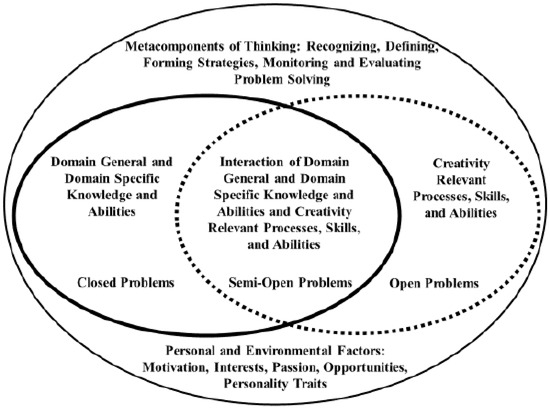
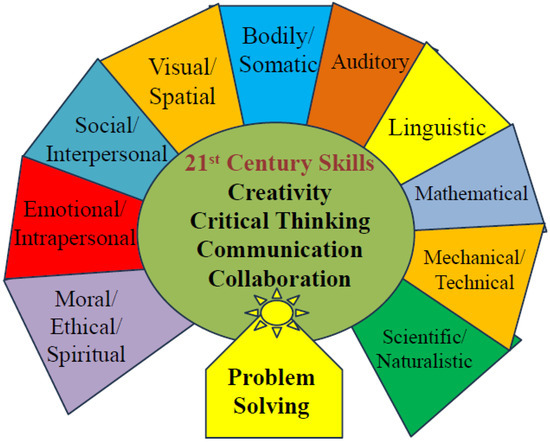
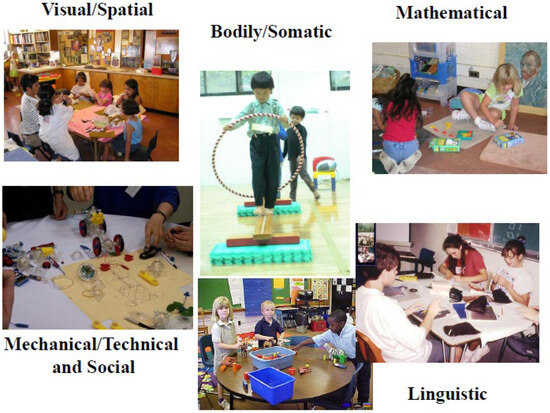
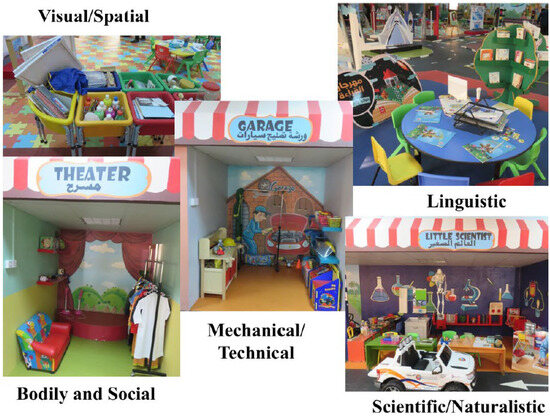
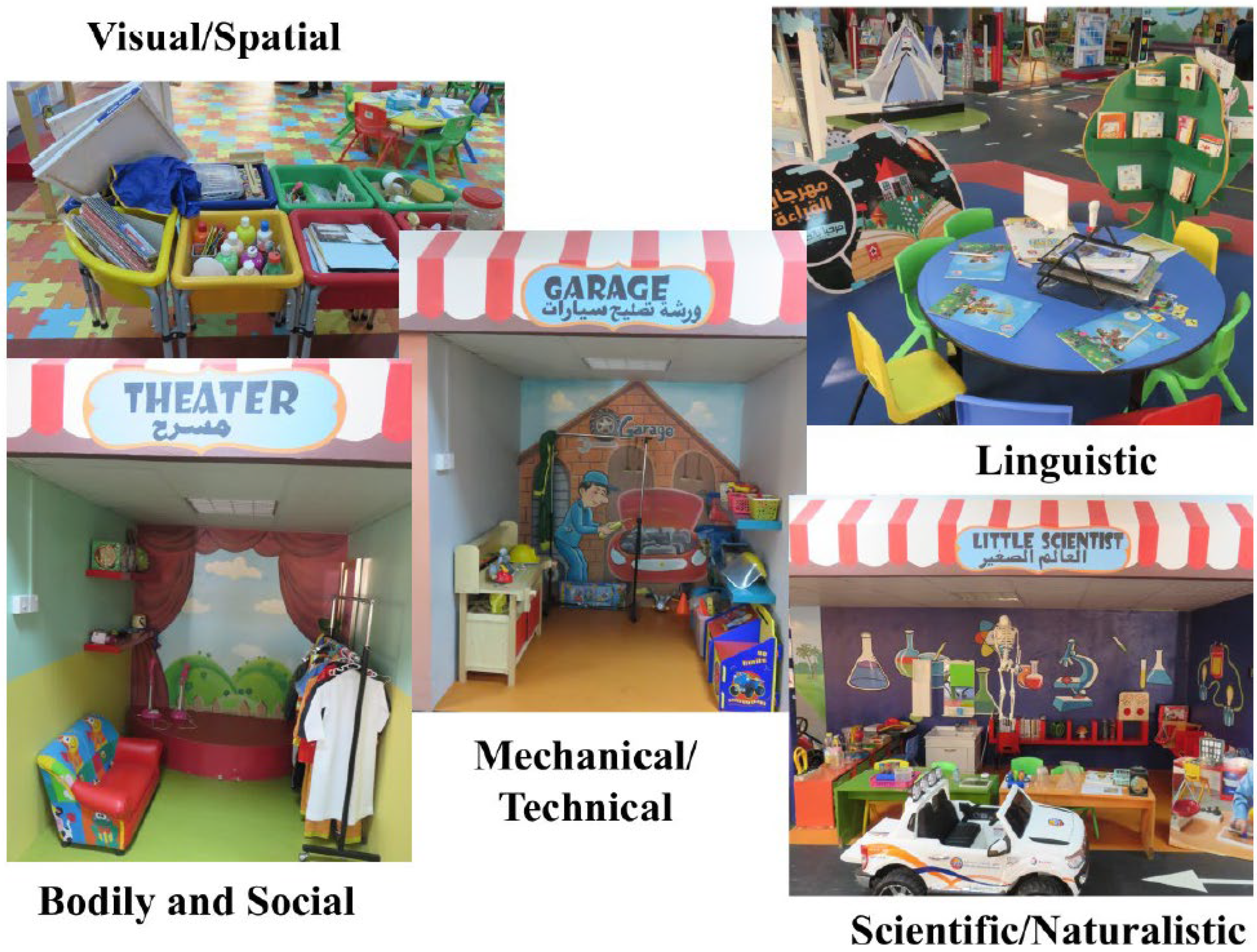
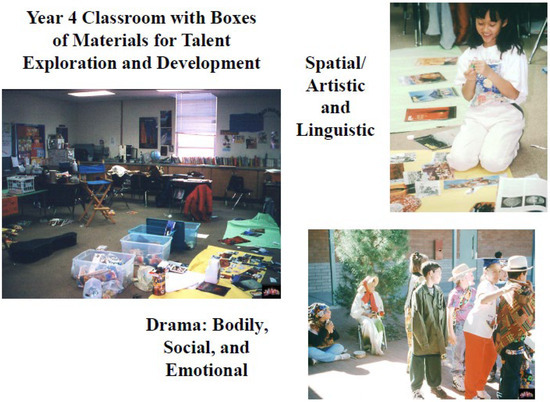
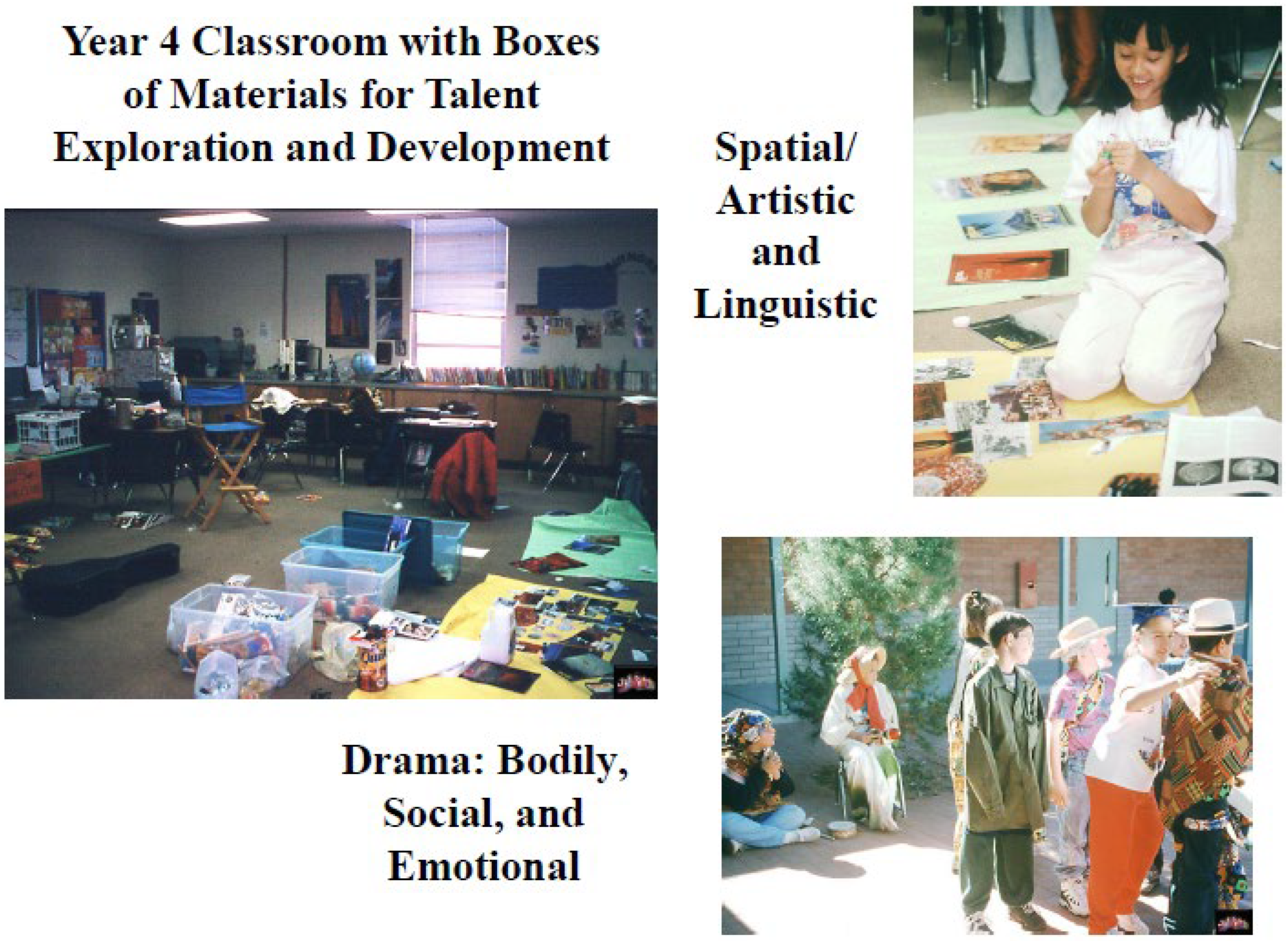
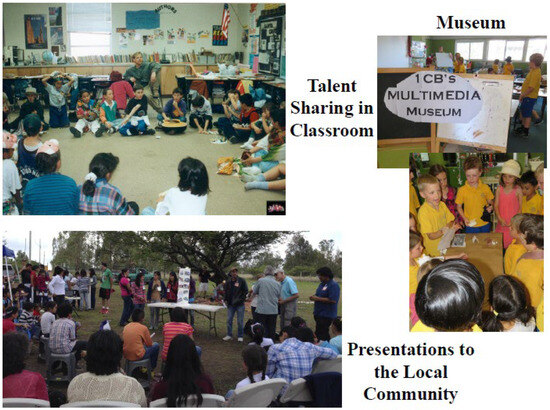
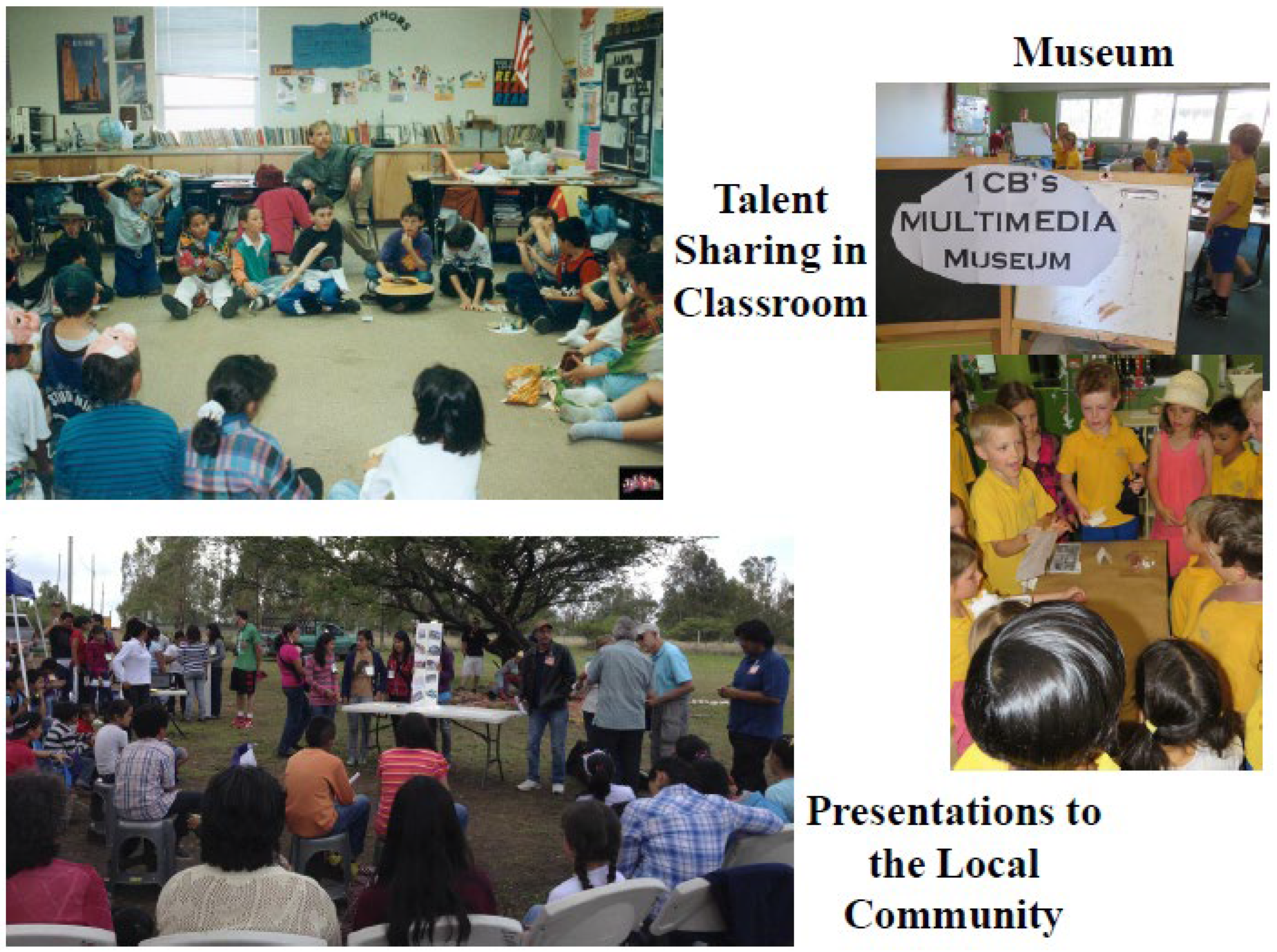

Disclaimer/Publisher’s Note: The statements, opinions and data contained in all publications are solely those of the individual author(s) and contributor(s) and not of MDPI and/or the editor(s). MDPI and/or the editor(s) disclaim responsibility for any injury to people or property resulting from any ideas, methods, instructions or products referred to in the content. |
© 2026 by the author. Licensee MDPI, Basel, Switzerland. This article is an open access article distributed under the terms and conditions of the Creative Commons Attribution (CC BY) license.