


Abstract
Inclusive education (IE) for learners with autism spectrum disorder (ASD) has become a major policy priority. However, its meaning in everyday school and community contexts remains unevenly understood among different stakeholders. This participatory qualitative study examined how teachers, parents/caregivers, and neighbors conceptualized IE for learners with ASD in three urban public primary schools in Dar es Salaam, Tanzania. Data were collected from 30 participants using participant-generated photographs, photo-elicitation discussions, and follow-up unstructured interviews. Photographs and participants’ narratives were analyzed together as a single photovoice dataset using reflexive thematic analysis. Findings indicated that participants generally supported IE in principle but negotiated its implementation through conditions related to learner ability, school capacity, safety, educational expectations, and responsibility for support. Participants prioritized practical outcomes over academic success; they valued togetherness, physical presence, and teacher-led responsibility while giving comparatively less attention to broader rights-based dimensions of IE. Parents and neighbors emphasized belonging and acceptance, whereas teachers emphasized feasibility, specialist support, and practical implementation constraints. The study introduces the concept of conditional inclusion to describe a form of support that extends beyond placement decisions by showing how inclusion is negotiated through local assumptions about learner ability, school capacity, safety, educational expectations, and responsibility for support. These findings suggest that locally grounded community engagement is essential for adapting IE policies and practices for learners with ASD in comparable low-resource urban contexts.
1. Introduction
Inclusive education (IE) has become a global priority, reflecting the commitment to ensuring that all learners, including those with disabilities, have equitable access to meaningful education. This commitment is reflected in Sustainable Development Goal 4, which calls for inclusive, equitable, quality education and lifelong learning opportunities for all by 2030. Contemporary understandings of IE extend beyond the physical placement of learners in mainstream classrooms. Instead, inclusion is increasingly understood as the removal of barriers to learners’ presence, participation, achievement, and belonging within education systems (Ainscow, 2020; Slee, 2018). From this perspective, schools are expected to recognize learner diversity, adapt teaching and support, and create conditions that enable all learners to participate meaningfully in learning.
Although these principles apply to all learners with disabilities, they present particular challenges for learners with autism spectrum disorder (ASD). For learners with ASD, many barriers arise not only from the school environment itself but also from how autism is understood and interpreted by teachers, families, peers, and communities. Consequently, successful inclusion depends not only on access to mainstream classrooms but also on the social and educational responses that shape learners’ everyday participation. Autism is associated with differences in social communication, sensory processing, and behavioral flexibility, which may influence how learners experience classroom routines, peer relationships, sensory environments, and instructional demands (Soto-Icaza et al., 2025). Many of these differences are not immediately visible, making learners with ASD particularly vulnerable to misunderstandings, sensory overload, stigma, and expectations that may not reflect their individual support needs. Consequently, learners with ASD may be physically present in school while remaining socially, academically, or institutionally excluded from meaningful participation. Conversely, when teachers, families, peers, and communities understand autism and respond appropriately, they can create supportive environments that strengthen participation, acceptance, and belonging, even in settings with limited educational resources (McMaughan et al., 2024; Pellicano et al., 2018; Petersson-Bloom & Holmqvist, 2022).
These issues are particularly salient in low- and middle-income countries (LMICs), where commitments to IE frequently coexist with overcrowded classrooms, limited teacher preparation, inadequate learning resources, and scarce specialist support (Ahmed et al., 2022; Genovesi et al., 2022). Consequently, the implementation of IE is shaped not only by policy commitments but also by school capacity, cultural understandings of disability, family expectations, and broader community contexts. In Tanzania, these constraints have contributed to an educational system in which learners with disabilities are increasingly enrolled in mainstream schools, and specialized support is frequently organized through special education units. Although this organizational arrangement expands access to schooling, it may also create uncertainty regarding how responsibility for inclusion should be shared between mainstream teachers and special-unit teachers. Understanding this school structure is therefore essential for interpreting how different stakeholders conceptualize IE for learners with ASD.
1.1. Inclusive Education in Tanzania
Tanzania provides an important context for examining IE for learners with ASD because it has made substantial policy commitments to educational inclusion through both international and national frameworks. These include the United Nations Convention on the Rights of Persons with Disabilities (UNCRPD), the Persons with Disabilities Act No. 9 of 2010, the Education and Training Policy, and the National Strategy for Inclusive Education 2021/22–2025/26 (Ministry of Education and Vocational Training, 2014; Ministry of Education, Science and Technology, 2021; United Republic of Tanzania, 2010; United Nations, 2006). Collectively, these frameworks promote equitable access to education, participation, non-discrimination, and appropriate support for learners with disabilities, including those with ASD.
Despite these formal policy commitments, the implementation of IE at the school level remains uneven. In many Tanzanian primary schools, learners with disabilities are enrolled in mainstream schools while specialized support is provided through special education units or separate classes. This arrangement is intended to facilitate access to education while providing specialist expertise to learners who require additional support. However, it may also reinforce the perception that responsibility for learners with ASD rests primarily with special-unit teachers rather than being shared among mainstream teachers, school leaders, families, and other members of the school community. Furthermore, many mainstream teachers report limited preparation for addressing the social communication, sensory, and behavioral needs associated with ASD.
School experiences are also shaped by the wider community’s understanding of disability. Within Tanzanian communities, autistic behaviors may be interpreted through moral, spiritual, cultural, or biomedical perspectives, and these interpretations influence whether learners with ASD are accepted, expected to learn, and included in everyday school activities. Consequently, IE for learners with ASD cannot be understood solely as the implementation of educational policy or classroom practice. Rather, it is a social process negotiated among teachers, parents, families, neighbors, school leaders, and other members of the wider community. Understanding how these actors conceptualize inclusion is therefore essential for explaining how IE is enacted in everyday practice.
1.2. Contextual Understanding of Inclusive Education for Learners with ASD
Inclusive education for learners with ASD is not a fixed state but a negotiated process. Previous research has shown that IE is a contested and context-dependent concept. Across different settings, inclusion may be understood as placement in mainstream classrooms, disability-specific support, responsiveness to learner diversity, or broader school and community transformations (Krischler et al., 2019). Although rights-based approaches emphasize removing barriers to participation and achievement, in practice, IE is often reduced to the physical integration of learners with disabilities into mainstream schools (Haug, 2017; Spandagou, 2025).
Research on learners with ASD further shows that IE should be assessed through broader outcomes than academic achievement. For learners with ASD, meaningful inclusion may involve social participation, communication, emotional well-being, independence, peer acceptance, and future opportunities (Pellicano et al., 2018). Studies from both high-income and Global South contexts suggest that IE can support these outcomes when schools provide teacher training, individualized support, peer acceptance, community awareness, and inclusive school cultures (Barrios et al., 2024; El-Salahi et al., 2023; Genovesi et al., 2022; Horgan et al., 2023; Minuk et al., 2024; Ntalindwa et al., 2021; Olsson & Nilholm, 2023; Simón et al., 2023; Walton & Engelbrecht, 2024). Families also value IE for its support of confidence, social development, and long-term independence (Simón et al., 2023; Yang et al., 2024).
Responsibility for including learners with ASD also remains unclear. Teachers are often viewed as central actors in translating policy into classroom practice (Ahmed et al., 2022; Petersson-Bloom & Holmqvist, 2022; Webster & Roberts, 2022), while families and communities contribute to advocacy, stigma reduction, and support beyond the classroom (Genovesi et al., 2022; Singh, 2022). However, little is known about how different actors understand their responsibilities in everyday practice. Existing studies often examine teachers or parents separately and give limited attention to the wider community, including neighbors, despite their roles in shaping stigma, acceptance, and participation in the lives of people with ASD.
1.3. Theoretical Framework
This study was guided by two theoretical perspectives: the medical model of disability and the capability approach. The medical model of disability views disability primarily in relation to individual impairments, functional limitations, and the need for specialized intervention or support. In this study, the medical model helped interpret participant explanations that emphasized impairment, severity, specialist support, and separate educational provision. In contrast, the capability approach, developed by Sen (1999) and further elaborated by Nussbaum (2011), focuses on what individuals are able to do and become within their social contexts. This approach therefore helped interpret the opportunities, forms of participation, and valued outcomes that participants associated with IE for learners with ASD.
Although these perspectives originate from different intellectual traditions and emphasize different aspects of disability and inclusion, they were selected because they served distinct but complementary purposes in this study. Used together, these perspectives enabled a more comprehensive understanding of how participants simultaneously expressed support for learners with ASD while also placing conditions on who could be included, under what circumstances, and for what purposes.
In this study, these theoretical perspectives were not used to generate codes or themes. Rather, they were applied after inductive theme development to interpret and contextualize participants’ understandings of IE for learners with ASD.
1.4. Current Study
Previous research on IE has primarily examined the perspectives of teachers, parents, or school leaders, demonstrating that knowledge, attitudes, available resources, and institutional support influence the implementation of IE. However, considerably less attention has been given to the perspectives of wider community members, particularly neighbors, despite their important role in learners’ everyday lives outside school. Neighbors are part of the social environments through which learners travel to school, interact with peers, participate in community activities, and experience either acceptance or exclusion. Their beliefs and daily interactions, therefore, influence not only community attitudes toward autism but also the practical opportunities learners have to participate safely and meaningfully beyond the classroom.
Furthermore, relatively little is known about how different stakeholder groups collectively understand IE for learners with ASD within contexts where mainstream classrooms and special units coexist. Existing research has often focused on whether stakeholders support inclusion, with less attention to how they define inclusion, where they believe learners with ASD should be educated, who they perceive as responsible for inclusion, and how these understandings influence educational practice. To address these gaps, this study uses photovoice within a multiple-case study design to explore how teachers, parents/caregivers, and neighbors understand IE for learners with ASD in Tanzanian public primary schools. It investigates how IE is defined, who is considered eligible for inclusion, how responsibility is distributed, which aspects of inclusion are prioritized, and what outcomes are associated with it. Addressing these questions is particularly important in contexts such as Tanzania, where policy aspirations, school structures, and community experiences interact to shape everyday implementation. The following research questions guided this analysis:
- RQ1: How do community members conceptualize inclusive education for learners with ASD?
- RQ2: How do teachers, parents/caregivers, and neighbors converge or diverge in their understanding of IE for learners with ASD?
2. Materials and Methods
2.1. Research Approach and Design
This study used a qualitative, participatory approach with a multiple-case study design to investigate how IE for learners with ASD is conceptualized within urban Tanzanian primary school communities. The qualitative approach was appropriate because the study sought to explore socially negotiated and contextually situated meanings of inclusion rather than to measure prevalence or test causal relationships (Creswell, 2013). In this study, teachers, parents/caregivers, and neighbors constituted three distinct cases, while individual participants within each group served as embedded units of analysis. Consistent with Yin’s (2018) conceptualization of case study research, cases were defined by the phenomenon of interest and the analytical boundaries established by the research questions rather than by geographical location alone. Because the second research question explicitly sought to examine convergences and divergences across stakeholder groups, these groups constituted the primary analytical cases. Defining stakeholder groups as cases shaped the analysis in two ways. First, it enabled an in-depth examination of how each group understood and interpreted IE for learners with ASD, drawing on their own social positions and experiences. Second, it facilitated a systematic cross-case comparison to identify areas of convergence and divergence across teachers, parents/caregivers, and neighbors.
The three participating schools provided the shared contextual setting within which the cases were situated. The schools were not treated as cases because the study did not seek to compare school characteristics or implementation differences across schools. Rather, the analytical focus was on comparing how different stakeholder groups conceptualized IE while operating within similar urban school-community environments. A multiple-case study design was therefore appropriate because it allowed both within-case understanding and cross-case analysis of stakeholder perspectives.
2.2. Participants and Sampling
Participants were recruited from three purposively selected urban public primary schools in Dar es Salaam, Tanzania. Ten schools were initially approached; six did not enroll learners with ASD in their schools, one declined to participate due to a conflicting data collection schedule, and three met the specific study criteria: they were urban public primary schools in Dar es Salaam, had learners with ASD enrolled, had mainstream and special-unit provisions, granted permission to participate, and allowed for sustained fieldwork. Because the participating schools already enrolled learners with ASD and maintained both mainstream and special-unit provisions, they may represent contexts in which IE practices were relatively more developed than in schools without such provisions.
The final sample comprised 30 participants. At the three participating schools, eight teachers were invited, and six agreed to participate (two declined due to time constraints). Nine parents/caregivers of learners with ASD were approached; six agreed to participate, and three declined. For each participating family, between two and four neighbors were invited, aiming to include individuals with varying levels of interaction with the learner; eighteen neighbors ultimately participated. A neighbor was defined as an adult residing in the same neighborhood as the participating family or school, with frequent, occasional, or indirect interaction with the learner, family, or school. Neighbors were identified through participating families, who were asked to suggest adult community members with varying degrees of contact. To reduce the likelihood of recruiting only highly supportive community members, families were encouraged to identify neighbors with different levels of familiarity, interaction, and engagement with the learner and family.
The unequal group sizes reflected the study’s aim of capturing diversity within the broader community category rather than achieving numerical equivalence across groups. Neighbors differed in their levels of contact with learners with ASD and their familiarity with ASD and IE; therefore, a larger neighbor group helped capture a wider range of community perspectives. Although the larger neighbor group may have broadened the range of community perspectives represented in the dataset, the analysis focused on the meaning, interpretation, and emphasis of themes rather than their prevalence or frequency. Following inductive theme development, each participant group was examined separately to understand how the final themes were expressed before comparisons were made across groups. This analytical approach helped ensure that cross-group comparisons reflected similarities and differences in interpretation rather than the volume of data contributed by each group. This imbalance was therefore treated as part of the interpretive design rather than as a basis for numerical comparison. The sampling characteristics, inclusion criteria, and recruitment pathways for each participant group are summarized in Table 1.
Table 1.
Sampling characteristics and recruitment pathways of study participants.
2.3. Data Collection
Photovoice was the primary data collection method. Participants generated photographs and discussed the meanings they attached to these images (Wang & Burris, 1997). Photovoice was particularly suitable for capturing community perspectives on IE for learners with ASD because it enabled participants to document and reflect on aspects of inclusion that may remain unspoken during conventional interviews, such as sensory-friendly classroom arrangements, shared play spaces, domestic routines, and neighbor–child interactions. The photographs, therefore, provided participant-generated visual representations of their experiences and understandings of inclusion.
Following the photo discussions, unstructured interviews were conducted to explore issues that were not fully captured through the photographs or required further clarification. The two data sources were complementary: photographs encouraged participant-led reflection and visual storytelling, whereas the interviews provided opportunities to elaborate, clarify, and contextualize the meanings participants attached to their images.
2.4. Photovoice Process
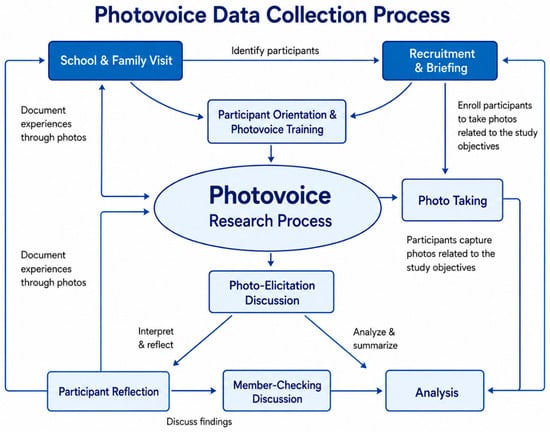
The photovoice process was implemented in four stages. First, participants attended orientation sessions in which the research team explained the study aims, ethical expectations, camera use, and basic photography guidance.
Second, each participant received a disposable camera and was invited to take photographs over a period of up to two weeks. Participants were encouraged to photograph places, objects, activities, or situations that reflected their understanding of IE for learners with ASD. All participants took their own photographs. To support participation, participants were provided with the researcher’s contact details and encouraged to seek assistance if they experienced technical difficulties using the camera. Furthermore, during the photo-taking period, the researcher conducted follow-up visits to monitor participants’ progress, address any technical issues with camera use, and provide additional guidance as needed.
Third, after the photo-taking period, the cameras were collected and the photographs developed. The researcher then met individually with each participant, either at the school or at the participant’s home, to conduct photo-elicitation discussions in Swahili. During these discussions, participants received printed copies of their photographs, selected the images they considered most meaningful, and explained what each photograph represented. Discussions followed the SHOWeD technique developed by Wang and Burris (1997): What do you see? What is happening? How does this relate to our lives or the community? Why do these issues exist? What can be done about them? (Farquhar & Dobson, 2004). Unstructured interviews were conducted immediately after the photo discussions to further explore issues that were not fully represented in the photographs or required additional explanation. All 30 participants completed both the photo-elicitation discussion and the follow-up interview. Digital backups of all photographs were securely stored on a password-protected computer.
Fourth, follow-up sessions were conducted to discuss emerging interpretations, clarify meanings, and confirm whether participants felt that the preliminary interpretations accurately reflected the intended meanings of their photographs and discussions. These sessions, therefore, served primarily as member-checking opportunities rather than as an additional source of analyzed data. The final feedback meeting also provided an opportunity for the community to disseminate the findings. Policymakers who attended this meeting were not considered study participants and were therefore excluded from the thematic analysis. All discussions were audio-recorded with participants’ consent and lasted approximately 50–80 min. The overall photovoice process is illustrated in Figure 1.
Figure 1.
Stages of the photovoice process used in the study.
2.5. Data Analysis
Data analysis followed Braun and Clarke’s (2006) six-phase thematic analysis approach. Audio recordings from both the photo-elicitation discussions and follow-up interviews were transcribed verbatim, verified against the recordings, and translated from Swahili into English. The translations were subsequently checked for accuracy and meaning by the research team.
The analysis was primarily inductive. Codes and themes were generated directly from participants’ discussions and accompanying photovoice materials without imposing pre-existing theoretical categories. Photographs and participants’ narratives were analyzed together as a single photovoice dataset. The photographs were not treated as independent visual objects for researcher-led image analysis. Rather, analytical attention focused on the meanings participants attached to their photographs during the photo-elicitation discussions and interviews. Consequently, coding drew on both the visual content of the photographs and participants’ explanations of what the images represented, why they were important, and how they related to IE for learners with ASD.
To enhance trustworthiness, an audit trail of coding decisions was maintained, regular peer debriefings were conducted, and member checking during the follow-up photovoice sessions was used to confirm the credibility of emerging interpretations and themes. Two researchers independently familiarized themselves with the transcripts and accompanying photovoice materials, recorded preliminary ideas through reflexive memos, and developed initial codes using NVivo 15. Coding was treated as an iterative and interpretive process. Rather than calculating formal inter-coder reliability or seeking identical coding, the researchers regularly discussed coding decisions, reflected on alternative interpretations, and revisited the transcripts and photovoice materials to refine the developing codebook and strengthen the credibility and coherence of the analysis.
Related codes were grouped into initial themes, reviewed against the complete dataset for coherence, refined, and named in relation to the research questions. Following inductive theme development, the medical model of disability and the capability approach were applied as interpretive lenses to contextualize and deepen understanding of the themes rather than to generate codes or themes. Direct quotations and participant-generated photographs were subsequently selected because they best illustrated the final themes, visual content, and participants’ interpretations of those images.
For the second research question, a framework matrix was developed after thematic analysis to compare teachers, parents/caregivers, and neighbors across the final themes. The matrix facilitated systematic cross-group comparison by identifying areas of convergence and divergence in how participants conceptualized IE for learners with ASD. Comparisons focused on similarities and differences in the meanings participants attached to the themes, the examples they provided, and the emphasis they placed on particular aspects of inclusive education. These cross-group comparisons informed the interpretation of stakeholder perspectives presented in the Results.
2.6. Ethical Considerations
Ethical clearance for this study was granted by the Research Ethics Committee of the Institute of Human Settlement Studies at Ardhi University, Tanzania (reference number AK.154/327/01). All participants received information about the study’s purpose, the voluntary nature of participation, their right to withdraw, and how the data and photographs would be used. Written informed consent was obtained prior to participation, and the participants received a copy of the consent form for their records. Because the study used photovoice, particular attention was paid to privacy and ethical issues related to images. Participants were instructed not to take or submit photographs that showed identifiable children or other individuals unless appropriate permission had been obtained. For learners with ASD who appeared in photographs, written parental consent and child assent, where developmentally appropriate, were obtained in accessible formats with caregiver support prior to image capture and again before publication. The submitted manuscript includes only images for which publication permissions have been obtained. Where photographs contained potentially identifying details, images were anonymized through cropping, blurring, or exclusion from publication.
3. Results
3.1. Participant Characteristics
The demographic characteristics of the 30 participants are summarized in Table 2. Neighbors constituted the largest participant group (60%, n = 18). Participants had varied educational backgrounds, including primary (36.7%), secondary (33.3%), and degree-level qualifications (30.0%). Women comprised the majority of participants (73.3%). These characteristics provided descriptive context for the range of participants represented in the study.
Table 2.
Participant characteristics (N = 30).
Three key themes emerged in relation to RQ1 (Table 3): (1) IE as togetherness, but with conditional boundaries; (2) IE as functional preparation, with independence as the desired aim and outcome; and (3) IE as a shared ideal but teacher-led responsibility.
Table 3.
Summary of themes, subthemes, descriptions, and illustrative quotations.
3.2. Theme 1: Inclusive Education as Togetherness, but with Conditional Boundaries
3.2.1. Inclusion as Togetherness
Participants commonly understood IE as learners with and without disabilities sharing the same educational and social environments. Across the discussions, IE was consistently described as learning, interacting, and participating together rather than educating learners with ASD separately. Shared spaces such as classrooms, assembly grounds, playgrounds, homes, and community settings were viewed as important because they enabled learners with ASD to be present, interact with others, and take part in everyday activities.
Participants repeatedly emphasized that IE meant bringing learners together regardless of disability.
One participant described IE as
“children with autism and other children being together in one place and doing things together, regardless of their condition”.(P05, Kinondoni)
Similarly, another participant explained that inclusive education was
“mixed education where students who are not disabled and those with special needs… are taught together,” adding that “children with autism are not separated as if they have their own school; they are mixed with [non-disabled] children”.(P06, Kinondoni)
Another participant reinforced this understanding by stating, “For me it is not about leaving them alone and not isolating them” (P04, Kinondoni).
Although participants consistently described inclusion as “being together,” their explanation reflected different dimensions of togetherness. Some emphasized physical co-presence, referring to learners with and without disabilities occupying the same educational and community spaces. Others highlighted social acceptance, stressing that learners with ASD should not be isolated from their peers, families, or communities. Still others associated togetherness with educational participation, emphasizing opportunities for learners with and without disabilities to learn, interact, and engage in everyday school activities together.
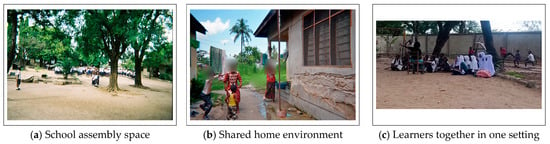
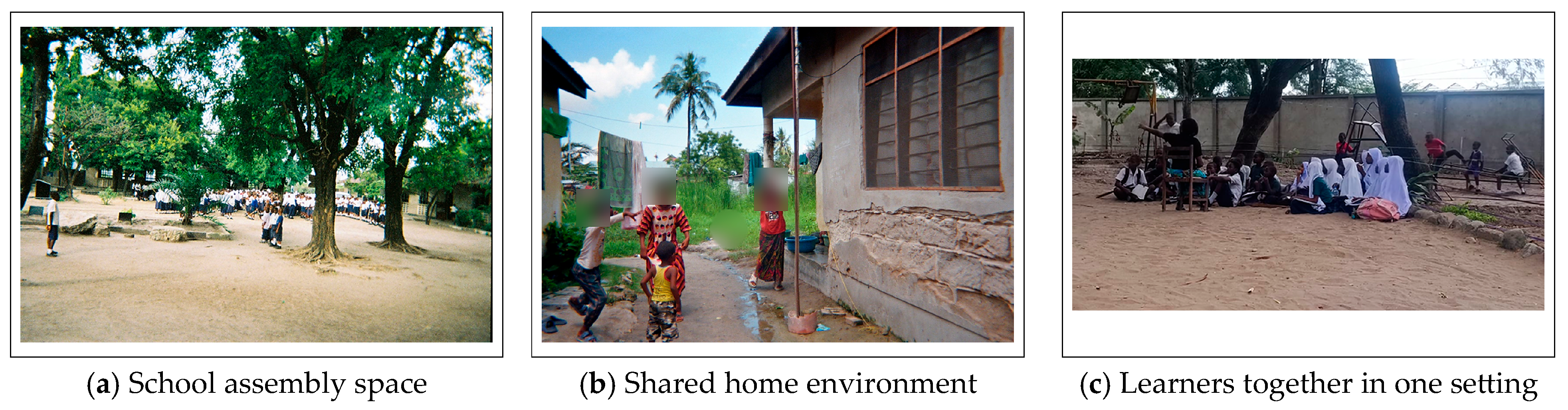
During the photo-elicitation discussions, participants’ explanations were closely connected to the photographs they had taken. As they described the meaning of their images, many selected photographs showed learners with and without ASD sharing school and home environments as visual representations of IE. Figure 2a–c present examples of these participant-generated photographs, which accompanied participants’ descriptions of togetherness, shared participation, and belonging.
Figure 2.
Shared school and home environments for learning and participation.
Participants described these photographs during the photo-elicitation as representing “education for everyone” or “learners being together,” emphasizing visibility, belonging, and shared everyday experiences rather than separation from their peers and everyday educational experiences.
3.2.2. Selective Inclusion of Learners with ASD
Although participants consistently described IE as learners learning together, their explanations became more selective when discussions focused specifically on learners with ASD. Across participant groups, discussions frequently shifted from what IE meant to which learners they believed could realistically benefit from it. Many distinguished autism from other disability categories and suggested that IE was not equally appropriate for all learners with ASD. Instead, participants frequently linked the suitability of inclusion to learners’ perceived severity of impairment, communication abilities, behavioral characteristics, and support needs. Learners perceived to have milder or more moderate support needs were generally viewed as more capable of participating in IE, whereas those considered to have greater support needs were often viewed as less suitable.
One teacher explained:
“Autism is difficult, very difficult to include in inclusive classrooms… in terms of academic ability, it is very rare, honestly, maybe for those with more moderate support needs.”(P12, Temeke)
Similar views were expressed by parents, who also distinguished learners according to their perceived support needs. One participant stated:
“I do not think it is good because they are not at the same level. It is like giving someone a load heavier than their ability.”(P01, Temeke)
Another participant similarly emphasized that learners with ASD had educational needs that differed from those of other learners:
“That means they should stay in their own classroom by themselves, because they have special needs that are different from those of children without disabilities.”(P04, Kinondoni)
Another participant expressed a similar view, explaining:
“A class just for them has benefits, because when they are on their own, there are things you can teach them faster than in a mixed class, because there are fewer disturbances.”(P08, Kinondoni)
Across participants’ explanations, support for IE was therefore frequently qualified by learners’ perceived abilities and support needs. These recurring conditions were described as conditional boundaries, whereby IE was broadly supported but considered appropriate for learners with ASD only under particular circumstances.
3.2.3. Conditional or Separate Placement
Participants also understood IE in terms of where learners with ASD should be placed, often emphasizing that special classrooms or separate units are more appropriate for some learners. Placement decisions were described as conditional, depending on learners’ perceived needs and how well they were thought to “fit” regular classes. Several participants explicitly stated that learners with ASD should be taught in special classrooms.
One participant explained,
“I took this photo to show where children with autism should be taught, in special classrooms like these …”.(P08, Kinondoni)
Another emphasized the benefits of such settings for individualized support:
“I think they should study in their own classes because the teachers there are used to them and understand them. Teachers know what each child likes and dislikes and how to handle them”.(P02, Ilala)
Another participant highlighted differences in learning pace as a reason for separate placement:
“They should have a special place to be taught, because students without challenges may surpass those with lower understanding”.(P02, Temeke)
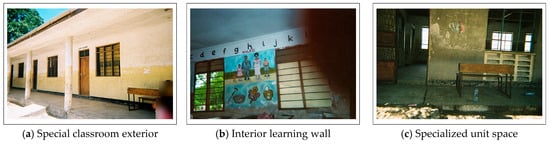
This understanding was further illustrated through the participant-generated photographs discussed during the photo-elicitation interviews. Figure 3a–c present examples of these photographs. Across the three photographs, participants explained that special classrooms and specialized units represented educational environments they considered more appropriate for some learners with ASD. They frequently described these spaces as quieter, less crowded, and better suited to supporting learners’ behavioral, social, and learning needs than mainstream classrooms. For example, participants explained that the special classroom exterior shown in Figure 3a represented a learning environment they perceived as reducing overcrowding and distractions. Similarly, the interior learning wall shown in Figure 3b was interpreted by participants as representing the specialized learning environment that supports learners with ASD in the school setting. Participants also described the specialized unit presented in Figure 3c as an appropriate place for learners with ASD who, in their view, required support that mainstream classrooms could not adequately provide. Overall, many participants interpreted separate classrooms not as exclusionary spaces but as supportive environments that could provide individualized attention, adapted pacing, and emotional safety.
Figure 3.
Special classrooms and specialized learning spaces as preferred educational settings for some learners with ASD.
Participants repeatedly explained that these photographs depicted learning environments they considered more appropriate for some learners with ASD, as they believed such settings offered greater individual support and fewer distractions than mainstream classrooms.
3.3. Theme 2: IE as Functional Preparation, with Independence as the Desired Aim and Outcome
3.3.1. Living, Communication, and Self-Care Skills as Perceived Aims of IE
Participants frequently described a primary aim of IE for learners with ASD as helping them develop practical, communication, and self-care skills needed for everyday life. In participants’ views, functional learning was often prioritized over conventional academic achievement.
One participant explained:
“This child with autism was washing clothes. It also shows the practical hand skills they learn in the process. When this child leaves here, they will know health and self-care skills and will no longer need someone to wash their clothes.”(P12, Temeke)
This emphasis on functional learning was echoed by another participant, who contrasted these goals with conventional academic expectations:
“Their education focuses on living and communicating. It is not like what we are used to for other children studying, passing, and going to college. No, this is not possible. These children study mainly to manage their daily lives, meaning they should not depend on others, the community, or their parents for basic needs”(P02, Kinondoni)
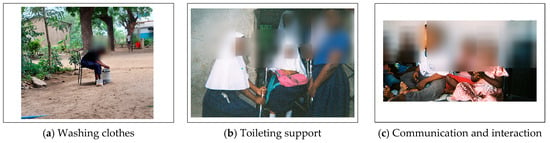
This emphasis on functional learning was further illustrated through the participant-generated photographs discussed during the photo-elicitation interviews. Figure 4a–c present examples of these photographs. Participants explained that the photograph of a child washing clothes (Figure 4a) represented opportunities for learners with ASD to develop independence and contribute to household activities. The photograph depicting toileting support (Figure 4b) was described as reflecting the importance participants placed on developing self-care routines that could reduce dependence on others. Similarly, participants interpreted the photograph illustrating communication and interaction (Figure 4c) as representing opportunities for learners with ASD to practice simple conversations, respond to others, and participate more actively in everyday social life.
Figure 4.
Practical, self-care and communication-related activities.
During the photo-elicitation discussions, participants explained that the activities presented in the photographs represented the practical, communication, and self-care skills they considered central to the education of learners with ASD.
3.3.2. Independence as a Perceived Functional Outcome of IE
Participants also described independence in everyday tasks as a key outcome of successful inclusion for learners with ASD. Becoming less dependent on parents/caregivers and teachers in managing daily routines was frequently mentioned as an important sign that education was “working.” One caregiver reflected on her child’s progress:
“I thank God very much; school has lifted my child up to where he is now. The school has helped her a lot. My child has gained a lot of weight. She recognizes herself and goes to the toilet independently. Before school, she could not even go to the toilet … But when she started school here, teachers supported her, guided her, and taught her to do things on her own until she reached the point of going to the toilet by herself.”(P06, Ilala)
Similarly, another participant described how school had changed what the child could do at home:
“At school, they teach them everything, bathing, washing clothes, brushing teeth, dressing themselves, and washing dishes. He now washes dishes at home. If he had stayed at home, he would not be doing all these things.”(P01, Temeke)
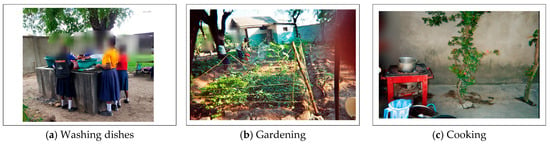
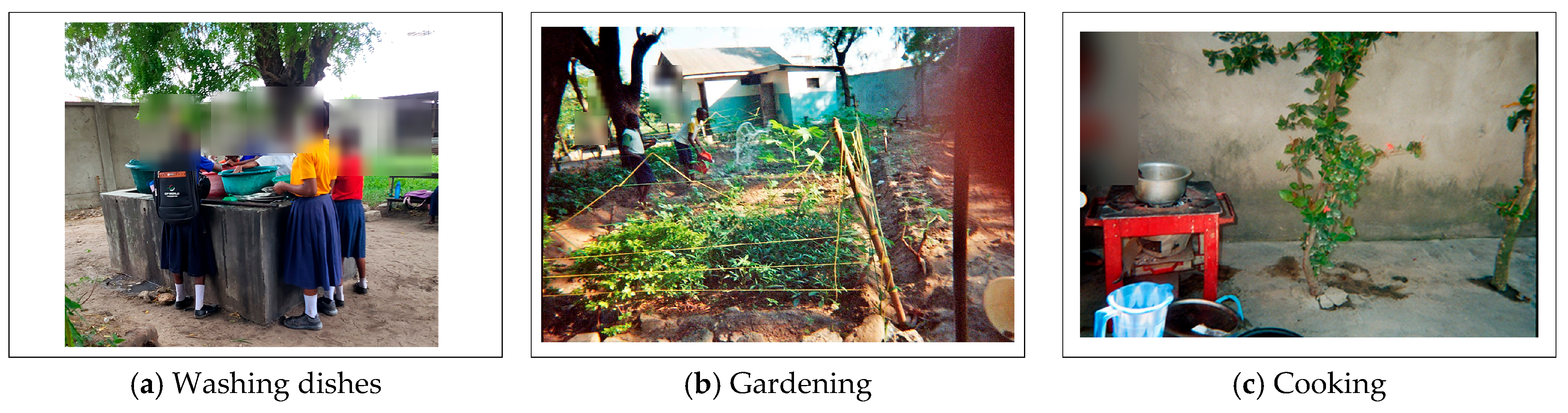
Participants’ explanations during the photo-elicitation discussions were closely connected to the photographs they selected. As they discussed the meaning of their images, many described everyday activities such as washing dishes, gardening, and cooking as examples of learners with ASD applying practical skills acquired through IE. Figure 5a–c present participant-generated photographs that accompanied participants’ descriptions of increasing independence in everyday life.
Figure 5.
Independence as a valued functional outcome of IE.
During the photo-elicitation discussions, participants explained that these activities reflected more than routine household or school tasks. Instead, they described them as evidence that learners with ASD were becoming increasingly able to care for themselves, contribute to daily responsibilities, and apply skills learned at school within their homes and communities. Collectively, participants interpreted these photographs as representing increasing independence, highlighting their view that functional skills and self-reliance were among the most important outcomes of inclusive education for learners with ASD.
3.3.3. Behavioral and Social Adjustment as Perceived Outcomes of Inclusive Education
Participants also linked IE to behavioral changes, greater social participation, and increasing peer acceptance among learners with ASD. Across participant groups, regular interaction with peers in inclusive settings was described as contributing to these positive changes. Participants explained that, over time, learners with ASD became more confident in interacting with others, while classmates became increasingly familiar with and accepting of them. These changes were reflected in reduced fear of peers, increased participation in shared activities, improved communication, greater willingness to seek assistance when needed, and reductions in aggressive behavior.
One teacher described how these changes transformed relationships between learners with ASD and their classmates:
“When my student started, he was aggressive, and his classmates ran away from him. But now they are used to him.”(P07, Kinondoni)
Another teacher similarly explained how regular participation in school activities supported both social interaction and a stronger sense of belonging:
“You see the student I am showing you? He can now hold a fellow student’s hand. At first, when he arrived, he could not do so at all. Now he greets you. At first, he used to sit alone under that tree, just singing until someone came to pick him up.”(P12, Temeke)
In participants’ explanations, these behavioral changes were closely associated with greater participation in everyday school life. Improvements in communication, interaction, and peer relationships were described as reducing social isolation and enabling learners with ASD to participate more confidently alongside their classmates. Participants viewed these changes as important indicators that IE extended beyond physical presence to include meaningful social participation, peer acceptance, and a stronger sense of belonging.
3.4. Theme 3: IE as a Shared Ideal, but a Teacher-Led Responsibility
Participants commonly described IE as a shared responsibility involving teachers, parents, families, communities, and government. However, when discussing how IE was implemented in everyday practice, responsibility became concentrated primarily on special-unit teachers. Across participant groups, special-unit teachers were consistently viewed as the individuals best equipped to support learners with ASD because of their specialized training, patience, and day-to-day experience. In contrast, although parents, mainstream teachers, and community members acknowledged having important roles, they often described these roles as supportive or constrained by limited knowledge, training, and opportunities to provide direct educational support.
One parent explained:
“I took a picture of his teacher… a teacher has a direct responsibility for the success of education for a child with autism. If we parents fail, these teachers help us.”(P02, Ilala)
A mainstream teacher similarly highlighted the specialized expertise required to support learners with ASD:
“I think the people responsible for helping these children are their unit teachers. We are teachers too, but we have not gone through training to work with them.”(P02, Kinondoni)
Responsibility, therefore, appeared to be shared as an ideal but delegated in practice. While participants acknowledged that IE required the involvement of parents, teachers, communities, and government, they consistently positioned special-unit teachers as the primary implementers, with the roles of mainstream teachers and other stakeholders described as supportive rather than central.
Participants’ explanations during the photo-elicitation discussions were closely connected to the photographs they selected. As they discussed the meaning of their images, one participant photographed a teacher standing beside a learner with ASD to illustrate who they believed carried primary responsibility for supporting IE in everyday practice. Figure 6 presents this participant-generated photograph.
Figure 6.
A teacher supporting a learner with ASD.
During the photo-elicitation discussion, the participant described the teacher as “The one who is always with the child and knows what to do,” using the photograph to emphasize the teacher’s continuous presence and close day-to-day involvement with learners with ASD. The image reinforced participants’ perception that, although responsibility for IE was widely shared in principle, its practical implementation depended largely on the expertise and everyday commitment of special-unit teachers.
3.5. Patterns of Similarity and Difference Among Teachers, Parents, and Neighbors
This section addresses RQ2 by comparing teachers, parents/caregivers, and neighbors across the three themes identified under RQ1. Table 4 summarizes areas of convergence, divergence, and relative thematic overlap.
Table 4.
Summary of convergence, divergence, and relative group overlap across the three IE themes.
3.5.1. Patterns of Similarity Across the Three Groups
As illustrated in Table 4, teachers, parents/caregivers, and neighbors expressed similar perspectives on IE for learners with ASD. They regarded inclusion positively, highlighting the importance of shared spaces and activities over segregation.
For instance, one parent described IE as
“Education for everyone”,(P04, Ilala)
While teachers defined it as
“learners with and without disabilities learning together in one classroom”.(P01, Ilala)
Their emphasis was on developing practical life skills, such as communication, self-care, and independence, rather than solely on academic achievement. This shared emphasis is illustrated by one participant’s statement that education for learners with ASD centers on “living and communicating, not just the traditional academic path” (P02, Kinondoni). Furthermore, all groups agreed that responsibility for implementing IE should be collaborative, although special-unit teachers were identified as crucial contributors to the process.
These similarities suggest that participants primarily understood IE in social and practical terms. Their explanations consistently emphasized togetherness, participation in everyday activities, communication, self-care, increasing independence, and shared responsibility. By contrast, participants placed comparatively little emphasis on rights-based dimensions of IE, such as equal access to the curriculum, educational entitlements, reasonable accommodation, or the removal of structural barriers to participation. Likewise, discussions of academic progression were generally secondary to everyday functioning and practical independence. The shared understanding across groups reflected a community-oriented view of inclusion that foregrounded social belonging and functional participation while giving comparatively less attention to rights-based and educational equity perspectives.
3.5.2. Patterns of Difference Across the Three Groups
Differences emerged in how the three groups described the feasibility and implementation of IE (Table 4). Teachers provided the most implementation-oriented perspectives, emphasizing learners’ support needs, the importance of specialist expertise, and the practical challenges associated with full mainstream inclusion. One teacher explained:
“A child with autism should ideally be supervised or taught by a designated individual, preferably on a one-on-one basis, while others can be clustered together based on their levels of intellectual disability.”(P01, Ilala)
Parents generally placed greater emphasis on equality, participation, and non-discrimination, whereas neighbors shared similar views on togetherness but became more cautious when discussing safety and supervision. One neighbor remarked:
“In my opinion, for children like these, the environment just needs to be safe. The individuals supervising, teaching, and caring for them must have confidence.”(P03, Ilala)
Differences were also evident in participants’ descriptions of the aims of IE. Teachers emphasized practical, achievable objectives and limited academic advancement, whereas parents more frequently highlighted learners’ abilities, practical development, and observable progress. One parent observed:
“Learners cultivate talents and practical skills for future employment, and they also build self-confidence.”(P10, Ilala)
Neighbors likewise recognized the importance of practical growth while expressing greater uncertainty about academic achievement. One neighbor commented:
“Academically, I really do not believe he can excel, but in vocational or manual skills, those are his passions. I believe that with appropriate supervision, he can succeed. But honestly, in regard to the school itself, I am uncertain.”(P05, Ilala)
Participants also differed in how they described responsibility for implementing IE. Teachers and neighbors consistently positioned special-unit teachers as the primary practical implementers, whereas parents distributed responsibility more broadly across teachers, families, government, and educational institutions. One parent stated:
“The government is responsible for ensuring these children receive a good education.”(P06, Ilala)
These differences matter because they reveal an important gap between the formal ideals of IE and how inclusion is understood and interpreted by different groups. These differences suggest that IE is not understood through a single, consistent rights-based framework but is instead interpreted through diverse experiences, expectations, and levels of exposure to IE policies and practices. Consequently, community members may rely more on personal beliefs, lived experiences, and local expectations when conceptualizing what inclusion should look like in practice. In this context, IE appears to function not only as a policy concept but also as a socially negotiated practice.
4. Discussion
4.1. Interpretation of the Findings
This study examined how teachers, parents/caregivers, and neighbors conceptualized IE for learners with ASD in urban primary schools in Tanzania. The results indicated that the participants did not reject IE for learners with ASD but accepted it conditionally. Conditional inclusion emerged across three dimensions: placement, outcome expectations, and responsibility.
The first dimension of conditional inclusion emerged in the participants’ understanding of IE as togetherness and placement. Participants recognized the importance of including learners with ASD in the same schools and community spaces as their peers; however, this appreciation did not always translate into shared classroom learning or full participation in the learning process. The emphasis on co-presence suggests that inclusion was conceptualized as integration into existing spaces rather than a transformation of pedagogical practices. For example, participants described shared assemblies and classroom proximity as inclusion, while also representing special classrooms as appropriate when learners’ needs were perceived as severe or difficult to manage. Consequently, the findings raised the possibility that, when togetherness is primarily understood as physical co-presence rather than shared participation in learning, special classrooms may risk functioning as long-term spaces of separation for some learners with ASD. Although participants viewed these settings as supportive and appropriate for certain learners, reliance on separate provision may, over time, limit opportunities for full participation in mainstream educational experiences. This interpretation builds on previous school-based evidence that describes IE as enabling learners with ASD to learn alongside their peers by removing barriers to their presence, participation, and achievement (Ainscow, 2020; Krischler et al., 2019). However, while previous studies framed IE as an active, rights-based process of transforming educational environments for all learners, this study indicated that participants often framed inclusion more narrowly as physical and social togetherness, particularly when this togetherness was considered to be manageable, safe, and appropriate.
The second dimension of conditional inclusion appeared in the outcomes that participants associated with IE. Participants’ emphasis on functional preparation over academic success shows that inclusion was often defined by what learners with ASD were expected to manage in their daily lives, rather than by what they could achieve through education. These outcomes are important, but their dominance reveals a narrower understanding of what schools can offer. If academic learning is viewed as secondary or unrealistic, IE risks being transformed from an educational project into a care-oriented arrangement. This contrasts with studies showing that learners with ASD can make academic, social, and functional progress when appropriate support and accommodation are available (Minuk et al., 2024; Ntalindwa et al., 2021; Simón et al., 2023). While these studies highlight what learners with ASD can achieve under supportive conditions, the present study shows how local expectations may limit what is imagined as possible for them in the first place. The findings extend this literature by showing that the issue is not whether functional skills matter but whether they become a ceiling for what learners with ASD are expected to achieve.
The third dimension concerns inclusion responsibilities. Participants’ emphasis on special-unit teachers as the primary actors responsible for inclusion suggests that IE was often understood as a specialist responsibility rather than a whole-community commitment. Within the Tanzanian education system, many schools implementing IE are organized around mainstream classrooms supported by special education units. While special-unit teachers provide specialized expertise and support for learners with disabilities, mainstream teachers remain responsible for teaching these learners within regular classrooms. However, participants’ views indicated that responsibility for inclusion was frequently perceived as residing primarily with special-unit teachers rather than being shared across the school or entire community. In this organizational context, concentrating practical responsibility within special education units may unintentionally encourage other stakeholders to disengage from inclusive practices. Mainstream teachers may become less involved in adapting teaching and learning, school leaders may reduce their role in coordinating inclusive support, parents and caregivers may be less engaged in collaborative decision-making, and communities may view inclusion as the responsibility of specialists rather than as a shared educational commitment. Consequently, inclusion may risk becoming concentrated within specialized units rather than being embedded throughout the wider school community. This limits the collective responsibility for learners’ participation, learning, and belonging. This interpretation builds on the literature that identifies teachers as central gatekeepers in the implementation of inclusion (Ahmed et al., 2022; Webster & Roberts, 2022). However, the findings extend this work by showing that gatekeeping is not only about individual teachers’ practices but also about how responsibilities are distributed across schools, families, and communities. The organization of responsibilities between mainstream teachers and special-unit teachers influences whether inclusion is enacted as a shared responsibility or delegated to specialists, with important implications for the realization of IE.
Importantly, these three dimensions did not operate independently but reinforced one another in ways that sustained conditional inclusion. Participants’ assumptions about where learners with ASD should be educated influenced who was expected to support them, while beliefs about learners’ educational potential shaped decisions about both placement and responsibility. For example, when learners with ASD were perceived as requiring specialist expertise, responsibility became concentrated within special education units. This concentration of responsibility, in turn, reinforced the view that specialist or separate provision represented the most appropriate placement, while simultaneously reducing expectations that mainstream teachers would adapt instruction or share responsibility for inclusion. Likewise, when participants prioritized functional independence over academic achievement, lower educational expectations further legitimized specialist provision by narrowing perceptions of what learners with ASD could achieve within mainstream classrooms. Rather than representing three separate aspects of IE, placement, outcome expectations, and responsibility formed a mutually reinforcing system that sustained conditional inclusion. In this sense, conditional inclusion emerged not through a single barrier but through the interaction of organizational arrangements, educational expectations, and shared beliefs about disability.
The cross-group comparison further shows that inclusion was not understood from a single, shared position. Although parents/caregivers and neighbors showed relatively greater overlap in their understandings of IE, this overlap varied across the themes. Parents/caregivers more frequently emphasized learners’ abilities, participation, and shared responsibility based on their direct caregiving experiences, whereas neighbors were generally more cautious when discussing safety, supervision, and academic expectations. Teachers appeared relatively more distinct because they experienced inclusion through their daily responsibilities of managing classrooms, ensuring safety, responding to learners’ support needs, and working with limited resources. These differences show how stakeholders may support the same policy while expecting different actions, responsibilities, and forms of support. They also create a gap between agreement and implementation: families and neighbors may feel that schools are not inclusive enough, while teachers may feel expected to deliver inclusion without the necessary support. This pattern extends the literature that emphasizes system-level change and collaborative stakeholder engagement in IE (Ainscow, 2020; Vlcek & Somerton, 2024). It suggests that collaboration cannot be assumed simply because stakeholders support inclusion; rather, collaboration requires negotiating the different meanings, expectations, and responsibilities attached to inclusion by different groups.
Overall, the medical model and capability approach provided lenses for interpreting how participants conceptualized conditional inclusion. Participants’ explanations suggested that impairment-based assumptions informed judgments about placement, severity, and academic potential, whereas capability-oriented concerns were reflected in their emphasis on communication, self-care, independence, and belonging. Taken together, the findings suggest that participants understood conditional inclusion through three interconnected dimensions: where learners with ASD should be placed, what they were expected to achieve, and who was considered responsible for supporting their inclusion. Participants frequently described inclusion as making learners physically present within school communities, while simultaneously expressing lower academic expectations and concentrating responsibility on special-unit teachers. These accounts suggest that stakeholders viewed inclusion as possible, but often within boundaries shaped by perceptions of severity, school capacity, and responsibility. Consequently, the findings indicate that participants conceptualized inclusive education as conditional rather than fully transformative, with opportunities for participation and support often perceived as dependent on these contextual conditions.
4.2. Practical Implications of the Findings
The findings of this study suggest several practical implications for strengthening IE for learners with ASD in Tanzania. First, Participants consistently described barriers that extended beyond access to school, including limited opportunities for meaningful participation, safety concerns, communication challenges, and difficulties accessing the curriculum. These findings suggest that implementing IE requires more than ensuring learners with ASD are physically present in school. Rather, the findings highlight the importance of creating educational environments that enable meaningful participation, learning, and a sense of belonging. In practice, this may involve strengthening classroom support, communication support, emotionally and physically safe learning environments, opportunities for peer interaction, curriculum adaptations, and individualized learning goals that reflect learners’ diverse strengths and support needs.
Second, participants frequently perceived special-unit teachers as carrying the primary responsibility for supporting learners with ASD, while mainstream teachers were often viewed as playing a secondary role. These findings suggest that strengthening collaborative approaches may help promote a more widely shared responsibility for inclusion across the school community. Based on the challenges described by participants, potential strategies may include structured collaboration between mainstream and special-unit teachers, school-based support teams, regular parent–teacher planning meetings, clearer referral pathways for specialist support, and leadership practices that foster inclusion as a whole-school commitment rather than the responsibility of individual specialists.
Third, participants consistently identified limited training and uncertainty about how to support learners with ASD as important barriers to inclusive practice. These findings suggest that teacher education programs and continuing professional development may benefit from placing greater emphasis on both autism-specific knowledge and practical inclusive teaching strategies. In addition to understanding the characteristics of ASD, teachers may benefit from opportunities to strengthen their skills in adapting instruction, managing diverse classrooms, supporting communication, collaborating with families, and facilitating peer participation. Such professional learning may be particularly valuable in Tanzanian schools, where large class sizes, limited resources, and diverse learner needs present additional challenges to implementing inclusive education.
Finally, the findings highlight the importance of engaging communities as active partners in IE. Participants’ views indicated that community attitudes, beliefs, and understandings influence the extent to which learners with ASD experience acceptance, participation, and a sense of belonging. These findings therefore suggest that policy initiatives and community development programs could create opportunities for parents, community members, teachers, school leaders, and other local stakeholders to engage in dialogue about inclusion, challenge misconceptions about autism, and identify locally appropriate strategies to support learners with ASD. Strengthening collaboration between schools and communities may help translate national policy commitments into inclusive practices that are responsive to local needs and contexts.
4.3. Contribution of the Study
This study advances IE research by (1) expanding the unit of analysis beyond school-based actors to include the wider community; (2) introducing the concept of conditional inclusion to explain how inclusion may be supported in principle while remaining constrained in practice by placement decisions, low academic expectations, safety concerns, and concentrated responsibility; and (3) demonstrating how visual, participatory methods can enrich understanding of how inclusion is imagined and enacted in everyday life. Unlike integration, which primarily concerns learners’ placement within mainstream educational settings, or partial inclusion, which typically refers to learners participating in mainstream education for only part of the school day or curriculum, conditional inclusion highlights the conditions stakeholders attach to inclusion itself. The findings suggest that stakeholders may endorse IE while simultaneously limiting who can be included, under what circumstances inclusion is considered appropriate, what outcomes are expected for learners with ASD, and who is responsible for supporting them. In this way, conditional inclusion shifts attention from where learners are educated to the assumptions, expectations, and distribution of responsibilities that determine whether inclusion is fully realized in practice.
4.4. Study Limitations and Future Research
The study took place in urban public schools in Dar es Salaam, where special units and mainstream school spaces were already established, providing a rich context for examining how IE is interpreted and negotiated in everyday practice. Because the sample was purposive and limited to this urban environment, the findings are not meant to be statistically generalizable but rather to offer analytic and contextual transferability to comparable urban LMIC contexts with similar infrastructure designs. Future research should extend this work by comparing community understanding in private schools, rural settings, and schools with fewer or no special units, thereby revealing how resource levels and institutional arrangements shape the conditional inclusion of learners with disabilities. Additionally, because all neighbors had some prior contact with the learner, family, or school, the study may over-represent more informed or sympathetic community views. Future studies should deliberately sample neighbors with little or no prior contact to explore how exposure influences stigma, perceived responsibility, and support for inclusion. Future research should also, where ethically and developmentally possible, include the perspectives of learners with ASD using accessible visual, participatory, or supported communication methods. Finally, because photovoice captures only what participants were able or willing to photograph, the visual data must be read together with the interview narratives to avoid treating images as exhaustive representations of inclusion.
5. Conclusions
This study concludes that the community’s understanding of IE for learners with ASD in urban Tanzanian primary schools is conditional. Rather than rejecting inclusion, participants generally supported it within boundaries shaped by perceptions of learner capability, school capacity, and responsibility. Four interrelated patterns characterized these understandings: conditional placement, lower academic expectations, the concentration of responsibility on special-unit teachers, and uncertainty regarding how responsibility for inclusion should be shared across schools, families, and communities. These findings contribute to the literature by showing that support for IE can coexist with boundaries that influence who is considered includable, what learners with ASD are expected to achieve, and who is expected to support them. The concept of conditional inclusion, therefore, provides a useful lens for understanding how IE is negotiated within low-resource urban contexts. Strengthening IE will require not only improving access to mainstream schools but also fostering shared responsibility and broader expectations for learners’ participation and learning.
Author Contributions
Conceptualization, C.S.M. and E.E.; methodology, C.S.M. and E.E.; investigation, C.S.M.; data curation, C.S.M.; formal analysis, C.S.M., E.E. and K.H.; writing original draft preparation, C.S.M.; writing review and editing, C.S.M., K.H., D.P.S., T.M.L., N.B. and E.E.; supervision, D.P.S., T.M.L., N.B. and E.E.; project administration, E.E.; funding acquisition, C.S.M. All authors have read and agreed to the published version of the manuscript.
Funding
This research was funded by VLIR-OUS through the Institutional University Cooperation (IUC) Programme between Hasselt University and Ardhi University, Sub-Project 6 (SP6), Grant No. TZ2022IUC042A104 ARU.
Institutional Review Board Statement
The study was conducted in accordance with ethical standards for research involving human participants and was approved by the Research Ethics Committee of the Institute of Human Settlement Studies at Ardhi University, Tanzania (approval code: AK.154/327/01, approved on 25 March 2025).
Informed Consent Statement
Written informed consent was obtained from all the participants in this study. Participants were informed about the purpose of the study, the voluntary nature of their participation, their right to withdraw, and the use of photographs for research and publication. Permission to publish the photographs included in the manuscript was confirmed, and identifying details were removed or anonymized where necessary.
Data Availability Statement
The qualitative data are not publicly available because they include participants’ narratives and images that could compromise confidentiality. Data may be available from the corresponding author upon reasonable request, subject to ethical restrictions and participant consent.
Conflicts of Interest
The authors declare no conflicts of interest.
References
- Ahmed, S. K., Jeffries, D., Chakraborty, A., Carslake, T., Lietz, P., Rahayu, B., Armstrong, D., Kaushik, A., & Sundarsagar, K. (2022). Teacher professional development for disability inclusion in low- and middle-income Asia-Pacific countries: An evidence and gap map. Campbell Systematic Reviews, 18(4), e1287. [Google Scholar] [CrossRef] [Scilit] [PubMed]
- Ainscow, M. (2020). Inclusion and equity in education: Making sense of global challenges. Prospects, 49, 123–134. [Google Scholar] [CrossRef] [Scilit]
- Barrios, Á., Simón, C., Gutiérrez, H., & Andrés, S. (2024). Social participation for inclusion: Proposal and evaluation of its indicators in ordinary schools with students with autism spectrum disorders. International Journal of Disability, Development and Education, 71(6), 927–941. [Google Scholar] [CrossRef] [Scilit]
- Braun, V., & Clarke, V. (2006). Using thematic analysis in psychology. Qualitative Research in Psychology, 3(2), 77–101. [Google Scholar] [CrossRef] [Scilit]
- Creswell, J. W. (2013). Qualitative inquiry and research design: Choosing among five approaches (3rd ed.). Sage. [Google Scholar]
- El-Salahi, S., Khaki, Z., & Vohora, R. (2023). Experiences of inclusive school settings for children and young people on the autism spectrum in the UK: A systematic review. Review Journal of Autism and Developmental Disorders, 12, 517–534. [Google Scholar] [CrossRef] [Scilit]
- Farquhar, S., & Dobson, N. (2004). Community and university participation in disaster-relief recovery: An example from eastern North Carolina. Journal of Community Practice, 12(3–4), 203–217. [Google Scholar] [CrossRef] [Scilit]
- Genovesi, E., Jakobsson, C., Nugent, L., Hanlon, C., & Hoekstra, R. A. (2022). Stakeholder experiences, attitudes, and perspectives on inclusive education for children with developmental disabilities in sub-Saharan Africa: A systematic review of qualitative studies. Autism, 26(7), 1606–1625. [Google Scholar] [CrossRef] [Scilit] [PubMed]
- Haug, P. (2017). Understanding inclusive education: Ideals and reality. Scandinavian Journal of Disability Research, 19(3), 206–217. [Google Scholar] [CrossRef] [Scilit]
- Horgan, F., Kenny, N., & Flynn, P. (2023). A systematic review of the experiences of autistic young people enrolled in mainstream second-level (post-primary) schools. Autism, 27(2), 526–538. [Google Scholar] [CrossRef] [Scilit] [PubMed]
- Krischler, M., Powell, J. J. W., & Pit-ten Cate, I. M. (2019). What is meant by inclusion? On the effects of different definitions on attitudes toward inclusive education. European Journal of Special Needs Education, 34(5), 632–648. [Google Scholar] [CrossRef] [Scilit]
- McMaughan, D. J., Lewis, C., McGehee, A., Noreen, D., Parker, E., & Criss, M. M. (2024). Meaningful social inclusion and mental well-being among autistic adolescents and emerging adults: Protocol for a community-based mixed methods study. JMIR Research Protocols, 13, e52658. [Google Scholar] [CrossRef] [Scilit] [PubMed]
- Ministry of Education, Science and Technology. (2021). National strategy for inclusive education 2021/22–2025/26. United Republic of Tanzania. [Google Scholar]
- Ministry of Education and Vocational Training. (2014). Education and training policy. United Republic of Tanzania. [Google Scholar]
- Minuk, A., Shurr, J., Chahine, S., & Berish, F. (2024). Trends in the inclusive classroom placement of students with autism spectrum disorder: A retrospective study. Education and Training in Autism and Developmental Disabilities, 59(1), 71–84. [Google Scholar] [CrossRef] [Scilit]
- Ntalindwa, T., Nduwingoma, M., Karangwa, E., Rashid, T., Uworwabayeho, A., & Uwineza, A. (2021). Development of a mobile app to improve numeracy skills of children with autism spectrum disorder: Participatory design and usability study. JMIR Pediatrics and Parenting, 4(3), e21471. [Google Scholar] [CrossRef] [Scilit] [PubMed]
- Nussbaum, M. C. (2011). Creating capabilities: The human development approach. The Belknap Press of Harvard University Press. [Google Scholar]
- Olsson, I., & Nilholm, C. (2023). Inclusion of pupils with autism: A research overview. European Journal of Special Needs Education, 38(1), 126–140. [Google Scholar] [CrossRef] [Scilit]
- Pellicano, L., Bölte, S., & Stahmer, A. (2018). The current illusion of educational inclusion. Autism, 22(4), 386–387. [Google Scholar] [CrossRef] [Scilit] [PubMed]
- Petersson-Bloom, L., & Holmqvist, M. (2022). Strategies in supporting inclusive education for autistic students: A systematic review of qualitative research results. Autism & Developmental Language Impairments, 7, 23969415221123429. [Google Scholar] [CrossRef] [Scilit] [PubMed]
- Sen, A. (1999). Development as freedom. Oxford University Press. [Google Scholar]
- Simón, C., Martínez, G., McWilliam, R. A., & Cañadas, M. (2023). Attitudes toward inclusion and benefits perceived by families in schools with students with autism spectrum disorders. Journal of Autism and Developmental Disorders, 53(7), 2689–2702. [Google Scholar] [CrossRef] [Scilit] [PubMed]
- Singh, R. (2022). Inclusive education in ASEAN: Fostering belonging for students with disabilities. Economic Research Institute for ASEAN and East Asia. [Google Scholar]
- Slee, R. (2018). Inclusive education isn’t dead, it just smells funny. Routledge. [Google Scholar] [CrossRef] [Scilit]
- Soto-Icaza, P., Oyarzun, M., Yaikin, T., Arcos-Polanco, M., Candia, C., Rodríguez-Sickert, C., & Billeke, P. (2025). Autism shapes social integration and reciprocity in elementary classrooms. Scientific Reports, 15, 24190. [Google Scholar] [CrossRef] [Scilit] [PubMed]
- Spandagou, I. (2025). Inclusive education is another country: Developments, obstacles and resistance to inclusive education. International Journal of Inclusive Education, 29(1), 17–31. [Google Scholar] [CrossRef] [Scilit]
- United Nations. (2006). Convention on the rights of persons with disabilities. United Nations. [Google Scholar]
- United Republic of Tanzania. (2010). The persons with disabilities act no. 9 of 2010. Government Printer. [Google Scholar]
- Vlcek, S., & Somerton, M. (2024). Collaborative engagement between stakeholders in the education of Australian students with disability: A scoping review. International Journal of Inclusive Education, 28(14), 3357–3374. [Google Scholar] [CrossRef] [Scilit]
- Walton, E., & Engelbrecht, P. (2024). Inclusive education in South Africa: Path dependencies and emergences. International Journal of Inclusive Education, 28(10), 2138–2156. [Google Scholar] [CrossRef] [Scilit]
- Wang, C., & Burris, M. A. (1997). Photovoice: Concept, methodology, and use for participatory needs assessment. Health Education & Behavior, 24(3), 369–387. [Google Scholar] [CrossRef] [Scilit] [PubMed]
- Webster, A., & Roberts, J. (2022). Implementing the school-wide autism competency model to improve outcomes for students on the autism spectrum: A multiple case study of three schools. International Journal of Inclusive Education, 26(9), 796–814. [Google Scholar] [CrossRef] [Scilit]
- Yang, L., Pang, F., & Sin, K. F. K. (2024). Examining the complex connections between teacher attitudes, intentions, behaviors, and competencies of SEN students in inclusive education. Teaching and Teacher Education, 144, 104595. [Google Scholar] [CrossRef] [Scilit]
- Yin, R. K. (2018). Case study research and applications: Design and methods (6th ed.). SAGE Publications, Inc. [Google Scholar]



Disclaimer/Publisher’s Note: The statements, opinions and data contained in all publications are solely those of the individual author(s) and contributor(s) and not of MDPI and/or the editor(s). MDPI and/or the editor(s) disclaim responsibility for any injury to people or property resulting from any ideas, methods, instructions or products referred to in the content. |
© 2026 by the authors. Licensee MDPI, Basel, Switzerland. This article is an open access article distributed under the terms and conditions of the Creative Commons Attribution (CC BY) license.