


Abstract
Robotics is a useful tool for learning programming, a key skill in STEM education. However, robotics is often perceived as a masculine activity for boys. This study investigated the impact of a robotics intervention on adolescents’ interest, self-efficacy, and expectations in STEM, with a focus on gender differences. Using a between-subjects randomized controlled design, 109 adolescents aged 11 to 16 years (40 boys, 69 girls) were randomly assigned to an intervention or a control condition. In the intervention condition, they participated in a robotics activity involving programming, while in the control condition, they engaged in a storytelling activity. Participants completed a questionnaire following the activity, with the entire procedure lasting approximately 45 min. Separate multivariate analyses of covariance were conducted for interest, self-efficacy, and expectations, with age included as a covariate. The robotics intervention was associated with higher interest in robotics and programming for boys and was associated with higher expectations of mathematics use for both boys and girls. No significant differences were observed for girls’ interest between conditions. Additionally, boys demonstrated higher self-efficacy in robotics and programming than girls. These findings have implications for designing gender-inclusive STEM interventions and addressing gender stereotypes in STEM education. Adolescence is a critical stage for shaping career interests, and interventions may support STEM motivation and diverse career expectations.
1. Introduction
1.1. Gender Gap in STEM
Despite the growing presence of women in various male-dominated fields, such as law and business, women remain underrepresented in science, technology, engineering, and mathematics (STEM). For example, in the United States in 2018, women constituted less than one quarter of enrolment in STEM-related subjects in universities, including physics (21%), engineering (22%), and computer science (20%) (Schmader, 2023). In addition, women comprised only 11% of the workforce in engineering and technology fields in 2019 (Tobar & Nohemi, 2020). A similar situation exists in Hong Kong. According to the latest census in 2021, women in university science and engineering subjects accounted for only 37% and 28.6% of those enrolled, respectively. Meanwhile, in the information and communications industry, the number of women was 41,300, less than half that of men (91,400) (Census and Statistics Department, 2022). In fact, gender differences in subject preferences can be observed as early as the secondary school years.
In the 2024 Hong Kong Diploma of Secondary Education (HKDSE) examination, girls accounted for only 28.8% of Physics candidates and 22.3% of Information and Communication Technology candidates (Hong Kong Examinations and Assessment Authority, 2024). A study examining 2807 Form 5 students in Hong Kong found that even those girls who had chosen STEM-related subjects in the HKDSE were less likely than boys to have the intention to study further or work in STEM areas (K. W. A. Chan & Cheung, 2018).
The persistent gender gap has several negative consequences. First, it limits women’s access to well-paying career opportunities in STEM. Women in STEM earn approximately 30% more than women in other industries (Diekman et al., 2017). Second, the scarcity of women in STEM careers can discourage younger girls from considering this career path. A lack of female role models in STEM can invoke a social identity threat in girls (Murphy et al., 2007), creating a vicious cycle that reduces the motivation for girls to enter STEM fields in subsequent generations. Third, with advancements in STEM, there is a shortage in the workforce in these fields (Verdugo-Castro et al., 2022). Women represent a substantial pool of untapped STEM talent that can contribute to the STEM workforce.
1.2. Gender Stereotypes in STEM
STEM fields are often viewed as traditionally masculine areas, contributing to the persistent gender gap in involvement in STEM. From early childhood, children can recognize and prefer interests that align with gender stereotypes (Martin & Ruble, 2010). Throughout their school years, girls encounter gender stereotypes in STEM areas (McKown & Weinstein, 2003). The more girls endorse stereotypes about STEM, the lower their self-concept and interests in these domains (Master & Meltzoff, 2020). Girls tend to have a lower sense of belonging to activities perceived as more enjoyable for boys (e.g., computer science activities), reducing their interest (Master et al., 2021). Anxiety that arises when one fears being judged in a domain because of a negative gender stereotype is termed “gender stereotype threat.” This threat consumes working memory and executive resources, elicits intrusive negative thoughts and heightened self-monitoring, and thereby impairs performance in stereotype-relevant tasks (Schmader et al., 2008). For example, a study demonstrated that when women were informed that men outperformed women in mathematics tasks before taking a mathematics test, women exhibited significantly poorer performance than men. However, when women were informed that there was no gender difference, their performance in the test was similar to that of men (Spencer et al., 1999). Because of the negative influence of gender stereotypes on girls’ interest and perceived ability in STEM, girls become less inclined to pursue future STEM careers. A study found that compared with boys, girls tended to have lower career aspirations in STEM fields during their school years (Saw et al., 2018). Notably, gender stereotypes in computer science and engineering can be observed in children as young as 6 years old (Master et al., 2017). These stereotypes are particularly relevant to robotics and programming activities, which are often perceived as male-typed domains, potentially discouraging girls from engaging in such tasks and reducing their interest and confidence in these areas.
1.3. Girls’ Lack of Experience in STEM
A lack of experience in STEM-related activities is another contributor to the gender gap in STEM. Studies have indicated that compared with boys, girls have fewer opportunities to engage in computer games (Cherney & London, 2006), activities involving technology (e.g., electric toys, fuses, and microscopes) (Jones et al., 2000), and exercises that enhance spatial skills (e.g., puzzles and blocks) (Jirout & Newcombe, 2015). Moreover, girls are less likely to take programming classes than boys (Barron, 2004; Cheryan et al., 2015). This limited experience in STEM can lead to decreased participation in STEM fields in the future (Cheryan et al., 2017). A study found that providing 6-year-old girls with even brief experiences, such as a 20-min session playing a programming game with robotics, could substantially enhance their interest and self-efficacy in technology. However, the same programming experience did not have a significant influence on boys, possibly due to the ceiling effect (i.e., boys’ interest and self-efficacy in technology were also high in the control group) (Master et al., 2017). That study suggested that a brief programming experience can potentially elicit girls’ interest, although the sample was restricted to 6-year-olds only. Although much of this evidence is based on younger children, these mechanisms are also expected to apply to adolescents, as early differences in experience can accumulate over time and continue to influence interest, self-efficacy, and engagement in STEM domains during later developmental stages.
1.4. Robotics Interventions in Children
Programming is an important skill in STEM areas. Robots serve as engaging tools for learning programming, and can be used to introduce children to science and technology and arouse children’s interest in STEM (Magnenat et al., 2012). Robotics provides children with a hands-on approach to learn coding, building, and design skills and develop a basic understanding of programming and engineering principles (Sullivan & Bers, 2016). Numerous studies have used robotics to enhance students’ interest in STEM. For example, systematic reviews on the application of robotics have reported positive outcomes, such as increased STEM motivation and interest among K–12 students (a review of 147 studies (Anwar et al., 2019)) and improved knowledge, skills, and attitudes among primary school students, and a review of 57 studies (Sapounidis et al., 2022). However, an examination of methodologies revealed that the majority of studies in these reviews employed non-experimental or quasi-experimental designs and paid limited attention to the effect of gender. One review, including 17 experimental or quasi-experimental studies, observed a positive influence on the computational thinking skills of K–12 students (Zhang et al., 2021). That review also investigated gender effects based on four studies, indicating that the effect of robots on computer skills was stronger in boys than in girls. One possible explanation is that the negative influence of gender stereotyping on girls made them feel less capable in STEM-related areas, with the result that they took more time to attain computer skills than boys. This review suggested the importance of studying gender, which is a moderator of the relationship between robotics learning and STEM attitudes.
Another recent review specifically focusing on gender-related robotics interventions examined 13 studies aimed at arousing girls’ interest in STEM, with participants aged 6 to 20 years (Pedersen et al., 2021). Among the 13 studies reviewed, six used experimental or quasi-experimental designs, but participation in these studies was usually voluntary in nature (e.g., extracurricular activities). This introduced bias into the studies as the participants were likely to have had pre-existing interest in such activities. Nonetheless, despite the limitations in the studies reviewed, the strategies used to elicit girls’ interest in STEM have shown some success and, thus, have the potential for further investigation using more rigorous research methodologies.
Overall, research has provided some evidence of the positive effects of introducing robotics in primary education to enhance students’ STEM learning. However, relatively few studies have adopted experimental designs and investigated the effect of gender. Furthermore, the studies conducted have predominantly relied on Euro-American samples, limiting the generalizability of their findings to non-Western cultures.
1.5. Research Gap
A persistent gender gap exists in STEM fields worldwide, whereby girls are less likely to choose STEM-related subjects in school and exhibit lower motivation to pursue STEM careers. Given the growing demand in the STEM workforce, research has focused on enhancing children’s motivation to study STEM. Robotics can be a beneficial tool for introducing children to STEM. Robotics interventions have been demonstrated to exert positive effects on children’s interest in STEM (Anwar et al., 2019; Sapounidis et al., 2022; Zhang et al., 2021). Because girls tend to have less experience in STEM than boys, providing girls with brief experiences in robotics can be useful for eliciting their interest in STEM (Master et al., 2017). However, research indicates that as students progress to more advanced robotics competitions in secondary school, a significant gender gap in programming involvement emerges, which can negatively impact girls’ motivation to pursue further computing experiences (Witherspoon et al., 2016). Despite this observed pattern in secondary education, research has predominantly focused on younger children. Adolescence is an important period as career interests develop around this time. Adolescents at this age start to think about what to study at university and what careers they would like to have. This is a critical period in which to encourage STEM participation in the future. However, existing research has predominantly focused on younger children, with limited experimental evidence on brief robotics interventions targeting adolescents’ interest, self-efficacy, and expectations in STEM, particularly with respect to gender differences.
1.6. The Present Study
This study aimed to develop an intervention involving a robotics activity for adolescents, addressing the following research questions:
- Does participation in the robotics intervention affect interest and self-efficacy in robotics and programming, as well as expectations of mathematics and science use, compared with a control condition?
- Are there any gender differences in the effects of the intervention?
Based on prior research showing that brief programming experiences can increase girls’ technology interest and self-efficacy, the following hypotheses were formulated:
H1
(Intervention main effect). Adolescents who participate in the robotics intervention will report higher levels of interest in robotics and programming, higher self-efficacy in robotics and programming, and higher expectations of mathematics and science use than those in the control condition.
H2
(Moderation by gender). Participant gender will moderate the intervention effect, such that girls will report higher levels of interest, self-efficacy, and expectations relative to the control condition compared with boys.
H3
(Gender difference in self-efficacy). Boys will report higher self-efficacy in robotics and programming than girls.
2. Materials and Methods
2.1. Participants
A total of 109 Hong Kong Chinese adolescents aged 11 to 16 years (Mage = 13.48; 40 boys and 69 girls) participated in the study. Recruitment was conducted through secondary schools in Hong Kong. Students who expressed interest in participating were contacted to arrange an appointment for an experimental session, which was conducted individually by an experimenter in a private room. Ethical approval for this study was obtained from the Human Research Ethics Committee of The Hong Kong Polytechnic University. The study was conducted in accordance with institutional ethical guidelines. Written informed consent was obtained from all participants and from their parents or guardians. The study employed a between-subjects randomized controlled design. See Table 1 for the demographic characteristics of the sample.
Table 1.
Participants’ demographic characteristics.
Participants were randomly assigned to either an intervention or a control condition. Those in the intervention condition participated in a robotics activity involving programming elements, while in the control condition, the participants engaged in a storytelling activity. In total, 52 participants were assigned to the intervention condition, including 20 boys and 32 girls, and 57 participants were assigned to the control condition, including 20 boys and 37 girls. All participants completed a questionnaire following the activity. The entire procedure for each participant, regardless of group assignment, lasted approximately 45 min.
2.2. Procedure
Each participant was assessed individually, in the presence of our experimenter, in a private room, i.e., only the participant and the experimenter were present.
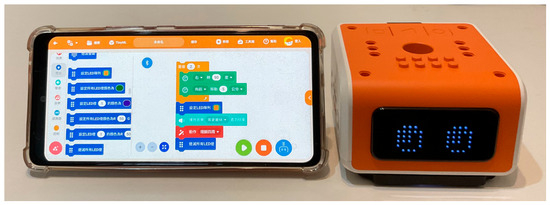
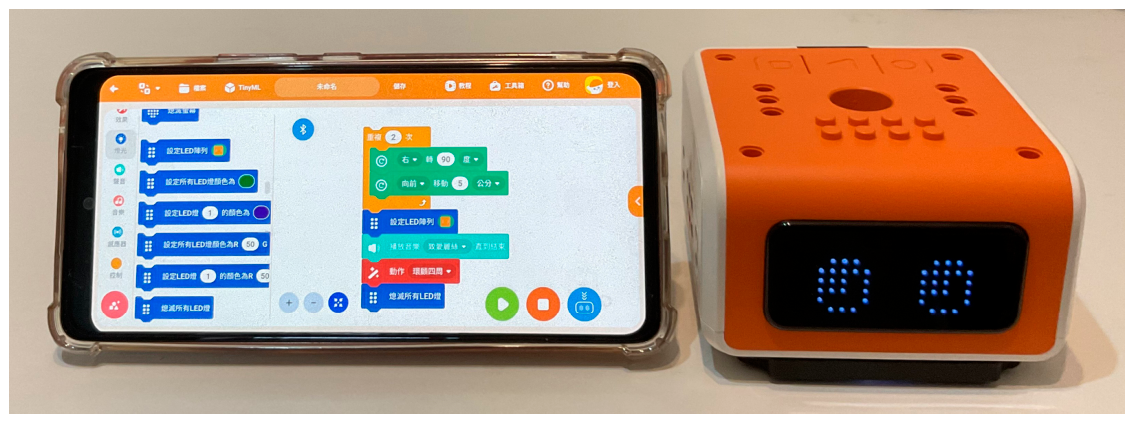
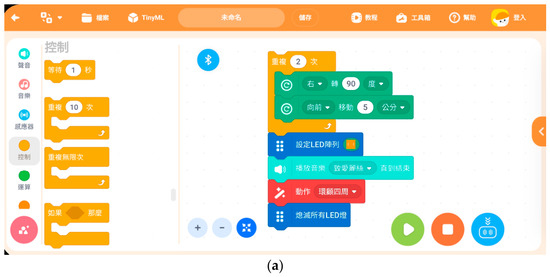
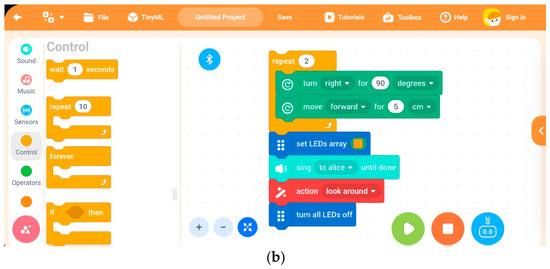
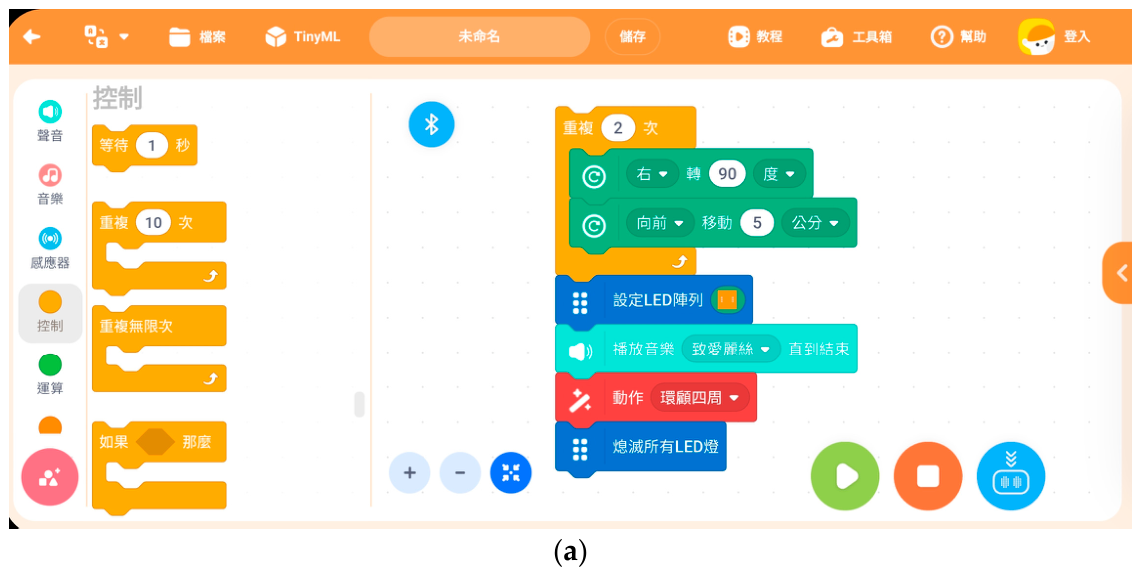
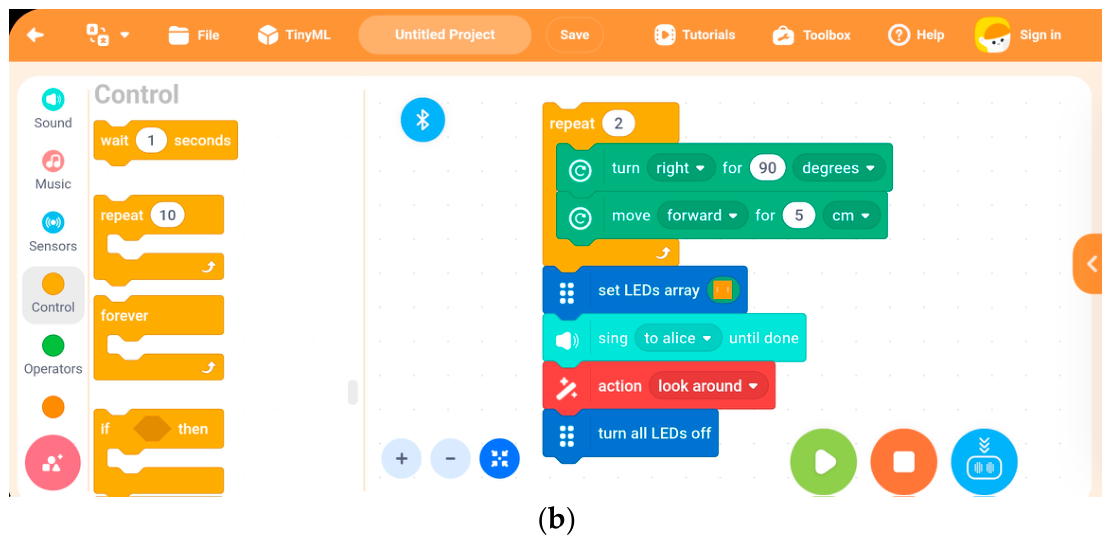
Intervention group. The participants in this group participated in a robotics activity using VinciBot and a smartphone (Figure 1). VinciBot (MatataStudio, version V3.0.0.) is a multifunctional educational robot designed for STEAM education, featuring a programmable LED matrix, various sensors, and support for block-based graphical programming using the MatataCode (VinciBot) app (latest version available at the time of data collection) (MatataStudio, n.d.). The participants learned how to use a smartphone to program a robot. Our experimenter first demonstrated how to use the drag-and-drop visual programming interface to program the robot according to several instructions, including movements (left, right, forward, backward), lighting, dancing, music, and creating loops to repeat instructions. Then, the participants programmed the robot to complete these instructions. As the participants were Hong Kong students, the interface was presented in Chinese to ensure familiarity and ease of use. For reference, both Chinese and English versions of the interface are provided in Figure 2a (Chinese) and Figure 2b (English).
Figure 1.
VinciBot and smartphone used in the robotics programming activity (intervention group).
Figure 2.
Example VinciBot programming interface. (a) Chinese version (used in the experiment). (b) English version for reference.
Control group. The participants in this group participated in a storytelling activity, learning how to use pictures to tell a story. Our experimenter first taught them about story structure and demonstrated how to use several pictures to tell a story. Then, the participants used pictures to tell stories by themselves.
After either the intervention or control group activities, the participants were asked to complete a questionnaire assessing STEM interest, self-efficacy, and expectations of using STEM. The questionnaires were adapted from previous studies, which were originally in English (Conlon et al., 2023; Master et al., 2017). To prepare a Chinese version, the author and an assistant translated the materials from English to Chinese. Both translators are from Hong Kong, proficient in both Chinese and English, and familiar with Hong Kong culture. The translated items were reviewed and discussed to ensure clarity and appropriateness for the target population. Upon completion of the study, the participants received a certificate.
Interest. Interest in robotics and programming was assessed using two items adapted from previous research (Master et al., 2017). The items were “How enjoyable is programming?” and “How enjoyable are robots?” Responses were provided on a 6-point scale ranging from “not at all” to “very much.” The scale demonstrated good internal consistency (α = 0.83).
Self-efficacy. Self-efficacy in robotics and programming was assessed using two items adapted from previous research (Master et al., 2017). The items were “How proficient are you with programming?” and “How proficient are you with robots?” Responses were provided on a 6-point scale ranging from “not at all” to “very much.” The scale showed good internal consistency (α = 0.79).
Future Expectations. Expectations of mathematics and science use were assessed using two items adapted from previous research (Conlon et al., 2023). The items were “How often do you think you will use science in your job?” and “How often do you think you will use mathematics in your job?” Responses were provided on a 4-point scale ranging from “never” to “always.” The scale demonstrated acceptable internal consistency (α = 0.76).
3. Results
Preliminary analyses using an independent-samples t-test for age and chi-square tests for gender, prior robotics experience, and prior programming experience indicated no significant differences between the intervention and control groups. The items within each construct were analyzed separately, and three models (interest, self-efficacy, and expectations) were specified to preserve item-level distinctions and maintain the conceptual separation of constructs. A series of 2 (condition: intervention vs. control) × 2 (participant gender: male vs. female) × 2 (experimenter gender: same vs. different) multivariate analyses of covariance (MANCOVAs) were conducted, with age included as a covariate. Experimenter gender was included to control for potential experimenter effects. Table 2 presents the MANCOVA results for interest, self-efficacy, and expectations.
Table 2.
Results of MANCOVA models for interest, self-efficacy, and expectations.
Key Results
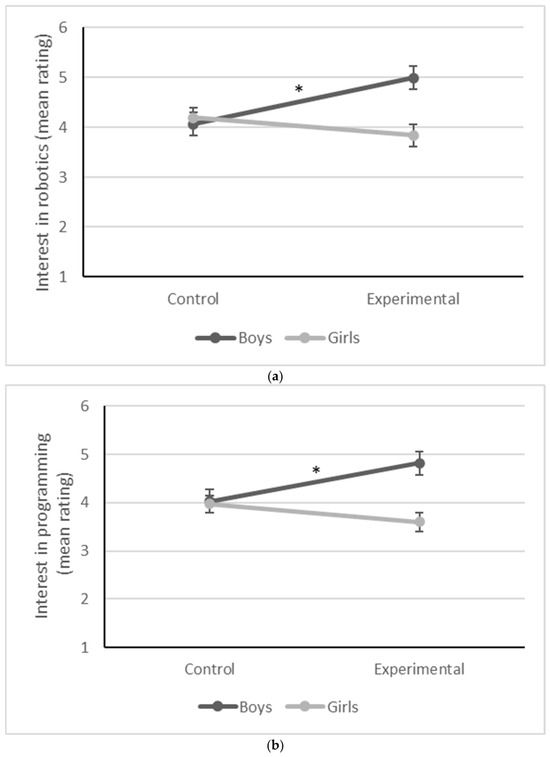
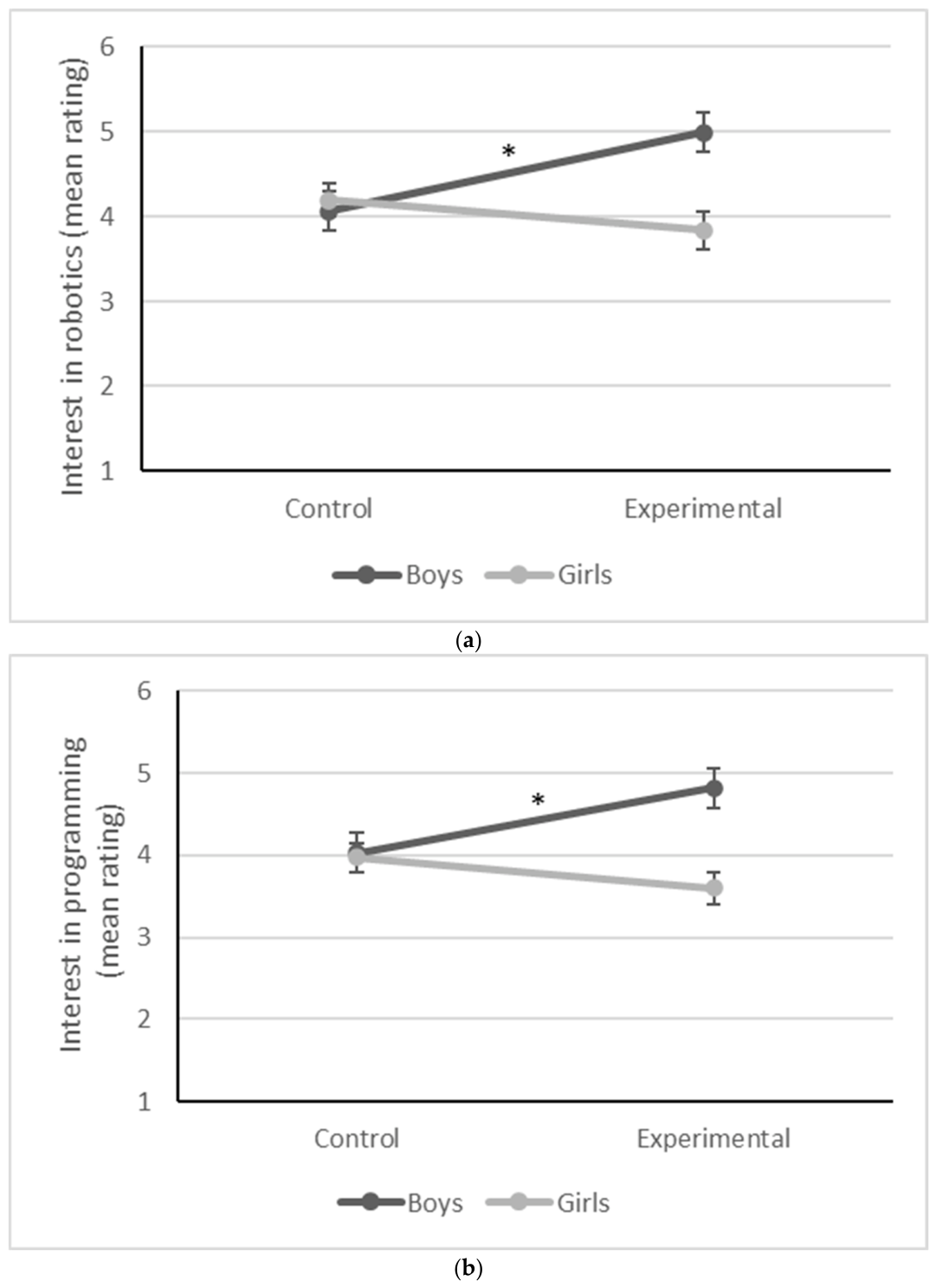
Interest. There was a main effect of participant gender, F(2, 102) = 6.17, p = 0.003, η2p = 0.108, and age, F(2, 102) = 3.25, p = 0.043, η2p = 0.060. There was a condition × participant gender interaction, F(2, 102) = 4.83, p = 0.010, η2p = 0.087. Post hoc analyses were conducted by splitting the sample by gender. For boys, there was a main effect of condition, F(2, 35) = 4.07, p = 0.026, with boys in the intervention group having higher interest in both robotics, F(1, 36) = 8.05, p = 0.007, Mexp = 4.99 (95% CI [4.52, 5.45]), Mcontrol = 4.06 (95% CI [3.60, 4.53]), d = 0.90, and programming, F(1, 36) = 5.20, p = 0.029, Mexp = 4.82 (95% CI [4.33, 5.31]), Mcontrol = 4.03 (95% CI [3.55, 4.52]), d = 0.73, than boys in the control group. For girls, there was no main effect of condition, F(2, 64) = 1.13, p = 0.331 in either robotics, F(1, 65) = 1.51, p = 0.223, or programming, F(1, 65) = 2.19, p = 0.143 (see Figure 3a for robotics and Figure 3b for programming). Thus, H1 is partially supported (group differences primarily observed among boys), but H2 is not supported.
Figure 3.
(a) Interest in robotics by condition and participant gender. Note. * p = 0.007 (Boys); p = 0.223 (Girls). (b) Interest in programming by condition and participant gender. Note. * p = 0.029 (Boys); p = 0.143 (Girls).
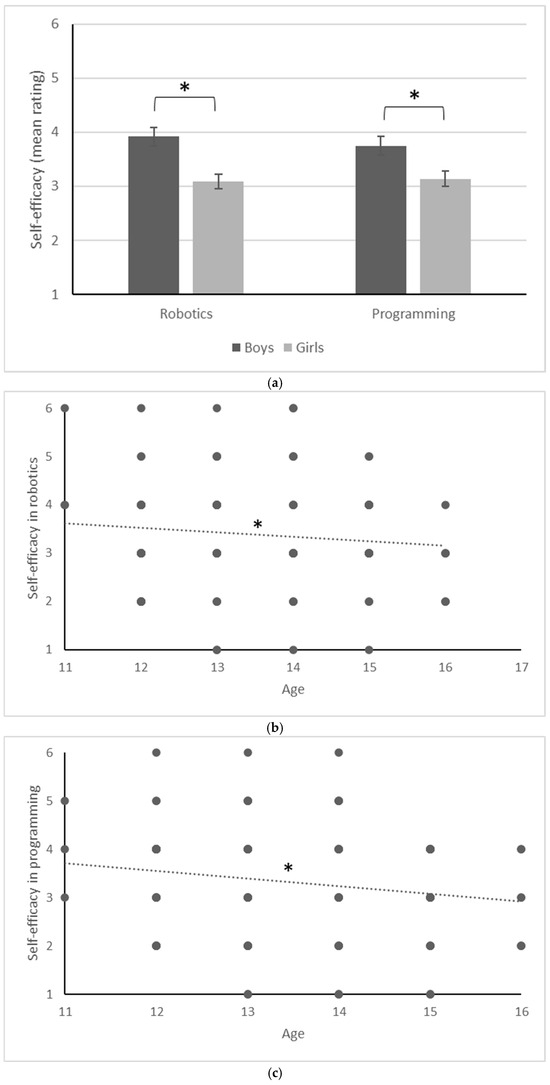
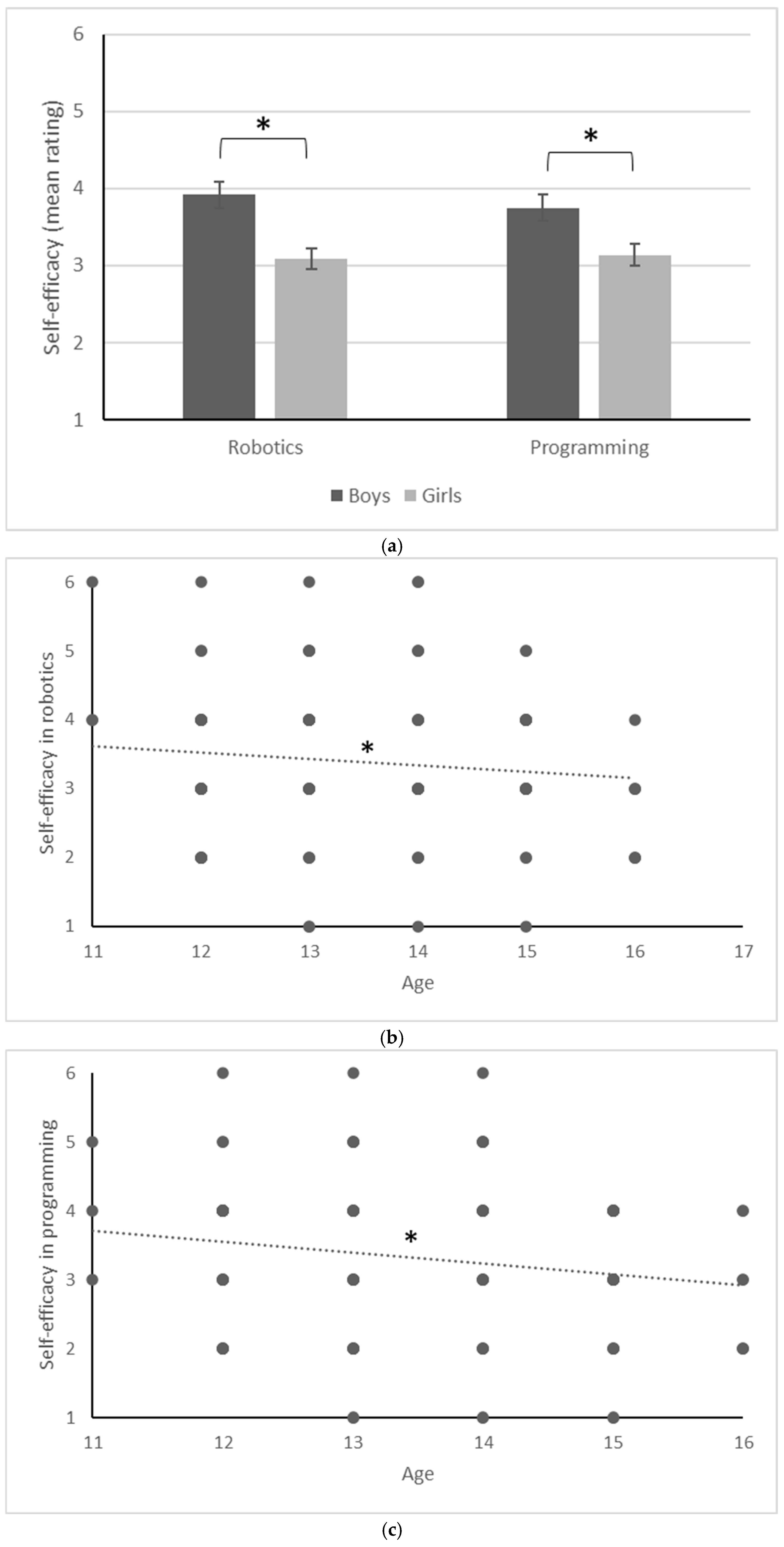
Self-efficacy. There was a main effect of participant gender, F(2, 102) = 6.99, p = 0.001, η2p = 0.120. Boys had higher self-efficacy in both robotics, F(1, 103) = 13.88, p < 0.001, Mboys = 3.92 (95% CI [3.58, 4.27]), Mgirls = 3.09 (95% CI [2.82, 3.36]), d = 0.78, and programming, F(1, 103) = 7.25, p = 0.008, Mboys = 3.75 (95% CI [3.40, 4.09]), Mgirls = 3.14 (95% CI [2.86, 3.41]), d = 0.56, than girls (Figure 4a). There was also a significant effect of age, F(2, 102) = 4.05, p = 0.020, η2p = 0.074, with younger participants showing higher self-efficacy in robotics, F(1, 103) = 4.65, p = 0.033, B = −0.175 (Figure 4b), and programming, F(1, 103) = 7.92, p = 0.006, B = −0.231 (Figure 4c). Thus, H3 is supported.
Figure 4.
(a) Self-efficacy in robotics and programming by participant gender. Note. * p < 0.001 (Robotics) and * p = 0.008 (Programming). (b) Scatterplot showing the relationship between age and self-efficacy in robotics. Note. Each dot represents an individual participant. The regression line indicates a significant negative association (B = −0.175, p = 0.033). (c) Scatterplot showing the relationship between age and self-efficacy in programming. Note. Each dot represents an individual participant. The regression line indicates a significant negative association (B = −0.231, p = 0.006).
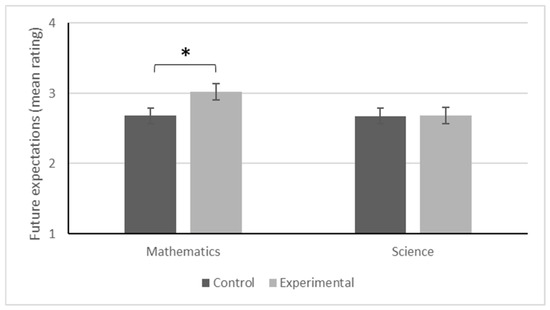
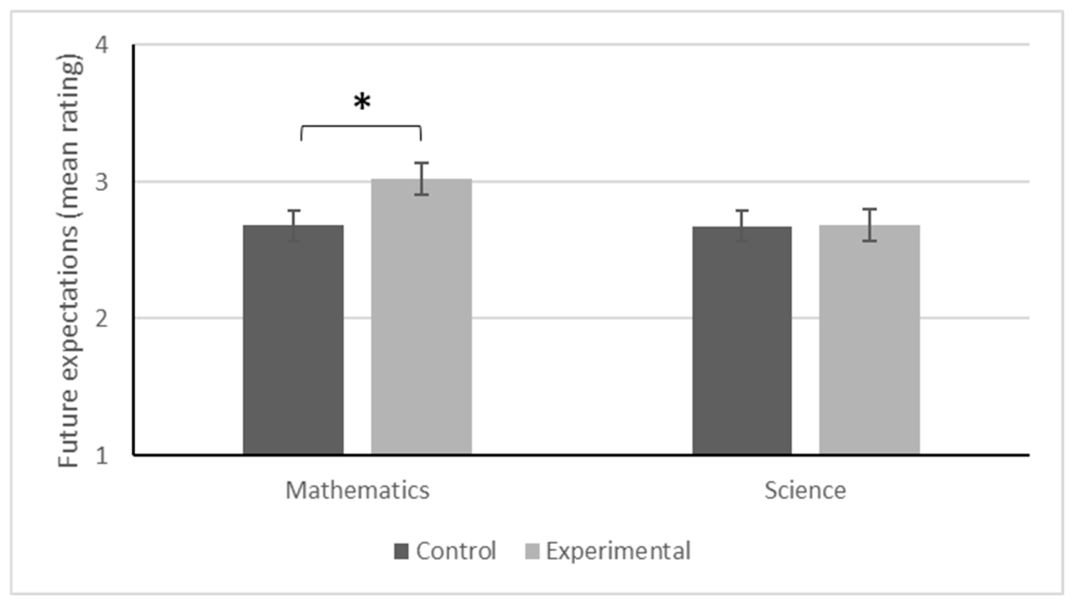
Future expectations. There was a main effect of condition, F(2, 102) = 3.59, p = 0.031, η2p = 0.066. The intervention group showed higher future expectations of mathematics use, F(1, 103) = 4.52, p = 0.036, Mexp = 3.03 (95% CI [2.80, 3.26]), Mcontrol = 2.69 (95% CI [2.46, 2.91]), d = 0.43, than the control group, but there was no significant difference between the intervention and control groups with regard to using science, F(1, 103) < 0.001, p = 0.994 (Figure 5). Thus, H1 is supported for mathematics but not for science, while H2 is not supported.
Figure 5.
Future expectations of mathematics and science use by condition. Note. * p = 0.036 (Mathematics); p = 0.994 (Science).
4. Discussion
This study examined the effects of a robotics intervention on adolescents’ interest and self-efficacy in robotics and programming, and expectations of mathematics and science use, with attention given to gender differences. The results showed that the boys in the intervention group reported higher interest in robotics and programming than the boys in the control group, whereas the girls did not show significant differences between conditions. The participants showed gender differences in self-efficacy, with boys demonstrating higher self-efficacy than girls. The intervention was associated with higher expectations of mathematics use across both male and female participants. Self-efficacy was also negatively associated with age, with younger participants showing higher confidence in robotics and programming.
4.1. Robotics Intervention and Gender Differences
Our findings extend prior work with younger children, showing that brief programming experiences can increase girls’ motivation in technology domains (Master et al., 2017). However, whereas Master et al. (2017) found that a brief intervention successfully increased interest in programming and robotics for 6-year-old girls, our findings revealed that a brief robotics intervention at the adolescent level was associated with higher interest for boys relative to the control group, but not for girls (H1 is partially supported for interest; H2 is not supported for interest). This discrepancy suggests that the impact of brief interventions may vary across developmental stages. By early adolescence, boys usually have greater prior exposure to technological activities and tools (Cherney & London, 2006), with the gender gap in extracurricular science experiences widening significantly between ages 10 and 14 (Jones et al., 2000). This accumulated experience may contribute to greater responsiveness to a brief robotics session in adolescent boys. Girls at this later developmental stage, in contrast, may require longer or repeated interventions to address potentially more established stereotypes and differences in prior experience (Cheryan et al., 2017), although these mechanisms were not directly measured in the present study.
4.2. Self-Efficacy and Stereotype Threat
The participants showed gender differences in self-efficacy in robotics and programming, with boys scoring higher than girls (H3 is supported). This result is consistent with recent research in the Chinese context showing that secondary school girls report significantly lower STEM self-efficacy than boys (R. C. H. Chan, 2022). This pattern aligns with research on stereotype threat (Schmader et al., 2008; Spencer et al., 1999), which shows that awareness of negative stereotypes can be associated with lower confidence and performance. Although our study did not explicitly induce stereotype threat, girls’ lower self-efficacy may be related to the broader cultural messages that science and engineering are male-dominated fields (Master & Meltzoff, 2020), a pattern observed even among children as young as 6 (Master et al., 2017). These findings highlight the importance of designing interventions that may help to counteract stereotypes and provide supportive contexts specifically for girls. Our results also showed that self-efficacy was negatively associated with age, with older adolescents reporting lower confidence in robotics and programming than younger peers. This developmental pattern is consistent with prior research showing that competence beliefs and motivation in academic domains tend to weaken across the school years (Fredricks & Eccles, 2002; Wigfield & Eccles, 2000).
4.3. Future Expectations
The finding that the robotics intervention was associated with higher future expectations of using mathematics but not science is noteworthy (H1 is supported for mathematics but not for science). This effect was observed across both boys and girls (indicating that no gender differences were found, and thus H2 was not supported). Robotics activities may emphasize computational thinking skills (e.g., sequencing, logic, loops), which are more closely related to mathematical reasoning than to scientific inquiry, which may explain the difference between the effects on mathematics and science expectations. This interpretation aligns with reviews showing that robotics interventions often strengthen computational thinking (Zhang et al., 2021), while their impact on students’ science attitudes and broader motivational outcomes is mixed and less consistent (Sapounidis et al., 2022).
4.4. Implications
Adolescence is a critical period during which career interests begin to emerge (Hirschi, 2010). Interventions that foster STEM motivation during this stage may contribute to the development of educational and career pathways. Robotics activities offer a promising avenue for engaging students, but the gender-specific effects observed here highlight the need for tailored approaches. Prior studies suggest that activities emphasizing human-centered robotics and collaborative learning can elicit girls’ interest, which may be leveraged to inform the design of more effective interventions (Murphy et al., 2007; Pedersen et al., 2021). For example, educators could incorporate collaborative problem-solving tasks and human-centered design elements into robotics activities, which may be more appealing to girls. Additionally, providing structured guidance and supportive feedback may help to foster confidence and engagement among students with less prior experience in programming.
4.5. Limitations and Future Directions
This study has several limitations that should be acknowledged. The intervention was conducted within a single session, which may not have been sufficient to capture longer-term changes in interest or self-efficacy. Future research could examine extended or repeated programs to assess sustained effects. Outcomes were measured through immediate self-reports; subsequent studies may incorporate longitudinal designs to provide insight into the lasting impact. The sample reflected a specific age range (11–16) and cultural context (Hong Kong), which may limit generalizability, so future studies should examine more diverse populations. This study also focused on a single type of robotics activity; future work could investigate how different formats, such as human-centered or collaborative designs, might be leveraged to broaden participation and promote equity in STEM pathways. In addition, psychological processes such as stereotype threat were not directly measured and should be examined in future research to better understand the mechanisms underlying the observed patterns.
5. Conclusions
This study, employing a randomized controlled design, suggests the potential of robotics interventions to support adolescents’ interest, self-efficacy, and expectations of mathematics and science use, particularly with higher expectations of mathematics use observed across genders. The findings also revealed that boys reported higher interest and self-efficacy in robotics and programming than girls, underscoring the importance of designing gender-inclusive approaches. By contributing new evidence on how robotics activities may shape adolescents’ engagement with robotics, programming, and related domains, this work offers valuable guidance for educators and researchers seeking to promote equity and broaden participation in STEM education. Future efforts should focus on designing inclusive and sustained robotics programs that actively address gender disparities and support engagement among underrepresented groups.
Funding
This research was funded by a Departmental General Research Fund and a Start-up Fund for Research Assistant Professors under the Strategic Hiring Scheme at the Hong Kong Polytechnic University.
Institutional Review Board Statement
The study was approved by the Human Research Ethics Committee of The Hong Kong Polytechnic University (Reference No. HSEARS20250228003 and date of approval: 7 March 2025).
Informed Consent Statement
Written informed consent was obtained from all participants and from their parents or guardians.
Data Availability Statement
The data presented in this study are openly available in the PolyU Research Data Repository (PRDR) at https://doi.org/10.60933/PRDR/GSNRFS (accessed on 27 May 2026).
Conflicts of Interest
The author declares no conflicts of interest.
References
- Anwar, S., Bascou, N. A., Menekse, M., & Kardgar, A. (2019). A systematic review of studies on educational robotics. Journal of Pre-College Engineering Education Research (J-PEER), 9(2), 19–42. [Google Scholar] [CrossRef] [Scilit]
- Barron, B. (2004). Learning ecologies for technological fluency: Gender and experience differences. Journal of Educational Computing Research, 31(1), 1–36. [Google Scholar] [CrossRef] [Scilit]
- Census and Statistics Department. (2022). Women and men in Hong Kong: Key statistics. Available online: https://www.censtatd.gov.hk/en/data/stat_report/product/B1130303/att/B11303032022AN22B0100.pdf (accessed on 22 May 2026).
- Chan, K. W. A., & Cheung, K. L. A. (2018). Gender differences in choosing STEM subjects at secondary school and university in Hong Kong. The Women’s Foundation. Available online: https://repository.eduhk.hk/en/publications/gender-differences-in-choosing-stem-subjects-at-secondary-school-/ (accessed on 22 May 2026).
- Chan, R. C. H. (2022). A social cognitive perspective on gender disparities in self-efficacy, interest, and aspirations in science, technology, engineering, and mathematics (STEM): The influence of cultural and gender norms. International Journal of STEM Education, 9(1), 37. [Google Scholar] [CrossRef] [Scilit]
- Cherney, I. D., & London, K. (2006). Gender-linked differences in the toys, television shows, computer games, and outdoor activities of 5-to 13-year-old children. Sex Roles, 54, 717–726. [Google Scholar] [CrossRef] [Scilit]
- Cheryan, S., Master, A., & Meltzoff, A. N. (2015). Cultural stereotypes as gatekeepers: Increasing girls’ interest in computer science and engineering by diversifying stereotypes. Frontiers in Psychology, 6, 49. [Google Scholar] [CrossRef] [Scilit] [PubMed]
- Cheryan, S., Ziegler, S. A., Montoya, A. K., & Jiang, L. (2017). Why are some STEM fields more gender balanced than others? Psychological Bulletin, 143(1), 1–35. [Google Scholar] [CrossRef] [Scilit] [PubMed]
- Conlon, R. A., Barroso, C., & Ganley, C. M. (2023). Young children’s career aspirations: Gender differences, STEM ambitions, and expected skill use. The Career Development Quarterly, 71(1), 15–29. [Google Scholar] [CrossRef] [Scilit]
- Diekman, A. B., Steinberg, M., Brown, E. R., Belanger, A. L., & Clark, E. K. (2017). A goal congruity model of role entry, engagement, and exit: Understanding communal goal processes in STEM gender gaps. Personality and Social Psychology Review, 21(2), 142–175. [Google Scholar] [CrossRef] [Scilit] [PubMed]
- Fredricks, J. A., & Eccles, J. S. (2002). Children’s competence and value beliefs from childhood through adolescence: Growth trajectories in two male-sex-typed domains. Developmental Psychology, 38(4), 519–533. [Google Scholar] [CrossRef]
- Hirschi, A. (2010). Vocational interests and career goals: Development and relations to personality in middle adolescence. Journal of Career Assessment, 18(3), 223–238. [Google Scholar] [CrossRef] [Scilit]
- Hong Kong Examinations and Assessment Authority. (2024). 2024 HKDSE entry statistics. Available online: https://www.hkeaa.edu.hk/DocLibrary/HKDSE/Exam_Report/Examination_Statistics/dseexamstat24_2.pdf (accessed on 7 February 2026).
- Jirout, J. J., & Newcombe, N. S. (2015). Building blocks for developing spatial skills: Evidence from a large, representative US sample. Psychological Science, 26(3), 302–310. [Google Scholar] [CrossRef] [Scilit] [PubMed]
- Jones, M. G., Howe, A., & Rua, M. J. (2000). Gender differences in students’ experiences, interests, and attitudes toward science and scientists. Science Education, 84(2), 180–192. [Google Scholar] [CrossRef]
- Magnenat, S., Riedo, F., Bonani, M., & Mondada, F. (2012). A programming workshop using the robot “Thymio II”: The effect on the understanding by children. In 2012 IEEE workshop on advanced robotics and its social impacts (ARSO) (pp. 24–29). IEEE. [Google Scholar] [CrossRef] [Scilit]
- Martin, C. L., & Ruble, D. N. (2010). Patterns of gender development. Annual Review of Psychology, 61, 353–381. [Google Scholar] [CrossRef] [Scilit] [PubMed]
- Master, A., Cheryan, S., Moscatelli, A., & Meltzoff, A. N. (2017). Programming experience promotes higher STEM motivation among first-grade girls. Journal of Experimental Child Psychology, 160, 92–106. [Google Scholar] [CrossRef] [Scilit] [PubMed]
- Master, A., & Meltzoff, A. N. (2020). Cultural stereotypes and sense of belonging contribute to gender gaps in STEM. Available online: https://eric.ed.gov/?id=ED605235 (accessed on 22 May 2026).
- Master, A., Meltzoff, A. N., & Cheryan, S. (2021). Gender stereotypes about interests start early and cause gender disparities in computer science and engineering. Proceedings of the National Academy of Sciences of the United States of America, 118(48), e2100030118. [Google Scholar] [CrossRef] [Scilit] [PubMed]
- MatataStudio. (n.d.). VinciBot. Available online: https://www.matatastudio.com/vincibot.html (accessed on 22 May 2026).
- McKown, C., & Weinstein, R. S. (2003). The development and consequences of stereotype consciousness in middle childhood. Child Development, 74(2), 498–515. [Google Scholar] [CrossRef] [Scilit] [PubMed]
- Murphy, M. C., Steele, C. M., & Gross, J. J. (2007). Signaling threat: How situational cues affect women in math, science, and engineering settings. Psychological Science, 18(10), 879–885. [Google Scholar] [CrossRef] [Scilit] [PubMed]
- Pedersen, B. K. M. K., Weigelin, B. C., Larsen, J. C., & Nielsen, J. (2021). Using educational robotics to foster girls’ interest in STEM: A systematic review. In 2021 30th IEEE international conference on robot & human interactive communication (RO-MAN) (pp. 865–872). IEEE. [Google Scholar] [CrossRef] [Scilit]
- Sapounidis, T., Tselegkaridis, S., & Stamovlasis, D. (2022). Educational robotics and STEM in primary education: A review and a meta-analysis. Journal of Research on Technology in Education, 56(4), 462–476. [Google Scholar] [CrossRef] [Scilit]
- Saw, G., Chang, C.-N., & Chan, H.-Y. (2018). Cross-sectional and longitudinal disparities in STEM career aspirations at the intersection of gender, race/ethnicity, and socioeconomic status. Educational Researcher, 47(8), 525–531. [Google Scholar] [CrossRef] [Scilit]
- Schmader, T. (2023). Gender inclusion and fit in STEM. Annual Review of Psychology, 74, 219–243. [Google Scholar] [CrossRef] [Scilit] [PubMed]
- Schmader, T., Johns, M., & Forbes, C. (2008). An integrated process model of stereotype threat effects on performance. Psychological Review, 115(2), 336–356. [Google Scholar] [CrossRef] [Scilit] [PubMed]
- Spencer, S. J., Steele, C. M., & Quinn, D. M. (1999). Stereotype threat and women’s math performance. Journal of Experimental Social Psychology, 35(1), 4–28. [Google Scholar] [CrossRef] [Scilit]
- Sullivan, A., & Bers, M. U. (2016). Girls, boys, and bots: Gender differences in young children’s performance on robotics and programming tasks. Journal of Information Technology Education. Innovations in Practice, 15, 145–165. [Google Scholar] [CrossRef] [Scilit] [PubMed]
- Tobar, L. M., & Nohemi, B. (2020). The gender gap broad the path for women in STEM. In Eighth international conference on technological ecosystems for enhancing multiculturality (pp. 187–192). Association for Computing Machinery. [Google Scholar] [CrossRef] [Scilit]
- Verdugo-Castro, S., García-Holgado, A., & Sánchez-Gómez, M. C. (2022). The gender gap in higher STEM studies: A systematic literature review. Heliyon, 8(8), e10300. [Google Scholar] [CrossRef] [Scilit] [PubMed]
- Wigfield, A., & Eccles, J. S. (2000). Expectancy–value theory of achievement motivation. Contemporary Educational Psychology, 25(1), 68–81. [Google Scholar] [CrossRef] [Scilit] [PubMed]
- Witherspoon, E. B., Schunn, C. D., Higashi, R. M., & Baehr, E. C. (2016). Gender, interest, and prior experience shape opportunities to learn programming in robotics competitions. International Journal of STEM Education, 3(1), 18. [Google Scholar] [CrossRef] [Scilit]
- Zhang, Y., Luo, R., Zhu, Y., & Yin, Y. (2021). Educational robots improve K-12 students’ computational thinking and STEM attitudes: Systematic review. Journal of Educational Computing Research, 59(7), 1450–1481. [Google Scholar] [CrossRef] [Scilit]

Disclaimer/Publisher’s Note: The statements, opinions and data contained in all publications are solely those of the individual author(s) and contributor(s) and not of MDPI and/or the editor(s). MDPI and/or the editor(s) disclaim responsibility for any injury to people or property resulting from any ideas, methods, instructions or products referred to in the content. |
© 2026 by the author. Licensee MDPI, Basel, Switzerland. This article is an open access article distributed under the terms and conditions of the Creative Commons Attribution (CC BY) license.