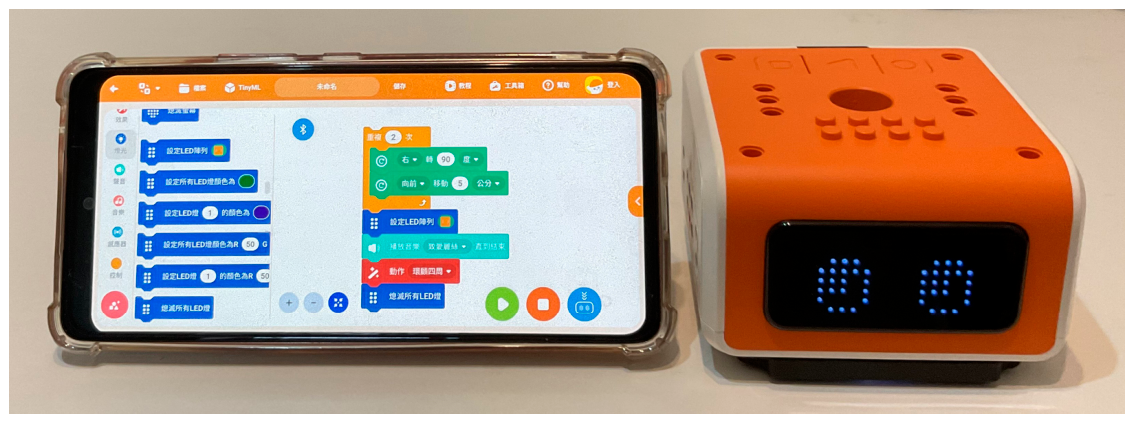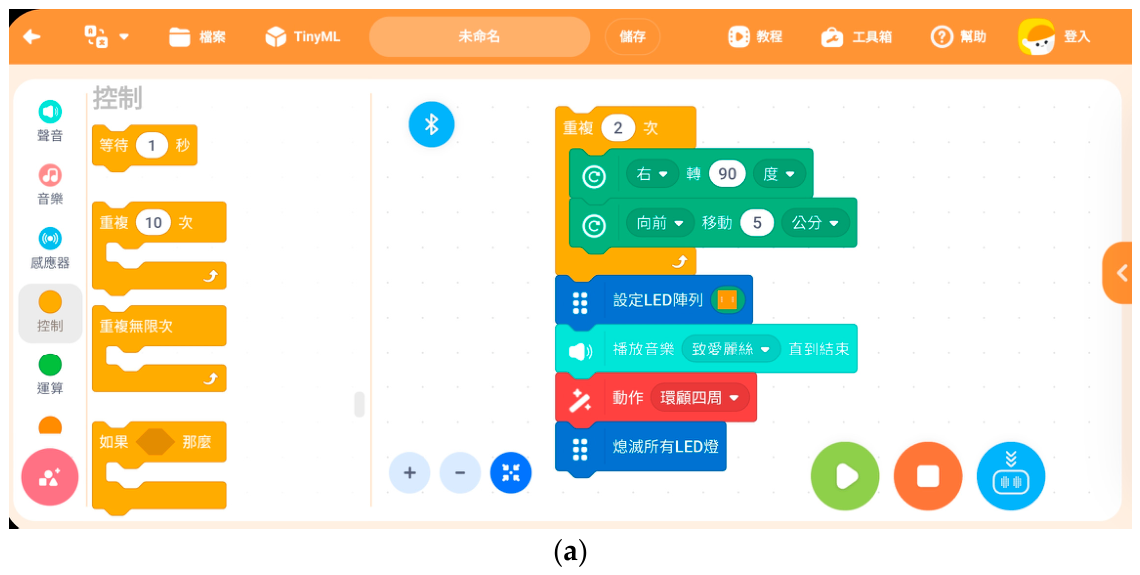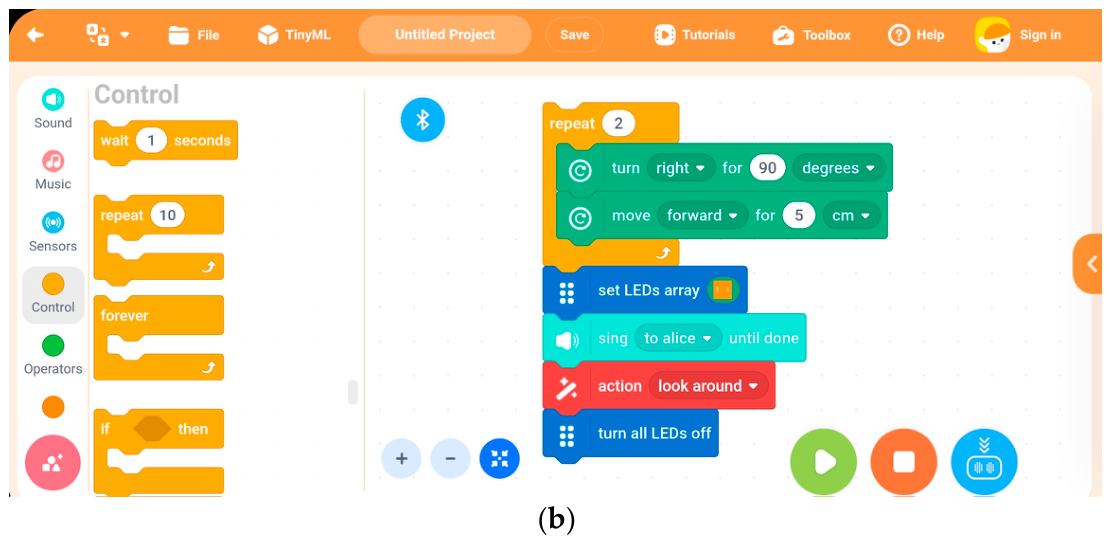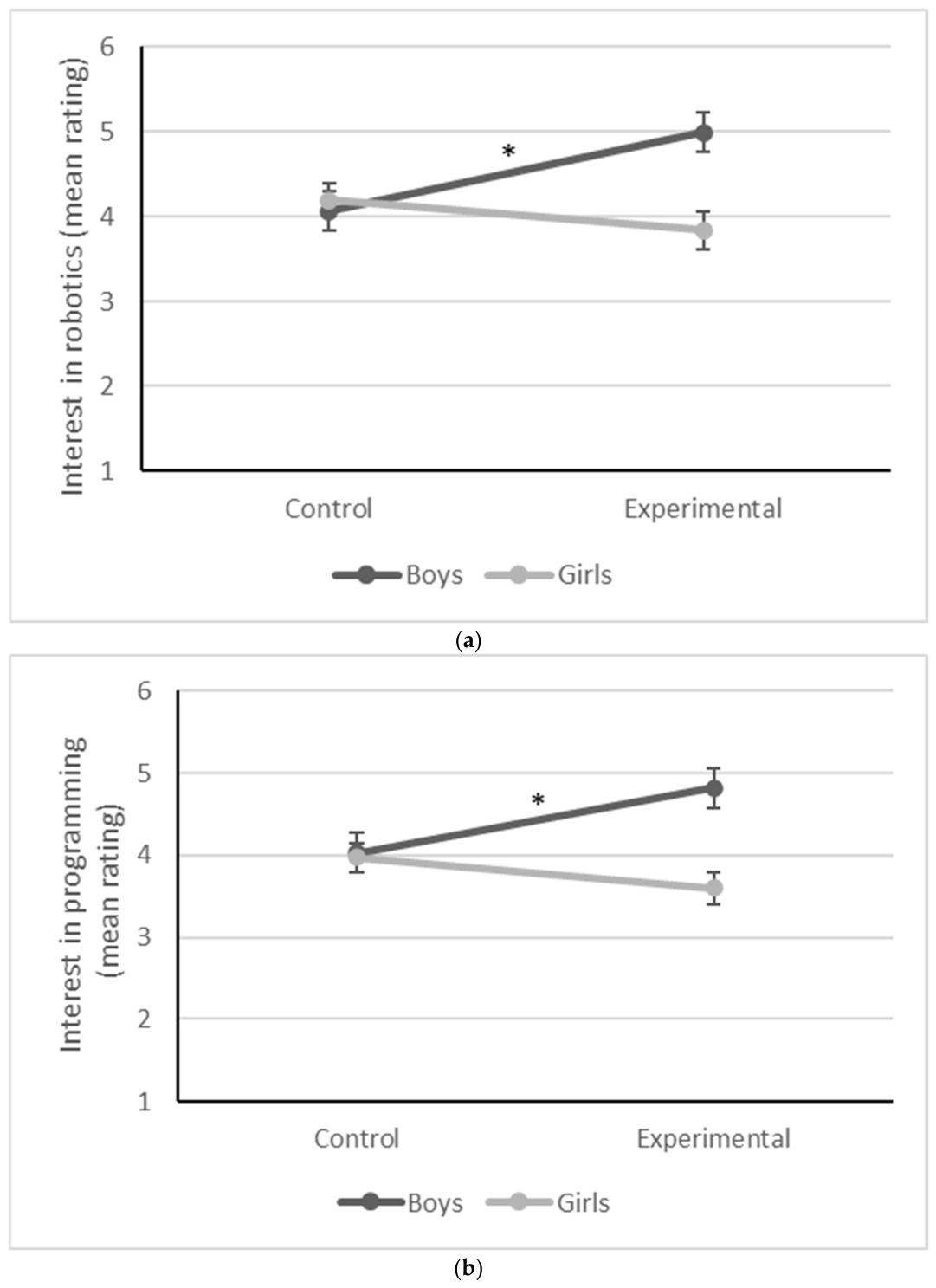

Robotics as a Tool to Support Adolescents’ Interest, Self-Efficacy, and Expectations in STEM: Gender Differences


Abstract
1. Introduction
1.1. Gender Gap in STEM
1.2. Gender Stereotypes in STEM
1.3. Girls’ Lack of Experience in STEM
1.4. Robotics Interventions in Children
1.5. Research Gap
1.6. The Present Study
- Does participation in the robotics intervention affect interest and self-efficacy in robotics and programming, as well as expectations of mathematics and science use, compared with a control condition?
- Are there any gender differences in the effects of the intervention?
2. Materials and Methods
2.1. Participants
2.2. Procedure
3. Results
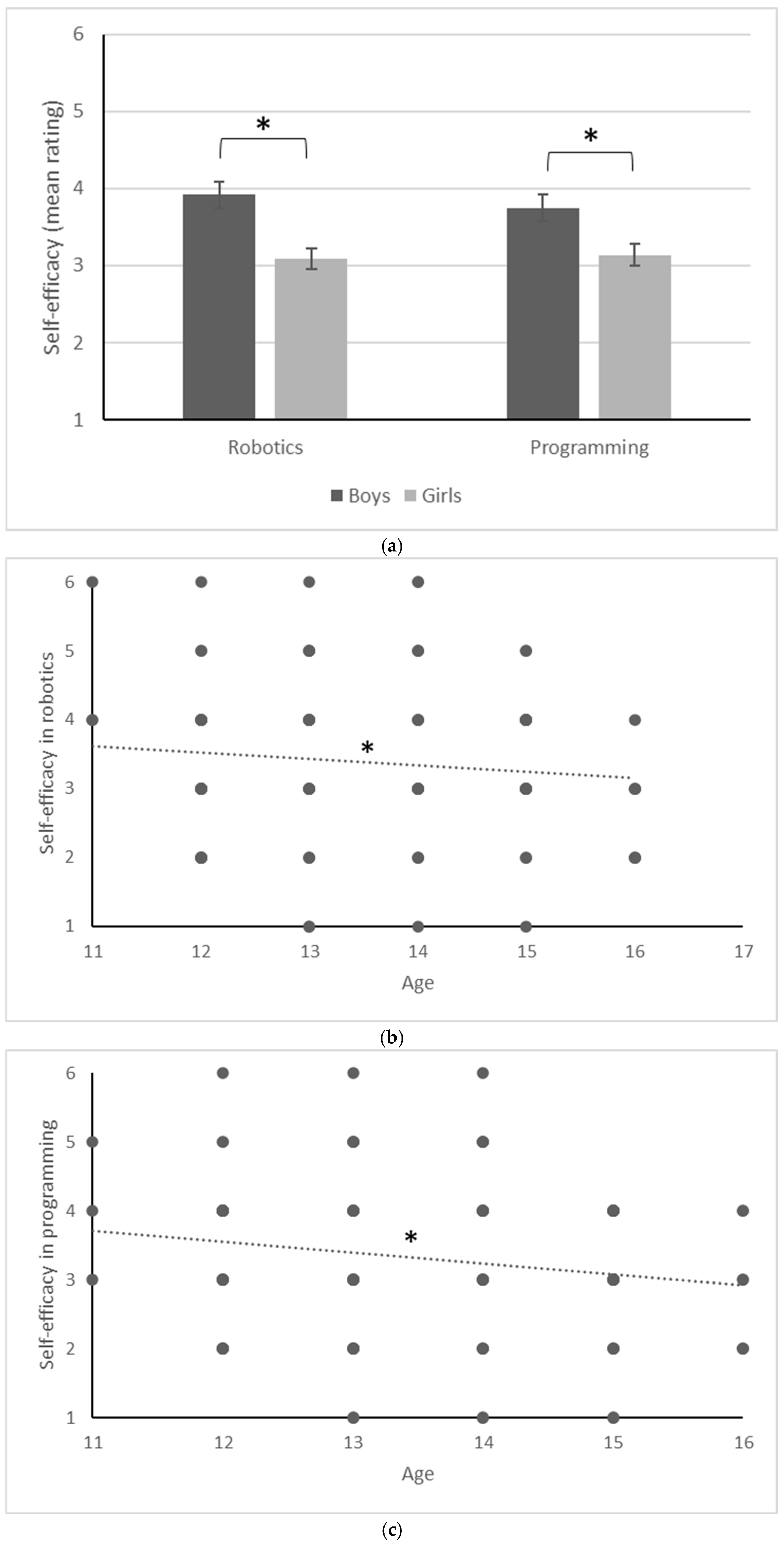
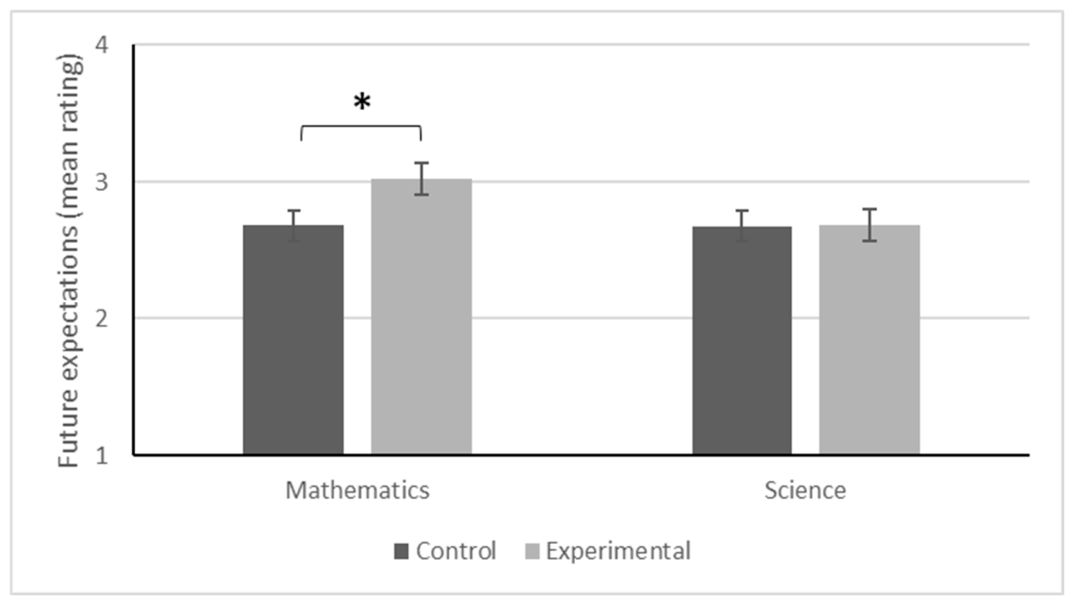
Key Results
4. Discussion
4.1. Robotics Intervention and Gender Differences
4.2. Self-Efficacy and Stereotype Threat
4.3. Future Expectations
4.4. Implications
4.5. Limitations and Future Directions
5. Conclusions
Funding
Institutional Review Board Statement
Informed Consent Statement
Data Availability Statement
Conflicts of Interest
References
- Anwar, S., Bascou, N. A., Menekse, M., & Kardgar, A. (2019). A systematic review of studies on educational robotics. Journal of Pre-College Engineering Education Research (J-PEER), 9(2), 19–42. [Google Scholar] [CrossRef] [Scilit]
- Barron, B. (2004). Learning ecologies for technological fluency: Gender and experience differences. Journal of Educational Computing Research, 31(1), 1–36. [Google Scholar] [CrossRef] [Scilit]
- Census and Statistics Department. (2022). Women and men in Hong Kong: Key statistics. Available online: https://www.censtatd.gov.hk/en/data/stat_report/product/B1130303/att/B11303032022AN22B0100.pdf (accessed on 22 May 2026).
- Chan, K. W. A., & Cheung, K. L. A. (2018). Gender differences in choosing STEM subjects at secondary school and university in Hong Kong. The Women’s Foundation. Available online: https://repository.eduhk.hk/en/publications/gender-differences-in-choosing-stem-subjects-at-secondary-school-/ (accessed on 22 May 2026).
- Chan, R. C. H. (2022). A social cognitive perspective on gender disparities in self-efficacy, interest, and aspirations in science, technology, engineering, and mathematics (STEM): The influence of cultural and gender norms. International Journal of STEM Education, 9(1), 37. [Google Scholar] [CrossRef] [Scilit]
- Cherney, I. D., & London, K. (2006). Gender-linked differences in the toys, television shows, computer games, and outdoor activities of 5-to 13-year-old children. Sex Roles, 54, 717–726. [Google Scholar] [CrossRef] [Scilit]
- Cheryan, S., Master, A., & Meltzoff, A. N. (2015). Cultural stereotypes as gatekeepers: Increasing girls’ interest in computer science and engineering by diversifying stereotypes. Frontiers in Psychology, 6, 49. [Google Scholar] [CrossRef] [Scilit] [PubMed]
- Cheryan, S., Ziegler, S. A., Montoya, A. K., & Jiang, L. (2017). Why are some STEM fields more gender balanced than others? Psychological Bulletin, 143(1), 1–35. [Google Scholar] [CrossRef] [Scilit] [PubMed]
- Conlon, R. A., Barroso, C., & Ganley, C. M. (2023). Young children’s career aspirations: Gender differences, STEM ambitions, and expected skill use. The Career Development Quarterly, 71(1), 15–29. [Google Scholar] [CrossRef] [Scilit]
- Diekman, A. B., Steinberg, M., Brown, E. R., Belanger, A. L., & Clark, E. K. (2017). A goal congruity model of role entry, engagement, and exit: Understanding communal goal processes in STEM gender gaps. Personality and Social Psychology Review, 21(2), 142–175. [Google Scholar] [CrossRef] [Scilit] [PubMed]
- Fredricks, J. A., & Eccles, J. S. (2002). Children’s competence and value beliefs from childhood through adolescence: Growth trajectories in two male-sex-typed domains. Developmental Psychology, 38(4), 519–533. [Google Scholar] [CrossRef]
- Hirschi, A. (2010). Vocational interests and career goals: Development and relations to personality in middle adolescence. Journal of Career Assessment, 18(3), 223–238. [Google Scholar] [CrossRef] [Scilit]
- Hong Kong Examinations and Assessment Authority. (2024). 2024 HKDSE entry statistics. Available online: https://www.hkeaa.edu.hk/DocLibrary/HKDSE/Exam_Report/Examination_Statistics/dseexamstat24_2.pdf (accessed on 7 February 2026).
- Jirout, J. J., & Newcombe, N. S. (2015). Building blocks for developing spatial skills: Evidence from a large, representative US sample. Psychological Science, 26(3), 302–310. [Google Scholar] [CrossRef] [Scilit] [PubMed]
- Jones, M. G., Howe, A., & Rua, M. J. (2000). Gender differences in students’ experiences, interests, and attitudes toward science and scientists. Science Education, 84(2), 180–192. [Google Scholar] [CrossRef]
- Magnenat, S., Riedo, F., Bonani, M., & Mondada, F. (2012). A programming workshop using the robot “Thymio II”: The effect on the understanding by children. In 2012 IEEE workshop on advanced robotics and its social impacts (ARSO) (pp. 24–29). IEEE. [Google Scholar] [CrossRef] [Scilit]
- Martin, C. L., & Ruble, D. N. (2010). Patterns of gender development. Annual Review of Psychology, 61, 353–381. [Google Scholar] [CrossRef] [Scilit] [PubMed]
- Master, A., Cheryan, S., Moscatelli, A., & Meltzoff, A. N. (2017). Programming experience promotes higher STEM motivation among first-grade girls. Journal of Experimental Child Psychology, 160, 92–106. [Google Scholar] [CrossRef] [Scilit] [PubMed]
- Master, A., & Meltzoff, A. N. (2020). Cultural stereotypes and sense of belonging contribute to gender gaps in STEM. Available online: https://eric.ed.gov/?id=ED605235 (accessed on 22 May 2026).
- Master, A., Meltzoff, A. N., & Cheryan, S. (2021). Gender stereotypes about interests start early and cause gender disparities in computer science and engineering. Proceedings of the National Academy of Sciences of the United States of America, 118(48), e2100030118. [Google Scholar] [CrossRef] [Scilit] [PubMed]
- MatataStudio. (n.d.). VinciBot. Available online: https://www.matatastudio.com/vincibot.html (accessed on 22 May 2026).
- McKown, C., & Weinstein, R. S. (2003). The development and consequences of stereotype consciousness in middle childhood. Child Development, 74(2), 498–515. [Google Scholar] [CrossRef] [Scilit] [PubMed]
- Murphy, M. C., Steele, C. M., & Gross, J. J. (2007). Signaling threat: How situational cues affect women in math, science, and engineering settings. Psychological Science, 18(10), 879–885. [Google Scholar] [CrossRef] [Scilit] [PubMed]
- Pedersen, B. K. M. K., Weigelin, B. C., Larsen, J. C., & Nielsen, J. (2021). Using educational robotics to foster girls’ interest in STEM: A systematic review. In 2021 30th IEEE international conference on robot & human interactive communication (RO-MAN) (pp. 865–872). IEEE. [Google Scholar] [CrossRef] [Scilit]
- Sapounidis, T., Tselegkaridis, S., & Stamovlasis, D. (2022). Educational robotics and STEM in primary education: A review and a meta-analysis. Journal of Research on Technology in Education, 56(4), 462–476. [Google Scholar] [CrossRef] [Scilit]
- Saw, G., Chang, C.-N., & Chan, H.-Y. (2018). Cross-sectional and longitudinal disparities in STEM career aspirations at the intersection of gender, race/ethnicity, and socioeconomic status. Educational Researcher, 47(8), 525–531. [Google Scholar] [CrossRef] [Scilit]
- Schmader, T. (2023). Gender inclusion and fit in STEM. Annual Review of Psychology, 74, 219–243. [Google Scholar] [CrossRef] [Scilit] [PubMed]
- Schmader, T., Johns, M., & Forbes, C. (2008). An integrated process model of stereotype threat effects on performance. Psychological Review, 115(2), 336–356. [Google Scholar] [CrossRef] [Scilit] [PubMed]
- Spencer, S. J., Steele, C. M., & Quinn, D. M. (1999). Stereotype threat and women’s math performance. Journal of Experimental Social Psychology, 35(1), 4–28. [Google Scholar] [CrossRef] [Scilit]
- Sullivan, A., & Bers, M. U. (2016). Girls, boys, and bots: Gender differences in young children’s performance on robotics and programming tasks. Journal of Information Technology Education. Innovations in Practice, 15, 145–165. [Google Scholar] [CrossRef] [Scilit] [PubMed]
- Tobar, L. M., & Nohemi, B. (2020). The gender gap broad the path for women in STEM. In Eighth international conference on technological ecosystems for enhancing multiculturality (pp. 187–192). Association for Computing Machinery. [Google Scholar] [CrossRef] [Scilit]
- Verdugo-Castro, S., García-Holgado, A., & Sánchez-Gómez, M. C. (2022). The gender gap in higher STEM studies: A systematic literature review. Heliyon, 8(8), e10300. [Google Scholar] [CrossRef] [Scilit] [PubMed]
- Wigfield, A., & Eccles, J. S. (2000). Expectancy–value theory of achievement motivation. Contemporary Educational Psychology, 25(1), 68–81. [Google Scholar] [CrossRef] [Scilit] [PubMed]
- Witherspoon, E. B., Schunn, C. D., Higashi, R. M., & Baehr, E. C. (2016). Gender, interest, and prior experience shape opportunities to learn programming in robotics competitions. International Journal of STEM Education, 3(1), 18. [Google Scholar] [CrossRef] [Scilit]
- Zhang, Y., Luo, R., Zhu, Y., & Yin, Y. (2021). Educational robots improve K-12 students’ computational thinking and STEM attitudes: Systematic review. Journal of Educational Computing Research, 59(7), 1450–1481. [Google Scholar] [CrossRef] [Scilit]



| Variables | Range | N | Frequency (%) or Mean (SD) |
|---|---|---|---|
| Gender a | NA | 109 | Male: 40 (36.7%); Female: 69 (63.3%) |
| Age | 11–16 | 109 | 13.48 (1.32) |
| Education level of father | NA | 106 | Below senior secondary school: 22 (20.8%) Senior secondary school: 32 (30.2%) Diploma/Certificate: 5 (4.7%) Associate degree: 1 (0.9%) Bachelor’s degree: 20 (18.9%) Master’s degree: 10 (9.4%) Doctoral degree: 3 (2.8%) “Don’t know”: 13 (12.3%) |
| Education level of mother | NA | 107 | Below senior secondary school: 30 (28%) Senior secondary school: 29 (27.1%) Diploma/Certificate: 8 (7.5%) Associate degree: 3 (2.8%) Bachelor’s degree: 21 (19.6%) Master’s degree: 5 (4.7%) Doctoral degree: 2 (1.9%) Others: 1 (nurse school) (0.9%) “Don’t know”: 8 (7.5%) |
| Citizenship | NA | 108 | Hong Kong: 93 (86.1%); Mainland China: 7 (6.5%); India: 1 (0.9%); Japan: 1 (0.9%); White: 3 (2.8%); Multiple Ethnicities: 3 (2.8%) |
| Religion a | NA | 109 | No religion: 70 (64.2%); Christian: 27 (24.8%); Catholic: 9 (8.3%); Buddhist: 3 (2.8%) |
| Construct | Effect | F(df) | p | η2p |
|---|---|---|---|---|
| Interest | Condition | F(2, 102) = 0.87 | 0.423 | 0.017 |
| Participant Gender | F(2, 102) = 6.17 | 0.003 | 0.108 | |
| Experimenter Gender | F(2, 102) = 1.40 | 0.251 | 0.027 | |
| Age | F(2, 102) = 3.25 | 0.043 | 0.060 | |
| Condition × Participant Gender | F(2, 102) = 4.83 | 0.010 | 0.087 | |
| Self-efficacy | Condition | F(2, 102) = 0.51 | 0.600 | 0.010 |
| Participant Gender | F(2, 102) = 6.99 | 0.001 | 0.120 | |
| Experimenter Gender | F(2, 102) = 2.56 | 0.082 | 0.048 | |
| Age | F(2, 102) = 4.05 | 0.020 | 0.074 | |
| Condition × Participant Gender | F(2, 102) = 2.43 | 0.093 | 0.045 | |
| Future Expectations | Condition | F(2, 102) = 3.59 | 0.031 | 0.066 |
| Participant Gender | F(2, 102) = 0.98 | 0.377 | 0.019 | |
| Experimenter Gender | F(2, 102) = 0.90 | 0.410 | 0.017 | |
| Age | F(2, 102) = 0.68 | 0.509 | 0.013 | |
| Condition × Participant Gender | F(2, 102) = 0.17 | 0.845 | 0.003 |
Disclaimer/Publisher’s Note: The statements, opinions and data contained in all publications are solely those of the individual author(s) and contributor(s) and not of MDPI and/or the editor(s). MDPI and/or the editor(s) disclaim responsibility for any injury to people or property resulting from any ideas, methods, instructions or products referred to in the content. |
© 2026 by the author. Licensee MDPI, Basel, Switzerland. This article is an open access article distributed under the terms and conditions of the Creative Commons Attribution (CC BY) license.
Share and Cite
Kwan, K.M.W. Robotics as a Tool to Support Adolescents’ Interest, Self-Efficacy, and Expectations in STEM: Gender Differences. Educ. Sci. 2026, 16, 1026. https://doi.org/10.3390/educsci16071026
Kwan KMW. Robotics as a Tool to Support Adolescents’ Interest, Self-Efficacy, and Expectations in STEM: Gender Differences. Education Sciences. 2026; 16(7):1026. https://doi.org/10.3390/educsci16071026
Chicago/Turabian StyleKwan, Karen Man Wa. 2026. "Robotics as a Tool to Support Adolescents’ Interest, Self-Efficacy, and Expectations in STEM: Gender Differences" Education Sciences 16, no. 7: 1026. https://doi.org/10.3390/educsci16071026
APA StyleKwan, K. M. W. (2026). Robotics as a Tool to Support Adolescents’ Interest, Self-Efficacy, and Expectations in STEM: Gender Differences. Education Sciences, 16(7), 1026. https://doi.org/10.3390/educsci16071026