


Abstract
There is a pressing need for education regarding sustainability and previous research has focused more on students and less on teachers. This article explores teachers’ understandings of using the game Climate Call, which covers carbon dioxide content, in the General Science classroom to teach sustainability. This case study involved four teachers and six upper secondary classes in Sweden, from whom data was collected through fieldnotes, video recordings and interviews. The data has been analysed through the framework of the didactical tetrahedron, modelling the interactions between teacher, student, sustainability and the game in teaching and learning. The results indicate that teachers recognise new opportunities for teaching sustainability and for using the game’s content to highlight other aspects of the subject. The game also creates new interaction opportunities between students and teachers, though not all interactions were without obstacles.
1. Introduction
In an era of uncertainty and sustainability crisis, especially regarding climate change and its implications (Ogunbode et al., 2019), there is a pressing need for education that helps students to develop knowledge and understanding for a sustainable future to both mitigate climate change and adapt to a possible future (McKenzie & Benavot, 2024). Teachers are considered key actors in developing an understanding of the sustainability and climate change discourse among learners (McKenzie & Benavot, 2024; Timm & Barth, 2021; UNESCO, 2021). However, despite their important role in mediating knowledge, research has focused more on students than teachers (García-Vinuesa et al., 2026).
In the Swedish school context, as the data in this article explores, environmental education and sustainable development have long been a part of both the curricula and syllabuses of several subjects (Björneloo, 2007; Breiting & Wickenberg, 2010). Even if sustainability is part of the syllabus, teachers are challenged by this area (Parry & Metzger, 2023; Stevenson et al., 2017), especially as education about sustainability and specifically climate change should be action-oriented, participatory and engaging (Monroe et al., 2019; Reckien & Eisenack, 2013). One way to engage students about such sustainability issues is to use educational games in teaching (Reckien & Eisenack, 2013).
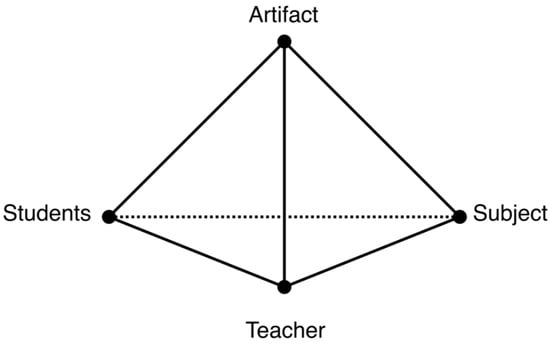
Games can be understood as artefacts, that is, cognitive tools that support learning (Säljö, 2014). In educational research, the concept of an artefact is likewise used by Rezat and Sträßer (2012) to denote tools that mediate teaching and learning processes. This article draws on the didactical tetrahedron (Rezat & Sträßer, 2012) (Figure 1), a model for analysing didactical relations, to examine teachers’ understandings of using a game, specifically in relation to sustainability and climate change in their classrooms.
Figure 1.
The didactical tetrahedron by Rezat and Sträßer (2012).
Previous research indicates that artefacts, such as games, influence didactical relations in classroom practice (Nyman, 2017). Here, the artefact is the game Climate Call, and the content concerns sustainability. Although the tetrahedron model has been most commonly applied in mathematics education, its use is not limited to this field (e.g., Williams & Svensson, 2022), and it has been argued to have broader applicability across subjects. Here, the artefact is the game Climate Call, and the content concerns sustainability.
The aim of this article is to investigate teachers’ understanding of teaching and learning opportunities when using the card game, Climate Call, and activity designed to learn about carbon dioxide emissions in sustainability education in upper secondary classes in Sweden. This article answers the following research question:
From teachers’ perspectives, what role does the card game Climate Call play in relation to sustainability teaching and learning?
The data in this article originates from post-lesson interviews with the teachers as well as fieldnotes and video recordings from lessons in General Science classes when students played a card game portraying carbon dioxide emission from everyday activities called Climate Call. In the next section, we provide some background on sustainability teaching in Swedish schools. Then the conceptual framing and design of the study are outlined, which includes a description of the game Climate Call, followed by the findings and the discussion.
2. Background
Environmental education in Sweden has been an integral part of the national curricula since the 1960s and developed into environmental and sustainability education (Björneloo, 2007; Breiting & Wickenberg, 2010). Environmental and sustainability education (ESE) is not taught as a separate subject in Swedish schools; rather, it functions as a cross-curricular framework and is taught in several subjects. General Science is a mandatory course for all Swedish upper secondary school students who do not attend a natural sciencesfocused programme or a technology programme as they do not have the opportunity to study Physics, Chemistry or Biology in depth (Skolverket, 2025). There are many subjects in Swedish upper secondary schools where sustainable development is taught, for instance: Civic studies, Biology, Geography, Chemistry and General Science. In the 2025 General Science curriculum, sustainability content includes environmental issues, biodiversity, ecosystem services and resource utilisation, as well as energy, climate, production and consumption, raw materials, chemical processes, energy consumption and waste management. Climate change is not mentioned explicitly in the General Science curriculum, but issues related to climate change, such as energy generation and consumption, enable teachers to incorporate climate change as a topic into their teaching.
2.1. Sustainability in Upper Secondary School
Teaching about sustainability and climate change is needed for both mitigation and adaptation in an everchanging world (McKenzie & Benavot, 2024). In a systematic review of research on teaching strategies employed in climate change education, Monroe et al. (2019) concluded that teaching strategies that focus on personal relevance and use activating and engaging teaching methods are most effective. However, several barriers to climate change education have been identified at various levels, including within the educational system, in the classroom, and in professional settings. A literature review by Parry and Metzger (2023) revealed global barriers like education about sustainability being conceived within narrow subject boundaries inhibiting interdisciplinarity sustainability demands and a high focus on following a curriculum and education revolving around testing factual knowledge. They also found a lack of further education for the teachers as well as a lack of support and resources in the school environment.
Brommesson et al. (2025) conducted a survey of 155 science teachers in Swedish upper secondary schools asking them about their teaching methods for sustainability. The study indicates a need for a more interdisciplinary approach and support for teachers in implementing interdisciplinary approaches to enhance engagement (Brommesson et al., 2025). Their study also indicates that the teachers primarily emphasise the transmission of scientific knowledge as the main role of a teacher, though they should also foster critical reflection, encourage a holistic perspective, awareness and interest in sustainability issues. Similarly, a Finnish study of 243 secondary teachers investigated teachers’ perspectives on interdisciplinary climate change education (Castellazzi et al., 2025). In the study, they found that the teachers had a strong commitment to locally and ethically relevant issues, outdoor activities and resources like drama or science-based resources. Issues that limited the teaching were a persistence towards introducing new content or resources and an increase in interdisciplinary fatigue due to fragmented support systems. This study indicates a need for deeper collaboration between academia and school as well as possibilities to create accessible and adaptable knowledge.
2.2. Games as an Educational Resource
Games with a focus on climate change have been growing in popularity since the 2000s, in both analogue and digital formats, and have long been considered valuable educational resources on climate change (Reckien & Eisenack, 2013). The card game Climate Call, as an artefact, has been studied by Wahlström (2025). The study shows how the game can shape learning activities and ESE-teaching. It also indicates that learning possibilities are dependent on the teachers’ abilities to scaffold learning related to sustainability issues more broadly. A game on its own cannot aid learning, as Fernández Galeote and Hamari (2021) argue, when different features like social aspects are not considered in educational games with climate content. Faria et al. (2025) studied the effectiveness of games in promoting climate change education among in-service teachers in Brazil. Their results showed that the teachers recognised the value of using games, but identified several limiting factors, such as heavy workloads, the complexity of the concepts in the game and insufficient training in using the games as educational resources.
3. Conceptual Framing
In this article, the didactical tetrahedron is employed as both a conceptual and analytic framework to better understand the teaching practices and context in which teaching and learning occur. The tetrahedron highlights the central role of artefacts in shaping and mediating didactical relationships (Rezat & Sträßer, 2012).
The concept Didaktik is rooted in continental European traditions and widely used in Nordic educational research, referring to the professional science of teaching. It encompasses the planning, delivering and evaluating of teaching and learning (Hopmann, 2007) as well as instructional methods. From a didactical perspective, the main goal of teaching extends beyond mere knowledge transmission to emphasise the teacher’s role in creating possibilities for students to develop autonomy and critical awareness through meaningful and relevant content (Hopmann, 2007; Klafki, 1995; Ryen, 2020). This means that teaching always involves an intentional selection and framing of content. The content of any lesson is not neutral but inherently value-laden and pedagogically shaped.
A foundational model for understanding the relationships and interactions in educational contexts is the didactical triangle, consisting of teacher, student, and subject content. The relationships between the three parts are built on scaffolding and communication. Within this triangle, norms, social contracts and interactions in the classroom between student and teacher are illustrated. How and why the teacher chooses content to teach and the view of knowledge within the subject is important here, as well as adjusting content to students and assignments for grading and curricular alignment (Hopmann, 2007; Ligozat & Almqvist, 2018; Rezat & Sträßer, 2012).
To account for the role of mediating tools Rezat and Sträßer (2012), the didactical triangle model is extended into a didactical tetrahedron by introducing artefacts as a fourth component, making it a more comprehensive model for analysing teaching and learning processes (see Figure 1). The didactical tetrahedron originated in mathematics education (Rezat & Sträßer, 2012) and other studies have used it in other subjects, for example, in technology (Citrohn, 2025) and other areas in education (Williams & Svensson, 2022).
Educational artefacts (and resources) like textbooks, models, digital tools and games can actively shape both knowledge acquisition and the interactions of learning (Citrohn, 2025; Rezat & Sträßer, 2012). As Nyman (2017) notes, social interactions are important for the learning process, and learning depends not only on where it occurs but also how it is facilitated and what artefacts are involved. The subject content is the knowledge in a specific subject the students need to access through teaching selected by the teacher (Citrohn, 2025; Tall, 1986) but is often governed by curricula.
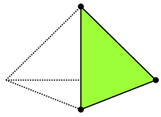
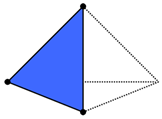
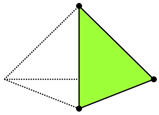
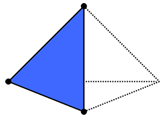
The didactical tetrahedron consists of four interconnected triangles, and provides a model for the interactions between teachers, students, subject content and artefacts in an educational context, where each relationship is shaped by and depends on the others. In this study, the analysis focuses on two of the triangular faces and the interactions, described in Table 1, deliberately excluding the two other triangles—the teacher–student–content and student–artefact–content relations—to foreground teachers’ perspectives of the game. As the teacher–student–subject face (i.e., the didactic triangle) is the foundation of any teaching context, this face and the interactions it contains can be viewed as overarching every and any teaching situation and is thus an important and given part of this study.
Table 1.
The two faces of the didactical tetrahedron analysed for this article; image and description are an interpretation from Rezat and Sträßer (2012) and Citrohn (2025).
The first of the included triangles is the teacher–artefact–content relation, hereafter referred to as the sustainability face (depicted in green in Table 1). In this study, sustainability constitutes the subject content. This triangle captures how teachers plan and implement the use of the artefact in relation to the subject matter. It also reflects how teachers perceive the role of the artefact and how, when, and to what extent they consider it to influence classroom interactions and the representation of content.
The second face in focus is the teacher–artefact–student relation, hereafter referred to as the student face (depicted in blue in Table 1). This triangle illustrates how the artefact mediates interactions between teacher and students, as well as how teachers orchestrate and facilitate learning processes in relation to both the students and the artefact (Citrohn, 2025; Nyman, 2017; Rezat & Sträßer, 2012).
The Game—Climate Call
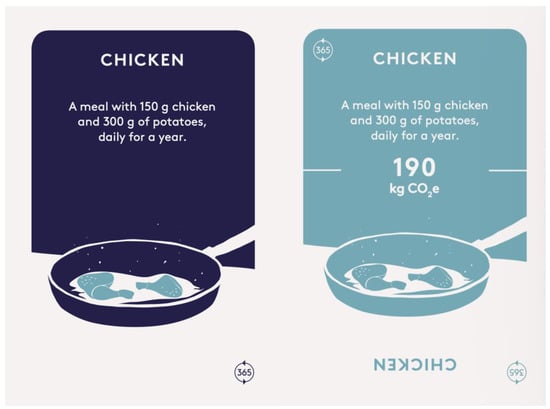
In this study, the game Climate Call, a card game about carbon emissions from authentic daily activities (Figure 2), was used in Swedish upper secondary General Science classes. The game was developed by a company with climate researchers, so it was pre-existing and not adapted in any way for this research. The game has a simple structure where an activity (like driving or eating a cheese sandwich) and the number of the times this is done is displayed on one side of the card, and on the other side, the amount of carbon dioxide equivalents this activity emits is displayed. A session lasts approximately 10–15 min, and the players play in two teams. Each team get three cards to start with, and one card from the deck is placed as a starter card. The first team chooses a card from their hand and decides if the amount of emitted carbon dioxide from that activity is higher or lower than the activity on the starter card. The card is placed and turned and if the team is correct, they now have one card less; if they are wrong, they must draw a new card. The game goes on until one team has no cards left on hand. The game is suitable for ages 12 and up with 2 to 12 players. The developers of the game sell it commercially in stores and online and it has been distributed for free to teachers via different communication and sustainability projects in Sweden and other countries. None of the authors of this article has developed the game or is affiliated with its sales or distribution.
Figure 2.
A card from the game Climate Call showing a meal of chicken and potatoes daily. The icon in the corner of the cards indicates that in this case the emission is calculated on a whole year of eating chicken daily—365 days.
4. Method
4.1. Study Design
This article is part of a broader research project—a case study in upper secondary schools, where the game Climate Call was used as a part of a lesson sequence focusing on climate change in the General Science classroom. Playing the game was incorporated into the pre-existing lesson plans of the regular classroom teachers. The lesson plans were not influenced by any of the researchers. The first author helped to start up the gaming session, introducing how to play the game, during the lessons, but the teachers controlled when and how the game was being played.
4.2. Data Collection and Participants
Data was collected in six different classes across four schools involving four different teachers (see Table 2). Two teachers taught two different classes and the other two taught one class each. The first author visited each class over a time of 4–6 weeks.
Table 2.
Table of the participants.
Teaching was observed and documented through fieldnotes. All teachers met the first author a few weeks before data collection and got the game to familiarise themselves with. The first author participated in all science lessons for approximately three hours a week with each class, leading to approximately 15–18 h of time in each class. Conversations on when the class could play Climate Call was held between the first author and the teacher, but no interference was otherwise made on the teachers’ lesson plans. Video recordings were taken when the students played Climate Call on two occasions. The classes played the game at the beginning and at the end of the unit on climate change. In two classes, the student–teacher interactions were caught on camera during the gaming situations. The students all attended programmes where General Science is mandatory, were attending their second year of upper secondary school, and were 16–18 years old.
The four teachers were interviewed at the end of the data collection period about their understandings of climate change education, and about the game as a part of teaching. The interviews were performed both digitally and on site depending on what the teacher preferred, and all the interviews were audio recorded. Both teachers and students had filled in a consent form for participation before the data collection started and the study had been approved by the Swedish board of ethics. In this text, all teachers have been given gender-neutral pseudonyms and the pronouns “they” are used throughout the text to keep the teachers’ identities confidential.
In the findings, quotes from both interviews and videos have been translated from Swedish to English to ensure the translation is as accurate as possible. The first author initially translated the quotes, using software such as Google Translate. Then in discussion with the other two authors (one of whom is a native English speaker), the quotes were adjusted for meaning. Therefore, the quotes included in this article are not verbatim quotes, but rather a translated account of what the teacher participants in the research said.
4.3. Data Analysis
The material analysed consisted of transcripts from the four teachers’ interviews, fieldnotes and video recordings from the six visited classes. Initially, the recordings of the interviews and videos were processed using the web-based transcription software, AmberScript, after which the first author manually checked and corrected the transcripts.
After this, a comprehensive review of all collected material was conducted to identify relevant episodes from both the video recordings and the fieldnotes. Relevant episode selection was guided by the didactical tetrahedron and then the episodes were analysed using qualitative content analysis to focus on the contextual meaning and coded into categories (Hsieh & Shannon, 2005). The initial codes were: interactions during teaching, interactions during gameplay and talking about the game during teaching. The transcripts were then revisited, and new categories emerged after several turns and discussions among the three authors. Table 3 exemplifies the coding process.
Table 3.
An example of the analytic process from an excerpt in the fieldnotes to the initial code and analytical category and the didactical interpretation.
The interviews were treated in a similar way. For each teacher, segments in which the teacher discussed the game or the gaming situation were selected from the interview transcripts. These segments were then analysed using content analysis and were categorised. For example, categories included when they talked about situations that happened in the classrooms, talking about how they used the game, positive things with the game and negative issues with the game. The teachers’ answers were then compared to view differences and similarities.
After the coding process, the didactical tetrahedron (Rezat & Sträßer, 2012) was used as a second stage interpretative framework to analyse and to understand the relationships between teacher–student–game and teacher–game–subject from a didactical perspective.
4.4. Methodological Considerations
To ensure transparency, all the transcripts and material were available for all the authors during the analysis and issues or unclarities were discussed among all three authors. The coding process was iterative and involved discussions between the authors regarding category boundaries and interpretations of ambiguous cases. To strengthen analytical credibility, the interviews, fieldnotes and video recordings were analysed iteratively and comparatively.
In qualitative and observational research, the presence of a researcher may influence participants, and this is something that always needs to be considered when interpreting findings (Clark et al., 2021). To get as natural lessons as possible, the teachers did not make any changes in their regular lesson plans and the researcher sat in the classroom among the students, for several weeks in each class. The only interference was when the game was played, as this was not a part of the regular plan and the researcher had to assist the students and the teachers in how to play. The teachers themselves choose when in their lesson plan and for how long the game-session was to take place. During the interviews, the teachers were reminded that the researcher did not create the game and were encouraged to talk about both positive and negative experiences. But one should always be considerate and mindful that the presence of a researcher may affect both the dynamic in the classroom as well as answers in the interviews.
4.5. The Teachers and Their Classes
Here is a short introduction to the teachers and the learning that was taking place in their classes:
Kim taught two classes in General Science at Ash upper secondary school and has been teaching for several years. During Kim’s lessons, sustainability is embedded in the context of ecological and includes environmental issues like eutrophication, acidification, and climate change and their connection to societal issues and the economy. Previously, the class has covered ecology from a scientific standpoint by learning about, for instance, the roles of different species and food chains. The graded written assignment for the sustainability area is more explicit in its framing of sustainability, where the students are required to write about a “more sustainable world”. Kim, who had no previous experience of the game, asked to play Climate Call as an introduction to the new area of environment and sustainability.
Robin taught one class at Birch upper secondary school and has several years of teaching experience. Robin’s lessons focused on the individual perspective of sustainability and the global perspective of planetary boundaries. This class receives smaller assignments during lessons, and a larger assignment calculating carbon footprints on food at the end of the unit. Previously, the class had discussed the 17 sustainability goals, the SDGs (United Nations Department of Economic and Social Affairs, 2025). Robin had used Climate Call in other classes before the observed lessons in this study. They use it to introduce climate change and sustainability.
Ricky has been teaching for several years and is currently positioned at Cedar upper secondary school. They teach several classes in General Science, and one of them is visited during data collection. Ricky’s lessons have focused on the environment, ecology and energy and their connection to climate change and sustainability. The grade-based assignment on this topic involves students completing in-class exercises and concluding with a final written exam. Ricky has chosen to play the game after a few lessons on this area have passed, but the class has not yet covered climate change, and they have no previous experience of using the Climate Call game in class.
Taylor is the most experienced teacher and during the data collection worked at Elm upper secondary school, teaching two classes in General Science. Previous content in Taylor’s classes had covered ecology and nature, and the class had begun working with sustainable development and climate change. Taylor chose to have the first session of gameplay after two lessons introducing sustainability to the students. Although Taylor has not previously used the game for educational purposes, they, like all the other participating teachers, got a deck of cards to get familiar with and test before the data collection period began.
The teachers all had different approaches to teaching sustainability. A common feature across the participants was their inclusion of the three pillars of ecological, economic and social sustainability while maintaining a predominant focus on the environment and therefore ecological sustainability, aligning with the General Science curricula. They also explained the scientific basis of climate change as falling under the sustainability umbrella and what implications it has for life on earth, all with a connection to the students’ lives and futures. Despite these shared elements, how they presented, and what their teaching focus was, varied between the teachers and their focus related to their own view of what sustainability involves and how it is approached.
5. Findings
As described in the theoretical framing of this article, the teacher–student–content face is the base of the didactical tetrahedron and, as it is not possible to exclude one of these nodes in the teaching context, as students and teachers are ever-present, as is the subject taught in an educational context, it will be overarching in the analysis. Therefore, in the following analysis, there will be aspects that will intertwine with the other faces analysed for this article.
5.1. The Sustainability Face: Teacher–Game–Sustainability
When we look at the sustainability face (teacher–game–sustainability), we can better understand how the teachers integrate sustainability using the game and how it contributes to teaching and learning.
The understanding of how the game affected the subject sustainability was generally positive among the teachers. They each noted that the game helped them to visualise what daily activities affects carbon emission on both an individual and a societal level. However, they reported that the cards seemed to portray a more individualistic perspective (i.e., that individuals were primarily responsible for carbon emissions), which was not always what the teachers wished to highlight in sustainability as a subject. Ricky’s understanding of the game’s more individualistic perspective was expressed this way when asked about how they used the game in their sustainability teaching.
I want the students to think about politics, rather than just the individual perspective. Because I think it’s [sustainability] really a political issue in the first place…… Politics is about actions to change, raising the tax on meat is a political issue that you will be able to understand in a different way if you understand which actions affect emissions and why.(Ricky, interview)
An understanding of what the game can contribute and how it can affect the subject seems to guide how and why the teachers use it in the classroom. If the game is perceived to align with what the teachers want to focus on, the game is perceived to be more useful for the teachers to better contextualise sustainability as a subject. Robin, for example, focused on the individual perspective and used the activities on the cards to guide how they presented sustainability issues. Like the other teachers, Robin thought it helped them to connect sustainability, especially climate change, to the students’ reality and awareness and explained it this way:
I use the game a lot as an example of how much environmental impact different activities have. I use it to illustrate so the students become aware of what it is specifically in these activities that emits so much carbon dioxide. You might look at the frequency or the length and can compare different activities too. So, I think Climate Call is great for giving an insight into how much our everyday activities play a role in carbon emissions and climate change.(Robin, interview)
Three of the teachers, Kim, Robin and Taylor, used the game as a communal experience to visualise and make explicit how sustainability and the game’s content are connected. By returning to the game’s content and using it as a link or an epistemic anchor, they made new sustainability content more accessible. The game also created new pathways into other issues of sustainability, even if the content of the game is not specifically related to climate change. The teachers described that their interactions were enhanced by utilising the students’ previous experiences and knowledge, which in turn enabled them to discuss ways to reduce carbon dioxide emissions in relation to other sustainability related issues, in another way.
Returning to the different activities on the cards was especially prevalent in areas where the teacher wanted to connect to something that they thought the students would feel was familiar, or to situations and content that were more abstract. The teachers also noticed new opportunities while using the game’s content to highlight other aspects of sustainability. For instance, when Taylor was talking about energy, some of the cards relating to household heating were used as examples. The focus was not on how much carbon dioxide the different heating methods emitted—rather, that there was a difference between these methods and that these different heating methods were connected to other environmental and sustainability issues. Areas where the teachers revisited the game to support their teaching are presented in Table 4. The game was used to deepen the understanding or to revisit the factual information it contains, while teaching appeared to strengthen the understanding of the game’s utility.
Table 4.
Teaching situations where teachers revisited the games content.
However, revisiting the game and its content during lessons was not always without challenges. On some occasions, instead of aiding the lesson, the game became an obstacle, which could lead to the teacher having to explain what they wanted the students to learn using metaphors or stories or connecting it to something else that they thought the student would understand. One example of this comes from Taylor’s classroom.
Taylor: Do you all remember the card game, the Climate Call game?Students nod. Taylor starts to talk about different ways to heat a house and brings up one of the cards. They ask a student what they think causes the emission from heating that they saw on the card. The student claims not to understand (or remember?) the cards or what they were showing. Taylor asks for help from another student to explain what the card game was about, but the student does not respond. Taylor continues to ask the student again what heating they have at home, and if they know any other ways to heat houses. Taylor talks about burning wood and that it emits carbon dioxide to get the student to understand the concept they are trying to teach.(Fieldnotes—Taylor’s class)
Situations like this, where students did not understand, occurred in other teachers’ classrooms also. This demonstrated another limitation of using the game in teaching; when it was perceived as “just a game”, the students might not necessarily make the connection to the content it is portraying.
5.2. The Student Face: Teacher–Student–Game
The student face (teacher–student–game) highlights the interactions that occurred when the game was used. It also shows how the game can create access to the subject and how engagement may be shaped by the game.
The teacher’s understanding of the influence of the game on the student interactions with each other was characterised by the notion that the game was accessible and created engagement in the class. As Kim notes, when they talk about engaging otherwise unengaged students,
I think the biggest positive thing I’ve noticed is that the game gets students involved who otherwise don’t do anything, who aren’t interested. They get involved because it’s a different form than what they’re used to. If you had asked them to read a text or even watch a film, they wouldn’t have thought it was fun or even refused to do it. So now many students who I know haven’t done anything during class seem to be heavily involved, and that they had very, very good discussions. It came so spontaneously. I thought that was exciting. Other questions arose when they discussed the game like how much difference it makes, how long it lasts, or what consequences it has; sometimes they don’t get it right, but to raise the questions is still valuable enough.(Kim, interview)
The game created other learning opportunities as well. During gameplay, the students and teacher had in-depth discussions about topics that the game catalysed, like ethics in consumption, social justice and ethics, discussions starting in relation to the game. Taylor reflected on the gaming situation and what they perceived it gave the learning and that it became easier to identify the students’ reasoning and knowledge levels while playing with them.
I got to hear very good discussions; I have to say I’m very satisfied with this. Some students shined several times, and I thought to myself “How well they think and reason”. We talked about values and questions, like should we focus on poverty, or should we focus on other parts of sustainable development?…… I think I got to see some good reasoning.(Taylor, interview)
During gameplay, Climate Call created possibilities for different interactions between students and the teacher. This was particularly visible when the teachers moved around in the classroom during gameplay, picking up students’ questions and using discussions to create learning situations while the students were playing. However, it was often the students who took the lead on the interactions. The students eagerly showed the teachers the cards, raising issues with the cards or other sustainability or societal issues while playing. Below is an excerpt from a video recording in Kim’s classroom exemplifying a frequently occurring interaction in the classroom. This excerpt shows the students interacting with teachers during gameplay where discussions emerge that connect to other issues of sustainability. In this interaction, the students are calling on Kim’s attention and shows cards from the deck they have been playing.
Antonia: Look here Kim! I didn’t expect this [Holds up the cards with roses from Kenya and roses from The Netherlands].Anna: That was crazy! Because, I thought that more locally produced was better; it wasn’t.Kim: Yeah, cool, and were there any differences in production on the cards when you read them? Why do you believe the result is like that?Antonia: Yes, but you think that local is better because the roses come by plane from Kenya and by truck from The Netherlands, but not here; you need greenhouses (points at the card roses from The Netherlands).(Kim’s class, video recording)
In the excerpt, we see the interaction between the students and teachers, where the students lead the conversation, yet it is still a teaching moment orchestrated by Kim. The game creates the possibility for the students to access and interpret the information that the game gives them and connect them to other sustainability issues.
During the breaks in all classes, the cards were discussed, especially those related to foods. This excerpt from the fieldnotes taken when joining Kim’s class at lunch illustrates this:
A student claimed that “one should eat phones instead of eating meat as phones emitted less carbon dioxide”. The student and their peers laugh and continue talking about the different cards such as the card that showed that chicken emits less carbon dioxide. They also talk about what foods they like and what it would mean to stop eating these.(Kim’s class, fieldnotes)
The claim about eating phones was said in jest; however, this could also be in opposition with what the teachers wanted the students to understand. One of Kim’s concerns with the game was that it could make it difficult to compare different activities as equal without nuance.
The students can’t see the difference between necessity and luxury…… They see things in black and white. They have a narrative of this is good, this is bad, and what is good doesn’t emit any carbon dioxide. Taking the train is good, and they think it emits zero carbon dioxide. But when it does (they see it in the cards of the game), it gets problematic for them. I think the game shows that everything has an impact. I heard that from some discussions too, something they thought was zero emissions. There is no zero! Walking down the street, you emit carbon dioxide.(Kim, interview)
Ricky felt that using the game in the classroom might not be suitable for all students and explains it in this way.
For the students it can go either way. Most, I think, find it fun; they play the game. It’s fun and they learn. Then there are others who don’t think it’s fun and who don’t like that type of drive, and those who think it’s hilarious as soon as there’s a competition, but it is just a competition. The others think it is dead boring and just want to get rid of the cards so they can sit with their computer again. I think it varies.(Ricky, interview)
Ricky touches on an important issue: if the students do not show any interest for understanding the facts on the cards or if the interest is focused on winning the game, it becomes a novelty or even a distraction with little educational value and instead hinders interactions and learning.
A summary of the analysis of the two faces of the didactical tetrahedron can be viewed in Table 5.
Table 5.
Summary of analysis of the two faces of the didactical tetrahedron in focus in this article.
6. Discussion and Conclusions
In this article, the didactical tetrahedron (Rezat & Sträßer, 2012) has been used to analyse the didactical interactions to examine teachers’ understanding of using the card game Climate Call in relation to sustainability. The analysis showed that the card game was perceived as having different roles and affected the interactions in the classroom in different ways.
The teachers’ understandings of the game were generally positive as they perceived new possibilities that the game could provide in their teaching. The game and the gaming situation opened possibilities for the teachers to connect the content of the game to new areas that they did not necessarily expect to integrate. The new areas were, for example, social justice and ethics and other aspects of sustainability than only science-related topics. When viewed through the lens of the didactical tetrahedron (Rezat & Sträßer, 2012), the game establishes a connection between the subject matter and the content of the game and opens the way for discussions on broader sustainability topics, incorporating facts, ethics and socio-political content. This type of broader discussion is emphasised by Brommesson et al. (2025) as important.
The teachers chose to use the game when they thought it would help relating to something the students might struggle with or find abstract, or when they thought the students might find it familiar or relevant. This aligns with Monroe et al. (2019), who show that relevance and interest are important in effective climate change education. Among the benefits perceived by the teachers with using the game in teaching sustainability was how it promoted engagement, was action-oriented and engaged the students to participate, which is highlighted by Stevenson et al. (2017) as important in climate change education.
The situations where the game was played created possibilities for the students to access and interpret factual information connected to climate change and draw parallels to other sustainability issues together with the teacher. In these situations, the game actively shaped both knowledge acquisition and the interactions, as proposed by Citrohn (2025) and Rezat and Sträßer (2012). The inclusion of the card game and continuously revisiting the content of the game helped the teachers to reiterate the sustainability content that they were teaching the class and connect it to the content of the card. The iteration may help to create possibilities for autonomy and to create relevance and meaning making for the students (Hopmann, 2007; Klafki, 1995; Ryen, 2020) as new content of sustainability relates to the gaming situation and the content of the game.
However, the use of the card game as a help for understanding sustainability content did not always function in this way as was especially noticeable in Taylor’s classroom. The experience of gameplay was conditional for some students when they struggled comprehending the game’s content or how to use the game, often despite the reiteration by the teacher. Instead, the teacher needed to create understanding through other connections. These situations make it evident how the actors, the teacher, student, subject and artefact are deeply intertwined, and if one connection is disrupted, the interactions do not work, as also stated by Rezat and Sträßer (2012). This example, together with the issues raised by the teachers that the game did not create or help the students understand nuances, aligns with Fernández Galeote and Hamari’s (2021) argument that, often, social aspects are not considered (enough) in educational games with climate content. This lack of nuance highlights the need for teachers to guide the students through the experience of using the game and utilising the knowledge they get from it.
This is a small, quantitative study set in a Swedish upper secondary school setting and therefore our conclusions are contextual and indicative and cannot be considered to represent all teachers teaching about climate change around the globe. However, it indicates how teachers may use a game as a teaching tool, and how the game can function as a point of reference and also as a tool to connect to the students’ previous experiences and get them to discuss issues connected to climate change. Science teachers are considered key actors in developing an understanding of the sustainability and climate change discourse among learners (McKenzie & Benavot, 2024; Timm & Barth, 2021; UNESCO, 2021); further research on teachers and what happens while teaching sustainability is needed.
Author Contributions
Conceptualisation, T.W., S.W. and M.S.; Methodology, T.W., S.W. and M.S.; Formal analysis, T.W., S.W. and M.S.; Investigation, T.W.; Data curation, T.W.; Writing—original draft, T.W., S.W. and M.S.; Writing—review and editing, T.W., S.W. and M.S.; Visualisation, T.W.; Supervision, S.W. and M.S.; Project administration, T.W. All authors have read and agreed to the published version of the manuscript.
Funding
This research received no external funding.
Institutional Review Board Statement
The study was conducted in accordance with the Declaration of Helsinki, and approved by the Etikprövningsmyndigheten (The Swedish ethical board) (protocol code 2021-01022 and 11 May 2021).
Informed Consent Statement
Informed consent was obtained from all subjects involved in the study.
Data Availability Statement
The data presented in this study are available on reasonable request from the corresponding author. The data are not publicly available due to ethical considerations, as the qualitative data may allow indirect identification of participants.
Acknowledgments
The authors have reviewed and edited the output and take full responsibility for the content of this publication.
Conflicts of Interest
One of the authors declares having a professional acquaintance with one of the researchers who developed the game used in this study. However, the author confirms having no financial interest, stake, or other incentives tied to the dissemination or success of the specific game. This relationship has not influenced the research process, analysis, or findings, ensuring the integrity and impartiality of the study.
References
- Björneloo, I. (2007). Innebörder av hållbar utveckling: En studie av lärares utsagor om undervisning. [Doctoral dissertation, University of Gothenburg]. Acta Universitatis Gothoburgensis. Available online: http://hdl.handle.net/2077/10517 (accessed on 29 April 2026).
- Breiting, S., & Wickenberg, P. (2010). The progressive development of environmental education in Sweden and Denmark. Environmental Education Research, 16(1), 9–37. [Google Scholar] [CrossRef] [Scilit]
- Brommesson, S., Jönsson, A., Lundegård, I., & Einarsson, E. (2025). Facting or acting in sustainable development teaching? Science Studies teachers’ didactical choices in Swedish upper-secondary schools. Environmental Education Research, 31(6), 1275–1294. [Google Scholar] [CrossRef] [Scilit]
- Castellazzi, E., Hakkarainen, V., Saari, M., & Raymond, C. M. (2025). Barriers and enablers of interdisciplinary climate education: Insights from secondary teachers. Australian Journal of Environmental Education, 1–18. [Google Scholar] [CrossRef] [Scilit]
- Citrohn, B. (2025). Fysiska modeller i designprojekt: Om teknikkunskaper och didaktiska relationer i högstadiets teknikundervisning. [Doctoral dissertation, Linköping University]. Linköping University Electronic Press. [Google Scholar] [CrossRef] [Scilit]
- Clark, T., Foster, L., Sloan, L., & Bryman, A. (2021). Bryman’s social research methods (6th ed.). Oxford University Press. [Google Scholar]
- Faria, D. R. d., Oliveira, J. P. d., Zezzo, L. V., & Coltri, P. P. (2025). Games as a resource to promote climate change education. SN Social Sciences, 5(11), 191. [Google Scholar] [CrossRef] [Scilit]
- Fernández Galeote, D., & Hamari, J. (2021). Game-based climate change engagement. Proceedings of the ACM on Human-Computer Interaction, 5, 1–21. [Google Scholar] [CrossRef] [Scilit]
- García-Vinuesa, A., Conde Miguélez, J., Palmieri, M., & Correa-Chica, A. (2026). Secondary education teachers and climate change education: A complementary bibliometric and methodological review. Metrics, 3(1), 1. [Google Scholar] [CrossRef] [Scilit]
- Hopmann, S. (2007). Restrained teaching: The common core of Didaktik. European Educational Research Journal, 6(2), 109–124. [Google Scholar] [CrossRef] [Scilit]
- Hsieh, H.-F., & Shannon, S. E. (2005). Three approaches to qualitative content analysis. Qualitative Health Research, 15(9), 1277–1288. [Google Scholar] [CrossRef] [Scilit] [PubMed]
- Klafki, W. (1995). Didactic analysis as the core of preparation of instruction (Didaktische Analyse als Kern der Unterrichtsvorbereitung). Journal of Curriculum Studies, 27(1), 13–30. [Google Scholar] [CrossRef] [Scilit]
- Ligozat, F., & Almqvist, J. (2018). Conceptual frameworks in didactics—Learning and teaching: Trends, evolutions and comparative challenges. European Educational Research Journal, 17(1), 3–16. [Google Scholar] [CrossRef] [Scilit]
- McKenzie, M., & Benavot, A. (2024). Climate change and sustainability in science and social science secondary school curricula. UNESCO. [Google Scholar] [CrossRef] [Scilit]
- Monroe, M. C., Plate, R. R., Oxarart, A., Bowers, A., & Chaves, W. A. (2019). Identifying effective climate change education strategies: A systematic review of the research. Environmental Education Research, 25(6), 791–812. [Google Scholar] [CrossRef] [Scilit]
- Nyman, R. (2017). Interest and engagement: Perspectives on mathematics in the classroom. [Doctoral dissertation, University of Gothenburg]. GUPEA. Available online: https://gupea.ub.gu.se/items/f412425b-5535-4d27-a0ce-7766a6372b87 (accessed on 29 April 2026).
- Ogunbode, C. A., Doran, R., & Böhm, G. (2019). Exposure to the IPCC special report on 1.5 C global warming is linked to perceived threat and increased concern about climate change. Climatic Change, 158(3–4), 361–375. [Google Scholar] [CrossRef] [Scilit]
- Parry, S., & Metzger, E. (2023). Barriers to learning for sustainability: A teacher perspective. Sustainable Earth Reviews, 6(1), 2. [Google Scholar] [CrossRef] [Scilit]
- Reckien, D., & Eisenack, K. (2013). Climate change gaming on board and screen. Simulation & Gaming, 44(2–3), 253–271. [Google Scholar] [CrossRef] [Scilit]
- Rezat, S., & Sträßer, R. (2012). From the didactical triangle to the socio-didactical tetrahedron: Artifacts as fundamental constituents of the didactical situation. ZDM, 44(5), 641–651. [Google Scholar] [CrossRef] [Scilit]
- Ryen, E. (2020). Klafki’s critical-constructive Didaktik and the epistemology of critical thinking. Journal of Curriculum Studies, 52(2), 214–229. [Google Scholar] [CrossRef] [Scilit]
- Säljö, R. (2014). Lärande i praktiken: Ett sociokulturellt perspektiv (3rd ed.). Studentlitteratur. [Google Scholar]
- Skolverket. (2025). Naturkunskap- ämnesplan för gymnasieskolan (Gy25). Available online: https://www.skolverket.se/undervisning/gymnasieskolan/program-och-amnen-i-gymnasieskolan/hitta-program-och-amnen-i-gymnasieskolan-gy25/hitta-program-och-amnen-i-gymnasieskolan-gy25/search/subjects/NATU?v=1#course-plan (accessed on 16 June 2026).
- Stevenson, R. B., Nicholls, J., & Whitehouse, H. (2017). What is climate change education? Curriculum Perspectives, 37(1), 67–71. [Google Scholar] [CrossRef] [Scilit]
- Tall, D. (1986). Using the computer as an environment for building and testing mathematical concepts: A tribute to Richard Skemp. In Papers in honour of Richard Skemp (pp. 21–36). University of Warwick. [Google Scholar]
- Timm, J.-M., & Barth, M. (2021). Making education for sustainable development happen in elementary schools: The role of teachers. Environmental Education Research, 27(1), 50–66. [Google Scholar] [CrossRef] [Scilit]
- UNESCO. (2021). Teachers have their say: Motivation, skills and opportunities to teach education for sustainable development and global citizenship. UNESCO. Available online: https://unesdoc.unesco.org/ark:/48223/pf0000379914 (accessed on 29 April 2026).
- United Nations Department of Economic and Social Affairs. (2025). The sustainable development goal report 2025. United Nations. Available online: https://unstats.un.org/sdgs/report/2025/ (accessed on 29 April 2026).
- Wahlström, T. (2025). Using games in environmental and sustainability education: Identifying teaching traditions in a game about carbon dioxide emissions. Environmental Education Research, 1–17. [Google Scholar] [CrossRef] [Scilit]
- Williams, A. T., & Svensson, M. (2022). Student teachers’ challenges addressed by science didactics when reflecting upon teaching at a science centre. Nordic Studies in Science Education, 18(1), 23–38. [Google Scholar] [CrossRef] [Scilit]

Disclaimer/Publisher’s Note: The statements, opinions and data contained in all publications are solely those of the individual author(s) and contributor(s) and not of MDPI and/or the editor(s). MDPI and/or the editor(s) disclaim responsibility for any injury to people or property resulting from any ideas, methods, instructions or products referred to in the content. |
© 2026 by the authors. Licensee MDPI, Basel, Switzerland. This article is an open access article distributed under the terms and conditions of the Creative Commons Attribution (CC BY) license.