Article

Implementation of a CSMHS in a Small Rural School: A Longitudinal Case Study

Learning, Leadership & Community, University of Northern Iowa, Cedar Falls, IA 50614, USA
*
Author to whom correspondence should be addressed.
Educ. Sci. 2026, 16(6), 977; https://doi.org/10.3390/educsci16060977
Submission received: 1 April 2026 / Revised: 13 May 2026 / Accepted: 15 June 2026 / Published: 19 June 2026

Abstract

Rural youth often face barriers to accessing mental health services, including workforce shortages, limited resources, and persistent stigma. Schools are well-positioned to address these gaps through comprehensive school mental health systems (CSMHSs) embedded within multi-tiered systems of support (MTSSs). This study evaluated the implementation and effectiveness of a CSMHS in a small Midwestern rural school district over seven years. A longitudinal case study design was used to describe implementation across seven years. Universal mental health screening data were analyzed to determine the proportion of students receiving tiered supports over time. Implementation fidelity was assessed annually using the School Health Assessment and Performance Evaluation (SHAPE) system. Across seven years, more than 80% of students consistently demonstrated mental wellness within Tier I supports, with Tier II and Tier III needs aligned with expected MTSS distributions. SHAPE data indicated steady implementation improvement, particularly in universal screening, teaming, and tiered support. Ongoing challenges included monitoring Tier II intervention fidelity and demonstrating system-level impact. Findings suggest that CSMHSs can be effectively implemented and sustained in rural school settings when aligned with existing MTSS frameworks, supported by strong partnerships, and adapted to local contexts. This study provides evidence supporting the feasibility of rural CSMHS implementation and offers implications for practice and sustainability.

1. Introduction

Mental health is a state of behavioral and emotional well-being accompanied by a relative lack of behavioral or emotional struggles (Centers for Disease Control and Prevention, 2021). Difficulties with mental health can significantly impact social functioning and relationships, affecting many U.S. children and adolescents (Kieling et al., 2024; Whitney & Peterson, 2019). A substantial portion of U.S. children face mental health challenges, with some experiencing heightened feelings of sadness and hopelessness, feelings that were accelerated by the COVID-19 pandemic (Centers for Disease Control and Prevention, 2024; Sappenfield et al., 2023). Despite the prevalence of these challenges, there are obstacles to accessing mental health services, including financial constraints, a shortage of providers, and the stigma surrounding mental health difficulties (Kern et al., 2022; Cree et al., 2016; Mulé et al., 2014; Stewart et al., 2015). Untreated mental illness can lead to academic, emotional, behavioral, and social challenges (Shelton & Owens, 2021).
While research has demonstrated a similar prevalence rate of mental health difficulties across urban and rural children and youth (Anderson & Gittler, 2005; Polaha et al., 2011), those who live in rural communities can experience challenges to accessing mental health services at a greater level than their peers who live in urban communities (Blackstock et al., 2018). Often rural populations are discouraged from seeking mental health support due to the burden of social stigma (Smalley et al., 2012). Another challenge experienced by rural populations is the shortage of resources in rural areas which further hinders the implementation of effective programs and services (Andrilla et al., 2018; Kepley & Streeter, 2018). Notably, school systems offer a unique opportunity to bridge this gap, given their advantage in identifying students early and providing accessible and non-threatening mental health support (Duong et al., 2021; Kern et al., 2022). The purpose of this research is to describe the implementation of a comprehensive school mental health system (CSMHS) in a small rural school.

1.1. Mental Health in Rural Settings

Approximately 8.6 million individuals in the U.S. live in rural areas with 22.7% of rural residents reporting experiencing mental illness and 1.9 million having serious thoughts of suicide (U.S. Department of Health and Human Services, n.d.). Rural citizens historically face challenges in accessing professional mental health services due to workforce shortages, limited resources, and professional isolation (Bureau of Health Workforce, 2025; Bird et al., 2001). The challenges of providing mental health services in rural communities persist, encompassing issues of accessibility, availability, affordability, and acceptability (Rural Health Information Hub, n.d.). Stigma plays a crucial role in inhibiting help-seeking behavior, particularly in small-town communities, where concerns about confidentiality can exacerbate feelings of stigma (Hoyt et al., 1997; Meek Farley et al., 2026; Probst et al., 2006).
Stewart et al. (2015) found that individuals in rural areas reported higher levels of self and public stigma, as well as more negative attitudes toward help-seeking and mental health services in comparison to urban residents. The higher levels of self-stigma and public stigma in these regions negatively affect treatment-seeking behaviors and exacerbate mental health challenges (Blackstock et al., 2018; Stewart et al., 2015). Thus, in rural areas, the stigma surrounding mental health services is a significant barrier to seeking help (Cheesmond et al., 2019). However, school-wide practices that promote positive attitudes about mental health can mitigate this stigma (Minot, 2022).

1.2. CSMHS to Destigmatize Mental Health

School-based mental health professionals, including social workers, school psychologists, special education teachers, and school counselors, can develop rapport with students, teachers, and the community, reducing mental health stigmatization (Hollingsworth & Hendrix, 1977; Minot, 2022). Schools can play a pivotal role in destigmatizing mental health by fostering open discussions, normalizing seeking help, and presenting data on the prevalence of mental health challenges (Hoover & Bostic, 2021; Ma et al., 2023; Minot, 2022). Further, CSMHS utilize existing educational frameworks (e.g., multi-tiered systems of support) to provide a continuum of mental and behavioral health services for all students (Conners et al., 2016). Such systems aim to leverage the expertise of both school employed mental health providers (e.g., school psychologists, school counselors, school social workers) and community employed mental health providers to provide a range of services across the spectrum of intensity of needs (Hoover & Bostic, 2021).
The shortage of school psychologists and other school mental health providers in rural locations complicates service accessibility for students (Clopton & Knesting, 2006; NASP, 2021). Rural schools are significantly less likely to have school-funded treatment programs and school-employed mental health professionals, leading to fewer available services (Bird et al., 2001; Goforth et al., 2017; Shelton & Owens, 2021). Adequately resourced and funded CSMHS can significantly impact students, enhancing their engagement in early identification and help-seeking behaviors (Green et al., 2013). For example, students at schools with targeted mental health service programs view these services as available, accessible, convenient, and familiar (McPhail et al., 2024). Thus, CSMHS may promote student attitudes conducive to mental health help-seeking.
A research-to-practice gap hinders the effective implementation of CSMHS. Hoover and Bostic (2021) described several challenges to the sustained implementation of CSMHS: competing priorities in K-12 education, K-12 education and mental health systems working in silos, mental health provider workforce shortages, and interest in addressing child and youth mental health only after a crisis. These challenges can lead to funding and reimbursement difficulties, entrenched social stigma, exclusion of students with significant mental and behavioral health difficulties, and uneven availability of services across urban, suburban, and rural settings (Hoover & Bostic, 2021; Lipskaya-Velikovsky & Krupa, 2023). Overcoming these challenges requires a joint effort between mental health and school systems to enhance accessibility.
The aim of CSMHS is to provide a range of social, emotional, behavioral, and mental health services within the multi-tiered system of support (MTSS) framework. Many schools across the country have adopted MTSSs (Kearney & Graczyk, 2020), making it a helpful system for integration of mental health services within schools. An MTSS comprises three tiers to address students’ varying needs. Tier 1 focuses on universal prevention, with the expectation that 80–90% of students meet classroom benchmarks (Fuchs & Fuchs, 2006). Efforts towards prevention and creating supportive school environments to promote positive behavioral, emotional, and mental health are provided to all students (Kern et al., 2022). At the Tier 1 level, universal, evidence-based instruction is provided to all students to support social, emotional, and behavioral growth and foster mental well-being. Social and emotional learning (SEL) programs (e.g., Character Strong, RULER) and positive behavior interventions and supports (PBIS) are examples of Tier I instruction aimed to support the mental well-being and social, emotional, and behavioral growth of students (Cipriano et al., 2023; Durlak et al., 2022; McIntosh et al., 2010; Sugai & Horner, 2002).
For students not responding fully to Tier 1 efforts, Tier 2 interventions are employed (Kern et al., 2022). These supports are typically provided in small group settings for students with similar needs determined through universal screening and other data collection, and serves approximately 10–15% of the student population (Fuchs & Fuchs, 2006). Check In Check Out (Campbell & Anderson, 2011) is an example of a Tier II intervention. Students meet with a trusted adult in the morning to set goals and discuss any struggles and then meet with that trusted adult at the end of the day to debrief the day and discuss goal attainment.
For students in need of more intensive social, emotional, and behavioral interventions than are provided at Tier 1 and Tier 2, individualized and intensive interventions at Tier 3 are considered the next step (Fuchs & Fuchs, 2017). The literature recommends that approximately 2–5% of students receive intensive interventions (Fuchs & Fuchs, 2006), but those numbers are rising as schools are increasingly acting as the primary mental health service delivery system (Anderson-Butcher & Ashton, 2004; Duong et al., 2021). This level of support often includes functional behavior assessment (FBA; McKay-Brown & Tutton, 2022) and individual intervention tailored to the needs of each student (Eber et al., 2019).
Evaluation of the effectiveness of a school’s MTSS is vital and should include an evaluation of student outcomes, implementation fidelity, and system capacity (Gandhi et al., 2026). The evaluation of student outcomes often includes an analysis of universal screening data to determine if the number of students served in each tier aligns with the recommended guidelines (Gibbons & Brown, 2014). If the number of students who are meeting benchmarks with Tier I supports is lower than 80%, this suggests that the Tier I instruction is not meeting student needs. This also suggests that Tier II and Tier III services may be overwhelmed and beyond capacity (Gibbons & Brown, 2014; Kittelman et al., 2025).

1.3. Implementation of CSMHS in Rural Communities

CSMHSs can be implemented in any school, no matter the geographic location; however, implementation in rural schools is more difficult where resources are more scarce compared to urban and suburban areas (Andrilla et al., 2018; Bureau of Health Workforce, 2025; Clopton & Knesting, 2006). The unique challenges of rural schools must be considered when implementing the complex network of services within a CSMHS. Little research has addressed the implementation of CSMHSs in small, rural schools, and the present study aims to fill this gap. Meek Farley et al. (2026) conducted a process evaluation study of CSMHS implementation in several rural school districts. They conducted focus groups of educators supporting CSMHS implementation, and they reported some of the same challenges to implementation suggested by Hoover and Bostic (2021). Specifically, rural educators reported mental health workforce shortages and mental health stigma as reasons students were unable to access school-based mental health care; however, they also reported being committed to implementing the CSMHS. The authors concluded that CSMHSs could be implemented in rural schools if the systems were aligned with already existing systemic frameworks, such as MTSSs; if strong partnerships with families and community mental health providers were developed; and if the unique circumstances of rural communities were addressed with the system (Meek Farley et al., 2026).
The purpose of this longitudinal case study (Tracz et al., 2018) was to evaluate a CSMHS in a small, rural school district in the Midwest across seven years of implementation. The evaluation focused on the following research questions:
  • To what extent does the universal screening data suggest the system is responsive to the needs of the district’s students across seven years of implementation?
  • To what extent has the district implemented CSMHS best practices across seven years of implementation?

2. Materials and Methods

2.1. School District and Partners

This Midwestern school district serves 568 students in kindergarten through grade 12. The district has one campus that houses an elementary school (K—6th grade) and a secondary school (7th–12th grade). Within the student population, 95% of students are White, 51% are male, 14% of students have been identified as students with a disability, and approximately 38% of students are eligible for free or reduced-price lunch. The closest city is 75 miles from this small, rural community. The district serves rural distant and rural remote areas according to the National Centers for Educational Statistics (NCES; https://nces.ed.gov/programs/maped/LocaleLookup/, accessed on 2 March 2026).
The school district partners with a regional education agency to receive social workers who will provide individual therapy (Tier III) to students with intensive mental health needs. The district contracts two to three days of social worker time depending on available resources. The regional education agency is a cooperative agency that serves 39 public and private school districts. The agency hires special education support professionals, including school psychologists, school social workers, and special education consultants, to provide special education services to schools. Each special education support professional is assigned to one or more school districts to conduct special education evaluations and support general and special education teachers in providing high-quality, effective special education programming to students. The agency also supports rural districts with general education curriculum support and systems consultation.
The school district partnered with a regional comprehensive university as part of a private grant-supported project aimed to develop and implement school-based mental health systems in rural schools. The partnering university is 120 miles from the rural school district and has a large educator preparation program. This university graduates approximately 500 teachers, 15 school librarians, 10 school psychologists, 35 school counselors, 56 school principals, and 15 superintendents each year.

2.2. Mental Health MTSS

Skaar (2022) described, in detail, the development of a district-wide mental health MTSS, but a brief description of the framework and system is provided here. The cornerstone of a school’s mental health MTSS is a team of stakeholders that includes the school superintendent, elementary principal, dean of students, elementary and secondary school counselors, secondary at-risk teacher, school nurse, one to two school social workers from a partnering regional education agency, and the researcher, who is a licensed school psychologist and university professor. The team meets once a month to discuss student data and services. Data includes three times a year social–emotional and mental health screening data, progress monitoring data from Tier II and Tier III interventions, and existing school data such as academic information, office referrals, and attendance data. When needed, the team also takes time during monthly meetings to address system-level issues, such as implementation fidelity of Tier II interventions or development of Tier I supports. Each summer, the team meets to evaluate the system and discuss goals for the upcoming academic year.
District-wide social–emotional and mental health screening is completed three times a year at both the elementary and secondary buildings. Families provide consent through an opt-in consent process, as required by state law. The consent form is one of the consent forms that families sign during annual school registration. If families do not sign this consent form, school personnel seek them out to discuss consent during back-to-school night and parent–teacher conferences. A reminder is sent to families at least a week in advance of each administration to remind them of the screening. The Social, Academic, and Emotional Behavior Risk Screener (SAEBRS; Kilgus et al., 2016) is used at the elementary school. For grades K through 3, only a teacher report form is completed, and for grades 4th through 6th, both teacher and student self-report forms (mySAEBRS) are completed. Although the team considers both the SAEBRS and mySAEBRS data for 4th through 6th grade students as a systems measure, the SAEBRS data are used for younger grades and the mySAEBRS data are used for older grades to ensure internalizing struggles are not overlooked as the effectiveness of the system is considered (Zakszeski et al., 2025). At the secondary building, the self-report form of the Strengths and Difficulties Questionnaire (SDQ; Goodman et al., 1998), with the addition of two suicide risk items from the Center for Epidemiology Depression Scale-Revised (CEDS-R; Eaton et al., 2004), is used. In addition, students are asked to what extent they are involved in school activities (Likert-type scale of 1 to 3) and to what extent they have positive relationships with adults at school (Likert-type scale of 1 to 3). Teachers administer screening forms during school time, and students are allowed to choose not to complete the self-report forms. Self-report forms are administered through the district’s 1:1 computing system. SAEBRS data is compiled and reported through the state’s FastBridge online screening system. Secondary screening data is compiled and reported by the university consultant on the afternoon of the screening to ensure any student reports of frequent and recent suicidal thoughts are addressed and parents are notified immediately and before the student is dismissed from school. Data from the SAEBRS and SDQ/CEDS-R are discussed by the mental health MTSS team at the subsequent monthly meeting to determine student need for Tier II or Tier III interventions matched to the mental health difficulty indicated by the screener. Referrals from families or school personnel can also be brought to the team outside of the screening window to determine the need for intervention.

2.3. Measures and Data Analysis

A longitudinal case study was selected as an appropriate method for data collection and analysis. Case study methodology is suitable for studying experiences (i.e., implementation of CSHMS) within a specific condition (i.e., rural school; Burt et al., 2017). In this study, data were gathered from one rural district’s CSMHS, establishing a case study for the implementation of CSMHSs in rural schools. Analyzing seven years of data from a single rural school enables the researchers to investigate the district’s capacity to implement a CSMHS successfully and growth in adopting best practices over time.
Evaluation of the mental health MTSS started with the gathering of screening data longitudinally over seven years. Students taking the self-report measure were told that completing the screening was voluntary, which resulted in a range of participation for each round of screening administration. Further, absent students did not always complete the self-report screening. School counselors attempted to complete make-up screening with absent students, but this was difficult and often did not result in large increases in participation rates. Variability in participation rates is reported, but specific reasons for this variability are unknown and explored in the Limitations Section of this paper.
Decision-making rules were determined using the scoring suggestions of the authors of the SAEBRS, mySAEBRS, SDQ, and CEDS-R. A description of the SAEBRS and mySAEBRS can be found on the FastBridge website (Fastbridge, n.d.). The school district uses the Total score of the SAEBRS and mySAEBRS to guide intervention decisions. Students whose score is in the “high risk” range are considered for Tier III interventions and students whose score is in the “some risk” range are considered for Tier II interventions. Team members also consider other school data (e.g., attendance, office referrals) when making intervention decisions. At the secondary building, students who have SDQ scores at or above 20 and CEDS-R scores indicating suicidal thoughts one to four times a week for the past week or students who have CEDS-R scores indicating almost daily suicidal thoughts for the past week with any SDQ score are considered for Tier III interventions. Students with SDQ scores at or above 20 with no indication of suicidal thoughts or students with SDQ scores below 20 and CEDS-R scores indicating suicidal thoughts one to four times a week for the past week are considered for Tier II but may be moved up to Tier III if additional school data or additional assessment of the student suggests more intensive support is needed. At each screening administration, the decision rules were applied, and the screening data were organized to show the number of students who were screened into each tier of the MTSS. Screening data across seven years were compiled for this paper.
The second measure used to determine the effectiveness of the mental health MTSS is the School Health Assessment and Performance Evaluation System (SHAPE; National Center for School Mental Health, n.d.). Each summer the team gathered to complete the SHAPE. For each Likert-type item, the team reported a consensus rating. School data was used to complete the items referring to a quantity; for example, one of the questions asks for the number of students in the school and another question asks how many students were screened. The Likert-type items that make up each domain of practice were averaged and data across seven years are presented for this study.

3. Results

3.1. Screening Data—Secondary

Universal screening data collection began at the secondary building in the fall of 2017. Table 1 displays the percentage of students who were screened into each level of the tiered support system, based on the decision rules described above. A range of 86% to 60% of students completed the screener during each administration. Each year more than 80% of screened students self-reported that their mental well-being was at the level where universal supports met their needs. While the percentages of students whose self-reports on the SDQ/CEDS-R indicated needing either targeted and intensive levels of support varied from screening window to screening window, overall, the percentages of students whose self-reports indicated a greater level of support in addition to universal instruction remained within the suggested levels for successful MTSSs (Fuchs & Fuchs, 2006, 2017; Stoiber & Gettinger, 2016).

3.2. Screening Data—Elementary

Universal screening at the elementary school began in the fall of 2019, two years after the secondary building. The data in Table 2 represent SAEBRS data for grades K-3 and mySAEBRS data for grades 4–6. A range of 97% to 60% of teachers and students completed the screening during each administration. It is unknown why there was a drop off in participation during the winter and spring of 2024. Similar to the secondary data, the percentages suggest a healthy MTSS focused on social and emotional wellness. A large percentage of screening scores suggested students likely experienced positive social, emotional, and behavioral health. The percentages of students’ screening data indicating a need for either targeted or intensive levels of support varied from screening window to screening window; however, the percentages of students whose teacher or self-reports indicated a need for a greater level of support remained within the suggested levels for successful MTSSs (Fuchs & Fuchs, 2006, 2017; Stoiber & Gettinger, 2016).

3.3. SHAPE Data

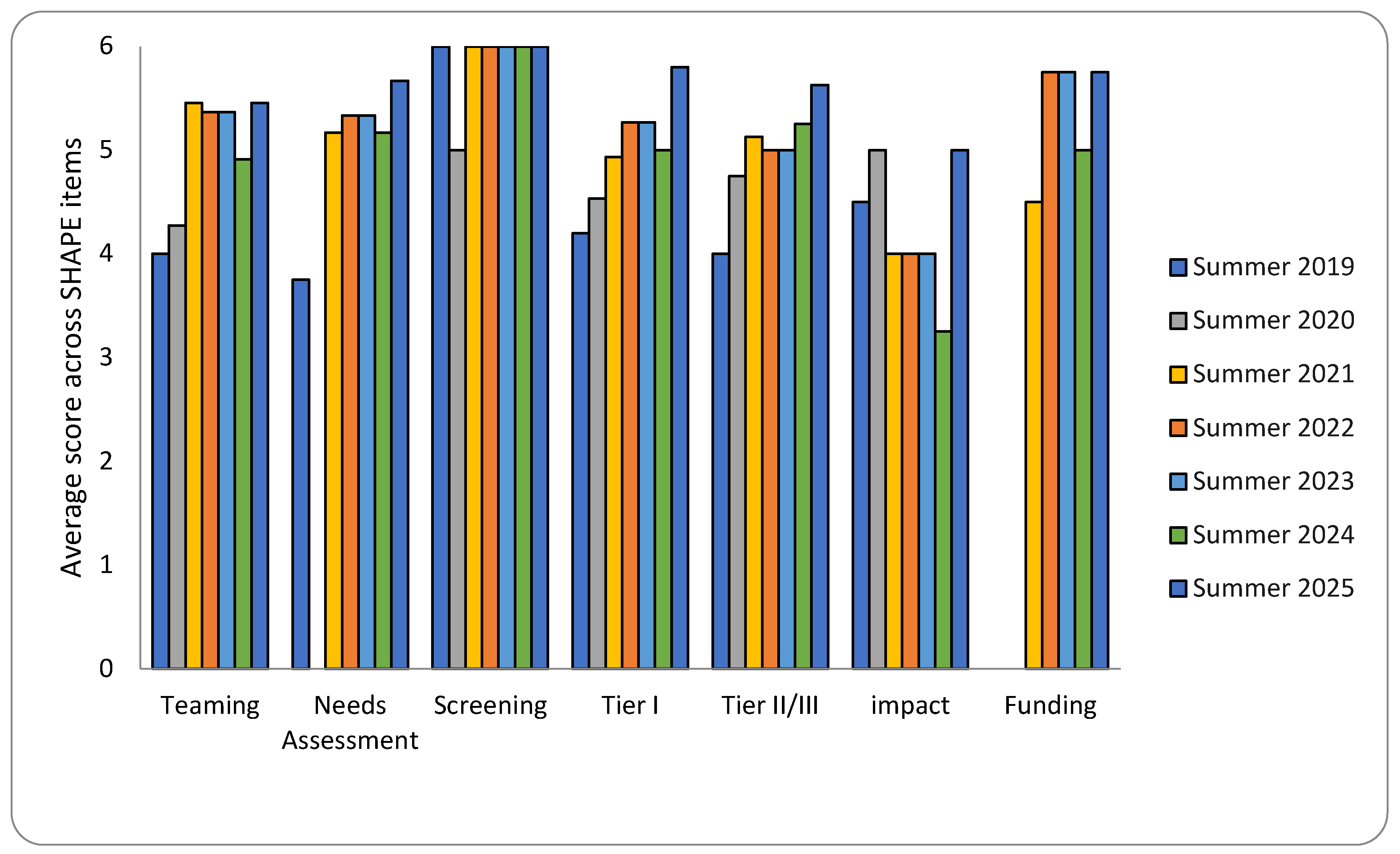
The seven years of SHAPE Likert-item data are presented in Figure 1. The team started completing the SHAPE in the summer of 2019, after they first learned of it. Not all years have data in all seven domains. For the first two years, the team did not complete the Needs Assessment or Funding items. It is unclear why they did not complete these items. The highest scores are in the domains of Universal Screening and Funding. The team reported following best practices for screening for several years, and they reported feeling confident in the district’s ability to administer a universal mental health screening program. Team ratings in the area of funding have increased across the summers it was scored, and the high scores suggest that the district is using all available resources to fund mental health care district-wide. Funding sources include state general fund dollars, state at-risk funds, grant funds, state incentive funds for sharing, and special education funding. Visual analysis of the data suggests improved fidelity to best practices in school mental health systems each year, except in the domain of impact. The first two years, the team likely overestimated their scores on these items. They felt positive about their progress in implementing this new system in the first years, and as they were able to see their progress in other areas, they could be more critical about their impact. A struggle related to impact continues to be sharing information with families and students, but the team made some progress in the last year by sharing information about the system with a variety of stakeholder groups (e.g., school board and parent–teacher groups).
Teaming, Tier I, and Tier II/III scores have increased across the seven years of reported data. Team members have worked hard to ensure the team is multidisciplinary and that there is time dedicated to attending meetings that is rarely usurped by other responsibilities. The team has worked hard to focus on data-based decision-making during meetings and to set and follow a structured agenda that focuses on matching student needs to interventions across the MTSS. Tier I scores have increased over the years. At one point in 2022, the elementary school counselor expressed feelings of burnout because teachers were looking to her to address all social, emotional, and behavioral concerns without ensuring fidelity of PBIS and SEL instruction in their classrooms. School leaders addressed this systemically by meeting with classroom teachers to ensure they had the training needed to implement Tier I instruction and they had the time and support to do so. Secondary social, emotional, and behavioral universal instruction began in earnest in fall 2021. The secondary principal developed SEL lesson plans, dedicated time in the weekly advisory schedule to instruction, and trained secondary teachers to implement the program. Summer 2022 SHAPE data reflect this implementation. In the 2024–25 academic year, the district adopted Character Strong, and confidence that appropriate universal supports were in place with fidelity increased. Finally, Tier II/Tier III scores increased across the seven years. From the beginning of implementation, the team reported Tier III met best practices, but Tier II was more difficult to implement. Assessing implementation fidelity of Tier II interventions and ensuring regular progress monitoring of Tier II interventions continue to be the primary implementation challenges.

3.4. Summary of Results

The seven years of screening data suggest that the CSMHS in this rural school is responsive to student mental health needs across the MTSS. This is indicated by tier thresholds that align with research-based guidelines (Fuchs & Fuchs, 2006). While individual student intervention data from Tier II and Tier III interventions would provide validation of the system’s effectiveness, the screening data provide preliminary evidence of system success. Further, the SHAPE data suggest that this small rural school was able to build capacity for implementation of best practices in a CSMHS across these seven years. It is possible that the SHAPE ratings reflect team member bias and increases in ratings over the years reflect familiarity with the measure; however, the district was able to implement Tier I supports in both the elementary and secondary buildings, they were able to utilize their building school counselors to provide Tier II supports, and they were able to access local school social workers to provide Tier III services. These successes are reflected in the SHAPE ratings. School personnel continue to build capacity to share the impact of the system with key stakeholders such as parents and students.

4. Discussion

These longitudinal case study data tentatively suggest that CSMHSs can be implemented with fidelity in a small rural school district. Screening data indicated that this school’s system is responsive to students’ needs across all tiers of support, while SHAPE data show that school personnel have successfully built the capacity to deliver a CSMHS aligned with best practices. As the district improved their implementation of best practices as measured by the SHAPE, both elementary and secondary screening data indicate an increase in responsiveness to student mental health needs across the MTSS. Specifically, SHAPE data suggest both schools increased their implementation of Tier I supports over the seven years, and this aligns with an increasing percentage of students who screen into Tier I, meaning student mental health needs are likely being met with universal supports. The data are, however, limited. Without data supporting the effectiveness of Tier II and Tier III interventions, we cannot conclude that these specific interventions are successful in decreasing student mental health difficulties. We can, however, tentatively conclude that the system is responsive to student needs given the percentage of students reporting mental health difficulties is within the accepted criteria for a successful MTSS (Fuchs & Fuchs, 2006). These conclusions are exploratory given this is only one school’s data and experience.
This school’s system is, however, not perfect. School personnel continue to struggle to measure Tier II intervention fidelity and to progress monitor across all Tier II interventions. The university consultant has met with the school counselors who deliver Tier II interventions to provide fidelity checklists and progress monitoring measures that match the interventions provided. While some progress has been made to complete regular fidelity checks and monitor the progress of all Tier II interventions at least monthly, school counselors’ biggest barrier to completing these components of the system is extensive demands on their time. Further, the team continues to work on fully implementing best practices in the area of impact. The team reported that documentation of the impact on student academic and mental health is completed often, but that this documentation is rarely shared outside the mental health team. This is likely due to the barrier of time. In recent years, the team has planned to share the type of data presented in this manuscript with the school board, with the parent and teacher organization, and with a student organization. The only presentation that occurred was with the student organization.
A strong indicator of the ability of this district to sustain implementation of their CSMHS is that they have experienced key personnel changes and continue to grow and sustain their ability to implement best practices. The first key personnel change was the school counselor after the first year of implementation, and a new secondary school counselor was immediately brought in to work. In year 3 of implementation, a new secondary principal was hired and at the same time a dean of students, which was a new position, was created. These two new hires supported the work, and the addition of the dean of students allowed the university consultant to take a step back from running team meetings. He was instrumental in building the capacity of the team to focus their monthly meetings on data-based problem solving. In year 4, a new secondary school counselor was hired, and she worked hard to implement a more rigorous Tier II intervention system. In year 6, the dean of students became the superintendent in response to a retirement, the secondary principal moved to the elementary principal position, and a new secondary principal was hired. Through all these changes, commitment to the system remained, and the SHAPE data suggest the capacity of school personnel to implement best practices continued to grow.
This commitment to their CSMHS is supported by the strong relationships between the team leadership and the external support staff who round out the team. The school social workers who provided Tier III supports have been consistent throughout the seven years of implementation. Rural areas experience mental health workforce shortages (Andrilla et al., 2018; Bureau of Health Workforce, 2025; Clopton & Knesting, 2006), and this community is no different. One aspect of CSMHSs is collaborating with community-based mental health providers to direct Tier III mental health services. In rural areas, this can be difficult. To solve this problem, this school district chose to work with a regional education agency that places school social workers into rural schools to support special education services. The district bought out the time of social workers working for this regional education agency so they could provide Tier III mental health services as directed by team data-based decision-making. This model has worked well and utilized mental health professionals already embedded in rural schools in the area. These social workers know the unique circumstances of the rural community and the individual students they serve.
Additionally, the successful implementation of a CSMHS in this rural school can be attributed to embedding mental health services within the district’s existing MTSS framework. The district was already familiar with MTSSs and was actively using it to address students’ academic needs. The elementary school personnel were also implementing PBIS, an MTSS approach focused on student behavior. By integrating additional mental health practices (e.g., universal mental health screening, Tier II SEL interventions, and Tier III social worker support) into these existing MTSS structures, the school required minimal training and was able to leverage the strengths of its current system.
Although the system did not explicitly address mental health stigma, previous research suggests that addressing mental health at school through mental health literacy programs and both targeted and individualized mental health services can normalize accepting mental health support (Ma et al., 2023; Song et al., 2023; McPhail et al., 2024). While there is no comparison to a school that is not implementing CSMHS, a large portion of 4th through 12th grade students complete the screening at each administration. In this state, the law requires parents or guardians to provide opt-in written consent for their students to complete the self-report screener; therefore, a majority of families are supportive of universal screening in this small, rural community. When the team agreed to offer Tier III school-based mental health services with a social worker, parents/guardians most often provided consent for those services and social worker rosters were filled. Future research is needed on the impact of the CSMHS on mental health stigma and its role in access to school-based mental health services.

4.1. Limitations

The results are limited to one small, rural school district in the Midwest and may not generalize to other small, rural school districts. CSMHSs are complex, requiring a network of interactions between settings inside and outside the school and community, interactions between individuals, and experiences with interventions (Lyon & Bruns, 2019). Rural school districts experience these interactions differently; however, this longitudinal case study can provide insights into how a small, rural school district can successfully implement and sustain CSMHS given limited resources.
Another limitation that may have introduced bias is the variability of participation in the screener. While the elementary school experiences fairly consistent participation across most of the screenings, it is unknown why there was a decrease in participation during the winter and spring of 2024. It is possible that teachers and students chose not to participate due to a problem within the system that needed to be addressed. Such systemic issues may have led to an incorrect interpretation that the system was responsive to student needs. It is also possible that teachers simply forgot to complete the administration of screenings, which would result in random error rather than systematic error within the data (Howell, 2013). At the secondary level, variability in participation rates may be due to random error, but it is more likely that the data are biased by systematic error. The SDQ is a self-report measure, and students can choose not to participate, biasing the data. Further, parents must provide active consent for students to participate in the screener. Past research suggests students who do not have active parent consent may experience higher levels of social, emotional, and behavioral struggles (Liu et al., 2017). Such bias would negatively impact the interpretation of the systemic screening data in this study.
Data from the SHAPE assessment may also be biased. The team implementing the CSMHS were also the team completing the SHAPE. The university consultant also participated in the SHAPE assessment, and this member may have introduced a more objective voice in consensus building. However, the university consultant is also part of the implementation team. The nature of the SHAPE assessment requires that items be completed by people knowledgeable about the daily implementation of the system. One way to validate the SHAPE’s Likert-type responses is to review the percentage of students who screen into each tier of the MTSS, which was completed as part of this study and validated the team’s ratings.

4.2. Future Research

Research on the ability of rural schools to effectively implement and sustain CSMHSs is limited. Reinke et al. (2025) describe a randomized control trial of a CSMHS that includes over 100 rural schools. They report that the 2026 academic year is the final year of the project and reported that participating schools have chosen to continue utilizing the system beyond the finalization of the project because they find the system and resources provided through the system “feasible, relevant, and useful to their schools” (Reinke et al., 2025, p. 12). Research on CSMHSs using rigorous research designs is needed to understand the impacts of CSMHSs on a variety of important student, teacher, and system-level variables. The data reported in this manuscript describes systemic data without presenting individual student data. There remain questions about the impact of Tier II and Tier III interventions on individual student mental health and academic achievement, and future data collection and analysis of this school’s system could further validate the conclusions of this paper. Further, more research is needed to understand how implementation of CSMHSs impacts school climate, teacher well-being, school discipline practices, and mental health stigma. Research might explore adaptations of CSMHS to better meet the needs of rural students, families, and educators, and address systemic marginalization that may occur within educational systems.

5. Conclusions

Rural school districts are often presented as desolate spaces unable to meet the needs of their students due to a lack of resources and workforce shortages; however, rural communities also exhibit strengths compared to urban and suburban communities. For example, studies have found that rural residents report higher levels of belonging and lower levels of loneliness (Card & Delgado-Ron, 2025; Monette, 2012). Rural communities, however, do face shortages of mental health providers and rural citizens often have to travel long distances to access mental health care (Andrilla et al., 2018; Bureau of Health Workforce, 2025; Clopton & Knesting, 2006), which opens the door for schools to step in to provide mental health supports for children and adolescents (Duong et al., 2021). This longitudinal case study demonstrates that a CSMHS can be implemented and sustained with fidelity in a small, rural school district, even amid resource constraints and personnel turnover. The district’s ability to integrate mental health services within existing MTSS structures, leverage community partnerships, and maintain strong leadership commitment was critical to their success. Although challenges are likely to arise, small rural schools may find a path to CSMHS implementation and sustainability.
School leaders are reporting increased behavioral and mental health needs of their students, and they want solutions (NASP, 2021). Policy makers across the US have attempted to enhance CSMHSs by funding large grant programs (e.g., Mental Health Service Professional Demonstration Grant Program from the U.S. Department of Education) and appropriating state dollars to school mental health initiatives (National Academy for State Health Policy, 2022). This is excellent work that will, if continued, support CSMHSs; however, this work does not specifically support schools in the development and sustained implementation of CSMHSs that most efficiently and effectively utilize the services of the school-based mental health providers these programs generate. Along with grant funding and state appropriations to increase the number of school mental health providers, policymakers and educational leaders might develop local technical centers to support schools in developing CSMHSs and provide incentive funds for beginning and sustaining this process. This rural district is an example of how appropriating funds in the right place with sustained coaching and support over time can result in successful implementation of CSMHSs.

Author Contributions

Conceptualization, N.R.S.; Methodology, N.R.S.; Formal analysis, N.R.S.; Writing—original draft, N.R.S. and C.M.; Writing—review & editing, N.R.S. and B.C.; Supervision, N.R.S.; Project administration, N.R.S.; Funding acquisition, N.R.S. All authors have read and agreed to the published version of the manuscript.

Funding

This research was funded by [Anonymous funder] grant number [File: # 2022-02-113].

Institutional Review Board Statement

The definition of “human subject” at 45 CFR 46.102(f) includes living individuals about whom an investigator obtains identifiable private information for research purposes. The data used in this study are complete de-identified data that the school gathered as part of the regular data collection with students. It is our understanding that these data do not meet the definition of human subjects research.

Informed Consent Statement

This is not human subjects research according to the definition provided, there was no need for a consent form.

Data Availability Statement

The data presented in this study are available on request from the corresponding author.

Conflicts of Interest

The authors declare no conflicts of interest.

References

  1. Anderson, R. L., & Gittler, J. (2005). Unmet need for community-based mental health and substance use treatment among rural adolescents. Community Mental Health Journal, 41(1), 35–49. [Google Scholar] [CrossRef] [Scilit] [PubMed]
  2. Anderson-Butcher, D., & Ashton, D. (2004). Innovative models of collaboration to serve children, youths, families, and communities. Children & Schools, 26(1), 39–53. [Google Scholar] [CrossRef] [Scilit]
  3. Andrilla, C. H. A., Patterson, D. G., Garberson, L. A., Coulthard, C., & Larson, E. H. (2018). Geographic variation in the supply of selected behavioral health providers. American Journal of Preventive Medicine, The Behavioral Health Workforce: Planning, Practice, and Preparation, 54(6), S199–S207. [Google Scholar] [CrossRef] [Scilit] [PubMed]
  4. Bird, D. C., Dempsey, P., & Hartley, D. (2001). Addressing mental health workforce needs in underserved rural areas: Accomplishments and challenges. Maine Rural Health Research Center. [Google Scholar]
  5. Blackstock, J., Chae, K., McDonald, A., & Mauk, G. (2018). Achieving access to mental health care for school-aged children in rural communities. The Rural Educator, 39(1), 12–25. [Google Scholar] [CrossRef] [Scilit]
  6. Bureau of Health Workforce. (2025). Designated health professional shortage areas statistics: First quarter of fiscal year 2026. U.S. Department of Health and Human Services, Health Resources and Services Administration (HRSA). Available online: https://data.hrsa.gov/Default/GenerateHPSAQuarterlyReport (accessed on 14 June 2026).
  7. Burt, B. A., Lundgren, K., & Schroetter, J. (2017). Learning from within: A longitudinal case study of an education research group. Studies in Graduate and Postdoctoral Education, 8(2), 128–143. [Google Scholar] [CrossRef] [Scilit]
  8. Campbell, A., & Anderson, C. M. (2011). Check-in/check-out: A systematic evaluation and component analysis. Journal of Applied Behavior Analysis, 44(2), 315–326. [Google Scholar] [CrossRef] [Scilit] [PubMed]
  9. Card, K., & Delgado-Ron, J. A. (2025). Do rural-urban differences in social environment act as baseeiers to social wellbeing? A cross-sectional study. Urban Science, 9(7), 248. [Google Scholar] [CrossRef] [Scilit]
  10. Centers for Disease Control and Prevention. (2021, June 28). About mental health. Centers for Disease Control and Prevention. Available online: https://www.cdc.gov/mental-health/about/?CDC_AAref_Val (accessed on 14 June 2026).
  11. Centers for Disease Control and Prevention. (2024). Youth risk behavior survey data summary & trends report: 2013–2023. U.S. Department of Health and Human Services. [Google Scholar]
  12. Cheesmond, N. E., Davies, K., & Inder, K. J. (2019). Exploring the role of rurality and rural identity in mental health help-seeking behavior: A systematic qualitative review. Journal of Rural Mental Health, 43(1), 45–59. [Google Scholar] [CrossRef] [Scilit]
  13. Cipriano, C., Strambler, M. J., Naples, L. H., Ha, C., Kirk, M., Wood, M., Sehgal, K., Zieher, A. K., Eveleigh, A., McCarthy, M., Funaro, M., Ponnock, A., Chow, J. C., & Durlak, J. (2023). The state of evidence for social and emotional learning: A contemporary meta-analysis of universal school-based SEL interventions. Child Development, 94(5), 1181–1204. [Google Scholar] [CrossRef] [Scilit] [PubMed]
  14. Clopton, K. L., & Knesting, K. (2006). Rural school psychology: Re-opening the discussion. Journal of Research in Rural Education, 21(5), 1–11. [Google Scholar]
  15. Conners, E. H., Stephan, S. H., Lever, N., Ereshefsky, S., Mosby, A., & Bohnenkamp, J. H. (2016). A national initiative to advance school mental health performance measurement. Advances in School Mental Health Promotion, 9, 50–69. [Google Scholar] [CrossRef] [Scilit]
  16. Cree, R. A., Bitsko, R. H., Robinson, L. R., Holbrook, J. R., Danielson, M. L., Smith, D. S., Kaminski, J. W., Kenney, M. K., & Peacock, G. (2016). Health care, family, and community factors associated with mental, behavioral, and developmental disorders and poverty among children aged 2–8 years—United States. MMWR, 67(5), 1377–1383. [Google Scholar]
  17. Duong, M. T., Bruns, E. J., Lee, K. L., Cox, S., Coifman, J., Mayworm, A., & Lyon, A. J. (2021). Rates of mental health service utilization by children and adolescents in schools and other common service settings: A systematic review and meta-analysis. Administration and Policy in Mental Health and Mental Health Services Research, 48, 420–438. [Google Scholar] [CrossRef] [Scilit] [PubMed]
  18. Durlak, J. A., Mahoney, J. L., & Boyle, A. E. (2022). What we know, and what we need to find out about universal, school-based social and emotional learning programs for children and adolescents: A review of meta-analyses and directions for future research. Psychological Bulletin, 148, 765–782. [Google Scholar] [CrossRef] [Scilit]
  19. Eaton, W. W., Muntaner, C., Smith, C., Tien, A., & Ybarra, M. (2004). Center for epidemiologic studies depression scale: Review and revision (CESD and CESD-R). In M. E. Maruish (Ed.), The use of psychological testing for treatment planning and outcomes assessment (3rd ed., pp. 363–377). Lawrence Erlbaum. [Google Scholar]
  20. Eber, L., Barrett, S., Perales, K., Jeffrey-Pearsall, J., Pohlman, K., Putnam, R., Splett, J., & Weist, M. D. (2019). Advancing education effectiveness: Interconnecting school mental health and school-wide PBIS, volume 2: An implementation guide. Center for Positive Behavior Interventions and Supports. University of Oregon Press. [Google Scholar]
  21. Fastbridge. (n.d.). SAEBRS and mySAEBRS norms and benchmarks. Available online: https://fastbridge.illuminateed.com/hc/en-us/articles/1260802344370-SAEBRS-and-mySAEBRS-Norms-and-Benchmarks (accessed on 5 February 2026).
  22. Fuchs, D., & Fuchs, L. S. (2006). Introduction to response to intervention. Teaching Exceptional Children, 38(6), 6–11. [Google Scholar] [CrossRef] [Scilit]
  23. Fuchs, D., & Fuchs, L. S. (2017). Critique of the national evaluation of response to intervention: A case for simpler frameworks. Exceptional Children, 83(3), 255–268. [Google Scholar] [CrossRef] [Scilit]
  24. Gandhi, A. G., Lembke, E., Pierce, J., Smith, H., Swanlund, A., Casasanto-Ferro, J., Majeika, C. E., & Riley-Tillman, T. C. (2026). Measuring implementation of multi-tiered systems of support (MTSS): Development and validation of the integrated MTSS fidelity rubric (IMFR). Assessment for Effective Intervention, 51(2), 96–112. [Google Scholar] [CrossRef] [Scilit]
  25. Gibbons, K., & Brown, S. (2014). Best practices in evaluating psychoeducational services base on student outcome data. In P. L. Harrison, & A. Thomas (Eds.), Best practices in school psychology: Systems-level services (pp. 355–370). National Association of School Psychologists. [Google Scholar]
  26. Goforth, A. N., Yosai, E. R., Brown, J. A., & Shindorf, Z. R. (2017). A multi-method inquiry of the practice and context of rural school psychology. Contemporary School Psychology, 21(1), 58–70. [Google Scholar]
  27. Goodman, R., Meltzer, H., & Bailey, V. (1998). The strengths and difficulties questionnaire: A pilot study on the validity of the self-report version. European Child & Adolescent Psychiatry, 7, 124–130. [Google Scholar] [CrossRef] [Scilit] [PubMed]
  28. Green, J. G., McLaughlin, K. A., Alegría, M., Costello, E. J., Gruber, M. J., Hoagwood, K., Leaf, P. J., Olin, S., Sampson, N. A., & Kessler, R. C. (2013). School mental health resources and adolescent mental health service use. Journal of the American Academy of Child and Adolescent Psychiatry, 52(5), 501–510. [Google Scholar] [CrossRef] [Scilit] [PubMed]
  29. Hollingsworth, R., & Hendrix, E. M. (1977). Community mental health in rural settings. Professional Psychology, 8(2), 232–238. [Google Scholar] [CrossRef] [Scilit]
  30. Hoover, S., & Bostic, J. (2021). Schools as a vital component of the child and adolescent mental health system. Psychiatric Services, 72(1), 37–48. [Google Scholar] [CrossRef] [Scilit] [PubMed]
  31. Howell, D. C. (2013). Statistical methods for psychology (8th ed.). Wadsworth. [Google Scholar]
  32. Hoyt, D. R., Conger, R. D., Valde, J. G., & Weihs, K. (1997). Psychological distress and help seeking in rural America. American Journal of Community Psychology, 25(4), 449–470. [Google Scholar] [CrossRef] [Scilit] [PubMed]
  33. Kearney, C., & Graczyk, P. (2020). A multidimensional, multi-tiered system of supports model to promote school attendance and address school absenteeism. Clinical Child and Family Psychology Review, 23, 316–337. [Google Scholar] [CrossRef] [Scilit] [PubMed]
  34. Kepley, H. O., & Streeter, R. A. (2018). Closing behavioral health workforce gaps: A HRSA program expanding direct mental health service access in underserved areas. American Journal of Preventive Medicine, 54(6), S190–S191. [Google Scholar] [CrossRef] [Scilit] [PubMed]
  35. Kern, L., Weist, M. D., Mathur, S. R., & Barber, B. R. (2022). Empowering school staff to implement effective school mental health services. Behavioral Disorders, 47(3), 207–219. [Google Scholar] [CrossRef] [Scilit]
  36. Kieling, C., Buchweitz, C., Caye, A., Silvani, J., Ameis, S. H., Brunoni, A. R., Cost, K. T., Courtney, D. B., Georgiades, K., Merikangas, K. R., Henderson, J. L., Polanczyk, G. V., Rohda, L. A., Salum, G. A., & Szatmari, P. (2024). Worldwide prevalence and disability from mental disorders across childhood and adolescence: Evidence from the global burden of disease study. JAMA Psychiatry, 81(4), 347–356. [Google Scholar] [CrossRef] [Scilit] [PubMed]
  37. Kilgus, S. P., Eklund, K. R., von der Embse, N. P., Taylor, C. N., & Sims, W. A. (2016). Psychometric defensibility of the social, academic, and emotional behavior risk screener (SAEBRS) teacher rating scale and multiple gating procedure within elementary and middle school samples. Journal of School Psychology, 58, 21–39. [Google Scholar] [CrossRef] [Scilit] [PubMed]
  38. Kittelman, A., McIntosh, K., Mercer, S. H., Nese, R., So, S., & George, H. P. (2025). Factors predicting sustained implementation of tier 2 and tier 3 positive behavioral interventions and supports. Exceptional Children, 91(2), 211–228. [Google Scholar] [CrossRef] [Scilit]
  39. Lipskaya-Velikovsky, L., & Krupa, T. (2023). Closing the gap: From research to practice in mental health interventions. International Journal of Environmental Research and Public Health, 20(3), 2141. [Google Scholar] [CrossRef] [Scilit] [PubMed]
  40. Liu, C., Cox, R. B., Jr., Washburn, I. J., Croff, J. M., & Crethar, H. C. (2017). The effects of requiring parental consent for research on adolescents’ risk behaviors: A meta-analysis. Journal of Adolescent Health, 61(1), 45–52. [Google Scholar] [CrossRef] [Scilit] [PubMed]
  41. Lyon, A. R., & Bruns, E. J. (2019). User-centered redesign of evidence-based psychosocial interventions to enhance implementation—Hospitable soil or better seeds? JAMA Psychiatry, 76(1), 3–4. [Google Scholar] [CrossRef] [Scilit] [PubMed]
  42. Ma, K. K. Y., Anderson, J. K., & Burn, A. M. (2023). Review: School-based interventions to improve mental health literacy and reduce mental health stigma—A systematic review. Child Adolescent Mental Health, 28, 230–240. [Google Scholar] [CrossRef] [Scilit] [PubMed]
  43. McIntosh, K., Filter, K. J., Bennett, J. L., Ryan, C., & Sugai, G. (2010). Principles of sustainable prevention: Designing scale-up of school-wide positive behavior support to promote durable systems. Psychology in the Schools, 47(1), 5–21. [Google Scholar] [CrossRef] [Scilit]
  44. McKay-Brown, L., & Tutton, T. (2022). Tier 3: Intensive approaches, interventions, and supports. In School-wide positive behaviour support (pp. 86–105). Routledge. [Google Scholar]
  45. McPhail, L., Thornicroft, G., & Gronholm, P. C. (2024). Help-seeking processes related to targeted school-based mental health services: Systematic review. BMC Public Health, 24(1), 1217. [Google Scholar] [CrossRef] [Scilit] [PubMed]
  46. Meek Farley, J., Gleason, E., Walther, J., & Saunders, D. (2026). The experiences of regional educational agency staff supporting the implementation of comprehensive school mental health systems. School Mental Health, 18(1), 165–177. [Google Scholar] [CrossRef] [Scilit]
  47. Minot, D. (2022, July 14). Mental health in schools: Moving stigma out in the open. Behavioral Health News. Available online: https://behavioralhealthnews.org/mental-health-in-schools-moving-stigma-out-in-the-open/ (accessed on 13 March 2026).
  48. Monette, M. (2012). Rural life hardly healthier. Canadian Medical Association Journal, 184(17), E889–E890. [Google Scholar] [CrossRef] [Scilit] [PubMed]
  49. Mulé, C., Briggs, A., & Song, S. (2014). Best practices in working with children from economically disadvantaged backgrounds. In P. Harrison, & A. Thomas (Eds.), Best practices for school psychology: Foundations (pp. 129–142). National Association of School Psychologists. [Google Scholar]
  50. NASP. (2021, July 13). Shortage of school psychologists. National Association of School Psychologists. Available online: https://www.nasponline.org/research-and-policy/policy-priorities/critical-policy-issues/shortage-of-school-psychologists (accessed on 13 March 2026).
  51. National Academy for State Health Policy. (2022). States take actions to address students’ mental health in schools. Available online: https://nashp.org/states-take-action-to-address-childrens-mental-health-in-schools/ (accessed on 13 March 2026).
  52. National Center for School Mental Health. (n.d.). About us. Available online: https://www.theshapesystem.com/about-us/ (accessed on 13 March 2026).
  53. Polaha, J., Dalton, W. T., & Allen, S. (2011). The prevalence of emotional and behavior problems in pediatric primary care serving rural children. Journal of Pediatric Psychology, 36(6), 652–660. [Google Scholar] [CrossRef] [Scilit] [PubMed]
  54. Probst, J. C., Laditka, S. B., Moore, C. G., Harun, N., Powell, M. P., & Baxley, E. G. (2006). Rural-urban differences in depression prevalence: Implications for family medicine. Family Medicine, 38(9), 653–660. [Google Scholar] [PubMed]
  55. Reinke, W. M., Herman, K. C., Thompson, A., & Owens, S. (2025). A comprehensive school-based mental health model: A decade in the making. Behavioral Sciences, 15(10), 1428. [Google Scholar] [CrossRef] [Scilit] [PubMed]
  56. Rural Health Information Hub. (n.d.). Rural mental health. Rural Health Info.org. Available online: https://www.ruralhealthinfo.org/topics/mental-health (accessed on 2 February 2026).
  57. Sappenfield, O. R., Leong, A., & Lebrun-Harris, L. A. (2023). Prevalence, socio-demographic and household characteristics, and impacts of disrupted child care due to the COVID-19 pandemic in the U.S., April-July 2021. Children and Youth Services Review, 149, 106589. [Google Scholar] [CrossRef] [Scilit] [PubMed]
  58. Shelton, A. J., & Owens, E. W. (2021). Mental health services in the United States public high schools. Journal of School Health, 91(1), 70–76. [Google Scholar] [PubMed]
  59. Skaar, N. R. (2022). Development and implementation of a rural school-based mental health system: An illustration of implementation frameworks. Research and Practice in the Schools, 9(1), 49–62. Available online: https://www.txasp.org/tasp-journal (accessed on 14 June 2026).
  60. Smalley, K. B., Warren, J. C., & Rainer, J. (2012). Rural mental health: Issues, policies, and best practices. Springer Publishing Company. [Google Scholar]
  61. Song, N., Hugh-Jones, S., West, R. M., Pickavance, J., & Mir, G. (2023). The effectiveness of anti-stigma intervention for reducing mental health stigma in young people: A systematic review and meta-analysis. Global Mental Health, 10, e39. [Google Scholar] [CrossRef] [Scilit] [PubMed]
  62. Stewart, H., Jameson, J. P., & Curtin, L. (2015). The relationship between stigma and self-reported willingness to use mental health services among rural and urban older adults. Psychological Services, 12(2), 141–148. [Google Scholar] [CrossRef] [Scilit] [PubMed]
  63. Stoiber, K. C., & Gettinger, M. (2016). Multi-tiered systems of support and evidence-based practices. In S. R. Jimerson, M. K. Burns, & A. M. VanDerHeyden (Eds.), Handbook of response to intervention: The science and practice of multi-tiered systems of support (pp. 121–141). Springer. [Google Scholar]
  64. Sugai, G., & Horner, R. (2002). The evolution of discipline practices: School-wide positive behavior supports. Child and Family Behavior Therapy, 24, 23–50. [Google Scholar] [CrossRef] [Scilit]
  65. Tracz, S. M., Beare, P., & Torgerson, C. (2018). A longitudinal case study of a school-university partnership for training teachers. Journal of School Administration Research and Development, 3(1), 42–56. Available online: https://files.eric.ed.gov/fulltext/EJ1190935.pdf (accessed on 13 March 2026). [CrossRef] [Scilit]
  66. U.S. Department of Health and Human Services. (n.d.). 2021 national survey on drug use and health detailed tables. Available online: https://www.samhsa.gov/data/report/2021-nsduh-detailed-tables (accessed on 2 February 2026).
  67. Whitney, D. G., & Peterson, M. D. (2019). US national and state-level prevalence of mental health disorders and disparities of mental health care use in children. JAMA Pediatrics, 173(4), 389–391. [Google Scholar] [CrossRef] [Scilit] [PubMed]
  68. Zakszeski, B. N., Ormiston, H. E., Nygaard, M. A., & Carlock, K. (2025). Informant discrepancies in universal screening as a function of student and teacher characteristics. School Psychology Review, 54(1), 128–142. [Google Scholar] [CrossRef] [Scilit]
Figure 1. Implementation of best practices as measured by the SHAPE.
Education 16 00977 g001
Table 1. Secondary MTSS tier distributions.
Year 1 (2017–18)Year 2 (2018–19)Year 3 (2019–20)Year 4 (2020–21)Year 5 (2021–22)Year 6 (2022–23)Year 7 (2023–24)
FWSFWSFWSFWSFWSFWSFWS
Tier I83%85%88%90%92%89%89%85% 85%85%88%88%87%90%86%91%85%93%93%92%
Tier II9%8%6%4%3%6%7%10% 10%9%7%9%5%12%3%5%6%1%1%3%
Tier III8%7%7%6%4%6%5%5% 5%6%5%3%8%3%11%5%9%6%6%5%
n =206186144142180129203172 195180193193170166160139160204197158
Note. F = fall, W = winter, S = spring; tier thresholds are expected to be ≥80% for Tier I, ≤15% for Tier II, and ≤5% for Tier III.
Table 2. Elementary MTSS tier distributions.
Year 1 (2017–18)Year 2 (2018–19)Year 3 (2019–20)Year 4 (2020–21)Year 5 (2021–22)Year 6 (2022–23)Year 7 (2023–24)
FWSFWSFWSFWSFWSFWSFWS
Tier I 88%88% 91%91%92%88%88%85%91%90%87%92%93%93%
Tier II 7%8% 6%7%6%9%9%9%8%8%9%5%4%5%
Tier III 5%4% 3%2%2%3%3%6%1%2%4%3%3%2%
n = 279274 276275279320303292248260254270236195
Note. F = fall, W = winter, S = spring; tier thresholds are expected to be ≥80% for Tier I, ≤15% for Tier II, and ≤5% for Tier III.
Disclaimer/Publisher’s Note: The statements, opinions and data contained in all publications are solely those of the individual author(s) and contributor(s) and not of MDPI and/or the editor(s). MDPI and/or the editor(s) disclaim responsibility for any injury to people or property resulting from any ideas, methods, instructions or products referred to in the content.