


Abstract
This study examined two assessment approaches—a case comparison prompt and a reasoning chain construction task to elicit students’ knowledge and application of green chemistry within the context of SN1 and SN2 reactions. The case comparison prompt presented students with a context-specific evaluation of two reactions, whereas the reasoning chain construction task required a general comparison of SN1 and SN2 reactions. Following each open-ended assessment, students were asked to select a conclusion regarding the overall greener reaction. The assessments were administered as an online survey, and student responses were analyzed using the twelve principles of green chemistry. Analysis of student responses showed that students consistently selected the same reaction type across assessments despite differences in task format. Across both assessments, students most frequently prioritized the use of safer solvents over considerations related to stereochemical outcomes, leading them to identify the SN1 reaction as the greener option. Overall, this study reveals how students apply green chemistry considerations to organic reactions across two open-ended assessment formats and demonstrates consistent patterns in their conclusions despite differences in the assessment formats. Importantly, the findings also revealed alternative lines of reasoning and misconceptions that are not readily captured by closed-ended assessments alone.
1. Introduction
The integration of green and sustainable chemistry (GSC) into the undergraduate curriculum has gained increasing attention in recent years, aiming to equip students with an understanding of both chemical processes and their broader environmental and societal implications (Aubrecht et al., 2019; Burmeister et al., 2012; V. G. Zuin et al., 2021). Embedding sustainability into the chemistry curriculum empowers students to think critically about the life cycle of chemicals, make informed choices in laboratory and industrial settings, and contribute to a more sustainable future. Green chemistry education also fosters interdisciplinary collaboration, innovation, and ethical awareness and enables students to address global challenges such as climate change, pollution, and resource depletion (Iles & Mulvihill, 2012; Widyantoro et al., 2025; Gorito & Morais, 2026; Wissinger et al., 2021). Recognizing the importance of green chemistry education, the 2023 ACS Guidelines mandate that ACS-approved undergraduate programs include in their curriculum a working knowledge of the twelve principles of green chemistry (ACS Guidelines for Bachelor’s Degree Programs, 2023).
Research on the integration of green chemistry across different educational levels and instructional contexts has expanded over the past three decades (Basheer et al., 2025; Eilks & Zuin, 2018; V. Zuin & Mammino, 2015). However, prior studies indicate that green chemistry instruction faces significant challenges, and curricular implementations frequently emphasize green chemistry superficially, primarily through traditional teaching strategies that frame green chemistry as an add-on of technical content rather than as a transformative framework (Marques et al., 2020). In a review examining 284 papers published in the Journal of Chemical Education, about half (N = 143) were identified as incorporating nontraditional teaching strategies for integrating green chemistry into chemistry instruction (Marcelino et al., 2023). Despite their strong intentions, many of these teaching experiences and intervention proposals remain limited to isolated curriculum implementations and are insufficiently evaluated. Green chemistry education research has also largely emphasized instructional and laboratory innovations, with limited focus on the development of assessments to support and evaluate student learning outcomes. Alongside didactic teaching strategies, the development of robust assessments in green chemistry education is necessary to align instructional goals with measurable learning outcomes and to support evidence-based pedagogical decisions. Shepard (2000) proposed a conceptual framework grounded in social-constructivist perspectives, emphasizing that classroom assessment should function as an ongoing, instructional process. Black and Wiliam (1998) examined roughly 250 studies and found that effective classroom assessment significantly improves student learning, especially when supported by meaningful, high-quality feedback. Structured assessments are therefore essential for tracking students’ progress, identifying limitations in their understanding, and supporting green chemistry learning and systems thinking.
While closed-ended assessments provide a measure of student knowledge, they are limited in identifying partially correct or incorrect student conceptions (Lau et al., 2011; McKenna, 2019). Correct responses to such assessment items often provide only a partial view of student understanding and may be misinterpreted as evidence that students possess and can appropriately apply the underlying knowledge. In many cases, students instead rely on memorized procedures or heuristics that lack a strong grounding in scientific principles to arrive at an answer (Cooper et al., 2013; Maeyer & Talanquer, 2010). Furthermore, the nature of course assessments strongly signals to students what is valued, often shaping how they approach learning based on what they expect to be assessed (Momsen et al., 2013; Scouller, 1998). To support the development of robust knowledge frameworks, assessments should require students to integrate and connect multiple ideas (Underwood et al., 2018). Therefore, the development and integration of open-ended assessment tools is essential for developing and revealing students’ knowledge and understanding of green chemistry. Case comparison prompts and reasoning chain construction tasks are two notable approaches that can provide insight into their reasoning processes and underlying cognitive structures.
1.1. Case Comparison Prompts
Case comparison prompts are structured assessment tasks in which students evaluate two or more cases by identifying similarities, differences, and salient features to justify claims and reveal underlying conceptual understanding. Findings from a meta-analysis across disciplines indicate that intentionally structured contrasting cases support learners in identifying and discriminating relevant variables within problem contexts by prompting comparisons of critical similarities and differences across two or more cases (Alfieri et al., 2013). For example, Schwartz et al. (2011) demonstrated that students who constructed a generalized explanation of density across multiple cases developed a deeper understanding than those who examined the cases in isolation. Case comparison prompts thus enhance learning by promoting analogical reasoning and reducing cognitive load, helping students focus on the most relevant aspects of a problem (Graulich & Lieber, 2024; Graulich & Schween, 2018). They also strengthen students’ ability to apply learned concepts in novel situations, a skill particularly important in green chemistry education, where there is no absolute definition of “green” or “sustainable.” In this context, students must make informed decisions about which products to use and which unintended byproducts or side effects to accept. By using case comparison prompts to evaluate reactions or alternatives, students can critically assess which options are “greener”; that is, which are more sustainable or environmentally preferable based on specific value propositions. This approach allows students to practice the judgment and reasoning required for sustainability-focused decision-making in chemistry. Reyes et al. (2022) reported a study in which students enrolled in an upper-division chemistry course Green Chemistry and Sustainable Synthesis applied concepts and calculations from green chemistry, life cycle assessment (LCA), and systems thinking to their capstone projects. Each project involved a comparative and complementary evaluation of two distinct synthetic processes producing the same product. The use of comparative and complementary methods enabled students to critically analyze, discuss, and prioritize their findings. This facilitates an informed evaluation of the two synthetic routes equipping students to become informed and responsible decision-makers.
Grieger and Leontyev (2023) have developed case comparison prompts that evaluate the greenness of oxidation reactions by comparing epoxidation performed on two different substrates under distinct reaction conditions. Analysis of student responses indicated that they correctly incorporated several green chemistry principles into their reasoning, with the most frequently and accurately applied being the use of renewable feedstocks, design for energy efficiency, and the use of safer solvents and auxiliaries. Yue and Zhang (2024) recently integrated green techniques into an undergraduate chemical design course by employing case studies of two widely manufactured industrial products, phenol and ibuprofen. These curriculum exercises were used to expose students to authentic green chemistry industrial processes.
Armstrong et al. (2024) administered a case comparison prompt termed the Two Methods Choice task in which students compared two alternative methods for synthesizing cinnamaldehyde and justified which method was greener: one using a renewable feedstock (cinnamon tree bark) and the other relying on a fossil-fuel-derived precursor. Analysis of student responses revealed that students’ reasoning incorporated a wide range of green chemistry principles, including renewability and reduction of hazard, energy and waste in evaluating these two methods.
Open-ended prompts can present a limitation that students may omit core ideas or key conceptual elements that instructors intend them to incorporate, making it difficult to determine whether omissions reflect gaps in understanding or differences in interpretation of the task. One approach to address this limitation is the use of reasoning chain construction tasks, in which students are provided with a set of predefined, conceptually accurate content elements and are asked to organize and connect these elements to construct an argument. This structure ensures that essential disciplinary ideas are available to students while still requiring them to engage in meaningful reasoning, thereby offering clearer insights into how students relate and apply relevant core concepts.
1.2. Reasoning Chain Construction Task
The reasoning chain construction task is an assessment format originally developed by physics education researchers, designed to elicit and analyze students’ reasoning patterns, and it was first applied to examine students’ reasoning about kinematics graphs (J. C. Speirs et al., 2016). In this task, students respond to a question by selecting from a list of reasoning elements (all of which are factually correct) to construct a coherent chain of reasoning that supports the chosen conclusion. This approach requires students to organize conceptual knowledge into a logical sequence of inferences. An important goal of the reasoning chain task is, to some extent, disentangle students’ reasoning from their conceptual understanding. While reasoning chain tasks have been employed extensively in physics education (Lindsey et al., 2023; J. Speirs et al., 2024), they are rarely seen in chemistry education. Nagel and Lindsey (2022) adopted the reasoning chain construction task to support student explanations of chemical bonding. Their findings indicated that use of reasoning task led students to generate richer explanations about energy changes in bond breaking and formation.
1.3. Organic Reaction Mechanisms
Reaction mechanisms are foundational in organic chemistry for conveying concepts of chemical reactivity and the factors that influence it (Popova & Bretz, 2018). Instruction on reaction mechanisms typically begins with nucleophilic substitution reactions, particularly SN1 and SN2 (Houseknecht, 2010). Because these topics appear early in the course sequence, substitution reactions are often students’ first formal exposure to thinking about chemical reactivity. However, predicting and explaining the reactivity of substrates undergoing the four major mechanistic pathways (SN1, SN2, E1, E2) present a multivariate challenge for students (Arellano & Towns, 2014; Finkenstaedt-Quinn et al., 2020; Nartey et al., 2024). Developing an understanding of SN1 and SN2 pathways helps students to analyze how substrate structure, leaving group ability, solvent effects, and nucleophile strength influence reaction outcomes. SN1 and SN2 reactions can also serve as a platform for evaluating students’ application of green chemistry principles, allowing students to connect reaction conditions with sustainability considerations. This provides an opportunity for students to simultaneously consider chemical reactivity and sustainability by comparing how factors such as solvent choice, reagent strength, and reaction conditions influence both mechanism and environmental impact. This aligns with the design principle for case studies proposed by Day et al. (2024) that students use core chemistry knowledge to interpret and evaluate green and sustainable chemistry phenomena, where case studies function as contexts for applying, rather than learning, fundamental chemical principles.
We sought to examine how students apply green chemistry concepts when reasoning about substitution reactions and the consistency of their responses across two open-ended assessment formats.
1.4. Research Questions
In this study, we examined two assessment approaches, case comparison prompt and reasoning chain construction task, to evaluate students’ knowledge and application of green chemistry principles within the context of SN1 and SN2 reactions. Specifically, we compared the nature of student responses in the two open-ended prompts and investigated the consistency of students’ conclusions across these assessment formats.
(RQ1) How do students apply green chemistry principles to evaluate reaction greenness across two different assessment formats?
(RQ2) How consistent are students’ responses across case comparison prompt and reasoning chain construction task when evaluating the greenness of SN1 and SN2 reactions?
2. Materials and Methods
2.1. Sample
Data for this study were collected during the Fall 2025 semester from undergraduate students enrolled in first-semester organic chemistry labs at a medium-sized, research-intensive university in the Midwestern United States. Seven coordinated lab sections (21–24 students each) were taught by four graduate teaching assistants. Most of the students were co-enrolled in a first-semester organic chemistry lecture course during the semester of data collection. The authors of this manuscript were not involved in the direct instruction of students in either the lecture or laboratory components of the course.
2.2. Data Collection
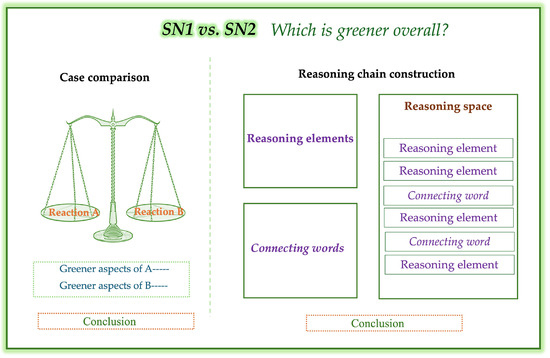
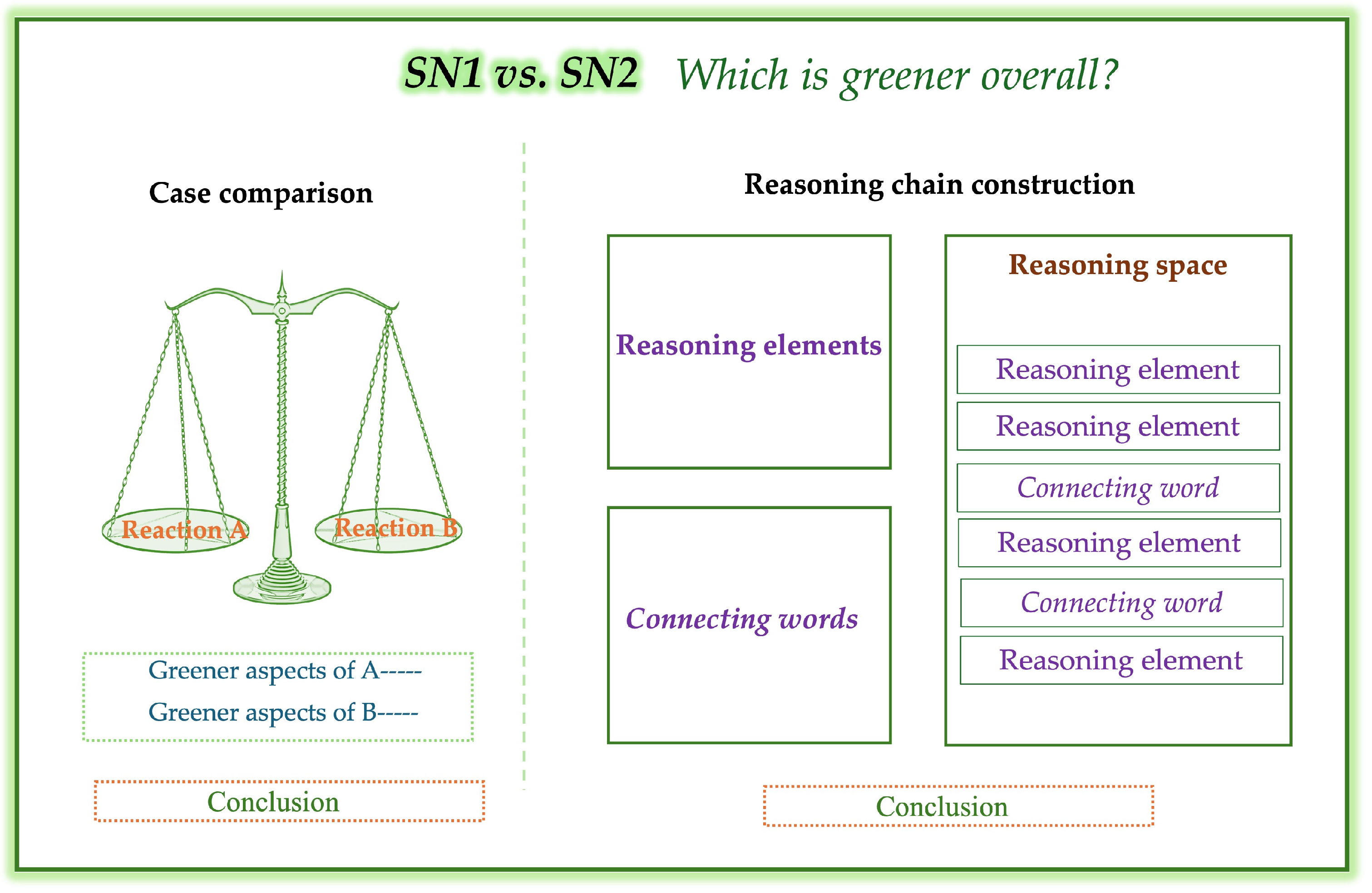
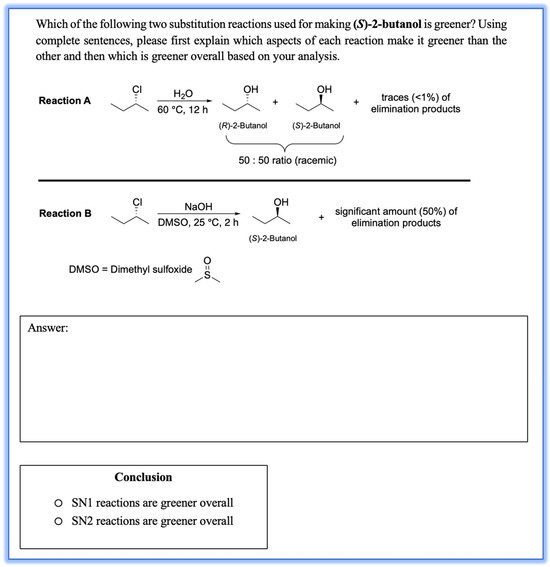
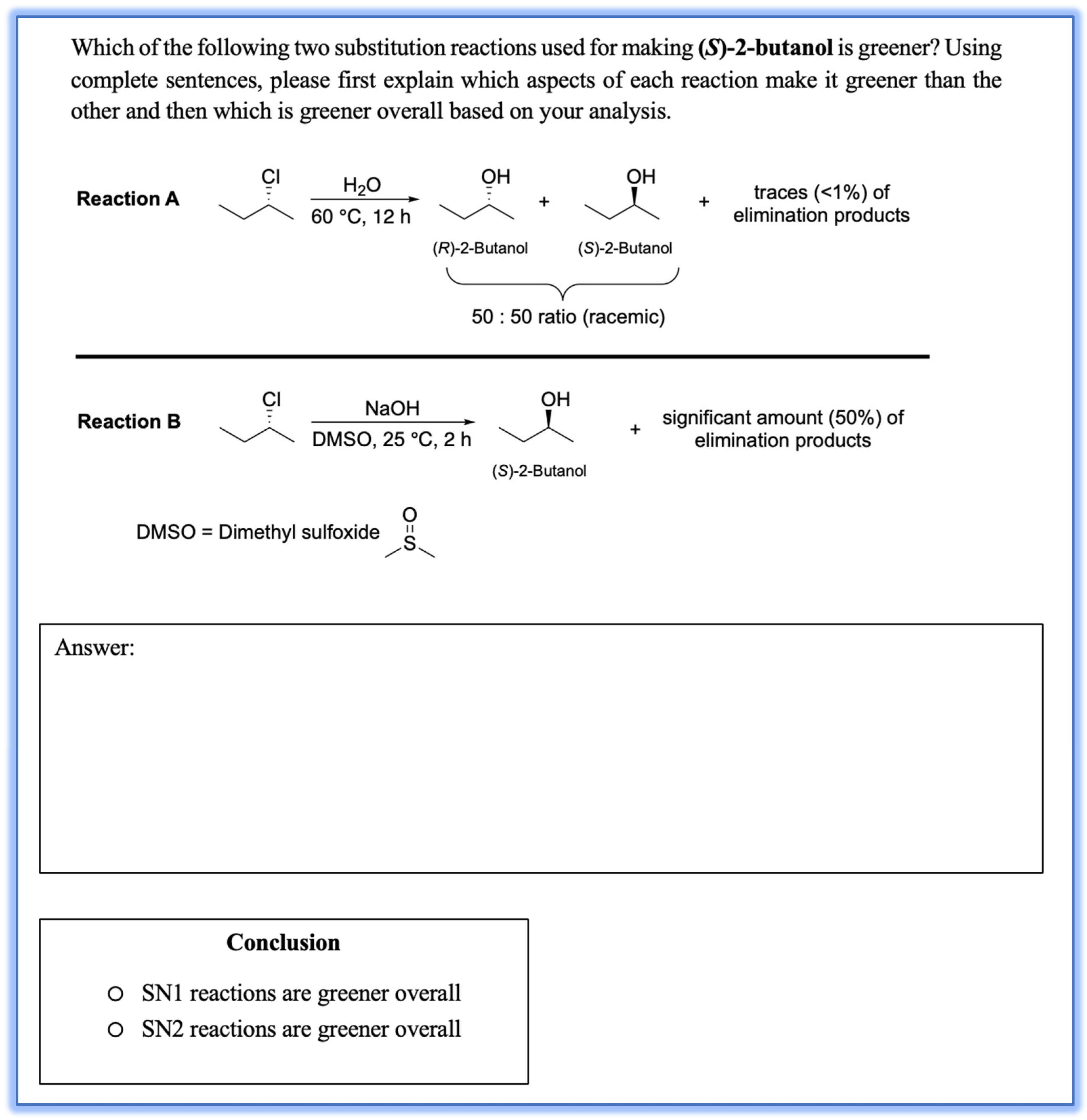
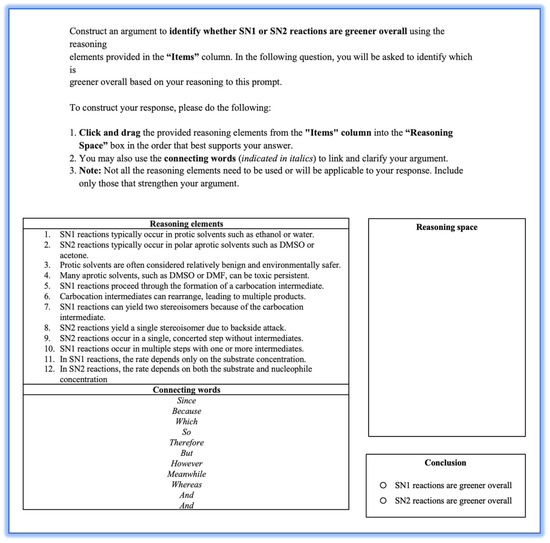
This study was approved by the university’s institutional review board (IRB0004540). Figure 1 presents a visual summary of the assessment tasks, whereas Figure 2 and Figure 3 display the corresponding assessments—the case comparison prompt and the reasoning chain construction task, respectively. The questions were administered as a survey during Week 10 of the 16-week semester. Students were given three weeks to complete the survey. The survey was delivered via Qualtrics, and students accessed it through a link provided in the course learning management system. Students who participated in the study received five bonus points which correspond to less than 1% of the overall course points for the semester. All participants provided informed consent for their responses to be used in the study.
Figure 1.
Visual summary of the assessment tasks used in this study, showing the case comparison prompt and the reasoning chain construction task designed to elicit students’ reasoning about the relative greenness of SN1 and SN2 reactions.
Figure 2.
Case comparison prompt used in the study. Reaction A is carried out in a polar protic solvent (H2O) at elevated temperature and proceeds via an SN1 mechanism, yielding two stereoisomers with traces of elimination products. Reaction B is conducted in a polar aprotic solvent (DMSO) at room temperature with a strong nucleophile (OH–), follows an SN2 mechanism, and yields a single stereoisomer along with significant elimination products. Students were asked to identify the overall greener reaction after explaining the green chemistry aspects of each reaction. Bold formatting was used in the prompt to direct students’ attention to specific parts of the text.
Figure 3.
Reasoning chain construction task used in this study. Students were provided with instructions, a set of reasoning elements, and connecting words, which they were asked to drag into a designated reasoning space to construct a coherent argument evaluating the greenness of SN1 and SN2 reactions. Based on their reasoning, students were asked to identify the overall greener reaction as their conclusion. Bold formatting was used in the prompt to direct students’ attention to specific parts of the text.
2.3. Setting
Green chemistry principles and concepts were integrated across both the lecture and laboratory components of the course. The lecture course included an introduction to the twelve principles of green chemistry. The laboratory component consisted of eight experiments that emphasized common laboratory techniques (e.g., distillation, TLC, extraction, and crystallization) as well as the synthesis of organic compounds (e.g., isopentyl acetate and acetaminophen). Students were also introduced to concepts related to SN1 and SN2 reactions during a laboratory activity on competitive nucleophiles and to green chemistry considerations through laboratories focused on the oxidation and reduction of 5-methylfurfural. Green chemistry topics emphasized in the laboratory included waste prevention, use of biobased materials, energy efficiency, less hazardous synthetic methods, atom economy, and solvent selection (including its impact on reaction efficiency). These topics were included in both pre-laboratory lectures and post-laboratory assessments.
Students were already familiar with using case comparison prompts to evaluate the greenness of organic reactions. However, because the reasoning chain construction task was new to them, an example chain was provided prior to the actual green chemistry assessment question to familiarize them with the format. The example chain illustrated a comparison of the convenience associated with on-campus versus off-campus housing.
3. Results
Section 3.1 and Section 3.2 present results addressing RQ1 on students’ application of green chemistry considerations when evaluating greenness of reactions across the two assessment formats, while Section 3.3 presents results addressing RQ2 by examining the consistency of students’ conclusions across the two assessments.
3.1. Analysis of Student Responses for Case Comparison Prompt
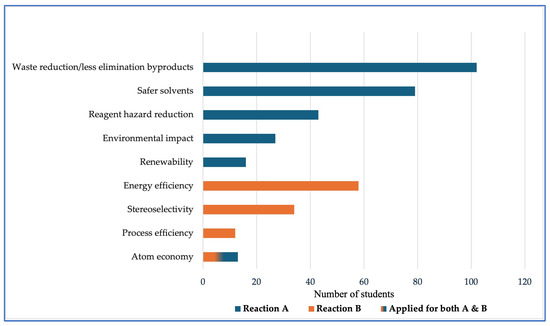
The case comparison prompt was an open-ended assessment in which students first explained green aspects of each reaction and then identified the reaction that was greener overall. A total of 123 students completed the case comparison prompt assessment given in Figure 2. The twelve principles of green chemistry served as the analytical framework for examining student responses. Analysis of their written responses revealed that green chemistry principles that were commonly applied when evaluating the greenness of the reactions were waste reduction (e.g., fewer elimination byproducts), the use of safer solvents, safer reagents, design for energy efficiency and degradation. Figure 4 shows the distribution of green chemistry topics referenced by students when evaluating the greenness of the two reactions in the case comparison prompt assessment. Students’ explanations on the greener aspects of Reaction A predominantly centered on water being a safer and more environmentally benign solvent (N = 79, 64.2%), the minimized generation of elimination byproducts (N = 102, 82.9%), and the reagents employed in Reaction A present reduced hazard (N = 43, 35.0%) and environmental impact (N = 27, 22.0%). A small proportion of students (N = 16, 13.0%) included the renewable nature of water in their reasoning. Students’ responses on greener aspects of Reaction B were focused on energy efficiency (N = 58, 47.2%) and the production of the desired enantiomer or stereoselectivity (N = 34, 27.6%). A few students (N = 13, 10.6%) applied the concept of atom economy. Nine of these students argued that Reaction A had better atom economy, citing the greater incorporation of reactants into the desired product and the larger amount of elimination byproducts formed in Reaction B. Two of the students selected Reaction B as having better atom economy based on the formation of stereoisomers in Reaction A, while two others concluded that the two reactions had comparable atom economy. After comparing the trade-offs among the greener aspects of each reaction, a substantial proportion of students (N = 100, 81.3%) selected Reaction A as the overall greener option, whereas only 18.6% (N = 23) identified Reaction B.
Figure 4.
Distribution of green chemistry topics referenced by students when evaluating the greenness of the two reactions in the case comparison prompt assessment.
Ten students noted the additional step required to separate the two enantiomers produced in Reaction A when making their comparisons. Approximately half of these students further highlighted that this separation process involves additional chemicals, increases material use and waste generation, and demands greater time investment. One student pointed out that separating a desired product from an elimination byproduct would be easier than separating enantiomers. Another student explicitly referenced chiral resolution as the step to separate the enantiomeric products. Interestingly, half of the students who acknowledged the need for enantiomer separation still selected Reaction A as the greener option, largely prioritizing the use of water as a safer solvent in their reasoning. In contrast, for the remaining students, the requirement for a chiral separation step was a critical factor leading them to identify Reaction B as the greener choice.
We have also identified some alternate or misconceptions in students’ reasoning. Two students incorrectly identified DMSO as a catalyst in Reaction B. This misconception has been previously reported in the literature, with students failing to distinguish between solvents and catalysts (Grieger & Leontyev, 2025). A few students identified Reaction A as generating more waste due to the formation of stereoisomers. Two students justified selecting Reaction B on the basis that it produces a single, pure product ignoring the elimination product. Two students argued that Reaction B would require additional energy for solvent and reagent separation during disposal, thereby making the overall process more energy-intensive.
3.2. Analysis of Student Responses for Reasoning Chain Construction Task
A total of 122 students completed the reasoning chain construction task given in Figure 3. Student responses were analyzed to examine the consistency between their articulated arguments and their conclusions regarding which reaction was greener, types of reasoning elements mentioned as well as the length of the reasoning chains and the number of relevant elements that could be used to justify the greenness of SN1 and SN2 reactions.
The reasoning chain elements were classified into four conceptual categories based on the underlying chemical principles they represented. Elements 1–4 were associated with solvent-related considerations, Elements 5, 9, and 10 corresponded to reaction mechanism, Elements 6–8 addressed product selectivity, and Elements 11 and 12 pertained to rate dependence on the substrate or nucleophile concentration. Of the 12 provided reasoning elements, seven (items 1–4 and 6–8) related to the type of solvent, their toxicity, environmental effects and the selectivity of the product formed are the most relevant elements in evaluating the greenness of SN1/SN2 reactions and can be directly applied. The reasoning elements 11 and 12 relate to the rate dependence on the substrate or nucleophile concentration. The rate of an SN1 reaction (rate = k1 × [Substrate], where k1 is the rate constant) increases with increasing substrate concentration, whereas the rate of an SN2 reaction (rate = k2 × [Substrate] × [Nucleophile], where k2 is the rate constant) increases with both substrate and nucleophile concentration. This does not imply that one reaction is inherently faster than the other, nor that one necessarily proceeds faster at lower concentration. Rather, the rate law only describes how reaction rate depends on reactant concentrations under given conditions. Some species influence the rate directly, while others do not. Because SN1 and SN2 reactions are governed by different rate laws and mechanisms, their rates cannot be compared directly. Furthermore, the rate of these reactions depends on the type of substrate, nucleophile, solvent, and other reaction conditions. Therefore, the reasoning elements 11 and 12 do not influence reaction greenness and were therefore considered irrelevant for the argument.
In contrast, reasoning elements 5, 9, and 10, such as presence of an intermediate or references to reaction mechanism, cannot be directly used to evaluate the reaction greenness but could support the relevant reasoning elements. The relevance of these three reasoning elements was therefore context-dependent and varied based on how they were integrated within the reasoning chain.
For example, in the following hypothetical reasoning chain given in Box 1, the reasoning elements on the carbocation intermediate, the multistep and concerted mechanisms (bolded) serve to support the argument explaining why SN1 reactions yield two stereoisomers whereas SN2 reactions produce a single stereoisomer, thereby enhancing the coherence and logical flow of the overall argument. However, these supporting components alone do not directly contribute to evaluating the greenness of the reactions and are insufficient as independent justifications of reaction greenness.
Box 1. Example of a hypothetical reasoning chain illustrating the inclusion of relevant and supporting reasoning elements.
“SN1 reactions typically occur in protic solvents such as ethanol or water whereas SN2 reactions typically occur in polar aprotic solvents such as DMSO or acetone. Protic solvents are often considered relatively benign and environmentally safer meanwhile many aprotic solvents, such as DMSO or DMF, can be toxic and persistent. However, SN1 reactions proceed through the formation of a carbocation intermediate and SN1 reactions occur in multiple steps with one or more intermediates and carbocation intermediates can rearrange, leading to multiple products. Thus, SN1 reactions can yield two stereoisomers because of the carbocation intermediate. But SN2 reactions occur in a single, concerted step without intermediates. Therefore, SN2 reactions yield a single stereoisomer due to backside attack”
In the reasoning chain construction task, 84 students (68.8%) selected the SN1 reaction as the greener one and 38 students (31.1%) selected SN2 as the greener one. The consistency between students’ arguments and their final conclusions was examined by determining whether their reasoning chains included statements aligned with the greenness of the reaction they ultimately selected, specifically the presence of positive evaluations of the reaction identified as greener in their conclusion. Inconsistent responses were observed when students described less favorable aspects of a reaction from green chemistry perspective in the reasoning chain yet chose it as the greener reaction in the conclusion.
For example, in the following reasoning chain, “SN1 reactions typically occur in protic solvents such as ethanol or water whereas SN2 reactions typically occur in polar aprotic solvents such as DMSO or acetone. Protic solvents are often considered relatively benign and environmentally safer while many aprotic solvents (e.g., DMSO or DMF) are toxic and environmentally persistent.” students selected the SN1 reaction as the greener option in their conclusion would be coded as consistent, as the conclusion aligned with the reasoning elements provided. In contrast, selecting the SN2 reaction as the greener option would be coded as inconsistent, as the conclusion did not align with the reasoning.
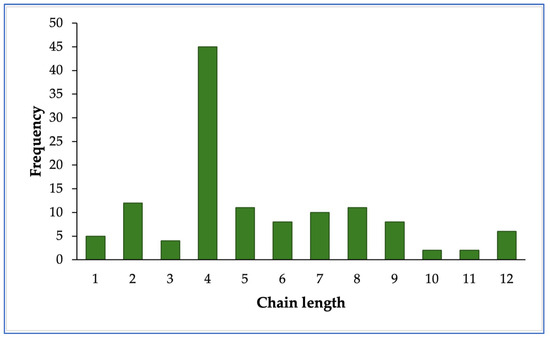
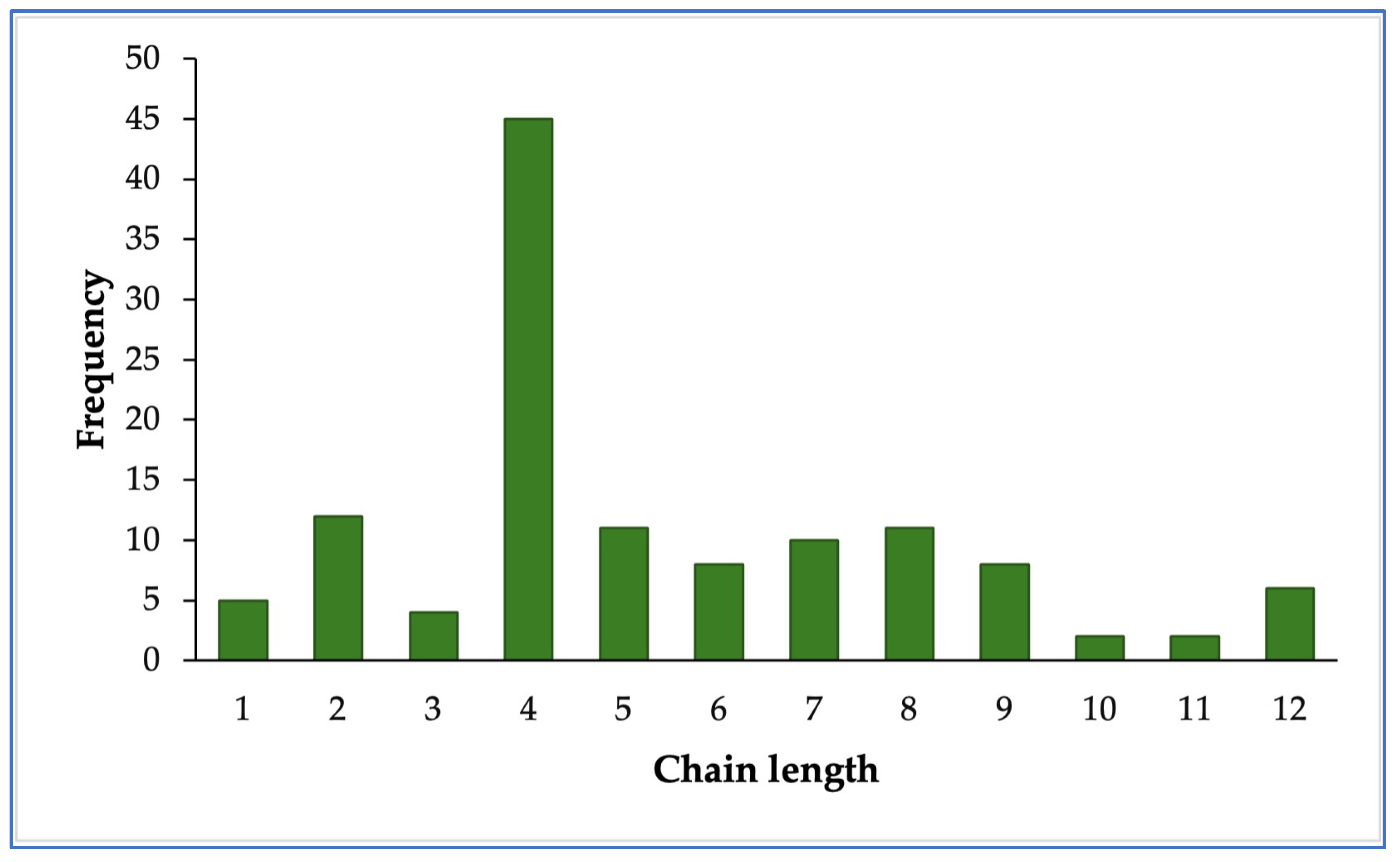
From the analysis of student responses, majority of students (N = 111, 91.0%) demonstrated consistency between their reasoning chain arguments and their final conclusions, whereas 11 students exhibited inconsistencies between their reasoning and final conclusions. Seven responses appeared to contain reasoning components arranged in a seemingly random manner. The mean, median, and mode lengths of the reasoning chains were 5.4, 4, and 4, respectively, when all listed components present in student responses were included. When components classified as irrelevant were excluded, the corresponding values were 4.6, 4, and 4. Figure 5 shows the frequency distribution of reasoning chain lengths. The mean and median values indicate that the distribution is right-skewed, suggesting that a smaller proportion of students constructed longer reasoning chains.
Figure 5.
Bar graph showing the frequency distribution of the reasoning chain lengths in student responses when all elements are included.
Six students included all 12 reasoning tiles in their responses. All these students were coded as consistent between their constructed reasoning and conclusion. Although selecting all reasoning elements was not the intended use of the task, this behavior provides valuable insight into how students interacted with the activity. Importantly, these responses were not entirely incorrect. However, they included all available information rather than the elements expected in this instructional context.
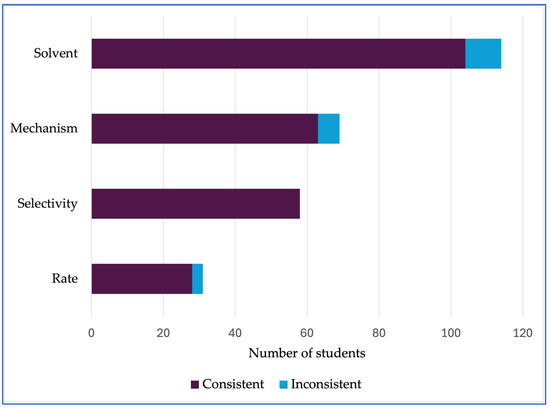
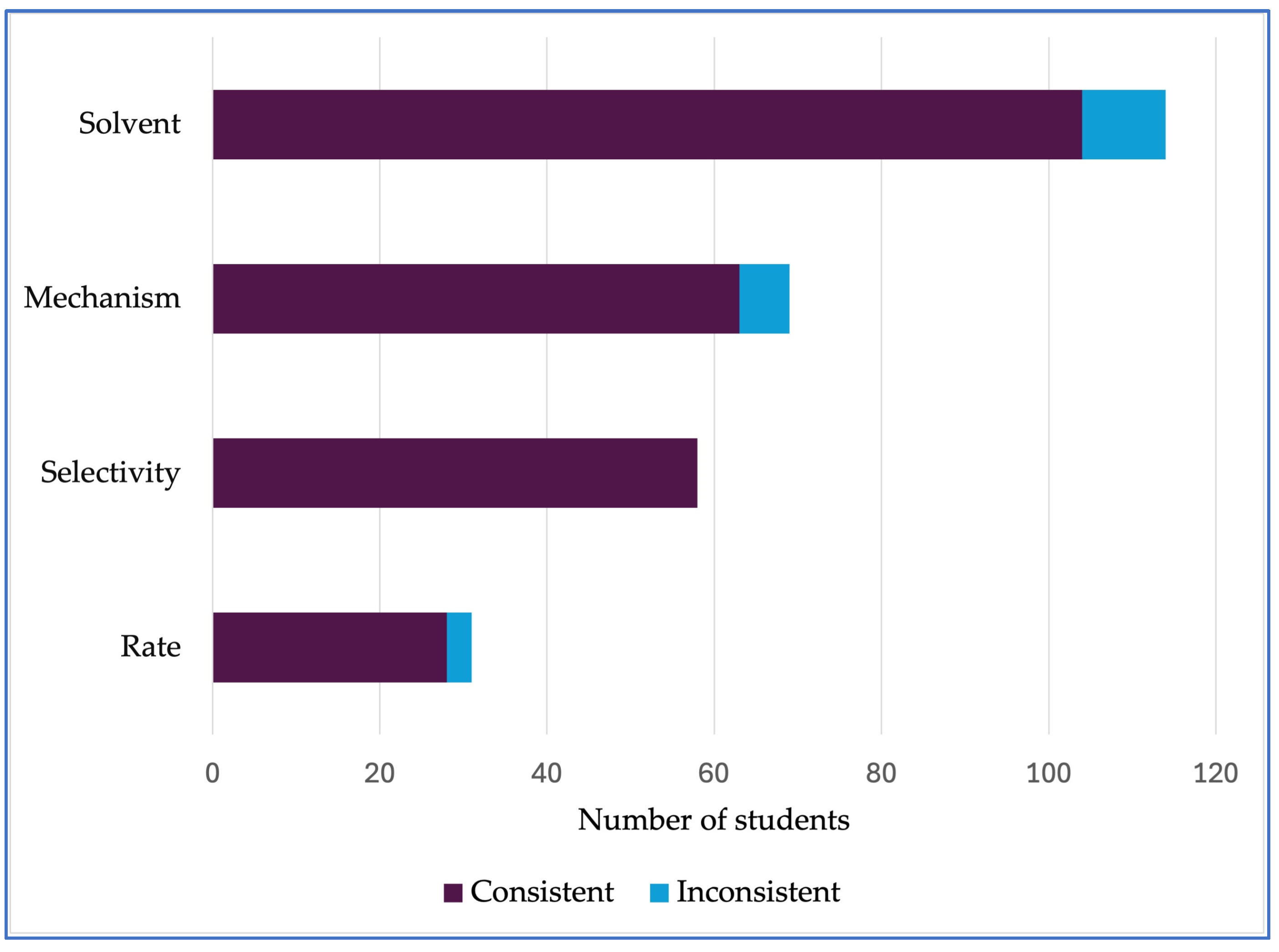
The distribution of reasoning element classes across consistent and inconsistent responses are given in Figure 6. When evaluating the types of reasoning elements that students used in their arguments, we found that the majority of students included elements related to solvent use (N = 114, 93.4%). A substantial proportion of students incorporated reasoning related to reaction mechanism (N = 69, 56.5%) and product selectivity (N = 58, 47.5%). Only a small proportion of students (N = 31, 25.4%) used elements related to reaction rate. Interestingly, students who incorporated stereoselectivity-related elements showed complete consistency between their reasoning chain arguments and their conclusions.
Figure 6.
Distribution of reasoning element classes across consistent and inconsistent student responses in the reasoning chain assessment.
3.3. Consistency of Student Responses Across the Assessment Formats
To evaluate the extent to which students demonstrated consistency in their decision-making across the case comparison and chain reasoning tasks, a contingency table was constructed to examine students’ responses. A contingency table is a matrix in which the observed counts (O) represent the number of students whose paired selections fall within each specific response category (Lewis, 2014). Expected counts (E) were computed using Equation (1).
The expected counts reflect the expected frequency in each cell under the assumption that the two variables are independent. Students’ conclusions about the greenness of reactions in the case comparison and reasoning chain assessments are tabulated in Table 1. For students who selected Reaction A in the case comparison assessment, 72 students subsequently selected SN1 in the reasoning chain task which is slightly higher than the expected frequency of 67.4. In contrast, 27 students who chose Reaction A selected SN2 in the chaining task, which is lower than the corresponding expected count of 31.0. These patterns suggest that students who selected Reaction A were more likely to pair their reasoning chain response toward the SN1 option than would be expected by chance.
Table 1.
Contingency table showing the observed (O) and expected (E) frequencies of students paired selections across each category. The higher observed frequencies in the diagonal (Reaction A–SN1 and Reaction B–SN2) cells suggest a pattern of consistent reasoning across the two assessment formats.
For students who selected Reaction B in the case comparison assessment, 12 selected SN1 in the reasoning chain (compared to an expected 15.8), indicating fewer students than expected paired Reaction B with SN1. In contrast, 11 students who chose Reaction B in the case comparison selected SN2 in the reasoning chain, which is notably higher than the expected count of 7.16. This outcome indicates that students who selected Reaction B tended to pair that choice with SN2 in the reasoning chain more often than would be expected under independence.
Overall, the higher observed frequencies in the diagonal (Reaction A–SN1 and Reaction B–SN2) cells suggest a pattern of consistent conclusions across the two task formats. This pattern indicates that the majority of students (N = 83, 68%) applied similar decision-making criteria when determining the greener reaction across the two assessment formats.
4. Discussion
Research question 1: Students demonstrated the ability to apply green chemistry principles when evaluating the greenness of SN1 and SN2 reactions by integrating information about reaction conditions, mechanistic pathways, and the formation of desired products into their analyses. Findings from our study indicate that, across tasks, students did not apply green chemistry considerations in isolation but rather integrated arguments about mechanisms with sustainability considerations when evaluating greenness of the given reactions.
In the case comparison prompt task, the reactions were not explicitly labeled as SN1 or SN2 and students engaged in more authentic problem-solving by drawing on reaction conditions and product outcomes to evaluate reaction greenness. Students focused on relevant aspects of each reaction such as reagents, solvents, temperature, and products to make sustainability-based decisions. Notably, some green chemistry principles operated in competing or opposing directions across the cases (such as benign solvent in Reaction A vs. toxic DMSO in Reaction B, room temperature synthesis in Reaction B vs. high temperature in A, formation of elimination products in Reaction B vs. stereoisomers in Reaction A), requiring students to engage in trade-off reasoning when evaluating reactions. This format provided students with the opportunity to critically evaluate and weigh multiple factors simultaneously, rather than relying on a single criterion, thereby supporting more deliberative, trade-off-based and reflective judgments about reaction greenness.
In contrast to the case comparison prompts, the reasoning chain construction task required students to explicitly evaluate the greenness of SN1 and SN2 reactions. Although students were provided with a set of reasoning elements that were all factually correct, it was notable how they selected the elements most relevant for evaluating reaction greenness and organized them into a logical and coherent line of reasoning. This assessment provided insight into which reasoning elements students considered most relevant and how they formulated claims, constructed supporting arguments, and drew conclusions. It also revealed how students integrated core disciplinary ideas when evaluating reaction greenness.
The case comparison task was more context-specific, as reactants, products, and reaction conditions were explicitly provided, whereas the reasoning chain construction task involved a more general comparison of SN1 and SN2 reactions. In addition, although both assessments were open-ended and allowed students to respond in multiple ways, the case comparison prompt afforded a greater degree of openness, with an infinite number of possible responses, than the reasoning chain construction task. For this reason, the two assessments were intentionally administered on separate pages, with students completing the case comparison prompt before proceeding to the reasoning chain task; once students advanced, they were not able to return to the case comparison prompt. Despite these differences in task structure and format, students applied similar green chemistry considerations when evaluating reaction greenness. Across both assessments, the majority of student responses emphasized solvent-related arguments in their evaluations. This emphasis may reflect the strong instructional and curricular focus in green chemistry education on solvent and auxiliary substitution, which is one of the most addressed principles in the literature, as evidenced by a review of papers published (107 out of 256 papers reviewed; 41.0% centered on solvent and auxiliary substitution) (Ferk Savec & Mlinarec, 2021).
It was also interesting that the responses from the case comparison prompt were easier for the instructors to interpret. It is worth noting that, although a set of predefined statements was provided in the reasoning chain task, variation in how students arranged and structured these statements affected the meaning, clarity and relevance of the resulting arguments and posed challenges for interpretation.
Research question 2: Analysis of student responses across case comparison prompt and reasoning chain construction task revealed that students consistently selected the same reaction type despite differences in task format. This indicates that task formats did not substantially alter students’ final decisions even though the cognitive demands of the tasks differed. Most students identified the SN1 reaction as the overall greener option across both task formats. Across both assessments, the majority of student responses emphasized solvent-related arguments when evaluating the greenness of the reactions. This pattern suggests that students prioritized the use of safer solvents and reagents over considerations related to stereochemical outcomes and the subsequent need for resolution to obtain the desired product.
While closed-ended responses revealed which reaction students identified as greener, open-ended assessments provided deeper insight into students’ reasoning process and how they integrated organic reaction mechanisms with a sustainability lens and how they weighed the green chemistry principles when evaluating reactions. Unlike closed-ended assessments, which primarily capture students’ final answers, open-ended tasks required students to articulate their reasoning, make connections among concepts, and justify their decisions. Open-ended responses allowed us to examine how students integrated multiple ideas/concepts and identify the alternative lines of reasoning, misconceptions, and partial understandings in student responses.
5. Implications for Teaching and Research
We described two assessment types to elicit students’ understanding and application of green chemistry principles in the context of organic reactions. The reasoning chain is more suitable for implementation as an in-class activity while case comparison prompt can be used both as an in-class activity and for assessment purposes. These assessments are customizable, allowing instructors to determine which specific content elements to be included based on their instructional goals. Moreover, both tasks are adaptable across course contexts, from introductory to upper-level chemistry as well as engineering courses (Grieger & Leontyev, 2023; Yue & Zhang, 2024).
Through these assessments, we intentionally embedded green chemistry into organic substitution reactions. From a teaching perspective, rather than treating green chemistry as an add-on or checklist of principles, embedding sustainability within foundational reactions such as substitution reactions positions green chemistry as an integral component of chemical reasoning. These tasks require students to explicitly weigh trade-offs, connect chemistry knowledge to environmental impact, and justify their decisions using evidence. Importantly, these assessments provide instructors with a diagnostic insight into students’ thinking, revealing both conceptual understanding and common misconceptions. Misconceptions revealed by these prompts can be addressed through targeted instruction that uses conceptual change strategies (e.g., concept mapping) to help students revise and refine their underlying ideas.
For instructors, case comparison prompts offer a practical strategy for helping students recognize contrasts between reactions or procedures and articulate why one approach may be greener than another. This comparative structure promotes deeper engagement with multiple criteria (e.g., solvent choice, waste generation, and energy input) and supports arguments beyond surface-level judgments.
The reasoning chain construction tasks support students in developing coherent, evidence-based arguments by disentangling students’ reasoning processes from their conceptual knowledge. Adding reasoning tiles can help to emphasize a certain desired content connection. It also signals the key components instructors expect to see in the answer. Together, these approaches scaffold students’ ability to integrate chemical concepts with sustainability considerations, fostering more reflective decision-making (Banks et al., 2015; Cullipher et al., 2015).
From a research perspective, this work contributes to the methodological tools for examining how students reason about and apply green chemistry principles beyond multiple-choice question instruments. The multiple-choice questions often fail to capture students’ reasoning processes, partial understandings, and misconceptions (Lau et al., 2011; McKenna, 2019). Case comparison prompts and reasoning chain tasks can reveal nuanced aspects of student thinking, including how they prioritize, navigate trade-offs, and integrate chemical understanding with environmental considerations. Case comparison prompts can identify students’ correct and incorrect conceptions while reasoning chain can assess their ability to put an argument together. Together, these instruments offer promising avenues for investigating higher-order reasoning (Lemons & Lemons, 2013) and decision-making in sustainability-focused chemistry education (Banks et al., 2015; Cullipher et al., 2015).
6. Limitations and Outlook
Like any educational research study, this work has limitations. First, students completed the survey independently outside the classroom and may have discussed the questions with peers or consulted auxiliary materials. Future work could address this limitation through follow-up student interviews to examine how students interact with these tasks in real time and construct their reasoning. The second limitation is that the case comparison prompt is context-dependent. Student reasoning was examined using a single case comparison prompt; the student reasoning patterns may be different when given with different case comparison examples. The third limitation of this study concerns the order in which students received the tasks (case comparison first and reasoning chain task second). Content priming refers to the influence of prior exposure to related content on subsequent task performance, often resulting in enhanced responses on the target item (Michels et al., 2025). We believe there is little effect of content priming in this study since the reactions in the case comparison prompt were presented simply as Reaction A and Reaction B (rather than labeled as SN1 or SN2), and the prompt was context-specific (reactants, products, and reaction conditions were explicitly provided). Furthermore, we checked whether the students with inconsistent conclusions and arguments in the reasoning chain task tried to match their conclusions with the case comparison prompt. Out of the 11 students with the reasoning chain conclusions inconsistent with their arguments, only 3 students matched their reasoning chain conclusion with the conclusion from the case comparison prompt. Thus, we do not believe that responses to the case-comparison task contributed to the observed inconsistencies in the reasoning-chain arguments. However, we hypothesize that administering the reasoning chain construction task prior to the case comparison prompt may introduce content priming effects. Because the reasoning tiles provide students with relevant conceptual information, exposure to this content could influence how they respond to the subsequent case comparison prompt. The fourth limitation is that this study was implemented within a single class with shared instructional exposure, which may have influenced students’ reasoning patterns and limits the extent to which the findings can be generalized to other instructional settings. Further qualitative investigations are needed, potentially with students from several different educational settings.
7. Conclusions
We examined two assessment approaches: the case comparison prompt and reasoning chain construction task to evaluate students’ understanding and application of green chemistry principles within the context of SN1 and SN2 reactions. Analysis of student responses revealed that students consistently selected the same reaction type despite differences in task format. Across both assessments, most students prioritized the use of safer solvents and reagents over considerations related to stereochemical outcomes, leading them to identify the SN1 reaction as the greener option. This study reveals patterns in students’ reasoning across two different assessment formats, highlighting consistency in their reasoning within open-ended tasks as well as alignment between open-ended reasoning and closed-ended final selections. Importantly, it also identifies alternative lines of reasoning and misconceptions that are not readily revealed through closed-ended assessments alone. From a practical perspective, this study provides instructors with two distinct assessment formats that can elicit both students’ knowledge and reasoning about chemical reactions within the context of green chemistry.
Author Contributions
Conceptualization, P.A. and A.L.; Methodology, P.A. and A.L.; Formal analysis, P.A.; Investigation, P.A. and A.L.; Data curation, P.A.; Writing—original draft, P.A.; Writing—review & editing, P.A. and A.L.; Supervision, A.L.; Project administration, A.L.; Funding acquisition, A.L. All authors have read and agreed to the published version of the manuscript.
Funding
The authors acknowledge support from the National Science Foundation (Awards 2142436, 2329292, and 2442826). Alexey Leontyev acknowledges support from the Challey Faculty Fellowship (North Dakota State University) and the Theodore Ashford Fellowship (American Chemical Society Examination Institute).
Institutional Review Board Statement
The study was conducted in accordance with the Declaration of Helsinki and approved by the Institutional Review Board (or Ethics Committee) of North Dakota State University (IRB0004540; 22 October 2025).
Informed Consent Statement
Informed consent was obtained from all subjects involved in the study.
Data Availability Statement
Data supporting the reported results are available upon reasonable request; please contact the authors.
Acknowledgments
We thank Krystal Grieger for assisting with the early stages of this study, including obtaining the IRB approval, helping to develop the prompts and create the survey instrument. We thank Aleena Raju for assistance with the data collection, and we also thank the students who participated in the study.
Conflicts of Interest
The authors declare no conflicts of interest. The funders had no role in the design of the study; in the collection, analyses, or interpretation of data; in the writing of the manuscript; or in the decision to publish the results.
Abbreviations
The following abbreviations are used in this manuscript:
| GSC | Green and Sustainable Chemistry |
| ACS | American Chemical Society |
| SN1 | Nucleophilic Substitution First Order |
| SN2 | Nucleophilic Substitution Second Order |
| LCA | Life Cycle Assessment |
| IRB | Institutional Review Board |
| DMSO | Dimethyl sulfoxide |
References
- ACS Guidelines for Bachelor’s Degree Programs. (2023). ACS guidelines for bachelor’s degree programs. Available online: https://www.acs.org/education/policies/acs-approval-program/news/green-chemistry-guidelines.html (accessed on 3 March 2026).
- Alfieri, L., Nokes-Malach, T. J., & Schunn, C. D. (2013). Learning through case comparisons: A meta-analytic review. Educational Psychologist, 48(2), 87–113. [Google Scholar] [CrossRef] [Scilit]
- Arellano, D., & Towns, M. (2014). Students’ understanding of alkyl halide reactions in undergraduate organic chemistry. Chemistry Education Research and Practice, 15(4), 501–515. [Google Scholar] [CrossRef] [Scilit]
- Armstrong, L. B., Irie, L. M., Chou, K., Rivas, M., Douskey, M. C., & Baranger, A. M. (2024). What’s in a word? Student beliefs and understanding about green chemistry. Chemistry Education Research and Practice, 25(1), 115–132. [Google Scholar] [CrossRef] [Scilit]
- Aubrecht, K. B., Bourgeois, M., Brush, E. J., MacKellar, J., & Wissinger, J. E. (2019). Integrating green chemistry in the curriculum: Building student skills in systems thinking, safety, and sustainability. Journal of Chemical Education, 96(12), 2872–2880. [Google Scholar] [CrossRef] [Scilit]
- Banks, G., Clinchot, M., Cullipher, S., Huie, R., Lambertz, J., Lewis, R., Ngai, C., Sevian, H., Szteinberg, G., Talanquer, V., & Weinrich, M. (2015). Uncovering chemical thinking in students’ decision making: A fuel-choice scenario. Journal of Chemical Education, 92(10), 1610–1618. [Google Scholar] [CrossRef] [Scilit]
- Basheer, A., Gulacar, O., Sindiani, A., & Eilks, I. (2025). The impact of an intervention on plastics and bioplastics on pre-service science teachers’ green chemistry and sustainability awareness and their attitudes toward environmental education. Education Sciences, 15(3), 322. [Google Scholar] [CrossRef] [Scilit]
- Black, P., & Wiliam, D. (1998). Assessment and classroom learning. Assessment in Education: Principles, Policy & Practice, 5(1), 7–74. [Google Scholar] [CrossRef] [Scilit] [PubMed]
- Burmeister, M., Rauch, F., & Eilks, I. (2012). Education for Sustainable Development (ESD) and chemistry education. Chemistry Education Research and Practice, 13(2), 59–68. [Google Scholar] [CrossRef] [Scilit]
- Cooper, M. M., Corley, L. M., & Underwood, S. M. (2013). An investigation of college chemistry students’ understanding of structure–property relationships. Journal of Research in Science Teaching, 50(6), 699–721. [Google Scholar] [CrossRef] [Scilit]
- Cullipher, S., Sevian, H., & Talanquer, V. (2015). Reasoning about benefits, costs, and risks of chemical substances: Mapping different levels of sophistication. Chemistry Education Research and Practice, 16(2), 377–392. [Google Scholar] [CrossRef] [Scilit]
- Day, E. L., Petritis, S. J., McFall-Boegeman, H., Starkie, J., Zhang, M., & Cooper, M. M. (2024). A framework for the integration of green and sustainable chemistry into the undergraduate curriculum: Greening our practice with scientific and engineering practices. Journal of Chemical Education, 101(5), 1847–1857. [Google Scholar] [CrossRef] [Scilit]
- Eilks, I., & Zuin, V. G. (2018). Editorial overview: Green and Sustainable Chemistry Education (GSCE): Lessons to be learnt for a safer, healthier and fairer world today and tomorrow. Current Opinion in Green and Sustainable Chemistry, 13, A4–A6. [Google Scholar] [CrossRef] [Scilit]
- Ferk Savec, V., & Mlinarec, K. (2021). Experimental work in science education from green chemistry perspectives: A systematic literature review using PRISMA. Sustainability, 13(23), 12977. [Google Scholar] [CrossRef] [Scilit]
- Finkenstaedt-Quinn, S. A., Watts, F. M., Petterson, M. N., Archer, S. R., Snyder-White, E. P., & Shultz, G. V. (2020). Exploring student thinking about addition reactions. Journal of Chemical Education, 97(7), 1852–1862. [Google Scholar] [CrossRef] [Scilit]
- Gorito, G., & Morais, C. (2026). Empowering environmental awareness through chemistry: A science–technology–society–environment-based approach to teaching acid–base reactions in 11th-grade science. Education Sciences, 16(1), 38. [Google Scholar] [CrossRef] [Scilit]
- Graulich, N., & Lieber, L. (2024). Why comparing matters–on case comparisons in organic chemistry. Frontiers in Education, 9, 1374793. [Google Scholar] [CrossRef] [Scilit]
- Graulich, N., & Schween, M. (2018). Concept-Oriented Task Design: Making Purposeful Case Comparisons in Organic Chemistry. Journal of Chemical Education, 95(3), 376–383. [Google Scholar] [CrossRef] [Scilit]
- Grieger, K., & Leontyev, A. (2023). Development and implementation of a case study assessment using biobased 5-hydroxymethylfurfural to teach redox reactions in undergraduate organic courses. Green Chemistry Letters and Reviews, 16(1), 2175624. [Google Scholar] [CrossRef] [Scilit]
- Grieger, K., & Leontyev, A. (2025). Utility of creative exercises as an assessment tool for revealing student conceptions in organic chemistry. Chemistry Education Research and Practice, 26(3), 603–618. [Google Scholar] [CrossRef] [Scilit]
- Houseknecht, J. B. (2010). Topic sequence and emphasis variability of selected organic chemistry textbooks. Journal of Chemical Education, 87(6), 592–597. [Google Scholar] [CrossRef] [Scilit]
- Iles, A., & Mulvihill, M. J. (2012). Collaboration across disciplines for sustainability: Green chemistry as an emerging multistakeholder community. Environmental Science & Technology, 46(11), 5643–5649. [Google Scholar] [CrossRef] [Scilit] [PubMed]
- Lau, P., Lau, S., Hong, K., & Usop, H. (2011). Guessing, partial knowledge, and misconceptions in multiple-choice tests. Educational Technology & Society, 14, 99–110. [Google Scholar]
- Lemons, P. P., & Lemons, J. D. (2013). Questions for assessing higher-order cognitive skills: It’s not just bloom’s. CBE—Life Sciences Education, 12(1), 47–58. [Google Scholar] [CrossRef] [Scilit]
- Lewis, S. (2014). An introduction to nonparametric statistics in chemistry education research. In ACS symposium series (Vol. 1166, pp. 115–133). American Chemical Society. [Google Scholar] [CrossRef] [Scilit]
- Lindsey, B. A., Stetzer, M. R., Speirs, J. C., Ferm, W. N., Jr., & Van Hulten, A. (2023). Investigating student ability to follow reasoning chains: The role of conceptual understanding. Physical Review Physics Education Research, 19(1), 010128. [Google Scholar] [CrossRef] [Scilit]
- Maeyer, J., & Talanquer, V. (2010). The role of intuitive heuristics in students’ thinking: Ranking chemical substances. Science Education, 94(6), 963–984. [Google Scholar] [CrossRef] [Scilit]
- Marcelino, L. V., Dias, E. D. S., Rüntzel, P. L., Milli, J. C. L., Santos, J. S., Souza, L. C. A. B., & Marques, C. A. (2023). Didactic features specific to green chemistry teaching in the journal of chemical education. Journal of Chemical Education, 100(7), 2529–2538. [Google Scholar] [CrossRef] [Scilit]
- Marques, C. A., Marcelino, L. V., Dias, É. D. S., Rüntzel, P. L., Souza, L. C. A. B., & Machado, A. (2020). Green chemistry teaching for sustainability in papers published by the Journal of Chemical Education. Química Nova, 43(10), 1510–1521. [Google Scholar] [CrossRef] [Scilit]
- McKenna, P. (2019). Multiple choice questions: Answering correctly and knowing the answer. Interactive Technology and Smart Education, 16(1), 59–73. [Google Scholar] [CrossRef] [Scilit]
- Michels, O., Schreurs, D. G., Nedungadi, S., Pentecost, T. C., Kreke, P. J., Raker, J. R., & Murphy, K. L. (2025). Identification and analysis of item environment effects on organic chemistry multiple-choice exams. Journal of Chemical Education, 102(1), 43–52. [Google Scholar] [CrossRef] [Scilit]
- Momsen, J., Offerdahl, E., Kryjevskaia, M., Montplaisir, L., Anderson, E., & Grosz, N. (2013). Using assessments to investigate and compare the nature of learning in undergraduate science courses. CBE—Life Sciences Education, 12(2), 239–249. [Google Scholar] [CrossRef] [Scilit] [PubMed]
- Nagel, M. L., & Lindsey, B. A. (2022). Implementation of reasoning chain construction tasks to support student explanations in general chemistry. Journal of Chemical Education, 99(2), 839–850. [Google Scholar] [CrossRef] [Scilit]
- Nartey, E., Koranteng, E., Oppong, E. K., & Hanson, R. (2024). Analysis of undergraduate chemistry students’ responses to substitution reaction mechanisms: A road to mastery. Chemistry Teacher International, 6(3), 231–240. [Google Scholar] [CrossRef] [Scilit]
- Popova, M., & Bretz, S. L. (2018). Organic chemistry students’ understandings of what makes a good leaving group. Journal of Chemical Education, 95(7), 1094–1101. [Google Scholar] [CrossRef] [Scilit]
- Reyes, K. M. D., Bruce, K., & Shetranjiwalla, S. (2022). Green chemistry, life cycle assessment, and systems thinking: An integrated comparative-complementary chemical decision-making approach. Journal of Chemical Education, 100(1), 209–220. [Google Scholar] [CrossRef] [Scilit]
- Schwartz, D. L., Chase, C. C., Oppezzo, M. A., & Chin, D. B. (2011). Practicing versus inventing with contrasting cases: The effects of telling first on learning and transfer. Journal of Educational Psychology, 103(4), 759. [Google Scholar] [CrossRef] [Scilit]
- Scouller, K. (1998). The influence of assessment method on students’ learning approaches: Multiple choice question examination versus assignment essay. Higher Education, 35(4), 453–472. [Google Scholar] [CrossRef] [Scilit]
- Shepard, L. A. (2000). The role of assessment in a learning culture. Educational Researcher, 29(7), 4–14. [Google Scholar] [CrossRef]
- Speirs, J., Stetzer, M. R., & Lindsey, B. (2024). Utilizing network analysis to explore student qualitative inferential reasoning chains. Physical Review Physics Education Research, 20, 010147. [Google Scholar] [CrossRef] [Scilit]
- Speirs, J. C., Ferm, W. N., Jr., Stetzer, M. R., & Lindsey, B. A. (2016, July 20–21). Probing student ability to construct reasoning chains: A new methodology. Physics Education Research Conference 2016, Sacramento, CA, USA. [Google Scholar]
- Underwood, S. M., Posey, L. A., Herrington, D. G., Carmel, J. H., & Cooper, M. M. (2018). Adapting assessment tasks to support three-dimensional learning. Journal of Chemical Education, 95(2), 207–217. [Google Scholar] [CrossRef] [Scilit]
- Widyantoro, C., Han, J. Y., Ong, J. S. H., Goh, K. H., & Fung, F. M. (2025). Teaching sustainability through green chemistry: An experiential learning approach. Journal of Chemical Education, 102(7), 2743–2754. [Google Scholar] [CrossRef] [Scilit]
- Wissinger, J. E., Visa, A., Saha, B. B., Matlin, S. A., Mahaffy, P. G., Kümmerer, K., & Cornell, S. (2021). Integrating sustainability into learning in chemistry. Journal of Chemical Education, 98(4), 1061–1063. [Google Scholar] [CrossRef] [Scilit]
- Yue, C.-J., & Zhang, Z.-W. (2024). Integration of green techniques into undergraduate-level chemical design courses for practising the concept of sustainable development and developing green education. European Journal of Education, 59(4), e12709. [Google Scholar] [CrossRef] [Scilit]
- Zuin, V., & Mammino, L. (2015). Worldwide trends in green chemistry education. Royal Society of Chemistry. [Google Scholar]
- Zuin, V. G., Eilks, I., Elschami, M., & Kümmerer, K. (2021). Education in green chemistry and in sustainable chemistry: Perspectives towards sustainability. Green Chemistry, 23(4), 1594–1608. [Google Scholar] [CrossRef] [Scilit]

Disclaimer/Publisher’s Note: The statements, opinions and data contained in all publications are solely those of the individual author(s) and contributor(s) and not of MDPI and/or the editor(s). MDPI and/or the editor(s) disclaim responsibility for any injury to people or property resulting from any ideas, methods, instructions or products referred to in the content. |
© 2026 by the authors. Licensee MDPI, Basel, Switzerland. This article is an open access article distributed under the terms and conditions of the Creative Commons Attribution (CC BY) license.