


Abstract
This article presents a case study of the relationship between the scope of inquiry that classroom teachers provided to Year 4 students during inquiry-based science lessons and the learning autonomy evidenced by those students. This study investigated the practices of two primary school classroom teachers engaging in similar teaching contexts and curriculum imperatives, but each teacher provided a different scope of inquiry to students during their learning. The findings indicate a complex, non-linear relationship between the scope of inquiry provided by teachers and the student learning autonomy demonstrated. Predictably, students who experienced a narrow scope of inquiry, as provided by teachers, demonstrated a low level of learning autonomy. However, this study found that when students experienced inquiry with a broad scope provided by the teacher, they demonstrated a large range of learning autonomy, not only high levels of learning autonomy but also low levels. Moreover, when students experienced inquiry with a broad scope provided by the teacher, they manifested more diverse emotions, ranging from frustration to enjoyment, when compared with times that they experienced a narrow scope of inquiry. The findings demonstrated that students could remain on task in a broad scope of inquiry environment, but found that the minimal guidance provided was challenging. The results of the current study underscore the importance of a balance between a broader scope and a narrower scope of inquiry to optimise student learning. The non-linear relationship between the scope provided and the student level of learning autonomy experienced has ramifications for unresolved conflicts about closed vs open inquiry and for quantitative research on this complex construct.
1. Introduction
Students’ experiences in primary science lessons often shape their learning attitude to science in high school and for life (Cripps Clark & Groves, 2012; Deehan et al., 2024; Oates & Seah, 2021; Shirazi, 2017; Tytler et al., 2008). There is a deepening understanding that facilitating students’ positive attitude to science, especially curiosity about the natural world, is one of the most salient contributions that can realistically be made by primary school teachers, most of whom are not science content or skill experts (Deehan, 2022). A major issue in the science education literature pertains to the positive attitudes that students develop through a sense of ownership, empowerment, and self-efficacy that students have when learning science, and this sense is often considered in terms of student learning autonomy (Buck et al., 2014; Dah et al., 2024; Schwartz et al., 2021).
Traditionally, the curriculum area of science has been neglected by regular primary school teachers (Fitzgerald et al., 2019; Goodrum et al., 2001). Primary teachers have been reluctant to teach science because a high percentage do not have an appropriate grounding or interest in science (Appleton, 1992, 2003; Deehan, 2022; Fitzgerald et al., 2019; McKenzie et al., 2008; Timms et al., 2018; White et al., 2022). Over the past four decades, the shift to inquiry-based learning (IBL) in primary science in the USA (NRC, 1996; Welch, 1981) and Australia (Goodrum et al., 2001; M. Hackling et al., 2007; Rennie et al., 2001) has been seen to offer hope for enhancing primary school students’ attitudes to science. This hope has not materialised. In the past 20 years, a declining number of students have progressed from compulsory science classes to post-non-compulsory science-oriented subjects (Deehan, 2022). This raises questions about the nature of science inquiry learning in primary school settings and why it has not been as successful as expected in improving students’ attitudes to science.
While many primary students find inquiry learning in science stimulating and fun, many do not (ACARA, 2013; Goodrum et al., 2001; M. W. Hackling & Prain, 2008; Lyons, 2006). Critics of inquiry learning argue that many students may not be learning science content or skills, yet are expected to engage in complex science tasks with minimum guidance that may reduce student interest and motivation (Castle & Buckler, 2021; Kirschner et al., 2006). For these students, there may be a ‘double-whammy’, where they miss out on science content and develop negative attitudes to science, especially scientific inquiry (Fernandez et al., 2023).
A deeper understanding of student learning autonomy may prove to be central to understanding the tenets of inquiry-based learning (IBL) in science classrooms and the scope of inquiry provided by teachers (Çavas et al., 2013; NRC, 2012; Palincsar, 2013). This is because some see that prescriptive guidance limits the possibilities of IBL and stymies student interest in science, and so advocate for heightened levels of student learning autonomy (Bernardini, 2002; Dah et al., 2024; Hammer, 1997; Hmelo-Silver et al., 2007; Orr, 2016). Some researchers oppose this argument. They suggest the frustration and lack of learning associated with open inquiry are evidence that high levels of guidance and low levels of learning autonomy are necessary until students have demonstrated mastery in the area under investigation (Björnhammer et al., 2024; Clark et al., 2012; Kirschner et al., 2006). The extent of the scope of inquiry, however, may influence student emotions and engagement (Membiela et al., 2023; Schweder & Raufelder, 2022).
Student learning autonomy is known to be a crucial aspect of education, and yet it is not well understood. A recent review of the literature found that, from the included 91 publications, autonomy was one of the most highly regarded science educational values, and the authors called for ‘further investigation to unpack the importance of autonomy for students in science and mathematics education’ (Hill et al., 2024, p. 37). Matovu et al. (2023, p. 206) noted autonomy as a ‘key design feature’ within virtual reality for science learning, and Lotriet and Gouws (2025, p. 1) found autonomy to be one of several key meta-competencies for scientific thinking. Nevertheless, questions of student learning autonomy often remain unarticulated, yet their hidden nature does not render them unimportant or impotent. With the prevalence of easily accessible Large Language Models (LLMs), questions have inevitably arisen about whether to block, restrict, or not block access by students, an issue of whether students should have the autonomy to choose to use LLMs for their learning. Moreover, in the curriculum, decisions on the content to cover may be highly prescribed or negotiated with students. In the immediacy of the classroom, a teacher’s decision about how to address a student’s question, such as answer it, ask them to find the answer for homework, or engage the class in conversation and debate about it, is a decision that tacitly considers learners’ autonomy. Questions, decisions, and practices that minimise or maximise student learning autonomy are, in this article, not right or wrong, but they are under investigation because they profoundly influence classrooms and students’ attitudes to science.
Student learning autonomy underlies many debates in the science education literature that strive for both cognitive and affective gains. Kirschner et al. (2006) argue against discovery learning. They suggest students should first develop knowledge, skills, and attitudes of the science canon by maximising teacher guidance, and so restrict learning autonomy; then, once students demonstrate mastery of the canon, they should be offered greater scope when engaging in inquiry (Kirschner et al., 2006). If this approach is not followed, not only will students underperform cognitively, but they will also be more frustrated by the uncertainty of how to proceed and unimpressed by minimal learning. Their parents and future teachers, too, will be unimpressed by their science knowledge and skills.
Other researchers offer a counter-argument advocating broadening the scope of inquiry (Hmelo-Silver et al., 2007). Hmelo-Silver and colleagues argue for structured discovery learning, where, in the timeframe and context of an investigation, students are initially provided with a structure that constrains their learning autonomy, but this is an aspect of a well-scaffolded process, in which students are given incrementally more scope to express learning autonomy. These authors have the intention that students will demonstrate effective and affective learning as they move towards higher levels of learning autonomy, and so empowerment and ownership, in an educationally significant timeframe.
The terminology for teacher facilitation of inquiry-based learning is often represented in terms of closed inquiry to open inquiry, where the former pertains to a larger extent of structure and guidance and the latter to reduced structure and guidance, and both pertain to the scope of inquiry that teachers provide. The term scope of inquiry (SoI) conveys how much or how little structure and guidance teachers provide in inquiry learning, on a continuum from narrow to broad scope of inquiry (Kilbane & Clayton, 2023). Questions of scope include the extent of structure and guidance about what to investigate, how to investigate it, and how predetermined or correct the answers are (Ramnarain, 2010; Willison & O’Regan, 2007). A narrow scope of inquiry equates to teacher-determined questions, methods, and predetermined answers, whereas a broadened scope provides more room for students to determine what to inquire into, the processes they will use, and the arguments and answers they will provide.
However, the relationship between the scope provided by teachers and student learning autonomy is not necessarily linear (Willison et al., 2017). Disentangling teacher-determined scope from the learning autonomy that students demonstrate in inquiry is vital to understanding the effects of inquiry learning on developing student learning autonomy and positive attitudes to science, and understanding these effects is a major purpose of this article. This study, therefore, investigates the relationship between the scope of inquiry (SoI) provided by teachers and the student learning autonomy (SLA) demonstrated by primary school students when learning science through IBL.
1.1. The Scope of Inquiry
SoI is how narrow or broad the parameters for each lesson are predetermined or implemented. The parameters for teacher facilitation of inquiry may be represented in terms of three categories: organisational, procedural, and cognitive (Reeve, 2016; Stefanou et al., 2004), and relate to questions or topics investigated, processes, and equipment for investigation, the nature of learning or answers expected. The literature tends to label teacher facilitation of inquiry as a dichotomy, either student autonomy promoting via a broad scope, or autonomy constraining using a narrow scope (Reeve, 2016; Reeve et al., 2018). For example, Ng et al. (2014) tested the effect of both autonomy-promoting and autonomy-constraining practices on student motivation and concluded that the two practices are distinct and polarised constructs.
However, what one teacher intends as a practice to constrain autonomy may be intended by another teacher to slowly nurture and support the development of autonomy (Reeve, 2009). For example, a teacher may constrain learning autonomy because their purpose is to set boundaries for a time for students to learn content, skills, or attitudes, but later remove some or all boundaries, so that students have a firm foundation to develop a higher level of learning autonomy. Teachers may also constrain in order to maintain a low student learning autonomy, and their purpose is to prioritise learning area content and skill acquisition. Therefore, rather than pre-empting the learning autonomy manifested by students, we use SoI to convey teacher instruction variables that may impinge on learning autonomy.
SoI falls on a continuum from narrowly prescribed or closed to broadly opened. Reeve (2016) argued that broad SoI implies that teachers identify, nurture, and develop students’ inner motivational resources and facilitate learning by supporting learners to identify their own learning objectives and work towards achieving them (Voskamp et al., 2022). A narrow SoI provides structure for students to think and behave in a prescribed manner (Núñez et al., 2015; Reeve, 2016). If students have an inclination towards autonomy in a specific learning context, the support of this with broad SoI may generate positive emotions and impel their learning of content, skills, and how to be learning autonomous (Schweder & Raufelder, 2022). For students with that positive inclination, a narrowed SoI may generate negative emotions and thwart learning generally and learner autonomy specifically. The converse is true for students not inclined towards taking ownership in a specific learning context, where the provision of structure and guidance in a narrow SoI may generate positive emotions for these students, and effective learning is demonstrated by retention of content and the use of technical skills. However, for such students, open-endedness in broad SoI may generate negative emotions and negatively impact their learning (Kirschner et al., 2006).
Research into the effects of SoI has generated diverse results. Some studies have posited that students who experience a broad SoI that promotes the development of autonomy present higher learning performance and better academic achievement (Grolnick & Ryan, 1987; Manninen et al., 2022). On the other hand, if students do not yet manifest learning autonomy in a specific context, teacher provision of broad SoI and expectations of high learning autonomy may be counterproductive; more directed work in narrow SoI may leave the student feeling capable and confident (Willison, 2012). A study on shifting dimensions of learner autonomy showed that autonomy is not linear, and sometimes students can move ‘backwards’ beneficially, that is, to lower levels of autonomy by seeking or being given more directedness (Willison et al., 2017).
A useful framing of SoI, in the context of the current study, that may provide an insightful lens for analysis is shown in Table 1, representing the categorisation of SoI according to Stefanou et al. (2004) and renamed for clarity.
Table 1.
The Scope of Inquiry framework adapted from Stefanou et al. (2004).
1.2. Student Learning Autonomy
Student learning autonomy (SLA) concerns the extent to which students dictate the parameters of inquiry, regardless of teachers’ SoI. This can be contrasted with terms such as student engagement and self-regulation of learning that do not, by default, provide a sense of the level of student determination of inquiry parameters. SLA focuses on student actions, statements, and products in the context of classroom SoI, and several models have been developed to characterise it. Nunan (1997), while seeking a culture-free definition for SLA, developed a hierarchical model with five levels describing student actions around content and process domains: awareness, involvement, intervention, creation, and transcendence. Dang (2012) argued that Nunan’s model was not sufficient for cross-disciplinary areas, as it was based on language theory and is hence considered insufficient to reflect the complex and multi-dimensional nature of SLA. Valenčič Zuljan (2007), while investigating LA in school science, developed a model with four levels describing student responsibilities: receiving, participation, constructive participation, and personal growth. The receiving role described learners strictly following the learning content as presented by the teacher, and may ask questions to clarify direction, and when they experience challenges. The participation role describes a student who is offered greater freedom in engaging with learning tasks. Constructive participation role entails students having a responsibility to select content to be covered and give suggestions while learning. The highest level, the personal growth role, describes a learner with a higher responsibility than the previous roles and entails suggesting ideas, creating knowledge, and solving problems. These roles describe student actions based on teacher facilitation of autonomy; however, they do not address student actions performed beyond the support of the teacher. Students who do not respond to teacher actions fall outside of the roles articulated in the model, and yet such students may be working highly autonomously. Hence, there is a need to develop a model that explicitly describes the whole range of student reactions to the SoI that teachers provide to them.
Littlewood (1999), while seeking a definition for LA that was not based on culture, proposed a two-level autonomy framework: proactive and reactive autonomy. Proactive autonomy referred to students determining the learning agenda, undertaking learning activities to realise the learning agenda, and assessing and evaluating the learning outcome. Reactive autonomy referred to students engaging in a learning activity that has been determined by another person (Littlewood, 1999). Littlewood’s framework depicts the relationship between teachers and students, providing the scope to characterise student behaviours when reacting to SoI. Littlewood’s framework also considers the classroom interpersonal environment, which may foster SLA (Trần, 2019). Trần modified Littlewood’s model by adding one level, compliant autonomy, below reactive autonomy. To analyse and characterise the whole range of SLA recorded during classroom observations, this study refined and extended Trần’s (2019) autonomy framework. The current study added two levels, one at the top, that is, overdrive autonomy and, for symmetry of nomenclature, one level at the base, underdrive autonomy to form the SLA framework. Nunan’s, Littlewood’s, and Tran’s frameworks do not provide for the characterisation of the whole range of student behaviours observed during the data collection process. Hence, the addition of underdrive and overdrive provides a conceptual space to characterise a whole range of student behaviours present in the data. Without this conceptualisation, some student behaviours and actions will remain unaccounted for, and therefore uninvestigated and not fully understood.
The SLA is presented in this article as an autonomy hierarchy from underdrive to compliant, reactive, proactive, and overdrive autonomy. Underdrive autonomy describes students who do not take any actions or are off-task based on teacher instructions or the activity being facilitated (Aming’a, 2023). This level is labelled underdrive autonomy because a student who deliberately chooses to disregard the teacher’s direction may be demonstrating a high level of learning autonomy. On the other hand, they may be feeling incapable, stressed, or face other elements of Maslow’s hierarchy of needs (Simons et al., 1987). Because off-task actions and inaction are not easy to interpret, being variously stressed or highly autonomous, underdrive autonomy connotes not driving towards the teacher’s intended learning, whether distracted or intentionally heading in a different direction. Compliant autonomy describes students who adopt actions that closely follow teacher instructions (Aming’a, 2023; Trần, 2019) and may frequently seek teacher clarification of specific tasks. Reactive autonomy describes students who initiate some actions in order to follow the teacher’s learning intentions or instructions (Trần, 2019). Proactive autonomy describes students who initiate significant actions in relation to teacher instructions or new activities in line with the overall goal of the lesson (Littlewood, 1999; Trần, 2019). Overdrive autonomy describes student-initiated actions deviating from, but inspired by and in keeping with, teacher instructions as well as the goal of the lesson, and are still learning oriented (Aming’a, 2023). Overdrive autonomy pushes beyond the teacher’s intention, but in a way that evidences the student is striving to learn, in keeping with their interpretation of the teacher’s intent. The two new levels of Underdrive Autonomy and Overdrive Autonomy were necessary to account for observed student behaviour that did not match the three levels already developed by Trần (2019).
In a study into the extent of autonomy in school science, Ramnarain (2010) reported that students experienced varied levels of autonomy during science investigations. Teachers facilitated low levels of autonomy when determining questions for investigation, while facilitating higher levels of autonomy when students were gathering data. Ramnarain (2010), however, did not characterise SoI, nor did the study characterise student learning autonomy in response to SoI. A recent study aimed for students to ‘construct knowledge with greater autonomy’ but noted ‘the problem of autonomy’ (Iglesias & Tejada, 2024, p. 6) in terms of theory and development by students. Therefore, there is a need to qualitatively investigate SoI and its relationship with SLA in school science, with the aim of providing rich insights into how the processes of SoI and student responses to provided opportunities work, with reference to SLA. This is a pragmatic question for school science, because teachers need to be aware that the level of autonomy that they intend to facilitate is not necessarily the level of autonomy that students manifest. Moreover, the complex relationship between SoI and SLA both influences and is influenced by student engagement and emotions in IBL.
1.3. Engagement and Emotions in School Science
The learning process is replete with diverse emotions, which may range from pride in completing learning tasks to anxiety associated with learning tasks that are beyond students’ capacity or taste (Litmanen et al., 2012). These emotions can alter students’ attitudes towards science and inquiry learning, as they are closely related to motivation, engagement, and achievement (Eynde & Turner, 2006; Pekrun, 2006). Pekrun (2006) explains that if a learning situation triggers emotions such as enjoyment or sadness, it has the potential to trigger or squash students’ interest and task involvement and potentially influence their SLA.
Watson et al. (1988) described positive and negative emotions that are caused by, involved in, and affect learning. Positive emotions include pleasure, joy, and happiness, which foster and are fostered by attitudes such as curiosity and wonder, which are vital in science learning (Broughton et al., 2013) and lead to a high level of engagement in classroom activities. Negative emotions include frustration, sadness, anger, fear, anxiety, and nervousness, and correlate with low engagement in learning and foster negative attitudes towards science, including disinterest, distrust, and hostility (Broughton et al., 2013). Experiences of positive or negative emotions are thought to shape students’ long-term attitudes to science (Alsop, 2011; Tomas et al., 2016). Attitudes are shaped not only by emotions but also by other factors such as religious and cultural influences, ethical concerns, educational experience, and global concerns such as climate change and COVID-19 (Teplá & Distler, 2025). This study will, however, focus on the positive and negative emotions manifested during science inquiry lessons and, in particular, investigate how manifested emotions interact with SoI.
Schweder and Raufelder (2022) investigated the influence of self-directed learning (broad SoI) and teacher-directed learning (narrow SoI) environments on student positive emotions and learning strategies in secondary education. Data gathered through questionnaires completed by 787 sixth- and seventh-graders revealed that students in the broad SoI environment perceived themselves as demonstrating more adaptive learning behaviours than students in the narrow SoI environments. The study further revealed that students in SDL environments reported significantly more positive emotions and that their needs were better met when compared to students in narrow SoI environments. The freedom that students have over their learning in SDL environments may have contributed to students’ feelings of satisfaction. Schweder and Raufelder (2022) recommended qualitative observational studies that distinguish student learning outcomes when broad SoI vs narrow SoI are implemented.
Han and Seok Oh (2024) investigated the interaction between students’ epistemic emotions and engagement while participating in narrow SoI learning, where students had limited autonomy. Their findings showed that students experienced a variety of both positive and negative emotions that shaped their practices during narrow SoI lessons. Han and Seok Oh (2024) recommended that studies investigate student emotions in different types of inquiries, such as scaffolded and open inquiries, that offer heightened levels of student autonomy.
Quantitative studies have investigated the influence of SoI on student emotions and engagement, as these concepts are pivotal to learning in the sciences. Studies claimed that a broad SoI contributes to sustained positive emotions (Grolnick & Ryan, 1987), student engagement (Assor et al., 2002; Bordbar, 2021), and has an indirect effect on students’ achievement emotions via self-system processes (Bordbar, 2021). A narrow SoI negatively affected enjoyment (Ommundsen & Kvalø, 2007). However, these quantitative studies of the complexities of emotions and engagement in classrooms yield somewhat simplistic results. There is a need for naturalistic qualitative studies to investigate how teaching practices within a broad and narrow SoI influence student learning autonomy and student emotions in primary and secondary science education.
The literature above demonstrates that there is a limited number of studies that show the nature and effects of SoI, and these are primarily quantitative. Qualitative studies are needed to provide a deep understanding of SoI and, especially, the actual connection between teaching intention around autonomy, SLA, and emotions. Providing an understanding of the relationship between SoI, SLA, and student emotions is crucial for researchers and teachers, because mechanical approaches to SoI may result in a very different learner autonomy than intended by the teacher, due to the mediating effect of student (and teacher) emotions, including due to interpersonal elements (Trần, 2019). Untangling and representing the relationship between SoI and SLA, including considerations of engagement and emotions, is a major contribution of this article.
1.4. Research Question
What is the influence of the Scope of inquiry (SoI) provided by teachers on student learning autonomy (SLA)?
1.5. Conceptual Framework
This study draws on the relationships between SoI, student emotions, and SLA. In Figure 1, showing the Scope, Emotions, and Student learning autonomy (SESLA) framework for this study, both narrow and broad SOI generate complex learning experiences and impact SLA heavily. Student emotions, whether emerging from SoI, inherent, or experienced in response to non-SoI elements, likewise impact SLA. SoI and student emotions are then, in this model, two major factors that determine if students perform in underdrive, or with compliant, reactive, proactive, or overdrive autonomy. In SESLA, these experiences generate positive and negative emotions, which co-exist, shaping student learning autonomy and engagement simultaneously. Experiences of SLA also feed back into student emotions, creating a complex feedback web.
Figure 1.
Conceptual framework: the Scope, Emotions, and Student learning autonomy (SESLA) framework, in which SoI and emotions impact student learning autonomy.
2. Methodology
2.1. Research Design
This article presents a qualitative case study about the SoI provided by teachers, students’ learning autonomy demonstrated, and attitudes to science in school science. Qualitative inquiry facilitates the gathering of rich data that yields foundational insightsin educational research (Denzin & Lincoln, 1994, 2018).
2.2. Participants
This study involved two teachers and their Year 4 students. Both teachers shared the same class of students, teaching them on different days of the week in a metropolitan school in Adelaide. This study adopted convenience sampling, with the two teachers agreeing to participate in the study during the difficult period between COVID-19 shutdowns in 2020 and 2021. Guardians and eleven students enrolled in the teachers’ Year 4 class also consented to participate in the study.
Teaching experience varied between the two teachers. Mrs Jasmine was in her 25th year of primary school teaching, whereas Mr Smith was in his first year of teaching. Both teachers were not science specialist teachers but were teaching all the subjects to the Year 4 students in term 2, 2021. Additionally, both teachers reported that they were passionate about the teaching and learning of science.
2.3. Data Collection
After the consenting process the researchers organised classroom observation sessions at the convenience of each teacher involved in the study. Naturalistic observational data were collected in the Year 4 classroom, being taught by Mrs Jasmine and Mr Smith. There were eleven classroom observations, and detailed field notes were taken for each lesson, capturing both student and teacher actions. Pseudonyms have been used for students and teachers to ensure anonymity and confidentiality.
Lesson Observation
Lesson observations were organised independently with each teacher based on their availability and convenience (Creswell & Creswell, 2017; Tisdell et al., 2025). Teachers were asked to identify the science lessons they would like to be observed. Mr Smith identified Monday and Tuesday afternoons, whereas Mrs Jasmine identified Thursday afternoon. The first author conducted six classroom observations for Mr Smith and five classroom observations for Mrs Jasmine. Observing the same classroom across two terms allowed for prolonged engagement and the gathering of rich data (Creswell & Creswell, 2017; Lincoln & Guba, 1985). The first author assumed the role of a human instrument (Greenbank, 2003) using field notes to record classroom events. The observed lessons varied in length from 30 min to one and a half hours. This variation stemmed from different factors, including school functions such as ‘assembly’, disrupting science lessons.
All the observational data were recorded as detailed field notes and transformed into research vignettes illuminating classroom interactions (Lincoln & Guba, 1985). The rich, thick description presented in Appendix A as vignettes meets the rigour for qualitative research as described by Lincoln and Guba (1985): credibility due to prolonged engagement and transferability due to rich, thick description. Four lessons, two from each teacher, were selected as exemplifying data that would address the research question. Each lesson is represented in a research vignette, with vignettes 1 and 2 portraying lessons when Mr Smith was teaching the class, and vignettes 3 and 4 with Mrs Jasmine teaching. This data is located in Appendix A. We recommend that the four vignettes be read before continuing to the discussion.
The four research vignettes were selected to represent a diverse range of learning experiences, two vignettes from each teacher. The inclusion of the vignette supports analytical depth through the provision of concrete and situated examples that epitomise the complexity and the variability of the observed lessons. A complete list of the eleven lessons is included here, showing the vignettes that were selected for in-depth analysis. The selected lessons entailed deep engagement with the learning content and rich teacher–student interactions.
The first of Mrs Jasmine’s five lesson observed was an arts and geography lesson; however, non-science subjects were excluded from this study, even though they provided context and an introduction to the characters. The second and third lessons provideds minimal student–teacher interaction. The researcher, therefore, selected the musical instrument and Christmas tree lessons, as they were filled with rich teacher–student interactions.
For Mr Smith, observations one, two, and three comprised rich classroom interactions in science contexts, hence providing opportunities for analysis. Observation three followed thematically on from observation two, and the observations were written together in one vignette. Observations four, five, and six had minimal student–teacher interactions, as students engaged in desktop research and creation of PowerPoint slides.
2.4. Rigour of Qualitative Research
To assure the trustworthiness of this study, Lincoln and Guba’s (1985) evaluative criteria for the rigour of qualitative research were adopted: credibility, transferability, dependability, and confirmability.
Credibility was assured through prolonged engagement, persistent observation, and member checking (Lincoln & Guba, 1985). There were eleven classroom observations, each lasting approximately 30-60 min, helping meet the criteria for prolonged engagement and persistent observation, leading to a ‘detailed scrutiny’ of the data to help draw credible conclusions (Denscombe, 2017, p. 299). Member checking was also conducted to add rigour to the study. Following the transformation of field notes into research vignettes, the researcher shared the vignettes with the teachers for comments. The teachers noted that the vignettes corresponded with their experience of the classroom events.
Transferability, the capacity for readers to adapt and apply concepts to their own contexts, was assured through the gathering of rich descriptive data. Rich descriptive data from the four research vignettes offer the readers adequate information to determine whether the findings as presented can be applied to other contexts (Lincoln & Guba, 1985).
Confirmability in this study was assured through the use of reflexivity. A reflexivity statement describes the researcher’s awareness of how their own experiences and biases might influence the data collection, analysis, and interpretation process (Van Maanen, 2011). The data was gathered by one researcher, but analysis and interpretation were completed by the three researchers. This helped to minimise research bias and enhance the conformability of the study.
2.5. Data Analysis
Observation data was analysed using two frameworks: Stefanou et al. (2004)’s framework was used to characterise SoI as detailed in Table 1, as well as the five-level SLA framework that articulates the experiential range of SLA in school science, underdrive, compliant, reactive, proactive, and overdrive autonomy (Aming’a, 2023) as described in Section 2.2.
Analysing data in each framework followed similar patterns and structure. A combination of deductive and inductive approaches was adopted. A deductive approach was used in developing the main themes using existing frameworks. For instance, while analysing SoI, the three main themes were derived from the existing SoI framework: organisational, procedural, and cognitive autonomy (Stefanou et al., 2004). The subthemes, such as students working in pairs, accessing resources, opportunities for thinking and planning, and student emotions, were developed inductively from the data and organised and presented. Students’ emotions were analysed inductively and organised generally around positive and negative emotions. The identification of student emotions is based on the researcher’s observation and inference of student behaviours and utterances. Students were not interviewed to confirm their emotions.
Data from the research vignettes are represented in inverted commas in the findings.
3. Results
In this section, we present the data and analysis of SoI by the two teachers while teaching science to the Year 4 students and SLA as they respond to SoI. Student emotions evident in the inquiry learning episodes are presented subsequently. SoI was categorised into organisational, procedural, and cognitive autonomy (Stefanou et al., 2004). Observation data were then identified as being autonomy-promoting (broad SoI) or autonomy-constraining (narrow SoI), as detailed in the methodology section and in Table 1. The data revealed that case study teachers, despite having a stated preferred autonomy-facilitating style, adopted both autonomy-promoting and autonomy-constraining teaching practices. Moreover, the data revealed that SLA and student emotions were fluid in nature in science IBL.
3.1. Scope of Inquiry
Using Stefanou et al. (2004) SoI framework, we characterised autonomy-promoting (broad SoI) and constraining (narrow SoI) teaching practices as detailed in Table 1. In the ensuing section, we describe and discuss data from four vignettes, two each from Mr Smith and Mrs Jasmine, to illuminate the SoI provided by teachers and student reactions to SoI.
3.1.1. Organisational Autonomy
- Peer Collaboration
The case study teachers’ style of teaching provided many opportunities for their students to choose whether to collaborate with peers or work individually. For example, Mrs Jasmine recommended that students should work in pairs but insisted that it was students’ choice to determine whether to work individually or with partners when students were creating straw musical instruments: “I would recommend that you work with at least one other person, because I think it’s more fun working with others but also you may have same ideas that you can share, but that is your choice, okay?”
During inquiry tasks, some students identified their partners, whereas others chose to complete their work independently. For instance, while creating straw musical instruments facilitated by Mrs Jasmine, Billy and his partner began working on their straw instruments as partners, as recommended by Mrs Jasmine, thereby demonstrating compliant autonomy; however, subsequently, they completed their straw instruments individually, thereby demonstrating reactive autonomy. While working collaboratively in Mr Smith’s mutualism lesson, Billy and his partner collaborated throughout the lesson to complete their worksheets as recommended by Mr Smith, thereby demonstrating compliant autonomy.
The student learning autonomy (SLA) demonstrated was fluid in a broad SoI and static in a narrow SoI in the classes observed. Organisational SLA by Billy was fluid when Mrs Jasmine facilitated a broad SoI, but static when Mr Smith facilitated a narrow SoI. The nature of the teacher’s instruction and the nature of the learning task may have influenced Billy’s organisational SLA. For instance, Mrs Jasmine utilised open-ended instructions while facilitating the creation of straw musical instruments, whereas Mr Smith utilised prescribed instructions when facilitating research on mutualism. Additionally, students had plenty of straws to create straw instruments, whereas they shared a computer among two students when completing their mutualism research. The way the teachers organised the learning tasks, equipment, and instructions may have influenced the fluid nature of SLA.
- Limiting choice: Choosing groups for students
Despite case study teachers providing opportunities for students to make decisions in terms of organisational autonomy around peer collaboration, the teachers occasionally restricted students’ choice when they determined group members. Mr Smith limited Lenny’s freedom to select partners to collaborate with by directing him to work with Kim in the Mutualism lesson.
Lenny complied with Mr Smith’s prescribed instructions to work with the assigned peers, thereby demonstrating compliant autonomy. Teachers may choose to select group members due to a need to promote inclusivity, mixed ability grouping, or based on student interest.
3.1.2. Procedural Autonomy
Procedural autonomy provided by teachers centred around teacher statements and actions that fostered student choices for procedures in the learning process. The case study teachers prompted students to make choices around access to learning resources and determining the nature of the learning output.
- Accessing learning resources
The case study teachers provided opportunities for students to access pre-determined resources for their learning tasks across the four lessons. For example, when creating straw musical instruments, Mrs Jasmine announced “…now if you want to, I will try and get this working, if I can’t, just get your phone, IPad or laptops, and actually put this website it will lead to an example of what you can do with the straw”. Similarly, Mr Smith required students to access specific websites, textbooks, and pens while completing their learning tasks in who am I and mutualism lessons. While Mrs Jasmine used open-ended language, Mr Smith used a prescribed language when informing students of which resources to access for their learning. Mrs Jasmine’s language was autonomy-promoting, as it pointed students to diverse resources which students could access, while Mr Smith’s language was autonomy-constraining, as students were not provided with choices.
Students demonstrated a range of procedural autonomy in the two classrooms. In Mrs Jasmine’s class, students chose from the range of resources stated, demonstrating reactive autonomy. However, Maeve accessed and used a mini-whiteboard to plan her straw instrument, thereby demonstrating proactive autonomy in the straw musical instrument creation lesson. Students in Mr Smith’s class did not access additional resources and were uniformly demonstrating compliant autonomy, only using the resources they were directed to use. The design of the learning tasks restricted students in Mr Smith’s class to use only the recommended resources, when compared with the tasks in Mrs Jasmine’s lesson that allowed the students the freedom to use other resources to realise the lesson goal.
- Determining nature of learning output
Teachers afforded opportunities for students to determine the nature of their learning output across the four lessons. While facilitating straw instrument creation, Mrs Jasmine encouraged her students to plan the design of their straw instrument. The planning process eventually influenced the nature of the straw flute instruments that the students produced, either a multi-straw instrument, a two-straw adjustable instrument, or a single-straw instrument. Moreover, Mrs Jasmine used open-ended instructions, whereas Mr Smith provided structured instructions, as students were required to identify the animal from a list of those in the Daintree Rainforest and follow a prescribed format when gathering and presenting information about the animal of choice.
Students manifested a diverse range of SLA in Mrs Jasmine’s lessons, ranging across compliant autonomy, reactive autonomy, and proactive autonomy, but only compliant and reactive autonomy were evident in Mr Smith’s classroom. For example, Billy chose to create an instrument with two straws in keeping with the teacher’s suggestion, so demonstrating compliant autonomy, while Maeve’s group chose to create an eight-straw musical instrument, showing reactive autonomy. Students complied with Mr Smith’s instructions by investigating an animal in the Daintree Rainforest following the prescribed format, thereby demonstrating compliant autonomy. For instance, Billy investigated a tree kangaroo, while Lara and her partner investigated a bandicoot.
The use of prescribed or open-ended instructions generated varied student reactions. For instance, Ella and Lara were compliant in Mr Smith’s narrow SoI classes, but they were reactive in Mrs Jasmine’s broader SoI lessons, suggesting a linear relationship between increasing SoI and increasing SLA. However, Billy demonstrated compliant SLA in both Mrs Jasmine’s broad SoI lessons and Mr Smith’s narrow SoI lessons, flagging a more complex relationship between SoI and SLA.
3.1.3. Cognitive Autonomy
Cognitive autonomy facilitates students’ ownership of ideas and thinking during learning. Teachers provided a broader scope of cognitive autonomy through the provision of opportunities for thinking and planning, informative feedback, and rationale, as well as encouraging self-evaluation and self-correction, and being responsive. However, case study teachers also provided a narrower scope of cognitive autonomy when they restricted student participation in classroom discussions.
- Opportunities for thinking and planning
Mrs Jasmine required her students to make careful decisions by giving them deliberate opportunities to think and plan their learning tasks. For instance, during the straw instrument creation lesson, Mrs Jasmine provided students with time to think and plan their instruments before the actual instrument-making process “…I want you to just think about making a musical instrument”. Mr Smith was not observed providing students with deliberate opportunities to think and plan their learning outputs. However, during the who am I lesson, Mr Smith worked with students to develop a classroom mind map that illuminated the key concepts for students to investigate.
In response to the open-ended deliberate opportunities for students to think and plan their straw instruments, Maeve used a mini-whiteboard to draw a sketch of a representation of her straw instrument, thereby demonstrating proactive autonomy. The planning illuminated students’ thoughts regarding the instruments they wanted to create and how they wanted to create the instrument, and most students in Mrs Jasmine’s class demonstrated proactive autonomy during the straw instrument lessons. Students followed the mind map in the who am I lesson when completing their research and presentations, thereby demonstrating compliant autonomy. Mrs Jasmine’s use of open-ended instructions (broad SoI) allowed students to use their own ideas to plan and design their straw instruments. Mr Smith’s use of a mind map, which was a narrow SoI, prescribing the nature of information to be gathered in the who am I lesson, restricted students’ input, therefore limiting their thinking and creativity.
- Informative feedback
The case study teachers utilised informative feedback to guide learning. The nature of informative feedback provided differed from one teacher to another. Mrs Jasmine utilised open-ended feedback to guide student learning during the straw musical instrument creation lesson. For instance, following her observations of the students’ musical instruments, Mrs Jasmine advised Maeve’s group to rethink their plan because, in the end, they needed to create an instrument that they could create a tune with. This feedback was open-ended, as Mrs Jasmine provided the freedom for students to determine how to create an instrument that they can use to play their tune. In response to the open-ended feedback (broad SoI), Lara approached Billy, a knowledgeable peer, to support her in creating a playable straw instrument, thereby demonstrating reactive autonomy.
Contrary to Mrs Jasmine’s open-ended feedback, Mr Smith utilised prescriptive feedback (narrow SoI) to guide learning in his lessons. Following his assessment of Maeve and her partner’s work in the who am I lesson, Mr Smith directed the students to write the title to their work, number the questions, and write the name of the animal at the bottom of the page. The students followed Mr Smith’s prescribed instructions, thereby demonstrating compliant autonomy.
- Providing rationale
The linking of current lessons to prior lessons clarifies the importance of the current lesson. To provide a rationale for current lessons, case study teachers linked the lessons to prior lessons in diverse ways. While facilitating the Mutualism lesson, Mr Smith required students to use their word study skills learnt in the literacy lesson to conduct research for the mutualism tasks. He explained that using the word study skills learnt in literacy would help students to conduct their science research. By requiring students to use their word study skills, Mr Smith linked the science lesson with the literacy lesson. Mr Smith also justified that skills learnt in other lessons are vital and can be applied in other subjects. While facilitating students’ straw creation, Mrs Jasmine provided a rationale to encourage students to collaborate with peers when completing learning tasks. She explained that working with pairs provides opportunities for students to share ideas, besides being fun.
Students reacted to Mrs Jasmine’s provision of opportunities to work with partners by working with partners, thereby demonstrating compliant autonomy (see peer collaboration). In response to Mr Smith’s provision of rationale, Billy and Maeve used the Google search engine to search for the meaning of words in keeping with word study skills learnt in literacy, but using their own search criteria, thereby demonstrating reactive autonomy.
- Responsiveness
A range of responsive teaching practices were identified in the four lessons that are presented in this study: active listening, answering student questions, and drawing on student ideas when teaching. These responsive practices foster cognitive autonomy in diverse ways. Mrs Jasmine’s teaching style, which included questioning and offering hints, illuminated her responsiveness. For instance, when facilitating the straw creation lesson, she called on students to listen to Billy’s tune when he created a straw that produced sound. She went on to ask Billy to demonstrate how he created the instrument and to move the different straws to see if the instrument produces different notes. Billy demonstrated compliant autonomy by enacting actions as requested by Mrs Jasmine.
Mr Smith’s teaching style entailed regular use of contingent replies to student questions in the mutualism lesson, demonstrating his active and attentive listening. For instance, when Lara claimed that she did not know how to use the QR codes, Mr Smith took this opportunity to explain to the whole class the process of using QR codes to access information, discerning that one student’s concern may be held more broadly. Following Mr Smith’s detailed explanation on the use of QR codes, Lara used her iPad camera to scan the QR code in keeping with Mr Smith’s explanation, thereby demonstrating compliant autonomy.
- Students’ discussion
The case study teachers provided opportunities for student discussions throughout the observed lessons; however, instances of teacher restriction of student discussion were also observed. For instance, while facilitating the straw musical instrument creation, Mrs Jasmine restricted Maeve’s group discussion when they were discussing about their straw musical instrument when she asked, “is colour important?” Following Mrs Jasmine’s interjection, Maeve’s group disengaged from further discussion by keeping quiet, thereby demonstrating underdrive autonomy.
To foster conceptual understanding in the mutualism lesson, Mr Smith engaged students in a discussion on the meaning of ‘mutually beneficial’. During this student–teacher interaction, students asked and answered several questions, and in the process, Mr Smith restricted student discussion when he interjected with negative feedback, “how do they help one another? That’s not the definition”. Subsequently, Maeve remained silent. She might have perceived Mr Smith’s comment as negative feedback, essentially rendering her speechless, thereby disengaging from further contribution, leading to underdrive autonomy. It appears this negative feedback had a negative impact on student active participation in classroom discussions. In both cases, when teachers utilised negative feedback, which narrows the scope of inquiry, Maeve disengaged from further participation in classroom discussion. Negative feedback as autonomy-constraining led to student demonstration of underdrive autonomy. While underdrive autonomy was uncommon in this research, instances were evident, but not identified as such, in the literature, where students show enthusiasm for an idea and discuss it with other students, fully engaging cognitively with the teacher-provided task, and then teachers shut down the possibilities of continuing the line of thought. For example, a student strived to explain to her lab partner why metals shrink when you heat them, but was told she was wrong by the teacher and corrected, rather than this opportunity being taken by the teacher to provoke deeper thought.
- Encouraging self-evaluation and self-correction
Encouraging self-evaluation and self-correction is crucial in fostering metacognitive skills. Metacognitive skills are important skills for effective science teaching and learning. The fostering of metacognitive skills was not a focus of this study; however, teachers exhibited rare instances when they promoted metacognition. Mr Smith explicitly encouraged students to self-evaluate and self-correct during the who am I lesson. During the lesson, when students appeared to have completed their work, to foster metacognition, Mr Smith encouraged his students to read their work and ensure that they had captured the correct information as required, hence offering students a broader SoI: “Five minutes, if you are done, re-read through your work to make sure your questions make sense”.
Interestingly, students rejected Mr Smith’s offer to evaluate and review their work. The students did not do anything in relation to Mr Smith’s offer, other than handing in their books for assessment, thereby demonstrating underdrive autonomy. It is hard to interpret why students rejected the offer to evaluate their work and just hand it in for assessment. Did students lack sufficient self-evaluation skills? Or did they assess and determine that they had completed enough work and therefore did not need to complete any additional work? These aspects were not explored with the students, and further research may be necessary to investigate student perspectives on their reactions to SoI.
In Mrs Jasmine’s class, the lesson objective was to “think about ‘how do you think musical instruments actually produce the beautiful sound that they do?” This phrasing of how do you think provides a very broad cognitive SoI. Moreover, Mrs Jasmine backed this cognitive objective up with prompting questions about pitch, “Have you discovered which straw makes a higher pitch?” which she and some students related to shorter (higher pitch) straws. This relationship of pitch to length was somewhat confounded by students’ access to straws with different diameters.
The opportunity for students to demonstrate higher levels of cognitive autonomy with regard to how pitch is caused was prevalent in the performance lesson the following week (vignette 4). For example, students could have played their instrument and explained to the class how it produced different pitches. As it was framed by Mrs Jasmine, “each group will play their tunes, and the other students are going to guess the song”, the opportunity for deepening student learning about how pitch is produced was left out. Without discussion, at the end of the lesson, Mrs Jasmine declared, “Length does make a difference on the pitch”. Students may have formulated concepts on how the straws make sound, in keeping with the lessons’ objective; some, for example, may have conceived scientific concepts like ‘vibrations’ that they felt when they blew the straws, and some may have formed alternative conceptions, such as an association with colour. But students fit in with the teacher’s narrowed focus during construction with a demonstration of compliant autonomy when Lara responded, “Mrs. Jasmine, the shorter one has higher pitch than the longer one”.
3.1.4. Students’ Emotions and Scope of Inquiry
The provision of a narrow SoI contributed to the fluid nature of student emotions. During the observed science lessons, students experienced challenges when completing their tasks, leading to students showing a sense of frustration. However, with teachers’ explicit support, students experienced success, essentially shifting student emotions from frustration to joy. For instance, in my straw instrument creation lesson, Ryan struggled to create a functional straw instrument that produced sound.. Ryan lamented, “I’m so jealous, mine can’t seem to work”, when asked how he was progressing. Realising that Ryan was struggling with straw creation, Mrs Jasmine explicitly instructed Ryan on the straw instrument creation process. Ryan utilised the newfound knowledge to create a functional straw instrument. Ryan smiled, suggesting that he was happy while playing his instrument for all who cared to listen and watch him. This episode shows that explicit teacher support was fundamental in fostering student success, essentially shifting student emotions from frustration to joy as the SoI was narrowed by the teacher.
Teachers’ explicit instructions support the utilisation of new technologies in science learning. To facilitate student learning during the mutualism lesson, Mr Smith utilised QR codes and websites to guide the learning process. The use of QR codes introduced a new challenge to students, as they struggled with the application to access relevant information. At some point in the lesson, Lara exclaimed, “how do you even get the QR codes?” as Mr Smith explained, “You use the camera to scan the barcode”. Lara asked, “What camera?” Mr Smith then explicitly demonstrated the process of using iPads to scan QR codes to access web pages. This episode illuminates the frustration students go through when they are introduced to new technology. However, with teachers’ explicit support, students gained new skills, and as they learned to use the technology, their emotions shifted from frustration to contentment. Their levels of engagement with learning were also enhanced, as Lara was deeply engaged in searching for information once she learnt how to scan QR codes with her iPad.
Mr Smith’s explicit use of videos to foster student conceptual understanding facilitated joy among students. When Billy struggled with the meaning of ‘mutually beneficial’ in the mutualism lesson, he exclaimed, “I can’t understand”. Mr Smith showed Billy a video on the mutually beneficial relationship between the bear and birds, essentially fostering Billy’s understanding. Following explicit support in this case, a narrow SoI, Billy smiled (suggesting happiness) when explaining to Mr Smith what mutually beneficial meant at the end of the video.
A teacher’s use of a broad SoI with autonomy-promoting practices generated more diverse student emotions in the science lessons observed. When Maeve joined the discussion on the meaning of mutually beneficial, she appeared frustrated and anxious. Maybe she expected that Mr Smith would offer a detailed explanation to foster her understanding. However, the ensuing discussion did not explicitly describe what mutually beneficial meant, and Mr Smith left the discussion with a question and a dismissal, leaving Maeve further confused. Mr Smith may have wanted to give Maeve a broader SoI to independently find the meaning for mutually beneficial. However, this appeared to be beyond Maeve’s capacity, as she was left confused and helpless. A broader SoI may lead to sustained frustration and disengagement.
When teachers used open-ended questions, they facilitated student manifestation of diverse emotions. For instance, when Mrs Jasmine asked Lara whether she had determined which straw produced a higher pitch, Lara replied, ‘I don’t know’, suggesting uncertainty. Lara needed to gather and analyse data, and then present her findings in order to answer Mrs Jasmine’s question.. Following Mrs Jasmine’s question, she played her instruments and discerned the different sounds and finally determined the straw that produced a higher pitch. She reported, while smiling, that the shorter straw had a higher pitch.
4. Discussion
To address the research question, ‘what is the influence of the Scope of inquiry (SoI) provided by teachers on student learning autonomy (SLA)?’, the numerous factors discussed above need to be consolidated. Teachers do not always teach with SLA or SoI in mind. In this case study, the teachers may have facilitated science lessons without having the intentionality for the scope of inquiry. While learning exercises should match learner skills, including providing challenges, they need not frustrate or overwhelm the students. This is in keeping with the zone of proximal development when scaffolding learning (Vygotsky, 1978). The SoI in this study shows that teachers adopted both broad and narrow SoI, which may be in line with scaffolded instruction, where teachers support students to acquire some skills. However, the teacher’s intention to support may constrain autonomy and increase student frustration if they are more ready or able to take more control of their learning. Students’ response to teacher action may be the determining feature for whether teacher practice constrains or promotes student learner autonomy.
Should teachers be flexible with the SoI provided to learners? Since students come to class with different knowledge levels and abilities, teachers may need to be flexible with the SoI they provide to individual learners or groups. Providing a differential scope of inquiry can be challenging for teachers. This challenge is similar to the challenge teachers encounter when scaffolding learning, as they may have to tailor scaffolding to the individual needs of learners. The case study teachers provided similar SoI to all the students at the beginning of the lesson; however, as learning progressed, teachers provided support that either narrowed or broadened the SoI to each individual learner, depending on their learning progress. For instance, Mr Smith provided Billy with heightened structure during the mutualism lesson but allowed more freedom for Maeve. The learning outcomes and emotions were qualitatively different, as Billy developed conceptual understanding as to what ‘mutually beneficial’ meant after watching a video on mutualism, as suggested by his happy smile and explanation as to what ‘mutually beneficial’ meant, while Maeve appeared confused and uncertain as to what ‘mutually beneficial’ meant. To solve the challenge and handle diverse classrooms successfully, teachers may have to design exercises that offer a flexible SoI that allows the teacher to modify and customise support to adapt to learner needs. Increasing the SoI may imply heightened task complexity, which may be motivating to the high-performing students and frustrating to the low-performing students.
Flexibility with the SoI provided might have contributed to the utilisation of both broad and narrow SoI practices across organisational, procedural, and cognitive autonomy. That teachers adopt both autonomy-promoting and autonomy-constraining practices is well documented in the literature, and this current research shows that the two concepts occur in a continuum, in agreement with published findings (Reeve, 2016). It also shows that teachers can be both autonomy-promoting and autonomy-constraining, contrary to researchers who argued that teachers can only be one or the other (Furtak & Kunter, 2012; Großmann & Wilde, 2020; Rogat et al., 2014; Stefanou et al., 2004). Further, this current study shows that teachers can adopt both a broader and a narrower SoI within one lesson. Teachers may be adopting flexible SoI to meet learner demands as well as offer adequate and sustainable challenge to optimise the benefits of both high and narrow SoI. Moreover, there needs to be a consideration of the dimensions of inquiry—organisational, procedural, and cognitive—that may each have different SoI provided and different SLA in response.
The broad SoI fostered diverse emotions compared to the narrow SoI in the classes of both case study teachers. Students manifested more negative emotions when the teachers provided a broader SoI compared to when the teachers provided a narrower SoI. Explicit instruction (narrow SoI) during periods of uncertainty led to the successful completion of learning tasks, essentially shifting student emotions from frustration to joy in the Musical Instrument task. When teachers sustained a broad SoI, especially when students indicated that they were struggling, students disengaged from learning, as shown by Maeve when left to figure out what mutually beneficial meant during the mutualism lesson. Thus, illuminating the need for teachers to strike a desirable balance between a broader and a narrower SoI, as sustained frustration could lead to disengagement. This finding is similar to those of Litmanen et al. (2012), who reported that students’ experiences are more affective in student-centred environments (broad SoI) compared to teacher-centred environments (narrow SoI). However, Schweder and Raufelder (2022) found that students expressed more positive emotions in student-centred environments. Pekrun (2005) posited that situations that lead to frustration can be good at capturing students’ attention. While some productive frustration (Wang & Hargis, 2021), like the one encountered by Lara in the straw instrument creation, is good to focus attention, too much uncertainty, like the one experienced by Maeve during the mutualism lesson, may lead to disengagement and loss of interest (Broughton et al., 2013; Kember & Leung, 2006). The utilisation of scaffolding during periods of uncertainty or struggle ensures minimal stressful moments and so fosters student motivation (Vermunt & Verloop, 1999). Students might need more support during periods of uncertainty, such as in a broader SoI, where students might find learning tasks overly challenging, and their frustration may lead to low interest (Litmanen et al., 2012). Some students may, however, enjoy the autonomy associated with broad SoI, especially the heightened challenge that comes with open learning tasks (Schweder & Raufelder, 2022). Hence, gradual scaffolding that considers student abilities and skills would be desirable. It appears that the optimum working condition is when students experience both a challenge and success (Litmanen et al., 2012). Clearly showing that when Mrs Jasmine and Mr Smith intervened to scaffold learning, they created optimum learning conditions in the instances where students struggled and then received support in line with their abilities to successfully complete learning tasks.
In responding to SoI, students demonstrated diverse levels of SLA across the different ranges of SoI. Students remained largely compliant with organisational autonomy in Mr Smith’s lessons but demonstrated diverse levels of SLA in Mrs Jasmine’s lessons. Mr Smith’s use of prescriptive instructions may have contributed to students remaining largely compliant when compared with Mrs Jasmine, who used open-ended instructions, leading to diverse levels of SLA, ranging from underdrive autonomy to proactive autonomy. The different teacher approaches and student responses illuminate the complex relationship between SoI and SLA. Additionally, students demonstrated different levels of SLA within one lesson, moving sometimes from compliant to reactive, and then back to underdrive, showing that SLA is fluid in nature, and its relationship with SoI is non-linear. This finding concurs with findings by Willison et al. (2017) that showed that learner autonomy does not progressively increase, but rather can helpfully operate ‘backwards’ in some situations when students seek to receive additional support to help complete tasks.
This study also revealed that Mr Smith’s provision of LA diminished progressively from the first lesson to the second lesson. During the first lesson presented in this study (who am I), the utilisation of a mind map provided some level of guidance for students to model their research on the animal of choice. However, in the second lesson (mutualism), Mr Smith used a worksheet to facilitate the research on mutualism. The use of a worksheet with QR codes provided a heightened structure that significantly decreased the SoI and correspondingly reduced the extent of autonomy experienced by students. Mr Smith may have realised that his students struggled with greater autonomy or worked better with increased structure and guidance, hence the progressive increase in structure. Mr Smith’s increase in structure is consistent with findings by Willison et al. (2017) that showed teachers reducing autonomy in subsequent lessons. However, these findings differed from findings by Ramnarain (2010) that showed the teachers increased the extent of autonomy offered to students as the lesson progressed, from choosing a question for the scientific investigation to determining the methods and collecting data.
There is a complex relationship between SoI and student emotions. Both broad and narrow SoI have the potential to generate both positive and negative emotions. Student learning progress appeared to influence the nature of emotions manifested by students. For instance, when students successfully completed learning tasks, they demonstrated expressions of happiness; however, when they struggled with learning tasks, they manifested expressions of frustration and sadness. On the contrary, when teachers offered explicit instructions that guided students to successfully comprehend learning tasks, students appeared to show signs of confidence and satisfaction. There is the potential for a narrow SoI to foster positive emotions and a broad SoI to elicit negative emotions and vice versa. These findings broadly support the SESLA framing of this study and show that further tuning of the framework may be possible with quantitative studies of SoI.
Do missed opportunities for student reflection influence student learning outcomes? The data shows that there were insufficient opportunities for students to reflect on their learning. Minimal activities for student reflection may reduce potential learning opportunities, leading to low learning gains (Veine et al., 2020). Providing students with reflection opportunities, especially in my straw instrument creation and who am I lessons, would have created opportunities for students to question the procedures and learning gains. Thus, becoming more reflective on what they learn and why, and what they could have done better, would facilitate better learning outcomes (Veine et al., 2020) and foster students’ interest in science and a sense of higher autonomy.
Based on the findings of this study, any perceived benefits of a broadened scope for inquiry in primary science must be tempered with the idea that students may also experience a greater range of emotions across the lesson, not only joy and excitement, but also frustration and disinterest. There is therefore a need for primary teachers of science to adapt to the conceptual and emotional needs of students when making professional judgements about narrow and broad SoI. These judgements are best made both in planning for a lesson and as the lesson is implemented, based on student engagement in the learning intended. A desirable and fluid combination of practices spanning both broad and narrow SoI appear to nurture student learning autonomy, learning, and emotions. Adaptable and shifting levels of broad SoI and narrow SoI might work in complementary ways to contribute positively to student learning outcomes.
The implication of this study for research is that, because student learning autonomy does not have a direct relationship with the scope of inquiry that teachers provide, measurement must factor in the context-sensitive and student-dependent nature of SLA. Students in this study responded variably to the scope of inquiry that teachers provided in terms of the level of learning autonomy they manifested, with teachers’ provision of open inquiry demonstrating underdrive through to proactive learning autonomy in the same classroom at the same time. Measuring actual student learning autonomy manifested in the classroom was complex in this qualitative study involving a limited number of students. Quantitative research on student learning autonomy must factor in this variability and context-sensitivity, or otherwise risk generating measurements that lack validity.
Limitations of the Study and Further Research
There are a number of limitations to be considered when interpreting the findings of this study. Firstly, the sample was restricted to two teachers teaching the same Year 4 students in one school. Therefore, findings from this study may not be generalised to other contexts. However, the detailed case studies offer useful insights for transferability. Secondly, the data was captured by one researcher for a period of one term. While data capturing by one researcher has the potential for observer bias, prolonged engagement enhanced ‘detailed data scrutiny’, which may help the researcher to draw valid conclusions. Additionally, data is interpreted by outsiders, that is, University teachers and researchers, who may differ in their perceptions from classroom teachers and students. Students were not interviewed; hence, the interpretations lack student insights into what they were doing and saying in the classroom. Future research investigating the SoI provided by teachers, as well as SLA and student emotions, should consider student interviews to determine the reasons for SLA and emotions manifested. These reasons may help untangle the complex relationship between SoI, SLA, and student emotions. Research should be conducted across multiple school sectors and year levels to better understand how SOI interacts with SLA.
5. Conclusions
While the interplay of factors in the classroom is complex, this research showed that the scope of inquiry provided by teachers distinctly influenced the investigated students’ learning autonomy and emotions, while the valence of that influence is variable. A broader scope of inquiry may empower students, as it provides opportunities for enhanced responsibility, which may enable learners to experience satisfaction and pride. However, students may experience negative emotions, such as anxiety and frustration, when they struggle with a broad SoI. While a narrower scope of inquiry evoked positive emotions, such as joy, when students were guided to complete learning tasks successfully, it is also possible that a sustained narrow SoI limits the development of vital skills, such as critical thinking and self-regulation, in the long term. There were also times when the narrow SoI provoked underdrive SLA, probably due to student disinterest or frustration.
The Scope, Emotions, and Student Learning Autonomy framework used to analyse the data provided deep insights into student learning autonomy and emotions as the scope of inquiry varied. Analysis of results showed that the SLA demonstrated by students is diverse and not directly proportional to the scope that teachers provide: SLA is fluid in nature, whether the teacher’s scope of inquiry is narrow or broad. Teachers may plan to provide open-ended learning, for example, with an aim that students be autonomous learners; however, in the Year 4 class observed, along with its two different teachers, student learning autonomy was frequently not congruent with the scope provided by the teacher. This research, while qualitative in nature, shows conclusively that student learning autonomy should not be conflated with teacher-determined scope of learning activities. Further qualitative and quantitative research should test the efficacy of the Scope, Emotions, and Student Learning Autonomy framework for providing understanding of learning processes in science inquiry learning.
The data showed that when compared to the provision of a narrow SoI, teachers that provided a broad SoI evidenced a more diverse range of SLA, ranging from underdrive, compliant, and reactive through to proactive autonomy. Moreover, when teachers provide a narrow SoI, SLA was restricted to underdrive and compliant autonomy, and this underscores the importance of teachers being flexible with the scope of inquiry they provide. Realising a desirable balance of, and movement between, a broad and narrow SoI is vital in optimising student learning outcomes. Teachers may provide a broad SoI and yet offer appropriate scaffolding for students who experience difficulties with learning tasks. Creating a supportive learning environment that fosters learner autonomy while addressing students’ emotional needs is critical to the development of resilient, engaged, and motivated learners who can successfully navigate the complexities of the inquiry learning process.
Author Contributions
Conceptualization, N.A., B.B. and J.W.; Methodology, N.A., B.B. and J.W.; Validation, N.A. and J.W.; Formal analysis, N.A., B.B. and J.W.; Investigation, N.A. and J.W.; Data curation, J.W.; Writing—original draft, N.A.; Writing—review & editing, N.A., B.B. and J.W.; Visualization, J.W.; Supervision, B.B. and J.W.; Project administration, J.W. All authors have read and agreed to the published version of the manuscript.
Funding
This research received no external funding.
Institutional Review Board Statement
This study was conducted in accordance with the Declaration of Helsinki and approved by the Human Research Ethics Committee of University of Adelaide (H-2020-067, 6 May 2020).
Informed Consent Statement
Informed consent was obtained from all subjects involved in the study.
Data Availability Statement
The research data is unavailable due to privacy and ethical restrictions.
Acknowledgments
We acknowledge the teachers and students involved in this study, without whose willing involvement the study would have been impossible.
Conflicts of Interest
The authors declare no conflicts of interest.
Abbreviations
The following abbreviations are used in this manuscript:
| SLA | Student Learning Autonomy |
| SoI | Scope in Inquiry |
| IBL | Inquiry-Based Learning |
| TDL | Teacher-Directed Learning |
Appendix A
Vignette 1: Who am I?
“This is what we are going to do, we are going to do a guessing game. So, who am I?” Mr Smith announces as he informs students that they are going to conduct research on the animals in the Daintree Rainforest. He finalises the task instructions with an invitation for student questions.
Mr. Smith then announces, “I will take a couple of questions, and then I’m going to do my own ‘who am I for you’?”
“Yes Theo?” Mr Smith calls out.
Theo asks, “Will I need to work with a partner?”
“No, you will work alone, good question”, Mr. Smith replies.
Then, he presents his own who am I, “I am a flightless bird that lives in the Daintree Rainforest, I am the third largest bird in the world and I can grow up to 1.8 metres, I am a descendant from a dinosaur, I am a frugivore, which means I mostly only eat fruits, I am the most dangerous bird in the world, my name means born dead, I am considered the guardian of the rainforest, who am I?”. A few wrong answers are provided before Lara mentions the Cassowary. Mr. Smith gives further instructions and then asks, “listening up, does everyone understand what his expectation of who am I is?” There is a roar from the students, “yes”.
Mr. Smith then informs students that because they do not have enough computers, they will work in pairs. He then demonstrates what he expects from students on the white board, “what your page needs to look like for the who am I is this”, while pointing at his drawing on the board. A rectangle with the title “who am I?” underlined at the top centre of the rectangle. Mr Smith instructs, “it needs to have a minimum of six questions, to be done in pairs, drawing at the end”. “A neat drawing must be on a Daintree animal. Must research and not make-up stuff”, Mr. Smith instructs, as students giggle and walk off while chatting as they select partners, laptops, and settle at their workspaces. A few minutes later, Mr. Smith walks over to Ella and her partner, checks their books, and comments, “write your title and number your questions”, as he walks away, while the students effect suggested changes.
As he checks other students’ work, Mr Smith instructs, “Those who finished earlier, can you please work on your drawing”. He then encourages students to add extra details to their drawings and ensure they have all the information on the board. “Five minutes, if you are done, re-read through your work to make sure your questions make sense, if you are done, can you put the computers and iPads on charge for me”, Mr Smith announces as he walks around the class checking students’ work. Most of the students put their computers and iPads to charge.
A few minutes later, “put your books down, thank you and make sure laptops away”, Mr Smith announces as he spends the next few minutes to organise students for the presentation. He then points at Theo and comments, “you guys first”. Mr Smith then instructs, “when I call upon you, the rest of you are all guests until they have finished reading out all six or seven or eight however many of those they are, okay?” Students then present fun facts and information about their animals of choice and select other students to identify the animals. Theo and his partner investigated the tree frog, Ella and her partner investigated the dragon, Lara and her partner investigated the Bandicoot, Kim and Lenny investigated the Rufous owl, and Remi investigated the butterfly. In some cases, students were unable to identify the animal being presented without the intervention of Mr Smith. Most of the student presentations take a similar approach, and Billy is the last one presenting: “Billy, it’s your turn.
Billy reads, “I am fluffy, I have a cute long tail, I hop around trees, I have a big head. Who am I? Lenny?”
Lenny responds: “Tree Kangaroo”
Billy nods
Mr Smith announces, “pencil cases away, laptops away”.
Vignette 2-Mutualism
“We have been looking at the Daintree Rainforest, who remembers what we did last week? “Mr Smith asks the students seated on the carpet. “Milly?” Mr Smith calls out after three seconds.
“We answered questions on what the ecosystem is”, Milly responds.
“Excellent, so, now what we’re looking at is, what is the name of the flightless bird that lives in the Daintree Rainforest?” Mr Smith queries.
There is a chorus response from the students, “The Cassowary”.
Mr Smith then distributes a sheet of paper with questions that he requests students to plug into their integrated study books. He then informs students that each question has a quick response (QR) code that directs students to web pages with information to help them answer the question, “…and so, these here, these QR codes, instead of going into Google and not knowing where to search, these are going to be your internet resources, okay?” Mr Smith then checks whether the QR codes are working and identifies a number that are not functional. Mr Smith then reads some of the questions in the worksheet, “describe five factors affecting the role of the Cassowary in the rainforest”.
Mr Smith then recommends that students should work in pairs or groups as they share iPads and computers, “…if there is a table with three, I will like one person being an independent learner and do it by themselves if possible. Any questions?” Mr Smith sets the students to begin their research.
A few moments later, Ryan shouts, “can’t access YouTube”, and a few more students follow with, “can’t access YouTube”. After acknowledging the YouTube access challenge, Mr Smith announces, “you don’t have access to YouTube, I will put it up on the board, alright? I think that is the third QR code down”.
Lara asks, “how do you even get the QR codes?”
“You use the camera to scan the barcode”, Mr. Smith explains.
Lara nudges on, “What camera?”
Mr Smith then gathers all the students and demonstrates the QR scanning procedure. All students appear to be scanning the QR codes.
A few seconds later, Maeve shouts, “it says cannot open page”.
“Yes, there is no access to YouTube outside the video, okay?” Mr. Smith explains. Mr Smith then displays web pages to relevant questions on the electronic screen for students to read and synthesise information for their answers, “hello, the information on the activity is on the website, now you need to be reading it, try to write in your own words”.
Moments later, Mr Smith gathers students on the carpet and plays a video showing 10 examples of mutualism. Mr Smith then engages students in finding the definition of terms, “we should all know what a definition is because we do it in word study rotation. Where can we find a definition, do you know?” Mr. Smith asks. Chorus response, “dictionary”. “You need to google and find mutually beneficial, that’s question c. Continue to work, we only have 32 min left”, Mr. Smith announces.
A few minutes later, Remi walks over to Mr. Smith and asks, “What does mutually beneficial mean?” as she hands over her iPad to Mr Smith. Mr. Smith reads the information on Remi’s iPad and summarises, “It simply means the parties are satisfied. They work together”.
Maeve quips anxiously, “So the Cassowary and fruit plants actually they work together?”
Mr Smith asks, “better now?”
Maeve responds, “yeah”.
Mr. Smith then remarks, “mutually beneficial means they both help one another”.
Maeve comments, “oh, okay”.
Mr. Smith goes on, “how do they help one another? That’s not the definition”. Maeve remains silent, her eyes glued to her book.
Moments later, Billy announces, “I don’t understand”. Mr Smith explains to Billy what a definition is and what he needs to do to write a good definition of ‘what mutually beneficial’ means. Mr Smith shows Billy a video on a mutually beneficial relationship between the bear and birds, and at the end of the video, Mr Smith asks, “….so how is the Cassowary and the fruit plant linked?”
Billy responds, “the cassowary eats fruit plants”. Mr. Smith nods as Billy walks away smiling. Mr Smith displays web pages for all the questions on the board and walks around the class checking students’ responses.
Moments later, Mr Smith declares, “Can I have books away, iPads on charge, pencil cases away please”.
Vignette 3: My Straw Musical Instrument
“Today, we are going to make musical instruments using straws”, Mrs. Jasmine announces to the students seated on the carpet facing the electronic screen. She asks, “now, have you ever heard in music do-re-mi?” Students completed the rest of the tune in unison, “fa-so-la-ti-do”. Mrs Jasmine explains that each note has a different sound, so there are different notes which sound slightly different. Mrs. Jasmine then informs students that they will create a straw instrument and explore the effect of the length on the sound produced. She further instructs students to plan their instruments before they begin the instrument creation using phones, iPads, or laptops by following the steps described on the link displayed on the electronic screen. She continues, “So, you got to think about what your instrument is going to be, who you are going to work with. How many straws you need, how many different lengths…”, Mrs. Jasmine expounds. She then suggests, “I would recommend that you work with at least one other person, because I think it’s more fun working with others but also you may have same ideas that you can share, but that is your choice, okay?”
Students form several groups as they head to their working tables. Maeve, working with Lara and another student, takes a mini-whiteboard from the cupboard and draws eight parallel lines arranged from the longest to the shortest. Lara and her partner gather a pair of scissors, an assortment of straws, and a ruler. As soon as they have the resources on their table, they begin cutting some straws. Mrs. Jasmine interjects and encourages the students to plan before cutting the straws.
A few minutes later, Mrs Jasmine calls the students to the carpet area to watch a video on straw music instrument making, first asking the question, “So think about ‘how do you think musical instruments actually produce the beautiful sound that they do?” Following this question, students watch a video demonstrating the straw instrument creation process before Mrs Jasmine encourages the students to continue with their planning. The three girls move back to their table, and as Maeve is absorbed in her diagram, Lara and her partner arrange the straws on the table.
“Maeve, what are you doing?” Lara queries
Maeve responds, “I am writing my plan”, as she continues drawing lines on the mini-whiteboard.
“I chose the colours, red, orange”, Lara comments.
Mrs. Jasmine interjects, “…is colour important?”
Maeve responds, “No”.
“But it makes it look nice”, Mrs. Jasmine comments as Maeve continues looking at her drawing, while the other girls stare at their straws on the table.
With one thin straw in his hands, Billy makes wedges and blows through the unwedged tip. After some unsuccessful trials, he flattens the wedged tip and blows through the unwedged tip. When the straw produces a buzzing sound, Mrs. Jasmine excitedly comments, “ahh, ha ha listen guys, listen to Billy”. Billy blows through his straw again while smiling to the amusement of the class. Mrs. Jasmine asks, “tell me, how did you make it?” Billy, without talking, demonstrates the process. “Billy, can you try with a different straw size then compare whether the sounds are similar?” Mrs Jasmine suggests. Over the next few minutes, Billy creates a same-sized two-straw instrument, and Mrs Jasmine asks, “Billy, can you try and move the one at the bottom, like move it up and down and see if it can produce different notes?”
“Mrs Jasmine, we are done”, Lara announces as her group displays their instrument.
Mrs. Jasmine asks, “oh, nice, so how are you going to play the straws to make a tune?”
Maeve responds, “we just start from one end to another”.
Mrs. Jasmine quips, “yeah, guys think how you are going to play the straws to produce a tune. Remember the aim is to produce sound to make a tune”.
“Oh, yeah, we didn’t see”, Lara comments. Their instrument comprises eight straws of different lengths arranged in a horizontal flair strapped on an A4 sheet of paper using masking tape, in no obvious order.
Lara, with a short straw with a smaller diameter than her other straws in her hands, walks over to Billy who is busy modifying his instruments and asks, “what did you do?” As Billy completes demonstrating the process, Lara walks quietly to her table and creates a straw instrument that produces a buzzing sound. As she smiles while playing her instrument, Mrs Jasmine asks, “how did you make it?” She excitedly explains the process as Mrs Jasmine queries, “Have you tried with a different size of the straw? You need to experiment with other sizes so that you can produce different sounds”.
Lara responds, “I haven’t tried”, as she creates another straw instrument using a larger diameter and longer straw than the one in her hand. Mrs Jasmine, who has been watching silently, asks, “which one has a higher pitch, the longer or shorter one?”
Lara responds, “I don’t know”, as she blows into the longer straw, and appears to be listening to the sound; then, she blows into the shorter straw and repeats the cycle three more times, and then reports, “Mrs. Jasmine, the shorter one has higher pitch than the longer one”. Mrs Jasmine replies, “yeah”, as she attends to a group of students arriving from dance.
Mrs Jasmine demonstrates the process of creating straw instruments to the group of students arriving from dance and sets them to their working spots. Moments later, “I am so jealous, mine can’t seem to work”, Ryan responds when asked how he was doing.
Mrs Jasmine reacts, “What can you do differently?” Ryan just stares at Mrs. Jasmine, who then explains the procedure for making musical instruments using straws before walking away. Ryan follows the procedure and creates a straw instrument that produces a buzzing sound. He happily plays his instrument while moving around the class. By this time, the class is in a frenzy, as there are tunes from all corners.
Mrs Jasmine then informs me that learning in her class is fun, and the kids enjoy what they are doing. Moments later, Mrs Jasmine announces, “Guys, you need to pack up, you can finish your instruments tomorrow”.
Vignette 4: My straw musical instrument performance
[One week later…], Mrs Jasmine facilitates a straw tune performance lesson together with the Year 5 teacher and their students. Students begin the lesson by creating straw instruments following a similar pattern to last week’s lesson, and then eventually present their tune to the class.
Mrs Jasmine comments, “good”, to Remi, who has just completed creating a multi-straw musical instrument with two same-diameter straws joined together using masking tape. Mrs Jasmine then asks, “can you make it to move so that you can keep changing the length?” Remi nods while walking away. Remi adds another same-diameter straw to her multi-straw instrument and creates holes at various spots along her multi-straw instrument.
Ryan experiences difficulties in creating functional straw instruments, similar to the difficulties he experienced in the previous lesson. Ryan learns how to create functional straw instruments after observing other students.
After creating their functional straw instruments, Remi and Mia play their instruments to whoever cares to listen, as they move around the class, turning the classroom into a frenzy with different buzzing sounds. Mrs Jasmine then encourages the students to work in groups to create a tune to present to the class in 15 min.
Mia, Ella, and Remi have agreed to work together in the Year 5 class to create their tune. Remi appears to be singing, as Mia listens keenly. Students practice their tunes at different spots, as the Year 5 teacher walks around assessing their readiness for presentation.
A few minutes later, the Year 5 teacher gathers the students to sit on the Year 4 carpet to make their presentations. She announces that each group will play their tunes, and the other students are going to guess the song they are playing. As students settle on the carpet, she begins calling out the groups. The first two groups are Year 5 students, and the third group comprises Remi, Mia, and Ella. The fourth group comprises Ryan and a Year 5 boy.
Group three, comprising Remi, Mia, and Ella, presents the Twinkle Twinkle Little Star tune. As they present, Remi keeps saying it is not working. Following their presentation, the Year 5 teacher asks the students seated on the carpet to identify the tune. Before she could complete asking the questions, there was a chorus response from the carpet, “twinkle twinkle”. Remi and her group smile as they are told to join the other students on the carpet.
The Year 5 teacher calls out group four, comprising Ryan and a Year 5 boy, to present their tune. They play their tunes concurrently while smiling. When they finish presenting, students on the carpet make a few wrong guesses before the Year 5 teacher asks Ryan to help with the tune. Ryan announces, “Star Wars”, as the rest of the students exclaim, “wow”.
As students finalise identifying the last tune, Mrs Jasmine concludes, “Length does make a difference on the pitch”. She then announces, “pack-up and clear the mess”.
References
- ACARA. (2013). National assessment program–science literacy year 6 report 2012. Australian Curriculum Assessment and Reporting Authority. [Google Scholar]
- Alsop, S. (2011). The body bites back! Cultural Studies of Science Education, 6, 611–623. [Google Scholar] [CrossRef] [Scilit]
- Aming’a, N. N. (2023). Primary teachers’ knowledge of inquiry-based learning and learner autonomy in science [Ph.D. thesis, University of Adelaide]. [Google Scholar]
- Appleton, K. (1992). Discipline knowledge and confidence to teach science: Self-perceptions of primary teacher education students. Research in Science Education, 22(1), 11–19. [Google Scholar] [CrossRef] [Scilit]
- Appleton, K. (2003). How do beginning primary school teachers cope with science? Toward an understanding of science teaching practice. Research in Science Education, 33(1), 1–25. [Google Scholar] [CrossRef] [Scilit]
- Assor, A., Kaplan, H., & Roth, G. (2002). Choice is good, but relevance is excellent: Autonomy-enhancing and suppressing teacher behaviours predicting students’ engagement in schoolwork. British Journal of Educational Psychology, 72(2), 261–278. [Google Scholar] [CrossRef] [Scilit]
- Bernardini, S. (2002). Exploring new directions for discovery learning. In Teaching and learning by doing corpus analysis (pp. 165–182). Brill. [Google Scholar]
- Björnhammer, S., Lundegård, I., & Gyllenpalm, J. (2024). Students’ meaning-making in an open inquiry: Two paths. Cultural Studies of Science Education, 19(4), 697–725. [Google Scholar] [CrossRef] [Scilit]
- Bordbar, M. (2021). Autonomy-supportive faculty, students’ self-system processes, positive academic emotions, and agentic engagement: Adding emotions to self-system model of motivational development. Frontiers in Psychology, 12, 727794. [Google Scholar] [CrossRef] [Scilit] [PubMed]
- Broughton, S. H., Sinatra, G. M., & Nussbaum, E. M. (2013). “Pluto has been a planet my whole life!” Emotions, attitudes, and conceptual change in elementary students’ learning about Pluto’s reclassification. Research in Science Education, 43, 529–550. [Google Scholar] [CrossRef] [Scilit]
- Buck, G. A., Cook, K. L., Quigley, C. F., Prince, P., & Lucas, Y. (2014). Seeking to improve African American girls’ attitudes toward science: A participatory action research project. The Elementary School Journal, 114(3), 431–453. [Google Scholar] [CrossRef] [Scilit]
- Castle, P., & Buckler, S. (2021). Psychology for teachers (3rd ed.). Sage Publications. [Google Scholar]
- Clark, R., Kirschner, P. A., & Sweller, J. (2012). Putting students on the path to learning: The case for fully guided instruction. American Educator, 36(1), 5–11. [Google Scholar]
- Creswell, J. W., & Creswell, J. D. (2017). Research design: Qualitative, quantitative, and mixed methods approaches. Sage Publications. [Google Scholar]
- Cripps Clark, J., & Groves, S. (2012). Teaching primary science: Emotions, identity and the use of practical activities. The Australian Educational Researcher, 39, 463–475. [Google Scholar] [CrossRef] [Scilit]
- Çavas, B., Holbrok, J., Kask, K., & Rannikmae, M. (2013). Development of an instrument to determine science teachers implementation of inquiry based science education in their classrooms. International Online Journal of Primary Education, 2(2), 9–22. [Google Scholar]
- Dah, N. M., Noor, M. S. A. M., Kamarudin, M. Z., & Azziz, S. S. S. A. (2024). The impacts of open inquiry on students’ learning in science: A systematic literature review. Educational Research Review, 43, 100601. [Google Scholar] [CrossRef] [Scilit]
- Dang, T. T. (2012). Learner autonomy: A synthesis of theory and practice. The Internet Journal of Language, Culture and Society, 35(1), 52–67. [Google Scholar] [CrossRef] [Scilit]
- Deehan, J. (2022). Primary science education in Australian universities: An overview of context and practice. Research in Science Education, 52(6), 1735–1759. [Google Scholar] [CrossRef] [Scilit] [PubMed]
- Deehan, J., Amy, M., & Morris, C. (2024). A scoping review of interventions in primary science education. Studies in Science Education, 60(1), 1–43. [Google Scholar] [CrossRef] [Scilit]
- Denscombe, M. (2017). The good research guide: For small-scale social research projects (3rd ed.). Open University Press. [Google Scholar]
- Denzin, N., & Lincoln, Y. (1994). Introduction: Entering the field of qualitative research. In N. D. Y. Lincoln (Ed.), Handbook of qualitative research (pp. 1–17). Sage. [Google Scholar]
- Denzin, N., & Lincoln, Y. (Eds.). (2018). The Sage handbook of qualitative research (5th ed.). Sage. [Google Scholar]
- Eynde, P., & Turner, J. (2006). Focusing on the complexity of emotion issues in academic learning: A dynamical component systems approach. Educational Psychology Review, 18, 361–376. [Google Scholar] [CrossRef] [Scilit]
- Fernandez, C., Hochgreb-Haegele, T., Eloy, A., & Blikstein, P. (2023). Beyond “having fun” as evidence of learning: A longitudinal case study of a teacher’s evolving conception of hands-on science activities. Journal of Science Education and Technology, 32, 241–255. [Google Scholar] [CrossRef] [Scilit]
- Fitzgerald, M., Danaia, L., & McKinnon, D. (2019). Barriers inhibiting inquiry-based science teaching and potential solutions: Perceptions of positively inclined early adopters. Research in Science Education, 49(2), 543–566. [Google Scholar] [CrossRef] [Scilit]
- Furtak, E. M., & Kunter, M. (2012). Effects of autonomy-supportive teaching on student learning and motivation. The Journal of Experimental Education, 80(3), 284–316. [Google Scholar] [CrossRef] [Scilit]
- Goodrum, D., Rennie, L. J., & Hackling, M. (2001). The status and quality of teaching and learning of science in Australian schools: A research report. Department of Education, Training and Youth Affairs Canberra. [Google Scholar]
- Greenbank, P. (2003). The role of values in educational research: The case for reflexivity. British Educational Research Journal, 29(6), 791–801. [Google Scholar] [CrossRef] [Scilit]
- Grolnick, W. S., & Ryan, R. M. (1987). Autonomy in children’s learning: An experimental and individual difference investigation. Journal of Personality and Social Psychology, 52(5), 890. [Google Scholar] [CrossRef]
- Großmann, N., & Wilde, M. (2020). Promoting interest by supporting learner autonomy: The effects of teaching behaviour in biology lessons. Research in Science Education, 50(5), 1763–1788. [Google Scholar] [CrossRef] [Scilit]
- Hackling, M., Peers, S., & Prain, V. (2007). Primary connections: Reforming science teaching in Australian primary schools. Teaching Science, 53(3), 12–16. [Google Scholar]
- Hackling, M. W., & Prain, V. (2008). Impact of primary connections on students’ science processes, literacies of science and attitudes towards science. Australian Academy of Science Canberra. [Google Scholar]
- Hammer, D. (1997). Discovery learning and discovery teaching. Cognition and Instruction, 15(4), 485–529. [Google Scholar] [CrossRef] [Scilit]
- Han, M., & Seok Oh, P. (2024). Students’ epistemic emotions in a science classroom: Their variations and interactions with practices in structured inquiry. International Journal of Science Education, 47, 214–231. [Google Scholar] [CrossRef] [Scilit]
- Hill, J., Driel, v., Tiong, S., & Kern, M. (2024). Students’ values in science education: A scoping review. Studies in Science Education, 61, 275–327. [Google Scholar] [CrossRef] [Scilit]
- Hmelo-Silver, C., Duncan, R. G., & Chinn, C. (2007). Scaffolding and achievement in problem-based and inquiry learning: A response to Kirschner, Sweller, and Clark. Educational Psychologist, 42(2), 99–107. [Google Scholar] [CrossRef] [Scilit]
- Iglesias, P., & Tejada, J. (2024). Practice as research through inquiry-based learning: A pedagogical intervention with music students in higher education. Education Sciences, 14(7), 738. [Google Scholar] [CrossRef] [Scilit]
- Kember, D., & Leung, D. Y. (2006). Characterising a teaching and learning environment conducive to making demands on students while not making their workload excessive. Studies in Higher Education, 31(2), 185–198. [Google Scholar] [CrossRef] [Scilit]
- Kilbane, J. F., & Clayton, C. D. (2023). Conceptualising inquiry outcomes: A taxonomy to characterise the work of teacher inquirers. Teachers and Teaching, 29(3), 276–290. [Google Scholar] [CrossRef] [Scilit]
- Kirschner, P., Sweller, J., & Clark, R. (2006). Why minimal guidance during instruction does not work: An analysis of the failure of constructivist, discovery, problem-based, experiential, and inquiry-based teaching. Educational Psychologist, 41(2), 75–86. [Google Scholar] [CrossRef] [Scilit]
- Lincoln, Y., & Guba, E. (1985). Naturalistic inquiry (vol. 75). Sage. [Google Scholar]
- Litmanen, T., Lonka, K., Inkinen, M., Lipponen, L., & Hakkarainen, K. (2012). Capturing teacher students’ emotional experiences in context: Does inquiry-based learning make a difference? Instructional Science, 40, 1083–1101. [Google Scholar] [CrossRef] [Scilit]
- Littlewood, W. (1999). Defining and developing autonomy in East Asian contexts. Applied Linguistics, 20(1), 71–94. [Google Scholar] [CrossRef] [Scilit]
- Lotriet, H. H., & Gouws, P. M. (2025). Educational robotics in physics education: A systematic review. Studies in Science Education, 62, 107–136. [Google Scholar] [CrossRef] [Scilit]
- Lyons, T. (2006). Different countries, same science classes: Students’ experiences of school science in their own words. International Journal of Science Education, 28(6), 591–613. [Google Scholar] [CrossRef] [Scilit]
- Manninen, M., Deng, Y., Hwang, Y., Waller, S., & Yli-Piipari, S. (2022). Psychological need-supportive instruction improves novel skill performance, intrinsic motivation, and enjoyment: A cluster-randomised study. International Journal of Sport and Exercise Psychology, 20(1), 122–146. [Google Scholar] [CrossRef] [Scilit]
- Matovu, H., Dewi, U., Mihye, W., Chin-Chung, T., David, T., Mauro, M., & Tasker, R. (2023). Immersive virtual reality for science learning: Design, implementation, and evaluation. Studies in Science Education, 59(2), 205–244. [Google Scholar] [CrossRef] [Scilit]
- McKenzie, P., Kos, J., Walker, M., & Hong, J. (2008). Staff in Australia’s schools 2007. Australian Council for Education Research (ACER). [Google Scholar]
- Membiela, P., Acosta, K., Yebra, M. A., & González, A. (2023). Motivation to learn science, emotions in science classes, and engagement towards science studies in Chilean and Spanish compulsory secondary education students. Science Education, 107(4), 939–963. [Google Scholar] [CrossRef] [Scilit]
- Ng, J. Y., Ntoumanis, N., & Thøgersen-Ntoumani, C. (2014). Autonomy support and control in weight management: What important others do and say matters. British Journal of Health Psychology, 19(3), 540–552. [Google Scholar] [CrossRef] [Scilit]
- NRC. (1996). National science education standards. National Academy of Sciences. [Google Scholar]
- NRC. (2012). A framework for K-12 science education: Practices, crosscutting concepts, and core ideas. The National Academies Press. [Google Scholar]
- Nunan, D. (1997). Designing and adapting materials to encourage learner autonomy. In Autonomy and independence in language learning (pp. 192–203). Routledge. [Google Scholar]
- Núñez, J. L., Fernández, C., León, J., & Grijalvo, F. (2015). The relationship between teacher’s autonomy support and students’ autonomy and vitality. Teachers and Teaching, 21(2), 191–202. [Google Scholar] [CrossRef] [Scilit]
- Oates, G., & Seah, R. (2021). Learning progressions/trajectories in mathematics and science education: A case for evidence-based curricula reform? Guest editorial. Australian Journal of Education, 65(3), 223–226. [Google Scholar] [CrossRef] [Scilit]
- Ommundsen, Y., & Kvalø, S. E. (2007). Autonomy-mastery supportive or controlling: Differential teacher behaviours and pupils’ outcomes of physical education. Scandinavian Journal of Educational Research, 51, 385–413. [Google Scholar] [CrossRef] [Scilit]
- Orr, C. (2016). Using Discovery learning pedagogies. Teachers’ Work, 13(1), 8–21. [Google Scholar] [CrossRef] [Scilit]
- Palincsar, A. S. (2013). The next generation science standards and the common core state standards: Proposing a happy marriage. Science and Children, 51(1), 10. [Google Scholar] [CrossRef] [Scilit]
- Pekrun, R. (2005). Progress and open problems in educational emotion research. Learning and Instruction, 15(5), 497–506. [Google Scholar] [CrossRef] [Scilit]
- Pekrun, R. (2006). The control-value theory of achievement emotions: Assumptions, corollaries, and implications for educational research and practice. Educational Psychology Review, 18, 315–341. [Google Scholar] [CrossRef] [Scilit]
- Ramnarain, U. (2010). A report card on learner autonomy in science investigations. African Journal of Research in Mathematics, Science and Technology Education, 14(1), 61–72. [Google Scholar] [CrossRef] [Scilit]
- Reeve, J. (2009). Why teachers adopt a controlling motivating style toward students and how they can become more autonomy supportive. Educational Psychologist, 44(3), 159–175. [Google Scholar] [CrossRef] [Scilit]
- Reeve, J. (2016). Autonomy-supportive teaching: What it is, how to do it. In L. Woon, J. Wang, & R. Ryan (Eds.), Building autonomous learners: Perspectives from research and practice using self-determination theory (pp. 129–152). Springer. [Google Scholar]
- Reeve, J., Jang, H.-R., & Jang, H. (2018). Personality-based antecedents of teachers’ autonomy-supportive and controlling motivating styles. Learning and Individual Differences, 62, 12–22. [Google Scholar] [CrossRef] [Scilit]
- Rennie, L. J., Goodrum, D., & Hackling, M. (2001). Science teaching and learning in Australian schools: Results of a national study. Research in Science Education, 31(4), 455–498. [Google Scholar] [CrossRef] [Scilit]
- Rogat, T. K., Witham, S. A., & Chinn, C. A. (2014). Teachers’ autonomy-relevant practices within an inquiry-based science curricular context: Extending the range of academically significant autonomy-supportive practices. Teachers College Record, 116(7), 1–46. [Google Scholar] [CrossRef] [Scilit]
- Schwartz, L., Adler, I., Madjar, N., & Zion, M. (2021). Rising to the challenge: The effect of individual and social metacognitive scaffolds on students’ expressions of autonomy and competence throughout an inquiry process. Journal of Science Education and Technology, 30, 582–593. [Google Scholar] [CrossRef] [Scilit]
- Schweder, S., & Raufelder, D. (2022). Examining positive emotions, autonomy support and learning strategies: Self-directed versus teacher-directed learning environments. Learning Environments Research, 25(2), 507–522. [Google Scholar] [CrossRef] [Scilit]
- Shirazi, S. (2017). Student experience of school science. International Journal of Science Education, 39(14), 1891–1912. [Google Scholar] [CrossRef] [Scilit]
- Simons, J. A., Irwin, D. B., & Drinnin, B. A. (1987). Psychology: The search for understanding. West Publishing Company. [Google Scholar]
- Stefanou, C., Perencevich, K., DiCintio, M., & Turner, J. (2004). Supporting autonomy in the classroom: Ways teachers encourage student decision making and ownership. Educational Psychologist, 39(2), 97–110. [Google Scholar] [CrossRef] [Scilit]
- Teplá, M., & Distler, P. (2025). The impact of long-term inquiry-based science education on students’ motivation and knowledge acquisition: The role of gender, subject, and level of inquiry. Humanities and Social Sciences Communications, 12(1), 239. [Google Scholar] [CrossRef] [Scilit]
- Timms, M., Moyle, K., Weldon, P., & Mitchell, P. (2018). Challenges in STEM learning in Australian schools: Literature and policy review. Australian Council for Educational Research. [Google Scholar]
- Tisdell, E. J., Merriam, S. B., & Stuckey-Peyrot, H. L. (2025). Qualitative research: A guide to design and implementation. John Wiley & Sons. [Google Scholar]
- Tomas, L., Rigano, D., & Ritchie, S. M. (2016). Students’ regulation of their emotions in a science classroom. Journal of Research in Science Teaching, 53(2), 234–260. [Google Scholar] [CrossRef] [Scilit]
- Trần, H. (2019). English language learner autonomy in the Vietnamese higher education context: Enabling factors and barriers arising from assessment practice [Ph.D. thesis, University of Adelaide]. Available online: https://digital.library.adelaide.edu.au/items/124f77d9-9734-4cc9-a3a0-8a19317ed7b5 (accessed on 20 February 2020).
- Tytler, R., Osborne, J., Williams, G., Tytler, K., & Clark, C. (2008). Opening up pathways: Engagement in STEM across the primary-secondary school transition. Australian Department of Education, Employment and Workplace Relations.
- Valenčič Zuljan, M. (2007). Students’ conceptions of knowledge, the role of the teacher and learner as important factors in a didactic school reform. Educational Studies, 33(1), 29–40. [Google Scholar] [CrossRef] [Scilit]
- Van Maanen, J. (2011). Tales of the field: On writing ethnography. University of Chicago Press. [Google Scholar]
- Veine, S., Anderson, M. K., Andersen, N. H., Espenes, T. C., Søyland, T. B., Wallin, P., & Reams, J. (2020). Reflection as a core student learning activity in higher education-Insights from nearly two decades of academic development. International Journal for Academic Development, 25(2), 147–161. [Google Scholar] [CrossRef] [Scilit]
- Vermunt, J. D., & Verloop, N. (1999). Congruence and friction between learning and teaching. Learning and Instruction, 9(3), 257–280. [Google Scholar] [CrossRef] [Scilit]
- Voskamp, A., Kuiper, E., & Volman, M. (2022). Teaching practices for self-directed and self-regulated learning: Case studies in Dutch innovative secondary schools. Educational Studies, 48(6), 772–789. [Google Scholar] [CrossRef] [Scilit]
- Vygotsky, L. (1978). Mind in society: The development of higher mental processes. Harvard University Press. [Google Scholar]
- Wang, J., & Hargis, J. (2021). Reflections on productive discomfort and the right amount of confusion, frustration and success. Journal of Transformative Learning, 8(2). [Google Scholar]
- Watson, D., Clark, L. A., & Carey, G. (1988). Positive and negative affectivity and their relation to anxiety and depressive disorders. Journal of Abnormal Psychology, 97(3), 346. [Google Scholar] [CrossRef]
- Welch, W. (1981). The role of inquiry in science education: Analysis and recommendations. Science Education, 65(1), 33–50. [Google Scholar] [CrossRef] [Scilit]
- White, E., Dickerson, C., & Mackintosh, J. (2022). ‘I have enjoyed teaching science more’: Changing the attitudes of primary teachers and pupils towards science. PRACTICE, 4(3), 137–153. [Google Scholar] [CrossRef] [Scilit]
- Willison, J. (2012). When academics integrate research skill development in the curriculum. Higher Education Research & Development, 31(6), 905–919. [Google Scholar] [CrossRef] [Scilit]
- Willison, J., & O’Regan, K. (2007). Commonly known, commonly not known, totally unknown: A framework for students becoming researchers. Higher Education Research & Development, 26(4), 393–409. [Google Scholar] [CrossRef] [Scilit]
- Willison, J., Sabir, F., & Thomas, J. (2017). Shifting dimensions of autonomy in students’ research and employment. Higher Education Research & Development, 36(2), 430–443. [Google Scholar]
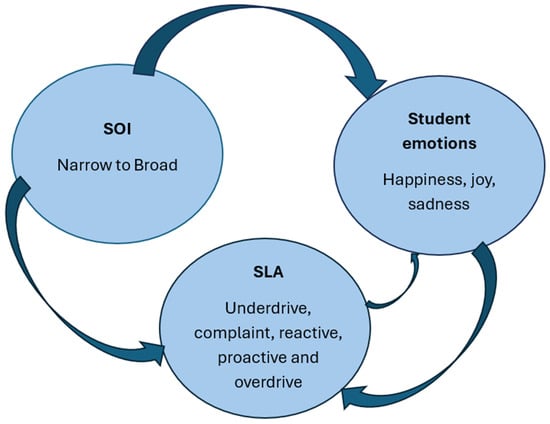
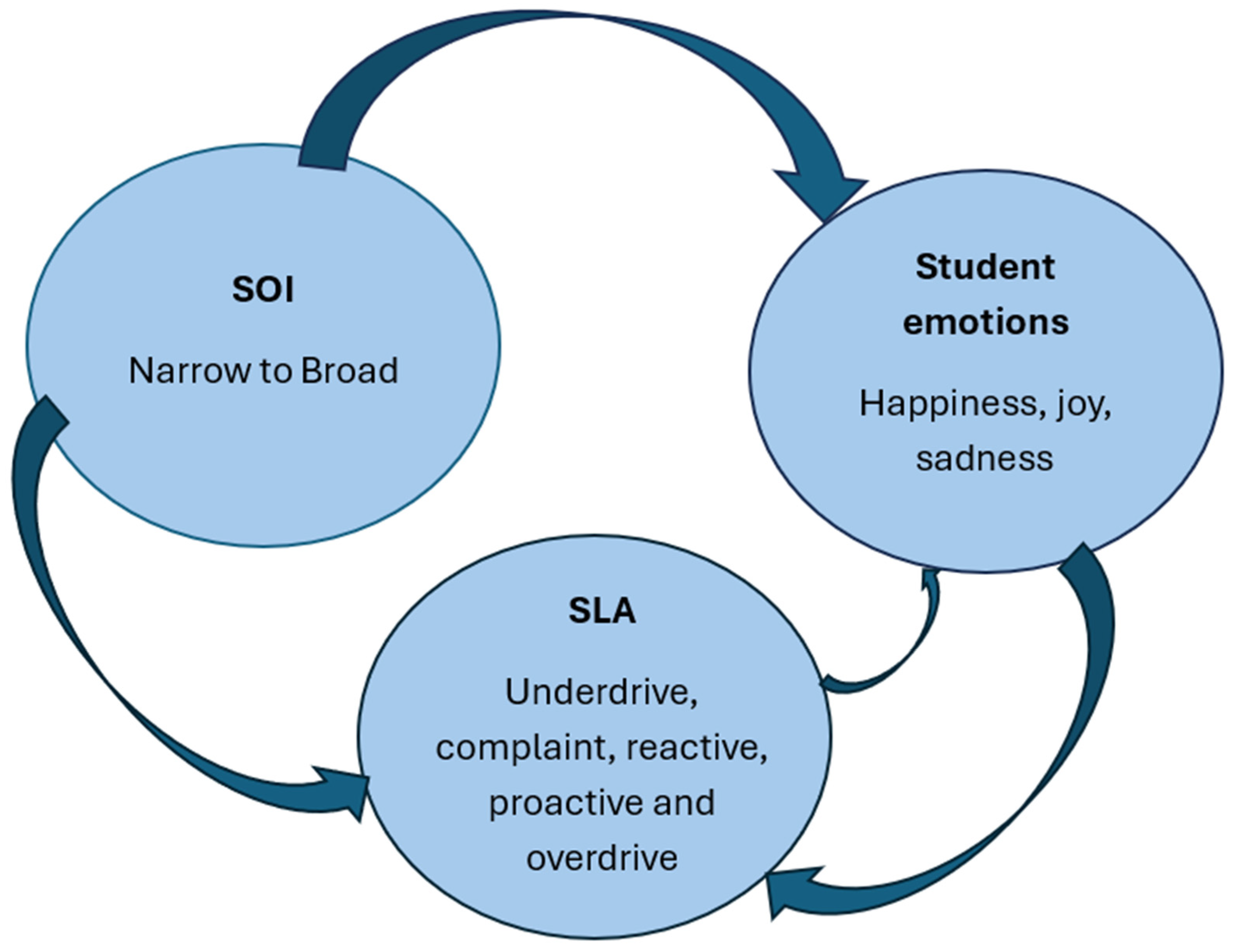

Disclaimer/Publisher’s Note: The statements, opinions and data contained in all publications are solely those of the individual author(s) and contributor(s) and not of MDPI and/or the editor(s). MDPI and/or the editor(s) disclaim responsibility for any injury to people or property resulting from any ideas, methods, instructions or products referred to in the content. |
© 2026 by the authors. Licensee MDPI, Basel, Switzerland. This article is an open access article distributed under the terms and conditions of the Creative Commons Attribution (CC BY) license.