


Abstract
The integration of artificial intelligence (AI) into early childhood education presents both opportunities and challenges to longstanding Froebelian pedagogies, particularly regarding child agency and nature-based play. This mixed-methods study explores this tension within the Chinese context. It examines how Chinese Froebelian practitioners perceive the alignment between AI tools and core principles and investigates the strategies they employ to navigate the integration of technology with humanistic educational values. The survey results, from 50 practitioners, revealed that AI can support autonomous and holistic learning, yet significant concerns persisted regarding the displacement of sensory and nature-based experiences. Follow-up interviews uncovered a practitioner-led “dual-track integration” approach, which strategically blends physical manipulation and nature engagement with AI-enabled personalization. Through an iterative dialogue between theory and data, this study develops and refines the “dual-track integration” framework as an empirically grounded, sensitizing model. This framework offers principled strategies for hybrid learning that uphold the developmental primacy of play. Situated within the discourse on Sustainable Development Goal 4 (quality education) and Goal 10 (reduced inequalities), the analysis highlights AI’s dual potential to advance or hinder equity. By examining China’s hybrid position, which combines advanced digital infrastructure with persistent equity gaps, this research highlights the critical role of educator agency and pedagogical design in leveraging AI to advance equitable, high-quality early childhood education.
1. Introduction
The integration of artificial intelligence (AI) into early childhood education represents a critical frontier in pedagogical innovation, carrying significant implications across academic, professional, and societal domains (Lin et al., 2020; Luo et al., 2020; Vartiainen et al., 2020). China’s recently issued “14th Five-Year Plan” emphasizes the digitalization of preschool education, and major Internet companies have begun new pilot projects for children’s AI education (Tencent, 2024; HUAWEI, 2021). This technological transformation intersects with Friedrich Froebel’s enduring child-centered philosophy (Bruce, 2021b). This convergence raises fundamental questions about balancing technological advancement with humanistic educational values. Globally, as nations accelerate AI in education (AIEd) initiatives, resolving these tensions is essential for ensuring equitable, developmentally appropriate learning experiences that harness technology’s potential without compromising core pedagogical principles.
Research demonstrates AI’s efficacy in personalized personalized learning through adaptive software and immersive tools (Su & Zhong, 2022), yet it also highlights critical risks. Structured digital applications can displace imaginative play, constrain child agency, and reduce engagement with the natural world—directly challenging Froebel’s emphasis on sensory-rich, self-directed learning (Putnick et al., 2022; Meyer et al., 2021). While China’s policy landscape features ambitious strategies to promote infrastructure equity and smart learning ecosystems, a significant gap persists between policy momentum and classroom-level practice.
Crucially, there is a dearth of empirical research examining how established early childhood philosophies, such as Froebel’s, interface with AI tools in authentic educational settings. Existing discussions tend to prioritize technological efficacy over pedagogical integration or remain largely theoretical (Berson et al., 2025; Su & Zhong, 2022). The voices and lived experiences of Froebelian educators, particularly in non-Western contexts like China, are conspicuously absent from the discourse. How these practitioners interpret, adapt, and implement AI within their child-centred practice remains largely unexplored.
To address this gap, this research pursues two interrelated objectives: (1) to investigate Chinese Froebelian practitioners’ perceptions of the alignment between AI tools and core Froebelian principles and (2) to develop actionable strategies for harmonizing play-based pedagogy with digital technology. These objectives translate into the following research questions:
- How do Chinese Froebelian practitioners perceive the applicability of Froebel’s principles in the AI era?
- How can Froebel’s principles be integrated with technology-empowered, play-based learning?
- How do practitioners’ experiences illuminate equity-related challenges and opportunities in AI integration, in relation to SDGs 4 and 10?
We argue that the apparent compatibility between AIEd “personalization” and Froebelian child- centeredness is not automatic (McNair, 2021). Froebel’s pedagogy depends on children’s self-activity, open-ended play, and sensory engagement with resources and the natural world, alongside the practitioner’s relational judgment and “freedom with guidance” (Liebschner, 1992; Aspin, 1983; Bowen, 1903; Baroness & von Marenholz-Biilow, 1877). By contrast, many AI-enabled tools risk shifting play towards algorithmic steering, data field forms of learning, and closed-loop interaction designs. This study therefore focuses on three interlocking tensions: (1) child agency versus algorithmic automation, (2) embodied/nature-based experiences versus screen-mediated interaction, and (3) practitioner professional judgement versus the outsourcing of planning and decision making to AI systems (Fleming & McNair, 2022). These tensions provide the analytic lens through which we interpret practitioners’ accounts and develop the dual-track integration framework presented in this paper.
In relation to SDG 4 (quality education) and SDG 10 (reduced inequalities), our data suggest that equity is less a question of whether AI is present and more a question of how it is governed and distributed. Survey responses and interviews highlight that device shortages, uneven infrastructure, and variable teacher training shape who can access AI-enhanced opportunities and who cannot. At the same time, practitioners’ concerns about screen time and nature displacement indicate “more technology” is not a straightforward equity solution if it replaces play conditions that particularly support children’s agency, language, and social participation (Fleming & McNair, 2022). We therefore frame equity in dual-track integration as a double obligation (1) to prevent exclusion through access and practitioner capacity-building and (2) to prevent development inequity by ensuring AI use does not displace the embodied, relational, and nature-based experiences that underpin Froebelian play pedagogy (Aspin, 1983; Baroness & von Marenholz-Biilow, 1877).
To align with the Special Issue on Sustainable Development Goals (SDGs) and education equity, this study situates its empirical inquiry within the framework of SDG 4 (quality education), and, where relevant, SDG 10 reduced inequalities) (Apata et al., 2025). While AI-enhanced educational technologies hold potential to improve pedagogical quality and learner engagement, emerging research underscores that such technologies may simultaneously amplify existing disparities unless equitable access and ethical implementation are carefully considered, for instance, the disparity in learning opportunities for artificial intelligence and the “AI gap” between advantageous and disadvantaged children in terms of access to and use of artificial intelligence (J. Chen & Delaney, 2025; Mhlanga, 2021). Moreover, research on AI and SDGs highlights that infrastructure, teacher capacity, and policy contexts shape whether AI drives inclusion or reproduces inequities in educational systems (Komasawa & Yokohira, 2023). Against this backdrop, our study on teacher perceptions of Froebelian pedagogy and AI integration contributes not only to understanding a context-specific pedagogical tension, but also to the broader discourse on how AI integration in early childhood education might support or impede quality and equitable educational practices.
This study makes distinct contributions. Theoretically, it bridges historical pedagogy and modern technology by proposing a “dual-track integration” framework that preserves Froebel’s core tenets while leveraging AI’s adaptive capabilities. Practically, it provides evidence-based strategies to help educators implement digital education policies without compromising child-centred learning. This paper is structured as follows: after this introduction, a consolidated literature review examines technological trends, the Froebelian framework, and their points of tension. The methodology outlines the mixed-methods approach, followed by a combined findings and discussion section. The conclusion summarizes key insights, acknowledges limitations, and suggests future directions.
2. Literature Review
2.1. Technological Trends and Policy Drivers in Early Childhood
The integration of artificial intelligence in education (AIEd) marks a transformative phase in early learning, driven by advancements in machine learning and natural language processing (Herodotou, 2017; Lin et al., 2020). Defined as computational systems capable of performing tasks traditionally requiring human cognition, AIEd enhances pedagogical practices through adaptive feedback mechanisms, automated assessments, and intelligent tutoring systems (Wang et al., 2025). AIEd demonstrates impact in early childhood education through three key applications. One application is adaptive learning tools, including AI-powered speech and language systems designed for both neurodivergent and neurotypical children (Su & Zhong, 2022). Another application is educational robotics; a 2022 scoping review found that it improves preschoolers’ learning enthusiasm and computational thinking (Su & Yang, 2022). The third key application involves immersive AR/VR experiences, where AI-driven virtual tutors personalize content according to cognitive profiles, enhancing engagement and conceptual mastery (Khan, 2023). Globally, adoption rates vary significantly. For instance, while tablet ownership in US households is high, systematic pedagogical integration by practitioners remains limited (Dore & Dynia, 2020). In contrast, Norway has mandated “digital competence” as a core curriculum skill, leading to the widespread embedding of digital tools in play-based settings, albeit amid ongoing debates about commercial influence and age appropriateness (Kumpulainen et al., 2022).
China’s approach is characterized by strong, top -down policy directives. The “14th Five-Year Plan for National Informatization” and the “New Generation Artificial Intelligence Development Plan” frame AI education as a national strategic priority, calling for the construction of smart education platforms and the introduction of computational thinking from an early age (The Ministry of Education of China, 2021; UNESCO IITE et al., 2022). This has been operationalized through regional pilots, such as Beijing’s mandate for AI instruction and the deployment of Keeko robots in hundreds of kindergartens (XINHUA, 2018; Modi, 2025). Corporate-led initiatives, like Huawei’s Education Companion Robot and Tencent’s AI coding tools for visually impaired children, further illustrate the multifaceted push towards technological integration (HUAWEI, 2021; Tencent, 2024).
2.2. Froebelian Educational Philosophy and Points of Intersection with AI
Friedrich Froebel (1782–1852), the founder of the kindergarten in 1837, established a child-centered universe where play is the fundamental medium for learning and development (Bruce et al., 2017). This philosophy is not a passive romanticism but a structured approach built on core principles that offer a critical lens to examine technological integration. At its heart lies the concept of “freedom with guidance,” where the educator is a sensitive observer who intervenes only to deepen and not to narrow down he child-directed play (Tovey, 2016; Bruce, 2021b; Bowen, 1903). This delicate balance between child autonomy and adult scaffolding is paramount, as Froebel himself warned that, without spontaneity and free choice, play loses all its educational power (Bruce, 2021b; Bowen, 1903).
The Froebelian environment is meticulously prepared to stimulate the child’s “symbolic life” through direct engagement with structured materials and nature. The iconic Gifts (e.g., wooden blocks, spheres) and Occupations (e.g., sewing, weaving) are designed for open-ended manipulation, enabling children to explore mathematical and relational concepts through “transforming and composing” (Whinnett, 2012). This tactile, concrete interaction is inseparable from Froebel’s emphasis on nature connection, which he viewed as essential for holistic, spiritual, and moral growth (Bruce, 2021a). Ultimately, his pedagogy cultivates a unity of development—weaving together cognitive, physical, social, and emotional domains through intrinsically motivated, imaginative play (Bruce, 2012).
When juxtaposed with modern AI in education (AIEd), Froebelian principles reveal both compelling alignments and profound tensions. Theoretically, AI’s capacity for personalization resonates with Froebel’s focus on the individual child. Adaptive learning platforms, by analyzing fine-grained behavioural data to create dynamic learner profiles and tailor content, can be seen as a technological actualization of his child- centred vision (Gligorea et al., 2023; Takyar, 2023). Furthermore, the Froebelian principle of “freedom with guidance” finds a potential counterpart in AI-enabled self-directed learning. Generative AI and social robots can offer open-ended inquiries and context-sensitive prompts, supporting exploratory autonomy while operating within pedagogically set boundaries—a dynamic that aligns with research on choice-driven technology use (Aflalo et al., 2024; Su & Zhong, 2022).
However, the alignment is precarious and often superficial. The most significant tension lies in the threat to child agency and the primacy of physical experience. While AI can suggest pathways, its underlying algorithms often pre-structure interaction, creating “closed-loop” designs that can reduce the child from an active author of play to a follower of scripts (Meyer et al., 2021; Radesky et al., 2022). This fundamentally contradicts the open-ended, child-led exploration inherent to Froebel’s Gifts. Moreover, the screen-based, two-dimensional nature of many AI tools risks displacing the sensory-rich, tactile engagement with real-world materials and nature that is the bedrock of Froebelian learning (Putnick et al., 2022). The ethical dimensions of AI, including data privacy and algorithmic bias, further challenge the nurturing, human-centric relationship central to Froebel’s philosophy (Berson et al., 2025).
Therefore, the integration of AI into a Froebelian framework cannot be a simple substitution. It demands a critical re-conceptualization where technology is positioned not as a replacement for core experiences, but as a potential complement. The challenge and opportunity lie in designing “phygital” interactions that honor the irreplaceable value of physical manipulation and nature connection while leveraging AI’s unique capabilities for personalization and simulation.
2.3. Tensions Between Digital Education and Froebelian Play
Friedrich Froebel’s philosophy centers on free, imaginative play and child-led exploration as fundamental to early learning. In contrast, emerging research reviews that digital educational technologies sometimes conflict with core Froebelian principles of play (Tovey, 2016; Bruce, 2021a). Empirical studies have documented how screen-based, structured activities can displace open-ended play, constrain young children’s agency, and diminish the richness of play experiences in preschool settings. Below, the researchers review key findings from peer-reviewed studies that observe and measure these effects in real children, highlighting the tensions between technology-led instruction and Froebelian play-based pedagogy.
One major concern is that time spent on digital devices replaces or reduces time for symbolic, imaginative play. In the modern preschooler’s world, traditional free play with peers is increasingly “supplanted” by the active use of gadgets. Several studies provide concrete evidence of this displacement effect (Bukhalenkova & Almazova, 2023). For example, a recent longitudinal study tracked children’s daily activities from infancy to age 3 and found that higher screen time was associated with significantly less time engaged in play with peers (Putnick et al., 2022). Notably, screen use did not cut into adult-led reading time, but it did directly displace peer play opportunities (Putnick et al., 2022). Reduced peer play, in turn, was linked to poorer developmental outcomes, suggesting that when screens encroach on free play, children miss out on crucial social and cognitive experiences (Madigan et al., 2019).
Classic research on imagination likewise indicates that heavy exposure to electronic media correlates with diminished imaginative capabilities. Singer and Singer (2009) reported that, in early studies, preschoolers who were heavy television viewers demonstrated less imaginative play than lighter viewers, presumably because screen content was crowding out self-generated make-believe. Consistent with Froebel’s emphasis on creative fantasy, children need unstructured time and open-ended materials to develop imagination (Whinnett, 2012). Yet “screens are emerging as a significant part of how many children spend their time—often replacing, rather than complementing, physical and social forms of play” (UNICEF, 2025). Practitioners even observe that some children “don’t know how to play” without digital entertainment, having lost practice in freely inventing games (UNICEF, 2025). Overall, empirical evidence confirms a worrisome trade-off: as structured digital activities consume more of young children’s day, the fertile ground of pretend play and peer interaction shrinks, undermining a pillar of Froebelian pedagogy.
Froebelian play philosophy prizes the child’s agency, initiative, and exploratory drive in learning through play. In stark contrast, the many so-called “educational” apps and digital games impose predetermined structures that constrain children’s agency and limit open exploration (Radesky et al., 2022). Pediatric researchers have noted that, in digital games, “the app designer is in control”, and the software often dictates the sequence of actions, rules, and goals, leaving little room for the child’s own ideas (Mostafavi, 2019). Radesky (as cited in Mostafavi, 2019) describes many preschool apps as having a closed -loop design that decides for children what they will do next, rather than letting the child’s brain take the lead. This means the child is mostly following scripted interactions (tapping here, dragging there to get a reward), instead of actively directing the play narrative. Such designs do not support the autonomy, self-direction, and creative problem-solving that Froebel saw as central to play.
Empirical analyses of children’s apps reinforce these concerns. In one content analysis of 124 popular “educational” apps for young kids, researchers found overall low scores on measures of active, engaging, meaningful, and socially interactive learning (the “Four Pillars” of effective learning) (Meyer et al., 2021). Most apps were drill-like or overly “click-to-collect” in nature; in fact, the highest-selling free apps scored significantly worse on engagement and interactivity due to distracting rewards and rigid structures (Meyer et al., 2021). Similarly, a study of tablet applications used in Swedish preschools noted that some apps offer rich creative or multilingual possibilities, but many showed a “lack of opportunities for children’s agency” when the app’s composition was more closed-ended (Petersen, 2023). In other words, when the digital content is pre-structured with fixed outcomes, children have fewer chances to make choices, explore divergent paths, or express themselves freely. This aligns with broader expert critiques: rather than empowering child-led exploration, a lot of digital learning content for preschoolers ends up guiding and constraining their behavior (Mostafavi, 2019). The result is the opposition of Froebelian principles—the child becomes a passive recipient of pre-packaged “interactive” lessons, instead of an active author of play.
2.4. Towards a Conceptual Bridge: The “Dual-Track Integration” Sensitizing Framework
Although the exact term dual-track integration has not yet been established as a formal educational theory, conceptually related dual or parallel learning structures have been studied in international research. In vocational and higher education literature, dual systems or dual programs are widely recognized as configurations where two distinct learning environments or pathways operate in parallel with intentional coordination to produce complementary learning outcomes. For example, the dual vocational education and training systems in countries such as Germany and Switzerland combine classroom-based education with workplace learning in structured, interdependent ways that aim to prepare students more holistically for professional competence (dual vocational education combines schooling and apprenticeship apprenticeships) (Federal Institute for Vocational Education and Training, 2019; Leichsenring, 2025). Similarly, studies of dual study programs in higher education use curriculum theory to explicate how academic and vocational learning pathways can be integrated to support learners’ development while retaining the integrity of each pathway (Mordhorst & Jenert, 2023).
Such usages reveal a practical logic of maintaining parallel yet complementary pathways rather than collapsing separate modalities into a single undifferentiated process. This logic resonates with longstanding discussions in educational research about twin-track or blended approaches that preserve the integrity of each component while enabling mutual reinforcement (e.g., combining multiple instructional modes to enhance learning outcomes).
To address the specific tensions identified above between Froebelian play principles and the affordances of AI technologies, this study adopts a dual-track integration framework as a sensitizing analytic tool rather than a pre-existing formal theory. A sensitizing framework provides general conceptual guidance for noticing and interpreting patterns in empirical data without prespecifying exact empirical forms; such frameworks are common in qualitative and mixed-methods research to orient analysis while remaining open to refinement through observation.
In the context of early childhood education, we conceptualize dual-track integration as the intentional orchestration of two parallel, interdependent learning pathways. The first pathway, the physical/nature-based track, emphasizes sensory-rich, materials-mediated exploration, peer interaction, and engagement with the natural environment, consistent with Froebel’s foundational principles. The second pathway, the AI-mediated track, selectively leverages the distinctive capabilities of AI technologies, such as adaptive feedback, personalization, and safe simulation, to extend, enrich, or elaborate upon learning inquiries that originate from and ultimately reconnect to physical exploration. Crucially, teachers act as curators and mediators between the tracks, ensuring that technology supports rather than supplants child-initiated play and that considerations of access and equity shape how the tracks are coordinated in practice.
By introducing this framework at the end of the literature review, we establish a conceptual bridge between the theoretical tensions identified in existing studies and the empirical investigation that follows. This framework guides our design of data collection and analysis by providing a lens for examining how Froebelian teachers in China negotiate the relationship between embodied play and AI-mediated experiences in their classroom practice.
In this paper, we conceptualize “dual-track integration” not as a generic form of blended learning, but as a Froebelian, principle-based design framework (Lilley, 1967) for integrating AI without displacing the conditions that make play educative (McNair, 2021). The novelty of this framework lies in three commitments. First, it is governed by Froebelian tenets (self-activity and experiences with and in nature) (Fleming & McNair, 2022; Bowen, 1903; Froebel, 1887), meaning that AI use is evaluated against pedagogical principles rather than technological novelty. Second, it positions the practitioner as an active curator and ethical gatekeeper, ensuring that professional judgment, not algorithmic recommendation, remains the decisive authority in the planning and flow of activities. Third, it adopts an embodiment-first sequencing logic: AI experiences are used only when they arise from children’s material inquiries and when they return children to sensory, relational, and nature-based exploration. In this way, dual-track integration is offered as a context-sensitive framework for practitioners to design hybrid play experiences that persevere the developmental primacy of play, while selectively leveraging AI affordances (McNair, 2021).
In this paper, we initially conceptualize “dual-track integration” as a sensitizing framework to guide our inquiry. It serves as an analytic lens for examining how practitioners navigate the tensions between embodied play and AI-mediated experiences, while remaining open to refinement through empirical data. This approach aligns with qualitative and mixed-methods traditions in which preliminary conceptual tools are iteratively tested and elaborated through engagement with participants’ accounts (Charmaz, 2006).
3. Methodology
An exploratory sequential mixed-methods design (QUAN–QUAL) was selected because the research questions require both breadth and depth, first, to map how Froebelian practitioners perceive alignment and tensions between AI tools and core principles across a sample, and, second, to explain how those perceptions are negotiated and enacted in practice. The survey phase identified patterns and points of divergence (e.g., strong endorsement for AI autonomy and personalization alongside concern about natural displacement). These patterns then informed the qualitative phase through purposive carry-through sampling and the design of interview prompts, enabling the interviews to probe the “why” behind the survey trends and to examine how teachers balance AI-generated recommendations with professional judgment. This sequential integration also supports the development and refinement of the dual-track framework by linking quantitative attitudinal patterns to qualitative accounts of decision making and environment enactment.
3.1. Participant Sampling
Purposive sampling was used to recruit practitioners from kindergartens in China that self-identify as applying Froebelian principles in their curriculum and daily practice. These settings were accessed through professional networks of Froebel-trained educators and early childhood education associations in major urban areas (Beijing, Nanchang, Chengdu). The sampling strategy was designed to reflect the diversity and depth of professional experiences among early childhood educators who are actively implementing Froebelian principles in practice (Tashakkori et al., 2021). The participants included practitioners with different levels of teaching experience, ranging from three years to over a decade, and their familiarity and application of the Froebelian teaching method varied in their respective environments.
As Froebelian practice may be interpreted differently across contexts, we operationalized “Froebelian” through a combination of self-identification and practice indicators (Brehony, 2024; Bowen, 1903). Participants were eligible if (a) their setting explicitly described itself as Froebelian or Froebelian-informed, and (b) practitioners reported incorporating at least two Froebel-aligned features in everyday practice (e.g., the use of Gifts/Occupations or open-ended materials; sustained child-led play; intentional nature/outdoor engagement; a practitioners role oriented towards observing, supporting, and extending rather than directing (Liebschner, 1992)). This approach retains sensitivity to local adaptations while ensuring that the sample reflects recognizable Froebelian pedagogical commitment in practice.
3.2. Data Collection Methods
This study employed an explanatory sequential mixed-methods design (QUAN → QUAL) (Creswell & Clark, 2011), where quantitative data collection and analysis systematically precede qualitative inquiry. This approach first mapped the breadth of Froebelian practitioners’ AI-integration beliefs and practices through surveys, establishing patterns across a broad sample, before conducting in-depth interviews to explore the underlying explanations and contextual nuances behind these patterns. The sequential structure embodies Tashakkori et al. (2021) assertion that such designs allow researchers to explain initial quantitative results in more depth, addressing how and why questions emerging from statistical trends. This approach fulfills Creswell and Clark’s (2011) observation that MMR yields a broader and deeper understanding than mono-methods. Furthermore, quantitative data informs qualitative sampling through carry-through sampling (Ivankova, 2013), where interview participants are purposively selected from survey respondents to ensure contextual continuity. The interview protocol was then tailored to probe the “why” behind these survey patterns. This pragmatic approach resolves commensurability tensions by prioritizing fitness for purpose over paradigmatic purity, leveraging quantitative strengths in identifying general patterns and qualitative capacity to reveal contextual complexity (Cohen et al., 2018), ultimately ensuring components are mutually illuminating rather than merely supplemental (Bryman, 2007a).
In the first phase, 50 Froebelian kindergarten practitioners were invited to complete an online questionnaire aimed at mapping their perceptions and practices related to the integration of AI into play-based learning. From this group, a purposive subsample of eight practitioners was selected for the qualitative phase of this study. Selection was based on variation in demographic profiles and initial responses to the survey—particularly in terms of reported AI usage and alignment with Froebelian educational values (Bruce, 2012). To ensure equity, the number of teachers from public kindergartens and private kindergartens was equal, with four teachers from each type of kindergarten. These eight practitioners participated in semi-structured interviews that allowed for deeper exploration of their experiences and reflections. However, at the final stage of the semi-interview, a practitioner from a public kindergarten withdrew from the interview. As a result, the interviewees consisted of teachers from three public kindergartens and four private kindergartens.
To enhance qualitative trustworthiness, several strategies were employed. Credibility was supported through iterative coding and sustained engagement with the data. All interviews were conducted in Mandarin, audio-recorded, and transcribed verbatim by the researcher. Translation into English was conducted by the same bilingual researcher, with selected excerpts back-checked against the original Mandarin transcripts to ensure semantic accuracy.
Dependability and confirmability were addressed through the use of NVivo to maintain an audit trail of coding decisions and analytic memos. Coding was conducted by a single researcher; however, emerging categories and interpretations were discussed with academic peers for debriefing and reflexive checking. Given the exploratory scope and practitioner time constraints, formal member checking was not undertaken, which is acknowledged as a limitation.
3.3. Positioning of the Dual-Track Integration Framework
The dual-track integration framework was employed in this study as a sensitizing conceptual tool that guided our inquiry while remaining open to refinement through empirical engagement. Initially derived from a synthesis of Froebelian principles and the emerging literature on digital play (as outlined in Section 2.4), the framework served as an analytic lens for designing interview protocols and for thematically coding practitioners’ accounts. Throughout the data collection and analysis process, however, the framework was iteratively tested, elaborated, and refined based on practitioners’ reported strategies, tensions, and contextual adaptations. Thus, the dual-track model presented in the findings and discussion represents neither a purely deductive application of a pre-existing theory nor an entirely inductive grounded theory, but rather a hybrid conceptual framework that has been substantiated and reshaped through the empirical data—a process consistent with iterative mixed-methods research aimed at theory development.
3.4. Questionnaire
In this study, the online questionnaire has multiple methodological advantages. Firstly, it can efficiently collect structured data from Froebel practitioners covering different regions across the country under the condition of limited funds and time. Studies have shown that the anonymous mode of online questionnaires can reduce the social desirability bias of the subjects, encourage respondents to answer more candidly, and thereby improve the data quality (Tourangeau & Yan, 2007; Kreuter et al., 2008). Secondly, the automated data aggregation and export function achieved real-time aggregation and preliminary statistical analysis. By using modern online platforms such as Qualtrics, charts and reports could be generated immediately after the questionnaire was completed, significantly reducing the transition time from data collection to qualitative interviews.
The questionnaire comprised four sections. The first section collected background information on teaching experience, digital infrastructure, and training. The second section measured, via a 5-point Likert scale, practitioners’ perceptions of the alignment between Froebelian principles and AI integration. The third section investigated the types of AI technologies used, implementation objectives, and key barriers. The final section assessed policy awareness and identified critical support needs. This structure enabled a logical progression from contextual factors and attitudes to concrete practices and systemic considerations. The full questionnaire is provided in Appendix A.
3.5. Semi-Structured Interviews
Semi-structured interviews were selected as the qualitative method in the second phase of this study for their capacity to elicit rich, contextually anchored insights from participants, while maintaining sufficient structure to explore specific research objectives (DiCicco-Bloom & Crabtree, 2006). They bridged the flexibility of unstructured formats with thematic focus, allowing participants to share experiences in their own words and enabling researchers to probe emergent themes (Brown & Danaher, 2019). This approach aligns with qualitative best practices, especially within educational settings where understanding practitioner perceptions, motivations and decision-making processes is essential (Braun & Clarke, 2006).
All interviews were conducted in Mandarin, audio-recorded with consent, and transcribed verbatim. Each interview lasted approximately 45–60 min. All audio files were stored securely in a password-protected cloud repository (Microsoft OneDrive). Thematic analysis followed the six-phase process outlined by Braun and Clarke (2006). Translated interview transcripts were imported into NVivo 15 for thematic analysis, a method well-suited for coding and identifying patterns in qualitative research (QS International, 2024). Employing an iterative coding process, initial open (in vivo) coding captured participants’ own terminologies and concepts (Lumivero, 2025), followed by focused thematic coding to refine emergent themes
Interview Guide
- The Ministry of Education of China proposes “taking the digitalization of education as a crucial breakthrough” and achieving “full coverage of informatized teaching applications for all practitioners, learning applications for all school-age students, and digital campus construction for all schools.” How would you rate the quality of the digital education equipment in your kindergarten? Can it fulfill the Ministry’s vision? How do you cultivate young children’s thinking skills and exposure to technology within these conditions?
- If an AI-generated activity plan differs from the one you have planned, would you be more inclined towards the algorithm’s recommendation, or would you adhere to your own teaching plan? Why?
- When you use AI-driven digital education tools, what are the children’s reactions? Are they surprised, confused, or resistant? Please describe a specific scenario and how you proceeded with the activity.
- Do you believe AI-driven digital education tools (such as interactive whiteboards with AI assistants, AR/VR systems that generate personalized content, or adaptive learning platforms) are consistent with Friedrich Froebel’s teaching philosophy? In what aspects are they consistent or inconsistent? Please provide an example.
- How do you think Froebel’s principles should be adapted and refined to be more applicable in digital teaching contexts for young children? Please provide an example.
The semi-structured format is particularly well suited to mixed-methods designs. McIntosh and Morse (2015) pointed out that “SSI (Semi-interview) is the most commonly used qualitative research method in the design of hybrid methods, that is, a method that integrates qualitative and quantitative research”. In relation to earlier survey findings (e.g., practitioners’ reported AI usage or perceived barriers), these interviews provided explanatory depth, enabling the researcher to understand “why” certain patterns emerge, which is a key feature of explanatory sequential designs (Creswell & Clark, 2011; Bryman, 2007b).
4. Discussion and Findings
Our findings address the three research questions in sequence. First, practitioners largely perceive Froebel’s principles as enduring in the AI era, particularly in relation to child-led learning, autonomy, and holistic development; however, this endorsement is qualified by concerns about sensory displacement and the risk of scripted, closed-loop interactions. Second, practitioners describe integration strategies that preserve Froebelian “freedom with guidance” (Liebschner, 1992; Brehony, 1987, 2024) through practitioner mediation: they blend AI-generated suggestions with their own plans, prioritize children’s interests, and ensure that digital experiences reconnect children to material exploration and nature engagement. Third, practitioners’ accounts highlight equity tensions that sit alongside pedagogical tensions: uneven access to hardware, variation in teacher training, and disparities across institutional types through which children benefit from AI and which are likely to experience either exclusion or over-exposure to screen-based learning. These findings collectively refine and substantiate the dual-track integration framework, transforming it from a sensitizing lens into a set of empirically grounded pedagogical and equity-oriented design principles.
4.1. Quantitative Phase: Descriptive Analysis of Survey Data
Sample Characteristics and AI Familiarity
A total of 50 valid questionnaires were analyzed for this study (see Table 1). The respondents were kindergarten practitioners with a range of teaching experience. The sample showed that 44% of early childhood practitioners had 3 to 5 years of teaching experience, while another 32% had less than 3 years. In contrast, around 24% had 6–10 years of experience, and only 6% had been teaching for over a decade. This suggests that the majority of participants were in the first several years of their careers. The respondents surveyed also came from a variety of kindergarten contexts across different regions, implying a diverse sample in terms of geographical and institutional background (Tashakkori et al., 2021).
Table 1.
Demographic profile of respondents (N = 50).
Nearly all of the respondents were exposed to educational technology through professional development, and they were well informed about national digital education initiatives (The Ministry of Education of China, 2021). A total of 86% of respondents had participated in training related to digital education or AI, indicating a high baseline of tech familiarity (see Table 1). The remainder had, at least, a basic understanding of these policies; about thirty respondents had either studied the policies in depth or even been involved in their implementation (The Ministry of Education of China, 2021). This suggests that the sample not only possessed practical training but also a strong awareness of the broader push for integrating technology into early childhood education.
Consistent with their training and policy awareness, nearly all participants had experience using technology in play-based teaching (see Table 2). Only one respondent reported never employing digital media in children’s play activities. A total of 98% of the respondents had integrated one or more forms of technology into their classrooms. The most common tools were adaptive learning software (used by 76% of respondents) and AI-based content creation platforms (68%). The adaptive learning software referred to here means dialogue with AI and voice training software. The content generated by AI can be stories, images or activity plans. Overall, 58% of the respondents had experience with educational robots (58%), and 50% of them had tried augmented or virtual reality (AR/VR) for immersive learning.
Table 2.
Use of AI-driven educational technologies reported by practitioners (N = 50).
4.2. Froebelian–AI Alignment: Principles and Practices
The quantitative data revealed a remarkably strong consensus among Chinese kindergarten practitioners regarding the perceived alignment of AI tools with core Froebelian educational principles. Across all three surveyed dimensions, AI’s capacity to help understand individual child needs (Gligorea et al., 2023; Takyar, 2023), support autonomous learning (Aflalo et al., 2024; Jauhiainen & Guerra, 2024), and promote holistic development (Whinnett, 2012; Bruce, 2012), an identical and overwhelming 88% of respondents expressed agreement or strong agreement (see Table 3). This high level of concurrence, coupled with high mean scores exceeding 4.14 out of 5 (Q4: μ = 4.14; Q5: μ = 4.30; Q6: μ = 4.24), indicated a broad and robust affirmation within the sample that AI functionalities resonated with Froebel’s emphasis on recognizing the unique developmental path of each child, fostering self-directed activity, and nurturing integrated growth across cognitive, emotional, and physical domains (Bruce, 2021b; Tovey, 2016).
Table 3.
Attitudinal distribution comparison (N = 50).
While the overall agreement was uniformly high, the data showed variations in the strength of endorsement for each principle. Support for autonomous learning (Q5) emerged as the most strongly affirmed dimension, achieving the highest mean score (μ = 4.30) and the largest proportion of “Strongly Agree” responses (48%). This suggested that respondents perceived AI tools, such as open-ended AR/VR simulations or generative storytelling platforms, as particularly effective in creating exploratory environments conducive to child-led, self-directed learning (SDL) (Aflalo et al., 2024). The principle of holistic development also received strong backing (μ = 4.24), with practitioners linking AI’s ability to facilitate interdisciplinary projects (e.g., merging math, art, and language) to Froebel’s “unity principle” (Bruce, 2012), which advocates for the inseparable and simultaneous nurturing of different developmental areas. Personalization (Q4, μ = 4.14), though slightly lower in mean score, was still strongly supported, with practitioners associating AI’s tracking of children’s interests and learning content with Froebel’s focus on the individual child’s trajectory (Kucirkova, 2017).
4.3. Barriers and Nature Engagement Conflicts
Although the majority of surveyed respondents affirmed that AI technologies aligned with Froebelian principles such as individualization, autonomy, and holistic development, concerns arose when evaluating the compatibility of AI with Froebel’s deep emphasis on nature engagement (Bruce, 2021a). Froebel viewed interaction with the natural world as essential to early childhood education, believing that gardens, outdoor play, and contact with natural rhythms nurtured children’s moral and spiritual growth (Bruce, 2021b). However, Likert-scale responses to question seven showed notable ambivalence: while 36% agreed and 24% strongly agreed that AI could conflict with nature engagement, 22% expressed disagreement, and 14% remained neutral (see Table 4). The mean score of 3.54 indicated a moderate level of concern among practitioners about digital tools potentially displacing nature-based learning.
Table 4.
Perceived conflict with nature engagement (N = 50).
This concern has been confirmed in existing studies. Putnick et al. (2022) conducted a longitudinal study on young children and found that high screen time significantly reduced the time children spent playing freely with their peers. A reduction in peer play time is, in turn, significantly associated with an increased risk of developmental delay: More screen exposure indirectly raises the likelihood of developmental delay in young children by compressing peer interaction. Similarly, the cohort study by Madigan et al. (2019) also pointed out that there was a statistically significant association between excessive screen use by young children at the ages of 2 and 3 and their lower scores in language, cognitive and other development assessments at slightly older ages. Overall, when digital media take up the time that children would otherwise spend on peer interaction and free play, they may miss out on many experiences that are crucial for their social, cognitive and emotional development.
Most respondents (62%) list the shortage of equipment as the main obstacle, reflecting that many kindergartens lack hardware (such as insufficient quantity or integrity of tablets, interactive whiteboards, etc.) (see Table 5). More than half (54%) of the respondents pointed out that practitioners lack relevant training—even if equipment is available, they may not have confidence in effective integration. In addition, 44% expressed concerns about technology addiction, worrying that children would be addicted to screens and take up outdoor activities. It is evident that, apart from teaching concepts, resources and capabilities also restrict the integration of AI.
Table 5.
Implementation barriers and critical support needs.
Correspondingly, practitioners are calling for stronger support: the most frequently mentioned is comprehensive AI education policies and guiding documents (48%) to clarify the boundaries and directions of good practices; government equipment subsidies (24%) to make up for the resource gap; and more focused practitioner training on AIEd (20%). This shows that practitioners are willing to adopt technology, but they hope to receive structured guidance and input while ensuring the quality of teaching.
4.4. Qualitative Phase: Thematic Analysis of Interview Data
Positioning and Tensions of Digital Tools
Froebelian practitioners in this study acknowledged that many Chinese kindergartens were now equipped with digital tools, yet they stressed that devices alone do not transform learning. For example, one Beijing practitioner noted that “each class has a Seewo board… programmable robots… and an AI voice assistant” and that she uses these “smart devices” daily, allowing children to “adapt to this method” of learning (P1). Another commented that her school is “mostly using a Seewo board for instruction”, but worried “this equipment is too monolithic—more variety would be better” (P5). (Seewo Whiteboard is an interactive teaching platform independently developed by Seewo, designed for information-based teaching. Centered on the concept of generative teaching, it provides practitioners with functions such as cloud courseware, subject tools, and teaching resources for lesson preparation and delivery). These comments illustrated the theme of “hardware access versus uneven implementation”: while some schools boast modern hardware, the respondents pointed out gaps (e.g., limited device types) and caution that having hardware “does not equal impact every child” (P6).
Consistent with Froebelian beliefs, the practitioners emphasized that technology must remain auxiliary, not central. As one Nanchang practitioner emphatically stated, “we cultivate in children a mindset of “never depending on screens—technology is only an introduction” (P4). In practice she might have children first use a tablet to identify a leaf, then physically touch and smell a real one (P4). This reflects Froebel’s emphasis on multisensory, whole-child learning: children learn through direct experience, with technology serving only as a prompt (Froebel Trust, 2022). The NAEYC (2012) also advises that technology “should be used in moderation and to enhance… classroom experiences, not to replace essential activities” (p. 7). In other words, screens and AI can enrich but should not supplant hands-on play.
4.5. Teacher–AI Decision-Making Dynamics
The respondents described a dynamic tension between trusting AI-generated lesson plans and defending their professional agency. Some were enthusiastic about AI’s strengths. An experienced Nanchang practitioner observed that the AI’s suggested activity was “more comprehensive… It better matches the children’s interests, connects them with nature, and ensures their safety… I think it’s more perfect, so I would choose the AI plan” (P3). A Beijing practitioner likewise noted that AI plans are “advanced and innovative” and argued that “we practitioners need to learn from them” (P2). These comments highlight how artificial intelligence can handle multiple dimensions (such as children’s interests, environmental context, safety, etc.) faster than human planners. This point is responded to in the literature as follows artificial intelligence can “improve personalized care” and provide “data-driven insights” to guide decision making (Su & Zhong, 2022). Indeed, practitioners used AI analytics to refine activities, for example merging AI suggestions with their own ideas to suit their class’s needs. One respondent said (P2) she would “first blend my plan with the algorithm’s recommendation, then perhaps lean towards the AI’s scheme,” illustrating a “pragmatic hybridization” strategy. Another respondent described carefully comparing the AI’s logic with her experience, and if the AI’s new idea seemed fresh, she would fuse it into her lesson so that “the child’s interest is what matters” (P4).
However, the respondents also voiced strong concerns about ceding control. A Beijing practitioner warned that “if we always rely on AI’s generated plans… then what are we practitioners supposed to do? We’ll never use our brains” (P1). She feared that over-dependence would make educators feel obsolete, eroding their professional judgment. “Even if my own plan isn’t perfect or has mistakes,” she argued, “I can progress through my mistakes” (P2). This tension which is between AI’s promise and threats to practitioner expertise has been noted in recent scholarship. Mack (2025) mentioned “When curriculum planning is outsourced to AI, I worry educators will feel like their roles are reduced to solely being implementers rather than designers and engineers of learning experiences.” In line with this view, the practitioners strived to preserve their “agency”. They consciously combined algorithmic suggestions with their own insight, ensuring the practitioner remains the final curator of learning.
4.6. Children’s Responses to AI
Interviewees unanimously described children’s responses to AI and digital play as overwhelmingly positive and emotionally rich. Many interviewees reported that children showed “delight and anthropomorphism” when interacting with technology. For example, a Beijing practitioner recounted, “Some kids literally treated the AI device as a pet… One time the device imitated an animal’s call, and a child naively thought it was a real animal—he even placed his little cookie on it!” (P2). Similarly, a Chengdu practitioner noted that children instantly praised AI for its demeanor: when an AI speaker answered questions “faster and more smoothly… even more gently than I can,” one child exclaimed, “This is better than practitioner…AI never scolds us” (P5). These anecdotes align with McNair’s (2021) observation that, in digital play, children often engage with devices as if they were real companions, chatting with them or “cuddling them, as they would a favorite doll” (Froebel Trust, 2022).
Another dominant subtheme was “immersive wonder”. The respondents described children’s eyes widening in amazement at AI’s “tech magic.” In one incident, a Nanchang practitioner described how a boy requested a “rainbow dragon,” and the AI art program obliged—“he was stunned, staring at the screen for a long time” in disbelief (P3). In another class, children painted butterflies on paper and then saw them “come alive” in 3D on a screen; the practitioner reported that “they felt amazing… everyone wanted to see their own drawing flying” (P4). These moments of joy and engagement echo Froebel’s idea that play unlocks children’s imagination and creativity. McNair (2021) notes that digital play can “capture children’s interests” and invite them to explore in multi-modal ways, and our findings show children readily exploring and sharing these digital.
Despite the fascination, some respondents also observed “cognitive dissonance” when comparing digital and physical experiences. A Chengdu practitioner argued that, although technology can illustrate concepts, “actual experience is better”: planting real watermelon seeds provides a richer understanding of growth than any on-screen simulation (P6). Likewise, a Nanchang practitioner lamented that “digital tools are too ‘fake’; children lose the real tactile feeling… digital block games are just tapping on a screen, missing the real experience” (P7). This critique echoes Froebel’s emphasis on hands-on learning: children must “touch” and manipulate real materials to fully grasp concepts (Bruce et al., 2017). Educational research similarly warns that, while technology can extend learning, it should not replace essential concrete activities. In sum, children’s reactions combine excitement and curiosity about the “tech magic” of AI with an innate craving for tangible interaction—reflecting Froebel’s belief that “playing with real things” yields deeper understanding of the world (Froebel Trust, 2022).
4.7. Alignment with Froebelian Principles
The respondents consistently felt that Froebel’s core principles remained relevant in the AI era. Many pointed out that both Froebelian pedagogy and modern digital tools share a foundation of “child-led, play-based learning”. As one Beijing practitioner explained, “our Froebel kindergarten’s greatest principle is respecting the child’s nature, children learn most naturally when driven by their interests” (P1). In her view, AI was simply another means to that end. For example, she described a solar-term lesson where AI noticed children asking about insects, automatically generated a “bug exploration” theme, and the practitioner built an outdoor bug hunt with AR models. The AI-guided design “satisfies children’s curiosity, interest, imagination” in exactly the spirit of Froebelian play (Froebel Trust, 2022).
Certain Froebelian values, however, emerged as especially irreplaceable. Interviewees emphasized the “primacy of physical manipulation” and nature connection. Virtually every practitioner echoed Froebel’s insistence that children must touch and feel the real world (Froebel Trust, 2022). As one practitioner put it, “Even if AI’s virtual blocks are great, we must pair them with real physical blocks. Children must experience the wood grain, feel blocks collapse from weight” (P2). Another stressed that in a mixed lesson on leaves, technology was “just an introduction”: children used a tablet to scan a leaf’s 3D image and then went outside to hold and smell real leaves and mugwort (P4). This dual approach let them compare virtual and real textures, honoring Froebel’s principle of learning by doing. Froebel himself declared that to learn through action is far more powerful than through words (Bruce, 2012).
Overall, respondents saw technology as “able to complement, but not fundamentally alter” Froebelian education. They found that AI often reinforced the spirit of Froebelian play, honoring child agency, creativity, and wonder, while simultaneously reaffirming what must remain: tactile play, engagement with nature, and the guiding presence of a practitioner (Froebel Trust, 2022; McNair, 2021). In effect, Froebel’s century-old philosophy appeared adaptable: the respondents said that new digital experiences could extend Froebelian Gifts rather than negate them, evolving tradition while preserving its core.
4.8. Integration Pathways
Finally, the respondents proposed concrete “integration pathways” that blended Froebelian materials with AI in pedagogical innovation. Many people describe it as an “intelligent teaching aid” that combines operation and simulation. For instance, one Beijing practitioner described having children build geometric models with Froebel’s wooden blocks and then running AI-driven disaster simulations (earthquakes, floods) to test the models’ stability, “this avoids real risk while satisfying children’s desire to see their creations challenged” (P2). In another case, Nanchang practitioners used an AR sandbox: children sculpted a sandbox volcano from real sand and the tablet superimposed virtual lava flow(P3). This virtual dangerous scene enables children to safely observe the lava while still engaging in physical activities, which is exactly what Froebelian’s “dual-track” design requires.
More broadly, respondents described a “dual-track experience design” (see Figure 1) combining real and virtual learning. In science and nature lessons, practitioners paired fieldwork with digital enrichment. One practitioner scanned a leaf to show its 3D vein structure on screen, but then insisted her classmates touch the physical leaf to compare textures (P5). Another had a pilot project where children planted watermelon seeds over days while also watching an AI-generated growth chart; the digital chart provided data-driven insight, and the planting grounded their understanding in reality. This mirrors Su and Zhong’s (2022) observation that AI tools can produce “real-time reports” and personalized feedback to guide learning. By linking the tactile and digital, practitioners create contextual dual-track lessons: children explored nature with all their senses while AI layers on simulations or analytics.
Figure 1.
The dual-track integration framework: a sensitizing model illustrating the interplay between physical/nature-based and AI-mediated learning pathways, orchestrated by the teacher, following an embodiment-first logic, and shaped by equity factors.
Critically, the respondents described how their own roles evolved in this mixed landscape. They saw themselves less as sole content deliverers and more as facilitators or as curators. One Nanchang practitioner warned that, if AI provides the narrative, “the practitioner becomes just decoration” (P3). For example, after the leaf scan projected audio about veins, she still gave her own explanation with emotion and gestures, noting that children comprehend better “when the practitioner speaks with feeling” (P7). This underscored practitioners’ insistence on adding the human dimension that AI lacks. Scholarship in early childhood echoes this: as Mack (2025) emphasizes, technology should “enhance, not replace, the professional voice of the practitioner”. In my research, the respondents confirmed this point. They claimed that artificial intelligence is most valuable when it enables them to focus on human elements, cultivate curiosity, collaboration and emotional connections, rather than automating everything. In short, they envisioned an AI-empowered Froebelian practice where manipulatives met microchips: Froebel’s Gifts and love of nature anchor the curriculum, while AI provided adaptive data and new experiences, always mediated by a caring educator.
4.9. Integration: Joint Display Matrix
One key theme was a tension between AI integration and Froebelian nature-based learning (see Table 6). The survey results indicated a moderate concern: about 60% of practitioners either agreed or strongly agreed that AI could conflict with children’s engagement with nature, reflecting fears that increased screen time might displace outdoor and sensory-rich experiences. Qualitative insights reinforced this worry: practitioners consistently stressed the primacy of physical and outdoor learning, often describing how they deliberately require hands-on follow-ups after any technological activity. For instance, one Nanchang practitioner used a tablet to scan a leaf for its digital image but then immediately had students touch and smell a real leaf, ensuring that the technology remained “only an introduction” (P3) rather than a substitute for direct experience. This practice exemplified a Froebelian principle in action: children learn through concrete, multisensory interaction with the world, and any digital tool is used to enhance rather than replace those interactions (Froebel Trust, 2022). The respondents feared that over-reliance on AI could weaken children’s connection to nature and real materials, echoing Froebel’s insistence that education stay grounded in natural, tactile experiences (Bruce, 2012). To reconcile this tension, they adopted a balanced approach: integrating AI as a novel layer of learning while steadfastly maintaining Froebelian nature play and hands-on exploration. This balancing act indicated that technology served as a complement to—not a replacement for—the rich experiential learning Froebel advocated.
Table 6.
Joint display matrix.
A second theme emerging from the integrated data was the significant gap in training and resources needed for effective AI integration (see Table 6). Quantitatively, practitioners identified several practical barriers: 62% reported device shortages and 54% highlighted insufficient teacher training, indicating that many feel under-equipped to implement AI tools in their Froebelian classrooms. Interview narratives contextualized these figures, revealing uneven access and preparedness. While some well-funded urban kindergartens had interactive boards and educational robots in daily use, other schools, especially in less-resourced areas, faced outdated or limited equipment. One practitioner noted that even in her tech-equipped kindergarten, the devices were “too monolithic” (P4) and offered little variety, implying that simply having hardware does not automatically translate into meaningful learning experiences. Another teacher even cautioned that hardware presence “does not equal impact” (P6), highlighting that without pedagogical know-how, these tools can remain underutilized. These constraints hampered teachers’ ability to merge AI with Froebelian pedagogy. Froebel emphasized the importance of a prepared environment and skilled guidance in children’s play; without adequate training or support, educators struggle to align new technologies with Froebel’s child-centered, exploratory approach (Bruce, 2012). Participants accordingly called for more support, including comprehensive AI education policies, better infrastructure, and targeted professional development, which they viewed as essential to ensure that AI integration enhances rather than erodes their practice. Bridging this resource and training gap is crucial to empower teachers to integrate technology in ways that preserve Froebel’s holistic and hands-on educational values (Bruce, 2012).
The third theme highlighted how Froebelian practitioners were actively forging a “dual-track” integration approach (see Table 6). Nearly all survey respondents were already blending digital tools with traditional methods; indeed, 98% of the respondents had used at least one form of educational technology in class, demonstrating a broad openness to mixing AI with play-based teaching. Qualitative findings illustrated what this blending looks like in practice. The respondents described designing lessons that parallel physical and virtual experiences to enrich learning while upholding Froebelian principles. For example, one Beijing practitioner had children construct buildings with Froebel’s wooden blocks, then used an AI-driven earthquake simulation to test the structures’ sturdiness (P1). In another case, the practitioner used an augmented reality sandbox where children shaped real sand into a volcano and then watched an AI-projected lava flow simulate an eruption. In each instance, the real-world activity (building, playing with sand, planting seeds, etc.) remained central, with the AI component layered on to extend exploration in ways that would otherwise be impractical or impossible to experience directly (P3). This dual-track design reflected a conscious effort to keep the essence of Froebel’s hands-on, nature-based learning intact while leveraging AI to offer new dimensions of discovery. Importantly, practitioners still saw themselves as facilitators guiding the experience: even as AI provides interactive content or feedback (for example, showing a magnified leaf vein pattern or generating a plant growth chart), the educator added context, emotion, and scaffolding. This approach resonates with Froebel’s view of the practitioner as a guide who nurtures the child’s unfolding understanding (Bruce, 2012). Ultimately, teachers in this study did not view AI as a replacement for traditional Froebelian practice, but rather as a tool to extend it. They envision an AI-augmented Froebelian pedagogy—essentially, “manipulatives meet microchips”—where classical elements like Froebel’s Gifts, outdoor play, and child-led inquiry remain at the core, and AI was woven in to provide adaptive support, creative simulations, and personalized feedback. Through this dual-track integration, the digital and physical dimensions work in tandem, preserving core Froebelian values even as new technologies are embraced.
4.10. Equity Dimensions of the “Dual-Track Integration” Model
While the dual-track integration framework emphasizes harmonizing Froebelian child-led play with AI-enhanced learning paths, ensuring that this model promotes equity requires careful attention to both resource access and teacher capacity. Research on AI in early childhood settings highlights an “AI divide” in access to AI tools, infrastructure, and opportunities for meaningful engagement, with children in higher-resourced contexts often benefiting more than those in under-resourced ones (J. Chen & Delaney, 2025). This suggests that unless the implementation of the dual-track model is not just technology-centric but also equity-oriented, there is a risk that it may reproduce existing disparities in early educational opportunities, especially between public and private, urban and rural, or affluent and marginalized settings (R. Chen et al., 2025).
This model does not necessarily depend on expensive hardware. On the contrary, teachers’ digital literacy, their understanding of artificial intelligence in teaching, and their situational judgment are at the core of fair practice. Kelley and Wenzel (2025) believe that the development of strong artificial intelligence literacy among educators is crucial for preventing the use of artificial intelligence from exacerbating inequality and marginalizing the already limited number of learners. Consequently, equitable implementation demands systematic, tiered professional development.
Ultimately, the teacher’s role evolves from a passive technology user to an active pedagogical designer and critical gatekeeper. Their enhanced digital literacy becomes the key mechanism for ensuring the dual-track model amplifies rather than compromises Froebelian principles of agency and holistic development. This human expertise, systematically developed through targeted policy and sustained investment, is the most vital infrastructure for bridging the AI equity gap.
4.11. Implications for Global Dialogue on AI in Education
The findings of this study, drawn from a specific context of urban Chinese Froebelian kindergartens, provide a grounded perspective for broader conversations on artificial intelligence in education (AIEd). China presents a salient case because it embodies, within a single national context, a combination of conditions frequently noted in international literature: strong, policy-driven investment in educational technology alongside persistent concerns about equitable implementation and pedagogical integration. This duality, evident in our data where practitioners reported access to advanced hardware but also highlighted training gaps and fears of displacing nature-based play, complicates simplistic narratives. It underscores the necessity of frameworks that are sensitive to local conditions.
Our data show that the core commitments of Chinese Froebelian practitioners—to child agency, sensory engagement, and the essential role of the educator—resonate with foundational child-centered principles valued in diverse educational traditions globally. The contribution of this study is to document how these principles are actively negotiated within a particular, policy-intensive environment. The “dual-track integration” strategy represents one form of pragmatic adaptation to a context where digitalization is prominently state-led. This can be usefully contrasted with integration pathways documented in other regions, which may arise more from sustained professional community discourse or civil society initiatives (Dodick, 2025).
Similarly, the constraints identified by our participants, such as uneven access to devices and variable teacher readiness, echo challenges reported in resource-constrained settings worldwide. This parallel reinforces a key insight from our study: even in contexts with substantial technological infrastructure, equitable and pedagogically sound integration depends less on the mere presence of hardware and more on sustained support for teacher capacity and pedagogical co-design. This finding aligns with the broader scholarship emphasizing the centrality of educator agency and ecological fit (Zhu et al., 2025).
For an international audience, this Chinese case offers three main implications. First, it demonstrates that child-centered principles are dynamically adaptable within non-Western, technologically advancing contexts. Second, the empirically informed “dual-track integration” model serves as a concrete example of a context-sensitive framework. It illustrates a possible approach to balancing innovation with developmental appropriateness that other systems might adapt to their own circumstances, rather than adopt wholesale. Third, it strongly reaffirms that contextualization is paramount. Successful AI integration must be co-developed with local educators, respect indigenous pedagogical values, and resist the uncritical importation of standardized technological models.
In summary, this study supports calls for more nuanced global dialogue on AIEd. By centering the perspectives of Chinese Froebelian practitioners, it argues for moving beyond generalized binaries and focusing instead on the shared pedagogical challenges and situated strategies that emerge when educators navigate technological change.
5. Conclusions
This study has explored the complex intersection of Froebelian pedagogy and artificial intelligence in the context of Chinese early childhood education. Through a mixed-methods approach incorporating surveys and in-depth interviews with Froebelian kindergarten practitioners, this research has illuminated both the perceived alignments and tensions between historical educational principles and contemporary digital tools. The findings reveal that Chinese Froebelian practitioners largely view AI not as a replacement for traditional play-based learning, but as a supplementary tool that can enrich and extend children’s experiences. They actively employ a “dual-track integration” strategy, where digital and physical learning pathways coexist and complement one another. This approach ensures that AI serves to amplify, rather than undermine core Froebelian values such as child agency, sensory engagement, and connection with nature.
Despite practitioners’ general optimism regarding AI’s potential to support personalized and autonomous learning, significant practical challenges remain. Issues such as limited hardware diversity, insufficient practitioner training, and concerns over screen time and nature displacement highlight the need for structured support, including clearer policy guidance, targeted professional development, and equitable resource allocation, especially in under-resourced regions.
Theoretically, this study advances a context-sensitive “dual-track integration” framework, which emerged from an iterative dialogue between Froebelian theory and the empirical accounts of Chinese practitioners. Viewed through a Froebelian lens, the empirical findings suggest not a rupture but an evolution of Froebel’s foundational principles under contemporary technological conditions. The triad of self-activity (autonomy), unity (holistic connectedness), and connection with nature remain central; what changes is merely the medium. AI can act as a new kind of scaffolded environment, enabling children’s curiosity to connect to virtual phenomena while still rooted in material and natural contexts. As Sakr and Kaur (2024) argue, Froebel’s legacy should be seen not as a fixed historical artifact, but as a living, adaptable framework open to reinterpretation in digital eras. In this light, the “dual-track” model is better viewed not as a departure from Froebel, but as his pedagogy’s contemporary re-manifestation. It invites us to reconceptualize “Gifts” and “Occupations” for the AI age, perhaps as software affordances, interactive prompts, or digital-natural hybrids, thus extending the reach of Froebel’s original kindergarten ideal into new territory. Practically, this study offers evidence-based strategies for educators and policymakers seeking to implement China’s digital education initiatives without sacrificing the humanistic and developmental foundations of early learning.
In conclusion, our study reaffirms that AI should not be viewed as a substitute for play-based pedagogy, but rather as a supplementary tool that can enrich children’s learning experiences when thoughtfully integrated. This dual-track approach aligns closely with Sustainable Development Goal 4, which advocates for inclusive and equitable quality education and lifelong learning opportunities for all. By ensuring that AI complements rather than replaces embodied, relational, and nature-based play, we promote an educational model that is both technologically responsive and deeply humanistic. Such an approach not only expands access to personalized and engaging learning environments but also safeguards the developmental equity central to Froebelian pedagogy—ensuring that all children, regardless of background or ability, can benefit from education that nurtures agency, collaboration, and holistic growth. Thus, the integration of AI within a Froebelian framework contributes to SDG 4 by advancing educational quality while consciously preventing new forms of exclusion and displacement in early childhood education.
Limitations
This study is limited in ways that shape the claims we can make: First, our data was based on practitioners’ perspectives, while these are essential for understanding pedagogical decision making, they do not directly capture children’s lived experiences of AI-mediated play, nor family perspectives on access and values (Brehony, 1987; Froebel, 1909, 1887). Second, this study is exploratory and not designed for statistical generalization, rather it maps patterns within a defined population of Froebel-aligned practitioners and offers an empirically informed framework for further testing and refinement. Third, although we identify equity-related constraints, we do not measure child outcomes; future studies should therefore include observational and participatory child-centred methods (e.g., video ethnography, child-led tours, drawing/photo elicitation) to examine how dual-track designs shape agency, language, peer interaction, and nature engagement across diverse settings. These limitations point to a clear next step, extending the framework through multi-stakeholder, child-inclusive research that can evaluate both pedagogical integrity and equity effects over time.
While this study centers valuable teacher perspectives on Froebelian pedagogy and AI integration, it is limited by its adult-centric data and lack of direct voices from children, families, or wider community stakeholders. This limitation is particularly salient for equity-oriented inquiry, given that children’s lived experiences with digital tools, particularly in terms of access and engagement, are critical for assessing equitable learning outcomes. Future research should incorporate participatory, child-centered methodologies such as observation, interactive tasks, and multimodal data to complement teacher reports and explore how AI tools shape learning opportunities across diverse ecological contexts. Such approaches will better support evidence on whether digital innovations in early childhood education advance, rather than inadvertently hinder, SDG-oriented equity goals.
Author Contributions
Conceptualization, Y.L. and L.M.; methodology, Y.L.; software, Y.L.; validation, Y.L. and L.M.; formal analysis, Y.L.; investigation, Y.L.; resources, Y.L.; data curation, Y.L.; writing—original draft preparation, Y.L.; writing—review and editing, Y.L. and L.M.; visualization, Y.L.; supervision, L.M. All authors have read and agreed to the published version of the manuscript.
Funding
This research received no external funding.
Institutional Review Board Statement
This study was conducted in accordance with the Declaration of Helsinki, and approved by the Moray House School of Education and Sport Ethics Committee, University of Edinburgh date of approval: 5 February 2025).
Informed Consent Statement
Informed consent was obtained from all subjects involved in the study.
Data Availability Statement
The original contributions presented in this study are included in the article. Further inquiries can be directed to the corresponding author(s).
Acknowledgments
The authors did not use any AI tools in the preparation of this manuscript.
Conflicts of Interest
The authors declare no conflicts of interest.
Appendix A
| Survey for Chinese Froebelian Kindergarten Teachers: Integrating AI with Play-Based Pedagogy |
| (Academic Research/Anonymous/Encrypted Data/Est. 12 min) |
| Section 1: Background Information (Single Choice) |
| 1. Teaching experience: |
| □ <3 years □ 3–5 years □ 6–10 years □ >10 years |
| 2. Kindergarten’s AI/digital infrastructure level: |
| □ No dedicated devices |
| □ Basic equipment (projectors/tablets) |
| □ Intermediate (educational robotics/AR tools) |
| □ Advanced (AI learning systems/data platforms) |
| 3. Participation in AI-Ed training: |
| □ Yes □ No |
| Section 2: Froebelian Principles & AI Integration (Likert 5-point Scale: 1 = Strongly Disagree → 5 = Strongly Agree) |
| 4. Individualization Principle: |
| AI-generated learning reports help me understand each child’s unique developmental needs. |
| 5. Freedom with Guidance: |
| AI tools (e.g., educational robotics) support children’s autonomous exploration while ensuring safety. |
| 6. Holistic Development: |
| AI-recommended cross-domain activities (e.g., virtual experiment → outdoor practice) effectively integrate developmental domains |
| 7. AI-driven digital media may weaken children’s interaction with nature |
| □ Strongly disagree |
| □ Disagree |
| □ Neutral |
| □ Agree |
| □ Strongly Agree |
| Section 3: AI Practice & Challenges (Multiple Choice + Open-ended) |
| 8. Which AI technologies have you used? |
| □ Adaptive learning software (e.g., speech-training apps) |
| □ Educational robotics (e.g., Keeko robot) |
| □ AR/VR immersion |
| □ AI-generated content (stories/images) |
| □ None |
| 9. Primary objectives for using AI: |
| □ Cultivating computational thinking |
| □ Personalizing instruction |
| □ Enhancing play engagement |
| □ Other: |
| 10. Major implementation barriers: |
| □ Technical complexity |
| □ Insufficient training |
| □ Inadequate devices |
| □ Child privacy concerns |
| □ Addiction to electronic products |
| □ Conflict with Froebelian philosophy |
| Section 4: Policy Awareness & Support Needs (Single Choice) |
| 11. Familiarity with digitalization requirements in China’s 14th Five-Year Plan: |
| □ Implemented components □ Studied thoroughly □ Basic awareness □ Unfamiliar |
| 12. Most urgent support needed: |
| □ Government subsidies for devices |
| □ Teachers’ familiarity with AI educational tools |
| □ More comprehensive AI education policies |
| □ AI ethics guidelines |
References
- Aflalo, E., Vaknin, M., Harband, Y., & Safrai, M. Z. (2024). Using digital technologies to support active and self-directed learning. Journal of Computing in Higher Education, 38, 105–129. [Google Scholar] [CrossRef] [Scilit]
- Apata, O. E., Ajose, S. T., Apata, B. O., Olaitan, G. I., Oyewole, P. O., Ogunwale, O. M., Oladipo, E. T., Oyeniran, D. O., Awoyemi, I. A., Ajobiewe, J. O., Ajamobe, J. O., Appiah, I., Fakhrou, A. A., & Feyijimi, T. R. (2025). Artificial intelligence in higher education: A systematic review of contributions to SDG 4 (quality education) and SDG 10 (reduced inequality). Preprints. [Google Scholar] [CrossRef]
- Aspin, D. N. (1983). Friedrich Froebel: Visionary, prophet and healer? Early Child Development and Care, 12(3–4), 247–276. [Google Scholar] [CrossRef] [Scilit]
- Baroness, B., & von Marenholz-Biilow, F. (1877). Reminiscences of Friedrich Froebel (H. Mann, Trans.). The Central School Depot. Available online: https://ia801600.us.archive.org/3/items/reminiscencesoff00mare/reminiscencesoff00mare.pdf (accessed on 4 June 2025).
- Berson, I. R., Berson, M. J., & Luo, W. (2025). Innovating responsibly: Ethical considerations for AI in early childhood education. AI, Brain and Child, 1(1), 2. [Google Scholar] [CrossRef] [Scilit]
- Bowen, H. C. (1903). Froebel and education by self-activity. William Heinemann. Available online: https://archive.org/details/froebeleducation0000hcou/mode/2up (accessed on 4 June 2025).
- Braun, V., & Clarke, V. (2006). Using thematic analysis in psychology. Qualitative Research in Psychology, 3(2), 77–101. [Google Scholar] [CrossRef] [Scilit]
- Brehony, K. J. (1987). The Froebel movement and state schooling 1880–1914. Available online: https://oro.open.ac.uk/56947/2/DX081690_2.pdf (accessed on 4 June 2025).
- Brehony, K. J. (2024). The origins of nursery education. In Routledge eBooks. Informa. [Google Scholar] [CrossRef] [Scilit]
- Brown, A., & Danaher, P. A. (2019). CHE principles: Facilitating authentic and dialogical semi-structured interviews in educational research. International Journal of Research & Method in Education, 42(1), 76–90. [Google Scholar] [CrossRef] [Scilit]
- Bruce, T. (2012). Early childhood practice: Froebel today. SAGE Publications Ltd. [Google Scholar] [CrossRef] [Scilit]
- Bruce, T. (2021a). Engagement with nature. In Friedrich Froebel: A critical introduction to key themes and debates (pp. 37–58). Bloomsbury Academic. [Google Scholar] [CrossRef] [Scilit]
- Bruce, T. (2021b). Play, imagination, creativity and the symbolic life of the child. In Friedrich Froebel: A critical introduction to key themes and debates (pp. 59–72). Bloomsbury Academic. [Google Scholar] [CrossRef] [Scilit]
- Bruce, T., Hakkarainen, P., & Bredikyte, M. (2017). Ponderings on play. In The Routledge international handbook of early childhood play (pp. 9–21). Routledge. [Google Scholar] [CrossRef] [Scilit]
- Bryman, A. (2007a). Barriers to integrating quantitative and qualitative research. Journal of Mixed Methods Research, 1(1), 8–22. [Google Scholar] [CrossRef] [Scilit]
- Bryman, A. (2007b). The research question in social research: What is its role? International Journal of Social Research Methodology, 10(1), 5–20. [Google Scholar] [CrossRef] [Scilit]
- Bukhalenkova, D., & Almazova, O. (2023). Active screen time and imagination in 5–6-years-old children. Frontiers in Psychology, 14, 1197540. [Google Scholar] [CrossRef] [Scilit]
- Charmaz, K. (2006). Constructing grounded theory: A practical guide through qualitative analysis. Sage. [Google Scholar]
- Chen, J., & Delaney, V. (2025). Leveraging AI to enhance children’s learning: Anchoring policy and practice in equity, AI literacy, and ethics for education leaders and teachers. Early Childhood Education Journal. [Google Scholar] [CrossRef] [Scilit]
- Chen, R., Wu, Y., Chen, Z., & Zhou, P. (2025). Advancing educational equity in rural China: The impact of AI devices on teaching quality and learning outcomes for sustainable development. Frontiers in Psychology, 16, 1588047. [Google Scholar] [CrossRef] [Scilit]
- Cohen, L., Manion, L., & Morrison, K. (2018). Research methods in education (8th ed.). Routledge. [Google Scholar]
- Creswell, J. W., & Clark, V. L. P. (2011). Designing and conducting mixed methods research (3rd ed.). Sage Publications. [Google Scholar]
- DiCicco-Bloom, B., & Crabtree, B. F. (2006). The qualitative research interview. Medical Education, 40(4), 314–321. [Google Scholar] [CrossRef] [Scilit]
- Dodick, D. (2025). Localizing AIED: Moving beyond North–South narratives to serve contextual needs. AI & Society, 40, 2971–2981. [Google Scholar] [CrossRef] [Scilit]
- Dore, R. A., & Dynia, J. M. (2020). Technology and media use in preschool classrooms: Prevalence, purposes, and contexts. Frontiers in Education, 5, 600305. [Google Scholar] [CrossRef] [Scilit]
- Federal Institute for Vocational Education and Training. (2019, June 19). BIBB—Dual study programmes. Federal Institute for Vocational Education and Training (BIBB). Available online: https://www.bibb.de/en/77205.php (accessed on 12 December 2025).
- Fleming, S., & McNair, L. (2022). Nature, nurture and the space between: Lessons from Froebel for the early years. Global Education Review, 9(2), 51–66. [Google Scholar]
- Froebel, F. W. A. (1887). The education of man. Appleton and Company. Available online: https://archive.org/details/educationofman00frbe/page/n3/mode/2up (accessed on 16 July 2025).
- Froebel, F. W. A. (1909). Pedagogics of kindergarten. Sidney Appleton. Available online: https://ia600206.us.archive.org/24/items/richfroebelfried00frrich/richfroebelfried00frrich.pdf (accessed on 10 July 2025).
- Froebel Trust. (2022). Froebelian principles. Froebel Trust. Available online: https://www.froebel.org.uk/about-us/froebelian-principles (accessed on 4 June 2025).
- Gligorea, I., Cioca, M., Oancea, R., Gorski, A.-T., Gorski, H., & Tudorache, P. (2023). Adaptive learning using artificial intelligence in e-learning: A literature review. Education Sciences, 13(12), 1216. [Google Scholar] [CrossRef] [Scilit]
- Herodotou, C. (2017). Young children and tablets: A systematic review of effects on learning and development. Journal of Computer Assisted Learning, 34(1), 1–9. [Google Scholar] [CrossRef] [Scilit]
- HUAWEI. (2021). Education companion robot case study. UNIEF. Available online: https://www.unicef.cn/media/25166/file/Education%20Companion%20Robot%20Case%20Study.pdf (accessed on 17 June 2025).
- Ivankova, N. V. (2013). Implementing quality criteria in designing and conducting a sequential QUAN → QUAL mixed methods study of student engagement with learning applied research methods online. Journal of Mixed Methods Research, 8(1), 25–51. [Google Scholar] [CrossRef] [Scilit]
- Jauhiainen, J. S., & Guerra, A. G. (2024). Generative AI and education: Dynamic personalization of pupils’ school learning material with ChatGPT. Frontiers in Education, 9, 1288723. [Google Scholar] [CrossRef] [Scilit]
- Kelley, M., & Wenzel, T. (2025). Advancing artificial intelligence literacy in teacher education through professional partnership inquiry. Education Sciences, 15(6), 659. [Google Scholar] [CrossRef] [Scilit]
- Khan, J. (2023). Personalized learning through AI. Advances in Engineering Innovation, 5(1), 16–19. [Google Scholar] [CrossRef] [Scilit]
- Komasawa, N., & Yokohira, M. (2023). Simulation-Based education in the artificial intelligence era. Cureus, 15(6), e40940. [Google Scholar] [CrossRef] [Scilit]
- Kreuter, F., Presser, S., & Tourangeau, R. (2008). Social desirability bias in CATI, IVR, and web surveys: The effects of mode and question sensitivity. Public Opinion Quarterly, 72(5), 847–865. [Google Scholar] [CrossRef] [Scilit]
- Kucirkova, N. (2017). Technology-enabled and technology-driven personalized education in the twenty-first century. In Digital Personalization in Early Childhood (pp. 37–54). Bloomsbury Academic. [Google Scholar] [CrossRef] [Scilit]
- Kumpulainen, K., Kajamaa, A., Erstad, O., Mäkitalo, Å., Drotner, K., & Jakobsdóttir, S. (2022). Nordic childhoods in the digital age. Taylor & Francis. [Google Scholar]
- Leichsenring, A. (2025, April 16). BWP/Integration of vocational and higher education in dual courses of study. BWP—Vocational Training in Science and Practice. Available online: https://www.bwp-zeitschrift.de/en/bwp_29035.php (accessed on 2 May 2025).
- Liebschner, J. (1992). A child’s work: Freedom and play in Froebel vs educational theory and practice. The Lutterworth Press. Available online: https://archive.org/details/childsworkfreedo0000lieb/mode/2up?view=theater (accessed on 26 August 2025).
- Lilley, I. M. (1967). Friedrich Froebel: A selection from his writings. Cambridge University Press. Available online: https://archive.org/details/friedrichfroebel0000frob/mode/2up?view=theater (accessed on 14 June 2025).
- Lin, P., Van Brummelen, J., Lukin, G., Williams, R., & Breazeal, C. (2020). Zhorai: Designing a conversational agent for children to explore machine learning concepts. Proceedings of the AAAI Conference on Artificial Intelligence, 34(09), 13381–13388. [Google Scholar] [CrossRef] [Scilit]
- Lumivero. (2025, April). Essential coding techniques in NVivo. Lumivero. Available online: https://lumivero.com/resources/blog/essential-qualitative-coding-techniques-nvivo (accessed on 20 June 2025).
- Luo, W., Berson, I. R., & Berson, M. J. (2020). Integration of digital technology into an early childhood teacher preparation program in China. Early Childhood Education Journal, 49, 1165–1175. [Google Scholar] [CrossRef] [Scilit]
- Mack, B. (2025, April 30). AI in early education: How AI may undermine the early childhood workforce—Teaching strategies. Teaching Strategies. Available online: https://teachingstrategies.com/blog/how-ai-may-undermine-the-early-childhood-workforce/ (accessed on 4 May 2025).
- Madigan, S., Browne, D., Racine, N., Mori, C., & Tough, S. (2019). Association between screen time and children’s performance on a developmental screening test. JAMA Pediatrics, 173(3), 244. [Google Scholar] [CrossRef] [Scilit] [PubMed]
- McIntosh, M. J., & Morse, J. M. (2015). Situating and constructing diversity in semi-structured Interviews. Global Qualitative Nursing Research, 2(1), 1–12. [Google Scholar] [CrossRef] [Scilit] [PubMed]
- McNair, L. (2021, June). Digital play. Froebel Trust. Available online: https://www.froebel.org.uk/about-us/the-power-of-play/digital-play (accessed on 4 June 2025).
- Meyer, M., Zosh, J. M., McLaren, C., Robb, M., McCaffery, H., Golinkoff, R. M., Hirsh-Pasek, K., & Radesky, J. (2021). How educational are “educational” apps for young children? App store content analysis using the four pillars of learning framework. Journal of Children and Media, 15(4), 526–548. [Google Scholar] [CrossRef] [Scilit]
- Mhlanga, D. (2021). Artificial intelligence in the industry 4.0, and its impact on poverty, innovation, infrastructure development, and the sustainable development goals: Lessons from emerging economies? Sustainability, 13(11), 5788. [Google Scholar] [CrossRef] [Scilit]
- Modi, P. (2025). Beijing’s six-year-olds learn AI: China’s bold school curriculum move. Educationnext.in. Available online: https://www.educationnext.in/posts/beijings-six-year-olds-learn-ai-chinas-bold-school-curriculum-move (accessed on 6 June 2025).
- Mordhorst, L., & Jenert, T. (2023). Curricular integration of academic and vocational education: A theory-based empirical typology of dual study programmes in Germany. Higher Education, 85, 1257–1279. [Google Scholar] [CrossRef] [Scilit]
- Mostafavi, B. (2019, October 24). Gamified childhood: Are digital devices replacing traditional playtime? Michiganmedicine.org. Available online: https://www.michiganmedicine.org/health-lab/gamified-childhood-are-digital-devices-replacing-traditional-playtime#:~ (accessed on 10 May 2025).
- NAEYC. (2012). Technology and interactive media as tools in early childhood programs serving children from birth through Age 8. National Association for the Education of Young Children. Available online: https://www.naeyc.org/sites/default/files/globally-shared/downloads/PDFs/resources/topics/ps_technology.pdf (accessed on 16 June 2025).
- Petersen, P. (2023). App-genres for children’s agency—Affordances in applications used in preschool. Designs for Learning, 15(1), 17–30. [Google Scholar] [CrossRef] [Scilit]
- Putnick, D. L., Trinh, M.-H., Sundaram, R., Bell, E. M., Ghassabian, A., Robinson, S. L., & Yeung, E. (2022). Displacement of peer play by screen time: Associations with toddler development. Pediatric Research, 93, 1425–1431. [Google Scholar] [CrossRef] [Scilit] [PubMed]
- QS International. (2024). NVivo 11 for windows help—Using NVivo for qualitative research. Help-Nv11.Qsrinternational.com. Available online: https://help-nv11.qsrinternational.com/desktop/concepts/using_nvivo_for_qualitative_research.html (accessed on 20 June 2025).
- Radesky, J., Hiniker, A., McLaren, C., Akgun, E., Schaller, A., Weeks, H. M., Campbell, S., & Gearhardt, A. N. (2022). Prevalence and characteristics of manipulative design in mobile applications used by children. JAMA Network Open, 5(6), e2217641. [Google Scholar] [CrossRef] [Scilit]
- Sakr, M., & Kaur, V. (2024). Re-imagining the Froebelian influence on early childhood education as a dynamic and ever-changing web of encounter. Pedagogy, Culture & Society, 32(4), 923–940. [Google Scholar]
- Singer, D. G., & Singer, J. L. (2009). Imagination and play in the electronic age. Harvard University Press. [Google Scholar]
- Su, J., & Yang, W. (2022). Artificial intelligence in early childhood education: A scoping review. Computers and Education: Artificial Intelligence, 3(1), 100049. [Google Scholar] [CrossRef] [Scilit]
- Su, J., & Zhong, Y. (2022). Artificial intelligence (AI) in early childhood education: Curriculum design and future directions. Computers and Education: Artificial Intelligence, 3, 100072. [Google Scholar] [CrossRef] [Scilit]
- Takyar, A. (2023, April 19). Benefits and use cases of AI in education. LeewayHertz. Available online: https://www.leewayhertz.com/ai-use-cases-in-education/ (accessed on 15 July 2025).
- Tashakkori, A., Johnson, R. B., & Teddlie, C. (2021). Foundations of mixed methods research. SAGE Publications. [Google Scholar]
- Tencent. (2024). Inclusive learning: Visually impaired children and AI coding. Tencent.com. Available online: https://www.tencent.com/en-us/articles/2201897.html (accessed on 4 June 2025).
- The Ministry of Education of China. (2021, August 9). Outline of the 14th five-year plan (2021–2025) for national economic and social development and vision 2035 of the people’s republic of China. Available online: https://www.gov.cn/zhuanti/shisiwuguihua/sdb.htm (accessed on 26 July 2025).
- Tourangeau, R., & Yan, T. (2007). Sensitive questions in surveys. Psychological Bulletin, 133(5), 859–883. [Google Scholar] [CrossRef] [Scilit]
- Tovey, H. (2016). Bringing the Froebel approach to your early years practice. Routledge. [Google Scholar] [CrossRef] [Scilit]
- UNESCO IITE, BNU & ISTE. (2022). Report on national smart education framework. Available online: https://iite.unesco.org/wp-content/uploads/2022/12/Report-on-National-Smart-Education-Framework.pdf (accessed on 24 August 2025).
- UNICEF. (2025). Calling for play in an increasingly digital world. Unicef.org. Available online: https://www.unicef.org/digitaleducation/stories/calling-play-increasingly-digital-world (accessed on 25 July 2025).
- Vartiainen, H., Tedre, M., & Valtonen, T. (2020). Learning machine learning with very young children: Who is teaching whom? International Journal of Child-Computer Interaction, 25, 100182. [Google Scholar] [CrossRef] [Scilit]
- Wang, A., & Wu, X. (2025). Building a triadic model of technology, motivation, and engagement: A mixed-methods study of AI teaching assistants in design theory education. Frontiers in Psychology, 16, 1624182. [Google Scholar] [CrossRef] [Scilit]
- Whinnett, J. (2012). Gifts and occupations: Froebel’s gifts (wooden block play) and occupations (construction and workshop experiences) today (pp. 121–136). SAGE Publications Ltd. [Google Scholar] [CrossRef] [Scilit]
- XINHUA. (2018). Across China: AI robots newest recruits in China’s kindergartens. Xinhuanet.com. Available online: http://www.xinhuanet.com/english/2018-07/17/c_137330328.htm (accessed on 21 August 2025).
- Zhu, H., Sun, Y., & Yang, J. (2025). Towards responsible artificial intelligence in education: A systematic review on identifying and mitigating ethical risks. Humanities and Social Sciences Communications, 12(1), 1111. [Google Scholar] [CrossRef] [Scilit]
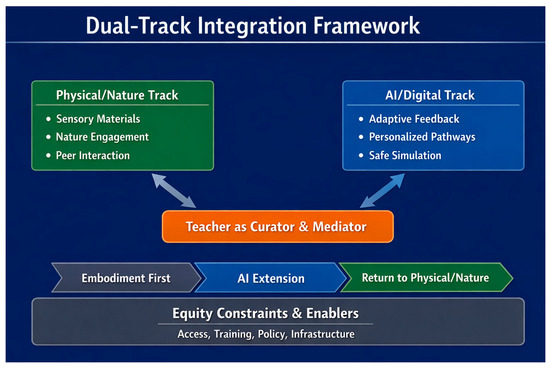
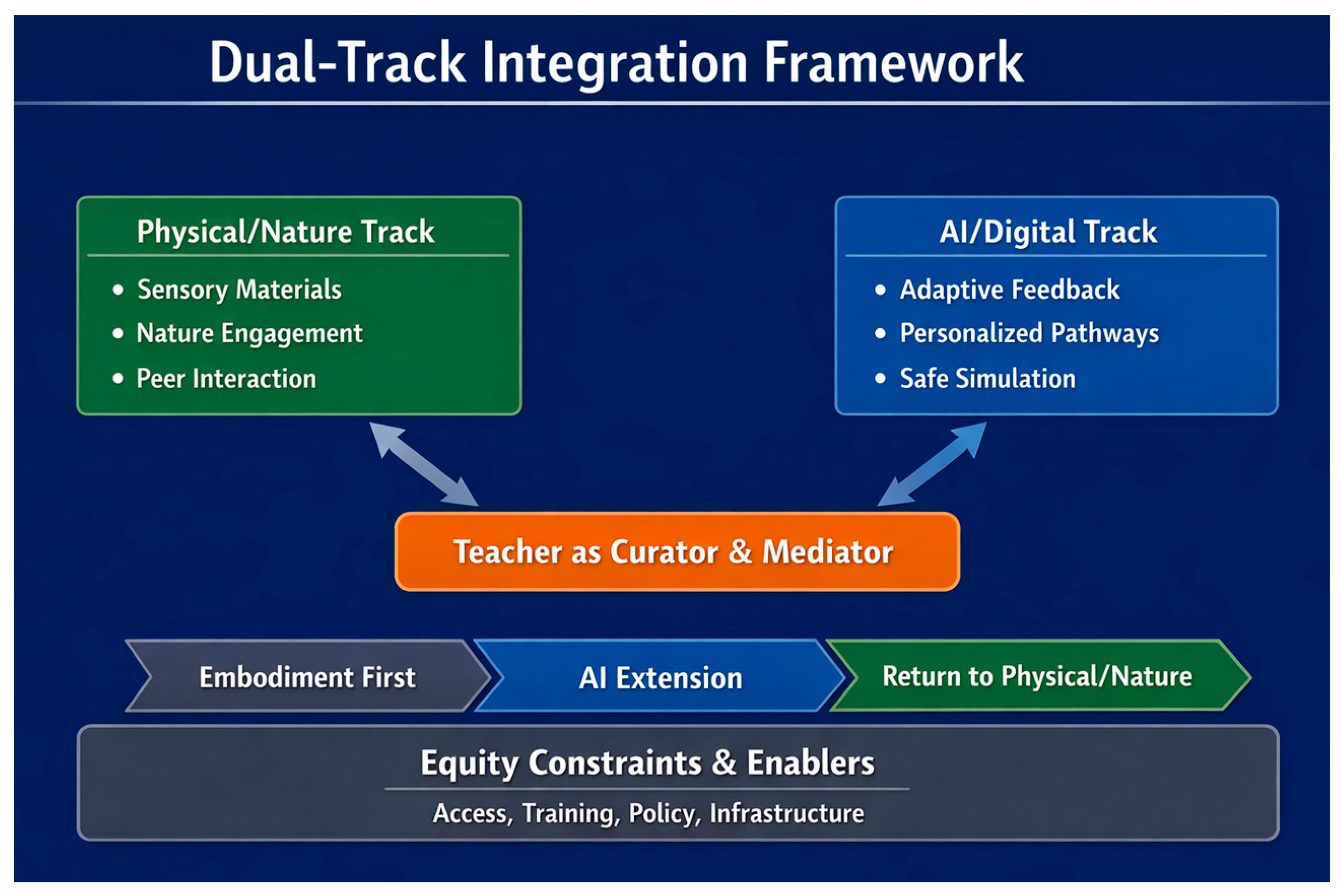

Disclaimer/Publisher’s Note: The statements, opinions and data contained in all publications are solely those of the individual author(s) and contributor(s) and not of MDPI and/or the editor(s). MDPI and/or the editor(s) disclaim responsibility for any injury to people or property resulting from any ideas, methods, instructions or products referred to in the content. |
© 2026 by the authors. Licensee MDPI, Basel, Switzerland. This article is an open access article distributed under the terms and conditions of the Creative Commons Attribution (CC BY) license.