


Abstract
Teacher education represents a global strategic priority for improving educational systems and fostering inclusive, high-quality processes. Recent studies highlight the need for systematic and replicable education models capable of addressing the challenges of contemporary complexity and bridging the gap between theory and practice. Teaching professionalism is increasingly recognized as a key driver of change, requiring a balance of pedagogical, relational, and technological competences, along with strong reflective capacity. Within this framework, practicum programs play a crucial role for the development of professional identity and authentic teaching skills. Methods: This contribution adopts a theoretical–argumentative approach grounded in a critical analysis of the international scientific literature on teacher education, with specific focus on the role of practicums. The aim is to present the model implemented by Pegaso University in the context of practicum activities within initial teacher education programs to outline an interpretative framework and provide pedagogical reflections in light of the results arising from critical reflection and systematic monitoring (not covered in this specific contribution) of the effectiveness of the model implemented in the first two training cycles (academic years 23–24 and 24–25), with the involvement of 5 regions and a total of 2834 teachers in the first cycle and 10 regions and a total of 5551 teachers in the second cycle. Convenience sampling based on a non-probabilistic method was adopted, using the entire sample of teachers admitted to the training program who met the requirements of Article 7 of the Decree of the President of the Council of Ministers (DPCM). Results: This paper outlines the theoretical and methodological trajectories of the model, offering interpretative frameworks and pedagogical reflections in light of the outcomes achieved during the initial implementation phase. Conclusions: In accordance with recent national and European regulatory frameworks, the Pegaso teaching model is presented as an example of good practice for initial teacher education. It aims to foster a reflective, situated, and responsible teaching professionalism, moving beyond traditional approaches toward a continuous and transformative learning process.
1. Introduction
In the contemporary international scenario, teacher education emerges as a strategic priority for numerous institutions that recognize its central role in improving the effectiveness of education systems and ensuring inclusive, equitable, and quality education (UNESCO, 2015, 2017; United Nations, 2015) capable of responding to the increasing complexity of educational contexts.
Accordingly, several studies on teacher education needs have highlighted a renewed interest within the academic community in the development of systematic and replicable training models capable of addressing current challenges and ensuring the quality of learning experiences in terms of inclusiveness and meaningfulness (Bocci et al., 2021; Wiese et al., 2024). In this context, the quality of learning environments, which is closely linked to teachers’ professional responsibility, places initial and continuing teacher education at the fore (Hammerness et al., 2005), aimed at fostering the acquisition of teaching skills through the involvement of ethical, relational, cultural, and reflective dimensions (UNESCO, 1996; EC, 2005, 2006, 2013; EASNIE, 2012; OECD, 2019a, 2019b). However, these goals require integrated policies supported by targeted investments, inter-institutional coordination, and continuous monitoring, so as to ensure the consistency and effectiveness of teacher education programs, strengthen professional development, and increase the attractiveness of the profession.
In general, initial teacher education models, although differing in their implementation (European Commission/EACEA/Eurydice, 2018, 2023), have some common elements that reflect the current global trend toward convergence and integration of teacher education systems on an international scale (Hopkins & McKeown, 2005; OECD, 2024; Scorțescu & Sava, 2024). In this scenario, academic coursework, practicum experiences that combine theory and practice, and competence-based certification systems are the key levers promoted in the guidelines for the orientation of teacher education.
The quality of teaching professionalism is internationally recognized as a driver of change, capable of adequately responding to the cultural and educational transformations required by a constantly evolving society. In this framework, teachers are conceived of as “key players,” entrusted with identifying and adopting the most effective strategies to stimulate the development of a knowledge-based society (EC, 2006).
From a theoretical perspective, teaching professionalism is a complex and dynamic construct, which is not limited to the mastery of disciplinary content, but includes a wide range of pedagogical, relational, and reflective skills. The recent scientific literature converges in affirming that the role of teachers must be based on a balance between personal attributes (e.g., empathy, motivation, and ethical responsibility) and professional competences (teaching, organizational, assessment, and technological skills) (Merrill, 2002; Perrenoud, 1999/2002; Korthagen, 2004; Moore, 2004; Elizabeth et al., 2008; Laurillard, 2012, 2015). Significantly, professional teachers must be able to face the complexity of school life through reflective thinking and constant problem solving (Perrenoud, 1999/2002), to design personalized teaching methods centered on students’ needs and promoting active participation through authentic tasks (Merrill, 2002), and to employ educational technologies as tools for innovation, implementing dynamic and inclusive learning environments (Laurillard, 2015).
What emerges from the outline presented above is the centrality of teacher education within the global educational landscape, along with the need to design and assess the effectiveness of the different models implemented following the new Italian ministerial provisions. In line with these priorities—and considering the central role of practicum activities as reflective, ethical, and transformative learning pathways—this paper analyzes initial teacher education.
This study adopted a theoretical–argumentative approach aimed at delineating the teaching model developed according to the Italian regulatory and cultural framework, which includes references to Law 79/2022 and the DPCM (Prime Ministerial Decree) of 4 August 2023—documents which regulate the structure and organization of university and academic training courses. The documentary analysis involved, first, a critical review of the international scientific literature focused on initial teacher training, with specific attention on the role and effectiveness of practicums. This first part of this study offers a theoretical framework based on a selection of international studies that have contributed to redefining initial education in a transformative, reflective, and experiential direction. It explores the concept of teaching professionalism as a dynamic, situated, and relational construct, emphasizing the role of learning through experience, critical reflection, and the transformation of practices. In this context, particular emphasis is placed on the importance of practicums as a situated learning pathway, grounded in authentic practices, tutorial support, communities of practice, and the conscious use of digital technologies to support reflection and collaboration in line with the main approaches and models of teacher education.
The central part of this paper describes the implementation methods of the practicum activities adopted in the initial education courses of Pegaso University, as a significant case study and concrete example of an effective system that integrates direct and indirect practicums, promotes synergy between universities and schools, and enhances the active role of student teachers.
The description of the structure of the model adopted in the organization, management, and monitoring of practicums aims to outline an interpretative framework and provide pedagogical reflections in light of the results arising from critical reflection and systematic monitoring (not covered in this specific contribution) of the effectiveness of the model implemented in the first two training cycles (academic years 23–24 and 24–25), with the involvement of 5 regions and a total of 2834 teachers in the first cycle and 10 regions and a total of 5551 teachers in the second cycle. Convenience sampling based on a non-probabilistic method was adopted, using the entire sample of teachers admitted to the training program who met the requirements of Article 7 of the Decree of the President of the Council of Ministers.
The diaries, e-portfolios, structured feedback, and satisfaction questionnaires were analyzed. Through the university’s digital learning infrastructure, it was possible to monitor not only the results but, above all, the quality of the training process from the perspective of the trainee teachers. The final reports of the coordinating tutors were also analyzed. Through a semi-structured interview, they provided additional qualitative and quantitative data useful for evaluating the effectiveness of the model implemented.
The quality indicators analyzed with a view to the overall evaluation of the training process and the identification of areas for improvement and future development for the system were as follows: synergy between university and school—effectiveness of the constant and collaborative relationship with the university for the functioning of the activities; quality of institutional support—presence of constant guidance from the coordination staff and regional supervisors for the management of critical issues; organizational uniformity—ability to ensure managerial and pedagogical consistency in the face of high enrolment numbers; classroom atmosphere—level of serenity and collaboration established during indirect internship meetings; reflective dimension—space dedicated to discussing critical episodes and good practices to encourage the re-elaboration of the experience; cross-disciplinary professional growth—educational value derived from the exchange between teachers of different subjects and school levels; effectiveness of mentoring—ability of tutors to act as guides and “bridges” between the university and the school environment; quality of teaching materials—usefulness and validity of presentations, handouts, and checklists produced to support study and activities; documentation support—effectiveness of assistance in compiling internship diaries, e-portfolios, and teaching plans; bureaucratic sustainability—degree of complexity of forms and e-portfolios (indicator of critical issues/improvements); time management—adequacy of timelines for document control and activity validation; and stability of the role of the various actors involved at the organizational–structural level—contractual continuity as a determining factor for motivation and service quality.
Finally, the critical analysis reflects on the transformative potential of the practicum and its capacity to effectively address the complex needs of initial teacher education in the contemporary context. It presents an overall assessment of the implemented system, highlighting strengths, weaknesses, and possibilities for further development, in alignment with European and national guidelines for the advancement of teacher training.
To address the challenges of initial teacher education (Graça et al., 2021) within the current regulatory shift in Italy, this study is guided by the following research objectives and hypotheses. The first objective is to investigate the structural and conceptual coherence between the multi-level practicum model implemented by Pegaso University and the new Italian regulatory framework (Law 79/2022; DPCM 4 August 2023). This analysis seeks to determine how the model operationalizes the transition from a discipline-centric approach to a competence-based paradigm, while evaluating its consistency with the international scientific consensus on reflective teaching professionalism. The focus is placed on whether the organizational architecture effectively supports the “clinical” dimension of training required by modern educational standards.
Furthermore, this study aims to examine the extent to which specific pedagogical devices—namely the integration of direct and indirect practicums, e-portfolios, and digital monitoring platforms—facilitate the transition from theoretical knowledge to situated professional competence. This involves assessing the role of these tools in fostering a reflective professional identity, allowing student teachers to re-elaborate their field experiences through structured digital mediation and constant tutoring support.
Finally, this research seeks to identify the primary organizational strengths and systemic criticalities emerging from the large-scale implementation of the model, which involved a sample of over 8000 teachers across two training cycles. This objective focuses on analyzing the impact of bureaucratic sustainability, territorial heterogeneity, and the effectiveness of university–school synergies on the overall quality of the training process. By doing so, this study moves beyond a descriptive account to highlight the real-world challenges of managing high-enrolment professionalization programs.
The study hypothesizes that a multi-level educational model, integrating structured mentoring with digital reflective tools, effectively enhances the acquisition of a transformative teaching identity. However, it is also posited that the overall effectiveness of such a model is critically sensitive to organizational stability and the sustainability of bureaucratic procedures. These structural factors are hypothesized to act as determining variables that can either facilitate or hinder the pedagogical depth of the practicum, suggesting that institutional efficiency is a prerequisite for authentic professional growth.
2. The Practicum in Teacher Education
Aligned with the core competencies identified by the Interstate New Teacher Assessment and Support Consortium (INTASC), teacher education requires future teachers to develop solid and updated disciplinary knowledge and to engage in interdisciplinary dialogue; at the same time, they are called to adopt a reflective and collaborative professional stance, grounded in continuous reflection and interaction with colleagues, families, and school communities. Teachers must be able to personalize teaching and learning processes, value diversity, and foster equity and inclusion. From this perspective, they should be capable of designing instruction that explicitly responds to students’ cultural and social backgrounds by integrating learning objectives, teaching strategies, resources, and assessment practices. They are also expected to implement authentic assessment strategies using a range of formative tools and manage classrooms effectively, fostering a positive student-centered learning environment (Magnoler, 2008).
This set of competencies constitutes “a structured set of qualities rather than separable behavioral elements” (Margiotta, 1999, p. 51). It requires professional pathways designed to cultivate an integrated and situated professionalism (Baldacci, 2020). These pathways must promote the acquisition of a coherent system of knowledge, skills, attitudes, and values; the ability to respond to evolving educational and societal needs; and the capacity to establish meaningful connections between theory and practice, underpinned by a strong ethical responsibility for educational action.
Teachers are therefore called upon to translate best practices, knowledge, and skills into concrete methodological, didactic, and psycho-pedagogical competences. Despite these expectations, the complexity of contemporary educational contexts often reveals a gap between theoretically ideal practices and the lived reality of classroom work.
In response to this challenge, international research has consistently demonstrated that practicum experiences play a pivotal role in initial teacher education (Whatman & MacDonald, 2017; Dunst et al., 2019; Heissenberger-Lehofer & Krammer, 2023; Dipace et al., 2025). The effectiveness of teacher preparation is influenced by the quality, duration, and integration of practicum experiences within academic coursework. Empirical evidence, such as Ronfeldt’s studies (2015), demonstrates that practicum experiences in schools characterized by strong institutional support, competent mentors, and a collaborative professional culture significantly enhance future teaching performance, contribute to higher student achievement, and improve teacher retention. In other words, it is the quality, rather than merely the quantity, of practicum experiences that fosters meaningful professional learning (Sharon & James, 2005; Ronfeldt & Reininger, 2012).
These findings highlight that high-quality learning through experience requires authentic professional environments, where novice teachers can critically observe, experiment, and reflect. Teacher education systems internationally emphasize extended practicum periods, close supervision by expert mentors, engagement in professional learning communities, and formative assessment practices such as e-portfolios (Fanni, 2025; Raviolo et al., 2024), field observations, and reflective writing (Darling-Hammond et al., 2017).
A defining feature of well-structured and rigorous teacher preparation programs is the strong synergy and collaboration between universities and schools. This alliance enables the co-construction of sustained and intensive training pathways that emphasize collaboration and a culture of reflection, which are both essential elements for developing authentic professional competencies. The development of situated professional knowledge emerges particularly through active participation in communities of practice (Lave & Wenger, 1991), where peer dialogue supports transformative learning processes (Moon, 2000) unfolding through cycles of experience, reflection, and experimentation (Kolb & Kolb, 2008).
Within this line of research, Zeichner (2010) proposes the “third space”, in which schools and universities are no longer seen as distinct and separate, but as co-constructors of teacher professionalism. This third space promotes a dialogical and collaborative form of teacher education, where school-based practices and academic theories inform and enrich one another, effectively bridging the gap between academic and practical knowledge.
Consistent findings also emerge from comparative studies carried out by the OECD (2010, 2014, 2019b, 2020), especially through TALIS, confirming the decisive role of the practicum in shaping teachers’ perceived self-efficacy, preparedness, and job satisfaction. Teachers who report having a meaningful practicum experience feel better prepared to meet classroom challenges, more confident in their professional abilities, and more satisfied with their career choice. Research therefore highlights the practicum as not a peripheral component of teacher education, but rather a structural determinant of teacher professional identity (Feiman-Nemser, 2001), fostering pedagogical competence and supporting long-term professional resilience. Within this process, the quality of mentoring is crucial, as the presence of skilled and reflective mentors significantly enhances the effectiveness of the practicum (Ronfeldt, 2015).
Across Europe national teacher education systems are aligned with international reference frameworks such as the Lisbon Recognition Convention and the Bologna Process. These frameworks ensure comparability and mutual recognition of professional qualifications across member states. Typically, teacher education is organized as an integrated structure combining academic instruction, pedagogical preparation, and school-based practicum experiences. This structure rests on three foundational pillars: disciplinary knowledge, pedagogical competence, and practical teaching experience.
In the Italian context, initial teacher education has traditionally been characterized by structural fragmentation and heterogeneous pathways, with significant variations across regions and universities. The recent regulatory reforms—Law 79/2022 and the Prime Ministerial Decree of 4 August 2023—have introduced a unified national framework designed to standardize program structure, practicum requirements, and competence descriptors. This new system mandates a 60-ECTS university pathway integrating disciplinary, pedagogical, and methodological coursework with a structured practicum composed of both direct and indirect activities. These reforms aim to address longstanding challenges in Italy, such as the weak integration between universities and schools, inconsistent mentoring quality, and regional disparities in practicum availability, while aligning teacher preparation with broader European quality standards.
Within the framework of Italy’s systemic educational reform—aligned with the priorities of the National Recovery and Resilience Plan (PNRR)—Law 79/2022 introduced a substantial revision of both initial and continuing teacher education for lower and upper secondary schools. This legislation represents a significant shift, aiming to enhance teaching quality in line with European quality standards by fostering stronger integration between academic learning, pedagogical methods, and professional practice.
This reform has been operationalized through the Prime Ministerial Decree (DPCM) of 4 August 2023, which defines in detail the structure of university-based pathways for initial teacher education and places the practicum at the core of professional competence development.
The decree outlines a new paradigm of teacher professionalism grounded in three key principles: motivation, practice and reflection, and talent development. Teacher motivation underpins the ability to build meaningful educational relationships with students (Arsena, 2024). Competences are developed through engagement in authentic contexts and critical reflection, enriched by dialogue with experienced colleagues. At the same time, all student teachers must be supported in discovering and cultivating their potential, aptitudes, and aspirations.
3. Theoretical Framework for Teacher Education: Approaches and Models
3.1. Education as Transformative Learning: The Systemic Dimension
The literature highlights a crucial aspect of teacher education: its capacity to address the challenges of an interconnected and dynamic knowledge society. Current debates converge around three key dimensions: globalization, mentoring, and the rethinking of assessment. Globalization refers to the adaptation of global models to local specificities, acknowledging the complexity and diversity of educational contexts. Mentoring is recognized as a fundamental support mechanism, particularly during transitional phases such as the early stages of a teaching career. Finally, assessment is being redefined as a formative and participatory process, focused on continuous improvement (Collinson et al., 2009).
The transformative nature of teacher education serves as a central reference point. It is grounded in collaboration, peer dialogue, and the integration of individual learning with institutional innovation. Teacher education is viewed not as a sporadic intervention, but rather as a continuous process, closely linked to educational policy and school governance. Within this framework, there is a growing recognition of the need for active teacher participation in the design of professional development policies, moving beyond traditional top-down approaches.
3.2. Experiential Learning and Reflection: Theory and Practice
David and Alice Kolb’s Experiential Learning Theory (ELT) offers a robust theoretical framework for teacher education. According to this model, learning unfolds through a cyclical process involving concrete experience, reflective observation, abstract conceptualization, and active experimentation. The model emphasizes the centrality of experience as a source of knowledge construction, in contrast to transmissive models that focus solely on content acquisition.
ELT is particularly valuable in the design of teacher education programs because it promotes authentic, contextualized, and reflective learning. Its holistic dimension allows for the integration of cognitive aspects with emotional, relational, and practical dimensions of teaching. From this perspective, education is conceived of as an adaptive process that engages the whole person and evolves through the dynamic interaction between the individual and their environment (Kolb & Kolb, 2008).
Roland (2017) further explores the connection between experiential learning and reflection in initial teacher education. Drawing on practicum experiences, she shows how critical reflection enables pre-service teachers to develop professional, ethical, and metacognitive awareness. Reflective practice thus emerges as a tool for self-directed learning and professional agency, empowering future teachers to take ownership of their own developmental trajectories.
3.3. Reflective Practice and Its Role in Teacher Professionalism
Reflection is a key element in teacher education, as emphasized by Moon (2000). The author identifies different levels of reflection—descriptive, dialogic, and critical—and proposes a model useful for designing learning environments that stimulate complex thinking. Reflection is understood not as a mere review of actions, but as a process of deep re-elaboration of experience aimed at transforming meaning.
In teacher education, this process is particularly significant because it enables the integration of theory and practice, the overcoming of fragmented views of teaching, and the development of a form of professionalism grounded in self-awareness and autonomy. Reflection is also a prerequisite for developing ethical responsibility and sound judgment, both of which are essential for navigating the complexity of school settings.
In this sense, the teacher, as a “reflective practitioner” (Schön, 1983), must be capable of mediating between the theoretical and practical dimensions of their training and experience, and of mobilizing both personal resources and those of the students (theoretical–practical knowledge and procedural, experiential, and social know-how) in order to act and respond effectively and efficiently, and to co-construct responses to problem situations within a given context (Corni & Parricchi, 2023).
3.4. School-Based Teacher Training and Collaborative Approaches
Another key aspect of teacher education concerns the modes of field-based learning. Bullough et al. (2003) compare two practicum models: the traditional model (one student paired with a supervising teacher) and the cooperative model (two student teachers paired with one mentor). The findings indicate that peer teaching encourages the development of collaborative practices, critical peer dialogue, and the emergence of shared reflective thinking.
Working in pairs allows student teachers to address teaching challenges through dialogue, fostering a culture of cooperation and co-design. Through this approach, student teachers learn not only how to teach, but also how to observe, discuss, negotiate, and collectively improve their professional practice. This model reflects a view of teacher professionalism as a social, dialogic, and context-sensitive practice.
3.5. Critical Perspectives on Adult Educator Development
Duckworth and Smith (2018) offer a compelling perspective on the education of practitioners working with adults in contexts of marginalization. Their work, grounded in Paulo Freire’s critical pedagogy, illustrates how adult education—and the preparation of its educators—can become a site of emancipation, care, and transformation. The educational relationship is conceived of as a dialogical and affective space, capable of deconstructing negative identities shaped by past school failures.
In this context, teacher education cannot be separated from a broader political and social awareness of the educator’s role. The biographical approach adopted in the study demonstrates how experience and personal narrative can serve as powerful educational tools for both learners and educators. Transformative learning, in this sense, is rooted in the creation of meaningful relationships and inclusive educational spaces.
From these contributions, a vision of teacher education emerges as a continuous, reflective, situated, and transformative process. The three core themes that run across the literature are (i) the centrality of experience and reflection as means of learning from practice and constructing professional meaning; (ii) the value of peer collaboration, in both initial teacher education and continuing professional development, as a way to foster communities of practice; and (iii) the need to integrate teacher education with educational policies, in order to ensure coherence between pedagogical vision and the organization of school work.
In an educational landscape marked by complex challenges and rapid change, teacher education can no longer be conceived of as mere technical training. Rather, it must be understood as a process of human and professional development rooted in care, dialogue, reflection, and social transformation.
4. Implementation of Practicum in Initial Teacher Education Process
Pegaso University has developed initial teacher education programs and teaching qualifications in several Italian regions, offering a wide range of courses and ensuring that participants can attend courses in their own geographical area. These programs comply with the recent Italian regulatory frameworks (Law 79/2022, DPCM of 4 August 2023) as well as with European recommendations on teaching quality and professional development. They place strong emphasis on practicum activities, as mandated by national regulations, highlighting the integration between theory and practice in the preparation of future secondary school teachers.
Although the present contribution adopts a theoretical–argumentative perspective, the implemented model has also been the object of preliminary empirical analyses based on satisfaction surveys, reflective journals, and monitoring reports produced by coordinators. Early evidence indicates that structured mentorship, the integration of direct and indirect practicums, and the use of digital documentation tools strengthen student teachers’ perceived preparedness, reflective competence, and professional identity. These findings, which are currently being systematized in a dedicated empirical study, support the internal coherence of the model and provide an evidence-informed basis for future refinements.
The model is structured across three interconnected levels—structural–organizational, pedagogical, and educational—outlined below (Figure 1).
Figure 1.
Multi-level model for initial teacher education at Pegaso University.
4.1. Structural–Organizational Level
This level involves a structured network of professional roles that, by ensuring the efficient use of resources and personnel, manage the coordination and monitoring of practicum pathways. These roles include general coordinators, who organize, support, and supervise the activities and procedures of both direct and indirect practicum components, ensuring the overall coherence of the training program across all regions involved; regional supervisors, responsible for local monitoring; and coordinating tutors, who operate in accordance with the provisions of the DPCM and serve as a bridge between theoretical activities and field experiences (Pomponi & Amatori, 2023).
The structural–organizational level is the pivot of this multi-level governance system. It ensures consistency between theoretical design, educational practices, and territorial governance. This structure is articulated through an integrated network of professionals with complementary skills: general coordinators, regional supervisors, and coordinating tutors. A clear definition of roles is essential to guarantee the quality of practicum experience and to promote a synergistic relationship between universities and schools, based on a logic of shared educational responsibility.
Analysis of the data relating to the first and second cycles of the qualification courses allows us to outline more accurately the operational configuration of the tutorial structure and to highlight, with empirical data, the territorial and organizational differences that characterize the model. The first cycle (A.Y. 2023–2024), launched in five regions (Campania, Lazio, Molise, Puglia, and Sicilia), involved 2834 students supervised by 71 coordinating tutors (11 on part-time secondment, 19 on full-time secondment, 41 on contract), with an average of about 40 students per tutor, and with the presence of a regional supervisor for each region, responsible for monitoring territorial activities and ensuring consistency in the implementation of the training model. The second cycle (A.Y. 2024–2025), extended to ten regions (Abruzzo, Basilicata, Campania, Friuli Venezia Giulia, Lazio, Lombardia, Molise, Puglia, Sicilia, Umbria), saw the participation of 5551 students accompanied by 79 coordinating tutors (22 on contract, 36 on full-time secondment, 21 on part-time secondment), with an average ratio of more than 70 students per tutor. In this second cycle, in addition to appointing a regional supervisor for each region, the university introduced the role of co-supervisor in the regions with the largest number of students—Lombardy, Campania, Puglia, Sicily, and Lazio—in order to ensure more comprehensive monitoring and support tutors in managing the most complex dynamics.
In this scenario, the training program for coordinating tutors takes on a strategic role, not only to align the methodological and pedagogical skills of the tutors, but also to minimize the impact of organizational issues arising from territorial heterogeneity, the uneven distribution of students, and the numerous competition classes assigned by the MIM with residual numbers of students, for whom a tutor in the specific discipline cannot be found. The training plan, divided into modules dedicated to the regulatory framework, the management of teaching cases, the dimensions of assessment—with particular regard to formative assessment—the use of documentation tools, active methodologies, educational technologies, group management, workshop proposals, the use of ICT in teaching, and the themes of inclusion, aims to ensure a shared approach to internship supervision, strengthening the reflective dimension and the pedagogical–didactic support capacity of the tutors.
This path is accompanied by intensive preparatory work carried out by tutors in service, documented in numerous cooperative activities carried out on a regional and interregional basis, with the aim of ensuring consistency and coherence in indirect internship paths. Among the most significant activities are the survey of the training needs of course participants; the shared definition of the indirect practicum program; the updating of the e-portfolio and related guidelines; the preparation of authentic exercises and tasks; the development of critical cases classified by topic; the creation of common formats for meetings; the definition of tools for teaching observation; the organization of the first indirect internship meeting; the production of support materials (diaries, rubrics, tools for professional analysis); the preparation of reasoned regulatory repertoires; the preparation of outlines for simulated lessons; the development of administrative guidelines; and the design of a training program for future tutors. This set of converging practices has fostered the emergence of a reflective professional community, characterized by a growing sharing of languages, tools, and pedagogical orientations, strengthening the overall coherence of the training model.
However, analysis of the two cycles also highlights a series of structural issues that affect the sustainability of the model. In some regions—particularly Lombardy, Friuli Venezia Giulia, and Molise—there were not enough applicants to fill the role of coordinating tutor; in others, such as Basilicata, the tutors selected subsequently withdrew from the position due to the proximity of the end of the school year. In order to ensure the continuity of the internship activities, the university was therefore forced to resort to contract coordinating tutors, selected on the basis of proven experience in teaching and pedagogy. This critical issue was compounded by the delay in the definition of regional quotas by the school offices, which hindered the timely establishment of a stable and adequately trained tutoring body, delaying the planning of the direct practicum and reducing the time available for the reflective activities of the indirect practicum. These factors contributed to the creation of numerically unbalanced internship groups, with an increased workload for tutors and less opportunity to provide truly personalized support.
Overall, the data and qualitative evidence outline a training model that is effective in its design, supported by intense coordination and self-training activities for tutors, but which continues to face operational challenges related to the availability of tutorial resources, territorial variability, and administrative constraints, as well as procedures under the responsibility of other administrations. The presence of a structured training program and preparatory activities has made it possible to give the group of tutors an identity, build a sense of belonging to the university’s training project, and enhance the professional skills present in the group.
The structure of the activities developed with the tutors is essential for mitigating these critical issues and ensuring, despite the difficulties, supervision consistent with the principles of reflexivity, responsibility, and professional quality that guide the entire system of qualification pathways, in line with the objectives and overall structure outlined in the founding Prime Ministerial Decree (Presidenza del Consiglio dei Ministri [PCM], 2023).
The distribution of practicum placements revealed significant territorial variability, particularly in regions with fewer upper secondary schools available to host trainees. Coordinators also reported recurring operational challenges, including uneven availability of qualified school-based tutors, delays in administrative authorizations, and variability in schools’ engagement with practicum activities. These data provide a more realistic depiction of the system and highlight the operational complexity inherent in sustaining a multi-layer governance structure at the national level.
Furthermore, in response to particularly large or heterogeneous subject classes, the university adopted tutorial co-management strategies for in-person groups. This involved the coordinated intervention of two or more tutors within the same classroom, thereby ensuring balanced group management and more sustainable didactic support.
4.1.1. General Coordinators
General coordination is entrusted to a lead figure—a former school principal with longstanding experience in academia—supported by other general coordinators, who are university faculty members at Pegaso. Together, they play a strategic role in the pedagogical and organizational management of the education program. They oversee the planning and implementation of practicum activities, ensure methodological consistency, and promote the overall quality of the training offered.
Among their core responsibilities, as outlined in current regulations, are “the coordination and management of direct and indirect practicum activities within teacher education programs, and the coordination and training of coordinating tutors, including the documentation of university and academic pathways for initial teacher education at lower and upper secondary school levels” (DPCM, 4 August 2023).
They fulfill these responsibilities through regular update meetings, guidance sessions, and the sharing of operational tools. General coordinators also ensure the overall coherence of the education project by collecting and analyzing pre-service teachers’ learning needs, defining shared objectives, and aligning intervention strategies. This is achieved through periodic meetings that bring together all active tutors. Furthermore, they maintain constant communication with regional supervisors to collect field data, monitor the effectiveness of practices, and implement continuous improvements.
4.1.2. Regional Supervisors
As members of Pegaso’s academic staff, regional supervisors are responsible for territorial monitoring. They coordinate field-based activities and promote consistent implementation of the education model across regions. Acting as a bridge between local contexts and the university, they gather local needs and promote customized solutions, while remaining aligned with the established quality standards.
4.1.3. Coordinating Tutors
Coordinating tutors serve as the interface between the university and the school. They are tenured lower and upper secondary school teachers with a minimum of five years of service, as required by current legislation (Law 79/2022 and DPCM of 4 August 2023). To participate in the teacher education programs in the role of tutor, they are granted either full-time or part-time leave from their school duties, allowing them to fully support pre-service teachers.
Specifically, the Coordinating Tutor
- (a)
- Manages relationships with school-based tutors, assigns student teachers to classes and schools, and is responsible for each pre-service teacher’s practicum plan;
- (b)
- Leads the training of the student group through indirect practicum activities and reviews the documentation produced by the teachers, in view of constructing the e-portfolio;
- (c)
- Supervises and assesses both direct and indirect practicum activities;
- (d)
- Reviews and evaluates the final reports on activities carried out within classroom groups.
The coordinating tutor plays a crucial role in supporting teachers throughout the entire process, facilitating the integration of theory and practice. Ongoing collaboration with regional supervisors through direct communication channels enables effective monitoring of activities, timely identification of critical issues, and the sharing of best practices.
Furthermore, through periodic training provided by the general coordinators, coordinating tutors remain up to date on the most effective methodological and pedagogical tools for guiding future teachers in the development of their professional competences. This multi-level structure promotes a participatory and dynamic governance model, in which each professional role operates within a systemic, reflective, and collaborative framework. Pegaso thus stands out for its ability to structure an integrated environment—firmly rooted in school practice yet guided by a shared academic vision—capable of effectively responding to the demands of initial teacher education in today’s educational landscape.
Notwithstanding its strengths, the multi-layer governance structure also presents potential limitations. The coexistence of several professional roles may generate role overlap, inconsistent communication flows, or bureaucratic redundancy, especially in regions with limited coordination capacity. Furthermore, the reliance on seconded school teachers as coordinating tutors may create tensions between institutional expectations and the operational constraints of schools. These risks underline the need for continuous monitoring, clear procedural guidelines, and systematic communication strategies to ensure coherent and sustainable implementation across regions.
4.2. Pedagogical Level
The pedagogical framework is based on an integrated vision of teacher education which, to ensure the quality and consistency of training interventions, values the direct practicum as a situated experience within the school context, and the indirect practicum (university-based activities) as a reflective space for theoretical and practical re-elaboration (Gragnaniello & Iannotta, 2024). The guiding principles include the construction of professional identity through situated experience, the importance of metacognitive reflection as a driver for transformative learning, and expert tutoring as a form of support throughout professional development processes.
The education system is based on a pedagogical approach that integrates theory and practice, guiding aspiring teachers toward conscious and reflective professionalism. This approach values direct teaching practice as a concrete and contextualized experience in the school environment (direct practicum), complemented by indirect teaching practice (indirect practicum), a structured space for critical reflection and the construction of a solid professional identity. At the heart of this vision are metacognitive reflection and expert mentoring, key elements for continuous and transformative professional growth.
According to the national regulatory framework, the practicum comprises 20 h of direct practice and 20 h of indirect practice within the 60-ECTS program. Student teachers are required to complete documented classroom observations, co-teaching activities, reflective tasks, and a final evaluative interview. Data from end-of-course satisfaction surveys (N = 1842) indicate high appreciation for mentoring quality (M = 4.3/5) and for the usefulness of reflective sessions (M = 4.5/5), while also highlighting recurring challenges associated with time constraints, school scheduling, and variability in access to school-based mentorship.
Practicum and Theoretical–Practical Reflection
The practicum represents a foundational component in the construction of student teachers’ professional identity, as it enables situated learning within authentic school contexts (Darling-Hammond, 2006; Flores, 2015). Through participant observation, interaction with learners and colleagues, and experimentation with teaching strategies in the classroom, future teachers engage in critical reflection on educational practice and on their own role as educators.
This situated experience (Lave & Wenger, 1991), understood as “on-the-job” learning, is considered essential for the transition from theoretical knowledge to practical competence, in line with the approach of teacher education based on clinical practice (Zeichner, 2010).
Direct exposure to the complexity of the school context allows student teachers to face authentic challenges and to develop problem-solving abilities, adaptability, and relational management skills—key elements for a conscious and reflective teaching professionalism (Korthagen, 2010). Moreover, guidance from the school tutor and collaborative work with experienced teachers offer learning opportunities through modeling, peer comparison, and critical re-elaboration of observed teaching actions.
This kind of professional accompaniment—often referred to as cognitive apprenticeship—contributes to shaping a pedagogical habitus grounded in experience, reflection, and the ethics of educational responsibility (Schön, 1983; White, 2014).
The indirect practicum serves a complementary function to field experience, as it enables the critical re-elaboration of observations and practices carried out during the direct practicum through structured moments of reflection, analysis, and guided discussion (Korthagen, 2010; Mezirow, 1997). This activity constitutes a fundamental formative space for the theoretical–practical reprocessing of experience, where student teachers are encouraged to connect the epistemological, educational, and pedagogical dimensions of their professional action (Zeichner, 2010).
Within this framework, reflection is conceived of not as a mere subjective narrative of experience, but rather as a metacognitive and transformative process, aimed at critically understanding educational practices and building situated professional knowledge (Schön, 1983; Brookfield, 1995).
University supervision, often structured through workshops or seminars, provides a dialogical learning context, where the reflective dimension is mediated by peer interaction, academic tutors, and specific educational tools—such as journals, narrative protocols, or case analyses (White, 2014). These tools facilitate the systematic analysis of both observed and enacted practices and promote the adoption of a conscious and critical pedagogical gaze, grounded in an ethics of professional responsibility (Bezzina, 2006). From this perspective, the indirect practicum functions as a reflective device that supports the development of a critical, ethically oriented, and pedagogically grounded teaching professionalism, aligned with the principles of democratic and inclusive education (Giroux, 1991; Cochran-Smith & Lytle, 2009).
The pedagogical vision is therefore based on an integrated and transformative conception of teacher education, in which theoretical knowledge and field experience mutually reinforce one another.
The direct practicum requires the pre-service teacher to interact with both the coordinating tutor in Pegaso and the school-based tutor appointed by the school. Together, they co-construct and personalize the training plan, considering the results of the initial skills assessment.
The university provides a general training framework that must be adapted and agreed upon with the school-based tutor and subsequently approved by the university. The coordinating tutor is responsible for the formal validation of the hours completed in the school context, ensuring their consistency with the agreed plan.
This approach promotes student teachers’ active engagement in managing their own learning pathway, encouraging direct confrontation with the realities of school context and fostering a sense of professional responsibility.
The indirect practicum, by contrast, is aimed at fostering reflection and developing awareness of the experiences gained in the school setting under the guidance of the coordinating tutor. It represents the pedagogical core of the model. Organized and supervised by the university, it serves as the primary space for critically re-elaborating lived experiences by connecting them with theoretical frameworks, regulatory references, and professional tools.
Indirect practicum sessions, conducted in person, are structured around didactic materials specifically developed by Pegaso tutors in collaboration with general coordinators and faculty members, to provide student teachers with concrete and systematic support for critical reflection. During these sessions, coordinating tutors—trained and continuously monitored by the general coordination team—act as cultural and pedagogical mediators. They present and discuss key themes of the school system, ranging from regulatory aspects (legislation, contracts, professional duties) to school governance bodies, spanning curriculum planning and assessment models, and including the selection and use of teaching materials.
In addition to these institutional contents, tutors bring to the group their concrete teaching experience, acquired over years of work in secondary schools. This enables pre-service teachers to engage with authentic situations, real-life cases, and effective strategies for navigating the complexity of the teaching profession. The reflective dialogue among peers, facilitated by the tutor, fosters the development of critical awareness, metacognitive skills, and a professional identity grounded in the ethics of educational and didactic responsibility.
The coordinating tutor is therefore a central figure in the education system. Selected from among tenured secondary school teachers with at least five years of service and seconded from their institution to fulfill the tutorial role, tutors are trained through specific programs delivered by Pegaso faculty, who also oversee their ongoing professional development and monitoring.
This role is not merely organizational, but fundamentally pedagogical and educational: they guide pre-service teachers in connecting practice with theory, in re-elaborating their experience, and in constructing autonomous professional knowledge. They embody a reflective and transformative professionalism, capable of conveying not only content and procedures, but also an educational habitus rooted in care, dialogue, and ethical commitment.
Although the indirect practicum constitutes the pedagogical core of the model, its implementation presents several challenges. Coordinating tutors report difficulties in aligning reflective activities with school timetables, and some student teachers experience obstacles in translating theoretical insights into classroom practice. Moreover, the availability of qualified school-based mentors remains uneven across regions, causing delays in placements and, at times, reliance on less experienced tutors. In comparison with practicum models centered on extended school immersion, the Pegaso approach provides structured reflective spaces but may risk limiting exposure to complex classroom dynamics when direct practice is not sufficiently diversified. These considerations highlight the importance of maintaining an appropriate balance between guided reflection, authentic practice, and sustained mentoring.
4.3. Educational Level—Tools and Products
Great attention has been paid to the design of learning environments and the selection and creation of educational tools and training materials. At this level, the model relies on digital platforms for the delivery, documentation, and assessment of educational pathways. Pegaso’s digital infrastructure—compatible with leading educational technologies and integrated with artificial intelligence solutions—enables the monitoring of student teachers’ progress through digital portfolios, rubrics, and structured feedback. It also fosters collaborative interaction among students, teachers, and tutors and provides educational resources aligned with experiential and reflective learning models.
The entire training framework is aimed at fostering a teaching professionalism that is conscious, reflective, responsible, and context-sensitive, capable of addressing the challenges of contemporary school complexity.
The educational level places great emphasis on the design of learning environments and the provision of a range of teaching tools and materials to support teaching activities, documentation, and the evaluation of the processes and products of the education program.
The Pegaso digital platform is characterized by its interoperability with contemporary educational technologies and its integration of artificial intelligence systems. This infrastructure facilitates the systematic monitoring of student progress via digital portfolios, assessment rubrics, and structured feedback mechanisms, while simultaneously fostering collaborative engagement among students, teachers, and tutors. Furthermore, teaching resources are grounded in experiential and reflective learning models, thereby supporting the development of advanced pedagogical competencies.
The following analysis highlights three main lines of action at this specific level: (i) digital platforms; (ii) teaching materials, tools, and resources for trainer teachers; (iii) practicum assessment systems.
4.3.1. (i) Digital Platforms for Training Assistance
In the contemporary scenario of teacher education, increasingly oriented to distance or blended learning models, digital platforms represent a fundamental infrastructure for supporting continuous, reflective, and transformative professional learning. In line with theoretical models of experiential learning and reflective practice (Kolb & Kolb, 2008; Moon, 2000), these environments are not only repositories of resources, but dynamic pedagogical spaces capable of integrating experience, observation, collaboration, and shared planning. The use of digital environments such as Moodle, Google Workspace, Microsoft Teams (among the best known), and other institutional platforms, such as that of Pegaso University, makes it possible to structure flexible, accessible, and monitorable learning courses, favoring the alternation between synchronous and asynchronous, and individual and collaborative activities. Some of the most evident advantages include the documentation of courses through digital portfolios and assessment rubrics; the promotion of systematic reflection through structured feedback tools; the sharing and co-creation of materials between peers and tutors; and tracking progress for education and certification purposes. More specifically, Pegaso has an LMS (Learning Management System) platform that allows for management, delivering, and monitoring of advanced online training courses, on both the teachers’ and students’ side, with a high degree of usability and, thanks to AWS technologies, the platform guarantees a robust data protection system.
The platform’s interoperability with diverse educational software—ranging from concept mapping tools to augmented reality environments—augments the cognitive and experiential dimensions of the learning process. This integration facilitates the design of hybrid and multimodal training settings tailored to the distinct learning styles of student teachers. Furthermore, the system complies with current legislative frameworks by ensuring the traceability of activities and the systematic archiving of training records. This documentation capability satisfies the transparency and accountability requirements essential to institutional governance and academic policy.
The integration of artificial intelligence (AI) within these systems facilitates the development of personalized learning pathways, the predictive analysis of training requirements, and the automated generation of targeted feedback. These emerging technologies suggest the evolution of digital training environments into data-driven ecosystems capable of deriving pedagogical insights and scaffolding the construction of professional knowledge. In this context, the Pegaso platform exemplifies the application of AI-supported learning through the deployment of MultiLearn, a chatbot utilizing OpenAI architecture designed to provide continuous, personalized learner support.
4.3.2. (ii) Teaching Materials, Tools, and Resources for Student Teachers
The design of the Pegaso platform implies a strict alignment with specific scientific frameworks. The theoretical models discussed above provide the basis for the development of educational design and assessment tools that arise directly from the practical structuring of reflective practices. Specifically, the Pegaso model draws upon these frameworks to define resources linked to experiential learning and reflective practice. Following Kolb and Kolb (2008), the cyclical process of experiential learning (concrete experience, reflective observation, abstract conceptualization, reflection on learning) has been adopted as an operational tool for designing training experiences. In the platform, this translates into resources such as reflection sheets, observation grids, and rubrics for assessing experiential learning. Similarly, drawing on Roland (2017), the model implements concrete materials for teacher education, including
- -
- Feedback tools from the coordinating tutor and the school-based tutor;
- -
- Reflective tools such as the digital portfolio;
- -
- Protocols for observing teaching practice.
Furthermore, referencing Bullough et al. (2003) on the benefits of peer teaching, the platform provides shared diaries, joint lesson planning documents, and peer co-assessment protocols—tools that promote the construction of a reflective and collaborative professional identity. Finally, consistent with Duckworth and Smith (2018), the relational and narrative dimension of education is emphasized. Autobiography, educational biography, and the narration of experience become fundamental pedagogical tools—integrated within the training path—for supporting processes of conscientization from a Freirean perspective (Freire, 2011).
4.3.3. (iii) Practicum Experience Assessment Systems
The topic of practicum assessment is discussed explicitly in several papers, particularly those describing field training practices. Bullough et al. (2003) report that practicum evaluation is carried out through a combination of classroom observations by the mentor, reflective peer discussions, and formative assessment, focusing on the growth process rather than performance only.
The peer-coaching model they propose makes it possible to overcome individual summative assessment and promotes dialogic assessment, in which feedback is continuous and reciprocal, enhancing the collaborative dimension of the practicum.
Roland (2017) presents an assessment model based on professional development criteria, implemented through tools such as reflective logbooks, observation grids shared between mentors and university lecturers, and experience review interviews, focused on the development of metacognitive skills and professional agency.
Collinson et al. (2009) approach assessment at a systemic level: a review of teaching assessment systems is suggested, including training and, in particular, the practicum, within transformative assessment processes. In this way, assessment should be consistent with a holistic and continuous concept of teaching professionalism, supporting reflective and participatory practices.
Finally, even in the indirect references contained in the other studies, there is a shift toward forms of formative and narrative assessment, focused on lived experience, critical reflection, and educational dialogue, rather than on standardized criteria.
The analysis of the literature confirms the emergence of a paradigm in which digital technologies are potentially enabling for supporting reflection and collaboration, the tools for teachers range from theoretical models (e.g., Kolb) to narrative and cooperative practices, and the assessment of practicum evolves from a summative form to a formative and reflective process.
According to the international theoretical framework, the evaluation of practicum activities defined by the DPCM (Decree of 4 August 2023) mandates that the practicum pathway cannot be reduced to a mere bureaucratic formality or a simple certification of attendance. Rather, it constitutes a complex hermeneutic process aimed at verifying the maturation of the pre-service teacher’s professional identity. The legislator intended to structure the practicum as a locus of synthesis between theoretical knowledge and practical agency, where evaluation assumes a dual nature: the “situated” dimension of the direct practicum and the “metacognitive” dimension of the indirect practicum.
Regarding the direct practicum, the assessment model is anchored in field experience, understood as situated learning. In this phase, the primary evaluator is the School Mentor (school tutor), a pivotal figure who accompanies the trainee during their immersion in the real school context. The assessment conducted by this figure transcends the mere quantification of hours served; it critically examines the quality of didactic transposition, the ability to manage the relational dynamics of the classroom group, and the aptitude for educational planning. The document formalizing this stage is the final evaluation rubric or certification, through which the School Mentor attests not only to the completion of the required hours but also to the attainment of an adequate level of competence in didactic and professional interaction. Without this empirical validation, which attests to the trainee’s ability to “be in the situation,” the pathway cannot be considered complete.
In parallel, the evaluation of the indirect practicum and the produced documentation (e-portfolio) responds to the logic of reflective practice highlighted in the literature (Lang et al., 2020). In this domain, the role of the University Coordinating Tutor becomes central. This figure does not evaluate classroom performance in real time, but rather evaluates the trainee’s capacity to objectify, analyze, and re-elaborate their lived experience. Consequently, the evaluation shifts from “knowing how to do” to “knowing how to reflect on doing” (reflection-on-action). The privileged instrument for this inquiry is the e-portfolio of professional competencies, defined by Art. 7 of the DPCM as a fundamental device for documenting learning.
The validation of the e-portfolio by the University Coordinator is the fulcrum of the entire final evaluation process. Indeed, this document must demonstrate internal coherence among its various sections: the Competence Balance (initial and final), which traces the trainee’s evolutionary trajectory; the Practicum Journal, which gathers narratives of critical cases and the analysis of problematic situations addressed through a non-judgmental yet analytical approach; and finally, the final report, which synthesizes the integration of disciplinary knowledge with its practical application. Positive assessment of these cognitive artifacts is subordinate to the presence of an evident reflective stance: the trainee must demonstrate having moved beyond the phase of mere execution to arrive at professional awareness.
In conclusion, the final validation of practicum activities—a conditio sine qua non for access to the final qualifying examination—is the outcome of a systemic alignment between two poles. On one side lies the administrative and qualitative validation conducted by the school (via the attendance register and the School Mentor’s evaluation); on the other lies the pedagogical–didactic validation conducted by the university (via the University Coordinator’s approval of the e-portfolio). Only when these two evaluative streams converge, attesting that the candidate has successfully conjugated didactic action with theoretical reflection, does the process proceed to the definitive uploading of documents to the platform and formal admission to the qualifying exam.
Building upon these considerations, Table 1 provides a concise synthesis and a systematic comparison of the three interconnected levels of practicum implemented within the Initial Teacher Education (ITE) framework at Pegaso University.
Table 1.
Comparative table of practicum model in Pegaso initial teacher education.
5. Discussion and Critical Reflections
Based on the results of the satisfaction questionnaires administered to course participants and the final reports of the coordinating tutors (to be analyzed in another scientific paper), it is important to critically reflect on the strengths and weaknesses identified at the end of the initial implementation period of the qualifying courses. The multi-level structure of the educational model, the emphasis on integrating theory and practice through direct and indirect practicums, and the strategic use of digital technologies, including artificial intelligence, demonstrate a comprehensive and innovative approach. These elements contribute to building a solid professional identity, promoting metacognitive reflection and offering constant support through expert tutoring. At the same time, a critical analysis requires some potential areas for improvement to be acknowledged. For the model to reach its full potential and ensure ever-higher-quality training, it is essential to carefully monitor the effective integration of the different levels (structural–organizational, pedagogical, and educational) in daily practice. It is equally crucial to evaluate the actual effectiveness of digital tools and artificial intelligence solutions not only in monitoring but also in promoting truly transformative and personalized learning. Furthermore, it is necessary to address how to ensure standardization of education quality nationwide, ensuring that field experiences are always consistent and meaningful for all student teachers.
Reflecting on these aspects will make it possible to refine the proposed model, rendering it more robust and effective in preparing future teachers for the complex challenges of school.
5.1. Strengths of the Educational Model
The main strengths of the educational model appear to be rooted in its emphasis on the multimodal interconnection between theory and practice. This approach aims to bridge the gap between theoretical knowledge and practical skills, striving to foster situated and authentic learning. While such integration is considered foundational in many comparative frameworks (e.g., in vocational training models in countries like Germany or Switzerland, known for their strong dual systems), it necessitates careful design to prevent practice from being reduced to mere application of theory, a challenge often highlighted in the literature on reflective practices (Schön, 1983). The model establishes a participatory and structured governance mechanism, guaranteed through a multi-level organization (structural-organizational, pedagogical, and educational). The existence of an integrated network of professionals (general coordinators, regional supervisors, coordinating tutors) is designed to ensure a presumed consistency between planning and implementation and a robust synergy between universities and schools. However, the comparative literature on the governance of complex educational systems (e.g., US/UK partnership models versus more centralized models) critically suggests that the efficacy of such structures hinges on the clear definition of roles, joint training, and the mitigation of potential conflicts of interest or status among the different professional figures involved (academic and school-based).
Another distinctive element, consistent with international trends, appears to be the centrality attributed to reflection, particularly within the framework of expert tutoring. The indirect practicum is specifically conceptualized as a reflective space for the critical processing of experiences. The role of the coordinating tutors—tenured teachers with specific experience and training—is crucial in guiding this reflection, linking theory with sound practices and classroom management.
This approach aligns with the foundational theories of the reflective practitioner, a cornerstone of initial teacher education in numerous Western contexts. Nevertheless, the scholarly literature underscores that the efficacy of reflection is not inherent; it depends critically on the quality of the tutor’s scaffolding or prompting and the student teacher’s ability to transcend merely descriptive reflection to achieve a level of critical and transformative reflection (Van Manen, 1977).
In both the cooperative practicum models and the indirect practicum sessions, peer dialogue and reflective exchange are considered key instruments for fostering transformative learning, echoing the concept of communities of practice (Lave & Wenger, 1991; Wenger, 1998).
In a comparative context, the effectiveness of such communities is often constrained by the availability of dedicated time and genuine spaces for collaboration, and the willingness to share practices, extending beyond formal design.
Within this framework, digital technologies presumably aligned with the DigCompEdu (Redecker, 2017) framework are presented as a crucial pedagogical infrastructure for designing flexible, documentable, and personalized learning pathways.
The utilization of digital platforms for evidence collection (e.g., digital portfolios) and the promotion of metacognitive reflection through structured feedback are a recognized international practice. However, the added value of integrating artificial intelligence (AI) for personalization warrants critical analysis, as the literature on AI in education raises concerns regarding privacy, equity, and the risk of automating complex pedagogical decisions. Finally, the shift in the assessment paradigm from a summative logic to a more formative and dialogic perspective, centered on the teacher’s developmental process, is consistent with modern evaluative trends. Assessment thus becomes an opportunity for critical reflection on experience, recognizing individual trajectories and enhancing the ability to interpret and manage the complexity of educational contexts with care and professional insight.
5.2. Challenges and Future Prospects
The assessment of the internship training activities implemented through Pegaso University’s multi-level model is proving to be an effective example of best practice; however, certain issues regarding quality improvement and replicability remain to be addressed. Quality assurance and the consistency of direct practicum experiences are certainly aspects requiring specific attention. Entrusting responsibility for the practicum to pre-service teachers implies a considerable degree of autonomy, bearing in mind that the quality of the experience and the availability of authentic mentoring contexts depend, in part, on factors external to the university. Although the university possesses validation and monitoring mechanisms, ensuring high standards across all affiliated institutions remains a constant challenge.
University–school synergy is another key point requiring greater commitment to overcome the traditional dichotomy between academic knowledge and professional practice, ensuring that schools and universities operate as co-protagonists.
While the Pegaso platform is cutting-edge, the full integration of AI and digital technologies still presents critical issues, partly linked to their not-always-functional usage by pre-service teachers and tutors (Sang et al., 2010). At times, the deployment of advanced digital competencies requires constant support. Consistent with findings in the literature, a lack of adequate digital skills is observed among teachers, regarding both the effective integration of technology in the classroom and the support of training and professional development processes.
In line with the evolution of the educational landscape and global strategic priorities, and taking into account what has already been implemented and the critical reflections outlined above, several lines of action emerge for focusing attention on improvement and continuous development:
- -
- Collaborative Synergy: Promoting greater synergy between universities and schools through increasingly solid and shared collaborative practices to optimize teacher training is a primary area to be addressed.
- -
- Technological Integration and AI: Another area for improvement concerns the updating and integration of digital technologies for teaching. With the support of artificial intelligence, functional tools can be further implemented for more effective personalization of training pathways, predictive needs analysis, and the generation of targeted feedback, making the learning experience increasingly meaningful and adaptive.
- -
- Evidence-Based Monitoring: A further area for in-depth study concerns data analysis with systematic monitoring of the model’s effectiveness to activate evidence-based improvement plans that can respond more effectively to the complex demands of contemporary teaching professionalism.
Despite the potential for development, attention must also be focused on the ethical risks and the structural/pedagogical limits of the model, the management of which is crucial for its sustainability and quality.
The massive introduction of artificial intelligence (AI) for predictive analysis and personalization raises concerns regarding the use of pre-service teachers’ personal data. It is fundamental to ensure the transparency of the algorithms used and to protect privacy in compliance with current regulations.
Added to this is the risk of simplification linked to the sometimes-excessive emphasis on technological application, which can lead to a pedagogical limitation: reducing the complexity of teaching practice to automatable processes, while neglecting the importance of critical human judgment and emotional interaction in the educational context.
5.3. Future Perspectives
In line with the evolution of the educational scenario and global strategic priorities, in consideration of what has already been implemented and the critical reflections outlined above, several lines of action emerge for further improvement and continuous development. Future prospects include greater synergy between universities and schools through increasingly robust and shared collaborative practices to optimize teacher education. Another area of growth concerns the updating and integration of digital technologies for teaching, which can also be further implemented with the support of artificial intelligence for even greater personalization of courses, predictive analysis of student needs, and the generation of targeted feedback, making the learning experience increasingly meaningful and adaptive. Finally, constant data analysis and systematic monitoring of the model’s effectiveness will enable evidence-based improvements and ensure that the process responds ever-more effectively to the complex needs of contemporary teaching professionalism.
6. Conclusions
In today’s interconnected and dynamic knowledge society, teacher education can no longer be conceived of as just a one-off technical training course or left up to the common sense of the individual practitioner. It must be understood as a continuous, reflective, situated, and transformative process. The priority is to prepare professionals who are capable of addressing the challenges of glocalization, benefiting from mentoring and actively participating in the redefinition of the role of teaching, overcoming top-down approaches in favor of the active participation of teachers in the definition of education policies.
According to recent Italian regulations and European recommendations (UNESCO, 2021, 2024), the Pegaso model fits within this framework as a structured, articulated, and innovative system for initial teacher education. It stems from political and social awareness of the role of teachers in today’s school contexts, and the use of experience and storytelling as tools for creating meaningful bonds and inclusive spaces, even for future challenges.
The Pegaso model for teacher education is designed as a path of human and professional development which, based on attention on changes and educational needs, focuses on dialogue, care, and support for teachers with a conscious, responsible, situated, and reflective professionalism, capable of enhancing the potential of each student and addressing the challenges of a rapidly evolving educational world.
Acknowledging the theoretical and exploratory nature of this contribution, the primary limitation lies in the lack of empirical validation for the model, deferring the systematic analysis of the gathered qualitative and quantitative data to subsequent publications. This study is thus framed as a “case study” focused on regulatory and pedagogical coherence, leaving the so-called “validity step” open. The next phase will involve the employment of a mixed-methods approach to empirically evaluate the model’s field effectiveness and its reception among pre-service teachers, mentors, and supervisors.
Author Contributions
All authors collaborated in the design and regular review of the manuscript. Conceptualization, A.D., C.D., and T.S.; methodology, A.D., C.D., T.S., and M.D.P.; formal analysis, S.R., M.C.C., and C.S.; resources S.R., M.C.C., and C.S.; writing—original draft preparation, C.D., T.S., and M.D.P.; writing—review and editing, A.D., S.R., T.S., and C.D.; visualization, A.D., T.S., C.D., and M.D.P.; project administration, A.D.; funding acquisition, A.D.; scientific supervision, A.D. Language revision has been conducted by T.S. All authors have read and agreed to the published version of the manuscript.
Funding
The APC was funded by Pegaso University Project. ID: 2024001.
Institutional Review Board Statement
Not applicable.
Informed Consent Statement
Not applicable.
Data Availability Statement
No new data were created or analyzed in this study. Data sharing is not applicable to this article.
Conflicts of Interest
The authors declare no conflicts of interest.
References
- Arsena, A. (2024). Il profilo del docente abilitato: I tre pilasti della formazione nell’Allegato A del DPCM 23 agosto 2023. In Ricerca didattica e formazione degli insegnanti Modelli, approcci e metodologie (pp. 196–201). Pensa. [Google Scholar]
- Baldacci, M. (2020). Idee per la formazione degli insegnanti. In M. Baldacci, M. G. Riva, & E. Nigris (Eds.), Idee per la formazione degli insegnanti (p. 148). Franco Angeli. [Google Scholar]
- Bezzina, C. (2006). The road less traveled: Professional communities in secondary schools. Theory into Practice, 45(2), 159–167. [Google Scholar] [CrossRef] [Scilit]
- Bocci, F., Guerini, I., & Travaglini, A. (2021). Le competenze dell’insegnante inclusivo. Riflessioni sulla formazione iniziale tra aspettative e conferme. Form@re, 21(1), 8. [Google Scholar]
- Brookfield, S. D. (1995). Becoming a critically reflective teacher. Jossey-Bass. [Google Scholar]
- Bullough, R. V., Young, J., Birrell, J. R., Clark, D. C., Egan, M. W., Erickson, L., Frankovich, M., Brunetti, J., & Welling, M. (2003). Teaching with a peer: A comparison of two models of student teaching. Teaching and Teacher Education, 19(1), 57–73. [Google Scholar] [CrossRef] [Scilit]
- Cochran-Smith, M., & Lytle, S. L. (2009). Inquiry as stance: Practitioner research for the next generation. Teachers College Press. [Google Scholar]
- Collinson, V., Kozina, E., Lin, Y. H. K., Ling, L., Matheson, I., Newcombe, L., & Zogla, I. (2009). Professional development for teachers: A world of change. European Journal of Teacher Education, 32(1), 3–19. [Google Scholar] [CrossRef] [Scilit]
- Corni, F., & Parricchi, M. (2023). Il futuro della scuola: Percorsi innovativi di tirocinio nella formazione iniziale degli insegnanti (p. 164). FrancoAngeli. [Google Scholar]
- Darling-Hammond, L. (2006). Powerful teacher education: Lessons from exemplary pro-grams. Jossey-Bass. [Google Scholar]
- Darling-Hammond, L., Burns, D., Campbell, C., Goodwin, A. L., Hammerness, K., Low, E.-L., McIntyre, A., Sato, M., & Zeichner, K. (2017). Empowered educators: How high-performing systems shape teaching quality around the word. Jossey-Bass. [Google Scholar]
- Dipace, A., Savoia, T., Fiore, I., & Di Padova, M. (2025). Professional development of teachers: The shift from designers to e-moderators/La formazione iniziale dei docenti: Il passaggio da designer a e-moderator. Qtimes, 1, 14–26. [Google Scholar]
- Duckworth, V., & Smith, R. (2018). Breaking the triple lock: Further education and transformative teaching and learning. Education+ Training, 60(6), 529–543. [Google Scholar] [CrossRef] [Scilit]
- Dunst, C. J., Hamby, D. W., Howse, R. B., Wilkie, H., & Annas, K. (2019). Metasynthesis of preservice professional preparation and teacher education research studies. Education Sciences, 9(1), 50. [Google Scholar] [CrossRef] [Scilit]
- Elizabeth, C. L., May, C. M. M., & Chee, P. K. (2008). Building a model to define the concept of teacher success in Hong Kong. Teaching and Teacher Education, 24(3), 623–634. [Google Scholar] [CrossRef] [Scilit]
- European Agency for Development in Special Needs Education (EASNIE). (2012). Profile of inclusive teachers. EASNIE. [Google Scholar]
- European Commission (EC). (2005). Common European principles for teacher competences and qualifications. Available online: https://www.marilenabeltramini.it/materiali/specifico/principles_en.pdf (accessed on 6 September 2025).
- European Commission (EC). (2006). Study mobility of teachers and trainers. Directorate-General for Education and Culture. [Google Scholar]
- European Commission (EC). (2013). Supporting teacher competence development for better learning outcomes. Publications Office of the European Union. [Google Scholar]
- European Commission/EACEA/Eurydice. (2018). The teaching profession in Europe: Practices, perceptions, and policies. Eurydice Report. Publications Office of the European Union. [Google Scholar]
- European Commission/EACEA/Eurydice. (2023). Structural indicators for monitoring education and training systems in Europe—2023: The teaching profession. Eurydice Report. Publications Office of the European Union. [Google Scholar]
- Fanni, L. (2025). Specchi digitali: L’e-portfolio per una professione in evoluzione. UNICAPress. [Google Scholar]
- Feiman-Nemser, S. (2001). From preparation to practice: Designing a continuum to strengthen and sustain teaching. Teachers College Record, 103(6), 1013–1055. [Google Scholar] [CrossRef] [Scilit]
- Flores, I. M. (2015). Developing preservice teachers’ self-efficacy through field-based science teaching practice with elementary students. Research in Higher Education Journal, 27, 1. [Google Scholar]
- Freire, P. (2011). La pedagogia degli oppressi. Gruppo Abele. [Google Scholar]
- Giroux, H. A. (1991). Beyond the ethics of flag waving: Schooling and citizenship for a critical democracy. The Clearing House, 64(5), 305–308. [Google Scholar] [CrossRef] [Scilit]
- Graça, V., Quadros-Flores, P., & Ramos, A. (2021). The challenges of initial teacher training. iJET, 16, 85–96. [Google Scholar]
- Gragnaniello, D., & Iannotta, I. S. (2024). Il ruolo del tutor di tirocinio indiretto: Bisogni formativi e prospettive future. Italian Journal of Educational Research, (33), 73–87. [Google Scholar] [CrossRef]
- Hammerness, K., Darling-Hammond, L., & Bransford, J. (2005). How teachers learn and develop. In L. Darling-Hammond, & J. Bransford (Eds.), Preparing teachers for a changing world: What teachers should learn and be able to do (pp. 358–389). Jossey-Bass. [Google Scholar]
- Heissenberger-Lehofer, K., & Krammer, G. (2023). Internship integrated practitioner research projects foster student teachers’ professional learning and research orientation: A mixed-methods study in initial teacher education. European Journal of Teacher Education, 46(3), 456–475. [Google Scholar] [CrossRef] [Scilit]
- Hopkins, C., & McKeown, R. (2005). Guidelines and recommendations for reorienting teacher education to address sustainability. UNESCO. [Google Scholar]
- Kolb, D. A., & Kolb, A. Y. (2008). Experiential learning theory: A dynamic, holistic approach to management learning, education and development. In S. J. Armstrong, & C. V. Fukami (Eds.), The SAGE handbook of management learning, education and development (pp. 42–68). SAGE Publications. [Google Scholar]
- Korthagen, F. A. J. (2004). In search of the essence of a good teacher: Towards a more holistic approach in teacher education. Teaching and Teacher Education, 20(1), 77–97. [Google Scholar] [CrossRef] [Scilit]
- Korthagen, F. A. J. (2010). Teacher reflection: What it is and what it does. In The purposes, practices, and professionalism of teacher reflectivity: Insights for twenty-first-century teachers and students (pp. 377–401). Rowman & Littlefield. [Google Scholar]
- Lang, M., Rudling, E., West, M., Brown, N., & te Riele, K. (2020). Impact Evaluation of the Teacher Internship Placement Program: Final Report. University of Tasmania. Available online: https://hdl.handle.net/102.100.100/502961 (accessed on 20 September 2025).
- Laurillard, D. (2012). Teaching as a design science: Building pedagogical patterns for learning and technology. Routledge. [Google Scholar]
- Laurillard, D. (2015). Insegnamento come scienza della progettazione. Costruire modelli pedagogici per apprendere con le tecnologie. FrancoAngeli. [Google Scholar]
- Lave, J., & Wenger, E. (1991). Situated learning: Legitimate peripheral partecipation. Cambridge University Press. [Google Scholar]
- Magnoler, P. (2008). L’insegnante professionista. Dispositivi per la formazione. EUM. [Google Scholar]
- Margiotta, U. (1999). L’insegnante di qualità. Valutazione e performance. Armando. [Google Scholar]
- Merrill, D. M. (2002). First principles of instruction. Educational Technology Research and Development, 50(3), 43–59. [Google Scholar] [CrossRef] [Scilit]
- Mezirow, J. (1997). Transformative learning: Theory to practice. New Directions for Adult and Continuing Education, 74, 5–12. [Google Scholar] [CrossRef] [Scilit]
- Moon, J. A. (2000). Reflection in learning and professional development: Theory and practice. Routledge. [Google Scholar]
- Moore, A. (2004). The good teacher. Dominant discourses in teaching and teacher education. Routledge Falmer. [Google Scholar]
- OECD. (2010). Initial teacher education and continuing training policies in a comparative perspective. OECD Publishing. [Google Scholar]
- OECD. (2014). Talis 2013 Results: An international Perspective on teaching and learning. OECD Publishing. [Google Scholar]
- OECD. (2019a). A flying start: Improving initial teacher preparation systems. OECD Publishing. [Google Scholar] [CrossRef] [Scilit]
- OECD. (2019b). TALIS 2018 results (volume I): Teachers and school leaders as lifelong learners. OECD Publishing. [Google Scholar] [CrossRef] [Scilit]
- OECD. (2020). Teachers and leaders in vocational education and training. OECD Publishing. [Google Scholar] [CrossRef] [Scilit]
- OECD. (2024). Education at a Glance 2024: OECD indicators. OECD Publishing. [Google Scholar]
- Perrenoud, P. (2002). Dieci nuove competenze per insegnare. Anicia. (Original work published 1999). [Google Scholar]
- Pomponi, M., & Amatori, G. (2023). L’apprendimento professionale del tutor nei Corsi di Specializzazione per il Sostegno: Traiettorie possibili di percorsi formativi. Annali online della Didattica e della Formazione Docente, 15(25), 291–302. [Google Scholar]
- Presidenza del Consiglio dei Ministri [PCM]. (2023, August 4). Definizione del percorso universitario e accademico di formazione iniziale e abilitazione dei docenti di posto comune, compresi gli insegnanti tecnico-pratici, delle scuole secondarie di primo e secondo grado. Gazzetta Ufficiale. n. 224. Available online: https://www.gazzettaufficiale.it/eli/id/2023/09/25/23A05274/sg (accessed on 25 September 2023).
- Raviolo, P., Dipace, A., Rondonotti, M., Savoia, T., Emanuel, F., & Fiore, I. (2024). Portfolio e e-portfolio per la valu-tazione formativa nell’alta formazione: Evidenze dalla letteratura. In R. Tammaro, C. Lisimberti, & A. Tinterri (Eds.), Ricerca didattica e formazione degli insegnanti. Modelli, approcci e metodologie (pp. 805–813). Pensa MultiMe-dia. [Google Scholar]
- Redecker, C. (2017). European Framework for the digital competence of educators: DigCompEdu. Publications Office of the European Union. [Google Scholar]
- Roland, K. (2017). Experiental learning: Learning through reflective practice. International Journal for Cross-Disciplinary Subjects in Education, 8(1), 2982–2989. [Google Scholar] [CrossRef] [Scilit]
- Ronfeldt, M. (2015). Field placement schools and instructional effectiveness. Journal of Teacher Education, 66(4), 304–320. [Google Scholar] [CrossRef] [Scilit]
- Ronfeldt, M., & Reininger, M. (2012). More or better student teaching? Teaching and Teacher Education: An International Journal of Research and Studies, 28(8), 1091–1106. [Google Scholar] [CrossRef] [Scilit]
- Sang, G., Valcke, M., Van Braak, J., & Tondeur, J. (2010). Student teachers’ thinking processes and ICT integration: Predictors of prospective teaching behaviors with educational technology. Computers & Education, 54(1), 103–112. [Google Scholar] [CrossRef] [Scilit]
- Schön, D. (1983). Il professionista riflessivo. Dedalo. [Google Scholar]
- Scorțescu, M., & Sava, S. (2024). Research on pedagogical practice in initial teacher education for primary and pre-school teachers: A systematic literature review. Journal of Educational Sciences, 25(1), 33–72. [Google Scholar] [CrossRef] [Scilit]
- Sharon, M. C., & James, C. H. (2005). Length of time in student teaching: Effects on classroom control orientation and self-efficacy beliefs. Educational Research Quarterly, 28(3), 3–9. [Google Scholar]
- UNESCO. (1996). Learning: The treasure within: Report to UNESCO of the international commission on education for the twenty-first century. UNESCO Publishing. [Google Scholar]
- UNESCO. (2015). Education 2030, Incheon declaration and framework for action for the implementation of sustainable development goal 4, Ensure inclusive and equitable quality education and promote lifelong learning opportunities for all. Incheon. [Google Scholar]
- UNESCO. (2017). Education for sustainable development goals: Learning objectives. UNESCO Publishing. [Google Scholar]
- UNESCO. (2021). Reimagining our futures together: A new social contract for education. UNESCO Publishing. [Google Scholar]
- UNESCO. (2024). Global report on teachers: What you need to know. UNESCO Publishing. [Google Scholar]
- United Nations. (2015). Transforming our world: The 2030 agenda for sustainable development. Resolution adopted on 25 September 2015. A/RES/70/1. United Nations. [Google Scholar]
- Van Manen, M. (1977). Linking ways of knowing with ways of being practical. Curriculum Inquiry, 6(3), 205–228. [Google Scholar] [CrossRef] [Scilit]
- Wenger, E. (1998). Communities of practice: Learning, meaning, and identity. Cambridge University Press. [Google Scholar]
- Whatman, J., & MacDonald, J. (2017). High quality practica and the integration of theory and practice in initial teacher education: A literature review prepared for the Education Council. NZCER. Available online: https://www.nzcer.org.nz/research/publications/high-quality-practica-and-integration-theory-and-practice-initial-teacher (accessed on 20 September 2025).
- White, S. (2014). Rethinking rural literacies: Transnational perspectives. Journal of Research in Rural Education, 29(4), 1. [Google Scholar]
- Wiese, E., Hatlevik, I. K. R., & Daza, V. (2024). How can universities ensure quality of practice in initial teacher education? Teaching and Teacher Education, 139, 104462. [Google Scholar] [CrossRef] [Scilit]
- Zeichner, K. (2010). Rethinking the connections between campus courses and field experiences in college- and university-based teacher education. Journal of Teacher Education, 61(1–2), 89–99. [Google Scholar] [CrossRef] [Scilit]
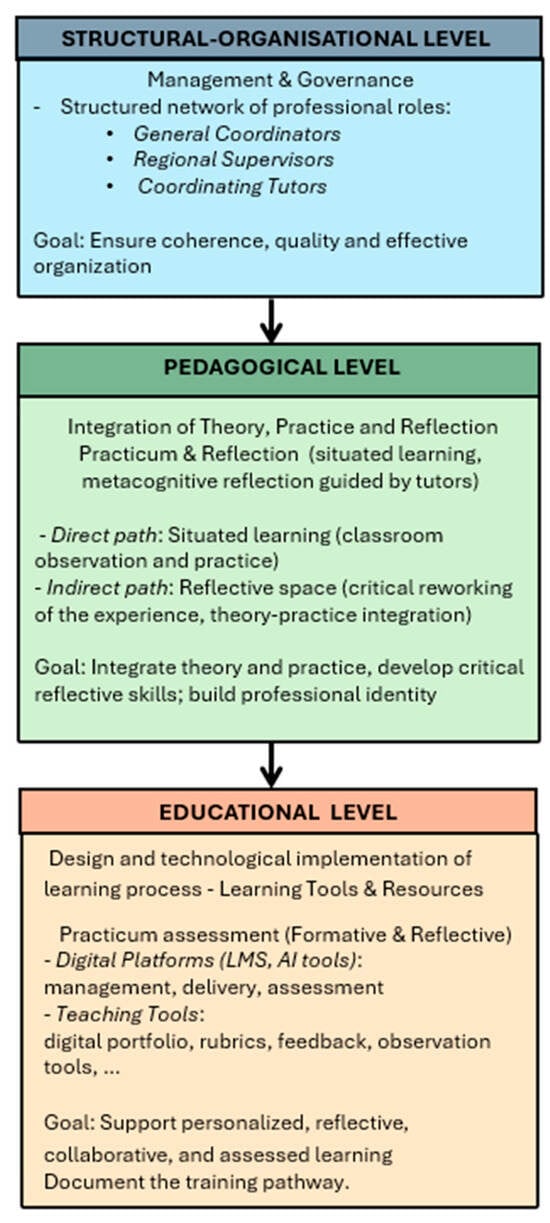
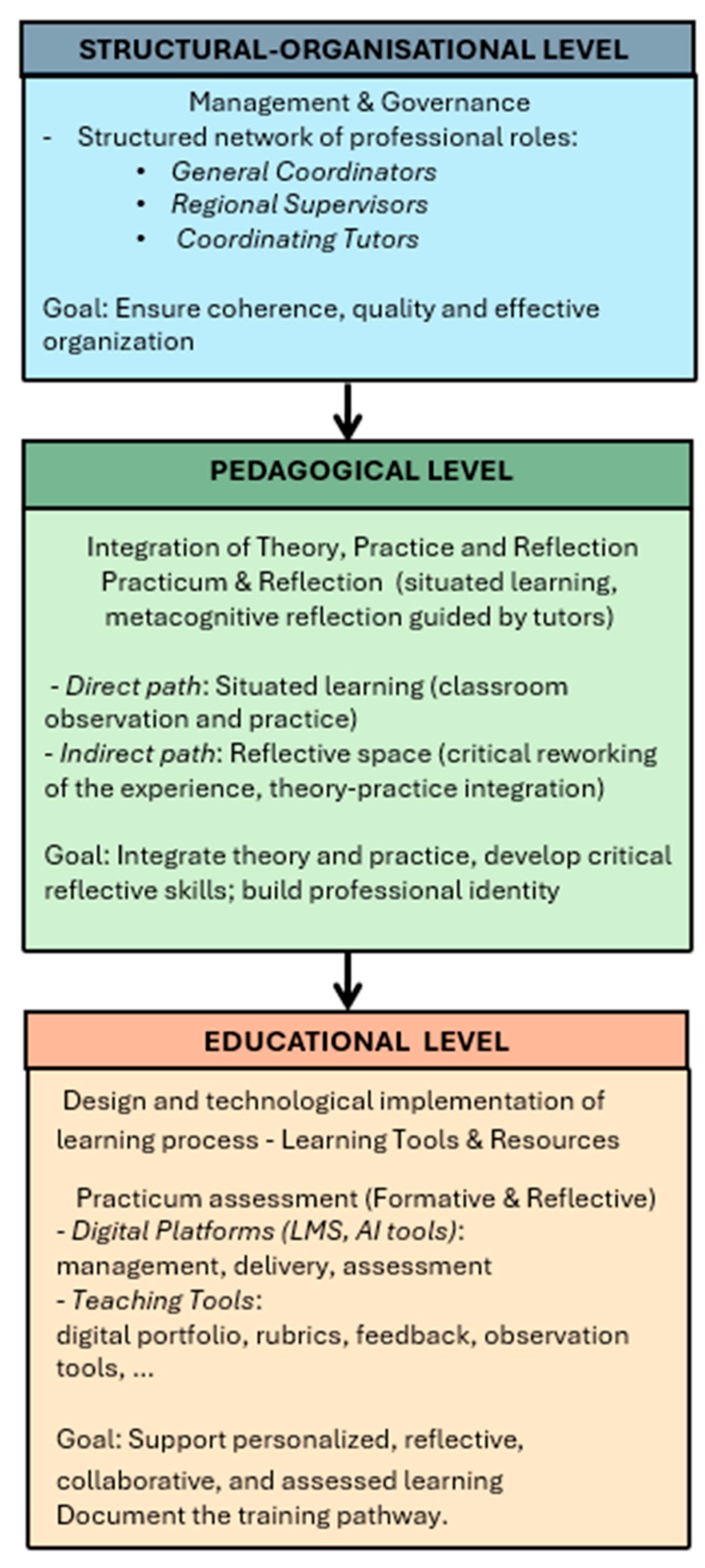

Disclaimer/Publisher’s Note: The statements, opinions and data contained in all publications are solely those of the individual author(s) and contributor(s) and not of MDPI and/or the editor(s). MDPI and/or the editor(s) disclaim responsibility for any injury to people or property resulting from any ideas, methods, instructions or products referred to in the content. |
© 2026 by the authors. Licensee MDPI, Basel, Switzerland. This article is an open access article distributed under the terms and conditions of the Creative Commons Attribution (CC BY) license.