


Abstract
Out-of-school literacy practices are increasingly recognised as relevant to language education, yet their incorporation into formal education through national Language Curricula remains underexplored. This study examines whether and how the current Primary School Language Curricula in Greece and Spain address pupils’ out-of-school literacy practices. A qualitative thematic analysis was conducted of the Greek Language Curriculum for Primary Education and the Spanish national curriculum for Primary Education, focusing on four dimensions: pedagogical orientation, pupils’ lived sociocultural experiences, linguistic diversity and repertoires, and out-of-school literacy interests. Findings show that both curricula adopt pupil-centred and inclusive orientations and recognise pupils’ sociocultural and linguistic experiences, interests, identities, and contemporary digital and multimodal literacy practices. However, they differ in how these practices are incorporated: the Greek Curriculum places greater emphasis on pupils’ sociocultural and linguistic repertoires but remains anchored in Greek language and culture and traditionally valued forms of literacy, whereas the Spanish Curriculum emphasises multilingualism, linguistic identities and contemporary literacy practices, while offering limited guidance for their systematic integration. Overall, both curricula combine recognition of diverse literacy repertoires with the privileging of dominant cultural, linguistic, and textual forms, potentially reinforcing home–school mismatches and highlighting the need for methodological guidance to bridge out-of-school and in-school literacy practices.
1. Introduction
The rapid technological and cultural transformations that have taken place globally over the past several decades have generated increasing interest in the concept of literacy and in the ways in which children’s literacy experiences extend beyond the boundaries of formal education (Kinzer & Leu, 2018, pp. 1559–1565). In particular, growing attention has been devoted to the extent to which pupils’ out-of-school literacy practices, i.e., their lived experiences, interests, cultural and linguistic practices, are recognised and incorporated into educational contexts (Tsami et al., 2026a). In the literature, the gap between out-of-school and in-school literacies is addressed as the home–school mismatch hypothesis (Luke, 2004; see also Bulfin & Koutsogiannis, 2012; Tsami et al., 2026a).
Within this context, it is important to examine the extent to which formal educational curricula recognise children’s out-of-school literacy practices and provide opportunities for their integration into classroom instruction. Curricula play a central role in defining which forms of knowledge, literacy and meaning-making are considered legitimate and pedagogically valuable and therefore provide an important lens through which the relationship between children’s everyday literacy experiences and formal education can be examined (Ioannidou, 2012; Katsarou & Tsafos, 2009; Öner & Cırık, 2023). Against this background, in the present article, we aim to examine whether and how the current Primary School Language Curricula in Greece and Spain take into consideration pupils’ out-of-school literacy practices in classroom instruction.
The selection of the Greek and Spanish educational systems is grounded in the view that, as part of broader European and Western policies, they share important similarities in their promotion of dominant linguistic varieties and literacy practices, which are closely associated with the identities and cultural tensions of their respective nation-states (Athanasiadou, 2026, pp. 3–4; Ioannidou, 2012, p. 215; Katsarou & Tsafos, 2009, p. 37; Neubauer et al., 2022). In particular, the Greek educational system adopts a more centralised approach, with a common national Curriculum and a single officially prescribed textbook for all pupils across the country1 (Athanasiadou, 2026, pp. 3–4; Ioannidou, 2012, p. 215; Katsarou & Tsafos, 2009, p. 37; Koutsogiannis, 2011b, p. 556). In contrast, the Spanish educational system appears to adopt a comparatively more open approach to multiculturalism and linguistic diversity, as reflected, among other things, in the development of educational policies that are responsive to the particular linguistic and educational characteristics of different autonomous communities (González Plasencia, 2022; Neubauer et al., 2022). This is also evident in the existence of differentiated curricula between autonomous communities and the availability of a wider range of school textbooks and other educational materials adapted to local contexts (Coll & Martín, 2025). Therefore, a comparison of the two educational frameworks may reveal both significant similarities and differences in the extent to which, and the ways in which, children’s out-of-school linguistic and cultural practices are recognised and incorporated into formal education.
Thus, the study is expected to provide useful comparative evidence on the current primary education Curricula in Greece and Spain, contributing to a better understanding of how out-of-school literacy practices are addressed within different educational contexts2. The innovative aspect of the study lies in its comparative analysis of curricula situated within distinct linguistic, cultural and educational contexts. By bringing these two contexts into dialogue, we seek to shed light on how broader contextual characteristics may shape curricular approaches and educational policies concerning the recognition and incorporation of children’s out-of-school literacy practices into formal education. At the same time, our study brings together the local and global dimensions of literacy practices and the relationship between home and school (Kostogriz & Tsolidis, 2008). While children’s literacy practices are shaped by the specific linguistic, cultural and educational contexts in which they are situated, the need to bridge the gap between in-school and out-of-school literacy practices constitutes a broader international concern (Bulfin & Koutsogiannis, 2012; Cox, 2011; López Pena, 2024; Moreno-Morilla et al., 2017; Tsami et al., 2026a). In this respect, our findings may contribute to a more comprehensive understanding of how this global issue is addressed at the local level, highlighting the importance of examining curricular and educational practices within their particular sociocultural contexts.
The present article consists of six sections. Following this introduction, Section 2 presents the theoretical framework, i.e., conceptualising curricula as institutional mechanisms that shape in-school literacy and examining the mismatch between pupils’ in-school and out-of-school literacy practices. Section 3 describes the methodology adopted for the analysis. Section 4 presents the findings for the Greek and Spanish educational contexts, organised according to the thematic axes of analysis. Section 5 brings together, critically discusses and comparatively examines the findings, focusing on the ways in which contemporary curricula recognise and draw upon children’s out-of-school literacy practices in the Greek and Spanish contexts. Finally, Section 6 discusses the limitations of the study and outlines suggestions for future research.
2. Literature Review
2.1. Curricula and In-School Literacies
Curricula constitute a fundamental component of educational systems; however, they cannot be easily conceptualised through a single, universally accepted definition, “because [of] […] the dynamic nature of knowledge, the changing conception of the learner and the learning process as well as of education” (Ibeh, 2021, p. 53). In the present article, we conceptualise the curriculum as the institutional framework that determines and regulates what is taught, how it is taught, and why it is taught within formal education, drawing on the conceptualisations proposed by Walker (2003, pp. 4–5), El-Astal (2023, pp. 193–194) and Tyler’s linear model (Tyler, 1949), which proposes four dimensions regarding curriculum’s structure:
- What are the educational purposes that a school should seek to attain (Educational Objectives)?
- What learning experiences can be selected to fulfill the educational objectives (Learning Experiences)?
- How should the learning experiences be organised to achieve the desired outcomes (Organisation of Experiences)?
- What assessment and evaluation techniques can be used to determine the success of the implemented curriculum (Assessment and Evaluation)?
Curricula therefore form part of the broader framework of official educational policy, shaping educational aims, instructional content, learning experiences, the organisation of the educational process, and assessment practices (Ioannidou, 2012, pp. 215, 217; Neophytou & Valiandes, 2013, p. 415).
An important component of language education policy is language planning, a process through which language education curricula are used to introduce and promote particular languages or language varieties within educational contexts, positioning them as desirable or standard forms of communication (see, indicatively, Cooper, 2010, pp. 29–31). Through their teaching, codification, and institutional legitimisation, these varieties become standardised, acquire greater prestige, and are established as linguistic norms, while simultaneously shaping particular language attitudes and criteria for evaluating speakers’ linguistic and communicative competence (Ioannidou, 2012, pp. 215, 217).
This means that the curriculum is “much more than a pedagogical text and is certainly not neutral. As a text, it implies social practices and institutions, cultural products and anything created because of human action and reflection” (Katsarou & Tsafos, 2009, p. 37). Decisions concerning which forms of knowledge, language, or skills are considered significant, included or excluded, which values are foregrounded, and which practices are promoted are closely connected to particular ideological and political perspectives (see, indicatively, Öner & Cırık, 2023, p. 165; Katsarou & Tsafos, 2009, p. 37). In other words, curricula play a crucial role in shaping the content of school literacy by defining the knowledge, skills, and communicative practices that are recognised as valuable and are consequently prioritised for acquisition within formal education.
2.2. Literacy Practices: Beyond the School Context
As noted in the introduction, the present study focuses on pupils’ literacy practices as represented in curricula. According to traditional definitions, literacy primarily refers to the knowledge and skills associated with reading and writing in the dominant language (Abrams et al., 2018, pp. 1302–1303; Gee, 2008, p. 31; The New London Group, 1996, p. 61). However, this narrow and decontextualised understanding of literacy has proved insufficient for addressing emerging social and educational demands, including the effective use of digital technologies, intercultural communicative competence, and the development of critical and creative thinking (Cox, 2011, pp. 120–121; The New London Group, 2000, pp. 9–10).
The New Literacy Studies emerged in response to these limitations, offering a theoretical perspective that broadens the conceptualisation of literacy by viewing it not as a fixed set of abstract skills and knowledge, but as a socially and culturally situated practice. From this perspective, literacy encompasses the effective and critical understanding, interpretation, and production of oral, written, and multimodal texts across diverse communicative contexts, always in relation to the demands of particular sociocultural settings (Abrams et al., 2018, pp. 1302–1303; Archakis & Tsakona, 2012, pp. 129–132; Kalantzis & Cope, 2012; Tsami et al., 2026a, pp. 126–127). Consequently, literacy is conceptualised as a complex social practice with a strong sociocultural dimension (Baynham, 1995, p. 1), rather than as a single, uniform phenomenon, giving rise to the notion of multiple literacies, or “multiliteracies” (Cope & Kalantzis, 2000c), which are closely connected to individuals’ experiences of socialisation. Within this perspective, literacy and literacy practices cannot be examined as neutral or decontextualised phenomena but must instead be understood in relation to the specific social, cultural, and communicative contexts in which they are enacted (Gee, 2008, pp. 42–43).
The concept of literacy practices reflects this inseparable relationship between literacy and its enactment in society, as they form “a bridge between literacy as a linguistic phenomenon and the social context in which it is embedded” (Baynham, 1995, p. 54). As Baynham (1995) further argues, literacy practices involve “not just what people do with literacy but also what they make of what they do, how they construct its value, the ideologies that surround it. The practice construct implies both doing and knowing” (p. 39). Accordingly, a central principle of New Literacy Studies is that language, literacy and socialisation are deeply interconnected, since individuals participate in literacy practices through language during processes of socialisation and, in doing so, develop particular literacy identities (Bulfin & Koutsogiannis, 2012; Kalantzis & Cope, 2012, p. 149; Koutsogiannis, 2011a, p. 44). From this perspective, literacy practices are strongly related to linguistic repertoires, personal experiences, cultural background and relevant interests. In other words, through actively participating in linguistically and socioculturally situated literacy practices, individuals construct, and are constructed by, their literate identities (Street, 2003). Consequently, examining literacy practices requires attention to the sociocultural characteristics of the contexts in which they are embedded, as well as to the different social environments—or “domains” of literacy, in Baynham’s (1995, p. 40) terms—within which they take place. From this perspective, the distinction between in-school and out-of-school literacy is conventionally drawn on the basis of the social contexts in which literacy practices are enacted (Baynham, 1995, p. 40).
In-school literacy practices take place within the domain of “school” and refer to the practices through which in-school literacy is cultivated. The mission of education is generally understood as preparing pupils to participate effectively in both public and private spheres of social life (Cope & Kalantzis, 2000a, p. 117). Traditionally, this objective has been associated with the development of reading and writing skills in the dominant language (Gee, 2008, p. 31), reflecting a top-down and decontextualised approach to literacy, which Street describes as the autonomous model of literacy (Street, 2003, p. 77). However, from the perspective of New Literacy Studies and Street’s ideological model of literacy (Street, 2003, pp. 77–78), school literacy must be responsive to the characteristics and needs of particular social groups and aligned with the realities of specific sociocultural contexts (Archakis & Tsakona, 2012, pp. 129–132). In shaping in-school literacy, educational institutions and authorities, including curricula, textbooks and teachers, play a decisive role (Oikonomakou & Papakitsos, 2021, p. 12).
More specifically, as discussed in the previous section, curricula, as institutional documents of language planning, determine what is to be taught, how it is to be taught, and for what purposes, while they are often designed in conjunction with specific learning materials and school textbooks (Oikonomakou & Papakitsos, 2021, p. 11). However, teachers also play a crucial role in shaping in-school literacy practices, as they are expected to exercise professional judgement, adapt educational materials and practices to pupils’ needs, and respond to the particular requirements of their respective school and sociocultural contexts (Athanasiadou, 2026, pp. 2–3). Furthermore, teachers’ knowledge experiences and perceptions of language teaching, as well as their attitudes towards pupils and the educational system, significantly influence how they implement curricular guidelines, the extent to which they adapt educational materials, and, more broadly, the in-school literacy culture they establish within the classroom (see, indicatively, Athanasiadou, 2026; Cox, 2011; Forsling & Tjernberg, 2023; Kalantzis & Cope, 2012; Maroniti, 2017; Neophytou & Valiandes, 2013, p. 415; Oikonomakou & Papakitsos, 2021; Tsami et al., 2026a).
On the other hand, the present study examines out-of-school literacy practices, which are conventionally distinguished according to the social domains in which they are enacted, focusing here on the “home” as a primary context for socialisation and the expression of children’s personal interests. The characteristics of this domain, including the availability of digital technologies, patterns of language use, and the broader family culture, directly shape the nature and scope of children’s literacy practices (Baynham, 1995, p. 40). More specifically, recent research indicates that children’s out-of-school literacy practices have increasingly shifted from print-based materials towards digital and multimodal media, a development closely associated with the growing availability and integration of digital technologies within the home environment (Curry et al., 2016; Kress, 2003, pp. 1, 4; Marín & Castañeda, 2023; Marsh et al., 2017). Among these practices, digital games, particularly videogames, appear to occupy a particularly prominent position (see also Koftsitsidis, 2019), constituting multimodal forms of engagement that have been associated with the development of skills such as problem-solving, storytelling, collaboration, rapid decision-making, critical thinking, goal-setting, and organisation (Gee, 2003; Koutsogiannis & Adampa, 2022; Prensky, 2001).
Regarding the content of pupils’ out-of-school literacy practices, research indicates that children’s out-of-school interests revolve around texts associated with popular or mass culture, including cartoons, television series, online games (see Fterniati et al., 2013, pp. 58–59; Koutsogiannis & Adampa, 2022; Marsh et al., 2005; Marsh et al., 2017, pp. 53–54; Tsami et al., 2026a, p. 139 among others). This culture is expressed through a range of media and cultural products, including popular music, television, films, illustrated publications, magazines, comics and digital games (Cope & Kalantzis, 2000a, pp. 136–140; Kalantzis & Cope, 2012, pp. 151–152; The New London Group, 2000, p. 16; Tsami et al., 2014, p. 362).
Children’s preference for popular culture texts in digital media can also be linked to the concept of “agency”, meaning the users’ ability, particularly within digital environments, to select, shape and produce the texts with which they interact (Cope & Kalantzis, 2000a, p. 203; 2000b, p. 7; Kalantzis & Cope, 2012, pp. 54–55, 59). This capacity enables users of contemporary technologies to move beyond the role of passive recipients and become active creators and co-constructors of culturally and ideologically shaped content (Cope & Kalantzis, 2000b, pp. 6–7; Kalantzis & Cope, 2012, pp. 54–55). From this perspective, agency involves not only the selection and production of texts but also the active negotiation and construction of meanings within particular social and cultural contexts. The development of digital technologies, from the expansion of the internet to the rise of social media and, more recently, artificial intelligence, has significantly expanded children’s opportunities to select, shape, and produce content, enhancing their agency and active participation in the construction of their out-of-school literacy practices (Kalantzis & Cope, 2012; Marín & Castañeda, 2023; Tsami et al., 2026a).
2.3. Connecting In-School and Out-of-School Literacy Practices: A Curricular Perspective in Greek and Spanish Contexts
Since curricula largely shape the content and practices of in-school literacy, while pupils simultaneously develop diverse literacy practices across out-of-school social and cultural contexts, a critical question concerns the extent to which these two domains meet and interact. Previous international research has shown that children’s out-of-school literacy practices are often insufficiently recognised or utilised within school context, an issue commonly described in the literature as the home–school mismatch hypothesis (Luke, 2004; see, among others, Alston-Abel & Berninger, 2017; Bernstein, 1990; Bulfin & Koutsogiannis, 2012; Cope & Kalantzis, 2000c; Cox, 2011; Curry et al., 2016; Fterniati et al., 2013; Heath, 1983; Kalantzis & Cope, 2012; Katsarou & Tsafos, 2009; Koutsogiannis, 2011a; Koutsogiannis & Adampa, 2022, p. 22; Manoli, 2019; Marsh & Millard, 2000; Marsh et al., 2005; Moreno-Morilla et al., 2017; Street, 2003; Tsami et al., 2014, 2026a).
As noted above, curricula have a strong ideological and political dimension (Öner & Cırık, 2023, p. 165; Katsarou & Tsafos, 2009, p. 37); therefore, the causes of the mismatch between school and home literacy practices need to be identified, first and foremost, in the ways in which formal educational institutions perceive and respond to children’s out-of-school experiences.
First, although popular culture constitutes a substantial part of children’s everyday out-of-school lives and interests, the literacy practices associated with it are often stereotypically framed as forms of entertainment and leisure, rather than recognised as meaningful cultural and educational resources that can be productively incorporated into formal education (Maroniti, 2017, pp. 100–101, 109). This perception is further reinforced by the often cautious or negative attitudes of educational institutions and educators towards children’s interests and popular cultural texts, which may contribute to distancing in-school literacy from the texts and cultural practices that are meaningful to children and to privileging texts associated with the so-called high culture (Daenekindt, 2018; Maroniti, 2017, pp. 100–101, 109). Finally, these processes are closely connected to the ideological and political function of curricula as institutional mechanisms for selecting and legitimising particular forms of knowledge, language, genres, skills, and literacy practices, which often carry greater social prestige and are associated with socially dominant and higher socioeconomic groups (Ioannidou, 2012, pp. 215, 217; Kalantzis & Cope, 2012, pp. 151–152). Consequently, the literacy practices and cultural resources that children bring from their diverse social and cultural backgrounds are not necessarily recognised and valued on an equal basis within formal education, thereby contributing to the reproduction of the home–school literacy mismatch (Bernstein, 1990).
Focusing specifically on the manifestations of this issue within the Greek educational system, previous research has also identified significant divergences between children’s in-school and out-of-school literacy practices. In the context of Greek primary education, these divergences can be traced across the three current curricula for the teaching of Modern Greek Language, introduced in 2003, 2011, and 2022. The study by Katsarou and Tsafos (2009) of the 2003 Greek Language Curriculum (DEPPS-APS, 2003) concludes that, although the curriculum encourages the use of texts that “fall within the interests of the children” (DEPPS-APS, 2003, p. 42), it ultimately focuses primarily on promoting dominant discourses, such as the promotion of Greek culture and the teaching of Standard Modern Greek through its use in appropriate communicative contexts (Katsarou & Tsafos, 2009, p. 43). The authors critically assess this orientation, arguing that the problem does not lie in familiarising pupils with dominant linguistic and cultural practices in themselves, but rather in presenting these practices as the primary or self-evidently legitimate forms of literacy, without critically connecting them to pupils’ diverse sociocultural experiences and existing literacy practices (Katsarou & Tsafos, 2009, p. 43). In contrast, the study by Oikonomakou and Papakitsos (2021) identifies several improvements in the 2011 Curriculum, which aims to incorporate multimodal and digital texts that form part of pupils’ literacy practices, as well as elements of the geographical and social language varieties they use (Oikonomakou & Papakitsos, 2021, pp. 5–7, 9). Nevertheless, the authors observe that these orientations have been implemented only to a limited extent, mainly due to the continued use of older school textbooks, developed in 2003–2006, and the lack of relevant teacher training (Oikonomakou & Papakitsos, 2021, pp. 11–13).
Furthermore, Athanasiadou’s (2026) study of all current Greek Language Curricula (DEPPS-APS, 2003; Curriculum, 2011; Institute of Educational Policy, 2022) points out that teachers do not feel that they are provided with sufficient autonomy and flexibility to adapt educational objectives and materials to the diverse needs of their pupils (Athanasiadou, 2026, p. 24). Finally, the research by Tsami et al. (2026a, p. 19) suggests that the digital modernisation of the Greek school system is not, in itself, sufficient to ensure the effective incorporation of children’s out-of-school literacy practices into the educational process, as negative attitudes among educational institutions towards pupils’ interests and agency may continue to limit their meaningful integration into school practices. Taken together, these findings point to the highly centralised nature of the Greek educational system (Athanasiadou, 2026, p. 3), as curricular structures tend to predetermine the content of in-school literacy in a decontextualised manner, without sufficiently considering children’s diverse out-of-school literacy practices. This orientation may reinforce processes of homogenisation (Katsarou & Tsafos, 2009, p. 37) or, in Street’s terms, reproduce an autonomous model of literacy (Street, 2003; see also Section 2.2). Turning now to the Spanish educational system, the national curriculum, established by Royal Decree, constitutes the appropriate reference point for the analysis, as it specifies the compulsory curricular content applicable throughout Spain. This document establishes a common standard for all Autonomous Communities and ensures a shared foundation, regardless of the region in which pupils are educated. Although each Autonomous Community subsequently develops its own curriculum, it must do so on the basis of the compulsory content prescribed at the national level, adapting it to its respective cultural, social, and linguistic context.
The compulsory contents “seek to ensure that all pupils can access the learning deemed necessary for their development and socialisation, regardless of their place of residence, while also ensuring the coherence and continuity of such learning in the event of family mobility”, whereas the curricula developed by the Autonomous Communities “aim to ensure that education responds to the pupils’ social, economic, cultural and linguistic circumstances” (Coll & Martín, 2025, p. 143). Secondly, in addition to Spanish as the pupils’ mother tongue and to the foreign language, the regional curricula introduce, where applicable, the teaching of the language specific to the Autonomous Community (Ministry of Education and Vocational Training, 2022). In this regard, the national curriculum, together with the corresponding regional curricula, seeks to respond to pupils’ circumstances and to Spain’s linguistic diversity.
Furthermore, the curriculum is characterised by a clearly competence-based approach, which entails the design of contextualised activities that provide learning with real-world relevance (Coll & Martín, 2025) and bring classroom practice closer to pupils’ everyday realities. However, this competence-based orientation is not without its challenges, as its implementation is complex and presents difficulties for teachers, particularly with regard to assessment (López Ruipérez, 2022).
Likewise, the current curriculum places considerable emphasis on intercultural competence, which is addressed transversally across different subject areas. González Plasencia (2022) views this emphasis on intercultural competence—which is essential to language learning—positively, but identifies certain shortcomings, such as the limited consideration given to the identity component and the lack of guidance on how to address cultural diversity in the classroom. The author also highlights the predominance of formal or “highbrow culture”, to the detriment of deep or “lowbrow culture” (González Plasencia, 2022, pp. 116–117).
Moreover, the Spanish curriculum incorporates the comprehension and production of multimodal texts, as well as the use of digital media, as cross-curricular elements (López Pena, 2024). This could facilitate the incorporation into the classroom of children’s vernacular literacy practices. However, with regard to reading texts, the curriculum does not establish a literary canon. Consequently, this canon is shaped either according to individual teachers’ personal criteria or, more significantly, on the basis of the materials included in textbooks, which often display biases and shortcomings in their selection of reading materials. This may contribute to a home–school mismatch, as the literacy practices and texts encountered by pupils in their out-of-school lives may not always be reflected in the literacy practices and materials valued at school. Therefore, De Amo and García-Roca (2023) advocate reviewing the current literary canon in order to introduce other literatures and cultural forms, as well as to incorporate texts that are more closely aligned with pupils’ interests.
Thus, the home–school mismatch emerges as an issue identified across Greek, Spanish, and broader international literature, raising important questions about its broader consequences for learning and social equity. First, learning that is not meaningfully connected to pupils’ experiences is less likely to be perceived as authentic, which may reduce pupils’ motivation to participate (Kalantzis & Cope, 2012, p. 160). Secondly, if the development of critical literacy constitutes an important learning objective, as stated in the curricula, the limited incorporation of texts from pupils’ out-of-school lives may represent a serious obstacle to its development (Archakis & Tsakona, 2012, pp. 123–128, 139–140; Kalantzis & Cope, 2012, p. 148). Critical literacy is essential for raising awareness of the goals, ideologies, and Discourses embedded in texts, particularly in popular culture texts that construct representations of reality from specific perspectives (The New London Group, 2000, p. 34). Given that children interact with such texts in their most frequent out-of-school practices, it is important that classroom teaching supports the development of the ability to critically question them (Kalantzis & Cope, 2012, pp. 148–149). Finally, at a broader social level, inequalities among pupils are perpetuated, as dominant literacy standards continue to be privileged. As a result, children who have not been socialized into the literacy practices promoted by the school at home are more likely to experience marginalization, including children from cultural, social, economic, and linguistic minority backgrounds (Bernstein, 1990; Chatzidaki et al., 2021; Heath, 1983). The issue of incompatibility between in-school and out-of-school realities is therefore not merely a matter of learning; rather, it is fundamentally social and directly linked to questions of equal opportunity. Thus, instead of functioning as a mechanism for transforming social power relations, the school, through this observed mismatch, appears to operate as a mechanism for reproducing them (Bernstein, 1990, pp. 157–159).
3. Methodology
3.1. Aim and Research Questions
The present article aims to examine if and how the current primary school language curricula in Greece and Spain take into consideration pupils’ out-of-school literacy practices in classroom instruction. Specifically, the study addresses the following research questions:
- Does the Greek Language Curriculum for Primary Education (Institute of Educational Policy, 2022) take into account pupils’ out-of-school literacy practices within language teaching? If so, how?
- Does the Spanish Curriculum for Primary Education (Ministry of Education and Vocational Training, 2022) take into account pupils’ out-of-school literacy practices within language teaching? If so, how?
- To what extent do the Greek and Spanish Curricula for Primary Education converge or diverge regarding their approaches to incorporating pupils’ out-of-school literacy practices into language teaching?
3.2. Data
In the present analysis, we examine the Language Curricula for primary education in the Greek and Spanish educational contexts. As noted in Section 2.1, Language Curricula constitute a particularly relevant source for examining in-school literacy, as they define the aims, content, and methodological principles of language teaching (Ibeh, 2021, p. 53; Öner & Cırık, 2023, p. 165; Tyler, 1949).
It should be noted that the Greek and Spanish education systems differ in terms of their structural organisation and curricular design, as discussed above. As the present study aims to conduct a comparative analysis of the national curricula for mother tongue education in the two countries, the researchers selected the official documents specifying the compulsory content to be covered in this subject in each national context. In Greece, mother tongue education is governed by a specific curricular framework. Thus, for the Greek context, we selected the 2022 Language Curriculum (Institute of Educational Policy, 2022). However, in the Spanish education system, there is no standalone curriculum document specifically devoted to Spanish language education. Instead, at the national level, the content requirements for this subject are set out in Royal Decree 157/1 March 2022, which establishes the organisation and minimum teaching requirements for Primary Education (Ministry of Education and Vocational Training, 2022). Therefore, this document was selected as the source of data for the present study. The 17 curricula developed by the different autonomous communities in Spain were excluded from the analysis for two reasons. First, the study aims to compare the national curricula of two countries. Second, the provisions set out in Royal Decree 157/2022 provide a sufficiently detailed framework for language teaching, as the document establishes the guidelines and mandatory content requirements applicable to the teaching of Spanish throughout Spain.
As already mentioned, for the Greek context, in the present study we focus on the 2022 Curriculum (Institute of Educational Policy, 2022), as it is the most recent Curriculum; it was designed to guide the development of the new generation of school textbooks that will be introduced in the coming school years and has not yet been the subject of analysis in relation to literacy. Its selection therefore allows us to examine the most recent curricular orientation towards language education and in-school literacy in the Greek context, while also addressing this gap in the existing literature.
For the Spanish case, the analysis draws on the Primary Education curriculum established under the current educational framework, namely the LOMLOE (Head of State, 2020). More specifically, it focuses on the national Royal Decree, given the diversity of curricular specifications developed by Spain’s different autonomous communities. This document was selected as a common frame of reference for examining the most recent curricular orientation towards literacy in the Spanish context. Accordingly, the analysis encompasses both the full text of the Royal Decree (Ministry of Education and Vocational Training, 2022) and the annex specifying the subject-specific competences, assessment criteria, and basic knowledge areas for Spanish Language and Literature.
3.3. Data Analysis
As in other studies involving curriculum analysis (Boned-Gómez et al., 2025; De la Herrán et al., 2019; López-García-Torres & Saneleuterio, 2019), we employed a qualitative documentary methodology. More specifically, we conducted a thematic analysis of the documents, focusing on the identification and organization of the main patterns emerging from the data (Finlay, 2021). According to Braun and Clarke (2012, as cited in Squires, 2023, p. 763), thematic analysis is “a method for systematically identifying, organizing, and offering insight into patterns of meaning (themes) across a data set.” This type of analysis may take different forms depending on the objectives and methodological context of the research (Finlay, 2021).
In general terms, thematic analysis typically involves a series of stages, which Squires (2023) describes in six steps: (a) familiarization with the data (e.g., through the reading of documents); (b) preliminary coding, which may be data-driven or informed by the theoretical framework underpinning the study; (c) searching for themes based on the established codes, while allowing for new themes to emerge during the process; (d) reviewing the themes; (e) defining and naming the identified themes; and (f) producing the analysis. It should be noted that this process does not necessarily follow a strict linear sequence; rather, it may involve successive reviews of the categories and patterns identified throughout the analysis.
In the present study, we read the two curricula in several stages, following the model proposed by Boned-Gómez et al. (2025): an initial reading to become familiar with the content, a second reading to extract the information relevant to the analysis, and a final interpretive reading. As part of the joint familiarisation with the data, the three Greek researchers were responsible for translating the Greek document, while the two Spanish researchers were responsible for translating the Spanish document. Then, prior to beginning the document analysis, we established units of meaning suitable for coding by consensus among the researchers, drawing on expert judgment and following López-García-Torres and Saneleuterio (2019). Accordingly, we developed a preliminary set of keywords and related phrases, which we initially organised into eight dimensions: (1) pupils’ interests, experiences, and agency/initiative; (2) literacy and literacy practices; (3) identity, diversity, and sociocultural dimensions; (4) languages, dialects, and linguistic repertoires; (5) family, home, and community; (6) popular, mass, and contemporary culture; (7) digital environments, media, and technology; and (8) curriculum and pedagogy. All dimensions, keywords, and related expressions were linked to literacy practices and to connections with pupils’ lives and experiences beyond the classroom. All researchers participated in the initial coding process, discussing the different dimensions and their associated keywords until consensus was reached.
Our thematic analysis was conducted collaboratively by all the members of the research team. Specifically, we used these terms to locate and record relevant references within the curriculum documents, and we collaboratively reviewed and discussed the emerged themes in order to enhance the reliability and validity of the data interpretation. The findings were shared and were subsequently reviewed by all the researchers in terms of their relevance to the object of study, with the aim of ensuring that the analysis was not reduced to a mechanical count of terms. Based on this review and on the identification of patterns across the initial categories, we ultimately reorganised the data into four thematic areas: (1) pedagogical orientation; (2) pupils’ sociocultural experiences as represented in the language curriculum; (3) linguistic diversity; and (4) pupils’ interests beyond the school context (see Table 1). As in the study by Boned-Gómez et al. (2025), we participated in this process by discussing and reaching consensus on the categorisation and analysis of the documents, with the aim of ensuring consistency throughout the procedure.
Table 1.
Thematic areas, dimensions and some indicative keywords.
Finally, we conducted a comparative analysis of the two curricula, drawing on a review of the thematic categories identified in the documents and following the established thematic areas (see Figure 1).
Figure 1.
Stages of the analysis process.
4. Results
4.1. The Pedagogical Orientation of Language Education Curricula
In this thematic category, we explore the extent to which the two Curricula establish a general pedagogical framework within which pupils’ diverse experiences, interests, needs, and agency are recognised and proposed for pedagogical use in language education.
Starting with the Greek context, the Curriculum (Institute of Educational Policy, 2022) proposes that “the pupil should be at the centre of the educational process and determine both the beginning (the purpose) and the end (the achievement) of every instructional design” (p. 10). This pupil-centred orientation is further reflected in the emphasis placed on pupils’ active engagement in the learning process, which, according to the Curriculum, “is achieved when pupils find interest and meaning in what they do, are asked for their opinions, and have their suggestions heard” (p. 10). Accordingly, the Curriculum proposes activities based, on the one hand, “on pedagogical principles such as inquiry-based learning, interdisciplinary collaboration, analysis and synthesis and, on the other hand, on working methods that provide for the participation of all pupils, according to their individual abilities and capacities” (p. 16).
As it appears, language education is expected to be implemented with differentiated learning and the principles of cooperative learning as its guiding principles, through which pupils’ different communicative skills and capacities are highlighted inclusively (see relevant Institute of Educational Policy, 2022, p. 3). As is characteristically mentioned in several parts of the Greek Curriculum, “language teaching has the potential to engage every pupil by adopting methods and principles of differentiated teaching and cooperative learning, which are taken into consideration both in the Curriculum and in the Teacher Guides” (p. 10). Specifically, the Curriculum proposes the implementation of differentiated teaching through “contemporary methods (e.g., experiential, discovery-based, metacognitive), so that different learning styles are addressed” (pp. 10–11) and through the differentiation of “the intended learning objectives [by the teacher], depending on the needs of their pupils” (p. 11). Even with regard to assessment procedures, it is explicitly stated that “the pupil’s concerns are placed at the centre” (p. 19), while the teacher is expected to reflect on the effectiveness of the teaching and pedagogical methods they use, “so that they can be redefined for the benefit of the pupil community” (p. 20).
Despite the above emphasis of the Greek Curriculum on differentiation and inclusion, it is explicitly stated in it that “pupil-centred teaching is not an easy process for the classroom teacher, who is called upon not simply to manage a large group of children, but mainly and primarily to create in each child the feeling that they belong to a cohesive group” (p. 10). However, the sense of belonging and the cohesion of a group often presuppose common values, common interests and common practices (Vallentin, 2019). And the formation of these common characteristics probably leads to homogeneity, which is mentioned by the curriculum as “utopian” (“the concept of homogeneity is utopian”, p. 10), meaning something considered ideal but unfeasible and unrealistic (definition of the term “utopian”, Dictionary of Use of the Modern Greek Language, 2014). Thus, the Greek Curriculum establishes a strongly pupil-centred and inclusive pedagogical framework, although its emphasis on fostering cohesion and homogeneity within the classroom raises questions about the extent to which pupils’ individual experiences and differences are used as pedagogical resources for language education.
Regarding the Spanish curriculum, emphasis is placed on the principles of inclusion and personalised attention to pupils, including the incorporation of mechanisms to prevent and address learning difficulties. In this regard, it is recommended that the principles of Universal Design for Learning (UDL) be followed, giving rise to “flexible and accessible pedagogical processes that adapt to the needs, characteristics and different learning paces of pupils” (Ministry of Education and Vocational Training, 2022, p. 108).
Likewise, the competence-based approach stands out as a key element of current educational legislation. The education provided primarily seeks to develop the eight key competences, which are in turn specified through a series of descriptors within the stage’s exit profile3. From a pedagogical perspective, this approach is closely related to the concept of “learning situation”, understood as an educational proposal that requires “pupils to deploy actions associated with key competences and specific competences, thereby contributing to their acquisition and development” (Ministry of Education and Vocational Training, 2022, p. 6). Learning situations involve a contextualised, meaningful and pupil-centred approach, as they seek to “integrate curricular elements from different areas through meaningful and relevant tasks and activities to solve problems creatively and cooperatively, reinforcing self-esteem, autonomy, reflection and responsibility” (p. 108). They also aim to “offer pupils the opportunity to connect their learning and apply it in contexts close to their everyday lives, fostering their engagement with their own learning” (p. 108).
In the linguistic domain, although the teaching methodology is not specified in detail, language teaching must take into account pupils’ individual characteristics, as well as the social context, since “it must begin with the diversity of pupils’ educational trajectories, and learning must always take place within a framework of meaning-making based on the reflection, comprehension and production of texts used in society” (p. 67). The connection with linguistic reality and the current context is particularly noteworthy: the teaching of Spanish language must address the different contexts in which language is used and the various means of communication, with particular attention to digital media. Thus, “progress in learning […] should enable pupils to respond to real communicative situations in personal, social and educational contexts” (p. 68).
Finally, “the assessment of pupils shall be global, continuous and formative, and shall take into account the degree of development of key competences and their progress throughout the learning processes” (p. 10). In this way, the curriculum establishes assessment criteria that are related to the specific competences of the subject area. Likewise, it states that teachers should also evaluate their own teaching practice.
As the findings indicate, both Curricula adopt a pupil-centred orientation, placing pupils’ needs at the centre of the educational process. More specifically, both Curricula call for attention to pupils’ characteristics, experiences, learning needs, and family contexts, with the aim of establishing a differentiated and inclusive learning framework that promotes cooperation and pupils’ active participation in the learning process. However, the Greek Curriculum appears to adopt a more cautious stance towards diversity and differentiated teaching, as it contains a tension between differentiation and the pursuit of classroom cohesion and homogeneity. By contrast, the Spanish Curriculum more explicitly conceptualises diversity as a source of enrichment and a pedagogical resource, making a more direct connection between pupils’ diverse experiences and characteristics and their pedagogical use in language education (see Table 2). Nevertheless, it is important to examine how these general pedagogical orientations are translated into practice along more specific analytical dimensions, namely the extent to which the Curricula incorporate elements of pupils’ sociocultural contexts (see Section 4.2), their linguistic repertoires (see Section 4.3), and their out-of-school literacy interests (see Section 4.4).
Table 2.
Comparison between the two Curricula.
4.2. Pupils’ Lived Sociocultural Experiences as Resources in Language Education Curricula
In this thematic category, we explore the extent to which the two Curricula recognise pupils’ lived experiences shaped by their family, community, cultural background, and broader sociocultural contexts as relevant to language education and promote their pedagogical use.
In general, the Greek Language Curriculum encourages teachers “to get to know/to familiarize with the profile of their pupils” (Institute of Educational Policy, 2022, p. 11), aiming to “bring to the fore pupils’ literacy experiences” (p. 6) through the “utilisation of prior knowledge and experiences” (pp. 1–2) and the “integration of elements from their linguistic and cultural repertoire” (p. 89). Specifically, these guidelines can be implemented through the teaching of “authentic texts that come from various sources” (p. 6) and “fall within their interests or their social and cultural characteristics” (pp. 105–106), such as literary texts “that are related to historical, folkloric and cultural dimensions of the place where the pupils live” (pp. 105–106). In the same context, the Curriculum proposes the introduction of new text types into teaching by “utilising their prior knowledge and social experiences” (p. 109), inviting pupils to “narrate stories and personal experiences in class” (pp. 23–24; see also pp. 89, 112–113), “describe their everyday lives” (p. 50), present their families (p. 31) and their stories (pp. 75, 112) and/or describe their favourite object (p. 44). At the same time, pupils are encouraged to “transform parts of a text by constructing their own versions/aspects of reality” (p. 106), promoting polyphony and the inclusion of multiple and diverse sociocultural perspectives in the classroom.
However, the Curriculum’s readiness to explore and draw on pupils’ out-of-school sociocultural experiences appears to be somewhat undermined in certain instances, as it seems to privilege those of pupils of Greek cultural background. This is evident, for example, in the following guideline:
“To know folk songs from their locality from different periods and regions of the Greek world, to compare them with one another by connecting them with the history and traditions of the Greek world. To listen to or sing folk songs.”(p. 124).
The use of the first-person plural possessive pronoun “our” in expressions such as “our locality” and “our people” is also noteworthy, as this linguistic choice appears to presuppose pupils’ Greek cultural background and may implicitly exclude those whose cultural or familial backgrounds are rooted in other contexts. Even the references to “Comparison with similar songs from other countries” and to comparing “folk songs from their locality with those of other cultures in terms of their themes, expressive means, etc.” (p. 124) appear to position other cultures as distant or external points of reference. In this sense, although cross-cultural comparison is encouraged, the framing seems to retain Greek culture as the primary point of reference, potentially reinforcing rather than challenging a hierarchical positioning of cultural knowledge.
Respectively, in the Spanish context, the Primary Education curriculum states that “educational practice at this stage should seek to integrate pupils’ different experiences and learning from a holistic perspective and adapt to their individual pace of work” (p. 6). This approach encourages educators to connect learning to pupils’ immediate contexts and to build on their prior knowledge and interests as valuable resources for enriching the educational process. Furthermore, with regard to learning situations, the curriculum stipulates that these should be contextualized and should respect “pupils’ experiences and their different ways of understanding reality” (p. 108). Accordingly, and in line with the prescriptions of the CEFR (Council of Europe, 2001), an educational approach grounded in “real-life communicative situations, in personal, social, and educational domains” (pp. 67–68) is adopted. This orientation is also reflected in the area of Spanish Language and Literature. Specifically, it is stated that pupils will progressively acquire strategies enabling them to express themselves and refer to “events close to their experience”, such as those related to mass media, or connected with other areas of learning (p. 70).
This consideration is particularly relevant to literary education, where pupils are expected to “draw on their personal and reading experiences to construct and share their interpretations of literary works and to create texts with a literary purpose” (p. 20), thereby contributing to the development of a reader identity. This orientation is further reflected in the proposal to establish “reading communities with shared reference points” (p. 71), through which individual reading experiences become part of a shared social practice. More broadly, the Linguistic Communication Competence (LCC) requires pupils to express “facts, concepts, thoughts, opinions, or feelings” through oral, written, signed, and multimodal forms across personal, social, and educational contexts (p. 20). Language is thus positioned not only as a means of communication, but also as a resource for expressing pupils’ experiences, sharing ideas and emotions, constructing knowledge, and interacting with others. This perspective is complemented by the Cultural Awareness and Expression Competence (CAEC), which emphasises understanding and respecting diverse forms of cultural and artistic expression, while also encouraging pupils to develop and express their own ideas in relation to their identities, society, and cultural heritage (p. 24). Within Spanish Language and Literature, this competence is supported through the “creation of texts with playful, artistic, and creative purposes” (p. 72) and through engagement with other artistic and cultural forms. Taken together, these provisions position literacy as a personal, social, and cultural practice through which pupils develop and express their identities.
With regard to the development of these two key competencies, the Spanish Curriculum refers to the recognition of “literary heritage as a source of individual and collective enjoyment and learning” (p. 20), aiming to promote both personal enjoyment and the shared construction of knowledge. However, while this emphasis on the social and affective dimensions of reading is evident, the reference to “literary heritage” also raises questions regarding whose heritage is being represented and made relevant to pupils. Although the curriculum presents literary heritage as a shared source of enjoyment and learning, not all pupils may necessarily identify with, relate to, or perceive the Spanish literary heritage as part of their own cultural heritage. This may be particularly relevant in increasingly linguistically and culturally diverse classrooms, where pupils’ cultural backgrounds and literary experiences may extend beyond those represented in the prescribed canon. Thus, while the curriculum encourages shared reading experiences and the construction of knowledge through literature, a strong emphasis on a common national literary heritage may inadvertently limit the recognition of some pupils’ existing cultural and literary repertoires or make them feel less represented within the curriculum.
Accordingly, both Curricula recognise pupils’ personal, family, cultural, and social contexts as relevant to language education and encourage teachers to take their experiences, prior knowledge, and interests into account. In both frameworks, pupils’ experiences are conceptualised as potential pedagogical resources, allowing learning to be connected with their everyday lives and immediate social and cultural environments. In this context, both Curricula also propose the use of pupils’ prior knowledge and experiences as a basis for introducing and teaching new text types, while encouraging the integration of elements of pupils’ identities into the interpretation and production of texts. Finally, in both Curricula, references to shared cultural or literary heritage coexist with a tendency to position the dominant national cultural tradition as a common point of reference, which may limit the full recognition of pupils’ cultural diversity and out-of-school reality (see Table 2).
4.3. Pupils’ Linguistic Diversity and Repertoires in Language Education Curricula
In correspondence with the previous thematic category, we explore the extent to which the two Curricula recognise and value pupils’ linguistic diversity and repertoires as resources for language education and promote their pedagogical use.
Overall, the Greek Language Curriculum places discussion of linguistic diversity and multilingualism among its core teaching objectives (pp. 1–3) and thematic areas (p. 12), providing for “the scientific approach to the linguistic skills of monolingual and multilingual speakers” (p. 8) and highlighting “the importance of the mother tongue and the learning of other languages” (p. 8). Thus, it provides for the “integration of elements from the linguistic repertoire” (pp. 3, 89) of multilingual pupils, allowing them to “use elements of the phonetic alphabet to demonstrate in class the pronunciation of words in their mother tongue” (pp. 96–97, 115), and even to write the initial version of narrative texts in their first language (p. 92). Nevertheless, particular emphasis is placed on the promotion and teaching of the Greek language, explicitly stating that the Greek language “constitutes a particular case” (p. 1), due to the fact that it represents a continuation of ancient Greek literature. In the same context, the use of the first-person plural possessive pronoun “our” in the statement “synchronic and diachronic dimensions of our language” (p. 86) appears to presuppose that pupils and teachers have Greek as their mother tongue or perceive it as their own language. This is also reflected in the way the Curriculum approaches the pedagogical use of linguistic varieties, as it primarily foregrounds varieties of the Greek language (see, indicatively, pp. 17, 33, 88, 112), such as the “Cypriot dialect, Tsakonian dialect, Cretan dialect, Northern Greek dialects, and Pontic Greek dialect” (p. 115).
Certainly, an important step towards bridging pupils’ out-of-school and in-school literacy practices is the fact that the Greek Curriculum not only provides for the teaching of the standard language but also aims to raise pupils’ awareness of “the importance of language development and diversity” (pp. 109–110) and “the power of linguistic creativity” (p. 122). Thus, the Curriculum places particular emphasis on teaching the linguistic choices of the “contemporary generation of pupils” (p. 17), such as youth language, neologisms, and borrowings “to meet contemporary communicative needs” (pp. 17, 28, 104).
However, the Curriculum does not approach geographical varieties in the same way. Although their teaching integration aims, among other things, to explore “speakers’ attitudes” (p. 17), geographical varieties are approached predominantly through non-contemporary idiomatic literary writing (e.g., Papadiamantis, Kazantzakis, Lascaratos, pp. 109–110) and “fairy tales, songs, mantinades, carols, interviews with dialect speakers, theatrical excerpts, recipes” from “different regions of the country” (p. 88; see also p. 25). The association of geographical varieties with specific folkloric elements and the customs and traditions of a place (pp. 109–110), their connection with specific texts from earlier linguistic periods (p. 24), as well as with older speakers (p. 112), constructs a museum-like dimension for geographical varieties, representing them as a “fossil” rather than as a living linguistic reality of contemporary pupils.
In turn, the Spanish curriculum attaches importance to linguistic diversity, pupils’ linguistic identities, and respect for other languages and cultures. This is explicitly reflected in plurilingual competence (PC), which “involves using different languages, whether spoken or signed, appropriately and effectively for learning and communication” (p. 21). PC takes into account the relationship between children’s personal or family languages and the official languages of Spain, as it entails “recognising and respecting individual linguistic profiles and drawing on personal experiences to develop strategies that enable mediation and transfers between languages, including classical languages, and, where appropriate, maintaining and acquiring skills in the family language or languages and in the official languages” (p. 21). It also incorporates the appreciation and respect of “the linguistic and cultural diversity of society” (p. 21). Furthermore, it should be noted that the Primary Education curriculum includes the subjects of “Foreign Language”, “Spanish Language and Literature” and, where applicable, the “Co-official Language and Literature” specific to the Autonomous Community.
The curriculum appendix for “Spanish Language and Literature”, despite focusing on the teaching and learning of Spanish, also emphasises Spain’s linguistic diversity as a form of cultural richness. This is explicitly stated in Specific Competence 1: “Recognise the linguistic diversity of the world by identifying pupils’ languages and the multilingual and multicultural reality of Spain, in order to promote interlinguistic reflection, identify and reject linguistic stereotypes and prejudices, and value such diversity as a source of cultural wealth” (p. 689). The curriculum refers to the coexistence of different languages and dialects in classrooms, which may differ from the vehicular language, and encourages these multilingual contexts to be used as an opportunity to raise awareness of linguistic diversity, develop interlinguistic awareness and reflection, and combat prejudice: “This linguistic diversity should serve as a basis for approaching an understanding of the multilingual reality of Spain and the world. Firstly, to help pupils appreciate the cultural wealth that this entails and to identify and avoid linguistic prejudices; secondly, to gradually develop an awareness of how languages function through observation and comparison between them” (p. 68). It is also worth highlighting the introduction to Spanish sign languages as a means of communication. However, the curriculum does not provide more specific guidance on how to address multilingualism in the classroom or how to integrate pupils whose languages differ from the vehicular language.
Regarding the diversity of Spanish, it is stated that “it is a universal and pluricentric language, with enormous dialectal diversity, in which each geographical variety has its own standard form” (pp. 68–69), and respect for these geographical varieties is encouraged, both within Spain and in other Spanish-speaking countries. By contrast, no reference is made to sociocultural varieties of the language, such as youth language, which is closer to pupils’ everyday linguistic practices.
Curricular content relating to linguistic repertoire is included in the section “Languages and their Speakers”. The starting point is observation of the linguistic reality of the immediate environment, which is then progressively broadened. Thus, in the first years of Primary Education, the content addressed includes “personal linguistic biography and classroom linguistic map” (p. 74), followed subsequently by the “school linguistic map” (p. 77) and the “linguistic map of the surrounding environment” (p. 79). This section also includes linguistic diversity, conceived as a manifestation of ethnic and cultural richness and as an opportunity for reflection on language. However, the content section devoted to “Literary Education” contains no reference to linguistic diversity or to the multilingual reality, despite the fact that both the languages of Spain and other languages of the world are reflected in different literary traditions.
A comparison of the two Curricula shows that both recognise linguistic diversity and multilingualism as important dimensions of language education and move beyond an exclusive focus on the standard language. They also acknowledge linguistic varieties and encourage pupils to reflect on linguistic diversity and its relationship with their linguistic experiences and repertoires. In both cases, linguistic diversity is therefore incorporated into language teaching, although the ways in which different varieties are selected and pedagogically framed vary. The main divergence concerns the pedagogical framing of linguistic diversity: while the Greek Curriculum gives particular attention to linguistic creativity and contemporary social varieties such as youth language, alongside geographical varieties largely associated with literary and cultural heritage, the Spanish Curriculum places greater emphasis on plurilingualism, interlinguistic awareness, and the rejection of linguistic prejudice. At the same time, the Spanish Curriculum provides limited guidance on the practical integration of pupils’ diverse languages, while the Greek Curriculum more explicitly incorporates contemporary linguistic practices into language teaching (see Table 2).
4.4. Pupils’ Out-of-School Literacy Interests in Language Education Curricula
In this thematic category, we examine the extent to which the two Curricula recognise pupils’ out-of-school literacy interests as relevant to language education and promote their incorporation into classroom teaching and learning. Starting with the broader guidelines of the Greek Curriculum (Institute of Educational Policy, 2022), the development of teaching materials is expected to take into account “pupils’ age, their learning needs, their interests, as well as their broader literacy experiences” (p. 6; see also pp. 11, 109). In fact, the Curriculum even provides for the “possibility of teaching materials being developed by the pupils themselves, who can bring in texts of their own interest and highlight their own literacy experiences” (p. 11), “thus co-constructing the teaching material” (pp. 12–13). Even in cases where the content (see, e.g., p. 12) or the text types to be taught (e.g., instructional texts, p. 113; interviews, p. 89; argumentative texts, p. 96; literary texts, pp. 28, 105–106) are predetermined, an effort is made to ensure that they correspond to the interests and the authentic realities of contemporary children (p. 6).
A characteristic example is the use of digital media and the study of multimodal texts in language teaching, so that education keeps pace with developments in the contemporary era (pp. 3, 6, 11). Specifically, the Curriculum promotes the use of “educational software (word clouds, concept maps, digital storytelling), digital repositories of educational materials and teaching scenarios, multimedia tools, interactive whiteboards, pupil tablets, as well as any other digital source or tool/programme/application” (p. 13). It is worth noting that multimodality constitutes a distinct thematic field within this Curriculum (p. 4), focusing on the development of pupils’ visual literacy through the teaching and critical reading of multimodal text types (pp. 24–25), such as images, comics, maps, encyclopaedias, tourist guides, and videos (p. 6). Finally, we consider that the bridging of out-of-school and in-school contexts is also promoted through the pedagogical use of games, whether board or digital (e.g., puzzles, Jenga, Scrabble, Hangman) (pp. 46, 64, 115), and songs (e.g., laiko, entechno4, rap) (see, e.g., p. 122), practices that are among children’s most popular out-of-school activities (see Tsami et al., 2026a, and references therein).
Nevertheless, the Greek Curriculum prioritises the pedagogical use of school textbooks (“The textbook, one or more, constitutes one of the basic means of teaching in Primary Education”, p. 18), whose teaching units draw on predetermined thematic areas that may not correspond to the interests of all children. Even when the thematic categories addressed in the school textbooks fall within children’s interests (p. 12), it is important to note that these textbooks have remained in use for nearly two decades. As a result, despite their innovative orientation at the time of their introduction, questions arise as to the extent to which they can adequately reflect pupils’ contemporary interests and social realities (Tsami et al., 2026a, p. 130).
In the same vein, the Greek Curriculum states that “at least 1/3 of the texts in each teaching unit derives from the broader field of literature, including excerpts from Greek and foreign authors, both classical and contemporary, representing a variety of literary forms, including poetry” (p. 12). This statement also suggests that the school presupposes pupils’ engagement with particular text types outside school, namely literary texts. This, combined with the positioning of literature as an “exceptional form of discourse” (p. 9), which “cultivates emotional intelligence, enhances aesthetic judgement, and contributes to the development of reading habits” (p. 9), may lead to the marginalisation and exclusion of other text types that children may prefer in their out-of-school time. This is also evident in the promotion of “classic works that have been published many times” (p. 18), based on the assumption that, through exposure to such works, pupils “will develop a positive attitude towards reading” and “discover their interests” (p. 9). Particularly noteworthy is the emphasis placed on “introducing pupils to the aesthetic appreciation of literary texts” (see ind. pp. 2, 28, 54, 87), as well as the emphasis on their emotional and aesthetic value (p. 28; see also p. 9). Such practices may benefit children who are already familiar with literary texts; at the same time, however, they may constrain the agency of pupils who express different interests, aesthetic preferences, and reading choices. In other words, positioning literature as a dominant form of literacy, both at school and at home (pp. 10, 28, 40), overlooks the diversity of pupils’ out-of-school literacy practices.
The Spanish curriculum, for its part, emphasises the need to develop methodological proposals “based on pupils’ areas of interest” (p. 108), personal points of reference that make it possible to contextualise learning and foster meaningful participation in language-related activities. This is also connected to the development of pupils’ reading identities, since the curriculum proposes reading texts “suited to their tastes and interests and selected with increasing autonomy” (p. 76) and includes research on topics of “personal interest” (p. 76). Thus, pupils’ preferences play a role both in the selection of reading materials and in processes of searching for, developing, and communicating information.
In this regard, the curriculum also recognises literacy practices associated with contemporary childhood, particularly those developed in digital and multimodal environments. It stresses that literacy extends beyond the printed medium, since “being able to read today also means knowing how to navigate and search the internet and select reliable information for different purposes” (p. 67). Likewise, the “proliferation of multimodal texts” (p. 69) calls for audiovisual and media literacy that enables pupils to address phenomena such as manipulation and disinformation. In this context, social media are also given an explicitly prescriptive status: they appear as core knowledge for the third cycle of Primary Education (Years 5 and 6), under the heading “Social media and their risks” (p. 80). Therefore, social media are not regarded merely as a communicative context familiar to pupils, but also as a specific object of learning to be addressed explicitly within language education. Nevertheless, this treatment appears to place greater emphasis on the risks and problematic uses of social media than on their potential as channels for communication, interaction, and content creation. This orientation may, to some extent, limit a broader approach to the digital communicative practices that form part of pupils’ everyday experiences. In addition, although the curriculum acknowledges the diversity of digital and multimodal literacy practices, it does not always specify in considerable detail the media, genres, and types of texts through which these forms of learning can be developed. This relative openness allows teachers to adapt their proposals to the contexts and experiences of each group, but it also leaves considerable room for teachers to determine which digital practices and formats are actually incorporated into classroom activities. Consequently, there is explicit recognition of new forms of communication, although their pedagogical enactment remains largely open to interpretation and development within individual educational proposals.
As demonstrated thus far, the Spanish Curriculum appears to adopt an intermediate position between individual choice and prescriptive guidance. Specifically, although pupils’ tastes and interests are recognised, they are also extended through values and content related to the “challenges of the 21st century”, such as a culture of peace, children’s rights, gender equality, climate change, and responsible consumption (p. 71). A similar tension can be observed in the way literature is approached. On the one hand, the proposal to select texts with the aim of establishing “reading communities with shared reference points” (p. 71) allows pupils’ out-of-school interests and reading experiences to inform literary education and supports the development of a shared reading community. On the other hand, the emphasis on “literary heritage as a source of individual and collective enjoyment and learning” (p. 20; see also Section 4.2) places particular emphasis on literary texts as a shared cultural resource. While this orientation may support pupils who are already familiar with and engaged in literary reading, it may provide less space for other text types and reading practices that pupils may favour in their out-of-school lives, potentially constraining the recognition of diverse reading preferences and forms of literacy engagement. A similar tension emerges in the treatment of contemporary communicative and digital literacy practices. While these practices are explicitly acknowledged, their development is accompanied by a particularly strong focus on the risks associated with digital environments and by limited specification of the media and textual genres that could be addressed. Thus, the curriculum provides a broad framework for incorporating pupils’ interests and contemporary literacy practices, while leaving open the extent to which these are accommodated as diverse forms of active communication and production or are guided towards particular cultural, social, and risk-related priorities.
Taken together, the two Curricula reveal a common tension between recognising pupils’ out-of-school literacy practices and shaping their incorporation into school. Both recognise pupils’ interests and broader literacy practices as relevant to language education, connecting them with contextualised learning and providing opportunities for pupils to exercise agency through the selection, interpretation, and production of texts. The main difference lies in how this connection is envisaged: the Greek Curriculum provides opportunities for pupils to bring texts of their own interest and contribute to teaching materials, whereas the Spanish Curriculum places greater emphasis on personal reading experiences, reading identities, autonomous text selection, and shared reading communities.
Both Curricula also acknowledge digital and multimodal literacy practices, but differ in their treatment. Social media are not explicitly addressed in the Greek Curriculum, while the Spanish Curriculum places greater emphasis on their critical engagement; at the same time, both provide limited guidance on the specific digital media and multimodal text types to be incorporated into classroom learning. Finally, the bridging of out-of-school and in-school literacy coexists in both Curricula with the promotion of particular text types, especially literature. This is reflected in the Greek Curriculum through the centrality of textbooks and literary texts and its emphasis on literary appreciation, and in the Spanish Curriculum through the emphasis on literary heritage as a source of individual and collective enjoyment and learning. Thus, although both recognise out-of-school literacy as pedagogically relevant, pupils’ existing literacy repertoires are selectively incorporated and reshaped in accordance with the purposes and expectations of formal education (see Table 2).
5. Discussion
The aim of the research was to examine if and how the current Primary School Language Curricula in Greece and Spain take into consideration pupils’ out-of-school literacy practices in classroom instruction. To this end, we conducted a thematic analysis of the Greek Language Curriculum for Primary Education (Institute of Educational Policy, 2022) and the Spanish Primary Education Curriculum (Ministry of Education and Vocational Training, 2022) to examine how they address pupils’ out-of-school literacy practices. The analysis resulted in four thematic dimensions: the pedagogical orientation of language education curricula, pupils’ lived sociocultural experiences, pupils’ linguistic diversity and repertoires, and pupils’ out-of-school literacy interests in language education curricula.
Regarding the Greek context, our findings showed that the Greek Language Curriculum explicitly incorporates pupils’ out-of-school literacy practices, both through its broader pedagogical framework and through specific provisions concerning pupils’ sociocultural and linguistic repertoires and interests. More specifically, the Curriculum adopts a strongly pupil-centred, differentiated and inclusive pedagogical approach, recognising pupils’ participation, needs and diverse abilities. It also encourages the integration of pupils’ out-of-school sociocultural experiences and linguistic repertoires into language education, including their personal experiences, cultural backgrounds, mother tongues, youth language, neologisms and borrowings. However, its approach remains largely centred on the Greek language and culture, which may limit the extent to which pupils’ diverse cultural and linguistic backgrounds are recognised as equally valued resources, while geographical varieties are often presented through folkloric, literary and historical references rather than as living linguistic practices of contemporary pupils. The Curriculum similarly encourages the development of teaching materials that reflect pupils’ interests, needs and broader literacy experiences, including through pupil co-construction, digital and multimodal texts, games and popular forms of music. Nevertheless, the continued prioritisation of school textbooks and literary texts may limit the extent to which teaching materials reflect pupils’ diverse and contemporary out-of-school literacy practices. Overall, these findings confirm previous research and reveal a tension between the Curriculum’s stated commitment to recognising pupils’ diversity and out-of-school literacy practices and its tendency to privilege the Greek language and culture, as well as more homogeneous and traditionally valued forms of literacy (see Section 2.3, also Katsarou & Tsafos, 2009, pp. 37, 43).
Turning to the Spanish context, the analysis showed that the Spanish Curriculum promotes a pupil-centred, inclusive and personalised approach that adapts teaching to pupils’ diverse needs and learning trajectories. It also encourages active participation, autonomy and agency by connecting learning with pupils’ everyday lives and social contexts, although it offers limited guidance on systematically integrating their individual experiences and interests into language education. More specifically, the Spanish Curriculum emphasises pupils’ personal, family, cultural and linguistic experiences, encouraging teachers to connect learning with their prior knowledge, interests, identities and immediate contexts. It promotes pupil agency and identity-building through active participation in creating, interpreting and expressing ideas and emotions across diverse communicative, literary and cultural forms, while presenting multilingualism and linguistic diversity as forms of cultural richness. In this context, pupils’ personal and family languages are recognised as valuable resources, and their linguistic repertoires are integrated through the use of linguistic maps and biographies, as well as through activities that promote interlinguistic reflection, raise awareness of the multilingual reality of Spain and the wider world, and seek to identify and challenge linguistic stereotypes and prejudices, thus introducing a clear critical dimension. With regard to the pupils’ interests, the Spanish Curriculum recognises their out-of-school preferences and their contemporary literacy practices, encouraging their integration into meaningful language-learning situations. It includes digital and multimodal literacies, reading identities and opportunities for active text creation; however, it places particular emphasis on Spanish literary heritage as a source of individual and collective enjoyment and learning, which may limit the recognition and representation of pupils whose cultural and literary repertoires extend beyond the national literary canon. This, combined with the limited guidance on how specific media, genres, and everyday communicative practices should be integrated into language teaching, may limit opportunities for bridging pupils’ in-school and out-of-school literacy practices (see, indicatively, Athanasiadou, 2026; Cox, 2011; Forsling & Tjernberg, 2023; Kalantzis & Cope, 2012; Maroniti, 2017; Neophytou & Valiandes, 2013, p. 415; Oikonomakou & Papakitsos, 2021; Tsami et al., 2026a).
Therefore, comparing the two Curricula, we find that the Greek and Spanish Curricula both explicitly recognise pupils’ out-of-school literacy practices within broader pupil-centred and inclusive pedagogical frameworks. In both contexts, pupils’ personal, sociocultural and linguistic experiences, interests and identities are acknowledged as relevant to language education, while digital and multimodal literacy practices and opportunities for active participation and text creation are also incorporated. Both Curricula therefore move beyond a narrowly school-based conception of literacy and provide a framework for connecting language learning with pupils’ everyday experiences and contemporary communicative practices. Nevertheless, the two frameworks differ in how this recognition is conceptualised and translated into curriculum provisions. The Greek Curriculum places greater emphasis on pupils’ sociocultural and linguistic repertoires, including mother tongues, youth language, neologisms and borrowings, but remains more strongly anchored in the Greek language and culture and in traditionally valued forms of literacy, particularly school textbooks and literary texts. The Spanish Curriculum, by contrast, places stronger emphasis on multilingualism as cultural richness, linguistic identities, interlinguistic reflection, pupil agency, and contemporary digital and multimodal practices. At the same time, this broader recognition of contemporary literacy practices is accompanied by limited guidance on the specific media, genres, and everyday communicative practices to be incorporated into language teaching. Thus, while both frameworks acknowledge the relevance of pupils’ out-of-school literacy practices, they differ in the emphases through which these practices are incorporated and in the extent to which their integration is translated into concrete pedagogical guidance.
However, both Curricula leave some aspects of implementation open: in both cases, the recognition of diversity coexists with a tendency towards more homogeneous and traditionally valued forms of literacy, through which the dominant culture remains a central reference point in determining which texts, practices, and forms of knowledge are legitimised within the classroom. In other words, although the Curricula explicitly provide for the incorporation of elements of pupils’ out-of-school experiences into school learning, both appear to favour those practices and interests that can be more readily aligned with the predetermined aims and expectations of formal education. In Street’s terms, the Curricula thus combine elements of the ideological and autonomous models of literacy (Street, 2003; see also Section 2.2). On the one hand, their emphasis on pupil-centred teaching and on drawing on pupils’ experiences, interests, and sociocultural backgrounds reflects an ideological understanding of literacy as shaped by social and cultural contexts. On the other hand, the emphasis placed on particular text types, thematic areas, and forms of literacy, together with the privileging of dominant linguistic and cultural norms, points towards elements of the autonomous model, insofar as certain forms of literacy are positioned as more legitimate or educationally valuable than others. This tendency may overlook practices, interests, and cultural references arising from children’s diverse cultural and sociocultural contexts, potentially limiting their equal participation and reinforcing home–school mismatches that may contribute to persistent educational and social inequalities (see Section 2.3).
These findings highlight the central role of teachers in interpreting and implementing curricula (Athanasiadou, 2026; Cox, 2011; Forsling & Tjernberg, 2023; Kalantzis & Cope, 2012; Maroniti, 2017; Neophytou & Valiandes, 2013, p. 415; Oikonomakou & Papakitsos, 2021; Tsami et al., 2026a), while also underscoring the need for methodological guidance that can enable them to explore pupils’ cultural, linguistic and broader learning profiles, investigate their out-of-school literacy practices, and critically reflect on in-school literacy practices (Neophytou & Valiandes, 2013, p. 424; Tsami et al., 2026a). Such support is essential for bridging school and home and for creatively incorporating children’s out-of-school literacy practices into the learning process, including by drawing on texts and practices from their everyday contexts (Cox, 2011, pp. 129–131). Looking ahead, the development of appropriate methodological tools is therefore particularly important. The online toolkit developed within the INGENIUM Alliance, freely available to teachers, responds to this need by providing practical resources to support the exploration and pedagogical use of pupils’ out-of-school literacy practices (Tsami et al., 2026b).
6. Limitations and Implications
Although the findings provide valuable insights into how the Greek and Spanish curricula address pupils’ out-of-school literacy practices, it is important to acknowledge the methodological limitations of the research. First, although the thematic analysis was structured around thematic dimensions that directly correspond to the research questions, it is inherently interpretive, as the identification of relevant excerpts and their categorisation involve analytical decisions on the part of the researchers. Consequently, the findings partly reflect the researchers’ analytical perspective. Second, the comparability of the two curricula is subject to limitations arising from differences in their structure, terminology, length and level of detail. The Greek educational system is organised through separate curricula for each subject area, whereas the Spanish educational system is structured around a central national curriculum alongside specific curricula developed for each Autonomous Community. Therefore, some curriculum provisions cannot be compared in a fully symmetrical manner, as they are articulated at different levels and within different curricular structures.
Future research could extend the present comparative analysis by investigating teachers’ views and perspectives on pupils’ out-of-school literacy practices and their role in language education in Greece and Spain. A further comparative line of research could examine how teachers interpret and implement the respective curricula in classroom practice, focusing particularly on the extent to which and the ways in which pupils’ out-of-school literacy practices are incorporated into language teaching in the two educational contexts.
Author Contributions
Conceptualization, V.T.; Methodology, B.C.-P., and M.d.R.N.-P.; Investigation, A.M., B.C.-P., and M.d.R.N.-P.; Data Curation, A.M., B.C.-P., and M.d.R.N.-P.; Writing—Original Draft Preparation, A.M., B.C.-P., M.d.R.N.-P., V.T., and P.T.; Writing—Review & Editing, A.M., P.T., V.T., B.C.-P., and M.d.R.N.-P.; Validation, P.T., V.T., A.M., B.C.-P., and M.d.R.N.-P.; Supervision, V.T., and P.T.; Project Administration, V.T.; Funding Acquisition, V.T., P.T., A.M. All authors have read and agreed to the published version of the manuscript.
Funding
This research was funded by Ingenium European University, grant number 101090042.
Institutional Review Board Statement
Not applicable.
Informed Consent Statement
Not applicable.
Data Availability Statement
The data analyzed in this study consist of publicly available official curriculum documents issued by the Ministries of Education of Greece and Spain. The documents analyzed in the study are available from the respective official governmental sources. The documents and sources used in the analysis are cited in the manuscript. Specifically, For Greek data, see https://www2.iep.edu.gr/services/eduguide/iframes/education-guide-datefilters/view-file?fid=801c3f989f48f7b86c342c4686c30ae3e82baaa9f556a9b10756f859221b70d9 (accessed on 22 November 2026). For Spanish data, see https://www.boe.es/eli/es/rd/2022/03/01/157/con (accessed on 22 November 2026).
Conflicts of Interest
The authors declare no conflicts of interest.
Notes
| 1 | Although Greek schools have traditionally relied on a single textbook per subject, it should be noted that several new textbooks will be introduced and used in the 2027–2028 school year (Greek Goverment Gazette, 2026). |
| 2 | For further comparative studies examining curricula across different countries, see (Blaiklock, 2011; Bozbiyik et al., 2026; Deng et al., 2023; Pasa et al., 2002). |
| 3 | Competence in linguistic communication, multilingual competence, mathematical competence and competence in science, technology and engineering, digital competence, personal, social and learning-to-learn competence, citizenship competence, entrepreneurial competence, and competence in cultural awareness and expression. |
| 4 | The terms “laiko” and “entechno” refer to distinct genres of Greek popular music. |
References
- Abrams, S. S., Cope, B., & Kalantzis, M. (2018). Literacies, an introduction. In M. A. Peters (Ed.), Encyclopedia of educational philosophy and theory (pp. 1302–1304). Springer. [Google Scholar]
- Alston-Abel, N. L., & Berninger, V. W. (2017). Relationships between home literacy practices and school achievement: Implications for consultation and home-school collaboration. Journal of Educational and Psychological Consultation, 28(2), 164–189. [Google Scholar] [CrossRef] [Scilit] [PubMed]
- Archakis, A., & Tsakona, V. (2012). The narrative construction of identities in critical education. Palgrave Macmillan. [Google Scholar]
- Athanasiadou, D. (2026). The autonomy vacuum: A qualitative study of how agency and identity shape curriculum autonomy enactment in Greece’s centralised education system. Review of Education, 14(2), e70200. [Google Scholar] [CrossRef] [Scilit]
- Baynham, M. (1995). Literacy practices: Investigating literacy in social contexts. Longman. [Google Scholar]
- Bernstein, B. (1990). Class, codes and control: The structuring of pedagogic discourse. Routledge. [Google Scholar]
- Blaiklock, K. (2011). Curriculum guidelines for early literacy: A comparison of New Zealand and England. Australian Journal of Early Childhood, 36(3), 3–9. [Google Scholar] [CrossRef] [Scilit]
- Boned-Gómez, S., Ferriz-Valero, A., & Baena-Morales, S. (2025). Education for sustainability: Analysing the Spanish curriculum in primary education and physical education. Curriculum Studies in Health and Physical Education, 17(2), 187–204. [Google Scholar] [CrossRef] [Scilit]
- Bozbiyik, M., Tompkins, L., Morton, T., Gerns, P., Kääntä, L., Sulkunen, S., & Pérez-Fernández, L. (2026). Comparative analysis of critical literacy in lower secondary curricula in Finland, Italy and Spain: Implications for CLIL. Journal of Multilingual and Multicultural Development, 47(4), 2066–2083. [Google Scholar] [CrossRef] [Scilit]
- Bulfin, S., & Koutsogiannis, D. (2012). New literacies as multiply placed practices: Expanding perspectives on young people’s literacies across home and school. Language and Education, 26(4), 331–346. [Google Scholar] [CrossRef] [Scilit]
- Chatzidaki, A., Kontogianni, D., Michelakaki, T., & Thomou, P. (2021). Raising language awareness and intercultural sensitivity in mixed classrooms. In I. Papadopoulos, & S. Papadopoulou (Eds.), Applied linguistics research and good practices for multicultural and multilingual classrooms (pp. 55–75). Nova. [Google Scholar]
- Coll, C., & Martín, E. (2025). Los procesos de cambio curricular en España: De la LOGSE a la LOMLOE. Revista de Educación, 410, 137–160. [Google Scholar] [CrossRef]
- Cooper, R. L. (2010). Language planning and social change. Cambridge University Press. [Google Scholar]
- Cope, B., & Kalantzis, M. (2000a). Changing the role of schools. In B. Cope, & M. Kalantzis (Eds.), Multiliteracies: Literacy learning and the design of social futures (pp. 117–144). Routledge. [Google Scholar]
- Cope, B., & Kalantzis, M. (2000b). Introduction: Multiliteracies: The beginnings of an idea. In B. Cope, & M. Kalantzis (Eds.), Multiliteracies: Literacy learning and the design of social futures (pp. 3–8). Routledge. [Google Scholar]
- Cope, B., & Kalantzis, M. (2000c). Multiliteracies: Literacy learning and the design of social futures. Routledge. [Google Scholar]
- Council of Europe. (2001). Common European framework of reference for languages: Learning, teaching, assessment. Cambridge University Press. Available online: https://rm.coe.int/1680459f97 (accessed on 22 November 2026).
- Cox, A. (2011). Curriculum and planned experiences: Bridging the classroom with students’ worlds. In R. Powell, & E. C. Rightmyer (Eds.), Literacy for all students: An instructional framework for closing the gap (pp. 119–151). Routledge. [Google Scholar]
- Curriculum. (2011). Programma spoudon gia ti didaskalia tis neoellinikis glossas kai tis logotechnias sto dimotiko scholeio [Curriculum for the teaching of modern Greek language and literature in primary school]. Ministry of Education, Lifelong Learning and Religious Affairs. Available online: https://old.ebooks.edu.gr/info/newps/%CE%93%CE%BB%CF%8E%CF%83%CF%83%CE%B1%20-%20%CE%9B%CE%BF%CE%B3%CE%BF%CF%84%CE%B5%CF%87%CE%BD%CE%AF%CE%B1/%CE%9D%CE%B5%CE%BF%CE%B5%CE%BB%CE%BB%CE%B7%CE%BD%CE%B9%CE%BA%CE%AE%20%CE%93%CE%BB%CF%8E%CF%83%CF%83%CE%B1%20%CE%BA%CE%B1%CE%B9%20%CE%9D%CE%B5%CE%BF%CE%B5%CE%BB%CE%BB%CE%B7%CE%BD%CE%B9%CE%BA%CE%AE%20%CE%9B%CE%BF%CE%B3%CE%BF%CF%84%CE%B5%CF%87%CE%BD%CE%AF%CE%B1%20%E2%80%94%20%CE%94%CE%B7%CE%BC%CE%BF%CF%84%CE%B9%CE%BA%CF%8C.pdf (accessed on 22 November 2026).
- Curry, D. L., Reeves, E., & McIntyre, C. J. (2016). Connecting schools and families: Understanding the influence of home literacy practices. Texas Journal of Literacy Education, 4(2), 69–77. [Google Scholar]
- Daenekindt, S. (2018). High culture. In G. Ritzer, & C. Rojek (Eds.), The blackwell encyclopedia of sociology (pp. 1–2). John Wiley & Sons. Available online: https://fr.scribd.com/document/398063183/Daenekindt-S-2018-High-culture (accessed on 22 November 2026).
- De Amo, J. M., & García-Roca, A. (2023). Nuevos itinerarios lectores. del repertorio clásico al canon híbrido de aula [New reading pathways: From the classical repertoire to the hybrid classroom canon]. In P. Núñez, & M. Santamarina (Eds.), Canon de lecturas, prácticas de educación literaria y valores de la ciudadanía europea (pp. 53–71). Síntesis. [Google Scholar]
- De la Herrán, A., Rodríguez, P., & De Miguel, V. (2019). Is death in the Spanish curriculum? Revista de Educación, 385, 193–217. [Google Scholar] [CrossRef] [Scilit]
- Deng, L., Wu, S., Chen, Y., Wang, Y., & Peng, Z. (2023). A comparative study of twenty-first century competencies in high school mother tongue curriculum standards in China, the United States and Finland. Language, Culture and Curriculum, 36(2), 142–160. [Google Scholar] [CrossRef] [Scilit]
- DEPPS-APS. (2003). Diathematiko eniaio Plaisio programmaton spoudon tis ellinikis glossas gia to dimotiko scholeio [Cross-thematic unified curriculum framework for the Greek language in primary school]. Hellenic Ministry of National Education and Religious Affairs. Available online: http://ebooks.edu.gr/info/cps/2deppsaps_GlossasDimotikou.pdf (accessed on 22 November 2026).
- Dictionary of Use of the Modern Greek Language. (2014). Outopikos [Utopian]. Academy of Athens. Available online: https://christikolexiko.academyofathens.gr/index.php?option=com_content&view=article&id=2&catid=2 (accessed on 22 November 2026).
- El-Astal, M. (2023). What is curriculum? Building a broader understanding of the term. Journal of Curriculum and Teaching, 12(6), 188–196. [Google Scholar] [CrossRef] [Scilit]
- Finlay, L. (2021). Thematic analysis: The ‘good’, the ‘bad’ and the ‘ugly’. European Journal for Qualitative Research in Psychotherapy, 11, 103–116. [Google Scholar] [CrossRef]
- Forsling, K., & Tjernberg, C. (2023). Intentions and flexibility: Navigating complex literacy practices in primary education. Educational Research, 65(3), 301–319. [Google Scholar] [CrossRef] [Scilit]
- Fterniati, A., Archakis, A., Tsakona, V., & Tsami, V. (2013). Media and literacy: Evidence from elementary school students’ literacy practices and the current teaching practices in Greece. MENON: Journal of Educational Research, (2b), 58–70. Available online: https://www.researchgate.net/publication/268077287_Fterniati_A_Archakis_A_Tsakona_V_Tsami_V_2013_Media_and_literacy_Evidence_from_elementary_school_students’_literacy_practices_and_the_current_teaching_practices_in_Greece_Menon_Journal_of_Educational_ (accessed on 22 November 2026).
- Gee, J. P. (2003). What video games have to teach us about learning and literacy. Palgrave Macmillan. [Google Scholar]
- Gee, J. P. (2008). Social linguistics and literacies: Ideology in discourses. Routledge. [Google Scholar]
- González Plasencia, Y. (2022). El futuro de la interculturalidad en Educación Primaria según la LOMLOE: Análisis desde la enseñanza de ELE [The future of interculturality in primary education under the LOMLOE: An analysis from the perspective of teaching Spanish as a foreign language]. Cultura, Lenguaje y Representación, XXVIII, 103–120. [Google Scholar] [CrossRef] [Scilit]
- Greek Goverment Gazette. (2026). Entaxi didaktikon vivlion—Didaktikon paketon sto mitroo didaktikon vivlion (M.D.V.) kai stin psifiaki vivliothiki didaktikon vivlion (P.V.D.V.) [Registration of textbooks and educational packages in the register of textbooks (R.T.) and the digital library of textbooks (D.L.T.)]. Greek Goverment Gazette. Series B, Law 2047/08.04.2026. Available online: https://nomotelia.gr/photos/File/2047b-26.pdf (accessed on 22 November 2026).
- Head of State. (2020). Organic law 3/2020 of 29 December amending organic law 2/2006 of 3 May on education (pp. 122868–122953). BOE. Available online: https://www.boe.es/eli/es/lo/2020/12/29/3 (accessed on 22 November 2026).
- Heath, S. B. (1983). Ways with words: Language, life and work in communities and classrooms. Cambridge University Press. [Google Scholar]
- Ibeh, A. I. (2021). Curriculum theory by Ralph Tyler and its implication for 21st century learning. Unizik Journal of Educational Research and Policy Studies, 4(2), 52–61. Available online: https://mail.unijerps.org/index.php/unijerps/article/view/329 (accessed on 22 November 2026).
- Institute of Educational Policy. (2022). Programma spoudon neoellinikis glossas sto dimotiko [Curriculum for modern Greek language in primary school]. Ministry of Education and Religious Affairs. Available online: https://www2.iep.edu.gr/services/eduguide/iframes/education-guide-datefilters/view-file?fid=801c3f989f48f7b86c342c4686c30ae3e82baaa9f556a9b10756f859221b70d9 (accessed on 22 November 2026).
- Ioannidou, E. (2012). Language policy in Greek Cypriot education: Tensions between national and pedagogical values. Language, Culture and Curriculum, 25(3), 215–230. [Google Scholar] [CrossRef] [Scilit]
- Kalantzis, M., & Cope, B. (2012). Literacies. Cambridge University Press. [Google Scholar]
- Katsarou, E., & Tsafos, V. (2009). Students’ subjectivities vs. dominant discourses in Greek L1 curriculum. The International Journal of Learning, 16(11), 35–48. [Google Scholar] [CrossRef] [Scilit]
- Kinzer, C. K., & Leu, D. J. (2018). New literacies, new literacies. In M. A. Peters (Ed.), Encyclopedia of educational philosophy and theory (pp. 1559–1565). Springer. [Google Scholar]
- Koftsitsidis, F. (2019). Scholikes kai exoscholikes praktikes grammatismou polyglosson paidion diapolitismikou gymnasiou [School and out-of-school literacy practices of multilingual students in an intercultural secondary school] [Master’s thesis, Aristotle University of Thessaloniki]. Available online: https://ikee.lib.auth.gr/record/308007 (accessed on 22 November 2026).
- Kostogriz, A., & Tsolidis, G. (2008). Transcultural literacy: Between the global and the local. Pedagogy, Culture & Society, 16(2), 125–136. [Google Scholar] [CrossRef] [Scilit]
- Koutsogiannis, D. (2011a). Efivikes praktikes psifiakou grammatismou kai tautotites [Adolescent digital literacy practices and identities]. Centre for the Greek Language. [Google Scholar]
- Koutsogiannis, D. (2011b). Logoi, makrokeimena kai stratigikes kata tin anaplaisiosi tis polytropikotitas sta didaktika egcheiridia neoellinikis glossas tou gymnasiou [Discourses, macrotexts, and strategies in the recontextualization of multimodality in Modern Greek language textbooks for lower secondary education]. In M. A. Pourkos, & E. Katsarou (Eds.), Vioma, metafora kai polytropikotita: Efarmoges stin epikoinonia, tin ekpaidefsi, ti mathisi kai ti gnosi [Experience, metaphor and multimodality: Applications in communication, education, learning and knowledge] (pp. 550–574). Nisides. [Google Scholar]
- Koutsogiannis, D., & Adampa, V. (2022). Videogames and (language) education: Towards a critical post-videogaming perspective. L1-Educational Studies in Language and Literature, 22, 1–28. [Google Scholar] [CrossRef] [Scilit]
- Kress, G. R. (2003). Literacy in the new media age. Routledge. [Google Scholar]
- López-García-Torres, R., & Saneleuterio, E. (2019). Estudio axiológico del currículo básico de lengua castellana y literatura [Axiological study of the standard curriculum of Spanish language and literature]. Revista Complutense de Educación, 31(3), 307–317. [Google Scholar] [CrossRef] [Scilit]
- López Pena, Z. (2024). El tratamiento de la multimodalidad en la educación infantil y primaria. El caso español bajo el currículum LOMLOE [The treatment of multimodality in early childhood and primary education: The Spanish case under the LOMLOE curriculum]. Didáctica. Lengua y literatura, 36, 111–121. [Google Scholar] [CrossRef] [Scilit]
- López Ruipérez, F. (2022). El enfoque del currículo por competencias. Un análisis de la LOMLOE. Revista Española de Pedagogía, 80(281), 161–174. [Google Scholar] [CrossRef] [Scilit]
- Luke, A. (2004). On the material consequences of literacy. Language & Education, 18(4), 331–335. [Google Scholar] [CrossRef] [Scilit]
- Manoli, P. (2019). Promoting students’ critical literacy through the use of popular culture texts in the formal language classroom. Multilingual Academic Journal of Education and Social Sciences, 7(1), 52–61. [Google Scholar] [CrossRef] [Scilit] [PubMed]
- Marín, V. I., & Castañeda, L. (2023). Developing digital literacy for teaching and learning. In O. Zawacki-Richter, & I. Jung (Eds.), Handbook of open, distance and digital education (pp. 1089–1108). Springer Nature. [Google Scholar]
- Maroniti, A. (2017). I glossiki poikilotita ston logo tis mazikis koultouras: Anaparastaseis tis kai anaptyxi enos ekpaideftikou programmatos gia paidia proscholikis kai protoscholikis ilikias [Linguistic diversity in the discourse of mass culture: Its representations and the development of an educational program for preschool and early primary school children] [Doctoral dissertation;National Archive of Doctoral Dissertations, University of Western Macedonia]. [Google Scholar] [CrossRef] [Scilit]
- Marsh, J., Brooks, G., Hughes, J., Ritchie, L., Roberts, S., & Wright, K. (2005). Digital beginnings: Young children’s use of popular culture, media and new technologies. University of Sheffield. [Google Scholar]
- Marsh, J., Hannon, P., Lewis, M., & Ritchie, L. (2017). Young children’s initiation into family literacy practices in the digital age. Journal of Early Childhood Research, 15(1), 60–74. [Google Scholar] [CrossRef] [Scilit]
- Marsh, J., & Millard, E. (2000). Literacy and popular culture: Using children’s culture in the classroom. SAGE. [Google Scholar]
- Ministry of Education and Vocational Training. (2022). Royal decree 157/2022 of 1 March, establishing the organization and minimum teaching requirements for primary education (pp. 1–109). BOE. Available online: https://www.boe.es/eli/es/rd/2022/03/01/157/con (accessed on 22 November 2026).
- Moreno-Morilla, C., Simón, F. G., & Jiménez, E. G. (2017). Los hábitos de lectura y escritura en los estudiantes de educación primaria: Un análisis dentro y fuera de la escuela [Reading and writing habits among primary education students: An analysis inside and outside the school]. Porta Linguarum, 2, 117–137. [Google Scholar] [CrossRef] [Scilit]
- Neophytou, L., & Valiandes, S. (2013). Critical literacy needs teachers as transformative leaders. Reflections on teacher training for the introduction of the (new) Modern Greek language curriculum in Cyprus. The Curriculum Journal, 24(3), 412–426. [Google Scholar] [CrossRef] [Scilit]
- Neubauer, A., Álvarez Pavón, S., & Nicolás Ruiz, M. Á. (2022). La diversidad sociocultural y lingüística en el desarrollo curricular: Un estudio comparado en España, Finlandia e Irlanda. Revista Española de Educación Comparada, (41), 65–83. [Google Scholar] [CrossRef] [Scilit]
- Oikonomakou, M., & Papakitsos, E. C. (2021). Language teaching and critical literacy curriculum in Greek primary education: Implementation and perspectives. L1 Educational Studies in Language and Literature, 21, 1–15. [Google Scholar] [CrossRef] [Scilit]
- Öner, F., & Cırık, İ. (2023). Exploring curriculum literacy skills: An in-depth analysis through explanatory sequential design. Journal of Pedagogical Research, 7(4), 165–185. [Google Scholar] [CrossRef] [Scilit]
- Pasa, L., Armand, F., & Gelet, I. M. (2002). The Didactic conditions of emergent literacy: A comparative study of curricula and teaching tools in France and Québec. L1-Educational Studies in Language and Literature, 2, 271–296. [Google Scholar] [CrossRef] [Scilit]
- Prensky, M. (2001). Digital game-based learning. McGraw-Hill. [Google Scholar]
- Squires, V. (2023). Thematic analysis. In J. K. Okoko, S. Tunison, & K. D. Walker (Eds.), Varieties of qualitative research methods (pp. 463–468). Springer. [Google Scholar]
- Street, B. (2003). What’s “new” in new literacy studies? Critical approaches to literacy in theory and practice. Current Issues in Comparative Education, 5(2), 77–91. [Google Scholar] [CrossRef] [Scilit]
- The New London Group. (1996). A pedagogy of multiliteracies: Designing social futures. Harvard Educational Review, 66(1), 60–93. [Google Scholar] [CrossRef] [Scilit]
- The New London Group. (2000). A pedagogy of multiliteracies: Designing social futures. In B. Cope, & M. Kalantzis (Eds.), Multiliteracies: Literacy learning and the design of social futures (pp. 9–36). Routledge. [Google Scholar]
- Tsami, V., Archakis, A., Fterniati, A., Papazachariou, D., & Tsakona, V. (2014). Mapping elementary school students’ preferences for mass cultural literacy practices. In C. Lemonidis (Ed.), Conference proceedings of the 1st international conference education across borders, Florina, Greece, 5–7 October 2012 (pp. 361–371). University of Western Macedonia. [Google Scholar]
- Tsami, V., Thomou, P., & Mountoufari, A. (2026a). Exploring literacy practices of primary school pupils: A case study in Greek primary education. International Journal of Learning, Teaching and Educational Research, 25(9), 124–171. [Google Scholar] [CrossRef] [Scilit]
- Tsami, V., Thomou, P., Mountoufari, A., Neira-Piñeiro, M. R., Moral Pérez, M. E., Camblor Pandiella, B., Castañeda Fernández, J., & López-Bouzas, N. (2026b). Bridging in-school and out-of-school literacy practices: A useful online toolkit for the teacher. Ingenium European University. Available online: https://devserver.admin.uoc.gr/edutoolkit/ (accessed on 27 September 2026).
- Tyler, R. W. (1949). Basic principles of curriculum and instruction. The University of Chicago Press. [Google Scholar]
- Vallentin, R. T. (2019). Language and belonging: Local categories and practices in a Guatemalan highland community. Peter Lang. [Google Scholar]
- Walker, D. F. (2003). Fundamentals of curriculum: Passion and professionalism. Routledge. [Google Scholar]
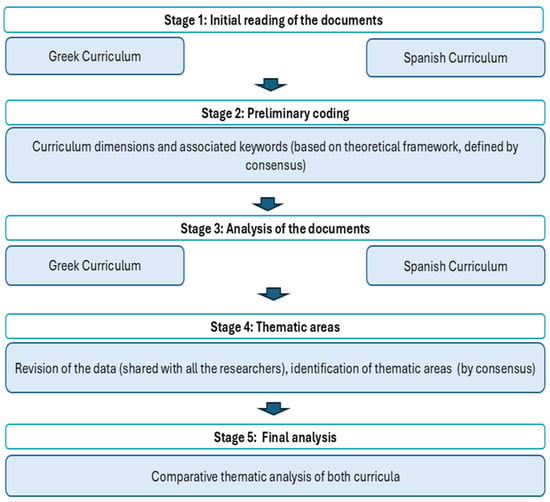
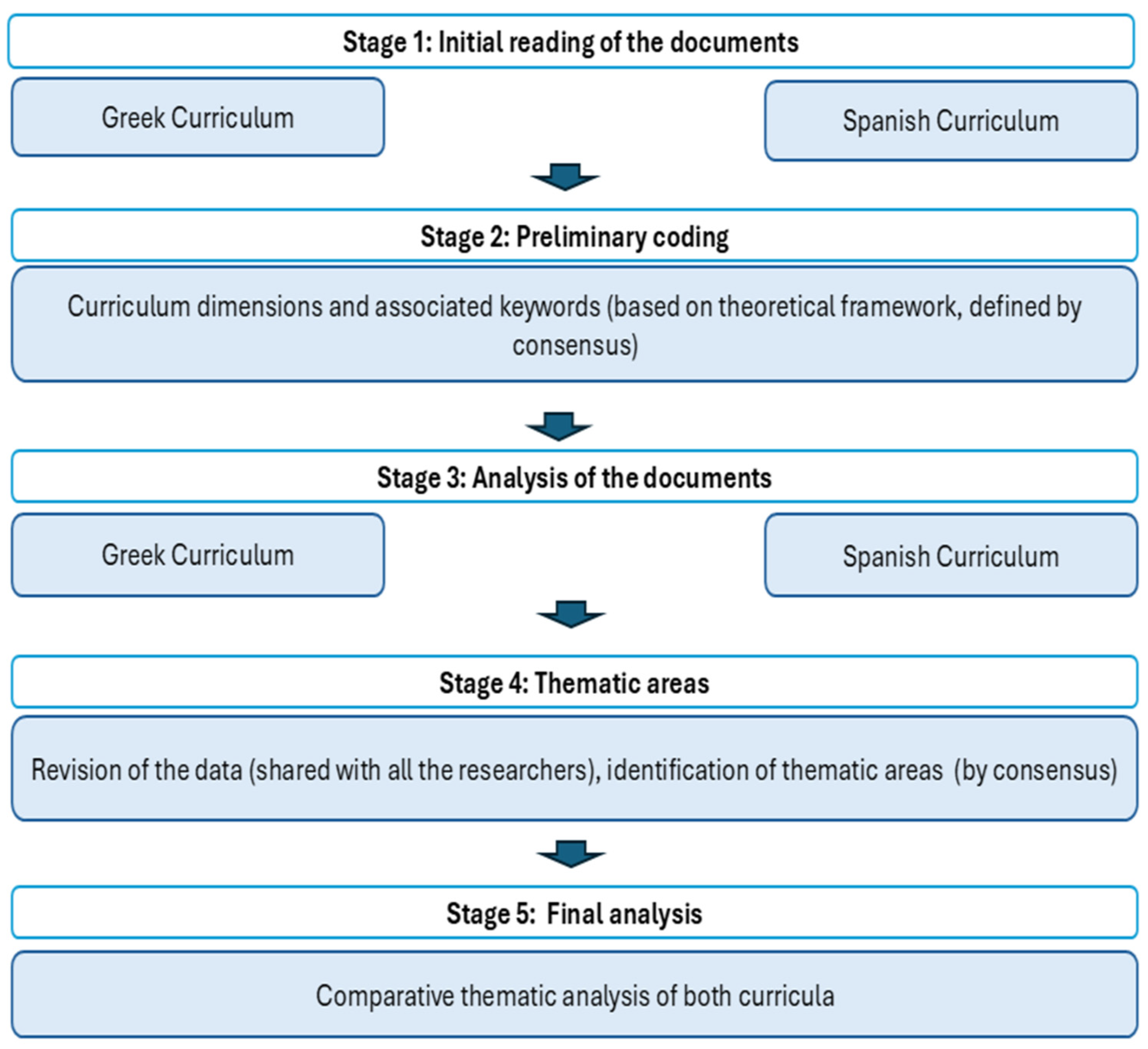

Disclaimer/Publisher’s Note: The statements, opinions and data contained in all publications are solely those of the individual author(s) and contributor(s) and not of MDPI and/or the editor(s). MDPI and/or the editor(s) disclaim responsibility for any injury to people or property resulting from any ideas, methods, instructions or products referred to in the content. |
© 2026 by the authors. Licensee MDPI, Basel, Switzerland. This article is an open access article distributed under the terms and conditions of the Creative Commons Attribution (CC BY) license.