


Abstract
COVID-19 profoundly affected higher education institutions worldwide, leading to emergency online learning (EOL). Students with disabilities (SWD) were one subgroup that experienced social and academic challenges during online education. This mixed-methods explanatory study examined the views and experiences of 82 university SWD regarding their academic and socio-emotional supports during EOL in the Republic of Cyprus. A subset of our student sample (n = 26) participated in an individual semi-structured interview to contextualize how SWD lived their experiences during EOL. Findings showed that a small group of SWD reported negative feelings (e.g., stress, nervousness, sadness) due to the pandemic, while most reported limited opportunities for active participation and engagement, and a significant lack of academic support and accommodations in their online courses. The main findings are discussed in the context of transforming online learning into a caring, accessible, and inclusive virtual learning space for all students. Study limitations and implications for practice are presented.
1. Introduction
Coronavirus disease 2019 (COVID-19) profoundly affected higher education institutions worldwide, leading to campus closures, social-distancing measures, and an abrupt shift from face-to-face instruction to emergency online learning (EOL; Abi Jumaa et al., 2023; Chen, 2021; Shelton & Gezer, 2023). Empirical studies have documented substantial disruption to college students’ academic experiences and socio-emotional well-being, including problems with access (e.g., Rashid & Yadav, 2020), teaching quality (e.g., Meletiou-Mavrotheris et al., 2022), workload, motivation, and engagement (e.g., Hagedorn et al., 2022). In the United States, for example, Hagedorn et al. (2022) found a 65.8% increase in the number of students who rated their learning as fair, poor, or very poor after the pandemic began. Students in that study described frustrations related to technology, course workload, disruptions to research, family responsibilities, finances, and communication. Similarly, Toquero (2020) noted that many universities in the Philippines were unprepared for large-scale online education and called for stronger teacher preparation, more responsive curricula, and accessible student services.
The pandemic’s disruption of institutional procedures and policies affected students’ academic and socio-emotional well-being. Regarding socio-emotional well-being, Khoshaim et al. (2020) surveyed 400 university students in Saudi Arabia and found that approximately 35% experienced moderate-to-extreme anxiety, and that anxiety levels were associated with demographic and educational factors. In Europe, Oliveira Carvalho et al. (2022) synthesized 13 studies and reported pooled prevalence estimates of 55% for anxiety, 63% for depression, and 62% for stress. They identified isolation, reduced social contact, uncertainty, and prolonged restrictions as important contributing factors. In Italy, Meda et al. (2021) found that students experienced depressive symptoms during lockdown, and the symptoms changed once restrictions were lifted. Similarly, Ihm et al. (2021) described a broader international pattern of psychological stress, anxiety, depression, isolation, financial hardship, and disruption associated with campus closures and EOL. Financial hardship was especially consequential, as many students faced economic pressures in addition to educational and social disruption.
Nonetheless, research also shows that the pandemic did not affect all students equally. Using longitudinal data from a German university, Voltmer et al. (2021) found no significant overall differences in general health, stress, or depression between 2019 and 2020 among students who participated at both time points. Rather, difficulties were concentrated among vulnerable subgroups, such as students already at risk for academic and mental health problems. The authors described the overall mental health consequences in their sample as moderate and stressed the importance of identifying students at particular risk early (e.g., students with disabilities [SWD]). These findings are consistent with a report by the United Nations Educational, Scientific and Cultural Organization (UNESCO, 2021), which concluded that the COVID-19 crisis disproportionately affected SWD worldwide. According to the report, the crisis exposed systemic shortcomings and vulnerabilities, as well as preexisting social and educational inequalities between students with and without disabilities.
The shift to EOL deepened these inequalities and increased the risks to SWD’s socio-emotional well-being (Liu et al., 2023; Solomou et al., 2021; Zhang et al., 2022). Specifically, a growing body of empirical research has documented increased mental health difficulties among SWD linked to the pandemic and the restrictions that came with it (Bentenuto et al., 2021; Lai et al., 2022; Soria et al., 2020; Mete Yesil et al., 2022). In the 2025 Student Experience in the Research University (SERU) Consortium survey (Student Experience in the Research University Consortium, n.d.), university SWD (n = 1788) reported significantly more pandemic-related stressors and higher levels of anxiety and depression than their peers without disabilities. Likewise, Liu et al. (2023) found that SWD faced greater mental health risks because of increased stressors such as loneliness and financial instability. In an analysis of 577 student comments, Mullins and Mitchell (2022) identified stress (n = 103), anxiety (n = 100), fear (n = 50), uncertainty (n = 47), and worthlessness (n = 38) as major concerns during the shift to online learning. Zhang et al. (2022) similarly reported that SWD experienced more COVID-19-related adversity than their peers without disabilities, especially challenges such as studying in crowded spaces and financial stress, and that this adversity was associated with higher levels of depression and anxiety.
Pandemic measures also disrupted the social lives of SWD. Root et al. (2023) reported significant interruptions to daily routines and social activities, noting that students with intellectual and developmental disabilities missed recreational activities. Mbazzi et al. (2022) similarly linked lockdown restrictions to increased loneliness. The shift to EOL brought further challenges. SWD reported relying more on social media during lockdowns, and this reliance was associated with self-isolation, stress, and depression (Almusharraf & Khahro, 2020; Kalelioğlu et al., 2025). Just recently, Mädamürk et al. (2025) highlighted the link between socio-emotional well-being and study-related skills. In their work, curiosity, perseverance, and academic resilience were positively associated with well-being, whereas weak social connections and loneliness were negatively associated with academic performance.
The rapid pedagogical transformation of higher education from face-to-face learning to remote online learning exacerbated digital inequities during the pandemic (Liasidou, 2023; Matsieli & Mutula, 2024). In particular, the academic progress and participation of SWD suffered as their sense of belonging declined and their feelings of exclusion grew in online environments (Goegan et al., 2022). During EOL, SWD reported distractions, difficulty concentrating, heavier workloads, technological problems, and limited academic support (Murphy et al., 2020; Petretto et al., 2021; United Nations, 2020). Dube and Baleni (2022), for example, found that SWD received limited support from both lecturers and disability services, and Dill (2022) reported that some faculty members lacked awareness of, and training in, the supports and accommodations SWD needed.
Examining the extent to which remote online learning platforms were digitally inclusive and accessible for SWD during the pandemic is critical for ensuring that diverse student needs were met. According to Liasidou (2023), “there are certain ‘rules’ that are indispensable in establishing ‘good practice’ and contributing to the creation of equitable and inclusive virtual learning spaces for all” (p. 10). First, developing an informed understanding of the instructional design features, challenges, and possibilities of virtual learning environments is an important step in promoting dialogic learning and active, meaningful participation. Yang et al. (2024) found that inclusive e-learning environments provide meaningful support for SWD and offer accessible, clearly structured educational materials. Recently, AlZoubi and Baran (2026) examined the practices and strategies instructional designers used to support faculty during the pandemic. They concluded that instructional designers relied on four human-centered strategies: (1) building empathy, (2) solving problems with agility, (3) optimizing student engagement, and (4) addressing equity and accessibility. These findings suggest that EOL acted as a catalyst for human-centered design practices that could continue to shape online education.
Second, applying the principles of Universal Design for Learning (UDL) to online education offers a promising way to meet these needs, because UDL builds flexibility into how students access material, engage with content, and demonstrate what they know (Houston, 2018; Zaballos et al., 2023). The pandemic forced faculty to change their instructional approaches quickly, which made it harder to meet students’ diverse needs. In a survey study covering two semesters before and after the onset of COVID-19, Kilpatrick et al. (2021) examined how higher education faculty (N = 38) viewed their use of UDL principles in course design. The researchers identified three main barriers: insufficient time to adapt content and support students; limited training and resources for implementing UDL; and, as a result, reduced preparedness to meet students’ needs. In surgical education, Dickinson and Gronseth (2020) concluded that providing multiple means of representation, action and expression, and engagement was critical to removing barriers to learning during the pandemic. Students’ accounts, however, suggest that such practices were often missing. In a study of 1731 university students from undergraduate to doctoral level, Ives (2021) found that students perceived a decline in instructional quality during EOL. They described less frequent and less helpful communication with instructors, as well as fewer opportunities for engagement than before the pandemic.
UDL is an applied framework that guides universities in transforming virtual learning spaces into inclusive and digitally accessible spaces. Liasidou (2023) argues that UDL serves as the applied platform for educational differentiation to meet diverse learning needs. When UDL principles are incorporated into online courses, SWD and other diverse learners benefit from the alternatives provided in course delivery, material representation, and activity engagement (Rotar, 2022). An inclusive and digitally accessible online learning environment fosters the “synergistic use of synchronous and asynchronous modes of interaction, with a view to providing proactive approaches to accommodations” (p. 11) (Liasidou, 2023). Accommodations are considered the cognitive and academic supports necessary for SWD to function successfully during the learning process. In their study of Canadian college students with learning disabilities, Goegan et al. (2022) identified distinctive accommodation-related challenges, in addition to broader difficulties with online learning and relationships with others during the pandemic. Necessary supports for SWD, such as closed-captioned video lectures and adapted test proctoring, were often not adequately provided. Similarly, Gin et al. (2021) noted a mismatch between students’ needs and the accommodations available online, with SWD struggling to access provisions such as extra exam time and distraction-free testing environments.
Finally, building community in online learning environments fosters a sense of belonging and enables all students to engage actively (Ferrer et al., 2022). In a systematic review of 28 empirical studies on effective supports and strategies in online learning, Rotar (2022) found that students are more successful online when institutions take a holistic approach, one that combines personal, caring attention to student learning with guidance on technological and academic needs. Similarly, frequent interaction and strong interpersonal relationships support retention, inclusion, and academic success (Fernández-Batanero et al., 2022). By contrast, limited interaction with faculty is associated with higher dropout rates and lower academic performance (Means & Neisler, 2021). A weak sense of community and belonging also hinders online learning because it makes it harder for students to engage socially and emotionally (Aldosari et al., 2022; Garrison, 2019). When assessing student learning during emergency online learning (EOL), it is therefore important to examine how the pandemic pedagogical shift affected the academic and socio-emotional experiences of SWD.
Not all studies, however, found that SWD were disproportionately disadvantaged. Dickinson and Gronseth (2020) found that SWD were not disproportionately disadvantaged by the shift to online learning during the pandemic. SWD, in fact, reported a significantly smaller decline in engagement than their peers without disabilities, and the two groups did not differ significantly in perceived accessibility. How well individual needs were met also seems to matter. McNicholl et al. (2023) found that SWD whose assistive technology needs were fully met in their university courses reported significantly higher academic competence, adaptability, and self-esteem than SWD whose needs were unmet. These mixed findings on how the pandemic affected the academic and socio-emotional development of SWD call for further investigation. This study addresses this gap in Cyprus, where little evidence exists on how SWD experienced academic and socio-emotional learning during EOL.
2. The Context
2.1. Brief Historical Context of Online Education in Cyprus
The establishment of the Open University of Cyprus (OUC) in 2002 marked an important development in the Cypriot higher education system, as it was the first public university dedicated to distance education (Cyprus Ministry of Education, Sport, and Youth, 2026). Subsequently, other Cypriot higher education institutions, both public and private, have also developed online and distance-learning provision, while the Cyprus Agency of Quality Assurance and Accreditation in Higher Education has established specific quality-assurance and accreditation procedures for distance-learning programmes (Cyprus Ministry of Education, Sport, and Youth, 2026). These indicate that planned online education provision at higher education institutions in Cyprus pre-existed the enactment of remote teaching during the COVID-19 lockdowns.
In the early years of online education in Cyprus, higher education institutions could not guarantee that their online courses were accessible to SWD (Michailidou et al., 2012). Since then, institutional approaches to supporting SWD have become more formalized. Both public universities (e.g., the University of Cyprus) and private universities (e.g., the University of Nicosia) have set up support services and adopted policies to provide academic accommodations that meet the learning needs of SWD. For example, the University of Cyprus has the Social Support Office that identifies students’ needs, coordinates academic accommodations (including reasonable adjustments during examinations), and provides specialized services and equipment (University of Cyprus, 2026). Similarly, the University of Nicosia has procedures through which students with learning, physical, psychological, and other disabilities can document their needs and receive appropriate academic support (University of Nicosia, 2020). Under these procedures, students who have difficulty taking notes may record lectures or receive additional tutorial support, and students who need them may use readers or amanuenses during examinations. The university also offers counseling and psychological support services.
2.2. Current Empirical Evidence on the Inclusion of Students with Disabilities in Emergency Online Learning in Higher Education
The pandemic was a critical turning point that exposed existing inequalities in access to digital education and accelerated discussions around accessibility, assistive technology, and inclusive digital participation (Symeonidou et al., 2026). The rapid transition to remote and digital services, including education, accelerated efforts to enhance digital educational policies and temporarily intensified attention towards accessibility and students’ access to digital and assistive technologies (e.g., Mavrou et al., 2025).
Existing evidence on how pandemic EOL affected SWD in Cyprus suggests that formal university policies and procedures did not adequately meet SWD’s needs (Kourea et al., 2021; Meletiou-Mavrotheris et al., 2022). For example, in a national study of 1051 university students, Meletiou-Mavrotheris et al. (2022) found that 31 SWD (3% of the sample) reported accessibility problems in their online courses. Of these students, 90.3% reported moderate or low satisfaction with EOL practices and with their academic performance. Similarly, in a qualitative case study, Kourea and colleagues (2021) found that SWD had difficulty securing accommodations and support and communicating with tutors and academic advisors. The limited empirical evidence on the inclusion of SWD in Cyprus during EOL highlights the need for further research into whether, and how, these students were supported. It also highlights the need to assess whether the provisions and accommodations offered were accessible and responsive to the academic support needs of all students, regardless of the difficulties they faced in the online higher education environment. Stated differently, we aimed in this study to examine not only whether online education is available to SWD but also whether the conditions necessary for meaningful participation and engagement were in place.
3. Purpose of the Study and Research Questions
The current study explored how SWD experienced the EOL and the extent to which the new remote learning environments were pedagogically inclusive and supportive of student needs. More specifically, this mixed-methods study examined university students’ views and experiences of academic and socio-emotional learning during EOL. To this end, the research team aimed to address three research questions:
- How did emergency online learning affect the socio-emotional well-being of university SWD?
- How did emergency online learning affect the academic progress of university SWD?
- To what extent were instructional supports and accommodations delivered to university SWD during the emergency online learning?
4. Method
4.1. Study Sample
After ethical clearance was granted by the university’s ethics committee, the research team contacted the disability services offices of six universities in Cyprus, two public and four private. The team first sent an email and then followed up by telephone to confirm that officers had received the written research request. Officers were asked to email the study invitation and consent form to SWD whose office had approved them to receive disability supports and accommodations. Only one of the six universities reached did not respond to the team’s request. Thus, the accessible population from which the study sample was drawn included 250 SWD across the five universities.
Exclusion criteria in the study sample included students without a disability status and students with a disability status who had not been institutionally registered with their university’s office of disability services. Undergraduate or graduate students whose disability status had been verified by the university were invited to complete an online consent form, followed by an anonymous online questionnaire in which they self-reported their disability status. Those who wished to continue their study participation provided contact details (for example, name, email address, and telephone number) at the end of the survey so that the research team could invite them directly to an individual interview. The initial email invitation sent to 250 potential participants informed them that those who would complete both activities could receive a 20-euro voucher as a token of appreciation.
The final sample included 82 university SWD across five universities. Table 1 presents the survey sample’s demographic characteristics across gender, nationality, academic level, university affiliation, and disability category.
Table 1.
Demographic Characteristics of University Students with Disabilities Across Gender, Age, Citizenship, Academic Level, University Affiliation, and Disability Category for Phases 1 and 2.
For the qualitative part, 26 SWD volunteered for an individual interview after completing the survey. SWD who agreed to proceed with the interview entered their contact details (name, email address, and telephone number) on a separate form that was not linked to their anonymous survey responses. Interviewees were approximately one-third (31.7%) of the final sample. Table 2 presents the interview sample’s demographics by gender, nationality, academic level, and disability category.
4.2. Research Design
This study used an explanatory sequential mixed-methods design (Creswell, 2021; Ivankova et al., 2006) to investigate how university SWD experienced and perceived the academic and socio-emotional support they received while participating in EOL, which was intended to be digitally inclusive and accessible. As shown in Figure 1, this design was selected because it permitted a comprehensive investigation of the phenomenon under study and thereby addressed the research questions. The design comprised two connected phases. Phase 1 involved collecting and analyzing quantitative data, in which SWD reported their views of EOL and the academic and socio-emotional support they received during the pandemic. The research team collected responses through an anonymous online survey, in which students identified learning issues (concentration, pressure, engagement, participation, anxiety, etc.), social activities (e.g., sports, music, book reading, games), and any academic supports (supplemental readings, communication with instructor, accommodations, modifications) they received from their instructors during EOL.
Figure 1.
Explanatory Sequential Mixed-Methods Design.
Phase 2 involved collecting qualitative data to explain and contextualize how SWD described their learning experiences during EOL and to identify the barriers and facilitators they encountered in navigating online instruction. Specifically, the interview protocol was developed based on survey items about the feelings documented during the pandemic, the study participation, the accommodations and academic support received. Questions in the interview protocol invited participants to share examples and stories about their positive/negative feelings about pandemic changes, their views of the online learning system, and the difficulties they encountered during online participation (see Section 4.3.2 for further interview protocol development). Respondents who completed the online survey and expressed an interest in being interviewed formed the second-phase sample (see Section 4.2 for the study sample).
4.3. Data Collection Instruments
This study used two main data-collection instruments: the online survey and the semi-structured interview.
4.3.1. Online Survey
A 15-min self-developed Greek survey questionnaire consisting of three sections was administered via Google Forms. The survey assessed SWD’s views and experiences during EOL and its impact on their academic domain and socio-emotional well-being (e.g., Hodges et al., 2020). Previous research documented the learning challenges and technological obstacles SWD encountered during EOL and argued for embracing inclusivity, accessibility, and academic caring for all students (e.g., Liasidou, 2023; Matsieli & Mutula, 2024; Rotar, 2022). This theoretical account informed the development of survey items to explore SWD voices during online procedures that may have affected students’ academic and socio-emotional learning under emergency remote teaching (e.g., Moore et al., 2021). Additionally, the research team drew on earlier pilot findings to develop the survey variables (e.g., Kourea et al., 2021).
The first section (13 questions) included information about participant demographics (e.g., age, gender, citizenship, type of disability). Sections two and three used a five-point Likert scale (from “1: not at all” to “5: very much”) to minimize respondents’ confusion and improve data accuracy. The second section (14 questions) focused on the student socio-emotional domain, including questions related to feelings (6 questions) and thoughts (8 questions) about the ongoing increase in COVID-19 cases and their possible impact on students’ daily activities. For instance, some questions focused on rating students’ level of emotional well-being [“To what extent do you have the following feelings concerning the continuous increase of COVID-19 cases? (i.e., level of anxiety, boredom, loneliness, sadness, nervousness, etc.)”]. Likewise, questions assessed emotional thoughts following the same Likert scale [“To what extent do you have the following thoughts concerning the continuous increase of COVID-19 cases?” (e.g., ‘I feel protected at home,’ ‘I worry I will get covid,’ ‘I miss my family,’ etc.)]. Additional questions measured students’ social activities (13 questions) during the pandemic [“To what extent do you engage in the following social activities?” (i.e., surfing the internet, gardening, participating in social media, etc.)]. The third section (12 questions) pertained to the academic domain. Participants were asked to respond to questions about their thoughts on EOL and its possible impact on their academic responsibilities, types of accommodations, and academic supports received. For instance, some items examined students’ online learning experience (e.g., level of anxiety, satisfaction, motivation) (7 questions). Other questions assessed institutional support services (e.g., psychotherapy, academic advising) and instructor’s support (e.g., response immediacy, frequency of communication, content differentiation) during online classes (7 questions). Finally, students were asked to rate the type of accommodations received during online instruction and the assessment period (e.g., extra time, reader; 8 questions).
The research team assessed the survey’s content validity by asking three experts to review the questionnaire items: one in educational measurement, one in special education, and one in educational psychology. Each reviewer received an assessment rubric with five open-ended questions about the survey’s structure, comprehensiveness, and relevance. Reviewers suggested edits directly in the questionnaire using Track Changes and answered the rubric questions in writing. The research team then reviewed their feedback and revised the content and wording of several items. Items were kept short so that students with reading difficulties could complete the survey easily.
The revised survey was then piloted online with 12 SWD. The authors recruited the students through their professional networks and excluded them from the final sample. The pilot sample included students with a range of mild to moderate disabilities. In line with recommended piloting practice (Boynton, 2004), the research team used the pilot participants’ feedback to refine the instrument. This feedback showed that the wording and layout of questions in Section 2 and Section 3 needed revisions (e.g., ambiguous verbs, long sentences, and unclear terminology). Respondents raised no concerns about the demographic questions. Cronbach’s alpha coefficients ranged from 0.54 to 0.96 across the subscales: emotional well-being (α = 0.76), emotional thoughts (α = 0.75), social activity (α = 0.73), online learning experience (α = 0.54), accommodations (α = 0.96), and institutional and instructor support (α = 0.78). Internal consistency for the online learning experience subscale was relatively low (α = 0.54). This is probably because its seven items addressed distinct but related aspects of students’ online learning experience: enjoyment, concentration, enthusiasm, anxiety, pressure, upset, and calmness. Therefore, rather than treating the online learning experience as a unidimensional construct, we report the results for each of the seven items separately. The other subscales showed acceptable to excellent internal consistency.
4.3.2. Semi-Structured Interview
Each semi-structured interview was conducted individually and lasted between 35 and 40 min. Each interview took place online through a platform of the participant’s choosing (e.g., Zoom, MS Teams, WebEx). During the online interview, each team member recorded the interview. Specifically, the first, second, and third authors conducted eight, ten, and eight individual interviews, respectively, using the standard interview protocol. Each researcher video-recorded and transcribed the interviews in Greek, then reviewed the recordings and corrected the transcripts for accuracy. Each completed transcript was saved as a Microsoft Word document. Interview data were stored in a password-protected folder, with secure online and local backups, and were imported into NVivo qualitative data analysis software, version 12 (Lumivero, Denver, CO, USA). The second author conducted the thematic analysis.
As mentioned earlier, the interview questions were developed based on preliminary survey data analysis. Survey respondents had documented experiences during online instruction and reported certain feelings during online classes. The research team analyzed survey findings by seeking richer input from individual SWD about their personal experiences and difficulties in the socio-emotional and academic domains during online classes. The aim was to understand the academic elements and social circumstances under which SWD encountered such difficulties. To this end, the research team developed an 11-question protocol divided into three parts. The first part addressed the socio-emotional domain with four open-ended questions about participants’ feelings, stories, and lived experiences related to COVID-19 risk to themselves and significant others, self-isolation at home, and how they spent their time at home during the lockdown. The second part addressed the academic domain pertaining four additional open-ended questions, inviting students to describe any difficulties they encountered during online classes related to accommodations, campus resources, and communication with peers and instructors. In the final part (three questions), students were invited to offer suggestions for making online teaching practices more inclusive and equitable for all, to add any further thoughts not previously mentioned, and to indicate the first thing they would do once the lockdown ended.
4.4. Data Analysis
For the quantitative data, analyses were conducted using SPSS statistical software, version 31 (IBM, Chicago, IL, USA). Descriptive analyses (mean, standard deviation, and frequency) were conducted to describe the demographic characteristics of the sample, including the number of occurrences of each response chosen by the respondents.
For the qualitative data, the research team followed an inductive thematic analysis for several reasons. First, study data need not fit into a pre-existing coding frame or the research team’s analytical preconception (Braun & Clarke, 2022); it gave space for participants’ voices, which might otherwise have gone unheard during the survey administration (Boyatzis, 2018). Second, inductive thematic analysis enabled the production of detailed, complex accounts of findings that emerged from the data (Roulston, 2014). Table 2 shows the themes, categories, and units of thematic analysis. Conceptual codes were used to code the interview data and identify the study’s themes (Vaismoradi et al., 2020). The interviewees’ answers were summarised using specific codes that recurred across interviews or represented related aspects of participants’ experiences, and which were subsequently compared, grouped, and organized into broader categories. These categories were then examined for conceptual relationships and used to develop candidate themes. Candidate themes were reviewed against the relevant coded extracts and the dataset as a whole, with codes and categories being combined, separated, renamed, or refined where necessary. The final themes and their constituent categories are presented in Table 2. The interviewees’ answers were summarized using specific codes that initially seemed to arise constantly in each interview and were later collated across interviews. The interpretation of such coding resulted in the data-analysis themes. After completion of the thematic analysis, the second author translated selected extracts into English to report them here. The translations were carefully checked by the first and last author to ensure that the original meaning of the participants’ responses was preserved. The final themes were subsequently considered in relation to the relevant literature and the study’s conceptual framework. This enabled the researchers to move from individual participant accounts towards broader interpretations of the experiences of university students with disabilities during emergency remote teaching (Braun & Clarke, 2022; Kourea et al., 2021).
Researcher reflexivity was incorporated throughout the analytical process. The research team recognized that researchers’ disciplinary backgrounds, professional experiences, and prior understandings of disability and emergency remote teaching could shape how participants’ accounts were noticed, coded, and interpreted (Berger, 2015). Accordingly, team discussions included consideration of alternative interpretations and potential assumptions underlying emerging codes and themes. The researchers also examined whether interpretations remained grounded in participants’ accounts and whether divergent or less frequent experiences were being overlooked. These reflexive discussions, together with peer debriefing, enabled the research team to critically examine how its perspectives might have influenced the analysis and to maintain an interpretive process grounded in participants’ accounts (Braun & Clarke, 2022).
The research team undertook the following actions to establish credibility, dependability, and interpretive rigor in the study. First, it maintained an audit trail to track interviews by date and time. To support this, the team used a shared online document to maintain consistency in recording interview procedures and anecdotal observations made during interviews. Second, team members met twice a week during thematic analysis to discuss emerging codes, candidate themes, and alternative interpretations of the data. These discussions provided opportunities to question initial interpretations, examine differences in understanding, resolve any disagreements, and consider whether the developing themes remained grounded in participants’ accounts. Third, when the team encountered disagreements about interpretations, they used peer debriefing with an expert in qualitative research from the team’s professional network, who provided insightful prompts and critical direction for the thematic analysis. Finally, sample adequacy was assessed in relation to the study aims, the specificity of the participant group, the quality of the interviews, and the depth of the information generated rather than through statistical representativeness (Vasileiou et al., 2018). In other words, the quality of the sample was assessed in relation to the richness and relevance of participants’ information and the extent to which the dataset supported the development of meaningful patterns addressing the research questions. The primary emphasis of the analysis remained on the meaning, context, and diversity of participants’ accounts.
Quantitative and qualitative data were integrated during the data analysis and interpretation phases at an aggregated group level across two stages. In the first stage, a subset of the survey sample took part in the qualitative phase, providing richer and more detailed descriptions of their participation in emergency remote instruction. The survey results also informed the interview protocol, with emphasis on lived experiences during online instruction, such as academic supports, online teacher–student interactions, and accommodations, as well as on the socio-emotional supports provided. The second stage involved the interpretation of results, during which the team integrated the quantitative and qualitative findings for each research question. Specifically, the quantitative data provided an overall picture of each research question, while the qualitative data offered more specific and richer evidence relating to that question. Where percentages are reported alongside qualitative findings, they were calculated systematically from the coded data and are presented descriptively to indicate how many participants reported or reflected a particular experience. These percentages are not intended to imply statistical generalisability. They are used only to indicate the distribution of particular experiences within the sample (Sandelowski et al., 2009; Vasileiou et al., 2018). The primary emphasis of the analysis remains on the meaning, context, and diversity of participants’ accounts.
Table 2.
Development of themes, categories, codes, and lexical units.
4.5. Research Procedures
4.5.1. Participant Recruitment and Selection
The research team obtained ethical clearance from the university’s bioethics research committee (Ref. 185/2020) prior to data collection. Recruitment efforts targeted higher education institutions in the Republic of Cyprus, with two public and four private universities contacted. Recruitment proceeded in two stages. First, the team emailed the disability services office at each institution, attached the participant invitation letter and the research approval, and asked the office to invite SWD for participation. Several days later, team members followed up with a phone call at each office to confirm receipt of the email and to address any questions; one institution did not respond. Second, each participating institution identified its registered SWD and forwarded the team’s invitation and consent form to them. The consent form described the study aims and procedures, the confidentiality safeguards applied to participants’ responses, and the incentive of a 20-euro voucher offered to students who would complete both research activities (survey and individual interview).
Written informed consent was obtained from every participant before the survey and interviews commenced. Of the estimated 250 SWD identified and contacted through the five responding institutions, 82 (32.8%) completed the anonymous survey. Of these respondents, 26 (31.7%) volunteered for an individual interview. Students who completed both activities received the voucher as a token of appreciation for their contributions. Data collection concluded in June 2021.
4.5.2. Procedures for Phase 1
Students who provided consent were directed immediately to the online survey to complete it. If a student requested a reader’s assistance, then they were prompted to email the principal investigator (first author) to arrange for the accommodation. No participant requested this support. At the end of the survey, students were invited to take part in a follow-up interview. Those who agreed entered their contact details (name, email address, and telephone number) on a separate form that was not linked to their anonymous survey responses.
4.5.3. Procedures for Phase 2
The individual interviews took place online on a date and time suitable for each participant. The university students chose to have their cameras on or off. All interviewers followed the same interview protocol and were able to pose additional clarifying questions based on the interviewees’ responses. To ensure consistency in interview administration, the research team met before the interviews and between interviews to review the administration steps and the interview protocol. Administration steps included: (1) developing rapport and building a trustful relationship with each participant so that they would feel comfortable, unthreatened, and safe about providing the researcher with the prerequisite data (Costley, 2017); (2) beginning with a greeting and introducing the study objectives and the purpose; (3) asking for consent to record the meeting to improve the interviewer’s note-taking accuracy; (4) starting the interview questions while actively listening to student responses and waiting to discover information—on occasions where participants digressed, the interviewer continued listening for a few minutes and then rephrased the question; (5) concluding the interview by thanking participants and reminding them about receiving their token of appreciation by email.
5. Results
This section presents the study’s quantitative and qualitative results. Table 3 displays the integration between quantitative findings and qualitative explanations with the respective integrated interpretations. A more analytical description of the study findings for each research question follows.
Table 3.
Integration of Quantitative and Qualitative Results.
5.1. Impact on Socio-Emotional and Behavioral Well-Being
Of the 82 survey respondents, 42.6% reported feelings of stress to a moderate or large extent due to the continuous increase in COVID-19 cases. Specifically, as Table 4 shows, nearly one third reported sadness (30.5%), nervousness (32.9%), distress (37.8%), and loneliness (36.6%) to a moderate or large extent during the pandemic. Interestingly, eight (9.7%) participants reported happiness with the rapid spread of COVID-19 (8.5% to a moderate extent and 1.2% to a large extent).
Table 4.
Impact on Socio-Emotional Well-being.
When participants were asked how much their life was affected by COVID-19, the majority (63.4%) reported a moderate (25.6%) or large extent (37.8%). Regarding the ongoing increase in COVID-19 cases, SWD reported feeling, to a moderate to large extent, isolated (54.9%) and disconnected (62.2%) from their relatives and friends. In addition, a proportion of respondents reported that the prevalence of COVID-19 left them, to a moderate or large extent, fearful of getting themselves (30.5%) or their family members (51.3%) infected by the virus. Among participants, 59.7% reported high concerns about the restrictions of a new lockdown (20.7% to a moderate extent and 39% to a large extent), and 23.2% reported signs of sleeping difficulty (11% to a moderate extent and 12.2 to a large extent). Interestingly, most (68.3%) felt the stay-at-home restrictions provided a sense of safety and security (32.9% to a moderate extent and 35.4% to a large extent).
Qualitative data showed that 61.5% (n = 16) of interviewees explained further various personal reasons for their increased anxiety. These reasons ranged from an interrupted daily routine to possible virus infection, social isolation, or mass media exposure. Indicatively, a student with physical disabilities mentioned that:
“I felt extremely anxious about the risk of being affected by COVID-19 because I belong to a vulnerable category and wanted to protect my siblings, who were also vulnerable. I find it difficult to sleep… I wanted my loved ones to be self-isolated to protect themselves and me from COVID-19…”(Rena, Postgraduate student)
Anxiety rose when half of the interviews described that they could not see their family and siblings often, or they had to be self-isolated at home. For example, a student with physical disabilities and attention difficulties explained that:
“…It is tough to be only 25 years old and to be distancing from all your friends and family so you can stay safe. All these made us feel extremely stressed…and even grow older than our ages.”(Veronica, Undergraduate student)
In other instances, when SWD had previously had the habit of going out, social isolation affected them negatively. One student with learning disabilities explained that:
“…During the first month, my school was in lockdown, and I felt alone because I didn’t go out. Adjusting to this new lifestyle was tough since I am very sociable… All my plans had been postponed due to this virus…”(Εlena, Undergraduate student)
Similarly, an undergraduate student with a socio-emotional disability highlighted that:
“…During the first lockdown, we thought it would be only two months and the pandemic would end in the summer. When the second lockdown began, I was worse psychologically. I was not prepared for more social distancing measures. I felt bad that my daily routine changed. Previously, I could go to work and university and see my friends. Now all day long, we are staying at home…”(Marina, Undergraduate student)
Furthermore, 26% (n = 7) of interviewees indicated that their stress levels increased due to continuous exposure to mass media updates regarding COVID-19 cases, side effects, and death toll. Characteristically, a student with muscular dystrophy explained that:
“…At the beginning of the pandemic, I was stressed due to the information I received daily from the media. When COVID-19 started, we had our school exams, and the news from the media made me so stressed that I could not concentrate… In general, I do not believe the number of cases presented in the news… they are exaggerating to scare people…”(Demos, Postgraduate student)
Similarly, another student with socio-emotional disabilities mentioned that:
“At first, I was stressed and confused. I could not understand what the truth is (related to what they presented on the news)…”(Andreas, Undergraduate student)
Protective measures against COVID-19 and vaccinations helped reduce students’ stress. One student with mild learning difficulties shared that:
“…During my clinical practice, they taught us how to protect ourselves in order to be able to protect others…Even though I was working at the hospital, I felt safe because we had to wash our hands, use hand sanitizers regularly, and always wear our masks…”(Stavros, Undergraduate student)
Additionally, another student with muscular dystrophy noted that:
“…I was vaccinated in April, and since then, I was afraid to meet my friends to avoid being hospitalized; now, with the first dose of the vaccine, I feel safer to go out…Soon I will have the second dose of my vaccine, and thus, I will be fully protected while I am out…”(Demos, Postgraduate student)
To sum up, quantitative and qualitative results suggest that stress and anxiety were reported by several students coming from different disability categories, documenting diverse personal reasons for the elevated stress levels such as social isolation, risk of virus infection, routine disruption, etc. Interestingly enough, findings show that SWD as a group did not voice negative feelings on the socio-emotional domain.
5.2. Impact on Social Life
Survey respondents reported getting involved in several social activities during the pandemic. According to Table 5, more than half of them ranked surfing on the internet (62.2%), participating in social media (58.5%), and phone communication with relatives (54.9%) and friends (69.5%) as their primary socialization forms to a moderate or large extent. A total of 37 respondents (45.1%) engaged to a moderate or large extent in household tasks (45.1%), such as laundry, cleaning, and meal preparation. Furthermore, participants reported spending time to a moderate or large extent watching TV (33%), reading books (28.1%), and playing online games (23.2%). In comparison, less than 20% of SWD reported shopping (19.5%), gardening (13.4%), raising kids (13.5%), and participation in music activities (7.4%) to a moderate or large extent. Finally, more than half of respondents (57.4%) reported not having (35.4%), or having to a small extent (22%), an active physical activity profile.
Table 5.
Student Social Life.
Further exploring how SWD were involved in social activities, qualitative interviews showed that students’ stress may have decreased as the lockdown period extended, possibly because SWD developed a sense of safety and stability at home and found creative ways to spend their time. For instance, a student with Duchenne syndrome highlighted that:
“During the pandemic period, I was inspired to write poems about the restrictions we faced, which I aim to publish them…”(Yiannis, Postgraduate student)
Similarly, a student with dyslexia suggested that:
“During the pandemic, I volunteered to work at an oncology clinic to go out for many hours. Though I was granted permission to visit other places too, I didn’t because I tried to avoid the crowded places…”(Υousef, Postgraduate student)
Another student with socio-emotional disabilities and ADHD suggested that she was less stressed during the second lockdown.
“During the second lockdown, I was allowed to go out a few times daily with my friends. I don’t mind that we are allowed only a few times to go out because I do not meet my friends daily. I can also have a walk by the seaside.”(Anthi, Undergraduate student)
Another student with socio-emotional disabilities explained that:
“During the second lockdown, I was in a better mood. I was more productive in my studies and enjoyed being out with friends.”(Husein, Postgraduate student)
5.3. Impact on Academic Participation in Online Classes
The second part of the survey focused on documenting SWD’s academic needs and challenges during online courses. According to Table 6, nearly half of the respondents (47.6%) reported feeling moderately or highly pressured during online classes. Similarly, 34.2% reported feeling moderately or highly anxious, while 34.1% reported feeling moderately or highly upset during online classes. Furthermore, 48.8% reported little or no enthusiasm for online classes.
Table 6.
Student Academic Participation in Online Classes.
Regarding concentration, 47.5% of participants indicated that they could concentrate on distance-learning classes either “not at all” or “to a small extent, suggesting that nearly half of the respondents experienced difficulties concentrating during online instruction. Responses to the positive emotional items were more mixed. Approximately one-third of participants (32.9%) reported feeling moderately or highly calm during online classes, while 31.7% reported enjoying distance-learning classes to a moderate or large extent. At the same time, more than one-third of respondents reported experiencing little or no calmness (36.6%), while 41.5% reported liking online classes to a small or no extent.
Following the pressure reported (from some to a large extent) by more than half of survey respondents (68.3%), qualitative data highlight how some SWD described instances during online classes that created these negative feelings. For example, a student with cerebral palsy suggested that:
“…In some classes, the professor or I didn’t have good internet connectivity. Some professors didn’t understand that we had low connectivity and couldn’t be online and concentrate until the end of the class… Other times it was difficult to express our views and questions to our lecturers online, and thus, instructors often misunderstood our questions or thoughts.”(Socrates, Undergraduate student)
Similarly, a student with learning difficulties explained that:
“…All these technical problems tired me, and I lost my enthusiasm for learning. Also, some of the classes that were delivered online were not very well organized…Some professors would deliver an online lecture as if it were face-to-face.”(Chryso, Undergraduate student)
Finally, another student with physical disabilities shared that:
“…The university should have set up a more organized course platform for online teaching. It is not effective for the professor to turn on a camera and teach while located in the lecture room. There were many instances in which we did not have good sound quality…”(Antonis, Undergraduate student)
Participation challenges during online classes were evident for some SWD. For instance, a student with physical disabilities commented on how difficult it was to attend an online music class:
“…The professors had to quickly transform their conventional teaching practices to online, but this was not done successfully…singing and making videos (for the professor to see how you performed) is not the same as singing live in front of everyone. Also, it is not the same to record and play sounds on your mobile phone while the professor tries to teach you the chords online.”(Antonis, Undergraduate student)
Concentrating during online class participation was not easy or enjoyable for SWD. Half of them (n = 13) explained that they did not enjoy online classes because they could not concentrate for long. Particularly, a student with socio-emotional disabilities suggested that:
“…Because of my mental health issues, things weren’t easy for me. I couldn’t sleep well and couldn’t meet my course deadlines. I was stressed, pressured, and lonely because I didn’t interact directly with my professors and peers…Towards the end of the semester, it was painful for me to attend online classes and stay concentrated because I couldn’t have breaks between classes…”(Marina, Undergraduate student)
Additionally, a student with a visual disability shared that:
“…I had to attend many consecutive online classes, and I felt tired… I could not concentrate, so I had to listen to the lesson recordings afterward… In some classes, even though course notes were provided, these were not very detailed, so I had to transcribe the lecture recordings… I spent much time studying but couldn’t digest the course material…”(Elena, Undergraduate student)
Online classes seemed to minimize peer and faculty interactions. Half of the interviewees reported not enjoying online classes because of limited interactions. Characteristically, a student with a physical disability explained that:
“…During online courses, we did not have any peer interactions. Many students refused to participate, and very few students attended classes… The professor would encourage us to participate, but again, the students didn’t want to participate…”(Yiannis, Postgraduate student)
A student with language disorders also highlighted that:
“…. the professors didn’t answer my questions immediately, they were slow to answer emails, there were no additional support materials online, and they didn’t highlight what we must read during the online sessions.”(Athanasia, Postgraduate student)
Likewise, a student with learning difficulties also explained that:
“I prefer the conventional classes because there are direct interactions with professors… [During the online classes], we had a professor who asked questions, but he didn’t wait for us to answer them. In online classes, it was difficult for our professors to see all the “electronic hands” and answer our questions…”(Angelos, Undergraduate student)
To summarize, qualitative and quantitative results showed that more than half of SWD considered online classes a source of pressure and anxiety, and several students reported limited opportunities for peer and faculty interactions, along with technological issues. Online participation seemed to create concentration difficulties for half of the participants, who reported limited opportunities for understanding course content sufficiently.
5.4. Impact on Academic Instructional Supports and Accommodations
Based on Table 7, 70% of the sample (n = 58) reported receiving academic accommodations, while all participants (n = 82) noted different types of instructional supports received during the emergency remote teaching. Regarding the instructional supports, it is evident that nearly half of the participants (48.8%) reported to a moderate or large extent that their instructors made themselves available for student guidance. Some respondents noted that their instructors were supportive (35.3%) and showed understanding of their disability challenges (40.2%). A smaller percentage (26.8%) was optimistic about communicating with instructors about academic issues (e.g., answering questions), and few participants reported that instructors provided constructive feedback (19.5%), individual guidance in a time of need (15.8%), or differentiated instruction (12.2%).
Table 7.
Student Academic Instructional Supports and Accommodations.
The SWD who disclosed their disability status reported receiving a range of accommodations during online classes. The accommodations most frequently reported as being provided to a moderate or large extent were extended testing time (56.9%) and recorded lectures (53.4%). Approximately one fifth of SWD reported receiving extended time for projects (20.7%) and oral exam participation (20.7%) to a moderate or a large extent. In addition, smaller proportions of participants reported receiving exam reader assistance (15.5%), mobility assistance (8.6%), interpretation services (6.9%), and assistive technology (3.4%) to a moderate or large extent.
Interviewees identified several positive practices in online classes. For instance, half of them (n = 13) appreciated the recorded lectures. This was documented by a student with physical disabilities:
“It was good that I could listen to the lecture recordings…this was something I missed after returning to the conventional classes…”(Yiannis, Postgraduate student)
Similarly, a student with learning difficulties suggested that:
“…During the online teaching, I would take notes and ask questions, but it helped a lot that there was an option to listen to the recorded session anytime and as many times as we wished because we could improve our notes and answer any of the questions we forgot to ask during class…”(Chryso, Undergraduate student)
Qualitative results indicated that accommodations were not delivered systematically: provision varied across instructors and in the extent to which it was implemented. Two participants, for example, reported expecting more individualized support than the approved accommodation framework permitted during online instruction. One student with a physical disability explained:
“We had a lot of weekly assignments to do. When the professor considered an assignment difficult for all students, he tended to give us extra time to complete it. However, during the second semester, the professors didn’t allow any extension to our group assignment because there was a limited time before the exams.”(Natalia, Undergraduate student)
Similarly, another student with visual disabilities suggested that:
“During the online courses, …I asked them (instructors) to enlarge the font size in the PowerPoint slides, and I tended to record the lesson by myself… however, (in one of my course’s exams) I was not given more time, and neither was the exam paper differentiated for me… I asked for feedback about my grades, but the teacher did not give me…”(Elena, Undergraduate student)
Receiving accommodations during online exams did not seem to work appropriately for all students. A student with socio-emotional difficulties explained that:
“During the online exams, some of our professors allowed the students with learning difficulties to be connected in a smaller group in a different online platform so we could ask clarifications about the exam questions. This was very helpful for me, but I could have it only for two of my courses.”(Anna, Undergraduate student)
Further, a student with low vision disabilities suggested that:
“…students with learning difficulties were allowed to be connected to WebEx during online exams while the rest of the class was via the Proctorio platform. Although I joined a small group of SWD, I was distracted listening to their questions and could not concentrate on my exam paper. It would have been better if the professors had arranged individual meetings with SWD.”(Maria, Undergraduate student)
Five students with physical disabilities requested a transcriber for online classes and exams. For example, a student said that:
“…many of us require extended time and a transcriber for our exams because the program is very intensive. I find taking notes during online teaching even more difficult because of my physical disability. I am slow in typing, and unfortunately, I don’t have a transcriber because the university does not provide this accommodation.”(Marina, Undergraduate student)
Similarly, a student with quadriplegia suggested that:
“…I am slow at typing, and unfortunately, I don’t have a transcriber; the university does not provide it.”(Natalia, Undergraduate student)
Interestingly, another student with physical disabilities explained that:
“…since the transcriber is not provided at home, I had a virtual keyboard, and thus I wrote with the mouse, so I didn’t need a transcriber. This was one of the advantages of distance learning.”(Demos, Postgraduate student)
Interestingly, half of the interviewees (n = 13) expressed the need for more frequent communication and emotional support from their instructors. For instance, a student with comorbidity argued:
“The professors, when they have students with disabilities, should be more helpful; they should provide academic and help SWD in a way that they do not discriminate them against others; …they should not feel sorry for them, and they should have high academic expectations for their learning. They should respect our rights and needs and help us discreetly when we are sick. Once, I had a headache due to my visual disabilities, my face was red, and I felt I could not breathe. The professor tried to help me, but he embarrassed me in front of others…”(Doros, Undergraduate student)
Similarly, a student with socio-emotional disabilities suggested that:
“…Many times, I was anxious because I had to remind instructors about my accommodations. In conventional classes, meeting with our instructor privately and discussing our accommodations was easier. During online classes, there is no private interaction with instructors…we would email them, and we constantly had to remind them about our accommodations…”(Marina, Undergraduate student)
Elena, with specific learning difficulties (SLD), pointed out the delay in receiving academic support, which exacerbated her feelings of stress and anxiety.
“…The most disappointing for me was when I realized that my instructors had not been informed in time about my SLD and my accommodations. I had a panic attack! …It was not until the middle of the semester that the university notified them about my needs.”(Εlena, Undergraduate student)
Similarly, an undergraduate student with a socio-emotional disability highlighted that:
“…Online, it is more difficult to inform the professor in front of others, and sometimes professors forget which students they are supposed to provide accommodations to.”(Marina, Undergraduate student)
Similarly, another student with specific learning difficulties explained that:
“…Some professors had not seen my advisor’s message regarding my accommodations, so I had to email them myself to inform them that I would need additional time and explain the reason why.”(Chryso, Undergraduate student)
Empirical data from survey and interviewee respondents suggest that accommodations and instructional supports were necessary during EOL for SWD to participate smoothly. However, as several SWD reported, not all received accommodations systematically, and those accommodations did not always match their academic needs during online courses. The lack of systematic delivery of those or the intensity in which they were provided.
6. Discussion
The findings of this study highlight the evident academic and socio-emotional challenges experienced by university SWD during the pandemic period. The results align with the previous literature, reinforcing concerns about accessibility, participation, and mental well-being in EOL (e.g., Mavrou et al., 2025; Solomou et al., 2021). This section discusses key themes that emerged from the data and explores their implications for practice in higher education.
6.1. Socio-Emotional Experiences of University SWD During Emergency Online Learning
The study revealed that many SWD reported heightened levels of stress, anxiety, and isolation due to prolonged periods of social distancing and limited interpersonal interactions. These findings align with previous research (e.g., Liu et al., 2023; Wang et al., 2020), which highlights the detrimental effects of isolation on students’ mental health. Based on our qualitative data, it was evident that students with physical disabilities, in particular, reported high levels of anxiety about whether they or a family member might be affected by COVID-19, as they perceived themselves to be more dependent on the care and support of their relatives. As noted by the Student Experience in the Research University Consortium (n.d.), the students in this study also reported significantly high levels of insecurity. Although the majority (68.3%) felt that the stay-at-home restrictions provided a sense of safety and security, almost a third of interviewees (26%) reported that their stress levels continued to increase due to ongoing exposure to mass media updates on COVID-19 cases and associated side effects.
During the first lockdown period, most participants, as observed in previous research, reported feelings of loneliness, distress, and disruption to their daily routines, which negatively impacted their emotional resilience (Mbazzi et al., 2022; Lai et al., 2022; Zhang et al., 2022). Similarly to the findings of Almusharraf and Khahro (2020), participants’ dependence on social media increased with more than 78% of SWD reporting usage from some to large extent. In our survey findings, more than half of the participants (58.3%) reported using social media during the first lockdown while, in our qualitative findings, some students indicated that using social media for daily communication fostered a sense of belonging among them and their friends, thereby reducing isolation and anxiety. It is also noteworthy that as the lockdown period progressed, many participants reported reduced distress. This decrease in anxiety was attributed to two key factors: firstly, some students gradually adapted to the restrictions by engaging in creative activities such as writing or volunteering; and secondly, students’ involvement in social activities increased during the second lockdown period, when self-isolation measures were relaxed.
6.2. Academic Experiences of University SWD During Emergency Online Learning
The shift to EOL presented both opportunities and challenges for SWD’s academic progress. In line with previous research (e.g., Tabassum et al., 2022), some participants, particularly students with physical disabilities, acknowledged that the accessibility of online lectures was a significant benefit. Recorded sessions, in particular, provided greater flexibility in learning. Meanwhile, one-third of respondents reported experiencing positive emotions towards online teaching, such as calmness (32.9%) and pleasure (31.7%), to a moderate or large extent. Similarly, one-third (approximately 34%) of participants, consistent with previous research (e.g., Chen, 2021; Goegan et al., 2022; Mullins & Mitchell, 2022), reported moderate to high levels of anxiety or distress due to online instruction.
Additionally, SWD participation in online classes was reduced, as they faced challenges similar to those identified in previous studies, including internet connectivity issues, inadequate technological devices, poor instructional design of online courses, and accessibility barriers with e-learning platforms (e.g., Masalimova et al., 2022; Murphy et al., 2020; Petretto et al., 2021; Bercaru & Popescu, 2024; United Nations, 2020). As noted in prior studies (e.g., Goegan et al., 2022; Holm et al., 2025; Mädamürk et al., 2025), students in this study also shared feelings of isolation and limited opportunities for interaction with peers and instructors during EOL. Similarly, some students with learning disabilities explained in their interviews about facing concentration difficulties due to prolonged screen exposure and ineffective online course design. Overall, the findings of this study, consistent with previous research (e.g., Dube & Baleni, 2022; Masalimova et al., 2022), highlight the importance of user-friendly digital platforms and pedagogical strategies that support inclusive online education.
6.3. Instructional Support and Accommodation Provisions During Emergency Remote Learning
A major concern, as reported by SWD, was the inconsistent provision of accommodations. While some SWD benefited from extended exam times and recorded lectures, others struggled to obtain essential support, such as transcription services, differentiated instruction, and real-time academic guidance. These findings align with previous research (e.g., Gin et al., 2021), which identified a mismatch between student needs and online accommodations. This discrepancy could be explained further through our qualitative data, according to which half of the interviewees expressed the need for more frequent communication and emotional support from their instructors. Additionally, only 40.2% of SWD reported that instructors understood their disability needs, while some interviewees reported non-systematic delivery of their accommodations. Similar disparities in accommodation delivery have also been reported in other studies (e.g., Hoyle et al., 2021; He et al., 2025), underscoring the need for universities to adopt standardized policies to ensure equitable learning experiences for all students. Interestingly, some participants in this study noted that exam-related accommodations, such as exam reader assistance (15.5%), interpreter assistance (6.9%), mobility assistance (8.6%), and assistive technology (3.4%), were not always delivered systematically and consistently. Conversely, during online classes SWD reported that their instructors showed understanding of their disability challenges (40.2%), while a smaller percentage (26.8%) was optimistic about communicating with instructors for academic issues (e.g., answering questions), and few participants reported that instructors provided constructive feedback (19.5%), individual guidance in a time of need (15.8%), or differentiated instruction (12.2%).
Similarly to findings in other studies (e.g., Aldosari et al., 2022; Mädamürk et al., 2025; Means & Neisler, 2021), some participants reported slow instructor responses and a lack of individualized support, which contributed to feelings of exclusion. Interestingly, although a significant proportion of participants acknowledged that their instructors were supportive (35.3%) and demonstrated an understanding of their disability-related challenges (40.2%), they also expressed a need for more frequent communication and emotional support from their lecturers. These findings contradict previous evidence suggesting that instructors were generally less supportive of SWD due to stereotypes and prejudices against people with disabilities (Fernández-Batanero et al., 2022). These inconsistencies were largely attributed to lecturers’ lack of knowledge of the accommodations needed for SWD and insufficient training in supporting them in an online environment. This highlights the critical need for faculty training in inclusive teaching practices and greater awareness of disability accommodations (Dill, 2022; Gin et al., 2021). Ensuring student engagement and fostering strong interpersonal relationships online, is particularly essential in times of crisis, such as the COVID-19 pandemic, to promote distance-inclusive educational environments (Fernández-Batanero et al., 2022).
6.4. Limitations and Future Research Steps
This study has several limitations. First, because we focused on voluntary participation and self-selection, sample bias may exist. Second, the survey response rate from the accessible population was relatively low (32.8%), with great heterogeneity and small-sample representation across disability categories. Third, self-reported survey data are subject to certain biases, including recall bias and social desirability bias. We tried to minimize these biases through content validation and piloting, but they cannot be ruled out entirely. Another study limitation is that our results reflect only the period in which the study was conducted; namely, the pandemic and the online learning practices in place at that time. Online provision for students with disabilities (SWD) may have improved since then. This may have resulted in a sample that was not fully representative of the wider population, limiting the generalisability of the findings.
These limitations point to several directions for future research. First, a follow-up study could be conducted with the 26 SWD who voluntarily identified themselves during the second phase of the project. If they are willing and available, the research team could carry out an in-depth qualitative case study comparing their experiences during and after the pandemic. Second, future research should examine the barriers and facilitators that teaching faculty encounter when supporting SWD after the pandemic. Comparing faculty experiences and perspectives before and after the pandemic would help identify areas for improvement in online education and the kinds of support that instructors and students need. Finally, an intervention study assessing how Universal Design for Learning principles affect the academic and socio-emotional learning of university students in online settings would offer further insight into how to create digitally inclusive learning environments.
6.5. Implications for Practice
The findings of the study have several implications for practice regarding the development of inclusive digitally learning environments for all university students, particularly SWD. First of all, study findings pointed out the mixed academic experiences of SWD related to online learning during the COVID-19 pandemic. Some of the participants enjoyed the flexibility of online learning, while the majority complained about poor accessibility and technical challenges. It is therefore essential for universities to ensure that the e-learning platforms and the online educational materials are accessible and transparent (Yang et al., 2024). Student active participation and engagement can be enhanced through various formats of course activities such as group work, individual work, quizzes, debate, etc. The more opportunities to respond, the higher the possibility to be engaged and connected to the course content (Fernández-Batanero et al., 2022). Utilizing the three main UDL principles of multiple means of representation, action and expression, and engagement, instructors may consider designing collaborative learning activities to ensure that students engage meaningfully with their peers (Hoyle et al., 2021; Kilpatrick et al., 2021; Tabassum et al., 2022).
Second, the inconsistent delivery of accommodations, such as extended exam time and personalized academic support, underscores the need for formal procedures to monitor how accommodations for SWD are implemented in online learning environments and how beneficial they are. These monitoring protocols should set out how instructors are expected to implement accommodations and how they can obtain guidance on supporting SWD in their courses. Close monitoring, combined with support for faculty in instructional design and course adaptation, can improve course quality and support student learning. Feedback from SWD, instructors, and disability services should guide improvements to support systems and course design. This ongoing evaluation is essential to keeping online learning environments inclusive and equitable in higher education.
Finally, as reported by a significant portion of our sample, faculty do not seem to show an understanding of students’ disability needs. Thus, universities may offer faculty training on disability awareness and effective ways to communicate with all their students, including SWD, so that inclusion becomes part of everyday teaching practice as well as institutional policy (Mädamürk et al., 2025). SWD, in turn, may benefit from training in self-determination skills, such as self-advocacy, self-awareness, problem solving, and goal setting and attainment, to help them manage academic demands and institutional procedures (Thoma & Evans Getzel, 2005). Research suggests that SWD with stronger self-determination skills are more likely to participate successfully in their courses, advocate for their rights, and seek the support they need (Ju et al., 2017). Although we did not assess these skills directly, we found that some participants did not approach their instructors to advocate for their learning needs.
7. Conclusions
This mixed-methods study examined the experiences of university SWD in Cyprus during EOL. Quantitative data from Phase 1 provided an overview of students’ academic and socio-emotional challenges, while interviews with 26 participants in Phase 2 revealed communication, sense of belonging, and accessibility difficulties that the survey had not fully captured. The findings underscore the need for improved accessibility, greater student engagement, inclusivity, and more consistent implementation of accommodations to create digitally interactive learning environments. The pandemic experience has paved the way for targeted research on transforming online learning to be more inclusive, engaging, and accessible for all students.
Author Contributions
Conceptualization, L.K., A.F. and P.C.; methodology, L.K. and P.C.; software, A.F. and P.C.; validation, L.K., A.F. and P.C.; formal analysis, A.F. and P.C.; investigation, L.K., A.F. and P.C.; resources, L.K., A.F. and P.C.; data curation, L.K., A.F. and P.C.; writing—original draft preparation, L.K., A.F. and P.C.; writing—review and editing, L.K.; visualization, L.K., A.F. and P.C.; supervision, L.K.; project administration, L.K.; funding acquisition, L.K. and A.F. All authors have read and agreed to the published version of the manuscript.
Funding
This research was funded by Youth Advisory Board grant number [2021/12].
Institutional Review Board Statement
The study was conducted in accordance with the Declaration of Helsinki, and approved by the Ethics Committee of the UNIVERSITY OF NICOSIA (Ref. 185/2020, date of approval 5 September 2020).
Informed Consent Statement
Informed consent was obtained from all subjects involved in the study.
Data Availability Statement
Data available upon request.
Conflicts of Interest
The authors declare no conflicts of interest.
References
- Abi Jumaa, J., Catena, R., Brown, E., Sanyang, S., Tridico, A., & Weaver, D. (2023). Exploring pandemic preparedness in higher education: Lessons learnt from students’ lived experiences during a critical time. Discover Health Systems, 2(9). [Google Scholar] [CrossRef] [Scilit] [PubMed]
- Aldosari, M. A., Aljabri, B., & Alhussain, T. (2022). The impact of social presence on learners’ satisfaction in mobile learning environments. Education and Information Technologies, 27(1), 1–20. [Google Scholar] [CrossRef] [Scilit]
- Almusharraf, N., & Khahro, S. H. (2020). The impact of social media on students’ academic performance during the COVID-19 pandemic. Education and Information Technologies, 25(6), 5271–5292. [Google Scholar] [CrossRef] [Scilit]
- AlZoubi, D., & Baran, E. (2026). From emergency response to sustainable practice: Instructional designers’ human-centered approaches to online learning. TechTrends, 3, 1–12. [Google Scholar] [CrossRef] [Scilit]
- Bentenuto, A., Mazzoni, N., Giannotti, M., Venuti, P., & de Falco, S. (2021). Psychological impact of COVID-19 pandemic in Italian families of children with neurodevelopmental disorders. Research in Developmental Disabilities, 109, 103840. [Google Scholar] [CrossRef] [Scilit] [PubMed]
- Bercaru, V., & Popescu, N. (2024). A Systematic review of accessibility techniques for online platforms: Current trends and challenges. Applied Sciences, 14(22), 10337. [Google Scholar] [CrossRef] [Scilit]
- Berger, R. (2015). Now I see it, now I don’t: Researcher’s position and reflexivity in qualitative research. Qualitative Research, 15(2), 219–234. [Google Scholar] [CrossRef] [Scilit]
- Boyatzis, R. E. (2018). Transforming qualitative information: Thematic analysis and code development (2nd ed.). Sage Publications. [Google Scholar]
- Boynton, P. M. (2004). Administering, analysing, and reporting your questionnaire. BMJ, 328(7452), 1372–1375. [Google Scholar] [CrossRef] [Scilit] [PubMed]
- Braun, V., & Clarke, V. (2022). Thematic analysis: A practical guide. SAGE. [Google Scholar]
- Chen, W. (2021). Students with Disabilities and Digital Accessibility in Higher Education under COVID-19. International Conference on Computers in Education. Available online: https://library.apsce.net/index.php/ICCE/article/view/4213 (accessed on 10 November 2026).
- Costley, C. (2017). Developing rapport and building trust in research relationships. In D. Silverman (Ed.), Qualitative research (5th ed., pp. 160–178). Sage Publications. [Google Scholar]
- Creswell, J. W. (2021). Research design: Qualitative, quantitative, and mixed methods approaches (5th ed.). Sage Publications. [Google Scholar]
- Cyprus Ministry of Education, Sport, and Youth. (2026). Department of higher education. Historical background. Available online: https://www.highereducation.ac.cy/en/dae/istoriki-anadromi?utm_source (accessed on 7 May 2025).
- Dickinson, K. J., & Gronseth, S. L. (2020). Application of Universal Design for Learning (UDL) principles to surgical education during the COVID-19 pandemic. Journal of Surgical Education, 77(5), 1008–1012. [Google Scholar] [CrossRef] [Scilit] [PubMed]
- Dill, V. (2022). The experiences of higher education students with disabilities in online learning environments. Journal of Postsecondary Education and Disability, 35(1), 45–58. Available online: https://eric.ed.gov/?id=EJ1341189 (accessed on 10 November 2026).
- Dube, N., & Baleni, L. (2022). The experiences of higher education students with disabilities in online learning during the COVID-19 pandemic. Journal of Culture and Values in Education, 5(1), 59–77. [Google Scholar] [CrossRef] [Scilit]
- Fernández-Batanero, J. M., Montenegro-Rueda, M., & Fernández-Cerero, J. (2022). Access and Participation of Students with Disabilities: The Challenge for Higher Education. International Journal of Environmental Research and Public Health, 19(19), 11918. [Google Scholar] [CrossRef] [Scilit] [PubMed]
- Ferrer, J., Ringer, A., Saville, K., Parris, M. A., & Kashi, K. (2022). Students’ motivation and engagement in higher education: The importance of attitude to online learning. Higher Education, 83, 317–338. [Google Scholar] [CrossRef] [Scilit]
- Garrison, D. R. (2019). E-learning in the 21st century: A framework for research and practice (3rd ed.). Routledge. [Google Scholar] [CrossRef] [Scilit]
- Gin, L., Guerrero, F. A., Brownell, S. E., & Cooper, K. M. (2021). COVID-19 and undergraduates with disabilities: Challenges resulting from the rapid transition to online course delivery for students with disabilities in undergraduate STEM at large-enrollment institutions. CBE—Life Sciences Education, 20(3), 1–17. [Google Scholar] [CrossRef] [Scilit] [PubMed]
- Goegan, L. D., Le, L., & Daniels, L. M. (2022). Online learning is a rollercoaster: Postsecondary students with learning disabilities navigate the COVID-19 pandemic. Learning Disabilities Quarterly, 46(3), 166–179. [Google Scholar] [CrossRef] [Scilit] [PubMed]
- Hagedorn, R. L., Wattick, R. A., & Olfert, M. D. (2022). My entire world stopped”: College students’ psychosocial and academic frustrations during the COVID-19 pandemic. Applied Research in Quality of Life, 17(2), 1069–1090. [Google Scholar] [CrossRef] [Scilit] [PubMed]
- He, J., Wang, Q., & Lee, H. (2025). Enhancing online learning engagement: Teacher support, psychological needs satisfaction and interaction. BMC Psychology, 13(1), 696. [Google Scholar] [CrossRef] [Scilit] [PubMed]
- Hodges, C., Moore, S., Lockee, B., Trust, T., & Bond, A. (2020). The difference between emergency remote teaching and online learning. Educause Review, 27, 1–12. [Google Scholar] [CrossRef] [Scilit]
- Holm, M. E., Kiviruusu, O., Parikka, S., & Sainio, P. (2025). Psychological distress among Finnish higher education students with disabilities during COVID-19: Financial situation, study workload, and loneliness as mediators. Scandinavian Journal of Disability Research, 27(1), 134–146. [Google Scholar] [CrossRef] [Scilit]
- Houston, L. (2018). Efficient strategies for integrating universal design for learning in the online classroom. Journal of Educators Online, 15(3), 1–16. [Google Scholar] [CrossRef] [Scilit]
- Hoyle, J. N., Laditka, J. N., & Laditka, S. B. (2021). Mental health risks of parents of children with developmental disabilities: A nationally representative study in the United States. Disability and Health Journal, 14(2), 101020. [Google Scholar] [CrossRef] [Scilit] [PubMed]
- Ihm, L., Zhang, H., van Vijfeijken, A., & Waugh, M. G. (2021). Impacts of the COVID-19 pandemic on the health of university students. The International Journal of Health Planning and Management, 36(3), 618–627. [Google Scholar] [CrossRef] [Scilit] [PubMed]
- Ivankova, N. V., Creswell, J. W., & Stick, S. L. (2006). Using mixed-methods sequential explanatory design: From theory to practice. Field Methods, 18(1), 3–20. [Google Scholar] [CrossRef] [Scilit]
- Ives, B. (2021). University students experience the COVID-19 induced shift to remote instruction. International Journal of Educational Technology in Higher Education, 18, 59. [Google Scholar] [CrossRef] [Scilit] [PubMed]
- Ju, S., Zeng, W., & Landmark, L. J. (2017). Self-determination and academic success of students with disabilities in postsecondary education: A Review. Journal of Disability Policy Studies, 28(3), 180–189. [Google Scholar] [CrossRef] [Scilit]
- Kalelioğlu, F., Çelik, S. A., & Elgün, I. O. (2025). Investigating the support-oriented schoolwork changes and learning experiences of students with disabilities in terms of well-being and academic engagement during the COVID-19 disruption period. Children and Youth Services Review, 168, 108023. [Google Scholar] [CrossRef] [Scilit]
- Khoshaim, H. B., Al-Sukayt, A., Chinna, K., Nurunnabi, M., Sundarasen, S., Kamaludin, K., Baloch, G. M., & Hossain, S. F. A. (2020). Anxiety level of university students during COVID-19 in Saudi Arabia. Frontiers in Psychiatry, 11, 579750. [Google Scholar] [CrossRef] [Scilit] [PubMed]
- Kilpatrick, J. R., Ehrlich, S., & Bartlett, M. (2021). Learning from COVID-19: Universal design for learning implementation prior to and during a pandemic. Journal of Applied Instructional Design, 10(1), 1–17. [Google Scholar] [CrossRef] [Scilit]
- Kourea, L., Christodoulidou, P., & Fella, A. (2021). Voices of undergraduate students with disabilities during the COVID-19 pandemic: A pilot study. European Journal of Psychology Open, 80(3), 111–124. [Google Scholar] [CrossRef] [Scilit]
- Lai, B., Wen, H., Sinha, T., Davis, D., Swanson-Kimani, E., Wozow, C., Young, R., Powell, D., & Rimmer, J. H. (2022). The impact of COVID-19 on the lifestyles of adolescents with cerebral palsy in the southeast United States. Disability and Health Journal, 15(2), 101263. [Google Scholar] [CrossRef] [Scilit] [PubMed]
- Liasidou, A. (2023). Inclusive pedagogies in digital post-COVID-19 higher education. British Journal of Special Education, 50(1), 6–27. [Google Scholar] [CrossRef] [Scilit]
- Liu, L., Zhang, Y., Wong, S. Y. S., & Hyun, S. (2023). Developmental trajectories of depression, anxiety, and stress among college students and the related factors during the COVID-19 pandemic: A longitudinal study. Humanities and Social Sciences Communications, 10, 858. [Google Scholar] [CrossRef] [Scilit]
- Masalimova, A. R., Khvatova, M. A., Chikileva, L. S., Zvyagintseva, E. P., Stepanova, V. V., & Melnik, M. V. (2022). Distance learning in higher education during COVID-19. Frontiers in Education, 7, 822958. [Google Scholar] [CrossRef] [Scilit]
- Matsieli, M., & Mutula, S. (2024). COVID-19 and digital transformation in higher education institutions: Towards inclusive and equitable access to quality education. Education Sciences, 14(8), 819. [Google Scholar] [CrossRef] [Scilit]
- Mavrou, K., Theodorou, E., Mouka, M., & Liasidou, A. (2025). Accessibility and universal design in higher education curricula: Implications for inclusion/exclusion. Teaching in Higher Education, 30(8), 1909–1929. [Google Scholar] [CrossRef] [Scilit]
- Mädamürk, K., Upadyaya, K., Hietajärvi, L., Lonka, K., & Salmela-Aro, K. (2025). The importance of socio-emotional skills obtained before the COVID-19 pandemic in supporting study engagement during the pandemic and transition to higher education. European Journal of Psychology Education, 40(8). [Google Scholar] [CrossRef] [Scilit]
- Mbazzi, F., Nalugya, R., Kawesa, E., Nimusiima, C., King, R., Van Hove, G., & Seeley, J. (2022). The impact of COVID-19 measures on children with disabilities and their families in Uganda. Disability & Society, 37(7), 1173–1196. [Google Scholar] [CrossRef] [Scilit]
- McNicholl, A., Desmond, D., & Gallagher, P. (2023). Assistive technologies, educational engagement and psychosocial outcomes among students with disabilities in higher education. Disability and Rehabilitation: Assistive Technology, 18(1), 50–58. [Google Scholar] [CrossRef] [Scilit] [PubMed]
- Means, B., & Neisler, J. (2021). Teaching and learning in the time of COVID: The student perspective. Online Learning, 25(1), 8–27. [Google Scholar] [CrossRef] [Scilit]
- Meda, N., Pardini, S., Slongo, I., Bodini, L., Zordan, M. A., Rigobello, P., Visioli, F., & Novara, C. (2021). Students’ mental health problems before, during, and after COVID-19 lockdown in Italy. Journal of Psychiatric Research, 134, 69–77. [Google Scholar] [CrossRef] [Scilit] [PubMed]
- Meletiou-Mavrotheris, M., Eteokleous, N., & Stylianou-Georgiou, A. (2022). Emergency remote learning in higher education in Cyprus during COVID-19 lockdown: A zoom-out view of challenges and opportunities for quality online learning. Education Sciences, 12(7), 477. [Google Scholar] [CrossRef] [Scilit]
- Mete Yesil, A., Sencan, B., Omercioglu, E., & Ozmert, E. N. (2022). The impact of the COVID-19 pandemic on children with special needs: A descriptive study. Clinical Pediatrics, 61(2), 141–149. [Google Scholar] [CrossRef] [Scilit] [PubMed]
- Michailidou, E., Mavrou, K., & Zaphiris, P. (2012). eInclusion @ Cyprus universities: Provision and web accessibility. In CHI ‘12 Extended Abstracts on Human Factors in Computing Systems (pp. 1637–1642). Association for Computing Machinery. [Google Scholar] [CrossRef] [Scilit]
- Moore, S., Trust, T., Lockee, B., Bond, A., & Hodges, C. (2021). One year later… and counting: Reflections on emergency remote teaching and online learning. EDUCAUSE Review. Available online: https://er.educause.edu/articles/2021/11/one-year-later-and-counting-reflections-on-emergency-remote-teaching-and-online-learning (accessed on 10 November 2025).
- Mullins, L., & Mitchell, J. (2022). The transition online: A mixed-methods study of the impact of COVID-19 on students with disabilities in higher education. International Journal of Higher Education, 11(2), 13–29. [Google Scholar] [CrossRef] [Scilit]
- Murphy, K., Steele, G., & Dempsey, M. (2020). E-learning for students with disabilities during COVID-19: Faculty attitude and perception. Education and Information Technologies, 25(6), 5425–5441. [Google Scholar] [CrossRef] [Scilit]
- Oliveira Carvalho, P., Hülsdünker, T., & Carson, F. (2022). The impact of the COVID-19 lockdown on European students’ negative emotional symptoms: A systematic review and meta-analysis. Behavioral Sciences, 12(1), 3. [Google Scholar] [CrossRef] [Scilit] [PubMed]
- Petretto, D. R., Carta, S. M., Cataudella, S., Masala, I., Mascia, M. L., Penna, M. P., Piras, P., Pistis, I., & Masala, C. (2021). The use of distance learning and e-learning in students with learning disabilities: A review on the effects and some hint of analysis on the use during COVID-19 outbreak. Clinical Practice and Epidemiology in Mental Health: CP & EMH, 17, 92–102. [Google Scholar] [CrossRef] [Scilit] [PubMed]
- Rashid, S., & Yadav, S. (2020). Impact of covid-19 pandemic on higher education and research. Indian Journal of Human Development, 14(2), 340–343. [Google Scholar] [CrossRef] [Scilit]
- Root, J. R., Lindström, E. R., Gilley, D., & Chen, R. (2023). Impact of the COVID-19 pandemic on instructional experiences of students with intellectual and developmental disability. The Journal of Special Education, 57(3), 162–170. [Google Scholar] [CrossRef] [Scilit]
- Rotar, O. (2022). Online student support: A framework for embedding support interventions into the online learning cycle. Research and Practice in Technology Enhanced Learning, 17(1), 1–23. [Google Scholar] [CrossRef] [Scilit]
- Roulston, K. (2014). Analysing interviews. In U. Flick (Ed.), The SAGE handbook of qualitative data analysis (pp. 297–312). Sage Publications. [Google Scholar]
- Sandelowski, M., Voils, C. I., & Knafl, G. (2009). On quantitizing. Journal of Mixed Methods Research, 3(3), 208–222. [Google Scholar] [CrossRef] [Scilit] [PubMed]
- Shelton, S., & Gezer, M. (2023). Investigating the educational experiences of students with disabilities during the COVID-19 school disruption: An international perspective. Large-Scale Assessments in Education, 11, 23. [Google Scholar] [CrossRef] [Scilit]
- Solomou, I., Constantinidou, F., Karekla, M., Psaltis, C., & Chatzittofis, A. (2021). The COVID-19 International Student Well-Being Study (C-19 ISWS): The case of Cyprus. European Journal of Psychology Open, 80(3), 99–110. [Google Scholar] [CrossRef] [Scilit]
- Soria, K. M., Horgos, B., Chirikov, I., & Jones-White, D. (2020). The experiences of undergraduate students with physical, learning, neurodevelopmental, and cognitive disabilities during the pandemic. SERU Consortium, University of California, Berkeley, and University of Minnesota. Available online: https://hdl.handle.net/11299/216715 (accessed on 16 July 2026).
- Student Experience in the Research University Consortium. (n.d.). SERU consortium. University of Minnesota. Available online: https://seru.umn.edu/consortium (accessed on 20 March 2025).
- Symeonidou, S., Mavrou, K., & Kourea, L. (2026). Navigating uncertain times: Research on inclusive education in Cyprus [Manuscript in preparation]. Department of Education, University of Cyprus. [Google Scholar]
- Tabassum, F., Akram, N., & Moazzam, M. (2022). Online learning system in higher education institutions in Pakistan: Investigating problems faced by students during the COVID-19 pandemic. International Journal of Web Based Learning and Teaching Technologies, 17(2), 1–15. [Google Scholar]
- Thoma, C. A., & Evans Getzel, E. (2005). “Self-determination is what it’s all about”: What post-secondary students with disabilities tell us are important considerations for success. Education and Training in Developmental Disabilities, 40(3), 234–242. [Google Scholar] [CrossRef] [Scilit]
- Toquero, C. M. (2020). Challenges and opportunities for higher education amid the COVID-19 pandemic: The Philippine context. Pedagogical Research, 5(4), em0063. [Google Scholar] [CrossRef] [Scilit] [PubMed]
- UNESCO. (2021). Understanding the impact of COVID-19 on the education of persons with disabilities: Challenges and opportunities of distance education: Policy brief. United Nations Educational, Scientific and Cultural Organization. Available online: https://unesdoc.unesco.org/ark:/48223/pf0000378404 (accessed on 23 August 2025).
- United Nations. (2020). Policy brief: Education during COVID-19 and beyond. United Nations. Available online: https://www.un.org/sites/un2.un.org/files/sg_policy_brief_covid-19_and_education_august_2020.pdf (accessed on 23 August 2025).
- University of Cyprus. (2026). Support to students with disabilities and health issues. Academic Affairs and Student Welfare Service. Available online: https://www.ucy.ac.cy/aasw/home/student-welfare/social-support/students-with-disabilities/?lang=en (accessed on 1 February 2026).
- University of Nicosia. (2020). Students with special educational needs: A booklet for faculty and employees. University of Nicosia. Available online: https://www.unic.ac.cy/wp-content/uploads/2021/11/Manual-Educational-Needs_June-2020.pdf?utm_source (accessed on 10 November 2026).
- Vaismoradi, M., Jones, J., Turunen, H., & Snelgrove, S. (2020). Theme development in qualitative content analysis and thematic analysis. Journal of Nursing Education and Practice, 10(2), 1–7. [Google Scholar] [CrossRef] [Scilit]
- Vasileiou, K., Barnett, J., Thorpe, S., & Young, T. (2018). Characterizing and justifying sample size sufficiency in interview-based studies: Systematic analysis of qualitative health research over a 15-year period. BMC Medical Research Methodology, 18, 148. [Google Scholar] [CrossRef] [Scilit] [PubMed]
- Voltmer, E., Köslich-Strumann, S., Walther, A., Kasem, M., Obst, K., & Kötter, T. (2021). The impact of the COVID-19 pandemic on stress, mental health and coping behavior in German University students—A longitudinal study before and after the onset of the pandemic. BMC Public Health, 21(1), 1385. [Google Scholar] [CrossRef] [Scilit] [PubMed]
- Wang, C., Pan, R., Wan, X., Tan, Y., Xu, L., Ho, C. S., & Ho, R. C. (2020). Immediate psychological responses and associated factors during the initial stage of the 2019 coronavirus disease (COVID-19) epidemic among the general population in China. International Journal of Environmental Research and Public Health, 17(5), 1729. [Google Scholar] [CrossRef] [Scilit] [PubMed]
- Yang, M., Shams Ud Duha, M., Kirsch, B. A., Glaser, N., Crompton, H., & Luo, T. (2024). Universal design in online education: A systematic review. Distance Education, 45(1), 23–59. [Google Scholar] [CrossRef] [Scilit]
- Zaballos, L. M., Brignardello, M. G., Veiga, I. G., Ael, C. G., Felipe, A. C., & Llorente, S. M. (2023). Formación universitaria a distancia para la inserción laboral de personas con discapacidad intelectual: Una experiencia en la UNED [University distance learning for the labor market integration of people with intellectual disabilities: An experience at UNED). Siglo Cero, 54(1), 157–182. [Google Scholar] [CrossRef] [Scilit]
- Zhang, H., Morris, M., Nurius, P., Mack, K., Brown, J., Kuehn, K., Sefidgar, Y., Xu, X., Riskin, E., Dey, A., & Mankoff, J. (2022). Impact of online learning in the context of COVID-19 on undergraduates with disabilities and mental health concerns. ACM Transactions on Accessible Computing, 15(4), 29. [Google Scholar] [CrossRef] [Scilit]
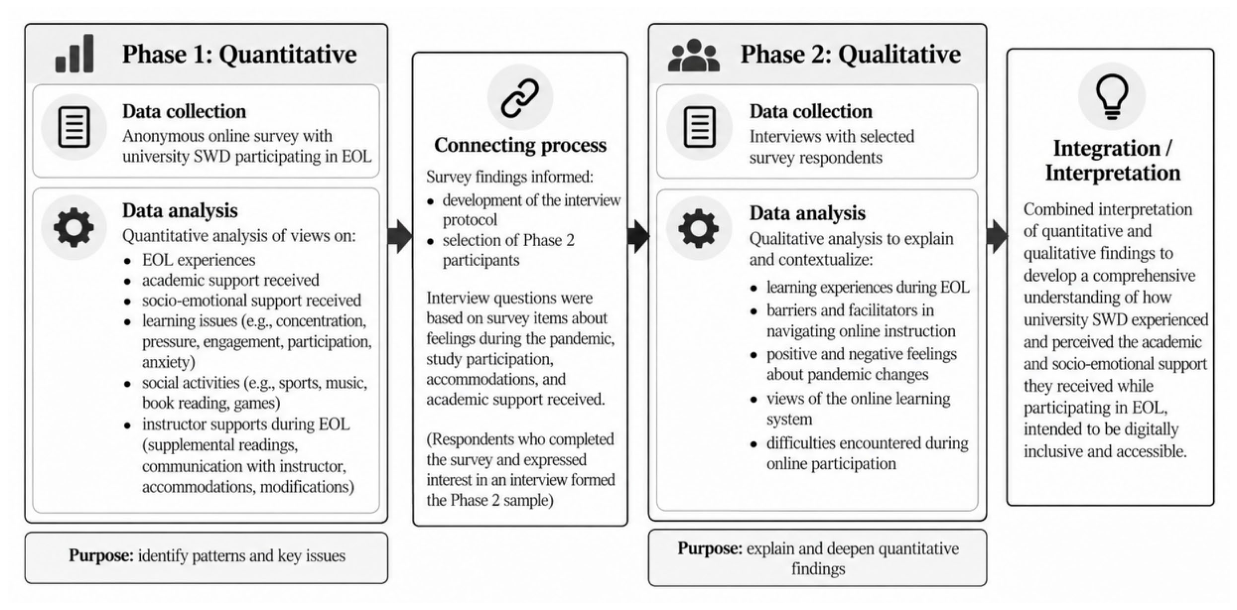

Disclaimer/Publisher’s Note: The statements, opinions and data contained in all publications are solely those of the individual author(s) and contributor(s) and not of MDPI and/or the editor(s). MDPI and/or the editor(s) disclaim responsibility for any injury to people or property resulting from any ideas, methods, instructions or products referred to in the content. |
© 2026 by the authors. Licensee MDPI, Basel, Switzerland. This article is an open access article distributed under the terms and conditions of the Creative Commons Attribution (CC BY) license.