


Abstract
Learner-paced digital environments require students to self-initiate the onset of instructional content, yet the cognitive mechanisms by which this control affects information encoding remain poorly understood. The present study examined whether motor self-initiation and temporal predictability contribute independently or interactively to working memory (WM) performance in secondary school students. Using a 2 × 2 × 2 factorial design, 66 adolescents (M age = 15.18 years) completed a digital Backward Digit Span task across four conditions crossing motor control (self-initiation vs. automatic-initiation, within-subjects) and temporal predictability (high temporal prediction vs. low temporal prediction of stimulus onset timing, within-subjects), in either visual (n = 32) or auditory (n = 34) stimulus modality. Mixed-effects logistic regressions revealed a significant main effect of motor control, with self-initiated trials yielding higher WM accuracy than automatic trials. This effect was qualified by a significant interaction between motor control and temporal predictability: accuracy was lower specifically when stimulus onset was both externally initiated and temporally predictable, and comparable across the remaining three conditions. No effects of perceptual modality were detected. These findings suggest that motor self-initiation and temporal predictability act as partially substitutable sources of encoding preparation in adolescent learners, as WM accuracy declined only when neither self-initiation nor temporal uncertainty was available, carrying implications for the design of learner-paced instructional environments.
1. Introduction
Learner-paced digital environments have become increasingly common in contemporary educational practice, particularly in the context of video-based instruction, multimedia learning, and online learning platforms. In these environments, students routinely exercise some degree of control over the temporal flow of information: they may pause or resume explanations, replay difficult segments, and even evaluate whether they are prepared to proceed to the next piece of information and decide when to advance to it (Castro-Alonso et al., 2021). This form of learner control is not merely a technical affordance of digital interfaces. Rather, it constitutes an educationally relevant design feature because it changes the conditions under which information becomes available for cognitive processing (Rey et al., 2019). In this way, learner-paced digital environments may give students an active role in encoding the information they want to mentally maintain and manipulate in working memory (WM).
We examined this learning context in adolescence, a developmental stage in which digital learning is increasingly common, and which carries distinctive transition-to-adulthood characteristics, such as growing WM capacity, executive control, autonomy, and self-regulation (Diamond, 2013; Ferguson et al., 2021; Luna et al., 2010). So, the way adolescents engage with learner-paced environments may differ from that of adults and younger children. Nevertheless, this population is typically underrepresented in the learner-paced literature. The present study seeks to advance understanding of how learner pacing influences digital information encoding in secondary school students. Because cognition is situated and shaped by the context in which it unfolds (Barsalou, 2008; Wilson, 2002), we placed our study in an ecologically valid digital learning environment: the students’ school computer laboratory. Deepening this understanding can inform the design of digital instructional material that supports learning rather than merely increasing interface flexibility.
A central theoretical basis for how learner pacing may shape encoding is Cognitive Load Theory (Sweller, 1988; see also Sweller et al., 1998, 2011, 2019), which argues that instructional design must align with the limited capacity of WM, especially when learners process novel or complex information. Dynamic digital instructional materials, such as animations and videos, present particular challenges because they often deliver information as a continuous and transient stream. Once information has passed, it may no longer be available for inspection unless the learner can pause, replay, or otherwise control the presentation. In contrast, when learners cannot exert some degree of control, they must simultaneously select, maintain, and integrate several interacting and transient elements; thus, the demands placed on WM may increase substantially (Spanjers et al., 2010). From this perspective, learner pacing may support learning by modifying the temporal conditions under which transient digital information is encoded and integrated.
1.1. Learner Control, Segmentation, and Learner Pacing
Within the multimedia learning literature, segmentation and learner pacing have been proposed as design strategies to reduce the cognitive demands associated with transient information (Mayer & Chandler, 2001; Moreno, 2007; Rey et al., 2019; Schroeder et al., 2020). In the current research, we examine how segmentation, whether exerted by learner control over pacing or imposed externally by the system, influences learning.
Considerable empirical research indicates that segmented and learner-paced materials support learning, particularly when instructional information is dynamic and transient (Hasler et al., 2007; Mayer & Chandler, 2001). Even simple forms of user interaction, such as pressing a key to continue through a presentation, can improve learners’ performance, relative to continuous presentation (Hasler et al., 2007; Mayer & Chandler, 2001). Additionally, segmentation reduces WM cognitive load while improving learning performance (Boucheix & Guignard, 2005; Moreno, 2007). A meta-analysis of the segmenting effect further reports small-to-moderate benefits for learning, together with reductions in perceived cognitive load. Interestingly, longer learning times were also observed. This extra time may allow for deeper processing by giving learners more time to engage with instruction (Rey et al., 2019). However, these benefits are not uniform: learner control helps only under some conditions and varies with content difficulty (Li et al., 2022; Moreno & Valdez, 2005; Schroeder et al., 2020). Effectiveness depends on the cognitive processes the control affordance recruits, such as attention or WM.
Nevertheless, learner-paced literature usually confounds several underlying cognitive mechanisms. In segmentation, there are at least four possible cognitive mechanisms. First, the material is divided into smaller, potentially more meaningful units, thereby diminishing cognitive load and making it easier for WM to handle. Second, the learner receives additional time to perceive, attend to, and maintain information in WM before the next segment. Third, the learner decides when they are ready to receive new information, thus controlling onset timing and temporal predictability. Fourth, the learner performs a bodily action that initiates the next event, thereby controlling the onset time through motor self-initiation. The benefit typically attributed to learner-paced segmentation may therefore reflect either an individual or a combination of these factors.
Disentangling these components matters both theoretically—so learner-paced design is understood as a set of separable cognitive mechanisms rather than a single affordance—and practically. A mechanism-level understanding would allow instructional designers to selectively engineer the features of digital environments that most efficiently support encoding, rather than implementing learner control as an undifferentiated package whose benefits vary across tasks and learners (Castro-Alonso et al., 2021; Rey et al., 2019; Schroeder et al., 2020; Söderlund et al., 2023; Sweller et al., 2019). Studying these components in adolescents is also necessary to formulate instructional design principles that are both cognitively and developmentally grounded. The present study isolates two of them—motor self-initiation and temporal predictability. The two are conceptually and operationally distinct: a stimulus can be self-initiated yet temporally unpredictable or externally initiated yet fully predictable. Figure 1 summarizes how we expect each component to contribute to the encoding of information in secondary students’ WM—a framework we develop in the sections that follow.
Figure 1.
Hypothesis conceptual framework. Learner pacing bundles several mechanisms; the present study isolates two: motor self-initiation (the learner’s action triggers stimulus onset) and temporal predictability (whether onset timing can be anticipated). Each is linked to a candidate’s preparatory mechanism: an internal/forward-model account (Miall et al., 1993; Miall & Wolpert, 1996; Wolpert et al., 1995, 1998) for self-initiation and temporal attention/expectation (Nobre & van Ede, 2018, 2023) for predictability. Both are proposed to converge on a preparatory state that supports WM encoding, which is assessed here using a digital Backward Digit Span task and indexed by response accuracy. H1–H3 denote the study’s hypotheses (H1, motor self-initiation main effect; H2, temporal predictability main effect; H3, their interaction).
1.2. Temporal Structure, Predictability, and Motor Self-Initiation
The distinction between processing time and temporal structure is particularly important. Spanjers et al. (2010) argued that segmentation may support learning through two mechanisms. As stated before, pauses provide additional time to organize and integrate information before new material appears. At the same time, segment boundaries act as temporal cues that highlight meaningful transitions in the instructional sequence. Thus, segmentation may not only reduce the amount of information that must be processed at once but may also help learners identify when one meaningful event ends and when another begins. This distinction suggests that temporal structure itself may influence learning independently of the mere availability of extra time.
A related cognitive mechanism is temporal predictability. When learners can anticipate when relevant information will appear, they may proactively allocate attention to the expected moment of stimulus/information onset (Nobre & van Ede, 2023). Temporal expectations align cognitive resources with upcoming events, thereby supporting perception, attention, and short-term memory processing (Jin et al., 2020; Nobre & van Ede, 2018; Wilsch et al., 2015, 2018). This mechanism is relevant to education because digital learner-paced environments often make the onset of new information more predictable: pressing a key, clicking “next,” or resuming a video may create an expectation that new information will appear immediately or after a short interval (Schmalbrock & Frings, 2022). However, temporal predictability is not identical to learner control. A system-paced presentation can also be temporally predictable, and a learner-paced one can be temporally variable if the delay between action and onset is uncertain. This distinction allows temporal predictability to be examined as a cognitive mechanism that may contribute to, but is not reducible to, learner pacing.
Motor self-initiation provides a second mechanism that may help explain learner pacing effects. In many digital learner-paced environments, the learner’s own action triggers the onset of new content. This motor component is often treated as a neutral interface operation, but recent research suggests that simple actions can influence several cognitive processes deployed during encoding (Benedetto et al., 2020; Loyola-Navarro et al., 2022; Morillon et al., 2014; Nittono et al., 2003; Tomassini & Morrone, 2016). For example, performing a simple action toward information can prioritize its features in later visual search, even when those features are not directly relevant to the task (Weidler & Abrams, 2014, 2018; Wang et al., 2021; Wykowska et al., 2009). Motor self-initiation can also benefit short-term memory encoding (Loyola-Navarro et al., 2022). Although these studies do not examine instructional learning directly, they suggest that motor action shapes perceptual and attentional priorities. Applied to learner-paced instruction, this implies that pressing a key to initiate new information may do more than advance the interface: it may help create a preparatory state for processing the upcoming event. A candidate mechanism for such a state comes from internal-model accounts of motor control, in which a copy of the motor command (efference copy) feeds a forward model that predicts the sensory consequences of the action, aligning processing anticipatorily with the expected onset (Miall et al., 1993; Miall & Wolpert, 1996; Wolpert et al., 1995, 1998).
Altogether, this evidence suggests that the benefits of learner-paced environments may arise in part from preparatory mechanisms associated with stimulus onset. The present study investigates how to optimize such preparation by treating motor self-initiation and temporal predictability as separable components of learner pacing. In natural digital learning environments, these mechanisms typically co-occur: clicking to advance a video is both a self-initiated action and a source of information about when the next segment will appear. Their cognitive consequences may be independent, additive, or interactive: motor self-initiation may enhance preparation because the learner’s own action marks the start of a new encoding episode. Temporal predictability may also enhance preparation because the learner can anticipate the moment of stimulus onset. When combined, these mechanisms may jointly support WM encoding. However, because prior studies have rarely isolated them experimentally, their individual and combined contributions remain unclear.
1.3. Working Memory
WM provides an appropriate cognitive target for examining these mechanisms because it supports the mental temporary maintenance and manipulation of information during learning. Since the multicomponent model proposed by Baddeley and Hitch (1974), WM has been conceptualized as a limited-capacity system comprising modality-related storage components, such as the phonological loop and the visuospatial sketchpad, coordinated by attentional and executive control processes. Current models have further emphasized the role of attentional focus in determining which information remains active and accessible for ongoing cognition (Cowan, 1999, 2001). Across theoretical perspectives, WM is capacity-limited and highly sensitive to the timing, organization, and format of incoming information.
This makes WM especially relevant to learner-paced environments. If segmentation, motor self-initiation, and temporal predictability improve learning by supporting encoding, their effects should be observable in tasks that require learners to mentally maintain and manipulate information under controlled temporal conditions. The Backward Digit Span task (Wechsler, 1981) is well-suited to this purpose, as it requires participants to retain a sequence of digits and then mentally transform it by recalling it in reverse order. Therefore, the Backward Digit Span task places demands on both temporary storage and executive control components of WM. Adapting this task to a digital paradigm makes it possible to examine whether the timing and/or self-initiation of stimulus onset influences WM encoding in a relevant way to learner-paced digital instructional design.
1.4. Perceptual Modality
Cognitive Load Theory suggests that cognitive demands may depend on the format in which information is presented, known as the modality effect (Castro-Alonso & Sweller, 2020). However, modality effects are not uniform and may depend on pacing, task structure, and the type of material presented (Tabbers et al., 2004). In multimedia learning, the modality effect has been interpreted in terms of how visual and auditory information distribute processing demands across partially distinct systems (Castro-Alonso & Sweller, 2020). Nevertheless, the cognitive mechanisms underlying this effect remain poorly understood. To explore whether the effects of motor self-initiation and temporal predictability are modality-dependent or reflect more general mechanisms of attentional preparation is theoretically important. The cognitive mechanisms may, on the one hand, stem from different WM’s encoding routes: auditory digits may directly access the phonological loop. Conversely, written digits may first be stored in the visual-sketchpad and then undergo visual-to-verbal recoding (Mousavi et al., 1995; Rubenstein et al., 1971; Sweller, 2011). If the effects of self-initiation or temporal predictability are primarily perceptual, they should differ between visual and auditory presentation. On the other hand, backward digit span involves higher-order cognitive processing, such as serial maintenance and executive manipulation, that may depend on domain-general attentional control beyond modality-specific storage (Baddeley, 2012). If they reflect broader mechanisms of preparation for WM encoding, comparable effects should be observed across modalities. Modality is thus theoretically relevant not only to directly test the multimedia modality effect, but also to further determine whether the mechanisms embedded in learner pacing operate through modality-specific or more general cognitive processes.
1.5. The Present Study
In the present study, we examined the independent and joint effects of motor self-initiation and temporal predictability on WM performance. We tested the effects on secondary school students’ performance at their school computer laboratory, following embedded/situated cognition considerations. Moreover, we isolated two components commonly integrated in learner-paced environments: whether the learner self-initiates the onset of to-be-encoded information, and whether the timing of that onset is predictable. Participants completed a digital Backward Digit Span task in four conditions that crossed motor control and temporal predictability, both manipulated within subjects. For motor control, self-initiated trials (participants initiate stimulus onset) were compared with automatically initiated trials (stimulus onset was externally controlled). For temporal predictability, high-temporal-prediction trials (fixed stimulus onset time) were contrasted with low-temporal-prediction trials (jittered stimulus onset time). Stimulus modality was included as a between-subjects factor, with participants completing either an auditory or visual version of the task.
This design allowed us to test whether motor self-initiation and temporal predictability contribute independently or interactively to WM encoding in adolescent learners. The between-subjects modality design let us explore possible perceptual processing influences. Three hypotheses were formulated, together with one exploratory question regarding modality. WM performance was characterized by trial-level accuracy (the main dependent variable) and response latency (analyzed as an exploratory outcome). First (H1), we predicted that motor self-initiation would improve WM accuracy relative to automatic onset. This prediction was based on direct evidence that voluntary self-initiation of stimulus onset enhances WM performance and accelerates visual and attentional processing in adults (Loyola-Navarro et al., 2022), as well as on broader evidence that simple actions modulate perception, attention, and encoding even when the action is not directly relevant to the task (Wang et al., 2021; Weidler & Abrams, 2014, 2018; Wykowska et al., 2009). Second (H2), we predicted that high temporal predictability would improve WM accuracy relative to low temporal predictability at the moment of stimulus onset, in line with evidence that temporal expectations facilitate the anticipatory allocation of attention and prepare WM for incoming information (Jin et al., 2020; Nobre & van Ede, 2018, 2023). Third (H3), we expected motor self-initiation and temporal predictability to interact, such that self-initiation would yield greater benefits when the timing of stimulus onset was predictable. Although no prior study has tested this interaction directly, this prediction follows from the theoretical proposal that self-generated action and predictable onset provide convergent preparatory signals to the encoding system (Miall & Wolpert, 1996; Nobre & van Ede, 2018; Wolpert et al., 1995). Finally, modality effects were examined as an exploratory question. If the effects of self-initiation and temporal predictability are modality-specific, they should differ between auditory and visual presentation; if they reflect domain-general mechanisms of attentional preparation and WM encoding, comparable effects should be observed across modalities.
To test these three hypotheses and our exploratory question, we performed two inferential models using mixed-effects logistic regression: a primary model for trial-level accuracy, and a secondary one for log-transformed response latency. All models shared the same random-effects structure and applied the participant- and block-exclusion criteria described in methods. Fixed effects included motor control (self-initiated vs. automatically initiated), temporal predictability (high temporal prediction vs. low temporal prediction), modality (visual vs. auditory), and their two- and three-way interactions, as well as two covariates: block difficulty (Likert rating, included as a numerical variable) and sequence length (to account for the well-established relationship between sequence complexity and span performance). Random intercepts were included for participants and items to account for the structure of the data.
2. Materials and Methods
2.1. Participants
This study was conducted in accordance with the Declaration of Helsinki and was approved by the Research Ethics Committee of the Faculty of Social Sciences of the University of Chile (evaluation report No. 01-07/2022, approved on 4 May 2022). Written informed assent and consent were obtained from all participants and their parents or legal guardians, respectively, prior to participation. Institutional authorization to conduct the study was obtained from the school principal prior to any procedure.
Sixty-six secondary school students (M age = 15.18 years, SD = 0.89) were recruited from a school in Chimbarongo in the O’Higgins Region, Chile. An open call for schools to participate in the study was made via social media and Center for Advanced Educational Investigation (CIAE, University of Chile) mailing list. The study school was chosen as it answered the call and allowed us to use a suitable computer room. Participants’ eligibility criteria required normal or corrected-to-normal vision and audition, and the absence of current or historical neurological or systemic illness. Participants were assigned to either a visual group (n = 32) or an auditory group (n = 34) depending on the modality through which stimuli were presented to them. The modality was randomly assigned to each participant when they entered the computer laboratory (see procedure). Sociodemographic information is summarized in Table 1.
Table 1.
Sociodemographic Characteristics by Modality Group.
The sample size was determined by accessibility (a convenience sample of all consenting students at the participating school during the data-collection period); an a priori target of approximately 24 participants for within-subject effects of motor control and temporal predictability was anticipated on the basis of the effect sizes obtained for response accuracy (Cohen’s d > 0.60) in Loyola-Navarro et al. (2022). A sensitivity analysis on the analytic sample (n = 61) indicated that, with α = 0.05 (two-tailed) and 80% power, the design was sensitive to within-subject effects of dz ≈ 0.37 (a small-to-medium effect) for motor control and temporal predictability factors. Because this closed-form approximation does not fully capture the trial-level, crossed random-effects structure of the mixed-effects models, it is likely conservative with respect to the sensitivity actually achieved. With respect to perceptual modality, since it was included as an exploratory contrast, we did not conduct an a priori power analysis.
2.2. Design
A 2 × 2 × 2 factorial design was employed, with motor control (self-initiation vs. automatic-initiation) and temporal predictability (high temporal prediction vs. low temporal prediction) as within-subject factors and modality (visual vs. auditory) as a between-subjects factor. Sampling modality within subjects was not possible owing to time constraints imposed by the school administration regarding the use of facilities and students’ time away from class. The combination of the two within-subject factors produced four experimental conditions per modality: self-initiated–high temporal prediction, self-initiated–low temporal prediction, automatically initiated–high temporal prediction, and automatically initiated–low temporal prediction. Each condition constituted one experimental block in either modality. Block order was counterbalanced across participants using a randomized assignment scheme determined prior to data collection.
2.3. Stimuli and Apparatus
Participants completed a modified digital version of Wechsler’s Digit Span Backward (Wechsler, 1981). The stimuli consisted of sequences of random digits ranging from 1 to 9 (excluding the number 0 to prevent specific chunking or processing biases). The task required participants to encode a series of digits and subsequently reproduce them in the reverse order of presentation. Stimuli were presented either visually (Figure 2) or auditorily on a computer, depending on the participant’s assigned group. In the visual condition, each digit appeared in Arial black font at the center of the screen for 1 s. In the auditory condition, digits were presented as spoken numerals through headphones at a speed of one per second, while a black fixation cross remained at the center of the screen throughout stimulus delivery. Both the digits’ (in the visual condition) and the fixation cross’s size were set to 10% of the window’s total height.
Figure 2.
Experimental scheme. An example of the experiment in the visual modality is shown, using a digit sequence of length two. (A). Self-initiated–high-temporal-prediction condition: The digit sequence begins after the participant presses the spacebar. The hand icon represents the participant’s spacebar press to initiate the sequence. (B). Self-initiated–low-temporal-prediction condition: The digit sequence begins after the participant presses the spacebar, followed by an interval of variable duration. (C). Automatically initiated–high-temporal-prediction condition: The sequence begins automatically after the onset of the fixation cross. (D). Automatically initiated–low-temporal-prediction condition: The sequence begins automatically after an interval of variable duration following fixation onset.
Four experimental lists of 16 stimulus sequences each were constructed using the Integer Set Generator from RANDOMG.ORG (Haahr, n.d.), which produces non-repeating integer sets. Sequence length ranged from 3 to 10 digits, with each length appearing twice within a list. All 64 sequences (4 lists × 16 sequences) were inspected visually to ensure that no sequence appeared more than once, either within or across lists; any duplicates were regenerated. Each of the four lists was assigned to one of the four experimental conditions. The same four lists were used in both the visual and the auditory modality groups.
The experiment was programmed in PsychoPy Builder (v2022.2.4; Open Science Tools Ltd., Nottingham, UK; Peirce et al., 2019). The display background was set to medium gray (RGB: 127, 127, 127) for all trials to prevent luminance-induced adaptation effects. The experiment was displayed in HP desktop computers (model non-asked; frame rate = 59.96). All students were provided with Sony Zx Series Mdr-zx110AP headsets (Sony Corporation, Tokyo, Japan).
2.4. Procedure
The testing sessions took place in the computer laboratory of the participants’ school. The school principal provided the list of potential participants beforehand. The experimenter set up the task modality on each computer before participants entered the room; modality assignment was set by dividing the students into two equally sized groups. The experimenter also left two paper-based copies of the written assent and a questionnaire on each desk. In their classroom, participants who had their tutors’ written consent were verbally asked to participate, and then were guided to the room by level by a teacher or a duty supervisor. Once participants at a certain level approached the room, they were again verbally asked if they wanted to participate in the experiment and were invited to take a seat of their preference. Once all participants were seated, they were welcomed, and the written assent was explained verbally. Then, students were given time to read and sign it. Afterward, they received standardized verbal instructions for the backward digit span task, including two illustrative examples presented orally. They were informed about modality presentation, the progressive increase in sequence length, and that the task would involve two pacing conditions blocks: self-initiated and automatically initiated presentation. After the verbal instructions, participants put on their headsets and began the computerized experiment. The task instructions were then presented again on screen. Upon completion of all experimental tasks, participants completed a paper-based questionnaire aimed at collecting sociodemographic information and assessing eligibility criteria.
Each experimental block began with written condition-specific instructions about how the digit sequence would be initiated. Participants were instructed either to press the spacebar to trigger the onset of the digit sequence (self-initiated conditions) or to wait for the sequence to appear automatically (automatically initiated conditions). These instructions were followed by two practice trials with sequences of length 2. The 16 experimental trials were then presented in increasing sequence length, from length 3 to length 10 (2 trials per sequence length). Every trial began with a visuoauditory onset cue—a centrally presented black dot and a brief tone, each lasting 0.500 s—followed by a fixation cross whose duration varied according to condition (Figure 2).
In the self-initiated–high-temporal-prediction condition, the fixation cross remained on screen until the participant pressed the spacebar; the first digit appeared exactly 0.550 s after the keypress (Figure 2A). In the self-initiated–low-temporal-prediction condition, the fixation cross likewise required a spacebar press, after which the first digit appeared after a pseudorandom interval of 0.150, 0.350, 0.550, 0.750, or 0.950 s (Figure 2B). In the automatically initiated–high-temporal-prediction condition, the fixation cross was automatically replaced by the first digit after a fixed interval of 0.550 s (Figure 2C). In the automatically initiated–low-temporal-prediction condition, the first digit appeared automatically after a pseudorandom interval drawn from the same set (0.150, 0.350, 0.550, 0.750, or 0.950 s) (Figure 2D). The temporal manipulation in both the high- and low-temporal-prediction conditions was based on a previous auditory-perception paradigm (Lange, 2011). From the onset of the first digit onward, all four conditions were identical in timing and presentation. Block presentation was counterbalanced across participants. On average, the experiment session lasted 28.06 min (SD = 7.28); session duration was comparable across the auditory (M = 27.34 min, SD = 6.76) and visual (M = 28.81 min, SD = 7.84) groups.
Following the final digit in each trial, participants typed their responses—the presented digits in reverse order—using the keyboard and pressed Enter to submit. At the end of each experimental block, participants rated its difficulty on a five-point Likert scale (1 = very easy; 2 = easy; 3 = neutral; 4 = difficult; 5 = very difficult).
2.5. Data Analysis
Prior to the analysis, it was confirmed that all 66 participants (visual group, n = 32, and auditory group, n = 34) had completed the four experimental blocks. Blocks showing an overall proportion correct of zero were reviewed for systematic inversion errors (i.e., responding in the forward rather than the reverse order); this screening led to the full exclusion of one participant from the auditory group and to the partial exclusion of specific blocks for two further participants from the auditory group (the self-initiated–high temporal prediction block for one and the automatically initiated–high temporal prediction block for the other). In addition, we flagged five participants whose overall mean accuracies were 2 or more standard deviations away from the sample’s overall mean accuracy; this criterion has been previously applied in cognitive research examining action–perception and action–memory effects (Iani et al., 2023; Wang et al., 2021). We identified three participants from the visual group and two participants from the auditory group. Because one of the auditory outliers was the same participant who had already been excluded for inversion errors, these criteria together removed five unique participants. Thus, the final analytic sample comprised 61 participants: 29 in the visual group and 32 in the auditory group. Of a theoretical maximum of 3904 trials (61 participants × 64 trials), 80 trials were unavailable owing to the removed blocks and incomplete sessions. A further 32 trials were dropped from the model due to missing block-difficulty ratings. This yielded a total of 3792 analyzed trials.
The analytic strategy proceeded in four stages, detailed in turn below. We first define the outcome measures—trial-level accuracy and response latency—and describe the preprocessing applied to each. We then specify the primary inferential model: a mixed-effects logistic regression of trial-level accuracy, followed by complementary subset analyses conducted separately for the self-initiated and automatically initiated conditions to decompose the motor control × temporal predictability interaction. Finally, we describe a parallel mixed-effects model for log-transformed response latency. The accuracy model provides the confirmatory tests of Hypotheses 1–3 (H1–H3) and addresses the exploratory question regarding modality.
The primary dependent variable was trial-level binary accuracy, coded as 1 when a participant reproduced the entire digit sequence in the correct reverse order, and as 0 otherwise. For descriptive analyses, condition-level proportion correct was computed as the ratio of correct trials to total scored trials within each block, with a maximum value of 1.00 based on 16 scored trials per condition after excluding practice trials.
Inferential analyses for trial-level binary accuracy were conducted using mixed-effects logistic regression, implemented via the glmmTMB function in the glmmTMB package, version 1.1.14 (Brooks et al., 2017), in R version 4.4.0 (R Core Team, 2024, Vienna, Austria) running within RStudio version 2026.05.0 (Posit Team, 2026, Boston, MA, USA). The model specified trial-level accuracy as the outcome, with a binomial error distribution and a logit link function. A full model was first fitted (Equation (1)) and then a reduced model (Equation (2)), specified as:
Note. Yijk represents trial-level binary accuracy (1 = correct, 0 = incorrect) for trial i, participant j, and item k; u0j and v0k represent random intercepts for participants and items, respectively.
logit(P(Yijk = 1)) = β0 + β1(MotorControlijk) + β2(TemporalPredictabilityijk) + β3(Modalityijk) + β4(BlockDifficultyijk) + β5(SequenceLengthijk) + β6(MotorControl × TemporalPredictability) + β7(MotorControl × Modality) + β8(TemporalPredictability × Modality) + β9(MotorControl × TemporalPredictability × Modality) + u0j + v0k
logit(P(Yijk = 1)) = β0 + β1(MotorControlijk) + β2(TemporalPredictabilityijk) + β3(BlockDifficultyij) + β4(SequenceLengthijk) + β5(MotorControl × TemporalPredictability) + u0j + v0k
Categorical fixed-effects predictors were dummy-coded (0/1): motor control (self-initiated = 0 [reference] vs. automatically initiated = 1), temporal predictability (high temporal prediction = 0 [reference] vs. low temporal prediction = 1), modality (auditory = 0 [reference] vs. visual = 1), along with their two- and three-way interactions. The model also included two numerical covariates: block difficulty (a Likert rating) and sequence length (to account for the well-established relationship between sequence complexity and span performance). Random intercepts were included for participants and items, to account for the structure of the data. Term-level significance was assessed using Type III Wald chi-square tests obtained with car::Anova function (Fox & Weisberg, 2019). Fixed-effect estimates were further summarized as odds ratios with 95% confidence intervals using the model_parameters function from the parameters package (Lüdecke et al., 2020). Model fit and explained variance were quantified using Nakagawa’s marginal and conditional R2, computed with r2_nakagawa() from the performance package (Lüdecke et al., 2021).
Complementary subset analyses of trial-level binary accuracy were conducted separately for the self-initiated and automatically initiated blocks to further examine the conditional structure of the motor control × temporal predictability interaction. These were exploratory, follow-up analyses prompted by significant interactions (H3) rather than pre-specified tests. Previous research suggests that self-initiated stimulus presentation may enhance performance by supporting preparatory processes before stimulus onset; that is, by allowing participants to enter a state of readiness for encoding the upcoming stimulus (Loyola-Navarro et al., 2022). To assess this possibility, time-to-press latency was included as an additional continuous covariate in the analysis of the self-initiated conditions. Time-to-press latency was defined as the interval between the onset of the initial fixation cross and the participant’s keypress to trigger the digit sequence.
Inferential analysis of log-transformed response latency for correct trials was conducted using a Gaussian mixed-effects model, also implemented via the glmmTMB function. The model included the same fixed effects and random effects as the trial-level accuracy model for both the full and the reduced model (see Equations (1) and (2)). Term-level significance, model fit, and explained variance were also computed as described for trial-level binary accuracy.
The two full models’ key assumptions were assessed as follows: variance inflation factors (VIFs) for each predictor-independent variable were computed using the performance package (Lüdecke et al., 2021). All VIFs were below 5.0, suggesting that multicollinearity was not present in our model. In addition, no random effects led to a singular fit. Finally, overdispersion in the binomial model used for accuracy was computed using the DHARMa package, version 0.5.0 (Hartig, 2026). The overdispersion test was not statistically significant (dispersion = 1.008, p = 0.70).
3. Results
3.1. Working Memory Accuracy
The following analyses address Hypotheses 1–3 and the exploratory question on modality, with trial-level accuracy as the primary dependent variable. Table 2 presents the mean condition-level proportion correct (mean accuracy) and standard deviations for each within-subject condition, for the visual and auditory groups. Overall, the mixed-effect logistic model explained a substantial proportion of the variance in accuracy, with a marginal R2 of 0.656 (n trials = 3792; participants = 61; items = 64; AIC = 2199.2). Regarding the two covariates, sequence length was a strong predictor of performance, Wald χ2(1) = 520.84, p < 0.001, with longer sequences associated with markedly lower odds of a correct response, as expected, OR = 0.26, 95% CI [0.23, 0.29], whereas block difficulty ratings showed no significant effect, Wald χ2(1) = 1.11, p = 0.293.
Table 2.
Mean Accuracy and Standard Deviations by Modality, Motor Control, and Temporal Predictability.
None of the interactions involving modality reached significance, including the Modality × Motor Control interaction, Wald χ2(1) = 0.026, p = 0.872; the Modality × Temporal Predictability interaction, Wald χ2(1) = 0.486, p = 0.486; and the three-way interaction, Wald χ2(1) = 0.00, p = 0.999, indicating that accuracy patterns were comparable across auditory and visual presentation. In addition, perceptual modality had no significant main effect, Wald χ2(1) = 0.071, p = 0.790. Given this, we concluded that perceptual modality showed no significant main effect or interactions, and we continued our analysis by pooling together all data regardless of modality. The following analyses address Hypotheses 1–3, with trial-level accuracy as the primary dependent variable. Therefore, in the following, we describe results without focusing on any specific perceptual modality. Table 2 shows the mean accuracy and standard deviations pooling together all participants.
Turning to H1, and consistent with it, the full model revealed a significant main effect of motor control, Wald χ2(1) = 7.023, p = 0.008, such that accuracy was higher in the self-initiated than in the automatic conditions, OR = 0.45, 95% CI [0.25, 0.81]. In contrast, no significant main effect was observed for temporal predictability, Wald χ2(1) = 0.220, p = 0.634, contrary to H2, which predicted higher accuracy under high temporal predictability. Notably, the accuracy advantage of self-initiated over automatically initiated conditions appeared only under high-temporal-prediction condition, as reflected by a significant interaction between motor control and temporal predictability, Wald χ2(1) = 4.297, p = 0.038, OR = 2.38, 95% CI [1.05, 5.41]. This interaction is consistent with H3, which anticipated that motor self-initiation and temporal predictability would jointly shape encoding. Figure 3 illustrates this effect: under self-initiated conditions, accuracy was higher in the high-temporal-prediction condition than in the low-temporal-prediction condition (M = 0.324 vs. 0.305), whereas under automatically initiated conditions, this pattern was reversed and larger in magnitude (M = 0.255 vs. 0.310).
Figure 3.
Mean accuracy by experimental conditions, collapsed across modality. Mean accuracy reflects the condition-level mean proportion of correct responses. Grey points represent individual participants’ mean accuracy within each condition. Alongside the individual participants’ means, black points represent condition-level mean accuracy, and error bars indicate ±1 standard error of the mean; values are not model-estimated.
To further characterize H3, an exploratory post-hoc decomposition of the significant motor control × temporal predictability interaction was conducted. Data were separately reanalyzed for each level of motor control: self-initiated and automatically initiated. In the self-initiated subset, this allowed us to include time-to-press latency as a covariate, motivated by Loyola-Navarro et al.’s (2022) report of a significant effect of time-to-press latency on trial-level accuracy. Notably, this latency can only be measured in self-initiated blocks.
In the self-initiated-block subset (N = 1888 trials; 60 participants; AIC = 1176.8), no significant effects emerged except for the sequence length covariate (b = −1.285, SE = 0.082, z = −15.592, p < 0.001; all other ps > 0.30), even when time-to-press latency (see Methods) was added as a covariate (AIC = 1176.6, time-to-press b = 0.016, SE = 0.010, z = 1.544, p = 0.123). In contrast, in the automatically initiated-block subset (N = 1904 trials; 60 participants; AIC = 1103.7), apart from the sequence length covariate (b = −1.458, SE = 0.090, z = −16.118, p < 0.001), there was also a significant main effect of temporal predictability (b = 0.776, SE = 0.292, z = 2.652, p = 0.008; all other ps > 0.30), since low temporal prediction yields better accuracy (M = 0.31 ± 0.12) compared to high temporal prediction (M = 0.26 ± 0.11).
Overall, these results suggest that temporal predictability shaped working memory accuracy only when participants did not control stimulus onset—lower predictability being associated with higher accuracy—whereas motor self-initiation made onset predictability less influential for encoding. Time-to-press covariate did not reach significance, indicating that the time participants took to initiate the sequence did not influence their accuracy. In terms of our hypotheses, this qualifies H1–H3: self-initiation enhanced accuracy (H1), while temporal predictability influenced accuracy only in the absence of self-initiation (H3), and in the opposite direction to that predicted under H2 (lower predictability being associated with higher accuracy).
3.2. Working Memory Response Latency
Response latency was analyzed as an exploratory outcome; the following results are therefore interpreted as exploratory rather than as tests of Hypotheses. Descriptive statistics for response latencies of correctly reproduced sequences (in seconds) are reported in Table 3. Participants’ mean response latency alongside condition-level mean, and error bars by condition are represented in Figure S1. A Gaussian generalized linear mixed-effects model (N = 1115 trials; 61 participants; AIC = 1611.3) accounted for a moderate proportion of variance, yielding a marginal R2 of 0.318. When analyzed on the log scale, response latency was significantly predicted by both temporal predictability and sequence length. As expected, sequence length emerged as a strong positive predictor, Wald χ2(1) = 317.825, p < 0.001, β = 0.299, SE = 0.017, 95% CI [0.27, 0.33], such that longer sequences were associated with slower response times. Temporal predictability also exerted a significant effect, Wald χ2(1) = 8.733, p = 0.003, β = −0.221, SE = 0.075, 95% CI [−0.37, −0.07], with participants responding faster under low than under high temporal predictability. No other effects reached statistical significance (all ps > 0.12). A robustness check including sequence length × condition interactions yielded equivalent main effects and favored the simpler model (see Supplementary Material Table S1).
Table 3.
Mean Response Latency of Correct Answers and Standard Deviation by Modality, Motor Control, and Temporal Predictability.
Overall, these exploratory analyses indicate that response latency was primarily determined by sequence length, as expected for a backward digit span task. Temporal predictability also influenced response latency, with faster responses observed under low relative to high-temporal-predictability conditions. Notably, this was a main effect: there was no motor control × temporal predictability interaction and, as in the accuracy analysis, no significant effects of modality were observed (all ps > 0.12). The slowing under high temporal predictability was therefore general across motor-control conditions, in contrast to the accuracy results, where the cost of high predictability was confined to the automatically initiated condition (i.e., the significant motor control × temporal predictability interaction). Crucially, motor control conditions did not significantly affect response latency, suggesting that the accuracy benefits associated with motor self-initiation were not attributable to a speed–accuracy trade-off; rather, it is better understood as a genuine encoding benefit. Together, these patterns suggest that high temporal predictability slows responding regardless of motor control, whereas it reduces accuracy only when self-initiation is absent—a dissociation we interpret in the Discussion as a protective effect of motor self-initiation on encoding.
4. Discussion
The present study examined whether two elementary components of learner control—motor self-initiation of stimulus onset and the temporal predictability of that onset—modulate working memory (WM) performance in secondary school students. Using a digital Backward Digit Span task, we found that motor self-initiation significantly improved WM accuracy relative to automatic stimulus onset (OR = 0.45 for automatic-initiation relative to self-initiation, p = 0.008). This effect was qualified by a significant interaction between motor control and temporal predictability (OR = 2.38, p = 0.038): accuracy was lower specifically when stimulus onset was both externally initiated and temporally predictable, and comparable across the remaining three conditions. Perceptual modality did not significantly affect performance, and none of the interactions involving modality reached significance, indicating that the effects of motor control and temporal predictability described above did not significantly vary across modality. Exploratory analyses of response latency further indicated that correct responses were faster under low than under high temporal predictability, although response latency was primarily determined by sequence length and motor control did not influence it. We organize the discussion around the hypotheses stated in the present study: motor self-initiation (H1), temporal predictability (H2), their interaction (H3), and around the exploratory analyses of modality and response latency.
Consistent with H1, these findings provide evidence that the act of initiating the onset of to-be-encoded information can support WM performance in adolescent learners. This result is consistent with previous research showing that voluntary self-initiation of stimulus onset improves WM performance in adults (Loyola-Navarro et al., 2022). The present findings extend this evidence to a secondary-school sample, suggesting that motor self-initiation may also enhance encoding conditions during adolescence, a developmental period in which WM and executive control systems are still maturing (Ferguson et al., 2021; Isbell et al., 2015; Schweinsburg et al., 2005; Simmonds et al., 2017; Tervo-Clemmens et al., 2023). These results align with evidence that the motoric conditions of encoding can shape verbal memory in adolescents (Söderlund et al., 2023), while extending it to a different motor manipulation—self-initiation of stimulus onset rather than enactment or writing during encoding. Importantly, in the self-initiated subset, the time elapsed between the initial fixation and the participant’s key press (time-to-press) did not predict accuracy (p = 0.123); this argues against the possibility that the self-initiated accuracy advantage was simply driven by participants taking additional preparation time before stimulus onset. Rather, the advantage appears to be linked to the presence of active control itself, not merely to the duration of the pre-stimulus interval.
From a cognitive perspective, the significant effect of motor self-initiation on WM accuracy may reflect preparatory processes engaged when an individual voluntarily produces an action that triggers an upcoming stimulus. Such processes may include the anticipatory allocation of attention, a state of readiness for encoding, and the generation of internal predictions about forthcoming sensory events, as proposed in forward-model accounts of motor control in which a copy of the motor command is used to anticipate the sensory consequences of action (Miall & Wolpert, 1996; Wolpert et al., 1995). Nevertheless, the present design did not measure such preparatory processes directly, and we therefore propose them as plausible mechanisms consistent with our results.
Regarding H2, the absence of a significant main effect of temporal predictability in the full model also deserves consideration. The literature widely supports temporal prediction as a facilitatory mechanism of attention and encoding (Nobre & van Ede, 2018), and temporal expectations have been shown to support visual WM (Jin et al., 2020). The present results, however, suggest that its behavioral consequences in WM may depend strongly on the broader task context. In this paradigm, the temporal manipulation concerned the interval between the fixation period and the onset of the first digit; once the first digit appeared, the presentation rate of the sequence was identical across conditions. Temporal predictability may therefore have influenced preparation for the beginning of the sequence, but not the subsequent maintenance and manipulation demands imposed by the backward digit span task. Consistent with this, sequence length was by far the strongest predictor of accuracy (OR = 0.26, p < 0.001), indicating that the principal source of difficulty was the increasing WM load associated with maintaining and reversing longer digit strings—an interpretation aligned with core models of WM that emphasize strict capacity limitations and the increasing demands placed on attentional control as the number of items increases (Baddeley, 2000, 2012; Baddeley & Hitch, 1974; Cowan, 1999, 2001, 2014). Importantly, as discussed below, this null main effect coexists with a significant motor control and temporal predictability interaction.
The significant interaction between motor control and temporal predictability qualifies H3, indicating that these two components are not fully independent. Viewed in terms of the motor-control contrast at each level of predictability, the self-initiation advantage was concentrated under predictable timing: accuracy was higher for self-initiated than for automatically initiated presentation when onset was temporally predictable (M = 0.324 vs. 0.255), whereas this advantage was absent when onset timing was variable (M = 0.305 vs. 0.310). This pattern is consistent with H3, according to which motor self-initiation would yield stronger benefits when the timing of stimulus onset was predictable. One interpretation is that self-initiation and predictable timing provide convergent preparatory signals: the self-generated action marks the beginning of an encoding episode, while predictable onset allows attentional and encoding resources to be aligned with the expected moment of stimulus appearance (Nobre & van Ede, 2018, 2023; Wilsch et al., 2015, 2018). H3, as originally formulated, implied that motor self-initiation and predictable timing operate as convergent preparatory signals; on this additive reading, their combination—the self-initiated, temporally predictable condition—should have yielded the highest accuracy of the four cells. This was not the case: accuracy in that condition (M = 0.32) did not significantly exceed that of the two conditions in which only a single source of preparatory engagement was present (M = 0.31 in both). The observed pattern does not retain the additive-convergence reading and instead it is possible to interpret them as two partially substitutable sources of preparatory engagement, each appearing sufficient on its own to support encoding—a reinterpretation we develop by integrating the accuracy and latency results across H2 and H3 below.
The same interaction, viewed from the complementary perspective of the predictability contrast within each motor condition, revealed an unexpected pattern under automatic initiation. In the automatically initiated subset, temporal predictability exerted a significant effect on accuracy (b = 0.776, p = 0.008), with lower predictability associated with higher accuracy (M = 0.31 vs. 0.26). One account consistent with the temporal-attention literature is that, in the absence of self-generated control, temporal uncertainty sustains preparatory engagement across the pre-stimulus interval—a process consistent with the alerting component of attentional control (Petersen & Posner, 2012): when the moment of onset cannot be predicted, the conditional probability that the stimulus will appear increases as time elapses, which can maintain a state of readiness throughout the interval (Nobre & van Ede, 2018; Schmalbrock & Frings, 2022). By contrast, in a fixed and predictable short automatic interval, attention is deployed narrowly at a single anticipated moment, with the possibility of disengagement otherwise. This interpretation remains tentative, particularly because the temporal manipulation concerned only the onset of the first digit.
Notably, this reconciles the discrepancy between the null main effect of temporal predictability and its effect under automatic initiation. Because temporal predictability influenced accuracy only in the automatically initiated context—and in opposite directions across the two self-initiated conditions—its average effect across the full design was necessarily small. This is precisely the interaction reported above, not a contradiction. The exploratory response-latency analyses provide additional information about the cognitive dynamics of the task. As expected, sequence length was a robust positive predictor of response latency (b = 0.299, p < 0.001), indicating that students took longer to respond as the number of digits increased, consistent with the increasing maintenance and manipulation demands of the task. More unexpectedly, correct responses were faster under low than under high temporal predictability (b = −0.221, p = 0.003), a pattern that converges descriptively with the accuracy results under automatic initiation and with the possibility that temporal uncertainty sustained preparatory engagement. Crucially, motor control conditions did not significantly affect response latency, suggesting that the accuracy benefits associated with motor self-initiation were not attributable to a speed–accuracy trade-off. This strengthens the reading of H1 initiation benefit on WM accuracy as an effect of active control on encoding rather than of additional preparation time.
Integrating across H2 and H3, the accuracy and latency results admit another, more parsimonious, reinterpretation. Rather than reflecting two independent benefits—one of motor self-initiation and one of temporal uncertainty—the pattern is consistent with a single deficit in WM encoding that emerges when both sources of preparatory engagement are absent. Self-initiation may provide an endogenous preparatory signal through the motor act itself, mobilizing a state of readiness for the upcoming stimulus (Loyola-Navarro et al., 2022; Miall & Wolpert, 1996). Temporal uncertainty may provide an exogenous preparatory signal through a sustained hazard rate, with the conditional probability of stimulus onset increasing as the interval elapses (Nobre & van Ede, 2018, 2023). Either source appears sufficient to support encoding under the present conditions: accuracy was comparable across the three conditions in which at least one source was present (M between 0.31 and 0.32), and selectively lower only in the automatically initiated–high-prediction condition (M = 0.26), in which neither source was available. Notably, the automatically initiated–low-prediction condition—in which stimulus onset is both externally controlled and temporally unpredictable—most closely approximates the conditions under which standard neuropsychological span tasks (e.g., the WISC) are typically administered in educational-psychology practice, where an examiner initiates each sequence at a moment the examinee cannot precisely anticipate. That this ecologically familiar condition did not show the encoding deficit (M = 0.31), whereas it emerged when onset was made predictable without restoring learner control (automatically initiated–high prediction, M = 0.26), is itself informative about the preparatory conditions under which encoding is supported.
The latency data are broadly compatible with this interpretation at the level of the main effect: correct responses were faster under low than under high temporal predictability, consistent with the possibility that temporal uncertainty sustained preparatory engagement during the pre-stimulus interval. However, the precise distribution of latency across the four conditions did not mirror the accuracy pattern—the slowest correct responses occurred under self-initiated–high prediction (M = 8.57 s) rather than under automatically initiated–high prediction (M = 8.18 s)—suggesting that accuracy and latency may be sensitive to partially distinct components of the preparation–encoding–response cascade. The accuracy pattern would be consistent with broader accounts of attention in which alerting and orienting operate as partially dissociable components of attentional control (Petersen & Posner, 2012): when neither component is engaged—because no self-generated action mobilizes alerting and no temporal uncertainty engages sustained orienting—encoding may operate under a tonically low preparatory state. This reframing remains tentative. The present design did not include conditions that would dissociate alerting from orienting, and the temporal manipulation concerned only the onset of the first digit; further studies manipulating preparatory components independently would be needed to test this account.
Beyond this integrative reading, the dissociation between accuracy and response latency is theoretically informative. Motor self-initiation improved accuracy but did not affect latency, whereas the fastest correct responses were observed under low temporal predictability. This pattern does not indicate a simple speed–accuracy trade-off. Instead, it may suggest that response latency reflects processes occurring after encoding—such as retrieval, sequence reconstruction, or motor entry of the response—whereas the accuracy benefit of self-initiation is more closely related to encoding preparation. In this sense, the latency results should be considered exploratory and complementary rather than central evidence for the mechanisms underlying accuracy. Future studies could more explicitly separate encoding time, retention interval, response initiation, and response execution to determine which processing stage is most sensitive to motor self-initiation and temporal predictability.
4.1. Modality Effects
The lack of modality effects is also noteworthy. WM accuracy did not differ significantly between visual and auditory presentation (p = 0.790), and modality did not interact with motor control or temporal predictability. Consistent with our exploratory question, this comparability across modalities favors domain-general mechanisms of attentional preparation and WM encoding over modality-specific perceptual processing. This suggests that, within the present task and age group, the effects of self-initiation and temporal structure were not specific to one perceptual modality, and that the mechanisms engaged by learner control may operate at a relatively general attentional or executive level rather than being restricted to modality-specific storage systems. However, this interpretation must be taken cautiously, as the lack of modality effects may also be due to lack of statistical power, since modality was varied between rather than within subjects.
4.2. Limitations
Several limitations should be acknowledged. First, although the study was designed to isolate basic mechanisms underlying learner control, the task was not an instructional learning task. The Backward Digit Span paradigm provides a controlled measure of WM encoding and manipulation, but it does not capture the full complexity of multimedia learning, in which learners must integrate semantic information, build conceptual representations, and regulate comprehension over longer periods. The educational implications of the present findings should therefore be considered mechanistic rather than directly instructional, and future studies should examine whether the same self-initiation and temporal predictability effects emerge while learning from videos, animations, or digital explanations.
As for the sample and generalization, participants were recruited via convenience sampling, and the modest sample size (n = 61) limits statistical power to detect smaller effects and higher-order interactions. Assignment to the modality group was pseudo-randomized, and the study was conducted at a school chosen by availability. Together, these features constrain the generalizability of the findings beyond this population and setting, a point to weigh when interpreting the effects reported above.
Concerning our independent variables and study design, modality was manipulated between subjects; this decision might have masked possible modality effects because of the lower statistical power of between-subject designs. In this sense, a fully within-subject design would provide a more sensitive test of whether visual and auditory WM encoding are similarly affected by self-initiation and temporal predictability. Finally, the integrative alerting/orienting reframing, as well as the motor-control mechanisms offered in the Discussion, are interpretive: the present design did not directly dissociate these components, and the temporal manipulation concerned only the first digit.
4.3. Implications and Future Directions
These findings have implications for the design of learner-paced digital learning environments. In multimedia instruction, learner control is often implemented through simple interface actions, such as pressing a button to continue, pause, or resume a presentation. The present results further support previous studies showing that such actions have cognitive consequences beyond navigation: when learners actively initiate the onset of information, they may enter a preparatory state that supports the encoding of transient material. This interpretation complements Cognitive Load Theory, which emphasizes the need to manage the demands placed on WM during learning (Sweller, 1988). If self-initiation enhances readiness to encode upcoming information, then learner-paced design may reduce cognitive burden not only by segmenting content or increasing processing time, but also by aligning learner action with the onset of new information—a possibility consistent with evidence that segmentation and learner pacing can improve learning, particularly when they support the processing of transient instructional material (Hasler et al., 2007; Rey et al., 2019; Spanjers et al., 2012).
Beyond confirming that learner-paced design can support encoding, the present mechanism-level approach has direct implications for instructional engineering. Research on learner-paced instruction has often treated learner control as a broad affordance that bundles several mechanisms—processing time, segmentation, altered temporal expectations, and an action by the learner (Rey et al., 2019; Scheiter & Gerjets, 2007; Tabbers & de Koeijer, 2010); the present study isolated one of them—the learner’s motor act of initiating stimulus onset—and showed that it improved WM accuracy even in a simple, non-instructional task. Identifying which components of learner control are responsible for cognitive benefits would allow designers to selectively implement the features that most efficiently support encoding, rather than relying on learner control as a single undifferentiated package (Castro-Alonso et al., 2021; Sweller et al., 2019). The present results suggest that motor self-initiation contributes to encoding preparation in adolescent learners; if this is confirmed in instructional contexts, simple interface actions—such as a keypress to advance content—could be preserved as a low-cost design element even when full pacing control is not desirable. Conversely, the finding that temporal predictability interacts with motor control, rather than acting uniformly, indicates that timing-based design choices cannot be transferred directly from active to passive presentation formats. A mechanism-level account, therefore, offers concrete leverage for designing instructional materials that maximize encoding efficiency, particularly in transient digital formats where small interface decisions can shift the cognitive demands placed on WM.
Building on this point, the results also caution against assuming that all forms of temporal control are uniformly beneficial. The significant interaction between motor control and temporal predictability, together with the finding that—under external initiation—predictable timing was not advantageous and was, in fact, associated with lower accuracy than variable timing, suggests that timing information may support WM most effectively when embedded within an active-control context. This has practical relevance for educational technologies: merely imposing fixed temporal intervals or predictable pauses may be insufficient to sustain engagement and, under passive exposure, less effective than more variable timing. A concrete case arises in the digitization of standardized span assessments: because tasks such as the WISC are administered with externally paced, temporally unpredictable onsets—the condition that, in the present data, did not show the encoding deficit—computerizing them with fixed, predictable timing but without learner self-initiation could inadvertently create the one condition in which encoding was impaired, and should therefore be approached with caution. Instead, the learner’s active engagement with the timing of information may be critical, a conclusion aligned with evidence that learner-control features are most effective when students deploy them strategically and when the instructional environment supports meaningful regulation rather than passive exposure (Biard et al., 2018; Lin et al., 2022; Tabbers & de Koeijer, 2010).
Also, it would be valuable to address other components of learner control environments identified in the introduction, such as content chunking, additional processing time, or self-regulated readiness more broadly construed. Although the design rules out simple processing-time accounts (because time-to-press did not predict accuracy in self-initiated trials), a fuller mechanistic decomposition of learner control will require designs that factorially manipulate these additional components.
Future studies could also explore processing differences associated with incorrect latency values or partial-credit schemes (e.g., partial-credit units versus load scoring) as proposed in Conway et al. (2005). The temporal predictability manipulation concerned only the onset of the first digit, and qualitatively different effects might be observed if predictability were manipulated across the entire sequence or during the interval between encoding and recall, as previous studies suggest (Jin et al., 2020).
Finally, the adolescent sample is a strength of the study, but it also raises unresolved developmental questions. Because adolescence is characterized by continued maturation of executive and WM systems (Ferguson et al., 2021; Isbell et al., 2015; Schweinsburg et al., 2005; Simmonds et al., 2017; Tervo-Clemmens et al., 2023), the magnitude and functional significance of self-initiation effects may differ across developmental stages. Future research should compare children, adolescents, and adults using the same paradigm to determine whether the benefit of motor self-initiation increases, decreases, or changes qualitatively with age and the development of executive control.
5. Conclusions
The present study provides evidence that motor self-initiation of stimulus onset enhances WM accuracy in secondary school students. Temporal predictability did not produce a simple main effect; instead, its influence depended on the motor-control context, such that temporal uncertainty was associated with better encoding only under external initiation. Exploratory response-latency analyses further indicated that the self-initiation benefit was not explained by longer preparation times before stimulus onset. Together, these findings are consistent with motor self-initiation and temporal uncertainty acting as partially substitutable sources of encoding preparation: WM accuracy declined selectively when neither source was available, rather than benefiting additively from their combination. This supports the view that learner-paced control may influence cognition through basic preparatory mechanisms operating at the level of WM encoding. In instructional terms, these results suggest that a simple self-initiating action—such as a keypress to trigger content onset—may be sufficient to engage the preparatory mechanisms that support encoding, even in the absence of full pacing control. By isolating motor self-initiation and temporal predictability in an adolescent sample, this study contributes to a more mechanistic understanding of how digital learning environments shape the cognitive conditions under which students encode and manipulate transient information.
Supplementary Materials
The following supporting information can be downloaded at https://www.mdpi.com/article/10.3390/educsci16111933/s1: Figure S1: Mean response latency of correct answers (in seconds) by experimental condition, collapsed across modality. Grey points represent individual participants’ mean response latency within each condition. Alongside the individual participant means, black points represent condition-level mean response latency, and error bars indicate ±1 standard error of the mean; Table S1: Robustness Check of the Response-Latency Mixed-Effects Model: Extended Model Including Sequence Length × Condition Interactions.
Author Contributions
Conceptualization, R.L.-N. and P.D.; Methodology, R.L.-N., D.M.G. and P.D.; Investigation, R.L.-N.; Data curation, R.L.-N., D.M.G. and P.D.; Software, R.L.-N., D.M.G. and P.D.; Formal analysis, R.L.-N., D.M.G. and P.D.; Writing—original draft preparation, R.L.-N.; Writing—review and editing, R.L.-N., D.M.G., S.L., S.A. and P.D.; Visualization, D.M.G. and R.L.-N. All authors have read and agreed to the published version of the manuscript.
Funding
This work was supported by ANID under the following grants: ANID FONDECYT Postdoctorado [3220044] (R.L.-N.), ANID SCIA CIN250046, ANID CIAE CIA250005, ANID FONDECYT Iniciación [11251579], ANID FONDEF [IT25I0117] and ANID PIA Basal Funds for Centers of Excellence [FB210005] (Center for Mathematical Modeling).
Institutional Review Board Statement
The study was conducted in accordance with the Declaration of Helsinki and was approved by the Research Ethics Committee of the Faculty of Social Sciences of the University of Chile (Comité de Ética de la Investigación, Facultad de Ciencias Sociales, Universidad de Chile; evaluation report No. 01-07/2022, approved on 4 May 2022). The committee classified the study as minimal risk.
Informed Consent Statement
Written informed assent was obtained from all student participants, and written informed consent was obtained from their parents or legal guardians prior to participation. Institutional authorization to conduct the study was obtained from the school principal.
Data Availability Statement
The data presented in this study is available on request from the corresponding author. The data is not publicly available due to ethical and privacy restrictions, given that the participants were minors.
Conflicts of Interest
The authors declare no conflicts of interest.
References
- Baddeley, A. D. (2000). The episodic buffer: A new component of working memory? Trends in Cognitive Sciences, 4(11), 417–423. [Google Scholar] [CrossRef] [Scilit] [PubMed]
- Baddeley, A. D. (2012). Working memory: Theories, models, and controversies. Annual Review of Psychology, 63, 1–29. [Google Scholar] [CrossRef] [Scilit] [PubMed]
- Baddeley, A. D., & Hitch, G. (1974). Working memory. In G. H. Bower (Ed.), The psychology of learning and motivation (Vol. 8, pp. 47–89). Academic Press. [Google Scholar] [CrossRef] [Scilit]
- Barsalou, L. W. (2008). Grounded cognition. Annual Review of Psychology, 59, 617–645. [Google Scholar] [CrossRef] [Scilit] [PubMed]
- Benedetto, A., Morrone, M. C., & Tomassini, A. (2020). The common rhythm of action and perception. Journal of Cognitive Neuroscience, 32(2), 187–200. [Google Scholar] [CrossRef] [Scilit] [PubMed]
- Biard, N., Cojean, S., & Jamet, E. (2018). Effects of segmentation and pacing on procedural learning by video. Computers in Human Behavior, 89, 411–417. [Google Scholar] [CrossRef] [Scilit]
- Boucheix, J.-M., & Guignard, H. (2005). What animated illustrations conditions can improve technical document comprehension in young students? Format, signaling and control of the presentation. European Journal of Psychology of Education, 20(4), 369–388. [Google Scholar] [CrossRef] [Scilit]
- Brooks, M. E., Kristensen, K., van Benthem, K. J., Magnusson, A., Berg, C. W., Nielsen, A., Skaug, H. J., Mächler, M., & Bolker, B. M. (2017). glmmTMB balances speed and flexibility among packages for zero-inflated generalized linear mixed modeling. The R Journal, 9(2), 378–400. [Google Scholar] [CrossRef] [Scilit]
- Castro-Alonso, J. C., de Koning, B. B., Fiorella, L., & Paas, F. (2021). Five strategies for optimizing instructional materials: Instructor- and learner-managed cognitive load. Educational Psychology Review, 33(4), 1379–1407. [Google Scholar] [CrossRef] [Scilit] [PubMed]
- Castro-Alonso, J. C., & Sweller, J. (2020). The modality effect of cognitive load theory. In W. Karwowski, T. Ahram, & S. Nazir (Eds.), Advances in intelligent systems and computing (pp. 41–48). Springer. [Google Scholar] [CrossRef] [Scilit]
- Conway, A. R. A., Kane, M. J., Bunting, M. F., Hambrick, D. Z., & Engle, R. W. (2005). Working memory span tasks: A methodological review and user’s guide. Psychonomic Bulletin & Review, 12(5), 769–786. [Google Scholar] [CrossRef] [Scilit] [PubMed]
- Cowan, N. (1999). An embedded-processes model of working memory. In A. Miyake, & P. Shah (Eds.), Models of working memory: Mechanisms of active maintenance and executive control (pp. 62–101). Cambridge University Press. [Google Scholar] [CrossRef] [Scilit]
- Cowan, N. (2001). The magical number 4 in short-term memory: A reconsideration of mental storage capacity. Behavioral and Brain Sciences, 24(1), 87–114. [Google Scholar] [CrossRef] [Scilit] [PubMed]
- Cowan, N. (2014). Working memory underpins cognitive development, learning, and education. Educational Psychology Review, 26(2), 197–223. [Google Scholar] [CrossRef] [Scilit] [PubMed]
- Diamond, A. (2013). Executive functions. Annual Review of Psychology, 64, 135–168. [Google Scholar] [CrossRef] [Scilit] [PubMed]
- Ferguson, H. J., Brunsdon, V. E. A., & Bradford, E. E. F. (2021). The developmental trajectories of executive function from adolescence to old age. Scientific Reports, 11, 1382. [Google Scholar] [CrossRef] [Scilit] [PubMed]
- Fox, J., & Weisberg, S. (2019). An R companion to applied regression (3rd ed.). Sage. [Google Scholar]
- Haahr, M. (n.d.). Integer set generator [Online tool]. RANDOM.ORG. Available online: https://www.random.org/integer-sets/ (accessed on 28 October 2026).
- Hartig, F. (2026). DHARMa: Residual diagnostics for hierarchical (multi-level/mixed) regression models (R package version 0.5.0) [Computer software]. Available online: https://cran.r-project.org/web/packages/DHARMa/index.html (accessed on 1 September 2026). [CrossRef] [Scilit]
- Hasler, B. S., Kersten, B., & Sweller, J. (2007). Learner control, cognitive load and instructional animation. Applied Cognitive Psychology, 21(6), 713–729. [Google Scholar] [CrossRef] [Scilit]
- Iani, F., Limata, T., Ras, I. N., & Bucciarelli, M. (2023). Forward effects from action observation: The role of attentional focus. Psychological Research, 88(4), 773–785. [Google Scholar] [CrossRef] [Scilit] [PubMed]
- Isbell, E., Fukuda, K., Neville, H. J., & Vogel, E. K. (2015). Visual working memory continues to develop through adolescence. Frontiers in Psychology, 6, 696. [Google Scholar] [CrossRef] [Scilit] [PubMed]
- Jin, W., Nobre, A. C., & van Ede, F. (2020). Temporal expectations prepare visual working memory for behavior. Journal of Cognitive Neuroscience, 32(12), 2320–2332. [Google Scholar] [CrossRef] [Scilit] [PubMed]
- Lange, K. (2011). The reduced N1 to self-generated tones: An effect of temporal predictability? Psychophysiology, 48(8), 1088–1095. [Google Scholar] [CrossRef] [Scilit] [PubMed]
- Li, L., Wang, X., & Wallace, M. P. (2022). I determine my learning path, or not? A study of different learner control conditions in online video-based learning. Frontiers in Psychology, 13, 973758. [Google Scholar] [CrossRef] [Scilit] [PubMed]
- Lin, Y.-C., Liu, T.-C., & Kalyuga, S. (2022). Strategies for facilitating processing of transient information in instructional videos by using learner control mechanisms. Instructional Science, 50(6), 863–877. [Google Scholar] [CrossRef] [Scilit] [PubMed]
- Loyola-Navarro, R., Moënne-Loccoz, C., Vergara, R., Hyafil, A., Aboitiz, F., & Maldonado, P. (2022). Voluntary self-initiation of the stimuli onset improves working memory and accelerates visual and attentional processing. Heliyon, 8(12), e12215. [Google Scholar] [CrossRef] [Scilit] [PubMed]
- Luna, B., Padmanabhan, A., & O’Hearn, K. (2010). What has fMRI told us about the development of cognitive control through adolescence? Brain and Cognition, 72(1), 101–113. [Google Scholar] [CrossRef] [Scilit] [PubMed]
- Lüdecke, D., Ben-Shachar, M., Patil, I., & Makowski, D. (2020). Extracting, computing and exploring the parameters of statistical models using R. Journal of Open Source Software, 5(53), 2445. [Google Scholar] [CrossRef] [Scilit]
- Lüdecke, D., Ben-Shachar, M. S., Patil, I., Waggoner, P., & Makowski, D. (2021). performance: An R package for assessment, comparison and testing of statistical models. Journal of Open Source Software, 6(60), 3139. [Google Scholar] [CrossRef] [Scilit]
- Mayer, R. E., & Chandler, P. (2001). When learning is just a click away: Does simple user interaction foster deeper understanding of multimedia messages? Journal of Educational Psychology, 93(2), 390–397. [Google Scholar] [CrossRef]
- Miall, R. C., Weir, D. J., Wolpert, D. M., & Stein, J. F. (1993). Is the cerebellum a smith predictor? Journal of Motor Behavior, 25(3), 203–216. [Google Scholar] [CrossRef] [Scilit] [PubMed]
- Miall, R. C., & Wolpert, D. M. (1996). Forward models for physiological motor control. Neural Networks, 9(8), 1265–1279. [Google Scholar] [CrossRef] [Scilit] [PubMed]
- Moreno, R. (2007). Optimising learning from animations by minimising cognitive load: Cognitive and affective consequences of signalling and segmentation methods. Applied Cognitive Psychology, 21(6), 765–781. [Google Scholar] [CrossRef] [Scilit]
- Moreno, R., & Valdez, A. (2005). Cognitive load and learning effects of having students organize pictures and words in multimedia environments: The role of student interactivity and feedback. Educational Technology Research and Development, 53(3), 35–45. [Google Scholar] [CrossRef] [Scilit]
- Morillon, B., Schroeder, C., & Wyart, V. (2014). Motor contributions to the temporal precision of auditory attention. Nature Communications, 5, 5255. [Google Scholar] [CrossRef] [Scilit] [PubMed]
- Mousavi, S. Y., Low, R., & Sweller, J. (1995). Reducing cognitive load by mixing auditory and visual presentation modes. Journal of Educational Psychology, 87(2), 319–334. [Google Scholar] [CrossRef]
- Nittono, H., Hamada, A., & Hori, T. (2003). Brain potentials after clicking a mouse: A new psychophysiological approach to human-computer interaction. Human Factors, 45(4), 591–599. [Google Scholar] [CrossRef] [Scilit] [PubMed]
- Nobre, A. C., & van Ede, F. (2018). Anticipated moments: Temporal structure in attention. Nature Reviews Neuroscience, 19(1), 34–48. [Google Scholar] [CrossRef] [Scilit] [PubMed]
- Nobre, A. C., & van Ede, F. (2023). Attention in flux. Neuron, 111(7), 971–986. [Google Scholar] [CrossRef] [Scilit] [PubMed]
- Peirce, J., Gray, J. R., Simpson, S., MacAskill, M., Höchenberger, R., Sogo, H., Kastman, E., & Lindeløv, J. K. (2019). PsychoPy2: Experiments in behavior made easy. Behavior Research Methods, 51(1), 195–203. [Google Scholar] [CrossRef] [Scilit] [PubMed]
- Petersen, S. E., & Posner, M. I. (2012). The attention system of the human brain: 20 years after. Annual Review of Neuroscience, 35, 73–89. [Google Scholar] [CrossRef] [Scilit] [PubMed]
- Posit Team. (2026). RStudio: Integrated development environment for R (Version 2026.05.0) [Computer software]. Posit Software, PBC. Available online: https://posit.co/ (accessed on 15 October 2026).
- R Core Team. (2024). R: A language and environment for statistical computing (Version 4.4.0) [Computer software]. R Foundation for Statistical Computing. Available online: https://www.R-project.org/ (accessed on 15 October 2026).
- Rey, G. D., Beege, M., Nebel, S., Wirzberger, M., Schmitt, T. H., & Schneider, S. (2019). A meta-analysis of the segmenting effect. Educational Psychology Review, 31(2), 389–419. [Google Scholar] [CrossRef] [Scilit]
- Rubenstein, H., Lewis, S. S., & Rubenstein, M. A. (1971). Evidence for phonemic recoding in visual word recognition. Journal of Verbal Learning and Verbal Behavior, 10(6), 645–657. [Google Scholar] [CrossRef] [Scilit]
- Scheiter, K., & Gerjets, P. (2007). Learner control in hypermedia environments. Educational Psychology Review, 19(3), 285–307. [Google Scholar] [CrossRef] [Scilit]
- Schmalbrock, P., & Frings, C. (2022). Temporal expectancy modulates stimulus–response integration. Attention, Perception, & Psychophysics, 84(1), 221–230. [Google Scholar] [CrossRef] [Scilit] [PubMed]
- Schroeder, N. L., Chin, J., & Craig, S. D. (2020). Learner control aids learning from instructional videos with a virtual human. Technology, Knowledge and Learning, 25(4), 733–751. [Google Scholar] [CrossRef] [Scilit]
- Schweinsburg, A. D., Nagel, B. J., & Tapert, S. F. (2005). fMRI reveals alteration of spatial working memory networks across adolescence. Journal of the International Neuropsychological Society, 11(5), 631–644. [Google Scholar] [CrossRef] [Scilit] [PubMed]
- Simmonds, D. J., Hallquist, M. N., & Luna, B. (2017). Protracted development of executive and mnemonic brain systems underlying working memory in adolescence: A longitudinal fMRI study. NeuroImage, 157, 695–704. [Google Scholar] [CrossRef] [Scilit] [PubMed]
- Söderlund, G. B. W., Torvanger, S., Hadjikhani, N., & Åsberg Johnels, J. (2023). Sentence memory recall in adolescents: Effects of motor enactment, keyboarding, and handwriting during encoding. Brain and Behavior, 13(11), e3226. [Google Scholar] [CrossRef] [Scilit] [PubMed]
- Spanjers, I. A. E., van Gog, T., & van Merriënboer, J. J. G. (2010). A theoretical analysis of how segmentation of dynamic visualizations optimizes students’ learning. Educational Psychology Review, 22(4), 411–423. [Google Scholar] [CrossRef] [Scilit]
- Spanjers, I. A. E., van Gog, T., Wouters, P., & van Merriënboer, J. J. G. (2012). Explaining the segmentation effect in learning from animations: The role of pausing and temporal cueing. Computers & Education, 59(2), 274–280. [Google Scholar] [CrossRef] [Scilit]
- Sweller, J. (1988). Cognitive load during problem solving: Effects on learning. Cognitive Science, 12(2), 257–285. [Google Scholar] [CrossRef] [PubMed]
- Sweller, J. (2011). Cognitive load theory. In J. P. Mestre, & B. H. Ross (Eds.), Psychology of learning and motivation (Vol. 55, pp. 37–76). Academic Press. [Google Scholar] [CrossRef] [Scilit]
- Sweller, J., Ayres, P., & Kalyuga, S. (2011). Cognitive load theory. Springer. [Google Scholar] [CrossRef] [Scilit]
- Sweller, J., van Merriënboer, J. J. G., & Paas, F. (1998). Cognitive architecture and instructional design. Educational Psychology Review, 10(3), 251–296. [Google Scholar] [CrossRef] [Scilit]
- Sweller, J., van Merriënboer, J. J. G., & Paas, F. (2019). Cognitive architecture and instructional design: 20 years later. Educational Psychology Review, 31(2), 261–292. [Google Scholar] [CrossRef] [Scilit]
- Tabbers, H. K., & de Koeijer, B. (2010). Learner control in animated multimedia instructions. Instructional Science, 38(5), 441–453. [Google Scholar] [CrossRef] [Scilit]
- Tabbers, H. K., Martens, R. L., & van Merriënboer, J. J. G. (2004). Multimedia instructions and cognitive load theory: Effects of modality and cueing. British Journal of Educational Psychology, 74(1), 71–81. [Google Scholar] [CrossRef] [Scilit] [PubMed]
- Tervo-Clemmens, B., Calabro, F. J., Parr, A. C., Fedor, J., Foran, W., & Luna, B. (2023). A canonical trajectory of executive function maturation from adolescence to adulthood. Nature Communications, 14, 6922. [Google Scholar] [CrossRef] [Scilit] [PubMed]
- Tomassini, A., & Morrone, M. C. (2016). Perceived visual time depends on motor preparation and direction of hand movements. Scientific Reports, 6, 27947. [Google Scholar] [CrossRef] [Scilit] [PubMed]
- Wang, Z., Weidler, B. J., Sun, P., & Abrams, R. A. (2021). Simple action alters attention towards visual features. Attention, Perception, & Psychophysics, 83(5), 1699–1712. [Google Scholar] [CrossRef] [Scilit] [PubMed]
- Wechsler, D. (1981). WAIS-R: Wechsler adult intelligence scale—Revised. Psychological Corporation. [Google Scholar]
- Weidler, B. J., & Abrams, R. A. (2014). Decomposing the action effect: How simple actions affect subsequent perception. Attention, Perception, & Psychophysics, 76(5), 1242–1252. [Google Scholar] [CrossRef] [Scilit] [PubMed]
- Weidler, B. J., & Abrams, R. A. (2018). Simple actions activate semantic associations. Psychonomic Bulletin & Review, 25(4), 1500–1506. [Google Scholar] [CrossRef] [Scilit] [PubMed]
- Wilsch, A., Henry, M. J., Herrmann, B., Herrmann, C. S., & Obleser, J. (2018). Temporal expectation modulates the cortical dynamics of short-term memory. The Journal of Neuroscience, 38(34), 7428–7439. [Google Scholar] [CrossRef] [Scilit] [PubMed]
- Wilsch, A., Henry, M. J., Herrmann, B., Maess, B., & Obleser, J. (2015). Slow-delta phase concentration marks improved temporal expectations based on the passage of time. Psychophysiology, 52(7), 910–918. [Google Scholar] [CrossRef] [Scilit] [PubMed]
- Wilson, M. (2002). Six views of embodied cognition. Psychonomic Bulletin & Review, 9(4), 625–636. [Google Scholar] [CrossRef] [Scilit] [PubMed]
- Wolpert, D. M., Ghahramani, Z., & Jordan, M. I. (1995). An internal model for sensorimotor integration. Science, 269(5232), 1880–1882. [Google Scholar] [CrossRef] [Scilit] [PubMed]
- Wolpert, D. M., Miall, R. C., & Kawato, M. (1998). Internal models in the cerebellum. Trends in Cognitive Sciences, 2(9), 338–347. [Google Scholar] [CrossRef] [Scilit] [PubMed]
- Wykowska, A., Schubö, A., & Hommel, B. (2009). How you move is what you see: Action planning biases selection in visual search. Journal of Experimental Psychology: Human Perception and Performance, 35(6), 1755–1769. [Google Scholar] [CrossRef] [Scilit] [PubMed]
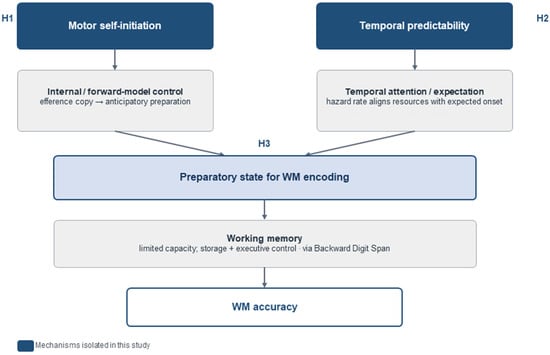
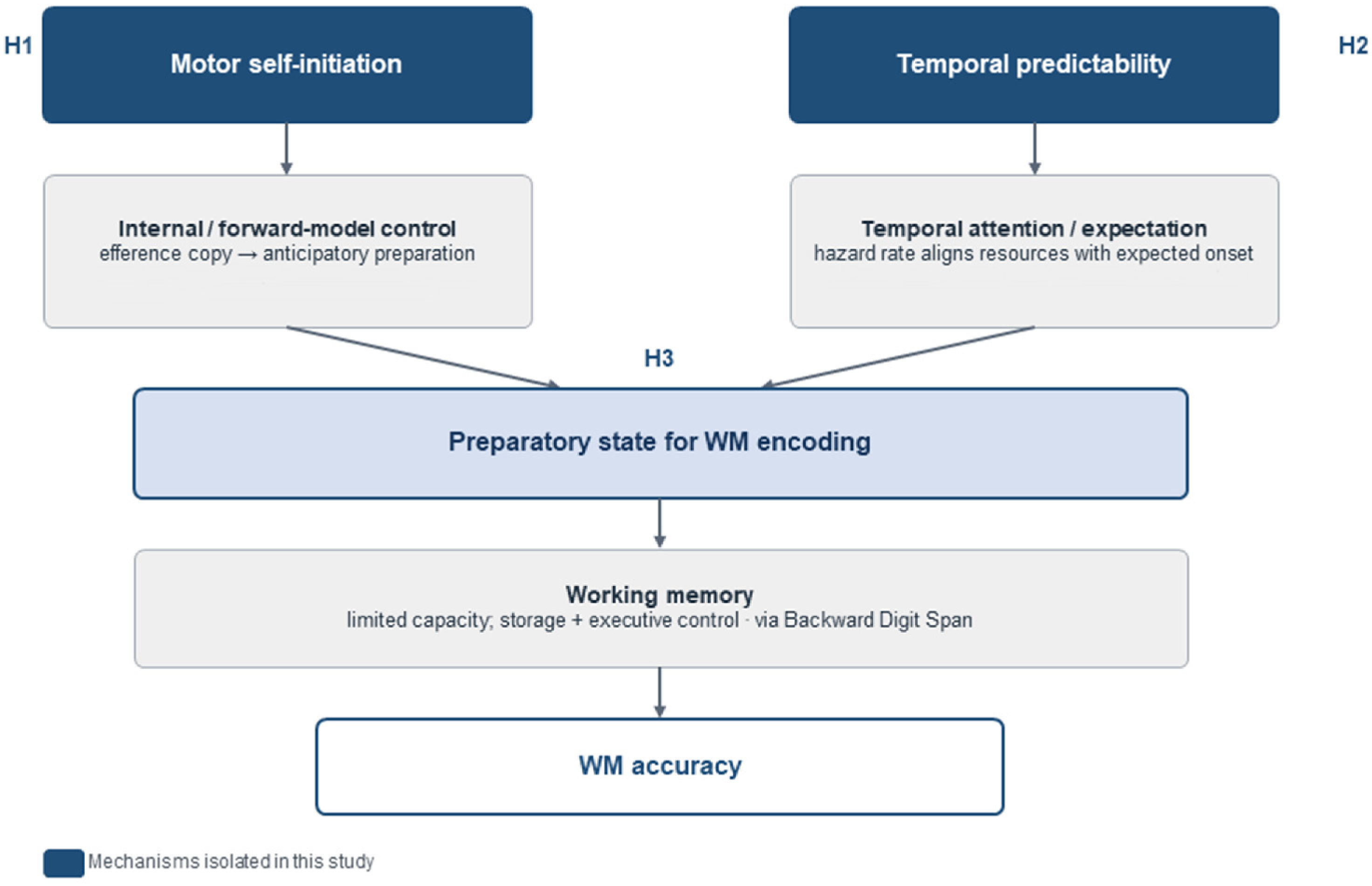
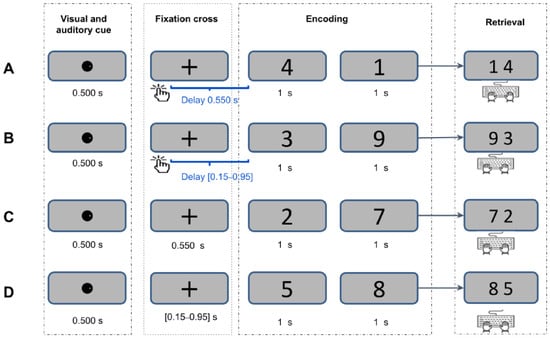
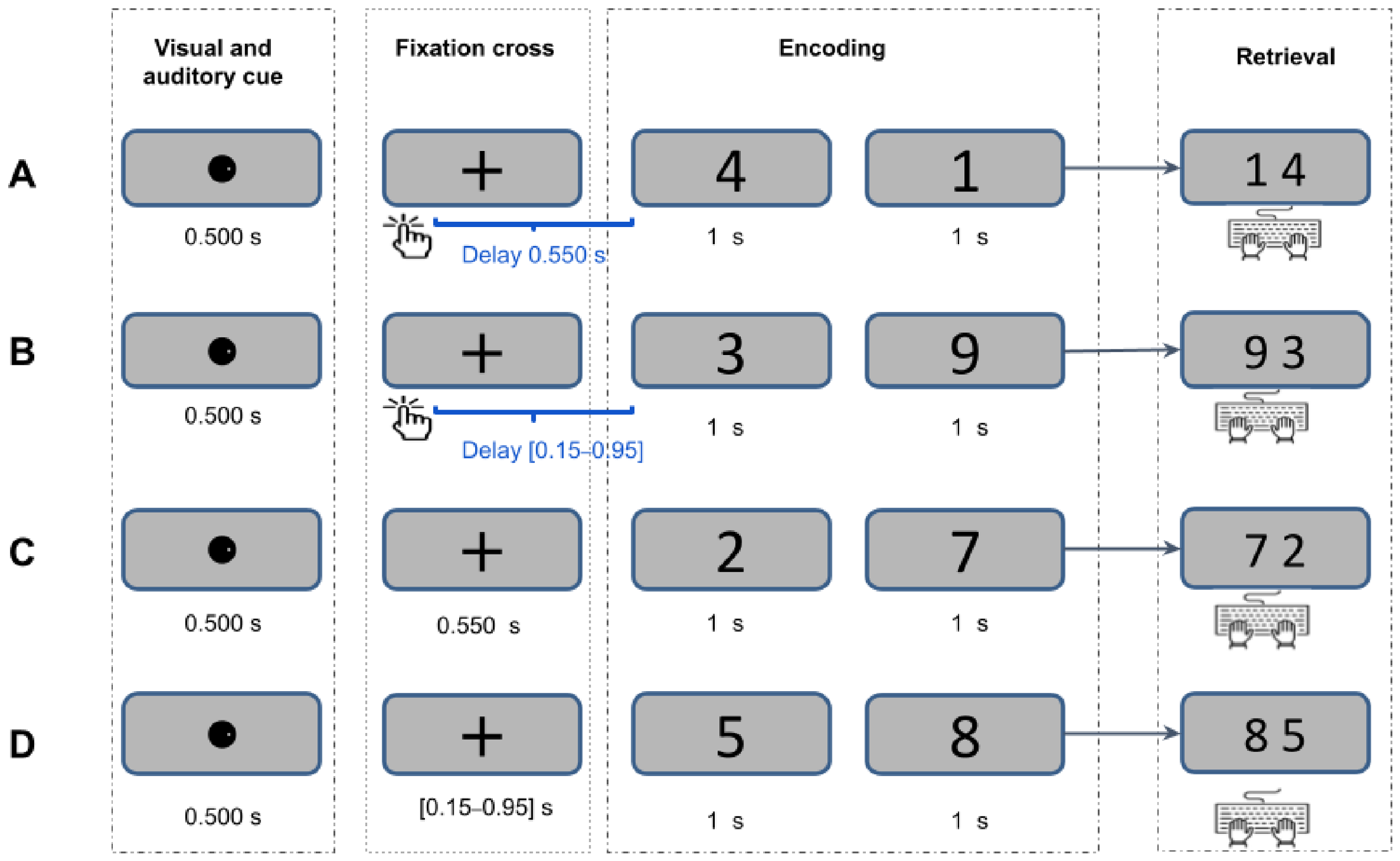
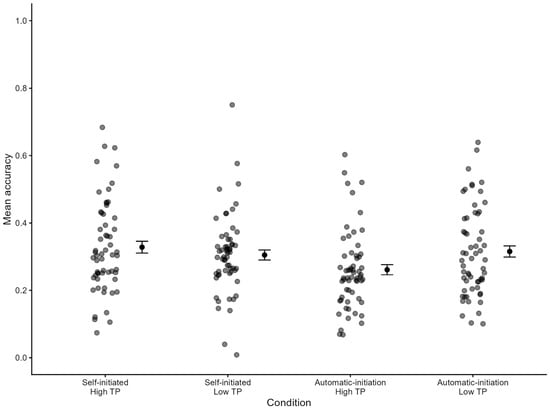
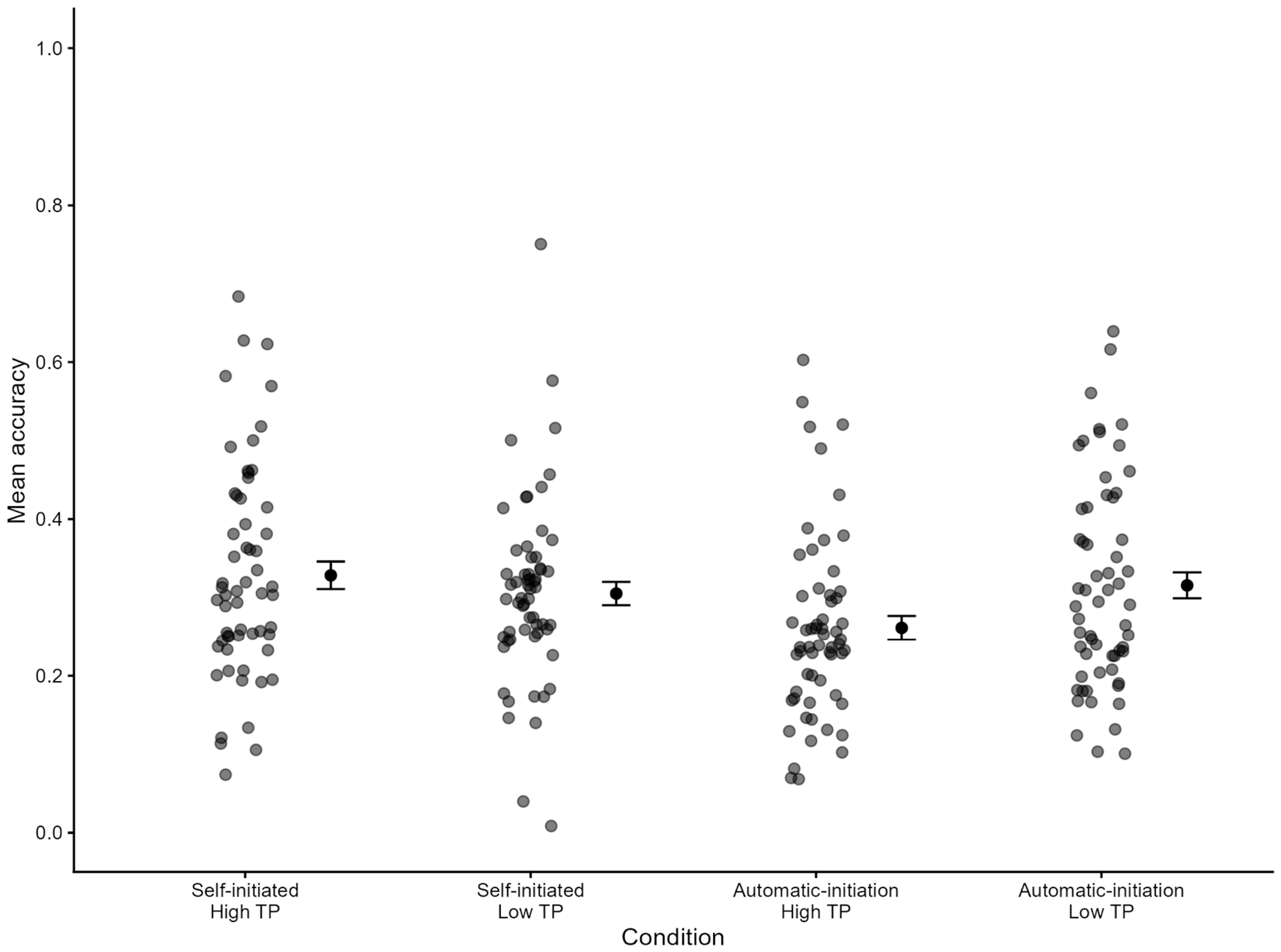

Disclaimer/Publisher’s Note: The statements, opinions and data contained in all publications are solely those of the individual author(s) and contributor(s) and not of MDPI and/or the editor(s). MDPI and/or the editor(s) disclaim responsibility for any injury to people or property resulting from any ideas, methods, instructions or products referred to in the content. |
© 2026 by the authors. Licensee MDPI, Basel, Switzerland. This article is an open access article distributed under the terms and conditions of the Creative Commons Attribution (CC BY) license.