


Abstract
Thousands of internationally educated teachers (IETs) apply for certification in Canada each year. Few succeed, often due to substantial systemic barriers. This qualitative study examines factors involved in the professional integration of IETs in Canadian K-12 classrooms. Participants include 21 IETs enrolled in a pilot graduate course designed to provide experiential learning opportunities in Canadian schools, 8 host teachers, 5 school leaders, and a teacher educator. Data from IETs was collected through online surveys and focus groups and through individual interviews with host teachers, school leaders, and one teacher educator. Thematic analysis revealed four themes: shared understandings and transferable skills and dispositions, the importance of leadership and other supports during experiential learning, barriers to professional integration, and the emergence of relational and professional trust through reciprocity. These findings suggest that addressing teacher shortage crises and the needs of culturally diverse classrooms through the recruitment of IETs would require the development of institutional capacity to receive, recognize, support, and retain IETs; leadership practices play a key role in creating these conditions.
1. Introduction
Around the world, education systems are experiencing one of the greatest workforce crises in recent history. The United Nations Educational, Scientific, and Cultural Organization (UNESCO) estimates that 44 million additional teachers will be required by 2030, while many jurisdictions are simultaneously facing declining teacher retention, increasing burnout, demographic change, and growing student diversity (Agyapong et al., 2024; Canadian Teachers’ Federation, 2025; UNESCO & International Task Force on Teachers for Education 2030, 2024). Together, these trends represent not simply a staffing challenge but a threat to the resilience, sustainability, and future viability of public education systems. These challenges have important implications for student learning and the long-term vitality of public education systems. Research consistently demonstrates that classroom teachers are the most influential school-based factors affecting student achievement, student well-being, and educational opportunity (Leithwood et al., 2004; Hattie, 2009; López-Martín et al., 2023; Opper, 2019). Educational leaders are therefore being challenged to develop innovative workforce strategies capable of future-proofing schooling for increasingly diverse student populations while maintaining or enhancing educational quality.
Canada is one of the countries significantly affected by the current teacher shortage crisis. As recruitment and retention strategies become central priorities, the growing population of internationally educated teachers (IETs) already living in Canada represents an important source of professional expertise. Many of these educators bring extensive experience, multilingual competencies, intercultural knowledge, and advanced educational qualifications, which can help schools respond to increasing student diversity while enriching teaching and learning. Increasing teaching representation of diverse student populations is key to an inclusive education system (Abawi & Eizadirad, 2020). IETs can serve as cultural and linguistic role models, contribute diverse pedagogical perspectives, and strengthen intercultural understanding within school communities (Marom, 2018; Othman, 2022; Schmidt & Janusch, 2016). International policy analysis also highlights the importance of intercultural teacher preparation and the role of school leadership in supporting teachers’ capacity to work in culturally diverse schools (Karanikola et al., 2025). Consequently, educational leaders should support the professional integration of IETs into Canadian schools not only to address teacher shortages but also to diversify the teaching workforce and draw on IETs’ professional, cultural, and linguistic expertise. Despite these potential contributions, IETs continue to be underutilized (British Columbia Ministry of Education and Child Care, 2024; Forum of Labour Market Ministers, 2009; Marom, 2019, 2025; World Education Services, 2019).
Recent consultations in British Columbia (BC) involving IETs, school districts, regulatory bodies, and other educational stakeholders revealed persisting barriers to workforce integration, including lengthy certification timelines, complex application procedures, limited access to timely information, and insufficient support structures for navigating certification and employment pathways (British Columbia Ministry of Education and Child Care, 2024). Many participants reported considering abandoning the profession altogether because of the complexity and duration of immigration and certification processes. This suggests that addressing teacher shortages requires more than increasing recruitment efforts; it requires leadership approaches that create coherent pathways through which IETs can be recognized, valued, supported, and successfully integrated into Canadian schools. This study examines one such initiative.
This study examines how institutional structures, leadership practices, professional expectations, and relationships within school communities shaped IETs’ experiences of professional integration within an initiative combining graduate coursework and K-12 experiential learning. Offered through a university-school partnership involving four school districts and two independent schools in the interior of BC, the initiative provided the context for examining the experiences of IETs, host teachers, school and district leaders, and a teacher educator, with particular attention to opportunities for professional participation, recognition, and relational trust.
1.1. Attributes, Dispositions, Qualifications, and Knowledge Required from Teachers in Canada
Teachers are among the most significant school-based influences on student learning (Leithwood et al., 2004). Understanding effective teaching therefore requires attention to the knowledge and competencies teachers bring to classroom practice. In their meta-analysis focused on secondary education, López-Martín et al. (2023) found that teachers’ knowledge, instructional planning and implementation, classroom management, assessment and feedback, and interpersonal competence were positively associated with students’ academic achievement. Opper (2019) research commentary similarly emphasized the importance of examining teachers’ classroom performance, noting that effectiveness cannot reliably be inferred from educational background, licensure, or years of experience alone. Together, these sources support attention to demonstrated professional practice and a range of teaching competencies when considering teacher effectiveness.
Teacher effectiveness also needs to be understood in relation to the organizational and relational conditions in which teachers work. Leithwood and Jantzi (2006) emphasized that successful educational environments are built through collaborative leadership, trust, and relational support. Similarly, research on teacher well-being and attrition suggests that supportive professional relationships are associated with teachers’ sense of belonging, job satisfaction and motivation to remain in the profession (Skaalvik & Skaalvik, 2011). Recent research links the quality of principal–teacher relationships to teachers’ experiences of burnout, highlighting the relational dimensions of teachers’ professional well-being (Dehne et al., 2025). These perspectives locate effective and sustainable teaching within relationships and organizational contexts, alongside individual knowledge and competence.
In Canada, professional and curricular expectations emphasize inclusion, student-centred learning, collaboration, creativity, critical thinking, social-emotional development, personal and social responsibility, and culturally responsive pedagogy. They also call for ethical and respectful engagement with Indigenous knowledge, responsiveness to multilingual learners, and the use of anti-oppressive and anti-racist pedagogies. Provincial and territorial professional standards articulate expectations for educators’ knowledge, practice, and conduct and inform certification and professional accountability. How these professional expectations are interpreted and applied, however, shapes whose knowledge and experience are recognized as evidence of competence.
Canadian educational systems are shaped by provincial curricula, professional standards, district policies, school cultures, and classroom-level expectations that IETs must learn to navigate. The British Columbia Ministry of Education and Child Care (2024) noted that many IETs described inclusive education and assessment practices in BC as substantially different from educational systems in their countries of origin. These differences are often accompanied by implicit expectations regarding communication styles, classroom relationships, parental engagement, and notions of teacher authority. Marom (2018, 2019) found that IETs frequently needed to renegotiate their understandings of classroom authority, assessment, and teacher–student relationships to align with dominant Canadian educational expectations.
A broad understanding of teacher competence also requires recognition of the professional strengths that racialized and internationally educated teachers bring to Canadian schools. Research on teacher diversity emphasizes the contributions racialized teachers (see Abawi & Eizadirad, 2020) and internationally educated teachers can make through cultural representation, relationships with diverse communities, and culturally sustaining pedagogies (Othman, 2022; Schmidt & Janusch, 2016). In increasingly multicultural educational systems, the knowledge and experiences IETs bring may constitute important professional assets rather than deficits requiring remediation.
1.2. Certification and Professional Recognition Barriers for IETs in Canada
IETs encounter barriers to certification, credential recognition, and employment across Canadian jurisdictions. Certification processes are often lengthy, expensive, fragmented, and difficult to navigate (British Columbia Ministry of Education and Child Care, 2024; Marom, 2023, 2025; Othman, 2022). National focus groups conducted by the CMEC (2014), identified difficulties accessing information, meeting financial costs, obtaining credential evaluations, accessing mentorship, and securing employment. Participants called for clearer information, more accessible pathways, and opportunities for practical experience. Subsequent research and consultations suggest that many of these concerns persist (British Columbia Ministry of Education and Child Care, 2024; Marom, 2019, 2025; World Education Services, 2019).
These barriers also involve judgments about professional legitimacy. Professional standards articulate expectations for competence and conduct, but their interpretation can privilege locally familiar knowledge and practices. Marom (2018, 2023) argued that dominant constructions of the “good teacher” and recertification processes can reproduce Eurocentric and white normative assumptions about pedagogy, classroom authority, and teacher–student relationships. Similarly, Othman (2022) questioned standardized approaches that insufficiently acknowledge differences in IETs’ preparation, experience, and expertise. Marom’s (2019) account of “capital conversion” helps explain how experienced teachers’ internationally acquired expertise can become devalued as they seek professional recognition in Canada.
Recognition barriers extend beyond certification into employment. Broader research on racialized immigrant women, including participants with teaching backgrounds, identifies Canadian-experience requirements, accent-based discrimination, and limited professional networks as obstacles to employment commensurate with their qualifications (Premji et al., 2014). Within education, Abawi and Eizadirad (2020) found that racialized teachers in Ontario perceived hiring practices as influenced by implicit biases and dominant notions of professional “fit.” These findings raise concerns about how culturally situated judgments may obscure the expertise that racialized and internationally educated teachers bring.
Employment disparities can persist after provincial certification. The Ontario College of Teachers (2023) reported that 18% of newly certified, internationally educated teachers who were newcomers to Canada could not obtain teaching employment in 2021–2022, compared with 1% of Ontario teacher-education graduates in their first year after certification (p. 9). Although the report cautions that the newcomer subgroup was small, it identifies a consistent pattern of higher unemployment across successive surveys. This comparison does not establish the causes of the disparity, but it demonstrates why certification and access to teaching employment must be considered distinct dimensions of professional integration.
1.3. Professional Integration: Structural, Relational, and Leadership Contexts
Professional integration extends beyond certification and employment to include how IETs learn to navigate educational cultures, institutional structures, relational expectations, and professional identities within Canadian schools—all of which are influenced by leadership cultures.
As Spillane et al. (2001) argues, leadership is fundamentally distributed across people, practices, and organizational contexts, shaping how policies are translated into everyday practice. Hallinger (2011) notes that instructional leadership extends beyond managing schools to creating organizational conditions that support teacher learning and professional growth. In their influential review of successful school leadership, Leithwood and Jantzi (2006) conclude that leaders influence student learning primarily by setting direction, developing people, redesigning organizations, and improving instructional programs rather than through direct classroom intervention. Consequently, the extent to which IETs experience certification requirements, induction programs, or mentoring opportunities as barriers or supports depends not only on formal policies but also on how educational leaders implement and coordinate these structures within local school systems.
Professional integration involves relational as well as structural supports. The CMEC (2014) focus-group report identified mentorship and practical classroom experience as critical supports for IETs entering Canadian schools. Here, experiential learning refers to participation in school practice through observation, action, dialogue, and reflection. Consistent with D. A. Kolb (1984) and A. Y. Kolb and Kolb (2005), learning arises through interpreting and reflecting on experience to inform subsequent action. For IETs, this process can support learning about a new educational context while recognizing their existing teaching expertise.
Complementing this experiential perspective, research on Freinet teacher learning networks in Greece highlights the collective dimensions of professional learning. Pantazidis and Moisiadou (2025) describe how grassroots networks foster shared responsibility, mutual care, and critical reflection while addressing teacher isolation. Their findings draw attention to the relational conditions that enable teachers to learn together. For initiatives supporting IETs, this raises the question of how access to collegial dialogue and reciprocal learning is organized within receiving schools.
School leadership is relevant to creating the conditions for collegial learning. School culture encompasses the shared values, norms, expectations, and relational patterns that guide everyday interactions within schools (Gruenert & Whitaker, 2015). Leaders contribute to the development of these cultures by establishing shared visions, modelling inclusive professional relationships, fostering collaboration, and creating psychologically safe environments in which teachers are encouraged to learn from one another (Fullan, 2020). Collaborative school cultures characterized by high relational trust, collective efficacy, and professional learning are associated with stronger teacher commitment, greater organizational learning, and improved student outcomes (Bryk & Schneider, 2002; Leithwood & Jantzi, 2006). For IETs, such cultures may be particularly important because they create opportunities for existing professional expertise to become visible through authentic participation rather than being judged primarily through credentials or assumptions about prior educational experience. Educational leadership therefore extends beyond ensuring compliance with certification requirements to intentionally cultivating organizational cultures in which internationally acquired professional knowledge is recognized as a valuable resource for school improvement.
Leadership and Relational Trust
Trust constitutes a foundational, yet underexamined, dimension of professional integration with IETs.
“Trust is the generalized expectation that the other will handle his freedom, his disturbing potential for diverse action, in keeping with his personality—or, rather, in keeping with the personality which he has presented and made socially visible. He who stands by what he has allowed to be known about himself, whether consciously or unconsciously, is worthy of trust.”(Luhmann, 1979, p. 39).
Key components of trust include embedded predisposition to trust (Colquitt et al., 2007), characteristic similarity, familiarity with the trustee, and reciprocity (Kramer & Tyler, 1996; Luhmann, 1979). Trust operates across multiple levels in education and includes a variety of players, all of whom interact with each other in important ways.
Within organizational trust in education there coexists critical elements of relational trust comprising the professional and personal relationships among those engaged with those in the organization. Relational trust is seen, at its most consequential levels, in school districts and in schools, where children, parents, teachers and administrators meet. The daily striving to achieve meaningful educational, emotional and citizenship goals with each child continues for years. Issues of competence, consistency, professional and personal regard for others, integrity, benevolence, fairness, caring, and more all comprise elements of relational trust in schools (Adams & Adigun, 2021; Handford & Leithwood, 2013; Noddings, 2005; Bryk & Schneider, 2002; Tschannen-Moran & Hoy, 2000).
There are also considerations of reciprocity of trust in relation to social exchange theory, as trust is essential for the commitments involved with ongoing and deepening relationships (Blau, 1964; Colquitt et al., 2007; Colquitt et al., 2012). A strong connection between positive expectations and the willingness to engage in risk (Lewicki & Bunker, 1995) is relevant. Figure 1 is a modification of a figure originally developed by Mayer et al. (1995). The basics of trust, briefly outlined above and cast in Figure 1, identifies that multiple components or relationships are at play. Ability, which includes competence, is the entry point for determining trustworthiness. Ability is not the only behaviour that matters, but ability or competence is essential (Handford & Leithwood, 2013). Personal and professional regard for others (Bryk & Schneider, 2002) includes concepts of care, benevolence, respect, forgiveness, and similar terms. Issues such as consistency, reliability, fairness and predictability can be grouped together with the word integrity (Handford & Leithwood, 2013). Together, these three issues, ability, personal and professional regard for others and integrity, form the key components of behaviours that a trustee needs to experience to feel confidence in the trustor and then to trust. The dotted lines on the boxes using the words ability, personal and professional regard for others and integrity, symbolize permeability. These words may be used slightly differently by different users.
Figure 1.
Factors of Perceived Trustworthiness.
Both players have agency. The trustor’s propensity to trust is determined by past experiences and the trustor’s understandings of the trustee. Familiarity and confidence with the trustee in relation to the context in which trust matters, as well as in relation to the elements of trust identified above, is essential for trust or distrust to exist in the trustor (Luhmann, 1979). For IETs, however, opportunities to establish such familiarity may initially be limited. School leaders, mentor teachers, and teacher educators therefore play a critical role in creating professional contexts in which internationally acquired expertise becomes visible through authentic participation rather than being judged solely through credentials or assumptions about their educational experiences.
Trust is always a question of risk assessment (Williamson, 1996), although some more now prefer to use the term vulnerability rather than risk (Jope, 2025). Decisions to trust involve evaluating the trustworthiness of another person in relation to the perceived risks and uncertainties of a particular situation. The trustor draws on available information—to determine whether the potential benefits of trusting outweigh the perceived risks or vulnerabilities. Because trust develops iteratively, each interaction either reinforces or weakens confidence in the trustee, shaping future judgement and willingness in subsequent risk-taking.
One issue that is relevant to trust in this paper is how trust among IETs and the school community develops during IETs’ experiential placements. Educational leaders, mentor teachers, and school communities are continually engaged in processes of risk assessment when evaluating teachers whose professional backgrounds, educational experiences, and cultural contexts may be unfamiliar. Leadership-supported induction and experiential learning may reduce this uncertainty by creating authentic opportunities to observe IETs’ competence, professionalism, and commitment in practice. As familiarity increases and internationally acquired expertise becomes visible, perceived risk is reduced, relational trust can develop, and educational leaders may become more willing to recognize IETs as valued members of the professional community.
Shared practice and discussion can give IETs knowledge of local classrooms while giving host teachers opportunities to encounter IETs’ existing expertise. Such encounters may inform judgments of competence and professional regard; they cannot guarantee recognition or trust when participation is limited or locally dominant norms go unexamined. Knowledge and understanding of cultural and professional similarities and differences may help to bridge the risk elements inherent in trust. Distributed leadership could help with this in a great many ways (Miesner et al., 2022; Rising & Packendorff, 2026) as familiarity and shared purposes breed better understanding of others. Liljenberg (2014) refers to elements of distributed leadership as relational infrastructure.
Taken together, the extent of the literature reviewed suggests that supporting IETs’ professional integration involves both accessible certification pathways and organizational conditions that enable participation, recognition of experience, and relational trust. Educational leadership has an important role in shaping these conditions. Although the reviewed studies document substantial barriers to certification and employment, they offer less insight into how leadership practices support or constrain recognition and trust during school-based experiential learning. The present study contributes to this understanding by examining the experiences of IETs, host teachers, school and district leaders, and a teacher educator involved in a university–school partnership in the interior of BC.
2. Materials and Methods
2.1. Epistemological Perspectives and Research Design
The purpose of this study was to describe, understand, and interpret IETs’ experiences within the Introduction to BC Schools initiative, also drawing on the perspectives of host teachers, school and district leaders, and a teacher educator. The analyses examined how leadership practices and organizational and relational conditions shaped opportunities for professional participation, recognition, and trust. Consistent with a critical epistemological perspective, the study sought to challenge deficit-oriented assumptions about IETs by illuminating their professional strengths, expertise, and contributions to Canadian schools, thereby informing more equitable approaches to teacher certification, induction, and workforce integration. This study was therefore informed by interpretive and critical epistemological perspectives as described by Merriam and Tisdell (2016).
Consistent with the study’s critical epistemological orientation, the research sought to understand participants’ experiences within the institutional, relational, and sociocultural contexts that shape the development of trust and subsequent professional recognition and integration of IETs. Guided by an interpretivist paradigm, the study recognizes that participants construct meaning through interactions with people, institutions, and sociocultural contexts (Merriam & Tisdell, 2016). Accordingly, the research sought to understand how participants interpreted their experiences rather than measuring predetermined outcomes. The methodology was therefore particularly appropriate for investigating the relational, emotional, and contextual dimensions of IETs’ professional integration that are often overlooked in studies emphasizing employment outcomes or certification pathways alone.
2.2. Context of the Introduction to BC Schools Program
The study was conducted within the Introduction to BC Schools Program, a pilot initiative developed by a BC university in partnership with regional school districts and independent schools across BC. The program was designed to support IETs in developing knowledge of the BC education system while simultaneously creating meaningful opportunities for experiential learning within local schools.
The program consisted of two integrated components. The first was a graduate-level course, Introduction to BC Schools, which introduced participants to the philosophical, curricular, legal, cultural, and pedagogical foundations of education in BC. Emphasis was placed on Indigenous perspectives, inclusive education, assessment practices, classroom culture, professional standards, educational policies, and reflective practice.
The second component involved a three-week school-based experiential learning placement. IETs were matched with experienced teachers in elementary or secondary classrooms across participating school districts and independent schools. Placements were designed as non-evaluative learning experiences rather than formal practica. Participants observed classroom instruction, assisted with teaching and learning activities, engaged in professional conversations with educators, attended staff meetings when appropriate, and gradually participated in classroom responsibilities under the guidance of Canadian host teachers.
Together, these complementary experiences created opportunities for participants to connect theoretical learning with authentic professional practice while developing relationships within local educational communities.
2.3. Participants1
Participants were recruited from the Introduction to BC Schools initiative. All 23 IETs enrolled in the initiative were invited to participate in the study. The participant pool was therefore bounded by enrolment in the course rather than selected from the broader population of IETs in Canada. Additional perspectives were sought from educational stakeholders directly involved in or connected with the program, including host teachers, school principals and district leaders, and a teacher educator.
This recruitment approach provided access to participants with direct experience of the phenomenon under investigation but also situated the study within a highly scaffolded educational intervention. Consequently, participants’ experiences should not be interpreted as representative of IETs more broadly, particularly those navigating certification, employment, and professional integration without comparable institutional support.
In total, 21 IETs (four males and 17 females) from the Winter 2025 and 2026 Introduction to BC Schools initiative (see Table 1), eight Canadian host teachers (two males and six females), three school principals (one female and two males), two school district leaders and a teacher educator (see Table 2) agreed to participate. IETs represented diverse linguistic, cultural, and professional backgrounds, including teachers from countries across East Asia, West Asia, Southeast Asia and Africa. All IETs held teaching qualifications and prior teaching experience obtained outside Canada and were pursuing graduate studies while exploring pathways toward teacher certification and employment in BC.
Table 1.
Profiles of Participant IETs.
Table 2.
Profiles of Host Teachers, District-Level Leaders, and Teacher Educator.
2.4. Data Collection
Data were collected longitudinally across three phases from March to July of 2025 and March to June of 2026 to capture participants’ evolving experiences throughout the program.
2.4.1. Phase 1: End-of-Course Survey and Focus Group
Following completion of the graduate course, IETs completed an open-ended survey exploring their expectations, perceived learning, confidence, and readiness for school placements. An institutional licensed online Survey Monkey was used (Copyright © 1999–2026 SurveyMonkey).
2.4.2. Phase 2: Mid-Placement Interviews
Approximately one week into the experiential learning placement, IETs engaged in semi-structured focus groups of about 3–4 IETs that examined participants’ early impressions of Canadian schools. Interview questions explored classroom observations, interactions with host teachers, relationships with students and the school community, emerging professional learning, unexpected experiences, and evolving understandings of teaching within the BC context.
2.4.3. Phase 3: End-of-Placement Survey and Interviews
At the conclusion of the three-week placement, participants completed a second qualitative survey followed by focus groups using semi-structured interview protocols. These data focused on participants’ reflections regarding professional growth, confidence, intercultural learning, remaining challenges, perceptions of belonging, and future career aspirations. Individual semi-structured interviews were also held with host teachers, school principals, district leaders, and a teacher educator.
Conducting data collection across three time points allowed the study to capture change over time rather than relying solely on retrospective accounts. Across all phases, interviews were conversational and flexible, allowing participants to elaborate on issues they considered most meaningful while ensuring consistency across core topics. Interviews were audio-recorded with participants’ consent and transcribed verbatim for analyses.
2.5. Data Analysis
Data analysis followed Braun and Clarke’s (2022) approach to reflexive thematic analysis. This approach was selected for its flexibility in examining patterns of meaning across participants’ accounts while acknowledging the researchers’ active role in interpretation. After each interview or focus group, the first two authors discussed their initial impressions and recorded reflective notes about emerging questions, possible patterns, and preliminary insights. All three authors read the transcripts and written survey responses. The third author undertook the initial coding using Nvivo 15 (© 2026 Lumivero. All rights reserved), moving from descriptive codes toward more interpretive ones. The authors met several times to review the codes, discuss differing interpretations, and consider similarities and differences across participants’ accounts. Through successive rounds of grouping, discussion, and revision, they developed themes that interpreted patterns of meaning across the dataset. In refining these themes, the authors considered relevant scholarship on educational leadership, recognition of internationally acquired expertise, the structural and relational dimensions of IET integration, and relational trust.
2.6. Trustworthiness
Several strategies were employed to enhance the trustworthiness of the findings in alignment with Jones et al. (2022). Credibility was strengthened through integrating surveys, focus groups, and interviews collected at multiple time points. Longitudinal data collection enabled participants to reflect on experiences as they unfolded rather than relying exclusively on retrospective recall. Dependability was enhanced through maintaining an audit trail documenting coding decisions, theme development, and analytic reflections. Regular discussions among members of the research team contributed to analytic rigor by challenging interpretations and refining emerging themes.
We addressed confirmability by documenting how our interpretations developed, including reflective notes after interviews and focus groups, initial codes, and revisions to themes discussed by the research team. These records helped us examine how our positions and expectations shaped the analysis and made the reasoning behind the themes more transparent; they were not intended to establish a single objective reading of participants’ accounts. To support judgments about transferability, we describe the program structure, the three-week placements, recruitment, participant groups, and the institutional support available to them. These details allow readers to assess the relevance of the findings to other settings. Because participants were recruited from a supported program, we do not assume that their experiences represent those of IETs navigating certification and employment without similar support.
One author developed the academic calendar description and learning outcomes for the Introduction to BC Schools course but did not teach the course or arrange participants’ school placements. Timothy, the teacher educator who delivered the course, was not a member of the research team. Nevertheless, participants may have perceived the researchers as connected to a program that could affect their future professional opportunities. Assurances that participation would not affect academic standing could not eliminate this perceived power difference. It is possible that some participants were reluctant to criticize the program or their placements, and the predominantly positive accounts must be interpreted with that possibility in mind. At the same time, IETs and other participants described social exclusion, gaps in school-based support, and barriers related to certification and immigration procedures. We attended to these accounts without assuming that their presence meant participants felt free to voice every criticism.
2.7. Ethical Considerations
Ethical approval for this study was obtained from the Research Ethics Board at the authors’ university affiliation prior to data collection. Participation was voluntary, and informed consent was obtained from all participants. Participants were informed that their decision to participate or decline would have no effect on their academic standing, participation in the Introduction to BC Schools program, or relationship with the university.
To protect confidentiality, pseudonyms were assigned to all participants, and identifying information was removed from transcripts and reports. However, anonymity was not guaranteed; participants were also made aware of the potential of being identified by someone familiar with the study context despite these safeguards. All digital data were stored securely on password-protected university servers accessible only to members of the research team.
3. Results
3.1. Theme 1: Shared Understandings and Transferable Skills and Dispositions
IETs identified several parallels between educational practices in BC and those in their countries of origin. These similarities included professional standards and expectations for teachers, the development of students’ key competencies such as critical thinking and communication, familiar teaching subjects, and the emphasis on teacher–student rapport and a positive classroom environment. This forms a shared understanding of what is needed to be a successful teacher in BC. IETs also demonstrated valuable traits such as openness, flexibility, curiosity and adaptability, which are desirable dispositions expected from Canadian teachers.
Jia Ning, an IET from East Asia, highlighted commonalities in relation to professional standards and expectations by stating:
Both education systems have similar requirements on the norms of teacher conduct, teachers as models of students, and both education systems aim to cultivate citizens who contribute to the community.
Wen Lyu, an IET from West Asia, commented on the importance of 21st century competencies in both countries:
Both share similarities in their focus on key competencies like critical thinking, problem-solving and communication, to develop students to be future-ready. This means that apart from the academic subjects’ content, the teaching of key competencies is also embedded in the curriculum for teachers to deliver. Both systems also harness the use of technology in learning to enhance the learning experiences of students to prepare them for the digital future.
In relation to inclusive education, a core value of Canadian education, Joshua, an IET from the South Asia, stated:
Both place significant emphasis on inclusive education, recognizing the diversity of students and fostering equitable, safe learning environments for all. There is also an emphasis on relationship-building as a foundation for learning and resourceful teachers transforming everyday materials into engaging learning tools.
Several IETs stated that familiar teaching subjects eased their transition as they did not have to grapple with both the content and pedagogical differences. For example, one IET stated, “I’ve been teaching mathematics and chemistry back home, so I felt that this is like a home to me.” (Oya)
IETs narratives also highlighted personal dispositions that supported their successful integration into the BC schools during their experiential learning. Most IETs demonstrated openness and adaptability, which facilitated their adjustment to a new teaching context. They were curious, willing to learn, and receptive to alternative pedagogical approaches, “I told myself that I’m just going to be a sponge. I know there’s a lot to learn. […] So I carried that mindset when we were starting the placement.” (Monica)
Moreover, IETs expressed readiness to explore new instructional strategies and to accept constructive feedback. To illustrate, Meesha stated, “Tomorrow when I give the lesson, the feedback which I get from the mentor teacher and the principal will help me a lot to improve myself and to come up to the expectations of BC standards.”
Similarly, a school principal highlighted how capable IETs hosted by their school were:
The teacher mentors have been saying how eager the TWINQ [Teachers with International Qualifications] stdents are. I don’t know if we’ve just been lucky with the students that we’ve gotten so far or not, but they have been very, very level-headed, almost to a tee, very calm. Their approach has been very, very similar, the students that we’ve dealt with. And it’s the sort of thing where they’re very relational, I guess, is the word that would best describe it. They have been competent with their lessons for sure, but they’ve also been open to feedback from the various teacher mentors that have helped.(Kris)
These dispositions appeared to play a critical role in enabling them to navigate differences and respond to challenges within their new professional context. To this, host teacher Kathy affirmed, “She went from being very textbook rigid to making it interesting and fun, because that’s the way that she watched me teach. And it’s so far out of her comfort zone, but she made it her comfort zone.”
IETs’ openness to the new environment was a strength also noted by the teacher educator:
She was in a school where they weren’t very welcoming. And that’s that school; that’s the way it is. But she just ignored that and she just asked questions. Can I go into that classroom? I saw a student in a wheelchair down in that classroom. Can I go in and look? So, she had so much confidence that she just did that, right?(Timothy)
IET Monica’s statement is another example of IETs’ ability to adapt to a new teaching environment:
I find myself initiating a lot, which is fine. It’s okay with me. But I do it respectfully. I don’t want to overstep. You know, you want to be able to kind of just be available to support. I always tell my teacher mentor that I’m here whenever you need me. But I kind of changed my perspective. Instead of waiting and being passive, I wanted to be more proactive, and I think that helps.
School principals and superintendents acknowledged IETs’ teaching experience and professional competence and noted their readiness for Canadian classrooms. For example, Superintendent Vicki stated, “[…] I think it’s a win-win opportunity. It was easy to get behind. […] I look at our district, and we really struggled to hire people this year, like our last four or five hires were international.” This was corroborated by Principal Kyra:
Safina just had that maturity and that experience. So, it was very easy to have her at the school, and it was very easy to see that she’s very competent with a little bit of coaching on how Canadian schools work. She would just be off and off and running. Yeah, she’s absolutely ready to teach and yet she’s kind of being hampered because she doesn’t have the certification.
Moreover, several host teachers and school principals emphasized that, unlike traditional teacher candidates who are still learning to become teachers, IETs entered the experiential learning opportunity with well-developed pedagogical knowledge, classroom management skills, and professional confidence acquired through years of teaching experience. Although they were newcomers to the BC educational context, they were not newcomers to the profession. As one principal explained:
There is certainly a difference between the TWINQ [Teachers with International Qualifications] students that I’ve encountered versus the student teachers who are working on their B.Ed., because the TWINQ students do have a background in education. I mean, no matter what the cultural aspect is, or what the practices are in the country that they’re coming from, they still have experience. And that really shows; that really does show.(Kris)
Participants’ openness, adaptability, and professional strengths supported their own adjustment to BC schools during their experiential learning. They also created opportunities for meaningful contributions within their school communities. In addition to IETs’ teaching skills, knowledge and dispositions, welcoming school and community environments facilitated by principals and superintendents contributed to the success of the experiential learning opportunity. This will be examined in the next topic.
3.2. Theme 2: The Importance of Leadership and Other Supports During Experiential Learning
IETs identified several forms of support that facilitated their integration into the BC education system, such as a formal introduction to staff and students, having a helpful and experienced host teacher, a welcoming workplace community, and having the support of district leaders and the teacher educator.
Introduction to the school community mainly occurred through school principals, staff meetings, email communications, bulletin board postings, or school-wide announcements via the public address system. An IET noted how such formal recognition contributed to a warm welcome and helped clarify their roles and purposes within the school community:
On the first day when I went there, they gave me a very warm welcome […]. My name was announced and I received a beautiful welcome from the principal. She took me around, introducing everyone to me. […] everyone knew who I am, where I have come from and why I am here. […] They knew why I was there. I’m here to learn, so people were ready to share.(Meesha)
This warm welcoming to schools led by the school principal signaled personal and professional regard and invited colleagues and students to engage with IETs. One host teacher beautifully captured this, stating:
We have developed a very excellent relationship, and we have talked about the difference between cultures, not just as parents, we’re both parents. We’ve talked about experiences as women in our cultures. We’ve talked about experiences as teachers in our cultures. We’ve talked about the different teachings that happen in everybody’s classroom.(Kathy)
Host teachers functioned as key intermediaries between IETs and the broader professional community. Participants emphasized the importance of their hosts as mentors who demonstrated qualities such as approachability and a welcoming disposition. Strong classroom management skills and professional experience were also identified as valuable attributes, as they enabled host teachers to provide practical guidance. IET Diya found that having more than one host teacher at a school was useful when considering different teaching strategies and styles, “So Monday [and] Tuesday, I am with Miss G with the same grade. And Wednesday to Friday, I am with Miss H, so I’m watching like two different teachers teaching in their own ways.”
School district leaders, school administrators and the teacher educator supported the IETs, particularly in orientating them to the Canada and BC education system and resolving some of the practical challenges that the participants faced, such as transportation and accommodation. The IETs also found the weekly virtual check-in with the teacher educator useful and a reassuring source of support for them.
Finally, IETs underscored the importance of belonging to a welcoming workplace community. As stated by IET Tavesh, supportive collegial relationships contributed significantly to their sense of inclusion and professional confidence:
During this time, I had the opportunity to meet many people from and outside of school. The formal and informal communication I had with them was quite a learning experience for me. In addition to my host, who was the Vice-Principal of school, and my mentor teacher, I had the opportunity to meet indigenous support workers when I participated in trainings. Having interacted with them, I got to know different techniques, strategies, and support systems. I could develop a network that I think is going to help me in the later stage of my life. In addition to that, I also had the opportunity to communicate with local people. I had a conversation with the mayor. During the conversation, he agreed to support and help us if we need it in future. So that was also a kind of, you know, an empowering experience. In addition to that, I got the opportunity to meet local physicians, dentists and other personnels. I got really connected with the community.
These quotes reveal the central role of principals in welcoming IETs to the schools, the host teachers in familiarizing them with BC teaching practices, and the teacher educator in providing ongoing support during their three-week placement at BC schools. This highlights the importance of a multilevel support system for the successful integration of IETs into Canadian schools.
Although IETs consistently described the experiential learning as supportive and professionally enriching, their accounts also revealed that professional integration was neither straightforward nor without challenge. As IETs navigated unfamiliar educational structures, cultural expectations, and evolving professional identities, they encountered a range of internal and external tensions that shaped their experiences in BC schools. These tensions were also experienced by the host school communities.
3.3. Theme 3: Barriers to Professional Integration
Although IETs described many positive experiences during the school placements, they also identified barriers to professional integration. Some IETs described anxiety and uncertainty as they entered unfamiliar school communities. They also reported difficulties gaining recognition for their prior teaching experience and experiences of social exclusion, including concerns about racism. Beyond the school, participants described lengthy teacher certification processes and immigration procedures that created uncertainty about their ability to teach and remain employed.
The barriers IETs described began with the experience of living and teaching in an unfamiliar place. For Makker, a limited social network in the placement community contributed to feelings of isolation:
I was feeling quite homesick here because there is nobody I know around, in the community. Most of the time I spend all the time within my room or just going outside to walk around the different trails or the shops and cafes.
Some IETs struggled with feeling like outsiders to the classrooms where they were placed and questioned how valid their teaching experiences in their countries of origin were to Canada, “I bring a lot of experience from my teaching background, I realized that that not all of it may be immediately valued or recognized in the school where I was placed.” (Joshua)
Some IETs reported difficulty engaging in informal staffroom conversations due to a lack of shared contextual knowledge, coupled with limited efforts by host schoolteachers to facilitate their inclusion:
It was quite hard to fit in because during lunchtime, everyone just sat down and they started talking among themselves. I would have expected them to ask where I was from because I’m a new face, you know? There wasn’t much of that. So, what I had to do was kind of listen in the conversation and join when I can. Sometimes the topics that they were talking about, I don’t have the context […] it’s a bit hard to enter their conversation.(Wen Lyu)
Informal conversations and collegial relationships were another part of professional integration. Some IETs described difficulty entering established staff groups, with consequences for the guidance and opportunities available to them. Joshua reflected on how he perceived the staff culture in one placement school:
The teachers lean more towards conservative views politically and socially, so they’re not very open to people like us, I think. So, there’s not much avenue or space for us to really showcase what we have, especially in a very conservative community. The teaching staff in that certain community feels like they’re being observed and evaluated too. That’s why I think that they’re not very open to providing us with the resources and the mentorship that we need […] I think that they have a sense of like they’re being observed or that we’re going to report back to the District Office.
Joshua connected his difficulty accessing resources and mentorship to two perceived dynamics: a lack of openness toward IETs and staff’s concern that visitors might report their observations to the district. His account cannot establish his colleagues’ political views or motives. It does, however, show how perceived distance between visiting educators and established staff can limit the professional exchange that a placement is intended to support.
For Diya, the difficulty was expressed through everyday interactions. She described feeling like an outsider when colleagues did not greet or speak with her:
I feel like sometimes I feel like an outsider. Like nobody like waves, says good morning to me and nobody likes to talk to me. Maybe I am the only Indian there, I would say. Maybe, I don’t want to say this word, but I really feel that.
Diya connected these experiences to being the only Indian educator at the school, while expressing uncertainty about how to name what she felt. Her account does not establish why individual colleagues did not engage with her. It does show that seemingly small acts of acknowledgement matter to an IET’s sense of belonging. Reading alongside Joshua’s account, it raises a question for receiving schools: whether visiting educators are given access to collegial relationships, mentorship, and recognition as members of the professional community.
As noted by school superintendent Vicky, not all host teachers were welcoming and supportive “One (host) teacher wasn’t 100% receptive and one of your [IET] candidates was too nice to say something.” Vicky also explained that there were some internal tensions in that school board between some teachers and leadership which could have influenced poor communication about the purpose of having IETs in their schools, and their lack of support during their experiential learning. Through effective leadership intervention, the IET was placed in a different classroom.
Occasional reservations towards IETs were also noticed in some communities. For example, the HR Manager commented:
The other thing that we have noticed that we have not been able to overcome is how the community receives people who are different than they are. So, diversity, right? We, as human nature, tend to gravitate to what it makes us comfortable. And when there’s something that’s uncomfortable, either we push beyond it and we are accepting, or we stand back here and we’re a little bit reluctant. And so, we’ve noticed in one community in particular, they were very unsupportive of our international teacher. She wears her [religious outfit], which is very different than what the community is used to.(Janice)
Janice’s account also demonstrates that barriers to professional integration extended beyond unfamiliarity with Canadian educational practices. The explicit reference to the teacher’s religious outfit suggests that religious and racialized identity shaped how the IET was received within the broader school community. Consequently, the resistance she encountered cannot be adequately understood as a matter of cultural adjustment on the part of the IET. Rather, it directs attention toward the receiving environment and the conditions under which some educators are more readily recognized as legitimate members of a school community than others. Significantly, the account also illustrates the role of leadership when professional inclusion is challenged by attitudes within the surrounding community.
The pressures IETs encountered were not limited to gaining acceptance within school communities. The HR manager described how concerns about immigration status could shape an educator’s ability to respond to difficulties at work:
For some of the challenges that she’s faced culturally, I say this with confidence that if it was a Canadian person, they would be on medical leave, they would have gone off, but they don’t have that opportunity or that privilege that we do. Because if they do that, they run the risk of not getting their immigration papers approved. But the difference is these people are coming here, and they’re trying to understand the mismatch, and they’re working really hard, and they don’t have the opportunity to fail. If they fail, they go back to a place they don’t want to be.(Janice)
Janice presents the educator’s continued participation as evidence of determination, while also identifying unequal choices that complicate that interpretation. In her account, concern about immigration consequences made stepping away from work seem less available to the IET than to a Canadian colleague. The comparison shifts attention from an individual trait to the conditions under which professional commitment is judged: continued work may be read as resilience even when an educator feels unable to pause. The HR manager’s account does not establish how the IET herself understood her options or what consequences she would have faced. It does, however, show why school leaders should examine the pressures surrounding IETs’ participation rather than treat their persistence as a resource the system can assume.
Challenges with teaching certification emerged as another to professional recognition. IETs felt that the process of certification was too time-consuming, and many struggled to gather the documents that were required for certification. Many experienced challenges in obtaining required documentation, particularly those from countries with less formalized record-keeping systems. Ironically, IETs with extensive professional experience sometimes faced greater obstacles, as certification requirements necessitated documentation from many years prior.
I think the TRB [teacher regulation branch] process is something that is a big hurdle to international teachers who are trying to come in. I kept hearing that the school districts need teachers. But when I applied for TTOC [teacher teaching on call] before this TWINQ [Teachers with International Qualifications] program. I don’t hear from them. So, I think they’ll prioritize those with certification and those that are already living in that area. So, we are kind of like on the losing end of the process. I mean the reality is, if you are an international teacher, the application process will be up to nine months to a year. In reality, how are we able to go for nine months without a job? So, we will have to look for something else and that’s how the international teachers don’t end up in the industry I feel.(Wen Lyu)
Another IET stated:
I had done my B.Ed. in the year 2008, so just imagine how can I submit the verification for 2008? Almost decades have passed and I cannot get those details. Even TRB has asked for the syllabus and again my question is 2008. How will they preserve the syllabus from 2008? I tried to reach out to my institution. They say that they have all given back to the university. Now they are searching for that syllabus.(Tavesh)
In addition to challenges with teaching certification, IETs faced uncertainty related to immigration procedures and administrative decisions. Janice, a school district HR manager, described how an interruption to one certified teacher’s work permit led to unpaid time away from the classroom and ultimately left the district without a qualified teacher:
IRCC [Immigration, Refugee, and Citizenship Canada] had screwed up her paperwork and revoked her work permit, saying that she couldn’t … and needed to have a comprehensive medical. She had no vehicle. We had to get her to (nearby city) only to find out IRCC hit the wrong key on the computer. It happens, I get it, but this is a pretty big problem. So, she had two weeks of unpaid time. We got her back into the classroom, and her work permit was not extended. So, we had a finite period, IRCC suggested we try under significant benefit category. Ten months later, they tell us, no, she’s not a significant benefit to Canada. I don’t know what they mean by significant benefit. I see a qualified certified teacher flourishing in the class. That’s a significant benefit and a right by our Canadian students to have quality public education. And… they revoked her work permit again. And so, here I am for the second time in that classroom in two years without a certified qualified teacher.
Barriers to professional recognition also arose in everyday judgments about how teachers should conduct themselves. Host teacher Cheryl reflected on differences she noticed between her own practices and those of a visiting IET, while expressing uncertainty about whether and how to raise them:
Maybe it’s a cultural difference, I’m not sure. But she shows up right at the bell, leaves right at the bell. Whereas, I’m here 40 min before school […] And then after school, I’m emailing parents or I’m making phone calls home or I’m cleaning up the class or I’m prepping, I’m marking, I’m doing something. […] I could have said, hey, you should come early or you should stay late. But I also was like, she’s so much more experienced than I am. […] I’m not here to be her boss. Like, she showed up for the day and everything. Yeah, she was on her phone a little bit, which I was like, I don’t, I only go on my phone at recess and lunch. So, I was like, you know, I’m role modeling what we should be doing. But again, I think it was maybe awkward because she’s older than me and like was so experienced. I didn’t want to be like, put away your phone or whatever.
Cheryl’s account illustrates the complexity of evaluating IETs through locally established, and often implicit, norms of teacher professionalism. Arriving at the formal start of the school day and leaving when the school day ends may be interpreted within a particular school culture as indicating limited commitment, even though these expectations may extend beyond teachers’ formally defined responsibilities. In this instance, professional commitment appears to be assessed not only through teaching competence but also through conformity to tacit norms governing time, presence, collegial participation, and appropriate professional behaviour. The episode therefore illustrates how IETs may be evaluated against expectations that are culturally and institutionally situated but experienced locally as self-evident indicators of professionalism.
This tension is particularly significant because the IET was participating as a visiting educator rather than as a salaried employee. Expectations surrounding presence before and after formal school hours therefore raise questions about whose professional norms are being used to evaluate IETs and whether conformity to local practices becomes an implicit condition for professional recognition. Viewed through a critical lens, the episode demonstrates how deficit interpretations can emerge even within supportive relationships: difference may be read as evidence of insufficient commitment rather than prompting examination of the norms against which professional behaviour is being judged. At the same time, Cheryl’s own qualification of her observation suggests awareness of this ambiguity, illustrating the negotiated and sometimes contradictory nature of professional recognition.
Together, these accounts show how IETs’ experiences extend beyond learning new curricula or school procedures and were shaped both by their interactions within schools and by institutional decisions beyond them. They also reflect the uncertainty, unfamiliarity, and implicit assumptions that often accompany entry into a new professional and cultural context. Despite the challenges reported above, all participants found the experiential placement extremely valuable and consistently demonstrated resilience, openness, and willingness to adapt while drawing on their existing professional expertise. These qualities became important foundations for the reciprocal relationships and professional growth described in the following theme.
3.4. Theme 4: The Emergence of Relational and Professional Trust Through Reciprocity
K-12 students benefited from having IETs in the classrooms. Through interactions and lessons conducted by the IETs, students gained greater cross-cultural understanding and fresh perspectives on familiar topics. For example, host teacher Cheryl stated:
We blocked her like 30 min, and I think they talked like an hour and 10 min or something because the kids just had so many questions. She brought money from home to show them because we were doing a money unit in math. So, she brought the money to compare to Canadian money and that was really cool. I could always, you know, find all these other places and money and stuff, but it was cool to like have, it was like having a guest speaker come in and like share about a different place in the world that the kids didn’t know much about.
Similarly, host teacher Kathy commented on how students were able to connect culturally with the IETs:
[…] we really enjoyed hearing her story and hearing about her culture. She was able to share about Iranian culture with the class that she was observing, and that was really wonderful. […] it’s so good for our kids to see immigrants coming into Canada and to hear about their stories and to realize that there is so much positive that is brought in from people coming into Canada and to know that she’s a teacher and that she would like to teach in Canada as well.
The value diverse cultures embodied by IETs represent to K-12 students from multicultural backgrounds is partly captured in this interaction with a student and IET Clara:
I have not seen any [racialized} teacher. I’ve seen only one child in the school [who looks like me]. That student came up to me, stretched out his hand and said, “Oh, you have my color.” He was so happy. He told me that they have not been here for long and he could speak a local language too. So, he was speaking our language with me and he was so happy. Since then, he’s been coming to me during recess […] when he sees me.
The importance of this cultural connection to reaffirming the identity of racialized students was also recognized by Superintendent Vicki:
She connected culturally with some students, which is really great for them. I really love that piece because you can see the smiles on their faces and for her to be fully understanding of what their cultural activities were. It’s like, oh, you understand, you absolutely understand what I’m talking about. I think it’s just the smile. I was thinking of one particular child, just the smile on his face is like, oh, it just, it was, it was so great to see that in that individual.
Benefits to the IETs include increased teacher efficacy, improved confidence in job applications and valuable learnings about BC’s curriculum, pedagogy, classroom management, inclusivity and indigenous education. As illustrated by the quotes below, teaching experiences in Canadian classrooms alleviated initial IETs’ worries about adapting to a new educational system and culture.
It has helped me develop a holistic comprehension of the system and provided me with foundational knowledge to be successful as a teacher in BC. I can, on this ground, confidently adapt my teaching practices to meet provincial standards, support diverse learners effectively, and contribute meaningfully to a collaborative and inclusive school environment.(Tavesh)
It was at that moment, I was kind of proud of myself because those students who are normally under the table or walking around were about to keep their focus during my presentation. We can teach, and definitely, we will be valued. I can see my future here. Definitely, we can adapt.(Mayra)
Through the Introduction to BC Schools course and field experience, IETs increased their understanding of the BC curriculum and gained firsthand experience supporting students with diverse needs. This increased IETs’ confidence and sense of belonging within the BC teaching environment. IETs highlighted that in future job applications and interviews, they could share their authentic teaching experience in BC, which they believed would put them at an advantage over other IET applicants. Experiential learning has also allowed them to build their professional networks and establish references—a key requirement for many job applications in BC.
Schools benefited from the diversity of IETs’ cultural and linguistic backgrounds and the extra support IETs provided in the classrooms during the period of the experiential learning. IET Wen Lyu shared:
I noticed that students are very diverse. They are from different nationalities, but when I look at the staff, everyone is Canadian or like predominantly white. I mean if I look at it, it is not very encouraging, so we need to know what’s wrong right? It’s not reflective of the classroom—the kids that we are having. It’s not reflective of society because Canada is so diverse.
The presence of IETs in schools offered opportunities to exchange professional knowledge and increase intercultural awareness and understanding. The district superintendent Vicki stated:
I love learning about other countries, how the process and the teaching programs are like and things like that. And she [the IET] was really great in sharing what that looked like in her country, which was amazing because there are such different ways of doing things across countries, which is lovely for that.
Taken together, the findings presented through the four themes reveal a complex and nuanced portrait of IETs’ experiences as they navigate their integration into the Canadian K-12 system. Participants described an evolving process through which previous professional experience, contextual learning, interpersonal relationships, and institutional practices interacted to shape their introduction to the Canadian education system. The discussion interprets these patterns.
4. Discussion
The findings of this study point to the importance of educational leadership in creating the conditions through which IETs’ professional expertise becomes visible, recognized, and trusted within school communities. Participants’ experiences indicate that professional integration extended beyond learning about BC schools or adapting to a new educational context. Rather, it emerged as a dynamic and reciprocal process shaped by leadership practices, experiential learning, professional recognition, and the gradual development of relational, personal and professional trust.
Although participants described many aspects of the program positively, their accounts should not be interpreted as evidence that the structural barriers facing IETs have been resolved. Rather, the positive experiences reported here occurred within a deliberately scaffolded program designed to facilitate access to schools, professional relationships, and opportunities to demonstrate existing expertise. These conditions are not necessarily representative of the experiences of IETs navigating the Canadian education systems independently. As such, this study offers a path forward to support the integration of IETs into Canadian schools. From a critical perspective, the program can be understood as creating conditions under which internationally acquired teaching capital became more visible to Canadian educators while the institutional structures governing whose knowledge, experience, and professional practices are recognized remained largely intact.
The discussion is organized around three interrelated arguments. First, educational leadership creates the organizational conditions that support professional integration. Second, experiential learning supported by effective leadership practices provide opportunities for internationally acquired expertise to become recognized within authentic educational settings. Third, professional recognition contributes to the development of relational trust by reducing uncertainty and perceived risk.
4.1. The Role of Educational Leadership in Creating Effective Organizational Conditions for the Professional Integration of IETs
The findings suggest that leadership plays an important role in shaping the institutional conditions for IETs’ professional participation. Consistent with Hallinger (2011), participants’ accounts highlighted leadership exercised through mentoring, experiential learning, reciprocal professional relationships, and engagement within school communities, alongside formal administrative responsibilities. Participants described the Introduction to BC Schools program as an interconnected partnership among the university, school districts, school administrators, and host teachers that supported access to these opportunities. Principals and district leaders contributed by clarifying IETs’ roles, supporting mentoring and collegial exchange, and addressing exclusionary practices when they arose.
This aligns with Leithwood and Jantzi’s (2006) assertion that successful educational leadership is exercised not primarily through direct influence on student learning but through establishing goals, developing people and redesigning organizations. It also aligns with the large Wallace Foundation study that investigated links between school and district leadership and student learning (Leithwood & Seashore-Louis, 2011). Similarly, distributed perspectives on leadership emphasize that leadership is enacted through interactions among individuals, organizational routines, and institutional contexts rather than residing exclusively within formal administrative roles (Spillane et al., 2001). Consistent with these perspectives, leadership within the Introduction to BC Schools initiative was distributed across multiple educational actors. Teacher educators designed learning experiences that connected theory with practice; district leaders coordinated placements and partnerships; school principals created welcoming school environments; and host teachers facilitated authentic classroom participation through mentoring, modelling, and collaborative reflection. Within this program, these complementary contributions supported access to classrooms, mentoring, and shared professional learning.
Leadership responsibilities also extend to the pressures under which IETs participate, particularly when persistence is interpreted as evidence of resilience or grit. In Janice’s example, continuing to work under difficult circumstances was not necessarily evidence of greater personal resilience than that demonstrated by Canadian-educated teachers. Janice’s observation may suggest unequal choices available to educators whose immigration status, certification trajectory, or future employment may depend upon continued participation. What may appear institutionally as exceptional perseverance can therefore also represent constrained agency under conditions of precarity. Celebrating such persistence without attending to these conditions risks converting structural vulnerability into an individual professional virtue.
These accounts suggest that efforts to strengthen workforce resilience should attend to the vulnerabilities surrounding IETs’ participation rather than rely on their willingness to endure difficult conditions. For educational leaders, this means providing equitable support and considering how immigration, certification, and employment pressures may constrain professional agency. Whether these practices contribute to recruitment, retention, or workforce resilience requires further investigation.
4.2. Professional Recognition Through Experiential Learning and Leadership Practices
The mechanism suggested by these accounts is more specific than attendance at a school. Classroom observation and participation gave IETs opportunities to interpret local routines and try out their professional judgment; planning, mentoring, and discussion provided occasions to reflect on those experiences. At the same time, host teachers and leaders encountered prior expertise in action and often reconsidered assumptions based on unfamiliar qualifications or backgrounds. Through experiential and situated learning, the placement supported learning through experience, reflection, and access to shared practice (D. A. Kolb, 1984; Lave & Wenger, 1991). The interviews support this interpretation of participants’ accounts but do not isolate the causal effect of any component or show that every placement offered the same opportunities.
Our findings also extend previous research on IET integration, which has primarily emphasized structural barriers including lengthy certification processes, inconsistent credential recognition, employment challenges, and limited access to Canadian teaching experience (British Columbia Ministry of Education and Child Care, 2024; Marom, 2019, 2025; Othman, 2022). While these barriers remain significant, the present findings suggest they represent only part of the integration process. Within the placements, colleagues’ recognition of IETs’ expertise developed through shared professional practice, alongside the separate processes governing formal certification. Host teachers and school leaders repeatedly distinguished IETs from pre-service teacher candidates, emphasizing that participants entered classrooms as experienced educators whose challenge was not learning how to teach but learning how to teach within a different educational context. Such observations challenge deficit-oriented assumptions that position IETs primarily in terms of what they lack (Marom, 2018; Othman, 2022). Instead, they suggest that leadership-supported experiential learning creates opportunities for IETs’ existing expertise to be demonstrated, contextualized, and increasingly recognized as an asset within Canadian schools.
The findings also complicate any interpretation of professional integration as primarily a process through which IETs acquire knowledge of Canadian schools and adapt their practices accordingly. Experiences involving racialized exclusion, the response to an educator wearing a religious outfit, and everyday experiences of being socially unacknowledged indicate that barriers to integration may reside within the receiving system itself. These accounts resonate with scholarship on racialized professional recognition in Canada (Abawi & Eizadirad, 2020; Marom, 2019, 2025). They suggest that professional integration requires reciprocal adaptation: as IETs learn to navigate unfamiliar educational contexts, receiving schools and school systems also need to examine the norms, assumptions, and practices through which professional legitimacy and belonging are conferred.
IETs also questioned the limited diversity among teaching staff relative to the increasingly diverse student populations they encountered in British Columbia schools. These observations resonate with research documenting racialized inequities in teacher hiring and implicit assumptions regarding professional “fit” (Abawi & Eizadirad, 2020). They also connect with Guo’s (2015) critique of epistemic devaluation, whereby internationally acquired expertise is accorded less credibility than locally acquired knowledge and credentials. A preference for familiar markers of competence may reinforce these patterns by positioning unfamiliar qualifications and professional backgrounds as sources of uncertainty. Although this study did not examine hiring decisions directly, participants’ observations raise questions about how institutional judgments of competence and fit may constrain recognition of IETs’ expertise and limit workforce diversity.
Professional recognition is therefore a possible outcome of reciprocal participation, not an automatic effect of placement. Where host teachers invited planning, classroom participation, and professional dialogue, prior experience could become visible and be discussed as an asset. Where access to mentorship and informal conversation was limited, as Joshua and Diya described, the same placement format offered fewer opportunities for exchange and belonging. This contrast resonates with critical action learning’s attention to the social conditions of collective professional learning (Pantazidis & Moisiadou, 2025). Cheryl’s account of expectations about time at school also shows that visibility can lead to judgment through unexamined local norms. Leadership matters because it shapes access to participation and the terms on which experience is recognized; the development of trust remains contingent on these relationships and judgments.
4.3. Professional Recognition and Integration Through Relational Trust
Participants’ accounts also suggest that relational trust helped shape experiences of professional recognition and integration. While previous studies have identified mentorship and school-based experience as important supports (CMEC, 2014), these findings offer insight into how such supports may facilitate trust through familiarity, reciprocity, and professional exchange.
Luhmann (1979) argued that familiarity represents a prerequisite for trust because individuals are more willing to accept uncertainty when relationships become predictable and understandable. The experiences of participants in this program support this proposition. Formal introductions by principals during staff meetings and school announcements communicated to staff that internationally educated teachers were welcomed members of the school community with clearly understood purposes. These simple but intentional practices reduced ambiguity regarding participants’ presence within schools and created opportunities for authentic professional conversations rather than requiring IETs to repeatedly justify their roles.
The trust concepts discussed earlier help specify what participants encountered in these relationships, although they were not used as predetermined coding categories. Host teachers’ and principals’ accounts of IETs’ classroom practice speak most directly to perceived ability: participation gave colleagues opportunities to see professional experience that credentials alone had not made visible. Accounts of welcoming introductions, mentoring, and curiosity about IETs’ prior teaching speak to personal and professional regard. The data provide less direct evidence of integrity as a separate judgment about IETs. Cheryl’s uncertainty about local expectations for time and conduct, for example, suggests that judgements about integrity should consider the context of behaviour rather than assume that conformity to local norms reflects integrity. Taken together, these accounts suggest that opportunities to observe ability and experience mutual regard can support relational trust, while the judgments made during those opportunities remain shaped by school norms and unequal access to participation.
Mutual personal and professional regard was also evident in accounts of reciprocal learning and informal social interactions. IETs expressed enthusiasm for learning about local practice and sharing their previous teaching experiences, while host teachers described opportunities to share their classrooms and learn from visiting colleagues. Invitations to family homes, shared meals, hiking, and commuting together provided additional opportunities to become acquainted beyond formal classroom roles. These interactions suggest that professional relationships sometimes develop alongside personal connections.
Diya’s account of not being greeted and Joshua’s limited access to mentorship illustrate conditions that could constrain trust by restricting opportunities to become acquainted and establish reciprocal professional relationships. Taken together, these contrasting experiences suggest that shared participation may support recognition and relational trust, but that these possibilities depend on access to professional exchange and on how colleagues interpret the expertise and conduct they encounter.
5. Conclusions
Three interrelated conclusions emerge from participants’ experiences in this supported Introduction to British Columbia Schools initiative. First, these findings suggest that professional integration should be conceptualized less as a process of assimilation and more as one of reciprocal intercultural learning. A central concern is whether institutional systems recognize IETs’ demonstrated competencies when their accents, credentials, pedagogical histories, or cultural identities differ from locally familiar expectations. Rather than asking only how IETs can adapt to Canadian schools, educators, education leaders, and policymakers might also ask how schools and their respective communities can become more responsive to the professional knowledge, cultural perspectives, and lived experiences that IETs bring. Such a shift aligns with critical perspectives that challenge dominant assumptions about whose professional knowledge is recognized as legitimate and supports more equitable approaches to teacher induction and workforce integration.
Second, school-based experiential learning may support professional recognition when participation is accompanied by reflection, mentoring, and reciprocal professional dialogue. Such opportunities can make IETs’ existing expertise visible to colleagues and help participants interpret local practice. The accounts of exclusion and limited mentorship show that school access alone is insufficient, and that visibility can also expose IETs to judgments based on unexamined norms. Initiatives supporting IETs should therefore attend both to opportunities for shared practice and to the conditions under which colleagues interpret and recognize professional expertise.
Third, participants’ accounts suggest that professional integration is shaped both by IETs’ engagement and by the openness of receiving school communities. Creating conditions for relational trust is therefore a shared responsibility. Welcoming introductions, collegial exchange, and reciprocal interest in professional experience may support this process, while exclusion and limited access to mentorship can constrain it.
These findings suggest potential directions for policy and institutional practice. Provincial certification bodies, school districts, and teacher education institutions could work together to make certification requirements and timelines clearer and to provide supported opportunities for IETs to participate in schools while pursuing certification. These opportunities should include mentoring, professional dialogue, and ways for IETs’ prior expertise to be recognized, rather than treating classroom access alone as sufficient. Participants’ accounts also point to the importance of coordinating certification and employment pathways with relevant immigration processes. These are policy directions arising from experiences in a supported British Columbia program; their application in other provinces would require attention to local conditions and further study.
Author Contributions
Conceptualization, V.H. and G.R.; methodology, G.R.; software, W.L.A.; validation, G.R., V.H. and W.L.A.; formal analysis, W.L.A., G.R. and V.H.; investigation, G.R. and V.H.; resources, G.R. and V.H.; data curation, W.L.A., G.R. and V.H.; writing—original draft preparation, G.R. and V.H.; writing—review and editing, G.R., V.H. and W.L.A.; visualization, G.R., V.H. and W.L.A.; project administration, G.R.; funding acquisition, G.R. and V.H. All authors have read and agreed to the published version of the manuscript.
Funding
This research was funded by a Thompson Rivers University (TRU) Internal Research Fund and a Faculty of Education and Social Work Dean fund.
Institutional Review Board Statement
The study was conducted in accordance with the Declaration of Helsinki, and approved by the Thompson Rivers University (TRU) Research Ethics Board (protocol code: 104260; date of approval: 4 March 2025).
Informed Consent Statement
Informed consent was obtained from all subjects involved in the study.
Data Availability Statement
Data relevant to this study is available by contacting the corresponding author, Gloria Ramirez at gramirez@tru.ca. This is an ongoing study, and we anticipate further data will be gathered; data not used in this article may be used in future writing, therefore there are restrictions for sharing data at this point.
Acknowledgments
We acknowledge the support and encouragement of the IETs and of the many classroom teachers, and school and district leaders who have participated in this study.
Conflicts of Interest
The authors declare no conflicts of interest.
Note
| 1 | While the course as well as a pending graduate certificate in consideration at the university were both designed by one of the authors, no author was an instructor or a guest speaker in course delivery. The purposes, general design and calendar description were provided to the instructor; however, once the course was assigned to an instructor, the instructor exercised professional judgment at all points of instructional implementation, assessment and evaluation. |
References
- Abawi, Z., & Eizadirad, A. (2020). Bias-free or biased hiring? Racialized teachers’ perspectives on educational hiring practices in Ontario. Canadian Journal of Educational Administration and Policy, 193, 18–31. [Google Scholar]
- Adams, C., & Adigun, O. B. (2021). Building a climate of faculty trust in students through principal support of student psychological needs. Journal of Educational Administration, 59(5), 598–614. [Google Scholar] [CrossRef] [Scilit]
- Agyapong, B., da Luz Dias, R., Wei, Y., & Agyapong, V. I. O. (2024). Burnout among elementary and high school teachers in three Canadian provinces: Prevalence and predictors. Frontiers in Public Health, 12, 1396461. [Google Scholar] [CrossRef] [Scilit] [PubMed]
- Blau, P. M. (1964). Exchange and power in social life. Wiley. [Google Scholar]
- Braun, V., & Clarke, V. (2022). Toward good practice in thematic analysis: Avoiding common problems and be(com)ing a knowing researcher. International Journal of Transgender Health, 24, 1–6. [Google Scholar] [CrossRef] [Scilit] [PubMed]
- British Columbia Ministry of Education and Child Care. (2024). Internationally educated teachers engagement. Available online: https://www2.gov.bc.ca/assets/gov/education/administration/kindergarten-to-grade-12/workforce/internationally-educated-teachers-engagement.pdf (accessed on 10 June 2026).
- Bryk, A. S., & Schneider, B. (2002). Trust in schools: A core resource for improvement. Sage. [Google Scholar]
- Canadian Teachers’ Federation. (2025, January 13). Over 90% of Canadian students affected by education crisis, new survey finds. CTF/FCE. Available online: https://www.ctf-fce.ca/news-parachute-survey-finds-canadian-education/ (accessed on 10 June 2026).
- Colquitt, J. A., LePine, J. A., Piccolo, R. F., Zapata, C. P., & Rich, B. L. (2012). Explaining the justice-performance relationship: Trust as an exchange deepener or trust as uncertainty reducer? Journal of Applied Psychology, 97(1), 999–1015. [Google Scholar] [CrossRef] [Scilit] [PubMed]
- Colquitt, J. A., Scott, B. A., & LePine, J. A. (2007). Trust, trustworthiness, and trust propensity: A meta-analytic test of the unique relationships with risk taking and job performance. Journal of Applied Psychology, 92, 909–927. [Google Scholar] [CrossRef] [Scilit] [PubMed]
- Council of Ministers of Education, Canada. (2014). Certification and workforce integration: Experiences of internationally educated teachers. Available online: https://www.cmec.ca/Publications/Lists/Publications/Attachments/328/Certification-and-Workforce-Integration-EN.pdf (accessed on 13 March 2026).
- Dehne, M., Roorda, D. L., Koomen, H. M. Y., & Zee, M. (2025). Under pressure? Exploring the moderating and mediating role of principal–teacher relationships in primary and secondary school teachers’ burnout symptoms. Social Psychology of Education, 28, 64. [Google Scholar] [CrossRef] [Scilit]
- Forum of Labour Market Ministers. (2009). A pan-Canadian framework for the assessment and recognition of foreign qualifications. Publications Services, Government of Canada. Available online: https://www.canada.ca/content/dam/esdc-edsc/documents/programs/foreign-credential-recognition/CA-561-11-09-EN.pdf (accessed on 20 April 2026).
- Fullan, M. (2020). The nature of leadership is changing. EuropeanJournal of Education, 55, 139–142. [Google Scholar] [CrossRef] [Scilit]
- Gruenert, S., & Whitaker, T. (2015). School culture rewired: How to define, assess, and transform it. Association for Supervision and Curriculum Development (ASCD). [Google Scholar]
- Guo, S. (2015). The colour of skill: Contesting a racialised regime of skill from the experience of recent immigrants in Canada. Studies in Continuing Education, 37(3), 236–250. [Google Scholar] [CrossRef] [Scilit]
- Hallinger, P. (2011). Leadership for learning: Lessons from 40 years of empirical research. Journal of Educational Administration, 49(2), 125–142. [Google Scholar] [CrossRef] [Scilit]
- Handford, V., & Leithwood, K. (2013). Why teachers trust school leaders. Journal of Educational Administration, 51(2), 194–212. [Google Scholar] [CrossRef] [Scilit]
- Hattie, J. (2009). Visible learning. A synthesis of over 800 meta-analyses relating to achievement. Routledge. Available online: https://inspirasifoundation.org/wp-content/uploads/2020/05/John-Hattie-Visible-Learning_-A-synthesis-of-over-800-meta-analyses-relating-to-achievement-2008.pdf (accessed on 27 August 2026).
- Jones, S. R., Torres, V., & Arminio, J. (2022). Negotiating the complexities of qualitative research in higher education: Essential elements and issues (3rd ed.). Routledge. [Google Scholar] [CrossRef] [Scilit]
- Jope, M. (2025). Trust, risk and mere vulnerability. Philosophy and Phenomenological Research, 11, 407–422. [Google Scholar] [CrossRef] [Scilit]
- Karanikola, Z., Panagiotopoulos, G., Giaki, S., & Arvanitis, E. (2025). Intercultural teacher education in international policy context: Challenges and opportunities. Education Sciences, 15(10), 1351. [Google Scholar] [CrossRef] [Scilit]
- Kolb, A. Y., & Kolb, D. A. (2005). Learning styles and learning spaces: Enhancing experiential learning in higher education. Academy of Management Learning & Education, 4(2), 193–212. [Google Scholar] [CrossRef] [Scilit]
- Kolb, D. A. (1984). Experiential learning: Experience as the source of learning and development. Prentice-Hall. [Google Scholar]
- Kramer, R. M., & Tyler, T. R. (1996). Trust in organizations: Frontiers of theory and research. Sage. [Google Scholar]
- Lave, J., & Wenger, E. (1991). Situated learning: Legitimate peripheral participation. Cambridge University Press. [Google Scholar] [CrossRef] [Scilit]
- Leithwood, K., & Jantzi, D. (2006). Transformational school leadership for large-scale reform: Effects on students, teachers, and their classroom practices. School Effectiveness and School Improvement, 17(2), 201–227. [Google Scholar] [CrossRef] [Scilit]
- Leithwood, K., & Seashore-Louis, K. (2011). Linking leadership to student learning. Jossey-Bass. [Google Scholar]
- Leithwood, K., Seashore-Louis, K., Anderson, S., & Wahlstrom, K. (2004). How leadership influences student learning. Wallace Foundation. [Google Scholar]
- Lewicki, R. J., & Bunker, B. B. (1995). Trust in relationships: A model of development and decline. In B. B. Bunker, & J. Z. Rubin (Eds.), Conflict, cooperation, and justice: Essays inspired by the work of Morton Deutsch (pp. 133–173). Jossey-Bass/Wiley. [Google Scholar]
- Liljenberg, M. (2014). Distributing leadership to establish developing and learning school organisations in the Swedish context. Educational Management Administration & Leadership, 43(1), 152–170. [Google Scholar] [CrossRef] [Scilit]
- López-Martín, E., Gutiérrez-de-Rozas, B., González-Benito, A. M., & Expósito-Casas, E. (2023). Why do teachers matter? A meta-analytic review of how teacher characteristics and competencies affect students’ academic achievement. International Journal of Education Research, 120, 102199. [Google Scholar] [CrossRef] [Scilit]
- Luhmann, N. (1979). Trust and power. John Wiley and Sons Ltd. [Google Scholar]
- Marom, L. (2018). Eastern/Western conceptions of the “good teacher” and the construction of difference in teacher education. Asia-Pacific Journal of Teacher Education, 46(2), 167–182. [Google Scholar] [CrossRef] [Scilit]
- Marom, L. (2019). From experienced teachers to newcomers to the profession: The capital conversion of internationally educated teachers in Canada. Teaching and Teacher Education, 78, 85–96. [Google Scholar] [CrossRef] [Scilit]
- Marom, L. (2023). “I wasn’t good enough through their eyes”: White dominance and conceptions of the “good teacher” in teacher education in Canada. In A. Sahlane, & R. Pritchard (Eds.), English as an international language education: Critical intercultural literacy perspectives (pp. 105–122). Springer. [Google Scholar] [CrossRef] [Scilit]
- Marom, L. (2025). ‘I don’t see the light at the end of the tunnel’: Hiring and employment of internationally educated teachers in Canada. Globalisation, Societies & Education, 1–18. [Google Scholar] [CrossRef] [Scilit]
- Mayer, R. C., Davis, J. H., & Schoorman, F. D. (1995). An integrative model of organizational trust. Academy of Management Review, 20, 709–734. [Google Scholar] [CrossRef] [Scilit]
- Merriam, S. B., & Tisdell, E. J. (2016). Qualitative research: A guide to design and implementation (4th ed.). Jossey-Bass. [Google Scholar]
- Miesner, H. R., Blair, E. E., Packard, C. C., Velazquez, M., Macgregor, L., & Grodsky, E. (2022). Collaborating in context: Relational trust and collaborative formats at eight elementary schools. Teaching and Teacher Education, 115, 103729. [Google Scholar] [CrossRef] [Scilit]
- Noddings, N. (2005). The challenge to care in schools: An alternative approach to education. Teachers College Press. [Google Scholar]
- Ontario College of Teachers. (2023). Transition to teaching 2022. Available online: https://www.oct.ca/-/media/PDF/transition%20to%20teaching/2022/T2T_2022_EN_PUBLISH.pdf (accessed on 18 July 2026).
- Opper, I. M. (2019). Teachers matter: Understanding teachers’ impact on student achievement. RAND Corporation. Available online: https://www.rand.org/pubs/research_reports/RR4312.html (accessed on 20 May 2026).
- Othman, Y. (2022). Internationally educated teachers: The sweet and sour journey of (re) becoming teachers in Canada. Canadian Journal for New Scholars in Education, 13(1), 97–103. [Google Scholar]
- Pantazidis, S., & Moisiadou, S. (2025). Reclaiming education through commoning and critical action learning: Insights from Freinet teacher learning networks. Action Learning: Research and Practice, 22(2), 157–175. [Google Scholar] [CrossRef] [Scilit]
- Premji, S., Shakya, Y., Spasevski, M., Merolli, J., & Athar, S. (2014). Precarious work experiences of racialized immigrant women in Toronto: A community-based study. Just Labour: A Canadian Journal of Work and Society, 22, 122–143. Available online: https://accessalliance.ca/wp-content/uploads/2018/06/Premji-et-al-2013-Precarious-work-facing-immigrant-women.pdf (accessed on 4 May 2026).
- Rising, M. E., & Packendorff, J. (2026). Relational infrastructure and distributed leadership: A longitudinal study of school system development. Educational Management, Administration & Leadership, 1–18. [Google Scholar] [CrossRef] [Scilit]
- Schmidt, C., & Janusch, S. (2016). The contributions of internationally educated teachers in Canada. In C. Schmidt, & J. Schneider (Eds.), Diversifying the teaching force in transnational contexts: Critical perspectives (Vol. 6, pp. 177–196). Transnational Migration and Education. Sense Publishers. [Google Scholar] [CrossRef] [Scilit] [PubMed]
- Skaalvik, E. M., & Skaalvik, S. (2011). Teacher job satisfaction and motivation to leave the teaching profession: Relations with school context, feeling of belonging, and emotional exhaustion. Teaching and Teacher Education, 27(6), 1029–1038. [Google Scholar] [CrossRef] [Scilit]
- Spillane, J. P., Halverson, R., & Diamond, J. B. (2001). Investigating school leadership practice: A distributed perspective. Educational Researcher, 30(3), 23–28. [Google Scholar] [CrossRef] [Scilit]
- Tschannen-Moran, M., & Hoy, W. K. (2000). A multidisciplinary analysis of the nature, meaning, and measurement of trust. Review of Educational Research, 70(4), 547–595. [Google Scholar] [CrossRef] [Scilit]
- UNESCO & International Task Force on Teachers for Education 2030. (2024). Global report on teachers: Addressing teacher shortages and transforming the profession. Available online: https://unesdoc.unesco.org/ark:/48223/pf0000387400 (accessed on 10 June 2026).
- Williamson, O. E. (1996). The mechanisms of governance. Oxford University Press. [Google Scholar]
- World Education Services. (2019). Who is succeeding in the Canadian labour market? Predictions of career success for skilled immigrants. Available online: https://files.eric.ed.gov/fulltext/ED602857.pdf (accessed on 10 June 2026).
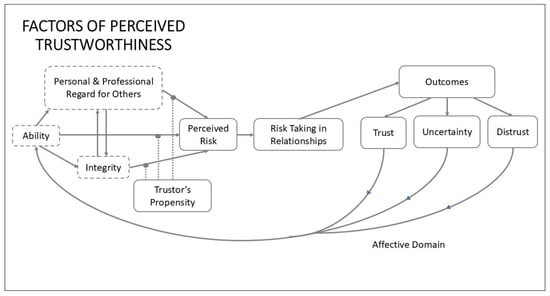
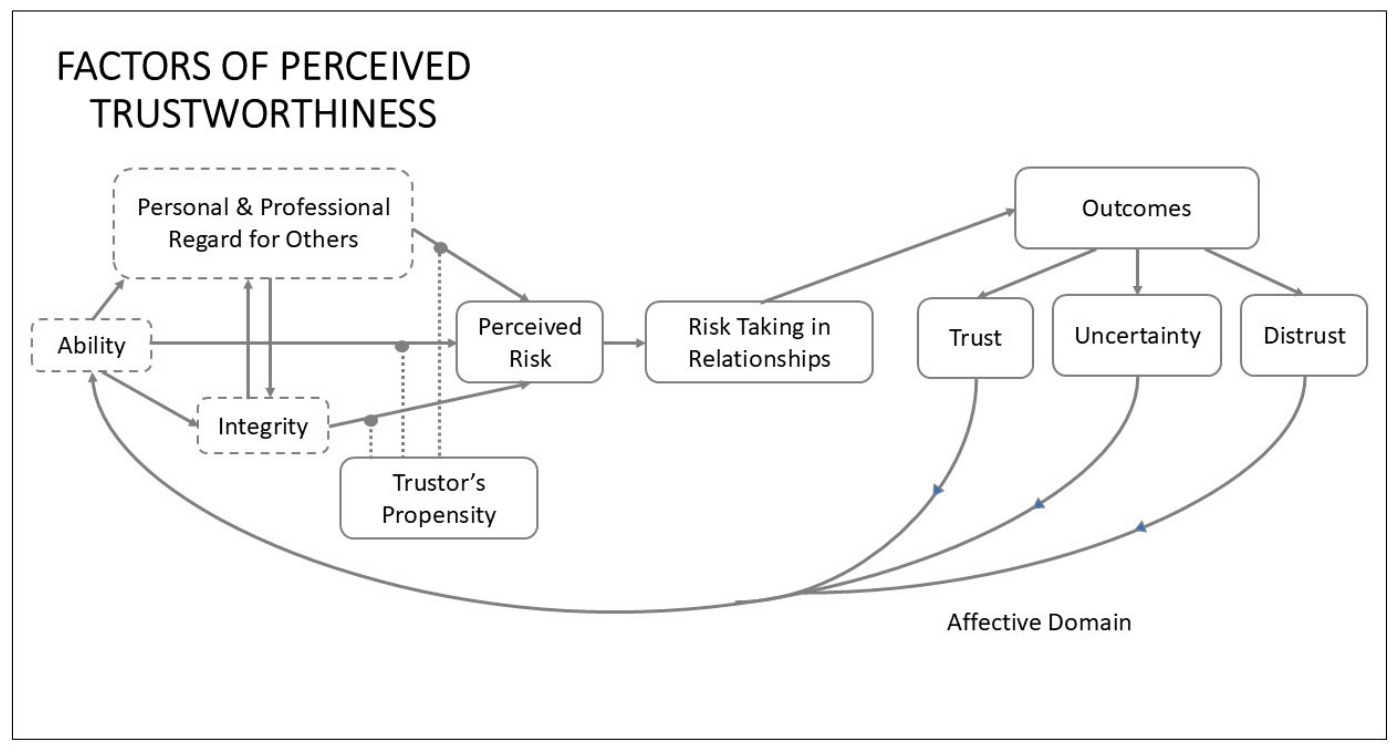

Disclaimer/Publisher’s Note: The statements, opinions and data contained in all publications are solely those of the individual author(s) and contributor(s) and not of MDPI and/or the editor(s). MDPI and/or the editor(s) disclaim responsibility for any injury to people or property resulting from any ideas, methods, instructions or products referred to in the content. |
© 2026 by the authors. Licensee MDPI, Basel, Switzerland. This article is an open access article distributed under the terms and conditions of the Creative Commons Attribution (CC BY) license.