


Abstract
Rural LGBTQ+ college students remain understudied in higher education. This study provides one of the few large-scale, multi-institutional quantitative examinations of this student population. Using 2023–2025 National Survey of Student Engagement (NSSE) data from nearly 300,000 first-year and senior students across 872 four-year institutions in the U.S., we combined variable-centered regression analyses and person-centered cluster analyses to examine engaging interactions with others and engaging institutional environments. We found distinct patterns of engagement associated with rural background, LGBTQ+ identity, and their intersection. Rural students reported less frequent engagement in some interactions with others but generally had more positive perceptions of their environment. LGBTQ+ students, however, had more frequent engaging interactions with others but a less favorable view of their environment. The interaction between rural and LGBTQ+ identities was positive across all engagement outcomes. The person-centered analyses further emphasize the non-monolithic nature of rural LGBTQ+ experiences. Interpreted through an asset-based perspective informed by queer(ed) rural cultural wealth, these findings complicate prevailing deficit narratives while identifying the need for further research on the unique experiences and assets of rural LGBTQ+ college students. The study demonstrates the value of more nuanced, critical approaches to rural higher education research, policy, and institutional practice.
1. Introduction
Students from rural backgrounds and students who identify as LGBTQ+1 remain a relatively underexplored population in higher education research, even though queer people and communities make up a substantial part of the rural landscape (Movement Advancement Project, 2019). From a socio-spatial perspective, this absence or empirical neglect comes from assumptions of rural landscapes as being inherently anti-LGBTQ+ or incommensurate with LGBTQ+ thriving and persistence (A. L. Stone, 2018; Kemmerer et al., 2025). From a higher education perspective, there remains a tendency to emphasize the sexual and/or gender identity of LGBTQ+ college students while potentially overlooking or ignoring how their place-based identities and backgrounds influence their LGBTQ+ identity and experiences of campus (Cain, 2021). A growing body of scholarship has examined rural LGBTQ+ students’ experiences, primarily focusing on identity negotiation, marginalization, belonging, and educational transition, and often foregrounding the challenges or obstacles rural LGBTQ+ students face in higher education contexts (Christiaens, 2015; Christiaens, 2025; Goodrich & McClellan, 2022; Sorgen & Rogers, 2021; Sorgen et al., 2024). However, this literature has largely centered individual qualitative accounts written following the authors’ own collegiate experiences or conceptual explorations of how queerness and rurality may interact to shape rural LGBTQ+ student experiences. As a result, broader empirical examinations of rural LGBTQ+ college students in higher education remain limited.
Rural students experience education gaps around postsecondary enrollment, persistence and attainment, as well as systematic disadvantages related to geographic isolation, high school resources, postsecondary preparation, and technological access (Crawford et al., 2025; Lumina Foundation, 2019; Means, 2018; SHEEO, 2026; Sowl & Crain, 2021). This deficit-oriented representation of rural college students as a population in need of support has been a predominant focus in postsecondary research, policy, and practice. However, emerging work has begun to add complexity to rural college students’ postsecondary aspirations and experiences by examining their experiences through critical, non-deficit, and asset-based perspectives (McNamee et al., 2025a). While these approaches have been applied to the unique perspectives of rural students at the intersections of race, socioeconomic status, and first-generation status (Boettcher et al., 2022; Hallmark et al., 2023; McNamee & Ganss, 2023; Puente et al., 2023), they have not yet been utilized to examine the unique positionality and experiences of rural LGBTQ+ students. From a deficit-based perspective, rural LGBTQ+ students would inherently experience compounded barriers and poorer outcomes in comparison to their nonrural and non-LGBTQ+ peers. Yet, recent qualitative work complicates this narrative. A pilot study by McNamee et al. (2025b) found that while rural LGBTQ+ students experienced their rural hometowns and their college campuses as marginalizing, they also identified ways their rural backgrounds and LGBTQ+ identities positively influenced their academic engagement, co-curricular experiences, and sense of belonging on campus. Findings from this pilot study suggest a much more complex story of rural LGBTQ+ students and emphasize the need for further empirical exploration of this student population using a non-deficit perspective.
This study served as a unique opportunity to examine patterns of engagement for this student population across institutional contexts using data from the National Survey of Student Engagement (NSSE). NSSE measures student engagement, high-impact practices, and campus climate perceptions through ten key Engagement Indicators (Wenger et al., 2024). Recent inclusion of students’ home ZIP code data in the survey has allowed for new analyses connecting place and student experience. This study leverages 2023–2025 NSSE data to examine how rural background and LGBTQ+ identity intersect in their associations with undergraduate engagement. This opportunity is especially timely given growing national attention to rural learners and the need for more robust postsecondary data systems that account for place-based differences in opportunity and outcomes (SHEEO, 2026). This study asks: are there meaningful differences between rural LGBTQ+ students and their peers, and if so, how do these differences complicate dominant deficit narratives about rural LGBTQ+ students in higher education?
2. Literature Review
As an underrepresented and underserved student population with stark differences in college access and postsecondary aspiration, rural college students have increasingly become a primary focus of research (McNamee & Ganss, 2023; Sowl & Crain, 2021). In the past two years, the landscape for rural college students has shifted drastically due to federal-level efforts to cut federal funding and dismantle the U.S. Department of Education for public schools, disproportionately affecting rural schools and college preparation for rural students (Crawford et al., 2025). Rural public schools comprise 28% of all public schools in the U.S., and rural students enroll in college at significantly lower rates than their suburban and urban peers (National Center for Education Statistics, 2023). Because of these statistics and the increasing challenges that rural students face in their postsecondary pathways, especially in a landscape of fewer resources and support for rural schools, policy, statewide, and institutional interventions have sought to alleviate or address these educational gaps (Crawford et al., 2025; Lumina Foundation, 2019; SHEEO, 2026). Defining what and who is considered rural is a complicated endeavor due to varying definitions according to demographics, geography, population size, and culture. Statewide and federal data on rural schools and rural students define rurality according to population density and distance from urban centers (McNamee & Ganss, 2023). In this context, rural students are considered rural to the degree that their school fits within these definitions. For example, the National Center for Education Statistics (NCES) classifies rural locales as fringe, distant, or remote based on their proximity to urban areas with populations above or below 50,000 (Geverdt & Maselli, 2024). These definitions of rurality according to rural areas vary, however, and often fail to capture the sociocultural aspects of rurality in favor of a more quantifiable approach to understanding rurality (Christiaens, 2015; McNamee & Ganss, 2023). The present study operationalizes rural background according to whether a student’s home ZIP code during their final year of high school is classified as rural by the Federal Office of Rural Health Policy (FORHP). At the same time, we recognize that this approach does not sufficiently capture the complexity of the rural college student population, nor does it adequately address the sociocultural values and aspects of rural life.
Scholarship pertaining to rural LGBTQ+ college students has often been fragmented across separate bodies of research due to a tendency to overlook the important intersections of their experiences. Research on rural college students has predominantly examined college access, choice, and transition, with emerging directions around their collegiate experiences, multiple identities, and cultural assets. Scholarship relevant to rural LGBTQ+ students tends to focus broadly on LGBTQ+ youth and their pre-college experiences or rely on individual qualitative accounts regarding identity negotiation and experiences of marginalization or belonging in educational spaces. Relatively little higher education research has examined rurality and LGBTQ+ identity together in relation to college student experiences, especially from an asset-based perspective. Therefore, we bring together relevant but often disconnected bodies of scholarship to identify what each contributes to understanding rural LGBTQ+ college students and what remains missing at their intersection. First, we examine research on rural students’ collegiate experiences before turning to emerging asset-based and multiple-identity approaches to their experiences. We conclude this section by reviewing the limited scholarship specific to rural LGBTQ+ youth and college students.
2.1. Rural College Student Experiences
While the experiences of rural students vary by many factors, including their social identities and their connection to their rural upbringing, research on rural college students often positions rural students as a monolithic community (Cain, 2021). This monolithic understanding becomes ever more apparent through the over-emphasis on rural student college choice and their pre-collegiate experiences (Ardoin, 2019; Grant & Kniess, 2023; McNamee & Ganss, 2023; Sowl & Crain, 2021; A. N. Stone, 2017). Students from rural communities often face structural barriers to enrolling in college including geographic isolation, limited access to college-going resources, and financial constraints (Ardoin, 2019). In addition to these structural challenges, rural students frequently navigate tensions between their home communities and higher education environments due to distance, urban contexts, or cultural differences (Ganss, 2016; Grant & Kniess, 2023; Heinisch, 2017; Puente et al., 2023; A. N. Stone & Évora, 2021). Because of these disparities in postsecondary enrollment and aspiration and the obstacles rural students face before and during their college trajectory, the research landscape of rural college students lacks sufficient attention to students’ interactions and experiences of college environments. How rural college students engage and persist, make sense of their rural backgrounds while in college, and what assets they utilize to negotiate their college experiences continue to be underexplored, yet growing, areas of research.
According to McNamee and Ganss (2023), research on rural students’ college experiences falls within five predominant themes including persistence and completion, rural students’ multiple identities, academic experiences, cultural and social experiences, and influence of external social supports, such as family or community members from students’ upbringing or backgrounds. Within those themes, some differences exist between rural college students’ experiences and the experiences of their nonrural peers, including persistence, community college attendance, degree attainment, academic preparedness, cultural acculturation, and social support in college (Byun et al., 2012a, 2012b; Ganss, 2016; Heinisch, 2017; McHenry-Sorber & Swisher, 2020; A. N. Stone, 2017). These differences are not wholly negative, as more recent studies on rural college students have provided counternarratives or important nuances to prevailing deficit assumptions about their experiences (Boettcher et al., 2022; Grant & Kniess, 2023; McNamee et al., 2025a; Puente et al., 2023). For example, predominant research regarding rural students’ cultural and social experiences emphasizes the ‘culture shock’ they may experience at college, which can lead to feelings of isolation or distance from their peers, and a lack of collegiate involvement (Ardoin, 2019; McNamee, 2019). However, in some cases, rural students may be more involved, engaged, or connected on campus in comparison to their peers (Byun et al., 2012a, 2012b; Ganss, 2016; Heinisch, 2017; McNamee et al., 2025a).
Another assumption of rural students concerns their lack of social and cultural capital in college, which inhibits their ability to succeed as a college student. However, two studies by Byun et al. (2012a, 2012b) demonstrated that rural students had higher levels of community resources and support in their educational experiences, which helped their degree attainment. What McNamee and Ganss (2023) found through their literature review on rural students’ experiences in higher education is that while they may face obstacles and challenges around their transition to college, curricular and cocurricular engagement, and social systems, they also “possess great strengths related to higher education in the areas of academic preparation, social capital, dual enrollment opportunities, and tight-knit networks” (p. 386). Thus, as a complex and multifaceted student population, rural college students cannot be understood solely through the challenges and disparities that characterize much of the existing literature. A focus on rural college students’ assets and the ways their multiple identities complicate and extend their experiences in postsecondary education has become more central in research on their collegiate experiences.
2.2. Rural College Students’ Assets and Multiple Identities
An emerging direction of research examines rural college students’ identity meaning-making and negotiation of college environments, including their interactions with others, access to campus resources and success within and outside of the classroom. Rural scholars have utilized Yosso’s (2005) Community Cultural Wealth (CCW) framework and Crumb et al.’s (2023) rural cultural wealth conceptual framework, which was inspired by CCW, to explore and understand the specific cultural assets and strengths that rural students utilize throughout their college career. In a study of eleven rural students, McNamee et al. (2025a) found that while rural students contended with negative stereotypes and assumptions about rurality from their peers or faculty, as well as lack of tailored support from the institution, participants also brought unique perspectives, openness to cross-cultural interactions, and community connections to their college experiences. These students used assets around resourcefulness, navigational capital, familism, social and cultural capital to navigate college. Grant and Kniess (2023) found that rural students at a large flagship university in the Deep South adapted their social and cultural capital to move through discomfort, adjust to campus life, and form connections with peers. These two studies signal the need for further investigations about how rural college students leverage their unique backgrounds and rural values to persist and thrive in college, especially at the intersections of their multiple identities such as race/ethnicity, socioeconomic status, first-generation status, sexuality and gender.
Rural students’ assets are informed by their home communities, their pre-college experiences, the saliency of their rurality or rural background, and the multiple identities that rural students hold. Rurality can function as a meaningful but underexamined influence on students’ experiences in higher education (Cain, 2021; Christiaens, 2025; McNamee & Ganss, 2023). Urban normativity often positions rural life as peripheral or deficient, and this affects how students negotiate their identities in college and how peers, faculty, and administrators perceive, make assumptions of, and interact with them (Goldman, 2019; McNamee et al., 2025a; Thomas et al., 2011). While some rural college students may develop a sense of pride in their rural backgrounds, potentially in response to these negative assumptions, others may seek to downplay their rural upbringing (Ardoin, 2019). The college environment serves as a site of disruption and identity (re)negotiation for rural students, particularly for those who may hold other minoritized or underrepresented identities (Cain & Willis, 2022). How rural college students move through, experience and navigate these identity negotiations has to do with a multitude of factors, including and especially their sociocultural characteristics.
Research on rural students’ multiple identities has examined the intersection of race and rurality, in part as a critique of the tendency to conflate rurality with whiteness or assume rural communities are predominantly or solely white communities (Means, 2018). Similar to the broad research focus of rural students, this body of literature emphasizes the disparities of educational attainment and persistence for rural students of color in comparison to their peers, while perpetuating monolithic assumptions of rurality and race or ethnicity (Boettcher et al., 2022; Hallmark et al., 2023; McNamee & Ganss, 2023; Puente et al., 2023). Yet, recent studies on rural students of color have expanded this focus to examine the complexity of their college experiences. In their study of 13 rural Black and Latinx students, Boettcher et al. (2022) found that students utilized four forms of capital (familial, social, aspirational, and navigation) to persist into and through college, despite the challenges they had experienced in their educational trajectories. For example, participants accessed aspirational and familial capital, such as support from parents, grandparents and cousins or siblings, for their decision-making processes about where to attend college and how to choose a major. While on campus, they used navigational and social capital informed by their rural experiences to build relationships with other students, seek support from administrators, and utilize campus resources. An important contextual element of this study was the role that a college access initiative, known as Emerging Scholars, played in supplementing their use of cultural capital to navigate college. In their study of the college choices of nine rural Latinx high school seniors from California’s San Joaquin Valley, Puente et al. (2023) found that participants chose institutions based on connections to their rural communities. For example, two influences of their college choice were whether the college could provide relevant majors that helped them give back to their rural communities and if the college offered tight-knit environments reflected in their own rural and familial upbringings. By focusing on how place and rural ways of being influenced participants’ college choice, Puente et al. debunk the assumption that rural Latinx students either lack college aspirations or defer to selecting institutions based on convenience or ease. Both studies illuminate the positive role of race and rurality in rural college students’ experiences and provide important insights into the ways that marginalized rural students leverage their connection to space and rurality to navigate and negotiate college environments. What remains underexamined, however, in research on rural college students’ multiple identities is the role of gender and/or sexuality in their collegiate experiences.
2.3. Rural LGBTQ+ College Students
While research on rural students’ multiple identities and their influence on their college engagement and persistence has continued to expand in recent years, there are some notable gaps, particularly around gender identity and sexuality. In their literature review of 41 articles, McNamee and Ganss (2023) identified only one article on gender, a study of 13 rural, Appalachian women and their transition into higher education (McHenry-Sorber & Swisher, 2020). In this study, McHenry-Sorber and Swisher found that students’ college transition was influenced both by their rural upbringing and gender. While some students were able to explore their authentic gender identities while attending college, others felt constrained by gender norms and expectations they experienced in college. When it came to their rural background, some students rejected their Appalachian identities while others held fast to a strong sense of their place-based identity. For the students in this study, a singular-identity axis exploration of their college transition experiences would fail to account for the notable mediating effects of both their gender identity and their rural upbringing. In their literature review, McNamee and Ganss (2023) found zero articles on sexuality or lesbian, gay, bisexual, transgender, and/or queer (LGBTQ+) rural college students.
Most of the empirical research on rural LGBTQ+ college students either concerns the role of higher education faculty, staff and administrators in supporting this unique student population (Goodrich & McClellan, 2022; Sorgen et al., 2024; Sorgen & Rogers, 2021) or involves the narrative (re)tellings of the collegiate experiences of rural LGBTQ+ students (Christiaens, 2015; Christiaens, 2025; McNamee & Tate, 2022). In the case of the latter, these qualitative accounts notably took place years after the authors’ collegiate experiences and center primarily on the intersection of their sexuality and rural identities and/or backgrounds. While not solely focused on rural LGBTQ+ students, one notable study by Cain and Willis (2022) about the multiple identities of college students from rural areas included three college students with marginalized gender and sexual identities. The purpose of the study was to understand how rural college students perceive and make sense of their own identities. In the study, each student described the ways they ‘othered’ their rural identity and found their other marginalized identities to be more salient to their collegiate experiences. Cain and Willis explained this othering process as one of defensive self-preservation, which may be connected to experiences of gender and/or sexual identity-related stigma or discrimination they experienced in their rural home communities. In this study, rural assets or capital were relatively absent from interpretations of students’ identity meaning-making processes.
Due to the scarcity of research on rural LGBTQ+ college students, researchers often turn to literature on the experiences of rural LGBTQ+ youth more broadly, which is largely concentrated on their pre-college journeys. This body of research emphasizes that rural LGBTQ+ youth are likely to encounter limited LGBTQ+ visibility, constrained access to affirming social and health resources, and experiences of exclusion within their rural home communities (Goodrich & McClellan, 2022; Hulko & Hovanes, 2018; Kemmerer et al., 2025; Sorgen et al., 2024). There is a consistent trend across this research regarding rural LGBTQ+ youth’s experiences of victimization, its close link to mental health outcomes, and the role of social support (especially affirming adults either in school systems or at home) in mitigating harm and fostering well-being for these students (Kemmerer et al., 2025). This research trend reifies metronormative assumptions that queerness is incommensurate with rurality or that queer youth and adults cannot thrive in rural settings (Halberstam, 2005). It also positions higher education as a potential turning point for rural LGBTQ+ college students, who may seek belonging, affirmation, and opportunities for identity exploration at college. In order to fully investigate the collegiate experiences of rural LGBTQ+ students, it is important to hold onto the nuance that college may be the first time they can seek belongingness and affirmation; on the other hand, college could provide its own set of obstacles and barriers for these students as they acclimate to a new setting with potentially fewer social support resources than their own communities.
As rural LGBTQ+ students navigate shifting and sometimes conflicting identities over time, they experience belonging as a continuum across rural and college contexts (McNamee et al., 2025b). Rural LGBTQ+ students may experience a ‘chilly’ climate depending on institutional commitments (or lack thereof) around equity and inclusion, or they may flourish on campus if they have access to LGBTQ+ inclusive resources (Sorgen & Rogers, 2021). They may also bring their own practices of resilience, cultural capital, and community-building to their collegiate experiences. The proximity of the college or university to their rural home communities also has an impact on the formation of their LGBTQ+ identity and their processes of belonging. McDowell et al. (2026) examined the experiences of LGBTQ+ students at rural institutions of higher learning (IHLs), and they found that both the rural college town and the IHL provided unique spaces for LGBTQ+ individuals to engage in significant processes of self-discovery, social networking, and belonging. While their study was not primarily focused on rural LGBTQ+ college students, it emphasizes the potential and possibility of higher education to be transformative spaces for identity negotiation.
Overall, how rural LGBTQ+ college students understand and make meaning of the relevance, salience, and influence of their rural backgrounds and LGBTQ+ identity on their college experience depends on campus climate, pre-college experience, connection to their home community, and presence of other social identities and experiences. Due to the overall absence of research on this unique student population, these nuances of their collegiate experiences require both small and large-scale empirical investigations, especially considering the lack of quantitative research on rural LGBTQ+ student populations. This study attempts to address one of these gaps by providing large-scale evidence on how rural background and LGBTQ+ identity relate to students’ interactions and experiences of institutional environments. In doing so, this study also contends with the fragmented nature of research on rural and LGBTQ+ college students by examining rural background, LGBTQ+ identity, and their intersection together instead of considering these aspects of students’ experiences in isolation. Through this approach, the study extends the limited literature by examining rurality and its intersection with other social identities from an asset-based perspective (McNamee et al., 2025a).
3. Theoretical Framework
Our study utilizes a queer(ed)2 approach to the rural cultural wealth conceptual framework (Crumb et al., 2023) as an interpretive lens for understanding rural LGBTQ+ students’ collegiate experiences, drawing on queer theoretical perspectives that challenge fixed identity categories and the dominant cisheterosexist norms shaping student experiences (Denton, 2019). Building on Yosso’s (2005) CCW framework, the rural cultural wealth conceptual framework offers an asset-based conceptualization of rurality that centers the strengths, knowledge, and adaptive strategies that rural communities possess and foster. The conceptual framework identifies four primary forms of capital that rural individuals use to navigate social systems and structures: rural resourcefulness, rural ingenuity, rural familism, and rural community unity. Rural resourcefulness refers to the capacity to navigate socio-contextual adversities through self-determination and problem-solving strategies. Rural ingenuity highlights collective inventiveness in addressing challenges using local knowledge and social networks. Rural familism emphasizes intergenerational knowledge and connection as sources of emotional, financial, and informational support. Rural community unity reflects the collective orientation of rural communities, including how close-knit networks respond to challenges through mutual aid and collective action. While the framework builds upon the work of Yosso (2005), which was primarily centered on the cultural resources, assets, and strategies that students of color use to navigate higher education environments, attention to intersections of social identity is markedly absent in this model.
To adapt the rural cultural wealth conceptual framework to the experiences of rural LGBTQ+ college students, we adopted a queer(ed) approach which recognizes the following key considerations of rurality and LGBTQ+ identity. The first consideration concerns the heterogeneity of rurality and LGBTQ+ experiences and the importance of not understanding either as monolithic or representative. Additionally, because queerness challenges static understandings of identity while emphasizing the contextual and interconnected nature of lived experience (Christiaens, 2025; Denton, 2019), a queer(ed) approach to the rural cultural wealth conceptual framework conceives of rurality and queerness as fluid, co-constitutive, and dynamic rather than as separate identities. In this way, rural cultural wealth is not uniformly accessible or utilized across all identities but is negotiated and reconfigured through an individual’s social identities and contexts.
The second consideration recognizes that while rural LGBTQ+ students may experience marginalization related to their gender and sexuality within homogenous communities (Sorgen & Rogers, 2021), rural communities and places are not inherently anti-LGBTQ+ or incommensurate with LGBTQ+ thriving or success. Rural LGBTQ+ college students could just as likely come to college with a full understanding of themselves and a thriving network of support at home as they arrive at college and explore their authentic selves in new and profound ways. The college environment could also be the first time they experience marginalization related to their rural upbringing and LGBTQ+ identity. Thus, we understand rural LGBTQ+ students’ collegiate engagement and experiences with others as a continuum and affirm the unique and meaningful experiences they have at the intersection of place, gender and/or sexuality.
The third consideration is that rural LGBTQ+ college students may adapt or leverage their knowledge, experiences, and community connections to enact resilience and support in ways both similar and dissimilar to the four forms of capital identified in the rural cultural wealth conceptual framework. For example, a queer(ed) approach to rural familism recognizes that rural LGBTQ+ individuals may construct chosen familial networks in response to cisheterosexism. Thus, these support systems may extend beyond traditional familial ties and emerge through relationships with queer, trans, and/or affirming individuals and communities.
In this study, a queer(ed) application of the rural cultural wealth model provides an asset-based perspective for interpreting rural LGBTQ+ students’ patterns of engagement in higher education environments, shifting the focus from presupposed deficits, obstacles, or challenges (Crumb et al., 2023). It also recognizes that how rural LGBTQ+ college students navigate and resist dominant cisheterosexist logics in higher education (Denton, 2019) is informed by their rural upbringing and place-based identities. Finally, this approach understands that rural LGBTQ+ college students’ experiences are influenced by a multitude of factors including campus climate, availability and effectiveness of campus resources, relationships with peers, and experiences with faculty and administrators, as well as the specific regional context of their institution.
4. Methods
We designed this study to be an exploratory description of student experiences focusing on student-level variables. Because institution-level variation in our outcome measures was small (intraclass correlation coefficients were less than 4% in all but one measure, which had an intraclass correlation coefficient of 8%), we focused our attention on student-level analyses. To examine the experiences of rural LGBTQ+ students, we used both variable-centered and person-centered approaches. Variable-centered approaches focus on relationships between variables whereas person-centered approaches examine differences across groups based on experience (Malcom-Piqueux, 2015). Using both approaches allowed us to examine the magnitude of relationships between student identity and engagement as well as the variation within those engagement experiences.
4.1. Data Source and Respondents
Data for this study come from 872 institutions that participated in one of the 2023–2025 administrations of the National Survey of Student Engagement (NSSE). If an institution participated in more than one NSSE administration during this time period, we only included their most recent administration. Students in our study were distributed across the three administration years, with 32% from 2023, 29% from 2024, and 39% from 2025. The questions in the survey questionnaire used in our study were identical across these years.
NSSE collects information about first-year and senior student experiences with educationally effective practices at four-year colleges and universities. Students in our study were enrolled in a variety of educational institutions. Around half of students (55%) were enrolled in doctoral-granting institutions, with around one-third (34%) enrolled in Master’s-granting institutions. Around two-thirds of students (64%) were enrolled in publicly controlled institutions. Around half (51%) of students were enrolled at institutions with more than 10,000 undergraduates, a third (33%) at medium to large institutions with 2500–9999 undergraduates, and the remaining 16% at smaller institutions. Over half of the students (58%) were enrolled at institutions located in cities, with smaller proportions enrolled at institutions in suburbs (24%), towns (16%), or rural areas (2%). The largest proportions of students were enrolled at institutions located in the Southeast (23%), Mid East (14%), or Far West (14%) regions of the United States. A small proportion (16%) of students were enrolled at a minority-serving institution (MSI).
Using listwise deletion, the data for this study contained responses from 293,946 first-year and senior undergraduates. Our data include responses from 50,410 rural students (17% of sample), 64,885 LGBTQ+ students (22% of sample), and 9993 students who we identified as rural and LGBTQ+ (3% of sample). See more details about respondents in Table 1.
Table 1.
Column Percentages of Select Respondent Characteristics for Rural and LGBTQ+ Students.
4.2. Measures
A key measure of our study is our identification of a student as a rural learner. NSSE asks students, “what is the 5-digit ZIP code of your home address during your last year of high school?” We matched student-reported ZIP codes to ZIP codes identified as rural by the Federal Office of Rural Health Policy (FORHP). We selected the FORHP classification because it applies Census-based definitions of rurality at the ZIP-code level, corresponding with the geographic information available in the NSSE data. A ZIP code is defined as rural if more than 50% of the population in that ZIP code reside in a rural area based on the U.S. Census Bureau, which is all population, housing, and territory not included within an urban area (population of 5000 or more). Using the NSSE student responses to home ZIP code, matched with rural ZIP codes as provided by FORHP, we designated students as being rural learners or not.
Another critical measure for our work is designation within the LGBTQ+ community. NSSE asks respondents to select, separately, their sexual orientation and gender identity from lists that allow respondents to select more than one identity. We categorized respondents as part of the LGBTQ+ community if they selected at least one of the non-straight options or a gender identity other than cisgender man or woman. In other words, we designated a student as LGBTQ+ if they chose any of the following identities for their sexual orientation or gender identity: Bisexual; Lesbian; Gay; Queer; Pansexual or polysexual; Ace, gray, or asexual; Demisexual; Trans/Transgender; Agender or gender neutral; Demigender; Genderqueer, non-binary, gender non-conforming, or genderfluid; Two-spirit; Questioning or unsure. We treated students who preferred not to respond to either question as missing on that measure. After identifying students as rural or part of the LGBTQ+ community, we identified students who were both from a rural background and part of the LGBTQ+ community.
We grouped our outcomes into two categories: Engaging Interactions and Engaging Environments. We operationalized Engaging Interactions using the following NSSE scales: Student–Faculty Interactions, Collaborative Learning, and Discussions with Diverse Others. These measures examine how often students have formal and informal interactions with their faculty, collaborate with peers on learning activities, and have discussions with people who hold social identities different than their own. We operationalized Engaging Environments using the following NSSE scales: Effective Teaching Practices, Quality of Interactions, Supportive Environment, Sense of Belonging, and Perceived Gains. These measures examine students’ perceptions of effective learning environments, quality interactions with others on campus, academic and social institutional support, feelings of being valued and part of a community, and experiences that have contributed to their growth and development.
4.3. Analyses
For our variable-centered analyses, we ran a series of OLS regression analyses. The engagement scales served as our dependent variables. We standardized these variables so that unstandardized regression coefficients could be interpreted like effect sizes. Our key independent variables of interest were students’ designation as a rural learner and as part of the LGBTQ+ community. We additionally included an interaction term for students identified as both rural and part of the LGBTQ+ community. With Y representing one of the given NSSE scales, our models followed the following form:
Y = β0 + β1(Rural) + β2(LGBTQ+) + β3(Rural × LGBTQ+) + ε
We interpreted the magnitude of coefficients according to guidance from Rocconi and Gonyea (2018), who suggested that coefficients greater than 0.1 could be considered small effects, greater than 0.3 to be medium, and greater than 0.5 to be large. They urge researchers using NSSE data in the context of educational quality not to dismiss small effect sizes, as effect sizes tend to be smaller in educational interventions. Within this context, professionals in educational reform frequently rely on findings with small effect sizes (Rocconi & Gonyea, 2018).
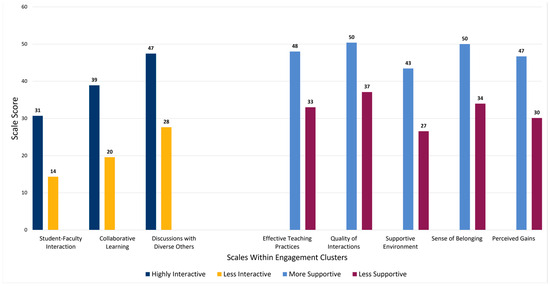
For our person-centered analyses, we conducted a series of two-step cluster analyses on our engagement outcomes to create clusters of students’ experiences within our categories of engagement. We chose cluster analysis for three different reasons: (1) we considered this work to be an exploratory description of engagement for a subpopulation of students, (2) we did not have a pre-defined notion of what engagement patterns should look like for this subpopulation, and (3) we wanted to simplify the complexity of the twelve different engagement measures in this study. We found two clusters for Engaging Interactions, consisting of a highly interactive group and a less interactive group (silhouette = 0.44, a moderate cluster quality; Rousseeuw, 1987). We similarly found two clusters for Engaging Environments, consisting of a group of students who felt more supported by their environment and a group who felt less supported by their environment (silhouette = 0.43, a moderate cluster quality; Rousseeuw, 1987). See Figure 1 for a visual representation of engagement differences within clusters. We then looked at the proportional representation of rural students, LGBTQ+ students, and rural LGBTQ+ students across those experience categories using χ2 (chi-square) analyses and Adjusted Standardized Residuals (ASRs). We considered ASRs greater than 2 or less than −2 to be notable differences (Agresti & Finley, 2009).
Figure 1.
Scale Scores for Engagement Clusters. Note: Scale scores range between 0 and 60.
4.4. Limitations
The addition of home ZIP code to the NSSE survey questionnaire allowed us to identify a subset of students as rural learners, but this proxy for students having a rural background is limited. A more refined definition of rurality or student self-identification as a rural learner might provide a different view of the engagement experiences of this population. Similarly, we identified students as LGBTQ+ learners, although this designation may not reflect how they identify themselves. Our definition of LGBTQ+ as an umbrella category might conflate or obscure issues associated specifically with sexual orientation or gender identity. For example, we include students who identify as straight but with a non-binary gender identity and cisgender students with an LGBQ+ sexual orientation. Although we tried to be thoughtful about how we identified students as rural, LGBTQ+, or rural LGBTQ+ learners, these were choices we made for our respondents that shape the results of our study. Additionally, although the findings discussed are statistically significant, their practical magnitude is relatively small and should be interpreted as detectable but not overwhelming differences in these students’ engagement experiences. The Collaborative Learning measure also had a slightly higher intraclass correlation coefficient, indicating that there may be institution-level effects that our analyses did not account for. Finally, although NSSE is administered at a wide variety of institution types across the United States, results are not necessarily generalizable outside of the institutions and students that we included in our study.
5. Results
We found significant and notable relationships between our selected aspects of student identity and engagement in our variable-centered analyses. For Engaging Interactions, rural learners less frequently collaborated with peers and less frequently had discussions with people holding different background identities than their non-rural peers. LGBTQ+ learners interacted less frequently with faculty and collaborated less often with peers but had more discussions with people who were different from them than their non-LGBTQ+ peers. The combination of rural background and LGBTQ+ identity was positive for all outcomes.
For Engaging Environments, we found that rural learners perceived a more effective learning environment, more quality interactions with others on campus, and a stronger sense of feeling like they belong at their institution than their non-rural peers. We did not find any differences in rural and non-rural learner perceptions of how much their institution supports them academically and socially and how much they feel their experiences at their institution have contributed to their growth and development. We found consistently negative relationships between an LGBTQ+ identity and all our environmental outcomes. For rural LGBTQ+ students, we found an additional positive association with perceptions of effective teaching, sense of institutional support, and feelings of growth and development. None of our models indicated an additional negative association for rural LGBTQ+ students. See Table 2 for details.
Table 2.
Statistically Significant Coefficients of Engagement Outcomes for Rural, LGBTQ+, and Rural LGBTQ+ Learners.
With our person-centered analyses, we were able to look for differences in how students are engaged within the groupings of rural, LGBTQ+ and rural LGBTQ+ learners. We found that rural learners were proportionally overrepresented in the less interactive Engaging Interactions and in the more supportive Engaging Environments. Conversely, we found that LGBTQ+ learners were proportionately overrepresented in the highly interactive Engaging Interactions and in the less supportive Engaging Environments. Students who were both in our rural and LGBTQ+ designations were proportionately represented across the Engaging Interactions groups but were overrepresented in the less supportive Engaging Environments group. See Table 3 for details.
Table 3.
Significant Chi-Square Statistics for Differences in Engagement for Rural, LGBTQ+, and Rural LGBTQ+ Learners.
6. Discussion
This study explored the experiences of rural LGBTQ+ college students through an examination of the potential role of rural background and LGBTQ+ identity in shaping their undergraduate engagement. We examined rural LGBTQ+ students’ interactions with peers, staff, and faculty, as well as their perceptions of learning environments, institutional support, and connection to campus, to identify possible patterns and differences between this student population and their nonrural and/or non-LGBTQ+ peers. In this examination, our study sought to understand if rural LGBTQ+ college students’ experiences of postsecondary education reflected the rural deficit or challenged the assumptions that rural background and LGBTQ+ identity would have compounded negative effects on measures of student engagement. Overall, findings from this study challenge the idea that the combination of rural background and LGBTQ+ identity consequently leads to poorer measures of student engagement. In fact, we found that the additional association of being a rural LGBTQ+ learner was positive for all outcomes, which runs counter to notions of rurality, queerness and transness as causing inherent challenges or obstacles (A. L. Stone, 2018; Kemmerer et al., 2025). Considering the lack of empirical attention on this specific student population (Christiaens, 2025; Goodrich & McClellan, 2022; Sorgen & Rogers, 2021; Sorgen et al., 2024), this study was an opportunity to paint a more complex and comprehensive portrait of rural LGBTQ+ college students beyond the limited qualitative or conceptual accounts of their experiences. Our findings underscore the importance of complicating or troubling deficit perspectives of rural students who hold minoritized or marginalized identities, elevate the potential of quantitative survey instruments in illuminating the nuances of collegiate experience between place-based identity and sociocultural characteristics, and emphasize the need to further examine the college experiences of this unique student population. In this section, we provide important directions for research, policy, and practice regarding the rural LGBTQ+ college student experience.
6.1. Less Frequent Engaging Interactions
Notable differences existed for rural learners’ experiences of campus interactions and connection to the campus environment. We found that rural learners were less engaged when interacting with peers and people who were different from them in both our sets of analyses. This finding could be explained through the potential ‘culture shock’ that rural learners experience in college as they navigate an unfamiliar and possibly more heterogeneous environment than their rural hometown (Ardoin, 2019; McNamee, 2019). As a result of this disorientation, rural learners may experience isolation and stay distant from peers, faculty or staff, or they may seek out connections with peers of similar backgrounds or experiences, a possibility that could be explored through Crumb et al.’s (2023) concept of rural community unity. At the same time, our person-centered analyses remind us that there are still rural learners highly engaged in their interactions with others, as some studies on rural college students have demonstrated (Ganss, 2016; Heinisch, 2017). In addition to potential research directions, an implication of this finding would be to ensure that frontline staff for rural students, such as academic advisors or orientation advisors, have sufficient awareness of rural students’ needs and cultural assets and know how to refer students to appropriate resources or institutional support structures when they are navigating initial disorientation as first-year or transfer students.
6.2. More Substantial Engaging Environments
While rural learners were proportionally overrepresented as having lower measures of Engaging Interactions, in some ways their experiences of campus and the institution presented a contrasting view. We found that rural learners were proportionally overrepresented as having more supportive Engaging Environments. Viewed through a rural cultural wealth perspective (Crumb et al., 2023), one possible interpretation of this finding is that forms of rural cultural wealth, such as rural resourcefulness and rural ingenuity, may inform how some rural learners navigate their collegiate environments. From an institutional standpoint, these findings raise questions about the institutional practices and supports that may contribute to rural learners’ more positive perceptions of their collegiate environments. Future research could examine whether particular institutional or state-level efforts to support learners help explain these patterns (Cipriani-Detres, 2025). Furthermore, this finding challenges the presumption that higher education institutions disregard the experiences of rural learners or are ill-equipped to address their particular needs (Sowl & Crain, 2021).
By comparison, LGBTQ+ students had less favorable perceptions of institutional environments, which is aligned with research about their experiences in higher education (Greathouse et al., 2018). What this comparison demonstrates is that rural and LGBTQ+ students have notably different perceptions of their institutional environments. As this study highlights, the intersection between rural background and LGBTQ+ identity matters, and institutions should consider the needs and experiences of both in their student support efforts. We also recommend that institutional campus climate surveys, an important resource for colleges and universities to understand campus members’ experiences of inclusion, safety, and equity, take these demographic measures into consideration. When it comes to rural-focused campus initiatives, such as K-12 outreach, peer networks, or bridge support programs, campus administrators should ensure their approaches consider the breadth of the rural experience, including rural LGBTQ+ students, rural students of color, rural students who are first-generation, and rural students who are from poor or working-class backgrounds.
6.3. Rural LGBTQ+ Student Assets
Although rural LGBTQ+ college students are highly underexamined in educational research, the assumption is that the combination of rural background and LGBTQ+ identity—both historically under-represented and under-resourced in higher education—would be associated with compounded negative outcomes. What our study determined was the opposite: we found positive relationships for students who are both rural learners and LGBTQ+ for both categories of engagement, meaning that the combination of a student’s LGBTQ+ identity and rural background had a favorable relationship with how students engaged with others, navigated college, and experienced their institution. For these students, the positive associations at the intersection of rural background and LGBTQ+ identity contrast with, on the one hand, lower measures of engaging interactions associated with rural learners and, on the other hand, lower measures of engaging environments associated with LGBTQ+ learners. Although it could be viewed as a contradiction, we found it interesting that rural LGBTQ+ learners had positive coefficients in the Engaging Interactions measures, and they were overrepresented in the less supportive environment engagement cluster. Our variable-centered approach resulted in positive coefficients for rural LGBTQ+ students, but that does not mean their overall experience was positive. Taken together, these findings demonstrate that rural LGBTQ+ students’ engagement cannot be characterized as uniformly positive or negative and instead reflects the complexity of their experiences across different dimensions of engagement.
When interpreted through a queer(ed) rural cultural wealth lens (Crumb et al., 2023; Denton, 2019), this finding suggests that rural LGBTQ+ college students may bring a specific set of assets and strategies to navigate college and make meaning of their collegiate experiences. This finding is aligned with emerging research on non-deficit understandings of rural college students (Crumb et al., 2023; Grant & Kniess, 2023; McNamee et al., 2025a), while providing an important nuance about the intersection of queerness and rurality for this college student population. A qualitative exploration of what these assets are, how they function in practice, and the ways that rural LGBTQ+ students make sense of these assets is an important research implication of this study. From a quantitative standpoint, another possible study would be to explore what those cultural assets are and how they align with or differ from the cultural capital strategies or rural cultural wealth assets identified in the work of McNamee et al. (2025a) and Crumb et al. (2023). Both research implications emphasize the need to further explore and understand rural assets from a queer(ed) perspective.
6.4. Recognizing Rural Queer Complexity
Above all, this study reaffirms that LGBTQ+ identity and rural background are significantly associated with dimensions of collegiate engagement, that rurality and queerness are not incommensurate in the lives of rural LGBTQ+ college students, and that the collegiate experiences of rural LGBTQ+ students warrant further empirical attention. This study addresses the gap that exists around scholarship on the compounding effects of rural and underrepresented or marginalized identities, which primarily focuses on college access rather than students’ collegiate experience (McNamee & Ganss, 2023). By examining patterns of engagement of rural LGBTQ+ college students, this study makes the case for understanding their stories. From a policy and practice perspective, institutions and policymakers need to approach rural students with recognition of their complexity and diversity. Also, as policymakers and private foundations continue to address the rural education gap, it is imperative that resources and interventions do not inequitably support the needs of rural students who are overrepresented at the expense of rural students who have additional underrepresented or marginalized identities and experiences.
Finally, our study asserts the continued need to nuance and complicate how higher education institutions, policymakers, and institutional researchers define and determine what (and whom) is considered rural. As emphasized in the research on rural college students, rurality encompasses diverse contexts and experiences, and the experiences of rural students are influenced by a variety of factors and social characteristics (McNamee & Ganss, 2023), including the degree to which they connect with their rural backgrounds and/or rural cultural values. Future research studies could explore whether additional factors and social characteristics of rural students are associated with levels of engagement through large-scale data analysis. As highlighted in our literature review, the intersection between race/ethnic identity and rurality is an important factor for the academic success and engagement of rural learners of color (Hallmark et al., 2023), and additional research has also emphasized the relationship between socioeconomic status, first-generation status, and rurality (McNamee & Ganss, 2023), providing future directions for quantitative research.
In our study, we recognized the limitations of defining rurality or ruralness based on population density and students’ home ZIP codes during their final year of high school. At the same time, our person-centered analyses and approach to the data allowed us to emphasize the heterogeneity of rural, LGBTQ+, and rural LGBTQ+ college student experiences. Although our variable-centered analyses provide interesting trends for students within their identity groupings, an important result from our person-centered analyses emphasizes that rural student experiences are not monolithic. While the cluster analysis determined poorer or better measures across interactions and environments according to each population subgroup, we cannot assume these measures are all negative. Many of the rural learners, LGBTQ+ learners, and rural LGBTQ+ students in our study were highly engaged and supported. In accordance with the suggestion to explore the potential unique cultural assets of rural LGBTQ+ college students, an important next step in our research is to explore what sets the highly engaged and supported rural LGBTQ+ students apart from their peers, and also to examine the elements of rural-serving institutions where these positive student experiences take place.
7. Conclusions
This study responds to a critical gap in the literature by providing one of the first large-scale, multi-institutional quantitative examinations of rural LGBTQ+ college students, a population that has primarily been explored through small-scale qualitative and conceptual work (Christiaens, 2015; Christiaens, 2025; Goodrich & McClellan, 2022; Sorgen et al., 2024; Sorgen & Rogers, 2021). By leveraging multi-institutional NSSE data, this study extends emerging insights about rural LGBTQ+ college students’ experiences into a broader empirical context, identifying small but consistent patterns not visible in prior research. These patterns suggest that the intersection of rural background and LGBTQ+ identity is associated with engagement in ways that differ from the patterns observed for rural or LGBTQ+ students separately. Furthermore, this study challenges prevailing deficit-oriented assumptions that position the intersection of rurality and queerness as inherently producing compounded disadvantages for individuals and communities. Instead, when interpreted through a queer(ed) rural cultural wealth framework (Crumb et al., 2023), these findings suggest that rural LGBTQ+ students may simultaneously experience marginalization while also drawing upon forms of rural cultural wealth to help them navigate college and reach certain metrics of success in their collegiate careers. Overall, these findings offer a more nuanced, asset-informed understanding of this population that complicates dominant narratives of both rural and LGBTQ+ students in higher education. This study invites future research on the unique experiences and assets of rural LGBTQ+ college students, and, most importantly, insists on moving away from assuming rural LGBTQ+ lives in education are solely defined by barriers, obstacles, and challenges.
Author Contributions
Conceptualization, R.C. and A.B.; methodology, A.B.; formal analysis, A.B. and R.C.; data curation, A.B.; writing—original draft preparation, R.C. and A.B.; writing—review and editing, R.C. and A.B.; visualization, A.B.; project administration, R.C. All authors have read and agreed to the published version of the manuscript.
Funding
This research received no external funding.
Data Availability Statement
The datasets presented in this article are not readily available because of confidentiality agreements with participating institutions. Requests to access the datasets should be directed to nsse@iu.edu.
Conflicts of Interest
The authors declare no conflict of interest.
Abbreviations
The following abbreviations are used in this manuscript:
| LGBTQ+ | Lesbian, gay, bisexual, transgender, queer and additional underrepresented gender and/or sexual identities |
| ZIP | Zone Improvement Plan |
| FORHP | Federal Office of Rural Health Policy |
| OLS | Ordinary Least Squares |
Notes
| 1 | We use LGBTQ+ as an umbrella term to describe a diverse range of sexual and gender identities. |
| 2 | In the context of the theoretical framework, queer(ed) denotes our application of queer theoretical perspectives to the rural cultural wealth framework and is not used as a synonym for LGBTQ+ or as an identity label for students in this study. |
References
- Agresti, A., & Finley, B. (2009). Statistical methods for the social sciences (4th ed.). Pearson. [Google Scholar]
- Ardoin, S. (2019). College aspirations and access in working-class rural communities: The mixed signals, challenges, and new language first-generation students encounter. Lexington Books. [Google Scholar]
- Boettcher, M. L., Lange, A., Hanks, S., & Means, D. R. (2022). Rural Black and Latinx students: Engaging community cultural wealth in higher education. Journal of Research in Rural Education, 38(1), 1–15. [Google Scholar] [CrossRef]
- Byun, S., Irvin, M. J., & Meece, J. L. (2012a). Predictors of bachelor’s degree completion among rural students at four-year institutions. The Review of Higher Education, 35(3), 463–484. [Google Scholar] [CrossRef] [Scilit] [PubMed]
- Byun, S., Meece, J. L., & Irvin, M. J. (2012b). Rural-nonrural disparities in postsecondary educational attainment revisited. American Educational Research Journal, 49(3), 412–437. [Google Scholar] [CrossRef] [Scilit] [PubMed]
- Cain, E. J. (2021). Place-based identity: A model. New Directions for Student Services, 2020(171–172), 11–19. [Google Scholar] [CrossRef] [Scilit]
- Cain, E. J., & Willis, J. F. (2022). “Does it identify me?”: The multiple identities of college students from rural areas. The Rural Educator, 43(1), 74–87. [Google Scholar] [CrossRef] [Scilit]
- Christiaens, R. (2015). Small town kid in the big city: Toward an understanding of rurality in student identity development. The Vermont Connection, 36(1), 41–49. [Google Scholar]
- Christiaens, R. (2025). Queer rural liminality: Storymapping my educational journey as a queer rural college student. Journal of Research in Rural Education, 41(6), 9–12. [Google Scholar] [CrossRef]
- Cipriani-Detres, A. (2025). Rural learners deserve more: Here’s how states are stepping up. National College Attainment Network. Available online: https://www.ncan.org/Web/News/Rural-Learners-Deserve-More-Heres-How-States-Are-Stepping-Up (accessed on 5 April 2026).
- Crawford, B., Shoemaker DeMio, P., & Partridge, S. (2025). Preparing rural students for college and beyond by improving access to coursework. Center for American Progress. Available online: https://www.americanprogress.org/article/preparing-rural-students-for-college-and-beyond-by-improving-access-to-coursework (accessed on 20 February 2026).
- Crumb, L., Chambers, C., Azano, A., Hands, A., Cuthrell, K., & Avent, M. (2023). Rural cultural wealth: Dismantling deficit ideologies of rurality. Journal for Multicultural Education, 17(2), 125–138. [Google Scholar] [CrossRef] [Scilit]
- Denton, J. M. (2019). Queer theory: Deconstructing sexual and gender identity, norms, and developmental assumptions. In E. S. Abes, S. R. Jones, & D.-L. Stewart (Eds.), Rethinking college student development theory using critical frameworks (pp. 83–93). Taylor & Francis Group. [Google Scholar] [CrossRef] [Scilit]
- Ganss, K. M. (2016). The college transition for first-year students from rural Oregon communities. Journal of Student Affairs Research and Practice, 53(3), 269–280. [Google Scholar] [CrossRef] [Scilit]
- Geverdt, D., & Maselli, A. (2024). Education demographic and geographic estimates program (EDGE): Locale boundaries technical documentation. U.S. Department of Education, National Center for Education Statistics. Available online: https://nces.ed.gov/programs/edge/Geographic/LocaleBoundaries (accessed on 2 March 2026).
- Goldman, A. M. (2019). Interpreting rural students’ stories of access to a flagship university. The Rural Educator, 40(1), 16–28. [Google Scholar] [CrossRef] [Scilit]
- Goodrich, J. D., & McClellan, M. J. (2022). Supporting rural LGBTQ+ communities in higher education. In D. P. Rivera, R. L. Abreu, & K. A. Gonzalez (Eds.), Affirming LGBTQ+ students in higher education (pp. 173–188). American Psychological Association. [Google Scholar] [CrossRef] [Scilit]
- Grant, P. D., & Kniess, D. (2023). “I just kind of felt like country came to town”: College student experiences for rural students at one flagship university. The Rural Educator, 44(3), 1–16. [Google Scholar] [CrossRef] [Scilit]
- Greathouse, M., BrckaLorenz, A., Hoban, M., Huesman, R., Jr., Rankin, S., & Stolzenberg, S. R. (2018). Queer-spectrum and trans-spectrum student experiences in American higher education: The analyses of national survey findings. In K. M. Soria (Ed.), Evaluating campus climate at US Research Universities (pp. 49–75). Palgrave. [Google Scholar] [CrossRef] [Scilit]
- Halberstam, J. (2005). In a queer time and place: Transgender bodies, subcultural lives. University Press. [Google Scholar]
- Hallmark, T., Ardoin, S., & Means, D. R. (2023). Race and rurality: Considerations for advancing higher education equity. Taylor & Francis Unlimited. [Google Scholar] [CrossRef] [Scilit]
- Heinisch, B. (2017). Small fish out of water: Rural first-generation student experience at a large university. The Journal of College Orientation and Transition, 24(1), 21–33. [Google Scholar] [CrossRef] [Scilit]
- Hulko, W., & Hovanes, J. (2018). Intersectionality in the lives of LGBTQ youth: Identifying as LGBTQ and finding community in small cities and rural towns. Journal of Homosexuality, 65(4), 427–455. [Google Scholar] [CrossRef] [Scilit] [PubMed]
- Kemmerer, A. M., Stephens, F. H., Clanton, J. R., Presnell, D., Brewington, J. A., & Speight, B. J. (2025). Rural LGBTQIA+ youth: A review of the literature (2015–2025). Youth, 5(3), 69. [Google Scholar] [CrossRef] [Scilit]
- Lumina Foundation. (2019). In rural America, too few roads lead to college success. Available online: https://www.luminafoundation.org/focus-magazine/fall-2019/in-rural-america-too-few-roads-lead-to-college-success/ (accessed on 10 February 2026).
- Malcom-Piqueux, L. (2015). Application of person-centered approaches to critical quantitative research: Exploring inequities in college financing strategies. New Directions for Institutional Research, 2014, 59–73. [Google Scholar] [CrossRef] [Scilit]
- McDowell, A., Parsons, R. J., & Kraus, J. (2026). “I don’t know that you can do that anywhere else”: The role rural college towns play in the formation of queer identity. Journal of Queer and Trans Studies in Education, 3(3), 4. [Google Scholar] [CrossRef]
- McHenry-Sorber, E., & Swisher, K. (2020). Negotiating place and gender: Appalachian women’s postsecondary transition experiences. The Review of Higher Education, 43(4), 1193–1226. [Google Scholar] [CrossRef] [Scilit]
- McNamee, T. C. (2019). Social capital in the rural United States and its impact on educational attainment. In P. George, & R. Bartee (Eds.), Contemporary perspectives on social capital in educational contexts (pp. 201–220). Information Age Publishing, Inc. [Google Scholar]
- McNamee, T. C., Ardoin, S., Cooper, N. D., & Sansone, V. A. (2025a). “Because I’m from a rural background”: An examination of rural students in higher education through a critical, non-deficit framework. The Journal of Higher Education, 97(3), 487–517. [Google Scholar] [CrossRef] [Scilit]
- McNamee, T. C., Christiaens, R., Stone, B. J., Bailey, M. J., Davis, R., Watts, N., & Reilly, K. (2025b, November 14). The higher education experiences of queer, rural students enrolled at a large university in the south [Conference presentation]. Association for the Study of Higher Education Annual Conference, Denver, CO, USA. [Google Scholar]
- McNamee, T. C., & Ganss, K. M. (2023). Rural students in higher education: From college preparation and enrollment to experiences and persistence. Peabody Journal of Education, 98(4), 380–395. [Google Scholar] [CrossRef] [Scilit]
- McNamee, T. C., & Tate, B. C. (2022). Too queer for the country, too country for college: It’s hard to find home as a queer, rural kid. In A. Duran, R. A. Miller, T. J. Jourian, & J. Cisneros (Eds.), Queerness as being in higher education: Narrating the insider/outsider paradox as LGBTQ+ scholars and practitioners (pp. 132–145). Routledge. [Google Scholar] [CrossRef] [Scilit]
- Means, D. R. (2018). Supporting the pathways to postsecondary education for rural students: Challenges, opportunities, and strategies for moving forward. National Association for College Admission Counseling. Available online: https://files.eric.ed.gov/fulltext/ED611921.pdf (accessed on 5 March 2026).
- Movement Advancement Project. (2019). Where we call home: LGBT people in rural America. Available online: https://mapresearch.org/report/where-we-call-home-lgbt-people-in-rural-america (accessed on 3 October 2026).
- National Center for Education Statistics. (2023). Enrollment and school choice in rural areas. U.S. Department of Education, Institute of Education Sciences. Available online: https://nces.ed.gov/programs/coe/indicator/lcb (accessed on 3 October 2026).
- Puente, M., Nuñez Martinez, M., Rios Arroyo, D., & Torres, S. (2023). Rural Latinx students’ spatial imaginations of their college choices: Toward a student understanding of “rural-serving institutions” in California’s San Joaquin Valley. Education Sciences, 13(7), 660. [Google Scholar] [CrossRef] [Scilit]
- Rocconi, L., & Gonyea, R. M. (2018). Contextualizing effect sizes in the National Survey of Student Engagement: An empirical analysis. Research & Practice in Assessment, 13, 22–38. [Google Scholar]
- Rousseeuw, P. J. (1987). Silhouettes: A graphical aid to the interpretation and validation of cluster analysis. Journal of Computational and Applied Mathematics, 20, 53–65. [Google Scholar] [CrossRef] [Scilit]
- SHEEO. (2026). Strong foundations 2025: Insights into state postsecondary rural data. State Higher Education Executive Officers Association. [Google Scholar]
- Sorgen, C. H., McNamee, T. C., Tate, B. C., & Shannon-Baker, P. (2024). Supporting queer students from rural backgrounds: Navigating challenges and building resilience in higher education. In A. Herridge, & K. Prieto (Eds.), Perspectives on transforming higher education and the LGBTQIA student experience (pp. 164–186). IGI Global Scientific. [Google Scholar] [CrossRef] [Scilit]
- Sorgen, C. H., & Rogers, B. A. (2021). Recognizing and supporting queer students from rural areas. New Directions for Student Services, 2020(171–172), 77–83. [Google Scholar] [CrossRef] [Scilit]
- Sowl, S., & Crain, A. M. (2021). A systematic review of research on rural college access since 2000. The Rural Educator, 42(2), 16–34. [Google Scholar] [CrossRef] [Scilit]
- Stone, A. L. (2018). The geography of research on LGBTQ life: Why sociologists should study the South, rural queers, and ordinary cities. Sociology Compass, 12(11), e12638. [Google Scholar] [CrossRef] [Scilit]
- Stone, A. N. (2017). Rural students and higher education: An overview of challenges and opportunities. Texas Education Review, 5(1), 1–9. [Google Scholar] [CrossRef] [Scilit]
- Stone, A. N., & Évora, K. A. (2021). From country to concrete: Motivators for rural students choosing an urban university. College Student Affairs Journal, 39(2), 150–164. [Google Scholar] [CrossRef] [Scilit]
- Thomas, A. R., Lowe, B. M., Fulkerson, G. M., & Smith, P. J. (2011). Critical rural theory: Structure, space, culture. Lexington Books. [Google Scholar]
- Wenger, K., Russell, A., & Kinzie, J. (2024). A friendly guide to student engagement. National Survey for Student Engagement. Available online: https://nsse.indiana.edu/nsse/about-nsse/conceptual-framework/NI-Student-Engagement-Primer.pdf (accessed on 10 October 2025).
- Yosso, T. J. (2005). Whose culture has capital?: A critical race theory discussion of community cultural wealth. Race Ethnicity and Education, 8(1), 69–91. [Google Scholar] [CrossRef] [Scilit]

Disclaimer/Publisher’s Note: The statements, opinions and data contained in all publications are solely those of the individual author(s) and contributor(s) and not of MDPI and/or the editor(s). MDPI and/or the editor(s) disclaim responsibility for any injury to people or property resulting from any ideas, methods, instructions or products referred to in the content. |
© 2026 by the authors. Licensee MDPI, Basel, Switzerland. This article is an open access article distributed under the terms and conditions of the Creative Commons Attribution (CC BY) license.