


Abstract
Dyscalculia is a learning disability in mathematics frequently accompanied by cognitive, emotional, and motivational challenges. However, the combined contribution of these factors to mathematical competence remains insufficiently understood. This cross-sectional study examined the relationships among cognitive abilities, mathematics self-efficacy, anxiety, burnout, and mathematical competence in a sample of 64 students with dyscalculia aged 10–14 years. Participants completed standardized assessments of intelligence, mathematical performance, mathematics self-efficacy and anxiety, and school burnout. Group comparisons indicated that mathematics self-efficacy, anxiety, and burnout significantly differentiated primary and secondary school students, whereas differences in mathematical competence were not statistically significant. Multivariate analyses revealed that cognitive abilities were meaningfully associated with multiple dimensions of mathematical competence. In addition, canonical correlation analyses demonstrated strong associations between psychological factors and mathematical performance, with school burnout emerging as a particularly salient correlate of reduced mathematical competence. Overall, the findings highlight the multifactorial nature of mathematical performance in dyscalculia and underscore the importance of integrating cognitive assessment with interventions that address emotional and motivational factors, such as enhancing self-efficacy, reducing anxiety, and preventing school burnout.
1. Introduction
Mathematics is vital to students’ cognitive development because it facilitates logical–analytical thinking, methodical problem solving, and knowledge transfer to new situations (Kilpatrick et al., 2001). Apart from its evident functional applicability in life and professional work, mathematics helps form scientific thinking and strengthen intellectual resistance (Boaler, 2016). Through patience, perseverance, and finding other ways of solving problems, students acquire capabilities that are not only valuable to their study career but also to overall personal and social development. The presence of learning difficulties in mathematics can significantly affect students’ learning process and emotional state (Butterworth, 2005a). These difficulties are often associated with reduced mathematical self-efficacy, increased levels of anxiety, and learning avoidance (Ashcraft & Moore, 2009). Failure to understand mathematical concepts or manage numerical information may lead to cognitive overload, low self-esteem, and social withdrawal from school life (Chinn, 2020). Therefore, early identification and teaching support of students with such difficulties is considered crucial to enhancing their psychosocial well-being and preventing student burnout.
Notably, mathematical competence is a multi-faceted construct covering not only procedural fluency but also conceptual proficiency, problem solving, and utilizing mathematical knowledge for real-world issues (Karsenty, 2020). Wong (2021) states that mathematics proficiency at the middle childhood years entails three foremost aspects: an understanding of numbers, an understanding of mathematical symbols as well as surrounding principles, and representing problems in mathematical terms. These aspects serve to establish sound mathematical foundations. Moreover, mathematical ability largely predicts children’s performance on tasks linked with the mental number line, time knowledge, and time perception and hence indicates the extensive cognitive implications of mathematical ability (Nazari et al., 2021). The Organisation for Economic Co-Operation and Development (OECD) (2003) defines mathematical proficiency as the capability of an individual to appreciate and understand the contribution of mathematics in the world, to form informed mathematical opinions, and to communicate with mathematics in a manner that meets such a person’s life as a critical, enthusiastic, and thinking citizen. This definition puts a premium on the use of mathematical capability not just within schools but also in citizen participation and daily life decision-making.
In particular, the developmental learning disorder that affects mathematical competence because of fundamental deficits in number sense systems, counting, and arithmetic has been described as dyscalculia (DC) (Butterworth, 2005b; Kaufmann & von Aster, 2012). It can affect up to 6% of the population (Devine et al., 2018; Shalev et al., 2000, 2005) and involves deficits in understanding mathematical concepts, performing accurate and fluent calculations, and solving problems (American Psychiatric Association, 2013).
Dyscalculia is a condition defined by neurological and cognitive impairments, with a particular emphasis on deficits in working memory (Ma & Xu, 2004). These impairments result in difficulties retaining and manipulating numerical information, thereby hindering problem-solving abilities. Dyscalculia is frequently linked to the parietal lobe’s role in quantity representation (McCaskey et al., 2020). Brain imaging studies have demonstrated reduced activation in both the parietal and prefrontal regions, indicating inefficient utilization of working memory resources (Menon, 2016). Working memory deficits may affect skills such as number comparison, sequencing, and advanced mathematical operations. These impairments can influence both domain-specific numerical functions and broader executive functions, thereby complicating the execution of sequential steps in mathematical tasks.
Difficulties in mathematics have been associated with low academic achievement, school failure, and psychological factors such as student burnout, mathematics self-efficacy, and mathematics anxiety (Haase et al., 2019; Onyishi & Sefotho, 2021). Specifically, students with DC often experience repeated failure in mathematical tasks, which may gradually lead to the development of negative emotions, stress, and mathematics-related anxiety (Kucian et al., 2018; Rubinstein & Tannock, 2010).
Cynicism, emotional exhaustion, and a feeling of inadequacy in the classroom are all components of student burnout (Salmela-Aro et al., 2009). Burnout can be the result of a student’s frustration after repeated failed attempts to meet school demands (Jagodics et al., 2023). Students with DC, having experienced failure many times, can gradually develop negative feelings and stress towards mathematics (Haase et al., 2019). According to Mamat et al. (2023), burnout is the consequence of forced study of a subject that students do not want to learn due to a lack of interest or motivation.
From a theoretical perspective, burnout may affect mathematical competence in children with DC through interacting cognitive and motivational mechanisms (Jagodics et al., 2023; M. Y. Lee et al., 2020; Salmela-Aro et al., 2009). It may also affect academic achievement (Fiorilli et al., 2017). Emotional exhaustion and cynicism are associated with reduced task engagement and persistence, while feelings of inadequacy are related to low academic self-efficacy and willingness to invest effort in learning (Bandura, 1997; M. Y. Lee et al., 2020). In addition, chronic stress linked to burnout may further limit cognitive resources, particularly working memory (Vogel & Schwabe, 2016), which is already vulnerable in some children with DC (Kaufmann et al., 2013), creating difficulties in acquiring and applying mathematical concepts.
Consistent with this framework, school-related burnout increases the risk for problems like depression and anxiety (Jiang et al., 2021), somatic complaints, and reduced sleep quality (Qin et al., 2022). It may also affect academic achievement (Fiorilli et al., 2017) and motivation (M. Y. Lee et al., 2020). Students with learning difficulties may develop burnout signs early, as well as psychosomatic complaints or signs of psychological distress (Alesi et al., 2014).
A student’s self-confidence about performing math-related tasks is known as self-efficacy in mathematics (Hackett & Betz, 1989), and it is usually correlated positively with academic achievement and engagement (Olivier et al., 2019; Wen & Dubé, 2022). Self-efficacy increases through overcoming challenges and passing successful tests, as well as through positive feedback from teachers, parents, and peers (Bandura, 1997). Despite its importance, this parameter is underexamined in populations of students. Most studies provide evidence regarding the teaching population (Charitaki et al., 2025a, 2025b). On the other hand, math anxiety is a condition marked by tension, stress, and discomfort when performing mathematical tasks (Ma & Xu, 2004). Mathematics self-efficacy and math anxiety are related to each other but are inversely associated. Students with low math self-efficacy often experience higher levels of math anxiety, which, in turn, can negatively impact their performance and motivation (Rubinstein & Tannock, 2010; Živković et al., 2023).
DC students are often characterized by low scores in self-efficacy (Mariera et al., 2021), which has been found, in recent research, to be a strong predictor of their academic achievement (Emesama & Ikeh, 2024) and high levels of math anxiety. It is well documented that math anxiety prevents mathematical performance in students (Namkung et al., 2019; Zhang et al., 2019), since it interferes with cognitive processes, such as working memory (Finell et al., 2022; Ramirez et al., 2013), mainly by depriving valuable resources, resulting in creating obstacles to learning (Ashcraft & Ridley, 2005; Owens et al., 2012). Math anxiety can appear in the early school years, but it seems to persist and usually worsen over time (Sorvo et al., 2017; Szczygieł et al., 2024).
Students with learning difficulties, like DC, often experience high levels of school anxiety, disappointment, and burnout, especially when they are repeatedly exposed to failure and a lack of academic support (García-Planas & García-Camba Vives, 2023; Karttunen et al., 2023). Burnout, self-efficacy, and math anxiety have emerged as critical emotional factors that interact with cognitive skills and can either hinder or enhance students’ mathematical performance. While these factors can have a positive or negative effect on children’s mathematics performance, their role in the case of dyscalculia has not been sufficiently explored (Warsi, 2025).
Although research on dyscalculia has expanded in recent years, the evidence base remains fragmented with respect to how psychological factors interact with mathematical performance specifically in students with DC. While mathematics anxiety has been widely studied in general student populations, very few studies have examined how it manifests in learners with DC, whose cognitive difficulties may intensify or alter its effects. Moreover, contemporary literature highlights that mathematics anxiety is a multidimensional construct, comprising both affective components (e.g., emotional tension) and cognitive components (e.g., intrusive worry) (Devine et al., 2018), which may influence mathematical competence in different ways, yet this distinction has been rarely investigated in DC samples (Lievore et al., 2025). Similarly, the roles of self-efficacy and academic burnout in shaping mathematics outcomes among students with dyscalculia remain insufficiently explored, despite their strong established relevance in the broader educational context. Thus, there is a clear need for a more integrated approach that examines these emotional and motivational dimensions simultaneously in order to better understand their combined contribution to mathematical competence in learners with dyscalculia.
This study aims to assess the effect of students’ burnout, mathematics self-efficacy, and anxiety on their Mathematical Competence in a sample of children with dyscalculia. Specifically, the interactions between student burnout, mathematical self-efficacy, anxiety, and mathematical ability in children diagnosed with DC are analyzed. The study also looks for possible differences between educational levels and age groups, using a multifactorial analytical approach to reveal the underlying associations. In the present study, mathematical competence was operationalized at the level of academic achievement, specifically through measures of mathematical vocabulary, operations, and problem-solving skills, rather than foundational number sense processes.
2. Aim of the Study
Thus, the present study aimed to examine students’ burnout, mathematics self-efficacy, and anxiety in relation to their mathematical competence operationalized by mathematical vocabulary, operations, and problem-solving skills in children with dyscalculia. Therefore, the main research questions of the present study are the following:
RQ1.
Do intelligence, burnout, mathematics self-efficacy, anxiety, and mathematical competence differentiate between primary and secondary education children with DC?
RQ2.
Do burnout, mathematics self-efficacy, anxiety, and mathematical competence differentiate among independent age groups of children with DC?
RQ3.
Do canonical correlations provide us with insights into the relationships between different burnout, mathematics self-efficacy, anxiety, and mathematical competence?
3. Methods
3.1. Participants and Sampling Strategy
Participants were recruited through Educational and Counseling Support Centers (KEDASYs), who implement psychoeducational assessments to diagnose dyscalculia. A purposive sampling strategy was used to ensure that all participants met established diagnostic criteria for dyscalculia. Inclusion criteria required (a) a formal diagnosis of dyscalculia from an interdisciplinary group (social worker, psychologist, and special educator), (b) age-appropriate schooling, and (c) adequate vision, hearing, and language abilities to complete standardized assessments. Exclusion criteria included the presence of intellectual disability, uncorrected sensory impairments, neurological disorders, and comorbid conditions known to independently affect mathematical reasoning (e.g., autism spectrum disorder, ADHD when severe, traumatic brain injury). Although purposive rather than probability sampling limits generalizability, this approach is considered methodologically appropriate for research requiring clinically confirmed dyscalculia cohorts. All diagnostic documentation was reviewed to verify eligibility prior to data collection.
For the study, a total of 465 individual assessments were implemented for students enrolled in mainstream primary schools and gymnasiums. A total number of 64 students were diagnosed with dyscalculia (N5’Grade = 12, N6’Grade = 12, N7’Grade = 14, N8’Grade = 13, και N9’Grade = 13). The mean age ranged from 10:00 to 14:05 (years: months). There were slightly more girls than boys, comprising 56.25% of the entire sample. All children’s IQ was assessed with the use of the WISC-III GR test. Their IQ scores were above 80 to exclude children with intellectual disability from the sample. Measures for participants’ scores for IQ, Mathematical Competence, Mathematics Self-Efficacy, Anxiety, and Burnout are presented in Table 1.
Table 1.
Descriptive measures, two independent samples tests, and effect sizes for IQ, Mathematical Competence, Mathematics Self-Efficacy, Anxiety, and Burnout for DC students (entire sample).
To evaluate the adequacy of the sample size, a series of a priori and post hoc power analyses were conducted for both correlational and canonical correlation approaches. Power curves illustrate the relationship between sample size (N) and statistical power (1 − β) for detecting correlations of varying magnitudes (r = 0.20, 0.25, 0.30, 0.35, 0.40) using two-tailed tests at α = 0.05. The dashed vertical line marks the actual sample size of the study (N = 64), and the dashed horizontal line marks the conventional 0.80 power threshold. As shown, the study achieves adequate power (≈0.81) for detecting correlations of r ≥ 0.35, whereas substantially larger samples would be required to reliably detect smaller effects (Figure 1).
Figure 1.
Power (1 – β) curves for correlations of varying magnitudes (two-tailed, α = 0.05).
The sample-size-per-variable ratios (N/[p + q]) for the three canonical correlation models are as follows: (a) mathematics self-efficacy and anxiety (four variables), (b) burnout and psychosomatic/psychological distress (five variables), and (c) intelligence indices (eight variables). The dashed horizontal line marks the commonly recommended minimum ratio of 10 participants per variable for stable canonical correlation estimation. The MSEA and Burnout models exceed this threshold (16 and 12.8, respectively), whereas the Intelligence model falls below it (8), indicating reduced stability and the need for cautious interpretation (Figure 2).
Figure 2.
Sample-size-per-variable ratio for the three canonical correlation models.
3.2. Diagnostic Procedures for Dyscalculia
To ensure diagnostic accuracy and consistency across centers, dyscalculia identification followed international guidelines (DSM-5). Diagnostic verification combined the following.
3.3. Standardized Assessment of Mathematical Achievement
Children had to score at least 1.5 SD below age norms on standardized math achievement tests assessing number sense, arithmetic operations, and applied problem solving. Tests typically included mathematical vocabulary, operations, and problems. Cognitive Profiling to Rule Out General Intellectual Disabilities.
All participants demonstrated average or higher general intelligence (≥80) as measured by the WISC-V. This ensured that mathematical underachievement was not attributable to a global learning deficit.
3.4. Exclusion of Environmental and Instructional Causes
Diagnostic teams confirmed that mathematical difficulties were not due to inadequate schooling, language barriers, or psychosocial adversity.
3.5. Developmental History Review
Reports from parents and teachers were used to confirm persistent difficulties in acquiring age-appropriate mathematical skills despite adequate instruction.
Taken together, these diagnostic criteria ensured that the sample represented children with specific and persistent deficits in numerical cognition, fulfilling contemporary definitions of dyscalculia.
4. Measures
4.1. Wechsler Intelligence Scale for Children—Fifth Edition (WISC-III Full Scale IQ)
For the assessment of participating children’s intelligence, we employed the Greek version of the fifth edition of the Wechsler Intelligence Scale for Children (WISC-III) for children aged from 6:00 to 16:11 (years: months) (Stogiannidou et al., 2017). WISC-III (3rd Edition) has five primary index scales, namely, the Verbal Comprehension Index (VCI), Visual Spatial Functioning Index (VSI), Working Memory Index (WMI), Fluid Reasoning Index (FRI), and Processing Speed Index (PSI). The Full-Scale IQ is a composite of the Verbal and Performance scores, coming from a composite of ten different subtests, namely, similarities, vocabulary, block design, visual puzzles, matrix reasoning, figure weights, digit span, picture span, coding, and symbol search. The mean score on each subtest is 10, while the vast majority of typically developing children score between 7 and 13.
4.2. Mathematical Competence Test
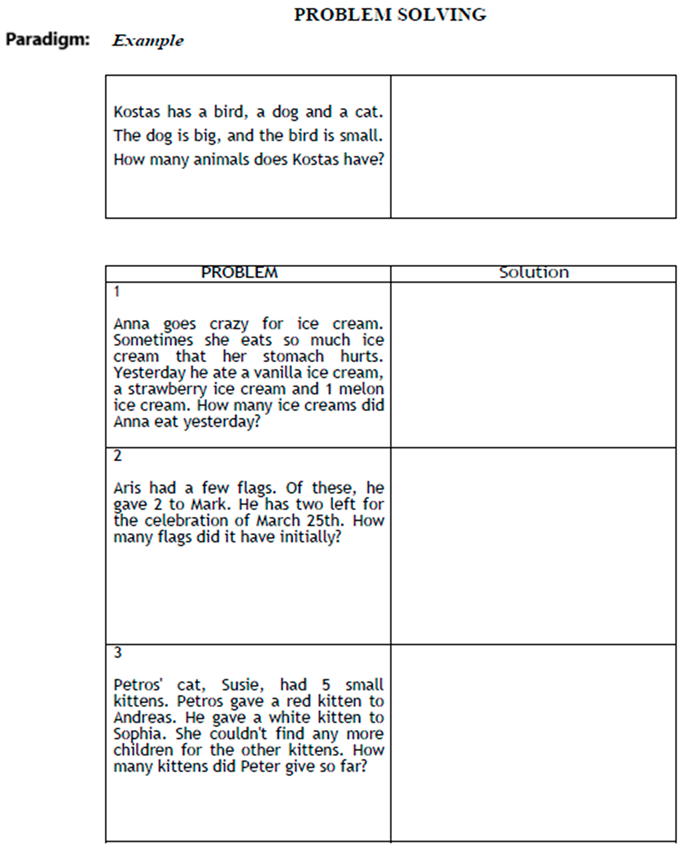
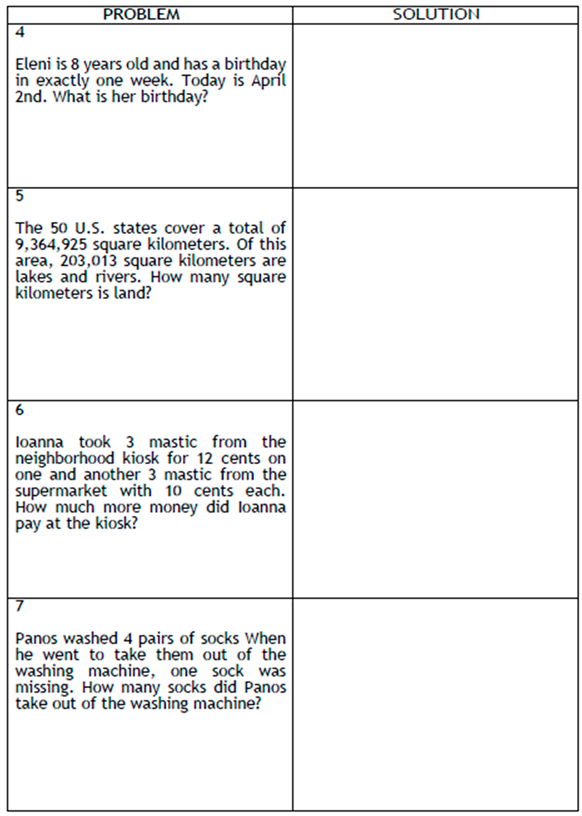
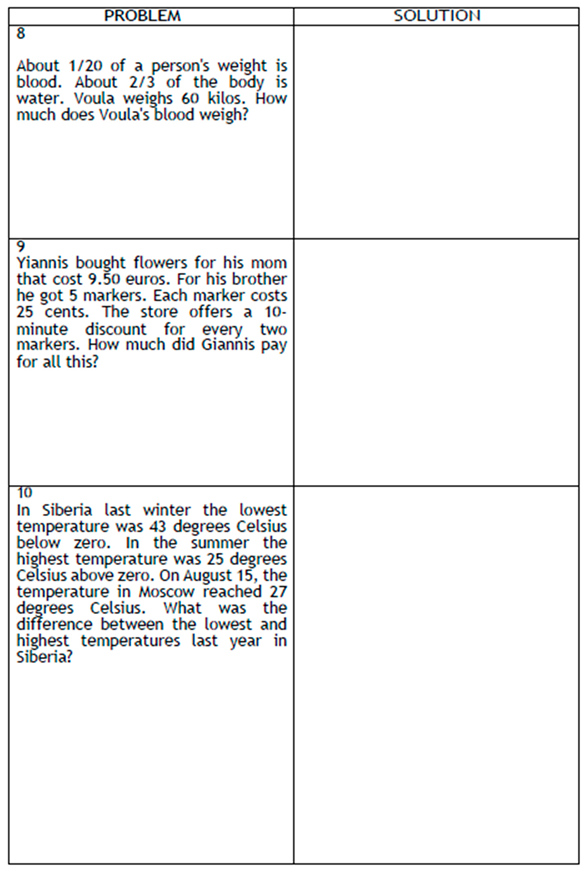
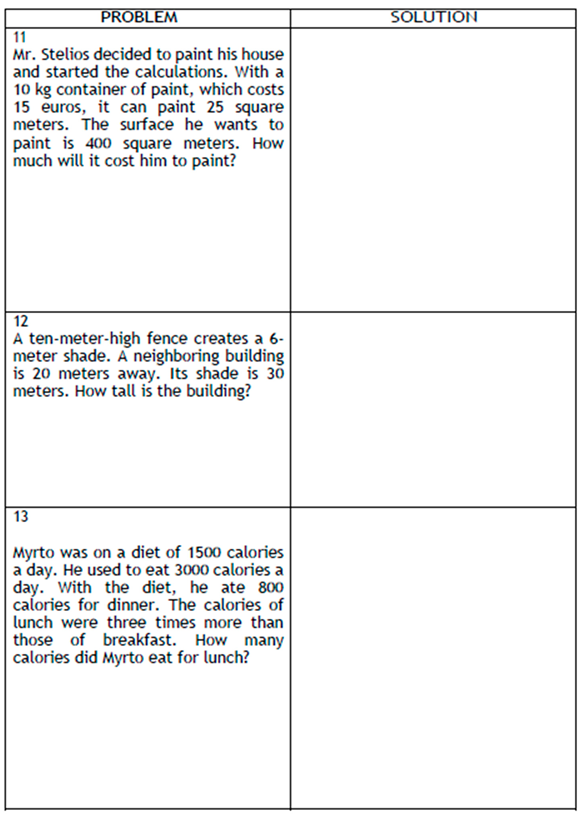
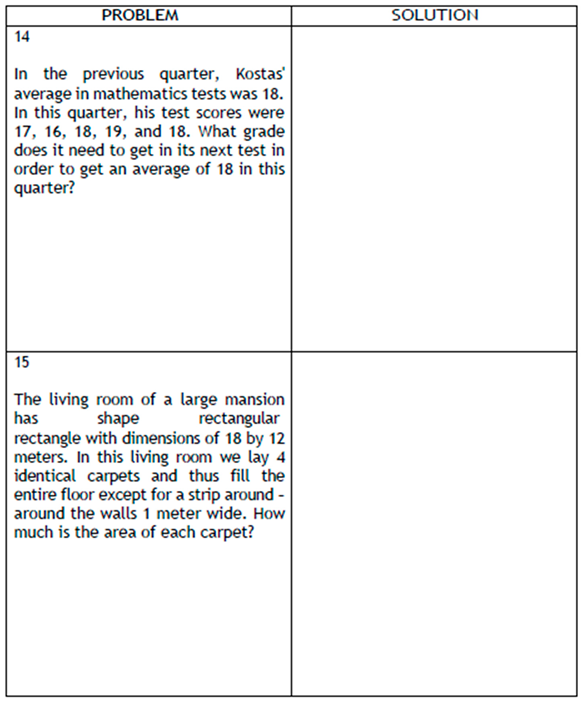
For the aims of the study, the Mathematical Competence Test (MCT) (Barbas et al., 2008) was employed (Appendix A). It is a standardized criterion, and the specific age range of the standardization sample in Greece was formed at 7.06–15.05 (years: months). More specifically, MCT assesses a set of 55 independent tasks. It consists of three sub-scales assessing aspects of school mathematics, namely, mathematics vocabulary, operations, and problem-solving. Each correct answer was scored with 1. The first subscale of MCT, namely, mathematical vocabulary, includes 20 tasks, operations include 20 tasks, and the last subscale includes 15 tasks.
4.3. Mathematics Self-Efficacy & Anxiety Questionnaire (MSEAQ)
For the aims of the study, the Mathematics Self-Efficacy & Anxiety Questionnaire (MSEAQ) (May, 2009) was employed (Appendix B). More specifically, MSEAQ has 29 items and assesses general mathematics self-efficacy, grade anxiety, mathematics self-efficacy on assignments, mathematics for students’ future, and self-efficacy and anxiety in class. All items are rated on a five-point Likert scale, ranging from 1 (never) to 5 (usually).
The results from EFA and CFA supported construct validity. More specifically, all goodness-of-fit indices generated by CFA were found to be satisfactory (TLI = 0.975 > 0.950, RMSEA = 0.037 < 0.080, CFI = 0.985 ≥ 0.900, χ2/df < 2, p = 0.198 and SRMR = 0.038 < 0.080) (Table 2). The correlational analysis supported the internal consistency of the construct. Further evidence for internal consistency was provided by the fact that the MSEAQ demonstrated excellent reliability (Cronbach’s alpha coefficient: α = 0.96, Omega coefficient: ω = 0.91).
Table 2.
Rotated Factor Matrix (EFA factor loadings) and communalities for the Mathematics Self-Efficacy & Anxiety Questionnaire (MSEAQ).
4.4. Students’ Burnout Assessment Tool (S-BAT)
For the aims of the study, the Students’ Burnout Assessment Tool (S-BAT) (Popescu et al., 2024) was employed (Appendix C). More specifically, S-BAT has 33 items and assesses not only burnout symptoms (23 items), such as students’ feelings of exhaustion, mental distancing, cognitive impairment, and emotional impairment, but also secondary symptoms of burnout, such as psychosomatic complaints and psychological distress (10 items). Both components are rated on a five-point Likert scale, ranging from 1 (never) to 5 (always).
Results from EFA and CFA supported construct validity. More specifically, all goodness-of-fit indices generated by CFA were found to be satisfactory (TLI = 0.981 > 0.950, RMSEA = 0.031 < 0.080, CFI = 0.961 ≥ 0.900, χ2/df < 2, p = 0.234 and SRMR = 0.024 < 0.080) (Table 3). The correlational analysis supported the internal consistency of the construct. Further evidence for internal consistency was provided by the fact that the S-BAT demonstrated excellent reliability (Cronbach’s alpha coefficient: α = 0.93, Omega coefficient: ω = 0.90).
Table 3.
Rotated Factor Matrix (EFA factor loadings) and communalities for the Students’ Burnout Assessment Tool (S-BAT).
5. Data Analysis
First, we estimated descriptive measures, such as means and standard deviations, for all measures for the two groups of participants (TD and DD). Afterwards, we estimated two independent sample tests, Mann–Whitney U (Mann & Whitney, 1947) and effect sizes, Pearson’s r, to identify differences between the two groups of participants for all measures, with the use of SPSS 26. Also, we estimated a series of canonical correlations among sets of variables in which we previously identified statistically significant differences, with the use of SPSS AMOS. Effect sizes for the Mann–Whitney U tests were reported using Pearson’s r to complement the significance tests and to provide information on the magnitude of group differences. Interpretation of effect sizes followed Cohen’s (1988) conventions, whereby values of approximately r = 0.10 are considered small, r = 0.30 moderate, and r ≥ 0.50 large. Including effect sizes enables the evaluation of the practical significance of findings, which is particularly relevant in clinical and educational research. In the present study, several statistically significant differences, especially in mathematics self-efficacy, anxiety, burnout, and psychosomatic distress, were accompanied by moderate-to-large effect sizes, indicating that these results reflect not only statistical significance but meaningful differences in students’ emotional and motivational functioning.
Given the number of statistical tests performed, we took steps to address the potential inflation of Type I error. For the Mann–Whitney U tests, we applied a Bonferroni-adjusted significance threshold based on the number of group comparisons conducted, thereby ensuring a more conservative criterion for detecting statistical differences. However, because overly stringent corrections may obscure meaningful effects in studies with clinical populations and modest sample sizes, we additionally report effect sizes (r) to allow readers to evaluate the practical significance of the findings. For the regression and CCA models, Type I error is inherently controlled at the model level, as these analyses estimate multivariate relationships rather than conducting multiple univariate tests. Together, these procedures ensure that the risk of false-positive findings is minimized while maintaining the appropriate interpretability of the results.
Canonical Correlation Analysis (CCA) was employed to address the study’s multivariate research questions regarding the joint associations between sets of cognitive variables, psychological factors, and mathematical competence. CCA was selected because it allows for the simultaneous examination of relationships between two entire variable sets, rather than relying on multiple separate regressions or bivariate correlations. This analytic approach aligns with contemporary theoretical perspectives that conceptualize dyscalculia as a multifactorial condition, shaped by the combined influence of cognitive processing abilities, emotional responses, and motivational beliefs.
CCA offers several advantages that directly support the aims of the present study. First, it identifies latent canonical functions that capture the strongest linear associations between variable sets, thereby revealing underlying multivariate patterns that would remain undetected in univariate or pairwise analyses. Second, by modeling all relevant variables together, CCA reduces redundancy and limits Type I error inflation that would otherwise occur from conducting numerous independent analyses. Third, the method is particularly appropriate for complex educational and clinical datasets in which predictors such as anxiety, burnout, and self-efficacy are intercorrelated and may operate jointly to influence mathematical performance.
Furthermore, CCA is suitable for the study’s sample characteristics. Although mild deviations from multivariate normality were observed, assumption testing indicated no problematic violations related to linearity, multicollinearity, or homoscedasticity, and the sample-to-variable ratios met recommended guidelines for the MSEA and Burnout models. Given these considerations, CCA provided a rigorous and methodologically appropriate framework for examining how combinations of cognitive and affective variables relate to different dimensions of mathematical competence in students with dyscalculia. Finally, for power analysis, we used the software R 4.4.3 (R Core Team, 2025). Due to the fact that data were collected via individual assessments, no missing data were reported.
5.1. Assumption Testing
5.1.1. Univariate and Bivariate Assumptions
Before conducting correlational analyses and multivariate procedures, normality was evaluated using Shapiro–Wilk tests, skewness/kurtosis thresholds (±2), and Q–Q plots.
Linearity between key variable pairs was examined through scatterplots and LOWESS curves. Homoscedasticity was checked using residual versus fitted plots. Univariate outliers were screened using z-scores > ±3.29. Multivariate outliers were evaluated using Mahalanobis distances with χ2 criteria. No violations requiring corrective procedures were detected beyond mild deviations from normality, which are not problematic for correlation or canonical correlation given the sample size and the robustness of Pearson estimates.
To justify the use of non-parametric tests for group comparisons, we also evaluated distributional assumptions for all variables included in the Mann–Whitney U analyses. Several measures demonstrated non-normal distributions and skewed shapes, which, combined with the modest sample size characteristic of clinical populations, violated the assumptions required for parametric tests such as the independent-samples t-test. Therefore, the Mann–Whitney U test was selected as the appropriate alternative. For the linear regression analyses, multicollinearity was assessed using Variance Inflation Factors (VIF) and tolerance coefficients for all predictors, applying conventional thresholds (VIF < 5; tolerance > 0.20). These diagnostics indicated the absence of problematic multicollinearity, confirming that the regression models met the standard assumptions for valid parameter estimation.
5.1.2. Assumptions for Canonical Correlation Analysis (CCA)
Before conducting the CCA models, the following assumptions were examined in addition to multivariate normality. We estimated Mardia’s skewness and kurtosis indices. Mild deviations were observed but within acceptable bounds for CCA. We also assessed linearity and homoscedasticity through bivariate scatterplots among predictors and criterion variables. For the assessment of multicollinearity, we estimated variance inflation factors (VIF < 5), and tolerance values (>0.20) indicated the absence of problematic multicollinearity. For the adequate sample-to-variable ratio, the recommended guideline of 10 participants per variable was met for the MSEA and Burnout models but not fully satisfied for the model involving five intelligence indices and three mathematical competence variables. Because CCA is sensitive to dimensionality, results from the intelligence model were interpreted cautiously.
6. Results
As can be seen in Table 4, the group of children with DCSE displayed higher scores than the DCPE group for all measures assessing intelligence. Statistically significant differences between the group of DCSE and DCPE children were found for Verbal Comprehension Index (VCI) (mDCse = 79.91, mDCpe = 89.00, U = 6.50, p = 0.041, r = 0.53) and Visual Spatial Index (VSI) (mDCse = 93.25, mDCpe = 100.55, U = 78, p = 0.047, r = 0.37). As we can see in Figure 3, students’ intelligence demonstrates no significant variations among the different age groups of students with DC.
Table 4.
Descriptive measures, two independent samples tests, and effect sizes for WISC—Full Scale, Verbal Comprehension Index (VCI), Visual Spatial Index (VSI), Working Memory Index (WMI), Fluid Reasoning Index (FRI), and Processing Speed Index (PSI) for Primary and Secondary Education DC students.
Figure 3.
Domains of Intelligence across all age groups of DC students.
Results on the mathematical competence measures (Table 5) suggested that the two groups of DCSE and DCPE had almost equal and below-average (10 ± 1.5) scores for their attainments in mathematical vocabulary, operations, and problem-solving. As we can see in Figure 4, students’ mathematical competence decreases for older students with DC as the cognitive requirements of mathematics courses increase.
Table 5.
Descriptive measures, two independent samples tests, and effect sizes for Mathematical Vocabulary, Operations, and Mathematical Problem-Solving for Primary and Secondary Education DC students.
Figure 4.
Domains of Mathematical Competence across all age groups of DC students.
As can be seen in Table 6, both groups of children with DC demonstrate low self-perception for their mathematical efficacy, conjointly with high anxiety, burnout, psychosomatic complaints, and psychological distress. Moreover, statistical analysis suggested significant differences between primary and secondary education students with DC. Analysis within age groups suggested the same pattern for older students with DC compared to the younger ones (Figure 5).
Table 6.
Descriptive measures, two independent samples tests, and effect sizes for mathematics self-efficacy, anxiety, and burnout for Primary and Secondary Education DC students.
Figure 5.
Mathematical Self-Efficacy and Anxiety across all age groups of DC students.
7. Linear Regression Analysis
Also, we employed three linear regression models to identify parameters of intelligence that have a statistically significant effect on different aspects of mathematical competence. Analysis suggested that verbal comprehension has a statistically significant effect on mathematical vocabulary (β = 0.167, p = 0.041) (Table 7).
Table 7.
Linear regression model assessing aspects of intelligence that affect mathematical vocabulary.
Also, analysis suggested that operations are affected mainly by Fluid Reasoning (β = 0.165, p = 0.038) and Working Memory (β = 0.180, p = 0.023) (Table 8).
Table 8.
Linear regression model assessing aspects of intelligence that affect operations.
Also, analysis suggested that problem-solving is affected by all aspects of intelligence, including verbal comprehension (β = 0.214, p = 0.015), visual spatial functioning (β = 0.167, p = 0.039), fluid reasoning (β = 0.196, p = 0.027), working memory (β = 0.154, p = 0.040), and processing speed (β = 0.169, p = 0.038) (Table 9).
Table 9.
Linear regression model assessing aspects of intelligence that affect operations.
8. Intelligence and Mathematical Competence Measures
The set combination for Intelligence included verbal comprehension, visual spatial functioning, fluid reasoning, working memory, and processing speed, while mathematical competence included vocabulary, operations, and problems. The canonical correlation analysis examining the association between cognitive abilities and mathematical competence produced one significant canonical function, Rc = 0.59, p < 0.05, indicating that 35% of the variance shared between the sets was accounted for by this function. Structure coefficients revealed that fluid reasoning (rs = −0.597), verbal comprehension (rs = −0.612), and visual–spatial reasoning (rs = −0.534) loaded most strongly on the cognitive variate, whereas mathematical operations (rs = −0.754), problem solving (rs = −0.707), and vocabulary (rs = −0.658) loaded most strongly on the mathematics variate. The cognitive set explained 63.1% of its own variance, while the mathematics set explained 77.8%. Collectively, these results indicate that general reasoning ability and processing skills are strongly associated with mathematical proficiency in children with dyscalculia. Results are graphically presented through the path diagram in Figure 6.
Figure 6.
Correlation between the Intelligence Variable Set and the Mathematical Competence Set.
9. Mathematics Self-Efficacy—Anxiety (MSEA) and Mathematical Competence Measures
The set combination for MSEA included mathematics self-efficacy and anxiety, while mathematical competence included operations and problems. The canonical correlation analysis examining mathematics self-efficacy and anxiety in relation to mathematical competence produced one significant function, Rc = 0.61, p < 0.05, accounting for 37% of the shared variance between the variable sets. Structure coefficients showed that math anxiety (rs = −0.642) and self-efficacy (rs = −0.564) contributed meaningfully to the affective variate, whereas vocabulary (rs = −0.764), problem solving (rs = −0.608), and operations (rs = −0.511) defined the mathematics variate. The affective set extracted 58.6% of its variance and the mathematics set extracted 68.4%. These findings indicate that lower self-efficacy and higher anxiety are linked to lower mathematical proficiency among children with dyscalculia. The results are graphically presented through the path diagram in Figure 7.
Figure 7.
Correlation between the MSEA Variable Set and the Mathematical Competence Set.
10. Burnout and Mathematical Competence Measures
The set combination for burnout included burnout and psychosomatic complaints/psychological distress, while mathematical competence included vocabulary, operations, and problems. The canonical correlation analysis relating burnout and psychosomatic/psychological distress to mathematical competence yielded a significant function, Rc = 0.67, p < 0.05, accounting for 45% of the shared variance between the two sets. Structure coefficients indicated that psychological distress (rs = −0.813) and burnout (rs = −0.743) strongly defined the predictor variate, while problem solving (rs = −0.702), vocabulary (rs = −0.514), and operations (rs = −0.469) loaded onto the mathematics variate. The burnout/distress set extracted 56.5% of its variance and the mathematics set extracted 62.9%. These results suggest that emotional exhaustion and psychological distress are strongly associated with decreased mathematical competence, particularly in problem-solving tasks, in students with dyscalculia. The results are graphically presented through the path diagram in Figure 8.
Figure 8.
Correlation between the Burnout Variable Set and the Mathematical Competence Set.
11. Discussion
The present study explored the interrelations among student burnout, mathematics self-efficacy, anxiety, and mathematical competence, operationalized by mathematical vocabulary, operations, and problem-solving skills in children with DC using a multivariate analysis. The findings offer novel information about the interrelation of cognitive and psychological variables influencing mathematical performance in students with DC. In particular, these findings refer to the multicomponentality of math ability and the relevance of both cognitive and affective variables in the performance of students with DC. The research contributes to the growing literature emphasizing the necessity of a multifactorial approach in understanding math difficulties in students.
11.1. Cognitive Profiles and Educational Differences
The study revealed significant differences in specific intelligence subdomains between primary and secondary school students with DC. According to the analysis, significant differences existed between primary and secondary school students concerning verbal comprehension (VCI) and visual-spatial abilities (VSI). In particular, primary school students obtained higher scores in verbal comprehension tests (VCI), whereas secondary school students achieved higher scores in visual-spatial abilities (VSI). The differences could be explained as a result of different educational settings and teaching, or they might reflect age-related cognitive development. However, the overall cognitive abilities of the sample are relatively homogeneous since there are no significant differences in overall IQ. Thus, it is concluded that DC is more likely to be related to particular process difficulties rather than general cognitive impairments.
The current findings offer some insights into the complex cognitive aspects that may underlie mathematics difficulties in primary and secondary school children with DC. Verbal comprehension was a robust predictor of mathematical vocabulary performance, which suggests the key role of language skills in acquiring and using mathematical terms and concepts (Geary, 2004). Moreover, performance on operations was determined to be significantly underpinned by fluid reasoning and working memory skills, as indicated in prior research emphasizing the mediating role of logical inferencing and information manipulation in mathematical problem-solving (Fuchs & Fuchs, 2002; Passolunghi & Lanfranchi, 2012). The problem-solving skill area was found to be mediated by a wide array of cognitive processes, spanning verbal comprehension to visual-spatial abilities and processing speed, congruent with the multidimensional and integrative nature of higher-order mathematical reasoning. These findings emphasize the necessity of intervention models addressing a broad array of cognitive processes, rather than narrowly addressing numerical skills, consistent with recent theoretical frameworks that conceptualize dyscalculia as a heterogeneous and multifactorial disorder (Butterworth et al., 2011).
According to the results of the analysis, a significant correlation was found between mathematical competence and intelligence measures. The finding aligns with previous evidence (Geary, 2011; K. Lee & Bull, 2016), stating that general cognitive abilities such as fluid reasoning and working memory maybe predict mathematical success. However, the moderate magnitude of the correlation indicates that intelligence alone is not able to account for the mathematical difficulties of students, especially in the case of DC. For instance, although there is a slight increase in working memory scores of secondary education students, which, according to some research, is a strong predictor of mathematical competence (Lotz et al., 2018), the latter does not follow that increase. On the contrary, the mathematical competence of students in secondary education slightly decreases, indicating that there is much more to consider in order to predict mathematical competence (Raghubar et al., 2010).
Previous studies have supported the existence of specific cognitive deficits in processes that mainly concern working memory (Ma & Xu, 2004). There are controversial results regarding the relationship between math anxiety and working memory functions in children with DC, as some researchers argue that the deficits precede anxiety, which appears as a result of repeated failure in math tasks (Mammarella et al., 2018). However, other researchers believe that anxiety affects working memory functions by consuming cognitive resources and impairing attention (Ashcraft & Ridley, 2005; Maloney et al., 2010; Owens et al., 2012). In the present study, the slight improvement in working memory functions observed in secondary school students, accompanied by a greater increase in math anxiety and lower mathematical competence, may indicate that math anxiety is more associated with lower mathematical performance among students with DC. This assumption is in line with prior research (Toffalini et al., 2017). However, due to a small effect size, clear conclusions cannot be drawn.
Surprisingly, no statistically significant differences in mathematical competence were noted between primary and secondary school students. This finding could underscore the long-term resilience of mathematical difficulties in DC students regardless of age and education level (Shalev et al., 2005). Although alternative explanations such as measurement-related effects or cohort differences cannot be entirely ruled out, the examination of score distributions did not indicate the presence of ceiling or floor effects or other potential methodological limitations. Nevertheless, it is consistent with several studies that show that the mathematical performance of a student with DC is much lower than expected considering his/her age, intelligence, and education (Büttner & Hasselhorn, 2011).
11.2. Impact of Psychological Variables
The canonical correlation analyses offered valuable insights into the role of psychological variables. For instance, a moderate and statistically significant correlation was also found between mathematics self-efficacy, anxiety, and mathematical competence. According to Bandura’s (1997) cognitive theory, self-efficacy is essential in academic performance. Students who are confident in their abilities do not hesitate when faced with challenging tasks, engage more, and exhibit better problem-solving skills. On the contrary, children with DC are more likely to hit dead ends, due to their cognitive deficits (Geary, 2010).
In addition, math anxiety is associated with the resources of the working memory system, especially for tasks that demand attention or reasoning (Ashcraft & Krause, 2007). Students with DC often experience failure in mathematical tests and question their ability to meet the challenges of math from a very early age. Differences in self-efficacy, anxiety, and burnout among students in the sample at different levels of education suggest this aspect. Primary students with DC tend to begin their mathematical journey more confidently, with less anxiety and burnout, but as they face repeated failures in more demanding tasks, their self-efficacy drops along with their mathematical competence, which may lead to increased anxiety and burnout during Secondary Education school years. Having very low self-efficacy and, at the same time, low mathematical competence, anxiety appears to contribute to lesser willingness to make an effort (Mariera et al., 2021). Most students with math anxiety seem to prefer avoiding the mathematical process than entering the process of trying, under the stress of impending failure (Haase et al., 2019). There is adequate evidence correlating emotional parameters and mathematical achievement (Wu et al., 2012). It seems that the psychological state of students with dyscalculia is decisive for their mathematical competence (Ma & Xu, 2004). Although the present findings demonstrate robust associations between mathematical competence, mathematics self-efficacy, anxiety, and burnout, the cross-sectional design does not permit conclusions regarding causal directionality. Several plausible pathways may underly these relationships. For example, persistent mathematical difficulties may contribute to heightened anxiety and reduced self-efficacy, which in turn may increase emotional exhaustion and disengagement from learning. Conversely, elevated anxiety and burnout may impair cognitive resources and motivation, thereby exacerbating mathematical underachievement. Longitudinal studies are therefore needed to clarify the temporal and potentially reciprocal nature of these processes and to identify critical developmental periods for targeted intervention.
One of the most striking findings of the research, though, is the moderate and highly significant correlation (r = 0.67) between mathematical ability and burnout (including psychological distress and psychosomatic complaints). While burnout is typically studied in adult and adolescent populations, its impact on younger students, particularly those with learning disorders, is an area of study with minimal research available. The results align with the notion that the accumulation of failures at school, lack of support, and ongoing stress are related to early signs of emotional exhaustion, detachment, and somatic symptoms, ultimately hindering learning. In particular, excessive levels of burnout are associated with disengagement, demotivation, and a general decrease in academic effort and persistence (Salmela-Aro et al., 2009). This underscores the need for early identification and psychosocial interventions for students with DC.
Addressing both cognitive and emotional domains in schools may help maximize learning and emotional health in students with DC. With school environments adopting full-scale, integrative approaches tailored to the specific requirements of children with DC, there is greater potential to improve academic progress while improving their overall quality of life, too (Carey et al., 2017; Dowker, 2019).
12. Limitations
While the present study gives important insights into the psychological and cognitive correlates of mathematical competence in children with DC, some limitations must be taken into consideration. The sample was relatively small, which restricts the generalizability of the results (Creswell & Creswell, 2018). Moreover, cross-sectional design precludes causal inference and limits the possibility of investigating how psychological and cognitive processes transform over time (Maxwell & Cole, 2007).
In addition, participants were recruited from specific educational settings, which may have introduced selection bias and further weakened the representativeness of the sample (Bornstein et al., 2013). Burnout, mathematics self-efficacy, and anxiety were assessed using self-report measures, which are susceptible to social desirability and response biases, particularly in child samples (Podsakoff et al., 2003). The absence of a typically developing comparison group also limits the extent to which the observed patterns can be directly contrasted with those found in the general student population. Finally, the use of a Greek-standardized mathematical competence assessment may restrict the cross-cultural generalizability of the findings, as mathematical achievement measures are influenced by linguistic and curricular contexts (Van de Vijver & Tanzer, 2004).
Although the present study did not include a separate, typically developing control group, all cognitive, mathematical, and psychological measures employed were standardized and norm-referenced, allowing participants’ performance to be interpreted relative to age-appropriate expectations for typical development. This approach provides an established and methodologically sound basis for identifying deviations associated with dyscalculia. Nevertheless, future studies may benefit from the inclusion of matched control groups in order to directly compare developmental trajectories and further delineate dyscalculia-specific patterns beyond normative benchmarks.
To address these challenges, future research needs to work towards including larger and more demographically representative samples in an attempt to enhance external validity (Bornstein et al., 2013). Particular care must be taken to consider the potential for gender differences in affective and cognitive responses to learning mathematics, as existing research indicates that such differences might be substantial (Else-Quest et al., 2010). There may be developmental changes in how anxiety manifests, as gender appears to influence an individual’s anxiety profile (Carey et al., 2017). In addition, longitudinal and mixed-method study designs are proposed to examine more effectively the dynamic and bidirectional relationships between cognitive abilities, affective states, and performance outcomes over time (Tomasetto et al., 2021). Qualitative approaches are also encouraged to be integrated, as these can provide a richer and more nuanced appreciation of children’s everyday experiences of DC by supplementing quantitative data and informing our broader understanding (Creswell & Poth, 2017).
Finally, the interpretation of non-significant findings should be based on the reflection of the study’s statistical power. The a priori and post hoc power analyses indicated that the present sample was sufficient to detect medium-to-large effects, which are typically of greatest theoretical and clinical relevance in dyscalculia research. However, smaller effects may not have been consistently detectable. Accordingly, the absence of statistically significant differences in mathematical competence between primary and secondary school students should be interpreted with caution, as it may reflect limited sensitivity to subtle developmental variations rather than the absence of meaningful patterns. Future research with larger samples may further examine whether more fine-grained developmental differences in mathematical competence emerge across educational levels.
13. Practical Implications
The findings have important implications for educational and clinical practice, highlighting the need for integrated interventions that address both academic and emotional difficulties in children with dyscalculia (DC). At the instructional level, evidence-based classroom practices, including individualized education plans, systematic strategy instruction, task scaffolding, and visual–spatial supports (e.g., number lines, manipulatives), may reduce cognitive load and support mathematical learning by freeing working memory resources (Winkel & Zipperle, 2023). These approaches should be complemented by affective supports targeting mathematics self-efficacy and math anxiety.
Teacher training should be prioritized as it can enable educators to identify early signs of math-related anxiety and burnout and to create supportive, motivational classroom climates. For students requiring additional support, school psychologists and clinicians may use interventions combining cognitive–behavioral and metacognitive techniques, such as guided reflection on problem-solving strategies and restructuring maladaptive math-related beliefs (Lucangeli et al., 2019). Finally, due to the strong association between school burnout and perceived learning difficulties (Karttunen et al., 2023), the findings support the use of early and ongoing screening procedures that assess both mathematical performance and emotional risk indicators to implement appropriate interventions.
Given the strong association between school burnout and mathematical competence, the findings underscore the importance of the early identification and prevention of burnout symptoms in students with dyscalculia. Educational and clinical interventions should prioritize the systematic monitoring of emotional exhaustion, psychological distress, and math-related anxiety, alongside targeted efforts to strengthen mathematics self-efficacy. Integrating cognitive support with psychosocial interventions such as reducing evaluative pressure, fostering mastery-oriented feedback, and promoting adaptive coping strategies. Such interventions may be particularly effective in supporting both mathematical performance and emotional well-being in this population.
14. Conclusions
The present study contributes to the existing dialogue, emphasizing the complexity of mathematical competence and the significance of cognitive and psychological factors.
First, psychoeducational assessment revealed that different dimensions of intelligence predicted students’ mathematical vocabulary, operations, and problem-solving abilities. These results underscore the multifactorial nature of mathematical competence in learners with dyscalculia and highlight the importance of addressing a wide range of cognitive processes rather than focusing on individual deficits.
Moreover, the psychological variables such as burnout, mathematics self-efficacy, and anxiety are meaningfully associated with mathematical competence, suggesting that emotional and motivational factors should be considered alongside cognitive assessments in both research and practice. The findings reinforce the need for holistic, individualized educational approaches that integrate cognitive support with targeted interventions aimed at reducing anxiety, enhancing self-efficacy, and managing school-related stress.
Overall, the present study advances the understanding of the complex interplay between cognition, emotion, and mathematical performance in students with dyscalculia, offering valuable implications for educators, clinicians, and researchers seeking to design more effective assessments and interventions for this population.
Author Contributions
Conceptualization, A.S.A., G.C., K.P. and A.A.; methodology, A.S.A., G.C., K.P. and A.A.; software, G.C.; validation, A.S.A., G.C., K.P. and A.A.; formal analysis, G.C.; investigation, G.C.; re-sources, G.C.; data curation, G.C.; writing—original draft preparation, A.S.A., G.C., K.P. and A.A.; writing—review and editing, A.S.A., G.C., K.P. and A.A.; visualization, A.S.A., G.C., K.P. and A.A.; supervision, A.S.A., G.C., K.P. and A.A.; project administration, A.S.A., G.C., K.P. and A.A.; funding acquisition, A.S.A. and G.C. All authors have read and agreed to the published version of the manuscript.
Funding
This research received no external funding.
Institutional Review Board Statement
This study did not require ethical approval under our institutional guidelines (Law 4624/2019 (Government Gazette A’ 137/29.08.2019)—Implementing the GDPR in Greece Article 5(1)(a): The processing of personal data is permitted if the data subject has given their consent. More specifically, no special permition was required, as GC was already employed as a teacher/evaluator at KEDASY (which is a public agency) to conduct students’ assessments. In the context of her regular professional duties, she was responsible for collecting the data used in these evaluations, the data would have been gathered in any case. Parental consent for the use of each student’s data for research purposes was obtained individually for every child. Furthermore, Articles 27–28 of the same law: Regulate the processing of data for scientific or historical research and statistical purposes. It stipulates that adequate protection measures must be taken (anonymization, technical measures, etc.).
Informed Consent Statement
Informed consent was obtained from all subjects involved in the study.
Data Availability Statement
The datasets generated and/or analyzed during the current study are not publicly available because participants were informed that their data would not be published publicly. However, the datasets are available from the corresponding author upon reasonable request and completion of the research project. More specifically, their informed consent included anonymization of data (so that children will not be identified), limited access to data (e.g., only by the research team), non-transfer to third parties without new consent, and the destruction/deletion of data after the completion of the research.
Conflicts of Interest
The authors declare no conflict of interest.
Appendix A
Mathematics Competence Test
Mathematical Vocabulary:
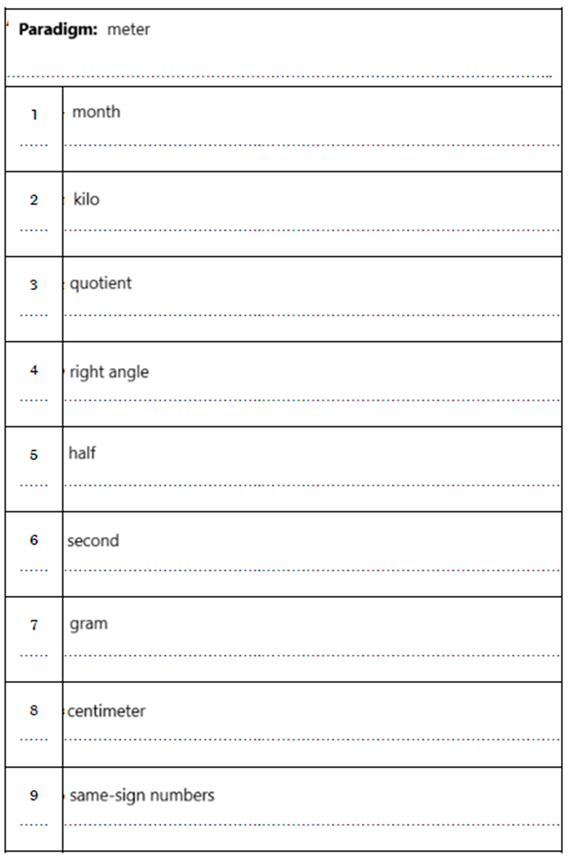
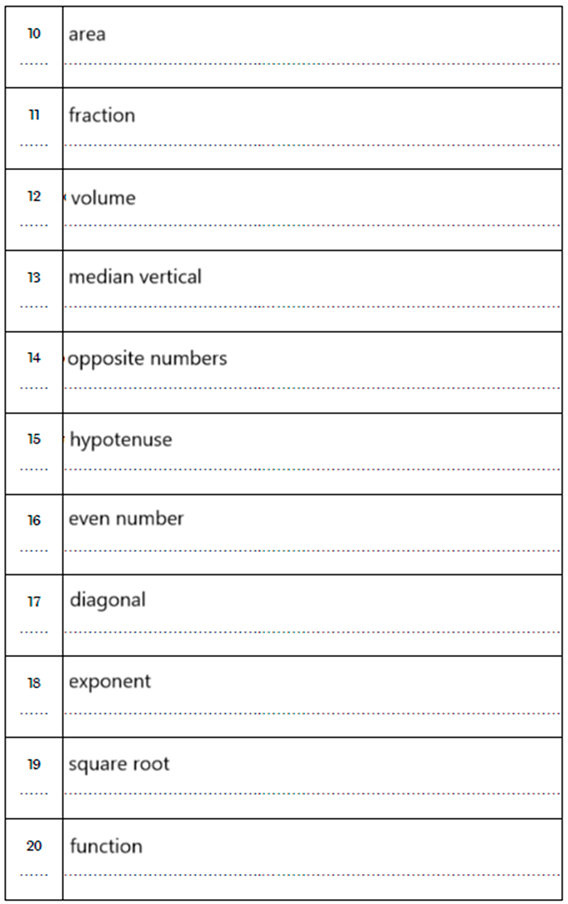
Operations:
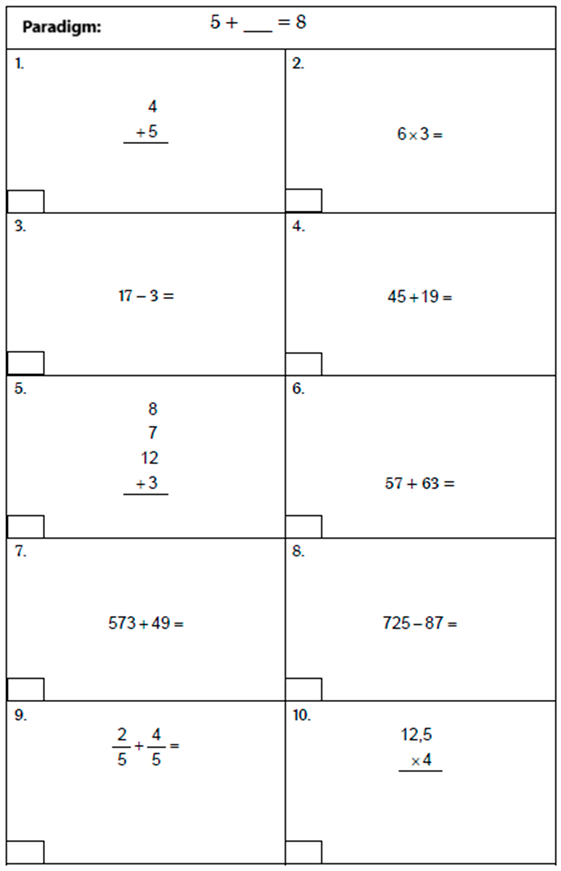
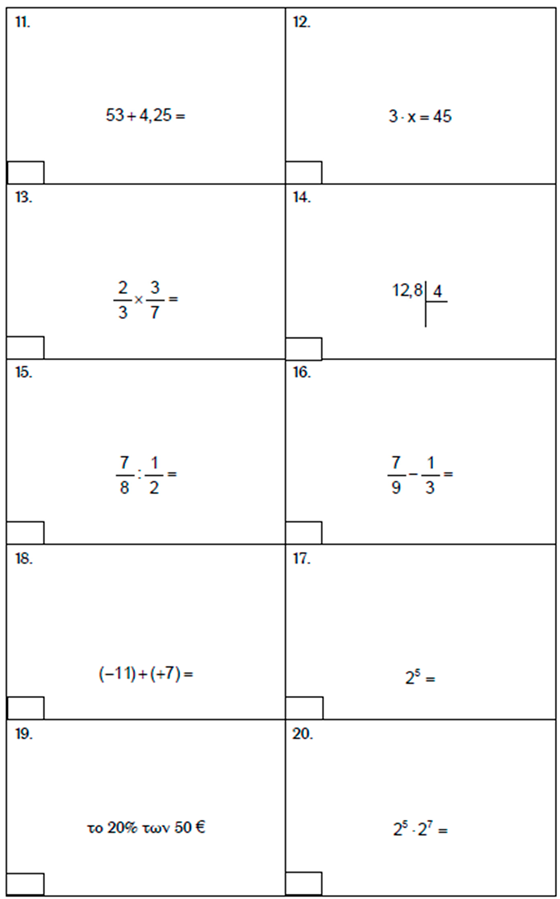
Problem Solving:
Appendix B
Mathematics Self-Efficacy & Anxiety Questionnaire (MSEAQ)
To better understand what you think and feel about your mathematics courses, please respond to each of the following statements, choosing from the listed ones (Never, Seldom, Sometimes, Often, and Usually). If there are questions you do not wish to answer, please select “No Response.”
1. I feel confident enough to ask questions in my mathematics class.
2. I get tense when I prepare for a mathematics test.
3. I get nervous when I have to use mathematics outside of school.
4. I believe I can do well on a mathematics test.
5. I worry that I will not be able to use mathematics in my future career when needed.
6. I worry that I will not be able to get a good grade in my mathematics course.
7. I believe I can complete all of the assignments in a mathematics course.
8. I worry that I will not be able to do well on mathematics tests.
9. I believe I am the kind of person who is good at mathematics.
10. I believe I will be able to use mathematics in my future career when needed.
11. I feel stressed when listening to mathematics instructors in class.
12. I believe I can understand the content in a mathematics course.
13. I believe I can get an “A” when I am in a mathematics course.
14. I get nervous when asking questions in class.
15. Working on mathematics homework is stressful for me.
16. I believe I can learn well in a mathematics course.
17. I worry that I do not know enough mathematics to do well in future mathematics courses.
18. I worry that I will not be able to complete every assignment in a mathematics course.
19. I feel confident when taking a mathematics test.
20. I believe I am the type of person who can do mathematics.
21. I feel that I will be able to do well in future mathematics courses.
22. I worry I will not be able to understand the mathematics.
23. I believe I can do the mathematics in a mathematics course.
24. I worry that I will not be able to get an “A” in my mathematics course.
25. I worry that I will not be able to learn well in my mathematics course.
26. I get nervous when taking a mathematics test.
27. I am afraid to give an incorrect answer during my mathematics class.
28. I believe I can think like a mathematician.
29. I feel confident when using mathematics outside of school.
Appendix C
Students’ Burnout Assessment Tool (S-BAT)
To better understand what you think and feel, please respond to each of the following statements, choosing from Never to Always.
1. At school, I feel mentally exhausted.
2. Everything I do at school requires a great deal of effort.
3. After a day at school, I find it hard to recover my energy.
4. At school, I feel physically exhausted.
5. When I get up in the morning, I lack the energy to start a new day at school.
6. I want to be active at school, but somehow I am unable to manage.
7. When I exert myself at school, I quickly get tired.
8. At the end of my school day, I feel mentally exhausted and drained.
9. I struggle to find any enthusiasm for school.
10. At school, I do not think much about what I am.
11. I feel a strong aversion towards my school.
12. I feel indifferent about my school.
13. I am cynical about what my school means to others.
19. At school, I feel unable to control my emotions.
20. I do not recognize myself in the way I react emotionally at school.
21. During school time, I become irritable when things do not go my way.
22. I get upset or sad at school without knowing why.
23. At school, I may overreact unintentionally.
14. At school, I have trouble staying focused.
15. At school, I struggle to think clearly.
16. I am forgetful and distracted at school.
17. When I am at school, I have trouble concentrating.
18. I make mistakes at school because I have my mind on other things.
24. I have trouble falling or staying asleep.
25. I tend to worry.
26. I feel tense and stressed.
27. I feel anxious and/or suffer from panic attacks.
28. Noise and crowds disturb me.
29. I suffer from palpitations or chest pain.
30. I suffer from stomach and/or intestinal complaints.
31. I suffer from headaches.
32. I suffer from muscle pain, for example, in the neck, shoulder, or back.
33. I often get sick.
References
- Alesi, M., Gaetano Rappo, M. A., & Pepi, A. (2014). Depression, anxiety at school, and self-esteem in children with learning disabilities. Journal of Psychological Abnormalities in Children, 3(3), 1000125. [Google Scholar] [CrossRef]
- American Psychiatric Association. (2013). Diagnostic and statistical manual of mental disorders (5th ed.). American Psychiatric Publishing. [Google Scholar]
- Ashcraft, M. H., & Krause, J. A. (2007). Working memory, math performance, and math anxiety. Psychonomic Bulletin & Review, 14(2), 243–248. [Google Scholar] [CrossRef] [Scilit] [PubMed]
- Ashcraft, M. H., & Moore, A. M. (2009). Mathematics anxiety and the affective drop in performance. Journal of Psychoeducational Assessment, 27(3), 197–205. [Google Scholar] [CrossRef] [Scilit]
- Ashcraft, M. H., & Ridley, K. S. (2005). Math anxiety and its cognitive consequences: A tutorial review. In J. I. D. Campbell (Ed.), Handbook of mathematical cognition (pp. 315–327). Psychology Press. [Google Scholar]
- Bandura, A. (1997). Self-efficacy: The exercise of control. W. H. Freeman and Company. [Google Scholar]
- Barbas, G., Vermeulen, F., Kioseoglou, G., & Menexes, G. (2008). Psychometric criterion of mathematical competence (adaptation–standardization), in the context of the EPEAEK project “Psychometric–differential assessment of children and adolescents with learning disabilities”. EPEAEK project report. Hellenic Ministry of Education. [Google Scholar]
- Boaler, J. (2016). Mathematical mindsets: Unleashing students’ potential through creative math, inspiring messages, and innovative teaching. Jossey-Bass. [Google Scholar]
- Bornstein, M. H., Jager, J., & Putnick, D. L. (2013). Sampling in developmental science: Situations, shortcomings, solutions, and standards. Developmental Review, 33(4), 357–370. [Google Scholar] [CrossRef] [Scilit]
- Butterworth, B. (2005a). Developmental dyscalculia. In J. I. D. Campbell (Ed.), Handbook of mathematical cognition (pp. 455–467). Psychology Press. [Google Scholar]
- Butterworth, B. (2005b). The development of arithmetical abilities. Journal of Child Psychology and Psychiatry, 46(1), 3–18. [Google Scholar] [CrossRef] [Scilit]
- Butterworth, B., Varma, S., & Laurillard, D. (2011). Dyscalculia: From brain to education. Science, 332(6033), 1049–1053. [Google Scholar] [CrossRef] [Scilit]
- Büttner, G., & Hasselhorn, M. (2011). Learning disabilities: Debates on definitions, causes, subtypes, and responses. International Journal of Disability, Development and Education, 58(1), 75–87. [Google Scholar] [CrossRef] [Scilit]
- Carey, E., Devine, A., Hill, F., & Szűcs, D. (2017). Differentiating anxiety forms and their role in academic performance from primary to secondary school. PLoS ONE, 12(3), e0174418. [Google Scholar] [CrossRef] [Scilit]
- Charitaki, G., Vretudaki, H., & Kypriotaki, M. (2025a). Assessing mathematics teaching efficacy profiles in kindergarten: The impact of special educational needs, school climate, responsibility for student achievement, self-efficacy, and locus of control. Asian Journal for Mathematics Education, 4(3), 394–415. [Google Scholar] [CrossRef] [Scilit]
- Charitaki, G., Vretudaki, H., & Kypriotaki, M. (2025b). Revisiting the factor structure of the mathematics teaching efficacy through a bifactor approach in a Greek sample of special and typical preschool education teachers. Mathematics Education Research Journal, 1–26. [Google Scholar] [CrossRef] [Scilit]
- Chinn, S. (2020). The trouble with maths: A practical guide to helping learners with numeracy difficulties (4th ed.). Routledge. [Google Scholar]
- Cohen, J. (1988). Statistical power analysis for the behavioral sciences (2nd ed.). Erlbaum. [Google Scholar]
- Creswell, J. W., & Creswell, J. D. (2018). Research design: Qualitative, quantitative, and mixed methods approaches (5th ed.). Sage. [Google Scholar]
- Creswell, J. W., & Poth, C. N. (2017). Qualitative inquiry and research design: Choosing among five approaches (4th ed.). Sage. [Google Scholar]
- Devine, A., Hill, F., Carey, E., & Szűcs, D. (2018). Cognitive and emotional math problems largely dissociate: Prevalence of developmental dyscalculia and mathematics anxiety. Apollo—University of Cambridge Repository. [Google Scholar] [CrossRef]
- Dowker, A. (2019). Mathematics anxiety and performance. In I. C. Mammarella, S. Caviola, & A. Dowker (Eds.), Mathematics anxiety: What is known and what is still to be understood (pp. 62–76). Routledge. [Google Scholar] [CrossRef] [Scilit]
- Else-Quest, N. M., Hyde, J. S., & Linn, M. C. (2010). Cross-national patterns of gender differences in mathematics: A meta-analysis. Psychological Bulletin, 136(1), 103–127. [Google Scholar] [CrossRef] [Scilit] [PubMed]
- Emesama, J., & Ikeh, F. E. (2024). Self-efficacy as a predictor of academic achievement among secondary school students with developmental dyscalculia in the Nsukka educational zone, Enugu State. African Journal of Science, Technology, Mathematics and Education, 10(3), 382–387. [Google Scholar]
- Finell, J., Sammallahti, E., Korhonen, J., Eklöf, H., & Jonsson, B. (2022). Working memory and its mediating role on the relationship of math anxiety and math performance: A meta-analysis. Frontiers in Psychology, 12, 798090. [Google Scholar] [CrossRef] [Scilit] [PubMed]
- Fiorilli, C., De Stasio, S., Di Chiacchio, C., Pepe, A., & Salmela-Aro, K. (2017). School burnout, depressive symptoms, and engagement: Their combined effect on student achievement. International Journal of Educational Research, 84, 1–12. [Google Scholar] [CrossRef] [Scilit]
- Fuchs, L. S., & Fuchs, D. (2002). Mathematical problem-solving profiles of students with mathematics disabilities. Journal of Learning Disabilities, 35(6), 563–573. [Google Scholar] [CrossRef] [Scilit]
- García-Planas, M. I., & García-Camba Vives, M. (2023, July 3–5). Anxiety disorder in students with dyscalculia. 15th International Conference on Education and New Learning Technologies (pp. 1–6), Palma, Spain. [Google Scholar] [CrossRef] [Scilit]
- Geary, D. C. (2004). Mathematics and learning disabilities. Journal of Learning Disabilities, 37(1), 4–15. [Google Scholar] [CrossRef] [Scilit]
- Geary, D. C. (2010). Mathematical learning disabilities. Advances in Child Development and Behavior, 45, 45–77. [Google Scholar] [CrossRef] [Scilit]
- Geary, D. C. (2011). Cognitive predictors of achievement growth in mathematics: A 5-year longitudinal study. Developmental Psychology, 47(6), 1539–1552. [Google Scholar] [CrossRef] [Scilit]
- Haase, V. G., Guimarães, A. P. L., & Wood, G. (2019). Mathematics and emotions: The case of math anxiety. In A. Fritz, V. G. Haase, & P. Räsänen (Eds.), International handbook of mathematical learning difficulties (pp. 579–594). Springer. [Google Scholar] [CrossRef] [Scilit]
- Hackett, G., & Betz, N. E. (1989). An exploration of the mathematics self-efficacy/mathematics performance correspondence. Journal for Research in Mathematics Education, 20(3), 261–273. [Google Scholar] [CrossRef] [Scilit]
- Jagodics, B., Nagy, K., Szénási, S., Varga, R., & Szabó, E. (2023). School demands and resources as predictors of student burnout among high school students. School Mental Health, 15, 90–104. [Google Scholar] [CrossRef] [Scilit]
- Jiang, S., Ren, Q., Jiang, C., & Wang, L. (2021). Academic stress and depression of Chinese adolescents in junior high schools: Moderated mediation model of school burnout and self-esteem. Journal of Affective Disorders, 295, 384–389. [Google Scholar] [CrossRef] [Scilit] [PubMed]
- Karsenty, R. (2020). Mathematical ability. In S. Lerman (Ed.), Encyclopedia of mathematics education (pp. 530–532). Springer. [Google Scholar] [CrossRef] [Scilit]
- Karttunen, A., Hakkarainen, A., & Holopainen, L. (2023). Associations between school burnout, perceived learning difficulties, and delayed graduation from upper secondary education: A longitudinal study. International Journal of Educational Psychology, 12(3), 289–306. [Google Scholar] [CrossRef] [Scilit]
- Kaufmann, L., Mazzocco, M. M., Dowker, A., von Aster, M., Göbel, S. M., Grabner, R. H., Henik, A., Jordan, N. C., Karmiloff-Smith, A. D., Kucian, K., & Rubinsten, O. (2013). Dyscalculia from a developmental and differential perspective. Frontiers in Psychology, 4, 1–5. [Google Scholar] [CrossRef] [Scilit] [PubMed]
- Kaufmann, L., & von Aster, M. (2012). The diagnosis and management of dyscalculia. Deutsches Ärzteblatt International, 109(45), 767–778. [Google Scholar] [CrossRef] [Scilit]
- Kilpatrick, J., Swafford, J., & Findell, B. (Eds.). (2001). Adding it up: Helping children learn mathematics. National Academies Press. [Google Scholar]
- Kucian, K., McCaskey, U., O’Gorman Tuura, R., & von Aster, M. (2018). Developmental dyscalculia: A dysconnection syndrome? Brain Research Bulletin, 137, 12–19. [Google Scholar] [CrossRef] [Scilit]
- Lee, K., & Bull, R. (2016). Developmental changes in working memory, updating, and math achievement. Journal of Educational Psychology, 108(6), 869–882. [Google Scholar] [CrossRef] [Scilit]
- Lee, M. Y., Lee, M. K., Lee, M. J., & Lee, S. M. (2020). Academic burnout profiles and motivation styles among Korean high school students. Japanese Psychological Research, 62(3), 184–195. [Google Scholar] [CrossRef] [Scilit]
- Lievore, R., Caviola, S., & Mammarella, I. C. (2025). Children with and without dyscalculia: How mathematics anxiety and executive functions may (or may not) affect mental calculation. Learning and Individual Differences, 121, 102693. [Google Scholar] [CrossRef] [Scilit]
- Lotz, C., Schneider, R., & Sparfeldt, J. (2018). Differential relevance of intelligence and motivation for grades and competence tests in mathematics. Learning and Individual Differences, 65, 30–40. [Google Scholar] [CrossRef] [Scilit]
- Lucangeli, D., Fastame, M. C., Pedron, M., Porru, A., Duca, V., Hitchcott, P. K., & Penna, M. P. (2019). Metacognition and errors: The impact of self-regulatory training in children with specific learning disabilities. ZDM, 51(4), 577–585. [Google Scholar] [CrossRef] [Scilit]
- Ma, X., & Xu, J. (2004). The causal ordering of mathematics anxiety and mathematics achievement: A longitudinal panel analysis. Journal of Adolescence, 27(2), 165–179. [Google Scholar] [CrossRef] [Scilit]
- Maloney, E. A., Risko, E. F., Ansari, D., & Fugelsang, J. (2010). Mathematics anxiety affects counting but not subitizing during visual enumeration. Cognition, 114(2), 293–297. [Google Scholar] [CrossRef] [Scilit] [PubMed]
- Mamat, S. S., Othman, Z. S., Safiai, S., Mohamad, N. A., Ahmad Fuad, A. A., & Rahmat, N. H. (2023). Exploring the impact of causes of burnout on motivational elements in learning mathematics. International Journal of Academic Research in Business and Social Sciences, 13(8), 1578–1595. [Google Scholar] [CrossRef] [Scilit] [PubMed]
- Mammarella, I. C., Caviola, S., Giofrè, D., & Borella, E. (2018). Separating math from anxiety: The role of inhibitory mechanisms. Applied Neuropsychology: Child, 7, 342–353. [Google Scholar] [CrossRef] [Scilit] [PubMed]
- Mann, H. B., & Whitney, D. R. (1947). On a test of whether one of two random variables is stochastically larger than the other. The Annals of Mathematical Statistics, 18, 50–60. Available online: https://www.jstor.org/stable/2236101 (accessed on 26 December 2025). [CrossRef] [Scilit]
- Mariera, N., Murugami, M., & Muthee, J. (2021). Mathematics efficacy among students with dyscalculia in public high schools in Kandara sub-county, Muranga County, Kenya. European Journal of Education Studies, 8(7). [Google Scholar] [CrossRef] [Scilit]
- Maxwell, S. E., & Cole, D. A. (2007). Bias in cross-sectional analyses of longitudinal mediation. Psychological Methods, 12(1), 23–44. [Google Scholar] [CrossRef] [Scilit]
- May, D. K. (2009). Mathematics self-efficacy and anxiety questionnaire [Doctoral dissertation, University of Georgia]. [Google Scholar]
- McCaskey, U., Von Aster, M., O’Gorman, R., & Kucian, K. (2020). Persistent differences in brain structure in developmental dyscalculia: A longitudinal morphometry study. Frontiers in Human Neuroscience, 14, 272. [Google Scholar] [CrossRef] [Scilit]
- Menon, V. (2016). Working memory in children’s math learning and its disruption in dyscalculia. Current Opinion in Behavioral Sciences, 10, 125–132. [Google Scholar] [CrossRef] [Scilit]
- Namkung, J. M., Peng, P., & Lin, X. (2019). The relation between mathematics anxiety and mathematics performance among school-aged students: A meta-analysis. Review of Educational Research, 89(3), 459–496. [Google Scholar] [CrossRef] [Scilit]
- Nazari, M. A., Sabaghypour, S., Pezhmanfard, M., Azizi, K., & Vahedi, S. (2021). The influence of children’s mathematical competence on performance in mental number line, time knowledge, and time perception. Psychological Research, 85, 2023–2035. [Google Scholar] [CrossRef] [Scilit] [PubMed]
- Olivier, E., Archambault, I., De Clercq, M., & Galand, B. (2019). Student self-efficacy, classroom engagement, and academic achievement: Comparing three theoretical frameworks. Journal of Youth and Adolescence, 48(2), 326–340. [Google Scholar] [CrossRef] [Scilit] [PubMed]
- Onyishi, C., & Sefotho, M. (2021). Differentiating instruction for learners’ mathematics self-efficacy in inclusive classrooms: Can learners with dyscalculia also benefit? African Journal of Disability, 41(4), 1938. [Google Scholar] [CrossRef] [Scilit]
- Organisation for Economic Co-Operation and Development (OECD). (2003). The definition and selection of key competencies: Executive summary. Available online: https://www.oecd.org/pisa/35070367.pdf (accessed on 26 December 2025).
- Owens, M., Stevenson, J., Hadwin, J. A., & Norgate, R. (2012). Anxiety and depression in academic performance: An exploration of the mediating factors of worry and working memory. School Psychology International, 33(4), 433–449. [Google Scholar] [CrossRef] [Scilit]
- Passolunghi, M. C., & Lanfranchi, S. (2012). Domain-specific and domain-general precursors of mathematical achievement: A longitudinal study from kindergarten to first grade. British Journal of Educational Psychology, 82(1), 42–63. [Google Scholar] [CrossRef] [Scilit]
- Podsakoff, P. M., MacKenzie, S. B., Lee, J. Y., & Podsakoff, N. P. (2003). Common method biases in behavioral research: A critical review of the literature and recommended remedies. Journal of Applied Psychology, 88(5), 879–903. [Google Scholar] [CrossRef] [Scilit]
- Popescu, B., Maricuțoiu, L. P., & De Witte, H. (2024). The student version of the Burnout Assessment Tool (BAT): Psychometric properties and evidence regarding measurement validity on a Romanian sample. Current Psychology, 43(3), 2037–2051. [Google Scholar] [CrossRef] [Scilit]
- Qin, L., Chen, S., Luo, B., & Chen, Y. (2022). The effect of learning burnout on sleep quality in primary school students: The mediating role of mental health. Healthcare, 10(10), 2076. [Google Scholar] [CrossRef] [Scilit]
- Raghubar, K. P., Barnes, M. A., & Hecht, S. A. (2010). Working memory and mathematics: A review of developmental, individual difference, and cognitive approaches. Learning and Individual Differences, 20(2), 110–122. [Google Scholar] [CrossRef] [Scilit]
- Ramirez, G., Gunderson, E. A., Levine, S. C., & Beilock, S. L. (2013). Math anxiety, working memory, and math achievement in early elementary school. Journal of Cognition and Development, 14(2), 187–202. [Google Scholar] [CrossRef] [Scilit]
- R Core Team. (2025). R: A language and environment for statistical computing. R Foundation for Statistical Computing. Available online: https://www.R-project.org/ (accessed on 26 December 2025).
- Rubinstein, O., & Tannock, R. (2010). Mathematics anxiety in children with developmental dyscalculia. Behavioral and Brain Functions, 6(1), 46. [Google Scholar] [CrossRef] [Scilit] [PubMed]
- Salmela-Aro, K., Kiuru, N., Leskinen, E., & Nurmi, J.-E. (2009). School Burnout Inventory (SBI): Reliability and validity. European Journal of Psychological Assessment, 25(1), 48–57. [Google Scholar] [CrossRef] [Scilit]
- Shalev, R. S., Auerbach, J., Manor, O. H. A. D., & Gross-Tsur, V. (2000). Developmental dyscalculia: Prevalence and prognosis. European child & Adolescent Psychiatry, 9(Suppl. S2), S58–S64. [Google Scholar] [CrossRef] [Scilit]
- Shalev, R. S., Manor, O., & Gross-Tsur, V. (2005). Developmental dyscalculia: A prospective six-year follow-up. Developmental Medicine & Child Neurology, 47(2), 121–125. [Google Scholar] [CrossRef] [Scilit]
- Sorvo, R., Koponen, T., Viholainen, H., Aro, T., Räikkönen, E., Peura, P., Dowker, A., & Aro, M. (2017). Math anxiety and its relationship with basic arithmetic skills among primary school children. British Journal of Educational Psychology, 87, 309–327. [Google Scholar] [CrossRef] [Scilit]
- Stogiannidou, A., Aidinis, A., Akritidou, M., Kostouli, M., Markos, A., Mustarda, D., & Jianjun, Z. (2017). Wechsler intelligence scale for children—Fifth edition. Motivo. [Google Scholar]
- Szczygieł, M., Szűcs, D., & Toffalini, E. (2024). Math anxiety and math achievement in primary school children: Longitudinal relationship and predictors. Learning and Instruction, 92, 101906. [Google Scholar] [CrossRef] [Scilit]
- Toffalini, E., Giofrè, D., & Cornoldi, C. (2017). Strengths and weaknesses in the intellectual profile of different subtypes of specific learning disorder: A study on 1,049 diagnosed children: A study on 1,049 diagnosed children. Clinical Psychological Science, 5(2), 402–409. [Google Scholar] [CrossRef] [Scilit]
- Tomasetto, C., Morsanyi, K., Guardabassi, V., & O’Connor, P. A. (2021). Math anxiety interferes with learning novel mathematics content in early elementary school. Journal of Educational Psychology, 113(2), 315–329. [Google Scholar] [CrossRef] [Scilit]
- Van de Vijver, F. J. R., & Tanzer, N. K. (2004). Bias and equivalence in cross-cultural assessment: An overview. Revue Européenne de Psychologie Appliquée, 54(2), 119–135. [Google Scholar] [CrossRef] [Scilit]
- Vogel, S., & Schwabe, L. (2016). Learning and memory under stress: Implications for the classroom. npj Science of Learning, 1(1), 16011. [Google Scholar] [CrossRef] [Scilit]
- Warsi, S. (2025). Academic stress and learning disabilities among high school students: A review. International Journal of Multidisciplinary Research in Arts, Science and Technology, 3(5), 51–60. [Google Scholar] [CrossRef] [Scilit]
- Wen, R., & Dubé, A. K. (2022). A Systematic Review of Secondary Students’ Attitudes Towards Mathematics and its Re-lations With Mathematics Achievement. Journal of Numerical Cognition, 8(2), e7937. [Google Scholar] [CrossRef] [Scilit]
- Winkel, K., & Zipperle, I. (2023). Children with mathematical learning difficulties—How do their working memory skills differ from typically developing first graders? Journal für Mathematik-Didaktik, 44, 417–440. [Google Scholar] [CrossRef] [Scilit]
- Wong, T.-Y. (2021). Components of mathematical competence in middle childhood. Child Development Perspectives, 15, 18–23. [Google Scholar] [CrossRef] [Scilit]
- Wu, S. S., Barth, M., Amin, H., Malcarne, V., & Menon, V. (2012). Math anxiety in second and third graders and its relation to mathematics achievement. Frontiers in Psychology, 3, 162. [Google Scholar] [CrossRef] [Scilit]
- Zhang, J., Zhao, N., & Kong, Q. P. (2019). The relationship between math anxiety and math performance: A meta-analytic investigation. Frontiers in Psychology, 10, 1613. [Google Scholar] [CrossRef] [Scilit]
- Živković, M., Pellizzoni, S., Doz, E., Cuder, A., Mamarella, I., & Chiara Passolungi, M. (2023). Math self-efficacy or anxiety? The role of emotional and motivational contribution in math performance. Social Psychology of Education, 26, 579–601. [Google Scholar] [CrossRef] [Scilit]
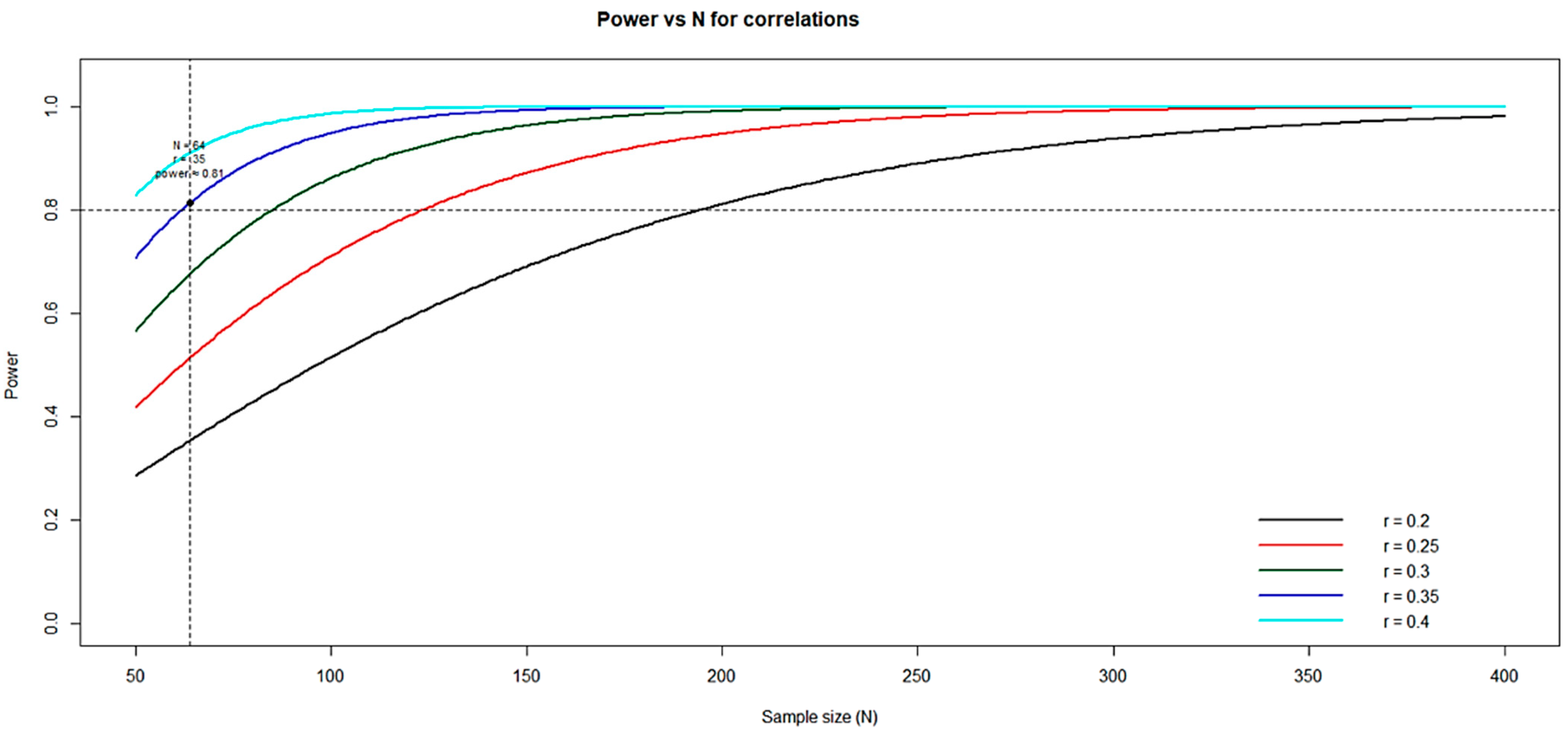
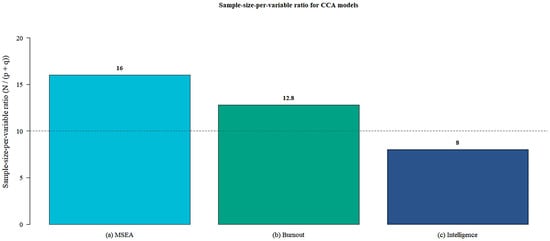
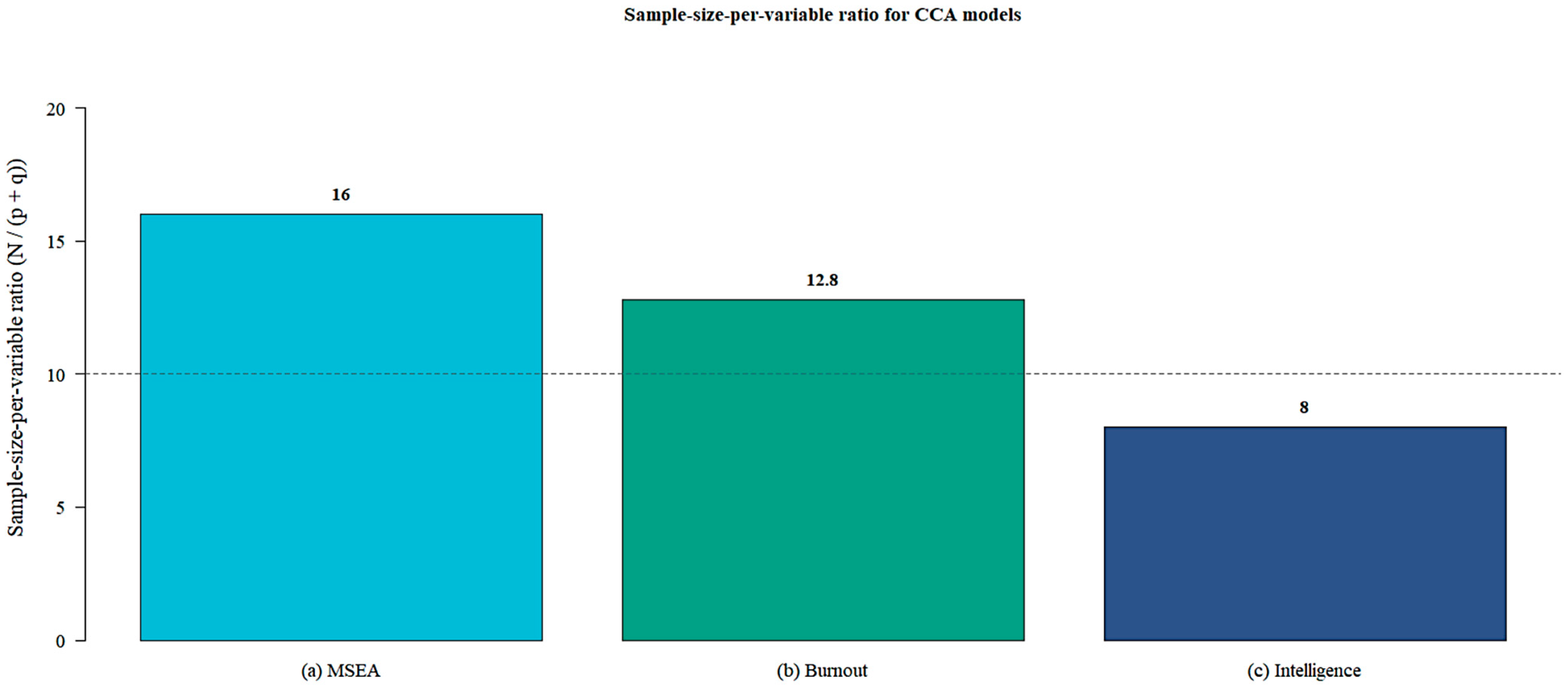
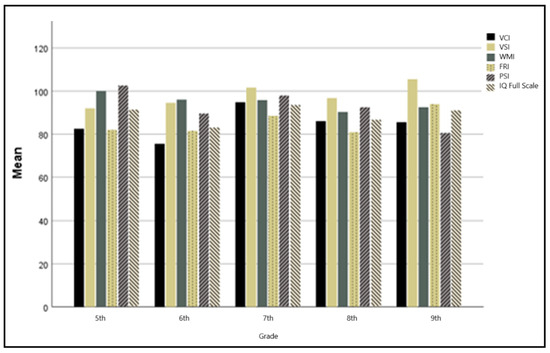
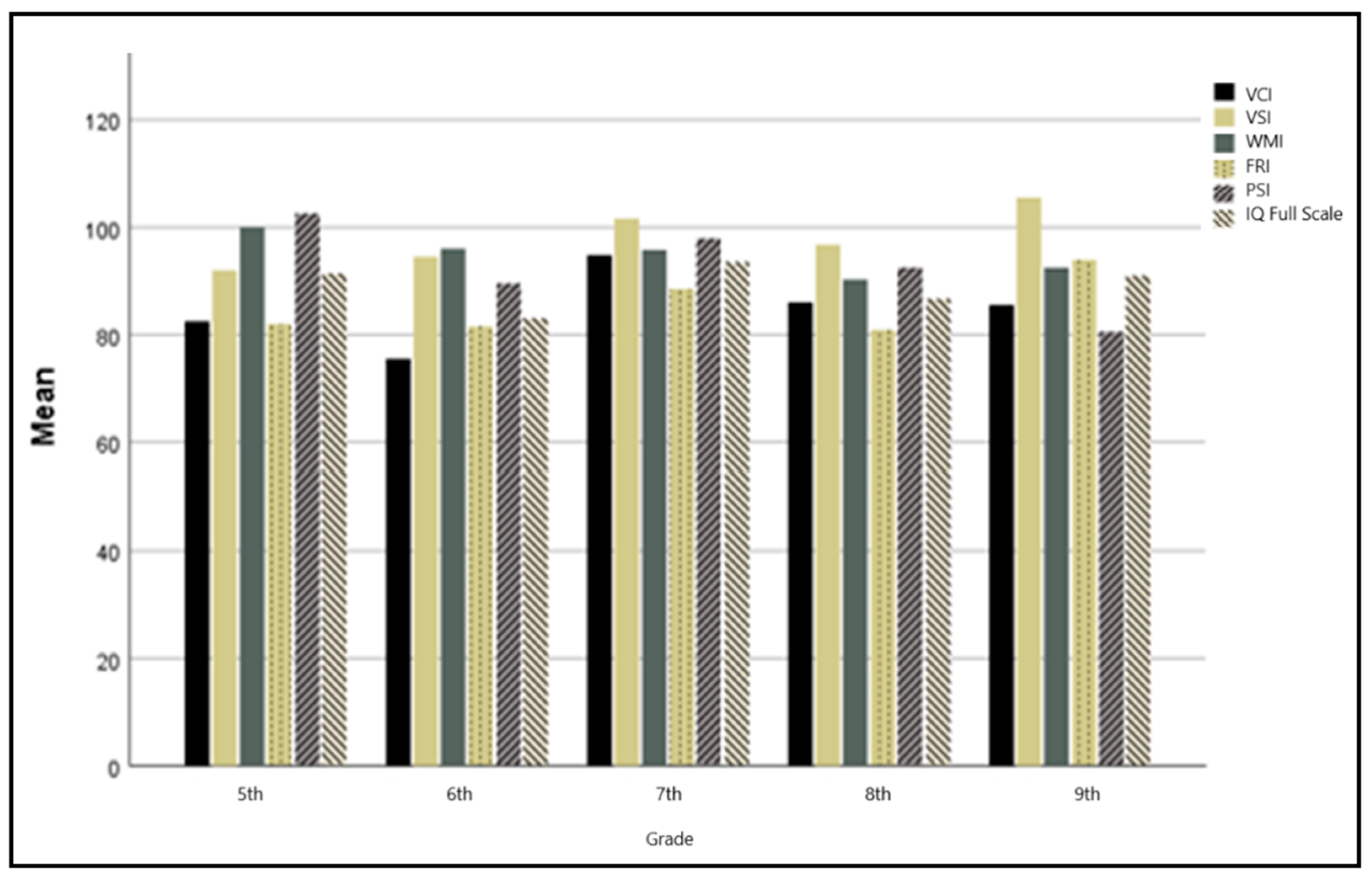
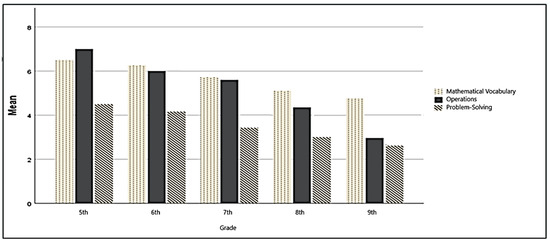
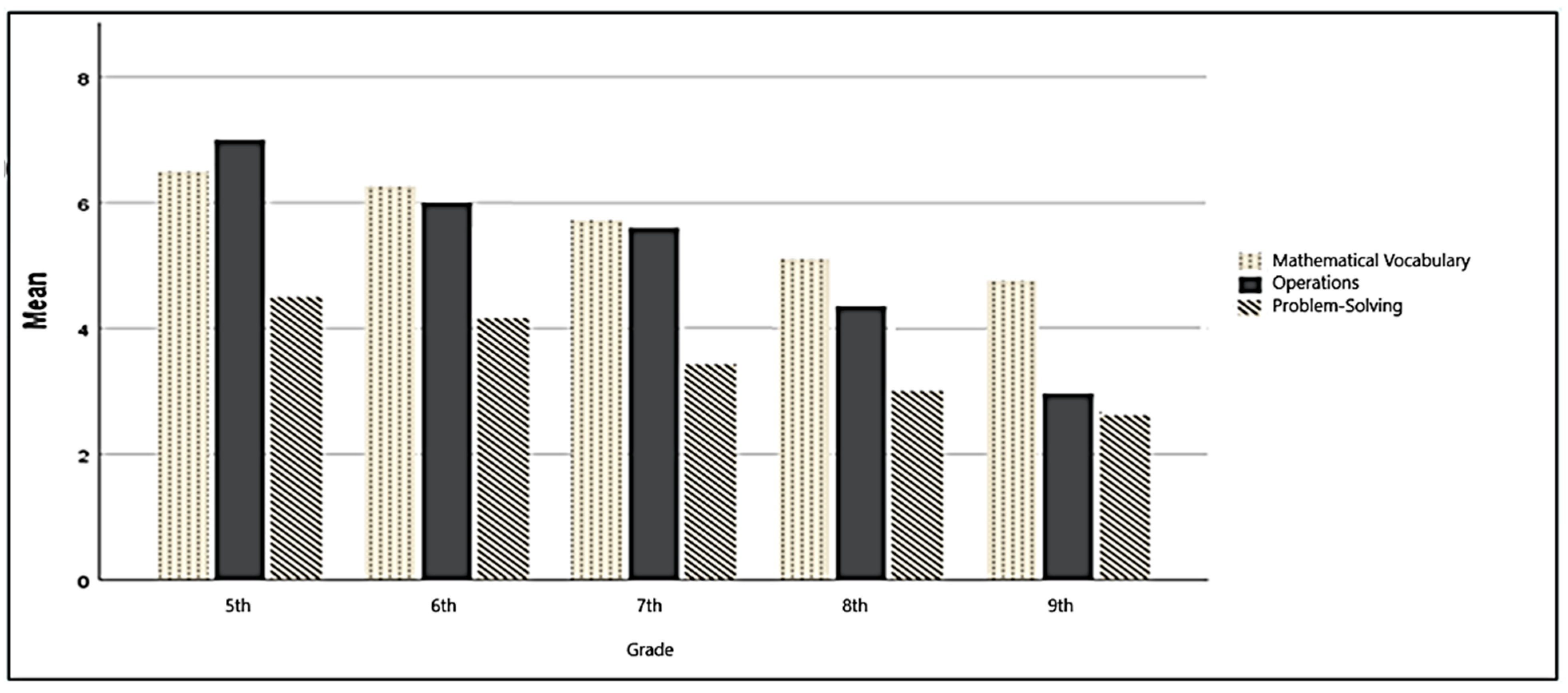
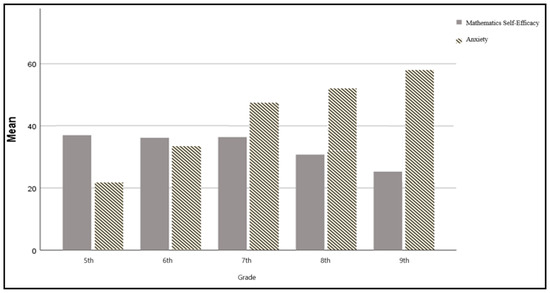
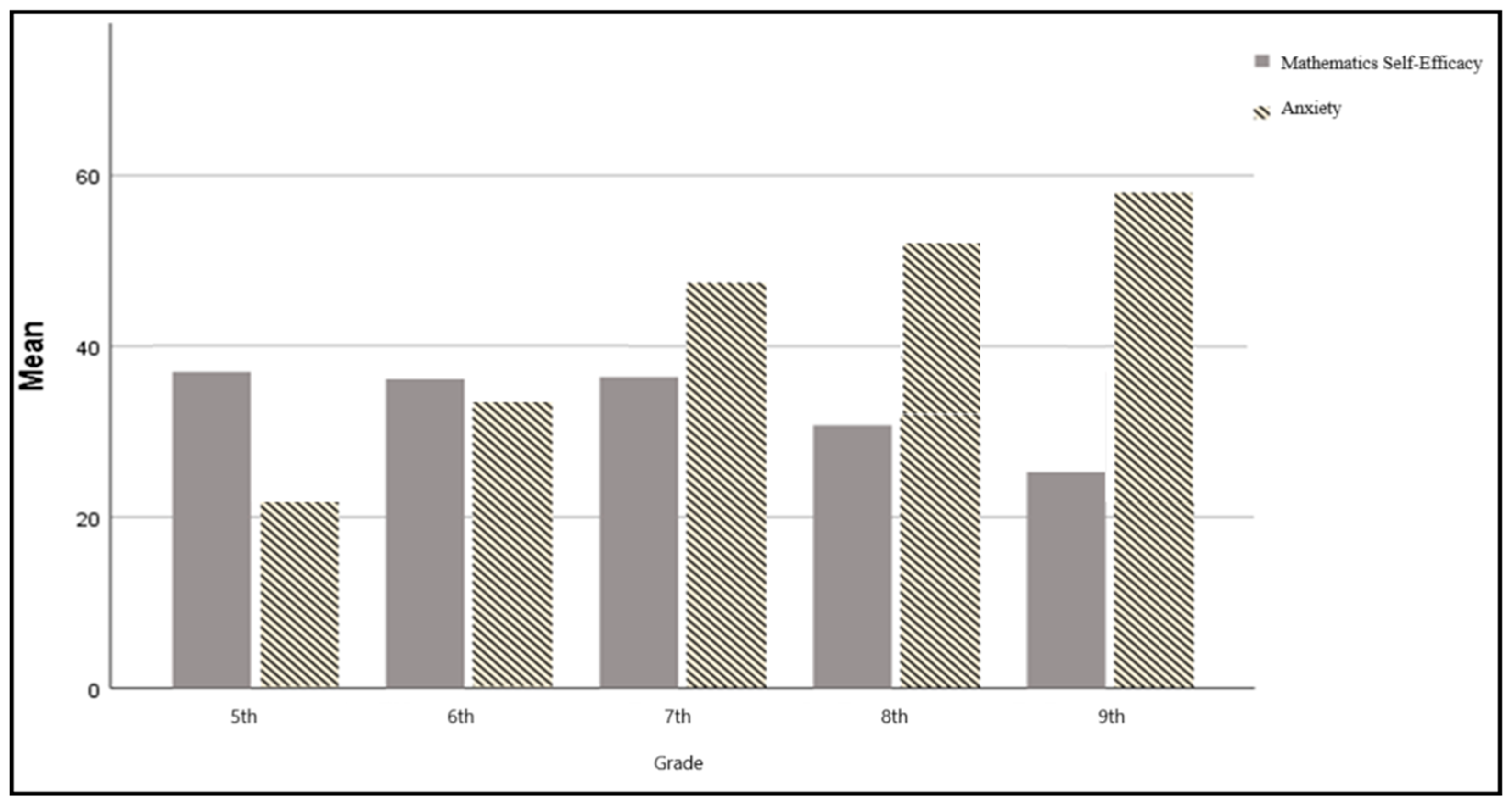
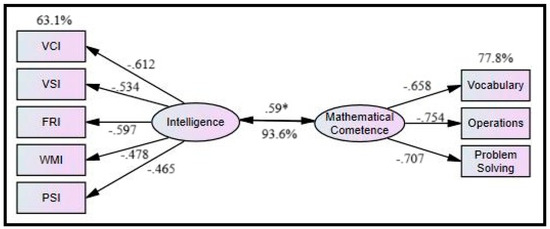
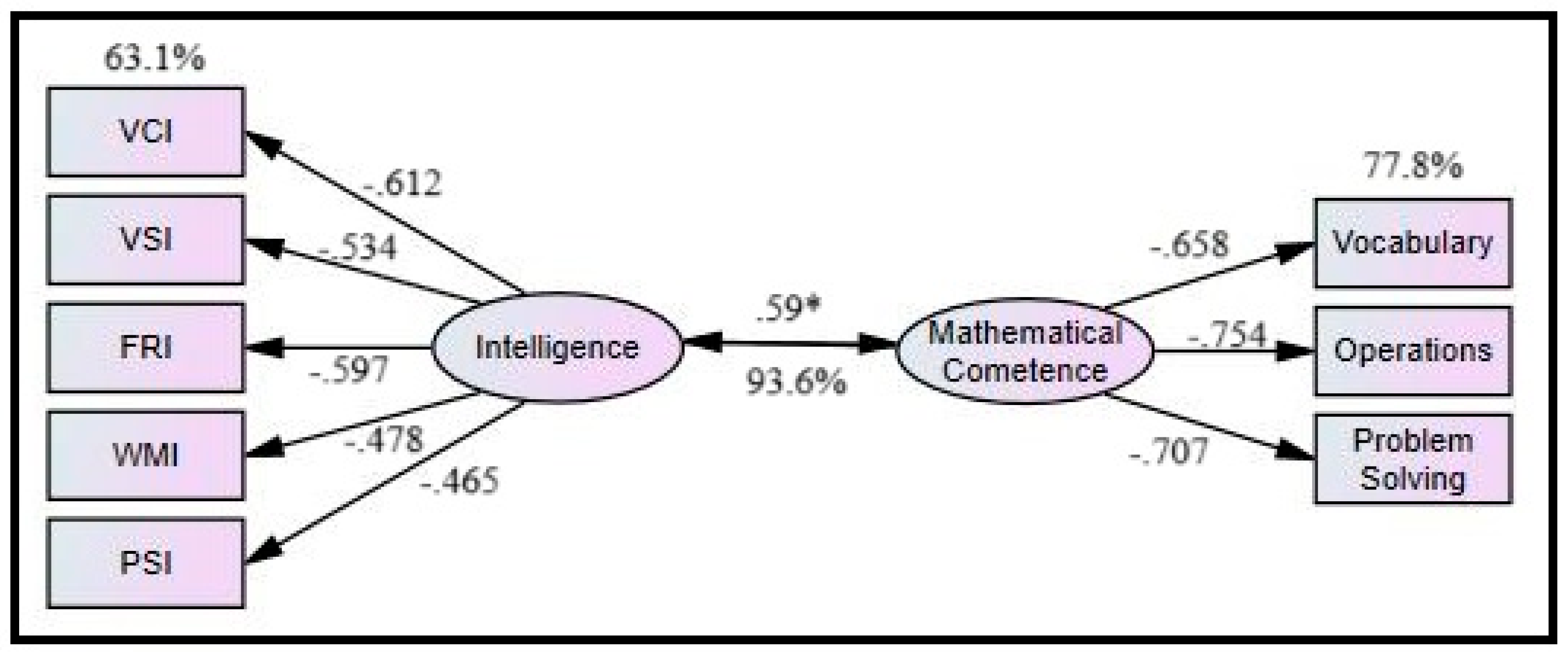
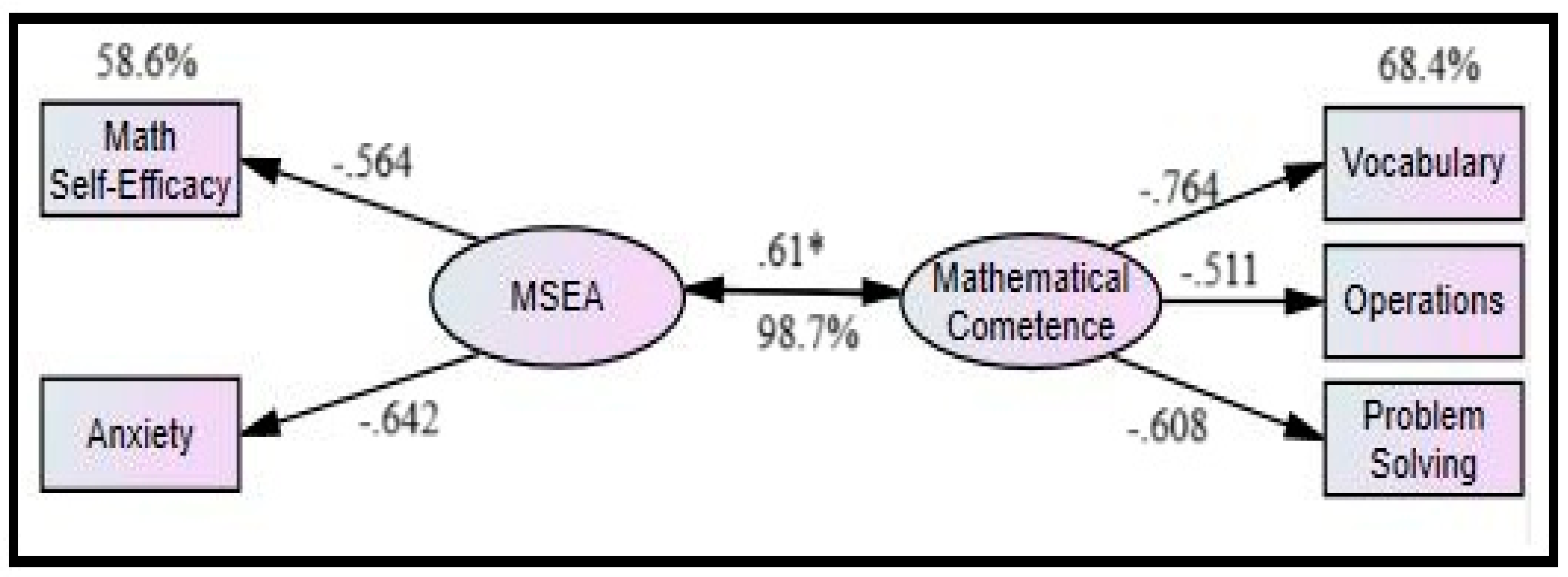
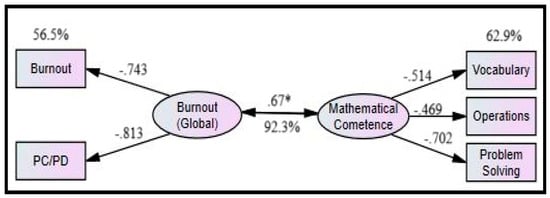
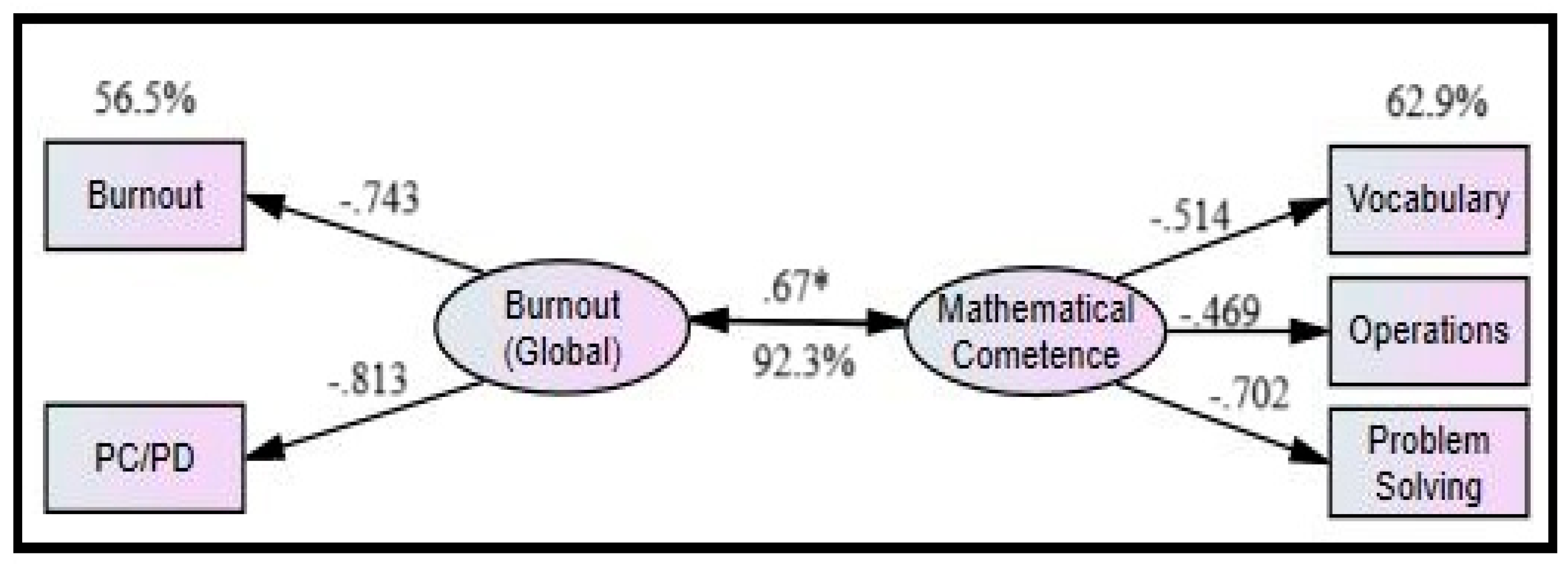

Disclaimer/Publisher’s Note: The statements, opinions and data contained in all publications are solely those of the individual author(s) and contributor(s) and not of MDPI and/or the editor(s). MDPI and/or the editor(s) disclaim responsibility for any injury to people or property resulting from any ideas, methods, instructions or products referred to in the content. |
© 2025 by the authors. Licensee MDPI, Basel, Switzerland. This article is an open access article distributed under the terms and conditions of the Creative Commons Attribution (CC BY) license.