


Abstract
This study examines the relationship between higher education development, innovation capacity, and regional economic performance across Kazakhstan’s regions during the 2010–2024 period. The analysis is motivated by the growing role of higher education institutions within regional innovation systems and by ongoing debates regarding the economic effects of university modernization and innovation-policy reforms in transition and resource-dependent economies. Despite substantial higher education reforms implemented in Kazakhstan since the 2010s, including Bologna-process modernization and the post-2018 expansion of university autonomy, empirical evidence regarding the regional economic transmission of these reforms remains limited. The study employs a regional panel-data framework combining Two-Way Fixed Effects estimation with a Difference-in-Differences specification anchored on the post-2018 reform period. The empirical strategy is complemented by robustness procedures, spatial-dependence diagnostics, and tests for serial correlation and cross-sectional dependence within harmonized regional boundaries covering sixteen regions of Kazakhstan. The findings indicate that the relationship between higher education expansion and regional economic development in Kazakhstan is considerably weaker and more institutionally contingent than is frequently assumed in simplified human-capital frameworks. Individual higher-education indicators show weak or statistically insignificant independent associations with regional GRP per capita after controlling for regional and temporal fixed effects. Given the substantial overlap among several higher-education measures, these findings should not be interpreted as evidence against the broader contribution of higher education to regional development. Wage dynamics and fixed capital investment remain the strongest correlates of regional economic performance. The analysis also identifies a negative and statistically significant association between R&D personnel and regional output, which the paper interprets jointly through a regional innovation paradox in which research-capacity expansion outpaces absorptive demand, alongside alternative explanations including reverse causality, compositional features of regional R&D statistics, and within-block multicollinearity. The Difference-in-Differences estimations provide limited evidence of statistically significant short-run regional economic effects around the post-2018 reform period; the design evaluates post-2018 divergence between higher-capacity and lower-capacity regions rather than identifying a clean causal reform effect, and the null result is consistent with absence of divergence, implementation lags, low statistical power in the small-cluster panel, and limited sensitivity of regional GRP per capita to early reform transmission. The study contributes to the regional economics, innovation-systems, and transition-economy studies by providing regional panel evidence from a resource-dependent post-Soviet context characterized by substantial territorial heterogeneity. The findings suggest that higher education expansion and institutional modernization do not automatically generate measurable regional economic transformation in the absence of complementary commercialization mechanisms, diversified industrial structures, and stronger regional innovation ecosystems.
1. Introduction
Over the past two decades, regional economics and innovation-systems research has increasingly viewed higher education institutions as territorially embedded components of regional development rather than as isolated providers of human-capital formation. Universities contribute to regional productivity through research activity, knowledge spillovers, and university–industry collaboration, but these contributions are widely understood to be conditional on the institutional and economic environment in which universities operate (Capello & Lenzi, 2015; Fonseca & Nieth, 2021; Marino et al., 2025). Regional inequality persists in many advanced and emerging economies despite expanding higher education capacity, indicating that the developmental contribution of universities depends on absorptive capacity, commercialization mechanisms, institutional coordination, and the structure of regional production systems rather than on educational expansion alone (Iammarino et al., 2019). The economic contribution of universities is therefore territorially uneven, institutionally mediated, and dependent on broader structural conditions.
This conditional relationship is particularly visible in transition and resource-dependent economies. Comparative regional panel evidence shows that increases in research capacity, university concentration, or educational participation frequently coexist with weak innovation diffusion and limited measurable economic effects, especially in peripheral or structurally less diversified regions (Liang & Yin, 2024; Ma et al., 2026). Where intermediating institutions for technology transfer, applied research, and innovation finance remain underdeveloped, expansions in research personnel and educational capacity may not translate into proportional regional productivity gains.
Kazakhstan offers a particularly informative empirical setting for this question. Since the 2010s, the country has pursued national objectives associated with innovation-driven growth, economic diversification away from extractive sectors, and a gradual transition toward knowledge-oriented development (Toimbek, 2022). These objectives have been pursued in part through a sequence of higher education reforms, Bologna-process alignment in the 2010s, internationalization of the university system, and a substantive 2018 reform extending institutional autonomy to selected universities (Lodhi & Ilyassova-Schoenfeld, 2023). Whether and how these reforms have translated into measurable regional economic outcomes remains an open empirical question.
Despite these national objectives, Kazakhstan continues to exhibit substantial regional disparities in economic structure, innovation capacity, and institutional concentration, and recent regional analysis documents that the country’s regional divide has widened amidst overall economic dynamism rather than narrowed (Rodríguez-Pose et al., 2025). Higher education and research infrastructure are concentrated in a small number of dominant urban and oblast centers, while peripheral regions remain more dependent on extractive industries and less integrated into national innovation systems (Heim, 2020). This resource dependence is reflected in the concentration of investment, employment, and export activity within extractive sectors, while knowledge-intensive industries remain comparatively underdeveloped outside major metropolitan centers. As a result, the demand for university-generated research, innovation, and highly skilled labor varies substantially across regions. These structural differences help explain why higher education expansion may generate uneven regional economic outcomes despite national-level reforms. The regional economic effects of higher education expansion and innovation development may therefore differ substantially across territories depending on absorptive capacity, industrial diversification, institutional density, and the strength of university–industry linkages. These structural asymmetries make Kazakhstan a relevant empirical case for evaluating whether higher education reforms generate measurable regional economic effects within a resource-dependent transition economy.
Three specific empirical gaps motivate the present study. First, regionally disaggregated panel evidence on the higher-education–innovation–regional-development nexus from resource-dependent post-Soviet transition economies remains scarce, with most existing panel evidence drawn from European, OECD, and Chinese settings whose institutional density and industrial diversification differ markedly from those of Central Asian transition economies. Second, despite the substantive 2018 university autonomy reform, the regional economic transmission of the reform has not been systematically examined within a longitudinal econometric framework that combines panel-data and quasi-experimental approaches. Third, no published regional panel work covers the full 2010–2024 period using harmonized boundaries that account for Kazakhstan’s 2022 administrative-territorial reorganization, leaving a methodological and substantive gap in the available regional empirical evidence on Kazakhstan.
Accordingly, this study addresses the following research question: To what extent do higher education development and innovation capacity contribute to regional economic performance across Kazakhstan’s regions? In addition, the study investigates whether the 2018 university autonomy reform generated measurable short-run differences in regional economic outcomes between regions with different educational and innovation capacities. These questions are examined within a regional panel-data framework covering the period 2010–2024.
To address these gaps, the present study examines the relationship between higher education development, innovation capacity, and regional economic performance across Kazakhstan’s sixteen harmonized regions during 2010–2024. The empirical strategy combines Two-Way Fixed Effects panel estimation with a Difference-in-Differences specification anchored on the post-2018 reform period, complemented by spatial-dependence diagnostics, robustness procedures, and tests for serial correlation and cross-sectional dependence appropriate to small-cluster regional panels.
The empirical results indicate that the relationship between higher education expansion and regional economic development in Kazakhstan is considerably weaker and more institutionally contingent than is frequently assumed in simplified human-capital frameworks. Across the baseline specifications, traditional higher education indicators show weak or statistically insignificant associations with regional GRP per capita after controlling for regional and temporal fixed effects, while wage dynamics and fixed capital investment remain the strongest correlates of regional economic performance. The analysis additionally identifies a negative and statistically significant association between R&D personnel and regional output, which is consistent with a regional innovation paradox in which research-capacity expansion outpaces absorptive demand; alternative explanations, including reverse causality, measurement composition, and within-block multicollinearity, are triaged in the Discussion. Finally, the Difference-in-Differences estimations provide limited evidence of statistically significant short-run regional economic effects around the post-2018 reform, consistent with the implementation-lag horizons documented in the international literature on autonomy reforms.
The paper makes three substantive contributions. First, it provides regional panel evidence on the higher-education–innovation–regional-development nexus from a resource-dependent post-Soviet transition economy under harmonized regional boundaries spanning 2010–2024, extending an applied regional-economics literature that has been dominated by European, OECD, and Chinese evidence. Second, it offers an econometric evaluation of the 2018 university autonomy reform’s regional economic transmission, framed transparently as associational rather than causal given the design’s reliance on capacity-based treatment assignment and the small-cluster inferential environment. Third, the study identifies a robust negative association between regional R&D personnel and GRP per capita across multiple specifications. This unexpected finding challenges conventional assumptions regarding the automatic economic benefits of research-capacity expansion and highlights the importance of absorptive capacity, commercialization mechanisms, and regional economic structure in mediating innovation outcomes. The paper’s empirical profile, including weak higher-education coefficients, a robustly negative R&D-personnel coefficient, the dominance of wage and capital channels, and an insignificant short-run Difference-in-Differences estimate around 2018, constitutes a diagnostic contribution to the comparative literature on transition-economy higher-education systems, documenting how educational expansion and a major governance reform translate into regional outcomes in a structural setting characterized by resource dependence and persistent territorial heterogeneity.
The remainder of the paper is structured as follows. Section 2 reviews the literature on higher education, innovation systems, and regional economic development in transition economies. Section 3 describes the data, variables, and empirical methodology. Section 4 presents the empirical results. Section 5 discusses the findings within the broader regional economics and innovation-systems literature. Section 6 concludes.
2. Literature Review
2.1. Human Capital, Higher Education, and Endogenous Growth
The relationship between higher education and long-term economic development has been widely examined within the frameworks of human capital theory and endogenous growth models. Classical growth approaches traditionally treated technological progress as an exogenous factor; however, endogenous growth theory emphasized the role of knowledge accumulation, education, and innovation capacity as internal drivers of sustainable economic expansion. In this context, higher education institutions are increasingly viewed not only as providers of skilled labor, but also as key actors in knowledge creation, technological diffusion, and regional innovation processes.
Human capital theory suggests that investments in education increase labor productivity, improve technological adaptability, and strengthen the innovative capacity of economies. Within endogenous growth models, knowledge and education generate positive externalities that extend beyond individual productivity effects and contribute to broader regional and national development dynamics. Lucas (1988) argued that the accumulation of human capital produces spillover effects that enhance collective productivity and long-run economic growth, while Romer (1990) emphasized the importance of knowledge production and innovation as central mechanisms of endogenous development. These approaches significantly influenced later studies examining the role of universities in regional economic systems and innovation ecosystems.
Recent empirical research has further expanded this perspective, demonstrating that higher education contributes to economic development through multiple channels, including labor-market upgrading, research activity, knowledge spillovers, entrepreneurship, and innovation diffusion (Agasisti & Petrenko, 2024). At the same time, the relationship between higher education and economic performance remains heterogeneous across countries and regions, particularly in transition and resource-dependent economies. The developmental impact of higher education depends not only on educational expansion itself, but also on the institutional and economic environment in which universities operate; in regions characterized by weak innovation ecosystems, low absorptive capacity, or limited university–industry cooperation, the positive effects of higher education on economic performance may remain constrained or delayed.
Empirical evidence on the economic effects of higher education accordingly remains mixed. While numerous studies identify positive associations between educational attainment and regional productivity, others report weak, spatially uneven, or statistically insignificant effects, especially in developing and transition economies. Research on resource-dependent economies further suggests that economies strongly oriented toward extractive industries may experience difficulties translating educational expansion into innovation-led growth due to structural dependence on commodity sectors and insufficient diversification. These findings are particularly relevant for post-Soviet and resource-based economies, where institutional transformation and innovation-system development remain uneven across regions.
2.2. Regional Innovation Systems and Uneven Regional Development
The regional innovation systems (RIS) approach has become one of the central theoretical frameworks for explaining spatial differences in innovation capacity, technological adaptation, and regional economic performance. Unlike traditional growth approaches that primarily focus on aggregate national indicators, the RIS perspective emphasizes the territorial organization of innovation processes and the importance of institutional interaction between universities, firms, research organizations, and public authorities within specific regional contexts. In this framework, innovation is understood not as an isolated outcome of research activity, but as a systemic process shaped by regional networks, institutional quality, knowledge exchange, and absorptive capacity.
Early RIS literature argued that universities play an important role in regional development by generating knowledge, supporting technological upgrading, and facilitating knowledge spillovers across local economic systems. Cooke (2001) conceptualized regional innovation systems as territorially embedded institutional structures that connect knowledge production with regional economic activity, while subsequent studies further emphasized the role of localized learning processes and university–industry collaboration in fostering regional competitiveness. Asheim and Coenen (2005) additionally demonstrated that different regional knowledge bases produce uneven innovation outcomes, implying that the economic effects of higher education and research activity vary substantially across regions depending on institutional and industrial structures.
Contemporary RIS literature highlights that innovation outcomes are strongly conditioned by the quality of institutional coordination, commercialization mechanisms, and the ability of regional economies to absorb and utilize knowledge generated by universities and research institutions. In regions characterized by institutional fragmentation, weak private-sector innovation demand, or insufficient integration between universities and local industries, educational expansion may produce limited measurable economic effects despite increases in research capacity and human capital accumulation. Kempton (2019) argues that universities are frequently expected to function as engines of regional innovation despite the absence of supporting institutional and economic conditions necessary for knowledge transfer and innovation diffusion.
A central mechanism emerging from this literature is the commercialization-gap argument. Even where regional higher education and research capacity expand quantitatively, the translation of research activity into firm-level productivity depends on the strength of intermediating institutions—technology transfer arrangements, applied research contracts, innovation finance, and university–industry collaborative networks (Audretsch & Belitski, 2020). Where these intermediating channels are weak, expansions in research personnel and research output may fail to generate detectable regional economic returns, and in some specifications may exhibit negative associations with regional output as research capacity grows faster than the absorptive demand of regional firms. This mechanism is particularly relevant in regional economies with low absorptive capacity and underdeveloped private-sector innovation demand, and provides a theoretical anchor for interpreting weak or counter-intuitive coefficient patterns on research-employment indicators in regional empirical models.
Empirical RIS studies further indicate that innovation spillovers are spatially uneven and often concentrated in regions characterized by stronger institutional density, diversified industrial structures, and higher levels of regional integration (Rodríguez-Pose & Crescenzi, 2008). Conversely, peripheral and less diversified regions frequently exhibit weaker innovation transmission mechanisms and lower regional returns from educational and research investments (Pinto, 2024). These debates are particularly relevant for transition and resource-dependent economies, where higher education systems have expanded rapidly while innovation ecosystems and commercialization mechanisms remain comparatively underdeveloped. Under such conditions, increases in educational capacity and research personnel may not immediately translate into measurable regional economic gains, and contemporary RIS literature increasingly views higher education and innovation as components of broader institutional and territorial systems whose economic effects depend on regional structural conditions, policy coordination, and long-term institutional adaptation processes rather than on educational expansion alone.
2.3. Empirical Evidence on Higher Education, Innovation, and Regional Economic Development
Empirical research examining the relationship between higher education, innovation capacity, and regional economic development has generated heterogeneous and often context-dependent findings. A substantial body of panel-data and regional studies identifies positive associations between higher education development, research activity, and long-term regional growth. Within this literature, universities are frequently viewed as important drivers of productivity enhancement, technological adaptation, human capital accumulation, and knowledge spillovers. Studies conducted across European regions and OECD economies generally suggest that regions characterized by stronger higher education and research infrastructure tend to demonstrate higher levels of innovation intensity, economic resilience, and productivity growth.
Not all empirical studies support a strong positive relationship between higher education expansion and regional economic performance. Several studies report that educational expansion alone is insufficient to generate sustained regional economic growth when innovation ecosystems, commercialization channels, and absorptive capacity remain underdeveloped (Iammarino et al., 2019; Liang & Yin, 2024). In such contexts, universities may increase educational attainment without producing measurable productivity gains or regional economic transformation.
This more cautious perspective is also reflected in the entrepreneurial-university literature. Harrison and Leitch (2010) argue that the economic contribution of university spin-off activity is frequently overstated, as many university spin-offs remain small and generate limited regional economic impact. Their findings suggest that the presence of commercialization mechanisms alone does not guarantee substantial regional development benefits and that university effects depend on broader entrepreneurial and institutional conditions.
Valero and Van Reenen (2019) argue that universities can positively influence regional development through multiple channels, including human capital formation, innovation diffusion, and local knowledge spillovers, but these effects remain highly dependent on regional institutional and economic conditions. Similarly, Agasisti and Bertoletti (2022) demonstrate that the contribution of higher education to regional economic performance varies significantly across territories and depends on the interaction between educational systems, innovation ecosystems, and regional absorptive capacity.
Regional and spatial studies additionally show that the developmental impact of universities is frequently uneven across regions. Liang and Yin (2024), using interprovincial panel data for China, report substantial spatial heterogeneity in the relationship between higher education and regional economic development, emphasizing that educational expansion alone does not ensure balanced regional growth. Comparable findings are reported in studies examining peripheral and transition regions, where weak commercialization mechanisms, institutional fragmentation, and insufficient university–industry integration often limit the regional transmission of educational and research investments into broader economic outcomes.
The literature also emphasizes that innovation and higher education effects frequently emerge over extended institutional adjustment periods rather than through immediate economic responses. Several studies suggest that the positive contribution of universities becomes more visible only when educational expansion is accompanied by institutional modernization, developed innovation networks, and stronger regional integration between universities, firms, and governmental actors.
2.4. Transition Economies, Institutional Adaptation, and the Kazakhstan Context
The relationship between higher education modernization, innovation development, and economic transformation has become increasingly important in the literature on transition and post-Soviet economies. Following the collapse of the Soviet Union, many transition countries initiated extensive reforms aimed at restructuring higher education systems, expanding research capacity, and integrating into the global knowledge economy. Kazakhstan represents one of the most active reform cases in Central Asia, particularly through policies promoting internationalization, institutional modernization, university autonomy, and research development (Narbaev et al., 2025).
At the same time, the literature suggests that institutional modernization does not automatically translate into innovation-driven regional growth. Studies examining Kazakhstan’s transition toward a knowledge-based economy emphasize persistent structural constraints associated with resource dependence, uneven regional development, and weak innovation transmission mechanisms. Toimbek (2022) argues that despite substantial reform efforts, Kazakhstan continues to face difficulties in transforming educational and research expansion into sustainable knowledge-based economic growth. Similar concerns are raised in studies examining innovation processes and commercialization barriers in Kazakhstan, where limited university–industry cooperation and insufficient integration between research institutions and regional production systems remain significant challenges (Sadyrova et al., 2021; Kenzhaliyev et al., 2021).
Research on Kazakhstan’s regional development consistently documents substantial and persistent territorial disparities in economic performance, investment concentration, and institutional capacity. Turganbayev (2016) shows that regional convergence processes in Kazakhstan remain uneven and strongly conditioned by structural economic differences across regions, while Turganbayev and Diener (2018) trace how the country’s post-socialist regional economic policy has evolved without fully closing these structural gaps. More recently, Rodríguez-Pose et al. (2025) document a growing regional divide in Kazakhstan that has widened amidst overall economic dynamism, indicating that aggregate national growth has not translated into regional convergence. These findings are directly relevant for interpreting heterogeneous regional outcomes in higher education and innovation models, and motivate the use of two-way fixed-effects estimation with regional and year fixed effects to absorb persistent territorial heterogeneity and common temporal shocks in regional empirical work on Kazakhstan.
A further mechanism shaping the higher-education–innovation–regional-development nexus in Kazakhstan is structural resource dependence. In regional economies dominated by extractive sectors, demand for high-skill labor and for university-generated research output is typically suppressed, and regional output is driven primarily by capital-investment and wage-income channels associated with commodity prices and resource-sector employment (Heim, 2020). Comparative evidence from vulnerable resource-based regions further indicates that universities in such settings frequently struggle to function as catalysts of regional change in the absence of complementary industrial and institutional conditions (Medina-Bueno et al., 2024). Under such structural conditions the higher-education–innovation channel may operate, if at all, through indirect and delayed mediation rather than through direct contemporaneous effects on regional output. This mechanism is consistent with empirical patterns in which capital investment and wages dominate the explanation of regional economic performance, while higher-education and research-capacity indicators show weaker or counter-intuitive associations.
A recurring mechanism in this literature is the implementation-lag argument. Governance reforms in higher education systems, autonomy reforms, modernization of research funding structures, and shifts in institutional accountability, typically generate measurable economic effects only on horizons of five to ten years, and often longer in transition economies where complementary institutional capacities evolve more slowly than formal policy changes (Hartley & Ruby, 2021). In the Kazakhstani context, evidence on regulatory effects on the innovative behavior of higher education institutions further suggests that policy changes translate into measurable institutional responses only gradually (Yembergenova et al., 2021). This implies that the regional economic returns of the post-2018 higher education reform are likely to be small or undetectable within a six- to seven-year post-treatment window, particularly at the regional level where adjustment depends on the gradual maturation of university–industry linkages, the build-up of commercialization channels, and the reorientation of research activity toward regional production systems.
2.5. Research Gap and Contribution
Two substantive gaps remain insufficiently explored in the existing literature. First, regionally disaggregated panel evidence on the higher-education–innovation–regional-development nexus from resource-dependent post-Soviet transition economies remains scarce. Most of the existing regional-level evidence continues to come from European, OECD, and Chinese settings, where institutional density, industrial diversification, and the maturity of innovation ecosystems differ markedly from those of Central Asian transition economies. Second, although Kazakhstan has experienced rapid post-2010 quantitative expansion of its higher education sector and implemented a substantive 2018 governance reform granting autonomy to selected universities, the regional economic effects of these processes have not been systematically examined within a longitudinal econometric framework that combines panel-data and quasi-experimental approaches.
This study addresses both gaps by providing regional panel evidence for Kazakhstan over 2010–2024 across the country’s sixteen harmonized regions. The contribution is empirical and diagnostic rather than causal-identification-driven. Substantively, the paper documents how the quantitative expansion of higher education and research capacity has translated, or failed to translate, into measurable regional economic outcomes in a resource-dependent transition economy characterized by persistent territorial heterogeneity, uneven institutional adaptation, and structural commodity dependence. The 2018 higher-education reform provides a natural quasi-experimental anchor for examining whether short-run regional economic returns from a major governance reform are detectable within the post-treatment window typically observed in the international literature on autonomy and modernization reforms. By combining two-way fixed-effects estimation with regional and year fixed effects, a treated–control difference-in-differences design, spatial-dependence diagnostics, and a robustness block addressing serial correlation, cross-sectional dependence, and small-cluster inference, the paper produces a transparent regional empirical profile of the nexus that is informative for the comparative literature on transition-economy higher-education systems and for ongoing higher-education-policy debates in Kazakhstan and structurally similar Central Asian economies.
3. Methodology
3.1. Research Design and Empirical Strategy
This study investigates the relationship between higher education development, innovation capacity, and regional economic performance across Kazakhstan’s regions during the period 2010–2024. The empirical analysis is based on a balanced panel dataset covering 16 regions of Kazakhstan over a fifteen-year observation period. The methodological framework combines panel-data econometric techniques, Difference-in-Differences estimation, spatial dependence diagnostics, and robustness procedures to evaluate the consistency and stability of the observed relationships.
The analytical strategy is grounded in the regional economics and regional innovation systems literature, which emphasizes the importance of higher education institutions, innovation infrastructure, human capital accumulation, and absorptive regional capacity in shaping regional economic trajectories. The empirical design additionally reflects the methodological traditions of applied panel-data analysis widely used in regional economics and policy evaluation studies (Wooldridge, 2010; Baltagi, 2005; Arellano, 2003).
To account for unobserved regional heterogeneity and nationwide macroeconomic shocks, the study applies Two-Way Fixed Effects (TWFE) estimators including both regional and year fixed effects. TWFE specifications are commonly employed in empirical regional panel studies because they allow simultaneous control for time-invariant regional characteristics and common temporal shocks affecting all observational units (Baltagi, 2005; Wooldridge, 2010).
In addition to the baseline panel specifications, the study employs a Difference-in-Differences (DiD) framework associated with the post-2018 higher education reform period in Kazakhstan. The DiD strategy follows the broader empirical literature on policy evaluation and quasi-experimental inference in applied economics (Angrist & Pischke, 2009; Bertrand et al., 2004).
The empirical framework is primarily associational rather than strictly causal. Accordingly, the estimated coefficients are interpreted as conditional relationships within a fixed-effects panel structure rather than definitive causal effects of higher education or innovation variables on regional economic performance.
3.2. Data and Variable Construction
The empirical analysis is based on annual regional statistics for Kazakhstan’s 16 regions covering the period from 2010 to 2024. The dataset integrates indicators related to regional economic performance, higher education development, innovation activity, labor-market conditions, investment dynamics, demographic factors, and digitalization processes. The data were compiled from official regional statistical sources, including the Bureau of National Statistics of Kazakhstan and related governmental statistical publications.
Regional gross product per capita measured in logarithmic form (ln_grp_pc) is used as the dependent variable representing regional economic performance. The logarithmic transformation was applied to reduce skewness, stabilize variance, and improve coefficient interpretability across regions characterized by substantial differences in economic scale.
The explanatory variables include indicators representing several dimensions of regional higher education and innovation systems. Higher education capacity is proxied through the total number of students enrolled in higher education institutions, the number of universities, and the total academic staff employed within the regional higher education system. Innovation-related capacity is represented by the number of R&D personnel and research-related indicators. Additional control variables include population, employment, average wages, fixed capital investment, and internet usage rates.
The selection of explanatory variables was guided by the regional innovation systems literature, human capital theory, and empirical studies examining the determinants of regional economic development. Higher education development was proxied by the number of universities, student enrollment, and academic staff, reflecting the scale and capacity of regional higher education systems. Innovation capacity was represented by R&D personnel and internet usage. R&D personnel capture the regional knowledge-production base and research capacity, while internet usage serves as a proxy for digital infrastructure and technological diffusion. Regional economic conditions were additionally controlled through population, employment, average wages, and fixed capital investment, which are widely recognized determinants of regional productivity and economic performance in regional economics literature.
Patent statistics were considered during the data collection stage. However, consistent regional patent data covering the full 2010–2024 period were not available for all harmonized regions following Kazakhstan’s administrative-territorial reforms. To preserve a balanced and methodologically consistent regional panel, the study relied on R&D personnel as the primary indicator of regional innovation capacity. Future research may complement the present framework by incorporating patent-based measures where sufficiently consistent regional data become available.
Several variables were transformed into natural logarithms in accordance with standard regional panel-data practices to reduce heteroskedasticity and improve comparability across observational units (Wooldridge, 2010; Baltagi, 2005).
Missing observations were limited and primarily associated with several early-period digitalization indicators. The panel structure nevertheless remained sufficiently balanced for fixed-effects estimation procedures.
The panel remains balanced for the baseline specifications. However, models including the internet-users variable use 224 observations due to limited availability of early-period regional digitalization data.
The resulting dataset demonstrates moderate cross-regional heterogeneity and sufficient within-region temporal variation to support fixed-effects panel estimation procedures.
To ensure comparability across the full 2010–2024 period, the regional panel was harmonized using stable historical regional boundaries. Administrative units created during the 2022 territorial reorganization were reassigned to their corresponding parent regions: Abay was aggregated with East Kazakhstan, Ulytau with Karaganda, and Zhetisu with Almaty region. In addition, Turkistan and Shymkent were aggregated into a harmonized South Kazakhstan regional unit in order to maintain consistency with the pre-2018 regional structure. This procedure preserves a balanced 16-region panel across the full observation period.
3.3. Two-Way Fixed Effects (TWFE) Specification
The baseline empirical specification is estimated using a Two-Way Fixed Effects panel model:
where
- denotes regional GRP per capita in region during year ;
- represents higher education indicators;
- captures innovation-related variables;
- denotes control variables;
- represents regional fixed effects;
- represents year fixed effects;
- is the idiosyncratic error term.
The inclusion of regional fixed effects controls for unobserved time-invariant regional characteristics such as historical industrial specialization, geographic factors, and persistent institutional differences. Year fixed effects account for nationwide macroeconomic shocks, inflationary dynamics, and country-level policy changes affecting all regions simultaneously.
Clustered standard errors at the regional level were applied in the baseline specifications to account for potential serial correlation and heterogeneity in residual variance structures (Arellano, 2003; Wooldridge, 2010).
Several alternative model specifications were additionally estimated to evaluate the stability of the coefficient structure under alternative combinations of higher education and innovation variables.
3.4. Difference-in-Differences Framework
To additionally evaluate the potential regional effects associated with the post-2018 higher education reform period, a Difference-in-Differences specification was estimated:
where:
- identifies regions with comparatively stronger higher education and innovation-system capacity, including Astana, Almaty_city, Karaganda, East_Kazakhstan, and the harmonized South Kazakhstan. These regions were selected due to their relatively higher concentration of universities, research infrastructure, and institutional exposure to post-2018 higher education modernization processes;
- denotes the post-2018 reform period;
- represents the interaction term capturing the estimated treatment effect.
The DiD design compares treated and control regions before and after the reform period while accounting for common temporal dynamics and fixed regional heterogeneity. The methodological logic follows the applied policy-evaluation literature using quasi-experimental approaches in observational settings (Angrist & Pischke, 2009; Card & Krueger, 1994).
The treatment assignment was based on the institutional and structural characteristics of Kazakhstan’s regional higher education and innovation systems rather than on the estimated regression outcomes themselves. In particular, the treated regions include major educational and research centers characterized by comparatively higher university concentration, stronger integration into national innovation networks, and greater exposure to higher education modernization and autonomy-related reforms implemented after 2018. The specification therefore aims to capture differential regional adjustment dynamics associated with institutional reform exposure rather than deterministic causal effects of higher education expansion alone.
Given the relatively limited number of post-treatment years and the heterogeneity of regional institutional conditions, the DiD estimates are interpreted cautiously. Particular attention is additionally given to potential inference problems in DiD settings with serial correlation and small cluster structures (Bertrand et al., 2004; Roth et al., 2023).
3.5. Spatial Dependence Analysis
To evaluate the potential presence of spatial dependence among Kazakhstan’s regions, Moran’s I statistics were calculated using regional GRP per capita indicators and spatial weights matrices constructed through the k-nearest neighbors approach.
where:
- denotes the spatial weight between regions;
- represents the number of spatial units;
- is the sum of all spatial weights.
The spatial analysis was conducted to determine whether neighboring regions exhibit statistically similar regional economic trajectories that could require the application of spatial econometric specifications. The use of Moran’s as a preliminary diagnostic tool follows the foundational spatial econometrics framework developed by Anselin (1988) and later extended in applied regional analysis studies (LeSage & Pace, 2009).
3.6. Robustness and Diagnostic Procedures
Several robustness checks and post-estimation diagnostic procedures were conducted to evaluate the reliability and stability of the empirical findings.
First, multicollinearity diagnostics were assessed using the Variance Inflation Factor (VIF). The VIF results indicated that multicollinearity remained within acceptable thresholds despite the conceptual relationship among several higher education indicators. Second, serial correlation was examined using the Wooldridge/Breusch–Godfrey panel autocorrelation test. Third, heteroskedasticity was evaluated using the Breusch–Pagan test (Breusch & Pagan, 1979). The Hausman specification test was used as an auxiliary specification diagnostic to compare fixed-effects and random-effects estimators, while the final choice of the TWFE framework was also guided by the regional structure of the data and the need to control for persistent unobserved regional heterogeneity (Hausman, 1978).
Cross-sectional dependence was examined using the Pesaran CD test (Pesaran, 2021). In response to the detected serial correlation and cross-sectional dependence, supplementary robustness estimations were performed using Driscoll–Kraay standard errors, which provide robustness to heteroskedasticity, serial correlation, and certain forms of cross-sectional dependence in panel settings (Driscoll & Kraay, 1998).
Additional robustness specifications included lagged innovation variables and reduced-form models excluding selected explanatory variables. These procedures were implemented to verify whether the principal coefficient patterns remain stable across alternative estimation structures and model specifications.
4. Results
4.1. Descriptive Statistics and Preliminary Diagnostics
Before estimating the econometric models, preliminary statistical diagnostics were conducted to examine the distributional properties of the variables, the correlation structure among the indicators, and the potential presence of multicollinearity. These procedures provide an initial understanding of the regional panel dataset and support the validity of the subsequent TWFE and Difference-in-Differences estimations.
Table 1 presents the descriptive statistics of the variables used in the empirical analysis. Regional GRP per capita demonstrates moderate variation across regions and years, indicating noticeable differences in regional economic performance within Kazakhstan during the study period. Several higher education and innovation-related indicators, including R&D expenditure, R&D personnel, and university enrollment, exhibit substantial heterogeneity, suggesting uneven distribution of educational and innovation capacity across regions. Internet usage remains relatively high on average, although the variable contains several missing observations for individual region-year periods. Overall, the dataset demonstrates sufficient variation for panel econometric estimation.
Table 1.
Descriptive Statistics of Variables.
Figure 1 presents the correlation matrix for the main variables included in the panel dataset. The results indicate the presence of moderate and high positive correlations among several higher education and innovation-related indicators.
Figure 1.
Correlation Matrix of the Main Variables Used in the Panel Analysis.
Correlation Matrix
Strong positive correlations are observed among student enrollment, academic staff, and the number of universities, indicating that these variables capture closely related dimensions of regional higher education system capacity.
At the same time, the majority of correlations between the explanatory variables remain below critical levels typically associated with severe multicollinearity. Furthermore, the main explanatory variables demonstrate theoretically consistent relationships with regional GRP per capita.
The correlation matrix also shows a strong positive association between fixed capital investment and regional economic performance (r = 0.790), as well as between average wages and GRP per capita (r = 0.642). Internet usage demonstrates a moderate positive relationship with regional economic performance (r = 0.572), suggesting a potential role of digitalization in regional development processes.
Variance Inflation Factor
To further assess potential multicollinearity, the variance inflation factor (VIF) was calculated in Table 2 for the explanatory variables included in the empirical models.
Table 2.
Variance Inflation Factor (VIF) Diagnostics.
The results indicate elevated VIF values for several higher education system indicators, particularly total academic staff (VIF = 16.04), total number of students (VIF = 13.27), and number of universities (VIF = 12.25). These findings suggest strong interrelationships among variables capturing the scale and capacity of the regional higher education system.
At the same time, the remaining explanatory variables demonstrate acceptable VIF levels. In particular, population, wages, employment, investment, and internet usage indicators remain well below conventional critical thresholds.
The detected multicollinearity is primarily concentrated within the higher education structural block and reflects the closely related nature of regional educational infrastructure indicators. To address this issue, the study estimates several alternative TWFE specifications rather than relying on a single fully saturated model.
4.2. Baseline TWFE Estimation Results
The baseline empirical analysis was conducted using several Two-Way Fixed Effects (TWFE) specifications in order to evaluate the robustness of the relationship between higher education development, innovation capacity, digitalization, and regional economic performance across Kazakhstan’s regions. All models include both regional and year fixed effects with clustered standard errors at the regional level.
The reduced number of observations in Model 4 (N = 224) reflects missing data for the internet users variable in several region-year observations. All other specifications use the full balanced sample of 240 observations.
In Table 3, the TWFE estimations demonstrate broadly stable coefficient patterns across all specifications. Population remains negatively associated with regional GRP per capita, which may reflect structural regional differences in productivity, industrial concentration, and income generation across Kazakhstan’s regions after controlling for fixed regional and temporal effects. R&D personnel demonstrates a negative and statistically significant coefficient in Models 2–4, suggesting that increases in research employment alone may not immediately translate into measurable regional economic gains. Investment in fixed capital remains positively associated with regional economic performance, although its statistical significance weakens across several specifications. The digitalization proxy measured through internet users is positive but statistically insignificant, indicating limited short-term association with regional economic outcomes during the analyzed period.
Table 3.
Two-Way Fixed Effects (TWFE) Estimation Results.
Figure 2 presents the estimated coefficients and 95% confidence intervals from the TWFE specification. Average wages demonstrate the strongest positive association with regional GRP per capita, while population size exhibits a statistically significant negative relationship. Fixed capital investment also contributes positively to regional economic performance. In contrast, the effects of employment, student enrollment, and R&D personnel appear weaker and less stable across specifications. Overall, the coefficient structure confirms the dominant role of labor income and investment-related factors in explaining regional economic disparities.
Figure 2.
Estimated Effects of Higher Education and Economic Indicators on Regional GRP per Capita.
4.3. Difference-in-Differences Estimation Results
To further examine the potential treatment effects associated with regional higher education and innovation capacity, Difference-in-Differences (DiD) estimations were conducted using several alternative specifications. The models additionally account for regional and temporal fixed effects in order to isolate structural regional heterogeneity and common macroeconomic trends. The treatment specification is based on the post-2018 period and the classification of regions characterized by relatively higher concentrations of higher education and innovation-related activity.
The Difference-in-Differences estimations indicate that the DID interaction term remains statistically insignificant across all specifications. The DiD interaction term remains statistically insignificant across all specifications, suggesting that the establishment of research universities did not generate a measurable effect on regional GRP per capita during the study period. To address potential inference concerns arising from the small number of regional clusters, we additionally conducted cluster bootstrap inference based on 999 replications. The bootstrap p-values for the DiD interaction ranged from 0.455 to 0.580 across specifications, confirming the statistical insignificance of the estimated treatment effect.
Although the coefficients are positive, the absence of statistical significance suggests that the treatment effect did not produce a sufficiently strong short-term impact on regional GRP per capita during the observation period.
This result may indicate that the economic effects of digitalization and innovation-related policies in Kazakhstan require a longer adjustment period before becoming fully observable at the regional level. The findings may also reflect structural heterogeneity between regions, uneven institutional capacity, and differences in the intensity of technological adoption.
Several control variables remain directionally consistent with the earlier TWFE estimations. Population preserves a negative association with regional economic performance, while average wages remain positively associated with regional GRP per capita across all specifications. In DiD Model 2, R&D personnel continues to demonstrate a negative and statistically significant coefficient, whereas fixed capital investment remains positively associated with regional economic performance.
The figure illustrates the average dynamics of regional GRP per capita in treated and control regions before and after the 2018 policy intervention. Although treated regions demonstrate slightly higher average growth trajectories, the visual patterns do not indicate substantial post-treatment divergence, which is consistent with the statistically insignificant Difference-in-Differences estimates reported in Table 4.
Table 4.
Difference-in-Differences (DiD) Estimation Results.
Figure 3 provides a visual comparison of regional GRP per capita trends across treated and control groups. The treated group includes Astana, Almaty_city, Karaganda, East_Kazakhstan, and the harmonized South Kazakhstan regional unit. The trajectories remain relatively parallel throughout the observed period, and no pronounced post-2018 divergence is detected. Although formal pre-trend testing is constrained by the relatively small number of regional units and limited pre-treatment observations, the visual dynamics generally support the plausibility of the parallel-trends assumption underlying the DiD framework. These visual patterns are consistent with the insignificant DiD coefficients obtained in the econometric estimations, suggesting limited evidence of a measurable treatment effect within the analyzed timeframe.
Figure 3.
Trends in GRP per capita across treated and control regions.
To complement the visual inspection of Figure 3, a formal pre-treatment trend test was conducted following standard DiD practice. Specifically, we estimated a pre-treatment specification interacting the treatment indicator with a linear time trend using only observations prior to 2018. The interaction coefficient was positive but statistically insignificant (β = 0.018, p > 0.10), indicating no evidence of systematically different pre-treatment trends between treated and control regions. This result provides additional support for the plausibility of the parallel trends assumption.
4.4. Visual Exploration of Regional and Economic Dynamics
Additional visualizations were constructed to illustrate the relationships between key socioeconomic, educational, and innovation-related indicators and regional economic performance across Kazakhstan’s regions.
Figure 4 presents the temporal dynamics of regional GRP per capita across Kazakhstan’s regions between 2010 and 2024. Each colored line represents a separate region, with the colors used solely to distinguish regional trajectories and facilitate comparison over time; they do not indicate any ranking, category, or level of development. Although all regions demonstrate an overall upward trajectory, substantial heterogeneity in growth patterns can be observed. Several regions exhibit relatively stronger growth after 2018, while others follow more moderate development paths. The figure therefore highlights persistent regional disparities and supports the application of fixed-effects panel estimations to account for unobserved regional heterogeneity in the empirical analysis.
Figure 4.
Regional Dynamics of GRP per Capita Across Kazakhstan’s Regions.
Figure 5 illustrates the relationship between fixed capital investment and regional GRP per capita across Kazakhstan’s regions. The fitted regression line indicates a positive association between investment activity and regional economic performance, although regional heterogeneity remains visible across observations.
Figure 5.
Relationship between Fixed Capital Investment and Regional GRP per Capita.
The scatterplots illustrate the relationship between educational and innovation-related indicators and regional GRP per capita across Kazakhstan’s regions. The left panel demonstrates a positive association between the concentration of R&D personnel and regional economic performance, indicating the importance of innovation capacity for economic growth. The right panel shows a moderate positive relationship between the number of students and GRP per capita, suggesting that regions with larger educational potential tend to exhibit stronger economic development. Overall, the visual patterns indicate moderate positive associations between educational and innovation-related indicators and regional economic performance.
Importantly, these bivariate visual relationships should not be interpreted as contradicting the fixed-effects estimates reported in Table 3. While Figure 6 presents unconditional associations, the TWFE models estimate conditional effects after controlling for regional fixed effects, time effects, and other covariates, which may lead to different coefficient signs and magnitudes.
Figure 6.
Relationship Between Educational and Innovation Indicators and Regional GRP per Capita.
4.5. Spatial Analysis
To examine the potential presence of spatial dependence across regions, Moran’s I statistics were calculated using regional GRP per capita indicators and spatial proximity matrices.
In Table 5, the Moran’s I test was conducted to evaluate the presence of spatial autocorrelation across Kazakhstan’s regions in terms of regional economic performance. The estimated Moran’s I statistic was negative and statistically insignificant (Moran’s I = −0.139, p = 0.699), indicating the absence of significant spatial clustering effects among regions.
Table 5.
Moran’s I Spatial Autocorrelation Results.
The findings suggest that neighboring regions do not exhibit statistically similar patterns of regional economic development during the study period. Therefore, the results do not provide evidence of strong spatial spillover effects within the analyzed regional system.
Consequently, the absence of statistically significant spatial autocorrelation suggests that conventional panel econometric approaches remain appropriate for the current empirical specification.
4.6. Robustness Checks
Several robustness checks were additionally conducted to verify the stability and consistency of the baseline TWFE estimations under alternative model specifications and estimation techniques.
The robustness checks indicate broadly consistent coefficient patterns across alternative specifications. Population remains negatively associated with regional GRP per capita, while average wages continue to demonstrate the strongest positive association across models. Investment in fixed capital also preserves a positive relationship with regional economic performance, although statistical significance varies between specifications.
The specification excluding the wage variable provides an additional robustness perspective, given the partial mechanical relationship between wages and regional GRP per capita. The lagged innovation specification indicates that increases in R&D personnel do not generate statistically significant short-term regional economic effects during the analyzed period.
The Driscoll–Kraay specification was used as an auxiliary robustness procedure to account for serial correlation and cross-sectional dependence identified in the diagnostic tests. The main coefficient patterns remain broadly consistent with the baseline TWFE estimates; however, this specification is not treated as the primary inferential benchmark due to the relatively small number of regional clusters.
4.7. Diagnostic Tests
Post-estimation diagnostic procedures were conducted to assess the validity of the panel estimations, including tests for serial correlation, heteroskedasticity, model specification consistency, and residual behavior.
The diagnostic tests generally support the adequacy of the panel model specification used in the empirical analysis. The Wooldridge/Breusch–Godfrey test reveals the presence of serial correlation in the residuals, justifying the application of robust estimation techniques such as Driscoll–Kraay standard errors.
At the same time, the Breusch–Pagan test does not indicate statistically significant heteroskedasticity, suggesting relatively stable residual variance across observations. Furthermore, the Hausman specification test strongly supports the use of fixed effects over random effects, confirming the appropriateness of the TWFE framework for modeling regional economic dynamics in Kazakhstan.
Finally, the Pesaran CD test detects cross-sectional dependence across regions, indicating the presence of cross-sectional dependence across regions and motivating the application of Driscoll–Kraay corrections in the robustness analysis.
Figure 7 illustrates the distribution of residuals relative to the fitted values obtained from the TWFE specification with Driscoll–Kraay standard errors. The residuals are generally dispersed around the zero line without strong systematic patterns, indicating that the linear panel specification adequately captures the underlying relationships between the variables. The absence of substantial nonlinear trends or extreme heterogeneity further supports the robustness and stability of the estimated econometric results.
Figure 7.
Residual Diagnostics for the TWFE Model.
5. Discussion
5.1. Higher Education Expansion, Innovation Capacity, and Regional Economic Performance
The empirical results indicate that the quantitative expansion of higher education and research capacity in Kazakhstan has not translated into strong or statistically stable regional economic returns during the analyzed period. Across the baseline TWFE specifications, traditional higher education indicators—including student enrollment, university concentration, and academic staff—remain statistically weak or insignificant after controlling for regional and year fixed effects. These findings suggest that the relationship between higher education expansion and regional economic development in Kazakhstan is considerably more conditional and institutionally mediated than is frequently assumed in simplified human-capital frameworks.
Given the substantial multicollinearity among student enrollment, university concentration, and academic staff indicators, these findings should be interpreted as evidence of weak independent associations for individual higher-education variables rather than as evidence against the broader higher-education channel as a whole. Because these indicators capture closely related dimensions of regional higher-education capacity, isolating their separate contributions remains inherently challenging within a multivariate framework.
The results are broadly consistent with the more recent regional innovation systems literature, which increasingly argues that the developmental contribution of universities depends not only on the quantitative scale of educational expansion, but also on the quality of institutional coordination, commercialization mechanisms, and the absorptive capacity of regional economies (Capello & Lenzi, 2015; Marino et al., 2025). In this context, the findings support the argument that increases in educational capacity alone may generate limited measurable economic effects when university systems remain weakly integrated into regional production structures and innovation ecosystems.
The pattern is consistent with a supply-driven interpretation of post-2010 higher education expansion in Kazakhstan. The rapid growth of enrollment capacity and institutional modernization under the Bologna-oriented reform trajectory may have increased educational participation without producing proportional improvements in regional knowledge commercialization, technological upgrading, or productivity-enhancing university–industry linkages (Çalıkoğlu et al., 2026; Al-Maadeed et al., 2026). Under such conditions, higher education expansion may contribute to long-term institutional modernization while remaining only weakly associated with short-run regional output dynamics observable within panel specifications based on GRP per capita.
The results additionally indicate that regional economic performance in Kazakhstan continues to be associated primarily with labor-income and capital-investment channels rather than with higher education or innovation-related variables. Average wages demonstrate the strongest and most stable positive association with regional GRP per capita across all specifications, while fixed capital investment also remains positively associated with regional economic performance. These coefficients should be interpreted as conditional associations within a fixed-effects panel structure rather than as causal magnitudes, since wages and investment are likely co-determined with regional output. Comparable patterns of investment- and wage-driven regional dynamics in regional innovation–growth models are reported by Pyo and Choi (2025), and the broader configuration is consistent with the structural characteristics of resource-dependent and partially extractive regional economies.
An additional result deserving careful interpretation is the consistently negative and statistically significant coefficient on population across the baseline specifications. The magnitude of this elasticity should be interpreted with caution because the dependent variable is measured as regional GRP per capita. Since population enters the denominator of the outcome variable by construction, part of the estimated negative relationship may reflect a mechanical scaling effect rather than a purely economic mechanism. Consequently, the coefficient captures both underlying regional dynamics and the arithmetic properties of per capita indicators. The remaining coefficients should therefore be interpreted as conditional associations after accounting for regional population size within the fixed-effects framework.
These findings further support the broader transition-economy literature emphasizing that educational modernization does not automatically generate innovation-led regional development. Comparative evidence from other resource-dependent settings similarly suggests that university expansion in commodity-oriented economies frequently fails to produce measurable diversification effects in the absence of broader institutional and industrial transformation (Zaidan et al., 2025).
A particularly important result concerns the negative and statistically significant association between R&D personnel and regional GRP per capita observed across several specifications and robustness procedures. This relationship cannot be interpreted as evidence that research activity itself reduces economic performance, and several alternative explanations should be triaged before settling on a substantive interpretation.
First, reverse causality is plausible. In transition economies, R&D personnel are frequently allocated to lagging regions through state-funded research institutes whose location reflects regional development policy rather than market-driven demand for research, producing a mechanical negative association between regional research employment and regional output. Second, measurement composition affects interpretation: regional R&D-personnel statistics include administrative and support staff in some classifications, so part of the coefficient may reflect compositional shifts within the aggregate rather than research-employment effects. Third, multicollinearity within the higher-education and innovation block—VIFs of 12–16 are reported for several HE indicators in the diagnostic table—implies that the negative coefficient may partly reflect collinear loadings rather than a clean partial effect. Each alternative is consistent with the persistence of the coefficient across the robustness specifications and should be retained as a candidate explanation alongside any structural reading.
An additional insight emerges from the lagged R&D specification reported in Table 6. While the contemporaneous measure of R&D personnel exhibits a negative association with regional economic performance, the coefficient becomes statistically insignificant when lagged values are employed. This finding weakens the interpretation of a persistent causal effect and suggests that the observed relationship may reflect short-run adjustment mechanisms or reverse-causality dynamics, whereby economically weaker regions allocate relatively greater resources to research activities in an effort to improve future performance.
Table 6.
Robustness Checks of the TWFE Models.
As shown in Table 7, the Wooldridge test rejects the null hypothesis of no first-order serial correlation, while the Breusch–Pagan test does not indicate statistically significant heteroskedasticity. The Hausman specification test strongly supports the use of fixed effects rather than random effects. The Pesaran CD test also indicates statistically significant cross-sectional dependence across regions. Accordingly, the preferred empirical specification is a fixed-effects panel model with standard errors adjusted for serial correlation and cross-sectional dependence.
Table 7.
Diagnostic Tests for the Panel Regression Models.
Beyond these alternatives, a substantive interpretation grounded in the regional-economics literature is the regional innovation paradox. Recent panel evidence indicates that regions expanding R&D inputs without comparable advances in absorptive capacity, university–industry coupling, and innovation finance frequently fail to convert research investment into productivity gains, and may exhibit weak or negative associations between R&D inputs and regional output (Ma et al., 2026). Under this mechanism, the accumulation of research personnel may capture institutional expansion without commensurate commercialization efficiency, particularly where intermediating institutions for technology transfer and applied research remain underdeveloped (O’Sullivan et al., 2024). Comparable spillover dynamics in European regional panels likewise show that the productivity returns to university-based R&D are concentrated in regions with stronger absorptive infrastructure.
These mechanisms are consistent with the structural characteristics of Kazakhstan’s regional economy, where substantial parts of regional economic activity remain concentrated in extractive and capital-intensive sectors. In such environments, demand for high-skill research-intensive labor remains relatively limited outside major urban and institutional centers, and regional innovation capacity develops unevenly and remains spatially concentrated. At the same time, the absence of statistically strong higher education effects should not be interpreted as evidence that universities are economically irrelevant. The developmental effects of higher education are likely indirect, institutionally mediated, and characterized by long adjustment horizons that may not yet be fully observable within the 2010–2024 regional panel framework.
Moreover, the estimated coefficients refer to individual higher-education indicators whose independent effects are assessed separately within the regression framework. Given the substantial overlap among student enrollment, university counts, and academic staff measures, the results should not be interpreted as evidence that higher-education capacity lacks economic relevance at the regional level.
5.2. Regional Heterogeneity, Structural Dependence, and Uneven Development Dynamics
The empirical findings reveal substantial regional heterogeneity in the relationship between higher education development, innovation capacity, and economic performance across Kazakhstan’s regions. Both the descriptive statistics and the regional dynamics indicate persistent disparities in GRP per capita trajectories, investment concentration, and educational capacity throughout the observation period. These patterns are consistent with the broader regional-inequality literature emphasizing that aggregate national growth need not translate into regional convergence and that the economic effects of higher education and innovation are spatially uneven and strongly conditioned by regional structural characteristics (Iammarino et al., 2019).
The results are particularly consistent with studies emphasizing the territorial concentration of innovation systems and institutional resources within major urban and economically diversified regions. In Kazakhstan, the regions classified as treated under the post-2018 reform, Astana, Almaty city, Karaganda, East Kazakhstan, and the harmonized South Kazakhstan, concentrate most of the country’s higher education and research infrastructure and remain stronger educational, administrative, and innovation centers than the residual oblasts. In contrast, peripheral and less diversified regions demonstrate weaker innovation ecosystems, lower absorptive capacity, and more limited commercialization opportunities. Comparative evidence from less developed regions in Europe and North America indicates that innovating in such contexts requires substantially stronger complementary conditions, university–industry coupling, innovation finance, and labor-market sophistication, than peripheral regions typically possess (Rodríguez-Pose & Wilkie, 2019). Under such conditions, increases in educational and research capacity may not generate comparable regional economic effects across territories.
The persistence of territorial disparities in Kazakhstan additionally reflects the structural characteristics of resource-dependent regional development. Demand for high-skill labor and for university-generated research output is typically suppressed in extractive-sector-dominated regions, and the marginal regional return to local research capacity is depressed (Gylfason, 2001). The strong positive coefficients observed for wages and fixed capital investment across the TWFE and DiD specifications support this reading: under such structural conditions, higher education and innovation systems operate primarily as secondary or indirect contributors to regional growth rather than as dominant growth-generating mechanisms.
The findings also suggest that the modernization of higher education systems alone may be insufficient to reduce regional economic disparities in the absence of broader institutional and industrial transformation. Although Kazakhstan has implemented substantial higher education reforms since the 2010s, including internationalization initiatives, governance modernization, and the post-2018 university autonomy reform, regional development outcomes remain highly uneven across territories.
An additional implication concerns the limited evidence of spatial spillover effects detected in the spatial diagnostics. The Moran’s I statistics indicate no statistically significant spatial autocorrelation in regional GRP per capita across Kazakhstan’s regions. Two important caveats apply to this result. First, with only sixteen regional units the Moran’s I test has limited statistical power, and a non-significant statistic should not be interpreted as strong evidence that spatial dependence is absent from the underlying process. Second, the spatial weights matrix is constructed using a single k-nearest-neighbors specification, and alternative weight structures could in principle produce different inference. Within these limits, the result indicates that neighboring regions do not exhibit sufficiently strong synchronized economic dynamics to generate measurable spatial clustering effects within the analyzed framework, which is consistent with the relatively fragmented nature of regional innovation interactions and the concentration of economic and institutional activity within a limited number of dominant regional centers.
5.3. Interpretation of the Weak Difference-in-Differences Effects and Institutional Adjustment Dynamics
The Difference-in-Differences estimations provide limited evidence that the post-2018 higher education reform generated statistically detectable short-run effects on regional GRP per capita within the analyzed observation window. Although the estimated interaction coefficients remain positive across specifications, they do not achieve conventional levels of statistical significance, and the visual comparison of treated and control regions indicates relatively parallel post-treatment trajectories without pronounced divergence after 2018.
In interpreting this null result it is important to keep in mind that the design evaluates post-2018 divergence between higher-capacity and lower-capacity regions around the reform window rather than identifying a clean causal effect of the reform itself, given that the treated set is constructed from pre-reform regional capacity rather than from an exogenous administrative footprint of the reform. The observed null is therefore consistent with at least four interpretations that the design cannot fully separate: an absence of post-reform divergence between treated and control regions; an implementation-lag horizon typical of autonomy reforms in higher education systems; insufficient statistical power in a sixteen-region panel with five treated and eleven control units; and limited sensitivity of regional GRP per capita as an indicator for institutional changes whose initial effects operate through commercialization, university–industry linkages, and research-quality channels rather than through immediately observable regional-aggregate output.
An additional consideration concerns outcome measurement. GRP per capita is used as a broad indicator of regional economic performance because it captures the aggregate economic consequences of higher education and innovation processes at the regional level. However, many of the mechanisms emphasized in the present study operate through commercialization activity, technology transfer, university–industry collaboration, research quality, and innovation diffusion. If sufficiently detailed regional data were available, these channels would provide a more direct assessment of reform transmission than aggregate output indicators alone. Therefore, the Difference-in-Differences estimates should be interpreted primarily as evidence on post-reform regional economic divergence rather than as a complete evaluation of all reform outcomes.
These findings should not be interpreted as evidence that higher education reforms were economically ineffective in absolute terms. Rather, the results suggest that the regional economic effects associated with institutional modernization in higher education systems may require substantially longer adjustment horizons before becoming observable within macro-regional indicators such as GRP per capita. International evidence on governance reforms and university autonomy emphasizes that institutional reforms in higher education typically produce measurable economic outcomes gradually through long-term processes of organizational adaptation, research restructuring, and evolving university–industry linkages.
One specific explanation for the insignificant DiD estimates is that the post-treatment observation window of approximately six to seven years remains short relative to the temporal dynamics typically associated with autonomy-reform transmission. The commercialization and diffusion of knowledge generated through higher education systems often operate through delayed and cumulative channels that become economically visible only over extended periods.
The findings may additionally reflect substantial heterogeneity in regional institutional adaptation processes. Although the reform formally operated at the national level, the ability of individual regions to absorb and operationalize institutional changes likely differed considerably depending on pre-existing educational infrastructure, administrative capacity, industrial diversification, and local innovation ecosystems. Regions characterized by stronger institutional density and greater research concentration may therefore have adjusted more rapidly to governance reforms than peripheral regions with weaker innovation systems and lower absorptive capacity.
The absence of statistically strong treatment effects may also indicate that higher education reforms alone are insufficient to generate immediate regional economic transformation in resource-dependent transition economies without complementary structural and industrial changes. Recent evidence emphasizes that university modernization policies produce more substantial economic returns when accompanied by intermediating innovation institutions, applied research infrastructure, and stronger private-sector demand for research-intensive activity (O’Sullivan et al., 2024). Under conditions where these complementary mechanisms remain underdeveloped, the direct regional economic impact of higher education reforms may remain limited or delayed.
An additional and methodologically important consideration concerns the structural characteristics of the treated regions themselves. The regions classified as treated within the DiD framework already possessed comparatively stronger educational and institutional capacity prior to the reform period; the treatment indicator is therefore correlated with pre-existing regional capacity rather than with an exogenous administrative footprint of the 2018 reform. This is a defining feature of the present design and is acknowledged as a primary limitation in the next subsection. The relatively parallel trends observed in the graphical evidence are broadly consistent with this interpretation and suggest that the reform may have reinforced existing institutional trajectories rather than generating abrupt regional economic divergence.
The DiD findings should also be read in light of the inferential constraints of small-cluster regional panel settings. With sixteen regional units and a five-treated/eleven-control configuration, conventional cluster-robust standard errors are downward biased and the associated asymptotic t-statistics are anti-conservative; the appropriate remediation in this setting is wild cluster bootstrap inference (MacKinnon & Webb, 2018) or randomization-inference procedures. The present analysis reports conventional cluster-robust standard errors as the primary inference benchmark and Driscoll–Kraay standard errors as a robustness check. To address the small-cluster properties of the DiD setting, wild cluster bootstrap inference with 999 replications was additionally implemented for the treatment interaction. The resulting bootstrap p-values remained statistically insignificant across specifications, reinforcing the conclusion that the estimated post-reform treatment effects are not robustly distinguishable from zero.
Caution is also appropriate when interpreting the parallel-trends visualization, since pre-tests for parallel trends are themselves underpowered in small-N settings and may fail to reject pre-existing differential trends that affect post-treatment estimation (Roth, 2022). For these reasons, the Difference-in-Differences framework is interpreted as an auxiliary quasi-experimental diagnostic rather than as definitive causal identification of reform effects.
Nevertheless, the weak DiD results remain substantively informative. Rather than demonstrating policy failure, the findings indicate that institutional modernization in higher education systems interacts with broader structural characteristics of transition economies, uneven regional development, concentrated innovation capacity, and limited commercialization infrastructure, and produces gradual, indirect, and territorially uneven economic consequences rather than immediate measurable regional growth outcomes.
5.4. Policy Implications and Study Limitations
The findings carry several implications for higher education and regional development policy in Kazakhstan. The results suggest that the quantitative expansion of higher education capacity alone may be insufficient to generate measurable regional economic effects in the absence of stronger institutional integration between universities, research organizations, firms, and regional production systems (Çalıkoğlu et al., 2026). The economic transmission mechanisms linking educational expansion to regional productivity remain relatively weak and uneven across territories.
The dominance of wage and fixed-capital-investment variables in the regional panel further indicates that policies focused exclusively on increasing university enrollment or expanding research employment may produce limited regional economic returns unless accompanied by broader measures supporting technological commercialization, applied research cooperation, and regional innovation ecosystems. The negative association observed for R&D personnel reinforces this reading: increasing research employment without corresponding development of innovation finance, applied research demand, and technology-transfer infrastructure may generate limited measurable economic outcomes at the regional level (Ma et al., 2026; O’Sullivan et al., 2024).
The substantial regional disparities observed across Kazakhstan’s territory additionally suggest that uniform national reform strategies may produce uneven outcomes depending on regional institutional capacity, industrial structure, and existing innovation infrastructure. More differentiated regional approaches aimed at strengthening localized innovation systems and supporting peripheral regions are consistent with the place-based regional-inequality literature and may be necessary to reduce persistent territorial imbalances (Iammarino et al., 2019; Rodríguez-Pose & Wilkie, 2019).
At the same time, the study contains several limitations that should be acknowledged when interpreting the results.
First, the empirical framework remains primarily associational and does not establish definitive causal effects. Although the TWFE and DiD specifications absorb time-invariant regional heterogeneity and common temporal shocks, simultaneity exposure on the wage and fixed-capital-investment regressors and the possibility of remaining omitted-variable bias cannot be excluded.
Second, the treatment indicator in the DiD specification is constructed from regional capacity characteristics rather than from an exogenous administrative footprint of the 2018 reform itself. The treated set therefore reflects regions with comparatively stronger pre-reform educational and innovation systems, and the DiD coefficient should be interpreted as the post-2018 outcome differential of high-capacity versus residual regions, conditional on region and year fixed effects, rather than as the policy effect of the reform per se. This is a defining feature of the present design and the principal interpretive caveat attached to the DiD estimates.
Third, with sixteen regional units the design operates under inferential constraints that affect both the TWFE and the DiD estimates. Conventional cluster-robust standard errors are downward biased in this setting, and event-study and pre-trends tests are underpowered. Wild cluster bootstrap inference (MacKinnon & Webb, 2018), randomization inference, and honest sensitivity-analysis procedures for difference-in-differences (Rambachan & Roth, 2023) are the appropriate remediations and should accompany any extended replication of the present analysis.
Fourth, the analysis is constrained by the limited post-treatment period available for evaluating the 2018 reform effects. Six to seven post-treatment years sit at the lower bound of the lag distribution observed in the international literature on autonomy and modernization reforms, and effects detectable only on longer horizons cannot be ruled out within the present window.
Fifth, the study relies primarily on quantitative regional indicators that may not fully capture qualitative dimensions of higher education performance, research quality, knowledge commercialization, or university–industry cooperation. Variation in these qualitative dimensions across Kazakhstan’s regions is plausibly substantial and is not directly observable in the present data.
A further limitation concerns the measurement of R&D personnel. The variable is based on the official Bureau of National Statistics indicator “employees engaged in R&D activities”, which aggregates researchers together with other categories of R&D-related personnel. Consequently, the available data do not allow a separate assessment of the contribution of researchers relative to technical or support staff at the regional level.
Finally, the findings are specific to Kazakhstan’s institutional and economic context and should not be generalized automatically to other transition or post-Soviet economies. Nevertheless, Kazakhstan represents an empirically valuable case characterized by rapid higher education expansion, substantial regional heterogeneity, and strong resource dependence, making the results informative for the broader comparative literature on higher education, innovation systems, and regional economic development in transition economies.
An additional limitation relates to the harmonization of regional boundaries following the administrative reform that separated Shymkent from South Kazakhstan Region. To maintain a consistent panel structure over 2010–2024, Shymkent and the corresponding regional unit were aggregated into a harmonized South Kazakhstan observation. Because Shymkent represents one of Kazakhstan’s major higher-education and research centers, this aggregation may attenuate the measured variation in regional educational capacity and potentially reduce the estimated magnitude of higher-education coefficients. The reported estimates should therefore be interpreted as conservative associations under harmonized regional boundaries.
6. Conclusions
This study examined the relationship between higher education development, innovation capacity, and regional economic performance across Kazakhstan’s regions during the 2010–2024 period using a regional panel-data framework that combined Two-Way Fixed Effects estimation with a Difference-in-Differences specification anchored on the post-2018 reform period. The empirical strategy was complemented by spatial-dependence diagnostics, robustness procedures, and tests for serial correlation and cross-sectional dependence appropriate to small-cluster regional panels. The findings indicate that the economic effects of higher education expansion and innovation-policy modernization in Kazakhstan remain considerably more conditional, territorially uneven, and institutionally mediated than is frequently assumed in simplified human-capital and knowledge-economy frameworks.
Across the baseline specifications, individual higher-education indicators showed weak or statistically insignificant independent associations with regional GRP per capita after controlling for regional and year fixed effects. Given the substantial overlap among several higher-education measures, these findings should not be interpreted as evidence against the broader contribution of higher education to regional development.
Wage dynamics and fixed capital investment remained the strongest correlates of regional economic performance, although these coefficients should be read as conditional associations within a fixed-effects panel rather than as causal magnitudes given the simultaneity exposure of both regressors. The analysis also identified a negative and statistically significant association between R&D personnel and regional output. This finding does not imply that research activity reduces economic performance. Several interpretations are considered jointly, including a regional innovation paradox in which research-capacity expansion outpaces absorptive demand, alongside reverse causality through state-directed allocation of research personnel to lagging regions, compositional features of regional R&D-personnel statistics, and within-block multicollinearity arising from the strong correlations among the higher-education indicators.
The Difference-in-Differences estimations provided limited evidence of statistically significant short-run regional economic effects around the post-2018 reform period. The design evaluates post-2018 divergence between higher-capacity and lower-capacity regions around the reform window rather than identifying a clean causal effect of the reform itself, since the treated set is constructed from pre-reform regional capacity rather than from an exogenous administrative footprint of the reform. The null DiD coefficient is consistent with at least four interpretations that the present design cannot fully separate: an absence of post-reform divergence between treated and control regions; the implementation-lag horizon typically observed in the international literature on autonomy reforms; insufficient statistical power in a sixteen-region panel with five treated and eleven control units; and limited sensitivity of regional GRP per capita as an indicator for institutional changes whose initial effects operate through commercialization, university–industry linkages, and research-quality channels.
Several limitations should be acknowledged. The empirical framework remains primarily associational and does not establish causal effects between higher education indicators and regional economic performance. The Difference-in-Differences design operates within a small-cluster regional environment with capacity-based treatment assignment and a limited post-treatment observation window, which restricts the inferential strength of the estimates. The analysis relies primarily on quantitative regional indicators that may not fully capture qualitative dimensions of innovation activity, research quality, or university–industry interaction. Spatial diagnostics are constrained by the small number of regional units, which limits the statistical power of conventional tests for spatial dependence.
Within these limits, the study provides regional panel evidence on the higher-education, innovation, and regional development nexus from a resource-dependent post-Soviet transition economy under harmonized regional boundaries spanning 2010–2024. The contribution is empirical and diagnostic. The paper documents how a quantitative expansion of higher education and research capacity has translated, or failed to translate, into measurable regional economic outcomes in a structural setting characterized by persistent territorial heterogeneity, uneven institutional adaptation, and structural commodity dependence. The findings contribute to a more cautious and institutionally grounded understanding of how higher education reforms and innovation policies interact with regional economic structures in resource-dependent transition economies, and they are informative for the comparative literature on transition-economy higher-education systems.
More broadly, the value of this study lies in showing that the regional economic contribution of higher education cannot be assessed only through the quantitative expansion of universities, students, academic staff, or research personnel. The evidence from Kazakhstan demonstrates that higher education and innovation capacity generate measurable regional effects only when supported by absorptive capacity, commercialization mechanisms, university–industry linkages, and diversified regional production systems. This contributes to modern regional economics and innovation-systems research by documenting how higher education reforms may produce limited short-run macro-regional effects in structurally uneven and resource-dependent settings. The study therefore provides a diagnostic empirical basis for more institutionally grounded and place-sensitive higher education and regional innovation policies in Kazakhstan and comparable economies.
Author Contributions
Conceptualization, A.L. and G.S.; methodology, A.L., A.Z., and G.S.; software, A.Z.; validation, A.L. and V.B.; formal analysis, A.L., Y.S., and V.B.; investigation, A.Z., V.B., and G.S.; resources, Y.S.; data curation, A.Z. and Y.S.; writing—original draft preparation, A.L., V.B., and G.S.; writing—review and editing, A.Z. and Y.S.; visualization, A.Z. and G.S.; project administration, A.Z. All authors have read and agreed to the published version of the manuscript.
Funding
This research received no external funding.
Institutional Review Board Statement
Not applicable.
Informed Consent Statement
Not applicable.
Data Availability Statement
The data used in this study were obtained from publicly available official statistical publications and databases of the Bureau of National Statistics of the Agency for Strategic Planning and Reforms of the Republic of Kazakhstan, available online: https://stat.gov.kz/en/ (accessed on 6 June 2025). The harmonized regional panel dataset and supporting materials are available from the corresponding author upon reasonable request.
Conflicts of Interest
The authors declare no conflicts of interest.
References
- Agasisti, T., & Bertoletti, A. (2022). Higher education and economic growth: A longitudinal study of European regions 2000–2017. Socio-Economic Planning Sciences, 81, 100940. [Google Scholar] [CrossRef] [Scilit]
- Agasisti, T., & Petrenko, O. (2024). Higher education and economic development: A bibliometric analysis 1985–2022. European Journal of Education, 59, e12653. [Google Scholar] [CrossRef] [Scilit]
- Al-Maadeed, S. A., Mohamed, N., & Al-Kwifi, O. S. (2026). From ivory towers to innovation hubs: A comprehensive review of entrepreneurial universities. Journal of Asia Business Studies, 20(2), 337–360. [Google Scholar] [CrossRef] [Scilit]
- Angrist, J. D., & Pischke, J. S. (2009). Mostly harmless econometrics: An empiricist’s companion. Princeton University Press. [Google Scholar]
- Anselin, L. (1988). Spatial econometrics: Methods and models. Kluwer Academic Publishers. [Google Scholar] [CrossRef] [Scilit]
- Arellano, M. (2003). Panel data econometrics. OUP Oxford. [Google Scholar]
- Asheim, B. T., & Coenen, L. (2005). Knowledge bases and regional innovation systems: Comparing Nordic clusters. Research Policy, 34(8), 1173–1190. [Google Scholar] [CrossRef] [Scilit]
- Audretsch, D. B., & Belitski, M. (2020). The role of R&D and knowledge spillovers in innovation and productivity. European Economic Review, 123, 103391. [Google Scholar] [CrossRef] [Scilit]
- Baltagi, B. H. (2005). Econometric analysis of panel data (3rd ed.). John Wiley & Sons. Available online: https://www.dsecoaching.com/Content/Manage/PDF/251836Balgati.pdf (accessed on 20 July 2025).
- Bertrand, M., Duflo, E., & Mullainathan, S. (2004). How much should we trust differences-in-differences estimates? The Quarterly Journal of Economics, 119(1), 249–275. [Google Scholar] [CrossRef] [Scilit]
- Breusch, T. S., & Pagan, A. R. (1979). A simple test for heteroscedasticity and random coefficient variation. Econometrica, 47(5), 1287–1294. [Google Scholar] [CrossRef] [Scilit]
- Capello, R., & Lenzi, C. (2015). Knowledge, innovation and productivity gains across European regions. Regional Studies, 49(11), 1788–1804. [Google Scholar] [CrossRef] [Scilit]
- Card, D., & Krueger, A. B. (1994). Minimum wages and employment: A case study of the fast-food industry in New Jersey and Pennsylvania. The American Economic Review, 84(4), 772–793. [Google Scholar]
- Cooke, P. (2001). Regional innovation systems, clusters, and the knowledge economy. Industrial and Corporate Change, 10(4), 945–974. [Google Scholar] [CrossRef] [Scilit]
- Çalıkoğlu, A., Uslu, B., Aypay, A., & Sagintayeva, A. (2026). Universities’ roles in regional development and evaluating their quality: A systematic literature review. Industry and Higher Education. [Google Scholar] [CrossRef] [Scilit]
- Driscoll, J. C., & Kraay, A. C. (1998). Consistent covariance matrix estimation with spatially dependent panel data. Review of Economics and Statistics, 80(4), 549–560. [Google Scholar] [CrossRef] [Scilit]
- Fonseca, L., & Nieth, L. (2021). The role of universities in regional development strategies: A comparison across actors and policy stages. European Urban and Regional Studies, 28(3), 298–315. [Google Scholar] [CrossRef] [Scilit]
- Gylfason, T. (2001). Natural resources, education, and economic development. European Economic Review, 45(4–6), 847–859. [Google Scholar] [CrossRef] [Scilit]
- Harrison, R. T., & Leitch, C. (2010). Voodoo institution or entrepreneurial university? Spin-off companies, the entrepreneurial system and regional development in the UK. Regional Studies, 44(9), 1241–1262. [Google Scholar] [CrossRef] [Scilit]
- Hartley, M., & Ruby, A. (2021). The challenges and opportunities of greater autonomy for post-Soviet universities: An illustration from Kazakhstan. In C. McLaughlin, & A. Ruby (Eds.), Implementing educational reform: Cases and challenges (pp. 91–104). Cambridge University Press. [Google Scholar]
- Hausman, J. A. (1978). Specification tests in econometrics. Econometrica, 46(6), 1251–1271. [Google Scholar] [CrossRef] [Scilit]
- Heim, I. (2020). Kazakhstan’s diversification from the natural resources sector: Strategic and economic opportunities. Springer Nature. [Google Scholar] [CrossRef] [Scilit]
- Iammarino, S., Rodríguez-Pose, A., & Storper, M. (2019). Regional inequality in Europe: Evidence, theory and policy implications. Journal of Economic Geography, 19(2), 273–298. [Google Scholar] [CrossRef] [Scilit]
- Kempton, L. (2019). Wishful thinking? Towards a more realistic role for universities in regional innovation policy. European Planning Studies, 27(11), 2248–2265. [Google Scholar] [CrossRef] [Scilit]
- Kenzhaliyev, O. B., Ilmaliyev, Z. B., Tsekhovoy, A. F., Triyono, M. B., Kassymova, G. K., Alibekova, G. Z., & Tayauova, G. Z. (2021). Conditions to facilitate commercialization of R&D in case of Kazakhstan. Technology in Society, 67, 101792. [Google Scholar] [CrossRef] [Scilit]
- LeSage, J., & Pace, R. K. (2009). Introduction to spatial econometrics. Chapman and Hall/CRC. [Google Scholar]
- Liang, Q., & Yin, F. (2024). Spatiotemporal coupling relationship between higher education and economic development in China: Based on interprovincial panel data from 2012 to 2023. Sustainability, 16(16), 7198. [Google Scholar] [CrossRef] [Scilit]
- Lodhi, I., & Ilyassova-Schoenfeld, A. (2023). The Bologna process and its impact on the higher education reforms in Kazakhstan: A case of policy transfer and translations. Studies in Higher Education, 48(1), 204–219. [Google Scholar] [CrossRef] [Scilit]
- Lucas, R. E. (1988). On the mechanics of economic development. Journal of Monetary Economics, 22(1), 3–42. [Google Scholar] [CrossRef] [Scilit]
- Ma, H., Ortega-Argilés, R., Lyons, M., & Kratena, K. (2026). Regional R&D spending, absorptive capacity and the regional innovation paradox. Spatial Economic Analysis, 1–21. [Google Scholar] [CrossRef] [Scilit]
- MacKinnon, J. G., & Webb, M. D. (2018). The wild bootstrap for few (treated) clusters. The Econometrics Journal, 21(2), 114–135. [Google Scholar] [CrossRef] [Scilit]
- Marino, D., Trapasso, R., & Lombardelli, L. (2025). Geography of higher education institutions (HEIs) and regional innovation: Empirical evidence and policy design. Sustainability, 17(22), 10371. [Google Scholar] [CrossRef] [Scilit]
- Medina-Bueno, J. L., Guimón, J., Uyarra, E., & Sánchez Barrioluengo, M. (2024). Universities as catalysts of change in locked-in and vulnerable resource-based regions of the Global South. Regional Studies, 58(11), 1951–1964. [Google Scholar] [CrossRef] [Scilit]
- Narbaev, T., Amirbekova, D., & Bakdaulet, A. (2025). A decade of transformation in higher education and science in Kazakhstan: A literature and scientometric review of national projects and research trends. Publications, 13(3), 35. [Google Scholar] [CrossRef] [Scilit]
- O’Sullivan, E., Jones, R., & Anzolin, G. (2024). The role of intermediate research, development and innovation institutes in building regional and sectoral innovation capabilities (Productivity Insights Paper No. 034). The Productivity Institute. [Google Scholar]
- Pesaran, M. H. (2021). General diagnostic tests for cross-sectional dependence in panels. Empirical Economics, 60, 13–50. [Google Scholar] [CrossRef] [Scilit]
- Pinto, H. (2024). Universities and institutionalization of regional innovation policy in peripheral regions: Insights from the smart specialization in Portugal. Regional Science Policy & Practice, 16(1), 12659. [Google Scholar] [CrossRef] [Scilit]
- Pyo, S., & Choi, S. O. (2025). Regional innovation and economic growth: Empirical insights from FGLS, FE-DKSE, and XGBoost-SHAP approach. Journal of Open Innovation: Technology, Market, and Complexity, 11(2), 100524. [Google Scholar] [CrossRef] [Scilit]
- Rambachan, A., & Roth, J. (2023). A more credible approach to parallel trends. Review of Economic Studies, 90(5), 2555–2591. [Google Scholar] [CrossRef] [Scilit]
- Rodríguez-Pose, A., Bartalucci, F., & Rau, G. (2025). One Kazakhstan, multiple nations: On a growing regional divide amidst economic dynamism. Asia-Pacific Journal of Regional Science, 9, 629–651. [Google Scholar] [CrossRef] [Scilit]
- Rodríguez-Pose, A., & Crescenzi, R. (2008). Research and development, spillovers, innovation systems, and the genesis of regional growth in Europe. Regional Studies, 42(1), 51–67. [Google Scholar] [CrossRef] [Scilit]
- Rodríguez-Pose, A., & Wilkie, C. (2019). Innovating in less developed regions: What drives patenting in the lagging regions of Europe and North America. Growth and Change, 50(1), 4–37. [Google Scholar] [CrossRef] [Scilit]
- Romer, P. M. (1990). Endogenous technological change. Journal of Political Economy, 98(5), S71–S102. [Google Scholar] [CrossRef] [Scilit]
- Roth, J. (2022). Pretest with caution: Event-study estimates after testing for parallel trends. American Economic Review: Insights, 4(3), 305–322. [Google Scholar] [CrossRef] [Scilit]
- Roth, J., Sant’Anna, P. H. C., Bilinski, A., & Poe, J. (2023). What’s trending in difference-in-differences? A synthesis of the recent econometrics literature. Journal of Econometrics, 235(2), 2218–2244. [Google Scholar] [CrossRef] [Scilit]
- Sadyrova, M., Yusupov, K., & Imanbekova, B. (2021). Innovation processes in Kazakhstan: Development factors. Journal of Innovation and Entrepreneurship, 10, 36. [Google Scholar] [CrossRef] [Scilit]
- Toimbek, D. (2022). Problems and perspectives of transition to the knowledge-based economy in Kazakhstan. Journal of the Knowledge Economy, 13, 1088–1125. [Google Scholar] [CrossRef] [Scilit]
- Turganbayev, Y. (2016). Regional convergence in Kazakhstan. Post-Communist Economies, 28(3), 314–334. [Google Scholar] [CrossRef] [Scilit]
- Turganbayev, Y., & Diener, A. C. (2018). Kazakhstan’s evolving regional economic policy: Assessing strategies of post-socialist development. Eurasian Geography and Economics, 59(5–6), 657–684. [Google Scholar] [CrossRef] [Scilit]
- Valero, A., & Van Reenen, J. (2019). The economic impact of universities: Evidence from across the globe. Economics of Education Review, 68, 53–67. [Google Scholar] [CrossRef] [Scilit]
- Wooldridge, J. M. (2010). Econometric analysis of cross section and panel data (2nd ed.). MIT Press. Available online: https://www.jstor.org/stable/j.ctt5hhcfr (accessed on 6 June 2025).
- Yembergenova, D., Kumar, A., & Haris, I. (2021). Effects of government regulatory provisions on the innovative behaviour of HEIs and economic advancement: The case of Kazakhstan. Industry and Higher Education, 35(6), 679–690. [Google Scholar] [CrossRef] [Scilit]
- Zaidan, E., Wazen, C., & Al-Saidi, M. (2025). Vehicles for change? Public universities, development plans, and the post-carbon transition in the Gulf states. Research in Globalization, 11, 100294. [Google Scholar] [CrossRef] [Scilit]
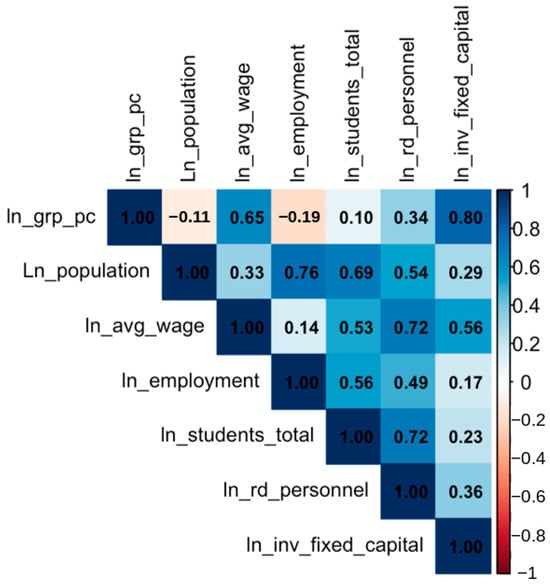
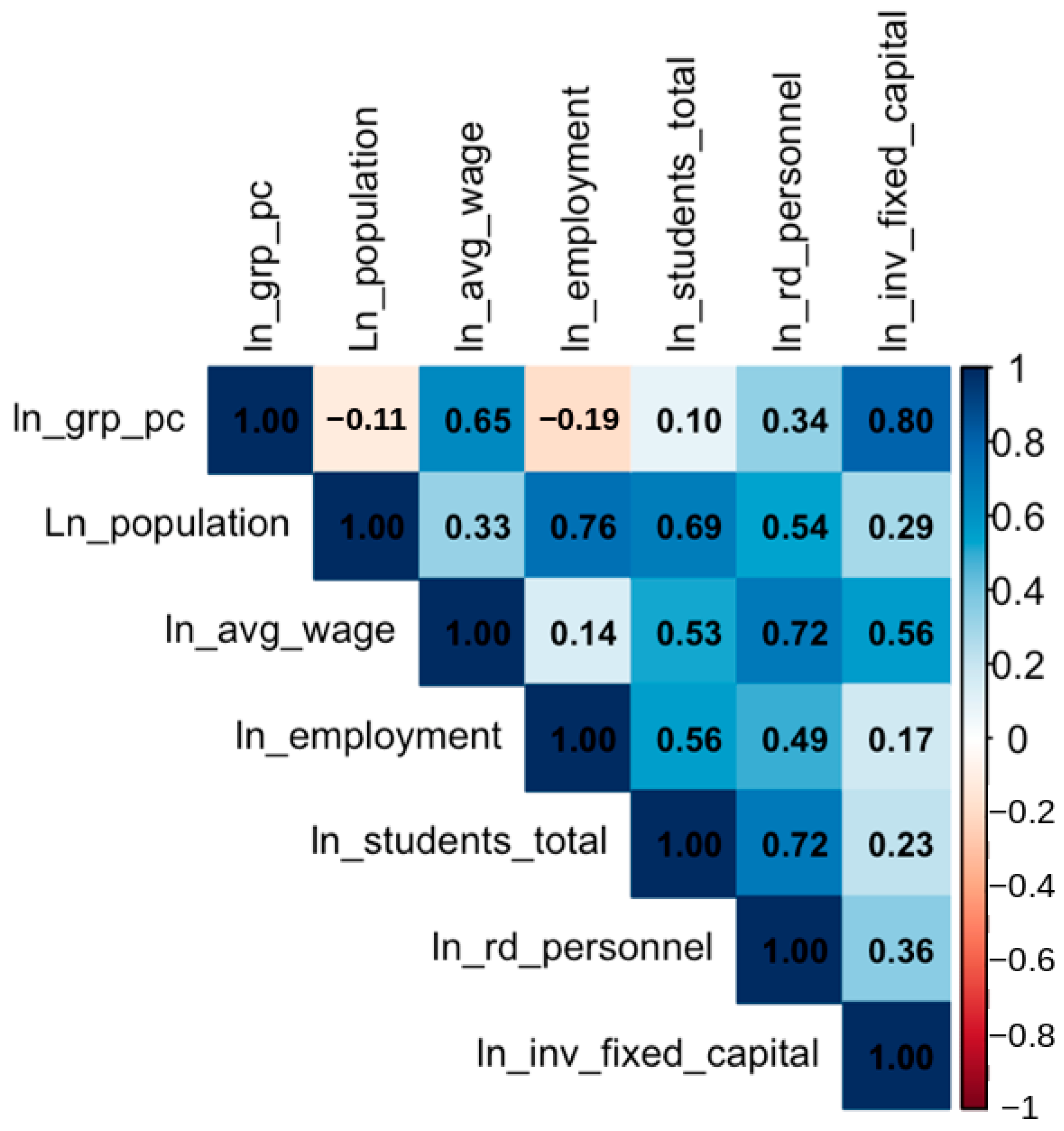
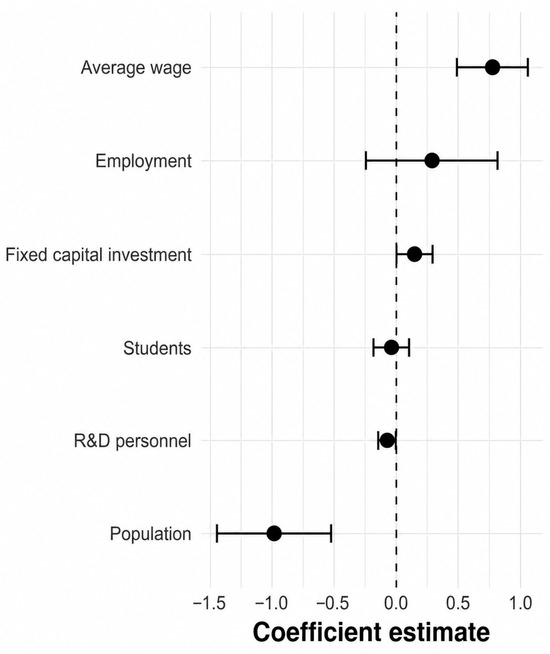
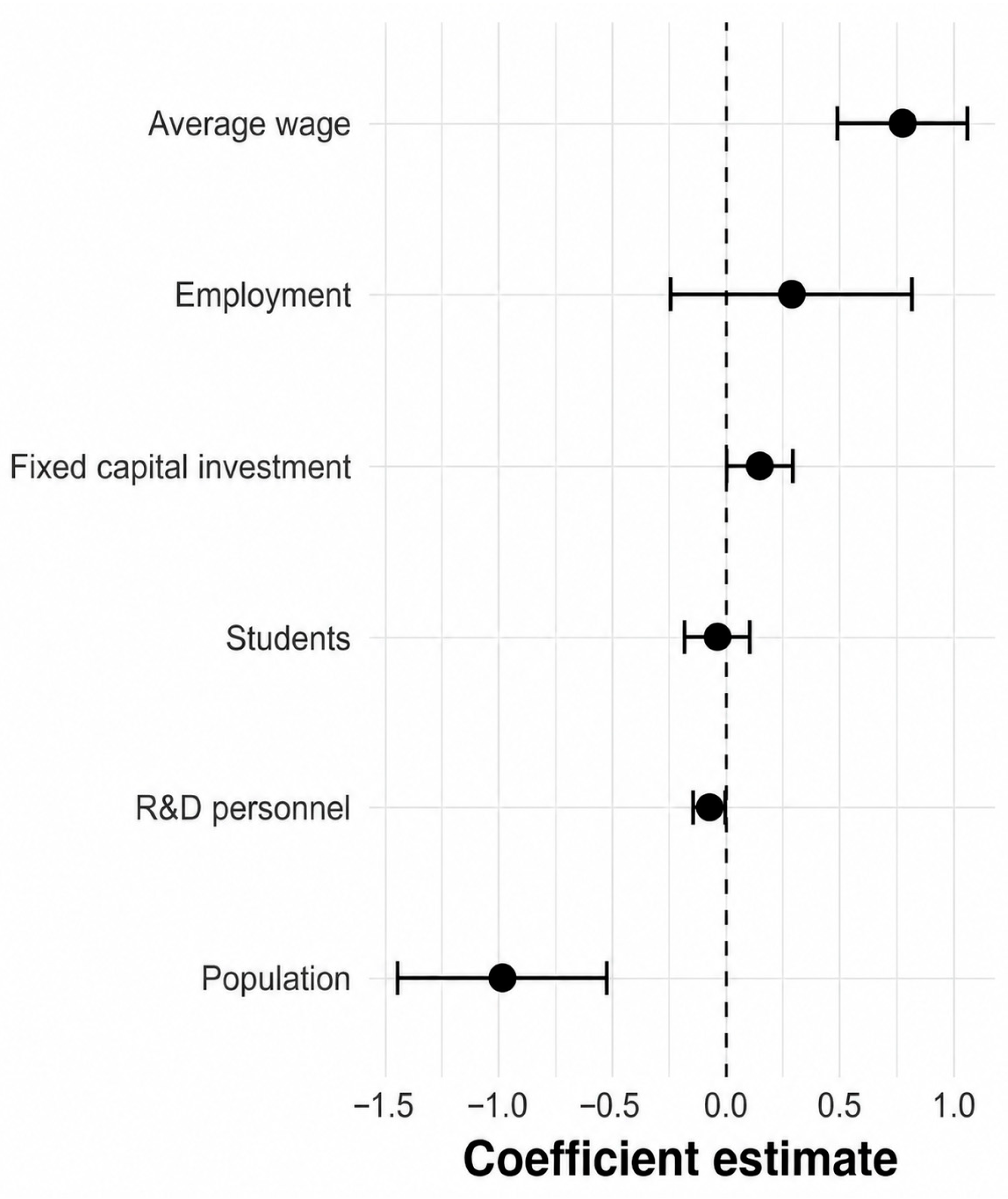
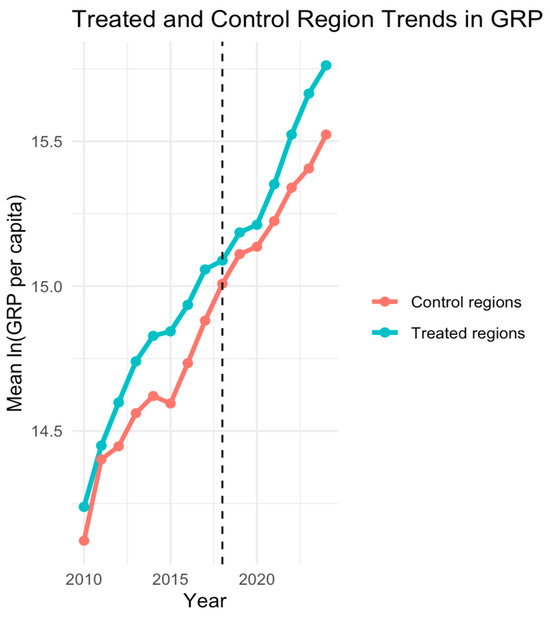
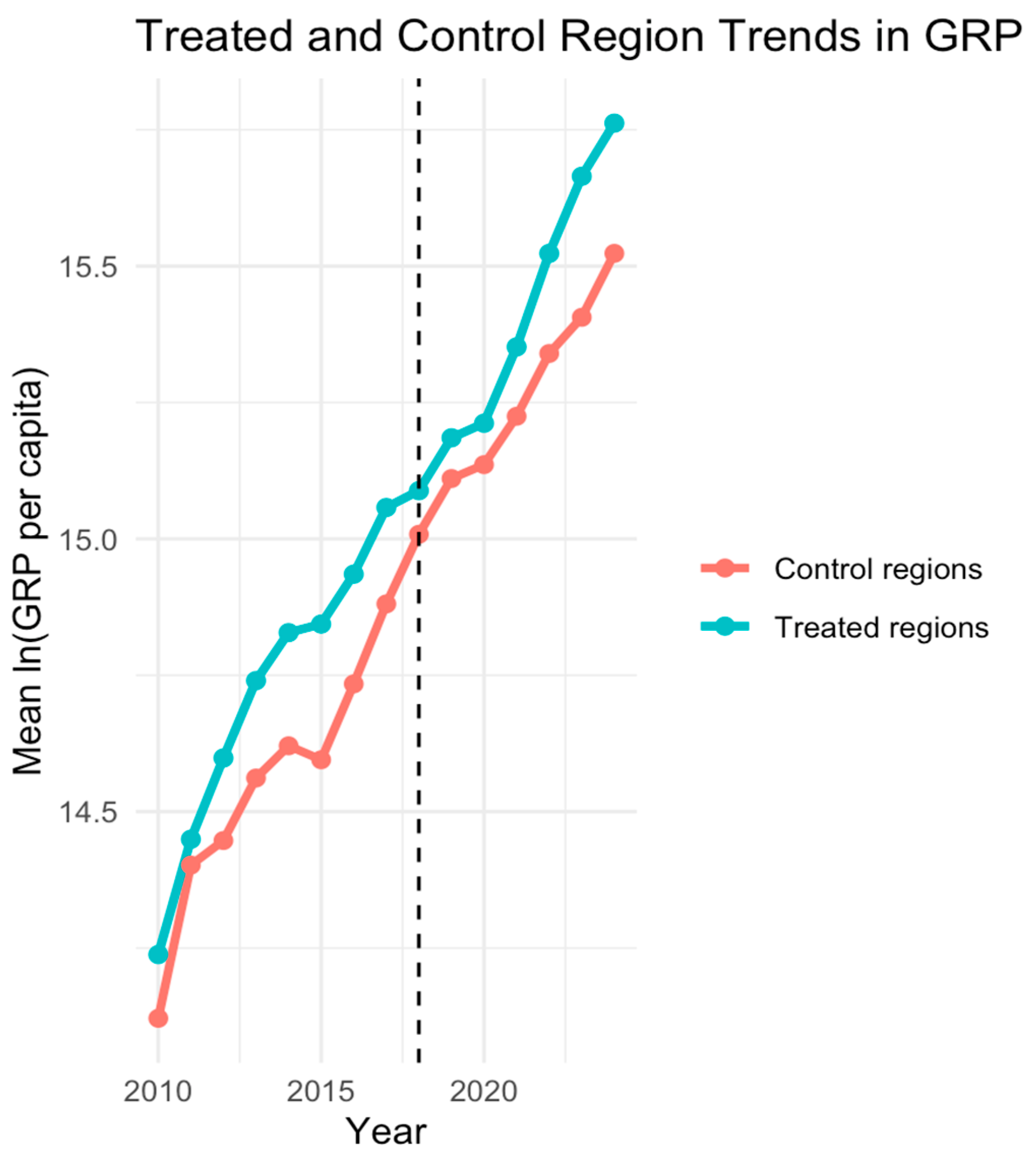
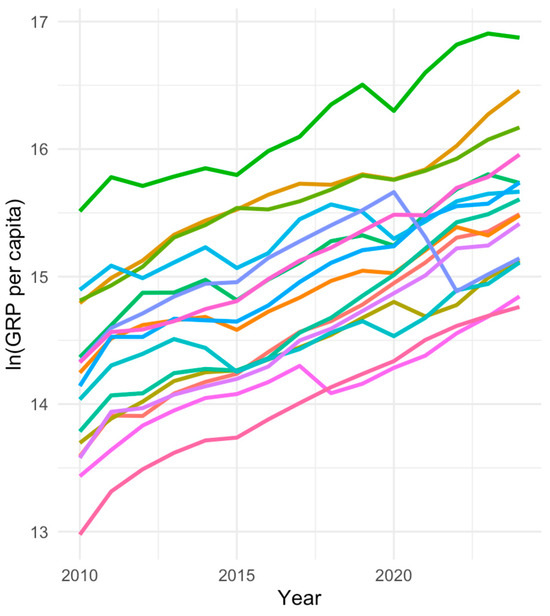
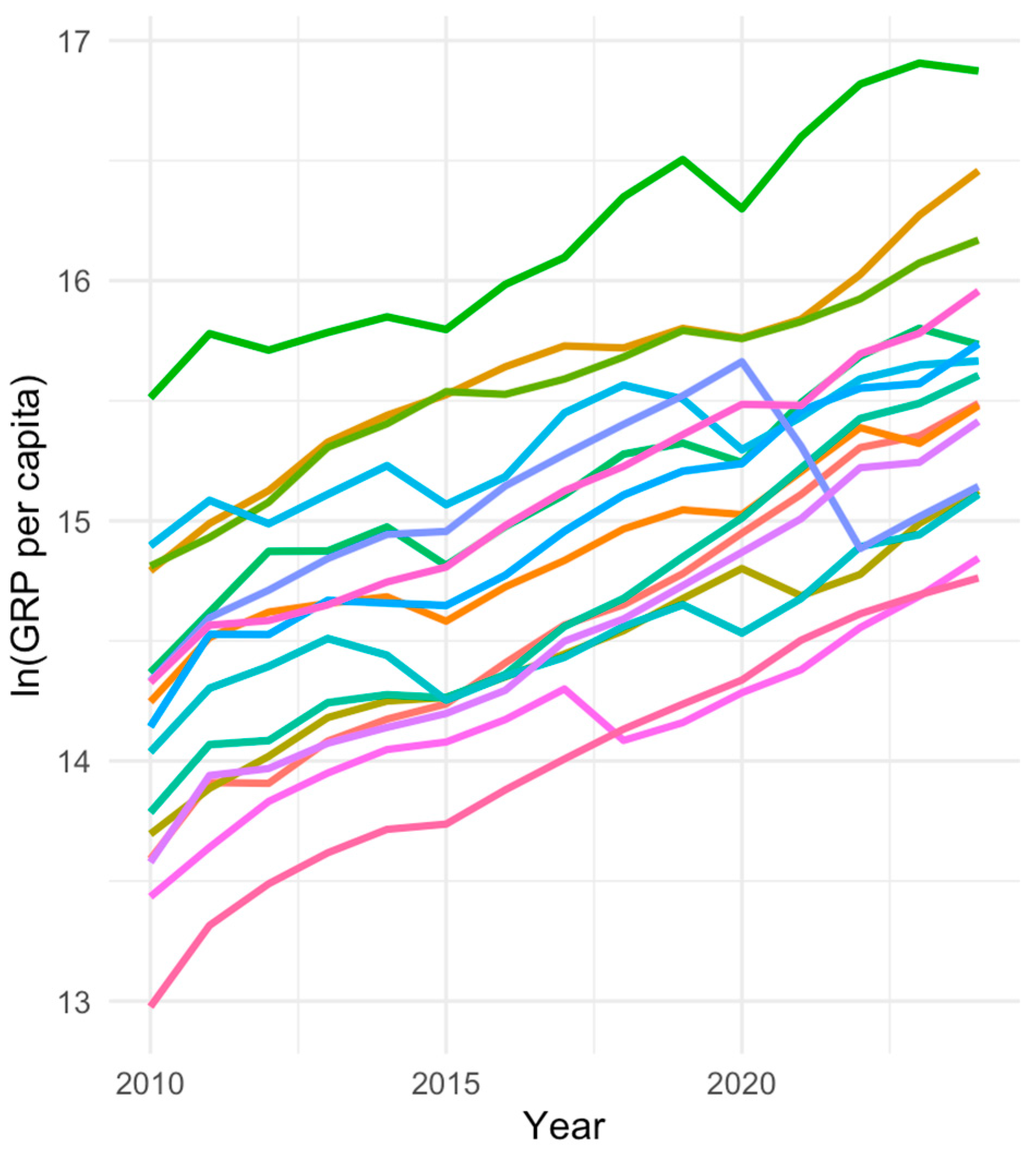
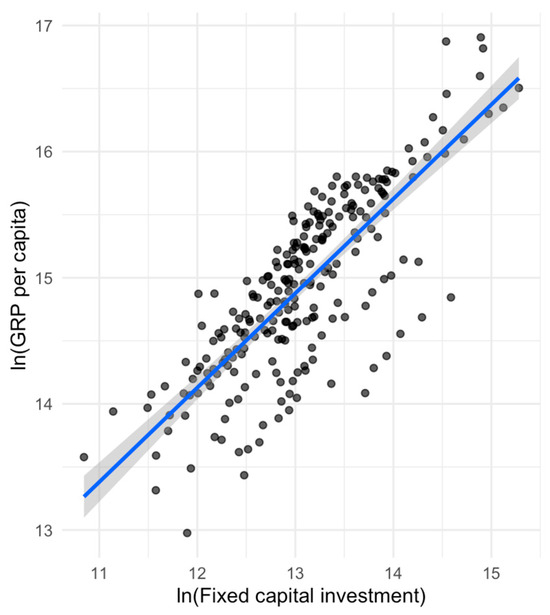
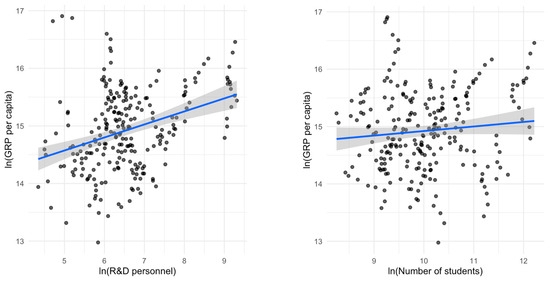
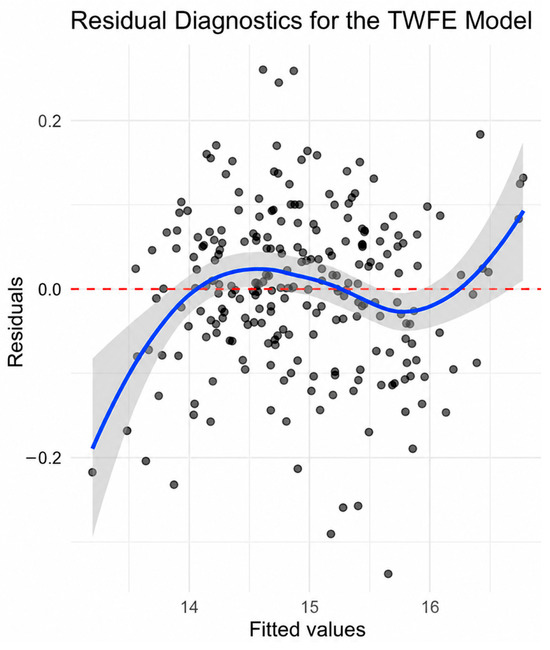
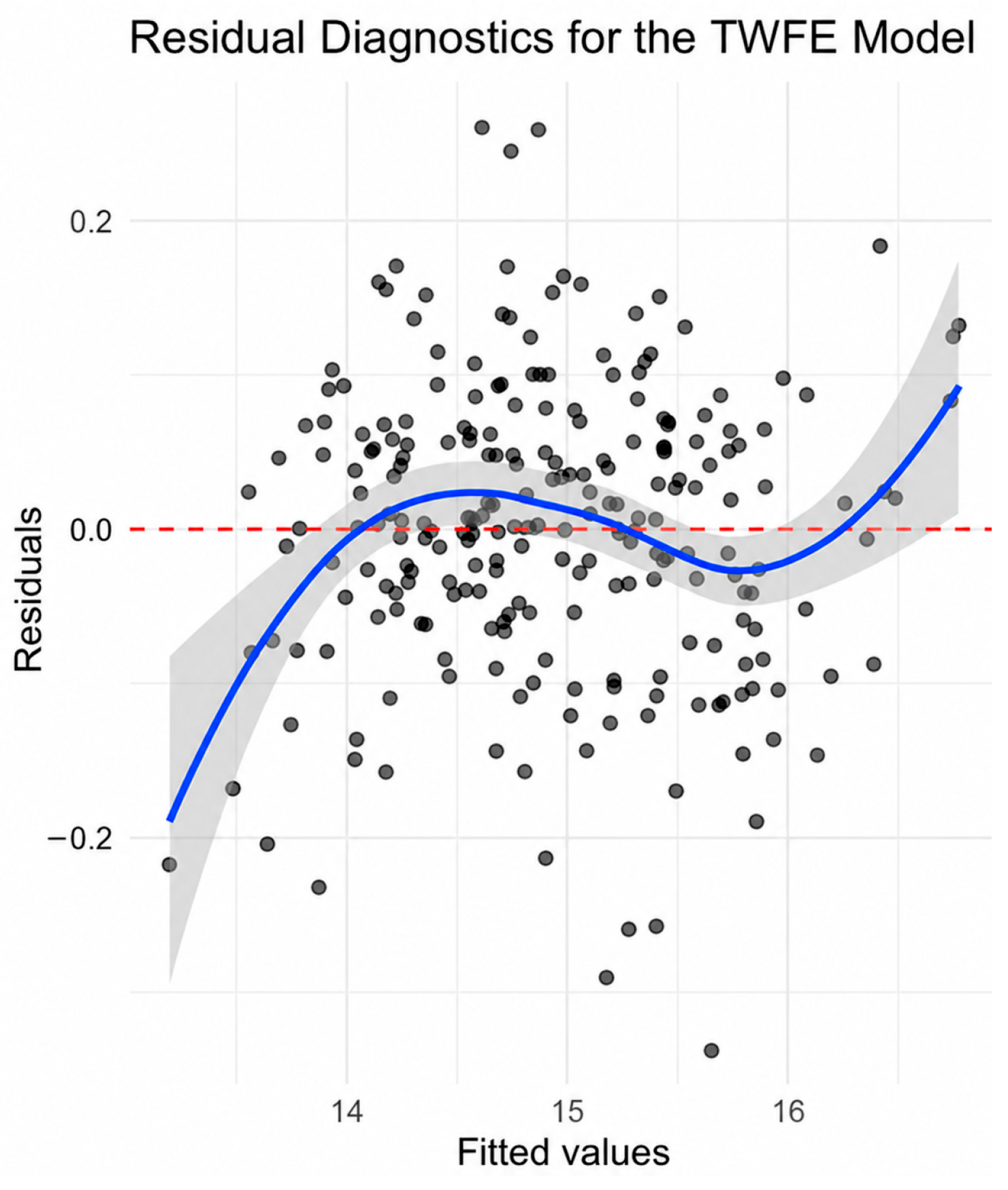

Disclaimer/Publisher’s Note: The statements, opinions and data contained in all publications are solely those of the individual author(s) and contributor(s) and not of MDPI and/or the editor(s). MDPI and/or the editor(s) disclaim responsibility for any injury to people or property resulting from any ideas, methods, instructions or products referred to in the content. |
© 2026 by the authors. Licensee MDPI, Basel, Switzerland. This article is an open access article distributed under the terms and conditions of the Creative Commons Attribution (CC BY) license.