


Abstract
This article investigates whether increasing economic status through adopting digital payment capabilities in Delhi fosters economic and financial inclusion among urban women street vendors in Mahila Haat. Digital freedom is a new step forward in technology for everyone. Still, a woman not only balances the social responsibilities of childbearing, caring for her children and family, and struggling with economic issues, health issues, and undernourishment, but can also balance the household job of street vending to increase self-esteem and financial independence. This research work conducted a sampling survey and applied the Kruskal–Wallis H-test with a p-value (0.05) significance level by evaluating 11 variables to investigate the relationship between the digital capabilities and economic independence of street vendors in Mahila Haat (a women’s market where the vendors are all women) in the Red Fort area of New Delhi. UPI systems were created using measurements based on a five-point Likert scale to analyze different levels of satisfaction in clusters of digital capabilities on digital platforms. Further, the ordinary least squares (OLS) method was used to estimate quality of life and social happiness in the context of digital empowerment. Digital payment systems positively influence women’s empowerment. Women vendors can adopt digital payment methods, making them economically independent. The positive relationship between women vendors and customer satisfaction before UPI use and after UPI use is also analyzed. This research will be helpful for both government and non-government organizations to provide financial assistance, informational awareness, skill development training, and advocacy for gender equality to increase women’s empowerment.
1. Introduction
The 2030 Agenda for the Sustainable Development Goals highlights the principle of “Leaving no one behind”, which is promotes women’s economic inclusion through banking and digital financial infrastructure (Viberti et al., 2025). But Indian society’s deeply rooted patriarchal norms have a big effect on women’s rights and health, especially when it comes to pregnancy-related eating habits and general health. Within our familial structures, a customary practice exists where women prepare and serve meals, emphasizing prioritization of male family members and bestowing greater respect upon them. Among these customs and traditions, women have been prohibited from dedicating time and financial resources to their healthcare and proper nutrition. In a dynamic process, women have recently played a significant role in the country’s economic growth and social changes (Okello, 2025). Digital infrastructure positively influences employability in the service sector, as encapsulated by the inflation rate, which depends on education, the institutional quality index, and macroeconomic conditions (Ndubuisi et al., 2021; Humairoh et al., 2025). In the processes of both going green and becoming smart, women have been playing a crucial role in the country’s achievement of sustainable economic development goals (Stamopoulos et al., 2024). Empowerment theory emphasizes how access to financial tools and technologies enhances women’s decision-making autonomy and economic agency, allowing them to break traditional gender barriers in entrepreneurship (P. Balasubramanian et al., 2024). The Technology Acceptance Model, or TAM, suggests that digital payment’s perceived ease of use and usefulness increases their adoption, enabling women vendors to streamline transactions, reduce dependency on cash, and improve financial literacy. Socio-economic development theory highlights the broader impact of digital payment systems on enhancing women’s participation in the digital economy, improving access to formal financial services, and fostering economic inclusion. Consequently, these collectively explain how the integration of digital payments not only boosts operational efficiency for women street vendors, but also catalyzes their empowerment by providing greater control over earnings, access to credit, and social recognition in traditionally male-dominated spaces.
However, digital empowerment has transformed into technological advancement and globalization (Baffour Gyau et al., 2025). Technological advancement is not used as if synonymous with the sustainable economy of smart cities, but it is used as a tool or measure to enhance sustainable economic development, achieve the smart city goals of good governance and infrastructure (Prasad & Alizadeh, 2020), maintain standards of living and social well-being, and empower human beings (Huete-Alcocer et al., 2022; Kim & Feng, 2024). Digital empowerment refers to the strategic use of digital techniques and communication tools to enhance the capabilities and autonomy of every individual. Human resources are an important creation and create skilled human capital (Alfaro-Navarro et al., 2024) by utilizing digital technology. The concept of women’s digital empowerment represents a significant and unparalleled transformation of the contemporary world. Women lack awareness of and access to information about digital tools. It is necessary to take a proactive approach towards empowering women, enabling them to fully benefit from online support systems and showcase their abilities in various domains, such as education, street vending, small businesses, trading entrepreneurship, healthcare, governance, and defence. Technological innovation enhances stability through knowledge and rightful information, competency, and overall human well-being (Zhu et al., 2022; Chen, 2023).
Nonetheless, to better reflect the implementation of the 2030 Agenda and to facilitate a smoother transition in the studied case, it is essential to consider the role of gender inclusion in corporate governance, and particularly women’s participation in the management of firms. Recent studies underscore the positive contributions of women in leadership roles, highlighting their impact on financial performance, corporate responsibility, and sustainable development. These findings are particularly relevant in the context of the 2030 Agenda objectives, which emphasize inclusive and equitable economic growth. Incorporating gender perspectives into the analysis aligns with the global call for diversity and sustainable governance practices. Within this framework, the performance of Italian companies in the field of Corporate Social Responsibility (CSR), as examined through ESG (Environmental, Social, and Governance) ratings, takes on added relevance. The ESG assessment serves as an analytical tool to evaluate how firms, particularly SMEs, are navigating the post-pandemic economic landscape while aligning with sustainability goals (Garcia-Sanchez et al., 2022; Ardito et al., 2023). Moreover, the analysis of ESG scores concerning innovation and financial performance offers a deeper understanding of the synergies and trade-offs that emerge when companies prioritize sustainability. Hence, acknowledging the role of women in company leadership not only complements ESG-oriented evaluation, but also contributes to the broader goals of responsible innovation and sustainable development (Carayannis et al., 2012; Bossle et al., 2016). Furthermore, the advancement of online learning platforms (Kautish et al., 2023) in India is providing women with convenient and affordable opportunities to acquire advanced skills and knowledge in the field of education, thereby enhancing their employment potential and ability to achieve financial independence.
By possessing digital skills and monitoring data, women can commence employment from any location, including remote areas, and work from home. This allows for connecting opportunities in regional areas to global markets, thereby overcoming geographical limitations. Women can play a greater role in government policy by participating in policy-making decisions (Lewis, 1954) and organizing campaigns to achieve social equity and gender parity (Karthikeyan & Mangaleswaran, 2018). Proficiency in digital devices and an understanding of internet language, mobile banking systems, and usage of mobile social media platforms (Hew et al., 2019) can significantly enhance global women’s empowerment opportunities, promoting equitable economic growth and fostering a positive societal impact in a dynamic society. Two active contributory organizations, the Self-employed Women’s Association (SEWA) and the National Association of Street Vendors of India (NASVI), control, legalize, and care for street vendors and their activities. The United Nations Development Programme (UNDP) and the Deendayal Antyodaya Yojana-National Urban Livelihood Mission (DAY-NULM) have entered a collaborative partnership aimed at empowering women to make well-informed career choices and promoting self-employment in small business entrepreneurship. Women account for only 15% of all entrepreneurs in India. This partnership will support women looking to start and expand their enterprises, particularly in sectors like the care economy, digital economy, electricity mobility, waste management, etc.
This study aims to achieve the following fruitful objectives through a structured personal interview: Firstly, determining whether QR Code-based payments play a significant role among financial and technological innovation impacting women street vendors’ self-employment opportunities. Secondly, studying the overall changes in the socio-economic status and social status of female vendors in Mahila Haat, New Delhi. Also, the study aims to contribute by assessing the impacts of digital payments on the economic independence, livelihood satisfaction, and social well-being of female street vendors in Delhi’s Mahila Haat. Through a structured survey and statistical analysis tools like the Kruskal–Wallis test and OLS regression, this study identifies key variables that link digital capabilities to quality of life indicators (Appendix A). The findings of this research fill micro-gaps in the existing literature on women’s digital empowerment. The research also lays a foundation for inclusive policy interventions targeting similar populations across other developing countries.
2. Literature Review and Research Gaps
Digital technological innovation (Hatuka & Zur, 2020) in payment systems, such as mobile wallets, Unified Payment Interfaces (APIs), and Point-of-Sale (POS) devices, have played a critical role in enhancing financial inclusion for marginalized groups. According to Demirgüç-Kunt et al. (2020), digital payments reduce dependency on cash, streamline transactions, and create a formal record of financial activities. For women street vendors, who often operate in informal economies, adopting digital payment systems provides access to broader financial services, such as savings, credit, and insurance, fostering greater economic resilience (Suri & Jack, 2016). Mobile payment systems and the structureof the balance of payments (BoP), reflectingthe debit and credit flows, are raising the benchmark for financial inclusion in the economy (Sinha et al., 2024). Various scientific studies examine how digital inclusion and information communication technology (ICT) affect citizens’ quality of life in different countries (Alhassan & Adam, 2021; Gracias et al., 2023). The internet has shown true positive associations with social interactions through panel data analysis (Chung et al., 2024). Another area of research showcases how the empowerment of women micro-entrepreneurs through ICT can affect their digital capabilities and social capital. It can help to challenge gender inequalities and improve living conditions, income, health, and education (Hilbert, 2011; Hasan et al., 2022). A study conducted by Women in Informal Employment, Globalising and Organising (WIEGO, 2015) focused particularly on women’s informal labour, and called for the enhancement of their capabilities and organisational leadership, and the acceleration of the government’s policy decision-making. For example, small entrepreneurs in Kenya were helped by the Committee of Street Net International (CSNI) in 2000, the NASVIT in 2003, and the NASVI in 1998. WIEGO is trying to meet the demands of women vendors by addressing challenging issues and difficulties through urban planning policy programmes, and organizing seminars and conferences to bridge the communication gap between administrative authorities and informal labourers. Proper public transport based on digital systems, the new term Internet of Things (IoT), network design, planning, and management all enhance mobility for those living in cities (Hall, 2000; Kuo et al., 2023). One study (Bhattacharya et al., 2021) highlights that in Delhi, 125,000 street vendors have been officially recognized out of a total of 300,000 vendors, while the number of vendors in India exceeds 1 million. Metropolitan cities such as Delhi, Mumbai, Kolkata, and Bangalore are increasingly drawing tourists eager to sample India’s renowned street food. The Street Vendors (Protection of Livelihood and Regulation of Street Vending) Act of 2014 was enacted to safeguard the livelihoods of street vendors and regulate their activities. As a part of this, Town Vending Committees (TVCs) were established to ensure the quality of living standards and social happiness (Bartlett et al., 2010; Alhassan & Adam, 2021) would be maintained. This work also emphasized the promotion of economic and financial inclusion through measures such as providing social security benefits, reducing exploitation by local law enforcement and government bodies, implementing effective training programmes to address inadequate vending infrastructure, and addressing bureaucratic delays in issuing important certificates (Mohan et al., 2018a, 2018b). In the study conducted by Chakraborty and Ahuja (2021), three distinct categories of street vendors are elucidated. Digital capability leads to monthly earnings, which helps to maintain a basic standard of living, contrary to unemployment or low wages, while illiteracy causes financial problems, tension, and mental harassment, thereby deteriorating the quality of life of both men and women (Xiao & Bialowolski, 2023). First and foremost, sidewalk stalls consistently offer fresh vegetables and stationery. Additionally, the vending process is made more adaptable with the use of bicycles and push carts to easily move from one location to another. Lastly, some vendors have established permanent settlements. Each category of street vendor in Delhi actively contributes to the informal sector, which is crucial for sustaining urban livelihood. India has a total of 11.9 million street vendors. Based on periodic labour force surveys conducted in 2017-18, the number of women in India is estimated to be 1.2 million (B. Balasubramanian et al., 2012). In Delhi, the proportion of female workers is 2.7%, and the proportion of male street vendors is 3% (PLFS Report 2017-18). Women who are self-employed and have their own businesses make up the majority of street vendors, accounting for two-thirds of them. They face numerous problems, such as excess traffic, issues related to sites, and the dominant nature of municipalities. Sivasubramanian and Rajendran (2020), investigated the potential of digital payment methods to enhance the quality of life (Chen, 2023). The researchers employed a stratified random sampling technique for empirical research, and utilized a semi-structured questionnaire to collect primary data.
The study focused on popular online payment platforms such as Paytm, Google Pay, Amazon Pay, BHIM, and PhonePe, which offer their services without transaction fees to expand their business. A. Gupta and Dua (2018) conducted a study that suggested that digitalization facilitates the transition from a cash-based economy to a cashless one by promoting the widespread use of online transaction systems such as e-wallet payments and mobile apps. This transition helps to combat issues of black money, fraud, and political disruption. Street vendors are faced with the issue of inability to operate digital payment systems due to a lack of digital literacy. Digital payments improve transaction efficiency, enabling women vendors to serve more customers and expand their businesses. For instance, R. Gupta et al. (2021) found that women vendors who adopted digital payments experienced a 15–20% increase in daily sales due to faster transactions and the ability to accept non-cash payments. According to Liu et al. (2023), practical training centres for digital skills are imperative for economic advancement and increasing employment. However, currently, cash accounts for 97% of all transactions. Zhu et al. (2022) explored how digital technology enables street vendors to utilize payment methods securely. According to one study (UNDP, 2015), women have a lower rate of workforce participation compared to men in megacities such as Delhi and Bangalore in India.
2.1. Theoretical Underpinning
The theoretical framework underpinning the relationship between digital payment adoption and the economic independence of female street vendors integrates several interrelated constructs. Firstly, the theory of Informality (Hart, 1973) provides a foundational lens for understanding the economic environments in which female street vendors typically operate. These informal economies lack structured access to formal banking and regulatory protections, making digital tools a potential path toward formal economic participation. Empowerment theory further elucidates how digital financial inclusion can enhance women’s agency and autonomy by equipping them with the tools to control financial decisions and income (P. Balasubramanian et al., 2024). In the Indian context, where patriarchal norms traditionally restrict women’s economic mobility (Duflo, 2012), access to and mastery of digital technologies can be transformational.
The Technology Acceptance Model (TAM) posits that user adoption of technology is primarily influenced by perceived ease of use (PEOU) and perceived usefulness (PU). This model is particularly relevant to female vendors navigating the transition to digital payments. When these tools are perceived as user-friendly and beneficial, adoption increases, thereby fostering greater financial independence (R. Gupta et al., 2021). Similarly, the Unified Theory of Acceptance and Use of Technology (UTAUT) highlights that social influence, facilitating conditions, and performance expectancy play a significant role in technology adoption. These variables are prominent among female street vendors in close-knit market settings like Delhi’s Mahila Haat, where communal norms and resource availability heavily influence decision-making.
The Financial Inclusion framework (Demirgüç-Kunt et al., 2020) complements these theories by emphasizing the structural benefits of digital financial systems in reducing reliance on cash, increasing transparency, and improving access to credit, savings, and insurance. Furthermore, socio-economic development theory posits that digital payments not only enhance financial access, but also improve women’s engagement in the digital economy, thereby boosting their overall quality of life and social well-being (Hilbert, 2011; Hasan et al., 2022).
2.2. Empirical Literature
Empirical evidence from both India and global contexts supports the theoretical framework. Studies indicate that digital payment systems such as Unified Payment Interfaces (UPIs), mobile wallets, and QR Code-enabled transactions have positively impacted the economic lives of women vendors. Suri and Jack (2016) demonstrated that mobile money services in Kenya increased household savings and reduced poverty, particularly benefiting female users. In India, A. Gupta and Dua (2018) observed that digitalization has facilitated the country’s shift towards a cashless economy, enhancing transparency and transactional efficiency among small vendors. Sivasubramanian and Rajendran (2020) found that digital payment systems contributed to an improved quality of life among petty traders. Chakraborty and Ahuja (2021) categorized street vendors in Delhi and emphasized that digital capabilities significantly influence economic resilience.
Further, Hilbert (2011) and Alhassan and Adam (2021) provide cross-national perspectives showing that ICT access correlates with enhanced living standards, particularly for marginalized women. The WIEGO (2015) initiative highlighted the role of organizational support in empowering women in informal employment across countries such as Kenya and India. However, barriers to digital inclusion persist. Many female vendors face challenges such as limited access to smartphones, poor digital literacy, and mistrust of digital systems due to concerns about fraud (Sharma et al., 2022; Chawla & Kumar, 2022). Patriarchal societal norms often further restrict access to digital tools and financial services (Duflo, 2012).
While existing studies have laid a foundation, most focus on macro-level analyses and overlook micro-level nuances specific to women street vendors. Few examine the intersectional dynamics of age, education, and urban–rural divides, and even fewer adopt a mixed-methods approach to capture the qualitative aspects of women’s experiences fully. Additionally, emerging technologies like blockchain and AI remain under-explored in the context of informal female entrepreneurship. This study fills these gaps by offering a localized empirical investigation of women street vendors in Mahila Haat, Delhi. It evaluates the practical outcomes of digital payment adoption, focusing on indicators such as income, quality of life, and social integration. By aligning theoretical insights and empirical findings, the study aims to present a comprehensive analysis of digital financial inclusion as a vehicle for women’s empowerment in urban informal economies.
2.3. Study Area: Mahila Haat in Delhi
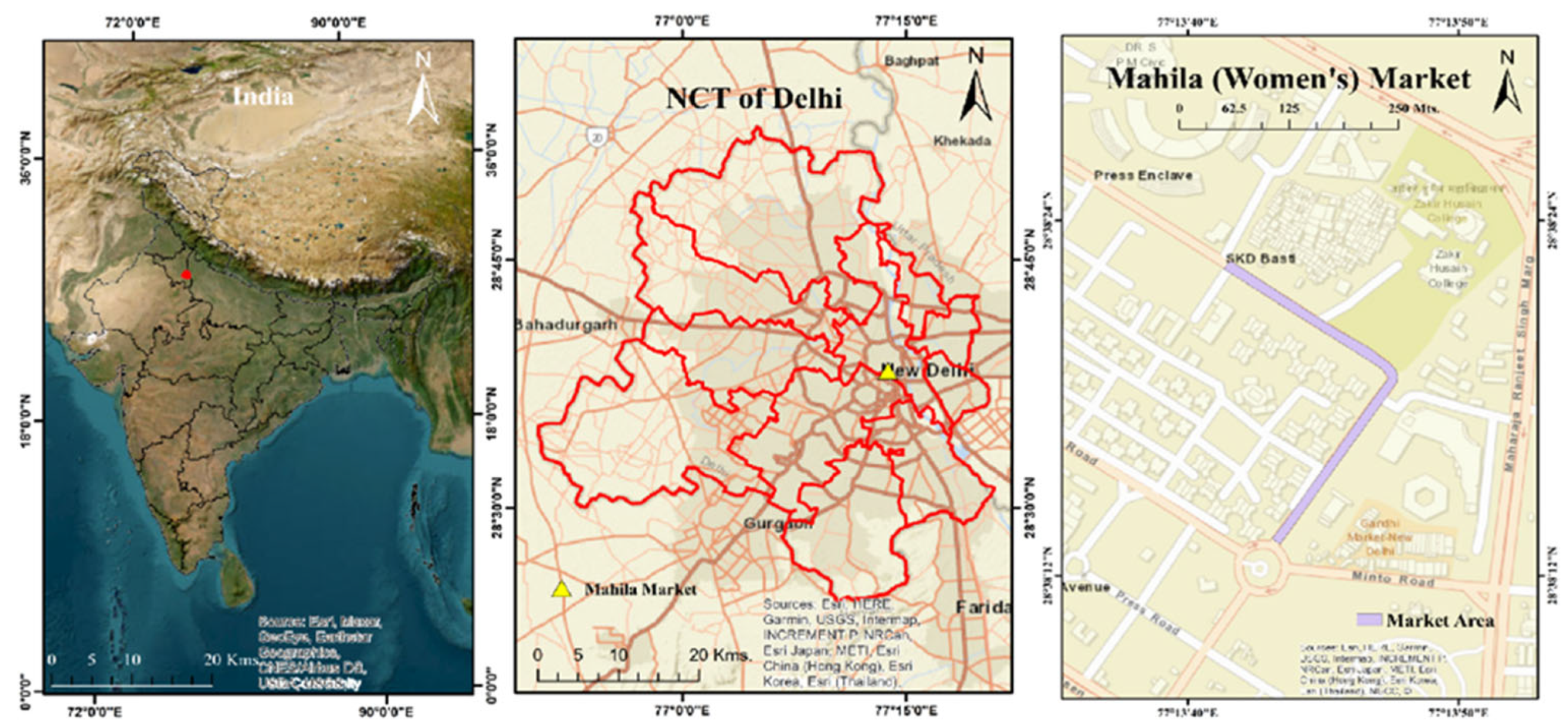
Delhi is a historic, touristic smart city and the national capital of India. Mahila Haat (Women’s Market), one of the most affordable markets for underprivileged people, was established in 2014 and operates only on Sundays. The women that work in these kinds of markets in smart urban cities still operate without government recognition. They are not surveyed by the civic authorities of the local government. The SEWA Kendra provides self-employment opportunities to these women. They face many issues related to unhygienic conditions, like toilets, as well as health and security issues. Most of the women are illiterate and have migrated from Gujarat, Rajasthan, and other parts of Delhi NCR by exchanging products such as utensils, clothes, shoes, etc. Utensils (made of steel, plastic, and silver) are bought from wholesalers and sold door to door in various parts of Delhi, such as Rohini, Laxmi Nagar, Gandhi Market, and Shahdara. Sometimes, sellers also travel to distant locations by bus from Monday to Friday to collect (old and new) clothes that are resold to poor, marginalized people in Mahila Haat on Sunday. They recycle the items and become independent to sustain their livelihood and well-being. The study area comprises solely this Women’s Market in Delhi, emphasizing its role in economic generation and market significance. A large number of Indian and foreign visitors who come to Delhi visit Mahila Haat as the products are cheap and convenient to buy with the added benefit of digital transaction facilities. Despite limited literacy, most women are increasingly using mobile banking and QR Code-enabled speaking devices. They are trying to become digitally skilled. If these women receive training and are connected with information centres and awareness programmes, this can lead to greater empowerment. The study area is shown below in Figure 1.
Figure 1.
The study area map of Delhi’s Mahila Haat (Women’s Market) at Red Fort. (Source: Prepared by author with open-street map.)
3. Methodology
3.1. Data Collection Process
Women street vendors, a vulnerable group within the informal sector, are key contributors to the Indian economy. The authors aimed to conduct a viewpoint study in Delhi NCR, specifically focused on the social changes affecting women street vendors. A census was conducted at Mahila Haat in Red Fort, New Delhi, to collect primary data. A total of 50 women vendors were included in this study, who were at the market to sell clothes, utensils, shoes, mobile phone accessories, and other items. To ensure the accuracy and quality of the collected data, questionnaires must be unbiased and impartial. Otherwise, problems in a questionnaire’s design can lead to data bias and inaccurate results (Udmale et al., 2014). To avoid this sort of bias, we suggested and applied various principles when designing the questionnaire in order to help both the investigator and the respondents. All the women vendors’ names have been kept anonymous for safety and security purposes.
3.2. Statistical Test and Validation
The primary survey data was arranged and tabulated in MS Excel, and further statistical analysis was conducted using SPSS software v18.5. During data entry, an “affirmative answer” was designated as “1”, and “no response” was designated as “0”. Then, the “affirmative responses” were converted into percentages. Responses were recorded on a five-point Likert scale, ranging from 1 for low to 3 for high, to assess women vendors’ individual responses to predefined close-ended questions. To assess the satisfaction level of vendors and customers before and after using a UPI or direct cash payment based on the Likert scale, Cronbach’s alpha was used. Both Likert scales—one measuring factors before using UPI payments (11 factors) and the other measuring factors after using UPI payments (11 factors)—exhibited a high Cronbach’s alpha (α = 0.7), because a high number of factors were chosen (more than 10 items) for the test (Field, 2005).
However, the inferential statistical method was applied to tabulate and assess the responses of the women vendors to using UPIs and direct cash payments. Individual and family incomes were firstly scaled in standard format, and then subdivided into various strata, including high, moderate, and low, for better assessment (Table 1). Finally, a non-parametric test was adopted to assess the statistical significance of the data. The Kruskal–Wallis H-test is considered the most useful non-parametric test when assessing three or more comparative groups with multiple variables (Pallant, 2005; Alipour et al., 2013; Udmale et al., 2014). In this study, non-parametric tests were used to assess statistical significance at the 95% confidence level in all cases, including vendor and customer satisfaction before and after using UPIs, to evaluate digital empowerment.
Table 1.
Percentages of the sample in socio-economic category and digital capability clusters (n = 50).
Further, based on the findings, we used the ordinary least squares (OLS) method to estimate three regression models using R-statistics (v4.5.1). This allowed us to obtain different results for social happiness and multivariate social happiness based on the degree of digital proficiency of the citizens. A multidimensional viewpoint on social happiness and life satisfaction at the place of residence (variables 1 to 11) was used to calculate the dependent variable. Three clusters identified the precise correlation between these variables and important aspects of people’s quality of life in their homes and places of employment.
Quality of life and social happiness (QLSH) was the dependent variable, and Equation (1) was used to examine its relationship with the explanatory variables listed in Table 2 and Table 3:
where is the error term and β is the influence that each person’s internal factors have. According to the regression coefficient, the results thus show how these factors affect residents’ quality of life based on their degree of digital proficiency.
Table 2.
Vendor–customer satisfaction levels before using UPIs, assessed with the Kruskal–Wallis H-test (asymptotic significance numbers, n = 50), where deep-green to light-green colour shows high significance, and light-red to deep-red colour shows less significance to no significance.
Table 3.
Vendor–customer satisfaction levels after using UPIs, assessed with Kruskal–Wallis H-test (asymptotic significance numbers, n = 50) where deep-green to light-green colour shows high significance, and light-red to deep-red colour shows less significance to no significance.
4. Results
This study analysed satisfaction levels by distinguishing digital capability clusters with statistical significance. Satisfaction levels was categorized into three sub-categories—low, moderate, and high. In Table 1, Table 2 and Table 3, green-coloured values signify a high association with digital capabilities, but red-coloured values represent a lower association. In response to assessing the digital empowerment scenario, a well-framed questionnaire survey was conducted in Mahila Haat, New Delhi. The women vendors were aged between 30 and 60. They migrated from Gujarat, Delhi, and Rajasthan. As a result of demonetization, the COVID-19 pandemic, and digitalization, in addition to earning cash in hand, they can now receive online payments through mobile payment systems (Sinha et al., 2024), (all Unified Payment Interfaces, or UPIs), namely Google Pay, Phone Pe, and Paytm, and they earn on average INR 2500–3000 from their activities in Mahila Haat on a Sunday. On Monday to Saturday (other days), they earn INR 300 to INR 500 by selling steel utensils and collecting old clothes in various areas of Delhi. Most of the vendors face daily travel difficulties in commuting from their homes to workplaces located 8 to 15 kilometres away. However, the majority of the women are digitally illiterate. They are discouraged from digitalization due to a lack of confidence and online fraud. Some of the sample respondents live in rented jhuggi (slum area) and others own jhuggi flats. They take out home loans from banks, and their monthly household expenditure amounts to between INR 15,000 and INR 20,000, out of which INR 1500 to 2000 is spent on education for children, INR 700 to INR 1000 on health, INR 7000–INR 8000 for house rent, and INR 2500 to INR 3000 in the post office and on bank deposits for the future. Most of the respondents had been granted insurance schemes for street vendors, amounting to values such as INR 10,000, INR 20,000, and INR 50,000. Digital media helps to keep every citizen in the country informed, so street vendors are also updated with important information on how to improve their standard of living through TV, cinema, and other mass media. Around 50% of the respondents were conscious of vending policies and benefited from the PM Street Vendor’s Atma Nirbhar Nidhi scheme. This government initiative aims to provide financial assistance to street vendors affected by the COVID-19 pandemic. Some vendors have ration cards for managing household expenses. Most of the vendors were happy with the launch of a mobile banking support system to enable easy and secure money transactions. A few of them were not aware of digital devices. The development of digital banking systems andsmall businesses’ investments in self-help groups are helping to increase people’s income and savings, and thereby improving overall well-being. Most street vendors are highly aware of the Street Vendor’s Policy (Kochar et al., 2022), self-help groups (SHGs), and the Street Vendors Act, 2014, and how they guide and monitor their business activities. Still, practically all vendors do not receive direct benefits regularly from the government. The percentages of the sample in each socio-economic category and their responses in relation to digital capabilities are shown in Table 1.
Table 1 presents an in-depth investigation of the technological banking abilities corresponding to various societal groups across various clusters. It depicts that higher digital capabilities are correlated with factors such as age, income, education, family type, product type, and the use of UPIs, which tend to be significant in daily market activities.
There are differences according to different age group categories; fore example, the category of ages 41 to 50 constitutes a substantial share of 36% of the moderate digital capability cluster. On the contrary, the below-30 age group does not appear in either the low- or high-digital-competency clusters. This indicates that grown-up people might shift their digital capability higher. The moderate 6% and high 8% digital skill levels are equitable among those aged 50 and over. Educational background heavily impacts the use of online platforms. The participants tended to have no formal education, especially in the low-digital-capability cluster (24%). However, secondary education was more common in the moderate-capability cluster (2%). So, higher education is associated with enhanced harmonious circulation across digital capability clusters. The levels of individuals’ monthly income before they started using UPIs reveal that individuals earning between USD 100 and USD 150 per month possessed a substantial tendency towards having low digital capabilities (14%), whereas individuals earning more than USD 200 per month had a distribution that was more evenly split between moderate (8%) and high (8%) digital infrastructural know-how. The levels of individuals’ monthly income after using UPI systems ranged from USD 150 to USD 200, and an income of more than USD 200 per month showed an interesting association higher digital competencies.
In addition, high-digital-expertise cluster was more strongly associated with individuals earning between USD 150 and USD 200 (10%) and more than USD 200 (10%). Family type data depicts a clear picture that nuclear families account for a larger proportion of internet usage, at 26%. However, joint family members represent just over 4% in the high-digital-literacy clusters. Furthermore, the relationship between digital capability and product consumption shows that most people engage more frequently in online banking and use it to purchase clothes/utensils. However, more specific types, like mobile accessories or shoes, consistently account for a lower percentage across all digital proficiency clusters.
Table 2 shows the results of the analysis of street vendor–customer satisfaction levels according to a variety of variables and consequences based on the Kruskal–Wallis H-test. Satisfaction levels were categorized as low, medium, and high. A significance level of more than 0.05 indicated no strong evidence of a statistical difference. For instance, social safety was high before using digital payments. Accordingly, livelihood satisfaction shows a Kruskal–Wallis H-test value of exactly 0.05, at a significance level p-value of 0.05, which indicates borderline significance. Likewise, customer satisfaction and family satisfaction show high H-test values (0.11, 0.13), representing comparatively less significant differences in their satisfaction levels. As for other variables, social integration, satisfaction with income situation, and digital capabilities showed H-test values of 0.12, 0.10, and 0.14, with no significant difference in satisfaction levels. So, it can be concluded that the participants had very low levels of digital capability, and this is reflected in social integration. Comparatively, the work environment showed an H-test result of 0.08, indicating a potentially significant difference in this satisfaction level across the variables.
The results of the Kruskal–Wallis H-test in Table 3 show different levels of satisfaction across multiple variables and significant variation in some areas before using UPIs. Livelihood satisfaction presents an H-value of 0.04, which is less than the significant level (p-value 0.05). This highlights that livelihood satisfaction improved after adopting UPIs and digital payments, compared to the period before their use. Although the low, moderate, and high livelihood satisfaction levels were found to be different from those in the overall testing group, customer satisfaction showed an H-value of 0.06, which became higher after using digital payments, with significant differences in satisfaction levels across groups. From the distribution level, respondents reported moderate satisfaction more frequently than low and high levels. Family satisfaction showed an H-test value of 0.09; the p-value had no significant difference in this group, but was slightly improved compared to the previous occasion. The calculated value from the work environment H-test was 0.07, nearing a significant difference. There were a few changes in satisfaction levels across clusters. Satisfaction with income situation, as well as livelihood standards, produced an H-test value of 0.05, which is equal to the significance level. This suggests that there are possible changes in satisfaction levels after adopting digital payments. Still, it does not provide a strong conclusion regarding the significance level. Connectivity with digital infrastructure improved a lot after using digital payments, resulting in a p-value of 0.06—just over a significant difference in satisfaction level—along with better digital capability and social integrity (H-test of 0.09 and 0.07), presenting notable variations in satisfaction levels, but not with strong statistical significance. A health safety H-test value of 0.12 reflected no significant difference in satisfaction levels across the clusters, and social safety became an issue after adopting digital payments, with the highest H-test value of 0.14 at the significance level of 0.05, showing no significant difference in satisfaction levels among groups. This test analysed the above factors, and found no statistically significant differences in satisfaction levels before the use of UPIs. However, several areas, showed notable improvement after adopting UPIs.
Nonetheless, based on the H-test values from Table 2 and Table 3, seven (7) variables were identified as most suitable for quality of life and social happiness (QLSH).
Table 4 defines three clusters of less, moderate, and higher digital capabilities using the OLS method. The result shows that the three different clusters have significant relationships with quality of life and social happiness. Each explanatory variable presents both directionality and significant elasticity. Hence, the coefficients, along with standard errors and significance levels, are important factors that define the role of digital capabilities and their connection with respondents’ quality of life and happiness. Student t-tests were also used to assess the elasticity of each explanatory variable. However, some variables did not have a directly influence on women’s digital capabilities or empowerment. However, certain variables, like livelihood satisfaction, family satisfaction, standard of living, and social integration, along with income satisfaction, were significantly influenced after adopting digital payments. The adjusted R2, or the coefficient of determination, shows that the each of three model clusters is well fitted, with values of 0.9325 (lower capabilities), 0.8275 (moderate capabilities), and 0.9336 (higher capabilities), respectively. The survey results also show that 31% of income came from the adoption of mobile payments, while 69% still relied on cash. Despite illiteracy, many women were keen to use new technologies such as QR Codes and speaking box machines. Interestingly, digital payments contributed to both empowerment and economic independence. In terms of well-being, the standard of living improved after the adoption of digital payments.
Table 4.
Estimation of OLS method with t-test statistics for women vendors’ capabilities and digital empowerment.
5. Discussion
The present study provides empirical evidence that digital payment adoption significantly enhances the economic independence and quality of life of women street vendors in Delhi’s Mahila Haat. The results affirm that increased digital capabilities are associated with improved livelihood satisfaction, income levels, family well-being, and social integration. These findings align with foundational theories of empowerment and financial inclusion, offering a micro-level perspective that complements existing macro-level research. Nowadays, street vendors are moving towards greater digital capabilities and becoming more economically independent (Alfaro-Navarro et al., 2017). Women vendors in Delhi are also adopting digital payment systems, which is helping them to achieve greater economic empowerment. This digital inclusion impacts their standard of living (Ali et al., 2020; Alhassan & Adam, 2021). However, nevertheless, there remains a small percentage of vendors who have not achieved a satisfactory quality of life, which may be due to large family sizes, limited income sources, and the lasting impact of the COVID-19 pandemic (Bannerjee et al., 2025). A similar result was also found by Balasha Arsene et al. (2020), who showed how the COVID-19 pandemic forced vendors to change their livelihoods and adapt to new circumstances. Nonetheless, mobile payment plays a crucial role in the sustainable economic growth of a country, as well as in smart city development (Wamba-Taguimdje & Kala Kamdjoug, 2025). Furthermore, one study in Pune, India, highlighted how digital platform immobility strategies helped women vendors to become stronger economically (Baudens et al., 2023). Similarly, in our investigation, those who adopted digital payment did not change their platform due to better efficiency and accessibility. Moreover, smartphones play a pivotal role in modern society (Abbasi et al., 2021), and both street vendors and women vendors are effectively using digital technology to support their livelihoods. Technological advancement and smart citizenship have a close relationship (Calzada, 2020; Cai et al., 2023). Nowadays, women vendors can watch TV serials and frequently go to the cinema thanks to improved income generation and mental relaxation. Hussain et al. (2024) found a relationship between watching television and movies and women’s empowerment.
These positive outcomes reinforce the empowerment theory, which posits that access to financial tools and digital technologies enhances women’s autonomy and decision-making power (P. Balasubramanian et al., 2024). As shown in the survey, women who adopted digital payment systems such as UPIs reported increased daily sales and customer satisfaction, a finding that supports those of R. Gupta et al. (2021), who noted a 15–20% revenue increase following digital payment adoption among female micro-entrepreneurs. The Technology Acceptance Model (TAM) and the Unified Theory of Acceptance and Use of Technology (UTAUT) also help to contextualize these findings. Many respondents who perceived digital payment platforms as helpful and easy to use were more likely to integrate them into their business operations. This is consistent with the claims of A. Gupta and Dua (2018), who argue that ease of adoption and perceived benefit are significant drivers of digital engagement among informal workers.
In comparison with global contexts, the outcomes in Delhi appear more incremental. For instance, mobile payment systems in Kenya led to widespread financial inclusion and poverty reduction (Suri & Jack, 2016), whereas in Delhi, the benefits were localized and varied across demographic groups. This discrepancy underscores the role of urban infrastructure, governance quality, and socio-economic context in shaping the effectiveness of digital interventions (Humairoh et al., 2025). Furthermore, the study highlights intersectional disparities in digital adoption and empowerment outcomes. Women with secondary education and moderate-to-high income levels were more likely to exhibit higher digital capabilities and satisfaction levels, aligning with the findings of Hasan et al. (2022), who emphasized the need for a nuanced understanding of socio-demographic influences on digital inclusion.
Despite these promising trends, several structural and contextual limitations hinder the full realization of digital empowerment. A substantial portion of respondents remained digitally illiterate, lacked access to smartphones, or expressed fear of cyber fraud, highlighting the persistence of the digital divide (Hilbert, 2011; Sharma et al., 2022). These barriers disproportionately affect women, especially those from marginalized social backgrounds or with limited education, reinforcing existing inequalities rather than eradicating them. Moreover, although improvements were observed in livelihood satisfaction and financial independence, certain aspects, such as customer satisfaction and social safety, exhibited limited statistical significance. This suggests that while digital tools may enhance operational efficiency, their impact on broader social empowerment is mediated by other variables, including digital literacy, gender norms, and institutional support (Chawla & Kumar, 2022). However, some women vendors are still not using UPIs due to fear, illiteracy, and cyber fraud. Nowadays, cyber fraud has become an issue. Financial services still need improvement to ensure that ordinary people can trust and adopt them without fear of risk. In developed nations, financial service providers are now improving the Know Your Customer (KYC) system to reduce cyber fraud (Kawamura, 2022; Kuo et al., 2023). However, street vendors have faced several other challenges due to sudden changes in government policy and unexpected municipal provisions (Hart, 1973; Parvathy, 2018). Street vendors are often victimized by governmental policies, as well as local politics (Turner & Schoenberger, 2012).
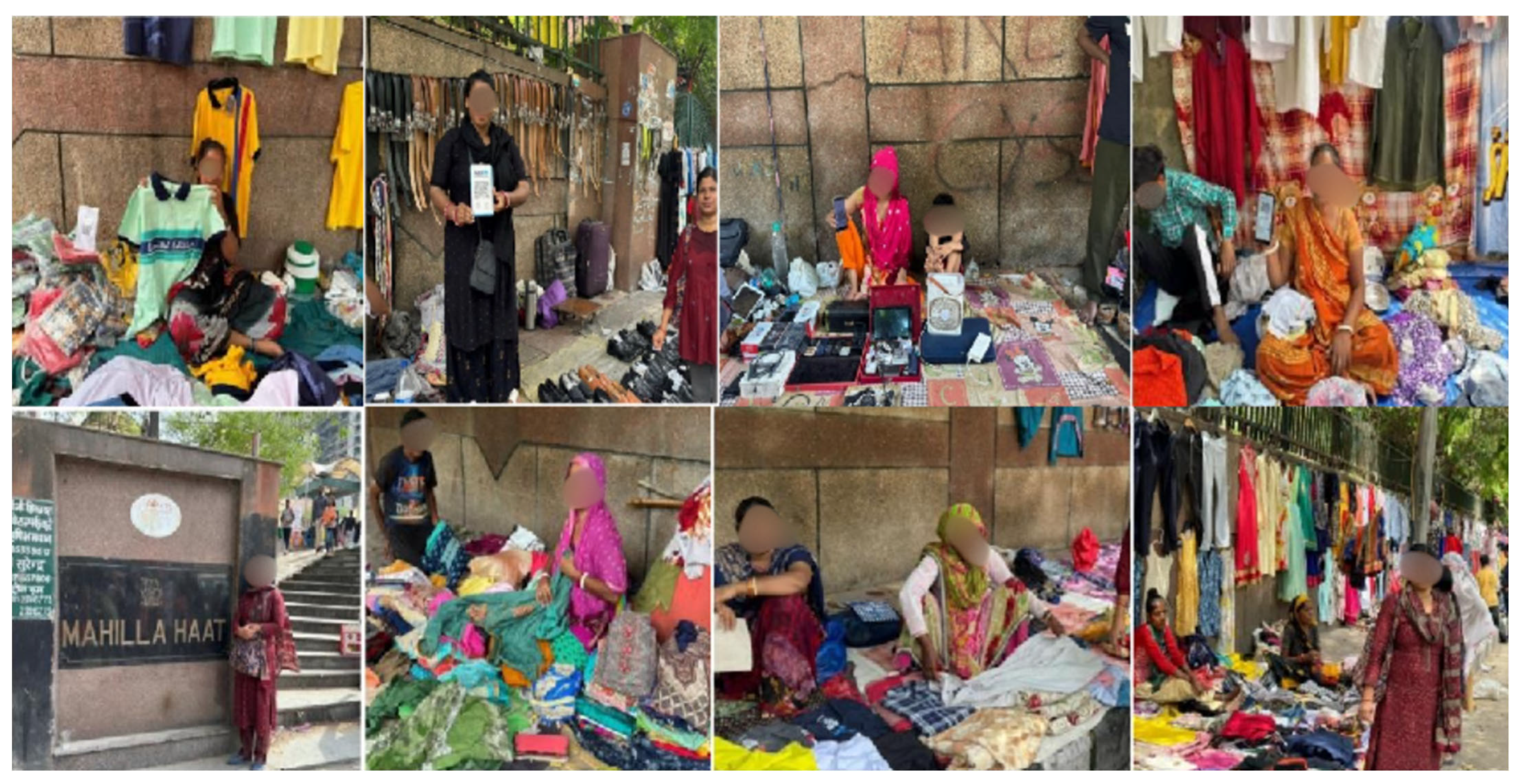
Figure 2 illustrates how some women vendors have still not adopted the UPI system, while others have recently upgraded to using both digital payments and direct cash transactions.
Figure 2.
Photos take during the primary data collection and field survey of women vendors at Red Fort, New Delhi. (Source: researcher’s visit to Mahila Haat for field survey).
6. Conclusions
The adoption of digital payment systems has emerged as a transformative tool for empowering women street vendors in metropolitan cities like Delhi. This study underscores the profound impact of digital payments on enhancing financial inclusion, improving business operations, and fostering economic independence among women vendors. By reducing dependency on cash transactions and offering access to formal financial services, digital payment adoption enables greater transparency, security, and convenience in daily business activities. The overall results indicate that after adopting the digital payment systems, women vendors become more satisfied, and customers also experience greater satisfaction with cashless transactions. Consequently, this is reflected in their standard of living, social integration, livelihood satisfaction, and increased reluctance. The findings suggest that digital citizens tend to exhibit more individualistic behaviour, with limited social interactions in physical spaces, yet they remain actively engaged through digital and technological platforms. Moreover, an analysis of the goodness-of-fit measures for social happiness revealed a decline in happiness levels as digital capabilities and engagement intensify. However, the potential for empowerment is intertwined with challenges such as limited access to smartphones, inconsistent internet connectivity, and the need for sustained digital literacy initiatives. Addressing these barriers through targeted interventions and inclusive policies can amplify the benefits of digital payment systems, making them a pivotal driver of socio-economic empowerment for women street vendors in urban landscapes. From a policy standpoint, this study’s contribution lies in elucidation of the realities of barriers to digital adoption, gendered economic vulnerabilities, and informal employment dynamics, thereby informing targeted interventions under schemes like PM-SVANIDHI, DAY-NULM, and digital literacy programmes. Moreover, the government also strictly guides local authorities in implementing central and state-sponsored special micro-credit facility schemes for urban and rural women, like PM-SVANIDHI YOJANA, the One-Stop Center scheme, Biz-Sakhi, etc. These are umbrella schemes formulated by the Ministry of Women and Child Development for the National Mission for Empowerment of Women. They also encompass the Indira Gandhi Matriva Sahayog Yojana through improving consciousness, improving psycho-social care, improving employability and occupational service capabilities, and enabling connections and mentorship support. Moreover, banking habits of depositing money in banks and post offices can be encouraged through self-help groups; for example, Sukanya Yojana, for girls up to the age of 18, enables an Aadhar card to be linked with a Jan-dhan account, and enables individuals to keep regular records, update banking accounts, and become trained in digital QR Code technology, as well as allowing them to manage their bank account from home within minutes, without the need to go to the bank. Financial institutions and digital banking support systems are pivotal in helping women vendors to open small businesses and develop their economic status. The findings of this study have policy relevance beyond Delhi, showing that digital payments enhance financial autonomy and livelihood adaptability for women street vendors. These insights can guide inclusive policy strategies in other developing countries by encouraging digital literacy and infrastructure, as well as targeted support, for informal women workers.
However, due to economic and time constraints, the study was conducted solely in a women’s vendor market in Delhi, focused on economic generation and market importance, and was based on sample of 50 vendors. There was no feasible way to make comparisons or increase the sample size, as other vendor groups are predominantly male. Consequently, this research has certain limitations, particularly regarding the sample size. However, this research was designed as a micro-level, exploratory case study to generate ground-level insights into a highly underrepresented and vulnerable group of urban women street vendors operating in an informal economy. The census approach, wherein all 50 active vendors in the selected area were surveyed, ensured that the study maximized representativeness within that context, minimizing sampling bias. In the future, the collection of a larger number of samples will be necessary to support deeper knowledge and earlier insights. A larger sample size will allow for the exploration of urban and rural women street vendors’ demographic information, enabling a more inclusive analysis of the digital economy’s impact on female street hawkers across various dimensions. Thus, it can boost the robustness of results and allow for a greater focus on fixed issues and operative policies of digital infrastructure and online platforms in favour of women’s digital empowerment.
Author Contributions
Conceptualization, G.M.; methodology, G.M. and S.K.M.; software, G.M. and S.K.M.; validation, G.M. and S.K.M.; formal analysis, G.M., S.K.M. and M.M.M.; investigation, G.M., S.K.M. and A.V.; data curation, G.M., S.K.M. and A.V.; writing—original draft preparation, G.M., S.S., S.K.M. and N.S.; writing—review and editing, G.M., S.S., S.K.M., N.S. and A.V.; visualization, A.V.; supervision, S.S. All authors have read and agreed to the published version of the manuscript.
Funding
This research received no external funding.
Institutional Review Board Statement
This research involved minimal risk and used anonymized data.
Informed Consent Statement
Informed consent was obtained from all subjects involved in the study.
Data Availability Statement
The data presented in this study are available on request from the corresponding author.
Conflicts of Interest
The authors declare no conflicts of interest.
Abbreviations
The following abbreviations are used in this manuscript:
| BoP | Balance of Payment |
| PM SVANIDHI | Prime Minister Street Vendors Atmanirbhar Nidhi |
| DAY-NULM | Deendayal Antyodaya yojana-National Urban Livelihood Mission |
| Delhi NCR | Delhi National Capital Region |
| ICT | Information Communication Technology |
| IoT | Internet of Things |
| NASVI | National Association of Street Vendors of India |
| NASVIT | National Alliance of Street Vendors and Informal Traders |
| SEWA | Self-employed Women’s Association |
| TVC | Town Vending Committees |
| UPI | Unified Payment Interface |
| QR Code | Quick Response Code |
Appendix A. Survey Questionnaire
Appendix A.1. Demographic Information
- Age Group:
- - [ ]
- Below 30
- - [ ]
- 31–40
- - [ ]
- 41–50
- - [ ]
- Above 50
- Education Level:
- - [ ]
- No formal education
- - [ ]
- Up to Primary School
- - [ ]
- Up to Secondary School
- - [ ]
- Higher Secondary or Above
- Family Type:
- - [ ]
- Nuclear
- - [ ]
- Joint
- Monthly Individual Income (Before UPI Usage):
- - [ ]
- Below ₹8000 ($100)
- - [ ]
- ₹8000–₹12,000 ($100–$150)
- - [ ]
- ₹12,000–₹16,000 ($150–$200)
- - [ ]
- Above ₹16,000 ($200+)
- Monthly Individual Income (After UPI Usage):
- - [ ]
- Below ₹8000 ($100)
- - [ ]
- ₹8000–₹12,000 ($100–$150)
- - [ ]
- ₹12,000–₹16,000 ($150–$200)
- - [ ]
- Above ₹16,000 ($200+)
- Type of Product Sold:
- - [ ]
- Clothes/Utensils
- - [ ]
- Shoes
- - [ ]
- Mobile Accessories
- - [ ]
- Combination (please specify): ___________
Appendix A.2. Digital Payment Awareness and Usage
- 7.
- Do you use any digital payment system (e.g., UPI, QR Code, PhonePe, Google Pay, Paytm)?
- - [ ]
- Yes
- - [ ]
- No
- 8.
- When did you start using digital payments?
- - [ ]
- Before COVID-19
- - [ ]
- After COVID-19
- - [ ]
- I do not use digital payments
- 9.
- Do you feel confident using mobile payment apps?
- - [ ]
- Yes
- - [ ]
- No
- - [ ]
- Somewhat
- 10.
- Have you received any training or support on digital payments?
- - [ ]
- Yes
- - [ ]
- No
- 11.
- Are you aware of the PM SVANIDHI or similar government schemes?
- - [ ]
- Yes
- - [ ]
- No
Appendix A.3. Satisfaction and Quality of Life Indicators
(Respond using a 3-point Likert scale: 1 = Low, 2 = Moderate, 3 = high)
Appendix A.3.1. Before UPI Adoption
| Factors | Low | Moderate | High |
| Livelihood satisfaction | |||
| Customer satisfaction | |||
| Family satisfaction | |||
| Work environment satisfaction | |||
| Income satisfaction | |||
| Connectivity with digital infrastructure | |||
| Digital capabilities (your perceived skills) | |||
| Social integration (feeling included/respected) | |||
| Health safety | |||
| Living standard | |||
| Social safety |
Appendix A.3.2. After UPI Adoption
| Factors | Low | Moderate | High |
| Livelihood satisfaction | |||
| Customer satisfaction | |||
| Family satisfaction | |||
| Work environment satisfaction | |||
| Income satisfaction | |||
| Connectivity with digital infrastructure | |||
| Digital capabilities (your perceived skills) | |||
| Social integration (feeling included/respected) | |||
| Health safety | |||
| Living standard | |||
| Social safety |
Appendix A.4. Open-Ended Feedback
- 1.
- What challenges do you face while using digital payments?
- 2.
- What kind of support or changes would help you use digital tools better?
References
- Abbasi, G. A., Jagaveeran, M., Goh, Y.-N., & Tariq, B. (2021). The impact of type of content use on smartphone addiction and academic performance: Physical activity as moderator. Technology in Society, 64, 101521. [Google Scholar] [CrossRef] [Scilit]
- Alfaro-Navarro, J.-L., López-Ruiz, V.-R., Huete-Alcocer, N., & Nevado-Peña, D. (2024). Quality of life in the urban context, within the paradigm of digital human capital. Cities, 153, 105284. [Google Scholar] [CrossRef] [Scilit]
- Alfaro-Navarro, J. L., López Ruiz, V. R., & Nevado Peña, D. (2017). The effect of ICT use and capability on knowledge-based cities. Cities, 60, 272–280. [Google Scholar] [CrossRef] [Scilit]
- Alhassan, M. D., & Adam, I. O. (2021). The effects of digital inclusion and ICT access on the quality of life: A global perspective. Technology in Society, 64, 101511. [Google Scholar] [CrossRef] [Scilit]
- Ali, M. A., Alam, K., Taylor, B., & Rafiq, S. (2020). Does digital inclusion affect quality of life? Evidence from Australian household panel data. Telematics and Informatics, 51, 101405. [Google Scholar] [CrossRef] [Scilit]
- Alipour, H., Chahrsooghi, A. A., & Gharib, A. (2013). Effects of drought on the socioeconomic status of farmers: A case study on the Nehbandans wheat farmers. Watershed Management Research (Pajouhesh-va-Sazandegi), 26(2), 113–25. [Google Scholar]
- Ardito, L., Dangelico, R. M., Messeni Petruzzelli, A., & Panniello, U. (2023). The impact of corporate social responsibility on corporate financial performance: Evidence from European SMEs. Journal of Business Research, 160, 113725. [Google Scholar]
- Baffour Gyau, E., Li, Y., & Appiah, M. (2025). Global digital transformation: Discovering the impact of digitalization on income inequality in OECD countries, the moderating role of globalization. Economic Change and Restructuring, 58(1), 6. [Google Scholar] [CrossRef] [Scilit]
- Balasha Arsene, M., Masheka Lebon, H., Nsele Maurice, K., Balasha Benjamin, M., Muninginyi Faustin, B., Katungo Jean-Hélène, K., & Arsene, M. B. (2020). Understanding the roles of street vendors of agricultural commodities during the COVID-19 outbreak in the informal economy. Open Journal of Social Sciences, 8, 115–129. [Google Scholar] [CrossRef]
- Balasubramanian, B., Srinivasan, R., & Vaidhyasubramaniam, S. (2012, August 17–18). Women in informal sector: A case of women street vendors in Thanjavur, Tamil Nadu. 2012—International Conference on Management Issues in Emerging Economies, ICMIEE 2012 (pp. 31–35), Thanjavur, India. [Google Scholar]
- Balasubramanian, P., Ibanez, M., Khan, S., & Sahoo, S. (2024). Does women’s economic empowerment promote human development in low- and middle-income countries? A meta-analysis. World Development, 178, 106588. [Google Scholar] [CrossRef] [Scilit]
- Bannerjee, S. S., Pillai, R., Tabash, M. I., & Al-Absy, M. S. M. (2025). Unveiling inter-market reactions to different asset classes/commodities pre- and post-COVID-19: An exploratory qualitative study. Economies, 13(3), 66. [Google Scholar] [CrossRef] [Scilit]
- Bartlett, W., Cipusheva, H., Nikolov, M., & Shukarov, M. (2010). The quality of life and regional development in FYR Macedonia. Croatian Economic Survey, 12, 121–162. [Google Scholar]
- Baudens, P., Masso, A., & Soe, R.-M. (2023). Women’s (im)mobility strategies and digital platform adoption: The case study of employees doing desk work in Pune, India. Gender, Technology and Development, 27(3), 423–443. [Google Scholar] [CrossRef] [Scilit]
- Bhattacharya, S., Sen, D., & Sachdev, B. K. (2021). A study on the role played by street vendors in our daily life and impact of the COVID 19 on the street vendors. International Journal of Trend in Scientific Research and Development (IJTSRD), 5(September–October), 629–634. [Google Scholar]
- Bossle, M. B., de Barcellos, M. D., Vieira, L. M., & Sauvée, L. (2016). The drivers for adoption of eco-innovation. Journal of Cleaner Production, 113, 861–872. [Google Scholar] [CrossRef] [Scilit]
- Cai, M., Kassens-Noor, E., Zhao, Z., & Colbry, D. (2023). Are smart cities more sustainable? An exploratory study of 103 U.S. cities. Journal of Cleaner Production, 416, 137986. [Google Scholar] [CrossRef] [Scilit]
- Calzada, I. (2020). Smart city citizenship. Elsevier. [Google Scholar] [CrossRef] [Scilit]
- Carayannis, E. G., Sindakis, S., & Walter, C. (2012). Business model innovation as lever of organizational sustainability. Journal of Technology Transfer, 40, 85–104. [Google Scholar] [CrossRef] [Scilit]
- Chakraborty, S., & Ahuja, G. (2021). Emerging from the lockdown: Insights from women street vendors’ lives in Delhi. SSRN Electronic Journal. [Google Scholar] [CrossRef] [Scilit]
- Chawla, N., & Kumar, B. (2022). E-commerce and consumer protection in India: The emerging trend. Journal of Business Ethics, 180(2), 581–604. [Google Scholar] [CrossRef] [Scilit]
- Chen, C.-W. (2023). Can smart cities bring happiness to promote sustainable development? Contexts and clues of subjective well-being and urban livability. Developments in the Built Environment, 13, 100108. [Google Scholar] [CrossRef] [Scilit]
- Chung, K. H., Shim, D. C., & Park, H. H. (2024). Revisiting theory of social capital: Can the internet make a difference? Technological Forecasting and Social Change, 202, 123282. [Google Scholar] [CrossRef] [Scilit]
- Demirgüç-Kunt, A., Klapper, L., Singer, D., Ansar, S., & Hess, J. (2020). The global findex database 2017: Measuring financial inclusion and opportunities to expand access to and use of financial services. World Bank Economic Review, 34(2018), S2–S8. [Google Scholar] [CrossRef] [Scilit]
- Duflo, E. (2012). Women empowerment and economic development. Journal of Economic literature, 50, 1051–1079. [Google Scholar] [CrossRef] [Scilit]
- Field, A. (2005). Discovering statistics using SPSS. SAGE Publications Ltd. [Google Scholar]
- Garcia-Sanchez, I. M., Hussain, N., Khan, S. A., & Martínez-Ferrero, J. (2022). Women on board and ESG performance: The moderating role of national culture. Corporate Social Responsibility and Environmental Management, 29(3), 622–637. [Google Scholar]
- Gracias, J. S., Parnell, G. S., Specking, E., Pohl, E. A., & Buchanan, R. (2023). Smart cities—A structured literature review. Smart Cities, 6(4), 1719–1743. [Google Scholar] [CrossRef] [Scilit]
- Gupta, A., & Dua, P. (2018). The cash-to-cashless economy is moving ahead of demonetisation. Mangalmay, Journal of Management & Technology, 8(1), 26–34. [Google Scholar]
- Gupta, R., Ranjan, S., & Gupta, A. (2021). Consumer’s perceived trust and subjective norms as antecedents of mobile wallets adoption and continuance intention: A technology acceptance approach. In Recent advances in technology acceptance models and theories (pp. 211–224). Springer. [Google Scholar] [CrossRef] [Scilit]
- Hall, P. (2000). Creative cities and economic development. Urban Studies, 37(4), 639–649. [Google Scholar] [CrossRef] [Scilit]
- Hart, K. (1973). Informal income opportunities and urban employment in Ghana. The Journal of Modern African Studies, 11(1), 61–89. [Google Scholar] [CrossRef] [Scilit]
- Hasan, N., Bao, Y., & Miah, S. J. (2022). Exploring the impact of ICT usage among indigenous people and their quality of life: Operationalizing Sen’s capability approach. Information Technology for Development, 28(2), 230–250. [Google Scholar] [CrossRef] [Scilit]
- Hatuka, T., & Zur, H. (2020). From smart cities to smart social urbanism: A framework for shaping the socio-technological ecosystems in cities. Telematics and Informatics, 55, 101430. [Google Scholar] [CrossRef] [Scilit]
- Hew, J.-J., Leong, L.-Y., Tan, G. W.-H., Ooi, K.-B., & Lee, V.-H. (2019). The age of mobile social commerce: An Artificial Neural Network analysis on its resistances. Technological Forecasting and Social Change, 144, 311–324. [Google Scholar] [CrossRef] [Scilit]
- Hilbert, M. (2011). Digital gender divide or technologically empowered women in developing countries? A typical case of lies, damned lies, and statistics. Women’s Studies International Forum, 34(6), 479–489. [Google Scholar] [CrossRef] [Scilit]
- Huete-Alcocer, N., López-Ruiz, V.-R., Alfaro-Navarro, J. L., & Nevado-Peña, D. (2022). European citizens’ happiness: Key factors and the mediating effect of quality of life, a PLS approach. Mathematics, 10(3), 367. [Google Scholar] [CrossRef] [Scilit]
- Humairoh, H., Annas, M., Wiwaha, A., Duha, T., & Endri, E. (2025). Digitalization of the payment systems: Evidence from Indonesia. Quality—Access to Success, 26(205), 245–254. [Google Scholar] [CrossRef] [Scilit]
- Hussain, S., Aslam, M. J., & Manzoor, A. (2024). Exploring the linkage between TV shows and women’s empowerment in a metropolitan city of Pakistan. Cities, 152, 105180. [Google Scholar] [CrossRef] [Scilit]
- Karthikeyan, R., & Mangaleswaran, R. (2018). Women empowerment through street vending business—A focus group discussion. International Journal of Social Science and Economic Research, 3(5), 1976–1982. [Google Scholar]
- Kautish, P., Siddiqui, M., Siddiqui, A., Sharma, V., & Alshibani, S. M. (2023). Technology-enabled cure and care: An application of innovation resistance theory to telemedicine apps in an emerging market context. Technological Forecasting and Social Change, 192, 122558. [Google Scholar] [CrossRef] [Scilit]
- Kawamura, L. (2022). How can Financial Service Providers improve the KYC onboarding experience? Challenges and technological solutions [Master’s thesis, Arcada University of Applied Sciences]. Arcada. [Google Scholar]
- Kim, J. S., & Feng, Y. (2024). Understanding complex viewpoints in smart sustainable cities: The experience of Suzhou, China. Cities, 147, 104832. [Google Scholar] [CrossRef] [Scilit]
- Kochar, A., Nagabhushana, C., Sarkar, R., Shah, R., & Singh, G. (2022). Financial access and women’s role in household decisions: Empirical evidence from India’s National Rural Livelihoods project. Journal of Development Economics, 155, 102821. [Google Scholar] [CrossRef] [Scilit]
- Kuo, Y.-H., Leung, J. M. Y., & Yan, Y. (2023). Public transport for smart cities: Recent innovations and future challenges. European Journal of Operational Research, 306(3), 1001–1026. [Google Scholar] [CrossRef] [Scilit]
- Lewis, W. A. (1954). Economic development with unlimited supplies of labour. The Manchester School, 22(2), 139–191. [Google Scholar] [CrossRef] [Scilit]
- Liu, C.-H., Horng, J.-S., Chou, S.-F., Yu, T.-Y., Lee, M.-T., & Lapuz, M. C. B. (2023). Digital capability, digital learning, and sustainable behaviour among university students in Taiwan: A comparison design of integrated mediation-moderation models. The International Journal of Management Education, 21(3), 100835. [Google Scholar] [CrossRef] [Scilit]
- Mohan, D., Sekhani, R., & Kaushik, A. (2018a). On the ways of knowing and understanding informality. Asian Journal of Public Affairs, 10(2), 71–79. [Google Scholar] [CrossRef] [Scilit]
- Mohan, D., Sekhani, R., & Medipally, S. (2018b). Governing dynamics of urban informality: A case study of local markets in phnom penh (cambodia), centre for new economic studies. (online). Available online: https://jgu-dev.s3.ap-south-1.amazonaws.com/cambodia_study.pdf (accessed on 18 August 2024).
- Ndubuisi, G., Otioma, C., & Tetteh, G. K. (2021). Digital infrastructure and employment in services: Evidence from Sub-Saharan African countries. Telecommunications Policy, 45(8), 102153. [Google Scholar] [CrossRef] [Scilit]
- Okello, A. O. (2025). Gender gaps, financial inclusion and social integration in Kakuma refugee camp, Kenya. Economies, 13(3), 75. [Google Scholar] [CrossRef] [Scilit]
- Pallant, J. (2005). SPSS survival guide. Allen & Unwin. [Google Scholar]
- Parvathy, S. U. (2018). Challenges and opportunities for street vendors in the Digital Economy. Trans-Asian Journal of Marketing & Management Research (TAJMMR), 7(3), 5–9. [Google Scholar]
- Prasad, D., & Alizadeh, T. (2020). What makes Indian cities smart? A policy analysis of smart cities mission. Telematics and Informatics, 55, 101466. [Google Scholar] [CrossRef] [Scilit]
- Sharma, S., Sharma, R., Kayal, G., & Kaur, J. (2022). Digital banking: A meta-analysis approach. Indian Journal of Marketing, 52(5), 41. [Google Scholar] [CrossRef] [Scilit]
- Sinha, N., Paul, J., & Singh, N. (2024). Mobile payments for bottom of the pyramid: Towards a positive social change. Technological Forecasting and Social Change, 202, 123313. [Google Scholar] [CrossRef] [Scilit]
- Sivasubramanian, K., & Rajendran, G. (2020). Evaluating the impact of digital transformation on economic conditions of unorganized small and petty traders in Bangalore. International Journal of Economics, Commerce and Research, 10(July), 53–60. Available online: https://www.researchgate.net/publication/342832505 (accessed on 4 September 2024).
- Stamopoulos, D., Dimas, P., Siokas, G., & Siokas, E. (2024). Getting smart or going green? Quantifying the Smart City Industry’s economic impact and potential for sustainable growth. Cities, 144, 104612. [Google Scholar] [CrossRef] [Scilit]
- Suri, T., & Jack, W. (2016). The long-run poverty and gender impacts of mobile money. Science, 354(6317), 1288–1292. [Google Scholar] [CrossRef] [Scilit] [PubMed]
- Turner, S., & Schoenberger, L. (2012). Street vendor livelihoods and everyday politics in Hanoi, Vietnam. Urban Studies, 49(5), 1027–1044. [Google Scholar] [CrossRef] [Scilit]
- Udmale, P., Ichikawa, Y., Manandhar, S., Ishidaira, H., & Kiem, A. S. (2014). Farmers’ perception of drought impacts, local adaptation and administrative mitigation measures in Maharashtra State, India. International Journal of Disaster Risk Reduction, 10, 250–269. [Google Scholar] [CrossRef] [Scilit]
- UNDP. (2015). Women’s voices: Employment and entrepreneurship in India. United Nations Development Programme. [Google Scholar]
- Viberti, F., Daidone, S., Pace, N., & Sitko, N. (2025). Cash transfers and women’s economic inclusion in rural Zambia. World Development Perspectives, 37, 100644. [Google Scholar] [CrossRef] [Scilit]
- Wamba-Taguimdje, S.-L., & Kala Kamdjoug, J. R. (2025). Mobile payments and money technologies in sustainable development: A systematic literature review and computer-assisted interpretive analysis. Information Technology for Development, 31(2), 435–472. [Google Scholar] [CrossRef] [Scilit]
- Women in Informal Employment: Globalizing and Organizing (WIEGO). (2015). Street vendors in India. Available online: http://www.wiego.org/informal-economyoccupational-groups/street-vendors (accessed on 4 September 2024).
- Xiao, J. J., & Bialowolski, P. (2023). Consumer financial capability and quality of life: A global perspective. Applied Research in Quality of Life, 18(1), 365–391. [Google Scholar] [CrossRef] [Scilit]
- Zhu, H., Shen, L., & Ren, Y. (2022). How can smart city shape a happier life? The mechanism for developing a Happiness Driven Smart City. Sustainable Cities and Society, 80, 103791. [Google Scholar] [CrossRef] [Scilit]

Disclaimer/Publisher’s Note: The statements, opinions and data contained in all publications are solely those of the individual author(s) and contributor(s) and not of MDPI and/or the editor(s). MDPI and/or the editor(s) disclaim responsibility for any injury to people or property resulting from any ideas, methods, instructions or products referred to in the content. |
© 2026 by the authors. Licensee MDPI, Basel, Switzerland. This article is an open access article distributed under the terms and conditions of the Creative Commons Attribution (CC BY) license.