


Abstract
This study examines the determinants of inflation volatility in Tunisia, focusing on central bank independence (CBI), economic transparency, and macroeconomic fundamentals. Although CBI is widely regarded as essential for monetary credibility, its effectiveness depends on its institutional framework. Our contribution is twofold. First, we develop a theoretical framework based on game theory to illustrate how the effectiveness of economic transparency and CBI shapes the welfare of both the central bank and the private sector in the presence (or not) of fiscal policy. Second, we use a binary threshold nonlinear autoregressive distributed lag (NARDL) model to capture long-run relationships and a Markov-switching GARCH (MS-GARCH) framework to model volatility dynamics. As a continuous measure, CBI has no significant impact on volatility. Paradoxically, high de jure independence in a binary regime is associated with a slight increase in inflation fluctuations. This indicates that legal independence alone is insufficient without fiscal discipline or effective coordination between the monetary and fiscal authorities. Notably, under fiscal pressure, greater CBI substantially reduces inflation volatility, highlighting the need for a coherent macroeconomic framework. Economic transparency generally increases short-term volatility but stabilizes inflation when supported by credible fiscal signals. Among the macroeconomic fundamentals, volatility in broad money is strongly destabilizing, whereas fluctuations in industrial production and the real exchange rate are largely insignificant. Government spending and exposure to external shocks, including import prices and geopolitical risks, further amplify this volatility. The observed negative trend over time reflects gradual improvements owing to policy reforms. Policy recommendations emphasize the establishment of genuinely independent and credible monetary institutions, enhancing coordination with fiscal policy, improving communication strategies, and strengthening risk management.
Keywords:
central bank independence; transparency; fiscal disciplining; government; Central Bank of Tunisia; threshold nonlinear ARDL JEL Classification:
C22; C72; D82; E58; H32
1. Introduction
Over the past decades, central banks have increasingly adopted greater transparency in their operations and communication. This evolution reflects a broad consensus that openness enhances credibility, anchors inflation expectations, reduces uncertainty, and enhances the effectiveness of monetary policy. These benefits are greatest in advanced economies with solid institutions and well-developed financial markets (see De Haan et al., 2005; Crowe & Meade, 2008; Neuenkirch, 2012). Conversely, emerging economies often follow a more uneven path, constrained by structural weaknesses, fragile institutions, and fiscal dominance.
Tunisia, a small open economy, provides an instructive case given its political, economic, and structural transformations since the late 1980s. Its growth was driven by market services and industry, supported by high trade openness (about 90% of GDP) and strong integration with European markets (Nabi, 2019). However, these developments masked persistent vulnerabilities, including a shallow financial system, state-dominated banking, and exposure to external shocks such as the 2001 global slowdown and the 2008–2010 European debt crisis.
The 2011 revolution marked a turning point, bringing political instability, social unrest, and delayed reforms. Underinvestment, labor market rigidities, and persistent youth unemployment weakened economic resilience (Robbins, 2016; Gherib, 2021), while fiscal and external imbalances deepened. The COVID-19 pandemic further exacerbated these structural weaknesses, leaving the economy stagnant and inflationary pressures high. During this period, the transparency index of the Central Bank of Tunisia rose from 3.5 in 1998 to 7.5 in 2019 (Dincer et al., 2022). Gains were most visible in operational and policy transparency, reflecting clearer communication of monetary tools, processes, and objectives (see Figure 1). However, progress was limited in political, procedural, and economic dimensions, indicating ongoing opacity in mandates, decision-making, and forecasting. This asymmetry suggests that reforms prioritized technical efficiency and predictability over institutional accountability and legitimacy.
Figure 1.
Evolution of central bank transparency in Tunisia: overall measure and by dimension. CBT1: Political transparency, CBT2: Economic transparency, CBT3: Procedural transparency, CBT4: Policy transparency, CBT5: Operational transparency.
Tunisia’s fragile fiscal position underscores the importance of complete transparency. Public debt exceeds 80% of the GDP, budget deficits remain between 6% and 7% of the GDP, and access to external financing is constrained (Abdelkafi, 2018; Gouasmi & Haffoudhi, 2020). Fiscal consolidation efforts, including subsidy cuts, tax reform, and the restructuring of state-owned enterprises, have faced political resistance and implementation delays, while the informal sector accounts for approximately 30% of the GDP. Consequently, fiscal dominance persists; pressures to monetize deficits and proposals for direct central bank financing up to 3% of the GDP threaten monetary autonomy.
Understanding the interaction between central bank transparency and fiscal policy is therefore essential to Tunisia’s macroeconomic governance. More transparency strengthens credibility, reduces information gaps, and limits inflation risks of fiscal imbalances. However, when reforms are incomplete or face political limits, the central bank may be unable to firmly anchor expectations or counter fiscal demands.
This study examines the interaction of transparency with fiscal dynamics in a small open economy, assessing its implications for monetary stability and policy coordination. Unlike models that isolate either fiscal or monetary policy, this research explicitly integrates both dimensions. The main argument is that transparency affects government behavior, which in turn influences central bank responses. Hence, the overall impact of transparency on economic stability and welfare depends on the interaction between fiscal and monetary authorities. The integration of strategic fiscal–monetary interaction with informational frictions is introduced to capture key institutional features of the Tunisian economy, including fiscal dominance, imperfect communication, and limited central bank independence. The purpose of this theoretical structure is not to reproduce quantitative dynamics, but to derive testable qualitative predictions regarding how credibility, transparency, and fiscal behavior affect inflation volatility. The study’s contribution lies in translating this theoretical framework into an empirical investigation centered on Tunisia, offering insights relevant for other emerging economies.
The remainder of this paper is organized as follows: Section 2 provides an overview of related studies. In Section 3, we develop a theoretical framework to analyze the optimal design of central bank transparency in a small, open, emerging economy. We translate this model into an empirical framework, the results of which are presented in Section 4. Finally, Section 5 concludes with practical recommendations.
2. Literature Review
Conventional models of monetary policy transparency focus on the interactions between the central bank and private agents. The related theoretical discussions frequently highlight the detrimental effects of uncertainty and the incentive benefits associated with time inconsistency issues. In contrast, policymakers often stress the potentially constructive role of uncertainty under transparent regimes and give less weight to arguments that assume a systematic inflationary bias. However, studies highlight several reasons why transparency remains important even when central banks are independent and the concerns about credibility are low. Increased transparency can reduce the uncertainty of private actors, provide policymakers with opportunities to mitigate economic shocks and stabilize production, and ensure that the actions of central banks align with socially desirable results (Geraats, 2002; Geraats, 2009; Dai, 2016; Dai & Zhang, 2017). However, more recent work has extended this perspective by examining the interplay between monetary and fiscal authorities (e.g., Blinder, 1982; Von Hagen et al., 2002; Van Aarle et al., 2003; Hanif & Arby, 2003; Hefeker & Zimmer, 2011; Šehović, 2013; Demid, 2018; Foresti, 2018; Reichlin et al., 2023). In frameworks where public spending is financed through distortionary taxation, uncertainty regarding the central bank’s policy preferences, specifically the relative weight assigned to price stability versus output stabilization, shapes macroeconomic outcomes. Such opacity can lower average inflation and mitigate volatility in both inflation and output (Froyen & Waud, 1995; Schaling & Nolan, 1998; Cukierman, 2000; Grüner, 2002; Eijffinger et al., 2003; Hallett & Viegi, 2003; Ciccarone et al., 2007). In the same context, Ciccaronea and Giulia (2008) argue that transparency enhances the stability of inflation around its target; however, its overall welfare implications depend on the relative preferences of fiscal and monetary authorities. Specifically, when the fiscal authority does not assign disproportionate weight to output stabilization relative to the cost of policy instruments, greater transparency yields unambiguous welfare gains. When fiscal authorities increase expenditures, the resulting higher taxes reduce output and increase unemployment, which, in turn, pressures the central bank to tolerate greater inflation, thereby fueling upward wage demands. Under these circumstances, limited transparency regarding the central bank’s objectives may constrain fiscal expansion. Indeed, the disciplining effect of reduced transparency can outweigh its costs when the government places little emphasis on public spending, the central bank adopts a more populist stance, and the initial degree of opacity is high (Dai & Sidiropoulos, 2011a, 2011b). Dai et al. (2015) investigate the interaction between monetary and fiscal policies within a framework where the government, acting as a Stackelberg leader, is concerned with the political costs of corruption. In such a setting, central bank opacity can operate as a disciplinary mechanism for fiscal authorities. Greater opacity can lower inflation expectations, reduce inflation, diminish the output gap, and attenuate the response of these variables to supply shocks, thereby increasing social welfare. When corruption exerts either a “sanding-the-wheels” effect or only a weak “greasing-the-wheels” effect, opacity strengthens its role as a fiscal disciplining device, with this effect potentially being magnified in cases of systemic corruption. In contrast, opacity fosters corruption only when the “greasing-the-wheels” effect is sufficiently strong. Henry et al. (1999) show that uncoordinated policies may lead to lower growth, an overvalued exchange rate, and weaker net trade performance than coordinated strategies. This highlights that independence, although valuable, cannot be analyzed in isolation from fiscal dynamics, particularly in economies exposed to external imbalances.
The theoretical foundation for analyzing the interaction between monetary and fiscal authorities in multi-agent settings is richly developed in a study by Banerjee (2001), who examines rules versus discretion when a common monetary authority coexists with separate fiscal agents. In his framework, the commitment and coordination mechanisms are key to determining macroeconomic stability. Our study complements and extends this perspective by empirically testing whether legal central bank independence (a rule-like constraint) indeed reduces inflation volatility in practice, and under what fiscal constraints or pressures this effect materializes or fails. By embedding threshold nonlinearities and volatility dynamics in a small open economy, we provide new evidence on when the monetary authority can credibly stabilize inflation and when it cannot, thereby refining the theoretical insights of Banerjee into a policy-relevant, data-driven context.
Recent cross-country evidence further highlights that central bank independence does not uniformly constrain fiscal deficits. Instead, its effectiveness depends on the institutional and political environment. For example, Bodea and Higashijima (2017) demonstrate that CBI primarily deters fiscal imbalances in democracies with the rule of law, an impartial press, and checks on executive power. Moreover, the disciplining effect of independence is conditional on the electoral cycle and government ideology, being stronger during non-election periods and under left-leaning governments. Thus, the fiscal effects of CBI are context-dependent, an insight particularly relevant for emerging economies such as Tunisia, where institutional constraints are fragile. A related line of research emphasizes that while central bank independence remains crucial for credibility, temporary coordination between monetary and fiscal policy is indispensable during crises. According to Ashoor (2021), emergency coordination mechanisms help mitigate economic and social costs when financial or economic shocks occur, even though such coordination should remain temporary and end once the crisis subsides. The study concludes that coordination is not only necessary in crises but also desirable in normal times to enhance welfare and economic resilience, if it does not compromise central bank independence or undermine fiscal policy tools. Hall and Henry (2006) contend that central bank independence alone cannot secure stability in open economies. This may create strategic frictions with fiscal authorities, leading to structural imbalances, such as excess demand in nontradable sectors and weaker activity in tradable sectors, as evidenced in the UK case.
A more recent study related to our work was conducted by Ferré et al. (2024). The authors consider a specific dimension of central bank transparency: the announcement of the inflation target. Ferré et al. (2024) investigate how opacity in communicating with the central bank’s inflation target affects macroeconomic stability and welfare, considering the relationship between an independent central bank and the fiscal authority. Their analysis indicates that the impact of transparency largely depends on the relative weight each authority assigns to output versus inflation stabilization. When the central bank prioritizes output stabilization more strongly than the government does, complete opacity can serve the central bank’s interests. Contrary to our reasoning, Ferré et al. (2024) built their framework on the assumption that the central bank places greater emphasis on output stabilization. This setting appears more tailored to advanced economies such as the United States. Furthermore, their theoretical conclusions are not tested through empirical lenses. This study aims to fill both gaps. We employ a model with features of the Tunisian economy.
3. Theoretical Construct
The model incorporates the key structural features typical of such economies, including exposure to external shocks, limited policy credibility, and constrained monetary autonomy. By embedding transparency as a policy instrument that shapes private agents’ expectations and reduces informational asymmetries, the model systematically explores its effects on macroeconomic outcomes.
3.1. The Benchmark Model
- Assumption A1 (Central bank’s Objective Function)
The central bank is conservative and primarily targets price stability. The loss function is
where is the inflation target. The output gap ( is defined as the difference between the actual output and the output target.
- Assumption A2 (Aggregate Supply and Demand Shocks)
We suppose the following supply (s) and demand (d) shocks:
where is the expected inflation by the private sector, is the real interest rate, and .
For tractability, we do not decompose the demand and supply shocks into anticipated and unanticipated components (Geraats, 2009).
Lemma 1.
Optimal Monetary Rule.
Substituting (2) and (3) into (1), the central bank’s first-order condition yields
Proof.
See Appendix A.1. □
Inserting (4) into (2) and (3) gives equilibrium inflation and output
stands for central bank independence, which is an institutional feature derived from legal statutes (Romelli, 2024).
The demand shocks are offset in Equations (5) and (6). A possible explanation is that demand shocks can be directly counteracted through monetary policy tools (such as interest rates, which are used as the main instrument of the Central Bank of Tunisia). Supply shocks (e.g., oil price increases) represent real constraints that monetary policy cannot neutralize without creating distortions.
If we plug these expressions into (1), we obtain
3.2. Information Structure and Equilibrium
The central bank perfectly knows the inflation target.
The private sector is uncertain about the true state of the economy. Each agent receives an idiosyncratic public signal about the supply shocks and the central bank’s signals about the inflation target as follows:
where are stochastic with a zero mean and variances of and , respectively. are independent. We consider a setting where agents form their expectations using all available information. Let represent the inflation expectation of an individual agent . The overall average expectation across all agents is expressed as follows:
The framework is structured as a two-stage game in which the private sector engages in strategic interaction with the central bank. The objective of the private sector is to maximize the following utility function:
The optimal expectation formation follows from the first-order condition of (7), yielding
Substituting (5) in (7) yields
This structure parallels that of Morris and Shin (2002), where might represent the coordination motive, referred to as the degree of strategic complementarities. Agents are concerned not only with forming accurate expectations about future inflation but also with coordinating their decisions with those of others (in wage bargaining or price setting). Transparency, therefore, affects not only informational accuracy but also coordination motives among agents. Transparency is, however, defined by the precision of the observed signals by the private sector.
Proposition 1.
Individual Expectation Rule.
Under Gaussian signals and common priors, each agent’s expectation is a weighted average of the central bank’s signals and private information,
The weights depend on the relative variances of the fundamental and noise components.
Proof.
See Appendix A.2. □
Proposition 2.
Aggregation under Partial Transparency.
Considering the scenario of perfect sticky information is unrealistic (Baeriswyl & Cornand, 2010). The proportion stands for the quantitative dimension of transparency. Following Mankiw and Reis (2002), we assume that information diffuses gradually throughout the economy. In their sticky information framework, only a fraction m of agents update the information set each period, while the remaining fraction 1−m continues to rely on outdated information and does not incorporate any contemporaneous news. stands for the quantitative dimension of transparency. Agents who do not update behave as if they did not know the current shock. Therefore, their expectations are set to zero, consistent with Baeriswyl and Cornand (2010). The informed agents form their expectations according to (9), whereas the uninformed agents have .
The expected inflation across all agents is given by
The updated weights depend on , , and the signals’ variances.
Proof.
The full expressions are given in Appendix A.3. □
3.3. Optimal Monetary Policy Under Intermediate Transparency and Welfare Effects
Intermediate transparency refers to the case where m-type agents observe the monetary instrument and the central bank does not make any explicit announcement about its economic assessments ().
We calculate the unconditional expected loss function of the central bank
which, using (10), expands to
Proposition 3.
Optimal Transparency Conditions.
since and . Therefore, full transparency regarding the inflation target (↓) minimize expected loss. Intuitively, greater clarity on inflation enhances credibility and reduces inflation bias. This result is in accordance with Geraats (2009).
To illustrate the behavior of and the optimal information weight , we rely on a benchmark calibration consistent with standard macroeconomic assumptions. While several parameter combinations could be considered, exploring all possible configurations is beyond the scope of this study. We show that is either intermediate or equals 1. Instead, we report results for a representative set of values, noting that sensitivity checks confirm that the qualitative insights remain robust (see Figure 2a,b).
Figure 2.
The optimal number of informed agents. Parameters’ calibration (a) (b) (a) Case 1. (b) Case 2.
We also show that the expected loss is decreasing in
Increasing (the weight given to monetary policy in the optimization) reduces the expected loss of the central bank because the central bank becomes more effective at anticipating shocks to the inflation target.
Proof.
See Appendix A.4. □
Next, we compute inflation volatility and study how it is impacted by increases in .
We need to know the optimal value of that satisfies the following optimization program:
The partial derivative with respect to the variance of the noise in the private signal about the central bank’s inflation is given by
The partial derivative with respect to the number of informed agents is
To minimize inflation volatility, the central bank should remain opaque about its inflation target.
Now, the same derivative with respect to () is ambiguous. For some plausible parameter values, there exists a minimum in (see Figure 3a,b).
Figure 3.
The optimal stabilization policy. Parameters’ calibration (a) (b) (a) Case 1. (b) Case 2.
Proof.
See Appendix A.5. □
Optimal communication by the central bank is inherently asymmetric. From the central bank’s perspective, transparency on the inflation target anchors expectations, reduces uncertainty, and curbs inflation bias. Private agents value both coordination and forecast accuracy; when signals are noisy, excessive information, even about inflation, can amplify belief dispersion, coordination failures, or overreactions. Importantly, lower transparency (less accurate signals) increases the central bank’s expected loss but can reduce inflation volatility, while there exists an optimal level of informed participation that minimizes loss. These considerations imply that the central bank may rationally adopt selective transparency, whereas private agents may prefer more limited information to simplify coordination. Consequently, there is no universally optimal transparency level; reforms in emerging economies often prioritize credibility and discipline rather than fully aligning with private-sector preferences for simplicity.
3.4. Introducing Taxation and the Coordination of Monetary-Fiscal Policy
We assume that a responsible fiscal authority (the government) sets distortionary taxes, following Dai and Sidiropoulos (2011b) and Ferré et al. (2024). The central bank sets a monetary policy.
- Assumption A3 (Fiscal and Monetary Interdependence)
The Phillips curve becomes
where represents the tax rate levied on output, with . In Equation (11), the term ςτ with ς > 0 indicates that higher taxation increases inflation. This does not imply a mechanical or direct effect of taxes on prices; rather, it reflects how distortionary output taxation alters firms’ price-setting conditions. By increasing the effective wedge between the price firms charge and the income they retain, a higher tax can amplify firms’ sensitivity to cost pressures, thereby affecting the inflationary response to output gaps. In this sense, ς captures the overall influence of fiscal distortions on the Phillips curve, showing how taxes contribute to higher production costs and inflation in a reduced-form framework, without making a structural claim about the precise microeconomic mechanism.
The demand shock equation becomes
where captures the effect of taxes on aggregate demand and the output gap, for example, through their impact on disposable income, consumption, or investment, rather than a direct effect on inflation.
The government’s budget constraint can be expressed in terms of the ratio of public expenditure to output. In this framework, government spending is financed through distortionary taxation, managed by the fiscal authority, given the actual central bank independence.
The tax instrument in the model is interpreted as a distortionary consumption-type tax rather than a lump-sum levy. As shown in Equation (11), taxation affects firms’ marginal costs and enters the Phillips curve through price-setting behavior. In contrast, Equation (12) captures its impact on aggregate demand via a balanced-budget mechanism, in which tax-financed expenditure generates a short-run output multiplier. Accordingly, the tax variable is best viewed as an indirect tax (e.g., VAT or consumption tax), which is empirically relevant for Tunisia, where indirect taxation accounts for a large share of public revenues. In this framework, the parameter δ represents the indirect effect of taxes on inflation, rather than the direct effect, and captures the sensitivity of inflation to marginal-cost distortions transmitted through fiscal instruments. The focus on this channel reflects Tunisia’s institutional context, where fiscal dominance operates mainly through expenditure pressures and indirect tax adjustments rather than through deep bond markets or systematic deficit monetization, the latter being constrained by shallow domestic financial markets and the Central Bank of Tunisia’s evolving inflation-oriented policy framework.
- Assumption A4 (Government’s Objective)
Let and denote the weights assigned by the government to stabilize output and government expenditure, respectively, relative to inflation stabilization, with both parameters being strictly positive (, ). Accordingly, the government aims to minimize the deviations of inflation, output, and public spending from their respective target levels, which are normalized to zero for output and spending.
We allow for the possibility that the government’s emphasis on output stabilization differs from that of the central bank, i.e., . If , this implies that the government places a relatively higher priority on output stabilization than on inflation stabilization. Furthermore, when the government’s weight on spending stabilization is sufficiently low, the condition also suggests that the central bank exhibits a more conservative stance relative to the government.
In line with the baseline framework, we continue to assume that the central bank observes public signals about the inflation target, while the private sector relies on private noisy signals to infer the target.
The sequence of events unfolds as follows. First, the central bank’s inflation target is realized, although it retains private information for the central bank. Next, a noisy signal of this target is observed simultaneously by both the government and the private sector. Based on this signal, the private sector rationally forms expectations about future inflation.
The subsequent interaction between fiscal and monetary authorities is modeled as a Stackelberg game in which the government acts as the leader, anticipating the reaction of the central bank. The fiscal authority sets the tax policy with foresight about the central bank’s response. This structure reflects the relatively slower adjustment capacity of fiscal policy than monetary policy, a modeling approach commonly employed in the literature, including by Dixit and Lambertini (2003), Acocella et al. (2007), and Oros and Zimmer (2020).
The sequential policy game is analyzed via backward induction. We begin with the last-moving player, in this case, the central bank. Taking the expected inflation and the tax rate τ as given, the central bank selects the inflation rate to minimize the loss function.
Lemma 2.
Central Bank Reaction Function.
Substituting (11) and (12) into (1) gives
Therefore, when fiscal policy is considered, the optimal inflation rate corresponds to the level derived in the benchmark case (Equation (2)), augmented by an additional term that is positively associated with the tax rate , provided that the central bank places weight on output stabilization (i.e., 0). In such cases, higher taxation induces the central bank to tolerate greater inflation to mitigate the contractionary effects of increased tax burdens on economic activity. This mechanism reflects how higher distortionary taxes suppress output, prompting the central bank to ease monetary policy (tolerating higher inflation) to mitigate economic contraction. This directly illustrates the challenges posed by fiscal dominance in Tunisia.
Proposition 4.
Optimal Tax Policy.
The government is faced with the following optimization problem:
To solve the government’s optimization problem, we apply the method of substitution. This involves replacing the expressions for output, government spending, and inflation in the government’s conditional expected loss function. As a result, the objective function becomes a function of a single policy instrument, τ. Taking the derivative of this reduced-form loss function with respect to τ and setting it equal to zero yields the corresponding first-order condition:
To simplify (17), we write
Proposition 5.
Fiscal–Monetary Interaction.
Equation (17) implies the following:
- A fiscal expansion (↑) increases equilibrium inflation when the policymaker places greater weight on output stabilization ().
- Transparency enhances policy coordination only when fiscal activism () is moderate.
- Excessive fiscal expansion () or weak fiscal discipline ( small) undermines monetary credibility and heightens inflation volatility.
In the context of Tunisia’s macroeconomic environment, the model implies that tax reductions are warranted when inflation expectations or the government’s perceived inflation target increase. In such cases, lowering taxes may help mitigate the adverse effects of inflation on output and stimulate aggregate demand. Given Tunisia’s recurring inflation volatility and fiscal limitations, this form of countercyclical fiscal easing can provide critical economic support without necessarily intensifying inflationary pressure.
Moreover, when the output gap reflects economic underperformance or when the government adopts ambitious output targets, tax reductions can play a vital role in bolstering demand and fostering job creation. This is an especially relevant concern for Tunisia, where unemployment remains persistently high and productive capacity is underutilized. Similarly, positive supply shocks, such as improvements in agricultural yields or energy supply, justify tax cuts as a means of leveraging favorable conditions and reinforcing growth momentum.
Higher government spending targets in Tunisia, which reflect ongoing efforts to expand social programs and public investment, should not be interpreted as implying unrestricted access to financing. The feasibility of lower taxation depends on alternative sources of funding, such as concessional external borrowing or the development of domestic public debt markets, which remain limited and do not remove the government’s intertemporal budget constraint. Moreover, given Tunisia’s institutional context of fiscal dominance, fiscal policy naturally assumes a leading role vis-à-vis the central bank. This provides a coherent rationale for modeling fiscal authorities as the Stackelberg leader in our analytical framework.
Finally, in an environment marked by policy uncertainty and imperfect information regarding the central bank’s inflation target, the fiscal authorities may adopt a precautionary stance. In such situations, reducing taxes in response to ambiguous inflation signals can prevent unnecessary contractions in economic activity. This framework advocates for a flexible fiscal policy in Tunisia, adjusting taxes downward when inflation is elevated, output is weak, or spending pressures increase to support economic stability and growth.
The expected loss function of the central bank is provided by
Substituting (10) and (17) and then deriving with respect to gives the following:
Proposition 6.
Optimal Transparency Conditions Under Fiscal Policy.
The expected loss function of the central bank attains a minimum at
since and .
Thus, the minimum of loss corresponds to the minimum of . Using the same combination of parameter range, we find the optimum as seen in Figure 4a,b.
Figure 4.
The optimal number of informed agents. Parameters’ calibration for (a) , (b) (a) Strong fiscal discipline. (b) Weak fiscal discipline.
The partial derivative with respect to gives rise to .
Increasing raises the weight the central bank places on stabilizing inflation relative to output. As a result, inflation is more closely tied to the fundamental target and less influenced by noisy signals from private expectations, shocks, or fiscal policy. Consequently, the central bank’s loss declines as rises. Economically, this means that a central bank more focused on inflation delivers a more stable and credible inflation outcome, whereas a central bank prioritizing output stabilization ( lower) is more exposed to shocks, resulting in higher loss.
Proof.
See Appendix A.6. □
We calculate the volatility of inflation, as given by Equation (15), and we insert (17).
Enhancing economic transparency about the inflation target increases inflation volatility (). In a similar vein, increasing the number of informed agents makes the volatility of inflation rise ().
Proof.
See Appendix A.7. □
Once fiscal policy is incorporated, the interaction between taxation and transparency modifies the equilibrium; fiscal policy shifts the optimal strategy toward opacity on the inflation target. In this setting, excessive transparency induces fiscal overreactions and private-sector miscoordination, increasing volatility. Thus, under fiscal dominance, strategic opacity becomes welfare-enhancing.
Now, there is an optimal that minimizes , given a plausible range of the parameters (see Figure 5a,b) (see Table A1 in Appendix A.8 for arguments about the range’s choices).
Figure 5.
The optimal stabilization policy. Parameters’ calibration (a) (b) (a) Strong fiscal discipline. (b) Weak fiscal discipline.
Increasing α raises the weight the central bank assigns to stabilizing inflation relative to output. As approaches its optimal value , inflation becomes increasingly aligned with the fundamental target and less sensitive to noisy signals from private expectations, shocks, or fiscal policy. As a result, the variance of inflation decreases, reaching its minimum at α∗. Economically, this implies that a central bank placing greater emphasis on inflation stabilization achieves a more stable and credible inflation outcome, whereas a central bank prioritizing output stabilization ( lower than is more exposed to shocks, leading to higher inflation volatility.
Proof.
See Appendix A.7. □
The optimal transparency strategy is almost symmetric for both the central bank and the private sector. With fiscal policy providing partial stabilization of output, the Central Bank of Tunisia optimally maintains opacity on the inflation target. This approach limits destabilizing private-sector reactions to announced targets, whereas fiscal interventions absorb fluctuations in output. Given Tunisia’s moderate monetary credibility and institutional constraints, strategic opacity enables the central bank to minimize expected losses and support macroeconomic stability effectively.
Although the theoretical model does not feature an explicit interaction term between economic transparency and taxation in the inflation equation, it shows that the government’s tax policy depends on the precision of its signal regarding the inflation target. Since taxation then feeds into the inflation process, we expect the effect of taxes on inflation volatility to be conditional on transparency. To capture this conditional relationship, we include an interaction term between taxation and transparency in the empirical specification.
4. Empirical Assessment of the Monetary–Fiscal Interaction
4.1. Data
We gather data spanning the period January 1993–May 2025 for the Tunisian economy. Our variable of interest is the consumer price index, given that the ultimate objective of the Central Bank of Tunisia is to control inflation. Real economic activity is also incorporated into the empirical framework. Typically, real GDP growth serves as a proxy for real production. However, we use the industrial production index because it is available monthly. To examine the factors influencing inflation volatility in relation to our previous theoretical model and explore the interaction between monetary and fiscal policies, we include variables such as government spending, central bank transparency (economic dimension), central bank independence, the money market rate to signify the real interest rate, the import price index, the industrial sales index, and geopolitical risk to account for political and turbulent events. Following the methodology of Blanchard and Simon (2001) and other related studies, we calculate unconditional inflation volatility and output volatility via the rolling standard deviation over five years.1 Broad money volatility is based on the work of Ghanayem et al. (2023). We also checked for seasonality via the Census X-13 method in Eviews. Only variables that exhibit seasonality are adjusted. Table 1 summarizes the variables that we have collected, along with their sources and construction details.
Table 1.
Variable definitions, sources, and measurements.
4.2. Econometric Strategy
To choose the proper econometric model and technique, we need to test for unit roots in the variables. Starting with the inflation rate, the variable passes the stationarity test according to Table A2 in Appendix A.9. Then, we must test for the presence of the Autoregressive Conditional Heteroscedasticity (ARCH) effects (see Table 2).
Table 2.
Test of ARCH in the residuals.
For the other variables, we have a mix of I(0) and I(1), justifying a priori the use of the nonlinear ARDL. This model, proposed by Shin et al. (2014), investigates potential asymmetrical relationships among the variables in both the long and short run. It provides unbiased long-run estimators, addresses endogeneity issues, and is not sensitive to the sample size.
GARCH-based volatility forecasting requires the presence of ARCH effects, as noted earlier. This can be achieved by regressing inflation on a constant and its lagged value and then performing a test of heteroscedasticity on the residuals.
The GARCH-Markov switching (MS-GARCH) framework offers a superior approach for modeling inflation volatility, particularly in environments characterized by structural breaks and regime shifts. Unlike conventional GARCH models, which impose a constant volatility structure, the MS-GARCH model accommodates time-varying dynamics by allowing different sets of GARCH parameters across unobserved regimes governed by a latent Markov process. This specification enables the model to capture abrupt transitions between periods of high and low volatility, reflecting changes in the monetary policy stance, external shocks, or shifts in inflation expectations. Empirical evidence suggests that MS-GARCH models outperform standard and single-regime nonlinear volatility models in terms of in-sample fit and out-of-sample forecasting accuracy. Moreover, they are better suited for reproducing salient features of inflation volatility, such as persistence, volatility clustering, and asymmetric responses to shocks, which are common in macroeconomic time series. Despite increased computational complexity, the MS-GARCH framework provides a more realistic and flexible tool for analyzing inflation dynamics and offers valuable insights for monetary authorities operating under uncertainty.
The binary threshold nonlinear ARDL equation is written as4
Table A3 in Appendix A.10 links each theoretical term in Equation (19) to its empirical proxy, detailing the hypothesis tested, expected sign, and interpretation, thereby clarifying the connection between theory and empirical implementation.
To select the optimal lag length for analyzing the relationship between environmental sustainability indices and visitor arrivals, we considered five criteria: the Schwarz criterion (SC), the sequential likelihood ratio (LR) test, the final prediction error (FPE), the Hannan–Quinn criterion (HQ), and the Akaike information criterion (AIC). The results (not reported for brevity) consistently indicate a lag length of three, which is also appropriate given the small sample size. To address potential autocorrelation in the residuals, we adopt two strategies: increasing the lag of the dependent variable to five or six and applying the heteroscedasticity and autocorrelation consistency (HAC) estimator for robust residuals. Consequently, standard post-ARDL diagnostic tests for serial correlation, heteroscedasticity, and normality are reported for indication only.
5. Results and Discussion
The long-term and short-term results are presented in Table 3. The dependent variable is the volatility of inflation, which is calculated as the rolling window standard deviation of monthly inflation, as previously indicated in Table 1. The bound test of Pesaran et al. (2001) indicates that the Fisher statistic exceeds I(0) and I(1) at all significance levels.
Table 3.
Long- and short-run results (dependent variable: unconditional volatility of inflation).
The long-term estimation results presented in Table 3 highlight the regime-dependent nature of the impact of central bank institutions on inflation volatility in Tunisia. Notably, central bank independence (CBI) does not exhibit a significant stabilizing effect when considered as a continuous variable; however, it becomes statistically and economically significant when analyzed through a binary regime framework. In regimes characterized by high independence, inflation volatility tends to increase slightly, indicating that legal independence alone is insufficient to ensure price stability, particularly in the absence of fiscal discipline or credible policy coordination (Beetsma & Debrun, 2004). This suggests that independence alone is not stabilizing; its effectiveness depends on complementary reforms that strengthen transparency, credibility, and policy coordination. This finding is consistent with the theoretical observations of Cukierman et al. (2002) and Aisen and Veiga (2008). However, the interaction between CBI and government spending (CBIREG_GE) shows that under fiscal pressure, stronger independence significantly reduces inflation volatility. This finding highlights the importance of institutional credibility and the efficacy of monetary–fiscal coordination. Similarly, economic transparency (CBT2) generally increases inflation volatility, potentially due to communication-related uncertainty, but exerts a stabilizing effect under high fiscal pressure, as evidenced by the negative and significant coefficient of the CBT2 × government expenditure interaction. In addition to institutional variables, several macroeconomic determinants influence inflation volatility. Volatility in broad money (VOL_M3_YEAR) significantly exacerbates inflation volatility, underscoring the importance of stable monetary aggregates in managing expectations. Conversely, volatility in industrial production and the real exchange rate appears statistically insignificant, possibly due to weak transmission channels or measurement issues within the Tunisian context. Government expenditure (LNGE) exerts a strong and positive effect, indicating that fiscal expansion contributes to inflationary uncertainty. This illustrates the need for fiscal discipline, especially when paired with an independent monetary policy. Geopolitical risk (LNGPR) has a moderately positive impact, suggesting that external shocks and political uncertainty can exacerbate inflation instability. Moreover, fluctuations in import prices (LNPIMI_D11) significantly increase inflation volatility, reinforcing Tunisia’s vulnerability to external price shocks, given its reliance on imported goods. The negative and significant time trend coefficient indicates a gradual reduction in inflation volatility over time, potentially reflecting improvements in macroeconomic management and structural reforms. The findings emphasize that inflation stability in Tunisia relies not only on strengthening central bank institutions but also on effective coordination with fiscal authorities, prudent monetary control, and the mitigation of external vulnerabilities.
In the short term, inflation volatility in Tunisia is influenced by both macroeconomic fluctuations and institutional factors. The persistence of inflation volatility indicates that past shocks continue to shape expectations, reinforcing instability. Disturbances in the real sector, particularly fluctuations in industrial production and the real effective exchange rate, significantly contribute to inflation volatility. These findings highlight the sensitivity of domestic prices to both internal supply-side shocks and external pressures, which is consistent with Tunisia’s structural dependence on imported goods and its exposure to global market dynamics.
Monetary and fiscal policy instruments significantly influence short-term inflation dynamics. Although an increase in the money market rate (MMR) seems to dampen inflation volatility, its limited impact indicates that interest rate policy alone may not be sufficient to stabilize inflation expectations under current economic conditions. Government expenditure shocks are linked to heightened volatility in the short term; however, they typically exert a stabilizing effect over time, reflecting the complex transmission of fiscal policy through both demand and supply channels.
The insignificance of the money market rate in explaining the volatility of inflation in Tunisia deserves careful consideration. In principle, the money market rate should act as the central bank’s key operational instrument for transmitting monetary policy decisions to the real economy. Its lack of impact, however, suggests weaknesses in the transmission mechanism. This finding is consistent with earlier observations by Oros and Zimmer (2015) and Trabelsi (2025a, 2025b). Several factors may explain this outcome. First, the Tunisian financial system remains relatively shallow, with limited interbank activity and a strong reliance of firms and households on direct bank financing, which diminishes the role of short-term market rates as a benchmark. Second, structural rigidities, such as interest rate ceilings, segmented credit markets, and the dominance of state-owned banks, may weaken the pass-through from policy rates to lending and borrowing conditions. Third, fiscal dominance often constrains the central bank’s ability to steer liquidity conditions effectively, as the financing needs of the state can overshadow monetary objectives. Finally, high levels of informality and cash usage in the economy reduce the sensitivity of aggregate demand to money market rate adjustments.
Institutional variables exert a significant influence on inflation volatility. Enhanced economic transparency, as evidenced by the central bank’s communication index, contributes to a reduction in inflation volatility, albeit with a short lag. This highlights the critical role of credible and consistent information in shaping market expectations. Conversely, the transition toward a regime characterized by greater central bank independence initially results in increased inflation volatility, likely owing to adjustment effects and evolving market perceptions; however, it ultimately fosters stability over time. The interaction between fiscal policy and transparency indicates that while transparency is generally advantageous, it can amplify the market impact of fiscal announcements if it is not accompanied by coordinated policy measures. These findings emphasize the importance of strengthening institutional frameworks, enhancing policy credibility, and bolstering the resilience of the real economy against shocks. In Tunisia, where inflation expectations are particularly sensitive to both domestic uncertainties and external volatility, a coordinated approach that integrates transparent communication, prudent fiscal management, and responsive monetary policy is essential for mitigating inflation volatility and promoting macroeconomic stability.
Our model must pass the stability tests through the cumulative sum (CUSUM) and the cumulative sum of squares (CUSUMSQ) to ensure the validity of the estimates (Figure 6).
Figure 6.
Stability test (dependent variable: unconditional volatility of inflation).
We now analyze the effects of the same variables on the conditional volatility of inflation, calculated through MS-GARCH (Table 4). The results broadly corroborate the key findings of the ARDL specification in Table 3, particularly concerning the institutional determinants of inflation volatility in Tunisia. Central bank independence, when considered in isolation, remains positively associated with higher volatility, although only marginally significant, suggesting that legal independence alone does not ensure monetary stability. Crucially, the interaction between central bank independence and government spending (CBIREG_GE) remains negative and statistically significant, reinforcing the earlier conclusion that independence effectively reduces volatility primarily under conditions of fiscal pressure. Government spending continues to exert a strong positive effect on inflation volatility, confirming its destabilizing effect. While the role of economic transparency (CBT2) is less pronounced in this nonlinear setting, the consistency of the interaction effects and fiscal dynamics across models enhances the credibility of the earlier findings and supports the view that institutional quality must be accompanied by effective policy coordination to ensure macroeconomic stability.
Table 4.
Long- and short-term results (dependent variable: conditional volatility of inflation).
The short-run dynamics reveal that institutional credibility and policy interactions, rather than traditional monetary factors, are the primary drivers of conditional inflation volatility in Tunisia.
The first key finding is the strong and highly significant contribution of changes in the central bank independence regime (CBI_REGIME). The contemporaneous value and the first two lags all carry positive and highly significant coefficients, indicating that shifts toward higher (or lower) central bank independence generate short-lived increases in inflation volatility. This suggests that regime changes—often interpreted by markets as signals of evolving policy priorities—initially raise uncertainty until their implications become clearer.
Real activity volatility, captured by VOL_IPI_YEAR, also affects short-run inflation volatility but with a negative sign. Both the contemporaneous term (marginal at 10%) and the second lag (significant at 1%) reduce inflation volatility. These results imply that sudden variations in industrial production growth lead to short-run stabilization of inflation volatility, potentially reflecting demand-driven adjustments that dampen price fluctuations in the immediate term.
Regarding monetary policy, changes in the money market rate (MMR) and its lagged value are statistically insignificant, indicating that short-run interest rate adjustments do not exert measurable effects on inflation volatility. This aligns with the weak monetary transmission mechanism typically observed in Tunisia, where structural factors and shallow financial markets tend to limit the short-term impact of interest rate movements on price dynamics.
Conversely, the interaction between the credibility regime and government effectiveness (CBIREG_GE) exerts a notable stabilizing effect in the short run. Both the contemporaneous value and its two lags have negative and highly significant coefficients, implying that institutional coordination between transparency and central bank independence helps reduce inflation volatility. This supports the idea that policy coherence and credible governance frameworks mitigate uncertainty.
Turning to cost-push factors, the industrial sales price index (LNPISI_D11) presents mixed short-run effects. While the contemporaneous term is insignificant, the first lag is positive and significant, indicating that past increases in industrial prices feed into higher short-run inflation volatility. This highlights a delayed pass-through of production-cost shocks to inflation uncertainty.
Finally, the error-correction term is negative and highly significant, confirming rapid adjustment toward the long-run equilibrium. The magnitude of −0.1857 indicates that approximately 19% of any deviation from long-run inflation volatility is corrected each period, reflecting a stable and well-specified conditional volatility equation. The diagnostic tests at the bottom of Table 4 and the stability tests in Figure 7 indicate that the residuals are robust and stable.
Figure 7.
Stability test (dependent variable: conditional volatility of inflation).
While the theoretical model highlights the potential benefits of limited transparency in mitigating strategic fiscal behavior, the empirical results demonstrate that greater transparency enhances short-run stability and supports the long-run anchoring of expectations, showing that these insights are complementary rather than contradictory.
6. Robustness Checks
While we use annual data to measure central bank independence, this choice is justified because the legal and institutional features underlying independence typically change very slowly, often only once per year or even less frequently. Nevertheless, we construct a monthly measure of monetary policy credibility. We adopt a hybrid expectations–outcomes approach that relies on the extraction of an implicit or “shadow” inflation target. Although the central bank does not announce a formal numerical objective, it frequently communicates qualitative goals such as maintaining “price stability,” achieving “low and stable inflation,” or “reducing inflation to single digits.” These statements imply the existence of a preferred inflation level that can be recovered statistically. First, inflation forecasts (inflation_f) are generated using a SARIMA(1,1,1) (1,0,1)12 specification, following Zardi (2017), which provides a forward-looking benchmark consistent with agents’ expectations. The final choice was based on AIC and SC (not reported for brevity). Second, a shadow inflation target is extracted using filtering techniques. A Kalman filter is applied to decompose observed inflation into a persistent component that reflects the central bank’s implicit objective and a transitory component associated with shocks. As a robustness strategy, we also infer the preferred inflation level from a Taylor-type reaction function, thereby ensuring consistency with the central bank’s revealed policy behavior. Based on the estimated shadow inflation target (inflation_year_smlevel), credibility is defined as the inverse distance between actual inflation and this implicit objective using the approach of Faust and Svensson (2001), as follows:
Credibility1 = −∣inflation_f − inflation_year_smlevel∣.
This measure is particularly suitable for economies where the central bank communicates policy intentions but does not operate under a formal inflation-targeting regime, allowing credibility to be assessed even in the absence of an explicit target.
We replicate the results of Table 3 and Table 4 by replacing the central bank independence regime with the credibility measure:
The ARDL results in Table A4 of Appendix A.11 indicate the existence of a stable long-run relationship between inflation volatility and its determinants, as confirmed by the Bounds test and a highly significant error-correction term, although the speed of adjustment remains slow. In the long run, neither monetary policy credibility nor central bank independence exerts a statistically significant effect on unconditional inflation volatility (VOL_INF_YEAR), suggesting that institutional features in Tunisia have not yet generated durable anchoring of expectations. Instead, long-run volatility appears to be driven mainly by structural and external forces, as shown by the positive and significant effects of the money market rate (MMR), government expenditure (LNGE), and import–export price shocks. By contrast, the short-run dynamics reveal strong persistence in inflation volatility and highlight the importance of credibility shocks: a decline in credibility (CREDIBILITY1) significantly increases inflation volatility, while interactions between credibility and fiscal policy can mitigate such fluctuations, pointing to an important conditional role of institutions. Short-run volatility is also amplified by real and external disturbances—industrial production and exchange rate volatility, while monetary tightening has a small but delayed stabilizing effect. Taken together, these results suggest that monetary policy credibility in Tunisia influences inflation volatility primarily in the short term, whereas long-run volatility remains shaped largely by fiscal pressures and external shocks, reflecting the structural characteristics of a small open economy. The long-run relationship is confirmed through the Pesaran et al. (2001)’s test and the statistically significant and negative coefficient on the error correction term (cointeq1). The diagnostic tests and the stability tests in Figure A1 confirm the robustness of residuals.
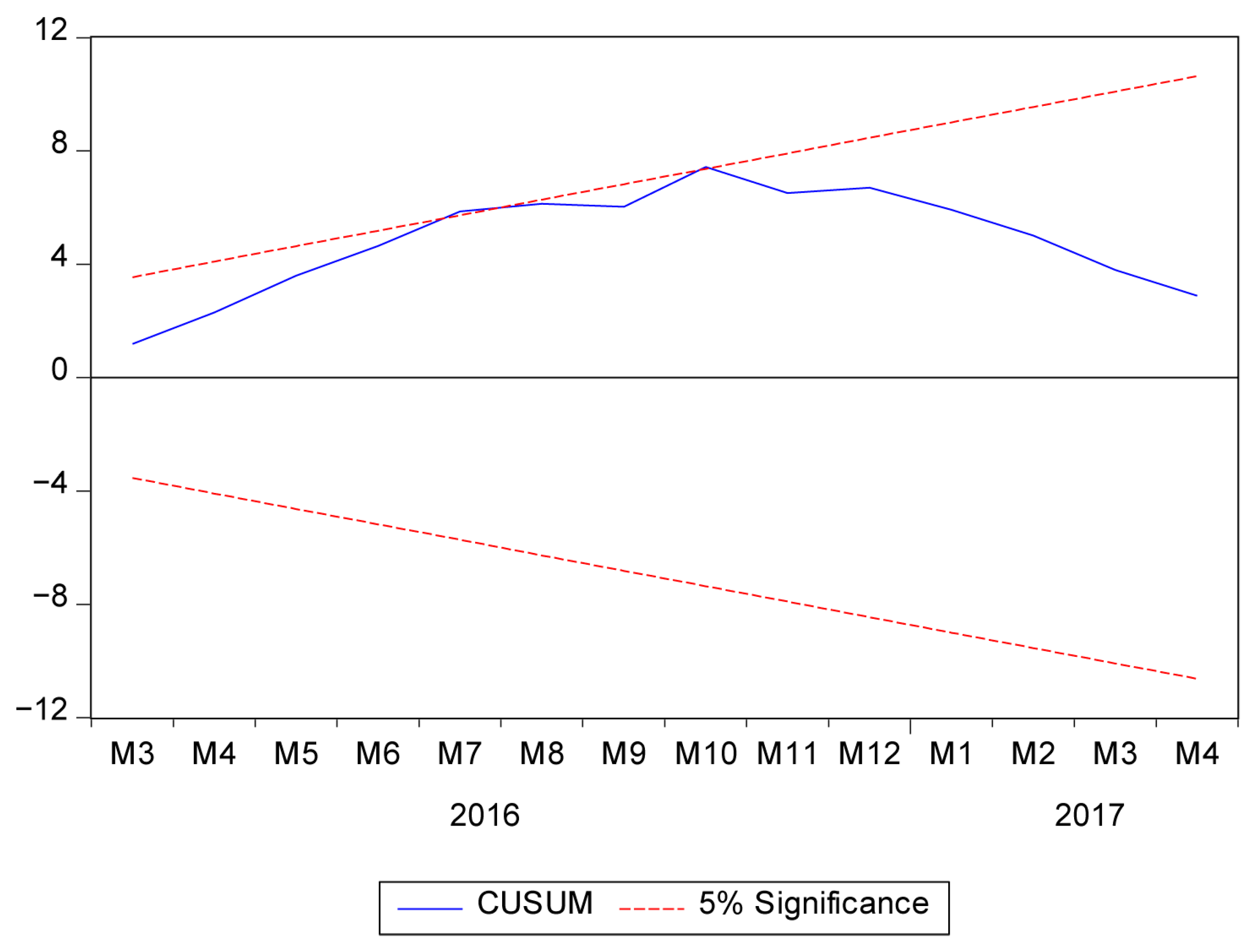
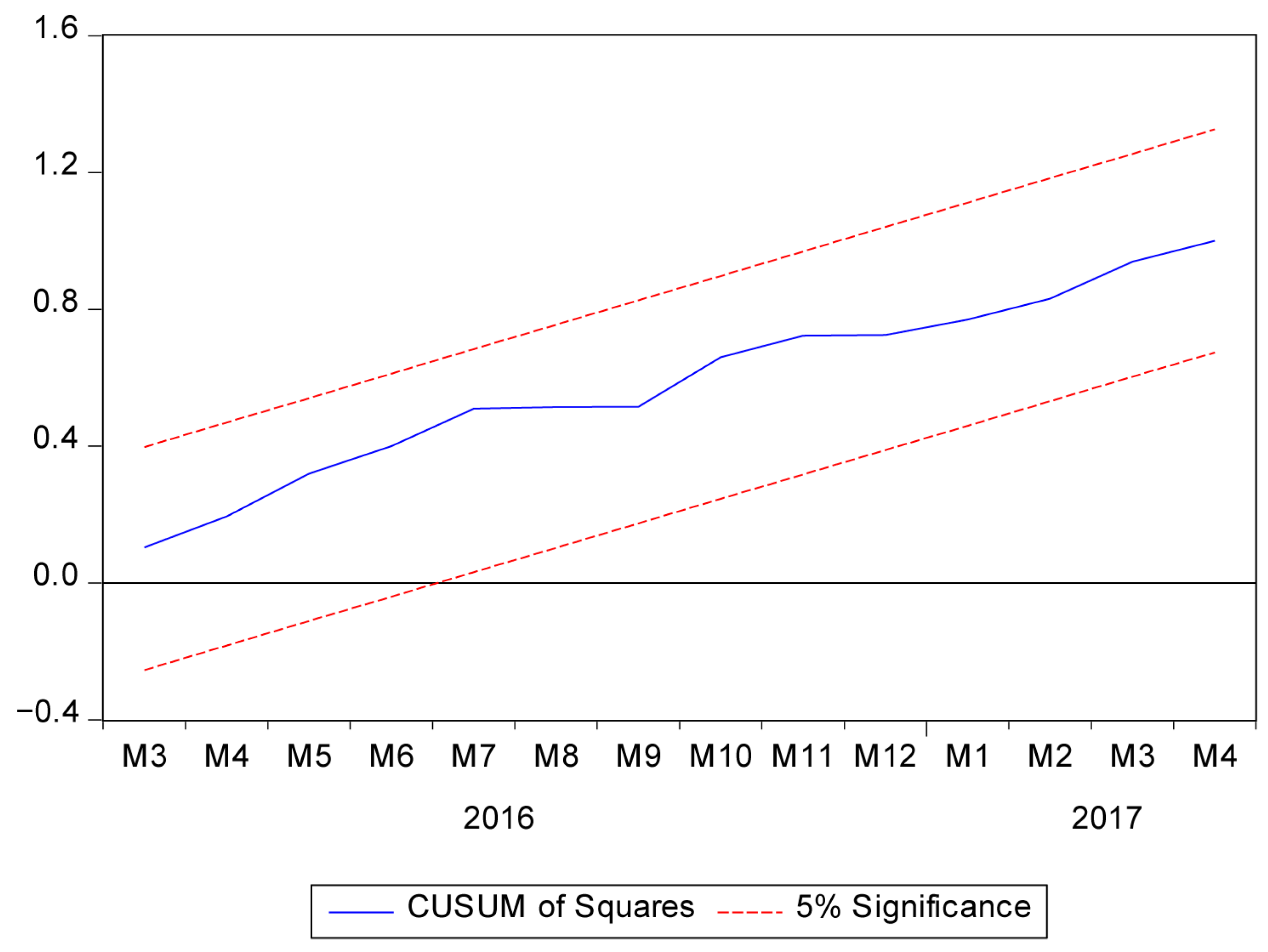
The ARDL in Table A5 results show a very strong long-run cointegration relationship, as confirmed by an F-statistic far above the upper bound, indicating that conditional inflation volatility co-moves with institutional, monetary, and real-sector variables across regimes. In the long run, central bank economic transparency (CBT2) exhibits a moderately negative and borderline significant effect on inflation volatility, suggesting that stronger independence may help reduce regime-dependent volatility, while credibility does not display a statistically meaningful influence, consistent with the idea that credibility shocks operate mainly at higher frequencies. Real and monetary volatilities, industrial production (VOL_IPI_YEAR), money supply (VOL_M3_YEAR), and the exchange rate (VOL_REER_YEAR), show positive but statistically weak long-run coefficients, implying that external and real-side disturbances contribute to conditional volatility, but their effects vary across regimes. Fiscal–monetary interactions, captured by the CBT2_GE term, also show a marginally significant and positive association with volatility, consistent with the view that fiscal pressures amplify uncertainty about the inflation process when regime shifts occur. In the short run, the adjustment coefficient is large and highly significant, confirming rapid correction toward equilibrium and strong regime persistence in volatility dynamics. Short-run fluctuations are dominated by credibility shocks: reductions in credibility sharply increase conditional inflation volatility, highlighting the sensitivity of the Tunisian inflation process to informational uncertainty and policy-signal fragility. However, several diagnostics indicate specification concerns—serial correlation, heteroskedasticity, and non-normality, suggesting that although the model uncovers meaningful dynamics, the volatility process is highly nonlinear and may require alternative specifications or additional robustness checks. Since we have applied the HAC estimator, the results remain valid as those residuals pass the stability tests in Figure A2.
Overall, the results point to a regime-dependent inflation volatility structure in which institutional quality matters primarily in the short term, while long-run volatility is shaped by broader macroeconomic disturbances and fiscal–monetary interactions characteristic of a small open economy under fiscal dominance.
7. Conclusions
While CBI is often regarded as a cornerstone of monetary credibility, its effectiveness in the Tunisian context appears to be highly dependent on the regime in place. When treated as a continuous institutional measure, CBI does not have a significant stabilizing effect on inflation volatility. However, when modeled through a binary regime approach, high-independence regimes are paradoxically associated with a slight increase in volatility. This finding suggests that legal or de jure independence alone is insufficient to ensure price stability in the absence of fiscal discipline or credible coordination between monetary and fiscal authorities. Importantly, the interaction between CBI and government spending (CBIREG_GE) indicates that under fiscal pressure, greater central bank independence significantly reduces inflation volatility. Thus, there is a need for institutional reforms to be accompanied by broader macroeconomic coherence to be effective.
Economic transparency (CBT2), while generally associated with increased inflation volatility, likely due to uncertainty related to communication, plays a stabilizing role when fiscal pressures are high. This suggests that transparency enhances market confidence only when it is supported by coherent fiscal signals and credible monetary commitments. In addition to institutional variables, macroeconomic fundamentals affect inflation volatility. Volatility in broad money (VOL_M3_YEAR) exerts a strong and destabilizing influence, highlighting the importance of stable monetary aggregates in managing inflation expectations. In contrast, volatility in industrial production and the real exchange rate is statistically insignificant, possibly reflecting weak transmission channels or structural rigidities within the Tunisian economy. Government expenditure remains a key determinant of inflation volatility, with expansionary fiscal policy consistently increasing price uncertainty. Tunisia’s exposure to geopolitical risks and external shocks, particularly through import prices, further contributes to inflation volatility, revealing the economy’s vulnerability to international price fluctuations. Nevertheless, the negative and significant trend coefficient in both models indicates a gradual reduction in volatility over time, likely due to the cumulative effects of macroeconomic reforms and improved policy frameworks.
Based on these findings, several policy, managerial, and practical recommendations have emerged. From a policy perspective, Tunisian authorities should prioritize the establishment of a credible and genuinely independent central bank while recognizing that legal independence must be supported by sound fiscal governance. This requires institutional mechanisms to enforce fiscal discipline, such as the adoption of medium-term fiscal rules (expenditure ceilings or debt anchors) and the creation of an independent fiscal council to increase accountability and policy coordination. These mechanisms reduce fiscal noise and support the Central Bank of Tunisia in achieving its price stability objective.
In addition, the central bank should strengthen its communication framework to ensure that transparency enhances credibility rather than uncertainty. The regular publication of a forward-looking monetary policy report, accompanied by clear statements and explanations of decision-making criteria, would improve policy predictability. Establishing a fiscal–monetary coordination committee between the central bank and the Ministry of Finance would further align fiscal targets and inflation objectives, helping to contain volatility arising from policy inconsistency. Furthermore, monetary policy should focus on reducing volatility in broad money aggregates through improved liquidity management, transparent intervention rules, and enhanced forecasting models.
From a managerial perspective, officials from the central bank and the finance ministry should collaborate closely to align fiscal and monetary objectives through joint macroeconomic forecasting units. Integrated policy planning would allow authorities to anticipate inflationary pressures and adjust instruments proactively. Managers within public administration should also implement spending control mechanisms to prevent procyclical fiscal behavior, particularly during episodes of high uncertainty. Strengthening analytical capacity in data monitoring and inflation modeling will be critical for managing expectations more effectively.
On a practical level, the government should develop early warning systems to track import price fluctuations, energy costs, and geopolitical risks. Tunisia could also establish strategic reserves for essential commodities and explore financial hedging instruments to mitigate exposure to global price shocks. Concurrently, structural reforms are needed to deepen domestic financial markets, enhance fiscal flexibility, and diversify production to reduce dependence on imports. In summary, achieving inflation stability in Tunisia necessitates an integrated approach that combines credible central bank independence, fiscal discipline through enforceable rules, transparent and well-structured communication, and proactive risk management. These reforms strengthen the institutional foundations of monetary policy, reduce volatility, and promote inclusive and sustainable economic growth. While the analysis is country-specific, the results are not confined to Tunisia alone. They can be generalized to economies with comparable characteristics, notably, small open emerging economies in the MENA region, and beyond that, face fiscal dominance, institutional weaknesses, and exposure to external shocks. A broader comparative framework could have highlighted this external validity, but such an extension would be beyond the scope of the current study and might lead to an unnecessary proliferation of results.
While our analysis focuses on distortionary consumption taxes, other channels could transmit fiscal shocks in different contexts. Bond-financed deficits can influence inflation and output through changes in real interest rates, but their effect is limited in Tunisia due to shallow domestic bond markets and low secondary-market liquidity. Expected monetization of deficits may also affect inflation through forward-looking price-setting, yet this channel is less relevant given the Central Bank of Tunisia’s legal constraints and gradual shift toward an inflation-targeting framework. These alternative mechanisms are therefore context-specific and less central to Tunisia’s fiscal transmission, which is dominated by expenditure pressures and adjustments in indirect taxation.
Technically speaking, while alternative validation approaches, such as bootstrap procedures for ARDL bound testing and cross-validation, could enhance robustness, their full implementation is suitable for smaller samples (McNown et al., 2018). A key limitation of our study is that we rely on annual institutional indicators without applying interpolation to generate monthly values; while this preserves the true observed changes in central bank independence and transparency, it may limit the temporal granularity of our analysis.
Future research should explore alternative indicators of transparency and evaluate their effectiveness in capturing central bank communication in Tunisia. Complementary evidence could be obtained through public opinion surveys, shedding light on whether higher levels of transparency translate into improved comprehension of monetary policy (Ospina-Tejeiro & Romero, 2025). Such insights are crucial for the ongoing evaluation of communication strategies. Furthermore, leveraging natural language processing tools is recommended to monitor public perception and policy effectiveness in real time, particularly in emerging economies with fragile institutional credibility.
Funding
This research received no external funding.
Institutional Review Board Statement
Not applicable.
Informed Consent Statement
Not applicable.
Data Availability Statement
The original contributions presented in this study are included in the article. Further inquiries can be directed to the corresponding author.
Conflicts of Interest
The author declares no conflicts of interest.
Abbreviations
The following abbreviations are used in this manuscript:
| ADF | Augmented Dickey–Fuller |
| AIC | Akaike Information Criterion |
| CBI | Central Bank Independence |
| CBT | Central Bank Transparency |
| COVID-19 | Coronavirus Infectious Disease |
| CUSUM | Cumulative Sum |
| CUSUMSQ | Cumulative Sum of Squares |
| FPE | Final Prediction Error |
| GDP | Gross Domestic Product |
| HAC | Heteroscedasticity and Autocorrelation Consistent |
| LR | Likelihood Ratio |
| MENA | Middle East North Africa |
| MS_GARCH | Markov Switching-Generalized Autoregressive Conditional Heteroscedasticity |
| PP | Phillips–Perron |
| SC | Schwarz Criterion |
Appendix A
The proofs provided in the appendices establish the analytical foundations of the model, linking central bank transparency, private expectations, and fiscal interaction under uncertainty.
Appendix A.1. Derivation of the Optimal Monetary Policy Rule
The central bank minimizes (1).
This is subject to (2) and (3).
Substituting gives
The first-order condition with respect to is
which yields
Substituting (A1) back into the structural equations gives (5) and (6).
Uniqueness follows from the strict convexity of in , ensuring a stable policy rule.
The derivation confirms that the central bank’s optimal rule follows directly from minimizing its quadratic loss function, combining inflation and output gaps subject to supply and demand constraints.
Appendix A.2. Derivation of Individual Expectation Weights
Agents update their beliefs via Bayesian inference, where the optimal weights depend on the precision of the central bank’s signals and the degree of strategic complementarities among agents. This structure captures how higher transparency (lower noise) improves informational accuracy but can simultaneously increase coordination risk when agents react too strongly to public signals.
We need to determine the conditional expectations of and given the signals and . We solve for the following matrix:
is the covariance matrix of the unobserved expected variables themselves. is the covariance matrix of the unobserved expected variables and the observed signals, and is the inverse of the covariance matrix of the observed signals themselves. denotes the transpose of a matrix.
Via algebra, we obtain
Substituting these conditional expectations into (8) of the main text yields
We obtain the following weights:
Appendix A.3. Aggregation with Partial Information
Let a fraction m of agents observe private signals.
Expected inflation over all agents is given by (10). Substituting it in (8) and rearranging terms results in the following weights:
- A larger fraction of informed agents (m) leads to expectations anchored to fundamentals, i.e., high λ1 and low λ2.
- A higher α (trust in central bank target) amplifies that anchoring.
- When both m and α are low, expectations are dominated by noise (large λ2), making policy communication less effective and inflation more volatile.
Appendix A.4. Derivation of Expected Loss and Optimal Transparency
The unconditional expected loss is written as
Differentiating (A4) with respect to the variance of the central bank’s signal noise yields
We compute the partial derivative with respect to the number of informed agents.
The sign is ambiguous and depends on . Thus, there exists an optimal for some plausible parameter values.
Similarly, we compute
Appendix A.5. Inflation Volatility
The inflation variance follows directly from (5) and (A2).
The optimal transparency level minimizes subject to .
After inserting (A3), the first-order conditions confirm
Similarly, the partial derivative with respect to the informed agents is
Thus, inflation volatility increases with transparency about inflation in both dimensions: accuracy and the number of informed agents. When agents overreact to published signals, information amplification effects dominate the benefits of precision, leading to higher aggregate volatility.
Now, we derive the volatility of inflation with respect to .
The sign can be positive or negative. attains a minimum for some .
Appendix A.6. Second-Order Conditions and Welfare Comparisons
All the quadratic loss functions are strictly convex in their control variables (), implying global minima.
Hence, each proposition’s first-order condition is both necessary and sufficient.
Welfare dominance follows directly from comparing minimized expected losses under alternative transparency regimes.
Let
We compute the partial derivative with respect to the number of informed agents.
The sign is ambiguous. There exists a minimum for a plausible range of parameters.
In the same vein, we calculate the partial derivative with respect to
since Term 1 largely dominates Term 2.5
Appendix A.7. Inflation Volatility in the Presence of Fiscal Policy
Using (17) and (A3) and deriving with respect to , respectively.
Let
Now, we derive the same function with respect to the number of informed agents.
Finally, the partial derivative with respect to is
The sign is ambiguous and depends on the parameters’ range.
Appendix A.8. Justification of the Parameters’ Range
Because our model is analytical rather than estimated, the calibration relies on parameter values widely used in the monetary-policy and information-frictions literature (e.g., Baeriswyl & Cornand, 2010; Dai & Sidiropoulos, 2011b). For Tunisia specifically, the ranges we adopt reflect:
- the country’s characteristics as a small open economy with partial central bank independence,
- the documented presence of information frictions and weak expectation-anchoring,
- and the fact that variances of shocks and signals are normalized to lie between 0 and 1 in this class of models to preserve tractability and allow direct comparison with existing theoretical studies (see Table A1).
Table A1.
Calibration of parameters according to literature and facts.
Appendix A.9. Unit Root Tests
We present the results of the variables’ stationarity in Table A2.
Table A2.
Unit root results (PP+ADF).
Appendix A.10. Linkage Between the Empirical Modeling and Theory
We reconcile between the game theoretical approach and our empirical model in the following table.
Table A3.
Mapping Between Theoretical and Empirical Variables.
Appendix A.11. Robustness Checks Using a Monetary Policy Credibility Measure
We propose a novel measure of monetary policy credibility and replicate the ARDL results using that measure;
Table A4.
Long and short-run results using the credibility measure (dependent variable: unconditional volatility of inflation).
Figure A1.
Stability test (dependent variable: unconditional volatility of inflation and using the credibility measure).
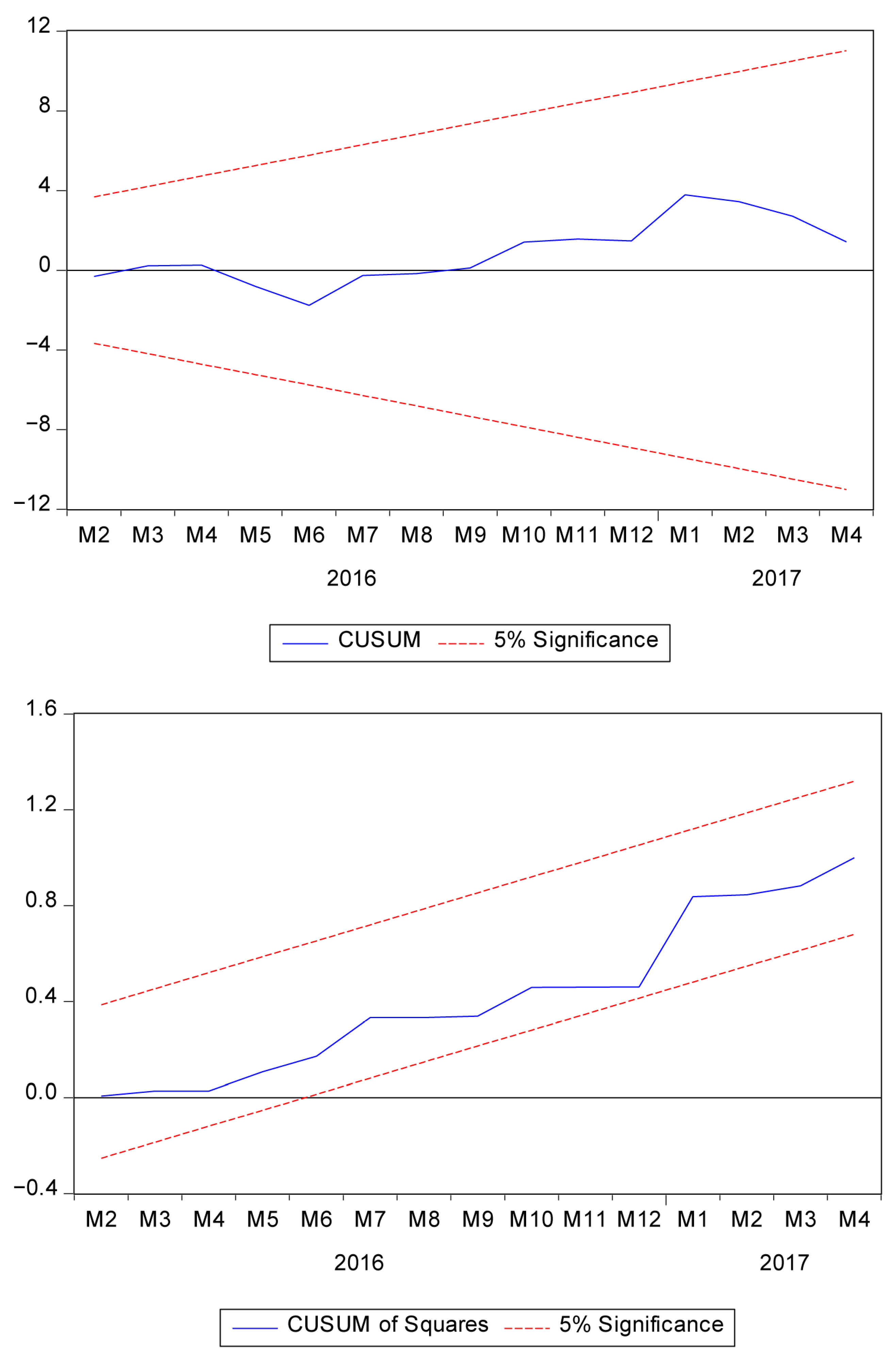
Table A5.
Long and short-run results using the credibility measure (dependent variable: conditional volatility of inflation.
Figure A2.
Stability test (dependent variable: conditional volatility of inflation, and using the credibility measure).
Notes
| 1 | The authors used quarterly data over 20 quarters (5 years). |
| 2 | Nevertheless, the measure remains constant within legal periods, highlighting its limited time variation. While we use annual data to measure central bank independence, this choice is justified because the legal and institutional features underlying independence typically change very slowly, often only once per year or even less frequently. Monthly variation in the dependent variable, such as inflation or interest rates, reflects high-frequency shocks and policy adjustments, whereas central bank independence is largely structural and persistent. Using an annual measure, therefore, appropriately captures the long-term stance of the central bank without introducing spurious short-run fluctuations. Consequently, the econometric identification focuses on the persistent influence of central bank credibility and independence on monetary outcomes, which is theoretically meaningful even when other variables are monthly. |
| 3 | Since no theoretical benchmark exists for the level of Central Bank Independence (CBI) that delineates “low” from “high” independence, the threshold is set at the sample median of the CBI index. The median split ensures that both regimes contain an equal number of observations, avoiding imbalance in subsample estimation. Statistically, the median provides a robust, distribution-free cut-off that is not affected by outliers or skewness in the CBI distribution. Accordingly, periods with CBI below (above) the median are interpreted as low (high) independence regimes (see Bleaney & Fielding, 2002). The Bai-Perron procedure identified two statistically significant thresholds at 0.6725 and 0.684. The median value of 0.68 is very close to these two thresholds, close to the intermediate regime. Using the median has some advantages. It is simple, transparent, and easy to interpret, dividing the sample into “above” and “below” groups. We note that only around 25% of the observations fall in the “low independence” regime. |
| 4 | The threshold ARDL framework is used to capture how the relationship between credibility, fiscal–monetary interactions, and inflation dynamics changes across low-credibility and high-credibility regimes. This structure allows us to estimate distinct short- and long-run effects depending on the credibility environment, while also incorporating interaction terms to reflect the strategic fiscal–monetary dimension. In contrast, the MS-GARCH model is designed to capture regime-dependent shifts in the conditional volatility of inflation driven by uncertainty shocks. |
| 5 | Even when using numerical values, we find that . |
References
- Abdelkafi, I. (2018). The relationship between public debt, economic growth, and monetary policy: Empirical evidence from Tunisia. Journal of the Knowledge Economy, 9(4), 1154–1167. [Google Scholar] [CrossRef] [Scilit]
- Acocella, N., Di Bartolomeo, G., & Tirelli, P. (2007). Fiscal leadership and coordination in the EMU. Open Economies Review, 18(3), 281–289. [Google Scholar] [CrossRef] [Scilit]
- Aisen, A., & Veiga, F. J. (2008). Political instability and inflation volatility. Public Choice, 135(3), 207–223. [Google Scholar] [CrossRef] [Scilit]
- Ashoor, E. J. (2021). Coordination between monetary and fiscal policies in times of crisis and its impact on the independence of central banks: Literature review. Working Paper. Ishtar Journal of Economics and Business Studies (IJEBS), 2(3). Available online: https://www.researchgate.net/profile/Ehsan-Jabr-Ashoora/publication/355048652_Coordination_between_monetary_and_fiscal_policies_in_times_of_crisis_and_its_impact_on_the_independence_of_central_banksLiterature_review/links/615b424e9911cb6c9dd954a7/Coordination-between-monetary-and-fiscal-policies-in-times-of-crisis-and-its-impact-on-the-independence-of-central-banksLiterature-review.pdf (accessed on 6 November 2025).
- Baeriswyl, R., & Cornand, C. (2010). The signaling role of policy actions. Journal of Monetary Economics, 57(6), 682–695. [Google Scholar] [CrossRef] [Scilit]
- Banerjee, G. (2001). Rules and discretion with common central bank and separate fiscal authorities. Journal of Economics and Business, 53(1), 45–68. [Google Scholar] [CrossRef] [Scilit]
- Beetsma, R. M. W. J., & Debrun, X. (2004). The interaction between monetary and fiscal policies in a monetary union: A review of recent literature. Monetary Policy, Fiscal Policies and Labor Markets: Macroeconomic Policymaking in the EMU, 91–133. [Google Scholar] [CrossRef] [Scilit]
- Blanchard, O., & Simon, J. (2001). The long and large decline in US output volatility. Brookings Papers on Economic Activity, 2001(1), 135–174. [Google Scholar] [CrossRef] [Scilit]
- Bleaney, M., & Fielding, D. (2002). Exchange rate regimes, inflation and output volatility in developing countries. Journal of Development Economics, 68(1), 233–245. [Google Scholar] [CrossRef] [Scilit]
- Blinder, A. S. (1982). Issues in the coordination of monetary and fiscal policy (No. w0982). National Bureau of Economic Research. [Google Scholar]
- Bodea, C., & Higashijima, M. (2017). Central bank independence and fiscal policy: Can the central bank restrain deficit spending? British Journal of Political Science, 47(1), 47–70. [Google Scholar] [CrossRef] [Scilit]
- Caldara, D., & Iacoviello, M. (2022). Measuring geopolitical risk. American Economic Review, 112(4), 1194–1225. [Google Scholar] [CrossRef] [Scilit]
- Ciccarone, G., Marchetti, E., & Di Bartolomeo, G. (2007). Unions, fiscal policy and central bank transparency. The Manchester School, 75(5), 617–633. [Google Scholar] [CrossRef] [Scilit]
- Ciccaronea, G., & Giulia, F. (2008). Central bank transparency and fiscal policy under multiplicative uncertainty. Working Paper. Available online: https://www.academia.edu/download/71384537/giuli.pdf (accessed on 6 November 2025).
- Crowe, C., & Meade, E. E. (2008). Central bank independence and transparency: Evolution and effectiveness. European Journal of Political Economy, 24(4), 763–777. [Google Scholar] [CrossRef] [Scilit]
- Cukierman, A. (2000). Accountability, credibility, transparency and stabilization policy in the Eurosystem (Foerder Institute for Economic Research Working Papers 275640). Tel-Aviv University. [Google Scholar] [CrossRef]
- Cukierman, A., Miller, G. P., & Neyapti, B. (2002). Central bank reform, liberalization and inflation in transition economies—An international perspective. Journal of Monetary Economics, 49(2), 237–264. [Google Scholar] [CrossRef] [Scilit]
- Dai, M. (2016). Static and dynamic effects of central bank transparency. Bulletin of Economic Research, 68(1), 55–78. [Google Scholar] [CrossRef] [Scilit]
- Dai, M., & Sidiropoulos, M. (2011a). Fiscal disciplining effect of central bank opacity: Stackelberg versus Nash equilibrium. Economics Bulletin, 31(4), 3068–3076. [Google Scholar]
- Dai, M., & Sidiropoulos, M. (2011b). Monetary and fiscal policy interactions with central bank transparency and public investment. Research in Economics, 65(3), 195–208. [Google Scholar] [CrossRef] [Scilit]
- Dai, M., Sidiropoulos, M., & Spyromitros, E. (2015). Fiscal policy, institutional quality and central bank transparency. The Manchester School, 83(5), 523–545. [Google Scholar] [CrossRef] [Scilit]
- Dai, M., & Zhang, Q. (2017). Central bank transparency under the cost channel. International Finance, 20(2), 189–209. [Google Scholar] [CrossRef] [Scilit]
- De Haan, J., Eijffinger, S. C., & Waller, S. (2005). The European Central Bank: Credibility, transparency, and centralization. MIT Press. [Google Scholar]
- Demid, E. (2018). Fiscal and monetary policy: Coordination or conflict? International Economic Journal, 32(4), 547–571. [Google Scholar] [CrossRef] [Scilit]
- Dincer, N., Eichengreen, B., & Geraats, P. (2022). Trends in monetary policy transparency: Further updates. International Journal of Central Banking, 18(1), 331–348. [Google Scholar]
- Dixit, A., & Lambertini, L. (2003). Interactions of commitment and discretion in monetary and fiscal policies. American Economic Review, 93(5), 1522–1542. [Google Scholar] [CrossRef] [Scilit]
- Eijffinger, S., Hoeberichts, M., & Schaling, E. (2003). Why money talks and wealth whispers: Monetary uncertainty and mystique: A reply. Journal of Money, Credit, and Banking, 35(1), 137–139. [Google Scholar] [CrossRef] [Scilit]
- Faust, J., & Svensson, L. E. (2001). Transparency and credibility: Monetary policy with unobservable goals. International Economic Review, 42(2), 369–397. [Google Scholar] [CrossRef] [Scilit]
- Ferré, M., Macaya, Ò., & Manzano, C. (2024). Central bank communication: Inflation target transparency with fiscal policy. Contemporary Economic Policy, 42(4), 642–659. [Google Scholar] [CrossRef] [Scilit]
- Foresti, P. (2018). Monetary and fiscal policies interaction in monetary unions. Journal of Economic Surveys, 32(1), 226–248. [Google Scholar] [CrossRef] [Scilit]
- Froyen, R. T., & Waud, R. N. (1995). Central bank independence and the output-inflation tradeoff. Journal of Economics and Business, 47(2), 137–149. [Google Scholar] [CrossRef] [Scilit]
- Geraats, P. M. (2002). Central bank transparency. The Economic Journal, 112(483), F532–F565. [Google Scholar] [CrossRef] [Scilit]
- Geraats, P. M. (2009). Trends in monetary policy transparency. International Finance, 12(2), 235–268. [Google Scholar] [CrossRef] [Scilit]
- Ghanayem, A., Downing, G., & Sawalha, M. (2023). The impact of political instability on inflation volatility: The case of the Middle East and North Africa region. Cogent Economics & Finance, 11(1), 2213016. [Google Scholar] [CrossRef] [Scilit]
- Gherib, B. (2021). Revolution and transition in Tunisia as crises of hegemony. The Journal of North African Studies, 26(6), 1144–1165. [Google Scholar] [CrossRef] [Scilit]
- Gouasmi, Z., & Haffoudhi, H. (2020). Analysis of sustainability of fiscal policy and democratic transition: Case of Tunisia. Journal of the Knowledge Economy, 11(2), 512–529. [Google Scholar] [CrossRef] [Scilit]
- Grüner, H. P. (2002). How much should central banks talk?: A new argument. Economics Letters, 77(2), 195–198. [Google Scholar] [CrossRef] [Scilit]
- Hall, S. G., & Henry, S. G. B. (2006). An independent Bank of England: Is that enough. National Institute Economic Review, 196(1), 120–127. [Google Scholar] [CrossRef] [Scilit]
- Hallett, A. H., & Viegi, N. (2003). Imperfect transparency and the strategic use of information: An ever present temptation for central bankers? The Manchester School, 71(5), 498–520. [Google Scholar] [CrossRef] [Scilit]
- Hanif, M. N., & Arby, M. F. (2003). Monetary and Fiscal Policy Coordination (No. 10307). University Library of Munich. [Google Scholar]
- Hefeker, C., & Zimmer, B. (2011). Uncertainty and fiscal policy in an asymmetric monetary union. Open Economies Review, 22(1), 163–178. [Google Scholar] [CrossRef] [Scilit]
- Henry, B., Nixon, J., & Hall, S. (1999). Central Bank Independence and Co-ordinating Monetary and Fiscal Policy. Economic Outlook, 23(2), 7–13. [Google Scholar] [CrossRef] [Scilit]
- Mankiw, N. G., & Reis, R. (2002). Sticky information versus sticky prices: A proposal to replace the New Keynesian Phillips curve. The Quarterly Journal of Economics, 117(4), 1295–1328. [Google Scholar] [CrossRef] [Scilit]
- McNown, R., Sam, C. Y., & Goh, S. K. (2018). Bootstrapping the autoregressive distributed lag test for cointegration. Applied Economics, 50(13), 1509–1521. [Google Scholar] [CrossRef] [Scilit]
- Morris, S., & Shin, H. S. (2002). Social value of public information. American Economic Review, 92(5), 1521–1534. [Google Scholar] [CrossRef] [Scilit]
- Nabi, M. S. (2019). Diagnosing the Tunisian economy. In Making the Tunisian resurgence (pp. 17–63). Springer Singapore. [Google Scholar]
- Neuenkirch, M. (2012). Managing financial market expectations: The role of central bank transparency and central bank communication. European Journal of Political Economy, 28(1), 1–13. [Google Scholar] [CrossRef] [Scilit]
- Oros, C., & Zimmer, B. (2015). Uncertainty and fiscal policy in a monetary union: Why does monetary policy transmission matter? Economic Modeling, 50, 85–93. [Google Scholar] [CrossRef] [Scilit]
- Oros, C., & Zimmer, B. (2020). Budget uncertainty in a monetary union. European Journal of Political Economy, 63, 101884. [Google Scholar] [CrossRef] [Scilit]
- Ospina-Tejeiro, J. J., & Romero, J. V. (2025). Monetary policy transparency in Colombia. Latin American Journal of Central Banking, 100185. [Google Scholar] [CrossRef] [Scilit]
- Pesaran, M. H., Shin, Y., & Smith, R. J. (2001). Bounds testing approaches to the analysis of level relationships. Journal of Applied Econometrics, 16(3), 289–326. [Google Scholar] [CrossRef] [Scilit]
- Reichlin, L., Ricco, G., & Tarbé, M. (2023). Monetary–fiscal crosswinds in the European Monetary Union. European Economic Review, 151, 104328. [Google Scholar] [CrossRef] [Scilit]
- Robbins, M. (2016, May 15). Tunisia five years after the revolution. Findings from the Arab Barometer. Democracy in Tunisia report. Arab Barometer. [Google Scholar]
- Romelli, D. (2024). Trends in central bank independence: A dejure perspective. BAFFI CAREFIN centre research paper (217). BAFFI CAREFIN, Centre for Applied Research on International Markets Banking Finance and Regulation, Universita’ Bocconi. [Google Scholar]
- Schaling, E., & Nolan, C. (1998). Monetary policy uncertainty and inflation: The role of central bank accountability. De Economist, 146(4), 585–602. [Google Scholar] [CrossRef] [Scilit]
- Shin, Y., Yu, B., & Greenwood-Nimmo, M. (2014). Modelling asymmetric cointegration and dynamic multipliers in a nonlinear ARDL framework. In Festschrift in honor of Peter Schmidt: Econometric methods and applications (pp. 281–314). Springer New York. [Google Scholar]
- Šehović, D. (2013). General aspects of monetary and fiscal policy coordination. Journal of Central Banking Theory and Practice, 2(3), 5–27. [Google Scholar]
- Trabelsi, E. (2025a). Monetary policy transmission under global versus local geopolitical risk: Exploring time-varying granger causality, frequency domain, and nonlinear territory in Tunisia. Economies, 13(7), 185. [Google Scholar] [CrossRef] [Scilit]
- Trabelsi, E. (2025b). Monetary policy under global and spillover uncertainty shocks: What do the Bayesian time-varying coefficient VAR, local projections, and vector error correction model tell us in Tunisia? Journal of Risk and Financial Management, 18(3), 129. [Google Scholar] [CrossRef] [Scilit]
- Van Aarle, B., Garretsen, H., & Gobbin, N. (2003). Monetary and fiscal policy transmission in the Euro-area: Evidence from a structural VAR analysis. Journal of Economics and Business, 55(5–6), 609–638. [Google Scholar] [CrossRef] [Scilit]
- Von Hagen, J., Mundschenk, S., Doppelhofer, G., Polleit, T., & Vaubel, R. (2002). Fiscal and monetary policy coordination in EMU. Oesterreichische Nationalbank. [Google Scholar]
- Zardi, S. C. (2017). Forecasting inflation in a macroeconomic framework: An application to Tunisia (No. 07-2017). Economics Section, The Graduate Institute of International Studies. [Google Scholar]
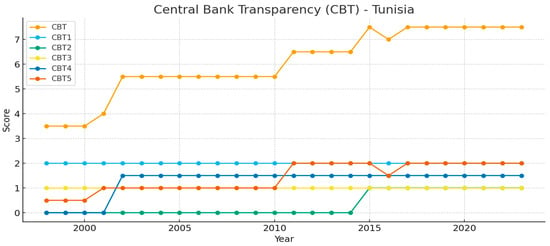
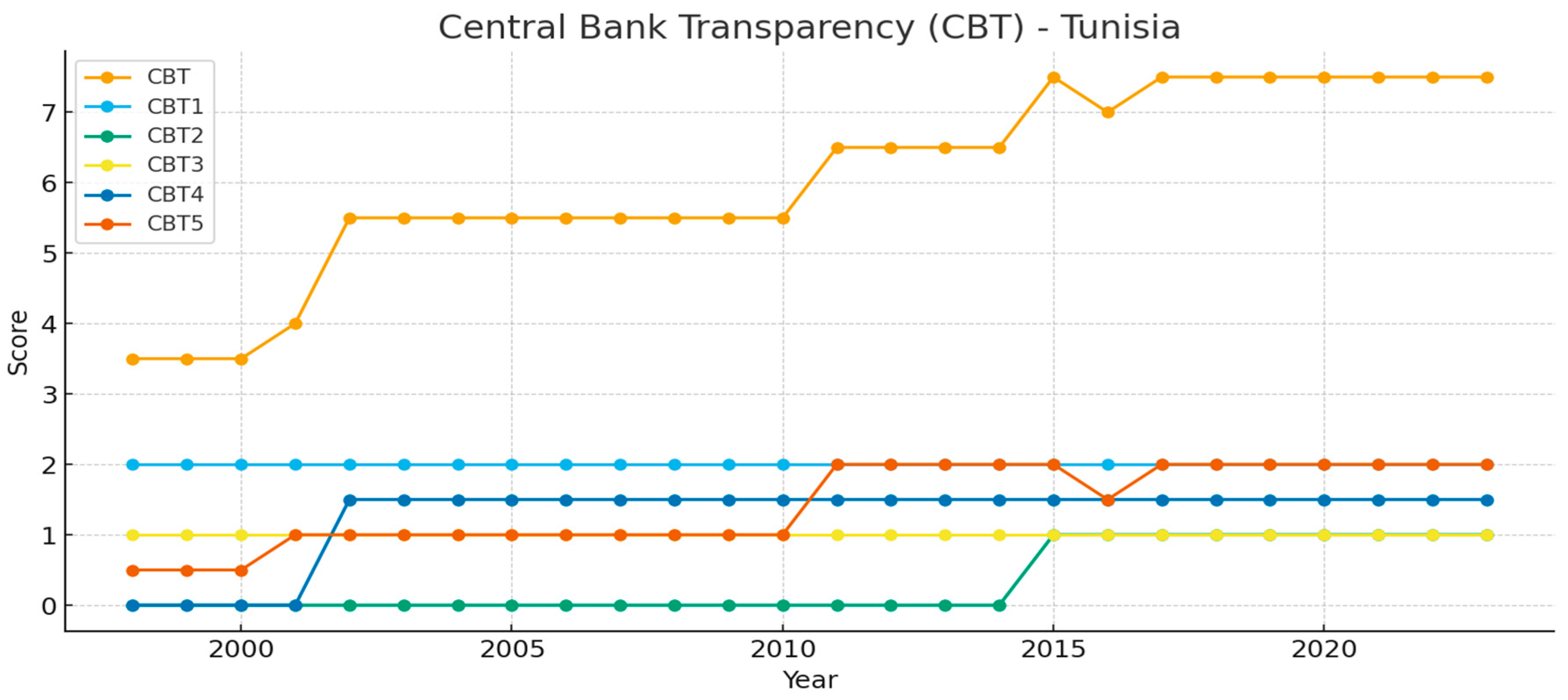
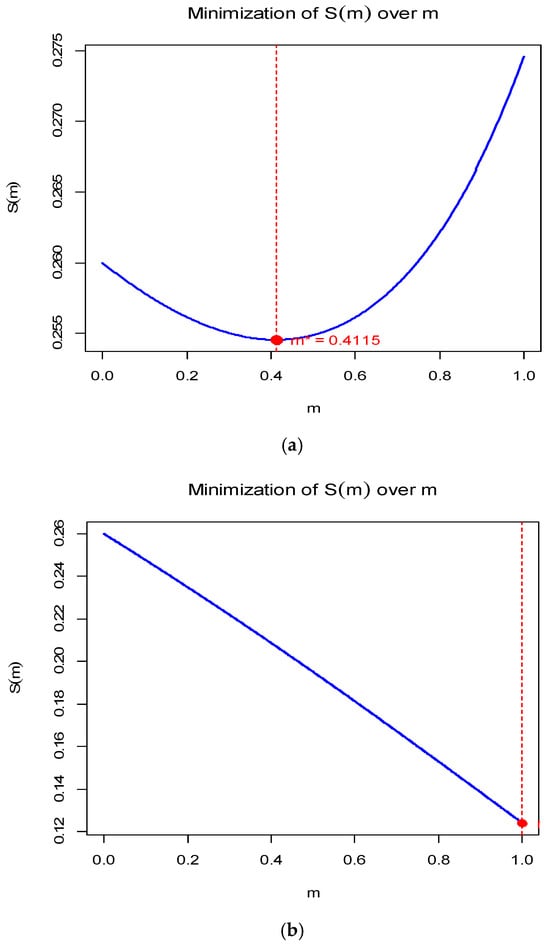
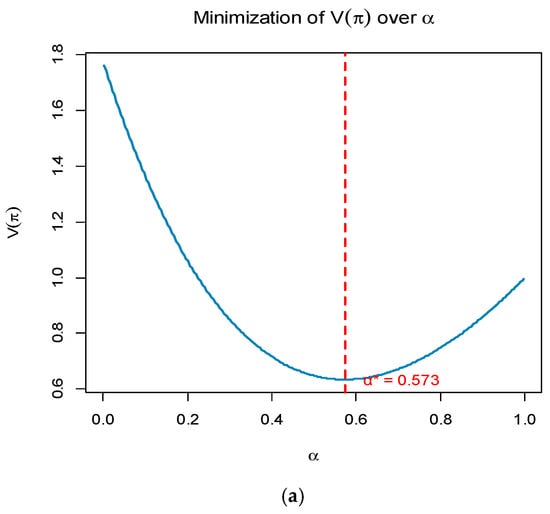
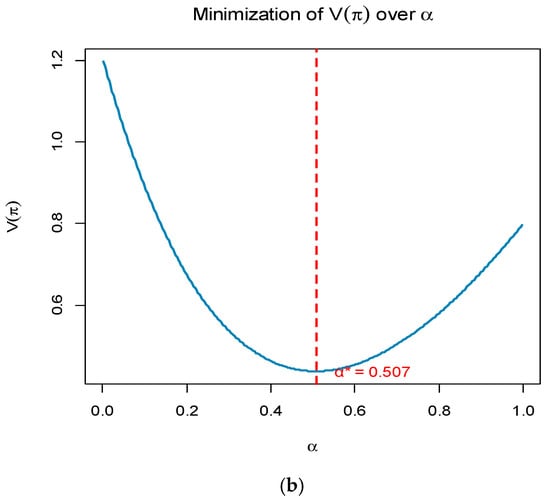
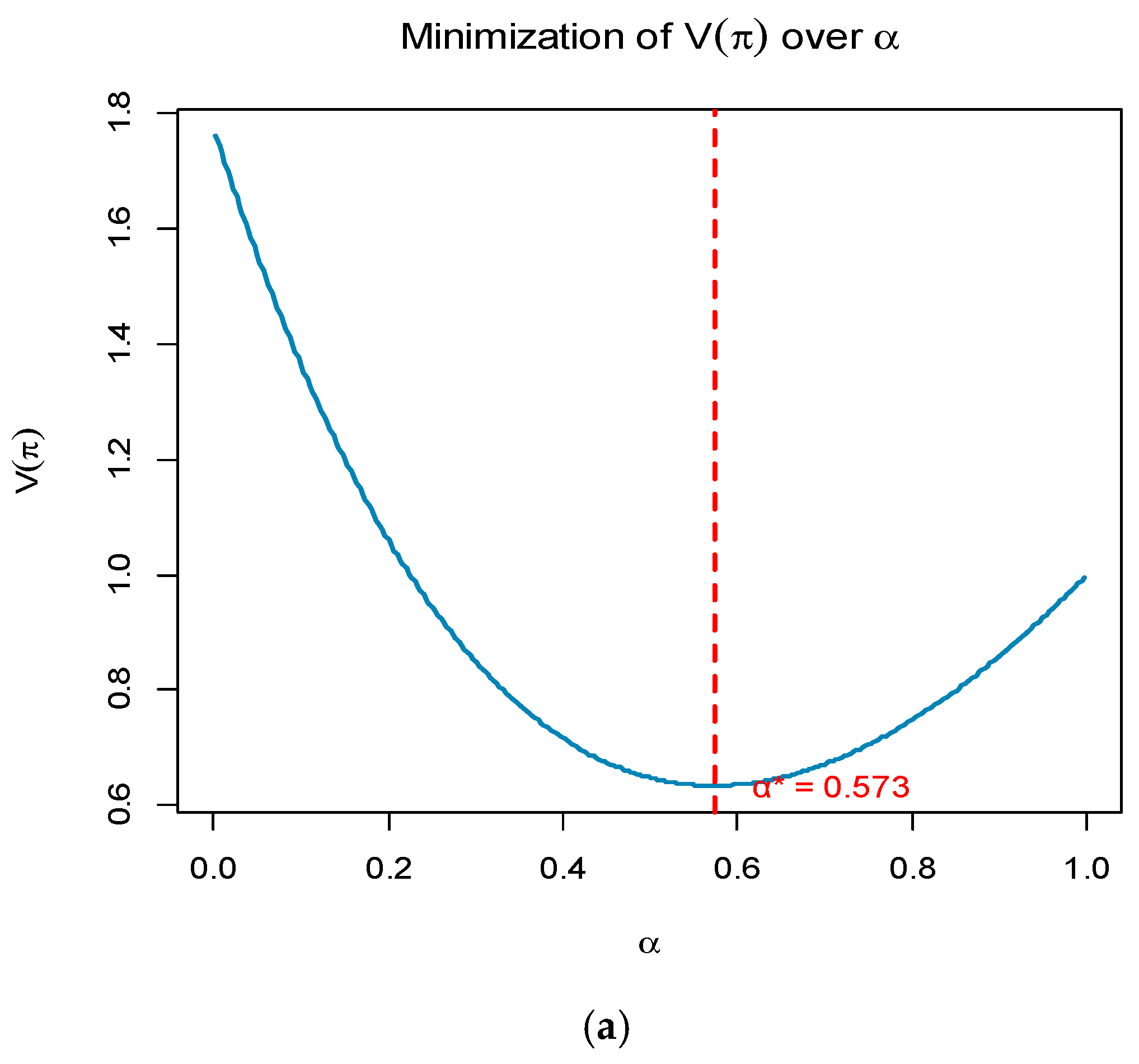
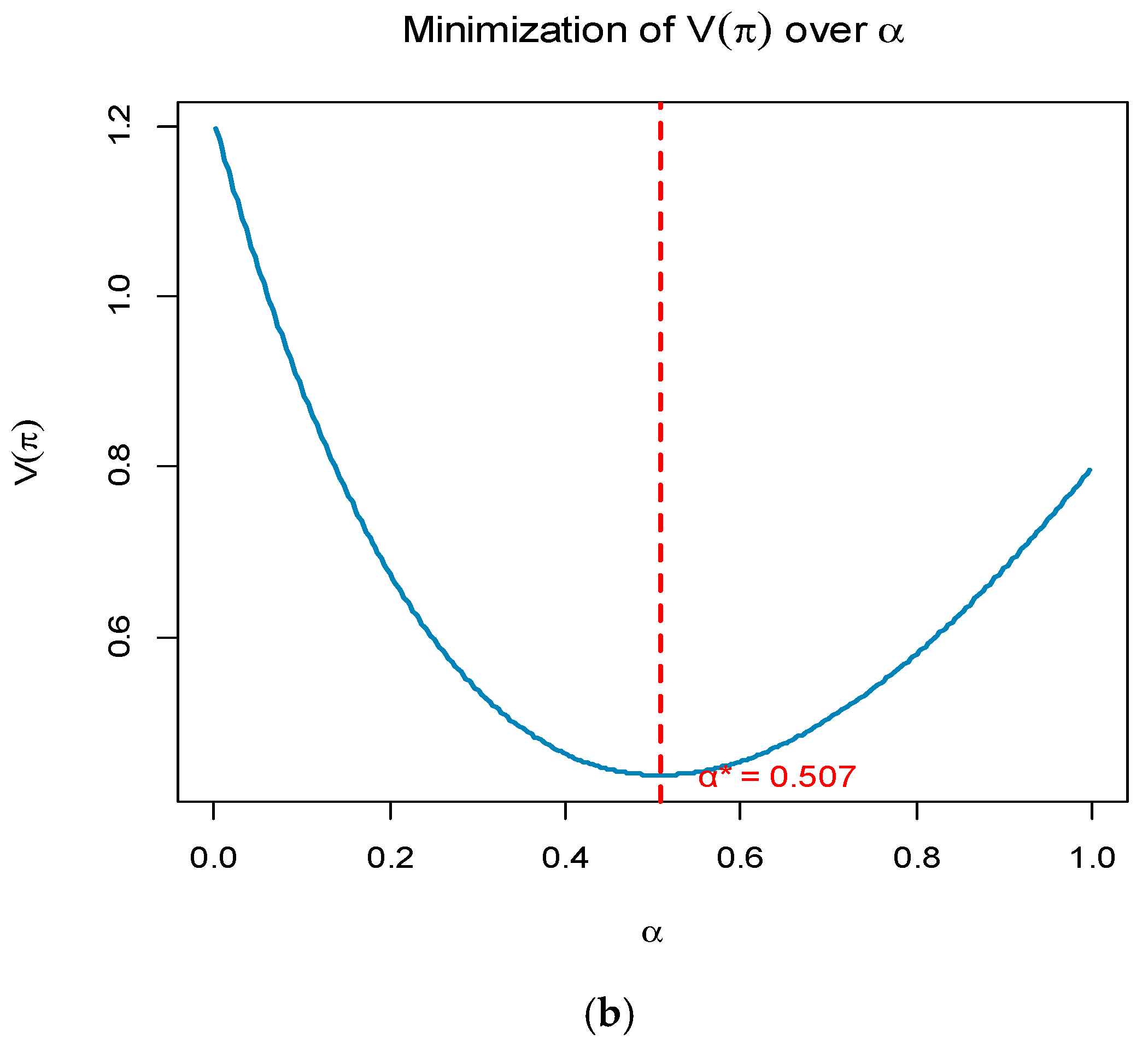
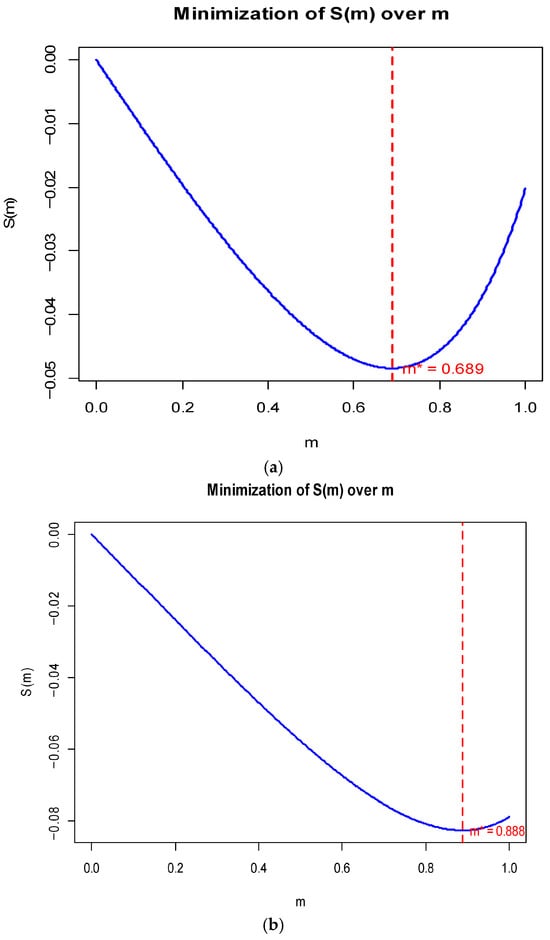
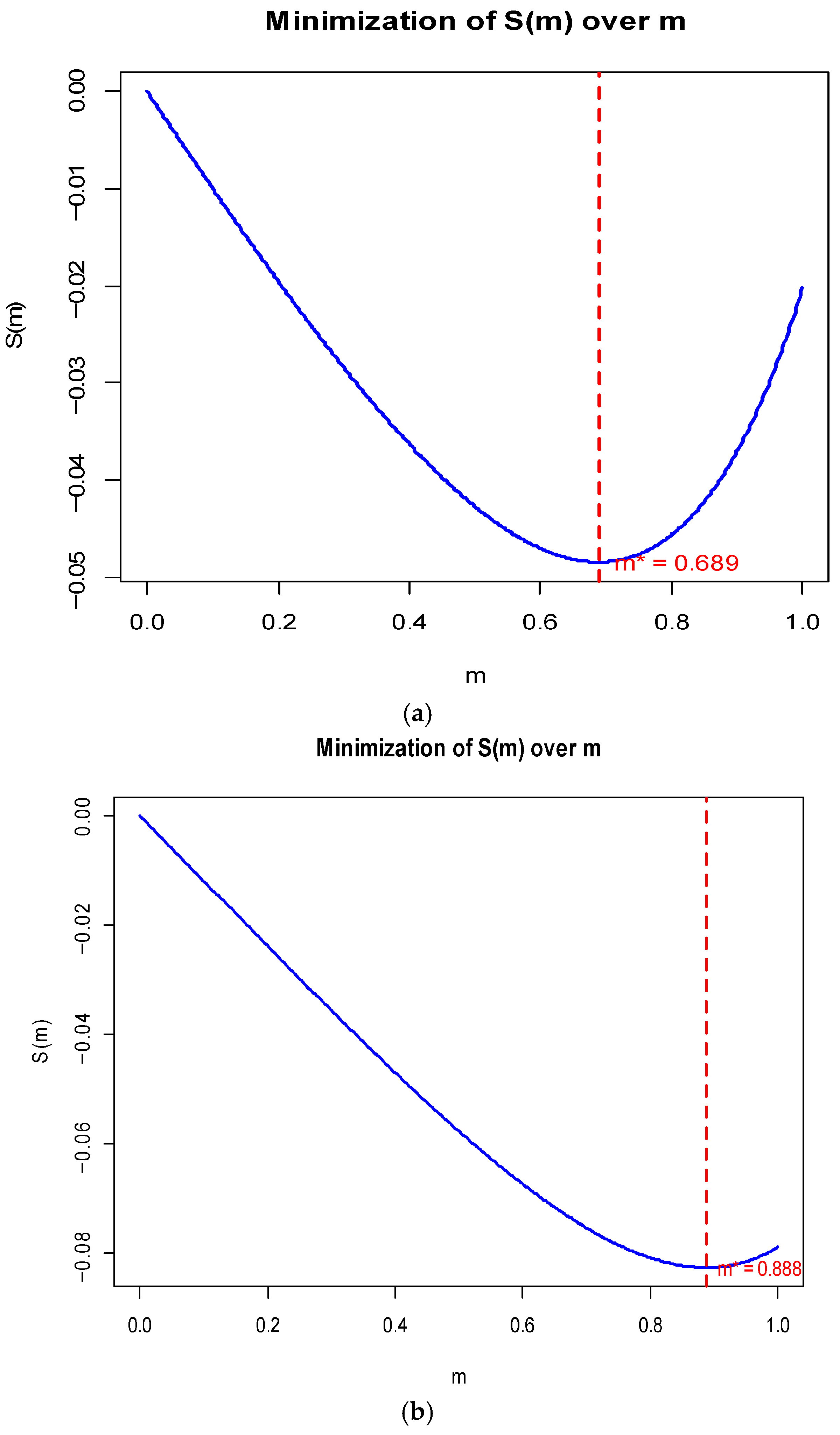
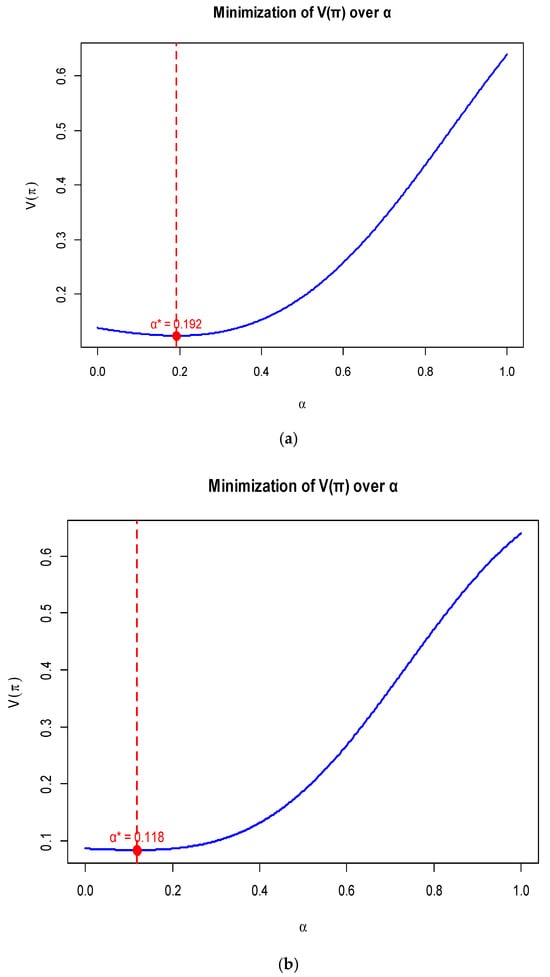
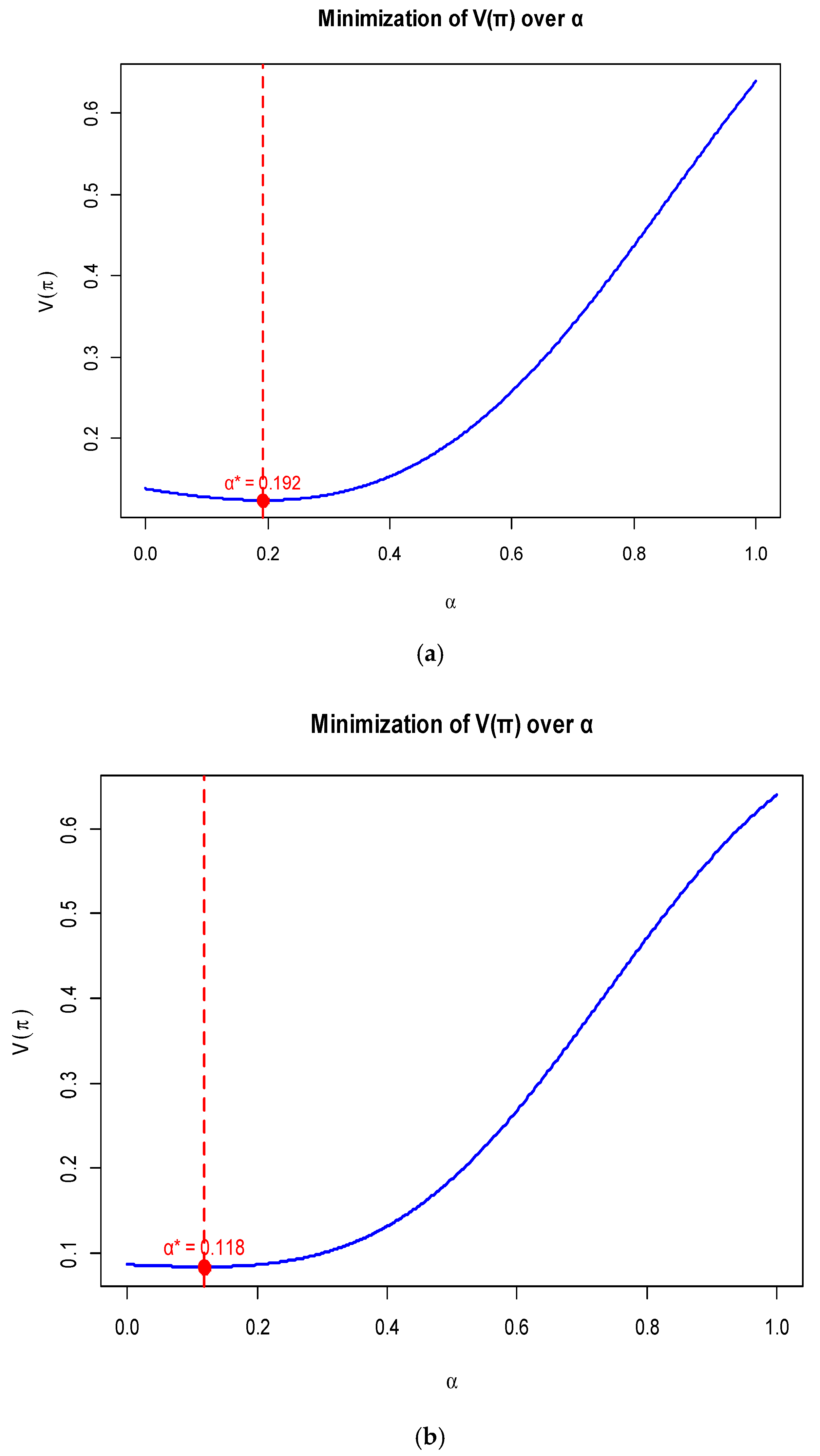
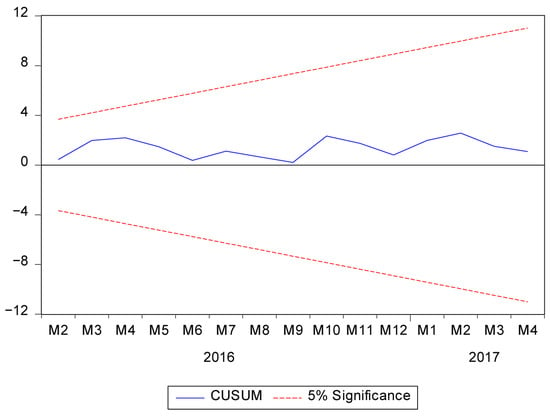
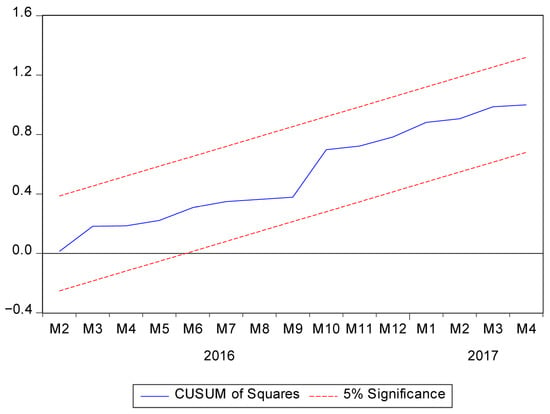
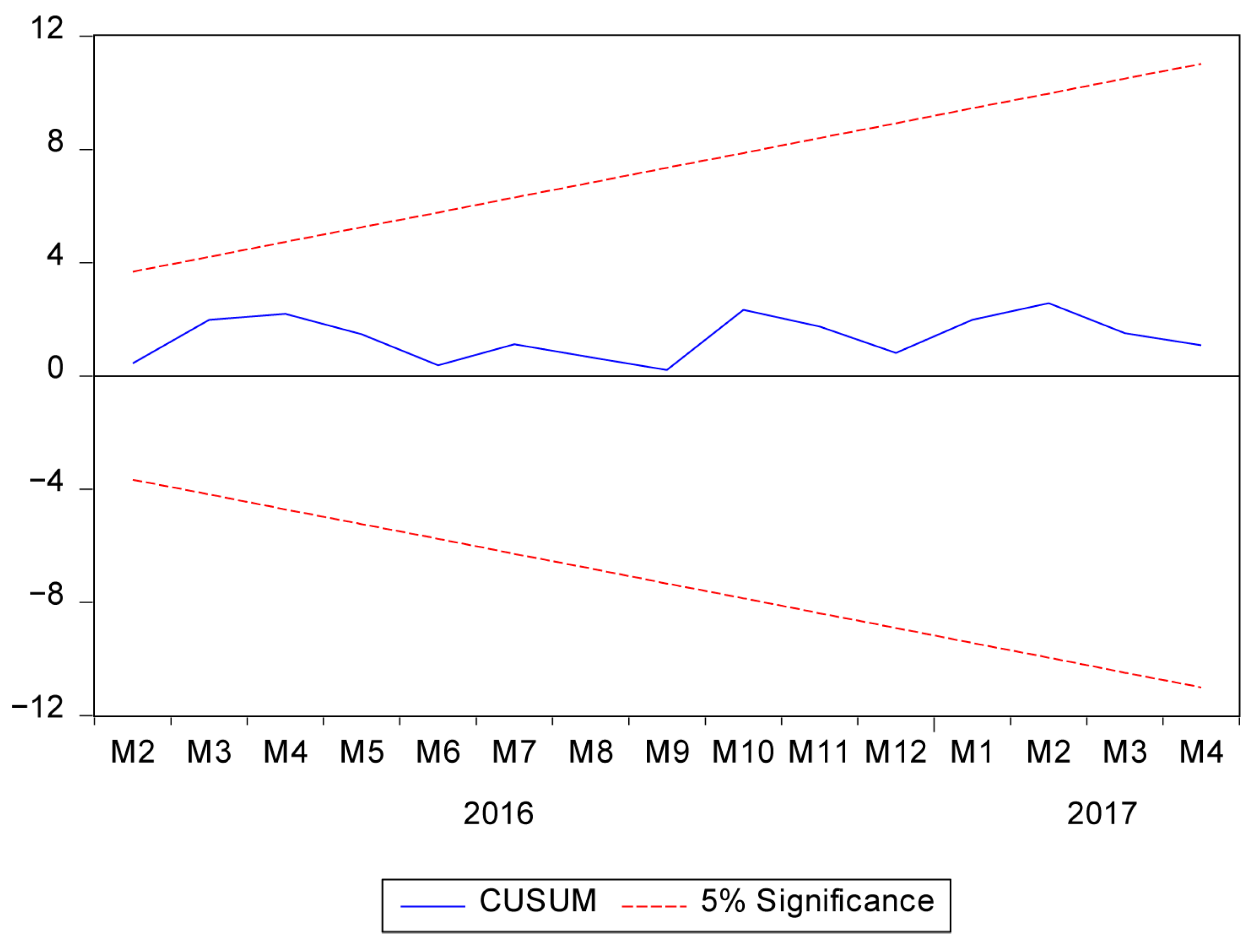
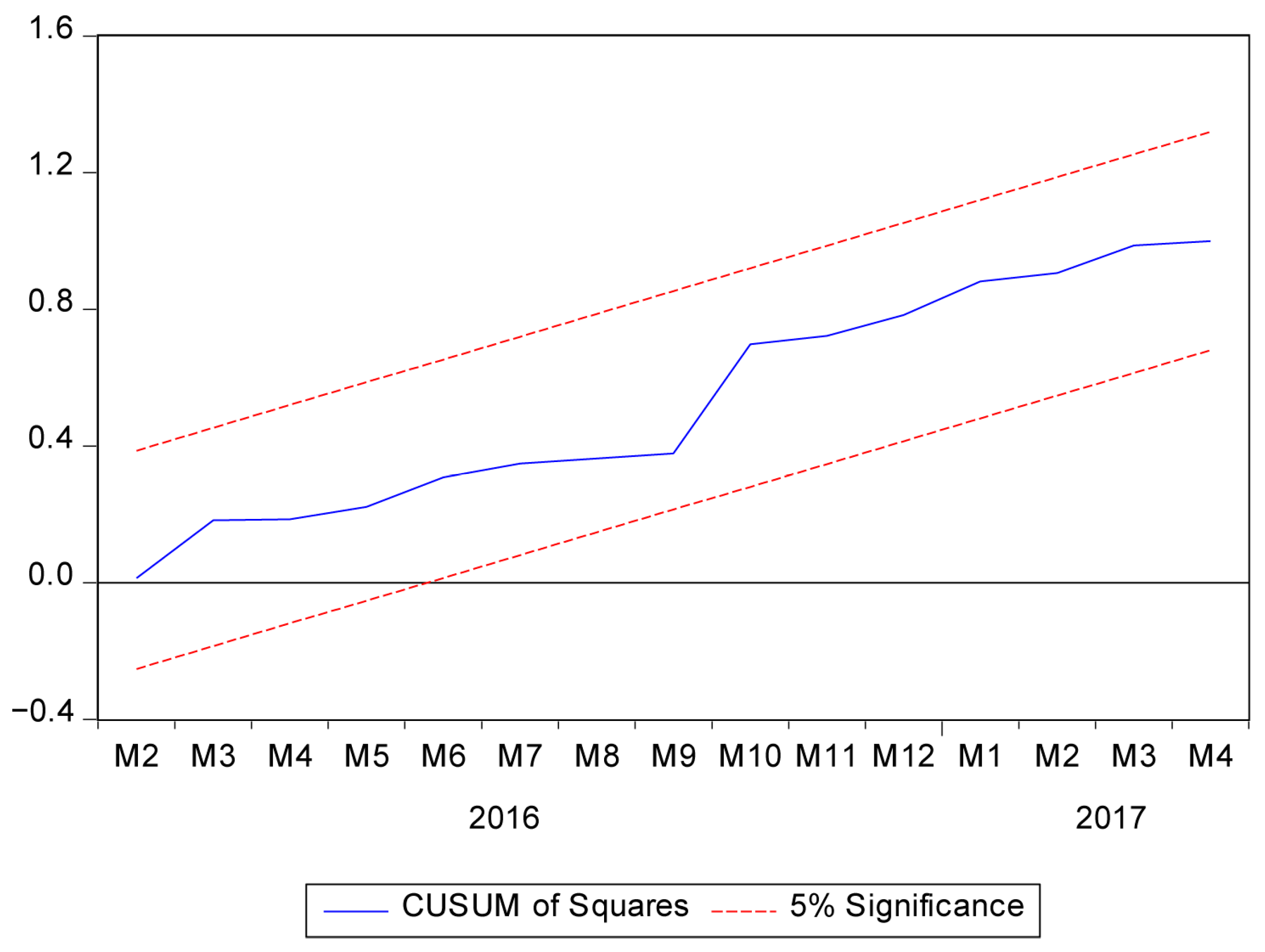
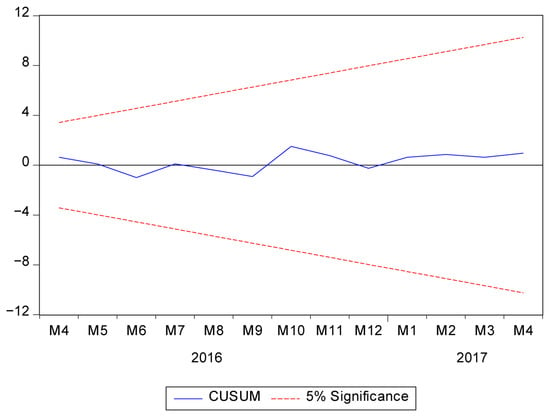
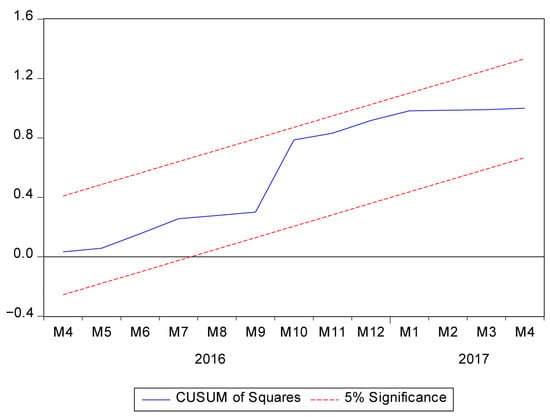
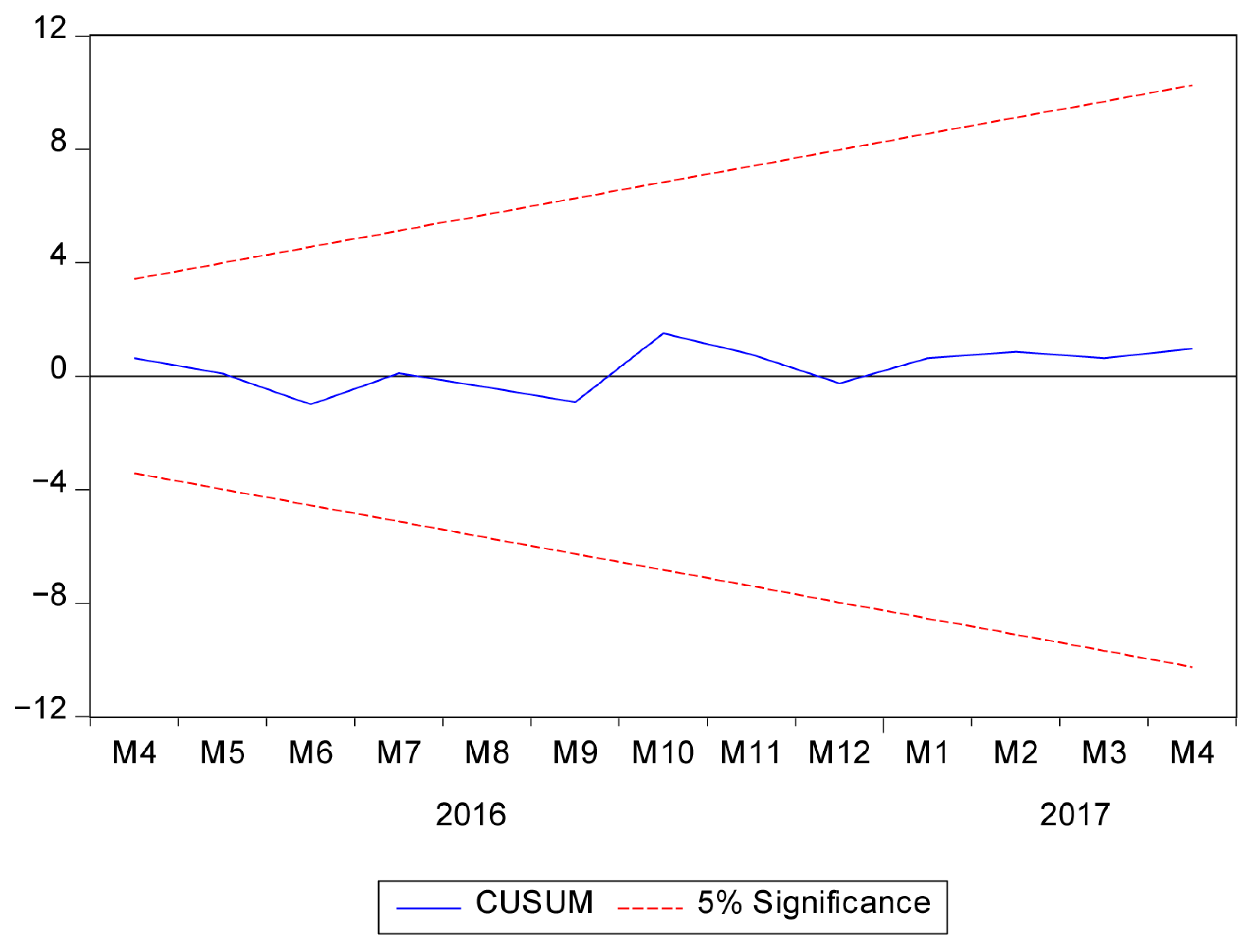
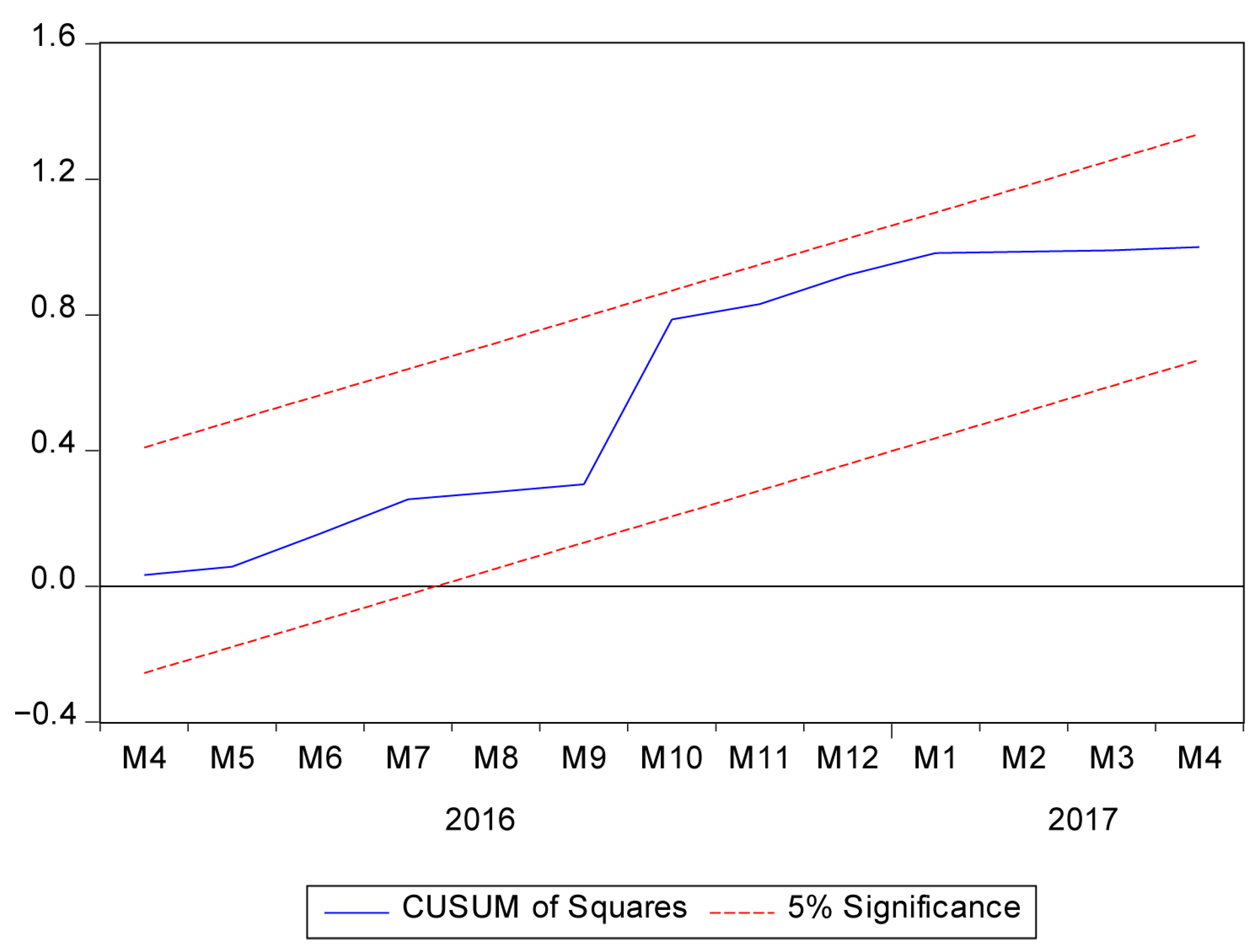

Disclaimer/Publisher’s Note: The statements, opinions and data contained in all publications are solely those of the individual author(s) and contributor(s) and not of MDPI and/or the editor(s). MDPI and/or the editor(s) disclaim responsibility for any injury to people or property resulting from any ideas, methods, instructions or products referred to in the content. |
© 2026 by the author. Licensee MDPI, Basel, Switzerland. This article is an open access article distributed under the terms and conditions of the Creative Commons Attribution (CC BY) license.