


Abstract
This study examines the effect of financial technology (FinTech) on environmental sustainability, emphasising the moderating role of financial inclusion in Africa. While existing studies focus on the relationship between financial inclusion and FinTech, the moderating mechanism through which financial inclusion influences the FinTech–environmental sustainability nexus remains underexplored. To address this gap, the study explores the interrelationships among FinTech, financial inclusion and environmental sustainability across 20 African countries from 2010 to 2025. Anchored in Rogers’ Diffusion of Innovation Theory, the study employs advanced panel econometric techniques, including the Hadri LM test, System Generalised Method of Moments (SGMM), the Dumitrescu–Hurlin panel causality test, the Difference-in-Hansen test, and Wald tests. Institutional quality, economic growth and foreign direct investment are included as control variables. The findings show that financial inclusion significantly moderates the impact of FinTech on environmental sustainability, providing strong empirical and theoretical support for the study’s central proposition. When considered independently, financial inclusion contributes negatively while FinTech contributes positively to environmental sustainability. However, their interaction/moderation yields a complementary effect that strengthens environmental sustainability by reducing carbon emissions. Furthermore, the study establishes a bidirectional causal relationship among FinTech, financial inclusion, and environmental sustainability. The study concludes that the African continent should systematically expand financial inclusion to amplify the environmental benefits of FinTech innovations by leveraging sustainable digital finance.
1. Introduction
In the 21st century, global warming and climate change have emerged as prominent issues, with over 80% of the global population residing in nations that exceed their ecological capacity, raising concerns for policymakers and practitioners and prompting concerted regional and global efforts towards a sustainable environment (Yun et al., 2025). Africa is among the most vulnerable continents (Asongu & Emeka, 2026; Kelly & Ndeffo, 2025; Madonsela et al., 2025; Mehmood & Kaewsaeng-on, 2026), with glaring evidence of irregular rainfall patterns, droughts, rising temperatures, and extensive floods harming communities and ecosystems (Adebayo & Odugbesan, 2021; Ahenkan, 2026; Almuhailan et al., 2026; Iragena & Lopez-Feldman, 2026; Mutinta, 2026). To corroborate climate vulnerability conditions, the World Meteorological Organisation (WMO) reported alarmingly high global warming, with Africa’s carbon dioxide (CO2) emissions at their highest in the last 800,000 years (State of Africa’s Environment, 2025).
Despite the determined African continental frameworks, regional treaties and international commitments to the environment, such as the African Convention for Nature and Natural Resources, the African Union’s Environmental Policy Frameworks, the United Nations SDGs, and the African Union’s Agenda 2063, Africa, home to 17% of the world’s population, accounts for about 4% of global emissions. Though minimal compared with China’s 31%, the United States’ 13%, Europe’s and India’s 6.5%, unfortunately, Africa remains increasingly vulnerable to extreme climatic conditions and their associated deleterious effects on food security, economic stability, and sustainable development (Almuhailan et al., 2026; Belgacem & Alaskar, 2026; Kattan-Rodríguez & Galindo-Manrique, 2025; Tidjani & Madouri, 2024). This disparity emphasises the urgency to empirically investigate additional drivers of environmental sustainability in Africa: financial inclusion and disruptive technologies such as Financial Technology (FinTech), which are beyond conventional government frameworks.
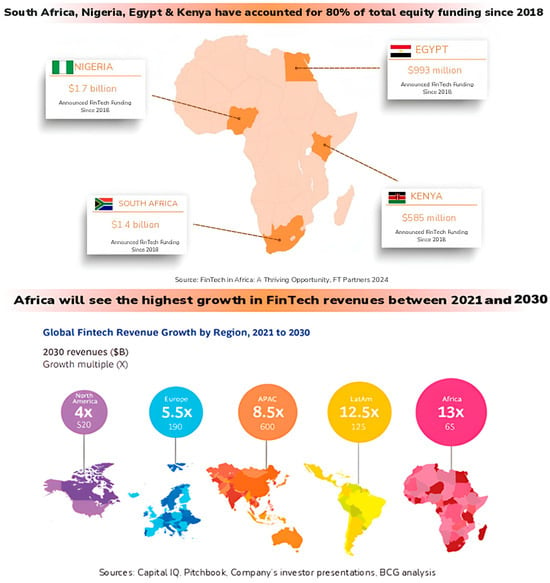
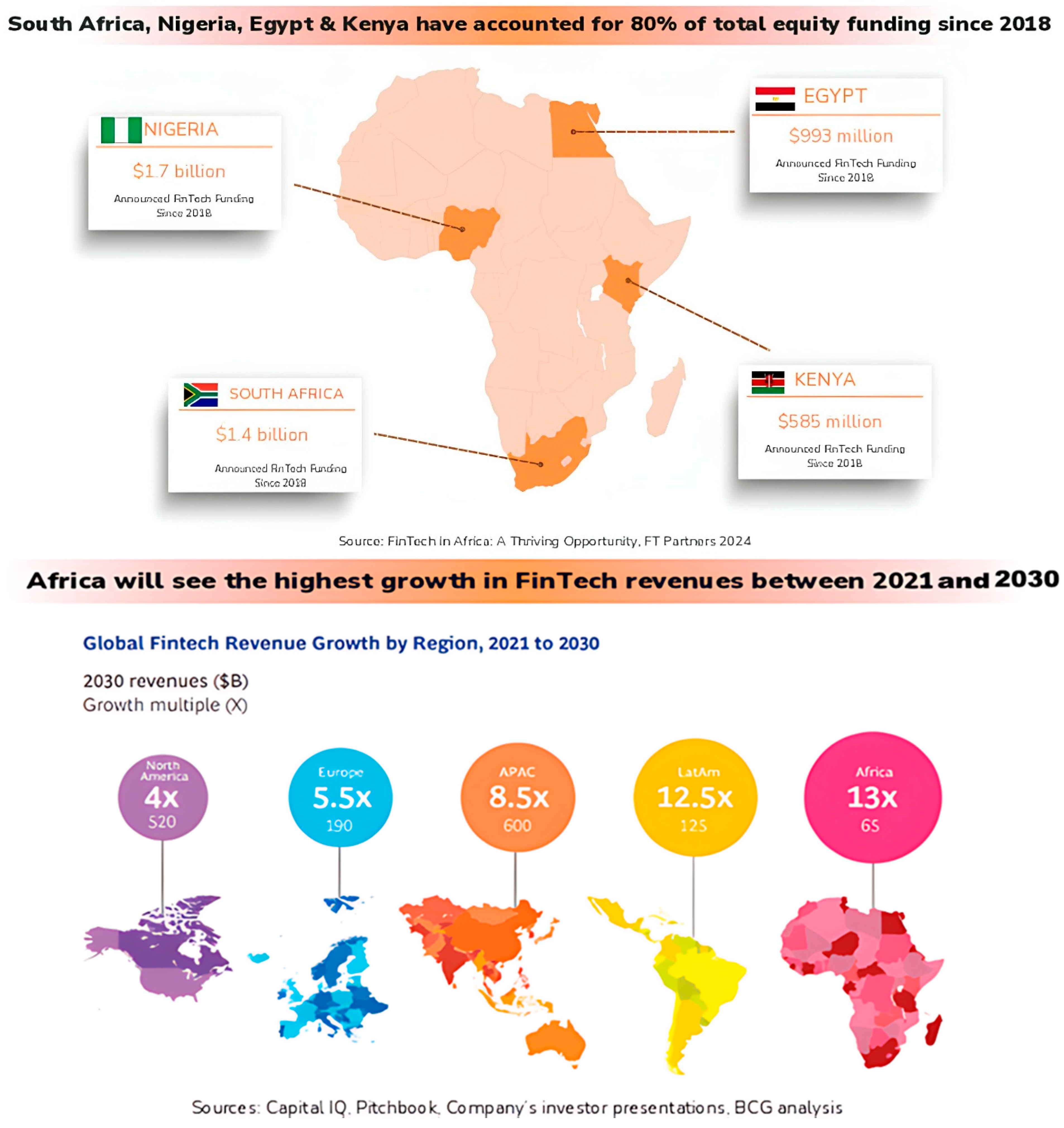
Africa is experiencing rapid growth in the number of FinTech companies, the volume of transactions, and investment in digital infrastructure, driven by mobile money, digital payments and online lending (Ricci et al., 2025). FinTech helps streamline processes through digital payment platforms, mitigate fraud, foster innovation and empower SMEs with green finance to adopt eco-friendly practices, thus promoting sustainability (Belgacem & Alaskar, 2026). Ironically, the continent is constrained by financial exclusion and environmental degradation, a situation that negates the tenets of Diffusion of Innovation (DOI) theory and the Technology–Organisation–Environment (TOE) framework. Despite notable growth in FinTech operations in Africa, heralded by Nigeria, South Africa, Egypt, and Kenya (see Figure 1), millions of Africans remain financially excluded, with limited access to credit, savings, insurance, and investment opportunities that could drive sustainable economic activities, which contradicts the empirical positions of recent studies that established FinTech as a driver of sustainable development outcomes and financial inclusion (Almuhailan et al., 2026; Belgacem & Alaskar, 2026; Kattan-Rodríguez & Galindo-Manrique, 2025; Tidjani & Madouri, 2024).
Figure 1.
FinTech funding map in Africa’s Ecosystems. Source: State of FinTech: Africa|May 2024.
Conversely, other scholars have argued that FinTech could offer a divergent prospect for environmental sustainability. Liu (2025) and Hou et al. (2024) assert that FinTech could act as a rebound amplifier instead of a dematerialiser, claiming that FinTech elevates electricity consumption and increases environmental costs associated with technology-based financial systems. This implies that the impact of FinTech on the environment remains unclear globally, and the mechanisms through which FinTech affect environmental sustainability remain insufficiently explored, particularly in Africa, leading to our first research question: How does FinTech adoption impact environmental sustainability in Africa?
Moreover, since FinTech adoption appears to promote financial inclusion, earlier studies (Almuhailan et al., 2026; Belgacem & Alaskar, 2026; Kattan-Rodríguez & Galindo-Manrique, 2025; Tidjani & Madouri, 2024) examined the interactive or moderating effects of FinTech and financial inclusion on sustainable development and/or environmental sustainability, with diverse positions. Also, most recent studies focus on the moderating role of financial openness in FinTech–equity market development for select African countries (Ozegbe et al., 2026b), thereby neglecting the primary role of financial inclusion as a significant moderator of FinTech impacts in Africa. Moderation focuses on when and under what conditions FinTech influences environmental sustainability, at high or low levels of financial inclusion. Our study improves on extant literature by examining the moderating role of financial inclusion in the FinTech–environmental sustainability nexus in Africa, by leveraging diffusion of innovation, financial inclusion, and technology–organisation–environment theories, unlike previous studies. Thus, our second and third research questions emerged: How does FinTech affect financial inclusion in Africa? Is financial inclusion a significant moderator between FinTech and environmental sustainability relations in Africa? The assumption is that FinTech expands access to digital financial services, bringing underbanked households and businesses into the mainstream financial sector, with access to credit, savings and digital payments. This financial inclusivity promotes cleaner technologies, investment in renewable energy, sustainable consumption and green entrepreneurship, leading to environmental sustainability. Thus, financial inclusion is theoretically ascertainable as a transmission mechanism through which FinTech exerts its environmental effect. Based on the foregoing, the study examined the impact of FinTech on environmental sustainability; it analysed the influence of financial inclusion on environmental sustainability; and it investigated how financial inclusion moderates the effect of FinTech on environmental sustainability in Africa using dynamic econometric methods.
Methodologically, the study adopted the dynamic System Generalised Method of Moments (SGMM) panel estimator for 20 African countries. This estimator controls endogeneity using internal instruments, addresses unobserved heterogeneity, efficiently analyses dynamic variables such as environmental sustainability, whose current value is affected by its past values, and produces unbiased estimates for short-time panels with a large number of units (T<N) (Aliha & Said, 2017; Kashif et al., 2025; Mashoene et al., 2025; Sayari et al., 2025; Vu et al., 2024; Zhou et al., 2024; Agbonrofo et al., 2026).
To strengthen the practical application of the study’s findings, we accounted for and controlled for institutional quality (Almulhim et al., 2025; Gan, 2025; Mohamed et al., 2025), economic growth (Abdi et al., 2025; Alam et al., 2025; Becha et al., 2025), and foreign direct investment (Mustafa et al., 2025; Ehigiamusoe et al., 2025). Our results from the System GMM and the Dumitrescu–Hurlin Test indicate that financial technology’s effect on the environment is significantly moderated by financial inclusion, providing empirical and theoretical validation of the study’s main thesis and argument. These findings provide practical implications for policymakers, regulators, development agencies, FinTech firms, and academia with clear evidence on how expanding financial inclusion could strengthen the environmental benefits of FinTech and propel Africa further toward an eco-friendly digital finance future for poverty alleviation (Agbonrofo et al., 2026).
2. Literature Review
2.1. Theoretical Foundation: The Diffusion of Innovations Theory
The Diffusion of Innovations Theory espoused by Rogers (1962, 2003) remains a robust theoretical foundation for examining how novel technologies and new development practices evolve within an ecosystem over time (Yáñez-Valdés & Guerrero, 2023). The theory provides the framework through which FinTech adoption improves access to finance, expands socioeconomic outcomes, and influences environmental sustainability. Rogers (1962) proposed five critical channels through which technology influences socioeconomic outcomes and environmental sustainability, which include: observability, complexity, trialability, compatibility, and relative advantage (Griffiths et al., 2025). The concept of observability examines how visible and evident the results of innovation are to prospective adopters (Vargo et al., 2020). Complexity explains the perceived and assumed difficulties and barriers to the adoption of technology in a society (Demirguc-Kunt et al., 2018). Trialability explains the rate at which innovation can be analysed from a limited or restricted standpoint (Buertey et al., 2026). Compatibility expresses how innovation aligns with existing needs, experiences, and values (Lyons et al., 2022), while relative advantage implies the degree to which novel technologies are recognised and accepted as superior to existing solutions (Singh et al., 2020). These attributes influence how FinTech expands access to finance, spurs green investment, and enhances environmental sustainability in Africa.
Based on the diffusion of innovation theory, the study conceptualises financial inclusion as a vital structural and infrastructural catalyst that accelerates the adoption, dissemination, and scaling of eco-friendly technological innovations in Africa. The theory’s core dimensions show how robust digital finance ecosystems lower systemic adoption barriers for green technologies such as renewable energy and climate-smart agricultural tools. Conceptually, higher financial inclusion means liquidity, minimal transaction friction, and increased user trust, which amplifies FinTech’s positive environmental outcomes by ensuring that green solutions are accessible to the wider population and viable over the long term. Ultimately, this moderating dynamic implies that financial inclusion acts as a conduit for FinTech’s effect on environmental sustainability by transforming baseline technological innovations into scalable and impactful catalysts for sustainable environmental outcomes.
2.2. Fintech and Environmental Sustainability Nexus
Empirical and theoretical evidence from the literature demonstrates that FinTech can influence environmental sustainability either positively or negatively depending on several factors (Udeagha & Muchapondwa, 2023; Y. Li et al., 2024; Shu et al., 2024). Generally, FinTech seems to stimulate environmental sustainability through improved access to green innovation, renewable energy investment, green finance and ESG data. However, the overall impact is context-dependent, as some other studies report null or adverse effects (Zaman et al., 2025; Wen et al., 2025; Rabbani & Kiran, 2025). For instance, Udeagha and Ngepah (2023) used the CS-ARDL technique to examine the relationship among FinTech, green finance and environmental sustainability of BRICS countries from 2000 to 2028. The study aligns with the EKC model and suggests that FinTech and green finance positively influence environmental sustainability. Firdousi et al. (2023) investigated the nexus between FinTech and environmental sustainability using a panel dataset of 26 Morgan Stanley Capital International (MSCI) emerging nations from 2011 to 2021. The findings revealed that FinTech development enhances renewable energy resource consumption and inhibits carbon emissions. The central argument in the literature is that FinTech channels investment towards green projects and sustainable business opportunities, which is facilitated by frameworks, crowdfunding, green credit and credible market access (Macchiavello & Siri, 2022; Chueca Vergara & Ferruz Agudo, 2021; Galeone et al., 2024; Bel Hadj Miled, 2025). Other channels through which FinTech stimulates environmental sustainability include improvements in ESG verification, disclosure and monitoring, which help identify greenwashing and allocate resources effectively and efficiently (Roy et al., 2026; Chueca Vergara & Ferruz Agudo, 2021).
Conversely, evidence of the relationship between FinTech and environmental sustainability is mixed rather than unidirectional. For instance, Rabbani and Kiran (2025) examined the relationship between FinTech and environmental sustainability among Organisation of Islamic Cooperation (OIC) countries from 1995 to 2022 using second-generation panel unit root and panel cointegration techniques. The study reported that FinTech does not exert a significant impact on environmental sustainability.
Moreover, other studies argue that the environmental effect of FinTech is a function of complementary and mediating variables such as financial inclusion, governance, green innovation and climate technology, which strengthen sustainability through the gains from financial digitisation and broader financial development (Ozegbe et al., 2026a; Iheanachor et al., 2026; Zaman et al., 2025; Wen et al., 2025; Du et al., 2022).
In summary, the positive impact of FinTech on environmental sustainability is not instantaneous because finance also raises concerns about systemic risk, e-waste, energy use and unequal policy implementation across regions (Macchiavello & Siri, 2022; Ray et al., 2024). FinTech and environmental sustainability connect more seamlessly when climate technology, strong institutional quality, and green finance underpin FinTech, not necessarily because of technology’s expansion.
Considering the foregoing discourse, the subsequent hypothesis is proposed.
H11.
FinTech significantly impacts environmental sustainability in Africa.
2.3. Financial Inclusion and Environmental Sustainability Relationship
Evidence from the literature indicates that financial inclusion can affect environmental quality positively or negatively, depending on several factors (Y. Li, 2025). First, Chhabra et al. (2023) argued that financial inclusion accelerates the disbursement of capital required to develop green technologies for manufacturing firms, thereby reducing CO2 emissions and improving environmental sustainability. Similarly, Z. Li and Wang (2022) suggested that financial inclusion is critical for advancing eco-friendly domestic consumption by enhancing the adoption of cleaner industrial and energy-efficient systems. Financial inclusion enhances the ability of households to purchase goods and services through financial services platforms from the comfort of their homes. For instance, the Grameen Bank in Bangladesh, OPay and Moniepoint in Nigeria, the Pradhan Mantri Jan Dhan Yojana (PMJDY) programme in India, and M-Pesa in Kenya have demonstrated the efficiency of these platforms. These platforms not only minimise non-renewable energy consumption but also reduce the demand for physical transport services, which indirectly diminishes CO2 emissions associated with the household sector of the economy (Song & Sun, 2023). The advancements in financial inclusion help stimulate technological progress and innovation in the production processes (C. Zhang & Ling, 2024), which increases the green transition and modification of production processes and consequently minimises CO2 emissions. By expanding the financial services ecosystem and optimising transaction costs, financial inclusion can redistribute resources needed for innovative ventures that are commercially and economically isolated (Lu et al., 2022). The preponderance of firms involved in green industries and innovation are small- and medium-scale enterprises (SMEs) (X. Zhang et al., 2023). Nevertheless, due to the profit-maximising mindset of traditional financial firms and information asymmetry in the financial services sector, SMEs are confronted with several financial constraints (Bu et al., 2024; Feng et al., 2023). The exponential rise in the use of financial products can enhance SMEs’ growth, thereby fostering technical progress that leads to green production processes and environmental sustainability (Lu et al., 2022). In addition, financial inclusion improves the use of energy-saving technologies, making them more accessible to the public and supporting industrial transformation and environmental sustainability (X. Zhang et al., 2025).
On the contrary, the second strand of literature argues that financial development encourages the disbursement of financial resources to commercial and economic activities, which facilitate large-scale production and consumption of goods and services. This scenario potentially leads to rising energy consumption, high CO2 emissions and environmental degradation (Depren et al., 2022). DFI, a subset of financial development, also demonstrates the same attributes (Lu et al., 2022). Moradi Haghighi and Augustín (2026) examined the nexus between DFI and environmental sustainability in countries of the One Belt and Road Initiative from 2007 to 2019 using the pooled ordinary least squares and Generalised Method of Moments approaches for their analysis. The study reported that DFI reduces environmental quality through the upsurge in CO2 emissions. From the perspective of consumers, goods and services become relatively cost-effective because payment platforms overcome regional and geographical barriers to offer buyers a variety of products from different regions of the world. As physical stores are no longer essential for effective demand, prices of commodities online decline due to falling transaction costs. Based on the availability of diverse cost-effective products online, DFI invariably accelerates domestic consumption and CO2 emissions. By channelling more resources into clean energy and technological advancement, DFI increases industrial and production efficiency, which may help reduce the prices of goods and services, leading to higher levels of household consumption, resulting in higher CO2 emissions and environmental degradation (Depren et al., 2022).
On the production side, more goods and services would be required to meet rising household demands and increased production, resulting in high CO2 emissions and environmental deterioration. Even if heavy sanctions are imposed on firms for polluting the environment, the profit generated from their rising income may motivate the firms to pay the penalties for increased production, leading to high CO2 emissions and declining environmental quality (Mpofu, 2022).
Based on the argument above, the following hypothesis is proposed:
H12.
Financial inclusion bears a significant impact on environmental sustainability in Africa.
2.4. Synthesis of Gaps in the Literature
The key gap in the literature lies in the disconnect between the widely documented benefits of FinTech and the persistent reality of financial exclusion across Africa. Although recent studies consistently identify FinTech as a catalyst for financial inclusion and sustainable development and environmental outcomes (Almuhailan et al., 2026; Belgacem & Alaskar, 2026; Kattan-Rodríguez & Galindo-Manrique, 2025; Tidjani & Madouri, 2024; Macchiavello & Siri, 2022; Roy et al., 2026; Iheanachor et al., 2026), millions of Africans continue to lack access to formal financial services. More importantly, existing studies have predominantly reported mixed findings on whether financial inclusion moderates the FinTech–sustainability relationship, focusing on the conditions under which FinTech affects environmental sustainability. Consequently, contributing to this debate from an African perspective provides an avenue for addressing important theoretical and policy gaps that this study seeks to address.
H13.
Financial inclusion mediates the impact of FinTech on environmental sustainability in Africa.
2.5. Conceptual Framework
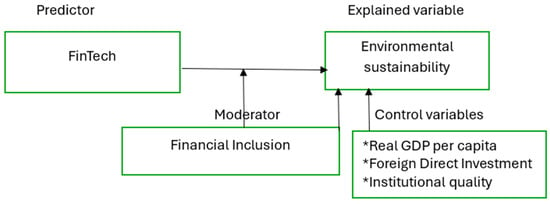
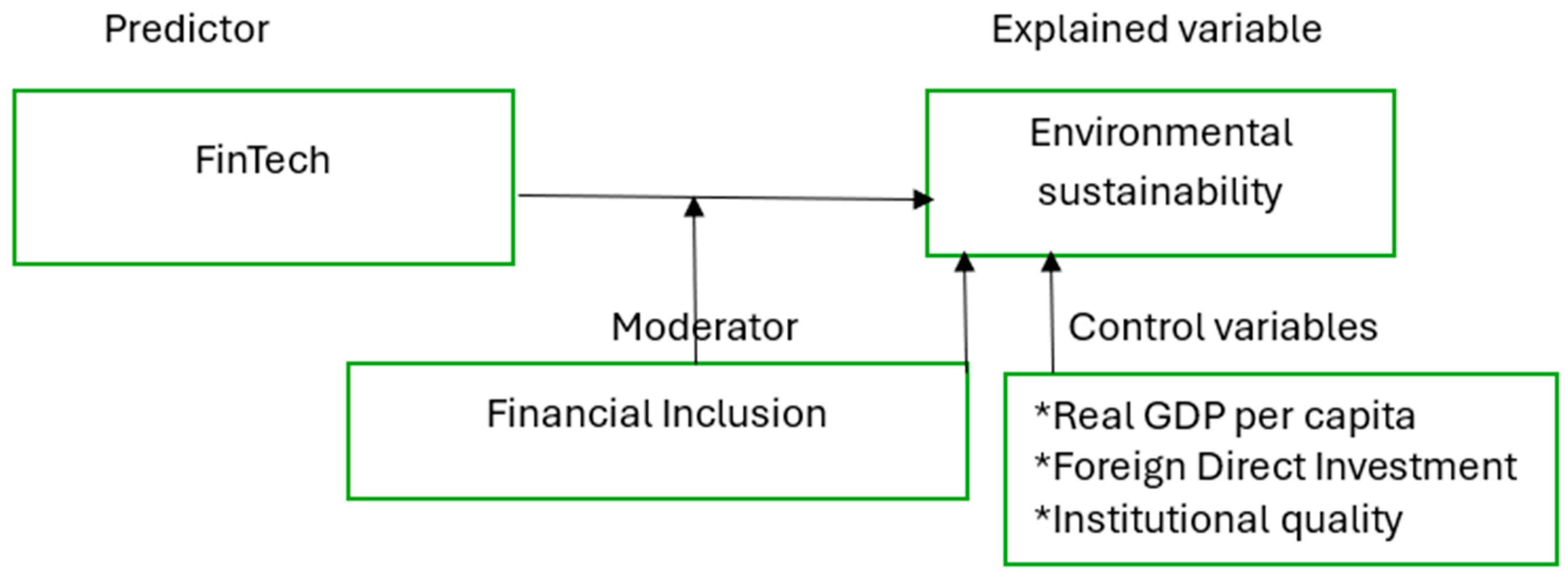
Figure 2 above depicts the conceptual framework of the study, and it illustrates how FinTech expands access to cost-effective financial services and invariably enhances financial inclusion among underserved populations. In turn, improved financial inclusion spurs green finance and encourages the deployment of environmentally sustainable practices and technologies. As such, financial inclusion represents a primary moderating factor through which FinTech affects environmental sustainability (Ozegbe et al., 2026b). Collectively, these relationships constitute the FinTech–environmental sustainability nexus moderated by financial inclusion.
Figure 2.
Conceptual framework. * indicates control variables. Source: Authors’ design.
3. Data and Methodology
3.1. Data and Sample
The study used a balanced panel dataset obtained from twenty (20) African countries covering the period 2010–2025. The data was sourced from the World Development Indicators (WDI) database published by the World Bank (IBRD). The countries selected are among the continent’s emerging and leading FinTech markets. Moreover, these countries have witnessed significant growth in digital payments, mobile money and financial inclusion. In addition, the sample countries capture diversity in economic development, environmental performance, digital financial infrastructures and institutional quality across East, West, Central and Southern Africa. These countries were selected based on two empirical and analytical considerations. First, the countries provide the most consistent data requirements to analyse the moderating effect of financial inclusion on FinTech–environmental sustainability relationships. Second, these countries provide varying national contexts with different economic structures, environmental conditions, financial development and digital financial adoption.
The study period of 2010 to 2025 coincides with rapid growth of digital financial services and FinTech across Africa. The period also accounts for key developments such as Sustainable Development Goals (SDGs), adoption of mobile money, the Paris Climate Agreement in 2015, acceleration of digital finance during and after the COVID-19 pandemic and the implementation of national financial inclusion strategies. Furthermore, the period captures both the long-run and short-run dynamics of responsible FinTech, financial inclusion, and environmental sustainability. The data was not transformed but used as sourced. Also, the data was collected using a desktop approach between 18 and 20 July 2026. A listwise deletion missing data treatment was adopted; hence, we recorded 20 countries with a consistent dataset.
The sample countries used are Benin, Botswana, Cameroon, Côte d’Ivoire, Ethiopia, Ghana, Kenya, Malawi, Mauritius, Mozambique, Namibia, Nigeria, Rwanda, Senegal, South Africa, Tanzania, Togo, Uganda, Zambia, and Zimbabwe. The dependent variable is environmental sustainability, which is captured using CO2 emissions. The study adopts CO2 emissions as a measure of environmental sustainability because it is a major driver of climate change that entails fossil and industrial emissions. It has more robust data available, and it is a major target variable for global policymakers on environmental sustainability (Seraj & Seraj, 2025; Yakymchuk & Rataj, 2025). The independent variables are FinTech and financial inclusion. The study’s control variables include growth, foreign direct investment, and institutional quality. Furthermore, active mobile money accounts measure the actual use of digital FinTech rather than its availability, which is of particular importance in Africa, where mobile money provides a dependable channel for financial transactions and digital payments; thus, it is adopted as the indicator for FinTech. See Table 1 for variable notation, measurement and source.
Table 1.
Variable notation, measurement and source.
3.2. Empirical Model
Relying on diffusion of innovation and financial inclusion theories, which provide the underpinning for the variables’ inclusion, we formulated the baseline and the interaction models.
Equation (1) depicts the baseline model.
Extending the dynamic model, Equation (1) becomes
where ES is environmental sustainability measured by carbon emissions, FI is financial inclusion, FT is FinTech, GDPC is GDP per capita, FDI is foreign direct investment, and IQ is institutional quality. are parameters to be estimated, is constant, is the error term, and is country i at time t.
In line with the theoretical framework for our study, we introduce the interaction term in Equation (3).
where is the interaction between financial inclusion and FinTech on environmental sustainability.
3.3. Econometric Technique
Our study employs the dynamic System GMM estimation for the baseline model and the interaction model. The choice for this technique is because environmental sustainability is highly persistent over time, and the technique addresses potential endogeneity, reverse causality, and unobserved country-specific heterogeneity across the twenty African economies. Several pretests (panel unit root test, descriptive statistics, correlation test, and panel cointegration test) were conducted before using the System GMM estimation. We also carried out the Dumitrescu–Hurlin panel causality test, which confirmed the existence of reverse causality. While the study recognises the large cross-section (N) and short time (T) dimensions associated with System GMM, the adoption of this technique is based on the model’s theoretical requirements and diagnostic evidence rather than its generic merits, a position that is empirically backed in the literature (Arellano & Bover, 1995; Blundell & Bond, 1998; Roodman, 2009).
4. Results and Discussion
4.1. Descriptive Statistics and Correlation
Table 2 shows the descriptive statistics of the variables used in the study. From the outcome in Table 2, environmental sustainability (ES) shows a mean value of 37.173, with a relatively high standard deviation of 99.709, revealing substantial heterogeneity in environmental sustainability across the sampled African countries in terms of energy consumption, industrial structures, pace of economic development and environmental policies. The high standard deviation relative to the mean implies the presence of significant cross-country variation, thus justifying the choice of an estimation technique capable of accounting for heterogeneity. The financial inclusion (FI) outcome in Table 2 records an average value of 47.380, with a standard deviation of 20.492. This suggests substantial differences in access to formal financial services among the countries used in the study. This difference arises due to banking penetration, financial sector reforms, uneven development of financial infrastructure, and digital financial services across the sampled countries. The relatively moderate dispersion implies that although financial inclusion differs across nations, the variation is not excessively pronounced.
Table 2.
Summary statistics.
The FinTech (FT) record in Table 2 shows a mean value of 14.945, with a standard deviation of 2.000. The relatively low standard deviation compared to the mean value suggests a moderate variation in FinTech across the sample countries in the study. This also implies that while differences in adoption in mobile money, such as mobile network penetration, financial innovation, consumer adoption of digital financial services and digital financial infrastructure, exist, the level of disparity is not high.
Furthermore, economic growth (GDP per capita), proxied by the annual growth rate of GDP per capita, has an average value of 2.259%, indicating a modest average growth of the sampled economies. The standard deviation of 3.461 indicates a moderate fluctuation in economic performance across the sampled countries over time. Foreign direct investment (FDI) has a mean of 3.745% of GDP, with a standard deviation of 5.267. The relatively high standard deviation implies heterogeneity in investment attractiveness arising from variation in natural resource endowments, investment policies, institutional environment and political stability across the sample countries used in the study. The institutional quality (IQ) shows a mean score of 49.769, with a standard deviation of 9.481, indicating a moderate variation in governance quality across the sampled economies. The observed variation provides a strong basis for its inclusion in the model since institutional quality plays key roles in shaping investment decisions, environmental outcomes and financial development.
Overall, the descriptive statistics show significant cross-country heterogeneity across all variables used in the study, especially FinTech and environmental sustainability. The wide dispersion noticed in some of the variables indicates that some African economies differ considerably in the level of macroeconomic conditions, institutional quality, digital financial development, foreign investment inflows, and environmental performance (Y. Zhang & Pan, 2026). This heterogeneity supports the use of advanced panel data techniques such as the System Generalised Method of Moments (System GMM), which properly account for dynamic relationships, endogeneity, and unobserved heterogeneity.
Table 3 reports the correlation matrix for the variables employed in the study. The results show that they are generally weak to moderate. From the outcome in Table 3, environmental sustainability (ES) is positively correlated with financial inclusion (FI) (r = 0.2470) and institutional quality (IQ) (r = 0.1052), indicating that improvements in financial inclusion and institutional quality are linked with reductions in environmental sustainability outcomes.
Table 3.
Correlation matrix results.
Moreover, ES exhibits a negative correlation with FinTech (FT) (r = −0.0434), economic growth (GDPC) (r = −0.1813), and foreign direct investment (FDI) (r = −0.1286), showing a weak inverse relationship between these variables and carbon dioxide emissions, implying a positive relationship with environmental sustainability. Although the results show that economies with high FinTech adoption, economic growth, and foreign direct investment tend to record slightly higher environmental sustainability, the associations are not strong enough to infer a substantive relationship; hence, we use System GMM estimates to assess direction and significance. Furthermore, since none of the coefficients exceeds the conventional threshold of 0.80, the results indicate the absence of severe multicollinearity among the explanatory variables.
Also, the cross-sectional dependence test for the 20 African countries indicates that they are not a monolithic economic and regulatory bloc. Thus, given the obvious structural, regulatory, and institutional heterogeneity amongst these nations, such as FinTech ecosystems dominant in East Africa and varying environmental regulatory capacities, the study validated the idiosyncratic or minimal unobserved common shocks and impacts across these countries. Since these countries have fundamentally asynchronous development stages in financial inclusion, FinTech, and carbon emissions trends, cross-sectional dependence is established to be weak enough to rely on standard panel estimators (See Appendix A).
4.2. Discussion of System GMM Estimation Results
Based on the outcome of the panel stationarity test and cointegration analysis in Table 4 and Table 5, the System GMM estimator was adopted. Table 6 reports the results of the System GMM estimation for the baseline and the interaction models. From the outcome in Table 6, the coefficient of the lagged carbon emissions variable is positive and highly significant in both the baseline model (0.968) and the interaction model (0.929). This implies a strong presence of carbon emissions among African countries. Specifically, the findings show that current emission levels are strongly influenced by past emission patterns. The high persistence reflects the structural nature of carbon emissions, where existing industrial activities, production technology, transportation networks, and energy systems create significant adjustment constraints. Hence, economies with previously high levels of carbon emissions are likely to continue to witness high emissions unless they undertake extensive structural changes in their energy and production systems. The result supports the environmental economics literature, which documents that environmental degradation is highly path-dependent because industrial capacity, energy infrastructure, and urban systems adjust slowly over time (Yun et al., 2025).
Table 4.
Panel unit root test results.
Table 5.
Panel cointegration test results.
Table 6.
System GMM estimation results: baseline and moderating effect of financial inclusion on the FinTech–environmental sustainability nexus.
According to the baseline result, the financial inclusion coefficient (0.199) is positive and statistically significant on carbon emissions. The result suggests that greater financial inclusion contributes to higher environmental degradation in African countries. These findings also imply that financial inclusion operates mainly via an economic expansion mechanism since increased access to financial services stimulates investment, entrepreneurship, production and consumption activities that increase energy demand. For instance, financial inclusion increases investment in sectors such as transportation, construction, manufacturing and agriculture, and these sectors remain significant contributors to carbon emissions.
More so, many African companies still rely heavily on fossil fuels for electricity generation due to limited access to renewable energy alternatives. This finding aligns with financial inclusion–environment literature, which suggests that financial expansion can initially worsen environmental quality in less developed countries by increasing industrialisation and energy consumption (Hou et al., 2024; Liu, 2025). The baseline result further shows that the FinTech coefficient (−3.790) has a negative and statistically significant effect on carbon emissions. This finding implies that FinTech development enhances environmental sustainability in African countries. The outcome of the baseline result indicates that FinTech generates environmental benefits via several channels. First, FinTech reduces transaction costs and increases access to financial services among the unbanked population. Second, it reduces dependence on traditional banks by reducing physical visits to banks, and this reduces transportation-related emissions associated with cash-based transactions and branch visits. FinTech platforms have supported renewable energy financing models, particularly pay-as-you-go solar systems adopted in a few African countries. Through these platforms, low-income households have access to clean energy. The finding is in line with the views of Belgacem and Alaskar (2026), who affirm that FinTech can aid sustainable development by facilitating green finance, reducing transactions related to environmental costs, and improving resource efficiency.
Moreover, the moderating result provides deeper insight into the FinTech–environment association. The coefficient of the interaction (−0.061) is negative and statistically significant. The result implies that the environmental effect of FinTech is conditional upon the level of financial inclusion. The result also suggests that expanding an inclusive financial system and FinTech can aid Africa’s transition towards having a low-carbon and sustainable economy by improving access to green finance, cleaner technologies and resource efficiency.
The baseline result shows that the coefficient of economic growth (0.107) is positive and statistically significant, suggesting that economic expansion is closely linked with environmental degradation in African countries. The result reflects the usual reliance on fossil fuels for transportation, infrastructure development and industrialisation in most African economies. However, the coefficient becomes statistically insignificant in the interaction model outcome, indicating that part of the environmental effect of economic growth operates indirectly via FinTech and financial inclusion. In the baseline result, the FDI coefficient (0.072) is positive and significant, thus supporting the Pollution Haven Hypothesis, which suggests that foreign investment inflows to less developed countries are usually concentrated in environmentally intensive sectors such as petroleum, mining and manufacturing.
However, the coefficient becomes negative in the interaction model, indicating that once financial inclusion and FinTech are incorporated, FDI contributes to reducing emissions. The result also indicates that a stronger financial system and FinTech could improve the quality of foreign investment inflows by encouraging cleaner production processes, technological transfer and environmental protection. The baseline result also indicates that the institutional quality coefficient (0.534) is statistically significant. The result implies that improvement in governance greatly reduces carbon emissions as strong institutions improve and enhance environmental sustainability through effective regulatory enforcement, implementation of climate-related policies, reduced corruption and improved environmental governance.
Finally, the Dumitrescu–Hurlin panel causality results in Table 7 show bidirectional causality between financial inclusion, FinTech, and environmental sustainability. This suggests that financial inclusion significantly causes changes in environmental sustainability, while environmental sustainability also influences financial inclusion. Similarly, FinTech has a significant causal effect on environmental sustainability, with reverse causality confirmed as well. These findings show a feedback relationship, indicating that financial inclusion and FinTech are both drivers and outcomes of environmental sustainability in African countries.
Table 7.
Dumitrescu–Hurlin panel Granger causality test results.
Thus, the Dumitrescu–Hurlin results indicate that financial technology’s effect on the environment is significantly mediated by financial inclusion, an empirical and theoretical validation of the study’s main thesis and argument.
The diagnostic statistics further affirm the validity of the model estimated. The insignificance of the AR (1) and AR (2) tests denotes the absence of first- and second-order serial correlation in the differenced residuals. The insignificance of the Hansen test shows that the instruments used in the System GMM estimation are jointly exogenous and appropriately specified. This is in line with (Roodman, 2009; Arellano & Bond, 1991; Blundell & Bond, 1998). In addition, the relatively small number of instruments compared to the number of countries reduces concerns about instrument proliferation and overfitting, thus strengthening confidence in the estimated coefficient.
In summary, the findings show that the link between FinTech, financial inclusion and environmental sustainability in Africa is complex and conditional. While financial inclusion alone tends to raise carbon emissions through expanded economic activity, FinTech, on the other hand, reduces it by improving and enhancing financial efficiency and facilitating green investment. More importantly, the significant moderating effect implies that financial inclusion strengthens the environmental benefits of FinTech by making digital financial innovations more effective and accessible.
Table 8.
Robustness checks with fixed effects (FE) analysis.
5. Conclusions and Policy Implications
5.1. Conclusions
This study examined the moderating effect of financial inclusion on the FinTech–environmental sustainability nexus in 20 African economies. The System GMM outcome reveals that carbon emissions are usually persistent in African countries, reflecting the influence of existing production structures and energy systems. While financial inclusion alone seems to raise emissions by stimulating economic activities, FinTech reduces them and improves environmental sustainability. The significant negative interaction term between financial inclusion and FinTech indicates that financial inclusion strengthens the environmental benefits of FinTech by ensuring and promoting efficient resource allocation and cleaner investment. In addition, causality results provide evidence of a bidirectional relationship between financial inclusion, FinTech, and environmental sustainability, indicating that these variables influence each other over time. The findings denote that financial inclusion and FinTech are not only key determinants of environmental outcomes but are also shaped by environmental conditions. Most importantly, it is established that financial inclusion significantly moderates the effect of FinTech on the environment; policies that promote FinTech adoption and broaden financial access are likely to generate stronger environmental benefits.
In summary, our findings indicate that FinTech and financial inclusion can aid Africa’s transition towards a low-carbon economy when supported by sustainable development policies and strong institutions.
5.2. Policy Implications and Future Research Direction
Based on the outcome of our study, we advised African governments to promote green financial inclusion by incorporating green financing initiatives such as climate-smart financing, SME support and renewable energy loans. The government in the region should encourage responsible FinTech development by promoting and advancing digital financial innovations that aid renewable energy investment, sustainable business practices and green finance. There is a need for the government in the region to integrate financial and climate policies to maximise sustainable outcomes. Furthermore, we advise the government in the region to strengthen institutions by ensuring effective governance and environmental regulations to ensure financial inclusion and investment contribute to the reduction in emissions. In addition, we advise governments in the region to support green economic growth by shifting from carbon-intensive development models towards clean technologies, sustainable industrialisation, and renewable energy.
Since financial inclusion moderates the effect of FinTech on environmental outcomes, we suggest that African governments and regulators should encourage the adoption of FinTech solutions in underserved and rural communities by supporting digital payments, agent banking, mobile banking and low-cost digital accounts that drive financial inclusion. In line with earlier studies (Ogbu, 2020; Osakue et al., 2026), we further implored the government to support the development of new technologies through education, skill sets, strengthening regulatory certainty and expanding digital infrastructure, and FinTech companies to improve digital financial literacy. These ideas should command investment in internet connectivity, digital payment infrastructure, mobile network coverage and digital literacy programs, which can help businesses and African households to obtain funds for environmentally responsible investment and consumption. As FinTech companies become an emerging yet critical part of the financial system, a balanced regulatory sandbox that promotes FinTech innovation, protects consumer rights, and pilot-tests green–fintech solutions before full-scale adoption is needed to guarantee financial stability and cybersecurity.
While the study recognises that the moderating effect of financial inclusion in FinTech–environmental sustainability relations has contributed to extending the scope of literature, we suggest that future research efforts be geared towards an assessment of ‘FinTech and sustainable development: A systematic thematic analysis using human- and machine-generated processing’ to enhance theoretical understanding in this research space.
Author Contributions
Conceptualization, S.E.N. and S.E.-U.; methodology, F.I.; software, O.A.I.; validation, S.E.N., S.E.-U., F.I., and O.A.I.; formal analysis, F.I.; investigation, S.E.N.; resources, S.E.-U.; data curation, O.A.I.; writing—original draft preparation, S.E.N.; writing—review and editing, F.I.; visualization, O.A.I.; supervision, S.E.N.; project administration, S.E.-U.; funding acquisition, S.E.-U. All authors have read and agreed to the published version of the manuscript.
Funding
This research received no external funding.
Institutional Review Board Statement
Not applicable.
Informed Consent Statement
Not applicable.
Data Availability Statement
All data used for the study are publicly available in the World Development Indicators of the World Bank, available at https://data.worldbank.org/ (accessed on 18 July 2026).
Conflicts of Interest
Author S.E.-U. is employed by the company Zenith Bank Plc. The remaining authors declare that the research was conducted in the absence of any commercial or financial relationships that could be construed as a potential conflict of interest.
Appendix A
Table A1.
CSD Test Results.
References
- Abdi, A. H., Siyad, S. A., Sugow, M. O., & Omar, O. M. (2025). Approaches to ecological sustainability in sub-Saharan Africa: Evaluating the role of globalisation, renewable energy, economic growth, and population density. Research in Globalisation, 10, 100273. [Google Scholar] [CrossRef] [Scilit]
- Adebayo, T. S., & Odugbesan, J. A. (2021). Modelling CO2 emissions in South Africa: Empirical evidence from ARDL-based bounds and wavelet coherence techniques. Environmental Science and Pollution Research, 28(8), 9377–9389. [Google Scholar] [CrossRef] [Scilit] [PubMed]
- Agbonrofo, H., Ozegbe, A. E., & Okanya, O. C. (2026). Balanced budget, social expenditure and poverty reduction: Comparative evidence from Nigeria and the horn of Africa. Economies, 14(8), 313. [Google Scholar] [CrossRef] [Scilit]
- Ahenkan, A. (2026). The magnitude, pattern, and implication of climate change in Africa: A review of the evidence. In Climate change in Africa: Financing and management (pp. 15–33). Springer. [Google Scholar]
- Alam, M. S., Manigandan, P., Kisswani, K. M., & Baig, I. A. (2025). Achieving goals of the 2030 sustainable development agenda through renewable energy utilisation: Comparing the environmental sustainability effects of economic growth and financial development. Sustainable Futures, 9, 100534. [Google Scholar] [CrossRef] [Scilit]
- Aliha, S., & Said, S. (2017). Investigating the effect of financial innovations on demand for money on a world scale: A systems GMM panel data approach. Journal of Global Business and Social Entrepreneurship, 3(5), 181–188. [Google Scholar]
- Almuhailan, A. K., Shabi, S., Benkraiem, R., & Abedin, M. Z. (2026). FinTech, financial inclusion, and environmental outcomes: Evidence from the European transition towards sustainability. European Financial Management, 32(3), 1041–1055. [Google Scholar] [CrossRef] [Scilit]
- Almulhim, A. A., Inuwa, N., Chaouachi, M., & Samour, A. (2025). Testing the impact of renewable energy and institutional quality on Consumption-Based CO2 emissions: Fresh insights from the MMQR approach. Sustainability, 17(2), 704. [Google Scholar] [CrossRef] [Scilit]
- Arellano, M., & Bond, S. (1991). Some tests of specification for panel data: Monte Carlo evidence and an application to employment equations. The Review of Economic Studies, 58(2), 277–297. [Google Scholar] [CrossRef] [Scilit]
- Arellano, M., & Bover, O. (1995). Another look at the instrumental variable estimation of error-components models. Journal of Econometrics, 68(1), 29–51. [Google Scholar] [CrossRef] [Scilit]
- Asongu, S. A., & Emeka, E. T. (2026). Anti-globalization dynamics and Africa’s structural transformation: Identifying avoidable environmental degradation thresholds. Sustainable Development, 34(5), 6869–6886. [Google Scholar] [CrossRef] [Scilit]
- Becha, H., Kalai, M., Houidi, S., & Helali, K. (2025). Digital financial inclusion, environmental sustainability and regional economic growth in China: Insights from a panel threshold model. Journal of Economic Structures, 14(1), 4. [Google Scholar] [CrossRef] [Scilit]
- Belgacem, I., & Alaskar, M. Z. (2026). Financial technology and sustainable development in Saudi Arabia and the GCC: Empirical evidence and policy implications. Sustainability, 18(5), 2182. [Google Scholar] [CrossRef] [Scilit]
- Bel Hadj Miled, K. (2025). Nexus between fintech, green finance, natural resources, economic growth and environmental sustainability: Evidence from BRICS countries. Future Business Journal, 11, 47. [Google Scholar] [CrossRef] [Scilit]
- Blundell, R., & Bond, S. (1998). Initial conditions and moment restrictions in dynamic panel data models. Journal of Econometrics, 87(1), 115–143. [Google Scholar] [CrossRef] [Scilit]
- Bu, Y., Du, X., Wang, Y., Liu, S., Tang, M., & Li, H. (2024). Digital inclusive finance: A lever for SME financing? International Review of Financial Analysis, 93, 103115. [Google Scholar] [CrossRef] [Scilit]
- Buertey, J. T. I., Owusu-Manu, D., Atsrim, F. K., Atieku-Boateng, H., Osei Bonsu, A., & Adjaho, B. (2026). Data-driven pathways for sustainable AI assimilation in Ghana’s built environment: Towards an innovation diffusion theory (IDT) perspective. Property Management, 44(2), 469–494. [Google Scholar] [CrossRef] [Scilit]
- Chhabra, M., Giri, A. K., & Kumar, A. (2023). Do trade openness and institutional quality contribute to carbon emission reduction? Evidence from BRICS countries. Environmental Science and Pollution Research, 30(17), 50986–51002. [Google Scholar] [CrossRef] [Scilit] [PubMed]
- Chueca Vergara, C., & Ferruz Agudo, L. (2021). Fintech and sustainability: Do they affect each other? Sustainability, 13(13), 7012. [Google Scholar] [CrossRef] [Scilit]
- Demirguc-Kunt, A., Klapper, L., Singer, D., Ansar, S., & Hess, J. (2018). The global findex database 2017: Measuring financial inclusion and the fintech revolution. World Bank Publications. [Google Scholar]
- Depren, S. K., Kartal, M. T., Çelikdemir, N. Ç., & Depren, Ö. (2022). Energy consumption and environmental degradation nexus: A systematic review and meta-analysis of fossil fuel and renewable energy consumption. Ecological Informatics, 70, 101747. [Google Scholar] [CrossRef] [Scilit]
- Du, J., Ali, K., Alnori, F., Ullah, S., & Murshed, M. (2022). The nexus of financial development, technological innovation, institutional quality, and environmental quality: Evidence from OECD economies. Environmental Science and Pollution Research, 29(38), 58179–58200. [Google Scholar] [CrossRef] [Scilit] [PubMed]
- Ehigiamusoe, K. U., Chen, D., Dogan, E., & Binsaeed, R. H. (2025). Unravelling the moderating roles of environmental regulations on the impact of foreign direct investment on environmental sustainability. Journal of Environmental Management, 375, 124175. [Google Scholar] [CrossRef] [Scilit] [PubMed]
- Feng, Y., Meng, M., & Li, G. (2023). Impact of digital finance on the asset allocation of small-and medium-sized enterprises in China: Mediating role of financing constraints. Journal of Innovation & Knowledge, 8(3), 100405. [Google Scholar] [CrossRef] [Scilit]
- Firdousi, S. F., Afzal, A., & Amir, B. (2023). Nexus between FinTech, renewable energy resource consumption, and carbon emissions. Environmental Science and Pollution Research, 30(35), 84686–84704. [Google Scholar] [CrossRef] [Scilit] [PubMed]
- Galeone, G., Ranaldo, S., & Fusco, A. (2024). ESG and FinTech: Are they connected? Research in International Business and Finance, 69, 102225. [Google Scholar] [CrossRef] [Scilit]
- Gan, J. (2025). New insights into how green innovation, renewable energy, and institutional quality shape environmental sustainability in emerging economies. Frontiers in Environmental Science, 13, 1525281. [Google Scholar] [CrossRef] [Scilit]
- Griffiths, P. D. R., Mukherjee, A., & Sinha, P. N. (2025). Determinants of Fintech diffusion in emerging markets: A service ecosystem perspective. International Journal of Emerging Markets, 20(13), 356–376. [Google Scholar] [CrossRef] [Scilit]
- Hou, Y., Li, X., Wang, H., & Yunusova, R. (2024). Focusing on energy efficiency: The convergence of green financing, FinTech, financial inclusion, and natural resource rents for a greener Asia. Resources Policy, 93, 105052. [Google Scholar] [CrossRef] [Scilit]
- Iheanachor, N., Ozegbe, A. E., & Olusoji, V. (2026). New product development practices and financial inclusion: A comparative analysis of traditional banks and financial technologies firms. The Journal of Risk Finance, 27(5), 709–734. [Google Scholar] [CrossRef] [Scilit]
- Iragena, J., & Lopez-Feldman, A. (2026). Facing the drought: A scoping review of the impact of extreme weather events on adaptation and pro-environmental behaviour in Africa. Climatic Change, 179(2), 33. [Google Scholar] [CrossRef] [Scilit]
- Kashif, M., Pinglu, C., Ullah, A., & Qian, N. (2025). The impact of green finance and FinTech mechanisms on financial stability: Evidence from advanced and emerging economies. China Finance Review International. [Google Scholar]
- Kattan-Rodríguez, G. E., & Galindo-Manrique, A. F. (2025). From access to impact: How digital financial inclusion drives sustainable development. Sustainability, 17(23), 10799. [Google Scholar] [CrossRef] [Scilit]
- Kelly, A. M., & Ndeffo, L. N. (2025). Aid or sanction? Comparing the effectiveness of climate finance and environmental taxation in mitigating environmental degradation in Africa. Innovation and Green Development, 4(3), 100241. [Google Scholar] [CrossRef] [Scilit]
- Li, Y. (2025). How does digital financial inclusion affect households’ CO2? Micro-evidence from an emerging country. Journal of Economics and Business, 133, 106222. [Google Scholar] [CrossRef] [Scilit]
- Li, Y., Liu, C. Y. N., Lao, U., & Dang, J. (2024). Navigating the path to environmental sustainability: Exploring the role of fintech, natural resources and green energy in Belt and Road countries. Resources Policy, 88, 104485. [Google Scholar] [CrossRef] [Scilit]
- Li, Z., & Wang, J. (2022). The dynamic impact of digital economy on carbon emission reduction: Evidence city-level empirical data in China. Journal of Cleaner Production, 351, 131570. [Google Scholar] [CrossRef] [Scilit]
- Liu, Y. (2025). Whether fintech, natural resources, green finance and environmental tax affect CO2 emissions in China? A step towards green initiatives. Energy, 320, 135181. [Google Scholar] [CrossRef] [Scilit]
- Lu, Z., Wu, J., Li, H., & Nguyen, D. K. (2022). Local bank, digital financial inclusion and SME financing constraints: Empirical evidence from China. Emerging Markets Finance and Trade, 58(6), 1712–1725. [Google Scholar] [CrossRef] [Scilit]
- Lyons, A. C., Kass-Hanna, J., & Fava, A. (2022). Fintech development and savings, borrowing, and remittances: A comparative study of emerging economies. Emerging Markets Review, 51, 100842. [Google Scholar] [CrossRef] [Scilit]
- Macchiavello, E., & Siri, M. (2022). Sustainable finance and FinTech: Can technology contribute to achieving environmental goals? A preliminary assessment of “Green FinTech” and “Sustainable Digital Finance”. European Company and Financial Law Review, 19(1), 128–174. [Google Scholar] [CrossRef] [Scilit]
- Madonsela, B. S., Maphanga, T., & Grangxabe, X. S. (2025). Environmental degradation from Zama-Zama illegal mining in South Africa: Policy implementation and governance challenges. Sustainability, 17(8), 3418. [Google Scholar] [CrossRef] [Scilit]
- Mashoene, M., Tweneboah, G., & Schaling, E. (2025). FinTech and financial inclusion in emerging and developing economies: A system GMM model. Cogent Social Sciences, 11(1), 2491701. [Google Scholar] [CrossRef] [Scilit]
- Mehmood, S., & Kaewsaeng-on, R. (2026). Sustainability at the crossroads: What roles do renewable energy and financial development play in environmental degradation through the EKC framework? Environment, Development and Sustainability, 28(5), 12957–12985. [Google Scholar] [CrossRef] [Scilit]
- Mohamed, A. A., Abdi, A. H., Mohamud, S. S., & Osman, B. M. (2025). Institutional quality, economic growth, and environmental sustainability: A long-run analysis of the ecological footprint in Somalia. Discover Sustainability, 6(1), 490. [Google Scholar] [CrossRef] [Scilit]
- Moradi Haghighi, F., & Augustín, M. (2026). The influence of the Belt and Road Initiative on China’s advancement in global value chains and developing economies: A systematic review. The Chinese Economy, 59(2), 87–114. [Google Scholar] [CrossRef] [Scilit]
- Mpofu, F. Y. (2022). Green Taxes in Africa: Opportunities and challenges for environmental protection, sustainability, and the attainment of sustainable development goals. Sustainability, 14(16), 10239. [Google Scholar] [CrossRef] [Scilit]
- Mustafa, F., Mordi, C., & Elamer, A. A. (2025). The role of foreign direct investment and environmental taxation in promoting renewable energy sustainability. Journal of Cleaner Production, 505, 145515. [Google Scholar]
- Mutinta, G. (2026). Environmental challenges in Africa. In An African perspective on environmental communication: Advocating for sustainable environmental communication in Africa (pp. 29–49). Springer Nature Switzerland. [Google Scholar]
- Ogbu, S. (2020). New media technologies and childhood education for development purposes in Africa. In Media and its role in protecting the rights of children in Africa (pp. 19–38). IGI Global Scientific Publishing. [Google Scholar] [CrossRef] [Scilit]
- Osakue, I., Muhyaddin, S., Kuka, C., Leyva-Hernández, S. N., Onyeagwibe, V., & Hernández-Arzaba, J. C. (2026). Adoption and impact of big data analytics in the food industry in South-Western Nigeria. Businesses, 6(2), 32. [Google Scholar] [CrossRef] [Scilit]
- Ozegbe, A. E., Ezeala, O., Olusoji, V. O., Akinyemi, J. O. O., & Obaigbo, B. O. (2026a). Mobile money agents’ credibility, adoption, customer loyalty and financial inclusion in selected Nigerian regions: Qualitative evidence from firstmonie. Preprint. [Google Scholar]
- Ozegbe, A. E., Ikpesu, F., & Agbonrofo, H. (2026b). Financial technology, financial openness and equity market development in Sub-Saharan Africa. African Journal of Business and Economic Research, 21(4), 75–98. [Google Scholar]
- Rabbani, M. R., & Kiran, M. (2025). The nexus of FinTech, environmental sustainability, and climate change: Insights from OIC emerging economies. Sustainable Futures, 10, 100986. [Google Scholar] [CrossRef] [Scilit]
- Ray, S., Attila, F. L., Lohiya, A., Rai, P., & Datta, S. (2024). How fintech is influencing financial inclusion in India. International Journal of Multidisciplinary Research in Science, Engineering and Technology, 7(7), 12308–12318. [Google Scholar]
- Ricci, L. A., Ahokpossi, C., Quayyum, S. N., Turk, R. A., Belianska, A., Cangul, M., Fuje, H., Lee, S., Li, G. B., Li, X., Mu, Y., Mwase, N., Ree, J. J., Shi, H., & Kramarenko, V. (2025). Digital payment innovations in sub-Saharan Africa. International Monetary Fund. [Google Scholar]
- Rogers, E. M. (1962). Diffusion of innovations: The free press of Glencoe. NY 32, 891–937. [Google Scholar]
- Rogers, E. M. (2003). Diffusion of innovations (5th ed.). Free Press. [Google Scholar]
- Roodman, D. (2009). How to do xtabond2: An introduction to difference and system GMM in Stata. The Stata Journal, 9(1), 86–136. [Google Scholar] [CrossRef] [Scilit]
- Roy, D., Banerjee, S., & Ray, S. (2026). Exploring the landscape of financial inclusion through the lens of financial technologies: A review. Restitution Law Review, 34(1), 190–199. [Google Scholar]
- Sayari, S., Mgadmi, N., Dhaou, I. B., Almehdar, M., Chishty, S. K., & Rabeh, A. (2025). Advancing sustainable development through digital transformation and fintech innovation. Sustainability, 17(11), 4924. [Google Scholar] [CrossRef] [Scilit]
- Seraj, M., & Seraj, F. T. (2025). The impact of sustainable financial development and green energy transition on climate change in the world’s highest carbon-emitting countries. Sustainability, 17(9), 3781. [Google Scholar] [CrossRef] [Scilit]
- Shu, X., Usman, M., Ahmad, P., & Irfan, M. (2024). Analysing the asymmetric FinTech services under natural resources and renewable energy in the future environmental performance: New insights from STIRPAT model framework. Resources Policy, 92, 104984. [Google Scholar] [CrossRef] [Scilit]
- Singh, S., Sahni, M. M., & Kovid, R. K. (2020). What drives FinTech adoption? A multi-method evaluation using an adapted technology acceptance model. Management Decision, 58(8), 1675–1697. [Google Scholar] [CrossRef] [Scilit]
- Song, F., & Sun, A. (2023). Carbon neutrality and renewable energy development in China. China Economic Journal, 16(2), 121–138. [Google Scholar] [CrossRef] [Scilit]
- Tidjani, C., & Madouri, A. (2024). Fintech, financial inclusion, and sustainable development in the African region. Frontiers in Applied Mathematics and Statistics, 10, 1276218, (Corrigendum in 2024, Frontiers in Applied Mathematics and Statistics, 10, 1463262). [Google Scholar] [CrossRef] [Scilit]
- Udeagha, M. C., & Muchapondwa, E. (2023). Green finance, fintech, and environmental sustainability: Fresh policy insights from the BRICS nations. International Journal of Sustainable Development & World Ecology, 30(6), 633–649. [Google Scholar] [CrossRef] [Scilit]
- Udeagha, M. C., & Ngepah, N. (2023). The drivers of environmental sustainability in BRICS economies: Do green finance and fintech matter? World Development Sustainability, 3, 100096. [Google Scholar] [CrossRef] [Scilit]
- Vargo, S. L., Akaka, M. A., & Wieland, H. (2020). Rethinking the process of diffusion in innovation: A service-ecosystems and institutional perspective. Journal of Business Research, 116, 526–534. [Google Scholar] [CrossRef] [Scilit]
- Vu, N. T., Bui, H. Q., Pham, T. A., & Vo, D. H. (2024). Fintech development and environmental sustainability: Does income inequality matter? Australian Economic Papers, 63(2), 350–369. [Google Scholar] [CrossRef] [Scilit]
- Wen, J., Mahmood, H., Khalid, S., & Zakaria, M. (2025). Nexus between digital economy and environmental sustainability in BRICS: Does green innovation matter? Business Strategy and the Environment, 34(7), 5386–5400. [Google Scholar] [CrossRef] [Scilit]
- Yakymchuk, A., & Rataj, M. A. (2025). Economic analysis of fossil CO2 emissions: A European perspective on sustainable development. Energies, 18(8), 2106. [Google Scholar] [CrossRef] [Scilit]
- Yáñez-Valdés, C., & Guerrero, M. (2023). Assessing the organisational and ecosystem factors driving the impact of transformative FinTech platforms in emerging economies. International Journal of Information Management, 73, 102689. [Google Scholar] [CrossRef] [Scilit]
- Yun, W. S., Yassin, J. A. I. N., Nikensari, S. I., Gabir, J. A. M. A. L., Orlando, S. A., & Sitorus, B. A. (2025). Assessing industrialisation and urbanisation impact on environmental sustainability in Malaysia. Journal of Sustainability Science and Management, 20(9), 1870–1884. [Google Scholar] [CrossRef] [Scilit]
- Zaman, M., Sheraz, M., Qin, Q., & Mumtaz, M. Z. (2025). Pursuing the roadmaps to SDG 13: How climate change technology moderates the nexus between digital finance and environmental sustainability. Sustainable Development, 33(4), 5470–5486. [Google Scholar] [CrossRef] [Scilit]
- Zhang, C., & Ling, X. (2024). The impact of economic policy uncertainty on household financial vulnerability. Journal of Family and Economic Issues, 1–20. [Google Scholar] [CrossRef] [Scilit]
- Zhang, X., Li, J., Xiang, D., & Worthington, A. C. (2023). Digitalisation, financial inclusion, and small and medium-sized enterprise financing: Evidence from China. Economic Modelling, 126, 106410. [Google Scholar] [CrossRef] [Scilit]
- Zhang, X., Lu, X., Korkmaz, A. G., Li, Y., & Yue, P. (2025). Digital financial inclusion and household energy efficiency. Finance Research Letters, 86, 108901. [Google Scholar] [CrossRef] [Scilit]
- Zhang, Y., & Pan, B. (2026). Impacts of digital financial inclusion on carbon emissions from a spatial econometric perspective: A case study of Guangdong province. Economies, 14(10), 455. [Google Scholar] [CrossRef] [Scilit]
- Zhou, Z., Chau, K. Y., Sibghatullah, A., Moslehpour, M., Tien, N. H., & Shukurullaevich, K. N. (2024). The role of green finance, environmental benefits, fintech development, and natural resource management in advancing sustainability. Resources Policy, 92, 105013. [Google Scholar] [CrossRef] [Scilit]

Disclaimer/Publisher’s Note: The statements, opinions and data contained in all publications are solely those of the individual author(s) and contributor(s) and not of MDPI and/or the editor(s). MDPI and/or the editor(s) disclaim responsibility for any injury to people or property resulting from any ideas, methods, instructions or products referred to in the content. |
© 2026 by the authors. Licensee MDPI, Basel, Switzerland. This article is an open access article distributed under the terms and conditions of the Creative Commons Attribution (CC BY) license.