


Abstract
Climate change poses significant threats to water availability, energy security, and food production in Sub-Saharan Africa (SSA), undermining sustainable development and increasing the vulnerability of communities that are dependent on climate-sensitive resources. In response, the Water–Energy–Food (WEF) nexus has emerged as an integrated framework for addressing the interdependencies among these critical sectors while enhancing climate resilience. This study mapped and synthesized existing evidence on WEF nexus approaches to climate change adaptation in SSA through a scoping review. Guided by the Arksey and O’Malley framework and reported in accordance with the PRISMA-ScR guidelines, the review involved a systematic search of Scopus, Web of Science, ScienceDirect, SpringerLink, Wiley Online Library, Google Scholar, and relevant grey literature sources. The findings revealed a growing body of research on WEF nexus-based adaptation, with studies predominantly concentrated in Southern Africa, particularly South Africa. Major integrated resource management approaches identified include climate-smart agriculture, integrated water-resources management, renewable energy integration, nexus-based planning, governance and policy integration, and community-based adaptation. Reported outcomes include enhanced climate resilience; improved water, energy, and food security; strengthened livelihoods; increased resource-use efficiency; and improved institutional coordination. However, implementation remains constrained by fragmented governance systems, limited financing, inadequate data, technical capacity deficits, and weak stakeholder engagement. Key enabling factors include policy coherence, institutional collaboration, technological innovation, climate finance, and capacity-building. The review concludes that the WEF nexus provides a valuable framework for advancing climate adaptation and sustainable resource management in SSA.
1. Introduction
Climate change represents one of the most pressing challenges for sustainable development globally, with Sub-Saharan Africa (SSA) identified as one of the most vulnerable regions due to its high dependence on climate-sensitive natural resources and its limited adaptive capacity (Boas et al., 2016; Liu et al., 2018; D’amato et al., 2016; Manisalidis et al., 2020; Chamdimba, 2025; Chaudhary et al., 2022; Chibarabada et al., 2022; Cleaver & Whaley, 2022; Decoppet et al., 2023). The region experiences increasing temperatures, changing rainfall patterns, prolonged droughts, floods, and extreme weather events that threaten water availability, agricultural productivity, and energy generation (Mpandeli et al., 2018; UNGA, 2015; Nhamo et al., 2020; Mabhaudhi et al., 2020; Dube et al., 2024; FAO, 2023; Adonadaga et al., 2022; Afshar et al., 2022). These climate-related stresses occur alongside rapid population growth, urbanization, and increasing demand for water, energy, and food resources, thereby exacerbating resource scarcity and environmental degradation across the region (Botai et al., 2021; Terrapon-Pfaff et al., 2018; Stephan et al., 2018; Akinsete et al., 2022; Albatayneh, 2023; Chawla et al., 2023; Dorji, 2025; FAO, 2022). Water, energy, and food systems are fundamentally interconnected. Water is required for agricultural production and energy generation; energy is needed for water extraction, treatment, and distribution as well as food production and processing; while food systems depend heavily on both water and energy resources. Consequently, decisions made within one sector often have direct or indirect impacts on the others (Hoff, 2011; Getahun et al., 2024; Ghosh et al., 2024; Hejnowicz et al., 2022). Traditional sectoral approaches to resource management have often overlooked these interdependencies, resulting in fragmented governance structures, inefficient resource utilization, and unintended trade-offs that undermine sustainability objectives (Simpson & Jewitt, 2019; Matchaya et al., 2019; Wa’el et al., 2017; Geressu et al., 2020; Namany et al., 2019; Herrera-Franco et al., 2023; Akinwole et al., 2024).
The Water–Energy–Food (WEF) nexus has emerged as a holistic framework for understanding and managing the complex inter-relationships among these critical resources. The concept gained international prominence following the Bonn 2011 Nexus Conference, where integrated resource management was promoted as a pathway for achieving resource security and sustainable development under conditions of climate change and increasing resource scarcity (Hoff, 2011). The Food and Agriculture Organization (FAO) defines the WEF nexus as an approach that seeks to improve policy coherence, optimize resource use, and identify synergies across sectors while minimizing trade-offs among competing demands (FAO, 2014; Misra, 2014; Van Koppen et al., 2017; Newman et al., 2020; Akinwole et al., 2025; Kolapo & Ojo, 2026; Kolapo & Sieber, 2025; Kolapo et al., 2025a, 2025b, 2025c). In the context of climate change adaptation, the WEF nexus offers significant potential for enhancing resilience in Sub-Saharan Africa. Integrated approaches such as climate-smart agriculture, renewable energy-powered irrigation systems, integrated watershed management, water reuse technologies, and ecosystem-based adaptation initiatives can simultaneously improve water security, food production, and energy access while reducing vulnerability to climate-related shocks (Rasul & Sharma, 2016; Kok et al., 2016; Bennett et al., 2016; E. M. Biggs et al., 2015; Kolapo & Kolapo, 2023; Kolapo et al., 2022, Kolapo & Didunyemi, 2024; Ojo et al., 2025). According to Mpandeli et al. (2018), nexus-based adaptation strategies provide opportunities for addressing multiple development challenges concurrently by fostering resource efficiency, strengthening adaptive capacity, and supporting sustainable livelihoods. Similarly, Mabhaudhi et al. (2019) argue that the WEF nexus can serve as a transformative framework for improving rural livelihoods and well-being in Southern Africa through integrated planning and management of natural resources.
Recent scholarship indicates that there is a growing body of research on the WEF nexus in Africa. Botai et al. (2021) found that WEF nexus scholarship on the continent has expanded significantly since 2013, driven largely by concerns related to climate variability, environmental sustainability, resource security, and sustainable development. However, despite this growth, the literature remains fragmented across disciplines, sectors, and geographical contexts. Existing studies (Reed et al., 2013; Mensah & Ricart Casadevall, 2019; Jurgilevich et al., 2016; Chamdimba, 2025; Chaudhary et al., 2022; Chibarabada et al., 2022; Cleaver & Whaley, 2022; Decoppet et al., 2023) often focus on specific components of the nexus or individual countries, making it difficult to obtain a comprehensive understanding of how integrated resource management approaches contribute to climate change adaptation across the broader Sub-Saharan African region (Botai et al., 2021). Furthermore, challenges such as inadequate institutional coordination, policy fragmentation, insufficient data availability, limited technical capacity, and weak governance structures continue to constrain the effective implementation of nexus-based approaches in many African countries (Liu et al., 2017; Weitz et al., 2017). While several adaptation initiatives have been implemented across sectors, there remains limited synthesized evidence regarding their effectiveness, outcomes, and lessons for future climate resilience planning. Given the increasing urgency of climate adaptation and the strategic importance of integrated resource management, there is a need to systematically map and synthesize existing evidence on WEF nexus approaches in Sub-Saharan Africa. A scoping review is particularly appropriate because it enables the identification, examination, and characterization of the available literature while also highlighting research trends, knowledge gaps, implementation challenges, and opportunities for future investigation. By consolidating current evidence on climate change adaptation through the Water–Energy–Food nexus, this study aims to provide valuable insights for policymakers, researchers, and development practitioners seeking sustainable pathways to enhance resource security and climate resilience in Sub-Saharan Africa. This study will contribute significantly to climate change adaptation and sustainable resource management efforts in Sub-Saharan Africa (SSA) by providing a comprehensive synthesis of evidence on Water–Energy–Food (WEF) nexus approaches implemented across the region. As SSA faces increasing climate-related challenges, including water scarcity, energy insecurity, and declining agricultural productivity, there is a growing need for integrated strategies that enhance resilience while supporting socioeconomic development (Mpandeli et al., 2018). The review will assist policymakers by identifying effective integrated resource management practices and highlighting successful adaptation interventions that can be replicated or scaled up in different national and regional contexts. It will also provide insights into the governance, institutional, and technical factors that facilitate or hinder the implementation of WEF nexus approaches, thereby informing the design of more coherent and coordinated policies (Simpson & Jewitt, 2019). Furthermore, the study will support regional development agendas such as the African Union Agenda 2063 and the achievement of the Sustainable Development Goals (SDGs), particularly SDGs 2 (Zero Hunger), 6 (Clean Water and Sanitation), 7 (Affordable and Clean Energy), and 13 (Climate Action). By identifying knowledge gaps and research priorities, this review will also guide future research and investment aimed at strengthening climate resilience and resource security across Sub-Saharan Africa. The principal novelty of this review lies in providing one of the first comprehensive evidence syntheses specifically examining Water–Energy–Food nexus approaches to climate change adaptation across Sub-Saharan Africa. Previous reviews have generally focused on individual sectors, specific countries, or particular components of the nexus. In contrast, this review integrates evidence across multiple resource systems, governance dimensions, adaptation strategies, and geographical contexts within a single analytical framework. The study also combines descriptive evidence mapping with thematic analysis to identify dominant adaptation pathways, implementation constraints, enabling conditions, and knowledge gaps, thereby providing a holistic understanding of the current state of WEF nexus research within the region. Another distinctive contribution is the development of original conceptual synthesis frameworks that consolidate complex evidence into integrated representations of adaptation approaches, reported outcomes, implementation barriers, enabling factors, and future research directions. These frameworks provide policymakers and researchers with an accessible synthesis of fragmented research while highlighting opportunities for more integrated resource management and climate adaptation planning.
2. Conceptual Definitions
To ensure conceptual consistency throughout this review, three closely related but distinct concepts are defined. According to the Intergovernmental Panel on Climate Change (IPCC, 2022), climate change adaptation refers to the process of adjustment in natural or human systems in response to actual or expected climatic stimuli and their effects, with the objective of moderating harm or exploiting beneficial opportunities. Within this review, adaptation is conceptualized as both a dynamic process and an observable outcome. As a process, adaptation encompasses the planning, implementation, and continuous adjustment of policies, institutions, technologies, and management practices in response to climate risks. As an outcome, adaptation refers to measurable improvements in resilience, reduced vulnerability, enhanced resource security, or strengthened livelihood sustainability resulting from these interventions. In contrast, adaptive capacity represents the ability of individuals, communities, institutions, and socio-ecological systems to anticipate, prepare for, respond to, and recover from climate-related disturbances (IPCC, 2022). Adaptive capacity therefore constitutes a prerequisite for successful adaptation rather than adaptation itself. It is influenced by governance quality, institutional effectiveness, financial resources, technological innovation, human capital, access to information, and social networks. Resilience refers to the capacity of socio-ecological systems to absorb disturbances, reorganize, adapt, and continue functioning without losing essential structures, processes, or functions (Folke et al., 2010; IPCC, 2022). While adaptation seeks to reduce climate vulnerability through deliberate interventions, resilience describes the broader ability of systems to withstand and recover from climate-related shocks. Consequently, successful adaptation contributes to strengthening resilience, whereas adaptive capacity determines the extent to which adaptation can be effectively implemented.
This review also distinguishes climate adaptation from broader development interventions. Although many development activities improve livelihoods, infrastructure, or institutional performance, they are considered as a form of climate adaptation only when they explicitly address climate-related risks, vulnerabilities, or anticipated climatic changes (Smit & Wandel, 2006; IPCC, 2022). For example, expanding irrigation infrastructure constitutes climate adaptation when designed to reduce drought vulnerability under projected climate change but represents conventional agricultural development when implemented solely to increase production without considering climate risks. Finally, this review recognizes the concept of maladaptation, defined as adaptation actions that unintentionally increase climate vulnerability, transfer risks between sectors or population groups, or generate negative long-term environmental or socioeconomic consequences (IPCC, 2022; Barnett & O’Neill, 2010). Within the Water–Energy–Food nexus, maladaptation may arise where interventions improve one resource system but simultaneously have adverse impacts on another; for instance, expanding groundwater irrigation without sustainable recharge, increasing bioenergy production at the expense of food security, or constructing water infrastructure that undermines downstream ecosystem services. Although relatively few of the reviewed studies explicitly examined maladaptation, this perspective provides an important analytical lens for evaluating future WEF nexus interventions.
3. Theoretical Framework
Climate change adaptation within the Water–Energy–Food (WEF) nexus involves complex interactions between environmental resources, institutions, technologies, and human communities. To provide a coherent conceptual basis for interpreting these interactions, this review is informed by socio-ecological systems (SESs) Theory. SES theory conceptualizes natural and human systems as interconnected and mutually dependent, emphasizing that sustainable resource management depends on continuous interactions among ecological processes, governance institutions, technological innovations, and social actors. Within the context of the WEF nexus, climate change affects the availability and accessibility of water, energy, and food resources simultaneously, while institutional responses, technological adaptation, and stakeholder behaviour collectively influence system resilience. Applying the SES perspective enables the review to move beyond describing individual adaptation strategies toward understanding how integrated governance, cross-sectoral coordination, resource-use efficiency, and community participation contribute to resilience within interconnected resource systems. The framework also provides a basis for interpreting implementation barriers such as fragmented governance, limited institutional capacity, inadequate financing, and weak stakeholder engagement as systemic rather than isolated challenges. Consequently, the thematic synthesis presented in this review is interpreted through an SES lens, facilitating a more comprehensive understanding of the dynamic relationships between environmental, institutional, technological, and socioeconomic factors influencing climate adaptation across Sub-Saharan Africa.
4. Methodology
4.1. Research Design
This study adopts a scoping review research design to systematically map and synthesize the existing literature on climate change adaptation through the Water–Energy–Food (WEF) nexus in Sub-Saharan Africa. The selection of the scoping review methodology was guided by the broad and multidisciplinary nature of Water–Energy–Food (WEF) nexus research. Unlike systematic reviews, which primarily evaluate intervention effectiveness or estimate pooled effects, scoping reviews are designed to map the breadth, characteristics, and evolution of knowledge within emerging research domains. The Arksey and O’Malley framework, subsequently refined by Levac et al., provides a rigorous and transparent approach for identifying research trends, conceptual developments, evidence gaps, and future research priorities. Given the diversity of study designs, geographical contexts, methodological approaches, and thematic focus areas represented within WEF nexus research, a scoping review provides a more appropriate framework for synthesizing the available evidence than conventional systematic review or meta-analysis approaches. Furthermore, adherence to the PRISMA-ScR reporting guidelines enhances methodological transparency, reproducibility, and consistency throughout the review process.
A scoping review is particularly appropriate for this study because the WEF nexus is an emerging and multidisciplinary field characterized by diverse concepts, methodologies, and application contexts. Unlike systematic reviews, which focus on answering narrowly defined questions and assessing intervention effectiveness, scoping reviews are designed to examine the extent, range, and nature of available evidence, identify key concepts, and highlight knowledge gaps within a research area (Arksey & O’Malley, 2005). The review was guided by the methodological framework developed by Arksey and O’Malley (2005) and further refined by Levac et al. (2010). In addition, this study follows the Preferred Reporting Items for Systematic Reviews and Meta-Analyses Extension for Scoping Reviews (PRISMA-ScRs) guidelines to ensure transparency, rigour, and reproducibility in the review process (Tricco et al., 2018). The scoping review involves five key stages: (1) identifying the research questions, (2) identifying relevant studies, (3) selecting eligible studies based on predefined inclusion and exclusion criteria, (4) charting and extracting data from selected studies, and (5) collating, summarizing, and reporting the findings. The literature was sourced from electronic databases such as Scopus, Web of Science, ScienceDirect, SpringerLink, and Google Scholar, as well as relevant grey literature from international organizations, including the Food and Agriculture Organization (FAO), United Nations Environment Programme (UNEP), and the International Water Management Institute (IWMI). The findings were analyzed using descriptive statistics and thematic analysis to identify dominant adaptation approaches, implementation challenges, adaptation outcomes, and research gaps. By systematically mapping existing evidence, this study provides a comprehensive understanding of how WEF nexus approaches contribute to climate resilience and integrated resource management in Sub-Saharan Africa. Consistent with the methodological guidance of Arksey and O’Malley (2005), further refined by Levac et al. (2010) and reported according to the PRISMA Extension for Scoping Reviews (PRISMA-ScR) (Tricco et al., 2018), this review did not undertake a formal critical appraisal of the methodological quality of the included studies. Scoping reviews are designed to map the breadth, characteristics, and nature of existing evidence rather than to determine the effectiveness of interventions or synthesize evidence according to methodological quality. Consequently, all studies that met the predefined eligibility criteria were included irrespective of their research design or methodological approach. However, the methodological diversity of the included studies was considered during interpretation of the findings, particularly when comparing evidence generated through empirical investigations, modelling studies, conceptual analyses, governance studies, and literature reviews.
4.2. Inclusion and Exclusion Criteria
This study applies predefined inclusion and exclusion criteria to ensure the selection of relevant literature that addresses climate change adaptation through the Water–Energy–Food (WEF) nexus in Sub-Saharan Africa. Studies were included if they: (i) focused on one or more countries within Sub-Saharan Africa; (ii) examined climate change adaptation, resilience, or adaptive capacity within the context of the WEF nexus; (iii) investigated integrated resource management approaches involving water, energy, and food systems; (iv) were published in peer-reviewed journals, conference proceedings, theses, dissertations, or reputable institutional reports; and (v) were published in English between 2010 and 2025. The selected timeframe captures the period during which the WEF nexus gained prominence following the Bonn Nexus Conference in 2011 (Hoff, 2011). Studies were excluded if they: (i) focused exclusively on climate change mitigation without addressing adaptation; (ii) were conducted outside Sub-Saharan Africa; (iii) examined only a single resource sector without considering nexus interactions; (iv) were opinion pieces, editorials, news articles, or documents lacking sufficient methodological detail; or (v) were duplicates identified during the screening process. Applying these criteria ensures that the review captures relevant and high-quality evidence on integrated WEF nexus approaches for climate adaptation in Sub-Saharan Africa.
In Figure 1, a total of 1352 records were identified through database searches and other sources, of which 17 studies met the inclusion criteria and were included in the final review. The screening and selection process followed the Preferred Reporting Items for Systematic Reviews and Meta-Analyses Extension for Scoping Reviews (PRISMA-ScR) guidelines (Tricco et al., 2018).
Figure 1.
PRISMA-ScRs flow diagram illustrating the study selection process for the scoping review on climate change adaptation through the Water–Energy–Food (WEF) nexus in Sub-Saharan Africa.
Although 1352 records were initially identified through database and grey literature searches, only 17 studies met all of the predefined eligibility criteria and were included in the final synthesis. This relatively low inclusion rate primarily reflects the highly specific scope of the review rather than deficiencies in the search strategy. To be eligible, studies were required to simultaneously address (i) the Water–Energy–Food nexus as an integrated analytical framework, (ii) climate change adaptation rather than mitigation or general sustainability, and (iii) Sub-Saharan Africa as the geographical focus. A substantial proportion of retrieved publications addressed only individual resource sectors (water, energy, or food), focused exclusively on climate mitigation, were conducted outside Sub-Saharan Africa, or lacked sufficient methodological detail for inclusion. Consequently, the final sample represents studies that directly aligned with all elements of the review objectives rather than the broader body of literature on resource management or climate change.
Following the removal of duplicate records, all titles and abstracts were independently screened by two reviewers using the predefined inclusion and exclusion criteria. Full-text articles identified as potentially eligible were subsequently assessed independently by the same reviewers. Any disagreements regarding study eligibility were resolved through discussion and consensus. Where necessary, the eligibility criteria were revisited to ensure consistent application throughout the screening process. To enhance methodological rigour, inter-reviewer agreement was assessed using Cohen’s kappa statistic, which indicated substantial agreement between reviewers.
4.3. Source of Data
This study relies exclusively on secondary data obtained from published academic and institutional literature related to climate change adaptation through the Water–Energy–Food (WEF) nexus in Sub-Saharan Africa. Relevant studies were retrieved from major electronic databases, including Scopus, Web of Science, ScienceDirect, SpringerLink, Wiley Online Library, and Google Scholar. These databases provide access to peer-reviewed journal articles, conference papers, and scholarly publications relevant to climate change adaptation, integrated resource management, and the WEF nexus. In addition to peer-reviewed literature, the review includes grey literature from reputable international and regional organizations to capture policy and practice-oriented evidence. Such sources include reports, policy briefs, and technical documents from the Food and Agriculture Organization, United Nations Environment Programme, United Nations Development Programme, International Water Management Institute, African Development Bank, and other relevant organizations working on climate adaptation and resource management in Africa. The use of multiple data sources ensures comprehensive coverage of both academic and practical perspectives on WEF nexus approaches. This approach is consistent with the scoping review methodology, which emphasizes the inclusion of diverse forms of evidence to provide a broad understanding of a research topic (Arksey & O’Malley, 2005; Levac et al., 2010).
4.4. Search Strategy
A comprehensive and systematic search strategy was employed to identify relevant literature on climate change adaptation through the Water–Energy–Food (WEF) nexus in Sub-Saharan Africa. The search was conducted across electronic databases, including Scopus, Web of Science, ScienceDirect, SpringerLink, Wiley Online Library, and Google Scholar. To ensure broad coverage, grey literature was also sourced from organizations such as the Food and Agriculture Organization (FAO), United Nations Environment Programme (UNEP), United Nations Development Programme (UNDP), and the International Water Management Institute (IWMI). The search utilizes a combination of keywords and Boolean operators (AND, OR) related to the study topic. Key search terms will include: “Water-Energy-Food Nexus,” “WEF Nexus,” “climate change adaptation,” “climate resilience,” “integrated resource management,” “water security,” “food security,” “energy security,” and “Sub-Saharan Africa.” An example search string is: (“Water-Energy-Food Nexus” OR “WEF Nexus”) AND (“climate change adaptation” OR resilience) AND (“integrated resource management”) AND (“Sub-Saharan Africa”). Reference lists of selected studies were also screened to identify additional relevant publications. The search process was documented and reported using the Preferred Reporting Items for Systematic Reviews and Meta-Analyses Extension for Scoping Reviews (PRISMA-ScR) guidelines to ensure transparency and reproducibility (Tricco et al., 2018).
4.5. Data Extraction and Analysis
Data extraction was conducted using a standardized data-charting form developed in accordance with scoping review guidelines proposed by Arksey and O’Malley (2005) and Levac et al. (2010). The form was used to systematically capture relevant information from each included study, including the author(s), year of publication, country or region of study, study objectives, research design, WEF nexus components addressed, climate change adaptation strategies, key findings, reported outcomes, implementation challenges, and recommendations. Following data extraction, the collected information was analyzed using both descriptive and thematic analysis techniques. Descriptive analysis was used to summarize the characteristics of the included studies, such as publication trends, geographical distribution, study designs, and thematic focus areas. Thematic analysis was employed to identify recurring patterns and themes related to climate adaptation approaches, resource management strategies, adaptation outcomes, barriers to implementation, and enabling factors within the WEF nexus framework. The findings were presented through summary tables, charts, and narrative descriptions to provide a comprehensive overview of the existing evidence. This approach facilitates the identification of knowledge gaps, research priorities, and opportunities for strengthening integrated climate adaptation strategies in Sub-Saharan Africa (Tricco et al., 2018).
Following data extraction, an iterative thematic analysis was conducted to synthesize findings across the included studies. Initially, extracted information was subjected to open coding to identify recurring concepts related to adaptation strategies, implementation barriers, enabling factors, governance mechanisms, and research gaps. Similar codes were subsequently grouped into broader analytical themes through constant comparison across studies. The resulting themes formed the basis of the narrative synthesis, descriptive summaries, and the conceptual figures presented in the Section 5. This sequential approach ensured that all thematic findings were directly grounded in the extracted evidence rather than being developed independently.
Although this review employs established scoping review methods, its methodological contribution lies in integrating descriptive evidence mapping with thematic synthesis to provide a comprehensive understanding of climate change adaptation through the WEF nexus in Sub-Saharan Africa. Rather than focusing on a single adaptation intervention or sector, the review systematically synthesizes evidence across water, energy, food, governance, and climate adaptation dimensions. This integrated analytical approach enables the identification of cross-sectoral relationships, implementation barriers, enabling factors, geographical disparities, and future research priorities that may not be apparent when studies are examined individually.
4.6. Visual Evidence Synthesis
To enhance the communication of the review findings, a series of original figures were developed by the authors based exclusively on the evidence extracted from the included studies. Following thematic coding and descriptive analysis, the figures were manually designed to summarize key characteristics of the evidence base, including geographical distribution, dominant research themes, integrated resource management approaches, reported adaptation outcomes, implementation barriers, enabling factors, and future research priorities. These visualizations represent original evidence syntheses derived directly from the review process and are intended to facilitate interpretation of complex relationships identified across the included studies. They do not introduce new empirical data but provide graphical representations of the authors’ thematic and descriptive analyses.
5. Results
5.1. Descriptive Characteristics of the Included Studies
Table 1 presents the 17 studies included in the scoping review on climate change adaptation through the Water–Energy–Food (WEF) nexus in Sub-Saharan Africa. To provide a comprehensive overview of the evidence base, descriptive statistics were generated for the 17 studies included in the scoping review. The analysis indicates a growing scholarly interest in Water–Energy–Food (WEF) nexus approaches to climate change adaptation in Sub-Saharan Africa over the past decade, with the majority of publications appearing after 2020 (Table 2). Specifically, 11 of the 17 studies (64.7%) were published between 2021 and 2024 (Table 3), indicating increasing research attention to integrated resource management under changing climatic conditions. Geographically, the evidence was unevenly distributed across Sub-Saharan Africa. Southern Africa accounted for 11 studies (64.7%), followed by West Africa with three studies (17.6%) and East Africa with one study (5.9%), while two studies (11.8%) adopted a regional or continent-wide perspective. South Africa alone contributed nearly half of all included studies (47.1%), demonstrating its dominance in WEF nexus scholarship within the region. Regarding methodological approaches, the included studies comprised review papers, conceptual and policy analyses, modelling studies, empirical case studies, and governance assessments. Most studies adopted interdisciplinary systems approaches integrating water, energy, agriculture, climate adaptation, and governance perspectives. The predominance of conceptual and modelling studies further highlights the need for more empirical evaluations assessing the long-term effectiveness of WEF nexus interventions across diverse socio-ecological settings. These descriptive findings demonstrate that although WEF nexus research is expanding rapidly, important geographical and methodological gaps remain, particularly in Central Africa and several climate-vulnerable countries where empirical evidence is still limited.
Table 1.
Characteristics of the included studies on climate change adaptation through the Water–Energy–Food (WEF) nexus in Sub-Saharan Africa.
Table 2.
Thematic analysis of selected studies on climate change adaptation through the Water–Energy–Food nexus in Sub-Saharan Africa.
Table 3.
Quantitative summary of major themes identified in the review.
The studies reveal a growing interest in the application of nexus-based approaches to address climate-related challenges affecting water security, energy access, and food production across the region. A significant proportion of the studies were conducted in Southern Africa, particularly in South Africa, indicating that this sub-region has become a leading hub for WEF nexus research and implementation. The reviewed studies predominantly focus on integrated resource management, climate resilience, sustainable livelihoods, and governance mechanisms. Key adaptation strategies identified include climate-smart agriculture, integrated watershed management, renewable energy applications, and policy integration across resource sectors. Several studies emphasize the potential of the WEF nexus to enhance resource-use efficiency, reduce sectoral trade-offs, and strengthen adaptive capacity in vulnerable communities. The findings also highlight persistent challenges, including fragmented governance systems, inadequate institutional coordination, data limitations, and insufficient stakeholder engagement. Furthermore, the concentration of studies in a few countries suggests the existence of geographical research gaps across many parts of Sub-Saharan Africa. Overall, the selected studies demonstrate that the WEF nexus provides a valuable framework for promoting integrated climate adaptation strategies while supporting sustainable development and resource security within the region.
The thematic analysis in Table 2 identified five dominant themes across the selected studies: climate resilience and adaptation, integrated resource management, food–water–energy security, governance and policy integration, and sustainable livelihoods. The findings suggest that the WEF nexus provides an effective framework for addressing interconnected climate challenges in Sub-Saharan Africa. However, governance fragmentation, institutional weaknesses, and uneven geographical coverage remain significant barriers to implementation. The analysis further highlights the need for stronger cross-sectoral collaboration and expanded research across under-represented regions of the continent.
Figure 2 shows the spatial distribution of studies across countries and sub-regions, highlighting a strong concentration of research in Southern Africa, particularly South Africa. The distribution indicates that 64.7% of the selected studies were conducted in Southern Africa, while West Africa and East Africa accounted for 17.6% and 5.9% of the studies, respectively. Two studies (11.8%) adopted a regional or continent-wide focus. The findings demonstrate an uneven geographical distribution of WEF nexus research across Sub-Saharan Africa, suggesting the need for increased research attention in under-represented regions.
Figure 2.
Geographical distribution of the 17 studies included in the scoping review on climate change adaptation through the Water–Energy–Food (WEF) nexus in Sub-Saharan Africa. Source: Author’s compilation based on the 17 studies included in the scoping review (2025).
5.2. Major Integrated Resource Management Approaches Employed for Climate Adaptation
The reviewed studies reveal that climate change adaptation through the Water–Energy–Food (WEF) nexus in Sub-Saharan Africa is largely driven by integrated resource management approaches that recognize the interdependence of water, energy, and food systems. Five major approaches emerged from the literature.
Climate-smart agriculture was the most frequently reported adaptation approach. Studies by Mpandeli et al. (2018), Mabhaudhi et al. (2019), and Nhamo et al. (2020) highlight the use of conservation agriculture, drought-tolerant crop varieties, efficient irrigation systems, and sustainable land management practices to improve food production while reducing pressure on water and energy resources. CSA enhances resilience by increasing agricultural productivity under changing climatic conditions while promoting resource-use efficiency. Several studies identified integrated water-resources management as a key adaptation strategy. This approach promotes coordinated management of water resources across sectors and stakeholders to improve water security and ecosystem sustainability. Research by Seeliger et al. (2018), Dlamini et al. (2024), and Nhamo et al. (2018) emphasized watershed management, water allocation planning, groundwater conservation, and efficient water-use technologies as essential measures for addressing climate-induced water scarcity.
The adoption of renewable energy technologies emerged as a critical component of WEF nexus adaptation. Studies by Mathetsa et al. (2022), Molefe and Inglesi-Lotz (2023), and Mpandeli et al. (2018) highlighted the role of solar-powered irrigation systems, decentralized renewable energy solutions, and clean energy technologies in supporting agricultural production, water supply systems, and rural development. Renewable energy reduces dependence on climate-sensitive energy sources while enhancing energy access and resilience. Many studies emphasized the need for integrated planning frameworks that address the interactions among water, energy, and food sectors. Naidoo et al. (2021), Simpson et al. (2023), and Cho et al. (2023) advocate for systems-based approaches that identify synergies and trade-offs among sectors. These approaches support evidence-based decision-making and help policymakers design adaptation interventions that maximize benefits across multiple resource systems.
Institutional coordination and policy coherence emerged as fundamental adaptation approaches. Several studies identified fragmented governance structures as a major barrier to effective climate adaptation. Consequently, integrated governance mechanisms, cross-sectoral policy frameworks, stakeholder participation, and collaborative decision-making processes were proposed as critical strategies for enhancing adaptive capacity (Naidoo et al., 2021; Mpandeli et al., 2020; Simpson et al., 2023). The reviewed literature also highlighted community-centred approaches that combine resource management with livelihood enhancement. Mabhaudhi et al. (2019) and Nhamo et al. (2020) found that livelihood diversification, local participation, indigenous knowledge integration, and community-based resource management improve resilience to climate shocks while promoting social and economic well-being. Conclusively, the studies demonstrate that climate adaptation within the WEF nexus is achieved through a combination of climate-smart agriculture, integrated water-resources management, renewable energy deployment, nexus-based planning, governance integration, and community-based adaptation. These approaches collectively contribute to enhancing resource security, reducing vulnerability to climate change, and promoting sustainable development across Sub-Saharan Africa. The findings further suggest that successful adaptation requires coordinated action across sectors, institutions, and scales to address the complex and interconnected nature of climate risks.
Across the 17 reviewed studies, climate-smart agriculture emerged as the most frequently reported adaptation strategy; it was identified in approximately three-quarters of the literature. Integrated water-resources management was the second most common approach, followed by renewable energy integration and nexus-based planning. Governance and policy integration also featured prominently, reflecting increasing recognition that institutional coordination is fundamental for achieving effective climate adaptation. Community-based adaptation approaches were comparatively less represented, suggesting opportunities for future research examining participatory governance and locally driven adaptation initiatives.
Figure 3 synthesizes evidence from the 17 studies included in the scoping review and highlights six key adaptation approaches: climate-smart agriculture, integrated water-resources management, renewable energy integration, integrated nexus planning and systems thinking, governance and policy integration, and sustainable livelihoods and community-based adaptation. The diagram illustrates how these interconnected approaches contribute to enhanced climate resilience, improved water, energy, and food security, sustainable livelihoods, and adaptive capacity. It further identifies key enabling factors, including stakeholder collaboration, policy coherence, innovation, and access to data, as well as challenges such as fragmented governance, limited financial resources, and institutional constraints. The figure demonstrates that successful climate adaptation within the WEF nexus requires coordinated and cross-sectoral management of water, energy, and food systems to achieve sustainable development outcomes in Sub-Saharan Africa.
Figure 3.
Author-developed synthesis of integrated resource management approaches identified from cross-study analysis of the included literature. Source: Author’s synthesis.
5.3. Reported Adaptation Outcomes Associated with Water–Energy–Food Nexus Interventions Across Sub-Saharan Africa
The reviewed literature suggests that Water–Energy–Food (WEF) nexus interventions have the potential to enhance climate adaptation through improved resource coordination, climate-smart technologies, and integrated governance. However, the strength of the supporting evidence varies considerably across studies, reflecting differences in research design, methodological approaches, and the nature of the reported outcomes. While several empirical case studies document positive adaptation outcomes under specific local conditions, many studies primarily develop conceptual frameworks, governance models, or policy recommendations rather than evaluating intervention effectiveness using rigorous impact assessment methods.
A dominant outcome reported across the studies is the strengthening of resilience to climate-related shocks and stresses. WEF nexus interventions enable communities and institutions to better cope with droughts, floods, heatwaves, and rainfall variability by promoting integrated resource management. Mpandeli et al. (2018) and Nhamo et al. (2018) found that coordinated management of water, energy, and food resources reduces vulnerability by improving preparedness and adaptive responses to climate risks. Similarly, Mabhaudhi et al. (2019) reported that nexus-based adaptation strategies enhance the capacity of rural households to respond to changing climatic conditions while maintaining productive livelihoods. Several studies highlighted improved water availability, access, and efficiency as key adaptation outcomes. Integrated water-resources management (IWRM), watershed protection, groundwater conservation, and water-efficient technologies have enhanced the sustainability of water resources in climate-vulnerable regions. Seeliger et al. (2018) and Dlamini et al. (2024) reported that improved water allocation and catchment management reduce the impacts of water scarcity and support agricultural and domestic water needs. Furthermore, rainwater harvesting and efficient irrigation systems were found to increase water-use efficiency, particularly in drought-prone areas of Southern Africa.
Food security emerged as one of the most significant adaptation benefits associated with WEF nexus interventions. Climate-smart agriculture, sustainable land management, and improved irrigation practices have contributed to increased crop yields, diversified food production systems, and reduced vulnerability to climate-induced food shortages. Mabhaudhi et al. (2019) and Mpandeli et al. (2018) observed that nexus-based agricultural interventions improve productivity while minimizing pressure on water and energy resources. These strategies also enhance household food availability and nutritional outcomes, particularly among rural communities that are dependent on rain-fed agriculture. The adoption of renewable energy technologies was reported to improve energy security and support climate adaptation efforts. Studies by Mathetsa et al. (2022) and Molefe and Inglesi-Lotz (2023) found that solar-powered irrigation systems, decentralized energy solutions, and clean energy technologies provide reliable energy for water supply and agricultural production. Improved energy access not only reduces dependence on fossil fuels but also enhances the resilience of food and water systems to climate-related disruptions. Renewable energy interventions were particularly beneficial in rural areas where conventional energy infrastructure is limited.
Several studies reported positive livelihood outcomes resulting from WEF nexus interventions. By improving access to water, energy, and food resources, nexus-based approaches contribute to increased income opportunities, employment creation, and poverty reduction. Mabhaudhi et al. (2019) and Mpandeli et al. (2020) found that integrated resource management supports livelihood diversification and strengthens household resilience to economic and environmental shocks. Improved agricultural productivity and energy access were particularly important for enhancing rural livelihoods and reducing socioeconomic vulnerability. The literature also identified improved governance as an important adaptation outcome. Integrated planning frameworks promote collaboration among sectors and institutions, reducing policy fragmentation and improving resource allocation. Naidoo et al. (2021) and Simpson et al. (2023) reported that WEF nexus approaches facilitate cross-sectoral coordination, stakeholder engagement, and evidence-based decision-making. Such governance improvements enhance the effectiveness and sustainability of climate adaptation interventions. WEF nexus interventions contribute to more sustainable use of natural resources by promoting efficiency and reducing environmental degradation. Studies reviewed by Botai et al. (2021) and Adeola et al. (2022) indicate that integrated resource management minimizes trade-offs among water, energy, and food systems while maximizing synergies. These outcomes support ecosystem conservation, sustainable resource utilization, and long-term climate resilience. Conclusively, the reviewed studies demonstrate that WEF nexus interventions generate multiple adaptation benefits across SSA. The most frequently reported outcomes include enhanced climate resilience; improved water, food, and energy security; strengthened livelihoods; better governance; and increased resource-use efficiency. These findings suggest that the WEF nexus provides an effective framework for addressing the interconnected challenges posed by climate change while simultaneously advancing sustainable development goals. However, realizing these benefits at scale requires stronger institutional coordination, increased investment, and broader implementation across under-represented regions of Sub-Saharan Africa.
The frequency analysis demonstrates that enhanced climate resilience was the most consistently reported outcome across the reviewed studies. Improved water security, increased food production, enhanced energy access, and strengthened livelihoods were also widely reported. Improved governance and institutional coordination appeared in approximately half of the studies, while environmental sustainability and resource-use efficiency emerged as important co-benefits of integrated WEF nexus interventions. These findings demonstrate that WEF nexus approaches generate multiple interconnected adaptation outcomes rather than isolated sector-specific benefits, reinforcing the value of integrated resource management for climate resilience.
Figure 4 synthesizes evidence from the 17 studies included in the scoping review and illustrates the multidimensional adaptation benefits generated through integrated management of water, energy, and food systems. Key outcomes include enhanced climate resilience and adaptive capacity, improved water security, increased food security and agricultural productivity, expanded access to clean and reliable energy, strengthened livelihoods and socioeconomic well-being, improved governance and institutional coordination, and enhanced environmental sustainability and resource-use efficiency. The figure further highlights the interconnected nature of WEF nexus interventions, demonstrating how integrated resource management contributes to reducing climate vulnerability, increasing adaptive capacity, and supporting sustainable development. Enabling factors such as stakeholder collaboration, policy coherence, investment, innovation, data sharing, and community participation are also identified as critical drivers of successful adaptation outcomes across Sub-Saharan Africa.
Figure 4.
Conceptual summary of adaptation outcomes synthesized from reported findings across the included studies: Author’s synthesis based on the reviewed studies.
5.4. Barriers and Enabling Factors Influencing the Implementation of Water–Energy–Food Nexus Interventions in Sub-Saharan Africa
The reviewed studies reveal that while Water–Energy–Food (WEF) nexus interventions offer substantial potential for climate adaptation in Sub-Saharan Africa (SSA), their implementation is shaped by a range of barriers and enabling factors. These factors influence the effectiveness, scalability, and sustainability of integrated resource management approaches across the region.
5.4.1. Barriers to Implementation
The most frequently reported barrier is fragmented governance. Several studies indicate that water, energy, and food sectors are often managed independently by different ministries and institutions with limited coordination (Naidoo et al., 2021; Simpson et al., 2023). Sector-specific policies and planning frameworks frequently result in conflicting priorities, duplication of efforts, and inefficient resource allocation. The absence of integrated governance mechanisms constrains the ability to address the interdependencies among water, energy, and food systems effectively. Insufficient funding remains a major challenge to implementing WEF nexus interventions. Studies by Mpandeli et al. (2018), Nhamo et al. (2020), and Botai et al. (2021) highlight the high costs associated with climate-smart technologies, renewable energy systems, water infrastructure, and integrated planning processes. Many governments and local communities lack adequate financial resources to support large-scale adaptation investments, while access to climate finance remains limited. The lack of reliable, integrated, and accessible data was identified as a significant constraint. Effective nexus planning requires information on water availability, energy demand, agricultural production, climate risks, and socioeconomic conditions. However, several studies reported fragmented datasets, weak monitoring systems, and limited data-sharing mechanisms among institutions (Adeola et al., 2022; Simpson et al., 2023). These deficiencies hinder evidence-based decision-making and long-term planning. Many countries in SSA face shortages of technical expertise required to design, implement, and monitor WEF nexus interventions. The reviewed literature indicates that there is limited institutional capacity in systems modelling, climate risk assessment, renewable energy technologies, and integrated resource management (Mabhaudhi et al., 2019; Nhamo et al., 2020). Capacity limitations are particularly evident at local government and community levels. Increasing climate variability, including recurrent droughts, floods, and extreme weather events, creates additional implementation challenges. The unpredictability of climate impacts complicates resource planning and increases the vulnerability of water, energy, and food systems (Mpandeli et al., 2018; Mathetsa et al., 2022). Environmental degradation, land-use change, and water scarcity further undermine adaptation efforts. Several studies reported inadequate involvement of local communities, private-sector actors, and civil society organizations in nexus planning and implementation. Weak stakeholder engagement often reduces local ownership, limits knowledge exchange, and affects the sustainability of adaptation initiatives (Gandidzanwa & Togo, 2022; Naidoo et al., 2021).
5.4.2. Enabling Factors for Implementation
Strong institutional coordination and policy alignment emerged as the most important enabling factors. Studies show that cross-sectoral governance structures facilitate collaboration among water, energy, and agricultural institutions, improving decision-making and resource allocation (Simpson et al., 2023; Nhamo et al., 2020). Policy coherence helps to reduce trade-offs and promotes integrated adaptation planning. Multi-stakeholder engagement was consistently identified as a critical success factor. Effective participation of government agencies, research institutions, local communities, development partners, and the private sector enhances knowledge sharing, resource mobilization, and collective action (Mabhaudhi et al., 2019). Inclusive governance also increases community ownership and the long-term sustainability of interventions. The availability of financial resources significantly enhances implementation capacity. Investments in climate-smart agriculture, renewable energy infrastructure, irrigation systems, and water conservation technologies enable the scaling-up of nexus-based adaptation initiatives. International climate funds and development finance institutions play an important role in supporting such investments (Botai et al., 2021). The adoption of innovative technologies, including solar-powered irrigation, water-saving technologies, climate information services, remote sensing, and decision-support tools, was identified as a major facilitator of adaptation. These technologies improve resource-use efficiency and support evidence-based planning (Mathetsa et al., 2022; Dlamini et al., 2024).
Strengthening technical, institutional, and community capacities enhances the implementation of WEF nexus interventions. Training programs, knowledge-sharing platforms, and research partnerships contribute to an improved understanding of nexus interactions and climate adaptation strategies (Adeola et al., 2022).
The reviewed studies suggest that successful implementation of WEF nexus interventions in SSA depends on overcoming governance fragmentation, financial limitations, data deficiencies, and capacity constraints. At the same time, integrated governance, stakeholder participation, technological innovation, financial investment, and institutional capacity-building serve as key enabling factors. Addressing these barriers while strengthening enabling conditions is essential for scaling up nexus-based adaptation approaches and enhancing climate resilience across Sub-Saharan Africa.
A cross-study synthesis indicates that fragmented governance and institutional silos constituted the most frequently reported implementation barrier, followed by inadequate financing, technical capacity constraints, and limited availability of integrated data systems. Climate uncertainty and weak stakeholder participation were also commonly identified. Conversely, the most frequently cited enabling factors included policy coherence, cross-sectoral institutional coordination, stakeholder collaboration, technological innovation, and capacity development. These findings suggest that successful implementation of WEF nexus interventions depends not only on technological innovation but also on strengthening institutional arrangements and governance systems across multiple sectors.
5.5. Evidence from Empirical WEF Nexus Case Studies
Although the reviewed literature contains a substantial number of conceptual and governance-oriented publications, several empirical studies provide useful examples of how WEF nexus interventions have contributed to climate adaptation under specific socio-ecological conditions. These case studies illustrate the mechanisms through which integrated resource management can strengthen resilience while simultaneously highlighting the methodological limitations of the current evidence base. For example, Mpandeli et al. (2018) reported that integrating climate-smart agricultural practices with improved water management enhanced agricultural productivity, water-use efficiency, and household resilience in drought-prone areas of Southern Africa. Similarly, Seeliger et al. (2018) demonstrated that integrated catchment management improved coordination among water users while reducing conflicts over competing resource demands within local watershed systems. At the community level, Dlamini et al. (2024) showed that hydrological modelling supported more efficient water allocation under changing climatic conditions, thereby improving the resilience of agricultural production systems. Other studies focused primarily on governance rather than direct intervention outcomes. For instance, Naidoo et al. (2021) proposed a Theory of Change framework for operationalizing the WEF nexus through improved institutional coordination, while Mpandeli et al. (2020) emphasized governance reforms and stakeholder collaboration as prerequisites for successful implementation. These studies contribute important institutional insights but do not directly evaluate the effectiveness of implemented adaptation interventions.
Likewise, continental reviews by Botai et al. (2021), Adeola et al. (2022), and Simpson et al. (2023) synthesize existing knowledge and identify common adaptation pathways, governance challenges, and research priorities. However, these studies primarily consolidate existing evidence rather than generate new empirical observations regarding intervention effectiveness. Taken together, these examples demonstrate that the current literature provides encouraging evidence regarding the potential benefits of WEF nexus approaches, particularly in improving resource-use efficiency, strengthening governance, and enhancing adaptive capacity. Nevertheless, relatively few studies employ longitudinal monitoring, ex ante–ex post evaluations, counterfactual analysis, or quasi-experimental research designs capable of establishing causal relationships between WEF interventions and observed adaptation outcomes. Consequently, the available evidence should be interpreted as demonstrating promising adaptation pathways rather than conclusive evidence of intervention effectiveness across all contexts.
5.6. Trade-Offs and Synergies in Water–Energy–Food Nexus Implementation
One of the defining characteristics of the Water–Energy–Food (WEF) nexus is its recognition that resource management decisions frequently generate both synergies and trade-offs across interconnected sectors. While the reviewed studies consistently demonstrate that integrated resource management can enhance climate resilience, improve resource-use efficiency, and strengthen livelihoods, they also reveal that adaptation interventions may create competing demands among water, energy, and food systems if not carefully planned and coordinated. The most frequently reported trade-off concerns competition for water resources. Studies by Mpandeli et al. (2018), Seeliger et al. (2018), and Dlamini et al. (2024) demonstrate that expanding irrigation to improve agricultural productivity can substantially increase pressure on already limited water resources, particularly in drought-prone regions of Southern Africa. Similarly, increased water abstraction for agricultural production may reduce water availability for hydropower generation, domestic consumption, and ecosystem services, illustrating the interconnected nature of resource allocation decisions. These findings reinforce the argument that water management cannot be considered independently of food production and energy planning.
Another important trade-off concerns renewable energy development and agricultural resource use. The reviewed studies identify renewable energy technologies as essential components of climate adaptation because they improve rural energy access and support irrigation systems (Mathetsa et al., 2022; Molefe & Inglesi-Lotz, 2023). However, large-scale renewable energy infrastructure and bioenergy production may also compete with agricultural land, water resources, and financial investment, particularly where institutional planning is weak. Consequently, maximizing energy security without considering agricultural and environmental requirements may undermine broader adaptation objectives.
This review also highlights equity–efficiency trade-offs associated with integrated resource management. Several studies advocate resource optimization and technological innovation to improve efficiency (Naidoo et al., 2021; Cho et al., 2023). However, highly efficient technologies such as solar-powered irrigation systems, precision agriculture, and advanced water management infrastructure often require substantial financial investment and technical capacity that may not be readily accessible to smallholder farmers. As a result, interventions designed to maximize efficiency may unintentionally widen inequalities if resource-poor communities are unable to participate fully in their implementation. Ensuring equitable access to finance, technology, and institutional support therefore becomes essential for achieving inclusive climate adaptation.
A further trade-off identified across the reviewed studies relates to short-term investment costs versus long-term adaptation benefits. Climate-smart agriculture, integrated water management systems, renewable energy infrastructure, and institutional reforms generally require considerable upfront financial investment, technical expertise, and policy coordination (Botai et al., 2021; Nhamo et al., 2020). Although these interventions generate substantial long-term benefits through improved resilience, resource security, and livelihood sustainability, limited financial resources frequently constrain their adoption within low-income communities and resource-constrained governments. This temporal trade-off illustrates the importance of climate finance, public investment, and long-term planning in facilitating successful WEF nexus implementation.
The reviewed literature further suggests that successful management of these trade-offs depends primarily on adaptive governance and institutional coordination. Studies by Naidoo et al. (2021), Simpson et al. (2023), and Mpandeli et al. (2020) consistently argue that policy coherence, cross-sectoral collaboration, stakeholder participation, integrated planning, and evidence-based decision-making are essential for balancing competing resource demands while maximizing synergies among water, energy, and food systems. Rather than eliminating trade-offs entirely, adaptive governance enables policymakers to negotiate competing priorities transparently and develop context-specific solutions that minimize adverse impacts across interconnected sectors.
The evidence indicates that the WEF nexus should not be interpreted solely as a framework for identifying synergies but also as an approach for understanding, evaluating, and managing unavoidable trade-offs among competing resource systems. Effective climate adaptation therefore requires governance arrangements capable of balancing environmental sustainability, economic efficiency, and social equity while recognizing the dynamic interactions among water, energy, and food resources. Explicit consideration of these trade-offs provides a more realistic and policy-relevant understanding of WEF nexus implementation in Sub-Saharan Africa.
5.7. Discussion of Findings Through the Socio-Ecological Systems Perspective
The findings of this review are interpreted through the lens of Socio-Ecological Systems (SESs) Theory, which conceptualizes environmental resources and human societies as interdependent systems characterized by continuous feedback, adaptive interactions, and nonlinear dynamics (Ostrom, 2009; Folke et al., 2010). The SES framework is particularly appropriate for understanding the Water–Energy–Food (WEF) nexus because climate change simultaneously influences ecological processes, institutional arrangements, technological systems, and socioeconomic livelihoods. Rather than considering water, energy, and food as independent sectors, SES theory recognizes them as interconnected components of a single adaptive system in which changes within one subsystem inevitably influence the functioning of the others (R. Biggs et al., 2018). Consequently, climate adaptation requires integrated governance mechanisms capable of managing these complex interactions while enhancing the resilience of both ecological and social systems.
The reviewed studies demonstrate that climate variability affects water availability, agricultural productivity, and energy security simultaneously, creating cascading impacts across multiple resource systems. This observation is consistent with SES theory, which argues that environmental disturbances generate cross-scale interactions and feedback mechanisms throughout socio-ecological systems rather than isolated sectoral impacts (Folke et al., 2010). For example, prolonged droughts reduce river flows and groundwater recharge, thereby constraining irrigation, hydropower generation, and domestic water supply. These ecological disruptions subsequently reduce agricultural productivity, increase food insecurity, threaten rural livelihoods, and intensify competition for scarce resources. Such cascading interactions reinforce the need for integrated adaptation approaches rather than fragmented sector-specific interventions, a conclusion that is consistently supported across the studies synthesized in this review.
The predominance of governance and institutional barriers identified across the reviewed studies further reinforces the explanatory value of the SES framework. Fragmented governance systems, weak institutional coordination, inconsistent policy frameworks, and inadequate stakeholder collaboration emerged as the most significant constraints to implementing WEF nexus interventions. From an SES perspective, these institutional deficiencies reduce the adaptive capacity of socio-ecological systems because they prevent coordinated responses to complex environmental challenges (Ostrom, 2009). Similarly, the Institutional Analysis and Development (IAD) framework argues that institutional arrangements determine how actors interact, allocate resources, and resolve collective-action problems within shared resource systems (McGinnis & Ostrom, 2014). The review findings therefore suggest that improving climate resilience depends not only on technological innovation but also on strengthening governance structures capable of coordinating water, energy, and food policies across multiple administrative and institutional levels.
The enabling factors identified in this review, including stakeholder participation, policy coherence, technological innovation, climate finance, and institutional capacity-building, also reflect the adaptive characteristics of resilient socio-ecological systems. According to resilience theory, adaptive systems are strengthened when institutions promote learning, collaboration, knowledge exchange, and flexibility in responding to environmental uncertainty (Folke et al., 2010). The emphasis on multi-stakeholder partnerships observed throughout the reviewed literature illustrates how governments, research institutions, local communities, development agencies, and the private sector collectively contribute to improving adaptive governance. Such collaborative arrangements facilitate integrated planning, reduce sectoral conflicts, enhance information-sharing, and strengthen the capacity of socio-ecological systems to absorb climatic shocks while maintaining essential ecosystem services and livelihood functions.
The adaptation strategies synthesized in this review, including climate-smart agriculture, integrated water-resources management, renewable energy integration, ecosystem-based adaptation, and nexus-based planning, can likewise be interpreted as practical expressions of systems thinking. These interventions seek to optimize interactions among water, energy, and food resources while minimizing trade-offs and maximizing co-benefits across interconnected sectors. For instance, renewable energy-powered irrigation simultaneously enhances water access, increases agricultural productivity, reduces greenhouse gas emissions, and improves rural livelihoods. Similarly, integrated watershed management protects ecosystem functions while improving water availability, supporting food production, and enhancing energy generation. Such multifunctional interventions exemplify the adaptive management principles central to SES theory, demonstrating that sustainable climate adaptation requires coordinated management of ecological and social processes rather than isolated technical solutions (R. Biggs et al., 2018).
The review also reveals significant geographical disparities in WEF nexus research, with nearly two-thirds of the included studies originating from Southern Africa. SESs theory emphasizes that socio-ecological systems are inherently context-specific, with adaptation outcomes influenced by ecological conditions, governance capacities, cultural norms, technological capabilities, and socioeconomic structures (Ostrom, 2009). Consequently, adaptation strategies that prove effective in Southern Africa cannot automatically be generalized to West, Central, or East Africa without considering contextual differences in institutional arrangements, climatic conditions, and resource dependencies. This geographical imbalance therefore highlights an important knowledge gap and underscores the need for comparative empirical studies examining how different socio-ecological contexts influence the effectiveness and scalability of WEF nexus interventions.
Recent developments in WEF nexus scholarship further reinforce the importance of adopting a systems perspective. Emerging research places increasing emphasis on digital technologies, artificial intelligence, Earth observation systems, digital twins, and integrated decision-support platforms as mechanisms for strengthening adaptive governance and improving resource-use efficiency (Simpson et al., 2023; Mabhaudhi et al., 2024). These innovations enhance the capacity of socio-ecological systems to monitor environmental change, anticipate climate risks, optimize resource allocation, and support evidence-based policy decisions. Their integration into WEF nexus governance demonstrates the growing convergence between technological innovation and adaptive resource management, thereby extending the practical relevance of the SES framework to contemporary climate adaptation challenges.
Finally, interpreting the findings through the Socio-Ecological Systems framework substantially strengthens the conceptual contribution of this review. Rather than simply cataloguing adaptation practices, the framework explains why governance quality, institutional coordination, stakeholder collaboration, technological innovation, and ecological integrity collectively determine the resilience of interconnected water, energy, and food systems. This review therefore demonstrates that sustainable climate adaptation in Sub-Saharan Africa requires coordinated socio-ecological governance capable of integrating environmental management with institutional reform, technological advancement, and inclusive development. By linking empirical evidence to an established theoretical framework, the review provides a more coherent interpretation of WEF nexus implementation and offers a robust conceptual foundation for future research, policy development, and sustainable industrial transformation across the region.
5.8. Cross-Study Synthesis and Interpretation of the Evidence
A comparative synthesis of the reviewed studies reveals several important patterns that extend beyond the findings of individual publications and provide a more integrated understanding of Water–Energy–Food (WEF) nexus approaches to climate change adaptation in Sub-Saharan Africa. Across the reviewed literature, there is a strong consensus that integrated resource management offers greater potential for enhancing climate resilience than conventional sector-specific approaches. Studies by Mpandeli et al. (2018), Mabhaudhi et al. (2019), Nhamo et al. (2020), and Simpson et al. (2023) consistently demonstrate that coordinated management of water, energy, and food systems improves resource-use efficiency, strengthens adaptive capacity, and reduces vulnerability to climate-related shocks. Despite differences in geographical focus and research methodology, these studies collectively support the argument that addressing climate adaptation through interconnected resource systems generates broader socioeconomic and environmental benefits than isolated interventions targeting individual sectors. The review further demonstrates substantial agreement regarding the importance of governance and institutional coordination as determinants of successful WEF nexus implementation. Naidoo et al. (2021), Mpandeli et al. (2020), and Simpson et al. (2023) argue that fragmented governance structures, sector-specific planning frameworks, and weak institutional collaboration significantly constrain the implementation of integrated adaptation strategies. Similarly, Botai et al. (2021) and Adeola et al. (2022) identify inadequate policy coordination and limited institutional capacity as persistent barriers to scaling nexus-based interventions across Africa. The consistency of these findings across empirical studies, policy analyses, and review papers suggests that governance challenges represent a systemic constraint rather than isolated institutional deficiencies. Consequently, strengthening adaptive governance, policy coherence, and intersectoral coordination emerges as one of the most robust conclusions supported by the available evidence.
Although broad agreement exists regarding the benefits of WEF nexus approaches, the reviewed studies also reveal important differences in emphasis that reflect variations in research objectives and methodological approaches. Empirical studies conducted by Mpandeli et al. (2018), Mabhaudhi et al. (2019), Nhamo et al. (2020), Seeliger et al. (2018), and Dlamini et al. (2024) primarily evaluate practical adaptation outcomes such as improved agricultural productivity, enhanced water security, renewable energy access, and livelihood resilience. In contrast, conceptual and governance-oriented studies, including Naidoo et al. (2021), Simpson et al. (2023), and Cho et al. (2023), place greater emphasis on systems thinking, institutional integration, and policy coherence as prerequisites for achieving sustainable adaptation. Similarly, bibliometric and review studies by Botai et al. (2021) and Adeola et al. (2022) focus on identifying research trends, geographical gaps, and emerging thematic priorities rather than evaluating adaptation effectiveness directly. These differences should not be interpreted as contradictory findings but rather as complementary perspectives that collectively strengthen our understanding of the multidimensional nature of WEF nexus implementation. The synthesis also indicates that adaptation outcomes are strongly influenced by contextual factors, particularly governance quality, institutional capacity, and geographical setting. The predominance of studies from Southern Africa, especially South Africa, reflects relatively advanced research capacity, stronger institutional development, and greater policy attention to integrated resource management within this sub-region. By comparison, the limited representation of West, Central, and parts of East Africa suggests that important regional differences remain underexplored. As highlighted by Botai et al. (2021), Simpson et al. (2023), and Adeola et al. (2022), this geographical imbalance limits the transferability of existing findings and underscores the need for more empirical investigations in countries where climate vulnerability is high but WEF nexus research remains limited. These observations suggest that governance arrangements, financial resources, institutional effectiveness, and technological capacity moderate the success of adaptation interventions and should therefore be explicitly considered when designing and implementing integrated resource management strategies. Another important pattern emerging from the reviewed studies concerns the relative strength of the available evidence. Most empirical studies consistently report positive adaptation outcomes associated with climate-smart agriculture, integrated water-resources management, renewable energy integration, and community-based adaptation (Mpandeli et al., 2018; Mabhaudhi et al., 2019; Nhamo et al., 2020; Dlamini et al., 2024). However, relatively few studies evaluate long-term adaptation effectiveness or assess the sustainability of these interventions under future climate scenarios. Modelling studies provide valuable insights into resource interactions and climate impacts but are generally based on assumptions that require empirical validation under diverse socioeconomic and ecological conditions. Likewise, conceptual and policy-oriented studies provide important guidance on governance reform but offer limited empirical evidence regarding implementation outcomes. Consequently, while the available evidence consistently supports the value of integrated WEF nexus approaches, further longitudinal and comparative research is needed to evaluate their long-term effectiveness across different institutional and environmental contexts. The review also reveals several important knowledge gaps that emerge consistently across multiple studies. Botai et al. (2021), Adeola et al. (2022), and Simpson et al. (2023) all highlight the need for greater integration of digital technologies, improved data systems, stronger institutional collaboration, and expanded research beyond Southern Africa. Similarly, Nhamo et al. (2020) emphasize the importance of developing governance frameworks capable of supporting adaptive and cross-sectoral decision-making. Collectively, these findings indicate that future progress in WEF nexus implementation will depend not only on technological innovation but also on strengthening governance systems, improving institutional coordination, expanding evidence generation, and promoting interdisciplinary collaboration among researchers, policymakers, development agencies, and local communities. Lastly, the cross-study synthesis demonstrates that the effectiveness of Water–Energy–Food nexus approaches cannot be attributed solely to technological interventions or individual adaptation practices. Instead, successful climate adaptation emerges from the interaction of governance quality, institutional coordination, stakeholder participation, technological innovation, financial investment, and local environmental conditions. Integrating evidence across diverse study designs and geographical contexts, this review provides a more comprehensive understanding of the factors that shape climate resilience within interconnected water, energy, and food systems in Sub-Saharan Africa. Such an integrative interpretation moves beyond descriptive reporting to identify the common mechanisms, contextual influences, and evidence gaps that should inform future research, policy development, and implementation of WEF nexus-based climate adaptation strategies.
Although there is broad consensus that integrated Water–Energy–Food nexus approaches enhance climate resilience, the reviewed studies differ in their emphasis on the mechanisms through which these benefits are achieved. Empirical studies predominantly report improvements in resource-use efficiency, agricultural productivity, and livelihood outcomes, whereas conceptual and governance-oriented studies emphasize institutional coordination, policy coherence, and systems integration as the principal determinants of successful adaptation. This divergence suggests that effective climate adaptation requires simultaneous attention to both technical interventions and institutional reforms. Moreover, the concentration of evidence within Southern Africa indicates that contextual factors, including governance quality, financial capacity, and technological readiness, are moderate adaptation outcomes and should therefore be explicitly considered when transferring adaptation strategies across different regions of Sub-Saharan Africa. While the reviewed studies consistently identify the Water–Energy–Food (WEF) nexus as a promising framework for promoting integrated climate adaptation, a critical examination of the evidence suggests that its practical implementation is considerably more complex than its conceptual appeal may imply. Several studies included in this review acknowledge that fragmented governance systems, institutional silos, inadequate financing, weak stakeholder participation, and limited technical capacity remain persistent obstacles to implementing nexus-based approaches (Naidoo et al., 2021; Botai et al., 2021; Simpson et al., 2023; Nhamo et al., 2020). These findings indicate that the effectiveness of the WEF nexus depends not only on recognizing resource interdependencies but also on the broader institutional and political contexts within which resource decisions are made. The broader WEF nexus literature has similarly questioned whether the framework can be effectively operationalized in environments characterized by unequal power relations, competing institutional mandates, and limited governance capacity (Allouche et al., 2015; Cairns & Krzywoszynska, 2016; Weitz et al., 2017). Critics argue that the nexus is frequently presented as a technically rational approach to resource optimization while paying insufficient attention to political economy, social inequalities, and conflicts over resource allocation. In many developing countries, decisions regarding water, energy, and food are influenced by competing sectoral interests, institutional fragmentation, and asymmetries in political and economic power, making integrated governance considerably more difficult to achieve than suggested by conceptual nexus frameworks. The findings of this review provide empirical support for these critical perspectives. Although nearly all included studies advocate greater policy integration and institutional coordination, relatively few provide concrete evidence demonstrating how competing governance priorities, power imbalances, or political constraints have been successfully overcome. Instead, governance fragmentation consistently emerges as one of the principal barriers to implementation (Naidoo et al., 2021; Simpson et al., 2023; Nhamo et al., 2020). This suggests that many of the challenges confronting WEF nexus implementation are not simply technical problems requiring improved planning but are fundamentally institutional and political in nature.
5.9. Geographical Representation, Contextual Differences, and Implications for Generalizability
An important finding emerging from this review is the uneven geographical distribution of Water–Energy–Food (WEF) nexus research across Sub-Saharan Africa. Approximately 64.7% of the included studies were conducted in Southern Africa, particularly South Africa, while relatively few studies originated from West Africa, East Africa, and none represented much of Central Africa. This geographical concentration reflects both differences in research capacity and the historical development of WEF nexus scholarship within the region (Botai et al., 2021; Adeola et al., 2022; Simpson et al., 2023). However, it also has important implications for interpreting and generalizing the findings of this review.
The predominance of Southern African studies suggests that many reported adaptation approaches, governance arrangements, and institutional experiences are strongly influenced by the socioeconomic and environmental conditions prevailing within that sub-region. Southern Africa is characterized by recurrent droughts, relatively advanced WEF nexus research networks, greater institutional engagement with integrated resource management, and comparatively stronger policy frameworks supporting climate adaptation (Mpandeli et al., 2018; Mabhaudhi et al., 2019; Nhamo et al., 2020). Consequently, adaptation priorities within Southern Africa have largely focused on drought resilience, water allocation, renewable energy integration, and climate-smart agriculture.
By contrast, other sub-regions of Sub-Saharan Africa face different climatic and developmental challenges that may alter WEF nexus priorities. West Africa experiences increasing rainfall variability, rapid urbanization, coastal vulnerability, and intense pressure on agricultural systems, while several Central African countries possess comparatively abundant water resources but face governance challenges, weak institutional coordination, limited infrastructure, and lower research investment. Similarly, parts of East Africa confront highly variable rainfall regimes, transboundary water governance issues, pastoral production systems, and rapidly growing populations. These differences suggest that WEF nexus interventions cannot be transferred directly across sub-regions without considering local ecological conditions, governance capacities, livelihood systems, and development priorities.
The review further indicates that institutional capacity represents an important contextual factor influencing the effectiveness of integrated resource management. Studies conducted in Southern Africa frequently report stronger institutional collaboration and more developed governance frameworks than those available in many under-represented countries (Naidoo et al., 2021; Simpson et al., 2023; Mpandeli et al., 2020). Consequently, adaptation strategies that depend upon high levels of intersectoral coordination may require substantial institutional strengthening before they can be effectively implemented elsewhere. Likewise, technological interventions such as renewable energy-powered irrigation, integrated information systems, and climate-smart agricultural technologies may produce different outcomes depending on local financial resources, infrastructure availability, technical expertise, and policy support. These geographical disparities also generate important policy implications. Rather than promoting a uniform model of WEF nexus implementation across Sub-Saharan Africa, policymakers should adopt context-specific approaches that reflect regional climatic risks, institutional realities, socioeconomic conditions, and resource endowments. In under-represented regions, priority should be given to strengthening institutional coordination, expanding climate information systems, investing in locally appropriate adaptation technologies, and generating empirical evidence capable of informing integrated resource management. Greater investment in comparative research across West, Central, and East Africa would also improve our understanding of how diverse socio-ecological contexts influence the effectiveness of WEF nexus interventions and support the development of adaptation strategies tailored to local needs. Accordingly, the findings of this review should be interpreted as representing the current state of published evidence rather than providing universally applicable conclusions for all parts of Sub-Saharan Africa. The geographical imbalance identified in the literature therefore constitutes not only a methodological limitation but also an important research priority. Expanding empirical WEF nexus research into under-represented regions will improve the external validity of future syntheses and contribute to more inclusive and context-sensitive climate adaptation policies across the continent.
5.10. Political Economy, Power Relations, and Inclusive Governance in the Water–Energy–Food Nexus
Although the reviewed studies consistently identify integrated resource management as a promising strategy for enhancing climate resilience, the synthesis also suggests that the implementation of Water–Energy–Food (WEF) nexus approaches is fundamentally shaped by political, institutional, and socioeconomic conditions. Climate adaptation is not solely a technical process of improving resource-use efficiency or coordinating sectoral policies; it is also a political process involving decisions about how resources are allocated, who participates in decision-making, and how the costs and benefits of adaptation are distributed across different groups within society. Several studies included in this review identify fragmented governance, weak institutional coordination, and limited stakeholder participation as major barriers to effective WEF nexus implementation (Naidoo et al., 2021; Simpson et al., 2023; Nhamo et al., 2020). These findings indicate that adaptation outcomes depend not only on technological innovation but also on institutions’ ability to manage competing interests among government agencies, local communities, private-sector actors, and development organizations. Where governance systems remain fragmented or decision-making is dominated by powerful institutions, integrated resource management may fail to address the needs of vulnerable populations, including smallholder farmers, women, pastoralists, and marginalized rural communities. The reviewed literature further suggests that unequal access to financial resources, technology, and institutional support may influence who benefits from WEF nexus interventions. Climate-smart agriculture, renewable energy technologies, and advanced irrigation systems frequently require substantial capital investment and technical expertise (Botai et al., 2021; Adeola et al., 2022). Without equitable financing mechanisms and inclusive policy frameworks, these innovations may be adopted primarily by better-resourced producers, thereby widening existing socioeconomic disparities. Consequently, improving resource-use efficiency should not be considered independently of questions concerning equity, accessibility, and social inclusion.
Political dynamics also shape the implementation of integrated resource management across multiple governance levels. Sectoral ministries often operate under different policy mandates, funding arrangements, and institutional priorities, creating competition rather than collaboration in resource planning (Naidoo et al., 2021; Simpson et al., 2023). Such institutional fragmentation reflects broader political-economy challenges that cannot be resolved solely through technical planning tools. Strengthening adaptive governance therefore requires not only institutional coordination but also transparent decision-making, stakeholder participation, accountability, and mechanisms for negotiating competing resource interests. The review also highlights the growing importance of climate-induced migration as an emerging governance challenge. Mpandeli et al. (2018) demonstrate that climate variability and resource scarcity exert increasing influence on migration patterns within Southern Africa. Population movements associated with drought, declining agricultural productivity, and water scarcity may intensify pressure on receiving communities, increase competition over land and water resources, and create new governance challenges that extend beyond national boundaries. These dynamics underscore the need for transboundary cooperation, regional institutions, and coordinated resource governance capable of addressing climate adaptation within interconnected socio-ecological systems rather than within individual administrative jurisdictions alone.
Taken together, these findings demonstrate that effective WEF nexus implementation requires balancing technical innovation with political and institutional reform. Integrated climate adaptation should therefore be understood as a governance process involving negotiation among multiple actors with different interests, capacities, and levels of influence. Policies that promote equitable participation, strengthen institutional accountability, improve access to finance and technology, and support inclusive decision-making are likely to enhance both the effectiveness and the social legitimacy of WEF nexus interventions across Sub-Saharan Africa.
5.11. Research Gaps and Future Directions for Water–Energy–Food Nexus-Based Climate Adaptation Research and Policy in Sub-Saharan Africa
The reviewed studies demonstrate the growing importance of the Water–Energy–Food (WEF) nexus as a framework for addressing climate change adaptation challenges in Sub-Saharan Africa (SSA). However, the literature also reveals several critical research gaps and policy limitations that constrain the effective implementation and scaling of nexus-based adaptation approaches.
One of the most prominent gaps identified is the uneven geographical distribution of WEF nexus research across SSA. The majority of studies are concentrated in Southern Africa, particularly South Africa, while West, Central, and parts of East Africa remain significantly under-represented. Countries such as the Democratic Republic of Congo, Cameroon, Chad, Niger, Mali, and Mozambique have received limited scholarly attention despite facing severe climate-related resource challenges. This geographical imbalance limits the generalizability of existing findings and creates knowledge gaps regarding context-specific adaptation pathways. Most studies rely on conceptual frameworks, reviews, modelling exercises, or case-study approaches. There is a shortage of empirical field-based research that evaluates the long-term effectiveness of WEF nexus interventions in enhancing climate resilience. Few studies assess adaptation outcomes over extended periods, making it difficult to determine the sustainability and scalability of nexus-based strategies under changing climatic and socioeconomic conditions.
Although governance is frequently identified as a critical factor influencing implementation, relatively few studies provide in-depth analyses of institutional arrangements, policy coherence, power dynamics, and stakeholder interactions. Existing research often emphasizes technical solutions while giving less attention to the governance mechanisms required for effective cross-sectoral coordination. Consequently, there is insufficient evidence on how governance reforms can facilitate nexus-based adaptation. The review revealed a lack of studies examining how WEF nexus interventions affect vulnerable populations, including women, youth, smallholder farmers, and marginalized communities. Issues of gender equity, social justice, resource access, and distributional impacts remain underexplored. This gap limits understanding of whether adaptation benefits are equitably distributed across different social groups. While many studies acknowledge the existence of interactions among water, energy, and food systems, relatively few quantitatively evaluate the trade-offs and synergies associated with adaptation interventions. There remains limited evidence on how specific policies or technologies affect multiple sectors simultaneously and how potential conflicts among resource uses can be minimized. The literature highlights persistent challenges related to data availability, quality, and accessibility. Many countries lack integrated datasets on water, energy, food production, and climate variables. Furthermore, there is limited use of advanced analytical tools such as systems dynamics modelling, artificial intelligence, machine learning, geospatial analysis, and scenario planning for nexus assessment.
Future studies should prioritize West, Central, and East African countries where evidence remains scarce. Comparative cross-country studies would improve our understanding of regional variations in climate risks, resource interactions, and adaptation responses. Researchers should move beyond conceptual discussions and focus on rigorous empirical assessments of WEF nexus interventions. Longitudinal studies, pilot projects, and impact evaluations are needed to measure adaptation outcomes, resilience gains, and sustainability over time. Future investigations should examine institutional arrangements, policy integration, and governance innovations that support nexus implementation. Greater attention should be given to understanding how coordination among government agencies, development partners, and local communities influences adaptation success. Research should incorporate gender-sensitive and socially inclusive perspectives to understand how adaptation benefits and costs are distributed across different population groups. Particular attention should be paid to smallholder farmers, women, youth, and vulnerable communities who are disproportionately affected by climate change. Future studies should explore the potential of digital technologies, remote sensing, artificial intelligence, geographic information systems (GISs), climate information services, and decision-support systems to improve nexus planning and adaptation decision-making.
From a policy perspective, governments should strengthen cross-sectoral governance mechanisms, improve data-sharing systems, increase investments in climate-resilient infrastructure, and mainstream WEF nexus principles into national adaptation strategies. Regional organizations should also support transboundary cooperation and knowledge-sharing platforms to facilitate coordinated responses to climate-related resource challenges. Conclusively, the reviewed literature demonstrates that while WEF nexus approaches offer significant opportunities for climate adaptation in SSA, important knowledge and policy gaps remain. Addressing these gaps through geographically diverse, empirically grounded, technologically advanced, and socially inclusive research will be critical for enhancing the effectiveness of future nexus-based adaptation policies and interventions across the region.
Beyond the thematic synthesis, the descriptive quantitative analysis provides additional insight into the evolution of WEF nexus research in Sub-Saharan Africa. The evidence demonstrates a marked increase in publications after 2020, reflecting growing international interest in integrated climate adaptation and sustainable resource governance. Nevertheless, the literature remains geographically concentrated in Southern Africa, with comparatively limited evidence from Central, West, and parts of East Africa. Furthermore, the predominance of conceptual and modelling studies suggests an urgent need for more longitudinal empirical research capable of evaluating the effectiveness, scalability, and equity implications of WEF nexus interventions under diverse climatic and socio-economic conditions.
Although the reviewed studies primarily emphasize the benefits of integrated Water–Energy–Food nexus approaches, relatively limited attention has been given to the possibility of maladaptation. Future research should therefore evaluate not only the effectiveness of adaptation interventions but also their potential unintended consequences across interconnected resource systems. Integrating maladaptation assessments into Water–Energy–Food nexus research would improve understanding of cross-sector trade-offs and contribute to the design of adaptation strategies that enhance long-term resilience without creating new environmental or socioeconomic vulnerabilities.
5.12. Future Technological Outlook and Industrial Development Pathways
The future development of Water–Energy–Food (WEF) nexus approaches in Sub-Saharan Africa will depend on the integration of emerging digital technologies, advanced analytical tools, and sustainable industrial innovations. Rapid advances in artificial intelligence (AI), machine learning, Internet of Things (IoT) devices, remote sensing, unmanned aerial systems, digital twins, cloud computing, and big data analytics are transforming the capacity to monitor, predict, and optimize interactions among water, energy, and food systems. These technologies offer opportunities for real-time resource monitoring, climate-risk forecasting, intelligent irrigation scheduling, renewable energy optimization, and evidence-based decision-making, thereby improving adaptive capacity under increasing climate uncertainty. The transition toward low-carbon and climate-resilient economies is also expected to accelerate industrial transformation within the WEF nexus. Expanding renewable energy technologies, decentralized solar-powered irrigation systems, green hydrogen production, sustainable agro-processing industries, circular bioeconomy innovations, wastewater recycling, and resource recovery technologies can strengthen resource-use efficiency while generating employment opportunities and supporting inclusive economic development. Such industrial pathways can reduce dependence on fossil fuels, enhance food processing capacity, improve rural electrification, and increase the resilience of agricultural value chains.
Furthermore, digital innovation ecosystems involving governments, research institutions, private-sector organizations, and local communities will become increasingly important for scaling integrated resource management. Future investments should prioritize interoperable data platforms, climate information services, decision-support systems, and cross-sector digital infrastructure capable of integrating hydrological, agricultural, energy, and socioeconomic information. These innovations will facilitate more adaptive governance, improve policy coordination, and strengthen the resilience of interconnected resource systems. Despite these opportunities, realizing the benefits of technological innovation will require supportive regulatory frameworks, investment in digital infrastructure, capacity development, equitable technology access, and strengthened institutional collaboration. Without addressing these enabling conditions, technological progress may widen existing inequalities between countries and communities with differing levels of technological readiness. Consequently, future research should examine not only the technical performance of emerging WEF nexus technologies but also their socioeconomic impacts, governance implications, affordability, and scalability across diverse contexts within Sub-Saharan Africa.
6. Conclusions
This scoping review mapped and synthesized evidence on Water–Energy–Food (WEF) nexus approaches to climate change adaptation in Sub-Saharan Africa, highlighting the growing importance of integrated resource management in addressing the region’s interconnected climate and development challenges. The review identified 17 studies that demonstrate the potential of WEF nexus approaches to enhance climate resilience, improve water, energy, and food security, strengthen livelihoods, and promote sustainable development across diverse contexts in the region. The findings reveal that climate-smart agriculture, integrated water-resources management, renewable energy integration, nexus-based planning, governance and policy integration, and community-based adaptation are the most prominent approaches employed to support climate adaptation. The review further shows that WEF nexus interventions generate multiple adaptation benefits, including increased adaptive capacity, improved resource-use efficiency, enhanced agricultural productivity, strengthened institutional coordination, and greater socioeconomic well-being. However, the implementation of these interventions continues to be constrained by fragmented governance systems, inadequate financing, limited technical capacity, weak data systems, and insufficient stakeholder engagement. At the same time, enabling factors such as policy coherence, institutional collaboration, technological innovation, climate finance, and capacity-building play critical roles in facilitating successful implementation. A key finding of the review is the uneven geographical distribution of WEF nexus research, with most studies concentrated in Southern Africa, particularly South Africa, while substantial evidence gaps remain across West, Central, and parts of East Africa. The review also highlights the need for more empirical, longitudinal, and socially inclusive research that evaluates adaptation outcomes and governance mechanisms over time.
Looking ahead, the successful implementation of Water–Energy–Food nexus approaches will become increasingly dependent on technological innovation and sustainable industrial transformation. Advances in artificial intelligence, digital agriculture, Earth observation technologies, smart water management systems, renewable energy integration, and circular bioeconomy solutions are expected to redefine climate adaptation strategies across Sub-Saharan Africa. Harnessing these innovations through supportive policies, strategic investments, and cross-sector partnerships offers significant potential to enhance resource security, strengthen climate resilience, and promote sustainable industrial development. Future research should therefore move beyond documenting adaptation practices toward evaluating the effectiveness, equity, and scalability of emerging technologies within integrated resource management systems. Lastly, the study concludes that the WEF nexus provides a valuable framework for promoting integrated climate adaptation and sustainable resource management in Sub-Saharan Africa. Strengthening cross-sectoral governance, investing in climate-resilient infrastructure and innovation, improving data systems, and expanding research in under-represented regions will be essential for scaling up nexus-based adaptation strategies and achieving long-term climate resilience and sustainable development across the region.
7. Industrial Development Policy Implications
These findings have important implications for sustainable industrial development within Sub-Saharan Africa. The integrated management of water, energy, and food resources provides opportunities to strengthen climate-resilient industrial systems through renewable energy deployment, sustainable agro-processing, circular bioeconomy initiatives, water-efficient manufacturing, and climate-smart agricultural value chains. The review further suggests that future industrial development should increasingly adopt resource-efficient production systems supported by digital technologies, climate information services, precision agriculture, and integrated infrastructure planning. These approaches can improve industrial productivity while reducing environmental pressures and strengthening resilience to climate-related disruptions. Moreover, the identification of governance and institutional barriers provides practical guidance for governments, development agencies, and private-sector organizations seeking to design policies that promote sustainable industrial transformation while supporting national climate adaptation objectives.
8. Limitations of the Study
Although this review provides a comprehensive synthesis of the available literature, the geographical concentration of studies in Southern Africa limits the extent to which the findings can be generalized across Sub-Saharan Africa. Differences in climatic conditions, governance systems, institutional capacity, infrastructure, and socioeconomic development may influence both the implementation and effectiveness of Water–Energy–Food nexus approaches. Consequently, the findings should be interpreted as reflecting the current distribution of published evidence rather than representing uniform adaptation experiences across the region. Future research should prioritize empirical investigations in West, Central, and East Africa to improve geographical representation and strengthen the regional applicability of WEF nexus evidence. A further limitation of this review relates to the heterogeneous nature of the included studies. The evidence base comprises conceptual papers, governance analyses, modelling studies, review articles, bibliometric analyses, and empirical case studies, each characterized by different methodological objectives and analytical approaches. Although formal methodological quality appraisal was not undertaken, consistent with established scoping review methodology, the diversity of study designs should be considered when interpreting the findings. Consequently, this review is intended to provide a comprehensive mapping and synthesis of the available evidence rather than a weighted evaluation of intervention effectiveness. Future systematic reviews focusing on specific Water–Energy–Food nexus interventions could incorporate formal critical appraisal and evidence grading to further strengthen causal inference and policy recommendations.
Author Contributions
Conceptualization, A.K.; methodology, A.K.; software, A.K.; validation, A.K. and D.O.O.; formal analysis, A.K.; investigation, A.K. and D.O.O.; resources, A.K.; data curation, A.K. and D.O.O.; writing—original draft preparation, A.K.; writing—review and editing, A.K.; visualization, A.K.; supervision, A.K.; project administration, A.K. and D.O.O.; funding acquisition, A.K. All authors have read and agreed to the published version of the manuscript.
Funding
This research received no external funding.
Institutional Review Board Statement
Not applicable.
Informed Consent Statement
Not applicable.
Data Availability Statement
No new data were created or analyzed in this study. Data sharing is not applicable to this article.
Conflicts of Interest
The authors declare no conflict of interest.
References
- Adeola, O. M., Ramoelo, A., Mantlana, B., Mokotedi, O., Silwana, W., & Tsele, P. (2022). Review of publications on the water-energy-food nexus and climate change adaptation using bibliometric analysis: A case study of Africa. Sustainability, 14(20), 13672. [Google Scholar] [CrossRef] [Scilit]
- Adonadaga, M. G., Ampadu, B., Ampofo, S., & Adiali, F. (2022). Climate change adaptation strategies towards reducing vulnerability to drought in Northern Ghana. European Journal of Environment and Earth Sciences, 3(4), 1–6. [Google Scholar] [CrossRef] [Scilit]
- Afshar, A., Soleimanian, E., Akbari Variani, H., Vahabzadeh, M., & Molajou, A. (2022). The conceptual framework to determine interrelations and interactions for holistic water, energy, and food nexus. Environment, Development and Sustainability, 24(8), 10119–10140. [Google Scholar]
- Akinsete, E., Koundouri, P., Kartala, X., Englezos, N., Lautze, J., Yihdego, Z., & Sodoge, J. (2022). Sustainable WEF nexus management: A conceptual framework to integrate models of social, economic, policy, and institutional developments. Frontiers in Water, 4, 727772. [Google Scholar] [CrossRef] [Scilit]
- Akinwole, O. T., Kolapo, A., & Abisoye, L. L. (2025). Impact of climate change on smallholder maize-based farmers’ choice of sustainable agricultural practices and productivity in southwest Nigeria. Moor Journal of Agricultural Research, 26(1), 9–21. [Google Scholar]
- Akinwole, O. T., Kolapo, A., & Afodu, O. J. (2024, October 21–25). Climate change and rice yield variability nexus in Nigeria. 58th Annual Conference of Agricultural Society of Nigeria (Vol. 1, pp. 605–609), Abuja, Nigeria. [Google Scholar]
- Albatayneh, A. (2023). Water energy food nexus to tackle climate change in the eastern Mediterranean. Air, Soil and Water Research, 16, 11786221231170222. [Google Scholar] [CrossRef] [Scilit]
- Allouche, J., Middleton, C., & Gyawali, D. (2015). Technical veil, hidden politics: Interrogating the power linkages behind the nexus. Water Alternatives, 8, 610–626. [Google Scholar]
- Arksey, H., & O’Malley, L. (2005). Scoping studies: Towards a methodological framework. International Journal of Social Research Methodology, 8(1), 19–32. [Google Scholar] [CrossRef] [Scilit]
- Barnett, J., & O’Neill, S. (2010). Maladaptation. Global Environmental Change, 20(2), 211–213. [Google Scholar] [CrossRef] [Scilit]
- Bennett, N. J., Blythe, J., Tyler, S., & Ban, N. C. (2016). Communities and change in the anthropocene: Understanding social-ecological vulnerability and planning adaptations to multiple interacting exposures. Regional Environmental Change, 16, 907–926. [Google Scholar]
- Biggs, E. M., Bruce, E., Boru, B., Duncan, J. M., Horsley, J., Pauli, N., McNeill, K., Neef, A., Van Ogtrop, F., & Curnow, J. (2015). Sustainable development and the water–energy–food nexus: A perspective on livelihoods. Environmental Science & Policy, 54, 389–397. [Google Scholar] [CrossRef] [Scilit]
- Biggs, R., Peterson, G. D., & Rocha, J. C. (2018). The regime shifts database: A framework for analyzing social-ecological systems. Ecology and Society, 26(2), 9. [Google Scholar]
- Boas, I., Biermann, F., & Kanie, N. (2016). Cross-sectoral strategies in global sustainability governance: Towards a nexus approach. International Environmental Agreements: Politics, Law and Economics, 16, 449–464. [Google Scholar] [CrossRef] [Scilit]
- Botai, J. O., Botai, C. M., Ncongwane, K. P., Mpandeli, S., Nhamo, L., Masinde, M., Adeola, A. M., Mengistu, M. G., Tazvinga, H., Murambadoro, M. D., Lottering, S., Motochi, I., Hayombe, P., Zwane, N. N., Wamiti, E. K., & Mabhaudhi, T. (2021). A review of the water-energy-food nexus research in Africa. Sustainability, 13(4), 1762. [Google Scholar] [CrossRef] [Scilit]
- Cairns, R., & Krzywoszynska, A. (2016). Anatomy of a buzzword: The emergence of ‘the water-energy-food nexus’ in UK natural resource debates. Environmental Science & Policy, 64, 164–170. [Google Scholar] [CrossRef] [Scilit]
- Chamdimba, H. (2025). Exploring the role of biogas systems in sustainable waste conversion and household energy supply. Interaction, Community Engagement, and Social Environment, 3(1), 34–54. [Google Scholar] [CrossRef] [Scilit]
- Chaudhary, S., McGregor, A., Houston, D., & Chettri, N. (2022). Indigenous knowledge and climate change adaptation: A systematic review of the literature. Climatic Change, 171, 1–20. [Google Scholar] [CrossRef] [Scilit]
- Chawla, R., Khose, S. B., Dubey, S., & Suyog Balasaheb, K. (2023). Water productivity in agriculture: A key to sustainable food production. Agriculture and Food, 5(12), 326–329. [Google Scholar]
- Chibarabada, T. P., Mabaya, G., Nhamo, L., Mpandeli, S., Liphadzi, S., Kujinga, K. K., Kileshye-Onema, J.-M., Makurira, H., Naidoo, D., & Jacobson, M. G. (2022). Building capacity for upscaling the WEF nexus and guiding transformational change in Africa. In Water-energy-food nexus narratives for resource security (pp. 299–320). Elsevier. [Google Scholar] [CrossRef] [Scilit]
- Cho, M. A., Ramoelo, A., & Sibanda, L. M. (2023). Exploring the integration of the land, water, and energy nexus in sustainable food systems research through a socio-economic lens: A systematic literature review. Sustainability, 15(23), 16528. [Google Scholar] [CrossRef] [Scilit]
- Cleaver, F., & Whaley, L. (2022). Understanding process, power, and meaning in adaptive water governance: A critical institutional perspective. Water International, 47(1), 1–20. [Google Scholar] [CrossRef] [Scilit]
- D’amato, G., Pawankar, R., Vitale, C., Lanza, M., Molino, A., Stanziola, A., Sanduzzi, A., Vatrella, A., & D’amato, M. (2016). Climate change and air pollution: Effects on respiratory allergy. Allergy, Asthma & Immunology Research, 8, 391–395. [Google Scholar] [CrossRef] [Scilit] [PubMed]
- Decoppet, J.-B., Guzzo, D., Traini, L., Gambino, V., Roncallo, F., & Bagnara, G. L. (2023). Designing innovative solutions for the water, energy and food nexus. In A comprehensive review of business models for the WEF Nexus (pp. 1–112). RES4Africa Foundation. [Google Scholar]
- Dlamini, N., Senzanje, A., & Mabhaudhi, T. (2024). Modelling the water supply-demand relationship under climate change in the Buffalo River catchment, South Africa. PLoS Climate, 3(8), e0000464. [Google Scholar] [CrossRef] [Scilit]
- Dorji, T. (2025). Synergistic optimization of water-energy-food nexus in smart irrigation systems: A carbon footprint perspective. Food-Energy-Water Nexus, 1(1), 1–10. [Google Scholar] [CrossRef] [Scilit]
- Dube, T. D., Huhn, A. L., & Moyo, E. N. (2024). Incorporating indigenous knowledge systems-based climate services in anticipatory action in Zimbabwe: An ex-ante assessment. Frontiers in Climate, 6, 1301908. [Google Scholar] [CrossRef] [Scilit]
- FAO. (2022). Water–energy–food nexus for climate-resilient agriculture in Sub-Saharan Africa: Opportunities for integrated policy and practice. FAO. Available online: https://openknowledge.fao.org/server/api/core/bitstreams/86fe97cc-4a38-4511-a37f-8eb8ea8fe941/content (accessed on 12 October 2025).
- Folke, C., Carpenter, S. R., Walker, B., Scheffer, M., Chapin, T., & Rockström, J. (2010). Resilience thinking: Integrating resilience, adaptability and transformability. Ecology and Society, 15(4), 20. [Google Scholar] [CrossRef] [Scilit]
- Food and Agriculture Organization. (2014). The water-energy-food nexus: A new approach in support of food security and sustainable agriculture. Food and Agriculture Organization of the United Nations. [Google Scholar]
- Food and Agriculture Organization of the United Nations. (2023). The state of food and agriculture 2023: Revealing the true cost of food to transform agrifood systems. FAO. [Google Scholar]
- Gandidzanwa, C. P., & Togo, M. (2022). Adaptive responses to water, energy, and food challenges and implications on the environment: An exploratory study of Harare. Sustainability, 14(16), 10260. [Google Scholar] [CrossRef] [Scilit]
- Geressu, R., Siderius, C., Harou, J. J., Kashaigili, J., Pettinotti, L., & Conway, D. (2020). Assessing river basin development given water-energy-food-environment interdependencies. Earth’s Future, 8, e2019EF001464. [Google Scholar] [CrossRef] [Scilit]
- Getahun, S., Kefale, H., & Gelaye, Y. (2024). Application of precision agriculture technologies for sustainable crop production and environmental sustainability: A systematic review. The Scientific World Journal, 2024(1), 2126734. [Google Scholar] [CrossRef] [Scilit] [PubMed]
- Ghosh, B., Gubareva, M., Ghosh, A., Paparas, D., & Vo, X. V. (2024). Food, energy, and water nexus: A study on interconnectedness and trade-offs. Energy Economics, 133, 107521. [Google Scholar] [CrossRef] [Scilit]
- Hejnowicz, A. P., Thorn, J. P. R., Giraudo, M. E., Sallach, J. B., Hartley, S. E., Grugel, J., Pueppke, S. G., & Emberson, L. (2022). Appraising the water-energy-food nexus from a sustainable development perspective: A maturing paradigm? Earth’s Future, 10(12), e2021EF002622. [Google Scholar] [CrossRef] [Scilit]
- Herrera-Franco, G., Bollmann, H. A., Pasqual Lofhagen, J. C., Bravo-Montero, L., & Carrión-Mero, P. (2023). Approach on water-energy-food (WEF) nexus and climate change: A tool in decision-making processes. Environmental Development, 46, 100858. [Google Scholar] [CrossRef] [Scilit]
- Hoff, H. (2011). Understanding the nexus: Background paper for the Bonn 2011 Conference: The water, energy and food security nexus. Stockholm Environment Institute. Available online: https://www.sei.org/publications/understanding-the-nexus/ (accessed on 22 November 2025).
- Intergovernmental Panel on Climate Change (IPCC). (2022). Climate change 2022: Impacts, adaptation and vulnerability. Cambridge University Press. [Google Scholar]
- Jurgilevich, A., Birge, T., Kentala-Lehtonen, J., Korhonen-Kurki, K., Pietikäinen, J., Saikku, L., & Schösler, H. (2016). Transition towards circular economy in the food system. Sustainability, 8, 69. [Google Scholar] [CrossRef] [Scilit]
- Kok, M., Lüdeke, M., Lucas, P., Sterzel, T., Walther, C., Janssen, P., Sietz, D., & de Soysa, I. (2016). A new method for analysing socio-ecological patterns of vulnerability. Regional Environmental Change, 16, 229–243. [Google Scholar] [CrossRef] [Scilit]
- Kolapo, A., & Didunyemi, A. J. (2024). Effect of exposure on adoption of agricultural smartphone apps among smallholder farmers in Southwest, Nigeria: Implications on farm-level efficiency. Agriculture and Food Security, 13, 31. [Google Scholar] [CrossRef] [Scilit]
- Kolapo, A., Didunyemi, A. J., Aniyi, O. J., & Obembe, O. E. (2022). Adoption of multiple sustainable land management practices and its effects on productivity of smallholder maize farmers in Nigeria. Resources, Environment and Sustainability, 10, 100084. [Google Scholar] [CrossRef] [Scilit]
- Kolapo, A., & Kolapo, A. J. (2023). Implementation of conservation agricultural practices as an effective response to mitigate climate change impact and boost crop productivity in Nigeria. Journal of Agriculture and Food Research, 12, 100557. [Google Scholar] [CrossRef] [Scilit]
- Kolapo, A., & Ojo, C. F. (2026). Climate change and food policy interventions: Implications for the yield response of arable crops in Nigeria. In Environmental and sustainability indicators. Elsevier. [Google Scholar]
- Kolapo, A., Oluwatayo, I. B., Ayojimi, W., Toluwase, E., & Sieber, S. (2025a). Enhancing fertilizer use efficiency through fertilizer microdosing as climate-smart practices among cereal crop farmers in Northern Nigeria. Frontiers in Sustainable Food Systems, 9, 1497716. [Google Scholar] [CrossRef] [Scilit]
- Kolapo, A., & Sieber, S. (2025). From vulnerability to viability: Climate-smart agriculture as drivers of productivity and food security in Nigerian maize-based farming households. Environmental Challenges, 29, 1–29. [Google Scholar]
- Kolapo, A., Tijani, A. A., Olawuyi, S. O., Kolapo, A. J., Ojo, T. O., Khumalo, N. Z., Khalid, M. E., & Hazem, S. K. (2025b). Psychological perspectives on smallholder farmers’ choice of climate change adaptation strategies and productivity nexus in Southwest, Nigeria. Agricultural Economics, 71, 185–202. [Google Scholar] [CrossRef] [Scilit]
- Kolapo, A., Tijani, A. A., Oluwatayo, I. B., Ojo, T. O., Khumalo, N. Z., Khalid, M. E., Hazem, S. K., & Adeleye, F. A. (2025c). Sustainable intensification of cocoa production under a changing climate in Southwest, Nigeria. Frontiers in Sustainable Food Systems, 9, 1505454. [Google Scholar] [CrossRef] [Scilit]
- Levac, D., Colquhoun, H., & O’Brien, K. K. (2010). Scoping studies: Advancing the methodology. Implementation Science, 5(69), 69. [Google Scholar] [CrossRef] [Scilit] [PubMed]
- Liu, J., Hull, V., Godfray, H. C. J., Tilman, D., Gleick, P., Hoff, H., Pahl-Wostl, C., Xu, Z., Chung, M. G., & Sun, J. (2018). Nexus approaches to global sustainable development. Nature Sustainability, 1, 466–476. [Google Scholar] [CrossRef] [Scilit]
- Liu, J., Yang, H., Cudennec, C., Gain, A. K., Hoff, H., Lawford, R., Qi, J., de Strasser, L., Yillia, P. T., Zheng, C., Arias, M. E., Ouyang, Z., & Yan, H. (2017). Challenges in operationalizing the water–energy–food nexus. Hydrological Sciences Journal, 62(11), 1714–1720. [Google Scholar] [CrossRef] [Scilit]
- Mabhaudhi, T., Chibarabada, T. P., Taguta, C., Dirwai, T. L., & Ndeketeya, A. (2024). Review of water–energy–food nexus applications in the Global South. Cambridge Prisms: Water, 2, e9. [Google Scholar] [CrossRef] [Scilit] [PubMed]
- Mabhaudhi, T., Mpandeli, S., Luxon Nhamo, V. G., Chimonyo, A. S., Naidoo, D., Liphadzi, S., & Modi, A. T. (2020). Emerging water-energy-food nexus lessons, experiences, and opportunities in Southern Africa. In V.-B.-H. Ahmad, & S. T. David (Eds.), Environmental management of air, water, agriculture, and energy (p. 141). CRC Press. [Google Scholar]
- Mabhaudhi, T., Nhamo, L., Mpandeli, S., Nhemachena, C., Senzanje, A., Sobratee, N., Chivenge, P. P., Slotow, R., Naidoo, D., Liphadzi, S., & Modi, A. T. (2019). The water-energy-food nexus as a tool to transform rural livelihoods and well-being in Southern Africa. International Journal of Environmental Research and Public Health, 16(16), 2970. [Google Scholar] [CrossRef] [Scilit] [PubMed]
- Manisalidis, I., Stavropoulou, E., Stavropoulos, A., & Bezirtzoglou, E. (2020). Environmental and health impacts of air pollution: A review. Frontiers in Public Health, 8, 14. [Google Scholar] [CrossRef] [Scilit] [PubMed]
- Matchaya, G., Nhamo, L., Nhlengethwa, S., & Nhemachena, C. (2019). An overview of water markets in southern Africa: An option for water management in times of scarcity. Water, 11, 1006. [Google Scholar] [CrossRef] [Scilit]
- Mathetsa, S. M., Simatele, M. D., & Rampedi, I. T. (2022). A water-centric approach in the assessment and governance of the water-energy-climate change nexus in South Africa. Frontiers in Sustainable Food Systems, 6, 691704. [Google Scholar] [CrossRef] [Scilit]
- McGinnis, M. D., & Ostrom, E. (2014). Social-ecological system framework: Initial changes and continuing challenges. Ecology and Society, 19(2), 30. [Google Scholar] [CrossRef] [Scilit]
- Mensah, J., & Ricart Casadevall, S. (2019). Sustainable development: Meaning, history, principles, pillars, and implications for human action: Literature review. Cogent Social Sciences, 5, 1653531. [Google Scholar] [CrossRef] [Scilit]
- Misra, A. K. (2014). Climate change and challenges of water and food security. International Journal of Sustainable Built Environment, 3, 153–165. [Google Scholar] [CrossRef] [Scilit]
- Molefe, T., & Inglesi-Lotz, R. (2023). Examining the water–energy–food (WEF) nexus through an SDG lens for the big 5 African countries. Environment, Development and Sustainability, 25, 14083–14100. [Google Scholar] [CrossRef] [Scilit]
- Mpandeli, S., Naidoo, D., Mabhaudhi, T., Nhemachena, C., Nhamo, L., Liphadzi, S., Hlahla, S., & Modi, A. T. (2018). Climate change adaptation through the water-energy-food nexus in Southern Africa. International Journal of Environmental Research and Public Health, 15(10), 2306. [Google Scholar] [CrossRef] [Scilit] [PubMed] [PubMed Central]
- Mpandeli, S., Nhamo, L., Hlahla, S., Naidoo, D., Liphadzi, S., Modi, A. T., & Mabhaudhi, T. (2020). Migration under climate change in Southern Africa: A nexus planning perspective. Sustainability, 12(11), 4722. [Google Scholar] [CrossRef] [Scilit] [PubMed]
- Naidoo, D., Nhamo, L., Mpandeli, S., Sobratee, N., Senzanje, A., Liphadzi, S., Slotow, R., Jacobson, M., Modi, A. T., & Mabhaudhi, T. (2021). Operationalising the water-energy-food nexus through the theory of change. Renewable and Sustainable Energy Reviews, 149, 111416. [Google Scholar] [CrossRef] [Scilit] [PubMed]
- Namany, S., Al-Ansari, T., & Govindan, R. (2019). Sustainable energy, water and food nexus systems: A focused review of decision-making tools for efficient resource management and governance. Journal of Cleaner Production, 225, 610–626. [Google Scholar] [CrossRef] [Scilit]
- Newman, R. J. S., Capitani, C., Courtney-Mustaphi, C., Thorn, J. P. R., Kariuki, R., Enns, C., & Marchant, R. (2020). Integrating insights from social-ecological interactions into sustainable land use change scenarios for small Islands in the western Indian ocean. Sustainability, 12, 1340. [Google Scholar] [CrossRef] [Scilit]
- Nhamo, L., Mabhaudhi, T., Mpandeli, S., Dickens, C., Nhemachena, C., Senzanje, A., Naidoo, D., Liphadzi, S., & Modi, A. T. (2020). An integrative analytical model for the water-energy-food nexus: South Africa case study. Environmental Science & Policy, 109, 15–24. [Google Scholar] [CrossRef] [Scilit] [PubMed]
- Nhamo, L., Ndlela, B., Nhemachena, C., Mabhaudhi, T., Mpandeli, S., & Matchaya, G. (2018). The water-energy-food nexus: Climate risks and opportunities in Southern Africa. Water, 10(5), 567. [Google Scholar] [CrossRef] [Scilit]
- Ojo, C. F., Tijani, A. A., Kolapo, A., & Ojo, T. O. (2025). Dynamic agricultural supply response under agricultural transformation agenda in Nigeria. Discover Sustainability, 6(1), 1168. [Google Scholar] [CrossRef] [Scilit]
- Ostrom, E. (2009). A general framework for analyzing sustainability of social-ecological systems. Science, 325(5939), 419–422. [Google Scholar] [CrossRef] [Scilit] [PubMed]
- Rasul, G., & Sharma, B. (2016). The nexus approach to water–energy–food security: An option for adaptation to climate change. Climate Policy, 16(6), 682–702. [Google Scholar] [CrossRef] [Scilit]
- Reed, M., Podesta, G., Fazey, I., Geeson, N., Hessel, R., Hubacek, K., Letson, D., Nainggolan, D., Prell, C., & Rickenbach, M. (2013). Combining analytical frameworks to assess livelihood vulnerability to climate change and analyse adaptation options. Ecological Economics, 94, 66–77. [Google Scholar] [CrossRef] [Scilit] [PubMed]
- Seeliger, L., De Clercq, W. P., Hoffmann, W., Cullis, J. D. S., Horn, A. M., & De Witt, M. (2018). Applying the water-energy-food nexus to farm profitability in the Middle Breede Catchment, South Africa. South African Journal of Science, 114(9/10), 5062. [Google Scholar] [CrossRef] [Scilit] [PubMed]
- Simpson, G. B., & Jewitt, G. P. W. (2019). The development of the water-energy-food nexus as a framework for achieving resource security: A review. Frontiers in Environmental Science, 7, 8. [Google Scholar] [CrossRef] [Scilit]
- Simpson, G. B., Jewitt, G. P. W., Mabhaudhi, T., Taguta, C., & Badenhorst, J. (2023). An African perspective on the Water-Energy-Food nexus. Scientific Reports, 13(1), 16842. [Google Scholar] [CrossRef] [Scilit] [PubMed]
- Smit, B., & Wandel, J. (2006). Adaptation, adaptive capacity and vulnerability. Global Environmental Change, 16(3), 282–292. [Google Scholar] [CrossRef] [Scilit]
- Stephan, R. M., Mohtar, R. H., Daher, B., Embid Irujo, A., Hillers, A., Ganter, J. C., Karlberg, L., Martin, L., Nairizi, S., & Rodriguez, D. J. (2018). Water–energy–food nexus: A platform for implementing the Sustainable Development Goals. Water International, 43, 472–479. [Google Scholar] [CrossRef] [Scilit]
- Terrapon-Pfaff, J., Ortiz, W., Dienst, C., & Gröne, M.-C. (2018). Energising the WEF nexus to enhance sustainable development at local level. Journal of Environmental Management, 223, 409–416. [Google Scholar] [CrossRef] [Scilit] [PubMed]
- Tricco, A. C., Lillie, E., Zarin, W., O’Brien, K. K., Colquhoun, H., Levac, D., Moher, D., Peters, M. D. J., Horsley, T., Weeks, L., Hempel, S., Akl, E. A., Chang, C., McGowan, J., Stewart, L., Hartling, L., Aldcroft, A., Wilson, M. G., Garritty, C., … Lewin, S. (2018). PRISMA extension for scoping reviews (PRISMA-ScR): Checklist and explanation. Annals of Internal Medicine, 169(7), 467–473. [Google Scholar] [CrossRef] [Scilit] [PubMed]
- UNGA. (2015). Transforming our world: The 2030 agenda for sustainable development (p. 35). United Nations General Assembly. [Google Scholar]
- Van Koppen, B., Nhamo, L., Cai, X., Gabriel, M. J., Sekgala, M., Shikwambana, S., Tshikolomo, K., Nevhutanda, S., Matlala, B., & Manyama, D. (2017). Smallholder irrigation schemes in the Limpopo Province, South Africa (Volume IWMI, p. 36, Working Paper 174). International Water Management Institute (IWMI). [Google Scholar]
- Wa’el, A. H., Memon, F. A., & Savic, D. A. (2017). An integrated model to evaluate water-energy-food nexus at a household scale. Environmental Modelling & Software, 93, 366–380. [Google Scholar] [CrossRef] [Scilit]
- Weitz, N., Strambo, C., Kemp-Benedict, E., & Nilsson, M. (2017). Closing the governance gaps in the water-energy-food nexus: Insights from integrative governance. Global Environmental Change, 45, 165–173. [Google Scholar] [CrossRef] [Scilit]
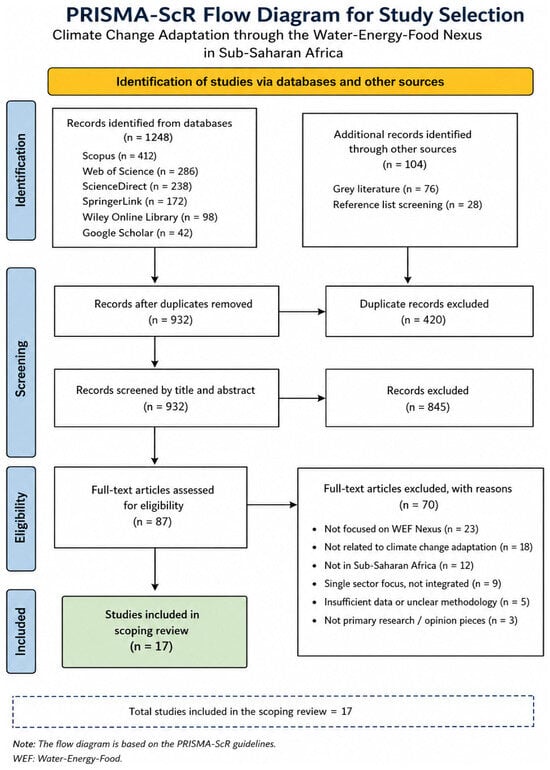
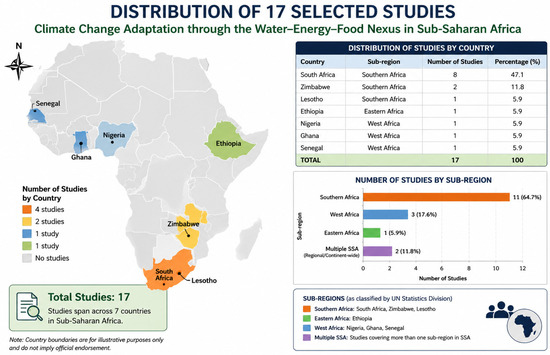
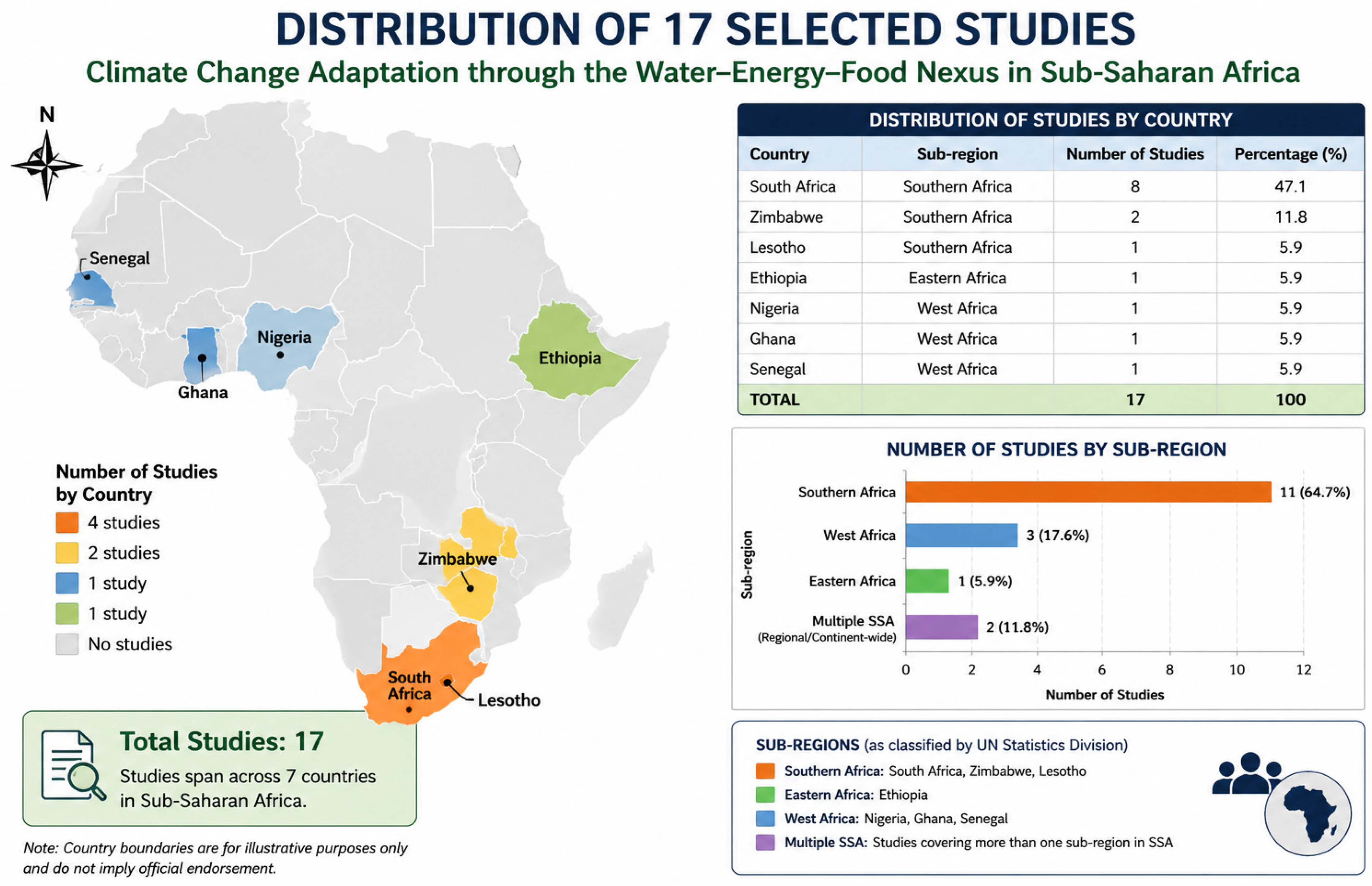
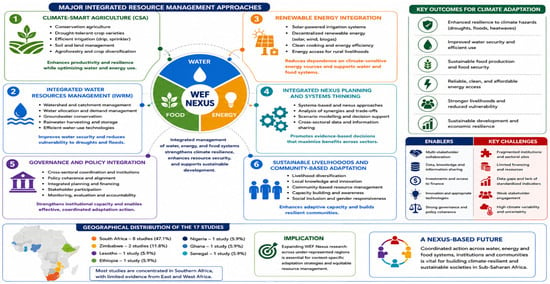
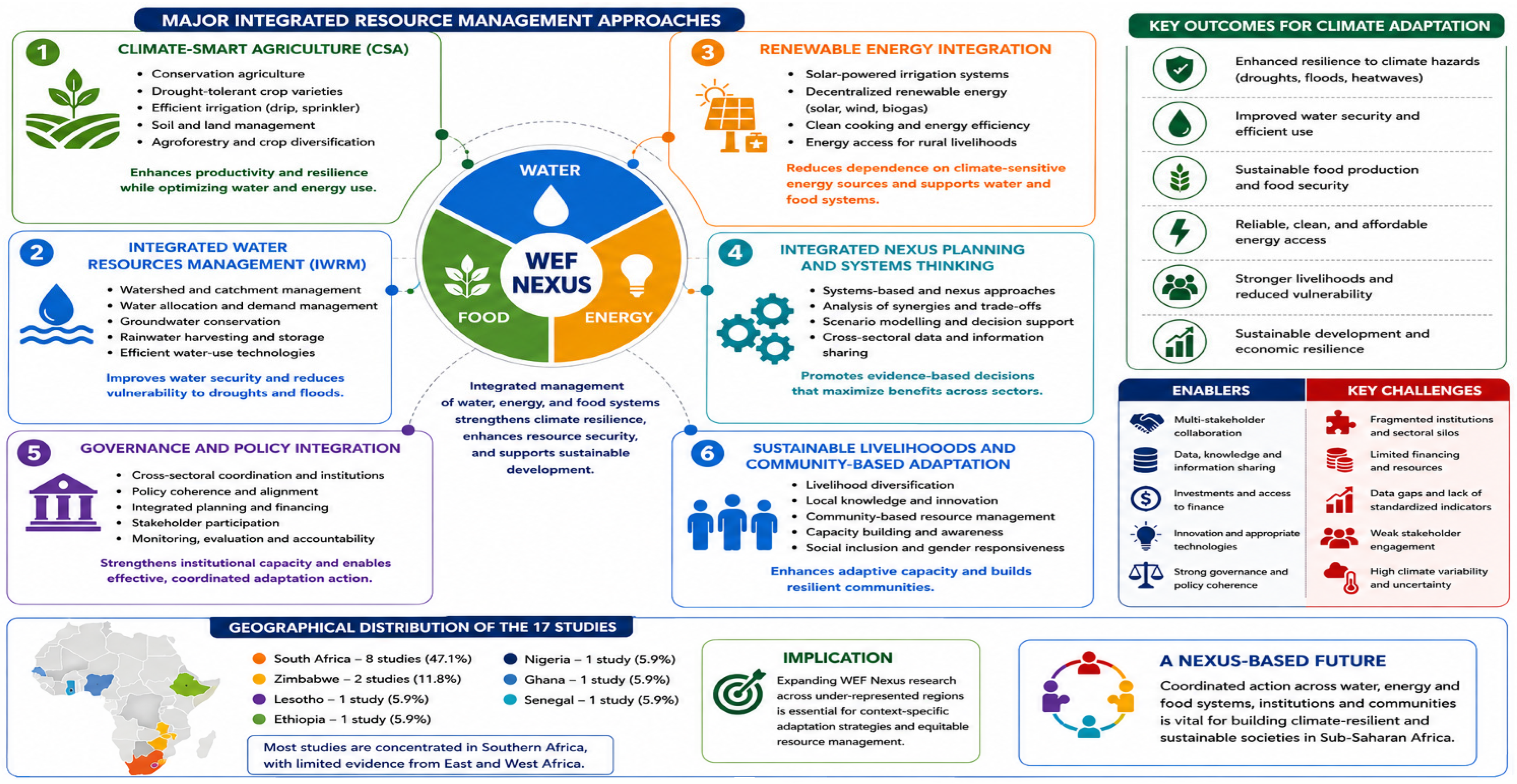
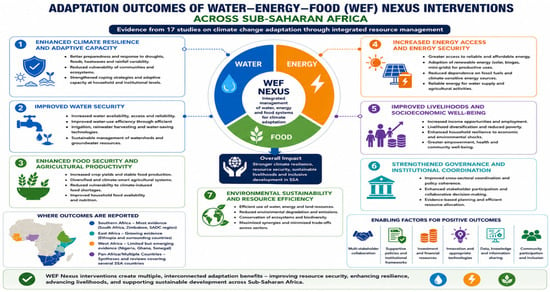
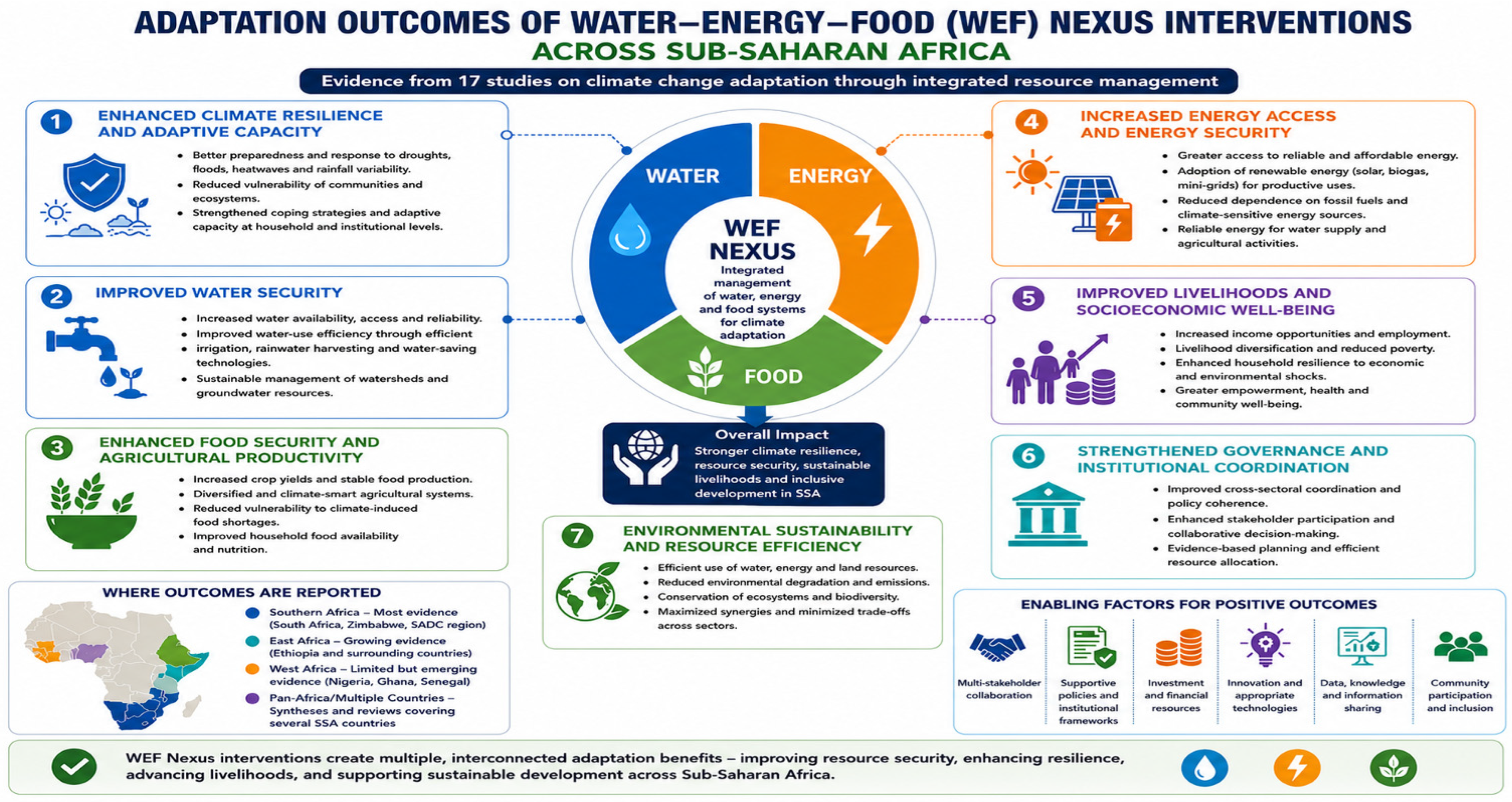

Disclaimer/Publisher’s Note: The statements, opinions and data contained in all publications are solely those of the individual author(s) and contributor(s) and not of MDPI and/or the editor(s). MDPI and/or the editor(s) disclaim responsibility for any injury to people or property resulting from any ideas, methods, instructions or products referred to in the content. |
© 2026 by the authors. Licensee MDPI, Basel, Switzerland. This article is an open access article distributed under the terms and conditions of the Creative Commons Attribution (CC BY) license.