


Abstract
This study examines public–private wage differentials and wage-gap convergence across Thai industries, with particular attention to whether the adjustment of wage gaps changed after the onset of the COVID-19 pandemic. The public–private wage gap is measured as the log difference between government-sector and private-sector wages. Using quarterly industry-level panel data for Thailand from 2011Q1 to 2024Q4, the study applies fixed-effects panel regressions, interaction models for the period after the onset of COVID-19, initial-gap heterogeneity analysis, and σ-convergence analysis. The period after the onset of COVID-19 is operationally defined as 2020Q1 onward. The fixed-effects results indicate conditional mean reversion in public–private wage gaps within industries, with larger previous gaps associated with stronger subsequent adjustment. The effective adjustment coefficient was more negative after the onset of COVID-19, changing from −0.73 in the pre-COVID period to −0.84 from 2020Q1 onward, although the statistical evidence for this difference weakens under alternative inference methods. Baseline estimates also suggest stronger adjustment among low-initial-gap industries, although this between-group difference is not robust across all alternative specifications. The σ-convergence results show that cross-industry wage-gap dispersion declined over the study period. However, the change in the dispersion trend after 2020Q1 was not statistically significant. The results indicate within-industry conditional mean reversion and declining cross-industry wage-gap dispersion. The study contributes to the public–private wage-differential literature by shifting attention from static wage premia or penalties to the dynamic adjustment of wage gaps over time, while distinguishing within-industry conditional mean reversion from changes in cross-industry wage-gap dispersion.
1. Introduction
Public–private wage differences are important because wages in government and private employment are not determined by the same mechanisms. Public-sector pay is usually shaped by administrative compensation systems, budgetary constraints, public employment regulations, and wage-bill management. Private-sector pay, by contrast, is more directly exposed to market competition, firm performance, labour demand, and productivity conditions. Public-sector compensation is therefore often discussed in relation to fiscal sustainability, public-sector productivity, and the allocation of labour between government and private employment (World Bank, 2021a). Empirical studies also show that public–private wage differentials vary across countries, worker groups, skill levels, gender groups, and institutional settings, rather than following a single universal pattern (De Castro et al., 2013; Abdallah et al., 2023). This variation suggests that public–private wage gaps should be understood not only as differences in average pay, but also as outcomes of institutional wage-setting arrangements and labour-market adjustment.
The issue is particularly relevant for Thailand because wage outcomes are uneven across workers, locations, and sectors. Thai labour-market conditions differ across manufacturing, construction, trade, transport, accommodation and food services, finance, education, health, and other service activities. These differences imply that an aggregate comparison between government-sector and private-sector wages may conceal important variation across industries. Evidence from Thai manufacturing workers shows that wages are associated with education, experience, and agglomeration externalities, indicating that wage outcomes in Thailand reflect both individual characteristics and spatial-industrial conditions (Prasertsoong & Puttanapong, 2022). For this reason, industry-level data provide a useful basis for examining whether public–private wage gaps narrow, persist, or widen across different parts of the Thai economy.
Thailand’s labour market already had structural weaknesses before the COVID-19 pandemic. The World Bank reported that the pandemic affected a labour market characterized by weak job creation, low-quality and informal employment, declining labour-force participation, and population ageing (World Bank, 2021b). These conditions are important because wage adjustment is unlikely to be uniform across the economy. Industries more exposed to tourism, transport, accommodation, food services, and market demand may respond differently from industries with more stable wage-setting arrangements or a stronger public-sector presence. The public–private wage gap in Thailand can therefore be viewed not only as a difference between two employment sectors, but also as an adjustment process observed across industries over time.
The onset of COVID-19 provides an important context for examining whether this adjustment process changed. Globally, the pandemic disrupted working time, employment, and labour income, with uneven effects across sectors and worker groups (International Labour Organization, 2021). In Thailand, Paweenawat and Liao (2021) show that COVID-19-related labour-market risks differed across industries, occupations, and demographic groups. These differences are relevant to public–private wage gaps because private-sector wages are generally more exposed to market disruptions, while public-sector wages are more likely to be influenced by institutional pay rules and budgetary arrangements. In this study, the period after the onset of COVID-19 is operationally defined as 2020Q1 onward. This definition is used to examine whether wage-gap adjustment was different during the period from the onset of the pandemic and its aftermath, without implying that the pandemic itself is the only causal factor behind the observed changes.
This paper applies the concept of convergence to public–private wage gaps. In the convergence literature, β-convergence describes a situation in which units with larger initial gaps adjust more strongly in subsequent periods, while σ-convergence describes a decline in dispersion across units over time (Barro & Sala-i-Martin, 1992). In the present context, β-convergence captures whether larger previous public–private wage gaps are associated with stronger subsequent within-industry adjustment. Because the empirical models include industry fixed effects, a negative β is interpreted as conditional mean reversion rather than evidence that wage gaps necessarily move toward zero or a common level across industries. σ-convergence means that the dispersion of public–private wage gaps across industries declines over time. This approach shifts the analysis away from a static comparison of average public and private wages and toward the dynamic adjustment of wage gaps. Wage-gap convergence is economically relevant because it reflects how public- and private-sector wages adjust relative to each other over time. Persistent or widening gaps may affect the relative attractiveness of employment across sectors and may have implications for recruitment, retention, and labour allocation. Examining convergence therefore provides information on wage-setting adjustment that cannot be captured by a static comparison of average wages alone.
The use of industry-level data is appropriate because wage gaps may not move in the same way across all parts of the economy. Evidence from sectoral wage research shows that remuneration can vary across sectors and may not follow a single aggregate pattern (Mazorodze, 2024). Although that study does not examine Thailand or public–private wage gaps directly, it supports the broader point that wage adjustment should be observed below the aggregate level. In the present study, industry-level panel data are used to examine whether public–private wage gaps show a systematic pattern of convergence across industries, without treating each industry as a separate case study or estimating separate convergence paths for individual industries.
Existing research on public–private wage differences has mainly focused on estimating wage premia or wage penalties and identifying the factors associated with differences between the two sectors. Previous studies show that public–private wage differentials differ across countries, worker groups, and institutional contexts, and that estimates are sensitive to labour-market structure and the choice of comparison group (De Castro et al., 2013; Gindling et al., 2020; Abdallah et al., 2023). However, less is known about whether public–private wage gaps narrow over time, particularly across industry observations in an emerging economy. For Thailand, this issue remains important because wage differences between government and private employment may evolve differently before and after the onset of COVID-19, and the adjustment process may also depend on the size of the initial wage gap.
This paper examines public–private wage-gap convergence across Thai industries using quarterly industry-level panel data from 2011Q1 to 2024Q4. The study addresses three research questions. First, do industries with larger previous public–private wage gaps show stronger subsequent within-industry adjustment? Second, did the adjustment process differ after the onset of COVID-19, operationally defined as 2020Q1 onward? Third, does convergence differ between low- and high-initial-gap industry groups? The analysis does not estimate separate convergence paths for individual industries. Instead, it tests whether there is a systematic convergence pattern across the industry-level panel. By focusing on adjustment rather than only average wage differences, the paper contributes to the literature by examining conditional wage-gap adjustment within industries together with changes in cross-industry wage-gap dispersion over time.
2. Literature Review
2.1. Public–Private Wage Differentials
Public–private wage differentials have long been examined in labour economics because they reflect fundamental differences in wage-setting mechanisms between government and private employment. Private-sector wages are generally more responsive to firm productivity, profitability, market competition, labour demand, and business-cycle conditions. Public-sector wages, by contrast, are often shaped by administrative pay scales, fiscal rules, political decisions, public employment regulations, and compensation policies. These institutional differences imply that the public–private wage gap should not be interpreted simply as a difference in average pay. Rather, it reflects broader interactions among labour-market conditions, fiscal capacity, institutional wage-setting, employment security, and the structure of public and private employment.
Theoretically, the direction of the public–private wage gap is ambiguous. A public-sector wage premium may arise when governments use compensation policy to attract and retain workers, support wage equity, reduce income inequality, or maintain stable public services. In many developing economies, public employment may also provide greater job security, formal employment status, pensions, and other non-wage benefits. However, a public-sector wage deficit may also occur if workers accept lower monetary wages in exchange for greater employment stability, lower dismissal risk, shorter working hours, or stronger social protection. Public-sector wages may also be constrained by fiscal consolidation, budgetary pressure, and public-sector pay restraint. These competing mechanisms explain why the public sector may pay more than the private sector in some settings, while the opposite pattern may occur in others.
Empirical evidence confirms that public–private wage differentials vary substantially across countries, labour-market institutions, and worker groups. Abdallah et al. (2023) show that public-sector wage premia differ by country income level, gender, skill group, and period. Their findings suggest that public-sector wage premia tend to be larger among women, low-skilled workers, and workers in developing economies, indicating that the wage gap is shaped by both institutional arrangements and distributional conditions. Similarly, De Castro et al. (2013) and Gindling et al. (2020) show that estimates of public-sector wage premia are sensitive to labour-market structure and the choice of comparison group. This point is particularly important in developing economies, where the private sector may include formal, informal, skilled, casual, and low-security employment segments.
Country-specific studies further demonstrate that the sign and size of the public–private wage gap depend on economic and institutional context. Adamchik and Bedi (2000) find evidence of a private-sector wage advantage in Poland during the transition to a market economy, especially among university-educated workers. Their results suggest that private-sector expansion may increase returns to education and skills relative to the public sector. In contrast, Glinskaya and Lokshin (2007) find a sizeable public-sector wage premium in India, particularly when public-sector workers are compared with informal or casual private-sector workers. These contrasting findings indicate that the public–private wage gap is not a universal or fixed outcome, but a context-specific relationship shaped by labour-market segmentation, skill composition, and institutional wage-setting. The literature also shows that average public–private wage gaps may conceal important distributional differences. Tansel (2005) shows that public–private wage differentials in Turkey differ by gender and educational attainment, with wage gaps varying across public administration, state-owned enterprises, and the formal private sector. Melly (2005), using evidence from Germany, shows that public-sector wages are more compressed than private-sector wages, implying that public employment tends to provide relatively higher wages at the lower end of the wage distribution but lower rewards at the upper end. Similar distributional patterns are reported by Mahuteau et al. (2017) for Australia and by Couceiro de León and Dolado (2022) for Spain. These studies suggest that public-sector wage-setting may reduce wage dispersion and generate different effects across the wage distribution, rather than producing a uniform wage premium for all workers.
Recent evidence further highlights the dynamic nature of public–private wage differentials. Li and Zhang (2023) show that public-sector workers in urban China earned more than private-sector workers, but the magnitude of the gap changed over time. This finding is important because it suggests that public–private wage differentials should not be treated only as static wage premia or deficits. At the same time, Gorodnichenko and Sabirianova Peter (2007) caution that reported wages may not fully capture total employment compensation, especially in contexts where non-wage benefits or unreported payments are important. Although the present study focuses on observed wages, this limitation implies that the estimated wage gap should be interpreted as a reported wage differential rather than a complete measure of total employment compensation.
The literature shows that public–private wage differentials are shaped by worker characteristics, education, gender, skill level, wage compression, job security, non-wage benefits, labour-market segmentation, fiscal conditions, and institutional wage-setting. However, most existing studies focus on estimating the size and determinants of public-sector wage premia or deficits. Less attention has been paid to whether the wage gap itself narrows, persists, or widens over time. This distinction is important because public and private wages may both increase, while the relative gap between them may converge or diverge depending on how wages in the two sectors adjust. The present study therefore extends the literature by examining not only the existence of public–private wage differentials, but also the convergence of these wage gaps across Thai industries over time.
2.2. Wage Structure and Labour-Market Adjustment in Thailand
Thailand provides a useful context for examining changes in the public–private wage gap over time because wage outcomes in the country have been shaped by long-term changes in education, occupation, firm size, employment form, regional concentration, and macroeconomic shocks. Although existing studies on Thailand have not directly examined whether the wage gap between government and private employment narrows over time, they provide important background on how wage differences are formed and maintained in the Thai labour market. This background is important because public- and private-sector wages are likely to respond differently to structural labour-market conditions. Private-sector wages may adjust more directly to firm performance, market demand, and business-cycle shocks, whereas government-sector wages are more likely to be influenced by administrative pay systems, fiscal rules, and public employment arrangements. These studies are therefore useful for understanding the structural conditions under which public and private wages may adjust differently.
Wasi et al. (2019) provide important evidence on labour income inequality in Thailand by using the Thai Labour Force Survey from 1988 to 2017 together with administrative panel data from the Thai Social Security Office. Their findings show that the decline in labour income inequality was partly related to a narrowing of earnings differences at the lower part of the distribution, while the wage gap between college and non-college workers continued to widen. The study links this pattern to changes in education and occupational structure, as college graduates became more widely distributed across occupations and a growing share of secondary-educated workers moved into low-skill rather than middle-skill jobs. It also shows that employment history and firm characteristics matter: high-wage workers tend to earn more from the beginning of their careers, and wage gaps become larger with age, firm size, and job mobility. This evidence suggests that wage differences in Thailand are not only a matter of average wage growth, but are also connected to workers’ education, occupation, career paths, and firm characteristics. For the present study, these findings imply that public–private wage gaps may reflect differences in the composition of workers and jobs across industries, as well as differences in how wages are adjusted within government and private employment.
Spatial and industrial factors also help explain wage differences in Thailand. Prasertsoong and Puttanapong (2022) show that wages among Thai manufacturing workers are influenced by education, experience, and agglomeration externalities. Their study, based on Labour Force Survey data, Industrial Census data, geospatial data, and satellite imagery for 2007, 2012, and 2017, finds that workers in more urbanized and economically concentrated areas benefit from localized productivity advantages. This evidence does not directly address public–private wage gaps, but it supports the broader argument that wage outcomes in Thailand are partly shaped by the location and structure of economic activity. Because industries differ in their degree of urban concentration, productivity conditions, market exposure, and public-sector presence, the gap between government and private wages may not adjust uniformly across industries. For the present study, this provides a useful background for examining whether wage differences between government and private employment move differently across industries over time.
The COVID-19 period also highlights the importance of studying wage adjustment in Thailand. Paweenawat and Liao (2021) show that labour-market risks during the pandemic were unevenly distributed across workers and sectors. Hayakawa and Sudsawasd (2025) further show that the wage effects of COVID-19 differed by firm size. These studies do not provide direct evidence on public–private wage-gap convergence, but they indicate that labour-market and wage pressures during the pandemic were not evenly distributed across the Thai economy. Since private-sector wages are generally more exposed to firm-level and market shocks than government wages, the period after the onset of COVID-19 provides an important setting for examining whether the relative position of government and private wages changed. However, this evidence should be interpreted as contextual support rather than direct evidence that COVID-19 caused public–private wage-gap convergence. Thailand’s minimum-wage policy also changed during the study period. The 300-baht daily minimum wage was introduced in seven provinces in 2012 and extended nationwide from January 2013 (Ministry of Labour, 2012), with further adjustments in later years. These changes suggest that post-2020 wage-gap movements may also reflect wage-policy effects, not only the COVID-19 shock.
The Thai literature shows that wage differences are shaped by education, occupation, employment history, firm characteristics, regional concentration, and macroeconomic shocks. However, existing studies have mainly focused on wage inequality, wage differentials, and labour-market risks, rather than on whether the wage gap between government and private employment narrows, persists, or widens over time. This leaves an important gap in understanding the dynamic adjustment of public–private wage differences across Thai industries. The present study addresses this issue by examining whether public–private wage differences across Thai industries show evidence of convergence over time. The literature suggests that differences in wage-setting institutions, labour-market conditions, worker composition, productivity, and sector-specific shocks may help explain why public–private wage gaps change over time. These mechanisms provide a conceptual basis for understanding why wage gaps may converge or persist across industries, but they are not tested separately in the present study. These considerations motivate the empirical examination of whether wage gaps adjust over time, whether the adjustment differs after the onset of COVID-19, and whether it varies with initial wage-gap conditions.
2.3. Wage Convergence and the Research Gap
The convergence framework has its roots in the economic growth literature. Barro and Sala-i-Martin (1992) distinguish between β-convergence and σ-convergence. β-convergence refers to the tendency of units with lower initial levels to grow faster than those with higher initial levels, while σ-convergence refers to a decline in dispersion across units over time. Although these concepts were originally developed to study income and productivity, they can also be applied to wage analysis. In this context, β-convergence examines whether initially low-wage units experience faster wage growth, or whether initially large wage gaps decline more strongly. σ-convergence examines whether the dispersion of wages, or the dispersion of wage gaps, declines over time. The distinction between these two concepts is important because a negative relationship between initial gaps and subsequent changes does not automatically imply that overall dispersion across units has declined. For this reason, both β-convergence and σ-convergence are useful for examining wage-gap adjustment.
The convergence approach has been applied in several wage studies. Naz et al. (2017) examine wage convergence across European regions and show that convergence patterns differ between internal and border regions. Gandolfi et al. (2014) study wage convergence between Mexico and the United States and find that trade integration does not necessarily lead to strong long-run wage convergence. Historical and regional studies also show how convergence analysis can be used to examine wage adjustment over time. Enflo et al. (2014) find real wage β-convergence across Swedish counties during 1860–1940, while Prado et al. (2021) examine wage convergence among Swedish farm workers and show that wage differences changed across regions and periods. More recent studies also apply convergence concepts to different wage settings. Kotliński (2021) examines β, σ, and γ-convergence in gross earnings among EU countries, Arčabić et al. (2024) identify club convergence of real wages in the European Union, and Surender and Pattanaik (2025) find β and σ-convergence in rural wages in India. Blair and Posmanick (2023), using the case of gender wage convergence in the United States, also show that the narrowing of wage gaps may slow over time. Together, these studies demonstrate that convergence analysis can be used to examine whether wage differences narrow over time, but they largely focus on wage levels or wage differences across countries, regions, or worker groups.
However, much of the wage-convergence literature focuses on wage levels across countries, regions, or worker groups, rather than on the convergence of a wage gap between two employment sectors. This distinction is important for the present study. A public–private wage gap is a relative measure between government and private wages. The gap may narrow, persist, or widen depending on how wages in the two sectors move relative to each other. Therefore, the convergence of the public–private wage gap should be examined directly, rather than inferred from changes in public-sector wages or private-sector wages separately. In other words, even if public-sector wages and private-sector wages both increase over time, the wage gap between them may follow a different adjustment path.
The research gap is therefore located at the intersection of two strands of literature. First, studies on public–private wage differentials mainly estimate the size and determinants of wage premia or wage penalties between government and private employment, but pay less attention to whether these gaps narrow, persist, or widen over time. Second, wage-convergence studies mainly examine convergence in wage levels across countries, regions, or worker groups, rather than convergence in the relative wage gap between two employment sectors. This distinction is important because public-sector wages and private-sector wages may both increase over time, while the gap between them may follow a different adjustment path.
This paper connects these two strands of literature by applying the convergence framework to public–private wage gaps across Thai industries. Instead of comparing public and private wages only at a given point in time, the analysis asks whether industries with larger previous gaps tend to show stronger subsequent reductions, and whether the dispersion of wage gaps across industries declines over the study period. The contribution of the study is primarily empirical, using established β and σ-convergence frameworks to examine the adjustment of public–private wage gaps over time and to provide industry-level evidence from Thailand.
3. Data and Methodology
3.1. Data
The analysis uses quarterly industry-level panel data for Thailand published by the Bank of Thailand (2026), based on the National Statistical Office (NSO) Labour Force Survey. The wage variables are measured as average wages by industry and employment sector, distinguishing between private-sector and government-sector wages. Wages are measured in nominal baht per month. The wage series refers to average wages reported in the underlying NSO Labour Force Survey. The available documentation does not specify whether bonus payments are included in the reported average-wage measure. In the underlying Labour Force Survey, government employees are classified separately from state-enterprise employees. Accordingly, the government-sector category used in this study refers to government employees and excludes state-enterprise employees.
The dataset covers the period from 2011Q1 to 2024Q4 and includes 15 industries. The panel is balanced in its industry–quarter structure, although a small number of wage observations are missing. Missing wage values are not interpolated, and the regressions use the available observations. The published aggregate data do not report the underlying respondent counts for each industry–sector–quarter cell; therefore, cell sizes cannot be directly observed in the dataset used for estimation. To assess the sensitivity of the results to potential short-run measurement variation, the analysis additionally uses annual-frequency estimates and a winsorized-wage robustness check. The industry-level panel structure is appropriate for examining public–private wage gaps because average wage differences between the public and private sectors may vary across industries and may follow different adjustment processes over time.
The main variables used in the analysis are private-sector wages, government-sector wages, the logarithm of each wage series, the public–private wage gap, the quarterly change in the wage gap, and the lagged value of the wage gap. The public–private wage gap is measured as the log difference between government-sector wages and private-sector wages, as shown in Equation (1).
where denotes the public–private wage gap for industry i in quarter ; denotes government-sector wages for industry in quarter ; denotes private-sector wages for industry in quarter ; and denotes the natural logarithm. A positive value of indicates that government-sector wages are higher than private-sector wages, while a negative value indicates that private-sector wages are higher than government-sector wages.
The quarterly change in the public–private wage gap is calculated as the first difference in the gap, as shown in Equation (2).
where denotes the quarterly change in the public–private wage gap for industry in quarter ; is the current public–private wage gap; and is the one-quarter lag of the public–private wage gap. This differenced variable is used as the dependent variable in the main convergence models because the analysis focuses on whether wage gaps narrow or widen from one quarter to the next.
3.2. Grouping by Initial Public–Private Wage Gap
To examine whether industries with different initial wage-gap conditions follow different adjustment paths, industries are classified into low- and high-initial-gap groups. The classification is based on each industry’s average public–private wage gap during the pre-COVID period. Industries with pre-COVID average wage gaps below the median are classified as low-initial-gap industries, whereas industries with values equal to or above the median are classified as high-initial-gap industries.
This classification is used to investigate heterogeneity in wage-gap convergence. It allows the analysis to test whether industries that initially had larger public–private wage gaps adjusted differently from industries that began with smaller gaps. The grouping forms part of the empirical design, with the resulting industry classification reported descriptively in Section 4. As a sensitivity check, the industry located at the median threshold is reassigned to the alternative group to assess whether the heterogeneity results depend on the classification of the boundary observation.
3.3. Empirical Framework
The empirical framework follows the logic of convergence analysis. In the convergence literature, β-convergence refers to a situation in which units with larger initial gaps adjust faster over time, while σ-convergence refers to a decline in dispersion across units (Barro & Sala-i-Martin, 1992). Sector-level convergence analysis has also been applied to Thailand to study heterogeneous adjustment across industries, particularly in the context of labour productivity (Sawangloke et al., 2026). The present study applies this logic to examine the adjustment of public–private wage gaps within industries and changes in their dispersion across industries.
For empirical purposes, this study defines the period after the onset of COVID-19 as 2020Q1 onward. This definition does not imply that the COVID-19 pandemic had ended by that point. Rather, it captures the period from the onset of the COVID-19 pandemic onward, including both the pandemic shock and its subsequent aftermath, during which labour-market adjustment continued under pandemic-related and post-shock conditions.
The baseline β-convergence model is specified in Equation (3).
where is the quarterly change in the public–private wage gap for industry in quarter ; is the constant term; is the lagged public–private wage gap; is the convergence coefficient; represents quarter effects that control for seasonal wage patterns; represents industry fixed effects; and is the error term. The coefficient β is the main parameter of interest. A negative and statistically significant β indicates conditional β-convergence. Because the model includes industry fixed effects, this result is interpreted as conditional mean reversion, whereby larger previous wage gaps are associated with stronger subsequent within-industry adjustment toward industry-specific long-run levels. It does not imply that wage gaps necessarily converge toward zero or toward a common level across industries.
To examine whether the convergence process changed after the onset of COVID-19, the baseline model is extended by adding a dummy for the period from 2020Q1 onward and its interaction with the lagged wage gap, as shown in Equation (4).
where is the quarterly change in the public–private wage gap; is the constant term; is the lagged wage gap; measures the convergence coefficient before COVID-19; is a dummy variable equal to one for the period from 2020Q1 onward and zero otherwise; measures the direct shift in the quarterly change in the wage gap after the onset of COVID-19; is the coefficient on the interaction term between the lagged wage gap and the dummy for the period from 2020Q1 onward; represents quarter effects; represents industry fixed effects; and is the error term. A negative and statistically significant δ indicates that the effective conditional adjustment coefficient became more negative after the onset of COVID-19, suggesting stronger within-industry adjustment during the period from 2020Q1 onward.
The final fixed-effects specification tests whether convergence differs between low- and high-initial-gap industries, as shown in Equation (5).
where is the quarterly change in the public–private wage gap; is the constant term; is the lagged wage gap; is the conditional adjustment coefficient for low-initial-gap industries, which serve as the reference group; is a dummy variable equal to one for high-initial-gap industries and zero otherwise; measures how the adjustment rate of high-initial-gap industries differs from that of low-initial-gap industries; represents quarter effects; represents industry fixed effects; and is the error term. Since does not vary over time, its direct effect is absorbed by industry fixed effects. Therefore, the interaction term identifies the difference in conditional adjustment between the two groups.
All main models are estimated using fixed-effects regression. Industry fixed effects control for unobserved characteristics that are specific to each industry and do not change over time. Quarter effects are included to account for seasonal wage patterns. This approach is consistent with standard panel-data methods for controlling unobserved heterogeneity (Wooldridge, 2010).
3.4. Econometric Diagnostics and Robustness Checks
Before estimating the main models, several diagnostic tests are conducted. Multicollinearity is assessed using the variance inflation factor. Groupwise heteroskedasticity is examined using the modified Wald test. Serial correlation is tested using the Wooldridge test for panel data (Drukker, 2003). Cross-sectional dependence is examined using the Pesaran CD test (Pesaran, 2021). An F test for industry fixed effects is also conducted to verify whether industry-specific effects are jointly significant.
The diagnostic results indicate that multicollinearity is not a serious concern. However, heteroskedasticity, serial correlation, and cross-sectional dependence are detected. The fixed-effects test also supports the use of industry fixed effects. For this reason, the main models report robust standard errors clustered at the industry level.
As a robustness check, the fixed-effects models are re-estimated using Driscoll–Kraay standard errors with four lags. This correction is applied to account for heteroskedasticity, serial correlation, and cross-sectional dependence in the panel data (Driscoll & Kraay, 1998). The robustness check is used to examine whether the main conclusions remain stable under an alternative standard-error correction. The possibility that convergence estimates may reflect regression to the mean has long been recognized in the literature (Friedman, 1992; Quah, 1993). To address this concern, the study instruments the lagged wage gap with its second lag, re-estimates the baseline model at the annual frequency, and conducts a winsorized-wage robustness check. Implied half-lives are also reported to assess the estimated speed of adjustment.
Given the small number of industry clusters, wild-cluster bootstrap inference is additionally used for the key interaction coefficients. The models are also re-estimated with full quarter-year fixed effects to control for common time-specific shocks. Potential dynamic-panel bias is assessed using the bias-corrected LSDV estimator, while a dynamic common correlated effects (DCCE) specification is used as an additional sensitivity check for cross-sectional dependence.
3.5. Linear Combinations of Interaction Effects
The interaction models require additional interpretation because the coefficient on the lagged wage gap does not represent the convergence rate for every period or every group. Linear combinations are therefore calculated to obtain the effective convergence coefficients. Equations (6)–(9) are not additional regression models. Rather, they are linear combinations of the estimated coefficients from the interaction models and are used to calculate the effective convergence coefficients for the pre-COVID period, the period after the onset of COVID-19, low-initial-gap industries, and high-initial-gap industries following the standard interpretation of interaction effects (Brambor et al., 2006).
For the model examining the period after the onset of COVID-19, is the convergence coefficient before COVID-19 because the dummy for the period from 2020Q1 onward equals zero in the pre-COVID period. It measures the effective convergence coefficient for public–private wage-gap adjustment during the pre-COVID period, following the -convergence framework introduced in the growth literature (Barro & Sala-i-Martin, 1992), as shown in Equation (6).
where is the effective convergence coefficient before COVID-19, and is the coefficient on the lagged public–private wage gap in the interaction model for the period after the onset of COVID-19.
The convergence coefficient for the period after the onset of COVID-19 is obtained by adding the pre-COVID convergence coefficient to the interaction coefficient , as shown in Equation (7).
where is the effective convergence coefficient for the period after the onset of COVID-19, operationally defined as 2020Q1 onward; is the pre-COVID convergence coefficient; and is the coefficient on the interaction between the lagged public–private wage gap and the dummy for the period from 2020Q1 onward. If is more negative than , this indicates stronger public–private wage-gap adjustment during the period after the onset of COVID-19.
For the initial-gap heterogeneity model, low-initial-gap industries serve as the reference group. The convergence coefficient for this group is therefore shown in Equation (8).
where is the effective convergence coefficient for low-initial-gap industries, and is the coefficient on the lagged public–private wage gap in the initial-gap heterogeneity model.
For high-initial-gap industries, the effective convergence coefficient combines with the interaction coefficient , as shown in Equation (9).
where is the effective convergence coefficient for high-initial-gap industries; is the convergence coefficient for the low-initial-gap reference group; and is the coefficient on the interaction between the lagged wage gap and the high-initial-gap dummy. A more negative effective coefficient indicates stronger public–private wage-gap adjustment.
3.6. σ-Convergence Analysis
In addition to β-convergence, the study examines σ-convergence. The purpose is to determine whether the dispersion of public–private wage gaps across industries declines over time. This is important because β and σ-convergence capture different aspects of adjustment. Industries may show stronger adjustment from larger initial gaps, but the dispersion of gaps may not necessarily decline (Barro & Sala-i-Martin, 1992).
For each quarter, wage-gap dispersion is measured by the cross-industry standard deviation of the public–private wage gap. Instead of using a shorthand notation, the dispersion measure is written in full as shown in Equation (10).
where is the cross-industry standard deviation of public–private wage gaps in quarter ; is the number of industries; is the public–private wage gap for industry in quarter ; is the average public–private wage gap across all industries in quarter ; and denotes summation across industries from to . A decline in indicates that public–private wage gaps across industries are becoming more compressed.
The σ-convergence model is estimated as shown in Equation (11).
where is the cross-industry dispersion of public–private wage gaps in quarter ; is the constant term; is a linear time trend; is the coefficient measuring the trend in wage-gap dispersion; and is the error term. A negative and statistically significant indicates declining wage-gap dispersion over time.
To examine whether the dispersion trend changed during the period after the onset of COVID-19, operationally defined as 2020Q1 onward, the model is extended as shown in Equation (12).
where is the quarterly dispersion of wage gaps; is the constant term; is the time trend; is the pre-COVID dispersion trend; is a dummy variable equal to one for the period after the onset of COVID-19, operationally defined as 2020Q1 onward, and zero otherwise; measures the direct shift in dispersion during the period after the onset of COVID-19; captures the change in the dispersion trend during the period after the onset of COVID-19; and is the error term. The dispersion trend for the period after the onset of COVID-19 is calculated in Equation (13). Equation (13) is not separately estimated. It is calculated as a linear combination of the pre-COVID time-trend coefficient and the interaction coefficient for the period from 2020Q1 onward to obtain the effective dispersion trend after the onset of COVID-19.
where is the effective dispersion trend for the period after the onset of COVID-19, operationally defined as 2020Q1 onward; is the pre-COVID dispersion trend; and is the additional change in the trend during the period after the onset of COVID-19. A negative value of indicates that public–private wage-gap dispersion declined during this period.
Finally, σ-convergence is estimated separately for low- and high-initial-gap industries. For each group and quarter, the standard deviation of the public–private wage gap is calculated and then regressed on a time trend. Newey–West standard errors with four lags are used in the σ-convergence regressions to address autocorrelation and heteroskedasticity in the quarterly time-series estimates (Newey & West, 1987).
4. Results
Table 1 presents the descriptive statistics of the main variables used in the study. The average government-sector wage is 19,657.41 baht, which is higher than the average private-sector wage of 15,603.33 baht. This difference is reflected in the mean public–private wage gap of 0.224, suggesting that government-sector wages tend to be higher than private-sector wages on average. However, the gap ranges from −0.757 to 1.415, indicating that wage differences vary across industries and periods. The mean change in the wage gap is slightly negative at −0.004, suggesting a small average decline in the gap over time. These statistics show that public–private wage differences exist, but their size and direction are not uniform across industries.
Table 1.
Descriptive Statistics.
The classification of industries by pre-COVID average public–private wage gaps reveals clear differences in initial wage-gap conditions across Thai industries (Table 2). The median pre-COVID average wage gap is 0.1895, which is used as the threshold for dividing industries into low- and high-initial-gap groups. Industries in the low-initial-gap group generally had small or negative wage gaps, indicating that government-sector wages were close to, or lower than, private-sector wages in some industries. The lowest pre-COVID average gap is found in professional, scientific and technical activities (−0.3002), followed by accommodation and food service activities (−0.0942). By contrast, the high-initial-gap group includes industries with larger positive wage gaps. Manufacturing records the highest pre-COVID average wage gap (0.7818), followed by water supply, sewerage, waste management and remediation activities (0.5589), and other service activities (0.5328). The classification indicates heterogeneous initial wage-gap conditions across industries, which provides the basis for comparing convergence patterns between low- and high-initial-gap groups in the subsequent analysis.
Table 2.
Classification of Industries by Initial Public–Private Wage Gap.
Figure 1 presents the raw public–private wage-gap trajectories for the 15 industries over 2011Q1–2024Q4. The trajectories show substantial heterogeneity and short-run fluctuations across industries. The figure is descriptive and is not interpreted as evidence of convergence by itself. Industry numbers correspond to Table 2.
Figure 1.
Industry Wage-Gap Trends.
The diagnostic results indicate that multicollinearity is not a serious problem in the model, as the mean VIF is 1.53 and the maximum VIF is 1.75, both of which are low. However, the modified Wald test shows the presence of groupwise heteroskedasticity, while the Wooldridge test indicates serial correlation in the panel data. The Pesaran CD test also suggests cross-sectional dependence across industries. In addition, the F test for industry fixed effects is statistically significant, confirming that industry-specific effects should be controlled for in the estimation. Based on these results, the fixed-effects model is appropriate, and robust standard errors clustered at the industry level are used to address heteroskedasticity and serial correlation. Quarter effects are included to account for seasonal wage patterns, while Driscoll–Kraay standard errors are used as an additional robustness check to address heteroskedasticity, serial correlation, and cross-sectional dependence (Table 3).
Table 3.
Pre-estimation Diagnostic Tests.
Model 1 provides evidence of conditional β-convergence in public–private wage gaps. The coefficient on the lagged public–private wage gap is negative and statistically significant at the 1% level (−0.7456), indicating that larger lagged gaps were associated with stronger subsequent within-industry adjustment (Table 4). Given the inclusion of industry fixed effects, this result is interpreted as conditional mean reversion rather than convergence toward zero or a common wage-gap level across industries. The graphical evidence is consistent with this finding, as the fitted line in the scatter plot slopes downward, showing a negative relationship between the lagged wage gap and the quarterly change in the wage gap. Although the observations are dispersed, the pattern is consistent with the fixed-effects result that industries with larger previous wage gaps showed stronger subsequent conditional adjustment (Figure 2). This pattern suggests that unusually large public–private wage gaps within an industry tended not to persist at the same magnitude in subsequent quarters, consistent with adjustment in the relative wage positions of the two sectors.
Table 4.
Fixed-Effects Estimates of Public–Private Wage Gap Convergence.
Figure 2.
β-Convergence of Public–Private Wage Gaps.
Model 2 extends the baseline convergence model by examining whether the adjustment of public–private wage gaps changed after the onset of COVID-19. The coefficient on the lagged public–private wage gap remains negative and statistically significant at the 1% level (−0.7274), indicating conditional mean reversion in the pre-COVID period. Industries with larger previous public–private wage gaps showed stronger subsequent within-industry adjustment. The dummy for the period from 2020Q1 onward is negative but not statistically significant (−0.0123), indicating that the period after the onset of COVID-19 did not produce a uniform shift in the quarterly change in the wage gap across industries. The interaction term between the lagged gap and the dummy for the period after the onset of COVID-19 is negative (−0.1153) and statistically significant under conventional industry-clustered inference (p = 0.048), suggesting stronger conditional adjustment from 2020Q1 onward (Table 4).
The graphical pattern supports this interpretation. Both the pre-COVID fitted line and the fitted line for the period after the onset of COVID-19 slope downward, indicating a negative relationship between lagged public–private wage gaps and subsequent changes in the gap. However, the fitted line for the period after the onset of COVID-19 is steeper than the pre-COVID line, which is consistent with stronger wage-gap adjustment from 2020Q1 onward. This visual pattern aligns with the negative interaction coefficient in Model 2. Taken together, the regression and graphical evidence indicate conditional mean reversion in both periods and suggest stronger within-industry adjustment from 2020Q1 onward, although the statistical evidence for this difference is weaker under wild-cluster bootstrap inference (Figure 3).
Figure 3.
Public–Private Wage-Gap Convergence before and after the Onset of COVID-19.
Model 3 examines whether wage-gap adjustment differs according to initial wage-gap conditions. The coefficient on the lagged public–private wage gap is negative and significant at the 1% level (−0.8904), indicating conditional mean reversion among low-initial-gap industries, which form the reference group. The interaction term with the high-initial-gap dummy is positive and significant (0.2546). The effective coefficient for high-initial-gap industries remains negative (−0.6358), indicating conditional mean reversion in both groups, with stronger within-industry adjustment among low-initial-gap industries (Table 4). As a sensitivity check, the industry at the median threshold (0.1895) was reassigned from the high- to the low-initial-gap group. The estimates remain similar (low-group β = −0.8857; high-group interaction = 0.2586; effective high-group β = −0.6271), indicating that the heterogeneity pattern is not sensitive to the assignment of the median industry.
The scatter plot shows a similar pattern. The fitted lines for both groups slope downward, indicating a negative relationship between lagged wage gaps and subsequent changes in the gap. The fitted line for the low-initial-gap group is steeper than that for the high-initial-gap group, which is consistent with stronger conditional adjustment among low-initial-gap industries. The results therefore indicate that the strength of within-industry mean reversion differs according to initial wage-gap conditions (Figure 4).
Figure 4.
Public–Private Wage Gap Convergence by Initial Wage-Gap Group.
When Driscoll–Kraay standard errors are applied, the results remain close to the main fixed-effects estimates (Table 5). The lagged public–private wage gap remains negative and significant in Models 1–3. The interaction term in Model 2 between the lagged wage gap and the dummy for the period after the onset of COVID-19 also remains negative and significant, indicating that the finding of stronger convergence-related adjustment during the period from 2020Q1 onward is not sensitive to this alternative standard-error correction. Similarly, the interaction term for high-initial-gap industries in Model 3 remains positive and significant, consistent with weaker convergence-related adjustment in this group. These results suggest that the main conclusions remain robust when Driscoll–Kraay standard errors are used to account for heteroskedasticity, serial correlation, and cross-sectional dependence.
Table 5.
Robustness Checks Using Driscoll–Kraay Standard Errors.
Table 6 shows that the estimated adjustment coefficient remains negative and statistically significant across the IV, annual-frequency, and winsorized specifications. Although the magnitude varies across specifications, the results consistently support conditional mean reversion. The annual-frequency estimate further shows that this finding persists after temporal aggregation, while the relatively short implied half-lives suggest that the precise speed of adjustment should be interpreted cautiously. The short quarterly half-lives should not be interpreted as the frequency with which government pay scales are administratively revised. Rather, they reflect mean reversion in the observed industry-level average public–private wage gap, which may also capture changes in private-sector wages, employment composition, and survey-based variation in average wages. The annual-frequency estimate, with an implied half-life of approximately 5.7 months, nevertheless indicates that conditional mean reversion persists after short-run quarterly variation is substantially reduced. Although the IV estimate yields an even shorter implied half-life, the coefficient remains negative and statistically significant, reinforcing the robustness of conditional mean reversion while leaving the precise speed of quarterly adjustment subject to cautious interpretation.
Table 6.
Additional Robustness Checks for Conditional Mean Reversion.
Additional robustness checks were conducted to address concerns regarding the small number of industry clusters, common time shocks, dynamic-panel bias, and cross-sectional dependence. The analysis therefore applies wild-cluster bootstrap inference, full time fixed effects, the bias-corrected LSDV estimator, and the dynamic common correlated effects (DCCE) estimator. As summarized in Table 7, the main conditional mean-reversion result remains stable across these alternative specifications, although the statistical evidence for the COVID-onset interaction and initial-gap heterogeneity becomes weaker under some robustness checks.
Table 7.
Additional Robustness Checks for Inference, Time Effects, and Panel Dependence.
Table 8 examines alternative explanations for the post-2020 adjustment. Conditional mean reversion remains evident across the pre-COVID, acute, and recovery periods, while the differences across these periods are not statistically significant under wild-bootstrap inference. None of the placebo break dates produce a significant change in the adjustment coefficient. The employment-weighted estimates similarly preserve strong conditional mean reversion, but the post-2020 interaction is no longer statistically significant. Overall, the results indicate that conditional mean reversion is robust, whereas evidence of a distinct acceleration after 2020 is sensitive to alternative timing and employment weighting.
Table 8.
Robustness Checks for Alternative Explanations of the Post-2020 Adjustment.
Cross-sectional dependence remains statistically detectable after the inclusion of full time fixed effects and in the DCCE specifications; therefore, the DCCE estimates are interpreted as sensitivity checks rather than as evidence that cross-sectional dependence has been fully eliminated. The effective convergence coefficients help clarify the interaction effects reported in the previous estimates. Under the baseline fixed-effects specification, the adjustment coefficient is more negative after the onset of COVID-19, changing from −0.7274 to −0.8426. Similarly, the estimated coefficient is more negative for low-initial-gap industries (−0.8904) than for high-initial-gap industries (−0.6358). These linear combinations summarize the baseline estimates, while the robustness checks in Table 7 indicate that the statistical evidence for these differences is sensitive to alternative inference and estimation methods (Table 9).
Table 9.
Linear Combinations of Public–Private Wage Gap Convergence Coefficients.
The β-convergence results indicate that industries with larger previous public–private wage gaps tended to adjust more strongly. The σ-convergence analysis then examines whether these adjustments were accompanied by a decline in the dispersion of wage gaps across industries. The overall time trend is negative and statistically significant (−0.0022), showing that cross-industry dispersion in public–private wage gaps decreased over the study period. The downward fitted line in Figure 5 shows the same pattern visually.
Figure 5.
σ-Convergence of Public–Private Wage Gaps.
When the sample is separated into the pre-COVID period and the period after the onset of COVID-19, operationally defined as 2020Q1 onward, both estimated trends remain negative. The pre-COVID trend is −0.0019 and significant at the 10% level, while the trend for the period after the onset of COVID-19 is more negative at −0.0035 and significant at the 5% level. Figure 6 also shows downward fitted lines in both periods, with the fitted line for the period after the onset of COVID-19 displaying a clearer decline. However, the difference in the trend after the onset of COVID-19 (−0.0016) is not statistically significant.
Figure 6.
σ-Convergence of Public–Private Wage Gaps before and after the Onset of COVID-19.
Therefore, although wage-gap dispersion declined after the onset of COVID-19, the results do not show that this decline was statistically different from the pre-COVID trend. These findings support the earlier convergence results by showing that public–private wage gaps became less dispersed across industries over time (Table 10). The decline in dispersion indicates that public–private wage gaps became less heterogeneous across industries over the study period.
Table 10.
σ-Convergence before and after the Onset of COVID-19.
Following the σ-convergence results, the group-level estimates examine whether the decline in wage-gap dispersion differs between low- and high-initial-gap industries (Table 11). The decline is clearer among industries with low initial public–private wage gaps, as shown by the negative and statistically significant trend (−0.0021). For high-initial-gap industries, the trend is also negative but much smaller and not statistically significant (−0.0004). The high–low difference in trend is positive (0.0017), but it is not statistically significant, so the results do not provide clear evidence that the two group trends are statistically different. The visual pattern in Figure 7 is consistent with these estimates: the fitted line for the low-initial-gap group slopes downward more clearly, whereas the fitted line for the high-initial-gap group is relatively flat. These results suggest that σ-convergence is more evident among low-initial-gap industries, while dispersion among high-initial-gap industries changed only slightly over time.
Table 11.
σ-Convergence by Initial Public–Private Wage Gap Group.
Figure 7.
σ-Convergence by Initial Public–Private Wage Gap Group.
5. Discussion
The β-convergence results indicate conditional mean reversion in public–private wage gaps within industries. Industries with larger wage gaps in the previous quarter showed stronger subsequent within-industry adjustment, consistent with the logic of β-convergence proposed by Barro and Sala-i-Martin (1992). Because the models include industry fixed effects, this finding should not be interpreted as evidence that wage gaps necessarily converged toward zero or toward a common level across industries. Evidence of declining cross-industry dispersion is instead provided by the σ-convergence results.
This finding adds a time dimension to the public–private wage differential literature. Abdallah et al. (2023) show that public–private wage gaps vary by country income group, gender, skill level, and period, while Gindling et al. (2020) find that public-sector wage premia in developing countries differ across worker groups and labour-market contexts. Earlier evidence also shows that the direction of the gap is not uniform. Adamchik and Bedi (2000) find a private-sector wage advantage in Poland during economic transition, whereas Glinskaya and Lokshin (2007) report a public-sector wage premium in India, especially when public employment is compared with informal or casual private-sector work. These studies show that the public–private wage gap should not be treated as a fixed or universal outcome. The evidence from Thailand adds that the gap may also adjust over time.
The interaction result suggests that wage-gap adjustment may have become stronger in the period from 2020Q1 onward, although the statistical evidence for this difference is weaker under alternative inference and estimation methods. This pattern can be understood in relation to the uneven labour-market pressures observed during the COVID-19 period. The International Labour Organization (2021) documents uneven disruptions to working hours, employment, and labour income, while evidence from Thailand shows that pandemic-related labour-market risks varied across industries, occupations, and demographic groups, and that wage effects differed by firm size (Paweenawat & Liao, 2021; Hayakawa & Sudsawasd, 2025). In this context, stronger adjustment among industries with larger earlier public–private wage gaps may be consistent with greater responsiveness of private-sector wages to market demand and firm-level conditions, relative to public-sector wages that are more closely linked to administrative pay systems and budgetary arrangements. This interpretation remains cautious because the period from 2020Q1 onward captures both the pandemic shock and its aftermath, rather than isolating COVID-19 as a single causal factor. Several economic and institutional mechanisms may be consistent with the observed adjustment pattern. Prior evidence from Thailand shows that wage outcomes are associated with occupational composition and employment history (Wasi et al., 2019), as well as education, experience, and agglomeration-related productivity conditions (Prasertsoong & Puttanapong, 2022). These factors may provide contextual explanations for heterogeneous wage-gap adjustment, but they are not separately identified or tested in this study.
The heterogeneity results suggest differences in conditional adjustment across the two industry groups. Baseline estimates indicate stronger within-industry adjustment among low-initial-gap industries, although this between-group difference is not robust across all alternative specifications. Both groups nevertheless exhibit conditional mean reversion. This result reflects differences in adjustment across groups and should not be interpreted as evidence that industries with larger initial gaps necessarily converge faster. Because the grouping is based on the pre-COVID average of the observed wage gap, the heterogeneity results are interpreted as descriptive rather than causal. This pattern is consistent with wage-convergence studies showing that adjustment may vary across groups. Kotliński (2021) finds evidence of β and σ-convergence in gross earnings among EU countries, although not all forms of convergence are supported. Arčabić et al. (2024) find club convergence of real wages in the European Union, suggesting that wage adjustment may occur within groups rather than uniformly across all units. The Thai results similarly indicate that the strength of wage-gap adjustment varies with initial wage-gap conditions.
Evidence from Thailand also helps explain why wage adjustment is unlikely to be uniform across the economy. Wasi et al. (2019) show that labour income differences in Thailand are related to education, occupation, employment history, firm size, and job mobility. Prasertsoong and Puttanapong (2022) show that wages among Thai manufacturing workers are associated with education, experience, and agglomeration externalities. These studies do not explain the convergence coefficients directly, but they show that wage outcomes in Thailand differ across workers, firms, and spatial-industrial settings. The present study adds that the gap between government and private wages also adjusts unevenly across industry observations.
The σ-convergence results support the main interpretation. Barro and Sala-i-Martin (1992) distinguish β-convergence from σ-convergence because stronger adjustment among units with larger initial gaps does not necessarily mean that dispersion across units declines. In this study, cross-industry dispersion in public–private wage gaps declined over the full period. This suggests that wage gaps became more compressed across industries, rather than merely showing that larger previous gaps were associated with stronger subsequent within-industry adjustment. The dispersion trend for the period after the onset of COVID-19, operationally defined as 2020Q1 onward, was also negative, but its difference from the pre-COVID trend was not statistically significant. Thus, the stronger evidence for the period after the onset of COVID-19 comes mainly from the β-convergence model, while the σ-convergence results mainly support the broader finding that dispersion declined over the study period.
The group-level σ-convergence results show a descriptively similar pattern, although the difference between the two group trends is not statistically significant. Dispersion declined more clearly among low-initial-gap industries, while the decline among high-initial-gap industries was weaker and not statistically significant. This descriptive pattern is consistent with the baseline β-convergence estimates, but it does not provide statistically significant evidence of a difference in σ-convergence between the two groups. Melly (2005) shows that public-sector wages in Germany are more compressed than private-sector wages, while Mahuteau et al. (2017) find that public–private wage gaps in Australia differ across the wage distribution. These studies do not directly explain the Thai industry-level pattern, but they support the broader point that public–private wage differences may vary across different parts of the labour market.
The findings show why a static comparison of average public and private wages is not enough. A wage gap observed at one point in time does not show whether the gap is stable, narrowing, or becoming more dispersed. Wage-convergence studies provide a useful way to examine this issue. Naz et al. (2017) show that wage convergence across European regions differs between internal and border regions, while Gandolfi et al. (2014) find that trade integration does not automatically produce strong wage convergence between Mexico and the United States. Enflo et al. (2014) and Prado et al. (2021) also show that wage convergence can reflect longer-term labour-market adjustment. Although these studies examine different settings, they support the use of convergence analysis to study whether wage differences become more similar over time.
Several limitations should be noted. The analysis uses observed wages and does not capture total employment compensation. Public-sector employment may include pensions, job security, and other non-wage benefits that are not fully reflected in wage data. Gorodnichenko and Sabirianova Peter (2007) caution that reported wages may not fully capture total compensation in some institutional settings. The study also uses industry-level data, so the results should be interpreted as evidence on wage-gap adjustment across industries, not as evidence on individual workers or firms. Because the wage measures are industry-level averages, the exit of lower-paid private-sector workers could mechanically raise observed private-sector average wages even without individual wage increases. The employment-weighted estimates do not fully eliminate this within-industry composition effect. Finally, the analysis examines whether observed public–private wage gaps converge; it does not identify the causal determinants of those gaps.
6. Conclusions and Policy Implications
6.1. Conclusions
This study examined whether public–private wage gaps converged across Thai industries during 2011Q1–2024Q4. The wage gap was measured as the log difference between government-sector and private-sector wages, and the analysis applied β-convergence, interaction models for the period after the onset of COVID-19, initial-gap heterogeneity, and σ-convergence models. The fixed-effects β-convergence results indicate conditional mean reversion within industries, with larger previous gaps associated with stronger subsequent within-industry adjustment. The interaction results suggest stronger adjustment after the onset of COVID-19, operationally defined as the period from 2020Q1 onward, although the statistical evidence for this difference is less robust under alternative inference and estimation methods.
The evidence also suggests heterogeneity in conditional adjustment across initial-gap groups. Baseline estimates indicate stronger adjustment among low-initial-gap industries, although this between-group difference is not robust across all alternative specifications. Cross-industry dispersion declined over the full period. Consistent with the σ-convergence results, public–private wage differences in Thailand became more compressed across industries, while differences in adjustment across periods and initial-gap groups should be interpreted cautiously. These findings show that public–private wage differentials are not only static differences in average pay, but also exhibit systematic adjustment over time. They should not, however, be interpreted as evidence of structural labour-market change.
6.2. Policy Implications
The findings suggest that policy monitoring should distinguish between industries with persistent public–private wage gaps and those showing stronger adjustment over time. Industry-level wage-gap information may therefore be more informative than aggregate public–private wage comparisons alone. This would help identify where wage gaps are narrowing and where they remain persistent. Industries with large and persistent wage gaps deserve closer attention, especially where such gaps may affect recruitment, retention, or worker movement between the public and private sectors. This does not mean that policy should mechanically reduce all wage gaps, because the study does not identify their causes. Rather, persistent gaps should be treated as signals for further investigation.
The weaker robustness of the post-2020 difference suggests that policy interpretation should not rely on this estimate alone. More detailed worker- and occupation-level data would help assess whether observed changes reflect wage-setting, employment composition, or other labour-market adjustments.
6.3. Limitations and Future Research
This study has some limitations. The analysis uses industry-level data, so the results should be interpreted as evidence on wage-gap adjustment across industries rather than among individual workers, firms, or occupations. The analysis is also constrained by data availability, as quarterly average wage data for both government-sector and private-sector employment are not available for all industries throughout the full study period. In addition, the study uses observed wages and does not capture total employment compensation, including pensions, job security, health benefits, and career stability. Future research could extend this work by using worker-level data, occupational information, more complete quarterly wage data, and broader measures of compensation.
Author Contributions
Conceptualization, W.S.; methodology, W.S., N.T. and P.J.; software, W.S.; validation, W.S. and C.J.; formal analysis, W.S., N.T. and P.J.; investigation, W.S. and S.S.; resources, W.S. and C.J.; data curation, W.S. and S.S.; writing—original draft preparation, W.S.; writing—review and editing, W.S., N.T., P.J., S.S. and C.J.; visualization, W.S.; supervision, W.S. and C.J.; project administration, W.S. All authors have read and agreed to the published version of the manuscript.
Funding
This research project was financially supported by Mahasarakham University (Grant No. Res-In70020004).
Institutional Review Board Statement
The study received ethics approval under an exemption review from the Ethics Committee for Research Involving Human Subjects, Mahasarakham University, Thailand (Approval No. 630-629/2026; 31 July 2026).
Informed Consent Statement
Not applicable.
Data Availability Statement
The data used in this study are from the Bank of Thailand Statistics database and are publicly available at the following URL: https://app.bot.or.th/BTWS_STAT/statistics/BOTWEBSTAT.aspx?reportID=738&language=ENG, accessed on 15 June 2026. These data are part of the Bank of Thailand’s publicly available statistical database.
Conflicts of Interest
The authors declare no conflict of interest.
References
- Abdallah, C., Coady, D., & Jirasavetakul, L.-B. F. (2023). Public-private wage differentials and interactions across countries and time (IMF working paper No. 2023/064). International Monetary Fund. [Google Scholar] [CrossRef] [Scilit]
- Adamchik, V. A., & Bedi, A. S. (2000). Wage differentials between the public and the private sectors: Evidence from an economy in transition. Labour Economics, 7(2), 203–224. [Google Scholar] [CrossRef] [Scilit]
- Arčabić, V., Globan, T., & Markušić, G. (2024). Club convergence of real wages in the European Union. Economic Analysis and Policy, 84, 2026–2048. [Google Scholar] [CrossRef] [Scilit]
- Bank of Thailand. (2026). Industry-level wage data for Thailand. Bank of Thailand. Available online: https://app.bot.or.th/BTWS_STAT/statistics/BOTWEBSTAT.aspx?reportID=738&language=ENG (accessed on 15 June 2026).
- Barro, R. J., & Sala-i-Martin, X. (1992). Convergence. Journal of Political Economy, 100(2), 223–251. [Google Scholar] [CrossRef] [Scilit]
- Blair, P. Q., & Posmanick, B. (2023). Why did gender wage convergence in the United States stall (NBER working paper No. 30821). National Bureau of Economic Research. Available online: https://www.nber.org/papers/w30821 (accessed on 5 May 2026).
- Brambor, T., Clark, W. R., & Golder, M. (2006). Understanding interaction models: Improving empirical analyses. Political Analysis, 14(1), 63–82. [Google Scholar] [CrossRef] [Scilit]
- Couceiro de León, A., & Dolado, J. J. (2022). Differential patterns between private and public sector wages in Spain (IZA discussion paper No. 15079). Institute of Labor Economics. Available online: https://hdl.handle.net/10419/252203 (accessed on 12 June 2026).
- De Castro, F., Salto, M., & Steiner, H. (2013). The gap between public and private wages: New evidence for the EU (Economic papers No. 508). European Commission. Available online: https://ec.europa.eu/economy_finance/publications/economic_paper/2013/ecp508_en.htm (accessed on 26 June 2026).
- Driscoll, J. C., & Kraay, A. C. (1998). Consistent covariance matrix estimation with spatially dependent panel data. The Review of Economics and Statistics, 80(4), 549–560. [Google Scholar] [CrossRef] [Scilit]
- Drukker, D. M. (2003). Testing for serial correlation in linear panel-data models. The Stata Journal, 3(2), 168–177. [Google Scholar] [CrossRef] [Scilit]
- Enflo, K., Lundh, C., & Prado, S. (2014). The role of migration in regional wage convergence: Evidence from Sweden 1860–1940. Explorations in Economic History, 52, 93–110. [Google Scholar] [CrossRef] [Scilit]
- Friedman, M. (1992). Do old fallacies ever die? Journal of Economic Literature, 30(4), 2129–2132. Available online: https://www.jstor.org/stable/2727976 (accessed on 12 July 2026).
- Gandolfi, D., Halliday, T., & Robertson, R. (2014). Globalization and wage convergence: Mexico and the United States (IZA discussion paper No. 8254). Institute for the Study of Labor. Available online: https://ssrn.com/abstract=2460157 (accessed on 31 July 2026).
- Gindling, T. H., Hasnain, Z., Newhouse, D., & Shi, R. (2020). Are public sector workers in developing countries overpaid? Evidence from a new global dataset. World Development, 126, 104737. [Google Scholar] [CrossRef] [Scilit]
- Glinskaya, E., & Lokshin, M. (2007). Wage differentials between the public and private sectors in India. Journal of International Development, 19(3), 333–355. [Google Scholar] [CrossRef] [Scilit]
- Gorodnichenko, Y., & Sabirianova Peter, K. (2007). Public sector pay and corruption: Measuring bribery from micro data. Journal of Public Economics, 91(5–6), 963–991. [Google Scholar] [CrossRef] [Scilit]
- Hayakawa, K., & Sudsawasd, S. (2025). The wage effect of the COVID-19 pandemic by company size: Evidence from Thailand. Journal of International Development, 37(8), 1601–1621. [Google Scholar] [CrossRef] [Scilit]
- International Labour Organization. (2021). ILO monitor: COVID-19 and the world of work (7th ed.). International Labour Organization. Available online: https://www.ilo.org/sites/default/files/wcmsp5/groups/public/%40dgreports/%40dcomm/documents/briefingnote/wcms_767028.pdf (accessed on 20 June 2026).
- Kotliński, K. (2021). Wage convergence after euro adoption: The case of Slovakia. Entrepreneurship and Sustainability Issues, 9(1), 692–702. [Google Scholar] [CrossRef] [Scilit] [PubMed]
- Li, M., & Zhang, F. (2023). The wage structure and gap between public and private sectors: An empirical study in urban China. Economic Research-Ekonomska Istraživanja, 36(2), 2106276. [Google Scholar] [CrossRef] [Scilit]
- Mahuteau, S., Mavromaras, K., Richardson, S., & Zhu, R. (2017). Public–private sector wage differentials in Australia. Economic Record, 93, 105–121. [Google Scholar] [CrossRef] [Scilit]
- Mazorodze, B. T. (2024). Productivity and wages in South Africa. Economies, 12(12), 330. [Google Scholar] [CrossRef] [Scilit]
- Melly, B. (2005). Public-private sector wage differentials in Germany: Evidence from quantile regression. Empirical Economics, 30(2), 505–520. [Google Scholar] [CrossRef] [Scilit]
- Ministry of Labour. (2012). Minimum wage rates. Ministry of Labour. Available online: https://www.mol.go.th/wp-content/uploads/sites/2/2019/07/Wage_lowMOL7_for6December2012.pdf (accessed on 16 September 2026).
- Naz, A., Ahmad, N., & Naveed, A. (2017). Wage convergence across European regions: Do international borders matter? Journal of Economic Integration, 32(1), 35–64. Available online: https://www.jstor.org/stable/44133857 (accessed on 1 May 2026). [CrossRef] [Scilit]
- Newey, W. K., & West, K. D. (1987). A simple, positive semi-definite, heteroskedasticity and autocorrelation consistent covariance matrix. Econometrica, 55(3), 703–708. [Google Scholar] [CrossRef] [Scilit]
- Paweenawat, S. W., & Liao, L. (2021). A “She-session”? The impact of COVID-19 on the labour market in Thailand (ERIA discussion paper series No. 378). Economic Research Institute for ASEAN and East Asia. Available online: https://www.eria.org/uploads/media/discussion-papers/ERIA-Research-on-COVID-19/A-%E2%80%98She-session%E2%80%99_The-Impact-of-COVID-19-on-the-Labour-Market-in-Thailand.pdf (accessed on 25 June 2026).
- Pesaran, M. H. (2021). General diagnostic tests for cross-sectional dependence in panels. Empirical Economics, 60(1), 13–50. [Google Scholar] [CrossRef] [Scilit]
- Prado, S., Lundh, C., Collin, K., & Enflo, K. (2021). Labour and the “law of one price”: Regional wage convergence of farm workers in Sweden, 1757–1980. Scandinavian Economic History Review, 69(1), 41–62. [Google Scholar] [CrossRef] [Scilit]
- Prasertsoong, N., & Puttanapong, N. (2022). Regional wage differences and agglomeration externalities: Micro evidence from Thai manufacturing workers. Economies, 10(12), 319. [Google Scholar] [CrossRef] [Scilit]
- Quah, D. (1993). Galton’s fallacy and tests of the convergence hypothesis. The Scandinavian Journal of Economics, 95, 427–443. [Google Scholar] [CrossRef] [Scilit]
- Sawangloke, W., Sonthiwilon, P., Janposric, P., Valapaichitra, T., & Muangkhiew, P. (2026). Labour productivity convergence across Thailand’s economic sectors. Asian Economic and Financial Review, 16(3), 55–72. [Google Scholar] [CrossRef] [Scilit]
- Surender, & Pattanaik, F. (2025). An examination of wage convergence in the Indian rural labour market. Millennial Asia. Advance Online Publication. [Google Scholar] [CrossRef] [Scilit]
- Tansel, A. (2005). Public-private employment choice, wage differentials, and gender in Turkey. Economic Development and Cultural Change, 53(2), 453–477. [Google Scholar] [CrossRef] [Scilit]
- Wasi, N., Paweenawat, S. W., Devahastin Na Ayudhya, C., Treeratpituk, P., & Nittayo, C. (2019). Labor income inequality in Thailand: The roles of education, occupation and employment history (PIER discussion paper No. 117). Puey Ungphakorn Institute for Economic Research. Available online: https://www.pier.or.th/files/dp/pier_dp_117.pdf (accessed on 10 June 2026).
- Wooldridge, J. M. (2010). Econometric analysis of cross section and panel data (2nd ed.). MIT Press. [Google Scholar]
- World Bank. (2021a). Public sector employment and compensation: An assessment framework. World Bank. Available online: https://documents1.worldbank.org/curated/en/324801640074379484/pdf/Public-Sector-Employment-and-Compensation-An-Assessment-Framework.pdf (accessed on 19 June 2026).
- World Bank. (2021b). Thailand economic monitor: Restoring incomes, recovering jobs. World Bank. Available online: https://documents1.worldbank.org/curated/en/236271611069996851/pdf/Thailand-Economic-Monitor-Restoring-Incomes-Recovering-Jobs.pdf (accessed on 26 June 2026).
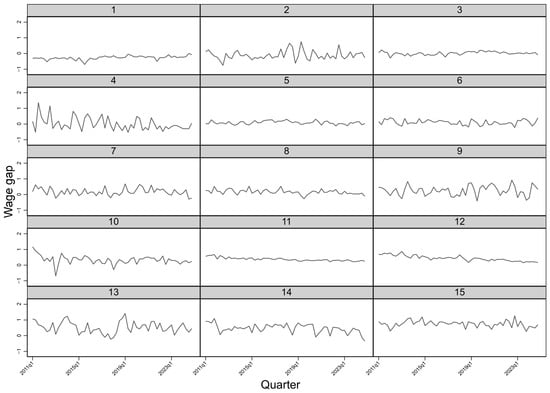
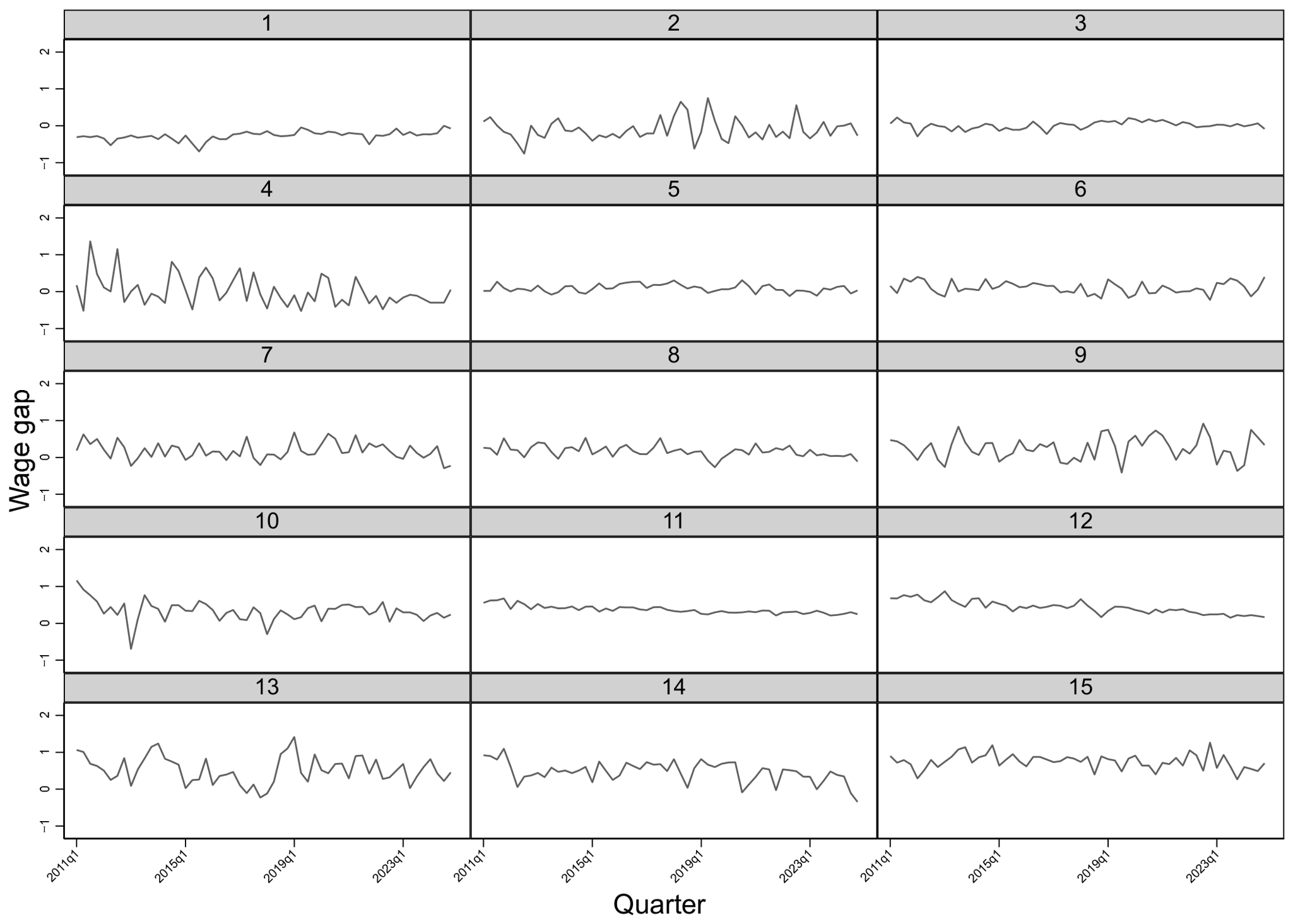
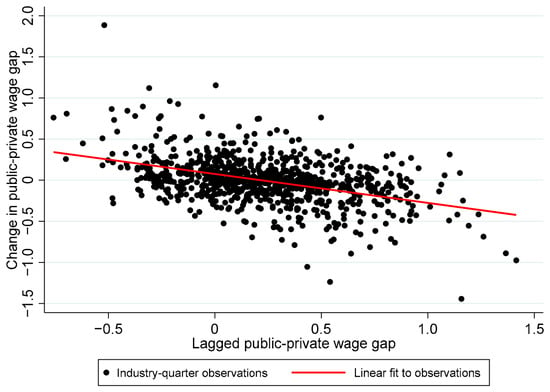
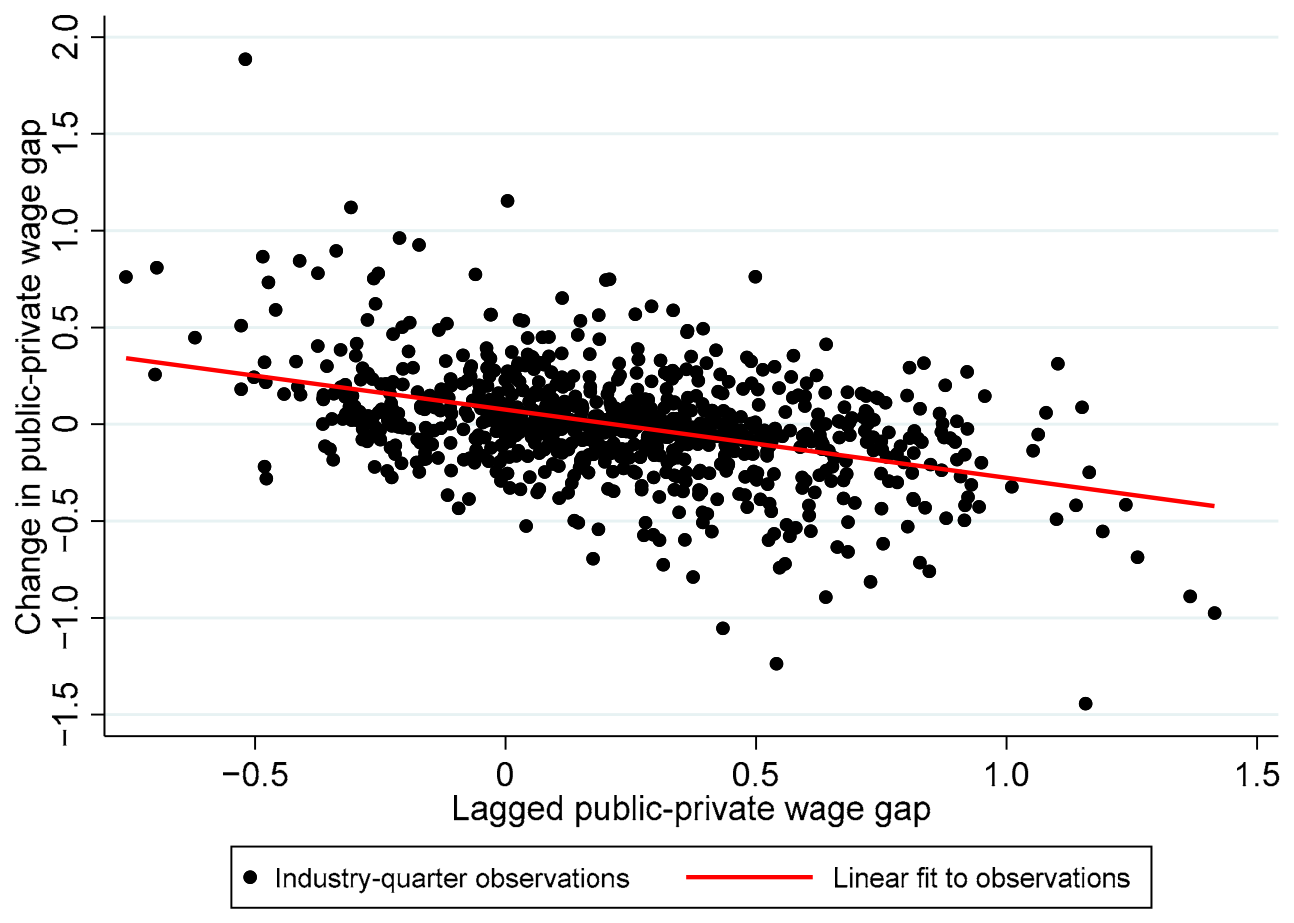
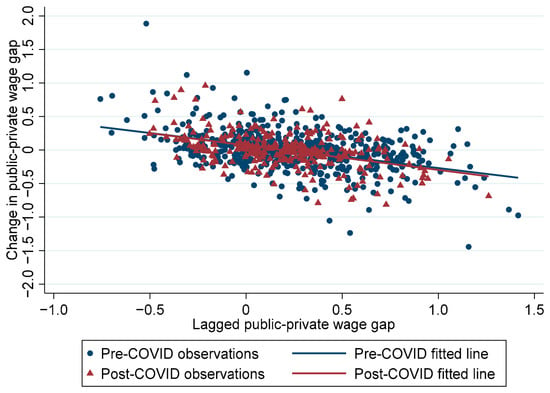
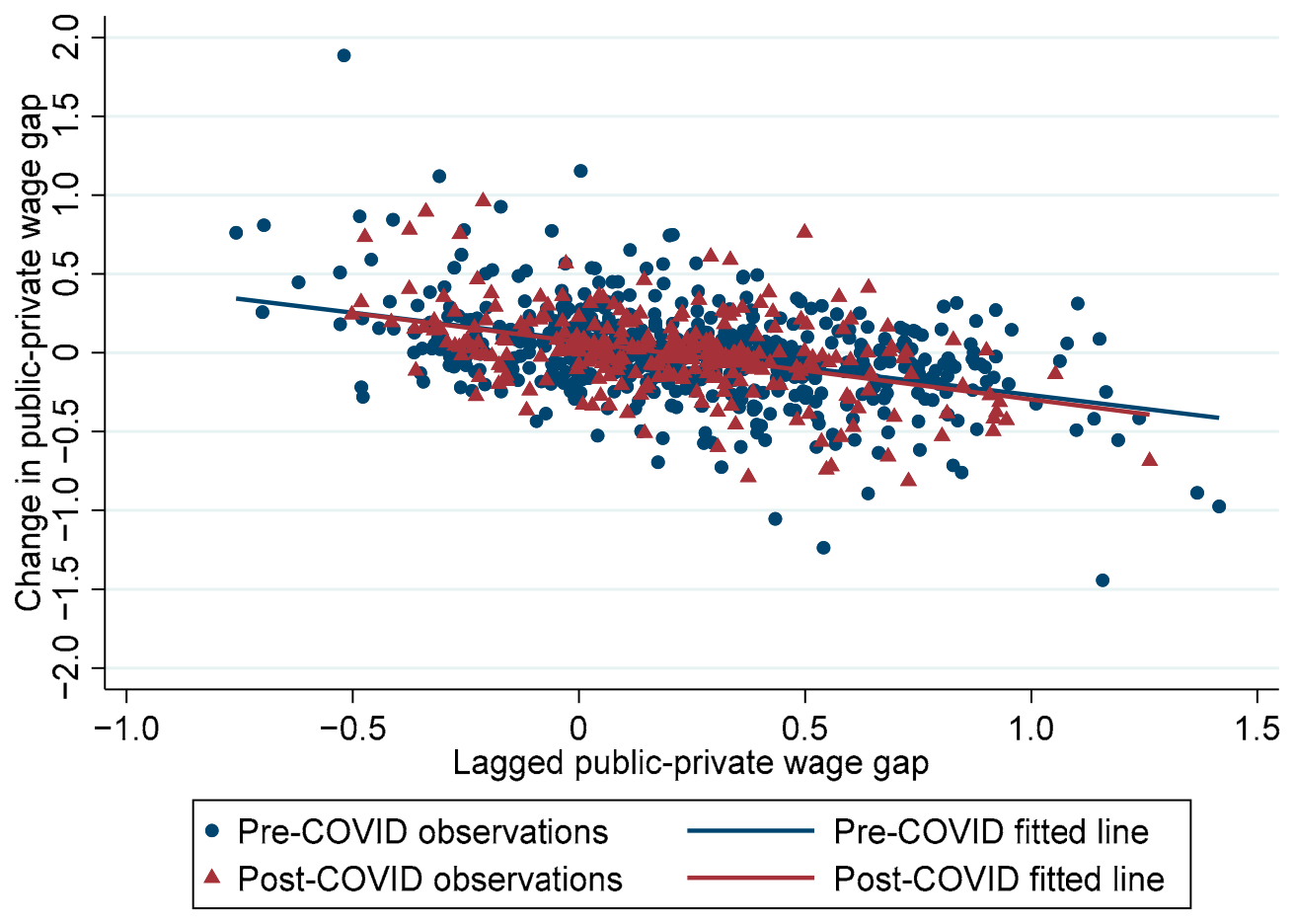
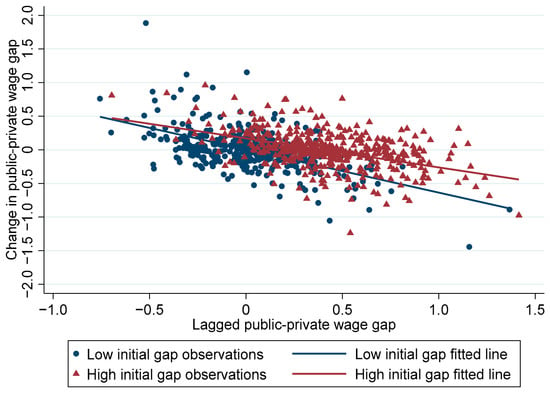
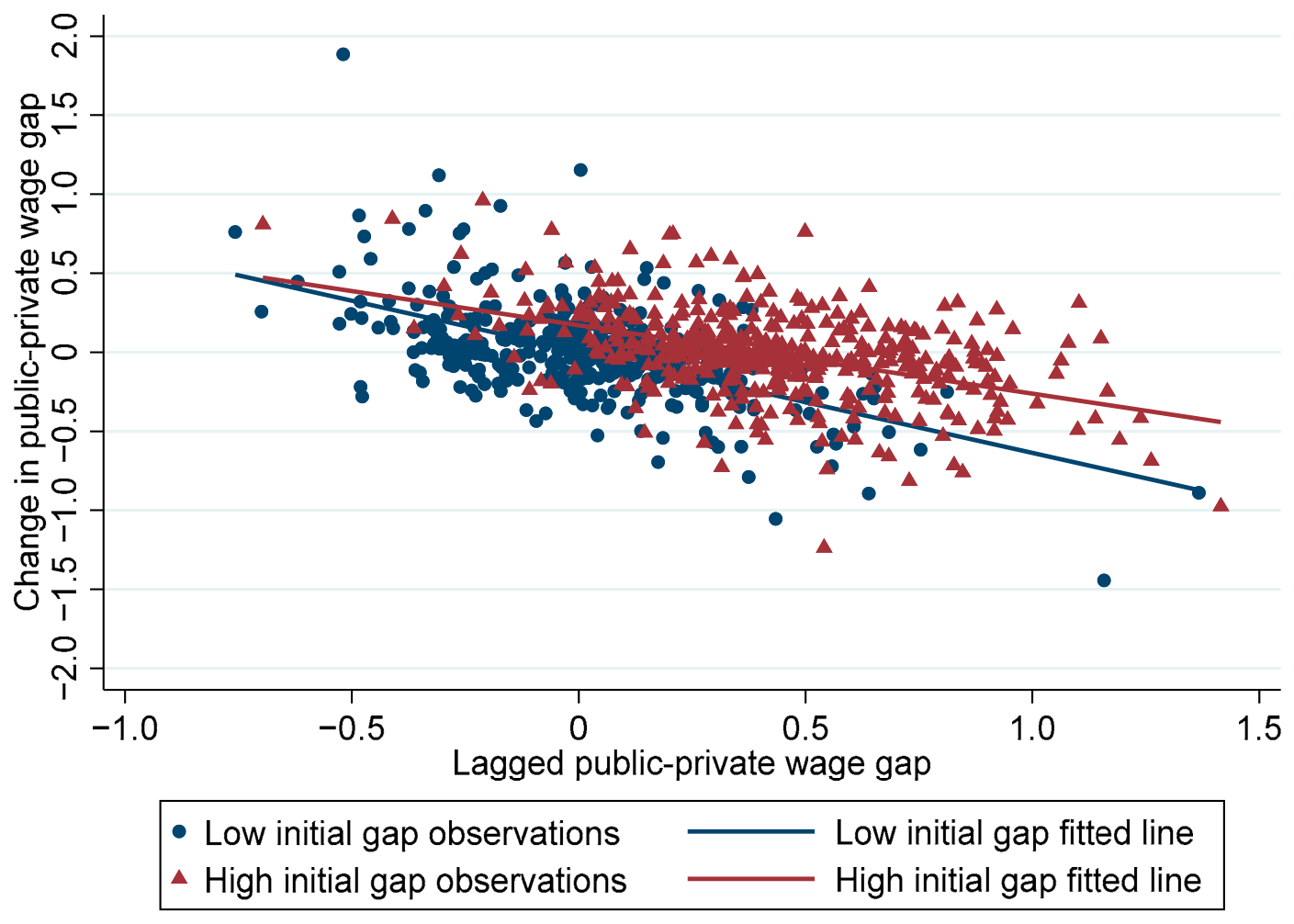
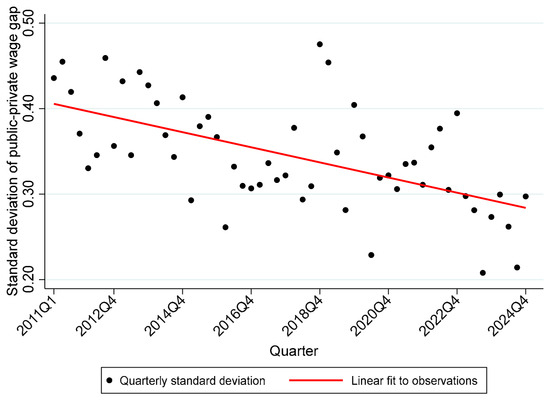
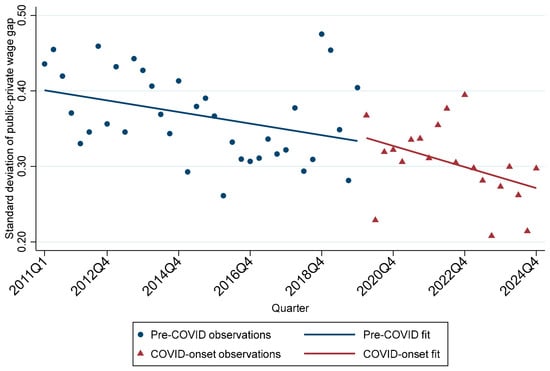
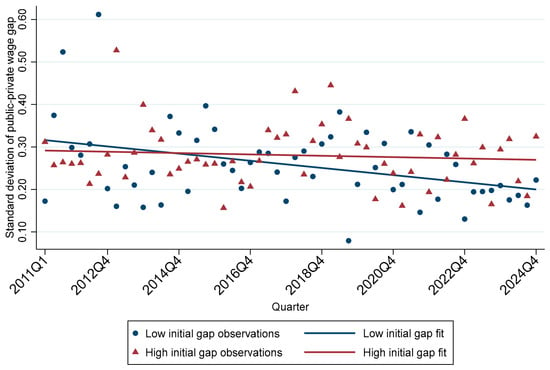
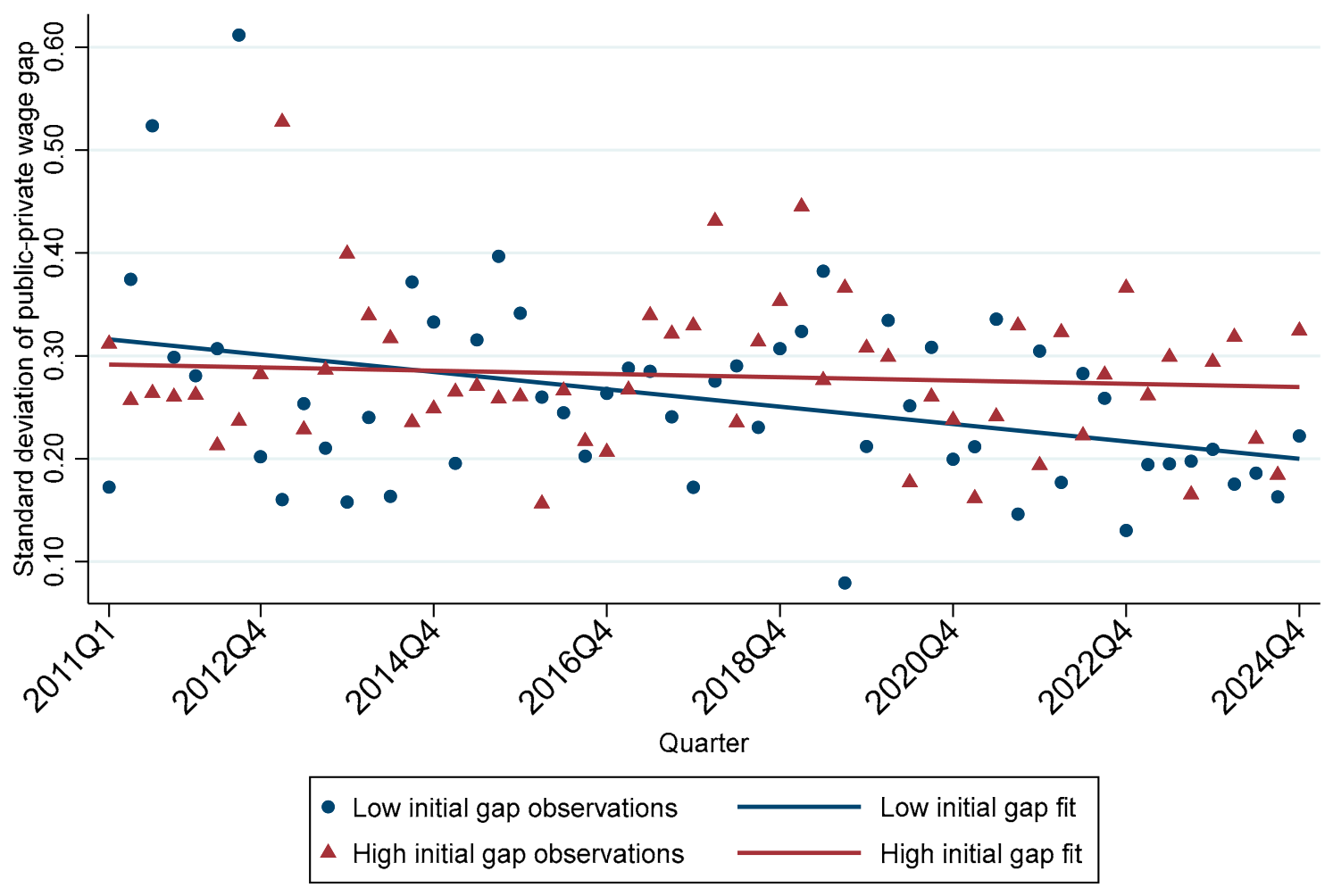

Disclaimer/Publisher’s Note: The statements, opinions and data contained in all publications are solely those of the individual author(s) and contributor(s) and not of MDPI and/or the editor(s). MDPI and/or the editor(s) disclaim responsibility for any injury to people or property resulting from any ideas, methods, instructions or products referred to in the content. |
© 2026 by the authors. Licensee MDPI, Basel, Switzerland. This article is an open access article distributed under the terms and conditions of the Creative Commons Attribution (CC BY) license.