


Abstract
Mixed Reality (MR) serious games combine immersive technologies with game-based learning to support training, skill development, and decision-making across diverse disciplines in university education. Although previous research has demonstrated improvements in engagement, usability, and learning outcomes, less attention has been devoted to developing design recommendations and methodological approaches for studying MR serious games. A theory-derived Meta Quest 3-based MR serious game for diagnostic classification was developed by integrating learning theories, gameplay mechanics, and gamification features while functioning as both an educational intervention and a research instrument. The system was evaluated through two complementary studies involving undergraduate students: the first compared learning outcomes across instructional approaches, whereas the second examined learner performance and transfer using a mixed-method approach incorporating objective metrics, questionnaires, and interviews. The proposed system achieved learning outcomes comparable to expert-guided field training while significantly outperforming classroom instruction and self-directed study. Significant transfer to real-world diagnostic tasks was demonstrated, and complementary evidence was triangulated to derive preliminary design recommendations and a multi-dimensional methodological framework. These contributions provide an initial foundation for the systematic design and study of MR serious games in higher education.
1. Introduction
Mixed Reality (MR) serious games represent an emerging class of immersive systems that combine the interactive capabilities of MR technologies with the structured challenges and feedback mechanisms of serious-game design [1]. By blending digital and physical environments, these systems enable users to interact with virtual content through spatial interaction, exploration, and real-time decision-making, creating opportunities for training, education, and skill development that extend beyond conventional approaches [2]. As MR technologies gain wider adoption across education and training, growing interest has emerged in their potential to support practical skill development, enhance learning experiences, and facilitate innovative instructional approaches across diverse disciplines [3]. Within this context, MR serious games have emerged as a promising approach for combining immersive interaction with game-based learning to support learning and training objectives [4].
These capabilities offer new opportunities for developing knowledge, practical competencies, and higher-order thinking skills through embodied interaction, active exploration, immersive engagement, and immediate feedback [5]. Such skills are fundamental across domains including medicine [6], engineering [7], environmental sciences [8], agriculture [9], and military training [10], where practitioners and learners alike must interpret visual information, distinguish among similar patterns, and make complex judgments. Many of these activities involve observation, classification, evaluation, and decision-making based on visual evidence, making them particularly well suited to immersive learning environments that support repeated practice, interactive exploration, and performance feedback. Unlike fully virtual environments or traditional augmented reality (AR) applications, MR combines virtual content with the physical environment in a spatially integrated manner, enabling learners to inspect, manipulate, and evaluate virtual objects while remaining situated within the real-world context in which comparable diagnostic and classification tasks are performed. This integration of MR with serious-game design enables repeated practice of diagnostic and classification tasks under structured learning conditions, allowing learners to develop observation and classification skills while preserving key characteristics of the real-world inspection process.
While existing MR serious-game studies have reported improvements in engagement, usability, and learning outcomes, comparatively less attention has been devoted to systematically evaluating learning outcomes and understanding how learner performance and experiences can inform the design of MR serious games involving observation, classification, and decision-making activities [10,11].
To address this gap, we developed a Meta Quest 3 MR serious game designed for diagnostic classification training and evaluated its learning outcomes, learner experiences, and learner behavior among undergraduate students. Drawing upon educational theories including embodied learning, perceptual learning, visual category learning, scaffolding, retrieval practice, and feedback, these principles were translated into specific game mechanics and learning stages. By combining immersive MR interactions with gamification elements, the system was designed not only to support learning but also to facilitate the collection of complementary quantitative and qualitative evidence related to student performance and experiences. This evidence was used to inform the derivation of preliminary design recommendations and the proposal of a methodological framework for the evaluation of MR serious games in higher education.
1.1. Mixed Reality Serious Games
The concept of MR was first introduced by Milgram and Kishino in 1994 through the reality–virtuality continuum, which positioned MR as a spectrum between completely real and fully virtual environments [12]. Although the concept originated several decades ago, advances in hardware and software during the 2010s, particularly the introduction of head-mounted devices such as Microsoft HoloLens, transformed MR into a practical platform capable of seamlessly integrating digital content with the physical environment. The integration of serious-game design into MR environments combines educational objectives, gameplay mechanics, gamification elements, feedback, and progression with immersive interaction to create structured learning and training experiences.
By integrating virtual objects into the user’s physical surroundings, MR serious games allow users to interact with digital content through object manipulation, spatial positioning, environmental embedding, gesture- and controller-based interaction, and immediate system feedback [13]. Real-time spatial tracking, depth perception, and three-dimensional content enable virtual objects to remain anchored within the physical environment, allowing learners to move naturally around digital content, inspect objects from multiple viewpoints, and interact with virtual elements as though they were part of the real world [14].
Studies conducted in blended learning environments have reported positive learner perceptions of MR while demonstrating new forms of interaction between learners, physical environments, and virtual content [15]. Improvements in creativity, geometric analysis, and visualization abilities have also been reported among university students participating in MR-supported learning activities when compared with traditional instructional approaches [16]. MR serious games have also been associated with improvements in knowledge acquisition, knowledge retention, learning motivation, and situational interest [17].
Through repeated task engagement, interactive problem-solving, and experiential practice MR serious games provide opportunities to examine learner behavior, performance, and decision-making processes during immersive activities [18]. For example, studies in medical education have used physiological sensors to monitor learner engagement and affective responses during MR-based training activities [19]. These findings suggest that MR serious games can support both educational outcomes and the investigation of learner experiences within MR-based training environments.
1.2. Study Objectives
To address the research gap identified in the Introduction, this study pursued the following objectives:
- Design and develop a theory-informed MR serious game for training novice, early-stage undergraduate students from non-agronomy disciplines in rice disease diagnosis and severity classification, integrating learning theories, gameplay mechanics, gamification features, and research-data collection capabilities.
- Evaluate the educational effectiveness of the MR serious game for this learner population by comparing disease-identification accuracy and severity-estimation performance on real rice leaves across classroom instruction, self-directed study, agronomist-guided field training, and the MR serious game.
- Investigate learner performance within the MR serious game, transfer to real-leaf diagnostic tasks, interaction behaviors, perceptions, and experiences using gameplay metrics, questionnaires, and interviews.
- Integrate the findings from Objectives 2 and 3 to derive preliminary design recommendations for MR serious games involving observation, classification, and decision-making activities.
- Develop a multi-dimensional methodological framework for studying and evaluating MR serious games by integrating evidence on learning outcomes, transfer, learner behavior, perceptions, gamification, and learner experiences.
Figure 1 provides a conceptual overview of the role of the MR serious-game system in achieving the study objectives, with the principal components presented in the order in which they occur throughout this study, progressing from system design and implementation, through participant evaluation, to the resulting design recommendations and methodological framework.
Figure 1.
Conceptual overview of the role of the MR serious game within this study, illustrating the progression from system design and implementation to participant evaluation and the resulting research outcomes.
2. The MR Serious Game Design
To address Objective 1, this section describes the design and development of the theory-informed MR serious game. The complete implementation of the system, including the full source code, project files and video walkthrough, is available through the resources listed in the Data Availability Statement.
2.1. Intended Users and Design Context
The system was designed for and evaluated with novice, pre-professional learners comprising undergraduate students in the early stages of their degree programs (semesters 1–4) at Universidad de los Llanos in Villavicencio, Meta, Colombia. Participants were between 18 and 21 years of age, were enrolled in non-agronomy disciplines, and had no formal training or practical experience in plant disease identification. All participants were also novices in the use of MR and VR headsets. This participant profile informed several design decisions, including the Spanish-language interface, the dedicated interaction-familiarization tutorial, the progressive introduction of diagnostic content, and the gradual withdrawal of instructional support. Complete recruitment, screening, and participant information is provided in Section 3.2.
2.2. Diagnostic and Classification Training
Diagnostic and classification activities were selected as the primary learning context for the MR serious game because they represent a common class of educational tasks across many disciplines in which learners must interpret visual evidence, distinguish among alternatives, and make informed decisions under conditions of ambiguity [20,21,22]. These activities require perceptual discrimination, analytical reasoning, and the application of conceptual knowledge within authentic task contexts [23,24,25]. Simulation-based environments can support these competencies by providing opportunities for repeated practice and progressive skill development [26], while MR-based simulations allow the associated learning and decision-making processes to be examined as learners inspect visual evidence, distinguish between visually similar patterns, apply classification criteria, and develop confidence in their diagnostic decisions [27,28].
2.3. Rice Disease Diagnosis as the Training Context
Rice disease diagnosis was selected as an authentic domain-specific instance of diagnostic classification because different diseases can present overlapping visual characteristics across stages of development and severity, requiring careful observation, pattern recognition, and interpretation of visual evidence [29].
Authentic learning theory suggests that learning experiences become more meaningful when situated within realistic contexts that resemble real-world practice [30]. Similarly, realism and fidelity have been identified as important design characteristics of immersive learning environments because they strengthen the authenticity of learning experiences and support meaningful engagement with learning tasks [31].
The virtual environment was developed using digital representations of individually selected healthy and diseased rice leaves collected from an experimental field in Villavicencio, Colombia, operated by the Federación Nacional de Arroceros (FEDEARROZ), Colombia’s national rice research and development organization. Individual rice leaves were removed from the plants and photographed using an iPhone 15 under natural field conditions before being incorporated into the MR environment.
Prior to inclusion in the game, two experienced agronomists independently assigned each leaf image a disease classification and severity rating. Disease severity was evaluated using the five-level severity scale implemented throughout the MR serious game. The scale was developed from the International Rice Research Institute (IRRI) Standard Evaluation System (SES) for Rice [32], which employs a 0–9 severity scoring system by consolidating adjacent SES categories into five severity levels (Table 1).
Table 1.
Relationship between the educational five-level severity scale and the IRRI Standard Evaluation System (SES) for Rice.
Any disagreements between the agronomists were resolved through discussion until consensus was reached, and the resulting consensus classifications were used to label the virtual leaf images.
2.4. Gameplay Structure and Learning Progression
A full video walkthrough of the MR serious game, from environment initialization to leaderboard completion, is provided in the Supplementary Materials. The MR serious game was implemented in Spanish, reflecting the language used during participant evaluation, while the Supplementary Video includes English narration.
At the beginning of the experience, learners use the spatial-mapping capabilities of the Meta Quest 3 to select a physical surface on which the virtual rice crop is instantiated and spatially anchored, as shown in Figure 2, where the crop is illustrated on a laboratory table but can be deployed onto any suitable physical surface.
Figure 2.
Virtual rice crop spatially anchored onto a selected physical surface, establishing the shared physical–digital workspace used throughout the MR serious game.
The system integrates the virtual crop into the learner’s existing physical environment, allowing learners to maintain awareness of their surroundings while naturally moving around the crop. When deployed onto the floor, learners can physically walk amongst the virtual rice plants, viewing leaves from multiple positions and angles in the same way they would move through a crop during field inspection. This shared physical–digital workspace enables learners to directly select, manipulate, and inspect virtual rice leaves from different viewpoints, supporting the integration of perception, action, and cognition associated with embodied interaction and spatial learning [5,33].
The use of MR was also intended to preserve important characteristics of real-world rice disease diagnosis. In agricultural practice, diagnosticians inspect plants within the surrounding environment by moving around crops and examining leaves from multiple perspectives before making diagnostic decisions. The MR implementation was designed to support these natural inspection behaviors while allowing learners to remain situated within their physical environment throughout the learning activity. The physical environment therefore serves as the spatial reference frame for exploration and interaction, distinguishing the experience from immersive VR implementations in which both the crop and the surrounding environment are recreated as a fully virtual scene.
The level-selection interface then presents four instructional levels: (1) interaction tutorial, (2) guided recognition of Pyricularia oryzae, (3) guided recognition of Rhynchosporium oryzae, and (4) independent assessment. The progression moves from interaction familiarization to guided learning and independent performance, with instructional support gradually reduced as learner autonomy increases. Following the instructional levels, learners receive performance feedback and can access the leaderboard. Each part of the experience was also designed to generate evidence regarding learner interaction competence, diagnostic behavior, performance, perceptions, and adaptation to different levels of instructional support.
2.4.1. Level 1—Interaction Tutorial
The first level familiarizes learners with the interaction procedures required throughout the MR experience before introducing disease-specific content. Teaching fundamental interactions before domain tasks can reduce extraneous cognitive demands and allow learners to focus on the instructional content [34,35]. Familiarization activities can also reduce the influence of technology-use difficulties on subsequent performance and strengthen the validity of learning assessments conducted in MR and serious-game environments [36,37].
Through guided voice instructions, learners practice four core skills: selecting a leaf using hand tracking, manipulating and rotating it, inspecting symptoms from different perspectives, and registering a disease classification and severity score from 1 to 5. Learners complete three successful practice classifications before progressing. This structure reflects mastery-learning principles by establishing foundational competencies before more demanding tasks and embodied-learning perspectives by requiring active manipulation of virtual objects [38,39]. Tutorial performance also provides an initial indicator of interaction competence and adaptation to the MR environment.
2.4.2. Level 2—Guided Recognition of Pyricularia oryzae
The second and third instructional levels introduce Pyricularia oryzae and Rhynchosporium oryzae, respectively. At the beginning of each level, learners receive synchronized audio narration, explanatory text, reference images, and a disease-severity guide before completing three guided classification activities. During each activity, learners select and manipulate affected leaves, inspect disease symptoms from multiple viewpoints, and submit disease and severity classifications. The correct disease identity and severity level remain visible beside the selected leaf, enabling direct comparison between the visual evidence and its corresponding classification. The interaction workflow used throughout the guided learning activities is illustrated in Figure 3.
Figure 3.
Diagnostic interaction during the guided learning activities. Representative screenshots from the Mixed Reality (MR) application. (a) Learner selecting and manipulating a virtual rice leaf using hand-tracking interactions to inspect disease symptoms from multiple viewpoints. (b) Disease-classification interface used to identify the disease and assign a severity level while visually inspecting the selected leaf.
The guided learning activities were designed to progressively develop disease-recognition and severity-estimation skills by combining visual inspection with immediate instructional support. During each classification, learners directly compare the observed symptoms with the correct disease identity and severity level, reinforcing the relationship between visual evidence and diagnostic decisions. Such guided classification activities can direct attention toward category-defining features and support transfer to unfamiliar examples [40], while immediate associations between visual evidence and diagnostic categories facilitate refinement of symptom-recognition and severity-estimation skills [41]. Repeated exposure to representative examples across both guided levels is also consistent with perceptual learning, through which learners become increasingly sensitive to diagnostically relevant visual features and improve discrimination between visually similar disease categories [42,43].
2.4.3. Level 4—Independent Assessment
The fourth level assesses learners’ ability to identify both rice diseases and estimate their severity without the support provided during the guided levels. Disease labels, severity values, explanatory descriptions, and reference diagrams are removed. Learners must therefore inspect and manipulate each leaf and independently register its disease category and severity level.
This requirement to retrieve and apply previously learned information is consistent with retrieval-practice theory, according to which active recall can strengthen learning and subsequent performance [44]. The transition from guided activities to unsupported classification also reflects scaffolded learning, in which assistance is progressively withdrawn as learners assume greater responsibility for decision-making [45]. Because learners apply their knowledge to previously unseen leaves, the level additionally supports assessment of transfer to new diagnostic examples [46].
The assessment contains 20 leaves with both diseases and multiple severity levels. This number was selected to align with the real-leaf transfer assessment described in Section 3.3.2 and to provide sufficient observations for behavioral analysis, although it can be modified for future implementations. A progress indicator communicates the number of remaining classifications, supporting task awareness and persistence during the activity [47].
2.4.4. Post-Activity Performance Feedback and Leaderboard
After completing the independent assessment, learners receive a performance summary presenting total completion time, total classification errors, and average completion time per leaf. These indicators support self-monitoring and reflection, which are central processes in metacognitive and self-regulated learning [48]. They also enable examination of how learners engage with post-activity performance information.
Learners may then enter an anonymous alias and access a leaderboard containing the rank, alias, total completion time, total errors, average time per leaf, and completion date of previous users. The leaderboard provides comparative performance information intended to support motivation, goal setting, benchmarking, and continued engagement. Such systems are commonly used in educational games to provide feedback, facilitate peer comparison, and encourage motivation [49].
The performance summary and leaderboard are supporting game components. Their purpose is to extend the experience beyond task completion through reflection, achievement recognition, and performance comparison.
2.4.5. Gamification and Engagement Design
In addition to the instructional components described in the previous stages, the gamification elements incorporated within the game were informed by principles of gamification theory, which proposes that game design elements such as progression systems, feedback, achievements, rewards, and social comparison can increase motivation and engagement in non-game learning contexts [50,51]. Table 2 summarizes the principal gamification elements embedded within the MR serious game together with their educational, engagement, and evaluation purposes.
Table 2.
Gamification and engagement elements of the MR serious game.
3. Experimental Methodology
Study 1 addressed Objective 2 by evaluating the educational effectiveness of the proposed MR serious game and comparing its learning outcomes with those achieved through classroom instruction, self-directed study, and agronomist-guided field training. Study 2 addressed Objective 3 by examining learner performance, transfer, behaviors, and experiences within the MR serious game to identify behavioral, perceptual, and experiential factors that may have contributed to the learning outcomes observed in Study 1.
For both studies, undergraduate students in the early stages of their degree programs (semesters 1–4) were selected because they represent a pre-professional learner population in which new knowledge and skills are developed prior to entry into professional practice. Combined with the exclusion of participants with prior domain expertise in rice disease identification, this study population allowed learning, transfer, and learner experiences to be evaluated while minimizing the influence of pre-existing diagnostic knowledge.
To support transparency and reproducibility, all study materials, source code, instructional resources, methodological documentation, datasets, statistical analysis scripts, participant demographics, questionnaires, interview guides, behavioral coding manuals, and additional resources required to reproduce this study are available through the Open Science Framework (OSF) repository referenced in the Data Availability Statement.
3.1. System Performance Evaluation
Prior to Studies 1 and 2, the MR application was tested on a Meta Quest 3 headset (Meta Platforms, Inc., Menlo Park, CA, USA) under the same conditions used during participant evaluation to verify system stability, interaction responsiveness, and feedback delivery. Testing examined object interactions, menu activation, disease-classification functions, severity-selection mechanisms, and feedback presentation.
Across all testing sessions, virtual objects remained spatially stable, interactions were executed without observable delay, and classification feedback was presented immediately following user actions. No system crashes, tracking failures, or unexpected interruptions were observed. These results indicated that the application functioned reliably and was unlikely to introduce confounding effects on classification accuracy, task completion time, or learner interactions during the evaluation studies.
3.2. Participant Recruitment, Eligibility Screening, Study Setting, and Ethical Considerations
Participants in both studies were recruited at Universidad de los Llanos, a public university in Villavicencio, Meta, Colombia, serving approximately 8000 students across 18 undergraduate programs distributed among five faculties. The university operates within a Spanish-language higher-education setting that primarily serves students from the Colombian Orinoquía region. Recruitment was conducted between November and December 2025 among students enrolled in non-agronomy undergraduate programs. Professors teaching in the participating undergraduate programs informed students in their classes about the opportunity to participate, after which interested students completed the eligibility-screening procedure.
Before enrolment, all recruited individuals completed a standardized eligibility-screening questionnaire designed to identify prior experiences that could influence learning or performance outcomes. The questionnaire recorded participants’ undergraduate program and academic background; previous university coursework related to agronomy, plant pathology, crop production, or plant disease diagnosis; practical agricultural experience through employment, internships, fieldwork, laboratory work, research, or family involvement; prior formal and practical training in plant disease identification; self-reported prior knowledge of plant disease identification; and previous use of virtual, augmented, or mixed reality headsets.
Individuals with prior formal or practical experience in plant disease identification were excluded to establish a consistent novice baseline and minimize the influence of pre-existing diagnostic knowledge on learning and performance outcomes. Likewise, previous MR or VR headset experience was an exclusion criterion because prior familiarity with immersive interfaces could influence interaction behavior, learning, and performance, thereby ensuring a consistent baseline for evaluating the instructional intervention. In Study 1, these eligibility criteria reduced the likelihood that differences in post-training performance resulted from unequal pre-existing knowledge or prior MR familiarity rather than the assigned instructional modality. In Study 2, they allowed relationships among MR performance, learner behavior, and transfer to real-leaf diagnosis to be examined without the confounding influence of previous diagnostic knowledge or MR experience.
Recruitment, informed-consent procedures, instructions, training activities, assessments, questionnaires, and interviews were conducted in Spanish. Laboratory activities were completed in controlled university facilities, while the agronomist-guided field-training condition in Study 1 was conducted at the FEDEARROZ experimental field. Data collection occurred across multiple sessions because of the limited availability of Meta Quest 3 headsets.
All participants received information about the objectives and procedures of the applicable study and provided written informed consent before participation. Participants were informed that the research examined instructional approaches for plant-disease identification; however, specific details concerning instructional conditions, assessment materials, group assignments, and the performance of other conditions were not disclosed beforehand to reduce contamination between groups. Both studies were approved by the Bioethics Committee of Universidad de los Llanos (Approval No. 3110.02.0457).
3.3. Study 1—Comparative Evaluation of Learning Modalities
3.3.1. Participants, Study Location, and Consent
A total of 102 undergraduate students completed the recruitment and screening procedure described in the previous section. Of these, 80 met all eligibility criteria and were enrolled in Study 1. The remaining 22 individuals were excluded because of previous MR or VR headset experience (n = 6), previous formal training or practical experience related to plant disease identification (n = 18), including two individuals who met both exclusion criteria.
The enrolled participants had a mean age of 18.8 years (range = 18–21 years). Participants were recruited from undergraduate programs in education sciences (n = 12), electronics engineering (n = 11), chemistry (n = 11), mathematics (n = 10), sociology (n = 10), mechanical engineering (n = 9), humanities (n = 9), and physics (n = 8). Participants represented semesters 1–4 of their undergraduate programs, comprising 38 first-semester students, 30 second-semester students, 10 third-semester students, and 2 fourth-semester students.
Eligible participants were randomly assigned to one of four instructional conditions: MR serious-game training (n = 20), classroom instruction (n = 20), self-directed study (n = 20), or agronomist-guided field training (n = 20). Assignment was performed using the Python numpy.random.shuffle() function with a fixed random seed.
A sensitivity power analysis was conducted for the primary participant-level analysis described in Section 3.3.4. Assuming a one-way fixed-effects omnibus ANOVA with four instructional conditions, α = 0.05, statistical power of 0.80, and a total sample size of N = 80, this study was powered to detect an omnibus effect size of approximately f = 0.38, corresponding to a moderate-to-large between-group effect.
3.3.2. Rice Leaf Collection and Reference Classification
Rice leaf samples exhibiting symptoms of the target diseases were collected from the FEDEARROZ experimental field. Samples were purposively selected to represent both Pyricularia oryzae and Rhynchosporium oryzae across the severity levels included in the MR serious game and were transported to the laboratory under cooled conditions to preserve sample integrity. Separate leaf collections were conducted for the Study 1 post-intervention assessment and the Study 2 transfer assessment to ensure that each assessment used an independent set of real-leaf samples.
Before participant testing, two agronomists independently assigned each leaf sample a disease classification and severity rating using the same five-level severity scale used throughout the MR serious game. Inter-rater agreement was assessed prior to participant scoring. Cohen’s κ was used for disease classification because disease type was treated as a nominal categorical judgement, whereas weighted Cohen’s κ was used for severity ratings because severity was scored on an ordered five-level scale and disagreements between adjacent categories were less severe than disagreements between distant categories [52,53]. This procedure was performed separately for both sampling sessions.
For the Study 1 post-intervention assessment, inter-rater agreement was high for disease classification (Cohen’s κ = 0.91) and severity rating (weighted Cohen’s κ = 0.87). For the Study 2 transfer assessment, inter-rater agreement was similarly high for disease classification (Cohen’s κ = 0.89) and severity rating (weighted Cohen’s κ = 0.85). Disagreements were resolved through discussion until consensus was reached, and the resulting consensus classifications served as the ground-truth reference values for scoring participant responses.
3.3.3. Training Conditions
Across all conditions, the same learning objectives, target diseases, symptom descriptions, five-level severity scale, training duration, and post-training assessment procedures were used. The specific training examples differed across instructional modalities because the conditions represented distinct real-world forms of instruction: digital examples in the MR serious game, digital examples presented through the classroom presentation and self-directed guidebook, and live plant examples during agronomist-guided field training. To ensure that post-training performance reflected transfer rather than memorization of training examples, the post-intervention assessment used a separate set of previously unseen real rice leaf samples that was not used in any training condition. To promote equivalence across instructional conditions, each training condition provided participants with twenty representative examples spanning both target diseases and all five severity levels.
The instructional conditions were selected to evaluate the educational effectiveness of the proposed MR serious game relative to three contrasting instructional approaches: traditional instructor-led learning (classroom instruction), independent self-directed learning (guidebook study), and expert-guided experiential learning (field training). The instructional materials used in the classroom instruction and self-directed guidebook conditions, together with the agronomist field-training guide used to standardize the expert-led instruction, are available in the OSF repository referenced in the Data Availability Statement.
The four instructional conditions lasted one hour and were as follows:
Group A: MR Serious-Game Training—Participants completed training using the MR serious game described in Section 2 on a Meta Quest 3 headset.
Group B: Classroom Instruction—Participants attended an instructor-led classroom session delivered using a PowerPoint presentation containing representative examples of both target diseases across multiple severity levels. Participants were permitted to ask questions and receive clarification from the instructor.
Group C: Self-Directed Guidebook Study—Participants completed a self-directed learning session using a printed guidebook developed for this study. The guidebook contained the same standardized learning content used across the instructional conditions, including descriptions of the target diseases, representative symptom images, disease progression information, and examples illustrating the five severity levels. Participants were permitted to review the guidebook freely throughout the training period. Questions concerning study procedures were answered when necessary; however, no instructional guidance or clarification related to disease identification, symptom interpretation, or severity classification was provided.
Group D: Agronomist-Guided Field Training—Participants attended a field-based instructional session at the FEDEARROZ experimental rice research station led by an experienced agronomist. Participants observed examples of both target diseases across multiple severity levels under field conditions and were permitted to ask questions throughout the session.
As only three MR headsets were available, participants assigned to the MR serious-game condition completed training in staggered sessions throughout the data-collection day, with up to three participants completing the experience simultaneously. The classroom instruction, self-directed guidebook study, and agronomist-guided field-training conditions were also conducted on the same day.
Following training, participants completed a post-intervention assessment consisting of twenty previously unseen rice leaf samples. Participants were required to identify the disease affecting each leaf and assign a severity rating using the five-level severity scale. The assessment set was balanced across disease type and severity level, with ten leaves representing Pyricularia oryzae and ten representing Rhynchosporium oryzae. For each disease, two samples were included at each of the five severity levels, resulting in two observations for every disease-by-severity combination. Participants completed the assessment individually, were not permitted to access instructional materials during assessment, and completed the assessment immediately following training to minimize delay between instruction and evaluation.
3.3.4. Statistical Analysis
All quantitative analyses and figures were produced in Python (version 3.11.9, Python Software Foundation, Wilmington, DE, USA; https://www.python.org). Data manipulation, statistical computing, and data visualization were performed using pandas (version 2.1.4; https://pandas.pydata.org), NumPy (version 1.26.4; https://numpy.org), SciPy (version 1.11.4; https://scipy.org), statsmodels (version 0.14.1; https://www.statsmodels.org), Pingouin (version 0.5.4; https://pingouin-stats.org), and Matplotlib (version 3.8.2; https://matplotlib.org). Mixed-effects models were fitted using pymer4 (version 0.8.1; https://github.com/ejolly/pymer4, accessed on 30 July 2026), which serves as a Python interface to the lme4 package (version 1.1-35.1) running in R (version 4.3.2, R Foundation for Statistical Computing, Vienna, Austria; https://www.R-project.org). The independent variable was instructional condition, and the primary outcomes were disease-classification accuracy and severity-estimation error. Disease accuracy represented the percentage of correctly identified diseases, whereas severity-estimation error was quantified using mean absolute error (MAE) between participant responses and agronomist consensus ratings, with lower MAE values indicating more accurate severity estimation. MAE was selected because it directly quantifies the magnitude of disagreement between participant responses and the agronomist consensus while avoiding cancellation of overestimation and underestimation errors.
Participant-level analyses were based on summary measures calculated across the 20 post-test leaves completed by each participant. Group means, standard deviations, and 95% confidence intervals were calculated for each outcome. Separate one-way ANOVAs compared the four instructional conditions for disease accuracy and severity MAE. Normality and homogeneity of variance were assessed using Shapiro–Wilk and Levene’s tests, respectively. Significant omnibus effects were followed by Tukey’s Honestly Significant Difference procedure, which controlled the family-wise error rate across pairwise comparisons [54,55]. Partial eta squared (ηp2) was reported for omnibus effects, and Hedges’ g was reported for pairwise differences. Tukey-adjusted 95% confidence intervals were reported for mean differences, and Figure 4 and Figure 5 display group means with 95% confidence intervals.
Leaf-level analyses included all 1600 observations and accounted for repeated responses within participants through random intercepts. Disease-classification accuracy was analyzed using a mixed-effects logistic regression model with instructional condition as a fixed effect and participant identifier as a random intercept. Absolute severity-estimation error was analyzed using a linear mixed-effects model with instructional condition, disease type, and true severity level as fixed effects and participant identifier as a random intercept [56,57]. Classroom instruction was the reference category in both models. Model coefficients (β), standard errors, p-values, and 95% confidence intervals were reported; odds ratios and their confidence intervals for the logistic model were obtained by exponentiating the corresponding coefficient estimates and intervals. Model convergence and diagnostic checks were examined before interpretation. All tests were two-tailed, with statistical significance established at α = 0.05.
3.4. Study 2: MR Gameplay Behavior, Transfer, Perceptions, and Interviews
Study 2 had two objectives. First, it examined whether disease-diagnosis and severity-estimation skills developed within the MR serious game transferred to the classification of real rice leaves. Second, it investigated learner behaviors, perceptions, experiences, and interactions with different components of the MR serious game to better understand factors associated with learning and transfer.
3.4.1. Participants, Study Location, and Consent
Study 2 was designed as an exploratory mixed-methods investigation in which the MR serious game functioned both as an educational intervention and as a research instrument for examining behavioral, performance, perceptual, and experiential data. The study aimed to identify relationships across multiple sources of evidence and generate preliminary design recommendations. Consistent with recommendations for exploratory mixed-methods research, the sample size was guided by the objectives of the investigation and the integration of multiple sources of evidence; consequently, a formal a priori power analysis was not conducted [58,59].
A total of 36 undergraduate students completed the recruitment and screening procedure described in Section 3.2. Thirty met the eligibility criteria and were enrolled, matching the target sample size for the exploratory mixed-methods investigation. Six individuals were excluded: one because of previous MR or VR headset experience and five because of prior formal or practical experience related to plant disease identification. No excluded participant met both exclusion criteria. No participant enrolled in Study 2 had participated in Study 1.
Participants had a mean age of 19.4 years (standard deviation [SD] = 0.85; range = 18–21 years). They were recruited from undergraduate programs in electronics engineering (n = 4), mathematics (n = 4), mechanical engineering (n = 4), chemistry (n = 4), education sciences (n = 4), sociology (n = 4), physics (n = 3), and humanities (n = 3). Their academic-semester distribution was semester 1 (n = 14), semester 2 (n = 11), semester 3 (n = 4), and semester 4 (n = 1).
3.4.2. Transfer Learning Assessment
Participants were provided with up to one hour to complete the experience. Following completion of the MR experience, participants completed a real-leaf transfer assessment consisting of twenty previously unseen rice leaf samples. Consistent with the post-intervention assessment used in Study 1, twenty leaves were included to maintain comparability between assessment procedures and to provide sufficient observations for behavioral and transfer analyses. The transfer assessment used a separate set of leaf samples from those used in Study 1 but maintained the same distribution of disease categories and severity levels, consisting of ten Pyricularia oryzae leaves and ten Rhynchosporium oryzae leaves, with two samples representing each severity level for each disease. For each sample, participants identified the disease type and assigned a severity level from 1 to 5.
Transfer performance was evaluated using disease-identification accuracy and severity-estimation error obtained during the real-leaf transfer assessment. Leaf samples were collected and classified using the procedures described in Section 3.3.2.
Following completion of the transfer assessment, participants completed the post-experience questionnaire and subsequently participated in a semi-structured interview. Participants were then offered the opportunity to voluntarily replay the MR experience.
3.4.3. Behavioral Observation and Coding
In addition to evaluating transfer performance, recordings were captured using the Meta Quest 3 onboard recording system to identify observable behaviors that may have contributed to transfer outcomes. Visual inspection behaviors were included because diagnostic classification requires learners to identify relevant visual features by examining examples from multiple perspectives. Viewing an object from different angles may help learners recognize distinguishing characteristics and make more accurate diagnostic classifications [60,61]. Comparison behaviors were included because category learning is supported by comparing examples and identifying distinguishing features across categories. Revisiting previously inspected examples or comparing multiple examples before classification may help learners distinguish between categories and make more accurate diagnostic decisions [60,62]. Decision-making behavior was included because diagnostic classification requires learners to gather, evaluate, and interpret evidence before reaching a classification decision [63]. Consequently, the time elapsed before an initial diagnosis submission was recorded as an indicator of diagnostic decision-making behavior, consistent with previous studies that have examined diagnostic reasoning using response-time measures [64].
The selected behavioral indicators were organized into three dimensions based on their underlying educational rationale, as shown in Table 3.
Table 3.
Behavioral dimensions, indicators, and operational definitions.
Video recordings of the independent assessment stage were independently reviewed by three members of the research team. For each recording, reviewers coded the behavioral indicators presented in Table 3. Inter-rater reliability was assessed using a two-way mixed-effects average-measures intraclass correlation coefficient (ICC) across the three reviewers and indicated high agreement for all behavioral indicators (ICC = 0.82–0.94). The final value for each behavioral measure was calculated as the mean of the three reviewers’ ratings. These behavioral measures were subsequently examined in relation to MR assessment performance and real-leaf transfer performance.
3.4.4. Measurement Overview
To examine the behaviors, experiences, and performance outcomes associated with learning and transfer, measures were collected across the different stages and components of the MR experience. Table 4 summarizes the measures collected at each stage of the MR serious game, relevant learning theory, and the purpose of each measurement category.
Table 4.
Measures collected across the stages of the MR serious game, their theoretical foundations, and intended measurement purposes.
3.4.5. Questionnaire
A 27-item questionnaire was used to evaluate nine components of the MR learning experience: tutorial effectiveness, guided learning stages, independent classification stage, performance feedback and score summary, leaderboard motivation, usability, transfer to real leaves, engagement and replay motivation, and gamification and achievement motivation. Each component consisted of three items rated on a five-point Likert scale ranging from 1 (strongly disagree) to 5 (strongly agree). Component scores were calculated by averaging item responses and were subsequently used in descriptive and correlation analyses. Internal consistency of the questionnaire constructs was evaluated using Cronbach’s alpha. Internal consistency estimates and the full questionnaire are available in the OSF repository.
3.4.6. Interviews
Interviews were audio-recorded and transcribed for analysis. The interview guide explored seven themes: learning progression, disease recognition and severity assessment, transfer to real leaves, feedback and reflection, engagement and motivation, competitive elements and leaderboards, and gamification and achievement.
Interview transcripts were analyzed using a deductive thematic analysis approach based on a predefined coding framework available in the OSF repository.
Responses were coded according to the predefined themes and corresponding codes. Code frequencies were calculated at the participant level, meaning that each participant was counted once for a given code if their transcript contained at least one substantive segment matching that code, regardless of how many times the code appeared in the interview.
3.4.7. Statistical Analyses
All quantitative analyses and the figure presented in this section were produced using Python 3.11 and the pandas, NumPy, SciPy, statsmodels, and Matplotlib libraries. Descriptive statistics were reported as means, standard deviations, proportions, and 95% confidence intervals. Disease- and severity-classification performance during the MR and real-leaf assessments was summarized using classification accuracy, while severity-estimation error was additionally quantified using MAE. Paired mean differences were calculated to describe changes in disease- and severity-classification accuracy between the MR and real-leaf assessments.
Spearman rank-order correlations were used to examine relationships between MR and real-leaf performance, coded behavioral indicators, guided-learning measures, questionnaire responses, and replay-related outcomes. Spearman correlations were selected because several variables were ordinal or non-normally distributed and because they provide a non-parametric measure of monotonic association under these conditions [65,66,67].
Replay improvement was evaluated by comparing each participant’s initial-attempt error score with the best score achieved across all replay attempts using the Wilcoxon signed-rank test. Behavioral changes were calculated by subtracting initial-attempt values from those recorded during the final completed replay attempt, and Spearman correlations were used to examine their relationships with performance improvement.
Spearman’s ρ was reported for rank-order correlations, and rank-biserial correlation was reported for the Wilcoxon signed-rank test. Confidence intervals for means and paired mean differences were calculated using t distributions, confidence intervals for Spearman correlations were estimated using Fisher’s z transformation, and Wilson score intervals were used for proportions. Effect magnitudes were interpreted in conjunction with coefficient size, consistency across outcomes, and qualitative findings. Consistent with the exploratory objectives of this study, adjustments for multiple comparisons were not applied. Statistical significance was established at α = 0.05.
4. Results
4.1. Study 1—Comparative Evaluation of Learning Modalities
4.1.1. Disease-Classification Accuracy
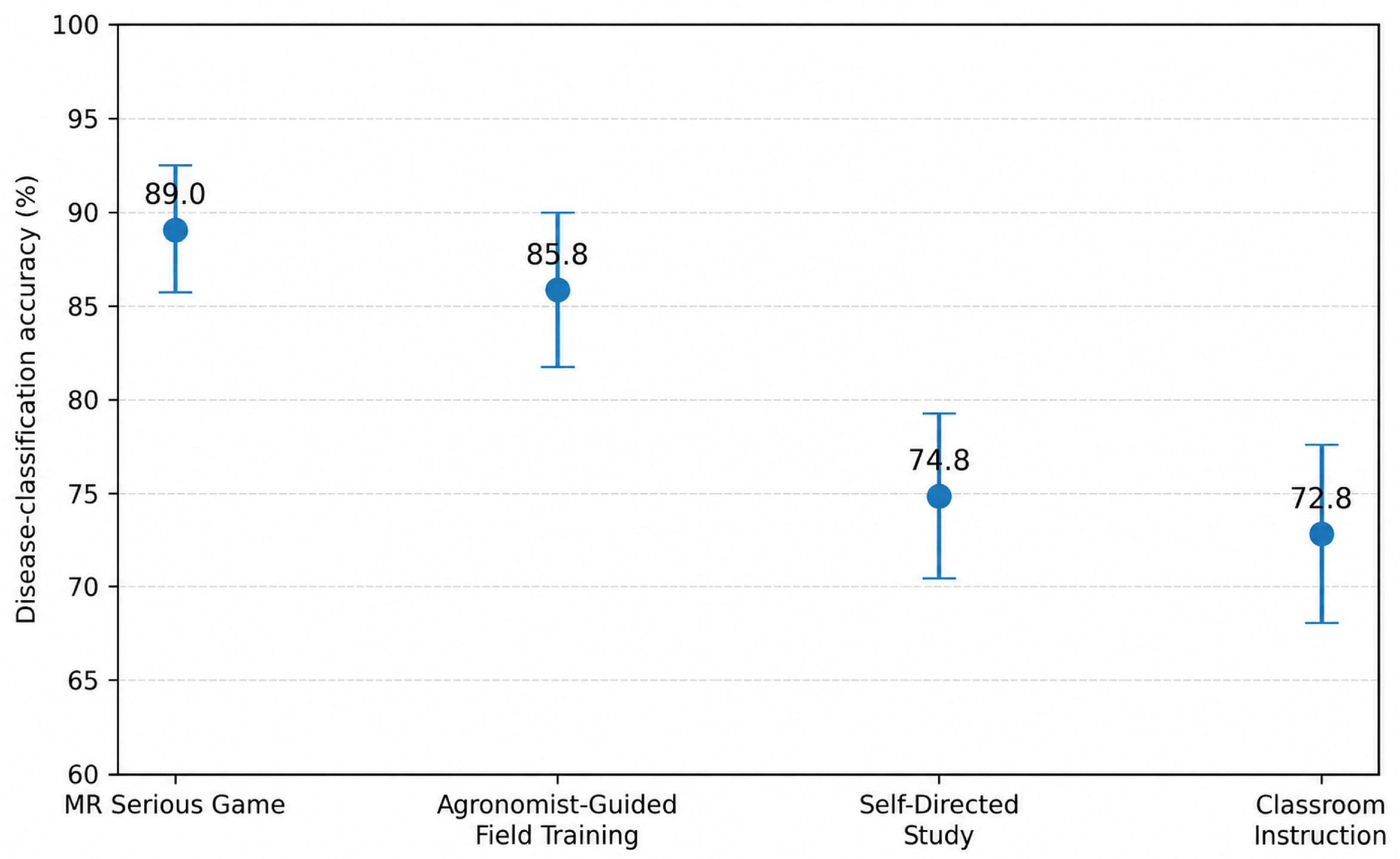
The participant-level analysis included N = 80 participants (n = 20 per instructional condition). A one-way ANOVA revealed a significant effect of instructional condition on disease-classification accuracy, F(3, 76) = 16.05, p < 0.001, ηp2 = 0.388, indicating a large overall effect. Mean accuracy was 89.0% ± 7.2% (95% CI [85.6%, 92.4%]) for the MR serious-game condition, 85.8% ± 8.8% (95% CI [81.7%, 89.9%]) for the agronomist-guided field training condition, 74.8% ± 9.4% (95% CI [70.4%, 79.2%]) for the self-directed study condition, and 72.8% ± 10.2% (95% CI [68.0%, 77.6%]) for the classroom instruction condition. The MR condition exceeded classroom instruction by 16.2 percentage points and self-directed study by 14.2 percentage points, with both differences representing large standardized effects. MR and agronomist-guided field training differed by only 3.2 percentage points, representing a small effect with a confidence interval that included zero. Table 5 reports the Tukey HSD pairwise comparisons, and Figure 4 visualizes the group means and 95% confidence intervals.
Table 5.
Tukey HSD pairwise comparisons for disease-classification accuracy.
Figure 4.
Disease-classification accuracy across instructional conditions. Points represent group means and error bars represent 95% confidence intervals; higher values indicate better performance and n = 20 per condition.
4.1.2. Severity Estimation Error
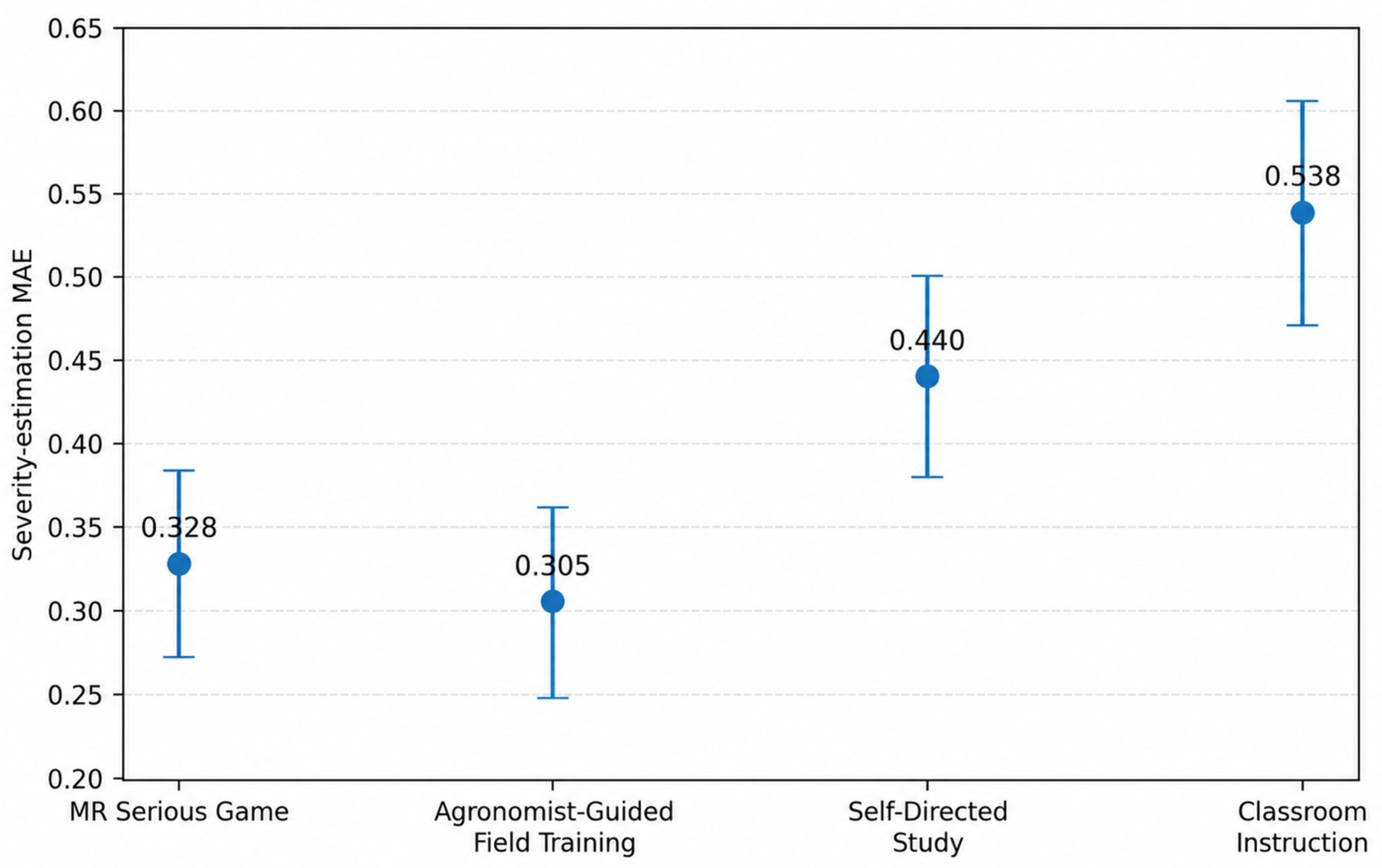
The participant-level analysis included N = 80 participants (n = 20 per instructional condition). A one-way ANOVA showed a significant effect of instructional condition on severity-estimation error, F(3, 76) = 13.99, p < 0.001, ηp2 = 0.356, indicating a large overall effect. Mean MAE was 0.305 ± 0.121 (95% CI [0.248, 0.362]) for the agronomist-guided field training condition, 0.328 ± 0.119 (95% CI [0.272, 0.384]) for the MR serious-game condition, 0.440 ± 0.129 (95% CI [0.380, 0.500]) for the self-directed study condition, and 0.538 ± 0.144 (95% CI [0.471, 0.605]) for the classroom instruction condition. Relative to classroom instruction, MAE was lower by 0.210 in the MR condition and by 0.233 in the agronomist-guided condition; both differences represented large standardized effects. The difference between the MR and agronomist-guided conditions was small (0.023 MAE units). Table 6 reports the Tukey HSD pairwise comparisons, and Figure 5 visualizes the group means and 95% confidence intervals.
Table 6.
Tukey HSD pairwise comparisons for severity-estimation error.
Figure 5.
Severity-estimation mean absolute error across instructional conditions. Points represent group means and error bars represent 95% confidence intervals; lower values indicate better performance and n = 20 per condition.
4.1.3. Leaf-Level Analysis of Disease Classification
The leaf-level mixed-effects analysis included 1600 observations from N = 80 participants. Relative to classroom instruction, the MR serious-game condition (β = 1.121, OR = 3.07, 95% CI for OR [2.25, 4.19], p < 0.001) and agronomist-guided field training condition (β = 0.822, OR = 2.28, 95% CI for OR [1.72, 3.01], p < 0.001) were associated with greater odds of correct disease classification. These odds ratios indicate substantial increases in the likelihood of correct classification relative to classroom instruction. No significant difference was observed between the self-directed study condition and classroom instruction (β = 0.103, OR = 1.11, 95% CI for OR [0.89, 1.39], p = 0.369), representing a small effect. Full model results are reported in Table 7.
Table 7.
Mixed-effects logistic regression model for disease-classification accuracy.
4.1.4. Leaf-Level Analysis of Severity-Estimation Error
The leaf-level linear mixed-effects analysis included 1600 observations from N = 80 participants. The model indicated lower severity-estimation error relative to classroom instruction for the self-directed study condition (β = −0.098, 95% CI [−0.175, −0.020], p = 0.014), agronomist-guided field training condition (β = −0.233, 95% CI [−0.310, −0.155], p < 0.001), and MR serious-game condition (β = −0.210, 95% CI [−0.288, −0.132], p < 0.001). Relative to the classroom intercept of 0.496, these coefficients correspond to approximate reductions of 20% for self-directed study, 47% for agronomist-guided field training, and 42% for the MR serious game, indicating that the MR and agronomist-guided differences were substantial in magnitude.
Disease type was also associated with severity-estimation error, with Rhynchosporium leaves exhibiting higher errors than Pyricularia leaves (β = 0.055, 95% CI [0.002, 0.108], p = 0.041), although this effect was comparatively small. True severity level was not a significant predictor of severity-estimation error (β = 0.005, 95% CI [−0.014, 0.023], p = 0.623). Full model results are reported in Table 8.
Table 8.
Linear mixed-effects model for severity-estimation error.
4.2. Study 2
4.2.1. Transfer of Learning
The transfer analysis included N = 30 participants. Participants achieved mean disease- and severity-classification accuracy of 79.5% (SD = 12.8%, 95% CI [74.7%, 84.3%]) and 65.3% (SD = 17.4%, 95% CI [58.8%, 71.8%]), respectively, during the MR assessment. During the real-leaf transfer assessment, mean disease- and severity-classification accuracies were 70.7% (SD = 15.1%, 95% CI [65.0%, 76.3%]) and 60.7% (SD = 20.0%, 95% CI [53.2%, 68.1%]), respectively. The mean decrease from the MR assessment to the real-leaf assessment was 8.8 percentage points for disease accuracy (95% CI [3.5, 14.2]) and 4.7 percentage points for severity accuracy (95% CI [−2.5, 11.8]), indicating moderate attenuation for disease identification and a smaller, less precisely estimated change for severity classification. Performance during the independent MR assessment was significantly associated with performance during the real-leaf transfer assessment. Higher MR disease-identification accuracy was associated with higher real-leaf disease-identification accuracy (ρ = 0.429, 95% CI [0.081, 0.683], p = 0.018), while lower MR severity-estimation error was associated with lower real-leaf severity-estimation error (ρ = 0.473, 95% CI [0.136, 0.712], p = 0.008). Both associations were moderate in magnitude. Figure 6 illustrates the group mean disease- and severity-classification accuracies during the independent MR assessment and the real-leaf transfer assessment, with 95% confidence intervals.
Figure 6.
Disease- and severity-classification accuracy during the independent MR assessment and real-leaf transfer assessment. Points represent group means and error bars represent 95% confidence intervals; n = 30.
4.2.2. Behavioral Indicators Associated with Transfer
The behavioral analyses included N = 30 participants. Several coded interaction behaviors were associated with MR assessment performance and real-leaf transfer performance (Table 9). Among the coded behaviors, leaf rotation demonstrated the strongest and most consistent associations across performance measures, including a very strong association with MR severity MAE and moderate-to-strong associations with real-leaf outcomes. Comparative inspection was not significantly associated with any outcome, and its confidence intervals included zero.
Table 9.
Spearman rank-order correlations between coded interaction behaviors and performance outcomes.
Additional analyses examined relationships between coded interaction behaviors and questionnaire measures of perceived transfer to real-leaf diagnosis tasks. The significant associations ranged from moderate to strong in magnitude, with decision latency demonstrating the most consistent relationships across perceived-transfer measures. Table 10 summarizes the results.
Table 10.
Spearman rank-order correlations, 95% confidence intervals, and p-values between coded interaction behaviors and perceived-transfer measure.
4.2.3. Guided Learning Behavior and Transfer Perceptions
These analyses included N = 30 participants. Inspection time during Stage 2, Stage 3, and across both guided learning stages was not significantly associated with MR performance or real-leaf transfer performance. These correlations were small in magnitude (ρ = −0.259 to 0.238), and all 95% confidence intervals included zero. Similarly, the number of leaf inspections was generally unrelated to performance outcomes, with one exception: Stage 2 leaf inspections were moderately and negatively associated with real-leaf severity-estimation error (ρ = −0.410, 95% CI [−0.671, −0.058], p = 0.024). No significant relationships were observed between Stage 3 leaf inspections or total leaf inspections and any MR or transfer-performance measure; the corresponding effects ranged from small to moderate (ρ = −0.313 to 0.266), and all confidence intervals included zero.
Additional analyses indicated significant positive associations between questionnaire measures of guided learning and transfer-related perceptions and real-leaf transfer performance. The effects ranged from moderate to strong (|ρ| = 0.394–0.595). Table 11 summarizes these relationships.
Table 11.
Correlations between questionnaire measures of guided-learning and transfer-related perceptions and real-leaf transfer performance.
4.2.4. Tutorial Stage Performance and Perceptions
The tutorial-stage analyses included N = 30 participants. Unsuccessful grab attempts were negatively associated with perceived tutorial effectiveness (ρ = −0.750, 95% CI [−0.874, −0.534], p < 0.001) and usability perceptions (ρ = −0.649, 95% CI [−0.818, −0.377], p < 0.001). Tutorial completion time was also negatively associated with perceived tutorial effectiveness (ρ = −0.722, 95% CI [−0.859, −0.489], p < 0.001). These associations were strong to very strong, indicating substantial relationships between early interaction difficulty and less favorable tutorial and usability perceptions. No significant relationships were observed between perceived tutorial effectiveness and MR performance, real-leaf transfer performance, perceived transfer to real leaves, or engagement and replay motivation. These effects were small (ρ = −0.067 to 0.203), and all confidence intervals included zero.
4.2.5. Feedback, Leaderboard, and Gamification Features
These analyses included N = 30 participants. Performance-summary viewing time was not significantly associated with MR or real-leaf performance measures. The corresponding effects were small (ρ = −0.205 to 0.191), and all confidence intervals included zero. Agreement with the statement “The final performance summary helped me evaluate my performance” was positively associated with MR disease-classification accuracy (ρ = 0.387, 95% CI [0.031, 0.656], p = 0.035), representing a moderate association. No significant relationships were observed between the remaining feedback-related questionnaire items and either MR or real-leaf transfer performance; these effects ranged from ρ = −0.331 to 0.355, and all confidence intervals included zero.
Leaderboard engagement was examined using both objective viewing-time data and questionnaire measures of learner perceptions of the leaderboard. No significant relationships were observed between leaderboard engagement and the performance outcomes. The effects were small (ρ = −0.260 to 0.192), and all confidence intervals included zero.
In contrast, several gamification-related perceptions were associated with performance outcomes. Agreement that game-like elements increased motivation was positively associated with MR disease-classification accuracy (ρ = 0.612, 95% CI [0.324, 0.797], p < 0.001) and negatively associated with MR severity-estimation error (ρ = −0.369, 95% CI [−0.644, −0.010], p = 0.045). Agreement that trophies or congratulatory messages provided a sense of achievement was positively associated with MR disease-classification accuracy (ρ = 0.506, 95% CI [0.178, 0.732], p = 0.004) and negatively associated with both MR severity-estimation error (ρ = −0.541, 95% CI [−0.755, −0.225], p = 0.002) and real-leaf severity-estimation error (ρ = −0.432, 95% CI [−0.686, −0.085], p = 0.017). These associations were moderate to strong in magnitude.
The strongest and most consistent relationships were observed for the statement “The game-like elements encouraged me to continue participating and improve my performance,” which was positively associated with MR disease-classification accuracy (ρ = 0.638, 95% CI [0.360, 0.812], p < 0.001) and real-leaf disease-identification accuracy (ρ = 0.415, 95% CI [0.065, 0.675], p = 0.023), while being negatively associated with both MR severity-estimation error (ρ = −0.557, 95% CI [−0.764, −0.246], p = 0.001) and real-leaf severity-estimation error (ρ = −0.362, 95% CI [−0.639, −0.002], p = 0.050). The MR associations were strong, whereas the real-leaf associations were moderate.
4.2.6. Replay Behavior
Replay participation was evaluated among all N = 30 participants. Following completion of the MR experience, 27 participants (90.0%, 95% CI [74.4%, 96.5%]) voluntarily replayed the game at least once, whereas 3 participants (10.0%) did not undertake a replay attempt. Among participants who replayed, replay frequencies ranged from one to six attempts. Replay-related questionnaire perceptions were not significantly associated with the number of replay attempts completed. These effects were small (ρ = 0.007–0.238), and all confidence intervals included zero.
For the replay-performance analysis, the sample consisted of N = 27 replay participants. Mean initial-attempt and best-attempt error scores were 11.00 (SD = 5.18, 95% CI [8.95, 13.05]) and 4.78 (SD = 1.69, 95% CI [4.11, 5.45]), respectively. Twenty-three participants (85.2%, 95% CI [67.5%, 94.1%]) reduced their error score following at least one replay attempt, whereas four participants (14.8%) showed no improvement. The mean reduction was 6.22 errors (95% CI [3.98, 8.46]). A Wilcoxon signed-rank test indicated a significant difference between initial-attempt and best-attempt error scores, W = 22.50, p < 0.001, rank-biserial correlation = 0.881, indicating a very large improvement effect.
Behavioral coding variables were also compared between the initial attempt and the final completed replay attempt among N = 27 participants. Mean leaf rotation decreased from 22.81 (SD = 5.18) to 16.19 (SD = 6.13), a mean change of −6.63 rotations (95% CI [−9.05, −4.21]); close examination increased from 7.15 (SD = 2.35) to 8.11 (SD = 3.61), a mean change of 0.96 (95% CI [−0.45, 2.37]); leaf revisitation increased from 3.11 (SD = 1.48) to 5.04 (SD = 2.46), a mean change of 1.93 (95% CI [0.91, 2.94]); comparative inspection increased from 2.63 (SD = 1.04) to 3.15 (SD = 1.56), a mean change of 0.52 (95% CI [−0.11, 1.14]); and decision latency before first response decreased from 8.06 s (SD = 4.17) to 6.88 s (SD = 3.96), a mean change of −1.17 s (95% CI [−1.50, −0.85]).
Change in close examination was significantly associated with performance improvement (ρ = −0.561, 95% CI [−0.776, −0.230], p = 0.002), representing a strong association. No significant associations were observed between performance improvement and changes in leaf rotation, leaf revisitation, comparative inspection, or decision latency; these effects were small (|ρ| = 0.035–0.231), and all confidence intervals included zero.
4.2.7. Interview Findings
Interview responses were analyzed using the predefined deductive coding framework described in Section 3.4.6. Table 12 summarizes the frequency of interview codes identified across participants (N = 30). Frequencies indicate the number of participants whose transcript contained at least one substantive segment matching each code.
Table 12.
Frequencies of predefined deductive interview codes identified across participants.
5. Discussion
The present study examined the educational effectiveness of a theory-informed MR serious game for observation-based disease classification and severity estimation while also investigating learning transfer, interaction behavior, learner perceptions, gamification, replay, and participant experiences. The following discussion interprets these findings in relation to authentic, embodied, perceptual, retrieval-practice, scaffolding, and self-regulated learning perspectives before discussing their implications for MR serious-game design and the proposed design recommendations and methodological framework.
5.1. Educational Effectiveness and Authentic Task Alignment
In addressing Objective 2, Study 1 provides empirical support for the educational effectiveness of the MR serious game. Instructional condition accounted for a large proportion of the variance in both disease-classification accuracy and severity-estimation error. Relative to classroom instruction, the MR condition improved disease-classification accuracy by 16.2 percentage points, with a large standardized difference of Hedges’ g = 1.80. The corresponding advantage over self-directed study was 14.2 percentage points and also represented a large effect (g = 1.66). These effect sizes suggest that the observed differences were educationally meaningful under the conditions examined, in addition to being statistically detectable.
The severity-estimation findings followed a similar pattern. Compared with classroom instruction, the MR condition reduced mean absolute error by 0.210 units, representing a large standardized effect (g = −1.56). The reduction relative to self-directed study was smaller but remained substantial (g = −0.88), although the confidence interval for the mean difference approached zero. The leaf-level analyses further supported these findings after accounting for repeated observations across participants and leaf samples. The MR condition was associated with approximately three times the odds of correct disease classification relative to classroom instruction. It was also associated with an approximate 42% reduction in severity-estimation error relative to the classroom intercept. Agronomist-guided field training showed a similar pattern of improved performance, while self-directed study was also associated with lower severity-estimation error than classroom instruction. This latter finding suggests that access to standardized reference materials may support severity judgments even without instructor guidance.
Performance in the MR condition was also close to that achieved through agronomist-guided field training. The 3.2-percentage-point difference in disease-classification accuracy represented a small standardized effect, and the confidence interval included modest advantages in either direction. Similarly, the difference in severity-estimation error was 0.023 units, with a small standardized effect and a confidence interval spanning zero. These results indicate that no large performance difference between the MR and field-training conditions was evident in the present sample, although statistical equivalence was not formally tested. This finding is educationally relevant because it suggests that, under the conditions examined, the MR serious game may provide a practical alternative when expert-guided field training is difficult to deliver consistently, repeatedly, or at scale.
One explanation for this pattern is the close alignment between the MR activities and the target diagnostic task. Instead of using artificially generated specimens, the MR environment incorporated images derived from real rice leaves collected from field samples exhibiting authentic disease symptoms and severity levels. Learners selected, held, rotated, and visually inspected the virtual leaves from different orientations before making disease and severity judgments using the same classification structure later applied to real specimens. The findings are consistent with a central assumption of authentic learning: transfer may be supported when learning activities preserve the perceptual and decision-making demands of the target task. The small differences between the MR and agronomist-guided conditions, together with the subsequent transfer findings, suggest that the MR serious game may preserve key perceptual and decision-making elements of authentic diagnostic activity even when every physical and contextual feature of field practice is not reproduced.
This interpretation is consistent with evidence from other educational and professional-training settings. A recent study in medical education found that MR-based training produced performance outcomes comparable to conventional hands-on instruction, supporting the use of MR for complex skill acquisition in authentic learning contexts [68]. Pickering et al. [69] similarly found that MR simulations supported professional learning by allowing learners to engage with realistic workplace tasks and scenarios. Research in industrial training has also shown that MR environments can support situated and contextual learning through authentic task performance and experiential activity [70]. Together with the present findings, this literature indicates that close alignment between MR learning experiences and real-world task demands may be an important condition for effective learning.
The results are also compatible with embodied-learning theory, although this study did not isolate embodiment as an independent mechanism. The MR serious game required learners to select, hold, rotate, and closely inspect virtual leaves, and the behavioral analyses from Study 2 showed that leaf rotation was associated with several MR and real-leaf performance outcomes. These findings suggest that task-relevant bodily interaction may contribute to visual information gathering and diagnostic judgment. They provide empirical support for the theoretical assumption that motivated the interaction tutorial and subsequent learning activities, namely that actively manipulating virtual objects can facilitate learning when those interactions directly support the observation and interpretation processes required by the instructional task. However, Study 1 compared complete instructional conditions and did not compare embodied and non-embodied versions of the same MR experience. Consequently, the present findings should be interpreted as supporting the educational value of embodied interaction within the integrated instructional approach.
5.2. Learning Transfer, Independent Performance, and Diagnostic Behavior
Study 2 extends the comparative findings by examining whether performance acquired in the MR serious game transferred to real-leaf assessment. Disease-identification accuracy declined by an average of 8.8 percentage points from the independent MR assessment to the real-leaf assessment, with a confidence interval indicating a meaningful reduction. Severity-classification accuracy declined by 4.7 percentage points, although the confidence interval was wider and included zero.
The results suggest that learning transferred from the MR serious game to real leaves, although performance declined between the two assessments. Consistent with this interpretation, participants who performed better during independent MR disease identification also tended to perform better with real leaves, and lower MR severity-estimation error was associated with lower real-leaf error. This decline suggests that factors present during the real-leaf assessment may have introduced additional challenges beyond those encountered in the MR environment. For example, physical texture, lighting, natural variation, leaf condition, and other characteristics of real specimens may have affected transfer. The interview findings are consistent with this interpretation. Participants frequently described similarities between the MR and real leaves and perceived that learning transferred beyond the virtual environment. They also described differences between the two formats more frequently, suggesting that participants recognized challenges when applying their learning to real specimens.
This relationship indicates that the independent MR stage may have contributed to transfer by requiring learners to retrieve and apply previously introduced information without visible instructional support. This interpretation is consistent with retrieval-practice theory, in which applying previously learned classifications during unsupported tasks may strengthen access to that knowledge and prepare learners to use it in a subsequent context [43]. The progression from guided stages to independent classification is also consistent with scaffolding theory because support was gradually reduced as learners moved toward autonomous task performance [44].
Together, these findings provide empirical support for the theoretical assumptions that motivated the independent assessment stage, namely that requiring learners to retrieve previously acquired knowledge after the progressive withdrawal of instructional support can facilitate independent performance and subsequent transfer. However, retrieval practice and scaffolding were not examined independently. Consequently, the observed relationship between performance during the independent MR stage and transfer to real leaves should be interpreted as reflecting their combined influence rather than the contribution of either mechanism alone.
The behavioral findings provide additional insight into the role of the independent stage in transfer. Leaf rotation showed the strongest and most consistent associations with both MR and real-leaf performance outcomes, particularly severity-estimation error. Decision latency before the first response was also associated with MR and real-leaf performance outcomes, although these relationships were generally weaker than those observed for leaf rotation. These findings suggest that successful transfer was associated with active visual inspection and more deliberate diagnostic decision-making during the independent stage. This interpretation is consistent with previous MR research, which has emphasized scenario-based decision-making as a central component of skill development in immersive training environments [71].
Importantly, not every observable interaction appeared to contribute equally to learning. Comparative inspection was not associated with any performance outcome, and leaf revisitation showed relationships with MR severity estimation but not with real-leaf transfer. These findings suggest that the educational contribution of embodied interaction may depend on how individual interactions support the demands of the learning task. Rotating a leaf may expose diagnostic features that would otherwise remain difficult to inspect, whereas comparing multiple leaves or repeatedly returning to them may not improve performance unless those actions are strategically directed.
Behavioral, questionnaire, and interview findings showed both convergence and divergence. Learners who reported stronger preparation for real-leaf diagnosis and greater applicability of the acquired skills tended to achieve better transfer performance. Rotation and decision latency were also associated with perceived preparation, while interviews frequently described guided learning as preparation, transition to independence, visual pattern recognition, and perceived transfer. Comparative inspection was associated with perceived preparation despite its lack of association with objective performance. Learners may regard an interaction as useful even when its measurable relationship with performance is limited. This distinction is relevant both theoretically and methodologically: perceptions provide insight into how learners interpret an experience, but they should not be treated as substitutes for behavioral or performance evidence.
These findings are consistent with previous MR research reporting improvements in knowledge acquisition and learner satisfaction following MR-based instruction [72], as well as serious-game research in higher education demonstrating benefits for learning, problem-solving, motivation, engagement, and skill development [4]. The present findings extend this literature by connecting performance within an MR serious game to a real-object assessment while also examining the behaviors associated with that transfer.
These findings also provide empirical support for the theoretical assumptions that informed the design of the independent assessment stage. They suggest that combining authentic task performance with the retrieval of previously learned knowledge following the progressive withdrawal of instructional support may contribute to successful transfer from an MR serious game to closely related real-world tasks. However, the present findings demonstrate transfer only between the MR serious game and a closely related real-leaf assessment under the conditions examined. They do not establish long-term retention, transfer to field diagnosis under uncontrolled conditions, or professional competence.
5.3. Guided Learning, Perceptual Learning, and Progressive Support
The guided stages were designed to introduce disease categories and severity characteristics through structured exposure before learners completed independent classification. Several findings suggest that this progression may have supported subsequent independent performance. In Study 2, participants who perceived that the guided stages helped them understand disease characteristics and provided adequate preparation before independent classification tended to perform better during the subsequent real-leaf assessment. Interview responses similarly emphasized guided preparation, confidence development, visual pattern recognition, learning progression, and the transition to independent performance.
The questionnaire and interview findings are consistent with visual category learning and perceptual learning theories, which propose that repeated exposure to category-defining visual characteristics supports the development of discrimination and pattern-recognition skills necessary for accurate classification [36,41]. During the guided stages, learners were exposed to multiple diseased leaves while disease classifications and severity information remained visible, providing opportunities for visual symptoms to be linked with the classification framework used throughout the experience. This instructional design also provided immediate feedback, which has been associated with improved learning by helping learners refine their understanding and subsequent performance [40]. These findings provide empirical support for the theoretical assumptions that motivated the guided-learning stages, namely that repeated exposure to representative examples, immediate associations between visual evidence and diagnostic categories, and instructional feedback can support the development of perceptual discrimination and subsequent independent classification.
The behavioral evidence, however, indicates that the effects of guided exposure cannot be explained solely by the amount of exposure learners received. Time spent in the guided stages was not associated with MR or real-leaf performance, and most measures of inspection frequency were similarly unrelated to outcomes. The principal exception was a moderate relationship between the number of leaves inspected during Stage 2 and lower real-leaf severity-estimation error. These findings refine the theoretical assumptions underlying perceptual learning by suggesting that the educational value of guided exposure may depend more on the quality and diagnostic relevance of representative examples than on the duration of exposure alone. Learners may therefore benefit when additional inspections expose them to diagnostically useful variation, whereas extended viewing without purposeful feature discrimination may contribute relatively little to learning.
5.4. Interaction Familiarization and Differences in Technical Proficiency
The tutorial stage was designed to familiarize learners with object manipulation, navigation, and interface interactions before the disease-classification activities. Previous AR, VR, and MR serious games have similarly incorporated dedicated familiarization stages to reduce interaction demands before learners engage with the primary instructional task [33,34,73].
The present findings provide empirical evidence consistent with this instructional role. Tutorial performance was associated with learners’ perceptions of tutorial effectiveness and system usability. Learners who experienced fewer interaction difficulties and completed the tutorial more efficiently tended to evaluate both the tutorial and the overall MR experience more positively. More specifically, unsuccessful grab attempts were strongly associated with lower perceived tutorial effectiveness and poorer usability perceptions, while longer tutorial completion times were strongly associated with lower evaluations of the tutorial. These relationships are particularly relevant because all participants were novices in the use of MR headsets. A dedicated familiarization stage therefore appears important for reducing the risk that difficulty with the interface may be interpreted as difficulty with the instructional content or with the MR system itself. These findings are consistent with the intended design of the MR serious game, in which the tutorial was incorporated to establish foundational interaction competence before learners engaged with the disease-classification activities.
5.5. Performance Feedback, Reflection, and Self-Regulated Learning
Participants who agreed that the performance summary helped them evaluate their performance tended to achieve higher MR disease-classification accuracy. Together with the interview themes of performance awareness (60.0%), understanding mistakes (56.7%), and self-evaluation (43.3%), these findings suggest that learners primarily perceived the performance summary as a tool for reflection and performance monitoring. The findings indicate that learners used the performance summary to interpret their results, identify mistakes, and evaluate their own performance within the MR environment. This interpretation is consistent with self-regulated learning research in immersive environments, which highlights the importance of monitoring, reflection, and evaluation processes in supporting learner awareness and regulation of performance [74].
5.6. Differential Effects of Gamification
The present study did not experimentally manipulate different levels or intensities of gamification and therefore cannot establish whether increasing the amount of gamification would produce greater learner motivation. Instead, it examined functionally different game elements, allowing competition-oriented, achievement-oriented, and improvement-oriented mechanisms to be distinguished.
Competition-oriented gamification showed little relationship with learning. Neither objective leaderboard engagement nor perceptions of the leaderboard were associated with MR or real-leaf performance. Competitive motivation and social comparison were also among the less frequently identified interview themes. The leaderboard may still have offered some learners a reference point for performance benchmarking, but there was no evidence that greater engagement with it translated into stronger classification or transfer outcomes.
Achievement-oriented elements demonstrated a different pattern. Learners who reported that trophies and congratulatory messages provided a sense of achievement tended to show stronger MR disease-identification performance and lower severity-estimation error in both MR and real-leaf assessments. General perceptions that the game-like elements increased motivation were also associated with stronger MR performance. These moderate-to-strong relationships suggest that recognition of achievement may have played a greater role in sustaining engagement with the task than comparison with other participants.
The strongest and most consistent pattern concerned continued participation and self-improvement. Agreement that the game-like elements encouraged learners to continue and improve was strongly related to MR performance and moderately related to real-leaf outcomes. Interview findings similarly emphasized enjoyment, interest, achievement, reward appreciation, and gamification-supported engagement more frequently than competition. This suggests that one of the most educationally relevant functions of gamification in the present serious game may have been to sustain task engagement and encourage another attempt at improvement, whereas learner ranking appeared to play a more limited role.
The present findings also clarify an important distinction regarding the role of gamification in MR serious games. The findings suggest that increasing the amount of gamification does not necessarily improve learner motivation and that the educational impact of gamification depends on the instructional function of individual game elements. Competition-oriented features demonstrated limited relationships with engagement or learning, whereas achievement-oriented and self-improvement-oriented features were more consistently associated with motivation, replay, and performance outcomes.
These findings provide empirical support for a mastery-oriented interpretation of gamification, in which achievement feedback, visible progress, and opportunities for self-improvement are emphasized over competition with other learners [50,51]. More specifically, the findings support the theoretical assumption that motivated the inclusion of different gamification elements in the MR serious game, namely that gamification mechanisms may serve distinct educational functions instead of operating as a single motivational intervention. The observed differences between competition-oriented, achievement-oriented, and improvement-oriented features suggest that their educational contributions should be considered separately when designing and evaluating MR serious games. Nevertheless, the relationships were correlational and based partly on learner perceptions. Participants who performed well may have evaluated the gamification more positively, and the present study cannot determine whether gamification itself caused their stronger performance. Experimental comparisons of individual gamification elements are needed to determine their independent contributions to learning and motivation.
5.7. Replay, Repeated Practice, and Behavioral Adaptation
Within the present study, replay provided behavioral evidence of sustained voluntary engagement. Twenty-seven of the 30 participants chose to replay the serious game, and 85.2% of those participants reduced their error score on at least one subsequent attempt. The mean reduction of 6.22 errors and rank-biserial correlation of 0.881 indicate that the difference between initial and best attempts was very large. These findings suggest that the serious game encouraged most learners to continue practicing and that improved performance commonly accompanied that practice.
Replay can be interpreted in relation to retrieval practice and self-regulated learning. Each additional attempt required learners to retrieve disease and severity knowledge, apply it to new decisions, receive performance information, and determine whether to continue. The combination of repeated retrieval and learner-controlled repetition may have supported performance development. These findings provide empirical support for the theoretical assumptions that motivated the inclusion of replay within the MR serious game, namely that repeated retrieval opportunities combined with learner-directed practice and performance feedback may contribute to continued performance improvement and self-regulated learning. Nevertheless, the replay analysis cannot establish that replay alone caused the improvements. Participation was voluntary, there was no non-replay control group, and the comparison used each learner’s best attempt. Practice effects, increasing familiarity with the task, exposure to repeated or similar examples, and selection of the best observed performance may all have contributed.
The disconnect between stated replay perceptions and actual replay frequency is particularly informative. Questionnaire responses about replay were not associated with the number of attempts completed. Actual behavior therefore provided information that self-reported motivation did not capture. This divergence suggests value in evaluating engagement through both behavioral and perceptual evidence rather than relying solely on intentions or retrospective evaluations.
Interaction patterns also changed across attempts. Learners rotated leaves fewer times and responded more quickly during their final replay, while revisitation increased. These changes suggest increasing familiarity and possible refinement of information-gathering strategies. However, only changes in close examination were associated with performance improvement; changes in rotation, revisitation, comparative inspection, and decision latency were not. Faster or more streamlined behavior should therefore not automatically be interpreted as improved learning. The present findings suggest that behavioral efficiency, strategy adaptation, and performance improvement should be considered related but distinct phenomena.
5.8. Traceability from MR Serious-Game Design Decisions to Empirical Evidence
Table 13 traces the relationships among the main design decisions, their intended functions, the evaluation measures used to assess them, and the findings that converged with or diverged from the intended outcomes. Each complete traceability pathway is identified as T1–T8. These pathways formed the basis for the preliminary design recommendations presented in Section Preliminary Design Recommendations. Their synthesis also informed the methodological framework presented in Section 5.9.
Table 13.
Traceability from MR serious-game design decisions to empirical evidence.
Preliminary Design Recommendations
The recommendations below synthesize the converging and diverging findings associated with the traceability pathways T1 to T8. They are intended as preliminary recommendations for developers of MR serious games involving observation, classification, and decision-making activities in higher education and are grounded in the complete MR serious game, participant population, task, and educational context examined in this study. Moreover, this study did not experimentally isolate the independent contribution of individual design features, and the recommendations (R) should therefore be interpreted as applying to the integrated instructional approach evaluated in the present study.
- R1. Minimize technological barriers to disciplinary learning (Derived from T1).
The tutorial stage was intended to ensure that novice learners could operate the system before instructional performance was assessed. Developers could consider minimizing the cognitive demands associated with operating MR technology so that learners can focus on observing, interpreting, and making discipline-specific decisions.
- R2. Do not assume usability improvements will translate into learning gains (Derived from T1).
Tutorial perceptions improved usability but were unrelated to learning, transfer, or replay motivation. Developers should consider evaluating usability and learning outcomes independently, as reducing operational barriers and improving tutorial experiences may not necessarily improve learning, transfer, or continued engagement.
- R3. Preserve task-relevant observation processes (Derived from T2 and T3).
T2 showed successful transfer from MR to real leaves despite incomplete realism. T3 showed that some observation behaviors contributed to performance whereas others did not. Together, these findings suggest that preserving the process of observation is more important than simply reproducing objects visually. MR serious games may therefore benefit from supporting the observation and evidence-gathering processes that underpin decision-making while recognizing that virtual representations may not fully reproduce physical tasks.
- R4. Use guided learning to build readiness for independent performance (Derived from T4 and T5).
The guided learning stages were associated with learner confidence, perceived preparedness, and progression toward independent performance. Developers should therefore consider guided instructional stages as an important component of MR serious games that involve observation, classification, and decision-making activities.
- R5. Prioritize self-improvement over competitive gamification (Derived from T7 and T8).
Achievement recognition and replay appeared beneficial, whereas leaderboard effects were limited and not all learners were motivated by competition. This recommendation synthesizes both the positive and negative findings. Developers should consider emphasizing achievement recognition, personal progress, and opportunities for repeated practice while using competitive features selectively. Gamification features may be more useful when they help learners review their performance, set improvement goals, and attempt tasks again, since benchmarking features such as leaderboards may not consistently motivate learners or contribute to improved performance.
- R6. Use explanatory feedback following classification decisions (Derived from T6).
T6 showed that feedback supported error recognition and performance awareness, although motivational effects were inconsistent. This recommendation therefore emphasizes the educational function of feedback over its motivational function. MR serious games could provide immediate explanatory feedback following classification decisions to help learners recognize and understand incorrect responses. Feedback may be most effective when it explains the visual evidence or classification criteria underlying the correct or incorrect decision.
- R7. Evaluate design features individually rather than assuming equal educational value (Derived from T3, T6, T7, and T8).
Across multiple traceability pathways, different features contributed differently. Some inspection behaviors mattered more than others, some feedback elements were associated with outcomes whereas others were not, and leaderboard effects were limited. This recommendation synthesizes this overall pattern. Developers should consider evaluating the educational contribution of individual interaction, feedback, and gamification features independently, as these elements may contribute unequally to learning, transfer, and continued engagement.
5.9. Derivation of the Multi-Dimensional Methodological Framework
In addressing Objective 5, we developed a multi-dimensional methodological framework to guide the study of MR serious games involving observation, classification, and decision-making activities in higher-education settings. The framework is proposed as a methodological guide derived from the synthesis and interpretation of the traceability pathways presented in Table 13. It should not be interpreted as a definitive methodological framework for MR serious-game research.
The synthesis of the traceability pathways in Table 13 demonstrated that no single form of evidence was sufficient to explain learner activity comprehensively. Rather, different forms of evidence repeatedly contributed complementary explanations of learning, interaction, learner interpretation, and behavioral change across multiple traceability pathways. These recurring methodological observations are summarized in Table 14.
Table 14.
Methodological implications derived from the synthesis of the traceability pathways in Table 13.
Consistent with methodological framework development, whereby empirical evidence is synthesized into a structured guide for conducting a process or procedure [75], these methodological implications were subsequently organized into six complementary methodological dimensions intended to guide the design and evaluation of future studies of MR serious games, as illustrated in Figure 7.
Figure 7.
Proposed methodological framework illustrating six complementary dimensions for the study of MR serious games involving observation, classification, and decision-making activities in higher education.
The framework does not prescribe specific instruments or procedures. Instead, it identifies six complementary methodological perspectives, each representing a distinct methodological question that future studies may address using different measures, technologies, tasks, and educational contexts according to their research objectives.
The framework is consequently intended to address an outcome–process gap in the evaluation of MR serious games. Outcome measures can establish whether learners performed well but cannot independently explain how they interacted, which features supported them, how they interpreted the experience, or why performance changed. Conversely, usability, motivation, or experience measures can show how learners evaluated the game without demonstrating learning or transfer. The framework therefore emphasizes the integration of complementary evidence and the examination of convergence and discrepancies among its dimensions.
The six dimensions should not be interpreted as a mandatory set of instruments or as equally relevant to every MR serious game. Their implementation should depend on the research questions, task, technology, population, and context. A study focused solely on initial usability may not require transfer or repeated-use evidence, whereas a study claiming educational effectiveness, authentic application, or adaptive learning would require evidence across several dimensions. The proposed value of the framework is therefore not that it replaces established measures of individual constructs, but that it provides a structured approach for integrating complementary forms of evidence that would otherwise be evaluated independently.
Furthermore, the proposed framework should be interpreted within the scope of the empirical evidence from which it was derived. It emerged from the synthesis of findings obtained using a single MR serious-game prototype, learning task, participant population, and educational context, and should therefore be regarded as exploratory rather than definitive. Additional research is required to evaluate and refine its applicability across different MR serious-game designs, application domains, participant populations, and educational contexts.
5.10. Illustrative Applications and Adaptation of the Proposed Methodological Framework
The proposed framework is intended as a flexible methodological guide for the study of MR serious games in university education. Although it was derived from an MR serious game involving agricultural disease diagnosis, its dimensions are organized around general methodological questions concerning learning, interaction, learner interpretation, game-function evaluation, and behavioral adaptation. Consequently, the framework may be adapted to other MR serious games involving observation, classification, and decision-making activities across different disciplines by selecting appropriate tasks, measures, and evaluation procedures while preserving the complementary methodological perspectives represented by the six dimensions.
For example, in medical education, the framework could be applied to MR serious games supporting diagnostic tasks such as identifying dermatological conditions, interpreting radiological images, or recognizing anatomical structures. Learning outcomes would evaluate diagnostic accuracy, interaction measures could examine visual inspection strategies or viewpoint changes, learner perceptions would assess confidence and perceived preparedness, learner experiences could explore clinical realism and decision-making processes, gamification features could evaluate the educational role of feedback and achievement systems, and behavioral adaptation could examine changes in diagnostic strategies during repeated practice. Similar adaptations could be implemented in engineering education, where learners inspect mechanical components or identify equipment faults, or in environmental sciences, where learners classify ecological conditions or environmental hazards. Although the instructional tasks, assessment measures, and domain-specific content differ, the methodological questions addressed by the framework remain comparable.
The implementation of the framework should also consider the characteristics of the educational environment in which MR technologies are deployed. Institutions may differ substantially in hardware availability, technical infrastructure, available instructional time, and instructor experience with immersive technologies. Furthermore, the educational value of MR may also depend on the capabilities and limitations of the available hardware, including factors such as field of view, interaction fidelity, tracking accuracy, and user comfort, which may influence both implementation and evaluation. Consequently, studies conducted using different MR platforms may implement the six dimensions using different instruments and procedures while addressing the same underlying methodological questions. Similarly, researchers working in resource-constrained educational settings may prioritize selected dimensions according to their research objectives and practical constraints instead of evaluating every aspect of the framework within a single study.
Participant familiarity with immersive technologies should likewise influence implementation decisions. Novice users may benefit from extended familiarization activities, simplified interaction techniques, or additional guided-learning opportunities before independent assessment, whereas participants with previous MR experience may require less instructional support and allow greater emphasis on authentic task performance. Similarly, researchers should consider participant technical proficiency when selecting evaluation measures, interpreting interaction behaviors, and determining the relative emphasis placed on different methodological dimensions. For example, studies involving inexperienced users may place greater emphasis on interaction behavior and learner perceptions to distinguish technological familiarization from disciplinary learning, whereas studies involving experienced MR users may focus more directly on learning outcomes, transfer, and behavioral adaptation. The framework therefore encourages researchers to adapt instructional scaffolding, interaction complexity, and evaluation procedures according to participant characteristics while preserving the complementary evidence represented by the six methodological dimensions.
These examples are intended to illustrate the potential adaptability of the framework and should not be interpreted as prescribing specific implementation strategies. Future research should evaluate and refine the framework across different MR serious-game applications, educational disciplines, technologies, participant populations, and instructional contexts to determine the extent to which its methodological dimensions remain applicable beyond the context examined in the present study.
5.11. Alternative Interpretations
Although the preceding discussion has focused on interpretations supported by the findings, alternative explanations should also be considered. Several findings may have been influenced by factors that were not directly measured or experimentally isolated within the present study. Table 15 summarizes alternative interpretations that may be relevant when considering the principal findings and design recommendations presented throughout the discussion.
Table 15.
Alternative interpretations of key discussion findings.
5.12. Study Limitations
The following limitations should be considered when interpreting the findings:
- This study focused on a single diagnostic learning context involving rice disease identification and severity estimation. In addition, the proposed methodological framework was derived from a single MR serious-game prototype, task domain, and participant population. Consequently, the findings and framework require validation across additional educational domains, participant populations, and MR serious-game designs before broader generalizability can be established.
- The educational effectiveness demonstrated in Study 1 and the behavioral, perceptual, and experiential findings examined in Study 2 were derived from separate participant samples. Consequently, the generally positive perceptions, engagement, and voluntary replay observed in Study 2 may not generalize to older or more age-diverse populations.
- Prior experience with video games or other interactive digital environments may have influenced interaction efficiency, familiarity with game-based interfaces, engagement, and observed gameplay behaviors. As prior gaming experience was not measured, its potential influence could not be evaluated in the present study.
- Participants were undergraduate students without formal training in plant disease diagnosis. Learners with different levels of prior knowledge, disciplinary backgrounds, or professional experience may exhibit different patterns of learning, transfer, behavior, and engagement.
- Study 2 included a relatively small MR-only sample, limiting the strength of conclusions drawn from correlation-based analyses of gameplay behavior, learner perceptions, transfer, feedback, gamification, and replay behavior.
- The behavioral analyses were correlational and should not be interpreted as evidence of causal relationships. Observed behavioral patterns may also reflect differences in motivation, confidence, attention, task engagement, or other unmeasured factors.
- The guided-learning stages formed part of an integrated instructional sequence, making it difficult to isolate their independent contribution to learning and transfer outcomes.
- Several questionnaire constructs demonstrated lower internal consistency than desirable. Consequently, questionnaire findings were interpreted cautiously and used primarily to support triangulation with behavioral, performance, replay, and interview data.
- The evaluation focused primarily on immediate learning and transfer outcomes using a specific MR platform, interaction design, learning sequence, and set of comparison conditions. Different MR systems, interaction methods, instructional materials, or longer-term usage conditions may produce different outcomes.
- Participants were restricted to a relatively narrow age range of 18–21 years and were predominantly in the early stages of undergraduate education. This age concentration may have introduced age-related sampling bias, particularly in the perceptual and engagement findings. Although all participants were novices in the use of MR and VR headsets, younger adults may differ from older learners or professionals in their familiarity with interactive digital environments, willingness to experiment with emerging technologies, responsiveness to gamification, and perceptions of technological novelty and usability. Consequently, the generally positive perceptions, engagement, and voluntary replay observed in Study 2 may not generalize to older or more age-diverse populations. The restricted age range also prevented the examination of age-related differences within the present samples.
- Although the four instructional conditions were standardized with respect to learning objectives, instructional duration, disease content, assessment procedures, and performance measures, they necessarily differed in the degree of instructor interaction and learner guidance. The classroom and field conditions involved direct interaction with an instructor, the guidebook condition relied entirely on self-directed learning, and the MR condition provided automated guidance through the serious game. These differences are inherent to comparisons between educational modalities and may have influenced learner engagement, opportunities for questioning, feedback, and instructional support. Consequently, the observed differences should be interpreted as reflecting the overall characteristics of each instructional approach rather than differences in the instructional medium.
- The observed advantages of the MR serious-game condition in Study 1 may reflect the combined effects of MR technology, immersive interaction, authentic task representation, structured instructional design, learner engagement, feedback, and other features incorporated into the MR serious game, rather than the contribution of Mixed Reality technology alone.
6. Future Work and Conclusions
Future research should evaluate the preliminary design recommendations for developers and the proposed methodological framework across a broader range of MR serious games involving observation, classification, and decision-making activities in higher education. Because these contributions were derived from the present study, validation across different educational disciplines, professional training contexts, participant populations, and levels of expertise is needed to determine their generalizability and identify the conditions under which they are most applicable.
Future studies should also examine whether the proposed recommendations and framework remain relevant for MR serious games with different learning objectives, interaction patterns, gameplay structures, and educational environments. Such research would help determine whether these contributions extend beyond the educational context investigated in the present study and can support the design and evaluation of MR applications across diverse disciplines and sectors. It should also examine how differences in technological infrastructure, institutional resources, instructional practices, and learner populations influence the feasibility, implementation, and educational effectiveness of MR technologies across these settings.
Future research should employ factorial and component-based experimental designs to examine how individual instructional features interact to influence learning. Such approaches would provide a more detailed understanding of the relative contributions of Mixed Reality technology, authentic task representation, instructional guidance, feedback, gamification, and other design elements, thereby informing the development of more effective MR serious games.
By integrating learning outcomes with behavioral and experiential evidence, this study proposes a set of preliminary design recommendations for developers and an exploratory methodological framework that may provide a foundation for the design, development, and evaluation of MR serious games involving observation, classification, and decision-making activities. Their applicability beyond the present educational context should be established through future empirical validation.
Supplementary Materials
The following supporting information can be downloaded at: https://www.mdpi.com/article/10.3390/technologies14080508/s1, Video S1: MR serious game demonstration.
Author Contributions
Conceptualization, L.G.I.D.; methodology, N.S.-R.; software, N.S.-R.; formal analysis, L.G.I.D.; investigation, L.G.I.D.; resources, L.G.I.D. and N.S.-R.; data curation, L.G.I.D. and A.A.P.; writing—original draft preparation, L.G.I.D., N.S.-R. and A.A.P.; writing—review and editing, L.G.I.D., N.S.-R. and A.A.P.; supervision, L.G.I.D. All authors have read and agreed to the published version of the manuscript.
Funding
This research was funded by Universidad de los Llanos under research project code C01-02-2025-007, approved for funding by the Consejo Institucional de Investigaciones through Acta No. 34 of 12 December 2024.
Institutional Review Board Statement
The study was conducted in accordance with the Declaration of Helsinki and approved by the Bioethics Committee of the Universidad de los Llanos (approval code 3110.02.0457, Acta 012, 6 November 2024).
Informed Consent Statement
Written informed consent was obtained from all subjects involved in this study.
Data Availability Statement
The Mixed Reality serious-game source code, Unity project, and implementation resources required to deploy the application on Meta Quest 3 headsets are openly available on GitHub at https://github.com/solofruad/ricexr (accessed on 30 July 2026). The complete research materials supporting this study are available through the Open Science Framework (OSF) at https://doi.org/10.17605/OSF.IO/SXFM5 (accessed on 30 July 2026) and include the instructional materials, participant screening questionnaire, experimental control protocols, randomization script, classroom presentation, self-study guidebook, post-experience questionnaire, interview guide, behavioral coding manual, participant- and leaf-level datasets, full Study 2 dataset, Python analysis scripts for both studies, and supporting documentation for sample size determination and questionnaire reliability.
Acknowledgments
The authors gratefully acknowledge the financial and institutional support provided by Universidad de los Llanos through research project C01-02-2025-007. The authors also thank the students who voluntarily participated in this research and the teaching assistants whose support contributed to the successful implementation of this study.
Conflicts of Interest
The authors declare no conflicts of interest.
References
- Zikas, P.; Bachlitzanakis, V.; Papaefthymiou, M.; Kateros, S.; Georgiou, S.; Lydatakis, N.; Papagiannakis, G. Mixed Reality Serious Games and Gamification for Smart Education. In Proceedings of the European Conference on Games Based Learning; Academic Conferences International Limited: Reading, UK, 2016; pp. 805–812. Available online: https://www.proquest.com/docview/1859715075?pq-origsite=gscholar&fromopenview=true&sourcetype=Conference%20Papers%20&%20Proceedings (accessed on 3 February 2026).
- Banjar, A.; Xu, X.; Iqbal, M.Z.; Campbell, A. A Systematic Review of the Experimental Studies on the Effectiveness of Mixed Reality in Higher Education between 2017 and 2021. Comput. Educ. X Real. 2023, 3, 100034. [Google Scholar] [CrossRef] [Scilit]
- Balalle, H. Learning beyond Realities: Exploring Virtual Reality, Augmented Reality, and Mixed Reality in Higher Education—A Systematic Literature Review. Discov. Educ. 2025, 4, 151. [Google Scholar] [CrossRef] [Scilit]
- Brandl, L.C.; Schrader, A. Serious Games in Higher Education in the Transforming Process to Education 4.0—Systematized Review. Educ. Sci. 2024, 14, 281. [Google Scholar] [CrossRef] [Scilit]
- Lindgren, R.; Tscholl, M.; Wang, S.; Johnson, E. Enhancing Learning and Engagement through Embodied Interaction within a Mixed Reality Simulation. Comput. Educ. 2016, 95, 174–187. [Google Scholar] [CrossRef] [Scilit]
- Yazdani, S.; Hosseinzadeh, M.; Hosseini, F. Models of Clinical Reasoning with a Focus on General Practice: A Critical Review. J. Adv. Med. Educ. Prof. 2017, 5, 177–184. [Google Scholar] [PubMed]
- Francis, R.A.; Paretti, M.C.; Riedner, R. Theorizing Engineering Judgment at the Intersection of Decision-Making and Identity. Stud. Eng. Educ. 2022, 3, 79–98. [Google Scholar] [CrossRef] [Scilit]
- Ncube, M.M.; Ngulube, P. Enhancing Environmental Decision-Making: A Systematic Review of Data Analytics Applications in Monitoring and Management. Discov. Sustain. 2024, 5, 290. [Google Scholar] [CrossRef] [Scilit]
- Ngugi, H.N.; Akinyelu, A.A.; Ezugwu, A.E. Machine Learning and Deep Learning for Crop Disease Diagnosis: Performance Analysis and Review. Agronomy 2024, 14, 3001. [Google Scholar] [CrossRef] [Scilit]
- Lee, L.-K.; Wei, X.; Chui, K.T.; Cheung, S.K.S.; Wang, F.L.; Fung, Y.C.; Lu, A.; Hui, Y.K.; Hao, T.; Leong, H.U.; et al. A Systematic Review of the Design of Serious Games for Innovative Learning: Augmented Reality, Virtual Reality, or Mixed Reality? Electronics 2024, 13, 890. [Google Scholar] [CrossRef] [Scilit]
- Liu, S.; Toreini, P.; Maedche, A. Mixed Reality Learning Systems with Head-Mounted Displays in Higher Education: A Systematic Review. Technol. Knowl. Learn. 2026, 31, 1101–1135. [Google Scholar] [CrossRef] [Scilit]
- Crogman, H.T.; Cano, V.D.; Pacheco, E.; Sonawane, R.B.; Boroon, R. Virtual Reality, Augmented Reality, and Mixed Reality in Experiential Learning: Transforming Educational Paradigms. Educ. Sci. 2025, 15, 303. [Google Scholar] [CrossRef] [Scilit]
- Xiao, R.; Zhang, R.; Buruk, O.; Hamari, J.; Virkki, J. Toward Next Generation Mixed Reality Games: A Research through Design Approach. Virtual Real. 2024, 28, 142. [Google Scholar] [CrossRef] [Scilit]
- Ogunseiju, O.R.; Gonsalves, N.; Akanmu, A.A.; Bairaktarova, D.; Bowman, D.A.; Jazizadeh, F. Mixed Reality Environment for Learning Sensing Technology Applications in Construction: A Usability Study. Adv. Eng. Inform. 2022, 53, 101637. [Google Scholar] [CrossRef] [Scilit]
- Burnett, G. Exploring Mixed-Reality Approaches for Inclusive Blended Learning in Higher Education. J. Workplace Learn. 2024, 36, 486–499. [Google Scholar] [CrossRef] [Scilit]
- Tang, Y.M.; Au, K.M.; Lau, H.C.W.; Ho, G.T.S.; Wu, C.H. Evaluating the Effectiveness of Learning Design with Mixed Reality (MR) in Higher Education. Virtual Real. 2020, 24, 797–807. [Google Scholar] [CrossRef] [Scilit]
- Hang, Y.; Wang, H.; Sang, Z.; Huang, R.; Ye, L. The Impact of Mixed Reality Serious Games on Mortise and Tenon Learning in College Students. Comput. Educ. X Real. 2023, 3, 100042. [Google Scholar] [CrossRef] [Scilit]
- Altan, B.; Gürer, S.; Alsamarei, A.; Demir, D.K.; Düzgün, H.Ş.; Erkayaoğlu, M.; Surer, E. Developing Serious Games for CBRN-e Training in Mixed Reality, Virtual Reality, and Computer-Based Environments. Int. J. Disaster Risk Reduct. 2022, 77, 103022. [Google Scholar] [CrossRef] [Scilit]
- Antoniou, P.E.; Arfaras, G.; Pandria, N.; Athanasiou, A.; Ntakakis, G.; Babatsikos, E.; Nigdelis, V.; Bamidis, P. Biosensor Real-Time Affective Analytics in Virtual and Mixed Reality Medical Education Serious Games: Cohort Study. JMIR Serious Games 2020, 8, e17823. [Google Scholar] [CrossRef] [Scilit] [PubMed]
- Bauer, E.; Fischer, F.; Kiesewetter, J.; Shaffer, D.W.; Fischer, M.R.; Zottmann, J.M.; Sailer, M. Diagnostic Activities and Diagnostic Practices in Medical Education and Teacher Education: An Interdisciplinary Comparison. Front. Psychol. 2020, 11, 562665. [Google Scholar] [CrossRef] [Scilit] [PubMed]
- Heitzmann, N.; Seidel, T.; Opitz, A.; Hetmanek, A.; Wecker, C.; Fischer, M.R.; Ufer, S.; Schmidmaier, R.; Neuhaus, B.; Siebeck, M.; et al. Facilitating Diagnostic Competences in Simulations in Higher Education: A Framework and a Research Agenda. Front. Learn. Res. 2019, 7, 1–24. [Google Scholar] [CrossRef] [Scilit]
- Chernikova, O.; Heitzmann, N.; Fink, M.C.; Timothy, V.; Seidel, T.; Fischer, F.; DFG Research Group COSIMA. Facilitating Diagnostic Competences in Higher Education—A Meta-Analysis in Medical and Teacher Education. Educ. Psychol. Rev. 2020, 32, 157–196. [Google Scholar] [CrossRef] [Scilit]
- Padilla, L.M.; Creem-Regehr, S.H.; Hegarty, M.; Stefanucci, J.K. Decision Making with Visualizations: A Cognitive Framework Across Disciplines. Cogn. Res. Princ. Implic. 2018, 3, 29. [Google Scholar] [CrossRef] [Scilit] [PubMed]
- De Witte, B.; Reynaert, V.; Hutain, J.; Kieken, D.; Jabbour, J.; Possik, J. Immersive Learning of Factual Knowledge While Assessing the Influence of Cognitive Load and Spatial Abilities. Comput. Educ. X Real. 2024, 5, 100085. [Google Scholar] [CrossRef] [Scilit]
- Bicalho, D.R.; Piedade, J.; Matos, J.F. iVRPM: Conceptual Proposal of an Immersive Virtual Reality Pedagogical Model. Appl. Sci. 2025, 15, 2162. [Google Scholar] [CrossRef] [Scilit]
- Ericsson, K.A. Deliberate Practice and Acquisition of Expert Performance: A General Overview. Acad. Emerg. Med. 2008, 15, 988–994. [Google Scholar] [CrossRef] [Scilit] [PubMed]
- Gesi, M.; Condino, S.; Turini, G.; Viglialoro, R.M.; Carbone, M. Serious Games and Mixed Reality Applications for Healthcare. Appl. Sci. 2022, 12, 3644. [Google Scholar] [CrossRef] [Scilit]
- Kang, Y.; Lee, I. Mixed-Reality Simulation Education for Caring of Older Adults with Cognitive Impairment among Undergraduate Nursing Students: A Sequential Explanatory Mixed Methods Study. BMC Nurs. 2026, 25, 217. [Google Scholar] [CrossRef] [Scilit] [PubMed]
- Gogoi, M.; Kumar, V.; Begum, S.; Sharma, N.; Kant, S. Classification and Detection of Rice Diseases Using a 3-Stage CNN Architecture with Transfer Learning Approach. Agriculture 2023, 13, 1505. [Google Scholar] [CrossRef] [Scilit]
- Herrington, J. Introduction to Authentic Learning. In Activity Theory, Authentic Learning and Emerging Technologies; Routledge: London, UK, 2014; pp. 61–67. [Google Scholar] [CrossRef] [Scilit]
- Radianti, J.; Majchrzak, T.A.; Fromm, J.; Wohlgenannt, I. A Systematic Review of Immersive Virtual Reality Applications for Higher Education: Design Elements, Lessons Learned, and Research Agenda. Comput. Educ. 2020, 147, 103778. [Google Scholar] [CrossRef] [Scilit]
- International Rice Research Institute. Standard Evaluation System for Rice (SES); International Rice Research Institute: Los Baños, Philippines, 2002; Available online: http://www.knowledgebank.irri.org/images/docs/rice-standard-evaluation-system.pdf (accessed on 26 June 2026).
- Fortman, J.; Quintana, R. Fostering Collaborative and Embodied Learning with Extended Reality: Special Issue Introduction. Int. J. Comput.-Support. Collab. Learn. 2023, 18, 145–152. [Google Scholar] [CrossRef] [Scilit]
- Mergen, M.; Junga, A.; Schulze, H.; Bozdere, P.; Kockwelp, P.; Pielage, L.; Sassen, C.; Glückselig, T.; Schmitz, M.; Ungru, K.; et al. Developing and Integrating Virtual Reality Courses in Medical Education: Tutorial and Implementation Guideline Informed by Best Practices from the National Project “medical tr.AI.ning”. JMIR Med. Educ. 2026, 12, e80976. [Google Scholar] [CrossRef] [Scilit] [PubMed]
- Makransky, G.; Terkildsen, T.S.; Mayer, R.E. Adding Immersive Virtual Reality to a Science Lab Simulation Causes More Presence but Less Learning. Learn. Instr. 2019, 60, 225–236. [Google Scholar] [CrossRef] [Scilit]
- Johnson-Glenberg, M.C.; Birchfield, D.A.; Tolentino, L.; Koziupa, T. Collaborative Embodied Learning in Mixed Reality Motion-Capture Environments: Two Science Studies. J. Educ. Psychol. 2014, 106, 86–104. [Google Scholar] [CrossRef] [Scilit]
- Mugisha, G.; Arguel, A. Procedural Learning in Mixed Reality: Assessing Cognitive Load and Performance. Educ. Sci. 2025, 15, 339. [Google Scholar] [CrossRef] [Scilit]
- Johnson-Glenberg, M.C. Immersive VR and Education: Embodied Design Principles That Include Gesture and Hand Controls. Front. Robot. AI 2018, 5, 81. [Google Scholar] [CrossRef] [Scilit] [PubMed]
- Chatain, J.; Kapur, M.; Sumner, R.W. Three Perspectives on Embodied Learning in Virtual Reality: Opportunities for Interaction Design. In Extended Abstracts of the 2023 CHI Conference on Human Factors in Computing Systems, Hamburg, Germany, 23–28 April 2023; Association for Computing Machinery: New York, NY, USA, 2023; pp. 1–8. [Google Scholar] [CrossRef] [Scilit]
- Hughes, G.I.; Thomas, A.K. Visual Category Learning: Navigating the Intersection of Rules and Similarity. Psychon. Bull. Rev. 2021, 28, 711–731. [Google Scholar] [CrossRef] [Scilit] [PubMed]
- Shute, V.J. Focus on Formative Feedback. Rev. Educ. Res. 2008, 78, 153–189. [Google Scholar] [CrossRef] [Scilit]
- Bagher, M.M.; Sajjadi, P.; Wallgrün, J.O.; La Femina, P.C.; Klippel, A. Move the Object or Move the User: The Role of Interaction Techniques on Embodied Learning in VR. Front. Virtual Real. 2021, 2, 695312. [Google Scholar] [CrossRef] [Scilit]
- Dosher, B.; Lu, Z.-L. Visual Perceptual Learning and Models. Annu. Rev. Vis. Sci. 2017, 3, 343–363. [Google Scholar] [CrossRef] [Scilit] [PubMed]
- Karpicke, J.D.; Blunt, J.R. Retrieval Practice Produces More Learning than Elaborative Studying with Concept Mapping. Science 2011, 331, 772–775. [Google Scholar] [CrossRef] [Scilit] [PubMed]
- Piriyasurawong, P. Scaffolding Augmented Reality Model to Enhance Deep Reading Skill. TEM J. 2020, 9, 1760–1764. [Google Scholar] [CrossRef] [Scilit]
- Hajian, S. Transfer of Learning and Teaching: A Review of Transfer Theories and Effective Instructional Practices. IAFOR J. Educ. 2019, 7, 93–111. [Google Scholar] [CrossRef] [Scilit]
- Wang, W.S.; Lin, C.J.; Lee, H.Y.; Wu, T.T.; Huang, Y.M. Feedback Mechanism in Immersive Virtual Reality Influences Physical Hands-on Task Performance and Cognitive Load. Int. J. Hum.-Comput. Interact. 2024, 40, 4103–4115. [Google Scholar] [CrossRef] [Scilit]
- Makransky, G.; Petersen, G.B. The Cognitive Affective Model of Immersive Learning (CAMIL): A Theoretical Research-Based Model of Learning in Immersive Virtual Reality. Educ. Psychol. Rev. 2021, 33, 937–958. [Google Scholar] [CrossRef] [Scilit]
- Park, S.; Kim, S. Leaderboard Design Principles to Enhance Learning and Motivation in a Gamified Educational Environment: Development Study. JMIR Serious Games 2021, 9, e14746. [Google Scholar] [CrossRef] [Scilit] [PubMed]
- Deterding, S.; Dixon, D.; Khaled, R.; Nacke, L. From Game Design Elements to Gamefulness: Defining “Gamification”. In Proceedings of the 15th International Academic MindTrek Conference: Envisioning Future Media Environments; Association for Computing Machinery: New York, NY, USA, 2011; pp. 9–15. [Google Scholar] [CrossRef] [Scilit]
- Li, M.; Ma, S.; Shi, Y. Examining the Effectiveness of Gamification as a Tool Promoting Teaching and Learning in Educational Settings: A Meta-Analysis. Front. Psychol. 2023, 14, 1253549. [Google Scholar] [CrossRef] [Scilit] [PubMed]
- Cohen, J. A Coefficient of Agreement for Nominal Scales. Educ. Psychol. Meas. 1960, 20, 37–46. [Google Scholar] [CrossRef] [Scilit]
- Cohen, J. Weighted Kappa: Nominal Scale Agreement Provision for Scaled Disagreement or Partial Credit. Psychol. Bull. 1968, 70, 213–220. [Google Scholar] [CrossRef] [Scilit] [PubMed]
- Blanca, M.; Alarcón, R.; Arnau, J.; Bono, R.; Bendayan, R. Non-Normal Data: Is ANOVA Still a Valid Option? Psicothema 2017, 29, 552–557. [Google Scholar] [CrossRef] [Scilit] [PubMed]
- Kim, H.-Y. Statistical Notes for Clinical Researchers: Post-Hoc Multiple Comparisons. Restor. Dent. Endod. 2015, 40, 172–176. [Google Scholar] [CrossRef] [Scilit] [PubMed]
- Gueorguieva, R.; Krystal, J.H. Move Over ANOVA: Progress in Analyzing Repeated-Measures Data and Its Reflection in Papers Published in the Archives of General Psychiatry. Arch. Gen. Psychiatry 2004, 61, 310–317. [Google Scholar] [CrossRef] [Scilit] [PubMed]
- Bono, R.; Alarcón, R.; Blanca, M.J. Report Quality of Generalized Linear Mixed Models in Psychology: A Systematic Review. Front. Psychol. 2021, 12, 666182. [Google Scholar] [CrossRef] [Scilit] [PubMed]
- Mudgal, S.K.; Sharma, S.K.; Gaur, R.; Patidar, V.; Rai, A.K.; Varshney, S. Sample Size Estimation in Mixed Methods Research: Balancing Quantitative Power and Qualitative Saturation. J. Med. Evid. 2026, 7, e000036. [Google Scholar]
- Castro, F.G.; Kellison, J.G.; Boyd, S.J.; Kopak, A. A Methodology for Conducting Integrative Mixed Methods Research and Data Analyses. J. Mix. Methods Res. 2010, 4, 342–360. [Google Scholar] [CrossRef] [Scilit] [PubMed]
- Biederman, I. Recognition-by-Components: A Theory of Human Image Understanding. Psychol. Rev. 1987, 94, 115–147. [Google Scholar] [CrossRef] [Scilit] [PubMed]
- Ren, Z.; Fang, F.; Yan, N.; Wu, Y. State of the Art in Defect Detection Based on Machine Vision. Int. J. Precis. Eng. Manuf.-Green Technol. 2022, 9, 661–691. [Google Scholar] [CrossRef] [Scilit]
- Edwards, B.J.; Williams, J.J.; Gentner, D.; Lombrozo, T. Explanation Recruits Comparison in a Category-Learning Task. Cognition 2019, 185, 21–38. [Google Scholar] [CrossRef] [Scilit] [PubMed]
- Shin, H.S. Reasoning Processes in Clinical Reasoning: From the Perspective of Cognitive Psychology. Korean J. Med. Educ. 2019, 31, 299–308. [Google Scholar] [CrossRef] [Scilit] [PubMed]
- Sherbino, J.; Dore, K.L.; Wood, T.J.; Young, M.E.; Gaissmaier, W.; Kreuger, S.; Norman, G.R. The Relationship Between Response Time and Diagnostic Accuracy. Acad. Med. 2012, 87, 785–791. [Google Scholar] [CrossRef] [Scilit] [PubMed]
- Akoglu, H. User’s Guide to Correlation Coefficients. Turk. J. Emerg. Med. 2018, 18, 91–93. [Google Scholar] [CrossRef] [Scilit] [PubMed]
- Schober, P.; Boer, C.; Schwarte, L.A. Correlation Coefficients: Appropriate Use and Interpretation. Anesth. Analg. 2018, 126, 1763–1768. [Google Scholar] [CrossRef] [Scilit] [PubMed]
- Conover, W.J.; Iman, R.L. Rank Transformations as a Bridge between Parametric and Nonparametric Statistics. Am. Stat. 1981, 35, 124–129. [Google Scholar] [CrossRef] [Scilit]
- Palliyali, A.W.; Hamza, H.; Khorasani, M.; Aboumarzouk, O.; Al-Ansari, A.; Deng, Z.; Navkar, N.V. Mixed Reality-Based Training Simulator for Learning Scope Maneuvering Skills in Hysteroscopy. Virtual Real. 2026, 30, 19. [Google Scholar] [CrossRef] [Scilit]
- Pickering, M.; Jopp, R.; Wheeler, M.; Topple, C. Authentic Learning and Job Readiness: Are Mixed-Reality Simulations Effective Tools for Preparing Business Students for the Real World? Australas. J. Educ. Technol. 2024, 40, 77–91. [Google Scholar] [CrossRef] [Scilit]
- Sautter, B.; Daling, L. Mixed Reality Supported Learning for Industrial On-the-Job Training. In Proceedings of the 11th Conference on Learning Factories (CLF 2021), Graz, Austria, 1–2 July 2021. [Google Scholar] [CrossRef] [Scilit]
- Du, W.; Zhong, X.; Jia, Y.; Jiang, R.; Yang, H.; Ye, Z. A Novel Scenario-Based, Mixed-Reality Platform for Training Nontechnical Skills of Battlefield First Aid: Prospective Interventional Study. JMIR Serious Games 2022, 10, e40727. [Google Scholar] [CrossRef] [Scilit] [PubMed]
- Lee, H.-D.; Huh, Y.; Kim, S.; Baek, J.-W.; Lee, H.; Park, S.-M.; Kim, J.-K. Educational Effects of and Satisfaction with Mixed-Reality-Based Major Trauma Care Simulator: A Preliminary Evaluation. Medicine 2024, 103, e36816. [Google Scholar] [CrossRef] [Scilit] [PubMed]
- Lampropoulos, G.; Keramopoulos, E.; Diamantaras, K.; Evangelidis, G. Integrating Augmented Reality, Gamification, and Serious Games in Computer Science Education. Educ. Sci. 2023, 13, 618. [Google Scholar] [CrossRef] [Scilit]
- Ader, E.; Paksoy, I.; Michalsky, T.; Gröschner, A.; Dehne, M.; Jassin, Z.; Hickethier, F. Self-Regulated Learning in Immersive Virtual Reality: A Case Study on a Pre-Service Teacher’s Behavior and Perceptions. Comput. Hum. Behav. Rep. 2025, 20, 100873. [Google Scholar] [CrossRef] [Scilit]
- McMeekin, N.; Wu, O.; Germeni, E.; Briggs, A. How Methodological Frameworks Are Being Developed: Evidence from a Scoping Review. BMC Med. Res. Methodol. 2020, 20, 173. [Google Scholar] [CrossRef] [Scilit] [PubMed]
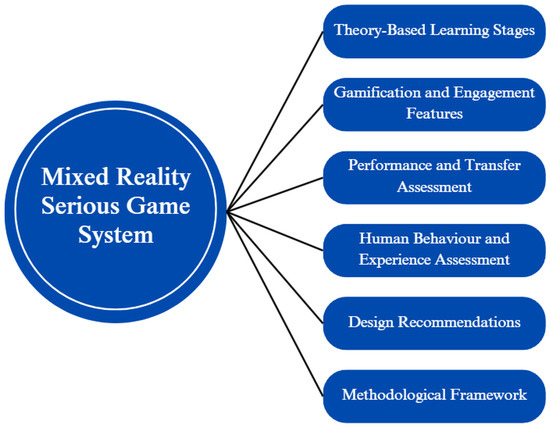
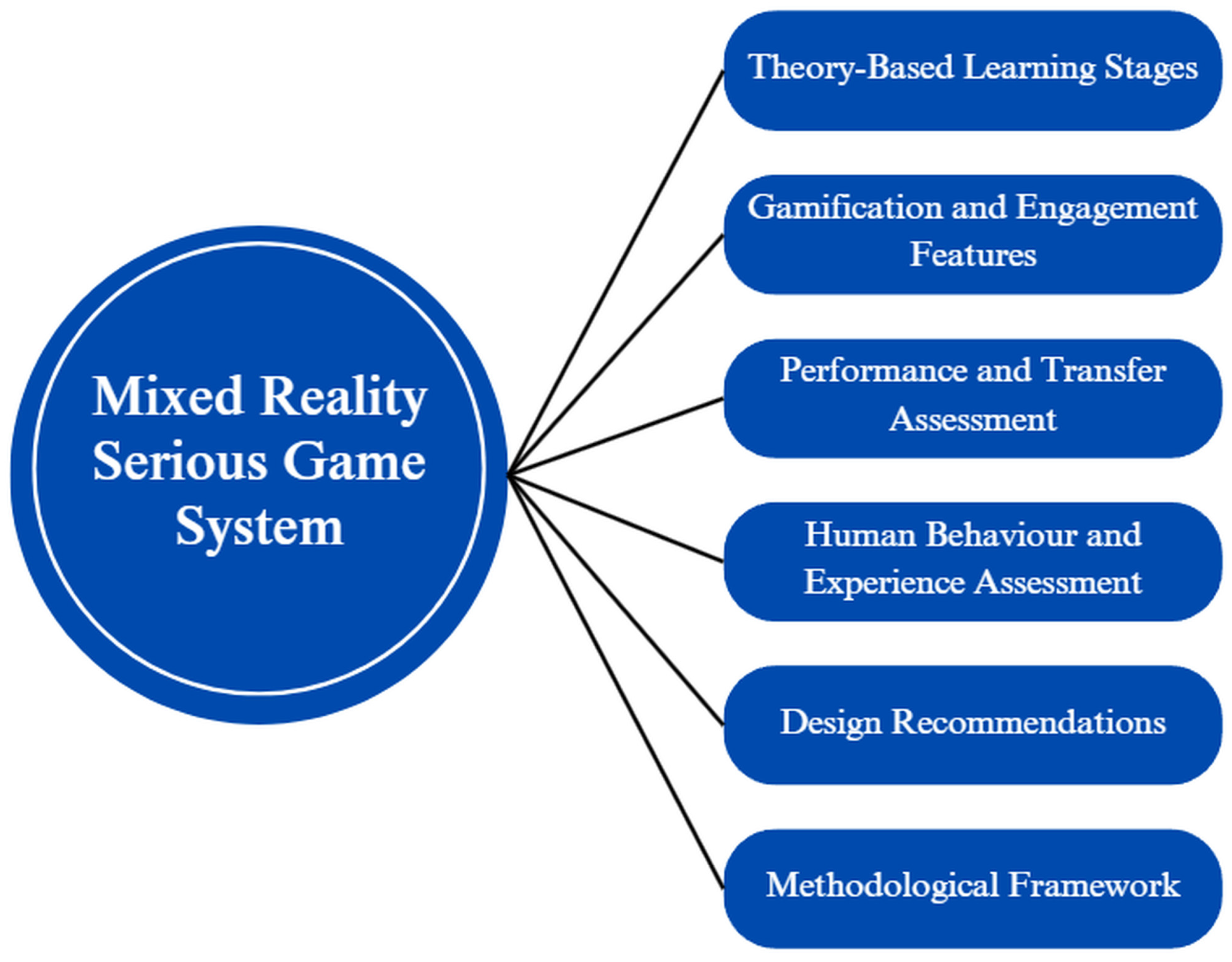
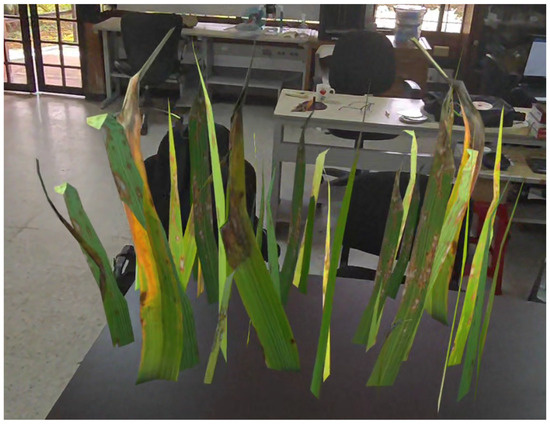
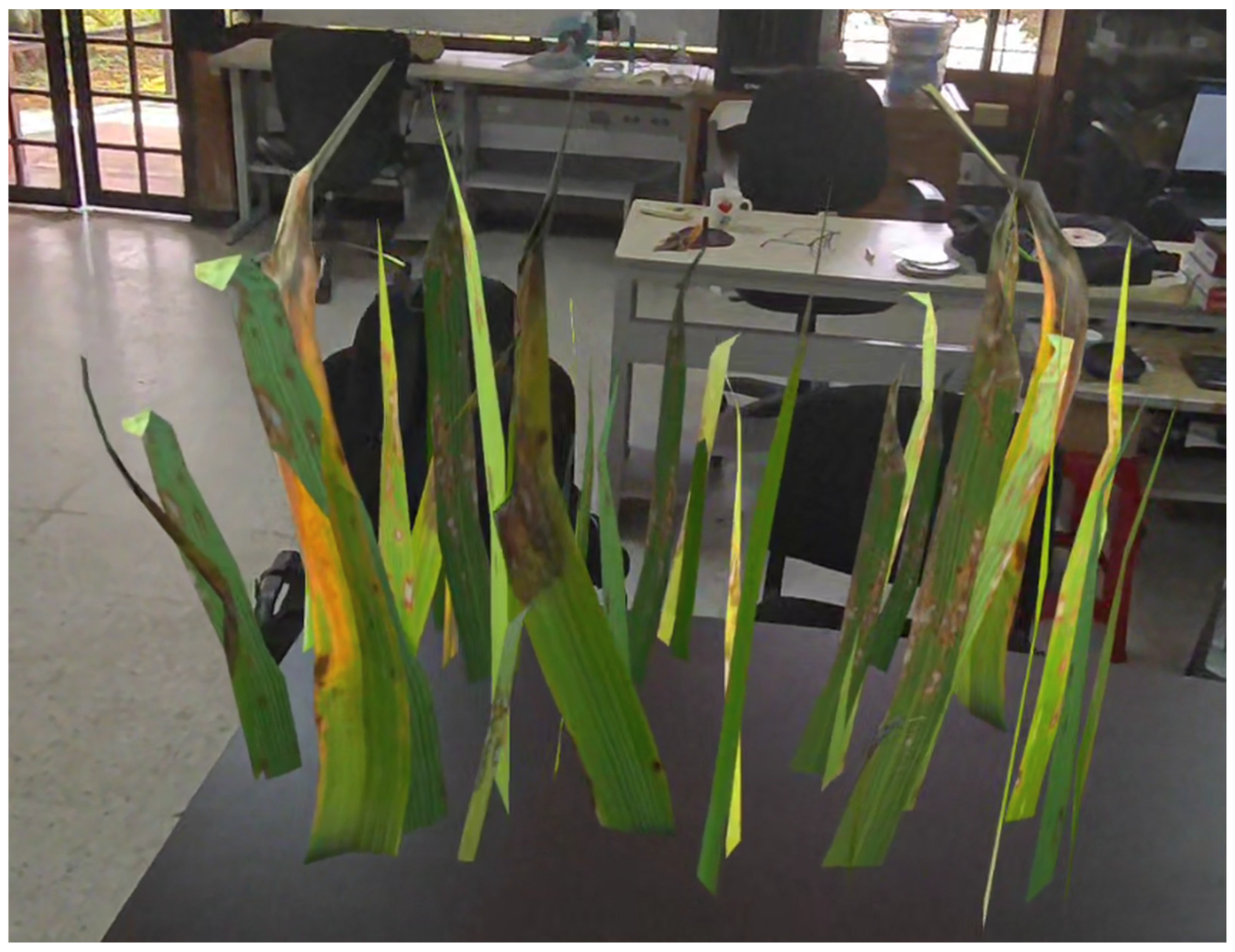
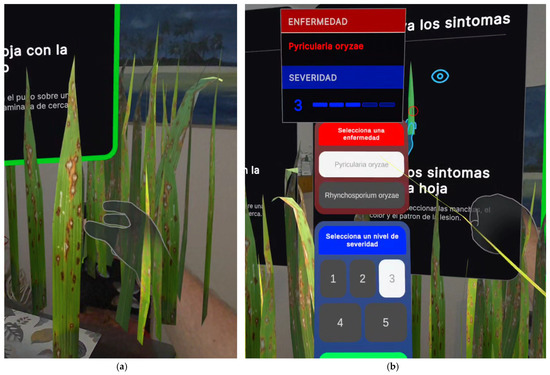
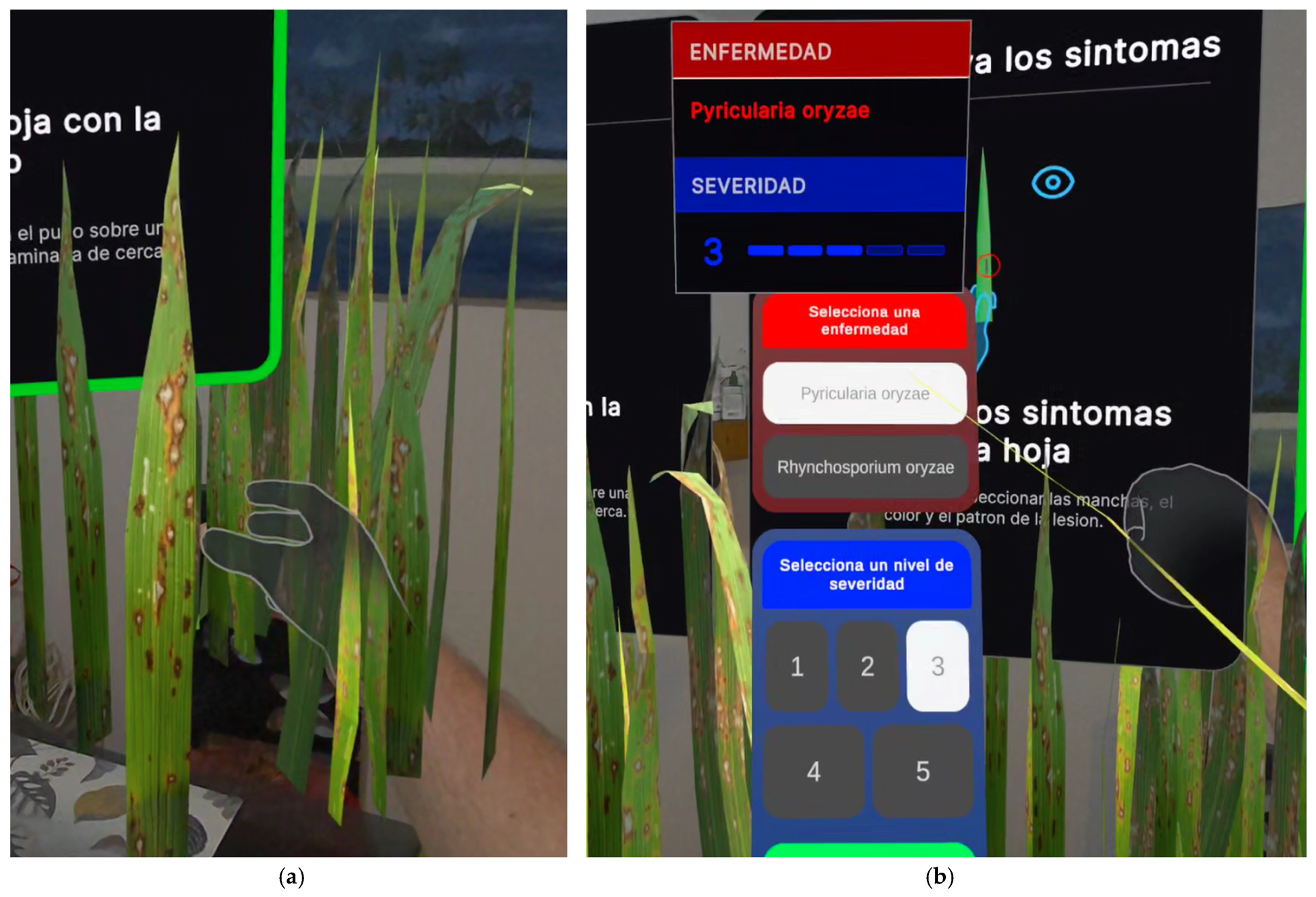
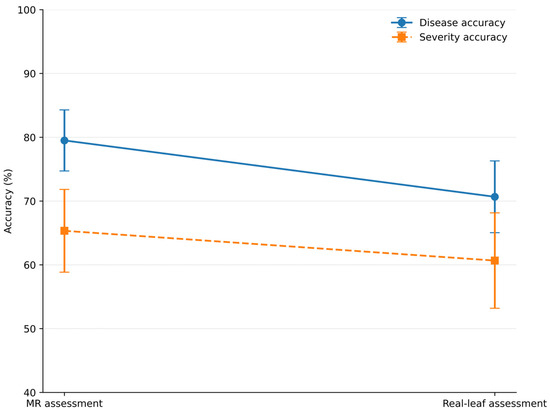
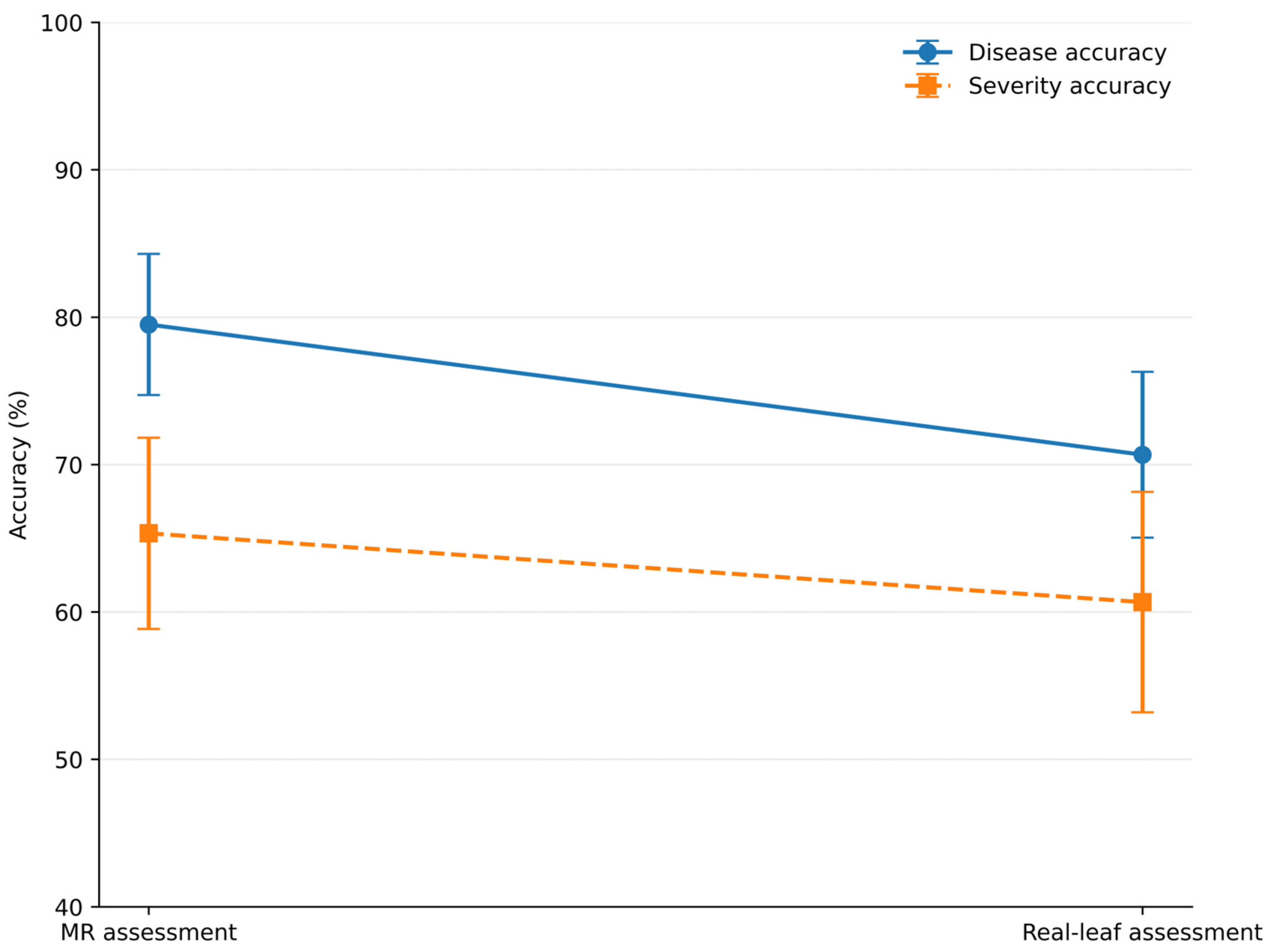
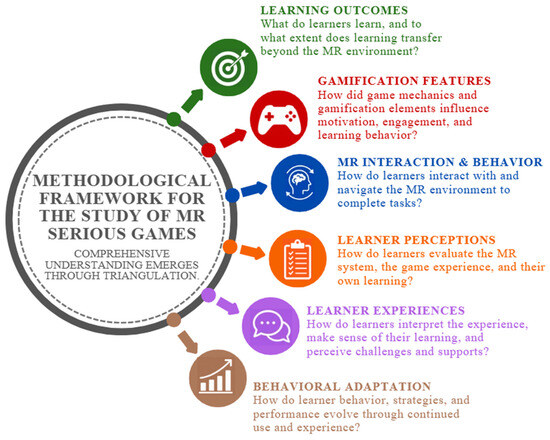
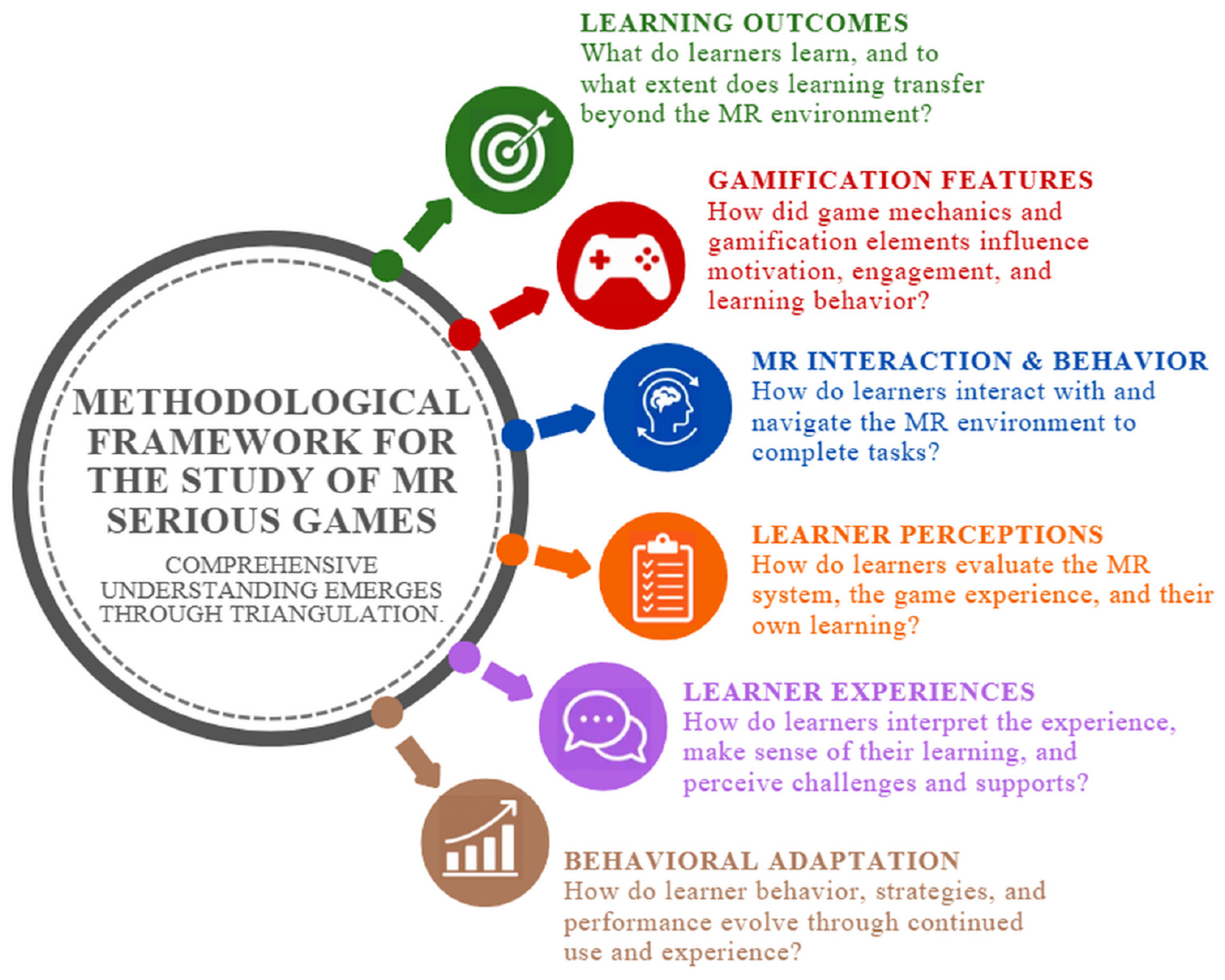

Disclaimer/Publisher’s Note: The statements, opinions and data contained in all publications are solely those of the individual author(s) and contributor(s) and not of MDPI and/or the editor(s). MDPI and/or the editor(s) disclaim responsibility for any injury to people or property resulting from any ideas, methods, instructions or products referred to in the content. |
© 2026 by the authors. Licensee MDPI, Basel, Switzerland. This article is an open access article distributed under the terms and conditions of the Creative Commons Attribution (CC BY) license.