


Abstract
This work presents a generalized framework for solving the inverse kinematics problem of robotic manipulators by introducing two approaches: optimization-based and learning-based approaches within a unified architecture. The optimization-based inverse kinematic solver is formulated as a minimization problem of the error in localization of the end-effector. On the other hand, the artificial neural network’s inverse kinematic solver is presented as a subsequent operation to a given straightforward forward kinematics analysis. The two proposed formulations are applicable to robot manipulators with any synthesis and degrees of freedom. To validate the proposed solvers, a low-cost 6-DOF robotic platform was developed, including a host-embedded system that enables real-time interaction between a virtual environment and a physical manipulator. Different optimization algorithms and different learning algorithms were used and their effect was compared to evaluate the efficiency of the proposed framework. The two approaches were analyzed and compared with respect to accuracy, computational cost, and real-time suitability. Results show that optimization methods provide higher precision and require longer computation time, whereas the artificial neural network-based method achieves significantly faster responses with acceptable approximation error. Experimental validation demonstrates the robustness and practical applicability of the framework, which is recommended for high-degree-of-freedom manipulators where analytical and closed-form solutions do not exist.
1. Introduction
Robots play an increasingly important role in modern industry and hazardous environments due to their ability to perform tasks with high precision and reliability [1,2]. Serial manipulators are common robots which are widely employed because of their flexibility to different tasks [3,4]. The performance of the serial manipulators depends on their kinematic models, which establish the relationship between joint variables and the position and orientation of the end-effector. The remaining challenge in serial robots is the inverse kinematics (IK) problem, which determines the joint variables required to achieve a desired end-effector pose. Forward kinematics is a straightforward operation which provides a direct mapping from joint space to Cartesian space, while inverse kinematics is generally nonlinear and may admit multiple solutions or no solution depending on the manipulator structure [5]. Some robot configurations can have analytical closed-form solutions; such solutions are often unavailable for redundant, complex, or high-degree-of-freedom manipulators; therefore, alternative numerical and intelligent approaches have been motivated [6,7]. On the other hand, optimization algorithms are powerful tools for solving nonlinear problems such as inverse kinematics because they reformulate the problem as a minimization task [8]. These algorithms search for joint configurations that minimize the error between the desired and achieved end-effector pose and have been applied to inverse kinematics problems [9]. However, optimization-based methods often require iterative computations, which are computationally expensive and undesired for real-time applications when an immediate response is required. Traditional inverse kinematics solutions rely on analytical and numerical formulations developed for specific manipulator structures [10]. These methods can provide accurate solutions, but their applicability is restricted by robot geometry, singularities, or the requirement for problem-specific derivations. Artificial intelligence techniques have attracted attention as an alternative solution strategy; specifically, artificial neural networks (ANNs) can learn the nonlinear mapping between Cartesian space and joint space directly from data, enabling rapid estimation of inverse kinematic solutions after training [11]. AI is particularly attractive for real-time robotic applications; however, their performance depends on the quality and coverage of the training dataset, and their generalization may be outside the learned workspace. Also, hybrid approaches combining learning and optimization techniques have been investigated to improve solution IK quality and robustness. To address this gap, this work proposes a unified inverse kinematics framework that integrates optimization-based and artificial neural network-based solvers within a common architecture. The optimization-based formulation treats inverse kinematics as a minimization problem of end-effector position and orientation errors, whereas the ANN-based formulation learns the inverse mapping using data generated from forward kinematics. To validate the proposed framework, a low-cost 6-DOF robotic manipulator was designed and fabricated using 3D-printing technology and integrated into a host-embedded control architecture that supports both simulation and real-time experimentation.
The main contributions of this work are summarized as follows:
- Development of a generalized inverse kinematics framework applicable to robotic manipulators with arbitrary kinematic structures and degrees of freedom.
- Integration of optimization-based and ANN-based inverse kinematics solvers within a unified architecture.
- Comparative evaluation of different optimization and learning algorithms in terms of accuracy, computational cost, and real-time suitability.
- Experimental validation using a custom-designed 6-DOF robotic manipulator and a host-embedded digital twin platform.
The remainder of this paper is organized as follows. Section 2 reviews related studies. Section 3 presents the proposed generalized inverse kinematics framework. Section 4 describes the robotic manipulator and its kinematic model. Section 5 introduces the experimental platform and implementation details. Section 6 presents the results and discussion, while Section 7 concludes the paper.
2. Related Works
Metaheuristics are widely used for solving complex nonlinear problems, including the IK solution, due to their flexibility and ability to handle convex and non-convex search spaces. Random search [8] and the Nelder–Mead simplex methods [12] laid the foundation for derivative-free optimization. At the same time, genetic algorithms [13] and memetic algorithms [14] introduced population-based search mechanisms inspired by natural selection. Simulated annealing SA [15] was inspired by thermodynamic processes, ant colony optimization algorithm ACO [16,17] and its continuous variants [18] were inspired by the behavior of ants during foraging behavior. The differential evolution optimization DE algorithm [19], adaptive exploration artificial bee colony AEABC [20], and hare escape optimization HEO [21] algorithms further enriched the field with efficient global search optimization. Other swarm-based algorithms, such as the flower pollination algorithm [22] and the flower pollination algorithm [21] have demonstrated strong performance in high-dimensional optimization problems. Optimization algorithms were employed to address the limitations of analytical solutions; for instance, hybrid genetic algorithms [9] were successfully used to compute joint configurations by minimizing end-effector error. These methods are often problem-specific and lack a generalized formulation that can be consistently applied to different robot manipulators.
Traditional approaches to solve inverse kinematics depend on analytical, geometrical, or numerical techniques such as those developed for manipulators like the PUMA robot [22,23]. Analytical solutions are limited to specific robot geometries and require simplifying assumptions, i.e., an analytical solution of a robot cannot be applied to another one. Such simplifying assumptions in several studies on 5-DOF manipulators assume fixed relationships among joint variables, which restrict the generality of the solution [24]. Numerical methods are iterative techniques based on Newton–Raphson methods and nonlinear programming [25] and were used to solve IK for many manipulators. The Jacobian-based approaches, including inverse Jacobian formulations [26] and closed-loop iterative methods [27], suffered from instability or convergence limitations. Further developments on IK estimation include modular architectures based on fixed-point theory [28], Lagrangian formulations for redundant manipulators [29], and heuristic approaches combining distance metrics and manipulability criteria [10].
Artificial intelligence AI has been extensively explored as an alternative approach to the inverse kinematics problem, where early work by Choi and Lawrence [11] demonstrated that multi-layer feedforward networks could learn the mapping between Cartesian space and joint space for a robotic manipulator. Also, backpropagation-based neural networks are applied to solve IK for more complex systems, such as 6R manipulators [30]. The learning-based methods offer fast prediction when they are trained, making them suitable for real-time applications. However, their performance heavily depends on the availability of large training datasets and the workspace coverage. For example, an ANN trained with thousands of samples can achieve high accuracy, while its generalization outside the training domain can remain limited. On the other hand, training complexity and convergence time can be significant, especially for large-scale problems [31]. Meanwhile, hybrid approaches that combine ANN with optimization techniques have been proposed to improve solution accuracy [32]. Overall, most learning-based methods are tailored to specific robot configurations and lack a unified framework for integrating diverse solutions.
Each category has advantages and limitations; analytical methods offer exact solutions with a lack of generality, and numerical methods are sensitive to initialization and singularities. Learning-based methods require extensive training and may suffer from poor generalization. In general, there is still a lack of a generalized and solver-independent framework that:
- Reformulates inverse kinematics as a unified problem applicable to manipulators with arbitrary degrees of freedom
- Enables consistent comparison between optimization-based and learning-based approaches
- Supports both simulation and real-time implementation on physical robotic systems
This gap motivates the development of the framework proposed in this paper.
3. Generalized Inverse Kinematics Framework
IK plays a central role in robotic control, as it determines the joint variables required to achieve a desired end-effector pose, since we consider moving the end-effector in Cartesian space, not in the joint space. Classical optimization techniques, such as particle swarm optimization and artificial bee colony algorithms, are capable of identifying highly accurate solutions when the objective function is smooth and well-defined up to a certain limit. In fact, optimization methods are not well suited for real-time implementation due to their computational cost and iterative nature. In contrast, ANN-based solvers are a practical alternative for applications that need rapid response in real-time. The solutions produced by ANNs are approximations and may not match the precision of optimization-based methods; they can be computed almost instantaneously. This trade-off between accuracy and speed becomes particularly important in robotic systems equipped with sensors, where immediate reactions to dynamic environments are required. Consequently, training ANNs to approximate inverse kinematic mappings represents a justified and efficient strategy. In this section, we will investigate the performance of several training algorithms, namely Levenberg–Marquardt ML, Bayesian regularization BR, and scaled conjugate gradient SCG, in the context of a simple neural architecture consisting of one input layer, a single hidden layer, and one output layer. The objective is to approximate the inverse position of an example of a three-degree-of-freedom (RRR) robotic manipulator. The structure of the ANN was analyzed in detail, along with a comparative discussion of the strengths and limitations associated with each training approach. Since forward kinematics FK equations are readily available and computationally efficient, they are utilized here to generate the training dataset required for learning the inverse mapping, see Equation (1).
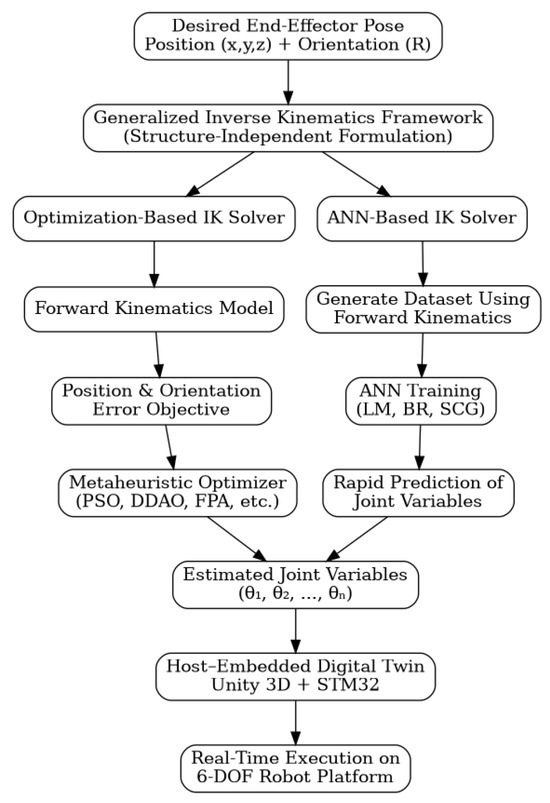
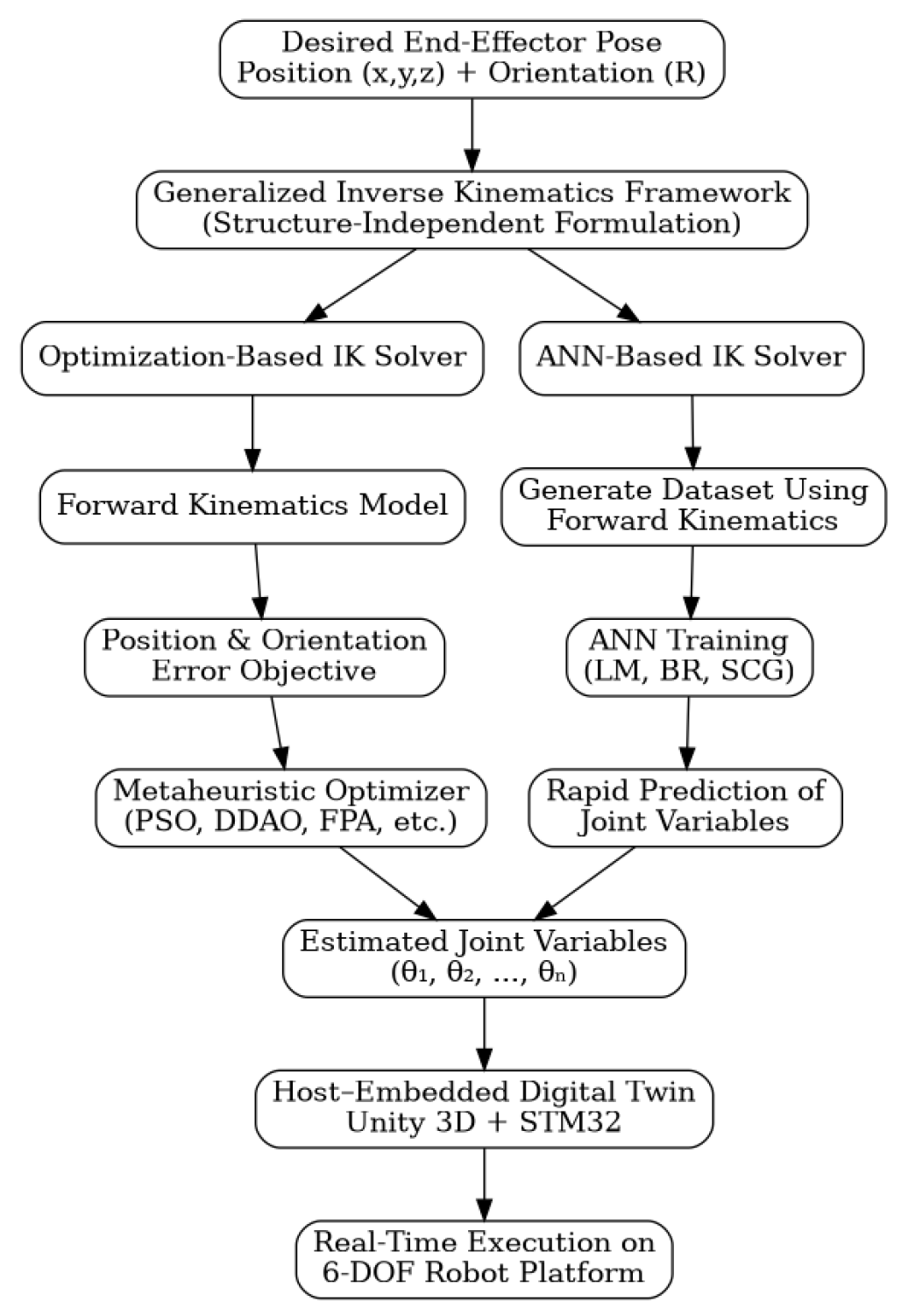
The proposed generalized inverse kinematics framework consists of two complementary solution branches: an optimization-based solver and an artificial-neural-network-based solver. Both branches operate within a common structure-independent formulation and ultimately generate the joint variables required to achieve a desired end-effector pose. The overall architecture and workflow of the framework are illustrated in Figure 1.
Figure 1.
Proposed generalized inverse kinematics framework integrating optimization-based and ANN-based solvers.
3.1. Optimization-Based Frameworks
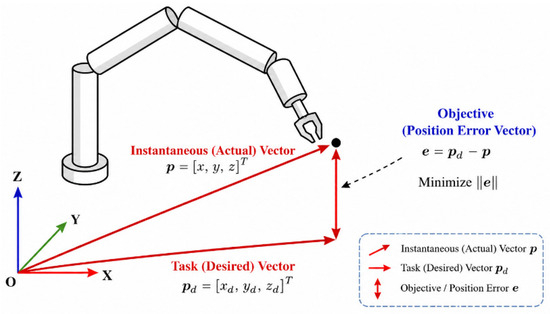
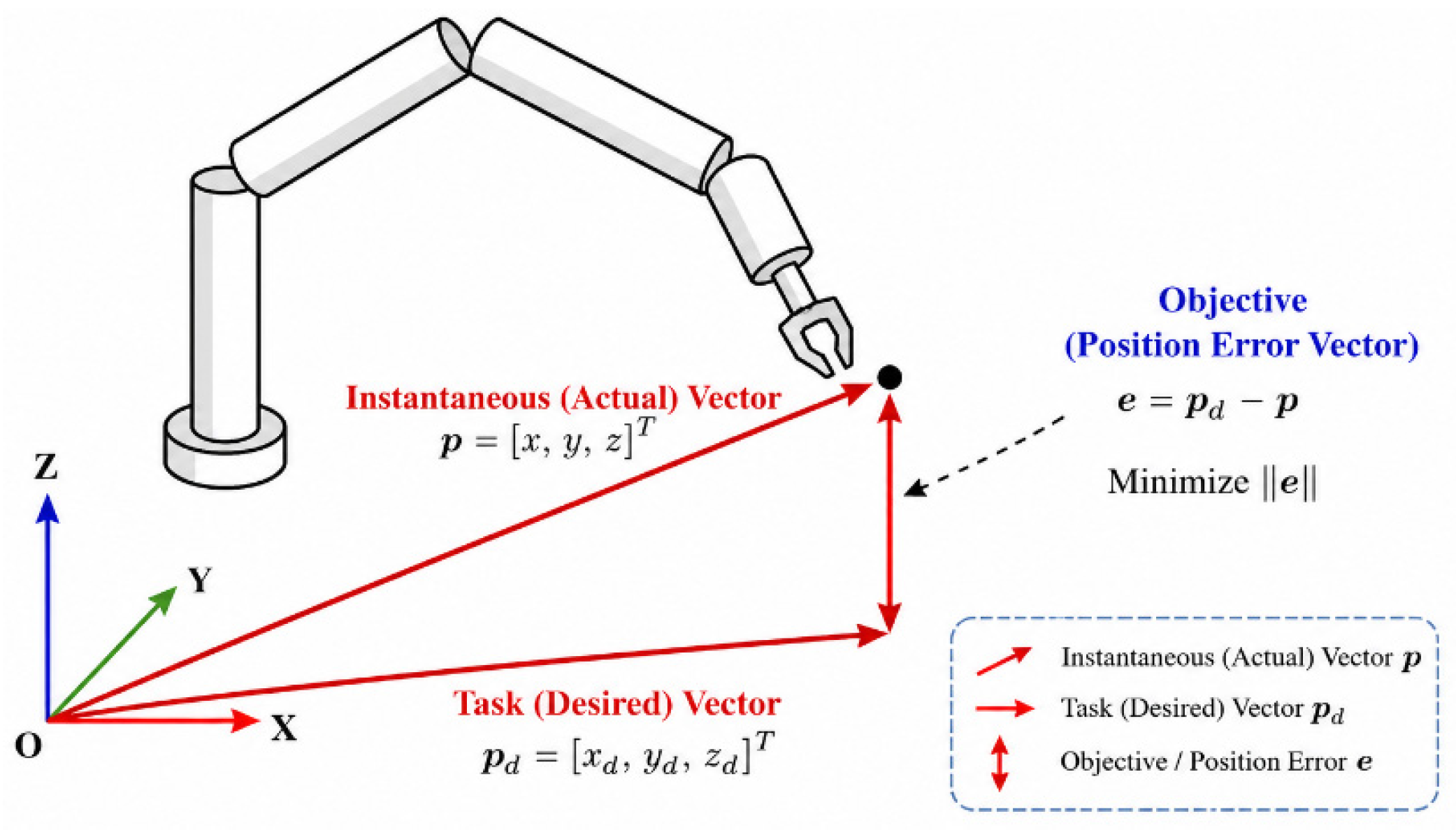
From an optimization perspective, the inverse kinematics problem can be interpreted in a straightforward geometric way depending on the vector that connects the end-effector to the robot base. Figure 1 shows that the current position of the end-effector can be described as a vector extending from the robot base to the tool tip, while the desired position corresponds to the target point in space. The goal is simple in principle: when the difference between these two vectors becomes zero, the end-effector has reached the intended location. This difference naturally defines the inverse kinematics objective function in Equation (2).
In this formulation, represents the instantaneous position of the end-effector during the search process, while denotes the desired position. Thus, the optimization task minimizes the distance between these two vectors as much as possible. In practical terms, the objective function measures how far the robot base is from the target point at any iteration, and the formulation can be extended to include orientation, as seen in Equation (3).
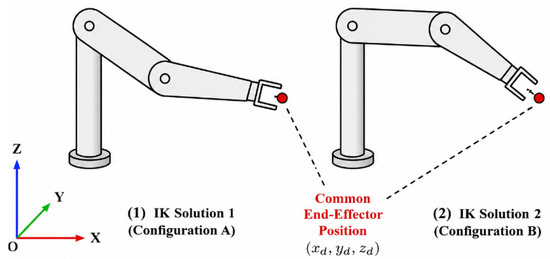
where is the coordinates of the target point, which are predefined in the inverse kinematics problem; the matrix , , and refer to the x, y, and z position of the current configuration, respectively. The , are the desired and current orientation of the end-effector, respectively. The index simply refers to the individual elements of the 3 × 3 rotation matrix. Figure 2 illustrates this concept by showing how the objective function reflects both position and orientation errors in the inverse kinematics framework. It is important to note that if only the positional component of the objective function is considered, the robot may successfully reach the target point but still adopt different orientations, as shown in Figure 3, where multiple configurations can correspond to the same spatial position. This becomes even more pronounced in manipulators with higher degrees of freedom, where the number of possible orientations can grow significantly.
Figure 2.
Geometric interpretation of the inverse kinematics objective function.
Figure 3.
Multiple inverse kinematic solutions corresponding to the same desired end-effector position. Different joint configurations produce identical Cartesian end-effector locations while maintaining distinct manipulator postures and end-effector orientations.
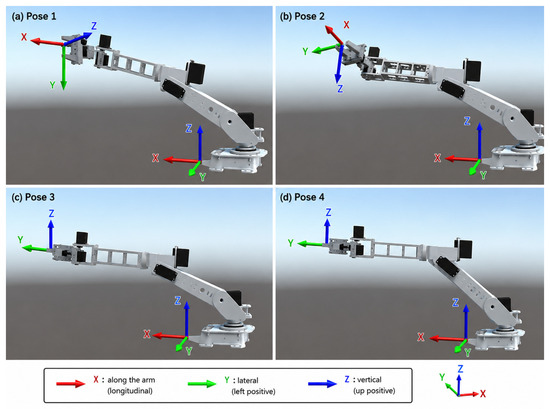
The objective function defined in this section is general and can be applied to serial manipulators regardless of their number of joints. Among the applied optimizers in this work, PSO provided the most consistent performance. However, its behavior is not truly global; even with increased population size and iteration count, the algorithm tends to stagnate at a cost value above a certain threshold (around 59 in this case), indicating convergence to a local minimum rather than the global optimum. Nevertheless, the solutions obtained by PSO remain practically useful; the main variability appears in the orientation, as illustrated in Figure 4.
Figure 4.
Different configurations for each independent run for the PSO algorithm.
3.2. ANN-Based Frameworks
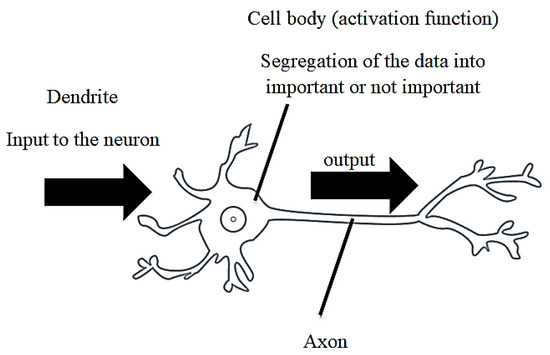
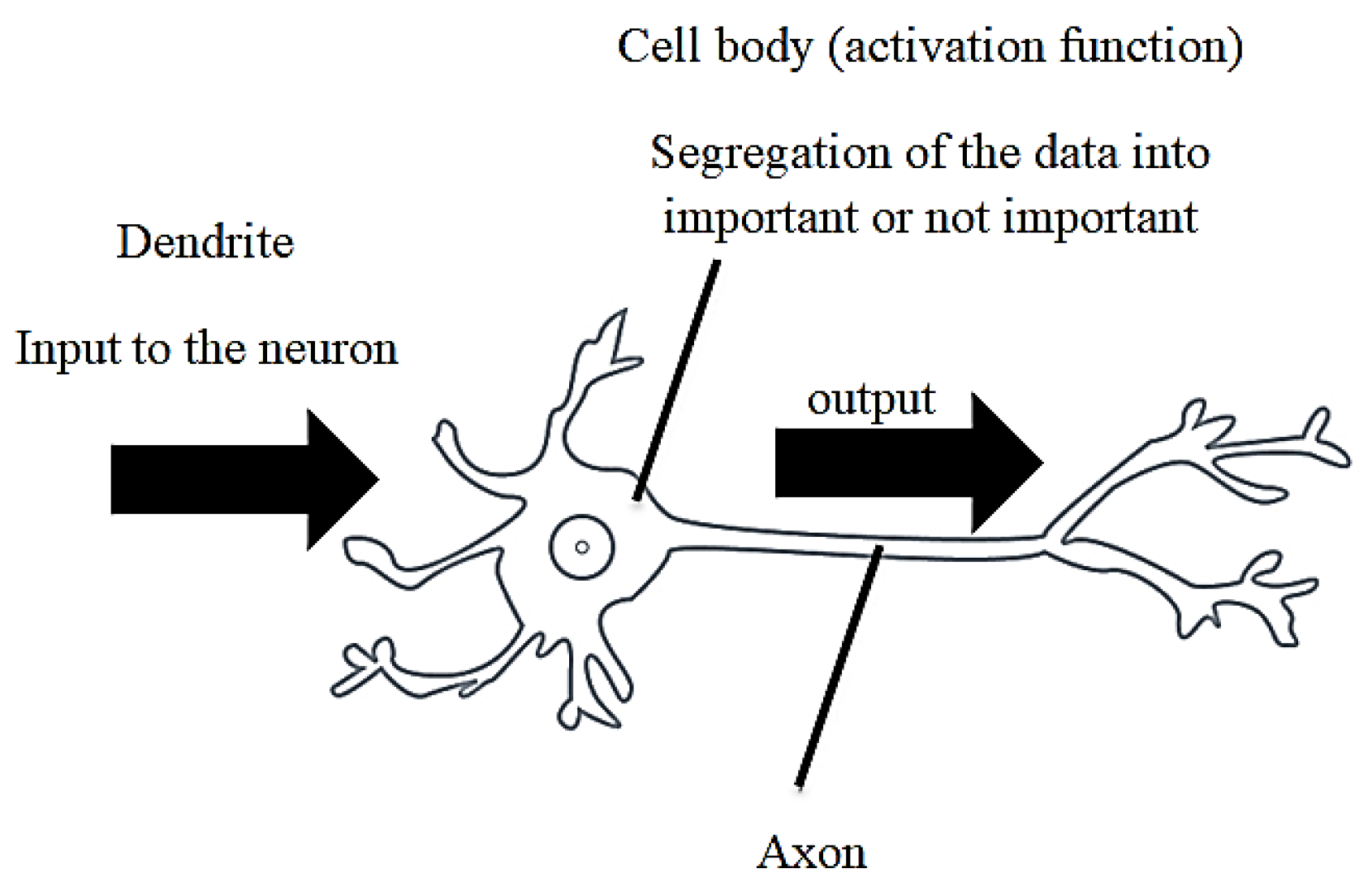
In this section, ANNs are introduced as an alternative approach for solving the IK problem of a robotic arm. In this context, an ANN is trained to map a desired end-effector position and orientation to the corresponding set of joint angles. NNs are effective in capturing nonlinear relationships, which makes them well suited for the IK problem, where the mapping is often complex and not easily expressed in closed form. A key component of this process is the activation function which controls how information flows through the network. Figure 5 illustrates this idea using an analogy with a biological neuron; it is much like a nerve cell that processes incoming signals and decides whether to respond; the activation function evaluates the input signals and determines whether a neuron should produce an output.
Figure 5.
Biological analogy of a neuron illustrating the role of the activation function.
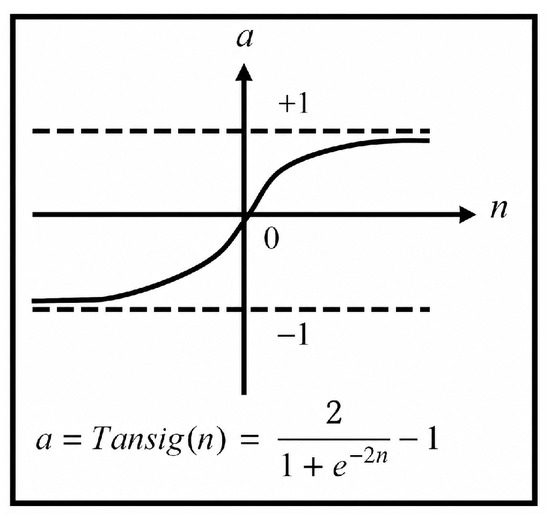
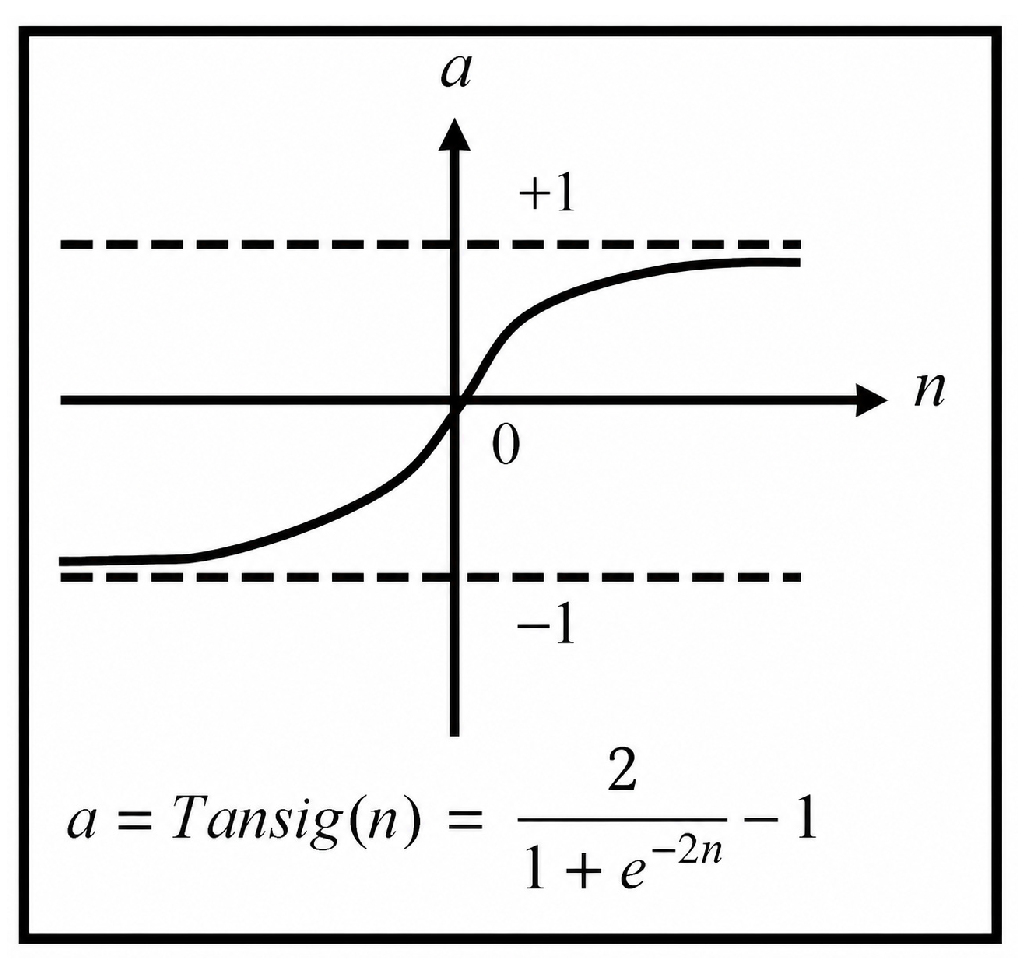
In this way, the network gradually learns to emphasize meaningful patterns in the data while reducing the influence of less relevant information; this selective behavior is essential for building a robust model. The activation (or transfer) function transforms the incoming signals into outputs based on their magnitude and distribution, similar to how the human brain reacts differently depending on the nature of the stimulus. Since inverse kinematics can be treated as a regression task, the hyperbolic tangent sigmoid (tansig) function was adopted in this study; its mathematical form is shown in Figure 6. To train the network, a dataset was generated using the forward kinematics equations, with a total of 2000 input–output samples created, where each input corresponds to a known end-effector pose, and each output represents the associated joint angles.
Figure 6.
Tansig activation function.
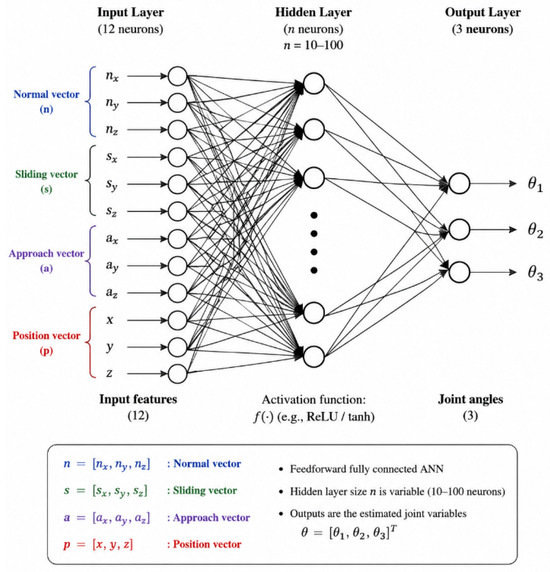
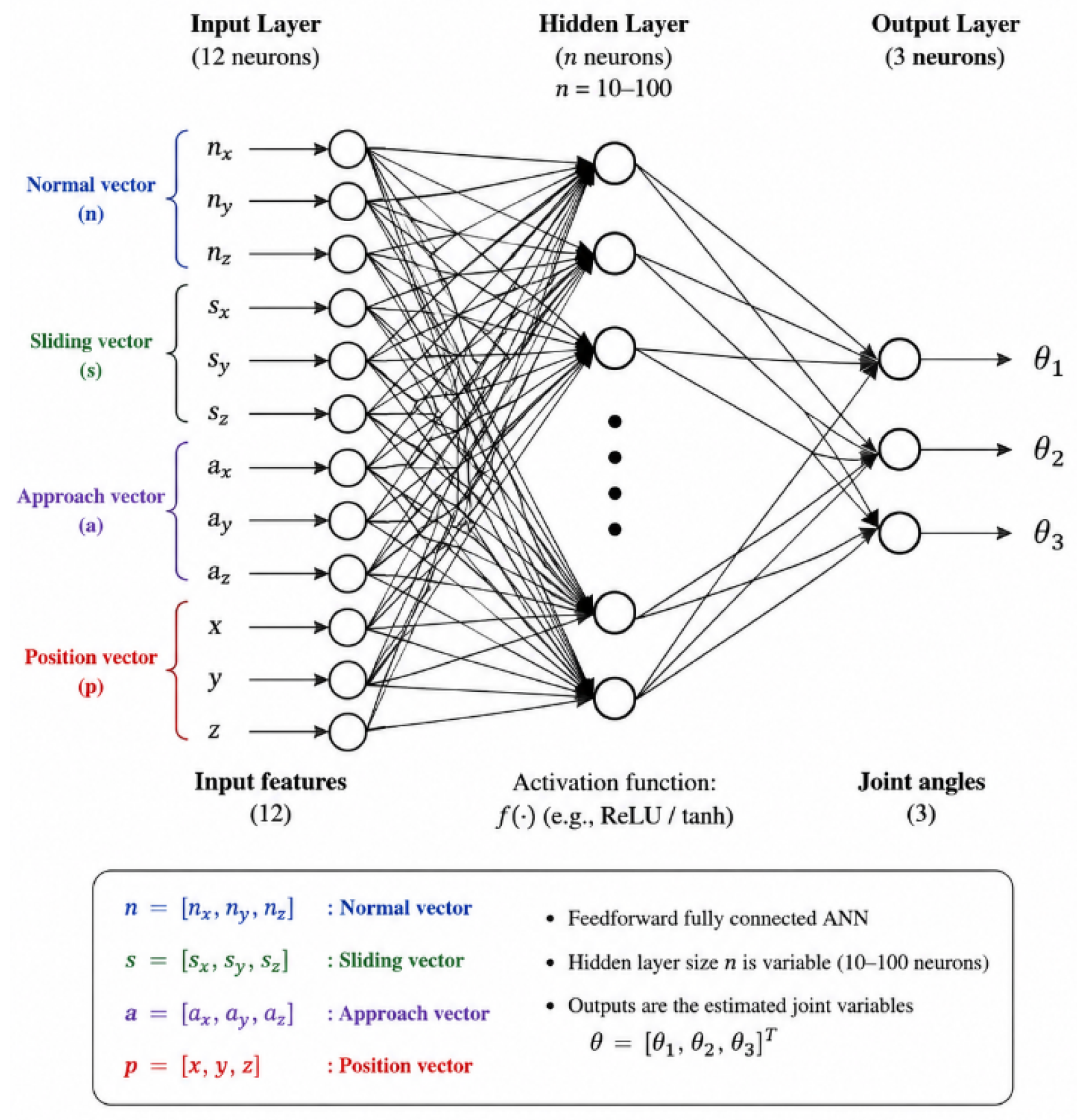
The architecture of the proposed ANN is shown in Figure 7. The model consists of 12 input nodes, a single hidden layer, and three output nodes. The inputs are derived from the elements of the HTM that define the pose of the end-effector with respect to the base frame as detailed in Equation (14). The hidden layer had 100 neurons to examine its effect on performance. Finally, the output layer contains three neurons, each corresponding to one of the joint angles of the RRR manipulator.
Figure 7.
ANN architecture for RRR robot manipulator.
4. Robot Specifications
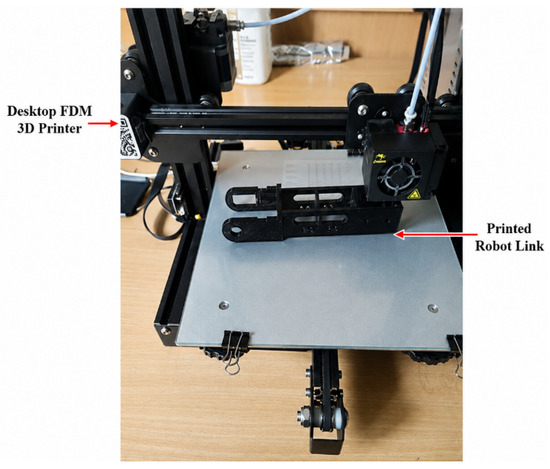
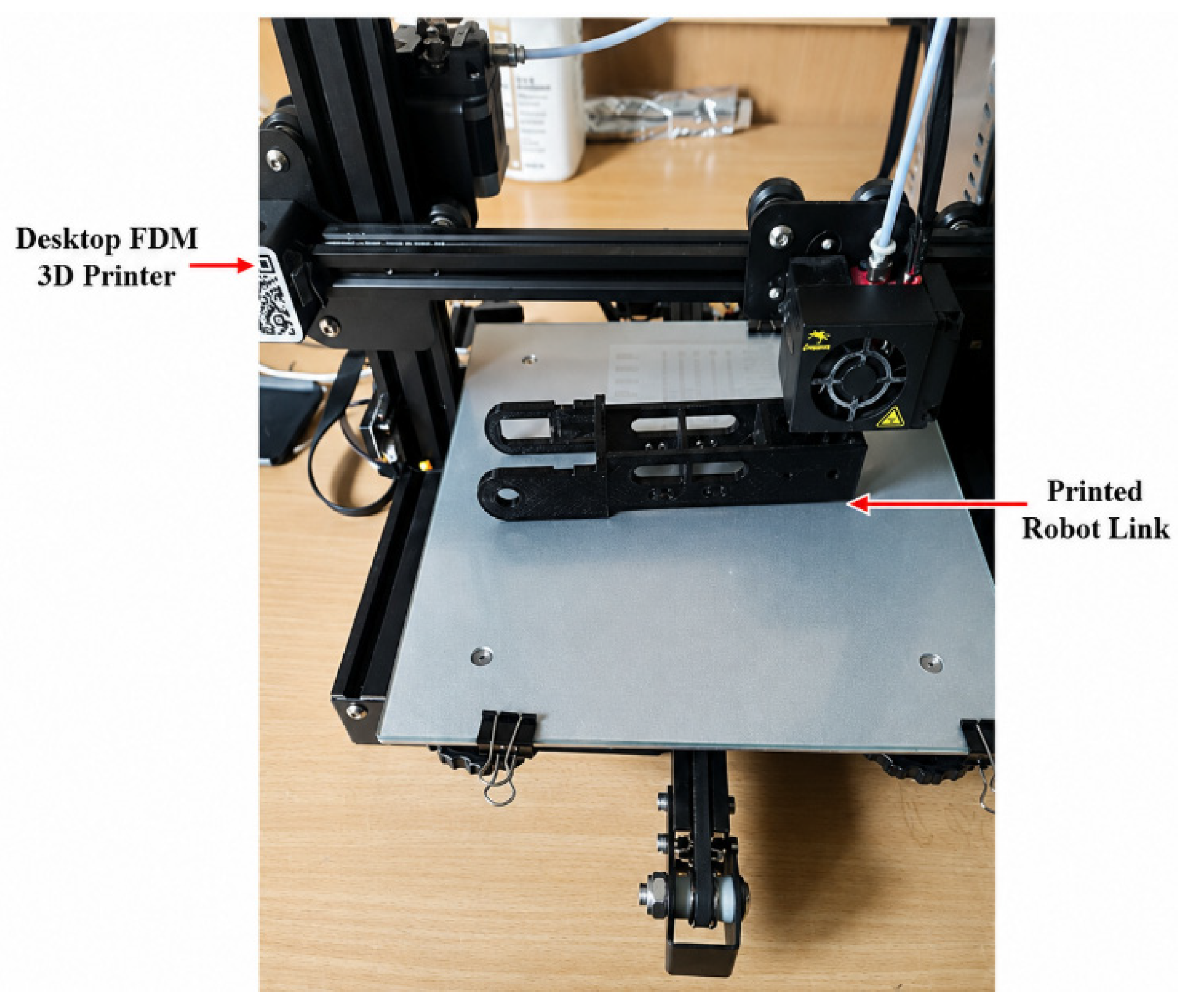
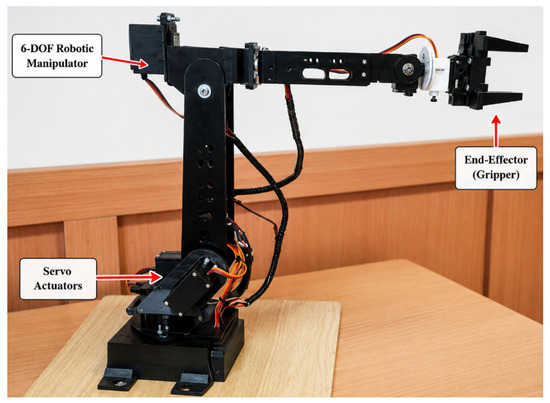
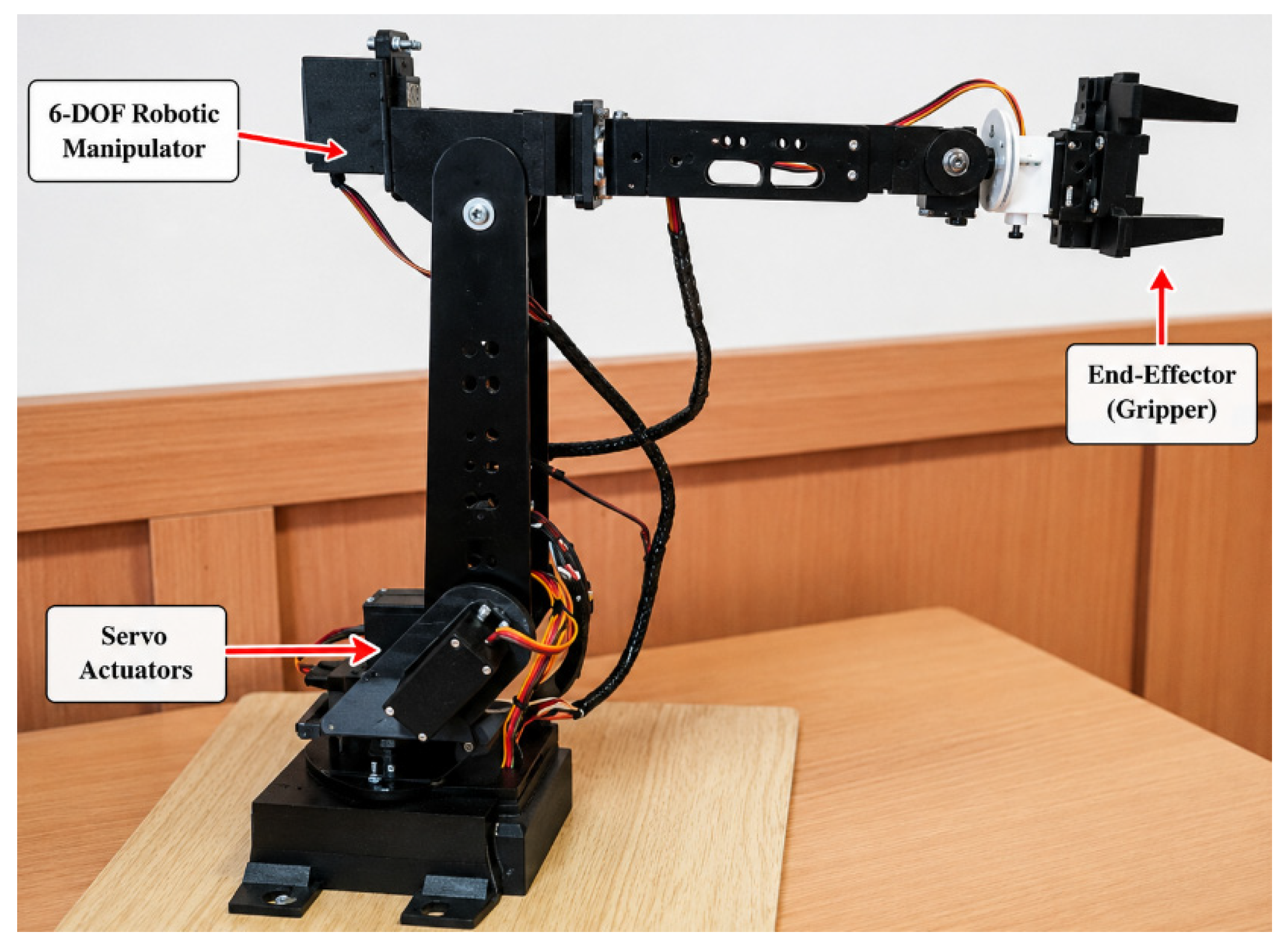
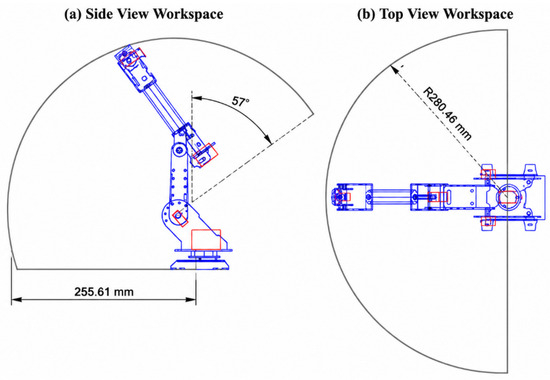
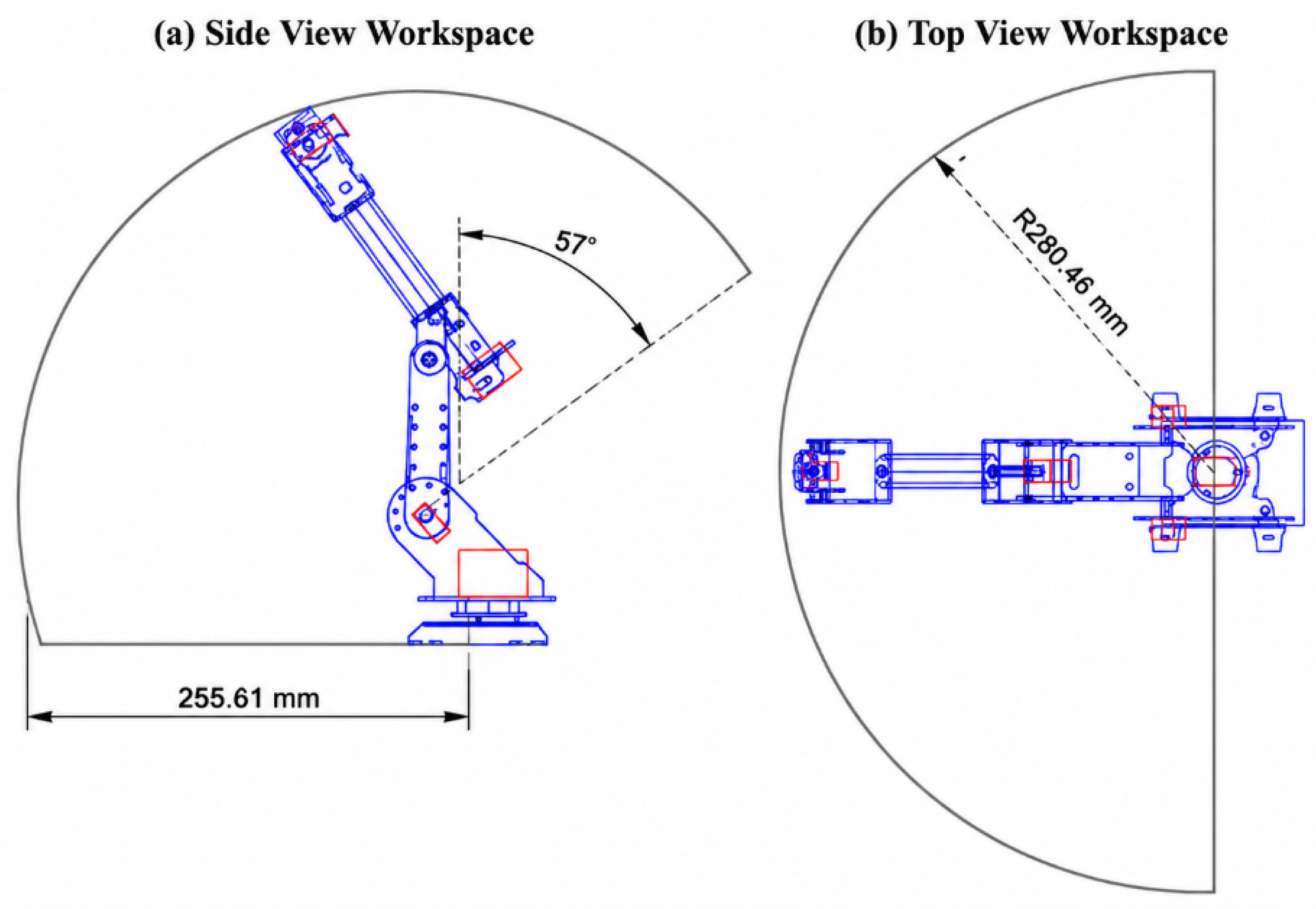
In this section, the physical design of the robot arm is outlined, together with the key characteristics of its actuators. To describe the robot mathematically, the Denavit-Hartenberg (DH) convention is adopted, which allows the forward kinematic model to be derived in a systematic way. The robot itself was fabricated using an Ender V3 3D printer, see Figure 8, with PETG material selected for its balance between strength and flexibility. The structure has a uniform thickness of 4 mm. The final prototype is a six-degree-of-freedom manipulator driven by six MG996 digital servo motors and a general view of the assembled robot is shown in Figure 9, while its reachable workspace is illustrated in Figure 10.
Figure 8.
Fabrication of a robot arm link during the printing process on a desktop 3D printer.
Figure 9.
Final assembled 6-DOF robotic manipulator developed for experimental validation of the proposed inverse kinematics framework. The platform consists of 3D-printed structural components, servo-driven joints, and a custom end-effector integrated within a host-embedded control architecture.
Figure 10.
Reachable workspace of the developed 6-DOF robotic manipulator shown from the side and top views.
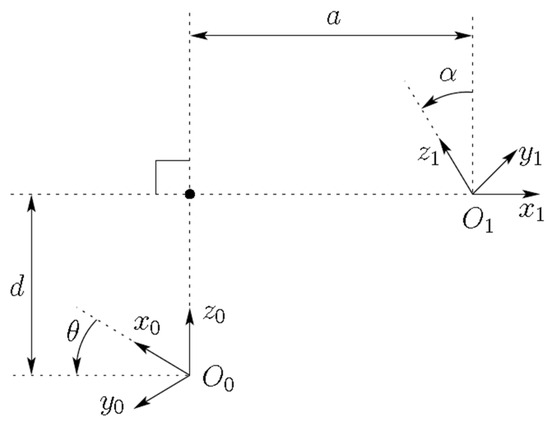
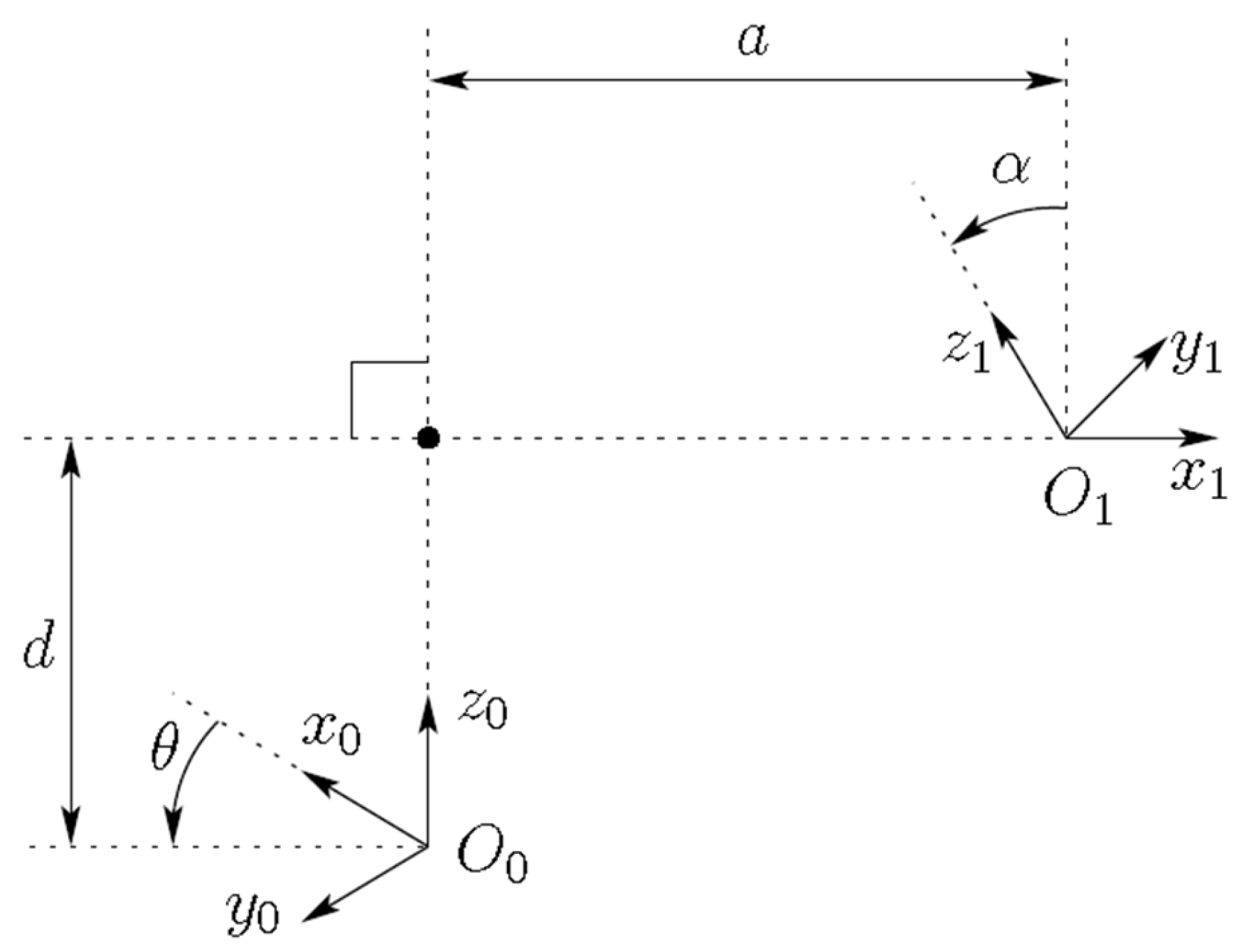
The DH convention provides a structured way to assign coordinate frames to each link of the manipulator so that the position and orientation of the end-effector can be expressed relative to a base reference frame. As shown in Figure 11, this convention relies on two main geometric conditions: first, each axis is perpendicular to the preceding axis, and second, it intersects that axis. These assumptions ensure a consistent and minimal representation of the kinematic chain. Using this framework, the transformation between consecutive links can be expressed as a sequence of four basic operations: rotation about the z-axis, translation along z, translation along x, and finally rotation about x. The resulting HTM in Equation (5) depends on four parameters. , , , and which characterize the geometry of each joint–link pair. For a revolute joint, the joint angle is the variable, while the remaining parameters remain constant. In contrast, for a prismatic joint, becomes the variable.
Figure 11.
Assignment of consecutive coordinate frames according to the Denavit–Hartenberg (DH) convention, illustrating the geometric parameters.
We will use the notation for and for
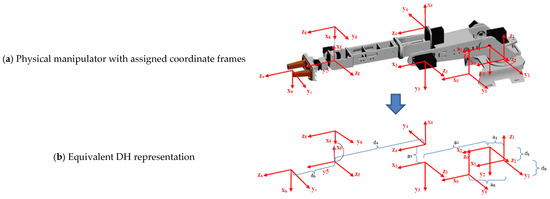
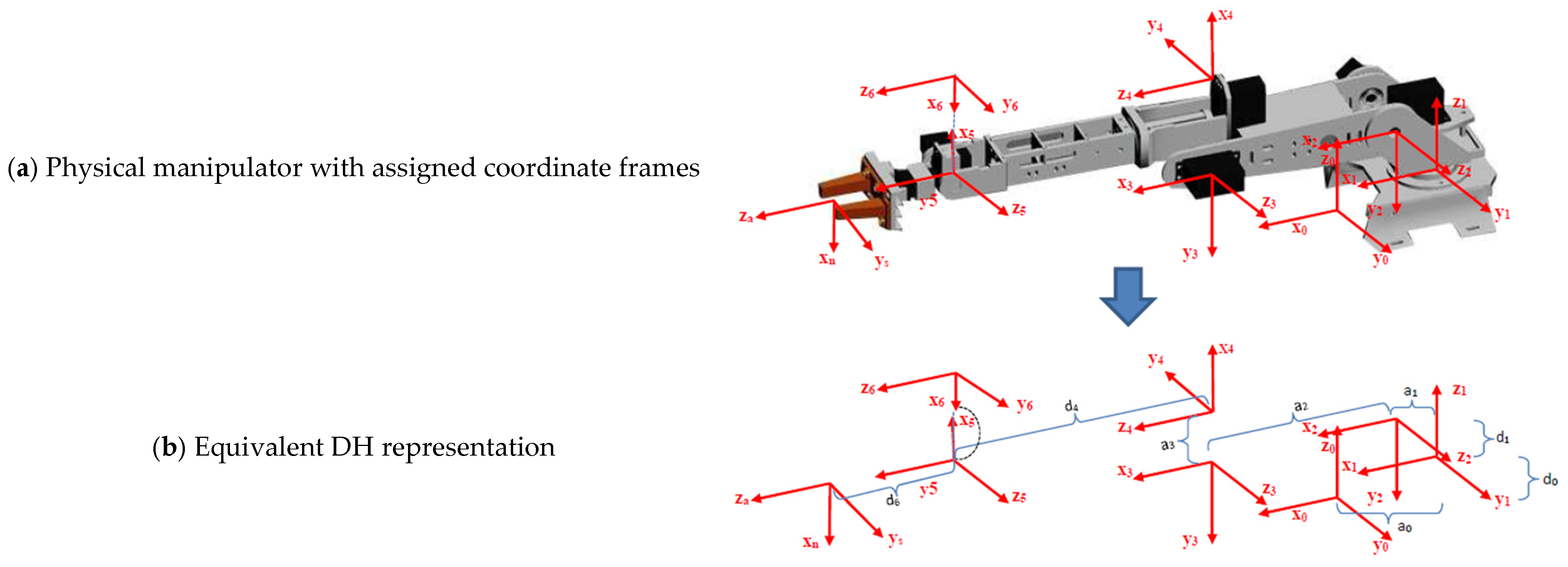
The coordinate frames used in this work are shown in Figure 12. The base frame, frame 0, is positioned at the front edge of the base link to simplify measurements during implementation. Since no dedicated tool is attached, the end-effector frame is taken to coincide with frame 6. This choice reflects the primary objective of the study, which is to develop a reliable control framework for an educational robotic platform rather than a task-specific manipulator. The geometric parameters associated with each link are summarized in Table 1. Based on these parameters, the forward kinematic model is constructed, and each link is represented by a homogeneous transformation matrix, and the overall pose of the end-effector is obtained by multiplying these matrices along the kinematic chain. The resulting TM contains two main components: a rotation matrix describing orientation and a position vector defining the location of the end-effector in Cartesian space. The individual transformation matrices for each link are defined in Equations (7)–(13), and their product yields the complete transformation matrix, as shown in Equation (14).
Figure 12.
Coordinate-frame assignment for the developed robotic manipulator according to the Denavit–Hartenberg convention. (a) Physical manipulator with the attached coordinate frames. (b) Corresponding kinematic representation showing the DH parameters used for forward and inverse kinematic modeling.
Table 1.
Denavit–Hartenberg parameters.
The forward kinematic equations for this robot are derived from the spatial parameters in Table 1 and represented as a homogeneous transformation matrix in the following form:
where the is a orientation matrix of the end-effector with respect to the base frame, the vector is the position vector of the end-effector.
The FK equations are obtained by multiplying Equations (7)–(13) to obtain the overall HTM.
The full expansion of the transformation matrix results in sixteen elements, each expressed explicitly in Equations (15)–(30). These expressions highlight that the end-effector pose depends solely on the joint variables, reinforcing the role of forward kinematics as a direct mapping from joint space to Cartesian space. For compact notation, trigonometric terms are abbreviated using and to represent cosine and sine functions, respectively. When multiple joint angles are combined, they are written as a single term, for example, represents the sum of the second and third joint angles.
5. Robotic Platform: Host and Embedded Device
5.1. System Overview
The proposed framework is validated on a 6 DOF robotic platform consisting of two main components; a host computer and an embedded target device. The inverse kinematic task is accomplished on the host side in a Unity 3D application dedicated for digital twin of the physical robotic arm. The virtual environment has two options to find the joint angles for a given Cartesian position, one option for optimization algorithms and another for neural networks. The embedded device was an STM32 Nucleo board, which performs the real-time actuation control for the 6 servo motors where a unidirectional communication scheme is adopted. The host computes joint configurations and transmits them to the target device to execute. This separation enables efficient utilization of computational resources and maintaining real-time performance as well as tracking the synchronization between the digital twin and its real robot.
5.2. Host System
The host system is implemented using Unity 3D game engine and codes written in C# language, this digital twin application provides:
- Real-time visualization of the robotic manipulator
- Forward and inverse kinematics computation
- Integration of optimization-based and ANN-based IK solvers
- User interaction through a graphical interface
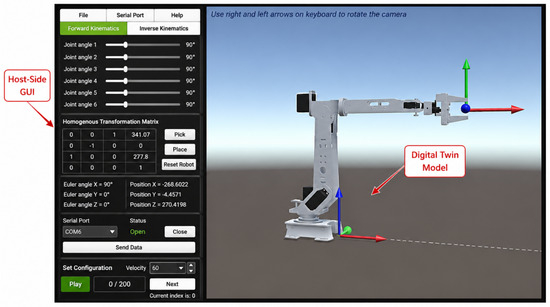
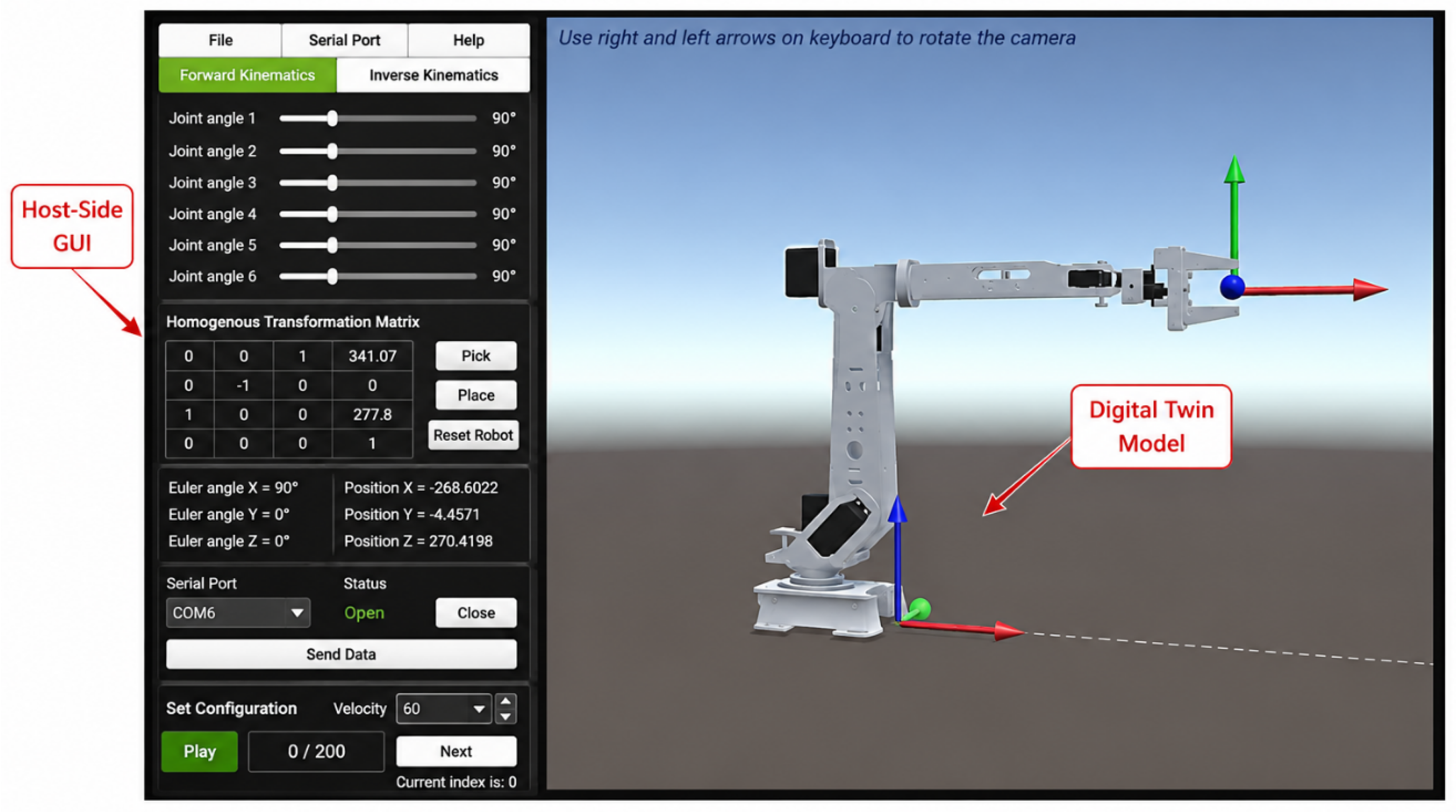
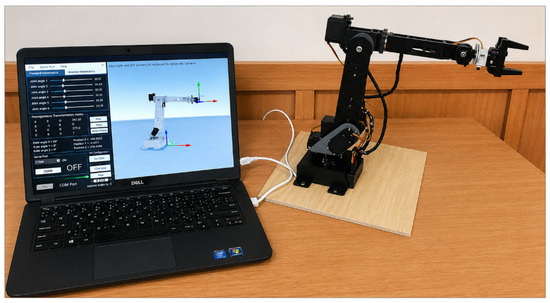
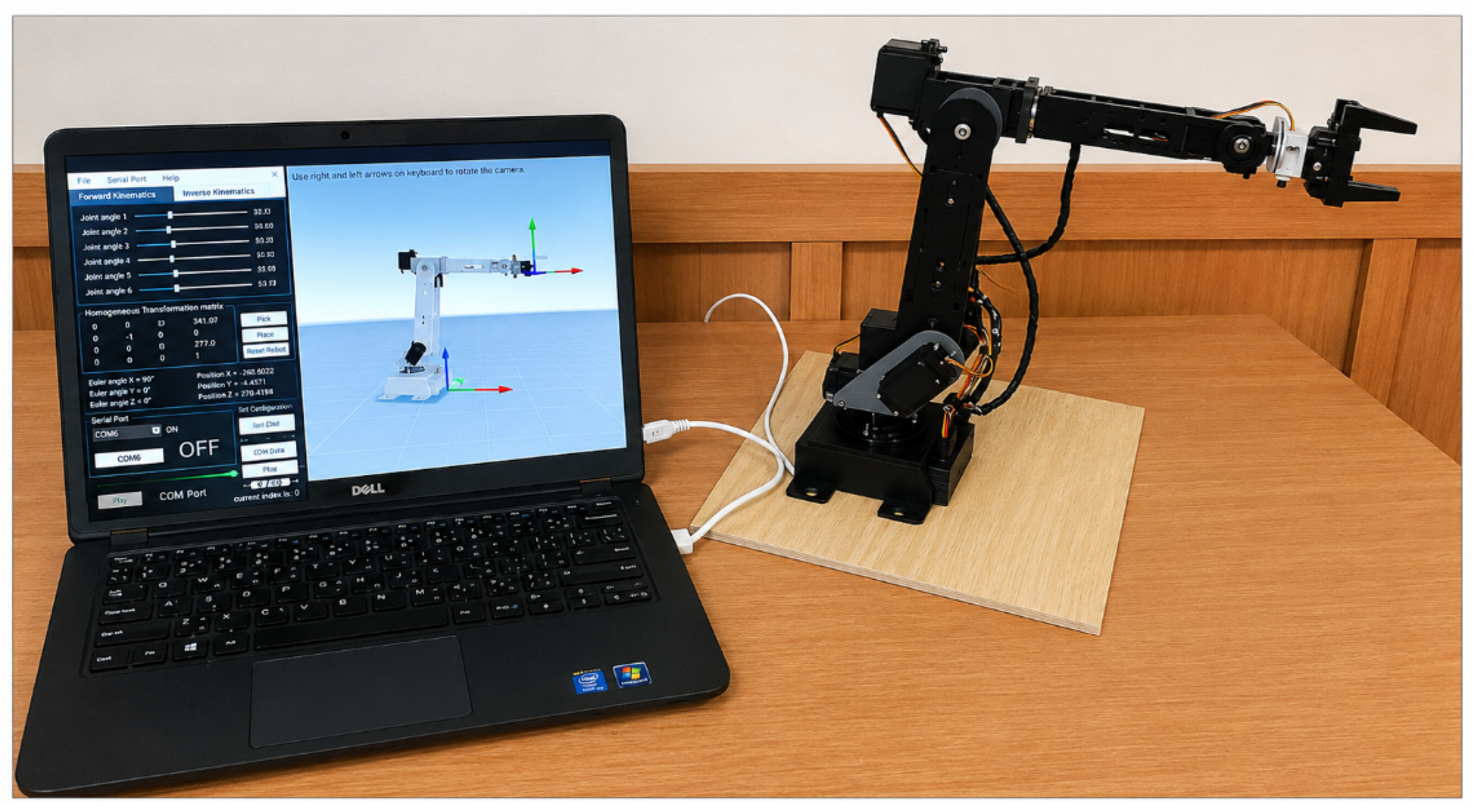
The host computes the desired joint angles from Cartesian inputs and maps them to actuator-compatible signals before transmission. The robot is synchronized with the physical system, enabling a digital twin-like interaction, see Figure 13 and Figure 14.
Figure 13.
Host-side digital twin environment developed for robot monitoring and control. The interface provides real-time visualization of the robotic manipulator, joint-state adjustment, forward and inverse kinematics functions, and communication with the embedded controller.
Figure 14.
Experimental host-embedded robotic platform used for real-time validation of the proposed inverse kinematics framework. The system consists of a host computer running the digital twin environment and a 6-DOF robotic manipulator connected through serial communication.
5.3. Embedded Device and Control
The target device is an STM32 board with an ARM core microcontroller; its role is to translate joint commands from the host digital twin application to the servo actuators. The microcontroller generates pulse-width modulation PWM signals to control six servo motors, corresponding to the six robot joints, respectively. Each servo operates at 50 Hz, where pulse widths of 1 ms, 1.5 ms, and 2 ms correspond to angular positions of −90°, 0°, and +90°, respectively. Timer peripherals were configured to generate stable PWM signals across the six channels to ensure simultaneous multi-joint control.
5.4. Communication Architecture
Communication between the host and the embedded device is established using a UART-based serial interface, selected for its simplicity and reliability in short-distance embedded applications. The host transmits joint-angle commands as serialized data frames, which the microcontroller decodes for real-time execution. This architecture ensures low-latency data transfer while maintaining a simpler implementation than more complex protocols.
5.5. Signal Mapping and Execution
A mapping strategy is employed to map joint angles, which are estimated by the IK solver, defined in the range [−90°,90°] linearly into PWM duty cycles corresponding to the physical six servos range. The embedded system continuously updates the PWM outputs in response to incoming commands from the digital twin application, which enables smooth and synchronized motion of the manipulator.
6. Results and Discussions
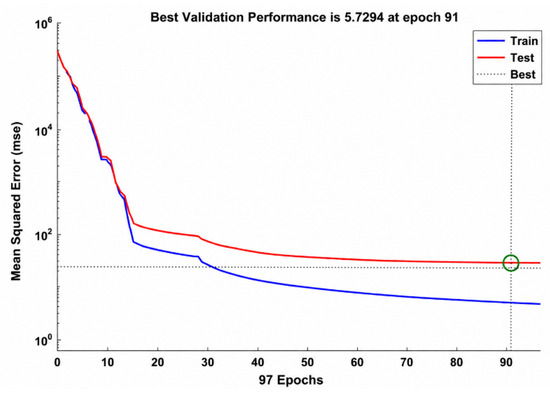
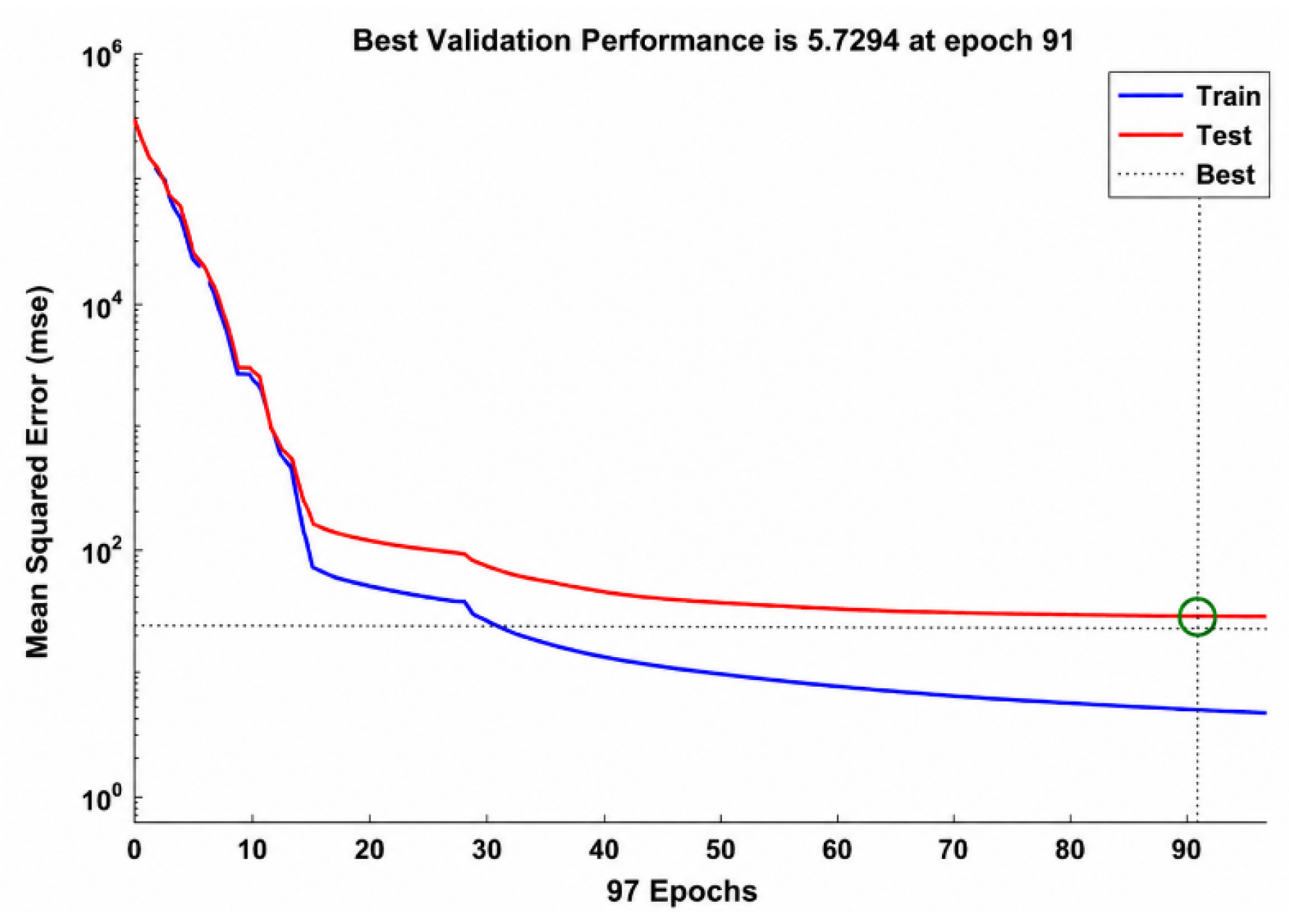
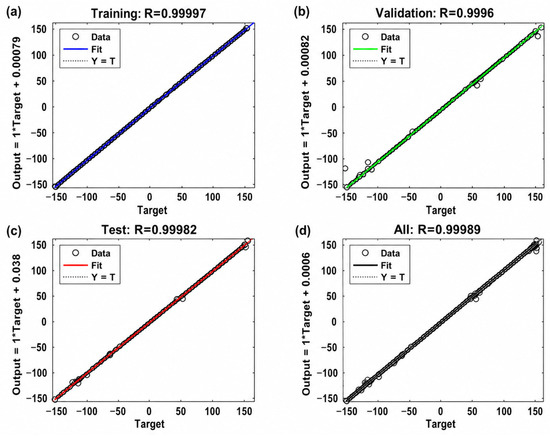
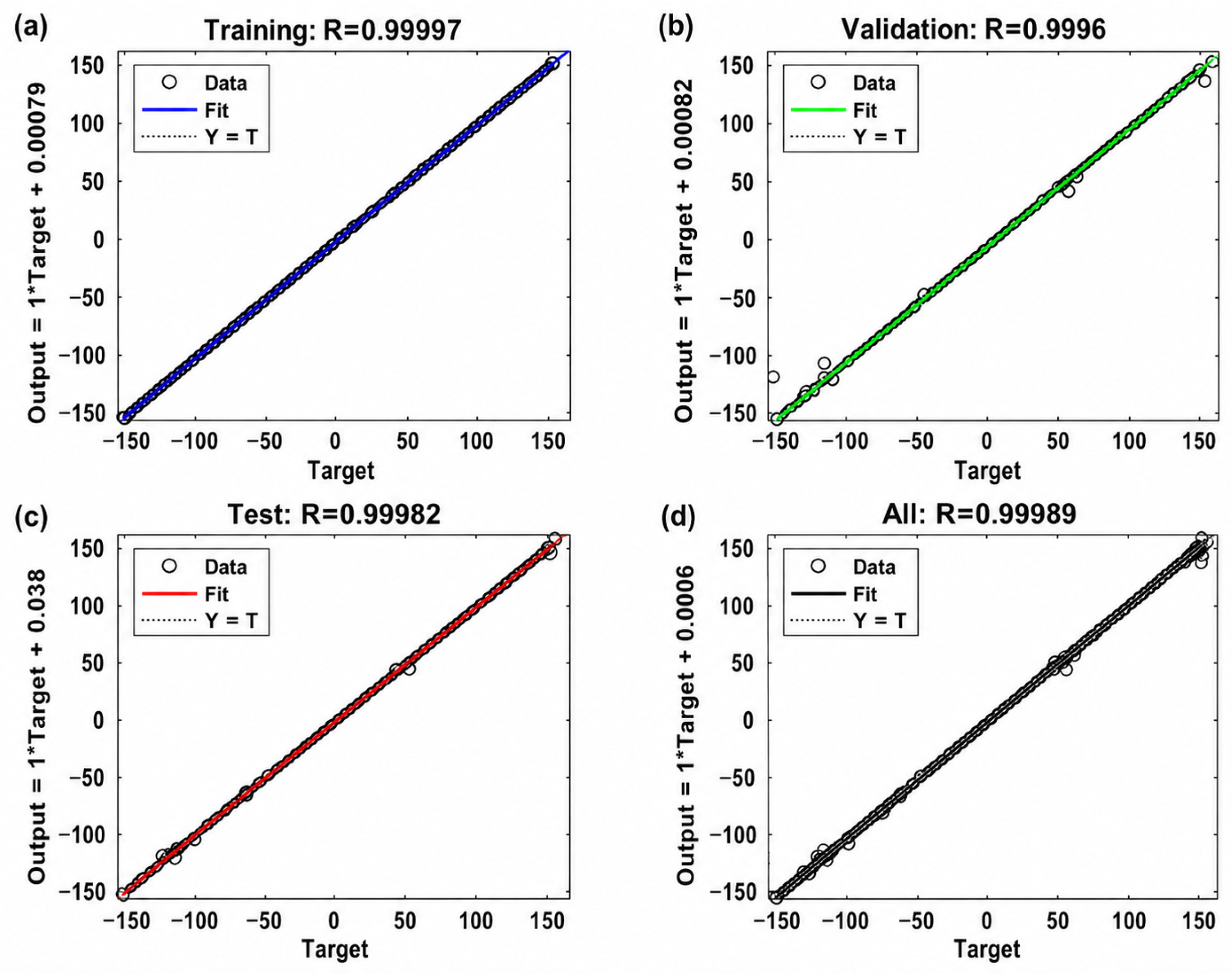
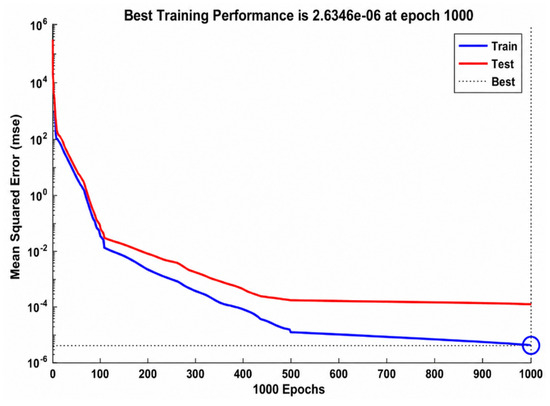
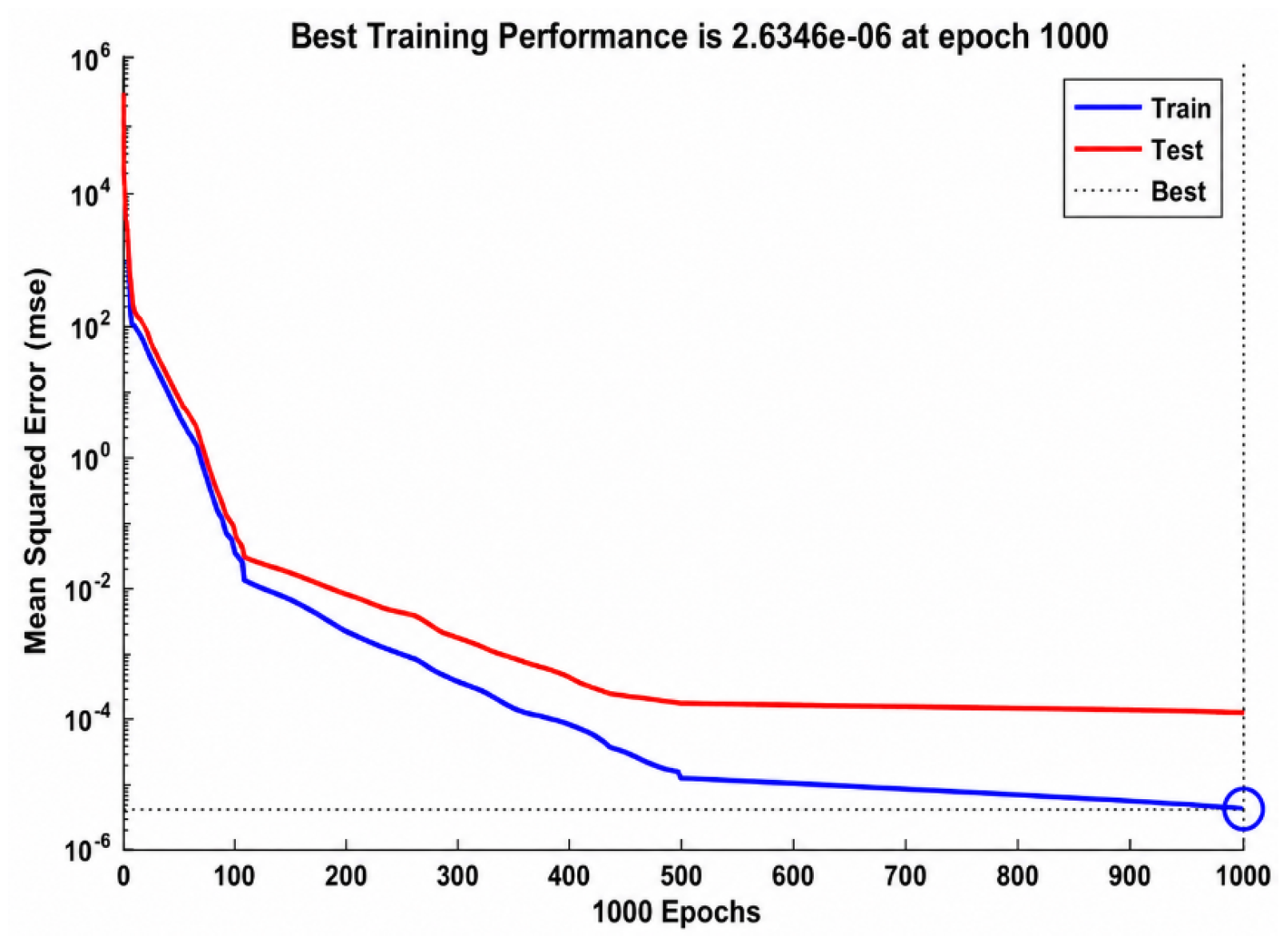
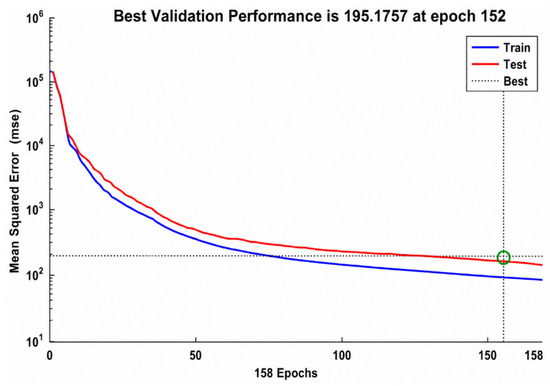
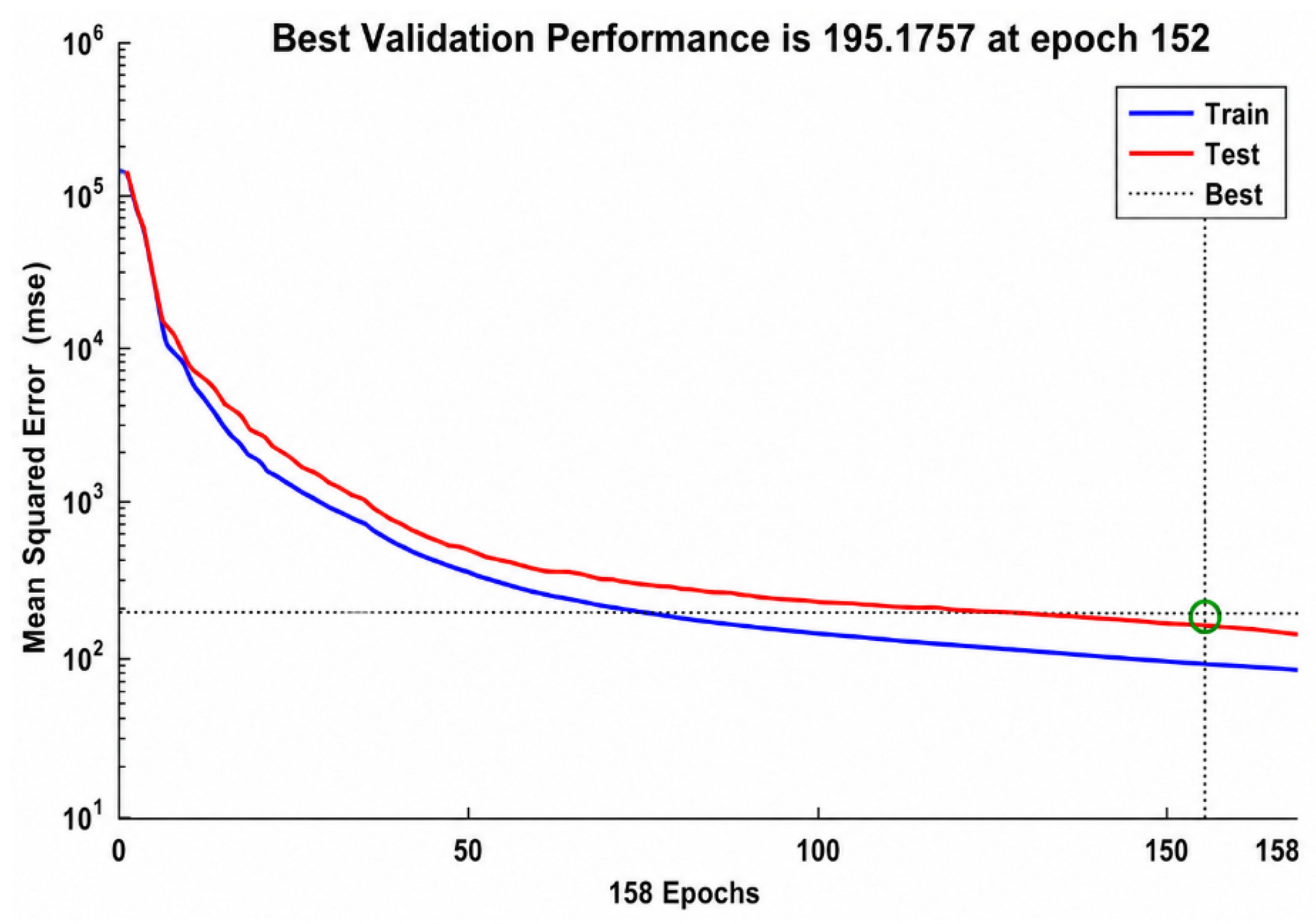
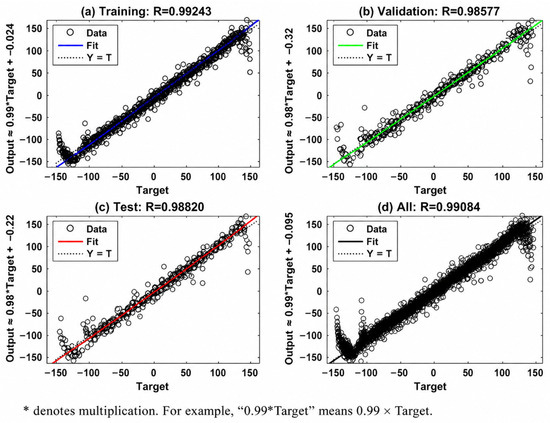
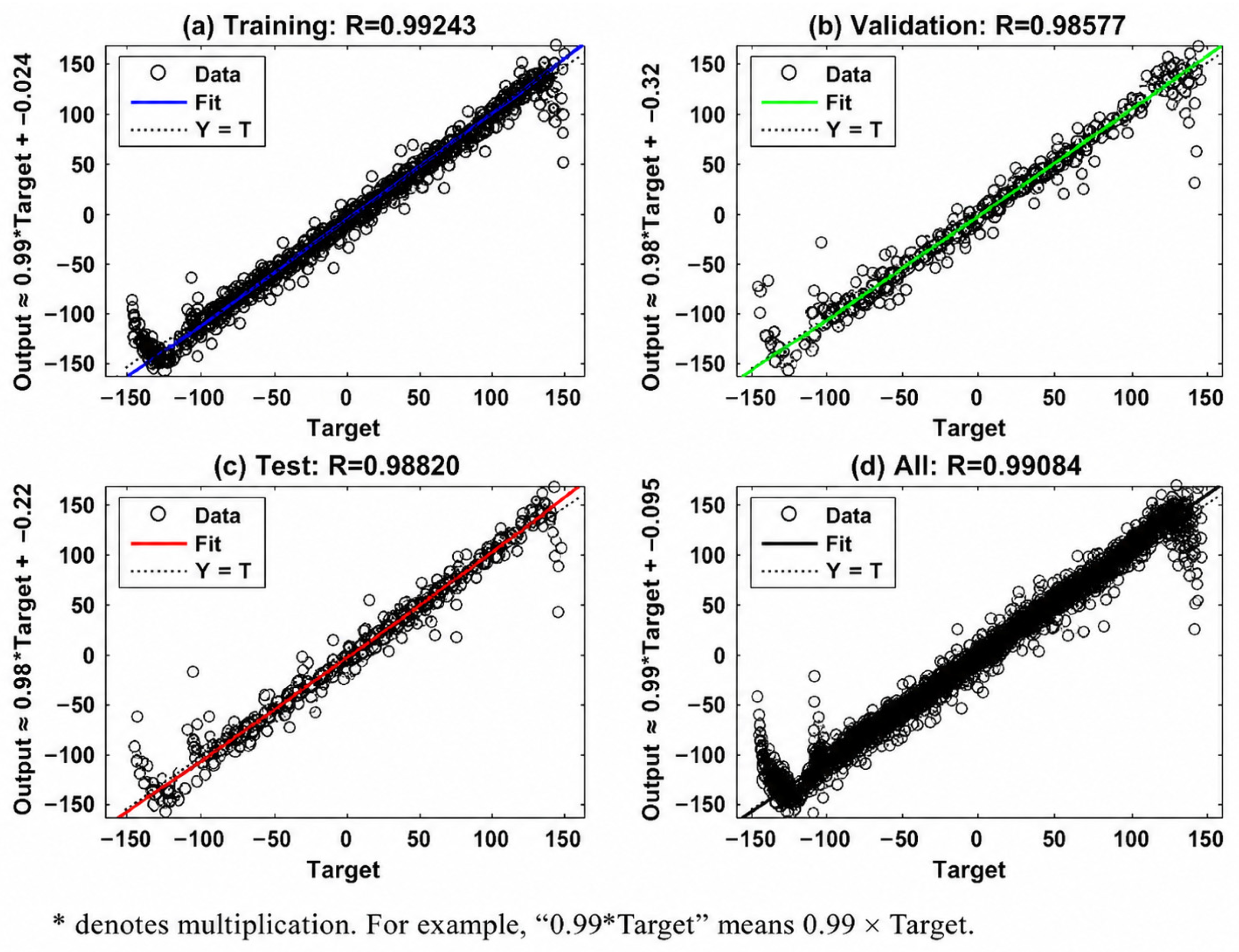
In this section, we will describe the experimental setup for the optimization-based formulation and the ANN-based framework. On the ANN model, we have used the readily available forward kinematic equations to generate a dataset to teach the inverse position of a 3-DOF RRR manipulator; the inputs consist of the elements of HTM, while the outputs correspond to the associated joint angles. The dataset consists of 2000 observations and 70% of them were used for training, while the remaining 30% were reserved for testing. The study focused on three commonly used training methods: LM, BR, and SCG. Each algorithm was evaluated under the same conditions, using a network of 100 neurons in the hidden layer. The learning behavior of these algorithms is illustrated in Figure 14, Figure 15, Figure 16, Figure 17, Figure 18, Figure 19 and Figure 20. The LM approach shows relatively fast convergence and stable learning, but this comes at the cost of higher memory usage. BR, while slower, tends to produce more consistent and accurate results, particularly in terms of generalization. On the other hand, the SCG method requires less computational effort, but its performance is noticeably less reliable for this highly nonlinear problem. In terms of training time, LM falls between the other two methods; it is faster than Bayesian Regularization but slower than SCG.
Figure 15.
Training and test mean squared error curves for the LM algorithm.
Figure 16.
Regression analysis of the neural network trained using the Levenberg–Marquardt (LM) algorithm. Results are shown for (a) training, (b) validation, (c) testing, and (d) the complete dataset. The high correlation coefficients demonstrate excellent agreement between the predicted and target outputs, * denotes multiplication.
Figure 17.
Training and test mean squared error curves for the BR.
Figure 18.
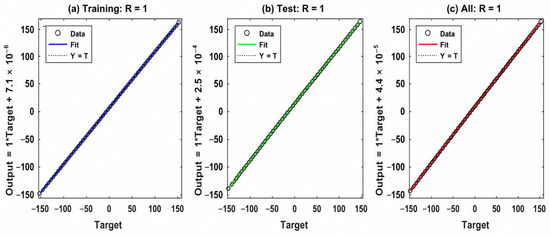
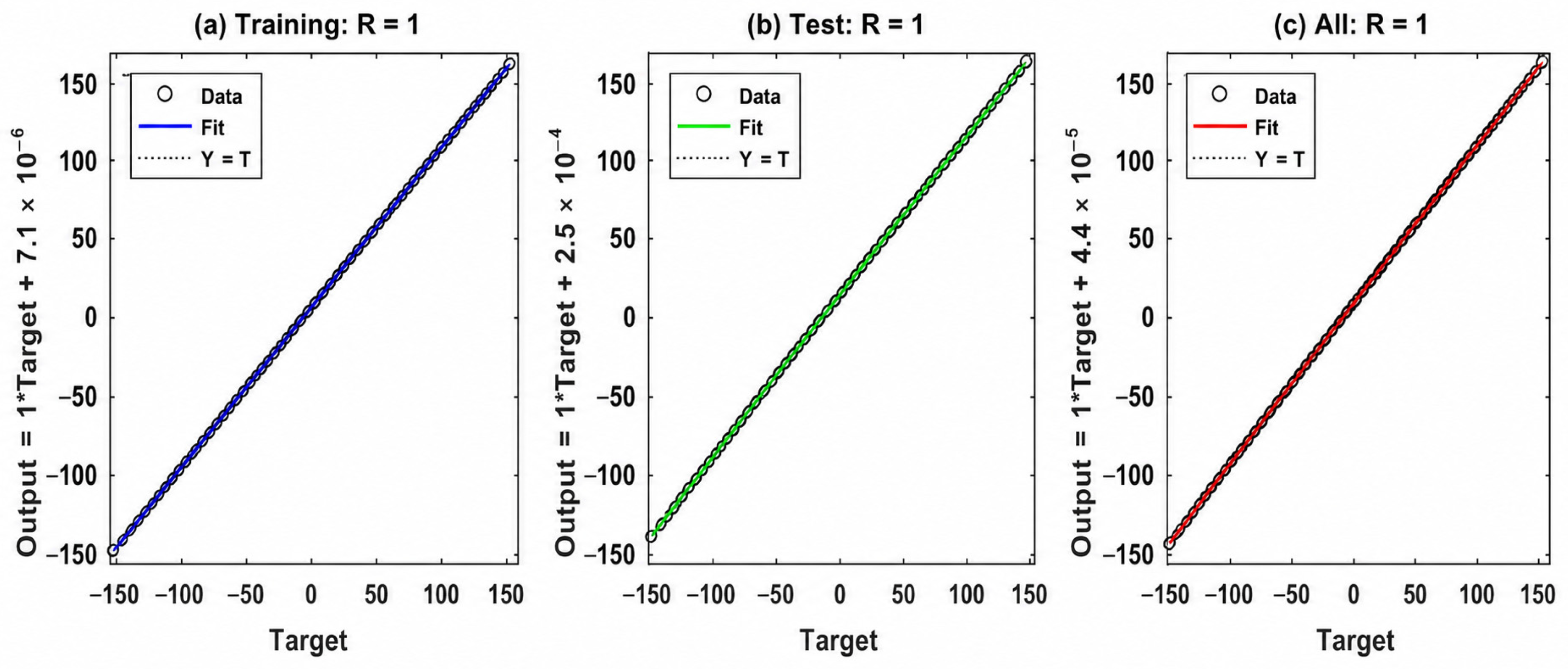
Regression analysis of the neural network trained using the Bayesian Regularization (BR) algorithm. Results are shown for (a) training, (b) testing, and (c) the complete dataset. The perfect correlation coefficients (R = 1) indicate an excellent agreement between predicted and target outputs. * denotes multiplication.
Figure 19.
Training and test mean squared error curves for the SCG algorithm.
Figure 20.
Regression analysis of the neural network trained using the scaled conjugate gradient (SCG) algorithm. Results are shown for (a) training, (b) validation, (c) testing, and (d) the complete dataset, * denotes multiplication.
The training times required by the three learning algorithms are summarized in Table 2. As expected, BR required significantly more time to converge compared to the other methods, while LM showed moderate training time. In contrast, the SCG algorithm completed training almost instantly. However, this apparent advantage in speed comes at a cost. Despite its efficiency, SCG was not able to learn a reliable mapping for the inverse kinematics problem. This limitation becomes more evident when examining Figure 19 and Figure 20, where the performance of SCG is noticeably weaker compared to the other methods. The algorithm struggles to capture the nonlinear relationship between inputs and outputs, which is critical in inverse kinematics applications. A clearer comparison can be seen in Table 3, which reports the mean squared error obtained by each method. BR achieved the lowest error, indicating strong generalization capability, while LM provided acceptable performance with a higher error. On the other hand, SCG produced significantly larger errors, confirming that its fast training does not translate into meaningful predictive accuracy for this problem.
Table 2.
Training time required by different learning algorithms for the proposed neural network.
Table 3.
Mean squared error obtained using different learning algorithms for the proposed neural network.
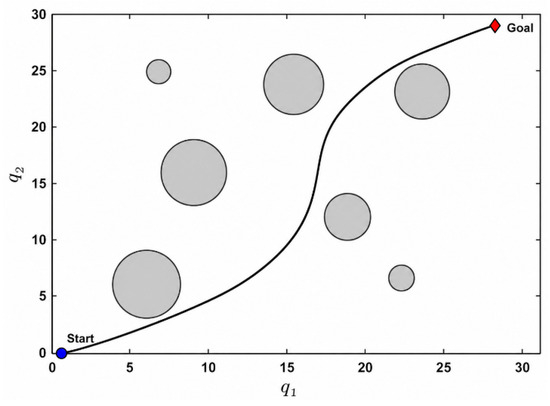
In addition to the ANN approach, several metaheuristic optimization algorithms were tested for solving the inverse kinematics problem. To evaluate their performance in a more practical setting, a path-planning scenario was considered. A sequence of Cartesian points was generated to represent a desired trajectory, and the algorithms were tasked with finding feasible solutions along this path. The workspace used in this experiment is illustrated in Figure 21. It includes several circular obstacles, creating a constrained environment. To ensure smooth motion, the reference trajectory was generated using a cubic spline curve. The performance of different optimization algorithms, namely PSO, FPA, DDAO, FF, HS, and IWO, is compared in Table 4. Each algorithm was evaluated over ten independent runs with 10,000 function evaluations. Among the tested methods, PSO consistently produced the shortest path between the start and goal points. DDAO also showed competitive performance, outperforming FPA, HS, and IWO, although it did not reach the same level as PSO.
Figure 21.
Constrained configuration space with obstacles and the resulting optimal collision-free path connecting the start and goal configurations.
Table 4.
Statistical Comparison among optimization algorithms on path planning.
7. Conclusions
A unified inverse kinematic framework for serial robot manipulators is presented in the article in order to provide straightforward inverse solutions for any synthesis of robots. The proposed framework consists of two branches: an optimization-based solution and a machine learning-based solution. The choice between the two branches depends on the desired time response, i.e., for those applications where immediate robot response is required, the machine learning-based solution is promoted, while the optimization-based solution is promoted for applications where the time response is not critical. Inverse kinematics is problematic for a wide range of robots, especially redundant or high-degree-of-freedom manipulators, while the forward kinematics is readily operational for any robot arm. Using this fact, this work formalized the hard inverse operation depending on the simple forward kinematics. Thus, the optimization-based solution is treated as a minimization task to the end-effector vector. Machine learning-based solution predicts nonlinear complicated inverse kinematic solutions after training the neural networks on a data driven from a simple forward kinematic equation. Optimizers can be used due to their ability to produce accurate and reliable solutions, particularly when precision is critical. Optimization-based solutions come at the cost of higher computational effort and sensitivity to local minima, which can affect convergence in complex search spaces. On the other hand, machine learning-based solutions provide a much faster alternative and their outputs are approximated, the response time is lower, and they are suitable for real-time motion control. Learning algorithms for neural networks is crucial for learning the inverse kinematics, and based on the experimental results, Bayesian Regularization consistently achieved the highest accuracy among the examined training methods. The Levenberg–Marquardt algorithm showed a reasonable balance between computational cost and performance, while the Scaled Conjugate Gradient method was less effective in capturing the strong nonlinear behavior of the system. To validate the framework, a physical robotic platform with a digital twin was implemented and developed employing 3D printing technology and Unity 3D for the development of the virtual environment. The experimental implementation revealed that the proposed framework is suitable in practice, enabling a smooth transition from simulation to real-time operation within a host-embedded architecture. The proposed framework provides a flexible solution to the inverse kinematics problem by allowing a trade-off between accuracy and computational speed, depending on the application requirements.
Author Contributions
Conceptualization, H.A. and E.K.; methodology, H.A.; software, H.A.; validation, H.A. and E.K.; formal analysis, H.A.; investigation, H.A.; resources, H.A.; data curation, H.A.; writing—original draft preparation, H.A.; writing—review and editing, H.A.; visualization, H.A.; supervision, E.K.; project administration, E.K.; funding acquisition, E.K. All authors have read and agreed to the published version of the manuscript.
Funding
This research received no external funding.
Data Availability Statement
Dataset available on request from the authors.
Conflicts of Interest
The authors declare no conflict of interest.
References
- Daneshmand, M.; Bilici, O.; Bolotnikova, A.; Anbarjafari, G. Medical robots with potential applications in participatory and opportunistic remote sensing: A review. Robot. Auton. Syst. 2017, 95, 160–180. [Google Scholar] [CrossRef] [Scilit]
- Gopinath, V.; Johansen, K. Risk assessment process for collaborative assembly–a job safety analysis approach. Procedia CIRP 2016, 44, 199–203. [Google Scholar] [CrossRef] [Scilit]
- Spong, M.W.; Hutchinson, S.; Vidyasagar, M. Robot Modeling and Control; Wiley: New York, NY, USA, 2020; Volume 2. [Google Scholar]
- Ghafil, H.N.; Mohammed, A.H. A Virtual Reality Environment for 5-DOF Robot Manipulator based on XNA Framework. Int. J. Comput. Appl. 2015, 113, 33–37. [Google Scholar] [CrossRef] [Scilit]
- Kivelä, T.; Mattila, J.; Puura, J. A generic method to optimize a redundant serial robotic manipulator’s structure. Autom. Constr. 2017, 81, 172–179. [Google Scholar] [CrossRef] [Scilit]
- Tuncer, A.; Yildirim, M. Dynamic path planning of mobile robots with improved genetic algorithm. Comput. Electr. Eng. 2012, 38, 1564–1572. [Google Scholar] [CrossRef] [Scilit]
- Iliukhin, V.N.; Mitkovskii, K.B.; Bizyanova, D.A.; Akopyan, A.A. The modeling of inverse kinematics for 5 DOF manipulator. Procedia Eng. 2017, 176, 498–505. [Google Scholar] [CrossRef] [Scilit]
- Brooks, S.H. A discussion of random methods for seeking maxima. Oper. Res. 1958, 6, 244–251. [Google Scholar] [CrossRef] [Scilit]
- Zhang, Y.-G.; Huang, Y.-M.; Xie, L.-M. Robot inverse acceleration solution based on hybrid genetic algorithm. In Proceedings of the 2008 International Conference on Machine Learning and Cybernetics; IEEE: New York, NY, USA, 2008; Volume 4, pp. 2099–2103. [Google Scholar] [CrossRef] [Scilit]
- Pozna, C.R.; Horváth, E.; Hollósi, J. The inverse kinematics problem, a heuristical approach. In Proceedings of the 2016 IEEE 14th International Symposium on Applied Machine Intelligence and Informatics (SAMI); IEEE: New York, NY, USA, 2016; pp. 299–304. [Google Scholar] [CrossRef] [Scilit]
- Lu, J.; Zou, T.; Jiang, X. A neural network based approach to inverse kinematics problem for general six-axis robots. Sensors 2022, 22, 8909. [Google Scholar] [CrossRef] [Scilit] [PubMed]
- Nelder, J.A.; Mead, R. A simplex method for function minimization. Comput. J. 1965, 7, 308–313. [Google Scholar] [CrossRef] [Scilit]
- Holland, J. Adaptation in Natural and Artificial Systems; MIT Press: Ann Arbor, MI, USA, 1975. [Google Scholar] [CrossRef] [Scilit]
- Cotta, C.; Mathieson, L.; Moscato, P. Memetic algorithms. In Handbook of Heuristics; Springer: Cham, Switzerland, 2025; pp. 809–850. [Google Scholar] [CrossRef] [Scilit]
- Eglese, R.W. Simulated annealing: A tool for operational research. Eur. J. Oper. Res. 1990, 46, 271–281. [Google Scholar] [CrossRef] [Scilit]
- Dorigo, M. Optimization, Learning and Natural Algorithms. Ph. D. Thesis, Politecnico di Milano, Milan, Italy, 1992. [Google Scholar]
- Dorigo, M.; Gambardella, L.M. Ant colonies for the travelling salesman problem. Biosystems 1997, 43, 73–81. [Google Scholar] [CrossRef] [Scilit] [PubMed]
- Socha, K.; Dorigo, M. Ant colony optimization for continuous domains. Eur. J. Oper. Res. 2008, 185, 1155–1173. [Google Scholar] [CrossRef] [Scilit]
- Storn, R.; Price, K. Differential evolution—A simple and efficient heuristic for global optimization over continuous spaces. J. Glob. Optim. 1997, 11, 341–359. [Google Scholar] [CrossRef] [Scilit]
- Alsamia, S.; Koch, E.; Albedran, H.; Ray, R. Adaptive Exploration Artificial Bee Colony for Mathematical Optimization. AI 2024, 5, 2218–2236. [Google Scholar] [CrossRef] [Scilit]
- Alsamee, D.; Ramezani, R. Hare escape optimization algorithm with applications in engineering and deep learning. Sci. Rep. 2025, 15, 26405. [Google Scholar] [CrossRef] [Scilit] [PubMed]
- Bazerghi, A.; Goldenberg, A.A.; Apkarian, J. An exact kinematic model of PUMA 600 manipulator. IEEE Trans. Syst. Man Cybern. 1984, SMC-14, 483–487. [Google Scholar] [CrossRef] [Scilit]
- Lee, C.S.G.; Ziegler, M. Geometric approach in solving inverse kinematics of PUMA robots. IEEE Trans. Aerosp. Electron. Syst. 1984, AES-20, 695–706. [Google Scholar] [CrossRef] [Scilit]
- Shrey, S.; Patil, S.; Pawar, N.; Lokhande, C.; Dandage, A.; Ghorpade, R.R. Forward kinematic analysis of 5-DOF LYNX6 robotic arm used in robot-assisted surgery. Mater. Today Proc. 2023, 72, 858–863. [Google Scholar] [CrossRef] [Scilit]
- Wang, L.-C.; Chen, C.-C. A combined optimization method for solving the inverse kinematics problems of mechanical manipulators. IEEE Trans. Robot. Autom. 1991, 7, 489–499. [Google Scholar] [CrossRef] [Scilit]
- Wu, C.-H.; Young, K.-Y. An efficient solution of a differential inverse kinematics problem for wrist-partitioned robots. IEEE Trans. Robot. Autom. 1990, 6, 117–123. [Google Scholar] [CrossRef] [Scilit]
- Novakovic, Z.R.; Nemec, B. A solution of the inverse kinematics problem using the sliding mode. IEEE Trans. Robot. Autom. 1990, 6, 247–252. [Google Scholar] [CrossRef] [Scilit]
- Tourassis, V.D.; Neuman, C.P. Inverse dynamics applications of discrete robot models. IEEE Trans. Syst. Man. Cybern. 1985, SMC-15, 798–803. [Google Scholar] [CrossRef] [Scilit]
- Chang, P. A closed-form solution for inverse kinematics of robot manipulators with redundancy. IEEE J. Robot. Autom. 1987, 3, 393–403. [Google Scholar] [CrossRef] [Scilit]
- Bingul, Z.; Ertunc, H.M.; Oysu, C. Applying neural network to inverse kinematic problem for 6R robot manipulator with offset wrist. In Adaptive and Natural Computing Algorithms: Proceedings of the International Conference in Coimbra, Portugal, 2005; Springer: Cham, Switzerland, 2005; pp. 112–115. [Google Scholar]
- Duka, A.-V. Neural network based inverse kinematics solution for trajectory tracking of a robotic arm. Procedia Technol. 2014, 12, 20–27. [Google Scholar] [CrossRef] [Scilit]
- Ghafil, H.N.; László, K.; Jármai, K. Investigating three learning algorithms of a neural networks during inverse kinematics of robots. In Solutions for Sustainable Development; CRC Press: London, UK, 2019; pp. 33–40. [Google Scholar] [CrossRef] [Scilit]

Disclaimer/Publisher’s Note: The statements, opinions and data contained in all publications are solely those of the individual author(s) and contributor(s) and not of MDPI and/or the editor(s). MDPI and/or the editor(s) disclaim responsibility for any injury to people or property resulting from any ideas, methods, instructions or products referred to in the content. |
© 2026 by the authors. Licensee MDPI, Basel, Switzerland. This article is an open access article distributed under the terms and conditions of the Creative Commons Attribution (CC BY) license.