


Abstract
This paper presents a comprehensive systematic review and bibliometric analysis of the scientific literature on energy management for isolated microgrids. The study aims to identify the main research trends, technological advances, and emerging challenges associated with the operation and optimization of standalone microgrid systems. Following the PRISMA extension for Scoping Reviews (PRISMA-ScR), we identified and screened relevant literature from the Scopus database using a strict AI-assisted protocol. The resulting curated dataset of 110 publications was analyzed using a combination of bibliometric techniques, including co-occurrence network analysis, dendrogram clustering, and thematic mapping. These methods enabled the identification of the most influential research topics, the relationships among key concepts, and the evolution of the field over time. The results reveal a clear progression from early studies on basic algorithms and localized control toward mature energy management frameworks, where the optimal dispatch of resources emerges as the principal driver theme, and renewable energy, storage, and cost–benefit analysis constitute the field’s foundational knowledge base. Furthermore, several research gaps and future opportunities are highlighted, particularly regarding specialized areas such as reinforcement learning, electric vehicle integration, and remote rural electrification. Ultimately, the findings demonstrate that effective energy management requires the coordinated integration of intelligent optimization methods, storage technologies, stochastic modeling, and socioeconomic considerations. This study provides a valuable reference for researchers seeking to understand and address the evolving challenges of energy management in isolated microgrids.
1. Introduction
1.1. Motivation
Microgrids have emerged as one of the most promising architectures for modern power systems, providing a flexible and resilient framework for integrating distributed energy resources (DER), energy storage systems (ESS), and controllable loads. A microgrid is commonly defined as a localized electric power system capable of operating either while connected to the main utility grid or independently in islanded mode while supplying electricity to a defined group of consumers [1]. Through coordinated control of generation, storage, and demand, microgrids enhance system reliability, improve power quality, and facilitate the integration of renewable energy resources (RER). They have attracted increasing attention from both academia and industry as a key component of future decentralized energy systems.
Beyond their technical advantages, microgrids play a fundamental role in the global energy transition and the pursuit of sustainable development goals. Their ability to integrate RER, improve energy efficiency, reduce greenhouse gas emissions, and increase energy resilience makes them an essential technology for decarbonizing the electricity sector [2]. Furthermore, microgrids support the deployment of clean energy solutions in regions where conventional grid expansion is economically or technically infeasible, contributing to universal energy access and sustainable rural development.
To fully exploit these benefits, microgrids require Energy Management Systems (EMS) capable of coordinating the operation of distributed generation (DG) units, ESS, and controllable loads while satisfying multiple technical, economic, and environmental objectives. This requirement becomes particularly critical in isolated microgrids supplying remote communities, with limited or no connection to the main power grid. In these applications, the EMS must continuously balance generation and demand while ensuring reliable operation despite limited generation capacity, constrained storage resources, and uncertain operating conditions [3,4].
However, providing electricity to remote communities does not necessarily translate into broader socioeconomic improvements. The benefits of rural electrification also depend on whether energy services are affordable for local households, whether communities participate in the planning and management of energy systems, and whether electricity supports productive activities and local economic development. These aspects extend the scope of energy management beyond the technical coordination of generation, storage, and demand, raising the need to consider the conditions under which isolated microgrids can provide sustainable and meaningful energy services [5,6,7].
In this context, The increasing penetration of renewable energy sources such as photovoltaic (PV) and wind generation introduces significant operational challenges due to their intermittent and stochastic nature. The resulting variability and forecasting uncertainty require advanced energy management and control strategies capable of maintaining the operational stability, reliability, and economic performance of isolated microgrids. To address these challenges, recent research has proposed a wide range of optimization, forecasting, predictive control, artificial intelligence, and multi-agent approaches that enable real-time decision making under uncertainty while improving system flexibility and resilience.
Although the scientific literature on microgrids has expanded considerably over the last decade, most review studies such as [8,9,10,11] address microgrids in a broad context without distinguishing the unique characteristics and operational constraints of isolated systems. Isolated microgrids present specific technical, economic, and social challenges arising from their complete dependence on local energy resources and the absence of support from the main electricity grid. Motivated by these considerations, this paper presents a systematic review focused exclusively on energy management in isolated microgrids, with particular emphasis on applications supporting sustainable rural electrification.
1.2. Objectives and Contributions
Due to the rapid expansion of research on microgrids and the increasing diversity of energy management strategies, several review studies have been published addressing different aspects of microgrid planning, operation, control, resilience, protection, and interoperability. A comprehensive review of DC microgrid planning, operation, and control is presented in [12]. In this study, several planning, control, and operation methods are documented, highlighting their main advantages and disadvantages to provide a useful foundation for both industry practitioners and researchers. Similarly, in [1], the authors present a literature review focused on two main categories of microgrid-based resilience enhancement approaches in distribution systems: optimal microgrid formation and optimal microgrid scheduling and energy management. These studies illustrate the broad range of technical and operational challenges that have emerged as microgrids become increasingly integrated into modern power systems.
Energy management and control strategies have also received considerable attention in the literature. A literature review of microgrid energy management and control strategies is presented in [13]. In this case, the authors consider multiple factors commonly incorporated into objective functions, including daily microgrid operational costs, energy storage degradation, revenues obtained through energy trading with the main grid or other parties, and Greenhouse Gas (GHG) emissions. Beyond energy management, the expansion and increasing complexity of microgrids also introduce important challenges related to protection and coordination within distribution networks. In [14], the authors develop a comprehensive review of AC microgrid protection schemes, providing insights into how microgrids interact with existing distribution protection systems and discussing different solutions proposed in the literature to address protection challenges under changing operating conditions and power-flow directions.
Another relevant research area concerns the stability and interoperability of microgrids. In [15], the authors develop a critical and analytical review of large-signal stability analysis of inverter-based AC microgrids, supported by theoretical analyses and numerical case studies. This topic has become increasingly relevant due to the growing penetration of inverter-interfaced renewable energy resources and the associated changes in microgrid dynamic behavior. More recently, in [16], a systematic review of microgrid interoperability focusing on energy access is presented. The study provides a synthesized overview of the current discourse on microgrid interoperability, particularly in the context of energy access, by clarifying relevant terminology, exploring potential interoperability issues, identifying enabling technologies, and examining promising pathways for achieving effective interoperability among different microgrid components and systems.
Despite the significant number of reviews available in the literature, most existing studies address specific technological aspects of microgrids or consider them within broader distribution-system contexts. Some contributions have focused more directly on energy management in islanded microgrids, including the review by [17], which examines optimization approaches and future trends in this area. Other reviews have addressed control strategies, planning, protection, resilience, and interoperability in different microgrid configurations [1,12,13,14,15,16]. More specifically, ref. [10] provides a review of energy management systems for islanded microgrids, while the authors of [18] examine energy management and planning practices in islanded microgrids. Although these studies provide valuable overviews of the field, the present review differs by combining a PRISMA-ScR-based systematic review with bibliometric analysis to investigate the evolution, conceptual structure, and thematic trends of research on energy management in isolated microgrids. In addition, Our review provides a structured synthesis of EMS architectures, optimization methods, operational challenges, and emerging research directions. This integrated perspective constitutes the main contribution of the present work.
Nevertheless, the specific relationship between system-level energy management, operational optimization, and the technical and socioeconomic conditions of isolated and rural applications remains an important area for further examination. In particular, the integration of renewable resources, storage requirements, demand uncertainty, and the characteristics of remote communities creates challenges that require a more comprehensive perspective on energy management. To address these aspects, this paper reviews recent developments in energy management for isolated microgrids, with particular emphasis on the strategies, technologies, challenges, and research directions associated with sustainable rural electrification.
The review follows the PRISMA extension for Scoping Reviews (PRISMA-ScR) guidelines to ensure a transparent, rigorous, and reproducible methodology for identifying, selecting, and synthesizing the relevant literature. Through this structured approach, the study classifies and critically analyzes existing research according to methodological approaches, optimization techniques, and application scenarios. This review provides a comprehensive reference for researchers and practitioners while establishing a solid foundation for further advances in the field. The review analyzes recent methodological advances, identifies emerging research trends and existing knowledge gaps, and discusses future research directions for improving sustainability and accessibility of electricity supply in remote communities.
2. Methodology
This study was conducted as a scoping review, following the Preferred Reporting Items for Systematic Reviews and Meta-Analyses extension for Scoping Reviews (PRISMA-ScR). This approach was selected to map the breadth, evolution, and thematic structure of the research on energy management in isolated microgrids, a field that encompasses diverse technical, economic, environmental, and social dimensions. Rather than focusing on the critical appraisal of individual studies or the synthesis of comparable quantitative results, the review seeks to provide an overview of the main research approaches, developments, and emerging topics in the field. Therefore, a formal assessment of study quality or risk of bias was not performed, as this was not necessary to address the objectives of the review.
The methodology combined a structured literature search and screening process with bibliometric analysis and qualitative synthesis. The identification and selection of publications were based on predefined eligibility criteria, supported by an AI-assisted screening procedure and subsequent researcher verification. The selected publications were then processed to standardize their bibliographic information and keywords, allowing the bibliometric results to be examined alongside the main contributions of the studies. This combination provided the basis for identifying the evolution of the field, its main research themes, and the areas that remain less explored. The overall identification and selection process is presented in the PRISMA-ScR flow diagram shown in Figure 1. The completed PRISMA-ScR checklist is provided in Supplementary Materials.
Figure 1.
PRISMA-ScR flow diagram.
2.1. Information Sources
Scopus was selected as the sole bibliographic database because of its broad multidisciplinary coverage of peer-reviewed literature in engineering, energy, and computer science, together with the structured bibliographic metadata it provides. These characteristics were particularly relevant to the scope of this study, which required the analysis of publications addressing not only the technical operation of isolated microgrids but also their economic, environmental, and social dimensions.
Using a single source also allowed the retrieved records to be processed under a consistent structure, avoiding potential inconsistencies associated with combining information from different databases. This was particularly relevant for the bibliometric analysis, which required standardized bibliographic data. Nevertheless, recognizing that relevant contributions may also be available outside Scopus, additional studies identified through an independent literature search were incorporated as references throughout the manuscript to complement the discussion and provide a broader perspective on the topics addressed.
2.2. Search Strategy
The search was executed in Scopus on 29 July 2026 and was developed around three thematic blocks: (i) isolated and autonomous power systems, (ii) energy management functions, and (iii) operational, economic, and sustainability-related aspects. Boolean operators and truncation symbols were used to combine the search terms within the title, abstract, and keyword fields. The search string was refined iteratively through pilot searches conducted over approximately two months before its final execution, allowing the terminology to be adjusted to capture the different research approaches addressed in the literature.
The second thematic block intentionally included a broad range of energy management and control-related terms, so that the relevance of the retrieved studies could subsequently be determined through the application of the eligibility criteria rather than being restricted exclusively by the search terms. For readability, the first thematic block is reproduced below as a representative excerpt, while the other two follow a similar structure based on OR-combined terms. The complete search string, exactly as executed in Scopus, is provided in Appendix A to facilitate reproducibility.
TITLE-ABS-KEY ((“isolated power system*” OR “off-grid power system*” OR …[19 terms in total—see Appendix A]) AND (“energy management” OR “optimal dispatch” OR …[31 terms in total—see Appendix A]) AND (“islanded operation” OR “techno-economic analysis” OR …[46 terms in total—see Appendix A])) AND PUBYEAR > 2015 AND PUBYEAR< 2026 AND (LIMIT-TO (DOCTYPE, “ar”) OR LIMIT-TO (DOCTYPE, “re”) OR LIMIT-TO (DOCTYPE, “ch”) OR LIMIT-TO (DOCTYPE, “bk”))
The keyword combination, before applying the publication-year and document-type restrictions, retrieved 1646 records. Limiting the results to publications from 2016 to 2025 reduced this number to 1238 records, excluding 408 publications outside the defined period. The subsequent document-type filter retained journal articles, review articles, books, and book chapters, resulting in 723 records and excluding a further 515 publications, including conference proceedings, patents, and other document types outside the scope of the review. No language restriction was applied. Since the search was conducted through a single combined query in Scopus, no additional deduplication process was necessary. The different stages of this retrieval process are summarized in Figure 1.
2.3. Eligibility Criteria
To delimit the scope of the review and establish a consistent basis for screening the retrieved literature, three inclusion criteria (IC) and five exclusion criteria (EC) were defined.
The inclusion criteria required that:
- IC-1: The study investigates an isolated electrical or energy system, an autonomous microgrid, or a microgrid operating in island mode.
- IC-2: The main contribution consists of a system-level management strategy aimed at coordinating, optimizing, planning, or managing the integrated operation of the energy system.
- IC-3: The proposed strategy explicitly addresses at least one relevant energy-management function, including Energy Management Systems (EMS), economic dispatch, operational optimization, energy storage management, system resilience, maintenance management, or related techno-economic assessment.
Studies were excluded when they met any of the following conditions:
- EC-1: The study focuses exclusively on systems interconnected with the main utility grid.
- EC-2: The main contribution is limited to the design, modeling, simulation, or control of a single physical component or device, such as inverters, converters, filters, or individual batteries, without a system-level perspective.
- EC-3: The study develops exclusively low-level control algorithms, including primary, secondary, or tertiary frequency and voltage control, droop control, virtual inertia, restoration, or protection schemes, without proposing an integrated energy-management strategy.
- EC-4: The study focuses exclusively on infrastructure sizing, expansion planning, regulation, public policy, or sustainability without addressing energy-system operation or management.
- EC-5: The title, abstract, and keywords do not provide sufficient evidence to establish that the study proposes a clear system-level energy-management strategy.
2.4. AI-Assisted Screening and Human Verification
The 723 records saved after the initial database filtering were subsequently screened through a hybrid human-in-the-loop procedure combining AI-assisted classification with researcher verification. The classification step was supported by Gemini 3.1 Pro (Google), a generative large language model used as a preliminary classification tool. The model assessed each record based exclusively on its title, abstract, and keywords, applying the eligibility criteria defined in the previous section. The screening followed a no-inference approach, meaning that classifications had to be supported by information explicitly stated in these bibliographic fields.
Each record was assigned an Accept or Reject pre-classification. When the available information was insufficient to establish compliance with the inclusion criteria, the record was initially classified as Reject. This approach was also used to support the screening of publications written in languages other than those the authors could directly assess.
The AI-generated classifications were used as preliminary recommendations and did not determine the final selection of studies. Two of the authors independently reviewed the complete list of records flagged for exclusion, examining them individually before any study was finally excluded. Thus, the final inclusion and exclusion decisions remained under the responsibility of the authors.
Since the model was used as a preliminary screening tool rather than as an independent reviewer in a dual-screening process, no formal inter-rater agreement statistic was calculated. Instead, the manual review of all records flagged for exclusion constituted the verification procedure used to assess the AI-assisted classifications.
Following this screening and verification process, 613 records were excluded, resulting in 110 publications retained for the bibliometric and qualitative analyses.
2.5. Supplementary Literature Verification
To further verify that relevant studies had not been mistakenly excluded during the AI-assisted screening process, the pool of 723 pre-screening records was cross-checked against the 110 included studies, and an additional, independent literature search was performed to identify relevant contributions that could complement the publications retrieved through the original search strategy. This supplementary search made it possible to identify similar contributions and other relevant works in the field that were considered valuable for supporting the discussion and contextualization of the research findings. No additional pattern of systematic exclusion was identified beyond these complementary studies, supporting the reliability of the AI-assisted screening protocol described in the previous section.
The selected supplementary references were incorporated into Section 4 and Section 5 where they contributed to the discussion of specific topics and research developments. However, they were not added to the quantitative bibliometric dataset, which remained restricted to the 110 publications selected through the original Scopus search and screening process. This distinction was maintained to preserve the consistency of the bibliometric analysis while allowing the discussion to benefit from relevant contributions identified beyond the initial database retrieval.
2.6. Data Processing and Bibliometric Analysis
The 110 included publications were then exported from Scopus and processed using the Bibliometrix package in R. Before the bibliometric analysis, the bibliographic metadata and keywords were cleaned and standardized to reduce semantic fragmentation. A controlled synonym dictionary was applied to consolidate equivalent or closely related terms while preserving their conceptual meaning. For example, lexical variants such as micro-grid, microgrids, and mg were unified under microgrid, while terms such as optimisations and optimization algorithms were unified under optimization. This preprocessing was performed to reduce artificial fragmentation of concepts and improve the consistency of the subsequent co-occurrence and clustering analyses.
The processed dataset was then analyzed using complementary bibliometric techniques to characterize the temporal evolution, conceptual structure, and thematic organization of research on energy management in isolated microgrids. Trend analysis was used to identify changes in research focus over time, while co-occurrence analysis was used to examine relationships among frequently associated concepts. Multiple Correspondence Analysis (MCA) and hierarchical clustering were used to identify groups of related terms, and thematic mapping was used to characterize research themes according to their centrality and degree of development. The bibliometric results are presented in Section 3, where these analyses are interpreted in relation to the evolution and structure of the research field.
Beyond describing the bibliometric patterns, these results also served as a basis for organizing the qualitative examination of the selected studies. In particular, the themes related to microgrid, optimization, and electric load dispatching, together with energy management, renewable energy, and energy storage, supported the organization of Section 4 around control strategies, energy management, and optimal dispatch. Similarly, the more specialized themes identified in the thematic map, including rural areas, electric vehicles, and reinforcement learning, helped identify topics for further discussion in Section 5, particularly in relation to research gaps and future directions.
Finally, the qualitative synthesis examined the methodological and technological characteristics of the included studies, focusing on control architectures, energy management strategies, optimization approaches, renewable-energy integration, energy storage, uncertainty, resilience, and emerging applications. By considering these contributions alongside the bibliometric findings, the review aimed to identify both the established research areas and the topics that remain less explored in relation to the operation and sustainability of isolated microgrids, particularly in the context of rural and remote electrification. In accordance with PRISMA-ScR guidelines, an internal structured protocol was developed for this study, though it was not prospectively registered in a public database.
3. Bibliometric Analysis
In order to understand the researched approaches and identify the evolutionary patterns within microgrid energy management, a comprehensive bibliometric analysis was conducted. This section explores analytical methods including co-occurrence networks, trend topic analysis, hierarchical dendrograms, factorial mapping, and thematic maps to examine the structure and development of the scientific literature over time.
3.1. Data Preprocessing and Synonym Consolidation
The 110 included publications were then exported from Scopus and processed using the Bibliometrix package in R. Before the bibliometric analysis, the bibliographic metadata and keywords were cleaned and standardized to reduce semantic fragmentation. A controlled synonym dictionary was applied to consolidate equivalent or closely related terms while preserving their conceptual meaning.
For instance, lexical variants, acronyms, and plural forms such as “micro-grid”, “microgrids”, and “mg” were unified under the main term microgrid. Similarly, the broad concept of renewable energy was used to encompass a wide array of terms strictly referring to sustainable generation, including “renewable energy sources”, “renewable distributed generation”, and “renewable energy resources”. Other notable consolidations included grouping “photovoltaics” and “solar power generation” under solar energy, merging “battery energy storage” and “electric batteries” into energy storage, and unifying “optimisations” and “optimization algorithms” under optimization.
This conservative consolidation strategy was essential to preserve the conceptual integrity of the dataset while preventing the artificial fragmentation of themes in the subsequent co-occurrence network and clustering analyses. Without this standardization, highly interconnected technical expressions would have been scattered into multiple low-density nodes, artificially altering the distance between concepts and obscuring the true centrality of the field’s core topics.
3.2. Trend Topic Analysis
A trend topic chart is a visual representation that illustrates the temporal evolution of key research concepts, highlighting patterns of growth, stability, or decline over a specific timeframe. Figure 2 presents the trend topics related to energy management in microgrids. The vertical axis lists the most prominent technical terms, while the horizontal axis represents the timeline. The size of the bubbles corresponds to the publication frequency of each term, effectively mapping the intensity of research focus across different years.
Figure 2.
Trend topics representing the temporal evolution of keywords in microgrid energy management.
The analysis reveals a dynamic evolutionary trajectory. Early research, primarily clustered around 2016 to 2018, focused on foundational and localized concepts such as “algorithm” and “demand response”. Moving into the 2020–2021 period, there was a surge in infrastructure-focused themes, evidenced by the large and prominent bubbles for “microgrid”, “solar energy”, and “energy storage”.
In recent years (2022–2025), the focus has shifted towards advanced operational strategies. Terms such as “energy management”, “optimization”, and a highly dominant peak for “renewable energy” (centered around 2023) indicate that the field has matured; researchers are now prioritizing the sustainable and optimal dispatch of resources over mere component-level modeling. Furthermore, the emergence of terms like “clean energy” and “wind power” towards the end of the timeline underscores the ongoing global transition towards fully decarbonized and resilient energy systems.
3.3. Conceptual and Thematic Structure: Factorial Map and Hierarchical Analysis
To reveal similarities, underlying structural patterns, and hierarchical relationships within the analyzed literature, a Multiple Correspondence Analysis (MCA) was conducted on the 20 most prominent keywords of the corpus, following synonym consolidation (Section 3.1). This method maps the association among categorical variables into a two-dimensional factorial space while minimizing statistical noise from infrequent terms. As shown in Figure 3, this parameterization yields a highly reliable representation of the field, with the first two dimensions explaining a combined 79.88% of the total variation (Dim 1: 50.03%; Dim 2: 29.85%), indicating that the two-dimensional representation captures a substantial proportion of the associations among the selected keywords. Three main clusters can be distinguished, reflecting complementary aspects of isolated-microgrid research: operational optimization and energy management, techno-economic infrastructure, and broader sustainability objectives.
Figure 3.
Conceptual Structure Map (MCA) plotting thematic clusters in a two-dimensional space.
- Blue Cluster (Algorithmic Dispatch and Management): spans the left and central regions of the map. It centralizes the core operational problem, directly connecting foundational system concepts (“microgrid”, “isolated microgrids”, “energy management”) with operational imperatives and computational solution methods (“optimization”, “electric load dispatching”, “particle swarm optimization (pso)”). Its central position indicates that intelligent dispatch is the principal bridge connecting all other microgrid research areas, and its internal composition is predominantly technical and mathematical: the governing problem is framed, modeled, and solved as an optimization task. This centrality is also reflected in raw term frequency across the corpus: “microgrid” appears in 70% keyword-tagged studies and “energy management” in 41%, confirming this cluster as the dataset’s dominant thematic core.
- Red Cluster (Techno-Economic Infrastructure): positioned in the upper-right quadrant, groups the physical components and their economic evaluation within specific application contexts. It closely ties generation and storage assets (“solar energy”, “renewable energy”, “energy storage”, “battery”) to their financial viability (“economic analysis”, “costs”) and their primary deployment target (“rural areas”). Unlike the Blue cluster, this region is organized around economic reasoning and site-specific adaptation rather than algorithmic formulation: the recurring question is not how to dispatch optimally, but whether a given technology mix is economically and geographically viable for a particular rural or remote context. Within this cluster, term frequencies reveal an internal gradient: “renewable energy” (40%) and “battery” (20%) are comparatively broad and recurrent, while “rural areas” (11%) is the least frequent term, indicating that rural viability functions as a specialized niche within a wider techno-economic theme rather than its center.
- Green Cluster (Macro-Level Sustainability): located at the bottom of the factorial map, is the most compact of the three. It encompasses broad, systemic paradigms, such as “energy”, “energy efficiency”, and “off-grids”, representing the overarching macroscopic goals of energy conservation and off-grid independence that motivate and frame the more specific technological and economic developments captured by the Blue and Red clusters. Consistent with its role as a unifying rather than a specialized theme, all three terms are comparatively rare in isolation (12–13 occurrences out of 110 studies, 11–13%), reinforcing that this cluster represents a conceptual umbrella rather than a distinct technical or economic sub-field.
Taken together, the three clusters reveal three interconnected dimensions of the research field: the operational and computational management of isolated microgrids, the techno-economic configuration of generation and storage assets, and the broader sustainability objectives that guide their development. These dimensions provide a conceptual overview of the field, while the hierarchical analysis offers a more detailed breakdown of the relationships among the individual keywords.
3.4. Conceptual Structure: Hierarchical Dendrogram Analysis
To examine how each of these three pillars further differentiates according to research trends, a hierarchical clustering was applied to the same keyword space, producing the dendrogram in Figure 4. Rather than introducing a new analysis, this dendrogram acts as a zoom into the same conceptual structure described above, revealing five sub-clusters nested within the three master clusters, showing how a single thematic pillar subdivides into more specialized research niches, each represented by concrete studies in the corpus.
Figure 4.
Hierarchical dendrogram of keywords.
- Sustainability Paradigms (red group): This sub-cluster comprises the terms “off-grids”, “energy”, and “energy efficiency”, representing broader objectives associated with autonomous energy supply and the efficient use of energy resources. The studies included in this group illustrate how these objectives are addressed through different approaches to energy management, system operation, and the integration of emerging energy resources [19,20,21]. This group places the technical developments identified in the other sub-clusters within a broader sustainability perspective; it highlights the foundational drive to maximize efficiency in systems completely decoupled from the main utility grid.
- Rural Context and Viability (blue group): This sub-cluster connects “rural areas”, “renewable energy”, and “costs”, emphasizing the relationship between technology selection, investment requirements, and the feasibility of electrification in remote communities. The studies in this group illustrate the relevance of evaluating energy solutions in relation to local resource availability and economic constraints [22,23,24]. This thematic group highlights that the deployment of isolated microgrids involves not only technical design but also the economic conditions that influence their implementation and long-term viability. It supports the premise that effective energy management in rural settings is not just a technical challenge, but a cost-driven socioeconomic endeavor.
- Techno-Economic Infrastructure (green group): This sub-cluster links “energy storage”, “battery”, “solar energy”, and “economic analysis”. It reflects the relationship between the selection and sizing of physical assets and the assessment of their technical and economic performance. The studies in this group address renewable generation and storage configurations, as well as their techno-economic assessment [25,26,27,28]. The grouping indicates that decisions regarding generation and storage capacities are closely connected to investment costs and the expected performance of isolated systems. It demonstrates that the integration and capacity planning of solar and storage technologies are fundamentally evaluated through techno-economic feasibility.
- Algorithmic Optimization (red-right group): This subcluster is characterized by the term “particle swarm optimization (PSO)”, reflecting the use of swarm-based metaheuristic methods to address complex optimization problems in isolated microgrids. The applications identified in the reviewed literature extend beyond a single operational task. PSO has been applied to optimize battery energy storage systems in stand-alone microgrids [29]. Other contributions have considered improved PSO combined with an exterior-point method for multi-objective scheduling, addressing economic, environmental, and reliability criteria [30], while PSO has also been applied to the optimal sizing of different microgrid configurations, including PV/BESS, PV/wind/BESS, and PV/BESS/DG systems [31]. These studies illustrate the field’s historical and ongoing reliance on specific metaheuristic algorithms to solve the complex, non-convex problems associated with distributed resource allocation.
- Operational Core (purple group): This subcluster brings together “microgrid”, “isolated microgrids”, “energy management”, “optimization”, and “electric load dispatching”. It represents the central operational problem addressed in the literature: coordinating generation, storage, and demand to maintain a reliable balance between supply and consumption under autonomous operating conditions. The studies in this group illustrate different approaches to energy management and optimal dispatch in isolated microgrids [32,33,34]. It captures the operational challenge of real-time supply and demand balancing, proving that intelligent optimization and optimal dispatch are the primary engines driving isolated microgrid operations.
The hierarchical analysis therefore provides a more detailed interpretation of the conceptual structure identified by the MCA. The operational and algorithmic subclusters emphasize the importance of dispatch coordination and computational optimization, including both real-time management and planning decisions. The rural viability and techno-economic infrastructure subclusters highlight the relationship between local application conditions, technology selection, and investment considerations. Finally, the sustainability subcluster reflects the broader objectives of energy efficiency and autonomous supply. Together, these themes show that research on isolated microgrids is structured around the interaction of operational management, optimization methods, infrastructure planning, economic feasibility, and sustainability objectives.
3.5. Co-Occurrence Network Analysis
The co-occurrence network provides a complementary perspective on the literature by revealing how frequently different concepts are addressed together. Unlike the factorial and hierarchical analyses, which identify thematic groups, this analysis focuses on the strength of the relationships between terms and the connections that structure the research scope. In Figure 5, nodes represent individual terms, their size reflects their frequency, and the edges indicate co-occurrence, with thicker edges representing stronger associations.
Figure 5.
Co-occurrence network illustrating the interactions and thematic clusters of key terms.
The network is dominated by a strong operational connection between “microgrid” and “energy management”, which co-occur in 33 of the 110 articles. Other prominent links include “microgrid” and “optimization” (21 co-occurrences), as well as “microgrid” and “isolated microgrids” (22 co-occurrences). These relationships show that the literature is strongly organized around the operation and management of isolated microgrids, with optimization providing a central link between the system concept and its operational requirements. Beyond confirming the relevance of these topics, the network reveals the extent to which they are interconnected. This is illustrated by studies addressing cooperative dispatch, optimal scheduling, and the coordination of generation and storage resources [34,35,36,37,38,39].
A second relevant feature is the connection between this operational core and the technologies that support microgrid operation. “Renewable energy” co-occurs with “solar energy” in nine articles and with “battery” in eight. These associations show how renewable generation and storage are jointly addressed in literature, connecting technology selection and system configuration with operational management. This relationship is further illustrated by studies on renewable-based hybrid systems, storage integration, and techno-economic assessment of off-grid configurations [40,41,42,43,44].
The network also provides insight into how rural electrification relates to these technological choices. The term “rural areas” is connected to “renewable energy” through eight co-occurrences, compared with only three links to “off-grids”. This difference suggests that rural applications are more frequently discussed in relation to renewable energy deployment than through the broader concept of off-grid systems. Thus, the network makes visible a connection between the rural context and technology-oriented research that complements the thematic relationships identified in Section 3.3.
Finally, some terms occupy more specialized positions in the network. “Electric vehicles” co-occurs with “microgrid” in seven of its eight occurrences, while “reinforcement learning” appears together with “energy management” in three of its six occurrences. Although these terms have fewer connections than the main operational and technological concepts, their associations indicate specific points of interaction with established research areas. They link microgrid research with electric mobility and advanced data-driven management approaches. Their position in the network suggests that these topics are less integrated into the overall thematic structure, a distinction that provides a useful basis for examining their development in the thematic analysis presented in Section 3.5.
3.6. Thematic Map Analysis
The thematic map (Figure 6) provides a strategic two-dimensional view of the research field by categorizing keyword clusters according to their centrality (x-axis, indicating the degree of relevance) and their density (y-axis, indicating the degree of development). The Walktrap clustering algorithm divides the map into four distinct quadrants:
Figure 6.
Thematic map categorizing research themes based on their density and centrality.
- Motor Themes (Top-Right): The motor themes are characterized by high centrality and density, indicating topics that are both well-developed and strongly connected to the broader research field. In this quadrant, the cluster comprising microgrid, optimization, and electric load dispatching reflects the central role of operational optimization and energy dispatch in isolated microgrids. This pattern is consistent with studies addressing cooperative energy dispatch among autonomous microgrids [35], economic dispatch in islanded systems [36], and optimization-based energy management strategies integrating generation and storage resources [34,37,38,39]. Collectively, these studies show that the allocation of available resources, operational cost minimization, and coordination of distributed energy resources constitute well-established and interconnected research directions.
- Basic Themes (Bottom-Right): Basic themes exhibit high centrality but comparatively lower density, reflecting concepts that are transversal to several research topics. The presence of energy management, renewable energy, energy storage, solar energy, and economic analysis in this quadrant is consistent with the broad range of studies examining the planning, sizing, and operation of isolated and rural microgrids. These include research on renewable-based hybrid systems, storage integration, and techno-economic assessment of off-grid configurations [40,41,42,43,44], as well as studies addressing resource allocation, system sizing, and the economic feasibility of rural electrification solutions [45,46,47,48,49,50,51]. Their position suggests that these concepts provide a common foundation for the field, although the different approaches and application contexts do not necessarily form a single, highly cohesive thematic cluster.
- Niche Themes (Top-Left): These themes are internally developed but exhibit lower centrality, indicating specialized research areas with more limited connections to the dominant thematic structure. In this quadrant, reinforcement learning represents a specific methodological line in which learning-based algorithms have been applied to power-flow optimization and energy management in islanded microgrids [19,52,53,54,55,56]. Likewise, the electric vehicles cluster reflects research on the integration of electric mobility into isolated systems, including coordinated charging, demand response, and the interaction between electric vehicles and microgrid operation [21,57,58,59,60,61]. The presence of rural areas also identifies a specific application context, addressed through studies on off-grid system planning, predictive dispatch, productive-load integration, and energy management under rural operating conditions [23,40,42,44,62,63,64,65,66]. Therefore, the location of these topics should not be interpreted as evidence of limited technical development. Rather, it indicates that these research lines are more specialized and have fewer connections with the most central themes identified in the map.
- Emerging or Declining Themes (Bottom-Left): This quadrant includes terms with both low centrality and low density, such as off-grids, power, and cost of energies. Their position indicates limited connectivity with the other thematic clusters and a comparatively low degree of internal development within the keyword network. However, this result does not establish whether these topics are emerging or declining. In particular, the term off-grids may reflect the use of specific terminology to describe systems that are also discussed in the literature as isolated, islanded, or stand-alone microgrids. Consequently, their placement suggests that they are either transitioning into more specific, modernized terminology or represent nascent focus areas that have yet to gain broad traction across the global research domain.
4. Advances in Energy Management of Isolated Microgrids
Isolated microgrids have become a central pillar of electrification strategies for remote communities, islands, and critical facilities that cannot rely on interconnection with a bulk power system. Their capacity to integrate distributed renewable resources, energy storage, and controllable loads into a self-sufficient electrical system makes them attractive for rural electrification as well as for resilience-oriented applications, where continuity of supply must be guaranteed during natural disasters or grid disturbances [1]. Unlike grid-connected microgrids, isolated systems must operate autonomously, making energy management a fundamental aspect of their operation. The variability of renewable generation, the limited availability of energy resources, and the uncertainty associated with load demand require effective decision-making strategies to ensure energy availability, system reliability, and efficient resource utilization. As sensing, metering, and communication infrastructures mature, these operational requirements increasingly extend beyond the purely electrical domain, coupling isolated microgrids to metering platforms [9], household-level energy management processes [8], and multi-vector energy systems that jointly manage electricity, heat, hydrogen, and transport demand [2].
The Energy Management System (EMS) plays a central role in the operation of isolated microgrids by coordinating distributed generation, energy storage systems, and flexible loads according to system constraints, renewable energy availability, and demand requirements. Its main objective is to determine optimal operating strategies that minimize operational costs, maximize renewable energy utilization, reduce fuel consumption, and ensure the continuous supply of electricity. EMS strategies can be formulated over different time horizons, ranging from short-term operational scheduling to day-ahead planning and long-term resource optimization. These strategies increasingly incorporate forecasting techniques, optimization algorithms, and artificial intelligence methods to address the uncertainty associated with renewable generation and load demand. In isolated microgrids, effective energy management is particularly important due to the limited generation capacity, finite energy storage resources, and the absence of an external electrical grid, which require careful allocation of available energy resources.
Beyond the optimization techniques employed, the EMS architecture determines how energy resources are coordinated and how operational decisions are made within isolated microgrids. Five main architectural approaches can be distinguished: centralized, distributed, decentralized, multi-agent, and transactive energy management systems. Centralized EMS architectures remain a common approach due to their ability to collect system-wide information and perform coordinated optimization, making them suitable for isolated microgrids with a limited number of resources and reliable communication infrastructure. Distributed and decentralized architectures offer greater flexibility, scalability, and resilience by enabling local decision-making and reducing dependence on a single supervisory entity. Multi-agent systems extend these capabilities through the coordination of autonomous agents representing distributed energy resources, storage systems, or loads. Transactive EMS architectures introduce market-based mechanisms that facilitate energy exchange among prosumers and interconnected isolated microgrids, potentially improving resource allocation and economic efficiency [22]. However, their implementation depends on adequate communication, metering, and market coordination mechanisms. Table 1 summarizes the main characteristics, advantages, limitations, and suitability of these architectures for isolated microgrids. Overall, the selection of an EMS architecture should consider the system size, communication infrastructure, degree of resource heterogeneity, operational autonomy, and the need for coordinated economic optimization.
Table 1.
Comparative synthesis of EMS architectures and their suitability for isolated microgrids.
Several comprehensive reviews have examined different aspects of energy management and optimization in microgrids, including joint energy management strategies and optimization approaches [13], energy management and planning practices [18], household-level energy management and demand-side coordination [8], and the integration of multiple energy vectors in decentralized systems [2]. Furthermore, broader studies have investigated the potentials and challenges of decentralized autonomous energy systems, emphasizing the importance of efficient resource utilization, operational planning, and sustainable energy supply [68]. Despite these contributions, the development of advanced EMS strategies specifically tailored to isolated microgrids remains an important research area, particularly regarding renewable energy integration, storage optimization, demand management, and intelligent decision-making under uncertain operating conditions.
Isolated microgrids require EMS capable of scheduling generation, storage, and dispatchable loads to meet techno-economic objectives [69]. General EMS architectures for isolated operation include sustainable energy management frameworks [70], local energy transactive markets that coordinate multiple isolated microgrids with heterogeneous renewable resources [22], unified dispatch architectures that operate seamlessly across grid-connected and islanded modes [71] and real-time EMS formulations [72].
The optimal dispatch is most commonly formulated as a scheduling problem solved through deterministic, heuristic, or metaheuristic methods. Deterministic and analytical formulations include minimum spanning tree algorithms [35], quadratic programming [36] and Lagrange-multiplier techniques [37]. A substantially larger body of work relies on nature-inspired metaheuristics to solve the resulting non-convex, mixed-integer dispatch problems: artificial bee colony [34,38], social-network-search algorithms [39], multi-period imperialist competition algorithms [73], hybrid jellyfish-search–golden-jackal optimization [74], dual-level resource allocation combining whale optimization with game theory [75], genetic algorithms [76,77,78], chaotic spotted-hyena optimization for security-constrained dispatch [32], particle swarm optimization [30,31], and heuristic or rule-based approaches [28,79].
Table 2 describes different optimization approaches for isolated microgrid dispatch and energy management. Comparative assessments of dispatch strategies for islanded hybrid microgrids and metaheuristic techniques for energy management and capacity planning are presented in [80,81,82].
Table 2.
Optimization approaches reported in the literature for isolated microgrid dispatch and energy management.
Dispatch decisions are also shaped by the sizing of the microgrid, therefore sizing and dispatch have become increasingly intertwined in the isolated-microgrid literature. A substantial share of the reviewed literature integrates capacity planning directly into the energy-management formulation. This includes HOMER-based and comparable techno-economic feasibility studies for off-grid and rural systems [40,41,42,43,44], general techno-economic optimization of stand-alone renewable systems [45,51], as well as probabilistic and emission-averse techno-economic design methods [47,83].
In [84], the authors analyze the advantages and disadvantages of different photovoltaic panel and energy storage battery materials for the optimal sizing of isolated microgrids, while in [85], Conditional Value at Risk (CVaR) is employed for capacity optimization of stand-alone microgrids. Planning approaches that explicitly account for excess-energy management, reliability, and environmental performance are explored in [27,86,87]; also, storage-capacity decision support for cogeneration systems is studied in [88].
In [46], the energy planning of autonomous hybrid microgrids is addressed using multi-objective optimization. In [50], a load-flow-strategy-based energy management approach is employed for the optimal installation and sizing of energy resources in microgrids, while in [48,49], integrated techno-economic planning frameworks that jointly consider the sizing of generation, storage, and demand-response resources are presented.
Game-theoretic approaches have also been explored to improve coordination and economic efficiency in microgrid energy management. In [89], a hierarchical Stackelberg game framework was proposed to coordinate energy trading among microgrid clusters, individual microgrids, and end users, incorporating incentive-based demand response and internal pricing mechanisms to maximize participants’ economic benefits. Similarly, ref. [90] introduced a decentralized energy management strategy combining stochastic dynamic programming with a noncooperative game-theoretic approach to optimize microgrid operating costs and plug-in electric vehicle charging schedules under renewable generation and load uncertainties. Simulation results demonstrated improved economic performance, robustness, and convergence compared with conventional deterministic and stochastic bi-level optimization approaches.
The relationship between system sizing and operational management is particularly relevant in rural electrification projects, where energy planning must account for the characteristics of the communities and the different uses of electricity. For example, ref. [64] developed a design and dispatch optimization approach based on mixed-integer linear programming (MILP) for rural electrification, linking system configuration with operational decisions. Similarly, ref. [6] examined the potential contribution of solid biomass to rural electrification, highlighting the importance of locally available energy resources in the design of sustainable supply systems. Other studies have extended this perspective to multi-energy configurations and resource coordination, including isolated multi-energy microgrids [91] and hydrogen-based systems for rural applications [92]. These contributions illustrate how optimization and dispatch strategies can be connected to the specific resource availability and energy requirements of remote communities.
4.1. Uncertainty-Aware and Predictive Energy Management
Given that isolated microgrids cannot rely on external grid support to compensate for forecasting errors, uncertainty management is essential to ensure reliable and cost-effective operation. Several studies have incorporated renewable generation and load uncertainties directly into dispatch optimization models. Chance-constrained programming has been employed to account for wind, photovoltaic, and load forecasting errors while maintaining spinning reserve requirements [93]. Similarly, interval-based multi-objective optimization has been proposed to balance operating costs, battery costs, and emissions under varying renewable generation and demand conditions [94]. Robust optimization approaches have also been developed to determine feasible dispatch schedules under worst-case uncertainty scenarios, combining day-ahead planning with intra-day adjustments based on updated measurements [95]. Other contributions have integrated chance-constrained bi-level optimization with demand response and benefit-allocation mechanisms to improve supply–demand coordination and reduce load shedding [96]. Additionally, uncertainty margins and segmented penalties for wind and photovoltaic curtailment have been incorporated into robust dispatch formulations to balance economic performance, operational reliability, and renewable energy utilization [97].
Another research direction focuses on predictive energy management and multi-stage decision-making to improve operational flexibility under uncertain conditions. A two-stage optimization framework embedded in model predictive control has been proposed, combining deterministic optimization for cost and emission minimization with stochastic optimization to ensure feasible operation across multiple scenarios [98]. More recently, forecasting techniques have been integrated with deep reinforcement learning to coordinate renewable generation and hybrid energy storage, achieving important operating cost reductions compared with benchmark methods [99]. Interval-based robust energy management has also been investigated for isolated microgrids supplying small productive processes, demonstrating improved generation tracking under uncertainty, although at slightly higher operating costs [62]. Predictive dispatch strategies have further demonstrated their potential to improve both microgrid design and operation. For example, a two-layer predictive algorithm combining unit commitment and real-time control achieved reductions in fuel consumption and overall system costs in a rural microgrid case study [64]. Similarly, a modified predictive dispatch strategy incorporating battery management and demand-side flexibility significantly reduced excess electricity while improving renewable energy self-consumption [66]. The economic benefits of forecast-based dispatch have also been quantified for rural microgrids, with reported operating cost savings of 2–7%, depending on forecasting accuracy and system configuration [63]. Furthermore, integrated planning and dispatch formulations have explicitly considered additional reserve requirements arising from renewable generation and demand uncertainty, with particular attention to power losses and voltage profiles [100].
Overall, these studies demonstrate that uncertainty-aware and predictive energy management can improve the economic efficiency, reliability, and renewable energy utilization of isolated microgrids. However, their effectiveness depends on factors such as forecasting accuracy, uncertainty characterization, computational requirements, and the availability of operational flexibility through storage and demand response. Robust approaches may lead to conservative dispatch decisions, while stochastic and predictive methods require representative uncertainty scenarios or sufficiently accurate forecasts. Moreover, the practical implementation of advanced predictive and learning-based strategies may be challenging in remote communities with limited computational resources and monitoring infrastructure. Table 3 provides a comparative overview of the aforementioned studies on uncertainty-aware and predictive energy management in isolated microgrids, highlighting their main methodological approaches, advantages, and potential limitations.
Table 3.
Comparison of uncertainty-aware and predictive energy management approaches for isolated microgrids.
4.2. Artificial Intelligence and Reinforcement Learning for Energy Management
Data-driven and learning-based methods have gained increasing traction for EMS design in isolated microgrids, particularly where accurate analytical models of load or renewable behavior are difficult to obtain. Among these approaches, reinforcement learning (RL) has attracted considerable attention due to its ability to learn adaptive control policies through interactions with the environment, potentially reducing the need for repeated optimization during real-time operation [101]. RL has been applied directly to energy management, with studies examining how state-space representation affects learning performance [52], while pursuit-algorithm-driven Q-learning has been proposed to jointly address energy management and control within a single learning architecture [53]. Deep deterministic policy gradient techniques have similarly been employed to automate energy management in rural and islanded microgrids [56]. Furthermore, multi-agent deep reinforcement learning has been applied to post-disaster operation in islanded microgrids, enabling distributed agents to coordinate restoration and dispatch decisions under degraded operating conditions [55].
Recent developments have focused on improving the learning efficiency, stability, and coordination capabilities of RL-based energy management strategies. For example, a multistage reward mechanism has been proposed to improve convergence and reduce the likelihood of suboptimal policies, demonstrating favorable performance when combined with policy-gradient algorithms [102]. Distributional reinforcement learning integrated with temporal convolutional networks has also been introduced to capture stochastic behavior and long-term temporal dependencies, improving convergence stability and reducing unmet demand penalties [103]. In addition, world-model-based deep reinforcement learning has been proposed to support predictive decision-making through learned system dynamics and simulated future trajectories. This approach improves sample efficiency and achieves a favorable balance between operating costs and constraint violations compared with conventional RL methods [104]. For networked multi-energy microgrids, federated multi-agent reinforcement learning has been developed to coordinate distributed energy resources and peer-to-peer energy trading, improving scheduling performance while reducing operating costs [105].
Forecasting represents a closely related application area, since the quality of EMS decisions depends partly on the accuracy of renewable-generation and load predictions. Robust ensemble forecasting combined with deep reinforcement learning has been proposed to integrate forecasting and decision-making in islanded microgrids [19], while adaptive machine-learning-based power management incorporating continuous data monitoring has been developed for renewable-storage systems operating in stand-alone microgrids [106]. These contributions indicate a growing tendency toward EMS architectures that integrate prediction, optimization, and adaptive control rather than treating them as separate sequential stages.
Despite these advances, RL-based energy management still faces challenges related to training requirements, reward-function design, constraint satisfaction, and generalization to operating conditions not encountered during training [101,102]. Although recent distributional and model-based approaches improve learning stability and sample efficiency, their implementation may require additional computational resources, representative training environments, and reliable system models or data [103,104]. These limitations are particularly relevant for isolated microgrids in remote communities, where monitoring infrastructure and computational capabilities may be restricted.
Although RL offers promising capabilities for adaptive and real-time energy management, several challenges still limit its widespread deployment in isolated microgrids. These include the need for extensive training data or simulation environments, sensitivity to reward-function design, convergence instability, and difficulties in guaranteeing operational constraints under previously unseen conditions [101,102,103]. In contrast, conventional stochastic optimization explicitly incorporates uncertainty through probabilistic scenarios and provides a more transparent framework for enforcing technical constraints, but its computational burden can increase significantly with the number of scenarios, decision variables, and optimization stages. RL, once trained, can generate control decisions with relatively low computational effort, making it attractive for real-time applications. Table 4 presents a comparative analysis of RL approaches for microgrid energy management, highlighting their main advantages and potential limitations.
Table 4.
Comparison of reinforcement learning approaches for microgrid energy management.
Integrated Energy Management, Demand Response, and Multi-Energy Systems
Given that isolated microgrids cannot rely on external support to absorb supply–demand imbalances, demand-side management plays a proportionally larger role than in grid-connected systems. Cooperative, multi-objective demand-side management frameworks have been proposed to combine individual household plans into a system-level solution for isolated communities [107], and comparative studies of alternative demand-response optimization goals have quantified the trade-offs between cost minimization, peak shaving, and renewable self-consumption on isolated microgrids [108].
Demand response has also been integrated directly with generation-storage coordination, for instance by combining pumped-storage operation with demand-response actions to manage renewable-based isolated microgrids [33], and through transactive control frameworks that coordinate customer-domain supply and load in rural, off-grid settings [65]. Energy-flexible buildings extend this concept further, treating the thermal and electrical flexibility of the building stock itself as a dispatchable resource [109].
A second and increasingly prominent trend integrates energy management across multiple energy vectors rather than treating electricity in isolation. Decarbonized, sector-coupled microgrid designs have been proposed to jointly optimize electricity, heat, hydrogen, and transport demand within a single framework [2], motivating dedicated analyses of technological requirements for energy management in off-grid, renewable power-to-hydrogen systems [20]. Electric–hydrogen hybrid energy storage has been incorporated directly into islanded-microgrid sizing to jointly minimize electricity cost and maximize power-supply reliability [110], while greedy energy-management and sizing methods have been developed for stand-alone microgrids equipped with hydrogen storage [111].
Storage-technology diversity is a further defining feature of this integrated perspective. Battery energy storage remains central, with recent contributions addressing its optimal sizing [29], the coordinated use of thermal and electrical storage systems to improve overall system economics [112], EMS formulations that explicitly incorporate short-term fluctuation reserves alongside battery-degradation models [113], and multi-objective planning of storage capacity [114]. Complementary technologies include reversible pumped-hydro-storage integration for autonomous microgrid economic operation [115] and coordinated optimization of storage and renewable generation in off-grid systems more broadly [116], alongside hybrid generation configurations [26].
Single and hybrid energy storage systems are considered in [24] for the optimal techno-economic planning of an off-grid, fully renewable energy-based microgrid. The authors in [117] proposed a a 100% renewable energy-based isolated microgrid involving batteries combined with green hydrogen production. Other hybrid storage systems in microgrids are also explored in [118,119].
Decentralized energy-management strategies have been proposed to optimize electric-vehicle charging within low-voltage islanded microgrids [58], and multi-objective scheduling of reconfigurable off-grid microgrids has been extended to explicitly account for electric-vehicle demand response [21]. Battery-swapping stations have been co-planned with isolated-microgrid capacity [120], fast-charging-station integration has been assessed techno-economically using deep-learning models [59], electric-vehicle charging stations have been shown to support voltage stabilization during islanded operation [61], and photovoltaic–wind generation systems have been jointly optimized with plug-in electric-vehicle parking lots for autonomous microgrids [57].
Fuel cell vehicles (FCVs) play an increasingly important role in Multi-Energy Systems by strengthening the coupling between electricity, hydrogen, and transportation sectors. In isolated microgrids, FCVs represent a promising opportunity to enhance operational flexibility and facilitate the integration of renewable energy sources. Beyond their role as transportation loads, FCVs equipped with bidirectional power interfaces can potentially operate as mobile distributed generators, converting stored hydrogen into electricity to support local demand during periods of renewable generation shortages. However, realizing these benefits requires coordinated energy management strategies that account for hydrogen consumption, fuel cell degradation, battery operation, and mobility requirements. In this context, ref. [121] examined different FCV powertrain configurations and energy management approaches, highlighting challenges related to hydrogen storage, component integration, and operational efficiency.
Recent studies have explored advanced optimization to improve FCV energy management. The authors in [122] proposed a machine learning-based EMS combining multiple classification techniques to improve energy management performance in fuel cell hybrid electric vehicles, while ref. [123] developed a two-layer distributed EMS that coordinates cloud-based optimization and onboard real-time control while considering fuel consumption and power source degradation. More recently, ref. [124] introduced a safety-guided deep reinforcement learning framework that decouples operational optimization from safety supervision, improving fuel economy while explicitly addressing battery thermal constraints. Although these approaches primarily focus on vehicle-level energy management, they provide valuable methodological foundations for integrating FCVs into isolated microgrid energy management systems, where vehicle availability, hydrogen reserves, and grid-support requirements must be coordinated. A comprehensive review of FCV energy management strategies, including modeling approaches, optimization techniques and future research directions, can be consulted in [125].
4.3. Resilience and Emergency Operation
Resilience is a defining requirement for isolated microgrids, which must maintain critical service not only under normal variability but also during extreme events that disrupt generation, storage, or communication infrastructure [1]. Dedicated emergency energy-management methods have been proposed for islanded microgrids equipped with mobile energy-storage vehicles, enabling rapid reconfiguration of the supply chain under extreme weather conditions [126], and resilience-oriented sizing methodologies have been developed to design stand-alone hybrid microgrids capable of maintaining performance across a range of climatic conditions [127]. Field-oriented studies further illustrate how these resilience and reliability considerations translate into practice [23], while model-predictive-control-based and fuzzy-logic-based energy management systems implemented for isolated electro-thermal and multi-microgrid systems in the Amazon region of Ecuador provide direct evidence of how control and EMS strategies perform under real operating conditions [128]. Furthermore, fuzzy logic has been proposed to enhance coordination among interconnected microgrids to improve power sharing, resilience against disturbances, as well as voltage and frequency stability [90].
5. Challenges, Gaps, and Future Directions for Rural Electrification and Sustainability
Despite the progress identified in the previous section, the literature reveals a persistent gap between the sophistication of the strategies developed in research and the conditions under which isolated microgrids operate in practice. Many of the proposed approaches rely on constant measurement, communication, data availability, and computational capabilities that cannot always be assumed in remote and rural environments. This becomes particularly relevant as isolated systems incorporate increasingly heterogeneous generation, storage, and demand-side resources, making their operation more dependent on the coordination of multiple components and information flows [9,16].
5.1. Technological Interoperability, Decentralized Coordination, and Cybersecurity
Interoperability is an important aspect that goes beyond the technical integration of individual components. The literature has identified interoperability as a relevant challenge for achieving more flexible and scalable microgrid architectures, particularly in applications associated with energy access [16]. In isolated environments, this issue is particularly important because the long-term operation of a system may depend on the ability to replace, expand, or integrate components from different manufacturers without requiring a complete redesign of the energy management architecture. Future research should consequently give greater attention to open communication standards, interoperable architectures, and control strategies that can operate with heterogeneous equipment and limited communication infrastructure.
Beyond communication standards and protocols, interoperability also depends on the mechanisms used to coordinate heterogeneous agents and manage interactions among distributed resources. In this regard, decentralized coordination approaches offer complementary alternatives to conventional centralized energy management architectures. Blockchain and smart contracts have been combined with game-theoretic demand-side management to automate peer-to-peer energy transactions in islanded microgrids, using a proximal decomposition algorithm to achieve a Nash equilibrium among participants [129]. Other approaches explore hierarchical multi-agent architectures in which semi-autonomous units coordinate resource allocation and respond to failures by isolating affected sub-grids, as demonstrated in a digital-twin study of the Mayotte island grid [130]. Although these studies are not part of the main corpus of this review, they illustrate complementary research directions that could strengthen interoperability, distributed coordination, and scalability in isolated microgrids.
Cybersecurity represents an additional research direction for isolated microgrid energy management. Although the reviewed studies do not explicitly address this issue, the increasing adoption of advanced EMS, distributed control, and AI-driven decision-making raises concerns regarding communication vulnerabilities, data integrity, and cyberattacks. Future research should explore cybersecurity-aware energy management strategies to ensure reliable and resilient operation under potential cyber threats.
5.2. Artificial Intelligence, Data Availability, and Practical Validation
The increasing use of AI-based and learning-based approaches introduces a related challenge. Recent research has demonstrated the potential of advanced control, reinforcement learning, predictive strategies, and intelligent EMS for improving the operation of microgrids under variable and uncertain conditions [3,19,52]. However, the effectiveness of these approaches depends not only on their performance under the conditions used for their development, but also on their ability to remain reliable when the operating conditions differ from those represented in the training or simulation environment. This raises questions concerning interpretability, computational requirements, data availability, and robustness to previously unseen operating conditions. The transition from simulations to practical implementation therefore requires greater attention to how these methods behave under incomplete information, communication limitations, changing operating conditions, and other characteristics of isolated systems [3,131].
Within this context, reinforcement learning has already demonstrated relevant applications in isolated microgrid energy management. Seven studies included in the review address this approach between 2020 and 2025 [19,52,53,54,55,56,99]. Their contributions extend beyond the formulation of learning algorithms, including applications based on actual island operating data and Hardware-in-the-Loop validation. For example, refs. [19,56] evaluated their approaches using load, generation, and forecasting data from island systems, while ref. [54] complemented simulation-based analysis with Hardware-in-the-Loop testing. Other studies have reported improvements in operating costs and learning performance through deep reinforcement learning and related approaches [53,99]. These results indicate that RL represents an active research direction with demonstrated technical contributions, although further validation under diverse real operating conditions remains relevant. Recent work by [132], which incorporates battery degradation and renewable-generation uncertainty into deep reinforcement learning-based energy management, further illustrates the ongoing development of this research area.
Data availability represents another important limitation. Many intelligent approaches require historical measurements and sufficiently representative datasets to support forecasting, optimization, or learning. However, remote systems may operate with limited monitoring infrastructure and heterogeneous measurement capabilities. This suggests that future research should not assume the availability of large, high-resolution datasets as a prerequisite for intelligent energy management. Instead, greater attention should be given to methods capable of learning and operating with scarce information, while maintaining reliable decision-making under uncertainty [19,62].
5.3. Demand-Side Management and Community Participation
Demand-side management provides another area in which the technical and social dimensions of isolated microgrids intersect. Existing studies have shown that demand response can contribute to balancing generation and demand without relying exclusively on additional generation or storage capacity [48]. Some approaches have explored cooperative mechanisms in which users participate in adjusting consumption according to system conditions [107], as well as low-complexity transactive strategies designed for rural communities and smart villages [65]. This indicates that demand flexibility cannot be considered only as a control variable; its implementation also depends on the characteristics of users, the type of loads, and the mechanisms through which communities participate in energy management. Future research should therefore examine demand response not only from the perspective of optimization performance, but also in terms of its practical implementation, user participation, and compatibility with productive activities.
Nevertheless, the presence of user participation mechanisms in an energy management formulation should be distinguished from a systematic evaluation of community participation in the planning, governance, and long-term operation of microgrid projects. These processes involve institutional arrangements, local decision-making, and the capacity of communities to participate in defining energy priorities. Therefore, future EMS approaches should consider not only the technical flexibility that users can provide through demand response, but also the organizational and socioeconomic conditions that determine whether these mechanisms can be effectively implemented.
5.4. Productive Uses of Energy and Socioeconomic Development
Recent studies have explored the integration of electricity with other energy vectors and productive activities, showing that energy management can become increasingly coupled with heating, hydrogen, transportation, and other forms of energy demand [2]. Research on isolated microgrids has also highlighted the importance of considering small productive processes and their associated uncertainties when designing EMS strategies [62]. This perspective is particularly relevant for rural electrification because the value of electricity is not determined exclusively by the amount of energy supplied, but also by its affordability, accessibility, and capacity to support productive activities and local socioeconomic development. For instance, access to electricity may enable agricultural processing, refrigeration, water pumping, and other productive services, provided that the energy supply is reliable and compatible with local economic conditions.
However, the technical feasibility of an energy system does not necessarily demonstrate improvements in household welfare or local economic development. Ref. [5] addressed this distinction through a field experiment involving off-grid solar power in India, examining socioeconomic outcomes associated with basic energy access. Similarly, ref. [7] incorporated a community-oriented perspective into the techno-economic assessment of a renewable microgrid with vehicle-to-grid technology for a rural village in India. These contributions highlight the importance of complementing technical and economic optimization with assessments of affordability, productive uses, and the actual benefits perceived by rural communities. Energy should therefore be considered not only as an input for productive activities, but also as an enabling element of rural development, supporting access to water and sanitation, strengthening essential services, and creating conditions for broader socioeconomic and productive development in isolated communities.
From a socioeconomic perspective, the analysis of the reviewed literature reveals a limited integration of community-level outcomes into the technical formulation and evaluation of isolated microgrid energy management strategies. Across the publications considered in the broader analysis, 67 studies referred to at least one socioeconomic dimension, including affordability, community participation, productive-use development, or energy access and equity. However, only approximately ten studies addressed these dimensions substantively by linking technical design or operational decisions to the needs and conditions of specific communities. Examples include the consideration of user acceptance and participation barriers in energy management strategies [107], the integration of domestic and productive electricity demand, including irrigation requirements, into rural system sizing [6], the use of agricultural residues for bioenergy production [79], and the examination of customer engagement and community-related factors in rural microgrid projects [65,68,133].
Furthermore, none of the studies considered conducted a formal empirical assessment of socioeconomic outcomes through household surveys, willingness-to-pay analyses, or ex-post measurements of income generated through productive uses. These findings suggest that, although rural electrification and socioeconomic development are frequently invoked as motivations for isolated microgrid deployment, they are rarely translated into measurable indicators, explicit optimization objectives, or operational constraints. Consequently, incorporating socioeconomic indicators into energy management and planning frameworks remains an important opportunity to strengthen the alignment between technological development and the actual needs of remote communities.
5.5. Environmental Sustainability, Business Models, and Institutional Frameworks
Environmental sustainability requires a broader perspective than the integration of renewable generation alone. Energy management decisions affect renewable curtailment, generator operation and storage utilization. In this context, the literature on isolated microgrids has addressed energy management, storage utilization, and environmental implications of different system configurations. Rather than evaluating sustainability exclusively through renewable penetration or operational emissions, future studies should consider the complete lifecycle of the main system components and the consequences of operational decisions over time [23,44].
These technical and environmental challenges are ultimately connected to institutional and business conditions. An isolated microgrid is not only a technical system but also an infrastructure asset that requires long-term operation, maintenance, component replacement, financing, and local coordination. In this sense, the literature on rural microgrid projects has shown that techno-economic feasibility depends on how system configuration, demand, storage, and long-term costs are considered together [23,48]. Future research should therefore pay greater attention to business models and local governance mechanisms capable of supporting the system beyond its initial installation. In particular, the replacement or repowering of critical components should be considered from the beginning of the project rather than treated as an exceptional event occurring at the end of the initial investment period [44].
Taken together, these observations suggest that the main gap is not a lack of increasingly sophisticated control and optimization techniques. Rather, it is the limited integration between these techniques and the physical, informational, economic, environmental, and institutional conditions of the communities in which they are expected to operate. The literature has advanced substantially in the development of predictive, optimization, learning-based, and multi-agent strategies, but their practical applicability in isolated rural environments still requires stronger validation under realistic operating constraints [3,16,68].
The future of isolated microgrid management therefore lies not only in developing more intelligent decision-making methods, but in designing systems in which intelligence, infrastructure, storage, demand, productive activities, financing, and local governance are considered as interconnected elements of the same problem.
6. Conclusions
This paper presented a systematic review and bibliometric analysis of recent research on energy management in isolated microgrids, providing an integrated perspective on the evolution of control strategies, energy management systems, optimization methods, energy storage, uncertainty management, and emerging applications. Based on a structured PRISMA-ScR methodology and a curated dataset of 110 publications, the study identified the main conceptual structures, research trends, and technological directions that have shaped the field over the last decade.
The bibliometric analysis reveals a clear evolution from early research centered on individual algorithms and localized operational problems toward more comprehensive frameworks for the coordinated management of renewable generation, energy storage, flexible demand, and other distributed resources. Optimization and electric load dispatching emerge as major driving themes, while energy management, renewable energy, energy storage, solar energy, and economic analysis constitute the fundamental knowledge base supporting the field. At the same time, reinforcement learning, electric vehicle integration, and rural applications represent specialized research areas with demonstrated technical contributions. Their position in the thematic map reflects their relatively lower centrality within the overall keyword structure rather than an absence of methodological development. The reviewed studies show progress in learning-based energy management, vehicle-to-grid coordination, and the application of optimization and control strategies to real rural and remote settings. Nevertheless, opportunities remain to strengthen their integration with broader energy management frameworks and to extend their validation under practical operating conditions.
From an operational perspective, the reviewed literature shows that effective management of isolated microgrids increasingly requires close coordination between control and higher-level energy management. At the EMS level, deterministic optimization has progressively been complemented by metaheuristic, stochastic, robust, predictive, and artificial-intelligence-based approaches capable of addressing the nonlinearities and uncertainties associated with renewable generation, demand, and storage operation. The increasing integration of demand response, electric vehicles, hydrogen, thermal resources, and hybrid energy storage further demonstrates the transition from electricity-centered microgrids toward more flexible and sector-coupled energy systems.
Despite these advances, important barriers remain before many of these approaches can achieve widespread practical deployment. Interoperability and communication standardization, uncertainty management, cybersecurity, computational requirements, and the coordination of heterogeneous energy vectors remain relevant technical challenges. The limited availability of field demonstrations and standardized benchmarks also makes it difficult to objectively compare competing control and EMS approaches.
Future research should therefore place greater emphasis on experimentally validated and field-tested solutions, standardized benchmarking environments, uncertainty-aware and resilient operation, and scalable architectures capable of coordinating multiple energy carriers and storage technologies. Particular attention should also be devoted to remote and rural applications, where technical performance must be evaluated together with economic feasibility, reliability, maintainability, and local socioeconomic conditions. In this context, the long-term success of isolated microgrids will depend not only on increasingly sophisticated optimization and control algorithms, but on their ability to deliver reliable, affordable, resilient, and sustainable energy services under real operating conditions.
The review also highlights that socioeconomic considerations, although frequently invoked as motivations for rural electrification, remain insufficiently integrated into the formulation and empirical evaluation of energy management strategies. Future research should therefore connect technical optimization with measurable indicators of affordability, community participation, productive uses of energy, and improvements in energy access.
Supplementary Materials
The following supporting information can be downloaded at: https://www.mdpi.com/article/10.3390/technologies14110773/s1, Preferred Reporting Items for Systematic reviews and Meta-Analyses extension for Scoping Reviews (PRISMA-ScR) Checklist [134].
Author Contributions
Conceptualization, D.L.-G., A.M.-B., S.X.C., N.M.-G. and J.M.L.-L.; methodology, D.L.-G., A.M.-B., S.X.C., N.M.-G. and J.M.L.-L.; software, D.L.-G., A.M.-B., S.X.C., N.M.-G. and J.M.L.-L.; validation, D.L.-G., A.M.-B., S.X.C., N.M.-G. and J.M.L.-L.; formal analysis, D.L.-G., A.M.-B., S.X.C., N.M.-G. and J.M.L.-L.; investigation, D.L.-G., A.M.-B., S.X.C., N.M.-G. and J.M.L.-L.; resources, D.L.-G., A.M.-B., S.X.C., N.M.-G. and J.M.L.-L.; data curation, D.L.-G., A.M.-B. and S.X.C.; writing—original draft preparation, D.L.-G., A.M.-B., S.X.C., N.M.-G. and J.M.L.-L.; writing—review and editing, D.L.-G., A.M.-B., S.X.C., N.M.-G. and J.M.L.-L.; visualization, D.L.-G., A.M.-B., S.X.C., N.M.-G. and J.M.L.-L.; supervision, D.L.-G., S.X.C., N.M.-G. and J.M.L.-L.; project administration, D.L.-G., A.M.-B., S.X.C., N.M.-G. and J.M.L.-L.; funding acquisition, D.L.-G., S.X.C., N.M.-G. and J.M.L.-L. All authors have read and agreed to the published version of the manuscript.
Funding
This research received no external funding.
Institutional Review Board Statement
Not applicable.
Informed Consent Statement
Not applicable.
Data Availability Statement
The raw data and the full synonym dictionary used for the bibliometric analysis will be made available by the authors on request.
Acknowledgments
The authors would like to acknowledge the support for the project entitled “Identificación de Estrategias y Criterios para la Electrificación Sostenible en comunidades Rurales Aisladas de Economías Emergentes”, HERMES code 62627, executed through the Vicedecanatura de Investigación y Extensión of the Facultad de Ingeniería y Arquitectura.
Conflicts of Interest
The authors declare no conflicts of interest.
Abbreviations
The following abbreviations are used in this manuscript:
| AC | Alternating Current |
| AI | Artificial Intelligence |
| ANN | Artificial Neural Network |
| BESS | Battery Energy Storage System |
| DC | Direct Current |
| DER | Distributed Energy Resources |
| DG | Distributed Generation |
| DL | Deep Learning |
| EMS | Energy Management System |
| ESS | Energy Storage System |
| FL | Fuzzy Logic |
| GA | Genetic Algorithm |
| MG | Microgrid |
| ML | Machine Learning |
| MPC | Model Predictive Control |
| MPPT | Maximum Power Point Tracking |
| PMU | Phasor Measurement Unit |
| PSO | Particle Swarm Optimization |
| PV | Photovoltaic |
| RER | Renewable Energy Resources |
| RL | Reinforcement Learning |
| SOC | State of Charge |
| SVM | Support Vector Machine |
| VSC | Voltage Source Converter |
| WT | Wind Turbine |
Appendix A. Complete Search Strategy
The complete search string executed in Scopus, including all boolean operators, truncation symbols, and applied limits, is provided below:
TITLE-ABS-KEY ((“isolated power system*” OR “off-grid power system*” OR “autonomous power system*” OR “stand-alone power system*” OR “remote power system*” OR “isolated energy system*” OR “off-grid energy system*” OR “autonomous energy system*” OR “stand-alone energy system*” OR “remote energy system*” OR “islanded system*” OR “islanded energy system*” OR “isolated microgrid*” OR “off-grid microgrid*” OR “stand-alone microgrid*” OR “remote microgrid*” OR “islanded microgrid*” OR “autonomous microgrid*” OR “community microgrid*” OR “rural microgrid*”) AND (“energy management” OR “energy management system*” OR “EMS” OR “power management” OR “resource management” OR “optimal dispatch” OR “economic dispatch” OR “unit commitment” OR “load forecasting” OR “demand forecasting” OR “generation forecasting” OR “renewable forecasting” OR “energy storage management” OR “battery management” OR “state of charge management” OR “frequency control” OR “secondary frequency control” OR “tertiary control” OR “voltage control” OR “droop control” OR “virtual inertia” OR “black start” OR “system restoration” OR “load shedding” OR “demand response” OR “reserve management” OR “power quality” OR “resilience” OR “reliability” OR “self-healing” OR “self healing”) AND (“islanded operation” OR “off-grid operation” OR “stand-alone operation” OR “autonomous operation” OR “independent operation” OR “island mode” OR “islanding mode” OR “grid-connected and islanded” OR “dual-mode operation” OR “sustainability” OR “sustainable development” OR “sustainable operation” OR “sustainable electrification” OR “sustainable energy” OR “techno-economic analysis” OR “economic analysis” OR “economic viability” OR “economic assessment” OR “financial sustainability” OR “cost optimization” OR “business model” OR “renewable integration” OR “renewable penetration” OR “energy transition” OR “decarbonization” OR “clean energy” OR “energy access” OR “electrification” OR “rural electrification” OR “rural development” OR “community energy” OR “community participation” OR “community development” OR “asset management” OR “lifecycle management” OR “maintenance management” OR “governance” OR “energy governance” OR “energy policy” OR “policy framework” OR “decision support system” OR “planning” OR “energy planning” OR “integrated planning” OR “resource planning” OR “system planning” OR “multi-criteria decision making” OR “decision making”)) AND PUBYEAR > 2015 AND PUBYEAR< 2026 AND (LIMIT-TO (DOCTYPE, “ar”) OR LIMIT-TO (DOCTYPE, “re”) OR LIMIT-TO (DOCTYPE, “ch”) OR LIMIT-TO (DOCTYPE, “bk”))
References
- Hamidieh, M.; Ghassemi, M. Microgrids and Resilience: A Review. IEEE Access 2022, 10, 106059–106080. [Google Scholar] [CrossRef] [Scilit]
- Goyal, A.; Bhattacharya, K. Optimal Design of a Decarbonized Sector-Coupled Microgrid: Electricity-Heat-Hydrogen-Transport Sectors. IEEE Access 2024, 12, 38399–38409. [Google Scholar] [CrossRef] [Scilit]
- Babayomi, O.; Li, Y.; Zhang, Z.; Park, K.B. Advanced Control of Grid-Connected Microgrids: Challenges, Advances, and Trends. IEEE Trans. Power Electron. 2025, 40, 7681–7708. [Google Scholar] [CrossRef] [Scilit]
- Zhou, J.; Huo, Y.; Zhou, S. Cooperative Transient Damping Optimized Control Strategy for Grid-Forming Energy-Storage Converters in Islanded Microgrids. Electronics 2026, 15, 3286. [Google Scholar] [CrossRef] [Scilit]
- Aklin, M.; Bayer, P.; Harish, S.P.; Urpelainen, J. Does basic energy access generate socioeconomic benefits? A field experiment with off-grid solar power in India. Sci. Adv. 2017, 3, e1602153. [Google Scholar] [CrossRef] [Scilit]
- Mazzola, S.; Astolfi, M.; Macchi, E. The potential role of solid biomass for rural electrification: A techno-economic analysis for a hybrid microgrid in India. Appl. Energy 2016, 169, 370–383. [Google Scholar] [CrossRef] [Scilit]
- Nadimuthu, L.P.R.; Victor, K.; Bajaj, M.; Berhanu, M. Feasibility of renewable energy microgrids with vehicle-to-grid technology for smart villages: A case study from India. Results Eng. 2024, 24, 103474. [Google Scholar] [CrossRef] [Scilit]
- Sysko-Romańczuk, S.; Kluj, G.; Rokicki, L.; Robak, S.; Tomczyk, P. The Energy Management Process in Household Microgrids: A Systematic Literature-Based Discovery of a Research Gap. Energies 2026, 19, 3547. [Google Scholar] [CrossRef] [Scilit]
- Riaño-Rueda, J.C.; Barrera-Durango, M.D.J.; Muñoz-Galeano, N.; López-Lezama, J.M. Advanced Metering Infrastructure in Microgrids: Architecture, Challenges, and Future Directions. Electricity 2026, 7, 74. [Google Scholar] [CrossRef] [Scilit]
- Lei, J.; Yu, L.; Bie, Y.; Xu, Z.; Xiao, Y. Review of Energy Management Systems for Islanded Microgrids. Power Gener. Technol. 2025, 46, 370–385. [Google Scholar] [CrossRef]
- Wang, J.; Cao, S.; Li, R.; Xu, W. Energy Symbiosis in Isolated Multi-Source Complementary Microgrids: Diesel–Photovoltaic–Energy Storage Coordinated Optimization Scheduling and System Resilience Analysis. Energies 2025, 18, 5741. [Google Scholar] [CrossRef] [Scilit]
- Al-Ismail, F.S. DC Microgrid Planning, Operation, and Control: A Comprehensive Review. IEEE Access 2021, 9, 36154–36172. [Google Scholar] [CrossRef] [Scilit]
- Ahmad, S.; Shafiullah, M.; Ahmed, C.B.; Alowaifeer, M. A Review of Microgrid Energy Management and Control Strategies. IEEE Access 2023, 11, 21729–21757. [Google Scholar] [CrossRef] [Scilit]
- Hamanah, W.M.; Hossain, M.I.; Shafiullah, M.; Abido, M.A. AC Microgrid Protection Schemes: A Comprehensive Review. IEEE Access 2023, 11, 76842–76868. [Google Scholar] [CrossRef] [Scilit]
- Hosseinpour, H.; MansourLakouraj, M.; Benidris, M.; Livani, H. Large-Signal Stability Analysis of Inverter-Based AC Microgrids: A Critical and Analytical Review. IEEE Access 2023, 11, 111466–111491. [Google Scholar] [CrossRef] [Scilit]
- Suryani, A.; Sulaeman, I.; Rosyid, O.A.; Moonen, N.; Popović, J. Interoperability in Microgrids to Improve Energy Access: A Systematic Review. IEEE Access 2024, 12, 64267–64284. [Google Scholar] [CrossRef] [Scilit]
- Raya-Armenta, J.M.; Bazmohammadi, N.; Avina-Cervantes, J.G.; Sáez, D.; Vasquez, J.C.; Guerrero, J.M. Energy management system optimization in islanded microgrids: An overview and future trends. Renew. Sustain. Energy Rev. 2021, 149, 111327. [Google Scholar] [CrossRef] [Scilit]
- Anderson, A.A.; Suryanarayanan, S. Review of energy management and planning of islanded microgrids. CSEE J. Power Energy Syst. 2020, 6, 329–343. [Google Scholar] [CrossRef] [Scilit]
- Hsu, Y.C.; Hung, Y.H.; Lee, C.Y. Robust ensemble forecasting and deep reinforcement learning for energy management on islanded microgrids. Int. J. Electr. Power Energy Syst. 2025, 173, 111405. [Google Scholar] [CrossRef] [Scilit]
- Qiu, Y.; Zhu, J.; Zeng, Y.; Zhou, Y.; Zhou, B.; Li, W. Technological Requirement Analysis and Prospect of Energy Management for Off-grid Renewable Power-to-Hydrogen Systems. Dianli Xitong Zidonghua/Autom. Electr. Power Syst. 2024, 48, 43–59. [Google Scholar] [CrossRef]
- Harsh, P.; Das, D. A multi-objective energy scheduling of the reconfigurable off-grid microgrid with electric vehicles using demand response program. Comput. Electr. Eng. 2024, 117, 109275. [Google Scholar] [CrossRef] [Scilit]
- Ali, S.A.; Hussain, A.; Haider, W.; Rehman, H.U.; Kazmi, S.A.A. Optimal Energy Management System of Isolated Multi-Microgrids with Local Energy Transactive Market with Indigenous PV-, Wind-, and Biomass-Based Resources. Energies 2023, 16, 1667. [Google Scholar] [CrossRef] [Scilit]
- Veilleux, G.; Potisat, T.; Pezim, D.; Ribback, C.; Ling, J.; Krysztofiński, A.; Ahmed, A.; Papenheim, J.; Pineda, A.M.; Sembian, S.; et al. Techno-economic analysis of microgrid projects for rural electrification: A systematic approach to the redesign of Koh Jik off-grid case study. Energy Sustain. Dev. 2020, 54, 1–13. [Google Scholar] [CrossRef] [Scilit]
- Naderi, M.; Palmer, D.; Smith, M.J.; Ballantyne, E.E.F.; Stone, D.A.; Foster, M.P.; Gladwin, D.T.; Khazali, A.; Al-Wreikat, Y.; Cruden, A.; et al. Techno-Economic Planning of a Fully Renewable Energy-Based Autonomous Microgrid with Both Single and Hybrid Energy Storage Systems. Energies 2024, 17, 788. [Google Scholar] [CrossRef] [Scilit]
- Deligianni, P.M.; Tsekouras, G.J.; Tsirekis, C.D.; Kontargyri, V.T.; Kanellos, F.D.; Kontaxis, P.A. Techno-economic optimization analysis of an autonomous photovoltaic power system for a shoreline electrode station of HVDC link: Case study of an electrode station on the small Island of stachtoroi for the attica–crete interconnection. Energies 2020, 13, 5550. [Google Scholar] [CrossRef] [Scilit]
- Aguilar-Jiménez, J.; Velázquez, N.; Acuña, A.; Cota, R.; González, E.; González, L.; López, R.; Islas, S. Techno-economic analysis of a hybrid PV-CSP system with thermal energy storage applied to isolated microgrids. Sol. Energy 2018, 174, 55–65. [Google Scholar] [CrossRef] [Scilit]
- Yadav, S.; Kumar, P.; Kumar, A. Hybrid renewable energy systems design and techno-economic analysis for isolated rural microgrid using HOMER. Energy 2025, 327, 136442. [Google Scholar] [CrossRef] [Scilit]
- Wyckoff, K.; Moazeni, F.; Khazaei, J.; Banerjee, A. Economic dispatch of offshore renewable energy resources for islanded communities with optimal storage sizing. Renew. Energy 2025, 241, 122153. [Google Scholar] [CrossRef] [Scilit]
- Kerdphol, T.; Fuji, K.; Mitani, Y.; Watanabe, M.; Qudaih, Y. Optimization of a battery energy storage system using particle swarm optimization for stand-alone microgrids. Int. J. Electr. Power Energy Syst. 2016, 81, 32–39. [Google Scholar] [CrossRef] [Scilit]
- Yang, M.; Sun, L.; Wang, J. Multi-objective optimization scheduling considering the operation performance of islanded microgrid. IEEE Access 2020, 8, 83405–83413. [Google Scholar] [CrossRef] [Scilit]
- Kheir, F.J.; Ueda, S.; Ishibashi, T.; Kinjo, M.; Halidou, I.T.; Furukakoi, M.; Senjyu, T. Scenario-based optimization of standalone microgrids using PSO: Comparative assessment of hybrid configurations for off-grid electrification in Unguja Island. AIMS Energy 2025, 13, 938–961. [Google Scholar] [CrossRef] [Scilit]
- Mishra, T.; Singh, A.K.; Kamboj, V.K. A cost-effective solution to security constrained dispatch problem of Islanded microgrid using chaotic spotted Hyena optimization. Smart Sci. 2023, 11, 215–225. [Google Scholar] [CrossRef] [Scilit]
- Ghasemi, A.; Enayatzare, M. Optimal energy management of a renewable-based isolated microgrid with pumped-storage unit and demand response. Renew. Energy 2018, 123, 460–474. [Google Scholar] [CrossRef] [Scilit]
- Marzband, M.; Azarinejadian, F.; Savaghebi, M.; Guerrero, J.M. An optimal energy management system for islanded microgrids based on multiperiod artificial bee colony combined with markov chain. IEEE Syst. J. 2017, 11, 1712–1722. [Google Scholar] [CrossRef] [Scilit]
- Fang, X.; Ma, S.; Yang, Q.; Zhang, J. Cooperative energy dispatch for multiple autonomous microgrids with distributed renewable sources and storages. Energy 2016, 99, 48–57. [Google Scholar] [CrossRef] [Scilit]
- Satya, G.T.V.; Bhanu, C.V.K. Economic dispatch of an islanded microgrid. Int. J. Appl. Power Eng. 2022, 11, 199–208. [Google Scholar] [CrossRef] [Scilit]
- Elazab, R.; Ewais, A.M.; Abu-Adma, M.A. Optimizing stand-alone microgrids with lagrange multiplier technique: A cost-effective and sustainable solution for rural electrification. Frankl. Open 2025, 10, 100199. [Google Scholar] [CrossRef] [Scilit]
- Paliwal, N.K.; Singh, A.K.; Singh, N.K. Short-term optimal energy management in stand-alone microgrid with battery energy storage. Arch. Electr. Eng. 2018, 67, 499–513. [Google Scholar] [CrossRef] [Scilit]
- Spea, S.; El-Ela, A.A.A.; Zanaty, N.N. An efficient social network search algorithm for optimal dispatch problems in isolated microgrids incorporating renewable energy sources. Electr. Eng. 2025, 107, 2227–2256. [Google Scholar] [CrossRef] [Scilit]
- AL Dawsari, S.A.; Anayi, F.; Packianather, M. Novel techno-economic feasibility study of an off-grid PV/wind/diesel/battery hybrid energy system using MATLAB-HOMER link. Energy Convers. Manag. X 2025, 28, 101386. [Google Scholar] [CrossRef] [Scilit]
- Al-Sawalha, M.M.; Yasmin, H.; Muhammad, S.; Khan, Y.; Shah, R. Optimal power management of a stand-alone hybrid energy management system: Hydro-photovoltaic-fuel cell. Ain Shams Eng. J. 2024, 15, 103089. [Google Scholar] [CrossRef] [Scilit]
- Habib, H.U.R.; Waqar, A.; Junejo, A.K.; Elmorshedy, M.F.; Wang, S.; Büker, M.S.; Akindeji, K.T.; Kang, J.; Kim, Y.S. Optimal planning and EMS design of PV based standalone rural microgrids. IEEE Access 2021, 9, 32908–32930. [Google Scholar] [CrossRef] [Scilit]
- Nam, Y.H.; Youn, S.M.; Kim, J.H.; Hwang, S.W. A study on the estimation method of daily load curve for the optimization design and economic evaluation of stand-alone microgrids based on homer simulation in off-grid limiting the supply of electricity. Trans. Korean Inst. Electr. Eng. 2019, 68, 27–35. [Google Scholar] [CrossRef]
- Rehmani, A.M.; Kazmi, S.A.A.; Altamimi, A.; Khan, Z.A.; Awais, M. Techno-Economic-Environmental Assessment of an Isolated Rural Micro-Grid from a Mid-Career Repowering Perspective. Sustainability 2023, 15, 2137. [Google Scholar] [CrossRef] [Scilit]
- Akram, F.; Asghar, F.; Majeed, M.A.; Amjad, W.; Manzoor, M.O.; Munir, A. Techno-economic optimization analysis of stand-alone renewable energy system for remote areas. Sustain. Energy Technol. Assess. 2020, 38, 100673. [Google Scholar] [CrossRef] [Scilit]
- Haidar, A.M.; Fakhar, A.; Helwig, A. Sustainable energy planning for cost minimization of autonomous hybrid microgrid using combined multi-objective optimization algorithm. Sustain. Cities Soc. 2020, 62, 102391. [Google Scholar] [CrossRef] [Scilit]
- Jeyaprabha, S.B.; Milanovic, J.V. Probabilistic Techno-Economic Design of Isolated Microgrid. IEEE Trans. Power Syst. 2023, 38, 5267–5277. [Google Scholar] [CrossRef] [Scilit]
- Kiptoo, M.K.; Lotfy, M.E.; Adewuyi, O.B.; Conteh, A.; Howlader, A.M.; Senjyu, T. Integrated approach for optimal techno-economic planning for high renewable energy-based isolated microgrid considering cost of energy storage and demand response strategies. Energy Convers. Manag. 2020, 215, 112917. [Google Scholar] [CrossRef] [Scilit]
- Kumar, A.V.; Sharma, S.; Verma, A. Optimal sizing and multi-energy management strategy for PV-biofuel-based off-grid systems. IET Smart Grid 2020, 3, 83–97. [Google Scholar] [CrossRef] [Scilit]
- Pradhan, R.; Hajiyev, E.; Shichiyakh, R.; Kurikov, V.; Ugli, Y.J.E.; Eshchanov, T.; Khudaynazarov, E.; Mamadiyarov, Z.; Mirzayev, B. Optimal Techno-Economic Feasibility of an Off-Grid Microgrid System Using Load Flow Energy Management Strategies. Oper. Res. Forum 2025, 6, 120. [Google Scholar] [CrossRef] [Scilit]
- Tribioli, L.; Cozzolino, R. Techno-economic analysis of a stand-alone microgrid for a commercial building in eight different climate zones. Energy Convers. Manag. 2019, 179, 58–71. [Google Scholar] [CrossRef] [Scilit]
- Jayaraj, S.; Ahamed, T.I.; Abraham, M.P.; Jasmin, E.; Sulthan, S.M. Reinforcement learning for energy management of an islanded microgrid: Analysis of state, state space and reinforcement function. Sustain. Energy Grids Netw. 2024, 38, 101362. [Google Scholar] [CrossRef] [Scilit]
- Jayaraj, S.; Ahamed T P, I.; Abraham, M.P.; Sulthan, S.M. Energy management and control of an isolated microgrid using a pursuit algorithm-driven Q-learning approach. Aust. J. Electr. Electron. Eng. 2025. [Google Scholar] [CrossRef] [Scilit]
- Jeyaraj, P.R.; Asokan, S.P.; Kathiresan, A.C.; Nadar, E.R.S. Deep reinforcement learning-based network for optimized power flow in islanded DC microgrid. Electr. Eng. 2023, 105, 2805–2816. [Google Scholar] [CrossRef] [Scilit]
- Nie, H.; Chen, Y.; Xia, Y.; Huang, S.; Liu, B. Optimizing the Post-Disaster Control of Islanded Microgrid: A Multi-Agent Deep Reinforcement Learning Approach. IEEE Access 2020, 8, 153455–153469. [Google Scholar] [CrossRef] [Scilit]
- Tightiz, L.; Minh Dang, L.; Yoo, J. Novel deep deterministic policy gradient technique for automated micro-grid energy management in rural and islanded areas. Alex. Eng. J. 2023, 82, 145–153. [Google Scholar] [CrossRef] [Scilit]
- Ali, A.; Mahmoud, K.; Lehtonen, M. Optimization of Photovoltaic and Wind Generation Systems for Autonomous Microgrids with PEV-Parking Lots. IEEE Syst. J. 2022, 16, 3260–3271. [Google Scholar] [CrossRef] [Scilit]
- Boglou, V.; Karavas, C.S.; Karlis, A.; Arvanitis, K. An intelligent decentralized energy management strategy for the optimal electric vehicles’ charging in low-voltage islanded microgrids. Int. J. Energy Res. 2022, 46, 2988–3016. [Google Scholar] [CrossRef] [Scilit]
- Draz, A.; Othman, A.M.; El-Fergany, A.A. Optimal techno-economic assessment of isolated microgrid integrated with fast charging stations using radial basis deep learning. Sci. Rep. 2024, 14, 20571. [Google Scholar] [CrossRef] [Scilit]
- Guo, L.; Wang, N.; Lu, H.; Li, X.; Wang, C. Multi-objective optimal planning of the stand-alone microgrid system based on different benefit subjects. Energy 2016, 116, 353–363. [Google Scholar] [CrossRef] [Scilit]
- Singh, S.; Jagota, S.; Singh, M. Energy management and voltage stabilization in an islanded microgrid through an electric vehicle charging station. Sustain. Cities Soc. 2018, 41, 679–694. [Google Scholar] [CrossRef] [Scilit]
- Espín-Sarzosa, D.; Aguirre, S.; Valencia, F.; Vega, J.; Mendoza-Araya, P.; Okoye, M.O. Mitigating uncertainty effects in the performance of energy management systems for isolated microgrids integrating small productive processes. Renew. Energy 2025, 248, 122985. [Google Scholar] [CrossRef] [Scilit]
- Mazzola, S.; Vergara, C.; Astolfi, M.; Li, V.; Perez-Arriaga, I.; Macchi, E. Assessing the value of forecast-based dispatch in the operation of off-grid rural microgrids. Renew. Energy 2017, 108, 116–125. [Google Scholar] [CrossRef] [Scilit]
- Moretti, L.; Polimeni, S.; Meraldi, L.; Raboni, P.; Leva, S.; Manzolini, G. Assessing the impact of a two-layer predictive dispatch algorithm on design and operation of off-grid hybrid microgrids. Renew. Energy 2019, 143, 1439–1453. [Google Scholar] [CrossRef] [Scilit]
- Prinsloo, G.; Mammoli, A.; Dobson, R. Customer domain supply and load coordination: A case for smart villages and transactive control in rural off-grid microgrids. Energy 2017, 135, 430–441. [Google Scholar] [CrossRef] [Scilit]
- Vaziri Rad, M.A.; Kasaeian, A.; Mahian, O. Evaluation of stand-alone hybrid renewable energy system with excess electricity minimizer predictive dispatch strategy. Energy Convers. Manag. 2024, 299, 117898. [Google Scholar] [CrossRef] [Scilit]
- Diaz, N.L.; Guarnizo, J.G.; Mellado, M.; Vasquez, J.C.; Guerrero, J.M. A robot-soccer-coordination inspired control architecture applied to islanded microgrids. IEEE Trans. Power Electron. 2017, 32, 2728–2742. [Google Scholar] [CrossRef] [Scilit]
- McKenna, R.; Weinand, J.M.; Kleinebrahm, M.; Mengelkamp, E. Decentralised autonomous energy systems: Potentials and challenges for energy management. In Research Handbook on Energy Management; Edward Elgar Publishing: Camberley, UK, 2025; pp. 334–369. [Google Scholar] [CrossRef] [Scilit]
- Singh, K.; Mishra, S.; Gelemecha, D.J. Optimize Generation Scheduling with Real-Time Power Management System for Isolated Hybrid Microgrid. Lect. Notes Netw. Syst. 2020, 107, 673–680. [Google Scholar] [CrossRef] [Scilit]
- Solanki, B.V.; Bhattacharya, K.; Canizares, C.A. A Sustainable Energy Management System for Isolated Microgrids. IEEE Trans. Sustain. Energy 2017, 8, 1507–1517. [Google Scholar] [CrossRef] [Scilit]
- Wodicker, M.R.; Nelson, J.; Johnson, N.G. Unified dispatch of grid-connected and islanded microgrids. Front. Energy Res. 2023, 11, 1257050. [Google Scholar] [CrossRef] [Scilit]
- Zhu, M.; Su, J.; Guo, L.; Shi, Y. Real-time energy management strategy for islanded operation microgrid. Dianli Xitong Baohu Yu Kongzhi/Power Syst. Prot. Control 2018, 46, 92–100. [Google Scholar] [CrossRef]
- Marzband, M.; Parhizi, N.; Adabi, J. Optimal energy management for stand-alone microgrids based on multi-period imperialist competition algorithm considering uncertainties: Experimental validation. Int. Trans. Electr. Energy Syst. 2016, 26, 1358–1372. [Google Scholar] [CrossRef] [Scilit]
- Kumar, D.; Chauhan, Y.K.; Pandey, A.S.; Srivastava, A.K.; Vijayaraghavan, R.R.; Elavarasan, R.M.; Shafiullah, G. Optimal Sustainable Energy Management for Isolated Microgrid: A Hybrid Jellyfish Search-Golden Jackal Optimization Approach. Sustainability 2025, 17, 4801. [Google Scholar] [CrossRef] [Scilit]
- Shaheen, H.I.; Zuo, Y.; Yang, B.; Rashed, G.I. Optimized resource allocation in autonomous microgrids through Dual-Level energy management using WOA and Game Theory. Sustain. Energy Technol. Assess. 2025, 82, 104503. [Google Scholar] [CrossRef] [Scilit]
- Yeh, W.C.; He, M.F.; Huang, C.L.; Tan, S.Y.; Zhang, X.; Huang, Y.; Li, L. New genetic algorithm for economic dispatch of stand-alone three-modular microgrid in DongAo Island. Appl. Energy 2020, 263, 114508. [Google Scholar] [CrossRef] [Scilit]
- Riou, M.; Dupriez-Robin, F.; Grondin, D.; Le Loup, C.; Benne, M.; Tran, Q.T. Multi-objective optimization of autonomous microgrids with reliability consideration. Energies 2021, 14, 4466. [Google Scholar] [CrossRef] [Scilit]
- Li, Y.; Yang, Z.; Zhao, D.; Lei, H.; Cui, B.; Li, S. Incorporating energy storage and user experience in isolated microgrid dispatch using a multi-objective model. IET Renew. Power Gener. 2019, 13, 973–981. [Google Scholar] [CrossRef] [Scilit]
- Rullo, P.G.; Costa-Castelló, R.; Roda, V.; Feroldi, D. Energy management strategy for a bioethanol isolated hybrid system: Simulations and experiments. Energies 2018, 11, 1362. [Google Scholar] [CrossRef] [Scilit]
- Shezan, S.; Ishraque, M.F.; Muyeen, S.; Arifuzzaman, S.; Paul, L.C.; Das, S.K.; Sarker, S.K. Effective dispatch strategies assortment according to the effect of the operation for an islanded hybrid microgrid. Energy Convers. Manag. X 2022, 14, 100192. [Google Scholar] [CrossRef] [Scilit]
- Szilagyi, E.; Petreus, D.; Paulescu, M.; Patarau, T.; Hategan, S.M.; Sarbu, N.A. Cost-effective energy management of an islanded microgrid. Energy Rep. 2023, 10, 4516–4537. [Google Scholar] [CrossRef] [Scilit]
- Bukar, A.L.; Tan, C.W.; Said, D.M.; Dobi, A.M.; Ayop, R.; Alsharif, A. Energy management strategy and capacity planning of an autonomous microgrid: Performance comparison of metaheuristic optimization searching techniques. Renew. Energy Focus 2022, 40, 48–66. [Google Scholar] [CrossRef] [Scilit]
- Kumar, M.; Diwania, S.; Sen, S.; Rawat, H.S. Emission-averse techno-economical study for an isolated microgrid system with solar energy and battery storage. Electr. Eng. 2023, 105, 1883–1896. [Google Scholar] [CrossRef] [Scilit]
- Cao, Y.; Liu, C.; Huang, Y.; Wang, T.; Sun, C.; Yuan, Y.; Zhang, X.; Wu, S. Parallel algorithms for islanded microgrid with photovoltaic and energy storage systems planning optimization problem: Material selection and quantity demand optimization. Comput. Phys. Commun. 2017, 211, 45–53. [Google Scholar] [CrossRef] [Scilit]
- Li, K.; Zhang, Z.; Wang, F.; Jiang, L.; Zhang, J.; Yu, Y.; Mi, Z. Stochastic Optimization Model of Capacity Configuration for Stand-alone Microgrid Based on Scenario Simulation Using GAN and Conditional Value at Risk. Dianwang Jishu/Power Syst. Technol. 2019, 43, 1717–1725. [Google Scholar] [CrossRef]
- Yadav, S.; Kumar, P.; Kumar, A. Excess energy management and techno-economic analysis of optimal designed isolated microgrid with reliability and environmental aspects. Energy Convers. Manag. 2025, 333, 119772. [Google Scholar] [CrossRef] [Scilit]
- Yadav, S.; Kumar, P.; Kumar, A. Optimal design and energy management in isolated renewable sources based microgrid considering excess energy and reliability aspects. J. Energy Storage 2024, 103, 114320. [Google Scholar] [CrossRef] [Scilit]
- Prinsloo, G.; Mammoli, A.; Dobson, R. Discrete cogeneration optimization with storage capacity decision support for dynamic hybrid solar combined heat and power systems in isolated rural villages. Energy 2016, 116, 1051–1064. [Google Scholar] [CrossRef] [Scilit]
- Dong, X.; Li, X.; Cheng, S. Energy Management Optimization of Microgrid Cluster Based on Multi-Agent-System and Hierarchical Stackelberg Game Theory. IEEE Access 2020, 8, 206183–206197. [Google Scholar] [CrossRef] [Scilit]
- Rathor, S.K.; Saxena, D. Decentralized Energy Management System for LV Microgrid Using Stochastic Dynamic Programming with Game Theory Approach Under Stochastic Environment. IEEE Trans. Ind. Appl. 2021, 57, 3990–4000. [Google Scholar] [CrossRef] [Scilit]
- Mashayekh, S.; Stadler, M.; Cardoso, G.; Heleno, M.; Madathil, S.C.; Nagarajan, H.; Bent, R.; Mueller-Stoffels, M.; Lu, X.; Wang, J. Security-constrained design of isolated multi-energy microgrids. IEEE Trans. Power Syst. 2018, 33, 2452–2462. [Google Scholar] [CrossRef] [Scilit]
- Shao, Z.; Cao, X.; Zhai, Q.; Guan, X. Risk-constrained planning of rural-area hydrogen-based microgrid considering multiscale and multi-energy storage systems. Appl. Energy 2023, 334, 120682. [Google Scholar] [CrossRef] [Scilit]
- Ren, J.; Qu, W. Dynamic economic dispatch based on chance-constrained programming for islanded microgrid. Dianli Zidonghua Shebei/Electric Power Autom. Equip. 2016, 36, 73–78. [Google Scholar] [CrossRef]
- Zhang, G.; Wang, W.; Du, J.; Sheng, H. Multiobjective Economic Optimal Dispatch for the Island Isolated Microgrid under Uncertainty Based on Interval Optimization. Math. Probl. Eng. 2021, 2021, 9983104. [Google Scholar] [CrossRef] [Scilit]
- Wang, D.; Zheng, P.; Ren, Y.; Yang, Y.; Mao, R. Robust Optimization Algorithm for Islanded Microgrid in Uncertain Environment. Mod. Electr. Power 2021, 38, 147–155. [Google Scholar] [CrossRef]
- Yang, S.; Lin, H.; Ju, L.; Ma, J. Chance-constrained bi-level optimal dispatching model and benefit allocation strategy for off-grid microgrid considering bilateral uncertainty of supply and demand. Int. J. Electr. Power Energy Syst. 2023, 146, 108719. [Google Scholar] [CrossRef] [Scilit]
- Yang, Y.; Zheng, P.; Mao, R.; Qin, H.; Wang, Y. Islanded Microgrid Economic Dispatch Based on Segmented Quantization of Uncertainty Margin and Segmented Penalty of Curtailed Wind and Solar Power. Mod. Electr. Power 2023, 40, 73–81. [Google Scholar] [CrossRef]
- Kaluthanthrige, R.; Rajapakse, A.D. Two-stage framework for optimizing the operation of remote off-grid power systems under uncertainties. Int. J. Electr. Power Energy Syst. 2022, 135, 107553. [Google Scholar] [CrossRef] [Scilit]
- Guoping, S.; Yece, Q.; Longsheng, W.; Yujuan, L.; Yufeng, Z. Dispatching isolated off-grid microgrids considering uncertainty: A prediction-decision integrated approach. J. Control Decis. 2024, 13, 1596–1612. [Google Scholar] [CrossRef] [Scilit]
- Ashfaq, S.; Zhang, D. Optimal power dispatch of islanded microgrid considering the extra reserve requirements. Aust. J. Electr. Electron. Eng. 2025. [Google Scholar] [CrossRef] [Scilit]
- Mohammadi, P.; Darshi, R.; Shamaghdari, S.; Siano, P. Comparative Analysis of Control Strategies for Microgrid Energy Management with a Focus on Reinforcement Learning. IEEE Access 2024, 12, 171368–171395. [Google Scholar] [CrossRef] [Scilit]
- Goh, H.H.; Huang, Y.; Lim, C.S.; Zhang, D.; Liu, H.; Dai, W.; Kurniawan, T.A.; Rahman, S. An Assessment of Multistage Reward Function Design for Deep Reinforcement Learning-Based Microgrid Energy Management. IEEE Trans. Smart Grid 2022, 13, 4300–4311. [Google Scholar] [CrossRef] [Scilit]
- Wang, W.; Liu, H.; Xu, W.; Yu, W. Distributional Reinforcement Learning for Energy Management in Complex Microgrid Systems: A Novel Approach Integrating Temporal Convolutional Networks. IEEE Trans. Smart Grid 2026, 17, 4109–4121. [Google Scholar] [CrossRef] [Scilit]
- Pokharel, K.; Li, H.; He, H. World-Model-Based Deep Reinforcement Learning for Real-Time Microgrid Energy Management. IEEE Trans. Smart Grid 2026, 17, 5049–5063. [Google Scholar] [CrossRef] [Scilit]
- Pu, X.; Xiao, H.; Pei, W.; Yang, Y.; Ma, L.; Ma, T. Optimal Energy Management of Networked Multi-Energy Microgrids Based on Improved Multi-Agent Federated Reinforcement Learning. CSEE J. Power Energy Syst. 2026, 12, 2209–2220. [Google Scholar] [CrossRef] [Scilit]
- Sathishkumar, D.; Karthikeyan, C. Adaptive power management strategy-based optimization and estimation of a renewable energy storage system in stand-alone microgrid with machine learning and data monitoring. Int. J. Wavelets Multiresolut. Inf. Process. 2020, 18, 1941023. [Google Scholar] [CrossRef] [Scilit]
- de Christo, T.M.; Perron, S.; Fardin, J.F.; Simonetti, D.S.L.; de Alvarez, C.E. Demand-side energy management by cooperative combination of plans: A multi-objective method applicable to isolated communities. Appl. Energy 2019, 240, 453–472. [Google Scholar] [CrossRef] [Scilit]
- Neves, D.; Pina, A.; Silva, C.A. Comparison of different demand response optimization goals on an isolated microgrid. Sustain. Energy Technol. Assess. 2018, 30, 209–215. [Google Scholar] [CrossRef] [Scilit]
- Swaminathan, S.; Pavlak, G.S.; Freihaut, J. Sizing and dispatch of an islanded microgrid with energy flexible buildings. Appl. Energy 2020, 276, 115355. [Google Scholar] [CrossRef] [Scilit]
- Qiu, Y.; Li, Q.; Zhao, S.; Chen, W. Planning optimization for islanded microgrid with electric-hydrogen hybrid energy storage system based on electricity cost and power supply reliability. In Renewable Energy Microgeneration Systems: Customer-Led Energy Transition to Make a Sustainable World; Elsevier: Amsterdam, The Netherlands, 2020; pp. 49–67. [Google Scholar] [CrossRef] [Scilit]
- Xie, Y.; Ueda, Y.; Sugiyama, M. Greedy energy management strategy and sizing method for a stand-alone microgrid with hydrogen storage. J. Energy Storage 2021, 44, 103406. [Google Scholar] [CrossRef] [Scilit]
- Bagheri-Sanjareh, M.; Nazari, M.H.; Hosseinian, S.H. Energy management of islanded microgrid by coordinated application of thermal and electrical energy storage systems. Int. J. Energy Res. 2021, 45, 5369–5385. [Google Scholar] [CrossRef] [Scilit]
- Cordova, S.; Canizares, C.; Lorca, A.; Olivares, D.E. An Energy Management System with Short-Term Fluctuation Reserves and Battery Degradation for Isolated Microgrids. IEEE Trans. Smart Grid 2021, 12, 4668–4680. [Google Scholar] [CrossRef] [Scilit]
- Hong, Y.Y.; Lai, Y.Z.; Chang, Y.R.; Lee, Y.D.; Lin, C.H. Optimizing energy storage capacity in islanded microgrids using immunity-based multiobjective planning. Energies 2018, 11, 585. [Google Scholar] [CrossRef] [Scilit]
- Alharbi, T.; Abo-Elyousr, F.K.; Abdelshafy, A.M. Efficient Coordination of Renewable Energy Resources through Optimal Reversible Pumped Hydro-Storage Integration for Autonomous Microgrid Economic Operation. Energy 2024, 304, 131910. [Google Scholar] [CrossRef] [Scilit]
- Song, Z.; Zhang, M.; Chi, Y.; Li, J.; Zheng, Y. Research on the coordinated optimization of energy storage and renewable energy in off-grid microgrids under new electric power systems. Glob. Energy Interconnect. 2025, 8, 213–224. [Google Scholar] [CrossRef] [Scilit]
- Monem Hazem, A.E.; El Zoghby, H.M.; Bendary, A.F.; Afia, R.S. Techno-economic study of a 100% renewable energy-based isolated microgrid involving green hydrogen production. Sustain. Energy Technol. Assess. 2025, 76, 104303. [Google Scholar] [CrossRef] [Scilit]
- Azharuddin Shamshuddin, M.; Babu, T.S.; Dragicevic, T.; Miyatake, M.; Rajasekar, N. Priority-based Energy Management Technique for Integration of Solar PV, Battery, and Fuel Cell Systems in an Autonomous DC Microgrid. Electr. Power Compon. Syst. 2017, 45, 1881–1891. [Google Scholar] [CrossRef] [Scilit]
- Gao, J.; Wu, R.; Hao, J.; Xu, C. Energy Scheduling for Solar-Powered Isolated Microgrids with Intelligent Monitoring based on WSN. Dianli Jianshe/Electric Power Constr. 2023, 44, 119–129. [Google Scholar] [CrossRef]
- Guo, Y.; Lei, X.; Wang, Q. Capacity coordination planning of isolated microgrid and battery swapping station based on the quantum behavior particle swarm optimization algorithm. Int. Trans. Electr. Energy Syst. 2021, 31, e12804. [Google Scholar] [CrossRef] [Scilit]
- Munsi, M.S.; Joshi, R.P. Comprehensive Analysis of Fuel Cell Electric Vehicles: Challenges, Powertrain Configurations, and Energy Management Systems. IEEE Access 2024, 12, 145459–145482. [Google Scholar] [CrossRef] [Scilit]
- Chatterjee, D.; Biswas, P.K.; Sain, C.; Roy, A.; Ahmad, F. Efficient Energy Management Strategy for Fuel Cell Hybrid Electric Vehicles Using Classifier Fusion Technique. IEEE Access 2023, 11, 97135–97146. [Google Scholar] [CrossRef] [Scilit]
- Zhang, Y.; Li, J.; Zhang, B.; Mao, M.; Qi, W.; Ye, X.; Hu, B. Internet-Distributed Energy Management Strategy for Plug-In Fuel Cell Hybrid Electric Vehicles Considering Power Source Degradation. IEEE Trans. Veh. Technol. 2026, 75, 9701–9715. [Google Scholar] [CrossRef] [Scilit]
- Jia, C.; Liu, W.; He, H.; Chau, K.T. Decoupled safety supervision empowering efficient and safe energy management for fuel cell vehicles. npj Sustain. Mobil. Transp. 2026, 3, 16. [Google Scholar] [CrossRef] [Scilit]
- Khalatbarisoltani, A.; Zhou, H.; Tang, X.; Kandidayeni, M.; Boulon, L.; Hu, X. Energy Management Strategies for Fuel Cell Vehicles: A Comprehensive Review of the Latest Progress in Modeling, Strategies, and Future Prospects. IEEE Trans. Intell. Transp. Syst. 2024, 25, 14–32. [Google Scholar] [CrossRef] [Scilit]
- Lin, J.; Tang, L.; Yi, Y.; You, Y.; Chen, M. Study on Emergency Energy Management Method for Islanded Microgrid with Mobile Energy Storage Vehicle under Extreme Weather Conditions. Zhejiang Electr. Power 2021, 40, 95–105. [Google Scholar] [CrossRef]
- Anglani, N.; Oriti, G.; Fish, R.; Van Bossuyt, D.L. Design and Optimization Strategy to Size Resilient Stand-Alone Hybrid Microgrids in Various Climatic Conditions. IEEE Open J. Ind. Appl. 2022, 3, 237–246. [Google Scholar] [CrossRef] [Scilit]
- Arcos–Aviles, D.; Salazar, A.; Rodriguez, M.; Martinez, W.; Guinjoan, F. Model predictive control-based energy management system for an isolated electro-thermal microgrid in the Amazon region of Ecuador. Energy Convers. Manag. 2024, 310, 118479. [Google Scholar] [CrossRef] [Scilit]
- Umar, A.; Jha, S.; Kumar, D.; Ghose, T.; Samantaray, S. Blockchain-driven demand side management in P2P energy markets for islanded microgrid systems. Front. Energy Res. 2024, 12, 1450988. [Google Scholar] [CrossRef] [Scilit]
- Taleb, I.; Guerard, G.; Fauberteau, F.; Nguyen, N.; Clain, P. A Flexible Decision Method for Holonic Smart Grids. Comput. Model. Eng. Sci. 2025, 145, 597–619. [Google Scholar] [CrossRef] [Scilit]
- Hasan, M.A.; Hossain, M.S.; Roslan, M.A.; Azmi, A.; Hwai, L.J.; Nazib, A.A.; Ahmad, N.S. A comprehensive review of control strategies and efficiency optimization for islanded AC microgrids. IFAC J. Syst. Control 2025, 33, 100326. [Google Scholar] [CrossRef] [Scilit]
- Altimania, M.R.M.; Basem, A.; Saydullaev, B.; Atamuratova, Z.; Madaminov, B.; Umarov, A.; Benti, N.E.; Chaka, M.D. Adaptive multi-objective optimization of microgrid energy management using deep reinforcement learning considering battery degradation and renewable uncertainty. Sci. Rep. 2026, 16, 14296. [Google Scholar] [CrossRef] [Scilit]
- Prinsloo, G.; Dobson, R.; Mammoli, A. Synthesis of an intelligent rural village microgrid control strategy based on smartgrid multi-agent modelling and transactive energy management principles. Energy 2018, 147, 263–278. [Google Scholar] [CrossRef] [Scilit]
- Tricco, A.C.; Lillie, E.; Zarin, W.; O’Brien, K.K.; Colquhoun, H.; Levac, D.; Moher, D.; Micah, D.J.P.; Tanya, H.; Laura, W.; et al. PRISMA Extension for Scoping Reviews (PRISMAScR): Checklist and Explanation. Ann. Intern Med. 2018, 169, 467–473. [Google Scholar] [CrossRef] [Scilit]
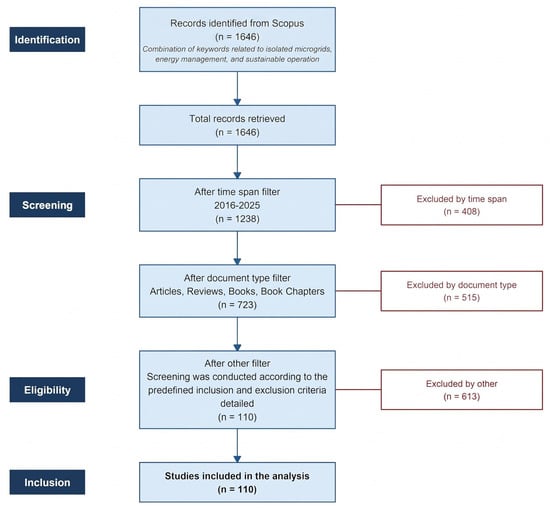
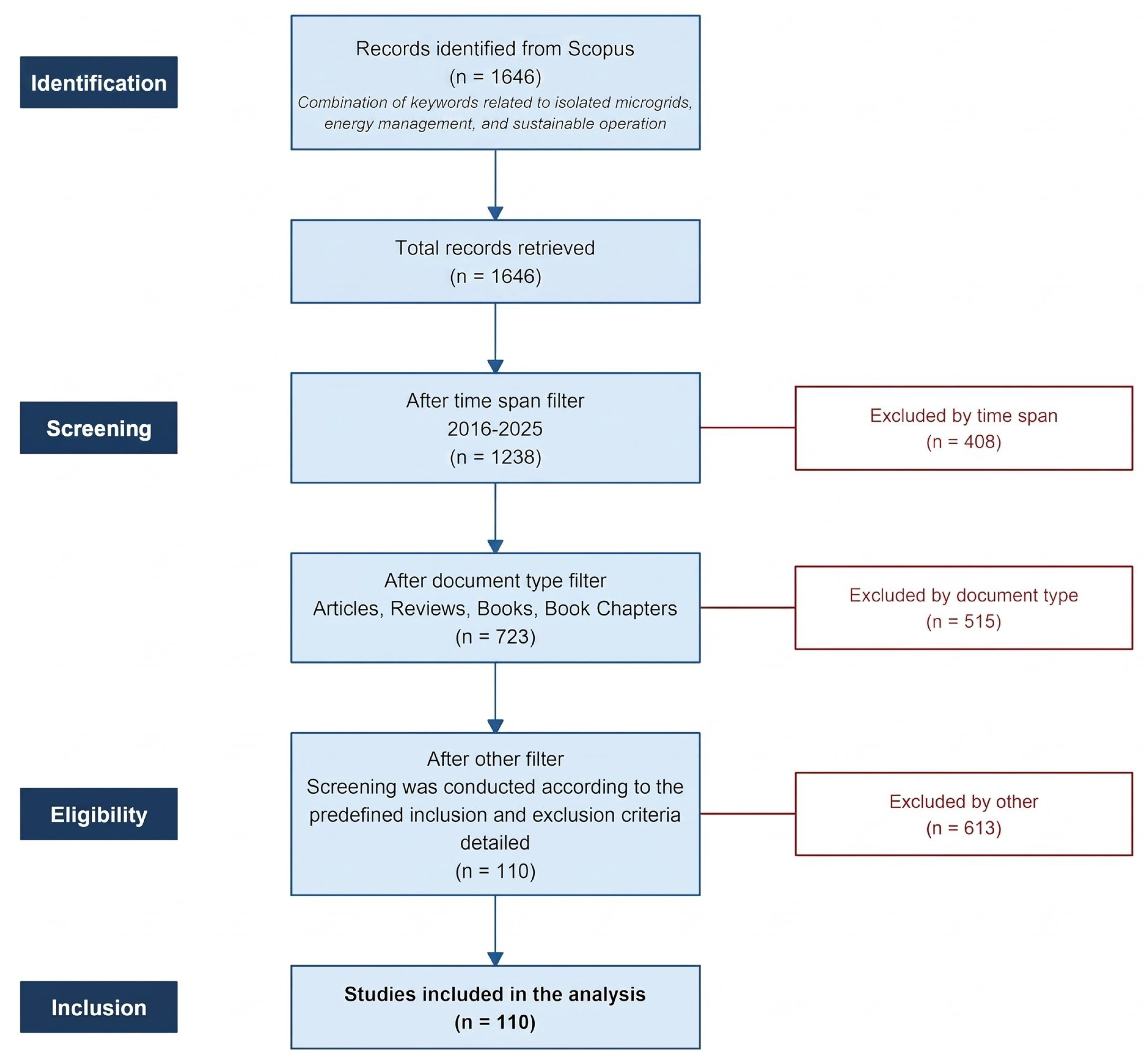
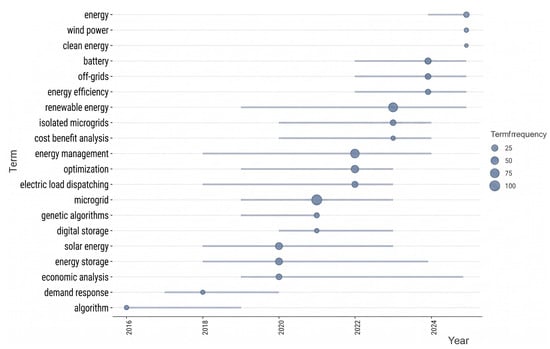
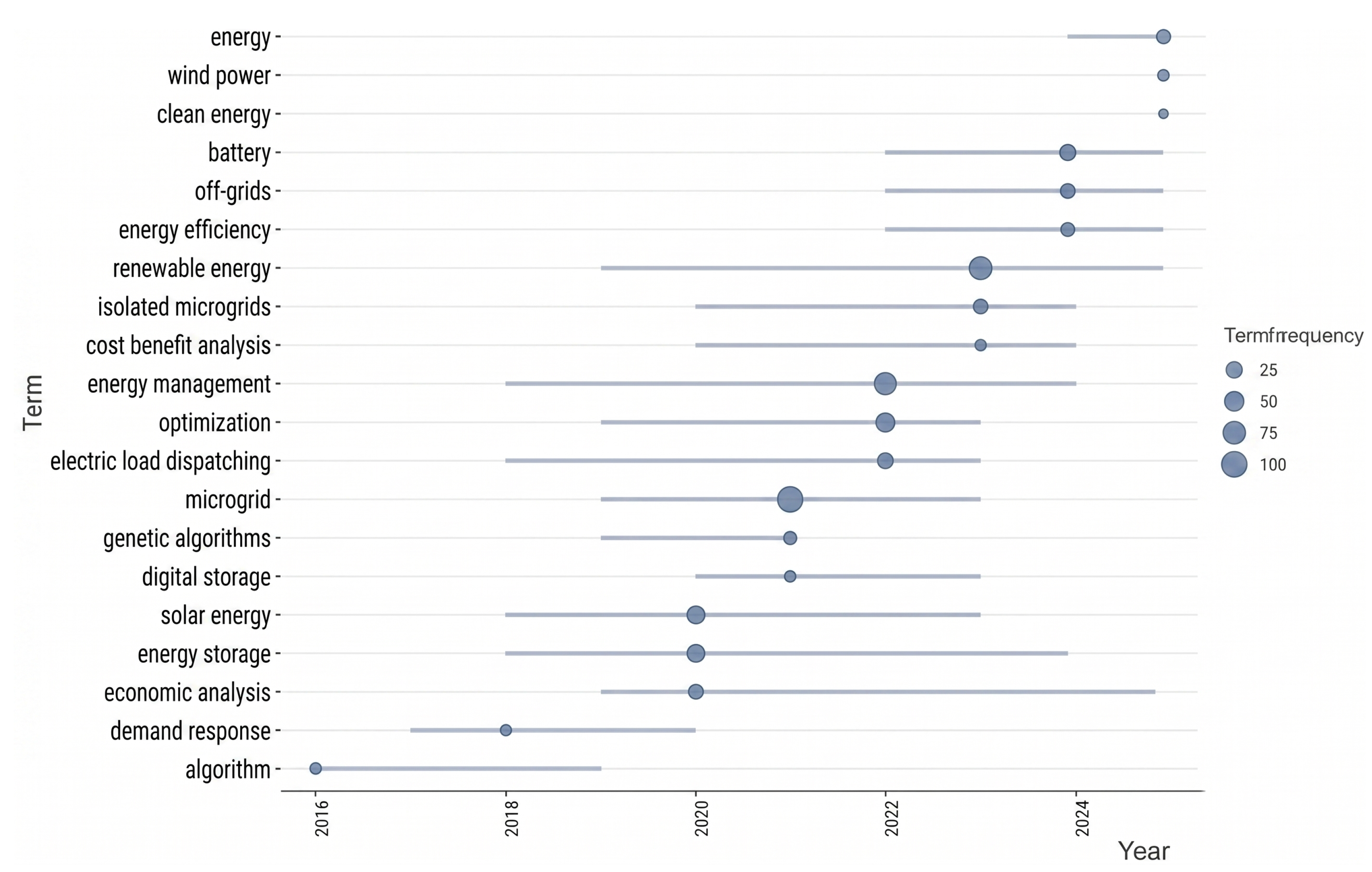
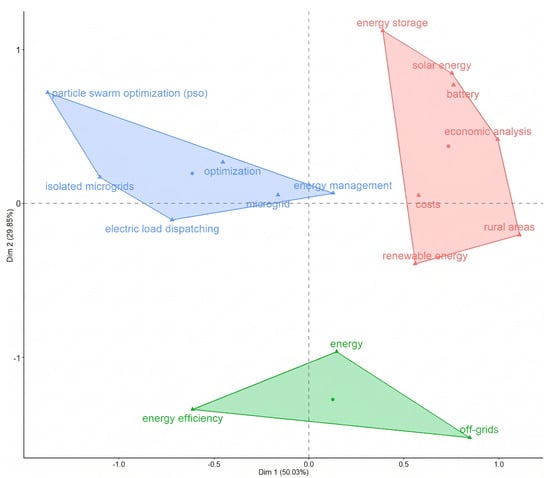
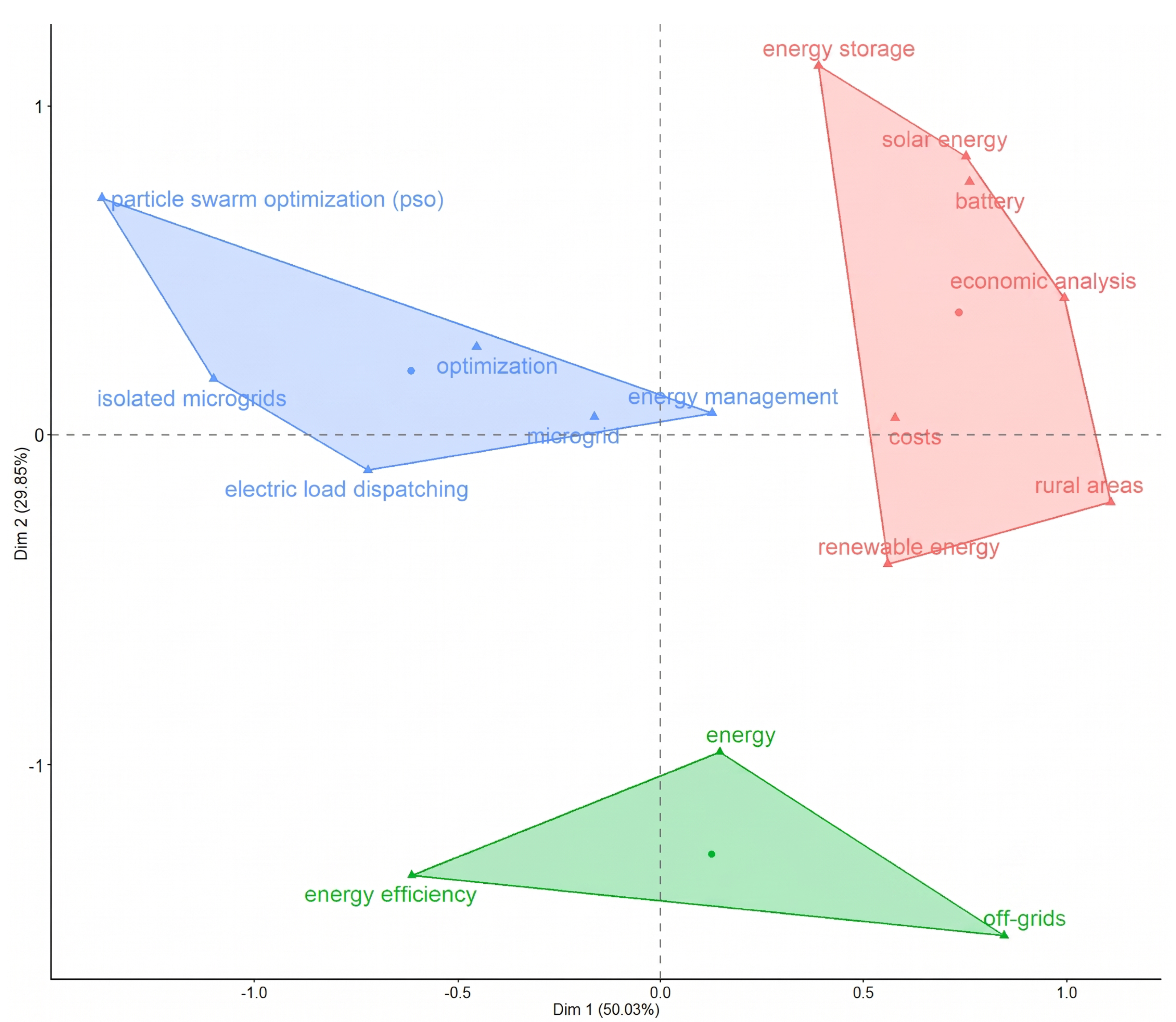
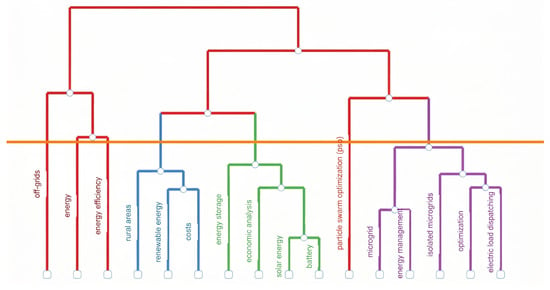
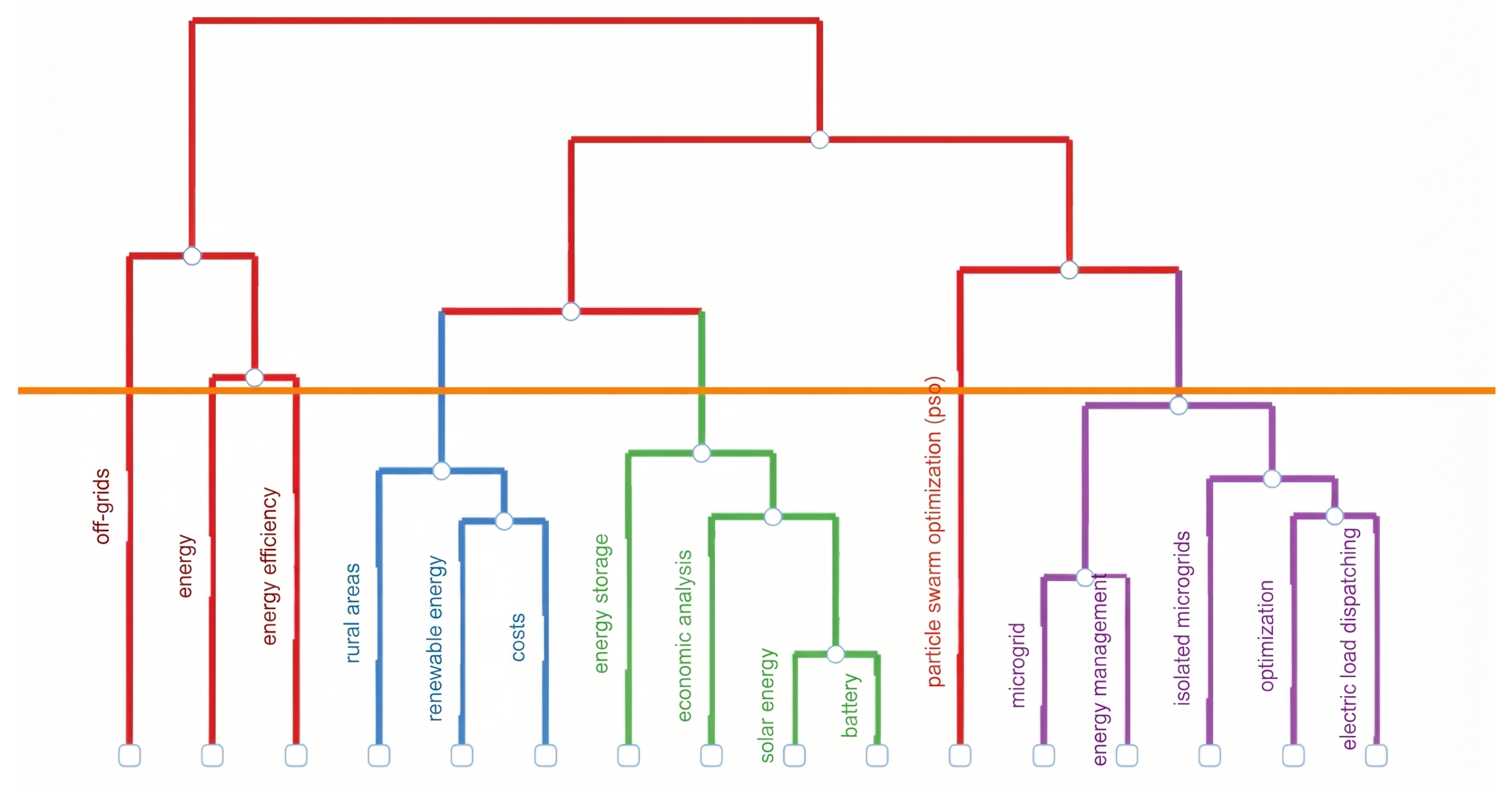
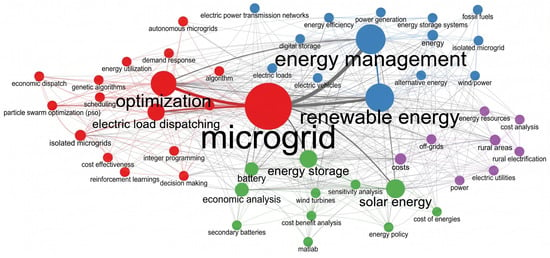
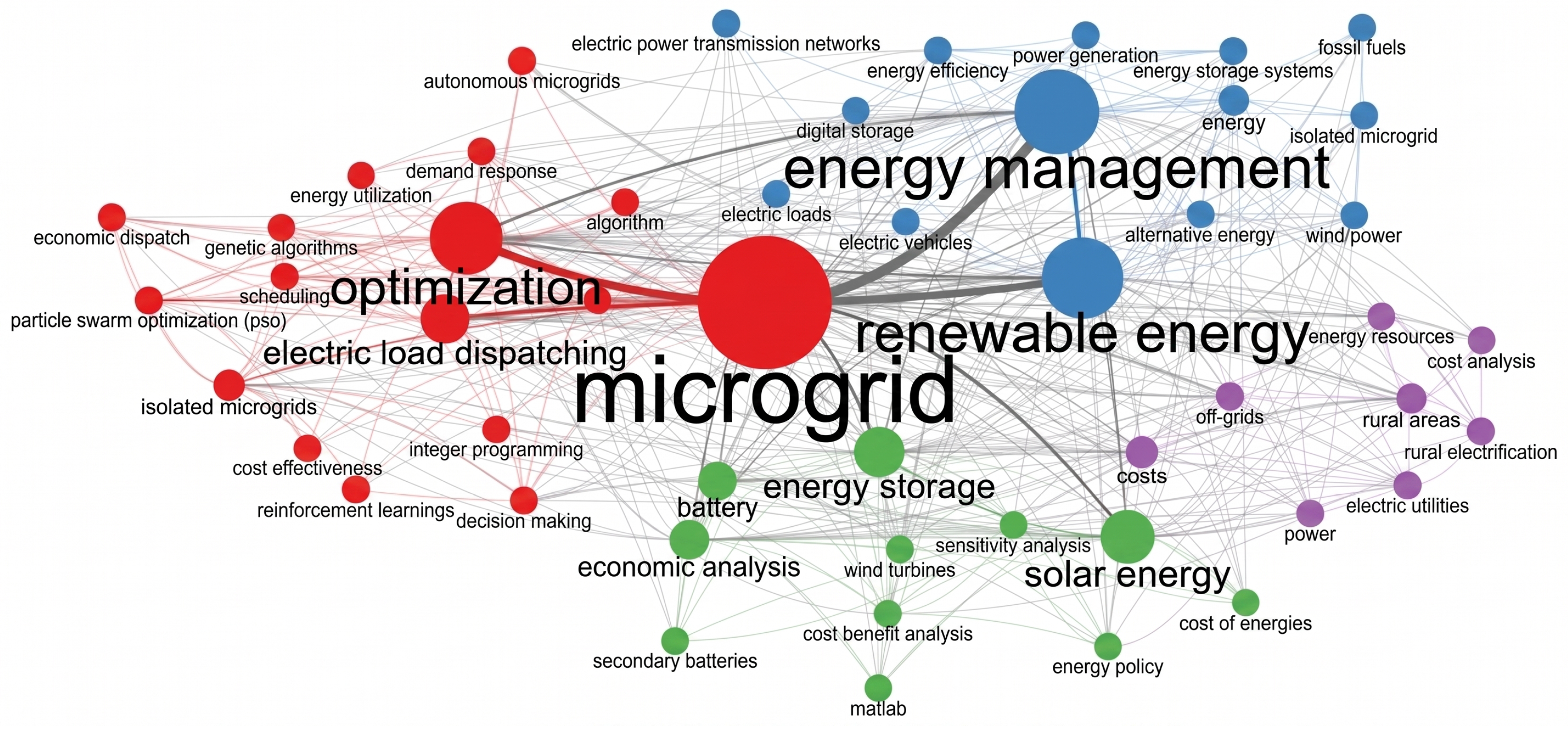
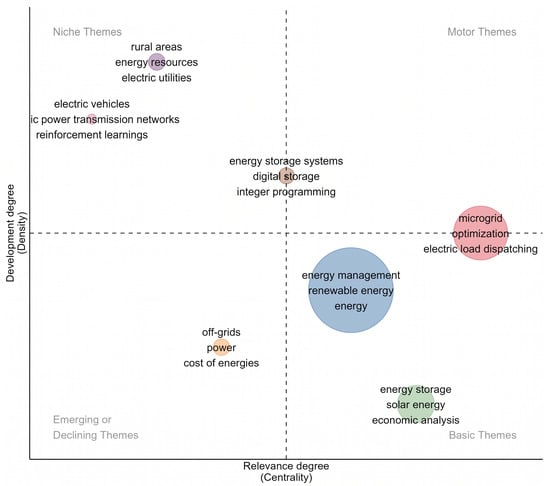
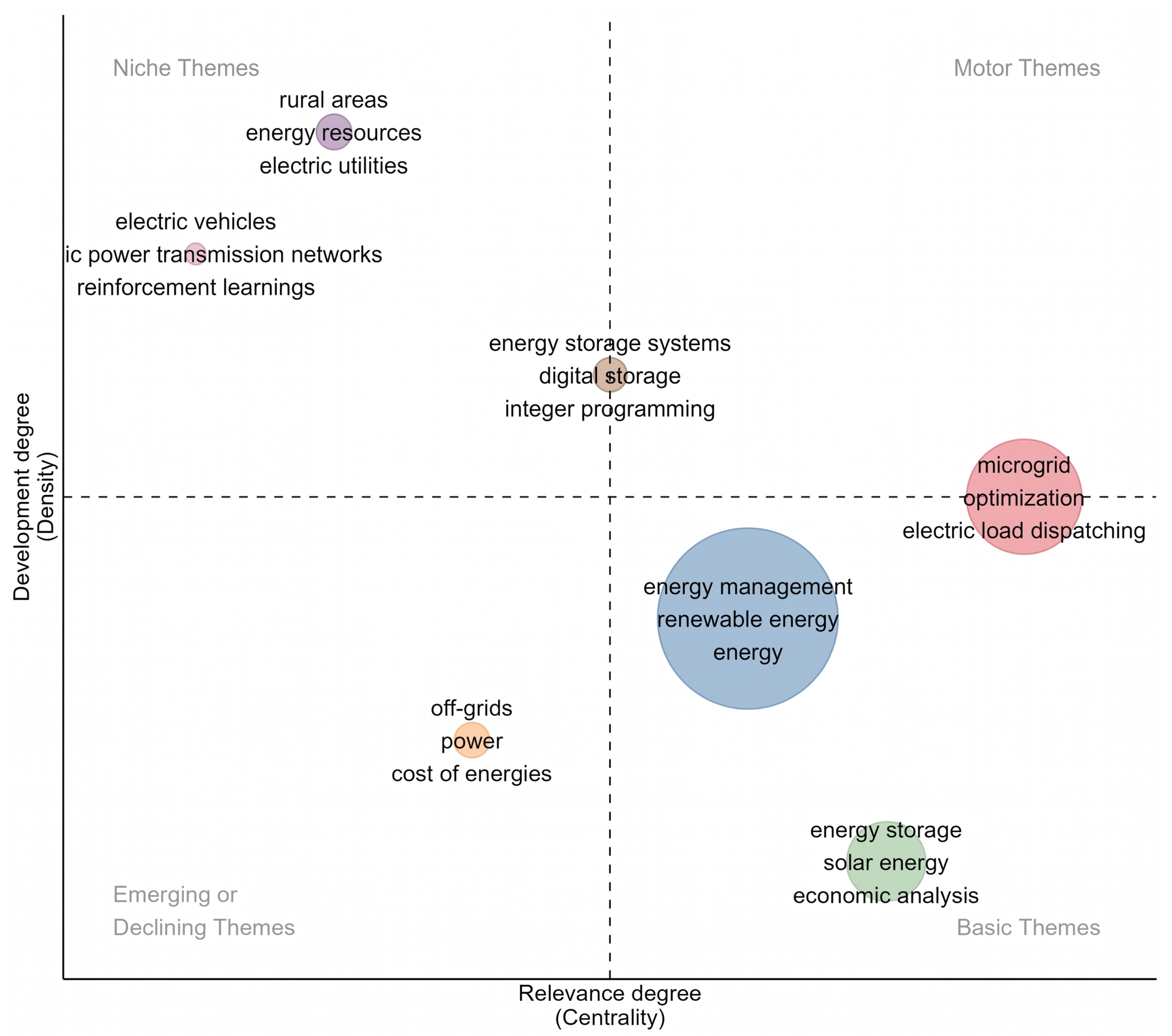

Disclaimer/Publisher’s Note: The statements, opinions and data contained in all publications are solely those of the individual author(s) and contributor(s) and not of MDPI and/or the editor(s). MDPI and/or the editor(s) disclaim responsibility for any injury to people or property resulting from any ideas, methods, instructions or products referred to in the content. |
© 2026 by the authors. Licensee MDPI, Basel, Switzerland. This article is an open access article distributed under the terms and conditions of the Creative Commons Attribution (CC BY) license.