


Abstract
Nonlinear dynamics and deformations of soft robots pose challenges to conventional robot modeling and control. Physics-informed control integrates systems physics in learning to achieve physical consistency and maintain adaptability. The goal of this review is to categorize and summarize physics-informed control strategies for soft robots and correlate the integration of physics in control performance and application relevance. Five categories are examined: model–data integration, physics-informed neural networks (PINNs), Lagrangian neural networks (LNNs), physics-informed reinforcement learning, and physics-informed Koopman operators. The literature is compared by incorporated physics, control objectives, performance, data and computational requirements, and experimental validation. The relevance of their applications is further explored in medical and assistive, industrial, agricultural, and underwater applications, taking into account domain-specific requirements and the maturity of the evidence available. The synthesis identifies the trade-offs between model fidelity, adaptability, and computational efficiency and highlights the key challenges for generalization, observability, model–actuation consistency, closed-loop stability, and real-world validation. These findings distinguish demonstrated control capabilities from application readiness and identify priorities for practically applicable soft-robot control.
1. Introduction
The widespread capabilities of robotic systems to perform repetitive and precise tasks efficiently have made them invaluable assets in manufacturing, healthcare, logistics, agriculture, and space exploration among other fields [1,2,3,4]. Most existing robotic systems have been fabricated using rigid links connected with discrete joints, performing very well in structured and predictable settings. But their inherently mechanically stiff nature severely restricts their ability to adapt well to uncertainties, fragile objects, or human beings [5]. With the progression of robotics beyond industrial settings toward human-centered and unpredictable environments, the demand for robotic systems that can safely interact with humans and replicate their biological motion precisely has become evidently imperative [6,7]. This need has led to the emergence of soft robotics, a multi-disciplinary field that seeks to combine the different disciplines of robotics, materials science, and biomechanics with the principles of intelligent control to create compliant robotic systems that are capable of continuously deforming without compromising functional performance. Soft robots are designed by utilizing highly deformable materials that enable them to imitate the compliance of living creatures and make them uniquely flexible, resilient, and able to perform well under complex environments, thereby proving their potential for future generations of robotic technologies [8,9].
In the last ten years, soft robotics has progressed from a niche research domain inspired by biomimetics to a rapidly growing field of research in modern robotics [10]. With the constant development of smart materials, additive manufacturing, embedded sensing, and actuator technologies, soft robotic systems have become more functional, reliable, and versatile and are now being used in a wide range of fields such as minimally invasive surgery, rehabilitation, wearable assistive devices, industrial manipulation, agriculture, and underwater exploration [11,12,13]. Soft robots offer a promising alternative to traditional, rigid robots in the context of applications where flexibility, dexterity, and safe physical contact are crucial, as industries increasingly demand robotic systems to operate safely with humans or in dynamic, uncertain environments. Researchers have therefore increasingly focused on the implementation of perception, artificial intelligence, machine learning, and advanced control methods, aiming to make the soft robot behave and adapt itself autonomously and intelligently [14,15]. This is a shift in the broader trend of soft robots moving from mechanically compliant robots to intelligent robotic systems that can sense, learn, and interact with complex environments with minimal human interaction. With the complexity and autonomy of soft robotic platforms on the rise, reliable performance requires increasingly accurate mathematical models and effective control methodologies to describe the highly nonlinear and continuously deformable behavior, making modeling and control fundamental research challenges that need to be addressed in the ongoing advancement of the field [16].
1.1. Modeling and Control Challenges in Soft Robotics
The mechanical properties that make soft robots adaptive and safe also bring significant difficulties in their mathematical modeling and control. They exhibit highly nonlinear and distributed deformations, which give rise to extremely complex dynamics and, in many cases, require state-of-the-art continuum-based formulations to capture material behavior, actuation, boundary conditions, and external interactions [17]. Various types of models have been developed to achieve a compromise between physical fidelity and computational efficiency, such as reduced-order, geometrical, Cosserat-rod, and finite-element models [18,19,20,21]. But simplified models can be inaccurate in the case of deforming complex shapes, coupled actuation mechanisms, and environmental interactions, whereas high-fidelity models can be computationally intensive for real-time implementation of simulation and control [22]. Further complexities in developing reliable predictive models come from material properties, manufacturing variations, viscoelastic effects, and varying operational conditions [23]. These modeling constraints have a significant impact on the control of soft robotic systems. To achieve accurate control, the model needs to capture the dominant dynamics but still be computationally efficient enough to be implemented in real time [24]. Therefore, there is a trade-off between the accuracy of the model, the efficiency of calculation, adaptability, and generalization. Data-driven and machine-learning methods can be used to approximate complex robot behavior and minimize the need for computationally demanding analytical models, but their effectiveness significantly relies on the availability and representativeness of the training data and can result in limited physical consistency [25,26,27].
1.2. Emergence of Physics-Informed Control in Soft Robotics
These modeling and control challenges highlight the demand for control frameworks that are able to deal with the intricacies of complex nonlinear behavior while also remaining reliable and flexible enough for operational use [28]. To tackle these issues, physics-informed control frameworks have been proposed, which use available physics knowledge of soft robots to train, constrain, and/or augment the data-driven modules of a learning and control framework [29,30]. Previous reviews have examined data-driven soft-robot modeling and control approaches [24,31], general soft-robotic manipulator control strategies [25], model-based control approaches [26], and machine learning techniques throughout soft-robotic systems [32]. Additionally, wider surveys on physics-informed machine learning have laid the groundwork for seamlessly embedding physics knowledge into learning approaches [33], without specifically focusing on soft robotics control. These contributions offer useful perspectives on each of their respective domains; however, the synthesis of mechanisms by which the physical knowledge was integrated into learning and control, along with the reported performance, computational demand, and applicability of the physical knowledge to various soft robotic applications is limited. So, there are several questions that remain: What physics-informed strategies have been developed for soft robots? What types of physical knowledge do they incorporate? What are the differences in terms of control performance, data needs, and computational needs across the approaches? How can we use them in different application fields? A targeted synthesis is needed that is based on an analysis of individual methods but that also provides a connection between physics-integration mechanisms, control performance, and application relevance for these questions. A summarized comparison among existing review studies and the presented review paper can be found in Table 1. This review aims to contribute as follows:
Table 1.
Comparison of existing reviews and the present review on physics-informed control of soft robots.
- Classifies the current methods based on their means of embedding physical knowledge in learning and control.
- Evaluates application relevance by analyzing how the discussed approaches meet core requirements of medical and assistive, industrial, agricultural, and underwater soft robotics and identifies the extent of evidence maturity demonstrated in each of the application areas.
- Outlines gaps or limitations and differentiates between demonstrated control capabilities and readiness of the application for each application domain and highlights challenges that lie in the way of successful transfer of proposed soft-robot capabilities from simulations to realistic operating conditions.
- Proposes future research directions for the development of more robust, adaptive, computationally feasible, and practically applicable physics-informed control for soft-robotic systems.
The overall structure of this review, from methodological classification and performance assessment to application-oriented evaluation and future research directions, is summarized in Figure 1.
Figure 1.
Schematic roadmap of this review article.
2. Review Methodology
A structured literature search was performed on Scopus, Web of Science, IEEE Xplore, PubMed, ScienceDirect, SpringerLink, and Google Scholar to identify relevant research articles that focus on physics-informed modeling, learning, and control of soft robotic systems. The search was carried out over the span of six months focusing on publications from 2015 to 2026. The search strategy was based on keywords from four primary areas: soft robotics, physics-informed and physics-guided approaches, learning, and control. Key terms used in the search were soft robot, soft robotic system, physics-informed, physics-guided, physics-based modeling, physics-informed control, neural networks, reinforcement learning, Koopman operator, and robot control. Boolean combinations of these keywords were modified to meet the search needs of each database to find studies relevant to the scope of this review.
The retrieved records were filtered based on a pre-defined eligibility criteria to find studies that explicitly included physical knowledge in their soft-robot modeling, learning, or control. The following criteria were implemented:
Inclusion criteria:
- Research work that explores soft-robotic systems and explicitly uses physical knowledge in the model, learning process, or control strategy.
- Studies with adequate methodological detail that clearly indicate the physics-informed component and its role in the approach proposed.
- Studies that report quantitative performance measurements, simulation, or experimental results relevant to the control objectives of the soft-robotic systems.
- Articles developing physics-informed models, surrogate representations, or learning architectures with a clearly established relevance to soft-robot prediction, estimation, or control, even when a complete closed-loop control implementation is not experimentally demonstrated.
Exclusion criteria:
- Studies with a focus on conventional soft-robot modeling without any physics-informed learning or control component.
- Data-driven approaches without any explicit physical knowledge in the model, learning process, or controller.
- Research on soft robotics applications that are not directly related to physics-informed modeling and control.
- Studies that do not provide adequate methodological or evaluation information to determine their relevance to the goals of this review.
The article screening process was led by three authors, and the studies that were included in the review were finalized after a mutual agreement among all authors. The steps of identification, screening, and eligibility assessment are summarized in Figure 2 in a PRISMA-oriented workflow. Studies that did not fulfill the pre-defined inclusion criteria were excluded from further analysis. The following information was collected for every eligible study: robotic system, control objectives, physics-informed strategy, physical knowledge utilized, test environment, performance metrics, computation requirements, application domain, and experimental validation.
Figure 2.
PRISMA-oriented review methodology illustrating the workflow from literature identification and eligibility screening to data extraction, classification, and comparative synthesis of physics-informed control strategies for soft robots.
The selected literature was categorized into 5 methodological groups according to how physical knowledge is integrated into the model, the learning process, or the control design: (1) model–data integration, (2) physics-informed neural networks (PINNs), (3) Lagrangian neural networks (LNNs), (4) physics-informed reinforcement learning, and (5) physics-informed Koopman-operator methods. The main classification criterion focused on how the physical knowledge was integrated into the different frameworks. Secondary considerations were the function of the associated learning architecture, the representation of system dynamics, and the incorporation of the learned model or learning approach into the control strategy. These factors were taken into account when determining the relevance of each study to the methodological focus of the review and to isolate its main contribution from the other elements of the overall framework. Therefore, each study was classified under the category most representative of the way it approached the integration of physics.
Besides the classification of control strategies, structured, study-level data extraction was carried out to assist in the comparative analysis of the reviewed literature. The details of each selected study were extracted and included the robotic platform, actuation mechanism, available state-feedback sensing, source and quantity of training data, and computational requirements for training and inference. Control-related information was also captured, such as control architecture, control frequency or update rate, tracking or prediction performance and units, baseline methods, and validation environment. The evidence reported for each study was used to classify the validation as simulation-based, experimental implementation on physical hardware, or task-representative demonstrations. In addition, the presence and type of stability or robustness guarantees were analyzed, either addressing the whole closed-loop system or including an explicit consideration of the learned model or controller part. Data not specifically reported by the original publication was written as not reported (NR), not estimated or inferred. The resulting study-level extraction is reported and summarized in Section 4, which allows for comparison of the reported performance, computational requirements, experimental evidence, and control–theoretic properties of the various approaches to physics-informed extraction.
A comparative synthesis was performed based on the crucial assessment dimensions of control precision, robustness, data efficiency, safety in physical interaction, computational requirements, and experimental transferability. When available, quantitative outcomes were taken into account along with the evaluation conditions and validation methods reported in each study. Due to variations and differences in robotic platform, control objective, performance metric, and experimental protocol, the findings from the studies reviewed were synthesized comparatively rather than statistically. An application-oriented analysis was conducted on four key application fields of soft robotics: Medical robots, Rehabilitation and assistive robots, Industrial manipulation and object handling, and Underwater manipulation and exploration. These domains were analyzed with respect to their control requirements, potential of physics-informed soft robot control strategies for them, and the difficulties of taking the results from simulation to physical applications.
3. Evolution of Control Techniques in Soft Robotics
The complexity of soft robotic systems has led to a transition of control strategies from analytical modeling-based control to more data-driven, integrated control strategies. This progress is due to a major problem, i.e., the underdeveloped characterization of the nonlinear dynamics of soft robots, and this evolution mirrors the ongoing compromise between physical knowledge, adaptability, computational tractability, and control performance, as shown in Figure 3. There are, broadly, three types of existing control approaches, namely, model-based [26], model-free [24], and hybrid control [34], which have tried to achieve a successive trade-off among physical knowledge, adaptability, computational tractability, and control performance.
Figure 3.
Evolution of control strategies in soft robotics, highlighting the transition from model-based and model-free control techniques towards hybrid control approaches. Physics-informed category represents an extension of hybrid frameworks, characterized by the more explicit integration of physical principles into data-driven modeling, learning, and control.
3.1. Model-Based Control
Model-based control established the initial analytical foundation for controlling soft robots by using a mathematical representation of the robot to determine its response and control action. The earlier methods mostly employed kinematic descriptions and dealt with simplified cases like piecewise constant curvature or Jacobian-based models, which related actuator variables to the robot configuration or end-effector pose [35,36]. As the control requirements evolved from quasi-static positioning to dynamic movement and interaction, these formulations were extended to include the dynamics of the robot and forces of interaction. This has led to more sophisticated model-based controllers such as dynamic feedback control, operational space control, adaptive control, and model predictive control. Dynamic formulations using Lagrangian mechanics and augmented rigid-body representations allowed for incorporation of inertia, gravity, and other physical effects, while operational-space formulations took the model-based control theory closer to task-oriented dynamic manipulation [37].
A major advantage of this approach is that it allows for the explicit representation of the robot’s physical structure in the design of the controller. This advantage, however, if the physical model is not sufficiently representative of the robot, becomes a constraint. There are discrepancies between the modeled and actual dynamics because of soft material nonlinearities, parameter uncertainty, interaction with the environment, and unanticipated deformation [24]. To account for the uncertain parameters and operating conditions, adaptive formulations have thus been developed, but these remain dependent on a base model. This trade-off between model fidelity and computational tractability is one of the core issues in model-based control and is an important motivation for data-driven control [15].
3.2. Model-Free Control
Model-free control methods infer the relationship between the states of the system, the inputs to the actuators, and the desired behavior from experimental or simulated data rather than prescribing the complete robot dynamics. These techniques have made it possible to take advantage of the complex nonlinear behavior of soft robots without having to model all their deformations, materials, and environmental interactions [31,38,39]. Nonlinear mappings and dynamic behavior of the soft robots have been learned by using neural networks and recurrent neural networks [40], and reinforcement learning [41,42] has been used for training controllers to perform well in uncertain conditions. Beyond position control, applications have been extended to more complex behaviors where recent model-free controllers have been trained utilizing both simulated and experimental data [43].
The main attraction of this approach is that it models robot behaviors that are hard to describe analytically, but the modeling burden is shifted to learning. Neural techniques necessitate significant amounts of data collection and training, while reinforcement learning adds computational complexity and may not be feasible for soft robots with safety or fragility requirements, especially when physical exploration is not feasible [32]. Further problems arise when trying to generalize across the training distribution and the difference between the simulated and real environments. These constraints have increasingly turned the focus towards approaches that are not wholly dependent on discarding physical knowledge but rather towards integrating physical knowledge with data-driven learning.
3.3. Hybrid Control
The integration of both model-based and model-free control strategies falls under the domain of hybrid control, which preserves the analytical knowledge where it is reliable and introduces learning to the parts of the system that are hard to model [34]. These methods divide the control problem between components based on the information at hand, in contrast to using an analytical model to represent the entire robot behavior or learned representations. These models characterize the well-understood system dynamics, and the learning process is employed to capture uncertain, unmodeled, or task-dependent behavior. This concept has been employed in recent developments, in particular using learned dynamics combined with model predictive control [44], neural-network compensation of model uncertainties [28], and learning-based adaptation of model-driven controllers [45]. These architectures have allowed soft robots to execute some behaviors that are hard to implement using fixed analytical models, whilst still maintaining many of the predictability and constraint handling features of traditional control.
While these developments show great promise, hybrid control still poses an interesting design challenge: How does one integrate physical knowledge into the learning process itself? In many hybrid designs, the analytical model and learning part are still separable, and learning is used to fill in the gaps in the current model. This encourages more progress towards methods where the physics, structure, or given relationships of the system are built into learning or optimization. Physics-informed strategies proposed for soft robots can therefore be considered an extension of hybrid control, in which physical principles are integrated more explicitly into the learning and optimization processes. Instead of representing a distinct control paradigm, physics-informed control techniques build upon the integration of analytical models and data-driven methods by embedding physical knowledge more directly into the underlying representations and learning mechanisms of soft robots. The next section reviews physics-guided control strategies that aim to not only combine models with learning but to use physical principles to influence the learning and the controller’s behavior. Table 2 provides an overview of the mentioned control paradigms in soft robotics, while underscoring the specific shortcomings that necessitated subsequent methodologies.
Table 2.
Comparative overview of soft-robot control techniques, highlighting their core principles, main methods, strengths, and limitations.
4. Physics-Informed Control Strategies
The term physics-informed control is adopted here as an umbrella for modeling, learning, and control approaches in which explicit physics knowledge is integrated along the representation, identification, learning, or optimization of soft-robotic systems to aid the control task. This definition captures two parallel and related routes: (i) physics-informed modeling for control where physical knowledge is incorporated into a learned or hybrid dynamical model that is then used for standard controller design and (ii) physics-informed policy learning or physics-informed controller, where the knowledge of physics directly influences or constrains the architecture of the controller, the optimization target, or the allowable actions of the controller. For instance, a dynamics model based on a PINN embedded in model predictive control (MPC) can be considered a physics-informed modeling for control, while a reinforcement learning policy optimized by explicit mechanical or kinematic constraints can be considered physics-informed policy learning. Both paths are connected with the present review since physically consistent models and policies are helpful for better prediction, data efficiency, and reliable control in soft-robotic systems. The classification that follows then differentiates the way that physical knowledge is added from the “conventional” or “learning” controller that uses the added representation. The upcoming sections classify these approaches based on their mechanisms and review their recent advancements, reported capabilities, and current limitations.
4.1. Physics-Informed Model Structure: Model–Data Integration
Early hybrid techniques used the integration of analytical descriptions with data-driven models to address the challenge of obtaining accurate soft-robot kinematics and dynamics mappings. Physics-informed model–data integration utilized the same approach by combining a physics-based model of the known system dynamics with a data-driven model that accounts for unmodeled or uncertain behavior, as illustrated in Figure 4. The hybrid dynamics of the system can be represented as
where indicates the time derivative of the system state vector, u is the system’s control input, the nominal physical model of the soft robot is termed , and represents the learned residual dynamics. For soft robots, the state vector x may consists of deformation or configuration variables, their corresponding velocities and additional internal variables needed for describing memory-dependent effects such as material hysteresis and viscoelasticity. For instance, an augmented state can be expressed as , where q denotes generalized system’s coordinates, are their corresponding velocities, and indicates internal state variables when these effects are relevant. The learning process then concentrates on the discrepancies captured by the residual model between the physical model and the real system, such as material nonlinearities, hysteresis, and parameter uncertainty effects, keeping the underlying physical model structure intact. This hybrid formulation retains the known physical structure of the robot simultaneously, allowing the data-driven learning framework to tackle unmodeled and uncertain system’s facilitating a more accurate and flexible representation of the system for prediction and control.
Figure 4.
Overview of major physics-informed control strategies in soft robotics, spanning model–data integration, physics-informed neural networks, Lagrangian neural networks, physics-informed reinforcement learning, and Koopman-based approaches.
Initially, a neural-network error model was incorporated with continuum-based kinematics for the inverse kinematic control of a redundant soft robot. Instead of learning the entire mapping of the robot from data, the analytical model contained the nominal kinematic structure, and the neural network learned the additional modeling error to better estimate the actual robot mapping to improve the accuracy of feed-forward control [46]. This hybrid modeling approach was then implemented more explicitly by [47], showing showed that a combination of analytical modeling and learned error models can be used to achieve improved feed-forward control without unnecessary learning of relationships that are already well understood by the analytical model. This was then expanded from kinematic mappings to nonlinear dynamics needed for predictive control. Furthermore, a six-degree-of-freedom pneumatic soft robot extended the learned nonlinear discrete-time model to MPC [48]. To keep the computation tractable, the learned model was linearized at each time step, and the resulting controller reduced the steady-state error, rise time, and overshoot compared to the model-based MPC.
A parallel step has been taken in learning only the portion of robot behavior that is hard to express in the physical model, instead of discarding the model altogether. In [45], neural networks were used to learn both the forward kinematic mapping and its Jacobian, allowing for efficient Jacobian-based inverse kinematics without sacrificing the model structure. Their sim-to-real strategy also enabled the learned model to be transferred from simulation to a physical pneumatic soft robot by leveraging only minimal hardware data. Similarly, Ref. [14] introduced a kinematics-informed neural network that integrated the system’s rigid-body kinematics as a prior for the proposed soft robot model identification and control, enabling better generalization for uncertain actuation commands. Moreover, a residual-learning approach was incorporated with model-based control to tackle the discrepancies of the proposed soft robot, proving the potential of hybrid control approaches for reducing the burden of purely model-based and model-free control strategies [49]. In a more explicit residual-physics formulation, the residual force between the physics-based simulation and the real soft robot was modeled by a neural network, as done by [50]. The method was applied to a flexible beam and a pneumatic soft arm with anisotropic reinforcement, showing that learning the model error could preserve the physical structure of the nominal model while ensuring good sim-to-real performance, even accounting for effects like material behavior, hysteresis, and manufacturing variations.
The efficient representation of pneumatic soft actuators has also been investigated using hybrid physics–data modeling. To predict nonlinear deformation of pneumatic actuators, a study presented by [51] coupled a neural network surrogate and physics-based optimization. This method did not replace the physical model directly, but it leveraged force and torque equilibrium to set bounds on the learned prediction, significantly reducing the computational expense of computing static equilibrium in the physical model. While the main focus of this study was on modeling the actuators, this study demonstrates that physical constraints can be preserved when building a data-driven representation in order to have a computationally efficient model to be used in subsequent control applications. The same concept was explored in [52], which trained the physics-informed simulation model with data obtained from high-fidelity finite element simulations, including a neural network for material properties and an analytical dynamics model. The resulting differentiable model had a simulation error of less than 5 percent compared to FEM, with a significantly lower computation cost. It was then applied to an MPC controller for a task of manipulating a dielectric elastomer actuator, with fewer optimization iterations needed than model-free actor–critic, PD, and heuristic controllers. To replace numerical simulations, which are often very expensive to run, Ref. [53] created a physics-guided deep-learning framework that combines first-principles models with a neural network surrogate to simulate a pneumatic soft robot. The framework was validated with pneumatic soft fingers of varying shape and deformation characteristics and found to have a deformation-prediction error as low as and gave a representation that was efficient enough for real-time control applications.
A study proposed by [28] offered a more direct integration of hybrid physics-learning models into soft-robot control. Their physics-learning model consisted of an absolute nodal coordinate formulation (ANCF) for physics-based dynamics and a multilayer neural network that modeled nonlinear material dynamics and pneumatic hysteresis. The resulting model was then used in both the feed-forward and feedback-linearization control, with the hybrid model-based feed-forward controller being able to reduce the trajectory-tracking errors by 53–67 percent compared to the purely physics-based controller, and the feedback-linearization controller was able to track errors of 0.4–1.1 mm across the tested speeds. Moreover, physics-informed recurrent neural networks have been studied for modeling the temporal dynamics of soft pneumatic actuators, where the actuator dynamics are represented in a physically constrained way to enable dynamic control [27].
Regardless of these benefits, model–data integration relies on the quality of the physical representation and the data at hand to learn from its shortcomings. There is the potential for model bias to be propagated into the learned component, and a lack of excitation or training coverage can limit the extent to which the model can generalize to previously unseen operating conditions. The additional learning component may also make the computation heavier and add stability and consistency issues in closed-loop adaptation. These methods offer a good balance between physical interpretability and data-based flexibility but do not address how physical laws and constraints can be directly embedded in the learning process instead of being carried out separately by a physical model.
4.2. Physics-Constrained Learning Objective: Physics-Informed Neural Networks (PINNs)
PINNs offer one of the most direct ways of incorporating physics into the learning process of a neural network. The underlying principle is used to train a neural network that can mimic existing observations, while also meeting known governing equations, boundary conditions, or other constraints in the physical processes, as explained in Figure 4. The neural network approximates the soft robot’s response as while automatic differentiation is employed to determine the derivatives required for the governing equation. For a physical system of the soft robot under consideration described by a differential operator , the neural network parameters are optimized by a composite loss function:
The term in the equation estimates the discrepancy between measured and predicted states; the following term identifies and penalizes the violations of the governing equation at collocation points and represents all initial, boundary, and other important physical conditions. The terms , , and are known as weighing coefficients and estimate the relative contribution of both physical and experimental information during optimization. The solutions learned by this joint optimization are consistent with the available data and the underlying system physics. Governing relations from continuum mechanics, like Cosserat-rod theory, can then be directly integrated into the learning process, leading to physically consistent dynamics or shape models obtained from a small number of experiments, which, in turn, can be used for prediction or control. The contribution of PINNs to control is that they allow the building of physically consistent models of robot dynamics from the limited data, which can then be used within prediction, feedback, or trajectory-tracking controllers. This is beneficial for soft robots, as they undergo high-dimensional deformation, exhibit nonlinear dynamics, and have uncertain material behavior, making it challenging to obtain accurate analytical models, and can also result in models lacking guaranteed physics, even if trained with a large amount of data [33,54].
One important advancement is the integration of PINNs with continuum mechanics and MPC. The framework introduced in [55] applied the Cosserat-based PINNs for the dynamic control of a soft continuum robot. The domain-decoupled PINNs (DD-PINNs) were trained as a surrogate of a dynamic Cosserat-rod model, while the bending stiffness was adjusted online. The PINNs were embedded in an unscented Kalman filter used for state as well as compliance estimation and were then tested in a nonlinear evolutionary MPC at 70 Hz. The resulting controller performed simulation comparisons with error levels less than 3 mm, and experiments in the real world demonstrated considerable accuracy, with the PINNs also reporting a 44,000-fold speed-up relative to the underlying dynamic model. In order to manipulate the shape of linear objects in real time, a Cosserat-based PINNs (C-PINNs) method was proposed by [56]. To enable physically consistent shape predictions and minimize the need for large training sets, Cosserat-rod mechanics were directly incorporated into the formulation of PINNs. A gradient-based MPC for closed-loop shape control was implemented to integrate with the learned model, which offered up to 228 times faster computation than traditional analytical solvers and still maintained accurate shape prediction and control in various object configurations and materials. This study primarily employed physics-informed modeling for control as the system’s physical knowledge impacts the predictive model through governing mechanical expressions, whereas the optimization and feedback are implemented through the traditional MPC framework.
More recently, PINNs have also been used in articulated soft robots, where it is especially crucial to have a model that is generalizable across various configurations. To overcome the trade-off between the generalizability of the first-principles models and the speed with which the learned models predict, Ref. [57] proposed an articulated soft robot surrogate using a PINN, presenting another case of incorporating the system’s physical knowledge to improve the mechanical model in order to deliver precise control. The PINNs needed only small amounts of actual measurement data and worked up to 467 times faster than the first-principles model with just a slight loss of accuracy. The surrogate was then applied to nonlinear MPC for which the proposed framework achieved mean joint-tracking errors between 2.29° and 2.98° across six dynamic experiments, with an MPC frequency of up to 47.7 Hz, illustrating the feasibility of PINN-based predictive control for pneumatic articulated soft robots. For a continuum soft robot, Ref. [58] implemented a dynamics learning scheme based on PINNs and a finite-time stable sliding-mode controller. Using the PINNs, the nonlinear robot dynamics were learned with the preservation of physical information, and the learned dynamics were embedded into the sliding-mode control framework to enhance trajectory tracking and model uncertainties. This study shows how PINNs can be used directly in a nonlinear feedback-control framework in addition to being a predictive surrogate. In addition to this, PINNs have also been integrated into model-based control frameworks to solve more general nonlinear robot dynamics. The study employed PINNs to include non-conservative effects and used the learned dynamics in combination with controllers designed from analytical models [59]. The framework maintained theoretical stability bounds and was more data-efficient in dynamics learning than purely data-driven models. The approach was validated with real-world motion-prediction experiments on the soft robot and trajectory-tracking experiments on the Franka Emika Panda robot, and it was shown that the physics-informed dynamics models can be used to support model-based control while maintaining theoretical knowledge. An alternative method used PINNs to deliver state information to the control that cannot be directly extracted from soft robots. A shape estimation approach for a tendon-driven continuum robot with environmental force interaction using PINNs was presented in [60]. The robot configuration was estimated by the experimental measurements of backbone positions, tendon tensions, and interaction forces. The estimated shape was then used in four control strategies: pure feed-forward, enhanced PD, hybrid, and adaptive PD, and all four of these strategies were tested in the laboratory for point-to-point trajectory tracking for trajectory adjustment. The study showed that physics-informed shape estimation can assist the control of continuum robots with interaction forces, offering another way to integrate PINNs into the control loop.
Despite these strengths, PINNs are sensitive to the formulation and weighting of the physics constraints, and inaccuracy or incompleteness of the physical assumptions can restrict the learned model, rather than improve it. Even if the network delivers fast inference time, training PINNs may be costly. Moreover, there may be complex phenomena in soft robots like hysteresis, friction, contact, material nonlinearity, or change of environment interaction, which might be difficult to capture within fixed governing equations. Lastly, while a few studies have shown real-time or near-real-time prediction and control, most validations are restricted to specific robot configurations and operating conditions, and generalization to different soft-robot morphologies, materials, interaction conditions, and hardware platforms remains a challenge.
4.3. Physics Embedded in the Network Architecture: Lagrangian Neural Networks
Another approach for robots’ physical laws is to directly embed the mechanical structure into the learned dynamics, instead of setting a training objective, as with PINNs. Lagrangian neural networks (LNNs) take this approach by directly incorporating the mechanical structure of a system into the learned dynamics by learning the Lagrangian from data. For generalized coordinates q, the Lagrangian is given by the difference between kinetic and potential energies,
and the equations of motion are derived by using the Euler–Lagrange formulation,
where Q indicates the generalized non-conservative forces acting on the robot. For an LNN, the unknown system’s Lagrangian is estimated using a paramterized neural network as
Here, represents the trainable parameters of the LNN. In order to obtain the terms required by the Euler–Lagrange equations, the learned Lagrangian of the system is differentiated with respect to its generalized coordinates and velocities. A crucial step of this formualtion is the extraction of generalized accelerations from the system’s learned Langrangian. Implementation of the chain rule yields
Rearranging
This expression gives the explicit acceleration equation:
This equation imposes a condition for determining the generalized accelerations, i.e., the Hessian of the learned Lagrangian with respect to the generalized velocities should be nonsingular. In this way, the LNN provides a physics-informed representation of the robot under study by directly obtaining the system’s accelerations from its learned Lagrangian. For a natural mechanical system, the standard equation of motion contains kinetic energy in generalized velocities and potential energies in terms of generalized coordinates.
The terms , , , Q represent robot configuration-dependent inertia, velocity effects, the system’s conservative forces, and external or non-conservative forces, respectively. For the positive kinetic energy associated with non-zero generalized velocities, the matrix should be symmetric and positive-definite. The matrix Q accounts for the robot’s non-conservative forces, such as actuation and external interactions. It is important to mention here that Equation (9) is a standard decomposition applied to the corresponding structured mechanical system’s formulation rather than universally to every LNN architecture, as the requirements for a general LNN and deep LNNs differ for each case. For soft robots, elastic restoring forces and gravity can be introduced in the formulation through the potential energy component, expressed as , whose gradient contributes to the conservative-force term in Equation (9). A Rayleigh dissipation function may be used to represent the viscoelastic dissipation effects, while hysteresis can be formulated using additional internal state variables and corresponding generalized forces to account for energy dissipation and memory-dependent behavior. Actuation forces can be added in Equation (9) using an equation mapping , whereas external forces are incorporated through contact Jacobian . The extended version of Equation (9) incorporating all these terms can be expressed as
where is the Rayleigh dissipation function, denotes the internal hysteresis state, and represents the corresponding generalized hysteretic force. The specific terms depend on the robot’s material properties, actuation mechanism, and interaction conditions.
Therefore, this approach integrates the physical structure of the soft robot itself in the learned dynamics rather than an additional physics-residual loss, as employed in PINNs. For soft robots, physics-informed LNNs not only preserve the Lagrangian structure and learn the system’s dynamics but also offer a considerable balance between mechanical consistency and data-driven flexibility, which could be hard to obtain accurately using traditional analytical methods.
To learn the dynamics of a continuum soft robot, Ref. [61] proposed a deep Lagrangian neural network with a self-attention mechanism. The learned model was integrated into an adaptive fractional-order sliding-mode controller, and a nonlinear disturbance observer was added to reduce modeling errors and disturbances. This framework was validated by simulation and experiments, achieving accurate dynamics learning and shape tracking performance under uncertainties. Lagrangian-informed neural dynamics was extended to data-efficient reinforcement learning for soft-robot control by [62]. This study presented a case of overlap betweem physics-informed dynamical modeling and learning. It is categorized as an LNN study, as it primarily utilized a deep Lagrangian-informed neural network as a learned dynamics model in a Dyna framework for augmenting actor–critic policy learning with the model-generated experience. The proposed model outperformed a purely data-driven neural dynamics model in the accuracy of trajectory prediction. The framework also enhanced the training efficiency and stability and produced lower control errors and better generalization than the model-based and model-free reinforcement learning approaches. It is worthy of mention here that the available literature on physics-informed LNNs remains limited, with only two main studies falling under the domain of this category, but the fact cannot be neglected that the reported findings have undeniable potential for physics-consistent dynamics learning and control of soft robots.
Despite this potential, LNNs still have constraints that are especially pertinent for soft robot applications. Their formulation is based on a proper Lagrangian representation of the system, consisting of the appropriate choice for robot’s generalized coordinates and mechanical structure. This can be difficult for highly deformable soft robots where dynamics are complex and involve complicated actuation, damping, material behavior, and other effects that may not be easily encompassed by the assumed formulation. In this sense, the imposed mechanical structure may lead to an increase in physical consistency, but at the same time, it may serve to limit the flexibility of the learned dynamics when the underlying formulation is not sufficiently expressive. Formulating the LNNs for the complex and non-conservative dynamics of soft robots while maintaining the computational and structural benefits remains a crucial research domain.
4.4. Physics-Informed Policy Optimization: Reinforcement Learning
Reinforcement learning (RL) is another versatile framework for learning control policies by interacting with the environment and can be either model-based or model-free, but it also faces some serious challenges for soft robots with complex dynamics, especially due to the need for extensive exploration. This may become a constraint for soft robots, where physical exploration can be time-consuming and unsafe, and high-fidelity simulations of deformable dynamics require a high computational cost. Physical knowledge can support reinforcement learning at two distinct levels. (i) Physics-informed simulation-assisted RL, in which the state transitions used for policy training are directly provided by the physics-based simulators. (ii) Physics-constrained RL, which directly incorporates robot’s physical knowledge in the policy framework, learning objective, and optimization constraints. These mechanisms are distinguished in terms of physical knowledge influencing the system; the former utilizes physics to develop the training environment while the latter incorporates physics into the learning process itself. Using a physical simulator alone does not establish that physical laws are explicitly enforced in the policy or its optimization. The first pathway can be described as
where describes a soft robot’s known dynamics, denotes unmodeled discrepancies, and indicates trainable parameters. This formulation ensures that the agent learns control policies from the simulated environment rather than relying on the physical experiments only. Upon adequately capturing the system’s dynamics, the residual term may be omitted or become negligible. The RL agent chooses its course of action according to a control policy,
and it also simultaneously updates this control policy in order to maximize the cumulative rewards of the system.
As mentioned earlier, the second pathway integrates the physical knowledge directly into the policy learning process rather than employing it solely to generate simulated state transitions. One approach to achieve this is implementing constrained policy optimization, for which the agent maximizes the expected cumulative reward while satisfying physical constraints:
Here, represents the expected cumulative reward under the policy parameterized by , while and denote inequality and equality constraints, respectively, accounting for physical requirements such as actuator limits, admissible forces, and mechanical or kinematic constraints. By embedding these conditions into policy optimization, the learning process is guided toward physically admissible behavior. Other implementations may integrate system’s physics directly into the policy architecture or learning objective, while maintaining sufficient flexibility to accommodate system’s nonlinearities, material variability, and contact interactions that are not fully captured by analytical models.
The reviewed studies employ physics-based environments, surrogate models, analytical models with neural residuals or physics-guided policy learning directly to enhance control efficiency and physical consistency for RL-based control. In physics-based simulation-assisted RL, a physical model serves as the training environment. Physical knowledge therefore enters through simulated state transitions, without necessarily imposing explicit physical constraints on the policy architecture or learning objective. Among the reviewed studies, Refs. [15,23] primarily consisted of simulation-assisted physics-informed reinforcement learning in which physical knowledge mainly entered through the training environment and its representation of the robot dynamics. For the magnetic soft robots, the simulation environment for deep RL was developed by applying the Cosserat-rod model with magnetic actuation and dissipative effects [15]. The learned framework yielded magnetic-field inputs for different actuation constraints and robot configurations, and the resulting strategies were tested on physical magnetic soft robots. Another study employed a similar approach by creating a computationally efficient physics-based surrogate model from high-fidelity finite element simulations and experimental data [23]. The surrogate was added to an accelerated RL environment for trajectory tracking and force control, thus allowing sim-to-real experiments without the need to repeatedly evaluate the high-fidelity model. The results of these studies highlight the utility of physics-based environments for RL when direct contact with the physical robot or high-fidelity simulation is expensive.
In contrast to simulation-based RL approaches, other studies integrate physical knowledge more directly into the learning architecture or policy optimization. These frameworks provide stronger evidence of physics-informed policy learning because physical properties influence the learned control behavior rather than only the environment in which the policy is trained. A more direct physics-informed RL-based control approach was implemented by [63] when Lagrangian dynamics and passivity properties were embedded in an Actor–Critic framework. The Actor determined the control action, whereas the Critic estimated the value function, and the physical structure imposed constraints on the learned dynamics and helped in stabilizing the controller. The framework introduced in [64] used an analytical soft arm model with a neural network trained to accommodate the errors that were not captured under various loading conditions. The hybrid model was then adopted to build a control environment based on Proximal Policy Optimization (PPO), which enabled the policy to resolve discrepancies that were not fully represented by the analytical model. For experimental trajectory-tracking tests, the approach showed lower tracking errors across various loading conditions, highlighting the potential of learned residual behavior when used together with a nominal physical model for improving the performance of RL for soft-robot control. This physics-based RL approach has also been expanded to dynamic interaction tasks; for example, a PPO controller integrating a dynamic Cosserat-rod model was developed by [65] for pushing using a soft robotic arm. To alleviate the discrepancy between simulation and reality, domain randomization was employed during training, and the learned model handled the robot pose and the interaction force concurrently. The proposed controller was then used for a physical soft arm to show pushing and reaching with external objects. Recently, physics-guided RL was adopted to handle the force–admittance control of soft-bodied operational robots using Physics-Guided and Uncertainty-Aware Deep Gaussian Process Reinforcement Learning (PG-DGPRL) [66]. The framework is different from the previously mentioned approaches as it actively embeds the constitutive mechanical information into the learning process along with uncertainty estimation, thereby offering a more direct mechanism to control the system in accordance with the physical characteristics of the robot.
Nonetheless, these advances still have some core challenges that are closely related to the cost and reliability of the proposed approaches. Firstly, adding a physics model does not resolve the sample-efficiency issue of RL frameworks, as they can still need a lot of exploration, especially if residual dynamics or contact behavior needs to be learned from the data. Second, the quality of the learned model still relies on the tradeoff between model fidelity and simulation cost: a simplified framework is prone to training a model that exploits the inconsistencies between the model and the true dynamics, while if the physical model is too accurate, RL training can be really expensive. Third, formulation of the reward is critical: a policy could meet the numerical goal but have an undesirable force, motion, or physical behavior. Lastly, most of the current approaches are formulated for a particular robotic system and tasks, and their transferability in terms of materials, loading, actuation regimes, and hardware is not sufficiently validated. A crucial future step in physics-informed RL is the ability to differentiate between known physical behavior and unmodeled dynamics, so that the policy can adapt safely to the actual soft robot without needing to retrain extensively with many samples.
4.5. Physics-Informed Dynamical Representation: Koopman Operators
The use of Koopman operator-based control provides a representation of nonlinear soft-robot dynamics in a lifted space, which approximates the system evolution with linear models, rendering optimization-based control more feasible. Purely data-driven Koopman models, however, demand significant training data and can fail to approximate soft robots’ dynamics well outside the training distribution. To preserve the computational benefits of linear prediction while also enhancing data efficiency and physical consistency, physics-informed Koopman approaches integrate physical models, mechanical constraints, or physics-generated information into the Koopman representation. Physics-informed Koopman approaches describe the nonlinear dynamics of a soft robot in a higher-dimensional lifted state space, where the evolution of the system is approximated as a linear operator. The physical state is represented by its lifted representation , where is a set of nonlinear observables. The nonlinear dynamics can then be approximated as
In this equation, K represents the Koopman operator, B denotes the input matrix, and is the control input of the system. The lifted variables of the system can be used to reconstruct the original state of the soft robot as
where C is a mapping from the lifted representation to the physical state. This transformation renders the nonlinear prediction problem approximately linear, allowing an efficient optimization-based representation of the system for control, like MPC. Physics-informed Koopman learning involves encoding physical knowledge into the lifted representation or operator identification via soft robots’ physical models, their mechanical constraints, or physics-simulated data. The learned operator can be found conceptually by minimizing a combination of a prediction error term and a physics-consistency term.
In this case, the discrepancy between the measured and predicted evolution of the system is measured by , and violations of the available physical information are penalized by . The learned Koopman representation thus preserves all of the computational benefits of linear prediction, while combining data-driven learning with available knowledge of systems physics. This integration of systems physics during the determination of the lifted representation and Koopman operator reduces the system’s dependence on purely empirical modeling and improves physical consistency. It is especially beneficial for soft robots to both accurately represent the nonlinear deformation and configuration-dependent dynamics seen in soft robots and provide a tractable representation of the dynamics for prediction and real-time control.
A physics-informed control approach was presented in [67] for a soft robotic arm, where the authors combined a physics-informed Koopman model with a data-driven residual Koopman framework. In this study, the Koopman representation governed the system’s pricipal framework in a lifted linear space, while the residual component captured the descripancies that are not adequately represented by the nominal model. The resulting linear model was used for real-time MPC and was shown to be more accurate and needed less data than the purely physics-based and data-driven alternatives for the same end-effector trajectory tracking and manipulation tasks, such as pick-and-place and writing on a board. For multi-segment continuum robots, a different approach was adopted by [68]. The study performed Koopman identification per segment, where the state of the robot was projected onto the robot segment. The resulting control-affine Koopman models were more accurate than the models obtained without projection and were then used together with linear MPC to control simulated robots towards target shapes of increasing complexity. Recently, a Physics-Informed Koopman Operator (PIKO) for an artificial-muscle-driven continuum robot was introduced by integrating simulation data of a static rod–muscle coupling model with experimental information using Strang splitting [69]. The method was experimentally tested for trajectory tracking and successfully controlled the system with minimal experimental data, and a more pronounced advantage was observed when less experimental data was utilized. It was observed while conducting this literature review that despite these developments, only three relevant studies could be identified, highlighting that physics-informed Koopman control in soft robotics remains an emerging research area. Consequently, the reported findings demonstrate potential for the advancements in soft robotics rather than established general applicability, and further investigations across different robotic configurations, actuation mechanisms, and experimental conditions are needed in order to assess their robustness and practical effectiveness.
Moreover, there are some control-specific limitations to physics-informed Koopman control worth mentioning; for example, its performance relies on the accuracy of the finite-dimensional lifted dynamics around the MPC prediction horizon, and if the observables or physical projections are sub-optimal, they may be missing critical modes of deformations and nonlinear interactions. Raising the dimension of the lifted state would provide better representation accuracy but complicate the computation of online MPC. Furthermore, residual and physics-informed formulations are still data-dependent in order to account for soft robots’ unmodeled actuation and configuration-dependent dynamics. Lastly, validation is rather task- and morphology-specific and limited under varying loads, contact conditions, and hardware variations.
Table 3 brings together data gathered from the literature review, which is discussed in Section 4.1, Section 4.2, Section 4.3, Section 4.4 and Section 4.5, in an integrated, study-level assessment. It also provides an overview of the robotic configurations and actuation methods, feedback sensing needs, training data characteristics, computational requirements, control architectures, validation environments, reported performance metrics, and baseline comparisons. Stability and robustness properties are also incorporated to differentiate approaches for which it has been formally analyzed by control theory from those for which only empirical performance has been assessed. This comparison shows that a wide variety of methods are used to integrate physics into soft-robotic control, including hybrid physics–data models, physics-informed neural networks, Lagrangian neural networks, reinforcement learning, and approaches based on Koopman operators. While several studies claim to achieve better prediction accuracy, tracking performance, computational efficiency, and/or utilization of data than their chosen benchmark, the findings are still subject to specific conditions of the robotic platform, control task, assessment conditions, and selected baseline. Furthermore, the computational metrics and performance reported in the literature are not standardized, making it hard to directly compare between different methods numerically. The validation evidence is also diverse, including simulation-only studies, experimental demonstrations on physical robotic platforms, and task-oriented applications. Thus, the retrieved information offers a clear framework for assessing the claimed capabilities and the remaining barriers to the use of physics-informed control in soft robotics.
Table 3.
Study-level comparative analysis of physics-informed control strategies reported in the literature for soft robotics, highlighting their modeling frameworks, data requirements, control implementations, experimental validation, and reported performance.
5. Application-Oriented Performance Analysis
The previous sections explored the physics-informed control strategies from a methodological viewpoint, specifically the ways in which physical knowledge can be used for learning and control, and the advantages and disadvantages of these approaches. But the effectiveness of these techniques in practice is not only dependent on methodology. The utility of their application depends on how well they meet the application-specific requirements in which a soft robot is to be used, which can differ significantly across different applications, and could include precision, compliance, uncertainty in the environment, physical interaction, and computational constraints.
This section differs from existing reviews, which mainly categorize physics-informed methods on the basis of their model or control formulation, as it takes an application-oriented point of view. The reviewed studies are analyzed in accordance with the needs of typical soft-robotic applications, exploring what potential the physics-informed control offers in each application, in which cases this potential is relevant, and where the evidence is still lacking. This shifts the discussion from a method-by-method comparison and focus on the suitability of application, performance, and trade-offs, as well as the potential for successful transfer of current methods, to the real world of soft-robotic systems.
5.1. Application Domains and Requirements
The following subsections are based on the major application domains in soft-robotics and the performance requirements crucial for an application-specific comparison. Instead of relying on a single metric to judge the effectiveness in each application, dominating requirements are considered, and it is analyzed whether the physics-informed methods reviewed in this article are able to meet them in practice.
5.1.1. Application Requirements
The implementation of any type of physics-informed controller is highly dependent on the application’s requirements. For the domains addressed in this review, the most relevant requirements are as follows:
- Precision and Repeatability: precise and consistent motion, shape regulation, or manipulation for precision-critical tasks.
- Robustness and adaptability: capability to operate under various loading and actuation conditions, material variations, disturbances, and operating conditions.
- Safe physical interaction: reliable control of motion and interaction forces for human-interaction applications, fragile components, or unpredictable scenarios.
- Data efficiency: minimizing reliance on large experimental datasets, especially when experimental data is difficult or expensive to collect.
- Real-time suitability: obtaining adequate model and control performance given computational limitations in real-time operation.
- Experimental transferability: preserving benefits shown in simulation or controlled lab environments for physical hardware and varying environments.
5.1.2. Medical, Rehabilitation, and Assistive Robotics
Medical, rehabilitation, and assistive soft robots need control that can cope with continuous deformation, nonlinear dynamics, uncertain loading, and physical interaction with the user or environment, while demonstrating predictable and rapid behavior. These requirements are especially critical in the case of continuum and minimally invasive systems, where the robot configuration is not explicitly described by a small set of rigid joints, and for wearable and assistive systems, where loading and interaction conditions will cause changes in the robot response. The physics-informed studies mentioned in this review as [28,55,56,57,59,60] have a strong potential to tackle the issue related to this domain of application.
A strong relevance for continuum and medical-oriented applications can be found in references [55,56,60], as they incorporate physical structure, dynamics prediction, shape estimation, predictive control, and force-aware regulation. The articles [56,60] deal with the state and interaction estimation problems central to controlling continuously deformable robotic structures. Both [28,57] are relevant to soft robotic systems that require rapid closed-loop predictions, with the former offering a physics-informed surrogate for real-time MPC and the latter using nonlinear material behavior and pneumatic hysteresis in the control model, generating responses that vary with operating conditions.
The contribution to rehabilitation and assistive robotics is indirect but still important. Preserving a physically structured model while representing changing soft-robot dynamics is significant for wearable robotic devices where soft-robot configuration and loading conditions are user-dependent. In this context, the hybrid dynamics and predictive-control formulations in [28,55,57,59] offer capabilities that can facilitate compliant and adaptive assistance, while the force-interaction formulation in [60] is suitable for the physical coupling between the robot and its user. However, the reviewed studies do not yet provide extensive direct validation on complete rehabilitation or wearable-assistance platforms. Their involvement with such applications, therefore, should be regarded as showing control capabilities that meet important application needs and not as being an indicator of application-level readiness. Figure 5 provides an application-oriented synthesis of the major domains, associated requirements, representative tasks, and maturity of the current evidence.
Figure 5.
Application-oriented assessment of physics-informed control strategies across soft robotic domains, highlighting major applications, key requirements, and desired tasks.
5.1.3. Industrial Manipulation and Object Handling
Soft robots are particularly well suited for use in industrial environments, where they can be used to manipulate objects that have varying shapes, sizes, and contact requirements. Pick-and-place, compliant grasping, pushing, object handling, and contact-rich manipulation are some examples of relevant tasks where the robot has to position the objects accurately without being a rigid mechanism. In such applications, physics-informed control becomes especially applicable when the robot’s configuration is variable, the object it is manipulating is nonlinear in shape, or if it is deforming, such as a system being manipulated in a hydraulic mechanism. Studies reviewed here offer a number of capabilities that contribute to these requirements: hybrid inverse-kinematic control [46,47]; physics-informed dynamics and predictive control [28,52,53]; and interaction-aware learning and force control [63,64,65,66].
Hybrid modeling approaches in [46,47] are more relevant to pick-and-place and trajectory-based handling, as they enhance the mapping of actuator inputs to the soft robot configuration, and the hybrid approaches in [52,53] employ physics-informed simulation and surrogate modeling that can be useful in supporting computationally efficient predictive control. More explicitly, the relevance appears in [67], which showed physics-informed Koopman modeling with real-time MPC for a soft robotic arm performing pick-and-place and writing-on-a-board tasks. For tasks involving contacts, like pushing, and force regulation of objects, Ref. [63] combines a physics-based model with reinforcement learning for pushing and force-controlled reaching with an external object, while [64] applies physics–guided learning with uncertainty estimation for force–admittance control. These methods are thus applicable to industrial applications where the object–robot interaction should be regulated in addition to achieving a desired configuration.
Another requirement of industrial settings is the repeatability of tasks under varying loads and robot conditions. In this context, the residual-physics formulation in [50] is relevant, which incorporates discrepancies due to material behavior, hysteresis, and manufacturing variation. These capabilities are important in manipulation systems where tasks have to be repeated many times when the configuration or operating conditions change. The evidence presented here is not to be taken as definitive proof of physics-informed control on industrial production lines; however, most studies show representative manipulation tasks on lab soft-robotic platforms. Hence, they are important for the field of industrial robotics due to the proof that control can be demonstrated in practical handling situations, but robustness for different objects and loads, repeated operations, and unstructured industrial environments is not yet sufficiently proven.
5.1.4. Agricultural Manipulation and Harvesting
In agricultural manipulation, the geometry of the manipulated object is not always constant, the contact between the object and the manipulator is often delicate, the loading condition is not known, and the grasping and release action is repeated, which makes compliance and accurate deformation prediction crucial, especially for tasks such as fruit harvesting, crop handling, and sorting. Unlike traditional industrial manipulation, the object can change significantly from one interaction to the next, and too much interaction force can cause damage to the harvested product. The physics-informed methods described in this paper are thus applicable in cases where they enable deformation forecasting, efficient manipulation models, force-aware control, and robustness to model variability.
The physics-informed simulation and control framework from [23] is of special interest for soft grasping and manipulation of variable-shaped objects, since it integrates high-fidelity FEM with a computationally efficient physics-based surrogate and utilizes the physics-based surrogate for trajectory and force control. Similarly, Refs. [52,53] offer physics-informed models of nonlinear dynamics and deformation of soft robots, which could be used to decrease the computational load of predictive control. These properties are applicable to harvesting systems where the gripper has to constantly change its configuration whilst maintaining controlled interaction with the crop.
Model mismatch and varying operating conditions are also important due to the variability of the agricultural objects. In this context, the residual-physics formulation of [50] is applicable to soft grippers whose response can be different for various configurations and operating conditions, where discrepancies between the nominal physical model and the real robot are learned. The force-aware learning and control strategies of [65,66] are also applicable for harvesting and handling since they consider external object interaction and force control in addition to position tracking. However, there are no direct validations on crop harvesting or field-level agricultural manipulation in the reviewed studies yet. The relevance of this domain to the agricultural needs is therefore not in demonstrated harvesting performance, but in terms of control capabilities that correspond to agricultural needs, such as compliant deformation, efficient prediction, force regulation, and robustness to variation. The distinction is significant as it allows for the introduction of additional sources of variability, such as object-to-object differences and unstructured environmental conditions, which are largely not within the scope of the current physics-informed control literature.
5.1.5. Underwater Manipulation and Exploration
Underwater soft robots are especially useful for subsea manipulation, inspection, exploration, and operation (MIEO) in confined and disturbance-prone environments, where the robot needs to deform in a controllable manner, considering its fluid-based environments. However, hydrodynamic effects and environmental interactions add an extra layer to the control problem in soft robots compared to terrestrial robots, and the demands for accurate inverse kinematics, state prediction, and adaptation to fluid-induced behaviors are increased. In the existing literature, there are now directly relevant studies that provide a solid foundation for analysis at the application level for this domain.
The physics-informed methods mentioned in [6,56,58,59] offer physics-based dynamics learning, pose/shape estimation, and force estimation capabilities that are applicable to underwater manipulation, especially when direct measurement of the continuously deformable configuration is challenging. These approaches are also increasingly relevant as the review highlights that environmental interactions present a significant modeling challenge for soft robots, and physics-informed models can be used to integrate physical structure into learning, rather than using data from experiments alone.
However, the existing literature on soft-robot control for underwater exploration and vehicle-level operation is very limited. The current underwater soft-robot studies focus on systems for underwater manipulation and deep-sea exploration, but these studies tend to be primarily concerned with robot design and operation, instead of physics-informed control strategies reviewed in Section 4. Therefore, the most compelling application evidence to date exists in underwater soft-manipulator control, and the integration of physics-informed control into fully coupled fluid–structure dynamics and autonomous underwater exploration is less advanced.
An overview of the experimental evidence presented in these application areas is given in Table 4, where the presented studies have been categorized by four levels of validation. Level 1 corresponds to numerical or simulation evidence; Level 2 is physical-system experiments under controlled conditions such as characterization of hardware or generic physical tasks representing important functional requirements; Level 3 corresponds to experiments that replicate important functional requirements under the actual operational conditions; Level 4 represents validation under actual operational conditions. This classification aims to describe the nature of evidence being reported, but does not imply that all studies conducted are validated in the application domain intended. Hence, studies showing capabilities that could be replicated in a specific application are presented where applicable, and their potential applicability is separated from the direct validation in a specific application.
Table 4.
Experimental potential and validation levels across different application domains of soft robotics.
Most of the medical and rehabilitation research is directed towards physical-system validation of physical capabilities, including trajectory tracking, shape estimation, and interaction-aware control, but not validation in clinical and rehabilitation settings. The scope of comparatively broader task-oriented experimental evidence is found in the push and force-regulated interaction and pick-and-place operations in industrial manipulation. In agricultural manipulation, the reviewed studies showed the ability to perform relevant deformation prediction, compliant interaction, and force regulation, but not yet in direct crop-handling and harvesting tasks. Likewise, for underwater-related tasks, studies demonstrate the potential for both simulation-based control experiments and physical-system experiments relevant to the application. Overall, the evidence reported in Table 4 indicates that the technical capabilities required by these applications are under investigation and experimentation, while their application-specific and operational validation remains limited.
5.2. Comparative Analysis of Application-Based Performance
The analysis of the applications can be further refined by focusing not only on the control strategy’s relevance but also on the extent to which the capabilities presented in the examined approaches are sufficient to address the main risks of the considered application. This distinction is crucial as a physics-informed approach could offer a suitable technical capability that has not been tested for the full spectrum of conditions in the intended application. As summarized in Table 5, this review assesses the relationship between application risk, proven capability, and application gaps that still need to be validated as proof of readiness to deploy.
Table 5.
Comparative analysis of application-based performance requirements and research gaps across soft-robotic domains.
The most critical requirements for medical and assistive applications are precision, interaction safety, and robustness to variations in subjects. Inappropriate contact forces or positioning can result from errors that occurred in deformation estimation or trajectory prediction, while the mechanical properties or configurations of the human body are not guaranteed to be constant between users and operating conditions. The reviewed physics-informed approaches are promising for the first type of risk: physics-based state and dynamics representations, along with predictive and force-aware control, impose constraints on the learned behavior based on the mechanical structure of the robot and are therefore likely to yield more reliable control than unconstrained black-box approximations. The remaining concern is related to the human-dependent aspect of the problem. Model mismatch due to human anatomy, interaction conditions, sensing limitations, and changing loads is not equivalently reported in the robot-intrinsic nonlinearities studied in most of the existing studies. The proposed methods can be used to solve a significant part of the robot-side control challenge, but their performance for human-specific conditions and in providing the safety assurance needed for clinical and assistive use are not yet proven.
Industrial manipulation has a different risk profile: the key issue is not just the ability to achieve motion with high accuracy but to guarantee repeatability of performance when changes in deformation, contact, object properties, and loading during operation occur. This means that the mismatch of models is especially critical since it can result in positioning errors, contact forces that are too low or too high, or loss of contact during tasks that involve physical interaction. Of all the applications reviewed, this is where the physics-informed approaches have the greatest similarity between the identified risk and their demonstrated control ability. The studies proposed in the literature have already been used in trajectory control, predictive control, pushing, pick-and-place, and force interaction to demonstrate the ability to support several of the control functions found in industrial manipulation, as explained in Table 5. The remaining risk is not so much the lack of an appropriate control mechanism but rather the generalization: when the control mechanism is implemented in industry, performance is expected to be maintained across objects, loads, contact states, robot configuration, and extended operations. There is far less literature to date that demonstrates this cross-condition reliability as opposed to individual laboratory tasks.
Agricultural manipulation brings a more complex combination of compliance, variability, and repeatability limitations of the operating environment. Unlike industrial objects, crops can be variously configured in terms of their geometry, orientation, mechanical properties, degree of maturity, attachment conditions, and the presence of neighboring obstacles, and it is therefore not guaranteed that a controller designed for a nominal configuration will maintain its behavior when these parameters are altered. The physics-informed approaches surveyed in this work provide a number of capabilities that are well suited, from a technical perspective, to this risk. From Table 3 and Table 4, it can be determined that physics-inspired models of deformation and physics-informed surrogates can make mechanically useful predictions, while residual-physics and force-aware approaches offer ways of dealing with model errors and control of interaction. These features are especially useful and important in compliant grasping and handling, where the controller has to take into account both position and contact forces. But the evidence that is application-specific is the current constraint. The reviewed studies illustrate the underlying modeling and control capabilities in soft-robotic manipulation tasks, but it has not been established that such capabilities are effective under the biological and environmental variations typical of harvesting. Therefore, physics-informed control in this domain has the capability to overcome some of the mechanistic challenges of agricultural manipulation, but the more complex problem of field-level variability and crop-specific adaptation remains largely unresolved.
The underwater operating environment poses perhaps the most fundamental modeling problem, as the environment itself is an active component in the dynamics of the robot. The relationship between actuation and deformation can change due to effects such as hydrodynamic loading, fluid–structure interaction, disturbances, and uncertain contact, which are not captured by models used in terrestrial applications. The direct underwater physics-informed approach is then of particular interest, as it deviates from the generic approach of soft-robot models to the physics-informed environment-aware control for an underwater manipulator. However, currently, no such evidence exists that incorporates a full representative model of the environmental coupling necessary for successful subsea operations. In particular, robot-intrinsic physics and environmental physics are two different aspects of the modeling problem, and improving the former does not imply robustness to hydrodynamic variation in the latter. The case of underwater robotics thus stands out as the clearest domain in which future advancements will rely on physics-informed control to account for the dynamics of the environment while maintaining acceptable levels of computational efficiency for real-time operation.
The comparison above demonstrates that physics-informed methods are suitable for a wide range of applications, depending on the dominant requirements and operating conditions. These requirements, along with the capabilities that have been showcased by the reviewed approaches, and the limitations that still exist, are summarized and compared across applications in Table 5. The comparison is based on the following criteria: precision, repeatability, robustness, adaptability, safe physical interaction, computational efficiency, and experimental transferability. At this point, however, a quantitative comparison between the four application areas is not possible. This is mainly due to the fact that the examined studies show capabilities that might be relevant for these applications but do not systematically validate under application-specific conditions. Moreover, the context of their operation, the nature of tasks, the interaction contexts, and the performance goals vary considerably from one domain to the other, making it methodologically inadequate to make direct numerical comparisons between them. For this reason, the present analysis is qualitative and evidence-based to uncover demonstrated capabilities and remaining limitations without suggesting a degree of comparability that is not supported by the literature available. More application-oriented research becomes possible with standardized performance metrics and validation procedures within the different domains, and as research continues to evolve in the future, it may be possible to conduct more rigorous quantitative evaluations and comparison across research studies.
6. Discussion
The analysis presented earlier reveals the potential and current constraints that make physics-informed control an attractive option for tackling the complexity of soft-robotic systems. This section summarizes the key results of this review, reviews the implications for a transition to real-time physical implementation, identifies scientific and technical gaps that remain, and presents new directions for future research.
6.1. Core Findings of This Review
The analyzed publications show that physics-informed control offers a way to integrate the physics structure and interpretability of model-based methods with the adaptiveness of data-driven learning. In all the methods explored, the inclusion of physical knowledge tends to enhance the capability of learning-based controllers to describe the nonlinear dynamics of soft robots and decrease their reliance on exclusively experimental knowledge. This benefit, however, is quite dependent on the extent to which physical information is incorporated and the fidelity of the underlying model. There is a compromise between the two extremes: highly constrained formulations that offer better physical consistency may be limiting if the assumed dynamics do not capture the robot’s behavior, while flexible learning-based formulations can capture unmodeled dynamics at the expense of requiring more data and validation.
The second key outcome is that hybrid physics–learning strategies are currently most practical in terms of physical consistency, flexibility, and computational efficiency. These methods do not completely supersede physical models, but instead are designed to learn nonlinearities, residual dynamics, material behavior, or other behaviors that might be difficult or impossible to model analytically. This review also reveals that the potential benefit of physics-informed control is strongly application-dependent. The type of strategy being employed and its desired performance depend on the nature of the task: a safe and precise interaction is required for medical and assistive systems, repeatable contact handling for industrial manipulation, compliant behavior that adapts to the environment for agricultural systems, and robustness to environmental uncertainty for underwater systems. For this reason, there is no universal best physics-informed technique; the outcome of any technique directly relies on the integration of the model, control problem, computational resources, and uncertainty in the environment.
Lastly, no doubt the field has now moved beyond physics-informed modeling to experimental validation of control; the evidence is still much more compelling for controlled laboratory tasks than for more realistic and variable operating conditions. Therefore, along with traditional metrics like tracking accuracy and prediction error, real-time suitability and experimental transferability are emerging as important testing criteria. While there are encouraging examples of real-time control and hardware transfer in the current literature, validation under various materials, loading, actuation regimes, environmental, and robot platform conditions is still in its infancy.
Overall, evidence from the literature shows that the most significant benefit of physics-informed control is not just a more accurate prediction or control but the incorporation of physical knowledge into learning and control in ways that can significantly decrease data requirements, increase robustness, and allow for practically feasible operation. The longer-term impact of this paradigm will therefore depend less on further demonstrating isolated performance gains and more on developing methods that remain reliable for variable and uncertain physical soft-robotic systems.
6.2. Simulation to Real-Time Deployment
In the reviewed literature, several competent examples can be found that demonstrate the shift of physics-informed control from simulation to real-time operation and actual hardware testing. Notably, this progression is not linear, as some studies show a computationally efficient prediction suitable for real-time control, while others indicate that the model can be transferred to real physical soft robots. This distinction is relevant because computational speed alone is insufficient to define successful sim-to-real transfer.
These evidence-based shifts can be seen in some of the reviewed studies, particularly in the hybrid model–data approaches. In [45], a learned kinematic model and Jacobian were transferred from simulation to a physical pneumatic soft robot, showing that limited hardware data is required for deployment when a learned kinematic model and Jacobian are used. Experiments conducted on a flexible beam and a pneumatically actuated soft arm demonstrated that this can be used to maintain the structure of the nominal physical model and includes material behavior, hysteresis, and manufacturing variations [50].
In the case of PINNs, a Cosserat-rod-based PINN controller was tested at 70 Hz, resulting in simulation errors of less than 3 mm and a 44,000-fold speed-up compared to the underlying dynamic model, with real-world experiments showing accurate control [55]. A similar combination of Cosserat-based PINN with gradient-based MPC for real-time shape manipulation was also developed that successfully achieved computation times up to 228 times faster and accurate prediction and control in various object configurations and materials [56].
For articulated soft robots, the physics-informed surrogate was up to 467 times faster than the first-principles model, and the nonlinear MPC achieved a mean joint tracking error of around 2.29° to 2.98° in the dynamic experiments [57]. For pneumatic soft robots, physics-guided surrogate modeling was also used to create a soft robot model with deformation-prediction errors as low as and was claimed to be efficient enough to control the robot in real time [53]. In [65], a dynamic physics-based model was introduced in the training of PPO, and the simulation to real discrepancy was reduced by domain randomization. This controller was then tested using a real soft arm for pushing and reaching using external objects. This is especially important as this shows that physics-informed simulation can be employed with learning strategies that are specifically tailored to transfer, and not just for offline model development.
The reviewed studies cohesively indicate that the shift from simulation to real implementation is becoming increasingly possible via three complementary means: computational reduction, using physics-informed surrogates; model-error compensation, using residual learning; and transfer robustness, employing techniques like domain randomization, etc. The evidence, however, is limited to certain robot platforms and laboratory tasks. Transferability across morphologies, materials, interaction conditions, and hardware platforms is still not sufficiently validated, as noted in the reviewed literature. In this sense, the state of the field can be regarded as an auspicious example of successful transfers between sim and real, but not as a widely accepted transfer approach.
Another difference that exists between simulation and reality is real-time capability. No doubt a number of studies have shown significant computational advantages and closed-loop performance, but for successful implementation, the model and controller must be reliable within a range of operating conditions that extends beyond scenarios used during training or simulation. This is especially true in underwater and agricultural applications, where the variability of object properties, environment, hydrodynamic loading, and contact can be dominant factors influencing the robot’s performance. Thus, it is important not only to get faster inference but to get repeatable transfer under varying materials, loads, actuation mechanisms, contacts, and environments. This is one of the core requirements for successful migration of physics-informed soft-robot control from the laboratory to reliable implementation in the real world. This simulation-to-real pathway is summarized in Figure 6.
Figure 6.
Framework for simulation-to-real deployment of physics-informed control in soft robots, integrating physics-based modeling, learning and optimization, simulation validation, transfer techniques, experimentation, and feedback-driven real-world adaptation.
6.3. Persisting Scientific and Technical Challenges
Although physics-informed approaches have been shown to improve results, there are several scientific and technical issues that are still unsolved in soft-robot control. The literature examined indicates that although the accuracy of prediction, the computational efficiency, and physical consistency are improved, they do not ensure the reliability of control under different operating conditions. The challenges are thus not only in the development of more accurate models but also in their integration with sensing, actuation, physical interaction, and complete robotic systems. The following questions arise from the limitations found in the studies that were reviewed:
- Physical knowledge and model selection: How does one choose and embed the right physical laws, mechanical restraints, and material properties into learning and control architectures? Current methods use varying degrees of physical information, from simple kinematic relationships to complex continuum physics. There is, however, no systematic criterion in terms of what physical knowledge is needed for a specific robot and task. If there are too many physical constraints, it is possible that unmodeled behavior will not be captured by the model, while too few physical constraints may make it harder to obtain data and less physically consistent.
- State observability: How can the internal deformation, configuration, and interaction forces of soft robots be reliably estimated when they are not fully measurable, cannot be measured directly, or are noisy? Full state reconstruction is challenging for soft robots, especially when multiple segments, distributed deformations, and interactions with the environment are considered. Learning-based estimation and physics-constrained reconstruction have shown promising capabilities; however, the impact of sensing limitations on the accuracy of the estimation and subsequent closed-loop control has not been sufficiently explored.
- Actuation–model mismatch: How to deal with differences between the commanded actuator inputs and the real deformation of soft structures in physics-based models? The nonlinear pressure distribution, actuator saturation, material hysteresis, fabrication variability, and coupling between the actuator and structure can cause deviations from the model assumptions. Hybrid physics–data methods offer some methods for compensating for these discrepancies, but maintaining accurate control under varying actuation conditions and hardware variations is difficult.
- Task-level physical objectives: Given the physical demands of manipulation tasks, how can physics-informed controllers go beyond optimizing trajectory-tracking and deformation-prediction accuracy? While current approaches focus on robot-centric performance metrics, stability of grasp, regulation of contact forces, manipulation of grasped objects, energy consumption, and interaction safety are also important for successful operation. These goals have not been studied extensively together, especially in contact-rich environments where significant uncertainty exists.
- Closed-loop stability of learned components: What are the challenges for closed-loop stability of learned components and how can it be ensured when integrating learned components into the nonlinear closed loop control? It is not sufficient to simply add physical constraints to a neural network or a reinforcement learning architecture to ensure stable behavior when faced with varying loads, ambiguous actuators, and physical contact. Limited formal stability, passivity, and constraint-satisfaction guarantees are provided under various learning architectures and operating conditions.
- Experimental reproducibility: What is the experimental reproducibility of the reported performance of physics-informed controllers and how can it be fairly compared with other soft-robotic platforms? The results reported by different teams can vary significantly due to variations in the fabrication of the robots, the properties of the materials used, the different configurations of actuators, different arrangements of sensors, different calibration methods, and different experimental approaches. Having no consistent evaluation procedures or standardized performance measures is thus problematic in differentiating improvements that stem from the control methodology itself and the differences in experimental configuration.
- Lack of system-level evidence: Can the capabilities exhibited in the separate modeling, estimation, and control experiments be sustained to operate complete soft-robotic systems in realistic settings? Many of the available experimental findings are only applicable to isolated components or controlled laboratory tasks. However, application-specific validation is still lacking in medical and rehabilitative applications, direct agricultural harvesting, and underwater manipulation under realistic environmental conditions. Thus, the long-term performance, reliability, and safety guarantees of physics-informed controllers in application-driven systems are yet to be fully established.
6.4. Emerging Trends and Future Directions
The gaps uncovered from the reviewed literature suggest several potential avenues for the further development of physics-informed control in soft robotics. Future research should be directed towards the development of methods that combine physical knowledge, data-driven learning, sensing, and control and satisfy practical needs associated with real-world operation. The following is a selection of research questions that could lead to improvements to the overall limitations of current approaches, not just the performance of the model or controller.
- Physics-informed sensing: What is the best way to incorporate physical information into multimodal sensing to estimate in real time inaccessible deformation, configuration, and interaction force information? The synergies between vision-based measurements, actuator feedback and force sensing with physics-constrained estimation should be explored for future developments that allow for better state observability in the presence of incomplete or uncertain measurements.
- Co-design of morphology and control: How can the morphology and control of a soft robot be co-designed for improved task performance? Future research is required to independently optimize the robot geometry, material distribution, placement of actuators, sensing configuration, and controller parameters instead of considering mechanical design and control separately. This might facilitate more meaningful connections between the physical attributes of a robot and the properties of the intended application.
- Task-oriented, physics-informed models: Are there ways to build models that are computationally efficient while only including the physical variables and constraints that are relevant to task success? Future methods might focus on information relevant to the task instead of the full internal state and dynamics of a soft robot, such as contact forces, grasp stability, object deformation, and interaction conditions. This might minimize computational efforts while still allowing for adequate predictive performance during real-time control.
- Control-oriented physical discovery: How to discover unknown or poorly characterized physical relationships from experimental observations and how to incorporate them into physics-informed models while operating? Future study should focus on adaptive model identification and residual learning mechanisms that can isolate known physical behavior from un-modeled dynamics. These improvements would make the models more adaptable to material variations, changing loads, hysteresis, and uncertain material interactions with the environment without extensive retraining.
- Safety-certified learning: What are the possibilities of formal stability and safety constraints to be incorporated into physics-informed learning architectures for enabling reliable behavior when facing uncertain physical interactions? Online learning and adaptation should be studied by future controllers in order to guarantee bounded deformation, acceptable contact forces, stable closed-loop behavior, and safe interaction constraints. This direction is especially crucial for medical, rehabilitation, and other applications where direct physical contact with humans or sensitive objects is required.
- Common physical testbeds: What are the common physical testbeds to have standard soft-robotic platforms, benchmark tasks, datasets, and evaluation procedures to facilitate reproducible comparison between different physics-informed approaches? In future research, a consistent assessment of the accuracy of prediction, performance for tracking the trajectory, interaction forces, efficiency of learning from data, computational costs, and experimental transferability should be taken into account. Standardized benchmarking would also help determine that, under specific circumstances, certain physics-informed strategies provide quantifiable benefits.
- Application-specific digital twins: How to build digital representations of physical soft robots that are updated continuously and seamlessly combine simulation, experimental measurements, model identification, and control adaptation over their entire operational life? Further research is required to develop digital twins with the ability to receive real-time sensor data to adapt model parameters and adjust for changes in material properties, actuator, dynamics and the environment. These can serve as bases for maintaining predictive accuracy and reliable control over long periods of operation and under varying application conditions.
7. Conclusions
In this review, physics-informed control in soft robotics was investigated for both the mechanisms through which physical knowledge is integrated and their advancements across the main application domains. The literature reveals that incorporating physical formulations in data-driven learning approaches can enhance prediction, control accuracy, data efficiency, and robustness, while minimizing dependence on purely experimental data. Hybrid physics–learning approaches seem to be especially pragmatic, as they combine physical consistency, flexibility, and computational demands. However, they are effective only if the physical formulation is of high quality, data is available, and the task is applicable to the specific robot.
Among all the applications, the evidence is strongest for controlled manipulation tasks, whereas medical, agricultural, and underwater applications await further experimentation and validation under realistic operating conditions. However, several issues are still left to be addressed, such as state observability, model–actuation mismatch, closed-loop stability, generalization, and system-level reproducibility. To achieve further advancement, it is crucial to create physics-informed controllers that are accurate for soft robots in laboratory settings but that are also equally transferable, computationally tractable, and robust in the face of variability and uncertainty for real-world applications.
Author Contributions
Conceptualization, A.K., M.F.S., M.W., D.H. and X.W.; methodology, A.K. and X.W.; formal analysis, M.F.S.; investigation, A.K.; writing-original draft preparation, A.K. and X.W.; writing-review and editing, M.F.S., M.W., D.H. and X.W.; supervision, M.W., D.H. and X.W.; project administration, X.W. All authors have read and agreed to the published version of the manuscript.
Funding
This research received no external funding.
Institutional Review Board Statement
Not applicable.
Informed Consent Statement
Not applicable.
Data Availability Statement
No new data were created or analyzed in this study. Data sharing is not applicable to this article.
Conflicts of Interest
The authors declare no conflicts of interest.
References
- Galloway, K.C.; Becker, K.P.; Phillips, B.; Kirby, J.; Licht, S.; Tchernov, D.; Wood, R.J.; Gruber, D.F. Soft Robotic Grippers for Biological Sampling on Deep Reefs. Soft Robot. 2016, 3, 23–33. [Google Scholar] [CrossRef] [Scilit] [PubMed]
- Wang, X.; Kang, H.; Zhou, H.; Au, W.; Wang, M.Y.; Chen, C. Development and evaluation of a robust soft robotic gripper for apple harvesting. Comput. Electron. Agric. 2023, 204, 107552. [Google Scholar] [CrossRef] [Scilit]
- El-Atab, N.; Mishra, R.B.; Al-Modaf, F.; Joharji, L.; Alsharif, A.A.; Alamoudi, H.; Diaz, M.; Qaiser, N.; Hussain, M.M. Soft Actuators for Soft Robotic Applications: A Review. Adv. Intell. Syst. 2020, 2, 2000128. [Google Scholar] [CrossRef] [Scilit]
- Zhou, H.; Wang, X.; Au, W.; Kang, H.; Chen, C. Intelligent robots for fruit harvesting: Recent developments and future challenges. Precis. Agric. 2022, 23, 1856–1907. [Google Scholar] [CrossRef] [Scilit]
- Rus, D.; Tolley, M.T. Design, fabrication and control of soft robots. Nature 2015, 521, 467–475. [Google Scholar] [CrossRef] [Scilit] [PubMed]
- Kurumaya, S.; Phillips, B.T.; Becker, K.P.; Rosen, M.H.; Gruber, D.F.; Galloway, K.C.; Suzumori, K.; Wood, R.J. A Modular Soft Robotic Wrist for Underwater Manipulation. Soft Robot. 2018, 5, 399–409. [Google Scholar] [CrossRef] [Scilit] [PubMed]
- Majidi, C. Soft-Matter Engineering for Soft Robotics. Adv. Mater. Technol. 2018, 4, 1800477. [Google Scholar] [CrossRef] [Scilit]
- Ahmed, F.; Waqas, M.; Jawed, B.; Soomro, A.M.; Kumar, S.; Hina, A.; Khan, U.; Kim, K.H.; Choi, K.H. Decade of bio-inspired soft robots: A review. Smart Mater. Struct. 2022, 31, 073002. [Google Scholar] [CrossRef] [Scilit]
- Sreedhar, M.; Saheb, S.H. Medical applications of bio-inspired soft robotics. In Soft Robotics for Medical and Healthcare Applications; CRC Press: Boca Raton, FL, USA, 2025; pp. 47–59. [Google Scholar] [CrossRef] [Scilit]
- Li, G.; Wong, T.W.; Shih, B.; Guo, C.; Wang, L.; Liu, J.; Wang, T.; Liu, X.; Yan, J.; Wu, B.; et al. Bioinspired soft robots for deep-sea exploration. Nat. Commun. 2023, 14, 7097. [Google Scholar] [CrossRef] [Scilit] [PubMed]
- Wang, Y.; Ye, H.; von Arx, D.; Li, Y.; Wang, Y.; Mesot, A.; Franco, C.; Chen, X.Z.; Wang, Y.; Zhang, S.; et al. Magnetic continuum soft robot-driven precise delivery of prodrug nanoassemblies for gastric cancer chemo-immunotherapy. Asian J. Pharm. Sci. 2025, 20, 101103. [Google Scholar] [CrossRef] [Scilit] [PubMed]
- Baburova, P.I.; Kladko, D.V.; Lokteva, A.; Pozhitkova, A.; Rumyantceva, V.; Rumyantceva, V.; Pankov, I.V.; Taskaev, S.; Vinogradov, V.V. Magnetic Soft Robot for Minimally Invasive Urethral Catheter Biofilm Eradication. ACS Nano 2023, 17, 20925–20938. [Google Scholar] [CrossRef] [Scilit] [PubMed]
- Yin, S.; Yao, D.R.; Song, Y.; Heng, W.; Ma, X.; Han, H.; Gao, W. Wearable and Implantable Soft Robots. Chem. Rev. 2024, 124, 11585–11636. [Google Scholar] [CrossRef] [Scilit] [PubMed]
- Yoon, T.; Chai, Y.; Jang, Y.; Lee, H.; Kim, J.; Kwon, J.; Kim, J.; Choi, S. Kinematics-Informed Neural Networks: Enhancing Generalization Performance of Soft Robot Model Identification. IEEE Robot. Autom. Lett. 2024, 9, 3068–3075. [Google Scholar] [CrossRef] [Scilit]
- Yao, J.; Cao, Q.L.; Ju, Y.W.; Sun, Y.; Liu, R.; Han, X.T.; Li, L. Adaptive Actuation of Magnetic Soft Robots Using Deep Reinforcement Learning. Adv. Intell. Syst. 2022, 5, 2200339. [Google Scholar] [CrossRef] [Scilit]
- Qin, L.; Peng, H.; Huang, X.; Liu, M.; Huang, W. Modeling and Simulation of Dynamics in Soft Robotics: A Review of Numerical Approaches. Curr. Robot. Rep. 2023, 5, 1–13. [Google Scholar] [CrossRef] [Scilit]
- Wang, H.; Totaro, M.; Beccai, L. Toward Perceptive Soft Robots: Progress and Challenges. Adv. Sci. 2018, 5, 1800541. [Google Scholar] [CrossRef] [Scilit] [PubMed]
- Doroudchi, A.; Berman, S. Configuration tracking for soft continuum robotic arms using inverse dynamic control of a cosserat rod model. In 2021 IEEE 4th International Conference on Soft Robotics, RoboSoft 2021; IEEE: New York, NY, USA, 2021; pp. 207–214. [Google Scholar] [CrossRef] [Scilit]
- Wang, Q.; Wu, Z.; Huang, J.; Du, Z.; Yue, Y.; Chen, D.; Li, D.; Su, B. Integration of sensing and shape-deforming capabilities for a bioinspired soft robot. Compos. Part B Eng. 2021, 223, 109116. [Google Scholar] [CrossRef] [Scilit]
- Choi, Y.; Shin, G.; Yoon, S.J.; Park, Y.L. Soft Electromagnetic Sliding Actuators for Highly Compliant Planar Motions Using Microfluidic Conductive Coil Array. Soft Robot. 2025, 12, 135–144. [Google Scholar] [CrossRef] [Scilit] [PubMed]
- Sadati, S.; Naghibi, S.E.; da Cruz, L.; Bergeles, C. Reduced order modeling and model order reduction for continuum manipulators: An overview. Front. Robot. AI 2023, 10, 1094114. [Google Scholar] [CrossRef] [Scilit] [PubMed]
- Ding, L.; Niu, L.; Su, Y.; Yang, H.; Liu, G.; Gao, H.; Deng, Z. Dynamic Finite Element Modeling and Simulation of Soft Robots. Chin. J. Mech. Eng. 2022, 35, 24. [Google Scholar] [CrossRef] [Scilit]
- Hong, T.; Lee, J.; Song, B.H.; Park, Y.L. Bridging High-Fidelity Simulations and Physics-Based Learning using a Surrogate Model for Soft Robot Control. Adv. Intell. Syst. 2025, 8, e202500696. [Google Scholar] [CrossRef] [Scilit]
- Chen, Z.; Renda, F.; Le Gall, A.; Mocellin, L.; Bernabei, M.; Dangel, T.; Ciuti, G.; Cianchetti, M.; Stefanini, C. Data-Driven Methods Applied to Soft Robot Modeling and Control: A Review. IEEE Trans. Autom. Sci. Eng. 2025, 22, 2241–2256. [Google Scholar] [CrossRef] [Scilit]
- George Thuruthel, T.; Ansari, Y.; Falotico, E.; Laschi, C. Control Strategies for Soft Robotic Manipulators: A Survey. Soft Robot. 2018, 5, 149–163. [Google Scholar] [CrossRef] [Scilit] [PubMed]
- Santina, C.D.; Duriez, C.; Rus, D. Model-Based Control of Soft Robots: A Survey of the State of the Art and Open Challenges. IEEE Control Syst. 2023, 43, 30–65. [Google Scholar] [CrossRef] [Scilit]
- Sun, W.; Akashi, N.; Kuniyoshi, Y.; Nakajima, K. Physics-Informed Recurrent Neural Networks for Soft Pneumatic Actuators. IEEE Robot. Autom. Lett. 2022, 7, 6862–6869. [Google Scholar] [CrossRef] [Scilit]
- Huang, X.; Rong, Y.; Gu, G. High-Precision Dynamic Control of Soft Robots With the Physics-Learning Hybrid Modeling Approach. IEEE/ASME Trans. Mechatron. 2025, 30, 1658–1669. [Google Scholar] [CrossRef] [Scilit]
- Morales, E.F.; Murrieta-Cid, R.; Becerra, I.; Esquivel-Basaldua, M.A. A survey on deep learning and deep reinforcement learning in robotics with a tutorial on deep reinforcement learning. Intell. Serv. Robot. 2021, 14, 773–805. [Google Scholar] [CrossRef] [Scilit]
- Wang, X.; Dabrowski, J.J.; Pinskier, J.; Liow, L.; Viswanathan, V.; Scalzo, R.; Howard, D. Pinn-ray: A physics-informed neural network to model soft robotic fin ray fingers. In Proceedings of the 2024 IEEE/RSJ International Conference on Intelligent Robots and Systems (IROS); IEEE: New York, NY, USA, 2024; pp. 247–254. [Google Scholar] [CrossRef] [Scilit]
- Jumet, B.; Bell, M.D.; Sanchez, V.; Preston, D.J. A Data-Driven Review of Soft Robotics. Adv. Intell. Syst. 2022, 4, 2100163. [Google Scholar] [CrossRef] [Scilit]
- Kim, D.; Kim, S.H.; Kim, T.; Kang, B.B.; Lee, M.; Park, W.; Ku, S.; Kim, D.W.; Kwon, J.; Lee, H.; et al. Review of machine learning methods in soft robotics. PLoS ONE 2021, 16, e0246102. [Google Scholar] [CrossRef] [Scilit] [PubMed]
- Karniadakis, G.E.; Kevrekidis, I.G.; Lu, L.; Perdikaris, P.; Wang, S.; Yang, L. Physics-informed machine learning. Nat. Rev. Phys. 2021, 3, 422–440. [Google Scholar] [CrossRef] [Scilit]
- Kaczmarski, B.; Goriely, A.; Kuhl, E.; Moulton, D.E. A Simulation Tool for Physics-Informed Control of Biomimetic Soft Robotic Arms. IEEE Robot. Autom. Lett. 2023, 8, 936–943. [Google Scholar] [CrossRef] [Scilit]
- Aner, E.A.; Awad, M.I.; Shehata, O.M. Modeling and Trajectory Tracking Control for a Multi-Section Continuum Manipulator. J. Intell. Robot. Syst. 2023, 108, 49. [Google Scholar] [CrossRef] [Scilit]
- Katzschmann, R.K.; Santina, C.D.; Toshimitsu, Y.; Bicchi, A.; Rus, D. Dynamic motion control of multi-segment soft robots using piecewise constant curvature matched with an augmented rigid body model. In RoboSoft 2019—2019 IEEE International Conference on Soft Robotics; IEEE: New York, NY, USA, 2019; pp. 454–461. [Google Scholar] [CrossRef] [Scilit]
- Yasa, O.; Toshimitsu, Y.; Michelis, M.Y.; Jones, L.S.; Filippi, M.; Buchner, T.; Katzschmann, R.K. An Overview of Soft Robotics. Annu. Rev. Control. Robot. Auton. Syst. 2023, 6, 1–29. [Google Scholar] [CrossRef] [Scilit]
- Raeisinezhad, M.; Pagliocca, N.; Koohbor, B.; Trkov, M. Design Optimization of a Pneumatic Soft Robotic Actuator Using Model-Based Optimization and Deep Reinforcement Learning. Front. Robot. AI 2021, 8, 639102. [Google Scholar] [CrossRef] [Scilit] [PubMed]
- Chin, K.; Hellebrekers, T.; Majidi, C. Machine Learning for Soft Robotic Sensing and Control. Adv. Intell. Syst. 2020, 2, 1900171. [Google Scholar] [CrossRef] [Scilit]
- Schafke, H.; Habich, T.L.; Muhmann, C.; Ehlers, S.F.; Seel, T.; Schappler, M. Learning-Based Nonlinear Model Predictive Control of Articulated Soft Robots Using Recurrent Neural Networks. IEEE Robot. Autom. Lett. 2024, 9, 11609–11616. [Google Scholar] [CrossRef] [Scilit]
- Bhagat, S.; Banerjee, H.; Tse, Z.T.H.; Ren, H. Deep Reinforcement Learning for Soft, Flexible Robots: Brief Review with Impending Challenges. Robotics 2019, 8, 4, Correction in Robotics 2019, 8, 93. [Google Scholar] [CrossRef] [Scilit]
- Garg, S.; Goharimanesh, M.; Sajjadi, S.; Janabi-Sharifi, F. Autonomous control of soft robots using safe reinforcement learning and covariance matrix adaptation. Eng. Appl. Artif. Intell. 2025, 153, 110791. [Google Scholar] [CrossRef] [Scilit]
- Schegg, P.; Ménager, E.; Khairallah, E.; Marchal, D.; Dequidt, J.; Preux, P.; Duriez, C. SofaGym: An Open Platform for Reinforcement Learning Based on Soft Robot Simulations. Soft Robot. 2023, 10, 410–430. [Google Scholar] [CrossRef] [Scilit] [PubMed]
- Gillespie, M.T.; Best, C.M.; Townsend, E.C.; Wingate, D.; Killpack, M.D. Learning nonlinear dynamic models of soft robots for model predictive control with neural networks. In 2018 IEEE International Conference on Soft Robotics, RoboSoft 2018; IEEE: New York, NY, USA, 2018; pp. 39–45. [Google Scholar] [CrossRef] [Scilit]
- Fang, G.; Tian, Y.; Yang, Z.X.; Geraedts, J.M.; Wang, C.C. Efficient Jacobian-Based Inverse Kinematics With Sim-to-Real Transfer of Soft Robots by Learning. IEEE/ASME Trans. Mechatron. 2022, 27, 5296–5306. [Google Scholar] [CrossRef] [Scilit]
- Reinhart, R.F.; Steil, J.J. Hybrid Mechanical and Data-driven Modeling Improves Inverse Kinematic Control of a Soft Robot. Procedia Technol. 2016, 26, 12–19. [Google Scholar] [CrossRef] [Scilit]
- Reinhart, R.F.; Shareef, Z.; Steil, J.J. Hybrid Analytical and Data-Driven Modeling for Feed-Forward Robot Control. Sensors 2017, 17, 311. [Google Scholar] [CrossRef] [Scilit] [PubMed]
- Hyatt, P.; Wingate, D.; Killpack, M.D. Model-based control of soft actuators using learned non-linear discrete-time models. Front. Robot. AI 2019, 6, 441238. [Google Scholar] [CrossRef] [Scilit] [PubMed]
- Johnson, C.C.; Quackenbush, T.; Sorensen, T.; Wingate, D.; Killpack, M.D. Using First Principles for Deep Learning and Model-Based Control of Soft Robots. Front. Robot. AI 2021, 8, 654398. [Google Scholar] [CrossRef] [Scilit] [PubMed]
- Gao, J.; Michelis, M.Y.; Spielberg, A.; Katzschmann, R.K. Sim-to-Real of Soft Robots with Learned Residual Physics. IEEE Robot. Autom. Lett. 2024, 9, 8523–8530. [Google Scholar] [CrossRef] [Scilit]
- Zhang, Z.; Jin, Z.; Gu, G.X. Efficient pneumatic actuation modeling using hybrid physics-based and data-driven framework. Cell Rep. Phys. Sci. 2022, 3, 100842. [Google Scholar] [CrossRef] [Scilit]
- Lahariya, M.; Innes, C.; Develder, C.; Ramamoorthy, S. Learning physics-informed simulation models for soft robotic manipulation: A case study with dielectric elastomer actuators. In Proceedings of the 2022 IEEE/RSJ International Conference on Intelligent Robots and Systems (IROS); IEEE: New York, NY, USA, 2022; pp. 11031–11038. [Google Scholar] [CrossRef] [Scilit]
- Beaber, S.I.; Liu, Z.; Sun, Y. Physics-Guided Deep Learning Enabled Surrogate Modeling for Pneumatic Soft Robots. IEEE Robot. Autom. Lett. 2024, 9, 11441–11448. [Google Scholar] [CrossRef] [Scilit]
- Raissi, M.; Perdikaris, P.; Karniadakis, G.E. Physics-informed neural networks: A deep learning framework for solving forward and inverse problems involving nonlinear partial differential equations. J. Comput. Phys. 2019, 378, 686–707. [Google Scholar] [CrossRef] [Scilit]
- Licher, J.; Bartholdt, M.; Krauss, H.; Habich, T.L.; Seel, T.; Schappler, M. Adaptive Model-Predictive Control of a Soft Continuum Robot Using a Physics-Informed Neural Network Based on Cosserat Rod Theory. arXiv 2025, arXiv:2508.12681. [Google Scholar] [CrossRef] [Scilit]
- Du, Y.; Liu, L.; Zhang, Z. A Physics-Informed Neural Network Framework for Real-Time Model Predictive Shape Manipulation of Deformable Linear Objects. IEEE Trans. Autom. Sci. Eng. 2026, 23, 1666–1682. [Google Scholar] [CrossRef] [Scilit]
- Habich, T.L.; Mohammad, A.; Ehlers, S.F.; Bensch, M.; Seel, T.; Schappler, M. Generalizable and Fast Surrogates: Model Predictive Control of Articulated Soft Robots Using Physics-Informed Neural Networks. IEEE Trans. Robot. 2026, 42, 619–636. [Google Scholar] [CrossRef] [Scilit]
- Xu, L.; Guo, S.; Zhu, D.; Shao, X. PINN-Based Dynamics Learning of Continuum Soft Robots with Finite-Time Stable Sliding Mode Controller. In International Conference on Advanced Unmanned Aerial Systems; Springer Aerospace Technology: Singapore, 2025; pp. 252–259. [Google Scholar] [CrossRef] [Scilit]
- Liu, J.; Borja, P.; Della Santina, C. Physics-Informed Neural Networks to Model and Control Robots: A Theoretical and Experimental Investigation. Adv. Intell. Syst. 2024, 6, 2300385. [Google Scholar] [CrossRef] [Scilit]
- Shekari, S.; Moosavian, S.A.A. Data-Driven Intelligent Shape Estimation and Control of Continuum Robotic Arms With Force Interaction. IEEE Access 2025, 13, 202632–202642. [Google Scholar] [CrossRef] [Scilit]
- Shao, X.; Xu, L.; Sun, G.; Yao, W.; Wu, L.; Della Santina, C. Self-Attention Enhanced Dynamics Learning and Adaptive Fractional-Order Control for Continuum Soft Robots With System Uncertainties. IEEE Trans. Autom. Sci. Eng. 2025, 22, 18694–18708. [Google Scholar] [CrossRef] [Scilit]
- Xiang, G.; Liu, L.; Hong, D.; You, X.; Dian, S. Data-efficient reinforcement learning and control of soft robots via deep lagrangian-informed neural network dynamical modeling. J. Supercomput. 2026, 82, 148. [Google Scholar] [CrossRef] [Scilit]
- Pantoja-Garcia, L.; Parra-Vega, V.; Garcia-Rodriguez, R.; Vázquez-García, C.E. A Novel Actor—Critic Motor Reinforcement Learning for Continuum Soft Robots. Robotics 2023, 12, 141. [Google Scholar] [CrossRef] [Scilit]
- Lou, G.; Wang, C.; Xu, Z.; Liang, J.; Zhou, Y. Controlling Soft Robotic Arms Using Hybrid Modelling and Reinforcement Learning. IEEE Robot. Autom. Lett. 2024, 9, 7070–7077. [Google Scholar] [CrossRef] [Scilit]
- Alessi, C.; Bianchi, D.; Stano, G.; Cianchetti, M.; Falotico, E. Pushing with Soft Robotic Arms via Deep Reinforcement Learning. Adv. Intell. Syst. 2024, 6, 2300899. [Google Scholar] [CrossRef] [Scilit]
- Guo, Y.; Zhang, J.; Wang, J. PG-DGPRL: A physics-guided and uncertainty-aware feedforward force-admittance control method for soft-bodied operational robots. Comput. Ind. Eng. 2026, 214, 111838. [Google Scholar] [CrossRef] [Scilit]
- Bruder, D.; Bombara, D.; Wood, R.J. A Koopman-based residual modeling approach for the control of a soft robot arm. Int. J. Robot. Res. 2024, 44, 388–406. [Google Scholar] [CrossRef] [Scilit]
- Ristich, E.; Wang, J.; Zhang, L.; Ali, S.H.; Jin, W.; Ren, Y.; Sun, J. Shape control of simulated multi-segment continuum robots via Koopman operators with per-segment projection. arXiv 2025, arXiv:2509.11567. [Google Scholar] [CrossRef] [Scilit]
- Wang, J.; Ristich, E.; Weissman, E.; Ren, Y.; Sun, J. Data-Efficient Real-Time Control of an Artificial-Muscle-Driven Continuum Robot With Physics-Informed Koopman Operator. IEEE Robot. Autom. Lett. 2026, 11, 5080–5087. [Google Scholar] [CrossRef] [Scilit]
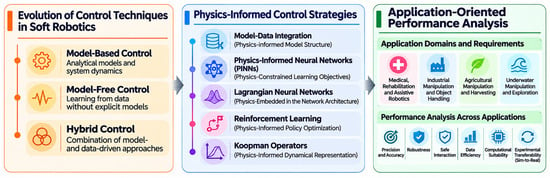
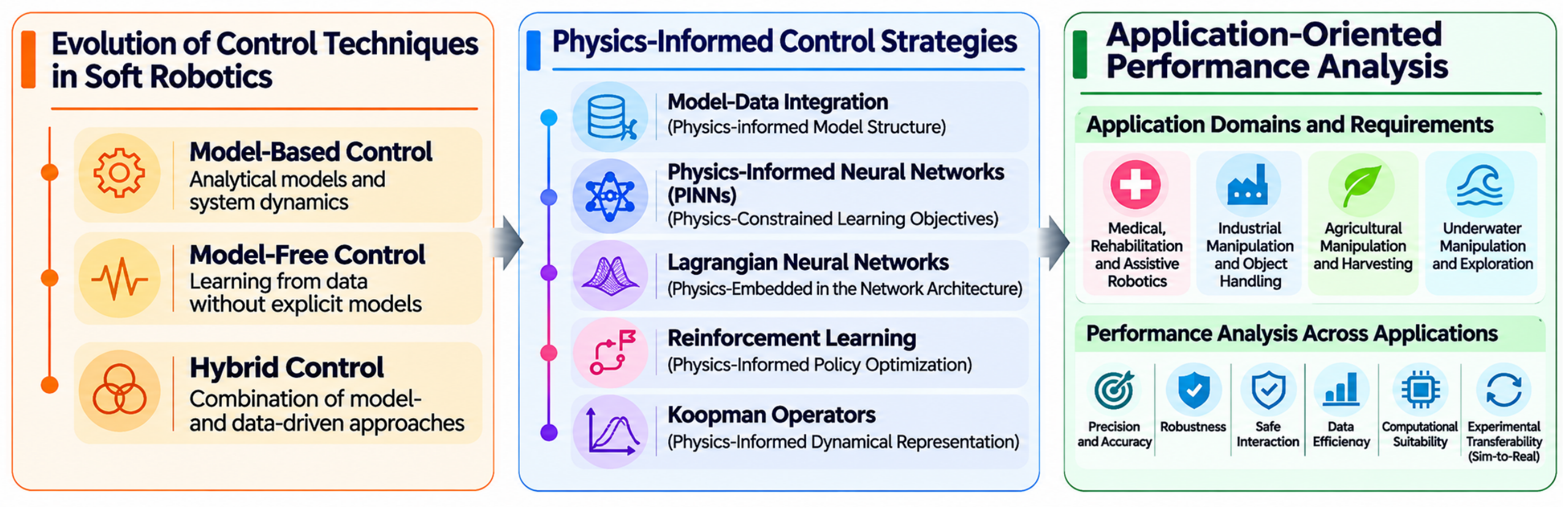
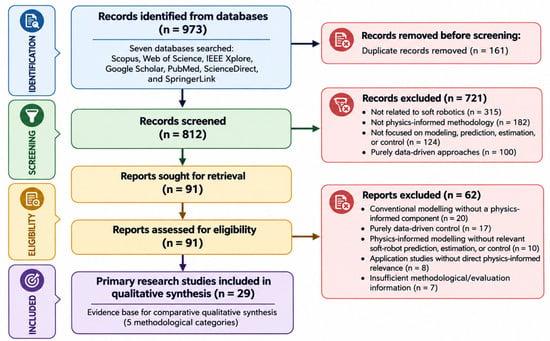
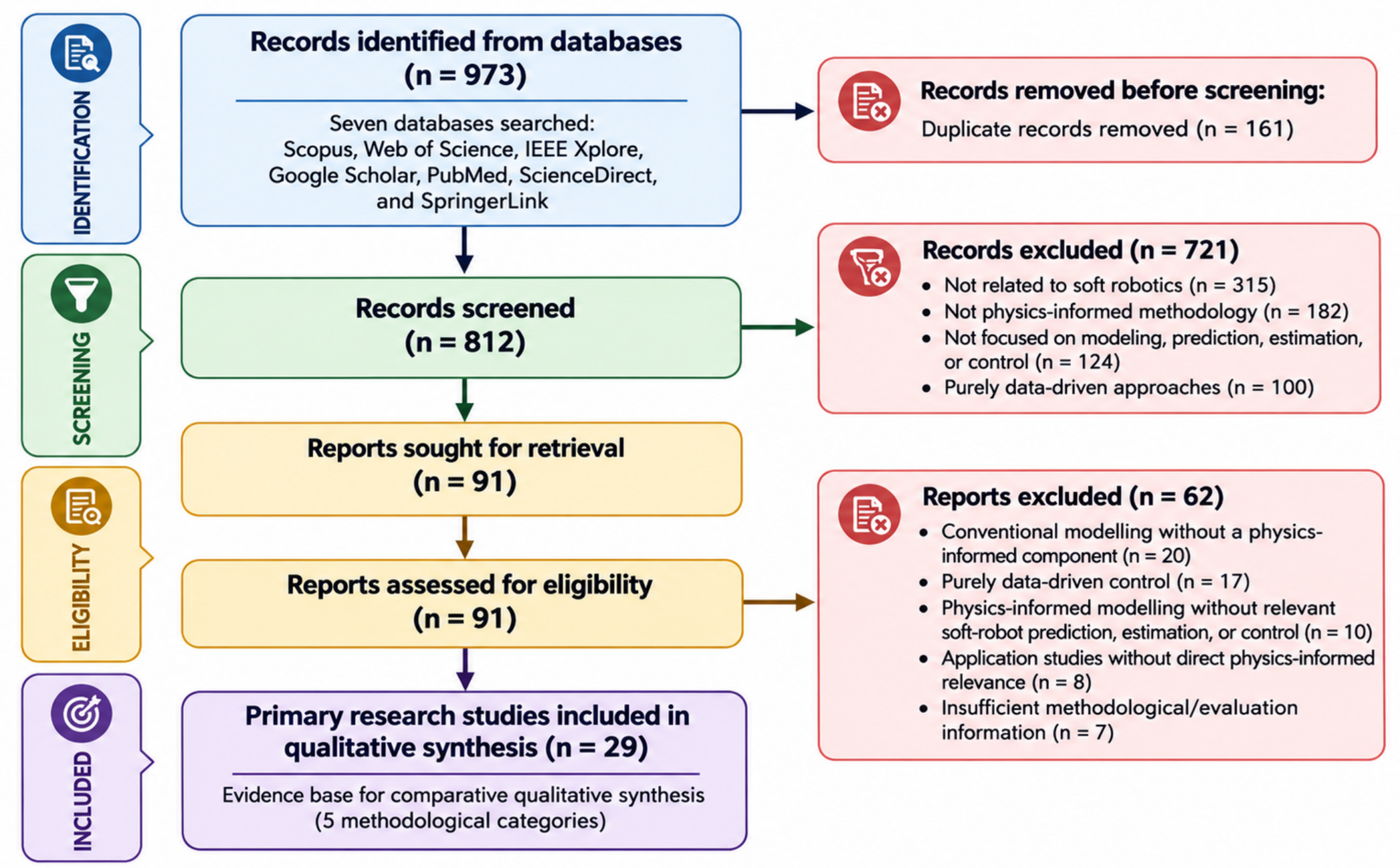
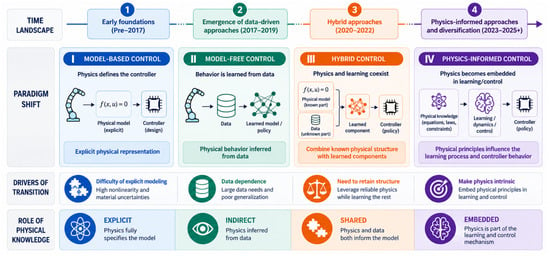
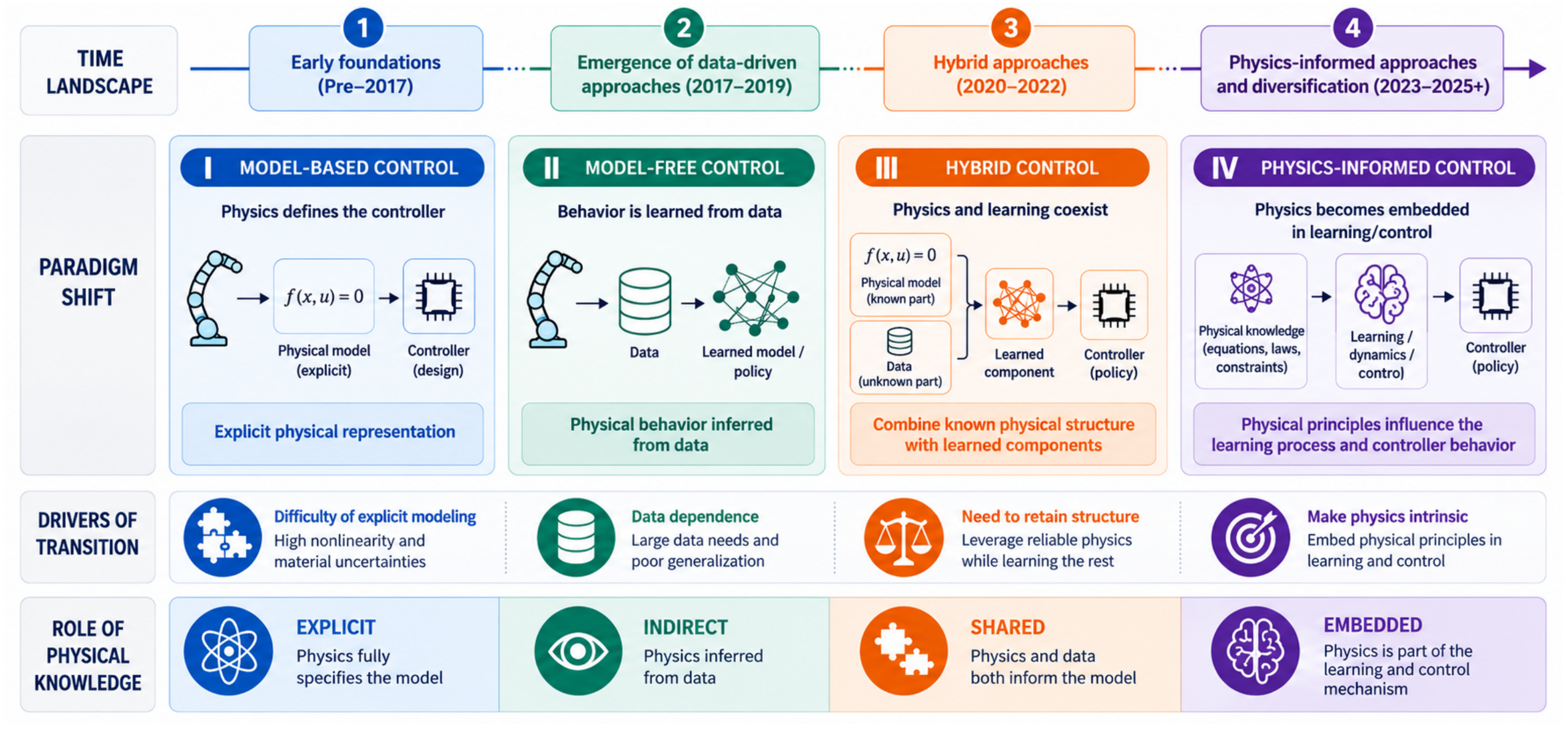
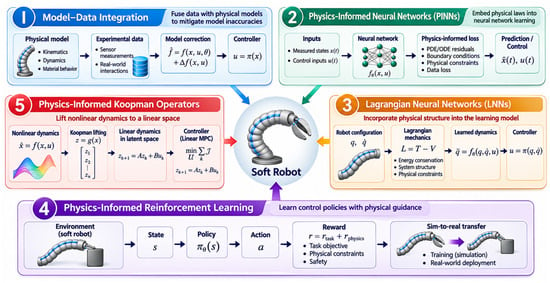
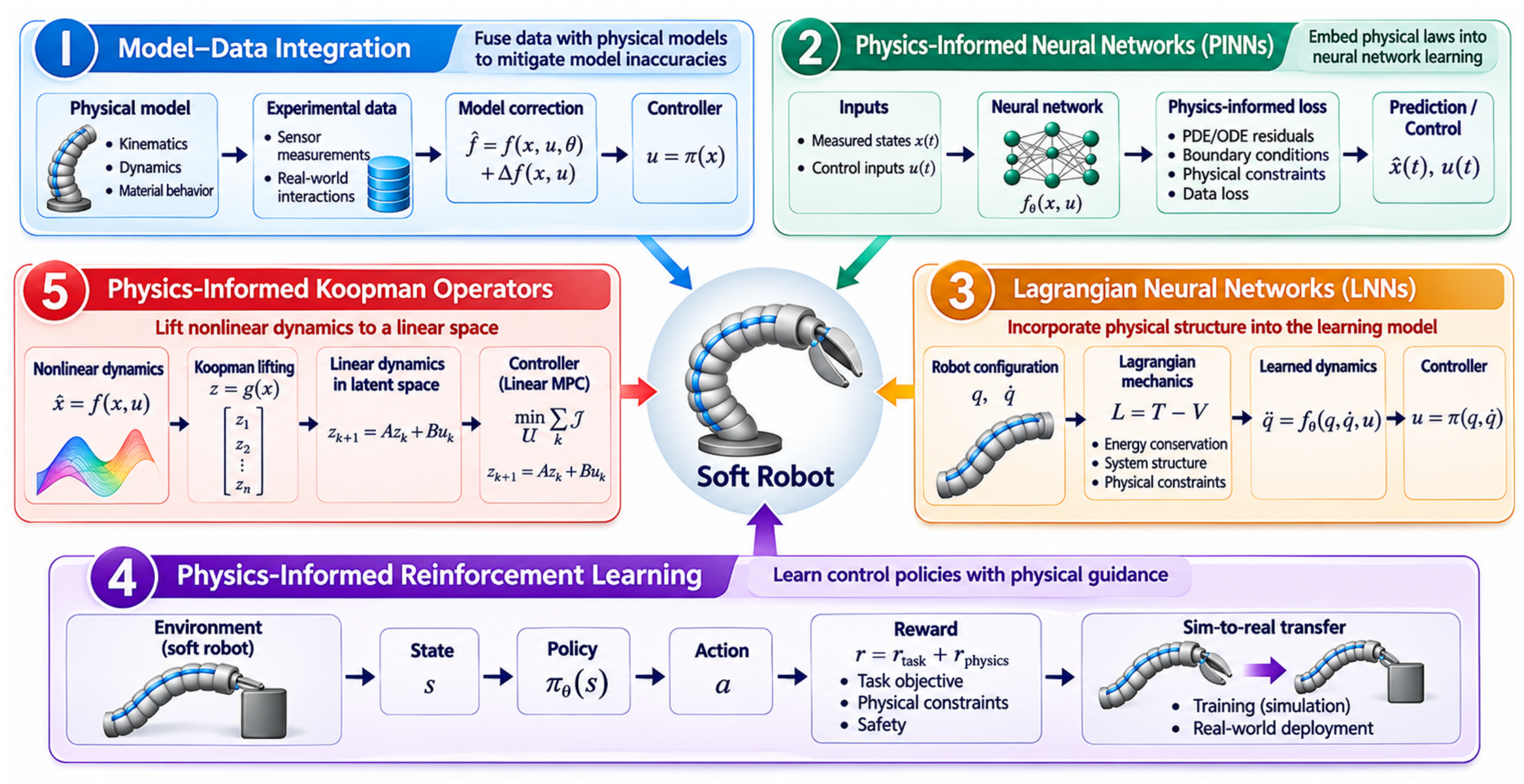
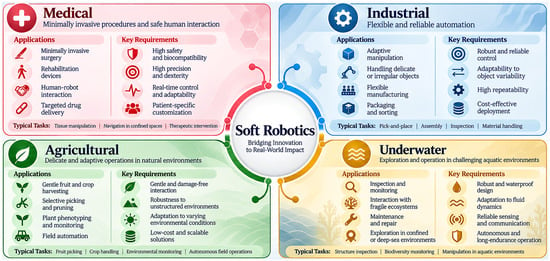
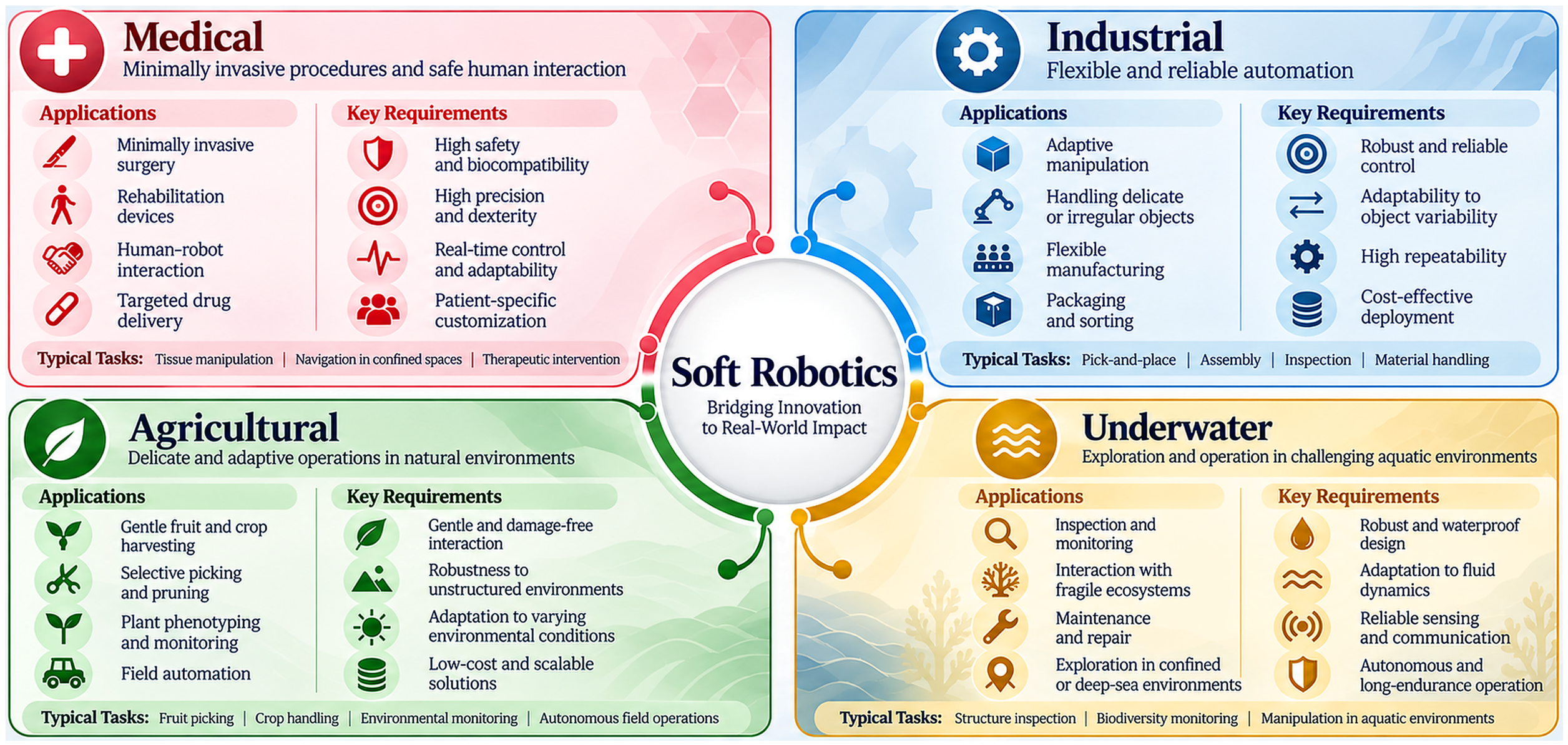
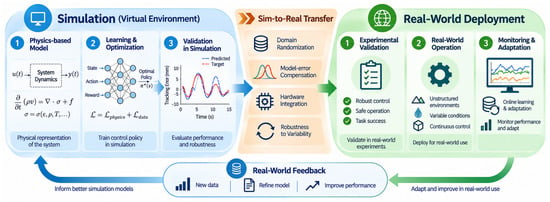
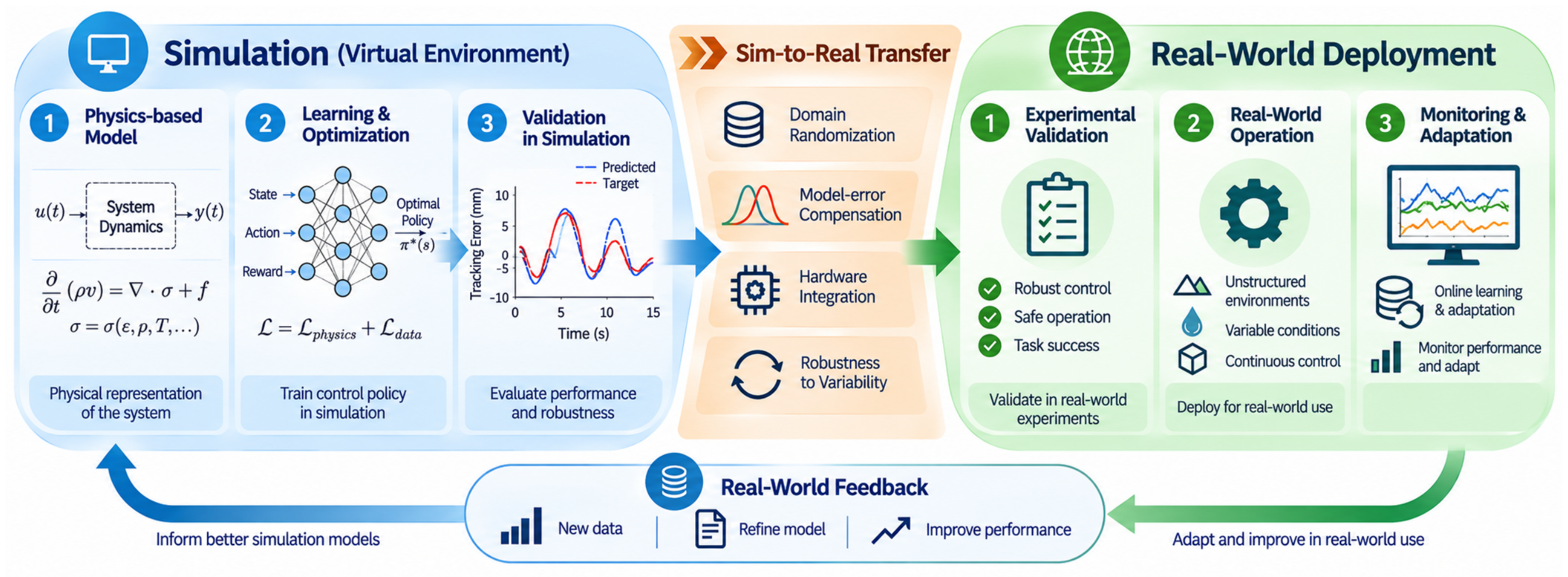

Disclaimer/Publisher’s Note: The statements, opinions and data contained in all publications are solely those of the individual author(s) and contributor(s) and not of MDPI and/or the editor(s). MDPI and/or the editor(s) disclaim responsibility for any injury to people or property resulting from any ideas, methods, instructions or products referred to in the content. |
© 2026 by the authors. Licensee MDPI, Basel, Switzerland. This article is an open access article distributed under the terms and conditions of the Creative Commons Attribution (CC BY) license.