


Abstract
Drug–drug interactions (DDI) may result in adverse clinical events; however, identifying a potential interaction does not necessarily establish causality in an individual patient. This study aimed to develop a Spanish-language scale for the structured assessment of suspected DDI causality and obtain evidence of its content validity. The initial items were derived from the authors’ domain expertise, drawing upon Horn’s Drug Interaction Probability Scale (DIPS) as a conceptual framework. Two modified Delphi processes, each comprising three rounds, involved 17 and 11 independent pharmacist experts, respectively. Between processes, two pharmacists applied the 11-item version to 10 suspected DDI cases in hospitalized patients with type 2 diabetes to identify ambiguous wording, redundancy, and difficulties using medical-record information. Experts assessed relevance, coherence, and clarity/comprehensibility by item and sufficiency by conceptual category. Aiken’s V coefficients and 95% confidence intervals were calculated. The initial nine-item version, organized into five conceptual categories, underwent iterative revisions, yielding a final nine-item version across four categories: scientific evidence, event plausibility, consistency following therapeutic changes, and exclusion of alternative explanations. In the final round of the second process, Aiken’s V mean values were 0.97 for relevance, 0.95 for coherence, 0.94 for clarity/comprehensibility, and 0.94 for sufficiency. These results yield compelling evidence supporting the content validity of the scale. Further studies are required to develop and evaluate numerical scoring and classification thresholds and establish reproducibility and clinical classification performance.
1. Introduction
Drug–drug interactions (DDIs) are relevant to patient safety in hospital settings, where patients may receive multiple medicines for coexisting conditions. In hospitalized cardiac patients, Kalash et al. identified frequent potentially harmful drug combinations and examined associated patient and treatment factors [1]. However, the clinical burden of DDIs depends on the distinction between potential interactions, clinically relevant interactions, and interactions associated with actual patient harm. A systematic review by Zheng et al. highlighted substantial heterogeneity in these definitions and the need for studies extending beyond the detection of potential DDIs [2].
In clinical practice, potential drug–drug interactions (pDDIs) are commonly identified using databases and clinical decision support systems [3,4]. Nevertheless, a database alert does not establish that a drug–drug interaction caused an observed clinical event in an individual patient. A systematic review of clinically manifested DDIs emphasized the importance of combining interaction screening with clinical findings and case assessment [5]. Recommendations for evaluating DDI evidence also support transparent consideration of the available scientific evidence rather than relying exclusively on database listings [6]. Causality assessment therefore requires patient-specific clinical and pharmacotherapeutic information to distinguish a suspected interaction-related event from competing explanations.
Horn et al. [4] developed the Drug Interaction Probability Scale (DIPS) to evaluate whether an adverse clinical event can be causally attributed to a suspected DDI. The scale comprises 10 items with three nominal response options: “yes”, “no”, and “unknown/not applicable”. Numerical scores assigned to these responses are summed to classify causality into four categories: highly probable (>8), probable (5–8), possible (2–4), and doubtful (<2).[7] Although formal evidence of its content validity and other validity properties had not been established, the DIPS has been used as a framework for assessing and reporting suspected DDI cases [8]. Some items, however, depend on information that may be unavailable in routine practice, particularly the response to rechallenge and plasma drug concentration measurements. Deliberate re-exposure solely to assess causality may be ethically inappropriate, whereas drug concentration measurements may be inaccessible in resource-constrained healthcare settings. In these circumstances, an “unknown/not applicable” response receives zero points. Cases lacking this information may therefore receive lower total scores and fall into lower causality categories than cases with affirmative findings for these items. This discrepancy reflects information availability rather than a weaker causal relationship, underscoring the need to evaluate how missing data impacts classification performance.
In Mexico, NOM-220-SSA1-2016 establishes pharmacovigilance as a shared responsibility and assigns healthcare professionals a role in documenting and reporting suspected adverse drug reactions and other medication-related safety problems to pharmacovigilance units or the National Pharmacovigilance Center [9]. These responsibilities are not restricted to professionals specializing in pharmacovigilance. Within this framework, pharmacists play a key role in identifying suspected drug-related events, documenting medication exposure and the clinical course, and participating in case assessment and follow-up. Structured approaches to organizing the available evidence are therefore relevant to their participation in assessing suspected DDI cases.
These considerations support the development and evaluation of instruments that structure causal assessment using information routinely available in clinical records. Content validity concerns the relevance and representativeness of an instrument’s content for a specified purpose [10] and constitutes an essential component of instrument evaluation without independently establishing all intended interpretations or uses [11]. In this context, we developed a Spanish-language scale intended initially for pharmacists to organize evidence relevant to attributing an observed clinical event to a suspected DDI. The present study focuses on development and content validity as an initial stage of evaluation.
Therefore, this study aimed to develop a Spanish-language scale for the structured assessment of causal attribution of an observed clinical event to a suspected DDI and to obtain evidence of its content validity through expert judgment.
2. Materials and Methods
2.1. Initial Development of Scale and Conceptual Framework
No bibliographic search was conducted to generate the initial items. The initial items were formulated by the authors based on their experience in assessing DDIs and with reference to the structure of Horn’s DIPS [7]. The DIPS was itself informed by the Naranjo algorithm, which was designed to assess the causality of suspected adverse drug reactions [12].
The initial conceptual categories were selected to organize the main aspects considered when assessing whether an adverse event can be attributed to a suspected DDI, drawing on the thematic structure of these causality assessment frameworks. Documentation and scientific evidence concern prior knowledge of the suspected interaction; clinical manifestation concerns the observed event and its relationship to drug exposure; alternative explanations concern competing causes; objective evidence concerns findings supporting the suspected interaction; and therapeutic intervention concerns the course of the event after treatment changes. The authors’ case-assessment experience helped translate these aspects into the initial item wording. These categories served as a framework for organizing the content rather than as established psychometric dimensions.
The initial version comprised nine items grouped into five conceptual categories: documentation and scientific evidence (items 1–2), clinical manifestation (items 3–5), alternative explanations (items 6–7), objective evidence (item 8), and therapeutic intervention (item 9). These categories were used to organize the content of the scale. The proposed response options were “yes,” “no,” and “unknown/not assessed”.
2.2. Expert Recruitment and Competence Assessment
For the first Delphi panel, a public invitation was broadly distributed via social media targeting pharmacists practicing in southern and southeastern Mexico as delimited by the regional classification used by the Federal Commission for Protection against Health Risks (COFEPRIS) [13]. Applicants were required to possess a minimum of three years of professional experience in pharmacovigilance or pharmacotherapy follow-up. Interested pharmacists registered via an online questionnaire (google forms), providing information on their academic qualifications, current (Mexican) state of practice (Yucatan, Campeche, Quintana Roo, Chiapas, Tabasco, Puebla, Veracruz, Oaxaca, Guerrero or Morelos), and their years of experience in either field. The research team screened these responses to identify applicants who met the eligibility criteria.
For the second Delphi panel, the invitation was extended to pharmacists practicing in any of Mexico’s 32 federal entities, while the remaining eligibility criteria were maintained, including at least three years of experience in pharmacovigilance or pharmacotherapy follow-up. The same recruitment, registration, and screening procedures were used.
For the first Delphi panel, a total of 89 professionals expressed interest; 37 met the experience criteria and were invited to complete the expert competence coefficient [14].
The expert competence coefficient was calculated as follows:
where
K = 0.5 (Kc + Ka)
Kc is the “knowledge coefficient,” representing the expert’s knowledge of or information about the topic or problem under consideration. It is calculated by multiplying the expert’s self-rating on a scale from 1 to 10 by 0.1.
Participants were first asked to complete an online questionnaire and rate their knowledge of drug–drug interaction assessment on an ascending scale from 1 to 10, where 1 represented the lowest level and 10 the highest.
Ka, the “argumentation coefficient,” reflects the degree of influence of different sources of argumentation on an expert’s judgments. To calculate Ka, each expert rated the influence of the seven sources listed in Table 1. Weights were assigned based on expert responses in accordance with the method established by Cruz and Martínez [15]. These seven weights were then summed to obtain the expert’s Ka value.
Table 1.
Expert competence argumentation coefficient.
The expert competence coefficient (K) was calculated using the self-assessed knowledge coefficient (Kc) and the argumentation coefficient (Ka) obtained from prospective expert panel members. The resulting K values were interpreted as follows:
K ≥ 0.80: high competence.
K between 0.50 and 0.79: moderate competence.
K < 0.50: low competence.
In the first panel, 19 experts achieved an expert competence coefficient ≥ 0.80 and were formally invited to participate. Two professionals withdrew before evaluating the scale; consequently, the first panel comprised 17 experts.
The second panel comprised 11 experts, each achieving an expert competence coefficient ≥ 0.80.
The inclusion of experts who had not participated in the first Delphi panel was intended to obtain an independent assessment and minimize potential familiarity bias associated with prior exposure to the scale. Accordingly, this process was considered a new phase of content validation using a second modified Delphi process, rather than a fourth round of the first process.
Before reviewing the scale, all participating experts were required to sign a confidentiality agreement. This agreement required that all project-related information, including the scale’s content, preliminary results, and opinions expressed during the review process, be treated confidentially. Experts agreed not to disclose or share this information with anyone other than authorized members of the research team. Signing the agreement was a prerequisite for participation in the scale review.
2.3. Modified Delphi Process
Two independent modified Delphi processes were conducted, each comprising three rounds. The method was considered modified because the panels evaluated an instrument previously developed by the authors, rather than beginning with an open-ended round in which experts generated the initial items. The process focused on iterative refinement through individual quantitative ratings and qualitative feedback. Iterative individual assessment and feedback are central features described in methodological accounts of the Delphi technique [16,17].
Relevance, coherence, and clarity/comprehensibility were assessed by item, whereas sufficiency was assessed by conceptual category, following Escobar-Pérez and Cuervo-Martínez [18]. Responses were scored using a 4-point Likert-type scale: 1 = does not meet the criterion, 2 = low level, 3 = moderate level, and 4 = high level.
The evaluation template was prepared in Microsoft Word and sent individually to each expert by email. Responses were anonymous to the other panel members. Once all evaluations for a round had been collected, the research team reviewed the ratings and qualitative comments and prepared a revised version of the scale. This version was emailed to the experts together with feedback on the preceding round and the resulting changes. This procedure was repeated between successive rounds in both Delphi panels.
Before the next round began, the experts received a revised version of the scale and feedback regarding the changes made in response to the preceding evaluation. Participants subsequently reassessed the modified version, allowing for an iterative process of reconsideration and content refinement. Three rounds were conducted.
Decisions to retain, revise, or reassess an item were based on item-level Aiken’s V values and qualitative observations. The operational point-estimated reference was V ≥ 0.80; this threshold guided content-review decisions and was not treated as proof of validity. Lower confidence limits below 0.80 were considered evidence of uncertainty rather than as a stand-alone rejection rule. Furthermore, items meeting the 0.80 benchmark were still subject to revision if qualitative comments highlighted areas for refinement.
A modified three-round Delphi process was conducted for each panel. Rather than setting an a priori stopping criterion, the decision to conclude after a third round was determined empirically. This decision was based on Aiken’s V point estimates meeting the operational reference of ≥0.80 for the evaluated criteria, together with the progressive resolution of experts’ suggestions and the absence of new substantive feedback requiring further expansion or refinement of the instrument’s content.
Specifically, for the first panel, relevance and sufficiency attained the threshold in second round, leaving only coherence and clarity/comprehensibility to be evaluated in the third round. For the second panel, all four criteria were assessed iteratively and met the threshold by third round.
In both panels, the research team considered that the acceptable ratings and the absence of further substantive suggestions indicated that an additional round was unlikely to provide substantial new information.
The operational content-review threshold and the decision to stop the process are reported separately because consensus definitions and stopping rules vary across Delphi studies [19].
The version resulting from the first expert panel comprised five conceptual categories, whereas the final version following the second panel comprised four. These categories organize the causal indicators included in the scale and are not intended as psychometric subscales. The proposed response options are “yes,” “no,” and “unknown/not assessed.” This response format was informed by the wording of the items and the assessment frameworks used in the Naranjo algorithm [12] and Horn’s DIPS [7].
The present study evaluated the scale’s content validity. Item scores, weights, total scores, and classification thresholds are not presented, as their appropriateness has not been established. Further studies are required to develop and evaluate a scoring system and assess the scale’s reproducibility and clinical classification performance before routine clinical use.
2.4. Content Validity Analysis
Aiken’s V quantified experts’ content-validity judgments on the four-category rating scale [20]. It was calculated separately across items, criterion and by conceptual category (specifically for sufficiency) by dividing the sum of adjusted ratings by the maximum possible sum.
Aiken’s V was defined as
where
Σs/[n(c − 1)]
Σs is the sum, across all judges, of the differences between the rating assigned and the lowest possible rating.
n is the number of judges who rated that item or category for the relevant criterion and round.
c is the number of rating categories, here four. The denominator n(c − 1) is the maximum possible sum of adjusted ratings.
A point estimate of V ≥ 0.80 was used as the operational reference. Two-sided 95% confidence intervals were calculated for item-level coefficients.
Aiken’s V coefficients were calculated by criterion and round at the item level and, for sufficiency, at the conceptual-category level. The complete coefficients, corresponding numbers of experts, and 95% confidence intervals are provided in Supplementary Material S1.
2.5. Pilot Test
Following the first panel’s three rounds, the 11-item scale was applied to 10 consecutive cases of suspected DDIs in patients with type 2 diabetes hospitalized in the internal medicine department of Hospital General “Dr. Agustín O’Horán,” a secondary care hospital. The pilot was conducted in December 2025. Two pharmacists practicing in Yucatan state, neither of whom had participated in either expert panel, applied the scale independently. Both met the same experience and expert competence requirements established for panel members: at least three years of experience in pharmacovigilance or pharmacotherapy follow-up and an expert competence coefficient (K) ≥ 0.80.
The pilot test aimed to identify issues with item clarity, ambiguity, redundancy, and feasibility using available medical records, rather than to establish scale reliability.
2.6. Second Expert Panel
The post-pilot 10-item version was evaluated by a second independent panel of 11 experts who met the same eligibility criteria and had not participated in the first panel. The panel completed three modified Delphi rounds using the same four content criteria, scoring procedures, qualitative feedback process, and Aiken’s V analysis.
Unlike the first panel, it was decided to conduct a third round to confirm whether the retained items remained relevant and whether each conceptual category maintained sufficient coverage.
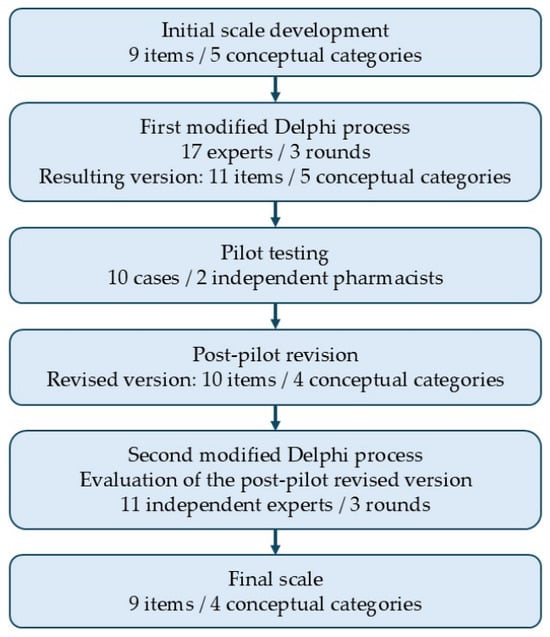
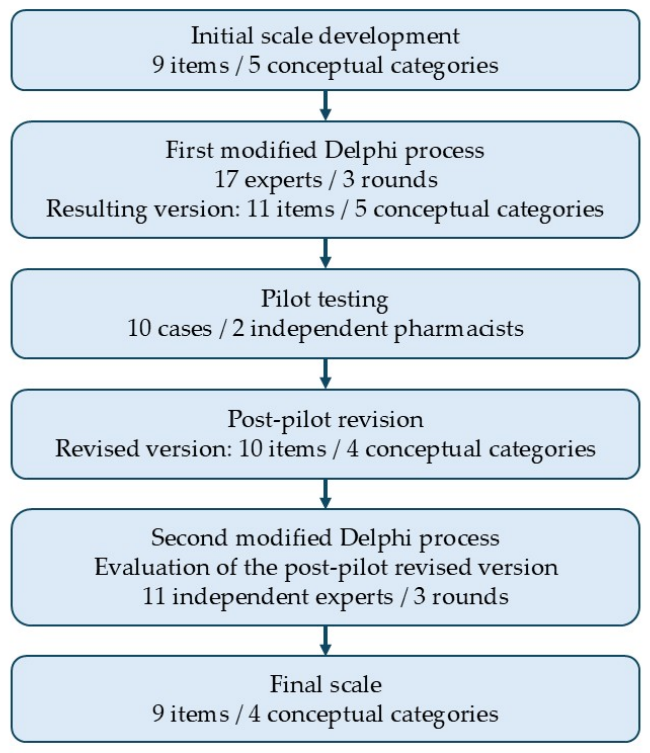
Figure 1 summarizes the methodological stages of scale development.
Figure 1.
Sequence of scale development.
3. Results
3.1. Characteristics of the Expert Panels
The first panel comprised 17 pharmacists while the second included 11 independent pharmacists. Table 2 summarizes their reported characteristics, knowledge coefficient, argumentation coefficient and the expert competence coefficient.
Table 2.
Characteristics of the two expert panels.
The first panel was recruited in southern and southeastern Mexico; the second call was open to applicants from any of Mexico’s 32 federal entities.
3.2. First Modified Delphi Process
During the first round, three items did not reach the Aiken’s V reference value of ≥0.80 for clarity and comprehensibility. The clinical manifestation category also failed to reach this value for sufficiency (Supplementary Material S1). Based on the quantitative results and the experts’ qualitative observations, the wording of several items were modified. Two new items concerning potential additive, synergistic, or antagonistic effects between the drugs and the response to an unintentional rechallenge were also incorporated. Therefore, the evaluated version during the second round comprised 11 items.
During the second round, all items and categories achieved Aiken’s V values ≥ 0.80. Nevertheless, a third round was conducted to address qualitative observations considered relevant and to continue improving the wording of the items. No items were added or removed at this stage; therefore, the version assessed continued to comprise 11 items. All criteria assessed during the third round achieved Aiken’s V values ≥ 0.80.
Mean Aiken’s V values across the three rounds are presented in Table 3.
Table 3.
Mean Aiken’s V by criterion and round in the first modified Delphi process involving 17 experts.
Relevance and sufficiency were not reassessed in the third round of the first modified Delphi process because both criteria had achieved acceptable Aiken’s V values (≥0.80) in the second round. Based on these results, the authors considered all items relevant and the content within each conceptual category sufficient to represent its intended scope. The decision not to reassess these criteria in the third round was made by the research team during the study.
3.3. Pilot Test
The version resulting from the third round of the first Delphi process (Appendix B.1), comprising 11 items across five conceptual categories, was evaluated using 10 consecutive cases of suspected DDIs involving hospitalized patients with type 2 diabetes from one internal medicine department. The purpose of the pilot test was to assess the clarity and comprehensibility of the item wording within a clinical context. It did not evaluate the proposed scoring system or the scale’s clinical performance. Cases were not selected according to interaction severity or mechanism.
The pilot test identified ambiguous item wording and redundant content. Item 3 was eliminated due to overlap with Items 1 and 2, which already addressed prior documentation of the interaction and human clinical evidence, respectively. Item 5 was modified from technical pharmacokinetic criteria (overlapping time-to-peak concentrations and elimination half-life accumulation) to evaluate whether the route or administration regimen could have contributed to the event. Item 6 was likewise reworded to improve clinical clarity.
Item 8 was shortened and broadened. Instead of explicitly listing drug–food interactions, diseases, and pre-existing clinical conditions, the revised item asked whether other plausible causes could explain the observed event. Item 9 was reformulated because the original wording assessed whether the patient’s history had been reviewed, rather than whether that review supported excluding an event attributable to a single drug. Thus, an affirmative response could indicate that the review had been performed without establishing the intended causal assessment.
The remaining items underwent minor wording changes and were reordered to improve the clarity and logical sequence of the assessment. These revisions resulted in a 10-item version organized into four conceptual categories: scientific evidence, event plausibility, consistency following therapeutic changes, and exclusion of alternative explanations. This version was subsequently submitted to the second expert panel for content evaluation.
3.4. Second Expert Panel
During round 1, item 5 (“Did the event begin after the concomitant administration of both drugs?”) had an Aiken’s V point estimate of 0.70 for clarity and comprehensibility, below the prespecified operational reference of 0.80. The item was revised in response to the quantitative result and qualitative comments Complete item-level and category-level coefficients, effective denominators, and 95% confidence intervals are reported in Supplementary Material S1.
During round 2, item 5 achieved an Aiken’s V point estimate of 0.82 for clarity and comprehensibility, and all items and categories had point estimates ≥ 0.80. After reviewing the quantitative and qualitative assessments, item 10, which assessed whether a single drug could independently explain the event, was removed because an affirmative response would directly attribute the event to that drug without a structured assessment using an appropriate causality tool, such as the Naranjo algorithm. The panel considered that this item shifted the assessment from the causality of a suspected drug–drug interaction to that of an adverse reaction attributable to an individual drug, placing it outside the instrument’s specified construct. The final item on alternative causes is intended to capture consideration of competing explanations, including the possibility of an event attributable to one drug alone; the removal of a separate item was intended to avoid overlap, not to disregard this causal possibility. The version submitted for round 3 comprised nine items.
Although all remaining items and categories had point estimates ≥0.80 in round 2, a third round was conducted to assess the modified version and address relevant qualitative comments. In round 3, item 5 had a point estimate of 0.88 for clarity and comprehensibility, and the point estimates for the remaining criteria were ≥0.80. Due to panel sizes being small, these point estimates should be interpreted alongside their 95% confidence intervals; some lower confidence limits may remain below 0.80.
Mean Aiken’s V values across the three rounds are presented in Table 4.
Table 4.
Mean Aiken’s V by criterion and round in the second modified Delphi process involving 11 experts.
The second modified Delphi process constituted a new, independent content-validity assessment of the scale revised after pilot testing, rather than a continuation of the first panel’s evaluation. Accordingly, the findings from the first process were not considered sufficient to establish the content validity of the post-pilot version. Within this second process, the research team retained the assessment of relevance, coherence, clarity/comprehensibility, and sufficiency across all three rounds to evaluate successive revisions.
Upon completion of the second modified Delphi process, the Spanish-language scale comprised 9 items grouped into 4 conceptual categories: scientific evidence (items 1–2), event plausibility (items 3–6), consistency following therapeutic changes (items 7–8), and exclusion of alternative explanations (item 9). The proposed responses were categorized using a three-point nominal scale (‘yes,’ ‘no,’ and ‘unknown/not assessed’).
Table 5 presents the final Spanish-language version evaluated by the experts alongside an English translation provided to facilitate understanding. The English translation was not independently subjected to content validation. No numerical scores or classification thresholds are presented, as the study evaluated content validity and further research is required to establish an appropriate scoring system and assess clinical performance.
Table 5.
Final nine-item Spanish-language scale following the second modified Delphi process, with an English translation for reader reference.
Details on the evolution of the scale throughout the content validation process can be found in Supplementary Material S3.
Re-exposure must not be intentionally induced solely to complete the scale. This item applies only when re-exposure has already occurred unintentionally or for a legitimate clinical reason.
Item 8 applies only when re-exposure has already occurred unintentionally or for a legitimate clinical reason. If re-exposure did not occur or information is insufficient to assess its outcome, the pharmacist should select “unknown/not assessed.” This response is not equivalent to an evaluated negative finding.
4. Discussion
The final nine-item Spanish-language instrument received favorable content-validity judgments following two modified Delphi processes and an intervening pilot application. In the final round, Aiken’s V mean values were 0.97 for relevance, 0.95 for coherence, 0.94 for clarity/comprehensibility, and 0.94 for sufficiency. These findings indicate that the participating experts considered the retained content appropriate for structuring the assessment of suspected DDI causality. The principal contribution is a refined set of causal indicators and response options; the study did not establish numerical scoring, classification thresholds, or clinical decision performance.
The interpretation of these findings depends on the instrument’s intended purpose. Haynes et al. describe content validity in terms of the relevance and representativeness of assessment elements for a specified use [10], while Sireci emphasizes that content evidence is necessary but cannot independently substantiate all interpretations of an instrument [11]. Here, relevance, coherence, clarity/comprehensibility, and sufficiency were examined through structured expert judgments. Favorable ratings therefore support the content selected for assessment, rather than demonstrating that the instrument correctly attributes an individual event to an interaction.
Horn’s DIPS is the most direct clinical precedent because it was developed specifically for evaluating suspected DDI cases [7], and its subsequent use has been documented in a systematic review [8]. The present instrument shares causal elements with DIPS, including prior evidence, pharmacological plausibility, temporality, responses to therapeutic changes, and alternative explanations. This overlap is consistent with the common clinical question. The distinction between screening and attribution also remains important: reviews of hospitalized patients distinguish potential combinations from clinically manifested interactions [2,5], while recommendations for evaluating DDI evidence call for transparent assessment of the supporting information [6]. These considerations support structured case assessment but do not establish that the new instrument performs better than DIPS.
The revisions illustrate how content assessment changed the structure of the instrument. During pilot testing, overlapping questions about prior documentation were consolidated, and wording involving pharmacokinetic concepts was simplified. In the second Delphi process, the separate item asking whether a single drug could explain the event was removed to avoid overlap with the broader assessment of alternative causes. This change should not be interpreted as excluding single-drug effects from the differential assessment; they remain potential competing explanations under the final item. The four final categories organize the indicators and should not be interpreted as independently established measurement dimensions or subscales.
The Delphi design combined individual ratings with qualitative feedback and repeated review. Hasson et al. discuss the importance of participant selection, feedback, and analysis [16], while Keeney et al. identify sampling, anonymity, rounds, and modifications to the technique as methodological issues requiring explicit consideration [17]. In this study, the panels began with author-generated items, which explains the modified design. The independent second panel provided an additional appraisal after pilot revisions and reduced dependence on familiarity with previous wording. It did not, however, assess the same version under identical conditions as the first panel; agreement between panels cannot therefore be interpreted as replication of clinical judgments.
The decision to conclude each Delphi process after three rounds requires separate consideration. Diamond et al. found considerable variation in the definition of consensus and its relationship to study termination [19]. CREDES, although developed in palliative care, similarly emphasizes transparent reporting of Delphi procedures [21]. In the present study, termination was decided during the study rather than specified in advance. Moreover, relevance and sufficiency were not reassessed in the first panel’s third round. These decisions limit claims about stability across all criteria and should remain explicit. Meeting the operational V ≥ 0.80 reference supported content-review decisions but did not independently demonstrate that further rounds would have produced no additional changes.
Aiken’s V provided a quantitative summary of expert ratings [20]. Supplementary Material S1 presents the individual ratings, item-level coefficients by criterion, category-level sufficiency coefficients, and their 95% confidence intervals, calculated using the score method proposed by Penfield and Giacobbi [22]. These data complement the mean coefficients and allow differences in content judgments to be examined. In the third round of the second panel, coefficients ranged from 0.91 to 1.00 for relevance, from 0.91 to 1.00 for coherence and from 0.88 to 1.00 for clarity and comprehensibility. All four categories achieved a V of 0.94 for sufficiency, with a 95% confidence interval of 0.804–0.983. These findings support favorable judgments of the relevance and coverage of the final version’s content.
The interpretation of point estimates should also account for their precision. For clarity and comprehensibility, the item identified as item 5 in the tables for the second Delphi process increased from a V of 0.70 in round 1 to 0.82 in round 2 and 0.88 in round 3, indicating a favorable progression in ratings during revision. Nevertheless, in the final round, both this item and item 8 had a V of 0.88 with a 95% confidence interval of 0.727–0.952. Thus, although their point estimates exceeded the operational reference value of 0.80, their intervals indicate uncertainty relative to this value. This does not, by itself, imply that the items should be rejected, because the lower confidence limit was not established as an independent exclusion criterion. It does, however, justify examining their interpretation in subsequent applications and maintaining a proportionate conclusion: the ratings provide favorable evidence of content validity, with varying precision across items. In practical terms, these items should receive priority in subsequent comprehension and usability testing with intended users. For item 5, assessments should examine how users evaluate administration route, regimen frequency, and timing relative to available clinical data. For item 8, evaluations must ascertain whether users accurately differentiate recurrence following verified rechallenge from scenarios where re-exposure did not occur or went unrecorded. Such testing should systematically document cognitive burden, interpretive ambiguities, and the underlying drivers of ‘unknown/not assessed’ selections. Any resulting wording revisions would require renewed content review before further evaluation. The present confidence intervals do not quantify clinical applicability or establish that either item performs poorly in practice.
The absence of a required plasma concentration item may be operationally relevant where such measurements are unavailable, but the present data do not demonstrate greater feasibility. The retained re-exposure item also requires explicit instructions: it applies only when re-exposure has already occurred unintentionally or for a legitimate clinical reason and must not encourage deliberate rechallenge solely for assessment. An “unknown/not assessed” response should preserve the distinction between unavailable information and an evaluated negative finding. Prospective application of the final version should examine these interpretation issues, completion time, and the frequency and reasons for non-assessable responses.
Future validation should proceed in stages. First, testing how well target users understand and use the final Spanish-language version should guide standardized instructions for its use. Then, an empirical scoring system should be developed and tested, including point values for each response, any item weights, total scores, and category cutoffs. This work should explicitly examine how missing evidence and ‘unknown/not assessed’ responses influence final scores and classifications, while ensuring alternative clinical explanations are still properly considered.
Second, inter-rater and intra-rater reliability should be assessed to the same clinical cases using standardized instructions. Analyses should distinguish agreement on individual item responses from agreement on any subsequently developed total scores or causality categories, using statistical metrics appropriate for each data type and reporting confidence intervals. Intra-rater reproducibility can be evaluated through a separate repeat-assessment design.
Third, clinical classification performance must be evaluated against an appropriate clinical reference standard defined before analysis. A potential approach is independent adjudication by a multidisciplinary expert panel using explicit criteria, with adjudicators blinded to the instrument’s score and classification. Crucially, this adjudication process itself warrants formal justification and documentation of diagnostic uncertainty, rather than being treated as an infallible gold standard. Performance analyses should correspond to the intended clinical use and reference categories, including sensitivity and specificity if a clinically meaningful binary target can be justified. Finally, any resulting scoring and classification framework should undergo external validation across diverse clinical environments and other Spanish-speaking populations.
5. Conclusions
The final nine-item Spanish-language instrument received favorable content-validity judgments through two independent modified Delphi processes. These findings do not establish reproducibility, criterion validity, or clinical classification performance. Further studies are needed to develop and evaluate any scoring system and classification thresholds, assess inter-rater and intra-rater reproducibility, and examine applicability across professional groups and Spanish-speaking settings.
Supplementary Materials
The following supporting information can be downloaded at: https://www.mdpi.com/article/10.3390/pharmacy14090179/s1, Supplementary Material S1. Expert Ratings, Item-Level Aiken’s V Coefficients in the Two Modified Delphi Process; Supplementary Material S2. Items and conceptual categories with Aiken’s V < 0.80 in round 1 of the first modified Delphi process, their modification, and corresponding round 2 results; Supplementary Material S3. Evolution of the scale during the content-validation process.
Author Contributions
Conceptualization, G.C.-H. Investigation, G.C.-H. and M.A.R.-C. Methodology, G.C.-H. and D.E.-C.; supervision, J.C.L.-R. and H.R.-Z. Data curation, D.E.-C. Writing—original draft preparation, G.C.-H. Writing—review and editing, D.E.-C., H.R.-Z., M.A.R.-C., J.C.L.-R. All authors have read and agreed to the published version of the manuscript.
Funding
This research received no external funding.
Institutional Review Board Statement
The study was conducted in accordance with the Declaration of Helsinki and approved by the Institutional Review Board of Hospital General Dr. Agustin O’Horan (CI-047-3-2025, 10 November 2025) and Hospital General Dr. Agustin O’Horan’s Ethics Committee (CEI-077-11-2025, 8 December 2025).
Informed Consent Statement
The Ethics Committee determined that a specific informed consent form was not required for this study. Pharmacists were invited to participate in the modified Delphi process through an open call. Those who met the eligibility criteria were notified of their acceptance via a letter and signed a confidentiality agreement before receiving the assessment instrument. The pilot study used information available in clinical records; there was no direct contact with patients.
Data Availability Statement
The raw data supporting the conclusions of this article will be made available by the authors on request. The Supporting Information can be downloaded at https://doi.org/10.5281/zenodo.23446132.
Acknowledgments
G.C.-H. (CVU No. 1241804) gratefully acknowledges the scholarship awarded by SECIHTI to support his postgraduate studies, which made this work possible. The authors also thank all the pharmacists who participated in the modified Delphi rounds and contributed to the development of this study. During the preparation of this manuscript, the authors used OpenAI GPT-6.1 Sol for the purposes of translation and graphical abstract design. The authors thank B.C. and P.C. for the linguistic editing of this manuscript.
Conflicts of Interest
The authors declare no conflicts of interest.
Abbreviations
The following abbreviations are used in this manuscript:
| DDI | Drug–drug interaction |
| pDDI | Potential drug–drug interaction |
| DIPS | Drug Interaction Probability Scale |
Appendix A
Any English translations provided below are intended solely to facilitate understanding and were not independently subjected to content validation.
Appendix A.1. Expert Assessment Template for Evaluating the Content Validity
| Criterion and Definition | Rating Level | Descriptor |
| Sufficiency. The items within the same dimension are sufficient to measure that dimension. |
| The items are insufficient to measure the dimension. |
| The items measure some aspects of the dimension but do not cover it in its entirety. | |
| Additional items are needed to assess the dimension fully. | |
| The items are sufficient to assess the dimension. | |
| Coherence. The item is logically related to the dimension or indicator it is intended to measure. |
| The item has no logical relationship with the dimension. |
| The item is only tangentially related to the dimension. | |
| The item is moderately related to the dimension it is intended to measure. | |
| The item is fully related to the dimension it is intended to measure. | |
| Relevance. The item is essential or important and should therefore be included |
| The item can be removed without affecting the measurement of the dimension. |
| The item has some relevance, but its content may already be covered by another item. | |
| The item is relatively important. | |
| The item is highly relevant and should be included. | |
| Clarity and comprehensibility. The item is easy to understand, with appropriate syntax and semantics |
| The item is unclear. |
| The item requires several revisions or a major change to word choice or word order. | |
| Specific revisions to some terms in the item are required. | |
| The item is clear and has appropriate semantics and syntax. |
Appendix A.2. Expert Assessment Template for Evaluating the Content Validity
| Conceptual Category | Item | Sufficiency | Coherence | Relevance | Clarity and Comprehensibility |
| Note: Sufficiency was assessed for each conceptual category, whereas coherence, relevance, and clarity/comprehensibility were assessed for each item. Experts used a four-point rating scale, with descriptors provided for each criterion in Appendix A.1. | |||||
Appendix B
Appendix B.1. Version Resulting from the Third Round and Used for Pilot Testing
| Conceptual Category | Item Scale (English/Spanish) | Respond Options |
| Documentation and scientific evidence | ||
| Item 1 | Is the drug–drug interaction recorded in specialized internationally recognized reference databases?/¿La interacción farmacológica se encuentra registrada en bases de datos especializadas de referencia internacional? | Yes/Sí No/No Unknown/ not assessed Se desconoce/ No evaluado |
| Item 2 | Are there scientific publications involving humans that document this drug–drug interaction?/¿Existen publicaciones científicas en humanos que documenten esta interacción farmacológica? | Yes/Sí No/No Unknown/ not assessed Se desconoce/ No evaluado |
| Clinical manifestation | ||
| Item 3 | Does the scientific literature consistently report the clinical manifestation associated with this drug–drug interaction?/¿La literatura científica reporta de manera consistente la manifestación clínica asociada a esta interacción farmacológica? | Yes/Sí No/No Unknown/ not assessed Se desconoce/ No evaluado |
| Item 4 | Did the clinical manifestation occur after administration of the drugs involved and within a time interval consistent with their pharmacokinetic properties?/¿La manifestación clínica ocurrió después de administrar los medicamentos implicados dentro de un intervalo compatible con su farmacocinética? | Yes/Sí No/No Unknown/ not assessed Se desconoce/ No evaluado |
| Item 5 | Did overlapping tmax values, accumulation based on half-life, or the absence of temporal separation between doses contribute to the clinical manifestation?/¿El solapamiento de tmax, acumulación por vida media o ausencia de separación horaria favoreció la manifestación clínica? | Yes/Sí No/No Unknown/ not assessed Se desconoce/ No evaluado |
| Item 6 | Could the clinical manifestation be related to synergistic or antagonistic effects of the administered drugs?/¿La manifestación clínica puede estar relacionada con los efectos sinérgicos o antagónicos de los medicamentos administrados? | Yes/Sí No/No Unknown/ not assessed Se desconoce/ No evaluado |
| Item 7 | Following rechallenge, did the clinical manifestation recur and/or increase in severity?/Ante una reexposición, ¿la manifestación se repitió y/o aumentó de intensidad? | Yes/Sí No/No Unknown/ not assessed Se desconoce/ No evaluado |
| Alternative explanations | ||
| Item 8 | Is there any drug–food interaction, disease, or pre-existing clinical condition that could be associated with the clinical manifestation?/¿Existe alguna interacción fármaco-alimento, patología, condición clínica preexistente que pudiera asociarse con la manifestación clínica? | Yes/Sí No/No Unknown/ not assessed Se desconoce/ No evaluado |
| Objective evidence | ||
| Item 9 | Was the patient’s clinical history reviewed to rule out the possibility that the clinical manifestation was caused by a single drug?/¿Se realizó una revisión del historial clínico del paciente para descartar de que la manifestación clínica haya sido causada por un solo medicamento? | Yes/Sí No/No Unknown/ not assessed Se desconoce/ No evaluado |
| Item 10 | Are there clinical, diagnostic test, or physical examination findings that support the suspected drug–drug interaction?/¿Existen hallazgos clínicos, de gabinete o de exploración física que respalden la sospecha de interacción farmacológica? | Yes/Sí No/No Unknown/ not assessed Se desconoce/ No evaluado |
| Therapeutic intervention | ||
| Item 11 | Did the clinical manifestation resolve completely or partially following discontinuation, dose adjustment, or substitution of any of the drugs involved?/¿La manifestación clínica remitió total o parcialmente tras la suspensión, ajuste de dosis o sustitución de alguno de los medicamentos implicados? | Yes/Sí No/No Unknown/ not assessed Se desconoce/ No evaluado |
Appendix B.2. Post-Pilot Version Evaluated During the First Round by the Second Expert Panel
| Conceptual Category | Item Scale (English/Spanish) | Respond Options |
| Scientific evidence | ||
| Item 1 | Is the drug–drug interaction described in at least one internationally recognized reference database?/¿La interacción farmacológica está descrita en al menos una base de datos de referencia internacional? | Yes/Sí No/No Unknown/ not assessed Se desconoce/ No evaluado |
| Item 2 | Are there publications involving humans, including clinical or observational studies, case series, or case reports, that have previously documented the drug–drug interaction?/¿Existen publicaciones en humanos (estudios clínicos u observacionales, series o reportes de caso) que hayan documentado previamente la interacción farmacológica? | Yes/Sí No/No Unknown/ not assessed Se desconoce/ No evaluado |
| Event plausibility | ||
| Item 3 | Is there a plausible pharmacological mechanism, whether pharmacokinetic and/or pharmacodynamic, that explains the interaction between both drugs in the context of the individual patient?/¿Existe un mecanismo farmacológico (farmacocinético y/o farmacodinámico) plausible que explique la interacción entre ambos fármacos en el contexto del paciente? | Yes/Sí No/No Unknown/ not assessed Se desconoce/ No evaluado |
| Item 4 | Could the route and/or administration regimen of the drugs have resulted in sufficient concomitant exposure to contribute to the occurrence of the event?/¿La vía y/o el esquema de administración de los fármacos pudieron favorecer una exposición concomitante suficiente como para favorecer la ocurrencia del evento? | Yes/Sí No/No Unknown/ not assessed Se desconoce/ No evaluado |
| Item 5 | Did the event occur after the concomitant administration of both drugs?/¿El inicio del evento ocurrió después de la administración concomitante de ambos fármacos? | Yes/Sí No/No Unknown/ not assessed Se desconoce/ No evaluado |
| Item 6 | Are there clinical, diagnostic test, or physical examination findings that support the suspected drug–drug interaction?/¿Existen hallazgos clínicos, de gabinete o de exploración física que respalden la sospecha de interacción farmacológica? | Yes/Sí No/No Unknown/ not assessed Se desconoce/ No evaluado |
| Consistency following therapeutic changes | ||
| Item 7 | Did the event resolve completely or partially after discontinuation, dose adjustment, modification of the administration schedule, or substitution of either or both implicated drugs?/¿El evento remitió total o parcialmente tras la suspensión, ajuste de dosis, modificación del horario de administración o sustitución de alguno o ambos fármacos implicados? | Yes/Sí No/No Unknown/ not assessed Se desconoce/ No evaluado |
| Item 8 | Upon re-exposure, did the event recur and/or increase in intensity?/Ante una reexposición, ¿el evento se repitió y/o aumentó de intensidad? | Yes No Unknown/ not assessed |
| Exclusion of alternative explanations | ||
| Item 9 | Based on the available information, can other causes of the event be ruled out?/¿Puede descartarse, con base en la información disponible, que el evento sea atribuible a otras causas? | Yes/Sí No/No Unknown/ not assessed Se desconoce/ No evaluado |
| Item 10 | Could the event have been caused by a single drug?/¿Puede que el evento haya sido causado por un solo fármaco? | Yes/Sí No/No Unknown/ not assessed Se desconoce/ No evaluado |
References
- Kalash, A.; Abdelrahman, A.; Al-Zakwani, I.; Al Suleimani, Y. Potentially Harmful Drug–Drug Interactions and Their Associated Factors Among Hospitalized Cardiac Patients: A Cross-Sectional Study. Drugs Real. World Outcomes 2023, 10, 371–381. [Google Scholar] [CrossRef] [Scilit] [PubMed]
- Zheng, W.Y.; Richardson, L.C.; Li, L.; Day, R.O.; Westbrook, J.I.; Baysari, M.T. Drug–drug interactions and their harmful effects in hospitalised patients: A systematic review and meta-analysis. Eur. J. Clin. Pharmacol. 2018, 74, 15–27. [Google Scholar] [CrossRef] [Scilit] [PubMed]
- Felisberto, M.; Lima, G.d.S.; Celuppi, I.C.; Fantonelli, M.d.S.; Zanotto, W.L.; Oliveira, J.M.D.d.; Mohr, E.T.B.; dos Santos, R.A.; Scandolara, D.H.; Cunha, C.L.; et al. Override rate of drug-drug interaction alerts in clinical decision support systems: A brief systematic review and meta-analysis. Health Inform. J. 2024, 30, 14604582241263242. [Google Scholar] [CrossRef] [Scilit] [PubMed]
- Rodríguez-Terol, A.; Caraballo, M.O.; Palma, D.; Santos-Ramos, B.; Molina, T.; Desongles, T.; Aguilar, A. Quality of interaction database management systems. Farm. Hosp. 2009, 33, 134–146. [Google Scholar] [CrossRef] [Scilit]
- Gonzaga de Andrade Santos, T.N.; Mendonça da Cruz Macieira, G.; Cardoso Sodré Alves, B.M.; Onozato, T.; Cunha Cardoso, G.; Ferreira Nascimento, M.T.; Martins-Filho, P.R.S.; Pereira de Lyra, D., Jr.; Dias de Oliveira Filho, A. Prevalence of clinically manifested drug interactions in hospitalized patients: A systematic review and meta-analysis. PLoS ONE 2020, 15, e0235353. [Google Scholar] [CrossRef] [Scilit] [PubMed]
- Scheife, R.T.; Hines, L.E.; Boyce, R.D.; Chung, S.P.; Momper, J.D.; Sommer, C.D.; Abernethy, D.R.; Horn, J.R.; Sklar, S.J.; Wong, S.K.; et al. Consensus recommendations for systematic evaluation of drug–drug interaction evidence for clinical decision support. Drug Saf. 2015, 38, 197–206. [Google Scholar] [CrossRef] [Scilit] [PubMed]
- Horn, J.R.; Hansten, P.D.; Chan, L.N. Proposal for a new tool to evaluate drug interaction cases. Ann. Pharmacother. 2007, 41, 674–680. [Google Scholar] [CrossRef] [Scilit] [PubMed]
- Centeno-Hoil, G.; Ramírez-Camacho, M.A.; Lara-Riegos, J.C.; Guillermo-Herrera, J.C.; Soberanis-Monsreal, L.A. Horn’s Drug Interaction Probability Scale: A Systematic Review. Lat. Am. J. Pharm. 2024, 43, 1092–1101. [Google Scholar]
- Secretaría de Salud. Norma Oficial Mexicana NOM-220-SSA1-2016, Instalación y Operación de la Farmacovigilancia. Diario Oficial de la Federación. Available online: https://sidof.segob.gob.mx/notas/5490830 (accessed on 10 September 2025).
- Haynes, S.N.; Richard, D.C.S.; Kubany, E.S. Content validity in psychological assessment: A functional approach to concepts and methods. Psychol. Assess. 1995, 7, 238–247. [Google Scholar] [CrossRef]
- Sireci, S.G. The construct of content validity. Soc. Indic. Res. 1998, 45, 83–117. [Google Scholar] [CrossRef] [Scilit]
- Naranjo, C.A.; Busto, U.; Sellers, E.M.; Sandor, P.; Ruiz, I.; Roberts, E.A.; Janecek, E.; Domecq, C.; Greenblatt, D.J. A method for estimating the probability of adverse drug reactions. Clin. Pharmacol. Ther. 1981, 30, 239–245. [Google Scholar] [CrossRef] [Scilit] [PubMed]
- Comisión Federal para la Protección contra Riesgos Sanitarios. Guía de Farmacovigilancia Para el Desarrollo de las Actividades de los Centros Estatales de Farmacovigilancia; COFEPRIS: Ciudad de México, México, 2025. [Google Scholar]
- Cabero-Almenara, J.; Barroso-Osuna, J. La utilización del juicio de experto para la evaluación de TIC: El coeficiente de competencia experta. Rev. Pedagog. 2013, 65, 25–38. [Google Scholar] [CrossRef] [Scilit]
- Cruz Ramírez, M.; Martínez Cepena, M.C. Perfeccionamiento de un instrumento para la selección de expertos en las investigaciones educativa. Rev. Electrón. Investig. Educ. 2012, 14, 167–179. [Google Scholar]
- Hasson, F.; Keeney, S.; McKenna, H. Research guidelines for the Delphi survey technique. J. Adv. Nurs. 2000, 32, 1008–1015. [Google Scholar] [CrossRef] [Scilit]
- Keeney, S.; Hasson, F.; McKenna, H.P. A critical review of the Delphi technique as a research methodology for nursing. Int. J. Nurs. Stud. 2001, 38, 195–200. [Google Scholar] [CrossRef] [Scilit] [PubMed]
- Escobar-Pérez, J.; Cuervo-Martínez, Á. Validez de contenido y juicio de expertos: Una aproximación a su utilización. Av. Medición 2008, 6, 27–36. [Google Scholar]
- Diamond, I.R.; Grant, R.C.; Feldman, B.M.; Pencharz, P.B.; Ling, S.C.; Moore, A.M.; Wales, P.W. Defining consensus: A systematic review recommends methodologic criteria for reporting of Delphi studies. J. Clin. Epidemiol. 2014, 67, 401–409. [Google Scholar] [CrossRef] [Scilit] [PubMed]
- Aiken, L.R. Three coefficients for analyzing the reliability and validity of ratings. Educ. Psychol. Meas. 1985, 45, 131–142. [Google Scholar] [CrossRef] [Scilit]
- Jünger, S.; Payne, S.A.; Brine, J.; Radbruch, L.; Brearley, S.G. Guidance on Conducting and REporting DElphi Studies (CREDES) in palliative care: Recommendations based on a methodological systematic review. Palliat. Med. 2017, 31, 684–706. [Google Scholar] [CrossRef] [Scilit] [PubMed]
- Penfield, R.D.; Giacobbi, P.R., Jr. Applying a score confidence interval to Aiken’s item content-relevance index. Meas. Phys. Educ. Exerc. Sci. 2004, 8, 213–225. [Google Scholar] [CrossRef] [Scilit] [PubMed]

Disclaimer/Publisher’s Note: The statements, opinions and data contained in all publications are solely those of the individual author(s) and contributor(s) and not of MDPI and/or the editor(s). MDPI and/or the editor(s) disclaim responsibility for any injury to people or property resulting from any ideas, methods, instructions or products referred to in the content. |
© 2026 by the authors. Licensee MDPI, Basel, Switzerland. This article is an open access article distributed under the terms and conditions of the Creative Commons Attribution (CC BY) license.