


Abstract
This study investigates how Chinese learners of English express manners of motion, examining systematic features, cognitive motivations, and compensatory strategies. While Talmy’s motion events typology and Levin’s verb classification system provide important foundations, both have limitations in capturing the internal semantic granularity of manner verbs and the complexity of learner acquisition. To address this, we construct a 10-level verb typology establishing a “semantic granularity” continuum from concrete to abstract, physical to metaphorical, and lexical to grammatical. Using experimental data (N = 600) and corpus comparisons (COCA vs. learner corpus), we analyze Chinese learners’ manner expression patterns. Results reveal the following: (1) Chinese learners prioritize Path over Manner, overusing lower-level verbs (go, walk, run) while underusing higher-level and fine-grained manner verbs (stroll, scramble), which are preferred by native speakers. (2) Learners favor semi-tight or loose syntactic structures and show a preference for describing Manner precisely by adding other modifiers such as adverbials, prepositions, complements, or subordinate clauses. When it comes to precisely describing specific manners of motion, Chinese learners of English tend to use four strategies—analytic manner externalization, path salience, image-schematic transfer, and semantic simplification—whereas native English speakers typically rely on single verbs with high semantic density. These findings suggest learners’ expression of manner involves both L1 syntactic transfer and target language conceptual adaptation. The 10-level classification continuum advances the theoretical understanding of motion event lexicalization patterns, provides new perspectives for conceptual transfer research, and offer pedagogical implications for Chinese English learners’ accuracy of their expression of manner.
1. Introduction
At the frontier of cognitive linguistics, we are witnessing a paradigm shift from “form” to “concept”. Language is no longer regarded as a self-contained system of symbols but rather as a complex integration of embodied experience, cognition, and conceptualization. The expression of motion events, as the core concept, naturally serves as a crucial interface for exploring the intrinsic relationship between language and thought. As international academic and cultural exchanges intensify, Chinese learners of English face growing challenges regarding precise expressions. Second language (L2) acquisition research has shifted from grammatical rule learning to construction acquisition, with further attention being paid to cross-linguistic differences and reconstruction in conceptual construal (Ellis & Cadierno, 2009; Ellis et al., 2014; Slobin, 2004; Goschler & Stefanowitsch, 2013; Filipović & Hawkins, 2013). The acquisition of motion verbs, in particular, is the key to precisely encoding the semantic “manner-path” chain, making it a highly innovative aspect in such studies.
Talmy’s binary typology of motion events categorizes languages into Satellite-framed and Verb-framed languages (Talmy, 2000). English, as a typical Satellite-framed language, typically encodes both Motion and Manner in the main manner verb, such as tiptoe in the English sentence “He tiptoed into the room.”, while Path is encoded in Satellites, such as in and out. French, as a typical Verb-framed language, encodes Path in the main verb, such as the verb traverser (“cross”) in the French sentence “Il a traversé la rivière à la nage.”, and Manner in Satellites, such as à la nage (“by swimming”), although this is optional. Slobin (2004) later expanded this framework and classified Chinese as an Equipollent-framed language, where motion verbs may encode both Manner and Path in certain contexts. In the domain of second language acquisition, Slobin’s (1996) “Thinking for Speaking” hypothesis posits that online linguistic processing influences people’s real-time thinking. Typological differences in languages affect speakers’ linguistic and cognitive preferences for manner or path (Soroli, 2024). English learners transfer their concept pattern from L1 to L2 unconsciously, resulting in systematic variations in their L2 output. This hypothesis has provided a vital theoretical foundation for research on the acquisition of English motion verbs and has stimulated a growing body of empirical studies in this field.
1.1. Literature Review
Recently, an increasing number of researchers have focused on the L2 acquisition of manner verbs in motion events, including Hawkins (2019), who examined the acquisition of these verbs in L2 English. In their report, they discussed a study by Bautista Maldonado (2011), in which a picture task with manner of motion was used to test Spanish speakers. The task involved sentences such as The football rolled into the goal in English (a Satellite-framed language), contrasting them with the Spanish (a Verb-framed language) equivalent: “the ball entered the goal rolling”. Each construction was accompanied by arrows indicating either the ball going from outside the goal or the ball rolling inside the goal. Bautista Maldonado (2021) investigated the learnability challenges faced by Spanish-speaking learners in learning English manner verbs. This study highlighted that the English construction John ran into the house conveys directionality, while its Spanish counterpart implies location. This difference arises in “the goal”, which in English appears in Satellites while in Spanish they are required to use a different construction, such as John entered the house running. Following the typology differences established by Talmy, they conducted the study to determine if Spanish speakers acquire English typology to express manner of motion. The parameter of variation between English and Spanish is not problematic for Spanish speakers. Additionally, Cadierno et al. (2016) examines the semantic categorization of placement verbs in Danish and Spanish native speakers and L2 learners. Cluster analyses reveal cross-linguistic differences. Both learner groups—Danish learners of Spanish and Spanish learners of Danish—exhibit challenges in reconstructing verb semantics; learners demonstrate a propensity for verb overgeneralization and inconsistent usage patterns. This is evidence for the influence of typological transfer from first languages and stimulated a wide range of follow-up studies.
In addition, Spring and Horie (2013) conducted a comparative study on the acquisition of English motion events among Chinese and Japanese university students of varying proficiency levels. Their findings indicated that Chinese learners were more inclined than Japanese learners to encode Manner in the main verb, although this tendency remained much less than that of native English speakers.
Similarly, Zeng and Bai (2013) also explored how Chinese students at different English proficiency levels acquire English expressions of motion events. They found that, in the two groups of Chinese students, fewer fine-grained manner verbs were used compared with native speakers. Li and Cao (2016) performed a similar study on Chinese English learners in a word–video matching experiment, examining how different semantic characteristics of motion events in English and Chinese influence the acquisition of English motion verbs. Their findings revealed that, compared to manner verbs, it was easier for the students to learn the encoding of path information. In a related field, Deng and Li (2017) explored the potential reverse conceptual transfer from L2 English learning back to their native language, Chinese.
Related findings can also be found in other studies, such as those by Ji et al. (2011), Ji and Hohenstein (2018), Ji (2019, 2020), Liu and Wen (2023, 2024), and Zhu (2019). These studies focus on how Chinese learners at different levels of English proficiency acquire English manner expressions in motion events and to what extent English proficiency influences their acquisition.
1.2. Research Gap
Grounded in Talmy’s language typology and motion-events theory—Lakoff’s conceptual metaphor theory and Slobin’s “Thinking-for-Speaking” hypothesis—existing research has firmly established that L1 conceptual patterns in motion events persistently influence L2 motion event encoding. Among these, studies on speakers of Spanish (e.g., Cadierno et al., 2016; Hawkins, 2019) and Chinese (e.g., Ji, 2020; Zhu, 2019) consistently demonstrate learners’ underuse of specific English manner verbs and have highlighted their different preferences concerning Manner and Path in motion events. However, the existing research exhibits three primary gaps that the present study seeks to address.
First, most of these studies exhibit methodological reliance on controlled elicitation tasks (e.g., picture descriptions, video clips), which often fail to capture the learners’ verb choices in daily life and are not able to identify L2 compensatory strategies. They also underestimate the complexity of their interlanguage system.
Next, traditional research often categorizes motion verbs as either “manner verbs” or “path verbs”; these studies have no used a clear granularity standard for manner verbs, thereby failing to capture their internal semantic complexity. This obscures the ranges of the continuum of semantic specificity and the continuum of literal, metaphorical, and grammatical meaning in manner verbs. In addition to the underuse of fine-grained manner verbs, as mentioned above, the underlying cognitive mechanisms and strategic compensations remain underexplored.
In the light of this deficiency, a ten-level hierarchical model of motion verbs was designed and introduced in this study. It begins with pure path verbs, transition to multi-hierarchical manner verbs—such as verbs dependent on agent properties, verbs involving instrument use, and verbs depicting subtle body movements—then further extends to the metaphorical use in spatial, action, and state, and ultimately expands to fully grammaticalized forms. The model is also able to more precisely identify which types of the manner verbs are under or overused. Furthermore, by utilizing a comparative corpus-based approach, we can also work out compensatory strategies for the second language (e.g., Analytic manner externalization strategy, Path salience strategy, Image-schematic transfer strategy, and Semantic simplification strategy) to precisely depict motion events. This study not only captures the characteristics of L2 English, but also provides a theoretical framework for better analyzing learning challenges regarding imprecise expressions, thereby providing a more robust explanation of the acquisition process for Chinese learners.
2. Theoretical Framework
2.1. Talmy’s Motion Events Framework and Semantic Granularity
2.1.1. Talmy’s Motion Events Framework
The theory of motion events proposed by Talmy (2000) is viewed as one of the foundational theories in cognitive linguistics. Its core involves analyzing how languages encode motion events through lexicalization patterns. A motion event consists of the following core components: the Figure, which is the object or person undergoing motion (e.g., the boy in “The boy dashed out of the classroom.”); Motion, referring to the fact of translocation (e.g., dash); Path, representing the trajectory of the movement (e.g., out); Ground, which serves as the reference point or landmark for the movement (e.g., the classroom); Manner, which specifies the particular way in which the motion is executed (e.g., dash describes the fine-grained manner of the motion “get out quickly and hurriedly”); and Cause, denoting the external force that brings about the movement (e.g., drag in “I dragged the box upstairs,” indicating the force given by “I” causing the displacement of “the box”).
Based on Talmy’s motion events framework (Talmy, 2000), languages typically encode Path or Manner in either verbs or Satellites, which leads to Talmy’s fundamental typological dichotomy between Satellite-framed and Verb-framed languages. Satellite-framed languages (e.g., English) refer to Path as being characteristically encoded in Satellites and Manner being encoded in verbs, while Verb-framed languages (e.g., French) refer to the Path as typically encoded in verbs and Manner (optional) as typically encoded in Satellites. Later, Slobin (2004, 2006) elaborated on Talmy’s motion events typology theory and proposed a third typological category, Equipollent-Framed languages, which is an extension to Talmy’s classic binary typology. Both Path and Manner are expressed by equivalent grammatical forms, typically through serial verb constructions, such as in Chinese and Thai.
2.1.2. The “Equipollent-Framed” Characteristics of Chinese
According to Talmy (2000) and other researchers (Slobin, 2004, 2006), Chinese is classified as an Equipollent-framed language. The grammatical status of manner and path verbs are equal, and both serve as independent main verbs. They are frequently combined through serial verb constructions, as in “他跑进了教室。”.
| Chinese: | 他 | 跑 | 进 | 了 | 教室。 |
| Tā | pǎo | jìn | le | jiàoshì | |
| He | run | enter | classroom | ||
| English: | He ran into the classroom. | ||||
Here, 跑进 pǎo jìn (“run-enter”) is the serial verb construction. Path information is primarily encoded by verbs rather than Satellite elements in English. Words such as 进 jìn (“in”), 出 chū (“out”), 上 shàng (“up”), and 下 xià (“down”) are verbs, not prepositions or particles. In addition, Manner information is highly salient. Native Chinese speakers’ semantic representation of “manner” is analytic, so they tend to decompose the core manner of motion into several sub-manner components, which are then each encoded by separate grammatical components. For example, in “He walked into the room quietly.”, walk represents the general manner, and quietly represents the sub-manner. However, English speakers tend to condense all the semantic features of Manner into a single high-granularity verb.
Based on the Equipollent-framed characteristics of Chinese, we can generate a series of predictions regarding the behavior of learners. In Chinese, Manner and Path are encoded separately and, often, in verbs; thus, it is hypothesized that learners will tend to decompose motion events into a “manner + path” serial verb construction or a “manner verb + prepositional phrase” construction rather than use a single high-granularity verb condensing both. Moreover, we have noticed that in Chinese, manner verbs are predominantly medium-grained basic categories, such as 走 zǒu (“walk”), 跑 pǎo (“run”), and 跳 tiào (“jump”). As a result, we hypothesize that learners tend to overuse basic verbs, such as walk, run, and jump, while underusing high-grained verbs, such as stroll, dash, and tiptoe. In addition, as serial verb construction is a unique feature in Chinese, learners may highlight Path in either a verb or preposition in their English expressions. These hypotheses, derived from linguistic typology and Slobin’s “Thinking for Speaking” hypothesis, will be verified in the experiments and corpus analyses in this study.
When encoding manner of motion, people may highlight specific attributes at the cognitive level, such as instrument, agent-based attributes, and fine body control manner; Talmy’s binary dichotomy fails to adequately capture the continuity and granularity of motion verbs when encoding motion events. It cannot distinguish semantic and cognitive differences among verbs, such as fly (agent-specific manner verb), dash and stride (specific-dynamic manner verbs), and cycle (tool-assisted manner verbs). Chinese learners of English can easily acquire such agent-specific manner verbs, but often struggle to produce specific-dynamic manner verbs or fine body control manner verbs, such as stride. Such acquisition differences cannot be precisely accounted for within Talmy’s framework. Furthermore, in Chinese, serial verb construction can simultaneously encode both Manner and Path. To some extent, Talmy’s motion event theory fails to fully explain the language-specific phenomena observed in the speech of Chinese learners of English, particularly in their compensatory strategic choices when they express the specific manner of motion.
Thus, in this study, we propose a ten-level hierarchical classification of motion verbs to improve overall research on Chinese learners’ English. Talmy’s theoretical framework provides the most fundamental dimension for classifying the ten-level hierarchical system of motion verbs: Path and Manner. Pure path verbs directly correspond to verbs that encode only the path within Talmy’s framework (e.g., arrive, exit), with the core feature being [+path, −manner]. General motion verbs correspond to verbs that encode motion without highlighting specific manner details (e.g., move, transfer), serving as a transition between path verbs and other manner-specific verbs.
2.1.3. Semantic Granularity
Semantic granularity refers to the degree of fineness with which words present a particular domain of experience in conceptual space. This concept originates from cognitive semantics and lexical typology. Cruse, in his work Lexical Semantics (Cruse, 1986), proposed the concept of “granularity levels”. He points out that the same experiential domain can be expressed by words of varying degrees of specificity: for example, move (coarse grained), walk (medium grained), and stroll (fine grained). Croft and Cruse (2004) further regarded granularity as an important dimension of semantic analysis, arguing that speakers can select expressions of varying specificity according to communicative needs.
The cognitive foundation of semantic granularity lies in the hierarchical organization of the human conceptual system. Rosch’s prototype theory (Rosch and Lloyd, 1978) reveals three levels of conceptual categories. The superordinate level is highly general, such as the verb “vehicle”, while the basic level is cognitively privileged and moderately informative, such as the noun “car”. The subordinate level is more informationally rich and contains more semantic features, such as sports cars. Such hierarchical relationship among nouns can extend to motion verbs as well. This observation triggered the verb hierarchical classification system proposed in this study; for example, the general verb move is the superordinate to walk, with tiptoe and stride as its subordinates.
Cross-linguistic research demonstrates that different languages exhibit systematic differences in granularity preferences within the same experiential domain. Slobin’s studies on motion events highlighted that English possesses a wealth of fine-grained manner verbs, such as wade, tiptoe, and stride, whereas in Spanish coarse-grained manner verbs accompanied by manner adverbials are preferred, reflecting divergent granularity preferences in the encoding of manner information between these two languages.
Choi and Bowerman’s (1991) research on first-language acquisition in children reveals that English- and Korean-speaking children display different granularity preferences when acquiring “putting” verbs. English features the general verb put, while Korean speakers are required to select different verbs to distinguish different types of Manner of “putting”, indicating a fine-grained manner. This demonstrates that semantic granularity must be learnt as a conceptual categorization pattern in language acquisition. This phenomenon also applies to the expression of manner-of-motion in Chinese. In a previous study, we showed that Chinese speakers tend to use general motion verbs and that the fine-grained manner is usually expressed by adverbial or other complements (Zhu, 2019).
The concept of semantic granularity holds significant value for second language acquisition research. Lexical acquisition follows a granularity gradient. Learners acquire coarse-grained vocabulary first and gradually progress to fine-grained vocabulary. Conceptual transfer also proceeds along such a semantic granularity pattern. Chinese speakers’ preference for medium-grained motion means that they tend to avoid fine-grained motion verbs in English. Therefore, their English will contain distinct features. A new hierarchical classification of motion verbs is required to explain such differences, as well as an analysis of the learners’ compensatory strategies to encode the fine-grained manner of motion.
2.2. Levin’s English Verb Classes
The verb classification system proposed by American linguist Beth Levin in English Verb Classes and Alternations systematically reveals behavioral patterns of verbs through syntax-semantics mapping. This is a foundational and landmark work in the field of linguistics, particularly in the fields of lexical semantics, the syntax–semantics interface, and the study of argument realization.
The core hypothesis of Levin’s classification theory is that a verb’s meaning determines its syntactic patterns. Verbs that share specific semantic components tend to present the same syntactic alternation patterns. Conversely, the semantic class can be inferred by observing which syntactic alternations a verb can participate in. The underlying logic of this hypothesis is that the semantics of a verb conventionalizes how its arguments realize the syntactic constituents. The central methodological tool of Levin’s theory is the alternation test, where “alternation” refers to a systematic variation in the realization of a verb’s argument structure. Levin identified 79 types of alternations for English. We list the main alternation types related to manner verbs below in Table 1.
Table 1.
Levin’s main alternation types related to manner verbs.
Levin classified English verbs into approximately 200 semantic classes. These categories form a multi-tiered system, with each major class containing several subclasses. This highlights the overarching structure of verb classification, as partially shown in the following Table 2:
Table 2.
Levin’s verb classes (partial).
The class most relevant to this study is Levin’s fine-grained class of motion verbs. We have selected five categories as examples, listed in the Table 3 below.
Table 3.
Levin’s fine-grained classification of motion verbs.
However, we have observed that Levin’s classification overly focused on syntactic behavior and may not sufficiently explain the semantic granularity of manner verbs. In addition, while this classification is primarily designed to predict syntactic behavior, it pays little attention to more fine-grained semantic distinctions in manner verbs that require much deeper cognitive processing—such as specific dynamic image schemas, force dynamics, or navigation of precise spatial relations. For instance, verbs within the same Levin class may exhibit significant differences at more nuanced semantic levels. If these differences do not trigger distinct syntactic alternations, they remain in the same class. Moreover, one verb can also be included in two classes; for example, fly, as a non-volitional manner verb, can be exhibited by inanimate entities (airplanes fly, without volitional control) and as a volitional manner of motion verb, be exhibited by animate entities (birds fly, with volitional control). Therefore, Levin’s classification of manner verbs exhibits limited granularity in capturing nuanced semantic distinctions. Therefore, (1) there is lack of a systematic classification and sub-categorization; for example, it could be a general manner of motion, instrument-dependent manner, or an agent-dependent manner verb These subcategories may be cognitively distinct, yet within Levin’s framework, they are grouped together simply based on shared syntactic behaviors. This approach fails to adequately explain the internal structure and significance of Manner in motion events. (2) it is hard to clearly delineate the interaction between “Manner” and other semantic components, particularly “Path”. In motion events, “Manner” and “Path” are core elements. Levin’s class of motion verbs includes manner verbs (e.g., run, jog), path verbs (e.g., enter, exit), and those blending both (e.g., roll, bounce). Her classification criteria do not explicitly distinguish between “manner verbs” and “path verbs”, which is a fundamental dichotomy in motion events and is central to investigating cognitive differences in motion events expression. Nevertheless, Talmy’s simplified binary opposition between manner and path verbs struggles to capture the more refined semantic continuum and acquisition complexities that can be observed in English learners. More importantly, it also fails to account for the metaphorical extension of verbs from the physical domain to the psychological domain (e.g., climb extending from physical ascent to a career promotion). The new classification we propose in this study could fill this gap, systematically incorporating verb polysemy and conceptual metaphors into the analysis.
While Levin’s classification of verbs does not capture the more refined semantic continuum or reveal the acquisition complexities of English learners, it has provided insights for the development of new verb classifications. First, Levin demonstrates that verbs can be systematically classified according to semantic features, which provides valid justification for constructing a hierarchy based on semantic granularity, as proposed in this study. Second, Levin’s detailed subclassification of motion verbs lays the foundation for the ten-level system. Specifically, the volitional manner of motion by animate entities, as presented in Levin’s framework, provides insight for specific dynamic manner verbs in new hierarchical classes. Vehicle motion verbs correspond to tool-assisted manner verbs, but the new classes focus more on the granularity of motion verbs. Third, Levin proves that verbs within different semantic categories participate in different syntactic alternations, which provides a reasonable explanation as to why Chinese learners encounter acquisition difficulties with certain motion verbs. Prepositional redundancy that appears in learners’ English may reflect insufficient acquisition of syntactic features. Fourth, Levin’s classification is based on English, and thus the new classification would provide a reference for English–Chinese contrastive analysis. Such cross-linguistic comparisons lay the theoretical foundation for a new classification system for analyzing language transfer phenomena in learners.
2.3. Conceptual Metaphor Theory
The English word metaphor originates from the Greek metaphora, which is a compound of meta and pherein, meaning over and to carry, respectively. Thus, the original meaning of metaphor can be understood as a kind of movement “from one place to another,” a process of transfer. This indicates that a metaphor must involve two elements: a starting point and a destination. Conceptual Metaphor Theory was first proposed by American linguist George Lakoff and philosopher Mark Johnson in their landmark 1980 book, Metaphors We Live By. This book sparked a “metaphor revolution” in cognitive science.
Metaphors are not just a matter of language but are linked to a fundamental and ubiquitous cognitive mechanism underlying human thought. The ordinary conceptual system we use for thinking and reasoning is fundamentally metaphorical in nature. The central idea of Conceptual Metaphor Theory is Mapping, a systematic, asymmetric cognitive process involving a cross-domain projection from a concrete source domain to an abstract target domain, which is the process of “A → B = A is B”. The source domain typically consists of sensory-motor experiences that are concrete and readily understood through bodily interactions with the world (e.g., spatial orientations, objects, physical activities). The target domain typically consists of abstract concepts that are less clearly delineated and difficult to define directly (e.g., emotions, ideas, time, morality). This mapping is not arbitrary but follows the “Invariance Principle”, meaning that the image-schema structure of the source domain is projected systematically onto the target domain in a way that is consistent with the target domain’s inherent structure. Take the conceptual metaphor TIME IS MONEY, for example: it systematically maps the properties of MONEY as a limited resource and a medium of economic exchange onto TIME, shaping how we manage and evaluate it. For example, in the sentence “I’ve invested a lot of time in this project.”, the source domain and target domain share the attributes of a “limited resource” and “save, waste, and invest”. While there is no aspect of verb analysis in Lakoff’s Conceptual Metaphor Theory, it provides the inspiration for extending this study’s investigation of verbs from basic physical motion to the metaphorical extensions of motion.
2.4. Slobin’s “Thinking for Speaking”
The “Thinking for Speaking” hypothesis (Slobin, 1991) is a pivotal theoretical framework that addresses the relationship between language structure, cognition, and cross-linguistic influence. Proposed by Slobin (1991, 2004, 2006), this hypothesis posits that a person’s mother language influences how they conceptualize the world and how one formulates their second language. Unlike the stronger version of linguistic relativity (the Sapir–Whorf hypothesis), which claims that language shapes thought in general, Slobin’s formulation is more specific and process-oriented. It concerns the online cognitive activity that occurs during speech production and comprehension, rather than offline, language-independent thinking. Slobin’s hypothesis is deeply integrated with Leonard Talmy’s motion-event typology. Slobin demonstrated that speakers of different language types develop habitual patterns of attention when describing motion events. Stellite-framed language speakers (e.g., English and German speakers) tend to encode the manner of motion in a verb, developing rich manner verbs that convey detailed manner of motion. Verb-framed language speakers (e.g., French, and Spanish speakers) tend to encode Path in a verb, often omitting manner information or focusing on path first and then on the manner of motion.
In a previous study, we showed that Chinese speakers habitually prefer to overuse pure path expression or to use a “basic-level verb + adverb/complements/other grammatical constituents” construction to express the specific manner of motion. They often use much lower granularity manner verbs than English speakers; thus, Chinese learners of English may also have difficulties in acquiring such high granularity manner verbs. However, we still do not know what level of manner verbs these learners have great difficulty with or whether Chinese learners share these expression tendencies. This study will focus on such questions. Slobin’s “Thinking for Speaking” hypothesis can provide the theory to explain learners’ habitual preference for expressing manner of motion and why Chinese learners have difficulty in acquiring verbs at certain hierarchical levels. It can also provide explanations for a new hierarchical classification of motion verbs at the cognitive mechanism level. The establishment of a new hierarchy of verbs in this study can translate these habits into measurable distributional patterns across levels, thus enabling the quantification of the strength of “Thinking for Speaking” effects through comparing the frequency of motion verb usage at each level between learners and English speakers.
2.5. New Hierarchical Levels of Motion Verbs
Based on the above theories and the observed difficulty of motion-verb acquisition for Chinese learners of English, in this study a ten-level classification of motion verbs is proposed. A semantic continuum is established through this model, ranging from pure path expression to agent-dependent and instrument-assisted manner, and then to dynamic specificity and subtle bodily movements. This continuum ultimately extends to spatial, action, and state metaphors before continuing to fully grammaticalized forms. This refined taxonomic framework shows a quantifiable, comparable continuum of “semantic granularity”, thereby helping to overcome typological constraints and to determine the cognitive processing characteristics of Chinese learners of English.
2.5.1. The Two Categories
In this classification framework, motion verbs are semantically divided into two fundamental categories: the literal layer and the metaphorical layer. Within these categories, verbs are further classified into ten hierarchical levels based on physical motion characteristics and forms of metaphoricity. This new hierarchical classification specifically explores whether a motion verb encodes “path” information, whether it depends on agent-specific or instrument properties, and whether it shows dynamic specificity or subtle bodily movements. It also features cross-domain mappings and grammatical functions. Based on these criteria, we establish the following ten-level classification of motion verbs (Table 4):
Table 4.
The ten-level hierarchical classification of motion verbs.
2.5.2. The Two Criteria
The classification is made based on two criteria: the degree of granularity of physical motion features (L1–L6) and the degree of metaphorical extension in the abstract domain (L7–L10). This analytical framework comprises two axes for determining the motion semantic features of motion verbs.
The first axis extends from Path to Manner, measuring the degree of specificity. L1 encodes Path only, and L2 represents a transitional stage encoding the specific manner of motion. L3 encodes the manner depending on subject-specific attributes, while L4 focuses on the concrete dynamic description of manner, L5 introduces instrument dependency, and L6 specifies the fine-grained movements of body parts.
The second axis extends from the physical domain to the abstract domain, measuring the degree of metaphorical extension. L7 maps onto the spatial domain, while L8 and L9 map onto the behavioral and stative domains, respectively. Lastly, L10 is fully grammaticalized; the specific lexical meaning is lost and it possesses a grammatical function instead. The criteria of this ten-level hierarchical classification of motion verbs and its classification process are illustrated in the figure below (Figure 1).
Figure 1.
The criteria of the ten-level hierarchical classification of motion verbs.
We take the example of the verb tiptoe. First, it has spatial movement, and it is not metaphorical; thus, we need to consider whether it encodes Path or not. Since it does not encode Path, we, then, need to consider whether it is agent-dependent or whether it encodes specific manner. We found it has the special semantic features which requires fine body control (toes), and thus tiptoe belongs to L6 (Fine Body Control Manner Verbs).
While the current 10-level verb classification system has identified the core features of each level (e.g., [+Path], [+Manner], [+Body part], etc.), it does not explicitly specify the complete set of motion verbs’ semantic features.
2.5.3. Semantic Feature Matrix
This study presents a comprehensive semantic-feature matrix covering the core dimensions of physical meaning, metaphorical meaning, and grammaticalization stages of motion verbs (Table 5). Then, we will take walk, stroll, and tiptoe as examples to illustrate how this matrix shows precisely how semantic granularity increases across the levels.
Table 5.
Semantic-feature matrix.
The following matrix (Table 6) compares three representative verbs, illustrating how semantic granularity increases progressively from L2 to L6.
Table 6.
Examples of the semantic-feature matrix.
In this ten-level verb classification system, walk belongs to L2 (General Manner Verbs), encoding only [+motion] with no manner, volition, or body-part information. Stroll belongs to L4 (Specific-dynamic Manner Verbs). Although it does not specify a body part, it encodes clear speed (slow), volition (active), and dynamic manner (leisurely), showing a significant increase in semantic granularity compared to walk. Tiptoe belongs to L6 (Body-precise Manner). Building on L4, it adds [+body part], [+force dynamics] (resisting resistance), and [+contact] (toe-touching), reaching the highest level of semantic granularity.
Through this matrix, we can clearly see that the distinction between L4 and L6 lies not only in whether a body part is specified but also in the accumulation of multiple features, such as force dynamics, contact pattern, and fine-grained control, forming a continuous progression in semantic granularity.
In brief, across the four theoretical frameworks, Talmy’s typology and motion-events theory provide the fundamental distinction between Path and Manner, establish the hierarchical framework from a macro-level typological perspective, and enable the establishment of L1 and L2 in the new hierarchical classification of verbs. Levin’s verb classification theory, particularly with its subclassification of the manner of motion, provides fine-grained syntactic-semantic categories and offers the categorical foundation for L3–L6. Lakoff’s Conceptual Metaphor Theory facilitates the new hierarchical verb classification system from the concrete domain to the abstract and metaphorical domain, perfecting the systematic classification of motion verb usage. At the cognitive level, through Slobin’s “Thinking for Speaking” hypothesis the language transfer mechanism of native-language thinking habits is interpreted, explaining why learners encounter acquisition difficulties at a certain hierarchical level and how native-language thinking habits lead to the preferential use of specific hierarchical levels in learners’ English expression. This new classification could provide theoretical support and the quantitative analytical dimensions to enable the precise capturing of the characteristics of learners’ verb usage and accurately characterize the compensatory strategies that learners use to achieve fine-grained expression of manner of motion.
2.6. Aims and Questions
Based on this theoretical framework, and by comparing Chinese learner corpus and the COCA, this study aims to systematically address the following three research questions:
- (1)
- What significant differences exist between Chinese learners of English and native English speakers regarding the hierarchical usage of motion verbs, particularly in overall distribution and variations across genres?
- (2)
- Does learners’ usage of motion verbs, especially manner verbs, exhibit specific patterns? More specifically, do learners exhibit preference or avoidance of certain levels of manner verbs, both in the physical motion category and metaphorical extensions? How do learners adopt compensatory strategies to express the fine-grained manner?
- (3)
- How do these distribution patterns and compensatory strategies reveal the typological constraints for learners during the conceptualization of motion events?
3. Experimental Design and Procedure
3.1. Experimental Objectives
In this experiment, we aim to determine the hierarchical distribution of motion verbs for Chinese learners of English with at least ten years of English-learning experience. Participants completed specified experimental tasks and their output was compared against native speakers’ COCA. A comparative analysis seeks to identify the compensatory strategies used by learners when expressing fine-grained manner of motion. Ultimately, the aim of this study is to provide cognitively recommendations for enhancing the manner verb usage for Chinese learners of English, thereby facilitating more fluent and precise expression.
3.2. Participants
A total of 600 undergraduate students and postgraduates of non-English majors, comprising 316 males and 284 females, were recruited into this study from three key Chinese universities (Project 211 universities). They had all passed the CET-6. A total of 400 undergraduate participants completed experimental tasks on “English manner verbs” in a language laboratory setting. The remaining 200 participants were postgraduate second-year students and their English Term Academic papers were collected in this study.
3.3. Experimental Tasks
The experimental tasks consisted of four parts. In the first part, participants needed to provide detailed English descriptions of actions, especially focusing on the manner and path of motion, according to screen videos or images. These responses were subsequently corrected and revised by three native English-speaking instructors from the UK. In the second part, participants were required to write eight narrative passages based on video prompts and specific writing instructions, each depicting a motion scene. The third part involved participants writing four opinion essays on assigned topics. The other 200 postgraduate students were required to hand in their English Term Academic papers.
To mitigate participant fatigue in the laboratory setting and to ensure their full engagement, the entire experiment was divided into five sub-tasks (A to E). The participants’ English teachers agreed that the 12 essays completed in the laboratory could be accepted as the 12 compulsory English course writing assignments.
3.3.1. Sub-Task A: Image/Video Description
Participants were sequentially presented with 40 videos or pictures on a computer screen. Each stimulus depicted an independent motion event with clearly defined path and manner components, specifically designed to assign the motion verbs across the ten levels of manner verbs (Figure 2). Participants were instructed to describe each stimulus using one or more English sentences. The sentence should include Figure, Motion, Manner, and Path information. All responses were then evaluated and refined by three native English-speaking instructors from the UK.
Figure 2.
Sample pictures in Task A.
3.3.2. Sub-Task B: Narrative Writing Based on Videos (Manner Salience Test)
Participants were shown four video clips, each emphasizing a different manner of motion. The clips featured Su Bingtian in the Olympic 100-m semifinals, Ren Ziwei in the Olympic 1000-m short track speed skating final, Gu Ailing’s 0.9-s jump in the Freestyle Skiing Women’s Big Air event at the 2022 Beijing Winter Olympics, and Phelps’ Final Stroke at Beijing Olympics 2008 100 m Butterfly Final. The task required participants to write a narrative description of each video in English and the specific instructions were given to ensure that participants focused on as many detailed manners as possible. For example, they were asked to describe Gu Ailing’s three key moments—take-off, turning in the air, landing—or give a clear description of the final lap of Su Bingtian, etc. The word limit for each essay was 150 words.
3.3.3. Sub-Task C: Narrative Writing (Metaphorical Salience Test)
Participants were required to write four English essays in response to four abstract prompts. This task was designed to assess their acquisition of metaphorical usage of manner verbs. Specific instructions were provided to ensure that they focus on the metaphorical usage of manner verbs. The titles of the essays were as follows: Climbing an Invisible Success Mountain; Navigating the Forest of Choices; Swimming Through the River of Memory; and Dancing with a New Beginning. The word limit for each essay was 150 words.
3.3.4. Sub-Tasks D and E: Opinion Writing
Participants were asked to write four argumentative essays on current social issues, such as “Is the ‘Secondary Occupation’ economy truly empowering or simply exploitative to our lives?”, “Does the algorithmic shape our worldview?”, “Does the value of the modern humanities decline?”, and “Is a digital detox a necessary reset or a modern privilege?” The word limit for each essay was 300 words.
3.4. Annotation
The collected experimental data and corpus materials were preprocessed, with the steps including format unification, genre annotation, and tokenization. All texts were first converted to UTF-8 text format, with all HTML/XML tags removed. Each text was then annotated with metadata tags indicating its genre (e.g., <written_narrative>, <written_academic>). Finally, spaCy was used to perform sentence segmentation and basic tokenization.
For corpus analysis, part-of-speech tagging was conducted using TreeTagger (version 3.2.2). Distributional statistics were generated via the UAM Corpus Tool, while collocation patterns were computed using AntConc (version 4.2.4), and the annotations were manually verified. To ensure annotation consistency, inter-coder reliability was assessed during the automatic tagging phase by calculating Cohen’s Kappa on a 5% double-blind sample, with a target value exceeding 0.85. For the manual verification stage, annotators (linguistics instructors and graduate students) received prior training and utilized a Manner Level Annotation Handbook developed by our research team. The annotation is demonstrated in the following examples (Table 7).
Table 7.
Annotation examples of motion verbs in the Corpus.
4. Results for the COCA
Based on the hierarchical classification of English motion verbs, the native English speakers’ distribution of motion verbs was analyzed by using the Corpus of Contemporary American English (COCA). While the full COCA contains over one billion words, with written genres constituting 90% of its content, a random sample of 20 million words from the last decade was extracted for this analysis. The sample was designed to balance different genre styles from fiction, magazines, and newspapers to academic journals and blogs (20% each). This selection aimed to capture a diverse range of linguistic features mainly in written language, encompassing narrative texts, opinion articles, and academic papers.
The validity was then verified by randomly sampling a total of 500 manner verbs and conducting a double-blind validation to assess the consistency between manual and automatic annotation. The Cohen’s κ between system and manual annotations reached 0.87 (N = 500, p < 0.05, SE = 0.021, 95% CI [0.83–0.91]), significantly exceeding the conventional acceptability threshold of 0.85 for linguistic annotation (z = 2.37, p = 0.018). This indicates a high level of consistency between manual and automatic annotations, confirming that the automated annotation meets academic research standards. Furthermore, the F1-score of 0.91 demonstrates that the system effectively balanced high precision (92.3%) with high recall (89.7%) across the ten-level classification scheme. These results collectively confirm the robust accuracy and completeness of the hierarchical classification for the purposes of this study.
4.1. Overall Frequency Distribution of Motion Verbs (MV)Across Levels in COCA
First the overall frequency distribution of literal uses of motion verbs (L1–L6) was analyzed: L4 (Specific-dynamic Manner) (21.4%) > L1 (Pure Path) (14.2%) > L3 (Agent-specific Manner) (9.1%) > L2 (General Motion) (8.5%) > L5 (Tool-assisted Manner) (6.7%) > L6 (Fine Body Control Manner) (2.7%) (Figure 2). L4 verbs constituted the most frequent category (21.4%), while L6 verbs were the least common (2.7%). Level 4 verbs that focus on specific dynamic motion are independent of tools and can be used by various agents. English sentences usually contain such one fine-grained manner verb instead of other additional manner-specifying elements, such as adverbs or clauses. The above findings suggest that L4 verbs are the most important factor in elaborating the fine-grained manner of motion events.
In addition, the frequency distribution for metaphorical uses of manner verbs (L7–L10) was as follows: L7 (Spatial Metaphor) (11.2%) > L8 (Action Metaphor) (10.9%) > L9 (State Metaphor) (10.2%) > L10 (Grammaticalized) (5.1%). Among the metaphorical categories, L8 and L7 show similar proportions (11.2% vs. 10.9%) and L10 (5.1%) verbs show the least frequency, as they have lost both literal and metaphorical meaning. This indicates that specific-dynamic, pure-path, agent-specific manner verbs and metaphorical uses of manner verbs are those most commonly used to encode manners of motion in English (Figure 3).
Figure 3.
Overall hierarchical distribution of motion verbs (MV) in COCA (FPMW).
4.2. Variation Across Genres in COCA
The study found that all motion-verb levels are distributed unevenly across the five genres in the COCA (χ2(36) = 4832.6, p < 0.001, Cramer’s V = 0.22), leading to the rejection of the null hypothesis that the motion verb distribution is genre-independent. For literal uses of manner verbs, L1 (χ2(4) = 598.2, p < 0.001) > L4 (χ2(4) = 512.6, p < 0.001) > L5 (χ2(4) = 487.2, p < 0.001) > L3 (χ2(4) = 421.3, p < 0.001) > L2 (χ2(4) = 387.5, p < 0.001) > L6 (χ2(4) = 365.4, p < 0.001). For metaphorical uses, L8 (χ2(4) = 598.7, p < 0.001) > L9 (χ2(4) = 432.1, p < 0.001) > L7 (χ2(4) = 421.8, p < 0.001) > L10 (χ2(4) = 387.9, p < 0.001) (Table 8). From the cognitive analysis, it was found that L1 and L8 are high-variation levels, demonstrating the strongest genre sensitivity, whereas L2, L6, and L10 are low-variation levels, showing relatively weaker genre sensitivity, though still with statistically significant differences. All reported χ2 values exceed the critical value of 18.47 (df = 4, α = 0.001), confirming the non-random nature of these differences. The distinct distribution demonstrates the systematic influence of genre on the conceptualization of motion events. Fiction tends to have more physical motion descriptions, favoring higher-level literal uses of motion verbs (though this drops after L5); metaphorical extensions are preferred in academic writing; and action-mode symbolism is highlighted in newspaper writing.
Table 8.
Overall hierarchical distribution of MV in the COCA (FPMW).
Overall, the results show that L4 motion verbs account for the largest proportion (21.4%), indicating a strong cognitive preference and demand for detailed expressions of how an action is performed. Moreover, metaphorically extended uses (L7–L9) comprise 37.4%, indicating the importance of abstract expressions of motion verbs. Grammaticalized forms (L10) constitute 5.1% and are confined predominantly to the colloquial genre (Figure 3).
4.3. Variation Across Semantic Categories and Genres
The distribution of semantic domains (literal: 62.8%, metaphorical: 32.3%, grammaticalized: 5.1%) reveals a fundamental characteristic of native English speakers. They strongly rely on physical motion verbs to express motion events, followed by metaphorical ones and, lastly by grammaticalized usage. This can be explained by acquisition theory, where concrete semantic domains are mastered before abstract ones and can be mapped onto the abstract domains.
The analysis demonstrates how genre-based context affects verb choice, and reflects differing cognitive and rhetorical demands.
Fiction, considered as a narrative genre, shows the highest estimated use of the literal meaning of motion verbs. This is because narrative writing requires vivid, concrete depictions of actions. L4 (dynamic manner) and L3 (agent-specific) verbs are well suited to elaborate these dynamics. Sometimes, native English speakers also use subtler L5–L6 verbs for more detailed descriptions. L3, L5, and L7 verbs are favored in academic writing because they focus more on conceptual and abstract explanation. Newspaper texts mainly contain dynamic event reports or comments, so L8 and L9 verbs are preferred. Genres with more colloquial features, such as blogs, frequently used L10 verbs, such as the grammatical use of go or come in phrases like “is going to” or “come to know”, which is quite common in a colloquial context (Figure 4).
Figure 4.
Variation across semantic domains and genres in the COCA.
This study also examined whether the frequencies of different semantic types varied significantly across genres. The analysis revealed a statistically significant difference in the distribution of literal meanings across genres (F = 128.7, p < 0.001). Post-hoc Tukey HSD tests indicated that fiction contained significantly more literal uses than academic writing (Δ = +1944, 95% CI [1752, 2136]), and blogs contained more literal uses compared to academic writing (Δ = +1062, 95% CI [870, 1254]. Similarly, the distribution of metaphorical meanings also differed significantly across genres (F = 97.5, p < 0.001). Post-hoc tests showed that newspapers contained significantly more metaphorical uses than fiction (Δ = +830, 95% CI [638, 1022]), and blogs exhibit more metaphorical uses compared to academic writing (Δ = +56, 95% CI [−136, 248]. In addition, the distribution of grammaticalized usage differed significantly across genres (F = 97.5, p < 0.001), with higher usage occurring in blogs than in academic writing (Δ = +334, 95% CI [142, 526]), and more in fiction than in magazine writing (Δ= +143, 95% CI [−49, 335]) (Table 9).
Table 9.
ANOVA results for the distribution of literal, metaphorical, and grammaticalized verb meanings by genre in the COCA.
5. Results for the Learner Corpus
A learner corpus containing approximately 1.8 million words was compiled for this study. A total of 400 undergraduate participants were required to complete 40 sentences and 12 essay-writing tasks in a laboratory setting, producing approximately 1.3 million words. The corpus comprises motion event descriptions, narratives, and opinion essays. An additional 0.5 million words came from English Term Academic papers from 200 postgraduates. The learner corpus was also balanced across genres, with narratives, opinion essays, and academic papers each constituting 30% of the essay-writing tasks.
Data analyses were conducted in Python 3.8 with the pingouin package (version 0.5.3). To enable a scientifically valid comparison with the 20-million-word sample from the COCA, all frequency counts were normalized by frequencies per million words (FPMW).
5.1. Overall Frequency Distribution Across Levels
A Chi-square test of independence revealed a statistically significant difference in the distribution of motion verbs across the hierarchical levels within the Chinese learners’ corpus (χ2(18) = 1855.6, p < 0.001, Cramer’s V = 0.08). The total raw frequency of motion verbs was 36380. The frequency distribution for literal-meaning verbs (L1–L6) was as follows: L2 (20.5%) > L1 (18.2%) > L3 > (15.9%) > L5 (12.1%) > L4 (9.6%) > L6 (4.5%); for metaphorical meanings (L7–L10), the distribution was as follows: L7 (9.3%) > L8 (5.9%) > L9 (2.6%) > L10 (1.4%). This distribution indicates that when Chinese EFL learners describe motion events in English writing, their preferred choices are L2 (General Motion), L1 (Pure Path) and L3 (agent-specific Manner), then L5 (Tool-assisted Manner) and L7 (Spatial Metaphor). Conversely, they seldom use higher-level and fine-gained manner verbs, particularly L4 (Specific-dynamic Manner) and L6 (Fine Body Control Manner) (Figure 5).
Figure 5.
Overall hierarchical distribution of MVs in the learner corpus.
5.2. Variation Across Genres in the Learner Corpus
Significant genre-based variation was also observed in the distribution of different verb levels. For literal meanings, the most significant differences were found at levels L2 (χ2(2) = 632.4, p < 0.001), L1 (χ2(2) = 498.7, p < 0.001), and L3 (χ2(2) = 421.1, p < 0.001), while the differences were relatively smaller for L4 (χ2(2) = 287.5, p < 0.001) and L6 (χ2(2) = 165.3, p < 0.001). For metaphorical meanings (L7–L10), the variation was more pronounced for L7 (χ2(2) = 88.2, p < 0.001) and L8 (χ2(2) = 56.4, p < 0.001), moderate for L9 (χ2(2) = 42.1, p < 0.001), and smallest for L10 (χ2(2) = 28.9, p < 0.001) (Table 10).
Table 10.
Overall hierarchical distribution of MVs in the learner corpus (FPMW).
The analysis also showed that the variation is significantly greater for literal meanings than for metaphorical meanings, related to their distinct core functions across different text genres. From a cognitive perspective, L2 and L1 are high-variation levels, demonstrating the strongest genre sensitivity, whereas L10 is a low-variation level with relatively weaker, though still statistically significant, genre sensitivity. This suggests that the learners’ genre-based differentiation is dependent on how well they have mastered motion vocabulary. Learners acquire basic-level motion verbs (L1–L3) quite well, with most of them even having direct translational equivalents in Chinese and thus being easier to learn and allowing them make an appropriate genre-based selection. Regarding L10 verbs, since the learners in this study have been learning English for at least 10 years, they have mastered the basic grammar. Moreover, such grammatical uses of manner verbs in English are inherently infrequent, so L10 shows minimal genre variation. All reported χ2 values exceed the critical value of 18.47 (df = 4, α = 0.001), confirming that the observed differences are non-random.
5.3. Genre Variation Across Semantic Categories
Narrative texts show the highest literal usage (81.56%), as they require detailed depiction of physical motion. The highest metaphorical usage (19.31%) was observed in academic writing, reflecting the need for abstract motion framing in that genre—e.g., “the argument proceeds,” and “research moves toward…”. Compared to native English speakers, learners show limited variation in their selection of motion verbs across different genres (Figure 6).
Figure 6.
Variation across semantic domains and genres in the learners’ corpus.
To further investigate whether significant differences existed in the usage of the three broad semantic categories (literal meanings (L1–L6), metaphorical meanings (L7–L9), and grammaticalized forms (L10)), a series of one-way ANOVAs were conducted across the three genres (narratives, opinion essays, and academic papers).
The analysis revealed a significant main effect of genre on the usage of literal meanings (F (2, 597) = 865.3, p < 0.001). Post-hoc comparisons using Tukey’s HSD test indicated that the frequency was significantly higher in narratives than in academic papers (Δ = +4415, 95% CI [4212, 4618]), significantly higher in narratives than in opinion essays (Δ = +5562, 95% CI [5359, 5765]), and higher in academic papers than in opinion essays (Δ = +1147, 95% CI [944, 1350]).
A significant main effect of genre was also observed for metaphorical meanings (F (2, 597) = 142.1, p < 0.001). Post-hoc tests showed that the frequency in academic papers was significantly higher than in opinion essays (Δ = +984, 95% CI [732, 1236]) and that narratives featured significantly more metaphorical verbs than opinion essays (Δ = +920, 95% CI [668, 1172]). The difference between narratives and academic papers was not significant (Δ = +64, 95% CI [−188, 316]). This indicates there is a greater difference in metaphorical verb usage for narratives. This is partly because more detailed motion descriptions (mostly concentrated in L1–L6) feature in narratives, while academic writing uses more metaphorical extensions of manner verbs (concentrated in L7–L9). In addition, for grammaticalized forms, a significant main effect of genre was also observed (F (2, 597) = 71.2, p < 0.001). Post-hoc tests indicated significantly higher usage in narratives compared to opinion essays (Δ = +241, 95% CI [142, 340]) and more in academic papers compared to opinion essays (Δ = +163, 95% CI [64, 262]). The difference between academic papers and narratives was not significant (Δ = +78, 95% CI [−21, 177]). This suggests that opinion essays exhibit the lowest usage of grammaticalized forms, which is potentially due to a lower functional demand for such constructions in this genre (Table 11).
Table 11.
ANOVA results for the distribution of literal, metaphorical, and grammaticalized verb meanings by genre in learner corpus.
6. Discussion
6.1. Overall Distributional Differences Across Levels
Comparative analysis of the learners’ corpus and the COCA revealed a markedly uneven distribution of motion verbs across levels. In the aspect of learners’ usage of literal-meaning (L1–L6), General Motion (L2), Pure Path (L1), and Tool-assisted (L5) manner verbs were most prevalent, while Specific-dynamic (L4) manner verbs were used less frequently and Fine Body Control (L6) manner verbs were the least common. This indicates a strong preference among Chinese EFL learners for path-salient verbs (e.g., go, come, arrive) and general motion verbs (e.g., move, carry) when describing manner of motion, but they underuse Specific-dynamic verbs (L4) and Fine Body Control manner verbs (L5).
This pattern stands in sharp contrast to the distribution observed in the COCA, where Specific-dynamic Manner verbs (L4) were the most frequently used, followed by General Motion verbs (L2), Path verbs (L1), and Agent-specific Manner verbs (L3), with Fine Body Control Manner verbs (L6) being the least common. At a cognitive level, this divergence can be attributed primarily to the four factors described in the following paragraphs. First, Chinese EFL learners use Path verbs and General Motion verbs significantly more frequently than native English speakers. In cognitive linguistics, Talmy’s typology classifies languages as either Satellite-framed or Verb-framed, with English identified as a typical Satellite-framed language that preferentially encodes path information via Satellites (e.g., prepositions and particles, such as in, out, and up). Chinese, as an Equipollent-framed language, frequently encodes Path directly in the verb root (e.g., 进 jìn “enter”, 出 chū “exit”, 上 shàng “ascend”, and 回 huí “return”), while Manner is often expressed through adverbials or other modifiers or is even sometimes omitted. Crucially, Path information is compulsory, whereas Manner is optional, as seen in the sentence “她上楼了 tā shàng lóu le” (She went upstairs), where the manner of motion is omitted. Consequently, the primary cognitive focus for Chinese speakers is first Path and then Manner.
Moreover, Chinese EFL learners may subconsciously use a native language (Chinese) cognitive framework, initially focusing on Path and then selecting a basic motion verb to express manner before considering whether or how to add extra elements to express fine-grained manner. Subsequently, they supplement this structure with prepositional phrases according to English grammar (e.g., “come into A” or “move from A to B quietly”), thereby reducing cognitive load. In contrast, native English speakers focus more inherently on Manner, and they possess a rich lexicon of manner verbs encoding specific and nuanced manners of motion (e.g., trot, waddle, and shuffle); therefore they inherently prefer single, high-hierarchy, fine-grained manner verbs instead of basic ones. Then, they use Satellites to encode Path.
Second, the proportion of instrument-assisted Manner verbs (L5) is similar between learners and English native speakers. Governed by the Figure–Ground salience principle, both groups exhibit a preference for these verbs (e.g., ride, drive, and row) when describing motion events. Highlighting the instrument simultaneously creates a cognitive focal point and force dynamics that is the cognitive engine that powers the energy chain. These verbs, acting as the core mediator of energy transfer, have distinct features from others. They activate an instrument-related action schema in the mind and facilitate the precise description of the manner of motion. Furthermore, both learners and native speakers habitually use “chunks” in the semantic frame to reduce cognitive load. Consequently, when a salient instrument (e.g., bus, boat) is identified cognitively, the corresponding verb (e.g., drive, row) from the same frame is triggered automatically.
Third, learners use Specific-dynamic Manner verbs (L4) significantly less than native speakers. Previous research in typological second-language acquisition attributes this primarily to negative first-language transfer. As noted previously, manner expression is optional in Chinese. Specific manner details are typically encoded by adverbials, complements, or serial verb constructions or clauses, and the main verb in the sentence often encodes a superordinate category of manner. For example, in “他轻轻地走进房间。 tā qīng qīng de zǒu jìn le fáng jiān, ‘He walked into the room quietly.’”, the verb “走 zǒu (walk)” denotes a general manner in the basic category, “轻轻地 qīng qīng de (quietly)” specifies the detailed Manner, and “进 jìn (into)” encodes the Path. In contrast, in English, the superordinate manner category is often omitted; instead, English speakers prefer using a single, fine-grained manner verb, such as “He tiptoed into the room.” Furthermore, during the cognitive processing of motion events, native English speakers regard fine-grained manner as an indispensable element to be elaborated and highlighted. Their rich lexicon of fine-grained manner verbs enables them to encode these specific detailed manners with a single, fine-grained and high-level manner verb, while Path is also needed to be encoded by Satellites like prepositions (e.g., into). Thus, learners must hold a higher cognitive load to consider both Path and Manner simultaneously. Mastering this system and acquiring the requisite vocabulary is a significant challenge for Chinese EFL learners.
Fourth, both native speakers and learners use Fine Body Control Manner verbs (L6) the least. These verbs encode not only the Manner but also render specific body parts or finely-controlled movements salient (e.g., tiptoe involves the toes; shuffle implies a specific dragging gait). They represent the most specific and nuanced category within the motion domain and consequently carry the highest cognitive load. Mastering and actively using these verbs requires considerably deep lexical knowledge, including knowledge of both literal meaning and metaphorical extensions (e.g., “The children shuffled reluctantly toward the classroom” and “shuffle cards”). Furthermore, these low-frequency, fine-grained words are seldom included in second language teaching curricula, which is why it is difficult for learners to produce them spontaneously. Additionally, because the application scenarios for these verbs are relatively limited, their usage is also infrequent among native speakers, though the proportion is still significantly higher than that for learners.
In addition, at the metaphorical level, Lakoff’s Conceptual Metaphor Theory posits that human abstract thinking is largely structured by spatial metaphors, such as “UP IS GOOD, DOWN IS BAD” (e.g., feel down, cheer up) or “A CAREER IS A LADDER” (e.g., climb the career ladder). These metaphors constitute some of the most fundamental and universal metaphorical mappings. They are grounded in physical motion, possessing a core quality of embodied experience. For the learners, this cross-linguistic common cognitive mapping pattern facilitates acquisition, resulting in a relatively high usage of Spatial Metaphor (L7) verbs. However, native English speakers use these verbs at a lower frequency than Action and State Metaphors, primarily because these mappings are relatively fixed and conventionalized. In contrast, the more complex Action and State metaphors, which are more dependent on specific cultural models and linguistic conventions, offer greater creative potential and metaphorical flexibility. Therefore, learners demonstrate lower usage frequencies for Action and State metaphors.
Lastly, the grammaticalization of motion verbs was observed at an extremely low frequency in learners’ speech, though this phenomenon was also observed in natives’ English. The primary reason for this is that the literal spatial sense of go and get has been lost. Instead, they have been replaced by purely grammatical meanings such as the future tense or passive voice (e.g., be going to, get done). This requires learners to suppress the salient core meaning of a verb and selectively access its grammatical function, which is an advanced metalinguistic skill in language acquisition that poses a significantly high cognitive load for learners. As L10 is the endpoint of the grammaticalization and as there is an inherently limited number of such verbs, native speakers also show relatively low reasonable usage at this level.
6.2. Variation Across Genres
Data analysis reveals that there is significant variation in the use of motion verbs in writing genres across literal, metaphorical, and grammatical categories. For learners, the most pronounced variation is observed in the literal meaning of these verbs. This is closely related to their core functional roles across different genres. Specifically, Pure-Path and General-Manner verbs emerge as high-variation levels, demonstrating the strongest genre sensitivity, whereas grammaticalized Manner verbs are a low-variation level, exhibiting relatively weaker—though still statistically significant—genre-based differentiation. In contrast, native speakers can focus more on the genre, as they are not constrained by limitations in lexical breadth. As the emphasis is on detailed physical motion descriptions, there is a preference for fine-grained manner verbs in fiction, resulting in significant genre-based variation across the L4, L5, and L6 levels. This explains why learners use less fine-grained verbs and consequently fail to exhibit significant genre-based variation. Similarly, within the metaphorical domains, learners also demonstrate a less diverse range of metaphorical extensions across genres, and the genre-based variation in their metaphorical usage is significantly less pronounced than in native English speakers.
6.3. Learners’ Overuse of Certain Manner Verbs
Analysis of the overall lexical density and distributional patterns of manner verbs reveals significant differences between learners and native speakers. The total frequency of manner verbs (FPMW) in the learner corpus was approximately three times higher than that in the native speaker corpus (Cohen’s d = 7.8), suggesting that learners might be overusing some specific manner verbs. This overuse is linked to the significantly higher overall frequency of certain motion verbs per million words (FPMW) compared to the native corpus, not to the number of motion verbs used within each sentence.
In TASK 1 of the experiment, three native English speakers (all from the UK) were invited to revise English sentences produced by the participants. The findings reveal that native speakers made substantial modification to the manner verbs. Examples are shown in the following:
| (1) | Participant: He moved quickly in the crowds. (L1) (CHL3295) |
| Native revision: He weaved through the crowds. (L4) | |
| (2) | Participant: He came into the room quietly. (L1) (CHL3318) |
| Native revision: He tiptoed into the room. (L4) | |
| (3) | Participant: The price went down. (L1) (CHL3217) |
| Native revision: The price dropped/declines. (L9) | |
| (4) | Participant: He went into the room confidently with long steps. (L1) (CHL3452) |
| Native revision: He strode into the room. (L2) | |
| (5) | Participant: She came to the decision finally. (L1) (CHL5614) |
| Native revision: She reached a decision finally. (L8) | |
| (6) | Participant: The news went to every corner of the school. (L1) (CHL5621) |
| Native revision: The news spread to every corner of the school. (L7) |
In the above examples, it can be observed that English learners prefer to use low level verbs (L1, L2) (e.g., go, come, move), whereas native speakers prefer verbs at higher levels (L4, L8, L9) to show more precise descriptions of the manner of motion (e.g., weave, tiptoe, stride, spread). In summary, learners often use external modifiers, such as adverbials, serial verbs, complements, or other components; in contrast, native speakers tend to use a single high-level manner verb. For metaphorical uses of manner verbs, learners frequently use constructions such as “go/come/move + abstract noun/preposition,” whereas native speakers prefer single high-level metaphorical verbs (e.g., spread).
It was also found that learners and native English speakers show distinct strategies in their use of manner verbs. More than half of the manner verbs used by learners belonged to the basic motion verbs, namely Path Verbs (L1, 18.2%), General Manner verbs (L2, 20.5%), and Agent-specific Manner Verbs (L3, 15.9%). Together, these three categories account for 54.8% of all motion verbs and 54.6% of the literal manner verbs. The high proportion of L1–L3 verbs naturally resulted in a reduced proportion at other levels. In terms of literal manner expressions, the proportion of Specific-dynamic Manner Verbs (L4) was quite low (8.6%), and much less than that in the native English speaker corpus (23.2%). To elaborate Manner of motion, native English speakers often use a single fine-grained manner verb and the semantic density of the sentence is tight, while Chinese learners, influenced by their first language, often overuse low-level manner verbs (L1–L3) with a semi-tight or even loose semantic density on the whole. These strategies enable Chinese speakers to convey detailed manner information via semi-tight or loose sentences.
6.3.1. Semantic Density
Semantic density refers to the amount and fineness of semantic information contained within a single linguistic unit. Within the framework of Talmy’s motion-event theory and Slobin’s “Thinking for Speaking” hypothesis, semantic density is a linguistic unit, and may even be an analytical concept at the word level. It is related to how many semantic features are condensed within a verb or a sentence. For example, high semantic density verbs (e.g., stride) integrate multiple semantic features, such as “manner of walking + rapid + long strides + purposeful,” whereas low semantic density verbs (e.g., walk) express only the basic manner of motion, where specific manner information is dependent on external modifiers, such as quickly. At the sentence level, the degree of integration can be measured by information packing. High-density sentences possess stronger information-packing capacity, typically manifesting as tight constructions, where the core verb can express more than two semantic features, and the manner information originates from the verb itself without requiring additional rhetorical components, such as the English native speaker’s production “He dashed for the bus” (tight construction). In contrast, Chinese predominantly employs semi-tight or loose constructions. In semi-tight constructions, the core verb expresses one or two semantic features with a small number of modifying components, such as adverbs and prepositions. The characteristic of information packing is that part of the information is condensed within the verb, and other parts are packed in external modifying components. In loose constructions, the core verb is generally a basic-level verb with multiple modifying components. The manner information is largely packed in multiple modifying components. For example, “他快速地冲向公交车。(Tā kuàisù de chōngxiàng gōngjiāochē., ‘He quickly rushed toward the bus.’)” is a semi-compact construction. Influenced by native language cognitive patterns, Chinese English learners also produce similar semi-tight or loose constructions, such as “She ran very fast to catch the bus before it left” (loose construction).
Based on Talmy’s motion-event theory and Slobin’s “Thinking for Speaking” hypothesis, this study analyzes Chinese English learners’ expressions of manner from the perspective of both the cognitive mechanisms of semantic density and information packing. (Average semantic density = Number of semantic units/Ways of expression)
| Example 1 | ||||||
| Learner: | He walked quickly with long steps into the meeting room. | |||||
| Semantic features: walk, quickly, long step | ||||||
| Number of semantic features = 3; | Ways of expression = 3 | |||||
| Average semantic density = 1 | ||||||
| Native speaker: | He strode into the meeting room. | |||||
| Semantic features: strode (integrates “walk + quickly + long steps”, counts as 3) | ||||||
| Number of semantic features = 3; | Ways of expression = 1 | |||||
| Average semantic density = 3 | ||||||
| Chinese: | 他 | 大步 | 快快地 | 走 | 进 | 会议室 |
| Tā | dàbù | kuàikuài de | zǒu | jìn | huìyìshì, | |
| He | big strides | quickly | walked | into | the meeting room | |
| Semantic features: 走 (zǒu, “walk”), 大步地 (dàbù de, “with big strides”), 快快地 (kuàikuài de, “quickly”) | ||||||
| Number of semantic features = 3; | Ways of expression = 3 | |||||
| Average semantic density = 1 | ||||||
| Example 2 | ||||
| Learner: | She ran very fast to catch the bus before it left. | |||
| Semantic features: run, fast, catch the bus, before it left | ||||
| Number of semantic features = 4; | Ways of expression = 4 | |||
| Average semantic density = 1 | ||||
| Native speaker: | He dashed for the bus. | |||
| Semantic features: dashed (integrates “run + fast”, counts as 2) | ||||
| Number of semantic features = 2; | Ways of expression = 1 | |||
| Average semantic density = 2 | ||||
| Chinese: | 他 | 快速地 | 冲向 | 公交车。 |
| Tā | kuàisù de | chōng xiàng | gōngjiāochē | |
| He | quickly | rushed toward | the bus | |
| Semantic features: 快速地 (kuàisù de, “quickly”), 冲 (chōng, “rush” integrates run + fast, counts as 2) | ||||
| Number of semantic features = 3; | Ways of expression = 2 | |||
| Average semantic density = 1.5 | ||||
| Example 3 | ||||
| Learner: | She bent down and went quietly, so that no one would notice her. | |||
| Semantic features: bend, go, quietly, no one would notice | ||||
| Number of semantic features = 4; | Ways of expression = 4 | |||
| Average semantic density = 1 | ||||
| Native speaker: | She tiptoed down the hallway. | |||
| Semantic features: tiptoed (integrates “go + quietly + no one would notice,” counts as 3) | ||||
| Number of semantic features = 3; | Ways of expression = 1 | |||
| Average semantic density = 3 | ||||
| Chinese: | 她 | 弯着身子 | 走得很轻, | 没人发现她。 |
| Tā | wān zhe shēnzi | zǒu de hěn qīng, | méi rén fāxiàn tā, | |
| She | bent over | very quietly | no one notice her | |
| Semantic features: 走 (zǒu, “walk”), 弯着身子 (wān zhe shēnzi, “bent over”), 轻 (qīng, “quietly”), 没人发现她 (méi rén fāxiàn tā, “no one noticed her”) | ||||
| Number of semantic features = 4; | Ways of expression = 4 | |||
| Average semantic density = 1 | ||||
| Example 4 | |||||
| Learner: | He walked slowly through the water that came up to his knees. | ||||
| Semantic features: walk, slowly, water came up to his knees | |||||
| Number of semantic features = 3 | |||||
| Ways of expression = 3; | Average semantic density = 1 | ||||
| Native speaker: | He waded across the river. | ||||
| Semantic features: waded (integrates “walk + slowly + water context”, counts as 3) | |||||
| Number of semantic features = 3; | Ways of expression = 1 | ||||
| Average semantic density = 3 | |||||
| Chinese: | 他 | 慢慢地 | 从没过膝盖的 | 水中 | 走过来。 |
| Tā | màn man de | cóng méi guò xīgài de | shuǐ zhōng | zǒu guòlái | |
| He | slowly | came up to his knees | through the water | go over | |
| Semantic features: 走 (zǒu, “walk”), 慢慢地 (màn man de, “slowly”), 从没过膝盖的水中 (cóng méi guò xīgài de shuǐ zhōng, “through the water that came up to his knees”) | |||||
| Number of semantic features = 3; | Ways of expression = 3 | ||||
| Average semantic density = 1 | |||||
| Example 5 | ||||||
| Learner: | The ball hit the ground and came back up again and again while going down the stairs. | |||||
| Semantic features: hit the ground, come up, again and again, go down stairs | ||||||
| Number of semantic features = 4; | Ways of expression = 4 | |||||
| Average semantic density = 1 | ||||||
| Native speaker: | The ball bounced down the stairs. | |||||
| Semantic features: bounced (integrates “hit + come up + again and again”, counts as 3) | ||||||
| Number of semantic units = 3; | Ways of expression = 1 | |||||
| Average semantic density = 3 | ||||||
| Chinese: | 球 | 咚咚咚地, | 一弹一弹地 | 滚下 | 楼梯 | |
| Qiú | dōng dōng dōng de | yī tán yī tán de | gǔn xià | lóutī | ||
| The ball | dong-dong-dong, | bounce by bounce | roll down | the stairs | ||
| Semantic features: 滚 (gǔn, “jump”), 咚咚咚地 (dōng dōng dōng de, “dong-dong-dong”), | ||||||
| 一弹一弹地 (yī tán yī tán de, “bounce by bounce”) | ||||||
| Number of semantic units = 3; | Ways of expression = 3 | |||||
| Average semantic density = 1 | ||||||
| Example 6 | |||||||
| Learner: | She went quickly and took him away from the crowd. | ||||||
| Semantics: went quickly, take him away | |||||||
| Number of semantic units = 2 | |||||||
| Ways of expression = 2 | |||||||
| Average semantic density = 1 | |||||||
| Native speaker: | She whisked him away from the crowd. | ||||||
| Semantic features: whisked (integrates “move quickly + take away”, counts as 2) | |||||||
| Number of semantic features = 2; | Ways of expression = 1 | ||||||
| Average semantic density = 2 | |||||||
| Chinese: | 她 | 飞奔 | 过去, | 一把 | 将他从人群中 | 拉了 | 出来 |
| Tā | fēibēn | guòqù, | yī bǎ | jiāng tā cóng rénqún zhōng | lā le | chūlái, | |
| She | rushed | over | one tug | pulling him out from the crowd | pull | out | |
| Semantic features: 飞奔 (fēibēn, “rush over,” contains rapid movement, counts as 2), 拉 (lā, “pull,” counts as 1) | |||||||
| Number of semantic features = 3; | Ways of expression = 2 | ||||||
| Average semantic density = 1.5 | |||||||
6.3.2. Semantic Density Analysis
When analyzing experimental data, we found that in revisions to texts made by native speakers, they tended to use a single high-level and fine-grained manner verb to express specific Manners (e.g., stride, dash, tiptoe, wade, bounce, whisk). From a cognitive perspective, these verbs are not merely a simple construction of “motion + manner” but also embody complex background information regarding bodily state, speed, intention, medium, etc. For example, in Example 1, stride not only expresses the semantics of “walking” but also includes postural features of “purposeful, with long steps, and confident”. In Example 4, wade not only expresses “walking,” but has semantic features of “water/obstacle” and “effortful movement.” Similarly, in Example 5, bounced not only expresses “moving” but also includes the physical properties of “elasticity, repetitiveness, and contact with a surface”. This demonstrates that English verbs are predominantly high-density words.
However, for Chinese speakers and learners, the core verbs are often semantically general verbs (e.g., walk, go, or Chinese “走 zǒu ‘walk’”). At the cognitive level, these core verbs provide extremely weak Manner information. A large amount of Manner information is externalized into adverbials, complements, or subordinate clauses (e.g., quickly, “快快地 ’quickly’”, with long steps, “大步地 ‘with long steps’”). For instance, in the learner’s sentence (Example 3), “bent down and went quietly”, the core verb go couldn’t provide specific manner information, so Manner is decomposed into two independent components: one is the bodily posture bent down and the other is the sound control in quietly. Compared with the native speaker’s tiptoed, the semantic density is significantly low. Consequently, influenced by preferences in Chinese speech, and according to Slobin’s “Thinking for Speaking”, learners tend to use low-density verbs and decompose the Manner into several sub-manners. Then, such information is distributed linearly and expressed relatively in multiple semantic components.
Additionally, the differences between learners’ English and native speakers’ English were determined by comparing the average semantic density. For native English speakers, the average semantic density ranges between 2 and 3, with verbs in sentences more likely to include multiple semantic features of manners of motion, such as stride (3), wade (3), and bounce (3). This demonstrates that there are many English verbs with a high semantic density. For English learners in this study, the average semantic density is 1. The manner features are mostly distributed across multiple independent words or modifying components, such as “walk + quickly + with long steps” or “walk + slowly + through the water” and “water came up to his knees”. This indicates that learners tend to use verbs with low semantic density. For native Chinese speakers, the average semantic density is around 1, though verbs with a higher density appear in a few examples (e.g., “冲 chōng, rush” in Example 2). This pattern closely resembles that of the learners.
6.3.3. Information Packing Analysis
The degree of integration at the sentence level can be measured by the degree of information packing. High-density sentences possess stronger information-packing capacity and are considered as tight sentences, characterized by one core verb expressing more than two semantic features without requiring additional rhetorical components. For example, in Example 1, “He strode into the meeting room.” (tight sentence). In contrast, in Chinese, semi-tight or loose sentences are predominantly used. As shown in the Chinese sentence in Example 2—(“她快速地冲向公交车” Tā kuàisù de chōngxiàng gōngjiāochē, ‘She quickly rushed toward the bus’) (semi-tight sentence)—the single core verb only expresses one or two semantic features but there are a small number of modifying components, such as adverbs or prepositions. The Manner information is partly packed into the verb (冲, chōng ‘rush’), and the other parts are packed into external modifying components (adverb 快速地, kuàisù de, ‘quickly’). However, learners’ English features loose sentences: for example, “She ran very fast to catch the bus before it left.”. In such loose sentences, the core verb is generally a basic-level verb (run) with multiple modifying components (fast, catch the bus, before it left) and Manner information is largely packed into multiple modifying components.
At the level of whole-sentence information packing, native English speakers pack multiple semantic features into a single verb, achieving high-density information packing with concise syntactic structures. In Example 2, the verb dash packs the information of “manner + speed” and the preposition packs “direction + goal”. The information packing is tight, fully exemplifying why English is a Satellite-framed language. Similarly, in Example 6, whisk packs “rapid + light + sudden”, and “away” packs “path (departure)”. The entire motion event is packed within two words. At the level of cognitive patterning, this means that native English speakers’ attention is primarily on selecting which high-density verb to use. Once the verb is selected, the structure and core semantics of the sentence are determined.
Learners and Chinese speakers tend to adopt distributed information packing, adopting a loose packaging pattern of “basic verb + multiple modifiers”, with somewhat more complex syntactic structures. In Example 1, the manner information in the learner’s sentence “walked quickly with long steps,” is decomposed into the adverb quickly and the prepositional phrase with long steps. The learner has split “one semantic unit” into “multiple semantic units.” Similarly, in the Chinese sentence in Example 5, information is packed into the onomatopoeic expression “咚咚咚地 (dōng dōng dōng de, ‘dong-dong-dong’), the reduplicative “一弹一弹地 (yī tán yī tán de, ‘bounce by bounce’)”, and the verb” 滚下 (gǔn xià, ‘roll down’)”. Although vivid, the syntactic structure is loose rather than highly packed into a tight construction. Additionally, this study found that learners tend to transfer Chinese-specific serial verb constructions into English descriptions. For instance, the original Chinese sentence in Example 6, “飞奔过去,一把将……拉了出来 (fēibēn guòqu, yī bǎ jiāng……lā le chūlái, ‘rushed over, pulling……out with one tug’)”, features a serial verb construction, which is entirely natural in Chinese. Learners transfer this preference for “event segmentation” into English, resulting in loose constructions such as moved quickly and took him away, where a single motion event is expressed through two independent sub-events (move + take). Meanwhile, native English speakers simply use the high-density verb whisk to condense all semantic features. These findings demonstrate that the distribution of semantic density between learners and Chinese native speakers is highly consistent, indicating that learners’ expression of manner of motion is influenced by Chinese analytic thinking patterns in accordance with Slobin’s “Thinking for Speaking”. Chinese speakers habitually decompose manner of motion into independent components. This pattern is also transferred into learners’ English expression, preventing learners from automatically selecting high-density manner verbs as native speakers do.
Based on Talmy’s theory and Slobin’s hypothesis, we found that there are some differences among the three groups in terms of semantic density and information packing.
During cognitive processing, when native English speakers conceptualize motion events, they focus on searching for a high-level verb. Their online processing follows a “top-down” selection pattern. They seek a word that can encompass all manner features at the same time. In contrast, when Chinese learners conceptualize the motion event, their thinking process more closely resembles the “bottom-up” construction shown in Chinese. They first select a general action (走 zǒu “walk”/跑 pǎo “run”), then consider “how to move?” and then “in what state?”, and finally assemble all the manner information. Sometimes, even when using English, their “language of thought” still follows the Chinese preference of distributed packaging.
At the linguistic level, due to typological differences between English and Chinese, native English speakers achieve semantic saturation by using the high-density verb stride, and they do not need to add extra modifying information. Various semantic features are highly packed within fine-grained, high-level verbs, and sentence construction is completed in one step. However, learners encounter semantic insufficiency at the point of choosing the low-density verb walked, and they must then add quickly and with long steps to reach a degree of semantic saturation. The additional integration of different semantic information in sequence is required. This difference reflects the differences in lexicalization in semantic density. Thus, this pattern of lower semantic density is not a random feature of learner language; it is the direct output of the compensatory strategies will be that will be explained in Section 7.2.
7. Conclusions
According to Slobin’s “Thinking-for-Speaking” hypothesis, the characteristics of the thought process of Chinese as an Equipollent-framed language are transferred from Chinese native speakers to learners by online thinking habits when encoding motion events. They tend to use an analytic structure to decompose Manner information and consider Path and Manner as separable conceptual units, preferring to use basic-level verbs and express fine-grained manner information by adding modifiers, such as adverbs, prepositions, or complements. This thinking habit is transferred when learners express themselves in English, which leads to language transfer.
7.1. Reasons for Learners’ Preference
Learners’ preferences for overusing L1–L3 low-level verbs and underusing L4–L6 high-level verbs are the prominent characteristics in the development of interlanguage. Interlanguage is a linguistic system that is distinct from both the native and target languages (Selinker, 1972). It is inherently dynamic, systematic, and transitional. Learners’ overuse of low-level verbs and lack of high-level vocabulary reflect their first language’s influence on second-language learning and also shows that learners make strategic compromises and perform unique cognitive processing with regard to manner expression. This is a natural phenomenon in second language acquisition, not merely an error. There are two reasons for this phenomenon.
7.1.1. Availability and Proficiency of the Target Language
L1–L3 low-level manner verbs are highly frequent in the learner’s mental lexicon, as they are learned early and have been extensively practiced throughout their English education; thus, they are easy to activate when depicting manners of motion in their daily life. Usually, the mind tends to select the most familiar and low-cognitive-load items rather than search for high-cognitive-load vocabulary. That is why learners adopt a “safe strategy” using basic manner verbs instead of potentially misusing unfamiliar verbs to avoid errors. Therefore, they prioritize communicative fluency according to the principle of linguistic economy.
7.1.2. Negative Transfer of the First Language
Chinese speakers prefer to use modifiers such as adverbials, complements, or serial verb constructions to express a precise manner of motion. In addition, in Chinese, Path information is a core and compulsory element in motion events while Manner is optional—for instance, in the sentence “我回家了 wǒ huí jiā le ‘I went home’”, only the path verb “回 huí ‘return’” appears. Native Chinese speakers cognitively prioritize Path over Manner. However, driven by a pragmatic principle to provide sufficient information, they must use additional descriptive strategies to convey Manner. In a specific motion event such as “他飞快地跑出房间。 Tā fēikuài de pǎo chū fángjiān ‘He rushed out of the room.’”, the learner typically conceptualizes two Chinese semantic units, “他跑出房间 Tā pǎo chū fángjiān ‘he ran out of the room’” and “飞快地跑 fēikuài de pǎo ‘run fast’”, and then rapidly maps this structure onto an English syntactic frame; this is then expressed grammatically according to the English “path verb + preposition” construction, finally producing sentences like “He ran out of the room quickly.”. During this process of language transfer, multiple English lexical options may be activated—e.g., run quickly, run fast, rush, dash, whisk, sprint, and bolt. However, uncertainty about the subtle differences among these expressions and the risk of misusing them leads most learners to opt for the safest and most accessible form of run quickly. Therefore, learners’ overuse of basic manner verbs is a natural phase in second language acquisition. It reflects a strategic preference for fluency and communicative efficiency over precision. In this study, we found that learners prefer to use some linguistic strategies to compensate for the lack of specificity in manner encoding.
After analyzing the experimental data and performing corpus studies, we identified four “semantic gaps” that learners encounter when encoding the manner of motion, which are as follows: (1) the specific manner gap: learners possess a basic manner concept (e.g., walk) and then add adverbs, such as quietly or unsteadily to describe the specific manner, but cannot activate fine-grained manner verbs (e.g., sneak, stagger); (2) the path information gap: learners possess a manner concept but cannot pack Path information into the verb (e.g., scramble, fly inherently encodes “upward”, but learners also encode that motion as scramble up or fly up); (3) the image schematic gap: learners cannot directly lexicalize motion imagery (e.g., slither), so they express it via similes (e.g., move like a snake); and (4) the integrated semantic gap: when learners cannot identify a precise expression, they choose to ensure communicative safety; for example, learners would express cradle as hold the baby tightly in her arms.
7.2. Four Compensatory Strategies
7.2.1. Analytic Manner Externalization Strategy
Learners prefer to use low-density general verbs (e.g., walk, go) accompanied by adverbial modifiers in place of high-density manner verbs (e.g., trudge, scamper). While this approach preserves some manner information, it disperses semantic features such as speed, force, and affective coloring across distinct lexical items or syntactic constituents, resulting in reduced semantic density at the verb level. Crucially, such distributed structures often fail to fully capture the manner semantics integrated within the target verb, leaving gaps in semantic precision, as illustrated below in Table 12.
Table 12.
Analytic manner externalization strategy.
7.2.2. Path Salience Strategy
Learners exhibit an over-reliance on prepositional phrases to encode path information. This strategy means that the sentence may be grammatically correct in English but fail to convey manner precisely, leading to prepositional redundancy for learners. Sometimes, they prefer to use two or more prepositions where a single high-density verb (e.g., scramble, soar) has already intrinsically encoded both Path and Manner simultaneously. This strategy embodies typological and language transfer from Chinese, wherein Path tends to be expressed in external constituents. For example, in “soar into the sky”, where a native English speaker uses one preposition, learners sometimes still add another to elaborate Path—“fly up high into the sky”—which shows that Chinese speakers cognitively prioritize Path over Manner. Thus, the consequence is that parts of the semantic features of manner information are decomposed into the excessive prominence of path in the syntactic constituents, thereby producing lower semantic density and prepositional redundancy, as illustrated in Table 13.
Table 13.
Path salience strategy.
When expressing motion events, the core strategy for native English speakers is to select one fine-grained verb. In most cases, this verb conflates both the fine-grained Manner and Path (e.g., soar conflates both Path up and Manner gliding/circling). If the Path conveyed in the verb does not represent the primary path, English speakers then use Satellite elements like prepositions to express the remaining path information (e.g., soar into the sky).
If Chinese learners of English cannot activate or simply do not know these fine-grained manner verbs, they unconsciously adopt a “decomposition strategy”. First, they select a low-level manner verb (L1–L3). Then, they try to add a depiction of any missing semantic features, such as adding extra prepositions, complements, or serial verb constructions, thereby leading to prepositional redundancy.
7.2.3. Image-Schematic Transfer Strategy
Learners enrich the conceptual content of low-density constructions by activating image schemas from the source domain (e.g., the movement of snakes, the rotation of screws). Unlike the first two strategies, which distribute semantic information across surface syntactic constituents, the image–schematic transfer strategy operates at the conceptual level. It attempts to compensate for the less semantic features that low semantic density verbs encode through rich imagistic structures drawn from the native conceptual system, thereby achieving semantic richness via metaphor rather than through the selection of high-density verbs. Learners frequently use analogies, activating metaphorical source domains to achieve detailed descriptions of motion manner. This can be summarized in Table 14.
Table 14.
Image-schematic transfer strategy.
These compensation strategies are based on the Conceptual Metaphor Theory proposed by Lakoff and Johnson. When comprehending or describing more abstract or complex concepts (e.g., emotions, thoughts, economics), language users automatically and unconsciously activate a more concrete source domain (e.g., physical objects, space, animals). This reflects a cognitive mechanism in humans for understanding and describing a new or abstract concept. Learners use this mechanism precisely to depict the manner; however, native English speakers use single fine-grained and high-level manner verbs (e.g., slither, spiral, glare) as a shortcut for a more precise manner depiction. This may have been fixed as the optimal mapping pattern through sociocultural evolution. Such an optimal mapping pattern cannot be acquired by learners during their language education. Therefore, when they precisely express the specific manner, they first activate a language mapping pattern, and then use metaphor mapping to elaborate the manner more precisely.
7.2.4. Semantic Simplification Strategy
The semantic simplification strategy is a compensation strategy that sacrifices semantic precision and richness to maximize readability and grammatical correctness during the information transfer. When expressing fine-grained semantics, learners opt for low-density general verbs (e.g., say, hold), potentially augmented by additional syntactic constituents (e.g., adverbs, prepositional phrases), while native English speakers would prefer to use high-density and high-level verbs, such as blurt or cradle. However, these added elements fail to effectively compensate for the integrated semantic features as the target English high-density verbs do, resulting in the loss of core semantic features.
Semantic simplification represents the extreme outcome of the density trade-off, as learners accept low density as the cost of maintaining fluency and avoiding errors. When other strategies are unable to be activated due to various factors (cognitive load, insufficient resources, lack of awareness), semantic simplification serves as the expedient option. Thus, the semantic simplification strategy is adopted as a compensatory measure only after the first three strategies have failed. Analytic manner externalization and path salience strategies achieve partially effective semantic compensation through adverbials and prepositions at the cost of prepositional redundancy. The image–schematic transfer strategy accomplishes deep semantic compensation through conceptual-level analogy, enriching semantic features at its cognitive source. By contrast, the semantic simplification strategy manifests as limited semantic compensation. The added constituents either cover part of the semantic features while omitting core ones or entirely fail to capture the integrated semantics of the target verb. For example, compared with the English high-level verb cradle, the learners’ expression “hold the baby tightly in her arms” only shows part of the semantic features—“hold” and “in one’s arm”—and lacks the semantic features of “gentleness” and “swaying”. This is summarized in Table 15.
Table 15.
Semantic simplification strategy.
Regarding cognitive mechanisms, this study found that in the examples above, learners adopt a semantic simplification strategy by decomposing semantic units in their minds. Before formulating a final detailed depiction of the specific manner, the learner’s mind breaks down the complex semantic unit into the general components. For example, a learner would decompose the semantics of “blurt” into two sub parts, “say” and “without thinking”. However, they usually lose mini-semantic features, such as “emotional impulse” and “losing control”. Interestingly, when learners expressed the meaning of “close the door angrily”, even though they selected the high-level manner verbs slam, they still add another adverb, angrily, for further description, which leads to redundant semantics. By analyzing the data, we found that learners adopt the following three types of information loss to preserve readability:
- (a)
- Loss of detail (e.g., loss of motion continuity (move up and down → bounce), loss of instrumentality (go down with a rope → abseil), loss of body part specificity (take something in arms → cradle).
- (b)
- Loss of affective meaning (e.g., be in proud → strut).
- (c)
- Semantic redundancy (e.g., slam the door angrily).
In brief, when failing to select an appropriate fine-grained English verb to express a specific manner or path, learners instinctively adopt compensatory strategies. Initially, learners attempt to achieve precise compensation by adding adverbs or prepositions. When this proves insufficient, they engage in image reconstruction; however, if the expressions still cannot be found, they use the final semantic simplification compensation strategy. This constitutes a continuum from precise to vague compensation that emerges when learners attempt to describe manner details in English as precisely as possible. It also explains the logic and exhaustiveness of the four compensatory strategies.
Additional, from the perspective of cognitive resources in speech production, when learners face semantic gaps, they can use the following resources: syntactic resources, which involve using modifiers such as adverbs and prepositions to supplement information (the first two strategies), conceptual resources, which involve constructing mappings between two cognitive domains (the Image–Schematic Transfer strategy), or pragmatic resources, which involve sacrificing certain semantic features to ensure communicative safety (the Semantic-Simplification Strategy).
7.3. Analysis of the Four Compensatory Strategies Within Levelt’s Model
Levelt’s model of speech production is a foundational psycholinguistic framework that explains how adult speakers produce fluent speech through a series of modular, incrementally organized stages. It begins with the Conceptualizer, where communicative intentions are formed into a preverbal message. This message is then sent to the Formulator, where it undergoes lexical encoding. Here, it is first sent through lemma selection (which activates syntactic information) and then through form encoding (which retrieves phonological forms). The resulting internal speech plan is executed by the Articulator, which produces speech. A key feature of this model is a monitoring loop that allows speakers to inspect both internal and external speech for potential errors. De Bot (1992) extended this model to bilingual speakers, proposing that while conceptual knowledge may be shared across languages, lexical and grammatical encoding systems remain separate. In bilingual production, both languages may be activated in parallel, requiring selection mechanisms and sometimes triggering compensatory strategies such as borrowing or circumlocution when lexical access fails.
7.3.1. Analytic Manner Externalization Strategy
The analytic manner externalization strategy refers to learners’ use of “basic verb + adverb” constructions to substitute specific manner verbs (e.g., using walk slowly and heavily to replace trudge). According to De Bot, in the conceptualization stage, learners have already formed a complete conceptual structure containing the manner of motion (e.g., walking wearily), but on the lexical retrieval stage, the target word trudge fails to be activated in the English lexicon (possibly due to low frequency or lack of acquisition). Thus, in the grammatical encoding stage, learners select the basic verb walk and compensate for the missing manner information through the adverbs slowly and heavily.
7.3.2. Path Salience Strategy
The path salience compensation strategy refers to when learners employ prepositional phrases to supplement path information, even producing redundancy (e.g., climb up over the wall instead of scramble over the wall). In the conceptualization stage, “path” information in a learners’ conceptual structure is highly salient (possibly influenced by the “path-precedence” encoding preference in Chinese). Then, in the grammatical encoding stage, learners fail to activate the fine-grained manner verb scramble, instead, they use climb and up and over to express different dimensions of Path. In Chinese, Path is frequently encoded by complements or prepositional phrases, and learners transfer this syntactic preference into English, which may result in prepositional redundancy.
7.3.3. Image-Schematic Transfer Strategy
The image-schematic transfer strategy refers to when learners describe the manner of motion through metaphorical analogy (e.g., using move like a snake to replace slither). In the conceptualization stage, learners possess rich imagistic and metaphorical thinking abilities, enabling them to map from the source domain (e.g., snake movement) to the target domain (manner of motion). Then, in the lexical stage, the target verb fails to be activated, but the learner constructs a comprehensible manner of motion at the conceptual level through an analogical strategy. Finally, in the grammatical encoding stage, simile structures (like…) are used to express the analogical content.
7.3.4. Semantic Simplification Strategy
The semantic simplification strategy refers to when learners use a broad verb or constructions (e.g., say suddenly without thinking to replace blurt), sacrificing semantic precision in exchange for comprehensibility. In the conceptualization stage, learners may have already realized their inability to express a specific manner precisely, and actively choose to “simplify the concept”. Then, in the lexical stage, the target word is not activated nor are analogical or modifying structures; instead, the learners resort to high-frequency, basic vocabulary. During this process, through the monitoring mechanism, learners become aware that their expression lacks precision, but choose to prioritize syntactic correctness and communicative fluency.
7.4. Overall Conclusion
7.4.1. The Source of Difficulty in English Acquisition
Talmy’s (1985, 2000) motion-event typology theory provides the most fundamental theoretical framework for this study. According to Talmy’s framework, English is classified as a Satellite-framed language, wherein manner information is typically encoded by a high-density verb which compresses semantic features of manner, while path information is encoded by satellite elements (particles, prepositional phrases). Chinese, by contrast, is categorized as an Equipollent-framed language, where manner and path tend to be expressed through parallel verbal structures and manner information is less frequently compressed within a single verb. This typological distinction constitutes the fundamental source of difficulty for Chinese learners of English in their use of motion verbs. The learners’ native language (Chinese) habitually decomposes manner information into syntactic constituents that are external to the verb, whereas the target language (English) requires manner information to be packed into and integrated within the high-level verb itself. This fundamental divergence lays the groundwork for all difficulties in language acquisition.
7.4.2. Mechanism of Transfer
Slobin’s (1996, 2004, 2006) “Thinking for Speaking” hypothesis further elucidates how this typological distinction transfers into second language acquisition difficulties at the cognitive level. This hypothesis posits that each language shapes its speakers’ specific habits of “online conceptualization”. For native Chinese, long-term use of the first language has fostered a conceptualization habit of path priority and decomposing manner information. When encoding motion events, Chinese speakers naturally tend to prioritize path information, considering manner information as a general concept that can be decomposed into several sub-manners to be encoded by adverbials, complements, or serial verb constructions. This conceptualization habit becomes automatically activated in their English production. When learners attempt to express themselves in English correctly, their “Thinking for Speaking” cognitive pattern may retain their first language tendency toward path priority and analytic manner encoding, thereby resulting in insufficient use of high-density manner verbs in their English expression.
7.4.3. Focus of Difficulty
Building upon Talmy’s typological distinction and Slobin’s transfer mechanism, this study further incorporates Levin’s (1993) verb classification and constructs the ten-level system of motion verbs, thereby precisely locating the semantic granularity of the difficulty in the hierarchical verb-level system.
The ten-level system of motion verbs in this study further elaborates the semantic granularity continuum of motion verbs from concrete to abstract, physical to metaphorical, and lexical to grammatical. This corpus-based comparative study reveals that the difficulty for Chinese learners of English is the usage of high-density verbs. The learners need to acquire knowledge of how to compress fine-grained manner information within the high-level verb itself. This is exactly the point at which the difficulty occurs at the specific level of lexical semantics.
7.4.4. Resources for Compensation
When learners encounter difficulties in producing L4 and L6 high-density verbs, they do not abandon their pursuit for precise semantic expression; rather, they activate their available cognitive resources for compensation. The four compensatory strategies identified in this study can be explained through the theories of Lakoff and Levelt.
Lakoff and Johnson’s (1980) conceptual metaphor theory reveals the universally prevalent cross-domain mapping capacity in human cognition. When learners are unable to activate specific high-density manner verbs, they may resort to the image-schematic transfer strategy, compensating for verb density at the conceptual level by activating rich imagery from the source domain (e.g., the movement of snakes, the rotation of screws). The viability of this strategy stems precisely from the fact that the conceptual metaphor, as a universal cognitive resource, exists independently of the lexical system of any particular language.
Meanwhile, Levelt’s (1989) and Levelt et al.’s (1999) cognitive model provides an explanatory framework for the other three compensatory strategies. Levelt indicates that language production comprises multiple stages, including conceptualization, formulation, and articulation. When learners encounter difficulties at a particular stage, they may use compensatory strategies to ensure the continuation of communication.
The strategies of analytic-manner externalization and path salience reflect learners’ responses upon lexical failure, where they tend to use low-density verbs, dispersing semantic information into extra syntactic constituents such as adverbs or prepositions. This compensation occurs at the syntactic level.
The semantic simplification strategy represents the extreme form of compensation. When learners can neither activate high-density verbs nor effectively resort to extra syntactic resources for compensation, they choose to ensure communicative fluency and grammatical safety at the lowest possible semantic density, at the risk of not fully expressing all semantic features precisely. This embodies the “safety-first” principle in Levelt’s model at the lexical level.
8. Pedagogical Implications
The findings of this study carry profound theoretical implications and practical guiding significance for second-language teaching. These findings will prompt pedagogical reform, shifting the focus from traditional “vocabulary accumulation” to “conceptual restructuring” and from “error correction” to “cognitive habit reshaping”, thereby enhancing the efficiency of second language learning.
In the real-world English class, teachers find that students often use walk slowly rather than stroll. Traditionally, English teachers often attribute such language phenomena to vocabulary insufficiency, so the teachers try their best to help students memorize new words to enlarge their vocabulary. However, this study reveals that the deep root of this phenomenon is a conceptual transfer issue. The Chinese preference for “manner externalization” may continuously shape learners’ English production. Even when learners know the fine-grained verb stroll, their conceptualization process still operates according to native language patterns. Therefore, pedagogical ideas need to change from “word-list memorization” to “reconstruct the conceptualization of motion events”, from “manner externalization” to “manner integration”, and from “path explicitness” to “path implicitness”. During this process of reformation, the ten-level classification can serve as a diagnostic scale for teaching. By analyzing learners’ verb distribution preferences across levels, teachers can precisely locate the “gaps” in their conceptual systems, then design targeted instructional pathways and achieve an upgrade from “experience-based error correction” to “research-based diagnosis.”
Furthermore, although traditional teaching has already followed a sequence from easy to difficult, it fails to identify where the gaps are. Teachers teach walk before scamper, and students indeed master walk better than “scamper”; however, teachers do not realize that Chinese learners’ difficulties are not evenly distributed across all high levels—they should concentrate on levels L4–L6, where they may experience activation barriers. The ten-level classification system provides a tool for gap localization. Teachers can diagnose the students’ “conceptual gaps” through simple pre-tests (e.g., video description tasks). Teachers need to know whether they have insufficient specific dynamic manner knowledge at L4 or L6. To solve this problem, they need implement precise gap remediation rather than only learning advanced vocabulary.
In addition, regarding word memorization, the study found that even though learners remember the fine-grained word, such as tiptoe or stagger, the image they activate at the cognitive level is still “walk quietly” and “walk unsteadily”, because the native language pattern of “manner externalization” wins out in cognitive competition against the English pattern of “manner integration” due to long-term reinforcement. Therefore, English teachers should design conceptual competition tasks, allowing the English “manner integration” pattern to gradually prevail. Therefore, the most important for second language teaching is not vocabulary teaching, but cognitive habit reshaping.
Finally, this study also recommends using compensatory strategies as an entry point for teaching interventions. Teachers would be better off guiding students to realize the limitations of their expressions than comparing with native speakers’ English. The reverse intervention strategy rather than direct teaching would increase the students’ activation frequency of high-level and high-density motion verbs.
In summary, while the capacity for expressing a precise manner of motion is universal across languages, the grammatical forms vary significantly. English manner verbs have a high semantic load and high-level verbs are frequently used to express manner precisely, whereas Chinese learners of English depend more on syntactic combinations. Learners frequently underuse high-level manner verbs and overuse low-level ones. The analysis in this study suggests that this stems from their first-language cognitive preference, in which Path is prioritized over Manner in motion-event conceptualization. They tend to use adverbials, complements, and serial verb constructions to encode specific manner details. Additionally, this study further identified four compensatory strategies used by learners to prove their ability to express specific manner of motion in English. These are the analytic manner externalization strategy, path salience strategy, image-schematic transfer strategy, and semantic simplification strategy. Essentially, these strategies represent both the mapping of their first language’s syntactic structures and target conceptualizations. They also reflect the fact that learners have not acquired the manner-encoding system used in English in their English education.
Furthermore, through the 10-level typology of motion verbs proposed in this study, ranging from the concrete to the abstract, the physical to the metaphorical, and the lexical to the grammatical, a continuum is established that refines the analysis of manner of motion expression while integrating metaphorical extension and grammaticalization. This framework supports Lakoff’s view of mapping from the concrete to the abstract, demonstrating that manner verbs serve not only as tools for encoding physical motion but also as cognitive resources for constructing abstract concepts. It also reinforces Talmy’s theoretical framework by offering greater explanatory ability to both the expression of precise manner and the physical manner–metaphor–grammaticalization continuum. In this way, it provides a new analytical dimension for second-language acquisition research. In language education, teachers should perform contrastive analysis to highlight the cognitive salience of the 10 hierarchical levels of manner verbs to help learners achieve the cognitive shift from “Chinese-style compensation” to “English-style encoding”.
Funding
This research was funded by Outstanding Teacher Cultivation Project of CUMT (China University of Mining and Technology).
Institutional Review Board Statement
The study was conducted in accordance with the Declaration of Helsinki, and approved by Center of language Studies, School of Foreign language Studies, China University of Mining and Technology (14025042201 and 22 April 2025).
Informed Consent Statement
Informed consent was obtained from all subjects involved in the study.
Data Availability Statement
Data is unavailable due to privacy or ethical restrictions.
Acknowledgments
We would like to thank the 600 participants that participated in our study and the 3 English native teachers and 5 Chinese English teachers that supported our experiments. We would also thank James Lantolf for the brainstorming and suggestions regarding this paper’s ideas, and all the experts who have given us insightful reviews.
Conflicts of Interest
The author declares no conflict of interest.
References
- Bautista Maldonado, S. (2011). The acquisition of English manner of motion and resultative constructions by native speakers of Spanish [Unpublished doctoral dissertation, University of Essex]. [Google Scholar]
- Bautista Maldonado, S. (2021). Learnability problems in the acquisition of the manner of motion verbs in L2 English by L1 Spanish speakers. RIDE. Revista Iberoamericana para la Investigación y el Desarrollo Educativo, 12(22), 1–21. [Google Scholar]
- Cadierno, T., Ibarretxe Antuñano, I., & Hijazo Gascón, A. (2016). Semantic categorization of placement verbs in L1 and L2 Danish and Spanish. Language Learning, 66(1), 191–223. [Google Scholar]
- Choi, S., & Bowerman, M. (1991). Learning to express motion events in English and Korean: The influence of language-specific lexicalization patterns. Cognition, 41(1–3), 83–121. [Google Scholar]
- Croft, W., & Cruse, D. A. (2004). Cognitive linguistics. Cambridge University Press. [Google Scholar]
- Cruse, D. A. (1986). Lexical semantics. Cambridge University Press. [Google Scholar]
- De Bot, K. (1992). A bilingual production model: Levelt’s ‘speaking’ model adapted. Applied Linguistics, 13, 1–24. [Google Scholar]
- Deng, Q., & Li, F. (2017). An empirical study of reverse conceptual transfer in Chinese EFL Learners’ verbalization of motion event in Chinese. Foreign Languages and Their Teaching, 1, 73–85+148. [Google Scholar]
- Ellis, N. C., & Cadierno, T. (2009). Constructing a second language: Introduction to the special section. Annual Review of Cognitive Linguistics, 7, 111–139. [Google Scholar] [CrossRef] [Scilit]
- Ellis, N. C., O’Donnell, M., & Römer, U. (2014). Second language verb-argument constructions are sensitive to form, function, frequency, contingency, and prototypicality. Linguistic Approaches to Bilingualism, 4, 405–431. [Google Scholar] [CrossRef] [Scilit]
- Filipović, L., & Hawkins, J. (2013). Multiple factors in second language acquisition: The CASP model. Linguistics, 51, 145–176. [Google Scholar]
- Goschler, J., & Stefanowitsch, A. (Eds.). (2013). Variation and change in the encoding of motion events. John Benjamins. [Google Scholar]
- Hawkins, R. (2019). How second languages are learned: An introduction. Cambridge University Press. [Google Scholar]
- Ji, Y. (2019). Cognitive representation of spontaneous motion in a second language: An exploration of Chinese learners of English. Frontiers in Psychology: Cognition, 10, 2706. [Google Scholar]
- Ji, Y. (2020). The conceptualization of motion events by English-Chinese bilinguals: Evidence from behavioral tasks. Modern Foreign Languages, 43(5), 654–666. [Google Scholar]
- Ji, Y., Hendriks, H., & Hickmann, M. (2011). The expression of caused motion events in Chinese and in English: Some typological issues. Linguistics, 49(5), 1041–1077. [Google Scholar] [CrossRef] [Scilit]
- Ji, Y., & Hohenstein, J. (2018). English and Chinese children’s motion event similarity judgments. Cognitive Linguistics, 29(1), 45–76. [Google Scholar] [CrossRef] [Scilit]
- Lakoff, G., & Johnson, M. (1980). Metaphors we live by. The University of Chicago Press. [Google Scholar]
- Levelt, W. J. M. (1989). Speaking: From intention to articulation. MIT Press. [Google Scholar]
- Levelt, W. J. M., Roelofs, A., & Meyer, A. S. (1999). A theory of lexical access in speech production. Behavioral and Brain Sciences, 22(1), 1–38. [Google Scholar] [CrossRef] [Scilit]
- Levin, B. (1993). English verb classes and alternations: A preliminary investigation. University of Chicago Press. [Google Scholar]
- Li, H., & Cao, Y. (2016). The influence of motion event semantic features and learning styles on vocabulary acquisition among Chinese learners of English. Foreign Languages Bimonthly, 39(5), 113–120. [Google Scholar]
- Liu, X., & Wen, Q. F. (2023). Judgment method of conceptualization transfer: An eye-tracking study of motion events based on Cognitive contrastive analysis. Foreign Language Teaching and Research, 55(2), 212–224+319. [Google Scholar]
- Liu, X., & Wen, Q. F. (2024). Cognitive processing of motion events by Chinese learners of English: Evidence from eye-tracking experiments. Foreign Language Education, 45(4), 60–66. [Google Scholar]
- Rosch, E., & Lloyd, B. B. (Eds.). (1978). Cognition and categorization (1st ed., pp. 70–137). Routledge. [Google Scholar]
- Selinker, L. (1972). Interlanguage. IRAL: International Review of Applied Linguistics in Language Teaching, 10, 209–231. [Google Scholar] [CrossRef] [Scilit]
- Slobin, D. I. (1991). Learning to think for speaking: Native language, cognition and rhetorical style. Pragmatics, 1(1), 7–25. [Google Scholar] [CrossRef] [Scilit]
- Slobin, D. I. (1996). Two ways to travel: Verbs of motion in English and Spanish. In M. Shibatani, & S. A. Thompson (Eds.), Grammatical constructions: Their form and meaning (pp. 195–219). Oxford University Press. [Google Scholar]
- Slobin, D. I. (2004). The many ways to search for a frog: Linguistic typology and the expression of motion events. In S. Strömqvist, & L. Verhoeven (Eds.), Relating events in narrative (Vol. 2, pp. 219–257). Lawrence Erlbaum Associates. [Google Scholar]
- Slobin, D. I. (2006). What makes manner of motion salient? Explorations in linguistic typology, discourse, and cognition. In M. Hickmann, & S. Robert (Eds.), Space in languages: Linguistic systems and cognitive categories (pp. 59–81). John Benjamins. [Google Scholar]
- Soroli, E. (2024). How language influences spatial thinking, categorization of motion events, and gaze behavior: A cross-linguistic comparison. Language and Cognition, 16(4), 924–968. [Google Scholar] [CrossRef] [Scilit]
- Spring, R., & Horie, K. (2013). How cognitive typology affects second language acquisition: A study of Japanese and Chinese learners of English. Cognitive Linguistics, 24(4), 689–710. [Google Scholar] [CrossRef] [Scilit]
- Talmy, L. (1985). Lexicalization patterns: Semantic structure in lexical form. In T. Shopen (Ed.), Language typology and syntactic description (Vol. 3, pp. 57–149). Cambridge University Press. [Google Scholar]
- Talmy, L. (2000). Toward a cognitive semantics (II): Typology and process in concept structuring. MIT Press. [Google Scholar]
- Zeng, Y., & Bai, J. H. (2013). On the Chinese English learners’ acquisition of motion events. Foreign Languages and Their Teaching, 6, 44–48. [Google Scholar]
- Zhu, H. (2019). Learning to express manner of motion in self-motion events: The case of Chinese learners of English. Foreign Languages and Their Teaching, 308(5), 105–114. [Google Scholar]
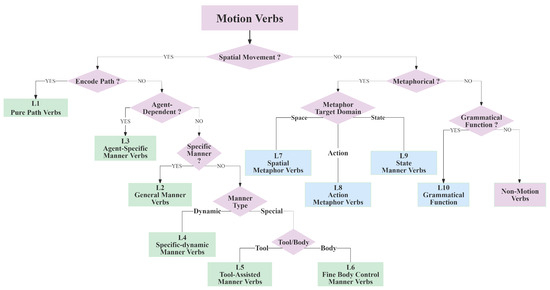
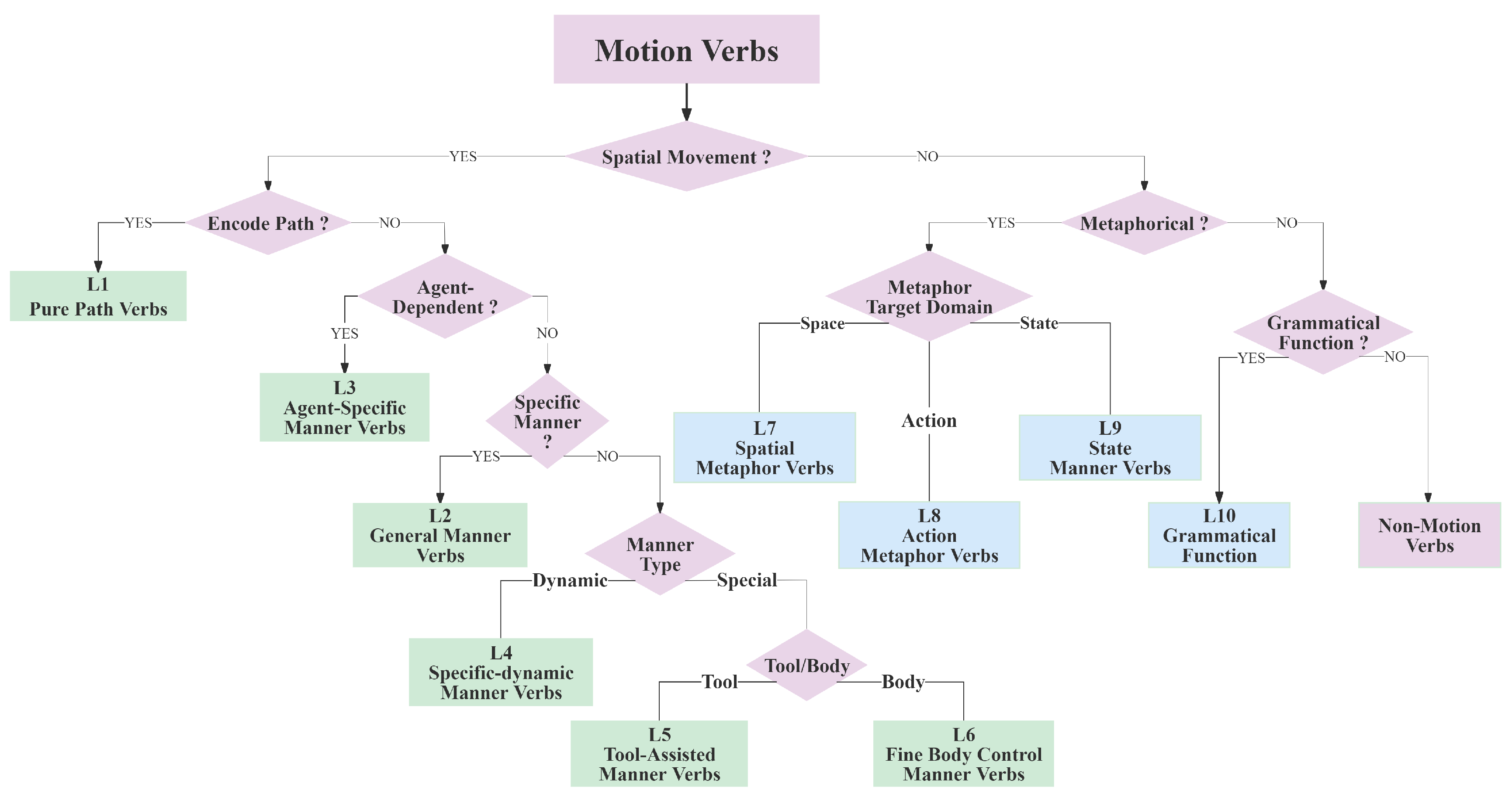
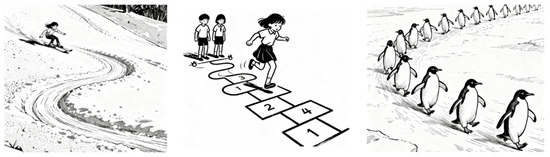
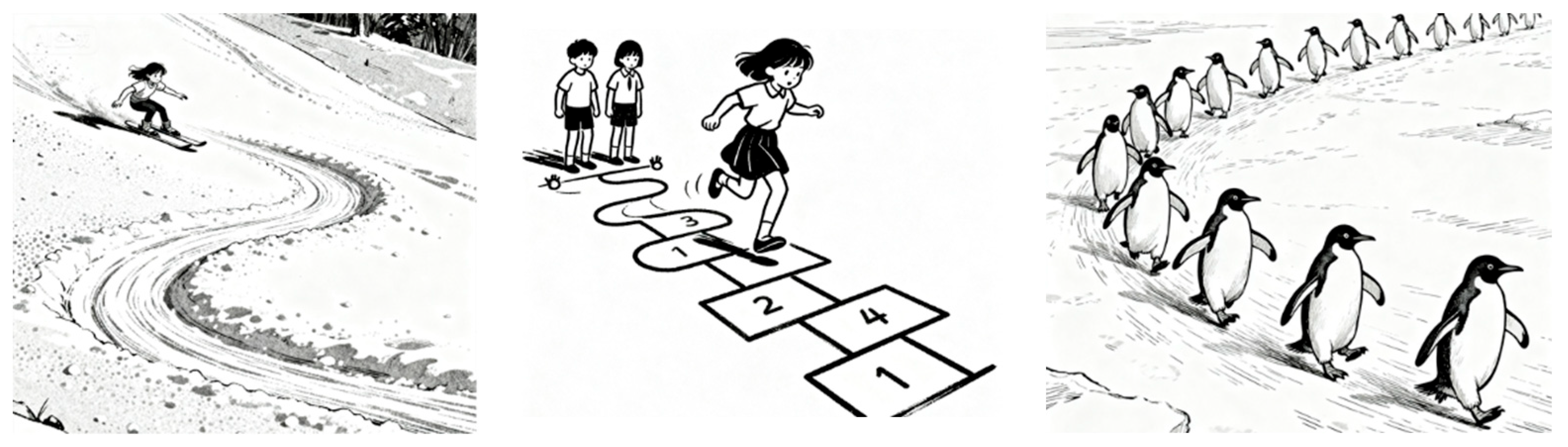
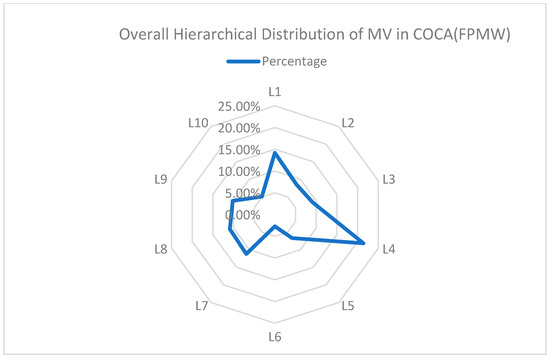
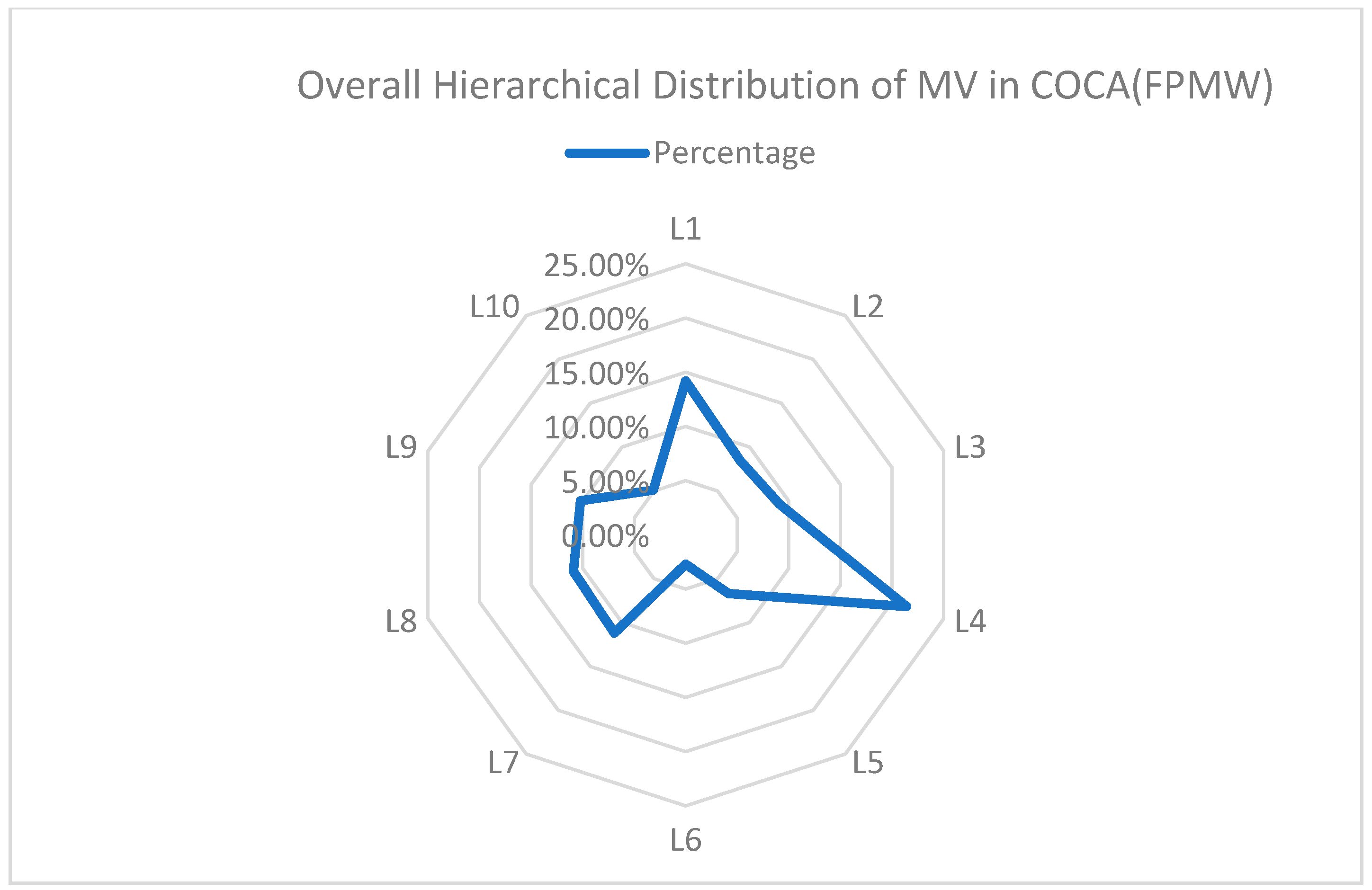
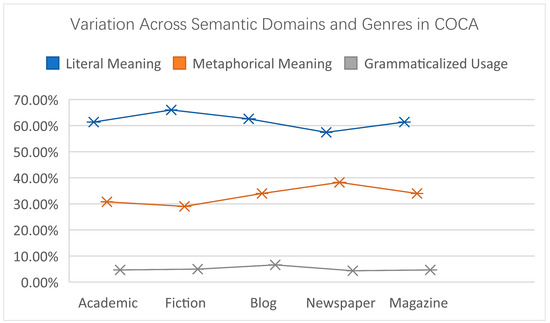
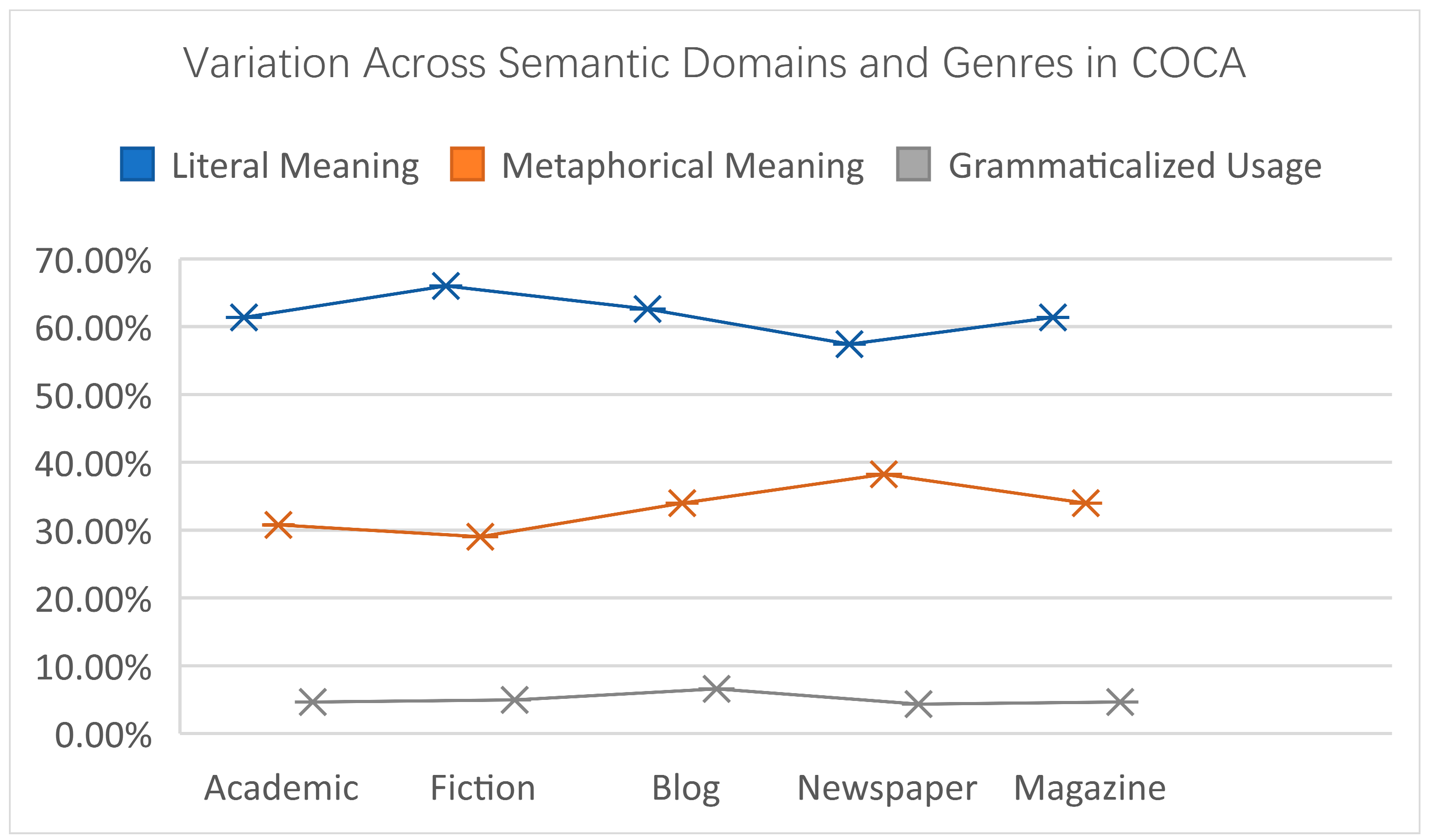
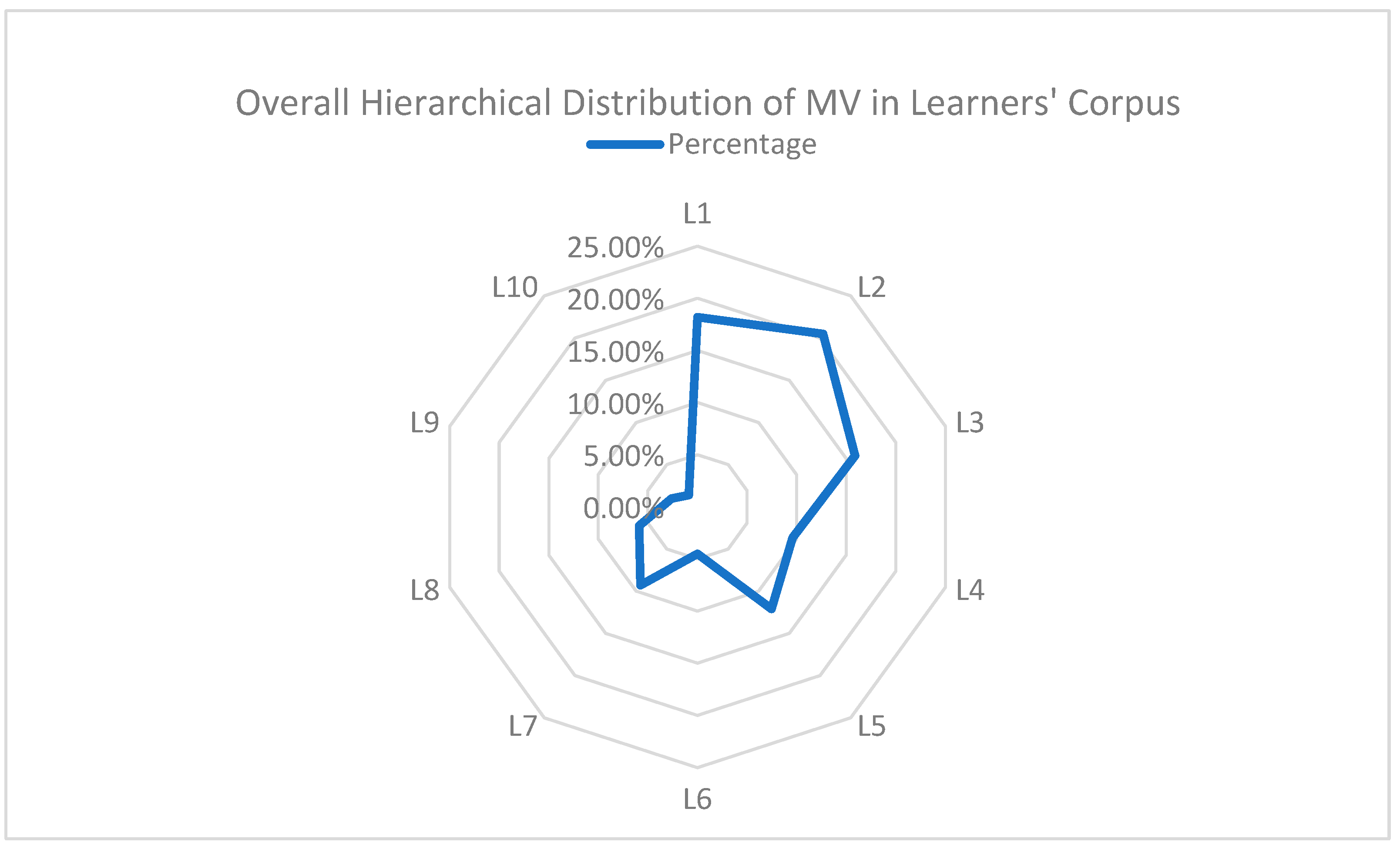
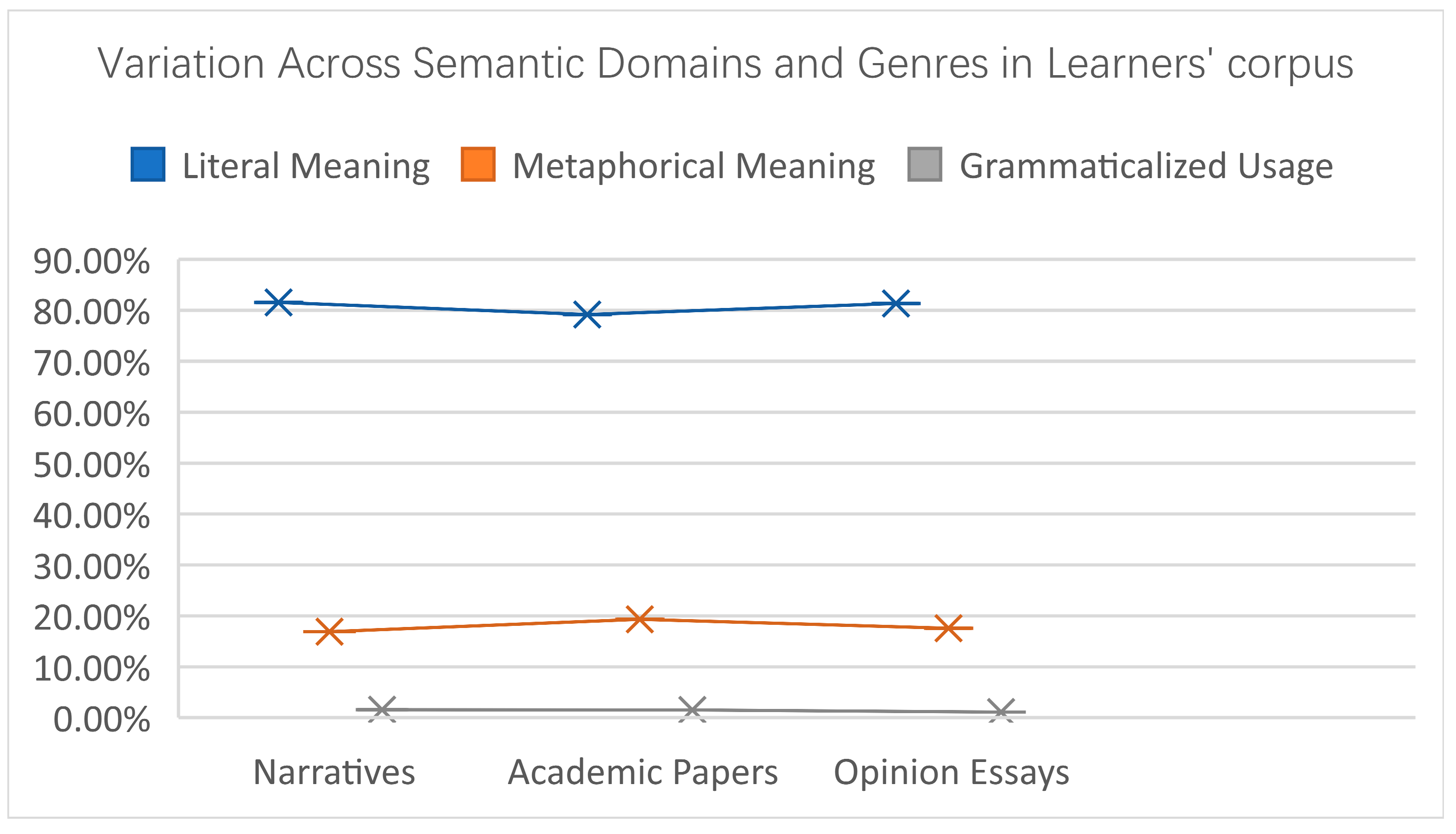

Disclaimer/Publisher’s Note: The statements, opinions and data contained in all publications are solely those of the individual author(s) and contributor(s) and not of MDPI and/or the editor(s). MDPI and/or the editor(s) disclaim responsibility for any injury to people or property resulting from any ideas, methods, instructions or products referred to in the content. |
© 2026 by the author. Licensee MDPI, Basel, Switzerland. This article is an open access article distributed under the terms and conditions of the Creative Commons Attribution (CC BY) license.