


Abstract
Transparent orthographies, such as Bulgarian and Italian, feature highly consistent grapheme-phoneme correspondences, enabling rapid acquisition of decoding skills. Despite belonging to different language families and using distinct scripts (i.e., Cyrillic vs. Latin), these languages provide an ideal framework to investigate whether orthographic transparency can outweigh script differences in shaping reading development. We conducted a cross-sectional study with primary school children from Grades 2 to 5 in Bulgaria and Italy. Reading performance was recorded using a novel finger-tracking technique, which allows the capture of temporal dynamics of reading in a portable, low-cost, and classroom-friendly format. Measures of reading time and text comprehension accuracy were compared across grades and languages. Developmental trajectories for both speed and comprehension accuracy showed remarkable similarity across Bulgarian and Italian, with both languages exhibiting steady improvement from grade 2 to grade 5. Our cross-linguistic results showed that reading development in primary school children follows both universal and language-specific trajectories. While broad developmental trajectories were similar, cross-linguistic differences emerged in the impact of morphological complexity, pointing to both universal and language-specific mechanisms. Our findings indicate that orthographic transparency may exert a stronger influence on early reading development than script type, even across languages from different families. The study also highlights the potential of finger-tracking for large-scale literacy research. Establishing comparable developmental benchmarks in transparent orthographies may inform cross-linguistic screening tools and early interventions.
1. Introduction
Reading acquisition is a complex developmental process shaped by the interplay of linguistic, cognitive, and educational factors. Among these, the transparency of an orthographic system — how consistently written symbols (i.e., graphemes) map onto spoken sounds (i.e., phonemes) — plays a key role in early decoding skills and fluency development. Transparent orthographies, such as Italian and Bulgarian (Schüppert et al., 2017), offer an ideal window to explore both universal and language-specific patterns of reading development, particularly when comparing languages that differ in script but share consistent grapheme-phoneme mappings.
Successful reading relies not only on the ability to decode written symbols into sounds, but also on efficient lexical access, working memory, attentional control, and the gradual automatisation of orthographic patterns (Ehri, 2005; Share, 2008). Individual differences in exposure to print, quality of instruction, and cognitive maturation further modulate reading trajectories, influencing both the speed and accuracy of word recognition (Rayner, 2009). Capturing these dynamics requires methodologies that go beyond static accuracy measures, allowing researchers to observe the temporal unfolding of reading in naturalistic settings.
Despite the abundance of studies on reading acquisition within individual languages, cross-linguistic comparisons that leverage ecologically valid and fine-grained measures remain scarce. Such cross-linguistic comparisons, particularly when combined with fine-grained temporal measures, can reveal whether developmental trajectories of reading acquisition unfold similarly across languages or are modulated by language-specific characteristics, thus disentangling universal from language-dependent aspects of reading development.
This study addresses this gap by employing the finger-tracking technique, which records the continuous movements of a reader’s finger across a connected text, to compare reading development trajectories in Bulgarian and Italian primary school children, in daily schooling settings. The methodology provides a fine-grained, temporally sensitive measure of reading dynamics. This approach allows us to quantify the automatisation of word recognition and to detect subtle differences in processing efficiency across languages and school-grade groups, going beyond traditional measures of accuracy or reaction time.
1.1. Orthographic Transparency and Developmental Trajectories
Orthographies differ in the consistency of their grapheme-phoneme correspondences, with transparent systems (e.g., Italian, Bulgarian) providing a highly predictable mapping between written symbols and spoken sounds. For example, in Italian, each vowel corresponds consistently to a single grapheme, facilitating early decoding; in Bulgarian, the orthographic system is likewise characterised by largely predictable grapheme-phoneme correspondences, despite some context-dependent alternations. More subtle differences exist, as shown by empirical quantification of orthographic transparency across languages (Schüppert et al., 2017), with Bulgarian being the easiest to read among the Slavic, Germanic, and Romance analysed languages, highlighting small but potentially relevant differences for reading development.
According to the psycholinguistic Grain Size theory (Ziegler et al., 2010; Ziegler & Goswami, 2005), such transparency facilitates early mastery of decoding, as learners can rely on small, consistent grain sizes from the onset. Cross-linguistic research has consistently shown that children acquiring transparent orthographies achieve accurate word recognition and decoding skills earlier than peers learning opaque systems such as English or French (Seymour et al., 2003; Share, 2008). Nonetheless, fluency development and comprehension skills evolve more gradually, influenced by cognitive maturation, exposure, and instruction quality (Nation, 2019; Warmington & Hulme, 2012). Studies directly comparing different transparent orthographies remain scarce, especially across languages using different scripts, limiting our understanding of universal versus language-specific developmental patterns (Caravolas et al., 2013).
Such cross-linguistic differences in orthographic consistency suggest that readers may rely on additional predictive mechanisms to support efficient word recognition, particularly when processing longer or morphologically complex words. Anticipatory processing plays a crucial role in efficient word recognition, particularly for longer or morphologically complex words. Empirical studies indicate that developing readers gradually learn to predict upcoming segments based on morphological, orthographic, and positional cues, thereby reducing processing load and increasing reading speed (Beyersmann & Grainger, 2018; Beyersmann et al., 2015; Carlisle, 2000). Such mechanisms allow readers to exploit regularities within words, facilitating faster lexical access and supporting the transition from controlled to automatic processing. Cross-linguistic evidence suggests that the relative contribution of morphological versus orthographic cues may vary depending on the language-specific structure, providing a basis for comparing developmental trajectories in Bulgarian and Italian children.
However, less is known about how fluency, lexical automaticity, and comprehension unfold in languages that differ in script yet share similar transparency levels. Such comparisons are crucial to disentangle universal developmental mechanisms from language-specific influences and to inform theories of reading acquisition across orthographies (Nation, 2019; Share, 2025; Warmington & Hulme, 2012). By capturing temporal reading dynamics, methodologies like finger-tracking enable a fine-grained analysis of processing efficiency, offering sensitive measures of developmental changes in automaticity and lexical access.
1.2. Reading Aloud vs. Silent Reading in Development
A key developmental shift involves the divergence between aloud and silent reading speeds. In early grades, both modes are closely aligned, as silent reading still engages phonological processing and covert, subvocal articulation (LaBerge & Samuels, 1974; Perfetti, 1985; Wright et al., 2004). Over time, silent reading becomes faster and less dependent on phonological decoding, reflecting the acquisition of larger orthographic units and more efficient lexical access (Brysbaert, 2019; Rayner, 2009). This developmental divergence is widely interpreted in terms of automaticity, namely the ability to recognise words rapidly and effortlessly without conscious attention. Automatic word recognition is considered a prerequisite for fluent reading, as it frees cognitive resources for comprehension (Breznitz, 2006; LaBerge & Samuels, 1974; Nunes et al., 2012). Accordingly, the progression from aloud to silent reading marks not only a quantitative increase in speed but also a qualitative shift from controlled decoding to automatic processing (Perfetti, 2007).
While this transition has been well documented in languages with Latin scripts, such as English and Italian (Zoccolotti et al., 2009), less is known about how it unfolds in other languages with transparent orthographies, especially those employing different scripts (Kuhn & Stahl, 2003). Understanding these patterns can inform both theoretical models and educational practice, particularly in defining benchmarks for the development of reading fluency.
1.3. Finger-Tracking as a Methodological Bridge
Recent methodological advances, such as finger-tracking, offer promising alternatives to traditional eye-tracking by providing high temporal resolution data on reading behaviour in naturalistic contexts (Crepaldi et al., 2022; Nadalini et al., 2023). Finger-tracking involves recording the temporal dynamics of finger movements as readers point to or follow text, capturing fine-grained processing times without the need for specialised laboratory equipment.
In the present study, we employed the ReadLet system, a cloud-based infrastructure that administers reading tasks via a tablet app while recording finger touches and oral reading. Data are encrypted, pseudonymised, and transmitted securely to a central repository, where multi-modal processing integrates text, audio, and haptic signals. Processed results are accessible for researchers for post-hoc analyses. Importantly, finger-tracking has demonstrated strong correlations with eye-tracking metrics such as fixation durations and saccade patterns in both adult and developing readers, supporting its convergent validity as a behavioural proxy for the temporal dynamics of reading (Crepaldi et al., 2022; Nadalini et al., 2023). Such evidence indicates that finger movements reliably reflect underlying oculomotor control and lexical processing during reading. Its portability, scalability, ease of use, and cost-effectiveness make finger-tracking especially suitable for large-scale studies in schools and diverse linguistic settings (Taxitari et al., 2021). Employing this approach facilitates cross-linguistic comparisons and expands access to developmental reading data collection. From an applied perspective, the scalability and classroom compatibility of finger-tracking make it a promising tool for informing educational practice and literacy policies through large-scale, fine-grained assessments of reading development.
Crucially, this methodology allows for a direct comparison of reading dynamics across languages with different scripts, such as Italian and Bulgarian, capturing developmental trajectories of fluency, lexical access, and sublexical processing in ecologically valid settings.
1.4. Aims and Hypotheses
Building on the scarcity of cross-linguistic studies that combine ecologically valid and fine-grained measures of reading development, the present study systematically compares aloud and silent reading development in Bulgarian and Italian using finger-tracking. We focus on the developmental trajectory from grade 2 to grade 5, assessing the extent to which the two languages show comparable growth in reading speed and the emergence of a silent-aloud gap. In addition, we operationalise the divergence between silent and aloud reading as an automation index, capturing the extent to which reading can be carried out efficiently without articulatory support. This measure is intended to provide a cross-linguistic marker of developing automaticity in word recognition, and to show how the transition from controlled to more automatic processing unfolds across grades in the two languages.
We expect (i) a general increase in reading speed with grade level in both languages, providing a validation of the finger-tracking methodology against established developmental benchmarks; (ii) a progressive divergence between aloud and silent reading, with silent reading becoming faster at higher grades, consistent with theoretical accounts of reading automaticity; (iii) broad similarities in developmental patterns across the two languages, reflecting their shared orthographic transparency despite differences in scripts.
2. Materials and Methods
2.1. Participants
We recruited 67 children from grades 2 to 5 from single classes at one primary school in Pisa (Italy), and 83 children from grades 2 to 5 from single classes at one primary school in Sofia (Bulgaria). In both countries, participation was contingent on parental consent, and no selection bias for reading skills was applied. Children had normal or corrected-to-normal vision; none had hearing problems, neurodevelopmental disorders, learning disabilities, or cognitive impairments. All children were native or dominant speakers of the target language, with minimal exposure to additional languages. Reading sessions were conducted at a school desk, with each child using a tablet in portrait orientation.
Detailed demographic characteristics for both Bulgarian and Italian participants are given in Table 1.
Table 1.
Demographic characteristics of Bulgarian (BG) and Italian (IT) participants by grade level. Age is reported with decimal months.
2.2. Materials
Reading materials consisted of age-appropriate texts in terms of length, morphological and syntactic complexity, as well as lexical length and frequency. The narrative texts were originally authored in Italian and then translated into Bulgarian following criteria aimed at preserving linguistic and structural comparability across languages. In particular, sentence number and sentence type were kept constant across versions (e.g., simple sentences were translated as simple sentences, and complex sentences as structurally comparable complex sentences), avoiding sentence splitting or merging. Lexical choices were constrained to age-appropriate vocabulary and basic lexis, and narrative content was designed to be culturally neutral and equally familiar to children in both contexts. Minor adaptations, such as replacing Italian proper names with commonly used Bulgarian ones, were introduced solely to ensure naturalness without altering narrative structure or meaning. Overall, the translation process aimed to maintain comparable levels of lexical, morphological, and syntactic complexity across languages, insofar as allowed by their grammatical systems (Pirrelli & Koeva, 2024).
Narrative contents were divided into five episodes of increasing difficulty, ensuring a gradual progression in reading complexity. Each episode was followed by two wh-questions with multiple-choice answers, designed to assess children’s comprehension of the story, including temporal and cause-effect relations.
Texts were annotated and automatically tagged for part-of-speech (PoS) (for Italian (Dell’Orletta et al., 2011), for Bulgarian (Karagiozov et al., 2011)). Frequency distributions were extracted from the Subtlex corpus (Crepaldi et al., 2013) and a sub-section from the Bulgarian National Corpus (Koeva et al., 2012), respectively. Since the Italian reference corpus is much larger than the Bulgarian one, and not child-specific, raw frequency counts are not directly comparable across languages. To control for corpus size and distributional differences between the two corpora, frequency values were normalised into a percentile rank scale (1–1001). This allows cross-linguistic comparisons while avoiding distortions from extremely high-frequency items.
Descriptive statistics for both Bulgarian and Italian narrative texts are given in Table 2, with the total number of tokens per episode reflecting all occurrences, and the mean word length and frequency over word types.
Table 2.
Descriptive statistics for Bulgarian and Italian reading texts: token counts, mean word length (SD), and mean corpus-based normalised (log)frequency (SD) per episode, for each text.
2.3. Equipment
Reading sessions were conducted on two tablet devices: a 10.5-inch Samsung Galaxy TAB A8 and a 10.4-inch Samsung Galaxy TAB S6 Lite (Samsung, Seoul, Republic of Korea). Texts were displayed in a sans-serif font (Arial, 21.25 pt). Both tablets ran Android (versions 11 and 12, respectively) and had screen resolutions of approximately 1920 × 1200 pixels, ensuring consistent text presentation across devices. Finger trajectories can be captured with an effective sampling rate ranging from approximately 60 to 120 Hz. This corresponds to a potential of approximately 24 touch events per syllable when reading at an average pace of about 5 syllables per second, a typical range for fluent adult readers (Brysbaert, 2019).
2.4. Procedure
During two consecutive reading sessions, both Italian and Bulgarian children read two story-line texts, one orally and one silently, each consisting of a maximum of 5 episodes of increasing difficulty. To match developmental levels, the number of episodes assigned increased with grade: grade 2 read episodes 1–2, grade 3 read episodes 1–3, grade 4 read episodes 1–4, and grade 5 read all five episodes. Comprehension was assessed with two questions following each episode.
While seated at a school desk and, before each reading session, participants were instructed to follow the text using the tip of the index finger of their dominant hand. Session duration, text order, and instructions were standardised across participants.
Reading sessions were conducted on tablets in portrait orientation displaying one episode at a time. The Readlet application (Ferro et al., 2018; Marzi et al., 2020; Nadalini et al., 2023; Taxitari et al., 2021) recorded finger movements and voice recordings in oral reading. After reading sessions, finger trajectories were aligned to the displayed text using a convolution-based procedure, allowing the computation of textual coverage. For each continuous time series of touch events within a letter bounding box, tracking time was computed as the difference between the last time tick and the ensuing one. Sessions with coverage below 80% were excluded from further analyses.
3. Results
All statistical analyses and data visualisations were performed using R (version R-4.5.1, R Core Team, 2025). For non-linear regression plots, additional Generalised Additive Models (GAMs) were fitted (Wood, 2017); detailed model specifications and estimates are provided in Appendix A.
3.1. Developmental Changes in Reading Times Across Modalities
To investigate developmental changes in reading pace, we examined aloud and silent reading times in both Bulgarian and Italian children. To ensure more robust analyses, tokens with exceptionally long reading times were excluded. Specifically, values exceeding 3.75 s — corresponding to the extreme tail of the distribution (0.2% of tokens) and reflecting isolated cases of inactivity or untracked reading — were removed from both data-frames. This trimming minimises the influence of outliers without altering the overall data pattern. Tokens with a recorded reading time of 0 s were also excluded from the analyses (<3% of tokens in Bulgarian data only), as they reflect words not tracked by finger movement rather than true reading times. This preprocessing step reduced the influence of atypical values.
Figure 1 illustrates the distribution of per-token reading times across grade levels (grades 2–5) separately for aloud and silent reading modalities, in the Bulgarian sample. A clear developmental progression emerged in both modes, with median reading times decreasing steadily from grade 2 to grade 5. The Italian cohort showed an almost identical trajectory across modalities, as shown in Figure 2.
Figure 1.
Distribution of word-token reading times (in seconds) across grade levels, for aloud and silent reading modalities, in Bulgarian data.
Figure 2.
Distribution of word-token reading times (in seconds) across grade levels, for aloud and silent reading modalities, in Italian data.
These distributions illustrate not only the stepwise reduction of reading time across grades but also the within-grade variability, highlighting the robustness of the observed developmental trajectory and the progressive divergence between aloud and silent reading.
Non-parametric Kruskal–Wallis tests confirmed a significant main effect of grade level in Bulgarian data for both aloud reading, = 1247.4, p-value , and silent reading, = 1512.9, p-value . Pairwise post hoc comparisons (Dunn’s tests with Holm correction) revealed that each consecutive grade differed significantly from the previous one in both reading modes (aloud — grade 2 vs. 3: Z = 11.83, grade 3 vs. 4: Z = 11.66, grade 4 vs. 5: Z = 13.94; silent — grade 2 vs. 3: Z = 16.69, grade 3 vs. 4: Z = 12.82, grade 4 vs. 5: Z = 12.49; all p-values ).
The Italian data showed the same developmental progression, as confirmed by the non-parametric tests: = 4021.4, p-value in aloud reading, and = 4714.5, p-value in silent reading; and further supported by pairwise post hoc comparisons (aloud — grade 2 vs. 3: Z = 24.29, grade 3 vs. 4: Z = 13.28, grade 4 vs. 5: Z = 8.28, all p-values ; silent — grade 2 vs. 3: Z = 24.96, grade 3 vs. 4: Z = 18.38, grade 4 vs. 5: Z = 5.85, all p-values ).
These results indicate a consistent reduction of reading times, corresponding to a stepwise acceleration in reading speed across grades. Importantly, this pattern was observed in both the Bulgarian and the Italian cohorts, pointing to a shared developmental trajectory across these languages. The systematic grade-to-grade improvements in both modalities set the stage for examining how the gap between aloud and silent reading evolves across development. The next analysis focuses on within-grade comparisons between the two reading modalities to quantify the onset and magnitude of this aloud-silent divergence.
When comparing reading modes within each grade level, the aloud-silent difference was minimal and not statistically significant, in Bulgarian data, in grade 2 ( = 3.14, p-value > 0.05) but became larger and significant in later grades: grade 3, = 107.60, p-value ; grade 4, = 153.64, p-value ; grade 5, = 181.22, p-value .
A similar progression was found in Italian data, though with a statistically significant difference in grade 2 ( = 57.52, p-value ), as well as for later grades (grade 3 = 43.28, p-value , grade 4 = 497.90, p-value , grade 5 = 431.50, p-value ).
Both datasets converge in showing the same developmental trajectory. This pattern, in fact, reflects a developmental divergence, whereby silent reading becomes progressively faster relative to aloud reading as decoding skills and lexical access become more automatised. Notably, the minimal aloud-silent difference in grade 2, observed in Bulgarian, reflects the developmental stage at which children’s silent reading still closely mirrors the pace of oral reading. The discrepancy with Italian data may reflect the fact that Italian children were tested quite at the end of the school year (May), whereas Bulgarian children were tested in February. Generally, early silent reading is often subvocalised and constrained by articulation speed (Brysbaert, 2019; Rayner, 1998), which explains the similarity across modalities in Bulgarian children. From grade 3 onwards — in both cohorts — silent reading progressively decouples from overt articulation, leading to the faster pace observed.
The overall cross-linguistic convergence indicates that the divergence between aloud and silent reading pace — measured as reading time per word token — is a robust developmental phenomenon, reflecting the progressive automatisation of lexical access and the decoupling of silent reading from articulation speed.
3.2. Developmental Changes in Reading Comprehension Accuracy
Comprehension accuracy, assessed via questions following each episode of the story-line texts, showed clear developmental trends across grades, despite the increasing complexity of the additional episodes. Non-parametric Kruskal-Wallis tests indicated significant differences across grades for both reading modalities in Bulgarian data (aloud — = 1352.3, p-value , silent — = 37.22, p-value ), and in Italian data (aloud — = 2199.40, p-value ; silent — = 5336.80, p-value ). Analyses reflect token-level observations, which are nested within children, for each text.
These results parallel the developmental trajectories observed in reading times: as children gain proficiency, they not only read faster but also comprehend more accurately.
Comparisons across reading modalities within each grade revealed developmental changes in the aloud-silent difference. In Bulgarian children, the difference in grade 2 was minimal and not significant (t-test: t = −1.20, p-value > 0.05), likely reflecting subvocalisation in early silent reading. In later grades, aloud reading was associated with slightly higher comprehension accuracy compared to silent (grade 3: t = 20.32, p ; grade 4: t = 26.36, p ; grade 5: t = 11.30, p ). This suggests that vocalisation and sub-vocalisation may help maintain attention, supporting more accurate understanding.
In the Italian sample, the aloud-silent difference was already significant in grade 2 (t = , p ), and continued to differ in subsequent grades (grade 3: t = 17.44; grade 4: t = 10.04; grade 5: t = 28.67; all p-values ), with a better comprehension accuracy in the aloud reading modality.
Despite being slower, aloud reading was associated with higher comprehension accuracy. This cross-linguistic evidence likely reflects the stronger attentional focus required by articulation, which constrains skipping and enforces sequential word-by-word processing. In contrast, silent reading allows faster progression through the text, but may foster a shallower processing style, leading to slightly reduced comprehension scores.
3.3. Reading Speed per Token: Lexical Influences Across Grades and Modalities
To complement the analyses of raw reading times, we derived a normalised reading speed measure (characters per second). This allows us to account for differences in word length and examine the influence of lexical properties — such as length, frequency, and part-of-speech category — on reading performance across grades and modalities.
Figure 3 and Figure 4 illustrate the relation between reading speed and lexical variables (word length and log-transformed frequency) across grades and modalities, in Bulgarian data.
Figure 3.
Non-linear regression plots (ggplot function, loess method) fitting tracking speed (characters per seconds) across grade levels as a function of word length, for aloud and silent reading modalities, in Bulgarian data. Shaded areas indicate confidence intervals.
Figure 4.
Non-linear regression plots (ggplot function, loess method) fitting tracking speed (characters per seconds) across grade levels as a function of word (log) frequency, for aloud and silent reading modalities, in Bulgarian data. Shaded areas indicate confidence intervals.
For word length, all grades showed a non-linear pattern: reading speed decreased with increasing length, but the effect flattened for longer words, tending to produce an asymptotic trend, in particular for more proficient readers. In grade 2 the decline is more pronounced and extended across the entire length range. In grade 3, a slight rebound is visible at the upper end (length > 10) reflecting data sparsity. By grades 4 and 5, the curves reached an asymptote for increasing word length, especially in the silent reading modality, indicating that length effects were progressively reduced and automatised with development.
For word frequency, a clear developmental shift emerges. In grade 2, the effect is approximately linear, with reading speed increasing steadily for increasing frequency. In higher grades, however, the curves became progressively more steeper: speed gains are larger for high-frequency words — especially in silent reading — while low-frequency words showed comparatively limited improvement. This pattern suggests an increasing sensitivity to high-frequency items with age, reflecting a sharpening of lexical tuning.
Figure 5 and Figure 6 report the corresponding patterns for Italian children, for word length and word frequency (as normalised log frequency), respectively.
Figure 5.
Non-linear regression plots (ggplot function, loess method) fitting tracking speed (characters per seconds) across grade levels as a function of word length, for aloud and silent reading modalities, in Italian data. Shaded areas indicate confidence intervals.
Figure 6.
Non-linear regression plots (ggplot function, loess method) fitting tracking speed (characters per seconds) across grade levels as a function of word (log) frequency, for aloud and silent reading modalities, in Italian data. Shaded areas indicate confidence intervals.
In Italian data, the general developmental pattern mirrored the Bulgarian findings, but with subtle differences. For word length, in aloud reading, the decline tended to level off asymptotically in grades 4 and 5, while remaining more pronounced — in particular in silent reading — for 2nd and 3rd graders.
In silent reading a strong non-monotonic trajectory emerged in the higher grades: speed tended to increase again for longer words, whereas in grades 2 and 3 the downward trend continued. This pattern may suggest an increasing use of anticipatory processing in older children: once the initial part of a word is recognised, upcoming inflectional or derivational endings can often be inferred based on the syntactic and semantic cues (Casalis et al., 2009; D’Alessio et al., 2019; Fleischhauer et al., 2021). Such anticipatory processing is more readily available in silent reading, where articulation constraints are absent, whereas aloud reading still requires the full vocalisation of each segment, maintaining the length penalty.
While these results capture the overall cost of word length, they may inevitably conflate initial decoding demands with potential facilitatory mechanisms that may be observed as more of a word token is read. To disentangle these dynamics, and to further validate and refine our interpretation, we complemented token-level analyses with intra-word level investigations (letter-by-letter dynamics). These results, presented in Section 3.5, revealed that the developmental rebound observed in silent reading of longer words is underpinned by anticipatory processing mechanism. By contrast, in Bulgarian, words of comparable length do not systematically provide such anticipatory cues, due to more variable morphology and less predictable suffixation patterns. Consequently, the developmental rebound observed in Italian is absent in Bulgarian, reflecting language-specific morphological constraints rather than differences in reading skill.
For word frequency, Italian data revealed a modest but consistent effect: reading speed increased slightly with higher normalised frequency values, across both modalities and grade levels. The developmental trend thus converges with the Bulgarian pattern in direction, although the effect size was less pronounced. This weaker gradient may partly reflect differences in the frequency distributions, as the Italian frequencies were derived from a large general-language corpus rather than a child-directed one.
Exploratory analyses including both word length and frequency revealed a small but significant negative interaction for grades 4–5 in silent reading. This supports the idea that the facilitatory effect of word frequency diminishes in older children, as other mechanisms, such as anticipatory processing of morphologically complex words, become predominant, allowing them to accelerate even on longer words once thematic segments are recognised.
To further examine lexical influences on reading development, we compared tracking speed for content words (nouns, verbs, adjectives, and adverbs) and function words (articles, prepositions, pronouns, conjunctions). These two classes differ markedly in their cognitive demands: content words require lexical access and semantic integration, whereas function words are typically shorter, more frequent, and often processed in a more automatic and less attention-demanding manner. From a developmental perspective, these differences tend to manifest in distinct reading trajectories. In early grades, the gap between content and function words is relatively small. With increasing reading proficiency, however, speed differences are expected to grow, especially in silent reading, where automatisation accentuates lexical-class contrasts.
In Table 3 we report the results of non-parametric Kruskal-Wallis tests on reading speed (characters/sec) for content versus function words, across grade levels and reading modalities. Mean speeds for each word type are also provided, highlighting developmental changes in lexical-class effects.
Table 3.
Kruskal-Wallis tests on reading speed (characters/s) by word type (content vs. function words) with mean values across grades and reading modalities, in Bulgarian (BG) and Italian (IT) data.
Consistent with prior analyses (see, for example, Segalowitz & Lane, 2000; Staub, 2024), reading speed differed reliably between content and function words across all grades and reading modalities. Function words were read faster than content words starting from grade 2. This pattern was observed in both aloud and silent reading, suggesting that the developmental acceleration of function word processing occurs independently of reading modality. The persistent disparity between content and function words — in both Bulgarian and Italian data — suggests an early automatisation of function word recognition, while content words remain more sensitive to lexical factors such as length and frequency. These findings align with earlier observations on word length and frequency effects, highlighting that lexical tuning sharpens with reading experience and that processing advantages for function words emerge early but continue to expand with development (Staub, 2024).
Accordingly, in our data — as shown in Table 3 — function words are consistently read faster than content words across both reading modalities. This pattern suggests that the automatisation of function word recognition proceeds more rapidly than that of content words, reflecting differential sensitivity to lexical properties and the progressive efficiency of silent reading. Notably, the slower reading of shorter words observed in Figure 5 appears primarily driven by short content words, which are less predictable and lower in frequency, consistent with the lexical-class effects reported here.
3.4. Reading Modality and Lexical Automatisation Across Languages
Reading modality provides an informative window into the automatisation of word recognition. Silent reading is generally faster than reading aloud, as it bypasses the articulatory demands and allows more efficient decoding (Chen et al., 2025; Perfetti et al., 2005).
To capture the difference between silent and aloud reading, we computed their ratio as an index of lexical automatisation: higher values reflect greater fluency and efficiency, indicating that readers can process words without relying on overt articulation, whereas lower values suggest that silent reading does not confer a substantial speed advantage, pointing to lower automaticity, particularly in developing readers (Kim et al., 2011). Importantly, this effect may vary across word types: function words, being shorter, more frequent, and less semantically demanding, tend to show earlier gains in automaticity, whereas content words remain more sensitive to lexical variables. Examining silent versus aloud reading for content and function words thus provides additional insight into the developmental trajectory of lexical processing efficiency. To facilitate cross-linguistic comparisons, we computed the ratio of silent to aloud reading speed as a straightforward index of lexical automatisation, highlighting the extent to which reading can be efficiently carried out without articulatory support. By comparing these ratios across Bulgarian and Italian readers, we can assess whether the developmental acceleration of silent reading relative to aloud reading follows similar patterns in the two languages, and whether language-specific factors (e.g., word length, word frequency, word category distributions) modulate the trajectory of reading fluency. Formally, we express this index as the ratio of silent to aloud reading speed, as shown in Equation (1):
where and represent the mean reading speeds (in characters per second) for silent and aloud reading, respectively. This ratio provides a straightforward index of lexical automatisation: higher values indicate that readers can efficiently process words without the need for articulatory support, reflecting greater fluency and automaticity in word recognition. Conversely, values closer to 1 suggest that silent reading does not confer a substantial speed advantage, therefore indicating lower automaticity.
To assess developmental changes in lexical automatisation, we compared the Automation Index across grade levels using a Kruskal-Wallis test. For Bulgarian data, results indicated a significant effect of grade ( = 55.94, p-value ). Post hoc pairwise comparisons with Dunn’s test revealed significant increases in the index from second to third grade (Z = −4.58, p-value ) and from third to fourth grade (Z = −2.81, p-value ), reflecting progressive enhancement of silent reading efficiency relative to aloud reading. The comparison between fourth and fifth grade showed a small decrease in the index (Z = 2.42, p-value ), suggesting a possible plateau in the growth of automation at later grades. In fact, this does not reflect a regression in automatisation, since children — as they progress through grades — are exposed to texts of increasing difficulty.
For Italian children, the Kruskal-Wallis test also indicated a significant effect of grade on the Automation Index (, p-value ). Post hoc pairwise comparisons using Dunn’s test (Holm correction) revealed a significant increase from second to third grade (Z = −1.89, p-value ), a large increase from 3rd to 4th grade (Z = −4.89, p-value ), and a small decrease in the index from fourth to fifth grade (Z = 1.91, p-value ), as already observed for Bulgarian children.
These convergent results suggest that the automation index captures developmental increases in reading efficiency, while also reflecting the interaction between growing reading skills and the increasing complexity of reading materials across grades.
To further clarify the role of lexical properties in the development of reading automatisation, we computed the Automation Index separately for content and function words. This distinction allows us to assess whether developmental gains in silent reading efficiency are uniform across word types, or whether high-frequency, short function words reach automaticity earlier than longer, semantically richer content words.
For content words, post hoc comparisons revealed significant increases in the index — for Bulgarian data — from second to third grade (Z = −4.31, p-value ), third to fourth grade (Z = −2.54, p-value ), and fourth and fifth grade (Z = 2.52, p-value ), indicating progressive enhancement of silent reading efficiency relative to aloud reading. In Italian data, we observed only a marginal not significant difference in the automation index from second to third grade (Z = −2.06, p-value ), a significant growth in the index from third to fourth grade (Z = −3.47, p-value ), and a small non significant difference from fourth and fifth grade (Z = 0.83, p-value ).
Function words, in contrast, showed no significant differences across grades and languages (all p-values ), consistent with the view that their higher frequency and shorter length confer earlier automatisation. This evidence aligns with previous findings (e.g., Joseph et al., 2009; Kim et al., 2011; Perfetti & McCutchen, 1982), which highlighted the influence of word length and frequency on reading speed, and suggests that such lexical properties may underlie the differential automatisation trajectories observed for content versus function words.
Beyond these grade-level trajectories, however, the automation index did not show statistically significant correlations with lexical variables such as word length or frequency. This suggests that the ratio of silent to aloud reading speed does not merely reflect token-level lexical characteristics, but rather indexes a broader aspect of reading efficiency. In line with theories of reading fluency and automaticity (Breznitz, 2006; LaBerge & Samuels, 1974; Perfetti, 2007), the transition from aloud to silent reading is suggested to capture a developmental shift in the balance between controlled and automatic processes. As a reader gains proficiency, silent reading becomes increasingly efficient, bypassing articulatory demands and reflecting more integrated and automatised lexical representations (Kim et al., 2011; Share, 2008). From this perspective, the automation index can be interpreted as a cognitive marker of reading fluency and proficiency, relatively independent of local lexical features, and instead reflecting the global efficiency of the reading system acquired by a child.
3.5. Intra-Word Dynamics: Position Effects and Anticipatory Processing
The analyses presented so far were conducted at the word level. To further investigate the emergence of anticipatory mechanisms in reading, we complemented them with an analysis at the intra-word level, where each orthographic symbol in words was taken as the basic unit of observation. This approach allowed us to examine how reading speed evolves across positions within a word and whether longer words are processed differently across developmental stages and reading modalities. Importantly, the rebound effect observed at the token level in Italian data may reflect a faster whole-word processing as well as position-specific gains in efficiency, which remain covered when averaging across the full words.
For a clear visualisation, words were grouped into two length categories: short (1–9 letters) and long (10–16 for Bulgarian data, 10–15 letters for Italian ones).
In Bulgarian data, as shown in Figure 7, for grades 2 and 3, speed profiles revealed a broadly linear increase across symbol positions, both in aloud and silent reading. This trend was especially clear for short words, but a similar progressive acceleration was also evident for long words. Such position-driven facilitation suggests that even early Bulgarian readers gradually gain efficiency as they proceed through a word, with little evidence of the late-position slowdown observed in their Italian peers (see Figure 8 below).
Figure 7.
Non-linear regression plots (ggplot function, loess method) fitting tracking speed as a function of symbol-in-word position for short and long words, for aloud and silent reading modalities, in Bulgarian second and third graders.
Figure 8.
Non-linear regression plots (ggplot function, loess method) fitting tracking speed as a function of symbol-in-word position for short and long words, for aloud and silent reading modalities, in Italian second and third graders.
In Italian data, as shown in Figure 8, for grades 2 and 3, the speed profiles for short words displayed a somewhat fluctuating increase across positions, reflecting the ongoing development of serial decoding efficiency. For long words, speed initially increased across the first few letters but then exhibited a marked slowdown (around position 9), suggesting processing difficulty for very long words. At this stage, absolute reading speed remained higher for Bulgarian children, consistent with their older age and greater spoken-language experience relative to Italian peers of the same grade level.
As shown in Figure 9 and Figure 10, for grades 4 and 5 — in both Bulgarian and Italian — speed profiles for short words were nearly linear, showing a steady increase across positions. A similar pattern is observed for long words as well. This pattern is consistent with the engagement of anticipatory mechanisms, in line with cohort models of word recognition (Marslen-Wilson, 1987; Pimentel et al., 2023). As children progress through the letters of a word, the set of possible lexical candidates narrows down, increasing the likelihood of successful identification. For long, morphologically complex words, the early identification of the stem allows the reader to anticipate the ending, further reducing processing demands on the final letters. Consequently, intra-word speed progressively increases toward the word’s end, particularly in silent reading where articulation constraints are absent. In these higher grades, absolute reading speed for Italian children surpassed that of Bulgarian children, especially for long words, supporting the role of anticipatory mechanisms in enhancing processing efficiency.
Figure 9.
Non-linear regression plots (ggplot function, loess method) fitting tracking speed as a function of symbol-in-word position for short and long words, for aloud and silent reading modalities, in Bulgarian fourth and fifth graders.
Figure 10.
Non-linear regression plots (ggplot function, loess method) fitting tracking speed as a function of symbol-in-word position for short and long words, for aloud and silent reading modalities, in Italian fourth and fifth graders.
Overall, these results support the view that anticipatory processing become increasingly available as children’s reading skills develop, particularly in higher grades and for longer, morphologically complex words, as confirmed by the non-linear regression shown in Figure 11 and Figure 12, where speed profiles in silent reading for long words only are considered across major part-of-speech categories. Interestingly, when examining word-class specific profiles, we observe contrasting patterns in early readers across the two languages. In Bulgarian, the pervasive effect of increasing speed across word positions — with the sole exception of very long adverbs — contrasts with the profile observed in Italian early readers, where long words elicited a clear slowdown in the final part of the word. The exception may reflect language-specific properties of Bulgarian adverbs, many of which are morphologically identical to neuter singular adjective forms. Distinguishing adverbs from adjectives therefore requires additional syntactic processing, including sensitivity to sentence position, agreement relations, and dependency structure, which may attenuate position-driven facilitation in developmental readers. As shown by Figure 11, left panel, for second and third graders, tracking speed increases with symbol position for nouns, verbs, adjectives, and function words, whereas adverbs display slightly decreasing profile for long word forms. For fourth and fifth graders (Figure 11, right panel), the position-driven facilitation remains robust, but a clearly linear relationship between symbol position and speed is most evident for nouns and adjectives, while other categories show more attenuated or category-specific trends.
Figure 11.
Non-linear regression plots (ggplot function, loess method) fitting tracking speed as a function of symbol-in-word position for long words, in silent reading, in Bulgarian second and third graders (left panel) and fourth and fifth graders (right panel).
Figure 12.
Non-linear regression plots (ggplot function, loess method) fitting tracking speed as a function of symbol-in-word position for long words, in silent reading, in Italian second and third graders (left panel) and fourth and fifth graders (right panel).
In Italian, a different developmental profile emerges. For second and third graders (Figure 12, left panel), all word classes exhibit a marked slowdown in the later portion of long words, reflecting the cumulative processing cost associated with serial decoding. By contrast, in fourth and fifth graders (Figure 12, right panel), speed profiles increase across all lexical categories, with faster tracking toward word-final positions, consistent with the increasing availability of anticipatory mechanisms.
These findings suggest that anticipatory processing in older children is primarily supported by increasing sensitivity to morphological regularities: once the root or stem of a word is identified, derivational or inflectional suffixes become progressively more predictable, reducing processing load and allowing faster tracking of word-final symbols.
At the same time, the symbol-level analyses by part-of-speech revealed a striking cross-linguistic asymmetry. In Bulgarian, speed profiles for long words showed a generally increasing trend across positions, not only in higher grades but already in second and third graders. This early emergence of position-driven facilitation is compatible with the availability of reliable sub-lexical cues including recurrent stem-suffix patterns and post-nominal markers such as the enclitic article, which may support incremental predictability once the stem has been identified. Thus, language-specific distributions of sub-lexical and morphosyntactic cues, together with developmental factors such as age and general linguistic experience, may modulate the point at which anticipatory mechanisms become functionally available during reading development.
In Italian, by contrast, younger readers exhibited the expected cumulative cost of length, with decreasing speed toward the end of long words. Only in grades 4 and 5 speed profiles begin to show anticipatory acceleration, consistent with a later developmental shift toward exploiting morphological regularities and syntactic predictability during silent reading.
4. Discussion
The present study investigated developmental changes in reading speed across different grades. The analyses of reading speed as a function of lexical variables revealed developmental changes that align with well-established trajectories in reading acquisition. Word length exerted a strong inhibitory effect in the early grades, with longer words slowing down tracking speed across the entire range. This effect progressively diminished with age, approaching an asymptote in the upper grades, especially in silent reading. Such a pattern is consistent with the view that length effects reflect reliance on more effortful, serial decoding processes, which gradually give way to more holistic and automatised recognition strategies as reading proficiency increases. For word frequency, we observed the opposite trend: while grade 2 children showed a broadly linear benefit of frequency, older readers displayed a non-linear pattern, with larger speed advantages for high-frequency words (e.g., highly frequent forms such as the Italian è, “is”, and the Bulgarian conjunction и, “and”, as opposed to low-frequency lexical items such as unfamiliar, borrowed proper names, i.e., Zigghi, Зиги, “Ziggy”). This developmental sharpening of frequency effects suggests a progressive lexical tuning process, whereby the most frequent and familiar items are accessed more efficiently, while low-frequency words remain comparatively costly. These results converge with prior evidence that frequency effects become increasingly diagnostic of lexical quality and lexicalisation with reading experience (Ehri, 2005; Joseph et al., 2013; Perfetti, 1985). These outcomes complement earlier work on Italian reading development (De Luca et al., 2008; Marzi et al., 2020), reporting strong length and frequency effects on reading times in both skilled and less-skilled readers, pointing to the persistent role of these lexical variables in reading times. Importantly, while reading times are primarily driven by lexical variables such as length and frequency — reflecting the raw cost of lexical access — speed provides a more direct window onto reading efficiency. Thus, our current results extend previous evidence (Lento et al., 2024) by showing that speed metrics — especially in silent reading — may capture the growing fluency and automatisation of high-frequency items in older children, reinforcing the idea that both frequency and length effects are stable across measures, but their visibility depends on the analytic lens — time versus efficiency.
Taken together, our results indicate that the developmental shift from length-driven to frequency-driven processing reflects a transition from effortful, sublexical decoding towards more efficient, lexically based mechanisms. This shift appears more pronounced in silent than aloud reading, further underscoring the link between reading modality, efficiency, and the automatisation of lexical access.
Results on the Automation Index suggest that it captures a developmental shift towards more efficient, automatised word recognition, quantifying the relative speed advantage of silent over aloud reading as an index of reduced articulatory reliance. Silent reading becomes progressively faster than aloud reading across grades, particularly for content words, highlighting a gradual transition from controlled to automatic lexical processing. Function words, by contrast, appear to reach high levels of automaticity earlier, consistent with their high frequency and short length. Importantly, the index does not mirror lexical properties of individual words, but reflects broader reading proficiency, providing a cross-linguistic marker of the maturation of reading fluency. These patterns suggest that the cognitive mechanisms supporting automaticity develop in a word-category specific manner, and that comparing silent and aloud reading offers a sensitive window into the trajectory of reading skill acquisition in different orthographic contexts.
In more detail, in both Bulgarian and Italian developing readers, the automation index showed an interesting developmental progression across grades. Increases were observed from second to third grade and from third to fourth grade, reflecting a rapid enhancement of silent reading efficiency relative to aloud reading. The comparison between fourth and fifth grade suggests a plateauing of automation in the later grades. When examined by word type, content words exhibited marked gains in automaticity across grades, whereas function words already reached high levels of efficiency in the earliest grades, consistent with their higher frequency and shorter length. These results indicate that children gradually evolve from controlled to automatic lexical processing, with developmental gains more pronounced for content words, while function words achieve early automatisation.
By comparing the trajectory of lexical automatisation in Bulgarian children with Italian ones, we were in the position to assess how language-specific properties interact with general developmental processes. We thus observed the effect of an anticipatory processing of long morphologically-complex words on reading speed, in the within-word analyses. Possibly, once a stem is identified, inflectional or derivational suffixes result to be anticipated and inferred from the syntactic context, thus reducing the effective processing load and increasing tracking speed.
This interpretation is consistent with developmental evidence showing that children rely increasingly on morphological decomposition to support visual word recognition (e.g., Beyersmann et al., 2015; Carlisle, 2000; Hasenäcker & Schroeder, 2017; Levesque et al., 2021). Cross-linguistic studies indicate that such decomposition effects are observed in Spanish (Casalis et al., 2009), German (Hasenäcker & Schroeder, 2017), French (Beyersmann et al., 2015), and Italian (Burani, 2010; Burani et al., 2018; Traficante et al., 2011), suggesting a robust role for morphology in reading acquisition across languages. Importantly, morphological processing may become particularly salient in silent reading, where articulation constraints no longer impose a linear, word-by-word pace. In this modality, longer morphologically complex words can be processed more efficiently than expected, as children learn to exploit the predictability of inflectional endings and the anticipatory cues provided by the syntactic structure. Such mechanisms are aligned with models of predictive processing in reading, which highlight the role of morphological and syntactic information in reducing uncertainty during word recognition (e.g., Beyersmann & Grainger, 2018, 2023; Kuperman et al., 2009).
Notably, our findings suggest that the dynamics of intra-word reading may develop along different timelines depending on language-specific structural and educational factors. In Bulgarian, the steady increase in finger speed across words, observed in both lower and upper grade levels, may reflect a gradual accumulation of orthographic and morphological cues within the word. In Italian, younger readers (grades 2–3) show for long words a slower processing that may result from the combined effects of less lexical experience — due to starting school at an earlier age — and increased derivational complexity. By grades 4–5, Italian children exhibit a profile more similar to that of their Bulgarian peers, suggesting that these early differences are transient and related to developmental and experience-dependent factors rather than inherent cross-linguistic constraints.
Thus, the rebound effect observed in Italian data may reflect a qualitative developmental shift: as reading skills consolidate, children move from a reliance on serial decoding to a more efficient, predictive mode of processing, in which morphological and orthographic regularities support faster lexical access. This shift is consistent with theories of reading development that emphasise the progressive automatisation of sublexical processes and the increasing role of top-down predictive mechanisms (Perfetti, 2007; Share, 1995; Wong et al., 2025).
Interestingly, the observed patterns suggest that the developmental trajectory of intra-word reading may slightly differ across languages. In Italian, inflectional and derivational systems provide highly regular cues that appear to foster anticipatory segmentation in older readers, particularly in long, morphologically complex words. In younger readers, long words show a deceleration, indicating that limited lexical experience constrains the use of predictive cues.
In Bulgarian, by contrast, speed profiles showed a more pervasive intra-word acceleration, already visible in younger grades and across major lexical categories. This pattern appears less dependent on morphological anticipation and more on the progressive accumulation of orthographic and positional information within the word. Despite the presence of derivational morphemes and suffixed articles that increase word length, the regularity of the orthography allows readers to gradually narrow down candidate word forms as they move through the word. In addition, the high overall transparency of the orthography (Schüppert et al., 2017) still allows readers to benefit from position-driven facilitation, progressively narrowing down candidate word forms as they move through the word.
These cross-linguistic differences should be interpreted cautiously, as they may reflect a combination of age, cumulative language exposure, and orthographic regularity rather than inherent differences in cognitive processing. Consequently, anticipatory mechanisms appear to develop along partially distinct developmental pathways in the two languages: in Italian, they are largely morphology-driven, whereas in Bulgarian they are primarily guided by the progressive accumulation of orthographic and positional cues within the word.
In both languages, efficient word recognition, thus, relies on a combination of lexical, morphological, and orthographic information, but the relative contribution of each factor differs depending on language-specific properties and the reader’s developmental stage.
This interpretation aligns with cross-linguistic accounts of reading development that stress the interaction between universal cognitive mechanisms and language-specific morphological structures (Burani, 2010; Katz & Frost, 1992; Tong & Deacon, 2025). Taken together, these findings suggest that the observed intra-word speed patterns reflect developing reading expertise.
In Italian, long words provides behavioural evidence of a clear developmental shift between second-third graders and fourth-fifth graders, with older children exhibiting a pronounced acceleration toward the ends of long words, consistent with the gradual emergence of anticipatory processing supported by morphological and lexical regularities. By contrast, Bulgarian readers show more uniform intra-word speed profiles across grades, with smaller differences in absolute speed values. This pattern may reflect the progressive accumulation of orthographic and positional cues within words, rather than morphological decomposition per se.
Overall, these results highlight the interplay between language-specific structural characteristics and developing reading skills, illustrating how silent reading enables anticipatory processing and efficiency gains in different orthographic and morpho-phonological contexts. While both languages benefit from predictive mechanisms, the developmental timing and underlying drivers differ: in Italian, morphological and lexical experience — potentially delayed by the younger age of Italian children at comparable grade levels with Bulgarian ones — appear to play a role, whereas in Bulgarian, orthographic regularity and word-position cues seem to guide the intra-word process.
Limitations and Future Directions
The present study has a few limitations that should be acknowledged. First, the Bulgarian dataset includes a partially longitudinal component, with a subset of children tested twice across a one-year interval (February 2024 and February 2025). While this design potentially offers insights into individual developmental trajectories, the sample size is too limited to allow for systematic longitudinal analyses. Future research with fully longitudinal cohorts in both Bulgarian and Italian would be valuable to track within-child growth more reliably and to complement the cross-sectional comparisons reported here.
Second, while the finger-tracking technique has been validated against eye-tracking in both adults and children (including the same Italian cohort considered here) through separate sessions involving matched aloud and silent reading tasks, future research would benefit from simultaneous acquisition of finger and eye tracking data. Such parallel recordings would allow for a finer-grained triangulation of processing stages and provide a more comprehensive picture of the dynamics linking manual and ocular indices of reading fluency.
Third, a further limitation concerns the composition of the samples across languages, with the Bulgarian cohort numerically larger and more evenly distributed across grade levels than the Italian one — as reported in Table 1. Future studies with fully balanced samples would allow for more fine-grained cross-linguistic comparisons.
Fourth, frequency estimates rely on existing corpora, which ideally should be child-directed and tailored to the target age group. Using such corpora would maximise result validity and help ensure that frequency effects are not biased by mismatches between the corpus and the readers’ linguistic experience.
Despite these limitations, the study highlights promising avenues for future cross-linguistic research, particularly in combining methodological innovation with ecologically valid data collection. Expanding these approaches will be crucial to disentangle universal mechanisms of reading development from language-specific influences.
5. Conclusions
This study examined reading development in Bulgarian and Italian primary school children using an innovative infrastructure for multimodal language data collection that uses a tablet as the reader’s front-end. The finger-tracking technique has been shown to provide fine-grained temporal insights in naturalistic settings. Our findings suggest that transparent orthographies support early decoding and word recognition, with developmental trajectories showing both universal patterns and language-specific nuances. The results underscore the interplay of orthographic consistency, cognitive skills, and exposure in shaping reading fluency, with cross-linguistic differences partly reflecting age-related disparities in overall linguistic experience.
By leveraging a cross-linguistic approach, our study highlights how methodological innovations such as finger-tracking can complement traditional assessments and facilitate large-scale developmental investigations. By bridging experimental precision with ecological validity, the proposed approach provides a scalable tool to map reading development across orthographies and languages.
Our results may have practical implications for educational assessment and intervention, suggesting that finger-tracking measures can capture subtle developmental changes in reading speed, lexical processing, and comprehension. More broadly, the study illustrates how cross-linguistic comparisons can inform theories of reading acquisition, highlighting both shared developmental pathways and the influence of orthographic and morphological characteristics.
Author Contributions
Conceptualisation, C.M., M.F. and V.P.; methodology, C.M.; software, M.F.; formal analysis, C.M.; investigation, A.N., S.K., M.T., T.D., V.S. and H.K.; data curation, A.N. and M.F.; writing — original draft preparation, C.M.; writing — review and editing, C.M.; visualisation, C.M.; funding acquisition, V.P. and S.K. All authors have read and agreed to the published version of the manuscript.
Funding
The research was financially supported by (i) the PRIN project “Reading to understand: an ICT-driven, large-scale investigation of early grade children’s reading strategies” (2017W8HFRX) coordinated by the ComphysLab at the Institute for Computational Linguistics, Italian National Research Council (http://www.comphyslab.it, accessed on 10 March 2026), and by (ii) the Italian National Research Council and Bulgarian Academy of Sciences “Assessing reading literacy and comprehension of early graders in Bulgaria and Italy (2023–2025)”.
Institutional Review Board Statement
The study was conducted in accordance with the Declaration of Helsinki, and approved by the Italian National Research Council Committee for Research Ethics, with the Ethical Clearance Statement 0037523/2021 (21 May 2021).
Informed Consent Statement
Parental written informed consent was obtained for all children involved in the study.
Data Availability Statement
Data are available at https://doi.org/10.5281/zenodo.18983784.
Conflicts of Interest
The authors declare no conflicts of interest.
Appendix A
In this section we report Generalised Additive Model specifications and outputs for non-linear regression plots shown and discussed in Section 3.3 and Section 3.5.
Given the relatively small sample size within each grade level, the values of the reported GAMs are moderate. However, the models support and complement the developmental trends illustrated by the non-linear regression plots, while also accounting for random subject-level variation.
Table A1.
Summary of a GAM fitting tracking speed across grade levels as a function of word length, for Bulgarian data in aloud modality (see left panel of Figure 3). Parametric rows report coefficients, standard errors, and t-values; smooth terms report estimated degrees of freedom (edf), reference degrees of freedom, and F-values. Reference level: grade 2.
Table A2.
Summary of a GAM fitting tracking speed across grade levels as a function of word length, for Bulgarian data in silent modality (see right panel of Figure 3). Parametric rows report coefficients, standard errors, and t-values; smooth terms report estimated degrees of freedom (edf), reference degrees of freedom, and F-values. Reference level: grade 2.
Table A3.
Summary of a GAM fitting tracking speed across grade levels as a function of word length, for Italian data in aloud modality (see left panel of Figure 5). Parametric rows report coefficients, standard errors, and t-values; smooth terms report estimated degrees of freedom (edf), reference degrees of freedom, and F-values. Reference level: grade 2.
Table A4.
Summary of a GAM fitting tracking speed across grade levels as a function of word length, for Italian data in silent modality (see right panel of Figure 5). Parametric rows report coefficients, standard errors, and t-values; smooth terms report estimated degrees of freedom (edf), reference degrees of freedom, and F-values. Reference level: grade 2.
Table A5.
Summary of a GAM fitting tracking speed as a function of symbol-in-word position for short (1–9) and long (10–16) words, for Bulgarian second and third graders in aloud modality (see left panel of Figure 7). Parametric rows report coefficients, standard errors, and t-values; smooth terms report estimated degrees of freedom (edf), reference degrees of freedom, and F-values. Reference level: short words.
Table A6.
Summary of a GAM fitting tracking speed as a function of symbol-in-word position for short (1–9) and long (10–16) words, for Bulgarian second and third graders in silent modality (see right panel of Figure 7). Parametric rows report coefficients, standard errors, and t-values; smooth terms report estimated degrees of freedom (edf), reference degrees of freedom, and F-values. Reference level: short words.
Table A7.
Summary of a GAM fitting tracking speed as a function of symbol-in-word position for short (1–9) and long (10–15) words, for Italian second and third graders in aloud modality (see left panel of Figure 8). Parametric rows report coefficients, standard errors, and t-values; smooth terms report estimated degrees of freedom (edf), reference degrees of freedom, and F-values. Reference level: short words.
Table A8.
Summary of a GAM fitting tracking speed as a function of symbol-in-word position for short (1–9) and long (10–15) words, for Italian second and third graders in silent modality (see right panel of Figure 8). Parametric rows report coefficients, standard errors, and t-values; smooth terms report estimated degrees of freedom (edf), reference degrees of freedom, and F-values. Reference level: short words.
Table A9.
Summary of a GAM fitting tracking speed as a function of symbol-in-word position for short (1–9) and long (10–16) words, for Bulgarian fourth and fifth graders in aloud modality (see left panel of Figure 9). Parametric rows report coefficients, standard errors, and t-values; smooth terms report estimated degrees of freedom (edf), reference degrees of freedom, and F-values. Reference level: short words.
Table A10.
Summary of a GAM fitting tracking speed as a function of symbol-in-word position for short (1–9) and long (10–16) words, for Bulgarian fourth and fifth graders in silent modality (see right panel of Figure 9). Parametric rows report coefficients, standard errors, and t-values; smooth terms report estimated degrees of freedom (edf), reference degrees of freedom, and F-values. Reference level: short words.
Table A11.
Summary of a GAM fitting tracking speed as a function of symbol-in-word position for short (1–9) and long (10–15) words, for Italian fourth and fifth graders in aloud modality (see left panel of Figure 10). Parametric rows report coefficients, standard errors, and t-values; smooth terms report estimated degrees of freedom (edf), reference degrees of freedom, and F-values. Reference level: short words.
Table A12.
Summary of a GAM fitting tracking speed as a function of symbol-in-word position for short (1–9) and long (10–15) words, for Italian fourth and fifth graders in silent modality (see right panel of Figure 10). Parametric rows report coefficients, standard errors, and t-values; smooth terms report estimated degrees of freedom (edf), reference degrees of freedom, and F-values. Reference level: short words.
Table A13.
Summary of a GAM fitting tracking speed as a function of symbol-in-word position for long (10–16) words of different word categories, for Bulgarian second and third graders in silent modality (see left panel of Figure 11). Parametric rows report coefficients, standard errors, and t-values; smooth terms report estimated degrees of freedom (edf), reference degrees of freedom, and F-values. Reference level: adjectives.
Table A14.
Summary of a GAM fitting tracking speed as a function of symbol-in-word position for long (10–16) words of different word categories, for Bulgarian fourth and fifth graders in silent modality (see right panel of Figure 11). Parametric rows report coefficients, standard errors, and t-values; smooth terms report estimated degrees of freedom (edf), reference degrees of freedom, and F-values. Reference level: adjectives.
Table A15.
Summary of a GAM fitting tracking speed as a function of symbol-in-word position for long (10–15) words of different word categories, for Italian second and third graders in silent modality (see left panel of Figure 12). Parametric rows report coefficients, standard errors, and t-values; smooth terms report estimated degrees of freedom (edf), reference degrees of freedom, and F-values. Reference level: adjectives.
Table A16.
Summary of a GAM fitting tracking speed as a function of symbol-in-word position for long (10–15) words of different word categories, for Italian fourth and fifth graders in silent modality (see right panel of Figure 12). Parametric rows report coefficients, standard errors, and t-values; smooth terms report estimated degrees of freedom (edf), reference degrees of freedom, and F-values. Reference level: adjectives.
References
- Beyersmann, E., & Grainger, J. (2018). Support from the morphological family when unembedding the stem. Journal of Experimental Psychology: Learning, Memory, and Cognition, 44(1), 135. [Google Scholar] [CrossRef] [Scilit] [PubMed]
- Beyersmann, E., & Grainger, J. (2023). The role of embedded words and morphemes in reading. In Linguistic morphology in the mind and brain (pp. 26–49). Routledge. [Google Scholar]
- Beyersmann, E., Grainger, J., Casalis, S., & Ziegler, J. C. (2015). Effects of reading proficiency on embedded stem priming in primary school children. Journal of Experimental Child Psychology, 139, 115–126. [Google Scholar] [CrossRef] [Scilit] [PubMed]
- Breznitz, Z. (2006). Fluency in reading: Synchronization of processes. Routledge. [Google Scholar] [CrossRef] [Scilit]
- Brysbaert, M. (2019). How many words do we read per minute? A review and meta-analysis of reading rate. Journal of Memory and Language, 109, 104047. [Google Scholar] [CrossRef] [Scilit]
- Burani, C. (2010). Word morphology enhances reading fluency in children with developmental dyslexia. Lingue e Linguaggio, 9(2), 177–198. [Google Scholar]
- Burani, C., Marcolini, S., Traficante, D., & Zoccolotti, P. (2018). Reading derived words by Italian children with and without dyslexia: The effect of root length. Frontiers in Psychology, 9, 647. [Google Scholar] [CrossRef] [Scilit] [PubMed]
- Caravolas, M., Lervåg, A., Defior, S., Seidlová Málková, G., & Hulme, C. (2013). Different patterns, but equivalent predictors, of growth in reading in consistent and inconsistent orthographies. Psychological Science, 24(8), 1398–1407. [Google Scholar] [CrossRef] [Scilit]
- Carlisle, J. F. (2000). Awareness of the structure and meaning of morphologically complex words: Impact on reading. Reading and Writing, 12(3), 169–190. [Google Scholar] [CrossRef] [Scilit]
- Casalis, S., Dusautoir, M., Colé, P., & Ducrot, S. (2009). Morphological effects in children word reading: A priming study in fourth graders. British Journal of Developmental Psychology, 27(3), 761–766. [Google Scholar] [CrossRef] [Scilit]
- Chen, H., Zhao, Y., Sun, P., Wang, H., Zhao, Y., & Wu, X. (2025). Contributions of decoding and listening comprehension to reading comprehension at different levels: Exploring the mediating roles of oral and silent reading fluency. Learning and Individual Differences, 117, 102582. [Google Scholar] [CrossRef] [Scilit]
- Crepaldi, D., Ferro, M., Marzi, C., Nadalini, A., Pirrelli, V., & Taxitari, L. (2022). Finger movements and eye movements during adults’ silent and oral reading. In R. Levie, A. Bar-On, O. Ashkenazi, E. Dattner, & G. Brandes (Eds.), Developing language and literacy: Studies in honor of Dorit Diskin Ravid (pp. 443–471). Springer International Publishing. [Google Scholar] [CrossRef] [Scilit]
- Crepaldi, D., Keuleers, E., Mandera, P., & Brysbaert, M. (2013). SUBTLEX-IT: A frequency list based on movie subtitles. OSF. [Google Scholar]
- D’Alessio, M. J., Wilson, M. A., & Jaichenco, V. (2019). Morphological de-com-pos-it-ion helps recognize low-er frequency words in typically developing Spanish-speaking children. Journal of Psycholinguistic Research, 48(6), 1407–1428. [Google Scholar] [CrossRef] [Scilit]
- Dell’Orletta, F., Montemagni, S., & Venturi, G. (2011). READ–IT: Assessing readability of Italian texts with a view to text simplification. In Proceedings of the second workshop on speech and language processing for assistive technologies (pp. 73–83). Association for Computational Linguistics. [Google Scholar]
- De Luca, M., Barca, L., Burani, C., & Zoccolotti, P. (2008). The effect of word length and other sublexical, lexical, and semantic variables on developmental reading deficits. Cognitive and Behavioral Neurology, 21(4), 227–235. [Google Scholar] [CrossRef] [Scilit]
- Ehri, L. C. (2005). Learning to read words: Theory, findings, and issues. Scientific Studies of Reading, 9(2), 167–188. [Google Scholar] [CrossRef] [Scilit]
- Ferro, M., Cappa, C., Giulivi, S., Marzi, C., Nahli, O., Cardillo, F. A., & Pirrelli, V. (2018, October 21–27). ReadLet: Reading for understanding. 5th IEEE Congress on Information Science & Technology (IEEE CiST’18), Marrakech, Morocco. [Google Scholar]
- Fleischhauer, E., Bruns, G., & Grosche, M. (2021). Morphological decomposition supports word recognition in primary school children learning to read: Evidence from masked priming of German derived words. Journal of Research in Reading, 44(1), 90–109. [Google Scholar] [CrossRef] [Scilit]
- Hasenäcker, J., & Schroeder, S. (2017). Syllables and morphemes in German reading development: Evidence from second graders, fourth graders, and adults. Applied Psycholinguistics, 38(3), 733–753. [Google Scholar] [CrossRef] [Scilit]
- Joseph, H. S., Liversedge, S. P., Blythe, H. I., White, S. J., & Rayner, K. (2009). Word length and landing position effects during reading in children and adults. Vision Research, 49(16), 2078–2086. [Google Scholar] [CrossRef] [Scilit]
- Joseph, H. S., Nation, K., & Liversedge, S. P. (2013). Using eye movements to investigate word frequency effects in children’s sentence reading. School Psychology Review, 42(2), 207–222. [Google Scholar] [CrossRef] [Scilit]
- Karagiozov, D., Koeva, S., Ogrodniczuk, M., & Vertan, C. (2011, September 28–30). ATLAS–A robust multilingual platform for the web. German Society for Computational Linguistics and Language Technology Conference (GSCL 2011) (pp. 223–226), Hamburg, Germany. [Google Scholar]
- Katz, L., & Frost, R. (1992). The reading process is different for different orthographies: The orthographic depth hypothesis. Advances in Psychology, 94(2), 67–84. [Google Scholar]
- Kim, Y.-S., Wagner, R. K., & Foster, E. (2011). Relations among oral reading fluency, silent reading fluency, and reading comprehension: A latent variable study of first-grade readers. Scientific Studies of Reading, 15(4), 338–362. [Google Scholar] [CrossRef] [Scilit] [PubMed]
- Koeva, S., Stoyanova, I., Leseva, S., Dekova, R., Dimitrova, T., & Tarpomanova, E. (2012). The Bulgarian national corpus: Theory and practice in corpus design. Journal of Language Modelling, (1), 65–110. [Google Scholar] [CrossRef] [Scilit]
- Kuhn, M. R., & Stahl, S. A. (2003). Fluency: A review of developmental and remedial practices. Journal of Educational Psychology, 95(1), 3. [Google Scholar] [CrossRef]
- Kuperman, V., Schreuder, R., Bertram, R., & Baayen, R. H. (2009). Reading polymorphemic Dutch compounds: Toward a multiple route model of lexical processing. Journal of Experimental Psychology: Human Perception and Performance, 35(3), 876. [Google Scholar] [CrossRef] [Scilit]
- LaBerge, D., & Samuels, S. J. (1974). Toward a theory of automatic information processing in reading. Cognitive Psychology, 6(2), 293–323. [Google Scholar] [CrossRef] [Scilit]
- Lento, A., Nadalini, A., Ferro, M., Marzi, C., Pirrelli, V., Dimitrova, T., Kukova, H., Stefanova, V., Todorova, M., & Koeva, S. (2024, September 9–10). Assessing reading literacy of Bulgarian pupils with finger–tracking. The Sixth International Conference on Computational Linguistics in Bulgaria (CLIB 2024) (pp. 140–149), Sofia, Bulgaria. [Google Scholar]
- Levesque, K. C., Breadmore, H. L., & Deacon, S. H. (2021). How morphology impacts reading and spelling: Advancing the role of morphology in models of literacy development. Journal of Research in Reading, 44(1), 10–26. [Google Scholar] [CrossRef] [Scilit]
- Marslen-Wilson, W. D. (1987). Functional parallelism in spoken word-recognition. Cognition, 25(1–2), 71–102. [Google Scholar] [CrossRef] [Scilit]
- Marzi, C., Rodella, A., Nadalini, A., Taxitari, L., & Pirrelli, V. (2020). Does finger-tracking point to child reading strategies? In J. Monti, F. Dell’Orletta, & F. Tamburini (Eds.), Proceedings of 7th Italian conference on computational linguistics (Vol. 2769). CEUR Workshop Proceedings. [Google Scholar]
- Nadalini, A., Marzi, C., Ferro, M., Taxitari, L., Lento, A., Crepaldi, D., & Pirrelli, V. (2023). Eye-voice and finger-voice spans in adults’ oral reading of connected texts: Implications for reading research and assessment. The Mental Lexicon, 18(3), 366–400. [Google Scholar] [CrossRef] [Scilit]
- Nation, K. (2019). Children’s reading difficulties, language, and reflections on the simple view of reading. Australian Journal of Learning Difficulties, 24(1), 47–73. [Google Scholar] [CrossRef] [Scilit]
- Nunes, T., Bryant, P., & Barros, R. (2012). The development of word recognition and its significance for comprehension and fluency. Journal of Educational Psychology, 104(4), 959. [Google Scholar] [CrossRef] [Scilit]
- Perfetti, C. (1985). Reading ability. Oxford University Press. [Google Scholar]
- Perfetti, C. (2007). Reading ability: Lexical quality to comprehension. Scientific Studies of Reading, 11(4), 357–383. [Google Scholar] [CrossRef] [Scilit]
- Perfetti, C., Landi, N., & Oakhill, J. (2005). The acquisition of reading comprehension skill. In M. J. Snowling, & C. Hulme (Eds.), The science of reading: A handbook (pp. 227–247). Blackwell Publishing. [Google Scholar] [CrossRef] [Scilit]
- Perfetti, C., & McCutchen, D. (1982). Speech processes in reading. Speech and Language, 7, 237–269. [Google Scholar]
- Pimentel, T., Meister, C., Wilcox, E. G., Levy, R. P., & Cotterell, R. (2023). On the effect of anticipation on reading times. Transactions of the Association for Computational Linguistics, 11, 1624–1642. [Google Scholar] [CrossRef] [Scilit]
- Pirrelli, V., & Koeva, S. (2024). Developing materials for assessing reading literacy and comprehension of early graders in Bulgaria and Italy. Foreign Language Teaching, 51(1), 29–37. [Google Scholar] [CrossRef] [Scilit]
- Rayner, K. (1998). Eye movements in reading and information processing: 20 years of research. Psychological Bulletin, 124(3), 372. [Google Scholar] [CrossRef] [Scilit] [PubMed]
- Rayner, K. (2009). Eye movements and attention in reading, scene perception, and visual search. Quarterly Journal of Experimental Psychology, 62(8), 1457–1506. [Google Scholar] [CrossRef] [Scilit]
- R Core Team. (2025). R: A language and environment for statistical computing. R Foundation for Statistical Computing. [Google Scholar]
- Schüppert, A., Heeringa, W., Golubovic, J., & Gooskens, C. (2017). Write as you speak? A cross-linguistic investigation of orthographic transparency in Germanic, Romance and Slavic languages. In M. Wieling, M. Kroon, G. van Noord, & G. Bouma (Eds.), From semantics to dialectometry: Festschrift in honour of John Nerbonne (pp. 312–427). College Publications. Available online: https://hdl.handle.net/1959.11/52037 (accessed on 10 March 2026).
- Segalowitz, S. J., & Lane, K. C. (2000). Lexical access of function versus content words. Brain and Language, 75(3), 376–389. [Google Scholar] [CrossRef] [Scilit]
- Seymour, P. H., Aro, M., Erskine, J. M., & Collaboration with COST Action A8 Network. (2003). Foundation literacy acquisition in European orthographies. British Journal of Psychology, 94(2), 143–174. [Google Scholar] [CrossRef] [Scilit]
- Share, D. L. (1995). Phonological recoding and self-teaching: Sine qua non of reading acquisition. Cognition, 55(2), 151–218. [Google Scholar] [CrossRef] [Scilit] [PubMed]
- Share, D. L. (2008). On the Anglocentricities of current reading research and practice: The perils of overreliance on an “outlier” orthography. Psychological Bulletin, 134(4), 584. [Google Scholar] [CrossRef] [Scilit]
- Share, D. L. (2025). Blueprint for a universal theory of learning to read: The combinatorial model. Reading Research Quarterly, 60(2), e603. [Google Scholar] [CrossRef] [Scilit]
- Staub, A. (2024). The function/content word distinction and eye movements in reading. Journal of Experimental Psychology: Learning, Memory, and Cognition, 50(6), 967. [Google Scholar] [CrossRef] [Scilit]
- Taxitari, L., Cappa, C., Ferro, M., Marzi, C., Nadalini, A., & Pirrelli, V. (2021, June 5–12). Using mobile technology for reading assessment. The 6th IEEE Congress on Information Science & Technology (IEEE CiST’20), Agadir, Morocco. [Google Scholar]
- Tong, X., & Deacon, S. H. (2025). The linguistic pathways model: Capturing the multiple dimensions of reading development. Reading Research Quarterly, 60(4), e70069. [Google Scholar] [CrossRef] [Scilit]
- Traficante, D., Marcolini, S., Luci, A., Zoccolotti, P., & Burani, C. (2011). How do roots and suffixes influence reading of pseudowords: A study of young Italian readers with and without dyslexia. Language and Cognitive Processes, 26(4–6), 777–793. [Google Scholar] [CrossRef] [Scilit]
- Warmington, M., & Hulme, C. (2012). Phoneme awareness, visual-verbal paired-associate learning, and rapid automatized naming as predictors of individual differences in reading ability. Scientific Studies of Reading, 16(1), 45–62. [Google Scholar] [CrossRef] [Scilit]
- Wong, R., Reichle, E. D., & Veldre, A. (2025). Prediction in reading: A review of predictability effects, their theoretical implications, and beyond. Psychonomic Bulletin & Review, 32(3), 973–1006. [Google Scholar] [CrossRef] [Scilit]
- Wood, S. N. (2017). Generalized additive models: An introduction with R. Chapman and Hall. [Google Scholar]
- Wright, G., Sherman, R., & Jones, T. B. (2004). Are silent reading behaviors of first graders really silent? The Reading Teacher, 57(6), 546–553. [Google Scholar]
- Ziegler, J. C., Bertrand, D., Tóth, D., Csépe, V., Reis, A., Faísca, L., Saine, N., Lyytinen, H., Vaessen, A., & Blomert, L. (2010). Orthographic depth and its impact on universal predictors of reading: A cross-language investigation. Psychological Science, 21(4), 551–559. [Google Scholar] [CrossRef] [Scilit]
- Ziegler, J. C., & Goswami, U. (2005). Reading acquisition, developmental dyslexia, and skilled reading across languages: A psycholinguistic Grain Size theory. Psychological Bulletin, 131(1), 3. [Google Scholar] [CrossRef] [Scilit] [PubMed]
- Zoccolotti, P., De Luca, M., Di Filippo, G., Judica, A., & Martelli, M. (2009). Reading development in an orthographically regular language: Effects of length, frequency, lexicality and global processing ability. Reading and Writing, 22(9), 965–992. [Google Scholar] [CrossRef] [Scilit]
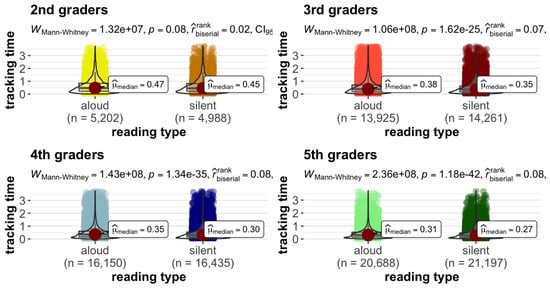
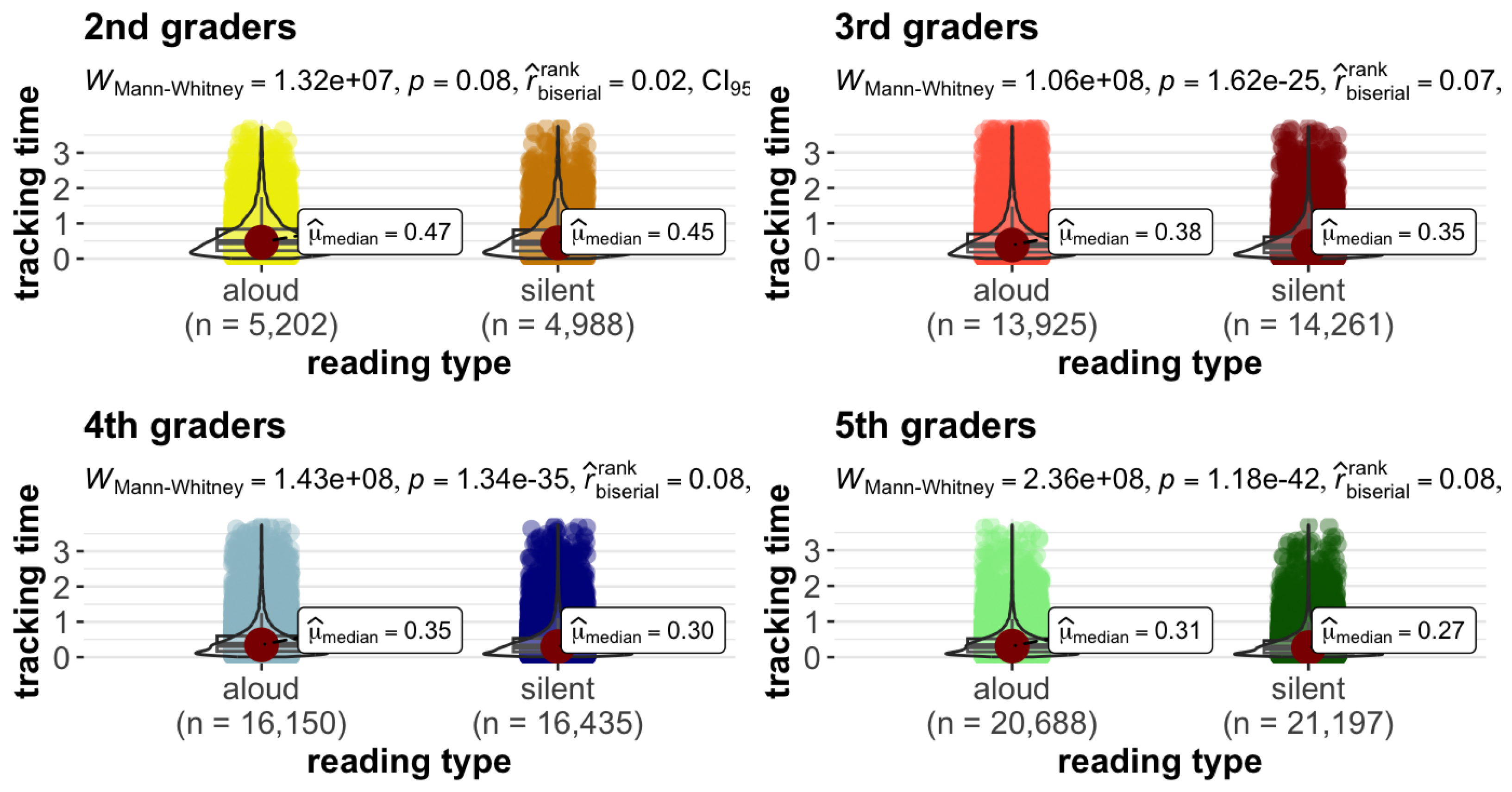
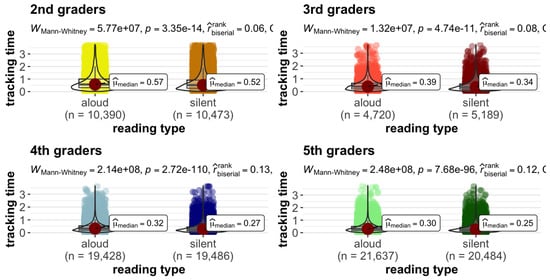
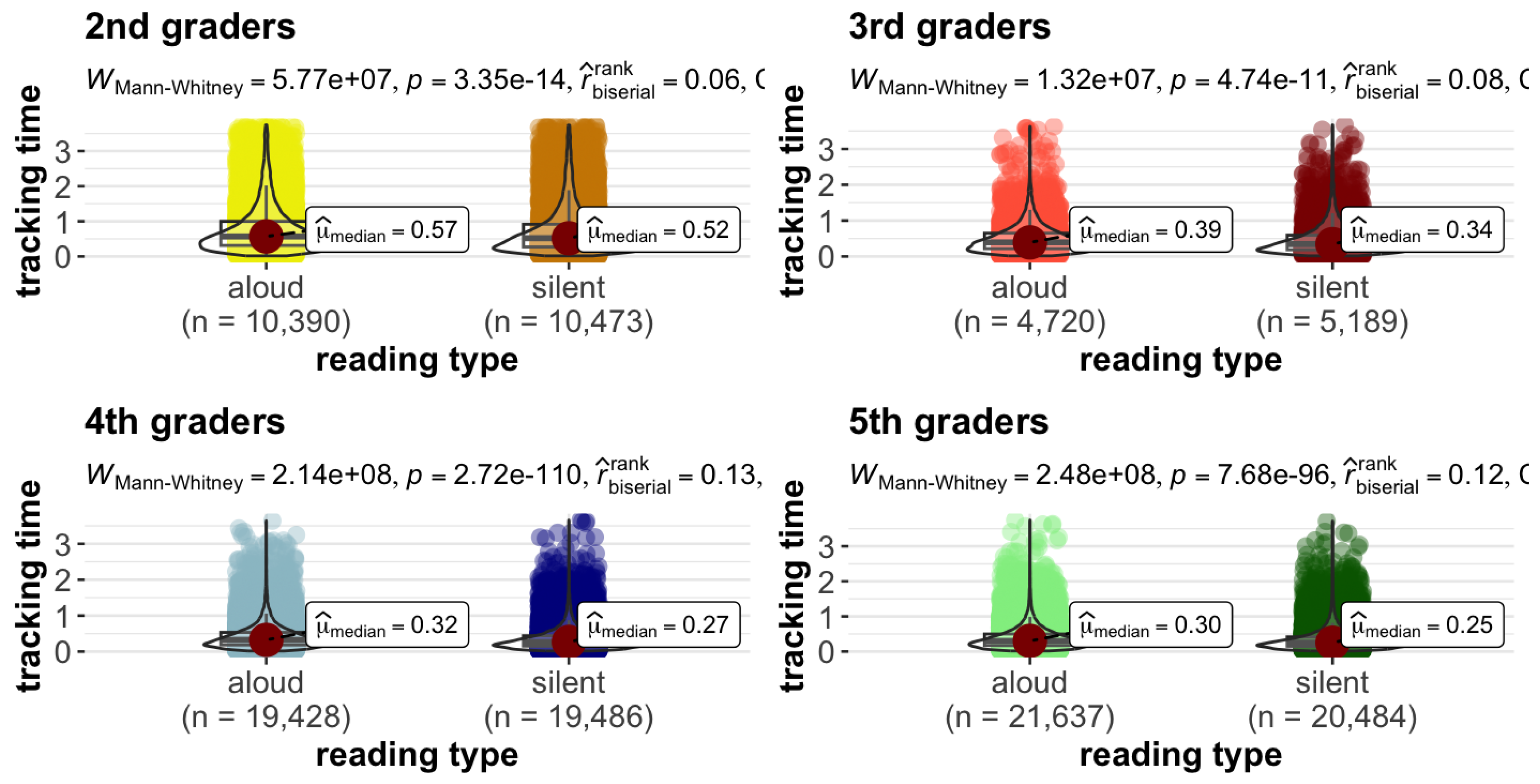
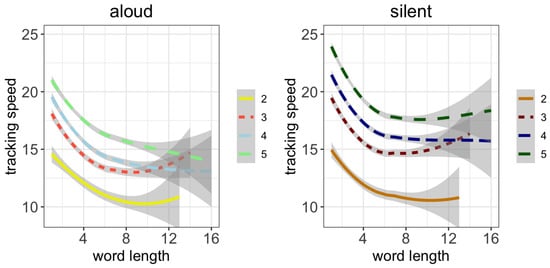
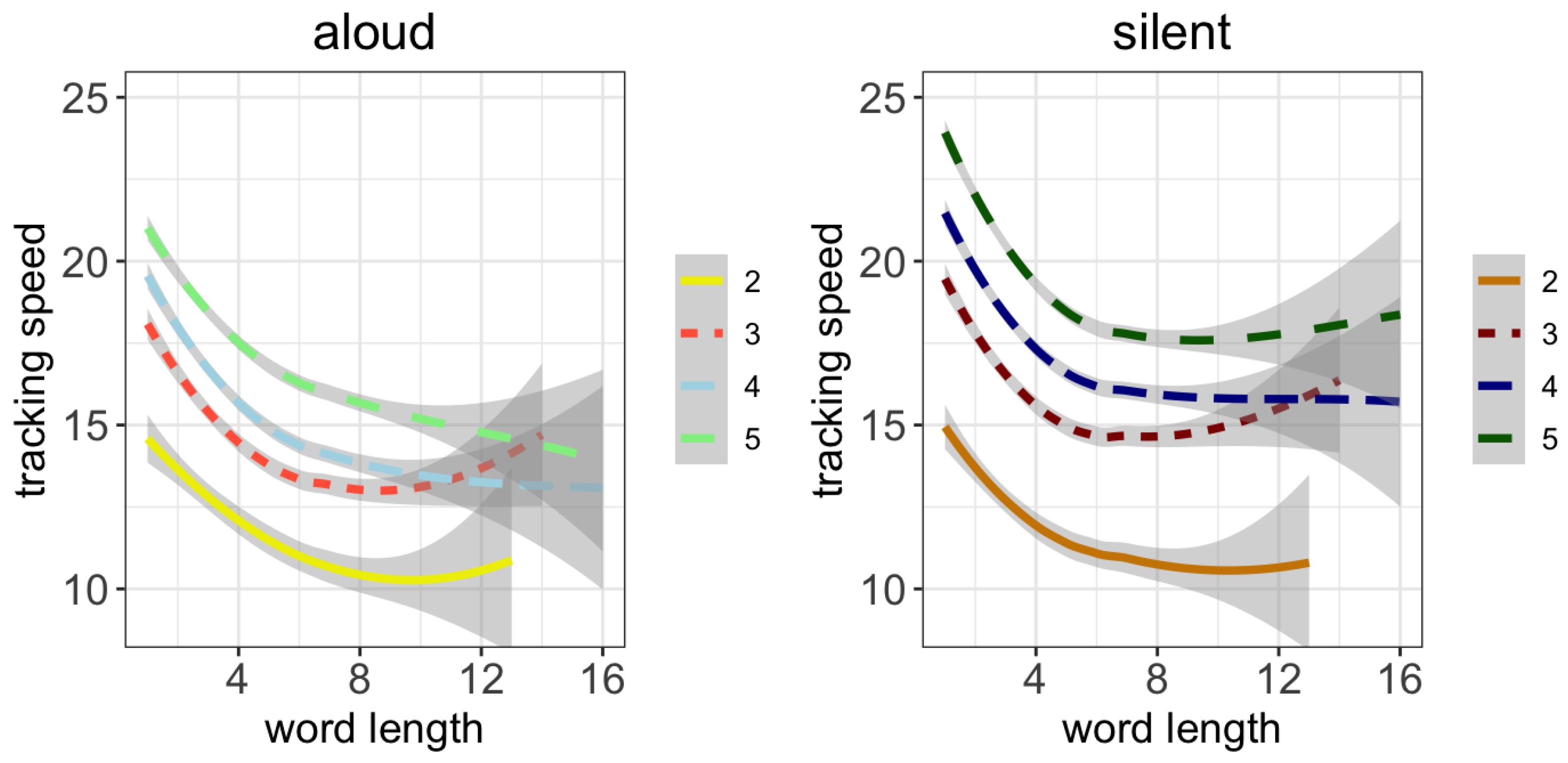
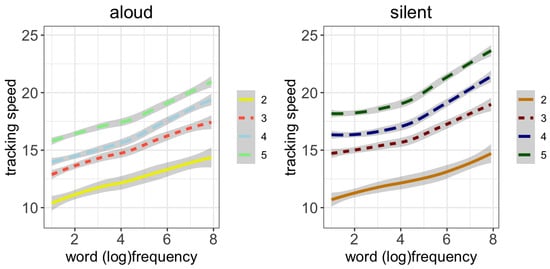
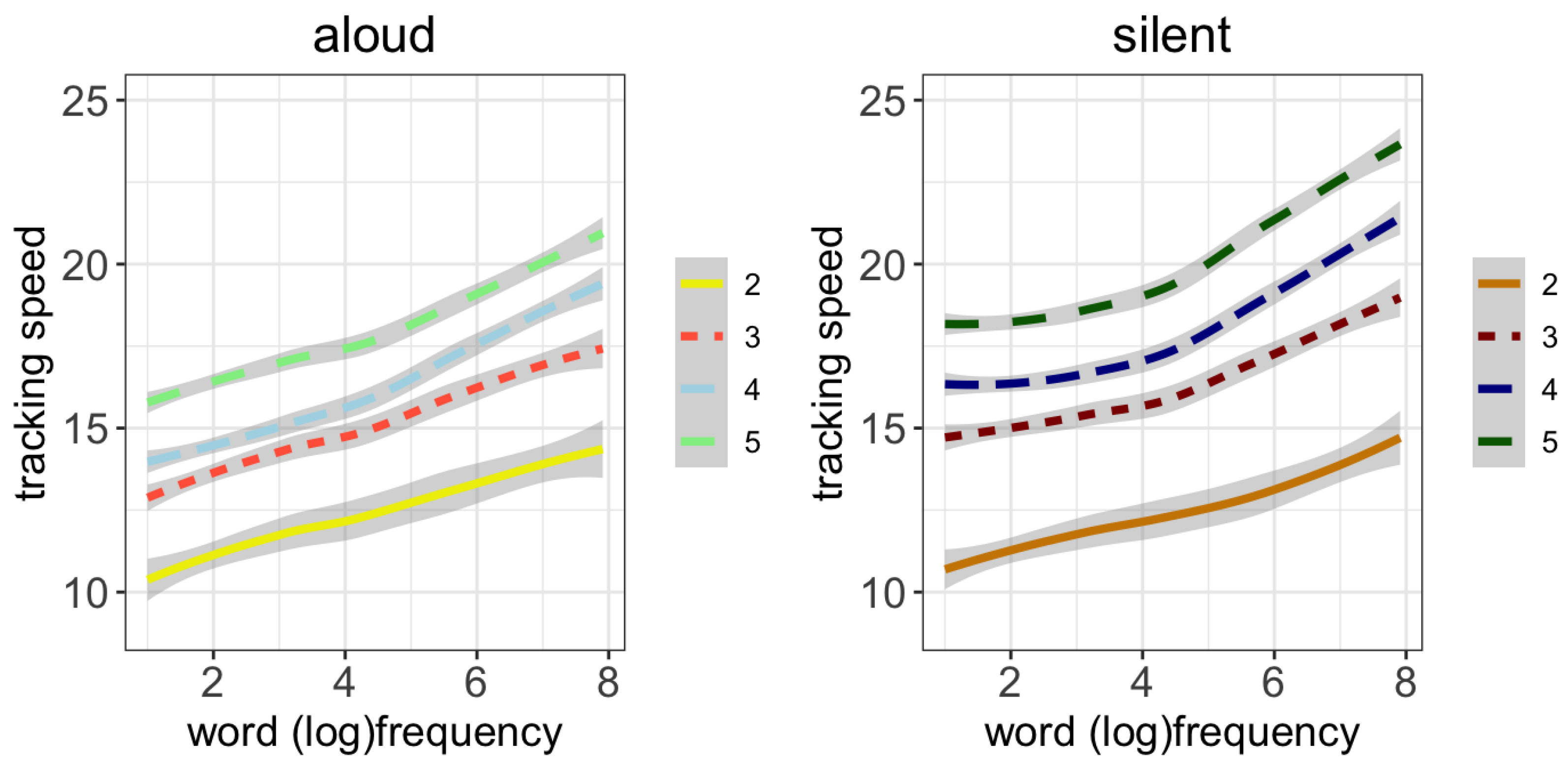
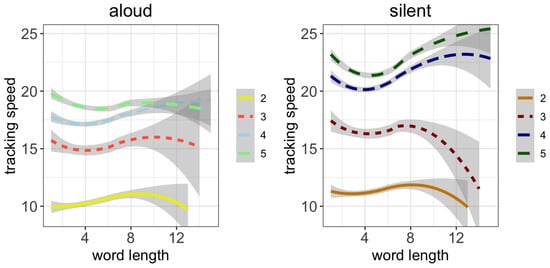
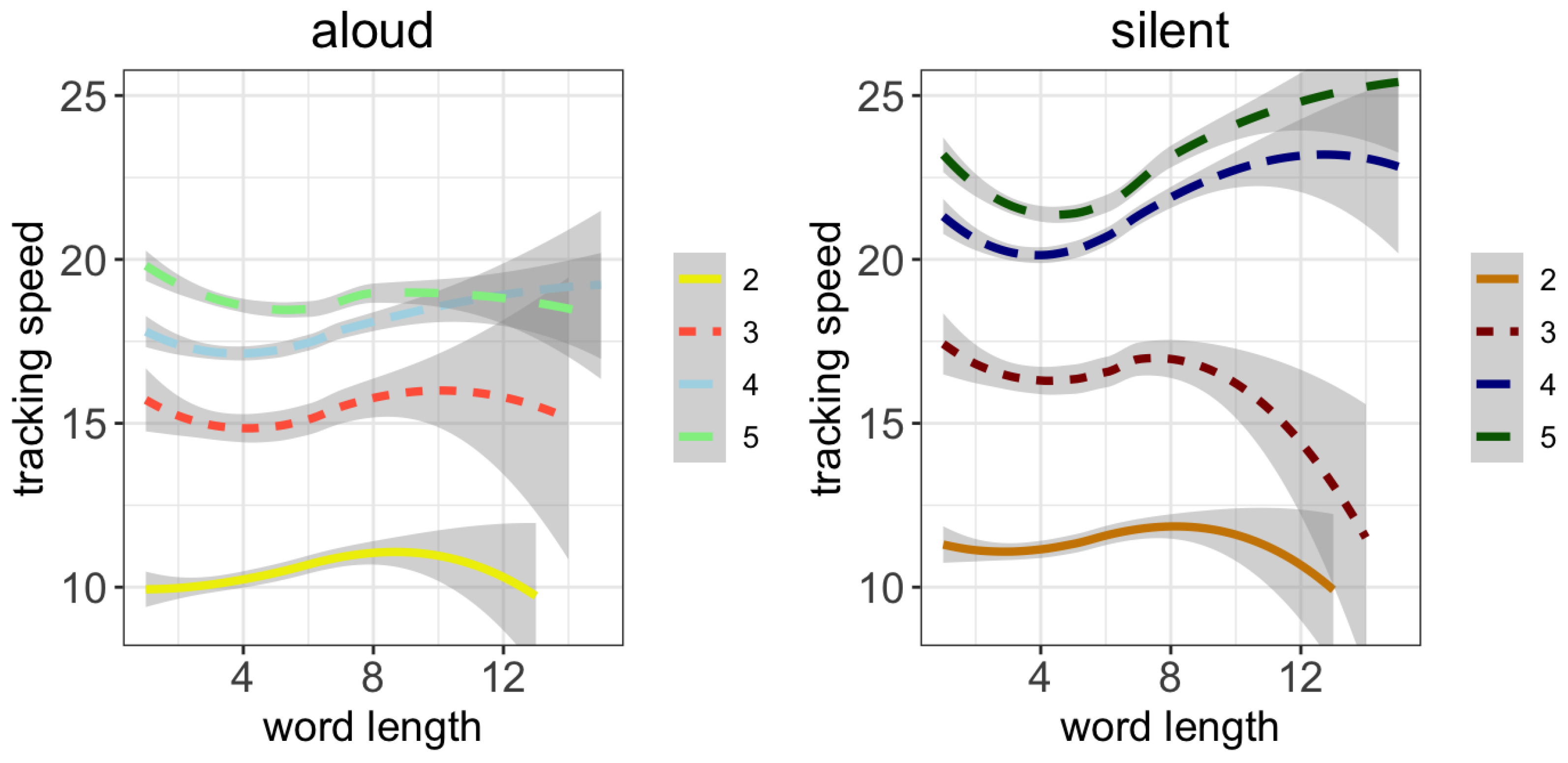
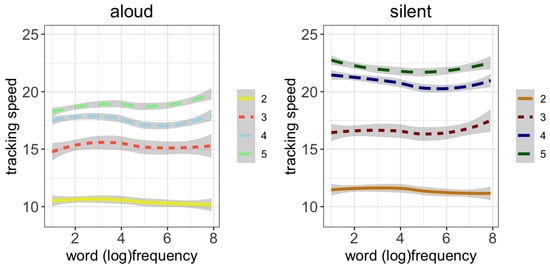
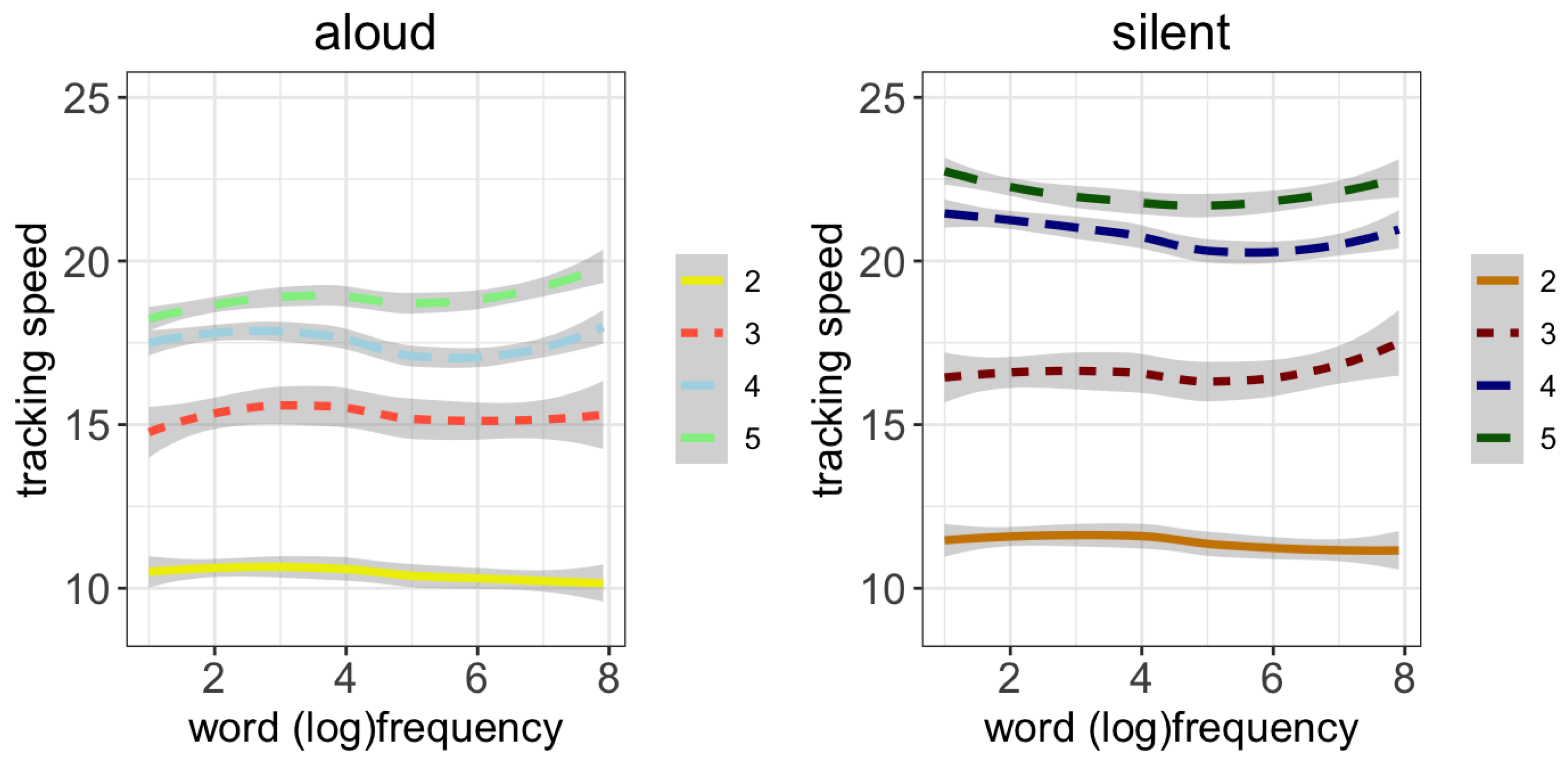
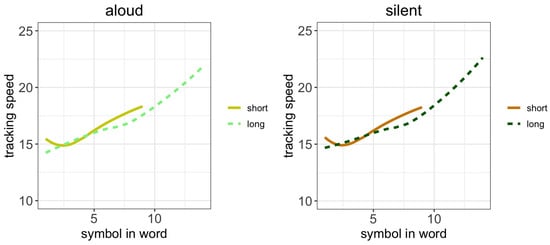
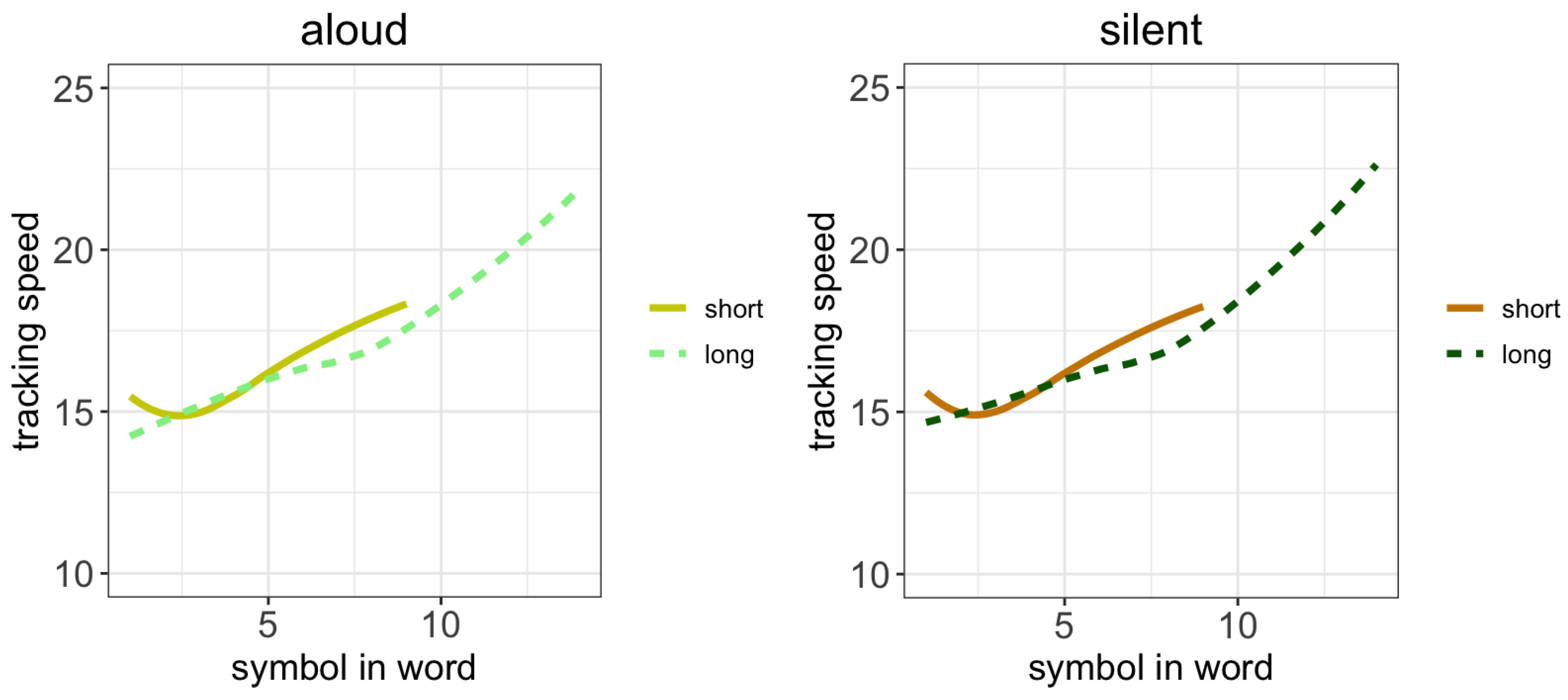
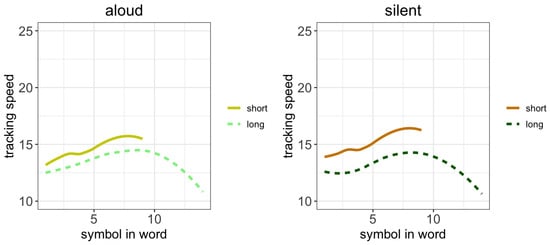
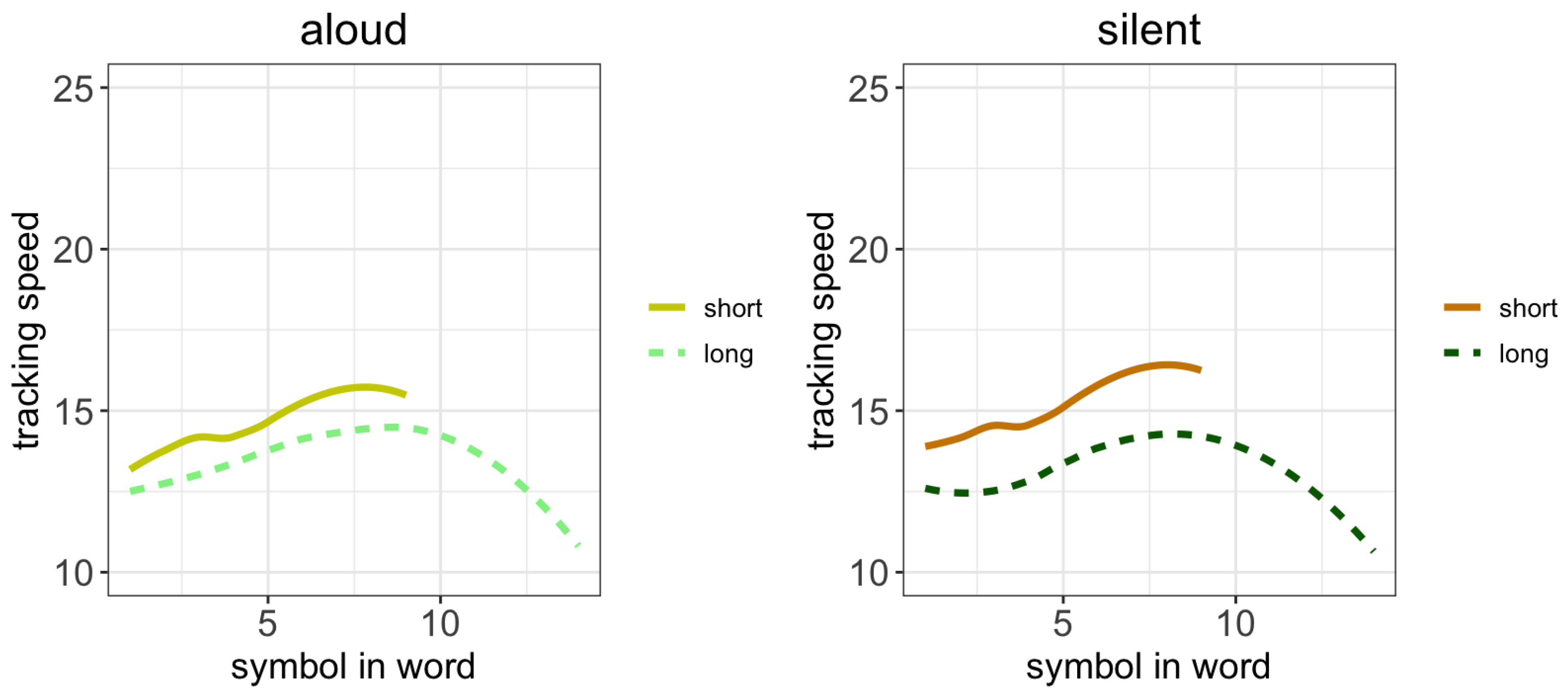
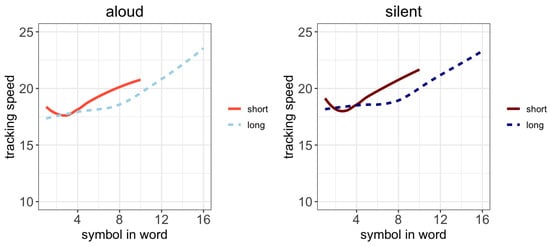
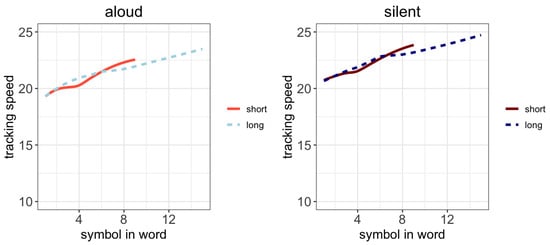
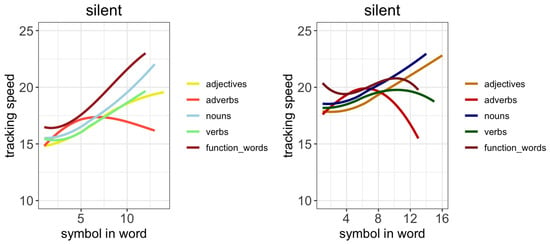
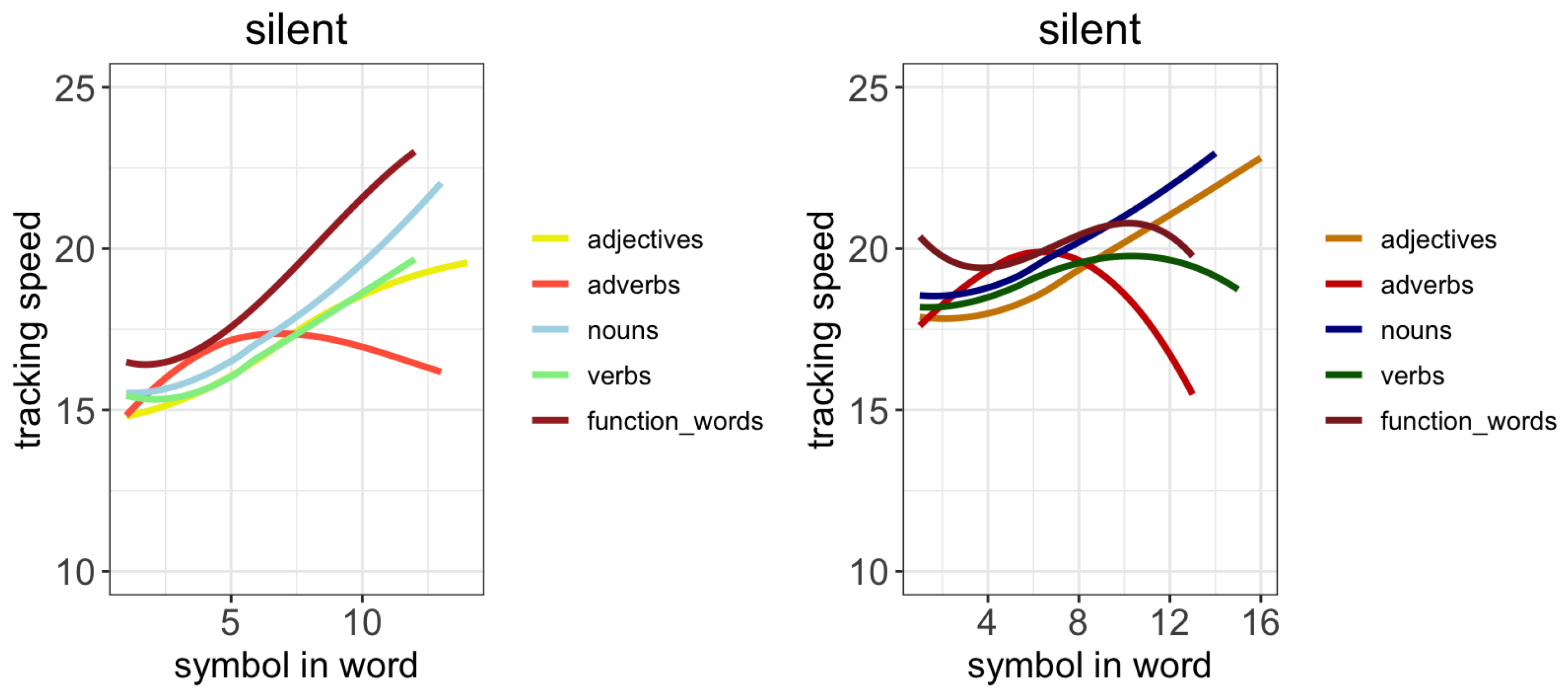
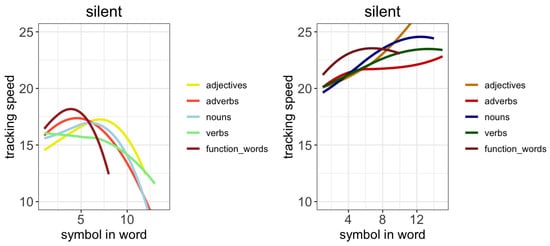
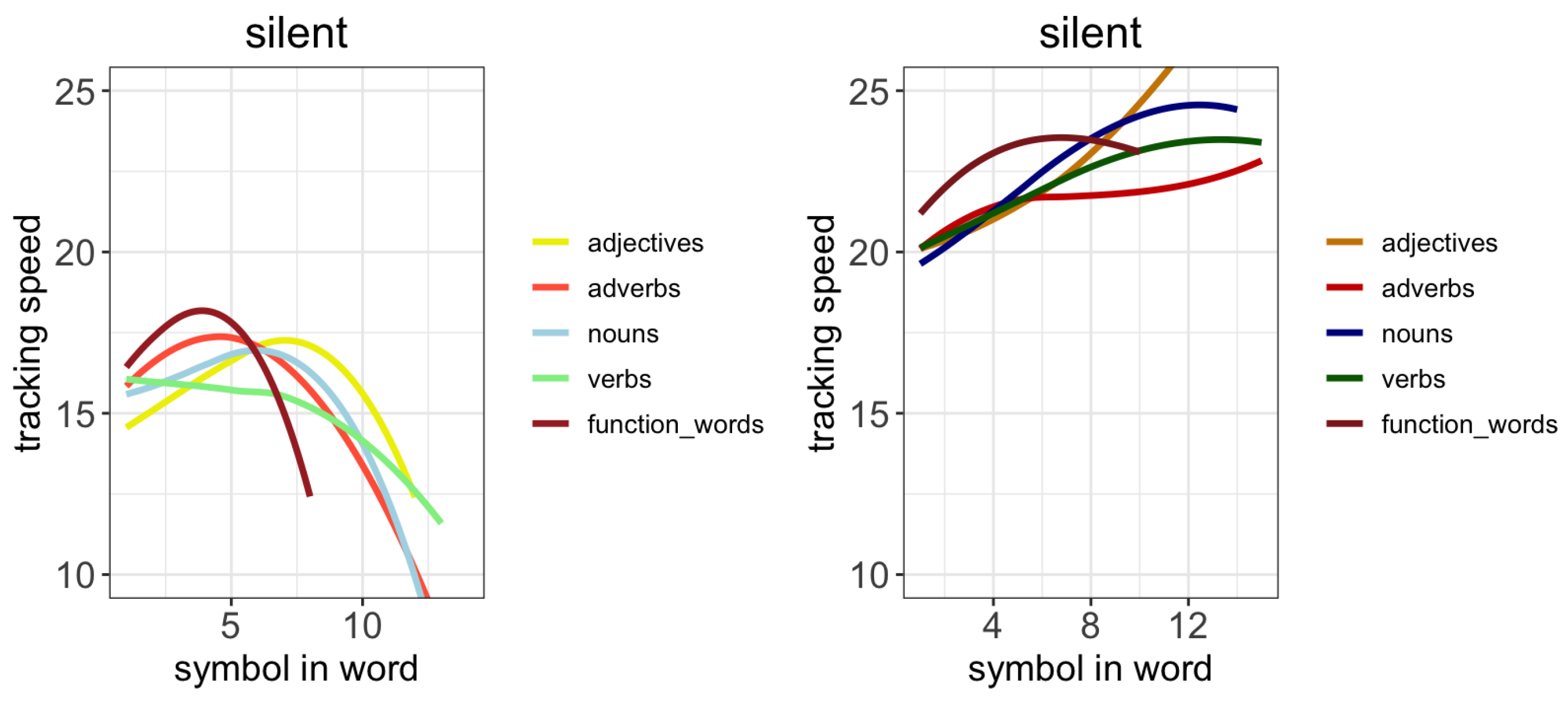

Disclaimer/Publisher’s Note: The statements, opinions and data contained in all publications are solely those of the individual author(s) and contributor(s) and not of MDPI and/or the editor(s). MDPI and/or the editor(s) disclaim responsibility for any injury to people or property resulting from any ideas, methods, instructions or products referred to in the content. |
© 2026 by the authors. Licensee MDPI, Basel, Switzerland. This article is an open access article distributed under the terms and conditions of the Creative Commons Attribution (CC BY) license.