


Abstract
To address the dynamic target allocation and resource scheduling problems of multiple High-Energy Laser Systems (HELSs) in defending critical infrastructure against large-scale heterogeneous UAV swarm penetration, this paper proposes a soft–hard damage cooperative task allocation and optimization method, termed Attention-based Centralized Training and Decentralized Execution proximal policy optimization (Attn-CTDE-PPO), which integrates an attention mechanism with multi-agent reinforcement learning. First, a cooperative multi-agent sequential decision-making model for multi-HELS engagement against UAV swarms is constructed by considering continuous laser irradiation, system energy consumption, thermal accumulation limits, and soft–hard damage mechanisms. Second, a multi-head attention set encoder based on a Transformer is introduced to extract global situational features at the state level. This design enables the policy network to handle a time-varying number of targets and mitigates the explosion of hybrid action spaces. At the action level, a discrete–continuous dual-head network with a masking mechanism is proposed to achieve target allocation and laser-parameter scheduling. Furthermore, a multi-dimensional threat assessment module is developed, which can prune infeasible actions in the action space via physical rule-based masking, thereby accelerating the decision-making speed of the method. Monte Carlo simulation experiments verified the defense reliability, energy management efficiency and real-time responsiveness of the proposed method. The experimental results demonstrate that, in heterogeneous swarm scenarios with different numbers of UAVs, the proposed method effectively suppresses UAV penetration, improves the defense success rate, and reduces total system energy consumption compared with baseline algorithms.
1. Introduction
In recent years, unmanned aerial vehicle (UAV) technology has achieved significant advancements in civilian domains such as logistics transportation, mapping, and inspection. However, the unauthorized misuse and malicious manipulation of UAVs have posed severe challenges to low-altitude public safety. Low-cost, miniaturized UAVs, operating in collaborative swarm modes, can conduct multi-directional saturation attacks on critical infrastructure such as airports and nuclear power plants at extremely low cost [1,2]. In particular, UAV swarms have become more resistant to attacks from interference, high-power microwaves, and other anti-UAV equipment, making them more robust in dealing with multi-threats. Therefore, physically neutralizing UAV swarms remains the safest and most efficient approach [3,4]. This situation renders the development of new and efficient counter-unmanned aerial vehicle (C-UAV) measures more urgent and necessary.
HELSs, leveraging their speed-of-light engagement and low cost per interception, are widely recognized as a crucial means of countering UAV swarm threats [5]. Compared with traditional countermeasures, HELSs can flexibly adjust output power, irradiation duration, and aiming points to achieve both soft damage, such as interference with or functional degradation of UAV electro-optical sensors, and hard damage, such as direct ablation of airframe structures. Although multi-HELSs have shown great potential, the optimal allocation of limited laser emission power resources in a highly dynamic environment remains a challenging problem, i.e., the dynamic Weapon–Target Assignment (WTA) problem. In practical defense scenarios, UAV swarms are often large in scale and highly maneuverable, while HELSs, during the interception process, need to take into account not only the output power but also factors such as irradiation time, angular velocity, system energy consumption, and thermal accumulation. This makes the WTA problem extremely complex and difficult to solve.
In recent years, deep reinforcement learning (DRL) has been widely applied in the fields of dynamic target allocation and UAV swarm control. Compared with traditional optimization algorithms, DRL can learn decision-making policies through interaction with dynamic environments and has potential advantages in handling sequential decision-making problems under uncertainty. However, two limitations still persist under the scenario of multi-HELSs against UAV swarms. First, most existing methods just consider the hard damage of HELSs and rarely consider the dual soft–hard damage mechanisms of lasers along with complex constraints such as continuous irradiation, system total power and system overheating. Second, purely data-driven DRL algorithms face action space explosion and convergence difficulties, lacking a mechanism to integrate prior rules and information (e.g., threat assessment of UAVs) with DRL networks.
Based on the above analysis, this paper proposes a DRL-based dynamic cooperative target allocation and optimization method for multi-HELSs against UAV swarms. First, a multi-HELS versus UAV swarms model is constructed. This model establishes a UAV swarm state considering factors such as UAV type, quantity, and maneuvering characteristics. This model also establishes a multi-HELS state considering factors such as the soft–hard damage model, laser power, traverse speed, and energy management. Second, a proximal policy optimization algorithm named Attn-CTDE-PPO is proposed, incorporating an attention mechanism and the CTDE architecture. A multi-dimensional reward function is constructed, including rewards for the laser soft–hard damage model, penalties for UAV breakthroughs, distance threats, energy consumption, overheating constraints and ineffective irradiation. To enhance the learning effectiveness and convergence speed of the proposed DRL network, a threat assessment module is designed. This module can generate a prior action candidate set and guide the action space of DRL with rule-based knowledge. Simulation results demonstrate that the proposed method exhibits advantages in terms of asset defense effectiveness and system energy utilization when countering heterogeneous UAV swarms of varying sizes. Compared with existing methods, the novelty of this study lies in a unified CTDE framework that integrates soft–hard laser damage modeling, threat-assessment-guided action-space pruning, and Transformer-based discrete–continuous cooperative control for dynamic multi-HELSs against variable-size UAV swarms.
The main contribution of this paper can be summarized as follows:
- A soft–hard damage mechanism for HELSs is introduced. By incorporating reward terms for soft and hard damage and penalty terms for system energy consumption and thermal overload, the proposed mechanism improves laser interception efficiency and energy utilization. This mechanism optimizes laser interception efficiency and system energy consumption, thereby enhancing the system ability.
- To enhance the learning effectiveness and convergence speed of the proposed DRL network, a threat assessment module is designed. This module generates a prior action candidate set and corresponding action masks for each HELS to prune the DRL action space (e.g., low threat, out of firing bounds), thereby improving the learning efficiency of the method.
- A Transformer-based attention encoder is introduced which is capable of handling variable-length target sequences. At the action output, a discrete–continuous dual-head network combined with action masking is designed, enabling two-stage control of target allocation and laser-parameter scheduling for multiple HELSs. This improves the effectiveness of task allocation under varying numbers of UAV swarms.
It should be noted that the present study adopts fixed propagation and damage parameters corresponding to a specified nominal engagement scenario, with a low-altitude defense environment under certain visibility and engagement ranges. These parameters are used to construct a controlled and reproducible decision-making environment for evaluating cooperative target allocation and firepower scheduling. The proposed Attn-CTDE-PPO framework is not restricted to these specific parameter values; when the physical environment or target characteristics change substantially, the engagement model can be recalibrated and the policy can be retrained or fine-tuned accordingly. Cross-environment generalization under uncertain propagation, atmospheric effects and damage parameters is beyond the scope of this work and will be investigated in future studies, for example by incorporating domain randomization or robust reinforcement learning.
2. Related Work
2.1. Soft–Hard Damage Modeling for High-Energy Laser Systems
HELs can produce soft damage to electro-optical sensors and hard damage to airframe structures or critical components. Existing studies have investigated these effects from the perspectives of system-level damage assessment, sensor-response thresholds, and structural thermal damage.
At the system level, Yun et al. [6] combined atmospheric transmission and far-field spot characteristics with a target thermal model to assess the effects of HEL parameters on UAV mission effectiveness. Liu et al. [7] further modeled laser damage capability in ground–air defense environments by considering atmospheric propagation, transient heat conduction, material phase transitions, and acquisition, tracking, and pointing errors. These studies provide a physical basis for evaluating laser energy deposition and structural damage under realistic engagement conditions.
For soft damage, Schwarz et al. [8] compared damage-threshold assessment methods for CCD, CMOS, and DMD devices, showing that threshold estimates depend strongly on the criterion used to distinguish functional failure from visible damage. Xu et al. [9] experimentally identified progressive response states in back-illuminated CMOS sensors, including saturation, local damage, and complete blinding. Cai et al. [10] further revealed phase-change shielding and multi-pulse thermal accumulation under millisecond laser irradiation. These findings indicate that sensor degradation is a progressive process rather than a binary event. For hard damage, Ligabo et al. [11] investigated the laser-induced perforation of composite skins and subsequent damage to internal components, revealing a hierarchical progression from surface ablation to internal failure. Wu et al. [12] examined both electro-optical sensor suppression and structural ablation of UAVs, establishing an experimental connection between soft and hard damage effects.
2.2. Weapon–Target Assignment for Multi-HELS Counter-UAV Defense
Weapon–Target Assignment (WTA) is a classical combinatorial optimization problem in air-defense and counter-UAV scenarios. Early research on WTA mainly relied on traditional operations research and heuristic optimization methods. For example, genetic algorithms (GAs) [13,14] and Particle Swarm Optimization (PSO) [15,16] have been widely used to search for feasible assignment schemes under weapon-resource and target-threat constraints. Exact solvers such as CPLEX [17] can obtain high-quality or optimal solutions for small- and medium-scale WTA problems, while Greedy nearest-target assignment methods are often used as simple online baselines because of their low computational cost. These studies demonstrate that traditional optimization methods can effectively solve static or moderately dynamic WTA problems with limited numbers of weapons and targets. However, as UAV swarms exhibit highly dynamic and emergent characteristics, the required sample size and computational complexity grow exponentially, leading to a decrease in efficiency and generalization ability of many traditional optimization methods.
For HELSs, WTA is more complex than conventional missile-based assignment because laser weapons must continuously irradiate targets for a period of time to achieve soft or hard damage. The effectiveness of an assignment decision is therefore influenced not only by the geometric relationship between the HELS and UAV target, but also by line-of-sight availability, dwell time, laser power density, target vulnerability, thermal load, and energy consumption. In addition, multiple HELSs may need to coordinate their irradiation decisions when facing dense UAV swarms, so as to avoid redundant engagement, ineffective irradiation, and overheating. These characteristics make multi-HELS WTA a dynamic sequential decision-making problem rather than a one-shot static matching problem. Recent studies have begun to consider laser-specific constraints in C-UAV task allocation. Some works model the laser engagement process by incorporating irradiation time and damage probability into the assignment objective [18,19]. Other studies introduce cooperative scheduling mechanisms for multiple laser platforms to improve the interception efficiency against UAV swarms [20,21].
2.3. Deep Reinforcement Learning-Based Dynamic Weapon–Target Assignment
Given the dynamic and sequential nature of multi-HELS WTA described above, deep reinforcement learning has been increasingly adopted to learn adaptive allocation policies under changing target and resource conditions. Some researchers have employed single-agent algorithms such as Deep Q-Networks (DQN) and proximal policy optimization (PPO) to address air defense firepower scheduling problems. For instance, Chen et al. [22] proposed a genetic algorithm to solve dynamic target allocation problems under complex constraints. Zhang et al. [23] developed a penalized proximal policy optimization algorithm that improves policy update efficiency and constraint satisfaction capability in multi-constraint and multi-agent scenarios. Alagha et al. [24] adopted a PPO-based multi-agent deep reinforcement learning framework to enhance target search and localization efficiency as well as resource utilization performance. However, in multi-defense-node cooperative scenarios, single-agent methods face challenges such as action space explosion and environment non-stationarity; most existing methods only consider hard-damage effects of HELSs. Deep reinforcement learning has attracted increasing attention for dynamic WTA because it can learn sequential allocation policies through interaction with the environment. Wang et al. [25] combined deep Q-learning with an improved multi-objective artificial bee colony algorithm for unmanned ground Weapon–Target Assignment, demonstrating the potential of value-based learning in complex allocation tasks. Fan et al. [26] analyzed the theoretical properties of deep Q-learning, while Ohnishi et al. [27] investigated constrained DQN variants, providing useful references for applying value-based methods under action and safety constraints. In policy-gradient methods, Engstrom et al. [28] showed that PPO performance is sensitive to implementation details, and Shang et al. [29] improved PPO in interactive multi-agent systems, indicating the importance of stable policy updates in cooperative decision-making. Li et al. [30] further enhanced PPO exploration by combining it with natural evolution strategies.
To address the action space explosion, environmental non-stationarity, and insufficient inter-agent coordination encountered by single-agent DRL methods in multi-defense-node cooperative allocation scenarios, multi-agent deep reinforcement learning (MADRL) algorithms based on the centralized training with decentralized execution (CTDE) architecture [31,32], such as MADDPG [33] and MAPPO [34], have become a current research focus. For example, Liu et al. [35] proposed a MADDPG-IA method for HELSs defending against UAV swarms, improving the damage ratio against multi-batch UAV targets. Wei et al. [36] introduced an OC-MAPPO method that integrates an optimal control model with MAPPO, enhancing the cooperative decision-making capability and successful search probability of UAV swarms in unknown dynamic target search tasks. These studies show that CTDE-based MADRL is well suited for cooperative decision-making among multiple agents, because centralized critics can use global state information during training while each agent executes decisions based on local observations. Nevertheless, existing MADRL-based WTA studies rarely integrate soft–hard laser damage states, threat assessment, action masking, energy consumption, and thermal overload penalties into a unified allocation framework. This motivates the proposed Attn-CTDE-PPO method, which introduces attention-enhanced cooperative policy learning for multi-HELS dynamic target allocation under soft–hard damage and resource constraints.
3. Cooperative Multi-Agent Decision-Making Model of Multi-HELSs and UAV Swarms
3.1. Defense Scenarios
Focusing on the context of low-altitude public safety and critical infrastructure defense, this paper constructs a typical security scenario in which ground-based multiple laser defense systems are deployed against illegal intrusions by large-scale heterogeneous UAV swarms. In this scenario, the incoming UAV swarm is categorized into three types: reconnaissance type (carrying electro-optical sensors to obtain sensitive information), decoy type (disrupting defense surveillance through swarm flight), and strike type (loitering UAV in this paper). A high-value asset is assumed to be located at the coordinate origin, with multiple HELSs statically deployed around it. The effective defense perimeter of the asset is defined as a hemispherical region centered at the origin with a radius of . When any strike-type UAV breaches this perimeter, the asset is considered to have suffered a strike. The physical parameters of the HELSs, such as maximum emission power, HELS traverse speed, and maximum laser heat capacity, are set as fixed values. The decision variables, including the interception order of UAV targets, the allocated emission power, and the choice of soft–hard damage for each HELS, are determined by the task allocation and optimization method proposed in this paper. Figure 1 illustrates a schematic diagram of the defense scenario, where multiple HELSs protect a critical asset against a UAV swarm intrusion.
Figure 1.
Interaction process between multiple HELSs and heterogeneous UAV swarms.
3.2. Cooperative Decision Model of HELSs and UAV Swarms
The interaction between the multi-HELSs and the UAV swarm is formulated as a cooperative multi-agent sequential decision-making problem. The HELSs are regarded as cooperative decision-making agents that share a common defense objective, while the UAV swarm is modeled as part of the dynamic environment that determines the evolution of the engagement state. Therefore, this study focuses on the state representation of UAVs and HELSs, the laser soft–hard damage model, action feasibility, reward design, and policy optimization. Within this model, the state models of UAV swarms and the multi-HELSs are introduced and can be served directly as the state space inputs for the DRL method. Second, the soft–hard damage model is introduced to define the criteria of the action space and the damage thresholds of the HELSs.
3.2.1. UAV Swarm State Model
Let the total number of UAVs be N. The state of the i-th UAV at time t is defined as the state vector , where U denotes UAV. This vector encapsulates the complete state of the UAV at a given time instant and is specifically composed as follows:
where represents the three-dimensional coordinates of the -th UAV at time . is the velocity vector of the UAV, describing its instantaneous motion state at time . denotes the UAV type: reconnaissance type (), decoy type (), and strike type (). The UAV type determines its baseline threat level and engagement value. is the residual value of the UAV, quantifiable as the threat benefit to the defender. When the UAV suffers damage, its residual value decreases accordingly. characterizes the functional status of electro-optical sensors on reconnaissance UAVs. indicates that the sensor is operating normally; indicates that the sensor is functionally degraded due to laser interference; indicates that the sensor has been damaged by the laser and cannot work.
3.2.2. Multi-HELS State Model
Let the number of HELSs be M. The state of the j-th HELS at time t is defined as the state vector , where L denotes the HELS. This vector encapsulates the complete operational state of the HELS at a given time instant and is specifically composed as follows:
where represents the operational phase of HELS j at time t, which includes: detection, tracking, turret traversal, irradiation, and assessment. and denote the pointing angle and angular velocity, respectively, of the laser turret of system j at time t, describing the instantaneous pointing direction and dynamic variation of the laser beam. is the maximum rotational angular velocity of the laser platform, which directly determines the retargeting time required for switching between different targets. is the current emission power of the HELS, where is its upper power limit. The normalized remaining energy of laser system is defined as , its initial value is set to . is the actual remaining energy and J is the maximum stored energy of laser system. represents the normalized thermal state of the HELS, where denotes the initial cooled state and denotes the thermal-load upper limit. During each decision step, the normalized remaining energy and the thermal state is updated by:
where is the selected firing power and is the simulation time interval. is a binary variable indicating whether the laser is active at time t, and denotes the time required for the thermal state to increase from 0 to 1 under continuous irradiation. This formulation allows the energy and thermal constraints to be explicitly updated during the sequential decision-making process. indicates the line-of-sight quality of the HELS, representing whether there is occlusion (e.g., from terrain, buildings, or other UAVs) between the HELS and the current target; 0 indicates occlusion exists, and 1 indicates no occlusion. In this paper, the LOS variable is defined as , where indicates that the j-th laser system has an available line-of-sight to the i-th UAV at time step t, and indicates that the engagement is temporarily unavailable due to occlusion or environmental uncertainty. In the nominal simulation setting, represents a typical low-altitude defense scenario where most targets remain observable while occasional blockage may occur. Different environmental conditions can be represented by adjusting . represents the locking quality of the laser tracking and aiming system on the target; 0 indicates poor quality, and 1 indicates good quality. Poor tracking quality can cause beam jitter, thereby reducing the actual energy density incident on effective target areas and ultimately affecting damage effectiveness.
3.2.3. Laser Soft–Hard Damage Model
For the defense scenario described in Section 3.1, this paper constructs a laser soft–hard damage model that considers both soft damage and hard damage mechanisms.
Laser hard damage is primarily achieved through high-power continuous irradiation, causing structural melt-through damage to the UAV, resulting in the loss of strike capability, a crash, or explosion [7]. After propagating through the atmosphere over a distance , the energy density generated on the surface of the -th UAV can be expressed as [37,38]:
where is the power density of the laser incident on the i-th UAV, is the duration of continuous laser irradiation on the UAV, is the atmospheric transmittance [39], is the visibility, is the elevation angle, and k is an empirical coefficient related to aerosol conditions. is the emission power of the HELS; is the diffusion radius of the laser beam on the UAV surface; is the laser wavelength; is the beam quality factor, representing the degree of beam quality degradation during atmospheric propagation due to diffraction, turbulence, thermal blooming, and platform jitter; and is the output aperture diameter of the HELS. In the nominal defense scenario considered in this study, the visibility is set to km, the representative laser propagation distance is L = 8 km, the elevation angle is , and k = 2.828, which gives . Therefore, the atmospheric transmittance value used for this study is set as a nominal transmittance value corresponding to the considered low-altitude defense environment and engagement range. When the accumulated hard damage energy density satisfies , , hard damage to the UAV caused by the laser is considered to be achieved. Here, denotes the hard damage energy density threshold, is the corresponding hard damage power density threshold, and is the minimum irradiation duration required to reach the hard damage energy density threshold.
Laser soft damage is primarily achieved by irradiating the optical sensor of the UAV, causing optical saturation of the sensor pixels (resulting in interference) or thermal ablation of internal materials within the optical sensor (resulting in permanent damage) [8]. The energy density incident on the photosensitive surface of the optical sensor can be expressed as [40]:
where is the power density of the laser incident on the photosensitive surface of the i-th UAV’s sensor, is the angle between the incident laser beam direction and the optical axis of the UAV’s optical sensor, is the lens aperture diameter of the UAV’s optical sensor, is the optical sensor transmittance, and is the diameter of the photosensitive element on the sensor. When satisfies Equation (7), soft damage to the UAV is achieved.
where denotes the sensor interference energy density threshold. Here, is the corresponding sensor interference power density threshold, and is the minimum irradiation duration required to reach this threshold. Similarly, denotes the sensor damage energy density threshold, where is the corresponding sensor damage power density threshold and is the minimum irradiation duration required to reach the sensor damage threshold.
Based on the UAV swarm types defined in Section 3.2.1, the priority between soft and hard damage is determined according to the threat characteristics of the UAVs and the status of the HELSs. In this paper, the decision to use soft or hard damage modes is determined by the following strategies:
Soft Damage Priority Strategy
This strategy is adopted when any of the following conditions are met:
- The incoming UAV is of the reconnaissance type and its current sensor status has not been damaged.
- There is insufficient time to achieve hard damage, but soft damage can significantly reduce the UAV’s time to asset (), where denotes the remaining time for the -th UAV to reach the defended asset. The two conditions are formalized in Equations (8) and (9), respectively.
Hard Damage Priority Strategy
By contrast, the hard damage priority strategy is activated under any of the following conditions:
- The target is a strike-type UAV.
- The UAV presents uncertain soft damage benefits, e.g., when the target has been judged as necessitating soft damage but continues flying directly toward the asset.
- When a UAV approaches the asset and (with being a small-time margin), the system must execute hard damage.
4. Multi-Agent Cooperative Task Allocation and Optimization Method Based on Attn-CTDE-PPO
For the above-mentioned defense scenario, this paper constructs a DRL method named Attn-CTDE-PPO. The objective is to maximize the defense effectiveness of the multi-HELS by designing and optimizing the engagement strategies and actions of the multi-HELSs. First, each HELS is considered as an independent agent, which acquires the global state from the environment at the current time step. Next, the agent outputs a decision action for the current time step using the DRL method. The environment then transitions to a new state based on the current state and action, where denotes the penetration strategy adopted by the UAV swarm at time t. Simultaneously, the environment returns a reward to the agent based on the effectiveness of the previous decision action . By maximizing the cumulative reward, the agent continuously refines its decision actions to achieve the optimal engagement strategy of the multi-HELS against the UAV swarm [41], including task allocation, engagement sequence, and energy allocation (as illustrated in Figure 2). The following subsections introduce the state space design, action space design, reward function design, network architecture, and training procedure.
Figure 2.
Schematic diagram of the proposed Attn-CTDE-PPO method.
4.1. State Space Design
The state space is composed of the HELS states , the UAV system states , and the global defense states . The laser and UAV state models have been established in Section 3.2. The global defense state vector at time t is used to describe the overall environmental situation for DRL at the current time step, which consists of the attack wave number, the number of opposing entities, and the remaining time. Its expression is as follows:
where represents the total number of UAVs successfully intercepted by the HELSs from the start of engagement to time , represents the total number of UAVs that have breached the asset perimeter from the start of engagement to time t, denotes the number of HELSs in operational state at time t, and denotes the remaining time.
4.2. Action Space Design
The decision actions of a laser agent are primarily determined by target selection, emission power, and irradiation duration. In this paper, time t is discretized, with a single time step denoted as . The agent action is defined as:
where indicates that the j-th HELS selects a UAV with index 0 to N as the attack target at time t. indicates that the j-th HELS is searching for a target or its status is idle. represents the emission power of the j-th HELS at time t. represents the effective irradiation duration of the -th HELS on the selected UAV. The constraints on this formulation are as follows:
Constraint (a): At any given time, one HELS can attack only one UAV.
Constraint (b): The maximum power of a HELS does not exceed , and the dwell time per step does not exceed .
Constraint (c): The thermal state of a HELS does not exceed the threshold .
Constraint (d): The stored energy of a HELS decreases with the emitted energy , and the remaining energy is non-negative.
4.3. Threat Assessment Module (TAM)
In this paper, a UAV swarm threat assessment module is designed. Its functions include providing rule-based guidance for the action space in DRL and improving the convergence performance of the proposed method. The TAM is introduced as a physically interpretable action-space constraint rather than a complete decision policy. It evaluates target actionability and engagement feasibility according to five dimensions: target distance, time to asset, velocity, target type, and sensor field-of-view status. Based on these factors, infeasible targets are masked and feasible targets are ranked to form a compact candidate set. The learned Attn-CTDE-PPO policy can select the final target and determines the continuous firepower variables within this candidate set. The specific threat assessment metrics are described as follows:
4.3.1. Distance Threat
This measures the distance-based threat of UAV i to reach the effective defense boundary of the asset at time t:
where is the distance from the i-th UAV to the asset, and is the distance-sensitivity coefficient that controls the decay rate of the distance-based threat term. A larger makes the threat evaluation less sensitive to distance variations.
4.3.2. Time-to-Asset Threat
This measures the threat of the i-th UAV in terms of its remaining time to reach the effective defense perimeter of the asset at time t:
where is the time-sensitivity coefficient. A larger makes the time-threat evaluation smoother but less responsive.
4.3.3. Velocity Threat
This measures the maneuvering penetration threat of UAV i:
where denotes the maximum flight speed of the i-th UAV.
4.3.4. Target Type Threat
Different threat weights are assigned according to the tactical attributes of the UAV targets, where strike type > reconnaissance type > decoy type.
4.3.5. Sensor Field-of-View Threat
This measures whether the UAV sensor field-of-view effectively covers the asset; the threat of the sensor field-of-view for the i-th UAV is defined as:
where is the field-of-view coverage factor, and is the state correction coefficient. Let be the unit vector along the UAV sensor’s primary line of sight, and be the unit vector pointing from the UAV to the asset target. The angle between them is then . The field-of-view coverage factor is defined as:
where is the sensor field-of-view. The state correction coefficient is defined as:
Thus, when the asset target lies within the UAV sensor’s field-of-view, is determined by the current state of the UAV; when the target lies outside the field-of-view or the UAV is in a damaged state, .
After calculating the above threat, this paper adopts the final threat level of each UAV using the following equation:
where , , , , are normalized weight coefficients for each threat. Based on the target type and spatial–temporal urgency, the weight coefficients are set as: . That is, the highest priority is given to the threat-type coefficient associated with physical destructive payloads, followed by the time-to-asset coefficient and distance coefficient , which determine the interception window, and finally the velocity coefficient and the field-of-view coefficient . At each decision time step, the threat assessment module computes the threat score of each observed UAV, sorts the threat levels of all current UAVs in descending order, and generates a global dynamic priority list . This module can provide prior physical rule guidance for DRL action, effectively avoiding meaningless exploration and accelerating network convergence. In this paper, we directly set the threat weight as: , , , , .
4.4. Reward Function
Based on the model constructed in Section 3, this paper designs a combined reward function suitable for centralized training with decentralized execution and global sharing. The function considers the interception rate of multi-HELSs against UAVs (including both hard and soft damage), the integrity of the asset defense perimeter (preventing UAV penetration of the asset), and the energy consumption of HELSs (including emission power and continuous irradiation duration). The reward function is defined as:
where represents the hard damage reward and can be expressed as:
where denotes the set of UAV targets that are hard-damaged by HELSs at time . Since the strike UAVs have the highest threat value and decoy UAVs have the lowest, the designed hard damage reward can guide the HELSs to attack the high-valued UAVs actively, thereby improving the interception success rate of strike UAVs.
represents the soft damage reward, expressed as:
where denotes the set of UAVs whose sensor status has been damaged at time . This term represents the damage effect of the HELS on sensors of UAVs at the current time step. This soft damage reward can guide the HELSs to choose soft damage when hard damage cannot be immediately executed.
represents the asset boundary breach penalty, expressed as:
where denotes the set of UAVs that have breached at time . This term establishes a severe penalty for breach events. When any UAV breaches the asset, the system deducts a penalty score.
represents the time threat penalty, expressed as:
where is the set of UAVs that have not yet been damaged. is a penalty function that monotonically decreases. This term indicates that the closer a UAV gets to the asset (the smaller the ), the larger the penalty value output by . This term guides HELSs to attack the UAVs that are about to cause direct harm.
represents the overheating constraint penalty, expressed as:
This term characterizes the penalty incurred when the heat level of a HELS exceeds the safety threshold during continuous operation. This term helps ensure the sustainable combat capability of the HELS.
represents the energy consumption penalty, expressed as follows:
This equation quantifies the overall energy cost of all HELSs. The energy consumption penalty guides laser agents to pursue the highest energy efficiency ratio while ensuring a satisfactory interception rate.
denotes the ineffective irradiation penalty, given by:
where represents the ineffective action cost incurred by the j-th laser at time t. Ineffective actions include blind irradiation after loss of the target, ineffective engagement when the line of sight is obstructed, excessive repeated irradiation of the same target, and redundant attacks against targets already determined as destroyed. Introducing this penalty improves the precision of fire allocation among the laser multi-agent system.
The magnitudes of the weight coefficients for each reward and penalty term in Equation (20) are analyzed below. When setting these parameters, the HELS is first assigned a relatively high reward value for achieving soft–hard damage in UAVs. For example, can be set to a large value (in this paper, ) to reward agents for directly destroying UAVs. The weight for soft damage, , is adaptively adjusted based on the heterogeneous characteristics of UAVs: for reconnaissance UAVs that heavily rely on electro-optical sensors, the soft damage benefit is high (in this paper, ), whereas for strike or decoy UAVs, the soft damage benefit is severely limited (in this paper, ). Regarding the magnitudes of the penalty weights, defending the protected asset is the core task of the HELS. A breach of the defense boundary implies successful UAV breach. To prevent agents from falling into the suboptimal trap of allowing UAV breaches to save energy, is seen as the most important penalty signal and is set to a maximum value (in this paper, ). The time penalty and the overheating penalty both affect the interception capability against UAVs and the asset protection effect to some extent; therefore, they are set to relatively small values (in this paper, , ). The energy cost and the ineffective irradiation penalty are dense, continuous signals that may be triggered at every time step. To prevent the cumulative negative rewards from these continuous constraints from overwhelming the core rewards, the magnitudes of such weights are restricted to a low value (in this paper, , ). This ensures that agents prioritize target interception as the primary objective while spontaneously learning optimal resource coordination and thermal management during fine-tuning.
4.5. Network Structure of Attn-CTDE-PPO
In the defense scenario constructed in this paper, the number of UAVs, , changes dynamically. Traditional DRL networks typically require fixed-dimensional inputs and cannot effectively handle such variable-size input problems. Furthermore, the action space of agents exhibits a discrete target selection coupled with continuous power and time allocation. To address these issues, this paper proposes an Attn-CTDE-PPO method. Figure 3 shows the block diagram of the network structure. The proposed network consists of an actor network and a critic network. During the centralized training phase, the actor network outputs actions for agents based on the state space and UAV threat assessment module, while the critic network estimates the state value using global states and updates the actor’s policy, thereby improving the stability of multi-agent policy optimization [42]. During training, the robustness and generalization capability of the network are enhanced by dynamically adjusting the UAV number, attack direction, atmospheric attenuation coefficient, and UAV maneuvering speed. During the decentralized execution phase, each system relies on its own actor network to perform real-time forward propagation and output actions for independent decision-making, without the policies of other agents.
Figure 3.
Attn-CTDE-PPO network architecture and execution flow.
4.5.1. Actor Network Design
For the -th HELS, the actor network is designed to output actions according to Equation (11) in Section 4.2. The actor network mainly consists of three modules: an attention set encoder, a laser local encoder, and a dual-head hybrid action network with action mask injection. This structure can simultaneously handle dynamic changes in the number of UAVs and the strong coupling between discrete target allocation and continuous firepower control.
- Attention Set Encoder
First, each UAV state is input into a shared-parameter multi-layer perceptron (MLP) for high-dimensional feature mapping:
where denotes the shared feature mapping network and its parameters. After shared mapping of all targets, the initial target feature set is obtained:
The initial input to the Transformer encoder is defined as . represents the total number of observable UAVs within the field-of-view of the current j-th HELS. To capture the spatial topology and cooperative relationships within the UAV swarms, this paper adopts a multi-head self-attention (MHA) mechanism for contextual information interaction among the target feature set. For the l-th layer of the Transformer encoder , the multi-head self-attention process is:
where is the number of attention heads, is the dimension of the key vectors, , and are learnable parameter matrices, and , and denote the query matrices, key matrices, and value matrices of the -th attention head in the l-th layer, respectively. represents the independent output matrix of the -th attention head. represents the output matrix after concatenation and projection through the multi-head attention mechanism.
To improve training ability, each Transformer encoder layer employs residual connections, layer normalization, and a feed-forward network (FFN). The computation process is:
where denotes layer normalization, and denotes the position-wise feed-forward network. represents the intermediate hidden state matrix after the multi-head attention mechanism and the first residual normalization; represents the final output state matrix of the -th layer encoder.
After encoding through layers of the Transformer, the high-dimensional embedding features of each UAV target are obtained:
where denotes the final output target-level feature set, and is the total number of Transformer encoder layers. It can be seen that contains the state of the -th UAV itself as well as the spatial relationships and current penetration status with other UAVs.
After obtaining the target-level embedding features, this paper further adopts an attention pooling mechanism to generate a set-level context vector. The computation process is:
where and are the learnable weight matrix and parameter vector in the attention pooling network, respectively; denotes the hyperbolic tangent activation function; is the attention weight of the -th target in the set context; and is the global context representation of the currently observed UAV set. This vector can provide information for subsequent local decision-making of the HELSs.
- 2.
- Laser Local Encoder
Since constraints such as available power, thermal state, firing limits, and turret pointing direction of a HELS directly affect its actual engagement capability, this paper further designs a laser local encoder to fuse the state of the -th HELS with the context feature , forming a decision feature for the current HELS.
First, the local laser state and the set context are concatenated:
Subsequently, a nonlinear mapping layer outputs the integrated feature of the agent:
where is the integrated feature of the -th HELS, and denotes the weights for the nonlinear mapping.
- 3.
- Dual-Head Hybrid Action Network (DHHAN)
The task allocation action of a HELS involves both discrete target selection and continuous firepower control variables. In this paper, a dual-head hybrid action network is constructed, dividing the action generation process into a discrete target selection head and a continuous firepower control head.
- Discrete Target Selection Head
The discrete target selection head is responsible for selecting an attack target from the current set of observable UAVs for the -th HELS.
The network first computes the matching score between the laser-integrated feature and each target embedding feature :
where denotes the matching network, and denotes element-wise multiplication. represents the raw matching score between HELS and target , measuring the rationality of the current HELS attacking the target.
To prevent the network from selecting physically infeasible or invalid actions, an action masking mechanism is introduced before Softmax activation:
where is the final action preference value after applying the physical constraint mask, and is the physical constraint penalty term.
When target is categorized under statuses such as outside the firing range of the -th HELS, occluded, destroyed or lost tracking information, is set to a large negative value, making the probability of selecting that target approach zero; otherwise, . The discrete target selection probability with mask can be expressed as:
where denotes the final attack target selected by the -th HELS, and represents the probability of selecting that target. During testing, the target with the highest probability is selected as the execution action.
- Continuous Firepower Control Head
After the discrete target is determined, the continuous firepower control head will output the emission power and dwell time . In this paper, the Beta distribution is adopted to parameterize the continuous actions. Let the embedding feature of the selected target be ; then the input to the continuous action head is:
The network outputs the Beta-distribution parameters for power and time as:
where denotes the continuous action mapping network, represents its parameters, and , , , > 0 are the shape parameters of the corresponding Beta distributions. For , its probability density function is:
where is the Beta function [43]. Since the Beta distribution is supported on [0, 1], it is suitable for parameterizing normalized continuous actions. Accordingly, the normalized power and dwell-time actions are sampled as:
where , , , are state-dependent outputs of the policy network and are learned through PPO. For initialization, they can be initialized close to 1, yielding an approximately uniform distribution and encouraging exploration.
Scale transformation is performed according to the available power and maximum allowable irradiation time of the HELS in its current state:
where and denote, respectively, the minimum and maximum allowable emission power of the -th HELS at time t subject to energy constraints; and denote, respectively, the minimum and maximum allowable dwell time limited by the target visibility window.
4.5.2. Critic Network Design
During training, the critic network has access to the global state , which contains precise information about all HELSs and all UAV targets, and is used to evaluate the state value of the current action policy. During execution, each HELS relies on its own actor network and local observations for real-time decision-making, without requiring additional inter-agent communication.
The input to the critic network is the global state . Shared feature mappings are applied to the UAV target set and the HELS set, respectively:
where and denote the target feature mapping network and the HELS feature mapping network, respectively.
The target features and HELS features are assembled into a global token set:
This global token set is fed into a multi-head attention critic network to model the interactions among UAVs and HELSs. After obtaining the global attention features, attention pooling is used to derive a global situation representation:
where denotes the state feature of the -th node output by the global Transformer in the critic network, and is the global situation encoding vector. and are learnable parameters of the critic attention pooling layer; is the attention weight of the -th node in the global situation assessment. The value network outputs an estimate of the value of the current global state:
where denotes the estimated cumulative return of the current global state output by the value network, and denotes the value fitting network. By introducing the global state value function, the centralized critic provides a consistent value baseline for all actors, thereby improving the stability and convergence efficiency.
For the network dimensions and training settings, the attention encoder adopts a two-layer Transformer encoder structure, and each Transformer encoder layer contains four attention heads: the global feature dimension, laser feature dimension, and candidate UAV feature dimension are 5, 5, and 9, respectively. The hidden dimension of the policy network is 256. The PPO agent is trained for 2000 updates with 4096 rollout steps per update, corresponding to environment interaction steps. The mini-batch size is 256, the number of training epochs per update is eight, the discount factor is 0.99, and the Generalized Advantage Estimation (GAE) parameter is 0.95. The training seed is set to 1, and the Monte Carlo evaluation seeds are set to 1001–1100. These parameters were selected following standard PPO implementations and kept fixed across all PPO-based methods.
5. Simulation and Analysis
5.1. Experimental Setup
Based on the asset defense scenario defined in the preceding sections, this paper constructs a simulation environment. Table 1 lists the main simulation and training parameters used in the experiments, including those for the UAV swarms, HELSs, proposed task allocation algorithm, and network training. Among them, the optical sensor payload parameters of reconnaissance UAVs refer to the literature [40]; the hard damage energy density threshold, power density threshold and minimum duration time parameters refer to the literature [37]; the soft damage energy density threshold, power density threshold and minimum duration time parameters refer to the literature [9]; the atmospheric propagation parameters of the HELSs refer to the literature [44]. Using these parameters, the proposed method is trained to output target-selection decisions, engagement sequences, laser irradiation durations, and dynamic emission powers for the HELSs. Network training is completed based on the training set parameters, and convergence of the policy is considered achieved when the average reward stabilizes. After training, the UAV swarms’ size, the proportion of UAV types, and the motion parameters of the UAVs are varied to construct a test set in order to evaluate the generalization capability of the proposed method in unseen scenarios.
Table 1.
Experimental parameter settings.
For each UAV, the actual speed is sampled from a type-dependent truncated normal distribution, where the mean is set to and the standard deviation is set to . and represent the minimum and maximum speed of UAV type c. During propagation, denotes the discrete time-step index. The lateral acceleration is used to update the current velocity direction:
where is the lateral unit vector perpendicular to the current velocity direction of the i-th UAV in the k-th step. denotes the maximum lateral acceleration of the corresponding UAV type and . The zero mean indicates that the UAV has no preferred left or right turning direction, while the truncation ensures that the sampled acceleration remains within physically reasonable maneuvering limits.
The velocity unit v, heading angle , and position unit p are updated by:
where represents the initial velocity. This model generates stochastic nonlinear trajectories while keeping the speed magnitude equal to the initially sampled value.
It is noted that the UAV motion is modeled at the engagement level rather than by a full multi-degree-of-freedom aerodynamic model. Three types of UAVs are considered, and each type is assigned a specific velocity range and acceleration range. In addition, three representative breach strategies are considered to describe different swarm penetration behaviors. The first strategy is a high-speed direct-penetration mode, in which UAVs approach the defended area with relatively high velocity and weaker lateral maneuvering. The second strategy is a zigzag maneuvering mode, in which the lateral acceleration capability and terminal maneuvering range are increased to represent stronger evasive behavior. The third strategy is a mixed aggressive mode, in which the proportion of kamikaze and strike UAVs is increased and their velocities are slightly enlarged. These strategies provide diverse engagement scenarios for evaluating the proposed cooperative target allocation and firepower scheduling policy. The purpose of this modeling choice is to capture the operational-level effects of UAV heterogeneity, velocity variation, acceleration capability, and penetration behavior, while keeping the simulation tractable for large-scale multi-agent reinforcement learning. Therefore, the current model should be interpreted as an engagement-level abstraction of UAV swarm motion rather than a high-fidelity flight dynamics model.
The experimental platform is built based on Pycharm 2024.3.1.1 and Anaconda 3 software in the Windows 11 operating system. The experimental program is written in Python 3.12.9 and a neural network is built using torch 2.6.0+cu126. The computer hardware configuration is Intel(R) Core(TM) i7-1360P (2.20 GHz) and the memory is 16 GB.
5.2. Method Effectiveness
First, the effectiveness of the proposed method is analyzed. Figure 4 shows the flight trajectories and penetration outcomes during a single incoming wave of the UAV swarm, where the red lines indicate successful penetrations by individual UAVs. It can be observed that the UAV swarm is large in number, with flight paths exhibiting significant multi-directional, multi-wave, and highly stochastic characteristics. The spatial distribution of the swarm is relatively complex, which is representative of typical defense scenarios where critical infrastructure faces large-scale, low-altitude UAV swarm intrusions.
Figure 4.
Flight trajectories and penetration outcomes during a single incoming wave of the UAV swarm.
Figure 5 presents the defense results of the HELS against this incoming wave. Specifically, Figure 5a illustrates the variation in the number of UAV penetrations of the asset over total defense time. Figure 5b shows the hard and soft damage counts achieved by the HELS against the UAV swarm. Figure 5c depicts the total energy output per step of the HELS. Figure 5d presents the variation in the threat level of the UAV swarm as assessed by the threat assessment module. Figure 5e shows the overall temperature variation of the HELSs. It can be seen that although the parameters of the UAV swarm in the test set have changed, the proposed method is still able to effectively coordinate multiple HELSs to intercept different targets, with only three UAVs ultimately succeeding in penetrating the defense. This indicates that the proposed reinforcement learning-based task assignment strategy does not simply rely on fixed trajectories or fixed parameters from the training scenario. Instead, it dynamically adjusts the engagement sequence, irradiation duration, and power allocation according to the real-time states of the UAVs, their threat levels, and the status of the HELSs, thereby maintaining strong defense stability under complex penetration conditions. The threat level of the UAV swarm begins to decline 60 s after the start of the swarm penetration. Simultaneously, the emission energy of the HELSs stabilizes, and their temperatures decrease, allowing them to prepare for a possible second wave of intrusion.
Figure 5.
Defense results of the proposed method against this incoming UAV swarm wave: (a) variation in the number of UAV penetrations over time; (b) hard and soft damage counts of the HELS against the UAV swarm; (c) total energy output per step of the HELS; (d) variation in the threat level of the UAV swarm assessed by the threat assessment module; (e) overall temperature variation of the HELSs.
Figure 6 shows the variation in the reward function value with the number of training iterations. It can be seen that the proposed method can quickly increase the reward function value with the increase in training iterations at different learning rates . The proposed method basically converges after 500–600 iterations, which means that the proposed method can quickly guide the multi-laser system to achieve both hard and soft damage to UAV swarms, thereby reducing the number and probability of the asset being breached, proving the effectiveness of the proposed method.
Figure 6.
The variation in reward function value with the number of training iterations.
We further test the effectiveness of the proposed method under different reward weights. Specifically, the main reward and penalty coefficients are perturbed around their nominal values to see whether the proposed method can still get good results. Table 2 shows the mean ± standard deviation value of the defense success rate, total reward and total energy consumption with 100 Monte Carlo simulations under perturbed reward settings. The defense success rate (DSR) is defined as follows:
where is the total number of UAVs and is the total number of breached UAVs.
Table 2.
Mean ± standard deviation value under perturbed reward settings.
The results show that although some of the results vary with the reward weights, the proposed method maintains a good defense success rate. This indicates that the reported superiority mainly comes from the cooperative policy architecture and action-masking mechanism rather than from a particular hand-tuned reward combination.
5.3. Comparative Experimental Results and Analysis of Different Methods
To further verify the performance advantages of the proposed method, 100 Monte Carlo simulations were conducted, comparing the proposed method with two reinforcement learning-based baseline methods. The first baseline method (denoted as Greedy) adopts the principle of maximizing immediate damage, i.e., its reward function primarily focuses on the number of UAVs destroyed by the HELSs without explicitly considering target threat levels or energy consumption. The second baseline method (denoted as Random) adopts the principle of attacking the nearest UAV, i.e., the HELS prioritizes the closest UAV. Since the distance between UAVs and HELSs is stochastic, this method is referred to as Random. All three methods were trained and tested on the same training and test sets.
5.3.1. Comparison Performance Under Different UAV Swarm Sizes
This subsection compares the performance of the three methods under different UAV swarm sizes , including the number of UAV penetrations, the numbers of hard and soft damage, the total energy consumption of the HELSs, and the cumulative distribution function (CDF) of the number of asset penetrations. Statistical box plots are used for method comparison in the figures.
Figure 7a shows the number of UAV penetrations for the three methods under the same conditions. Each column represents the asset penetration counts of the Greedy, Random, and proposed algorithms under different UAV swarm sizes; each row compares the three algorithms under the same target size. The Random algorithm exhibits the highest number of penetrations, with the defense line being easily breached; the median number of penetrations reaches as high as 10 when the number of target UAVs is . The Greedy algorithm, which aims to maximize destruction, tends to fall into local optima under high-density UAV swarm attacks. In contrast, the proposed algorithm, benefiting from the introduction of the attention set encoder and the threat assessment module, can accurately identify high-threat targets and prioritize them accordingly, achieving the lowest number of penetrations under all swarm sizes.
Figure 7.
Comparison of the three methods under different UAV swarm sizes: (a) number of UAV penetrations; (b) hard damage results; (c) soft damage results; (d) total energy consumption of the HELSs; (e) CDF curves of UAV penetrations. In the box plots, the blue circles indicate outliers beyond the whisker range.
Figure 7b shows the number of hard damages executed by the HELSs against UAVs. The difference in the total number of hard damages among the three algorithms is relatively small, with the median of the Greedy algorithm being only slightly higher than that of the proposed algorithm. Figure 7c presents the distribution of the number of soft damages executed by the systems. The data indicate that the Random algorithm yields the highest number of soft damages. The reason for this is that the Random algorithm uses only spatial distance as the criterion for action switching. In a scenario with multiple targets dynamically approaching, this leads to frequent line-of-sight switching, causing many irradiations to fail to reach the hard damage threshold and thus resulting in numerous non-lethal soft damage events. In contrast, the proposed algorithm maintains a low number of soft damages, validating the rationality of its target locking and sustained damage decision-making.
Figure 7d shows the total energy consumption of the three algorithms. The results indicate that as the number of UAVs increases, the total energy consumption of the proposed algorithm remains consistently lower than those of the Greedy and Random algorithms. Particularly in large-scale target tests with , the proposed algorithm achieves the lowest median energy consumption, with an average reduction of 13.8% compared to the two baseline algorithms, demonstrating its higher efficiency in energy scheduling and management.
Figure 7e presents the cumulative distribution function (CDF) curves of the number of UAV penetrations. The faster a curve reaches 1, the higher the probability that the algorithm can keep the number of UAV penetrations at a low level. It can be observed that the CDF curve of the proposed algorithm rises the fastest, and the vast majority of its results are concentrated in the interval of very few penetrations. This indicates that the proposed algorithm suppresses the number of un-intercepted UAVs to a low level. In contrast, the CDF curves of the Greedy and Random algorithms extend further to the right, indicating that they frequently suffer from successful UAV penetrations, further verifying the high reliability of the proposed algorithm in asset defense.
To further evaluate the learning performance of the proposed method, two representative MARL baselines, MADDPG and MAPPO, are additionally considered. MADDPG is a typical off-policy actor–critic algorithm for multi-agent continuous control, while MAPPO is a widely used on-policy policy-gradient method under a centralized-training framework. Figure 8 compares the reward curves of Attn-CTDE-PPO, MADDPG, and MAPPO under the UAV swarm sizes . It can be seen that the proposed method converges faster and achieves a higher reward level than the two baseline methods. The proposed method enters a stable high-reward region after approximately 500–600 iterations, whereas MADDPG and MAPPO require more iterations and converge to lower reward levels. The improvement is mainly attributed to the attention mechanism, which helps the centralized critic focus on the most relevant target–defense interactions and improves the efficiency of policy optimization.
Figure 8.
The variation in reward function value of different methods.
Three methods are further evaluated under identical test scenarios after training. For each method, 100 Monte Carlo simulations are conducted with the same UAV swarm size, initial state, threat-assessment parameters, laser-system parameters and random seeds. The defense success rate, number of UAV breaches, total energy consumption, and average decision time per step are compared. The statistical results are summarized in Table 3.
Table 3.
Mean ± standard deviation value of three methods.
As shown in Table 3, the proposed Attn-CTDE-PPO method achieves the best overall performance. It obtains a defense success rate of 98.66% ± 0.60%, with 4.02 ± 2.06 UAV breaches, an energy consumption of 4950 ± 86, and a decision time of 0.0334 ± 0.004 s. In comparison, MAPPO achieves a defense success rate of 96.21% ± 1.43% with 11.37 ± 4.28 UAV breaches, while MADDPG obtains 94.18% ± 1.96% with 17.46 ± 5.91 UAV breaches. Overall, the quantitative results further confirm that the proposed Attn-CTDE-PPO outperforms the two representative MARL baselines in terms of defense effectiveness, UAV breach reduction, energy efficiency, and real-time decision-making capability.
5.3.2. Comparison Performance Under Different Proportion of UAV Types
In this subsection, the proportion of UAV types is altered. The total number of UAVs in the swarm is set as , but the type composition is changed from a “high-decoy proportion” (15% reconnaissance, 65% decoy, 20% attack) to a “high-attack proportion” (20% reconnaissance, 20% decoy, 60% attack), further testing the method performance when the UAV type distribution varies. In Figure 9, each column represents the asset penetration count, total energy consumption, and penetration CDF curves of the Greedy, Random, and proposed algorithms under the “high-attack proportion” scenario, respectively; each row compares the three algorithms in terms of penetration count, total energy consumption, and penetration CDF curve. It can be seen from Figure 9 that when the proportion of high-threat attack-type UAVs increases, the performance of the Greedy and Random algorithms degrades significantly, with the median and maximum penetration counts rising markedly (the maximum penetration number of the Greedy algorithm reaches 11). In contrast, the proposed algorithm suppresses the penetration count stably at a low level. Moreover, the CDF curve of the proposed algorithm reaches 1 the fastest, indicating that the proposed algorithm can prioritize firepower on high-threat attack-type UAVs. In terms of energy consumption, the proposed algorithm still maintains the lowest total energy consumption after the change in UAV type composition, significantly outperforming the other two baseline algorithms, demonstrating that it maximizes energy utilization efficiency while ensuring defense effectiveness.
Figure 9.
Comparison of the three methods under different proportions of heterogeneous drone swarm types. In the box plots, the blue circles indicate outliers beyond the whisker range.
From Section 5.3, the proposed method was evaluated under different UAV numbers and UAV-type compositions to validate the generalization ability of the proposed method. The results demonstrate a certain degree of scenario-level generalization within the considered model. Nevertheless, the current generalization evaluation is mainly limited to variations in swarm size and heterogeneous target composition. More challenging out-of-distribution factors, such as significant changes in attack geometry, degraded sensing performance, threat-assessment errors, and variations in laser-system capabilities have not been systematically investigated. Future work will incorporate domain randomization and robust reinforcement learning to improve policy adaptability and reliability under uncertain operational conditions.
5.4. Ablation Experiment
To further evaluate the contribution of each key component, an ablation experiment was conducted under the same simulation settings. Five variants were compared: the full Attn-CTDE-PPO method (full method), the method without the threat assessment module (without TAM), the TAM-only rule-based allocation method (TAM-only allocation), the method without the attention encoder (without AE), and the method without the dual-head action network (without DHHAN). In the variant without the attention encoder, the attention module was replaced by a multi-layer perceptron encoder based on concatenated state features. In the variant without the dual-head action network, the discrete target assignment and continuous firepower allocation were generated by a single joint action head. The defense success rate, total reward, total energy consumption, and average decision time per step are used to evaluate the five variants. Table 4 shows the ablation results of different components with 100 Monte Carlo simulations. The total number of UAVs is set to N = 300, and all other parameters are the same as those in Table 1.
Table 4.
Ablation results of different components under 100 Monte Carlo simulations.
As shown in Table 4, removing the TAM decreases the defense success rate from 98.66% to 95.66% and significantly increases the decision time from 0.0334 s to 0.1922 s. This indicates that the TAM improves decision efficiency and reduces infeasible or low-value actions. The TAM-only allocation method achieves only an 86.72% defense success rate and obtains the highest energy consumption, although it has the shortest decision time. This demonstrates that the rule-based threat assessment alone is insufficient for cooperative target allocation and firepower scheduling. The network architectural ablations verify the contributions of the attention encoder and the dual-head action network. Table 4 also shows that removing either the AE or the DHHAN degrades the overall defense performance. Without the AE, the model is less effective in capturing the spatial correlations and coupled threat relationships among multiple UAVs, resulting in a lower defense success rate and reduced total reward. Without the DHHAN, the discrete target-assignment decision and the continuous firepower-control decision are generated by a unified action head, which weakens the decoupled optimization of heterogeneous actions. Consequently, the defense success rate decreases, while energy consumption and decision time increase. Overall, the full method consistently outperforms all ablated variants in terms of the defense success rate, total reward, energy consumption, and decision efficiency. These results confirm that the performance improvement is not solely due to the rule-based threat assessment, but rather to the joint contribution of the threat assessment mask, the attention encoder, and the dual-head action network within the learned Attn-CTDE-PPO framework.
Figure 10 compares the decision time per step of the proposed method with the threat assessment module (proposed with threat) and without it (proposed without threat). It can be seen from Figure 10 that without the threat assessment module, the average decision time per step of the proposed method is 0.1922 s, whereas with the module, the average time per step is reduced to 0.0334 s. This is because, without the threat assessment module, the algorithm relies more heavily on the reinforcement learning network to directly search for the optimal action from the full target set during target selection, leading to an enlarged action space and increased difficulty in both training and inference. At the same time, lacking explicit priority criteria based on UAV type, distance, velocity, penetration trend, and mission attributes, the system is more likely to engage low-threat targets or repeatedly allocate laser resources to the same target, resulting in increased penetration numbers and decreased energy utilization efficiency. In contrast, with the threat assessment module, the algorithm can prioritize high-threat targets and focus the optimization of the reinforcement learning network on candidate actions with higher defensive value, thereby achieving superior performance in terms of total reward, penetration control, energy consumption, and policy generation time.
Figure 10.
Comparison of the decision time per step for different algorithms.
6. Conclusions
This paper addresses the target allocation and resource scheduling problems faced by critical infrastructure when defending against intrusions by large-scale heterogeneous UAV swarms. A soft–hard damage cooperative task allocation and optimization method (Attn-CTDE-PPO) that integrates an attention mechanism with multi-agent reinforcement learning is proposed. A cooperative multi-agent sequential decision-making model for multi-HELS engagement against UAV swarms is constructed by considering continuous laser irradiation, system energy consumption, thermal accumulation limits, and soft–hard damage mechanisms. Furthermore, a threat assessment module is added to generate action masks, which prunes the reinforcement learning action space and improves decision-making speed. Experimental results demonstrate that in heterogeneous swarm penetration scenarios with N = 100–300 UAVs, the proposed method effectively suppresses the penetration probability. Compared to traditional Greedy algorithms and distance-based heuristic algorithms, the proposed method has an average energy reduction of 13.8%, while reducing the decision time per step to 0.0334 s. These results validate its superior defense reliability, energy management efficiency, and real-time responsiveness. It should be noted that the UAV motion model used in this study is an engagement-level abstraction. Although UAV type, velocity range, acceleration range, lateral maneuverability, terminal maneuvering behavior, and breach strategy are considered, detailed flight-dynamics parameters such as mass, thrust, turn-rate limits, load factor, and aerodynamic coefficients are not explicitly modeled. Future work will incorporate higher-fidelity UAV dynamics and more realistic maneuver-control models to further evaluate the robustness of the proposed cooperative laser defense framework.
Author Contributions
Conceptualization, J.Z. and L.Z.; methodology, B.Z. and W.W.; software, W.L. and L.Y.; validation, L.Z. and L.C.; formal analysis, J.Z.; resources, J.Z.; data curation, L.C. and M.Z.; writing—original draft preparation, J.Z.; writing—review and editing, M.Z.; funding acquisition, J.Z., M.Z. and L.C. All authors have read and agreed to the published version of the manuscript.
Funding
This research was funded by the National Social Science Foundation of China (Grant No. 2022-SKJJ-C-037).
Data Availability Statement
The data are contained within the article.
Conflicts of Interest
The authors declare no conflicts of interest.
References
- Javed, S.; Hassan, A.; Ahmad, R.; Ahmed, W.; Ahmed, R.; Saadat, A.; Guizani, M. State-of-the-Art and Future Research Challenges in UAV Swarms. IEEE Internet Things J. 2024, 11, 19023–19045. [Google Scholar] [CrossRef] [Scilit]
- Kang, H.; Joung, J.; Kim, J.; Kang, J.; Cho, Y.S. Protect Your Sky: A Survey of Counter Unmanned Aerial Vehicle Systems. IEEE Access 2020, 8, 168671–168710. [Google Scholar] [CrossRef] [Scilit]
- Mustafa, A.; Modares, H. Attack Analysis and Resilient Control Design for Discrete-Time Distributed Multi-Agent Systems. IEEE Robot. Autom. Lett. 2020, 5, 369–376. [Google Scholar] [CrossRef]
- Fabris, M.; Zelazo, D. A Robustness Analysis to Structured Channel Tampering over Secure-by-Design Consensus Networks. IEEE Control. Syst. Lett. 2023, 7, 2635–2640. [Google Scholar] [CrossRef] [Scilit]
- Bahadur, P.S. Review on Laser and Its Application in Diverse Defence Field. Int. J. Mod. Trends Sci. Technol. 2018, 4, 1–4. [Google Scholar]
- Yun, Q.; Song, B.; Pei, Y. Modeling the Impact of High Energy Laser Weapon on the Mission Effectiveness of Unmanned Combat Aerial Vehicles. IEEE Access 2020, 8, 32246–32257. [Google Scholar] [CrossRef] [Scilit]
- Liu, W.; Zhang, L.; Wang, W.; Zhang, M.; Zhang, J.; Gao, F.; Zhang, B. Damage Capability of Laser System in Ground-Air Defense Environments. Chin. J. Aeronaut. 2025, 38, 103625. [Google Scholar] [CrossRef] [Scilit]
- Schwarz, B.; Ritt, G.; Eberle, B. Impact of Threshold Assessment Methods in Laser-Induced Damage Measurements Using the Examples of CCD, CMOS, and DMD. Appl. Opt. 2021, 60, F39–F49. [Google Scholar] [CrossRef] [Scilit] [PubMed]
- Xu, Y.; Wang, Y.; Zheng, C.; Liu, Y.; Cheng, X.; Shao, J. Experimental Study on Back-Illuminated CMOS Image Sensors Irradiated by Continuous Laser. J. Appl. Opt. 2024, 45, 1072–1078. [Google Scholar] [CrossRef] [Scilit]
- Cai, S.; Li, L.; Niu, X.; Wang, Y.; Wan, J.; Yuan, B.; Yu, Y. Effect of Phase Change Shielding on the Millisecond Laser Damage Threshold of CMOS Detectors. Opt. Express 2026, 34, 12623–12635. [Google Scholar] [CrossRef] [Scilit] [PubMed]
- Ligabo, I.A.; Mota de Siqueira, R.H.; de Andrade Ferreira, C.C.; Braga, V.; Lima, M.S.F. Pulsed Laser Damage Threshold Evaluation of a Carbon Fiber Composite Skin and Its Effects on Internal Substrates. Opt. Laser Technol. 2021, 143, 107304. [Google Scholar] [CrossRef] [Scilit]
- Wu, J.; Huang, S.; Wang, X.; Kou, Y.; Yang, W. Study on the Performance of Laser Device for Attacking Miniature UAVs. Optics 2024, 5, 378–391. [Google Scholar] [CrossRef] [Scilit]
- Gen, M.; Lin, L. Genetic Algorithms and Their Applications. In Springer Handbook of Engineering Statistics; Springer: London, UK, 2023; pp. 635–674. [Google Scholar]
- Ma, J.; Yu, Y.; Liu, C.; Dong, H. Research on Weapon Target Assignment Problem Based on Cross Entropy-Genetic Algorithm. J. Nanjing Norm. Univ. Eng. Technol. Ed. 2022, 22, 68–74. [Google Scholar]
- Kong, L.; Wang, J.; Zhao, P. Solving the Dynamic Weapon Target Assignment Problem by an Improved Multiobjective Particle Swarm Optimization Algorithm. Appl. Sci. 2021, 11, 9254. [Google Scholar] [CrossRef] [Scilit]
- Zheng, X.; Wu, Q.; Gao, J. Dynamic Weapon-Target Assignment of Armored Units Based on Improved MOPSO Algorithm. In Proceedings of the 2021 3rd International Academic Exchange Conference on Science and Technology Innovation, Guangzhou, China, 10–12 December 2021; pp. 151–156. [Google Scholar] [CrossRef] [Scilit]
- Taylor, A.B. Counter-Unmanned Aerial Vehicles Study: Shipboard Laser Weapon System Engagement Strategies for Countering Drone Swarm Threats in the Maritime Environment. Master’s Thesis, Naval Postgraduate School, Monterey, CA, USA, 2021. [Google Scholar]
- Oh, S.H.; Byeon, G.W.; Cho, Y.I.; Kwon, S.; Woo, J.H. Artificial Intelligence in Combat Decision-Making: Weapon Target Assignment via Reinforcement Learning and Graph Neural Networks. IEEE Trans. Cybern. 2026, 56, 631–643. [Google Scholar] [CrossRef] [Scilit] [PubMed]
- Ladosz, P.; Weng, L.; Kim, M.; Oh, H. Exploration in Deep Reinforcement Learning: A Survey. Inf. Fusion 2022, 85, 1–22. [Google Scholar] [CrossRef] [Scilit]
- Shokoohi, M.; Afsharchi, M.; Shah-Hoseini, H. Dynamic Distributed Constraint Optimization Using Multi-Agent Reinforcement Learning. Soft Comput. 2022, 26, 3601–3629. [Google Scholar] [CrossRef] [Scilit]
- Zhang, H.X.; Li, Y.F.; Chang, H.; Yu, Y.; Wang, G.; Wang, Y.-L.; Lu, Z.-W. Investigation of the Damage Profiles and Mechanisms of CMOS Devices Subjected to Continuous and Pulsed Laser Exposure. Appl. Phys. B 2025, 131, 93. [Google Scholar] [CrossRef] [Scilit]
- Chen, J.; Xin, B.; Peng, Z.; Dou, L.; Zhang, J. Evolutionary Decision-Makings for the Dynamic Weapon-Target Assignment Problem. Sci. China Ser. F Inf. Sci. 2009, 52, 2006–2018. [Google Scholar] [CrossRef] [Scilit]
- Zhang, L.; Shen, L.; Yang, L.; Chen, S.; Wang, X.; Yuan, B.; Tao, D. Penalized Proximal Policy Optimization for Safe Reinforcement Learning. arXiv 2022, arXiv:2205.11814. [Google Scholar] [CrossRef] [Scilit]
- Alagha, A.; Singh, S.; Mizouni, R.; Bentahar, J.; Otrok, H. Target Localization Using Multi-Agent Deep Reinforcement Learning with Proximal Policy Optimization. Future Gener. Comput. Syst. 2022, 136, 342–357. [Google Scholar] [CrossRef] [Scilit]
- Wang, T.; Fu, L.; Wei, Z.; Zhou, Y.; Gao, S. Unmanned Ground Weapon Target Assignment Based on Deep Q-Learning Network with an Improved Multi-Objective Artificial Bee Colony Algorithm. Eng. Appl. Artif. Intell. 2023, 117, 105612. [Google Scholar] [CrossRef] [Scilit]
- Fan, J.; Wang, Z.; Xie, Y.; Yang, Z. A Theoretical Analysis of Deep Q-Learning. arXiv 2019, arXiv:1901.00137. [Google Scholar] [CrossRef] [Scilit]
- Ohnishi, S.; Uchibe, E.; Yamaguchi, Y.; Nakanishi, K.; Yasui, Y.; Ishii, S. Constrained Deep Q-Learning Gradually Approaching Ordinary Q-Learning. Front. Neurorobot. 2019, 13, 103. [Google Scholar] [CrossRef] [Scilit] [PubMed]
- Engstrom, L.; Ilyas, A.; Santurkar, S.; Tsipras, D.; Janoos, F.; Rudolph, L.; Madry, A. Implementation Matters in Deep Policy Gradients: A Case Study on PPO and TRPO. arXiv 2020, arXiv:2005.12729. [Google Scholar] [CrossRef] [Scilit]
- Shang, Y.; Chen, Y.; Cruz, F. Improving Proximal Policy Optimization Algorithm in Interactive Multi-Agent Systems. In Proceedings of the 2024 IEEE International Conference on Development and Learning, Austin, TX, USA, 20–23 May 2024; pp. 1–6. [Google Scholar] [CrossRef] [Scilit]
- Li, L.; Yang, Y.; Li, B. Combine PPO with NES to Improve Exploration. arXiv 2019, arXiv:1905.09492. [Google Scholar] [CrossRef] [Scilit]
- Li, Z.; Wu, L.; Su, K.; Wu, W.; Jing, Y.; Wu, T.; Duan, W.; Yue, X.; Tong, X.; Han, Y. Coordination as Inference in Multi-Agent Reinforcement Learning. Neural Netw. 2024, 172, 106101. [Google Scholar] [CrossRef] [Scilit] [PubMed]
- Xue, Y.; Yu, Q.; Wang, T.; Huang, Y.; Yang, B.; Wang, H. Collaborative Control Strategy for Low-Cost Fixed-Wing UAV Swarms Based on Deep Q Network. Aerosp. Sci. Technol. 2026, 170, 111296. [Google Scholar] [CrossRef] [Scilit]
- Jiang, C.; Lin, Z.; Liu, C.; Chen, F.; Shao, Z. MADDPG-Based Active Distribution Network Dynamic Reconfiguration with Renewable Energy. Prot. Control. Mod. Power Syst. 2024, 9, 143–155. [Google Scholar] [CrossRef] [Scilit]
- Zhang, P.; Li, G. A Cooperative Dynamic Target Search Approach for Multi-UAV Systems Utilizing the MAPPO Algorithm. Discov. Artif. Intell. 2025, 5, 153. [Google Scholar] [CrossRef] [Scilit]
- Liu, W.; Zhang, L.; Wang, W.; Fang, H.; Zhang, J.; Zhang, B. Dynamic Resource Target Assignment Problem for Laser Systems’ Defense Against Malicious UAV Swarms Based on MADDPG-IA. Aerospace 2025, 12, 729. [Google Scholar] [CrossRef] [Scilit]
- Wei, D.; Zhang, L.; Liu, Q.; Chen, H.; Huang, J. UAV Swarm Cooperative Dynamic Target Search: A MAPPO-Based Discrete Optimal Control Method. Drones 2024, 8, 214. [Google Scholar] [CrossRef] [Scilit]
- Yang, J.; Zong, S.; Chen, L. Research on Destruction Distance of Shipborne Laser Weapon to Typical UAV Swarm Target. Laser Infrared 2022, 52, 745–751. [Google Scholar] [CrossRef]
- Nuter, R.; Karimbana Kandy, A.; Gallais, L.; Grosjean, S.; Lamaignère, L.; Wagner, F.; Natoli, J.-Y. Influence of Laser Polarization on the Laser-Induced Damage Threshold: Comparison with Photoionization Theory. J. Appl. Phys. 2025, 137, 025901. [Google Scholar] [CrossRef] [Scilit]
- Luo, L.; Tan, B.; Zhang, P.; Nie, H. Modeling and Simulation for Shipborne Energy Laser Weapon System. Laser Infrared 2022, 52, 95–101. [Google Scholar] [CrossRef]
- Wang, X. Study on Laser Blindness and Damage Technology of Photoelectric Sensors. Master’s Thesis, Xidian University, Xi’an, China, 2018. [Google Scholar]
- Wang, X.; Wang, M.; Bai, X.; Ma, Z.; Sun, K.; Li, J. EO-MADDPG: An Improved Reinforcement Learning Approach for Multi-UAV Pursuit–Evasion Games. Aerospace 2026, 13, 296. [Google Scholar] [CrossRef] [Scilit]
- Byun, M.; Na, H.; Moon, I.-C. Time-Efficient Weapon-Target Assignment by Actor-Critic Reinforcement. In Proceedings of the 2023 IEEE International Conference on Systems, Man, and Cybernetics, Honolulu, HI, USA, 1–4 October 2023; pp. 1419–1424. [Google Scholar] [CrossRef] [Scilit]
- Al-Saidi, M.; Kuznetsov, A.; Nediak, M. On Ordered Beta Distribution and the Generalized Incomplete Beta Function. Methodol. Comput. Appl. Probab. 2025, 27, 1–16. [Google Scholar] [CrossRef] [Scilit]
- Liu, W.; Zhang, L.; Yun, T.; Meng, X.; Zhang, B.; Song, Y. Damage Effectiveness Characterization Model of Laser Weapon Systems under the Impact of Spatial Position and Atmospheric Condition. J. Syst. Eng. Electron. 2025, 36, 1281–1295. [Google Scholar] [CrossRef] [Scilit]
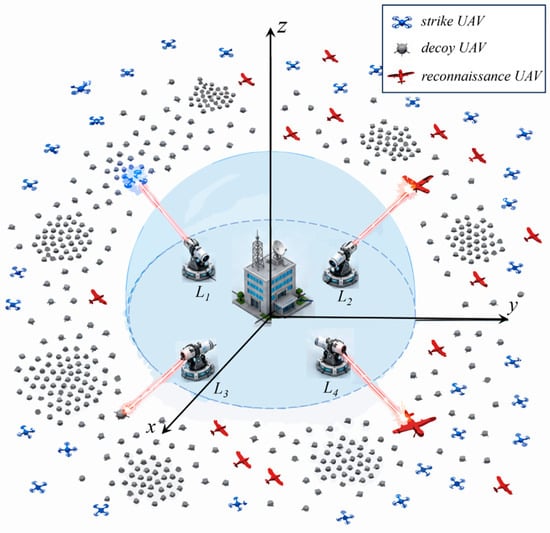
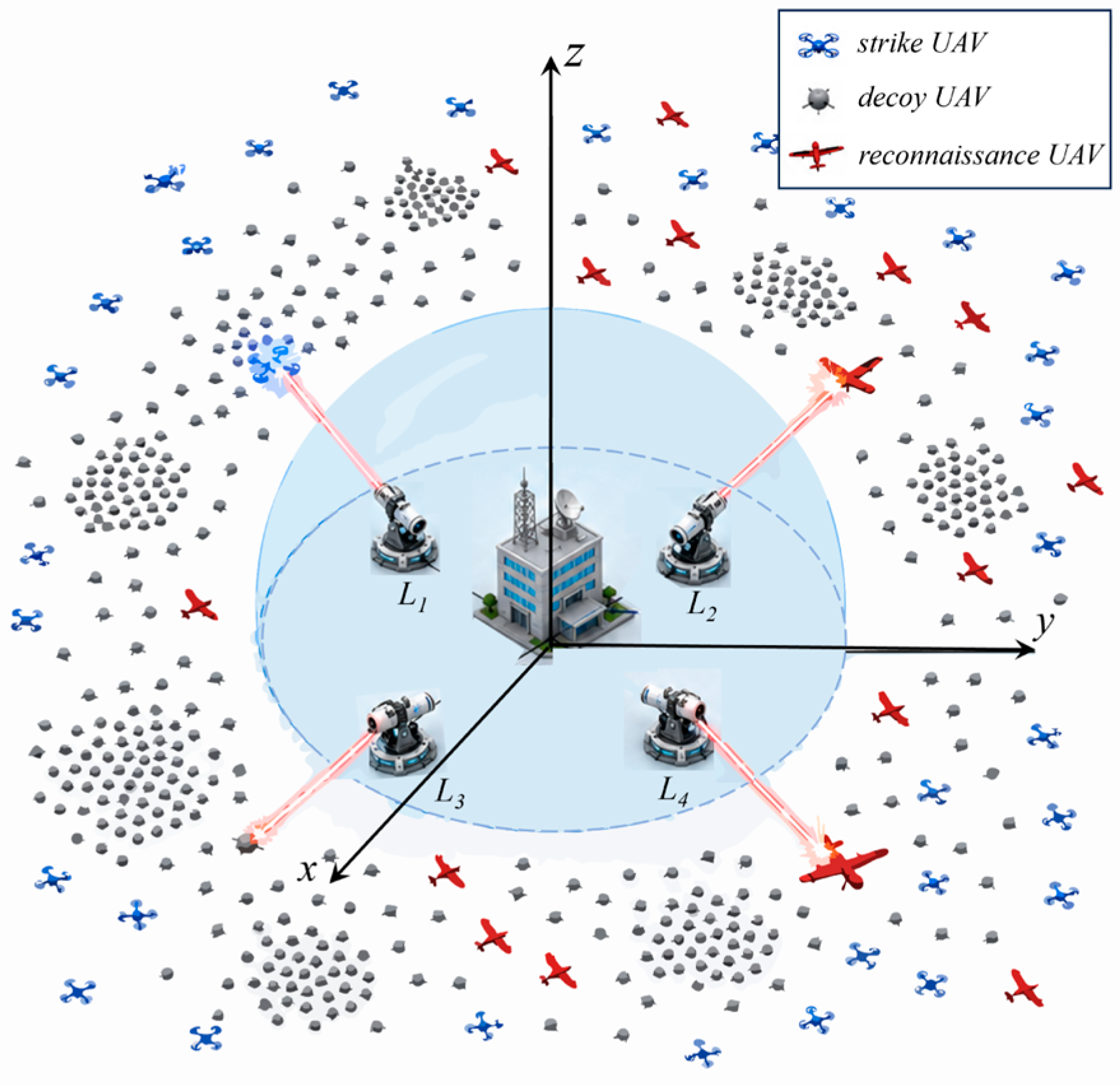
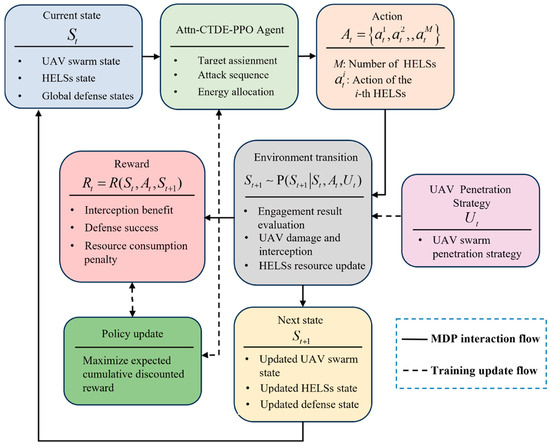
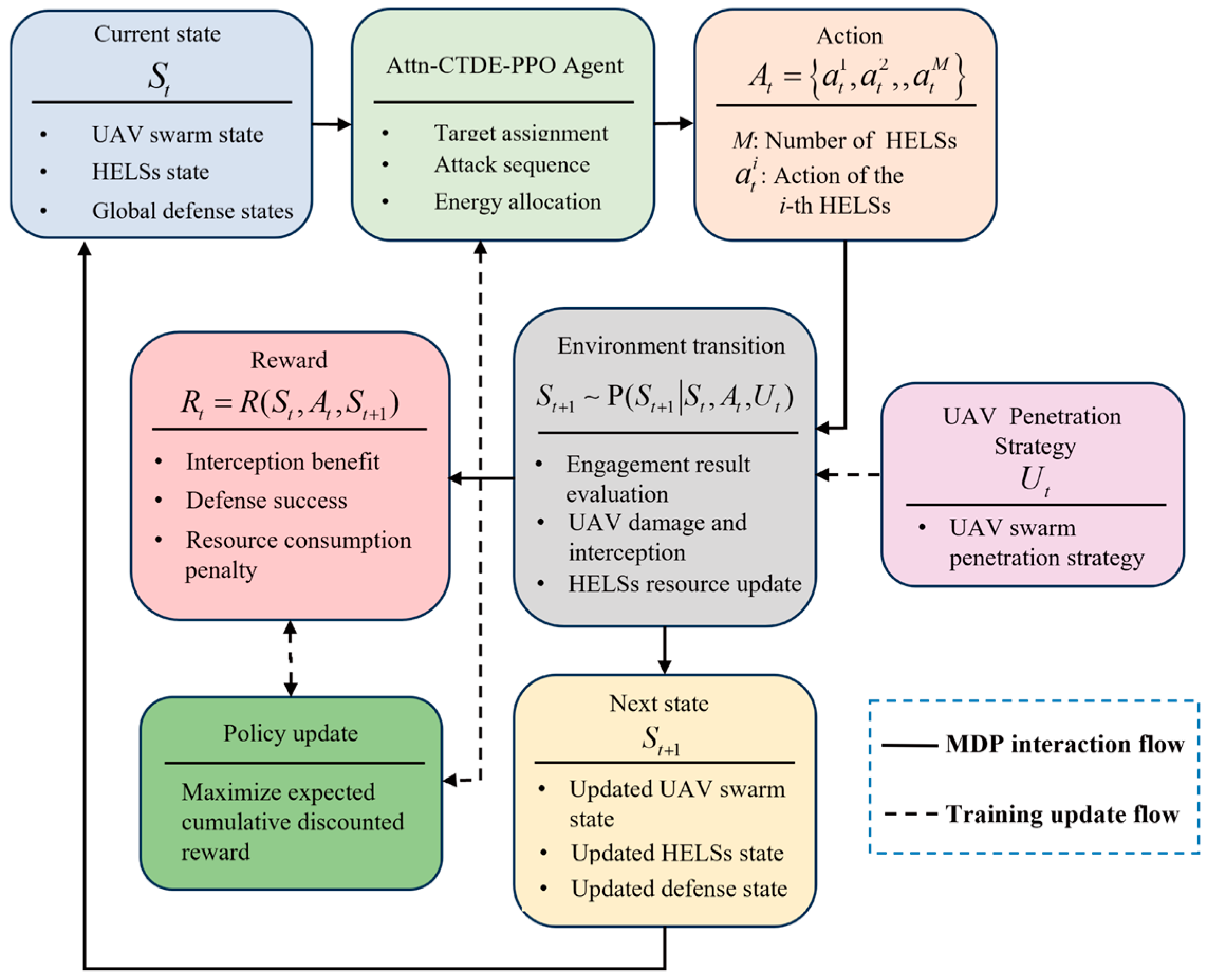
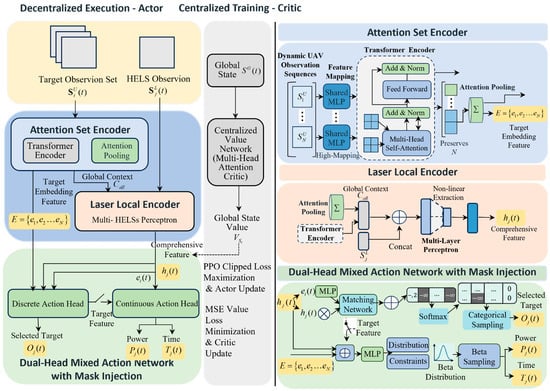
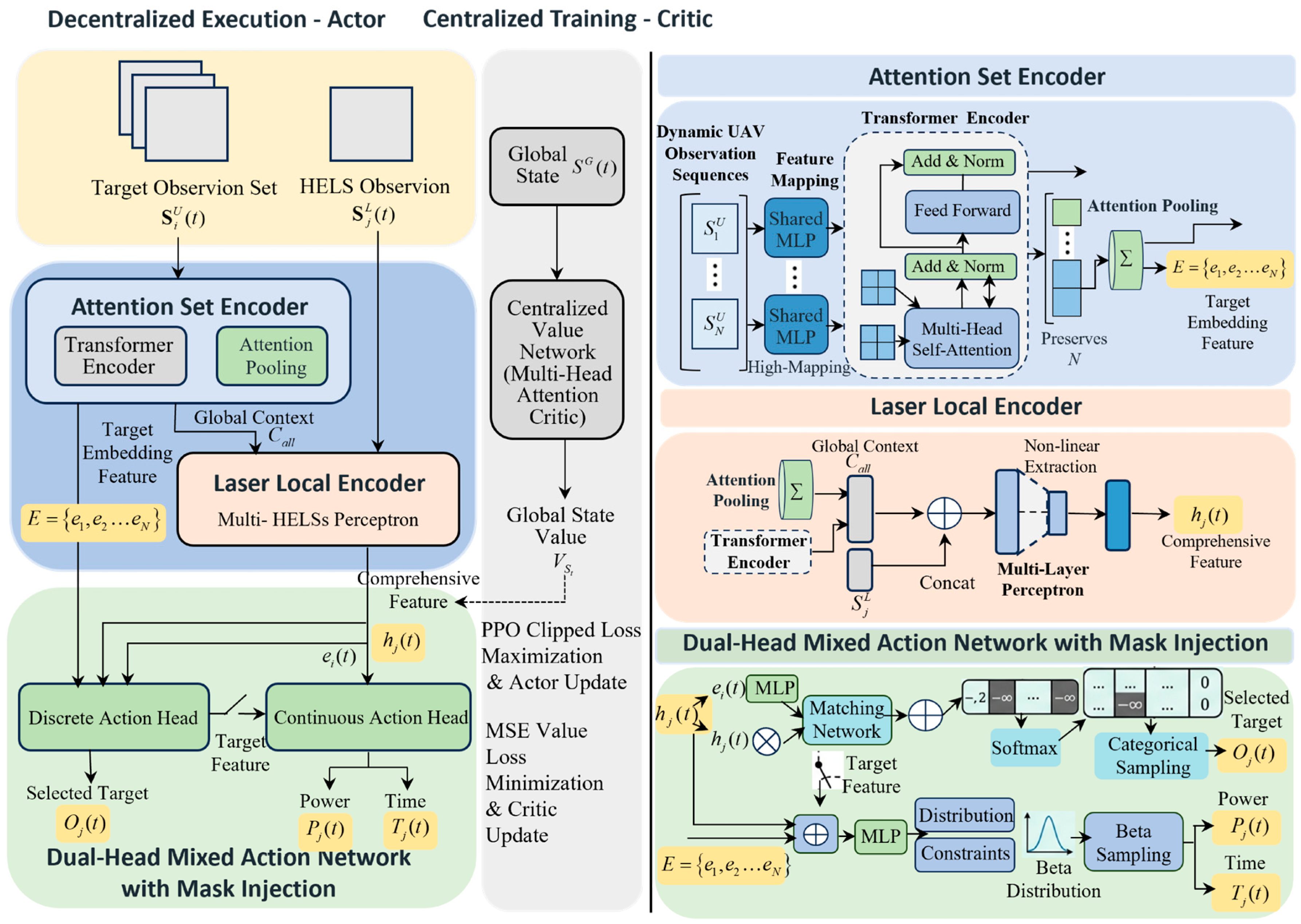
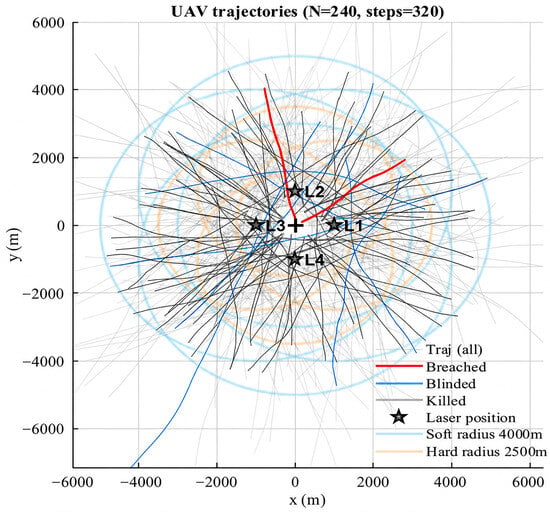
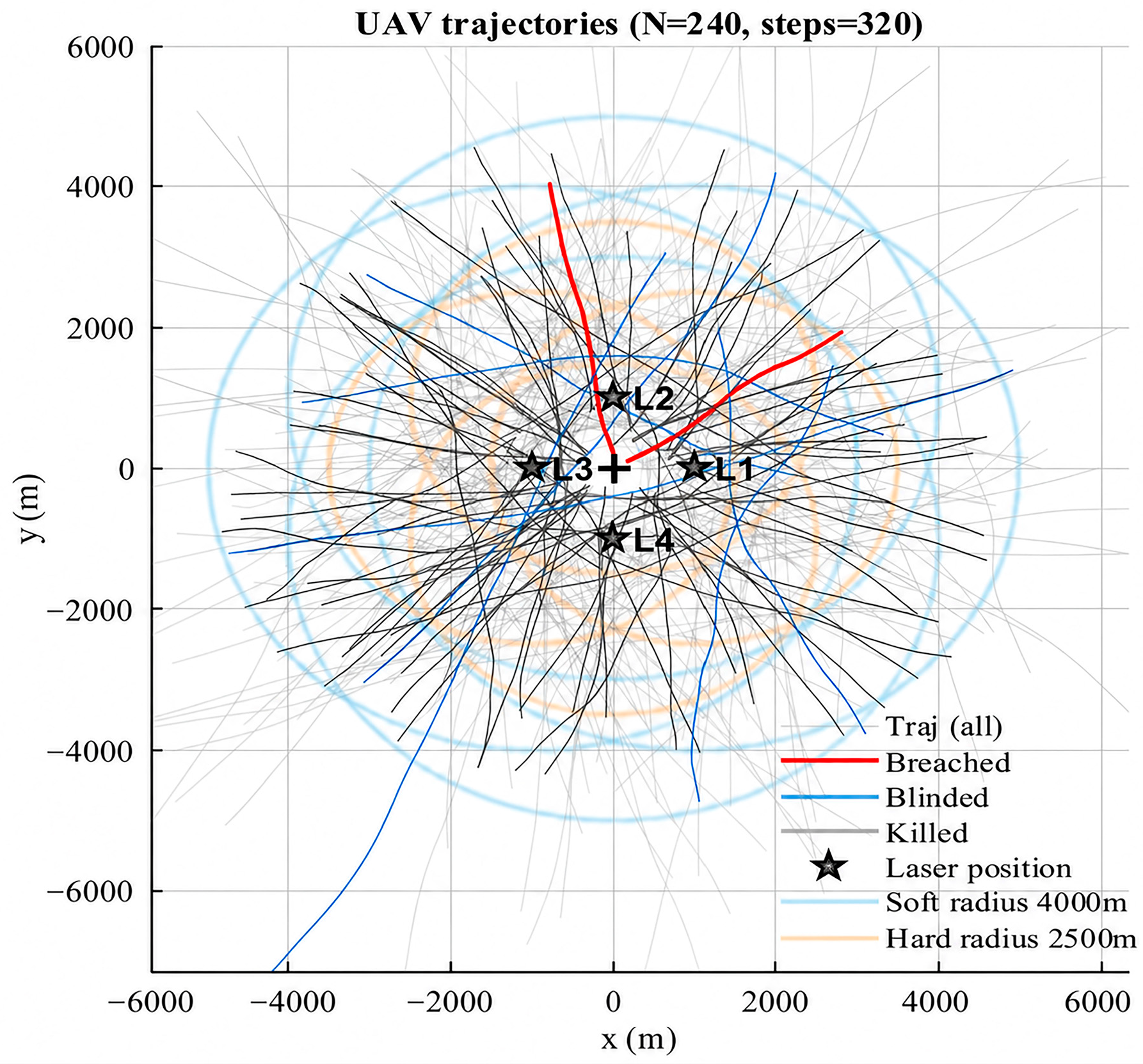
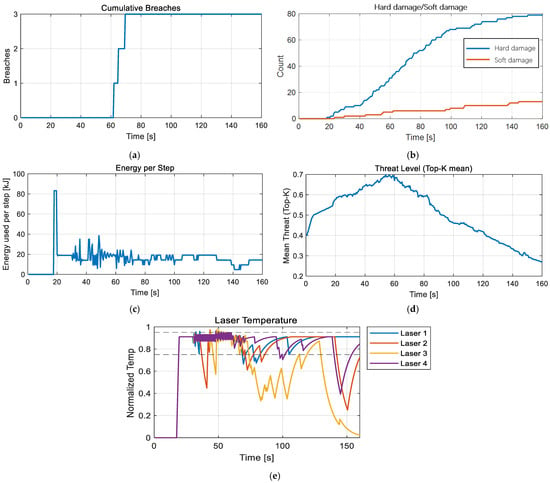
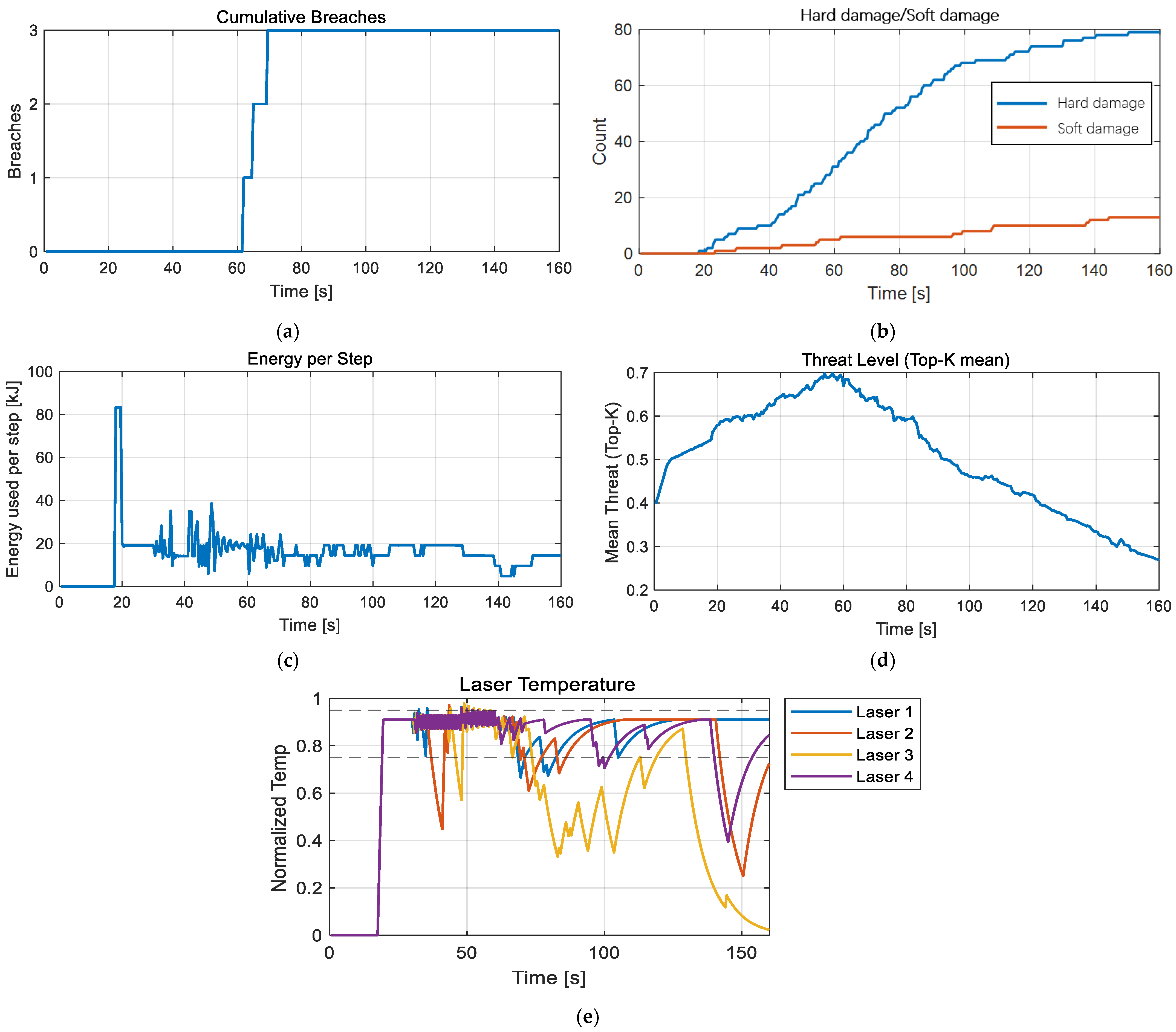
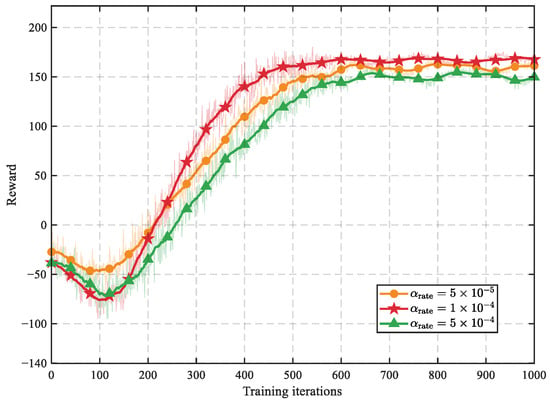
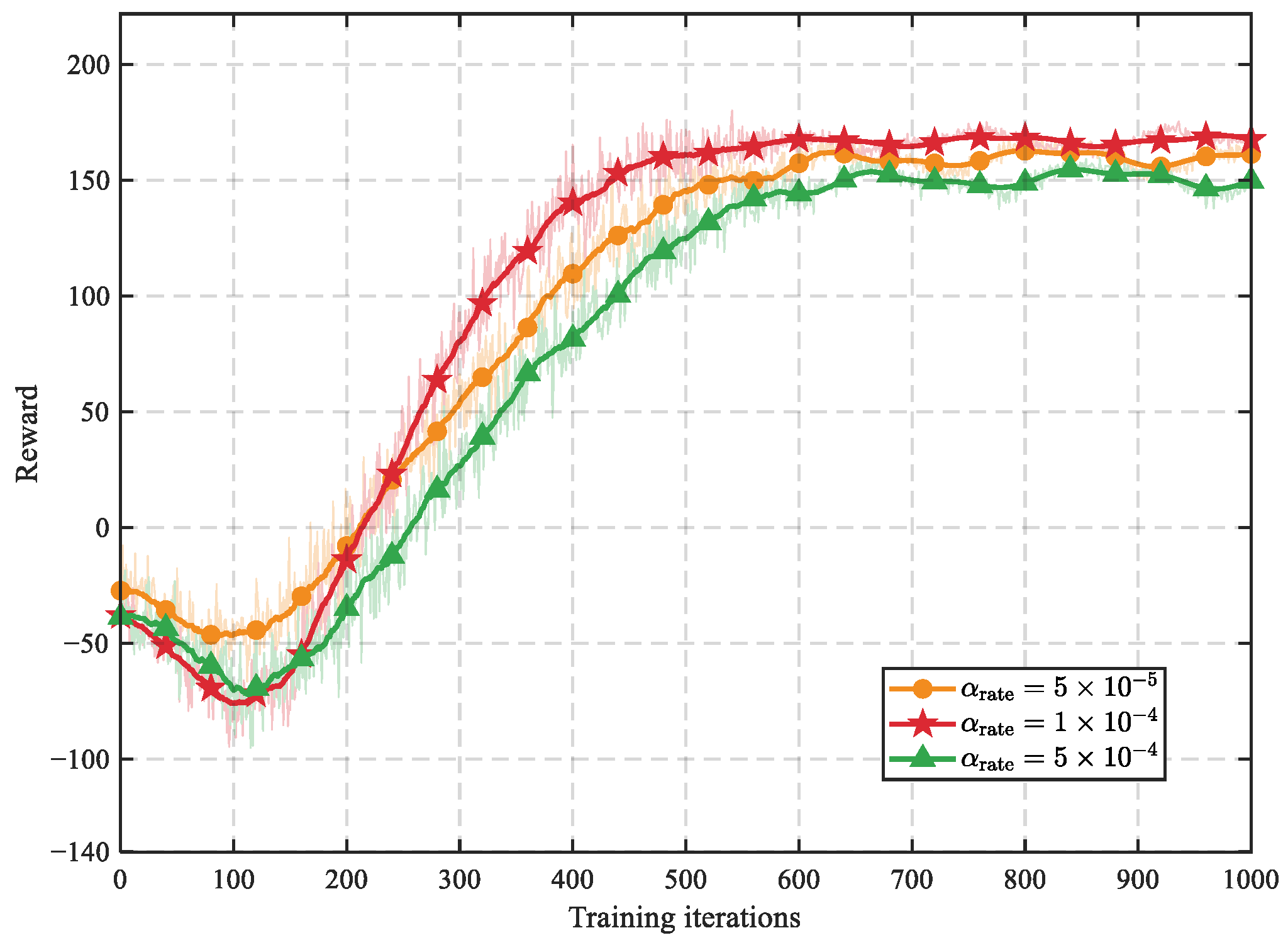
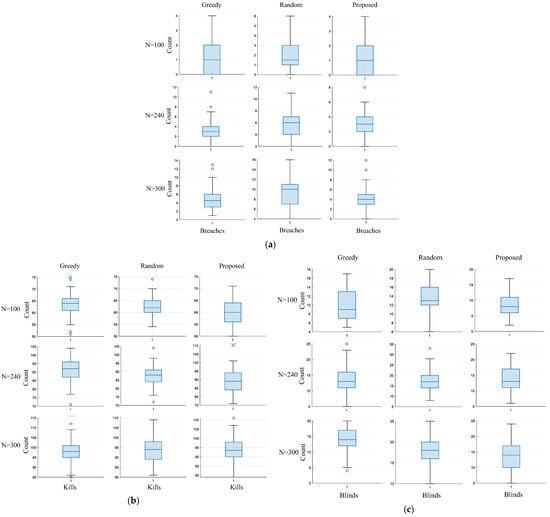
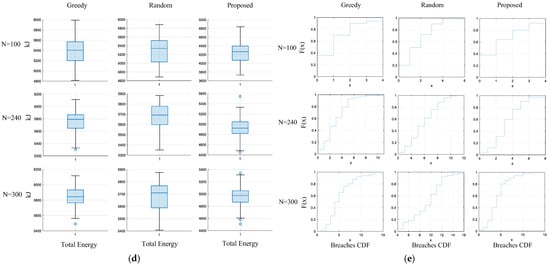
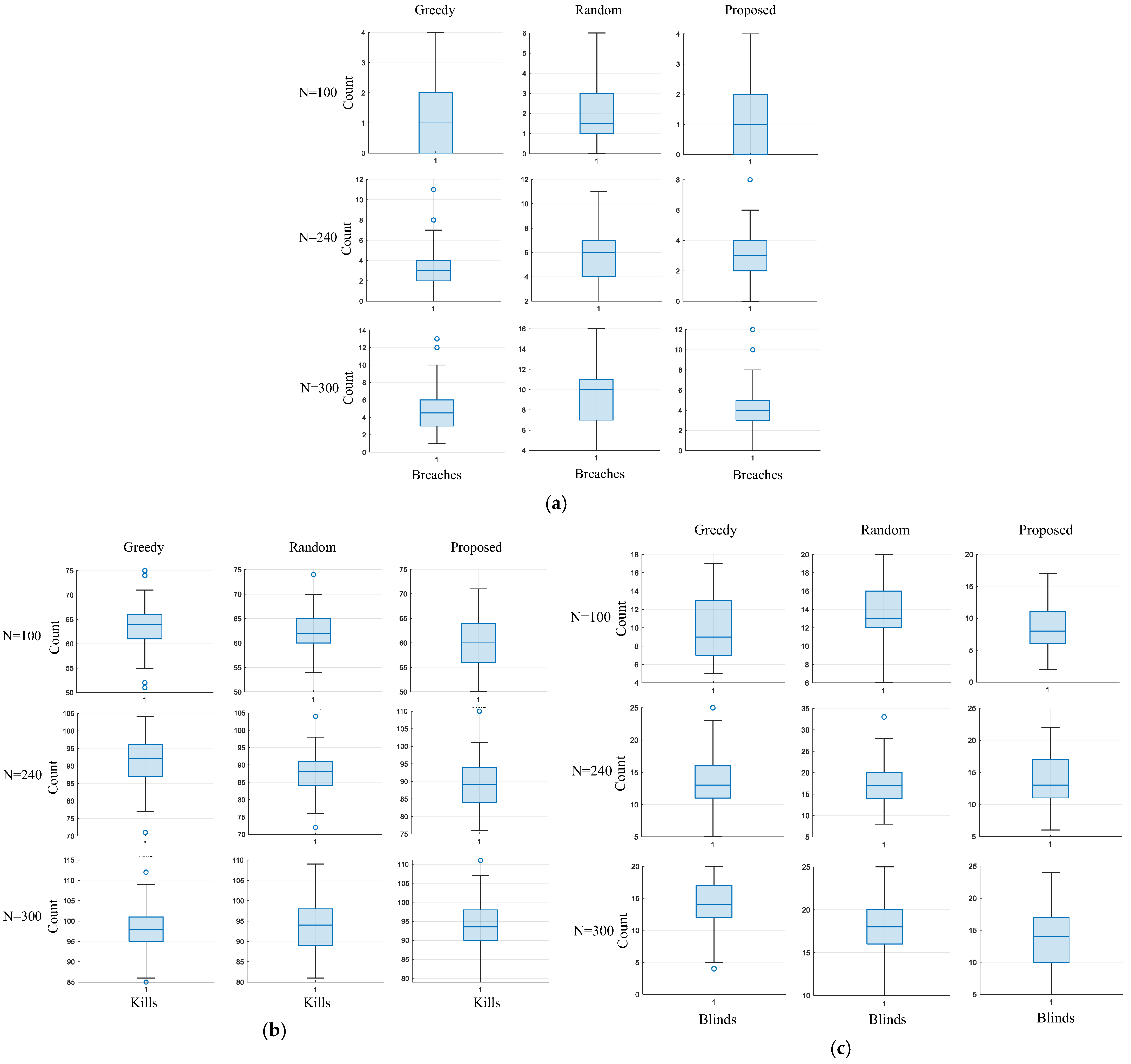
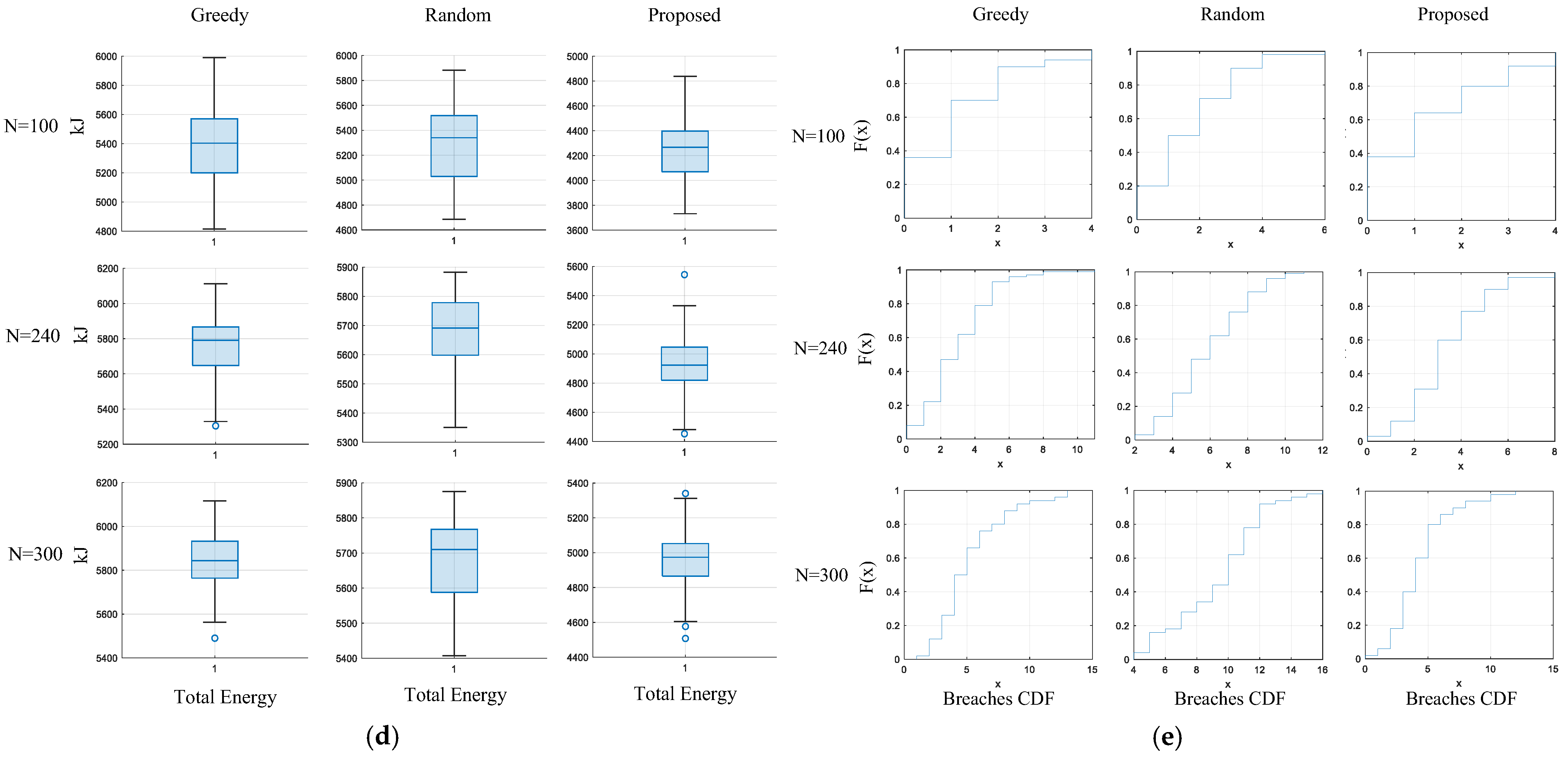
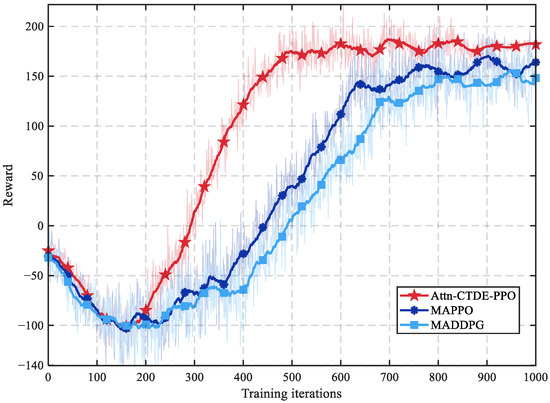
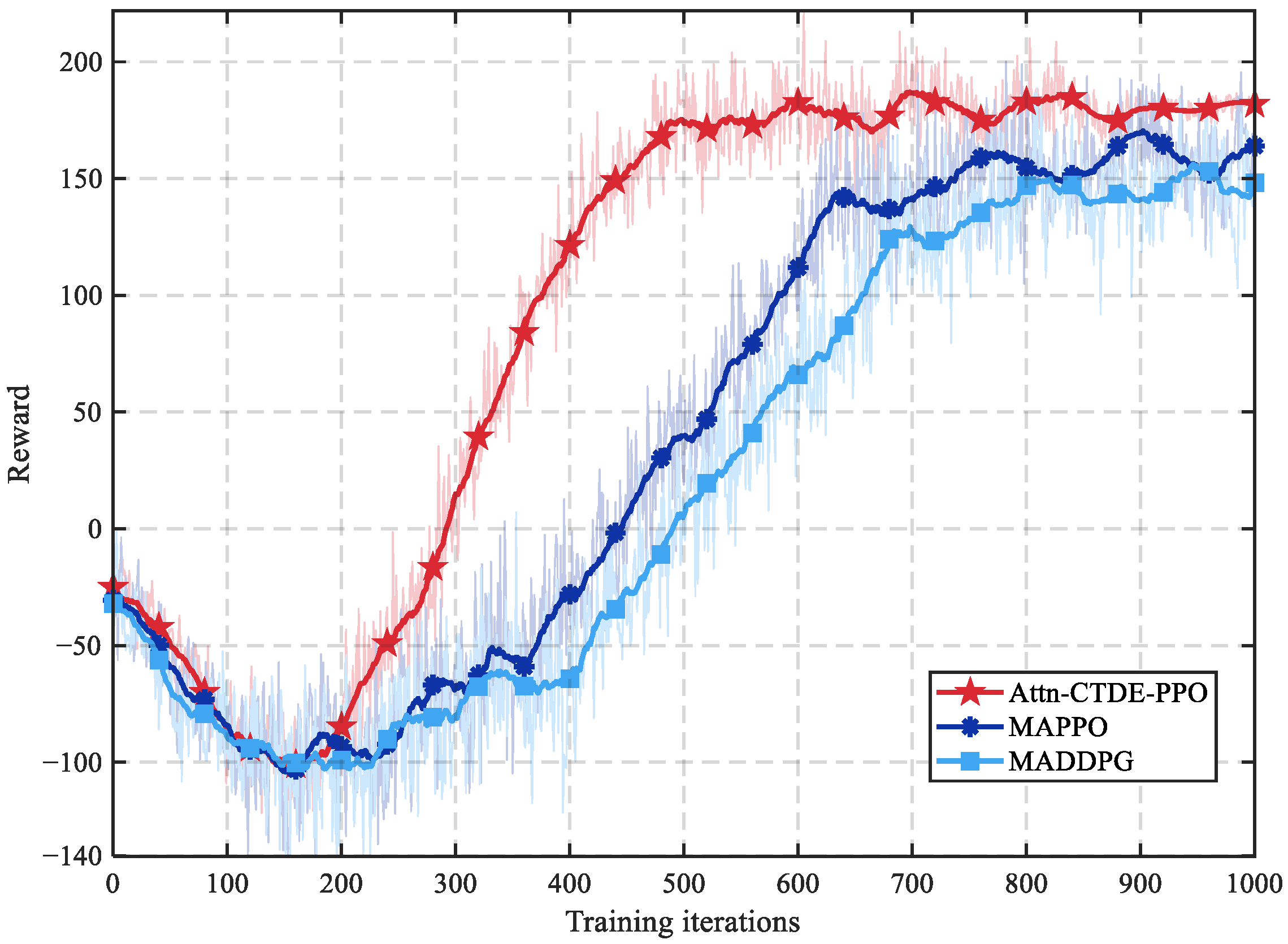
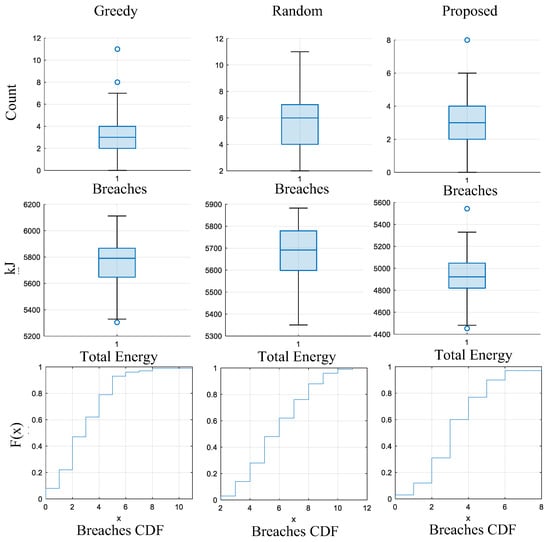
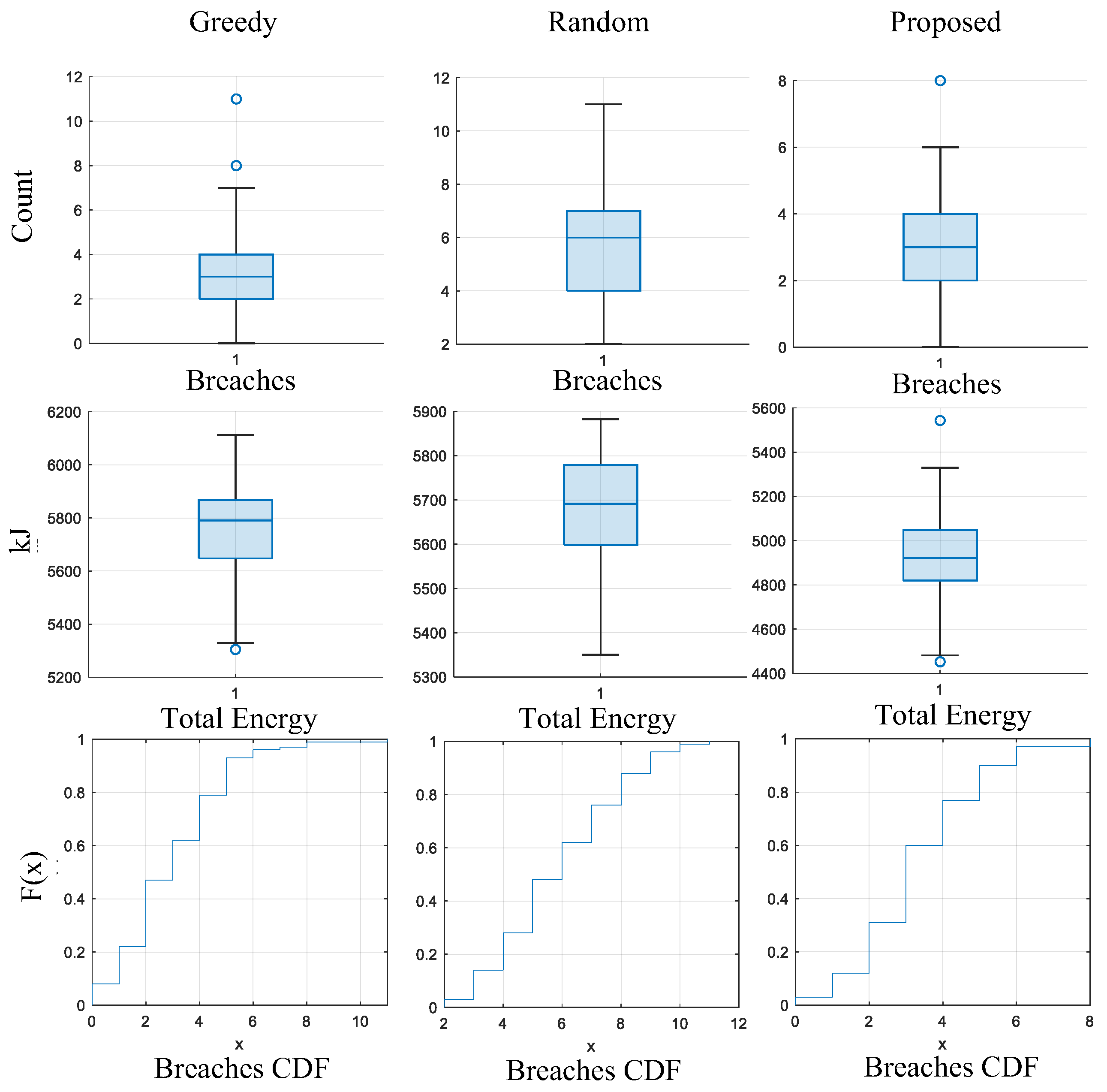
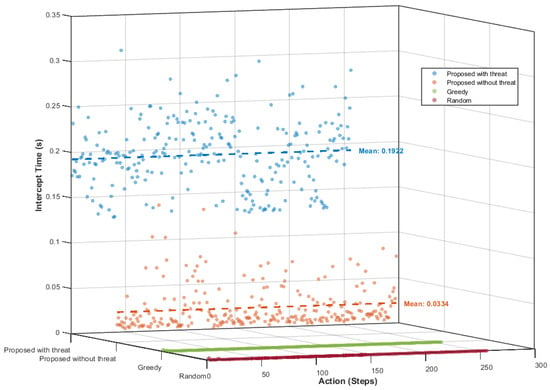
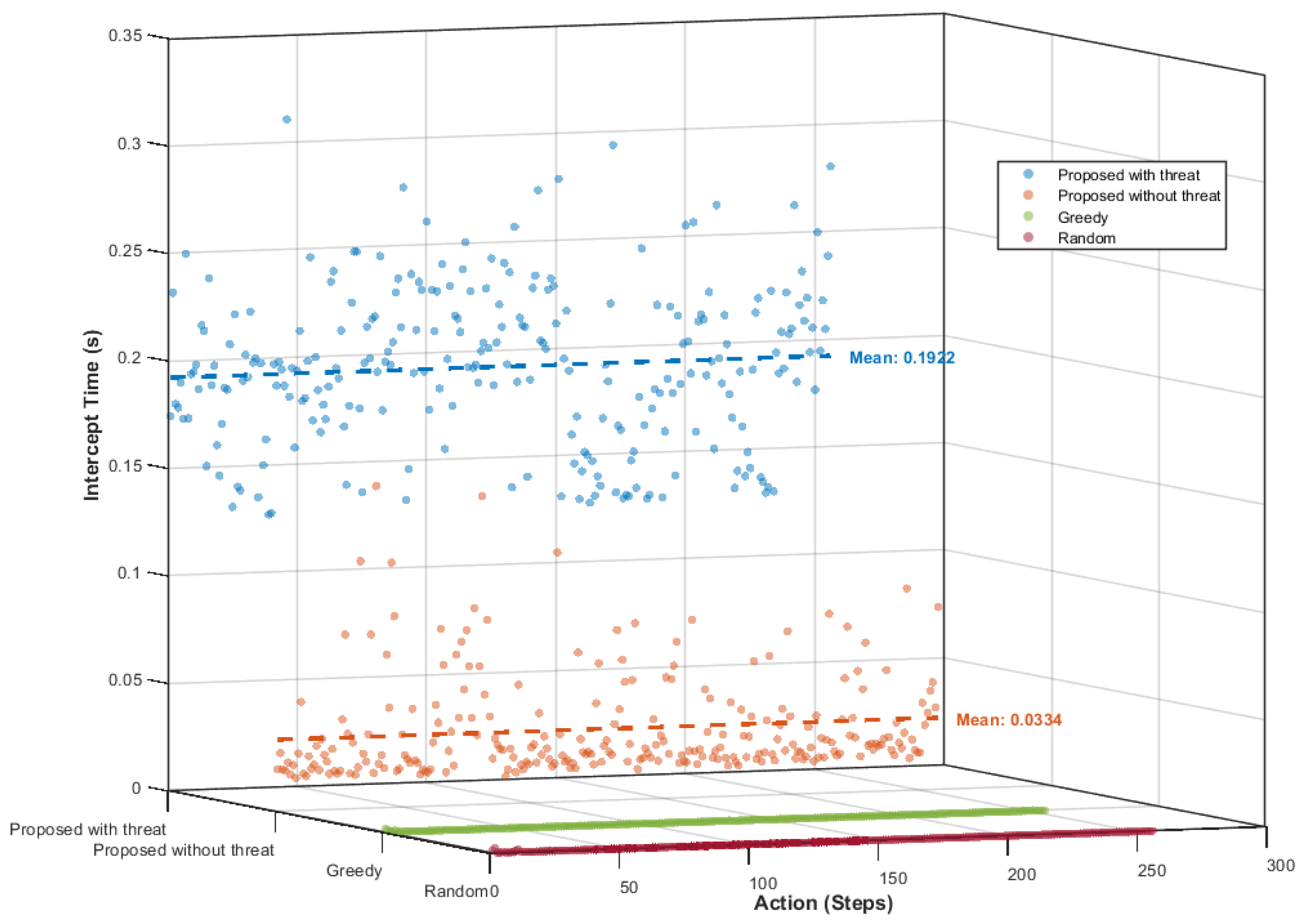

Disclaimer/Publisher’s Note: The statements, opinions and data contained in all publications are solely those of the individual author(s) and contributor(s) and not of MDPI and/or the editor(s). MDPI and/or the editor(s) disclaim responsibility for any injury to people or property resulting from any ideas, methods, instructions or products referred to in the content. |
© 2026 by the authors. Licensee MDPI, Basel, Switzerland. This article is an open access article distributed under the terms and conditions of the Creative Commons Attribution (CC BY) license.