


Abstract
Hybrid rocket engines (HREs) are increasingly considered for space transportation due to their inherent safety, cost-effectiveness, and operational flexibility. However, their diffusion flame structure promotes soot formation, leading to potentially significant emissions of black carbon (BC) directly into the stratosphere. This review provides a comprehensive analysis of soot formation and evolution in hybrid rocket combustion, covering fuel pyrolysis, polycyclic aromatic hydrocarbon (PAH) growth, particle nucleation, surface growth, and oxidation processes. The physico-chemical properties and nanostructural evolution of soot are discussed in relation to combustion conditions typical of HREs. Particular emphasis is placed on the environmental and climatic implications of BC emissions, including radiative forcing, atmospheric lifetime, and heterogeneous chemical interactions. Existing diagnostic techniques for soot measurement are critically assessed, highlighting their limitations under the extreme conditions of rocket exhaust plumes. A key outcome of this review is the identification of a major knowledge gap: although preliminary experimental emission-index measurements for HRE soot have recently become available, the database remains extremely limited, fuel- and configuration-specific, and not yet supported by standardised diagnostic protocols. Addressing this gap is essential for accurate environmental impact assessments and for the development of sustainable propulsion technologies.
1. Introduction
In the space sector, achieving cost-effective and efficient access to orbit has become a primary objective for both governmental organisations and private companies: scientific research, environmental monitoring, defence and security, and telecommunications are examples of sectors fostering frequent, flexible, and economically sustainable launches. Rockets are a unique anthropogenic emission source because they inject combustion products directly into the stratosphere [1,2,3,4,5,6,7]. So far, stratospheric emissions from a single suborbital rocket have been the subject of attention, but their impact has been considered small given the relatively low number of launches per year [8]. However, cumulative emissions from expanding suborbital fleets and the increased launch frequencies targeted by market participants and emerging start-ups could make the environmental impact of rockets increasingly relevant [1,3,8,9,10,11].
Consequently, there is growing demand for propulsion technologies that combine commercial viability (i.e., relatively low recurring costs) with environmental sustainability. Hybrid rocket engines (HREs) have emerged as a promising solution for both launch and in-space applications, as shown by the increasing number of start-ups entering the market with this technology [9,12]. Thermochemical hybrid propulsion offers several advantages over traditional solid- and liquid-propellant systems [13,14,15,16,17]. Despite these attractive features, hybrid rockets have seen limited adoption due to (i) slow regression rate () of traditional polymeric fuels [12,17,18], () low combustion efficiency [17,19], () oxidiser-to-fuel ratio (O/F) shift [20,21], and () absence of flight heritage [18]. While (i) can be tackled by the use of liquefying fuels [19,21,22], () and () are partially connected and require specific implementation to be overcome (or controlled) [12,18,23,24,25,26]. Finally, from a flight heritage perspective, the low technology readiness level (TRL) of hybrid rockets is a consequence of all the factors hampering their suitability to launch systems—their traditional field of application in research efforts. The diffusion flame driving hybrid combustion affects both the fuel regression rate and the combustion efficiency [27]. In this configuration, the turbulent boundary layer creates fuel-rich regions between the condensed fuel surface and the flame sheet, where conditions favourable to the formation of polycyclic aromatic hydrocarbons (PAHs) can occur [27,28]. These PAHs are soot precursors [28]. Soot is recognised as a component providing significant radiation heat transfer in HREs, thus playing a role in their combustion [29,30,31]. On the other hand, soot (also referred to as black carbon—BC) is a pollutant with significant impacts on the atmosphere [1,3,8,9,10,11,28,32].
Intensive research is currently focused on HREs: academic interest in hybrid rocket technology has risen sharply since 2010 (Figure 1). Projections indicate that the global market value of HREs is expected to rise from approximately US$3.77 billion in 2024 to an estimated US$6.30 billion by 2033 [9]. This trend suggests that these systems will play an increasingly prominent role in space transportation and will more frequently traverse the atmosphere.
Figure 1.
Annual publication counts and relative shares of peer-reviewed publications focused on hybrid rocket engines (HREs), liquid rocket engines (LREs), and solid rocket motors (SRMs) from 2000 to 2025, based on Web of Science data.
Developing a comprehensive understanding of hybrid rocket emissions is of critical importance, in particular when considering BC. Soot is a strong absorber of solar shortwave radiation and a significant contributor to radiative forcing [33]. Particulate emissions from rockets have historically been considered short-lived, but this is true only in the sense that they are removed from the stratosphere within approximately a decade after launches cease [1]. This further highlights the need to characterise emissions from systems such as HREs, which are often presented as environmentally friendly [28,34]. Given the foreseen exponential growth in the use of HREs, a rigorous study of their environmental impact is essential. The harmful effects of soot on both human health and the atmosphere are well-documented and closely linked to climate change [11]. To date, measurements of solid particulate emissions and comprehensive environmental impact assessments for hybrid rockets remain very limited. The available literature shows that BC emissions from rockets are highly uncertain and, for hybrid systems, have historically been inferred mainly from estimates or extrapolations from other propulsion classes [11,33,35,36,37]. Two recent, currently non-peer-reviewed conference contributions analyse plume features that may be related to soot [26] and preliminary soot emissions [38].However, these data should still be regarded as preliminary and configuration-specific because they refer to a limited set of fuels and operating conditions.
A key parameter used to characterise pollutant emissions is the emission index (EI), defined as the mass of a given species emitted per unit mass of fuel consumed:
where is the mass of the emitted species of interest in grams (soot, in the context of this paper), and is the mass of fuel consumed, in kilograms. On the other hand, when dealing with rocket propulsion, the EI is normalised by the total propellant mass rather than by the fuel mass [1,33,39], thus departing from the standard definition given in Equation (1)—originated for automotive/airbreathing applications. To avoid ambiguity, the reference mass is explicitly indicated in the units, e.g., for a fuel-normalised EI and for a propellant-normalised EI. The determination of EI for HREs is particularly challenging due to the transient nature of the flow, incomplete mixing, and the lack of standardised measurement methodologies. Figure 2 shows the assumed EI suggested by Ross et al. [33] for different types of rockets: BC from HREs is (on average) higher than the other propulsion systems, and it is characterised by high uncertainty, with a range of 20–60 for a generic hydrocarbon/N2O combustion. Recently, preliminary experimental measurements reported EI values of approximately 21– for ABS/GOX [38]. Re-normalising these values by the total propellant mass using the test-specific oxidiser-to-fuel ratios yields approximately 6– for ABS/GOX.These values are consistent, at least in order of magnitude, with the range estimated by Ross et al. [33]; however, the comparison should be interpreted with caution because of differences in oxidiser, fuel formulation, operating conditions, and engine architecture.
Figure 2.
Comparison of reported particulate emission indices (propellant-normalised) for different rocket-propulsion systems. The BC EIs for solid, kerosene, hypergolic, and generic hybrid propulsion are estimates from Ref. [33]; the error bars represent the corresponding uncertainty ranges reported by Ross et al. [33]. The ABS/GOX values are preliminary experimental emission indices from Ref. [38]. The ABS/GOX markers represent the midpoints of the reported ranges, while the vertical bars indicate the minimum and maximum values observed by Santolini et al. [38].
This review addresses the current lack of data for the assessment of soot emissions from HREs. Its objective is to consolidate the fundamental principles of soot formation, thereby providing a framework to facilitate and encourage future experimental research in this field.
2. Fundamentals of Soot Formation and Properties
Soot is a complex carbonaceous particulate matter produced as a by-product of the incomplete combustion of hydrocarbon fuels. Soot is associated with adverse effects on both human health and the environment, as well-documented in the open literature [5,11,33,40,41,42]. Soot consists of a mixture of carbon-rich particles, typically generated in relatively low-temperature (say, T approximately lower than 1800–2000), fuel-rich environments. Although the terms soot and black carbon are frequently used interchangeably, BC specifically refers to the graphitic, strongly light-absorbing fraction of soot, which typically accounts for 40–90 wt.% of its mass, the remaining fraction being composed of organic carbon (OC). OC in soot includes polycyclic aromatic hydrocarbons (PAHs) and oxygenated species, as well as potential inorganic constituents such as metal oxides or residues from fuel additives [28,42].
Soot composition and structure vary significantly with combustion conditions and fuel chemistry. In terms of particle-size distribution, soot is primarily composed of nanoscale primary particles with diameters ranging from 10 to 66 nm. These particles form within the flame and subsequently aggregate into chain-like or clustered structures with fractal geometries and overall sizes ranging from 0.5 to 4 μm [43]. The specific surface area (SSA) of the particles is strongly influenced by the flame structure, temperature history, and fuel type. Soot particles typically exhibit high SSA (ranging from 15 to 260 [44]). Thus, soot can act as a heterogeneous catalyst for atmospheric reactions [45,46]. A comprehensive and organised collection of scanning (SEM) and transmission electron microscope (TEM) images of soot from different sources can be found in Ref. [45]. Focusing on combustion-generated soot, Liu et al. show the different features of carbonaceous particulate matter originating from gas-to-liquid synthetic fuels, kerosene, and diesel. The same reference shows the typical aspect of a soot aggregate (from haze combustion), that is reported in Figure 3 [47]. Detailed references discussing soot formation are available in the literature, ranging from fundamental studies [48,49] to applications in combustion and propulsion systems [50].
Figure 3.
TEM images of soot aggregates from haze combustion: (a) chain-like soot cluster [47], (b) higher-magnification of the cluster showing layered structures and disordered graphitic layers typical of soot [47]. Adapted from Li et al., Haze types in Beijing and the influence of agricultural biomass burning, Atmospheric Chemistry and Physics, Volume 10, Issue 17, pp. 8119–8130, https://doi.org/10.5194/acp-10-8119-2010, 2010, licensed under CC BY 3.0.
In this work, soot formation is discussed from the perspective of hybrid propulsion and its specific combustion features.
2.1. Soot Formation in Hybrid Rockets
Soot formation is a complex physico-chemical process involving several simultaneous steps [51,52]. The interaction and balance between these processes ultimately determine the total mass of soot emitted, as well as its morphology and physico-chemical properties. This section summarises the primary stages leading to soot production during hybrid rocket combustion. The works used for the organisation of this section include Refs. [52,53,54,55,56].
In HREs, combustion is driven by a diffusion flame, as shown schematically in Figure 4 [27,32,57]. The flame is located in the boundary layer developed by the oxidiser stream flowing over the solid fuel grain. The enthalpy generated by combustion is transferred by convection and radiation to the condensed fuel. In pyrolysing formulations, the solid phase undergoes thermal degradation leading to vaporisation [27,32]. In fuels producing entrainment mass transfer (typically referred to as liquefying formulations), molten droplets can leave the fuel grain during combustion and may burn in the flow [21,22]. Yet, such a distinction between combustion mechanisms is more relevant to fuel regression rate than to soot formation, since nearly all fuels of practical interest in the open literature are hydrocarbons or hydrocarbon-like materials (i.e., hydroxyl-terminated polybutadiene—HTPB [16,30,31,58,59], paraffin wax [19,21,22,38,57,60,61,62,63,64,65,66], and 3D-printable polymers such as acrylonitrile butadiene styrene—ABS [38,59,60,61,62,63,64,65,67,68,69]). For clarity and simplicity, the following discussion focuses on hydrocarbon and hydrocarbon-like fuels, specifically on their vaporisation and combustion, without explicitly considering peculiarities such as entrainment mass transfer [57,66,70,71]. As shown in Figure 4, pyrolysed fuel gases are blown from the surface into the boundary layer and diffuse towards the centre of the combustion chamber while being transported by the oxidiser flow. The mean flow is parallel to the longitudinal axis of the grain. The interaction between the blown gases and the oxidiser stream creates a region with gradients in oxidiser-to-fuel ratio (O/F) and temperature. Combustion occurs in part of this area, specifically in the region where the local O/F ratio permits combustion. In modelling, the flame is typically considered to occur under stoichiometric conditions, although visualisations show more complex behaviour (in particular, when considering the liquid-layer interface in entrainment-producing fuels) [72]. As shown in Figure 4, moving outwards from the grain surface, the flame divides the boundary layer into two zones: (i) in the first zone (from the regressing surface to the flame), the velocity and temperature gradients have the same direction; () in the second zone (from the flame to the freestream), the velocity and temperature gradients have opposite directions [27]. The first region features temperature and local mixture ratio conditions conducive to soot formation: PAHs form at approximately 1000–2000 K under fuel-rich conditions [28].
Figure 4.
Schematic representation of the boundary layer diffusive model that is accepted as the combustion mechanism of HREs first described in Ref. [27].
In this framework, soot should not be regarded solely as an undesired by-product of hybrid combustion. Within the motor chamber, soot particles may contribute to the radiative heat feedback from the reacting boundary layer to the condensed fuel surface, thereby affecting fuel pyrolysis and regression rate. This fuel-dependent interaction between soot radiation, surface heating, and regression is discussed in greater detail in Section 2.1.2. From an environmental perspective, the critical issue is the fraction of soot that is not fully oxidised before reaching the nozzle exit and is consequently emitted into the plume as black-carbon particulate matter.
2.1.1. The Four Main Stages of Classical Soot Formation
Soot formation is commonly described through four main stages: (i) fuel pyrolysis and precursor formation, () particle nucleation, () surface growth and coagulation, and () oxidation. These stages are discussed below, focusing on the classical hydrogen–abstraction–acetylene addition mechanism.
- Fuel Pyrolysis and Precursor Formation
The initial stage involves the thermal decomposition, or pyrolysis, of the hydrocarbon or hydrocarbon-like solid fuel into smaller fragments and radicals [30,73,74]. Several studies have therefore focused on identifying primary and secondary pyrolysis products and on describing the chemical routes by which these species evolve towards aromatic precursors [30,48,52,54,56,75,76,77,78]. Small unsaturated fragments, particularly acetylene (C2H2), and radical species can contribute to the formation of benzene (C6H6), the first aromatic ring and a key precursor to polycyclic aromatic hydrocarbons (PAHs) [48,51,52,54,79,80,81,82].
Larger PAHs may subsequently grow through the Hydrogen Abstraction–C2H2 Addition (HACA) mechanism, which is one of the classical pathways for PAH molecular growth leading to soot inception [50,51,54,55,83]. A simplified sequence is reported below starting from benzene for clarity, although the same abstraction–addition logic can proceed on larger PAHs:
- A hydrogen radical abstracts a hydrogen atom from benzene, producing a phenyl radical and molecular hydrogen:
- Acetylene adds to the radical site. The process proceeds through an intermediate adduct radical, followed by hydrogen elimination, yielding phenylacetylene:
- A second hydrogen-abstraction step can occur on the aromatic ring, for example at the position adjacent to the ethynyl substituent, i.e., the ortho position. This produces an ethynylphenyl radical:
- A further acetylene molecule can add to this radical site. The resulting open-chain radical intermediate may undergo intramolecular cyclisation by reaction with the neighbouring ethynyl group, forming a fused aromatic structure. In the simplified scheme, this step yields a naphthyl radical:
- The naphthyl radical can either be stabilised by hydrogen addition, forming naphthalene, or continue through further HACA cycles:
Therefore, repeated hydrogen abstraction, acetylene addition, and ring-closure reactions progressively extend the aromatic structure, converting monocyclic aromatic precursors into larger PAHs such as naphthalene (C10H8) and, subsequently, more complex soot-forming aromatic structures. The sequence described above is illustrated in Figure 5.
Figure 5.
Simplified representation of the Hydrogen Abstraction–C2H2 Addition (HACA) pathway, shown here from benzene to a naphthyl-type radical, following steps (a–d). Hydrogen abstraction creates radical sites on the aromatic structure, acetylene addition extends the carbon skeleton, and intramolecular cyclisation produces fused aromatic rings.
Recent research highlights that alternative growth pathways also contribute significantly to PAH formation [84,85,86]. Shukla and Koshi [87] demonstrated that processes involving C2Hx radicals (e.g., vinyl C2H3 or ethynyl C2H) can effectively promote the growth of cyclopenta-fused PAHs, providing an efficient route to larger structures under fuel-rich conditions. This suggests that in solid hydrocarbon and hydrocarbon-like systems (HTPB, paraffin-wax), where such radicals are relatively abundant, the classical HACA mechanism and C2Hx-driven pathways likely act in synergy to enhance soot formation [50,80,87].
- ii.
- Particle Nucleation
Soot inception represents the transition from gas-phase PAHs to the first solid-phase particles (approximately 1 nm in size) [88,89]. The process typically proceeds through a two-step pathway:
- Physical association: PAH molecules cluster via van der Waals interactions (e.g., – stacking) [75].
- Chemical stabilisation: Clusters are converted into stable soot nuclei via covalent bonding, often through radical-mediated processes [75].
Recent studies increasingly highlight a chemically driven kinetic pathway. Michelsen et al. [90] argue that purely physical nucleation is thermodynamically unfavourable at typical soot inception temperatures. Instead, a chemical clustering mechanism is thought to dominate under flame conditions. Supporting evidence from reactive molecular dynamics simulations (ReaxFF) of acetylene pyrolysis (1350–) shows a progression from small hydrocarbons towards larger aromatic structures, consistent with structural chemical growth rather than simple physical aggregation [84].
- iii.
- Surface Growth and Coagulation
Surface growth is most active during the early stages of condensed particle evolution, typically above . In this regime, species such as C2H2 and gas-phase PAHs adsorb onto existing particle surfaces, increasing particle size and carbon density. This growth can occur via chemical reactions (such as the HACA mechanism) or physical adsorption [54].
During these stages, particle–particle collisions often occur while surface growth is still significant. When colliding particles merge into a single, roughly spherical entity where individual boundaries disappear, the process is termed coalescence. Subsequent material deposition via surface growth can further densify the merged particle [55]. In contrast, agglomeration typically involves more mature particles; collisions result in chain-like aggregates where primary particles remain distinct, forming fractal-like structures [91]. The morphological distinction is critical:
- Coalescence reduces the total surface area as particles fuse into a single larger spheroid.
- Agglomeration/Aggregation largely preserves the total surface area, as constituent particles remain discrete within the aggregate.
- iv.
- Oxidation
Oxidation is the terminal stage in the lifecycle of soot particles within the flame. Alongside nucleation and growth, it governs the final emitted soot mass. In oxidation, soot particles undergo heterogeneous reactions with gas-phase oxidants such as O2, OH, O, H2O, and NO2 [92], converting solid carbon into gaseous products, primarily CO and CO2 [55]. Among these, OH radicals are the most effective under flame conditions, with a collision efficiency of approximately [93,94]. Oxidation becomes significant above and peaks between 2500 and . Smaller primary particles with high SSA oxidise more rapidly, whereas large aggregates may experience diffusion-limited transport of oxidants to reactive sites [55].
A schematic representation of the whole soot formation mechanism is represented in Figure 6.
Figure 6.
Schematic model of soot formation, based on the relevant steps identified in Section 2.1 and Refs. [53,55,95,96].
2.1.2. Fuel Pyrolysis in Hybrid Rockets
Having outlined the general soot-formation sequence in Section 2.1.1, the discussion now turns to the fuel-specific pyrolysis behaviour of HTPB, paraffin waxes, and ABS under conditions relevant to HREs. Particular attention is given to how fuel chemistry, heating rate, pressure, and residence time influence the species released from the regressing surface and their subsequent evolution towards aromatic and soot precursors.
- General Influence of Fuel Composition and Operating Conditions
Although the general soot-formation sequence is common to hydrocarbon and hydrocarbon-like fuels, the relative importance of each stage depends sensitively on fuel chemistry. The fuels most widely considered in HRE research are HTPB, which historically dominated the literature until the early 2000s and remains highly relevant; paraffin waxes, which are widely investigated because of the additional entrainment mass-transfer mechanism; and polymers suitable for additive manufacturing, especially ABS. These fuels differ markedly in their pyrolysis speciation and, consequently, in the way they supply aromatic precursors and carbonaceous particulate matter.
Although HRE combustion is strongly influenced by convective and, potentially, radiative heat transfer, with diffusion and turbulence also playing important roles, most pyrolysis studies investigate solid-fuel degradation in a quiescent environment. Heating rate is one of the primary parameters influencing the resulting species distribution [30,78,81,82,97,98]. Open-literature studies can generally be divided into slow- and fast-heating investigations. Heating rates below approximately are typically associated with slow-heating conditions, whereas flash-pyrolysis and most modern analyses consider regimes above . Comparatively few studies evaluate the influence of pressure on fuel degradation [30,99].
The open literature on fuel pyrolysis focuses predominantly on HTPB [30,77,78,81,82,97,98]. Fewer studies explicitly address the pyrolysis of solid paraffin waxes, for which part of the available understanding is derived from the broader literature on alkane pyrolysis. Paraffin waxes are commonly investigated under slow-heating conditions, although rapid-heating studies of related alkanes also provide relevant information [100]. ABS is likewise generally investigated under relatively slow-heating conditions, although some rapid-heating studies are available [101,102]. Specific investigations on paraffin waxes have focused on the influence of pressure and on the competition between evaporation and decomposition [99].
Table 1 summarises the principal studies and operating conditions discussed in the following paragraphs.
Table 1.
Representative experimental studies on the pyrolysis of solid fuels relevant to hybrid rocket propulsion. The reported products and kinetic parameters depend on the imposed heating rate, pressure, residence time, and diagnostic technique.
- HTPB Pyrolysis
Reference studies on HTPB pyrolysis in the HRE field include those by Arisawa and Brill [81,82] and Chiaverini et al. [30]. The former studies employed T-jump/FTIR flash pyrolysis, whereas Ref. [30] employed conductive heating. Arisawa and Brill investigated HTPB at a heating rate of , over the temperature range 723–, at pressures of 2 and in argon. The principal pyrolysis products identified were: (i) butadiene, (ii) 4-vinyl-1-cyclohexene (4-VCH), (iii) trans-butadiene oligomers (t-BDO), (iv) ethylene, (v) 1,5-hexadiene (1,5-HD), and (vi) cyclopentene (CP). Together, these six species accounted for 95– of the detected gaseous products. Other minor species included 1,3-cyclohexadiene, toluene, benzene, propene, and oligomers of vinyl-butadiene and cis-butadiene.
The t-BDO species were identified as major contributors to the smoke observed under the investigated operating conditions [81,82]. They may therefore represent relevant precursors to condensed carbonaceous matter, although they should not be identified directly with mature soot. Two main pyrolysis regimes were distinguished. At , the first regime extended up to approximately 773–, within which polymer degradation was controlled by bulk-phase reactions. Owing to cyclisation reactions, this stage was found to be slightly exothermic. The second regime was encountered throughout the investigated temperature range at and, at , for temperatures above approximately . Under these conditions, desorption of the pyrolysis products became the rate-limiting process. This latter regime is expected to be more representative of HRE combustion conditions. At and temperatures above approximately , the apparent activation energy decreased from 51 to . At , the t-BDO concentration increased with temperature until reaching a plateau near , whereas at it remained approximately constant. At the higher pressure, the butadiene concentration was also relatively insensitive to temperature.
The analysis by Chiaverini et al. [30] showed broadly similar trends. Conductive heating was used to raise the fuel-surface temperature to approximately , with heating rates of about . A particularly relevant aspect of Ref. [30] is the comparison between laboratory pyrolysis measurements and engine-firing data. The results showed: (i) activation energies consistent with those reported by Arisawa and Brill [81,82] and (ii) no marked pressure effect between atmospheric-pressure pyrolysis data and high-pressure engine-firing data above approximately .
Some differences emerge when comparing the products detected in the two sets of investigations. Butadiene and 4-VCH were observed in both, whereas no t-BDO was identified by Chiaverini et al. [30], possibly because the adopted sampling and diagnostic chain favoured smaller pyrolysis fragments. Conversely, cyclic hydrocarbons, including benzene and toluene, were identified at temperatures above approximately .
More recent investigations of HTPB pyrolysis have considered heating rates substantially higher than those employed in the studies of the late 1990s. Karpovych et al. [98] reported heating rates in the range –. Unlike earlier analyses, this approach enabled the isolation of primary reaction products, including unstable radical species such as allyl and hexenyl radicals. These fragments were detected before undergoing extensive secondary reactions such as aromatisation, producing benzene and toluene, or heavy oligomerisation, producing species such as t-BDO. The heavier products reported in earlier studies may therefore be interpreted, at least partly, as products of secondary chemistry [30,78,81,82], whereas the short sampling times employed by Karpovych et al. favoured the detection of primary species [98].
Reference [98] thus provides insight into the initial speciation of HTPB under heating conditions approaching those encountered during rapid fuel regression. The conversion of these primary fragments into the heavier products detected in earlier investigations is influenced by their residence time under the severe conditions of the reacting boundary layer, where isomerisation, cyclisation, aromatisation, and oligomerisation may occur away from the regressing fuel surface. This interpretation is also consistent with the comparison between laboratory pyrolysis and HRE firing conditions presented by Chiaverini et al. [30].
From the standpoint of fuel chemistry, HTPB is predominantly an aliphatic-unsaturated fuel. During rapid heating at the regressing surface, it releases light fragments, unsaturated hydrocarbons, radicals, and oligomeric species whose distribution depends strongly on the local thermal history. In the fuel-rich region between the surface and the flame sheet, these products may feed benzene and PAH formation and, ultimately, soot chemistry [52,56].
- Paraffin-Wax Pyrolysis
Similar considerations concerning the effect of heating rate can be extended to the alkane systems discussed in Refs. [100,104,105]. Hydrocarbon pyrolysis proceeds through a hierarchical network of reactions, whereas solid paraffin waxes first undergo melting before evaporation, cracking, and subsequent gas-phase chemistry can occur.
The specific behaviour of paraffin-wax evaporation and decomposition was investigated by Muravyev et al. [99], who compared macrocrystalline and microcrystalline waxes under slow-heating, inert conditions at ambient and elevated pressures. At atmospheric pressure, approximately , wax evaporation and cracking occurred simultaneously. By employing high-pressure differential scanning calorimetry at pressures up to , Muravyev et al. [99] suppressed evaporation sufficiently to observe decomposition reactions directly in the liquid phase.
Three characteristic regimes were identified: (i) evaporation of linear alkanes, with a vaporisation enthalpy at of ; (ii) evaporation of branched hydrocarbons, with a vaporisation enthalpy of ; and (iii) thermal decomposition, which became dominant at elevated pressure and followed a random-scission mechanism with an activation energy of .
These controlled thermal analyses provide information on the competition between wax evaporation and liquid-phase cracking, but they do not reproduce the complete combustion environment of a liquefying HRE fuel. In particular, droplet entrainment, convective transport, and secondary gas-phase reactions may substantially alter the species ultimately available for PAH and soot formation.
- ABS Pyrolysis
ABS is chemically more complex than HTPB because it combines a polybutadiene phase with a styrene–acrylonitrile matrix. It should therefore not be treated as a simple surrogate for an aliphatic hydrocarbon fuel. Its thermal degradation can provide relatively direct access to aromatic and nitrile-bearing fragments, resulting in a precursor pool substantially different from that of HTPB.
Details on ABS pyrolysis are available in Refs. [101,102,103,106]. The thermal behaviour of ABS was characterised by Alonso et al. [103] using DSC–TG. Their work also collected literature data concerning ABS degradation and showed that, in an inert environment, the polymer generally undergoes a predominantly single-stage degradation process over the temperature range 643–. Differences among formulations were mainly associated with the butadiene content of the original feedstock. More generally, ABS degradation results from several overlapping processes, including end-chain and random-chain scission [103].
Xu et al. [102] investigated ABS pyrolysis under inert conditions at slow heating rates of 5–, from ambient temperature to . FTIR and gas-chromatographic analyses identified aromatic compounds, ketones, esters, nitrile-bearing species, alkenes, and amines among the pyrolysis products. Isoconversional analyses were used to estimate an average apparent activation energy of for ABS decomposition, occurring primarily over the temperature range 590–. The same study investigated the co-pyrolysis of ABS with polylactic acid and reported a reduction in the apparent activation energy to , although this mixed-polymer result is not directly representative of neat ABS fuel.
Li et al. [101] provided quantitative analyses of ABS pyrolysis speciation under both slow- and rapid-heating conditions, the latter reaching approximately . The results showed broad agreement between the two regimes, with styrene and nitrile-bearing compounds remaining among the dominant products. Nitrogen-containing compounds accounted for approximately 51% of the detected products, while mono-aromatic species represented approximately 41%. Styrene alone accounted for approximately 23–28% of the chromatographic peak area.
The abundance of styrene and other mono-aromatic products provides ABS with a relatively direct route to aromatic structures from which benzene, toluene, naphthalene, and larger PAHs may develop [101,102]. The comparatively limited difference observed between slow- and rapid-heating ABS pyrolysis may be related to the pre-existing aromatic ring in the styrenic fraction and to the corresponding stability of the principal decomposition products.
From a soot-chemistry standpoint, these results indicate that ABS generates a precursor pool different from that of HTPB, with greater direct availability of aromatic and nitrile-bearing species during devolatilisation. However, this chemical expectation is better established than the resulting soot yield under representative HRE conditions. The literature on neat ABS combustion in HREs is considerably thinner than that available for HTPB and focuses predominantly on regression behaviour, additively manufactured fuel grains, and performance comparisons rather than on dedicated soot measurements [59,67,69]. Consequently, the available evidence does not yet demonstrate that ABS has a quantitatively higher soot yield than HTPB. Moreover, the absence of HTPB emission-index measurements obtained under conditions equivalent to those investigated in Ref. [38] prevents a direct correlation between the available datasets. Nevertheless, the pyrolysis chemistry of ABS provides strong motivation for dedicated soot-focused experiments under representative HRE operating conditions.
The greater attention devoted here to fuel pyrolysis reflects both its direct dependence on fuel chemistry and the comparatively larger body of HRE-specific evidence available for this stage. By contrast, the influence of HRE operating conditions on particle nucleation, surface growth, coagulation, and oxidation has not yet been characterised systematically. These subsequent stages depend on the coupled effects of local temperature, mixture composition, turbulent mixing, and residence time, and are discussed further, within the limits of the available evidence, in Section 2.2.
2.2. Soot Evolution Along the Flame
At this point, it is clear that soot formation is a very dynamic process, and it does not remain an inert by-product. Instead, it is transported through the rocket combustion chamber, encountering a variety of thermo-chemical environments that drive its continuous evolution. In diffusive boundary layer models, particles may migrate into oxidiser-rich zones characterised by negative temperature gradients; in high-turbulence systems—such as those utilising swirled flows or baffle plates—soot is entrained in highly heterogeneous and transient conditions. As the particles approach the nozzle, they undergo significant cooling before exhaust. Consequently, characterising soot evolution along the flame is essential for understanding the complete life cycle of these particles.
As soot travels through the flame, its nanostructure undergoes significant evolution driven by local thermal and chemical conditions. Botero et al. [107] established a correlation between fringe length and the number of aromatic rings, allowing for the characterisation of PAH size, fringe tortuosity, and inter-fringe spacing in particles sampled at varying heights above a burner.
Early-stage soot particles (<10 nm) exhibit a disordered nanostructure with short, curved carbon layers and no clear core–shell arrangement [108]. Growth at this stage is driven by the coalescence of large PAH nuclei followed by the condensation of smaller species. As particles mature and reach higher-temperature regions, a well-defined core–shell structure develops. This graphitisation process creates an outer shell of elongated (approx. 20 rings), flatter, and more compact PAH layers with reduced spacing, while the core remains amorphous. Near the flame tip, oxidation erodes the particle surface, reducing its size and increasing inter-fringe spacing, although the core may continue to graphitise due to high local temperatures and limited oxidant penetration.
The development of a graphitised shell with low porosity during maturation increases soot resistance to oxidation [109,110]. However, as oxidation disrupts the ordered surface, the exposure of defects and edge sites increases the density of reactive centres, enhancing reactivity in later stages [111,112]. Soot emitted with high graphitisation generally exhibits a longer atmospheric lifetime and greater radiative forcing potential, whereas partially oxidised soot is more reactive towards atmospheric oxidants due to increased structural defects [111]. These conditions can also be met inside an HRE chamber: for example, an HRE using N2O as a liquid oxidiser may produce a cool oxidiser-rich region near the injector and a high-temperature N2-rich zone downstream of its thermal decomposition.
Huang et al. [113] investigated soot (Printex-U) subjected to moderate thermal ageing (473–) under oxidising conditions. They found that such treatment increased reactivity by introducing surface defects and oxygenated functional groups, leading to lower oxidation onset temperatures and reduced activation energy for soot depletion (). In contrast, Liu et al. [114] treated soot at higher temperatures (873–) in an inert atmosphere (N2). They observed increased graphitisation and decreased reactivity, reflected by higher oxidation temperatures and values for the soot oxidation reactions. Such a reduced reactivity is attributed to the lower ratio of reactive edge atoms to stable basal plane atoms; edge atoms are 100–1000 times more reactive due to their unpaired orbitals [114,115]. Furthermore, reduced inter-fringe spacing strengthens inter-layer binding, further hindering oxidation.
2.3. Impact of Soot Radiation on Fuel Regression
In GOX/HTPB HREs, soot has been considered not only an undesired by-product, but also a radiatively active intermediate capable of influencing fuel regression. The classical turbulent boundary-layer model identifies convection as the principal mechanism transferring heat to the fuel surface and driving gasification. However, subsequent investigations showed that the total wall heat flux may also contain a non-negligible radiative contribution originating from both gaseous combustion products and condensed-phase particles [29,31].
Under several HTPB/GOX operating conditions, soot radiation was found to be more significant than molecular-gas radiation, particularly at relatively low mass fluxes and under fuel-rich conditions favourable to soot formation [29,31]. The additional radiative heat flux increases the energy available at the fuel surface and can consequently enhance pyrolysis and regression rate. Nevertheless, the corresponding increase in surface blowing may partially reduce the convective heat-transfer component [116]. Radiation, pyrolysis, and surface blowing should therefore be regarded as coupled processes rather than as independent corrections to a purely convective regression model [117].
Soot formation may thus be beneficial to the internal operation of the motor through enhanced radiative feedback, while becoming environmentally detrimental when oxidation is incomplete and a fraction of the particles survives to the nozzle exit. Quantitative HTPB data directly focused on emissions nevertheless remain limited. The open literature provides substantially more evidence concerning the radiative and heat-transfer roles of soot than direct measurements of emission index, particle-size distribution, nanostructure, or oxidation state at the nozzle exit. Strand et al. [29] reported fine soot deposits in HTPB/GOX tests, consistent with the presence of radiatively effective particles, but these observations were not sufficient on their own to define a robust emission metric.
Comparisons with solid rocket motors should also be made cautiously. Although HTPB is widely used as a binder in AP/HTPB/Al composite propellants, particulate formation in those systems is governed by the coupled decomposition and combustion of the binder, dispersed oxidiser, metallic particles, and condensed oxidation products. Such results are therefore not directly transferable to the extended boundary-layer diffusion flame of an HRE [20,53].
3. Environmental and Human Health Impact of Soot
While rocket launches currently account for approximately 0.01% of global aviation fuel consumption [33], their emissions are of disproportionate concern due to the altitudes at which they occur. Unlike conventional aircraft, rockets inject soot and other exhaust species directly into the stratosphere, above the tropopause, where natural removal mechanisms—such as wet deposition and precipitation—are absent. In these stable atmospheric layers, pollutants possess lifetimes ranging from several months to several years. In contrast, soot particles in the troposphere (extending to 15–18 km depending on latitude) are typically scavenged by meteorological processes within days or weeks [28,34].
During atmospheric transport, BC particles undergo ageing, a process in which they are progressively coated by organic and inorganic species through condensation and coagulation. This ageing enhances the light-absorption efficiency of BC via the lensing effect and increases its potential to act as cloud condensation nuclei (CCN) [118,119]. At present, there remains significant uncertainty in atmospheric models regarding the role of BC and other aerosols, particularly concerning their mixing state and climatic implications. Nevertheless, current estimates of BC radiative forcing are consistently higher than those reported in earlier models. BC particles span a wide range of sizes and mixing states, which strongly influence both their light-absorption efficiency and their ability to act as CCN. Both properties tend to increase with particle size and with the fraction of non-BC material coating the soot [120,121]. These effects, however, are still not adequately represented in most global aerosol models, contributing to persistent uncertainties in the quantification of BC’s climate impact.
Currently, rocket launches represent the only continuous anthropogenic source of soot injected directly into the stratosphere [1,2,3,4,5,6,7]. Other major stratospheric injections are episodic, such as volcanic eruptions or large-scale biomass burning events, such as the 2019–2020 Australian wildfires [122]. Given that isolated events of such magnitude cause substantial perturbations to the atmospheric radiative balance, the projected exponential increase in launch frequency suggests that rocket-induced soot accumulation could become a potentially significant contributor to stratospheric climate forcing in the near future [1,3,8,9,10,11]. Currently, there is no international policy that directly addresses rocket emissions [7,39,123]. In this context, the development of a standardised and openly accessible emission-index database would be an important first step towards increasing awareness of the problem and quantifying its actual magnitude. Such a database would enable consistent comparisons among propulsion systems, support the identification of the most critical emission sources, and provide a scientific basis for future environmental assessments, mitigation strategies, and regulatory initiatives.
3.1. Human Health Impact
Beyond its climatic effects, soot poses a significant risk to human health, primarily as a constituent of fine particulate matter (PM2.5). Due to their nano-size and high SSA, soot particles can penetrate deep into the alveolar regions of the lungs and enter the bloodstream, leading to systemic inflammation, cardiovascular diseases, and respiratory disorders [40]. Furthermore, the PAHs adsorbed onto the surface of early-phase soot particles, such as those produced in fuel-rich hybrid rocket combustion, are known mutagens and carcinogens, further exacerbating the toxicological profile of these emissions [41].
3.2. Atmospheric Lifetime
It is estimated that approximately 30–35% [28,33] of a launch vehicle’s propellant is consumed within the troposphere. In this region, soot is rapidly eliminated, and its environmental impacts remain largely localised near the launch site [28]. In contrast, approximately two-thirds of the fuel is burned above 15 km [33], where emitted soot particles can persist for up to five years due to the absence of precipitation and slower vertical mixing [28]. NASA technical reports indicate that global atmospheric circulation takes approximately three years to remove exhaust emissions from the stratosphere, resulting in a steady-state condition where declining exhaust from older missions is continuously replaced by fresh exhaust from recent launches [11,33,124].
As the frequency of space launches is expected to increase significantly in the coming decades, the accumulation of soot in the stratosphere represents a growing environmental concern [9]. The accumulation of BC from a modelled suborbital rocket fleet (1000 launches per year) could exert a climatic impact comparable in magnitude to that of the entire global subsonic aircraft fleet [1].
3.3. Albedo and Radiative Forcing
One of the most critical impacts of soot is its contribution to atmospheric radiative forcing (RF). Direct RF arises from the absorption and scattering of solar radiation [125]. Absorption by BC heats the surrounding atmosphere while reducing the amount of sunlight reaching the surface, resulting in a net warming effect [125,126,127]. Conversely, scattering leads to a net cooling [128]. As a strongly absorbing aerosol, BC’s net influence is to enhance atmospheric warming [125,126,127].
Estimating this forcing is highly complex. Earlier models often assumed a mixture of species where BC remains distinct and separated from other aerosols. However, Ref. [129] showed that BC rapidly becomes coated by other aerosols. According to Jacobson et al., within five days, approximately 63% of BC mass acquires a coating exceeding 20% by weight. When an absorbing particle like BC is coated by non-absorbing species (e.g., sulfates), its light absorption is enhanced through the lensing effect (see also Section 3) [130]. Coated BC also reduces snow albedo more efficiently, by factors of 1.1–1.8 for non-absorbing shells and 1.1–1.3 for absorbing shells (e.g., organic carbon). In regions such as the Tibetan Plateau and the Arctic, coated BC can increase RF by 20–30% compared to uncoated particles [130].
Under these updated assumptions, the direct RF of BC since the pre-industrial era (1750–2005) is estimated at approximately (with a 90% uncertainty range of to ) [125]. This places BC as the second largest contributor to anthropogenic global warming, trailing only CO2 [125]. Consequently, the uncontrolled emission of BC into the stratosphere—particularly from an increasing number of launches utilising HREs—may represent a significant environmental threat.
3.4. Heterogeneous Surface Reactions
As previously discussed, soot particles possess a high SSA, thus they offer numerous active sites for heterogeneous chemical reactions with atmospheric trace gases. This reactivity is a critical parameter for assessing soot’s chemical impact. In the literature, the Brunauer–Emmett–Teller (BET) gas adsorption method is the standard for quantifying this SSA [131]. The primary chemical processes affecting stratospheric soot are summarised below:
3.4.1. Ozone Uptake
Ozone (O3) reacts with soot via a multi-stage heterogeneous process [132,133,134]:
- Initial rapid surface oxidation: Formation of oxygen-containing functional groups and removal of aliphatic/aromatic chains.
- Slow catalytic oxidation: A secondary phase occurring as reactive sites approach saturation.
- Surface passivation: Long-term exposure reduces reactivity and induces morphological changes, such as particle shrinkage and surface area loss.
While this uptake removes ozone (a greenhouse gas) from the stratosphere, it also contributes to the thinning of the protective ozone layer. Detailed kinetic parameters for the different steps listed in (a)–(c) can be found in Refs. [132,133].
3.4.2. H2SO4–H2O Coating of Soot Aerosols
Soot injected into the (relatively) sulfur-rich lower stratosphere rapidly acquires persistent sulfuric acid–water coatings [135,136,137]. These coatings:
- Compact particle aggregates.
- Increase hygroscopicity.
- Enhance both light absorption and scattering.
- With increased hygroscopicity, soot particles may act as CCN or ice-nucleating particles (INPs), facilitating the formation of cirrus clouds at high altitudes. These processes are generally associated with a net warming effect [138,139]. Furthermore, coated BC surfaces facilitate reactions such as N2O5 hydrolysis, which removes NOx and shifts the ozone balance towards chlorine-catalysed depletion. Observations following the 2019–2020 Australian bushfires showed reduced stratospheric NO2 and ozone alongside massive increases in aerosol optical depth, highlighting the impact of non-sulfate aerosols even during volcanically quiet periods [122].
3.4.3. HONO–OH Radical Cycle
Soot particles can catalyse the heterogeneous conversion of NO2 into nitrous acid (HONO) in the presence of water [140]. Upon photolysis (), HONO releases NO and OH radicals, initiating catalytic ozone destruction cycles [141]. While OH is beneficial in the troposphere for removing pollutants such as CH4, in the stratosphere it accelerates ozone depletion [142]. Laboratory studies indicate that fuel-rich soot—typical of hybrid rocket combustion—can produce HONO with yields approaching 100%, driven by surface-bound organic compounds and oxidative defect sites [143].
In conclusion, these heterogeneous processes underscore the complex role of soot in altering stratospheric chemistry, optical properties, and radiative balance, with profound implications for both climate regulation and ozone-layer stability.
4. State of the Art of Experimental Studies on Soot
While numerous diagnostic techniques have been developed for soot characterisation in laboratory flames and internal combustion engines, their direct application to rocket plumes remains highly challenging due to the extreme thermal and fluid dynamic conditions. This section provides an overview of existing methodologies for soot measurement and capture, ranging from conventional filter-based techniques, such as Diesel Particulate Filters (DPFs), to advanced in situ optical diagnostics, including laser-induced incandescence (LII) and absorption spectroscopy. However, many established methods are unsuitable for the present application due to the hostile conditions within a rocket engine’s exhaust plume. These environments are characterised by extreme temperatures, steep velocity and pressure gradients, and transient flow regimes. Consequently, specific technical considerations are required when selecting or adapting diagnostic tools. The following discussion distinguishes between two primary categories of soot measurement: indirect (optical) and direct (sampling) methods.
4.1. Optical Diagnostics
This class of methods relies on measuring properties related to soot by analysing its interactions with electromagnetic radiation or its chemical environment. Such techniques allow for the non-intrusive quantification of engine-emitted soot. The most promising methods are presented below:
4.1.1. Laser-Induced Incandescence (LII)
LII is a diagnostic technique that utilises a nanosecond-scale laser pulse to rapidly heat soot particles to high temperatures, typically near their sublimation point [144] (schematic shown in Figure 7). The resulting thermal radiation, captured in the visible or near-infrared spectrum, allows for the detection of soot volume fraction [144]. Furthermore, because the cooling rate depends on the surface-to-volume ratio, the temporal decay of the incandescence signal can be analysed to estimate the particle size distribution [144].
Figure 7.
Schematic representation of a generic single-colour LII arrangement. A pulsed Nd:YAG laser is conditioned and directed through a soot-containing flame or plume. The laser-induced incandescence is collected perpendicular to the excitation beam, spatially selected by a slit, spectrally isolated by a band-pass filter, and detected by a photomultiplier tube. Lines indicate the optical axes rather than the detailed propagation of the beams.
The modelling of the LII signal requires a rigorous energy balance accounting for laser absorption, conduction, sublimation, radiation, and thermionic emission. Fdida et al. [145] applied LII to monitor soot in a liquid-rocket-engine test-rig combustor. However, their measurements were made through a window viewing the combustion chamber rather than the rocket plume. Eseller et al. [146] demonstrated the viability of LII for soot analysis in rocket plumes through validation on soot generators and open flames. However, as noted by Mannazhi et al. [147], 2D LII measurements are susceptible to significant spatial bias. Specifically, variations in the laser sheet width across the measurement region can introduce errors of several tens of percent–a margin comparable to the intrinsic uncertainties in soot absorption properties. This sensitivity makes laser sheet uniformity a critical constraint when quantifying LII signals in complex, turbulent environments like rocket exhausts.
4.1.2. Laser-Induced Fluorescence (LIF)
LIF is based on the spontaneous emission from atoms or molecules that have been excited by laser radiation [148] (schematic shown in Figure 8). Based on the physics of interaction between light and molecules, LIF allows for species-selective measurements with high sensitivity [148]. LIF is widely used in the literature, but it is mainly applied to track specific species (CO, NO, Na, and Al) that produce fluorescence strong enough to be detected in plume environments [149,150,151,152]. A major drawback of LIF is that its results are often qualitative [153,154]. It is therefore frequently used for computational fluid-dynamics (CFD) validation [155].
Figure 8.
Schematic representation of a generic single-colour LIF arrangement. A tunable laser excites a selected species within the plume, while the resulting fluorescence is collected perpendicular to the excitation beam, spatially and spectrally filtered, and detected by a photomultiplier tube. Lines indicate the optical axes rather than the detailed propagation of the beams.
4.1.3. Tunable Diode Laser Absorption Spectroscopy (TDLAS)
TDLAS provides a robust, non-intrusive diagnostic suite capable of withstanding the harsh environments of supersonic plumes [156] (schematic shown in Figure 9). By targeting the vibrational transitions of water vapour—a ubiquitous product of hydrocarbon and hydrogen combustion—properties such as temperature and species concentration can be quantified [156]. In this configuration, a distributed-feedback (DFB) laser diode with a central emission at (≈) is typically employed using scanned wavelength-modulation spectroscopy with second-harmonic detection (WMS-2f) [157,158].
Figure 9.
Schematic representation of a TDLAS arrangement employing a reference gas cell. Radiation from a tunable DFB diode laser is divided into a measurement branch, which crosses the plume over an optical path L, and a reference branch, which passes through a gas cell with known absorption features for wavelength referencing. The transmitted signals are recorded by separate photodetectors.
Because TDLAS is an inherently path-integrated (line-of-sight) technique, the measured parameters—including velocity and temperature—represent a weighted average along the laser path. Consequently, these values are typically lower than the peak point-velocity found at the plume axis. This discrepancy can be minimised by performing measurements in closer proximity to the nozzle exit where the flow is more uniform. To account for these nuances, numerical simulations of the plume, including after-burning chemistry, are often performed to generate synthetic spectra. This approach provides deeper insight into the measured results and increases confidence in the validation of CFD models against experimental data [153,159,160,161,162].
4.1.4. Fourier-Transform Infrared Spectroscopy (FTIR) and UV–Vis
FTIR is a technique used to obtain an infrared spectrum of absorption or emission of a solid, liquid, or gas [163,164]. An FTIR spectrometer simultaneously collects high-resolution spectral data over a wide spectral range. This confers a significant advantage over a dispersive spectrometer, which measures intensity over a narrow range of wavelengths at a time [165]. Ultraviolet–visible (UV–Vis) spectroscopy has the same main components as FTIR spectroscopy; the difference lies in the replacement of the interferometer with the monochromator [166]. Plume spectra provide information about chemical composition, soot amount, and temperature through the blackbody Planck function [68,167,168,169,170,171,172,173].
4.1.5. Two-Colour Pyrometry (TCP)
TCP uses the ratio between the signals recorded in two spectral bands to estimate flame temperature and, when an appropriate soot-emissivity model is adopted, soot volume fraction. The underlying ratio-pyrometry concept can be traced to Hottel et al. [174], whereas modern implementations commonly employ digital colour cameras. In these systems, the red, green, and blue channels integrate radiation over relatively broad and partly overlapping wavelength bands. The red and green channels are generally preferred because the blue channel often exhibits a lower signal-to-noise ratio.
Before quantitative use, the camera must be calibrated against a blackbody source to determine the response of each colour channel and convert the recorded digital intensities into radiometric quantities. After correcting the camera output, spatially resolved temperature and soot-volume-fraction fields can be reconstructed from the channel intensities and their ratios. For nominally axisymmetric flames, line-of-sight measurements may additionally require an Abel-type or onion-peeling deconvolution. Examples of this methodology are reported in Refs. [171,172,173,175,176].
Although TCP is widely applied to laboratory flames, its application to rocket plumes remains limited. Major difficulties include high optical thickness and self-absorption, sensor saturation, strong turbulence, transient and non-axisymmetric plume structures, and interference from non-soot radiation such as molecular emission, chemiluminescence, and shock-related luminosity. These effects can invalidate the assumptions required for reliable ratio pyrometry and line-of-sight deconvolution.
FTIR, UV–Vis spectroscopy, and RGB imaging are often employed together in soot investigations because they provide complementary information [171,172,173]. Spectrometers provide wavelength-resolved, high-frequency measurements along a defined line of sight, whereas cameras offer two-dimensional visualisation of the plume and can reveal spatial non-uniformities. Cameras are also generally compact and relatively inexpensive, although quantitative interpretation still requires radiometric calibration and an appropriate model for soot emission and line-of-sight integration. A general schematic of those three technologies implemented together is shown in Figure 10.
Figure 10.
Schematic representation of complementary optical diagnostics for a radiating plume. An RGB camera provides two-dimensional imaging for two-colour pyrometry, while collected plume radiation is directed to an FTIR spectrometer, based on an interferometer and an infrared detector, and to a dispersive UV–Vis spectrometer equipped with an entrance slit, diffraction grating, and CCD/CMOS array detector.
4.1.6. Particle Number Counter (PNC)
A PNC detects and sizes particles in air or liquids by passing them through a focused laser beam (schematic shown in Figure 11). PNC is widely used in the automotive sector for the characterisation of diesel particulate emissions. Depending on the instrument architecture, it can provide particle-number concentration and, when coupled with an appropriate sizing method, particle-size distributions down to the nanometre range [177]. However, such measurements require a complex exhaust-sampling and pre-conditioning system, already critical for diesel engines [165,177]. For rocket-plume applications, additional dilution, cooling, and flow deceleration would be necessary, making the complete measurement chain considerably more challenging.
Figure 11.
Schematic representation of a PNC. A particle-laden sample flow crosses a focused laser beam within the sensing volume, and the light scattered by individual particles is collected by optical components and recorded by a photodetector. The resulting electrical pulses are counted to determine particle-number concentration and may be classified by amplitude to infer optical particle size.
4.2. Sampling Techniques
In contrast to indirect techniques, direct methods involve the physical capture of soot particles from the exhaust stream for ex situ analysis. These approaches provide direct access to key parameters—including total particulate mass, morphology, and elemental composition—that are difficult to infer reliably through optical diagnostics in challenging environments. Although these methods are generally more intrusive and require modifications such as gas cooling and dilution, they are inherently more robust and less sensitive to optical distortions caused by turbulence and high temperatures.
Notably, a survey of the current literature reveals a lack of studies addressing the direct capture of soot particles from rocket exhaust plumes. However, techniques adopted in other fields can provide useful starting points.
4.2.1. Filter-Based Methods
The primary class of direct capture technologies relies on exhaust gas filtration, a standard in the automotive industry (schematic shown in Figure 12). Diesel Particulate Filters (DPFs) served as the starting point for this review. An effective DPF must balance high filtration efficiency with a low pressure drop [178]. The most common design is the ceramic wall-flow monolith, where honeycomb channels are alternately plugged to force exhaust gases through porous walls that trap particles. Materials typically include cordierite (cost-effective with low thermal resistance) or silicon carbide (higher temperature tolerance).
Figure 12.
Schematic representation of filter-based particle collection. A soot-containing sample flow passes through a porous filter, where suspended particles are retained while the carrier gas continues downstream.
Paper-filter smoke meters represent an alternative to DPFs. Their operating principle consists of drawing a sample of exhaust gas through filter paper and measuring the resulting blackening using a reflectometer [179]. The blackening of filter paper indicates the soot content in the exhaust gas. The measurements reported in Ref. [179] were consistent with LII and other techniques; however, the method has limited dynamic response and lower accuracy for short-duration tests and low-soot conditions.
However, these filters are unsuitable for a rocket plume. The extreme temperatures would cause traditional ceramic monoliths to sinter, crack, or melt. Furthermore, they are not designed for supersonic flow conditions, which would likely lead to the structural failure of the porous media.
4.2.2. Inertial Impactors
An inertial impactor is an aerosol sampling device that separates particles by size based on their inertia. It forces an airflow to make a sharp turn, causing particles with sufficient mass to deviate from the gas stream, impact a collection surface, and stick, while smaller particles remain in the air flow (schematic shown in Figure 13). These devices are essential for mass-weighted sizing of aerosols, ambient particulate matter analysis, and bioaerosol sampling [180].
Figure 13.
Schematic representation of inertial particle collection. A particle-laden sample flow is directed toward an impactor plate; particles with sufficient inertia deviate from the gas streamlines and deposit on the collection surface, while the carrier gas is deflected around the plate.
4.2.3. Particle-Into-Liquid Sampler (PILS)
The PILS represents an innovative approach that transfers soot particles into an aqueous suspension. Originally developed for measuring aerosol bulk composition, the PILS mixes particles with saturated water vapour to produce droplets that are subsequently collected. Despite the inherently hydrophobic and insoluble nature of fresh soot, recent studies have successfully suspended such particles in pure water using a steam-condensation technique [181]. Also in this process, droplets are captured via inertial impaction (schematic shown in Figure 14). This requires particles to grow to a critical “activation size”; lighter or insufficiently grown particles follow the streamlines and evade capture. In fact, Ref. [182] observed a moderate collection efficiency of approximately 20% for fresh soot, where limited water condensation occurs on the surface. Liquid-based collection is therefore not limited to atmospheric-aerosol instrumentation, but may also provide a useful route for rocket-plume soot recovery when the collection system is adapted to the high-temperature, high-momentum exhaust environment.
Figure 14.
Schematic representation of particle-into-liquid sampling. A particle-laden aerosol is mixed with supersaturated water vapour, causing condensational growth of the particles into larger droplets. The enlarged droplets are then collected by inertial impaction and transferred into a liquid stream for subsequent analysis.
4.2.4. Water-Spray-Based Collection
The only experimental work presently available on soot emissions from HREs adopted a conceptually related liquid-capture approach [38]. Santolini et al. used a water-spray-based collector positioned downstream of a Vortex Flow Pancake HRE plume. In this arrangement, multiple water jets intercepted the exhaust, promoted the transfer of condensed particulate matter into the liquid phase, and directed the resulting water–soot mixture towards a removable stainless-steel collector (schematic shown in Figure 15). After evaporation of the water, the dry mass increase of the collector was used to estimate the soot mass and, consequently, the emission index. The collected material was then analysed by SEM, FTIR spectroscopy, and laser-diffraction granulometry to assess morphology, chemical signatures, and particle-size distribution.
Figure 15.
Schematic representation of water-spray-based particle collection. A soot-containing plume is intercepted by water jets, which promote particle capture and transfer into the liquid phase. The resulting water–soot mixture is then directed towards a downstream collector for recovery and subsequent analysis.
The study reported preliminary soot emission indices for ABS and paraffin-based fuels. ABS exhibited emission indices in the range of approximately 21– of consumed fuel, while paraffin-based formulations tested under strongly fuel-rich conditions gave values of approximately 37–. Post-processing highlighted important fuel-dependent differences: ABS samples were associated with a more purely carbonaceous soot signature, whereas paraffin-based samples showed evidence of unburnt wax residues, as indicated by characteristic aliphatic FTIR bands and larger agglomerates in the particle-size distribution. These results should therefore be interpreted as preliminary but important evidence that liquid-based plume collection can provide quantitative EI estimates and recover sufficient material for ex situ soot characterisation in HRE applications [38].
Table 2 and Table 3 summarise the principal capabilities and limitations of the optical and sampling-based techniques discussed above. The maturity assessment refers specifically to quantitative soot characterisation in rocket plumes, rather than to the general maturity of each technique in laboratory combustion or aerosol science.
Table 2.
Comparison of optical diagnostics considered for soot investigation in rocket plumes.
Table 3.
Comparison of sampling-based techniques considered for soot investigation in rocket plumes.
5. Challenges and Future Research Directions
Reliable quantification of soot emissions from HREs remains limited by the difficulty of performing measurements in high-temperature, high-velocity, and transient rocket plumes, as well as by the scarcity of comparable experimental datasets. Progress therefore requires coordinated developments in diagnostic methods, numerical modelling, systematic testing, and measurement standardisation.
5.1. Diagnostic Challenges
Most soot diagnostics were developed for laboratory flames or comparatively steady combustion systems and cannot be transferred directly to rocket plumes. Optical methods provide non-intrusive and time-resolved measurements, but their quantitative interpretation is affected by line-of-sight integration, plume non-uniformity, sensor saturation, self-absorption, and interference from molecular emission. Direct sampling provides the particulate mass required for emission-index determination and material for ex situ analysis, but collection efficiency, particle losses, and contamination by unburnt condensed fuel must be quantified.
Future measurements should therefore combine optical and sampling-based techniques during the same firing. Spectroscopy, pyrometry, or LII could provide information on plume temperature and soot distribution, while physical collection would allow gravimetric determination and subsequent morphological and chemical characterisation. Water-assisted collection has shown that sufficient particulate matter can be recovered from an HRE plume for EI estimation and post-test analysis; however, the influence of the capture process on particle recovery and composition still requires validation.
5.2. Modelling and Measurement Interpretation
Numerical modelling is needed to interpret measurements obtained from strongly heterogeneous plumes. Optical diagnostics generally provide quantities integrated along the line of sight, whereas collected samples combine particles exposed to different temperature, mixture-composition, and residence-time histories. CFD can support the reconstruction of these conditions, estimate particle trajectories and oxidation histories, and identify where soot is formed, transformed, or released from the nozzle.
Future models should couple the HRE flow field with simplified descriptions of fuel pyrolysis, PAH formation, particle growth, oxidation, and radiative heat transfer. Synthetic spectra, radiance distributions, and line-of-sight signals could then be compared directly with experimental measurements. Nevertheless, these models require dedicated validation and uncertainty analysis, particularly because agreement with an integrated optical signal does not necessarily demonstrate that the underlying soot concentration or formation mechanism has been reproduced correctly.
5.3. Systematic Experimental Campaigns
The available HRE soot database remains too limited to establish the dependence of emissions on fuel chemistry, oxidiser, engine architecture, and operating conditions. Future campaigns should employ controlled test matrices covering representative fuels, oxidisers, chamber pressures, mass fluxes, O/F ratios, firing durations, and mixing configurations. HTPB measurements performed under conditions comparable to the available ABS and paraffin tests are particularly important for evaluating fuel-dependent soot tendencies. Repeated firings should also be included to quantify experimental variability. Each test should report both soot-related quantities and conventional propulsion parameters, including regression rate, combustion efficiency, consumed fuel mass, and operating O/F ratio, so that changes in particulate emissions can be related to the actual combustion regime.
5.4. Standardisation and Environmental Integration
A common reporting framework is essential for comparisons among facilities and propulsion systems. The measured quantity should be identified explicitly as total collected particulate matter, soot, BC, or another defined fraction. This distinction is especially important for liquefying fuels, because unburnt droplets or condensed hydrocarbon residues may contribute to the collected mass without representing fully developed soot.
Emission indices should be normalised by the consumed fuel mass and accompanied by the complete operating conditions, engine geometry, sampling duration, background correction, estimated collection efficiency, particle-loss assessment, and uncertainty propagation. In addition to total mass, future databases should include particle-size distribution, morphology, chemical composition, BC-to-OC fraction, and indicators of nanostructural maturity, because these properties influence oxidation reactivity, optical absorption, atmospheric ageing, and residence time.
The resulting standardised datasets should ultimately be coupled with plume and atmospheric models to distinguish particles emitted directly from the nozzle from those formed or modified during afterburning and atmospheric processing. This integration is required to translate laboratory-scale measurements into altitude-resolved emission inventories and to assess whether specific hybrid propulsion concepts provide a genuine environmental advantage.
Ultimately, progress in this field will depend on the creation of a standardised and openly accessible database of rocket-emission indices. Such a resource would improve awareness of the environmental relevance of launch emissions, enable meaningful comparisons among propulsion systems and operating conditions, and provide the evidence base required for future atmospheric assessments, mitigation strategies, and the development of internationally coordinated policy, which is currently lacking.
6. Conclusions
Hybrid rocket engines (HREs) are a promising propulsion solution for future space applications. However, their environmental impact—particularly in terms of soot and black carbon emissions—remains insufficiently characterised. Due to the inherently diffusive nature of hybrid combustion, conditions favourable to soot formation are frequently established, suggesting that these systems may contribute significantly to stratospheric BC loading.
This review has outlined the fundamental mechanisms governing soot formation, emphasising the peculiarities of HREs: fuel pyrolysis, creation and growth of PAHs, soot nucleation, surface growth, agglomeration, and oxidation. The evolution of soot nanostructure through the flame and its influence on reactivity and atmospheric persistence were also discussed. These processes are strongly dependent on local combustion conditions, which in hybrid rockets are highly heterogeneous due to mixing limitations.
From an environmental perspective, the direct injection of soot into the stratosphere is of particular concern. Unlike tropospheric emissions, stratospheric BC may exhibit long residence times and enhanced radiative effects due to ageing and coating processes. Although current rocket activity represents a relatively small fraction of global anthropogenic emissions, the projected increase in launch frequency could produce non-negligible climatic impacts. HREs are often regarded as low-cost propulsion systems suitable for comparatively high launch rates; consequently, even moderate per-launch emissions could become relevant when accumulated over a growing number of missions. Their particulate emissions should therefore be quantified rigorously before any environmental advantage is attributed to hybrid propulsion.
A critical assessment of current diagnostic techniques highlights that most established soot measurement methods are not directly applicable to rocket plumes due to extreme temperatures, high velocities, and transient flow conditions. Optical diagnostics, while non-intrusive, suffer from significant uncertainties, whereas direct sampling methods require substantial adaptation to operate reliably in such environments.
The most significant gap identified in the literature is therefore the extreme scarcity of validated and comparable emission-index measurements for HREs. Recent water-spray-based plume collection has provided preliminary EI values for ABS and paraffin-based HRE fuels, together with ex situ SEM, FTIR, and granulometric characterisation of the collected material [38]. These results are of the same order of magnitude as the estimates reported in Ref. [33]. Nevertheless, these measurements remain preliminary and limited to specific fuel/oxidiser combinations, operating conditions, and engine architectures. Existing estimates are still highly uncertain, and a generalised EI database for HREs is not yet available.
Future research should therefore focus on the development of robust experimental methodologies for soot quantification in rocket plumes, including combined diagnostic approaches and advanced sampling systems. Establishing standardised measurement protocols will be essential to reduce uncertainties, support the design of environmentally sustainable propulsion technologies, and facilitate the development of international regulations addressing soot emissions from rockets.
Author Contributions
Conceptualisation, C.P. and V.S.; methodology, C.P. and V.S.; resources, V.S.; data curation, V.S.; writing—original draft preparation, V.S.; writing—review and editing, C.P. and V.S.; visualisation, V.S. All authors have read and agreed to the published version of the manuscript.
Funding
This research received no external funding.
Data Availability Statement
Conflicts of Interest
The authors declare no conflicts of interest.
Abbreviations
The following abbreviations are used in this manuscript:
| 1,5-HD | 1,5-hexadiene |
| 4-VCH | 4-vinyl-1-cyclohexene |
| ABS | Acrylonitrile Butadiene Styrene |
| BC | Black Carbon |
| CCN | Cloud Condensation Nuclei |
| CFD | Computational Fluid Dynamics |
| CP | Cyclopentene |
| DFB | Distributed Feedback |
| DPF | Diesel Particulate Filter |
| EI | Emission Index |
| FTIR | Fourier-transform infrared spectroscopy |
| GOX | Gaseous Oxygen |
| HACA | Hydrogen Abstraction-C2H2 Addition |
| HONO | Nitrous Acid |
| HRE | Hybrid Rocket Engine |
| HTPB | Hydroxyl-terminated Polybutadiene |
| INP | Ice Nucleating Particles |
| LIF | Laser-Induced Fluorescence |
| LII | Laser-Induced Incandescence |
| O/F | Oxidiser-to-fuel Ratio |
| OC | Organic Carbon |
| PAH | Polycyclic Aromatic Hydrocarbon |
| PILS | Particle-Into-Liquid Sampler |
| PM2.5 | Fine Particulate Matter |
| PNC | Particle Number Counter |
| RF | Radiative Forcing |
| RGB | Red, Green, and Blue |
| SEM | Scanning Electron Microscopy |
| SSA | Specific Surface Area |
| TEM | Transmission Electron Microscopy |
| TCP | Two-colour pyrometry |
| TDLAS | Tunable Diode Laser Absorption Spectroscopy |
| TRL | Technology Readiness Level |
| t-BDO | Trans-butadiene oligomers |
| UV | Ultraviolet |
| UV–Vis | Ultraviolet–visible |
| WMS-2f | Scanned Wavelength-Modulation Spectroscopy with second-harmonic detection |
References
- Ross, M.; Mills, M.; Toohey, D. Potential climate impact of black carbon emitted by rockets. Geophys. Res. Lett. 2010, 37, L24810. [Google Scholar] [CrossRef] [Scilit]
- Voigt, C.; Schumann, U.; Graf, K.; Gottschaldt, K.D. Impact of rocket exhaust plumes on atmospheric composition and climate—An overview. EUCASS Proc. Ser. Adv. AeroSpace Sci. 2013, 4, 657–670. [Google Scholar] [CrossRef] [Scilit]
- Ryan, R.G.; Marais, E.A.; Balhatchet, C.J.; Eastham, S.D. Impact of rocket launch and space debris air pollutant emissions on stratospheric ozone and global climate. Earth’s Future 2022, 10, e2021EF002612. [Google Scholar] [CrossRef] [Scilit] [PubMed]
- Brown, T.F.M.; Bannister, M.T.; Revell, L.E.; Sukhodolov, T.; Rozanov, E. Worldwide rocket launch emissions 2019: An inventory for use in global models. Earth Space Sci. 2024, 11, e2024EA003668. [Google Scholar] [CrossRef] [Scilit]
- Maloney, C.M.; Portmann, R.W.; Ross, M.N.; Rosenlof, K.H. The climate and ozone impacts of black carbon emissions from global rocket launches. J. Geophys. Res. Atmos. 2022, 127, e2021JD036373. [Google Scholar] [CrossRef] [Scilit]
- Barker, C.R.; Marais, E.A.; McDowell, J.C. Global 3D rocket launch and re-entry air pollutant and CO2 emissions at the onset of the megaconstellation era. Sci. Data 2024, 11, 1079. [Google Scholar] [CrossRef] [Scilit] [PubMed]
- Brown, T.F.M.; Bannister, M.T.; Revell, L.E. Envisioning a sustainable future for space launches: A review of current research and policy. J. R. Soc. N. Z. 2024, 54, 273–289. [Google Scholar] [CrossRef] [Scilit] [PubMed]
- Huang, A.M.; Xu, Y. Estimating CO2 emissions due to present and future suborbital space tourism industry. PLoS ONE 2025, 20, e0328456. [Google Scholar] [CrossRef] [Scilit] [PubMed]
- Astute Analytica. Rocket Hybrid Propulsion Market: By Component (Combustion Chamber, Igniter System, Nozzle/Pump, Propellant, Others); Vehicle Type (Manned, Unmanned); Application (Space Launch, Spacecraft, Others); End Use (Military & Government and Commercial); Region—Market Size, Industry Dynamics, Opportunity Analysis and Forecast for 2025–2033, Technical Report AA03251232; Astute Analytica: Noida, India, 2025. Available online: https://www.astuteanalytica.com/industry-report/rocket-hybrid-propulsion-market (accessed on 18 June 2026).
- Miraux, L.; Wilson, A.R.; Calabuig, G.J.D. Environmental sustainability of future proposed space activities. Acta Astronaut. 2022, 200, 329–346. [Google Scholar] [CrossRef] [Scilit]
- Dallas, J.A.; Raval, S.; Alvarez Gaitan, J.P.; Saydam, S.; Dempster, A.G. The environmental impact of emissions from space launches: A comprehensive review. J. Clean. Prod. 2020, 255, 120209. [Google Scholar] [CrossRef] [Scilit]
- Cantwell, B.; Karabeyoglu, A.; Altman, D. Recent Advances in Hybrid Propulsion. Int. J. Energ. Mater. Chem. Propuls. 2010, 9, 305–326. [Google Scholar] [CrossRef] [Scilit]
- HyImpulse Technologies GmbH. HyImpulse: Space, Within Your Reach. Company Website. Available online: https://hyimpulse.de/ (accessed on 18 June 2026).
- INNOSPACE. INNOSPACE: Hybrid Rocket Technology. Company Website. Available online: https://www.innospc.com/en (accessed on 18 June 2026).
- HyPrSpace. HyPrSpace: Hybrid Rocket Propulsion. Company Website. Available online: https://hypr-space.com/ (accessed on 18 June 2026).
- Chiaverini, M.J. Review of solid-fuel regression rate behavior in classical and nonclassical hybrid rocket motors. In Fundamentals of Hybrid Rocket Combustion and Propulsion; Chiaverini, M.J., Kuo, K.K., Eds.; Progress in Astronautics and Aeronautics; American Institute of Aeronautics and Astronautics: Reston, VA, USA, 2007; Volume 218, Chapter 2; pp. 37–126. [Google Scholar] [CrossRef] [Scilit]
- Sutton, G.P.; Biblarz, O.; Morehart, J.H. Rocket Propulsion Elements, 10th ed.; John Wiley & Sons: Hoboken, NJ, USA, 2026. [Google Scholar]
- Wei, S.S.; Li, M.C.; Lai, A.; Chou, T.H.; Wu, J.S. A Review of Recent Developments in Hybrid Rocket Propulsion and Its Applications. Aerospace 2024, 11, 739. [Google Scholar] [CrossRef] [Scilit]
- Karabeyoglu, A.; Zilliac, G.; Cantwell, B.; Zilwa, S.D.; Castellucci, P. Scale-up Tests of High Regression Rate Liquefying Hybrid Rocket Fuels. In Proceedings of the 41st Aerospace Sciences Meeting and Exhibit, Reno, NV, USA, 6–9 January 2003. AIAA Paper 2003-1162. [Google Scholar] [CrossRef] [Scilit]
- Humble, R.W.; Henry, G.N.; Larson, W.J. (Eds.) Space Propulsion Analysis and Design; McGraw-Hill: New York, NY, USA, 1995. [Google Scholar]
- Karabeyoglu, M.A.; Altman, D.; Cantwell, B.J. Combustion of Liquefying Hybrid Propellants: Part 1, General Theory. J. Propuls. Power 2002, 18, 610–620. [Google Scholar] [CrossRef] [Scilit] [PubMed]
- Karabeyoglu, M.A.; Cantwell, B.J. Combustion of liquefying hybrid propellants: Part 2, stability of liquid films. J. Propuls. Power 2002, 18, 621–630. [Google Scholar] [CrossRef] [Scilit] [PubMed]
- Messineo, J.; Shimada, T. Theoretical investigation on feedback control of hybrid rocket engines. Aerospace 2019, 6, 65. [Google Scholar] [CrossRef] [Scilit]
- Karabeyoglu, A.M.; Evans, B.J. Effect of O/F shift on combustion efficiency. In Proceedings of the 50th AIAA/ASME/SAE/ASEE Joint Propulsion Conference, Cleveland, OH, USA, 28–30 July 2014. [Google Scholar] [CrossRef] [Scilit]
- Pal, Y.; Mahottamananda, S.N.; Palateerdham, S.K.; Subha, S.; Ingenito, A. Review on the regression rate-improvement techniques and mechanical performance of hybrid rocket fuels. FirePhysChem 2021, 1, 272–282. [Google Scholar] [CrossRef] [Scilit]
- Levard, Q.; Gantin, J.; Distelzwey, L.; Hijlkema, J. Estimation of the Optimal Equivalente-Ratio Point of a Hybrid Rocket Engine by Spectrometric Analysis of the Exhaust Plume. In Proceedings of the Space Propulsion Conference 2026, Bari, Italy, 18–21 May 2026. [Google Scholar] [CrossRef]
- Marxman, G.; Gilbert, M. Turbulent boundary layer combustion in the hybrid rocket. Symp. (Int.) Combust. 1963, 9, 371–383. [Google Scholar] [CrossRef] [Scilit]
- Maggi, F.; Carlotti, S.; Kappenstein, C. Environmental impact of propulsion systems and green alternatives. In Safety Design for Space Systems, 2nd ed.; Sgobba, T., Musgrave, G.E., Johnson, G., Kezirian, M.T., Eds.; Butterworth-Heinemann: Oxford, UK, 2023; Chapter 15; pp. 513–551. [Google Scholar] [CrossRef] [Scilit]
- Strand, L.; Jones, M.; Ray, R.; Cohen, N. Characterization of hybrid rocket internal heat flux and HTPB fuel pyrolysis. In Proceedings of the 30th Joint Propulsion Conference and Exhibit, Indianapolis, IN, USA, 27–29 June 1994. [Google Scholar] [CrossRef] [Scilit]
- Chiaverini, M.J.; Harting, G.C.; Lu, Y.C.; Kuo, K.K.; Peretz, A.; Jones, H.S.; Wygle, B.S.; Arves, J.P. Pyrolysis Behavior of Hybrid-Rocket Solid Fuels Under Rapid Heating Conditions. J. Propuls. Power 1999, 15, 888–895. [Google Scholar] [CrossRef] [Scilit] [PubMed]
- Chiaverini, M.J.; Kuo, K.K.; Peretz, A.; Harting, G.C. Regression-Rate and Heat-Transfer Correlations for Hybrid Rocket Combustion. J. Propuls. Power 2001, 17, 99–110. [Google Scholar] [CrossRef] [Scilit] [PubMed]
- Marquardt, T.; Majdalani, J. Review of classical diffusion-limited regression rate models in hybrid rockets. Aerospace 2019, 6, 75. [Google Scholar] [CrossRef] [Scilit]
- Ross, M.N.; Sheaffer, P.M. Radiative forcing caused by rocket engine emissions. Earth’s Future 2014, 2, 177–196. [Google Scholar] [CrossRef] [Scilit]
- Paravan, C.; Hashish, A.; Santolini, V. Test Activities on Hybrid Rocket Engines: Combustion Analyses and Green Storable Oxidizers—A Short Review. Aerospace 2023, 10, 572. [Google Scholar] [CrossRef] [Scilit]
- Simmons, F.S. Rocket Exhaust Plume Phenomenology; The Aerospace Press: El Segundo, CA, USA, 2000. [Google Scholar] [CrossRef] [Scilit] [PubMed]
- Plastinin, Y.; Karabadzhak, G.F.; Khmelinin, B.; Baula, G.; Rodionov, A. Determination of soot particle density and dimension in the LOX/kerosene engine booster exhaust from remote measurements of radiation intensity. In Proceedings of the 2nd International Conference on Green Propellants for Space Propulsion (ESA SP-557), Chia Laguna (Cagliari), Sardinia, Italy, 7–8 June 2004; Wilson, A., Ed.; ESA Publications Division: Noordwijk, The Netherlands, 2004; Volume 557, id. 39.1. [Google Scholar]
- Murray, N.; Bekki, S.; Toumi, R.; Soares, T. On the uncertainties in assessing the atmospheric effects of launchers. In Proceedings of the EUCASS Proceedings Series—Advances in AeroSpace Sciences; EDP Sciences: Les Ulis, France, 2013; Volume 4, pp. 671–688. [Google Scholar] [CrossRef] [Scilit]
- Santolini, V.; Paravan, C. Experimental Analysis of Soot Emissions in Hybrid Rocket Engines. In Proceedings of the Space Propulsion Conference 2026, Bari, Italy, 18–21 May 2026. [Google Scholar] [CrossRef]
- Ross, M.; Toohey, D.; Peinemann, M.; Ross, P. Limits on the Space Launch Market Related to Stratospheric Ozone Depletion. Astropolitics 2009, 7, 50–82. [Google Scholar] [CrossRef] [Scilit]
- Anenberg, S.C.; Schwartz, J.; Shindell, D.; Amann, M.; Faluvegi, G.; Klimont, Z.; Janssens-Maenhout, G.; Pozzoli, L.; Van Dingenen, R.; Vignati, E.; et al. Global air quality and health co-benefits of mitigating near-term climate change through methane and black carbon emission controls. Environ. Health Perspect. 2012, 120, 831–839. [Google Scholar] [CrossRef] [Scilit] [PubMed]
- Tang, R.; Shang, J.; Qiu, X.; Gong, J.; Xue, T.; Zhu, T. Origin, Structural Characteristics, and Health Effects of Atmospheric Soot Particles: A Review. Curr. Pollut. Rep. 2024, 10, 532–547. [Google Scholar] [CrossRef] [Scilit]
- Contini, D.; Vecchi, R.; Viana, M. Carbonaceous Aerosols in the Atmosphere. Atmosphere 2018, 9, 181. [Google Scholar] [CrossRef] [Scilit]
- Dhoqina, P.; Mico, S.; Alushllari, M. Fractal dimension of soot aggregates. In Proceedings of the AIP Conference Proceedings; AIP Publishing: Melville, NY, USA, 2019; Volume 2075, p. 130022. [Google Scholar] [CrossRef] [Scilit]
- Rissler, J.; Messing, M.E.; Malik, A.I.; Nilsson, P.T.; Nordin, E.Z.; Bohgard, M.; Sanati, M.; Pagels, J.H. Effective Density Characterization of Soot Agglomerates from Various Sources and Comparison to Aggregation Theory. Aerosol Sci. Technol. 2013, 47, 792–805. [Google Scholar] [CrossRef] [Scilit]
- Liu, Y.; He, G.; Chu, B.; Ma, Q.; He, H. Atmospheric heterogeneous reactions on soot: A review. Fundam. Res. 2023, 3, 579–591. [Google Scholar] [CrossRef] [Scilit] [PubMed]
- Grassian, V.H. Heterogeneous uptake and reaction of nitrogen oxides and volatile organic compounds on the surface of atmospheric particles including oxides, carbonates, soot and mineral dust: Implications for the chemical balance of the troposphere. Int. Rev. Phys. Chem. 2001, 20, 467–548. [Google Scholar] [CrossRef]
- Li, W.J.; Shao, L.Y.; Buseck, P.R. Haze types in Beijing and the influence of agricultural biomass burning. Atmos. Chem. Phys. 2010, 10, 8119–8130. [Google Scholar] [CrossRef] [Scilit]
- Wang, Y.; Chung, S.H. Soot formation in laminar counterflow flames. Prog. Energy Combust. Sci. 2019, 74, 152–238. [Google Scholar] [CrossRef] [Scilit]
- Xi, J.; Yang, G.; Cai, J.; Gu, Z. A Review of Recent Research Results on Soot: The Formation of a Kind of Carbon-Based Material in Flames. Front. Mater. 2021, 8, 695485. [Google Scholar] [CrossRef] [Scilit]
- Mansurov, Z.A. Soot Formation in Combustion Processes (Review). Combust. Explos. Shock Waves 2005, 41, 727–744. [Google Scholar] [CrossRef] [Scilit]
- Frenklach, M. Reaction mechanism of soot formation in flames. Phys. Chem. Chem. Phys. 2002, 4, 2028–2037. [Google Scholar] [CrossRef] [Scilit]
- Richter, H.; Howard, J.B. Formation of polycyclic aromatic hydrocarbons and their growth to soot—A review of chemical reaction pathways. Prog. Energy Combust. Sci. 2000, 26, 565–608. [Google Scholar] [CrossRef] [Scilit]
- Law, C.K. Combustion Physics; Cambridge University Press: Cambridge, UK, 2006. [Google Scholar]
- Frenklach, M.; Wang, H. Detailed Mechanism and Modeling of Soot Particle Formation. In Soot Formation in Combustion; Springer Series in Chemical Physics; Bockhorn, H., Ed.; Springer: Berlin/Heidelberg, Germany, 1991; Volume 59, pp. 165–192. [Google Scholar] [CrossRef] [Scilit]
- Kennedy, I.M. Models of soot formation and oxidation. Prog. Energy Combust. Sci. 1997, 23, 95–132. [Google Scholar] [CrossRef] [Scilit]
- Wang, H. Formation of nascent soot and other condensed-phase materials in flames. Proc. Combust. Inst. 2011, 33, 41–67. [Google Scholar] [CrossRef] [Scilit]
- Petrarolo, A.; Kobald, M. On the liquid layer instability process in hybrid rocket fuels. FirePhysChem 2021, 1, 244–250. [Google Scholar] [CrossRef] [Scilit]
- Sun, X.; Tian, H.; Li, Y.; Yu, N.; Cai, G. Regression rate behaviors of HTPB-based propellant combinations for hybrid rocket motor. Acta Astronaut. 2016, 119, 137–146. [Google Scholar] [CrossRef] [Scilit]
- Whitmore, S.; Peterson, Z.; Eilers, S. Analytical and Experimental Comparisons of HTPB and ABS as Hybrid Rocket Fuels. In Proceedings of the 47th AIAA/ASME/SAE/ASEE Joint Propulsion Conference & Exhibit, San Diego, CA, USA, 31 July–3 August 2011. [Google Scholar] [CrossRef] [Scilit]
- Lin, X.; Li, F.; Yu, X. Combustion performance of a novel hybrid rocket fuel grain with a nested helical structure. Aerosp. Sci. Technol. 2020, 97, 105613. [Google Scholar] [CrossRef] [Scilit]
- Wu, Y.; Zhang, Z.; Wang, Q.; Wang, N. Combustion characteristics of skeleton polymer reinforced paraffin-wax fuel grain for applications in hybrid rocket motors. Combust. Flame 2022, 241, 112055. [Google Scholar] [CrossRef] [Scilit]
- Bisin, R.; Paravan, C. A new strategy for the reinforcement of paraffin-based fuels based on cellular structures: The armored grain—Ballistic characterization. Acta Astronaut. 2023, 206, 284–298. [Google Scholar] [CrossRef] [Scilit]
- Paravan, C.; Giambelli, F.; Santolini, V.; Bisin, R. Paraffin-based fuels for hybrid propulsion: Metal additives versus 3D-printed cellular structures for regression rate enhancement. In Energetic Materials and Techniques; DeLuca, L.T., Doherty, R.M., Eds.; Wiley-VCH: Weinheim, Germany, 2026; Chapter 19; pp. 541–562. [Google Scholar] [CrossRef] [Scilit]
- Paravan, C.; Santolini, V.; Giambelli, F.; Bisin, R.; Pagliacci, V. Testing advanced green fuels in a vortex hybrid rocket engine. In Proceedings of the AIAA SCITECH 2024 Forum, Orlando, FL, USA, 8–12 January 2024. [Google Scholar] [CrossRef] [Scilit]
- Paravan, C.; Hashish, A.; Santolini, V. Fuel grain damage effects in a vortex flow pancake hybrid rocket engine. In Proceedings of the AIAA SCITECH 2023 Forum, National Harbor, MD, USA, 23–27 January 2023. [Google Scholar] [CrossRef] [Scilit]
- Petrarolo, A.; Kobald, M.; Schlechtriem, S. Optical analysis of the liquid layer combustion of paraffin-based hybrid rocket fuels. Acta Astronaut. 2019, 158, 313–322. [Google Scholar] [CrossRef] [Scilit]
- Whitmore, S. Nytrox as “Drop-in” Replacement for Gaseous Oxygen in SmallSat Hybrid Propulsion Systems. Aerospace 2020, 7, 43. [Google Scholar] [CrossRef] [Scilit]
- Whitmore, S.A.; Frischkorn, C.I.; Petersen, S.J. In-Situ Optical Measurements of Solid and Hybrid-Propellant Combustion Plumes. Aerospace 2022, 9, 57. [Google Scholar] [CrossRef] [Scilit]
- Whitmore, S.A.; Merkley, S. Radiation Heating Effects on Oxidizer-to-Fuel Ratio of Additively Manufactured Hybrid Rocket Fuels. J. Propuls. Power 2019, 35, 863–878. [Google Scholar] [CrossRef] [Scilit]
- Jens, E.T.; Karp, A.C.; Miller, V.A.; Hubbard, G.S.; Cantwell, B.J. Experimental visualization of hybrid combustion: Results at elevated pressures. J. Propuls. Power 2020, 36, 33–46. [Google Scholar] [CrossRef] [Scilit]
- Paravan, C. Nano-sized and mechanically activated composites: Perspectives for enhanced mass burning rate in aluminized solid fuels for hybrid rocket propulsion. Aerospace 2019, 6, 127. [Google Scholar] [CrossRef] [Scilit]
- Jens, E.T.; Miller, V.A.; Cantwell, B.J. Schlieren and OH* chemiluminescence imaging of combustion in a turbulent boundary layer over a solid fuel. Exp. Fluids 2016, 57, 39. [Google Scholar] [CrossRef] [Scilit]
- Xin, L.; Liu, C.; Liu, Y.; Huo, E.; Li, Q.; Wang, X.; Cheng, Q. Thermal decomposition mechanism of some hydrocarbons by ReaxFF-based molecular dynamics and density functional theory study. Fuel 2020, 275, 117885. [Google Scholar] [CrossRef] [Scilit]
- Rogaume, T. Thermal decomposition and pyrolysis of solid fuels: Objectives, challenges and modelling. Fire Saf. J. 2019, 106, 177–188. [Google Scholar] [CrossRef] [Scilit]
- Johansson, K.O.; Head-Gordon, M.P.; Schrader, P.E.; Wilson, K.R.; Michelsen, H.A. Resonance-stabilized hydrocarbon-radical chain reactions may explain soot inception and growth. Science 2018, 361, 997–1000. [Google Scholar] [CrossRef] [Scilit] [PubMed]
- Pelucchi, M.; Faravelli, T.; Frassoldati, A.; Ranzi, E.; Gorugantu, S.B.; Marin, G.B.; Van Geem, K.M. Experimental and kinetic modeling study of pyrolysis and combustion of anisole. Chem. Eng. Trans. 2018, 65, 127–132. [Google Scholar] [CrossRef] [Scilit]
- Karpovych, V.; Haiduk, N.; Oga, E.; Bala, N.; Kubátová, A.; Kozliak, E.; Sulkes, M. PAH induction upon pyrolysis of hydroxyl-terminated polybutadiene-based solid rocket fuels. J. Phys. Chem. A 2025, 129, 6356–6373. [Google Scholar] [CrossRef] [Scilit] [PubMed]
- Ganesh, K.; Sundarrajan, S.; Kishore, K.; Ninan, K.N.; George, B.; Surianarayanan, M. Primary pyrolysis products of hydroxy-terminated polybutadiene. Macromolecules 2000, 33, 326–330. [Google Scholar] [CrossRef] [Scilit]
- Wang, H.; Frenklach, M. A detailed kinetic modeling study of aromatics formation in laminar premixed acetylene and ethylene flames. Combust. Flame 1997, 110, 173–221. [Google Scholar] [CrossRef] [Scilit]
- Miller, J.H.; Mallard, W.G.; Smyth, K.C. Chemical production rates of intermediate hydrocarbons in a methane/air diffusion flame. Symp. (Int.) Combust. 1988, 21, 1057–1065. [Google Scholar] [CrossRef] [Scilit]
- Arisawa, H.; Brill, T.B. Flash Pyrolysis of Hydroxyl-Terminated Polybutadiene (HTPB) II: Implications of the Kinetics to Combustion of Organic Polymers. Combust. Flame 1996, 106, 144–154. [Google Scholar] [CrossRef] [Scilit]
- Arisawa, H.; Brill, T.B. Flash Pyrolysis of Hydroxyl-Terminated Polybutadiene (HTPB) I: Analysis and Implications of the Gaseous Products. Combust. Flame 1996, 106, 131–143. [Google Scholar] [CrossRef] [Scilit]
- Bauer, F.J. Investigation of Soot Formation by Optical Diagnostics: From Precursor Measurements to 3D Particle Sizing. Doctoral Dissertation, Friedrich-Alexander-Universität Erlangen-Nürnberg (FAU), Erlangen, Germany, 2023. [Google Scholar]
- Ganguly, A.; Mukut, K.M.; Roy, S.; Kelesidis, G.; Goudeli, E. Investigation of soot precursor molecules during inception by acetylene pyrolysis using reactive molecular dynamics. Aerosol Res. 2025, 3, 185–203. [Google Scholar] [CrossRef] [Scilit]
- Mercier, X.; Bourgalais, J.; Faccinetto, A.; Tran, L.-S.; Elias, J.; Demaux, P.; Lahccen, A.; Calimet, B.; Nahon, L.; Garcia, G.A. Direct observation and identification of resonance-stabilized radicals in a sooting flame. Commun. Chem. 2025, 8, 295. [Google Scholar] [CrossRef] [Scilit] [PubMed]
- Martin, J.W.; Salamanca, M.; Kraft, M. Soot inception: Carbonaceous nanoparticle formation in flames. Prog. Energy Combust. Sci. 2022, 88, 100956. [Google Scholar] [CrossRef] [Scilit]
- Shukla, B.; Koshi, M. A novel route for PAH growth in HACA based mechanisms. Combust. Flame 2012, 159, 3589–3596. [Google Scholar] [CrossRef] [Scilit]
- Kholghy, M.R.; Kelesidis, G.A.; Pratsinis, S.E. Reactive polycyclic aromatic hydrocarbon dimerization drives soot nucleation. Phys. Chem. Chem. Phys. 2018, 20, 10926–10938. [Google Scholar] [CrossRef] [Scilit] [PubMed]
- Frenklach, M.; Mebel, A.M. On the mechanism of soot nucleation. Phys. Chem. Chem. Phys. 2020, 22, 5314–5331. [Google Scholar] [CrossRef] [Scilit] [PubMed]
- Michelsen, H.A.; Campbell, M.F.; Johansson, K.O.; Schrader, P.E.; Wilson, K.R. Experimental evidence of kinetically driven mechanisms for soot inception. Commun. Chem. 2025, 8, 162. [Google Scholar] [CrossRef] [Scilit] [PubMed]
- Sorensen, C.M.; Hageman, W.B. Two-Dimensional Soot. Langmuir 2001, 17, 5431–5434. [Google Scholar] [CrossRef] [Scilit]
- Browne, E.C.; Franklin, J.P.; Canagaratna, M.R.; Massoli, P.; Kirchstetter, T.W.; Worsnop, D.R.; Wilson, K.R.; Kroll, J.H. Changes to the Chemical Composition of Soot from Heterogeneous Oxidation Reactions. J. Phys. Chem. A 2015, 119, 1154–1163. [Google Scholar] [CrossRef] [Scilit] [PubMed]
- Neoh, K.G.; Howard, J.B.; Sarofim, A.F. Effect of oxidation on the physical structure of soot. Symp. (Int.) Combust. 1985, 20, 951–957. [Google Scholar] [CrossRef] [Scilit]
- El-Leathy, A.M.; Xu, F.; Faeth, G.M. Structure and Early Soot Oxidation Properties of Laminar Diffusion Flames. In Proceedings of the Sixth International Microgravity Combustion Workshop; NASA/CP-2001-210826; Sacksteder, K.R., Ed.; NASA Glenn Research Center: Cleveland, OH, USA, 2001; pp. 169–172. [Google Scholar]
- Kholghy, M.R.; Veshkini, A.; Thomson, M.J. The core–shell internal nanostructure of soot—A criterion to model soot maturity. Carbon 2016, 100, 508–536. [Google Scholar] [CrossRef] [Scilit]
- Vander Wal, R.L.; Yezerets, A.; Currier, N.W.; Kim, D.H.; Campbell, M.C. HRTEM study of diesel soot collected from diesel particulate filters. Carbon 2007, 45, 70–77. [Google Scholar] [CrossRef] [Scilit]
- Creadore, L.T.; Locaspi, A.; Marchese, T.M.; Pelucchi, M.; Faravelli, T.; Castaldi, M.J. A semi-detailed chemical kinetic model of polybutadiene pyrolysis. Fuel 2026, 405, 136572. [Google Scholar] [CrossRef] [Scilit]
- Karpovych, V.; Kozliak, E.; Haiduk, N.; Sulkes, M. Short timescale high temperature pyrolysis products of hydroxyl-terminated polybutadiene. Fuel 2023, 343, 127655. [Google Scholar] [CrossRef] [Scilit]
- Muravyev, N.V.; Monogarov, K.A.; Prokopyev, D.; Bragin, A.A.; Galfetti, L.; DeLuca, L.T.; Pivkina, A.N. Macro- vs Microcrystalline Wax: Interplay of Evaporation and Decomposition under Pressure Variation. Energy Fuels 2017, 31, 8534–8539. [Google Scholar] [CrossRef] [Scilit]
- Malewicki, T.; Brezinsky, K. Experimental and modeling study on the pyrolysis and oxidation of n-decane and n-dodecane. Proc. Combust. Inst. 2013, 34, 361–368. [Google Scholar] [CrossRef] [Scilit]
- Li, M.; Wang, W.; Yu, J. Comparison of the pyrolysis behavior of PC, ABS and PC/ABS. J. Anal. Appl. Pyrolysis 2024, 183, 106774. [Google Scholar] [CrossRef] [Scilit]
- Wu, X.; Bourbigot, S.; Li, K.; Zou, Y. Co-pyrolysis characteristics and flammability of polylactic acid and acrylonitrile-butadiene-styrene plastic blend using TG, temperature-dependent FTIR, Py-GC/MS and cone calorimeter analyses. Fire Saf. J. 2022, 128, 103543. [Google Scholar] [CrossRef] [Scilit]
- Alonso, A.; Lázaro, M.; Lázaro, D.; Alvear, D. Thermal characterization of acrylonitrile butadiene styrene-ABS obtained with different manufacturing processes. J. Therm. Anal. Calorim. 2023, 148, 10557–10572. [Google Scholar] [CrossRef] [Scilit]
- Ranzi, E.; Frassoldati, A.; Granata, S.; Faravelli, T. Wide-Range Kinetic Modeling Study of the Pyrolysis, Partial Oxidation, and Combustion of Heavy n-Alkanes. Ind. Eng. Chem. Res. 2005, 44, 5170–5183. [Google Scholar] [CrossRef] [Scilit]
- Ranzi, E.; Frassoldati, A.; Grana, R.; Cuoci, A.; Faravelli, T.; Kelley, A.P.; Law, C.K. Hierarchical and comparative kinetic modeling of laminar flame speeds of hydrocarbon and oxygenated fuels. Prog. Energy Combust. Sci. 2012, 38, 468–501. [Google Scholar] [CrossRef] [Scilit]
- Nedjalkov, I.; Yoshiie, R.; Ueki, Y.; Naruse, I. Tar and soot generation behaviors from ABS, PC and PE pyrolysis. J. Mater. Cycles Waste Manag. 2017, 19, 682–693. [Google Scholar] [CrossRef] [Scilit]
- Botero, M.L.; Sheng, Y.; Akroyd, J.; Martin, J.; Dreyer, J.A.H.; Yang, W.; Kraft, M. Internal structure of soot particles in a diffusion flame. Carbon 2019, 141, 635–642. [Google Scholar] [CrossRef] [Scilit]
- Davis, J.; Molnar, E.; Novosselov, I. Nanostructure Transition of Young Soot Aggregates to Mature Soot Aggregates in Diluted Diffusion Flames. Carbon 2020, 159, 255–265. [Google Scholar] [CrossRef] [Scilit] [PubMed]
- Liang, X.; Lv, X.; Wang, Y.; He, L.; Wang, Y.; Fu, K.; Liu, Q.; Wang, K. Experimental Investigation of Diesel Soot Oxidation Reactivity along the Exhaust After-Treatment System Components. Fuel 2021, 302, 121047. [Google Scholar] [CrossRef] [Scilit]
- Wu, J.; Faccinetto, A.; Batut, S.; Cazaunau, M.; Pangui, E.; Nuns, N.; Hanoune, B.; Doussin, J.; Desgroux, P.; Petitprez, D. On the Correlation between Hygroscopic Properties and Chemical Composition of Cloud Condensation Nuclei Obtained from the Chemical Aging of Soot Particles with O3 and SO2. Sci. Total Environ. 2023, 906, 167745. [Google Scholar] [CrossRef] [Scilit] [PubMed]
- Hagen, F.P.; Kretzler, D.; Häber, T.; Bockhorn, H.; Suntz, R.; Trimis, D. Carbon Nanostructure and Reactivity of Soot Particles from Non-Intrusive Methods Based on UV–VIS Spectroscopy and Time-Resolved Laser-Induced Incandescence. Carbon 2021, 182, 634–654. [Google Scholar] [CrossRef] [Scilit]
- Abdrabou, M.K.; Morajkar, P.P.; Guerrero Peña, G.D.; Raj, A.; Elkadi, M.; Salkar, A.V. Effect of 5-Membered Bicyclic Hydrocarbon Additives on Nanostructural Disorder and Oxidative Reactivity of Diffusion Flame-Generated Diesel Soot. Fuel 2020, 275, 117918. [Google Scholar] [CrossRef] [Scilit]
- Huang, J.; Liu, Y.; Meng, Z.; Peng, Y.; Li, H.; Zhang, Z.; Zhang, Q.; Qin, Z.; Mao, J.; Fang, J. Effect of Different Aging Conditions on the Soot Oxidation by Thermogravimetric Analysis. ACS Omega 2020, 5, 30568–30576. [Google Scholar] [CrossRef] [Scilit] [PubMed]
- Liu, Y.; Fan, C.; Wang, X.; Liu, F.; Chen, H. Thermally induced variations in the nanostructure and reactivity of soot particles emitted from a diesel engine. Chemosphere 2022, 286, 131712. [Google Scholar] [CrossRef] [Scilit] [PubMed]
- Marsh, H.; Kuo, K. Kinetics and Catalysis of Carbon Gasification. In Introduction to Carbon Science; Marsh, H., Edwards, I.A., Menendez, R., Rand, B., West, S., Hosty, A.J., Kuo, K., McEnaney, B., Mays, T., Johnson, D.J., et al., Eds.; Butterworth-Heinemann: Oxford, UK, 1989; Chapter 4; pp. 107–151. [Google Scholar] [CrossRef] [Scilit]
- Fanton, L.; Paravan, C.; De Luca, L.T. Testing and Modeling Fuel Regression Rate in a Miniature Hybrid Burner. Int. J. Aerosp. Eng. 2012, 2012, 673838. [Google Scholar] [CrossRef] [Scilit]
- Budzinski, K.; Aphale, S.S.; Ismael, E.K.; Surina, G.; DesJardin, P.E. Radiation heat transfer in ablating boundary layer combustion theory used for hybrid rocket motor analysis. Combust. Flame 2020, 217, 248–261. [Google Scholar] [CrossRef] [Scilit]
- Tan, T.; Guo, S.; Wu, Z.; He, L.; Huang, X.; Hu, M. Impact of aging process on atmospheric black carbon aerosol properties and climate effects. Chin. Sci. Bull. 2020, 65, 4235–4250. [Google Scholar] [CrossRef] [Scilit]
- Zanatta, M.; Laj, P.; Gysel, M.; Baltensperger, U.; Vratolis, S.; Eleftheriadis, K.; Kondo, Y.; Dubuisson, P.; Winiarek, V.; Kazadzis, S.; et al. Effects of mixing state on optical and radiative properties of black carbon in the European Arctic. Atmos. Chem. Phys. 2018, 18, 14037–14057. [Google Scholar] [CrossRef] [Scilit]
- Bond, T.C.; Wehner, B.; Plewka, A.; Wiedensohler, A.; Heintzenberg, J.; Charlson, R.J. Climate-relevant properties of primary particulate emissions from oil and natural gas combustion. Atmos. Environ. 2006, 40, 3574–3587. [Google Scholar] [CrossRef] [Scilit]
- Matsui, H.; Hamilton, D.S.; Mahowald, N.M. Black carbon radiative effects highly sensitive to emitted particle size when resolving mixing-state diversity. Nat. Commun. 2018, 9, 3446. [Google Scholar] [CrossRef] [Scilit] [PubMed]
- Attiya, A.A.; Jones, B.G. Impact of Smoke Plumes Transport on Air Quality in Sydney during Extensive Bushfires (2019) in New South Wales, Australia Using Remote Sensing and Ground Data. Remote Sens. 2022, 14, 5552. [Google Scholar] [CrossRef] [Scilit]
- Sirieys, E.; Gentgen, C.; Jain, A.; Milton, J.; de Weck, O.L. Space Sustainability Isn’t Just about Space Debris: On the Atmospheric Impact of Space Launches. MIT Sci. Policy Rev. 2022, 3, 143–151. [Google Scholar] [CrossRef] [Scilit]
- National Aeronautics and Space Administration. Final Environmental Assessment for Multi-Use of Launch Complexes 39A and 39B, John F. Kennedy Space Center, FL; National Aeronautics and Space Administration: Kennedy Space Center, FL, USA, 2013. Available online: https://netspublic.grc.nasa.gov/main/finalMultiuseEA.pdf (accessed on 18 June 2026).
- Bond, T.C.; Doherty, S.J.; Fahey, D.W.; Forster, P.M.; Berntsen, T.; DeAngelo, B.J.; Flanner, M.G.; Ghan, S.; Kärcher, B.; Koch, D.; et al. Bounding the role of black carbon in the climate system: A scientific assessment. J. Geophys. Res. Atmos. 2013, 118, 5380–5552. [Google Scholar] [CrossRef] [Scilit]
- Gustafsson, O.; Ramanathan, V. Convergence on climate warming by black carbon aerosols. Proc. Natl. Acad. Sci. USA 2016, 113, 4243–4245. [Google Scholar] [CrossRef] [Scilit] [PubMed]
- Haywood, J.M.; Ramaswamy, V. Global sensitivity studies of the direct radiative forcing due to anthropogenic sulfate and black carbon aerosols. J. Geophys. Res. 1998, 103, 6043–6058. [Google Scholar] [CrossRef] [Scilit]
- Li, J.; Carlson, B.E.; Yung, Y.L.; Lv, D.; Hansen, J.; Penner, J.E.; Liao, H.; Ramaswamy, V.; Kahn, R.A.; Zhang, P.; et al. Scattering and absorbing aerosols in the climate system. Nat. Rev. Earth Environ. 2022, 3, 363–379. [Google Scholar] [CrossRef] [Scilit]
- Jacobson, M.Z. Strong radiative heating due to the mixing state of black carbon in atmospheric aerosols. Nature 2001, 409, 695–697. [Google Scholar] [CrossRef] [Scilit] [PubMed]
- Pu, W.; Shi, T.; Cui, J.; Chen, Y.; Zhou, Y.; Wang, X. Enhancement of snow albedo reduction and radiative forcing due to coated black carbon in snow. Cryosphere 2021, 15, 2255–2272. [Google Scholar] [CrossRef] [Scilit]
- Raiolo, A.; Stockinger, C.; Tuttlies, U.; Ivleva, N.P.; Shadloo, M.S.; Nieken, U. Effect of nanostructure and BET surface area on the oxygen reactivity of soot filter cakes. Carbon 2024, 227, 119251. [Google Scholar] [CrossRef] [Scilit]
- Smith, D.M.; Chughtai, A.R. Reaction kinetics of ozone at low concentrations with n-hexane soot. J. Geophys. Res. Atmos. 1996, 101, 19607–19620. [Google Scholar] [CrossRef] [Scilit]
- Kamm, S.; Möhler, O.; Naumann, K.H.; Saathoff, H.; Schurath, U. The heterogeneous reaction of ozone with soot aerosol. Atmos. Environ. 1999, 33, 4651–4661. [Google Scholar] [CrossRef] [Scilit]
- Antiñolo, M.; Willis, M.; Zhou, S.; Abbatt, J.P. Connecting the oxidation of soot to its redox cycling abilities. Nat. Commun. 2015, 6, 6812. [Google Scholar] [CrossRef] [Scilit] [PubMed]
- Zhang, R.; Khalizov, A.; Pagels, J.; Zhang, D.; Xue, H.; McMurry, P.H. Variability in morphology, hygroscopicity, and optical properties of soot aerosols during atmospheric processing. Proc. Natl. Acad. Sci. USA 2008, 105, 10291–10296. [Google Scholar] [CrossRef] [Scilit] [PubMed]
- Khalizov, A.; Zhang, R.; Zhang, D.; Xue, H.; Pagels, J.; McMurry, P. Formation of highly hygroscopic soot aerosols upon internal mixing with sulfuric acid vapor. J. Geophys. Res. 2009, 114, D05208. [Google Scholar] [CrossRef] [Scilit]
- Pagels, J.; Khalizov, A.; McMurry, P.; Zhang, R. Processing of soot by controlled sulphuric acid and water condensation—Mass and mobility relationship. Aerosol Sci. Technol. 2009, 43, 629–640. [Google Scholar] [CrossRef] [Scilit]
- Gao, K.; Zhou, C.W.; Meier, E.J.B.; Kanji, Z.A. Laboratory studies of ice nucleation onto bare and internally mixed soot–sulfuric acid particles. Atmos. Chem. Phys. 2022, 22, 5331–5364. [Google Scholar] [CrossRef] [Scilit]
- Liou, K.N. Influence of Cirrus Clouds on Weather and Climate Processes: A Global Perspective. Mon. Weather Rev. 1986, 114, 1167–1199. [Google Scholar] [CrossRef] [Scilit]
- Ammann, M.; Kalberer, M.; Jost, D.; Tobler, L.; Rössler, E.; Piguet, D.; Gäggeler, H.; Baltensperger, U. Heterogeneous production of nitrous acid on soot in polluted air masses. Nature 1998, 395, 157–160. [Google Scholar] [CrossRef] [Scilit]
- Alicke, B.; Geyer, A.; Hofzumahaus, A.; Holland, F.; Konrad, S.; Pätz, H.; Schäfer, J.; Stutz, J.; Volz-Thomas, A.; Platt, U. OH formation by HONO photolysis during the BERLIOZ experiment. J. Geophys. Res. Atmos. 2003, 108, 8247. [Google Scholar] [CrossRef] [Scilit]
- Wennberg, P.; Cohen, R.C.; Stimpfle, R.M.; Koplow, J.P.; Anderson, J.G.; Salawitch, R.J.; Fahey, D.W.; Woodbridge, E.L.; Keim, E.R.; Gao, R.S.; et al. Removal of stratospheric O3 by radicals: In situ measurements of OH, HO2, NO, NO2, ClO, and BrO. Science 1994, 266, 398–404. [Google Scholar] [CrossRef] [Scilit] [PubMed]
- Stadler, D.; Rossi, M.J. The reactivity of NO2 and HONO on flame soot at ambient temperature: The influence of combustion conditions. Phys. Chem. Chem. Phys. 2000, 2, 5420–5429. [Google Scholar] [CrossRef] [Scilit]
- Snelling, D.R.; Smallwood, G.J.; Liu, F.; Gülder, O.L.; Bachalo, W.D. A Calibration-Independent Laser-Induced Incandescence Technique for Soot Measurement by Detecting Absolute Light Intensity. Appl. Opt. 2005, 44, 6773–6785. [Google Scholar] [CrossRef] [Scilit] [PubMed]
- Fdida, N.; Irimiea, C.; Petit, S.; Vingert, L.; Mauriot, Y. Laser induced incandescence for monitoring soot on liquid rocket engine test rig combustor. In Proceedings of the 11th European Conference for AeroSpace Sciences—EUCASS, Rome, Italy, 30 June–4 July 2025; Available online: https://hal.science/hal-05346104 (accessed on 18 June 2026).
- Eseller, K.; Yueh, F.Y.; Singh, J.; Norton, O.; Cook, R.; St. Cyr, W. Hydrocarbon Rocket Engine Plume Imaging with Laser Induced Incandescence. In Proceedings of the 38th Plasmadynamics and Lasers Conference, Miami, FL, USA, 25–28 June 2007; American Institute of Aeronautics and Astronautics: Reston, VA, USA, 2007; AIAA Paper 2007-4014. [Google Scholar] [CrossRef] [Scilit]
- Mannazhi, M.; Bengtsson, P.E. Two-dimensional laser-induced incandescence for soot volume fraction measurements: Issues in quantification due to laser beam focusing. Appl. Phys. B 2020, 126, 194. [Google Scholar] [CrossRef] [Scilit]
- Daily, J.W. Laser induced fluorescence spectroscopy in flames. Prog. Energy Combust. Sci. 1997, 23, 133–199. [Google Scholar] [CrossRef] [Scilit]
- Chevalier, P.H.; Dorval, N.; Devillers, R.W.; Davidenko, D.; Mercier, X.; Pichillou, J. Investigation of aluminum droplet combustion in solid propellant flames: Al-PLIF experiments and numerical simulation. In Proceedings of the AIAA Propulsion and Energy 2021 Forum; American Institute of Aeronautics and Astronautics: Reston, VA, USA, 2021; AIAA Paper 2021-3618. [Google Scholar] [CrossRef] [Scilit]
- Korzun, A.M.; Eberhart, C.J.; West, J.; Liever, P.; Weaver, A.; Mantovani, J.; Langton, A.; Kemmerer, B.; Atkins, A. Design of a Subscale, Inert Gas Test for Plume-Surface Interactions in a Reduced Pressure Environment. In Proceedings of the AIAA SCITECH 2022 Forum; American Institute of Aeronautics and Astronautics: Reston, VA, USA, 2022; AIAA Paper 2022-1808. [Google Scholar] [CrossRef] [Scilit]
- Saile, D.; Allofs, D.; Kühl, V.; Oschwald, M.; Ciezki, H.; Deeken, J. Characterization of SRM plumes with alumina particulate in subscale testing. CEAS Space J. 2021, 13, 247–268. [Google Scholar] [CrossRef] [Scilit]
- Rodrigues, N.S.; Bathel, B.F.; Danehy, P.M. A Comparison of NO Laser-induced Fluorescence Models at conditions relevant to Supersonic and Hypersonic Flows. In Proceedings of the AIAA SCITECH 2022 Forum; American Institute of Aeronautics and Astronautics: Reston, VA, USA, 2022; AIAA Paper 2022-0897. [Google Scholar] [CrossRef] [Scilit]
- Fang, S.; Wang, Z.; Lin, X.; Li, F.; Li, R.; Li, J.; Zhang, Z.; Liu, Y.; Yu, X. Characterizing combustion of a hybrid rocket using laser absorption spectroscopy. Exp. Therm. Fluid Sci. 2021, 127, 110411. [Google Scholar] [CrossRef] [Scilit]
- Murray, J.S.; Clemens, N.T. Laser-Induced Fluorescence for Temperature and Density of CN and CO in the Boundary Layer of Graphite Ablation in an Inductively-Coupled Plasma Torch Plume. In Proceedings of the AIAA SCITECH 2024 Forum; American Institute of Aeronautics and Astronautics: Reston, VA, USA, 2024; AIAA Paper 2024-1687. [Google Scholar] [CrossRef] [Scilit]
- Danehy, P.M.; Bathel, B.F.; Rodrigues, N.S.; Inman, J.; Johansen, C.T. Review of planar laser-induced fluorescence measurements in the NASA Langley 31-Inch Mach 10 Air Tunnel. In Proceedings of the AIAA SCITECH 2024 Forum; American Institute of Aeronautics and Astronautics: Reston, VA, USA, 2024; AIAA Paper 2024-1314. [Google Scholar] [CrossRef] [Scilit]
- Goldenstein, C.; Schultz, I.; Jeffries, J.; Hanson, R. Tunable Diode Laser Absorption Sensor for Measurements of Temperature and Water Concentration in Supersonic Flows. In Proceedings of the 49th AIAA Aerospace Sciences Meeting Including the New Horizons Forum and Aerospace Exposition, Orlando, FL, USA, 4–7 January 2011. [Google Scholar] [CrossRef] [Scilit]
- Griffiths, A.D.; Houwing, A.F.P. Diode Laser Absorption Spectroscopy of Water Vapor in a Scramjet Combustor. Appl. Opt. 2005, 44, 6653–6659. [Google Scholar] [CrossRef] [Scilit] [PubMed]
- Bolshov, M.A.; Kuritsyn, Y.A.; Liger, V.V.; Mironenko, V.R.; Leonov, S.B.; Yarantsev, D.A. Measurements of the Temperature and Water Vapor Concentration in a Hot Zone by Tunable Diode Laser Absorption Spectrometry. Appl. Phys. B 2010, 100, 397–407. [Google Scholar] [CrossRef] [Scilit]
- Salvi, C.; Steffens, L.; Hohn, O.; Gülhan, A.; Maggi, F. Martian flow characterization using tunable diode laser absorption spectroscopy, in high enthalpy facilities. Acta Astronaut. 2023, 213, 204–214. [Google Scholar] [CrossRef] [Scilit]
- Gao, Y.; Liu, Y.; Dong, Z.; Ma, D.; Yang, B.; Qiu, C. Preliminary experimental study on combustion characteristics in a solid rocket motor nozzle based on the TDLAS system. Energy 2023, 268, 126741. [Google Scholar] [CrossRef] [Scilit]
- Song, A.; Qin, Z.; Li, J.; Li, M.; Huang, K.; Yang, Y.; Wang, N. Real-Time Plume Velocity Measurement of Solid Propellant Rocket Motors Using TDLAS Technique. Propellants Explos. Pyrotech. 2021, 46, 636–653. [Google Scholar] [CrossRef] [Scilit]
- Zhang, R.; Qi, C.; Zhou, W.; Qin, X.; Wang, Z.; Yan, J.; Deguchi, Y. Particles influence on the direct absorption spectroscopy of TDLAS. Opt. Laser Technol. 2024, 176, 110894. [Google Scholar] [CrossRef] [Scilit]
- Woods, J. Application of Fourier Transform Infra-Red Spectroscopy (FTIR) for Mineral Quantification. EXPLORE Newsl. Assoc. Appl. Geochem. 2019, 182, 1–6. [Google Scholar] [CrossRef] [Scilit]
- Tuhuț, L.; Munteanu, L.; Șimon-Marinică, A.B.; Matei, A.D. Explosives Identification by Infrared Spectrometry. In Proceedings of the MATEC Web of Conferences; EDP Sciences: Les Ulis, France, 2022; Volume 373, p. 00025. [Google Scholar] [CrossRef] [Scilit]
- Giechaskiel, B.; Melas, A.; Martini, G.; Dilara, P. Overview of Vehicle Exhaust Particle Number Regulations. Processes 2021, 9, 2216. [Google Scholar] [CrossRef] [Scilit]
- Toscano, A.M.; Lato, M.R.; Fontanarosa, D.; De Giorgi, M.G. Optical Diagnostics for Solid Rocket Plumes Characterization: A Review. Energies 2022, 15, 1470. [Google Scholar] [CrossRef] [Scilit]
- Michels, T.E. Planck Functions and Integrals: Methods of Computation; NASA Technical Note NASA-TN-D-4446; NASA Goddard Space Flight Center: Greenbelt, MD, USA, 1968.
- Gill, W.; Cruz-Cabrera, A.A.; Donaldson, A.B.; Lim, J.; Sivathanu, Y.; Bystrom, E.; Haug, A.; Sharp, L.; Surmick, D.M. Combustion diagnosis for analysis of solid propellant rocket abort hazards: Role of spectroscopy. In Journal of Physics: Conference Series; IOP Publishing: Bristol, UK, 2014; Volume 548, p. 012055. [Google Scholar] [CrossRef] [Scilit]
- Li, J.; Bai, L.; Zhang, L.; Bai, J.; Xu, Y.; Guo, L. Accurate evaluation on infrared spectral radiation for booster phase rocket exhaust plumes. Int. J. Heat Mass Transf. 2023, 216, 124606. [Google Scholar] [CrossRef] [Scilit]
- Parent, G.; Erez, G.; Boulet, P. Spectral analysis of radiation emitted by flames from several liquid and solid fuels. In Journal of Physics: Conference Series; IOP Publishing: Bristol, UK, 2024; Volume 2885, p. 012109. [Google Scholar] [CrossRef] [Scilit]
- Lin, J.; Zhang, X.; Liu, K.; Zhang, W. Emissivity Characteristics of Hydrocarbon Flame and Temperature Measurement by Color Image Processing. Energies 2019, 12, 2185. [Google Scholar] [CrossRef] [Scilit]
- Zheng, S.; Cai, W.; Zhao, C.; Li, D.; Zhang, J.; Lu, Q. On the measurement of flame temperature and emissivity based on multispectral imaging technique. Measurement 2022, 196, 111272. [Google Scholar] [CrossRef] [Scilit]
- Castillo, F.; Arias, L.; Garcés, H.O. Estimation of temperature, local and global radiation of flames, using retrieved hyperspectral imaging. Measurement 2023, 208, 112459. [Google Scholar] [CrossRef] [Scilit]
- Hottel, H.C.; Broughton, F.P. Determination of True Temperature and Total Radiation from Luminous Gas Flames. Ind. Eng. Chem. Anal. Ed. 1932, 4, 166–175. [Google Scholar] [CrossRef] [Scilit]
- Guo, H.; Lyon, R.E. A Digital Imaging Technique to Measure Temperatures and Soot Concentrations in Flames of Condensed Phase Fuels; Technical Report DOT/FAA/TC-21/50; Federal Aviation Administration, William J. Hughes Technical Center, Atlantic City International Airport: Egg Harbor Township, NJ, USA, 2021.
- Draper, T.S.; Zeltner, D.; Tree, D.R.; Xue, Y.; Tsiava, R. Two-dimensional flame temperature and emissivity measurements of pulverized oxy-coal flames. Appl. Energy 2012, 95, 38–44. [Google Scholar] [CrossRef] [Scilit]
- Grigoratos, T.; Mamakos, A.; Arndt, M.; Lugovyy, D.; Anderson, R.; Hafenmayer, C.; Moisio, M.; Vanhanen, J.; Frazee, R.; Agudelo, C.; et al. Characterization of Particle Number Setups for Measuring Brake Particle Emissions and Comparison with Exhaust Setups. Atmosphere 2023, 14, 103. [Google Scholar] [CrossRef] [Scilit]
- Lázaro, M.J.; Gálvez, M.E.; Boyano, A.; Ascaso, S.; Suelves, I.; Moliner, R.; Pieta, I.; Herrera, C.; Larrubia, M.A.; Alemany, L.J. Catalytic Technologies for Diesel Engines Exhaust Gas Cleaning. In Catalysis: Principles, Types and Applications; Song, M., Ed.; Nova Science Publishers, Inc.: Hauppauge, NY, USA, 2011; pp. 253–288. [Google Scholar]
- Viskup, R. (Ed.) Comparison of Different Techniques for Measurement of Soot and Particulate Matter Emissions from Diesel Engine. In Introduction to Diesel Emissions; IntechOpen: London, UK, 2020; Chapter 3. [Google Scholar] [CrossRef] [Scilit]
- Romay, F.J.; García-Ruiz, E. Design of Round-Nozzle Inertial Impactors Review with Updated Design Parameters. Aerosol Air Qual. Res. 2023, 23, 220436. [Google Scholar] [CrossRef] [Scilit]
- Wonaschuetz, A.; Haller, T.; Sommer, E.; Witek, L.; Grothe, H.; Hitzenberger, R. Collection of soot particles into aqueous suspension using a particle-into-liquid sampler. Aerosol Sci. Technol. 2019, 53, 21–28. [Google Scholar] [CrossRef] [Scilit] [PubMed]
- Orsini, D.A.; Ma, Y.; Sullivan, A.; Sierau, B.; Baumann, K.; Weber, R.J. Refinements to the particle-into-liquid sampler (PILS) for ground and airborne measurements of water soluble aerosol composition. Atmos. Environ. 2003, 37, 1243–1259. [Google Scholar] [CrossRef] [Scilit]
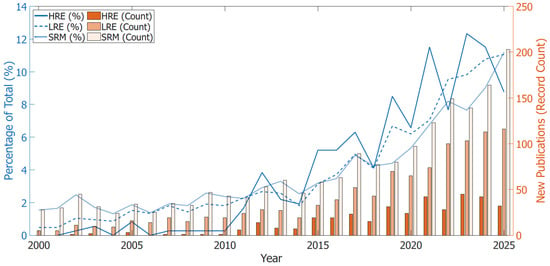
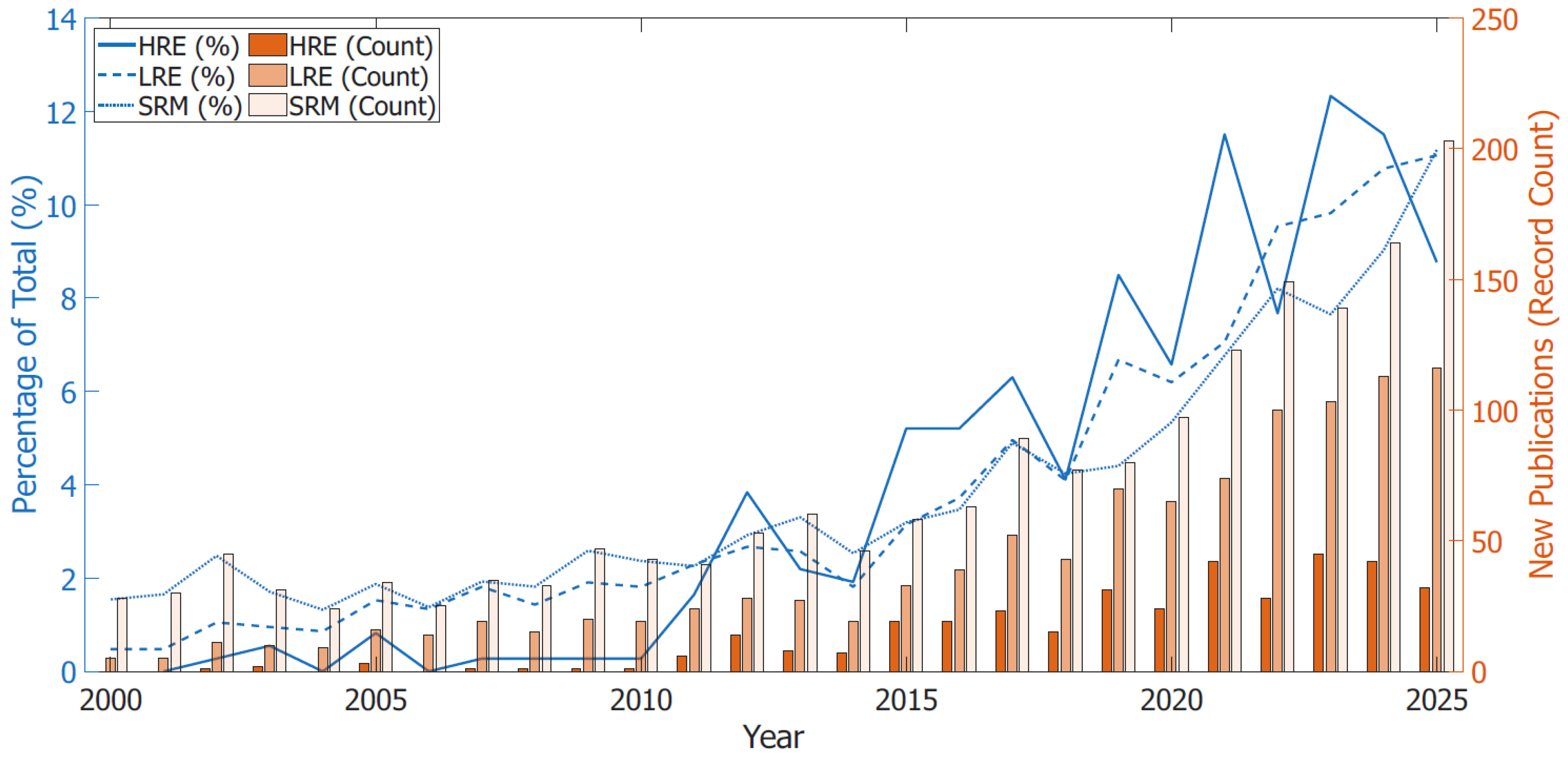
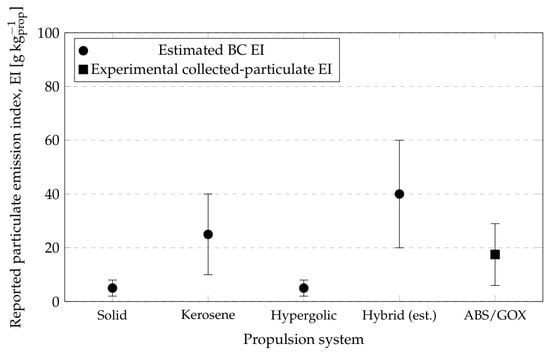
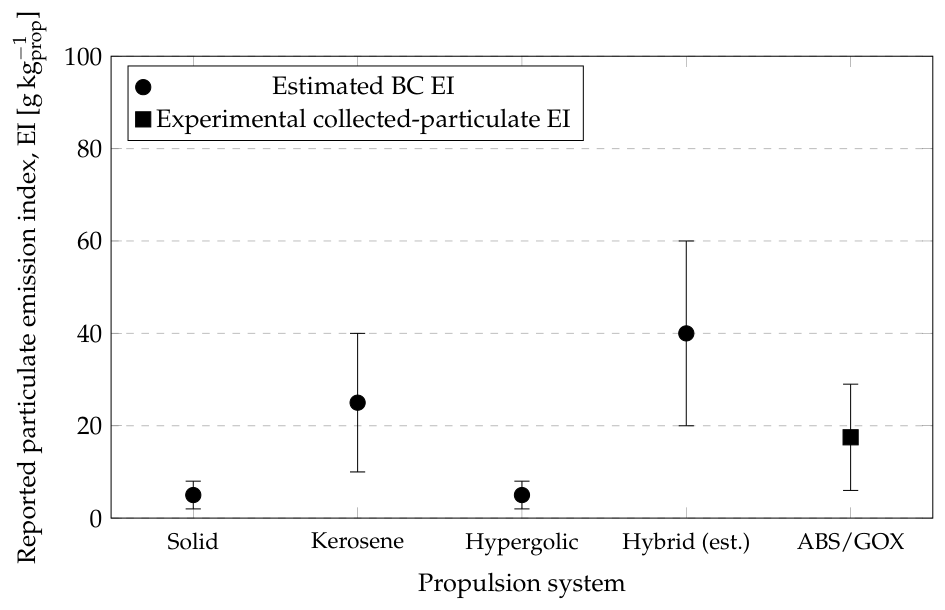
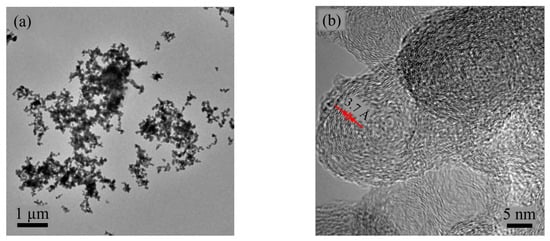
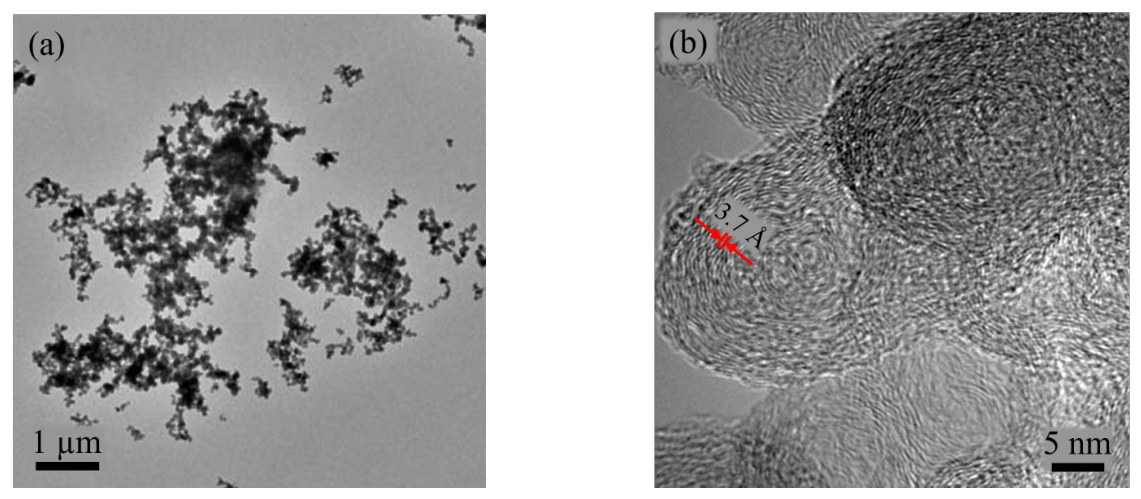
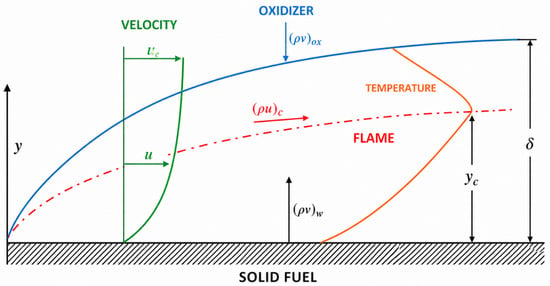
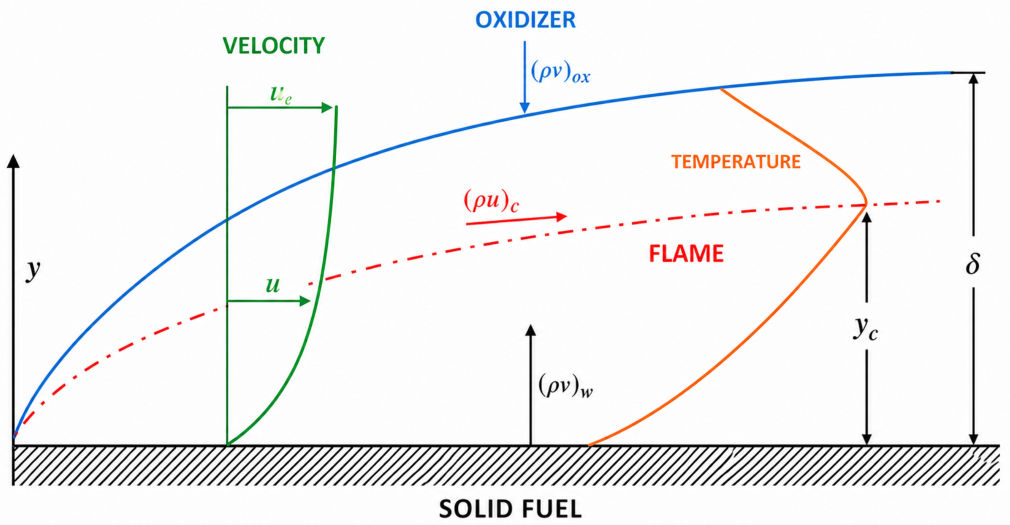
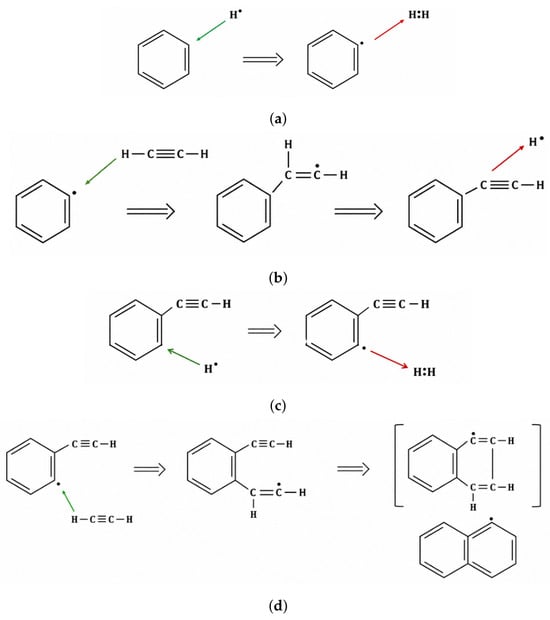
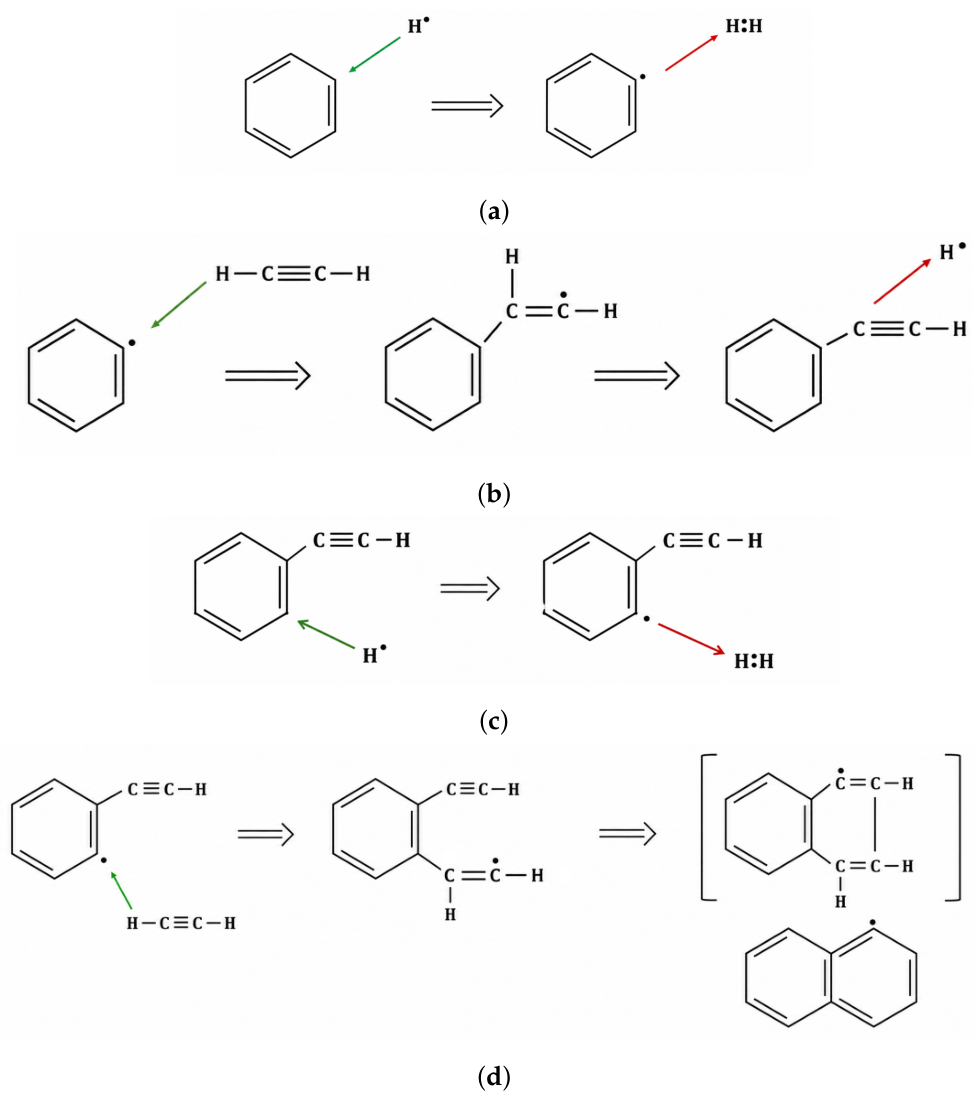
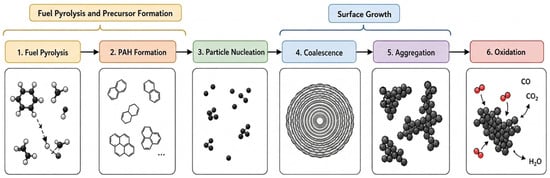
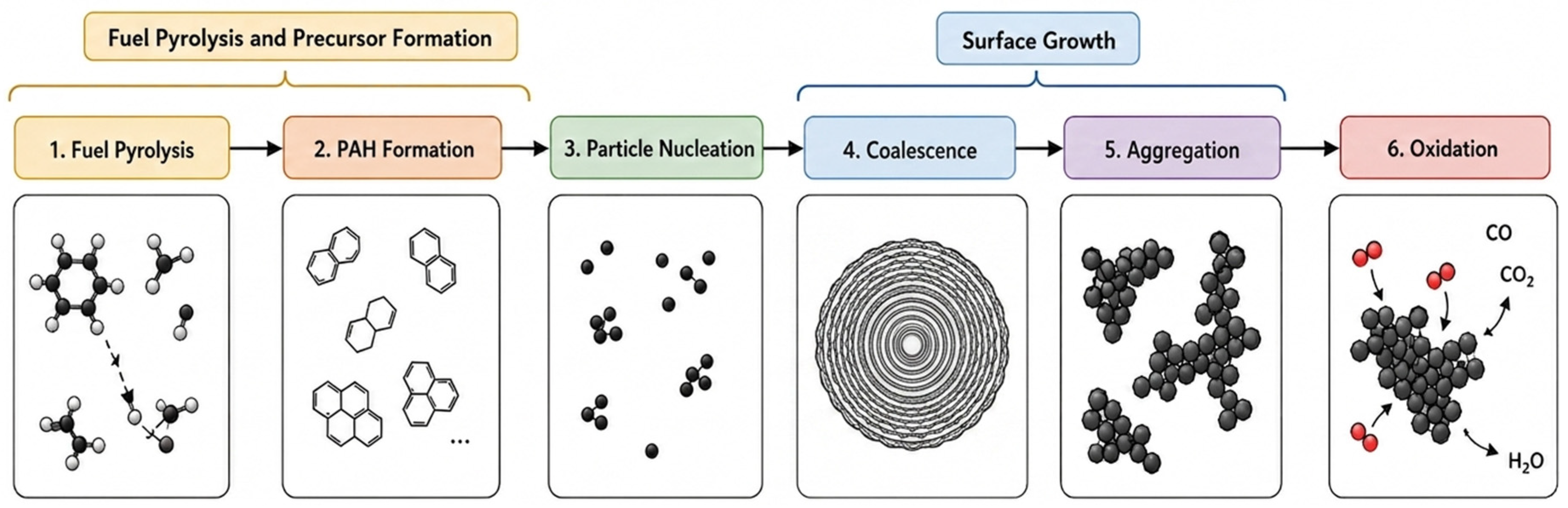
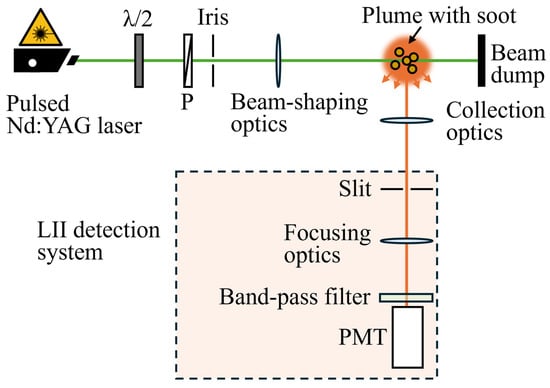
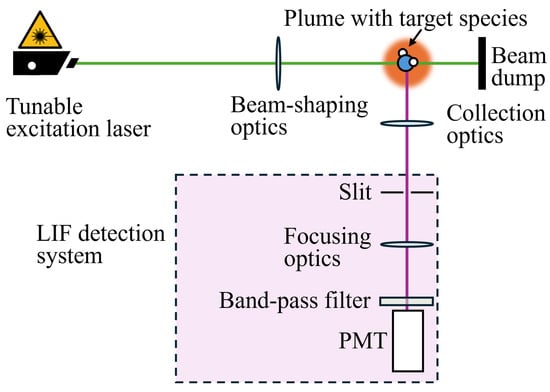
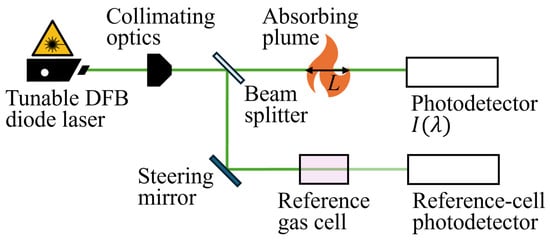
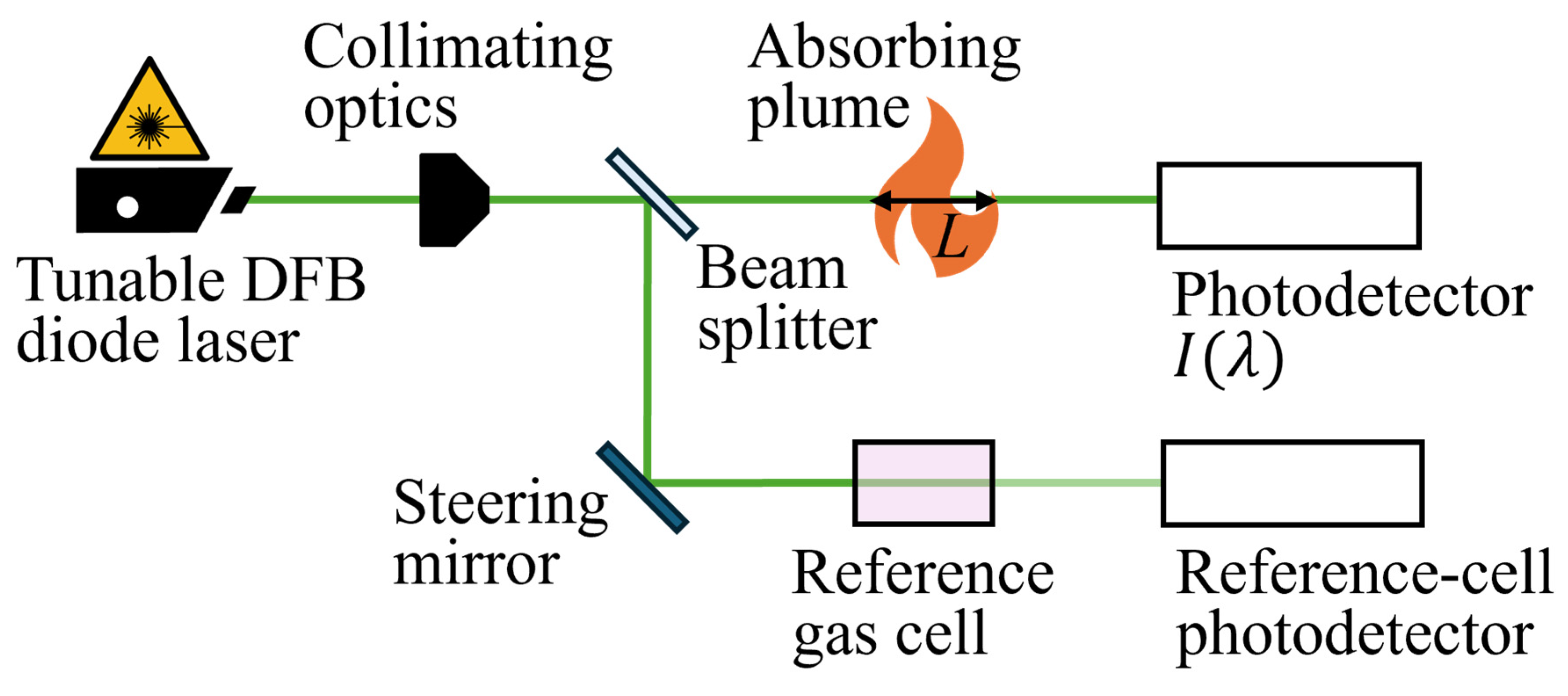
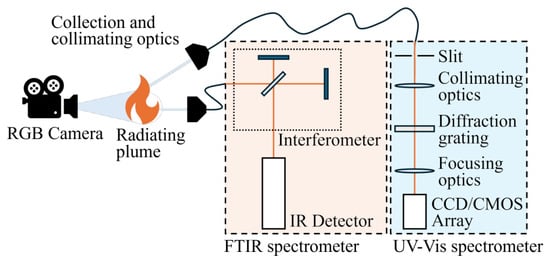
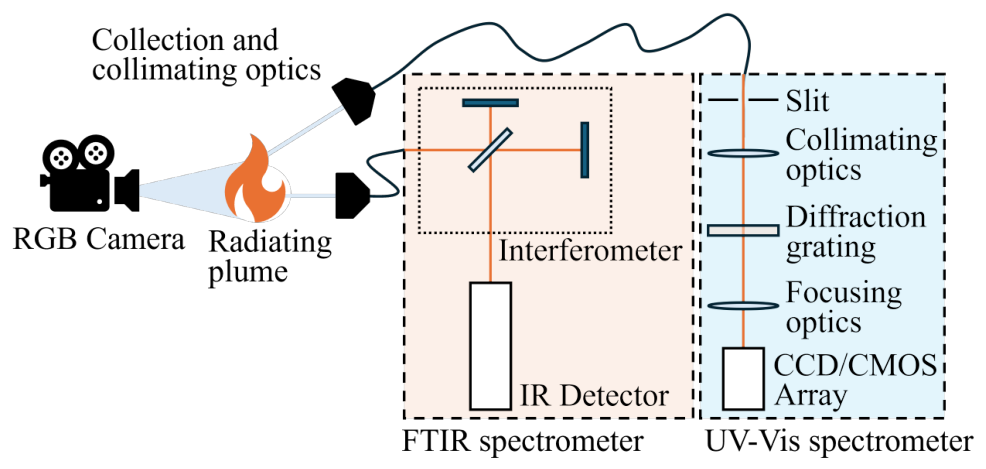
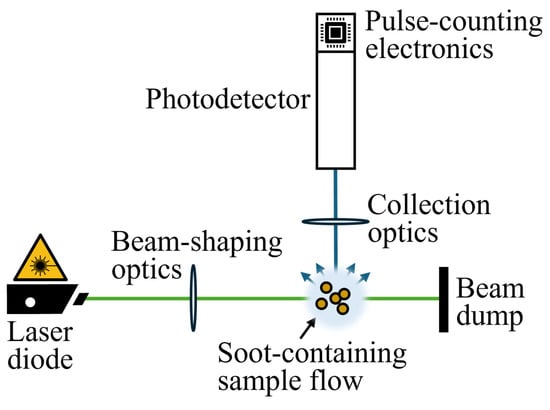
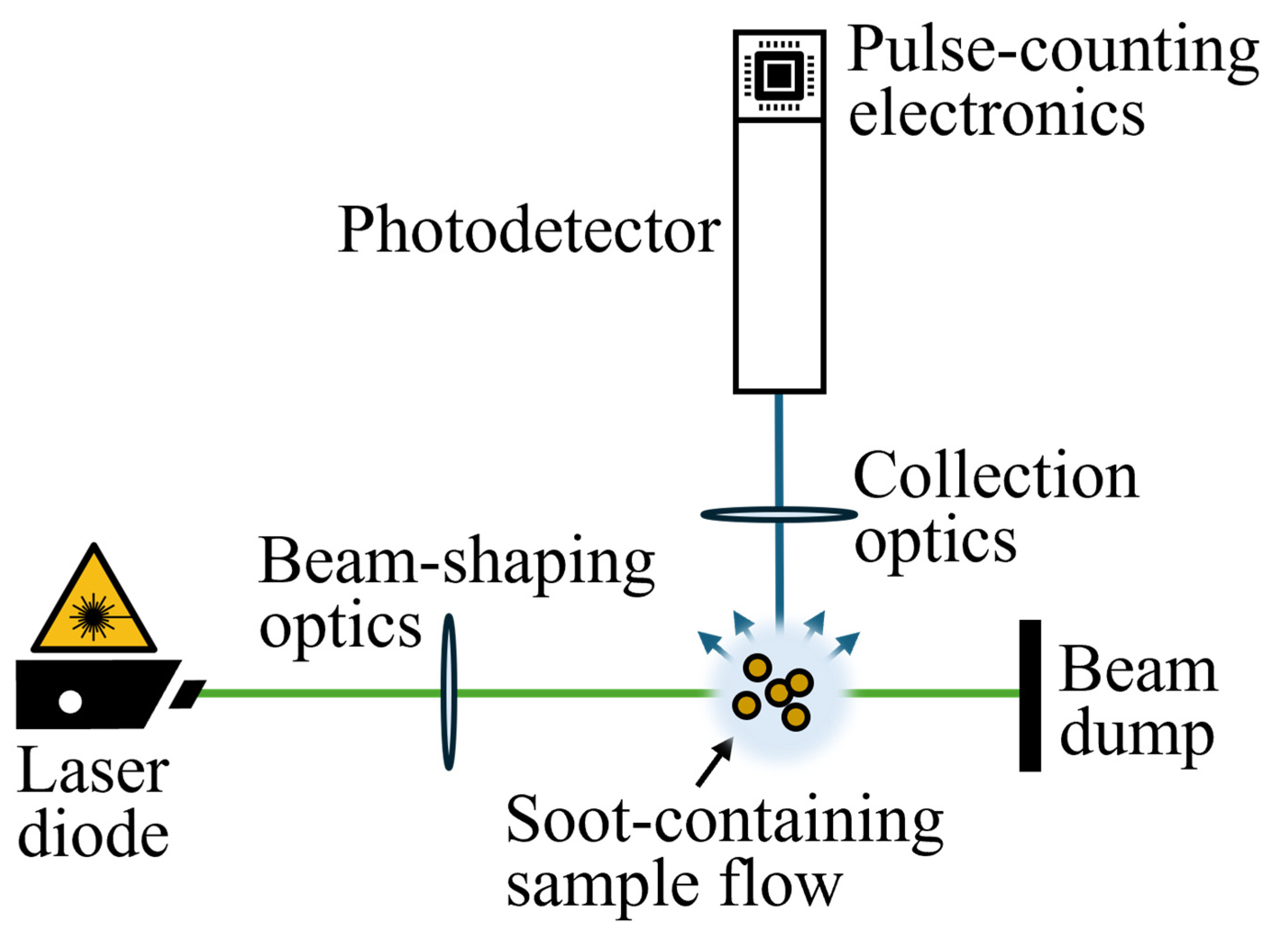
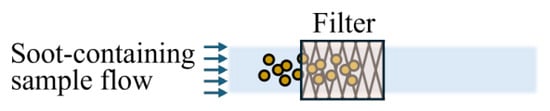
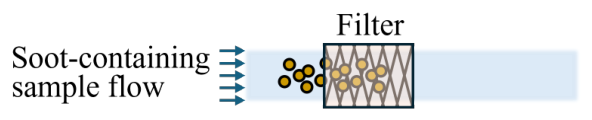
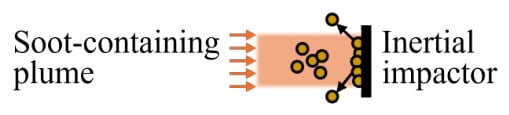
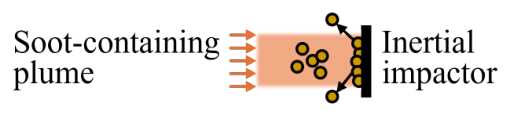
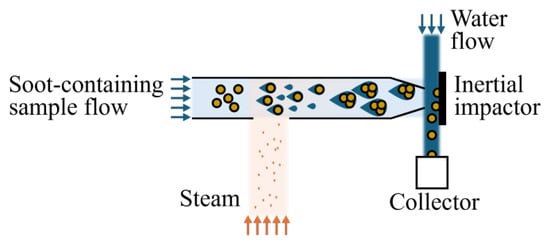
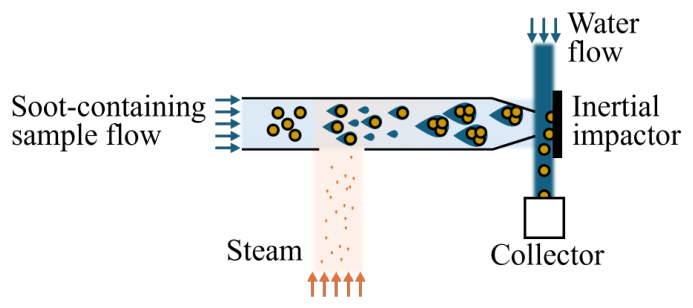
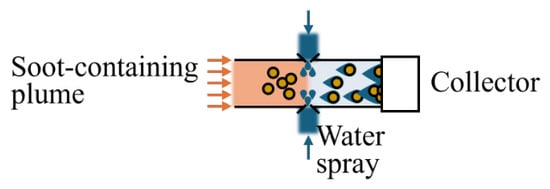
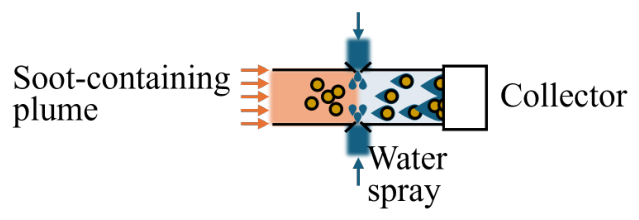

Disclaimer/Publisher’s Note: The statements, opinions and data contained in all publications are solely those of the individual author(s) and contributor(s) and not of MDPI and/or the editor(s). MDPI and/or the editor(s) disclaim responsibility for any injury to people or property resulting from any ideas, methods, instructions or products referred to in the content. |
© 2026 by the authors. Licensee MDPI, Basel, Switzerland. This article is an open access article distributed under the terms and conditions of the Creative Commons Attribution (CC BY) license.