


Abstract
CubeSats operating under nadir-pointing or mission-priority attitude conditions often experience unfavorable solar incidence on their solar panels, limiting available onboard power. This study proposes a thermally driven passive sun-pointing mechanism for CubeSat solar panels and evaluates its prototype-level feasibility. The mechanism uses a photothermal panel, heat pipe, heat cartridge, shape memory alloy (SMA) spring, and universal joint to convert external thermal input into panel tilting motion without direct electrical actuation. A prototype was evaluated through SMA spring actuation tests, single-module pointing experiments, four-direction pointing tests, orbital thermal analysis, and expected annual energy-generation analysis. The experiments showed thermally induced contraction and recovery tendency of the two-way SMA spring and demonstrated that selective thermal input can generate directional tilting and return motion in a four-direction prototype. Orbital thermal analysis indicated that heat can be transferred to the actuation region while maintaining directional thermal separation. The energy-generation analysis suggested that limited-angle pointing can improve annual energy generation compared with a fixed flat panel. These results support the prototype-level feasibility of the proposed mechanism, although further multi-axis measurement, long-term cycling, and thermal-vacuum validation are required.
1. Introduction
CubeSats have been widely adopted for technology demonstration, Earth observation, and communication missions because of their low development cost and short mission timeline [1]. However, their compact form factor imposes strict limitations on available power, mass, and volume. In particular, the limited solar-panel area makes onboard power generation highly sensitive to the solar incidence angle.
For CubeSat missions requiring nadir-pointing or mission-priority attitude maintenance, spacecraft attitude is usually determined by payload or communication requirements rather than solar power optimization. As a result, body-mounted or deployable solar panels may experience unfavorable solar incidence during orbital motion. Active attitude control or motor-driven solar-array pointing can improve solar incidence, but these approaches require additional power, volume, control complexity, and mechanical components.
Passive actuation-based sun-pointing offers a potential alternative by using environmental energy to generate panel motion without continuous electrical power input. Passive or self-driven solar-tracking approaches have been investigated using thermomechanical or photothermal actuation materials, including shape memory alloys (SMAs), bimetals, and liquid crystal elastomers (LCEs). However, most studies have focused on ground-based photovoltaic tracking or material-level actuation, rather than CubeSat-compatible mechanisms under spacecraft structural and thermal constraints. Directly comparable studies on fully thermally driven passive sun-pointing mechanisms for CubeSat solar panels remain limited. For CubeSat solar arrays, McGill [2] proposed an SMA-based self-orienting solar-array concept, but the use of electrical heating limits its applicability as a fully passive thermally driven approach.
This study proposes a thermally driven passive sun-pointing mechanism for CubeSat solar panels and evaluates its prototype-level feasibility. The proposed mechanism transfers heat absorbed by a high-absorptivity, low-emissivity photothermal panel through a heat pipe and heat cartridge to a two-way SMA spring actuator. The resulting SMA contraction and recovery tendency generate tilting and return motion of the solar-panel support structure through a universal joint. A 6U CubeSat structure is used as an illustrative integration example, although the proposed mechanism is not restricted to a specific CubeSat form factor.
The study focuses on mechanism design and prototype-level evaluation rather than complete flight-ready validation of a dual-axis sun-pointing system. The evaluation includes SMA spring actuation, single-module pointing, SMA spring screening, four-direction pointing, orbital thermal analysis, and expected annual energy-generation analysis.
2. Review of Actuation Materials and Pointing Mechanisms
This section reviews the actuation materials and pointing mechanism configurations relevant to the proposed passive sun-pointing mechanism. Three representative thermally or photothermally responsive materials, namely shape memory alloys (SMAs), bimetals, and liquid crystal elastomers (LCEs), are first reviewed in terms of their actuation principles and applicability to passive sun-pointing. Sun-pointing mechanism configurations, including single-axis pointing, dual-axis pointing, and body-rotation-based pointing, are then compared with respect to their structural characteristics and pointing flexibility. Based on this review, the actuation material and pointing architecture adopted in this study are selected.
2.1. Passive Actuation Materials
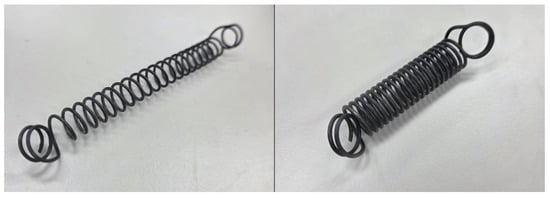
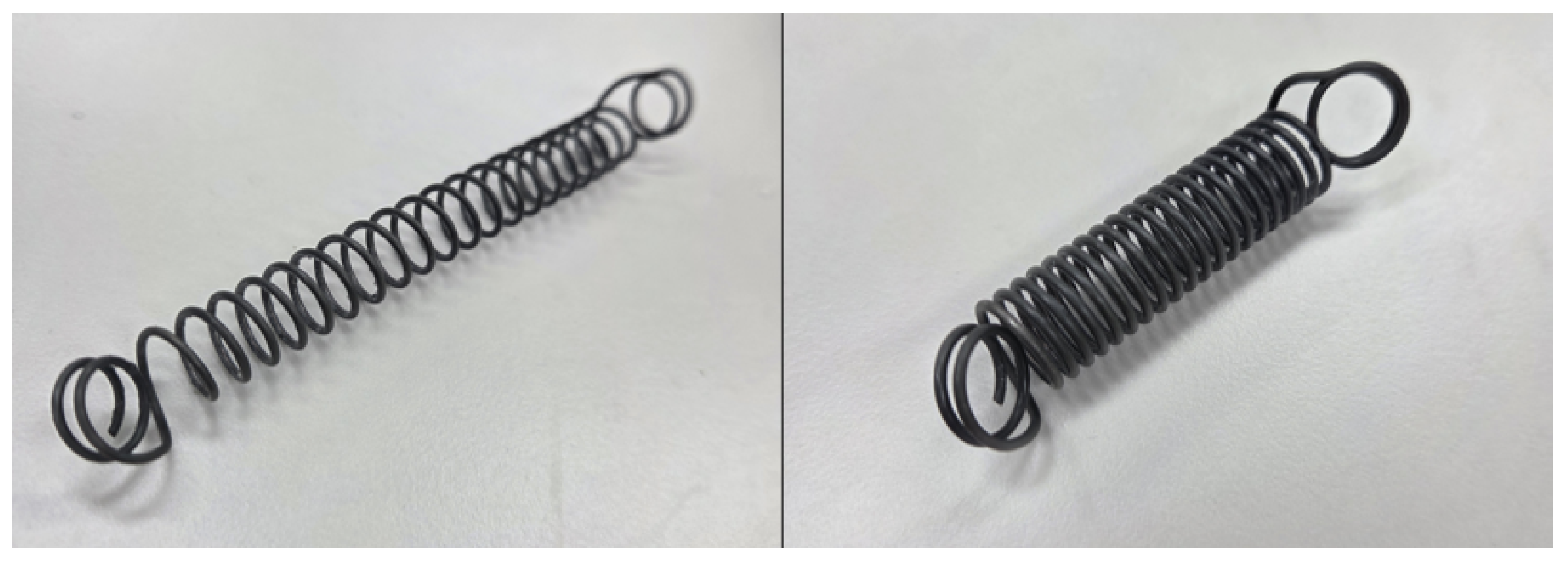
Shape memory alloys (SMAs) are functional metallic materials that can recover a pre-defined shape upon heating through a thermally induced phase transformation between martensite and austenite phases [3]. This thermomechanical response enables SMAs to generate relatively large recovery forces and displacements in a compact form. In spring form, SMAs can be integrated into small structural assemblies, and their actuation characteristics can be adjusted by selecting appropriate transition temperatures. These characteristics make SMAs suitable for thermally driven mechanisms requiring compact actuation. The applicability of SMA-based actuation to passive sun-pointing has also been demonstrated in prior work [4]. The shape change behavior of an SMA spring is illustrated in Figure 1.
Figure 1.
Shape change behavior of an SMA spring: extended state at low temperature (left) and contracted state at high temperature (right).
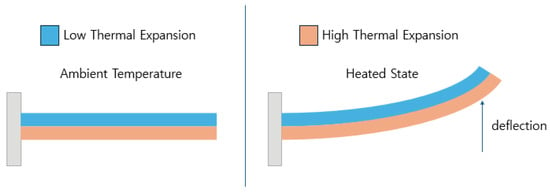
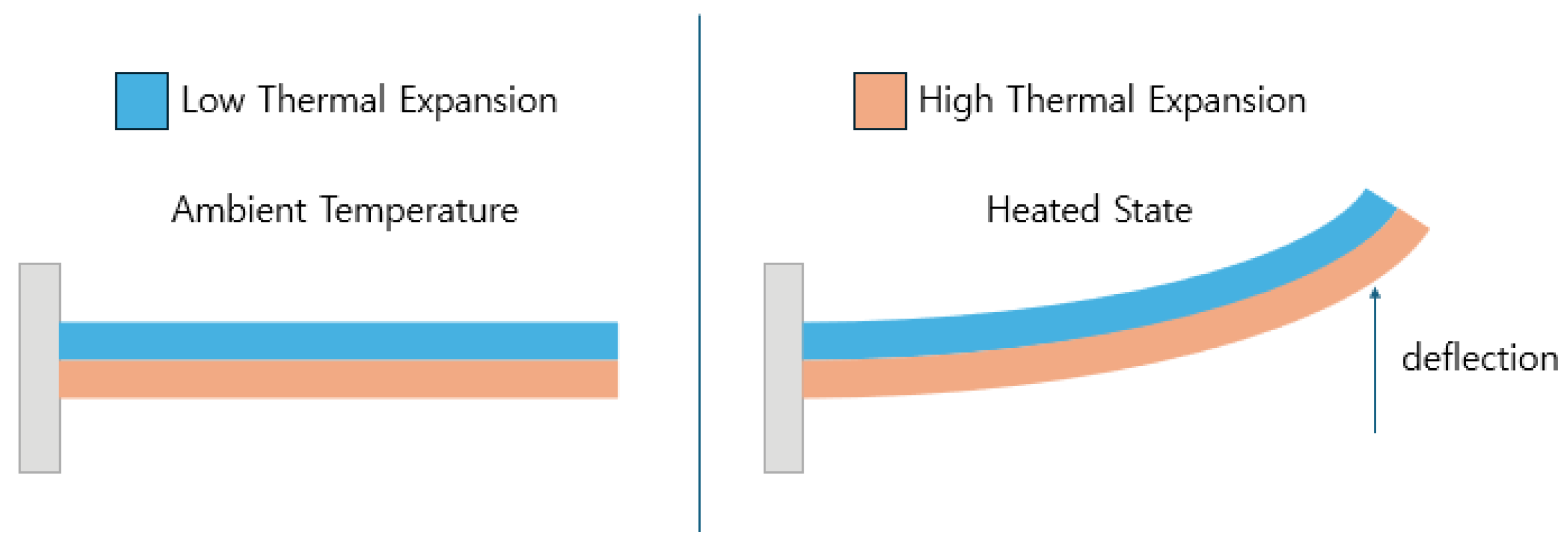
Bimetals consist of two bonded metallic layers with different coefficients of thermal expansion. When subjected to a temperature change, the difference in thermal expansion between the two layers causes bending deformation [5]. This response is simple, reversible, and does not require external electrical power, making bimetals a practical option for passive thermal actuation. However, the achievable deflection and restoring force are generally constrained by material geometry, layer thickness, and temperature difference. Bimetal-based passive solar tracking has been explored as a low-complexity alternative to motor-driven tracking systems [6]. The operating principle of a bimetallic strip is illustrated in Figure 2.
Figure 2.
Operating principle of a bimetallic strip: neutral state at ambient temperature (left) and deflected state upon heating (right).
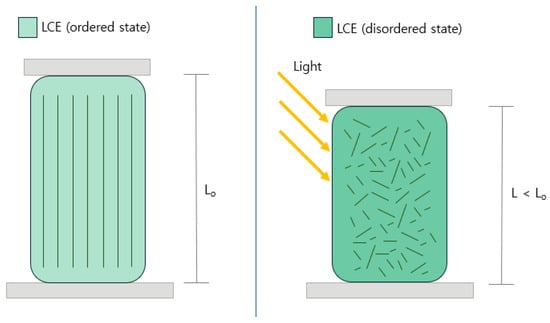
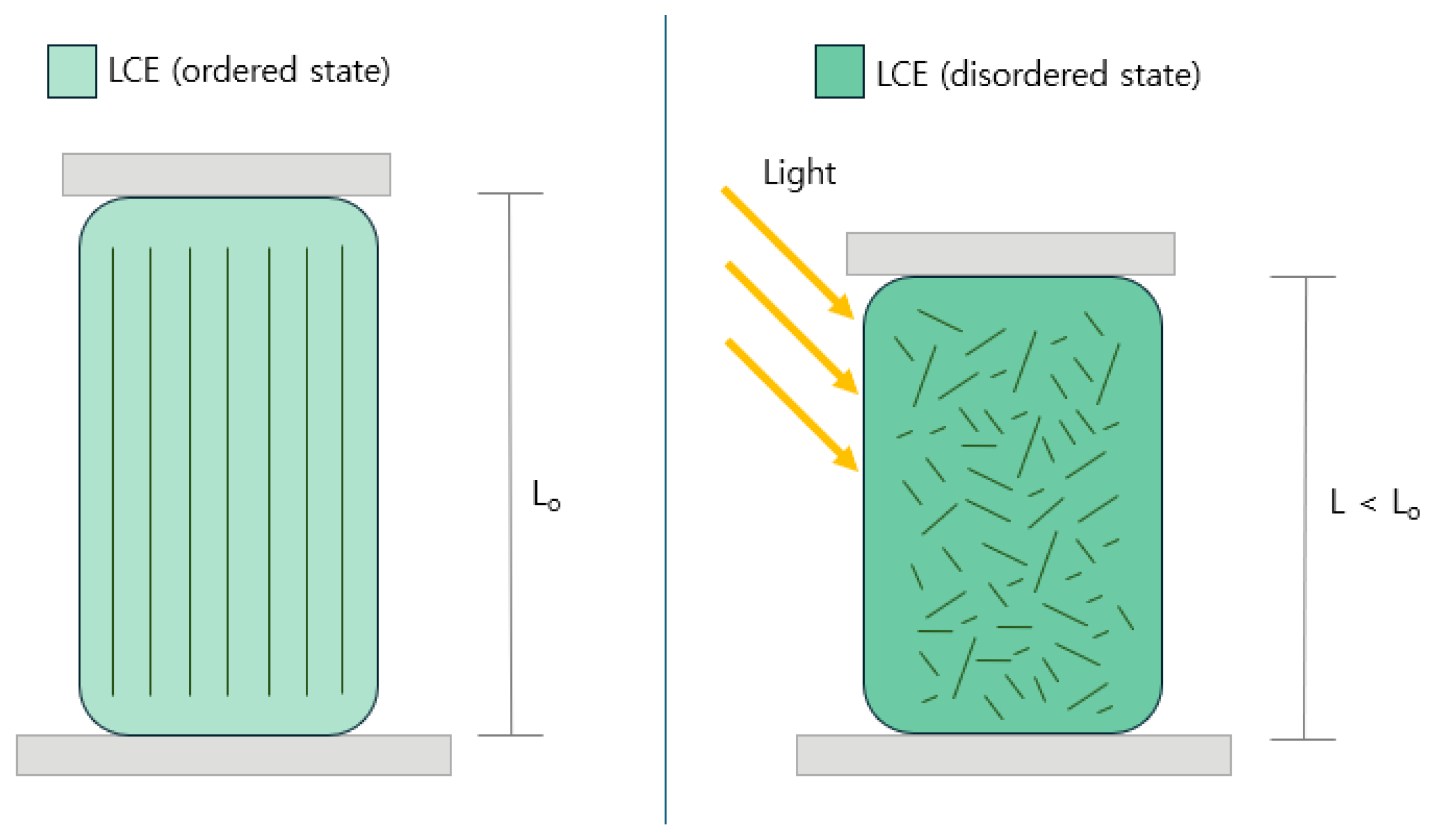
Liquid crystal elastomers (LCEs) are crosslinked polymer networks that combine liquid-crystalline molecular ordering with elastomeric deformation. They can exhibit large and reversible shape changes under external stimuli such as heat or light, owing to changes in molecular alignment within the polymer network [7]. LCEs are attractive for photothermal actuation because they can directly convert light-induced heating into deformation. However, their fabrication, material property control, and long-term stability under space environment conditions remain practical challenges. Sun-driven heliotropic actuation using LCE nanocomposites has been reported in the literature [8]. The photothermal actuation behavior of an LCE is illustrated in Figure 3.
Figure 3.
Photo-thermal actuation principle of a liquid crystal elastomer (LCE): ordered molecular alignment in the undeformed state (left) and contracted state with disordered alignment upon illumination (right).
2.2. Sun-Pointing Mechanisms
Sun-pointing mechanisms can be broadly categorized according to their kinematic configuration: single-axis pointing, dual-axis pointing, and body-rotation-based pointing.
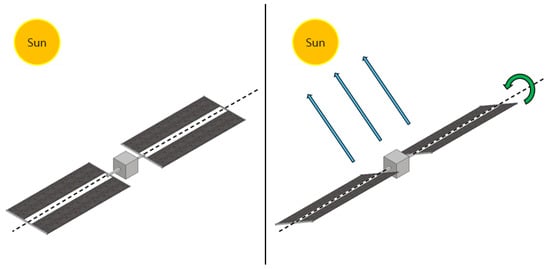
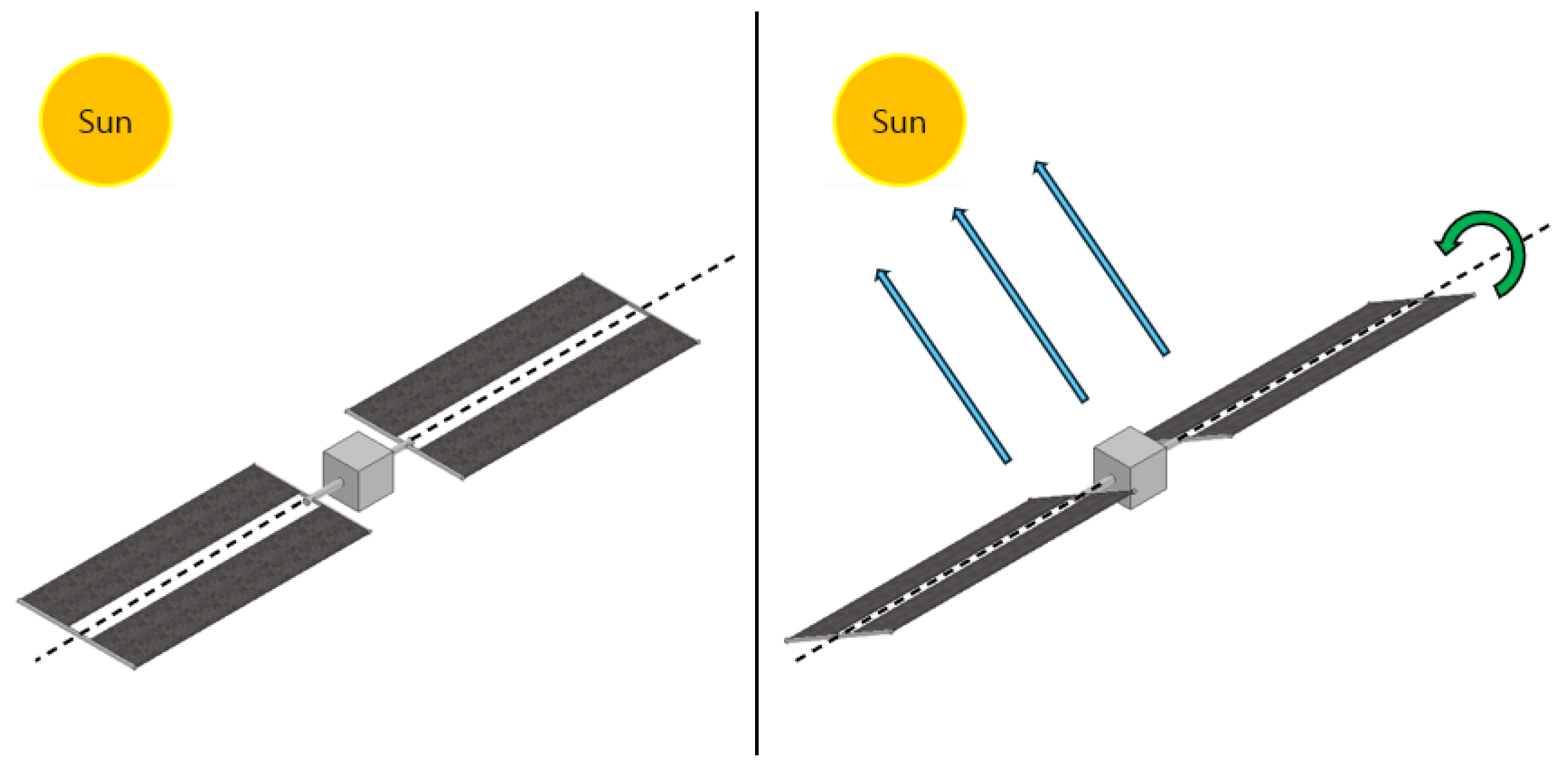
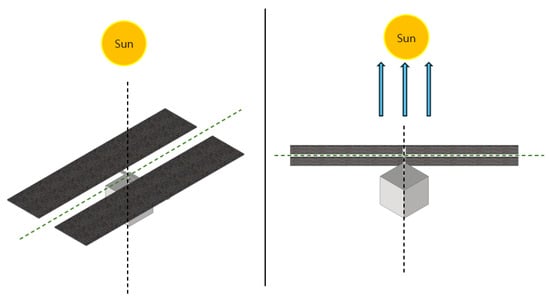
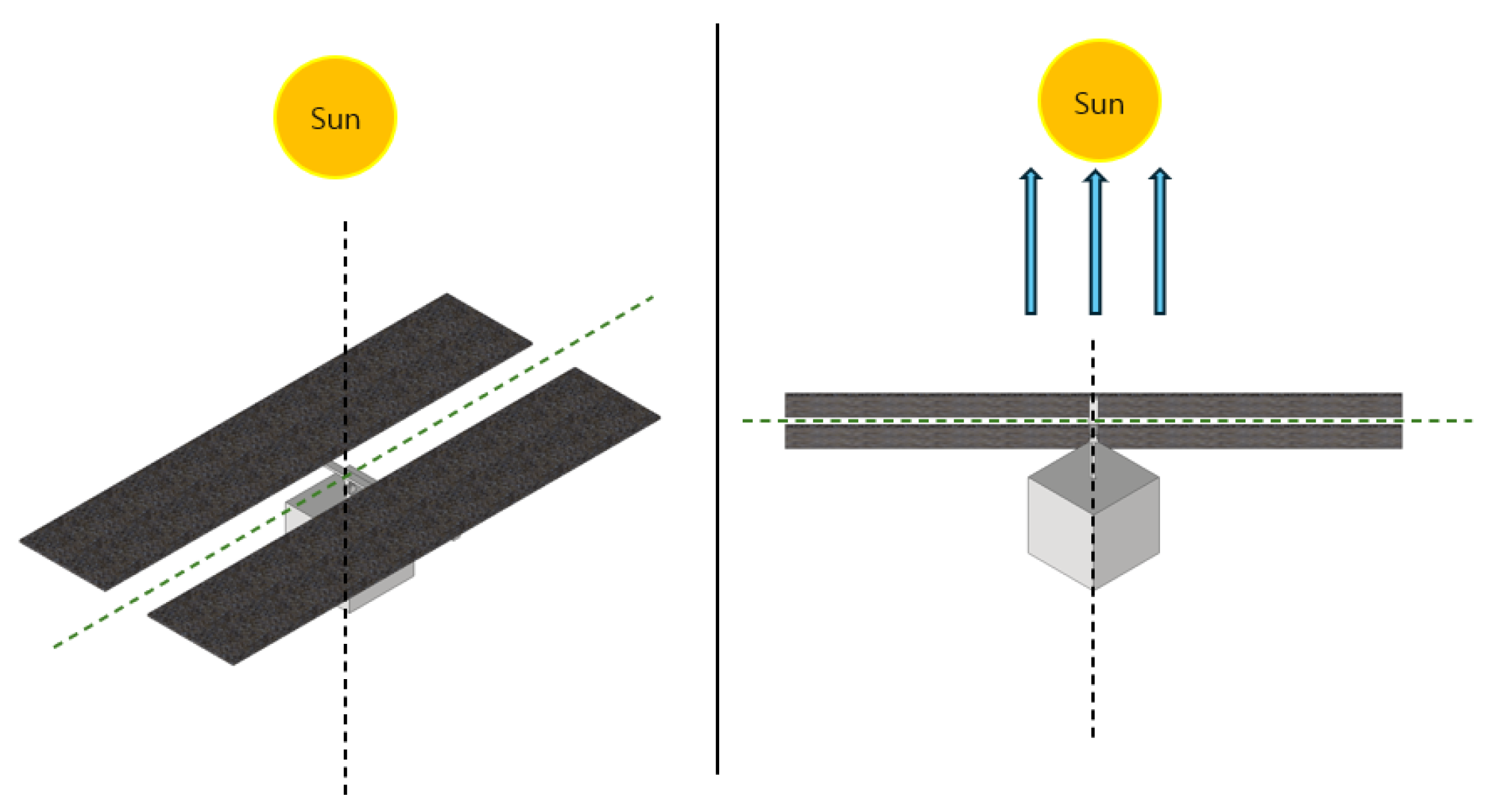
Single-axis pointing adjusts the solar panel orientation about one rotational degree of freedom. This configuration is structurally simple, compact, and relatively easy to implement, making it attractive for small spacecraft platforms. However, because the panel can rotate only about a fixed axis, its ability to maintain favorable solar incidence is limited when the relative Sun direction changes in multiple axes [9]. The operating principle of single-axis pointing is illustrated in Figure 4.
Figure 4.
Operating principle of single-axis sun-pointing: untracked state (left) and tracked state with one rotational degree of freedom (right).
Dual-axis pointing provides two rotational degrees of freedom, allowing the solar panel to respond more flexibly to changes in the relative solar position. Compared with single-axis pointing, a dual-axis configuration can maintain a more favorable solar incidence angle over a wider range of orbital geometries, although it generally requires a more complex mechanical structure [10]. The operating principle of dual-axis pointing is illustrated in Figure 5.
Figure 5.
Operating principle of dual-axis sun-pointing: untracked state (left) and tracked state with two rotational degrees of freedom (right).
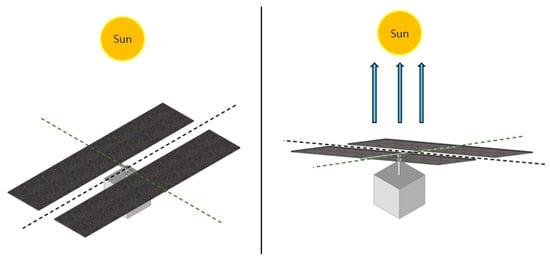
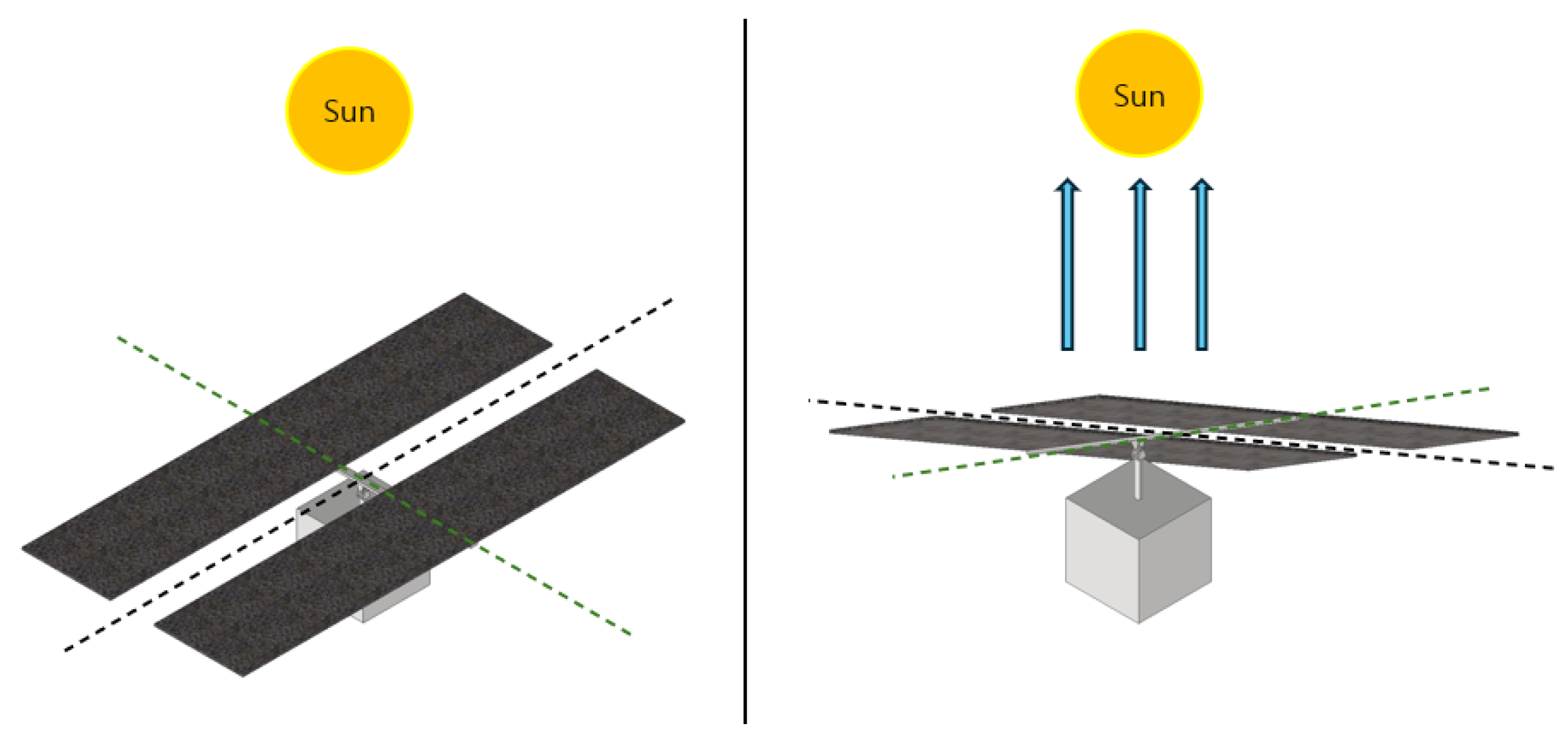
Body-rotation-based pointing achieves sun-pointing by rotating the entire support structure or drive assembly rather than by directly tilting the solar panel. This approach can provide effective tracking but often requires additional mechanical components such as gears, shafts, or drive mechanisms. The resulting increase in structural complexity can be difficult to accommodate within the limited volume and mass budget of a CubeSat [11]. The operating principle of body-rotation-based pointing is illustrated in Figure 6.
Figure 6.
Operating principle of body-rotation-based sun-pointing: untracked state (left) and tracked state with rotating the entire spacecraft structure body (right).
2.3. Material and Mechanism Selection
Among the actuation materials reviewed above, SMA was selected as the actuator for the proposed mechanism. Bimetals provide simple and reversible thermal actuation, but their displacement and restoring force are generally limited by strip geometry and temperature difference. LCEs can generate large photothermal deformation, but their fabrication complexity and long-term stability under space environment conditions remain practical concerns for CubeSat implementation. Other thermally driven actuators, such as paraffin-wax actuators, can generate large actuation forces, but they generally require volume-change accommodation and packaging considerations, and their scalability remains a practical design challenge [12]. In contrast, SMAs provide relatively high recovery force, compact integration in spring form, and adjustable transition temperatures. These characteristics make SMAs suitable for generating the actuation force required for a compact thermally driven solar-panel pointing mechanism.
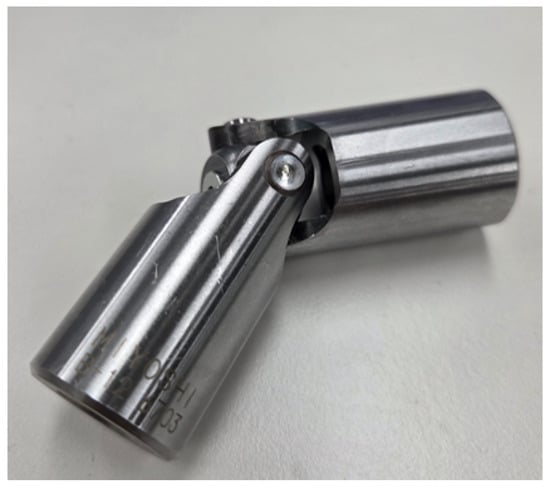
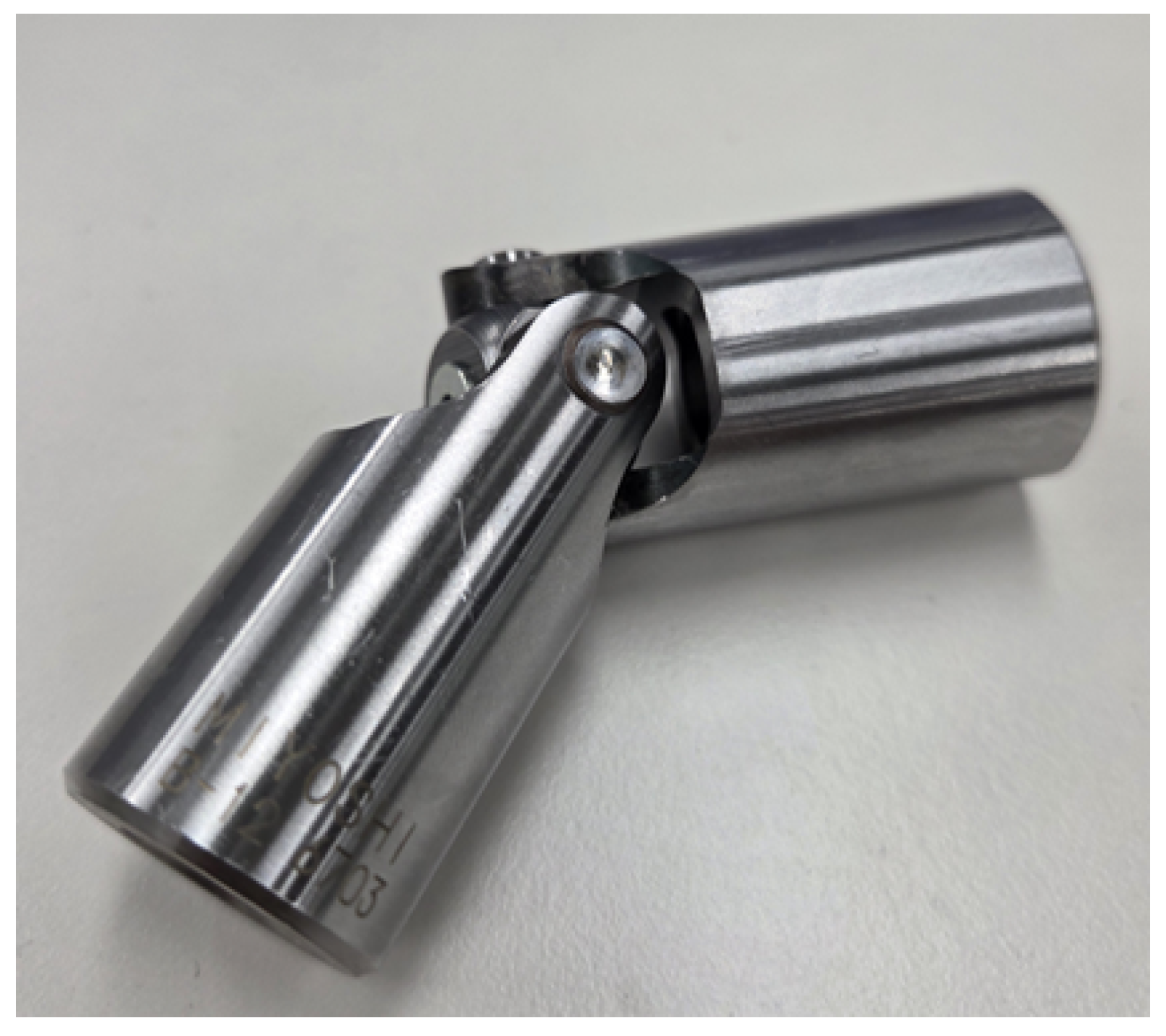
Regarding the pointing architecture, single-axis pointing is simple but limited in directional flexibility. Body-rotation-based pointing can provide effective tracking but introduces mechanical complexity that is difficult to justify for compact CubeSat platforms. Dual-axis pointing provides greater flexibility in response to changes in relative solar position and can be implemented in a compact form using a universal joint. A universal joint enables two-axis tilting of the connected panel-support structure in response to forces applied by SMA spring actuators, as illustrated in Figure 7. Accordingly, this study adopts an SMA-based thermal actuation approach combined with a universal-joint-based multi-directional pointing configuration.
Figure 7.
Universal joint used to implement the dual-axis pointing configuration.
3. Mechanism Design and Experimental Methods
This section describes the design and prototype-level evaluation methods of the proposed passive sun-pointing mechanism. The design concept and thermal actuation principle are first presented using a 6U CubeSat integration example. The prototype assembly is then described based on the thermal actuation path, consisting of the photothermal panel, heat pipe, heat cartridge, SMA spring, and universal joint. The experimental procedures include heat-cartridge-based SMA actuation, single-module pointing, and four-direction pointing tests. A preliminary SMA spring displacement screening was performed as part of the four-direction prototype preparation. Finally, the orbital thermal analysis setup is summarized to evaluate the thermal feasibility of the mechanism under representative space environment conditions.
3.1. Design Concept and Thermal Actuation Principle
The proposed passive sun-pointing mechanism converts solar thermal energy into mechanical actuation without electrical power input. Solar radiation absorbed by a high-absorptivity, low-emissivity photothermal panel is transferred through a heat pipe to a heat cartridge, which heats the SMA spring [13]. The SMA spring contracts upon heating due to thermally induced phase transformation and applies a force to the solar-panel support structure via a universal joint. When the thermal input decreases, the spring cools and the panel structure moves back toward its initial orientation.
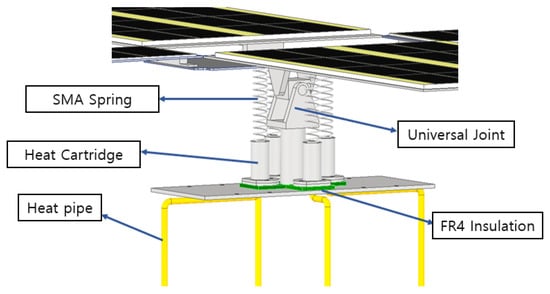
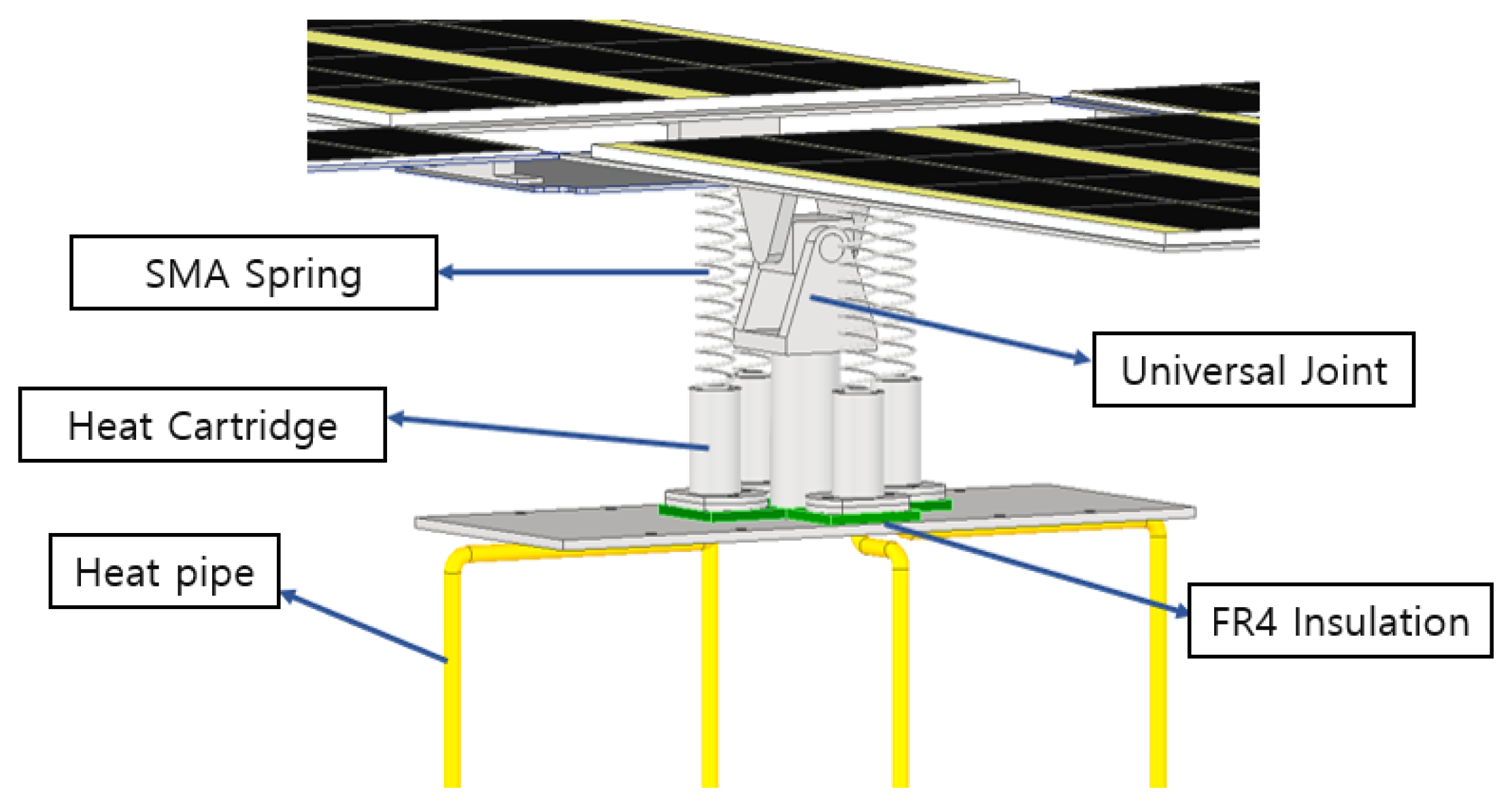
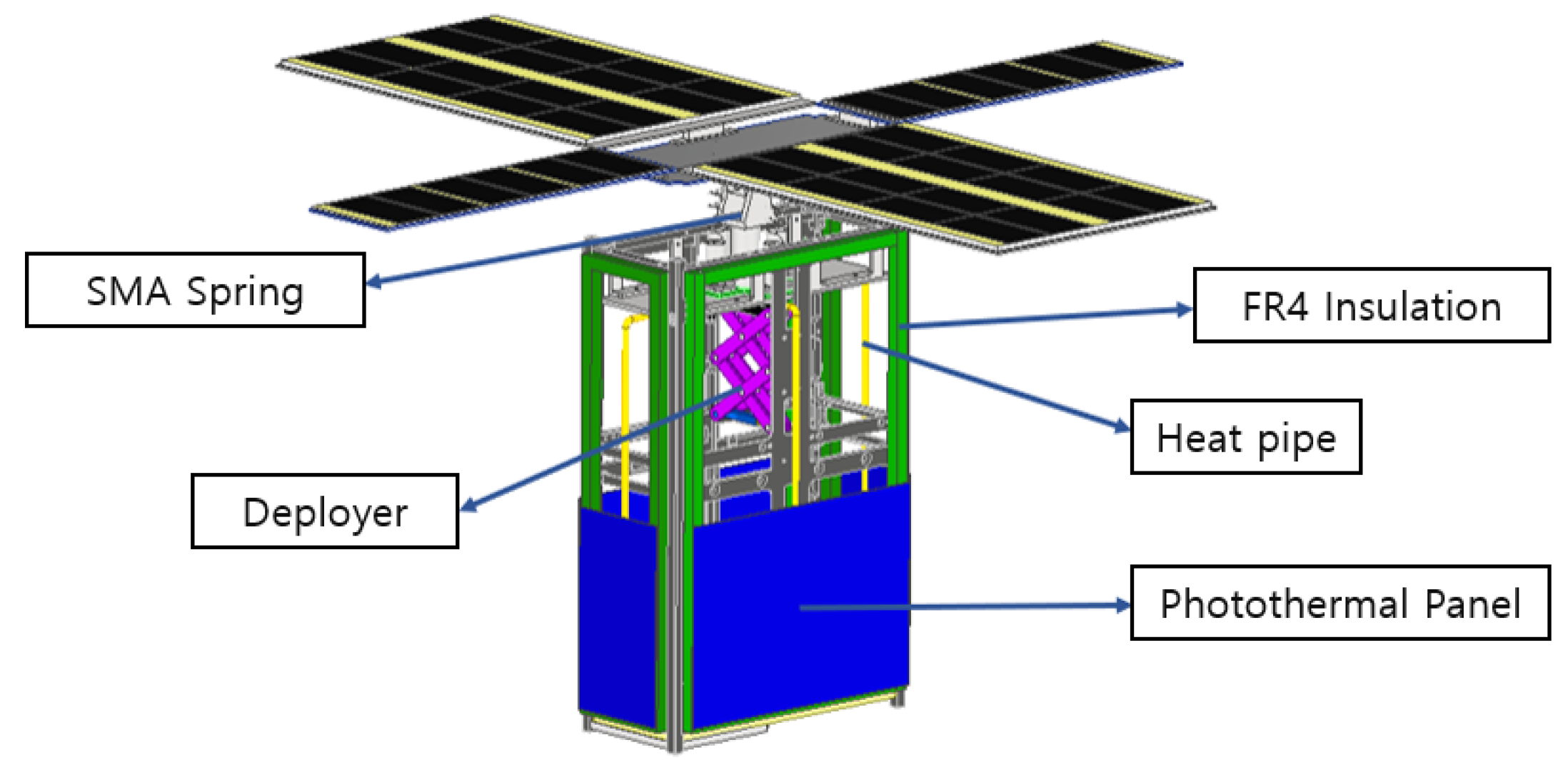
The mechanism consists of five main components: a photothermal absorption panel, heat pipe, heat cartridge, SMA spring, and universal joint. The photothermal panel serves as the thermal input surface, the heat pipe conducts absorbed heat to the actuation region, and the heat cartridge transfers heat to the SMA spring. The universal joint enables two-axis tilting of the solar-panel support structure. A schematic of the mechanism is shown in Figure 8.
Figure 8.
Detailed configuration of the proposed passive sun-pointing mechanism.
As an illustrative integration example, the proposed mechanism was applied to a 6U CubeSat structure. The mechanism is mounted near the top of the satellite body, with the photothermal panel exposed to the sun-facing side and the heat pipe routed to the internal heat cartridge and SMA spring assembly. The solar-panel support structure is connected to the mechanism through the universal joint, allowing two-axis tilting in response to thermal actuation. The overall configuration is shown in Figure 9.
Figure 9.
Overall configuration of the proposed passive sun-pointing mechanism integrated into a 6U CubeSat structure.
In this illustrative configuration, the photothermal panel, heat pipe, heat cartridge, and SMA spring assembly form a fixed thermal-actuation path attached to the spacecraft structure. The solar-panel support connected to the universal joint is intended to be deployed in the vertical direction and subsequently tilted by SMA actuation. Therefore, the proposed configuration does not assume that the entire thermal-actuation subsystem is raised together during deployment. The heat cartridge is not intended to be directly heated by solar radiation; instead, heat is primarily supplied through the photothermal panel and heat pipe. In a flight-oriented design, additional thermal shielding or insulation around the heat cartridge should be considered to suppress unintended direct solar heating. The deployment configuration shown in Figure 9 represents a conceptual implementation, and detailed deployment-mechanism design and verification are outside the scope of the present prototype-level study.
3.2. Prototype Fabrication and Assembly
The prototype was fabricated by assembling the main components of the thermal actuation path: the heat cartridge, SMA spring fixing structure, heat pipe, photothermal panel, and single-module assembly.
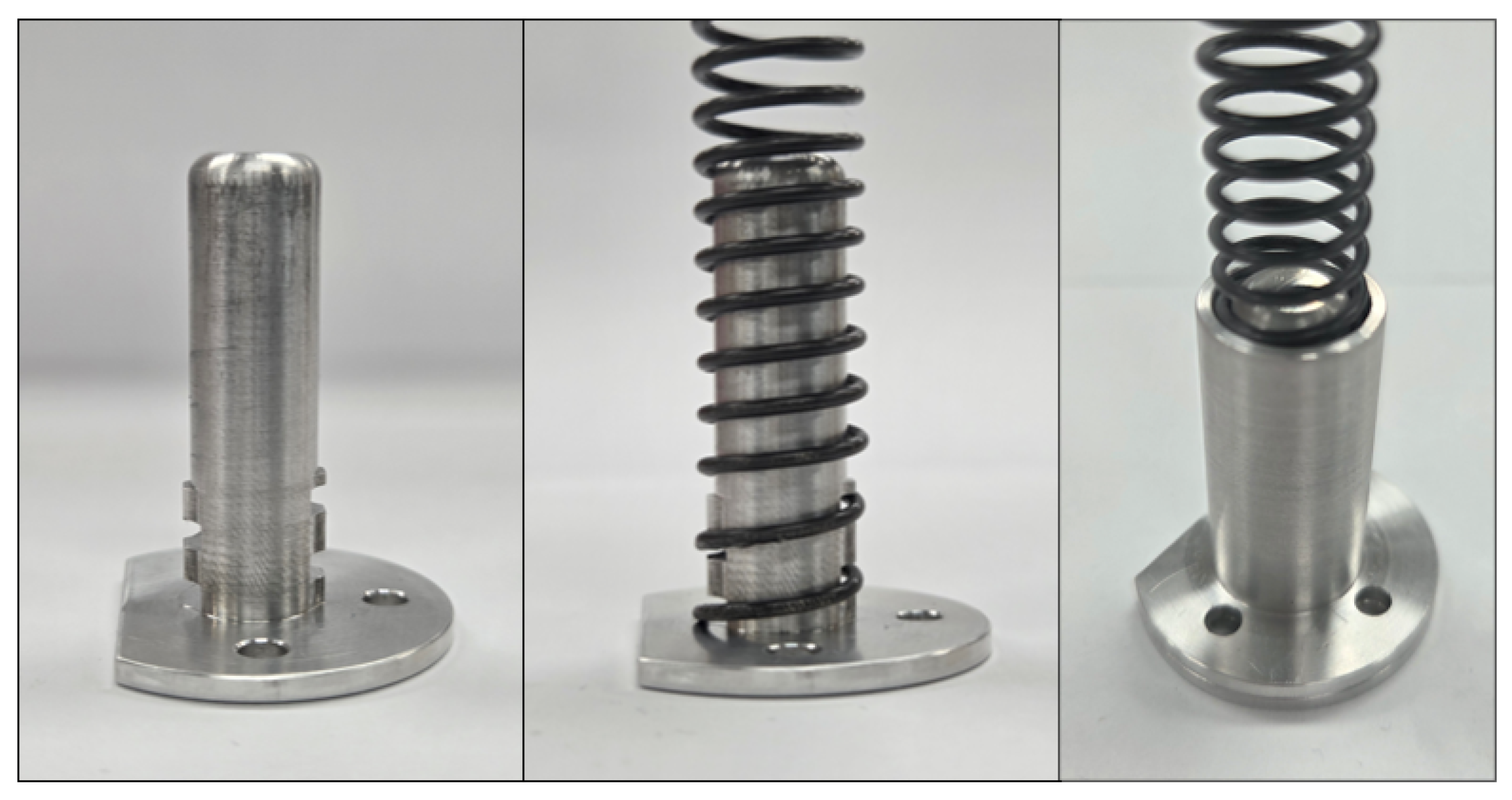
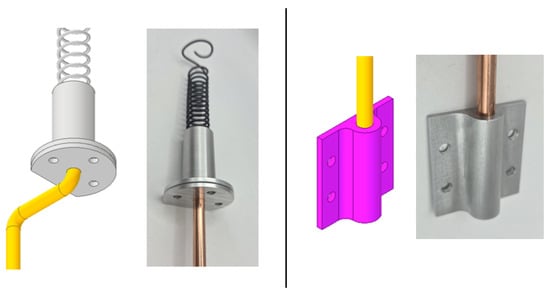
The heat cartridge serves as the thermal interface between the heat pipe and the SMA spring [13]. A cover structure was added around the cartridge to increase thermal contact with the spring during contraction. The SMA spring was fixed using a dedicated structure designed for a spring outer diameter of 12 mm and inner diameter of 9.6 mm, while allowing axial motion during actuation. The assembled heat cartridge and SMA spring fixing structure are shown in Figure 10.
Figure 10.
Heat cartridge assembly and SMA spring fixing structure.
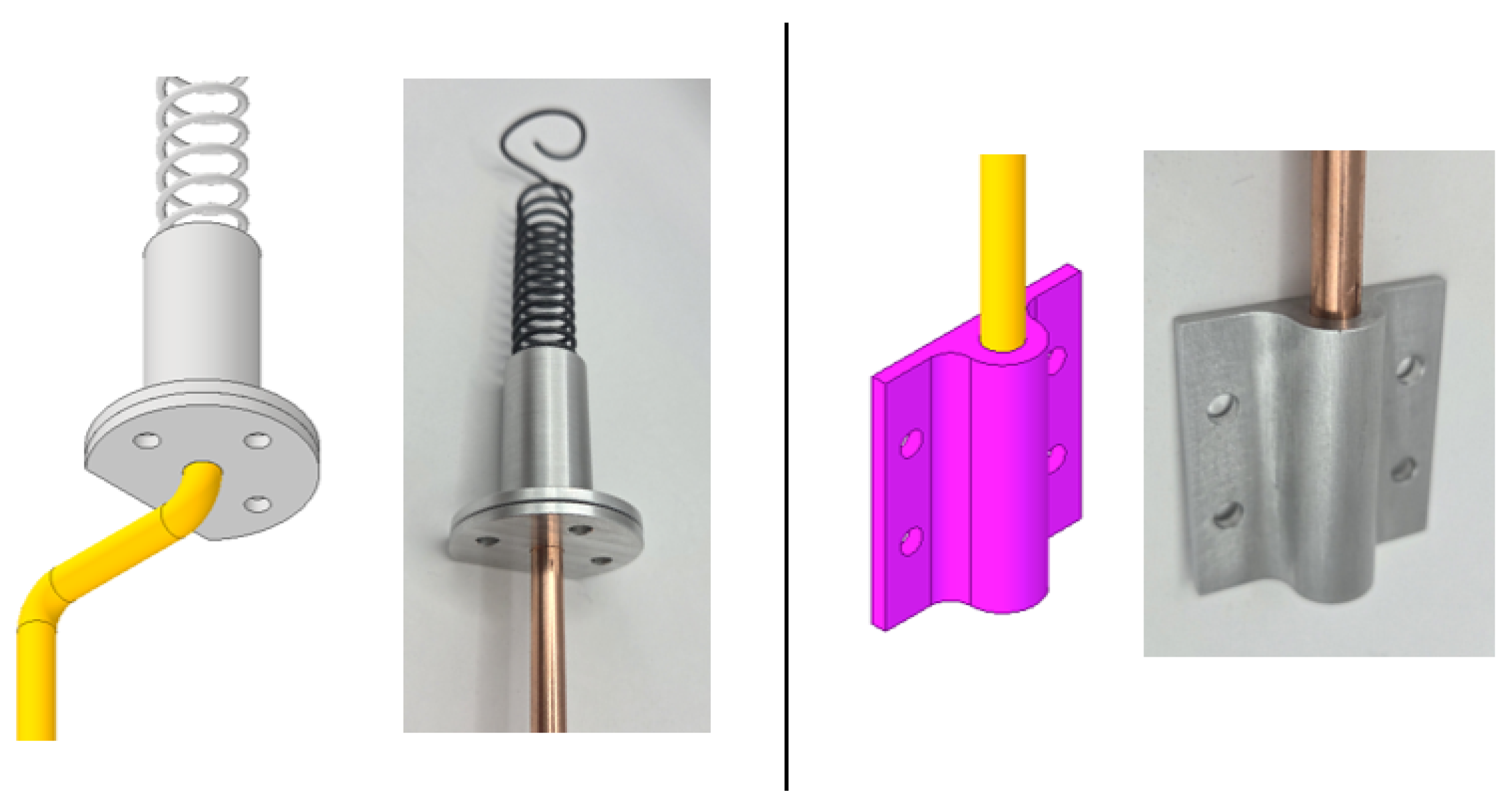
The heat pipe was connected to the lower end of the heat cartridge to transfer heat from the external photothermal panel to the internal actuation region. Thermal grease was applied at the heat pipe–cartridge and spring–cartridge interfaces to reduce contact thermal resistance. The heat pipe and heat cartridge assembly is shown in Figure 11.
Figure 11.
Heat pipe and heat cartridge assembly: CAD model (left) and fabricated prototype (right).
The photothermal panel was fabricated using a material with a solar absorptivity of 0.95 and emissivity of 0.05. A heat pipe mounting bracket was attached to the rear surface of the panel so that absorbed heat could be conducted into the heat pipe.
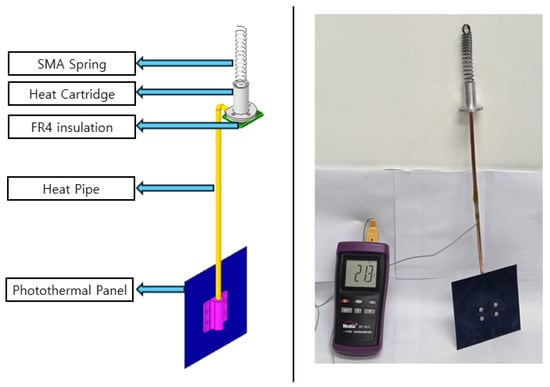
The components were then integrated into a single SMA actuation module. In this module, heat absorbed at the photothermal panel is transferred through the heat pipe and heat cartridge to the SMA spring, generating contraction and mechanical tilting. The final single-module assembly is shown in Figure 12.
Figure 12.
Single SMA actuation module: CAD model (left) and fabricated prototype (right).
3.3. Experimental Setup and Procedures
The prototype evaluation consisted of heat-cartridge-based SMA actuation, single-module pointing, and four-direction pointing tests. A preliminary SMA spring screening was additionally conducted before the four-direction pointing test to arrange springs with similar actuation displacement on opposite sides. The experimental conditions are summarized in Table 1.
Table 1.
Summary of prototype-level experimental conditions.
For the heat-cartridge-based SMA spring actuation test, the assembled heat cartridge and SMA spring structure was mounted vertically. The lower end of the heat pipe was submerged in hot water to deliver heat to the heat cartridge, and ice was added during cooling. The heat cartridge temperature was measured using a thermocouple, and the spring displacement was quantified from recorded images using ImageJ 1.54p with a ruled reference scale.
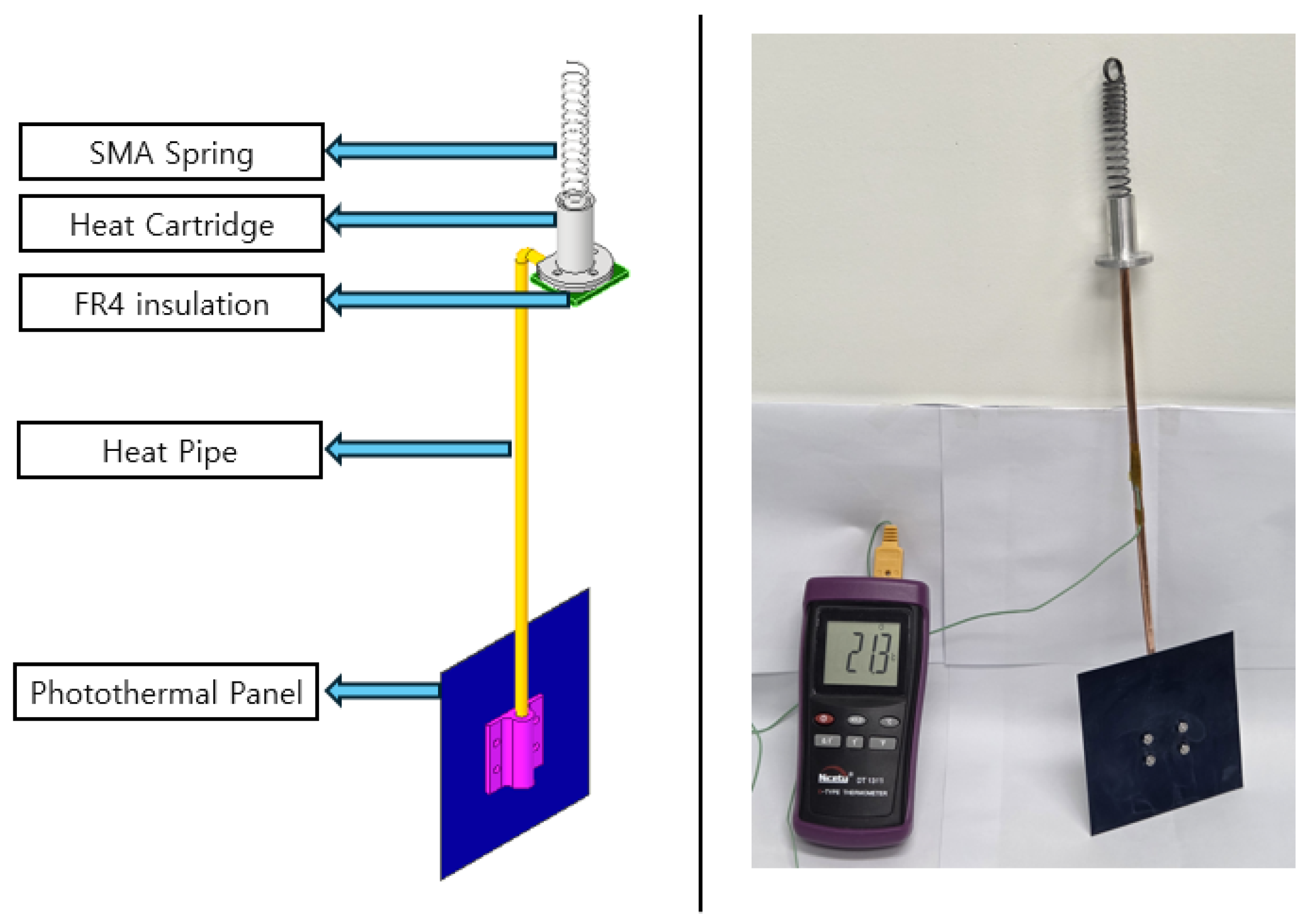
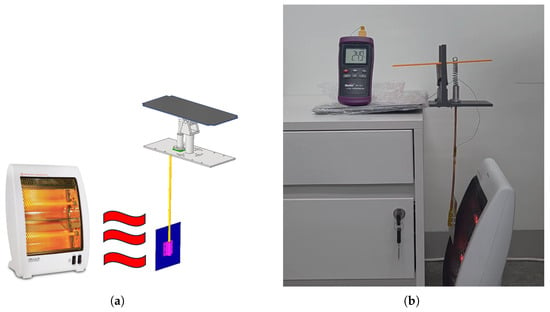
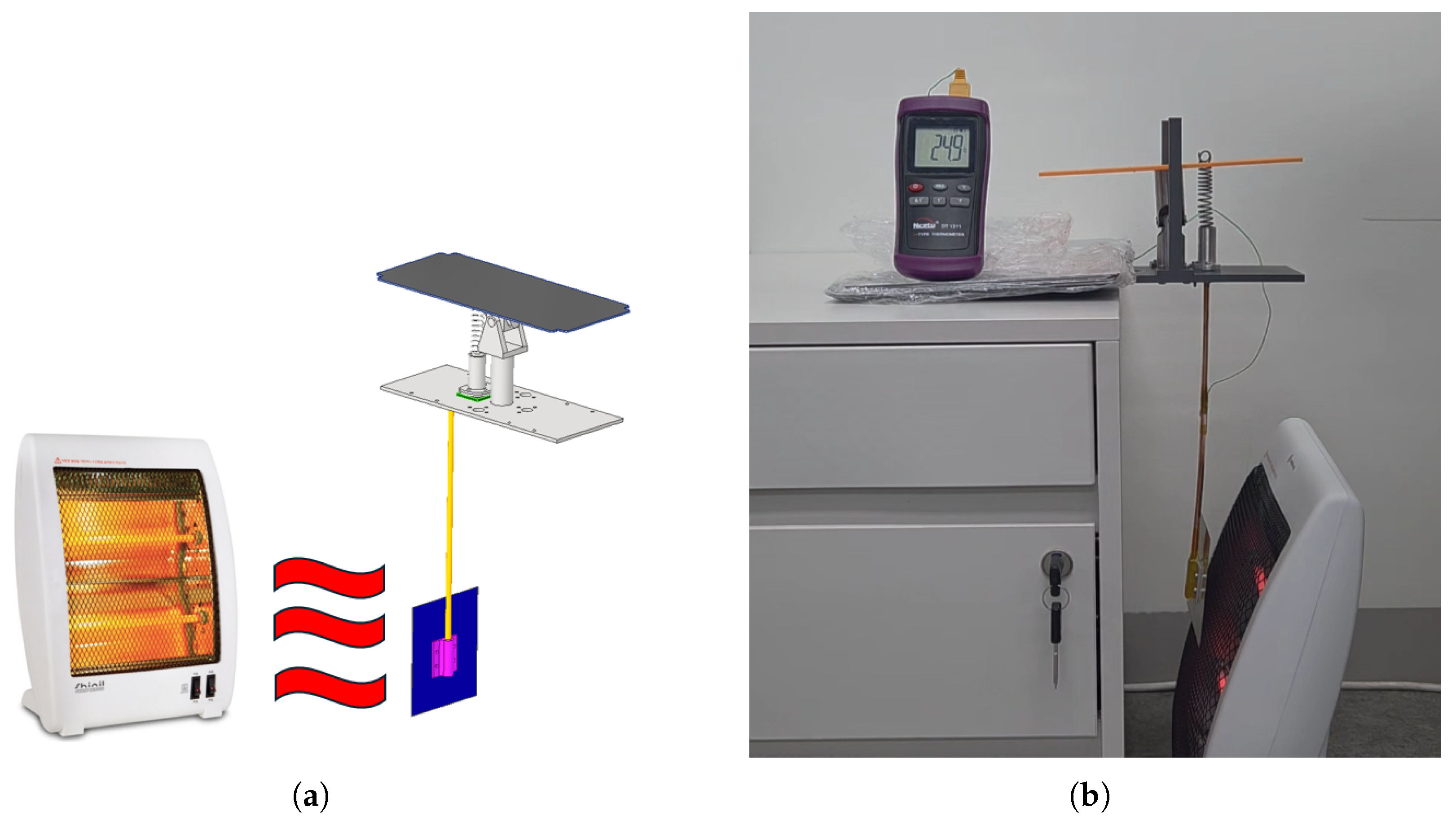
For the single-module pointing test, the assembled SMA actuation module was fixed vertically with the photothermal panel facing a quartz-tube infrared radiant heater, which was used as a non-calibrated substitute radiant heat source for prototype-level solar-irradiation testing. Heat absorbed by the photothermal panel was transferred through the heat pipe and heat cartridge to the SMA spring, inducing tilting of the upper panel-support structure through the universal joint. The heat cartridge temperature and tilt angle were measured during heating and cooling. The experimental setup is shown in Figure 13.
Figure 13.
Experimental setup for the single-module pointing test using a quartz-tube infrared radiant heater: (a) schematic of the experimental setup; (b) actual experimental configuration.
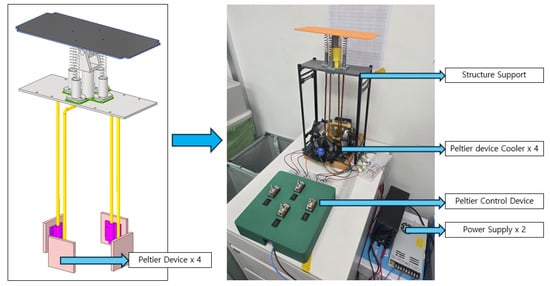
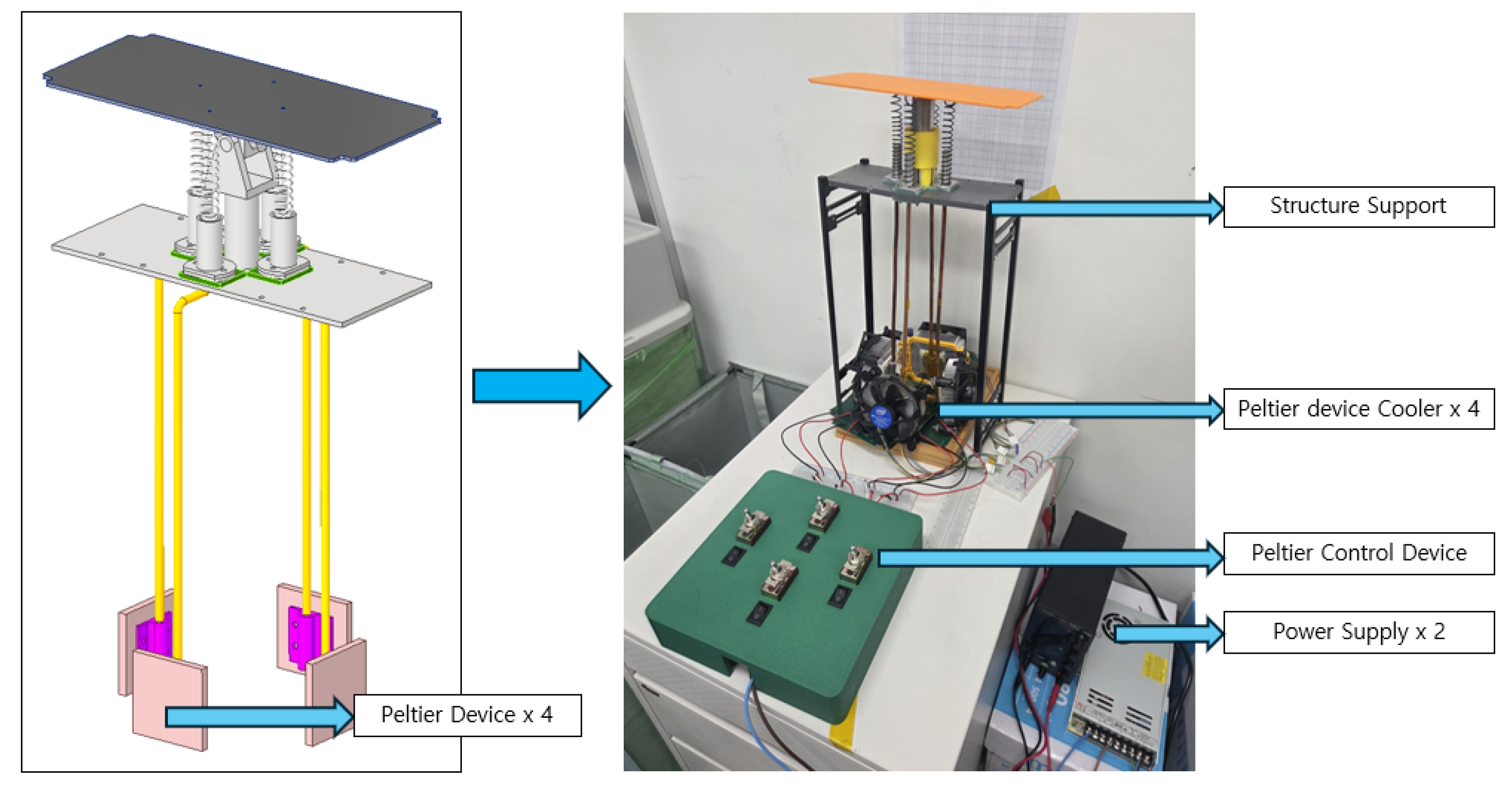
Peltier devices were used in the spring screening and four-direction pointing tests to provide repeatable and independently controllable heating to each SMA actuation path. After the single-module pointing test evaluated the photothermal-panel–heat-pipe–heat-cartridge–SMA thermal actuation path under radiant heating, the four-direction test focused on the directional response of the multi-spring configuration. Before the four-direction pointing test, the four SMA springs were screened by comparing their short-term contraction displacement, and springs with similar displacement were arranged opposite each other to reduce directional imbalance during selective actuation.
For the four-direction pointing test, four SMA actuation paths were arranged around the universal joint so that selective heating of each spring induced tilting toward the left, right, front, or rear direction. Peltier devices were used to heat the corresponding heat cartridge for each actuation path, and each directional test was repeated three times. A mechanical angle limiter was applied to restrict the maximum tilt angle to approximately 20°. The experimental setup is shown in Figure 14.
Figure 14.
Experimental setup for the four-direction pointing test: schematic configuration (left) and actual test setup (right).
3.4. Orbital Thermal Analysis Setup
Orbital thermal analysis was performed using Siemens NX10 Space Systems Thermal (Siemens, Munich, Germany) to assess whether the proposed sun-pointing mechanism could receive sufficient thermal input under representative space environment conditions. The analysis evaluated the temperature distribution across the spacecraft structure and the thermal behavior of the mechanism application region, including the photothermal panel, heat pipe, and heat cartridge.
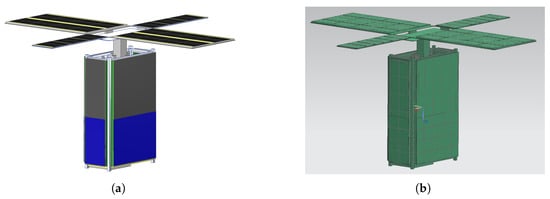
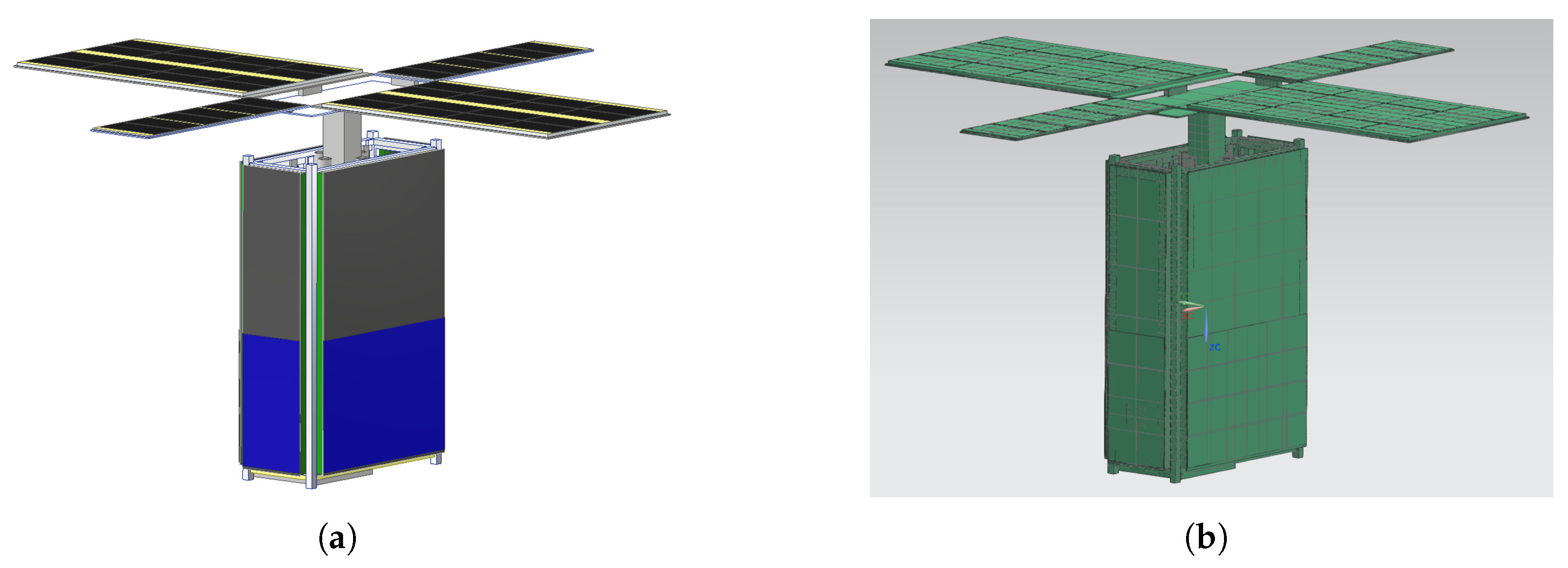
To keep the computational cost within a practical range, a simplified thermal model of a 6U CubeSat was constructed. Structural details that do not significantly affect the overall thermal behavior were omitted, and a relatively coarse mesh was applied to the main satellite body. In contrast, the region around the sun-pointing mechanism, including the heat pipe, heat cartridge, and associated mounting structures, was modeled with finer mesh resolution to capture local heat transfer behavior. The total mesh count of the simplified model was 43,483 elements. The SMA spring was not explicitly modeled; instead, the heat cartridge temperature was used as the primary indicator for assessing SMA actuation feasibility. The simplified thermal model is shown in Figure 15.
Figure 15.
Simplified thermal model of the 6U CubeSat used for orbital thermal analysis: (a) overall configuration of the simplified thermal model; (b) mesh geometry of the simplified thermal model.
The orbital and attitude conditions applied in the analysis are summarized in Table 2. The simulation assumed a Sun-synchronous orbit with an altitude of 600 km, a nadir-pointing attitude with the velocity vector aligned along the negative x-axis, and a solar flux of 1415 W/m2. A total of six orbital periods were simulated to assess the steady-state thermal behavior. The material composition and thermophysical properties used in the analysis are listed in Table 3 and Table 4, respectively. The heat pipe was modeled using an effective thermal conductivity of 38,700 W/m·K to account for its two-phase heat transfer characteristics [14]. All contact interfaces with gaps of 0.2 mm or less were treated as thermally coupled, and an initial temperature of 20 °C was applied uniformly across the entire model.
Table 2.
Orbital and attitude conditions applied in the thermal analysis.
Table 3.
Material composition of the satellite structural components.
Table 4.
Thermophysical and optical properties of materials used in the thermal analysis.
4. Results
This section presents the prototype-level experimental, thermal analysis, and energy-generation analysis results of the proposed thermally driven sun-pointing approach. The results include heat-cartridge-based SMA spring actuation, single-module tilting, SMA spring screening, four-direction pointing, orbital thermal behavior, and expected annual energy-generation improvement.
4.1. SMA Spring Actuation Test Results
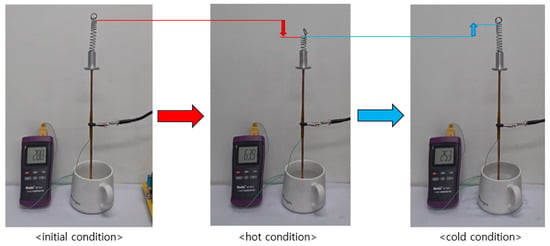
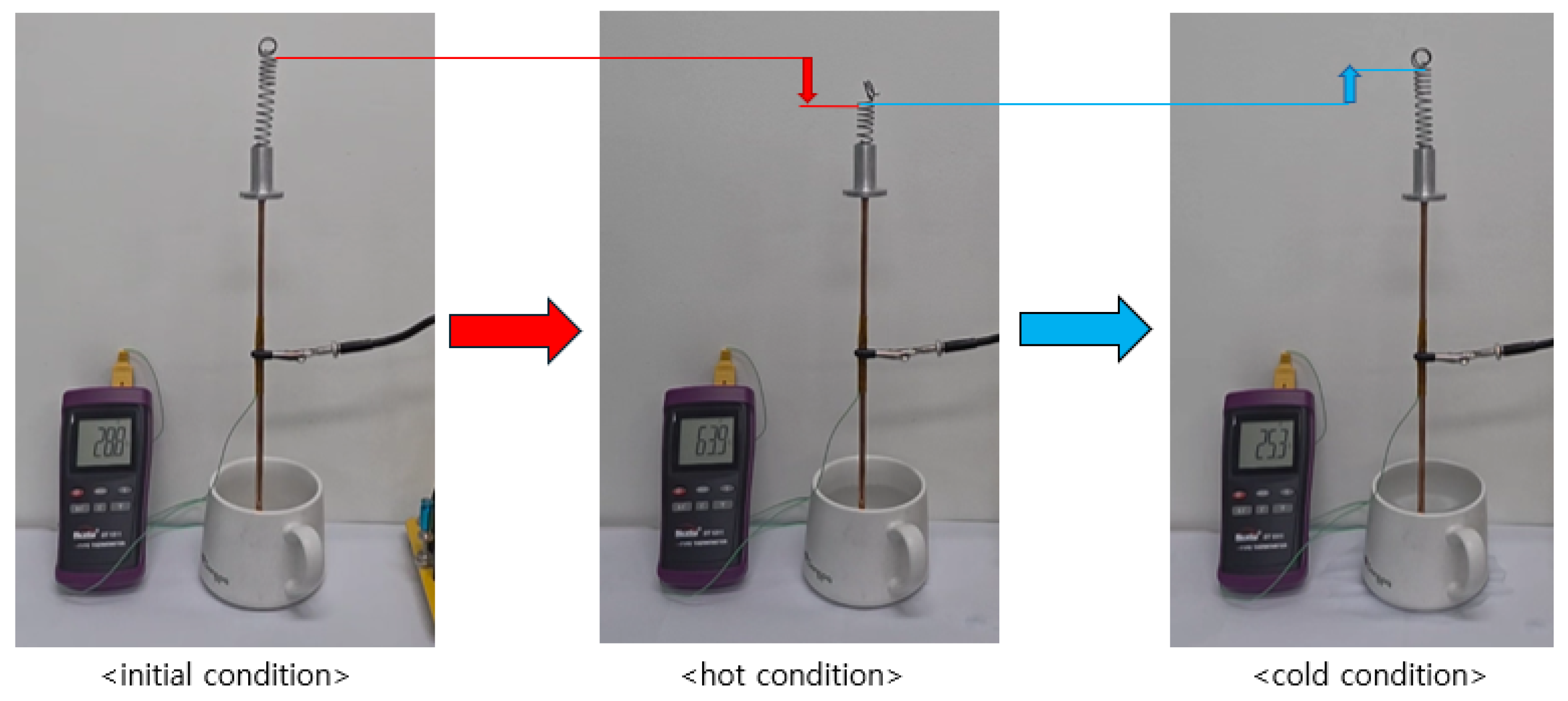
The heat-cartridge-based SMA spring actuation test was conducted to verify that heat delivered through the heat pipe could induce contraction and recovery of the SMA spring. The heat cartridge temperature was monitored throughout the test, reaching approximately 60 °C during the heating phase and returning to approximately 25 °C during the cooling phase. The contraction and recovery behavior of the SMA spring at these temperature conditions are shown in Figure 16.
Figure 16.
Contraction and recovery behavior of the SMA spring during heating and cooling.
The spring length was measured in the initial, heated, and cooled states for three repeated trials using ImageJ. The results are summarized in Table 5. In all trials, the SMA spring contracted by more than 20 mm upon heating and partially recovered upon cooling. These results demonstrate the basic actuation capability of the heat pipe and heat cartridge assembly.
Table 5.
SMA spring length variation during repeated heat-cartridge-based actuation tests.
4.2. Single-Module Pointing Test Results
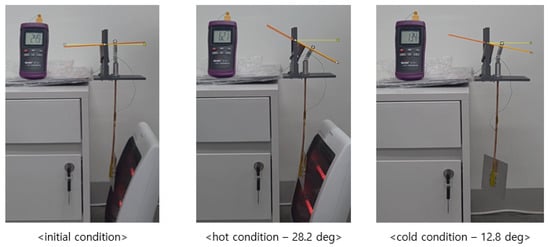
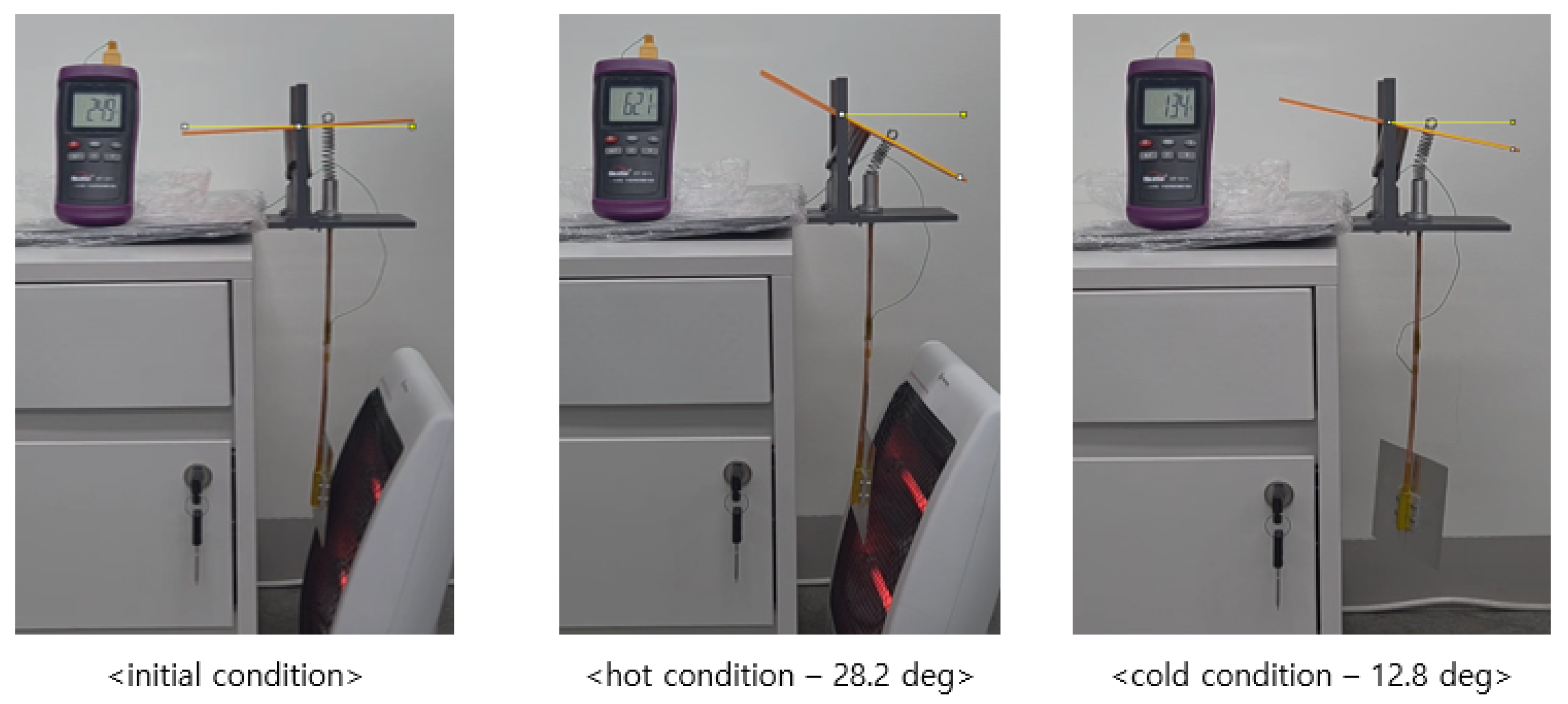
The single-module pointing test was conducted to examine whether the proposed thermal actuation path could produce tilting motion in a panel-support structure. The heat cartridge temperature reached approximately 62 °C during heating and decreased to approximately 13 °C during cooling. The tilting response of the single-module prototype is shown in Figure 17.
Figure 17.
Tilting response of the single-module prototype: initial state (left), tilted state upon heating at 28.2° (center), and partially recovered state upon cooling at 12.8° (right).
Upon heating, the SMA spring contracted and tilted the upper panel-support structure through the universal joint. The measured tilt angle reached 28.2°. After removal of the heat source and subsequent cooling, the tilt angle decreased to 12.8°, indicating partial recovery toward the initial position. This result shows that the photothermal-panel–heat-pipe–heat-cartridge–SMA spring path can convert thermal input into measurable tilting motion at the single-module level.
4.3. SMA Spring Screening Results
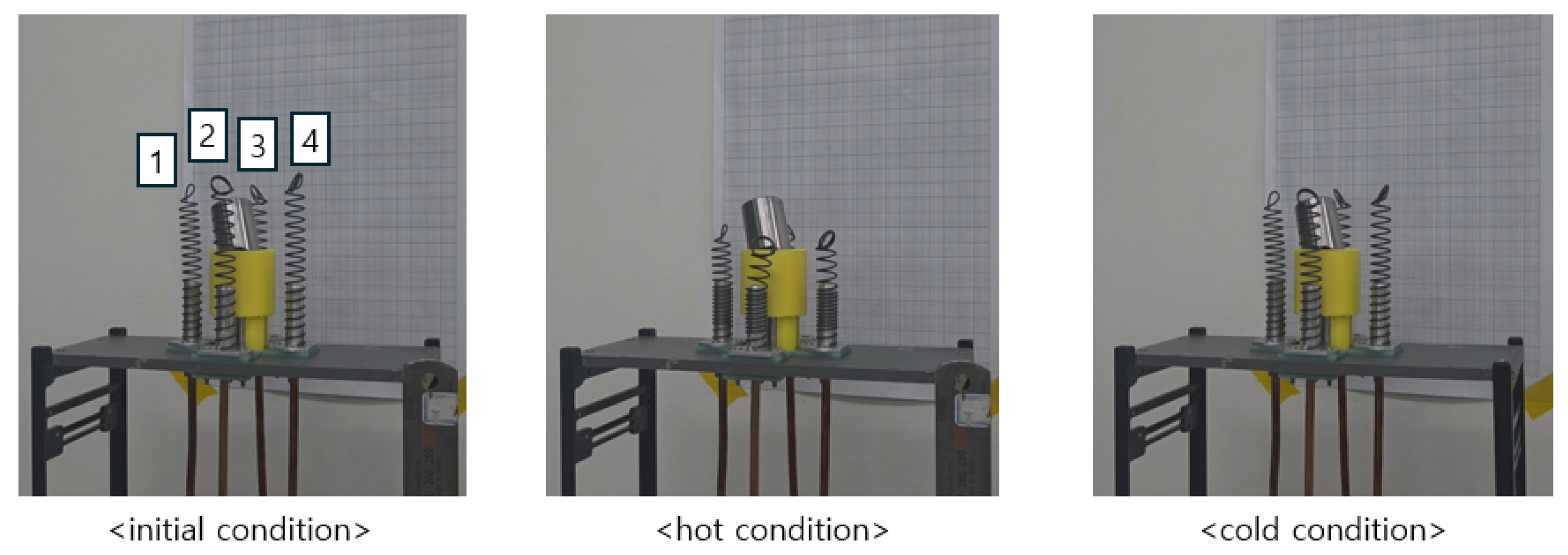
A preliminary SMA spring screening test was conducted to compare the actuation displacement of the four springs used in the four-direction pointing prototype. The purpose of this test was to identify springs with similar short-term actuation behavior for opposite-side placement, rather than to statistically validate long-term repeatability. The springs were tested under three adjustment conditions, and each condition was repeated five times.
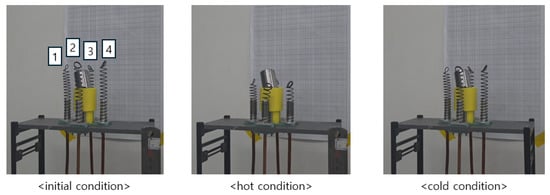
The test sequence under the final adjustment condition is shown in Figure 18. Under this condition, Springs 1 and 3 showed similar contraction displacements of approximately 16 mm, while Springs 2 and 4 showed similar displacements of approximately 22–23 mm, as summarized in Table 6. Based on these results, Springs 1 and 3 and Springs 2 and 4 were arranged opposite each other in the four-direction pointing prototype to reduce directional imbalance during selective actuation.
Figure 18.
SMA spring screening sequence under the final adjustment condition: initial, heated, and cooled states.
Table 6.
SMA spring contraction displacement under the final adjustment condition for prototype screening.
No abrupt degradation or fracture was observed within the five cycles conducted in this test. However, the results should be interpreted as a short-term screening result for prototype assembly, and further cyclic testing under representative thermal and mechanical loads is required for repeatability validation.
4.4. Four-Direction Pointing Test Results
The four-direction pointing test was conducted using the screened SMA spring arrangement described in the previous section. The purpose of this test was to examine whether selective heating of each SMA actuation path could generate directional tilting motion in the prototype configuration. A mechanical angle limiter was applied to restrict the maximum tilt angle to approximately 20°, preventing excessive elongation of the SMA spring located opposite to the actuated direction.
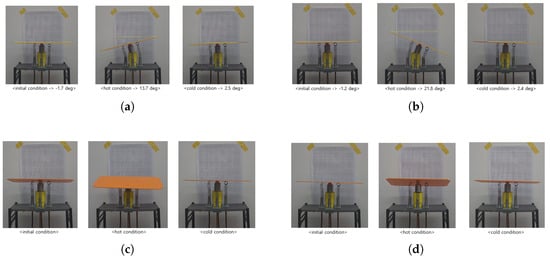
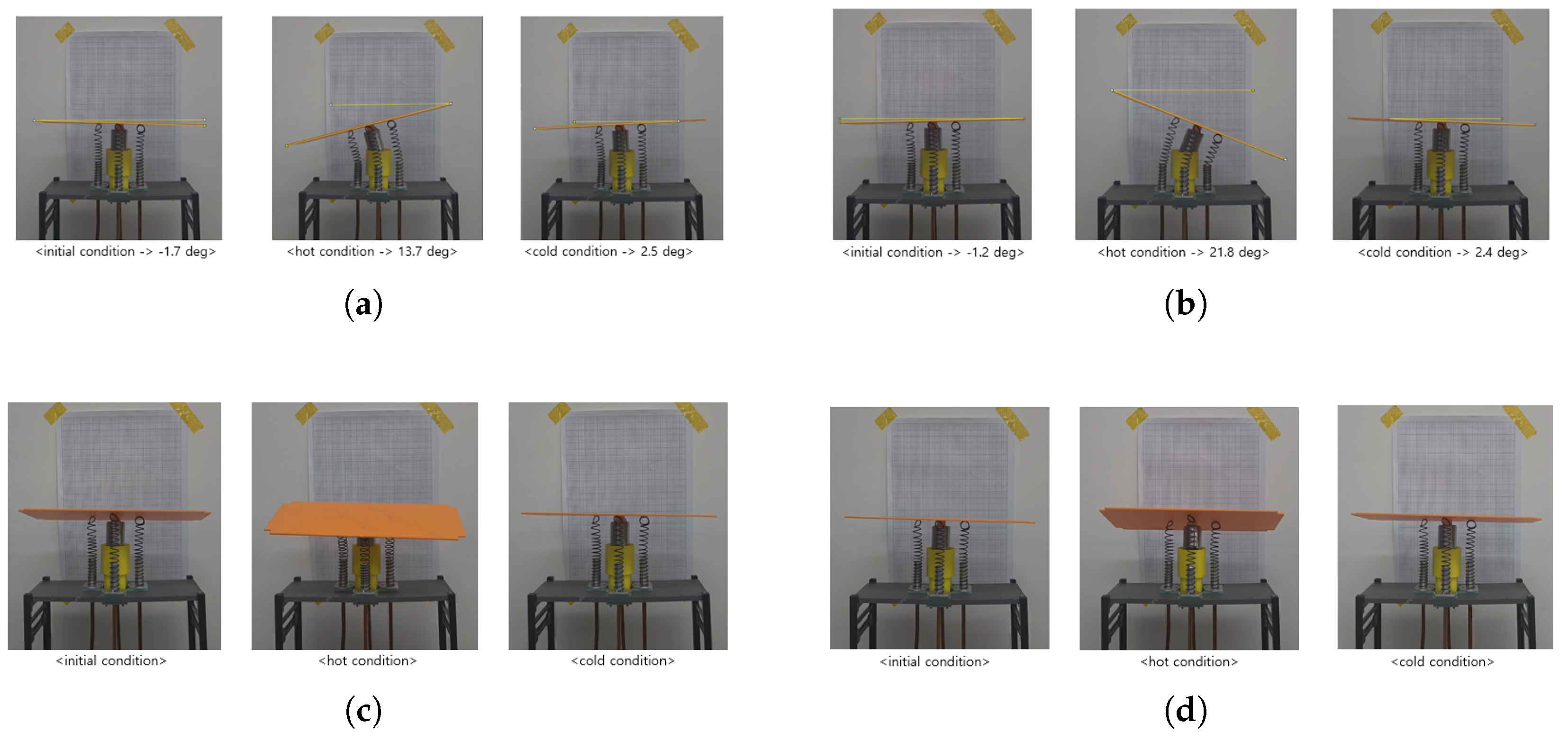
The prototype was tested in the left, right, front, and rear directions. Representative results are shown in Figure 19. In all cases, the upper panel-support structure tilted toward the actuated direction during heating and moved back toward the neutral position during cooling.
Figure 19.
Representative four-direction tilting response of the prototype under selective SMA actuation: (a) left-direction actuation; (b) right-direction actuation; (c) front-direction actuation; (d) rear-direction actuation.
For the left and right directions, the tilt angle was quantified from the front-view images because the motion occurred in the image plane. The initial, heated, and cooled angles were measured relative to the neutral position of the panel-support structure. The cooled residual angle was used to evaluate the recovery tendency after cooling. The measured results are summarized in Table 7.
Table 7.
Measured panel angles for the left and right actuation directions.
For the left-direction actuation, the heated tilt angle was approximately 13–14°, and the cooled residual angle remained within 1.0–2.5°. For the right-direction actuation, the heated tilt angle reached approximately 22°, which is close to the intended mechanical limit, and the cooled residual angle remained within 2.4–2.8°.
For the front and rear directions, the tilting motion occurred primarily out of the camera image plane. Therefore, the tilt angles were not quantified from the front-view images to avoid unreliable angle estimation. Instead, these cases were used as qualitative observations of directional actuation and recovery tendency. In both directions, the structure tilted toward the actuated direction during heating and moved back toward the neutral position during cooling.
Overall, selective SMA actuation generated directional tilting motion in all four tested directions. The left and right cases provided quantitative evidence of lateral actuation and recovery toward the neutral position, while the front and rear cases confirmed directional motion qualitatively. These results support the prototype-level feasibility of the proposed thermally driven sun-pointing approach, although further tests with multi-view angle measurement are required for complete three-dimensional pointing characterization.
4.5. Orbital Thermal Analysis Results
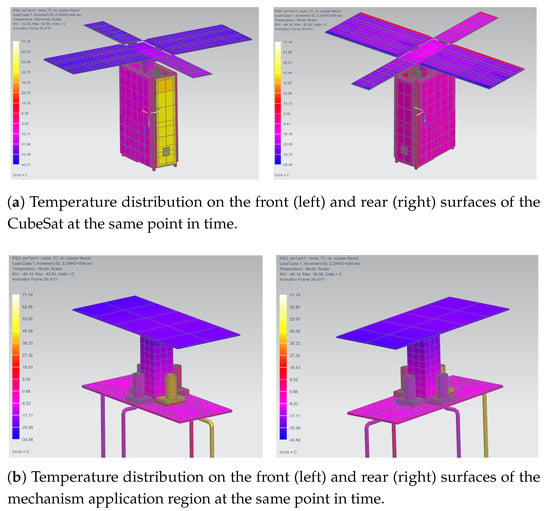
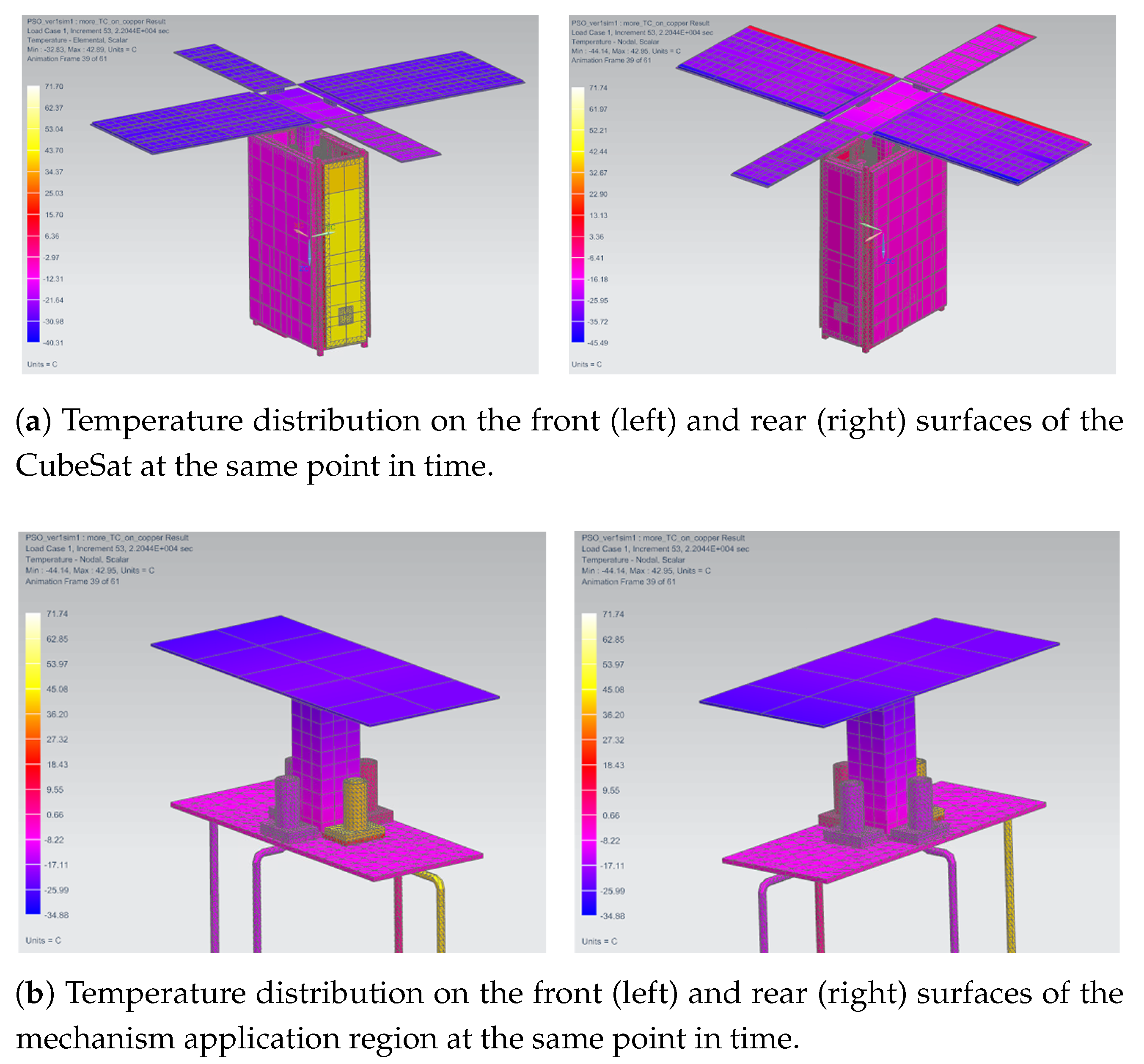
The orbital thermal analysis was performed over six simulated orbital periods to evaluate the temperature distribution of the 6U CubeSat structure and the thermal behavior of the mechanism application region. The temperature distributions of the spacecraft and the local mechanism region are shown in Figure 20. A temperature difference was observed between the sun-facing and rear-facing sides of the spacecraft, and a similar directional thermal separation appeared around the mechanism region. The sun-facing heat pipe and heat cartridge region showed elevated temperatures, while the opposite side remained comparatively cooler. These results indicate that the simplified thermal model can maintain directional thermal separation and concentrate thermal input along the selected actuation path.
Figure 20.
Orbital thermal analysis results: (a) temperature distribution on the front and rear surfaces of the CubeSat at the same point in time; (b) temperature distribution on the front and rear surfaces of the mechanism application region at the same point in time.
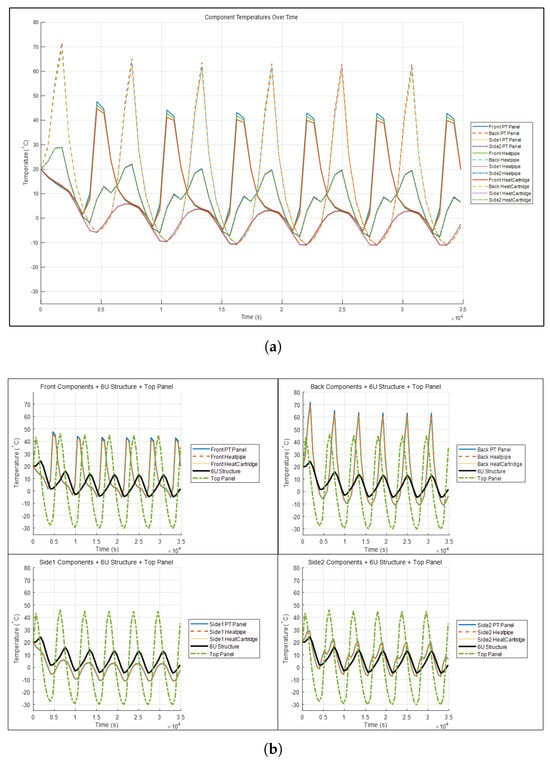
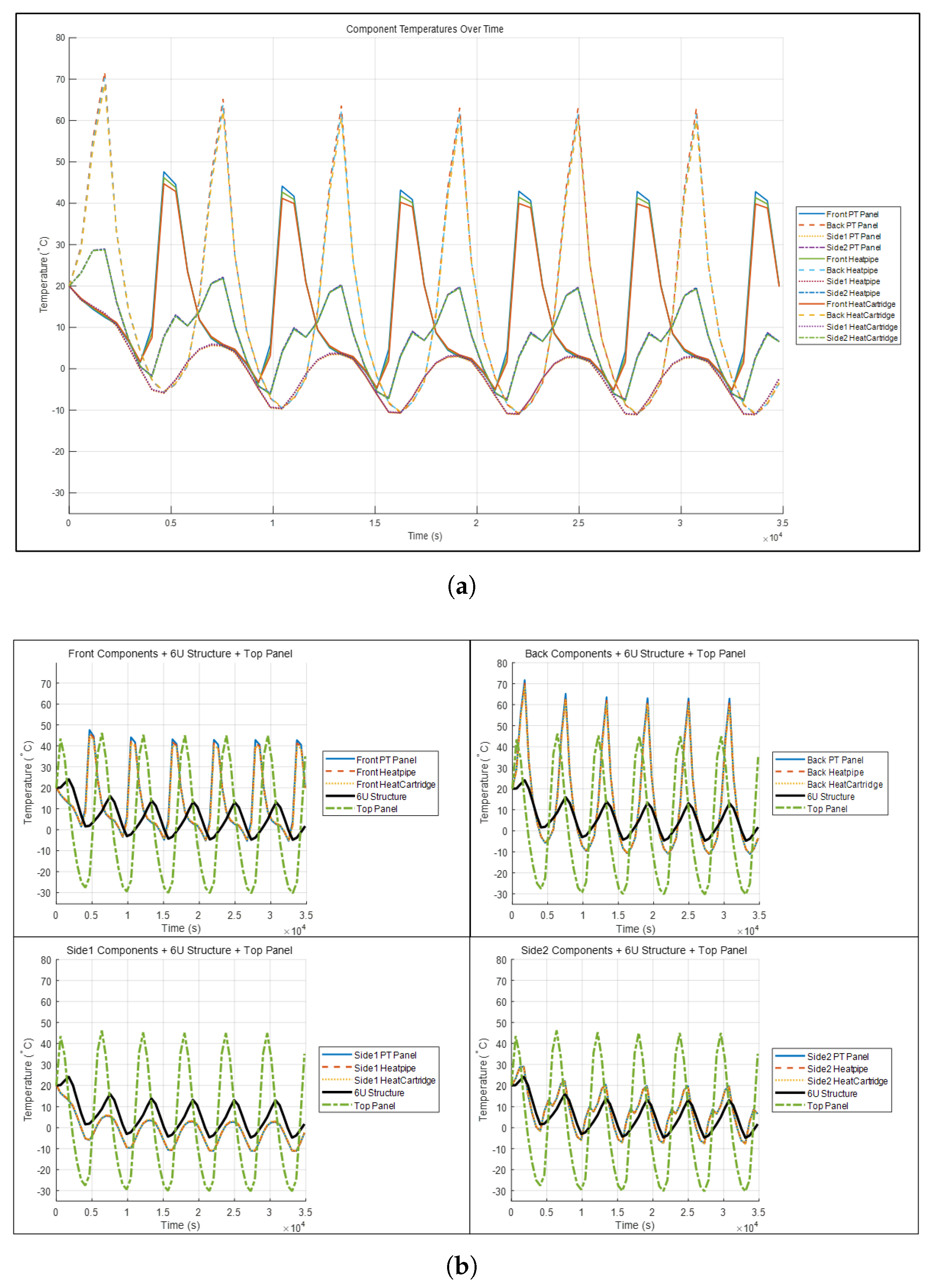
The temperature variations in the mechanism components and the main satellite structural elements are shown in Figure 21. During the eclipse-to-sunlit transition, the front-facing photothermal panel, heat pipe, and heat cartridge temperatures increased above approximately 40 °C. Before eclipse entry, the rear-facing photothermal panel, heat pipe, and heat cartridge reached temperatures exceeding approximately 60 °C. These temperature ranges are relevant to the SMA spring actuation observed in the prototype tests and suggest that the proposed thermal path can provide actuation-level heat input under the simulated orbital condition.
Figure 21.
Temperature variation in the mechanism components and satellite structure during simulated orbital periods: (a) temperature variation in the mechanism components and main satellite structural elements over time; (b) direction-dependent temperature variation in the mechanism components over time.
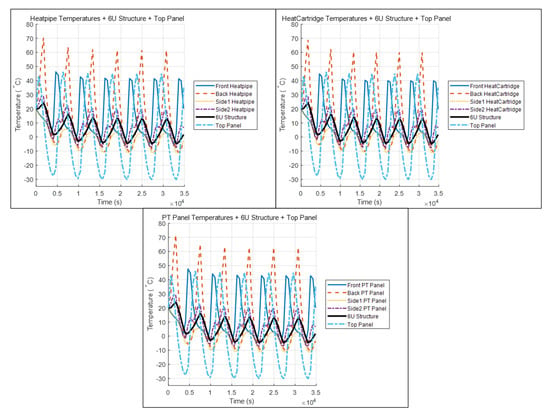
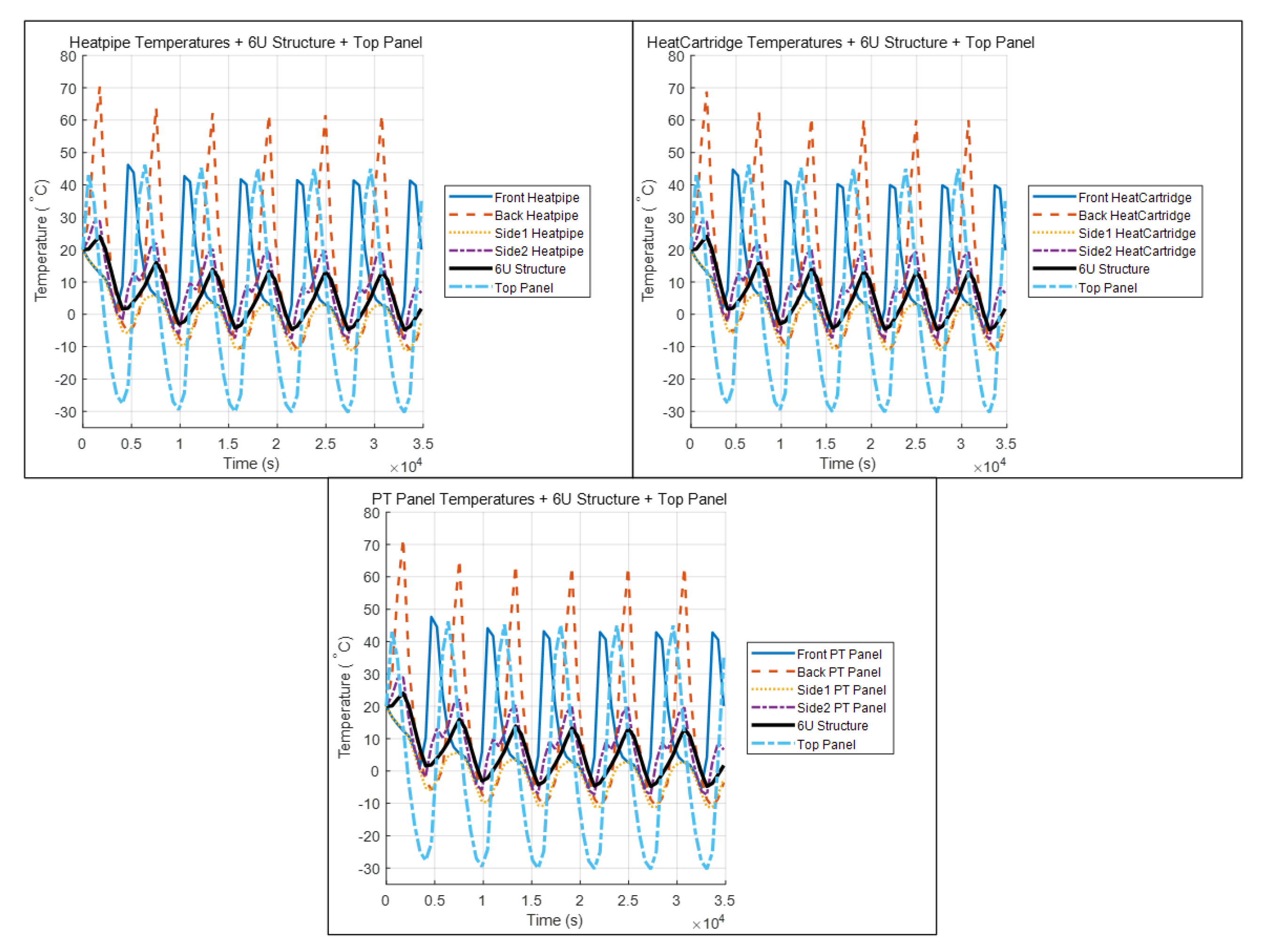
The temperature variations in the photothermal panel, heat pipe, and heat cartridge are compared in Figure 22. Within each directional actuation path, the three components showed correlated temperature profiles. The photothermal panel reached the highest temperature, followed by the heat pipe and heat cartridge. This trend indicates that heat absorbed by the photothermal panel can be transferred through the heat pipe to the heat cartridge, supporting the thermal feasibility of the proposed passive actuation approach.
Figure 22.
Comparison of temperature variations among the photothermal panel, heat pipe, and heat cartridge during simulated orbital periods.
4.6. Expected Power Generation Improvement
The proposed mechanism is intended to improve the solar incidence condition of CubeSat solar panels without actively changing the spacecraft attitude. To examine the potential energy-generation benefit of limited-angle pointing, annual energy generation was recalculated using MATLAB R2024b based on orbit and solar-incidence analysis. The analysis was based on the orbit and solar-array pointing framework reported by Ehren [15]. The main analysis conditions are summarized in Table 8. The pointing angle was limited to ±20° to reflect the approximate angular range implemented in the present prototype.
Table 8.
Orbit and pointing conditions used for annual energy-generation analysis.
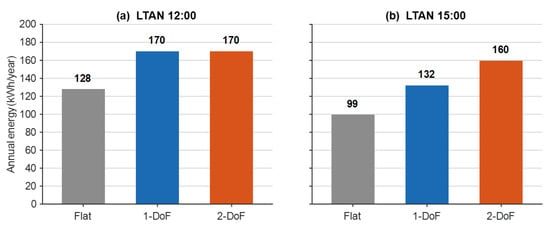
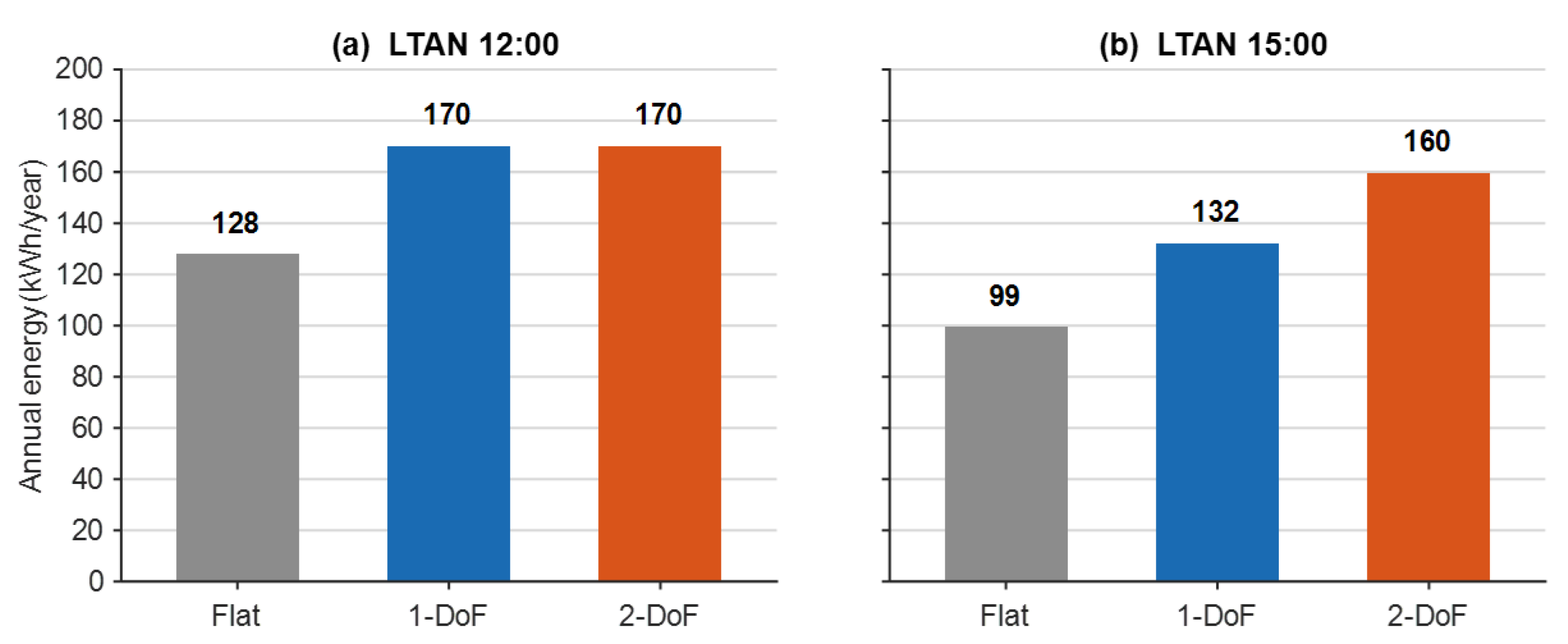
The annual energy generation was compared for three solar-panel configurations: a fixed flat panel, a single-axis pointing panel, and a dual-axis pointing panel. Two LTAN conditions, 12:00 and 15:00, were considered to examine the effect of orbital geometry on the benefit of panel pointing. The comparison results are shown in Figure 23.
Figure 23.
Annual energy generation comparison under a 20° pointing-angle limit: (a) LTAN 12:00 condition; (b) LTAN 15:00 condition.
Under the LTAN 12:00 condition, the fixed flat panel generated approximately 128 kWh/year, while the single-axis and dual-axis pointing configurations generated approximately 170 kWh/year. This corresponds to an improvement of approximately 33% compared with the fixed flat panel. The difference between the single-axis and dual-axis cases was negligible under this condition, indicating that most of the solar-incidence improvement could be achieved by limited pointing along one principal direction.
Under the LTAN 15:00 condition, the fixed flat panel generated approximately 99 kWh/year, while the single-axis and dual-axis pointing configurations generated approximately 132 kWh/year and 160 kWh/year, respectively. Compared with the fixed flat panel, the single-axis and dual-axis cases increased the annual energy generation by approximately 33% and 62%, respectively. The dual-axis case also showed an improvement of approximately 21% over the single-axis case, suggesting that multi-directional pointing becomes more beneficial when the relative solar incidence condition is less favorable for a fixed or single-axis configuration.
These results should be interpreted as an expected energy-generation improvement based on orbit-level solar-incidence analysis, rather than direct electrical validation of the present prototype. Nevertheless, the analysis indicates that limited-angle passive pointing can provide a meaningful energy-generation benefit for CubeSat missions with constrained attitude maneuvering capability.
5. Discussion
The results support the prototype-level feasibility of the proposed thermally driven passive sun-pointing mechanism. The SMA actuation and single-module pointing tests verified the basic functional chain of the mechanism: thermal input, heat transfer through the photothermal-panel–heat-pipe–heat-cartridge path, SMA actuation, and panel tilting.
Several limitations were also identified from the prototype tests. The trial-to-trial variation in SMA contraction and incomplete recovery are mainly attributed to mechanical interference, misalignment, friction, and contact conditions between the SMA spring and heat cartridge structure. In the four-spring configuration, the actuated SMA spring must overcome not only the restoring resistance of the opposing spring but also the mechanical influence of the side springs. This coupled multi-spring force interaction was not quantitatively measured in the present study and should be addressed through representative load testing, force and torque measurement, and detailed measurement-uncertainty analysis.
The four-direction pointing test showed that selective heating of individual SMA actuation paths can generate directional tilting and return motion in the left, right, front, and rear directions. However, the left and right directions were quantified using image-based angle measurements, whereas the front and rear directions were evaluated qualitatively because their motion occurred mainly out of the camera image plane. Therefore, full three-dimensional pointing characterization using multi-view measurement remains necessary.
The orbital thermal analysis indicates that heat absorbed by the photothermal panel can be transferred to the heat cartridge while maintaining directional thermal separation around the mechanism application region. The expected energy-generation analysis further suggests that limited-angle pointing can improve annual energy generation compared with a fixed flat panel. These results should be interpreted as orbit-level solar-incidence estimates rather than direct electrical validation of the prototype.
For practical CubeSat implementation, the present prototype should be further refined as flight-oriented hardware. The universal joint material, bearing interface, friction, wear, and potential cold-welding risk should be reconsidered using space-compatible materials and bearing solutions. Future work should also include improved spring guidance, increased mechanical clearance, long-term SMA cycling, representative load testing, thermal-vacuum testing, and full multi-module integration.
6. Conclusions
This study proposed a thermally driven passive sun-pointing mechanism for CubeSat solar panels and evaluated its prototype-level feasibility. The mechanism uses a photothermal panel, heat pipe, heat cartridge, two-way SMA spring, and universal joint to convert external thermal input into panel tilting and return motion without direct electrical actuation.
The SMA actuation and single-module pointing tests verified that heat transferred through the proposed thermal actuation path can induce SMA contraction, partial recovery, and measurable panel tilting. The SMA spring screening and four-direction pointing tests further showed that selective heating of individual actuation paths can generate directional tilting and return motion in the left, right, front, and rear directions. The orbital thermal analysis confirmed that heat can be transferred from the photothermal panel to the heat cartridge while maintaining directional thermal separation. The expected energy-generation analysis also indicated that limited-angle pointing can improve annual energy generation compared with a fixed flat panel.
Overall, the results support the prototype-level feasibility of the proposed mechanism. However, the present study does not constitute complete flight validation or full three-dimensional pointing characterization. Future work should include multi-view angle measurement, quantitative force and torque measurement, representative load testing, long-term SMA cycling, thermal-vacuum testing, and refinement of the universal joint and restoring mechanism using space-compatible design considerations.
Author Contributions
Conceptualization, J.C. and Y.E.; methodology, J.C.; validation, J.C.; formal analysis, J.C.; investigation, J.C.; resources, J.C., Y.E. and S.-Y.P.; data curation, J.C.; writing—original draft preparation, J.C.; writing—review and editing, Y.E.; visualization, J.C.; supervision, Y.E. and S.-Y.P.; project administration, Y.E. and S.-Y.P.; funding acquisition, Y.E. and S.-Y.P. All authors have read and agreed to the published version of the manuscript.
Funding
This research received no external funding.
Institutional Review Board Statement
Not applicable.
Informed Consent Statement
Not applicable.
Data Availability Statement
The data presented in this study are available from the corresponding author upon reasonable request.
Acknowledgments
The authors wish to thank the members of the Department of Satellite Systems for their support during prototype fabrication and experimental testing.
Conflicts of Interest
The authors declare no conflicts of interest.
References
- Kulu, E. CubeSats & Nanosatellites—2024 Statistics, Forecast and Reliability. In Proceedings of the 75th International Astronautical Congress (IAC 2024), Milan, Italy, 14–18 October 2024. [Google Scholar]
- McGill, E. Development of a Self-Orienting CubeSat Solar Array. Honors Thesis, Department of Mechanical and Aerospace Engineering, University of Dayton, Dayton, OH, USA, 2018. [Google Scholar]
- Jani, J.M.; Leary, M.; Subic, A.; Gibson, M.A. A Review of Shape Memory Alloy Research, Applications and Opportunities. Mater. Des. 2014, 56, 1078–1113. [Google Scholar] [CrossRef] [Scilit]
- Riad, A.; Rassem, A.; Sharaf, M.; Elazab, R. Bio-sun Tracker Engineering Self-driven by Thermo-mechanical Actuator for Photovoltaic Solar Systems. Case Stud. Therm. Eng. 2020, 21, 100709. [Google Scholar] [CrossRef] [Scilit]
- Timoshenko, S. Analysis of Bi-Metal Thermostats. J. Opt. Soc. Am. 1925, 11, 233–255. [Google Scholar] [CrossRef] [Scilit]
- Clifford, M.J.; Eastwood, D. Design of a Novel Passive Solar Tracker. Sol. Energy 2004, 77, 269–280. [Google Scholar] [CrossRef] [Scilit]
- Ohm, C.; Brehmer, M.; Zentel, R. Liquid Crystalline Elastomers as Actuators and Sensors. Adv. Mater. 2010, 22, 3366–3387. [Google Scholar] [CrossRef] [Scilit] [PubMed]
- Li, C.; Liu, Y.; Huang, X.; Jiang, H. Direct Sun-Driven Artificial Heliotropism for Solar Energy Harvesting Based on a Photo-Thermomechanical Liquid-Crystal Elastomer Nanocomposite. Adv. Funct. Mater. 2012, 22, 4436–4441. [Google Scholar] [CrossRef] [Scilit]
- Harik, E.P.; McFatter, J.; Sweeney, D.J.; Enriquez, C.F.; Taylor, D.M.; McCann, D.S. The International Space Station Solar Alpha Rotary Joint Anomaly Investigation. In Proceedings of the 40th Aerospace Mechanisms Symposium, Cocoa Beach, FL, USA, 12–14 May 2010. [Google Scholar]
- Quaglia, G.; Maurino, S.L. Solar.q_1: A New Solar-Tracking Mechanism Based on 4-Bar Linkages. Proc. Inst. Mech. Eng. Part C J. Mech. Eng. Sci. 2017, 231, 4072–4083. [Google Scholar]
- Li, D.; Harkness, P.; Walkinshaw, T. Design of a Solar Panel Deployment and Tracking System for PocketQube Pico-Satellite. In Proceedings of the 2017 IEEE Aerospace Conference, Big Sky, MT, USA, 4–11 March 2017. [Google Scholar]
- Mann, A.; Germann, T.; Ruiter, M.; Groche, P. The Challenge of Upscaling Paraffin Wax Actuators. Mater. Des. 2020, 190, 108580. [Google Scholar] [CrossRef] [Scilit]
- Phon, R.; Lee, M.; Kim, Y.; Iqbal, S.; Lim, S. Thermally Reconfigurable Helical Shape Memory Alloy–Based Metamaterial. Electron. Lett. 2021, 57, 1–3. [Google Scholar]
- Campo, D.; Weyant, J.; Muzyka, B. Enhancing Thermal Performance in Embedded Computing for Ruggedized Military and Avionics Applications. In Proceedings of the 14th IEEE ITHERM Conference, Orlando, FL, USA, 27–30 May 2014; pp. 840–845. [Google Scholar]
- Ehren, J.T. Energy Analysis and Orbit Simulation of Actuating CubeSat Solar Arrays. Honors Thesis, Department of Mechanical, Aerospace and Renewable and Clean Energy Engineering, University of Dayton, Dayton, OH, USA, 2019. [Google Scholar]

Disclaimer/Publisher’s Note: The statements, opinions and data contained in all publications are solely those of the individual author(s) and contributor(s) and not of MDPI and/or the editor(s). MDPI and/or the editor(s) disclaim responsibility for any injury to people or property resulting from any ideas, methods, instructions or products referred to in the content. |
© 2026 by the authors. Licensee MDPI, Basel, Switzerland. This article is an open access article distributed under the terms and conditions of the Creative Commons Attribution (CC BY) license.