


Abstract
Runway systems serve as the critical interface between airports and terminal airspace, and their efficient operation is essential for balancing air traffic demand and airport capacity. With the continuous growth of air traffic, intelligent runway demand and capacity management has become increasingly important for mitigating congestion and delays. This paper presents a comprehensive review of runway capacity–demand management from both supply-side and demand-side perspectives. On the supply side, runway configuration selection is reviewed, including runway configuration capacity envelopes, influencing factors, and existing optimization methodologies, such as prescriptive models, descriptive models, and reinforcement learning approaches. On the demand side, flight runway sequencing for arrivals, departures, and integrated arrival–departure operations is systematically analyzed. Problem analogies, operational characteristics, optimization objectives, and solution algorithms are discussed in detail. A critical comparison of existing methodologies is conducted from the perspectives of solution quality, real-time capability, human interpretability, technology readiness, trust requirements, and human–AI collaboration. Finally, future research directions are identified, including integrated runway management, multi-airport coordination, uncertainty-aware optimization, human–AI decision support, AI-enabled runway management, and integrated manned–unmanned operations. The review provides a reference for researchers, airport operators, air navigation service providers, and decision-support system developers seeking to improve runway operational efficiency and safety.
1. Introduction
The imbalance between air traffic demand and available capacity, driven by the continuous growth of air traffic and limited system capacity, has led to frequent occurrences of adverse phenomena such as congestion and flight delays, posing new challenges to air traffic management [1]. Beyond its transportation function, aviation constitutes a critical component of regional and national economic systems. Airport capacity constraints and flight delays not only affect airline operating costs and passenger travel experience, but also influence supply-chain efficiency, tourism development, business connectivity, and regional economic competitiveness. As the primary bottleneck resource within airport systems, runway capacity directly affects airport throughput and service reliability. Consequently, effective runway demand and capacity management contributes not only to operational efficiency and safety, but also to broader economic objectives, including delay cost reduction, productivity enhancement, and sustainable growth of the aviation sector. Although the construction of new runways and other infrastructure can significantly increase capacity, such approaches are constrained by geographical conditions, time, and financial resources, and are difficult to widely implement. Therefore, they cannot be considered the optimal solution from the supply-side management perspective. In this context, initiatives such as Aviation System Block Upgrades (ASBU) [2], European Air Traffic Management (ATM) Master Plan [3], and Next Generation Air Transportation System (NextGen) [4] all advocate the use of intelligent approaches to address the imbalance between runway capacity and demand.
As the interface between airports and terminal airspace, runways exhibit the complexity of both surface resources and airspace resources. Influenced by factors such as convective weather in the terminal area, ground wind direction and speed, and arrival and departure traffic demand, runway operating directions as well as the types of traffic flows served (arrivals, departures, or mixed operations) may change dynamically over time. Furthermore, runway resources possess spatiotemporal characteristics of instantaneous exclusivity and time-shared utilization. Specifically, for a given runway, only one aircraft may occupy it at any given moment, while multiple aircraft use it sequentially under the constraint of maintaining safe separation. Tower controllers are responsible for the management of runway resources, which mainly includes Runway Configuration Selection (RCS) and Flight Runway Sequencing (FRS). In a complex and dynamic operational environment with coupled decision-making problems, reliance on human experience may lead to significant individual variability, high controller workload, insufficient capacity utilization, and suboptimal decision-making. Optimizing the allocation of runway spatiotemporal resources and balancing arrival and departure traffic demand can maximize the utilization of existing resources, thereby improving the operational efficiency of the runway system.
This review provides a systematic synthesis of the existing literature on runway demand and capacity management from both research and operational perspectives. The findings are intended to support multiple stakeholder groups, including researchers investigating airport capacity optimization, developers of decision-support and Artificial Intelligence (AI)-based systems, airport operators seeking to improve runway utilization, and air navigation service providers responsible for operational decision making. By identifying current methodological capabilities, limitations, and future research directions, this review aims to facilitate the transition of advanced runway management concepts from academic research to practical implementation.
The remainder of this paper is organized to progressively establish a comprehensive understanding of runway capacity–demand management and its associated optimization strategies, moving from methodological foundations and problem characterization to detailed reviews, critical discussions, and future research opportunities. Section 2 first presents the review methodology, including the literature search strategy, selection criteria, and analytical framework adopted in this study. Section 3 provides an in-depth analysis of the runway capacity–demand management problem, highlighting its operational characteristics, influencing factors, and key challenges. Building upon this foundation, Section 4 and Section 5 comprehensively review existing studies on RCS and FRS, respectively, with particular emphasis on methodologies. Section 6 presents a critical discussion of the reviewed literature, identifying current achievements, remaining challenges, and research gaps. Considering both the limitations of existing studies and the evolving needs of the civil aviation industry, Section 7 discusses promising future research directions. Finally, Section 8 concludes the paper and summarizes the main findings of this review.
2. Review Methodology
This review aims to provide a comprehensive overview of runway demand and capacity management research, with a particular focus on RCS and FRS. To ensure the transparency and reproducibility of the review process, a structured literature search and screening strategy was adopted.
2.1. Literature Search Strategy
The literature search was conducted using major academic databases, including Web of Science, Scopus, IEEE Xplore, ScienceDirect, and Google Scholar. The search focused on peer-reviewed journal articles and conference papers published in the fields of air traffic management, airport operations, transportation systems, and aviation engineering. The search process employed combinations of keywords such as “runway configuration”, “runway capacity”, “runway scheduling”, “arrival sequencing”, “departure sequencing”, “airport demand and capacity management”, “runway operations”, and “air traffic flow management”. Additional relevant studies were identified through backward and forward citation tracking.
2.2. Inclusion and Exclusion Criteria
The inclusion criteria were:
- Studies addressing runway configuration selection, runway capacity management, or flight runway sequencing.
- Studies involving arrivals, departures, or integrated arrival–departure operations.
- Research proposing optimization models, decision-support methods, Machine Learning (ML) approaches, or operational analyses.
- Peer-reviewed journal articles and high-quality conference papers written in English.
The exclusion criteria were:
- Studies focusing exclusively on en-route air traffic management without runway-related decision-making.
- Publications lacking sufficient methodological details.
- Non-peer-reviewed reports, editorials, theses, and duplicate records.
2.3. Literature Screening Process
The search covered publications from 1976 to 2026, enabling the review to capture both foundational studies and recent developments. The initial database search yielded over 200 publications. A title and abstract screening process was subsequently performed to exclude studies that were not directly related to runway demand and capacity management. Particular attention was given to ensuring that the selected studies explicitly addressed runway configuration selection, runway capacity assessment, arrival sequencing, departure sequencing, integrated arrival–departure scheduling, or uncertainty management in runway operations.
During the full-text review stage, studies were further evaluated based on methodological rigor, relevance to runway-system decision making, and contribution to the development of operational or optimization frameworks. To reduce selection bias, both classical foundational studies and recent advances were included. The final corpus comprised approximately 100 publications, which were subsequently categorized according to the research topic, the methodological paradigm, and the operational application scenario. Although the review does not claim to be a fully systematic review, the adopted screening strategy was designed to ensure that the selected literature adequately represents the major methodological developments and research directions in runway demand and capacity management.
3. Runway Demand and Capacity Management Problem
Tower controllers are responsible for the operational management of runway systems. Their duties primarily involve, on the supply side, the selection of appropriate runway configurations to match capacity, and, on the demand side, the sequencing of flights for runway utilization.
A runway configuration refers to the set of active runways in use during a specific time period, typically expressed in the form , where runways and are assigned to arrivals, and runways and are assigned to departures [5]. Each runway has two possible operating directions, and for each direction, operations can be categorized into four modes based on the types of traffic served: idle, arrival-only, departure-only, and mixed arrival–departure operations. Therefore, for a multi-runway system with N runways, there are theoretically possible configurations. For instance, for the runway system illustrated in Figure 1, there are 512 () feasible runway configurations.
Figure 1.
A parallel multi-runway system comprising three runways. In total, the runway system admits 512 () feasible runway configurations.
Under a given runway configuration, tower controllers are required to assign the runway, determine the sequence, and allocate precise takeoff and landing times for each flight. Furthermore, at airports with complex runway–taxiway configurations, additional decisions regarding runway crossings are often necessary. Taking the runway and taxiway layout illustrated in Figure 1 as an example, tower controllers are required to assign an appropriate landing runway to each arrival flight. If an arrival flight is assigned to land on Runway 36L, the controller must further issue clearances for the aircraft to safely cross Runway 36C in order to taxi to its designated parking stand.
The selection of runway configurations must take into account multiple factors, including runway physical characteristics, meteorological conditions, terminal airspace constraints, and aircraft performance. Similarly, runway sequencing of flights is constrained by wake turbulence separation minima [6], radar separation requirements [6], and Calculated Take-Off Times (CTOTs) [7] restrictions, while simultaneously requiring a careful trade-off among competing objectives such as operational efficiency, equity, and environmental impact. These factors render the selection of runway configurations and the sequencing of aircraft on runways complex decision-making problems, which have consequently attracted extensive attention in the literature.
The RCS and FRS problems are strongly coupled in practical airport operations. On the one hand, runway configuration decisions determine the operating direction of runways, the allocation of arrival and departure traffic flows, and the number of runways available for each operation type. These decisions directly affect runway assignment options, feasible sequencing structures, and achievable arrival–departure throughput. For example, a segregated runway configuration generally simplifies sequencing by separating arrival and departure flows, whereas a mixed-mode configuration may provide greater flexibility but introduces additional coordination requirements between different traffic streams. On the other hand, the effectiveness of a runway configuration is ultimately reflected in the performance of the resulting flight sequence. Different sequencing outcomes may lead to significantly different levels of delay, runway utilization, environmental impact, and operational fairness under the same configuration. Consequently, anticipated sequencing performance should be considered when evaluating alternative runway configurations. From this perspective, RCS can be viewed as a capacity allocation problem, whereas FRS represents a spatiotemporal resource scheduling problem operating under the selected configuration.
4. Runway Capacity Management: Runway Configuration Selection
As discussed in Section 3, the complexity of the runway configuration selection problem in multi-runway systems increases exponentially with the number of runways. The conventional, experience-based and coarse-grained approach adopted by air traffic controllers to determine runway configurations is often insufficient to fully exploit the service potential of the runway system. This limitation may lead to unnecessary traffic congestion and increased flight delays, thereby motivating extensive research on runway configuration optimization. This section first introduces the concept of the capacity envelope associated with different runway configurations. It then analyzes the primary factors influencing runway configuration decision-making. Finally, a comprehensive review of existing methodologies for runway configuration selection is presented.
4.1. Runway Configuration Capacity Envelope
For a given runway configuration, arrival and departure flights share the same runway resources, which prevents the runway system from simultaneously achieving its maximum arrival and departure capacities. The resulting capacity envelope is commonly approximated by a piecewise linear convex function, typically composed of three or more connected line segments [8], as illustrated in Figure 2a.
Figure 2.
Runway configuration capacity envelopes. (a) Capacity envelopes of the same runway configuration under varying meteorological conditions. (b) Capacity envelopes of different runway configurations under identical meteorological conditions.
The capacity of a given runway system varies under different runway configurations; accordingly, the concept of the Runway Configuration Capacity Envelope (RCCE) has been introduced [9]. Each runway configuration is typically associated with multiple RCCEs, each corresponding to a specific meteorological condition. Taking the representative cases of Visual Meteorological Conditions (VMC) and Instrument Meteorological Conditions (IMC) as examples, the outer envelope in Figure 2a corresponds to VMC, whereas the inner envelope represents the capacity envelope of the same runway configuration under IMC. For certain runway configurations that support independent arrival and departure operations, the capacity envelope degenerates into a rectangle, implying constant and decoupled arrival and departure capacities. Under identical meteorological conditions, different runway configurations exhibit distinct capacity envelopes, as illustrated in Figure 2b. Their RCCEs do not exhibit the nested relationship observed in Figure 2a.
4.2. Primary Factors Influencing Runway Configuration Decision-Making
When selecting runway configurations, in addition to considering aircraft performance as well as surface wind direction and speed, it is also necessary to account for runway characteristics (e.g., length, width, slope, and layout), airport arrival and departure procedures, flight tracks, obstacle clearance conditions, and navigational aids. This study summarizes the principal factors influencing runway configuration selection as follows:
- Meteorological conditions:Meteorological conditions can be broadly categorized into wind conditions, cloud conditions, and other atmospheric factors. Wind conditions primarily include wind direction and wind speed; cloud conditions involve cloud coverage, type, location, and ceiling height; other factors include atmospheric pressure, humidity, and visibility. In addition, indicators used to quantify adverse weather phenomena—such as wind shear, precipitation, and thunderstorms—should also be considered.
- Physical constraints: Physical constraints mainly arise from the airport surface, runway system, and terminal airspace. Surface constraints are typically reflected in the availability of taxiways in certain areas. Runway system constraints include runway length, Pavement Category Number (PCN), the location and number of rapid exit taxiways, and supporting infrastructure. Furthermore, surrounding terrain and restricted airspace may affect arrival and departure flows in specific directions.
- Traffic demand: During peak operating periods, runway configurations with higher capacity are generally preferred, whereas during off-peak periods, traffic demand has a relatively minor impact on configuration selection. Both arrival and departure demands must be jointly considered, requiring a trade-off to determine an optimal configuration that balances inbound and outbound flows.
- Inertia effects: Inertia effects refer to the negative impacts associated with runway configuration changes. Such changes require coordination among airport operators and air traffic control units, during which the capacity of the runway system may be temporarily reduced [10]. The similarity between pre- and post-change configurations is a key component of inertia effects.
- Environmental factors: Environmental considerations include noise abatement procedures, fuel consumption, and emission-related costs. For example, strict noise restrictions are often imposed during specific periods (typically nighttime and early morning) in densely populated areas.
- Human factors: Certain runway configurations, such as closely spaced parallel runway operations with simultaneous approaches, require additional monitoring positions. Shortages of air traffic control personnel may therefore limit the feasible set of runway configurations.
- Aircraft-related factors: These include aircraft type, takeoff weight, and Aircraft Category Number (ACN), which determine whether a runway can safely accommodate specific aircraft operations.
- Influence of nearby airports: Runway configuration decisions at one airport can affect the utilization of its procedures, thereby influencing operations at neighboring airports [11]. The degree of such interaction is strongly correlated with the spatial proximity between airports.
The reviewed studies suggest that runway capacity can be interpreted as the outcome of interactions among four major categories of factors: infrastructure characteristics, environmental conditions, traffic demand, and operational management. Infrastructure characteristics, including runway layout, runway length, and airport geography, establish the upper bound of achievable capacity. Environmental conditions, particularly wind, visibility, and convective weather, determine the extent to which this theoretical capacity can be utilized in practice [12]. Traffic demand influences the selection of runway configurations and operational priorities, whereas operational management factors, such as sequencing strategies and controller decision-making, determine how efficiently available capacity is allocated. Consequently, runway capacity should be viewed not as a fixed value but as a dynamic function of both physical constraints and operational decisions. This perspective also explains why airports with similar infrastructure may exhibit substantially different operational capacities under comparable traffic conditions [13,14].
4.3. Methodologies for Runway Configuration Selection
Runway configuration selection methods can be broadly categorized into two classes: prescriptive models and descriptive models [5]. Prescriptive models formulate the problem as a mathematical optimization program, in which operational constraints are explicitly imposed while optimizing a specified objective function. For instance, constraints may stipulate that aircraft operations are prohibited under tailwind conditions exceeding 3 m/s. Such models provide decision-makers with an optimal or near-optimal solution under the defined assumptions. In contrast, descriptive models adopt a data-driven approach to characterize the decision-making process and subsequently predict configuration choices [15]. Rather than enforcing explicit operational rules, these models infer patterns from historical data, thereby capturing implicit operational practices and controller behavior.
Prescriptive models provide the most intuitive framework for representing decision-making processes; accordingly, early studies on runway configuration optimization predominantly focused on the development of such models [9,16,17,18,19]. Bertsimas et al. [20] were the first to integrate Runway Configuration Management (RCM) with Arrival/Departure Runway Balancing (ADRB), linking runway configurations with their corresponding arrival and departure capacities through capacity envelopes. Under this framework, selecting a runway configuration is equivalent to choosing the associated capacity envelope of that configuration. However, this study did not account for the potential impact of inertia effects during runway configuration transitions. Building upon the model proposed by [20], Zhang and Kincaid [21] introduced a penalty matrix to capture short-term capacity losses incurred during configuration changes. Prescriptive models do not rely on historical data and can therefore be applied in data-scarce environments. However, the solutions they produce correspond to theoretically optimal runway configurations under a given set of operational constraints, while neglecting the beneficial influence of human expertise. As a result, their applicability is often confined to a purely theoretical level. In addition, prescriptive models have limited capability in representing factors with unclear underlying mechanisms, such as inertia effects in decision-making.
Descriptive models infer decision-making patterns from large volumes of historical data [22], thereby characterizing the underlying decision process. The outcomes predicted by descriptive models correspond to the most favorable runway configuration among those previously selected by decision-makers. Although such models are generally less comprehensive than prescriptive approaches, they explicitly incorporate the influence of human decision behavior and exhibit notable advantages in representing factors with unclear mechanisms, such as operational inertia. As a result, descriptive models are often more consistent with real-world operations. Descriptive modeling approaches have been widely applied in early studies on Airport Acceptance Rate (AAR) [23,24,25], and were subsequently extended to runway configuration optimization problems. Ramanujam and Balakrishnan [15] proposed a maximum-likelihood discrete choice model that estimates the decision-maker’s utility function for runway configuration selection based on historical data. The utility is formulated as a function of multiple factors influencing runway configuration decisions. Subsequently, Ramanujam and Balakrishnan [5] enhanced the baseline model by incorporating inertia effects and the similarity between runway configurations. Avery and Balakrishnan [26] further extended the model developed in [5], enabling the prediction of the probability of adopting specific runway configurations within the next 15-min interval and extending the prediction horizon to three hours. In addition, they analyzed the maximum allowable tailwind component for runway usage and its operational constraints using historical data. Building upon the model in [26], Avery and Balakrishnan [27] proposed a nested discrete choice model and leveraged empirical observations to estimate the runway configuration decision-making process up to six hours in advance. Jacquillat et al. [28] developed a decision support tool that first constructs a database integrating historical runway configurations and meteorological conditions, then associates each configuration with a corresponding capacity envelope, and finally determines the optimal runway configuration based on forecast weather scenarios and traffic demand. Altinok et al. [12] investigated the intrinsic relationship between runway configurations and meteorological conditions, employing ML techniques to identify weather features that are strongly correlated with runway configuration choices. In recent years, neural network models, such as multi-channel fusion transformers [29], spatio-temporal graph convolutional networks [30] and Long Short-Term Memory (LSTM) [31] networks, have been increasingly applied to runway configuration decision-making problems due to their strong capability in capturing complex nonlinear relationships. Descriptive models explicitly incorporate the experience of decision-makers and are better suited to capturing factors with ambiguous or poorly understood mechanisms. This makes them more likely to be adopted in operational practice [17,19]. Nevertheless, the application of descriptive models is constrained when relevant historical data on airport runway configurations are unavailable.
In practical settings, it is necessary to analyze the operational characteristics of a specific airport and, in conjunction with data availability, develop the most suitable modeling approach—whether prescriptive, descriptive, or a hybrid of both. A novel approach is to exploit the inherent Markov property of the RCS by formulating it as a Markov Decision Process (MDP) and solving it using Reinforcement Learning (RL) techniques [32,33,34]. Experimental results consistently demonstrate that this approach exhibits significant potential for practical applications.
5. Runway Demand Management: Flight Runway Sequencing
During flight, an aircraft generates a pair of counter-rotating vortices at the wingtips due to the pressure differential between the lower and upper wing surfaces. This pressure imbalance induces an upward rolling motion of the airflow, forming a high-intensity, spiral wake that trails downstream and descends behind the aircraft. Such wake vortices may adversely affect the operational safety of following aircraft. Wake turbulence is an inherent by-product of lift generation and persists throughout all phases of flight, from takeoff to landing. In general, heavier leading aircraft tend to generate stronger wake vortices, resulting in more pronounced impacts on trailing aircraft, particularly those of lighter weight, which are more susceptible to wake-induced disturbances. The International Civil Aviation Organization [6] has therefore established stringent wake turbulence separation standards to ensure safe aircraft operations. Specifically, for any two aircraft i and j belonging to different wake turbulence categories, the required separation satisfies , where and denote the minimum wake separation when aircraft i leads j, and when j leads i, respectively. This sequence-dependent (i.e., asymmetric) nature of wake turbulence separation introduces flexibility in sequencing decisions, thereby providing opportunities for optimization in aircraft arrival and departure sequencing.
5.1. Problem Analogy
Analogy is a form of reasoning in which, based on certain identical or similar properties shared by two objects, it is inferred that they may also exhibit similarity in other properties. When a new problem is mapped, by analogy, to a structurally similar problem that has been extensively studied in another domain—despite differences in form—existing knowledge can be efficiently leveraged to address the new problem. The FRS problem has been successfully analogized to well-established models such as queuing systems and job-shop scheduling problems.
Marianov and Serra [35] assumed that aircraft arrivals to the runway follow a Poisson process and that service times are deterministic, thereby formulating a multi-runway M/D/n queueing model. However, in practice, the service time of an aircraft is determined by the required separation interval that must be maintained by the following aircraft. This separation depends on factors such as the aircraft types and destinations of both the leading and trailing aircraft. Consequently, service times are neither independent nor constant. Recognizing that the FRS exhibits semi-Markov decision properties, Bäuerle et al. [36] developed an M/SM/1 queueing model (where SM denotes a semi-Markov process). Furthermore, Mori and Aoyama [37] assumed that service times follow a normal distribution and proposed an M/G/1 queueing framework. In the context of future air traffic systems, where trajectory uncertainty is expected to be significantly reduced, airport demand will exhibit a high degree of predictability and regularity, approximating a deterministic arrival process. Under this assumption, Gupta et al. [38] established a D/M/1 model, while Simaiakis and Balakrishnan [39] proposed a D/Ek/1 queueing model, where Ek denotes the Erlang distribution.
If runways and the flights to be scheduled are regarded as machines and jobs, respectively, the FRS problem can be naturally formulated as a job shop scheduling problem. The correspondence between FRS and equivalent concepts in job shop scheduling is summarized in Table 1. For single-runway systems, Vadlamani and Hosseini [40], Zhang et al. [41] model the Arrival Flight Sequencing (AFS) problem as a single-machine scheduling problem, while De Maere et al. [42] treat the Departure Flight Sequencing (DFS) problem analogously. Similarly, Solak et al. [43] formulate the Integrated Sequencing of Arrival and Departure Flights (IADFS) problem as a single-machine scheduling problem. In multi-runway environments, the FRS problem exhibits strong similarities to parallel machine scheduling. Under segregated parallel operations, each runway is dedicated exclusively to either arrival or departure flights, implying that each machine processes a distinct subset of jobs. In contrast, under mixed-mode operations, all runways are capable of handling both arrivals and departures, meaning that each machine can process an identical set of jobs [44].
Table 1.
Mapping of FRS to Equivalent Concepts in Job Shop Scheduling.
5.2. Arrival Flight Sequencing
Compared with departing flights that taxi at low speeds on the airport surface prior to takeoff, arriving flights operating at higher speeds within the terminal airspace before landing are associated with greater safety risks and pose more significant control challenges. Consequently, early studies on the FRS primarily focused on arrival operations. A comparison of operational characteristics between arrival and departure flights is presented in Table 2.
Table 2.
Comparison of Operational Characteristics Between Arrival Flights and Departure Flights.
Dear [45] was the first to conduct a systematic investigation of the AFS and introduced the concept of Constrained Position Shifting (CPS). This concept restricts the deviation of each flight’s optimized sequence from its First-Come-First-Served (FCFS) sequence within a predefined range, controlled by a parameter k. In practical applications, the value of k is typically no greater than 3 [46]. The feasible range of optimized positions for each flight expands as the value of k increases. When (where M denotes the total number of flights), each flight can be assigned to any position within the sequence. Incorporating CPS constraints into flight scheduling optimization models helps mitigate three major issues commonly associated with traditional objective-based optimization approaches: (1) priority structures that may result in unbounded delays; (2) infeasible schedule updates; and (3) computational intractability in real-time implementations. Considering the CPS, Hu and Chen [47] introduced the Receding Horizon Control (RHC) strategy—well suited for addressing complex dynamic problems with multiple constraints—into the study of dynamic online optimization for AFS. Within the RHC framework, for the i-th rolling horizon, starting from the rolling-horizon initial time , a look-ahead of n steps with a step size of T is adopted to derive the overall optimal decision scheme. However, only the decisions associated with the first step (i.e., the frozen horizon) are implemented, as illustrated in Figure 3. Subsequently, the execution outcomes are evaluated, and the flight-operation-related information is updated. Based on this updated information, together with another n-step look-ahead, the decision-making process is repeated for the -th rolling horizon, where the rolling-horizon initial time is updated to . Since the online-updated flight operational information can be fully exploited to refine the decisions, the RHC framework naturally exhibits strong robustness against uncertainties in flight operations.
Figure 3.
Schematic diagram of the RHC strategy.
The decision variables of the AFS problem primarily include runway assignment variables, landing sequences, and landing times. Among these, runway assignment and landing sequence variables are discrete integers, whereas landing times are continuous. Therefore, AFS can be formulated as a typical Mixed Integer Programming (MIP) problem. A number of studies, including [46,48,49,50], have developed Mixed Integer Linear Programming (MILP) models for AFS. Considering that air traffic control operations generally do not require strictly continuous representations of landing times, and aircraft are typically managed in discrete units such as seconds or minutes, the AFS problem can alternatively be approximated as a Pure Integer Programming (PIP) problem. The Branch and Bound (BB) approach is an effective approach for solving both PIP and MIP problems, and has been widely applied to AFS optimization models [51]. Moreover, AFS can be naturally interpreted as a multi-stage decision-making optimization problem with N stages, where each aircraft in the landing sequence corresponds to one decision stage. Consequently, Dynamic Programming (DP) has also been employed in this context [52,53]. In addition, commercial optimization solvers such as LINGO [54] and CPLEX [40,48,50] have been utilized to solve the corresponding MILP formulations. The FRS problem has been demonstrated to be NP-hard [55]. As the problem scale increases, exact algorithms such as BB and DP, as well as commercial optimization solvers including CPLEX and LINGO, become computationally intractable for obtaining optimal solutions within reasonable time limits. Under such circumstances, heuristic and metaheuristic approaches provide a practical alternative for efficiently deriving near-optimal solutions to NP-hard problems. A variety of methods have been applied to the AFS problem, including Genetic Algorithm (GA) [56,57], Simulated Annealing (SA) [50,58], and Local Search (LS) methods [53].
To enhance the practical applicability of optimization results, recent studies have begun to consider permitting deviations from the Standard Terminal Arrival Route (STAR), which is the procedure typically followed by arrival flights prior to landing. Methods for the optimal design and selection of arrival flight path are proposed [59,60,61,62]. Turning legs and parallel legs were designed to achieve route stretching [63]. The subsequent two studies [64,65] extended this research by providing turning legs with more options for flexibility. Another strategy is to ask the flight to fly directly to a specified point (usually a point on the STAR), achieving a route shortening by bypassing certain segments of the STAR [66,67].
A summary of the primary optimization objectives and corresponding solution methodologies employed in AFS studies is presented in Table 3.
Table 3.
Summary of Selected Studies on AFS. A symbol ’✓’ indicates that the corresponding study adopts the optimization objective or solution algorithm listed in the respective column, whereas ’×’ indicates that it does not.
5.3. Departure Flight Sequencing
A key distinction between DFS and AFS lies in their respective separation requirements. In AFS, arriving aircraft are primarily subject to consecutive separation constraints, typically represented by wake vortex separation and radar separation minima. Such constraints generally satisfy the so-called triangle inequality, i.e., , where , , and denote the required separations between aircraft i and j, j and k, and i and k, respectively. Under this condition, ensuring that all consecutive aircraft pairs satisfy the separation requirements is sufficient to guarantee feasibility of the entire sequence. In contrast, DFS involves not only consecutive separation constraints but also multiple types of non-consecutive (complete) separation constraints imposed on departing aircraft, such as Miles-In-Trail (MIT) and Minutes-In-Trail (MINIT). These constraints are not limited to adjacent aircraft in the queue. The presence of such complete separation constraints makes it difficult for the triangle inequality to hold in DFS problems [69]. As a result, each aircraft in the departure queue must not only satisfy separation requirements with its immediate predecessor but also be checked against several preceding aircraft in the queue. Consequently, the computational complexity of DFS is significantly higher than that of the AFS [70]. This increased complexity has led to the widespread adoption of heuristic approaches, e.g., Tabu Search (TS) [71,72,73], in DFS research.
Another major distinction between DFS and AFS lies in the operational characteristics of a multi-airport system. Within such a system, arrival traffic flows exhibit a divergent structure, whereby a major inbound traffic stream from outside the system is gradually distributed into multiple arrival streams serving different destination airports. In contrast, departure traffic flows demonstrate a convergent pattern, in which multiple outbound traffic streams originating from different airports within the system progressively merge into a primary outbound traffic stream. As a consequence, departing flights within a multi-airport system compete for access to shared route waypoints. Therefore, the impact of such competition should be explicitly taken into account during the departure sequencing process [74,75,76].
DFS also faces the challenge of sequence reordering within the holding area at the departure runway threshold. This issue has been extensively investigated in previous studies [77,78,79]. Depending on airport layout, air traffic controllers’ operational preferences, and runway configuration, the management of holding areas or taxiways leading to the departure runway can generally be classified into two categories: First-In-First-Out (FIFO) and non-FIFO operations [77]. Taking the multi-runway system described in Figure 1, where Runway 36R is assigned for departures, as an example, the operational modes of the runway holding area are illustrated in Figure 4.
Figure 4.
Departure runway holding areas. (a) A single queue operating under a FIFO discipline. (b) Multiple queues, each following a FIFO discipline, where each departing flight may be assigned to any queue, and queue switching is not permitted after assignment. (c) Multiple FIFO queues, where queue assignment is constrained by the associated taxi routing, and aircraft are likewise not allowed to switch queues once assigned. (d) Multiple non-FIFO queues, where any departing aircraft may access the departure runway at any time. The holding area is configured using an alternating arrangement of occupied queues (green) and available queues (orange).
Traditionally, the tower control unit is responsible for managing the entire departure process, including aircraft taxiing from the gate/stand and runway entry for takeoff clearance. However, the emergence of mega-airports in recent years, characterized by multiple runways and a large number of parking stands, has significantly increased the complexity of taxiway network configurations. Consequently, departure surface operations prior to takeoff have been divided into two distinct control phases. The apron control unit is responsible for managing departing aircraft movements from parking stands to the main taxiway system, whereas the tower control unit oversees aircraft operations from the main taxiway to runway entry and the subsequent takeoff process. Kang et al. [80] proposed a two-stage optimization framework that is inherently consistent with the operational separation between apron control and tower control, enabling each entity to focus on its respective responsibilities and objectives. In the first stage (apron-centric), pushback times are optimized by considering apron-specific operational constraints. In the second stage (tower-centric), the target takeoff windows are further adjusted to satisfy tower-controlled constraints, leveraging real-time information exchange between apron and tower controllers.
A summary of the primary optimization objectives and corresponding solution methodologies employed in DFS studies is presented in Table 4.
Table 4.
Summary of Selected Studies on DFS. A symbol ’✓’ indicates that the corresponding study adopts the optimization objective or solution algorithm listed in the respective column, whereas ’×’ indicates that it does not.
5.4. Integrated Sequencing of Arrival and Departure Flights
Arrival and departure operations are inherently interdependent rather than isolated processes. These two traffic flows compete directly for the limited spatiotemporal capacity of airport runway resources. Therefore, when optimizing the allocation of runway spatiotemporal resources, it is essential to explicitly account for the interactions between arriving and departing aircraft. An integrated sequencing framework for arrival and departure traffic should thus be adopted to ensure both the operational efficiency of the overall runway system and the feasibility of the sequencing solution, thereby maximizing the utilization of available spatiotemporal resources. The IADFS problem for a single-runway configuration is relatively straightforward. It is primarily formulated by extending the AFS and DFS models through the incorporation of separation constraints between arriving and departing aircraft [43,55,82,83,84]. In the context of multi-runway systems, studies have examined both scenarios involving dependent and independent runway configurations [85,86], as well as operational scenarios requiring aircraft to perform runway crossings, as addressed in the works of [69,70,78,81,87]. Furthermore, Malik and Jung [55], Sölveling and Clarke [88] addressed the integrated sequencing problem involving arriving aircraft, departing aircraft, and aircraft crossing active runways. In addition, for operational scenarios without runway crossings, relevant studies have also been reported in [44,89,90,91,92,93]. When extending the perspective to a multi-airport system, the arrival and departure routes of individual airports become increasingly intertwined. Consequently, runway sequencing for flights must account not only for runway operational constraints, but also for the coupling effects arising within the Terminal Maneuvering Area (TMA) [94,95].
During flight operations, numerous sources of uncertainty exist, such as convective weather disturbances within the terminal airspace. These uncertainties may cause deviations between the actual and scheduled values of key operational parameters, including arrival landing times and departure takeoff times. Consequently, deterministic modeling approaches are often inadequate for capturing the highly dynamic operational environment, and their optimization results are generally difficult to implement in real-world air traffic control operations. In recent years, to enhance the resilience of flight sequencing solutions against operational disruptions caused by uncertainty, increasing attention has been devoted to studies on the IADFS problem under uncertainty. Among the existing uncertainty modeling approaches, Stochastic Optimization (SO) has emerged as one of the most widely adopted methodologies. The fundamental idea of SO is to represent one or more parameters in the optimization model as random variables following known probability distributions under uncertain operational conditions. Solveling et al. [96] employed lognormal and beta distributions to characterize departure pushback delays and the remaining flight time of arrival aircraft prior to landing, respectively. Sölveling and Clarke [88] considered the uncertainty associated with the earliest runway arrival time of aircraft and modeled it using a triangular distribution, subsequently formulating an expected-value optimization model. Solak et al. [43] addressed uncertainty in aircraft earliest operation times by assuming a discrete and finite probability distribution. Yang et al. [97] modeled the impact of convective weather through probabilistic chance constraints, effectively balancing operational safety and efficiency via a risk tolerance index. Meanwhile, aircraft arrival times were represented using a finite set of deterministic scenarios, thereby capturing the stochastic characteristics of arrival-time distributions under discrete scheduling time scales. Chen et al. [82] considered uncertainties in aircraft takeoff times, landing times, and taxi times, and modeled these uncertainties using Gaussian distributions. Yin et al. [92] did not assume any predefined probability distribution; instead, they generated stochastic parameters for initial landing and takeoff times using a hybrid random parameter generation framework combining probability sets and stochastic time-interval sets. Dönmez [98] incorporated uncertainty in runway occupancy times into the scheduling model, and demonstrated that the proposed stochastic programming approach achieved greater robustness and lower delay compared with both deterministic methods.
A summary of the primary optimization objectives and corresponding solution methodologies employed in IADFS studies is presented in Table 5.
Table 5.
Summary of Selected Studies on IADFS. A symbol ’✓’ indicates that the corresponding study adopts the optimization objective or solution algorithm listed in the respective column, whereas ’×’ indicates that it does not.
6. Critical Discussion
Although substantial progress has been achieved in RCS and FRS, a significant gap remains between academic developments and operational deployment. Most existing studies focus primarily on improving optimization performance under idealized assumptions, while comparatively limited attention has been devoted to operational applicability, controller acceptance, and technology readiness.
From a methodological perspective, exact optimization approaches, such as MILP and DP, are capable of generating high-quality or optimal solutions. However, their computational complexity increases rapidly with problem size, limiting their applicability in large-scale and time-critical operational environments. Metaheuristic approaches, including GA, TS, and SA, provide improved scalability and computational efficiency, but generally lack guarantees regarding global optimality and solution consistency. More recently, ML and RL approaches have demonstrated promising capabilities in handling dynamic and uncertain operational conditions. Nevertheless, most studies remain at the simulation-validation stage. Challenges related to explainability, safety assurance, robustness under rare events, and certification requirements continue to hinder their deployment in operational air traffic management systems. In particular, RL methods often require extensive training data and may exhibit unpredictable behaviors when exposed to operational scenarios that differ from training environments.
Human factors constitute another critical consideration. One important research challenge concerns controller workload. Air traffic controllers operate under significant workload and safety constraints, requiring decision-support tools that are transparent, interpretable, and compatible with existing operational procedures. Optimization solutions have the potential to reduce manual planning effort by automatically generating runway configurations and flight sequences. However, automation may simultaneously shift controller responsibilities from active control to system monitoring and exception management. Such changes may reduce physical workload while increasing cognitive workload, particularly during abnormal situations when rapid intervention is required. Another critical issue is trust and explainability in AI-supported decision making. Recent ML and RL approaches often operate as black-box models, making it difficult for controllers to understand the rationale behind automated recommendations. Insufficient transparency may reduce trust and hinder operational adoption, whereas excessive trust may result in automation overreliance. Furthermore, runway management is inherently a time-critical decision-making process. Practical solutions must satisfy stringent real-time requirements while maintaining robustness against operational uncertainties. Therefore, future studies should move beyond purely algorithmic performance comparisons and evaluate methodologies from multiple dimensions, including computational efficiency, operational feasibility, human factors, explainability, and technology readiness. Such a comprehensive evaluation framework would provide a clearer pathway for transitioning research outcomes from laboratory environments to real-world airport operations.
Table 6 indicates that a trade-off exists between optimization performance and operational applicability. The trust requirement reflects the extent to which operators must rely on automated recommendations, while the human–AI collaboration level characterizes the expected allocation of decision authority between human controllers and intelligent systems. Methods with strong optimization capabilities, such as MILP and RL generally face challenges related to computational burden, explainability, or certification. In contrast, rule-based and human-centered decision-support systems exhibit higher operational acceptance but may provide limited performance improvements.
Table 6.
Critical comparison of major methodologies for runway demand and capacity management.
7. Challenges and Future Directions
Building upon the preceding review of the current state of research on runway system demand and capacity management, and in light of the limitations of existing studies as well as the emerging challenges posed by evolving air traffic control operational environments, future research directions are outlined as follows:
- 1.
- Integrated Management of Runway Configuration and Flight Sequencing: The problems of RCS and FRS are inherently interdependent. Runway configurations determine the available capacity envelope and operational constraints, while flight sequencing outcomes directly affect traffic demand distribution and may trigger configuration changes. However, most existing studies address these two problems separately, resulting in suboptimal utilization of runway resources. Future research should focus on integrated decision-making frameworks that jointly optimize runway configuration and flight sequencing across multiple planning horizons. Particular attention should be given to modeling the coupling relationships between strategic capacity allocation and tactical scheduling decisions. In addition, scalable solution approaches, such as decomposition methods and hierarchical optimization should be explored to address the substantial computational complexity associated with large-scale airport operations.
- 2.
- Coordinated Management of Multi-Airport Runway Systems: The emergence of metroplex airspace systems has significantly strengthened the operational interactions among neighboring airports. Airports within the same terminal area often share arrival and departure fixes, airspace sectors, and traffic flow corridors, resulting in strong interdependencies among runway operations. Although existing studies have investigated coordinated flight sequencing across multiple airports, research on collaborative runway configuration management and integrated runway demand–capacity balancing remains limited. Future studies should develop network-level optimization frameworks that jointly consider runway configurations, flight sequencing decisions, and terminal-area traffic flow management. Furthermore, collaborative decision-making mechanisms and digital-twin platforms may provide effective support for real-time information sharing and coordinated operations among multiple airports, thereby improving system-wide efficiency and resilience.
- 3.
- Identification and Modeling of Uncertainties: Uncertainty is an intrinsic characteristic of runway operations and may arise from weather disturbances, traffic demand fluctuations, aircraft performance variations, and human decision-making behaviors. Most existing studies either neglect uncertainty or rely on stochastic optimization methods that assume known probability distributions. However, such assumptions may not accurately reflect the highly dynamic and complex operational environment of modern airports. Future research should investigate more flexible uncertainty modeling approaches, including robust optimization, distributionally robust optimization, and data-driven uncertainty quantification methods. Moreover, advances in surveillance technologies and operational data analytics provide opportunities for real-time uncertainty identification and prediction. Developing predictive decision-support systems capable of dynamically assessing uncertainty propagation and its impact on runway operations will be essential for improving the robustness and operational applicability of future runway management frameworks.
- 4.
- Integrated Operations of Manned and Unmanned Aircraft: With the rapid development of Unmanned Aircraft Systems (UAS) and Advanced Air Mobility (AAM), integrated manned–unmanned operations are expected to become an important operational paradigm in future airport environments. Compared with conventional operations involving only manned aircraft, mixed operations introduce substantial heterogeneity in aircraft performance, operational objectives, and levels of autonomy. Several key technical challenges remain to be addressed. First, new separation management methods are required to accommodate heterogeneous aircraft and dynamic operational risks. Second, trajectory coordination mechanisms should be developed to support the integrated optimization of runway usage, terminal-area trajectories, and surface movements. Third, effective human–autonomy collaboration frameworks are needed to ensure safe interactions between controllers and automated decision-support systems. Future research should therefore focus on risk-based separation standards, trajectory-based operations, and multi-agent coordination methods to enable safe and efficient mixed-traffic runway operations.
- 5.
- Human Factors and Human–AI Teaming: Future runway operations are expected to evolve toward human–AI teaming rather than fully automated decision making. In such environments, controllers and AI systems collaboratively contribute to operational decisions, raising questions regarding task allocation, authority management, responsibility sharing, and decision accountability. Research is therefore needed to determine appropriate levels of automation and to evaluate their effects on situational awareness, decision quality, safety, and operational efficiency. Developing human-centered AI frameworks that effectively integrate human expertise with computational intelligence will be essential for the successful deployment of advanced runway management systems.
- 6.
- Application of Emerging AI Technologies: AI is expected to become a key enabler of future runway demand and capacity management. Beyond conventional ML and RL approaches, emerging technologies such as foundation models, generative AI, explainable artificial intelligence, digital twins, and multi-agent systems offer new opportunities for intelligent decision support [103]. These technologies can enhance runway capacity prediction, real-time scheduling, uncertainty management, and collaborative decision making in complex airport environments. However, the deployment of AI in safety-critical ATM systems requires careful consideration of transparency, trustworthiness, certification, and human oversight [104]. In addition, different aviation ecosystems have adopted distinct strategies toward AI integration. The European Union Aviation Safety Agency (EASA) and the Single European Sky ATM Research (SESAR) programme place greater emphasis on trustworthy AI, human–AI collaboration [3], and certification frameworks. Meanwhile, the International Civil Aviation Organization (ICAO) focuses on global interoperability and harmonized standards for AI adoption in aviation [105]. Future research should therefore develop human-centered and operationally deployable AI solutions that balance efficiency, safety, and regulatory requirements.
8. Conclusions
This paper reviewed the existing literature on runway demand and capacity management, covering both runway configuration selection and flight runway sequencing. The review examined runway configuration capacity envelopes, influencing factors, optimization methodologies, and runway sequencing problems involving arrivals, departures, and integrated arrival–departure operations.
The analysis indicates that runway capacity should be viewed as a dynamic outcome of interactions among infrastructure characteristics, environmental conditions, traffic demand, and operational management decisions. Existing studies have demonstrated significant potential for improving runway utilization and reducing delays through optimization and intelligent decision-support approaches. However, a substantial gap remains between algorithmic performance and operational deployment. A critical comparison of existing methodologies revealed important trade-offs among solution quality, computational efficiency, interpretability, technology readiness, and operational applicability. While optimization methods can generate high-quality solutions, scalability and real-time performance remain challenging. Recent ML and RL approaches offer promising capabilities for handling dynamic and uncertain environments, but issues related to explainability, trustworthiness, certification, and safety assurance continue to limit operational adoption. The review also highlighted the growing importance of human-centered ATM. Future runway management systems should balance automation benefits with controller workload, trust calibration, and effective human–AI collaboration. Looking forward, promising research directions include integrated optimization of RCS and FRS, collaborative management of multi-airport systems, uncertainty-aware decision making, AI-enabled runway management, and integrated manned–unmanned operations.
Overall, this review provides a reference framework for researchers, airport operators, air navigation service providers, policymakers, and system developers, supporting the development of intelligent, human-centered, and operationally deployable runway demand and capacity management solutions.
Author Contributions
Conceptualization, H.J. and W.Z.; formal analysis, H.J., H.Z. and Y.L.; writing—original draft preparation, H.J.; writing—review and editing, W.Z., Y.C. and W.W.; supervision, W.Z. and W.W.; funding acquisition, W.Z. All authors have read and agreed to the published version of the manuscript.
Funding
This research was funded by Ministry of Science and Technology of the People’s Republic of China grant number 2022YFB4300905 and Sichuan Provincial Department of Science and Technology grant number 2025YFHZ0003.
Institutional Review Board Statement
Not applicable.
Informed Consent Statement
Not applicable.
Data Availability Statement
This study did not report any data.
Conflicts of Interest
The authors declare no conflicts of interest.
Abbreviations
The following abbreviations are used in this manuscript:
| AAM | Advanced Air Mobility |
| ACN | Aircraft Category Number |
| AFS | Arrival Flight Sequencing |
| AI | Artificial Intelligence |
| ASBU | Aviation System Block Upgrades |
| ATM | Air Traffic Management |
| BB | Branch and Bound |
| CPS | Constrained Position Shifting |
| CTOT | Calculated Take-Off Time |
| DFS | Departure Flight Sequencing |
| DP | Dynamic Programming |
| EASA | European Union Aviation Safety Agency |
| FCFS | First-Come-First-Served |
| FIFO | First-In-First-Out |
| FRS | Flight Runway Sequencing |
| GA | Genetic Algorithm |
| IADFS | Integrated Sequencing of Arrival and Departure Flights |
| ICAO | International Civil Aviation Organization |
| IMC | Instrument Meteorological Conditions |
| LS | Local Search |
| LSTM | Long Short-Term Memory |
| MDP | Markov Decision Process |
| MILP | Mixed Integer Linear Programming |
| MINIT | Minutes-In-Trail |
| MIP | Mixed Integer Programming |
| MIT | Miles-In-Trail |
| ML | Machine Learning |
| NextGen | Next Generation Air Transportation System |
| PCN | Pavement Category Number |
| PIP | Pure Integer Programming |
| RCCE | Runway Configuration Capacity Envelope |
| RCS | Runway Configuration Selection |
| RHC | Receding Horizon Control |
| RL | Reinforcement Learning |
| SA | Simulated Annealing |
| SESAR | Single European Sky ATM Research |
| SO | Stochastic Optimization |
| STAR | Standard Terminal Arrival Route |
| TMA | Terminal Maneuvering Area |
| TS | Tabu Search |
| UAS | Unmanned Aircraft Systems |
| VMC | Visual Meteorological Conditions |
References
- Britto, R.; Dresner, M.; Voltes, A. The impact of flight delays on passenger demand and societal welfare. Transp. Res. Part E Logist. Transp. Rev. 2012, 48, 460–469. [Google Scholar] [CrossRef] [Scilit]
- International Civil Aviation Organization. The Aviation System Block Upgrades (ASBU). 2016. Available online: https://www.icao.int/sites/default/files/sp-files/airnavigation/Documents/ASBU_2016-FINAL.pdf (accessed on 15 June 2026).
- SESAR Joint Undertaking. European ATM Master Plan. 2025. Available online: https://www.sesarju.eu/masterplan (accessed on 15 June 2026).
- Federal Aviation Administration. Next Generation Air Transportation System. 2016. Available online: https://www.faa.gov/nextgen (accessed on 15 June 2026).
- Ramanujam, V.; Balakrishnan, H. Data-driven modeling of the airport configuration selection process. IEEE Trans. Hum.-Mach. Syst. 2015, 45, 490–499. [Google Scholar] [CrossRef] [Scilit]
- International Civil Aviation Organization. Procedures for Air Navigation Services (PANS)–Aircraft Traffic Management (Doc 4444); International Civil Aviation Organization: Montreal, QC, Canada, 2016. [Google Scholar]
- International Civil Aviation Organization. Manual on Collaborative Air Traffic Flow Management (Doc 9971); International Civil Aviation Organization: Montreal, QC, Canada, 2018. [Google Scholar]
- Dell’Olmo, P.; Lulli, G. A dynamic programming approach for the airport capacity allocation problem. IMA J. Manag. Math. 2003, 14, 235–249. [Google Scholar] [CrossRef] [Scilit]
- Li, L.; Clarke, J.P. A stochastic model of runway configuration planning. In Proceedings of the AIAA Guidance, Navigation, and Control Conference, Toronto, ON, Canada, 2–5 August 2010; p. 7697. [Google Scholar]
- Andy, L.J.G.; Alam, S.; Lilith, N.; Dhief, I.; Piplani, R. Machine Learned Prediction of Runway Configuration Transition Times for Capacity Analysis. In Proceedings of the International Workshop on ATM/CNS 2022 International Workshop on ATM/CNS; Electronic Navigation Research Institute: Chofu, Japan, 2022; pp. 87–94. [Google Scholar]
- Yin, J.; Ma, Y.; Tian, W.; Chen, D.; Hu, Y.; Ochieng, W. Impact analysis of demand management on runway configuration in metroplex airports. IEEE Access 2020, 8, 66189–66212. [Google Scholar] [CrossRef] [Scilit]
- Altinok, A.; Kiran, R.; Bue, B.; Bilimoria, K.D. Modeling key predictors of airport runway configurations using learning algorithms. In Proceedings of the 2018 Aviation Technology, Integration, and Operations Conference, Atlanta, GA, USA, 25–29 June 2018; p. 3673. [Google Scholar]
- DeLaura, R.A.; Ferris, R.F.; Robasky, F.M.; Troxel, S.W.; Underhill, N.K. Initial Assessment of Wind Forecasts for Airport Acceptance Rate (AAR) and Ground Delay Program (GDP) Planning; Project Report ATC-414; Massachusetts Institute of Technology Lincoln Laboratory: Lexington, MA, USA, 2014. [Google Scholar]
- Lau, M.E.C.; Lam, A.J.G.; Alam, S. Predicting runway configuration transition timings using machine learning methods. In Proceedings of the 2021 Winter Simulation Conference (WSC); IEEE: Piscataway, NJ, USA, 2021; pp. 1–12. [Google Scholar]
- Ramanujam, V.; Balakrishnan, H. Estimation of maximum-likelihood discrete-choice models of the runway configuration selection process. In Proceedings of the 2011 American Control Conference; IEEE: Piscataway, NJ, USA, 2011; pp. 2160–2167. [Google Scholar]
- Provan, C.A.; Atkins, S.C. Optimization models for strategic runway configuration management under weather uncertainty. In Proceedings of the 10th AIAA Aviation Technology, Integration, and Operations (ATIO) Conference, Fort Worth, TX, USA, 13–15 September 2010. [Google Scholar]
- Weld, C.; Duarte, M.; Kincaid, R. A runway configuration management model with marginally decreasing transition capacities. Adv. Oper. Res. 2010, 2010, 436765. [Google Scholar] [CrossRef] [Scilit]
- Bai, X.; Menon, P.K. Decision support for optimal runway reconfiguration. In Proceedings of the 2013 Aviation Technology, Integration, and Operations Conference, Los Angeles, CA, USA, 12–14 August 2013; p. 4397. [Google Scholar]
- Oseguera-Lohr, R.M.; Phojanamongkolkij, N.; Lohr, G.W.; Fenbert, J.W. Benefits assessment for tactical runway configuration management tool. In Proceedings of the 2013 Aviation Technology, Integration, and Operations Conference, Los Angeles, CA, USA, 12–14 August 2013; p. 4395. [Google Scholar]
- Bertsimas, D.; Frankovich, M.; Odoni, A. Optimal selection of airport runway configurations. Oper. Res. 2011, 59, 1407–1419. [Google Scholar] [CrossRef] [Scilit]
- Zhang, R.; Kincaid, R. Robust optimization model for runway configurations management. Int. J. Oper. Res. Inf. Syst. (IJORIS) 2014, 5, 1–26. [Google Scholar] [CrossRef] [Scilit]
- Wang, S.; Zeng, W.; Jiang, H.; Tan, X. Mining Airport Runway Configurations from Flight Trajectories. J. Aerosp. Inf. Syst. 2024, 21, 290–293. [Google Scholar] [CrossRef] [Scilit]
- Cook, L.S.; Wood, B. A model for determining ground delay program parameters using a probabilistic forecast of stratus clearing. Air Traffic Control Q. 2010, 18, 85–108. [Google Scholar] [CrossRef] [Scilit]
- Provan, C.A.; Cook, L.; Cunningham, J. A probabilistic airport capacity model for improved ground delay program planning. In Proceedings of the 2011 IEEE/AIAA 30th Digital Avionics Systems Conference; IEEE: Piscataway, NJ, USA, 2011; pp. 2B6-1–2B6-12. [Google Scholar]
- Wang, Y. Prediction of weather impacted airport capacity using ensemble learning. In Proceedings of the 2011 IEEE/AIAA 30th Digital Avionics Systems Conference; IEEE: Piscataway, NJ, USA, 2011; pp. 2D6-1–2D6-11. [Google Scholar]
- Avery, J.; Balakrishnan, H. Predicting airport runway configuration: A discrete-choice modeling approach. In Proceedings of the 11th USA/Europe Air Traffic Management Research and Development Seminar, Lisbon, Portugal, 23–26 June 2015. [Google Scholar]
- Avery, J.; Balakrishnan, H. Data-driven modeling and prediction of the process for selecting runway configurations. Transp. Res. Rec. 2016, 2600, 1–11. [Google Scholar] [CrossRef] [Scilit]
- Jacquillat, A.; Odoni, A.R.; Webster, M.D. Dynamic control of runway configurations and of arrival and departure service rates at JFK airport under stochastic queue conditions. Transp. Sci. 2017, 51, 155–176. [Google Scholar] [CrossRef] [Scilit]
- Du, W.; Chen, S.; Li, H.; Li, Z.; Cao, X.; Lv, Y. Airport capacity prediction with multisource features: A temporal deep learning approach. IEEE Trans. Intell. Transp. Syst. 2022, 24, 615–630. [Google Scholar] [CrossRef] [Scilit]
- Tang, S.; Fang, Q.; Yang, Y.; Chen, J.; Cai, K. A Learning Estimation Approach for Arrival and Departure Capacity considering Weather Impact. In Proceedings of the 2022 IEEE/AIAA 41st Digital Avionics Systems Conference (DASC); IEEE: Piscataway, NJ, USA, 2022; pp. 1–9. [Google Scholar]
- Wang, X.; Liu, L.; Li, S.; Xu, Y.; Low, K.H.; Wu, W. Prediction of multiple runway configurations for efficient flight operations by hybrid LSTM and transformer model. Sci. Rep. 2025, 15, 37764. [Google Scholar] [CrossRef] [Scilit] [PubMed]
- Memarzadeh, M.; Puranik, T.G.; Kalyanam, K.M.; Ryan, W. Airport runway configuration management with offline model-free reinforcement learning. In Proceedings of the AIAA SciTech 2023 Forum, National Harbor, MD, USA, 23–27 January 2023; p. 0504. [Google Scholar]
- Andy, L.J.G.; Alam, S.; Lilith, N.; Piplani, R. A deep reinforcement learning approach for Runway Configuration Management: A case study for Philadelphia International Airport. J. Air Transp. Manag. 2024, 120, 102672. [Google Scholar] [CrossRef] [Scilit]
- Carvalho, L.O.; Murça, M.C.R. A stochastic model-free reinforcement learning framework for optimizing runway capacity management under uncertainty. Transp. Res. Part A Policy Pract. 2025, 200, 104620. [Google Scholar] [CrossRef] [Scilit]
- Marianov, V.; Serra, D. Location models for airline hubs behaving as M/D/c queues. Comput. Oper. Res. 2003, 30, 983–1003. [Google Scholar] [CrossRef] [Scilit]
- Bäuerle, N.; Engelhardt-Funke, O.; Kolonko, M. On the waiting time of arriving aircrafts and the capacity of airports with one or two runways. Eur. J. Oper. Res. 2007, 177, 1180–1196. [Google Scholar] [CrossRef] [Scilit]
- Mori, R.; Aoyama, H. Improvement of static runway assignment at busy airports using queueing model. J. Aircr. 2015, 52, 819–826. [Google Scholar] [CrossRef] [Scilit]
- Gupta, S. Transient Analysis of D(t)/M(t)/1 Queuing System with Applications to Computing Airport Delays. Ph.D. Thesis, Massachusetts Institute of Technology, Cambridge, MA, USA, 2010. [Google Scholar]
- Simaiakis, I.; Balakrishnan, H. A queuing model of the airport departure process. Transp. Sci. 2016, 50, 94–109. [Google Scholar] [CrossRef] [Scilit]
- Vadlamani, S.; Hosseini, S. A novel heuristic approach for solving aircraft landing problem with single runway. J. Air Transp. Manag. 2014, 40, 144–148. [Google Scholar] [CrossRef] [Scilit]
- Zhang, J.; Zhao, P.; Zhang, Y.; Dai, X.; Sui, D. Criteria selection and multi-objective optimization of aircraft landing problem. J. Air Transp. Manag. 2020, 82, 101734. [Google Scholar] [CrossRef] [Scilit]
- De Maere, G.; Atkin, J.A.; Burke, E.K. Pruning rules for optimal runway sequencing. Transp. Sci. 2018, 52, 898–916. [Google Scholar] [CrossRef] [Scilit]
- Solak, S.; Solveling, G.; Clarke, J.P.B.; Johnson, E.L. Stochastic runway scheduling. Transp. Sci. 2018, 52, 917–940. [Google Scholar] [CrossRef] [Scilit]
- Hancerliogullari, G.; Rabadi, G.; Al-Salem, A.H.; Kharbeche, M. Greedy algorithms and metaheuristics for a multiple runway combined arrival-departure aircraft sequencing problem. J. Air Transp. Manag. 2013, 32, 39–48. [Google Scholar] [CrossRef] [Scilit]
- Dear, R.G. The Dynamic Scheduling of Aircraft in the Near Terminal Area; Technical Report; Flight Transportation Laboratory, Massachusetts Institute of Technology: Cambridge, MA, USA, 1976. [Google Scholar]
- De Neufville, R. Airport systems planning, design, and management. In Air Transport Management; Routledge: London, UK, 2020; pp. 79–96. [Google Scholar]
- Hu, X.B.; Chen, W.H. Receding horizon control for aircraft arrival sequencing and scheduling. IEEE Trans. Intell. Transp. Syst. 2005, 6, 189–197. [Google Scholar] [CrossRef] [Scilit]
- Cecen, R.K. Fuel-optimal aircraft arrival operations in extended terminal maneuvering areas. Transp. Res. Rec. 2022, 2676, 330–339. [Google Scholar] [CrossRef] [Scilit]
- Hong, Y.; Cho, N.; Kim, Y.; Choi, B. Multiobjective optimization for aircraft arrival sequencing and scheduling. J. Air Transp. 2017, 25, 115–122. [Google Scholar] [CrossRef] [Scilit]
- Salehipour, A.; Modarres, M.; Naeni, L.M. An efficient hybrid meta-heuristic for aircraft landing problem. Comput. Oper. Res. 2013, 40, 207–213. [Google Scholar] [CrossRef] [Scilit]
- Cao, Y.; Rathinam, S.; Sun, D. Greedy-heuristic-aided mixed-integer linear programming approach for arrival scheduling. J. Aerosp. Inf. Syst. 2013, 10, 323–336. [Google Scholar] [CrossRef] [Scilit]
- Balakrishnan, H.; Chandran, B. Scheduling aircraft landings under constrained position shifting. In Proceedings of the AIAA Guidance, Navigation, and Control Conference and Exhibit, Keystone, CO, USA, 21–24 August 2006; p. 6320. [Google Scholar]
- Bennell, J.A.; Mesgarpour, M.; Potts, C.N. Dynamic scheduling of aircraft landings. Eur. J. Oper. Res. 2017, 258, 315–327. [Google Scholar] [CrossRef] [Scilit]
- Messaoud, M.B.; Ghedira, K.; Harizi, R. The multiple runway aircraft landing problem: A case study for tunis carthage airport. In Proceedings of the 2017 IEEE International Conference on Systems, Man, and Cybernetics (SMC); IEEE: Piscataway, NJ, USA, 2017; pp. 2802–2807. [Google Scholar]
- Malik, W.; Jung, Y.C. Exact and heuristic algorithms for runway scheduling. In Proceedings of the 16th AIAA Aviation Technology, Integration, and Operations Conference, Washington, DC, USA, 13–17 June 2016; p. 4072. [Google Scholar]
- Hu, X.B.; Di Paolo, E. Binary-representation-based genetic algorithm for aircraft arrival sequencing and scheduling. IEEE Trans. Intell. Transp. Syst. 2008, 9, 301–310. [Google Scholar] [CrossRef] [Scilit]
- Hu, X.B.; Di Paolo, E. An efficient genetic algorithm with uniform crossover for air traffic control. Comput. Oper. Res. 2009, 36, 245–259. [Google Scholar] [CrossRef] [Scilit]
- Huo, Y.; Delahaye, D.; Yang, H.; Wang, M. An improved optimization algorithm for solving arrival aircraft scheduling problem in the Terminal Maneuvering Area. J. Air Transp. Manag. 2026, 133, 102961. [Google Scholar] [CrossRef] [Scilit]
- Sáez, R.; Polishchuk, T.; Schmidt, C.; Hardell, H.; Smetanová, L.; Polishchuk, V.; Prats, X. Automated sequencing and merging with dynamic aircraft arrival routes and speed management for continuous descent operations. Transp. Res. Part C Emerg. Technol. 2021, 132, 103402. [Google Scholar] [CrossRef] [Scilit]
- Jiang, F.; Zhang, Z. Optimal Sequencing of Arrival Flights at Metroplex Airports: A Study on Shared Waypoints Based on Path Selection and Rolling Horizon Control. Aerospace 2023, 10, 881. [Google Scholar] [CrossRef] [Scilit]
- Jiang, H.; Lim, Z.J.; Mookherjee, D.; Dhief, I.; Chen, Y.; Pham, D.T.; Alam, S. Optimized sequencing and conflict-free path planning for arrival flights during runway direction changes. In Proceedings of the US-Europe Air Transportation Research and Development Symposium, Prague, Czech Republic, 24–27 June 2025. [Google Scholar]
- Gao, J.; Le, M.; Wu, X. Improved discrete Harris Hawks optimization with heuristic approximation and rolling horizon control strategy for aircraft landing problem. J. Air Transp. Manag. 2026, 131, 102914. [Google Scholar] [CrossRef] [Scilit]
- Gui, D.; Le, M.; Huang, Z.; Zhang, J.; D’Ariano, A. Optimal aircraft arrival scheduling with continuous descent operations in busy terminal maneuvering areas. J. Air Transp. Manag. 2023, 107, 102344. [Google Scholar] [CrossRef] [Scilit]
- Dhief, I.; Feroskhan, M.; Alam, S.; Lilith, N.; Delahaye, D. Meta-Heuristics Approach for Arrival Sequencing and Delay Absorption Through Automated Vectoring. In Proceedings of the IEEE Congress on Evolutionary Computation; IEEE: Piscataway, NJ, USA, 2023. [Google Scholar] [CrossRef] [Scilit]
- Ng, W.; Ribeiro, N.A.; Jorge, D. An optimization approach for the terminal airspace scheduling problem. Transp. Res. Part C Emerg. Technol. 2024, 169, 104856. [Google Scholar] [CrossRef] [Scilit]
- Hardell, H.; Polishchuk, T.; Smetanová, L. Arrival Optimization with Point Merge in a Dual-runway Environment. In Proceedings of the 13th SESAR Innovation Days, Seville, Spain, 27–30 November 2023. [Google Scholar]
- Dhief, I.; Lim, Z.J.; Jiang, H.; Duc-Thinh, P.; Alam, S. Automating Terminal Airspace Vectoring: A Machine-Assisted Approach for Sequencing, Spacing and Merging of Arrival Flights. In Proceedings of the US-Europe Air Transportation Research and Development Symposium, Prague, Czech Republic, 24–27 June 2025. [Google Scholar]
- Kursat Cecen, R.; Saraç, T.; Cetek, C. Emission and flight time optimization model for aircraft landing problem. Transp. Res. Rec. 2023, 2677, 763–773. [Google Scholar]
- Montoya, J.; Wood, Z.; Rathinam, S. Runway scheduling using generalized dynamic programming. In Proceedings of the AIAA Guidance, Navigation, and Control Conference, Portland, OR, USA, 8–11 August 2011; p. 6380. [Google Scholar]
- Balakrishnan, H.; Chandran, B. Efficient and equitable departure scheduling in real-time: New approaches to old problems. In Proceedings of the 7th USA/Europe Air Traffic Management Research and Development Seminar, Barcelona, Spain, 2–5 July 2007. [Google Scholar]
- Atkin, J.A.; Burke, E.K.; Greenwood, J.S.; Reeson, D. Hybrid metaheuristics to aid runway scheduling at London Heathrow airport. Transp. Sci. 2007, 41, 90–106. [Google Scholar] [CrossRef] [Scilit]
- Atkin, J.A.; Burke, E.K.; Greenwood, J.S.; Reeson, D. On-line decision support for take-off runway scheduling with uncertain taxi times at London Heathrow airport. J. Sched. 2008, 11, 323–346. [Google Scholar] [CrossRef] [Scilit]
- Zhong, H.; Guan, W.; Zhang, W.; Jiang, S.; Fan, L. A bi-objective integer programming model for partly-restricted flight departure scheduling. PLoS ONE 2018, 13, e0196146. [Google Scholar] [CrossRef] [Scilit] [PubMed]
- Liu, M.; Sun, Z.; Zhang, X.; Chu, F. A two-stage no-wait hybrid flow-shop model for the flight departure scheduling in a multi-airport system. In Proceedings of the 2017 IEEE 14th International Conference on Networking, Sensing and Control (ICNSC); IEEE: Piscataway, NJ, USA, 2017; pp. 495–500. [Google Scholar]
- Wang, Y.; Hu, M.; Sui, D.; Tian, Y.; Zhan, J. Departure Scheduling in a Multi-airport System. In Proceedings of the 8th USA/Europe Air Traffic Management Research and Development Seminar, Napa, CA, USA, 29 June–2 July 2009. [Google Scholar]
- Peng, Y.; Wan, Z.; Jiang, B.; Ran, L. Bi-Level Scheduling for Beijing-Tianjin-Airport Cluster Departures. Aerospace 2026, 13, 190. [Google Scholar] [CrossRef] [Scilit]
- Gupta, G.; Malik, W.; Jung, Y. A mixed integer linear program for airport departure scheduling. In Proceedings of the 9th AIAA Aviation Technology, Integration, and Operations Conference (ATIO) and Aircraft Noise and Emissions Reduction Symposium (ANERS), Hilton Head, SC, USA, 21–23 September 2009; p. 6933. [Google Scholar]
- Gupta, G.; Malik, W.; Jung, Y. Incorporating active runway crossings in airport departure scheduling. In Proceedings of the AIAA Guidance, Navigation, and Control Conference, Toronto, ON, Canada, 2–5 August 2010; p. 7695. [Google Scholar]
- Rathinam, S.; Wood, Z.; Sridhar, B.; Jung, Y. A generalized dynamic programming approach for a departure scheduling problem. In Proceedings of the AIAA Guidance, Navigation, and Control Conference, Chicago, IL, USA, 10–13 August 2009; p. 6250. [Google Scholar]
- Kang, J.; Bao, J.; Zhang, J.; Tang, X.; Han, J.; He, J. A two-stage stochastic optimization approach for mega-airport departure metering under data-driven taxi-time uncertainty predictions. J. Air Transp. Manag. 2026, 133, 102973. [Google Scholar] [CrossRef] [Scilit]
- Montoya, J.; Rathinam, S.; Wood, Z. Multiobjective departure runway scheduling using dynamic programming. IEEE Trans. Intell. Transp. Syst. 2013, 15, 399–413. [Google Scholar] [CrossRef] [Scilit] [PubMed]
- Chen, X.; Yu, H.; Cao, K.; Zhou, J.; Wei, T.; Hu, S. Uncertainty-aware flight scheduling for airport throughput and flight delay optimization. IEEE Trans. Aerosp. Electron. Syst. 2019, 56, 853–862. [Google Scholar] [CrossRef] [Scilit]
- Jiang, H.; Liu, J.; Zhou, W. Bi-level Programming Model for Joint Scheduling of Arrival and Departure Flights Based on Traffic Scenario. Trans. Nanjing Univ. Aeronaut. Astronaut. 2021, 38, 671. [Google Scholar]
- Jiang, H.; Zeng, W.; Wei, W.; Tan, X. A bilevel flight collaborative scheduling model with traffic scenario adaptation: An arrival prior perspective. Comput. Oper. Res. 2024, 161, 106431. [Google Scholar] [CrossRef] [Scilit]
- Chen, K.; Situ, T.; Fang, Y. An improved multi-objective restart variable neighborhood search algorithm for aircraft sequencing problem with complex interdependent runways. J. Air Transp. Manag. 2025, 127, 102807. [Google Scholar] [CrossRef] [Scilit]
- Xia, C.; Hu, M.; Yan, H.; Wen, Y.; Hou, C. Flexible Combined Arrival–Departure Aircraft Scheduling. J. Aerosp. Inf. Syst. 2026, 23, 100–118. [Google Scholar] [CrossRef] [Scilit]
- Ma, J.; Sbihi, M.; Delahaye, D. Optimization of departure runway scheduling incorporating arrival crossings. Int. Trans. Oper. Res. 2021, 28, 615–637. [Google Scholar]
- Sölveling, G.; Clarke, J.P. Scheduling of airport runway operations using stochastic branch and bound methods. Transp. Res. Part C Emerg. Technol. 2014, 45, 119–137. [Google Scholar] [CrossRef] [Scilit]
- Lieder, A.; Stolletz, R. Scheduling aircraft take-offs and landings on interdependent and heterogeneous runways. Transp. Res. Part E Logist. Transp. Rev. 2016, 88, 167–188. [Google Scholar] [CrossRef] [Scilit]
- Roling, P.C.; Delsen, J.; Curran, R. Flexible Arrival & Departure Runway Allocation Using Mixed-Integer Linear Programming. In Proceedings of the 17th AIAA Aviation Technology, Integration, and Operations Conference, Denver, CO, USA, 5–9 June 2017; p. 4257. [Google Scholar]
- Wei, M.; Sun, B.; Wu, W.; Jing, B. A multiple objective optimization model for aircraft arrival and departure scheduling on multiple runways. Math. Biosci. Eng. 2020, 17, 5545–5560. [Google Scholar] [CrossRef] [Scilit] [PubMed]
- Yin, J.; Ma, Y.; Hu, Y.; Han, K.; Yin, S.; Xie, H. Delay, throughput and emission tradeoffs in airport runway scheduling with uncertainty considerations. Netw. Spat. Econ. 2021, 21, 85–122. [Google Scholar]
- Zhou, H.; Jiang, X. Research on arrival/departure scheduling of flights on multirunways based on genetic algorithm. Math. Probl. Eng. 2014, 2014, 851202. [Google Scholar] [CrossRef] [Scilit]
- Li, T.; Liu, J.; Jiang, H.; Zeng, W.; Yang, L. Integrated Scheduling Model for Arrivals and Departures in Metroplex Terminal Area. J. Aerosp. Inf. Syst. 2025, 22, 911–929. [Google Scholar] [CrossRef] [Scilit]
- Jiang, F.; Lu, T.; Zhang, Z. Comparative Analysis of Scenario-Adaptive Control Algorithms for Arrival and Departure Operations in Multi-Airport Systems. Aerospace 2025, 12, 1102. [Google Scholar] [CrossRef] [Scilit]
- Solveling, G.; Solak, S.; Clarke, J.P.; Johnson, E. Runway operations optimization in the presence of uncertainties. J. Guid. Control. Dyn. 2011, 34, 1373–1382. [Google Scholar] [CrossRef] [Scilit]
- Yang, Y.; Gao, Z.; He, C. Stochastic terminal flight arrival and departure scheduling problem under performance-based navigation environment. Transp. Res. Part C Emerg. Technol. 2020, 119, 102735. [Google Scholar] [CrossRef] [Scilit]
- Dönmez, K. Aircraft sequencing under the uncertainty of the runway occupancy times of arrivals during the backtrack procedure. Aeronaut. J. 2023, 127, 562–580. [Google Scholar]
- Chandran, B.; Balakrishnan, H. A dynamic programming algorithm for robust runway scheduling. In Proceedings of the 2007 American Control Conference; IEEE: Piscataway, NJ, USA, 2007; pp. 1161–1166. [Google Scholar]
- Chandrasekar, S.; Hwang, I. Algorithm for optimal arrival and departure sequencing and runway assignment. J. Guid. Control. Dyn. 2015, 38, 601–613. [Google Scholar] [CrossRef] [Scilit]
- Dönmez, K.; Çetek, C.; Kaya, O. Aircraft sequencing and scheduling in parallel-point merge systems for multiple parallel runways. Transp. Res. Rec. 2022, 2676, 108–124. [Google Scholar]
- Ma, J.; Delahaye, D.; Zhang, H.Y.; Yang, R.S.; Feng, Z.Q. Integrated Scheduling of Arrivals and Departures Subject to Sector Capacity and Route Topology in Terminal Airspace. IEEE Trans. Intell. Transp. Syst. 2026, 1–18. [Google Scholar] [CrossRef] [Scilit]
- European Union Aviation Safety Agency. Artificial Intelligence Roadmap 2.0; European Union Aviation Safety Agency: Cologne, Germany, 2023.
- European Union Aviation Safety Agency. Concept Paper: First Usable Guidance for Level 1 and Level 2 Machine Learning Applications; European Union Aviation Safety Agency: Cologne, Germany, 2024.
- International Civil Aviation Organization. Global Air Navigation Plan, 8th ed.; International Civil Aviation Organization: Montreal, QC, Canada, 2025. [Google Scholar]
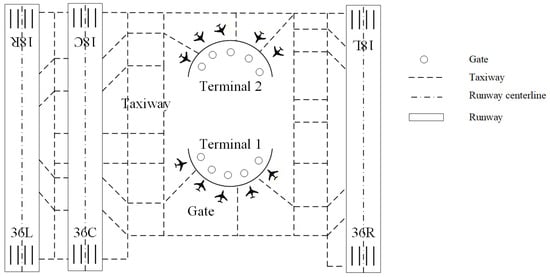
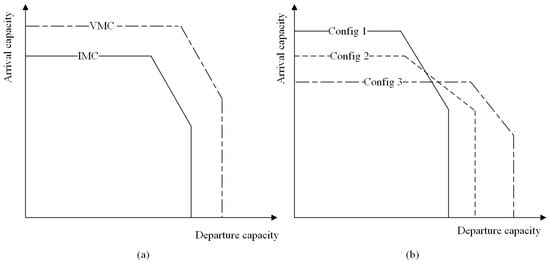
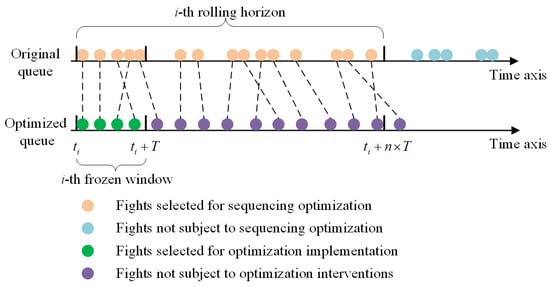
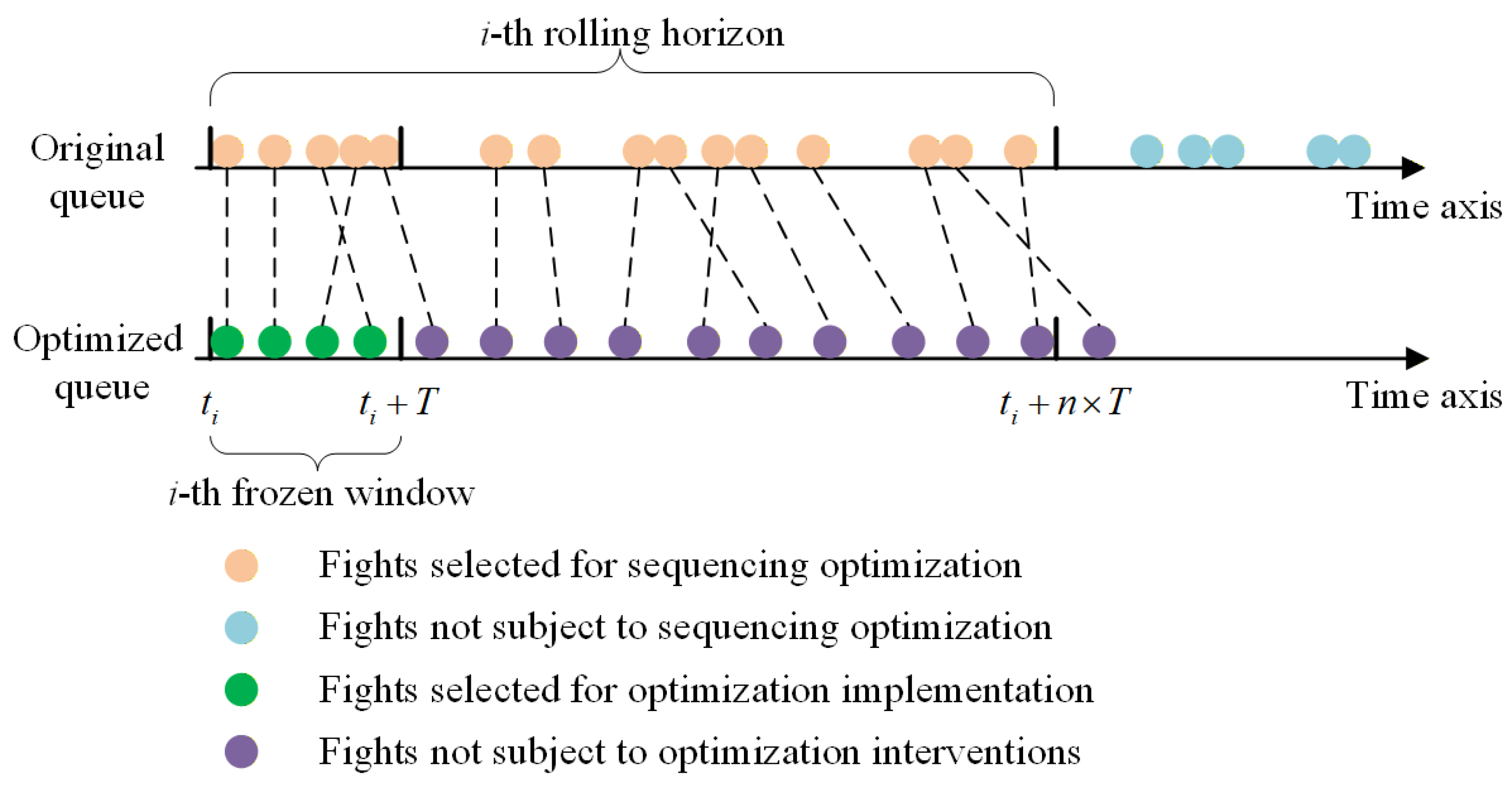
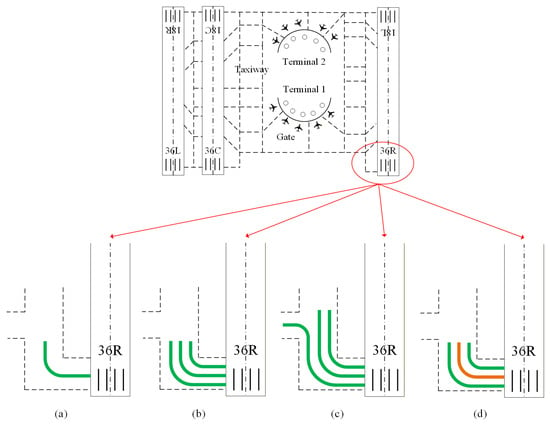
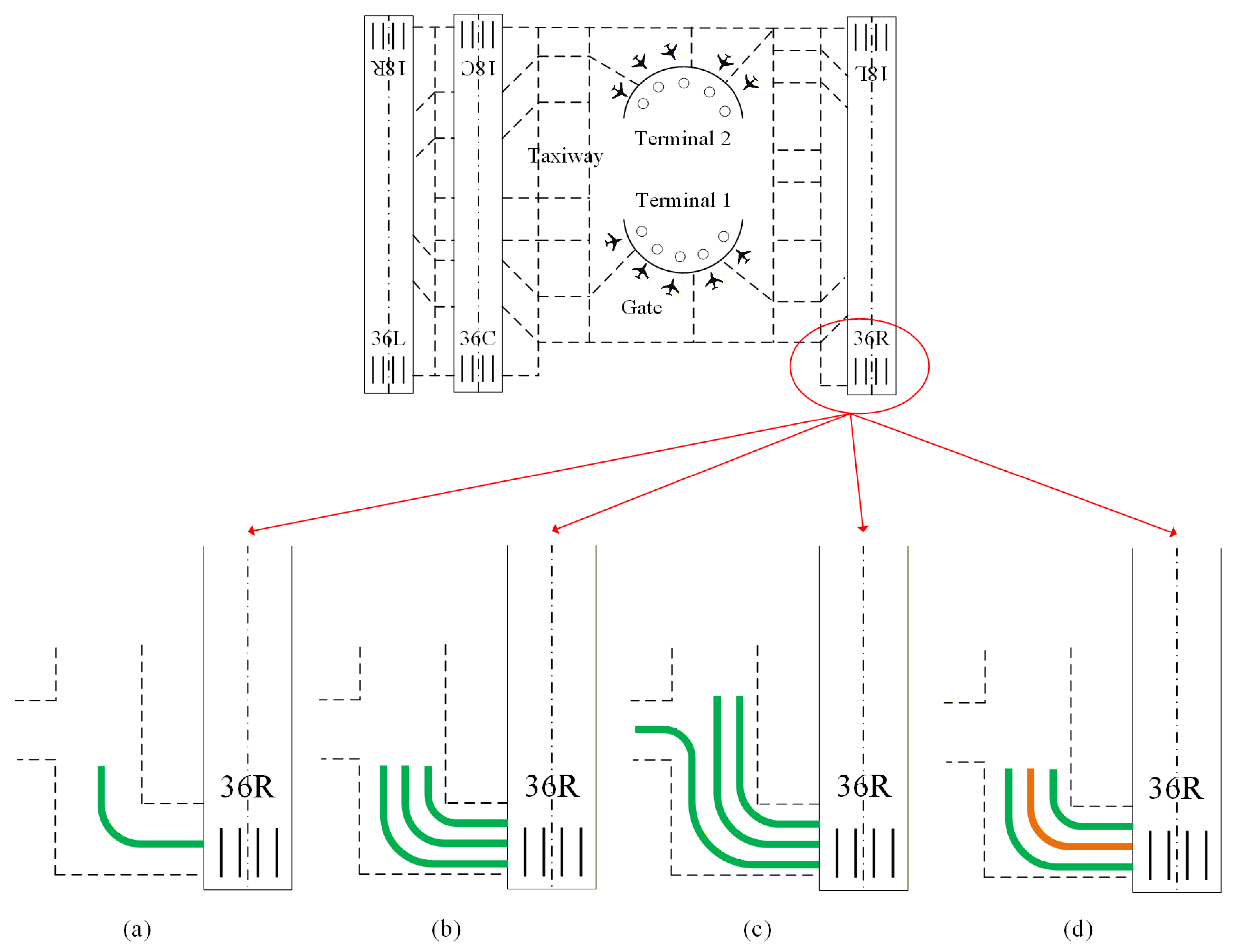

Disclaimer/Publisher’s Note: The statements, opinions and data contained in all publications are solely those of the individual author(s) and contributor(s) and not of MDPI and/or the editor(s). MDPI and/or the editor(s) disclaim responsibility for any injury to people or property resulting from any ideas, methods, instructions or products referred to in the content. |
© 2026 by the authors. Licensee MDPI, Basel, Switzerland. This article is an open access article distributed under the terms and conditions of the Creative Commons Attribution (CC BY) license.