


Highlights
What are the main findings?
- MLH strongly influences PM10 and ∑PAH concentrations measured in Zagreb.
- Approximately 90% of PM10 daily limit exceedances occurred during temperature inversion events, highlighting inversion duration as a key meteorological driver of pollution episodes.
What are the implications of the main findings?
- Atmospheric stability conditions are a key meteorological driver of urban pollution episodes.
- Incorporating MLH into statistical air quality assessment could improve the prediction of pollution events.
Abstract
The mixing layer height (MLH) is a key meteorological parameter governing the dispersion and accumulation of air pollutants in the atmospheric boundary layer. Over the Zagreb urban area, low MLH values are associated with stable atmospheric conditions and temperature inversions that inhibit vertical air mixing and promote pollutant accumulation near the ground. This study investigates the influence of MLH on concentrations of particulate matter with an aerodynamic diameter smaller than 10 µm (PM10) and particle-bound polycyclic aromatic hydrocarbons (PAHs) using a five-year dataset of radiosonde measurements and air quality observations. Daily MLH values at 12:00 UTC were compared with simultaneous measurements of PM10 and PAH concentrations. Inversion conditions (MLH < 1000 m) occurred on 44% of days, with approximately 80% of events recorded during the cold season. Elevated PM10 and PAH concentrations were strongly associated with these stable conditions. Of 69 daily exceedances of the PM10 limit value (50 µg m−3), 62 occurred during inversion events. Statistical tests confirmed significantly higher concentrations during stable atmospheric conditions (p < 0.05), with further increases observed during prolonged inversion periods. Empirical relationships between MLH and pollutant concentrations were developed and may support future machine-learning-based air quality forecasting. The results highlight atmospheric stability as a critical factor for urban air quality management.
1. Introduction
The harmful effects of air pollution, especially particulate matter (PM), have been recognized for several decades. Since the 1970s and 1980s, numerous epidemiological studies have demonstrated a strong association between PM exposure and adverse health outcomes, including cardiovascular and respiratory diseases and increased mortality [1,2]. It is now well established that not only PM concentrations but also the chemical composition of particles significantly influences their toxicity and environmental impact [3,4]. PM represents a complex mixture of organic and inorganic compounds, including metals, polycyclic aromatic hydrocarbons (PAHs), organic and elemental carbon, anhydrosugars, anions, cations, volatile organic compounds (VOCs), secondary organic aerosols (SOAs), etc. [5,6,7,8,9]. In the late 1980s, the World Health Organization (WHO) was the first to set air quality limit guidelines, offering health-focused recommendations that were subsequently adopted by the European Union, which established the EU legislation with legally binding air quality standards [10,11]. Currently relevant WHO air quality guidelines from 2021 [12] introduced stricter recommended levels for key air pollutants, as new evidence shows that pollution influences human health even at lower concentrations than previously thought. Consequently, EU legislation was updated in 2024, with the aim of bringing the prescribed air quality standards closer to the latest WHO guidelines, which will apply from 2030 [13]. In addition to the limit values for particulate matter (PM10, PM2.5), the EU legislation has set limit values for ozone, nitrogen dioxide, sulfur dioxide, carbon monoxide, and benzo(a)pyrene (BaP), as well as several metals (Pb, As, Cd, Ni). According to the Directives (EU) 2008/50/EC and 2004/107/EC, the daily limit of PM10 is set to 50 µg/m3, not to be exceeded on more than 35 days in a year; the annual PM10 limit is set to 40 µg/m3, while one of the main PAHs, BaP, has a target annual value of 1 ng/m3 [10,11]. The updated Directive (EU) 2024/2881 sets stricter PM10 limits (45 μg/m3 daily and 20 μg/m3 annually) and aims to reduce air pollution impacts on health and ecosystems by 2030, in line with the Zero Pollution Action Plan [13].
Air pollution, which is usually more pronounced in urban areas due to higher emission intensities from traffic, residential heating, and population density [14,15,16,17,18], is strongly influenced by meteorological conditions that control pollutant dispersion, dilution, and accumulation [19]. Such changes in pollutant concentrations are closely linked to atmospheric stability, which governs the efficiency of vertical mixing and the removal of pollutants from the near-surface layer [20]. Stable atmospheric conditions are characterized by weak winds and reduced turbulence and are usually associated with temperature inversions [21]. During these inversions, air temperature increases with height, creating a layer that suppresses vertical mixing, limits pollutant dispersion, and leads to their accumulation near the ground [22]. Such conditions typically form during nighttime due to radiative surface cooling, or mostly during winter, when reduced solar heating limits turbulence, allowing them to persist for longer periods, especially under high-pressure systems [23]. To better understand these processes, it is essential to consider the atmospheric boundary layer (ABL), the lowest part of the atmosphere directly influenced by the Earth’s surface [24]. In air pollution studies, the lowest part of the ABL is often referred to as the mixing layer, and its height (mixing layer height, MLH) is a key parameter that controls pollutant dispersion, as it determines the effective vertical volume available for dilution [25]. Since stable conditions during winter coincide with increased emissions from residential heating and traffic, pollutant levels rise, and air quality standards are more often exceeded. The MLH is commonly determined from radiosonde observations, using vertical profiles of temperature, humidity, and wind. One of the most widely used methods is the bulk Richardson number (RiB) approach, which is simple and applicable to both observational and modeling studies [26]. The method defines the mixing height as the altitude where RiB exceeds a critical value, typically 0.25 [27,28]. The RiB at a specific height, z, is calculated using the potential temperature and wind speed at a given level and at the lower boundary of the ABL, typically the surface. Therefore, the gradient Richardson number (Ri) is defined as:
where z is height, θave is average potential temperature, u is wind speed in the x-axis, v is wind speed in the y-axis, and g is gravitational acceleration. In practical applications using radiosonde data, the Richardson number is calculated using finite differences between discrete measurement levels. The bulk Richardson number is then expressed as:
In addition to radiosonde observations, remote sensing techniques such as lidar and ceilometer systems [29,30] are frequently used for continuous monitoring of MLH. These instruments estimate the MLH from vertical aerosol backscatter profiles, where strong gradients in aerosol concentration usually indicate the upper boundary of the mixing layer [25,31]. Microwave radiometers estimate MLH using continuous temperature and humidity profiles derived from atmospheric microwave emissions, while SODAR systems use acoustic wave propagation to detect turbulence structure and atmospheric stability [32,33]. Furthermore, aircraft observations and unmanned aerial systems can be used to directly measure vertical profiles of meteorological variables and pollutants within the boundary layer. In addition, numerical weather prediction and dispersion models simulate MLH evolution based on atmospheric stability, turbulence, and surface energy balance processes [34,35]. However, each method has specific limitations regarding temporal and vertical resolution, spatial representativeness, and performance under stable atmospheric conditions [25].
In Croatia, early investigations of MLH based on radiosonde data, as well as studies of surface-based and elevated temperature inversions, were conducted in Zagreb in the early 1990s by Lončar, who analyzed the period 1977–1982 [36]. However, only a limited number of studies examined the relationship between MLH and air pollution. Prtenjak et al. investigated a severe SO2 pollution episode in Rijeka, Croatia, a coastal industrial area, by analyzing the roles of ABL structure, meteorological conditions, and emission sources, which showed that strong temperature inversions, very low MLH, weak winds, and local emissions were the key factors that led to extreme pollutant accumulation [37]. Previous studies of PM and PAHs in the region have reported pronounced seasonal variability, with elevated concentrations during the colder part of the year [38,39,40,41,42]. A strong negative correlation with temperature has been observed; commonly used meteorological parameters such as temperature, humidity, pressure, and wind speed alone were insufficient to fully explain the variability in pollutant concentrations, particularly during high-pollution episodes [43,44,45]. To the authors’ knowledge, quantitative relationships between MLH and particulate pollution, especially PM10 and particle-bound PAHs, have not yet been comprehensively studied in Croatia. Moreover, such studies remain relatively scarce even at the European level, highlighting the novelty of the present research.
Zagreb, the capital of Croatia, frequently experiences wintertime air pollution episodes accompanied by fog formation, which reduces visibility and is often associated with unpleasant odors that raise increasing public concern [46]. The city is surrounded by elevated terrain, with mountains exceeding 1000 m in height to the north and southwest, and these local factors are known to influence boundary-layer dynamics and pollutant dispersion [47]. However, the quantitative relationships among atmospheric stability, MLH, and pollutant concentrations in Zagreb remain poorly understood, particularly for particle-bound organic pollutants such as PAHs.
The aim of this study was to examine how MLH influences PM10 and particle-bound PAH concentrations in the urban atmosphere of Zagreb. Particular emphasis was placed on the occurrence and duration of temperature inversion conditions to assess their role in pollutant accumulation and in exceedances of the daily PM10 limit value. To achieve this, a five-year dataset of air quality and radiosonde measurements was analyzed using statistical methods.
2. Materials and Methods
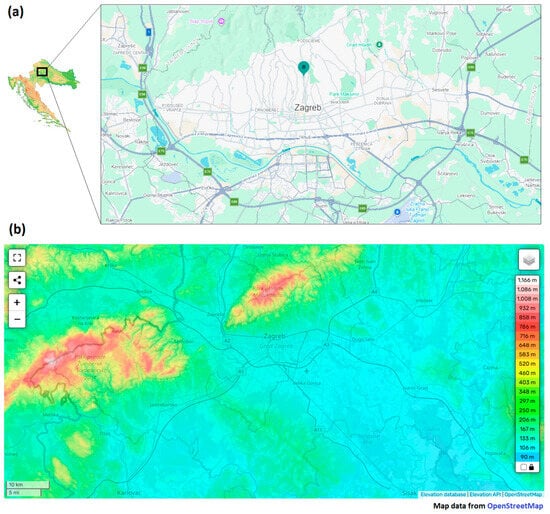
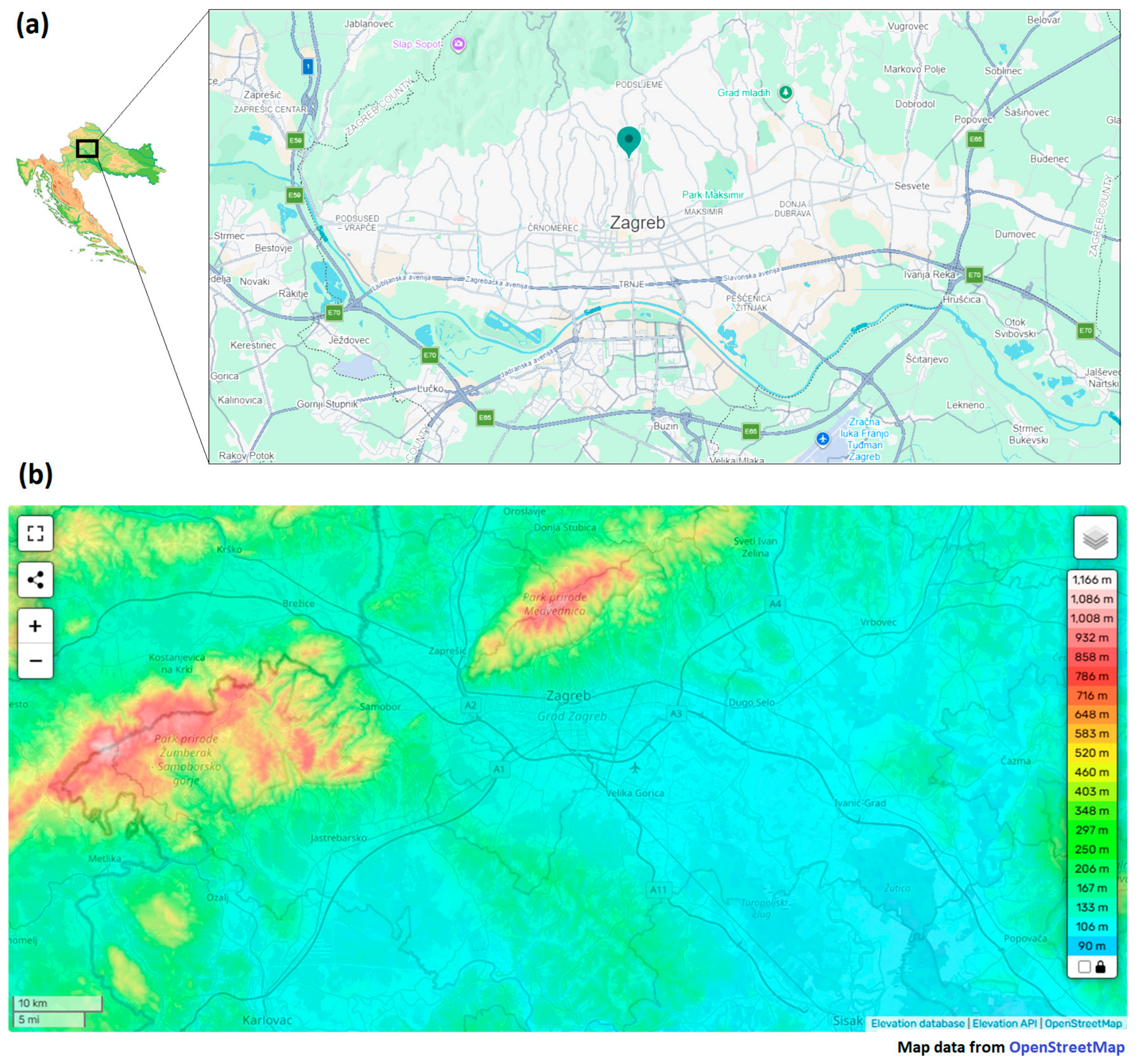
For the purposes of this study, data from the Ksaverska cesta air quality monitoring station were used, as it is one of the stations with the longest and most comprehensive sets of measurements. The station is located in Zagreb City, Croatia, at 45°50′07″ N, 15°58′41″ E, at a ground elevation of 167.2 m above sea level. The geographical position of Zagreb (Croatia), the sampling site, and its topographic map showing terrain elevation are shown in Figure 1. Zagreb is bordered to the north by the Medvednica mountain and to the southwest by the Žumberačko gorje, both exceeding 1000 m in elevation, while most of the city to the east and west lies at relatively low elevations, below 200 m above sea level. The monitoring station is part of the local and national air quality monitoring network and is categorized as an urban background station where PM10 and PAH concentrations are measured continuously.
Figure 1.
(a) Geographical position of Zagreb City in Croatia and the sampling site (source: Google Earth); (b) topographic map with elevation scale and terrain (source: www.topographic-map.com, based on OpenStreetMap data. © OpenStreetMap contributors, licensed under the Open Data Commons Open Database License (ODbL)).
PM10 daily samples were collected on Whatman QM-A quartz fiber filters (47 mm diameter) (Tisch Scientific, Cleves, OH, USA). Before and after sampling, each filter was placed in a Petri dish and conditioned in the chamber for 48 h under controlled conditions (20 ± 1 °C; 47.5 ± 2.5% RH). After 24 and 48 h of conditioning, the filters were weighed using Mettler Toledo MX5 and XP6/M microbalances (Greifensee, Switzerland) with a resolution of 10−6 g, equipped with electrostatic discharge control systems. Sampling was performed using a low-volume sampler (Sven Leckel LVS3, Sven Leckel Ingenieurbüro GmbH, Berlin, Germany) with an airflow rate of 55 m3/day. The sampler flow rate was verified every three months in accordance with EN 12341 [48]. Flow calibration was performed annually, or whenever the flow deviated by more than 5% from the nominal value of 2.3 m3 h−1 during routine checks. The volumetric flow rate was continuously regulated by the pump frequency converter. PM10 mass concentration was determined gravimetrically from the difference between post- and pre-sampling filter masses, in accordance with the standardized reference method EN 12341 [48]. PAH mass concentrations bound to the PM10 fraction were determined by high-performance liquid chromatography with a fluorescence detector (HPLC, Agilent Infinity 1260, Agilent Technologies, Santa Clara, CA, USA) using an external standard method. Detailed sample preparation and PAH analysis in particulate matter were described by Godec et al. [49] and Jakovljević et al. [50]. Briefly, the extraction of PAHs was performed using a toluene/cyclohexane solvent mixture (7:3, v/v) in an ultrasonic bath for 1 h. The extracts were separated from undissolved particles by centrifugation (10 min at 3000 rpm) and evaporated to dryness under a gentle nitrogen stream at 30 °C. The residues were subsequently re-dissolved in acetonitrile. Analytical separation of PAHs was performed using a Zorbax Eclipse PAH analytical column (100 × 4.6 mm) (Agilent, Santa Clara, CA, USA). The mobile phase consisted of acetonitrile and water (60:40, v/v) and was delivered at a flow rate of 1 mL min−1. Quantitative and qualitative determination of PAHs was performed using an external standard method and a commercial PAH standard (EPA 610 PAHs Mix, Supelco (Sigma-Aldrich), Bellefonte, PA, USA). Nine different PAHs were analyzed by this method (fluoranthene, pyrene, benzo(j)fluoranthene, benzo(a)pyrene, benzo(k)fluoranthene, dibenzo(a,h)anthracene, benzo(ghi)perylene, benzo(b)fluoranthene, and indeno(1,2,3-cd)pyrene); however, the results are shown as the sum of PAHs (∑PAHs).
The meteorological parameters, including average daily air temperature and mixing layer height (MLH) at 12:00 UTC, were provided by the Croatian Meteorological and Hydrological Service. The MLH values were derived from radiosonde soundings using the bulk Richardson number method [51] and performed continuously at the Maksimir meteorological station, located approximately 5 km southeast of the sampling site. Data analysis was based on a comprehensive five-year observational dataset spanning 2020–2024.
Air-mass transport pathways were analyzed using the NOAA (College Park, MD, USA) Hybrid Single-Particle Lagrangian Integrated Trajectory (HYSPLIT) model, with meteorological input fields from the Global Forecast System (GFS) dataset (0.25° spatial resolution). Seventy-two-hour backward trajectories were generated at 6 h intervals, terminating at the sampling location at 1000 m above ground level (a.g.l.).
Descriptive statistical parameters, the Kruskal–Wallis H test (p < 0.05), post hoc multiple comparison tests, the Mann–Whitney U test, and mathematical fitting were conducted using Statistica software (TIBCO Software Inc., version 14.0.0.5).
3. Results and Discussion
3.1. PM10 and ∑PAHs Mass Concentration
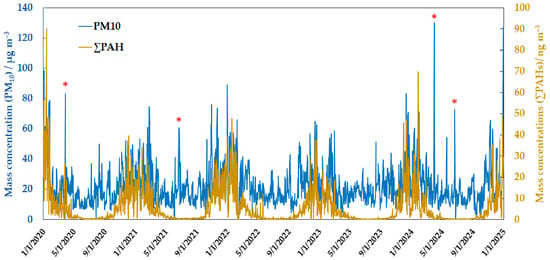
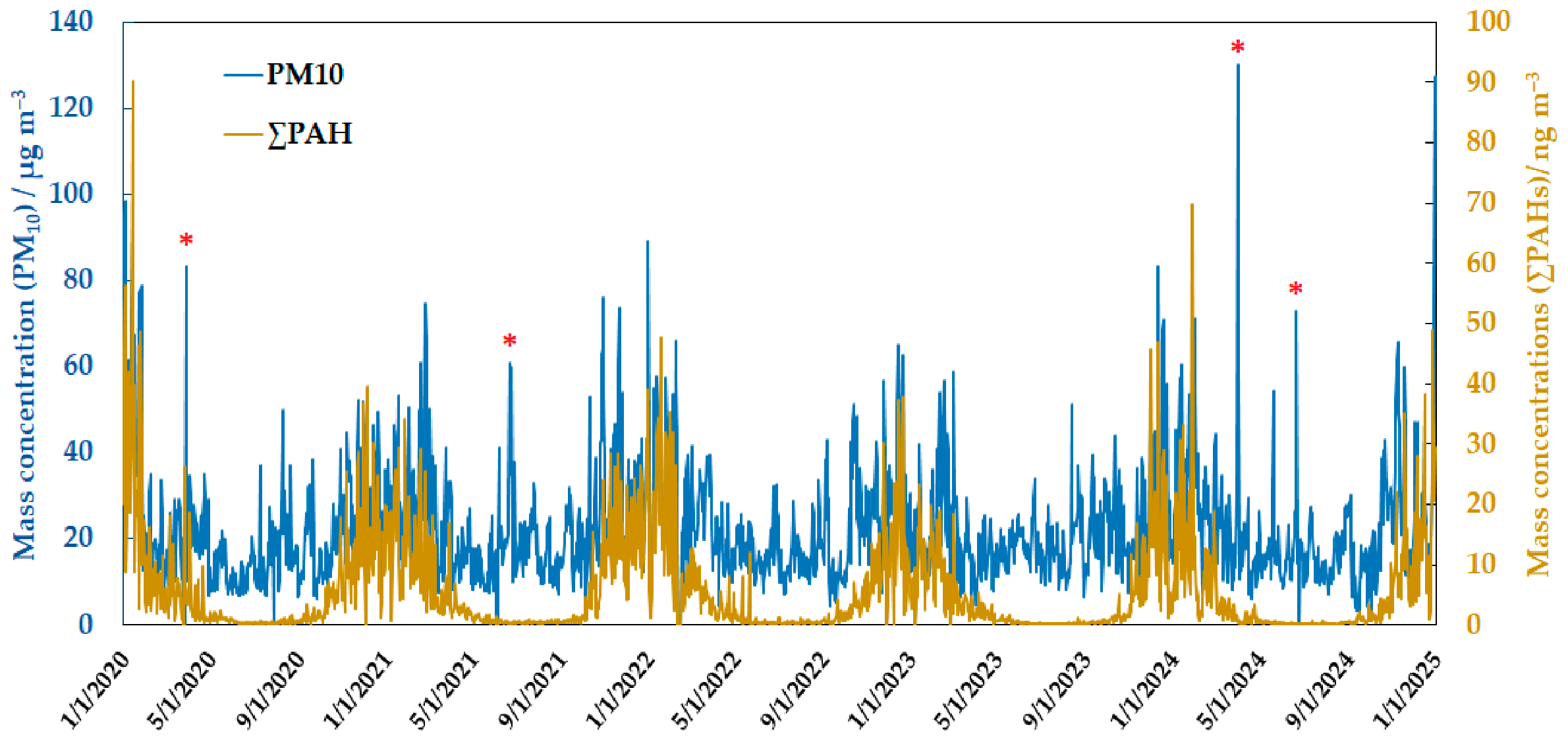
Figure 2 presents a time series of daily PM10 (blue line, left axis, µg m−3) and ∑PAH mass concentrations (yellow line, right axis, ng m−3) over the period 2020–2024. The Shapiro–Wilk test indicated that PM10 and ∑PAH concentrations were not normally distributed (p < 0.05). The average annual PM10 concentrations during the measurement period ranged from 21 to 24 µg m−3, far below the annual limit value (40 µg m−3).
Figure 2.
Daily mass concentrations of PM10 (blue line) and ∑PAHs (yellow line) at the Zagreb urban background site in the measuring period 2020–2024. Red stars indicate reported Saharan dust intrusion events.
PM10 concentrations exhibit frequent short-term peaks, with several episodes exceeding the daily limit value (50 µg m−3), particularly during winter. Both pollutants exhibit pronounced seasonal variability, with maximum concentrations in winter and lower concentrations in warmer months. Elevated values are most common between late autumn and early spring, whereas summer concentrations remain relatively stable and lower. Although several short-term PM10 peaks were observed, the elevated concentrations recorded on 28 March 2020, 21 June 2021, 31 March 2024, and 21 June 2024 were most likely associated with long-range transport of desert dust, as indicated in Figure 2. These events were reported in the DHMZ meteorological bulletins [52,53,54,55,56] and further supported by HYSPLIT back-trajectory analysis (Figure S1).
During these episodes, elevated PM10 concentrations were influenced not only by local emissions and boundary-layer dynamics but also by transboundary mineral dust transport originating from the Sahara and the Karakum Deserts. In contrast, the highest PAH concentrations occurred during winter stagnation episodes. The extreme PAH value observed on 14 January 2020 (90.2 ng m−3) was likely associated with stable anticyclonic conditions, weak atmospheric mixing, temperature inversions, and intensified residential heating emissions [53]. Similarly, elevated PAH concentrations recorded on 27–28 January 2024 were probably linked to persistent high-pressure conditions, weak winds, sub-zero morning temperatures, and dry weather following the cold outbreak in mid-January, all of which favored pollutant accumulation near the surface [54].
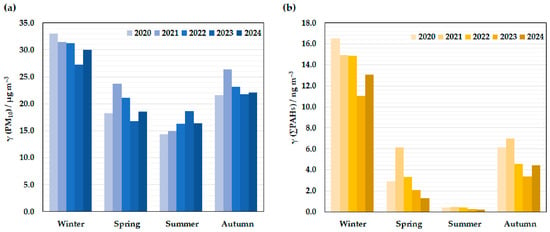
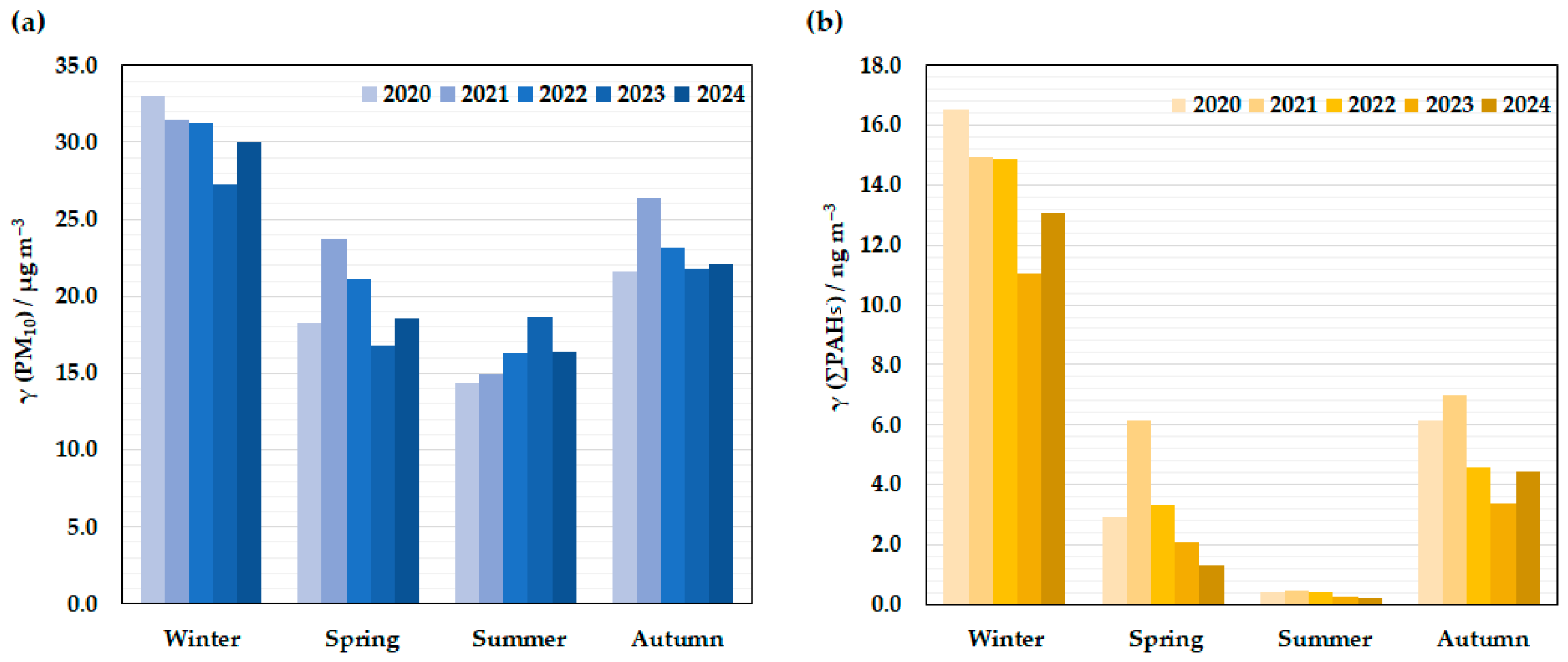
Figure 3a shows the average seasonal PM10 concentrations over the five-year study period. Winter averages ranged from 27 to 33 µg m−3, spring levels from 17 to 24 µg m−3, summer values from 14 to 19 µg m−3, and autumn values from 22 to 26 µg m−3. Seasonal PM10 concentrations exhibited some interannual variability over the five-year period, with slightly lower winter values observed in later years; however, no consistent long-term trend was evident across the seasons.
Figure 3.
Average seasonal mass concentrations of (a) PM10 and (b) ∑PAHs at the Zagreb urban background site in the measuring period 2020–2024.
Similar PM10 patterns were reported in earlier studies conducted at the same site; however, the concentrations were slightly higher. Mean winter concentrations of 39 µg m−3 and summer concentrations of 21 µg m−3 were reported for 2008 [57], 37 µg m−3 in winter and 28 µg m−3 in summer for 2009 [45], and 44 µg m−3 in winter and 19 µg m−3 in summer for 2010 [49]. The observed levels at our site were compared with those at other sites in Croatia (Table 1). In eastern Croatia, somewhat higher values were obtained at an urban industrial site in Slavonski Brod, where winter levels were 41 µg m−3 and summer values were 16 µg m−3, and comparable values were measured at an urban background site in Vinkovci with 34 µg m−3 during winter and 20 µg m−3 during summer [40].
Table 1.
Comparison of winter and summer PM10 mass concentrations at different sites in Croatia.
In southern Croatia, in Polača, a rural background site near the coast, the average annual PM10 concentration was 14 µg m−3 in 2024, with fewer seasonal differences but generally higher summer levels (17 µg m−3) than winter levels (12 µg m−3) [58]. Additionally, at the central Adriatic coastal site in Šibenik, reported PM10 levels were 16 µg m−3 from February to July of 2019 [44]. In western Croatia, at a rural industrial site in Delnice, winter values of 47 µg m−3 and summer values of 19 µg m−3 were reported for 2010 [49].
From Figure 2, it is evident that ∑PAH concentrations also exhibit a strong seasonal pattern, with sharp winter peaks that mostly coincide with periods of increased PM10. During these episodes, ∑PAH levels reach up to 25–90 ng m−3, while remaining close to zero throughout summer. The average annual ∑PAH concentrations ranged from 4.1 ng m−3 to 6.6 ng m−3. The average seasonal values of ∑PAHs are shown in Figure 3b.
The highest average ∑PAH concentrations were consistently observed in winter, with values ranging from approximately 11.1 to 16.5 ng m−3, depending on the year. Concentrations decrease significantly in spring, ranging from roughly 1.3 to 6.2 ng m−3, and reach their lowest levels in summer, with values from 0.2 to 0.5 ng m−3. In autumn, ∑PAH concentrations increase again, typically ranging between 3.4 and 7.0 ng m−3. As shown in Table 1, observed ∑PAH values were lower than levels reported at the same site in 2010 (winter: 21.7 ng m−3, and summer: 0.4 ng m−3), and much lower compared to winter levels (48.5 ng m−3) and summer levels (0.8 ng m−3) measured in Delnice in 2010, although those measurements included a total of 10 different PAHs [49]. Comparable levels were reported at the central Adriatic coastal site in Šibenik, with 0.9 ng m−3 from February to July of 2019 [44]. In the urban area, the PAH values vary depending on the type of station; at urban industrial sites, reported values were the highest, reaching 44.7 ng m−3 during the colder seasons and 1.3 ng m−3 during the warmer seasons. The urban background site recorded 24.9 ng m−3 during the colder part and 0.6 ng m−3 during the warmer period in 2022 [24]. As seen from Figure 2, high PAH levels are coincident with higher PM10 mostly during wintertime, which most likely suggests a common origin, e.g., increased residential heating and traffic emissions, but also the accumulation and persistence of semi-volatile PAHs in the lower temperature conditions [59,60]. In contrast, the consistently low summertime concentrations of both PM10 and PAHs most likely indicate reduced emissions and enhanced atmospheric dispersion and photochemical degradation under warmer, well-mixed conditions [61]. Overall, the time series highlights the dominant role of seasonal combustion sources and meteorological conditions in shaping particulate pollution levels. Therefore, further analysis focuses on evaluating the effect of stable atmospheric conditions on elevated PM10 and ∑PAH concentrations.
3.2. Mixing Layer Height (MLH) Characteristics
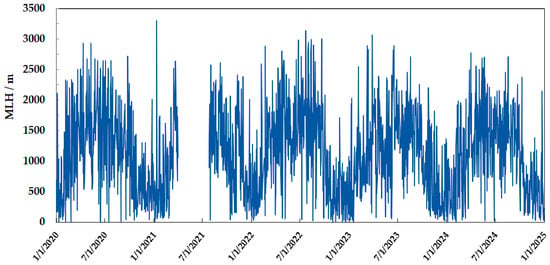
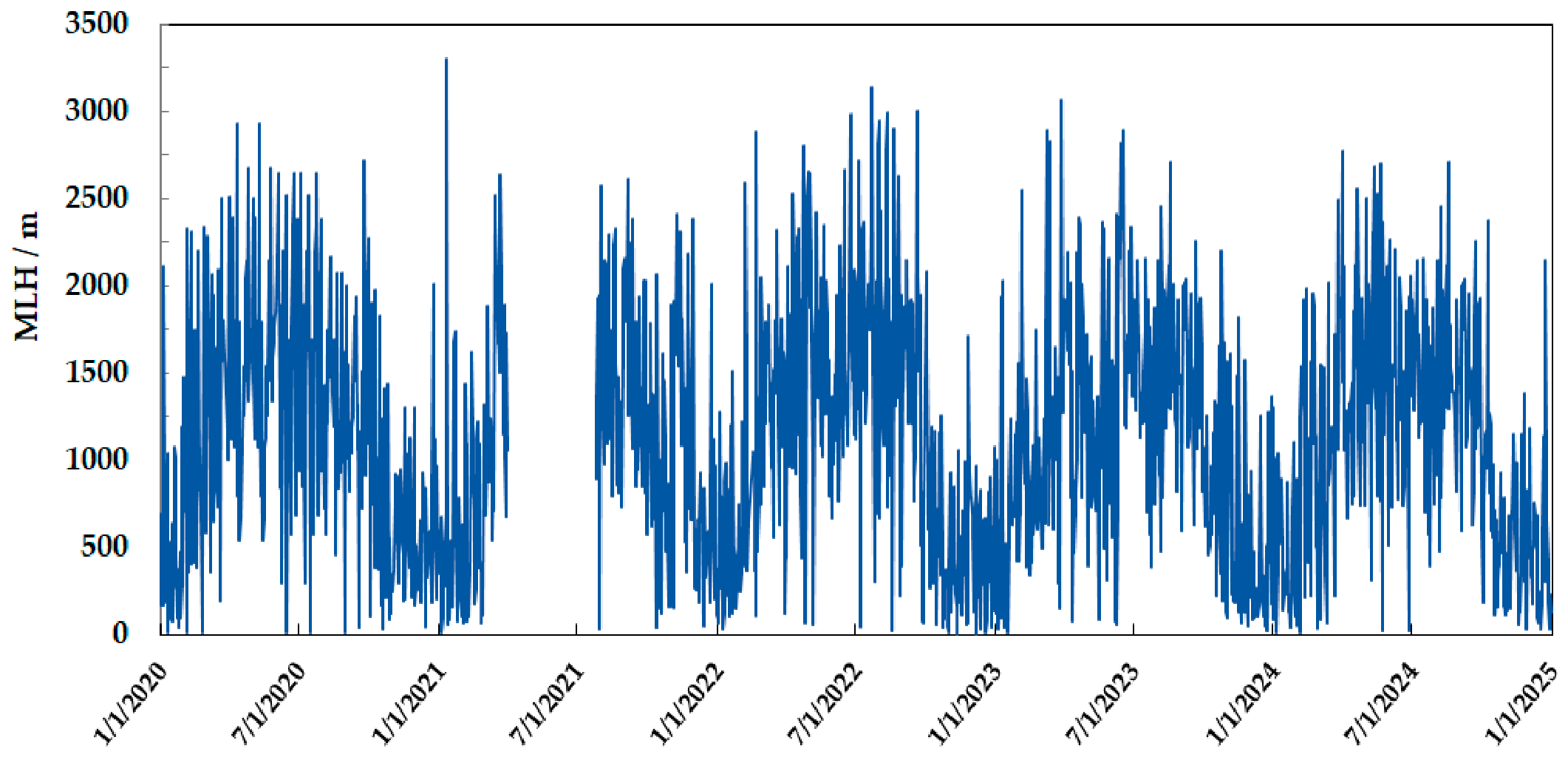
Figure 4 shows the MLH values derived from radiosonde measurements over the five-year study period. A data gap between 1 April and 25 July 2021 was caused by instrument maintenance. In total, MLH data were available for 1669 days. The time series indicates that the mixing layer is lowest during the cold seasons, with 22% of days when the MLH values were below 500 m. Statistical analysis using the Kruskal–Wallis test confirmed significant daily and seasonal variability in MLH (p < 0.05).
Figure 4.
Mixing layer height (MLH) trend (12:00 UTC) in Zagreb City over the five-year period (2020 to 2024).
At most meteorological stations, radiosoundings are performed twice daily at standard synoptic times (00:00 and 12:00 UTC), as was the case at the Maksimir station in Zagreb. Although radiosonde measurements are widely used for determining MLH [25,31,35], this method has several limitations, including low temporal resolution (12-h intervals), limited vertical resolution for boundary-layer studies, smoothing effects due to sensor response time, and the fact that each sounding represents only a snapshot of the atmospheric boundary layer structure [25]. The MLH values measured at 00:00 UTC were examined; however, no seasonal dependence was observed, and these data were therefore excluded from further analysis. Such results could be explained by radiative cooling of the surface at night, which leads to the formation of a stable boundary layer [20]. During this process, the air near the ground becomes cooler than the air above, suppressing vertical air motion and limiting turbulent mixing. As a result, the mixing layer height remains consistently low during nighttime throughout the year [25,62].
After sunrise, surface heating induces turbulence and enhances vertical mixing, causing the mixing layer to grow and typically reach its maximum height in the early afternoon. This behavior is reflected in radiosonde measurements at 12:00 UTC [25,63]. During the cold season, however, reduced solar heating limits turbulence, so the mixing layer often remains relatively low even during daytime. For this reason, MLH values measured at 12:00 UTC were used as an indicator of atmospheric stability and, consequently, the temperature inversion conditions.
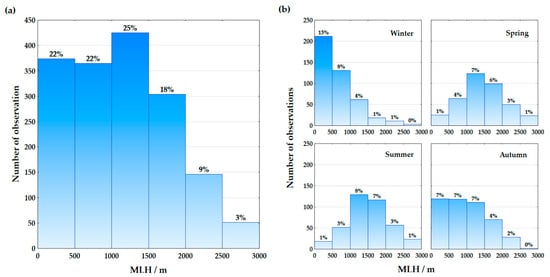
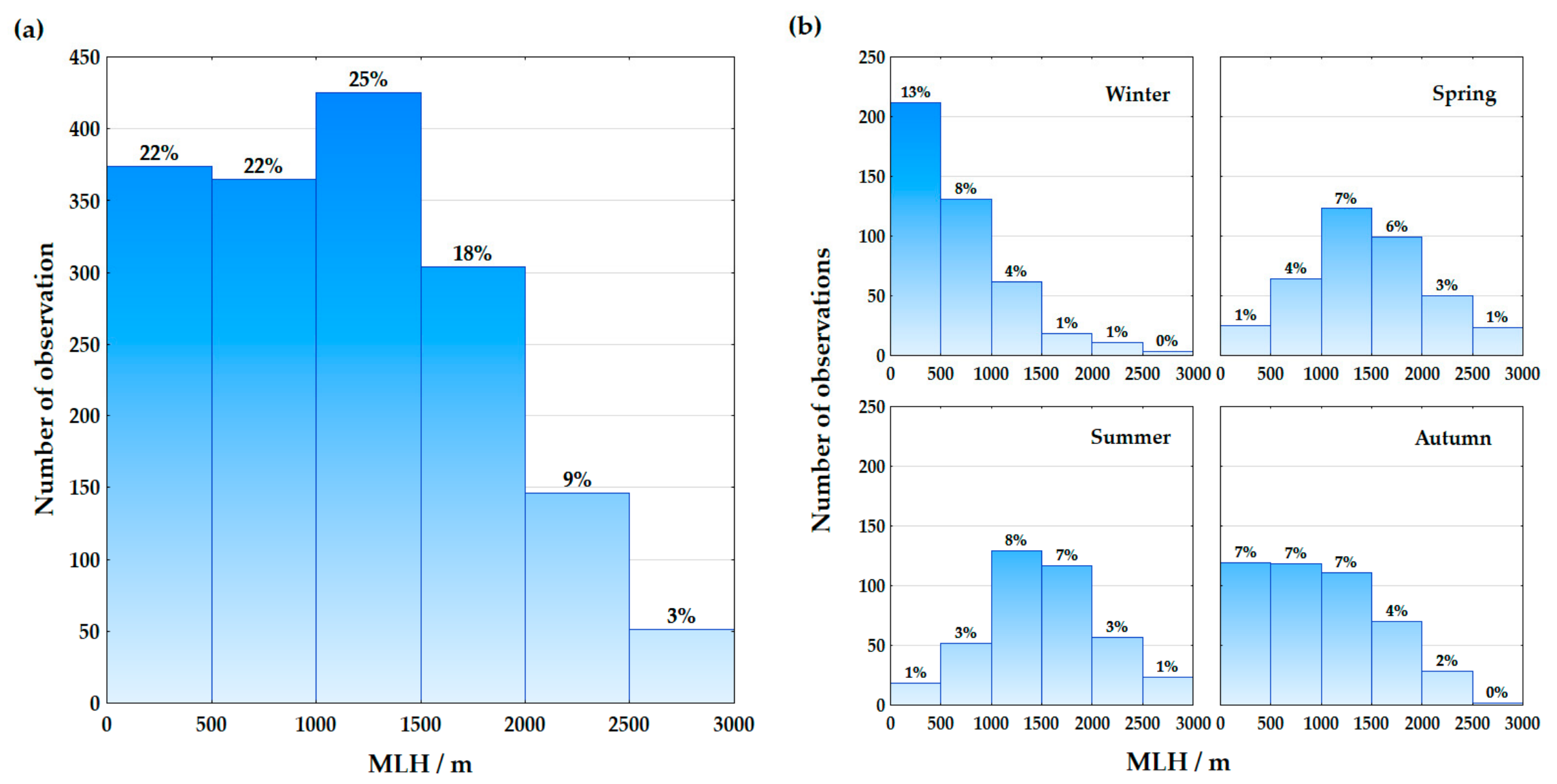
Based on the positions and elevations of the mountains surrounding Zagreb City and the measurement site shown in Figure 1, the MLH below 1000 m is considered sufficient to detect temperature inversion conditions. Analysis of MLH frequency below 1000 m showed that these conditions occurred on 44% of days in the five-year dataset (Figure 5a). Inversion conditions were most common during the cold seasons (winter and autumn), as shown in Figure 5b. Inversions occurred in 35% of cases, representing nearly 80% of all inversion events during winter and autumn. This ratio represents a total of 738 days in a five-year period. On the other hand, during spring and summer, inversions were present in only 9% of cases. Similar results were obtained by Lončar in Zagreb over the 5-year period from 1977 to 1982, which showed a very high frequency of inversion conditions, particularly during nighttime (around 90% of cases), while mixing layer heights were significantly lower during the cold season and higher during the warm season. The study confirmed pronounced diurnal and seasonal variability in atmospheric stability, with stable conditions and more persistent inversions occurring mainly in winter [36].
Figure 5.
Histogram of MLH (a) during the five-year period, (b) in different seasons.
3.3. Influence of Mixing Layer Height on PM10 and ∑PAH Concentrations
To prevent bias due to missing radiosonde data, the statistical analysis was limited to matched observations, including only days with simultaneous PM10, PAHs, and MLH measurements. Descriptive statistics of the dataset are presented in Table 2. PM10 concentrations exhibited clear seasonal variability, with the highest values observed during winter (31 µg m−3) and autumn (23 µg m−3). In contrast, concentrations during spring and summer were significantly lower, averaging 18 µg m−3 and 17 µg m−3, respectively. Out of 1669 days, the daily PM10 limit value was exceeded on 69 days, predominantly during the cold season: 46 times in winter and 17 times in autumn, indicating the strong influence of seasonal emissions and meteorological conditions. A similar seasonal pattern was observed for ∑PAHs, with the highest concentrations recorded in winter (14.101 ng m−3) and autumn (5.096 ng m−3), while significantly lower values were observed during spring (2.701 ng m−3) and summer (0.333 ng m−3).
Table 2.
Descriptive statistics of PM10 and ∑PAH mass concentrations in different seasons in the observed period.
The Kruskal–Wallis H test confirmed statistically significant seasonal differences in both PM10 and ∑PAH concentrations (p < 0.05). Post hoc analysis further confirmed significant differences between individual seasons.
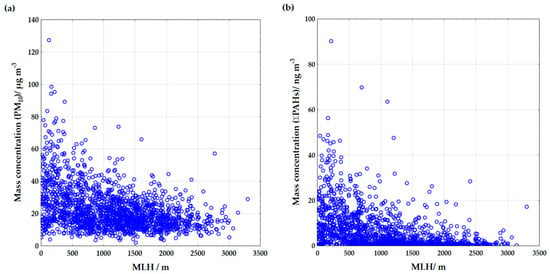
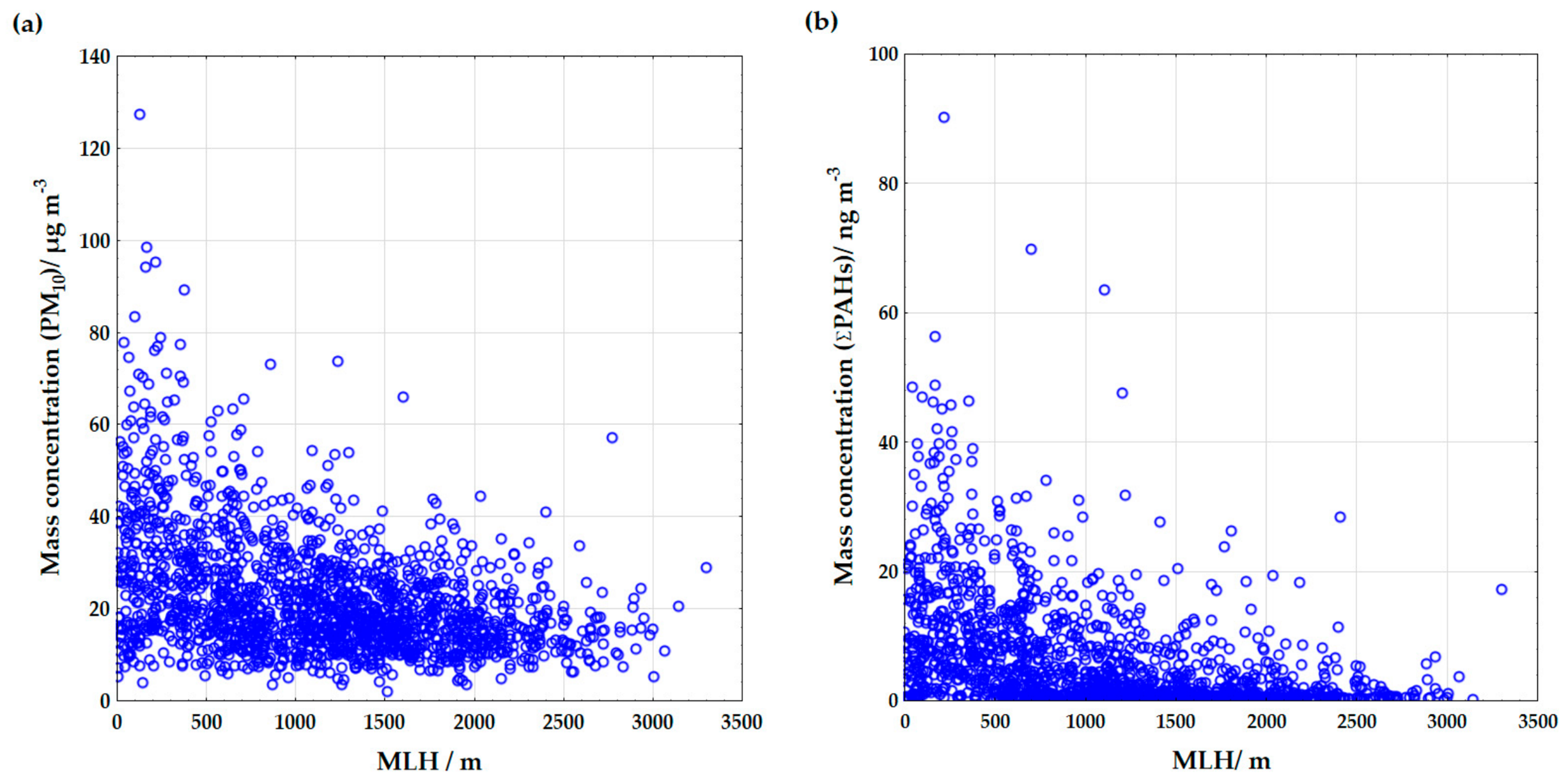
The relationship between pollutant concentrations and MLH is shown in Figure 6, indicating that the highest concentrations of both PM10 and ∑PAHs occur at lower MLH values. Since a higher frequency of low MLH was observed during colder periods (Figure 5), these results suggest that limited vertical mixing plays a key role in pollutant accumulation. In contrast, during the warm season, higher mixing layers and enhanced turbulent exchange promote more efficient pollutant dispersion. Higher temperatures generally enhance daytime vertical atmospheric mixing, whereas cooler conditions suppress turbulent exchange and favor the accumulation of pollutants within the near-surface layer, leading to elevated PM10 concentrations [64]. In addition to reduced atmospheric mixing under stable conditions, this seasonal pattern may also be associated with increased emissions during the cold season, particularly from traffic and residential heating [40,49]. Furthermore, precipitation contributes to the removal of airborne particles through wet deposition and scavenging processes, especially during rainfall events [65].
Figure 6.
Mass concentrations of (a) PM10 and (b) ∑PAHs versus MLH during the observed period.
A comparison of average daily concentrations between the full dataset and inversion conditions (MLH < 1000 m) is presented in Table 3. Both PM10 and ∑PAH concentrations were higher during inversion conditions, with ∑PAHs showing a particularly strong response, reaching nearly twice the average values of the full dataset (9.917 ng m−3 compared to 5.776 ng m−3). PM10 concentrations also increased, although less markedly (27.5 µg m−3 vs. 22.5 µg m−3). Notably, approximately 90% of PM10 daily limit exceedances occurred during inversion events, demonstrating the dominant role of atmospheric stability in pollution episodes. Studies conducted by Vardoulakis et al., which included urban background sites of Athens (Greece) and Birmingham (UK), showed that high PM10 concentrations are also closely associated with unfavorable dispersion conditions, such as low wind speeds and temperature inversions, particularly during the cold season [66]. Similarly, Holst et al. demonstrated that reduced mixing layer height and stable atmospheric stratification significantly enhance PM10 accumulation in Baden-Württemberg (Germany) in both rural and urban backgrounds [67].
Table 3.
Mean daily PM10 and ∑PAH concentrations and the number of PM10 daily limit exceedances in the full dataset and during temperature inversion events.
To further investigate the impact of atmospheric stagnation, pollutant concentrations were analyzed by inversion duration: one-day, two-day, and ≥3-day (Table 4). Both PM10 and ∑PAH concentrations increased progressively with the duration of inversion events. During one-day inversions, PM10 concentrations remained relatively low (17.4 µg m−3), with only two exceedances of the daily limit value, while ∑PAH concentrations remained modest (4.45 ng m−3), whereas multi-day inversion events were associated with substantially higher pollutant levels and the majority of exceedances. Results showed two-day inversions were associated with higher PM10 (22.5 µg m−3) and ∑PAH levels (7.15 ng m−3), accompanied by a greater number of PM10 daily limit exceedances (N = 7). The highest concentrations were observed during prolonged inversions lasting three or more days, when PM10 averaged 26.2 µg m−3 and ∑PAHs averaged 12.95 ng m−3. In particular, prolonged inversions (≥3 days) accounted for 53 exceedance days, indicating that persistent stable conditions allow continuous emissions to accumulate near the surface.
Table 4.
Mean daily PM10 and ∑PAH concentrations and PM10 daily limit exceedances for different durations of temperature inversion events.
These results indicate that both the occurrence and duration of temperature inversion events are key meteorological drivers of elevated PM10 and ∑PAH concentrations. Longer-lasting inversions suppress vertical mixing and dispersion, allowing continuous emissions from traffic and residential heating to accumulate near the surface. The stronger response of PAHs compared with PM10 suggests that combustion-related pollutants are particularly sensitive to atmospheric stability. This is likely due to their semi-volatile nature and tendency to partition onto particles at low temperatures. Overall, the results suggest that inversion duration is a key meteorological driver of pollution episodes, with multi-day inversions posing the greatest risk for elevated particulate concentrations and regulatory exceedances. Similar results were reported by Mustapić et al., who studied PM levels (PM1, PM2.5, PM10) in urban areas, using unmanned aerial vehicles equipped with sensors to focus on traffic-related pollution in Zagreb. Results show that particle concentrations are highest during morning traffic peaks and, contrary to expectations, do not consistently decrease with altitude, highlighting the importance of meteorological conditions in pollutant distribution [68]. A study of a severe PM pollution episode in Santiago, Chile, investigated the role of atmospheric stagnation over complex terrain. It showed that strong temperature inversions, shallow boundary layer heights (often below 200 m), and weak wind conditions significantly reduced atmospheric ventilation, leading to the accumulation of pollutants near the surface [69]. A recent study conducted in the urban environments of Athens investigated the seasonal and diurnal variability of the MLH and its relationship with urban air pollution. The results showed that pollutant concentrations, including PM2.5, black carbon, and NOx, are strongly negatively correlated with MLH, with the highest levels occurring under stable atmospheric conditions and shallow mixing layers [29].
3.4. Cold-Season Statistical Analysis
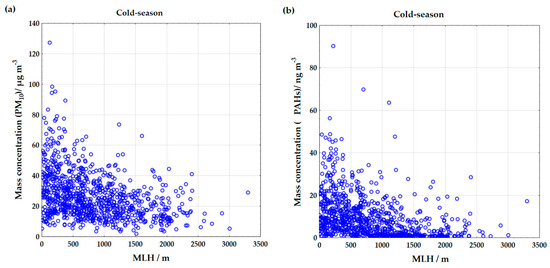
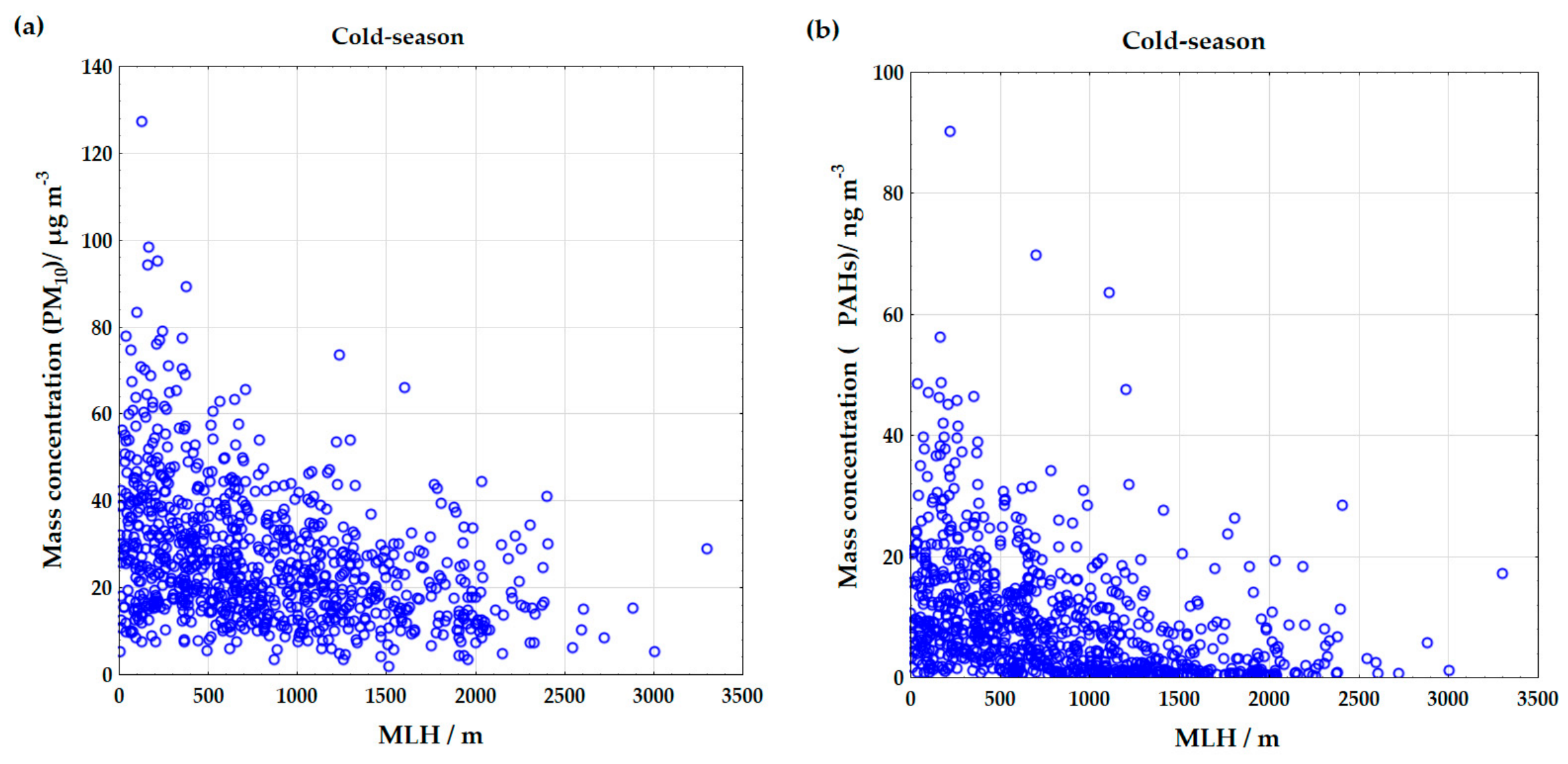
Additional analyses were performed using the cold-season dataset, as approximately 80% of temperature inversion events during the five-year period occurred in autumn and winter (Figure 5b). Restricting the analysis to this period minimizes the influence of seasonal emission variability and reduces the effect of temperature-dependent PAH volatilization at higher temperatures [59,60]. The cold-season dataset, including only winter and autumn, was therefore used to compare PM10 and ∑PAH concentrations during inversion (INV) and non-inversion (NON-INV) conditions. As mentioned, the MLH threshold of <1000 m was selected based on the local topography of the Zagreb area, which is surrounded by elevated terrain exceeding 1000 m. Under such conditions, a mixing layer below this altitude indicates that air masses are confined within the basin-like environment, reducing ventilation and favoring pollutant accumulation. Therefore, MLH < 1000 m was considered a suitable indicator of stable atmospheric conditions and inversion events in this study. Conversely, non-inversion conditions were considered when MLH was above 1000 m. The dependence of pollutant concentrations on MLH during the cold season is shown in Figure 7. Similar trends to those observed for the full dataset are evident, confirming that elevated concentrations are primarily associated with low MLH values and inversion conditions.
Figure 7.
Mass concentrations of (a) PM10 and (b) ∑PAHs versus MLH during the cold season.
Statistical parameters for inversion and non-inversion days during the cold season are presented in Table 5.
Table 5.
Mean daily PM10 and ∑PAH concentrations and the number of PM10 daily limit exceedances during temperature inversion days (INV) and non-inversion days (NON-INV).
Both PM10 and ∑PAH concentrations were significantly higher during inversion conditions compared with non-inversion days. This effect is particularly evident in the number of exceedances: of the 63 PM10 daily limit exceedances recorded during the cold season, 59 occurred during inversion events. In addition, the greater sensitivity of PAHs to atmospheric stability observed in this study is consistent with findings reported by Guzmán-Torres, where particle-bound PAH concentrations showed a clear dependence on mixing height and inversion conditions [70]. Furthermore, Klingner et al. emphasized that meteorological factors, especially mixing conditions and atmospheric stability, play a crucial role in PM10 variability, often outweighing the impact of emission changes [71].
The statistical significance of INV and NON-INV differences was confirmed using the Mann–Whitney U test (Table 6), which showed that concentrations of both PM10 and ∑PAHs were significantly higher during inversion conditions (p < 0.05). These findings reinforce that atmospheric stability and a lower mixing layer height primarily influence pollutant buildup during the cold season.
Table 6.
Mann–Whitney U test analysis with cold-season dataset.
Largeron et al. [22] obtained similar results when investigating the relationship between persistent wintertime temperature inversions and PM10 air pollution in Alpine valleys. These results showed that long-lasting inversions, driven by high-pressure systems and warm-air advection aloft, significantly increased atmospheric stability and trapped pollutants near the surface, which led to severe pollution episodes. A strong correlation between inversion strength and PM10 concentrations was demonstrated, indicating that local meteorological conditions, rather than long-range transport, are the primary driver of winter pollution events [22].
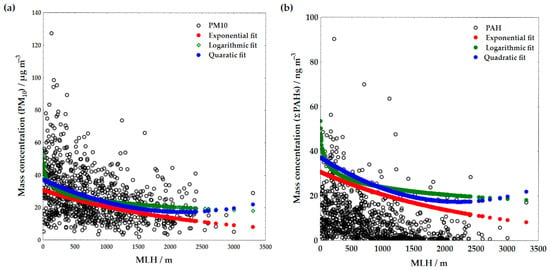
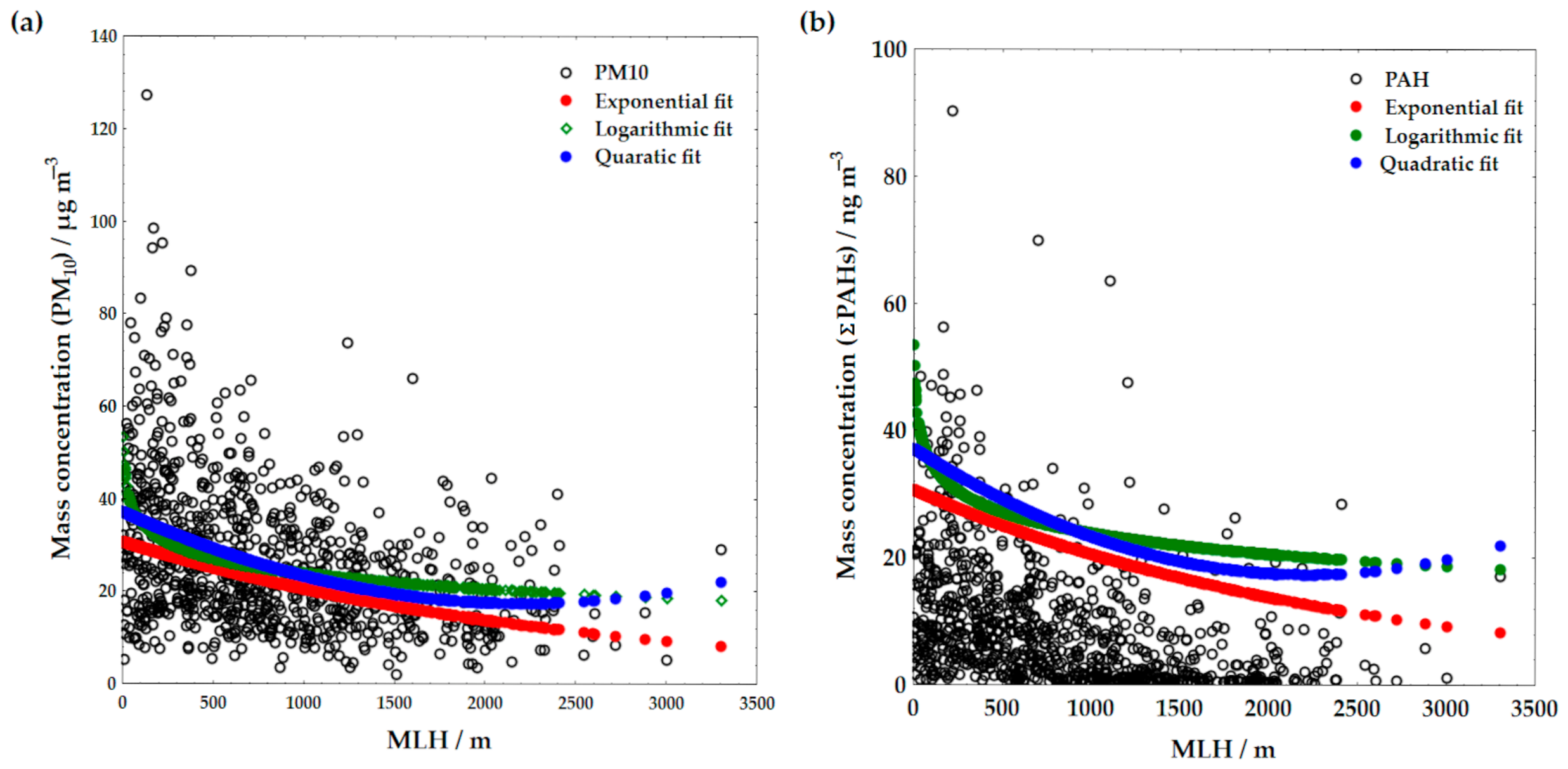
To further describe the relationship between MLH and pollutant concentrations, the data were fitted using logarithmic, exponential, and quadratic functions (Figure 8). The parameters of the fitted functions are presented in Table 7. Although the correlation coefficients (R2) were relatively low due to the high variability of pollutant concentrations, a consistent inverse relationship between MLH and pollutant levels was observed. The relatively weak correlations also indicate that, in addition to MLH and atmospheric stability, pollutant concentrations are influenced by other meteorological factors, including precipitation, wind speed, temperature, relative humidity, and synoptic circulation patterns. These parameters affect pollutant dispersion, deposition, chemical transformation, and atmospheric removal processes. For example, precipitation contributes to wet deposition and scavenging of airborne particles [72,73], while stronger winds enhance atmospheric ventilation and pollutant dispersion [74,75]. Nevertheless, the fitted functions provide a useful approximation of the relationship between atmospheric mixing conditions and pollutant concentrations and may serve as input variables for machine-learning models aimed at predicting air pollution levels [76,77,78].
Figure 8.
Mathematical fitting of (a) PM10 and (b) ∑PAH mass concentrations versus MLH during the cold season.
Table 7.
Parameters of fitted functions relating PM10 and ∑PAH mass concentrations to MLH.
3.5. Zagreb-Specific Characteristics of MLH Influence on Air Pollution
The present results highlight several characteristics specific to the Zagreb urban environment that modulate the relationship between MLH and air pollution. Zagreb is situated in a basin-like area surrounded by elevated terrain, particularly the Medvednica mountain to the north and higher terrain to the southwest, which can reduce atmospheric ventilation and favor pollutant accumulation during stable meteorological conditions. Frequent wintertime temperature inversions, weak winds, and persistent anticyclonic episodes further suppress vertical mixing and contribute to prolonged stagnation events. Under such conditions, pollutants emitted from residential heating and traffic remain confined within a shallow mixing layer, leading to elevated PM10 and PAH concentrations and frequent exceedances of air quality limit values. The results further indicate that inversion duration plays an important role in pollution intensity in Zagreb, since multi-day inversion events were associated with the highest pollutant concentrations and the majority of PM10 exceedances. Compared with many coastal or more ventilated European urban areas, Zagreb appears particularly sensitive to wintertime atmospheric stability due to the combined effects of local topography, seasonal combustion emissions, and reduced boundary-layer development during the cold season. These findings emphasize the importance of including MLH and inversion persistence in future air quality forecasting and management strategies for Zagreb.
4. Conclusions
This study examined the relationship between mixing layer height (MLH) and concentrations of PM10 and particle-bound polycyclic aromatic hydrocarbons (PAHs) in Zagreb using a five-year dataset (2020–2024). The results indicate a strong influence of atmospheric stability on urban air pollution levels. Both PM10 and PAH concentrations showed marked seasonal variability, with peak levels in winter and autumn. MLH values below 1000 m, indicative of temperature inversion conditions, occurred on approximately 44% of days, mainly during the cold season. Pollutant concentrations were significantly higher during inversion conditions than on non-inversion days. Average ∑PAH concentrations during inversion events were nearly double those of the full dataset (9.917 ng m−3 vs. 5.776 ng m−3), while PM10 concentrations also increased, but to a lesser extent (27.5 µg m−3 vs. 22.5 µg m−3). Furthermore, about 90% of PM10 daily limit exceedances occurred during inversion conditions. The duration of inversion events was a key factor influencing pollution episodes; both PM10 and ∑PAH concentrations increased progressively with the length of inversion periods, reaching the highest concentrations (26.2 µg m−3 and 12.951 ng m−3, respectively), and exceedances during multi-day inversion events. These findings suggest that prolonged atmospheric stagnation facilitates the accumulation of pollutants emitted from local sources near the surface. Elevated concentrations coincide with increased combustion emissions from residential heating and traffic, common in urban areas, combined with meteorological conditions that limit atmospheric dispersion. In contrast, summer concentrations remained relatively low due to reduced emissions, enhanced atmospheric mixing, and increased photochemical degradation of pollutants. Additional analysis of cold-season data confirmed the significant impact of atmospheric stability on pollutant levels. Statistically significant differences in PM10 and ∑PAH concentrations between inversion and non-inversion days highlight the importance of stable atmospheric conditions in pollution episodes. The results also reveal several characteristics specific to the Zagreb urban environment. Due to the basin-like topography surrounding the city, frequent wintertime temperature inversions, weak ventilation conditions, and enhanced residential heating emissions during the cold season, Zagreb is particularly susceptible to pollutant accumulation under shallow mixing-layer conditions. Multi-day inversion events were identified as especially critical for air quality deterioration since prolonged atmospheric stability allows continuous accumulation of locally emitted pollutants near the surface. These findings demonstrate that, in addition to emission intensity, local boundary-layer dynamics and inversion persistence play a crucial role in determining wintertime pollution episodes in Zagreb. Overall, these results emphasize the critical role of MLH and atmospheric stability in controlling particulate pollution in Zagreb. Based on the results of this study, the question is whether reducing emissions can generally help achieve the new air quality goals set by the WHO and the EU Commission. Incorporating the MLH and inversion persistence into statistical air quality assessment could improve the prediction of pollution episodes and support more effective urban air quality management strategies in Zagreb.
Supplementary Materials
The following supporting information can be downloaded at: https://www.mdpi.com/article/10.3390/cli14070133/s1, Figure S1: NOAA HYSPLIT backward trajectories terminating on (a) 27 March 2020, (b) 21 June 2021, (c) 31 March 2024, and (d) 21 June 2024 at the urban background site in Zagreb, indicating the desert dust origin of the transported air masses.
Author Contributions
Conceptualization, S.S. and I.B.; methodology, Z.S.Š., D.M. and I.B.; software, I.B. and S.S.; validation, I.B. and Z.S.Š.; formal analysis, Z.S.Š., I.B. and D.M.; investigation, S.S. and I.B.; writing—original draft preparation, S.S. and I.B.; writing—review and editing, I.B. and D.M.; visualization, S.S. and I.B.; supervision, I.B. All authors have read and agreed to the published version of the manuscript.
Funding
This study was performed using the facilities and equipment funded by the European Regional Development Fund project KK.01.1.1.02.0007 “Research and Education Centre of Environmental Health and Radiation Protection—Reconstruction and Expansion of the Institute for Medical Research and Occupational Health”. Gravimetric measurements of PM10 and mass concentrations of some ∑PAHs were performed as part of the local air quality monitoring program funded by the City of Zagreb, City Office for Economy, Energetics, and Environment Protection. All other measurements and research were funded by the European Union—Next Generation EU (Program Contract of 8 December 2023, Class: 643-02/23-01/00016, Reg. no. 533-03-23-0006)-EnvironPollutHealth.
Data Availability Statement
Supporting data for PAHs are publicly available from the national air quality monitoring database from the website: https://iszz.azo.hr/iskzl/podatak.htm (accessed on 22 April 2026). Daily PM10 and PAHs concentrations are also available either through a query on the website or by written request.
Acknowledgments
The authors thank the Croatian Meteorological and Hydrological Service (DHMZ, Croatia) for providing meteorological data. The authors also acknowledge the staff of the Division of Environmental Hygiene at the Institute for Medical Research and Occupational Health for their contributions to sampling, sample preparation, and analysis. Special thanks are extended to I. Jakovljević for valuable discussions on PAHs.
Conflicts of Interest
The authors declare no conflicts of interest.
References
- Pope, C.A.; Dockery, D.W. Health Effects of Fine Particulate Air Pollution: Lines That Connect. J. Air Waste Manag. Assoc. 2006, 56, 709–742. [Google Scholar] [CrossRef] [Scilit] [PubMed]
- Khomenko, S.; Cirach, M.; Pereira-Barboza, E.; Mueller, N.; Barrera-Gómez, J.; Rojas-Rueda, D.; de Hoogh, K.; Hoek, G.; Nieuwenhuijsen, M. Premature Mortality Due to Air Pollution in European Cities: A Health Impact Assessment. Lancet Planet. Health 2021, 5, e121–e134. [Google Scholar] [CrossRef] [Scilit] [PubMed]
- Peden, D.B. The Epidemiology and Genetics of Asthma Risk Associated with Air Pollution. J. Allergy Clin. Immunol. 2005, 115, 213–219. [Google Scholar] [CrossRef] [Scilit] [PubMed]
- Knaapen, A.M.; Borm, P.J.A.A.; Albrecht, C.; Schins, R.P.F.F. Inhaled Particles and Lung Cancer. Part A: Mechanisms. Int. J. Cancer 2004, 109, 799–809. [Google Scholar] [CrossRef] [Scilit] [PubMed]
- Putaud, J.-P.; Van Dingenen, R.; Alastuey, A.; Bauer, H.; Birmili, W.; Cyrys, J.; Flentje, H.; Fuzzi, S.; Gehrig, R.; Hansson, H.C.; et al. A European Aerosol Phenomenology—3: Physical and Chemical Characteristics of Particulate Matter from 60 Rural, Urban, and Kerbside Sites across Europe. Atmos. Environ. 2010, 44, 1308–1320. [Google Scholar] [CrossRef] [Scilit]
- Agudelo-Castañeda, D.M.; Teixeira, E.C. Seasonal Changes, Identification and Source Apportionment of PAH in PM1.0. Atmos. Environ. 2014, 96, 186–200. [Google Scholar] [CrossRef] [Scilit]
- Andreae, M.O. Emission of trace gases and aerosols from biomass burning—An updated assessment. Atmos. Chem. Phys. 2019, 19, 8523–8546. [Google Scholar] [CrossRef] [Scilit]
- Szidat, S.; Ruff, M.; Perron, N.; Wacker, L.; Synal, H.A.; Hallquist, M.; Shannigrahi, A.S.; Yttri, K.E.; Dye, C.; Simpson, D. Fossil and Non-Fossil Sources of Organic Carbon (OC) and Elemental Carbon (EC) in Göteborg, Sweden. Atmos. Chem. Phys. 2009, 9, 1521–1535. [Google Scholar] [CrossRef] [Scilit]
- Clemente, Á.; Yubero, E.; Nicolás, J.F.; Caballero, S.; Crespo, J.; Galindo, N. Changes in the Concentration and Composition of Urban Aerosols during the COVID-19 Lockdown. Environ. Res. 2022, 203, 111788. [Google Scholar] [CrossRef] [Scilit] [PubMed]
- European Commission. Directive 2008/50/EC of the European Parliament and of the Council of 21 May 2008 on Ambient Air Quality and Cleaner Air for Europe. Off. J. Eur. Union 2008, L152/1, 1–44. [Google Scholar]
- EU. Directive 2004/107/EC of the European Parliament and of the Council of 15/12/2004 Relating to Arsenic, Cadmium, Mercury, Nickel and Polycyclic Aromatic Hydrocarbons in Ambient Air. Off. J. Eur. Union 2005, L23, 3–16. [Google Scholar]
- World Health Organization. WHO Global Air Quality Guidelines: Particulate Matter (PM2.5 and PM10), Ozone, Nitrogen Dioxide, Sulfur Dioxide and Carbon Monoxide; World Health Organization: Geneva, Switzerland, 2021; ISBN 9789240034228. [Google Scholar]
- European Union. Directive (EU) 2024/2881 of the European Parliament and of the Council of 23 October 2024 on Ambient Air Quality and Cleaner Air for Europe (Recast). Off. J. Eur. Union 2024, L2024/2881, 1–70. [Google Scholar]
- Schäfer, K.; Emeis, S.; Hoffmann, H.; Jahn, C. Influence of Mixing Layer Height upon Air Pollution in Urban and Sub-Urban Areas. Meteorol. Z. 2006, 15, 647–658. [Google Scholar] [CrossRef] [Scilit] [PubMed]
- Gilardi, L.; Metz-Marconcini, A.; Marconcini, M.; Erbertseder, T. Urban Air Pollution Exposure: An Assessment Exploiting World Settlement Footprint and Land Use Data. In Proceedings of the Remote Sensing Technologies and Applications in Urban Environments VI; Chrysoulakis, N., Erbertseder, T., Zhang, Y., Eds.; SPIE: Bellingham, WA, USA, 2021; p. 3. [Google Scholar]
- Belis, C.A.; Pisoni, E.; Degraeuwe, B.; Peduzzi, E.; Thunis, P.; Monforti-Ferrario, F.; Guizzardi, D. Urban Pollution in the Danube and Western Balkans Regions: The Impact of Major PM2.5 Sources. Environ. Int. 2019, 133, 105158. [Google Scholar] [CrossRef] [Scilit] [PubMed]
- Belis, C.A.; Matkovic, V.; Ballocci, M.; Jevtic, M.; Millo, G.; Mata, E.; Van Dingenen, R. Assessment of Health Impacts and Costs Attributable to Air Pollution in Urban Areas Using Two Different Approaches. A Case Study in the Western Balkans. Environ. Int. 2023, 182, 108347. [Google Scholar] [CrossRef] [Scilit] [PubMed]
- Perrone, M.G.G.; Vratolis, S.; Georgieva, E.; Török, S.; Šega, K.; Veleva, B.; Osán, J.; Bešlić, I.; Kertész, Z.; Pernigotti, D.; et al. Sources and Geographic Origin of Particulate Matter in Urban Areas of the Danube Macro-Region: The Cases of Zagreb (Croatia), Budapest (Hungary) and Sofia (Bulgaria). Sci. Total Environ. 2018, 619–620, 1515–1529. [Google Scholar] [CrossRef] [Scilit] [PubMed]
- Jeričević, A.; Gašparac, G.; Mikulec, M.M.; Kumar, P.; Prtenjak, M.T. Identification of Diverse Air Pollution Sources in a Complex Urban Area of Croatia. J. Environ. Manag. 2019, 243, 67–77. [Google Scholar] [CrossRef] [Scilit] [PubMed]
- Yavuz, V. An Analysis of Atmospheric Stability Indices and Parameters under Air Pollution Conditions. Environ. Monit. Assess. 2023, 195, 934. [Google Scholar] [CrossRef] [Scilit] [PubMed]
- Coccia, M. The Effects of Atmospheric Stability with Low Wind Speed and of Air Pollution on the Accelerated Transmission Dynamics of COVID-19. Int. J. Environ. Stud. 2021, 78, 1–27. [Google Scholar] [CrossRef] [Scilit]
- Largeron, Y.; Staquet, C. Persistent Inversion Dynamics and Wintertime PM10 Air Pollution in Alpine Valleys. Atmos. Environ. 2016, 135, 92–108. [Google Scholar] [CrossRef] [Scilit]
- Whiteman, C.D.; Bian, X.; Zhong, S. Wintertime Evolution of the Temperature Inversion in the Colorado Plateau Basin. J. Appl. Meteorol. 1999, 38, 1103–1117. [Google Scholar] [CrossRef] [Scilit] [PubMed]
- Pérez Albornoz, C.; Escalante Soberanis, M.A.; Ramírez Rivera, V.; Rivero, M. Review of Atmospheric Stability Estimations for Wind Power Applications. Renew. Sustain. Energy Rev. 2022, 163, 112505. [Google Scholar] [CrossRef] [Scilit]
- Seibert, P. Review and Intercomparison of Operational Methods for the Determination of the Mixing Height. Atmos. Environ. 2000, 34, 1001–1027. [Google Scholar] [CrossRef] [Scilit]
- Jeričević, A.; Grisogono, B. The Critical Bulk Richardson Number in Urban Areas: Verification and Application in a Numerical Weather Prediction Model. Tellus A Dyn. Meteorol. Oceanogr. 2006, 58, 19–27. [Google Scholar] [CrossRef] [Scilit]
- Vogelezang, D.H.P.; Holtslag, A.A.M. Evaluation and Model Impacts of Alternative Boundary-Layer Height Formulations. Bound.-Layer Meteorol. 1996, 81, 245–269. [Google Scholar] [CrossRef] [Scilit]
- Zhang, Y.; Gao, Z.; Li, D.; Li, Y.; Zhang, N.; Zhao, X.; Chen, J. On the Computation of Planetary Boundary-Layer Height Using the Bulk Richardson Number Method. Geosci. Model Dev. 2014, 7, 2599–2611. [Google Scholar] [CrossRef] [Scilit]
- Petrinoli, K.; Kaskaoutis, D.G.; Bougiatioti, A.; Liakakou, E.; Grivas, G.; Kalkavouras, P.; Mihalopoulos, N. Year-Long Variability of the Mixing Layer Height at an Urban Mediterranean Location and Association with Air Pollution Levels. Atmos. Pollut. Res. 2025, 16, 102612. [Google Scholar] [CrossRef] [Scilit]
- Park, S.; Kim, M.-H.; Yeo, H.; Shim, K.; Lee, H.-J.; Kim, C.-H.; Song, C.-K.; Park, M.-S.; Shimizu, A.; Nishizawa, T.; et al. Determination of Mixing Layer Height from Co-Located Lidar, Ceilometer and Wind Doppler Lidar Measurements: Intercomparison and Implications for PM2.5 Simulations. Atmos. Pollut. Res. 2022, 13, 101310. [Google Scholar] [CrossRef] [Scilit]
- Julaha, K.; Ždímal, V.; Holubová Šmejkalová, A.; Komínková, K.; Zíková, N. Boundary Layer and Mixing Layer Height: Models vs. Ground-Based Measurements Intercomparison. Atmos. Res. 2025, 315, 107897. [Google Scholar] [CrossRef] [Scilit]
- Cimini, D.; De Angelis, F.; Dupont, J.-C.; Pal, S.; Haeffelin, M. Mixing Layer Height Retrievals by Multichannel Microwave Radiometer Observations. Atmos. Meas. Tech. 2013, 6, 2941–2951. [Google Scholar] [CrossRef] [Scilit]
- Odintsov, S.; Miller, E.; Kamardin, A.; Nevzorova, I.; Troitsky, A.; Schröder, M. Investigation of the Mixing Height in the Planetary Boundary Layer by Using Sodar and Microwave Radiometer Data. Environments 2021, 8, 115. [Google Scholar] [CrossRef] [Scilit]
- Dai, C.; Wang, Q.; Kalogiros, J.A.; Lenschow, D.H.; Gao, Z.; Zhou, M. Determining Boundary-Layer Height from Aircraft Measurements. Bound.-Layer Meteorol. 2014, 152, 277–302. [Google Scholar] [CrossRef] [Scilit]
- Wang, X.Y.; Wang, K.C. Estimation of Atmospheric Mixing Layer Height from Radiosonde Data. Atmos. Meas. Tech. 2014, 7, 1701–1709. [Google Scholar] [CrossRef] [Scilit]
- Lončar, E. A Statistical Analysis of Invetsions and Mixing Layer Heights. Hrvat. Meteorološki Časopis 1991, 26, 87–98. [Google Scholar]
- Prtenjak, M.T.; Jeričevi, A.; Kraljević, L.; Bulić, I.H.; Nitis, T.; Klaić, Z.B. Exploring Atmospheric Boundary Layer Characteristics in a Severe SO2 Episode in the North-Eastern Adriatic. Atmos. Chem. Phys. 2009, 9, 4467–4483. [Google Scholar] [CrossRef] [Scilit]
- Jakovljević, I.; Štrukil, Z.S.; Godec, R.; Bešlić, I.; Davila, S.; Lovrić, M.; Pehnec, G. Pollution Sources and Carcinogenic Risk of PAHs in PM1 Particle Fraction in an Urban Area. Int. J. Environ. Res. Public Health 2020, 17, 9587. [Google Scholar] [CrossRef] [Scilit] [PubMed]
- Jakovljević, I.; Pehnec, G.; Šišović, A.; Vađić, V.; Davila, S.; Godec, R. Concentrations of PAHs and Other Gaseous Pollutants in the Atmosphere of a Rural Area. J. Environ. Sci. Health Part A 2016, 51, 707–713. [Google Scholar] [CrossRef] [Scilit] [PubMed]
- Jakovljević, I.; Štrukil, Z.S.; Pehnec, G.; Horvat, T.; Sanković, M.; Šumanovac, A.; Davila, S.; Račić, N.; Gajski, G. Ambient Air Pollution and Carcinogenic Activity at Three Different Urban Locations. Ecotoxicol. Environ. Saf. 2025, 289, 117704. [Google Scholar] [CrossRef] [Scilit] [PubMed]
- Sopčić, S.; Pehnec, G.; Bešlić, I. Specific Biomass Burning Tracers in Air Pollution in Zagreb, Croatia. Atmos. Pollut. Res. 2024, 15, 102176. [Google Scholar] [CrossRef] [Scilit]
- Sopčić, S.; Godec, R.; Jakovljević, I.; Bešlić, I. The Influence of Biomass Burning on the Organic Content of Urban Aerosols. Biomass 2024, 5, 1. [Google Scholar] [CrossRef] [Scilit]
- Davila, S.; Sopčić, S.; Pehnec, G.; Bešlić, I. Annual Levoglucosan Variability and Its Relationship with Meteorological Conditions at an Urban Background Site in Croatia. Environments 2026, 13, 196. [Google Scholar] [CrossRef] [Scilit]
- Jakovljević, I.; Šimić, I.; Mendaš, G.; Sever Štrukil, Z.; Žužul, S.; Gluščić, V.; Godec, R.; Pehnec, G.; Bešlić, I.; Milinković, A.; et al. Pollution Levels and Deposition Processes of Airborne Organic Pollutants over the Central Adriatic Area: Temporal Variabilities and Source Identification. Mar. Pollut. Bull. 2021, 172, 112873. [Google Scholar] [CrossRef] [Scilit]
- Pehnec, G.; Jakovljević, I.; Šišović, A.; Bešlić, I.; Vađić, V.; Vadić, V. Influence of Ozone and Meteorological Parameters on Levels of Polycyclic Aromatic Hydrocarbons in the Air. Atmos. Environ. 2016, 131, 263–268. [Google Scholar] [CrossRef] [Scilit]
- Telišman Prtenjak, M.; Klaić, M.; Jeričević, A.; Cuxart, J. The Interaction of the Downslope Winds and Fog Formation over the Zagreb Area. Atmos. Res. 2018, 214, 213–227. [Google Scholar] [CrossRef] [Scilit]
- Rohatgi, J.; Barbezier, G. Wind Turbulence and Atmospheric Stability—Their Effect on Wind Turbine Output. Renew. Energy 1999, 16, 908–911. [Google Scholar] [CrossRef] [Scilit]
- EN 12341:2023; European Committee for Standardization Ambient Air—Standard Gravimetric Measurement Method for the Determination of the PM10 or PM2.5 Mass Concentration. European Committee for Standardization: Brussels, Belgium, 2023; p. 64.
- Godec, R.; Jakovljević, I.; Šega, K.; Čačković, M.; Bešlić, I.; Davila, S.; Pehnec, G. Carbon Species in PM10 Particle Fraction at Different Monitoring Sites. Environ. Pollut. 2016, 216, 700–710. [Google Scholar] [CrossRef] [Scilit] [PubMed]
- Jakovljević, I.; Pehnec, G.; Vadjić, V.; Šišović, A.; Davila, S.; Bešlić, I. Carcinogenic Activity of Polycyclic Aromatic Hydrocarbons Bounded on Particle Fraction. Environ. Sci. Pollut. Res. 2015, 22, 15931–15940. [Google Scholar] [CrossRef] [Scilit] [PubMed]
- Vickers, D.; Mahrt, L. Evaluating Formulations of Stable Boundary Layer Height. J. Appl. Meteorol. 2004, 43, 1736–1749. [Google Scholar] [CrossRef] [Scilit]
- DHMZ. Croatian Meteorological and Hydrological Service. In Meteorološki i Hidrološki Bilten 03/2024; DHMZ: Zagreb, Croatia, 2024; ISSN 1334-3017. [Google Scholar]
- DHMZ. Croatian Meteorological and Hydrological Service. In Meteorološki i Hidrološki Bilten 01/2020; DHMZ: Zagreb, Croatia, 2020; ISSN 1334-3017. [Google Scholar]
- DHMZ. Croatian Meteorological and Hydrological Service. In Meteorološki i Hidrološki Bilten 01/2024; DHMZ: Zagreb, Croatia, 2024; ISSN 1334-3017. [Google Scholar]
- DHMZ. Croatian Meteorological and Hydrological Service. In Meteorološki i Hidrološki Bilten 03/2020; DHMZ: Zagreb, Croatia, 2020; ISSN 1334-3017. [Google Scholar]
- DHMZ. Croatian Meteorological and Hydrological Service. In Meteorološki i Hidrološki Bilten 06/2024; DHMZ: Zagreb, Croatia, 2024; ISSN 1334-3017. [Google Scholar]
- Šišović, A.; Pehnec, G.; Jakovljević, I.; Šilović Hujić, M.; Vacrossed D Signić, V.; Bešlić, I.; Vađić, V.; Bešlić, I. Polycyclic Aromatic Hydrocarbons at Different Crossroads in Zagreb, Croatia. Bull. Environ. Contam. Toxicol. 2012, 88, 438–442. [Google Scholar] [CrossRef] [Scilit]
- Sopčić, S.; Godec, R.; Prskalo, H.; Pehnec, G. Impact of a Summer Wildfire Episode on Air Quality in a Rural Area Near the Adriatic Coast. Fire 2025, 8, 299. [Google Scholar] [CrossRef] [Scilit]
- Sopčić, S.; Jakovljević, I.; Štrukil, Z.S.; Bešlić, I. Source Identification of Carbohydrates and Polycyclic Aromatic Hydrocarbons in a Rural Area near the Plitvice Lakes National Park, Croatia. Atmos. Environ. 2025, 345, 121050. [Google Scholar] [CrossRef] [Scilit]
- Eiguren-Fernandez, A.; Miguel, A.H.; Froines, J.R.; Thurairatnam, S.; Avol, E.L. Seasonal and Spatial Variation of Polycyclic Aromatic Hydrocarbons in Vapor-Phase and PM2.5 in Southern California Urban and Rural Communities. Aerosol Sci. Technol. 2004, 38, 447–455. [Google Scholar] [CrossRef] [Scilit]
- Jakovljević, I.; Pehnec, G.; Vađić, V.; Čačković, M.; Tomašić, V.; Jelinić, J.D. Polycyclic Aromatic Hydrocarbons in PM10, PM2.5 and PM1 Particle Fractions in an Urban Area. Air Qual. Atmos. Health 2018, 11, 843–854. [Google Scholar] [CrossRef] [Scilit]
- Roland, B. Stull An Introduction to Boundary Layer Meteorology; Kluwer Academic: New York, NY, USA, 1988. [Google Scholar]
- Arya, P.S. Introduction to Micrometeorology, 2nd ed.; Academic Press: Cambridge, MA USA, 2001; ISBN 9780120593545. [Google Scholar]
- Sohrab, S.; Csikos, N.; Szilassi, P. Effects of Land Use Patterns on PM10 Concentrations in Urban and Suburban Areas. A European Scale Analysis. Atmos. Pollut. Res. 2023, 14, 101942. [Google Scholar] [CrossRef] [Scilit]
- Girotti, C.; Fernando Kowalski, L.; Silva, T.; Correia, E.; Prata Shimomura, A.R.; Akira Kurokawa, F.; Lopes, A. Air Pollution Dynamics: The Role of Meteorological Factors in PM10 Concentration Patterns across Urban Areas. City Environ. Interact. 2025, 25, 100184. [Google Scholar] [CrossRef] [Scilit]
- Vardoulakis, S.; Kassomenos, P. Sources and Factors Affecting PM10 Levels in Two European Cities: Implications for Local Air Quality Management. Atmos. Environ. 2008, 42, 3949–3963. [Google Scholar] [CrossRef] [Scilit]
- Holst, J.; Mayer, H.; Holst, T. Effect of Meteorological Exchange Conditions on PM10 Concentration. Meteorol. Z. 2008, 17, 273–282. [Google Scholar] [CrossRef] [Scilit] [PubMed]
- Mustapić, M.; Ganić, E.; Domitrović, A.; Klaić, Z.B. Use of Unmanned Aerial Systems for Measuring Particulate Matter in the Lower Atmosphere in Urban Areas. Transp. Res. Procedia 2023, 73, 195–202. [Google Scholar] [CrossRef] [Scilit]
- Toro, A.R.; Kvakić, M.; Klaić, Z.B.; Koračin, D.; Morales, S.R.G.E.; Leiva, G.M.A. Exploring Atmospheric Stagnation during a Severe Particulate Matter Air Pollution Episode over Complex Terrain in Santiago, Chile. Environ. Pollut. 2019, 244, 705–714. [Google Scholar] [CrossRef] [Scilit] [PubMed]
- Guzmán-Torres, D.; Eiguren-Fernández, A.; Cicero-Fernández, P.; Maubert-Franco, M.; Retama-Hernández, A.; Ramos Villegas, R.; Miguel, A.H. Effects of Meteorology on Diurnal and Nocturnal Levels of Priority Polycyclic Aromatic Hydrocarbons and Elemental and Organic Carbon in PM10 at a Source and a Receptor Area in Mexico City. Atmos. Environ. 2009, 43, 2693–2699. [Google Scholar] [CrossRef] [Scilit]
- Klingner, M.; Sähn, E. Prediction of PM10 Concentration on the Basis of High Resolution Weather Forecasting. Meteorol. Z. 2008, 17, 263–272. [Google Scholar] [CrossRef] [Scilit]
- Yalong, L.; Bing, H.; Forio, M.A.E.; Cun, C.; Xuning, Q.; Sulei, N.; Tao, L.; Fengjiao, S.; Bin, Y.; Hailong, L.; et al. Precipitation or Temperature? Nonlinear Responses of Particulate Matter and Ozone to Meteorological Extremes in an Arid Climate. J. Arid Land 2026, 18, 584–607. [Google Scholar] [CrossRef] [Scilit]
- Sukchinda, S.; Meesang, W.; Saneha, S. Linking Changes in Meteorology and Particulate Matter (PM10 and PM2.5) in Ambient Air to Respiratory Disease Hospitalizations in Urban Areas. Case Stud. Chem. Environ. Eng. 2026, 13, 101399. [Google Scholar] [CrossRef] [Scilit]
- Ahmad, S.; Zeb, B.; Ditta, A.; Alam, K.; Ahmad, I.; Usman, F. Seasonal Variations of Particulate Matter in Two Size Fractions (PM2.5 and PM10) and Their Relationship with Meteorological Parameters in Lahore, Pakistan. Environ. Sci. Adv. 2025, 4, 1103–1116. [Google Scholar] [CrossRef] [Scilit]
- Sengupta, A.; Govardhan, G.; Debnath, S.; Yadav, P.; Kulkarni, S.H.; Parde, A.N.; Lonkar, P.; Dhangar, N.; Gunwani, P.; Wagh, S.; et al. Probing into the Wintertime Meteorology and Particulate Matter (PM2.5 and PM10) Forecast over Delhi. Atmos. Pollut. Res. 2022, 13, 101426. [Google Scholar] [CrossRef] [Scilit]
- Račić, N.; Pehnec, G.; Jakovljević, I.; Štrukil, Z.S.; Mureddu, F.; Forsmann, M.; Lovrić, M. Machine Learning Analysis of Drivers of Differences in PAH Content between PM1 and PM10 in Zagreb, Croatia. Atmos. Pollut. Res. 2025, 16, 102541. [Google Scholar] [CrossRef] [Scilit]
- Jiménez-Navarro, M.J.; Lovrić, M.; Kecorius, S.; Nyarko, E.K.; Martínez-Ballesteros, M. Explainable Deep Learning on Multi-Target Time Series Forecasting: An Air Pollution Use Case. Results Eng. 2024, 24, 103290. [Google Scholar] [CrossRef] [Scilit]
- Hrust, L.; Klaić, Z.B.; Križan, J.; Antonić, O.; Hercog, P. Neural Network Forecasting of Air Pollutants Hourly Concentrations Using Optimised Temporal Averages of Meteorological Variables and Pollutant Concentrations. Atmos. Environ. 2009, 43, 5588–5596. [Google Scholar] [CrossRef] [Scilit]

Disclaimer/Publisher’s Note: The statements, opinions and data contained in all publications are solely those of the individual author(s) and contributor(s) and not of MDPI and/or the editor(s). MDPI and/or the editor(s) disclaim responsibility for any injury to people or property resulting from any ideas, methods, instructions or products referred to in the content. |
© 2026 by the authors. Licensee MDPI, Basel, Switzerland. This article is an open access article distributed under the terms and conditions of the Creative Commons Attribution (CC BY) license.