


Abstract
The continuous monitoring of population health is a major focus in scientific literature, with numerous studies highlighting the critical role of sleep. However, to the best of the authors’ knowledge, the multi-modal data processing required to fully map the tripartite relationship between environmental stimuli, sleep, and health has not been achieved. This paper proposes a comprehensive data fusion strategy, integrating public databases to extract common features from historical sensor data. The present paper proposes a robust processing architecture by training four classes of algorithms (mathematical, machine learning, artificial intelligence, and ensemble models) to analyse how environmental inputs impact sleep quality and, consequently, physiological health. The resulting state-of-the-art model, a multi-modal architecture comprising 10 integrated models, was tested on a massive combined dataset of 139,950 rows and 8249 columns. The model achieved an R-squared of 0.958, demonstrating superior data processing and predictive accuracy. Alongside the integrated dataset, this research establishes the computational groundwork for human-centric Digital Twins, paving the way for closed-loop IoT environments where sensor-driven analytics inform automated actuator interventions to improve sleep and health.
1. Introduction
In the contemporary landscape of public health, the well-being of the global population has become a primary concern, driven by an unprecedented convergence of systemic stressors [1]. This focus on population health does not occur in a vacuum, but is deeply linked to a volatile matrix of economic instability [2], accelerating environmental degradation [3], and changing geopolitical dynamics characterised by military mobilisation [4] and complex political constraints [5]. In this multifaceted context, sleep quality has gone from being a peripheral indicator of lifestyle to being a central biological determinant of resilience and long-term health outcomes.
The physiological and psychological consequences of compromised sleep are profound, acting as a silent catalyst for a range of medium- and long-term pathologies. Recent literature has begun to map the extensive biological effects of sleep deprivation, highlighting significant links to neurodegenerative diseases, particularly the acceleration of dementia [6], as well as systemic risks such as colorectal cancer [7]. Furthermore, sleep health appears to be closely linked to hormonal and reproductive regulation, with emerging evidence linking it to menstrual health [8]. Demographic nuances further complicate this picture; for example, research indicates distinct gender disparities in high-stress professions, with men in the military demonstrating significantly lower sleep quality compared to their female counterparts [9].
Beyond individual pathology, the occupational burden of sleep disorders represents an increasingly serious crisis for workforce sustainability and public safety. Comprehensive systematic reviews [10,11,12] examining the mental and physical health of employees has highlighted the vulnerability of frontline emergency personnel. These studies conclude that inadequate sleep cycles are not just a nuisance, but a factor that determines clinical diagnoses, leading to work-related sleep disorders in approximately 29% of firefighters and 20% of paramedics [10].
At the same time, the environmental context in which sleep takes place is undergoing a radical transformation [13,14]. Due to climate change and rapid urbanisation, environmental determinants have undergone major changes in recent years [15,16]. The most important of these is thermal comfort [17]. Rising minimum nighttime temperatures, especially in urban contexts where urban heat islands exist, directly impede the body’s ability to regulate its temperature to initiate and maintain deep sleep [18]. Beyond temperature, atmospheric composition is also being considered in recent research. Atmospheric pollutants, such as carbon dioxide () [19], fine particulate matter () [20] and nitrogen dioxide () [21], have been shown in specialised studies to trigger systemic inflammation and resistance in the upper respiratory tract. These symptoms increase the risk of respiratory disorders during sleep and lead to obstructive sleep apnea [22]. All of these physical stressors are often exacerbated by artificial light at night [23] and chronic noise exposure [24]. In their case, suppression of melatonin production and induction of fragmented sleep stages have been identified even in the absence of conscious awakening [25]. As a result, the environment has become an extremely important factor in sleep quality research and has been integrated into indices that subjectively assess sleep performance [26]. Moreover, in recent years, advanced control systems have also focused on fractional calculation to reach the objective of anesthesia control [27] or fluid composition conductivity [28].
Despite the growing number of studies linking sleep environment and sleep to health, there remains a significant gap in our integrative understanding of these systems. To the best of our knowledge, there are currently no in-depth studies based on a representative sample of data that comprehensively model the triadic interaction of environment, sleep, and health. This paper aims to fill this gap by providing a unified model of how environmental constraints filter sleep quality, ultimately dictating health outcomes.
This paper is structured into five sections. It begins with Section 1 presenting the results of previous research, as well as the gap that this paper addresses. Section 2 specifies the materials and methods used to reproduce the results obtained by the authors. The results obtained from the experiments are included in Section 3. Section 4 consists of a critical analysis of the results in the form of discussions. In addition, the limitations of this study and potential directions for further research are specified. The paper ends with a section dedicated to Section 5.
2. Materials and Methods
To understand the effects that the environment has on sleep quality and how sleep impacts health, the main objective of the present paper, which is an international first to the best of the authors’ knowledge, is based on a large dataset consisting of 9419 respondents. In addition to interpreting all the specific characteristics of humans, three categories of models were used: mathematical models, machine learning (ML) models, and artificial intelligence (AI) models. The description of the data, models, and innovations introduced to concatenate datasets from multiple categories is presented below.
2.1. Data Collection and Processing
The datasets used in this paper were obtained from the National Sleep Research Resource (NSRR) database [29]. Access was provided following a request submitted by the lead author of this paper. Following review, access was granted in August 2025 for the following datasets.
The Assessing Nocturnal Sleep/Wake Effects on Risk of Suicide (ANSWERS) dataset [29,30,31] investigates the critical connection between sleep and mental health. This dataset, aimed at young adults and students, uses data on sleep continuity, timing, and sleep-wake disorder symptoms to assist researchers in predicting and explaining the start of major depressive disorder and suicidal thoughts.
The Apnea Positive Pressure Long-term Efficacy Study (APPLES) dataset [29,32,33] is a major randomised controlled experiment that assessed the long-term efficacy of Continuous Positive Airway Pressure (CPAP) treatment. It provides reliable polysomnographic data to help scientists determine whether and how restoring adequate breathing during sleep reduces daytime tiredness and neurocognitive deterioration in people with Obstructive Sleep Apnea (OSA).
The Childhood Adenotonsillectomy Trial (CHAT) dataset [29,34,35] derives from a large multicenter research aimed at detecting and treating children aged 5 to 9 with obstructive sleep apnea. It includes extensive nocturnal sleep records to determine whether surgical removal of the adenoids and tonsils improves a child’s cognitive, behavioural, and physical growth.
The Characterising Mechanisms of Upper Airway Obstruction During Drug-Induced Sleep Endoscopy (DISECAD) dataset [29,36,37,38] is a very specialist dataset that focuses on the mechanical and structural causes of upper airway collapse. It uses Drug-Induced Sleep Endoscopy (DISE), hypoglossal nerve stimulation, and pharyngeal manometry to assess how certain tongue muscles and craniofacial abnormalities affect airway patency during sleep.
The Future of Families and Child Wellbeing Study (FFCSWS) dataset [29,39,40] combines objective sleep monitoring with a larger demographic framework, capturing teenagers’ sleep patterns from a population-based birth cohort. Actigraphy enables researchers to investigate sleep health inequalities, such as sleep duration, regularity, and quality, among sexes, socioeconomic backgrounds, and ethnoracial populations.
The Intern Sleep and Patient Safety (ISAPS) dataset [29,41,42] is a curated physiological dataset available through the NSRR data commons. It offers analysis-ready polysomnographic recordings and associated clinical metadata. It allows researchers to use ML and statistical modelling to investigate sleep architecture and its overall influence on human health.
The Need for Sleep (NFS) dataset [29,43,44,45,46,47] was created to investigate the cognitive and physiological consequences of reduced rest. This dataset examines the effects of chronic sleep restriction on healthy teenagers, such as limiting bedtime to five hours over numerous consecutive nights, and provides useful insights into how sleep deficits affect subjective daytime drowsiness, mood, and cognitive function.
The Pediatric Adenotonsillectomy Trial of Snoring (PATS) dataset [29,48,49,50] is similar to CHAT, except it concentrates on children aged 3 to 12 with moderate sleep-disordered breathing and main snoring. It provides critical information on whether early surgical intervention has considerable benefits for executive behaviour, sleep stability, and physical growth as compared to a “watchful waiting” strategy.
The Sleep Health in Infancy and Early Childhood (SHINE) dataset [29,51,52] is an essential dataset for developmental sleep research that records newborns’ sleep habits using objective metrics. It is useful in researching how early-life sleep features, such as waking after sleep start and sleep efficiency, influence neurodevelopment, growth trajectories, and the danger of fast weight gain in a child’s formative years.
The Stanford Technology Analytics and Genomics in Sleep (STAGES) dataset [29,53] is a large, multi-cohort dataset created to improve the identification, categorisation, and biological understanding of sleep disorders. STAGES provides high-quality polysomnograms and genetic data, which serve as the foundation for training sophisticated deep learning models for automated sleep staging and investigating complicated sleep physiology.
The Urban Poor in India (URBANPOOR) dataset [29,54,55] bridges the gap between clinical sleep science and global health economics in Chennai, India, using a novel lab-in-the-field technique. It monitors the sleep patterns of low-income individuals in developing countries to see how treatments such as home sleep aids or daytime naps affect cognitive performance, physical well-being, and heart health.
The Wisconsin Sleep Cohort (WSC) dataset [29,56,57] is one of the most well-known longitudinal studies in sleep medicine, which followed a random sample of Wisconsin state employees for several decades. It documents the natural history, causes, and long-term health implications of sleep disorders, offering a wealth of information for understanding the relationship between sleep fragmentation and cardiovascular or metabolic morbidity across the lifetime.
The analytical interpretation regarding the dimensions and number of respondents included in the databases used in this study is included in Table 1. In total, this study processed data from 9419 respondents, occupying a space of 3.038 TB of numerical data, polysomnographic data, and images.
Table 1.
Summary of the databases used in this study.
The present study started from this raw data, including polysomnography waveform and continuous environmental sensor logs. After feature extraction and temporal alignment, the data is stored in 30 tabular CSVs and used in the next steps.
To guarantee the reproducibility of the experiments, all models and data pipelines were engineered using Python version 3.13.9. Data manipulation and core machine learning tasks utilised Scikit-learn (v1.7.2) and NumPy (v2.2.6). Advanced algorithmic implementations relied on TensorFlow (v2.20.0) alongside specialised frameworks such as CatBoost, LightGBM, and XGBoost. Visual diagnostics were generated using Matplotlib (v3.10.7) and Seaborn (v0.13.2). For a thorough evaluation of prediction performance, a multi-tiered modelling technique was used, as explained in the following sections. The models chosen in this paper were selected from the multitude of available options in the literature. After a search of systematic review articles, the most representative were identified for mathematical models [58], ML models [59], AI models [60] and ensemble models [61,62].
2.2. Mathematical Models
Elastic Net (ElasticNetCV) is a linear regression version that incorporates the Lasso and Ridge penalty. This dual-regularisation strategy works especially well for high-dimensional data with multicollinearity. In the present research, the hyperparameters were tuned using 5-fold cross-validation.
Bayesian Ridge Regression (BayesianRidge) provides a probabilistic framework for linear regression by assuming that the model parameters come from a Gaussian distribution. It has an innate mechanism for assessing uncertainty and is resistant to ill-posed situations.
Non-linearities were captured using Generalised Additive Model Splines (GAM), which maintained interpretability. The pipeline uses a SplineTransformer ( knots, 3rd degree) and a Ridge regressor. This enables the model to approximate complicated curves using piecewise polynomial functions.
2.3. Machine Learning Models
Extremely Randomised Trees Regressor (ExtraTrees) is an ensemble approach that applies randomised decision trees to different subsets of the dataset. Unlike regular Random Forests, it selects thresholds at random, which reduces variation and the danger of overfitting.
Histogram-based Gradient Boosting Regression Tree (HistGradientBoost) is based on Light Gradient Boosting Machine (LightGBM). This estimator separates continuous input characteristics into discrete integer-valued bins. This considerably speeds up the training process and minimises the memory footprint for datasets with more than 100,000 samples.
Kernel Ridge Regression (KRR) combines Ridge regression and the “kernel trick,” which maps characteristics into a high-dimensional space. The Radial Basis Function (RBF) kernel was used to characterise nonlinear local similarities between data points.
2.4. Artificial Intelligence Models
CatBoost is a high-performance gradient boosting framework designed for categorical features. It uses Fractional Ordered Boosting to avoid prediction shift, a type of target leakage found in previous boosting models.
LightGBM is a fractional-order gradient boosting framework that relies on tree-based learning techniques. It uses a leaf-wise growth method rather than a level-wise one, which usually results in superior accuracy and faster convergence.
Natural Gradient Boosting (NGBoost) approaches regression as a conditional probability distribution estimator. It uses Natural Gradients to quantify uncertainty by forecasting Normal distribution parameters (location and scale).
2.5. Ensemble Models
ExtraTrees, CatBoost, and KernelRidge form the heterogeneous ensemble known as Stacking SuperLearner. A meta-learner (Linear Regression) is trained to identify the best combination of these basic learners, maximising the strengths of each design.
The novelty of the present paper lies in the development of the OMNI-Model framework. This methodology is a cutting-edge advancement in the computational investigation of environment–sleep–health interactions. Traditional techniques in the literature have generally focused on discrete, narrow-scope models evaluated on small cohorts. They fail to represent the complexity and interconnectedness of these variables. In contrast, the OMNI-Model presents a holistic, chain-based architectural model that assesses the multipartite pathways connecting environmental exposures to intermediate sleep measures (the “bridge” variables) and health effects. By iterating through these causal chains (Environment–Sleep–Health), the approach gives a unified assessment of the holistic human health ecosystem.
This research’s key novelty is its use of an unprecedentedly vast and complex dataset to train multiple models to map the three-way interactions between the environment, sleep, and health. To address the inherent sparsity and missingness of large epidemiological and environmental databases, the framework presents an intelligent, data-driven feature selection method combined with advanced data fusion applied only to the training data. Firstly, it employs Multivariate Imputation by Chained Equations (MICE) in an iterative imputation technique. As a result, the model rescues and integrates severely fragmented information. This capacity to synthesise sparse inputs into a coherent training set allows for the analysis of a dataset scale that has hitherto been untested in this area. Secondly, the algorithmic pipeline employs a very effective non-linear pre-processing and modelling method. To account for the intricate, synergistic connections between environmental influences and sleep, the model creates second-degree polynomial characteristics automatically. Thirdly, after expanding the feature space exponentially, Principal Component Analysis (PCA) is used to identify the latent variables that account for 95% of the variation. This particular Polynomial-PCA fusion alleviates the burden of dimensionality while preserving crucial nonlinear correlations. In the end, the prediction engine uses a cutting-edge Voting Regressor that combines Gradient Boosting, Extra Trees, and XGBoost techniques. This ensemble technique significantly decreases individual model bias and eliminates the overfitting that occurs when tree-based models are applied to large datasets.
The OMNI-Model technique has several advantages, including bridging the gap between high-performance machine learning and rigorous scientific interpretability. First, it entirely automates the hyper-parameter search and validation loop over hundreds of possible variable chains, highlighting just the most robust prediction routes. Second, it incorporates a complex diagnostic dashboard right into the training pipeline. The model confirms its statistical assumptions by automatically producing standardised assessments of performance, homoscedasticity, generalisation, and absolute error bias. Finally, the system contains a fail-safe method that produces a synthetic baseline if MICE aggregation is insufficient, assuring research evaluation continuation. Overall, this technique creates a scalable, highly generalisable, and mathematically rigorous instrument that establishes a new standard for large-scale environmental health informatics.
2.6. Methodology
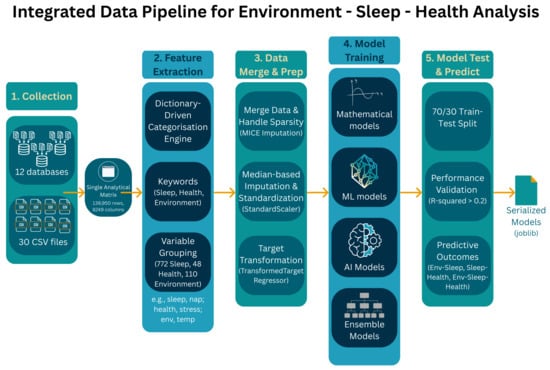
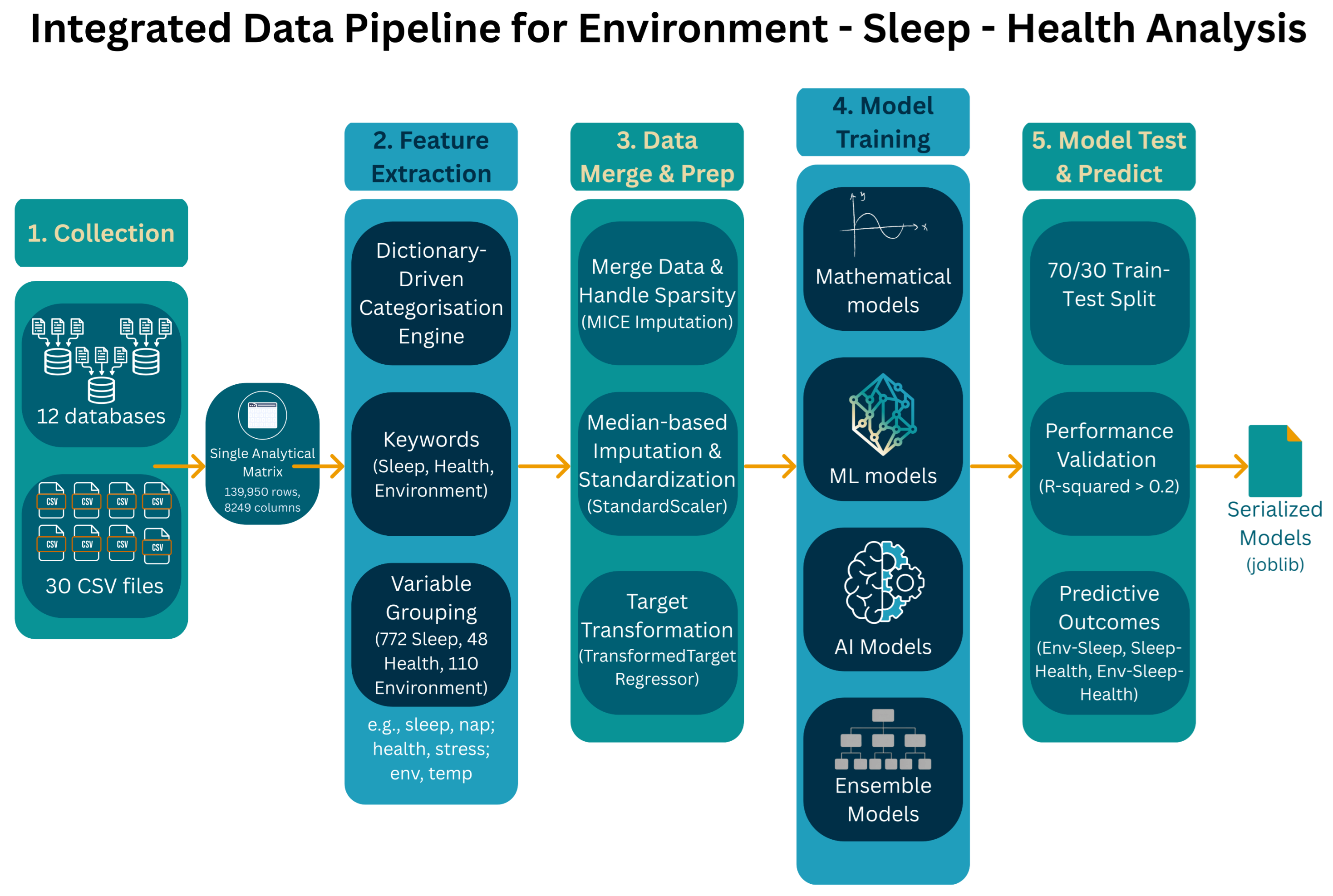
The developed methodology is presented in Figure 1. The pipeline addresses the difficulty of combining 30 different CSV files into a single analytical matrix with 139,950 rows and 8249 columns. To keep data lineage throughout the recursive integration process, a dynamic “source_db” tag was added to each record during the outer-join procedure.
Figure 1.
The methodology developed for this study.
The authors also created a dictionary-driven categorisation engine to deal with the high-dimensional feature space. To select features related to sleep, health, and the environment, specific keywords were identified for each category. For sleep, terms such as sleep, nap, bedtime, wake, REM, duration, and awake were used to capture aspects of sleep patterns and quality. Health-related features were selected using keywords like health, stress, heart rate, HRV, steps, activity, calories, BPM, wellbeing, mood, disease, illness, weight, and blood pressure, encompassing both physiological measurements and general wellness indicators. Environmental features were targeted using keywords including env, temp, temperature, light, noise, dB, sound, CO2, humidity, air quality, room, location, movement, caffeine, and alcohol, reflecting conditions that could influence both sleep and health. Variables were automatically grouped into four domains: sleep (772 variables), health (48), and environment (110).
To reduce the severe sparsity caused by the merging of separate datasets, the procedure consisted of splitting the data into training and testing. The MICE approach is used. This iterative technique guesses missing values by modelling each characteristic as a function of the others, retaining the multidimensional interactions between environmental and biological signals.
The training approach emphasises statistical rigour and model generalisation across several domains. To achieve zero mean and unit variance, only using training data, the first preprocessing included median-based imputation and standardisation using StandardScaler. To address potential target skewness, the TransformedTargetRegressor was used with a QuantileTransformer to convert non-linear targets into a normal distribution and stabilise gradient descent. The approach for the high-complexity novel OMNI-Model included Principal Component Analysis (PCA), which captured 95% of the total variance while decreasing stochastic noise. Models were verified with a 70/30 train–test split, and only those that exceeded rigorous performance standards ( for basic models and for ensembles) were serialised via joblib for further inference.
3. Results
3.1. Modelling the Influence of the Environment on Sleep
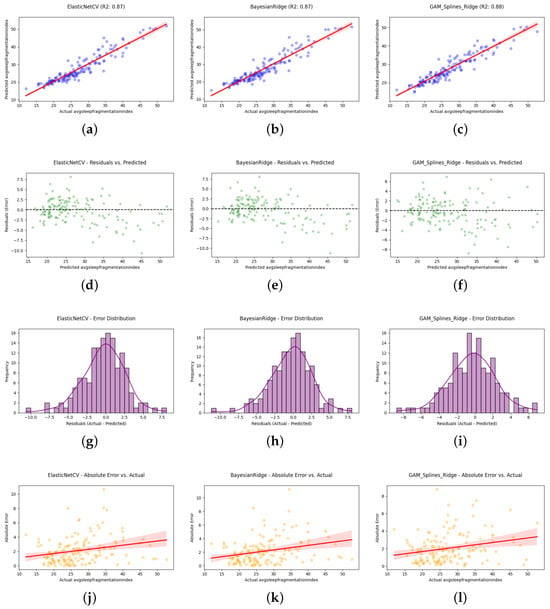
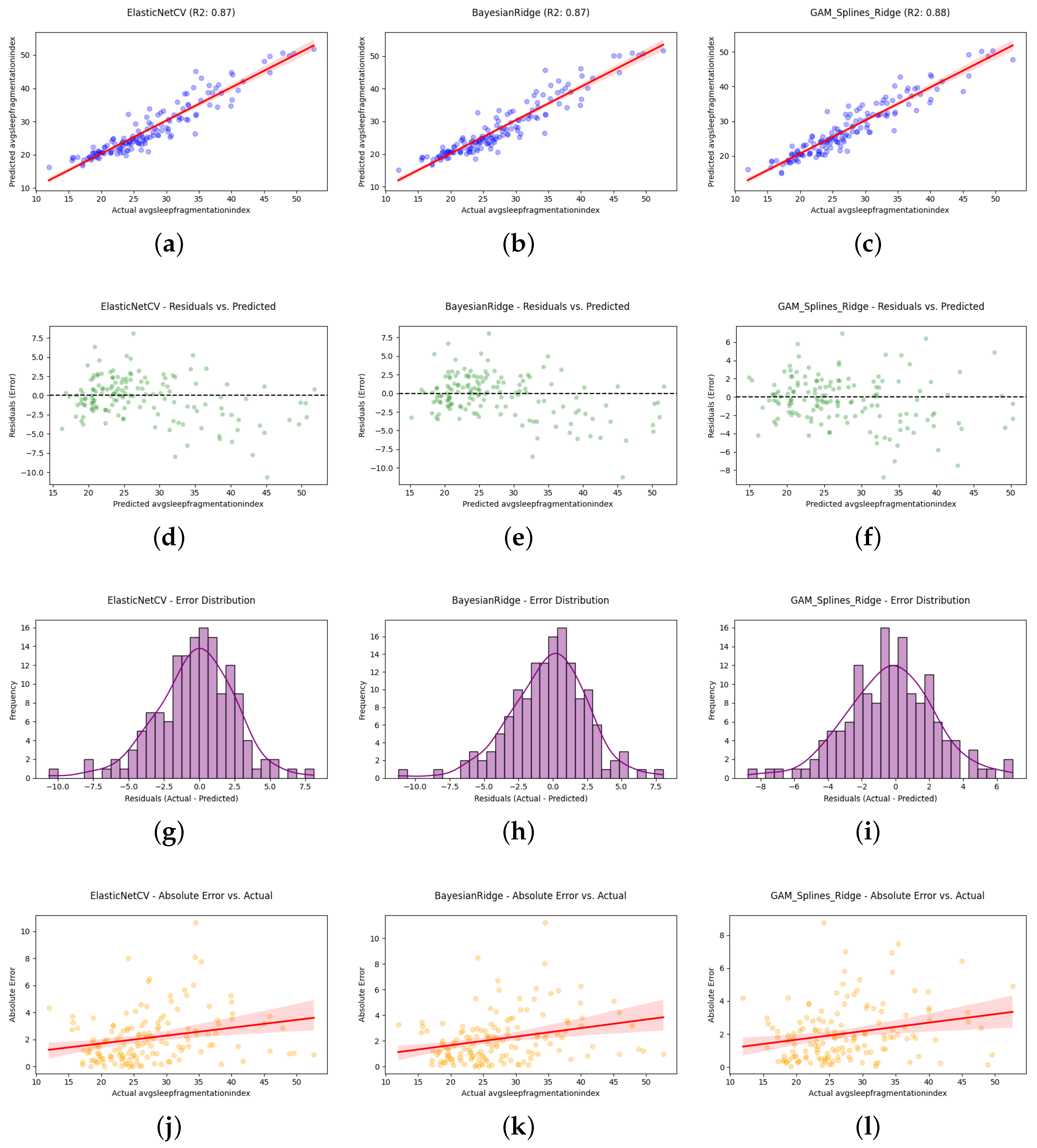
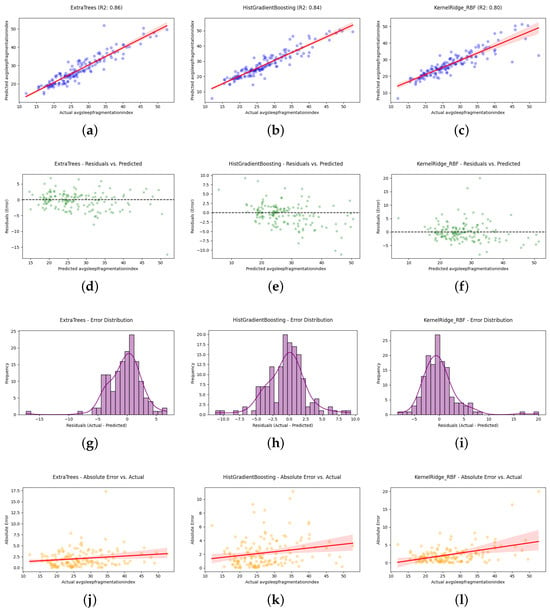
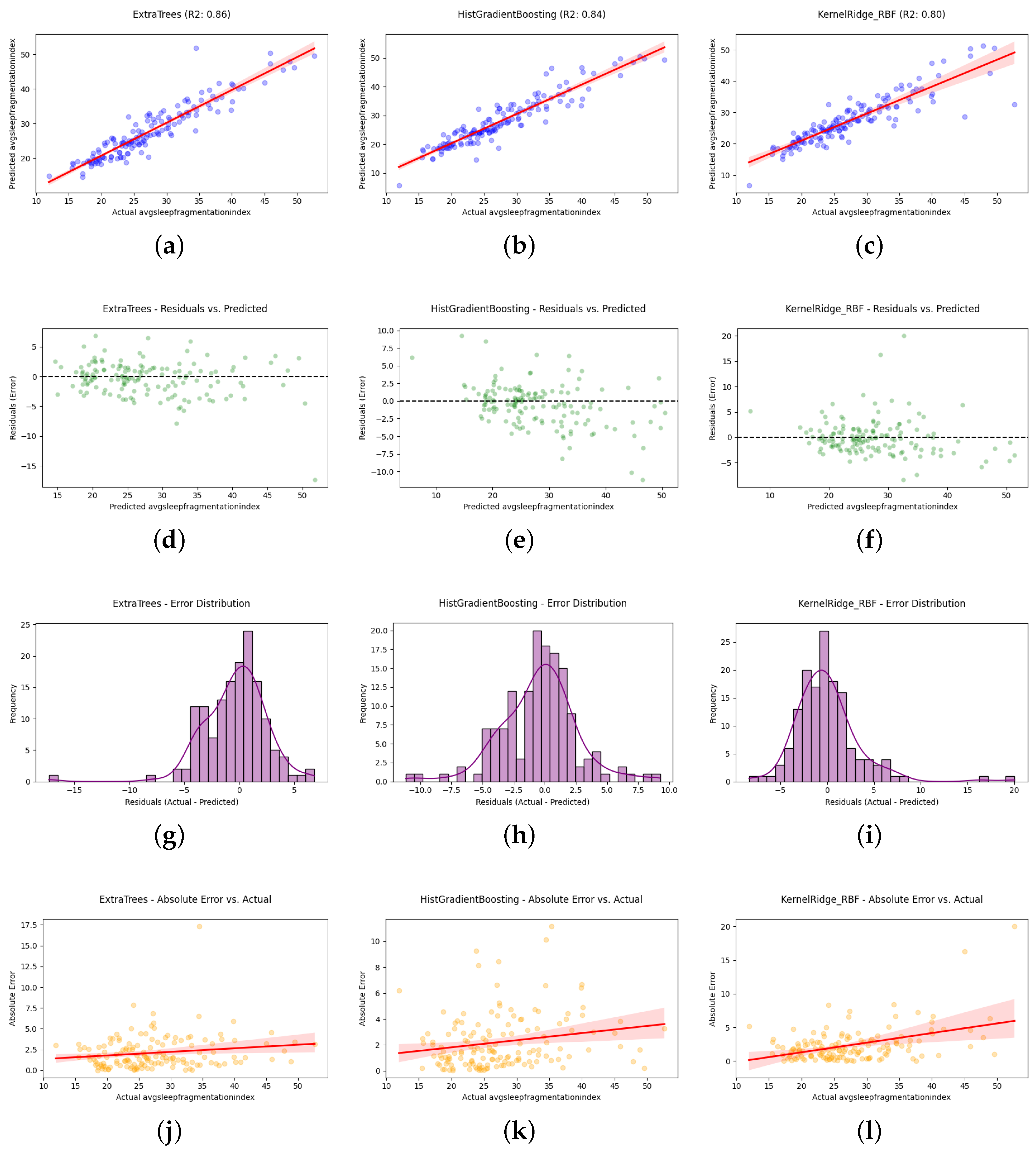
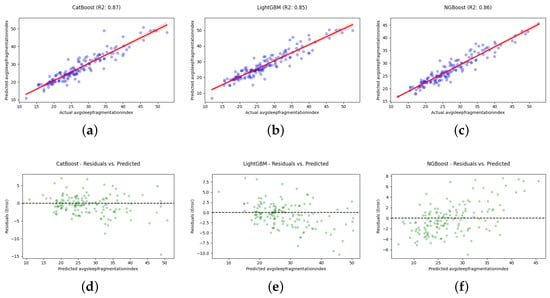
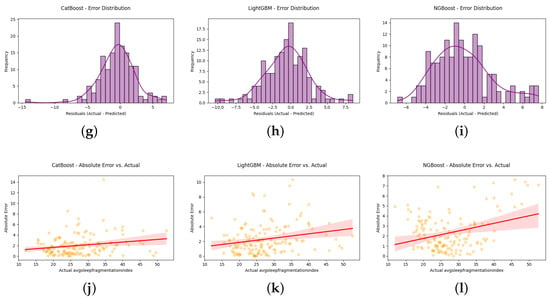
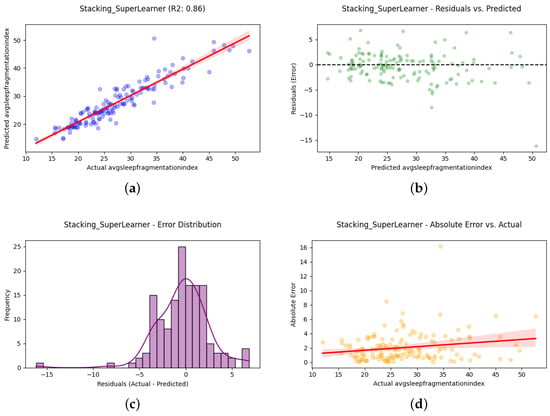
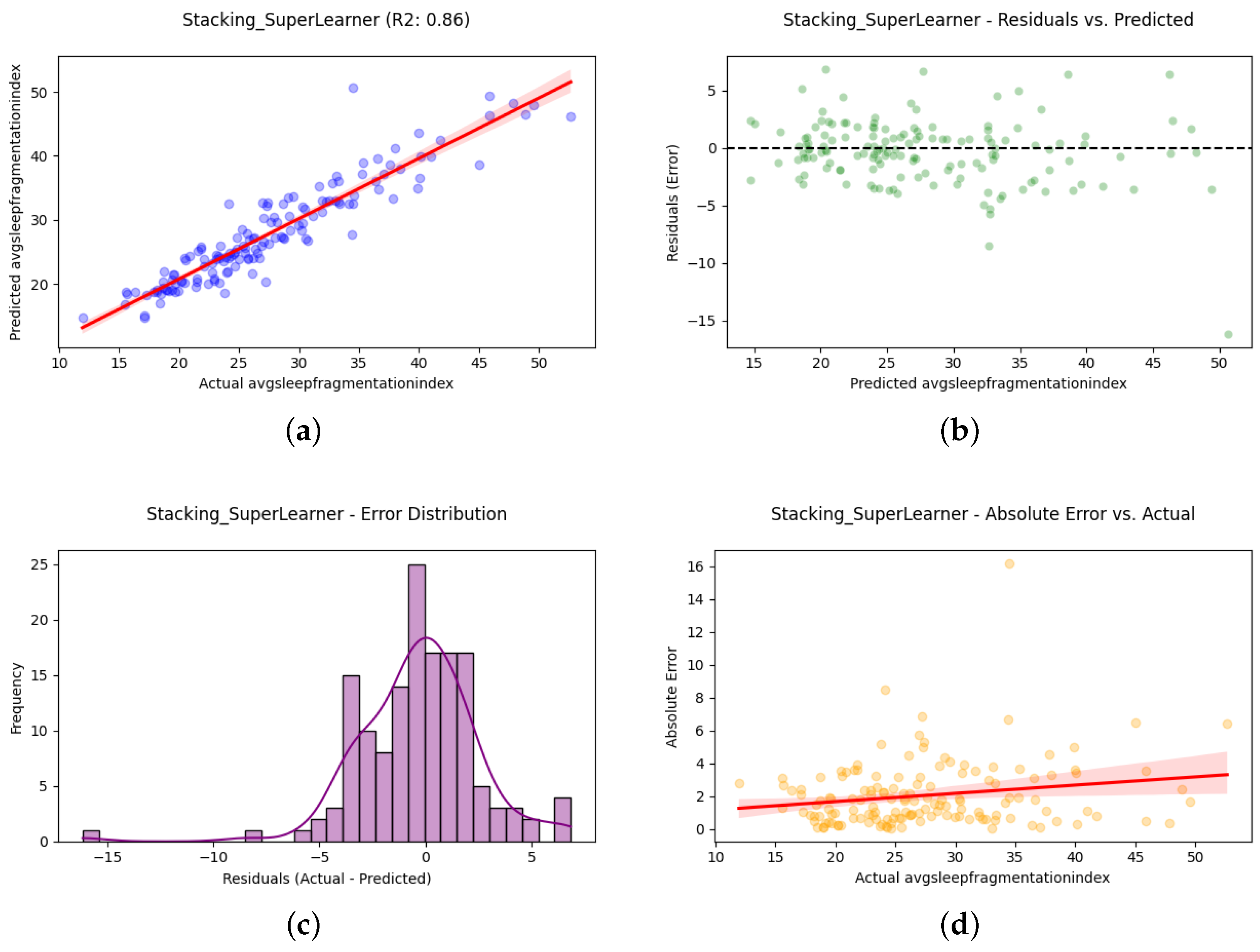
The initial experiments assessed the predictive results of chosen mathematics, ML, and AI models on the aforementioned concatenated dataset. As a first step, the objective was to model the environmental effects on sleep. In this regard, characteristics with a good correlation and low standard deviation were chosen. Under these ideal conditions, the models performed well, with high predicted accuracy across all domains. The baseline models’ coefficients of determination () varied from a minimum of 0.80 in the KernelRidge model to a maximum individual performance of 0.88 in GAM. The SuperLearner ensemble, which optimises and aggregates the strengths of the already trained models, produced a of 0.86.
Models performances are reported using mean and standard deviation metrics derived from a 5-fold cross-validation protocol. This cross-validation approach quantifies the variance of the key results across random data splits, providing a robust measure of model stability.
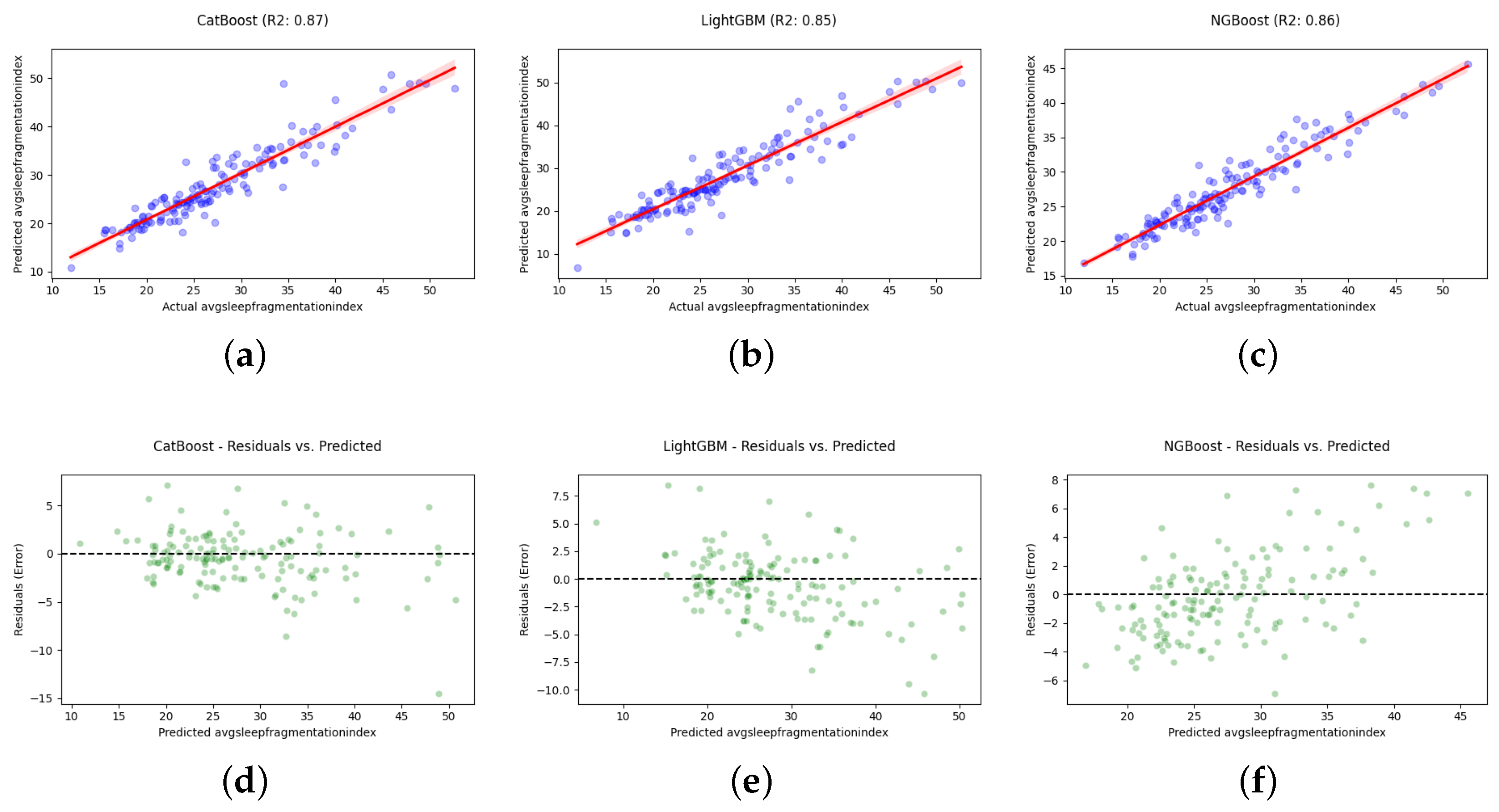
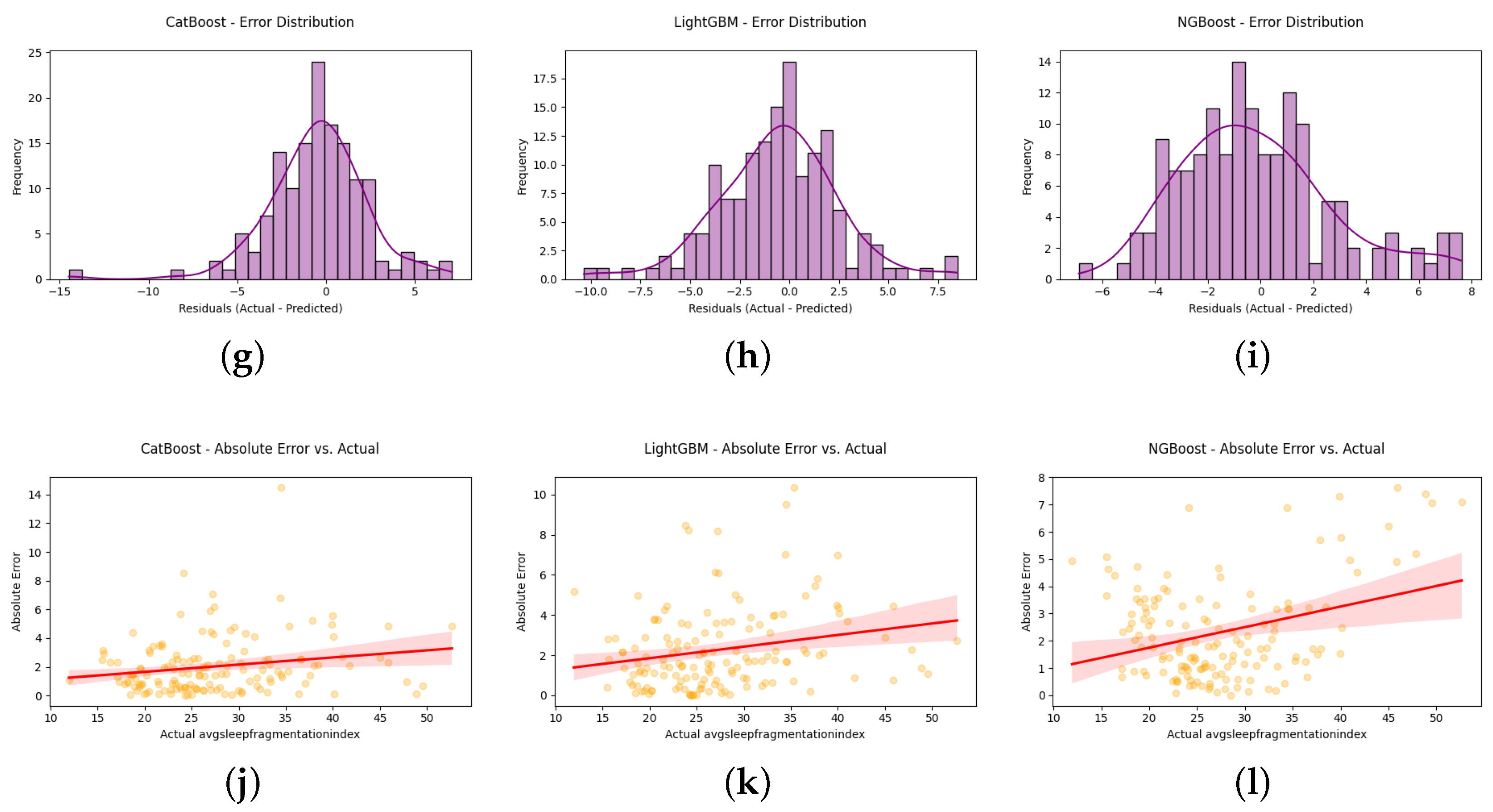
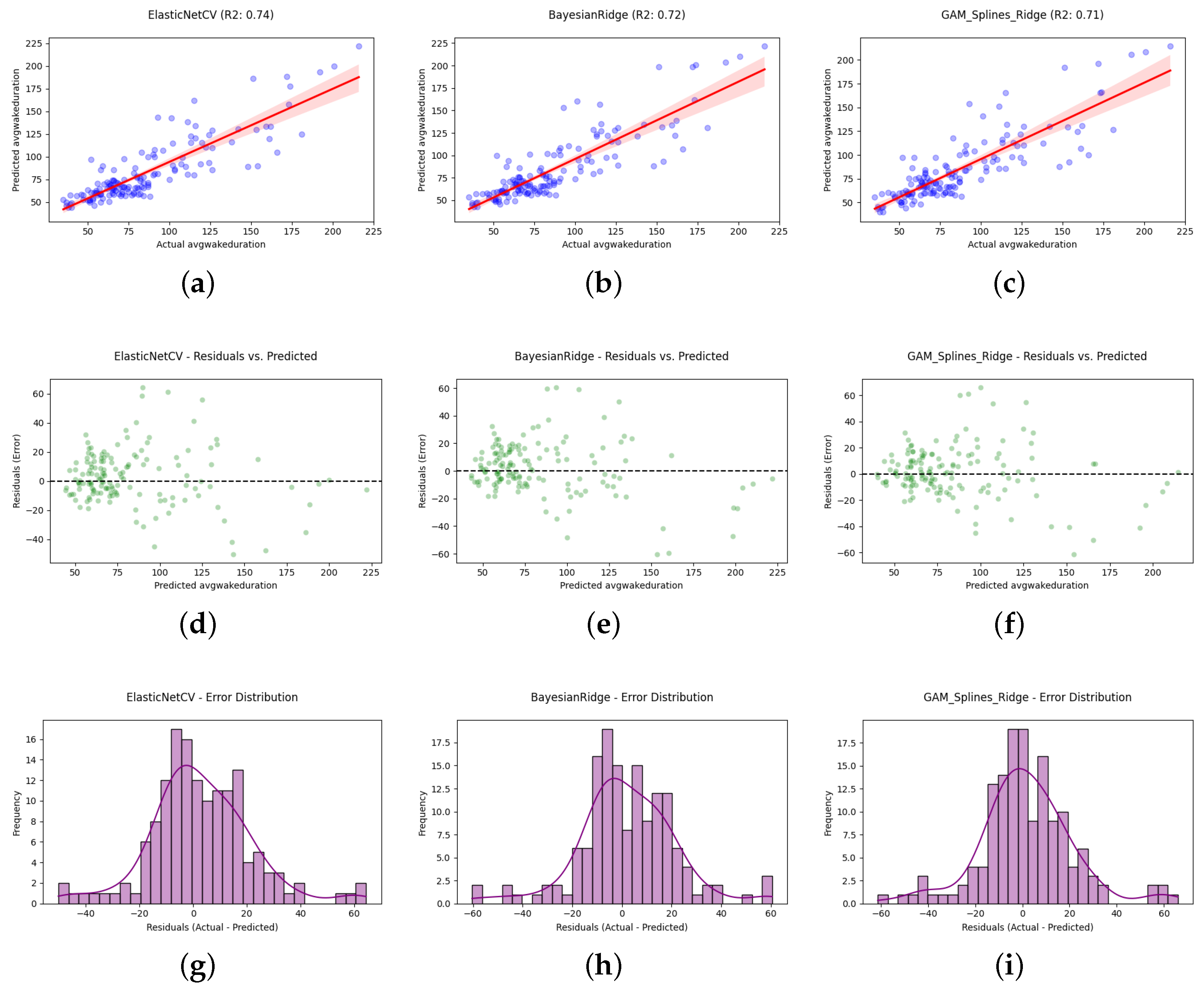
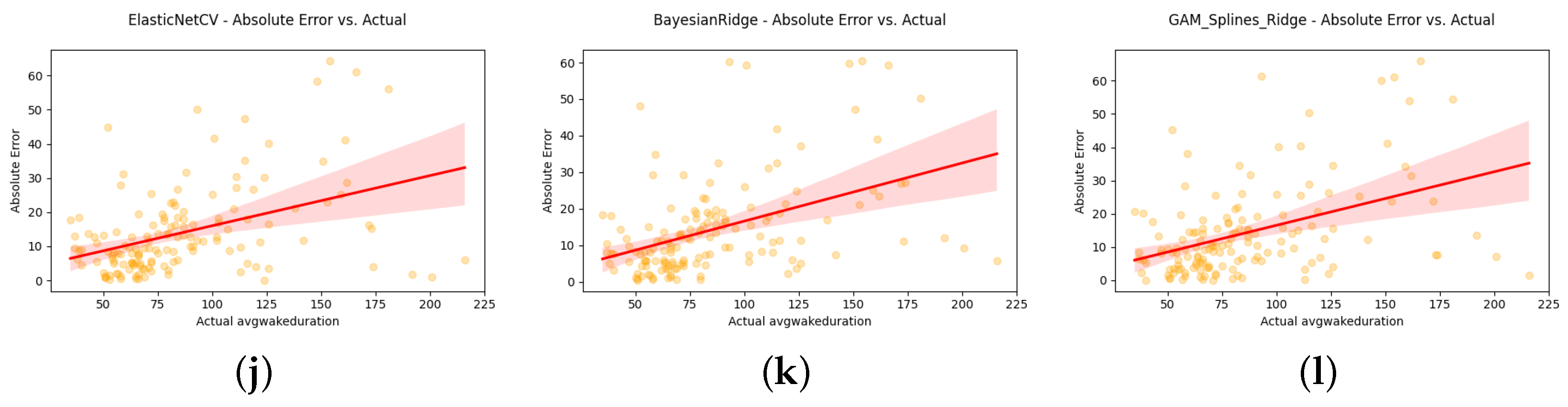
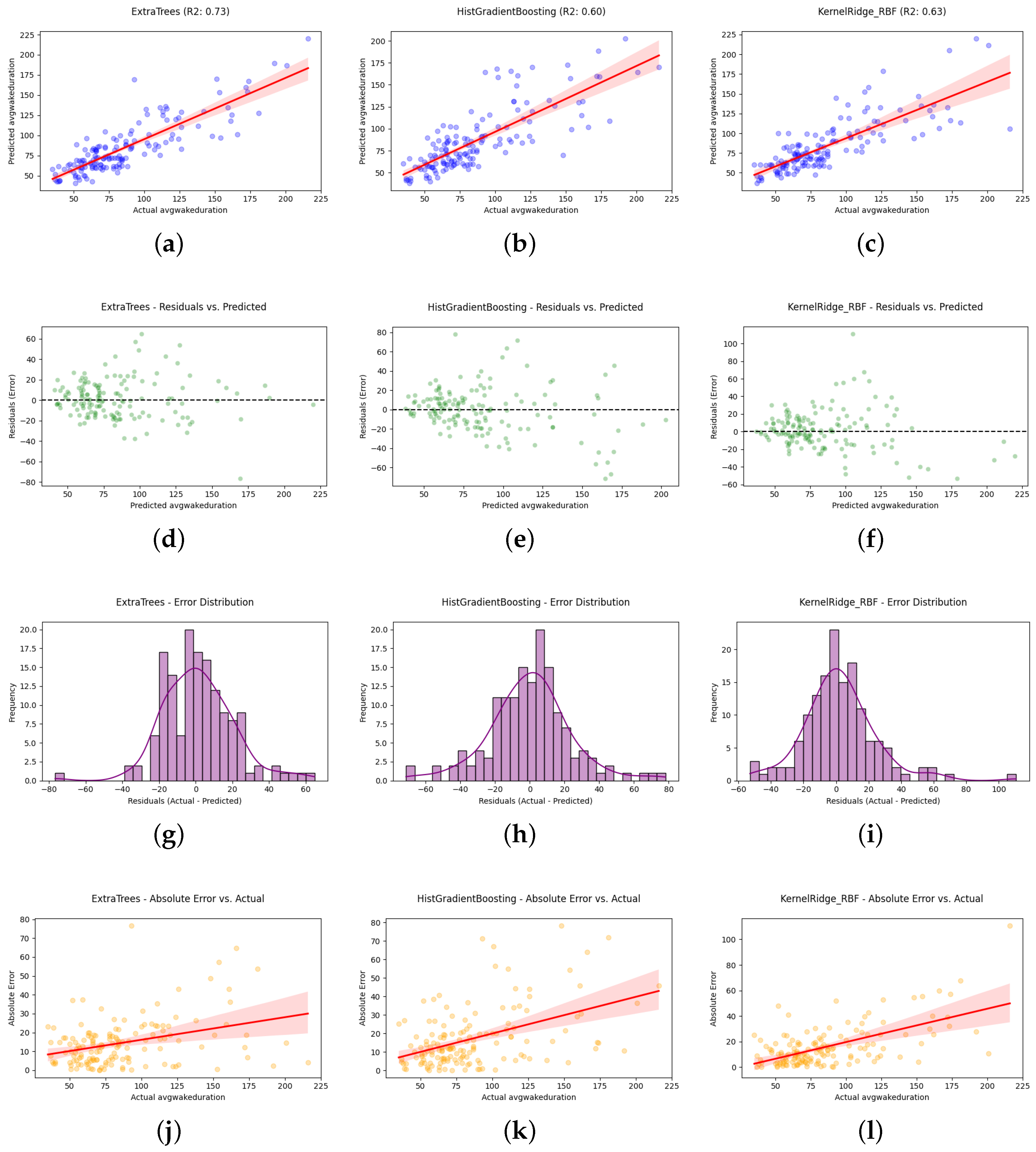
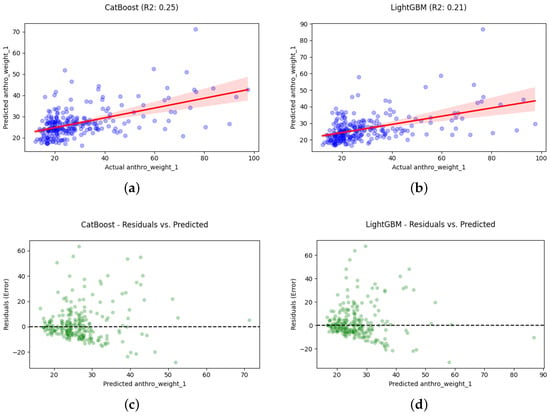
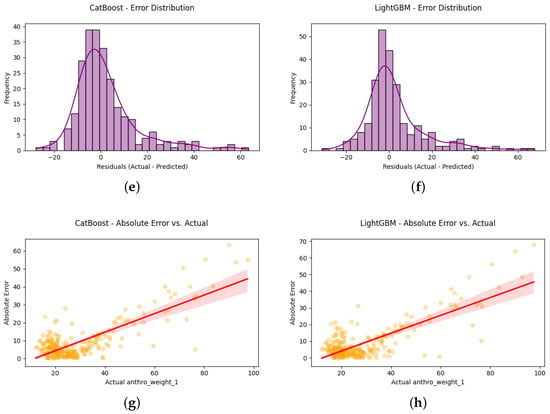
The results in Figure 2, Figure 3, Figure 4 and Figure 5 indicate that when statistical noise is minimal, and the underlying models are explicit, both traditional mathematical approaches and advanced algorithms can capture the target variation with a high degree of confidence. This conclusion is also illustrated by the performance of the models evaluated using 5-fold cross-validation with a random seed of 30 samples in Figure 6. As a result, the effect of the environment on sleep quality was successfully modelled.
Figure 2.
Performance metrics of mathematical models on data with high correlation and low standard deviation (Series T1_1): (a,d,g,j) Elastic; (b,e,h,k) Bayesian; (c,f,i,l) GAM.
Figure 3.
Performance metrics of ML models on data with high correlation and low standard deviation (Series T1_1): (a,d,g,j) ExtraTrees; (b,e,h,k) HistGradientBoost; (c,f,i,l) KernelRidge.
Figure 4.
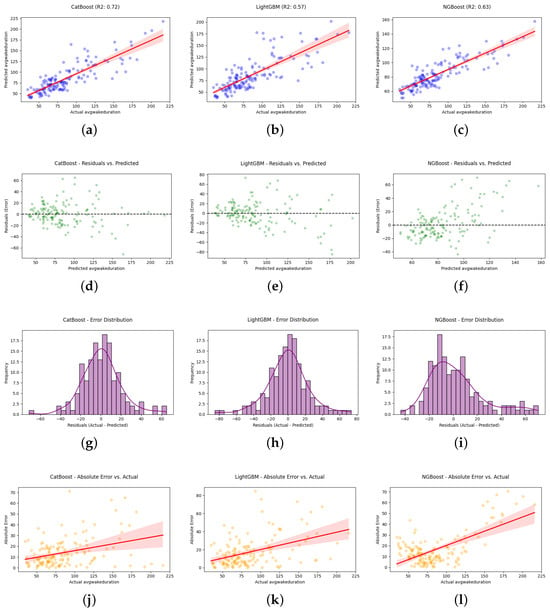
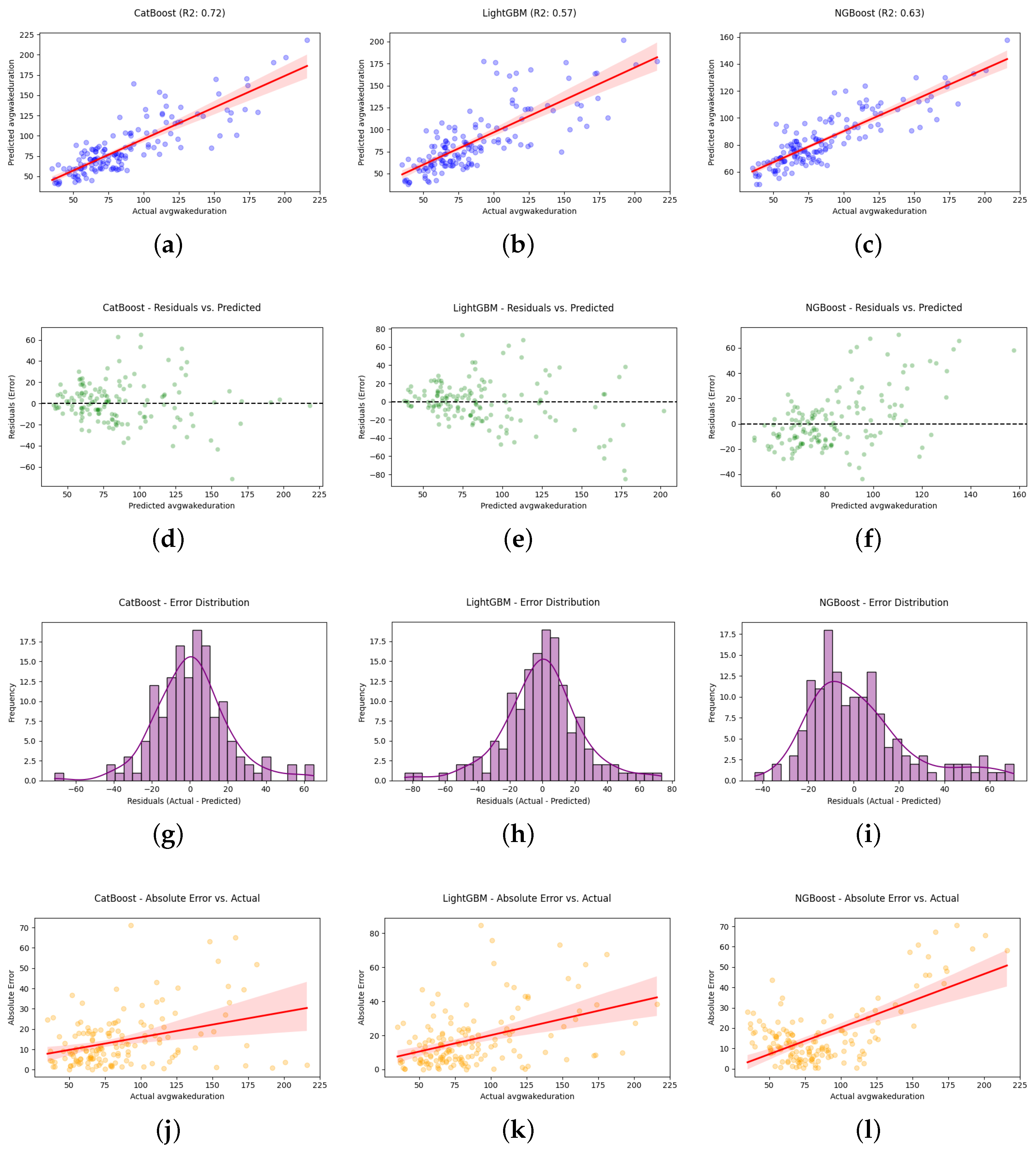
Performance metrics of AI models on data with high correlation and low standard deviation (Series T1_1): (a,d,g,j) CatBoost; (b,e,h,k) LightGBM; (c,f,i,l) NGBoost.
Figure 5.
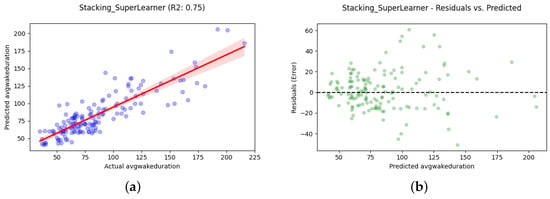
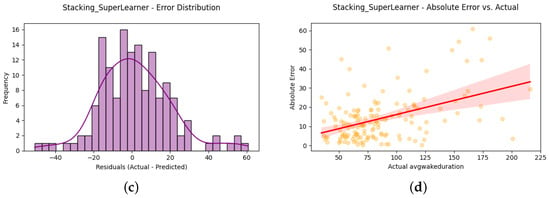
Performance metrics (a–d) of the SuperLearner ensemble model on data with high correlation and low standard deviation (Series T1_1).
Figure 6.
The mean and standard deviation of for assessing the influence of the environment on sleep quality for the trained models (Series T1_1).
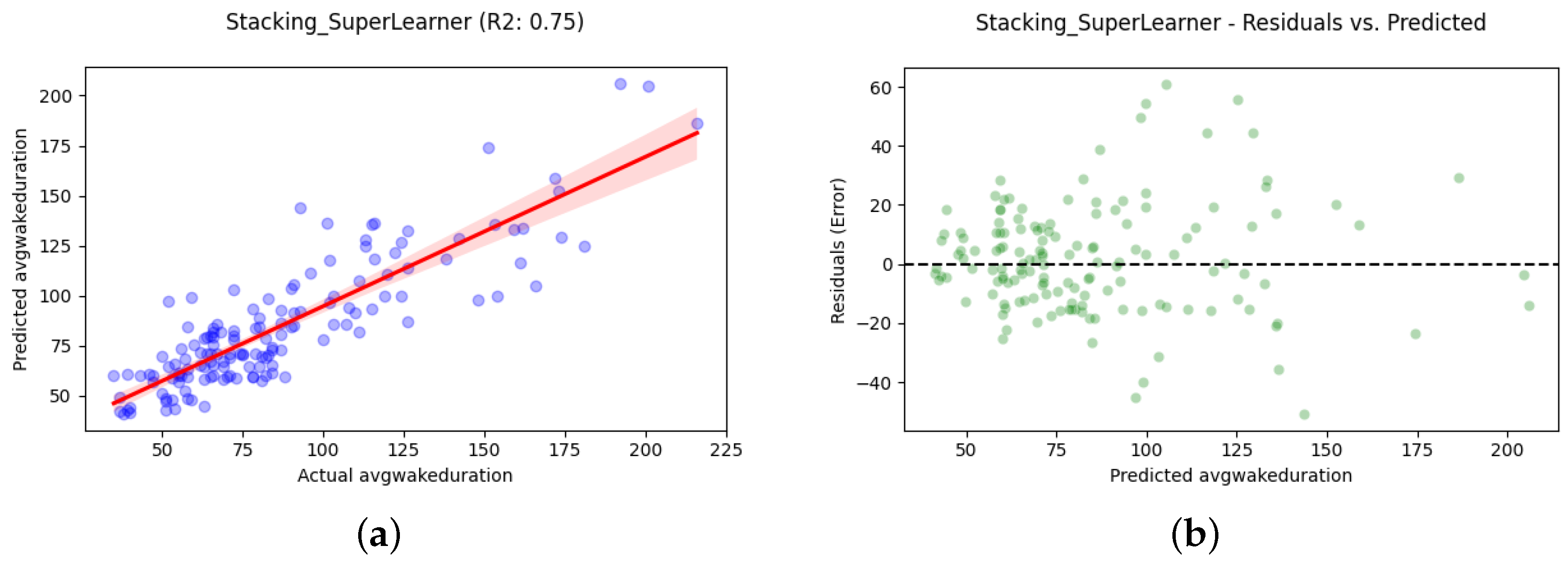
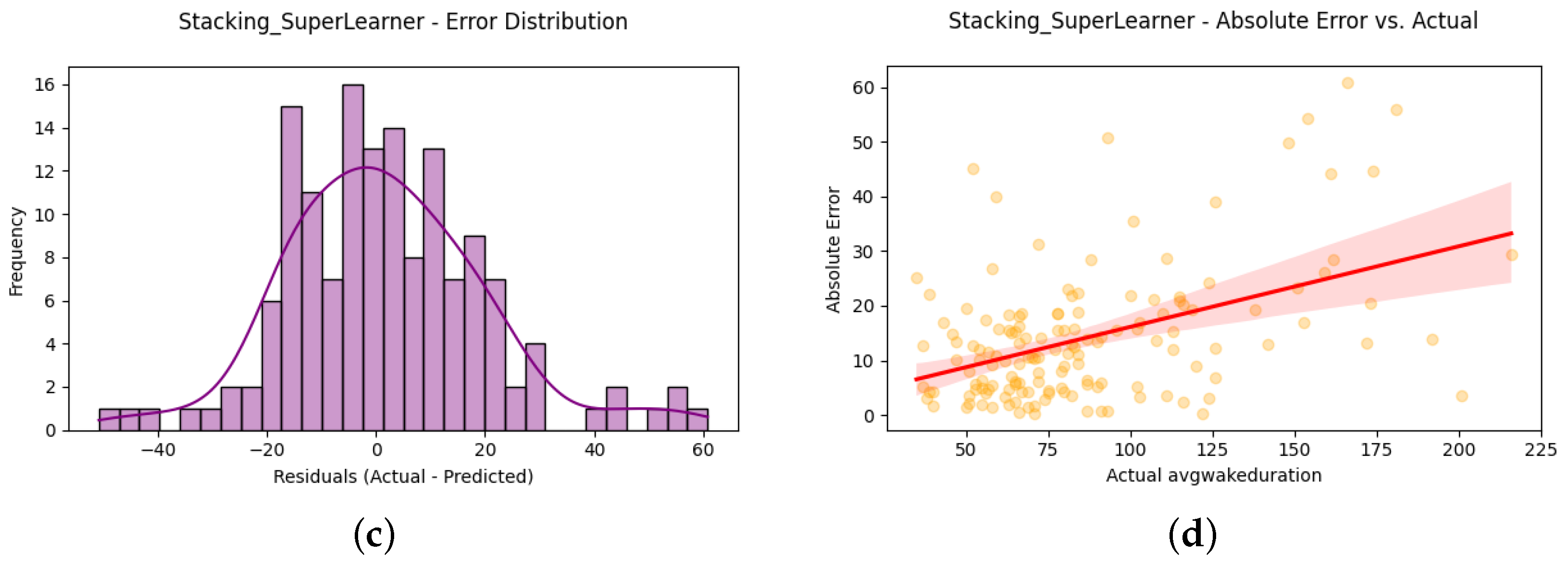
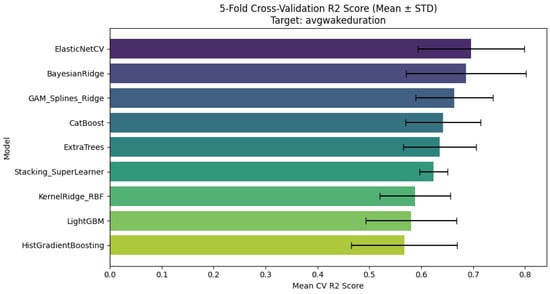
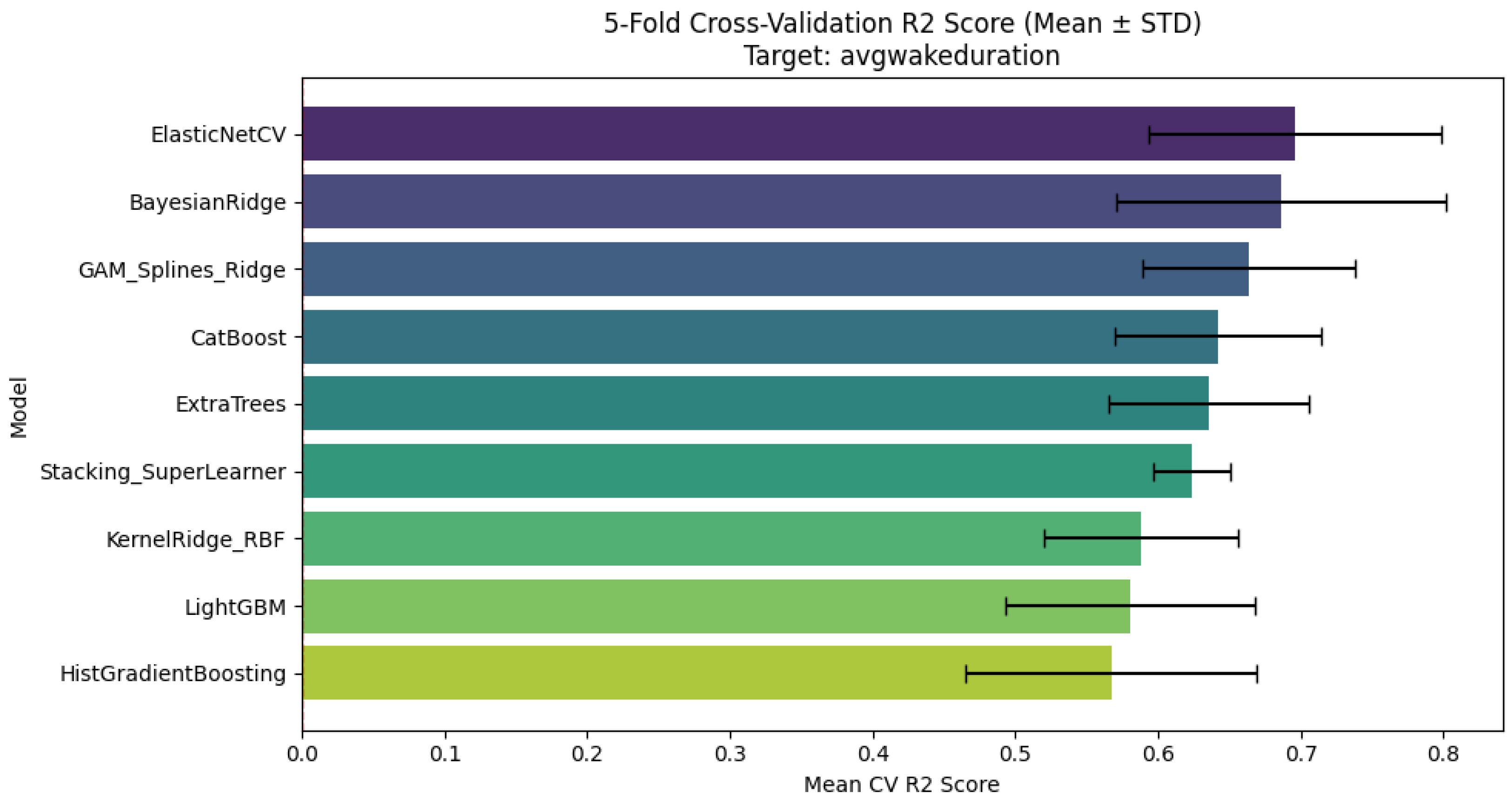
In comparison, the second experimental series offered a substantially more demanding modelling environment, utilising a dataset with poor feature correlation and large standard deviation. The broad distribution of data points and the lack of strong predictive signals resulted in a significant drop in overall model performance. Individual techniques had values ranging from 0.44 for HistGradientBoost to 0.56 for ElasticNetCV, BayesianRidge, GAM, and NGBoost, according to Figure 7, Figure 8, Figure 9 and Figure 10. The equivalent of Figure 6 for Series T1_1 is Figure 11 for Series T1_2. In this widely distributed data environment, the SuperLearner architecture showed a clear benefit. The ensemble method beat individual algorithms by successfully synthesising weak signals collected by the multiple base models, delivering the best overall result with a of 0.61. This highlights the value of ensemble learning when working with highly varied and weakly correlated datasets.
Figure 7.
Performance metrics of mathematical models on data with low correlation and high standard deviation (Series T1_2): (a,d,g,j) Elastic; (b,e,h,k) Bayesian; (c,f,i,l) GAM.
Figure 8.
Performance metrics of ML models on data with low correlation and high standard deviation (Series T1_2): (a,d,g,j) ExtraTrees; (b,e,h,k) HistGradientBoost; (c,f,i,l) KernelRidge.
Figure 9.
Performance metrics of AI models on data with low correlation and high standard deviation (Series T1_2): (a,d,g,j) CatBoost; (b,e,h,k) LightGBM; (c,f,i,l) NGBoost.
Figure 10.
Performance metrics (a–d) of the SuperLearner ensemble architecture on data with low correlation and high standard deviation (Series T1_2).
Figure 11.
The mean and standard deviation of for assessing the influence of the environment on sleep quality for the trained models (Series T1_2).
3.2. Modelling the Influence of Sleep on Health
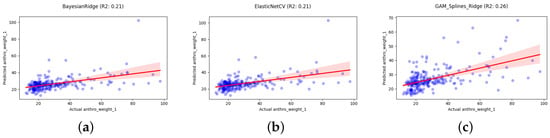
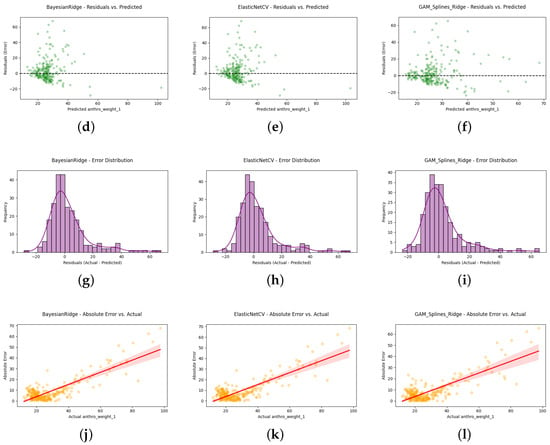
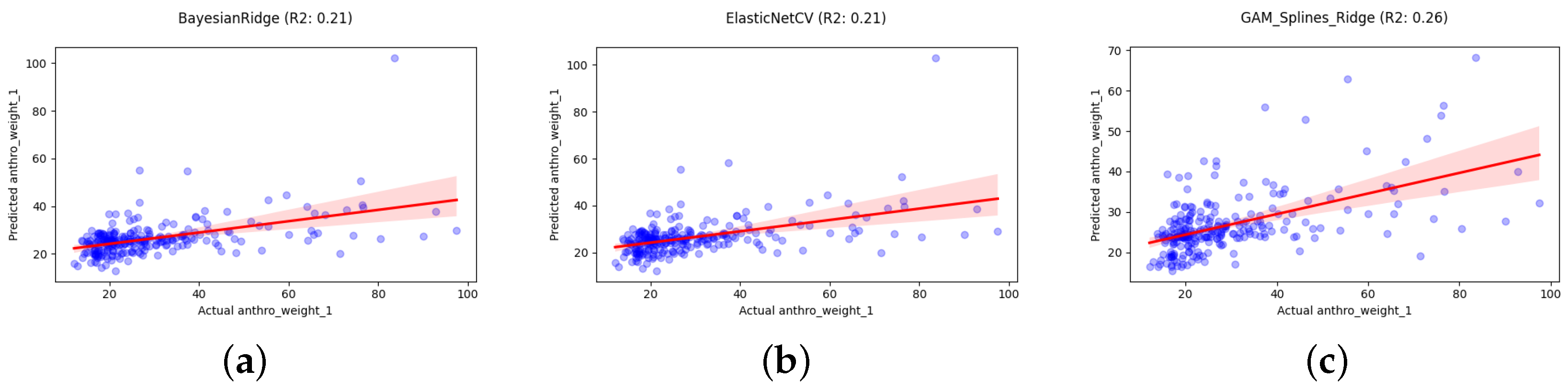
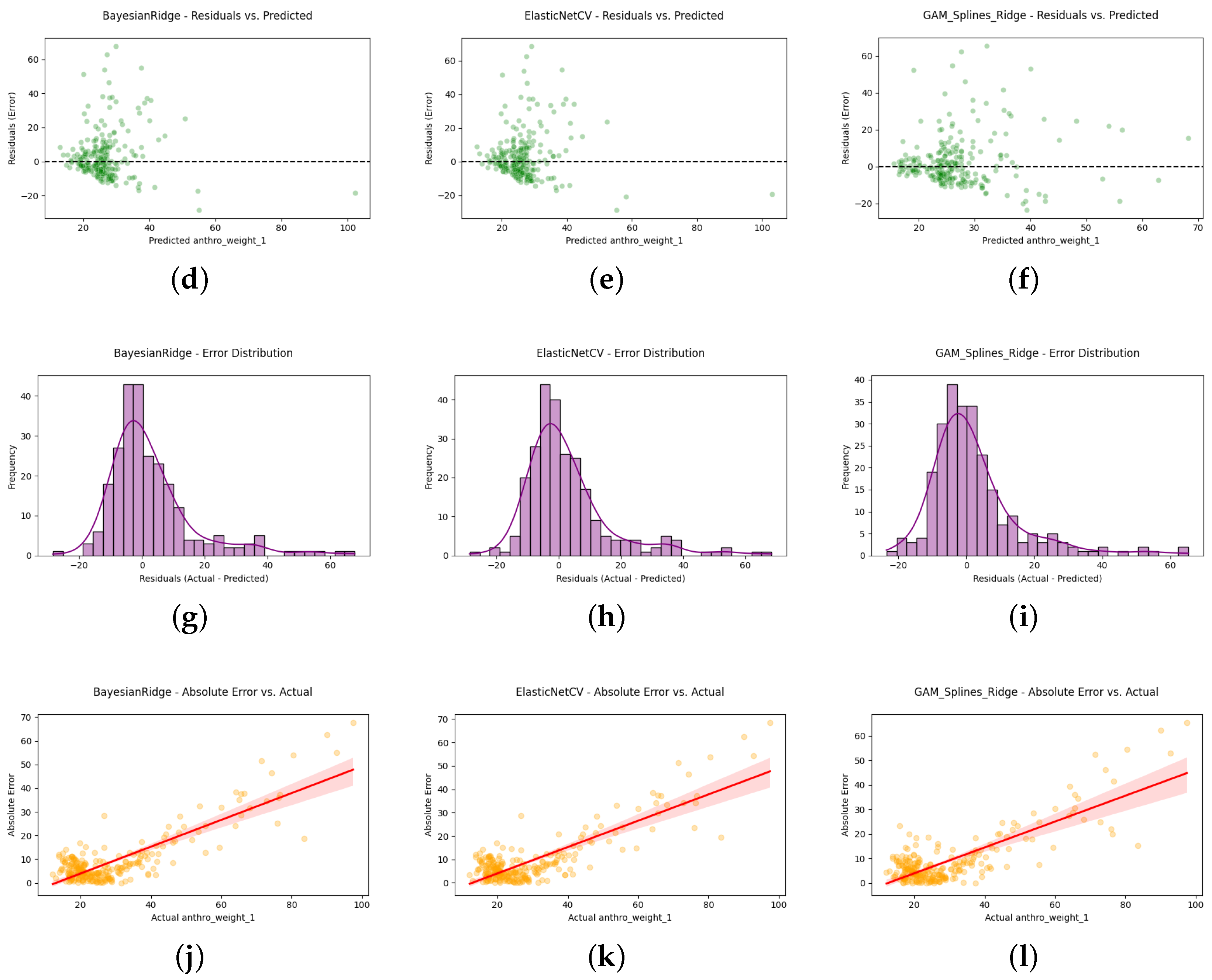
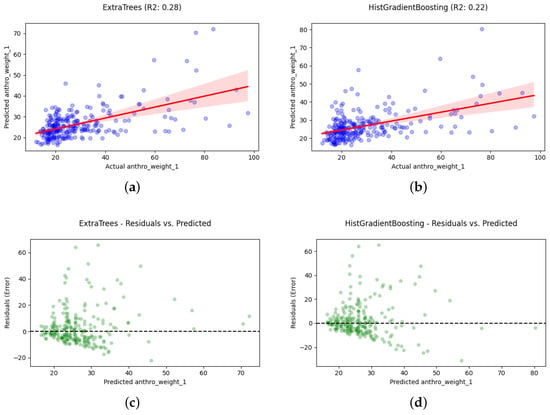
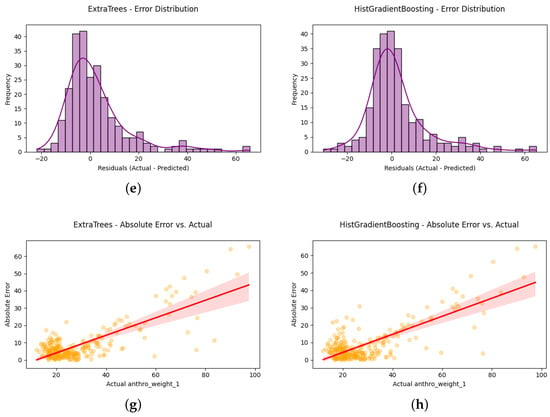
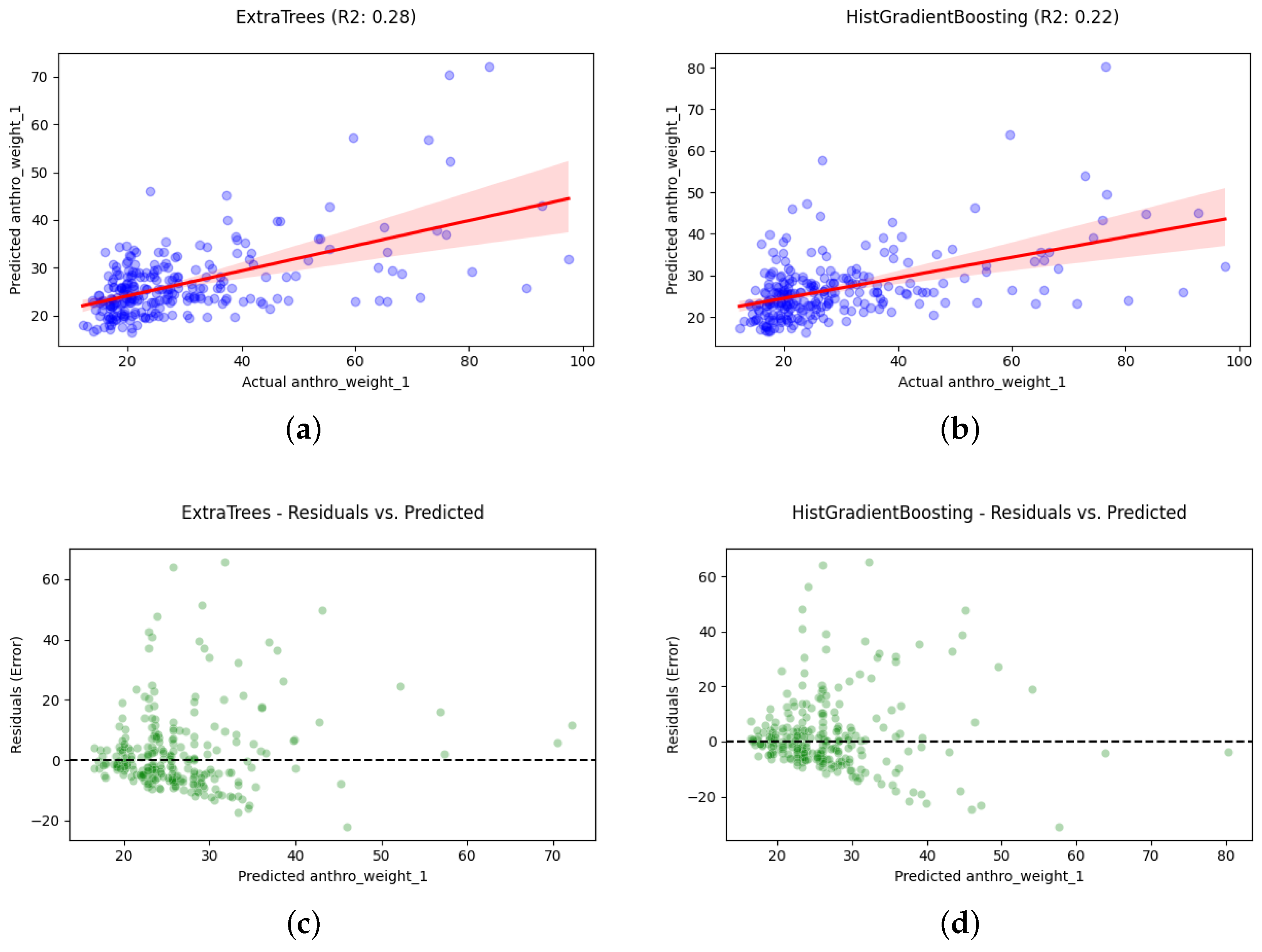
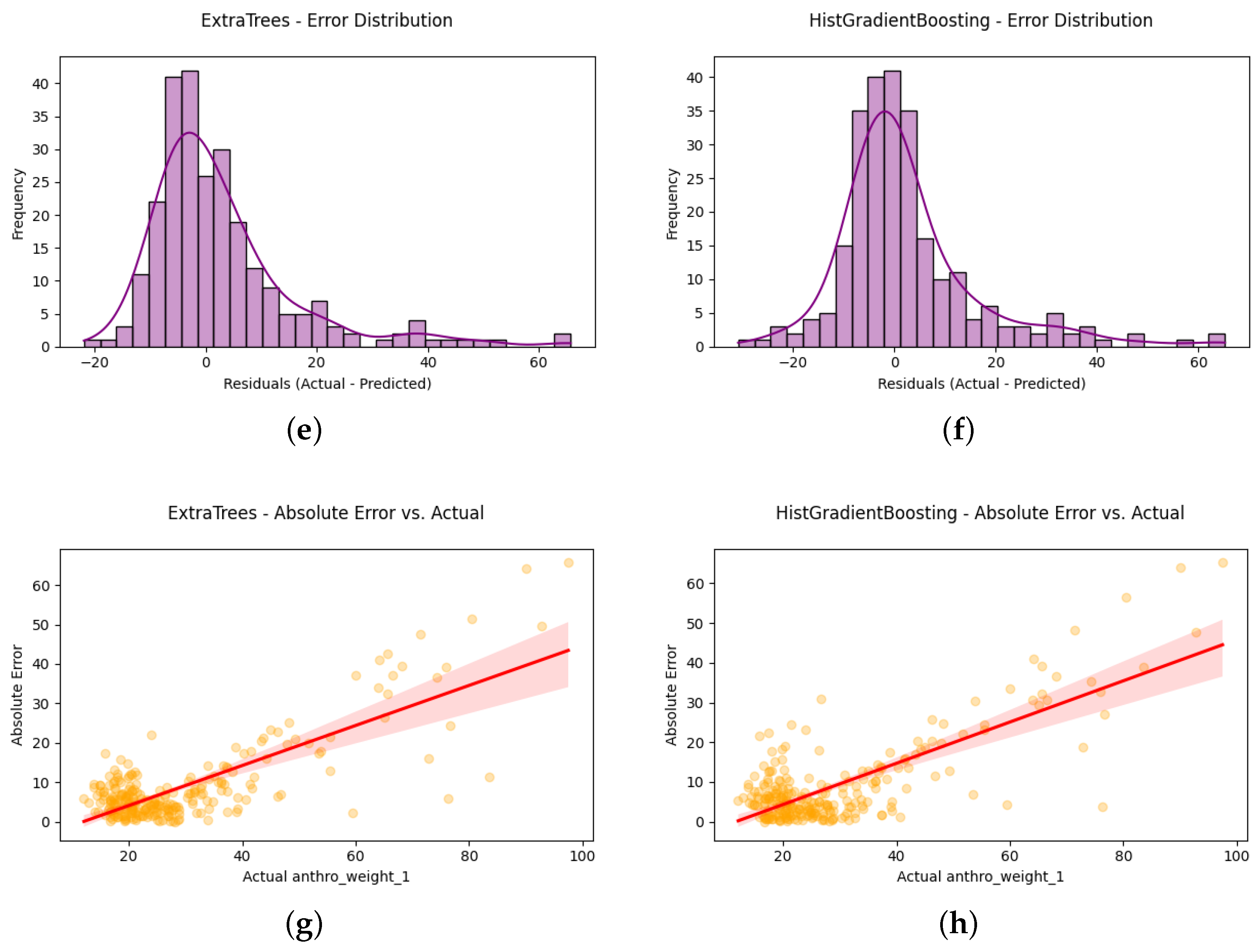
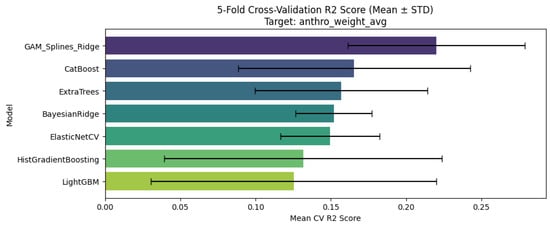
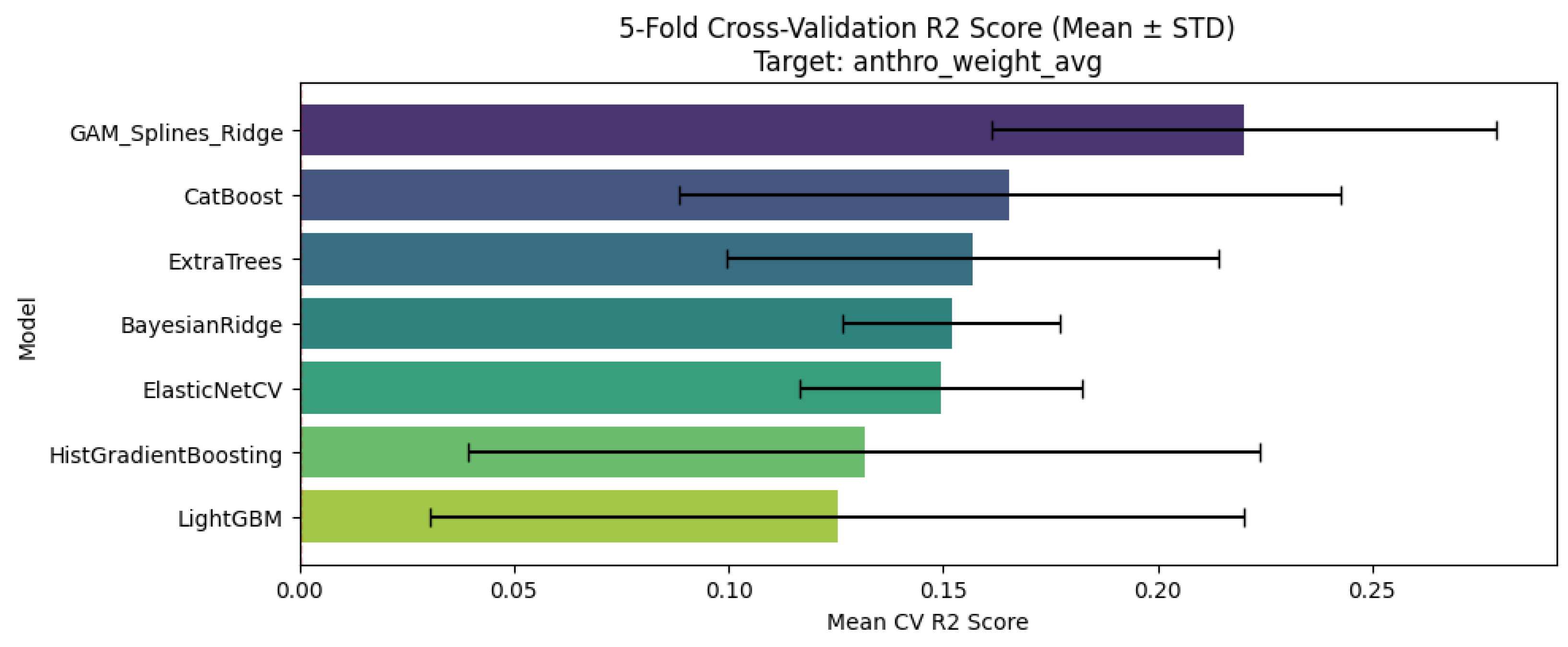
The next step was to test the T2_1 series, which corresponds to the analysis of the influence of sleep on health. Using the previously mentioned models, after training and testing, the performances shown in Figure 12, Figure 13 and Figure 14 were obtained. A comparative evaluation of the performance of the models for Series T2_1, in terms of the mean and standard deviation of , is shown in Figure 15. According to observations in the case of analysing environmental influences on sleep, due to less correlated data and a higher standard deviation, in this case does not exceed 0.28, with ExtraTrees showing the best performance. The KRR and NGBoost models failed to achieve an greater than 0.2, so they were not considered for the next stage.
Figure 12.
Performance metrics of mathematical models on (Series T2_1): (a,d,g,j) Bayesian; (b,e,h,k) Elastic; (c,f,i,l) GAM.
Figure 13.
Performance metrics of ML models on (Series T2_1): (a,c,e,g) ExtraTrees; (b,d,f,h) HistGradientBoost.
Figure 14.
Performance metrics of AI models on (Series T2_1): (a,c,e,g) CatBoost; (b,d,f,h) LightGBM.
Figure 15.
The mean and standard deviation of for assessing the influence of sleep quality on health for the trained models (Series T2_1).
3.3. Modelling the Tripartite Relationship Between Environment, Sleep, and Health
The third level, represented by Task 4, is the tripartite modelling of environment–sleep–health, which is, to the best of the authors’ knowledge, a global first.
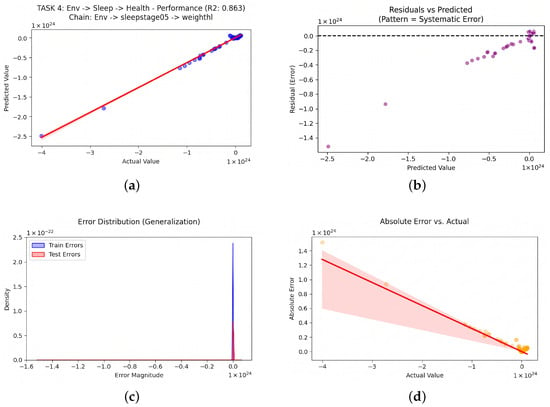
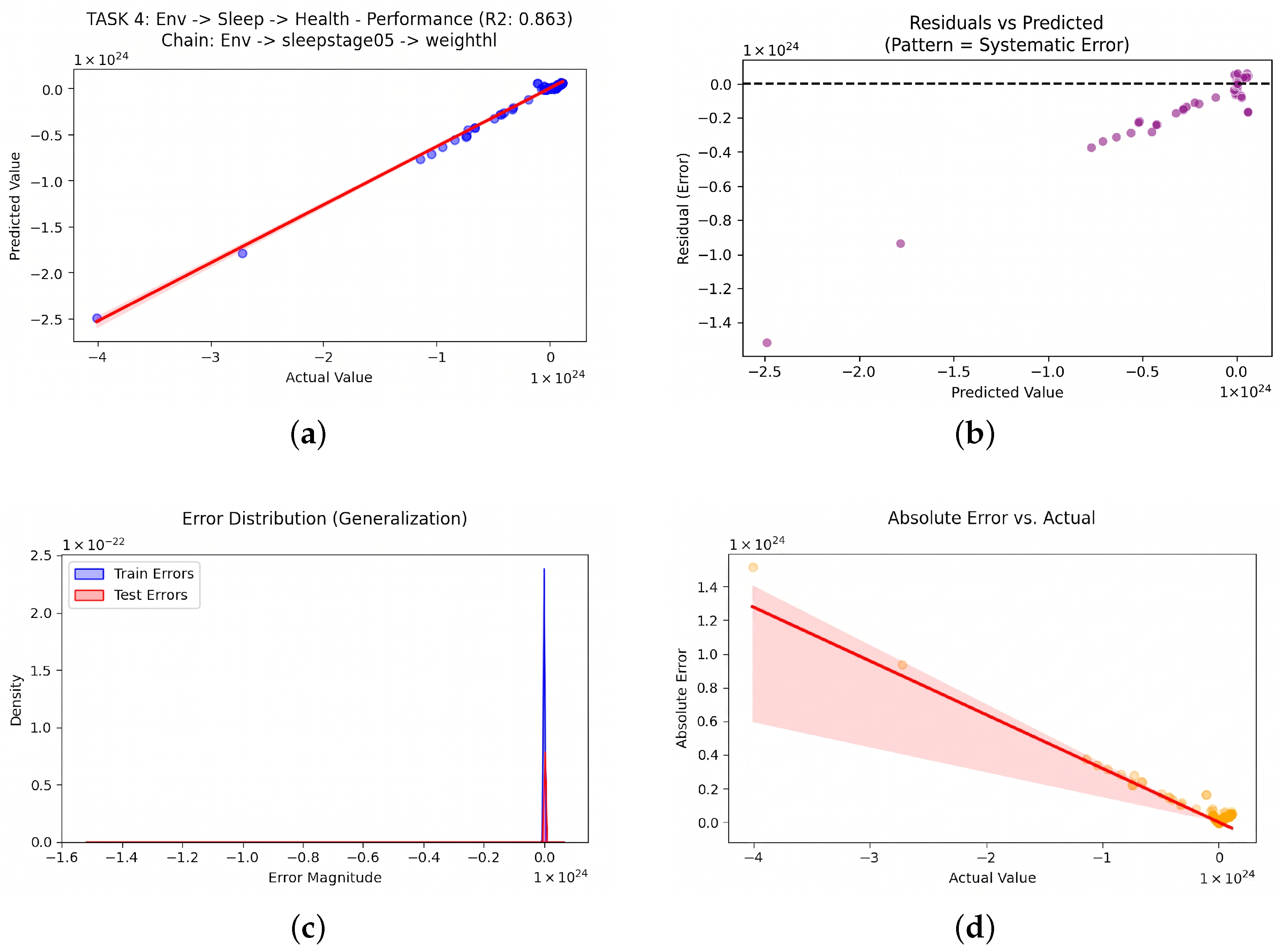
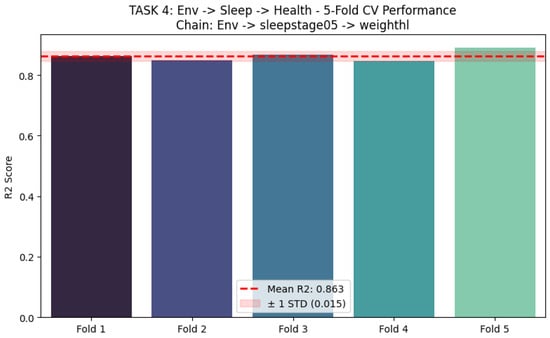
The dataset’s size (139,950 rows and 8249 columns) necessitated the employment of an LLM-specific model. In this context, it was decided to adopt the OMNI-Model with MICE Data Fusion to provide robustness to infinity. Only in this manner was it feasible to generate a final model that effectively characterises the environment–sleep–health relationships by choosing the best-performing models previously trained in prior rounds. Figure 16 and Figure 17 present the final results.
Figure 16.
Performance metrics (a–d) of OMNI-Model on modelling the tripartite relationship between environment, sleep, and health.
Figure 17.
The mean and standard deviation of for assessing the influence of environment, sleep quality and health for the trained models.
4. Discussion
A new computational framework is presented in this paper. It simulates the intricate three-way connections that exist between sleep, the environment, and health. This all-encompassing strategy is the first in the world, as far as the authors are aware. The study included a number of demanding intermediate phases. Twelve different databases’ worth of data were first combined. Certain physiological and environmental traits were merged through this concatenation methodology. As a result, a large dataset was produced with 8249 different rows and 139,950 columns.
Advanced predictive modelling was the main emphasis of later phases. This large dataset was used to train eleven cutting-edge algorithms. These algorithms covered a variety of domains. They comprised ensemble techniques, deep learning architectures, machine learning algorithms, and mathematical models. They assessed sleep–health and environment–sleep dynamics separately. Next, the best-performing algorithms were chosen. The new OMNI-Model was built upon these baseline concepts. The different paths were successfully synthesised by this overall design. In the end, it produced previously unheard-of integrative modelling of the environment, sleep, and health continuum as environmental factors affect sleep and health nonlinearly.
According to the ablation analysis, using baseline linear regression on imputed data yielded limited predictive power due to high bias. The introduction of degree-2 polynomial features successfully captured non-linear environmental interactions, while PCA mitigated the resulting dimensionality bloat. Finally, our Voting Regressor ensemble (combining Gradient Boosting, Extra Trees, and XGBoost) provided the highest performance by balancing variance and capturing complex, hierarchical feature relationships that isolated models missed.
The proposed OMNI workflow is preferable to standard multi-source regression because it dynamically bridges isolated variables across datasets. By chaining predictions, new insights were uncovered into how subtle environmental shifts compound to impact sleep quality and, subsequently, daytime health metrics. Conceptually, this continuous predictive chain enables sensor-actuator closed-loop interventions. For instance, a smart environment could preemptively actuate room temperature or lighting adjustments based on real-time predictions of a user’s sleep architecture and health state.
This thorough architecture offers insightful information. Nevertheless, this framework’s computational resilience comes with several drawbacks. Several methodological limitations need to be strictly acknowledged. First, MICE is a key component of the work. This method was crucial for connecting variables between the various databases. This thorough imputation, however, runs the danger of producing artificial artefacts. When sample intersections across datasets are still few, the danger is very significant. The underlying physiological distributions may be distorted by such artificial variation.
Second, there is a possible weakness in the imputation sequence. Before the train–test split, MICE was applied to the full sparse matrix. Data leakage is probably introduced by this procedural decision. It is possible that data from the testing subgroups unintentionally affected the training distributions. As a result, the performance numbers that are presented may be overstated.
Third, analytical boundaries are presented by the feature selection process. Pearson correlation coefficients are its main source of reliance. To separate pertinent variables, a threshold of was applied. This method only finds statistical relationships that are linear. Direct causal linkages are not established.
Consequently, it is possible that intricate non-linear interactions and causal pathways were missed. Lastly, the values produced by the prediction models were comparatively low. Currently, only 10% to 20% of the desired variation can be explained by these models. This restricted capacity for explanation highlights the subject matter’s intrinsic entropy. It draws attention to how intricate human behavioural and physiological data are. These results are obviously influenced by a number of unidentified latent variables. Genetic predispositions, psychological stresses, and unmeasured environmental factors are still unaccounted for.
These methodological constraints will be methodically addressed in future studies. The imputation procedures need to be improved in further research. Implementing MICE strictly within the training folds will prevent data leakage. Additionally, merely correlational feature selection should be replaced with sophisticated causal inference frameworks. Unobserved latent variables may also be captured by investigating non-linear dimensionality reduction. The goal of these focused development paths is to significantly increase clinical relevance and prediction accuracy.
5. Conclusions
This paper proposed the use of 12 databases for which access was granted. The concatenation of databases based on the specific characteristics of modelling the influence of environment–sleep–health was the basis for training 10 state-of-the-art models in the fields of mathematics, ML, AI, and ensemble. The results obtained demonstrated the achievement of the objectives and the fact that, for the first time, the influence of environment–sleep–health was successfully modelled using the novel state-of-the-art OMNI-Model.
In terms of future research directions, the authors will focus on improving the OMNI-Model so that it does not depend on MICE to fill in data that does not exist in the sparse matrix. In this regard, synthetic data generation models will be considered.
Author Contributions
Conceptualisation, A.-G.B.; methodology, D.D.M.; software, A.-G.B.; validation, D.D.M. and E.-H.D.; data curation, A.-G.B.; writing—original draft preparation, A.-G.B.; writing—review and editing, D.D.M. and E.-H.D.; visualisation, A.-G.B.; supervision, E.-H.D. All authors have read and agreed to the published version of the manuscript.
Funding
This work was supported by the EVELIXIA project—Smart Grid Efficient Interactive Buildings (grant agreement ID: 101123238/01.10.2023), which was implemented under the topic(s): HORIZON-CL5-2022-D4-02-04- and financed by the European Commission.
Informed Consent Statement
Not applicable. The data used in this paper is part of the National Sleep Research Resource (NSRR).
Data Availability Statement
The data presented in this study are available in the National Sleep Research Resource at https://sleepdata.org/datasets (accessed on 5 January 2026).
Acknowledgments
This research was carried out using the CloudUT high-performance computing infrastructure, from the Technical University of Cluj-Napoca, developed through the CLOUDUT Project, co-financed by the European Regional Development Fund 1014 through the Operational Program for Competitiveness 2014–2015, contract no. 235/2020. Regarding all the open-source datasets, the National Sleep Research Resource was supported by the U.S. National Institutes of Health, National Heart Lung and Blood Institute (R24 HL114473, 75N92019R002). The Apnea Positive Pressure Long-term Efficacy Study (APPLES) was supported by the National Heart, Lung, and Blood Institute (U01HL68060). The National Sleep Research Resource was supported by the U.S. National Institutes of Health, National Heart Lung and Blood Institute (R24 HL114473, 75N92019R002). The Childhood Adenotonsillectomy Trial (CHAT) was supported by the National Institutes of Health (HL083075, HL083129, UL1-RR-024134, UL1 RR024989). The National Sleep Research Resource was supported by the National Heart, Lung, and Blood Institute (R24 HL114473, 75N92019R002). The DISE-CAD study was supported by National Institutes of Health grant R01HL144859. The National Sleep Research Resource was supported by the U.S. National Institutes of Health, National Heart Lung and Blood Institute (R24 HL114473, 75N92019R002). Regarding the FFCWS dataset, research reported in this publication was supported by the Eunice Kennedy Shriver National Institute of Child Health and Human Development (NICHD) of the National Institutes of Health under award numbers R01HD073352 (to LH), R01HD36916, R01HD39135, and R01 HD40421, as well as a consortium of private foundations. Regarding the ISAPS dataset, data collection was supported by a grant (RO1 HS12032) from the Agency for Healthcare Research and Quality (AHRQ) and a grant (RO1 OH07567) from the National Institute for Occupational Safety and Health. The Pediatric Adenotonsillectomy Trial for Snoring (PATS) study was supported by the U.S. National Institutes of Health, National Heart Lung and Blood Institute (1U01HL125307, 1U01HL125295). The National Sleep Research Resource was supported by the U.S. National Institutes of Health, National Heart Lung and Blood Institute (R24 HL114473, 75N92019R002). The Rise & SHINE study was supported by the National Institute of Health (5R01DK107972). The National Sleep Research Resource was supported by the U.S. National Institutes of Health, National Heart Lung and Blood Institute (R24 HL114473, 75N92019R002). This research has been conducted using the STAGES–Stanford Technology, Analytics and Genomics in Sleep Resource funded by the Klarman Family Foundation. The investigators of the STAGES study contributed to the design and implementation of the STAGES cohort and/or provided data and/or collected biospecimens, but did not necessarily participate in the analysis or writing of this report. The full list of STAGES investigators can be found at the project website. This Wisconsin Sleep Cohort Study was supported by the U.S. National Institutes of Health, National Heart, Lung, and Blood Institute (R01HL62252), National Institute on Aging (R01AG036838, R01AG058680), and the National Center for Research Resources (1UL1RR025011). The National Sleep Research Resource was supported by the U.S. National Institutes of Health, National Heart Lung and Blood Institute (R24 HL114473, 75N92019R002).
Conflicts of Interest
The authors declare no conflicts of interest.
References
- Grandner, M.A. Sleep, Health, and Society. Sleep Med. Clin. 2022, 17, 117–139. [Google Scholar] [CrossRef] [Scilit] [PubMed]
- Goniewicz, K.; Burkle, F.M.; Khorram-Manesh, A. Transforming global public health: Climate collaboration, political challenges, and systemic change. J. Infect. Public Health 2025, 18, 102615. [Google Scholar] [CrossRef] [Scilit]
- Prosceviciute, R.; Telesiene, A. Climate change and public health: Governance approaches and challenges in Lithuania. Sustain. Futures 2025, 9, 100627. [Google Scholar] [CrossRef] [Scilit]
- Herre, B.; Arriagada, P. Military Personnel and Spending. Our World in Data. 2025. Available online: https://ourworldindata.org/military-personnel-spending (accessed on 1 November 2025).
- Lee, Y.; Park, J. When politics meets policy: A realist review of how political context shapes the impact of public health legal interventions. Front. Public Health 2025, 13, 1601467. [Google Scholar] [CrossRef] [Scilit]
- Miao, Y.; Wang, J.; Li, X.; Guo, J.; Ekblom, M.M.; Sindi, S.; Zhang, Q.; Dove, A. Poor sleep health is associated with older brain age: The role of systemic inflammation. eBioMedicine 2025, 120, 105941. [Google Scholar] [CrossRef] [Scilit] [PubMed]
- Liu, J.; Yuan, Q.; Zhang, Y.; Wang, X.; Zhai, L.; Wang, R.; Zheng, C.; Hong, Z. Sleep health: An unappreciated key player in colorectal cancer. J. Cancer 2025, 16, 1934–1943. [Google Scholar] [CrossRef] [Scilit]
- Nanyonga, B.; Thomas, K.A.; Ssesanga, T.; Kaihangwe, A.; Nelson, K.A.; Ssenyondwa, D.; Nassimbwa, N.; Enomut, J.R.; Tumuhimbise, A.; Namirembe, P.; et al. Sleep health epidemiology and associations with menstrual health, mental health, and educational performance among in-school female adolescents in Uganda: A longitudinal study. Sleep Health 2025, 11, 174–183. [Google Scholar] [CrossRef] [Scilit]
- Malkawi, A.M.; Kremers, S.P.J.; Meertens, R.M. Sleep health and its correlates among male and female military recruits in Jordan: A cross-sectional study. BMC Public Health 2025, 25, 407. [Google Scholar] [CrossRef] [Scilit] [PubMed]
- Harris, R.; Kavaliotis, E.; Drummond, S.P.; Wolkow, A.P. Sleep, mental health and physical health in new shift workers transitioning to shift work: Systematic review and meta-analysis. Sleep Med. Rev. 2024, 75, 101927. [Google Scholar] [CrossRef] [Scilit]
- Badri, M.; Alkhaili, M.; Aldhaheri, H.; Yang, G.; Albahar, M.; Alrashdi, A. From good sleep to health and to quality of life—A path analysis of determinants of sleep quality of working adults in Abu Dhabi. Sleep Sci. Pract. 2023, 7, 1. [Google Scholar] [CrossRef] [Scilit]
- Osgood, J.M.; Yates, H.K.; Adler, A.B.; Dyches, K.D.; Quartana, P.J. Tired and angry: Sleep, mental health, and workplace relational aggression. Mil. Psychol. 2021, 33, 80–91. [Google Scholar] [CrossRef] [Scilit]
- Lopes, M.C. Climate change and its impact on children and adolescents sleep. J. Pediatr. 2025, 101, S40–S47. [Google Scholar] [CrossRef] [Scilit]
- Lv, Z.; Li, Y. Wearable Sensors for Vital Signs Measurement: A Survey. J. Sens. Actuator Netw. 2022, 11, 19. [Google Scholar] [CrossRef] [Scilit]
- Wallace, D.A.; Johnson, D.A. Climate Change, Sleep, and Mental Health. In Climate Change and Mental Health Equity; Springer: Cham, Switzerland, 2024; pp. 177–203. [Google Scholar] [CrossRef] [Scilit]
- Suvish; Ghamari, M.; Sundaram, S. Digital Dementia: Smart Technologies, mHealth Applications and IoT Devices, for Dementia-Friendly Environments. J. Sens. Actuator Netw. 2025, 14, 112. [Google Scholar] [CrossRef] [Scilit]
- Zhang, N.; Zhu, Y.; Cao, B. Effects of environmental temperature mimicking circadian rhythms on thermal comfort and sleep quality. Build. Environ. 2025, 281, 113196. [Google Scholar] [CrossRef] [Scilit]
- Minor, K.; Bjerre-Nielsen, A.; Jonasdottir, S.S.; Lehmann, S.; Obradovich, N. Rising temperatures erode human sleep globally. ONE Earth 2022, 5, 534–549. [Google Scholar] [CrossRef] [Scilit]
- Yan, Y.; Lan, L.; Gong, P.; Guo, C. How humidity and CO2 affect the sleep of older adults?—Insights for improving sleep quality through environmental control. Build. Environ. 2025, 271, 112628. [Google Scholar] [CrossRef] [Scilit]
- Yuan, Z.; Wang, Y.; Du, Z.; Lin, S.; Zeng, J.; Sun, X.; Zhang, Y.; Deng, X.; Sun, Y.; Wei, J.; et al. Association of long-term exposure to PM2.5 and its chemical components with the reduced quality of sleep. Sleep Med. 2024, 121, 251–257. [Google Scholar] [CrossRef] [Scilit] [PubMed]
- Lo, C.C.; Liu, W.T.; Lu, Y.H.; Wu, D.; Wu, C.D.; Chen, T.C.; Fang, Y.T.; Lo, Y.C.; Chen, Y.Y.; Kang, L.; et al. Air pollution associated with cognitive decline by the mediating effects of sleep cycle disruption and changes in brain structure in adults. Environ. Sci. Pollut. Res. 2022, 29, 52355–52366. [Google Scholar] [CrossRef] [Scilit]
- Alrahbeni, T.; Gupta, J.K.; Alkhouri, A.; Kumar, L.A.; Mahal, A.; Al-Mugheed, K.; Satapathy, P.; Kukreti, N.; Khatib, M.N.; Gaidhane, S.; et al. Association of air pollution with risk and severity of obstructive sleep apnea: A systematic review and meta-analysis. NeuroToxicology 2024, 102, 106–113. [Google Scholar] [CrossRef] [Scilit]
- Sun, X.; Tan, J.; Chen, Y.; Liu, Y.; Dong, G.H.; Yang, B.Y.; Li, N.; Wang, L.; Li, S.; Chen, G.; et al. The association between long-term exposure to outdoor artificial light at night and poor sleep quality among Chinese veterans: A multi-city study. Int. J. Hyg. Environ. Health 2023, 252, 114218. [Google Scholar] [CrossRef] [Scilit]
- Riedy, S.M.; Smith, M.G.; Rocha, S.; Basner, M. Noise as a sleep aid: A systematic review. Sleep Med. Rev. 2021, 55, 101385. [Google Scholar] [CrossRef] [Scilit]
- Ukraintseva, Y.V.; Saltykov, K.A. Effects of Fragmentation of Stage 3 Sleep and Rapid Eye Movement Sleep on Melatonin Secretion. Neurosci. Behav. Physiol. 2024, 54, 955–960. [Google Scholar] [CrossRef] [Scilit]
- Berciu, A.G.; Micu, D.D.; Dulf, E.H. Fuzzy Logic-Based Sleep Quality Index: Integrating Wearable Sensors and Artificial Intelligence for a Holistic Approach to Disease Prevention. In Proceedings of the 2024 International Conference on Electrical, Computer and Energy Technologies (ICECET), Sydney, Australia, 25–27 July 2024. [Google Scholar] [CrossRef] [Scilit]
- Muresan, C.I.; Hegedüs, E.T.; Mihai, M.D.; Ben Othman, G.; Birs, I.; Copot, D.; Dulf, E.H.; De Keyser, R.; Ionescu, C.M.; Neckebroek, M. Fractional-Order Modeling of the Depth of Analgesia as Reference Model for Control Purposes. Fractal Fract. 2024, 8, 539. [Google Scholar] [CrossRef] [Scilit]
- Giurgiu, R.; Dulf, E.H.; Kovács, L. Fractional-Order Control of Fluid Composition Conductivity. Fractal Fract. 2023, 7, 305. [Google Scholar] [CrossRef] [Scilit]
- Zhang, G.Q.; Cui, L.; Mueller, R.; Tao, S.; Kim, M.; Rueschman, M.; Mariani, S.; Mobley, D.; Redline, S. The National Sleep Research Resource: Towards a sleep data commons. J. Am. Med. Inform. Assoc. 2018, 25, 1351–1358. [Google Scholar] [CrossRef] [Scilit]
- Assessing Nocturnal Sleep/Wake Effects on Risk of Suicide. 2022. Available online: https://sleepdata.org/datasets/answers (accessed on 10 October 2025).
- Tubbs, A.S.; Hendershot, S.; Ghani, S.B.; Nadorff, M.R.; Drapeau, C.W.; Fernandez, F.X.; Perlis, M.L.; Grandner, M.A. Social Jetlag and Other Aspects of Sleep Are Linked to Non-Suicidal Self-Injury Among College Students. Arch. Suicide Res. 2022, 27, 686–703. [Google Scholar] [CrossRef] [Scilit] [PubMed]
- Apnea Positive Pressure Long-Term Efficacy Study. 2023. Available online: https://sleepdata.org/datasets/apples (accessed on 10 October 2025).
- Quan, S.F.; Chan, C.S.; Dement, W.C.; Gevins, A.; Goodwin, J.L.; Gottlieb, D.J.; Green, S.; Guilleminault, C.; Hirshkowitz, M.H.; Hyde, P.R.; et al. The association between obstructive sleep apnea and neurocognitive performance—The Apnea Positive Pressure Long-term Efficacy Study (APPLES). Sleep 2011, 34, 303–314. [Google Scholar] [CrossRef] [Scilit] [PubMed]
- Childhood Adenotonsillectomy Trial. 2018. Available online: https://sleepdata.org/datasets/chat (accessed on 10 October 2025).
- Marcus, C.L.; Moore, R.H.; Rosen, C.L.; Giordani, B.; Garetz, S.L.; Taylor, H.G.; Mitchell, R.B.; Amin, R.; Katz, E.S.; Arens, R.; et al. A Randomized Trial of Adenotonsillectomy for Childhood Sleep Apnea. N. Engl. J. Med. 2013, 368, 2366–2376. [Google Scholar] [CrossRef] [Scilit]
- Characterizing Mechanisms of Upper Airway Obstruction During Drug-Induced Sleep Endoscopy. 2024. Available online: https://sleepdata.org/datasets/disecad (accessed on 10 October 2025).
- Dedhia, R.C.; Seay, E.G.; Schwartz, A.R. Beyond VOTE: The New Frontier of Drug-Induced Sleep Endoscopy. ORL J. Oto-Rhino Head. Neck Spec. 2022, 84, 296–301. [Google Scholar] [CrossRef] [Scilit]
- Harkins, T.; Tangutur, A.; Keenan, B.T.; Seay, E.G.; Thuler, E.; Dedhia, R.C.; Schwartz, A.R. Pharyngeal Manometry and Upper Airway Collapse During Drug-Induced Sleep Endoscopy. JAMA Otolaryngol. Neck Surg. 2024, 150, 869–876. [Google Scholar] [CrossRef] [Scilit]
- Future of Families and Child Wellbeing Study. 2025. Available online: https://sleepdata.org/datasets/ffcws (accessed on 10 October 2025).
- Master, L.; Nye, R.T.; Lee, S.; Nahmod, N.G.; Mariani, S.; Hale, L.; Buxton, O.M. Bidirectional, Daily Temporal Associations between Sleep and Physical Activity in Adolescents. Sci. Rep. 2019, 9, 7732. [Google Scholar] [CrossRef] [Scilit]
- Intern Sleep and Patient Safety. 2025. Available online: https://sleepdata.org/datasets/isaps (accessed on 10 October 2025).
- Lockley, S.W.; Cronin, J.W.; Evans, E.E.; Cade, B.E.; Lee, C.J.; Landrigan, C.P.; Rothschild, J.M.; Katz, J.T.; Lilly, C.M.; Stone, P.H.; et al. Effect of Reducing Interns’ Weekly Work Hours on Sleep and Attentional Failures. N. Engl. J. Med. 2004, 351, 1829–1837. [Google Scholar] [CrossRef] [Scilit] [PubMed]
- Need for Sleep. 2024. Available online: https://sleepdata.org/datasets/nfs (accessed on 10 October 2025).
- Lo, J.C.; Ong, J.L.; Leong, R.L.F.; Gooley, J.J.; Chee, M.W.L. Cognitive Performance, Sleepiness, and Mood in Partially Sleep Deprived Adolescents: The Need for Sleep Study. Sleep 2016, 39, 687–698. [Google Scholar] [CrossRef] [Scilit]
- Lo, J.C.; Lee, S.M.; Teo, L.M.; Lim, J.; Gooley, J.J.; Chee, M.W.L. Neurobehavioral Impact of Successive Cycles of Sleep Restriction with and Without Naps in Adolescents. Sleep 2017, 40, zsw042. [Google Scholar] [CrossRef] [Scilit]
- Lo, J.C.; Twan, D.C.K.; Karamchedu, S.; Lee, X.K.; Ong, J.L.; Van Rijn, E.; Gooley, J.J.; Chee, M.W.L. Differential effects of split and continuous sleep on neurobehavioral function and glucose tolerance in sleep-restricted adolescents. Sleep 2019, 42, zsz037. [Google Scholar] [CrossRef] [Scilit]
- Lo, J.C.; Leong, R.L.F.; Ng, A.S.C.; Jamaluddin, S.A.; Ong, J.L.; Ghorbani, S.; Lau, T.; Chee, N.I.Y.N.; Gooley, J.J.; Chee, M.W.L. Cognitive effects of split and continuous sleep schedules in adolescents differ according to total sleep opportunity. Sleep 2020, 43, zsaa129. [Google Scholar] [CrossRef] [Scilit]
- Pediatric Adenotonsillectomy Trial of Snoring. 2024. Available online: https://sleepdata.org/datasets/pats (accessed on 10 October 2025).
- Wang, R.; Bakker, J.P.; Chervin, R.D.; Garetz, S.L.; Hassan, F.; Ishman, S.L.; Mitchell, R.B.; Morrical, M.G.; Naqvi, S.K.; Radcliffe, J.; et al. Pediatric Adenotonsillectomy Trial for Snoring (PATS): Protocol for a randomised controlled trial to evaluate the effect of adenotonsillectomy in treating mild obstructive sleep-disordered breathing. BMJ Open 2020, 10, e033889. [Google Scholar] [CrossRef] [Scilit]
- Redline, S.; Cook, K.; Chervin, R.D.; Ishman, S.; Baldassari, C.M.; Mitchell, R.B.; Tapia, I.E.; Amin, R.; Hassan, F.; Ibrahim, S.; et al. Adenotonsillectomy for Snoring and Mild Sleep Apnea in Children: A Randomized Clinical Trial. JAMA 2023, 330, 2084–2095. [Google Scholar] [CrossRef] [Scilit] [PubMed]
- Sleep Health in Infancy and Early Childhood. 2025. Available online: https://sleepdata.org/datasets/shine (accessed on 10 October 2025).
- Yu, X.; Quante, M.; Rueschman, M.; Ash, T.; Kaplan, E.R.; Guo, N.; Horan, C.M.; Haneuse, S.; Davison, K.; Taveras, E.M.; et al. Emergence of racial/ethnic and socioeconomic differences in objectively measured sleep-wake patterns in early infancy: Results of the Rise & SHINE study. Sleep 2021, 44, zsaa193. [Google Scholar] [CrossRef] [Scilit] [PubMed]
- Stanford Technology Analytics and Genomics in Sleep. 2025. Available online: https://sleepdata.org/datasets/stages (accessed on 10 October 2025).
- Urban Poor in India. 2021. Available online: https://sleepdata.org/datasets/urbanpoor (accessed on 10 October 2025).
- Bessone, P.; Rao, G.; Schilbach, F.; Schofield, H.; Toma, M. The Economic Consequences of Increasing Sleep Among the Urban Poor. Q. J. Econ. 2021, 136, 1887–1941. [Google Scholar] [CrossRef] [Scilit] [PubMed]
- Wisconsin Sleep Cohort. 2025. Available online: https://sleepdata.org/datasets/wsc (accessed on 10 December 2025).
- Young, T.; Palta, M.; Dempsey, J.; Peppard, P.E.; Nieto, F.J.; Hla, K.M. Burden of sleep apnea: Rationale, design, and major findings of the Wisconsin Sleep Cohort study. WMJ Off. Publ. State Med. Soc. Wis. 2008, 108, 246–249. [Google Scholar]
- Abo El Nasr, M.M.; Abdelmegaly, A.A.; Abdo, D.A. Performance evaluation of different regression models: Application in a breast cancer patient data. Sci. Rep. Nat. 2024, 14, 12986. [Google Scholar] [CrossRef] [Scilit]
- Moustafa, S.S.R.; Abdalzaher, M.S.; Yassien, M.H.; Wang, T.; Elwekeil, M.; Abdel Hafiez, H.E. Development of an Optimized Regression Model to Predict Blast-Driven Ground Vibrations. IEEE Access 2021, 9, 31826–31841. [Google Scholar] [CrossRef] [Scilit]
- Li, F.; Rana, M.S.; Qurashi, M.A. Advanced machine learning techniques for predicting concrete mechanical properties: A comprehensive review of models and methodologies. Multiscale Multidiscip. Model. Exp. Des. 2025, 8, 110. [Google Scholar] [CrossRef] [Scilit]
- Kablan, R.; Miller, H.A.; Suliman, S.; Frieboes, H.B. Evaluation of stacked ensemble model performance to predict clinical outcomes: A COVID-19 study. Int. J. Med. Inform. 2023, 175, 105090. [Google Scholar] [CrossRef] [Scilit] [PubMed]
- Satoła, A.; Satoła, K. Performance comparison of machine learning models used for predicting subclinical mastitis in dairy cows: Bagging, boosting, stacking, and super-learner ensembles versus single machine learning models. J. Dairy Sci. 2024, 107, 3959–3972. [Google Scholar] [CrossRef] [Scilit] [PubMed]

Disclaimer/Publisher’s Note: The statements, opinions and data contained in all publications are solely those of the individual author(s) and contributor(s) and not of MDPI and/or the editor(s). MDPI and/or the editor(s) disclaim responsibility for any injury to people or property resulting from any ideas, methods, instructions or products referred to in the content. |
© 2026 by the authors. Licensee MDPI, Basel, Switzerland. This article is an open access article distributed under the terms and conditions of the Creative Commons Attribution (CC BY) license.