


Abstract
Seasonal drought constitutes a major abiotic stress limiting the growth and yield of pineapple, a globally important Crassulacean acid metabolism (CAM) crop. The sucrose catabolism mediated by cell wall invertase (CWIN) plays a vital role in regulating plant growth and development, as well as adaptive responses to abiotic stresses. Invertase inhibitors (INHs) serve as specific post-translational regulators that modulate CWIN enzymatic activity. However, the INH family has not been systematically characterized in pineapple, and its functional roles in mediating sucrose metabolism and drought resistance remain elusive. In this study, three AcINHs were identified from the pineapple genome, followed by comprehensive analyses of their gene structures, phylogenetic relationships, homology characteristics and protein structures. Structural analysis revealed that all AcINH members harbor conserved motifs 1, 2, 3, 5 and 9, whereas only AcINH3 possesses motif 7. Expression analysis showed that only AcINH3 was significantly transcriptionally induced by drought stress among all family members. Functional validation demonstrated that AcINH3 knockout markedly elevated CWIN activity in pineapple seedling leaves, facilitating hexose accumulation and promoting plant growth and development. Moreover, AcINH3-edited lines exhibited enhanced drought resistance, accompanied by increased accumulation of soluble sugars (sucrose, glucose, fructose), abscisic acid (ABA), and proline (PRO), reduced malondialdehyde (MDA) content, and enhanced peroxidase (POD) activity. Biochemical assays further verified a direct physical interaction between AcINH3 and AcCWIN1, which mediates sucrose metabolism and drought stress responses. Collectively, this study identifies a novel AcINH3–AcCWIN1 post-translational module that modulates sugar metabolism and drought tolerance in pineapple, providing critical mechanistic insights for CAM plants. Our findings highlight AcINH3 as a promising target for genome-editing breeding to enhance drought resistance in CAM crops.
1. Introduction
Pineapple (Ananas comosus L.) is one of the most economically important tropical crops worldwide, with an annual economic value of approximately $9 billion [1]. Beyond fresh consumption, pineapple is widely used in producing juice, vinegar, wine, citric acid, and bromelain [2]. Global demand for pineapple yield and quality has continuously increased [3]. China is a major global producer of pineapple. With ongoing global warming and climate change, the frequency and severity of seasonal droughts have increased in major pineapple cultivation areas, restricting plant growth and development while reducing fruit yield and quality [4]. Consequently, exploring the genetic control factors and regulatory mechanisms of pineapple in response to drought stress is crucial for breeding drought-resistant pineapple varieties, thereby supporting the development of high-quality and high-value pineapple production.
Plants respond to drought via diverse morphological, physiological, and biochemical adaptations, including improved root growth, stomatal closure, ABA production, and accumulation of proline and soluble sugars [5]. Soluble sugars (sucrose, glucose, fructose) act as vital osmoprotectants and signaling molecules, contributing to osmotic adjustment, membrane stabilization, ROS scavenging, and stress signal transduction [6,7,8]. Increased sugar accumulation enhances membrane stability and drought tolerance in plants [9,10]. Sucrose accumulation is closely associated with acid invertase activity, which has a direct impact on both flavor quality and stress resistance in fruits [11,12]. Based on their pH, the invertase enzymes are usually classified into neutral/alkaline invertases (A/N-INVs) and acid invertases (Ac-INVs), and Ac-INVs can be further divided into cell wall invertase (CWIN) and vacuolar invertase (VIN) [13,14]. CWIN catalyzes the irreversible hydrolysis of apoplastic sucrose and sustains photosynthate supply by regulating sink strength, which is critical for plant growth, development, and abiotic stress responses [15,16]. Previous studies demonstrated that CWIN inhibition represses growth in carrots [17], causes seed sterility in maize under drought [18], and leads to fruit/seed sterility in tomato [19]. Moreover, CWIN overexpression promotes hexose accumulation in citrus fruits [12] and enhances drought tolerance by elevating CWIN activity in tomato [20].
CWIN proteins exhibit inherent stability due to glycosylation modifications [21]. In addition to regulation at the transcriptional and post-transcriptional levels, accumulating evidence suggests that CWIN is predominantly inhibited post-translationally by its inhibitor proteins (INHs). Classified under the invertase/pectin methylesterase inhibitor (PMEI) superfamily, INHs constitute a family of non-glycosylated small proteins characterized by conserved pectin methylesterase inhibitor domains [22]. These inhibitors primarily engage in protein–protein interactions with invertase, thereby regulating its activity at the post-translational level [23]. Silencing INVINH1 did not alter the transcription or protein levels of the cell wall invertase gene LIN5, yet it significantly increased CWIN activity in tomato fruits and seeds, resulting in higher seed weight and elevated hexose levels in the fruits [24]. This discovery provides the first evidence of the pivotal role of post-translational regulation of CWIN in the growth and development of tomato plants. This post-translational regulation of CWIN was subsequently confirmed to play a significant role in seed and tuber development in various plant species, including Arabidopsis, soybean, potato and litchi [25,26,27,28]. To date, evidence supporting the involvement of the INH–CWIN regulatory module in abiotic stress responses remains extremely limited. While INH function has been well defined in model plants, the INH family in pineapple has not been systematically characterized, and its roles in regulating seedling drought tolerance remain largely unknown.
Pineapple, a globally important CAM crop, suffers severe yield losses due to frequent seasonal drought stress exacerbated by climate change. Exploring key regulators involved in sugar metabolism and drought adaptation is critical for improving drought resistance and agricultural productivity. Currently, researchers have explored genetic improvement in pineapple [29], resulting in transgenic pineapple calluses with a red pigmentation in the adventitious shoots and calluses and transgenic plants with improved salt tolerance through gene overexpression [30,31]. As a versatile, efficient and powerful breeding tool, the CRISPR/Cas9-based genome editing technology has been widely used in the genetic improvement of many crops [32,33], while its application remains limited in pineapple research. While the INH–CWIN module is known to regulate plant growth and development, its biological function and molecular mechanism under drought stress remain largely unclear. To date, the characteristics and physiological roles of pineapple AcINHs in drought tolerance have not been systematically reported, and there are no reports on the phenotypic outcomes resulting from modifications in the expression of endogenous INHs in plants through gene editing technology.
In this study, three AcINHs were identified in pineapple, followed by comprehensive characterization of their gene structures, phylogenetic relationships, homology features and protein structures. We further profiled the expression patterns of AcINH family members across diverse tissues and under drought stress. Using CRISPR/Cas9-mediated gene editing, we demonstrated that AcINH3 knockout markedly promoted sucrose catabolism and plant growth, and enhanced drought resistance in pineapple, which was primarily attributed to elevated CWIN activity. Additionally, the physical interaction between AcINH3 and AcCWIN1 was verified via yeast two-hybrid (Y2H) and glutathione S-transferase (GST) pull-down assays. Collectively, our findings uncover a novel regulator linking sucrose metabolism and drought stress responses in pineapple, and AcINH3 represents a promising molecular target for modulating sucrose metabolism and improving drought tolerance in CAM plants.
2. Results
2.1. Identification and Phylogenetic Analysis of AcINHs in Pineapple
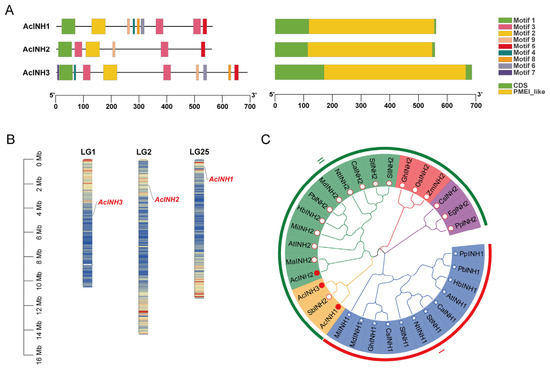
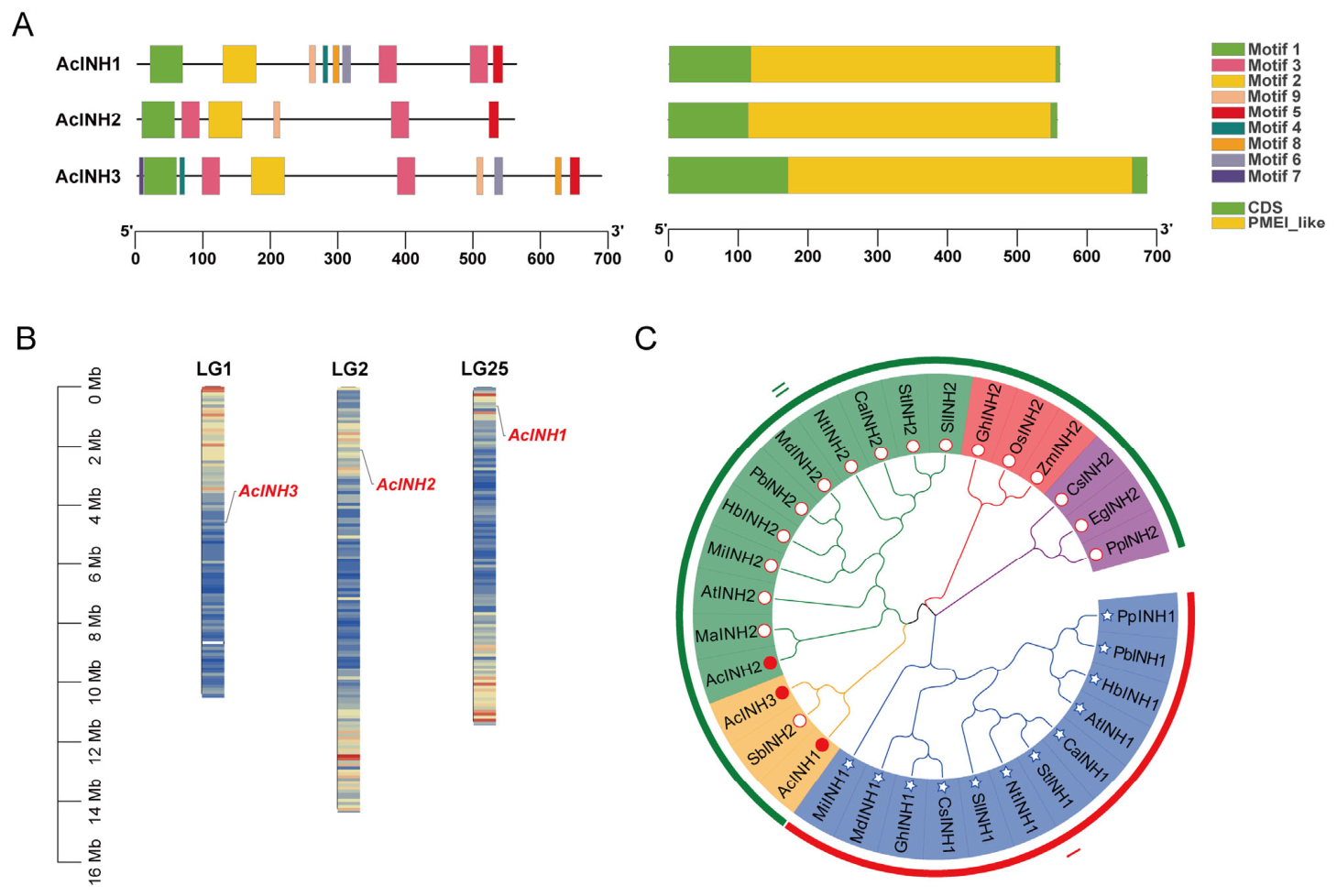
Genome-wide identification of AcINH family members in pineapple was carried out using the Pineapple Genomics Database (PGD) and BlastP for homologous searching, followed by comprehensive verification through homologous sequence alignment, sequence feature analysis, conserved domain identification, and three-dimensional protein structure modeling. Finally, three members of the INH family (AcINH1, AcINH2, and AcINH3) were identified. The detailed physicochemical characteristics of these genes and their encoded proteins, including gene ID, chromosomal location, isoelectric point, molecular weight, GRAVY value, and protein length, are summarized in Table S1. The AcINHs belong to the INVI/PMEI superfamily and possess a characteristic PMEI conserved domain, with their gene structure notably lacking introns (Figure 1A). Motif analysis revealed that the highly conserved motifs 1, 2, 3, 5, and 9 were present in all AcINHs. Motifs 4, 6, and 8 were specifically detected in both AcINH1 and AcINH3. Notably, motif 7 was only found in AcINH3, whereas nearly half of the motifs were absent in AcINH2 (Figure 1A). The three AcINHs were situated on distinct chromosomes: AcINH1 on chromosome 25, AcINH2 on chromosome 2, and AcINH3 on chromosome 1 (Figure 1B).
Figure 1.
Characterization analysis of AcINHs in pineapple. (A) Conserved domains, gene structure, and motifs of AcINHs. (B) Chromosomal localization of the AcINH family genes in pineapple. (C) Phylogenetic tree of INH proteins in pineapple and other plants. The analysis comprised three AcINHs (Ananas comosus), two NtINHs (Nicotiana tabacum), two CaINHs (Capsicum annuum), two SlINHs (Solanum lycopersicum), two StINHs (Solanum tuberosum), two CsINHs (Citrus sinensis), two AtINHs (Arabidopsis thaliana), two MiINHs (Mangifera indica), two PbINHs (Pyrus bretschneideri), two HbINHs (Hevea brasiliensis), two PpINHs (Prunus persica), two GhINHs (Gossypium hirsutum), two MdINHs (Malus domestica), one OsINH (Oryza sativa), one ZmINH (Zea mays), one SbINH (Sorghum bicolor), one EgINH (Elaeis guineensis), and one MaINH (Musa acuminata subsp. malaccensis).
In this study, we used the INH amino acid sequences of pineapple and seventeen plant species, including rice, corn, sorghum, tobacco, Arabidopsis, tomato, apple, and pear, for phylogenetic tree analysis (Figure 1C). The INH proteins from these plants could be categorized into two groups, I and II, based on the different types of INH1 and INH2. AcINH1 and AcINH3 exhibited a close phylogenetic relationship with these two groups. Furthermore, AcINH3 clustered with AcINH2 and SbINH2 into one distinct subcluster, which formed a larger clade with INH2 from other species.
2.2. Homology Analysis of AcINHs
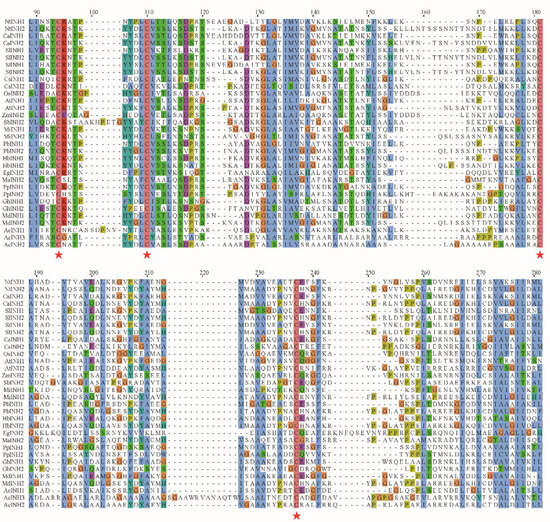
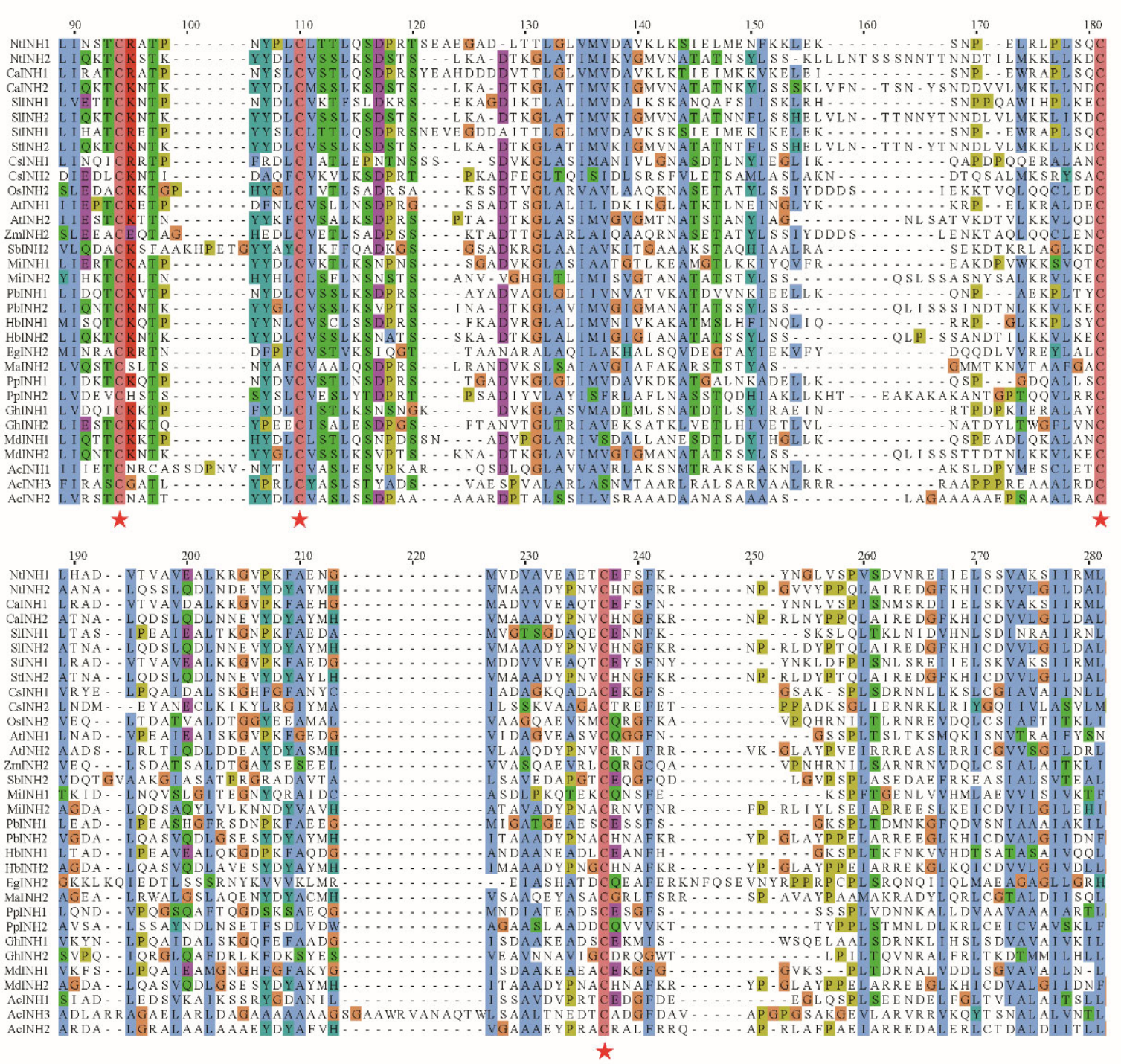
To investigate the sequence conservation, structural characteristics and evolutionary relationships of pineapple AcINH proteins and their homologous proteins from other plant species, we performed a comparative homology analysis of AcINH amino acid sequences from pineapple with those from the seventeen other plant species (Figure 2). The findings indicate that all proteins exhibited the four conserved cysteine residues located at positions 94, 110, 181, and 237, which are characteristic of the INH protein family. The two intermolecular disulfide bonds formed by these cysteine residues are crucial for maintaining the structural conformation of INH proteins [34]. The amino acid sequence homology of INH proteins across plants was low, and there was significant variability in INH amino acid sequences within individual plants. For example, the highest sequence homology observed among the three AcINHs in pineapple was only 32.6% (Table S2).
Figure 2.
Homology comparison of AcINH amino acid sequences. The amino acid sequences of AcINHs from pineapple were analyzed in comparison to those from 17 other plant species. The four highly conserved cysteine residues characteristic of INH family proteins were highlighted using red five-pointed stars.
2.3. Protein Structure Prediction of AcINHs in Pineapple
The secondary structures of AcINH proteins were analyzed with the PRABI-GERLAND online server. Among the three AcINH proteins, the α-helix represented the most abundant secondary structural element, accounting for 50–70% of the total structure, followed by random coil at 20–35%. By contrast, the proportions of β-sheets and extended strands were relatively low, both accounting for less than 10% (Table S3).
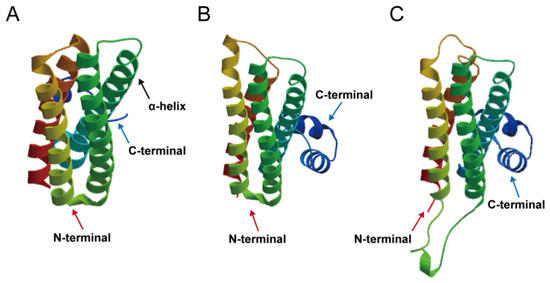
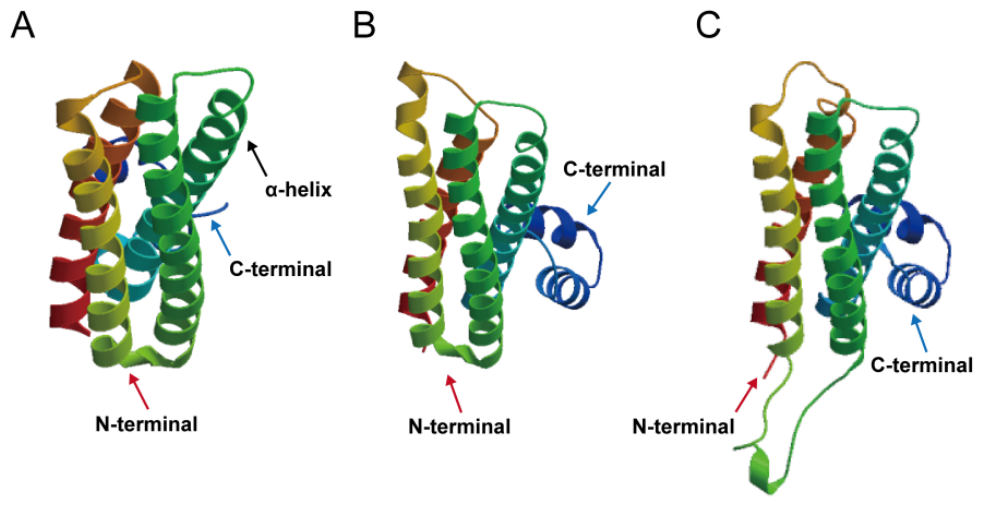
The tertiary structure models of AcINH proteins were constructed using the online server SWISS-MODEL. Structural analysis revealed that the N-terminal region of AcINH proteins contained four asymmetric α-helices that folded inward rather than extending outward (Figure 3). Each of these four α-helices harbors an AIN-binding motif, which acts as a key functional region involved in regulating AIN activity.
Figure 3.
Tertiary structure of AcINH proteins. (A) Tertiary structure of AcINH1 protein. (B) Tertiary structure of AcINH2 protein. (C) Tertiary structure of AcINH3 protein.
2.4. Expression Patterns of AcINHs in Pineapple
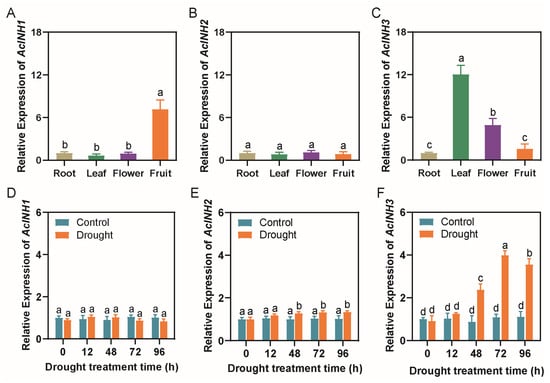
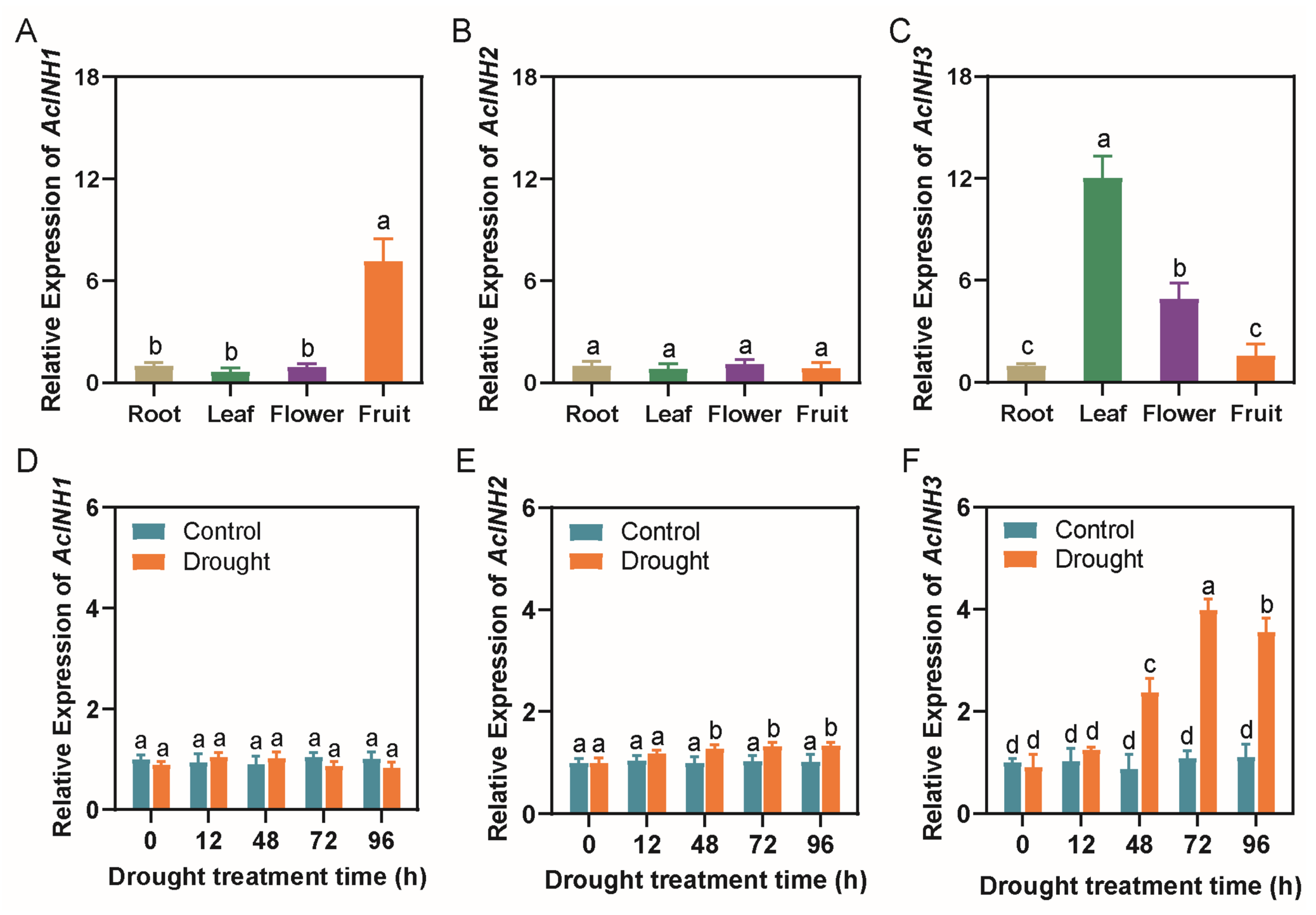
To investigate the potential functional roles of AcINHs, we examined the expression patterns of the three AcINHs across various pineapple tissues (Figure 4A–C). AcINH1 exhibited a pronounced fruit-specific expression pattern, with its transcript abundance being significantly higher in fruits than in roots, leaves, and flowers. AcINH2 displayed constitutively low expression across all examined tissues. AcINH3 showed a leaf- and flower-preferential expression profile, with the highest transcript abundance found in leaves, followed by flowers (Figure 4A–C). Collectively, the distinct tissue-specific expression patterns of the AcINH gene family suggest functional diversification, implying that these genes may execute specialized roles in the growth and development of different pineapple tissues.
Figure 4.
Analysis of AcINH expression in different tissues and under drought treatment. (A) Analysis of AcINH1 expression in different tissues. (B) Analysis of AcINH2 expression in different tissues. (C) Analysis of AcINH3 expression in different tissues. (D) Analysis of AcINH1 expression under drought treatment. (E) Analysis of AcINH2 expression under drought treatment. (F) Analysis of AcINH3 expression under drought treatment. Bars represent mean ± SD (n = 3), and a–d represent p ≤ 0.05 (one-way ANOVA with Tukey’s multiple comparison test).
To determine whether AcINHs respond to drought stress, we analyzed the expression levels of the three genes in the leaves of pineapple seedlings under PEG-simulated drought stress at various treatment durations. The results indicated that the expression of AcINH1 and AcINH2 remained relatively stable and did not exhibit significant changes with prolonged treatment time (Figure 4D,E). In contrast, the expression of AcINH3 initially increased before subsequently declining, reaching a peak at 72 h, and was significantly higher than that of the control group at 48 h, 72 h, and 96 h (Figure 4F). This suggests that AcINH3 plays a critical role in the response of pineapple to drought stress. Collectively, these results reveal functional divergence among the AcINH gene family in response to drought stress, with AcINH3 being the only member significantly induced by drought. Thus, we then selected AcINH3 for biochemical role and functional analyses in pineapple plants.
2.5. Knockout of AcINH3 in Pineapple Enhances CWIN Activity, Sucrose Catabolism, and Plant Growth
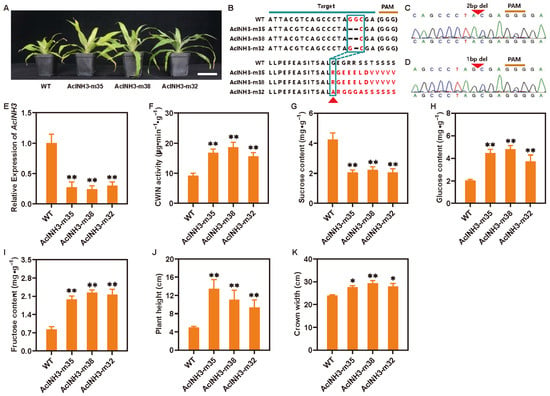
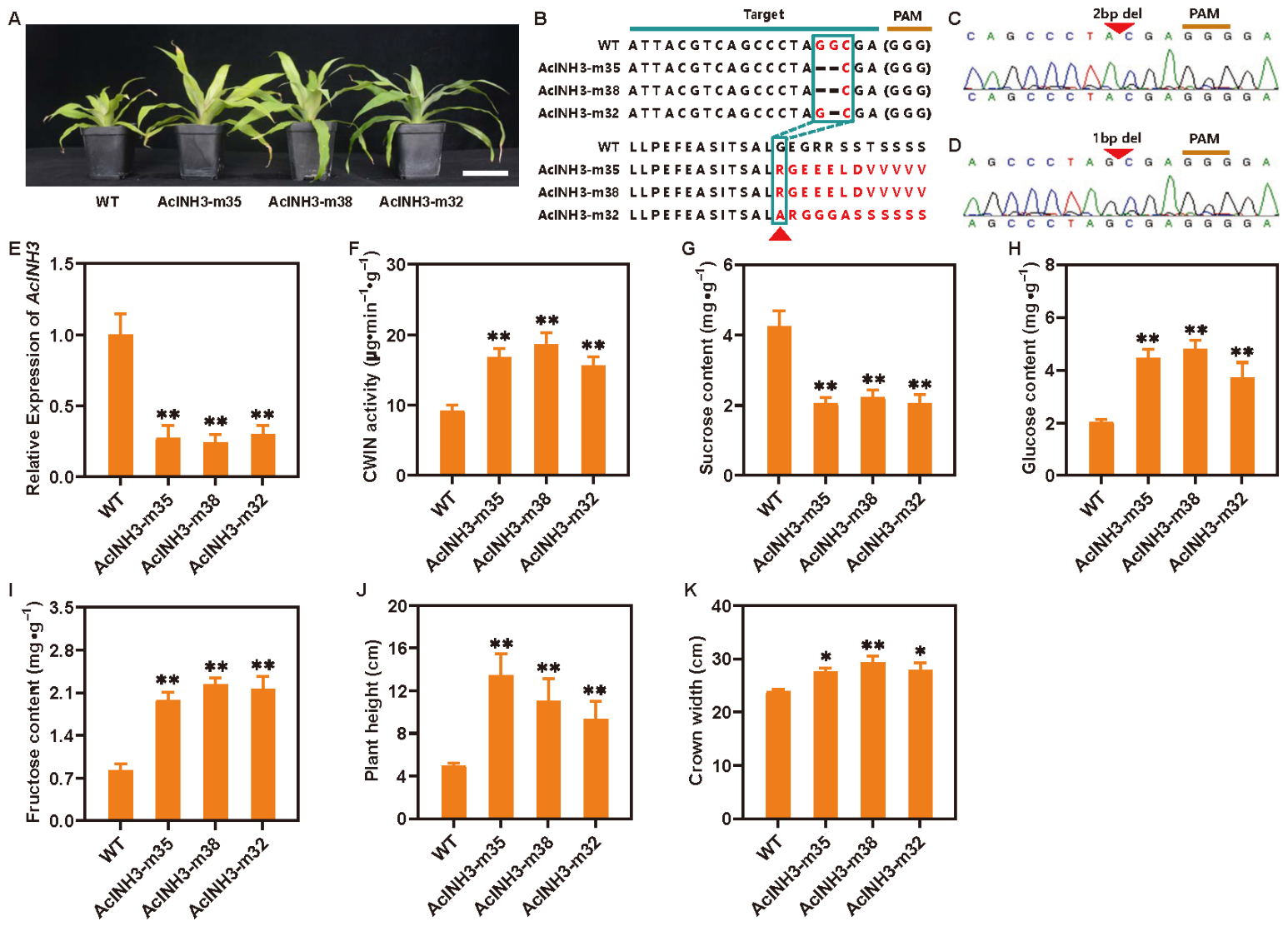
A CRISPR/Cas9 editing vector targeting AcINH3 was constructed using the Golden Gate cloning system. The process commenced with the cloning of the AcINH3 cDNA, followed by the design of the sgRNA for AcINH3 based on the conserved sequences of AcINHs. The sgRNA sequence (attacgtcagccctaggcga) (Figure 5B) was selected due to its optimal specificity, high editing efficiency, and lack of off-target effects. Subsequently, editing vectors suitable for monocotyledonous pineapple were screened, and target primers were designed using the CRISPR-multiplex tool. The construction of the AcINH3 editing vector was successfully achieved through enzyme digestion and ligation techniques. Furthermore, Agrobacterium-mediated transformation was performed in pineapple embryogenic calli, resulting in the generation of AcINH3-edited or genetically modified (GM) plants with three strains: AcINH3-m35, AcINH3-m38, and AcINH3-m32 (Figure 5A).
Figure 5.
AcINH3 regulates sucrose metabolism and enhances growth by modulating CWIN activity. (A) Morphological characteristics of GM plants, including AcINH3-m35, AcINH3-m38, and AcINH3-m32. The scale bar indicates 5 cm. (B) Target sequence analysis of GM plants. (C,D) The edited types of GM plants. (E) AcINH3 expression in GM plants. (F) CWIN activity of GM plants. (G) Sucrose content of GM plants. (H) Glucose content of GM plants. (I) Fructose content of GM plants. (J) Plant height of GM plants. (K) Crown width of GM plants. Bars represent mean ± SD (n = 3), and * and ** represent p ≤ 0.05 and p ≤ 0.01 (one-way ANOVA with Tukey’s multiple comparison test).  denotes the 29th amino acid.
 indicates the position at which the nucleotide base and the corresponding amino acid begin to undergo mutation.
denotes the 29th amino acid. indicates the position at which the nucleotide base and the corresponding amino acid begin to undergo mutation.
To determine the successful editing of AcINH3, the type of editing, and the genotype of the GM plants, sequencing was employed. Sequencing results indicated that the strains AcINH3-m35 and AcINH3-m38 demonstrated homozygous mutations characterized by the deletion of two bases, leading to frameshift mutations in the encoded amino acids beginning at the 29th position (Figure 5B,C). In addition, the strain AcINH3-m32 exhibited homozygous mutations characterized by the deletion of a single base, resulting in six consecutive amino acid alterations starting from the 29th position (Figure 5B,D).
Further analysis revealed a significant decrease in AcINH3 expression in GM plants (Figure 5E). Notably, CWIN activity and hexose levels (glucose and fructose) in GM plants were significantly elevated compared to WT plants (Figure 5F,H,I), while sucrose content was significantly reduced (Figure 5G). These findings suggested that AcINH3 knockout markedly enhanced CWIN activity and facilitated the conversion of sucrose to hexose. From a plant growth perspective, GM plants demonstrated significantly more robust growth and development compared to WT plants (Figure 5A), with both the width and height of GM plants being significantly greater than those of WT plants (Figure 5J,K). In summary, AcINH3 knockout substantially promoted the growth and development of pineapple plants, likely due to the increased CWIN activity in GM plants, which enhances the conversion of sucrose to hexose, thereby providing an ample carbon source and energy for the growth and development of pineapple plants. This in vivo study provides empirical evidence supporting the hypothesis that AcINH3 regulates sucrose metabolism by modulating CWIN activity.
2.6. Knockout of AcINH3 in Pineapple Promotes Drought Resistance
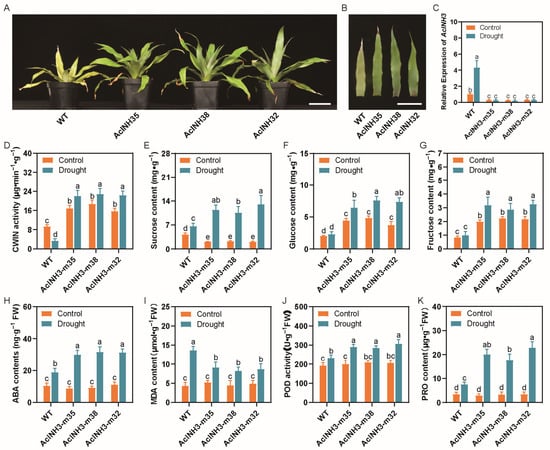
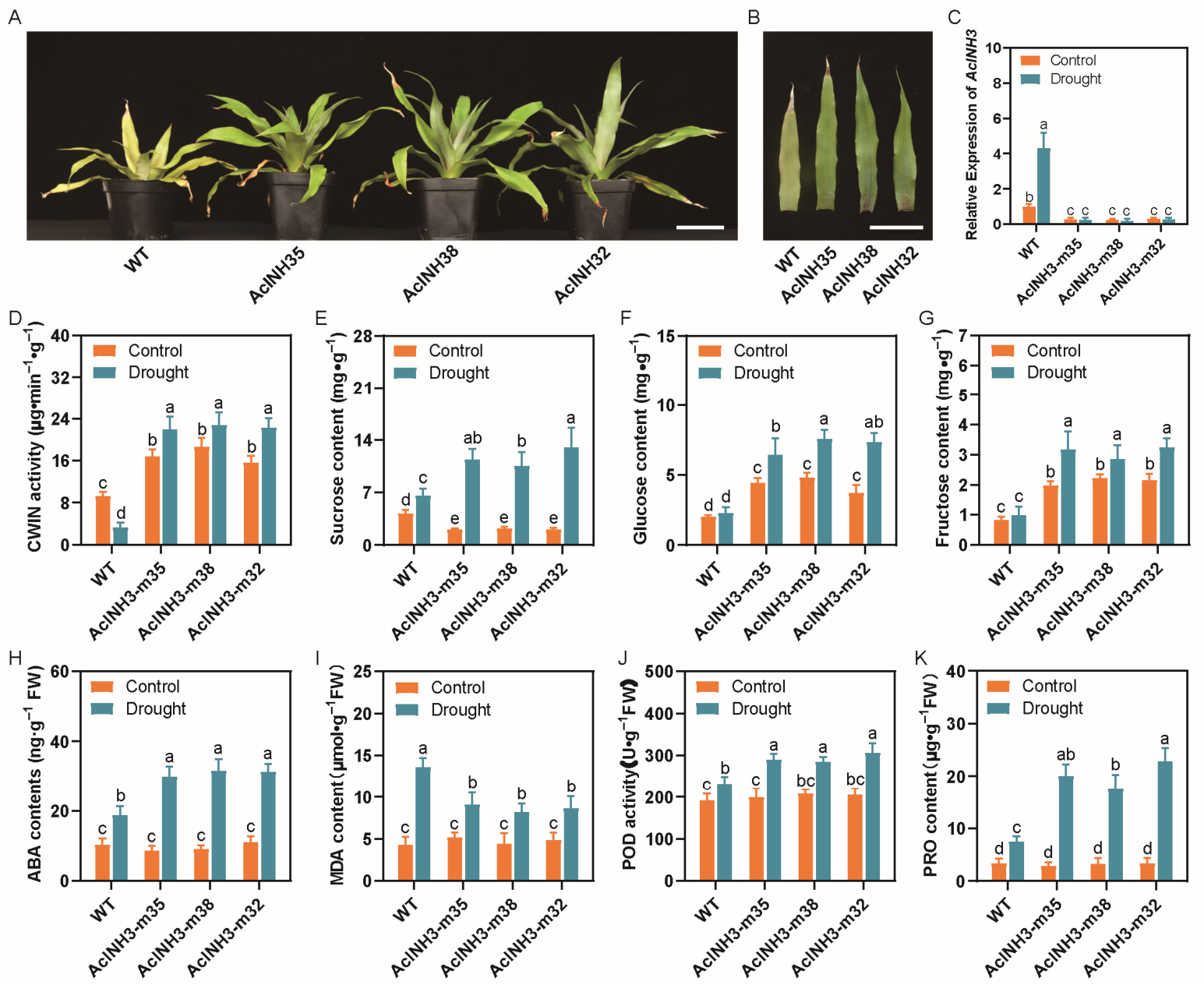
Following a 72 h treatment with 20% PEG6000, it was unexpectedly observed that the WT plants exhibited pronounced chlorosis, and the tips of the outer leaves dried inward. In contrast, GM plants demonstrated vigorous growth, with no signs of chlorosis or leaf tip desiccation (Figure 6A,B), thereby demonstrating enhanced drought resistance compared to WT plants.
Figure 6.
Determination of drought resistance in GM plants. (A) Morphological characteristics of GM plants. The scale bar indicates 5 cm. (B) Leaf morphology of GM plants. The scale bar indicates 5 cm. (C) AcINH3 expression in WT and GM plants under drought stress. (D) CWIN activity in WT and GM plants under drought stress. (E) Sucrose content in WT and GM plants under drought stress. (F) Glucose content in WT and GM plants under drought stress. (G) Fructose content in WT and GM plants under drought stress. (H) ABA content in WT and GM plants under drought stress. (I) MDA levels in WT and GM plants under drought stress. (J) POD activity in WT and GM plants under drought stress. (K) PRO levels in WT and GM plants under drought stress. Bars represent mean ± SD (n = 3), and a–e represent p ≤ 0.05 (one-way ANOVA with Tukey’s multiple comparison test).
Under drought stress conditions, the expression level of AcINH3 in WT plants increased significantly, whereas it remained extremely low in GM plants, showing no significant deviation from the control (Figure 6C). Notably, CWIN activity exhibited an inverse relationship with the expression level of AcINH3; it was significantly diminished in WT plants while markedly enhanced in GM plants (Figure 6D). These results suggest that AcINH3 is upregulated in response to drought stress; the expression of AcINH3 increases in WT plants, leading to a decrease in CWIN activity due to the inhibitory effects of AcINH3. Conversely, the expression level of AcINH3 remains extremely low in GM plants, resulting in negligible inhibitory effects, which allows for an increase in CWIN activity.
In our study, we observed that under drought stress conditions, the sucrose content in WT plants exhibited a significant increase, whereas the levels of glucose and fructose did not differ significantly from those in the control group. In contrast, GM plants demonstrated a marked increase in the content of sucrose, glucose, and fructose (Figure 6E–G).
We further assessed the indicators of drought resistance. The findings indicated that, under drought stress conditions, the levels of ABA, MDA, PRO, and the activity of POD in both WT and GM plants increased rapidly, exhibiting significantly higher values compared to the control group. Notably, the ABA and PRO levels, as well as POD activity, were markedly elevated in GM plants relative to WT plants (Figure 6H,J,K), whereas the MDA content was significantly reduced in GM plants compared to WT plants (Figure 6I). These findings suggest that AcINH3 knockout substantially enhances drought resistance in pineapple plants.
2.7. AcINH3 Interacts with AcCWIN1 In Vitro
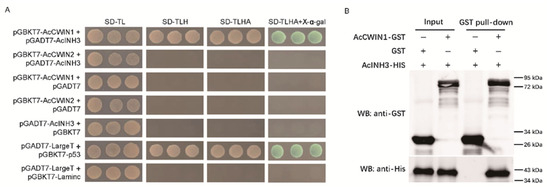
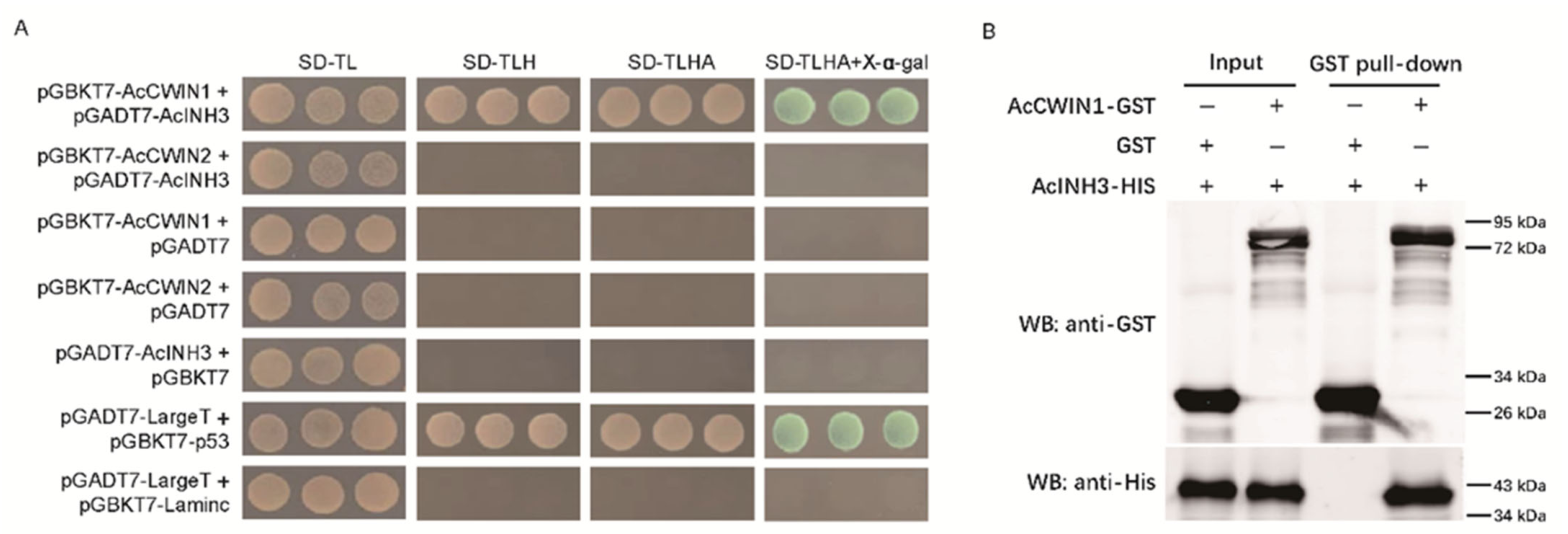
Previous research indicated that INHs and CWINs have physical interactions in vivo, which affect the activity of CWIN [24]. To identify the interacting partners of pineapple AcINH3, a Y2H assay was performed to investigate the physical interaction between AcINH3 and two known AcCWIN isoforms (AcCWIN1 and AcCWIN2) [11] (Table S4). AcCWIN1 and AcCWIN2 were used as “bait,” while AcINH3 functioned as “prey” for point-to-point verification of protein interactions. The results indicated that AcINH3 specifically interacted with AcCWIN1, whereas no interaction was observed between AcINH3 and AcCWIN2. Additionally, the control group yeast strains, pGBKT7-AcCWIN1, pGBKT7-AcCWIN2, and pGADT7-AcINH3, did not display spontaneous activation or cytotoxic effects (Figure 7A).
Figure 7.
Interaction analysis of AcINH3 and AcCWINs in vivo. (A) Interaction analysis of AcINH3 and AcCWINs by the yeast two-hybrid system. Yeast cells were co-transformed with pGBKT7-AcCWIN1/2 and pGADT7-AcINH3; the pGADT7-LargeT and pGBKT7-p53 served as positive controls, and pGADT7-LargeT and pGBKT7-Laminc were used as negative controls. Cultures were grown in SD-TL, SD-TLH, and SD-TLHA media, respectively. The interaction was detected only on pGBKT7-AcCWIN1 and pGADT7-AcINH3 co-cultured medium. (B) Interaction analysis of AcINH3 and AcCWINs by glutathione S-transferase pull-down. AcCWIN1-GST and AcINH3-HIS plasmids were transformed into BL21 receptor cells. Following induction, extraction, and purification, both AcCWIN1-GST and AcINH3-HIS proteins were detected in the input assay. However, the AcINH3-HIS protein was identified in the precipitate of AcCWIN1-GST following a GST pull-down assay.
The interaction between AcCWIN1 and AcINH3 was further confirmed by a GST pull-down assay. Both AcCWIN1-GST and AcINH3-HIS proteins were expressed, as evidenced by their detection in the input samples. Furthermore, AcINH3-HIS was observed in the precipitate of AcCWIN1-GST, while it was absent in the control GST protein without the target (Figure 7B). Collectively, these findings from Y2H and GST pull-down assays provide compelling evidence for the direct interaction between AcINH3 and AcCWIN1.
3. Discussion
3.1. AcINH3 Influences Sucrose Metabolism by Regulating CWIN Activity
Beyond transcriptional regulation, CWIN activity in horticultural crops is modulated by INHs at the post-translational level through protein–protein interactions. In tomato, INVINH1 interacts with CWIN in the cell wall matrix, and silencing INVINH1 significantly increases CWIN activity and elevates hexose accumulation in fruits [24]. In potato, StInvInh1 interacts with StCWINV2, specifically modulating CWIN activity without altering its expression level [27]. In this study, AcINH3, which exhibits a strong response to drought stress, was identified in pineapple. The interaction between AcINH3 and AcCWIN1 was confirmed by Y2H and pull-down assays. Following AcINH3 knockout using CRISPR/Cas9 gene editing technology, a significant enhancement in CWIN activity was observed, accompanied by a decrease in sucrose content and an increase in hexose content in GM lines. These findings are consistent with those of previous studies [24,26]. Thus, similar to other horticultural crops, AcINH3 in pineapple regulates CWIN activity through protein–protein interactions, thereby influencing sugar accumulation.
3.2. AcINH3 Negatively Regulates the Growth and Development of Pineapple
The INH–CWIN regulatory module influences the rate of sucrose decomposition, subsequently altering sugar composition and content, which is essential for plant growth and development [35]. For instance, the overexpression of INHs in Arabidopsis and tobacco suppresses invertase activity, impedes plant growth and development, and ultimately results in plant mortality [36]. In tomato, silencing INVINH1 did not impact the transcription of cell wall invertase genes LIN6 and LIN8, but it significantly enhanced CWIN activity and delayed leaf senescence [24]. These findings underscore the crucial role of INHs in plant growth and development. In this study, CRISPR/Cas9 gene editing technology was used to knock out AcINH3, resulting in a marked enhancement of CWIN activity in GM plants, which exhibited robust growth. The results support the hypothesis that AcINH3 plays a crucial role in sucrose metabolism and pineapple growth and development, and that eliminating AcINH3 effectively promotes pineapple growth.
3.3. AcINH3 Negatively Modulates Drought Tolerance in Pineapple
Under adverse environmental conditions, plants primarily modulate intracellular sugar accumulation via key regulatory factors involved in glucose metabolism to mitigate stress responses [37]. For instance, changes in the expression of INHs significantly influenced abiotic stress resistance in species such as potato [38], tomato [39], poplar [40], and Arabidopsis [41]. Notably, distinct INHs perform diverse functions in managing abiotic stress. The suppression of INVINH1 improved CWIN activity and cold tolerance in tomato [39], whereas Zm-INVINH4 is significantly expressed under drought stress, accompanied by a decrease in CWIN activity in maize [42]. Nonetheless, the role of INHs in drought stress resistance in plants remains inadequately understood. Under conditions of drought stress, plant cells typically synthesize and accumulate osmotic substances rapidly, thereby regulating osmotic pressure to mitigate cell damage caused by water scarcity [8]. Drought stress can enhance the accumulation of soluble sugars by increasing sink strength, with CWIN playing a crucial role in modulating this sink strength through the regulation of sucrose allocation to the extracellular matrix [43]. Researchers have demonstrated that the hydrolysis of apoplastic sucrose, facilitated by CWIN, contributes to the generation of negative water potential and establishes a concentration gradient that supports the continuous export of sucrose to the apoplastic space [15,44]. The significantly enhanced CWIN activity in tomato plants led to enhanced drought stress tolerance [20]. In this study, AcINH3 knockout activated CWIN activity, thereby enhancing soluble sugar accumulation and drought tolerance in pineapple. These results indicate that increased CWIN activity is the primary cause of improved drought resistance in AcINH3 knockout lines. Furthermore, we speculate that intracellular sucrose resynthesis or the regulation of sugar transporters is also implicated in this soluble sugar accumulation and drought stress response [45], representing key directions for our future investigations. It is worth noting that AcINH3 transcription was significantly reduced in gene-edited lines despite intact promoter regions, likely due to post-transcriptional regulation such as nonsense-mediated mRNA decay (NMD) and RNA instability induced by coding region mutations [46,47].
4. Materials and Methods
4.1. Bioinformatics Analysis
The gene structure of the AcINH family was analyzed using the Gene Structure Display Server v.2.0 online, while the amino acid sequences and homology of the AcINH family were assessed using MegAlign v.7.1 (DNASTAR Inc., Madison, WI, USA). MEME Suite v.5.5.3 was used to investigate the conserved domains and motifs present in AcINH family proteins. In addition, the genomic location information of AcINH family genes was extracted from the genome data of pineapple F153, which has a closer genetic relationship with ‘Comte de Paris’. The chromosomal distribution of these genes was visualized using the “Show Genes on Chromosome” function in TBtools (https://github.com/CJ-Chen/TBtools-II, 20 September 2024). In addition, genomic location information of the AcINH family genes was extracted from the genome data of the pineapple F153, which has a closer genetic relationship with ‘Comte de Paris’.
In the phylogenetic analysis, the amino acid sequences of INHs from pineapple, rice, corn, sorghum, tobacco, Arabidopsis, tomato, apple, and pear were retrieved from the Phytozome database (Table S5). These sequences were analyzed using MEGA v.7.0, applying the Jones–Taylor–Thornton model. Subsequently, a phylogenetic tree was constructed using the maximum likelihood method [48].
In addition, the secondary structures of AcINH proteins were analyzed via the PRABI-GERLAND online platform, and their tertiary structure models were constructed with the SWISS-MODEL online server.
4.2. Plant Materials
In this study, the conventional dominant variety ‘Comte de Paris’ pineapple in the “Queen” category was selected as the experimental material and cultivated in the pineapple germplasm resource nursery at the South Subtropical Crops Research Institute, Zhanjiang, China (21°100′ N, 110°160′ E). A standardized approach was used for fertilization, irrigation, and pest management using pot cultivation.
4.3. Drought Stress Treatment and Sample Collection
To investigate the expression patterns of AcINHs, we collected various tissues (roots, leaves, flowers, and fruits) from pineapple plants. Based on the water stress treatment method described by [49], pineapple seedlings at the ten-leaf stage underwent treatment with 20% PEG6000, while the control group was maintained in water. PEG treatment was performed once at the beginning of the drought stress experiment, and the state was maintained until sampling. Leaf samples were collected at 12, 24, 48, 72, and 96 h post-treatment, with each time point replicated three times. GM plants were also treated with 20% PEG6000 solution for 72 h. The collected leaves were frozen and stored at −80 °C for subsequent analyses of drought resistance indices, enzyme activity, sugar content, and gene expression.
4.4. qRT-PCR Analysis
Total RNA from pineapple leaves was extracted using the Polysaccharide Polyphenol Plant Total RNA Extraction Kit (Beijing Huayueyang Biotechnology Co., Ltd., Beijing, China). Subsequently, the TransScript One-Step gDNA Removal and cDNA Synthesis SuperMix kits (Beijing Quanshi Gold Biotechnology Co., Ltd., Beijing, China) were used for reverse transcription, facilitating first-strand cDNA synthesis. Primers were designed using Primer Premier v.5.0, with actin as the internal reference gene. qRT-PCR analysis was performed using the 2×TransStart® Top Green qPCR SuperMix kit (TransGen Biotech, Beijing, China). Relative gene expression levels were determined using the 2−△△Ct method. Primer information for gene expression analysis is provided in Table S6.
4.5. Construction of AcINH3 Editing Vector
The AcINH3 editing vector was constructed using the Golden Gate cloning method. Initially, cDNA of AcINH3 was cloned, and then the sgRNA of AcINH3 was designed utilizing the online tool CRISPOR (http://crispor.tefor.net/, 20 September 2024). The sgRNA sequence (attacgtcagccctaggcga) located within the 70–89 base pair region of the AcINH3 coding sequence was identified as the specific target for this study. Comparative analyses revealed that this target exhibits excellent specificity, high editing efficiency, and remarkably low off-target effects.
Subsequently, suitable vectors for pineapple were identified from the available options, specifically pMOD_A1110, pMOD_B2312, pMOD_C0000, and pTRANS_260d, using the CRISPR-multiplex online tool (https://github.com/eric-erki/awesome-CRISPR#multiplexing, 20 September 2024). Target primers were designed using the “Primer Design” and “Mapping” features of the CRISPR-multiplex tool (Table S7). The recombinant plasmid for AcINH3 expression was constructed using enzyme digestion and ligation techniques [50].
4.6. Agrobacterium-Mediated Genetic Transformation
The CRISPR/Cas9 editing vector targeting AcINH3 was constructed, and the pineapple embryogenic callus was transformed using Agrobacterium-mediated transformation [51]. Briefly, the initial callus was derived from the axillary buds of ‘Comte de Paris’ on a callus induction medium for approximately 30 to 40 days. Subsequently, these primary calli underwent proliferation culture and somatic embryo induction culture to develop into embryogenic callus, which served as transgenic receptor material. The embryogenic callus was sectioned into pieces measuring 0.8 to 1.0 cm and incubated in darkness on a pre-culture medium for two days prior to infection with Agrobacterium strains harboring the AcINH3 editing vector. Following infection with the bacterial suspension at an OD600 of 0.3 to 0.5 for 3 to 5 min, the pre-cultured embryogenic callus was maintained in darkness on a co-culture medium for three days. Selection of resistant buds and callus was conducted on a medium containing phosphinothricin, and the resistant buds were subsequently rooted on a rooting medium. The bar gene was screened using a phosphinothricin selection concentration of 1.5 mg·L−1. Various media used in the experiments are detailed in Table S8.
4.7. Identification and Genotype Analysis of GM Plants
Sequencing was employed to ascertain the successful editing of AcINH3, to identify the type of editing, and to determine the genotype of the GM plants. The synthesis of target primers (Table S9) and the detection of edited sequences were conducted by Shenggong Bioengineering Co., Ltd., Shanghai, China. The type of editing and the genotype of the GM plants were confirmed based on the sequencing results.
4.8. Evaluation of Off-Target Effects
To minimize off-target effects, we concentrated on analyzing the conserved sequences of AcINHs in the design of sgRNA for AcINH3, and we selected sequences that demonstrated high specificity, elevated editing efficiency, and no off-target effects as the target sgRNA. Additionally, the editing efficiency and potential off-target effects of the AcINH3 can be rapidly assessed through sequencing.
4.9. CWIN Activity Assay
CWIN activity was assessed following a previously established protocol [52]. Each assay included three biological replicates and three technical replicates.
4.10. Determination of Sugar Content
The contents of sugars (fructose, glucose, and sucrose) were measured using high-performance liquid chromatography. To determine sugar content, chromatography was conducted using a Series 200 amino acid column at a column temperature of 35 °C, with a mobile phase consisting of acetonitrile and deionized water in a ratio of 70:30 (v/v). The flow rate was maintained at 1 mL·min−1, and a sample volume of 10 μL was used for each analysis. Quantitative determinations were conducted using the external standard method [53]. Qualitative and quantitative analyses were performed in accordance with the methodologies established by Wang et al. (2018) [54].
4.11. Determination of ABA Content and Antioxidant Enzyme Activity
The quantification of ABA content was performed following the methodology described by Šimura et al. (2018) [55]. Ground samples, weighing 50 milligrams each, were extracted using a 75% methanol solution, subsequently concentrated, and re-dissolved in an 80% methanol solution. The analysis was executed utilizing a liquid chromatography-electrospray ionization–tandem mass spectrometry (LC-ESI-MS/MS) system, specifically the UHPLC, ExionLC™ AD (SCIEX, Framingham, MA, USA). The mobile phase comprised solvent A, consisting of water with 0.04% acetic acid, and solvent B, consisting of acetonitrile with 0.04% acetic acid. The concentration of plant hormones was determined using a mass spectrometer (AB 6500+QTRAP® LC-MS/MS System, SCIEX, Framingham, MA, USA) equipped with an ESI Turbo ion spray interface. The experiment was conducted with three biological replicates.
POD activity was assessed using the guaiacol method [56], MDA level was determined by the thiobarbituric acid colorimetric method [57], and PRO content was quantified through the ninhydrin colorimetric method [58].
4.12. Protein Interaction Analysis
In the Y2H assay, the cDNA sequences of AcCWIN1 and AcINH3 were amplified and inserted into the pGBKT7 or pGADT7 vectors. Initially, the plasmids pGBKT7-AcCWIN1, pGBKT7-AcINH3, and pGBKT7 (negative control) were introduced into yeast strain AH109 to assess self-activation. Subsequently, various combinations of plasmids, including pGBKT7-AcCWIN1 and pGBKT7-AcINH3, pGBKT7 and pGBKT7-AcINH3 (controls), pGBKT7-AcCWIN1 and pGBKT7 (trial controls), pGADT7-LargeT and pGBKT7-p53 (positive control), and pGADT7-LargeT and pGBKT7-LaminC (negative control), were co-cultured in SD-TL (-Trp/-Leu), SD-TLH (-Trp/-Leu/-His), and SD-TLHA (-Trp/-Leu/-His/-Ade) media for detection.
In the GST pull-down experiment, fusion expression vectors for AcCWIN1-GST and AcINH3-HIS were constructed. These vectors were extracted and transformed into Escherichia coli BL21(DE3) competent cells, followed by the selection of monoclonal colonies for induction culture. The AcCWIN1-GST and AcINH3-HIS proteins were then extracted and purified. Finally, pull-down assays and Western blot analyses were performed to elucidate the interaction mechanisms of the target proteins.
4.13. Statistical Analysis
Data analysis was performed with SAS v.9.3 (SAS Institute, Cary, NC, USA) using analysis of variance (PROC ANOVA) with multiple comparison correction. Mean separation was assessed using Duncan’s multiple range test at the 0.05 significance level. In addition, Spearman’s correlation analysis was performed to evaluate the associations among attributes, and the results were visualized in a heatmap.
5. Conclusions
This study represents the first systematic characterization of the AcINH gene family in pineapple, accompanied by profiling of its expression patterns under drought stress. Notably, AcINH functions as a crucial negative regulator modulating sucrose catabolism, plant growth and development, and drought responses in pineapple. Knockout of AcINH3 elevated CWIN activity, reduced sucrose levels, promoted hexose accumulation, and subsequently boosted plant growth and development. Under drought stress, knockout of AcINH3 enhanced soluble sugar (sucrose, glucose, fructose) accumulation, elevated ABA and PRO contents, and strengthened POD activity, thus conferring enhanced drought resistance. These findings establish AcINH3 as a promising molecular target for modulating sugar metabolism and drought resistance in pineapple, providing key theoretical insights into CWIN-mediated stress tolerance and practical value for improving yield stability and fruit quality under global drought stress.
Supplementary Materials
The following supporting information can be downloaded at: https://www.mdpi.com/article/10.3390/plants15091306/s1, Table S1: Information on AcINHs and physicochemical characteristics of AcINH proteins; Table S2: Homology analysis of AcINH protein sequences in pineapple; Table S3: Prediction of the secondary structures of AcINH proteins; Table S4: Information of the CWIN family in pineapple; Table S5: Amino acid sequences of INHs in eighteen plant species; Table S6: Primers for qRT-PCR detection of AcINHs; Table S7: Target primers for AcINH3; Table S8: Medium and formulation; Table S9: Primers for detection of AcINH3 target.
Author Contributions
Y.G. and Q.W. performed the data analysis, prepared the figures, and wrote the original draft. H.Z. helped with gene function identification. A.G. and X.Z. reviewed and edited the manuscript. S.H. provided support for gene expression analysis. W.X. was in charge of protein interaction verification. W.S. provided support for determination of physiological data. All authors have read and agreed to the published version of the manuscript.
Funding
This work was financially supported by the Natural Science Foundation of Hainan Province (324MS099 and 326MS0309), the National Natural Science Foundation of China (32560711), and the Key Research and Development Project of Hainan Province (ZDYF2025XDNY125). We would like to thank TopEdit (www.topeditsci.com, 10 August 2025) for linguistic assistance during the preparation of this manuscript.
Data Availability Statement
All data included in the study were publicly available. All experiment data are provided in the attachment.
Conflicts of Interest
The authors declare no conflicts of interest.
References
- Sarangi, P.K.; Singh, T.A.; Singh, N.J.; Shadangi, K.P.; Srivastava, R.K.; Singh, A.K.; Chandel, A.K.; Pareek, N.; Vivekanand, V. Sustainable utilization of pineapple wastes for production of bioenergy, biochemicals and value-added products: A review. Bioresour. Technol. 2022, 351, 127085. [Google Scholar] [CrossRef] [Scilit] [PubMed]
- Ali, M.M.; Hashim, N.; Aziz, S.A.; Lasekan, O. Pineapple (Ananas comosus): A comprehensive review of nutritional values, volatile compounds, health benefits, and potential food products. Food Res. Int. 2020, 137, 109675. [Google Scholar] [CrossRef] [Scilit] [PubMed]
- Mehraj, M.; Das, S.; Feroz, F.; Wani, A.W.; Dar, S.Q.; Kumar, S.; Wani, A.K.; Farid, A. Nutritional Composition and Therapeutic Potential of Pineapple Peel-A Comprehensive Review. Chem. Biodivers. 2024, 21, e202400315. [Google Scholar] [CrossRef] [Scilit] [PubMed]
- Huang, X.; Rao, G.; Peng, X.; Xue, Y.; Hu, H.; Feng, N.; Zheng, D. Effect of plant growth regulators DA-6 and COS on drought tolerance of pineapple through bromelain and oxidative stress. BMC Plant Biol. 2023, 23, 180. [Google Scholar] [CrossRef] [Scilit]
- Gupta, A.; Rico-Medina, A.; Cano-Delgado, A.I. The physiology of plant responses to drought. Science 2020, 368, 266–269. [Google Scholar] [CrossRef] [Scilit]
- Keunen, E.; Peshev, D.; Vangronsveld, J.; Van Den Ende, W.; Cuypers, A. Plant sugars are crucial players in the oxidative challenge during abiotic stress: Extending the traditional concept. Plant Cell Environ. 2013, 36, 1242–1255. [Google Scholar] [CrossRef] [Scilit]
- Daloso, D.M.; Dos Anjos, L.; Fernie, A.R. Roles of sucrose in guard cell regulation. New Phytol. 2016, 211, 809–818. [Google Scholar] [CrossRef] [Scilit]
- Zhu, L.; Zhang, C.; Yang, N.; Cao, W.; Li, Y.; Peng, Y.; Wei, X.; Ma, B.; Ma, F.; Ruan, Y.; et al. Apple vacuolar sugar transporters regulated by MdDREB2A enhance drought resistance by promoting accumulation of soluble sugars and activating ABA signaling. Hortic. Res. 2024, 11, uhae251. [Google Scholar] [CrossRef] [Scilit]
- Wang, K.; Shao, X.; Gong, Y.; Zhu, Y.; Wang, H.; Zhang, X.; Yu, D.; Yu, F.; Qiu, Z.; Lu, H. The metabolism of soluble carbohydrates related to chilling injury in peach fruit exposed to cold stress. Postharvest Biol. Technol. 2013, 86, 53–61. [Google Scholar] [CrossRef] [Scilit]
- Yu, L.; Liu, H.; Shao, X.; Yu, F.; Wei, Y.; Ni, Z.; Xu, F.; Wang, H. Effects of hot air and methyl jasmonate treatment on the metabolism of soluble sugars in peach fruit during cold storage. Postharvest Biol. Technol. 2016, 113, 8–16. [Google Scholar] [CrossRef] [Scilit]
- Gao, Y.; Yao, Y.; Chen, X.; Wu, J.; Wu, Q.; Liu, S.; Guo, A.; Zhang, X. Metabolomic and transcriptomic analyses reveal the mechanism of sweet-acidic taste formation during pineapple fruit development. Front. Plant Sci. 2022, 13, 971506. [Google Scholar] [CrossRef] [Scilit]
- Khan, M.A.; Zaman, F.; Liu, Y.Z.; Alam, S.M.; Han, H.; Luo, Y.; Ateeq, M. CsMYB1-CwINV6 Module Involves in the Promotion of Soluble Sugar Accumulation in Citrus Fruits Under Drought Stress. Plant Cell Environ. 2025, 48, 5572–5583. [Google Scholar] [CrossRef] [Scilit]
- Hothorn, M.; Van den Ende, W.; Lammens, W.; Rybin, V.; Scheffzek, K. Structural insights into the pH-controlled targeting of plant cell-wall invertase by a specific inhibitor protein. Proc. Natl. Acad. Sci. USA 2010, 107, 17427–17432. [Google Scholar] [CrossRef] [Scilit] [PubMed]
- Sturm, A. Invertases. Primary structures, functions, and roles in plant development and sucrose partitioning. Plant Physiol. 1999, 121, 1–7. [Google Scholar] [CrossRef] [Scilit] [PubMed]
- Minami, A.; Kang, X.; Carter, C.J. A cell wall invertase controls nectar volume and sugar composition. Plant J. 2021, 107, 1016–1028. [Google Scholar] [CrossRef] [Scilit]
- Li, J.; Foster, R.; Ma, S.; Liao, S.J.; Bliss, S.; Kartika, D.; Wang, L.; Wu, L.; Eamens, A.L.; Ruan, Y.L. Identification of transcription factors controlling cell wall invertase gene expression for reproductive development via bioinformatic and transgenic analyses. Plant J. 2021, 106, 1058–1074. [Google Scholar] [CrossRef] [Scilit]
- Tang, G.Q.; Luscher, M.; Sturm, A. Antisense repression and vacuolar and cell wall invertase in transgenic carrot alters early plant development and sucrose partitioning. Plant Cell 1999, 11, 177–189. [Google Scholar] [CrossRef] [Scilit]
- Boyer, J.S.; Mclaughlin, J.E. Functional reversion to identify controlling genes in multigenic responses: Analysis of floral abortion. J. Exp. Bot. 2007, 58, 267–277. [Google Scholar] [CrossRef] [Scilit]
- Zanor, M.I.; Osorio, S.; Nunes-Nesi, A.; Carrari, F.; Lohse, M.; Usadel, B.; Kuhn, C.; Bleiss, W.; Giavalisco, P.; Willmitzer, L.; et al. RNA interference of LIN5 in tomato confirms its role in controlling Brix content, uncovers the influence of sugars on the levels of fruit hormones, and demonstrates the importance of sucrose cleavage for normal fruit development and fertility. Plant Physiol. 2009, 150, 1204–1218. [Google Scholar] [CrossRef] [Scilit] [PubMed]
- Albacete, A.; Cantero-Navarro, E.; Großkinsky, D.K.; Arias, C.L.; Balibrea, M.E.; Bru, R.; Fragner, L.; Ghanem, M.E.; González, M.d.l.C.; Hernández, J.A.; et al. Ectopic overexpression of the cell wall invertase gene CIN1 leads to dehydration avoidance in tomato. J. Exp. Bot. 2015, 66, 863–878. [Google Scholar] [CrossRef] [Scilit]
- Ruan, Y.L.; Jin, Y.; Yang, Y.J.; Li, G.J.; Boyer, J.S. Sugar input, metabolism, and signaling mediated by invertase: Roles in development, yield potential, and response to drought and heat. Mol. Plant 2010, 3, 942–955. [Google Scholar] [CrossRef] [Scilit]
- Coculo, D.; Lionetti, V. The plant invertase/pectin methylesterase inhibitor superfamily. Front. Plant Sci. 2022, 13, 863892. [Google Scholar] [CrossRef] [Scilit]
- Schwimmer, S.; Makower, R.U.; Rorem, E.S. Invertase & invertase inhibitor in potato. Plant Physiol. 1961, 36, 313–316. [Google Scholar] [CrossRef] [Scilit] [PubMed]
- Jin, Y.; Ni, D.; Ruan, Y. Posttranslational elevation of cell wall invertase activity by silencing its inhibitor in tomato delays leaf senescence and increases seed weight and fruit hexose level. Plant Cell 2009, 21, 2072–2089. [Google Scholar] [CrossRef] [Scilit] [PubMed]
- Su, T.; Wolf, S.; Han, M.; Zhao, H.; Wei, H.; Greiner, S.; Rausch, T. Reassessment of an Arabidopsis cell wall invertase inhibitor AtCIF1 reveals its role in seed germination and early seedling growth. Plant Mol. Biol. 2016, 90, 137–155. [Google Scholar] [CrossRef] [Scilit] [PubMed]
- Tang, X.; Su, T.; Han, M.; Wei, L.; Wang, W.; Yu, Z.; Xue, Y.; Wei, H.; Du, Y.; Greiner, S.; et al. Suppression of extracellular invertase inhibitor gene expression improves seed weight in soybean (Glycine max). J. Exp. Bot. 2017, 68, 469–482. [Google Scholar] [CrossRef] [Scilit]
- Liu, C.; Hu, S.; Liu, S.; Shi, W.; Xie, D.; Chen, Q.; Sun, H.; Song, L.; Li, Z.; Jiang, R.; et al. Functional characterization of a cell wall invertase inhibitor StInvInh1 revealed its involvement in potato microtuber size in vitro. Front. Plant Sci. 2022, 13, 1015815. [Google Scholar] [CrossRef] [Scilit]
- Wu, L.; Fan, S.; Li, S.; Li, J.; Zhang, Z.; Qin, Y.; Hu, G.; Zhao, J. LcINH1 as an inhibitor of cell wall invertase LcCWIN5 regulates early seed development in Litchi chinensis Sonn. Int. J. Biol. Macromol. 2024, 278, 134497. [Google Scholar] [CrossRef] [Scilit]
- Mhatre, M. Agrobacterium-mediated genetic transformation of pineapple (Ananas comosus L., Merr.). In Protocols for Micropropagation of Selected Economically-Important Horticultural Plants; Methods in Molecular Biology; Humana: Totowa, NJ, USA, 2013; Volume 11013, pp. 435–453. [Google Scholar]
- Zhang, W.; Wu, J.; He, J.; Liu, C.; Yi, W.; Xie, J.; Wu, Y.; Xie, T.; Ma, J.; Zhong, Z.; et al. AcMYB266, a key regulator of the red coloration in pineapple peel: A case of subfunctionalization in tandem duplicated genes. Hortic. Res. 2024, 11, uhae116. [Google Scholar] [CrossRef] [Scilit]
- Zhou, Q.; Priyadarshani, S.V.G.N.; Qin, R.; Cheng, H.; Luo, T.; Wai, M.H.; Mohammadi, M.A.; Liu, Y.; Liu, C.; Cai, H.; et al. AcWRKY28 mediated activation of AcCPK genes confers salt tolerance in pineapple (Ananas comosus). Hortic. Plant J. 2024, 10, 398–412. [Google Scholar] [CrossRef] [Scilit]
- Liu, X.; Yu, Y.; Yao, W.; Yin, Z.; Wang, Y.; Huang, Z.; Zhou, J.Q.; Liu, J.; Lu, X.; Wang, F.; et al. CRISPR/Cas9-mediated simultaneous mutation of three salicylic acid 5-hydroxylase (OsS5H) genes confers broad-spectrum disease resistance in rice. Plant Biotechnol. J. 2023, 21, 1873–1886. [Google Scholar] [CrossRef] [Scilit]
- Tripathi, J.N.; Ntui, V.O.; Shah, T.; Tripathi, L. CRISPR/Cas9-mediated editing of DMR6 orthologue in banana (Musa spp.) confers enhanced resistance to bacterial disease. Plant Biotechnol. J. 2021, 19, 1291–1293. [Google Scholar] [CrossRef] [Scilit] [PubMed]
- Hothorn, M.; Wolf, S.; Aloy, P.; Greiner, S.; Scheffzek, K. Structural insights into the target specificity of plant invertase and pectin methylesterase inhibitory proteins. Plant Cell 2004, 16, 3437–3447. [Google Scholar] [CrossRef] [Scilit] [PubMed]
- Castrillon-Arbelaez, P.A.; Delano-Frier, J.P. The sweet side of inhibition: Invertase inhibitors and their importance in plant development and stress responses. Curr. Enzyme Inhib. 2011, 7, 169–177. [Google Scholar] [CrossRef] [Scilit]
- Bonfig, K.B.; Berger, S.; Fatima, T.; González, M.C.; Roitsch, T. Metabolic control of seedling development by invertases. Funct. Plant Biol. 2007, 34, 508–516. [Google Scholar] [CrossRef] [Scilit]
- Zhou, Y.; Sun, M.; Sun, P.; Gao, H.; Yang, H.; Jing, Y.; Hussain, M.A.; Saxena, R.K.; Carther, F.I.; Wang, Q.; et al. Tonoplast inositol transporters: Roles in plant abiotic stress response and crosstalk with other signals. J. Plant Physiol. 2022, 271, 153660. [Google Scholar] [CrossRef] [Scilit]
- Mckenzie, M.J.; Chen, R.; Harris, J.C.; Ashworth, M.J.; Brummell, D.A. Post-translational regulation of acid invertase activity by vacuolar invertase inhibitor affects resistance to cold-induced sweetening of potato tubers. Plant Cell Environ. 2013, 36, 176–185. [Google Scholar] [CrossRef] [Scilit]
- Xu, X.; Hu, Q.; Yang, W.; Jin, Y. The roles of call wall invertase inhibitor in regulating chilling tolerance in tomato. BMC Plant Biol. 2017, 17, 195–208. [Google Scholar] [CrossRef] [Scilit]
- Su, T.; Han, M.; Min, J.; Zhou, H.; Zhang, Q.; Zhao, J.; Fang, Y. Functional characterization of invertase inhibitors PtC/VIF1 and 2 revealed their involvements in the defense response to fungal pathogen in Populus trichocarpa. Front. Plant Sci. 2020, 10, 1654. [Google Scholar] [CrossRef] [Scilit]
- Chen, S.; Liang, K.; Yin, D.; Ni, D.; Zhang, Z.; Ruan, Y. Ectopic expression of a tobacco vacuolar invertase inhibitor in guard cells confers drought tolerance in Arabidopsis. J. Enzyme Inhib. Med. Chem. 2016, 31, 1381–1385. [Google Scholar] [CrossRef] [Scilit]
- Chen, L.; Liu, X.; Huang, X.; Luo, W.; Long, Y.; Greiner, S.; Rausch, T.; Zhao, H. Functional characterization of a drought-responsive invertase inhibitor from maize (Zea mays L.). Int. J. Mol. Sci. 2019, 20, 4081. [Google Scholar] [CrossRef] [Scilit]
- Khan, M.A.; Liu, D.H.; Alam, S.M.; Zaman, F.; Luo, Y.; Han, H.; Ateeq, M.; Liu, Y.Z. Molecular physiology for the increase of soluble sugar accumulation in citrus fruits under drought stress. Plant Physiol. Biochem. 2023, 203, 108056. [Google Scholar] [CrossRef] [Scilit]
- Braun, D.M. Phloem Loading and Unloading of Sucrose: What a Long, Strange Trip from Source to Sink. Annu. Rev. Plant Biol. 2022, 73, 553–584. [Google Scholar] [CrossRef] [Scilit]
- Miu, Y.; Pan, S.; Mao, Y.; Chen, M.; Xie, Y.; Zhang, L.; Yu, S. Genome-Wide Identification of the SWEET Gene Family and Functional Analysis of LpSWEET13 in Perennial Ryegrass Under Drought Stress. Plants 2026, 15, 526. [Google Scholar] [CrossRef] [Scilit] [PubMed]
- Liang, Z.; Huang, C.; Xia, Y.; Ye, Z.; Fan, S.; Zeng, J.; Guo, S.; Ma, X.; Sun, L.; Huo, Y.X. Identification of functional sgRNA mutants lacking canonical secondary structure using high-throughput FACS screening. Cell Rep. 2024, 43, 114290. [Google Scholar] [CrossRef] [Scilit] [PubMed]
- Zhao, Y.; Wu, H.; Zhao, T.; Huang, S.; Hao, Y.; Chen, Y.; Feng, S.; Wang, L.; Zhu, Y.; Huang, K.; et al. Harnessing GhGRDP1 natural variation for enhanced cotton seed yield: A rhamnose-dependent strategy in breeding. J. Adv. Res. 2026, 82, 171–188. [Google Scholar] [CrossRef] [Scilit]
- Kumar, S.; Nei, M.; Dudley, J.; Tamura, K. MEGA: A biologist-centric software for evolutionary analysis of DNA and protein sequences. Brief. Bioinform. 2008, 9, 299–306. [Google Scholar] [CrossRef] [Scilit]
- Lv, J.; Chen, B.; Ma, C.; Qiao, K.; Fan, S.; Ma, Q. Identification and characterization of the AINV genes in five Gossypium species with potential functions of GhAINVs under abiotic stress. Physiol. Plant. 2021, 173, 2091–2102. [Google Scholar] [CrossRef] [Scilit] [PubMed]
- Long, H.; Zhao, H.; Wang, X.; Jia, R.; He, P.; Kong, H.; Guo, Y.; Guo, A. Construction of CRISPR plant expression vectors resistant to Papaya leaf curl virus. Chin. J. Trop. Crops. 2019, 40, 2022–2028. [Google Scholar]
- He, Y.; Luan, A.; Wu, J.; Zhang, W.; Lin, W. Overcoming key technical challenges in the genetic transformation of pineapple. Trop. Plants 2023, 2, 6. [Google Scholar] [CrossRef] [Scilit]
- Tomlinson, K.L.; McHugh, S.; Labbe, H.; Grainger, J.L.; James, L.E.; Pomeroy, K.M.; Mullin, J.W.; Miller, S.S.; Dennis, D.T.; Miki, B.L. Evidence that the hexose-to-sucrose ratio does not control the switch to storage product accumulation in oilseeds: Analysis of tobacco seed development and effects of overexpressing apoplastic invertase. J. Exp. Bot. 2004, 55, 2291–2303. [Google Scholar] [CrossRef] [Scilit] [PubMed]
- Zhao, Z.; Zhang, S.; Xu, C.; Cheng, K.; Liu, S. Roles of Sucrose-Metabolizing Enzymes in Accumulation of Sugars in Satsuma Mandarin Fruit. Acta Hortic. Sin. 2001, 28, 112–118. [Google Scholar]
- Wang, L.; Luo, W.; Sun, X.; Qian, C. Changes in flavor-relevant compounds during vine ripening of tomato fruit and their relationship with ethylene production. Hortic. Environ. Biotechnol. 2018, 59, 787–804. [Google Scholar] [CrossRef] [Scilit]
- Šimura, J.; Antoniadi, I.; Široká, J.; Tarkowská, D.; Strnad, M.; Ljung, K.; Novák, O. Plant hormonomics: Multiple phytohormone profiling by targeted metabolomics. Plant Physiol. 2018, 177, 476–489. [Google Scholar] [CrossRef] [Scilit]
- Lv, C.; Li, H.; Jia, R.; Liu, G.; Zhao, L.; Hu, X. Enhancement of the experimental methodology for the assessment of plant peroxidase activity. Light Ind. Sci. Technol. 2024, 40, 15–18. [Google Scholar]
- Janero, D.R. Malondialdehyde and thiobarbituric acid-reactivity as diagnostic indices of lipid peroxidation and peroxidative tissue injury. Free Radic. Biol. Med. 1990, 9, 515–540. [Google Scholar] [CrossRef] [Scilit] [PubMed]
- Abrahám, E.; Hourton-Cabassa, C.; Erdei, L.; Szabados, L. Methods for determination of proline in plants. In Plant Stress Tolerance; Methods in Molecular Biology; Humana: Totowa, NJ, USA, 2010; Volume 639, pp. 317–331. [Google Scholar]
Disclaimer/Publisher’s Note: The statements, opinions and data contained in all publications are solely those of the individual author(s) and contributor(s) and not of MDPI and/or the editor(s). MDPI and/or the editor(s) disclaim responsibility for any injury to people or property resulting from any ideas, methods, instructions or products referred to in the content. |
© 2026 by the authors. Licensee MDPI, Basel, Switzerland. This article is an open access article distributed under the terms and conditions of the Creative Commons Attribution (CC BY) license.