


Highlights
What are the main findings?
- Coconut-shell biochar increased the root length and shoot height of Enhalus acoroides seedlings.
- Biochar at 3% increased sediment organic carbon by up to 304%.
What are the implications of the main findings?
- Preliminary evidence for coconut-shell biochar in seagrass restoration and blue carbon.
Abstract
Seagrass restoration is often constrained by poor seedling establishment and disturbance during transplantation. In this laboratory pilot study, we investigated whether coconut-shell biochar amendment (3% and 5%) could promote the growth of the tropical seagrass Enhalus acoroides, alleviate transplantation disturbance and increase sediment organic carbon. At day 90, biochar significantly increased seagrass root length by 62.1% (3%) and shoot height by 21.8% and 36.8% (3% and 5%, respectively) compared to the control, whereas root number, leaf width and leaf number showed positive but non-significant trends. Following simulated transplantation disturbance, seagrasses with biochar addition maintained significantly higher shoot height (26.6–43.4%). Only the 3% biochar treatment showed significantly higher sediment organic carbon than the control (0.214 ± 0.047% vs. 0.053 ± 0.006%) at day 135. These results indicate that coconut-shell biochar may improve early seedling growth and post-transplant shoot performance, but the carbon and restoration benefits remain to be demonstrated at larger scales and under field conditions.
1. Introduction
Seagrass meadows are vital coastal ecosystems that support a wide range of ecosystem services, including carbon sequestration, nutrient cycling, sediment stabilization, and nursery and foraging for marine organisms [1,2,3]. However, seagrass habitats worldwide have experienced rapid decline due to climate change and anthropogenic pressures, including coastal development, eutrophication, sediment disturbance [4,5]. Successful restoration of degraded seagrass meadows has therefore become a priority in many coastal regions. Transplantation of seedlings or adult shoots is one of the most widely used restoration approaches, but the survival and growth of transplanted seagrass are often limited by poor sediment conditions, nutrient deficiency, and transplant stress [6]. Improving sediment quality and enhancing plant resilience during early growth stages are therefore key challenges for effective seagrass restoration.
Biochar, a carbon-rich material produced through the pyrolysis of biomass under limited oxygen conditions, has been widely used in terrestrial ecosystems as a soil amendment due to its high porosity, large surface area, and strong adsorption capacity [7,8]. Biochar was proven to significantly improve soil structure, adsorb heavy metals, enhance microbial activity, and promote plant growth [7,8,9]. In recent years, biochar has also been proposed as a potential amendment for aquatic sediments, including terrestrial submerged macrophytes and coastal saltmarshes [9,10,11]. However, seagrass is a submerged plant exposed to the intertidal zone or fully submerged in seawater, with high hydrodynamic conditions, high salinity, and high-pH environments. Only a few studies have explored the effects of biochar application in enhancing seagrass photosynthetic rate and alleviating heavy metal stress [12,13]. The effects of biochar on seagrass growth and transplantation disturbance remain poorly understood.
In addition to improving plant growth, biochar amendment was also found to enhance carbon stocks in coastal wetlands [9]. Biochar production has been recognized as a promising carbon sequestration pathway that enables long-term carbon dioxide sequestration with low energy consumption [14]. When added to sediments, biochar modulates carbon metabolism-related microbial communities, thereby inducing a negative priming effect that reduces the degradation of soil organic matter [15]. Previous studies have demonstrated that biochar amendment can increase organic carbon content in coastal saltmarsh sediments by 0.4–200% [9,16,17,18]. However, the environmental conditions of seagrass beds differ significantly from those of saltmarshes. To date, only one field study has explored biochar application in seagrass beds, which revealed no significant variation in total organic carbon, yet notably elevated the proportion of refractory organic carbon [19]. The effect of biochar amendments on organic carbon preservation in seagrass ecosystems remains largely unknown.
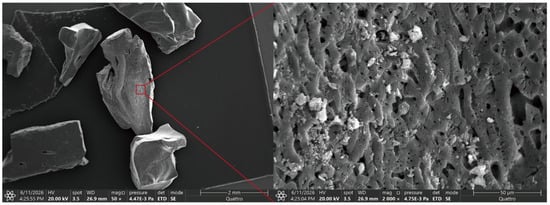
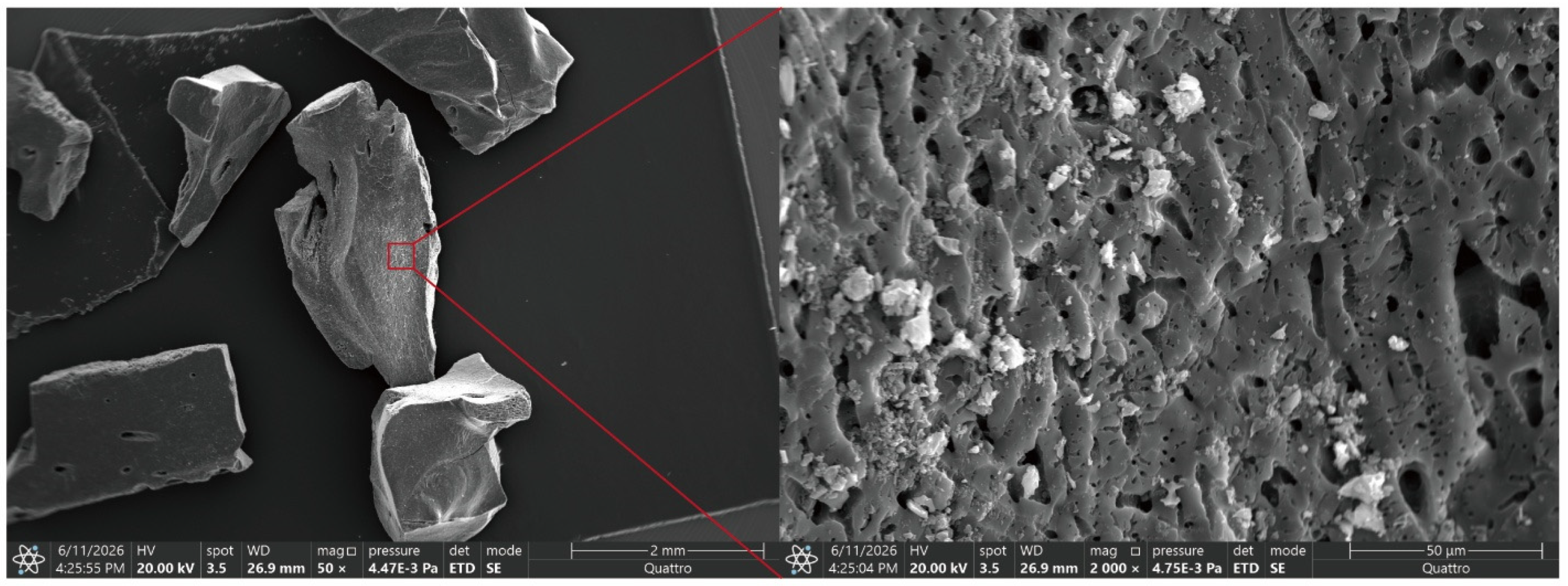
Coconut shells are widely available agricultural residues in tropical and subtropical regions, offering an abundant and low-cost feedstock for biochar production [20]. Compared to conventional biochar derived from agricultural wastes like wood chips and straw, coconut-shell biochar maintains a highly porous structure for adsorption capacity and a higher true density [21,22] enabling stable settlement in sediments under seawater. Furthermore, coconut-shell biochar is characterized by its rigid texture and high mechanical strength [20], whereas soft biochar such as straw biochar is prone to fragment into powders that readily undergo resuspension in water columns under hydraulic disturbance, reducing water transparency and impairing light availability for seagrasses. Therefore, coarse-grained coconut-shell biochar (~2 mm diameter) was selected as the sediment amendment material in this study (Figure 1).
Figure 1.
Morphology and porous structure of coconut-shell biochar under scanning electron microscope on 11 June 2026.
Enhalus acoroides is a dominant tropical seagrass in the Indo-Pacific and produces large, easily collected fruits [23]. However, the seagrass beds of E. acoroides in Xincun and Li’an Bays, China, are severely degraded due to coastal construction, aquaculture, eutrophication, microplastic enrichment and typhoon damage [24,25,26,27]. Therefore, we investigated the effects of coconut-shell biochar addition on the growth performance and carbon enhancement of E. acoroides. Seagrass seedlings were cultivated under controlled laboratory conditions for 90 days. To further simulate transplantation disturbance during seagrass restoration, plants were uprooted and replanted after the initial cultivation period, followed by an additional 45 days of growth. We hypothesize that (1) coconut biochar addition would improve seagrass growth compared to the control treatment, including after a simulated transplantation disturbance; and (2) sediment organic carbon content would be higher in biochar-amended sediments.
2. Results
2.1. Seagrass Morphological Responses to Biochar Addition
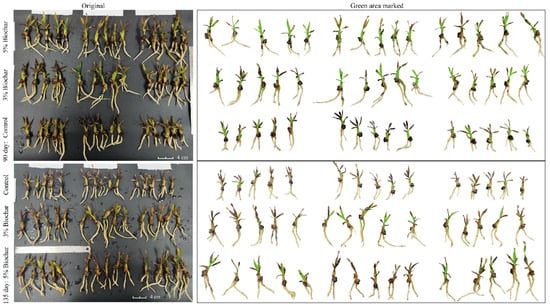
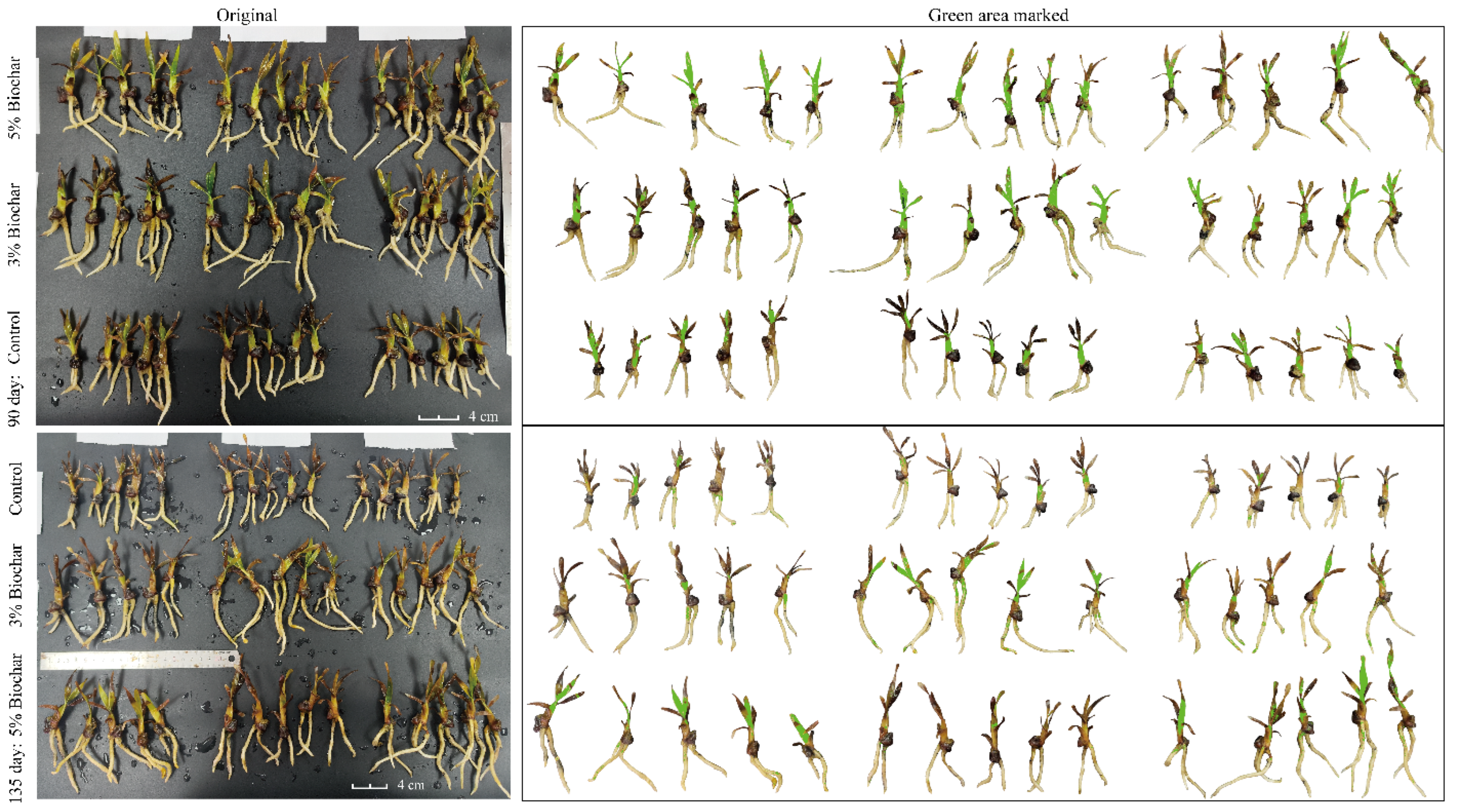
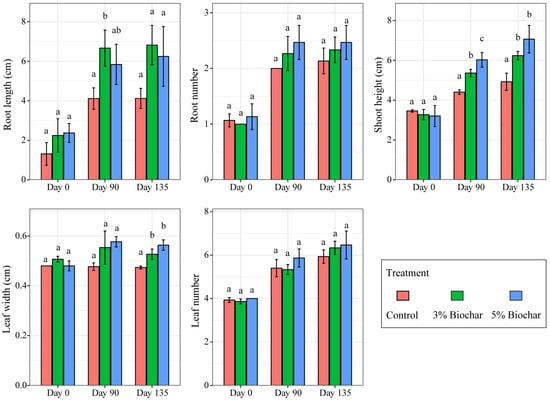
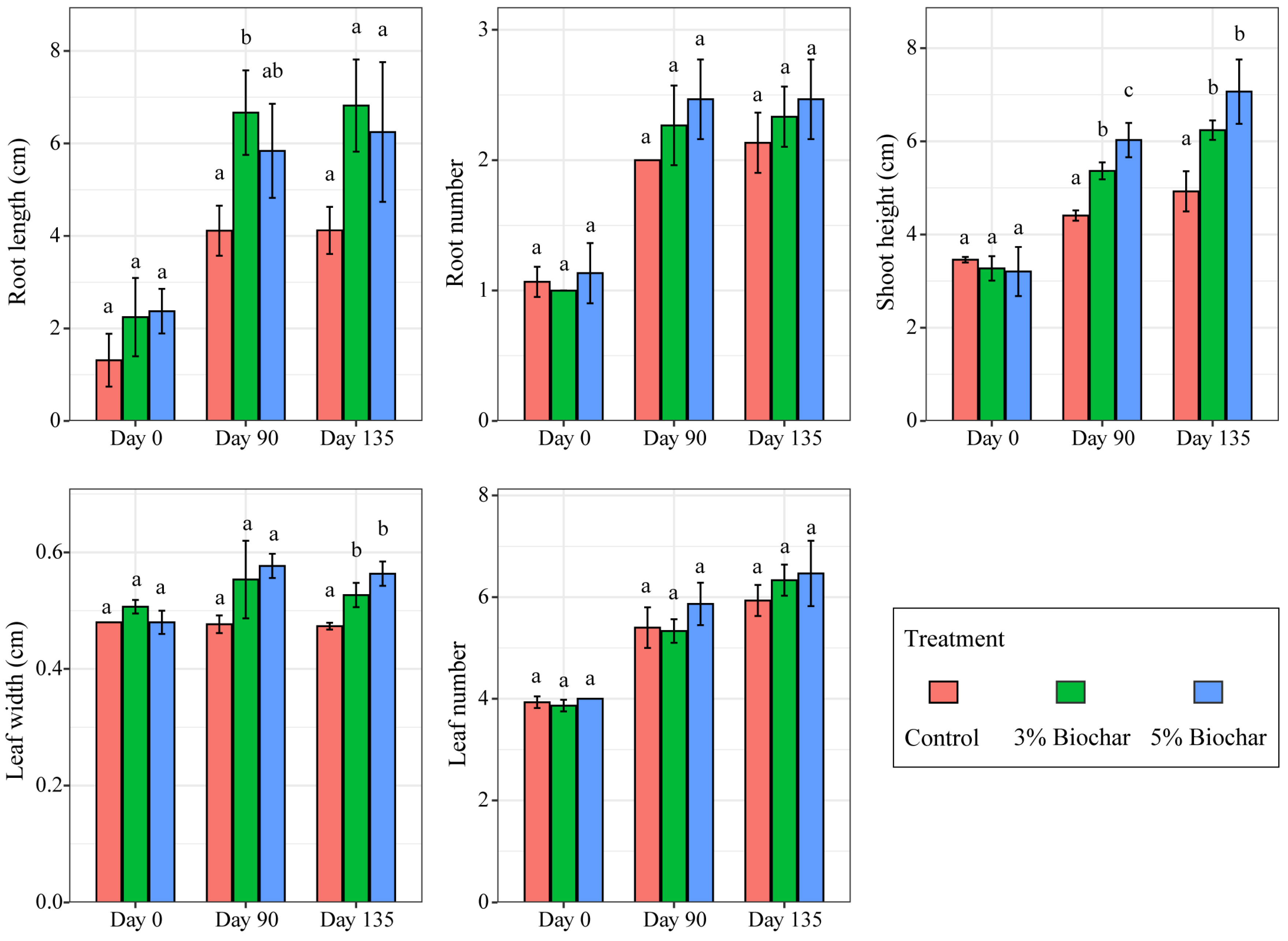
Seedling survival was 100% in all treatments after 90 days of cultivation. Coconut-shell biochar application was observed to improve the growth of seagrass seedlings (Figure 2). Specifically, root length in the 3% biochar group reached 6.7 ± 0.9 cm, which was significantly higher than 4.1 ± 0.5 cm in the control (p < 0.05), whereas the 5% biochar group (5.8 ± 1.0 cm) did not differ significantly from either group after 90 days of cultivation (Figure 3). Root number showed no significant difference among treatments (p > 0.05), although it tended to be higher under biochar addition (2.3 ± 0.3 and 2.5 ± 0.3 roots in 3% and 5% biochar, respectively, vs. 2.0 ± 0 roots in the control). Shoot height was highest in the 5% biochar group (6.0 ± 0.4 cm), followed by the 3% biochar group (5.4 ± 0.2 cm) and the control group (4.4 ± 0.1 cm) (p < 0.05). Leaf number was not significantly affected by biochar addition (p > 0.05). Leaf width tended to be higher under biochar addition (0.55 ± 0.07 cm and 0.58 ± 0.02 cm in 3% and 5% biochar, respectively, vs. 0.48 ± 0.02 cm in the control), but the difference was not significant (p > 0.05). Root length and shoot height increased by 62.1% and 21.8%, respectively, under 3% biochar, while increasing by 42.0% and 36.8%, respectively, under 5% biochar (p < 0.05). Root number and leaf width increased by 13.3–23.3% and 16.1–21.0%, respectively, without statistical significance (p > 0.05).
Figure 2.
Images of seagrass morphology under different biochar treatments. Green areas of seagrass shoots are highlighted in green.
Figure 3.
Seagrass growth under different biochar treatments before and after transplantation. Seagrass transplantation was conducted after day 90. Data are tank-level means ± SDs (n = 3 tanks per treatment). Different lowercase letters indicate significant differences among treatments (Tukey’s test, p < 0.05).
NH4-N, NO2-N and PO4-P concentrations were very low, and most readings were below the detection limit (BDL) (Table 1). Nitrate (NO3-N) concentrations were 0.007 ± 0.006 mg L−1 and 0.005 ± 0.001 mg L−1 under the 3% and 5% biochar treatments, respectively, which were significantly lower than in the control treatment (0.020 ± 0.005 mg L−1) (p < 0.05).
Table 1.
Nutrients of different biochar treatments (0%, 3% and 5%), tap water and artificial seawater. Values below the detection limit are reported as <LOD. Different lowercase letters indicate statistically significant differences among treatments (Tukey’s post hoc test, p < 0.05).
2.2. Effects of Biochar on Seagrass Growth After Transplantation
After transplantation disturbance, survival remained 100% in all treatments at day 135. Root length, root number and leaf number did not differ significantly among treatments (p > 0.05), whereas shoot height and leaf width did (Figure 3). Shoot heights were 6.2 ± 0.2 cm at 3% and 7.1 ± 0.7 cm at 5% biochar, both significantly greater than 4.9 ± 0.4 cm in the control. Leaf width was also greater in the 5% (0.56 ± 0.02 cm) and 3% (0.53 ± 0.02 cm) biochar groups than in the control group (0.47 ± 0.01 cm) (p < 0.05). Leaf numbers in the 5% (6.5 ± 0.6) and 3% (6.3 ± 0.3) biochar groups tended to be higher than in the control group (5.9 ± 0.3), but the difference was not significant (p > 0.05). Shoot height increased by 26.6% and 43.4%, respectively, under 3% and 5% biochar.
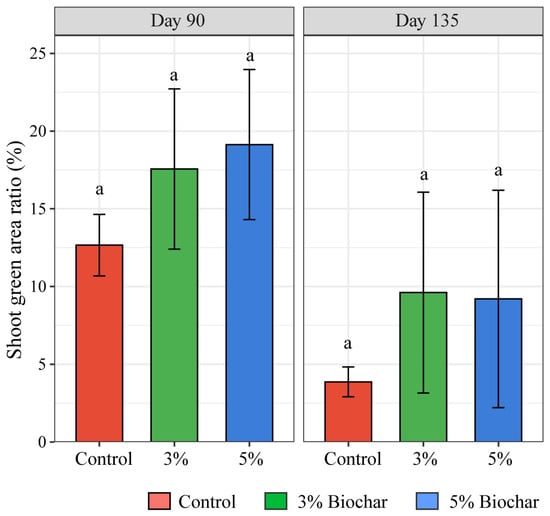
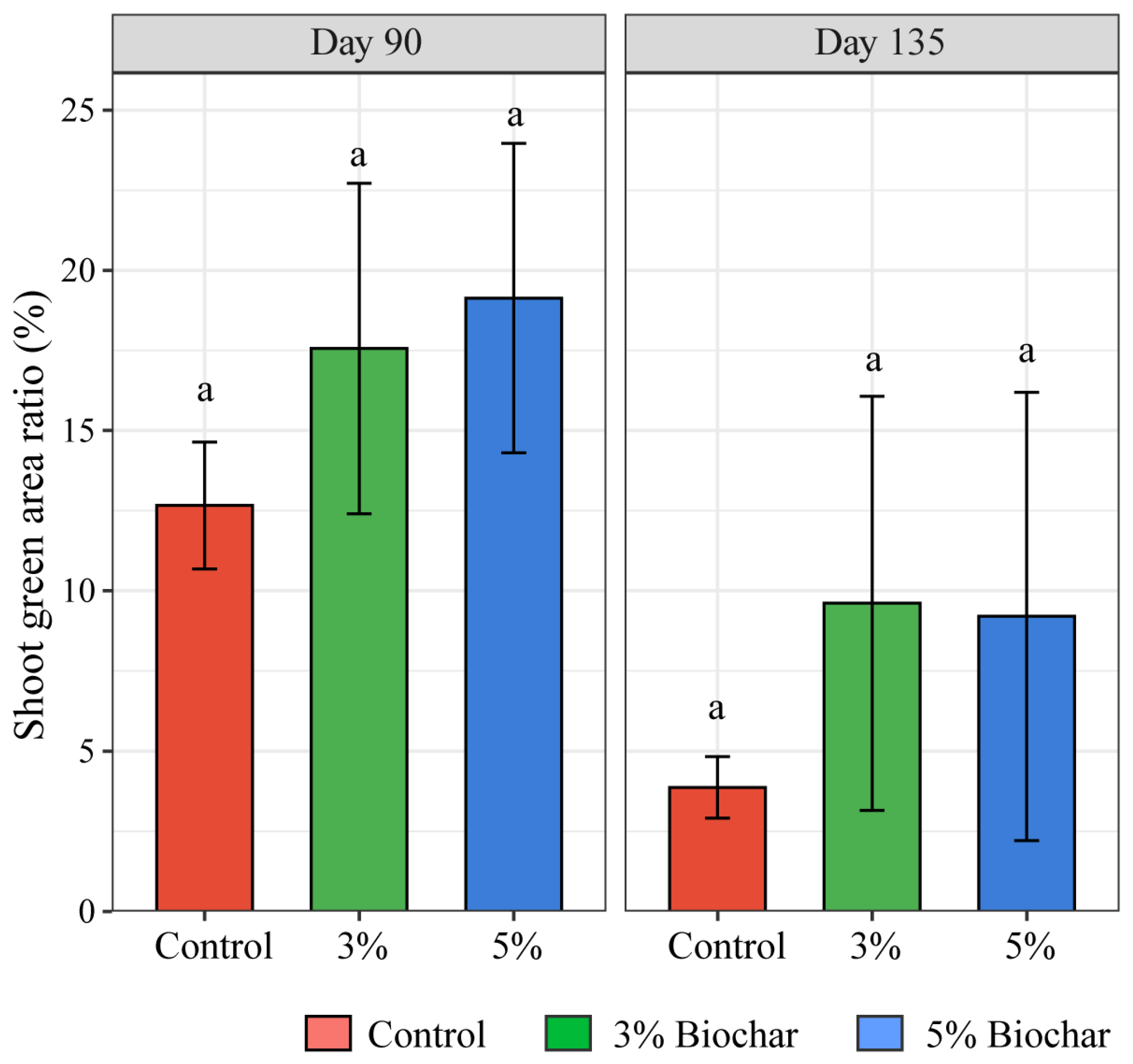
Biochar addition did not significantly affect the green area ratio of seagrass seedlings at either sampling time (Figure 4). At 90 days, the green ratio was similar between the 3% (17.6 ± 5.2%) and 5% (19.1 ± 4.8%) biochar groups compared to 12.7 ± 2.0% in the control group (p > 0.05). After simulated transplantation, the green ratio declined in all treatments (control 3.9 ± 1.0%, 3% 9.6 ± 6.4%, 5% 9.2 ± 7.0%). Both biochar treatments showed higher green ratios (~2-fold) than the control, but the differences were not significant at day 135 (p > 0.05).
Figure 4.
Green area ratio of seagrass shoots under different biochar treatments before and after transplantation. Seagrass transplantation was conducted on day 90. Different lowercase letters indicate significant differences among treatments (Tukey’s test, p < 0.05). Data are tank-level means ± SDs (n = 3 tanks per treatment).
2.3. Effects of Biochar on Sediment Organic Carbon
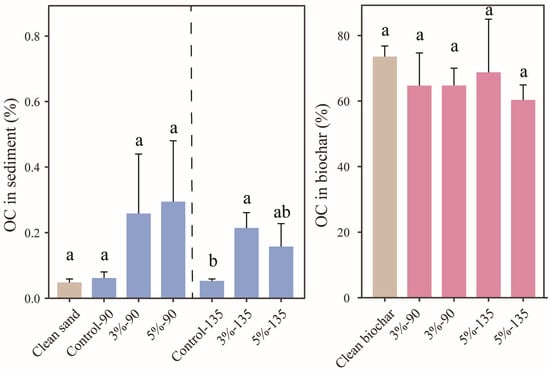
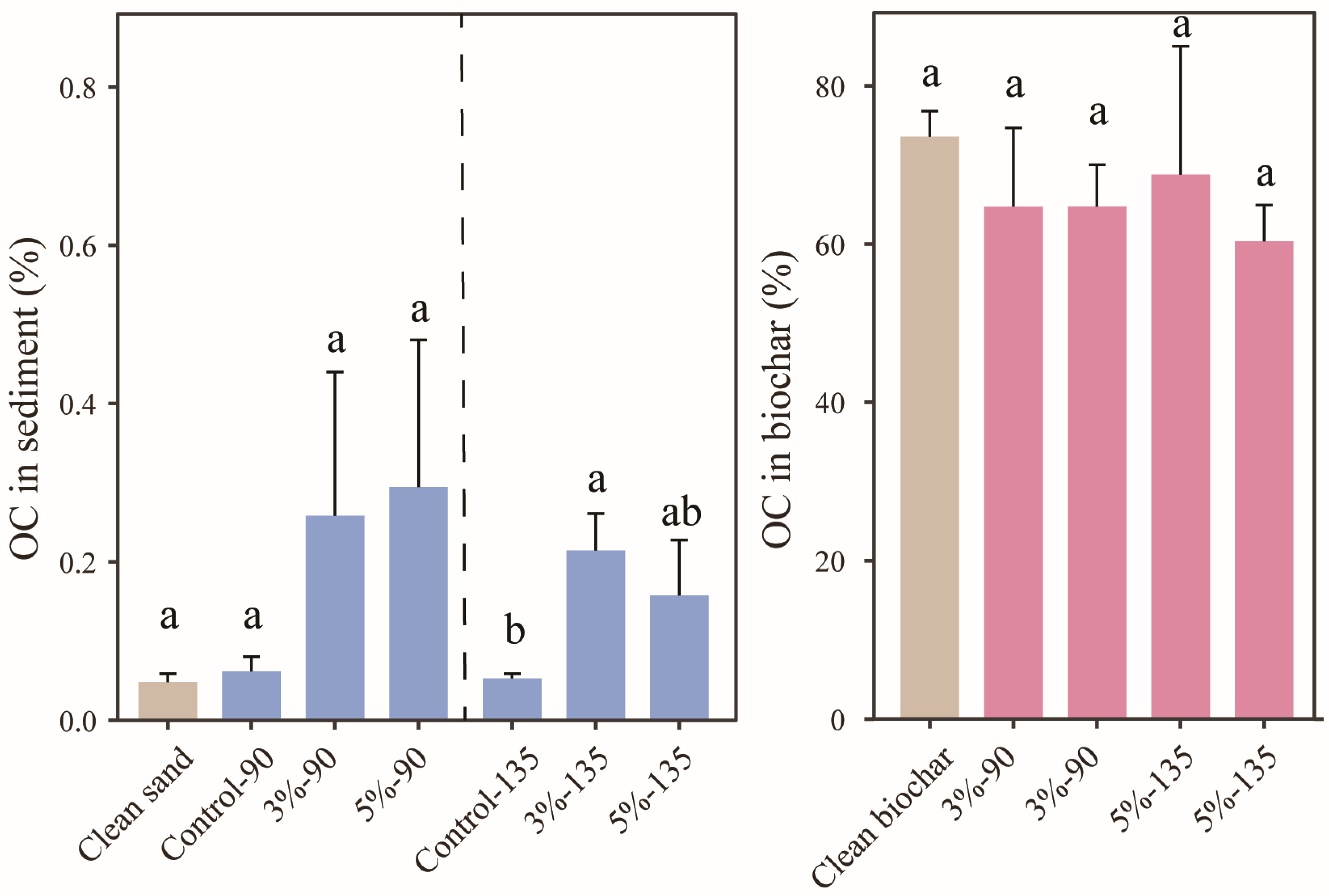
The initial clean coconut-shell biochar showed the highest organic content (73.6 ± 3.2%). After 90 and 135 days of incubation, organic carbon content in the recovered biochar particles was 60.3–68.8%, with no significant differences among amended treatments (p > 0.05) (Figure 5).
Figure 5.
Organic carbon (OC) content of sediments and biochar under different biochar treatments. Different lowercase letters indicate significant differences among sediments or biochar (t-test, p < 0.05). Data are tank-level means ± SDs (n = 3 tanks per treatment).
For sediment organic carbon content, the concentration in the initial clean sand was only 0.048 ± 0.011% (SOCD, 0.71 ± 0.16 mg C cm−3), and the average organic carbon content was 0.062 ± 0.019 after seagrass colonization in the control group at 90 days (p > 0.05). In the 3% and 5% biochar-amended sediments, sediment organic carbon averaged 0.258 ± 0.182% (SOCD, 3.80 ± 2.67 mg C cm−3) and 0.295 ± 0.186% (SOCD, 4.33 ± 2.73 mg C cm−3), respectively, at day 90, and 0.214 ± 0.047% (SOCD, 3.15 ± 0.69 mg C cm−3) and 0.158 ± 0.070% (SOCD, 2.32 ± 1.03 mg C cm−3) at day 135, corresponding to increases of 316–376% and 198–304% relative to the control. However, the day-90 differences were not statistically significant (p > 0.05); only the 3% treatment differed significantly from the control at day 135.
3. Discussion
3.1. Promotion of Seagrass Growth and Performance After Transplantation
In this study, coconut-shell biochar amendment significantly promoted the growth of E. acoroides, as evidenced by increased shoot height and root length. Similarly, growth of submerged macrophytes was significantly improved by 28–163% by biochar amendment [10]. Growth promotion has also been observed in coastal saltmarshes, with a biomass increase of up to 332% [28]. Possible mechanisms include improved sediment physical properties, higher porosity and oxygen diffusion, and more favorable habitats for rhizosphere microorganisms, owing to the porous structure and large specific surface area of biochar [9,28,29]. In addition, biochar amendments have been observed to mitigate heavy metal stress in seagrasses [12].
Biochar also contains residual nutrients and gradually releases them into the environment. Biochar has been shown to retain nitrogen and phosphate within sediments and subsequently increase nutrient availability for aquatic plants [16,30]. As seagrass growth accelerated under biochar treatments, nutrient uptake likely increased accordingly, contributing to lower nitrate and phosphate concentrations observed in this study. Lower NO3-N concentrations in the biochar treatments may also reflect adsorption of nitrate by the biochar. Coconut-shell biochar adsorbs nutrients strongly, transferring them from the water column to the sediment and promoting plant growth [31,32]. Reductions in nutrient concentrations in eutrophic waters have also been reported in low-dosage biochar-amended aquatic systems, where enhanced macrophyte growth and nutrient adsorption jointly improved water quality to prevent algal bloom outbreaks [10]. In contrast, there were no significant differences between the 3% and 5% treatments in nitrate. This discrepancy may be due to the oligotrophic environment of E. acoroides, where nutrient availability is a limiting factor for seagrass growth. Consequently, nutrients in the 3% and 5% treatments were depleted to support continued plant development.
The stimulation of belowground development was also observed in this study, which may be particularly important for seagrass restoration. Longer and more abundant roots can enhance nutrient acquisition from sediments and improve anchorage strength and resistance to hydrodynamic disturbances after transplantation [33,34,35]. Recent experimental evidence demonstrated that wave-induced dislodgement of transplanted seagrass shoots is strongly influenced by belowground biomass, which is particularly vulnerable to uprooting during the rooting period of <12 days [33]. Following uprooting and replanting, root growth largely ceased across treatments, reflecting the stress associated with transplantation. Nevertheless, shoot height continued to increase in biochar-amended sediments compared to control treatment. Furthermore, although leaf greenness declined after disturbance in all treatments, plants in biochar-amended groups maintained numerically higher green leaf area proportions compared to control group. These findings suggest that biochar may facilitate post-disturbance shoot growth by providing a sustained nutrient source and maintaining suitable sediment conditions. During transplantation, biochar particles were frequently observed adhering to seagrass roots and root hairs in this study, which may provide direct physical protection, nutrient exchange and microbial colonization [36,37].
3.2. Carbon Enhancement by Biochar Amendment
Biochar amendment (3%) triggered substantially greater enhancement in sediment organic carbon, resulting in an increase of 198–304% after transplantation disturbance at day 135. Similarly, the sediment organic carbon stock of the coastal saltmarsh Sesuvium portulacastrum was increased by 14% after 100-day cultivation [28]. In the field, carbon sequestration in the Suaeda salsa saltmarsh was increased by 12–133%, while the carbon pool was elevated by 0.4–2.8% [18].
Part of the enhanced carbon accumulation may have resulted from plant biomass production and organic matter protection. By stimulating seagrass growth, biochar may indirectly increase the input of plant-derived organic matter through leaf shedding, root turnover, and rhizodeposition. Seagrasses are known to release dissolved organic carbon into surrounding water and sediments through tissue decomposition and root exudation [38], thereby contributing additional carbon sources for sediment burial. The decrease in sediment organic carbon content was observed following transplantation disturbance in this study, which may be due to stunted growth of seagrass leading to lower carbon inputs.
In addition to increasing carbon inputs, recent studies have shown that biochar mitigates the mineralization of organic matter by altering microbial community composition and reducing the abundance of functional microorganisms involved in carbon decomposition, reducing organic carbon loss by 67–124% and greenhouse-gas emissions by 5–123% [29]. In the field experiment, by regulating the composition of bacteria and fungi as well as extracellular enzyme activities, biochar significantly elevated refractory sediment organic matter by 21% in seagrass sediments [19]. Owing to its porous structure and large specific surface area, biochar can also adsorb particulate organic matter and facilitate the formation of mineral-associated organic carbon [28], which is highly resistant to degradation [39]. Iron-doped biochar has been reported to enhance mineral-associated organic carbon by 38% in coastal saltmarsh sediments [28].
3.3. Limitations and Implications for Field Application
This laboratory pilot provides only a first view of seagrass growth and carbon enhancement by coconut-shell biochar. Several limitations should be noted. First, the system lacked tides, waves, burial and grazing, and the simulated transplantation disturbance was milder than disturbance in the field. Second, although the biochar was rinsed and visible particles were removed before organic carbon analysis, dissolved and fine biochar carbon could not be completely excluded, so part of the sediment carbon increase is biochar-derived. A sediment-only treatment without plants is needed to separate biochar carbon from plant-derived carbon. Specific carbon fractions, including particulate organic carbon, dissolved organic carbon, microbial biomass carbon, and mineral-associated organic carbon, should be quantified to clarify the mechanisms underlying enhanced carbon storage in the future. Third, the green area ratio was obtained by color thresholding, which may be affected by epiphytes and lighting. Future work could incorporate physiological measurements, such as photosynthetic efficiency and nutrient use efficiency, to better clarify plant responses. Finally, long-term field experiments are required to determine whether the positive effects observed can be maintained under natural hydrodynamic, biogeochemical, and ecological conditions.
Coconut-shell biochar is hard, mechanically stable and slow to fragment [20,22], and particles sink once water-saturated, so incorporation into the surface sediment layer should resist hydrodynamic forcing in the field. Biochar was detectable six months after a single field application in a tropical seagrass bed [19]. Because biochar increases porosity, water retention and sorption capacity, and retains NH4-N and phosphate [7,8,30,31], E. acoroides meadows would be expected to improve in the field. In addition, biochar also restructures bacterial and fungal communities in seagrass sediments [19], which may alter epiphyte abundance through the changed nutrient supply and altered sediment-dwelling invertebrate assemblages [40]. Fine particles can be resuspended and ingested, as documented for microplastics in these meadows [3,24]. However, deposit feeders ingest particles <200 µm whereas grains >100–200 µm are not ingested [41]; millimeter-scale biochar is preferable and less prone to resuspension in the field. Waste-derived biochar should be screened for heavy metals and PAHs before application and monitored in sediment and biota thereafter.
4. Materials and Methods
4.1. Collection of Seagrass Fruits
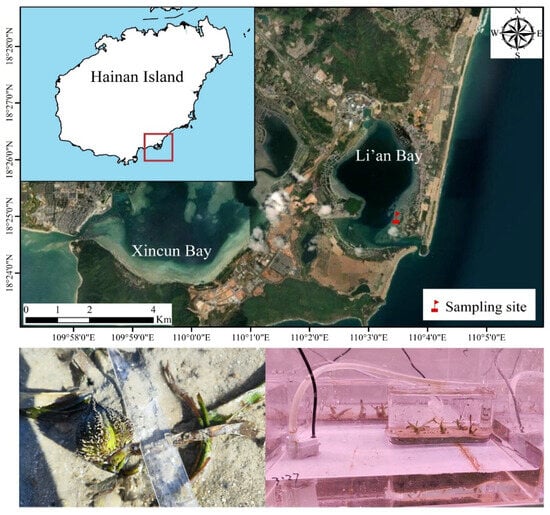
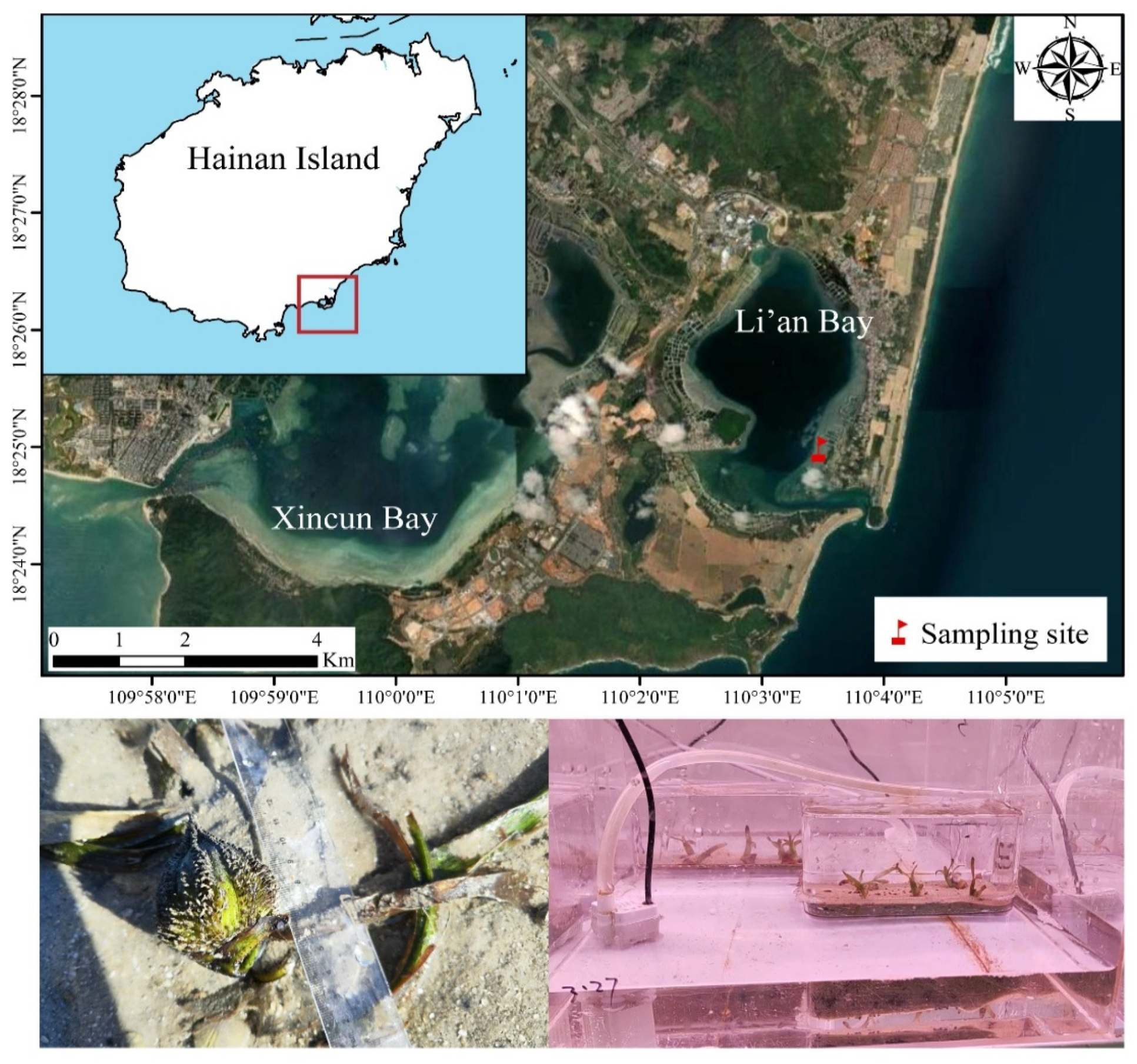
Mature fruits of the seagrass Enhalus acoroides were collected from Li’an Bay, Hainan Island, China (Figure 6). In the laboratory, seeds were carefully extracted from the fruits and rinsed with seawater to remove residual pulp. The seeds were then partially buried in clean sand and maintained in artificial seawater until germination occurred. After germination, seedlings were allowed to grow until they reached a uniform size suitable for the experiment.
Figure 6.
Seagrass fruit sampling site and the cultivation system.
4.2. Experimental Design
Clean sand was collected from the upper zone of the beach and visible debris was removed. Coconut-shell biochar (Henan Lize Environmental Protection Technology Co., Ltd., Zhengzhou, China) was washed with purified water and mixed thoroughly with clean sand at two application rates (3% and 5%, w/w). The morphology of coconut-shell biochar was observed with a scanning electron microscope (Figure 1). Dry bulk density of the washed biochar and sand was determined by filling a centrifuge tube of known volume and weighing the oven-dried (60 °C) content (Table 2). Wet (saturated) density of biochar was measured by water displacement. Clean biochar and sand were then extracted with purified water at 1:20 (g: mL) for pH, electrical conductivity (EC) and total dissolved solids (TDSs) after 90 min of shaking and 30 min of settling [42].
Table 2.
Characteristics of clean coconut-shell biochar and sands used in this study (mean ± SD, n = 3).
A control treatment containing only clean sand without biochar was also established. Three replicate tanks were prepared for each treatment, resulting in a total of nine experimental tanks (length × width × height: 16 cm × 10 cm × 10 cm). Each tank was filled with sediment to a depth of 4 cm and placed inside a larger tank (length × width × height: 30 cm × 25 cm × 20 cm), and a small circulation pump connected the two tanks to maintain continuous water movement and oxygenation (Figure 6). Five seagrass seedlings were transplanted in each tank.
The tanks were randomly arranged on a lighting rack to minimize positional effects. Illumination was provided by artificial lighting with an intensity of approximately 6000 lux under a 12 h light: 12 h dark photoperiod. Artificial seawater (pH 8.2, Sal 30.0) filled each tank and was maintained at 26 °C. The initial water level of artificial seawater in each tank was marked, and tap water was periodically added to compensate for evaporation losses and to maintain a stable water level, which may have caused small, unmonitored salinity fluctuations. The seedlings were cultivated under these conditions for 90 days.
To simulate the disturbance that occurs during transplantation from nursery conditions to natural seagrass habitats, all plants were gently uprooted after the initial 90-day cultivation period. After approximately 20 min of exposure outside the sediment, the seedlings were replanted into their original tanks for a further 45 days (day 135) under the same conditions.
4.3. Measurements of Seagrass Morphology and Sediment Organic Carbon
Shoot height, leaf number, leaf width, root number and root length of each seedling were measured at the initial stage, 90 days and 135 days. At each sampling point, all seedlings were photographed together. Nutrients in the water column in the tanks were measured at the end of 90-day cultivation. For sediment organic carbon, mixed sediment samples from each tank were also collected with a head-cut syringe and visible biochar particles were removed under a stereoscopic microscope. Organic carbon content was determined with an element analyzer (Vario TOC select, Elementar, Germany) after adding 1 M HCl to eliminate inorganic carbon interference. Sediment organic carbon density (SOCD, mg C cm−3) was calculated from sediment organic carbon (SOC, %) and dry bulk density (BD, g C cm−3):
4.4. Image Analysis of Seagrass Shoot Green Area
A training-based color thresholding method in the HSV color space was applied to identify and quantify healthy green tissue pixels. First, representative healthy green samples were used to establish color thresholds. The 5th and 95th percentiles of hue and the 10th percentile of saturation were calculated to define the adaptive thresholds for healthy green pixels. Second, each seagrass seedling was clipped from the same picture and the threshold was applied to segment green regions. Finally, the number of green pixels and total pixels of seagrass seedlings were quantified and the green area ratio (%) was computed.
4.5. Data and Statistical Analysis
Sampling maps were drawn using ArcGIS 10.5 software (ESRI, California, USA). Data processing, statistical analyses, and graphical visualization were conducted using R software (2026.01.2+418 version). The tank was treated as the experimental unit (n = 3 per treatment) and the values of the five plants within each tank were averaged before analysis to avoid pseudoreplication. Normality and homogeneity of variance were tested before analysis. At each sampling time (day 0, 90 and 135), growth parameters and the shoot green area ratio were compared among the three treatments by one-way ANOVA followed by Tukey’s HSD test, with Kruskal–Wallis tests run in parallel as a non-parametric check. Nutrient concentrations below the detection limit were marked as below the detection limit (BDL) and excluded from quantitative comparisons. Only NO3-N was detectable in all samples and was statistically compared among treatments using one-way ANOVA followed by Tukey’s HSD test. Organic carbon content of sediments and biochar under different biochar treatments was tested using paired t-tests, separately. When p < 0.05, differences were considered significant.
5. Conclusions
This laboratory pilot indicates that coconut-shell biochar promoted the early growth of Enhalus acoroides seedlings (root length and shoot height increased by 62.1% and 21.8–36.8%, respectively, at day 90), and that shoot height and leaf width remained higher after a simulated transplantation disturbance. Only 3% coconut-shell biochar markedly increased sediment organic carbon accumulation (by 198–304% at day 135). Given the small number of replicate tanks, these findings provide preliminary evidence of potential for coconut-shell biochar restoration of E. acoroides seagrass meadows and blue carbon enhancement.
Author Contributions
Y.H.: conceptualization, methodology, funding acquisition, data curation, formal analysis, investigation, visualization, writing—original draft, and writing—review and editing. S.Y. (Shuo Yu): conceptualization, funding acquisition, writing—original draft, and writing—review and editing. Z.Z.: data curation, investigation, and writing—review and editing. L.W.: investigation, data curation, and writing—review and editing. P.W.: data curation and writing—review and editing. P.L.: writing—review and editing. F.Z.: writing—review and editing. S.Y. (Siyi Yao): writing—review and editing. L.C.: writing—review and editing. X.X.: methodology, writing—original draft, and writing—review and editing. All authors have read and agreed to the published version of the manuscript.
Funding
This study was funded by the National Natural Science Foundation of China (42506138), the Guangxi Natural Science Foundation (Grant number 2023GXNSFAA026466), the Guangxi Young Talent Seedling Program, the National Key R&D Program of China (Grant number 2023YFE0113100) and the Science & Technology Fundamental Resources Investigation Program (Grant number 2023FY100804).
Data Availability Statement
The original contributions presented in this study are included in the article. Further inquiries can be directed to the corresponding author.
Conflicts of Interest
The authors declare no conflicts of interest that are relevant to the content of this article.
References
- Duarte, C.M.; Losada, I.J.; Hendriks, I.E.; Mazarrasa, I.; Marba, N. The role of coastal plant communities for climate change mitigation and adaptation. Nat. Clim. Change 2013, 3, 961–968. [Google Scholar] [CrossRef] [Scilit]
- Huang, Y.; Xiao, X.; Effiong, K.; Xu, C.; Su, Z.; Hu, J.; Jiao, S.; Holmer, M. New insights into the microplastic enrichment in the blue carbon ecosystem: Evidence from seagrass meadows and mangrove forests in coastal South China Sea. Environ. Sci. Technol. 2021, 55, 4804–4812. [Google Scholar] [CrossRef] [Scilit] [PubMed]
- Huang, Y.; Holmer, M.; Xu, C.; Liu, M.; Masque, P.; Serrano, O.; Hu, J.; Effiong, K.; Tang, T.; Zhu, J.; et al. Enhanced microplastic burial in China’s coastal blue carbon ecosystems: Drivers and potential roles in climate change mitigation. Environ. Sci. Technol. 2025, 59, 25442–25453. [Google Scholar] [CrossRef] [Scilit] [PubMed]
- Xiao, X.; Huang, Y.; Holmer, M. Current trends in seagrass research in China (2010-2019). Aquat. Bot. 2020, 166, 103266. [Google Scholar] [CrossRef] [Scilit]
- Waycott, M.; Duarte, C.M.; Carruthers, T.J.B.; Orth, R.J.; Dennison, W.C.; Olyarnik, S.; Calladine, A.; Fourqurean, J.W.; Heck, K.L.; Hughes, A.R.; et al. Accelerating loss of seagrasses across the globe threatens coastal ecosystems. Proc. Natl. Acad. Sci. USA 2009, 106, 12377–12381. [Google Scholar] [CrossRef] [Scilit] [PubMed]
- van Katwijk, M.M.; Thorhaug, A.; Marbà, N.; Orth, R.J.; Duarte, C.M.; Kendrick, G.A.; Althuizen, I.H.J.; Balestri, E.; Bernard, G.; Cambridge, M.L.; et al. Global analysis of seagrass restoration: The importance of large-scale planting. J. Appl. Ecol. 2016, 53, 567–578. [Google Scholar] [CrossRef] [Scilit]
- Beesley, L.; Moreno-Jiménez, E.; Gomez-Eyles, J.L.; Harris, E.; Robinson, B.; Sizmur, T. A review of biochars’ potential role in the remediation, revegetation and restoration of contaminated soils. Environ. Pollut. 2011, 159, 3269–3282. [Google Scholar] [CrossRef] [Scilit] [PubMed]
- Kavitha, B.; Reddy, P.V.L.; Kim, B.; Lee, S.S.; Pandey, S.K.; Kim, K.-H. Benefits and limitations of biochar amendment in agricultural soils: A review. J. Environ. Manag. 2018, 227, 146–154. [Google Scholar] [CrossRef] [Scilit] [PubMed]
- Huang, Y.; Xiao, X. Role of biochar in raising blue carbon stock capacity of salt marshes. Pedosphere 2024, 34, 19–22. [Google Scholar] [CrossRef] [Scilit]
- Li, W.; Zhou, J.; Ding, H.; Fu, H.; Liu, J.; Chen, Y.; Dai, T.; Lou, Q.; Zhong, X.; Fan, H.; et al. Low-dose biochar added to sediment improves water quality and promotes the growth of submerged macrophytes. Sci. Total Environ. 2020, 742, 140602. [Google Scholar] [CrossRef] [Scilit] [PubMed]
- Schurkamp, S.J.; Lishawa, S.C.; Ohsowski, B.M. Wetland plant species and biochar amendments lead to variable salinity reduction in roadway-associated soils. Sci. Total Environ. 2024, 951, 175801. [Google Scholar] [CrossRef] [Scilit] [PubMed]
- Zhang, J.; Liu, C.; Ling, J.; Zhou, W.; Wang, Y.; Cheng, H.; Huang, X.; Yang, Q.; Zhang, W.; Liang, T.; et al. Revealing the potential of biochar for heavy metal polluted seagrass remediation from microbial perspective. Ecotoxicol. Environ. Saf. 2025, 292, 117991. [Google Scholar] [CrossRef] [Scilit] [PubMed]
- Zhang, J.; Ling, J.; Zhou, W.; Zhang, W.; Yang, F.; Wei, Z.; Yang, Q.; Zhang, Y.; Dong, J. Biochar addition altered bacterial community and improved photosynthetic rate of seagrass: A mesocosm study of seagrass Thalassia hemprichii. Front. Microbiol. 2021, 12, 783334. [Google Scholar] [CrossRef] [Scilit] [PubMed]
- Alhashimi, H.A.; Aktas, C.B. Life cycle environmental and economic performance of biochar compared with activated carbon: A meta-analysis. Resour. Conserv. Recycl. 2017, 118, 13–26. [Google Scholar] [CrossRef] [Scilit]
- Zheng, H.; Wang, X.; Luo, X.; Wang, Z.; Xing, B. Biochar-induced negative carbon mineralization priming effects in a coastal wetland soil: Roles of soil aggregation and microbial modulation. Sci. Total Environ. 2018, 610–611, 951–960. [Google Scholar] [CrossRef] [Scilit] [PubMed]
- Cai, J.-F.; Jiang, F.; Liu, X.-S.; Sun, K.; Wang, W.; Zhang, M.-X.; Li, H.-L.; Xu, H.-F.; Kong, W.-J.; Yu, F.-H. Biochar-amended coastal wetland soil enhances growth of Suaeda salsa and alters rhizosphere soil nutrients and microbial communities. Sci. Total Environ. 2021, 788, 147707. [Google Scholar] [CrossRef] [Scilit] [PubMed]
- Cui, Q.; Xia, J.; Yang, H.; Liu, J.; Shao, P. Biochar and effective microorganisms promote Sesbania cannabina growth and soil quality in the coastal saline-alkali soil of the Yellow River Delta, China. Sci. Total Environ. 2021, 756, 143801. [Google Scholar] [CrossRef] [Scilit] [PubMed]
- Chen, G.; Bai, J.; Yu, L.; Chen, B.; Zhang, Y.; Liu, G.; Wang, W. Effects of ecological restoration on carbon sink and carbon drawdown of degraded salt marshes with carbon-rich additives application. Land Degrad. Dev. 2022, 33, 2103–2114. [Google Scholar] [CrossRef] [Scilit]
- Luo, H.; Liang, J.; Liu, S.; Trevathan-Tackett, S.M.; Ren, Y.; Jiang, Z.; Wu, Y.; Zhang, X.; Huang, Y.; Huang, X.; et al. Biochar enhances blue carbon stability in seagrass ecosystems. J. Appl. Ecol. 2026, 63, e70320. [Google Scholar] [CrossRef] [Scilit]
- Ighalo, J.O.; Conradie, J.; Ohoro, C.R.; Amaku, J.F.; Oyedotun, K.O.; Maxakato, N.W.; Akpomie, K.G.; Okeke, E.S.; Olisah, C.; Malloum, A.; et al. Biochar from coconut residues: An overview of production, properties, and applications. Ind. Crops Prod. 2023, 204, 117300. [Google Scholar] [CrossRef] [Scilit]
- Khater, E.-S.; Bahnasawy, A.; Hamouda, R.; Sabahy, A.; Abbas, W.; Morsy, O.M. Biochar production under different pyrolysis temperatures with different types of agricultural wastes. Sci. Rep. 2024, 14, 2625. [Google Scholar] [CrossRef] [Scilit] [PubMed]
- Bambhaniya, V.; Gojiya, M. Physicochemical properties of coconut shell and mesquite wood biomass and their Biochar: A comprehensive review. Int. J. Adv. Biochem. Res. 2025, 9, 1706–1716. [Google Scholar] [CrossRef] [Scilit]
- Yu, S.; Cui, L.; van Tussenbroek, B.I.; Wu, Y.; Zhu, F.; Gaitán-Espitía, J.D.; Jiang, K. Frequent flowering but low reproductive success of the dioecious seagrass Enhalus acoroides (L.f.) royle in Li’an lagoon, China. Estuaries Coasts 2024, 47, 1694–1701. [Google Scholar] [CrossRef] [Scilit]
- Huang, Y.; Xiao, X.; Xu, C.; Perianen, Y.D.; Hu, J.; Holmer, M. Seagrass beds acting as a trap of microplastics-Emerging hotspot in the coastal region? Environ. Pollut. 2020, 257, 113450. [Google Scholar] [CrossRef] [Scilit] [PubMed]
- Yang, D.; Huang, D. Impacts of typhoons Tianying and Dawei on seagrass distribution in Xincun Bay, Hainan Province, China. Acta Oceanol. Sin. 2011, 30, 32–39. [Google Scholar] [CrossRef] [Scilit]
- Li, Y.; Bai, J.; Zhang, L.; Yang, Z. Mapping and spatial variation of seagrasses in Xincun, Hainan province, China, based on satellite images. Remote Sens. 2022, 14, 2373. [Google Scholar] [CrossRef] [Scilit]
- Herbeck, L.S.; Sollich, M.; Unger, D.; Holmer, M.; Jennerjahn, T.C. Impact of pond aquaculture effluents on seagrass performance in NE Hainan, tropical China. Mar. Pollut. Bull. 2014, 85, 190–203. [Google Scholar] [CrossRef] [Scilit] [PubMed]
- Rajkovich, S.; Enders, A.; Hanley, K.; Hyland, C.; Zimmerman, A.R.; Lehmann, J. Corn growth and nitrogen nutrition after additions of biochars with varying properties to a temperate soil. Biol. Fertil. Soils 2012, 48, 271–284. [Google Scholar] [CrossRef] [Scilit]
- Su, G.; Huang, Y.; Fan, D.; Pan, Y.; Zhu, Y.; Liu, Y.; Huang, H.; Xiao, X. Iron-doped biochar boosting salt marsh blue carbon via regulation of microbial metabolism and intensified mineral-associated organic carbon. J. Clean. Prod. 2025, 514, 145750. [Google Scholar] [CrossRef] [Scilit]
- Zhang, Y.; Huang, Y.; Hu, J.; Tang, T.; Xu, C.; Effiong, K.S.; Xiao, X. Biochar mitigates the mineralization of allochthonous organic matter and global warming potential of saltmarshes by influencing functional bacteria. Carbon Res. 2024, 3, 6. [Google Scholar] [CrossRef] [Scilit]
- Schofield, H.K.; Pettitt, T.R.; Tappin, A.D.; Rollinson, G.K.; Fitzsimons, M.F. Biochar incorporation increased nitrogen and carbon retention in a waste-derived soil. Sci. Total Environ. 2019, 690, 1228–1236. [Google Scholar] [CrossRef] [Scilit] [PubMed]
- Edwin, T.; Komala, P.S.; Mera, M.; Zulkarnaini, Z.; Jamil, Z. Coconut shell biochar as a sustainable approach for nutrient removal from agricultural wastewater. J. Water Land Dev. 2025, 65, 177–184. [Google Scholar] [CrossRef] [Scilit]
- Vasseghian, Y.; Nadagouda, M.M.; Aminabhavi, T.M. Biochar-enhanced bioremediation of eutrophic waters impacted by algal blooms. J. Environ. Manag. 2024, 367, 122044. [Google Scholar] [CrossRef] [Scilit] [PubMed]
- Kamperdicks, L.; Lattuada, M.; Corcora, T.O.; Schlurmann, T.; Paul, M. Enhancing seagrass restoration success: Detecting and quantifying mechanisms of wave-induced dislodgement. Sci. Total Environ. 2025, 959, 178055. [Google Scholar] [CrossRef] [Scilit] [PubMed]
- Alagna, A.; Fernández, T.V.; Anna, G.D.; Magliola, C.; Mazzola, S.; Badalamenti, F. Assessing Posidonia oceanica seedling substrate preference: An experimental determination of seedling anchorage success in rocky vs. Sandy Substrates. PLoS ONE 2015, 10, e0125321. [Google Scholar] [CrossRef] [Scilit] [PubMed]
- Temmink, R.J.M.; Christianen, M.J.A.; Fivash, G.S.; Angelini, C.; Boström, C.; Didderen, K.; Engel, S.M.; Esteban, N.; Gaeckle, J.L.; Gagnon, K.; et al. Mimicry of emergent traits amplifies coastal restoration success. Nat. Commun. 2020, 11, 3668. [Google Scholar] [CrossRef] [Scilit] [PubMed]
- Farhangi-Abriz, S.; Ghassemi-Golezani, K. Improving electrochemical characteristics of plant roots by biochar is an efficient mechanism in increasing cations uptake by plants. Chemosphere 2023, 313, 137365. [Google Scholar] [CrossRef] [Scilit] [PubMed]
- Wang, L.; English Mary, K.; Tomas, F.; Mueller Ryan, S. Recovery and community succession of the Zostera marina rhizobiome after transplantation. Appl. Environ. Microbiol. 2021, 87, e02326-20. [Google Scholar] [CrossRef] [Scilit] [PubMed]
- Jiang, Z.; Li, L.; Fang, Y.; Lin, J.; Liu, S.; Wu, Y.; Huang, X. Eutrophication reduced the release of dissolved organic carbon from tropical seagrass roots through exudation and decomposition. Mar. Environ. Res. 2022, 179, 105703. [Google Scholar] [CrossRef] [Scilit] [PubMed]
- Liu, F.; Qin, S.; Fang, K.; Chen, L.; Peng, Y.; Smith, P.; Yang, Y. Divergent changes in particulate and mineral-associated organic carbon upon permafrost thaw. Nat. Commun. 2022, 13, 5073. [Google Scholar] [CrossRef] [Scilit] [PubMed]
- Clements, W.H.; Stahl, R.G., Jr.; Landis, R.C. Ecological effects of biochar on the structure and function of stream benthic communities. Environ. Sci. Technol. 2015, 49, 14649–14654. [Google Scholar] [CrossRef] [Scilit] [PubMed]
- Ghosh, U.; Beckingham, B.; Cornelissen, G.; Gilmour, C.; Werner, D. A perspective on the development of novel in situ remediation of contaminated sediments using black carbon. Environ. Sci. Technol. 2026, 60, 31243–31251. [Google Scholar] [CrossRef] [Scilit] [PubMed]

Disclaimer/Publisher’s Note: The statements, opinions and data contained in all publications are solely those of the individual author(s) and contributor(s) and not of MDPI and/or the editor(s). MDPI and/or the editor(s) disclaim responsibility for any injury to people or property resulting from any ideas, methods, instructions or products referred to in the content. |
© 2026 by the authors. Licensee MDPI, Basel, Switzerland. This article is an open access article distributed under the terms and conditions of the Creative Commons Attribution (CC BY) license.