


Abstract
Fertilization can enhance plantation productivity but may also alter soil greenhouse gas (GHG) fluxes. We conducted a two-year field experiment in a Catalpa bungei plantation to evaluate the effects of individual and combined nitrogen (N), phosphorus (P), and potassium (K) additions on tree growth, soil microbial properties, and soil CH4 and CO2 fluxes. Eight treatments (CK, N, P, K, NP, NK, PK, and NPK) were applied. Fertilization enhanced diameter at breast height (DBH) growth but did not significantly affect height growth. NP and NPK increased annual DBH increment by 37.5–59.4%, and soil N availability was an important predictor of DBH growth. Fertilization increased the corresponding soil nutrient pools and microbial biomass N, P, and K, whereas soil pH, soil organic carbon, and microbial biomass C showed no significant responses. NP increased methane monooxygenase (MMO) level by 20.9%, while P and NPK increased β-glucosidase activity by 16%; No significant treatment effect was detected for the immunoreactive MCR level. NP increased soil CH4 uptake by 59.7%, whereas P increased soil CO2 efflux by 68.4%. Path analysis suggested an indirect association linking available P, microbial biomass P, and β-glucosidase activity to CO2 efflux. These findings highlight contrasting growth and soil gas responses to nutrient addition and suggest potential microbial pathways associated with these responses. Evaluating fertilization strategies should therefore consider tree growth together with soil C exchange.
1. Introduction
Fertilization is one of the most widely applied silvicultural practices for alleviating soil nutrient limitations and enhancing tree growth and stand productivity in forest plantations [1,2]. By increasing nutrient availability, fertilization can improve plant nutrient acquisition, modify carbon allocation patterns, and promote biomass accumulation [3]. However, nutrient addition extends beyond plant growth responses and can substantially alter soil microbial biomass, extracellular enzyme activities, and organic matter decomposition, thereby affecting soil carbon cycling and greenhouse gas (GHG) fluxes [4,5]. Soil GHG fluxes, particularly CO2 and CH4, represent important components of terrestrial carbon cycling and play a critical role in regulating the climate effects of forest ecosystems [6,7]. Although forest plantations function as major terrestrial carbon sinks through biomass production and soil carbon sequestration, changes in belowground carbon losses and CH4 exchange following nutrient enrichment may influence their overall climate mitigation potential [8,9]. Therefore, fertilization may generate both synergistic and contrasting effects on forest productivity and soil GHG dynamics. Understanding the mechanisms linking nutrient inputs with tree growth and soil GHG responses is essential for developing sustainable nutrient management strategies in forest plantations.
Although fertilization generally promotes tree growth, its effects on soil GHG fluxes are far less consistent, with the magnitude and even direction of the response varying across ecosystems and nutrient regimes [9,10,11]. Such variability likely reflects, at least in part, the distinct roles of nitrogen (N), phosphorus (P), and potassium (K), which alleviate different nutrient limitations and regulate distinct plant and soil microbial processes [12,13]. For example, N addition can alleviate N limitation and stimulate microbial activity at relatively low or short-term inputs, whereas prolonged or excessive N enrichment may alter microbial community composition and suppress methane oxidation [14]. Similarly, P addition can alleviate microbial P limitation and stimulate microbial C metabolism, whereas its effects on soil GHG fluxes are strongly context dependent and vary with background nutrient availability and other ecosystem conditions [15,16]. K can influence plant physiological processes and may indirectly affect soil microbial functioning through changes in nutrient balance and plant C inputs to soil [17,18]. Moreover, combined nutrient addition may generate interactive effects that cannot be predicted from the responses to individual nutrients. These contrasting responses raise an important question: why can nutrient addition consistently promote plant growth while producing divergent or even opposite responses in soil GHG fluxes? One possible explanation is that different nutrients alter soil GHG fluxes through distinct microbial functional pathways rather than simply through their effects on total nutrient availability.
Soil CH4 flux provides a particularly clear example of this uncertainty because net CH4 exchange reflects the balance between microbial methanogenesis and methane oxidation [19,20,21]. Methyl-coenzyme M reductase (MCR) catalyzes the terminal step of methanogenesis and represents a key functional component of CH4 production, whereas methane monooxygenase (MMO) catalyzes the initial oxidation of CH4 and is central to methanotrophic activity [20,21]. Nutrient enrichment can differentially affect these two processes. Moderate or short-term N inputs may alleviate microbial N limitation and stimulate methane-cycling activity, whereas prolonged or excessive N enrichment can suppress methanotrophy through NH4+ competition for MMO and through associated changes in soil chemical conditions, particularly acidification and inorganic N accumulation [10,14,22,23]. Similarly, P enrichment can modify CH4 oxidation and production by altering microbial nutrient limitation and substrate availability, with the direction and magnitude of the response varying among ecosystems and nutrient regimes [24,25]. These contrasting responses indicate that fertilization effects on soil CH4 flux cannot be explained by nutrient availability alone but instead depend on the relative responses of methanogenic and methanotrophic processes to nutrient enrichment [14,26]. This raises an important mechanistic question: whether different nutrient inputs regulate soil CH4 flux primarily by altering CH4 production, CH4 oxidation, or the balance between the two processes.
A similar uncertainty exists for soil CO2 flux. Soil CO2 efflux integrates autotrophic respiration from plant roots and heterotrophic respiration from microbial decomposition, and its response to nutrient enrichment depends on changes in belowground C allocation, microbial activity, and soil nutrient availability [9,11,27]. Extracellular enzymes provide an important mechanistic link between nutrient availability and microbial C processing [28]. In particular, β-glucosidase (BG) is a key C-acquiring enzyme involved in the degradation of cellulose-derived substrates [28,29]. Nutrient enrichment can alter microbial resource limitation and redistribute enzyme investment among C-, N-, and P-acquiring processes, thereby modifying BG activity, organic matter decomposition, and ultimately soil CO2 release [28,30,31,32,33]. Thus, greater nutrient availability does not necessarily result in higher CO2 emissions, raising the question of whether nutrient-specific effects on soil CO2 flux are mediated by changes in microbial nutrient status and C-acquiring enzyme activity.
Importantly, nutrient-induced responses of plants, soils, and microorganisms are interconnected, with changes in nutrient availability, microbial biomass, and extracellular enzyme activity propagating through coupled plant–soil–microbial pathways to influence soil C cycling and GHG fluxes [9,34]. Although recent studies have begun to integrate these processes under N or combined N–P enrichment [10,34], how individual and combined N, P, and K additions jointly regulate tree growth, soil CH4 uptake, and CO2 efflux remains insufficiently understood [9,10,34]. This gap is particularly relevant to C. bungei, an economically important, fast-growing timber species widely cultivated in China [35,36,37]. Previous fertilization studies in C. bungei plantations have primarily addressed tree growth, nutrient status, biomass production, and soil microbial community responses [38,39,40], whereas nutrient-specific controls over soil CH4 and CO2 fluxes and their underlying microbial functional pathways remain largely unexplored.
Previous research on C. bungei seedlings has shown that appropriately balanced N, P, and K fertilization can increase biomass accumulation more than N addition alone [41], suggesting that supplying multiple nutrients may alleviate growth constraints that persist under single-nutrient addition. Then, we conducted a two-year field fertilization experiment in a C. bungei plantation using eight treatments comprising individual and combined additions of N, P, and K. We quantified tree growth, soil nutrient availability, microbial biomass, extracellular enzyme activities, methyl-coenzyme M reductase (MCR) and methane monooxygenase (MMO) activities, and soil CH4 and CO2 fluxes to determine how nutrient-specific changes in soil and microbial processes influence plant growth and associated soil C cycling. Specifically, we asked: (1) whether N, P, and K additions exert differential effects on C. bungei growth by alleviating distinct nutrient constraints; (2) whether fertilization-induced changes in soil CH4 flux are associated primarily with methanogenic or methanotrophic processes; and (3) whether changes in soil CO2 flux are mediated by shifts in microbial nutrient status and C-acquiring enzyme activity. We hypothesized that (H1) combined nutrient additions, particularly NPK, would increase C. bungei growth relative to the unfertilized control and produce larger growth responses than single-nutrient additions by alleviating multiple nutrient constraints; (H2) fertilization-induced increases in soil CH4 uptake would be associated with increased MMO level, whereas decreases in CH4 uptake would be associated with increased MCR or decreased MMO level; and (H3) nutrient additions that increase microbial nutrient pools and C-acquiring enzyme activity, particularly β-glucosidase (BG), would also increase soil CO2 efflux.
2. Results
2.1. Responses of Soil Nutrients, Microbial Biomass, and Enzyme Activities
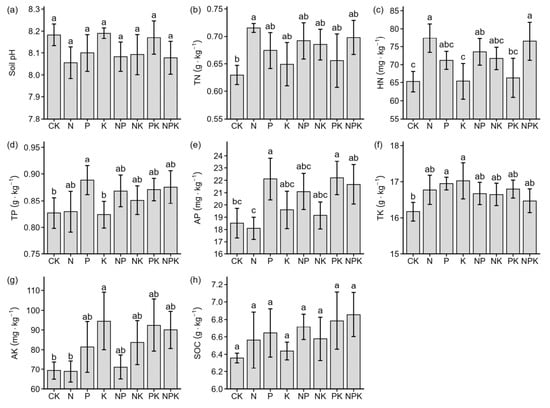
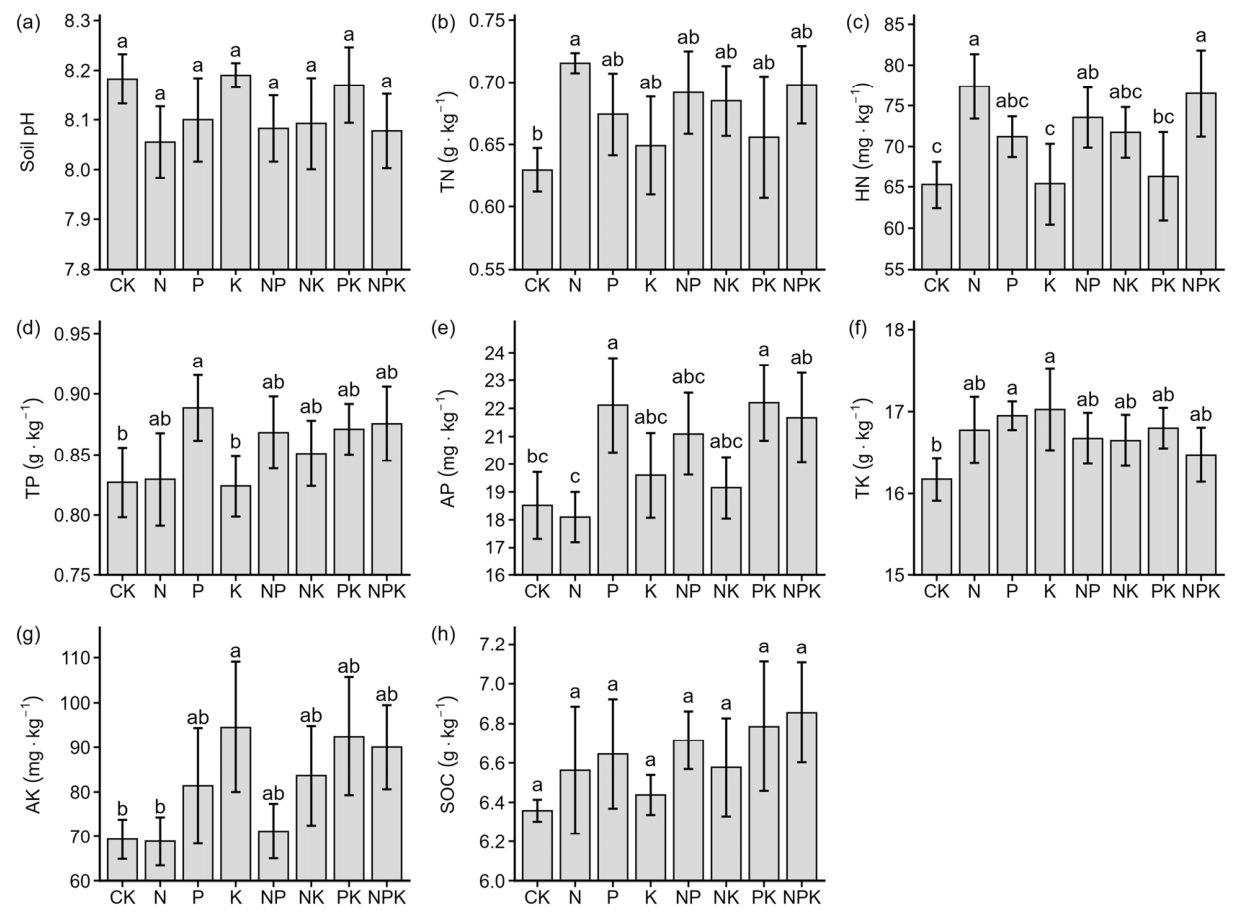
Combined N, P, and K fertilization did not significantly affect soil pH (p = 0.083) or soil organic carbon content (p = 0.114). However, it did alter soil nitrogen, phosphorus, and potassium nutrient availability (Figure 1). Compared with CK, total nitrogen under the N application increased by 13.7% (p < 0.05). Additionally, hydrolysable nitrogen under the N, NP, and NPK treatments increased by 12.7% ~ 18.5% (p < 0.001). Total phosphorus under the P application increased by 7.4% (p < 0.01), while available phosphorus under the P, PK, and NPK treatments increased by 17.0% ~ 19.9% (p < 0.001). Under potassium-amended treatments, including K, NK, PK, and NPK, available potassium increased by 20.7% ~ 36.3% and total potassium increased by 1.9% ~ 5.3%. However, these increases were not statistically significant (p > 0.05). Overall, fertilization enhanced the nutrient pools of the targeted elements. Available nutrients exhibited the most pronounced responses, whereas interaction effects between nutrients remained non-significant. The three-factor LMMs revealed nominally significant interactions among N, P, and K fertilization for several response variables (Table S1). Significant N×P×K interactions were observed for HN, MBN, BG, CO2 flux, and tree height increment, while significant two-way interactions were detected for TK (N×K and P×K) and BG (P×K) (unadjusted p < 0.05). However, none of these interactions remained significant after Benjamini–Hochberg FDR correction across all 76 interaction tests (all q > 0.05). These findings suggest potential non-additive responses to combined nutrient fertilization, although the evidence for these interactions was not statistically significant after global multiple-testing correction.
Figure 1.
Effects of N, P, and K fertilization on soil physicochemical properties. (a) Soil pH; (b) total nitrogen (TN); (c) hydrolysable nitrogen (HN); (d) total phosphorus (TP); (e) available phosphorus (AP); (f) total potassium (TK); (g) available potassium (AK); and (h) soil organic carbon (SOC). Values are means ± SD. Different lowercase letters above the bars indicate significant differences among fertilization treatments at p < 0.05. CK, control; N, nitrogen addition; P, phosphorus addition; K, potassium addition; NP, combined nitrogen and phosphorus addition; NK, combined nitrogen and potassium addition; PK, combined phosphorus and potassium addition; NPK, combined nitrogen, phosphorus, and potassium addition.
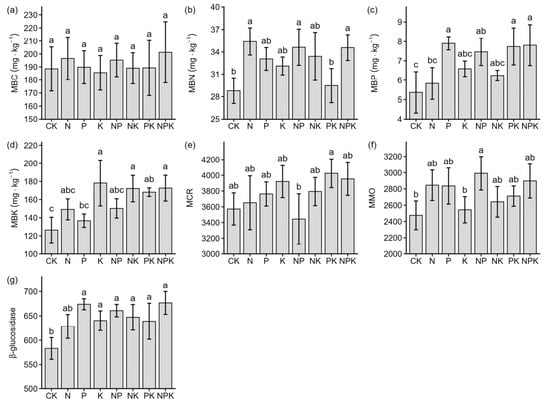
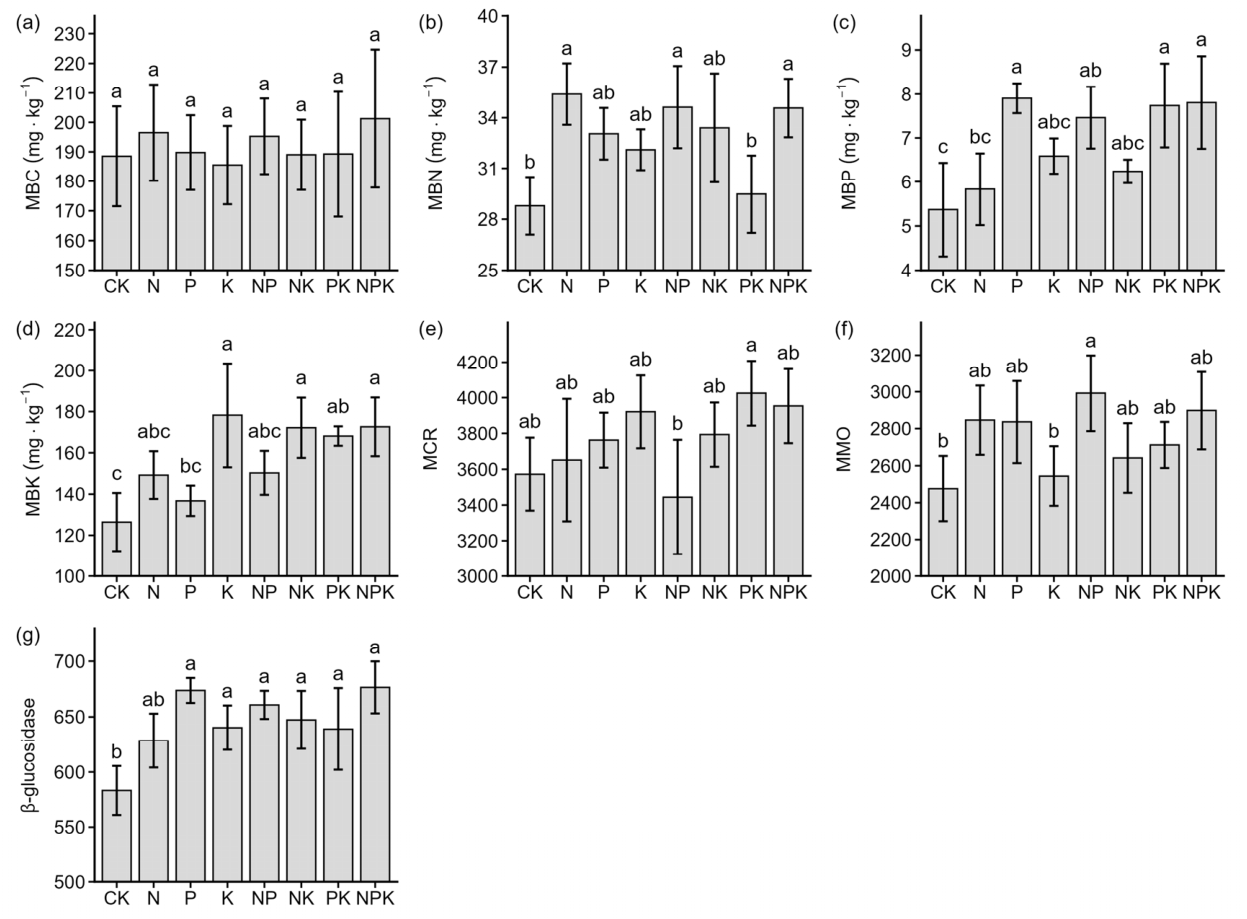
Fertilization markedly influenced soil microbial biomass and enzyme activities (Figure 2). Microbial biomass carbon (MBC) showed no significant differences among treatments (p = 0.794), whereas microbial biomass nitrogen, phosphorus, and potassium varied significantly (p < 0.01). Compared with CK, the N, NP, and NPK treatments increased microbial biomass nitrogen by 20.1% ~ 23.0% (p < 0.01). Meanwhile, the P, NP, PK, and NPK treatments increased microbial biomass phosphorus by 39% ~ 47.2% (p < 0.001), and the K, NK, and NPK treatments increased microbial biomass potassium by 36.2% ~ 41% (p < 0.001). Regarding enzyme activities, the NP treatment significantly elevated the MMO level over CK (p < 0.01). The P and NPK treatments enhanced BG activity by 15.5% ~ 16% relative to CK (p < 0.001). In contrast, the MCR level did not differ significantly among the treatments (p > 0.05).
Figure 2.
Effects of N, P, and K fertilization on soil microbial biomass and enzyme activities. (a) Microbial biomass carbon (MBC); (b) microbial biomass nitrogen (MBN); (c) microbial biomass phosphorus (MBP); (d) microbial biomass potassium (MBK); (e) methyl-coenzyme M reductase (MCR) level; (f) methane monooxygenase (MMO) level; and (g) β-glucosidase (BG) activity. Values are means ± SD. Different lowercase letters above the bars indicate significant differences among fertilization treatments at p < 0.05. CK, control; N, nitrogen addition; P, phosphorus addition; K, potassium addition; NP, combined nitrogen and phosphorus addition; NK, combined nitrogen and potassium addition; PK, combined phosphorus and potassium addition; NPK, combined nitrogen, phosphorus, and potassium addition.
2.2. Responses of C. bungei Growth
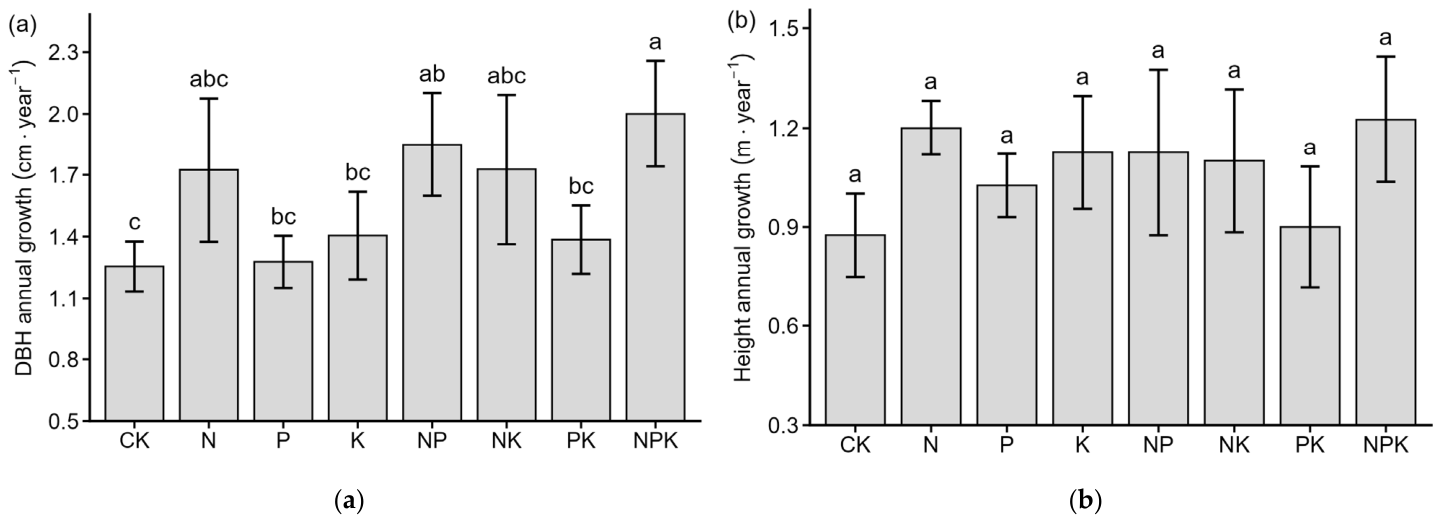
Fertilization exhibited divergent effects on DBH and height growth (Figure 3). The DBH increment varied significantly among the treatments (p < 0.05), whereas height growth showed no significant change (p = 0.095). Compared with a CK value of 1.26 cm, the N, NP and NPK treatments significantly enhanced the DBH increment (1.73 ~ 2.00 cm) by 37.5% ~ 59.4% (p < 0.05). Furthermore, DBH growth under the NPK treatment was significantly higher than under the P, K, and PK treatments (p < 0.01).
Figure 3.
Figure 3. Effects of N, P, and K fertilization on the annual growth of Catalpa bungei. (a) Annual DBH increment; (b) annual height increment. Values are means ± SD. Different lowercase letters indicate significant differences among treatments at p < 0.05.
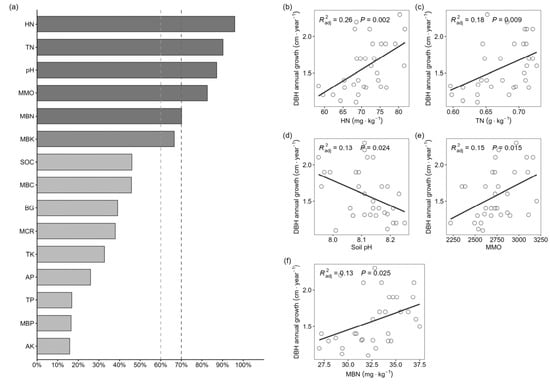
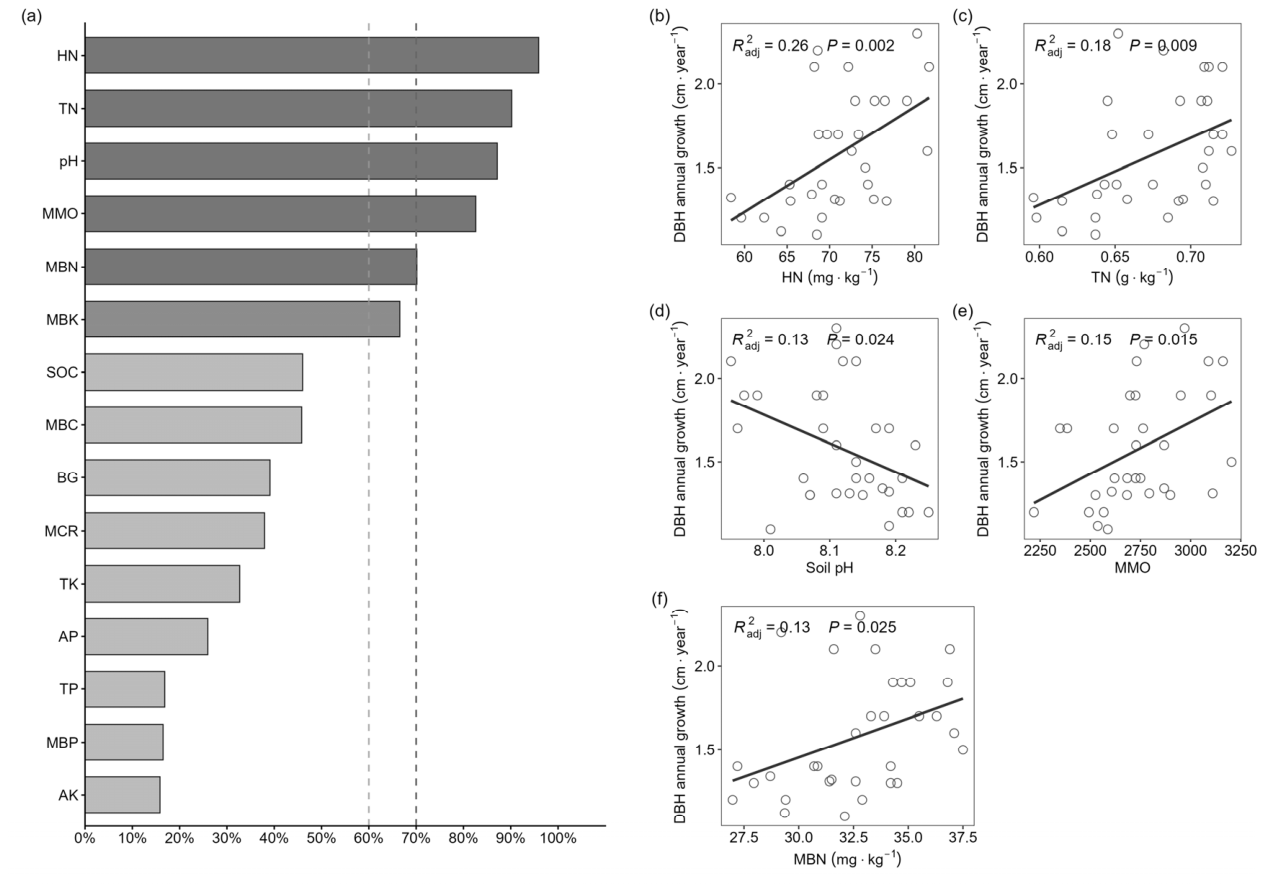
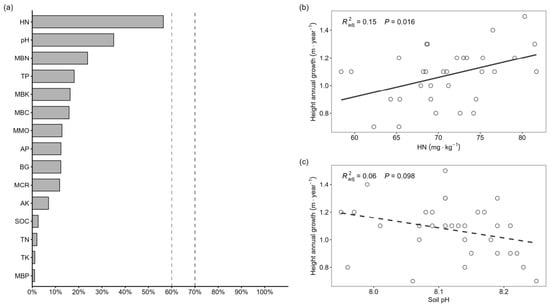
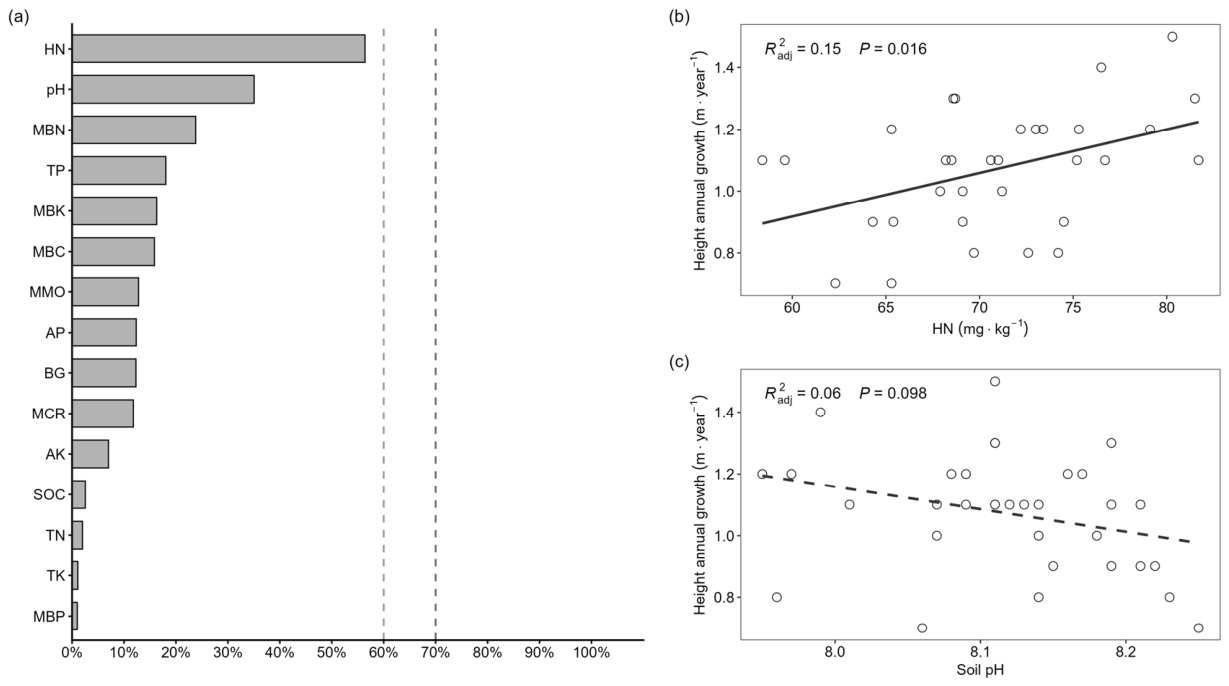
Elastic Net regression identified HN, TN, MBN, and MMO as stable positive predictors of DBH growth, with selection frequencies ranging from 70.2% ~ 95.9% (Figure 4a). In contrast, soil pH exhibited a negative relationship with DBH growth, while MBK and other variables had selection frequencies below the 70% threshold. No stable predictors were identified for tree height growth. Although HN and pH had relatively high selection frequencies of 56.4% and 35.0%, respectively, both fell below the 70% stability threshold (Figure 5).
Figure 4.
Key predictors of annual diameter at breast height (DBH) increment identified by Elastic Net regression and their relationships with DBH growth. (a) Bootstrap selection frequencies of soil physicochemical properties, microbial biomass, and enzyme activities for predicting annual DBH increment. The symbols “+” and “−” indicate positive and negative regression coefficients, respectively. Variables with bootstrap selection frequencies ≥70% were considered stable predictors. (b–f) Relationships of annual DBH increment with hydrolysable nitrogen (HN), total nitrogen (TN), soil pH, methane monooxygenase (MMO) level, and microbial biomass nitrogen (MBN), respectively. Solid lines represent fitted linear regressions, and shaded areas indicate 95% confidence intervals. Adjusted coefficients of determination (R2adj) and p-values are shown in each panel.
Figure 5.
Bootstrap selection frequencies of potential predictors of annual height increment and their relationships with hydrolysable nitrogen and soil pH. (a) Bootstrap selection frequencies of soil physicochemical properties, microbial biomass, and enzyme activities for predicting annual height increment. The symbols “+” and “−” indicate positive and negative regression coefficients, respectively. No variable reached the predefined 70% selection-frequency threshold for a stable predictor. (b,c) Relationships of annual height increment with hydrolysable nitrogen (HN) and soil pH, respectively. Solid and dashed lines represent fitted linear regressions, and shaded areas indicate 95% confidence intervals. Adjusted coefficients of determination (R2adj) and p-values are shown in each panel.
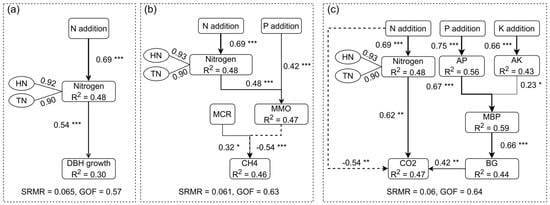
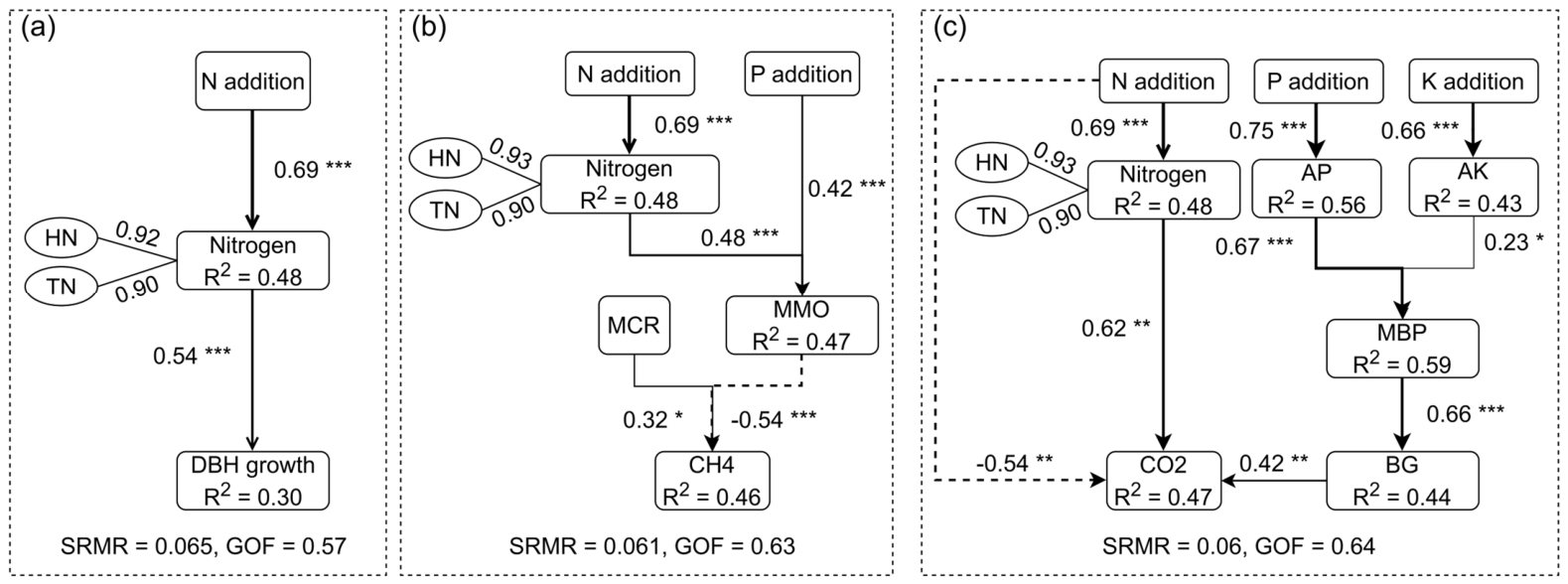
PLS-PM path analysis accounted for 30.0% of the total variance in DBH growth with an overall Goodness of Fit of 0.569, indicating high explanatory performance (Figure 6a). Specifically, nitrogen addition significantly enhanced soil nitrogen availability, which was represented jointly by HN and TN (β = 0.69, p < 0.001). This enhanced availability subsequently drove the DBH increment (β = 0.54, p = 0.001).
Figure 6.
Partial least squares path models (PLS-PM) showing the direct and indirect effects of N, P, and K fertilization on (a) annual diameter at breast height (DBH) increment, (b) soil CH4 flux, and (c) soil CO2 flux. Numbers adjacent to arrows indicate standardized path coefficients, and R2 values within boxes represent the proportion of variance explained for endogenous variables. Numbers associated with HN and TN represent their outer loadings on the latent variable “Soil Nitrogen”. Solid arrows indicate significant pathways. Asterisks indicate significance levels: * p < 0.05, ** p < 0.01, and *** p < 0.001. Model fit indices, including the Standardized Root Mean Square Residual (SRMR) and Goodness of Fit (GoF), are shown at the bottom of each panel. HN, hydrolysable nitrogen; TN, total nitrogen; AP, available phosphorus; AK, available potassium; MBP, microbial biomass phosphorus; BG, β-glucosidase; MCR, methyl-coenzyme M reductase; MMO, methane monooxygenase. The thickness of the lines indicates [magnitude/strength]; solid lines represent positive relationships, while dashed lines represent negative relationships.
2.3. Responses of Soil Greenhouse Gas Fluxes
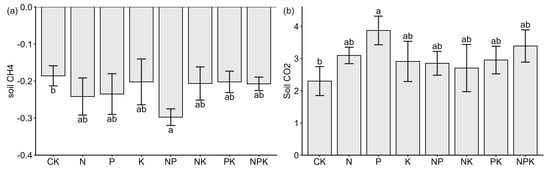
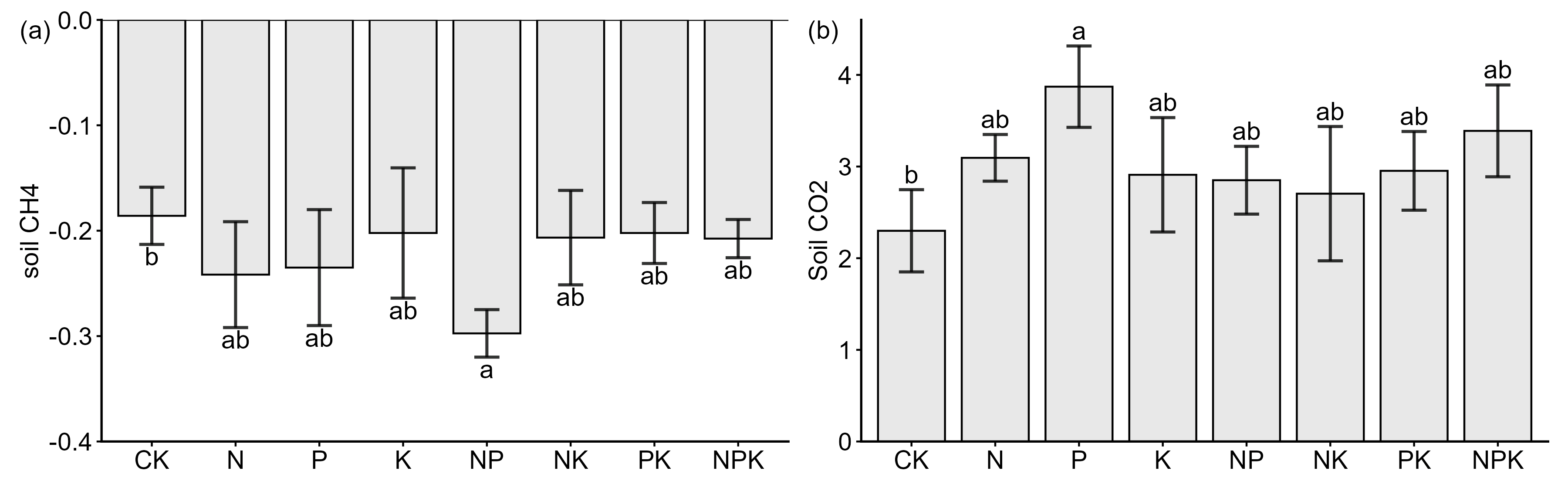
Time-weighted mean soil CH4 fluxes based on the April–October 2026 measurements were negative for all treatments, indicating net CH4 uptake under the sampled conditions. The NP treatment displayed a 59.7% increase in net CH4 uptake (−0.297 mg m−2 h−1) relative to CK (−0.186 mg m−2 h−1, p < 0.01), whereas other treatments did not differ significantly (Figure 7a). Conversely, P application significantly stimulated soil CO2 emissions to 3.87 μmol m−2 s−1, representing a 68.4% increase over CK value of 2.3 μmol m−2 s−1 (p < 0.01). Other fertilization treatments increased CO2 emissions by 17.6% ~ 47.4%, but these increases did not reach statistical significance (p > 0.05).
Figure 7.
Soil CH4 and CO2 fluxes under different fertilization treatments. (a) CH4 flux; (b) CO2 flux. Values are means ± SD. Different lowercase letters indicate significant differences among treatments at p < 0.05.
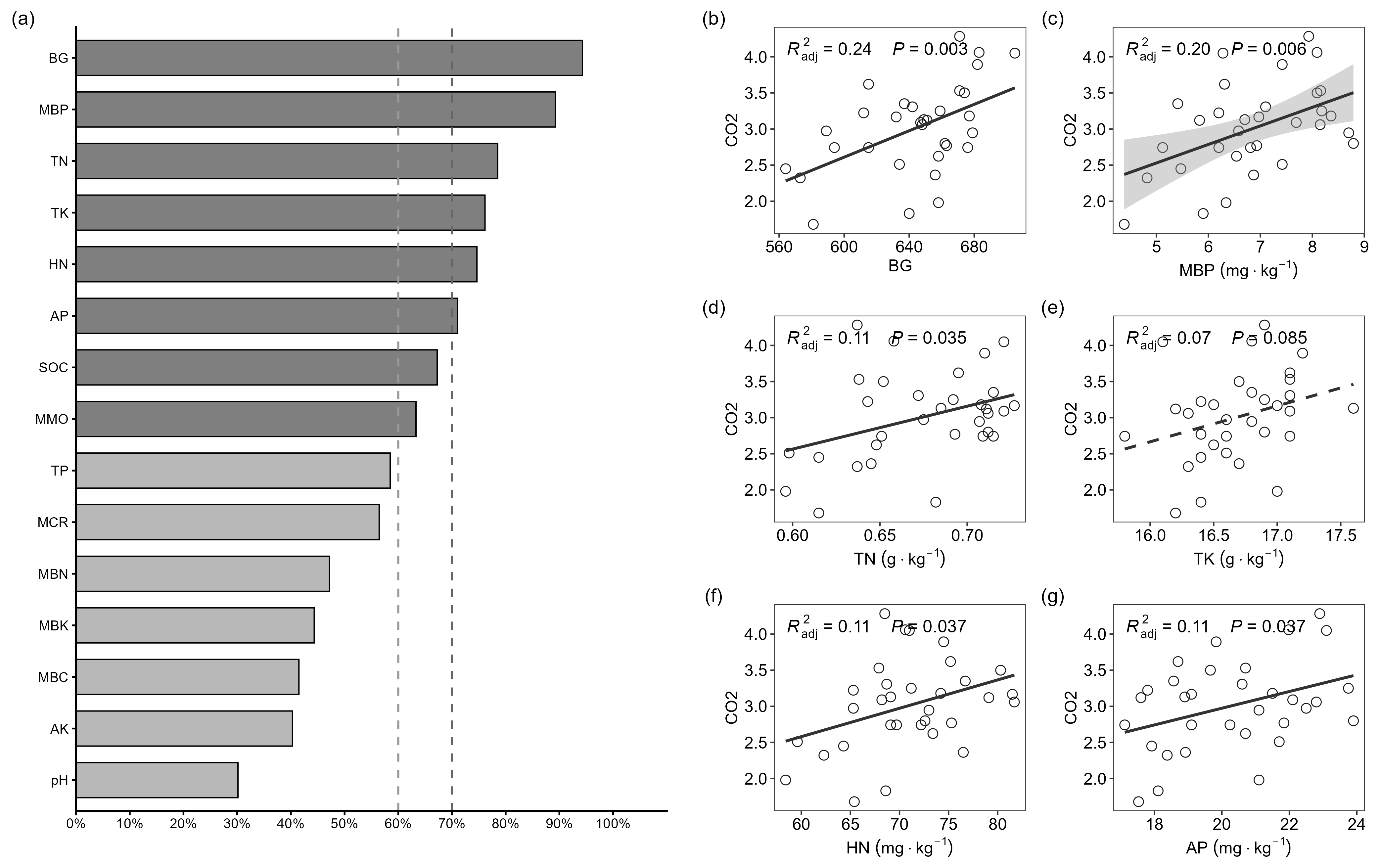
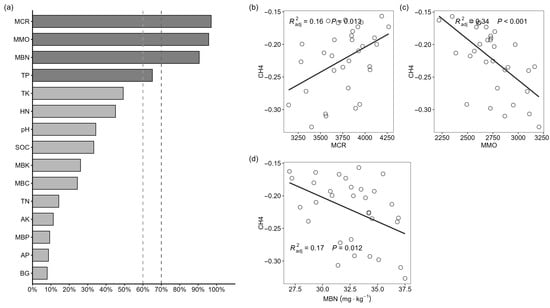
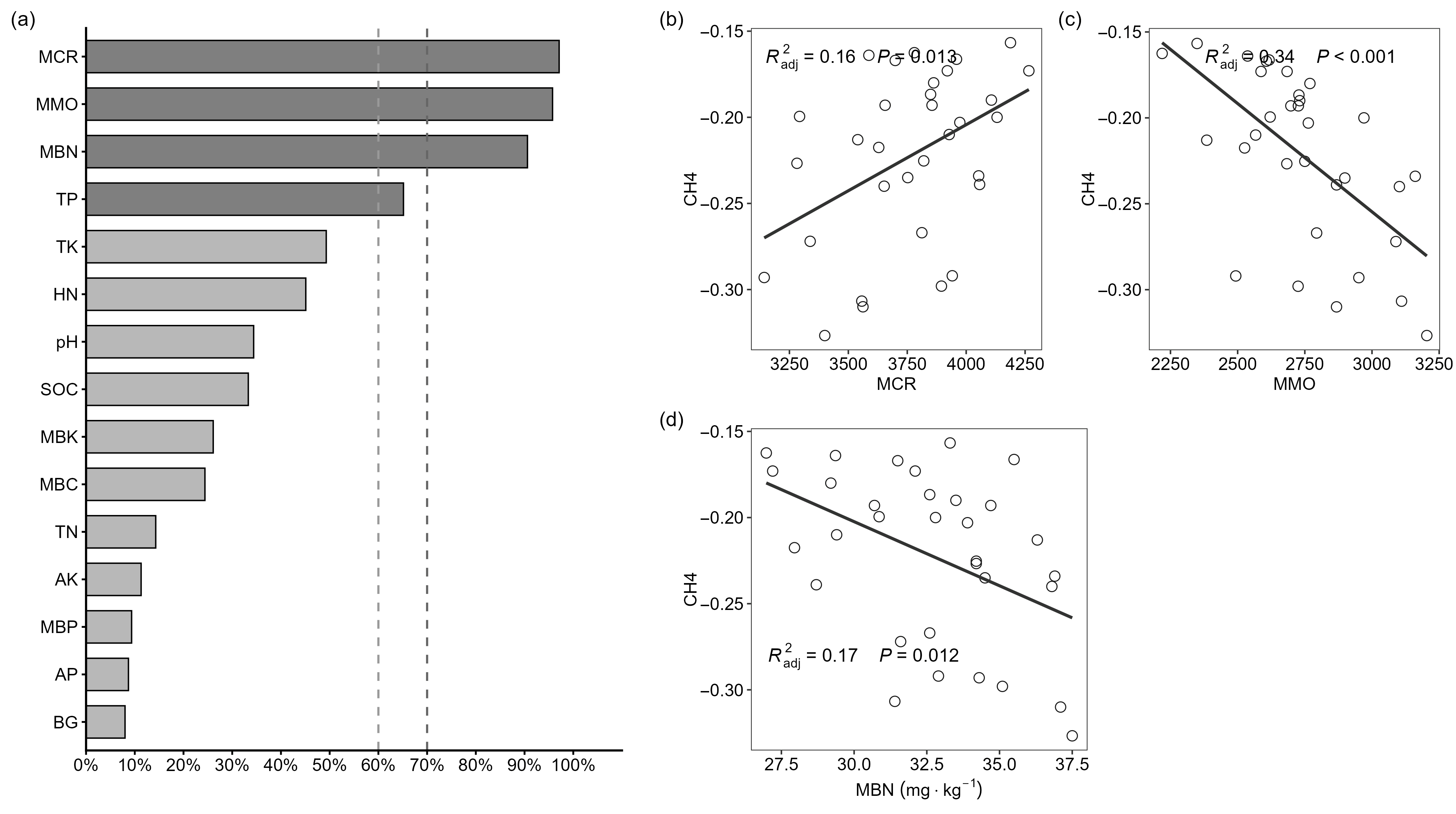
Elastic Net regression identified MCR, MMO, and MBN as stable key predictors of soil CH4 flux, with selection frequencies of 97.1%, 95.8%, and 90.6%, respectively (Figure 8a). Elevated MCR level correlated with increased CH4 flux, which represents an attenuated net uptake (Figure 8b). Conversely, higher MMO level and MBN correlated with reduced CH4 flux, which represents an enhanced net uptake (Figure 8c,d). For soil CO2 flux, BG, MBP, TN, TK, HN, and AP were identified as stable positive predictors (Figure 9a). Univariate regressions revealed that CO2 emissions increased linearly with BG, MBP, TN, and AP (Figure 9b–g).
Figure 8.
Bootstrap selection frequencies of potential predictors of soil CH4 flux and their relationships with key microbial functional enzymes and microbial biomass nitrogen. (a) Bootstrap selection frequencies of soil physicochemical properties, microbial biomass, and enzyme activities for predicting soil CH4 flux. (b–d) Relationships of soil CH4 flux with methyl-coenzyme M reductase (MCR), methane monooxygenase (MMO), and microbial biomass nitrogen (MBN), respectively. The vertical dashed lines in panel (a) indicate the 60% and 70% selection-frequency thresholds. Solid lines represent statistically significant linear relationships (p < 0.05). Adjusted coefficients of determination (adjusted R2) and p-values are shown in each regression panel.
The PLS-PM model explained 46.2% of the variance in CH4 flux with a Goodness of Fit of 0.63 (Figure 6b). N addition improved soil nitrogen availability (β = 0.694, p < 0.001), which significantly upregulated MMO level (β = 0.482, p = 0.001). P addition promoted MMO level (β = 0.417, p = 0.005), and MMO exerted a significant negative effect on CH4 flux (β = −0.536, p < 0.001). While MCR exerted a direct positive effect on CH4 flux (β = 0.321, p = 0.028), it was not significantly altered by nitrogen or phosphorus inputs.
For soil CO2 flux, the PLS-PM model explained 46.7% of the variance, with a Goodness of Fit of 0.64 (Figure 6c). N, P, and K additions elevated soil nitrogen availability (β = 0.48, p < 0.001), available phosphorus (β = 0.56, p < 0.001), and available potassium (β = 0.43, p < 0.001), respectively. Soil nitrogen nutrients stimulated CO2 emissions (β = 0.616, p = 0.005), but N addition exerted an opposing direct negative effect (β = −0.543, p = 0.008). This opposition rendered the net total effect of nitrogen on CO2 emissions non-significant. The PLS-PM model identified positive paths from available P to MBP (βMBP = 0.668, p < 0.001), from MBP to BG activity (β = 0.664, p < 0.001), and from BG activity to soil CO2 flux (β = 0.423, p = 0.009, with a total effect size of 0.140). This pattern is consistent with a potential pathway linking P availability, microbial P accumulation, and C-acquiring enzyme activity to soil CO2 efflux.
Figure 9.
Bootstrap selection frequencies of potential predictors of soil CO2 flux and their relationships with key soil physicochemical properties, microbial biomass, and enzyme activities. (a) Bootstrap selection frequencies of soil physicochemical properties, microbial biomass, and enzyme activities for predicting soil CO2 flux. (b–g) Relationships of soil CO2 flux with β-glucosidase (BG), microbial biomass phosphorus (MBP), total nitrogen (TN), total potassium (TK), hydrolysable nitrogen (HN), and available phosphorus (AP), respectively. The vertical dashed lines in panel (a) indicate the 60% and 70% selection-frequency thresholds. Solid lines indicate statistically significant linear relationships (p < 0.05), whereas dashed lines indicate non-significant relationships (p ≥ 0.05). Adjusted coefficients of determination (adjusted R2) and p-values are shown in each regression panel.
3. Discussion
3.1. Responses of Soil Nutrient Availability, Microbial Nutrient Pools, and Enzyme Indicators to Fertilization
Fertilization increased the corresponding soil nutrient pools, particularly the available fractions, whereas no significant changes in soil pH or SOC were detected. These contrasting responses may reflect differences in the processes governing nutrient availability and SOC dynamics. Mineral fertilizers can rapidly replenish available nutrient pools, whereas changes in SOC reflect the balance among plant C inputs, decomposition, microbial transformation, and organo-mineral stabilization [42,43]. The absence of detectable acidification may reflect the relatively short experimental duration and the response of the initially slightly alkaline soil to acid inputs. Previous studies indicate that acidification responses depend on treatment duration and initial soil conditions [44,45,46].
MBN, MBP, and MBK increased under fertilization, whereas no significant treatment effect on MBC was detected, indicating different responses of microbial biomass-associated nutrient pools and microbial biomass C. A comparable increase in MBN without a significant MBC response has been reported following N fertilization in pinewood nematode-affected Masson pine plantations [47]. Greater nutrient retention within microbial biomass is a possible explanation for the present results. However, these measurements do not establish nutrient immobilization rates or distinguish changes in cellular nutrient content from changes in microbial community composition. They therefore provide evidence of altered microbial nutrient pools, rather than direct evidence of enhanced microbial C metabolism or a shift toward C limitation [48,49,50].
BG activity increased under P and NPK fertilization, indicating greater potential activity of a C-acquiring enzyme under the assay conditions. This response is consistent with a global meta-analysis showing that P addition can stimulate C-acquiring enzymes, including β-glucosidase, although responses differ among ecosystem types [28]. Resource-allocation theory provides a possible explanation: changes in nutrient availability may alter microbial investment in extracellular enzymes [31,51]. Nevertheless, enzyme investment was not directly quantified here, and BG activity alone cannot establish changes in substrate use, C decomposition, or respiration in situ.
Distinguishing nutrient-pool responses from metabolic changes requires complementary evidence. In a saline–alkali soil pot experiment, Zhao et al. [52] examined microbial community composition and carbon-cycling functional profiles following the combined application of artificial humic acid and a microbial inoculant. Their study illustrates the additional information provided by community and functional characterization, although its specific responses cannot be transferred directly to plantation fertilization. Because microbial community composition and C-processing pathways were not characterized in the present study, the biomass and enzyme measurements support possible resource-related explanations but do not demonstrate changes in microbial C-processing pathways.
3.2. Nutrient Availability and Radial Growth Responses of C. bungei
Fertilization significantly increased DBH but did not affect tree height, with the largest DBH responses occurring under NP and NPK treatments. Hydrolysable N, total N, and MBN were stable positive predictors of DBH increment, and PLS-PM identified positive associations linking N addition, soil N availability, and radial growth. These results suggest that soil N availability was closely associated with short-term radial growth of C. bungei. However, the strongest growth responses under NP and NPK treatments indicate that nutrient co-limitation or complementary effects of multiple nutrients may also have contributed to the observed responses. This is physiologically consistent with the central role of N in photosynthetic proteins and enzymes and with the widespread N limitation of terrestrial plant productivity [53].
The greater DBH responses under NP and NPK fertilization are consistent with potential benefits from complementary nutrient supply, although they do not establish whether growth was constrained by N alone or by multiple nutrients. Sustained N enrichment can intensify P limitation [54], and nutrient responses are further modulated by input identity and intensity, as moderate N addition may stimulate soil N transformations whereas higher nutrient inputs can elicit contrasting responses [55]. Thus, the findings are consistent with an important role of N availability in tree growth, while also suggesting potential benefits from balanced nutrient supply. The relative contributions of individual nutrient limitations and complementary effects remain unresolved.
The lack of a significant height response likely reflects differences in the sensitivity and timescale of radial versus apical growth. Cambial and xylem growth can respond rapidly to current-year carbon supply and environmental conditions, whereas height growth is additionally constrained by shoot phenology, light competition, hydraulic limitations, and species-specific developmental strategies [56,57]. NP and NPK increased annual DBH increment relative to CK, supporting the predicted growth response to combined fertilization. NPK also produced a greater DBH increment than P or K alone, but a consistent advantage of combined over single-nutrient additions was not established. Height increment did not differ significantly among treatments. Thus, H1 was partially supported. Given the two-year duration of the experiment, DBH may therefore represent an earlier indicator of fertilization response than tree height. Longer-term monitoring is required to determine whether the observed radial-growth advantage ultimately translates into persistent differences in tree height, biomass, and stand productivity.
3.3. Responses of Soil CH4 and CO2 Fluxes to Fertilization and Their Associations with Microbial Processes
Mean soil CH4 fluxes calculated across the sampled dates were negative in all treatments. Compared with CK, NP fertilization increased net CH4 uptake and was accompanied by a higher immunoreactive MMO level. This pattern supports the predicted association between greater net CH4 uptake and higher MMO levels. However, no treatment significantly reduced CH4 uptake relative to CK, so the prediction for reduced uptake could not be evaluated. Thus, H2 was partially supported. The concurrent increases in net CH4 uptake and immunoreactive MMO suggest that the oxidative component of soil CH4 cycling may have contributed to the response to NP fertilization. This interpretation is consistent with forest studies showing that P availability can enhance CH4 oxidation potential and methanotroph activity and modify their responses to N enrichment [10,58]. Immunoreactive MCR levels did not differ significantly among treatments, but this does not establish that CH4 production was unchanged. Because gross CH4 oxidation and production were not measured separately, their relative contributions to the observed change in net CH4 uptake remain unresolved.
However, forest-soil CH4 responses to nutrient enrichment are highly context dependent and are modulated by nutrient identity and loading intensity as well as background soil and microbial conditions [32,59]. A global meta-analysis showed that N addition reduced CH4 uptake by approximately 39% in temperate forests and 21% in subtropical–tropical forests, while the mean reduction in boreal forests was not significant; positive-to-negative response thresholds of approximately 27 and 48 kg N ha−1 yr−1 were detected in temperate and boreal forests, respectively, but not in subtropical and tropical forests [23]. Moreover, even a N input comparable to ours can produce the opposite response: 60 kg N ha−1 yr−1 reduced annual CH4 uptake by 17–23% in a subtropical forest and was associated with changes in inorganic N and methane-cycling functional genes [26]. Likewise, N enrichment in a subtropical Moso bamboo forest altered methanotrophic and methanogenic communities and weakened CH4 uptake, with soil pH emerging as an important regulator [60]. These comparisons demonstrate that N loading alone cannot predict the direction of the CH4 response.
Phosphorus availability appears to be an important modifier of the soil CH4 response to N enrichment. In a P-limited Chinese fir plantation, high P and combined N–P addition increased CH4 uptake by approximately 16%, whereas N addition alone had no significant effect [61]. Similarly, long-term P addition enhanced CH4 oxidation potential and methanotroph abundance and partly alleviated the inhibitory effect of N enrichment in subtropical forest soils [10], while increased P availability was also associated with enhanced CH4 oxidation and shifts in active methanotrophic communities under long-term N and P fertilization [57]. Consistent with these findings, NP—but not N alone—increased MMO level and CH4 uptake in our study, suggesting that P availability may alleviate constraints on methanotrophic functioning and thereby modify the CH4 response to N enrichment. Nevertheless, field CH4 uptake is jointly regulated by microbial processes and soil physicochemical conditions, including moisture, temperature, dissolved organic carbon (DOC), inorganic N availability, pH, and gas diffusivity [62,63,64]. The increase in CH4 uptake under NP coincided with higher immunoreactive MMO levels, supporting the predicted association between greater uptake and higher MMO levels. However, no fertilization treatment significantly reduced CH4 uptake relative to CK, so the prediction for reduced uptake could not be evaluated from the treatment contrasts. Thus, H2 was partially supported. The MMO and MCR measurements do not establish how gross CH4 oxidation or production changed. Thus, the increase in MMO activity should be interpreted as functional evidence consistent with enhanced CH4 oxidation potential rather than as the sole driver of the observed increase in CH4 uptake.
The higher mean soil CO2 efflux under P fertilization, together with higher MBP and BG activity in the treatment summaries, suggests a possible association between nutrient availability, microbial nutrient status, and C acquisition. This interpretation is consistent with a global meta-analysis showing that P addition increased C-acquiring enzyme activities, including β-glucosidase, although responses varied among ecosystem types [28]. However, these observations do not establish a causal sequence from P availability through microbial P accumulation and BG activity to CO2 release. BG activity measured under assay conditions indicates potential C-acquiring enzyme activity and does not directly quantify microbial respiration in situ.
Measured soil CO2 efflux integrates respiration from roots and associated organisms as well as heterotrophic decomposition, and these contributions were not separated in this study. Xia et al. [30] reported that P addition enhanced heterotrophic respiration but reduced root respiration in a subtropical Chinese fir plantation, demonstrating that respiratory components can respond differently to nutrient addition. Furthermore, a global synthesis linked variation in soil respiration responses to P fertilization with changes in plant inputs and background soil P availability [65]. Although a microbial contribution is therefore a plausible interpretation of our observations, the component-specific response identified in previous studies cannot be assumed for the present plantation.
Alternative explanations include differences in root activity and rhizodeposition, temperature, moisture, and readily decomposable substrate availability. Root-associated processes could contribute directly to CO2 efflux and alter plant-derived C inputs to decomposers [30,62], whereas soil temperature, moisture, and substrate availability may also influence soil respiration [60]. Concurrent soil temperature and moisture observations characterize conditions during gas measurements but do not, by themselves, exclude these factors as contributors to the observed variation. Moreover, Soil properties, microbial biomass, and enzyme indicators were assessed using soil samples collected on a single occasion in August 2026, whereas soil CO2 flux was measured monthly from April to October 2026. The August samples represent a single time point within the flux-monitoring period and cannot establish whether the observed soil and microbial differences persisted across sampling months or preceded the CO2 response. P addition increased MBP, BG activity, and soil CO2 efflux relative to CK, as predicted by H3. NPK also increased MBP and BG activity, but its CO2 efflux did not differ significantly from CK. Thus, H3 was partially supported. The associations among available P, MBP, BG activity, and CO2 efflux were consistent with the proposed pathway, but they did not establish microbial mediation.
These findings provide initial guidance for evaluating fertilization strategies in C. bungei plantations. NP and NPK fertilization increased DBH increment, whereas NP also enhanced soil CH4 uptake. This combination makes NP a promising candidate for further evaluation, where both stem growth and soil CH4 uptake are management considerations. However, the present results do not establish whether NPK provides a consistent additional growth benefit over NP. Recommendations for K addition would therefore require further evidence of its contribution to growth under local nutrient conditions.
The contrasting gas responses also indicate that growth benefits should be evaluated alongside soil C exchange. P addition alone increased soil CO2 efflux, highlighting a potential trade-off between nutrient enrichment and soil C release. Nevertheless, this response should not be assumed to occur under every P-containing treatment, and non-significant CO2 responses under other treatments do not demonstrate the absence of an effect. Moreover, enhanced CH4 uptake cannot by itself establish an overall climate benefit, because net outcomes also depend on CO2 exchange, plant C accumulation, and other components of the ecosystem C balance. Thus, the present study supports evaluating fertilization regimes using multiple response variables rather than identifying an “optimal” treatment from DBH growth or a single gas flux alone [5,63].
Precipitation can alter short-term soil greenhouse gas fluxes, as illustrated by precipitation-dependent N2O pulses during freeze–thaw cycles in an Inner Mongolian grassland [66]. In our study, measurements were taken once per month from April to October 2026 and at least seven days after the most recent rainfall. This schedule did not capture immediate post-rainfall changes in CH4 or CO2 fluxes and does not support an estimate of annual soil gas exchange.
4. Materials and Methods
4.1. Study Site Description
This study was conducted at East China Coastal Forest Ecosystem Long-term Research Station in Dongtai City, China (120°50′34″ E, 32°51′14″ N). The geomorphology of the site is part of the coastal depositional plain of northern Jiangsu, featuring flat terrain with an elevation of 5 m. The area experiences a northern subtropical monsoon climate characterized by distinct seasons with synchronous heat and precipitation. The mean annual temperature is 15 °C, the mean annual precipitation is 1060 mm, and the mean annual relative humidity is 88%. Additionally, the frost-free period spans 220 days, and the annual sunshine duration averages 2130 h. The soil is classified as a Fluvisol according to the World Reference Base for Soil Resources (WRB), with a sandy-loam texture, slight alkalinity, and relatively low inherent nutrient availability.
4.2. Experimental Design and Fertilization Treatments
The C. bungei plantation was established in the spring of 2020 using uniform, two-year-old bare-root seedlings planted in pits at a spacing of 4 m by 3 m, which were coppiced immediately after planting. In March 2024, a uniform and flat stand within the plantation was selected for the field experiment. We implemented a randomized complete block design with four blocks. Each block contained eight randomly assigned fertilization treatments, including CK, N, P, K, NP, NK, PK, and NPK. This layout yielded a total of 32 plots. Each plot measured 20 m by 15 m and contained 25 trees arranged in a five-by-five grid. Before fertilization, we measured DBH, tree height, and crown width across all plots. Fertilizers were applied once annually in March 2024, March 2025, and March 2026. The fertilizers used were urea [CO(NH2)2, 46.67% N], monocalcium phosphate[Ca(H2PO4)2, 26.5% P], and potassium chloride [KCl, 50% K], which were applied at rates of 60 kg hm−2, 30 kg hm−2, and 60 kg hm−2, respectively [67]. To minimize nutrient transfer among treatments, buffer zones of more than 3 m were established between adjacent plots.
4.3. Field Measurements and Sampling
4.3.1. Tree Growth Survey
For the tree growth survey, we measured all standing live trees within each plot after two years of continuous fertilization. We measured DBH at 1.3 m above the ground using a diameter tape, and tree height using a telescopic measuring pole. We calculated the mean annual DBH increment, DBHinc, and mean annual height increment, Hinc, using the following Equations (1) and (2):
where DBH2026 and H2026 represent the stand DBH and tree height after two years of fertilization, whereas DBH2024 and H2024 represent the initial baseline values.
4.3.2. Soil Sampling
We randomly collected five topsoil cores from a depth of 0 to 20 cm in each plot during August 2026 using a soil auger. These cores were thoroughly homogenized into a single composite sample after the removal of surface litter, roots, and coarse gravel. The fresh soil was sieved through a 2 mm mesh and partitioned into two subsamples. One subsample was air-dried and passed through a 1 mm sieve for physicochemical analyses, whereas the other was stored at 4 °C for microbiological and enzymatic assays.
4.3.3. Greenhouse Gas Sampling
Soil CH4 and CO2 fluxes were measured once per month from April to October 2026, following the final fertilizer application in March 2026. Measurements were conducted around mid-month on sunny days between 09:00 and 11:00, at least seven days after the most recent rainfall. Soil temperature and moisture were measured concurrently. The system consisted of a portable gas analyzer and a chamber connected by gas-tight tubing, allowing continuous circulation of chamber headspace air through the analyzer and real-time monitoring of greenhouse gas concentrations. This approach enabled direct field measurement of gas concentration changes without discrete gas sampling and subsequent laboratory chromatographic analysis. At each sampling plot, a PVC collar was permanently installed in the soil to provide a stable and airtight interface for repeated measurements. During each measurement, the chamber was placed tightly onto the collar to form a closed headspace. Before chamber closure, the system was allowed to equilibrate with ambient air for approximately 1 min. The chamber was then sealed, and gas concentrations were continuously monitored for approximately 5 min. After each measurement, the chamber was opened and allowed to equilibrate with ambient air before the next measurement. Three consecutive measurements were conducted at each sampling point. During each measurement, the LGR analyzer continuously recorded the concentrations of CH4 and CO2, together with the relevant environmental parameters used for flux calculation. Greenhouse gas fluxes were calculated from the temporal change in gas concentration within the chamber. Specifically, the flux was determined from the slope of the linear regression between gas concentration and measurement time, with correction for chamber volume, soil surface area, air temperature, and atmospheric pressure. Measurements were accepted when the concentration–time relationship showed a coefficient of determination (R2 ≥ 0.90); measurements with lower R2 values or evident abnormal concentration changes were excluded from subsequent analyses. The greenhouse gas flux was calculated according to Equation (3):
where F is the gas flux (nmol m−2 s−1), dC/dt is the rate of change in gas concentration with time, P is the atmospheric pressure, V is the effective chamber volume, R is the universal gas constant, T is the absolute air temperature inside the chamber, and A is the soil surface area enclosed by the chamber. The resulting estimates represent mean fluxes under the sampled conditions. Positive fluxes indicated net emissions from the soil, whereas negative values indicated net uptake by the soil. For each gas, valid flux estimates from the three consecutive chamber measurements were averaged to obtain one flux estimate per plot per sampling date. For treatment comparisons, the date-specific estimates were combined into a time-weighted mean for each plot. The plot was the experimental unit, with four independent plots per treatment.
4.4. Laboratory Chemical and Enzymatic Analyses
We determined soil chemical properties following standard agrochemical protocols [68]. Soil pH was measured potentiometrically in a 2.5 to 1 water-to-soil suspension. Total nitrogen (TN) was determined through Kjeldahl digestion. Hydrolysable nitrogen (HN) was analyzed using the alkaline hydrolysis diffusion method. Total phosphorus (TP) was determined by sulfuric-perchloric acid digestion followed by molybdenum-antimony colorimetry. Available phosphorus (AP) was extracted with 0.5 mol L−1 sodium bicarbonate and quantified colorimetrically. Total potassium (TK) was determined by sodium hydroxide fusion and flame photometry, whereas available potassium (AK) was extracted with 1 mol L−1 neutral ammonium acetate and measured by flame photometry. Soil organic carbon (SOC) was determined using the potassium dichromate oxidation with external heating method.
Microbial biomass carbon (MBC), nitrogen (MBN), phosphorus (MBP), and potassium (MBK) were determined using the chloroform fumigation-extraction method [69]. Fumigated and non-fumigated soils were extracted with 0.5 mol L−1 K2SO4 to determine MBC and MBN (representing extractable organic C and total N), with 0.5 mol L−1 NaHCO3 for MBP, and with 1 mol L−1 ammonium acetate for MBK. Differences between the fumigated and non-fumigated extracts were divided by conversion factors, specifically 0.45 for carbon and 0.54 for nitrogen, to calculate microbial biomass [70]. The activity of β-glucosidase (BG) was measured microplate colorimetrically using p-nitrophenyl-β-D-glucopyranoside (pNPG) as the substrate. Following the approach of Pang et al. [71], immunoreactive levels of methyl-coenzyme M reductase (MCR) and methane monooxygenase (MMO) in soil extracts were measured using commercial ELISA kits from Beijing CHEJETER Technology Co., Ltd. (Beijing, China). and Jiangsu MMBIO (Yancheng, China), respectively, according to the manufacturers’ instructions. The assays quantified immunoreactive enzyme levels rather than catalytic activity.
4.5. Data Analysis
Linear mixed-effects models were used to test the effects of fertilization treatments on soil properties, microbial biomass, enzyme activities, tree growth, and greenhouse gas fluxes. In these models, fertilization treatments were treated as fixed effects, and blocks were treated as random effects, fitted using the lme4 package in R (version 4.3). When treatment effects were statistically significant, post hoc pairwise comparisons were conducted using Tukey’s honest significant difference test via the emmeans package.
To screen key predictors influencing tree growth and soil GHG fluxes, Elastic Net regression was employed using the glmnet package. To enhance predictor robustness under limited sample sizes, 2000 bootstrap iterations were performed. Variables that exhibited a selection frequency greater than 70%, a sign consistency greater than 80%, and a 95% bootstrap confidence interval excluding zero were identified as stable key predictors. If no stable predictor met these criteria for a given response variable, subsequent path analysis was omitted.
To identify key predictors of tree growth and soil GHG fluxes, Elastic Net regression was performed using the glmnet package. All continuous predictors were standardized to zero mean and unit variance using training-set statistics. The mixing parameter (α) and regularization parameter (λ) were optimized using leave-one-block-out cross-validation, with one of the four experimental blocks excluded for validation in each fold. The optimal parameters were selected based on cross-validated root mean square error (RMSE). To assess selection stability, 2000 bootstrap iterations were performed by resampling independent plots with replacement within each block, with hyperparameters re-optimized in each iteration. Predictor stability was evaluated using selection frequency, sign consistency, and 95% bootstrap stability intervals calculated from nonzero standardized coefficients. Predictors with selection frequencies greater than 70%, sign consistency greater than 80%, and stability intervals excluding zero were identified as stable predictors. These conditional intervals were interpreted as measures of selection stability rather than conventional inferential confidence intervals. If no predictor met these criteria, subsequent path analysis was omitted.
To resolve the direct and indirect regulatory pathways of fertilization on tree growth and greenhouse gas fluxes, partial least squares path modeling (PLS-PM) was performed using the plspm package. Model quality was evaluated using path coefficients, the coefficient of determination, Goodness of Fit, and the Standardized Root Mean Square Residual. Path stability was validated using 2000 bootstrap resampling. A Standardized Root Mean Square Residual value below 0.08 indicates a good fit, whereas a value below 0.10 is acceptable. Goodness of Fit values greater than 0.10, 0.25, and 0.36 indicate low, moderate, and high explanatory power, respectively. All statistical analyses were conducted in R version 4.3.2, figures were plotted using ggplot2, and significance was set at α = 0.05.
Partial least squares path modeling (PLS-PM) was performed using the plspm package to examine potential direct and indirect pathways linking fertilization, soil properties, microbial processes, and tree growth or GHG fluxes. The general path structures were specified a priori based on ecological hypotheses, while candidate indicators were informed by Elastic Net screening. Model results were evaluated using standardized path coefficients, explained variance (R2), and 2000 block-stratified bootstrap iterations. Goodness of Fit (GoF) and Standardized Root Mean Square Residual (SRMR) were reported as descriptive model diagnostics. Given the limited sample size, the identified pathways were interpreted as associations consistent with hypothesized ecological mechanisms rather than definitive causal relationships. All analyses were conducted in R version 4.3.2, figures were generated using ggplot2, and statistical significance was assessed at α = 0.05.
5. Conclusions
Fertilization affected stem growth and soil carbon exchange differently in the C. bungei plantation. Both NP and NPK fertilization increased DBH increment. Under the sampled conditions, NP increased net soil CH4 uptake, while P applied alone increased soil CO2 efflux. Soil N availability was associated with DBH increment. Greater net CH4 uptake under NP coincided with a higher immunoreactive MMO level, while soil CO2 efflux was associated with microbial biomass P and β-glucosidase activity. These associations identify potential links between microbial properties and soil gas exchange, but they do not establish microbial mediation or determine whether gross CH4 oxidation or production changed.
The findings highlight the importance of considering growth responses and soil gas exchange together when evaluating plantation fertilization strategies. NP warrants further evaluation because it combined increased DBH growth with enhanced CH4 uptake under the conditions studied. However, these responses do not establish an optimal fertilization regime or an overall ecosystem C benefit. Given the two-year duration, single-site setting, and growing-season flux measurements, operational recommendations require longer-term, multi-site assessments that account for local nutrient conditions, annual GHG exchange, and fertilizer costs.
Supplementary Materials
The following supporting information can be downloaded at: https://www.mdpi.com/article/10.3390/plants15223618/s1, Table S1. Tests of nitrogen (N), phosphorus (P), and potassium (K) addition interactions for soil properties, microbial variables, greenhouse gas fluxes, and tree growth.
Author Contributions
Author Contributions: Conceptualization, W.Y., X.H., N.Z. and T.W.; methodology, W.Y., L.J., X.H., N.Z. and T.W.; software, W.Y. and Z.Z.; validation, W.Y.; formal analysis, W.Y., L.J., Z.Z., X.M., J.G., F.Z. and N.Z.; investigation, W.Y., L.J., Z.Z., X.M., D.J., J.G., F.Z. and N.Z.; resources, D.J.; data curation, W.Y., Z.Z., X.M., D.J., J.G., F.Z. and N.Z.; writing—original draft preparation, W.Y.; writing—review and editing, W.Y., L.J., X.H., X.M., F.Z., N.Z. and T.W.; visualization, W.Y., Z.Z., X.H., X.M., F.Z., N.Z. and T.W.; supervision, W.Y., L.J., X.H., D.J. and T.W.; project administration, F.Z. and T.W.; funding acquisition, N.Z. and T.W. All authors have read and agreed to the published version of the manuscript.
Funding
This research was funded by the National Key R&D Program of China, Forestry Special Project, grant number [2024YFD2201202]; the Zhejiang Province High-Level Talent Special Support Program, Science and Technology Innovation Leading Talent Project, grant number 2023R5251; and the Fundamental Research Funds of the Chinese Academy of Forestry, grant number CAFYBB2024MA014. The APC was funded by the National Key R&D Program of China, Forestry Special Project.
Data Availability Statement
The original contributions presented in this study are included in the article. Further inquiries can be directed to the corresponding authors.
Acknowledgments
The authors are grateful to Engineer Wensheng Du of Beijing Liga United Technology Co., Ltd. for his technical assistance with the maintenance and operation of the experimental instruments. During the preparation of this manuscript, the authors used OpenAI ChatGPT (GPT-5.6 Sol) for language editing and improvement of manuscript clarity. The authors have reviewed and edited the output and take full responsibility for the content of this publication.
Conflicts of Interest
The authors declare no conflicts of interest. The funders had no role in the design of the study; in the collection, analyses, or interpretation of data; in the writing of the manuscript; or in the decision to publish the results.
Abbreviations
The following abbreviations are used in this manuscript:
| AK | Available potassium |
| AP | Available phosphorus |
| BG | 尾-Glucosidase |
| CK | Unfertilized control |
| DBH | Diameter at breast height |
| DBHinc | Mean annual diameter at breast height increment |
| DOC | Dissolved organic carbon |
| ELISA | Enzyme-linked immunosorbent assay |
| GHG | Greenhouse gas |
| Hinc | Mean annual height increment |
| HN | Hydrolysable nitrogen |
| K | Potassium |
| LGR | Los Gatos Research |
| MBC | Microbial biomass carbon |
| MBK | Microbial biomass potassium |
| MBN | Microbial biomass nitrogen |
| MBP | Microbial biomass phosphorus |
| MCR | Methyl-coenzyme M reductase |
| MMO | Methane monooxygenase |
| N | Nitrogen |
| NK | Nitrogen and potassium fertilization |
| NP | Nitrogen and phosphorus fertilization |
| NPK | Nitrogen, phosphorus, and potassium fertilization |
| P | Phosphorus |
| PK | Phosphorus and potassium fertilization |
| PLS-PM | Partial least squares path modeling |
| pNPG | p-Nitrophenyl-尾-D-glucopyranoside |
| PVC | Polyvinyl chloride |
| SOC | Soil organic carbon |
| TK | Total potassium |
| TN | Total nitrogen |
| TP | Total phosphorus |
References
- Wright, S.J.; Yavitt, J.B.; Wurzburger, N.; Turner, B.L.; Tanner, E.V.J.; Sayer, E.J.; Santiago, L.S.; Kaspari, M.; Hedin, L.O.; Harms, K.E.; et al. Potassium, phosphorus, or nitrogen limit root allocation, tree growth, or litter production in a lowland tropical forest. Ecology 2011, 92, 1616–1625. [Google Scholar] [CrossRef] [Scilit] [PubMed]
- Boeraeve, M.; Granath, G.; Lindahl, B.D.; Clemmensen, K.E.; Strengbom, J. How does forest fertilization influence tree productivity of boreal forests? An analysis of data from commercial forestry across Sweden. J. Environ. Manag. 2025, 373, 124023. [Google Scholar] [CrossRef] [Scilit] [PubMed]
- Li, D.; Bu, W.; Yang, F.; Meng, S.; Gao, D.; Kou, L.; Wang, H.; Fu, X. Combined application of nitrogen and phosphorus enhance the growth and wood quality stability of Chinese fir: Insights from a long-term fertilization experiment. Sci. Silvae Sin. 2026, 62, 36–45. [Google Scholar] [CrossRef]
- Chen, J.; Luo, Y.; Li, J.; Zhou, X.; Cao, J.; Wang, R.-W.; Wang, Y.; Shelton, S.; Jin, Z.; Walker, L.M.; et al. Costimulation of soil glycosidase activity and soil respiration by nitrogen addition. Glob. Change Biol. 2017, 23, 1328–1337. [Google Scholar] [CrossRef] [Scilit] [PubMed]
- Rabbai, A.; Barba, J.; Canducci, M.; Hart, K.M.; MacKenzie, A.R.; Kettridge, N.; Curioni, G.; Ullah, S.; Krause, S. Fertilization-induced greenhouse gas emissions partially offset carbon sequestration during afforestation. Soil Biol. Biochem. 2024, 199, 109577. [Google Scholar] [CrossRef] [Scilit]
- Jiang, B.; Chen, H.; Wei, Z.; Zhang, J.; Guo, M.; Yang, T.; Zhou, X. Higher temperature sensitivity of forest soil methane oxidation in colder climates. Nat. Commun. 2025, 16, 2428. [Google Scholar] [CrossRef] [Scilit] [PubMed]
- McFarlane, K.J.; Cusack, D.F.; Dietterich, L.H.; Hedgpeth, A.L.; Finstad, K.M.; Nottingham, A.T. Experimental warming and drying increase older carbon contributions to soil respiration in lowland tropical forests. Nat. Commun. 2024, 15, 7084. [Google Scholar] [CrossRef] [Scilit] [PubMed]
- Peng, D.; Zhang, B.; Zheng, S.; Ju, W.; Chen, J.M.; Ciais, P.; Guo, H.; Pan, Y.; Yu, L.; Xu, Y.; et al. Newly established forests dominated global carbon sequestration change induced by land cover conversions. Nat. Commun. 2025, 16, 6570. [Google Scholar] [CrossRef] [Scilit] [PubMed]
- Cen, X.; Vitousek, P.; He, N.; Bond-Lamberty, B.; Niu, S.; Du, E.; Yu, K.; Zheng, M.; Van Sundert, K.; Paulus, E.L.; et al. A general framework for nitrogen deposition effects on soil respiration in global forests. Nat. Commun. 2026, 17, 506. [Google Scholar] [CrossRef] [Scilit] [PubMed]
- Liu, Y.; Xiao, W.; Feng, J.; Fernández-Martínez, M.; Stevens, C.; Zheng, Z.; Zhou, X. Phosphorus addition diminishes the negative effect of nitrogen addition on methane sink in subtropical forest soils. Sci. Total Environ. 2025, 963, 178461. [Google Scholar] [CrossRef] [Scilit] [PubMed]
- Frey, D.W.; Kebede, E.; Sparks, J.P.; Fahey, T.J.; Goodale, C.L. Increased soil nitrogen availability suppresses annual soil respiration in mixed temperate forests regardless of acidification. Glob. Change Biol. 2025, 31, e70140. [Google Scholar] [CrossRef] [Scilit] [PubMed]
- Liang, G.; Sun, P.; Waring, B.G.; Fu, Z.; Reich, P.B. Alleviating nitrogen and phosphorus limitation does not amplify potassium-induced increase in terrestrial biomass. Glob. Change Biol. 2025, 31, e70193. [Google Scholar] [CrossRef] [Scilit] [PubMed]
- Schwalb, S.A.; Hemkemeyer, M.; Christensen, B.T.; Heinze, S.; Oliva, R.L.; Joergensen, R.G.; Wichern, F. Disentangling the effects of mineral fertiliser N, P and K on microbial biomass, necromass and ionome in soil from the Askov long-term field experiment. Soil Biol. Biochem. 2024, 195, 109449. [Google Scholar] [CrossRef] [Scilit]
- Ma, Z.; Liu, Y.; Wang, C.; Song, M.; Wang, Y.; Wang, T.; Han, M.; Dou, Z. Long-term nitrogen addition weakens the CH4 sink in temperate forest soils by inhibiting methane oxidation and promoting methanogenesis. Agric. Ecosyst. Environ. 2026, 409, 110543. [Google Scholar] [CrossRef] [Scilit]
- Li, S.; Cui, Y.; Moorhead, D.L.; Dijkstra, F.A.; Sun, L.; Xia, Z.; Gao, Y.; Ma, Q.; Yu, W. Phosphorus limitation regulates the responses of microbial carbon metabolism to long-term combined additions of nitrogen and phosphorus in a cropland. Soil Biol. Biochem. 2025, 200, 109614. [Google Scholar] [CrossRef] [Scilit]
- Zhao, L.; Zhong, M.; Shen, R.F.; Zhao, X.Q. Is phosphorus fertilizer a viable strategy for mitigating greenhouse gas emissions? Evidence from a global synthesis. Agric. Ecosyst. Environ. 2026, 411, 110655. [Google Scholar] [CrossRef] [Scilit]
- Mishra, S.; Bisht, D.; Amtmann, A.; Srivastava, A.K.; Pandey, G.K. Potassium deficiency and hormone signalling in plants. Plant Cell Environ. 2026, 49, 2935–2951. [Google Scholar] [CrossRef] [Scilit] [PubMed]
- Ning, L.; Xu, X.; Ma, L.; Wang, X.; Yin, M.; He, P.; Zhou, W. Sustainable potassium management with green manure reshapes microbial nitrogen cycling to enhance potato yield. Agric. Ecosyst. Environ. 2026, 398, 110124. [Google Scholar] [CrossRef] [Scilit]
- Conrad, R. The global methane cycle: Recent advances in understanding the microbial processes involved. Environ. Microbiol. Rep. 2009, 1, 285–292. [Google Scholar] [CrossRef] [Scilit] [PubMed]
- Chadwick, G.L.; Dury, G.A.; Nayak, D.D. Physiological and transcriptomic response to methyl-coenzyme M reductase limitation in Methanosarcina acetivorans. Appl. Environ. Microbiol. 2024, 90, e02220-23. [Google Scholar] [CrossRef] [Scilit] [PubMed]
- Tucci, F.J.; Rosenzweig, A.C. Direct methane oxidation by copper- and iron-dependent methane monooxygenases. Chem. Rev. 2024, 124, 1288–1320. [Google Scholar] [CrossRef] [Scilit] [PubMed]
- Chang, R.; Liu, X.; Wang, T.; Li, N.; Bing, H. Stimulated or inhibited response of methane flux to nitrogen addition depends on nitrogen levels. J. Geophys. Res. Biogeosci. 2021, 126, e2021JG006600. [Google Scholar] [CrossRef] [Scilit]
- Xia, N.; Du, E.; Wu, X.; Tang, Y.; Wang, Y.; de Vries, W. Effects of nitrogen addition on soil methane uptake in global forest biomes. Environ. Pollut. 2020, 264, 114751. [Google Scholar] [CrossRef] [Scilit] [PubMed]
- Cen, X.; He, N.; Li, M.; Xu, L.; Yu, X.; Cai, W.; Li, X.; Butterbach-Bahl, K. Suppression of nitrogen deposition on global forest soil CH4 uptake depends on nitrogen status. Glob. Biogeochem. Cycles 2024, 38, e2024GB008098. [Google Scholar] [CrossRef] [Scilit]
- Kim, S.Y.; Veraart, A.J.; Meima-Franke, M.; Bodelier, P.L.E. Combined effects of carbon, nitrogen and phosphorus on CH4 production and denitrification in wetland sediments. Geoderma 2015, 259–260, 354–361. [Google Scholar] [CrossRef] [Scilit]
- Zhou, J.; Tang, C.; Vancov, T.; Fu, S.; Fang, Y.; Ge, T.; Dong, Y.; Luo, Y.; Yu, B.; Cai, Y.; et al. Biochar mitigates the suppressive effects of nitrogen deposition on soil methane uptake in a subtropical forest. Agric. Ecosyst. Environ. 2026, 395, 109951. [Google Scholar] [CrossRef] [Scilit]
- Bond-Lamberty, B.; Bailey, V.L.; Chen, M.; Gough, C.M.; Vargas, R. Globally rising soil heterotrophic respiration over recent decades. Nature 2018, 560, 80–83. [Google Scholar] [CrossRef] [Scilit] [PubMed]
- Zhang, H.; Liu, X.; Long, J.; Huo, H.; Yang, T.; Jia, C.; Yi, L.; Herath, S.; Peng, X. Phosphorus addition stimulates overall carbon acquisition enzymes but suppresses overall phosphorus acquisition enzymes: A global meta-analysis. Agric. Ecosyst. Environ. 2024, 375, 109219. [Google Scholar] [CrossRef] [Scilit]
- Cui, Y.; Hu, J.; Peng, S.; Delgado-Baquerizo, M.; Moorhead, D.L.; Sinsabaugh, R.L.; Xu, X.; Geyer, K.M.; Fang, L.; Smith, P.; et al. Limiting resources define the global pattern of soil microbial carbon use efficiency. Adv. Sci. 2024, 11, 2308176. [Google Scholar] [CrossRef] [Scilit] [PubMed]
- Xia, Y.; Turner, B.L.; Li, Y.; Lian, P.; Yang, Z.; Fan, Y.; Yang, L.; Yang, Y. Phosphorus addition enhances heterotrophic respiration but reduces root respiration in a subtropical plantation forest. Sci. Total Environ. 2024, 934, 173158. [Google Scholar] [CrossRef] [Scilit] [PubMed]
- Ren, Y.; Wang, Y.; Zhang, X.; Liu, X.; Liu, P.; Chen, L. Enzymatic stoichiometry reveals the metabolic limitations of soil microbes under nitrogen and phosphorus addition in Chinese fir plantations. Microorganisms 2024, 12, 1716. [Google Scholar] [CrossRef] [Scilit] [PubMed]
- Liu, H.; Ren, T.; Liao, J.; Chen, H.Y.H.; Zou, X.; Ruan, H. Nitrogen deposition alleviates phosphorus-induced imbalances in soil enzyme stoichiometry. Commun. Earth Environ. 2026, 7, 88. [Google Scholar] [CrossRef] [Scilit]
- Chen, Y.; Lu, Y.; Gao, S.; Liu, H. Minor effects of nutrient additions on soil microbial carbon use efficiency. Commun. Earth Environ. 2026, 7, 77. [Google Scholar] [CrossRef] [Scilit]
- Adamczyk, B.; Adamczyk, S.; Tupek, B.; Li, Q.; Martinovic, T.; Richy, E.; Lehtonen, A.; Baldrian, P.; Mäkipää, R. Nitrogen fertilisation of boreal forest soil increases soil carbon pool through elevated microbial necromass formation but also modifies tree secondary metabolism. Soil Biol. Biochem. 2025, 209, 109917. [Google Scholar] [CrossRef] [Scilit]
- Xu, T.; Wang, Z.; Wang, Z.; Guo, M.; Wang, X.; He, X.; Wang, J.; Rahman, S.U.; Bourhia, M.; Alsahli, A.A.; et al. Effects of nitrate- and ammonium-nitrogen on anatomical and physiological responses of Catalpa bungei under full and partial root-zone drought. BMC Plant Biol. 2024, 24, 217. [Google Scholar] [CrossRef] [Scilit] [PubMed]
- Wang, D.; Li, S.; Wang, S.; Li, J.; Fu, J.; Xia, F.; Lu, N.; Ma, W.; Wang, P.; Zhou, G.; et al. CbuBIM1 antagonizes CbuMYB27 to regulate tension wood formation in Catalpa bungei. Plant Cell Environ. 2026, 49, 5547–5562. [Google Scholar] [CrossRef] [Scilit] [PubMed]
- Lu, N.; Zhang, M.; Xiao, Y.; Han, D.; Liu, Y.; Zhang, Y.; Yi, F.; Zhu, T.; Ma, W.; Fan, E.; et al. Construction of a high-density genetic map and QTL mapping of leaf traits and plant growth in an interspecific F1 population of Catalpa bungei × Catalpa duclouxii Dode. BMC Plant Biol. 2019, 19, 596. [Google Scholar] [CrossRef] [Scilit] [PubMed]
- Qiao, L.; Zhang, Q.; Li, J.; Guan, Z.; He, Q. Nutrient stoichiometry and tree development: Insights from a 5-year study on Catalpa bungei fertilization. Forests 2024, 15, 1836. [Google Scholar] [CrossRef] [Scilit]
- Guan, Z.; Zhang, Q.; Xu, T.; Chen, D.; Lu, Y.; Han, Q.; Li, N.; Ma, W.; Wang, J.; Su, Y.; et al. Modeling branch attributes and biomass for Catalpa bungei plantations under various fertilization regimes. Front. For. Glob. Change 2024, 7, 1261310. [Google Scholar] [CrossRef] [Scilit]
- Guan, Z.; Lin, D.; Chen, D.; Guo, Y.; Lu, Y.; Han, Q.; Li, N.; Su, Y.; Li, J.; Wang, J.; et al. Soil microbial communities response to different fertilization regimes in young Catalpa bungei plantation. Front. Microbiol. 2022, 13, 948875. [Google Scholar] [CrossRef] [Scilit] [PubMed]
- Bai, J.; Wu, J.; He, Q.; Su, Y.; Li, J.; Wang, J.; Dong, J. Effects of different fertilization formulas on Catalpa bungei seedling biomass allocation and nutrient use efficiency. J. South China Agric. Univ. 2015, 36, 91–97. [Google Scholar] [CrossRef]
- Schmidt, M.W.I.; Torn, M.S.; Abiven, S.; Dittmar, T.; Guggenberger, G.; Janssens, I.A.; Kleber, M.; Kögel-Knabner, I.; Lehmann, J.; Manning, D.A.C.; et al. Persistence of soil organic matter as an ecosystem property. Nature 2011, 478, 49–56. [Google Scholar] [CrossRef] [Scilit] [PubMed]
- Hicks Pries, C.E.; Ryals, R.; Zhu, B.; Min, K.; Cooper, A.; Goldsmith, S.; Pett-Ridge, J.; Torn, M.; Berhe, A.A. The deep soil organic carbon response to global change. Annu. Rev. Ecol. Evol. Syst. 2023, 54, 375–401. [Google Scholar] [CrossRef] [Scilit]
- Hao, T. Long-term and short-term effects of nitrogen addition on soil acidification in a temperate steppe. Plant Soil 2025. advance online publication. [Google Scholar] [CrossRef] [Scilit]
- Dong, K.; Ma, S.; Zhou, Z.; Jiang, L.; Zhang, D.; Yang, C.; Chen, Z.; Ji, C.; Zhu, J.; Zhu, B.; et al. Long-term nitrogen addition promotes soil acidity in two tropical montane rainforests. Soil Ecol. Lett. 2025, 7, 250304. [Google Scholar] [CrossRef] [Scilit]
- Xiao, R.; Li, G.; Cheng, G.; Miao, R.; Wang, D.; Yang, Z.; Jiang, L. Background soil pH governs nitrogen-induced acidification by mediating microbial N-cycling and soil buffering capacity. Glob. Biogeochem. Cycles 2026, 40, e2026GB009271. [Google Scholar] [CrossRef] [Scilit]
- Zhang, X.; Zhao, Z.; Chen, T.; Zhao, T.; Song, L.; Mei, L. Fertilization and clear-cutting effect on greenhouse gases emission of pinewood nematode damaged Masson pine plantation. Ecosyst. Health Sustain. 2021, 7, 1868271. [Google Scholar] [CrossRef] [Scilit]
- Guo, L.; Ju, C.; Xu, X.; Zhou, G.; Luo, Y.; Xu, C.; Li, Q.; Du, H.; Liu, W.; Zhou, Y. Unveiling pervasive soil microbial P limitation in terrestrial ecosystems worldwide. Ecol. Lett. 2024, 27, e70011. [Google Scholar] [CrossRef] [Scilit] [PubMed]
- Ge, J.; Han, X.; Lei, X.; Wang, Q.; Wu, P.; Zhang, N.; Guo, Y.; Yang, P.; Feng, B.; Gao, J. Differential responses of soil microbial biomass and diversity to long-term phosphorus fertilization: A global meta-analysis. Agric. Ecosyst. Environ. 2026, 406, 110429. [Google Scholar] [CrossRef] [Scilit]
- Hussain, B.; Umer, M.J.; Salam, M.; Ullah, S.; Iqbal, N.; Vithanage, M.; Sun, S. Deciphering microbial nutrient limitation via ecoenzymatic stoichiometry under mineral fertilization in agroecosystems: Insights from systematic meta-analysis. Soil Syst. 2026, 10, 108. [Google Scholar] [CrossRef] [Scilit]
- Allison, S.D.; Vitousek, P.M. Responses of extracellular enzymes to simple and complex nutrient inputs. Soil Biol. Biochem. 2005, 37, 937–944. [Google Scholar] [CrossRef] [Scilit]
- Zhao, Y.; Zhang, R.; Zhang, Z.; Yang, F.; Liu, Z. Mechanism of Combined Improvement of Saline-Alkali Soil by Artificial Humic Acid and Microbial Inoculant. Land Degrad. Dev. 2026, 37, 12406–12417. [Google Scholar] [CrossRef] [Scilit]
- LeBauer, D.S.; Treseder, K.K. Nitrogen limitation of net primary productivity in terrestrial ecosystems is globally distributed. Ecology 2008, 89, 371–379. [Google Scholar] [CrossRef] [Scilit] [PubMed]
- Luo, M.; Moorhead, D.L.; Ochoa-Hueso, R.; Mueller, C.W.; Ying, S.C.; Chen, J. Nitrogen loading enhances phosphorus limitation in terrestrial ecosystems with implications for soil carbon cycling. Funct. Ecol. 2022, 36, 2845–2858. [Google Scholar] [CrossRef] [Scilit]
- Zhang, Y.; Jiang, P.; Guo, Y.; Wu, M.; Shao, X.; Xu, H.; Wu, T.; Yuan, W.; Li, N. Nitrogen and phosphorus additions alter soil N transformations in a Metasequoia glyptostroboides plantation. Front. Plant Sci. 2024, 15, 1448356. [Google Scholar] [CrossRef] [Scilit] [PubMed]
- Mou, T.; Sui, D.; Zhong, M.; Yu, B.; Sun, J.; Guo, X. Temporal dynamics of shoot and xylem growth in Chinese fir: Implications for carbon allocation. Dendrochronologia 2025, 91, 126324. [Google Scholar] [CrossRef] [Scilit]
- Jucker, T.; Fischer, F.J.; Chave, J.; Coomes, D.A.; Caspersen, J.; Ali, A.; Panzou, G.J.L.; Feldpausch, T.R.; Falster, D.; Usoltsev, V.A.; et al. The global spectrum of tree crown architecture. Nat. Commun. 2025, 16, 4876. [Google Scholar] [CrossRef] [Scilit] [PubMed]
- Dong, W.; Li, W.; Feng, S.; Deng, Y.; Zheng, Z.; Krause, S.M.B. Long-term nitrogen and phosphorus fertilization modulates methane uptake and microbial community dynamics in subtropical forest soils. Pedosphere 2026, 36, 474–483. [Google Scholar] [CrossRef] [Scilit]
- Sui, X.; Zhang, H.; Xie, Y.; Liu, Y.; Cheng, X.; Liu, G.; Wu, J. Divergent responses of soil methane uptake to nitrogen addition across upland ecosystems. Soil Tillage Res. 2026, 260, 107136. [Google Scholar] [CrossRef] [Scilit]
- Li, Q.; Peng, C.; Zhang, J.; Li, Y.; Song, X. Nitrogen addition decreases methane uptake caused by methanotroph and methanogen imbalances in a Moso bamboo forest. Sci. Rep. 2021, 11, 5578. [Google Scholar] [CrossRef] [Scilit] [PubMed]
- Li, B.; Chen, G.; Lu, X.; Jiao, H. Effects of nitrogen and phosphorus additions on soil N2O emissions and CH4 uptake in a phosphorus-limited subtropical Chinese fir plantation. Forests 2022, 13, 772. [Google Scholar] [CrossRef] [Scilit]
- Chen, Q.; Long, C.; Chen, J.; Cheng, X. Differential response of soil CO2, CH4, and N2O emissions to edaphic properties and microbial attributes following afforestation in central China. Glob. Change Biol. 2021, 27, 5657–5669. [Google Scholar] [CrossRef] [Scilit] [PubMed]
- Täumer, J.; Kolb, S.; Boeddinghaus, R.S.; Wang, H.; Schöning, I.; Schrumpf, M.; Urich, T.; Marhan, S. Divergent drivers of the microbial methane sink in temperate forest and grassland soils. Glob. Change Biol. 2021, 27, 929–940. [Google Scholar] [CrossRef] [Scilit] [PubMed]
- Sun, Y.; Chen, X. Phosphorus fertilization enhances terrestrial carbon cycling in phosphorus-deficient ecosystems. J. Environ. Manag. 2024, 351, 119941. [Google Scholar] [CrossRef] [Scilit] [PubMed]
- Zhang, W.; Zhao, Y.; Frouz, J.; Xue, P.; Li, J.; Suo, L.; Song, B.; Wang, H. The impact of precipitation on N2O emissions during the freeze-thaw cycle in a typical grassland in Inner Mongolia. Soil Tillage Res. 2026, 255, 106774. [Google Scholar] [CrossRef] [Scilit]
- Linger, E.; Long, W. Phosphorus limitation constrains global forest productivity directly and indirectly via forest community structural attributes: Meta-analysis. Glob. Ecol. Biogeogr. 2025, 34, e70048. [Google Scholar] [CrossRef] [Scilit]
- Bao, S.D. Soil Agrochemical Analysis, 3rd ed.; China Agriculture Press: Beijing, China, 2000. [Google Scholar]
- Wang, C.; Lu, X.; Mori, T.; Mao, Q.; Zhou, K.; Zhou, G.; Nie, Y.; Mo, J. Responses of soil microbial community to continuous experimental nitrogen additions for 13 years in a nitrogen-rich tropical forest. Soil Biol. Biochem. 2018, 121, 103–112. [Google Scholar] [CrossRef] [Scilit]
- Huang, Z.; Tan, S.; Ding, C.; Zhun, X.; Qiu, Q.; Hu, Y. Effects of fertilization on greenhouse gas emissions from different soil layers in Chinese fir plantations. J. For. Environ. 2024, 44, 457–467. [Google Scholar] [CrossRef]
- Pang, Y.; Chang, J.; Yao, Z.; Wang, C.; Ye, L.; Zhang, J.; Zhang, J.; Tian, C. Dongxiang wild rice rhizomicrobiomes inhibit photosynthetic methanogenic microbes: A potential solution for reducing methane emissions in northeastern China. Res. Sq. 2024. preprint. [Google Scholar] [CrossRef] [Scilit] [PubMed]
- Ding, C.; Lei, M.; Gan, Z.; Wang, H.; Yan, Q.; Qiu, Q.; Hu, Y. Effects of thinning and fertilization on soil greenhouse gas emissions in Chinese fir plantations. Chin. J. Ecol. 2022, 41, 1056–1065. [Google Scholar]
Disclaimer/Publisher’s Note: The statements, opinions and data contained in all publications are solely those of the individual author(s) and contributor(s) and not of MDPI and/or the editor(s). MDPI and/or the editor(s) disclaim responsibility for any injury to people or property resulting from any ideas, methods, instructions or products referred to in the content. |
© 2026 by the authors. Licensee MDPI, Basel, Switzerland. This article is an open access article distributed under the terms and conditions of the Creative Commons Attribution (CC BY) license.